10 Day Europe Itinerary: 12 Routes, Fully Costed for 2026

Ten days is the length of trip that breaks the most first-time Europe plans. It feels generous. It is not. Subtract two travel days at either end and you have eight usable ones, and the moment you try to squeeze in a fourth city those eight become five of sightseeing and three of standing in stations.
A good 10 day Europe itinerary covers two or three cities in one geographic corridor, uses fast trains rather than budget flights, and leaves one unplanned day. Three nights per city is the sweet spot. Expect roughly 450 to 1,100 euros per person on the ground, excluding international flights, depending on the region.
I have planned this exact trip length more times than any other, for readers, for friends and for myself, and the pattern that separates a good ten days from an exhausting one is always the same: fewer places, better transport, and a realistic idea of what things cost before you leave home.
That last part is what this guide is built around. Twelve routes, each one costed. Every train leg with a journey time and a real fare. Every headline attraction with its 2026 price and its booking rules. A tourist tax table, because those now add 40 to 100 euros to a ten-day trip in the wrong cities. An entry-requirements section that reflects where the rules stand in August 2026, including the Entry/Exit System that has been running at every Schengen border since April. And a plain statement wherever I could not source a number, rather than a plausible-looking guess.
What a realistic 10 day Europe itinerary looks like
Start with the arithmetic, because it is unforgiving.
Day one is a write-off. If you are flying from North America you land somewhere between 7am and noon, you cannot check in until mid-afternoon, and you will fall asleep at 6pm whatever you tell yourself. Day ten is also a write-off, because a mid-morning long-haul departure means leaving your accommodation before breakfast. That leaves eight days.
Now subtract travel time between cities. A Rome to Florence hop costs you a morning. A Paris to Barcelona run costs you most of a day. Every city change, including packing, checking out, getting to the station, the journey itself, and finding your next place, eats four to six hours even when the train itself takes ninety minutes.
Here is the maths in three versions:
| Structure | Nights per stop | Travel days lost | Full days of actual sightseeing | Verdict |
|---|---|---|---|---|
| Two cities | 4 + 5 | 1 | 7 | Relaxed. Room for day trips and repeat visits to places you liked |
| Three cities | 3 + 3 + 3 | 2 | 6 | The sweet spot for most people |
| Four cities | 2 + 2 + 2 + 3 | 3 | 5 | Works only on short, fast legs. Nothing over three hours |
| Five or more | 2 + 2 + 2 + 1 + 2 | 4 | 4 | You will remember the stations, not the cities |
Two nights in a city gives you one full day. That is enough for Bruges. It is not enough for Rome, where the Vatican alone can absorb four hours before you have seen the Colosseum.
The second rule is geographic. Draw your route as a line, not a star. Flying into Paris, training to Amsterdam, then doubling back to Barcelona wastes an entire day on backtracking that a different ordering would have saved. Build the trip as an arc and fly home from the far end, which is what an open-jaw ticket is for. More on that below, because it is the single most useful booking trick at this trip length.
The third rule is about pace, and it is the one people ignore. Book one day in the middle with nothing in it. No museum slot, no train, no reservation. You will either need it because something went wrong, or you will spend it in a park in a city you have decided you love, and that is usually the day people remember.
If you want the wider framework behind all of this, our guide to how to plan a trip to Europe covers the booking sequence in order, and the Europe itineraries hub compares this length against a 7 day Europe itinerary and a two-week trip.
The 12 best 10 day Europe itinerary routes, compared
Every route below is built around three nights per stop wherever the geography allows, and every one of them is costed. Read the table, then jump to whichever line makes you want to know more.
| Route | Countries | Nights | Longest single leg | Intercity fares, advance | 10 days on the ground, per person | Best months |
|---|---|---|---|---|---|---|
| 1. London, Paris and Amsterdam | UK, France, Netherlands | 3 + 3 + 3 | Paris to Amsterdam, 3h 20m | €39 + €29 | €700–1,100 | May, June, September |
| 2. Rome, Florence and Venice | Italy | 4 + 3 + 2 | Florence to Venice, 2h 01m | €14.90 + €18.90 | €700–1,100 | April, May, October |
| 3. Paris, Barcelona and Madrid | France, Spain | 4 + 3 + 2 | Paris to Barcelona, 6h 25m | €39 + €14 | €700–1,100 | May, June, September, October |
| 4. Prague, Vienna and Budapest | Czechia, Austria, Hungary | 3 + 3 + 3 | Prague to Vienna, 4h 15m | €12.90 + €7.90 | €450–800 | May, June, September |
| 5. Berlin, Prague and Vienna | Germany, Czechia, Austria | 3 + 3 + 3 | Prague to Vienna, 4h 15m | €19.90 + €12.90 | €600–950 | May, June, September, December |
| 6. Amsterdam, Berlin and Prague | Netherlands, Germany, Czechia | 3 + 3 + 3 | Amsterdam to Berlin, about 6h | about €30 + €19.90 | €600–950 | May, June, September |
| 7. Munich, Prague and Vienna | Germany, Czechia, Austria | 3 + 3 + 3 | Munich to Prague, 5h 30m to 6h | €16 + €12.90 | €600–950 | May, June, late September |
| 8. Paris, Amsterdam, Berlin and Prague | France, Netherlands, Germany, Czechia | 3 + 2 + 2 + 2 | Amsterdam to Berlin, about 6h | €29 + €35 + €19.90 | €650–1,000 | May, June, September |
| 9. Zurich, Milan and Nice | Switzerland, Italy, France | 3 + 3 + 3 | Milan to Nice, 5h 41m | CHF 38 + about US$30 | €700–1,100 | June, September |
| 10. Lisbon, Porto and the Douro | Portugal | 4 + 3 + 2 | Lisbon to Porto, 2h 50m | €16 promo, €35.70 standard | €700–1,100 | April, May, September, October |
| 11. Rome, Naples and the Amalfi Coast | Italy | 4 + 2 + 3 | Rome to Naples, 1h 10m | from about €9 | €700–1,100 | May, June, September |
| 12. Athens and two Greek islands | Greece | 3 + 4 + 2 | Ferries, times vary by vessel | No rail legs, ferry or domestic flight | €700–1,100 | May, June, late September |
How to read the cost column. It is nine nights of accommodation, food and local transport for one person. It excludes your international flights, the intercity fares in the previous column, and the major attraction tickets, all of which are itemised separately further down. The bands come from a widely used regional rule of thumb: roughly 80 to 120 euros a day in Western Europe and 35 to 70 a day in Central and Eastern Europe, applied to the nights each route spends in each. Two independent cross-checks land in the same place. One 2026 cost survey puts a mid-range traveller in Western Europe at 150 to 250 US dollars a day including everything, and a Spain-specific breakdown gives 60 to 80 euros a day at budget level and 90 to 140 comfortable. Treat these as planning brackets, not quotes.
How to read the fares column. Those are lead-in advance fares, the cheapest seat on the cheapest train, released months out. They are what the route can cost, not what you will pay if you book three weeks before departure. Assume two to four times those numbers at short notice, and see the full fare table further down.

1. London, Paris and Amsterdam: the route that works for almost everyone
Three capitals, two land borders, one continuous rail spine, and not a single airport transfer in the middle. If you have never been to Europe and you want a trip that feels like the postcard without feeling like a coach tour, this is the one I recommend most often.
Days 1 to 3, London. Land, drop your bags, and do nothing ambitious. Day two is the big one: the British Museum in the morning while it is quiet, lunch in Bloomsbury, then walk south through Covent Garden to the river. Day three I would give to one neighbourhood rather than one more monument. Greenwich for the maritime history and the view back across the Thames, or Hampstead if you would rather have a heath and a pub.
Days 4 to 6, Paris. Eurostar out of St Pancras in the morning puts you in Gare du Nord before lunch. Day four is a walking day: Île de la Cité, the Latin Quarter, the Jardin du Luxembourg at the hour the light goes gold. Day five is the Louvre in a timed slot, then the Tuileries. Day six, climb something. Note the numbers before you commit: the Eiffel Tower summit by lift is 36.70 euros for an adult, while the stairs to the second floor start at 14.80.
Days 7 to 9, Amsterdam. Eurostar again, 3 hours 20 minutes direct, from about 29 euros if you book far enough ahead. Amsterdam rewards aimlessness more than any other city on this route, so plan two fixed things and let the rest happen. The Rijksmuseum is one. The Anne Frank House is the other, and it needs planning of a specific kind, which I cover below.
Day 10. Schiphol to Amsterdam Centraal is 17 minutes and 6.20 euros, which makes it the least stressful departure morning of any route here.
Route one, day by day
Since this is the route most people take, here it is at day level. Every other route follows the same shape: two full days per stop, a travel morning between them, and nothing scheduled on the last afternoon.
| Day | Where | Plan |
|---|---|---|
| 1 | London | Land, drop bags, walk one neighbourhood with no ticket. Eat early, sleep early |
| 2 | London | British Museum at opening, lunch in Bloomsbury, walk south through Covent Garden to the river |
| 3 | London | One district properly. Greenwich for the maritime history and the view, or Hampstead for the heath |
| 4 | To Paris | Morning Eurostar from St Pancras, arrive Gare du Nord before lunch. Île de la Cité, the Latin Quarter, the Jardin du Luxembourg at golden hour |
| 5 | Paris | The Louvre on a timed slot, then the Tuileries. Keep the afternoon loose |
| 6 | Paris | Climb something. Eiffel Tower summit by lift at €36.70, or the stairs to the second floor from €14.80. Evening in Montmartre or the Marais |
| 7 | To Amsterdam | Eurostar, 3h 20m. Arrive mid-afternoon, walk the canals with no destination |
| 8 | Amsterdam | Rijksmuseum in the morning. Anne Frank House if your Tuesday alarm worked. Jordaan in the evening |
| 9 | Amsterdam | The unplanned day. Out of the centre, or back to whichever of the three cities you liked most, in spirit at least |
| 10 | Home | Schiphol from Centraal in 17 minutes for €6.20. The gentlest departure morning of any route here |
The legs, with times and fares
| Leg | Operator | Time | Advance fare from | Notes |
|---|---|---|---|---|
| London to Paris | Eurostar | 2h 20m to 2h 40m, sources differ | €39 / £35 standard | Book three months out to reliably find fares under £50 |
| Paris to Amsterdam | Eurostar | 3h 20m direct | €29 | Cheapest fares sit 12 to 20 weeks before departure |
| Schiphol to Amsterdam Centraal | NS | 17m | €6.20 | Direct, every few minutes |
Two entry systems on one route
This route crosses two separate entry regimes, and in 2026 that has consequences. The United Kingdom is outside Schengen, so most visitors, including citizens of the United States, Canada, Australia and the EU, need a UK Electronic Travel Authorisation costing 20 pounds, and every traveller needs their own including babies. You then cross into the Schengen area at Paris, where the Entry/Exit System has been recording biometrics at the border since it became fully operational in April 2026.
Practically, that means allowing more time at St Pancras than the old advice suggests, and doing your ETA application before you book anything else. Our Europe entry requirements guide keeps the current position on both systems, and there is a dedicated page on the EU Entry/Exit System.
Who it suits
Take it if this is your first trip, if you want English as a fallback on day one, or if you are travelling with teenagers who will appreciate three very different cities. Leave it alone if your budget is tight. London, Paris and Amsterdam are three of the most expensive cities in Europe to sleep in, and a hostel dorm in any of them runs 28 to 46 euros against 12 to 30 in Prague or Budapest.
Deeper reading: United Kingdom travel guide, things to do in Paris, things to do in Amsterdam and the Netherlands travel guide.

2. Rome, Florence and Venice: the shortest train legs of any route here
Italy has the best-value high-speed rail in Europe and the shortest useful distances. Rome to Florence is 1 hour 25 minutes from 14.90 euros booked 90 days out. Florence to Venice is 2 hours 1 minute from 18.90 on Italo. You can cross the country for less than the price of a museum ticket, and that changes what ten days can hold.
Days 1 to 4, Rome. Four nights, not three, because Rome has two full days of unmissable sights and you will lose most of one to arrival. Ancient Rome takes a day: the standard Colosseum ticket is 18 euros and includes the Roman Forum and Palatine Hill, valid 24 hours from first entry. The Vatican takes another: 20 euros entry plus a 5 euro online booking fee, so 25 all in for a pre-booked slot. Day four is for the parts of Rome that are not on a ticket, which for me means Trastevere in the evening and the Appian Way if the weather holds.
Days 5 to 7, Florence. The Uffizi is 25 euros walking up or 29 booked online with the four euro fee, but there is a change worth knowing about from January 2026: entry from 4pm now costs 16 euros on site or 20 online. If you are happy seeing the Botticellis in the late afternoon, that is a third off, and the rooms are calmer. The Accademia, for the David, is 16 euros plus a four euro mandatory online booking fee, and on-site tickets sell out by mid-morning between April and October.
Days 8 to 10, Venice. Two nights, and if you can spare a third by taking one off Florence, take it. Venice empties every evening when the day boats leave, and that emptied city is the reason to stay overnight at all. The Doge’s Palace is 30 euros booked more than 30 days ahead and 35 inside that window, which is one of the clearest booking-lead-time penalties in Europe. It includes the Correr Museum, the Archaeological Museum and the Marciana Library.
The legs, with times and fares
| Leg | Operator | Time | Advance fare from | Notes |
|---|---|---|---|---|
| Fiumicino to Roma Termini | Leonardo Express | 32m non-stop | €14 | Every 15 minutes |
| Rome to Florence | Frecciarossa | 1h 25m | €14.90 at 90+ days | Both stations are central |
| Florence to Venice | Italo / Frecciarossa | 2h 01m fastest | €18.90 | Get off at Venezia Santa Lucia, not Mestre |
The Venice access fee, which applies to fewer people than you think
Venice charges day visitors an access fee on 60 dates from mid-April to the end of July 2026, between 08:30 and 16:00. It is 5 euros if you register at least four days ahead and 10 euros for late bookings, and it applies from age 14. The important part: if you have an overnight booking anywhere in the Venice municipality, you are exempt, because you are already paying the overnight city tax instead. Staying overnight, as this route does, means the fee is irrelevant to you. It only bites if you try to see Venice as a day trip from Florence, which is another argument against doing that.
Who it suits
Anyone who would rather go deep than wide, anyone travelling on a fixed budget who wants predictable costs, and anyone who wants to eat well every single day without researching it. Avoid high summer. Rome averages a 32 degree daily high in July with effectively no rain, which sounds lovely until you are queuing on the Palatine at two in the afternoon, and August adds the crowds without dropping the temperature.
Deeper reading: Italy travel guide, 10 days in Italy, things to do in Rome, things to do in Florence and things to do in Venice.
3. Paris, Barcelona and Madrid: one long leg, two very different countries
This route asks you to spend most of one day on a train, and the payoff is a trip that starts in northern European formality and ends in a city that eats dinner at ten. Paris to Barcelona is 6 hours 25 minutes direct, from about 39 euros on Ouigo and around 59 on a standard TGV. That is a long sit, but it is one sit, and it beats the four hours of airport friction a flight would cost you.
Days 1 to 4, Paris. Four nights, because Paris punishes a rushed visit more than most. Note the 2026 price change before you build the budget: from 14 January, non-EEA visitors pay 32 euros for the Louvre, a 45 percent increase, while citizens of the 30 EEA countries continue to pay 22. If you are American, Canadian, Australian or British, that is the number that applies to you. Entry is timed and must be booked in advance either way.
Days 5 to 7, Barcelona. Take the morning train, arrive mid-afternoon, and do not plan anything for that first evening beyond finding dinner. Sagrada Família is 26 euros for a standard adult ticket, 24 if you are under 30 or a student, and 21 at 65 or over. Adding the towers takes it to 40. There is a centenary surcharge of somewhere between 2 and 5 euros expected from June to December 2026, which I have seen reported but not confirmed on the basilica’s own price page, so budget the top of the range and be pleasantly surprised.
Days 8 to 10, Madrid. The AVE covers Barcelona to Madrid in 2 hours 29 minutes, and Renfe’s promotional fares start around 14 euros. Madrid is the city on this route that people expect least of and come back talking about most. The Prado, the Reina Sofía and the Thyssen sit within a fifteen-minute walk of each other, and the food scene is the best in Spain now that San Sebastián has priced itself into occasion territory.
The legs, with times and fares
| Leg | Operator | Time | Advance fare from | Notes |
|---|---|---|---|---|
| CDG to central Paris | RER B | 25 to 35m to Gare du Nord | €14 | 2026 fare |
| Paris to Barcelona | SNCF / Ouigo / Renfe | 6h 25m direct | €39 Ouigo, about €59 TGV | Typical second-class advance sits €39 to €49 |
| Barcelona to Madrid | Renfe AVE | 2h 29m | €14 Promo | Flexible fares run €80 and up |
| El Prat to central Barcelona | Aerobús | about 35m | €7.45 single, €12.85 return | Official fare from 1 March 2026 |
The tax that changed this year
Barcelona raised its city surcharge from 4 to 5 euros per person per night on 1 April 2026, and it is scheduled to rise by a euro a year to a maximum of 8 by 2029. That sits on top of the separate regional Catalan tax, which reaches 7 euros a night in a five-star, so a 2029 worst case is 15 euros per person per night. Three nights for two people is 30 euros of city surcharge alone. It will not change your decision, but it should be in the spreadsheet.
Who it suits
Travellers who want maximum contrast in ten days, and anyone who has already done the London and Paris circuit. It is the wrong choice if six and a half hours on a train sounds like a wasted day, in which case do Paris with Lyon and the south of France instead, or run Spain on its own.
Deeper reading: France travel guide, Spain travel guide, things to do in Barcelona and things to do in Madrid.
4. Prague, Vienna and Budapest: the best value on this page
If money is the constraint, stop reading the other routes. Three imperial capitals, two short train legs, and a daily cost that runs at roughly two-thirds of what the western routes demand. Prague to Vienna is 4 hours 15 minutes with about twenty trains a day, from 12.90 euros. Vienna to Budapest is 2 hours 37 minutes on a Railjet from around 9 euros, or 7.90 euros on RegioJet. Both legs together cost less than one Eiffel Tower summit ticket.
Days 1 to 3, Prague. Cross the Charles Bridge before eight in the morning or after ten at night and it is a different structure entirely. Give day two to the castle complex and Malá Strana, day three to Vinohrady and Žižkov, where the beer is cheaper and the crowd is local. A hostel dorm here runs 15 to 25 euros in the outer districts and 15 to 30 across the city.
Days 4 to 6, Vienna. The most formal city of the three and the one that most rewards booking a concert. The one number that changed this year: the Ortstaxe rose from 3.2 to 5 percent on 1 July 2026, and it is scheduled to reach 8 percent from July 2027. Budget on 5 percent for a 2026 trip.
Days 7 to 9, Budapest. The cheapest of the three and the one where an extra night would not go amiss. Budapest runs 25 to 40 percent below Prague on daily costs, dorms sit at 12 to 18 euros, and the tourist tax is 4 percent of the net rate with under-18s exempt. The thermal baths are the thing people remember, and Széchenyi at seven in the morning is worth the alarm.
The legs, with times and fares
| Leg | Operator | Time | Advance fare from | Notes |
|---|---|---|---|---|
| Prague to Vienna | ČD / RegioJet | about 4h 15m | €12.90 | Around 20 departures a day |
| Vienna to Budapest | ÖBB Railjet | 2h 37m to 2h 40m | €9 ÖBB, €7.90 RegioJet | Wien Hbf to Budapest Keleti |
| Vienna to Salzburg, optional add-on | ÖBB Railjet | 2h 22m fastest | €19.90 advance | Walk-up fares reach €65 |
Three currencies, and three tax regimes
Czechia uses the koruna, Austria the euro, Hungary the forint. That is not a problem, it is a habit: pay by card wherever you can, always choose to be charged in the local currency when the terminal offers you the choice, and take out one modest cash withdrawal per country rather than several small ones.
The taxes vary as much as the money. Prague charges a flat 50 koruna, about 2 euros, per person per night for all of 2026, though Prague 1 district has proposed raising it to 175 koruna, roughly 7 euros, with a national review decision expected in the middle of this year. Vienna and Budapest both charge a percentage of your room rate instead, at 5 and 4 percent, so those two bills scale with how nice a room you book while the Czech one does not.
Who it suits
Anyone doing this on a student budget, anyone who has done Western Europe already, and anyone who wants a trip where a sit-down dinner with wine does not require a decision. Look elsewhere if you specifically want beaches, mountains or the Mediterranean, none of which this corridor has.
Deeper reading: Central and Eastern Europe travel guide, the Prague, Vienna and Budapest itinerary in detail, things to do in Prague and things to do in Budapest.

5. Berlin, Prague and Vienna: the route for people who like the twentieth century
Three cities that spent the last hundred years being repeatedly redrawn, connected by two easy legs. Berlin to Prague averages 3 hours 50 minutes with around eleven trains a day. Prague to Vienna is the 4 hour 15 minute run again. What makes this route different from the previous one is Berlin, which is not an imperial capital and does not pretend to be.
Days 1 to 3, Berlin. The city is enormous and low-rise, so pick two districts and stay put. Mitte for the Museum Island and the government quarter, then Kreuzberg or Neukölln for the evening. Day three belongs to the memorial landscape, which Berlin handles more unflinchingly than any city in Europe. Berlin’s city tax is 7.5 percent of the net overnight price and applies to business stays as well as leisure.
Days 4 to 6, Prague. Arrive by lunchtime, which gives you two and a half usable days. The fare structure here is worth understanding, because the gap is enormous: the standard second-class Berlin to Prague fare is 67.70 euros, and 109.40 in first, while Deutsche Bahn’s Sparpreis Europa and Czech Railways’ First Minute Europe saver fares start at 19.90. Same train, same seat, roughly a third of the price, and the only difference is when you clicked.
Days 7 to 9, Vienna. Finish with the coffee houses, the Kunsthistorisches and whatever the Staatsoper has on. Standing-room tickets at the opera are the best value cultural experience in Central Europe and they are sold on the day.
The legs, with times and fares
| Leg | Operator | Time | Fare | Notes |
|---|---|---|---|---|
| Berlin to Prague | DB / ČD | about 3h 50m average | €19.90 saver, €67.70 standard second class | About 11 trains a day. First class standard is €109.40 |
| Prague to Vienna | ČD / RegioJet | about 4h 15m | from €12.90 | Around 20 departures a day |
Who it suits
History readers, anyone who found Paris too polished, and December travellers, because all three cities run serious Christmas markets and this is one of the few routes here that improves in winter. Not the route for warmth or coastline.
Deeper reading: Germany travel guide, things to do in Berlin, Austria travel guide and European Christmas markets.
6. Amsterdam, Berlin and Prague: the route that got cheaper this year
The transport on this corridor changed in 2026, and it changed in the traveller's favour.
Amsterdam to Berlin used to be a single grinding ICE run of just under six hours, from about 35 euros, upgraded to newer ICE3neo stock in November 2025. Then in March 2026 a new operator called GoVolta started running the same corridor, taking around 6 hours 30 minutes on slower 160 kilometre per hour rolling stock, three times a week initially and moving to daily through the summer. Fares open at 10 euros, but that is the first hundred seats on each train. The realistic average is closer to 30 euros against the ICE’s 35, so treat GoVolta as a modest saving with a thirty-minute penalty rather than a bargain, unless you book the moment seats go on sale.
Days 1 to 3, Amsterdam. Book the Anne Frank House the moment you know your dates, for reasons explained in the booking section below. Otherwise: the Rijksmuseum, one canal walk with no destination, and a day out of the centre.
Days 4 to 6, Berlin. Take the morning departure. Six hours is a real chunk of a day, so treat day four as a transit day and start properly on day five.
Days 7 to 9, Prague. The 3 hour 50 minute run south, ideally on a 19.90 euro saver fare, and then three nights in the cheapest city on the route. Note the cost gradient you are riding: Amsterdam dorms sit at the top of the 28 to 46 euro Western range and Prague at 15 to 30, so your money stretches further with every leg.
The legs, with times and fares
| Leg | Operator | Time | Fare from | Notes |
|---|---|---|---|---|
| Amsterdam to Berlin | ICE (DB / NS) | just under 6h | €35 Economy | ICE3neo stock since November 2025 |
| Amsterdam to Berlin | GoVolta | about 6h 30m | €10 lead-in, about €30 typical | Launched 19 March 2026, three times weekly rising to daily in summer. The €10 fare is the first 100 seats per train |
| Berlin to Prague | DB / ČD | about 3h 50m | €19.90 saver | €67.70 at standard second-class fare |
Who it suits
Budget travellers who still want a Western European city at the start, and anyone who likes the idea of a trip that gets progressively cheaper. Think twice if long train days bother you: two of your three legs are four hours or more.
Deeper reading: Netherlands travel guide, Germany travel guide and Central and Eastern Europe.
7. Munich, Prague and Vienna: beer, baroque and Bohemia
A tighter, greener, more Alpine version of the Central European loop. Munich to Prague takes around five and a half to six hours from 16 to 19 euros, which is slow for the distance because there is no high-speed line, and most services combine a train with an express bus for part of the run. It is comfortable and it is cheap, but do not plan anything for the afternoon you do it.
Days 1 to 3, Munich. The Residenz, the Englischer Garten, and at least one long afternoon in a beer garden, which in Munich is a legitimate cultural activity rather than a drinking session. Neuschwanstein is the obvious day trip. Adult admission is 21 euros at the ticket centre or 23.50 euros online including the 2.50 euro booking fee, and you should book, because same-day tickets are not a realistic plan in season.
Days 4 to 6, Prague. Take the early departure so you arrive with an evening in hand.
Days 7 to 9, Vienna. And if you want a fourth stop without breaking the three-night rule, Salzburg sits 2 hours 22 minutes from Vienna on a fast Railjet, from 19.90 euros advance against up to 65 walking up. Two nights there instead of the third Vienna night works well, particularly in late spring.
The legs, with times and fares
| Leg | Operator | Time | Fare from | Notes |
|---|---|---|---|---|
| Munich to Prague | DB / ČD, train and express bus combinations | about 5h 30m to 6h | €16 to €19 | No high-speed line on this corridor |
| Prague to Vienna | ČD / RegioJet | about 4h 15m | €12.90 | Around 20 departures a day |
| Vienna to Salzburg | ÖBB Railjet | 2h 22m fastest | €19.90 advance | Up to €65 walk-up |
Who it suits
Anyone travelling in late September, when Oktoberfest overlaps with good walking weather in Bohemia. Anyone who wants mountains within reach without committing to Switzerland. Avoid it if slow trains frustrate you.
Deeper reading: things to do in Munich, Bavaria travel guide, Salzburg travel guide and the Oktoberfest guide.
8. Paris, Amsterdam, Berlin and Prague: the fast northern arc
Four cities in ten days breaks my own three-night rule, and I am including it because the legs are short enough to make it work and because a lot of people are going to attempt four stops regardless. If you are going to do it, do it on this corridor, where every hop is a direct train and the line runs east in a straight geographic arc with no backtracking.
Nights go 3 in Paris, 2 in Amsterdam, 2 in Berlin, 2 in Prague. Paris gets the extra night because it is the city that suffers most from a two-night visit.
Days 1 to 3, Paris. One museum, one neighbourhood, one long walk. Do not attempt the Louvre and Versailles in the same trip at this pace.
Days 4 and 5, Amsterdam. Eurostar, 3 hours 20 minutes, from 29 euros. Two nights is one full day, so choose: the Rijksmuseum or the Anne Frank House, not both plus a canal cruise plus the Jordaan.
Days 6 and 7, Berlin. The six-hour run east. Take the earliest departure you can face.
Days 8 and 9, Prague. Under four hours, and then two nights that will feel like a reward after all that movement.
Day 10. Fly home from Prague, which is why an open-jaw ticket matters so much on this route.
The legs, with times and fares
| Leg | Time | Fare from | Running total on the rails |
|---|---|---|---|
| Paris to Amsterdam | 3h 20m | €29 | €29 |
| Amsterdam to Berlin | just under 6h | €35 ICE, or about €30 typical on GoVolta | €64, or about €59 via GoVolta |
| Berlin to Prague | about 3h 50m | €19.90 saver | €83.90, or about €79 via GoVolta |
Under 90 euros of intercity rail across four countries, if you book early. That is the case for this route in one number.
Who it suits
People who have done a two-city trip and found it too slow, travellers who care more about breadth than depth, and anyone whose flights happen to land in Paris and leave from Prague. It is a poor fit for a first trip, and a poor fit for anyone travelling with young children.
Deeper reading: the best travel routes in Europe and a Europe train itinerary.
The honest warning
You will spend roughly 13 hours of your ten days sitting on trains, plus perhaps another six on the packing, checking out and station logistics around them. That is close to a full day. If reading that sentence made you wince, take one of the three-city routes instead. There is no version of four cities in ten days that does not cost you this.
9. Zurich, Milan and Nice: Alps into the Mediterranean
The most scenic of the twelve, and the most expensive. Zurich to Milan takes 3 hours 12 minutes at its fastest, 3 hours 23 minutes on average, from around 38 Swiss francs, and it runs through the Gotthard Base Tunnel and down into Ticino. Milan to Nice is the awkward one: 5 hours 41 minutes at best and 8 hours 18 minutes on average, with a change, from about 30 US dollars.
Days 1 to 3, Zurich and the lakes. Zurich itself needs a day. Use the other two for the mountains, because that is what you came for and Switzerland’s rail network makes day trips absurdly easy.
Days 4 to 6, Milan. Milan divides people. Give it a day for the Duomo and the Brera, then use it as a base: Lake Como is close enough for a proper day out, and Bergamo’s upper town is a lovely half-day.
Days 7 to 9, Nice. The long westward run along the coast. Nice is the right base rather than Cannes or Monaco, both of which are easy day trips from it and neither of which is much fun to sleep in.
The legs, with times and fares
| Leg | Operator | Time | Fare from | Notes |
|---|---|---|---|---|
| Zurich to Milan | SBB / Trenitalia EuroCity | 3h 12m fastest, 3h 23m average | CHF 38, about US$40 via Trainline | Through the Gotthard Base Tunnel |
| Milan to Nice | Trenitalia / SNCF, with a change | 5h 41m fastest, 8h 18m average | about US$30 | Check the fast connection specifically. The average is much slower |
The currency and cost warning
Switzerland is not in the euro and uses the Swiss franc. It is also, by common consent, the most expensive country in Western Europe, and I could not find a sourced Swiss-specific daily spend figure I was willing to publish. Assume the Swiss leg sits at the top of the 80 to 120 euro Western band or above it, which puts this route at the upper end of its 700 to 1,100 euro range rather than the middle. Your Milan and Nice days will feel cheap by comparison, which is not something people often say about the Riviera in summer.
Who it suits
Photographers, second-time visitors, and anyone travelling in June or September, when the Alpine passes are clear and the coast has not yet filled up. Not the route if you are counting every euro.
Deeper reading: Switzerland travel guide, Lake Como, Nice travel guide and the south of France.

10. Lisbon, Porto and the Douro: one country, slowly
The counter-argument to every multi-country route above. One language, one currency, one rail operator, and ten days that never once involve a border. Lisbon to Porto on the Alfa Pendular takes 2 hours 50 to 2 hours 58 minutes on a tilting train that runs at 200 kilometres per hour, at a standard 2026 second-class fare of 35.70 euros, with promotional tickets from around 16.
Days 1 to 4, Lisbon. Four nights, with one of them given to Sintra, which needs a full day and an early start to beat the coach parties to the Pena Palace. Lisbon’s tourist tax is 4 euros per person per night, capped at seven nights. It doubled from 2 euros in September 2024 and is holding at 4 through 2026.
Days 5 to 7, Porto. Smaller, steeper, and in my view the better city to spend an evening in. The port lodges across the river in Vila Nova de Gaia are the obvious afternoon, and they are worth doing properly with one tasting rather than three.
Days 8 and 9, the Douro Valley. Two nights in the wine country up-river, which is where this route pulls ahead of every other single-country option. The train line along the Douro is one of the great European rail journeys and it is not a tourist service, it is the normal train.
The legs, with times and fares
| Leg | Operator | Time | Fare | Notes |
|---|---|---|---|---|
| Lisbon to Porto | CP Alfa Pendular | 2h 50m to 2h 58m | €16 promo, €35.70 standard second class | A tilting train, and the fastest way between the two |
| Porto to the Douro | CP regional, Linha do Douro | No current sourced fare | No current sourced fare | A normal service train, not a tourist one, and one of the great European rail rides |
Who it suits
Anyone who has done a multi-city trip and found it exhausting. Anyone travelling in October, when Portugal is still warm and the harvest is on. Couples, and slow travellers generally. Look elsewhere if you specifically want the big-hitter museums, because Portugal’s are good rather than era-defining.
Deeper reading: Portugal travel guide, things to do in Lisbon, Porto travel guide, the Douro Valley and Sintra.
11. Rome, Naples and the Amalfi Coast: the southern Italy version
Same country as route two, completely different trip. Rome to Naples is 1 hour 10 minutes on a Frecciarossa from around 9 euros, which is the cheapest useful intercity leg in Western Europe and makes this the easiest ten days here to organise.
Days 1 to 4, Rome. As in route two: one day for ancient Rome on the 18 euro Colosseum ticket, one for the Vatican at 25 euros pre-booked, and two for the city itself. If the Colosseum’s timed slots have gone, the Forum Pass SUPER is 18 euros, covers the Roman Forum, the Palatine and eight rotating SUPER sites including the Domus Tiberiana and the House of the Vestals, and rarely sells out. It excludes the Colosseum interior, which is the trade.
Days 5 and 6, Naples. Two nights, which is enough for the archaeological museum, a day at Pompeii, and the best pizza you will eat anywhere. Naples is not a comfortable city and that is rather the point.
Days 7 to 9, Sorrento or the Amalfi Coast. Here I have to flag a gap. I could not source current 2026 fares or timings for the Circumvesuviana to Sorrento, the SITA coast buses or the seasonal ferries, and I am not going to publish numbers I did not see on a page. What I can tell you from experience is that the coast road is slow, the buses are crowded from June onwards, and the ferries are the better option whenever they are running. Base yourself in Sorrento rather than Positano unless budget is no object, and check the operators directly when you book.
The legs, with times and fares
| Leg | Operator | Time | Fare from | Notes |
|---|---|---|---|---|
| Fiumicino to Roma Termini | Leonardo Express | 32m non-stop | €14 | Every 15 minutes |
| Rome to Naples | Frecciarossa | 1h 10m | about €9 | Frequent all day |
| Naples to Sorrento and the coast | Circumvesuviana, SITA bus, seasonal ferry | No current sourced figure | No current sourced figure | Check operators directly. Ferries beat buses in summer |
Who it suits
Second-time visitors to Italy, food travellers, and anyone going in May, June or September. Avoid August, when the coast is at its most crowded and Rome is at its hottest.
Deeper reading: Amalfi Coast travel guide, best places to visit in Italy, Italian food by region and the best time to visit Italy.
12. Athens and two Greek islands: the one that needs the most flexibility
Every other route here runs on rails, which makes it predictable. This one runs on ferries, which does not. I am including it because a lot of people want islands on a ten-day trip, and because the mainland end of it is well documented even where the sea legs are not.
Days 1 to 3, Athens. The airport metro on Line 3 reaches Syntagma in about 40 minutes for 9 euros one way or 16 return. The Acropolis is 30 euros for 2026, entry is timed and mandatory, and a daily cap of 20,000 visitors applies, so the slot you want may already be gone if you leave it late. Go at opening or in the last two hours. Athens in July averages a 32 degree high with 5 millimetres of rain across a single wet day, which tells you everything about visiting in midsummer.
Days 4 to 7, the first island. Four nights somewhere with enough to it that you do not need to move: Naxos, Crete or Milos, depending on what you are after: ruins, mountains or beaches.
Days 8 and 9, the second island. Two nights only, and only if the ferry connection is direct. This is where ten-day Greek itineraries fall apart, because people plan an island hop that requires backtracking to Piraeus.
Day 10. Fly back to Athens rather than sailing, if the schedule allows it. A missed ferry on day ten is a missed international flight.
The legs, with times and fares
| Leg | Operator | Time | Fare | Notes |
|---|---|---|---|---|
| Athens airport to Syntagma | Metro Line 3 | about 40 minutes | €9 one way, €16 return | Direct, no change |
| Piraeus to the islands | Conventional ferry or fast catamaran | No current sourced figure | No current sourced figure | Book direct with the operator. Catamarans cancel in high winds more readily |
| Island to island | Ferry, or a domestic flight via Athens | No current sourced figure | No current sourced figure | Only take a second island if the connection is direct |
Who it suits
Travellers who want swimming as well as sightseeing, and anyone going in late May, June or late September, when the sea is warm and the Acropolis is not 32 degrees. It is the wrong route for anyone on a rigid schedule, because the ferries do not respect one.
The gap I could not close
I could not source current 2026 ferry timings or fares for any Aegean route from an operator page, and I will not estimate them. Book directly with the operators, add a buffer of at least half a day before any onward international flight, and take the fast catamarans in shoulder season with the knowledge that they cancel in high winds more readily than the conventional ferries do.
Deeper reading: Greece travel guide, the best Greek islands, a Greek island hopping itinerary and things to do in Athens.

What ten days in Europe actually costs in 2026
There are four separate cost buckets on a trip like this, and people routinely forget two of them.
Bucket one: getting there
A round-trip transatlantic flight sits at roughly 900 US dollars per person in the 2026 cost surveys I could source, though that figure swings enormously by origin, season and how far ahead you book. Summer flights and hotels run 30 to 50 percent above shoulder-season rates, which is the single largest lever you control.
Bucket two: daily spending
| Region | Hostel dorm | Daily total, budget | Daily total, mid-range | Ten days, mid-range |
|---|---|---|---|---|
| Western Europe (Paris, Amsterdam, London) | US$30–50 / €28–46 | US$80–120 | US$150–250 | US$1,500–2,500 |
| Southern Europe (Spain benchmark) | €25–40 | €60–80 | €90–140 comfortable | €900–1,400 |
| Central & Eastern Europe (Prague, Budapest, Kraków) | €12–30 by city | US$25–50 | €35–70 rule of thumb | €350–700 |
The regional gap is not marginal. On the cost-survey figures I could source, Central and Eastern Europe runs roughly 50 to 60 percent below Western Europe, Budapest sits 25 to 40 percent under Prague, and Kraków undercuts Prague by another 15 to 25 percent. The same source puts Bulgaria, Romania and Turkey cheaper still, at 60 to 75 euros a day for a mid-range traveller. These are editorial estimates rather than statistical ones, so treat the direction as reliable and the precision as not.
Some real prices, to make those bands concrete. A three-course menú del día with wine in Spain is 12 to 16 euros. A beer or a glass of wine is 3 to 4. A sit-down trattoria lunch in Italy is 15 to 25 US dollars. A basic café lunch in Paris is 18 to 28, and a regional brasserie menu du jour is 15 to 22.
Bucket three: intercity transport
See the full fare table in the next section. Booked early, this is 22 euros on the cheapest three-city route and about 84 on the four-city one. Booked late, or flown, it can be several times that.
Bucket four: the costs people forget
Tourist taxes, seat reservation supplements, a data SIM, and the museum tickets themselves. One planning source suggests budgeting an extra 100 to 200 euros for exactly this category on a multi-city trip, and having added it up for the routes above I think that is about right. Three nights each in Paris and Barcelona, for two people, is already 63 euros of tourist tax before Rome is added, at 5.53 euros a head a night in a Paris three-star and 5 in Barcelona.
Putting it together
For a ten-day trip, mid-range, one person, all in including a flight from the United States, the sourced figure is 3,000 to 3,500 US dollars. A budget version comes in near 1,800 and a luxury version starts at 6,500. A second widely cited estimate puts the mid-range figure at 3,000 to 5,000 and intercity transport at 350 to 600 US dollars across ten days, which is roughly four times what the advance rail fares in this guide would cost you.
One caveat worth repeating: these daily figures come from 2026 travel cost editorial rather than from national statistics offices. They are good planning brackets and poor quotes. For a fuller treatment see Europe on a budget, what a Europe trip costs and daily budgets by country.
Every train leg in this guide, with times and fares
One table, every route, so you can price a corridor before you commit to it. All fares are lead-in advance fares in the currency the operator charges in.
| Leg | Journey time | Advance fare from | Confidence |
|---|---|---|---|
| London to Paris | 2h 20m to 2h 40m | €39 / £35 | Sources differ on the time |
| Paris to Amsterdam | 3h 20m | €29 | Operator page |
| Paris to Barcelona | 6h 25m | €39 Ouigo, about €59 TGV | Rail reference site |
| Barcelona to Madrid | 2h 29m | €14 Renfe Promo | Time verified, fare single source |
| Rome to Florence | 1h 25m | €14.90 at 90+ days | Time verified |
| Florence to Venice | 2h 01m | €18.90 Italo | Time verified |
| Rome to Naples | 1h 10m | about €9 | Time verified |
| Munich to Prague | about 5h 30m to 6h | €16 to €19 | Time verified |
| Prague to Vienna | about 4h 15m | €12.90 | Time verified, about 20 trains a day |
| Vienna to Budapest | 2h 37m to 2h 40m | €9 ÖBB, €7.90 RegioJet | Time verified |
| Vienna to Salzburg | 2h 22m | €19.90 | Walk-up to €65 |
| Amsterdam to Berlin, ICE | just under 6h | €35 | ICE3neo since November 2025 |
| Amsterdam to Berlin, GoVolta | about 6h 30m | €10 | Launched 19 March 2026 |
| Berlin to Prague | about 3h 50m | €19.90 saver, €67.70 standard | Both verified. About 11 trains a day |
| Zurich to Milan | 3h 12m fastest | CHF 38 | Time verified |
| Lisbon to Porto | 2h 50m to 2h 58m | €16 promo, €35.70 standard | Time verified |
| Paris to Lyon, an alternative first leg on route three | from 1h 53m | about €12 on Ouigo | Time verified. Not used in any of the twelve routes as written |
| Milan to Nice | 5h 41m fastest, 8h 18m average | about US$30 | Requires a change |

Read that table with one thing in mind. Every “from” figure is the cheapest seat on the cheapest train, released months in advance and gone quickly. The Berlin to Prague line shows you the spread most clearly: 19.90 euros on a saver fare against 67.70 at the standard second-class price, for the same journey. Booking early is not a small optimisation on European rail, it is most of the cost.
More detail in our guides to train travel in Europe, how to book European train tickets and high-speed trains.
Two worked budgets, line by line
Bands are useful for choosing a route. They are useless for deciding whether you can afford one. So here are two of these routes costed properly, for one person, ten days, excluding the international flight.
Route four: Prague, Vienna and Budapest, mid-range
| Line | Working | Cost |
|---|---|---|
| Prague, 3 nights | Eastern band, €35 to €70 a day | €105–210 |
| Vienna, 3 nights | Western band, €80 to €120 a day | €240–360 |
| Budapest, 3 nights | Eastern band, and Budapest sits at the bottom of it | €105–210 |
| Prague to Vienna | Advance fare | €12.90 |
| Vienna to Budapest | RegioJet advance | €7.90 |
| Tourist tax, Prague | CZK 50 x 3 nights | about €6 |
| Tourist tax, Vienna | 5% of the net rate, 3 nights | varies with your room rate |
| Tourist tax, Budapest | 4% of the net rate, 3 nights | varies with your room rate |
| Total on the ground | Daily bands plus the two fares | €471–801 |
Round that to 470 to 800 euros, plus percentage-based taxes in two of the three cities and whatever you spend on the baths and the opera. Add a transatlantic flight, which the 2026 cost surveys put near 900 US dollars, and this is comfortably the cheapest complete route on the page.
Route one: London, Paris and Amsterdam, mid-range
| Line | Working | Cost |
|---|---|---|
| Nine nights of daily spending | Western band, €80 to €120 a day | €720–1,080 |
| London to Paris | Eurostar advance | €39 |
| Paris to Amsterdam | Eurostar advance | €29 |
| Schiphol to Centraal | NS | €6.20 |
| UK ETA | Per person, one-off | £20 |
| Louvre | Non-EEA rate from 14 January 2026 | €32 |
| Eiffel Tower summit | Adult, by lift | €36.70 |
| Anne Frank House | Adult, including the €1 booking fee | €16.50 |
| Tourist tax, Paris | €5.53 in a 3-star x 3 nights | €16.59 |
| Tourist tax, Amsterdam | 12.5% of the room rate excluding VAT, 3 nights | varies, and it is the largest tax line here |
| Total on the ground | Daily band plus the euro lines above. The £20 UK ETA is on top | about €896–1,256 plus the Amsterdam percentage |
The comparison is the point. The same ten days at the same standard of travel, costing half as much again at the bottom of the band and nearly double at the top, and most of the difference is accommodation and food rather than anything you would notice as an experience. If your budget is the binding constraint, the route choice does more work than any amount of frugality within a route.

The booking order, from six months out to the week before
Sequence matters more than effort here. Doing the right things in the wrong order is how people end up paying 67.70 euros for a 19.90 euro train.
Six months out
Fix your dates and your route. Book the international flight, and search it as multi-city rather than round trip so you can see the open-jaw options. Apply for a UK ETA if your route includes Britain, because it is required now and costs 20 pounds. Check the European Commission’s revised-timeline page for ETIAS, which is no longer expected in 2026 and will cost 20 euros whenever it does start.
Three to six months out
This is the rail window. European operators typically open booking three to six months ahead, and that is when the lead-in fares exist: 14.90 euros Rome to Florence at 90 days, 19.90 Berlin to Prague on a saver, 12.90 Prague to Vienna, 29 Paris to Amsterdam. Book accommodation in the same pass, because the two decisions interact. If you cannot get an affordable train on the day you wanted, shift a night.
Two to three months out
Book the Doge’s Palace if Venice is on your route, because crossing the 30-day line takes it from 30 euros to 35. Book the Louvre, the Colosseum, the Vatican and the Acropolis, all of which are timed entry and all of which sell out in season. Book the Alhambra if you are going to Granada, which needs more lead time than anything else in Spain.
Six weeks out, on a Tuesday
The Anne Frank House, at 10:00 Amsterdam time, for the week six weeks later. Set an alarm. Be logged in five minutes early. This is the single hardest ticket to get in Western Europe and there is no fallback.
Two to four weeks out
The Uffizi and the Accademia. Airport transfers, if you want them pre-booked, though every one in the table above can be bought on the day. A data SIM or eSIM. Check whether your Venice dates fall on one of the 60 access-fee days, and register if you are day-tripping.
The week before
Download your tickets offline. Screenshot your accommodation addresses. Tell your bank. Check the operator pages for the two or three prices in this guide that were flagged as changing: the Sagrada Família centenary surcharge, the Prague tourist tax review, and the Vienna Ortstaxe, which rises again in July 2027.
Our Europe trip planning checklist runs the same sequence in list form, and when to book a trip to Europe goes deeper on the flight timing.
Rail pass or point-to-point tickets? The maths for a ten-day trip
This is the first question most people ask about a European trip, and for ten days the answer is usually no. Here is the arithmetic behind that.
What the passes cost in 2026
| Pass | Adult, 2nd class | Youth 12 to 27 | Senior 60+ |
|---|---|---|---|
| Eurail Global, 7 days within 1 month | US$369 | 25% off | 10% off |
| Eurail Global, 15 days within 2 months | US$542 | 25% off | 10% off |
| Eurail Global, 2 months continuous | US$958 | 25% off | 10% off |
| Interrail Global, 4 days within 1 month | about €283 | 25% off | 10% off |
| Interrail Global, 7 days within 1 month | about €381 | 25% off | 10% off |
| Interrail Global, 15 days continuous | about €476 | 25% off | 10% off |
Two caveats. First, Eurail and Interrail render their prices client-side and vary them by residency and currency, so all of these except the roughly 381 euro Interrail 7-day line came from a price tracker rather than the operators’ own pages. Check before you buy. Second, I found the 10-days-within-2-months Eurail price quoted at both US$441 and around US$650 by different sources in the same week, which is too wide a gap to publish as a figure.
Which product you can buy depends on where you live: Eurail is for non-European residents, Interrail for European ones. Children aged 4 to 11 travel free on a Child Pass, up to two per accompanying adult, and under-4s travel free with no pass at all.
The reservation supplement, which is where passes lose
Seat reservations are not included in a Eurail or Interrail pass. They are charged separately by each railway, and on exactly the trains a ten-day itinerary uses. Budget roughly 10 euros for a domestic high-speed reservation, 15 for an international one, and 20 for a night train, where reservation is always mandatory. A rule of thumb from the most reliable rail reference site is to build in about 20 US dollars per travel day for supplements. Most regional and slower trains need no reservation at all, which is what makes passes work for people wandering rather than routing.
The verdict for ten days
Run route four, Prague to Vienna to Budapest, as an example. Two legs, 12.90 plus 9 euros, so under 22 euros of point-to-point advance tickets. A 7-day Interrail Global Pass is about 381 euros and would still need reservation supplements on top. There is no arithmetic in which the pass wins.
Now run route eight, the four-city northern arc: 29 plus 35 plus 19.90, so about 84 euros of advance fares. A pass is still four and a half times that.
Passes tend to win across four or more countries over ten or more travel days, and for spontaneous travel where you cannot book ahead. Point-to-point advance tickets are almost always cheaper for a fixed, pre-booked itinerary, which is what a ten-day trip is. If you want to check your own numbers, we have full comparisons in is a Eurail pass worth it and Eurail versus Interrail.
One product worth knowing about if you do buy: the Global Plus Pass, a newer Eurail option that covers seat reservation costs on most trains, which removes the supplement problem entirely.

Trains or budget flights? What changed in 2026
On the corridors in this guide, take the train. A three-hour rail journey city centre to city centre beats a one-hour flight once you add the transfer out to the airport, the two-hour check-in buffer, the transfer back in at the other end, and the bag rules. The exception is a leg over about six hours where a low-cost carrier flies it directly, which on this page means Lisbon to anywhere else, and the Greek islands.
The cabin bag rules, as they stand right now
| Airline | Free item | Larger cabin bag | Fee |
|---|---|---|---|
| Ryanair | 40 x 30 x 20 cm, under the seat | 55 x 40 x 20 cm, 10 kg, overhead | Requires the Priority Boarding bundle |
| easyJet | 45 x 36 x 20 cm including handles and wheels, no weight limit | 56 x 45 x 25 cm, overhead | Reported from £5.99, and much higher at the airport. It flexes by route, season and lead time |
Ryanair increased its free bag to 40 by 30 by 20 centimetres from 4 September 2025, which exceeds the EU minimum of 40 by 30 by 15.
The free cabin bag law, and why it does not help you yet
On 7 July 2026 the European Parliament approved revised air passenger rights by 646 votes to 12, with 3 abstentions. The package guarantees a free personal item up to 40 by 30 by 15 centimetres, requires every displayed fare to include both a personal item and a cabin bag, and adds compensation for delays of at least three hours. It is expected to enter into force in 2027, pending formal adoption. For a trip taken in 2026, it does not apply. Plan around the airlines’ current rules.
What you will really pay
A 2026 budget-airline round-up I could source, though not from the airlines themselves, puts headline promotional fares at around 15 to 20 euros on Ryanair and Wizz, Wizz’s basic fare floor near 24, easyJet at 15 to 20 percent above Ryanair, and short hops booked in advance frequently under 50 euros one way. The number that matters more, from the same source: a 10 euro base fare can reach about 45 once you add a cabin bag, seat selection and payment fees. Nobody publishes a figure for the specific four-to-eight-week booking window, so treat all of those as promotional floors rather than expected prices.
See also budget airlines in Europe, flying versus the train and getting around Europe.
The tickets you must book before you leave home
A ten-day trip has no slack in it. Turning up at the Accademia at eleven in the morning in June and finding the day sold out does not cost you an hour, it costs you a quarter of your time in Florence. Here is every headline attraction on the routes above with its 2026 price and, more usefully, its booking behaviour.
| Attraction | 2026 adult price | Booking rule |
|---|---|---|
| Louvre, Paris | €32 non-EEA visitors, €22 EEA citizens | Timed entry, advance booking required. The non-EEA rate rose 45% on 14 January 2026 |
| Eiffel Tower, Paris | €36.70 summit by lift, from €14.80 by stairs to the second floor | Book the summit ahead. Stairs tickets are easier on the day |
| Colosseum, Rome | €18 standard, €24 Full Experience with the arena floor | Includes Roman Forum and Palatine, valid 24 hours from first entry |
| Forum Pass SUPER, Rome | €18 | Forum, Palatine and eight rotating SUPER sites. Excludes the Colosseum. Rarely sells out |
| Vatican Museums, Rome | €20, plus a €5 online booking fee | €25 all in for a pre-booked slot |
| Uffizi, Florence | €25 on site, €29 online; €16 / €20 from 4pm | The afternoon discount is new from 1 January 2026 |
| Accademia, Florence | €16 plus a €4 mandatory online fee, so €20 | On-site tickets sell out by mid-morning, April to October |
| Doge’s Palace, Venice | €30 booked 30+ days ahead, €35 inside 30 days | Includes Correr, the Archaeological Museum and the Marciana Library |
| Sagrada Família, Barcelona | €26 adult, €24 under 30 or student, €21 at 65+ | €40 with tower access. A €2 to €5 centenary surcharge has applied since 1 June 2026 |
| Alhambra, Granada | €22.27 general | Guided tours from €40, night tours from €12 self-guided |
| Anne Frank House, Amsterdam | €16.50 adult, €7 ages 10 to 17, €1 under 10 | See below. This one has a rule of its own |
| Acropolis, Athens | €30 | Timed entry is mandatory and a 20,000 daily visitor cap applies |
| Neuschwanstein, Bavaria | €21 at the ticket centre, €23.50 online including the €2.50 booking fee | Book ahead. Same-day tickets are not a realistic plan in season |

The Anne Frank House release rule
Tickets are released every Tuesday at 10:00 Amsterdam time for the whole of the week six weeks later. Booking is online only, and the popular midday slots go in two or three minutes. There is no walk-up option to fall back on.
Practically: count back six weeks from your Amsterdam dates, work out which Tuesday releases them, put an alarm on your phone, and be logged in at 09:55. If you are on route one, six or eight, this is the single most time-sensitive thing in your entire plan and it needs doing before you book a hotel.
The three others worth an alarm
The Accademia in Florence, because the David is the reason people go and on-site tickets are gone by mid-morning in season. The Acropolis, because of the 20,000 cap. And the Doge’s Palace, purely on price: crossing the 30-day line costs you five euros per person for no reason other than timing.
Tourist taxes in 2026, city by city
On a ten-day trip across three cities, tourist taxes add somewhere between 40 and 100 euros per person, and in Amsterdam considerably more, because it is charged as a percentage of your room rate rather than as a flat nightly fee.
| City | 2026 rate | Notes |
|---|---|---|
| Paris | €5.53 in a 3-star, €11.70 in a 5-star, €15.93 in a palace or unclassified rental | Per adult, not per room. Under-18s exempt. The full range runs €0.65 to €15.60 before surcharges, which include a 200% Île-de-France Mobilités uplift |
| Amsterdam | 12.5% of the accommodation price excluding VAT | The highest in Europe. A coalition plan to raise it to 16% and then to 20% by 2030 is not in force |
| Berlin | 7.5% of the net overnight price | Applies to business stays too |
| Vienna | 5%, up from 3.2% on 1 July 2026 | Scheduled to reach 8% from 1 July 2027 |
| Budapest | 4% of the net rate | Under-18s exempt |
| Rome | €3 at campsites up to €10 in a 5-star | Charged for a maximum of 10 consecutive nights |
| Florence | €4 in a 1-star to €7.50 in a 4-star to €10 in a 5-star, flat €6 for private rentals | Per adult per night, up to 7 continuous nights |
| Venice | €1 to €4.50 by property and season | Capped at 5 nights. Separate from the day-tripper access fee |
| Barcelona | €5 city surcharge since 1 April 2026, on top of the regional Catalan rate | Up from €4 on 1 April 2026, rising €1 a year to a maximum €8 by 2029. The Catalan regional tax is charged separately and reaches €7 in a five-star |
| Lisbon | €4 | Capped at 7 nights, and holding at this rate through 2026 |
| Prague | CZK 50, about €2 | Holding at this rate for all of 2026. Prague 1 has proposed CZK 175, decision pending |
Two things to take from that table. Amsterdam charges 12.5 percent on the pre-VAT room rate, so a 200 euro advertised nightly rate works out near 22 euros a night of tax, which is more than a Prague hostel bed costs. And the flat-rate cities, Prague at about 2 euros and Lisbon at 4, are the ones where the tax barely registers.
Most properties collect this at check-out in cash or card, separately from the booking. It will not appear on your reservation total, so add it yourself.
Entry requirements: where things actually stand in August 2026
This is the part of Europe travel that has changed most in the last year, and it is the part most worth checking on the day you book rather than trusting to a guide. Here is the position as of August 2026, taken from European Commission and UK government sources.
The Entry/Exit System is live
The EES became fully operational across all Schengen countries on 10 April 2026, completing a 180-day phased rollout that began on 12 October 2025. It replaces passport stamps with a digital record of your entries and exits, and it captures a facial image, fingerprints and your travel document data at the external border.
You do not apply for anything in advance. Registration happens at the border on arrival. In participating countries you can pre-register within 72 hours of entry using the official “Travel to Europe” mobile app, which speeds up the check. It covers the 29 European countries of the Schengen area, and tens of millions of crossings have been processed since launch.
The practical effect is queues, and they have been worse than anyone expected. Peak waits at busy crossings have run to several hours since April, and several member states have used the flexibility in the rules to pause checks when queues build. The first time you enter Schengen involves biometric enrolment, which takes longer than a stamp did. Build in real extra time at your first Schengen airport, and considerably more if you are connecting onto a short domestic hop.
ETIAS is not live, and it will not be this year
The position moved again this summer. A launch in the final quarter of 2026 was the plan until eu-LISA concluded it was not feasible, and the official EU pages dropped that target in July 2026. A revised timeline is expected after the September board meeting, with 2027 now the realistic window. As of August 2026 ETIAS is not in operation and no confirmed start date exists.
When it does launch it will cost 20 euros, raised from the 7 euros originally announced, and will be valid for three years or until your passport expires, whichever comes first. It covers 30 countries, the Schengen area plus Cyprus.
Who needs it: visa-free nationals, which includes citizens of the United States, Canada, Australia and the United Kingdom. Who does not: anyone who already requires a Schengen visa, such as Indian nationals, because the visa does the same job. Carriers will check it before departure once it is running.
The date has moved repeatedly, which is exactly why no guide should print one as settled, including this one. The European Commission maintains a revised-timeline page and that is the thing to check before you fly. When it does launch, apply through the official EU site or the official ETIAS app, because third-party sites charge a markup for the same authorisation.

The UK is a separate system
The UK Electronic Travel Authorisation is required now, not later, for most visitors including those from Europe, the United States, Australia and Canada. It costs 20 pounds, covers the UK, Jersey, Guernsey and the Isle of Man for stays up to six months, and every person needs their own, including infants. You do not need one on a British or Irish passport, or if you already have permission to live, work or study in the UK. You do need one if you are passing through UK border control in transit.
The 90/180 rule, unchanged
Non-EU nationals can spend up to 90 days in any 180-day period across the 29 Schengen countries. Ten days will not trouble it, but if you are on a longer trip with multiple Europe legs, the EES now tracks this automatically and accurately, which it did not when it depended on a border officer finding space for a stamp.
Fuller treatments: Schengen visa and ETIAS, what ETIAS is, the 90/180 day rule and documents you need.
Which currency will you need?
The euro is not universal, and one country changed sides this year.
| Country | Currency in 2026 | Note |
|---|---|---|
| Bulgaria | Euro | Adopted on 1 January 2026 as the 21st euro-area member, at a fixed rate of 1.95583 lev to the euro |
| Croatia | Euro | Since 1 January 2023 |
| Czechia | Czech koruna | Not the euro |
| Hungary | Hungarian forint | Not the euro |
| Poland | Polish złoty | Not the euro |
| Denmark | Danish krone | Holds a formal treaty opt-out |
| Sweden | Swedish krona | Not the euro |
| Switzerland | Swiss franc | Not an EU member |
| Norway | Norwegian krone | Not an EU member |
The euro area now has 21 member states and more than 357 million people. The EU countries still outside it are Denmark, Sweden, Poland, Czechia, Hungary and Romania.
On Bulgaria specifically: any guide written before this year, and a good many written since, still quotes prices in lev. Both currencies circulated during January 2026, with payment accepted in lev but change given in euro, and mandatory dual pricing runs until 8 August 2026. If you see a Bulgarian price in lev, divide by 1.95583.
The practical advice does not change much. Pay by card, always choose the local currency when a terminal offers to convert for you, and take one sensible cash withdrawal per country rather than four small ones. More in our guide to currency in Europe for travellers.
When to go, with actual numbers
May, June and September are the consensus months among the travel professionals I know, for the obvious reasons: workable weather, thinner crowds, and prices below the June to August peak, when flights and hotels run 30 to 50 percent above shoulder-season rates.
This is what those months feel like, using 30-year normal daily highs from national meteorological agencies.
| City | May high | July high | October high | July rain |
|---|---|---|---|---|
| Paris | 20°C | 25°C | 16°C | 62 mm across 8 wet days |
| Amsterdam | 17°C | 22°C | 15°C | 77 mm across 10 wet days |
| Prague | 18°C | 23°C | 13°C | 66 mm across 9 wet days |
| Barcelona | 21°C | 28°C | 22°C | 20 mm across 2 wet days |
| Lisbon | 21°C | 28°C | 22°C | 6 mm across 1 wet day |
| Rome | 24°C | 32°C | 22°C | 21 mm across 2 wet days |
| Athens | 24°C | 32°C | 23°C | 5 mm across 1 wet day |
That table contains the most useful planning insight here, and it is a north-south split. In July, Rome and Athens both average 32 degrees with effectively no rain at all, one and two wet days respectively. Amsterdam and Prague sit at 22 and 23 degrees with ten and nine wet days. If you are travelling in high summer, run a northern route and save Italy and Greece for the shoulder season. If you are travelling in October, invert it: Prague drops to 13 degrees while Rome, Barcelona, Lisbon and Athens all hold at 22 or 23.
I could not retrieve May and October rainfall counts for all seven cities within research budget, so I have left the rain column to July, which is the month it matters most. Two partial figures I did find: Barcelona takes roughly 100 millimetres across about six rain days in October, its wettest month, and Paris sees about eight rain days in October.
For a deeper look, see the best time to visit Europe, Europe weather by month and travelling in shoulder season.

Airport transfers, priced
Small numbers, but they are the first and last thing that happens to you, and getting them wrong turns a good arrival into a bad one.
| Airport | Best option | Time | Fare |
|---|---|---|---|
| Paris CDG | RER B to Gare du Nord | 25 to 35 minutes | €14 |
| Rome Fiumicino | Leonardo Express to Termini | 32 minutes non-stop, every 15 minutes | €14 |
| Barcelona El Prat | Aerobús | about 35 minutes | €7.45 single, €12.85 return |
| Amsterdam Schiphol | NS train to Centraal | 17 minutes direct | €6.20 |
| Athens | Metro Line 3 to Syntagma | about 40 minutes | €9 one way, €16 return |
| London Heathrow | No current fares sourced | Not sourced | Check National Rail and TfL directly |
Amsterdam has the best airport connection in Europe at 17 minutes and 6.20 euros, which is one small reason route one finishes there rather than starting there.
Open-jaw flights: the booking trick that saves you a day
Every route above ends somewhere other than where it started. If you book a standard return, you have to travel back to your arrival city, which on a ten-day trip costs you the best part of a day and a train fare you did not need to pay.
An open-jaw ticket, which airlines and booking sites call multi-city, flies you into one airport and home from another. The thing people assume is that it costs more. It usually does not. Most airlines price an open jaw as a round trip, charging half the round-trip fare for each leg. The worked example: if a return to city A costs 400 dollars and a return from city C costs 500, your open jaw is 450, being 200 plus 250. It is also usually cheaper than booking two separate one-way tickets, because international one-ways carry a heavy premium.
Search it with the multi-city option on Google Flights or Skyscanner rather than the round-trip box. I could not source a concrete percentage for how transatlantic multi-city fares compare with round trips in 2026, so I am giving you the pricing logic rather than a number.
The planning benefit is bigger than the fare. Building a geographic loop with an open jaw eliminates backtracking, which is the largest single time cost on a trip this short.
See also cheap flights to Europe, when to book and planning a multi-country trip.
What three nights buys you in each city
Three nights means two full days plus two half days at the edges. That is not much, and it buys very different amounts depending on the city. This table is the one I use when someone insists their route is fine and I suspect it is not.
| City | One full day covers | Two full days covers | Three nights enough? |
|---|---|---|---|
| Rome | Ancient Rome on the €18 Colosseum ticket, or the Vatican at €25. Not both | Both, plus one evening in Trastevere | No. Take four nights |
| Paris | One major museum plus one neighbourhood | Add the Eiffel Tower and a second district | Just about. Four is better |
| London | The British Museum and central Westminster | Add Greenwich or Hampstead | Yes |
| Amsterdam | The Rijksmuseum and a canal walk | Add the Anne Frank House and one outer district | Yes, comfortably |
| Florence | The Uffizi and the Duomo | Add the Accademia and the Oltrarno | Yes |
| Venice | San Marco and the Doge’s Palace | Add Dorsoduro, Cannaregio and one island | Yes, and the evenings are the point |
| Barcelona | Sagrada Família and the Gothic Quarter | Add Park Güell and the beach | Yes |
| Madrid | The Prado and Retiro | Add the Reina Sofía and La Latina | Yes |
| Prague | The castle and Malá Strana | Add Vinohrady and Žižkov | Yes |
| Vienna | The Kunsthistorisches and the Innere Stadt | Add Schönbrunn and an evening concert | Yes |
| Budapest | Buda Castle and the Parliament | Add the baths and the ruin bars | Yes, though four would not go amiss |
| Berlin | Museum Island and the government quarter | Add the memorial sites and Kreuzberg | No. Berlin is the city three nights shortchanges most |
| Lisbon | Alfama, Baixa and Belém | Add Sintra as a full day | No. Four nights, because Sintra takes one of them |
| Athens | The Acropolis on a timed slot and the museum | Add the agora, Plaka and one hill at sunset | Yes |
Four cities on that list need more than three nights: Rome, Berlin, Lisbon and arguably Paris. That is exactly why routes two, ten and eleven give their opening city four nights and take one back at the other end. If your route includes Rome or Lisbon and you have allocated three nights, that is the first thing I would change.
The reverse case is worth saying too. Amsterdam, Venice, Florence and Athens are all well served by three nights, and Amsterdam in particular is a city where a fourth night usually gets spent doing something you could have done at home. On a fixed ten days, taking a night off Amsterdam and giving it to Paris is almost always the right trade.
The half days nobody plans for
Your arrival afternoon and your departure morning are real time and most itineraries pretend they do not exist. The arrival afternoon is best spent walking a single neighbourhood with no ticket and no plan, ideally the one you are sleeping in, because it turns an unfamiliar city into a known one before you have to navigate it properly. The departure morning is worth using: most European museums open at nine or ten, and an early slot at a small museum near your station is a better last memory than an extra hour in a hotel lobby.
Smart swaps: same route, different city
Every route above has a substitution that trades a famous stop for a cheaper, quieter or better-connected one. These are the swaps I make when planning for people.
| Instead of | Try | Why |
|---|---|---|
| Venice as a day trip from Florence | Two or three nights in Venice | Any overnight booking exempts you from the day-tripper access fee, and you get the city after 4pm, which is the version worth seeing |
| Madrid, on route three | Seville or Granada | Andalusia in spring and autumn is the best of Spain. The Alhambra is €22.27 and needs booking well ahead |
| Vienna, on route four | Kraków | Kraków undercuts Prague on cost by 15 to 25 percent, and Prague already undercuts Vienna heavily |
| The third Vienna night, on route seven | Two nights in Salzburg | 2h 22m from Vienna, from €19.90 advance, and a completely different landscape |
| Milan, on route nine | An extra two nights on Lake Como | Milan is a day. The lakes are the reason you came |
| Nice, on route nine | Turin | Cheaper, closer, and largely undiscovered by the ten-day crowd |
| The ICE from Amsterdam to Berlin | GoVolta | Thirty minutes slower for about five euros less on a typical fare, and considerably less if you catch the €10 seats |
| An 11am Uffizi slot | A 4pm Uffizi slot | €16 on site rather than €25, and quieter rooms |
| The Colosseum, when slots have gone | The Forum Pass SUPER, €18 | Eight rotating sites, the Palatine, and it rarely sells out |
| Eiffel Tower summit at €36.70 | Stairs to the second floor from €14.80 | Better views of the tower’s own structure, and less than half the price |
Which route should you take? Pick by traveller type
First time in Europe
Route one, London, Paris and Amsterdam, or route two, Rome, Florence and Venice. Both are dense with things you have already heard of, and both run on short, frequent, well-signposted trains. Route one has English as a fallback for your first three days, which matters more to nervous first-timers than they usually admit. See our guide to the best places to visit in Europe for a first trip.
Tight budget
Route four, Prague, Vienna and Budapest, without hesitation. Roughly 450 to 800 euros on the ground for nine nights against 700 to 1,100 for a Western route, plus under 21 euros of intercity rail. Route six is the next best, because it gets cheaper as it goes east. Read backpacking Europe and the cheapest places to travel in Europe.
Couples and honeymooners
Route ten, Lisbon, Porto and the Douro, for the slow pace and the wine country. Route nine if you want the drama of the Alps and the Riviera in one trip and the budget stretches. See romantic Europe.
Travelling with children
Route two, Italy, because the legs are all under two hours and gelato solves most problems. Remember that children aged 4 to 11 travel free on a rail pass Child Pass, up to two per accompanying adult, and under-4s need no pass at all, though on this trip length point-to-point tickets still work out cheaper. Our Europe with kids guide has more.
Solo travellers
Route four or route six. Both run through cities with strong hostel scenes and low costs, which is the combination that makes solo travel sociable rather than lonely. See solo travel in Europe.
Second or third visit
Route nine, route eleven or route twelve. All three assume you have already done the headline capitals and would rather have landscape, food or coastline. Route eight if you enjoy movement and want four countries.
Travelling in high summer
Route one, six or eight. Northern routes hold up best in high summer, with July highs in the low to mid twenties in Amsterdam, Prague and Paris rather than the 32 degree averages of Rome and Athens. Their best-months cells still say May, June and September, because that is when they are at their best. July is simply when they are least bad.
Travelling in December
Route five, Berlin, Prague and Vienna, which is one of the few routes here that improves in winter thanks to the Christmas markets. See European Christmas markets and Europe in winter.
Three ten-day routes I would talk you out of
Plenty of ten-day itineraries circulate that look sensible on a map and fall apart in practice. These are the three I get asked about most and advise against.
Paris, Rome and Barcelona
Three of the four cities people most want to see, and no sensible way to connect them in ten days. Paris to Barcelona is 6 hours 25 minutes by rail. Barcelona to Rome has no direct train at all. You end up flying at least one leg, which means two airport days out of your eight usable ones, and you arrive in each city having just left another one exactly like it in scale and pace. Pick two of the three and go deeper, or run Paris to Barcelona to Madrid as route three does.
London, Paris, Rome and Athens
The greatest-hits version, and the one that most reliably produces a miserable trip. Four countries, four separate flight or rail regimes, two entry systems, and roughly nothing under three hours between stops. You will get one full day in each city. The Vatican alone can take four hours. Athens has a daily visitor cap on the Acropolis that you will be trying to beat on your single available morning.
Anything that includes both Scandinavia and the Mediterranean
The distances are the problem, not the countries. Copenhagen to Rome is a flight, and a long one, and the two regions want different clothes, different budgets and different months. Northern Europe holds up best in high summer, when Amsterdam averages 22 degrees. Southern Europe is at its best in May, June, September and October, once Rome and Athens have come off their 32 degree July highs. A trip that tries to do both is fighting the calendar in one direction or the other.
The underlying rule: if two stops on your list are more than about six hours apart by rail, they belong on different trips.
Day trips worth building in, and one that is not
Three nights in a city gives you two full days, and on several of these routes the second one is better spent outside the city than in it.
| Base | Day trip | Verdict |
|---|---|---|
| Lisbon | Sintra | Worth a full day and an early start. The Pena Palace fills with coach groups by mid-morning |
| Milan | Lake Como or Bergamo | Both easy. Como for the scenery, Bergamo’s upper town for a quieter half-day |
| Naples | Pompeii | The best archaeological day out in Europe. Go early, take water, wear real shoes |
| Munich | Neuschwanstein | Worth it, but book ahead. Admission is €21 at the gate or €23.50 online |
| Vienna | Salzburg | 2h 22m each way makes it a long day. Better as two nights than as a day trip |
| Nice | Monaco or Menton | Both close, both easy. Menton is the better one and almost nobody goes |
| Porto | The Douro Valley | Doable in a day, much better as two nights, which is why route ten builds it in |
| Florence | Venice | The one to avoid. Two hours each way, and you would arrive inside the day-tripper access fee window between mid-April and the end of July |
That last row is the important one. Venice as a day trip costs you five euros if you registered four days ahead, ten if you did not, four hours of travel, and you see the city at exactly the hour it is at its worst. Three nights there, as route two does, costs you the overnight city tax of one to four and a half euros a night instead, and gets you the city after the day boats have gone.
More ideas in day trips from Amsterdam, Tuscany and European city breaks.
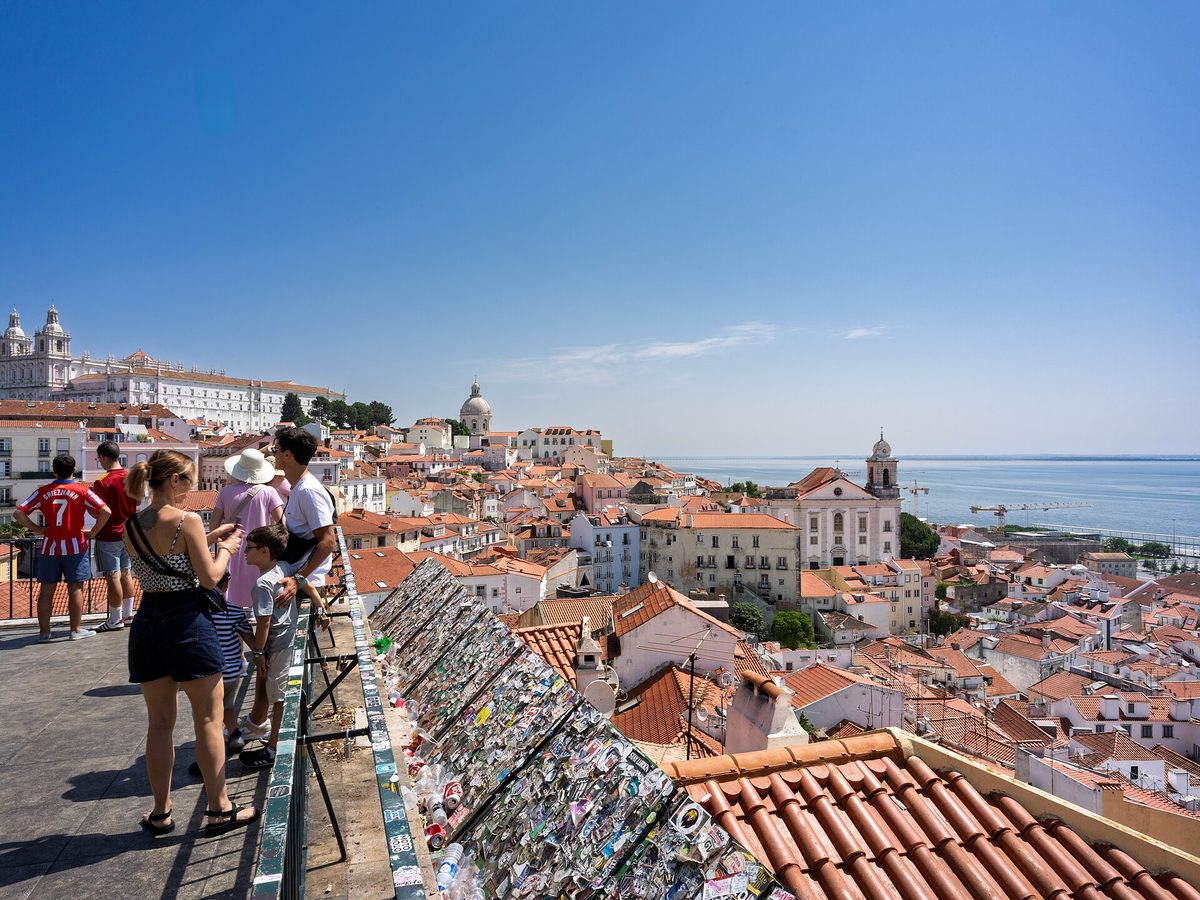
Ten mistakes that ruin a ten-day Europe trip
1. Booking four or five cities. The commonest and the most damaging. Five stops leaves you four days of sightseeing out of ten and a permanent low-grade exhaustion. If you cannot bear to cut a city, cut it anyway.
2. Booking a round-trip flight into and out of the same airport. This forces backtracking on a trip that has no time for it. An open jaw usually costs about the same, because airlines price it as half of each round trip.
3. Leaving train tickets until you arrive. On several corridors in this guide the walk-up fare is three times the advance one for the same seat on the same train. Late booking on European high-speed rail is not a small penalty.
4. Assuming a rail pass is the cheap option. For a fixed ten-day itinerary it almost never is, and the reservation supplements of 10 to 20 euros a leg are charged on top of the pass price.
5. Forgetting the tourist tax. Amsterdam charges 12.5 percent of your room rate. Three nights in a 200 euro room is 75 euros you did not budget for.
6. Missing the Anne Frank House release window. There is no walk-up option and no second chance, so the release rule above is worth reading twice.
7. Flying a leg the train does better. Rome to Florence is 1 hour 25 minutes centre to centre. Any flight version of that journey takes longer once you count the airports, and costs more once you count the bag.
8. Visiting southern Europe at the height of summer. Rome and Athens both average 32 degrees in July, with 21 and 5 millimetres of rain across the whole month. You will be sightseeing in conditions you would not walk the dog in at home, and August is no kinder.
9. Not checking the entry rules for your specific nationality. The EES has been running at every Schengen border since April 2026, ETIAS has slipped out of 2026 altogether and will cost 20 euros whenever it arrives, and the UK ETA at 20 pounds is required now. Route one crosses both regimes.
10. Scheduling every single day. Leave one blank. It is the difference between a holiday and an itinerary you executed.
More in common Europe travel mistakes and first-time Europe travel tips.

Frequently asked questions
Is 10 days enough for Europe?
Ten days is enough for one region of Europe, done properly. It is not enough for Europe. Two or three cities in one corridor will feel like a real trip. Five cities across three regions will feel like a transfer schedule. The number that matters is not ten, it is eight, because your first and last days are consumed by flying.
How many countries can I visit in 10 days in Europe?
Two or three comfortably, four at a stretch on the right corridor. Route eight, Paris to Amsterdam to Berlin to Prague, does four countries with three train legs totalling about 13 hours, which is the practical ceiling. More than four and you are collecting passport pages rather than seeing places, and with the Entry/Exit System recording biometrics rather than stamping, you will not even get the pages.
How much does a 10 day Europe trip cost?
Roughly 3,000 to 3,500 US dollars per person, mid-range, including an approximately 900 dollar transatlantic flight, around 1,500 in hotels and 800 to 1,000 in daily costs. A budget version lands near 1,800 and a luxury one starts around 6,500. Excluding international flights, expect 450 to 800 euros on the ground in Central Europe and 700 to 1,100 in the west.
Is $3,000 enough for a 10 day Europe trip?
Yes, at mid-range, if you fly from a well-served airport and choose your region. It is comfortable in Central and Eastern Europe and tight but workable in Paris, Amsterdam or Switzerland. Three thousand dollars against a sourced mid-range benchmark of 3,000 to 3,500 puts you at the bottom of that band, so the levers are shoulder-season travel, advance rail fares, and rooms slightly further from the centre.
What is the best 10 day Europe itinerary for a first trip?
London, Paris and Amsterdam if you want three countries and a soft landing, or Rome, Florence and Venice if you want one country and the shortest train legs anywhere in this guide. If cost is the deciding factor, Prague, Vienna and Budapest beats both. Both give you three nights per city, which is the pace that works.
What is the best time of year for a 10 day Europe itinerary?
May, June and September. Shoulder season means flights and hotels below the June to August peak, when they run 30 to 50 percent higher, and it means Rome at 24 degrees in May rather than 32 in July. October works well for southern Europe, where Rome, Barcelona, Lisbon and Athens all still average 22 or 23 degrees, but it is cold in Prague at 13.
Should I buy a Eurail or Interrail pass for 10 days?
Probably not. A 7-day Interrail Global Pass runs about 381 euros and a Eurail equivalent about 369 US dollars, before reservation supplements of roughly 10 euros domestic, 15 international and 20 on night trains. The two legs of the Prague, Vienna and Budapest route cost under 22 euros bought point to point. Passes earn their price across four or more countries over ten or more travel days, or when you cannot book ahead at all.
Do I need ETIAS for a trip in 2026?
No. A launch in the final quarter of 2026 was the plan until it was dropped in July, and 2027 is now the realistic window, with a revised timeline expected after the September board meeting. When it does start it will cost 20 euros and last three years or until your passport expires. What is already running is the Entry/Exit System, live at every Schengen border since 10 April 2026, which registers your face and fingerprints on arrival with no advance application. If your trip includes the United Kingdom, you need a separate UK ETA at 20 pounds, and you need it now.
Is it better to fly or take the train between European cities?
Train, on every corridor in this guide. Centre-to-centre times of one to four hours beat flying once you add airport transfers and check-in, and advance rail fares of 9 to 39 euros beat a low-cost fare that starts at 10 and reaches about 45 after the cabin bag, seat and payment fees. Fly only on legs over six hours with no direct rail, or to reach islands.
How far in advance should I book?
Flights and accommodation as soon as your dates are fixed. Trains as soon as the operator opens the window, which is typically three to six months out and is where the lead-in fares live. The Anne Frank House exactly six weeks out on the right Tuesday. The Doge’s Palace more than 30 days out, which saves five euros a head. Everything else, a few weeks ahead is fine.
Where should I go in Europe for 10 days if I have already seen Paris and Rome?
Route nine for the Alps and the Riviera, route ten for Portugal at a slow pace, route eleven for Naples and the Amalfi Coast, or route twelve for Greece. All four assume you are past the checklist stage and want landscape, food and coastline instead.
Should I book accommodation in the centre or further out?
On a ten-day trip with three nights per city, pay for the centre. The arithmetic is different from a longer trip: you have two full days in each place, and half an hour each way on a metro twice a day is two hours of your six sightseeing days spent commuting. The exception is Amsterdam, where the 12.5 percent tourist tax is calculated on your room rate, so a cheaper room saves you twice.
How much cash should I carry?
Less than you think in Western Europe, more than you think in Central Europe. Cards work almost everywhere in Paris, Amsterdam and the Nordics. Prague, Budapest and smaller Italian towns still have cash-preferred cafés and markets. Take one sensible withdrawal per country from a bank ATM rather than an airport exchange desk, and when a card terminal offers to charge you in your home currency, decline and pay in the local one.
Is it worth adding a fourth city?
Only on route eight, and only if you accept the trade. Four stops means three travel days out of ten and roughly 13 hours on trains. Everyone who has done it tells me the same thing afterwards: the fourth city was the one they remember least.
What about night trains to save a hotel night?
Tempting arithmetic, poor practice on a ten-day trip. A night train reservation is mandatory and averages 20 euros on top of any pass, you sleep badly, and you lose the following morning to being tired rather than to travelling. Over three weeks it can be worth it. Over ten days you cannot spare the recovery day.
Which cities are cheapest for a ten-day Europe trip?
Budapest first, then Kraków, then Prague. Budapest runs 25 to 40 percent below Prague, and Kraków undercuts Prague by another 15 to 25 percent. Beyond those, Bulgaria, Romania and Turkey are cheaper still, with a mid-range traveller landing at 60 to 75 euros a day. Bulgaria is worth a specific note this year because it joined the euro on 1 January 2026, so prices you find quoted in lev need dividing by 1.95583.
Do I need travel insurance for ten days in Europe?
Yes, and not primarily for medical cover. The thing that goes wrong on a trip this tight is a missed connection cascading into a missed non-refundable booking, and that is what trip-interruption cover is for. Check whether your card already provides it before buying separately. Our guide to travel insurance for Europe goes through what pays out.
Is Europe safe to travel to right now?
For a normal ten-day city trip, yes. The realistic risk is pickpocketing on crowded metros and around major stations and monuments, not anything more dramatic. Rome Termini, the Paris metro, Barcelona’s Las Ramblas and the Prague tram routes to the castle are the classic spots. Front pockets, a bag that closes, and no phone in a back pocket handles most of it. See is Europe safe and avoiding pickpockets.
Do I need an eSIM, and does EU roaming cover me?
If your plan is from an EU country, roaming across the EU works at your domestic rate and you need nothing extra. If it is from the United Kingdom, the United States, Canada or Australia, check your carrier’s daily pass rate before you assume it is fine, because ten days of daily passes usually costs more than an eSIM. Buy the eSIM before you fly and activate it on landing. Switzerland and the United Kingdom sit outside EU roaming, so a route that includes either needs a plan that covers them specifically.
Are seat reservations compulsory, and are they included?
On the fast trains in this guide, mostly yes and mostly included. A Eurostar, AVE, Frecciarossa, Italo or Railjet ticket bought point to point is for a specific train and a specific seat, and the reservation is part of the price. The complication only arises with a rail pass, where the pass covers the travel and the reservation is charged separately at roughly 10 euros domestic, 15 international and 20 on a night train. That distinction is the single most common source of confusion about European rail, and it is the reason point-to-point pricing looks worse than it is in a straight comparison.
Where can I leave my bags between check-out and my train?
Every major station on these routes has left luggage, either staffed or automated, and there are app-based networks that let you leave bags in shops and cafés near the station for less. Budget five to eight euros per bag for a day. It is the difference between a wasted final morning and a useful one, and on a ten-day trip you will want it at least twice.
What this guide does not cover
A note on scope, because “Europe” is a big word and twelve routes is not all of it.
There is no Scandinavian route here, no Balkan route, no Ireland, no Poland beyond a passing mention of Kraków, and nothing in the Baltics. That is a limit of what I could source properly rather than a verdict on any of them. A Copenhagen, Stockholm and Oslo trip is a genuinely good ten days, and I did not include it because I could not put current fares against the legs, which is the whole premise of this guide.
I also could not source current ferry timings or fares for the Greek islands, or current fares for the Amalfi Coast buses and ferries, and I have said so at each point rather than filling the gap. Where a table cell reads that no figure was sourced, that is what it means.
Two further caveats worth repeating. The daily spending bands come from 2026 travel-cost editorial rather than statistical agencies, and the Eurail and Interrail prices come from a third-party tracker because both operators render their prices in JavaScript that a reader cannot check and a researcher cannot fetch. Verify anything you are budgeting tightly against.

Final thoughts
The best 10 day Europe itinerary is the one with the fewest cities you can bring yourself to accept. Every time I have watched someone come back from this trip length disappointed, the cause was the same: one city too many, chosen because it felt wasteful to be that close and not go.
Three nights per stop. One geographic line, not a star. An open jaw home from the far end. Trains booked the month the window opens, which is where the cheap fares live and where most of the savings on this whole trip sit. Tourist tax in the spreadsheet. One day with nothing in it.
Do those six things and the route almost does not matter. Do none of them and even the best route here becomes ten days of logistics with some cathedrals in between.
If you are still deciding on length, our Europe itineraries hub compares this against a 7 day Europe itinerary, two weeks and a full month, and how many days you need tackles the question directly. For the trip itself, what to pack, Europe travel tips and where to stay are the three we get asked about most.
Hannah Brooks has spent fifteen years travelling, living and writing across Europe, from the Arctic tip of Norway to the south of Sicily. She has planned hundreds of European itineraries for readers and is Senior Europe Editor at EuropeanTourism.org.
Photo credits
- Photo: mattbuck (category) (CC BY-SA 3.0) via Wikimedia Commons
- Photo: Ermell / CC BY-SA 4.0 via Wikimedia Commons
- Photo: Pierre Blaché from Paris, France (CC0) via Wikimedia Commons
- Photo: Godot13 / CC BY-SA 4.0 via Wikimedia Commons
- Photo: User:Möchtegern (CC0) via Wikimedia Commons
- Photo: Jebulon (CC0) via Wikimedia Commons
- Photo: Avij / Public domain (CC0) via Wikimedia Commons
- Photo: Ercsaba74 (CC0) via Wikimedia Commons
- Photo: Phil Richards from London, UK / CC BY-SA 2.0 via Wikimedia Commons
- Photo: Wilfredor (CC0) via Wikimedia Commons
- Photo: Colin / CC BY-SA 4.0 via Wikimedia Commons
- Photo: Didier Descouens (CC0) via Wikimedia Commons
- Photo: Thomas Wolf, www.foto-tw.de / CC BY-SA 3.0 de via Wikimedia Commons
- Photo: Dale Cruse · 10M views from San Francisco, CA, USA / CC BY 4.0 via Wikimedia Commons
- Photo: Basile Morin / CC BY-SA 4.0 via Wikimedia Commons
- Photo: Didier Descouens / CC BY-SA 4.0 via Wikimedia Commons
2 comments