Eurail vs Interrail: Which Pass to Get

Two websites that look almost identical, sell what appears to be the same product, and quote the same prices: that is where most people end up when they try to choose between the two passes. The Eurail vs Interrail confusion is real, and it is not your fault. Until very recently, one company sold the same rail pass under two different brand names to two different sets of people, and the split was explained several clicks away from the page where you make the decision.
So here is the answer, stripped of marketing. Since 9 September 2026 the Eurail Pass and the Interrail Pass have been one product, sold worldwide under the Interrail name: the same pass, the same app and the same 33-country network. Before the merger, where you lived was the whole difference, with Interrail for people living in Europe and Eurail for everyone else. It still matters, just in a smaller way. You choose your country of residence when you buy, and if that country is in the pass network, the home-country travel rules apply to you.
Eurail vs Interrail: the short answer
In the Eurail vs Interrail choice there is no longer a choice to make. Since 9 September 2026 both have been sold as one Interrail Pass on the same network, and the country of residence you give at checkout decides which rules apply to you. The one genuine difference is that if you live in a country the pass covers, you are limited to two travel days inside it.
If that answers your question, you can stop reading and go and look at prices. If you want to know what the pass actually costs once reservations are added, whether it beats booking individual tickets, and which of the 33 countries reward a pass and which quietly punish it, the rest of this guide is exactly that. Below are eight benchmark routes with prices attached, the full 2026 fare grid, and a grade for every major country on how pass-friendly it really is. It sits alongside our wider guide to train travel in Europe and our overview of getting around Europe by every other means.
What changed on 9 September 2026
Eurail Group, the consortium of European railway companies that has always issued both products, retired the Eurail brand on 9 September 2026. From that date the passes are sold worldwide as Interrail. The company’s own wording on both sites was blunt about the practical effect: your pass, bookings and account stay the same.
This matters for you in three small ways and one large one.
The small ways: any Eurail-branded pass bought before the changeover still works, the Rail Planner app is the same app, and eurail.com now points at Interrail rather than running as a separate shopfront. The large way is that the brand-level distinction has gone, so anything dated before September 2026 is describing a split that no longer exists in that form. The residency rule, though, did not go anywhere. Whatever the product is called, a European resident and a visitor from Toronto are still buying passes with slightly different terms, and the two-day home country limit is still the thing that catches people out.
One caveat on this section. If anything on interrail.com does not match what you read here, trust the operator’s site: its terms are the ones that apply when you buy.
Eurail vs Interrail compared at a glance
Everything in this table is drawn from the operator’s own 2026 documentation. The rows where the two products are identical are there on purpose: half the value of this comparison is knowing what you do not need to worry about.
| Feature | Interrail Pass | Eurail Pass |
|---|---|---|
| Who can buy it | Official residents of Europe | Residents of countries outside Europe |
| Test applied | Residence, not nationality | Residence, not nationality |
| Countries covered | 33 | 33 |
| Price | Identical. Officially confirmed: “The price is the same for either a Eurail or Interrail Pass” | |
| Reservation fees | Identical. Ticketing systems make no distinction between the two | |
| Travel in your home country | Two travel days only, one out and one back | No limit, because your home country is outside the network |
| One Country Pass for your own country | Not permitted | Permitted |
| Currencies offered before the merger | EUR, GBP, CHF, SEK, NOK, PLN, USD, AUD, CAD, KRW | EUR, USD, AUD, CAD, KRW |
| Paper pass start date | Fixed at purchase, cannot be changed | Fixed at purchase, cannot be changed |
| Brand status from 9 Sep 2026 | The surviving brand | Merged into Interrail |
| Mixed groups | Fine. Two friends on different pass types can travel together and book reservations side by side | |
Eight of those eleven rows are either identical or a direct consequence of the residency split. That is the shape of this comparison, and it is why the choice feels heavier than it is. The interesting question is not which brand to choose. It is whether either of them is worth buying, and that depends almost entirely on where you plan to go. If you have not fixed a route yet, our Europe itinerary planner and the list of the best places to visit in Europe are the places to start.
Which one are you eligible for? The residency test in full
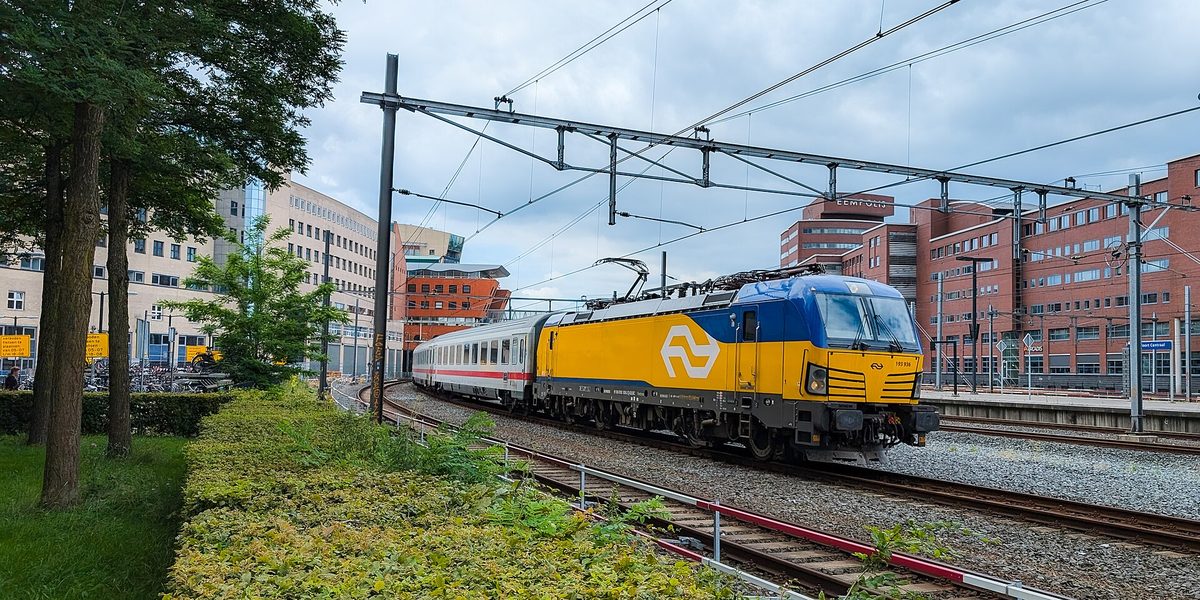
The rule is short and the edge cases are where people get stuck. The operator’s own help pages put it plainly: a Eurail Pass can only be used by non-European residents, an Interrail Pass can only be used by European residents. Note the word residents. If you are not a European citizen but you are an officially registered resident of a European country, you can use an Interrail Pass. Citizenship is not the test. Where you actually live is.
The test is present legal residence. What matters is that you are legally resident when you buy the pass, and that your residency does not expire before the end of the pass validity period. The old “six consecutive months” rule is still widely quoted, but the operator’s current country-of-residence rules ask only for present legal residence, so do not let it put you off.
The edge cases, answered
| Your situation | Which pass | What to carry |
|---|---|---|
| Two European passports | Interrail | The passport or ID of the country you live in |
| One European and one non-European passport, living in Europe | Interrail | The passport or ID of the country you live in |
| One European and one non-European passport, living outside Europe | Eurail | Either passport, plus proof you live outside Europe |
| European passport, resident in a different European country | Interrail | Passport or ID plus an official residency card for where you live |
| Non-European citizen legally resident in Europe | Interrail | Passport plus your government-issued residence document |
| European citizen who has emigrated outside Europe | Eurail | Passport plus evidence of your overseas residence |
| You hold no accepted proof of residence | Follow your ID | Select the country shown on your ID card or passport |
What counts as proof, and what does not
Your country of residence is printed on the pass, and you are obliged to carry an ID card or passport that matches the pass information when you travel. Where the ID country and the residence country differ, you need official residence documents issued by a government that clearly show you are registered where you live at the start of the trip. The operator publishes named examples per country. Learn yours before you are standing in front of a conductor in Slovenia:
- Austria: Aufenthaltstitel
- France: Titre de séjour or Titre de long séjour
- Germany: Blue Card, Meldebestätigung, Aufenthaltstitel or Meldezettel
- Great Britain: Tier 1 to 4 visa, Ancestry visa, Certificate of Right of Abode or eVisa
- Italy: Permesso di soggiorno
- Netherlands: BRP extract or Verblijfsvergunning
- Spain: Tarjeta de residencia with NIE, or a visa with NIE
- Switzerland: B permit
Two documents will not work, and both come up constantly. A driving licence is not a valid travel document for this purpose, full stop. And e-residency is explicitly refused, on the sensible grounds that it is not location-based. Estonia’s e-residency programme is a fine thing, but it does not tell anyone where you sleep at night. Entry rules are a separate matter again, covered in our guide to the Schengen visa and ETIAS. Digital versions of a physical residency permit, on the other hand, are accepted.
What happens if you give the wrong country of residence? The pass shows your country of residence, on the mobile and paper versions alike, and you must carry official proof of that residence when you travel. The practical risk is being treated as travelling without a valid ticket, which in most of these countries means buying a full-price walk-up fare on the spot plus a penalty. Get it right at checkout.

The home country rule, the difference that actually costs you money
The merger did not touch this rule, because it follows your country of residence rather than the brand. It deserves more than the single line it usually gets, because it changes the maths of a trip.
If you live in one of the 33 countries in the network, your Interrail Pass generally cannot be used inside your own country. You get exactly two exceptions: one travel day to leave your country of residence, and one travel day to return. That is it for the whole validity period, whether the pass runs four days or three months.
Three details that are easy to miss:
Those two days are not extra. They come out of your allowance. A Spanish resident buying a 5-days-in-1-month pass who uses one day getting from Seville to the French border and one getting home has three days left for everything in between. On a four-day pass, half your allowance can disappear before you have left the country.
They do not have to be the first and last days. The rule is about how many, not when. You can use your home country days at any point during the pass validity, which gives you a bit of room to structure a trip around a mid-trip return.
The app enforces it. This is not an honour system. The mobile pass warns you when you add a home country train and will not let you travel domestically on more than two of your travel days. It is intended for getting between your home town and an international border, not for general domestic travel, and the software behaves accordingly.
There is a British wrinkle worth flagging on its own. If you live in Britain, Eurostar counts as a journey in your home country and triggers one of your two days. The saving grace is that a same-day chain counts as a single day, so Edinburgh to London to Paris to Lyon in one push burns one day rather than three. Plan around that and it stops being a problem. Plan without knowing it and you will lose a day you needed.
The rule extends to One Country Passes too. You cannot buy an Interrail One Country Pass for your own country of residence, and you cannot use one to travel from your home country into the selected country. The multi-country regional products inherit the same logic in a way that is genuinely counterintuitive: a Dutch resident with a Benelux Pass may use it only in Belgium and Luxembourg, and a Swedish resident with a Nordic Pass may use it only in Denmark, Norway and Finland. You are paying for a three or four country product and legally using two or three of them.
Eurail holders have none of this. Their country of residence sits outside the network, so there is nothing to restrict. If you are flying in from Sydney or São Paulo, every one of your travel days is fully usable from the moment you land. That is the single practical advantage the Eurail side of the split ever had, and it exists only because of where you happen to live. If you are planning a long trip from outside Europe, our one month in Europe itinerary assumes exactly that freedom.

2026 Global Pass prices in full
These are the 2026 list prices for the Global Pass, in euros. The official 2026 tariff gives both names the same euro price for every configuration, from the four-day flexi at €283 up to three continuous months at €956.
There are two families of pass. A flexi pass gives you a set number of travel days to use within a longer window, so a 7-days-in-1-month pass lets you travel on any seven days across a month. A continuous pass gives you unlimited travel on every day of the period. Flexi suits the way most people travel, with three or four nights in each city. Continuous only wins if you are genuinely moving most days, which is rarer than people imagine when they are planning.
Flexi passes
| Pass length | Adult (28-59) | Youth (12-27) | Senior (60+) | Child (4-11) |
|---|---|---|---|---|
| 4 days within 1 month | €283 | €212 | €255 | Free |
| 5 days within 1 month | €318 | €239 | €286 | Free |
| 7 days within 1 month | €381 | €286 | €343 | Free |
| 10 days within 2 months | €447 | €335 | €402 | Free |
| 15 days within 2 months | €553 | €415 | €498 | Free |
| Pass length | Adult (28-59) | Youth (12-27) | Senior (60+) | Child (4-11) |
|---|---|---|---|---|
| 4 days within 1 month | €367 | €275 | €330 | Free |
| 5 days within 1 month | €413 | €309 | €371 | Free |
| 7 days within 1 month | €495 | €371 | €445 | Free |
| 10 days within 2 months | €581 | €435 | €522 | Free |
| 15 days within 2 months | €718 | €538 | €646 | Free |
Continuous passes
| Pass length | Adult (28-59) | Youth (12-27) | Senior (60+) | Child (4-11) |
|---|---|---|---|---|
| 15 days continuous | €476 | €357 | €428 | Free |
| 22 days continuous | €586 | €440 | €527 | Free |
| 1 month continuous | €696 | €522 | €626 | Free |
| 2 months continuous | €826 | €620 | €743 | Free |
| 3 months continuous | €956 | €717 | €860 | Free |
| Pass length | Adult (28-59) | Youth (12-27) | Senior (60+) | Child (4-11) |
|---|---|---|---|---|
| 15 days continuous | €618 | €463 | €556 | Free |
| 22 days continuous | €761 | €570 | €684 | Free |
| 1 month continuous | €904 | €678 | €813 | Free |
| 2 months continuous | €1,073 | €804 | €965 | Free |
| 3 months continuous | €1,242 | €931 | €1,117 | Free |

How the age bands and discounts work
Four bands, and your age on the first day of pass validity is what fixes them. Not the day you buy, not the day you travel: the first day of validity. If you turn 28 mid-trip, the youth pass stays valid for the whole trip, as long as you were still 27 on its first day of validity.
| Band | Ages | Discount | Notes |
|---|---|---|---|
| Child | 4 to 11 | Free | Up to two children per accompanying adult over 18 holding a paid pass |
| Youth | 12 to 27 inclusive | 25% off adult | You must be under 28 on the first day of validity |
| Adult | 28 to 59 | Baseline | The reference price |
| Senior | 60 and over | 10% off adult | Measured on the first day of validity |
The discounts are mechanical rather than negotiated. Youth is 25% off the adult price and senior is 10% off, with every price published in whole euros: a five-day adult pass in second class is €318, and the youth version €239. First class costs almost exactly 30% more than second, again on every row. There is no configuration where the ratios shift in your favour, so there is nothing clever to find by comparing durations against each other.
A couple of things stand out in the grid. The cheapest paid Global Pass in 2026 is the youth 4-days-in-1-month in second class at €212. The most expensive is the adult three continuous months in first class at €1,242, which is close to six times as much. And on the flexi side, the price per travel day falls steadily as you buy more days: an adult 4-day flexi works out at about €71 a day, while a 15-day flexi is about €37. If you are hovering between two lengths, the longer one is always better value per day, which is precisely how the pricing is designed to make you feel. Our two weeks in Europe itinerary and three weeks in Europe itinerary will tell you how many travel days you actually need.
Children between four and eleven travel free, with a maximum of two children per adult, and children under four travel free everywhere without needing a pass at all. A third child needs a paid youth pass, and a child pass can be attached to a youth pass holder as long as they are over 18. One trap for families, and a real one: free child passes do not include seat reservations. Where a train needs one, each child needs one too. A free pass for a nine-year-old on a Frecciarossa still costs you €13 to put them in a seat, and on Eurostar, where a Standard passholder reservation is €35, a child with a free pass needs one too. On a reservation-heavy itinerary the free child pass can be worth considerably less than it sounds. There is more on the practicalities in our guide to Europe with kids.
One Country Passes and the regional passes
If your trip sits inside one country, the Global Pass is usually the wrong product. Most One Country Passes give you a choice of travel days within one month, with the same 25% youth and 10% senior structure, though the classes and durations on offer vary by country, and Norway is second class only. A Spain pass covers trains within Spain, so it will not get you across the border into France, and it will not qualify you for a Eurostar passholder fare either. A few One Country products reach further: the Benelux and Nordic passes, and the German Rail Pass, which runs on to selected cities in Italy, Austria, Switzerland and Belgium.
Bosnia-Herzegovina and Montenegro appear to have no One Country Pass at all. And two of the products sold in the One Country range are not single countries: the Benelux Pass covers Belgium, the Netherlands and Luxembourg, and the Nordic Pass covers Denmark, Norway, Sweden and Finland. There is also a Greek Islands Pass, which behaves differently from anything else in the range because it bundles ferry crossings.
One Country prices vary with the country and the number of travel days, from roughly €50 for the smaller networks up to somewhere around €250 for a handful of travel days in the big four of Italy, France, Spain and Germany. Check the live price on interrail.com before you commit; it moves with the sales calendar. Single-country trips are covered in depth in our Italy travel guide, France travel guide, Spain travel guide and Germany travel guide.
Mobile pass or paper pass in 2026
The mobile pass arrived in 2020, and it is the one to buy unless your route says otherwise. The paper pass has not been discontinued, though: the current refund and exchange policy, version 12 of 10 September 2026, still has a Standard Paper Pass section. Some retailers still let you choose a hard copy, posted to you at extra cost, and the usual advice is to allow at least three weeks for it to arrive.
There is exactly one situation where the paper pass is not merely an option but a requirement, and it is a wonderfully obscure one: ZRS trains in Bosnia-Herzegovina accept only a paper Interrail pass. Mobile passes are not accepted. If Banja Luka is on your route, that single line decides your format for the whole trip.
| Mobile pass | Paper pass | |
|---|---|---|
| Share of buyers | About 97%, on independent estimates | About 3% |
| Start date | You choose it, any time within 11 months of purchase | Fixed at purchase and printed on the pass |
| Delivery | Instant, into the Rail Planner app | Posted at extra cost, allow three weeks |
| Recording journeys | Toggled onto the pass in the app | Hand-written travel diary, filled in before boarding |
| Can be deactivated | Yes, any time before the start date | No |
| Lost or stolen | Recoverable through your account | Cannot be re-issued or refunded, buy a new one |
| Accepted on ZRS Bosnia | No | Yes |
| Refund Protection available | Yes | No |
Activation, and the point of no return
A pass can be bought up to 11 months before the intended start date, and a mobile pass can be activated on any date within those 11 months. Activation means the first and last day of the validity period have been defined, which you will see under Validity Period in the My Pass section of the app. On a flexi pass, activating starts the one or two month window, not a travel day. Your travel days only start burning when you put a journey on the pass.
Before your chosen start date you can deactivate a mobile pass through My Pass and the three dot menu. Once the validity period has begun, at midnight local time on your start date, that door closes: you cannot deactivate the pass, and it no longer qualifies for a refund or exchange as an unused pass. Your passport number is only needed at activation, not at purchase, which surprises people who assume they need to have decided everything at checkout.
The app runs offline in between, which is the point, but it has to connect to the internet at least once every three days to stay updated and keep the pass valid. The offline timetable is roughly 150MB, per the operator’s own app page, and should be refreshed within a week of travelling. Download it on hotel wifi rather than discovering the requirement on a platform in rural Montenegro.
Seat reservations: the real cost of a rail pass
Here is the number that decides whether a pass is worth buying. You will not find it on the price page. A rail pass buys you the right to travel. On a large part of the network it does not buy you a seat, and on some trains you legally cannot board without paying a separate reservation fee on top of a pass you have already bought.
Those fees are identical for Eurail and Interrail. Ticketing systems see a passholder reservation as a passholder reservation and make no distinction, which is why two friends on different pass types can sit next to each other on the same booking. The operator also carries a standing caveat that published fees are indicative and subject to change, and that prices may differ when you book through an agent or pay in local currency. Everything below is the published 2026 figure.
Countries where reservations barely matter
This is where a pass earns its keep. In these countries you can walk onto a long-distance train with nothing but your pass and a phone, choose a seat, and go.
| Country | Required? | Fee (2nd class) | What it means in practice |
|---|---|---|---|
| Germany | Optional on all domestic ICE, IC, EC | €5.50 (€6.90 in 1st) | Turn up and board any long-distance train |
| Austria | Optional on IC and Railjet | €3 | The most pass-friendly network in Europe |
| Switzerland | Optional on Intercity | €4.40 | Scenic trains are the exception, see below |
| Netherlands | None domestically | €3 Intercity Direct supplement, Schiphol to Rotterdam | Check on NS’s site whether your pass journey needs it |
| Belgium | None domestically | €6.40 Diabolo airport supplement only | Board anything, sit anywhere |
| Great Britain | Recommended, mandatory on some services | Free | Reserve if you like, it costs nothing |
| Bosnia-Herzegovina | No reservations exist | Free | Paper pass only, remember |
| Türkiye | Mandatory on long distance | Free | Compulsory but costs nothing |
| Greece | Compulsory on Intercity | Free | Compulsory but costs nothing |
| Denmark | Recommended on IC and IC Lyn | €4 | Cheap enough to ignore |
| Slovenia | Recommended on IC and Pendolino | €2 under 60km, €4 over | Trivial either way |
| Hungary | Required on Intercity | €1.70 to €2.60 | Required but almost free |
| Poland | Recommended on EIC and TLK, compulsory on selected IC trains | €0.70 | Premium EIP trains are €10, reservation and supplement included |
| Romania | Required on Intercity | €1.20 | Required but almost free |
One correction worth making. Central and Eastern Europe is often described as reservation-free, and that is not quite right: Poland, Slovakia, Hungary and Romania all do require reservations on their inter-city trains. The point is that they cost between seventy cents and two euros sixty, which is a rounding error rather than a decision. This is a large part of why an Eastern Europe itinerary is such good value, and our Eastern Europe travel guide goes further into the region.
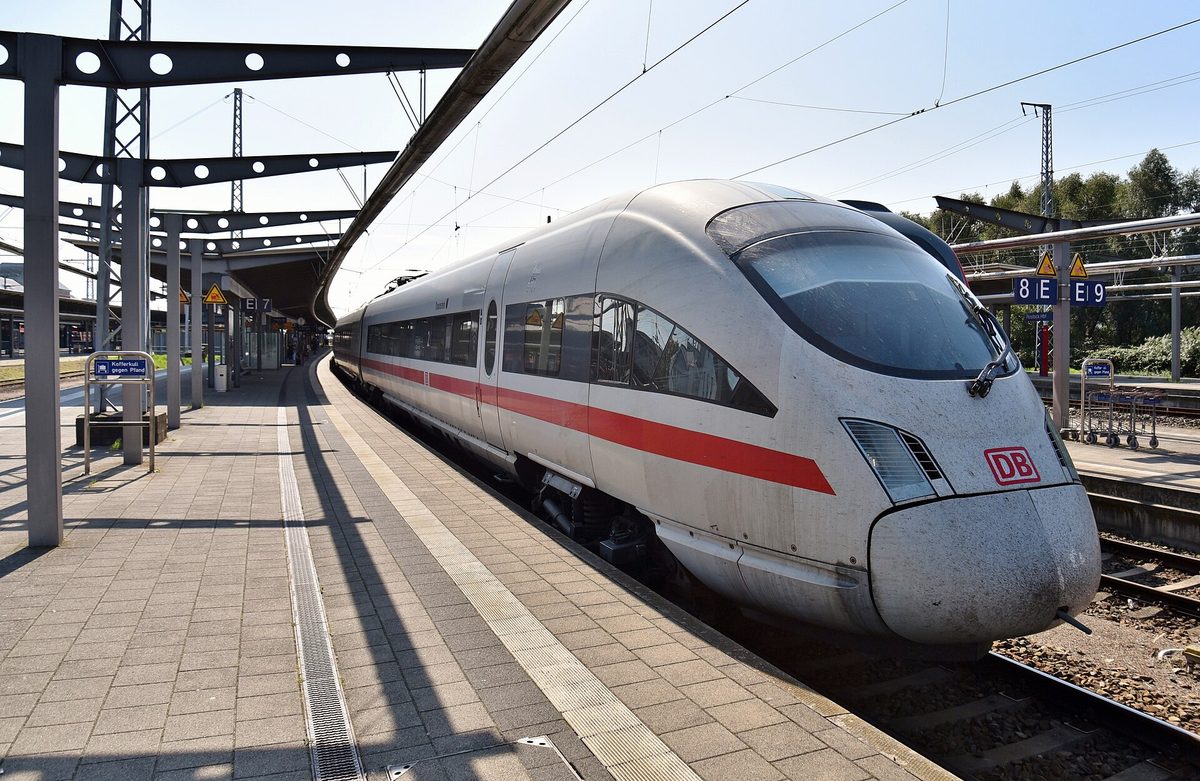
One important qualification to all of that. Several German cross-border routes flip from optional to compulsory for the summer peak, roughly 26 June to 31 August, including Amsterdam to Berlin, Amsterdam to Frankfurt and Hamburg to Copenhagen. The fee stays at €5.50 in second class, so the cost barely moves, but the freedom to walk onto any train does. If you are travelling Germany in July or August, check each cross-border leg rather than assuming the domestic rule carries over.
Countries where reservations are compulsory and expensive
Now the other half of the map. On these networks you must have a passholder reservation, quotas are finite, and the fee is large enough to change your break-even calculation.
| Train | Country | Fee 2nd class | Fee 1st class |
|---|---|---|---|
| TGV (domestic) | France | €10 to €20 | €10 to €20 |
| Intercités (mandatory routes) | France | €10 to €20 | €10 to €20 |
| Frecciarossa | Italy | €13 | €13 |
| Frecciargento | Italy | €13 | €13 |
| Frecciabianca | Italy | €10 | €10 |
| Intercity | Italy | €3 | €3 |
| Renfe AVE | Spain | €10 (Elige) | €13 Confort, €23.50 Premium |
| Euromed | Spain | €6.50 | €10 Confort, €23.50 Premium |
| Alvia and Intercity | Spain | €6.50 | €10 |
| Avant and Media Distancia | Spain | €4 | n/a |
| iryo | Spain | €10 | €13 |
| Alfa Pendular and Intercity | Portugal | €5, local booking only | €5 |
| EIP Express InterCity Premium | Poland | €10 | €10 |
| SJ high-speed | Sweden | €6.50 | €14.40 |
| IC and EC | Slovakia | €5 to €10 | €11 to €16 |
Spain and Italy each need a footnote. Spain’s Renfe reservations come in named tiers rather than classes: Elige is the second class product at €10 on an AVE, Elige Confort is the first class equivalent at €13, and Premium at €23.50 includes a meal. And Italy’s private high-speed operator Italo does not accept rail passes at all, so on the Rome to Florence to Milan spine you are on Trenitalia’s Frecciarossa or nothing.
The international premiums
| Route | Fee 2nd class | Fee 1st class |
|---|---|---|
| Paris to Barcelona, TGV | €35 | €35 |
| Lyon, Montpellier, Perpignan to Girona or Barcelona | €25 | €25 |
| TGV Lyria, Paris to Geneva, Zurich or Basel | €29 | €39 |
| France to Turin or Milan, TGV | €31 | €45 |
| Paris to Lyon, Turin, Milan, Frecciarossa | €13 | €13 |
| Marseille or Montpellier to Barcelona and Madrid, AVE | €25 Elige | €28 Confort |
| France to Germany, ICE and TGV | €19 | €19 |
| TGV to Luxembourg | €10 to €20 | €10 to €20 |
| Munich to Vienna, Railjet | €3, optional | €3, optional |
| Prague to Vienna, Railjet | €3, optional | €3, optional |
| Prague to Vienna, Regiojet | From €1.30, mandatory | From €1.30 |
| Zurich to Milan, EuroCity Express | €13 | €13 |
| Hamburg to Copenhagen | €5.50 | €6.90 |
| Munich or Vienna to Verona, Venice, Bologna | €10 | €15 |
| OUIGO Train Classique, Paris to Brussels corridor | €10 to €15 | One class only |
One warning buried in the operator’s own fine print that is worth pulling into the light: on the ICE and TGV services between France and Germany, a standard €5.50 or €6.90 Deutsche Bahn reservation is not valid. You need the €19 international one. Turning up with the cheap domestic reservation on a Paris to Frankfurt train is a bad morning.

How to make the fees smaller
The fees are fixed but the route is not, and this is where a pass rewards a bit of thought. Three swaps that come up again and again:
- Brussels to Amsterdam. Eurostar takes around 1h52 to Amsterdam Centraal for a compulsory €22 Standard reservation, or one of the 16 daily EuroCity Direct trains gets you to Amsterdam Zuid in 2h08 with no reservation at all. Sixteen minutes, and a different Amsterdam station, for twenty-two euros.
- Rome to Florence and Milan. Some Intercity trains run the same corridors as the Frecciarossa at €3 instead of €13, and most regional trains need no reservation, though it pays to check the particular train before you board. You trade an hour for ten euros.
- Anywhere in France. TER regional services mostly need no reservation. TER Nomad in Normandy is €2.50 and TER FLUO in Grand Est is €1.70, though FLUO trains to and from Paris are mandatory.
Eurail and Interrail publish a dedicated Alternatives to Busy Routes page for exactly this purpose, listing ways between popular cities that avoid reservations. It is one of the more useful things on the site, buried several clicks deep. For route ideas that lean on the cheap-reservation networks, see our roundup of the best train routes in Europe and the Western Europe itinerary.

Eurostar, and why it is not excluded
Eurostar accepts the pass, whatever you may have read about needing a full-price ticket, and it has done since January 2017, when it joined the schemes. Global Pass holders can travel London to Lille, Paris, Brussels, Rotterdam and Amsterdam on a special passholder fare.
| Eurostar service | Standard | Plus |
|---|---|---|
| London to Paris, Lille or Brussels | €35 | €40 |
| London to Rotterdam or Amsterdam | €35 | €43 |
| Brussels or Antwerp to Rotterdam and Amsterdam | €22 | €27 |
| Brussels or Antwerp to Paris | €27 | €32 |
| Brussels to Cologne and Dortmund | €27 | €32 |
| Paris to Rotterdam and Amsterdam | €32 | €37 |
| Paris to Cologne and Dortmund | €32 | €37 |
The class rule is simple: a second class pass gets you Standard, a first class pass gets you Standard or Plus, and Premier is never available to pass holders at any price. A child with a free pass still needs a paid passholder reservation of their own.
Now the catch, because there is one and it is the real reason people believe Eurostar is excluded. Passholder places are quota-limited. They are not always available on the busiest trains and dates. The allocation is finite, and the €35 places can sell out while ordinary tickets on the same train are still on sale.
The scheduling has a quirk besides. Booking opens up to eleven months ahead, but the passholder allocation may only appear about six months before departure, so an enquiry made too early can look like an outright refusal.
You cannot check passholder availability on interrail.com without already owning a pass, which is an unhelpful way round for someone deciding whether to buy one. If Eurostar is central to your plan, buy the pass early enough to book the reservation well ahead. Booking fees vary by channel and were last reported at about €2 per person through the official reservation service or Rail Europe, and €4 per booking through B-europe. Passholder Eurostar tickets can be changed free until seven days before departure, then for a fee. Our UK travel guide covers the British end of that journey, and the Netherlands travel guide the Amsterdam end.

Night trains, and what a bed actually costs
Night trains are where a rail pass either looks brilliant or falls apart, depending on what you book. Most night trains require a reservation, and the fee depends on the seat or bed you book, so it scales with comfort in a way nothing else on the network does. The exception is the Deutsche Bahn seating carriages on the Nightjet services from Zurich to Hamburg, Berlin and Amsterdam, where a seat reservation is optional.
ÖBB Nightjet, the backbone of the European night network, prices dynamically by route, season and demand. The published ranges are wide:
| Nightjet accommodation (international) | Minimum | Maximum |
|---|---|---|
| Seat | €4.90 | €24.90 |
| 6-bed couchette | €19.90 | €64.90 |
| 4-bed couchette | €29.90 | €94.90 |
| Mini Cabin | €29.90 | €94.90 |
| 3-bed sleeper | €59.90 | €184.90 |
| Double sleeper | €69.90 | €224.90 |
| Single sleeper | €114.90 | €479.90 per cabin |
The spread is the story. Interrail lists six-berth Nightjet couchette supplements anywhere from €19.90 to €64.90 per person, depending on the route, the season and demand. Book night trains early in a way you do not need to for day trains, because there is no equivalent of turning up and standing.
Elsewhere on the night network the numbers are gentler and far more variable:
| Night train | Seat | Couchette | Sleeper |
|---|---|---|---|
| EuroNight Metropol, Budapest to Berlin | €19 | €44 (6-bed), €54 (4-bed) | €69 triple, €94 double, €169 single |
| EuroNight Chopin, Prague to Warsaw | €3 | €34 (6-bed), €39 (4-bed) | €44 triple, €59 double, €104 single |
| EuroNight Berlin to Stockholm | €18.50 | €37 (6-bed) | €85 double |
| European Sleeper | €11 to €21 | €64 to €74 (5-berth) | €119 to €139 double |
| Intercités de Nuit, France | €10 | €19 to €25 | n/a |
| InterCity Notte, Italy | €3 | €41 (4-bed) | €48 triple, €58 double, €122 single |
| Caledonian Sleeper, Britain | Free | n/a | £155 Classic solo, £205 Club solo |
Some small print worth having. On most continental night trains you can book any type of couchette or sleeper even with a second class pass, which makes a second class pass plus a good bed better value than a first class pass in most circumstances. The Caledonian Sleeper is the notable exception, and Norway reserves free reservations for first class holders. There is also one exception to the mandatory reservation rule: on the DB-operated seating carriages of the Zürich to Hamburg, Zürich to Berlin and Zürich to Amsterdam Nightjets, no reservation is required at all.
For Nightjet and EuroNight bookings, the ÖBB shop is the channel to use, selecting the Interrail or Eurail Globalpass discount for each traveller. The Caledonian Sleeper’s Club Rooms are restricted to first class passes, and the Caledonian Double is not available to pass holders at all. We go through the whole network in our guide to night trains in Europe.

Does a rail pass actually save money? Eight routes, priced
A pass costs X, a ticket costs Y, and the answer turns on the difference. So here are eight benchmark European routes with the real numbers attached, gathered in 2026. The reservation figures are official and fixed. The point-to-point fares are indicative lead-ins gathered on a single day and will move with dynamic pricing, so read them as ranges rather than quotes.
| Route | Advance fare (2nd) | Flexible or walk-up | Cost with a pass | Verdict |
|---|---|---|---|---|
| Amsterdam to Berlin | From €19 to €38 | About €170 | Free outside summer, €5.50 from 26 June to 31 August | Pass wins outright |
| Munich to Vienna | €19.99 to €27.99 | €42 to €46 | €3 optional reservation | Pass wins clearly |
| Vienna to Prague | €13 to €22.90 | Varies by operator | €3 Railjet, or from €1.30 Regiojet | Pass wins clearly |
| Budapest to Krakow | From €20, commonly about €40 | €110 flexible sleeper | €2.40 to €3.30 on day trains | Pass wins clearly |
| Copenhagen to Stockholm | About €20 to €33 | Up to about €87 | €6.50 compulsory | Pass wins on flexibility |
| Zurich to Milan | €19.99 to €29 | Higher at short notice | €13 compulsory | Roughly a wash |
| Rome to Florence | €10 to €15 booked early | €45 to €60 on the day | €13 Frecciarossa, €3 Intercity | Ticket wins if you book ahead |
| Paris to Barcelona | From €25, typically €39 to €59 | €150 and up | €35 compulsory | Ticket wins if you book ahead |
The pattern hiding in that table
Look at the two ends of that table together and the reservation column turns out to matter as much as the fares, because the charges vary so much by train and route. Amsterdam to Berlin is €170 flexible and needs no reservation with a pass for most of the year. Munich to Vienna is €46 flexible and three euros with a pass, for an optional Railjet seat. At the other end, Rome to Florence is ten euros booked early and €13 for a Frecciarossa reservation on top of a pass you already own, and Paris to Barcelona is twenty-five euros booked early and €35 in either class on top of a pass. Set each route’s ticket fare against the pass cost and the reservation fee before you decide.
That is not a coincidence, it is the shape of European rail pricing. Networks that price by distance rather than demand, which means Germany, Austria, Switzerland, the Netherlands and most of Central Europe, have high flexible fares and cheap or optional reservations. Networks that price dynamically with airline-style yield management, which means France, Spain and Italy, have very cheap advance fares and charge pass holders a premium to occupy a seat they would rather sell at a variable price.
So the honest rule is geographic, not arithmetic. A pass is strongest in Germany, Austria, Switzerland, the Netherlands, Belgium and Central Europe, and weakest in France, Spain and Italy. A Munich to Salzburg to Vienna to Prague to Berlin trip is close to a guaranteed win on a pass. A Paris to Bordeaux to Barcelona to Madrid trip booked eight weeks out is close to a guaranteed loss. If you are weighing this up in isolation, our companion piece asks directly whether the Eurail pass is worth it.

Grading the network
| Country | Pass value | Why |
|---|---|---|
| Austria | Excellent | €3 optional reservations, dense network, Railjet everywhere |
| Germany | Excellent | Optional €5.50 reservations, very high flexible fares |
| Netherlands | Excellent | No domestic reservations at all |
| Belgium | Excellent | No domestic reservations at all |
| Switzerland | Very good | €4.40 optional, but scenic trains carry heavy supplements |
| Czechia, Slovakia, Hungary, Poland, Romania | Very good | Rules vary by train: mostly optional on Czech IC, EC and Railjet services, compulsory on Hungarian and Romanian IC trains and on selected Polish IC trains. The premium services cost most: Polish EIP is €10, and Slovak IC and EC trains run €5 to €10 in second class and €11 to €16 in first |
| Great Britain | Good | Free reservations, but very expensive walk-up fares make the pass useful |
| Denmark, Sweden, Norway | Good | Moderate compulsory fees, long distances, high point-to-point prices |
| Greece, Türkiye | Good | Compulsory reservations that cost nothing at all |
| Italy | Mixed | €13 on every Frecciarossa, Italo excluded, but €3 Intercity workarounds exist |
| Portugal | Mixed | €5 is fair, but reservations can only be bought locally |
| Spain | Poor | Compulsory on everything fast, tiered pricing, cheap advance fares to beat |
| France | Poor | €10 to €20 on every domestic TGV INOUI, €25 or €35 across the Spanish border depending on where you start |

A worked example
Take an adult buying a 7-days-in-1-month second class Global Pass at €381 and spending a fortnight going Amsterdam, Berlin, Prague, Vienna, Munich, Zurich, Milan. That is six travel days, with a seventh spare for a day trip.
Reservations on that itinerary, travelling in September: Amsterdam to Berlin needs none, Berlin to Prague needs none, Prague to Vienna €3 and Vienna to Munich €3 for optional Railjet seats, Munich to Zurich optional, Zurich to Milan €13 on the EuroCity Express. Total €19. So the trip costs €400 all in, and you can change any of it on the morning of departure except the Milan leg. Run the same trip between 25 June and 5 September 2027 and the Amsterdam to Berlin ICE becomes compulsory at €5.50 in second class, taking it to €405.50, plus any booking fee your channel charges.
The same journeys on flexible tickets would run well past €600. On advance tickets booked two months ahead and locked to specific trains, you might get it near €250. The pass costs you roughly €150 more than the cheapest possible version of the trip, and buys you the right to change your mind seven times. Whether that is a good deal is a question about you, not about the pass, and this is the point at which most people making the calculation stop pretending it is purely financial. That trade is the heart of backpacking Europe and of solo travel in Europe alike.
Run the same exercise for Paris, Lyon, Montpellier, Barcelona, Madrid and the pass loses badly. Four travel days, so an adult 4-days-in-1-month pass at €283, plus compulsory reservations on every leg: €10 to €20 for each of the two domestic TGVs, €25 across the border to Barcelona, and €10 on the AVE to Madrid. Call it €55 to €75 of reservations on top of the pass, so €338 to €358 in total, against advance fares that can total comfortably under €150 for the whole run if you book two months out. That is not a close call.
What else the pass covers, beyond national railways
A rail pass is not only a rail pass, and the extras are where a fair amount of hidden value sits.
Private operators
More private operators accept passes than people expect. Westbahn in Austria, Regiojet across Czechia, Slovakia and Poland, Leo Express, iryo in Spain, Snälltåget in Sweden, European Sleeper, Go-Ahead Nordic and SJ Norge all appear in the official fee tables as pass-accepting operators. Leo Express reservations are compulsory but free in both classes. Westbahn charges €1.90 to €4.90 for an optional Standard Class reservation, with Comfort Class upgrades from €7.90.
The exception, and it is the one that matters most: Italo does not accept Eurail or Interrail passes. High-speed travel on a pass in Italy means Trenitalia’s Frecciarossa, which is worth knowing if your plans involve Rome, Florence and Milan in one run.
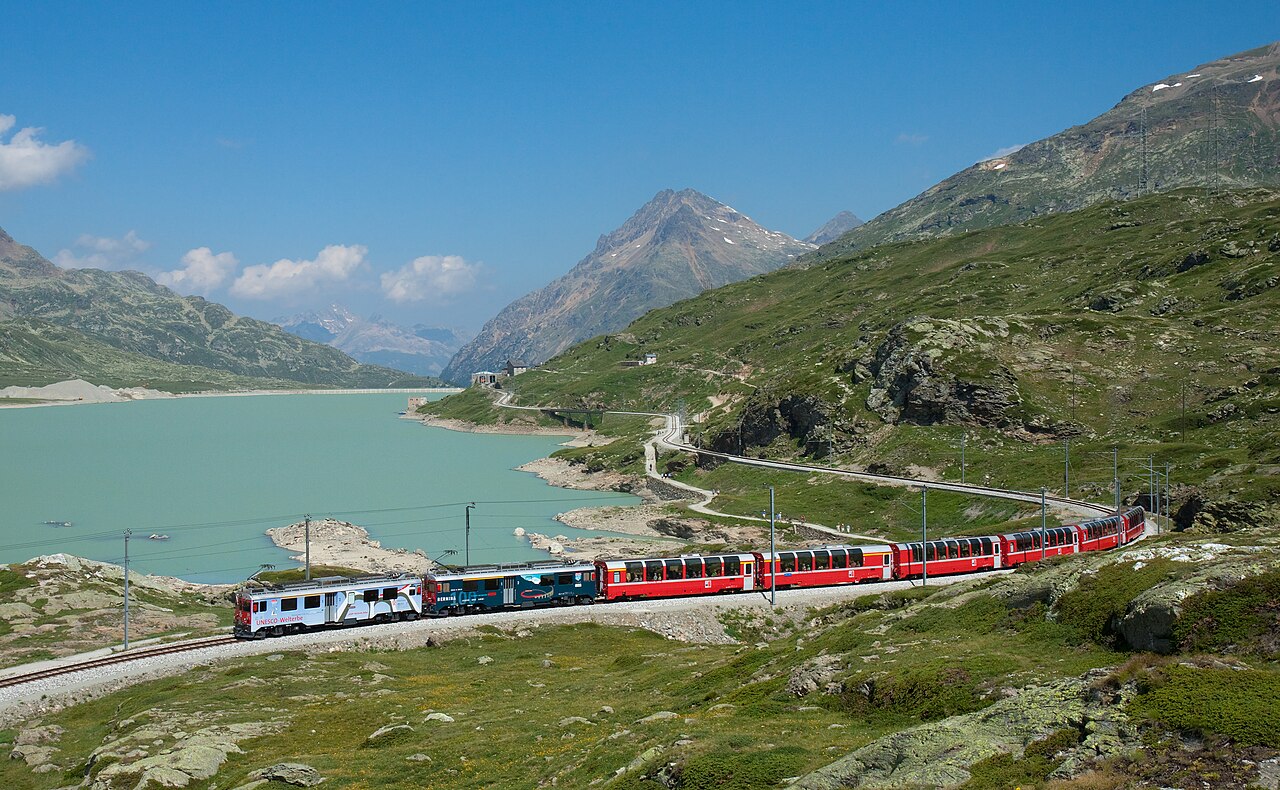
Swiss scenic trains
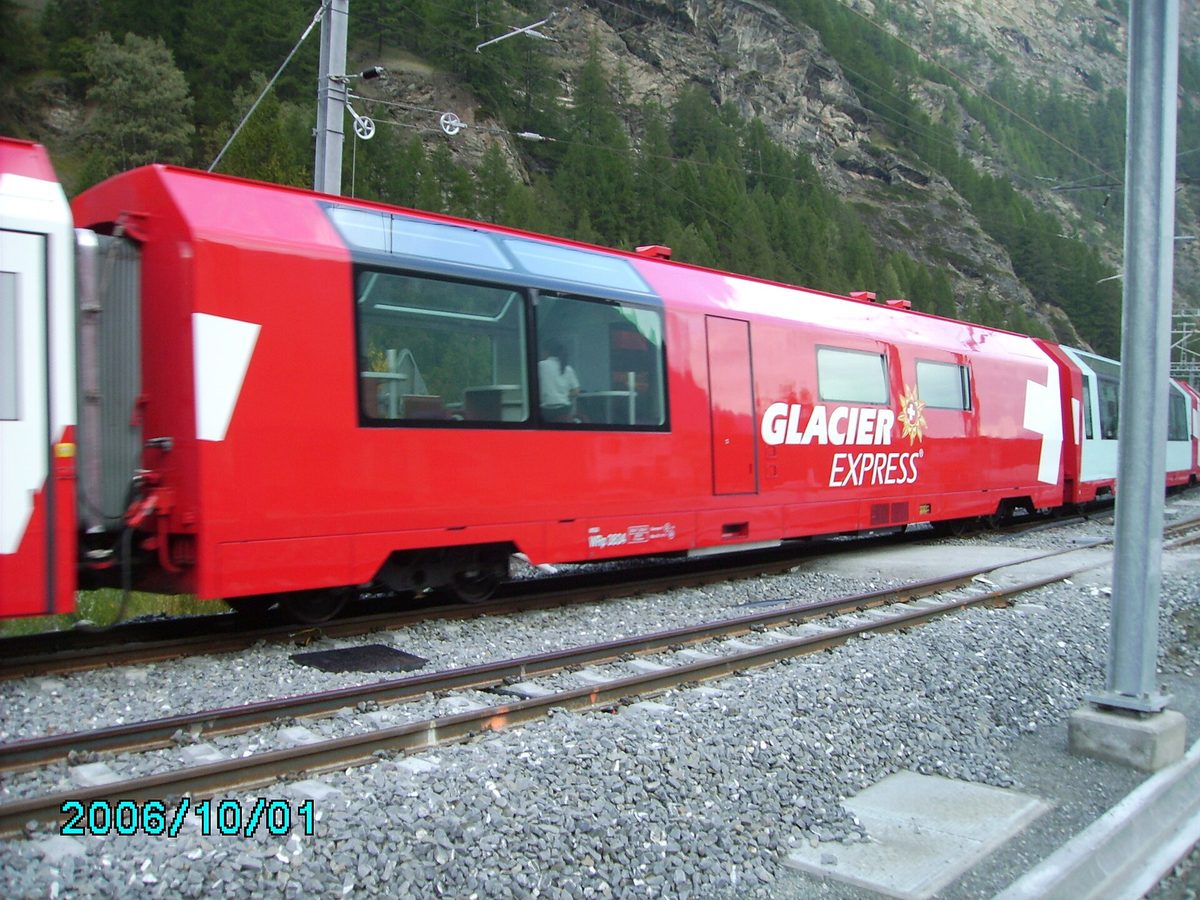
The famous Swiss panoramic routes are covered by the pass but carry supplements that dwarf anything else on the network.
| Train | Supplement |
|---|---|
| Glacier Express | CHF 54 in either class, short or long routes; CHF 590 Excellence Class, first class pass needed |
| Bernina Express observation car | CHF 32 short route (St. Moritz to Tirano); long route from Chur CHF 40 low season, CHF 44 high season |
| Chocolate Train | €55 in first class, €64 in second |
| GoldenPass | €4.40 to €24.40 |
| Gotthard Panorama Express | CHF 24 in 2026, CHF 28 in 2027, mandatory. In 2026 the full boat-and-train journey also cost first class pass holders CHF 41, and second class holders CHF 75 before the supplement |
The Bernina Express figures are RhB’s own for the 2026 timetable year, in Swiss francs and paid in full with a pass: high season runs 2 May to 25 October 2026 and low season covers the rest of the year. The oddity in that table is the Chocolate Train, which costs more in second class than in first, because the product is the excursion rather than the seat.
Swiss private mountain railways are a separate matter. They are not covered as travel, though a discount of around 25% is widely reported on trains beyond Interlaken, which includes the Jungfraujoch railway. BLS lake cruises on Lake Thun and Lake Brienz are included outright. If you are building a Switzerland trip around the mountain railways, price those separately and do not assume the pass absorbs them.
Ferries
Holders of a Greece or Italy One Country Pass get 30% off the Superfast Ferries passenger fare between Greece and Italy, with taxes and supplements on top, and Global Pass holders do better still. Discounts are advertised across Viking Line and Tallink Silja in the Baltic, Stena Line and Irish Ferries, and Balearia and Grimaldi in the Mediterranean, and they vary by operator, route and season: Tallink Silja, for one, advertises 20% in high season and up to 50% in low season on online bookings. First class pass holders get free air seats or dormitories where available; second class holders get free deck passage on certain Italy to Greece routes. Holders of a six-day Greek Islands Pass get two free crossings between Italy and Greece, which is a real entitlement if you are combining Venice or the Adriatic with the islands. Our Croatia travel guide covers the coast in between.
For Global Pass holders, the Superfast crossing between Italy and Greece carries no passenger fare, but it uses a travel day, and taxes and supplements are still yours to pay. The six-day Greek Islands Pass includes two international crossings with the listed surcharges waived. Read the Superfast page on interrail.com before you build an itinerary around a crossing.
What the pass does not cover
Worth stating plainly, because it catches people every trip. A rail pass covers trains. It does not cover city transport: metros, trams, city buses and most airport shuttles are all on you, wherever you are. Neither does it cover Italo in Italy, and Swiss private mountain railways are discounts rather than inclusions. Budget separately for local transport in every city you stop in, because on a two week trip that is easily €60 to €100 you have not planned for.
Where to buy
Direct from the operator, or through an authorised reseller such as Rail Europe or ACP Rail. Resellers sell the same product at the same list price, so the choice comes down to which currency you want to pay in and whose customer service you would rather deal with if something goes wrong. Buying direct keeps everything in one account alongside your reservations, which is the simpler path for most people. What you should not do is pay a premium to a third party on the assumption that the pass is scarce. It is not.
Benefits and discounts
There is a benefits portal listing hundreds of discounts across ferries, public transport, hostels and city cards. The concrete ones worth knowing: 10% at Europe’s Famous Hostels, Generator, and A&O Hotels and Hostels, plus a carbon-offset scheme that can push the Famous Hostels discount to 20%. Stack them with the savings in our guide to Europe on a budget and the cheapest places to travel in Europe.
The Plus Pass, the 2026 product worth pricing
Sitting in the navigation of both sites is a product called the Plus Pass, still labelled Beta, easily the most interesting thing to happen to this range in years. It bundles the seat reservation fee into the pass price for most trains, plus three reservation credits for high-demand services.
The credit mechanics, as described on the product’s own beta pages, work like this: most journeys cost zero credits, and high-demand trains such as Eurostar and international TGVs cost one or two credits depending on demand. The country-specific versions, the Italy Plus Pass and the German Rail Plus Pass, carry no credits at all because in-network reservations are already free within them. Reported coverage of the beta is Italian and German rail routes as part of the Global Pass.
The Plus Pass departs from the standard product in two rules that matter, and you want both before you buy. The Plus Pass must be activated within three months of purchase, not eleven. And booking any of the included seat reservations makes it non-refundable and non-exchangeable immediately, whereas a standard mobile pass stays refundable until its last activation date.
Whether the Plus Pass is good value depends on your route, and its current prices are on interrail.com. If your itinerary runs through France, Spain and Italy, where reservations are compulsory and expensive, a product that absorbs those fees is aimed squarely at the weakness this whole guide has been describing. It is worth pricing against a standard pass before you decide.

Refunds, exchanges and when the sales happen
The current policy is version 12, updated 10 September 2026, but the version that applies to you is the one in force when you bought: version 11 covers purchases from 1 May to 9 September 2026. Earlier versions are archived with their date ranges, which is unusually transparent for this kind of document.
| Situation | Without Refund Protection | With Refund Protection |
|---|---|---|
| Refund within 7 days of purchase | Full refund | Full refund, including the add-on |
| Refund after 7 days, pass not activated | 10% fee per pass | Full refund |
| Exchange after 7 days, pass not activated | €25 fee per pass | No fee |
| Pass activated | No refund, no exchange, no exceptions | |
| Unused travel days | Never refundable on their own | |
| Shipping costs | Never refundable | |
| Lost or stolen paper pass | Not re-issued, not refunded, buy a new one | |
Seven days here means 168 hours from the moment of purchase, not seven calendar days, and refunds take up to ten business days to reach your card. Refund Protection is the product formerly called Plus, is only available with mobile passes, and becomes non-refundable itself once the 168 hours are up.
Paper passes have their own sequence. You return both the pass and the pass cover using the free label supplied, and the package can take up to eight weeks to arrive at the office, sometimes longer. Deadlines depend on the pass type: with a predefined start date, before the first day of validity; certified NOT USED by a railway official, no later than a month after the last day of validity.
Timing your purchase around a sale
Sales are frequent and worth waiting for. Recent examples from the operator’s promotion terms: a 15% Spring Sale on eligible passes ran from 10 to 31 March 2026, a September 2026 promotion took 50% off selected continuous Global Passes, and the Black Friday sale covering the 2026 travel year ran 25 November to 17 December 2025 at 25% off eligible Global and One Country Passes, with Plus Passes and the Switzerland One Country Pass excluded. The size of the discount depends on the promotion and the pass, so read each sale’s terms before you buy.
Promotions only run for a set period. If a sale opens and the pass is right for your trip, buy it that day: you have eleven months to activate it and seven days to change your mind for free. Timing the trip itself is a separate calculation, covered in the best time to visit Europe.

Which pass to get, by traveller type
Eligibility decides the brand. This table decides the product.
| You are | Buy | Reasoning |
|---|---|---|
| A student doing a classic summer trip | Youth 15 days in 2 months, 2nd class, €415 | Travellers aged 12 to 27 get 25% off the adult price, and a flexi window matches how people actually move |
| A gap-year traveller with no fixed plan | Youth 1 or 2 months continuous, €522 or €620 | Continuous only pays off when you move most days, which is the one case where it genuinely does |
| A couple on a two-week holiday | Adult 7 days in 1 month, €381 each | Three or four bases in a fortnight means six or seven travel days, not fourteen. See our Europe honeymoon routes |
| A family with two children under 12 | Two adult passes, two free child passes | Free child passes for ages 4 to 11, but budget a paid reservation for each child on trains that need one |
| Retired travellers on a long slow trip | Senior 15 days in 2 months, €498 | The 10% senior discount plus a wide window suits unhurried travel |
| Anyone visiting one country only | A One Country Pass, or no pass | The Global Pass is the wrong product and usually the expensive one |
| Anyone doing France and Spain only | Advance point-to-point tickets | Compulsory reservations plus cheap advance fares kill the case for a pass |
| Anyone doing Germany, Austria, Switzerland and Central European cities | Almost any Global Pass | Optional or trivially cheap reservations, high flexible fares |
| A UK resident starting with Eurostar | Interrail Global Pass, and plan the chain | Eurostar burns one of your two home country days, so travel through in a single day |
| Anyone whose route is fixed and booked | No pass | A pass buys flexibility. If you have none to buy, do not buy it |

Ten mistakes I see people make
1. Assuming the pass covers the whole cost. On a France, Spain and Italy itinerary, reservations can add €100 or more to a pass you have already paid for. Price the reservations before you price the pass.
2. Buying a continuous pass for a flexi trip. Most people travel on about half the days of their trip. A 15-days-in-2-months flexi at €553 covers a longer, more relaxed journey than a 15-day continuous at €476, and the extra €77 buys you a two month window rather than a fortnight.
3. Forgetting the two-day home country limit. This is the single most expensive misunderstanding on the Interrail side, worst on short passes where two of four days can vanish before you leave the country.
4. Assuming Eurostar is excluded. It is not. It is €35 in Standard, quota-limited, and the allocation may only open six months out.
5. Booking night trains late. A Nightjet six-bed couchette swings from €19.90 to €64.90 on demand. There is no walk-up option to fall back on.
6. Buying a first class pass to get a better seat. On most night trains the couchettes and sleeping cabins are not split into classes, so a second class pass books them just as well, and a first class pass costs about 30% more. Check the rules for your particular sleeper, then put the difference into better beds.
7. Trying to use a pass on Italo. It is not accepted, and it runs the routes people most want.
8. Using a domestic German reservation on a France to Germany train. The €5.50 DB reservation is not valid on those services. You need the €19 international one.
9. Buying just before a sale. Do not count on getting a sale price for a pass you have already bought. If a sale is running and the pass suits your trip, buy on the day: activation can wait eleven months.
10. Turning up with the wrong proof of residence. A driving licence is not a valid travel document and e-residency is explicitly rejected. Carry the passport or ID that matches the country printed on your pass, plus a government residence document if those differ.
More of these, across every part of a European trip, are collected in our Europe travel tips and the Europe packing list.

Eurail vs Interrail FAQ
What is the difference between a Eurail Pass and an Interrail Pass?
Since 9 September 2026, nothing but the history: both are sold as one Interrail Pass on the same network. Before that, eligibility was the split, with Interrail for residents of Europe and Eurail for residents of everywhere else. Where you live still matters in one way: if your country of residence is in the pass network, you may only travel on two days inside it.
Is Interrail cheaper than Eurail?
No. The official 2026 tariff gave both names the same euro price, and since 9 September 2026 they have been one product sold as Interrail. The 2026 tariff took effect on 5 January 2026, so if a table shows a few euros of difference, make sure it is comparing the same age band, class and validity.
Can I buy a Eurail Pass if I live in Europe?
No. A Eurail Pass can only be used by non-European residents. The country of residence is printed on the pass and you must carry ID that matches it.
Which pass should I buy if I am not a European citizen?
It depends where you live, not what passport you hold. Officially resident in Europe means Interrail, even without European citizenship. Living outside Europe means Eurail.
Can I use an Interrail Pass in my country of residence?
Only on two travel days, one to leave and one to return, and they come out of your total allowance rather than being added to it. They can fall at any point in the validity period, not just at the start and end.
What are inbound and outbound journeys?
The two permitted home country travel days: outbound is the day you travel from home towards an international border, inbound is the day you come back. They are intended for reaching the border, not for domestic travel generally, and the app enforces the limit.
Which pass should UK residents buy?
Interrail, since Britain is one of the 33 countries and UK residents are European residents for this purpose. The thing to plan for is that Eurostar counts as a home country journey, so it uses one of your two days. Chaining Edinburgh to London to Paris in a single day keeps it to one.
Which countries are covered?
Thirty-three: Austria, Belgium, Bosnia-Herzegovina, Bulgaria, Croatia, Czechia, Denmark, Estonia, Finland, France, Germany, Great Britain, Greece, Hungary, Ireland, Italy, Latvia, Lithuania, Luxembourg, Montenegro, Netherlands, North Macedonia, Norway, Poland, Portugal, Romania, Serbia, Slovakia, Slovenia, Spain, Sweden, Switzerland and Türkiye. Russia, Ukraine, Belarus, Moldova and Albania are not included.
Does the pass cover the Eurostar between London and Paris?
Yes, at a passholder fare of €35 in Standard or €40 in Plus for Global Pass holders, subject to a limited quota. One Country Pass holders do not qualify.
Do I need a reservation on the Glacier Express?
Yes. The reservation costs CHF 54 in either class, on short and long routes alike, and Excellence Class costs CHF 590 and needs a first class pass. The Bernina Express reservation is CHF 32 to CHF 44 in 2026, depending on route and season.
Can I cancel or change my pass?
Before activation, yes. Free within 168 hours of purchase, then a 10% refund fee or a €25 exchange fee unless you bought Refund Protection. Once the validity period has started, at midnight local time on the first day, the pass no longer counts as unused and cannot be refunded or exchanged.
Is the Rail Planner app compulsory?
For a mobile pass, effectively yes: the pass lives in the app and journeys are toggled onto it there. Paper passes are still sold and use a hand-written travel diary instead. The app needs to connect to the internet at least once every three days to keep the pass valid. Our guide to how to use an Interrail pass walks through the whole flow.
What documents should I carry?
The passport or ID card matching the country of residence printed on your pass. If your ID is from a different country than where you live, add a government-issued residence document. Driving licences and e-residency are not accepted.
Final thoughts
The Eurail and Interrail question turns out to be two questions wearing one coat. The first, which brand, answers itself the moment you say where you live, and after 9 September 2026 it barely exists as a question at all. The second, whether to buy a rail pass, is the one worth your time, and the answer is geographic rather than financial.
If your trip runs through Germany, Austria, Switzerland, the Netherlands, Belgium and Central Europe, buy the pass. Reservations are optional or cost a few euros, flexible fares are high, and you get to change your plans over breakfast. If your trip runs through France, Spain and Italy on a route you already know, book advance tickets and keep the difference. If it does both, price the reservations honestly, look hard at the Plus Pass, and remember that what you are really buying is the ability to stay another night somewhere you like. When you get to route-building, our Europe train itinerary, the how to plan a trip to Europe guide and where to stay in Europe pick up from here. Ireland is in the network too, and often forgotten.
That flexibility is not a rounding error. It is most of the reason to travel Europe by train travel in Europe in the first place, and it is the only thing on the price list that does not appear on the price list.
Hannah Brooks has spent fifteen years travelling, living and writing across Europe, from the Arctic tip of Norway to the south of Sicily. She has planned hundreds of European itineraries for readers and is Senior Europe Editor at EuropeanTourism.org.
Photo credits
- Eurail vs Interrail: travellers and trains under the vaulted train shed of Antwerpen-Centraal station in Belgium · Photo: Phil Richards from London, UK / CC BY-SA 2.0 via Wikimedia Commons
- A yellow and blue Dutch Intercity train at Amsterdam Centraal station · Photo: Bvcmz248.5 (CC0) via Wikimedia Commons
- Morning light on Charles Bridge in Prague · Photo: Estec GmbH, Billig Hotel in Prag (CC BY 3.0) via Wikimedia Commons
- A white and red ICE high-speed train of Deutsche Bahn · Photo: Joachim Seyferth / CC BY 4.0 via Wikimedia Commons
- The Gloriette in the gardens of Schoenbrunn Palace, Vienna · Photo: Thomas Wolf, www.foto-tw.de / CC BY-SA 3.0 de via Wikimedia Commons
- The platform and station building at Soller in Mallorca, terminus of the historic wooden train · Photo: Antekbojar / Wikimedia Commons (CC0)
- A high-speed ICE train waiting at the platform · Photo: Bahnfrend (CC BY-SA 4.0) via Wikimedia Commons
- The Art Nouveau entrance of the Abbesses Metro station in Paris · Photo: DIMSFIKAS / CC BY-SA 3.0 via Wikimedia Commons
- A TGV high-speed train, the backbone of rail travel in France · Photo: Ermell / CC BY-SA 4.0 via Wikimedia Commons
- Eurostar trains under the arched roof of London St Pancras station · Photo: mattbuck (category) (CC BY-SA 3.0) via Wikimedia Commons
- An OBB Nightjet sleeper train at a European platform · Photo: Bahnfrend / CC BY-SA 4.0 via Wikimedia Commons
- A scenic train winding through the Swiss Alps · Photo: User:Möchtegern (CC0) via Wikimedia Commons
- Colourful townhouses along Nyhavn harbour in Copenhagen · Photo: Sven Lindner from Lund, Sweden / CC BY 2.0 via Wikimedia Commons
- The bright red Glacier Express panoramic train on the rails in the Swiss Alps · Photo: User:Mochtegern (CC0) via Wikimedia Commons
- The Bernina Express curving over the circular Brusio spiral viaduct in Switzerland · Photo: Kabelleger / David Gubler (http://www.bahnbilder.ch) (CC BY-SA 3.0) via Wikimedia Commons
- A red Rhaetian Railway train curving across the Landwasser Viaduct in Switzerland · Photo: Daniel Schwen / CC BY-SA 3.0 via Wikimedia Commons
- A Eurostar high-speed train at London St Pancras · Photo: FrogsLegs71 / CC BY-SA 3.0 via Wikimedia Commons
- The Flam Railway descending through Norway's fjord scenery · Photo: Jorge Láscar from Melbourne, Australia / CC BY 2.0 via Wikimedia Commons
- Colourful waterfront houses of Gamla Stan, Stockholm's old town · Photo: Andy Eick / CC BY 2.0 via Wikimedia Commons
- The promenade and sand at Barceloneta beach in Barcelona · Photo: DimiTalen (CC0) via Wikimedia Commons