Eastern Europe Itinerary: 7 Routes From 10 Days to a Month

The first time I built an Eastern Europe itinerary I did it the way most people do: I opened a map, drew a line from Prague to Dubrovnik, and assumed the trains would fill in the gaps. They did not. Somewhere south of Zagreb the rail network thins out to one service a day, the buses take over, and the plan I had spent a week building collapsed into a lot of standing around at a bus station in Split reading a timetable printed in 2019.
I have been back many times since, and the region has changed faster than almost anywhere else in Europe. Bulgaria switched to the euro on 1 January 2026. Romania and Bulgaria’s land borders opened to Schengen travel on 1 January 2025. A new signalling system on the Budapest to Belgrade line has been holding up a train service that was meant to start in March. All three landed inside the last eighteen months.
A route through this region works best as a chain of two or three countries rather than a sweep across ten. Ten days buys you Prague, Vienna and Budapest comfortably. Two weeks gets you Budapest to the Adriatic, or the Balkan spine from Belgrade to Kotor. A month links the lot. Below are seven routes, each with real journey times, current 2026 prices and the things that tend to go wrong.
What counts as Eastern Europe, and why the label matters to your plan
Nobody agrees on this, and the disagreement is not academic. It changes which countries end up on your route.
The Cold War definition puts everything behind the old Iron Curtain in one bucket, which sweeps in Prague, Berlin’s eastern half and Ljubljana. Ask a Czech or a Slovene whether they live in Eastern Europe and you will usually get a patient correction: Prague sits west of Vienna on the map, and Slovenia spent most of its history looking toward the Alps. The United Nations geoscheme is narrower still, counting only Belarus, Bulgaria, Czechia, Hungary, Moldova, Poland, Romania, Russia, Slovakia and Ukraine.
For planning purposes I use the traveller’s definition, because it is the one that matches how the trains and buses run. That means Poland, Czechia, Slovakia, Hungary, Slovenia, Croatia, Romania, Bulgaria, the Baltic states, and the Western Balkans: Serbia, Bosnia and Herzegovina, Montenegro, Albania, North Macedonia and Kosovo. Vienna and Berlin appear in these routes as gateways, not as destinations in their own right, because they are where the cheap long-haul flights land and where the rail network is dense enough to get you moving on day one.
Two practical consequences follow. First, the region splits cleanly into a rail half and a bus half. North and west of roughly Zagreb, trains are frequent, modern and cheap. South and east of that line, buses do most of the work and the trains are a scenic novelty, not a plan. Second, some of these countries are in Schengen and some are not, which matters enormously if your trip runs past a few weeks. Both points get their own section below.
Seven Eastern Europe itinerary routes at a glance
Every route below is one I have either travelled or built for a reader. The daily costs are per person and assume two people sharing a midrange double room, eating out twice a day, using public transport and paying for one attraction. A backpacker in dorms will spend roughly half that. The routes are sequenced so you can bolt them together. Route 1 hands you over to Route 3 at Budapest. Route 3 ends at Dubrovnik, which is where Route 4 finishes too, so run Route 4 backwards from there and it will drop you in Belgrade, an hour’s flight from Bucharest and the start of Route 5.
| Route | Days | The chain of stops | Countries | How you move | Rough daily cost, per person | Best months | Who it suits |
|---|---|---|---|---|---|---|---|
| 1. The Central Europe Classic | 10 | Berlin → Prague → Český Krumlov → Vienna → Bratislava → Budapest | 5 | Train, with a bus to and from Krumlov | €95–150 a day, midrange | September, May | First timers, anyone nervous about logistics |
| 2. Poland In Depth, With Prague | 14 | Gdańsk → Warsaw → Kraków → Wieliczka and Oświęcim → Wrocław → Prague | 2 | Train, one long bus or flight at the end | €70–120 a day, midrange | Late May, early September | History readers, repeat visitors, slow travellers |
| 3. Budapest To The Adriatic | 14 | Budapest → Ljubljana → Bled → Zagreb → Plitvice → Split → Dubrovnik | 3 | Train, then bus down the coast | €110–190 a day, midrange, higher in July and August | Early June, mid September | Swimmers, hikers, anyone who wants a beach at the end |
| 4. The Balkan Spine | 14 | Belgrade → Sarajevo → Mostar → Kotor → Dubrovnik | 4 | Bus, with one short train leg | €55–95 a day, midrange | May, late September | Second or third trips, travellers who like a bit of friction |
| 5. Romania And Bulgaria | 12 | Bucharest → Braşov → Sofia → Rila → Plovdiv | 2 | Train, plus one hired car or day tour | €55–90 a day, midrange | June, September | Value hunters, mountain walkers, Roman and Ottoman history |
| 6. The Baltic Run | 10 | Tallinn → Riga → Vilnius → Trakai → Warsaw | 4 | Coach, then a flight or a long coach at the end | €90–140 a day, midrange | June, July, August | Short-trip travellers, midsummer light chasers |
| 7. The Grand Loop | 30 | Berlin → Prague → Kraków → Budapest → Ljubljana → Zagreb → Split → Dubrovnik → Kotor → Sarajevo → Belgrade → Sofia → Plovdiv → Bucharest | 11 | Train where it exists, bus where it does not | €80–140 a day, midrange | Start in May or start in September | Career-break travellers, anyone with a month and no fixed return |
Route 1: The Central Europe Classic (10 days)
Berlin → Prague → Český Krumlov → Vienna → Bratislava → Budapest
I recommend this to almost everyone doing the region for the first time, and I do not apologise for how conventional it is. Five capital cities, one long train ride a day at most, and a rail network that runs like clockwork. You can book the whole thing three weeks out and it will work.
Days 1 to 2, Berlin. Not strictly Eastern Europe under any definition you like, but it is where the cheap transatlantic fares land and it sets up the history you are about to walk through. Give it two nights, spend one of them in the former East around Prenzlauer Berg, and take the train south. If you would rather start further in, skip to Prague and save two days.
Days 3 to 5, Prague. Berlin to Prague takes about three hours fifty by train, with departures roughly every two hours, and every service now runs with Czech Railways’ new ComfortJet carriages: air conditioning, a restaurant car, free wifi. Advance fares start around €15 to €19 if you book ahead, which is less than the airport transfer at either end.
Three nights in Prague is right. One for the old town and the astronomical clock crowd, one for the castle complex, one for the bits nobody photographs: the Vinohrady wine bars, Vyšehrad’s cemetery, the Letná beer garden looking down on the bridges. The Prague Castle circuit ticket runs 450 CZK for an adult, around €18, and covers the Old Royal Palace, St George’s Basilica, Golden Lane and St Vitus Cathedral. Buy it at the gate rather than through a reseller.
If you have a fourth day, Terezín is an hour north and the maximum ticket covering all the memorial sites is 310 CZK, about €13, with 240 CZK reduced. It is a heavy day and a necessary one.
Prague also charges a tourist tax of €2.00 per person per night for anyone 18 or over. Some hotels fold it into the rate, some collect it at checkout in cash. Ask when you book.
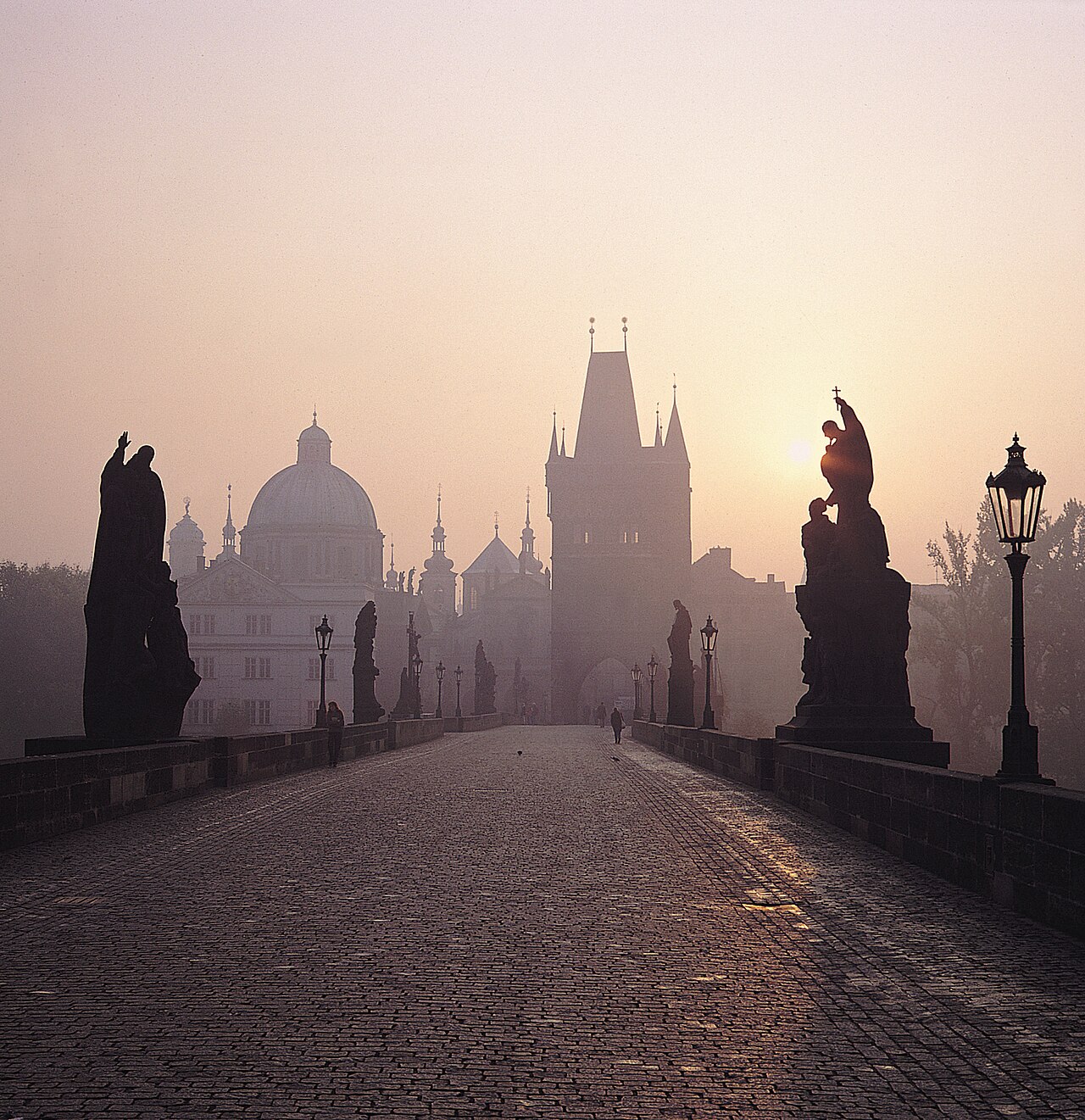
Day 6, Český Krumlov. Two and a half hours south of Prague by bus and worth breaking the journey for, though I would stay the night instead of day-tripping. The town empties around six in the evening when the coaches leave and it becomes an entirely different place. It also lands you neatly on the road to Austria. If the detour does not appeal, run Prague to Vienna direct instead.
Days 7 to 8, Vienna. Prague to Vienna is three hours fifty seven on the fastest ÖBB and ČD railjet services, about four fifteen on average, with roughly twenty trains a day. Fares start around €11 to €15 booked ahead. RegioJet runs the route too and is usually the cheapest.
Vienna is the most expensive stop on this route by a wide margin, and it is also the one with the best free afternoon in the region: the Naschmarkt, then a long sit in a coffee house with a newspaper, which counts as sightseeing in Vienna. Two nights. Note that the city’s accommodation levy rose from 3.2% to 5% on 1 July 2026 and goes to 8% on 1 July 2027. It is charged on the room rate excluding VAT and breakfast, so a €180 room now carries several euro of tax on top. Our Austria travel guide goes deeper on the city if you want to give it longer.
Day 9, Bratislava. Vienna to Bratislava is the easiest hop in Europe. The REX runs hourly and now takes 56 minutes, cut from an hour and six after electrification work finished in October 2025. A single is around €12.70, or you can buy ÖBB’s EUREGIO Bratislava ticket at €18, which bundles in a full day of Bratislava public transport.
Bratislava gets written off as a half day and I think that is roughly fair, but it is a very good half day: the old town is small enough to walk in an hour, the castle terrace has the best view of the Danube on the whole route, and the beer is a third of the Vienna price. Sleep here rather than in Vienna if you are watching money.

Day 10, Budapest. The Vienna to Budapest railjet is two hours twenty at its fastest, around two thirty typically, from about €19 second class. Coming from Bratislava you join the same corridor, and the journey is comparable in length. MÁV and RegioJet both run the line, and it is a leg I would book the week before travel, not months out. Arriving into Keleti in the late afternoon and walking down to the river as the Parliament lights come on is one of the better arrivals in Europe.
You will want more than one day here, which is exactly why this route is a starting point rather than a destination. Budapest is where Route 3 begins. If you have a fortnight rather than ten days, run them together and give Budapest three nights: one for the baths, one for the ruin bars in District VII, one for Buda’s hill and the funicular, which costs 5,500 HUF return for an adult, about €15.
One correction worth carrying with you: the Gellért Baths are closed for a full renovation and are not expected to reopen before 2028. Go to Széchenyi in the City Park instead, where a fast-track ticket with a locker runs about HUF 13,576, roughly €38. Rudas and Lukács are the quieter alternatives.
Budapest’s tourist tax is 4% of the room rate per night for adults, charged per room.

What this route costs. The four train legs and the two bus hops around Krumlov come to around €80 to €120 per person if you book two to three weeks ahead. Accommodation is the swing factor: Vienna will cost you what Prague, Bratislava and Budapest cost combined. For a broader view of how this slots into a longer trip, see our Europe itinerary planning guide and the 10 day Europe itinerary.
Route 2: Poland In Depth, With Prague (14 days)
Gdańsk → Warsaw → Kraków → Wieliczka and Oświęcim → Wrocław → Prague
Poland is not the cheapest country in the region, as the budget table further down shows, but it is the best value for what you get, and it is large enough that trying to combine it with three other countries in a fortnight does it a disservice. This route gives it eleven days and finishes in Prague so you can fly home from a bigger airport.
Days 1 to 3, Gdańsk. Wizz Air and Ryanair’s Buzz both base aircraft here, so fares from the UK and much of Europe are low. The rebuilt Long Market is the prettiest street in northern Poland, the Solidarity museum at the shipyards is the single best museum in the country, and Sopot’s beach is twenty minutes away on the commuter train. Malbork Castle, which bills itself as the largest brick castle in the world, is an hour south: the Historical Route ticket is 80 PLN, about €18, and Mondays are free although only the Castle Grounds Route is open then.
Days 4 to 5, Warsaw. Warsaw does not charm you the way Kraków does. What it does is explain the twentieth century better than any other city on this list. Give it two nights, spend three hours in the Warsaw Rising Museum instead of the one everyone allows for, and eat in Praga across the river.
Days 6 to 9, Kraków. Warsaw to Kraków on the Pendolino takes two hours twenty at its fastest, about three hours on the slower services, with around twenty three direct trains a day. Promotional second-class fares start at 49 PLN booked a month out, roughly €11; walk-up Pendolino fares run closer to 199 PLN, about €46. Book early and this is one of the cheapest fast trains in Europe.
Kraków is the best-value city break in Europe. It is not the cheapest, but nowhere else gives you this much for the money. The Main Market Square is one of the largest medieval squares in Europe, Kazimierz is the most interesting neighbourhood in Poland, and a good dinner with wine still comes in under €30 for two. Four nights lets you use it as a base rather than rushing.

One thing that surprises people: Kraków has no tourist tax. Polish law currently has no provision allowing one. The city levied a local charge between 2004 and 2015, lost the legal basis for it, and has been lobbying the national government to bring it back ever since. If a short-term rental adds a “municipal infrastructure fee” to your bill, that is a private operator charge, not a municipal tax, and you are entitled to ask what it is for.
Day 8, Auschwitz-Birkenau. Plan this before you book anything else, because the ticketing has tightened considerably. Individual self-guided entry is free, but you must reserve a timed entry card online, and free cards are released no later than seven days before your visit, or until the pool for that slot runs out. In practice they go weeks ahead in summer. All entry cards are now sold exclusively online through visit.auschwitz.org. On-site sales have been discontinued. The Museum works with no external resellers and takes no responsibility for third-party cancellations, so book direct.
Getting there from Kraków is straightforward: frequent buses run from the main bus station to Oświęcim in around an hour and a half, and most Kraków hostels sell a minibus transfer timed to the tour slots. Trains run too, but the bus drops you closer to the gate.
A guided tour with a licensed Museum educator costs 150 PLN, about €35, runs three and a half hours across both Auschwitz I and Birkenau with headsets, and is available in English, French, German, Hebrew, Italian, Polish, Russian and Spanish. Take the guide. Cards are named and you will need photo ID. The Museum does not recommend the visit for children under 14.
Day 9, Wieliczka Salt Mine. A very different day, and a good one to slot in the day after Auschwitz. The Tourist Route is 143 PLN adult, around €33, with 121 PLN reduced and a 430 PLN family ticket for two adults and two children. The Miners’ Route was listed at the same price when I checked and is the better choice if you have done the standard route before.
Days 10 to 11, Wrocław. Kraków to Wrocław takes two hours fifty one at its fastest and about three hours ten typically, with up to nineteen trains a day. Fares swing wildly, from around €5 on a promotional advance to well over €40 walking up, so this is a leg to book early. Wrocław is the most underrated city in Poland: an island-studded old town, a market square that rivals Kraków’s, and several hundred small bronze gnomes hidden around the streets that will occupy any child you have brought along for two full days.
Days 12 to 14, Prague. RegioJet runs Prague to Kraków three times daily in around five hours fifty, and the same service works in reverse from Wrocław with a change. Leo Express fares start near €13. Alternatively fly, which takes an hour and often costs about the same.
Read our Eastern Europe travel guide for the regional background, and two weeks in Europe for how this compares to a wider fortnight.
Route 3: Budapest To The Adriatic (14 days)
Budapest → Ljubljana → Bled → Zagreb → Plitvice → Split → Dubrovnik
My favourite fortnight in Europe, and the one I have rebuilt for readers most often. It starts in a great capital, crosses the Alps’ eastern edge, and finishes with two weeks’ worth of scenery compressed into a coastline. It is also the route where booking ahead matters most, because half of it runs through places with hard visitor caps.
Days 1 to 3, Budapest. As above. Three nights, the baths, District VII, Buda hill.
Days 4 to 6, Ljubljana. The Budapest to Ljubljana train is direct and takes somewhere between seven and a half and nine hours depending on the day, with occasional bus replacement on part of the route. There is a bus that can be faster, around six hours. This is the one leg on the route where I would check both the day before you travel instead of booking a month out, because the schedule moves.
Ljubljana is small, green and walkable to a degree that feels almost implausible for a capital. The old town along the Ljubljanica takes an afternoon. Give it three nights anyway, because it is the base for Bled and because the food scene is quietly one of the best in the region. Note the tourist tax: at €3.13 per person per night plus a 25% promotional levy, about €3.91 all in, it is the highest in Slovenia and it adds up over three nights for two people.

Day 5, Lake Bled and Vintgar Gorge. An hour and a bit from Ljubljana by bus. Bled Castle is €19 for an adult, €16 for over-65s and visitors with disabilities, €11.50 student, €7 for children aged 6 to 14 and free under 6.
Vintgar Gorge is the part people get wrong. It caps visitor numbers, the first protected natural site in Slovenia to do so, and in July and August you must book at least 48 hours ahead. It is normally open April to November with hours that change through the season. Ticket prices vary by pass type and I saw two different structures quoted while researching this, so check the official site the week you go rather than trusting a figure from a blog, this one included. If you turn up in August without a booking you will not get in.

Days 7 to 8, Zagreb. Ljubljana to Zagreb runs around two hours twenty on average, roughly seven trains a day, direct every day, from about €11 to €19. Zagreb is a working capital, not a tourist one and that is the appeal: the Dolac market in the morning, coffee on Tkalčićeva in the afternoon, and the Museum of Broken Relationships, which is far better than its gimmicky premise suggests. Two nights.
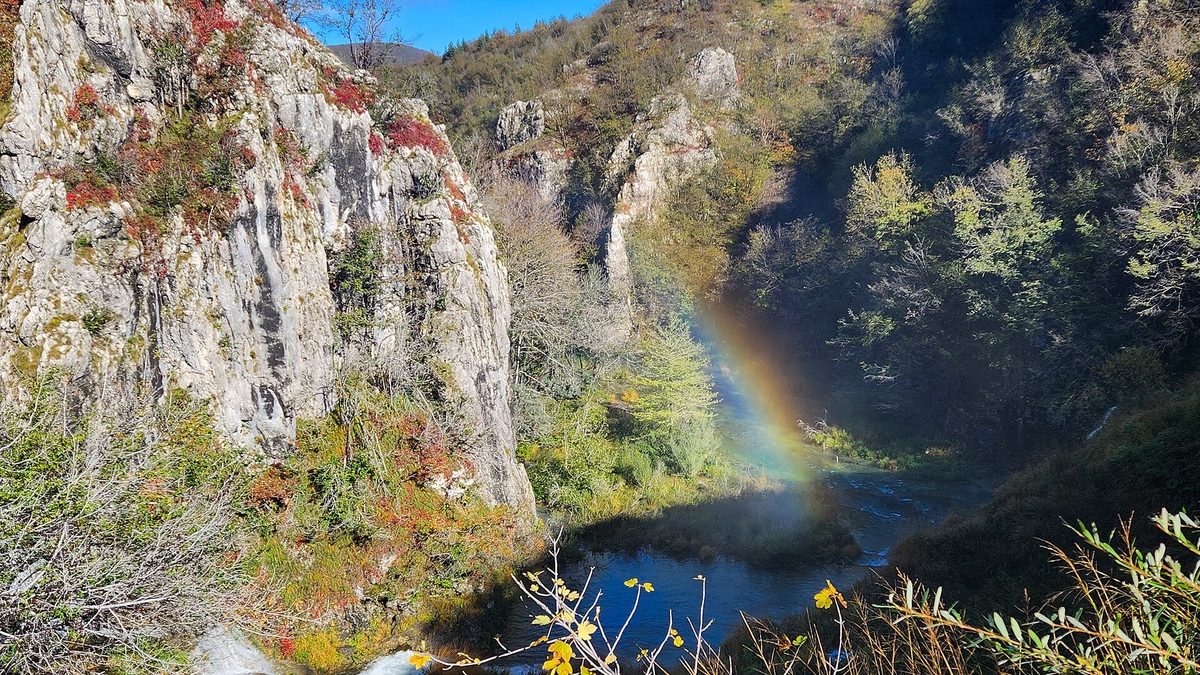
Day 9, Plitvice Lakes. Book this before you book your flights. Plitvice caps entry at 12,000 visitors a day with hourly quotas of a maximum 300 people per hour per entrance, and in July and August the slots sell out weeks ahead.
Pricing is strongly seasonal, which is the single best argument for shoulder-season travel on this whole route:
| Season | Months | Adult ticket |
|---|---|---|
| Low | November to March | €10 |
| Shoulder | April, May and October | €23 |
| Peak | June to September | €40 |
| Peak, after 16:00 | June to September | €25 |
The ticket covers 22 kilometres of trails and boardwalks, the electric boat across Lake Kozjak, the panoramic shuttle train between entrances, toilets and basic accident insurance. Go at opening or take the after-16:00 ticket, which is both cheaper and quieter.
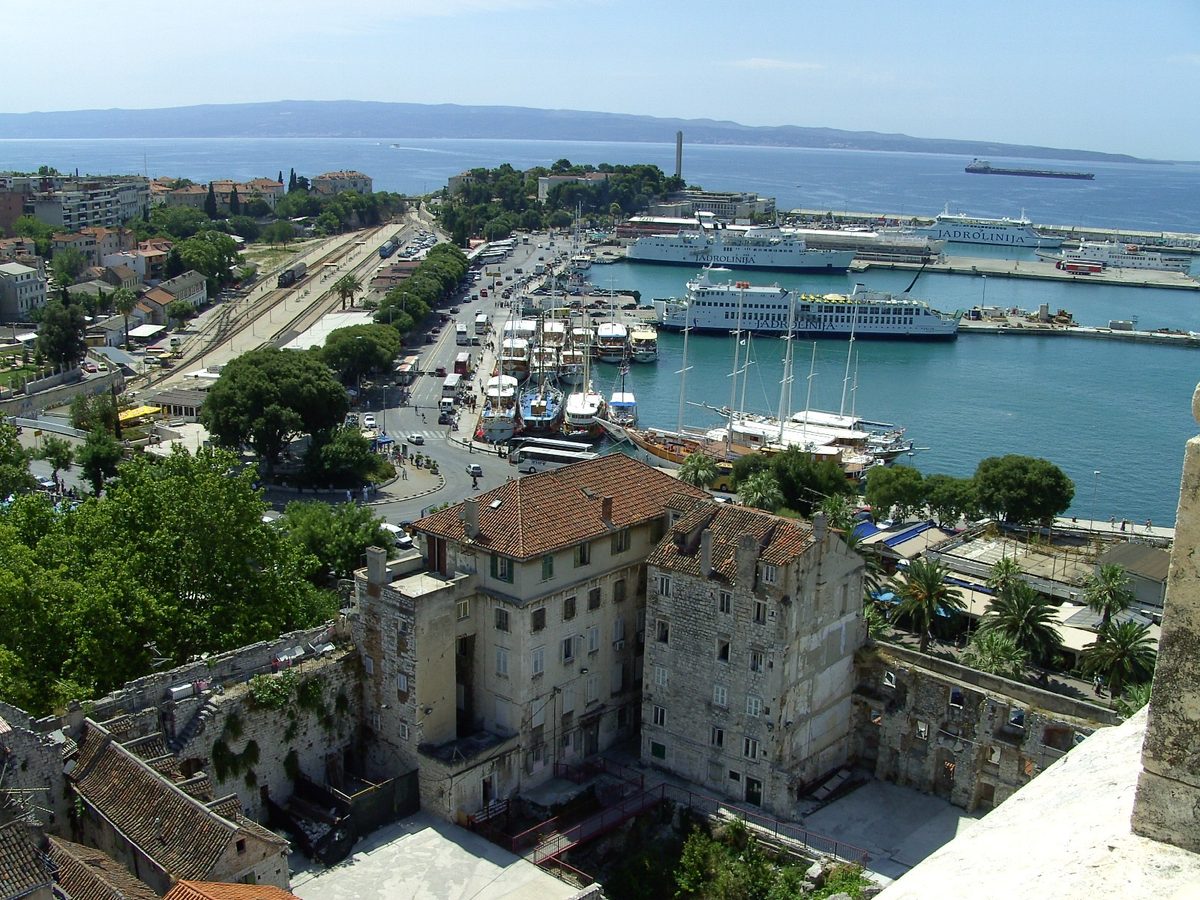
Days 10 to 11, Split. Zagreb to Split by train is a single service most days taking around eight hours, from about €19. That is a long day for the distance and most people take the bus or fly. Split’s old town is a Roman palace that people never stopped living in, which makes it more interesting than a ruin and considerably more chaotic. Two nights, one of them used for a boat to Brač or Hvar.
Days 12 to 14, Dubrovnik. Split to Dubrovnik by bus is three hours thirty five on the fastest Nomago service, about four hours twelve typically, with FlixBus and Nomago both running it. Fares sit around €13 to €42 depending on how far ahead you book, with €19 to €25 typical.
The better option, if your dates allow, is the Jadrolinija catamaran, line 841, which runs Split to Bol on Brač, Hvar, Korčula and Dubrovnik in just under six hours for about €50. It is a summer service, running roughly early June to late September. You get four islands out of a transfer you were making anyway. The competing Kapetan Luka catamarans run 1 April to 31 October only, so this is a summer trick, not a year-round one.
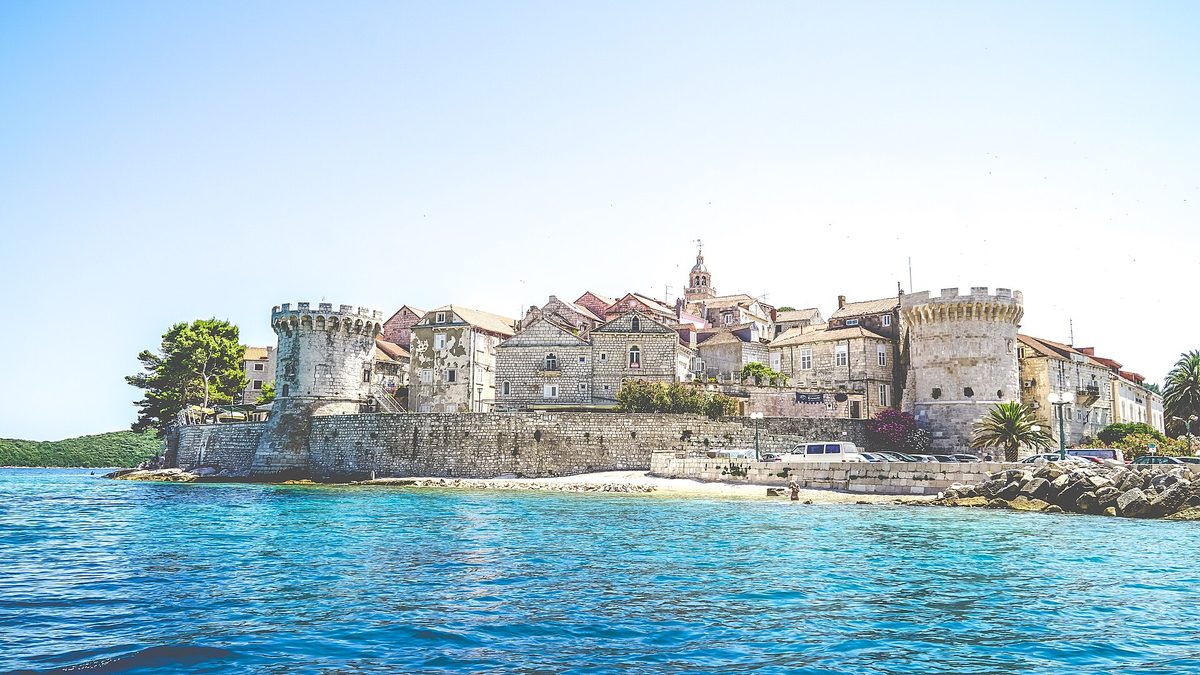
Dubrovnik’s city walls are around €40 in high season, roughly March to October, and about €15 from November to February. That is the steepest single ticket on any of these routes, level with a peak-season day at Plitvice, and it is still worth it. Do it at 08:00 when the gates open.
The crowd situation is the thing to plan around. Under the 2019 agreement the city caps cruise arrivals at two ships a day, with the passenger ceiling variously reported between 5,000 and 8,000; enforcement is contested, and 2026 schedules have shown two to three ships on some days carrying over 5,000 passengers between them. On a typical summer day the Gruž terminal can put five to twelve thousand extra people into an old town that fits about a tenth of that comfortably. Cruise passengers arrive mid-morning and leave by late afternoon. Structure your day around that and Dubrovnik is lovely; ignore it and you will hate the place.
Dubrovnik’s tourist tax is €2.65 per person per night from 1 April to 30 September, €1.85 from 1 October to 31 March.
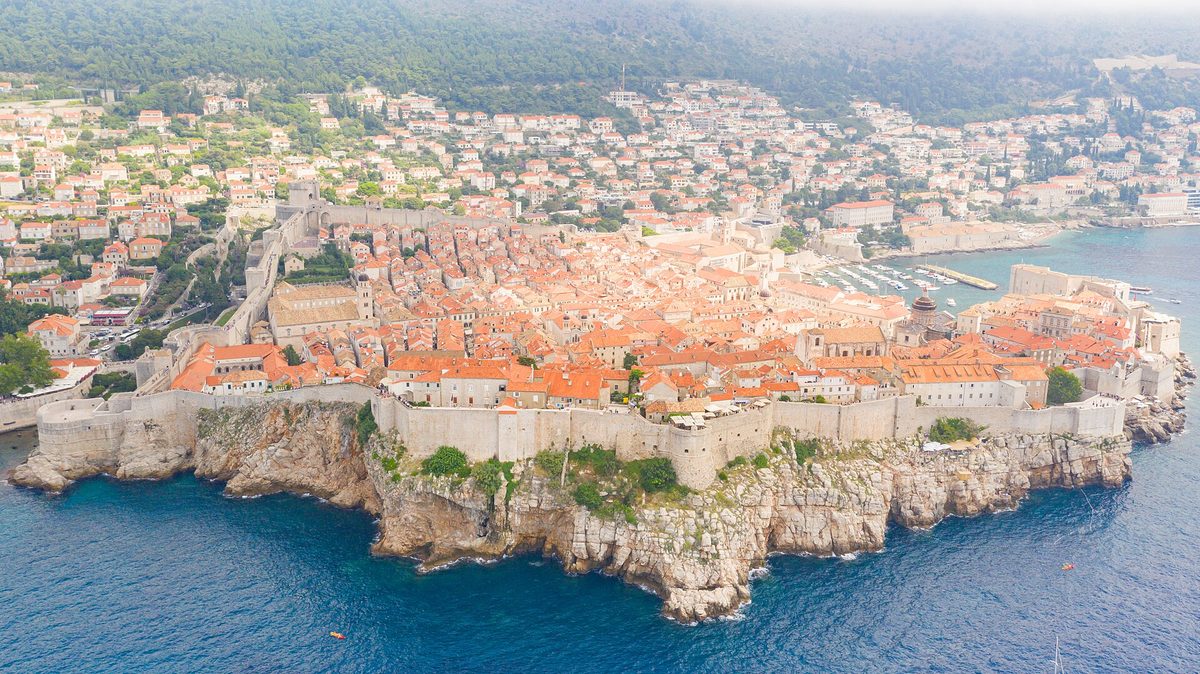
Our Croatia travel guide covers the coast in more depth, and the best beaches in Europe has the swimming spots that are not on the standard route.
Route 4: The Balkan Spine (14 days)
Belgrade → Sarajevo → Mostar → Kotor → Dubrovnik
Save this one for a second or third trip. It shares the title of cheapest fortnight in Europe with Route 5, and it is the better of the two if you want scenery. It is also the one that demands the most flexibility, because the transport is buses, the borders are real borders, and the timings are approximate in a way that Central European rail is not.
Days 1 to 3, Belgrade. Fly in. Wizz Air bases aircraft here and fares are usually the cheapest entry point to the whole region. Belgrade is loud, sprawling and much better than its reputation: Kalemegdan fortress above the confluence of the Sava and Danube is free to walk, the exhibitions inside charge separately, and the nightlife on the river barges is the real thing rather than a tourist recreation of it.
A three-course meal with wine in a proper kafana runs about €8 to €12. Dorm beds in central Belgrade sit around €8 to €15. Serbia is inexpensive without the quality dropping to match, which is not true everywhere.
US, UK, EU, Canadian and Australian passport holders get 90 days visa-free within any 180 days in Serbia. One thing to know before you build a route: you cannot enter Serbia directly from Kosovo unless you already hold a valid Serbian entry stamp from an earlier arrival, because Serbia does not treat the Kosovo crossings as international borders. In practice most travellers are waved through, particularly at Belgrade airport, but refusals do happen at land crossings. If Kosovo is on your list, enter Serbia first.
Days 4 to 6, Sarajevo. Belgrade to Sarajevo by bus takes seven hours thirty five on the fastest Centrotrans service and around nine hours ten typically, with twenty four departures a day. Fares run roughly €22 to €47. It is a long day and there is no faster option, so treat the journey as part of the trip and take the daytime service for the scenery.
Sarajevo is the most affecting city in Europe, and the one I send people to when they say they want somewhere that will change how they think. Baščaršija’s Ottoman quarter runs into Austro-Hungarian boulevards within a hundred metres. The Tunnel of Hope museum is 20 BAM, about €10, and 8 BAM for students. Bring marks in cash. Three nights. The convertible mark is pegged to the euro at 1.95583 to 1, the same rate Bulgaria’s lev used, so mental arithmetic is easy: halve the number.
Tap water is safe in Sarajevo. Outside the capital it is better avoided.
Days 7 to 8, Mostar. Sarajevo to Mostar by train runs twice daily on the Bosnian Talgo, earliest departure 07:15 and last at 16:46 arriving 18:48, in one hour fifty eight at its fastest, for about €7 to €9. Additional seasonal services ran from 26 June to 30 August in 2026. This is the most beautiful train ride in the Balkans and one of the cheapest journeys in Europe, and I would build a day around it even if Mostar were dull, which it is not.
The Old Bridge divers charge €30 all in if you want to jump yourself: €10 for a practice jump from the lower platform, €20 for the bridge, and the €20 buys lifetime membership of the Mostar Diving Club, so you can jump again for free on any future visit. Do the practice jump. The deck sits somewhere around 20 to 24 metres above the Neretva depending on the river level, and it looks higher from the top.
Days 9 to 11, Kotor. There is no easy public transport from Mostar to Kotor and this is the leg that will cost you a day. Most people go via Dubrovnik or take a long bus down through Trebinje. Build in the slack.
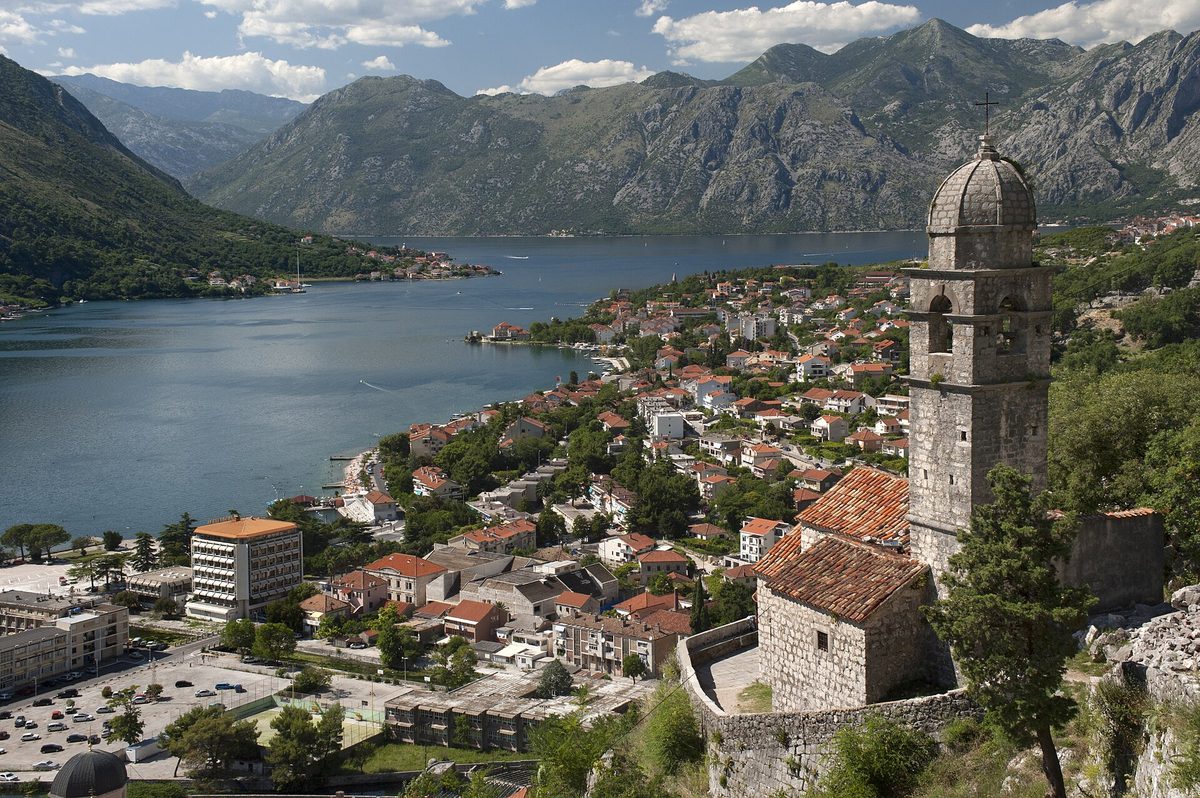
Kotor sits at the head of a flooded river canyon that everybody calls a fjord and technically is not. The old town is a knot of Venetian lanes, and the walls climb 1,350 steps to the fortress of San Giovanni above it, which is the best two hours you will spend in Montenegro. Ticket prices for the fortress climb were quoted inconsistently everywhere I looked, from around €8 to €15, and part of the wall system is free to access, so check at the gate. Go at 07:00 before the heat and before the cruise passengers; ships here can put two to four thousand people ashore at once.
Montenegro uses the euro, adopted unilaterally in 2002 without eurozone membership, so there is no exchange to think about. Do not drink the tap water; buy bottled.
Days 12 to 14, Dubrovnik. Kotor to Dubrovnik is scheduled at one hour fifty to two hours thirty by bus, around €25 one way, plus the border. That last part is not a detail. The Karasovići and Debeli Brijeg crossing adds anywhere from fifteen minutes to three hours. Before 08:00 or after 16:00 it is typically ten to twenty minutes; at midday in July and August, two to three hours is normal. Take the early bus.
Finish in Dubrovnik and fly home, or reverse the whole route and run it into Route 3 going north.
Route 5: Romania And Bulgaria (12 days)
Bucharest → Braşov → Sofia → Rila → Plovdiv
Two countries that reward the time, cost very little, and have both had significant status changes in the last eighteen months.
Days 1 to 3, Bucharest. Henri Coandă is now Wizz Air’s biggest base, with Budapest close behind, so fares in are low. Bucharest is a difficult city to love on day one and a hard one to leave by day three: interwar boulevards, a monstrous parliament building, and the best restaurant scene between Vienna and Istanbul. Mid-range dinner for two runs about €40.
Romania still uses the leu, around 5.23 to the euro at the time of writing. It is in Schengen for both air and land borders now, which means no passport check coming in from Hungary or Bulgaria, but the currency has not changed.
Days 4 to 6, Braşov. Bucharest to Braşov by CFR Călători averages two hours thirty one, through the Carpathian passes, and it is a lovely ride. Braşov’s Saxon old town sits in a bowl of mountains and works as a base for the two castles everybody comes for.
Bran Castle, marketed as Dracula’s castle on the thinnest possible historical grounds, is 120 lei for an adult at the official gate, around €23, with no audio guide included and no refunds. Peleş Castle at Sinaia is 100 lei, about €19, for the ground and first floors, and is the better building by a distance: a Bavarian fantasy in the mountains with an interior that justifies the queue. If you only do one, do Peleş.
Hire a car for a day if you can. The Transfăgărăşan is within reach from Braşov in summer and it is one of the great drives in Europe, though it only opens fully from around late June to October depending on snow.

Days 7 to 9, Sofia. This is where the biggest change in the region lands. Bulgaria adopted the euro on 1 January 2026, becoming the 21st member of the euro area, at a fixed rate of 1.95583 lev to the euro. Every price you read in a pre-2026 guide, quoted in lev, is now a conversion exercise, so treat any lev figure you find as a sum to convert, not a price. If you are carrying old lev banknotes, the Bulgarian National Bank exchanges them indefinitely and free of charge at its Sofia head office and at Cash Service Company offices in Sofia, Plovdiv, Burgas, Varna and Pleven.
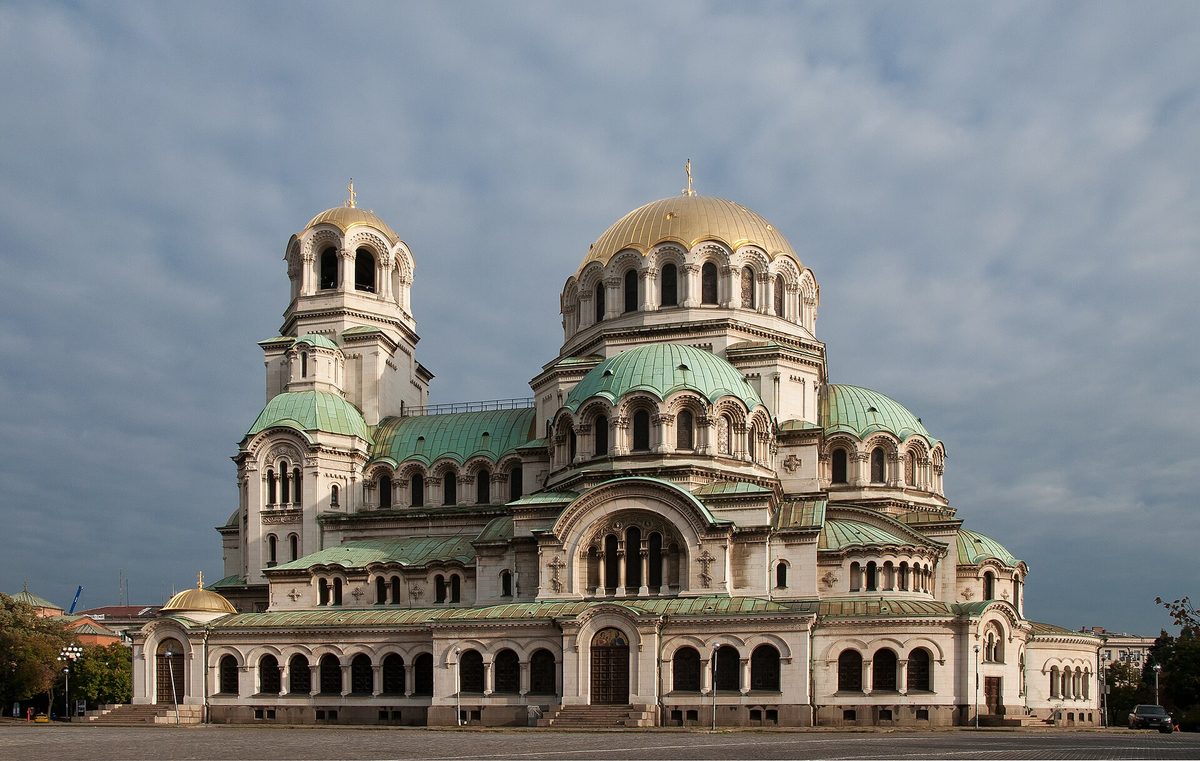
Sofia itself is underrated and slightly scruffy in a way I like. Alexander Nevsky’s gold domes, a Roman street layer visible under the metro station, and Vitosha mountain close enough to hike on a free afternoon. Sofia averages 21°C to 27°C from May to September and takes 734 mm of rain a year, most of it in May.
Day 8, Rila Monastery. A two-hour drive south of Sofia and the most photographed building in Bulgaria for good reason: candy-striped arcades under a wall of mountains, frescoes covering every surface of the porch. The monastery complex and church are free to enter. The Church History Museum charges separately; the price I found was still quoted in lev at 8 BGN adult and 2 BGN concession, which converts to roughly €4 and €1, but I could not confirm the euro-denominated 2026 price, so carry a little cash and expect small change.
Days 10 to 12, Plovdiv. One of the oldest continuously inhabited cities in Europe, and my favourite in Bulgaria. The Roman theatre above the old town still hosts concerts. The Kapana creative quarter has the coffee and the bars. The cobbled hill streets of the old town have the National Revival mansions. Three nights is generous and you will use them.
I could not pin down a reliable Sofia to Plovdiv train time or fare within my research budget, so I am not going to invent one. It is a short hop, well under two hours by road, with frequent buses; check BDZ for the train the week you travel.

Extending south. Sofia to Bucharest by direct train is nine hours forty, departing Sofia 07:20 and arriving 17:00, at 161 RON, about €31, if you want to close the loop by rail instead of flying. It is a slow day but a cheap one.
See the cheapest places to travel in Europe for how these two compare against the rest of the continent on cost.
Route 6: The Baltic Run (10 days)
Tallinn → Riga → Vilnius → Trakai → Warsaw
Three capitals in ten days, all of them small, all of them walkable, and connected by the most comfortable long-distance coaches in Europe. This is the easiest route on the list logistically and the one with the shortest useful season.
A note on the trains, because it comes up constantly. Rail Baltica, the high-speed line that will eventually link Tallinn to Warsaw, is not open and will not open in 2026. Phase I is now targeted for completion by 2030, with phased service launches from 2030 and full opening in the early 2030s. Plan the Baltics as a coach trip and nothing will disappoint you. Lux Express and Ecolines run the routes, the coaches have reclining seats, wifi and free coffee, and they are better than the trains would be.
Days 1 to 3, Tallinn. The medieval old town is a UNESCO site and free to walk; individual museums charge separately. Tallinn runs from about 0°C in February to 23°C in July, with June to August at 19°C to 23°C and 76 to 85 mm of rain a month. It is a summer city, and in midsummer the light barely goes. Three nights: one for the old town, one for the Kalamaja and Telliskivi districts, one for the ferry to Helsinki if you want a fourth country.

Days 4 to 6, Riga. Tallinn to Riga on Lux Express takes about four hours twenty five, roughly €13 to €26. Riga has some of the densest art nouveau architecture in Europe, an enormous covered market in five old zeppelin hangars, and a food scene that has overtaken both its neighbours. Three nights, with a day at Jūrmala’s beach if the weather holds.
Days 7 to 9, Vilnius and Trakai. Riga to Vilnius is about four hours ten on Lux Express. Vilnius has one of the largest baroque old towns in Europe and the strangest neighbourhood in it: Užupis, a self-declared republic with its own constitution nailed to a wall in twenty languages.
Trakai Island Castle is half an hour out, €12 in summer and €10 in winter, with €6 and €5 reductions for students and seniors. You can walk the lakeshore and see the castle across the water without paying anything, which is the better photograph anyway.

Day 10, Warsaw. Vilnius to Warsaw is the awkward leg: no fast train, a long coach, or a short flight. Fly unless you enjoy the principle of the thing. Tallinn to Vilnius end to end, if you ever need it, is seven hours fifty five on the fastest coach and about nine hours ten on the cheapest.
Route 7: The Grand Loop (30 days)
Berlin → Prague → Kraków → Budapest → Ljubljana → Zagreb → Split → Dubrovnik → Kotor → Sarajevo → Belgrade → Sofia → Plovdiv → Bucharest
Eleven countries, one month, and the version of this trip that most people daydream about. It is doable, and I have built it for readers several times, but there are three things to get right.
First, the direction. Run it north to south if you are travelling between April and June, so you arrive on the Adriatic as it warms up. Run it south to north from September, so you leave the coast before the ferries stop and hit Central Europe for autumn. Do not run it north to south in September unless you like a cold sea.
Second, the Schengen maths. This route dips out of Schengen for Bosnia, Montenegro and Serbia, which pauses your Schengen clock for those days. Over a month it is not a constraint. Over three months it is the whole plan. There is a section on this below.
Third, the pace. Fourteen stops in thirty days averages just over two nights each, which is too fast. My version gives three nights each to Prague, Kraków, Budapest, Split, Sarajevo and Plovdiv, two to everywhere else, and drops Zagreb or Sofia if the numbers do not work. Cutting two stops from a month-long route is the single highest-value edit you can make to it.
Our one month Europe itinerary covers the pacing question across the whole continent, and three weeks in Europe is the shorter version of the same idea.
Money in 2026: what changed, and what each country uses now
Two changes since 2023 have redrawn the currency map here, and getting them wrong costs you money at an airport exchange desk.
The headline: Bulgaria joined the euro area on 1 January 2026, the twenty-first member, at a fixed conversion rate of 1.95583 lev to the euro. Prices were displayed in both currencies either side of the changeover. Croatia made the same switch on 1 January 2023, and was the first country ever to join the euro and Schengen on the same day. The list of countries here that still print their own banknotes is shorter than it used to be.

What each country uses
| Country | Currency in 2026 | Rough rate to €1 | Notes |
|---|---|---|---|
| Poland | Złoty (PLN) | 4.32 | Floating. Was 4.25 in mid-June 2026, so it moves |
| Czechia | Koruna (CZK) | 24.26 | Floating. No euro adoption planned |
| Hungary | Forint (HUF) | 356.78 | Floating. Large numbers, easy to misread a price |
| Romania | Leu (RON) | 5.23 | Floating |
| Bulgaria | Euro | n/a | Adopted 1 January 2026 at 1.95583 lev |
| Croatia | Euro | n/a | Adopted 1 January 2023 |
| Slovenia | Euro | n/a | Adopted 1 January 2007 |
| Slovakia | Euro | n/a | Adopted 1 January 2009 |
| Estonia | Euro | n/a | Adopted 1 January 2011 |
| Latvia | Euro | n/a | Adopted 1 January 2014 |
| Lithuania | Euro | n/a | Adopted 1 January 2015 |
| Montenegro | Euro | n/a | Adopted unilaterally in 2002, outside the euro area |
| Serbia | Dinar (RSD) | about 117 | Floating |
| Bosnia and Herzegovina | Convertible mark (BAM) | 1.95583 | Pegged to the euro since 1998. Halve the number |
| North Macedonia | Denar (MKD) | about 61.5 | De facto pegged since 2002 |
| Albania | Lek (ALL) | about 94 | Floating |
Two rules that save you money
Always decline dynamic currency conversion when a card machine offers to charge you in your home currency, because the exchange rate baked into that offer is worse than your bank’s. And carry a little cash in the Balkans, where card terminals are more common than they were but tipping in particular still works better with notes.
Borders, Schengen and the 90/180 rule
Two changes have reshaped this in the last two years.
Romania and Bulgaria are fully in Schengen. They joined for air and sea borders in March 2024, and land border controls were lifted from 1 January 2025 following a Council decision the previous December. You will not be stopped crossing from Hungary into Romania, or from Romania into Bulgaria. Several page-one guides still say otherwise.
The EU’s Entry/Exit System is live. The progressive rollout began on 12 October 2025 and the system became fully operational on 10 April 2026. It replaces passport stamping with a biometric record of your entries and exits, which means the 90/180 count is now automatic, not a border guard squinting at ink. ETIAS, the pre-travel authorisation for visa-exempt visitors, is expected in the last quarter of 2026 at around €7 and valid three years, but it only starts once EES is fully bedded in and the date has moved before. Check our Schengen visa and ETIAS guide before you book anything long.
The 90/180 rule, correctly stated
On any given day inside the Schengen Area, look back over the previous 180 days and count every day you were inside it. The total must be 90 or fewer. Days do not reset when you leave; each one expires individually 180 days after it was used, on a rolling window. This trips people up constantly, because “I left for a month so I get a fresh 90” is intuitive and wrong.
| In Schengen | Not in Schengen |
|---|---|
| Germany, Austria, Poland, Czechia, Slovakia, Hungary, Slovenia, Croatia, Romania, Bulgaria, Estonia, Latvia, Lithuania | Serbia, Bosnia and Herzegovina, Montenegro, Albania, North Macedonia, Kosovo |
This is the strongest structural argument for putting the Western Balkans in the middle of a long trip rather than at the end. Six weeks in Central Europe plus six weeks in the Balkans is comfortably legal for a visa-exempt visitor. Twelve weeks in Central Europe is not.
Each non-Schengen country runs its own separate clock. Broadly, and you should confirm it against your own government’s advice and not mine: Serbia, Bosnia and Herzegovina and North Macedonia give 90 days in any 180 to US, UK, EU, Canadian and Australian passport holders; Montenegro gives 90 days to Americans, Canadians and Australians, with conflicting reports on the UK allowance that I could not resolve; Albania is unusually generous at up to a year. Several of these countries also accept a valid Schengen, UK or US visa as a substitute entry document, on different terms in each case. For anything load-bearing, read travel.state.gov or gov.uk/foreign-travel-advice, not a travel site.
Getting between cities: every leg, with times and fares
Transport is the part of the plan that constrains everything else, so here it is in one place. Times are the fastest scheduled service where I could confirm it, fares are indicative advance prices, and both move.

| Leg | Mode | Fastest time | Operators | Indicative fare |
|---|---|---|---|---|
| Berlin to Prague | Train | 3h46, about 3h50 average | DB, ÖBB, ČD, RegioJet | from €15 to €19 |
| Prague to Kraków | Train | 5h49 on RegioJet, about 7h average | RegioJet, Leo Express | from about €13 |
| Prague to Vienna | Train | 3h57, about 4h15 average | ÖBB and ČD railjet, RegioJet | from €11 to €15 |
| Vienna to Bratislava | Train | 56 min, hourly | ÖBB REX | €12.70, or €18 with a transit day pass |
| Vienna to Budapest | Train | 2h20, about 2h30 typical | ÖBB and MÁV railjet | from about €19 |
| Warsaw to Kraków | Train | 2h20 Pendolino, about 3h average | PKP Intercity | 49 PLN advance, about 199 PLN walk-up |
| Kraków to Wrocław | Train | 2h51, about 3h08 typical | PKP Intercity | from about €5, much more last minute |
| Kraków to Budapest | Train | Requires a change; see note below | PKP Intercity and partners | from about €19 |
| Budapest to Ljubljana | Train | About 7h30 to 9h, bus can be 6h | Slovenian Railways, MÁV | varies, check the week of travel |
| Ljubljana to Zagreb | Train | About 2h20 average, 7 a day | Slovenian Railways, HŽ | €11 to €19 |
| Zagreb to Split | Train | About 8h, one a day | HŽPP | from about €19 |
| Split to Dubrovnik | Bus | 3h35, about 4h12 typical | Nomago, FlixBus | €13 to €42, usually €19 to €25 |
| Split to Dubrovnik | Catamaran | Just under 6h via three islands | Jadrolinija line 841 | about €50 |
| Dubrovnik to Kotor | Bus | 1h50 to 2h30 driving, plus border | various | about €25 |
| Belgrade to Sarajevo | Bus | 7h35, about 9h10 typical, 24 a day | Centrotrans and others | €22 to €47 |
| Sarajevo to Mostar | Train | 1h58, twice daily | ŽFBH Talgo | €7 to €9 |
| Bucharest to Braşov | Train | About 2h31 average | CFR Călători | low, book at the station |
| Sofia to Bucharest | Train | 9h40, one direct daily | CFR Călători | 161 RON, about €31 |
| Tallinn to Riga | Coach | About 4h25 | Lux Express, Ecolines | €13 to €26 |
| Riga to Vilnius | Coach | About 4h10 | Lux Express, Ecolines | similar |
| Tallinn to Vilnius | Coach | 7h55 fastest, 9h10 cheapest | Lux Express | from about €22 |
Three notes on that table
The Kraków to Budapest leg is the one I would not quote a single time for. Sources conflict badly, one giving a daytime direct of about eight and a half hours and another saying there is no direct at all, and the PKP sleeper that used to serve it has been rerouted onto a faster line that bypasses Kraków. Assume a change and check the operator before you build a day around it.
The Budapest to Belgrade express service is still not running. The reconstructed high-speed line, a €938 million project largely financed by a Chinese loan, opened its Belgrade to Subotica section on 8 October 2025 with a one-hour inaugural run over 183 kilometres. Through express trains were due to resume in March 2026, were postponed over problems with the new signalling system, then postponed again, and are now indicated for early autumn 2026. The target once it does open is ninety minutes end to end, against about four hours by car. Until then, take the bus or fly.
Rail Baltica is not open, will not open in 2026, and is now targeted for phased launches from 2030. Plan the Baltics on coaches.
Our guide to train travel in Europe covers booking windows and seat reservations, and our guide to getting between them compares trains, buses and budget flights properly.

Is an Interrail or Eurail pass worth it in Eastern Europe?
Usually not, and the arithmetic is easy enough to do in your head once you have the numbers. Here are the 2026 Global Pass prices, adult second class, valid as of 5 January 2026.
| Pass | Adult 2nd class | Youth 12–27 | Senior 60+ |
|---|---|---|---|
| 4 days within 1 month | €283 | €212 | €255 |
| 5 days within 1 month | €318 | €239 | €286 |
| 7 days within 1 month | €381 | €286 | €343 |
| 10 days within 2 months | €447 | €335 | €402 |
| 15 days within 2 months | €553 | €415 | €498 |
| 15 days continuous | €476 | €357 | €428 |
| 22 days continuous | €586 | not offered | not offered |
| 1 month continuous | €696 | €522 | €626 |
| 2 months continuous | €826 | not offered | not offered |
| 3 months continuous | €956 | not offered | not offered |
Now run the rail spine of Route 1 against it, using the advance fares in the table above. Berlin to Prague at €18, Prague to Vienna at €14, Vienna to Bratislava at €12.70 and Vienna to Budapest at €19 comes to €63.70 of tickets. The cheapest Global Pass that would cover those four travel days costs €283, and the bus legs and reservations are extra on top. The pass loses by more than four to one.
The pass starts to make sense at ten to fourteen travel days across multiple countries with several long hops, and it makes most sense for youth and senior travellers, whose prices are roughly 25% and 10% lower respectively. It also has a real non-financial benefit on a flexible trip: you can walk to a station and get on a train. Reservations are still required and charged separately on most high-speed and night services, which erodes that flexibility somewhat.
The pass is weakest exactly where this region gets interesting. Serbia, Bosnia, Montenegro and Albania run on buses that no pass covers. Croatia’s coast runs on buses and ferries. If your route is mostly Balkan, buy tickets as you go.
Children under 4 travel free without a pass, and children aged 4 to 11 travel free on a Child Pass, up to two per accompanying adult.
What a day on the ground costs
Two warnings before the numbers. First, budget figures for this region vary enormously between sources because the methodologies differ: an aggregator counting flights and hotels will produce a number twice as high as a backpacker survey counting dorm beds and bakery lunches. I have kept those two families of figure separate instead of blending them into a false average. Second, Croatia’s coast in July and August behaves like a different continent from Croatia’s interior in May, so treat the country-level numbers as a floor rather than a forecast.
| Country | Backpacker, per person per day | Typical dorm bed | Where the money goes |
|---|---|---|---|
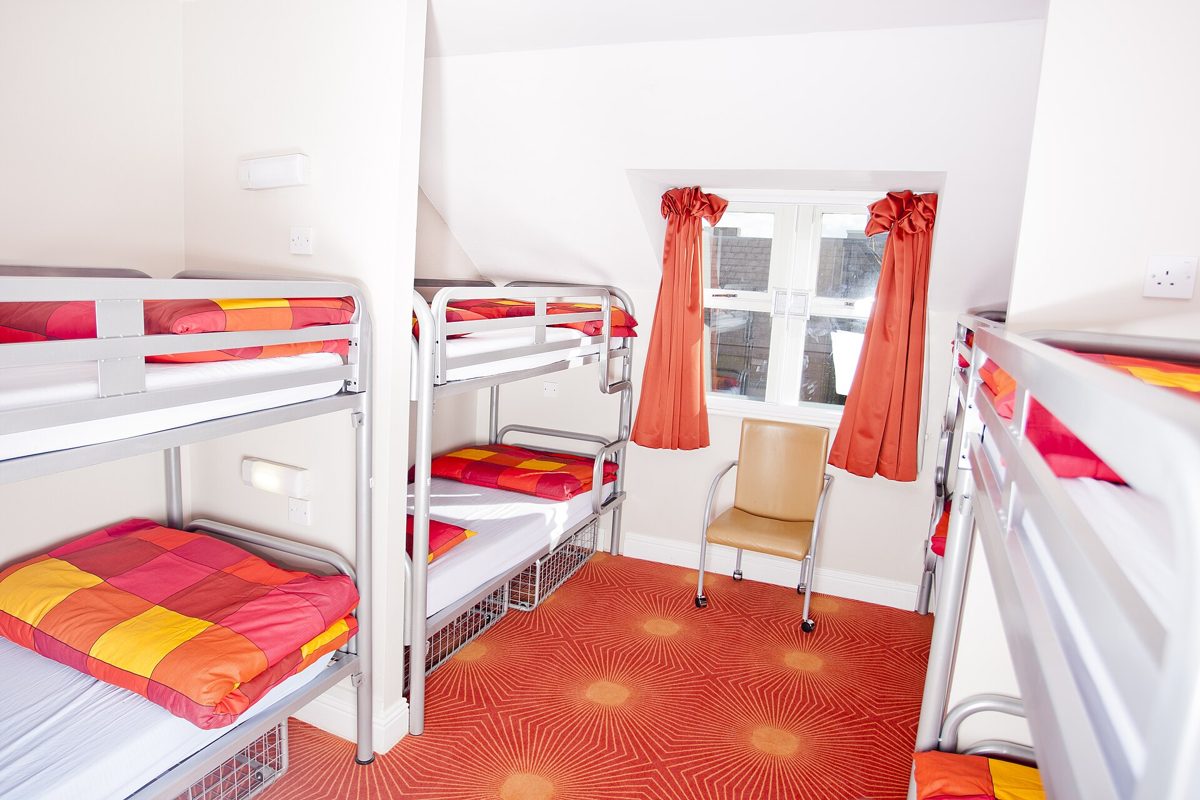
| Bosnia and Herzegovina | $28 to $40 | €10 to €15 | Almost nothing. Meals under $5 are normal |
| Bulgaria | $28 to $40 | €8 to €12 | Cheapest dorms in the region |
| Albania | $28 to $40 | €10 to €15 | Beach towns in August are the exception |
| Serbia | $30 to $45 | $8 to $15 in central Belgrade | Meals €8 to €12 with wine |
| Romania | $30 to $45 | about $12 in Bucharest | Mid-range dinner for two about $45 |
| North Macedonia | $30 to $45 | €10 to €15 | Transport is the main cost |
| Poland | $35 to $55 | about €16 | Beer €2.50 to €3 outside the square |
| Hungary | $35 to $55 | €15 to €20 | Baths and ruin bars, not accommodation |
| Czechia | $40 to $60 | €18 to €25 | Prague old town pricing is a trap |
| Baltic states | $45 to $65 | €18 to €28 | The most expensive part of the region |
Above that band, mid-range travel across the region runs around $70 a day on the ground, and comfortable travel with private rooms, taxis and paid attractions sits at roughly $80 to $130. For comparison, a budget day in Western Europe starts around $90 and runs to $150. That gap is the entire reason people come here.
A useful reference point from one costing I found: a fourteen-night Balkan trip flying from the United States, with three nights in Budapest, three in Belgrade, two in Sarajevo, two in Plovdiv, two in Sofia and two in Braşov, came to $1,200 to $1,550 all in on a budget footing and $1,800 to $2,150 mid-range. That includes the transatlantic flight.
Prague is the exception that people underestimate. Peak summer hotel rates run 40% to 60% above shoulder season, while May and September sit 15% to 20% below peak. On the Croatian coast the gap is far wider: a four-star hotel at €40 to €80 a night in April can be €200 to €400 in July or August, and a three or four-star Adriatic hotel averages around €220 a night in high summer. Shoulder-season savings on the coast run 30% to 50%.
Our budget travel guide and the backpacking guide both go further on stretching money here.
Tickets, prices and booking lead times
This is the table I wish someone had handed me before my first trip. Prices are 2026 adult rates where I could confirm them.
| Site | Adult price | Book ahead? | The thing to know |
|---|---|---|---|
| Auschwitz-Birkenau, self-guided | Free | Yes, essential | Timed card, online only, released no more than 7 days ahead and gone fast |
| Auschwitz-Birkenau, guided | 150 PLN, about €35 | Yes, weeks ahead in summer | 3.5 hours, both sites, 8 languages. Photo ID required |
| Wieliczka Salt Mine, Tourist Route | 143 PLN, about €33 | Recommended | The Miners’ Route was listed at the same price and is better on a repeat visit |
| Malbork Castle, Historical Route | 80 PLN, about €18 | Not usually | Free on Mondays, but grounds only |
| Prague Castle circuit | 450 CZK, about €18 | No | Covers the palace, basilica, Golden Lane and St Vitus |
| Terezín Memorial | 310 CZK, about €13 | No | Full ticket covering all sites; 240 CZK reduced |
| Széchenyi Baths, Budapest | about HUF 13,576, €38 | Worth it in summer | Fast track with locker. Gellért is closed until at least 2028 |
| Buda Castle funicular | HUF 5,500 return, about €15 | No | Children 3 to 14 pay HUF 3,000 return; walking up is free and takes 15 minutes |
| Plitvice Lakes, peak | €40, or €25 after 16:00 | Yes, weeks ahead in summer | 12,000 daily cap, 300 per hour per entrance |
| Plitvice Lakes, winter | €10 | No | Same boardwalks, a quarter of the price |
| Dubrovnik city walls | about €40 high season, €15 winter | No, but go at opening | Level with peak Plitvice as the steepest ticket here |
| Bled Castle | €19 | No | €16 over 65, €11.50 student, €7 child 6 to 14 |
| Vintgar Gorge | Check the official site | Yes, 48 hours ahead in July and August | Capped entry. Prices are quoted inconsistently online |
| Kotor city walls | Quoted between €8 and €15 | No | 1,350 steps. Part of the wall system is free |
| Belgrade Fortress | Free | No | Kalemegdan park is open; interior museums charge separately |
| Sarajevo Tunnel of Hope | 20 BAM, about €10 | No | 8 BAM for students |
| Mostar Old Bridge jump | €30 all in | No | €10 practice jump plus €20 for the bridge, which buys lifetime club membership |
| Bran Castle | 120 lei, about €23 | No | No audio guide included, no refunds |
| Peleş Castle | 100 lei, about €19 | Recommended in summer | Ground and first floor. The better castle of the two |
| Rila Monastery | Free | No | The Church History Museum charges separately |
| Trakai Island Castle | €12 summer, €10 winter | No | €6 and €5 reduced. The grounds are free |
| Tallinn Old Town | Free | No | UNESCO listed and open. Museums charge individually |
Two rows in that table will actually change your plan: Auschwitz and Plitvice. They are the only entries on any of these routes where turning up without a reservation means being turned away.
Tourist taxes, city by city
Small numbers that add up over a fortnight, and easy to forget when you are comparing room rates.
| City | Charge | Notes |
|---|---|---|
| Prague | €2.00 per person per night | Age 18 and over |
| Budapest | 4% of the room rate per night | Per room, adults |
| Ljubljana | about €3.91 per person per night | €3.13 plus a 25% promotional levy. Highest in Slovenia |
| Dubrovnik | €2.65 April to September, €1.85 October to March | Per person per night |
| Vienna | 5% of the net room rate | Raised from 3.2% on 1 July 2026, going to 8% on 1 July 2027. Excludes VAT and breakfast |
| Kraków | None | Polish law has no provision for one. Any “infrastructure fee” is a private charge |
When to go
The short answer
May, June, September and early October. That is the answer for almost everybody, and it is the answer for cost as much as for weather. The tourist season here runs roughly May to mid-October, and the shoulder months at either end give you milder temperatures, thinner crowds and prices 15% to 50% below the July peak depending on where you are.
| City | Summer high | Winter high | Rain notes |
|---|---|---|---|
| Prague | up to 24°C | about 0.4°C at its coldest | Wettest in May at 77 mm, driest in February at 23 mm |
| Kraków | 25°C in July | 2°C in January | Continental, wet summers |
| Dubrovnik | 28°C in July | 11°C in January | 42 mm in July, very dry |
| Sofia | 21°C to 27°C May to September | cold, mountain-adjacent | 734 mm a year, 91 mm in May, 50 mm in September |
| Bucharest | 31°C in August | 4°C in January | 698 mm a year, wettest in June at 92 mm |
| Tallinn | 23°C in July | 0°C in February | 724 mm a year, 76 to 85 mm a month in summer |
Three caveats to the shoulder-season advice, all of which I have run into personally. Conference season pushes hotel prices up in September in the bigger capitals, so the saving is smaller than the weather suggests. Small towns before May or after October can feel closed instead of quiet, with restaurants shut and one bus a day. And summer daylight here is long: it stays light past nine in the evening in June, which effectively adds hours to your sightseeing day and partly justifies the crowds.
Going in winter
Winter is a real option for the Central European half. Concert season is running, and outside Prague, which is busy year round, and the Christmas markets in Kraków and Budapest, the crowds simply are not there. Some sights close or run limited hours, and Plitvice at €10 with snow on the boardwalks is one of the better value days in Europe. Our guide to the best places to visit in Europe in winter and Christmas markets in Europe both lean heavily on this region for exactly that reason.

For the wider seasonal picture, see the best time to visit Europe.
Swaps: what to trade if your dates or budget change
Every route above assumes things go to plan. They rarely do. These are the substitutions I reach for when a reader’s dates shift or a price comes back higher than expected.
| If this is the problem | Drop | Add | Why it works |
|---|---|---|---|
| Travelling in July or August on the coast | Dubrovnik | Kotor or Korčula | Same Adriatic, far fewer cruise passengers and a cheaper wall ticket |
| Budget came back too high | Vienna | Bratislava plus a Vienna day trip | Sleep 56 minutes away for a third of the room rate |
| Only ten days, not fourteen | Zagreb, and one night on the coast | A third night in Budapest and in Split | Two fewer transfer days buys you two real days |
| Plitvice is sold out | Plitvice | Krka National Park | Far closer to Split and much easier to get into. Swimming is banned at Skradinski Buk and allowed only at Roški Slap, Stinica and Pisak from 1 June to 30 September |
| You want the Balkans but hate long buses | Belgrade to Sarajevo overland | A flight into Sarajevo, bus out to Mostar | Trades one nine-hour day for a two-hour train you will enjoy |
| Auschwitz cards are gone | The self-guided card | The 150 PLN guided tour | Guided slots are released on a longer horizon than free cards |
| Travelling in winter | The Adriatic leg entirely | Kraków, Budapest, Vienna and Prague markets | The coast shuts down; the capitals are at their best |
| You have already done Prague | Prague | Wrocław or Ljubljana | Similar architecture, a quarter of the crowds, better prices |
| Flights into Budapest are expensive | Budapest as the entry point | Belgrade or Bucharest | Both are Wizz Air bases, and Bucharest is now its largest anywhere |
| You want a beach but not Croatia’s prices | Split and Hvar | The Albanian Riviera around Ksamil | Comparable water, roughly half the cost |

Which route suits which traveller
First time in Europe. Route 1, ten days, no question. Frequent trains, English widely spoken in the tourist economy, three capitals that will not overwhelm you. Add Budapest nights if you can. Our first time in Europe itinerary makes the case in more detail.
Solo travellers. Route 4 or Route 2. The Balkans have the most sociable hostel scene in Europe, and Kraków and Sarajevo in particular are easy places to fall into company. See our solo travel guide for the practical side.
Families with children. Route 1 with Wrocław added. Short train legs, castles, and a city where finding bronze gnomes is a legitimate all-day activity. Avoid Route 4, where the bus days are long and the border waits are unpredictable. Our family travel guide has more.
Couples with two weeks and a decent budget. Route 3. It has the best single arc of any route here: a great capital, an alpine lake, a national park and an island coastline.
Travellers watching every euro. Route 4 or Route 5. Bosnia, Bulgaria and Albania are the three cheapest countries on the continent by daily cost, and the quality of what you get for the money is the highest anywhere in Europe.
Walkers and hikers. Route 5, with a car for two days in the Carpathians, or Route 3 with Triglav National Park bolted onto the Bled stop. Hiking in Europe covers the trails properly.
Repeat visitors who have done the obvious. Route 6, or Route 4 in reverse. The Baltics are the least-covered corner of the region and Vilnius in particular is badly under-visited. Our underrated round-up is the list I would start from.
A career break or a full month. Route 7, but cut two stops from it before you leave.
Phones, alphabets and the map next door
Data and roaming
The EU’s roam-like-at-home rules cover Poland, Czechia, Slovakia, Hungary, Slovenia, Croatia, Romania, Bulgaria and the three Baltic states, so an EU SIM works across the whole Central European half of this region at domestic rates. It does not cover Serbia, Bosnia and Herzegovina, Montenegro, Albania, North Macedonia or Kosovo. Check what your operator charges outside the EU before you cross into the Balkans, because the default rate can be unpleasant, and buy a regional eSIM if it is not clear. A cheap local SIM in Serbia or Bosnia is easy to pick up at any kiosk and usually costs less than one day of unplanned roaming.
Alphabets
Serbia, Bulgaria, North Macedonia and Montenegro use Cyrillic, though Serbia and Montenegro use Latin script alongside it and you will see both on the same street. Bus station departure boards in Belgrade and Sofia are frequently Cyrillic only. Learning the ten or so letters that differ takes about twenty minutes and turns an intimidating timetable into a readable one. Everywhere else on these routes is Latin script.
The war next door
Poland, Slovakia, Hungary, Romania and Moldova all border Ukraine, and it is a reasonable thing to ask about before booking. None of the routes in this article go near those borders: the closest any of them comes is Kraków, which is roughly 250 kilometres from the Ukrainian frontier and has been operating normally as a tourist city throughout. Travel to the region has continued without interruption. That said, this is exactly the kind of question where you should read your own government’s current advisory, at travel.state.gov or gov.uk/foreign-travel-advice, and not a travel article, because the picture can change and mine is a snapshot.
Mistakes I see people make
Treating the whole region as one transport system. Central Europe runs on frequent, punctual, cheap trains. The Balkans run on buses with approximate timetables and real border queues. A plan that works beautifully from Berlin to Budapest will fall apart south of Zagreb if you carry the same assumptions into it.
Booking flights before booking Auschwitz. The free entry cards are released no more than seven days ahead and are gone within hours in summer. If the visit matters to you, build the trip around the ticket.
Underestimating the Dubrovnik to Kotor border. Fifteen minutes at seven in the morning, three hours at one in the afternoon in August. It is the same road either way.
Using pre-2026 prices for Bulgaria. Anything quoted in lev needs converting at 1.95583, so check the publication date on any Bulgaria budget you find.
Assuming a rail pass saves money. On a two-week Central European route with advance fares it will cost you three or four times as much as tickets. Run the numbers on your specific legs before you buy.
Packing three cities into six days. The commonest error and the one people regret most. Two nights in a city gives you one full day. Three gives you two. Cutting a stop is almost always the right call.
Drinking the tap water in the wrong places. It is safe in Croatia, Czechia, Poland, Serbia’s major cities, Romania’s major cities, and in Sarajevo. Buy bottled in Montenegro, in rural Bulgaria and anywhere in Bosnia outside Sarajevo. In the old centres of Budapest and Prague the pipes are often lead, so run the cold tap for half a minute before you fill a bottle.
Trying to enter Serbia from Kosovo. Serbia does not recognise the Kosovo crossings as international borders, so without a prior Serbian entry stamp you may be refused. Enter Serbia first, then go on to Kosovo.
More of these in our general travel tips and how to plan a trip to Europe.
What I could not pin down
A few things I went looking for and did not find to a standard I would publish, listed here so you know where to do your own checking.
Sofia to Plovdiv rail times and fares. Vintgar Gorge and Kotor city walls ticket prices, both of which are quoted inconsistently across sources. The Rila Monastery museum price in euro rather than lev, post-changeover. Whether UK passport holders get 30 or 90 days in Montenegro, where sources flatly contradict each other. Accessibility information for the sites in the ticket table, which almost no operator publishes in English and which deserves a proper piece of its own.
There is also nothing here on Albania beyond a passing mention, nothing on North Macedonia or Kosovo, and nothing on Moldova or Ukraine. That is a limit of what fits in one route-planning article, not a judgement on any of them. Tirana is one of the most interesting capitals in Europe right now and Ohrid deserves a week.
Eastern Europe itinerary FAQ
How many days do you need in Eastern Europe? Ten days covers three cities properly, which is the minimum for the trip to feel like more than a sampler. Two weeks covers a country pair or one coherent arc such as Budapest to the Adriatic. A month covers a genuine cross-section. Below ten days, pick two cities and go deep rather than trying to tick off a region.
What is the best month to visit Eastern Europe? September, with May and June close behind. You get warm days, sea temperatures that are still holding on the Adriatic, thinner crowds and prices well below the July peak. Conference season pushes hotel prices up in the bigger capitals in September, so book earlier than you would in May.
What is the cheapest country to visit in Eastern Europe? Bosnia and Herzegovina, Bulgaria and Albania all sit around $28 to $40 per person per day on a backpacker footing, with Serbia and Romania just above. Bosnia gives you the most for the money in my experience: Sarajevo and Mostar between them are worth a week and cost almost nothing.
Is Eastern Europe safe to travel? Yes, and by most measures safer than Western Europe on violent crime. Poland and Czechia sit at the lowest US State Department advisory level. Petty theft in crowded tourist areas is the realistic risk, along with taxi overcharging around stations and airports. Use the ride-hailing apps instead of street taxis and you have removed most of the problem.
Do you need a visa for Eastern Europe? Not for short trips, for most Western passports. Schengen countries give you 90 days in any 180 across the whole area combined. The non-Schengen Balkan states each give their own 90 days, and Albania gives up to a year. ETIAS, the pre-travel authorisation for the Schengen countries, is expected in the last quarter of 2026 at around €7 for three years. Check your own government’s advice for anything that matters.
Is a Eurail or Interrail pass worth it in Eastern Europe? Rarely. Point-to-point advance fares are so cheap here that a Global Pass usually costs three to four times as much as the tickets it replaces, and it does not cover the buses and ferries that half the region runs on. It starts to work at ten to fourteen travel days across several countries, and for youth and senior travellers whose pass prices are lower.
Train or bus in Eastern Europe? Train from Berlin down to roughly Zagreb, bus everywhere south and east of that. The Baltics are coach country too, because Rail Baltica will not open until the 2030s. The two exceptions worth going out of your way for are Sarajevo to Mostar, which is the most beautiful two hours of rail in the Balkans for under €10, and the Bucharest to Braşov run through the Carpathians.
What currency is used in Eastern Europe? More euro than you would think. Slovenia, Slovakia, the three Baltic states, Croatia, Montenegro and now Bulgaria all use it. Poland, Czechia, Hungary, Romania, Serbia, Bosnia, North Macedonia and Albania keep their own, though Bosnia’s mark and Macedonia’s denar are pegged to the euro so the arithmetic is simple.
Can you drink the tap water in Eastern Europe? In most places, yes. Croatia, Czechia, Poland, Serbia’s cities, Romania’s cities and Sarajevo are all fine. Bulgaria is fine in towns and cities and best avoided in the countryside. Montenegro is the one country where I buy bottled by default, and I do the same in rural Bulgaria and in Bosnia outside Sarajevo. Let the cold tap run for thirty seconds in the old centres of Budapest and Prague, where lead pipes are still common.
Are two weeks enough for Eastern Europe? Enough for one route, not for the region. Two weeks is exactly right for Budapest to the Adriatic, or for the Balkan spine from Belgrade to Dubrovnik, or for Poland with Prague at the end. It is not enough to combine two of those, however the map makes it look.
Which Eastern European countries are in Schengen? Poland, Czechia, Slovakia, Hungary, Slovenia, Croatia, Estonia, Latvia, Lithuania, and since 1 January 2025 Romania and Bulgaria at land borders too. Serbia, Bosnia and Herzegovina, Montenegro, Albania, North Macedonia and Kosovo are outside it, which means your days there do not count against the Schengen 90.
What is the cheapest time to visit? Late autumn and winter outside the Christmas market weeks. Plitvice drops from €40 to €10, Dubrovnik’s walls from about €40 to €15, and Croatian coastal hotels fall by half or more. The trade is short days, closed restaurants in small towns, and no swimming.
Final thoughts
The mistake I made on that first trip was treating Eastern Europe as one place with one set of rules. It is at least three: a Central European core where the trains are better than most of Western Europe’s, a Balkan south where the buses set the pace and the money goes twice as far, and a Baltic north that is really a separate short trip.
Pick one of those, give it two weeks, and you will come home with something. Try to do all three in the same fortnight and you will come home with a phone full of railway stations.
Whichever route you take, do three things before you leave. Book Auschwitz and Plitvice first, because they are the only two things on any of these routes that can sell out entirely. Check the Bulgaria pricing on anything you read that was published before 2026. And cut one stop from whatever plan you have written, because you will be glad of the extra day and you will not miss the city you dropped.
Hannah Brooks has spent fifteen years travelling, living and writing across Europe, from the Arctic tip of Norway to the south of Sicily. She has planned hundreds of European itineraries for readers and is Senior Europe Editor at EuropeanTourism.org.
For more route planning, start with our complete Europe itinerary guide, then compare against the 7 day Europe itinerary, the western route and our roundup of the best cities to visit in Europe. If you are still deciding where to go at all, the best countries to visit in Europe and the best places to visit in Europe are the places to start, and our accommodation guide covers the accommodation side.
Photo credits
All images are used under the licences shown. Thanks to the photographers who released them.
- Photo: Godot13 / CC BY-SA 4.0 via Wikimedia Commons
- Photo: Estec GmbH, Billig Hotel in Prag (CC BY 3.0) via Wikimedia Commons
- Photo: Andrei Bobrovskiy / CC BY 3.0 via Wikimedia Commons
- Photo: Ercsaba74 (CC0) via Wikimedia Commons
- Photo: Ingo Mehling / CC BY-SA 4.0 via Wikimedia Commons
- Photo: Ben Snooks / CC BY-SA 2.0 via Wikimedia Commons
- Photo: Krzysztof Golik / CC BY-SA 4.0 via Wikimedia Commons
- Plitvice Lakes · Photo: OrionCro / CC BY-SA 4.0
- Split harbour and ferry port · Photo: Martin Brož / CC BY 3.0
- Korcula old town · Photo: Hilthart Pedersen (CC0)
- Dubrovnik Old Town from the air · Photo: dronepicr / CC BY 2.0
- Photo: User:Ggia / CC BY-SA 3.0 via Wikimedia Commons
- Photo: Dariusz Grosa (CC0) via Wikimedia Commons
- Photo: Plamen Agov (user:MrPanyGoff) (CC BY-SA 4.0) via Wikimedia Commons
- Photo: Avishai Teicher (CC0) via Wikimedia Commons
- Photo: Ypsilon from Finland (CC0) via Wikimedia Commons
- Photo: Augustas Didžgalvis / CC BY-SA 4.0 via Wikimedia Commons
- Photo: Avij / Public domain (CC0) via Wikimedia Commons
- Photo: Bahnfrend / CC BY-SA 4.0 via Wikimedia Commons
- Photo: WrS.tm.pl (CC0) via Wikimedia Commons
- Barnacles Budget Accommodation from Ireland / CC BY 2.0 via Wikimedia Commons
- Photo: Lgerzsenyi at en.wikipedia (CC0) via Wikimedia Commons
- Photo: Pudelek / CC BY-SA 4.0 via Wikimedia Commons