Western Europe Itinerary: 8 Routes, Costs and 2026 Train Times

The first Western Europe itinerary I ever wrote for a reader was a disaster. Eleven cities, sixteen days, four countries, and a train leg on day nine that I had cheerfully labelled “afternoon transfer” without checking that it was six hours and needed a reservation that had sold out three weeks earlier. She sent me a photo from a platform in Perpignan. It was raining. I have been apologising in the form of better itineraries ever since.
A good Western Europe itinerary is mostly a subtraction problem. Three to four countries and four to five cities in a fortnight, roughly three nights per stop, no single train leg over four hours: that is the shape that works, and almost every route below is a variation on it. What changes is which corner of the West you pick, what season you go in, and how much you are willing to spend on the expensive half of the map.
This guide gives you eight complete routes with day-by-day structure, the real 2026 train times and fares on every leg they use, what a rail pass actually costs against buying tickets one by one, the tourist taxes that quietly add a few hundred euros to a fortnight, the booking-release rules that decide whether you get into the Anne Frank House at all, and honest numbers on what the whole thing costs. I have also included the entry rules as they stand in August 2026, which have moved a great deal in the last eighteen months.
What counts as Western Europe (and why the answer matters for your route)
There is no single official definition, which is the root of most of the confusion around the term. Some pages mean “the old EU-15 minus the Nordics”. Some mean “anywhere west of the former Iron Curtain”, which drags in Greece. Some quietly mean “France, Belgium, the Netherlands and Germany” and stop there.
For planning purposes I use thirteen countries, and I split them by what they do to your budget, because that is the distinction that changes an itinerary:
| Country | Cost tier | In Schengen? | Currency | What it adds to a route |
|---|---|---|---|---|
| United Kingdom | Expensive | No | Pound sterling | London, Edinburgh, and a separate entry system from the EU |
| Ireland | Expensive | No | Euro | Dublin and the Atlantic coast; needs a flight or ferry to join the rest |
| France | Mid | Yes | Euro | The hinge of almost every Western route; Paris connects to everywhere |
| Belgium | Mid | Yes | Euro | Bruges and Ghent, and the cheapest short train legs on the continent |
| Netherlands | Mid | Yes | Euro | Amsterdam, plus the best rail links east into Germany |
| Luxembourg | Mid | Yes | Euro | A half-day stop, free public transport, rarely worth a night |
| Germany | Mid | Yes | Euro | Munich, Berlin and Cologne; almost no compulsory seat reservations |
| Switzerland | Very expensive | Yes | Swiss franc | The scenery premium, at roughly double the cost of France |
| Austria | Mid | Yes | Euro | Vienna and Salzburg; often bolted onto a German leg |
| Italy | Mid | Yes | Euro | Rome, Florence, Venice and Milan; hot in July, half-shut in mid-August |
| Spain | Lower mid | Yes | Euro | Excellent value, superb food, and the fastest domestic rail network in Europe |
| Portugal | Lowest | Yes | Euro | Lisbon and Porto; the lowest daily costs on this list by a clear margin |
| Monaco | Very expensive | Yes in practice | Euro | A day trip from Nice, and nothing more unless you are there for the sailing |
Two of those rows do real work. The United Kingdom and Ireland are outside the Schengen Area, so days you spend in London or Dublin do not count against your 90-day Schengen allowance, and you cross a proper border to get in and out. And Switzerland uses the Swiss franc, which trips up people who have budgeted in euros for the whole trip and then meet a Zurich lunch bill.
If your idea of Western Europe extends to Prague or Budapest, you want our Central and Eastern Europe travel guide instead, and if you are trying to work out which countries to prioritise at all, start with the best countries to visit in Europe.
All 8 Western Europe itinerary routes at a glance
Every route below is built to a rule: no more than one long travel day per week, at least two full days in any city worth the name, and no leg that requires a 05:00 alarm. Lengths are given in nights on the ground, so add your two flight days at either end.
The cost column is per person and covers accommodation, food, local transport and sights at a mid-range standard: a private room, one sit-down meal a day, and two or three paid attractions per city. It deliberately excludes train tickets, city tourist taxes and international flights, because those vary enormously with how early you book and I cost them separately further down. Every figure is built from the same published daily bands, applied night by night to the countries each route passes through.
| Route | Nights | Countries | Stops in order | Best for | Mid-range cost per person, on the ground |
|---|---|---|---|---|---|
| 1. The Classic Four Capitals | 10 | 4 (United Kingdom, France, Belgium, Netherlands) | London → Paris → Bruges → Brussels → Amsterdam | First-timers who want the famous cities and the shortest train legs in Europe | €795 to €1,295 |
| 2. Paris, the Alps and Northern Italy | 14 | 3 (France, Switzerland, Italy) | Paris → Lyon → Zurich → Lucerne → Milan → Venice | Anyone who wants cities plus mountains without doubling back | €1,455 to €2,485 |
| 3. The Iberian Loop | 12 | 2 (Portugal, Spain) | Lisbon → Porto → Madrid → Seville → Barcelona | Travellers who want Western Europe on the lowest realistic budget | €800 to €1,220 |
| 4. The Alpine Spine | 12 | 4 (Austria, Germany, Switzerland, Italy) | Vienna → Salzburg → Munich → Lucerne → Milan | Second-time visitors, mountain scenery, beer halls and opera houses | €1,170 to €1,990 |
| 5. London to Rome, the Grand Tour | 21 | 6 (United Kingdom, France, Netherlands, Germany, Switzerland, Italy) | London → Paris → Amsterdam → Munich → Lucerne → Milan → Florence → Rome | The one big trip, done properly, with two or three nights everywhere | €1,890 to €3,160 |
| 6. One Week, Two Cities | 7 | 2 (France, Netherlands) | Paris → Amsterdam | Short holidays, jet lag, and anyone who hates packing | €525 to €875 |
| 7. The One-Month Pass Route | 30 | 7 (United Kingdom, France, Spain, Italy, Switzerland, Germany, Netherlands) | London → Paris → Bordeaux → San Sebastian → Madrid → Barcelona → Nice → Milan → Lucerne → Munich → Amsterdam | Gap years, sabbaticals, and the only route here where a rail pass wins on maths | €2,700 to €4,410 |
| 8. The Cool-Summer Route | 14 | 5 (Ireland, United Kingdom, Netherlands, Belgium, France) | Dublin → Edinburgh → London → Amsterdam → Bruges → Paris | July and August travel that does not involve 40°C afternoons | €1,185 to €1,885 |
If none of these is quite your shape, the sibling guides go deeper on duration: 7 days in Europe, 10 days in Europe, 2 weeks in Europe and 3 weeks in Europe. The parent guide, how to plan a Europe itinerary, covers the planning method behind all of them.

How many days do you really need?
The consensus among people who plan these trips for a living is three to four countries and four to five cities in two weeks. I agree with it, and I want to explain the arithmetic, because “three nights per city” sounds arbitrary until you write out what a day actually contains.
A three-night stay gives you two full days plus a travel day. Arrive at 14:00, drop bags, walk, eat. Two clear days of sightseeing. Leave mid-morning on day four. That is the minimum that lets a city stop feeling like a queue.
A two-night stay gives you one full day. It works for compact places (Bruges, Lucerne, Salzburg, Bordeaux) and fails for Paris, Rome, London and Barcelona, all of which have more than one full day of unmissable things within walking distance of each other.
A one-night stay is almost always a mistake. You pay for a hotel, unpack, repack, and see a cathedral. I allow exactly one per itinerary, and only when it breaks a leg that would otherwise swallow a day.
| Nights on the ground | Realistic countries | Realistic city stops | What it feels like |
|---|---|---|---|
| 5 to 7 | 1 to 2 | 2 | A proper holiday if you resist adding a third city |
| 10 | 2 to 4 | 3 to 5 | The sweet spot for a first trip; busy but not frantic |
| 14 | 3 to 5 | 5 to 6 | Enough slack to lose a day to bad weather |
| 21 | 5 to 6 | 7 to 8 | You start to travel rather than sightsee |
| 30 | 6 to 7 | 10 to 11 | Laundry becomes a scheduled activity |
One more constraint that people underestimate: keep individual train legs under about four hours. Not because longer trains are unpleasant, they are lovely, but because a five-hour leg eats the day either side of it. A 09:00 departure and a 14:45 arrival is a travel day, full stop, and if you have only fourteen of them you cannot afford four.
The 8 routes, night by night
One convention before we start, because it is where most published itineraries go vague. The numbers below are nights on the ground, not calendar days. A 10-night route means ten hotel nights; add your two flight days at either end and it occupies twelve days of annual leave. Counting in nights is the only way to make an itinerary add up, and every total here does.
Route 1: The Classic Four Capitals (10 nights)
London → Paris → Bruges → Brussels → Amsterdam. Four countries, five stops.
This is the route I recommend most often, and I am not embarrassed about it. The four cities are famous for reasons that hold up in person, and the geography is a gift: the longest train you take is the Eurostar from London to Paris at 2h16, and the shortest is Bruges to Brussels at just under an hour. You spend almost no time in transit.

- Nights 1 to 3, London. Two full days. Do one museum-and-park day (British Museum, then Regent’s Park or Hyde Park) and one river day (Tower of London, walk the South Bank, Borough Market). Book nothing for the arrival afternoon.
- Nights 4 to 6, Paris. Eurostar across on the morning of night four: 2h16 city centre to city centre, about 35 minutes of it under the Channel. Two and a half days at the other end. Louvre one morning (it closes on Tuesdays, so check your dates), Musée d’Orsay another, and one day with no museums at all: Montmartre, the Canal Saint-Martin, a long lunch.
- Night 7, Bruges. Via Brussels, roughly two hours in total. One night is enough here and I mean that kindly. Walk the canals after the day-trip coaches leave at about 17:00, which is when the town becomes lovely rather than crowded.
- Night 8, Brussels. Just under an hour on the train. Grand-Place, the comic strip route, moules and a proper beer list. Brussels is undersold and one full day suits it perfectly.
- Nights 9 and 10, Amsterdam. Around 1h52 from Brussels on the fastest service, or 1h59 on the Eurocity Direct. One full day: the Anne Frank House if you managed to get tickets, the Rijksmuseum if you did not, and an evening walk through the Jordaan.
Why it works: total time on trains across the whole route is about seven hours. Where it strains: two nights in Amsterdam is tight. If you can add two nights anywhere, add them here or in Paris.
London is the expensive end, Bruges and Brussels the cheap end, and Amsterdam has the highest tax load in Western Europe on paper. Deeper city guidance sits in our UK travel guide, France travel guide and Netherlands and Amsterdam guide.

Route 2: Paris, the Alps and Northern Italy (14 nights)
Paris → Lyon → Zurich → Lucerne → Milan → Venice. Three countries, six stops.
The best-value fortnight on this page if what you want is variety rather than a checklist. A world capital, a food city, a lake, a mountain range and a lagoon, and the whole thing runs broadly north to south.
- Nights 1 to 4, Paris. Three full days. With this much time, add a day trip: Versailles if you have never been, Giverny if you have.
- Nights 5 and 6, Lyon. TGV from Paris, 2h00 to 2h10 on most services, with roughly thirty departures a day. Book a lunchtime train and you lose nothing. France’s serious eating city, and after Paris prices it feels like a rebate. Old Lyon, the traboules, one bouchon dinner.
- Night 7, Zurich. Lyon to Zurich means a change at Geneva or Basel, so treat this as a travel day and do not book anything for the evening. One night is plenty; Zurich is a hub more than a destination.
- Nights 8 and 9, Lucerne. A short hop from Zurich, and the better place to sleep in Switzerland: lake boats, Mount Pilatus and Rigi, and a compact old town. Budget hard here. Switzerland runs at roughly double French prices.
- Nights 10 and 11, Milan. Back through Zurich and south, 3h17 on the fastest service. The stretch through the Gotthard is one of the great European rail runs; sit on the left going south. In Milan: the Duomo roof at opening time, the Brera district, and the Last Supper if you booked in the correct quarterly release window.
- Nights 12 to 14, Venice. Stay on the islands, not in Mestre. Get lost in Cannaregio and Dorsoduro in the early morning before the day boats arrive.
Watch for: the Venice day-tripper access fee does not apply to you if you are staying overnight, but you still have to register. Details in the tax section. Our Switzerland travel guide and things to do in Venice go deeper on both ends of this route.
Route 3: The Iberian Loop (12 nights)
Lisbon → Porto → Madrid → Seville → Barcelona. Two countries, five stops.
Portugal rarely makes it onto a Western Europe route, which is a shame, because it is the cheapest country in the region and one of the most rewarding. This route is built around it, and it is comfortably the least expensive fortnight in this guide.
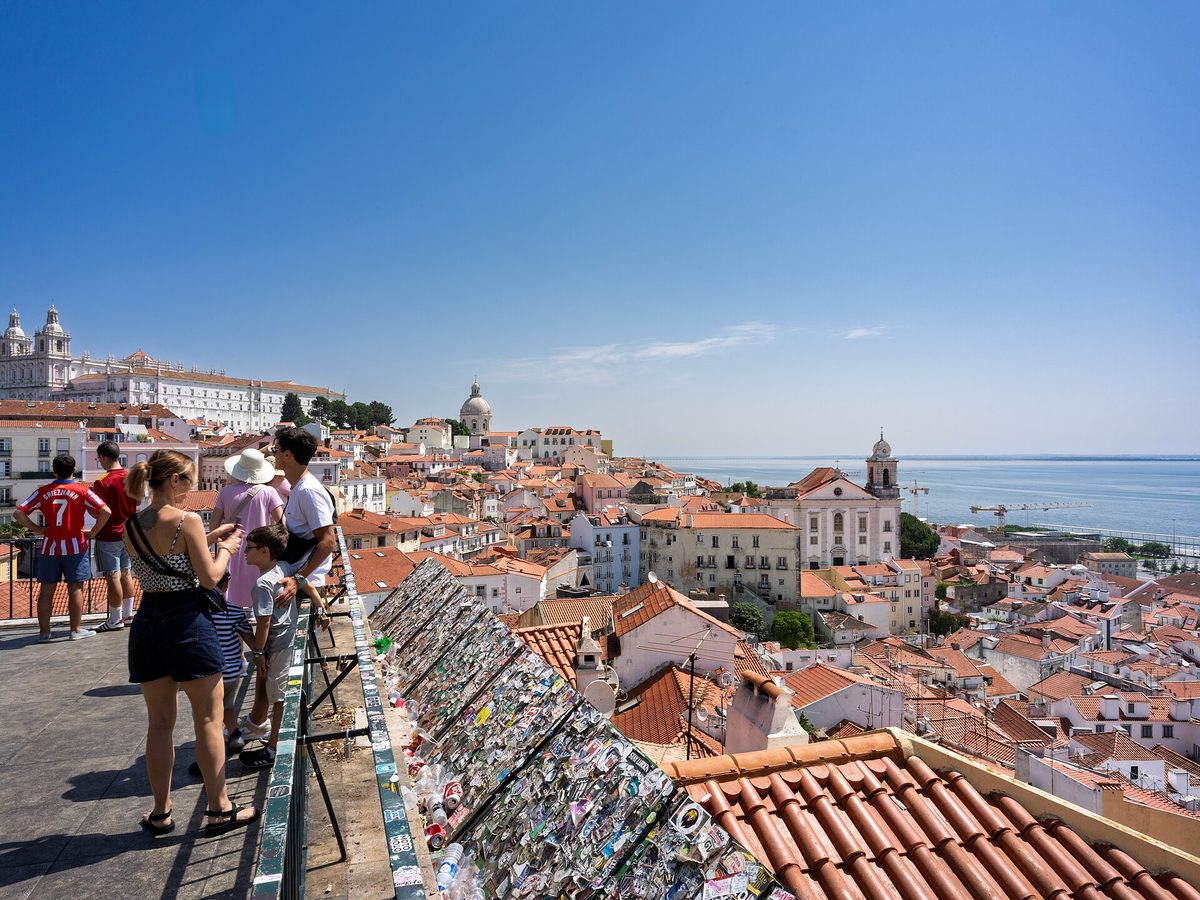
- Nights 1 to 3, Lisbon. Alfama, the tram 28 route walked rather than ridden, a full day in Sintra, and pastéis de nata often enough that you develop opinions.
- Nights 4 and 5, Porto. Alfa Pendular from Lisbon, 2h49 to 2h56. Standard second class runs around €35.70 and first around €49.90 at 2026 fares, but CP’s Promo fares open up to 60 days ahead and drop it to roughly €16 to €17. The Douro riverfront, the port lodges across the water in Gaia, and a day up the Douro valley if you stretch to a third night.
- Nights 6 and 7, Madrid. Fly Porto to Madrid; it is a little over an hour in the air, against a full day and a change on the ground. The Prado, the Reina Sofía, Retiro park, and dinner at an hour that will feel wrong for the first two days.
- Nights 8 and 9, Seville. The Alcázar, the cathedral, and the shade. Skip this leg entirely in July and August, when Seville is punishing, and give the nights to Barcelona instead.
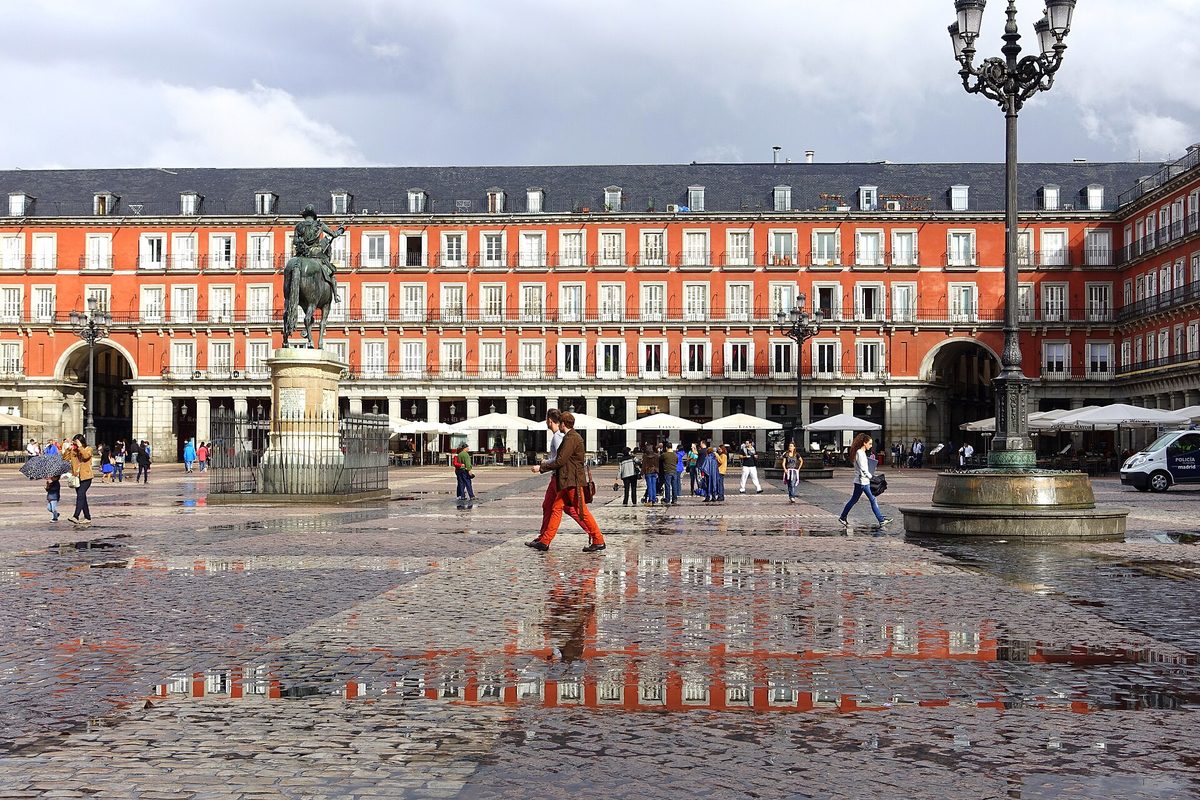
- Nights 10 to 12, Barcelona. Madrid to Barcelona on the AVE is 2h30 for 621 km, with more than twenty Renfe departures a day plus AVLO, iryo and OUIGO competing on the same track; advance fares start around €17. Sagrada Família (book it), the Gothic Quarter, Park Güell, and one afternoon that is a beach and a long lunch.
The honest caveat: five stops in twelve nights is the busiest ratio in this guide. If that worries you, cut Seville and give Lisbon and Barcelona an extra night each. Our Portugal travel guide and Spain travel guide have the city-level detail.

Route 4: The Alpine Spine (12 nights)
Vienna → Salzburg → Munich → Lucerne → Milan. Four countries, five stops.
A second-trip route. It skips Paris and London entirely, which is the point, and it runs east to west so that no leg is longer than about four hours. It also has an unusual practical advantage: German and Austrian trains mostly do not require compulsory seat reservations, so if you are travelling on a rail pass this is the stretch of Western Europe where the pass behaves like a pass.
- Nights 1 to 3, Vienna. Fly in. Kunsthistorisches Museum, Schönbrunn, standing-room opera tickets, and coffee houses treated as a destination rather than a caffeine stop.
- Nights 4 and 5, Salzburg. About two and a half hours west from Vienna. Fortress, old town, and one afternoon in the Salzkammergut lakes if the weather cooperates.
- Nights 6 to 8, Munich. Roughly an hour and a half on from Salzburg. The Residenz, the Englischer Garten, a beer hall you will pretend you found yourself, and a day trip to Neuschwanstein if castles are your thing.
- Nights 9 and 10, Lucerne. Munich to Zurich is a comfortable half-day, then a short hop to Lucerne. Same advice as Route 2: Lucerne is the better base, and Switzerland is where a twelve-night budget goes to die.
- Nights 11 and 12, Milan. The Gotthard crossing south from Zurich, from CHF 38 with SBB or about €25 with Trenitalia. Two nights, then fly home from Malpensa or Linate.
Why the pass maths changes here: in Germany, the Netherlands and Belgium, most domestic and cross-border regional and InterCity trains take no reservation at all, while France, Spain and Italy mostly charge for one. Run this route westbound as written; the direct Vienna to Zurich train takes the best part of eight hours, and going via Salzburg and Munich turns that into two civilised half-days. Our Germany travel guide and Austria travel guide cover the stops in more depth.
Route 5: London to Rome, the Grand Tour (21 nights)
London → Paris → Amsterdam → Munich → Lucerne → Milan → Florence → Rome. Six countries, eight stops.
Three weeks is the length at which a trip stops feeling like a holiday and starts feeling like travel. You get two or three nights everywhere, you stop packing every other morning, and you can lose a day to weather without the whole plan collapsing.

- Nights 1 to 3, London. Three full days, or two plus a day trip to Oxford, Bath or Brighton if you have been before.
- Nights 4 to 6, Paris. Eurostar across in a little over two hours.
- Nights 7 to 9, Amsterdam. Around 3h20 direct from Paris on the Eurostar route through Brussels and Rotterdam.
- Nights 10 to 12, Munich. This is the one genuinely awkward leg of the trip. Amsterdam to Munich is a long haul with limited direct services, and it will take most of a day whichever way you cut it. Two sane options: take the earliest departure and write the day off, or fly it in about an hour and a half and keep the afternoon. I usually fly this one and feel no shame about it.
- Nights 13 and 14, Lucerne. Munich to Zurich is a comfortable half-day, then a short hop on. Keep Switzerland to two nights; this is where a three-week budget takes its heaviest hit.
- Nights 15 and 16, Milan. South through the Gotthard, a little over three hours from Zurich. Use one of these nights for the Last Supper if the quarterly release worked in your favour.
- Nights 17 and 18, Florence. Milan to Florence is 1h30. Uffizi, Accademia, the Oltrarno for dinner, and the Duomo climb booked in advance.
- Nights 19 to 21, Rome. Florence to Rome is 1h25. Colosseum, Forum and Palatine on one ticket, the Vatican on another day, and one evening that is nothing but a walk between piazzas.
The variation I recommend most: swap Munich for Vienna if you prefer imperial cities to beer halls, or drop Switzerland entirely and give the two nights to Florence and Rome. Nobody has ever regretted more time in Rome.
Our things to do in Rome, things to do in Florence and Italy travel guide cover the southern half in detail.
Route 6: One Week, Two Cities (7 nights)
Paris → Amsterdam. Two countries, two stops.
Two cities in a week looks lazy written down. It is not. This is the itinerary I would choose for my own week off, and it is the best trip available to anyone flying in from North America or Asia, because the first thirty-six hours of a long-haul trip are not real anyway.
- Nights 1 to 4, Paris. Three full days plus a jet-lagged arrival afternoon spent walking somewhere green.
- Nights 5 to 7, Amsterdam. One train, roughly 3h20 direct. Book a mid-morning departure and you still get an afternoon at the other end. Two museums, one canal walk, one day trip (Haarlem is about fifteen minutes away, Utrecht a little further), and one evening with no plan.
What you gain by not adding Brussels: two half-days of packing, checking out, waiting and checking in. That is the entire argument, and on a seven-night trip it is a strong one. If you want three cities in a week, our 7-day Europe itinerary has routes built for it.

Route 7: The One-Month Pass Route (30 nights)
London → Paris → Bordeaux → San Sebastián → Madrid → Barcelona → Nice → Milan → Lucerne → Munich → Amsterdam. Seven countries, eleven stops.
This is the only itinerary here where I think a rail pass is likely to beat buying tickets one by one, and even then the case is not overwhelming. It works because it uses ten travel days across a month, several of them on legs where advance point-to-point fares are expensive rather than cheap.
- Nights 1 to 3, London. Then Eurostar to Paris.
- Nights 4 to 7, Paris. Use the extra night for Versailles or a Loire château.
- Nights 8 and 9, Bordeaux. Wine, the Cité du Vin, and the long curve of the Garonne at dusk.
- Nights 10 and 11, San Sebastián. Pintxos bars, the shell-shaped bay, and the moment Spain stops feeling like an abstraction.
- Nights 12 to 14, Madrid.
- Nights 15 to 17, Barcelona. Madrid to Barcelona on the AVE, 2h30.
- Nights 18 to 20, Nice. Barcelona to Nice runs along the coast through Perpignan and Montpellier. Treat it as a full travel day. Add a half-day in Monaco.
- Nights 21 and 22, Milan.
- Nights 23 to 25, Lucerne. Milan back through the Gotthard to Zurich, then a short hop on.
- Nights 26 to 28, Munich.
- Nights 29 and 30, Amsterdam. Fly home from Schiphol.
The pass maths, briefly: a 15-days-in-2-months Global Pass costs €553 for an adult in second class in 2026, or €415 for anyone under 28. Add reservation fees on the French, Spanish and Italian legs plus the Eurostar pass-holder fare, and you are realistically at €700 to €800 for ten journeys. Buying the same ten legs individually, well in advance, lands in a similar range and gives you no flexibility at all. On a month-long trip where plans change, that flexibility is worth paying a little for. On a ten-night fixed route, it is not. Full numbers in the pass section.
Our one month in Europe itinerary and backpacking Europe guide go further on long trips.
Route 8: The Cool-Summer Route (14 nights)
Dublin → Edinburgh → London → Amsterdam → Bruges → Paris. Five countries, six stops.
I built this one after the summer of 2025, and every year since has made the case stronger. In July, average daily highs are 32°C in Rome and 31°C in Madrid. The same month averages 20°C in Dublin, 22°C in Amsterdam and 23°C in London. If your only window is July or August and you do not enjoy heat, this route exists.

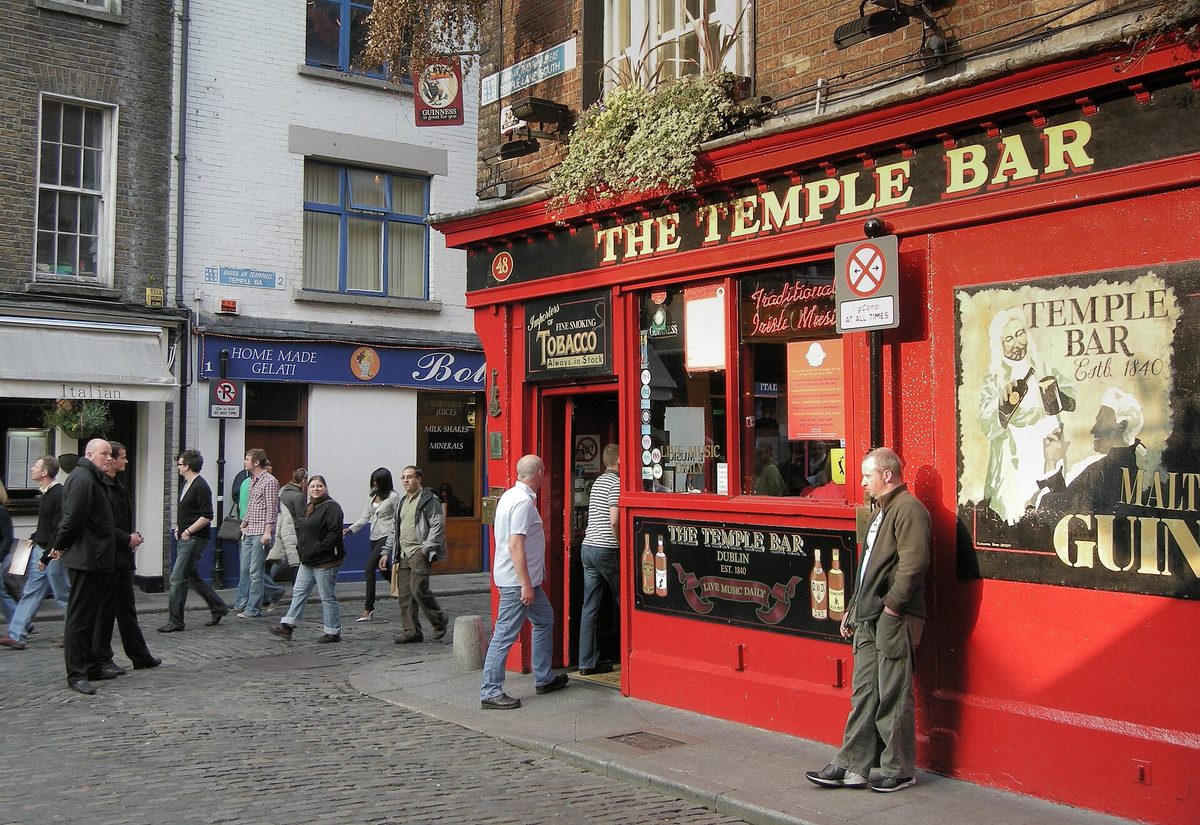
- Nights 1 to 3, Dublin. Trinity College, the Guinness Storehouse if you must, a day trip to Glendalough or Howth, and one long evening in a pub with music.
- Nights 4 to 6, Edinburgh. Fly from Dublin, or take the ferry to Holyhead (2h15 to 3h30 depending on the vessel, typically £38 to £60 as a foot passenger) and continue by train through north Wales and northern England. The ferry is slower and much better. Note that Edinburgh’s visitor levy applies from 24 July 2026, so budget 5% on top of your accommodation.
- Nights 7 to 9, London. Down the east or west coast main line, depending on which fare is cheaper on your dates.
- Nights 10 and 11, Amsterdam. The direct London to Amsterdam Eurostar is the neat option and the one I would book; flying is faster on paper and slower in practice.
- Night 12, Bruges. One night, en route south.
- Nights 13 and 14, Paris. Just under two hours from Bruges via Brussels. Paris in July averages 25°C, which is warm rather than punishing.
The trade-off, stated plainly: you will get rain. Possibly a lot of it. That is the price of a July trip where you can walk around at 15:00 without planning it around shade. If you would rather chase the sun and simply travel in the shoulder season instead, our best time to visit Europe guide has the month-by-month picture, and the Ireland travel guide covers the first leg.
All 25 cities in these routes, with the nights they deserve
Whichever route you start from, you will end up rearranging it. This table is the raw material: every city that appears anywhere above, what I would give it, roughly what it does to your daily spend, and the single thing worth knowing before you book it.
| City | Country | Nights I’d give it | Cost tier | Used on route | The one thing to know |
|---|---|---|---|---|---|
| London | United Kingdom | 3 | Expensive | 1, 5, 7, 8 | Free national museums offset the room rates. Book nothing for arrival day |
| Paris | France | 3 to 4 | Mid to expensive | 1, 2, 5, 6, 7, 8 | Eiffel Tower lift tickets release 60 days out at midnight Paris time |
| Bruges | Belgium | 1 | Mid | 1, 8 | Walk the canals after 17:00, once the coach parties leave |
| Brussels | Belgium | 1 | Mid | 1 | Undersold. One full day suits it, and the tax is per room rather than per person |
| Amsterdam | Netherlands | 2 to 3 | Mid, with expensive rooms | 1, 5, 6, 7, 8 | The Anne Frank House sells out weeks ahead and has no door sales at all |
| Lyon | France | 2 | Mid | 2 | France’s best eating city, at a discount to Paris |
| Zurich | Switzerland | 1 | Very expensive | 2 | A hub rather than a destination. One night is plenty |
| Lucerne | Switzerland | 2 to 3 | Very expensive | 2, 4, 5, 7 | Lake boats, Pilatus and Rigi. The Swiss Travel Pass, not Eurail, is the product here |
| Milan | Italy | 2 | Mid | 2, 4, 5, 7 | The Last Supper releases quarterly and sells out in hours from June to August |
| Venice | Italy | 3 | Mid to expensive | 2 | Stay on the islands. Overnight guests skip the day-tripper access fee |
| Lisbon | Portugal | 3 | Lowest | 3 | The cheapest major city in Western Europe. Sintra deserves a full day |
| Porto | Portugal | 2 | Lowest | 3 | CP Promo fares from Lisbon open 60 days ahead and roughly halve the price |
| Madrid | Spain | 2 to 3 | Lower mid | 3, 7 | The Prado and the Reina Sofia justify the stop on their own |
| Seville | Spain | 2 | Lower mid | 3 | Brutal in July. Superb in April, May and October |
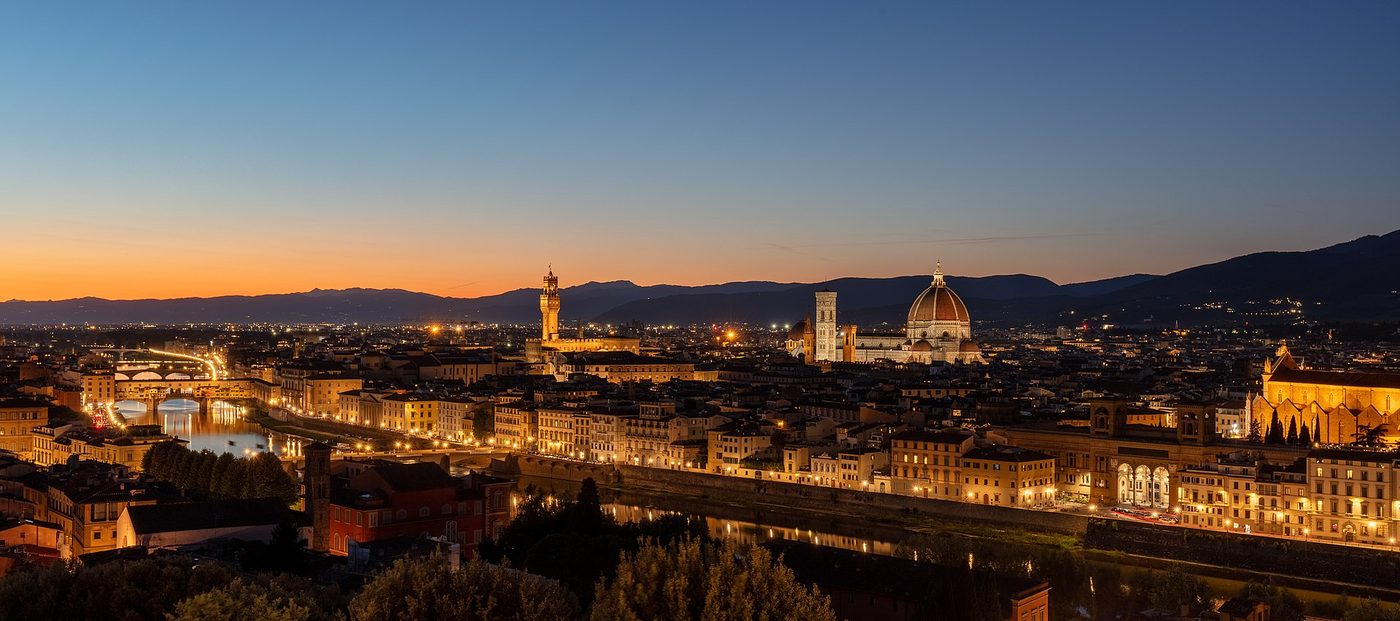
| Barcelona | Spain | 3 | Lower mid | 3, 7 | Sagrada Familia is timed entry. The city surcharge rose on 1 April 2026 |
| Vienna | Austria | 3 | Mid | 4 | Standing-room opera tickets are the best-value night out in this guide |
| Salzburg | Austria | 2 | Mid | 4 | A short hop from Munich, and the gateway to the Salzkammergut lakes |
| Munich | Germany | 3 | Mid | 4, 5, 7 | No compulsory seat reservations on German trains, which helps pass holders |
| Florence | Italy | 2 | Mid | 5 | Uffizi entry after 16:00 costs EUR 16 on site, against EUR 25 for a standard ticket |
| Rome | Italy | 3 | Mid | 5 | The Colosseum ticket automatically includes the Forum and Palatine Hill |
| Bordeaux | France | 2 | Mid | 7 | Wine, the Cite du Vin, and a much softer accommodation market than Paris |
| San Sebastian | Spain | 2 | Lower mid | 7 | Pintxos bars and a beach. The best single food night on any route here |
| Nice | France | 3 | Mid to expensive | 7 | Base for Monaco, Eze and the Corniches. July averages 27C |
| Dublin | Ireland | 3 | Expensive | 8 | Outside Schengen, so the days do not count against your 90/180 allowance |
| Edinburgh | United Kingdom | 3 | Expensive | 8 | The 5% visitor levy applies to stays from 24 July 2026, capped at five nights |
The “nights I’d give it” column is the part I would defend hardest. Almost every over-stuffed itinerary I am sent has Paris at two nights and Bruges at two, when the correct answer is the other way round. Size the stay to the city, not to the number of cities you want to be able to say you visited.
The key Western Europe rail legs, timed and priced
Journey times are easy to find. Fares are not, and fares are the entire planning question: the difference between booking Paris to Brussels two months out and buying it on the day is the difference between €29 and a number that will annoy you. Every leg used by the routes above is covered here, along with four more (Paris to Barcelona, Amsterdam to Berlin, Milan to Rome and Rome to Florence) that are the substitutions readers make most often.
| Leg | Fastest journey time | Advance fare from | Reservation compulsory? | Notes |
|---|---|---|---|---|
| London → Paris (Eurostar) | 2h16 | £39 one-way | Yes, it is a ticketed seat | 307 miles, about 35 minutes of it in the tunnel; up to 18 trains a day each way at peak |
| Paris → Brussels | About 1h30 | €29 | Yes | The €29 fare needs booking two to three months out |
| Brussels → Amsterdam | 1h52 (Eurocity Direct 1h59) | €19.99 to €25 | Depends on service | The Eurocity Direct is the cheaper, slightly slower option |
| Paris → Amsterdam | About 3h20 direct | €29 to €35 | Yes | Rail-expert figure is €35 including reservation, booked two to three months ahead |
| Paris → Lyon (TGV) | 2h00 to 2h10 | Varies with demand | Yes | About 30 departures a day, so there is always another train |
| Paris → Barcelona | 6h15 | €21 | Yes | Stops at Perpignan, Montpellier, Nîmes and Girona; still an SNCF and Renfe joint operation in 2026 |
| Paris → Zurich (TGV Lyria) | 4h03 to 4h04 | €29 | Yes | The Lyria reservation fee for pass holders is brutal; see below |
| Zurich → Milan | 3h17 | CHF 38, or €25 with Trenitalia | Yes | The Gotthard run; one of the best-value scenic legs in Europe |
| Munich → Vienna (railjet) | 4h00 | €27.99 second class | No | €37.99 first, €52.99 business; Westbahn from €23.99 booked ahead |
| Amsterdam → Berlin (ICE) | 5h41 to 5h45 | €20.77 to €36 | No | 576 km, six direct trains a day run jointly by DB and NS International |
| Madrid → Barcelona (AVE) | 2h30 | €17 | Yes | 621 km; 20+ AVE departures a day plus AVLO, iryo and OUIGO; cheapest slots tend to be 14:00 to 16:00, Tuesday to Thursday |
| Lisbon → Porto (Alfa Pendular) | 2h49 to 2h56 | €16 to €17 on a CP Promo fare | Yes | Standard 2026 fares are €35.70 second class and €49.90 first; Promo fares open 60 days out |
| Milan → Rome (Frecciarossa) | 2h55 non-stop | €9 to €19 deep advance | Yes | 575 km, 50+ departures a day; roughly €48 is typical if you book three to four weeks ahead |
| Milan → Florence | 1h30 | Varies with demand | Yes | Frecciarossa and Italo compete on this line |
| Rome → Florence | 1h25 | Varies with demand | Yes | The single easiest intercity hop in Italy |
Three rules follow from that table, and they matter more than any individual number in it.
Book high-speed legs two to four months out. Pricing is dynamic and rises toward departure. Two to four months ahead is the sweet spot on Eurostar. In Italy the window is shorter but the principle holds: three to four weeks minimum, and the €9 fares are real if you are early.
Some legs are not worth taking by train at all. Barcelona to Venice is at least twenty-four hours overland. Porto to Madrid is a day. Fly those and do not feel guilty about it. The rail-versus-flying calculation flips somewhere around the five-hour mark, and even then it flips more slowly than people assume: Amsterdam to Berlin is just over an hour in the air, but once you add the transfer to Schiphol, security and the wait, the saving against a 5h45 train is not what it looks like on a booking page.
Buy from the national operator where you can. Third-party agencies add fees, and they are particularly painful on rail-pass reservations, where an agency will charge around €10 to sell you a €20 to €25 reservation. Our train travel in Europe guide goes through the booking sites country by country, and how to get around Europe compares trains against buses, planes and hire cars.

Rail pass or point-to-point tickets? The 2026 numbers
Passes are neither a scam nor a universal saving. They are a product with a specific shape, and whether they fit depends entirely on your route. Here is how to work it out rather than guess.
Here are the 2026 Eurail and Interrail Global Pass prices, second class, in euros. The pass covers 33 countries. A first-class pass is valid in both classes; a second-class pass is valid only in second.
| Pass | Adult (28 to 59) | Youth (12 to 27) | Senior (60+) |
|---|---|---|---|
| 4 days in 1 month | €283 | €212 | €255 |
| 5 days in 1 month | €318 | €239 | €286 |
| 7 days in 1 month | €381 | €286 | €343 |
| 10 days in 2 months | €447 | €335 | €402 |
| 15 days in 2 months | €553 | €415 | €498 |
| 15 days continuous | €476 | €357 | €428 |
| 22 days continuous | €586 | €440 | €527 |
| 1 month continuous | €696 | €522 | €626 |
| 2 months continuous | €826 | €620 | €743 |
| 3 months continuous | €956 | €717 | €860 |
The discount structure is simple: youth passes are 25% off the adult price and senior passes are 10% off, uniformly, across every duration and both classes. Children aged 4 to 11 travel free on a Child Pass, up to two per adult, senior or youth aged 18 or over, and under-4s need no pass at all. Age is assessed on the date your trip starts. For comparison, first class runs €495 adult for 7 days in 1 month and €904 adult for a continuous month.
Now the part that decides the question. Reservation fees. A pass is not a ticket in the countries that matter most on a Western Europe itinerary:
| Train or country | Pass-holder reservation fee |
|---|---|
| Eurostar, London to Paris or Brussels | €35 Standard, €40 Plus (first class) |
| Eurostar (ex-Thalys), Paris to Brussels | €20, limited quota |
| Eurostar (ex-Thalys), Paris to Amsterdam | €25, limited quota |
| French domestic TGV | €10 while the quota lasts, then €20 |
| TGV Lyria, France to Switzerland | €30 to €70 |
| Paris to Milan TGV | €31 |
| Paris to Barcelona TGV | €34 |
| Italian Frecciarossa | €13 per journey |
| Italian InterCity | €3 per journey (slower, but it dodges the €13) |
| Portugal | €5 per reservation |
| Germany, Netherlands, Belgium domestic and most cross-border regional and InterCity | None |
The rule of thumb in reservation-compulsory countries is to budget at least €10 per train ride on top of the pass, and pass-holder places on Eurostar and the ex-Thalys services are quota-limited and do sell out, so “I have a pass, I will decide on the day” is not a plan on those routes.
My verdict, route by route. On Route 1, the classic London, Paris, Bruges, Brussels, Amsterdam run, buy advance point-to-point tickets. Work it through: a 10-days-in-2-months Global Pass is €447 for an adult, then add the €35 Eurostar pass-holder fare and €20 to €25 on the ex-Thalys legs, and you are past €500 before you have boarded anything else. The same legs bought two to three months in advance cost a small fraction of that; one published comparison of a similar Western circuit put advance point-to-point tickets at roughly €104 against a pass total past €460. Even allowing for how much that gap moves with your booking date, the direction is clear, and seat61, the most careful rail resource on the internet, advises thinking long and hard before using a pass on exactly this circuit.
On Route 7, the one-month eleven-stop route, the pass is defensible: ten journeys, several of them expensive to buy individually, and flexibility you will use. On Route 4, the Alpine Spine, the pass looks better than its headline price suggests, because the Austrian and German legs carry no reservation charge at all.
Two country-specific notes. There is no Eurail one-country pass for Switzerland; the Swiss Travel Pass is the relevant product. And in Spain the Renfe Spain Pass is often better value than the Eurail one-country equivalent.
Entry rules in 2026: EES, ETIAS, the UK ETA and the 90/180 rule
This section changed more between 2025 and 2026 than anything else in European travel, and a lot of what is still in circulation predates the change: the UK ETA fee alone has moved twice. Here is where things stand in August 2026.
The EU Entry/Exit System (EES) is live
The EES is an automated system that records the entry, exit and refusal of entry of non-EU nationals crossing the Schengen external border. Its legal basis is Regulation (EU) 2025/1534, which entered into force on 26 July 2025, and the phased rollout began on 12 October 2025.
The line that matters for you: as of 10 April 2026, the EES replaced the manual stamping of passports. Instead of an ink stamp, your face and fingerprints are recorded at the border on first entry, and your crossings are logged electronically after that.
The rollout was deliberately gradual. Member states had to register 10% of border crossings by day 30 and 35% by day 90, could operate without biometric functionality for the first 60 days, and worked through a 180-day transition during which manual stamping continued as a temporary derogation. States were also permitted to roll out all at once if they preferred, and may partially suspend EES checks for up to 90 days after their rollout completes, extendable by a further 60.
In practice that means the experience is still uneven. Border queues of two to five hours were reported at peak times during the rollout, and as of summer 2026 several countries have used the permitted flexibility to pause or ease checks through the busy season; Portugal, for instance, at Lisbon, Porto and Faro. Plan for a slow first entry into Schengen and a fast one after that, and if you have a tight connection at your Schengen entry airport, give it more slack than you would have in 2024.
ETIAS: no confirmed date, and do not let anyone tell you otherwise
ETIAS is the visa-waiver-style pre-authorisation that visa-exempt travellers will eventually need before entering Schengen. Two things are settled: the fee is €20 per traveller, raised from €7 by the European Commission in July 2025, and the authorisation will be valid for three years with an application that takes about ten minutes online.
The launch date is not settled. The official EU portal removed its previous late-2026 target and now says the EU will announce a start date several months before launch. Financial Times reporting in early July 2026 cited the EU agency eu-LISA as having internally concluded that a 2026 launch is no longer feasible, with 2027 now the likelier window, and travel trade press has reported the delay in the same terms. A six-month transitional grace period is expected to follow whenever it does launch.
Treat any specific launch date with suspicion, including mine: check our ETIAS and Schengen visa guide or the official EU portal close to your departure. What I can tell you with confidence is that ETIAS is not something you need to have done for a trip in the second half of 2026.
The UK ETA
If your Western Europe itinerary includes London or Edinburgh, and you are not a British or Irish passport holder, you almost certainly need a UK Electronic Travel Authorisation.
- Fee: £20. It rose from £16 on 8 April 2026.
- It covers travel to the UK, Jersey, Guernsey or the Isle of Man for up to six months, for tourism, visiting family and certain other purposes.
- Most visitors need an ETA or a visa. If you are from Europe, the USA, Australia, Canada or a number of other countries, it is usually an ETA rather than a visa. EU citizens have needed one since 2 April 2025, along with nationals of Switzerland, Norway, Iceland and Liechtenstein.
- British and Irish passport holders are exempt, as is anyone with permission to live, work or study in the UK, including those with Settled or Pre-Settled Status or a valid UK visa.
- Everyone travelling needs their own, including babies and children.
- You need one even for landside transit, if you pass through UK border control before an onward journey.
- An ETA does not guarantee entry.
Apply through GOV.UK. The government’s own guidance warns that other websites may charge more and that some sites imitate government services.
The Schengen 90/180 rule
Short-stay visitors may spend a maximum of 90 days in any 180-day period in the Schengen Area, which is 29 member states, not the EU as such. It is counted on a rolling daily basis, including your days of entry and departure, calculated retrospectively over the previous 180 days. There is no fixed block that resets; days become available again gradually as they drop out of the window.
Holders of an EU residence permit or a long-stay visa are not subject to it. And because the UK and Ireland are outside Schengen, days spent in London, Edinburgh or Dublin do not count against your allowance, which is a useful lever if you are planning a long trip. The European Commission publishes an official short-stay calculator; use it rather than counting on your fingers.

Tourist taxes: the line item nobody budgets for
City tourist taxes are the quietest line in a European budget and one of the fastest-moving. Across a fortnight in expensive cities they can add well over €100 per person, and in Amsterdam the 2026 changes were dramatic.
| City | 2026 rate | How it is charged |
|---|---|---|
| Amsterdam | 12.5% of the room rate excluding VAT | Highest in Western Europe; and Dutch accommodation VAT rose from 9% to 21% on 1 January 2026, taking the combined tax load on a hotel night to roughly 33.5% of the base room price |
| Paris | Hostel €1.95; 2-star €3.25; 3-star €5.53; 4-star €8.45; 5-star €11.70; palace €15.93; campsite about €0.65 | Per adult per night, including the 200% Île-de-France regional surcharge; raised from 1 January 2026 by up to €4 a night |
| Rome | €4.00 (1-star) to €10.00 (5-star) | Per person per night |
| Florence | €1.00 to €8.00 | Per person per night by accommodation category |
| Venice (overnight guests) | Lodging tax, included on your hotel bill | Overnight guests are exempt from the day-tripper access fee but must still register for a QR code |
| Venice (day trippers) | €5 if registered more than 4 days ahead, €10 within 4 days | Applies on about 60 designated dates from 3 April to 26 July 2026, Fridays to Sundays, enforced 08:30 to 16:00; ages 14 and over |
| Barcelona | From 1 April 2026 the city surcharge is €7 a night for luxury hotels and €3.40 for four-star | Combined with the regional tax, visitors may pay €10 to €15 a night; short-term apartment rentals about €12.50 |
| Lisbon | €4 per person per night for the first seven nights | Applies from age 13 |
| Vienna | Phasing up from 3.2% toward 5% in mid-2026, and 8% in 2027 | Percentage of the room rate |
| Berlin | 7.5% of the net overnight price | Raised from 5% in 2025; now applies to business as well as private stays |
| Brussels | €5 per room per night from January 2026 | Per room, not per person, which makes it mild for couples |
| Edinburgh | 5% of the accommodation cost, capped at five consecutive nights | Applies to all paid overnight stays from 24 July 2026, including advance bookings made since 1 October 2025 |
| Manchester | £1.00 per room per night | An accommodation BID levy inside the Manchester ABID zone, in force since 1 April 2023; the first UK city to do this |
| Valencia | About €2 per person per night, but check before you rely on it | Valencia’s levy has a history of being introduced, suspended and revived; confirm its status at the time you book |
Two practical consequences. First, in Amsterdam and Paris the tax is a percentage or a star-band figure, so upgrading your hotel raises the tax as well as the rate; the jump from a Paris 3-star to a 5-star adds €6.17 per person per night in tax alone before the room price difference. Second, the Venice access fee catches day trippers, not overnight guests, so if Venice is on your route, staying a night is not only nicer, it removes a charge and a queue.
For the wider budgeting picture, see Europe on a budget and where to stay in Europe.
Booking lead times: the rules that actually decide your itinerary
“Book ahead” is useless advice. What you need is the release rule, because the major sights do not simply sell out gradually; several of them release tickets in batches at a fixed moment, and if you miss the batch you are dealing with resellers.
| Sight | 2026 adult price | When tickets are released | What to do about it |
|---|---|---|---|
| Eiffel Tower, Paris | €14.80 (stairs to 2nd floor) to €36.70 (summit by lift, age 25+) | Lift tickets 60 days ahead, stairs 40 days ahead, both at midnight Paris time | In July and August, sunset summit slots can go within hours of release. Set an alarm, or take the stairs |
| Louvre, Paris | €22 EEA residents, €32 non-EEA | Timed entry, advance online booking | Free for under-18s and for EU residents under 26 with ID |
| Sagrada Família, Barcelona | €26 basic; €36 with towers; €30 guided; €40 guided plus towers | Timed entry, book online | Seniors €21, under-30s and students €24, under-11s and disabled visitors free |
| Alhambra, Granada | Check the official site; prices change and I could not confirm a 2026 figure | Released at midnight Spanish time exactly 90 days before your visit date | The 90-day rule is the tightest release window in Western Europe. Diary it |
| Anne Frank House, Amsterdam | €16.50 including the €1.00 booking fee | Every Tuesday at 10:00 CEST, for a visit six weeks later | No door sales at all. Online only, timed, non-transferable, non-refundable. Open daily 09:00 to 22:00, with published exceptions |
| Colosseum, Rome | €18, automatically including the Roman Forum and Palatine Hill | Timed, name-bearing tickets | Popular slots go weeks ahead from April to October |
| Uffizi, Florence | €25 on site, €29 booked online, year round since 1 January 2026 | Timed entry | Book four to six weeks ahead in peak season. The old low-season discount has gone; the after-16:00 rate is €16 on site |
| Vatican Museums, Rome | €20 plus a €5 online booking fee, so €25 | Timed entry | The booking fee is not optional in practice if you value your morning |
| Neuschwanstein, Bavaria | Around €21, plus a €2.50 online booking fee | Timed entry with a fixed tour slot | Sources disagree on the exact 2026 headline price; check the official site before you budget |
| The Last Supper, Milan | €15 standard admission | Quarterly. The May to July 2026 batch went live in mid-March 2026, August to October in mid-June, and November 2026 to January 2027 in mid-September | June to August slots sell out within hours. When official tickets are gone, operators charge €45 to €120 for packages. Viewing is a strict 15 minutes |
The Anne Frank House rule is the one that catches people hardest, because it is so specific: tickets appear at 10:00 CEST every Tuesday for a date six weeks later, and there are no tickets at the door. If Amsterdam is on day nine of your trip, work out which Tuesday that corresponds to and be at your laptop.
Mid-August travellers get one piece of good news: state and municipal museums, including the Colosseum, the Uffizi, Pompeii and the Vatican Museums, generally stay open on 15 August, Ferragosto, on regular summer hours.
What a Western Europe itinerary costs
Costs vary more than any other variable here, so I want to be transparent about how I build the numbers in the route table rather than just asserting them.
I start from published daily bands. Across Europe as a whole, one 2026 cost survey puts budget travel at €35 to €75 a day, mid-range at €75 to €125, and premium at €125 to €200 and up, with Spain, Italy and Germany sitting in the mid band and the Nordics, Switzerland and the UK in the premium one. A second source puts Western Europe generally (France, Italy, Spain, Ireland, the UK, Switzerland, the Netherlands) at $120 to $200+ a day. A third puts the far-west group of the UK, Ireland, Belgium and the Netherlands at $100 to $150 a day, dropping to about $80 if you stay in hostels.
Switzerland deserves its own line. Backpacker level, meaning a hostel dorm, supermarket food, a transit pass and few paid attractions, runs CHF 100 to 150 a day. Mid-range, meaning a private room in a three-star, one sit-down meal, a transport pass and one or two paid activities, runs CHF 200 to 350.
Portugal and parts of Spain sit at the other end, and are genuinely good value at $30 to $60 a day. In Lisbon, hostels run $18 to $30 a night and a full sit-down meal with a glass of wine is $15 to $20.
| Country group | Budget, per day | Mid-range, per day | What drives the difference |
|---|---|---|---|
| Switzerland | CHF 100 to 150 | CHF 200 to 350 | Everything. Food and transport especially |
| UK and Ireland | About $80 in hostels | $100 to $150 | Accommodation in London and Dublin; museums are often free |
| France, Netherlands, Belgium, Germany, Austria, Italy | €35 to €75 | €75 to €125 | Accommodation and paid sights; eating well is cheaper than people expect |
| Spain | €35 to €75 | €75 to €110 | Cheap food and drink; Barcelona costs noticeably more than Madrid or Seville |
| Portugal | $30 to $60 | $60 to $100 | The cheapest country in Western Europe on almost every line item |
Component costs, for building your own estimate: a hotel room from about $40 a night, a hostel bunk about $20, roughly $25 a day for two or three meals, and $15 to $70 a day for a hire car depending on size and type.
Put together, a mid-range fortnight looks like this. Fourteen nights at €110 a day on the ground is €1,540. Add six or seven train legs booked in advance, call it €200 to €350. Add tourist taxes at €5 to €12 a night, so €70 to €170. Add timed-entry tickets at €18 to €37 each across six or seven sights, so €110 to €260. That takes you from roughly €1,920 to €2,320 per person before international flights. The at-a-glance table strips the trains, taxes and tickets back out so you can see the accommodation-and-living cost on its own, which is why its numbers are lower: for a fourteen-night route, add roughly €380 to €780 to the table figure for an all-in total. The Iberian Loop lands cheapest because Portugal and Spain cost less on every line. The Cool-Summer and Alpine routes land highest because the UK, Ireland and Switzerland are the three most expensive places in this guide.
The cheapest time to travel, if price is the deciding factor, is January, February, March avoiding Easter, late October and November. May to June and September to October are the shoulder seasons that trade a little price for much better weather. Our cheapest places to travel in Europe guide breaks it down by destination.
When to go, and the heat question
Peak season in Western Europe runs from mid-June to August, within a summer that stretches June to September. April to May and September to October give the best trade-off between weather and crowds, and that has always been true. What has changed is the size of the penalty for getting it wrong in the south.
| City | July average high | May average high | September average high |
|---|---|---|---|
| Rome | 32°C | 24°C | 28°C |
| Madrid | 31°C | 21°C | 26°C |
| Milan | 29°C | 22°C | 24°C |
| Lisbon | 28°C | 21°C | 26°C |
| Barcelona | 28°C | 21°C | 26°C |
| Nice | 27°C | 21°C | 25°C |
| Monaco | 27°C | 21°C | 25°C |
| Vienna | 27°C | 21°C | 21°C |
| Paris | 25°C | 20°C | 21°C |
| Zurich | 25°C | 19°C | 20°C |
| Berlin | 24°C | 19°C | 19°C |
| London | 23°C | 18°C | 20°C |
| Brussels | 23°C | 18°C | 19°C |
| Munich | 23°C | 18°C | 19°C |
| Amsterdam | 22°C | 17°C | 19°C |
| Luxembourg | 22°C | 17°C | 18°C |
| Dublin | 20°C | 15°C | 17°C |
Those are thirty-year normals, average daily highs. The recent reality has been hotter than the normals. August 2025 was the third-warmest August on record globally, and the southwestern European heatwave that ran to 18 August 2025 pushed daily maxima to 40°C across much of the region, peaking at 45°C in Portugal and southern Spain. Both Portugal and Spain broke their national June maximum records that year, passing 46°C, and Spain recorded its hottest summer on record at an average of 24.2°C between 1 June and 31 August. The 2026 season started with a record-shattering heatwave from 24 May, running 10°C to 15°C above normal and breaking all-time May and springtime records across the affected areas.
The practical planning consequence: if your trip is in July or August, put the southern legs at the start or end and keep the middle north, or shift the whole thing to May or September, or use Route 8 and stay north entirely. Rome at 32°C average is a different city from Rome at 24°C, and the difference shows up in how much you see. Extreme heat also closes things: the Eiffel Tower summit has shut during European heat events.
The other August factor is closures. Many Italian businesses take annual leave roughly from 1 to 20 August, centred on Ferragosto on the 15th, with neighbourhood restaurants and trattorias typically shut around the 10th to the 20th. Tourist-facing businesses in Rome, Florence and Milan largely stay open, as do the state and municipal museums, so an August trip is not ruined. It just means the family trattoria you bookmarked may have a handwritten sign on the door. Spain and France have their own extended August closures.
Full month-by-month detail is in our best time to visit Europe guide, and if you are travelling in the cold months, the best places to visit in Europe in winter and Christmas markets in Europe are the two to read.
When to break the train: flights and ferries
I am a rail evangelist, and I still fly some legs. The honest rule is that trains win under about four hours, are line-ball to five, and lose beyond that, and the loss is bigger when the route involves a change and a long detour, as Porto to Madrid and Barcelona to Venice both do.
Sample budget fares to calibrate with: London to Lisbon from €28 one-way on Ryanair (easyJet was quoting from €105 on the same route), Lisbon to Paris from €33, Barcelona to Lisbon from €31. These are the hand-luggage-only, awkward-hours fares, and they are real if you book early.
The cabin-bag situation in 2026 is worth knowing because it changes the true price. Ryanair now gives every standard-fare passenger one free small under-seat bag, increased to roughly 40 x 30 x 20 cm, about 20% larger than before, phased in from mid-2025. A wheelie case up to about 55 x 40 x 20 cm and 10 kg counts as a full cabin bag and must be paid for. easyJet has kept its more generous 45 x 36 x 20 cm and 15 kg allowance and declined to align down. The industry body Airlines for Europe agreed a standard under-seat size of 40 x 30 x 15 cm among its members. Separately, the European Parliament has backed proposals to standardise a minimum free cabin allowance across the bloc, a personal item plus a small roller case up to 7 kg, but that is a proposal, not law in force, and it is contested; easyJet’s chief executive publicly called it a “lunatic idea”. Book on the rules the airline publishes today, not on the rules you read about in a headline.
Two ferry routes are genuinely useful on these itineraries. Dover to Calais takes about 1h30 to 1h40 typically, with the fastest P&O crossing at 40 minutes, and there are around 175 weekly sailings run by P&O Ferries, DFDS Seaways and Irish Ferries. Prices start from about $28, with an average foot-passenger ticket around $86 and an average car crossing around $197. There is a documented London to Dover to Calais to Paris routing if you want to reach the continent without the Eurostar. Dublin to Holyhead takes 2h15 to 3h30 depending on whether you get a conventional ferry or a high-speed catamaran, run by Irish Ferries and Stena Line, and typically costs £38 to £60 as a foot passenger.
Driving in Western Europe: when it helps and what it costs
For the routes above, a car is the wrong tool. City-to-city travel by train is faster, cheaper once you count parking, and does not involve driving into a Florentine restricted zone by accident. But if your itinerary includes the Loire, the Dolomites, the Scottish Highlands, the Algarve or rural Bavaria, you will want one, and there are five costs people miss.
| Item | 2026 cost | The detail that catches people |
|---|---|---|
| Swiss motorway vignette | CHF 40 | Annual only. There is no short-term option. The 2026 vignette runs 1 December 2025 to 31 January 2027. The price has not changed since 1995 |
| Austrian vignette | €9.60 for 1 day, €12.80 for 10 days, €106.80 annual | The 10-day option makes Austria much cheaper to drive through than Switzerland |
| French autoroute tolls, Paris to Nice | Roughly €75 to €95 for the 930 km run, up to €80 to €150 depending on vehicle class | Tolls are a real budget line on any long French drive |
| Italian ZTL fines | €80 to €335 per offence depending on the municipality; typically €80 to €110 in 2026 | Each camera pass is a separate fine. Cross three zones or make a return trip and you can collect three to six in a day. In a hire car, a single crossing typically lands as €150 to €250 on your card six to nine months later once the rental company adds admin fees. Florence runs €80 to €335, Rome around €100. Paying within five days gets a 30% discount |
| London ULEZ | £12.50 a day for non-compliant cars, motorcycles and vans | Covers all 33 London boroughs, 24 hours a day, every day except Christmas Day |
| Paris Crit’Air sticker | €3.72 plus postage from the official government site | Required for the low-emission zone and has applied to foreign-registered vehicles without exception since 1 February 2017 |
On licences: UK photocard licence holders do not need an International Driving Permit for the EU. An IDP is required for paper licences and for licences issued in Gibraltar, Jersey, Guernsey or the Isle of Man. US drivers do need one in a number of countries including Austria, Germany, Italy and Spain, and Italy, Spain, Austria and Greece enforce it. Under Article 135 of the Italian traffic code a non-EU licence must be paired with an IDP or an official Italian translation, and police can fine €400 or more. An IDP costs $20 to $53 depending on the issuing country and can be obtained in under an hour, but it has to be arranged before you leave; you cannot get one after arrival, and in the US, AAA is the only State Department-certified issuer.
One more: renting a car and crossing international borders may require switching vehicles, depending on the hire agreement. Read it before you plan a Munich to Milan drive. For routes where a car earns its place, see our Europe road trip guide.
The five best train journeys in Western Europe
Some legs are transport. A few are the reason to travel this way at all. Three of these five sit on the routes above; the other two are worth bending a route to include. If you can arrange for any of them to happen in daylight, do it.
Zurich to Milan, 3h17. The best three hours of sitting down available in Europe. You climb through Swiss valleys, thread the Gotthard, and come out the other side into Ticino, where the architecture turns Italian well before the language does. Sit on the left going south. From CHF 38 with SBB or about €25 with Trenitalia, which for this view is remarkable value.
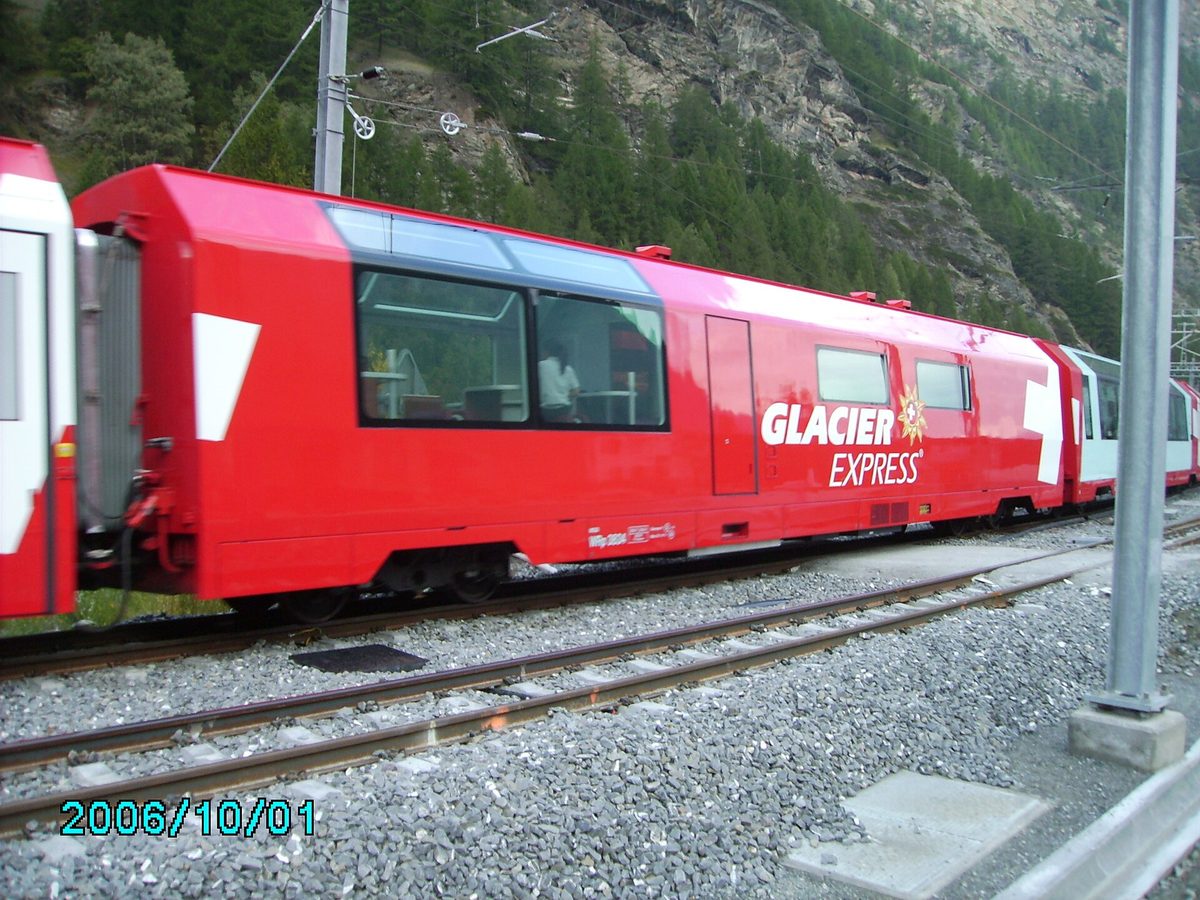
London to Paris under the Channel, 2h16. Not scenic in the conventional sense, since 35 minutes of it are in a tunnel under the sea, and that is exactly the point. You board in central London, read half a book, and get off in central Paris. No airport, no transfer, no queue that lasts longer than the journey. Up to eighteen departures a day each way at peak.
Paris to Barcelona, 6h15. Too long by my own four-hour rule, and I take it anyway. The run down through Montpellier and Perpignan and across the border to Girona shows you the whole gradient from northern France to Catalonia in one afternoon. Advance fares start around €21, which makes it one of the best-value long journeys anywhere.
Amsterdam to Berlin, 5h41. A flat, green, quietly hypnotic ride across the Netherlands and northern Germany with six direct ICE departures a day. It is the leg that best demonstrates why rail beats short-haul flying even when the flight is quicker on paper: the flight is just over an hour, but the transfer, security and waiting eat most of the saving.
Dublin to Holyhead by ferry, 2h15 to 3h30. The slowest option on this page and the one I would fight hardest to keep. You leave Dublin Bay on deck with a coffee, watch Ireland flatten out behind you, and arrive in Wales for a train through Snowdonia. Foot passengers typically pay £38 to £60. It turns a dull connection into part of the trip.
If train travel is the reason you are here at all, our complete guide to train travel in Europe covers booking sites, night trains and passes country by country, and European river cruises is the slower cousin of the same idea.
How to build your own Western Europe itinerary in six steps
If none of the eight routes fits, build one. The method takes about an hour and produces something better than any template, because it is shaped around your actual dates and tolerances.
Step 1: fix the entry and exit airports first. Open-jaw tickets, flying into one city and out of another, are usually similar in price to a return and they save you an entire backtracking day. Almost every route above is open-jaw. Pick the two ends before you pick anything in the middle.
Step 2: count your real days. Subtract the arrival day, which is a walk and a meal, and the departure day, which is a taxi. A “ten-day trip” is eight usable days. Plan against the eight.
Step 3: allocate nights before you allocate cities. Take your usable days, divide by three, and that is roughly your number of stops. Eight usable days is three stops. Fourteen is four or five. Write the number down and refuse to exceed it.
Step 4: check the train legs on a timetable, not a map. This is where my Perpignan disaster came from. Every leg in your draft needs a real journey time and a real departure. Anything over four hours either becomes a travel day or gets flown.
Step 5: work backwards from the release calendars. Find the ticketed sights you care about, look up when they release, and place those cities on days that let you buy at the right moment. If Amsterdam has to fall in a particular week for the Anne Frank House, the rest of the route bends around it, not the other way round.
Step 6: price the trains before you book the hotels. Train fares only go up. Hotel inventory persists. Book the legs, then fill in the accommodation, then add the tourist tax to your budget rather than discovering it at check-out.
Our step-by-step guide to planning a trip to Europe covers the earlier stages, including flights, insurance and timing, and Europe travel tips handles money, safety and etiquette once you are there.

Practical things that save a day each
Left luggage at stations. Every major station on these routes has paid lockers or a staffed office. If your train leaves at 18:00, check out at 11:00, leave the bags, and keep the whole day. This single habit is worth more than any packing tip.
Contactless on urban transport. London, Milan, Brussels and a growing list of others let you tap a bank card straight onto the gate, with daily capping. Check before you buy a tourist travel card, which is often worse value than simply tapping.
Book the first morning, not the whole trip. I pre-book the sight I most want in each city and leave the rest open. Over-scheduling is how people end up marching past a street they would rather have sat down in.
Eat lunch as your main meal in expensive cities. Set lunch menus in France, Italy and Switzerland run at a substantial discount to the same kitchen’s dinner service. In Zurich or Paris, that gap is the difference between two budget tiers.
Watch the Sunday and Monday closures. Many museums close on Mondays, and shops in Germany, Austria and Switzerland largely close on Sundays. Put your travel days on those days and your museum days elsewhere.
Cards work almost everywhere, but not quite. Contactless is near-universal in the Netherlands, the Nordics and the UK, and widely accepted everywhere else on these routes. Carry a small amount of cash anyway for market stalls, small bars in Italy and Spain, and public toilets in Germany. Always choose to be charged in the local currency when a card machine offers to convert for you; the conversion rate it offers will be worse than your bank’s.
Sort data before you land. An eSIM bought before departure removes the single most common first-day frustration, which is standing outside a station with no map. EU roaming means one European eSIM generally covers the whole Schengen leg of your trip, though the UK left that arrangement and is often billed separately.
Night trains exist and are underused. Sleeper services run on several of the longer legs in this region, and on a route like the one-month circuit they turn an eaten day into a bed you have already paid for. They are not always cheaper than a flight, but they buy you a night’s accommodation and a morning arrival in a city centre.
Pickpocketing is the realistic risk, not violent crime. Western Europe is safe by almost any measure, and the crime that touches visitors is overwhelmingly opportunistic theft on crowded metros, at station concourses and around the famous sights in Rome, Paris and Barcelona. A zipped bag worn in front, and a phone that is not in your back pocket, covers most of it.
Assume one thing will go wrong. A strike, a heatwave, a closed church, a missed connection. The routes above all have a spare half-day built in somewhere. If yours does not, add one. What you pack matters less than what you leave loose in the schedule, though our Europe packing list covers the former.
Swaps: what to do when the plan meets reality
Every itinerary on this page will need adjusting. Here is what I substitute, and why.
| If this happens | Swap to | Why it works |
|---|---|---|
| Paris is over budget | Lyon or Bordeaux | Both are serious cities with much lower accommodation costs and a lower tourist tax band, and Lyon eats better than almost anywhere in France |
| Amsterdam accommodation has gone silly | Haarlem or Utrecht, day-tripping in | Haarlem is about fifteen minutes out, Utrecht a little more; the rooms cost far less and the 12.5% tax applies to a smaller number |
| Anne Frank House tickets are gone | The Rijksmuseum plus a canal walk through the Jordaan | The weekly release window is unforgiving, and the Rijksmuseum is not a consolation prize |
| The Last Supper release has closed | Milan’s Duomo roof terraces and the Pinacoteca di Brera | Third-party packages cost €45 to €120 when official tickets are gone. The roof at opening time is worth more than that |
| Switzerland has blown the budget | Austria, especially Salzburg and the Salzkammergut | Similar mountains, similar lakes, and roughly half the daily cost |
| Venice is charging the access fee on your date | Stay a night rather than day-tripping | Overnight guests are exempt from the fee, and Venice after 18:00 is the version worth seeing |
| Rome in July is too hot | Move the Italian leg to the start or end and go north in the middle | 32°C average against 25°C in Paris and 22°C in Amsterdam |
| Barcelona to Venice looked fine on a map | Fly it | At least twenty-four hours overland. This is not a train journey, it is an ordeal |
| Porto to Madrid overland looked fine too | Fly it | Under two hours in the air against a full day and a change on the ground |
| You want a fifth city in ten days | Do not | You will spend the extra day packing, checking out and queuing at a station |
| The Frecciarossa reservation fee is stacking up on a pass | Take the InterCity | €3 instead of €13, at the price of an hour |
| Bruges is heaving | Ghent | About twenty-five minutes away, a real university city, the same canals with a fraction of the coach parties |

Which route suits which traveller
First trip to Europe. Route 1, ten days, four capitals. The train legs are short, the cities are famous for good reasons, and the logistics are as forgiving as European travel gets. Our guide for first-time visitors and the first-time Europe itinerary are the companion pieces.
Backpackers and under-28s. Route 7, or Route 3 if the budget is tight. The youth pass discount of 25% is the single biggest saving available to anyone under 28 in European travel, and Portugal and Spain stretch a budget further than anywhere else in the West. See backpacking Europe.
Families with young children. Route 6, and I would say that even with four weeks available. Two bases, one train, no packing days. Children under 4 travel free on the rails without a pass, and 4 to 11 free on a Child Pass, up to two per adult. Our Europe with kids guide has the detail.
Couples with two weeks. Route 2. Paris, a French food city, a Swiss lake, Milan and Venice is a romantic sequence, and the Gotthard crossing on the way south is worth the ticket on its own. See also honeymoon destinations in Europe.
Travellers aged 60 and over. Route 4 or Route 5, both at a three-night-per-stop pace. The senior pass discount is 10%, assessed on the date your trip starts, and both routes are paced at two or three nights a stop.
Solo travellers. Route 3 or Route 7. Spain and Portugal have the best hostel and pintxos-bar culture for meeting people, and the long route gives you time to slow down when you find somewhere you like. Our solo travel in Europe guide covers the practicalities.
Second or third trip. Route 4, or Route 3 with Seville included. Both skip the obvious capitals without skipping quality. For inspiration beyond the famous names, try underrated places in Europe and the most beautiful towns in Europe.
Seven mistakes I see on nearly every draft itinerary
1. Too many cities. The single most common problem, and the one people are least willing to fix. If your fortnight has six or more stops, cut two. You will see more, not less.
2. Booking the train after the hotel. Hotels have inventory all the way to the day before. High-speed trains have dynamic pricing that punishes lateness. Book the trains first, then the hotels around them.
3. Assuming a rail pass saves money. On the classic four-capital route it usually does not, once Eurostar’s €35 pass-holder fare and the ex-Thalys €20 to €25 reservations are added. Do the arithmetic for your own route rather than taking either side’s word for it.
4. Ignoring the release calendars. Four major sights, four completely different rules: a weekly drop in Amsterdam, an exact 90-day window in Granada, a 60-day window in Paris, a quarterly batch in Milan. Four different alarms.
5. Underestimating the arrival day. You will not do a museum on the day you land from a long-haul flight. Plan a walk and a meal, and put the ticketed thing on day two.
6. Budgeting the room rate and not the tax. Amsterdam’s 12.5% on top of a 21% VAT rate, Paris’s per-night band, Barcelona’s April 2026 increase, Edinburgh’s new 5% levy from 24 July 2026. Across a fortnight in the wrong four cities, that is a meaningful number.
7. Driving into a city you did not need to drive into. Italian ZTL fines multiply per camera and arrive months later with rental admin fees attached. If your route is city-to-city, take the train.
Frequently asked questions
Is 2 weeks enough for Western Europe?
Yes, for three to four countries and four to five cities. It is not enough to “do” Western Europe, and I would gently suggest that nobody has ever done Western Europe. Two weeks is enough for a very good trip if you keep the stop count down and the train legs under four hours.
How many countries can you visit in Europe in 2 weeks?
Three or four comfortably. Five is possible on the Cool-Summer Route because the stops are close together, but every extra country adds a travel half-day and a new set of transport apps.
How many days do you need in Western Europe?
Ten nights is the shortest length that feels like a proper trip rather than a long weekend that got out of hand. Fourteen is the sweet spot. Twenty-one is where you stop rushing.
What is the best route through Western Europe?
For a first trip, London to Paris to Bruges to Brussels to Amsterdam, because the train legs are all under two and a half hours and every stop earns its place. For a second trip, Vienna to Salzburg to Munich to Lucerne to Milan, which is more scenic and cheaper to run on a rail pass.
Are 3 weeks enough for Western Europe?
Three weeks is the length at which the trip becomes relaxed. Five or six countries, seven or eight cities, two or three nights everywhere, and enough slack to absorb a rail strike without rebuilding the plan.
When is the best time to go to Western Europe?
May to early June and September to early October. You get warm days, open everything, and a fraction of the August crowds. July and August are hot in the south and busy everywhere; if that is your only window, go north.
What is the cheapest time of year to visit Europe?
January, February and March avoiding Easter, plus late October and November, are the outright cheapest. May to June and September to October are the best value once you weigh weather against price.
How much does a trip to Western Europe cost?
At a mid-range standard, budget roughly €75 to €125 a day on the ground in France, Italy, Germany, Austria, Belgium and the Netherlands; $100 to $150 in the UK and Ireland; CHF 200 to 350 in Switzerland; and $60 to $100 in Portugal. A mid-range fortnight lands somewhere between €1,920 and €2,320 per person before international flights, once trains, tourist taxes and ticketed sights are added.
Is a Eurail Pass worth it?
On a long, flexible, many-stop trip, often yes. On a fixed ten-night route through France, Belgium and the Netherlands, usually no, because advance point-to-point fares on those legs are cheap and the pass still charges you €20 to €35 in reservations on the good trains. Price both for your specific route before you buy.
How long should you spend in each country?
Think in cities rather than countries. Three nights in a major city, two in a compact one, and one only when it breaks a long leg. That usually works out at four to six nights per country on a fortnight-long trip.
Do I need a visa to visit Western Europe?
Most visitors from the USA, Canada, Australia, the UK and similar countries do not need a Schengen visa for short stays, and may spend up to 90 days in any 180-day period in the Schengen Area. Since 10 April 2026 your crossings are recorded by the EES rather than stamped. ETIAS has no confirmed launch date as of August 2026 and is not expected before 2027. If your trip includes the UK, you will most likely need a £20 UK ETA, and everyone travelling needs their own, babies included. Ireland is a separate case: it sits outside Schengen but inside the Common Travel Area with the UK, so a UK ETA does not cover an Irish leg and Irish entry is handled on its own terms.
What is the best way to get around Western Europe?
Trains, for almost everything. The region has one of the densest high-speed networks anywhere and most city centres have a station in them. Fly only when the overland option runs past about five hours, and hire a car only for rural regions.
Do days in the UK count against my Schengen allowance?
No. The UK and Ireland are outside the Schengen Area, so time spent there does not count against the 90-day limit. On a long trip, that is a useful way to buy yourself more Schengen days.

Final thoughts
The best Western Europe itinerary is not the one with the most on it. It is the one where you have booked the trains early enough to have paid €29 rather than €150, where you knew the Anne Frank House released on a Tuesday, where you gave Rome three nights instead of two, and where you looked at the July temperature table before you booked anything at all.
Everything above is designed to be edited. Take Route 2, cut Zurich, add a night in Venice. Take Route 1 and stretch it to fourteen nights by giving London, Paris and Amsterdam an extra night or two each. The eight routes are scaffolding, not scripture, and the tables are there so that when you change something you can see immediately what it costs in time and money.
One gap worth naming: there is no Greek, Nordic or Central European stop anywhere in this guide, because those countries sit outside the Western Europe definition I set out at the top, not because they are less worth your time. If your trip is heading that way, our Scandinavia travel guide, Greece travel guide and best cities to visit in Europe pick up where this one stops. And if you are still at the stage of working out flights, insurance and the order of operations, how to plan a trip to Europe is the place to start.
Send me your draft route. I will tell you which two cities to cut.
Hannah Brooks has spent fifteen years travelling, living and writing across Europe, from the Arctic tip of Norway to the south of Sicily. She has planned hundreds of European itineraries for readers and is Senior Europe Editor at EuropeanTourism.org.
Photo credits
All images are used under Creative Commons or public domain licences. In order of appearance:
- The Eiffel Tower in Paris, the anchor of almost every Western Europe itinerary · Photo: Pierre Blaché from Paris, France (CC0) via Wikimedia Commons
- A Eurostar high-speed train at London St Pancras, the start of the classic London to Paris leg · Photo: FrogsLegs71 / CC BY-SA 3.0 via Wikimedia Commons
- Tower Bridge over the Thames in London, the first stop on the Classic Four Capitals route · Photo: Peter Trimming / CC BY-SA 2.0 via Wikimedia Commons
- A canal lined with medieval houses in Bruges, Belgium · Photo: InSapphoWeTrust from Los Angeles, California, USA / CC BY-SA 2.0 via Wikimedia Commons
- Alfama’s terracotta rooftops and the Tagus River seen from a Lisbon viewpoint · Photo: Dale Cruse · 10M views from San Francisco, CA, USA / CC BY 4.0 via Wikimedia Commons
- The Aletsch Glacier sweeping below the Jungfraujoch in the Bernese Alps, Switzerland · Photo: Frans-Banja Mulder (CC BY 3.0) via Wikimedia Commons
- The Colosseum in Rome, the final stop on the three-week Grand Tour route · Photo: Wilfredor (CC0) via Wikimedia Commons
- Gaudi’s Sagrada Familia in Barcelona, a timed-entry booking on any Iberian route · Photo: Didier Descouens / CC BY-SA 4.0 via Wikimedia Commons
- Canal houses along an Amsterdam waterway in the Netherlands · Photo: Basile Morin / CC BY-SA 4.0 via Wikimedia Commons
- The Gloriette in the gardens of Schoenbrunn Palace, Vienna, Austria · Photo: Thomas Wolf, www.foto-tw.de / CC BY-SA 3.0 de via Wikimedia Commons
- Travellers and trains under the vaulted shed of Antwerpen-Centraal station in Belgium · Photo: Phil Richards from London, UK / CC BY-SA 2.0 via Wikimedia Commons
- Palazzi along the Grand Canal in Venice, Italy · Photo: Didier Descouens / CC BY-SA 4.0 via Wikimedia Commons
- Florence at dusk from Piazzale Michelangelo, with the Arno and the Duomo beyond · Photo: Diego Delso / CC BY-SA 4.0 via Wikimedia Commons
- Plaza Mayor in Madrid, Spain · Photo: Daderot (CC0) via Wikimedia Commons
- The red facade of the Temple Bar pub in Dublin, Ireland · Photo: Gordon Leggett / CC BY-SA 4.0 via Wikimedia Commons
- A Deutsche Bahn ICE high-speed train, the workhorse of the German legs of these routes · Photo: Joachim Seyferth / CC BY 4.0 via Wikimedia Commons
- Edinburgh Castle in Scotland, the second stop on the Cool-Summer route · Photo: James Moore (CC0) via Wikimedia Commons
- Porto’s Ribeira district tumbling down to the Douro River in Portugal · Photo: Michael Gaylard from Horsham, UK / CC BY 4.0 via Wikimedia Commons
- The seafront and bay at Nice on the French Riviera · Photo: Lspigon (CC0) via Wikimedia Commons
- The red Glacier Express panoramic train in the Swiss Alps · Photo: User:Mochtegern (CC0) via Wikimedia Commons