Things to Do in Venice: 36 Best Things to Do, Ranked and Priced

Venice is the only city I know where the first hour undoes whatever you thought you were prepared for. You come up the ramp out of Santa Lucia station, and there is no road. There is water, a church across it, a boat pulling away, and a city that has been showing off to arrivals for eleven hundred years and has not lost its nerve.
Then the second hour arrives. Forty thousand other people, all on the same yellow-signed corridor from the station to the Rialto to San Marco. Which is why the things to do in Venice matter far less than the hour you choose to do them, and why this guide is organised around both.
The short answer: the best things to do in Venice are St Mark’s Basilica and the Doge’s Palace booked in advance, the Grand Canal on the number 1 vaporetto, a bacaro crawl through Cannaregio, and a slow half day on Burano and Torcello. Give the city three days if you can, and walk away from the signposted route at every opportunity.
I have been coming here for fifteen years, in February fog and August heat and one memorable November when the water came over the Piazza and everybody carried on. What follows is 36 things worth your time, every price checked against the official source in August 2026, plus the timings, the passes, the rules that carry fines, and an honest account of what I could not confirm. Venice also has a permanent place on our list of the most beautiful places in Europe, and this is a cluster piece in our complete Italy travel guide, sitting alongside our ten day Italy itinerary, and if Venice is one stop on a longer trip, the Europe itinerary planner is the place to slot it in.
First, the one thing to check before you book anything
If you have read anything about visiting Venice in the last two years, you have read about the access fee: the contributo di accesso, the charge for day visitors entering the historic centre. Five euros if you book early, ten if you leave it late.
It is not being charged at the moment. The Comune di Venezia’s own access-fee site states that the 2026 trial period has ended and that as of 27 July 2026 the fee does not apply, and that Venice can be visited with no payment and no request for exemption. The 2026 run covered 60 chargeable days from 3 April to 26 July. It is over. Whether it returns in 2027 sits with the city’s governing bodies, and nothing has been published.
I am flagging this loudly because almost every guide on page one of Google still describes the fee as live, and several booking sites will happily walk you through paying something you do not owe. Check the city’s own access fee page before you travel. It is the only source I would trust on this.
Two things worth holding onto in case it comes back. First, it never applied to the islands: Murano, Burano, Torcello, the Lido and the rest of the lagoon were outside the charging zone even on chargeable days. Second, anyone staying in paid accommodation anywhere in the Comune di Venezia was exempt from arrival day to departure day, though they had to register for a free QR code to prove it. If you are sleeping in Venice, you were never the target. The fee was aimed squarely at the day-tripper wave.
The access fee is also a completely different thing from the tourist tax, which is charged per night by your hotel and which absolutely is still being collected. Budget a few euros per person per night on top of your room rate, and expect it as a separate line on the bill.
All 36 of the best things to do in Venice at a glance
Skim this, pick six, and stop trying to do the rest. Venice punishes ambition. The single biggest improvement you can make to a Venice trip is to cut the list in half and walk more slowly through what is left.
| # | Thing to do | Where | Cost | Time needed | Book ahead? | Best for |
|---|---|---|---|---|---|---|
| 1 | St Mark’s Basilica | San Marco | €10, or €30 for everything | 45 to 60 min | Yes | First-timers |
| 2 | Doge’s Palace | San Marco | €30 online / €35 door | 2 to 3 hr | Yes | Republic history |
| 3 | The Secret Itineraries tour | San Marco | €40 | 75 min plus the palace | Yes, sells out | Second visits |
| 4 | The Campanile di San Marco | San Marco | €15 | 30 to 40 min | Recommended | The classic view |
| 5 | Torre dell’Orologio | San Marco | About €14 | About 1 hr | Booking only | Clock nerds |
| 6 | Correr Museum and the Marciana | San Marco | Inside the palace ticket | 1 to 2 hr | Included | Rainy afternoons |
| 7 | Piazza San Marco before 8am | San Marco | Free | 30 min | No | Photographers |
| 8 | Gallerie dell’Accademia | Dorsoduro | €20 | About 2 hr | Recommended | Bellini and Titian |
| 9 | Peggy Guggenheim Collection | Dorsoduro | About €18 | 1.5 hr | Yes, timed slots | Modern art |
| 10 | Scuola Grande di San Rocco | San Polo | €12 | About 1 hr | No, door sales only | Tintoretto |
| 11 | Basilica dei Frari | San Polo | Free, per Chorus | 45 min | No | Titian’s Assumption |
| 12 | Punta della Dogana and Palazzo Grassi | Dorsoduro and San Marco | €20 for both | 2 to 3 hr | No | Contemporary art |
| 13 | La Biennale at the Giardini and Arsenale | Castello | €30 | A full day | Yes | Art pilgrims |
| 14 | Teatro La Fenice | San Marco | €12 daytime visit | 45 min | No | Opera lovers |
| 15 | The Grand Canal on vaporetto line 1 | Across the city | €9.50 single fare | About 45 min | No | Absolutely everyone |
| 16 | A gondola ride | Across the city | €90 daytime, €110 evening, per boat | 30 to 35 min | No | Splurging once |
| 17 | A traghetto crossing | Grand Canal | €2 | Two minutes | No | Budget travellers |
| 18 | Getting lost in Castello | Castello | Free | 2 to 3 hr | No | Escaping the crowds |
| 19 | Cannaregio’s fondamente at dusk | Cannaregio | Free | About 2 hr | No | Golden hour |
| 20 | Libreria Acqua Alta | Castello | Free | 20 min | No | A quick photo |
| 21 | Murano | Lagoon | Vaporetto fare only | Half a day | No | Glassmaking |
| 22 | Burano | Lagoon | Vaporetto fare only | Half a day | No | Colour and lace |
| 23 | Torcello | Lagoon | Vaporetto fare only | About 2 hr | No | Ancient mosaics |
| 24 | San Giorgio Maggiore | Lagoon | Church free, tower charged | 45 min | No | The best view of Venice |
| 25 | The Lido | Lagoon | Vaporetto fare only | Half a day | No | Sand and cycling |
| 26 | Giudecca and the Redentore | Giudecca | Vaporetto fare only | About 2 hr | No | Everyday Venice |
| 27 | A bacaro crawl | Cannaregio and Dorsoduro | €15 to €25 a head across several bars | 2 to 3 hr | No | Eating like a local |
| 28 | The Rialto market at 7.30am | San Polo | Free to browse | 45 min | No | Food obsessives |
| 29 | A spritz on a campo | Anywhere but San Marco | €3 to €6 | 1 hr | No | Watching Venice work |
| 30 | A proper Venetian dinner | Cannaregio and Castello | €30 to €50 a head | About 2 hr | Yes | Sarde in saor and bigoli |
| 31 | Pasticceria and gelato | Across the city | €2 to €8 | 1 hr | No | Families |
| 32 | The Jewish Ghetto | Cannaregio | Free to walk | 1 to 2 hr | No | Layered history |
| 33 | Santa Maria della Salute | Dorsoduro | Church free, sacristy €4 | 45 min | No | Baroque drama |
| 34 | San Pietro di Castello and the far east end | Castello | Free | About 2 hr | No | Genuine solitude |
| 35 | The Chorus network churches | Across the city | Free, some spaces €3.50 | Varies | No | Art on a budget |
| 36 | Sant’Elena and the public gardens | Castello | Free | 1 to 2 hr | No | Grass and quiet |
Piazza San Marco and the monumental core
Napoleon supposedly called the Piazza the drawing room of Europe, which is the kind of line that gets quoted forever because it is roughly right. It is also the most crowded 12,000 square metres in Italy between ten in the morning and six at night. Everything below is worth doing. Almost none of it is worth doing at midday, and almost all of it is easier outside peak season, which is why we wrote a separate guide to the best months to visit Italy.
1. St Mark’s Basilica
Eight thousand square metres of gold mosaic, laid over eight centuries, in a building that is architecturally more Constantinople than Italy. You walk in, your eyes adjust, and the ceiling turns into a furnace. It is the best thing in Venice and it takes about an hour if you do the Pala d’Oro and the Loggia.
The ticketing has become genuinely fiddly, so here it is plainly. Basic admission is €10. Adding the Pala d’Oro, the jewelled Byzantine altarpiece behind the high altar, takes it to €20. Adding the Museum and the Loggia dei Cavalli, where the original bronze horses live and where you step out onto the balcony above the Piazza, is also €20. All four together are €30. The bell tower is ticketed separately at €15 and is not covered by any basilica ticket or by free entry.
Private visitors booking online receive a standard 20% discount on those prices automatically, and there is a further 50% reduction for minors aged 10 to 18, students up to 26 and over-65s, though the two are not combinable. Under-11s go free. So do accredited school groups, disabled visitors with a companion, clergy, and residents of the diocese municipalities, which includes Venice itself, Jesolo, Mira and Cavallino-Treporti among others. That free entry does not extend to the bell tower.
Timing is where people come unstuck. On Sunday mornings until 2pm, and during services, the only part open to visitors is the Museum and the Horses Loggia. If Sunday morning is your only slot, buy the €14 Museum and Loggia ticket and accept that you are seeing the balcony and the horses rather than the nave. Better still, book an evening slot: the basilica runs one-hour lit visits of the church and crypt in the late evening, roughly from half past seven, and standing under those mosaics with the lights up and forty people in the building instead of four hundred is a different experience entirely. There are no discounts on evening visits, and I have never once minded.
Practicalities: knees and shoulders covered, no backpacks or large bags. There is a bag drop nearby but it adds twenty minutes, so travel light.
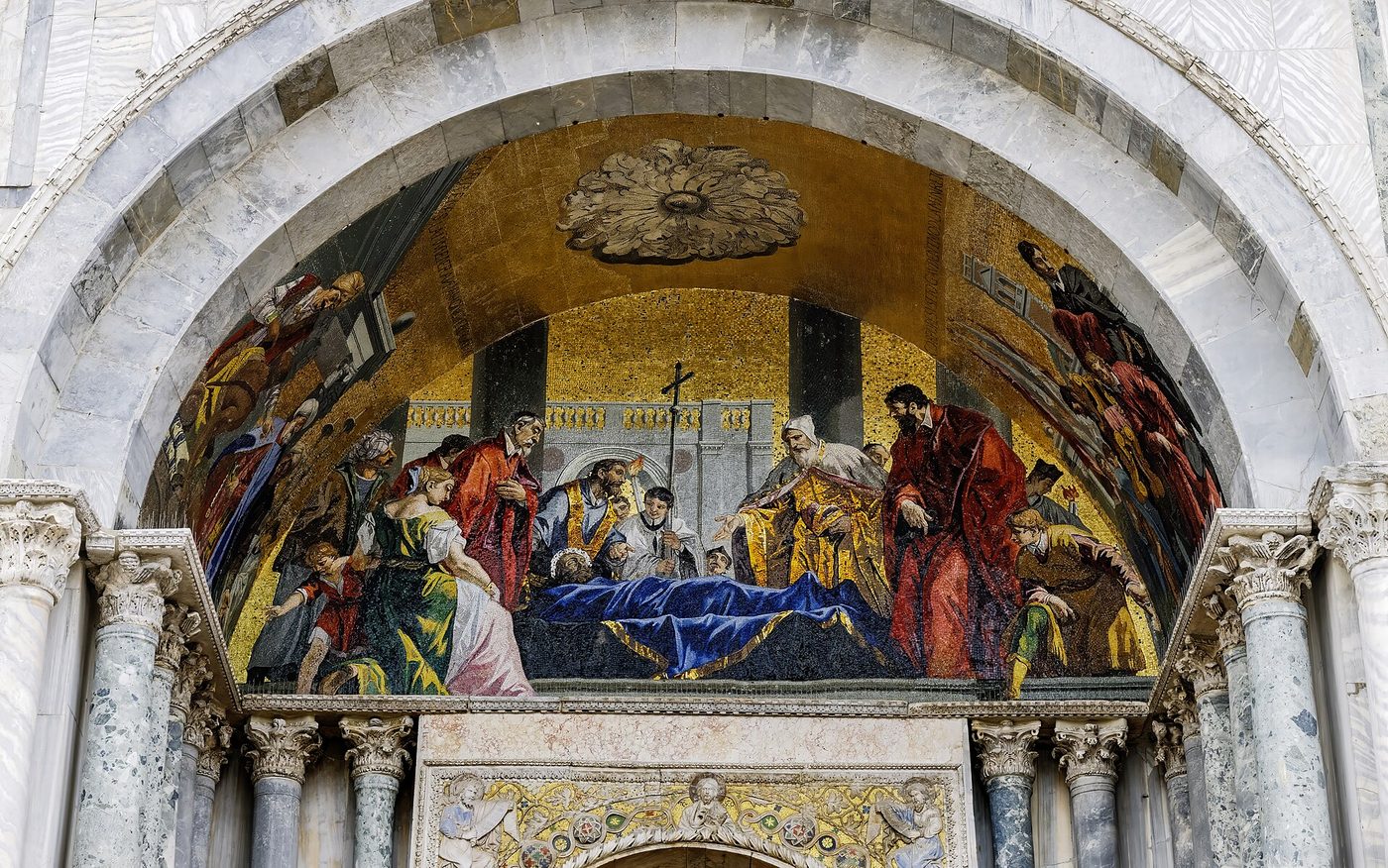
2. The Doge’s Palace
The seat of a republic that ran the eastern Mediterranean for five centuries, and a building that explains Venice better than any museum. The Sala del Maggior Consiglio holds Tintoretto’s Paradise, one of the largest oil paintings in the world, on a wall that once faced two thousand patricians voting. Then you cross the Bridge of Sighs into the New Prisons and the temperature of the whole thing changes.
Here is the ticketing detail that catches people out: you cannot buy the Doge’s Palace on its own. Entry is sold only inside the “St Mark’s Square Museums” ticket, which also covers the Correr Museum, the National Archaeological Museum and the Monumental Rooms of the Marciana Library. It is €35 at the door, €15 reduced. It drops to €30 online, but only if you buy at least 30 days before your visit date, which is a rule I have watched catch out a lot of people who booked a fortnight ahead expecting the cheaper rate.
One more trap. If your ticket has no specific entry time slot, you are only admitted from 12 noon onwards. If you want the palace at opening, you need a timed slot. Opening hours are 09:00 to 19:00 from 1 April to 31 October with last admission at 18:00, and 09:00 to 18:00 from 1 November to 31 March with last admission at 17:00.
The best-kept piece of good news for 2026: from Friday 1 May to Saturday 26 September, the Doge’s Palace and Correr stay open until 23:00 every Friday and Saturday, with last admission at 22:00. A near-empty palace at half past nine at night, with the lagoon black outside the loggia windows, is the version of this building I would send anyone to.
An audioguide through the MUVE app is included in the price. Note the luggage rule, which is strict and enforced: suitcases, trolleys and bulky bags whose three sides total more than a linear metre are refused entry to the museum entirely, not stored. Medium bags and umbrellas go to a free cloakroom. If you are visiting on your way to the station, sort your luggage first.
3. The Secret Itineraries tour
The one thing in Venice I recommend without reservation to anyone on a second visit. Itinerari Segreti takes you through the working guts of the palace: the chancellery, the torture chamber, the wooden attic cells known as the piombi where Casanova was held and from which he escaped. Low ceilings, narrow stairs, a completely different building from the ceremonial one downstairs.
It is €40 full, €20 reduced, and the price includes unguided access afterwards to the Doge’s Palace, Correr, the Archaeological Museum and the Marciana rooms. So the real premium over the standard €30 to €35 ticket is small, and you get the guided tour on top. The sister tour, Doge’s Hidden Treasures, covers the Chiesetta and Antichiesetta at the same €40 and with the same included access. Both sell out. Book them the day you book your flights.
4. The Campanile di San Marco
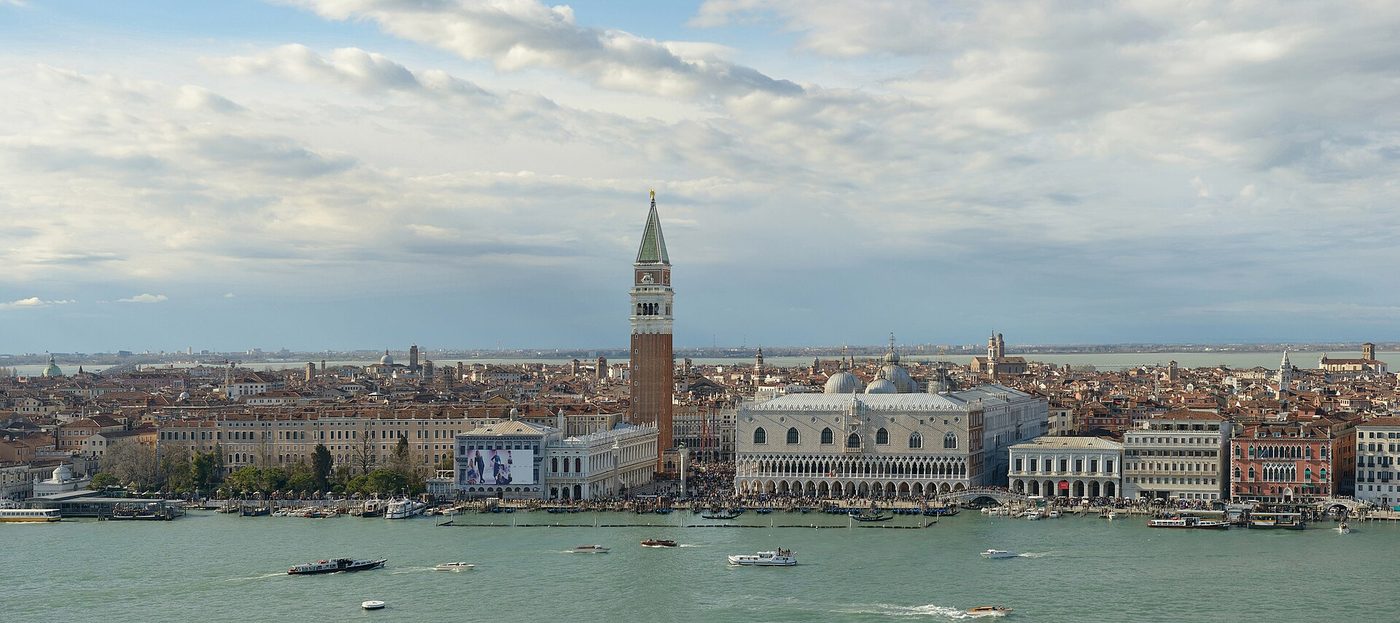
Climb this and you get the photograph you came for: red roofs, the Salute’s dome, the lagoon, the islands lined up behind. There is a lift, which matters if stairs are an issue. It is €15, ticketed separately from everything else, and the queue between 11am and 4pm in summer is grim.
Two honest alternatives. San Giorgio Maggiore, across the water, gives you a better photograph, because from there the Campanile and the Piazza are in the frame rather than under your feet. And it is almost always quiet. If you only climb one tower, I would climb that one. See number 24.
5. Torre dell’Orologio
On the north side of the Piazza stands a blue and gold clock tower, with two bronze Moors who strike the hour on the roof. The visit takes you up through the mechanism itself, floor by floor, alongside the gearing that drives the zodiac dial. It runs about an hour, costs around €14, and is by guided booking only, in small groups, with no walk-ups. It is also not included in the Museum Pass, which surprises people who bought one expecting a clean sweep.
Skip it on a two-day trip unless you have children between about eight and fourteen, for whom the mechanism reliably beats every painting in the city. Do it if you like machines.
6. The Correr Museum and the Marciana
You have already paid for these inside the St Mark’s Square Museums ticket, so the only question is whether you use them. Yes, and specifically on a wet afternoon. Correr runs along the whole western end of the Piazza above the arcade: neoclassical state rooms, Canova sculpture, and a picture gallery with a Carpaccio or two. The Marciana’s monumental rooms, with ceilings by Titian and Veronese, are among the most beautiful interiors in the city and are consistently the emptiest room in San Marco.
The National Archaeological Museum sits in the same complex and is a very good collection of Greek and Roman sculpture, much of it looted, all of it labelled with a straight face. April to October the Correr runs 09:00 to 19:00 with last entry at 18:00; November to March it closes an hour earlier.
7. Piazza San Marco before 8am
Free, and I would put it in the top three things to do in Venice. Set an alarm, walk down while the city is still asleep, and stand in an empty Piazza with pigeons and a man hosing the paving. The basilica facade catches the early light from the east and goes pink. There are perhaps thirty people in the square.
By ten the same space holds several thousand. The city has changed nothing; you have simply arrived at the right hour. If you take one piece of advice from this whole guide, take this one, and apply the same logic to the Rialto and to Burano.
The art that makes the trip
Venice invented a way of painting. The light coming off the water, the damp that killed fresco and forced everyone onto canvas, the pigments arriving from the East through the city’s own warehouses: it all pushed Venetian painters towards colour where Florence went after line. You can see the argument being had, room by room, in the buildings below. If you want the Florentine side of the story, our guide to the best things to do in Florence is the companion piece.
8. Gallerie dell’Accademia
Everything the Venetian school did between the fourteenth and eighteenth centuries is here: Giovanni Bellini, Carpaccio’s St Ursula cycle, Giorgione’s Tempest, Titian, Tintoretto, Veronese’s enormous Feast in the House of Levi, painted as a Last Supper until the Inquisition objected and the painter simply renamed it. Two hours minimum.
Entry is €20 full, €2 for EU citizens aged 18 to 25, free under 18. It opens Tuesday to Sunday, 09:00 to 19:00, with ticket sales stopping at 18:00 and staff moving you out from half an hour before closing. It is free on the first Sunday of every month under the national Domenica al Museo scheme, and free on several fixed 2026 dates: 6 January, 8 March (women only), 5 April, 25 April, 2 June, 1 November and 4 November.
Two specific deals worth knowing. If you are between 26 and 35, the Friday evening “Arteritivo” slot from 17:15 to 19:00 is €15. And if you already hold a ticket from Palazzo Cini, the Peggy Guggenheim or Punta della Dogana, the Accademia drops to €17 under the Dorsoduro Museum Mile arrangement. Audioguide is €6; lockers are free with a €1 coin deposit; backpacks and bulky bags do not come in. The vaporetto stop is Accademia, on lines 1, 2 and N.
9. The Peggy Guggenheim Collection
An unfinished eighteenth-century palace on the Grand Canal where an American heiress lived with her dogs and one of the sharpest private collections of twentieth-century art anywhere: Pollock, Ernst, Picasso, Magritte, Brancusi, Calder, de Chirico. The sculpture garden is where Peggy and the dogs are buried, and it is the best place in Venice to sit down for twenty minutes.
Open daily except Tuesday, 10:00 to 18:00, last entry 17:00, closed on 25 December. The adult ticket is around €18, though I have seen €17.50 quoted as well, so check when you book, and booking a timed slot is required rather than optional. Children under 10 and disabled visitors with one companion go free.
Pair it with the Accademia. They are a seven-minute walk apart, the Dorsoduro Museum Mile discount applies between them, and going straight from Bellini to Pollock in one afternoon is a better art history lesson than either on its own.
10. Scuola Grande di San Rocco
My favourite building in Venice, and the one I have to talk people into. Tintoretto spent 23 years covering the walls and ceilings of this confraternity house with more than sixty paintings, and unlike almost everything else of that scale in Italy, it is all still in the room it was painted for. The upper hall comes with hand mirrors so you can look at the ceiling without wrecking your neck. The Crucifixion on the end wall is, to me, the most overwhelming single painting in the city.
It is €12 full, €10 for over-70s and Touring Club members, €3 for ages 8 to 18, and €26 for a family of two adults plus minors. Open 09:30 to 17:30 with the ticket office shutting at 17:00, every day except 1 January, Christmas Day and Easter. There are no online sales: you buy at the door. It is not inside any Venice museum pass, which is precisely why it stays quiet, and there is usually no queue at all.
11. Basilica dei Frari
Three minutes’ walk from San Rocco, and you should do both in one morning. The Frari is a vast brick Gothic barn of a church holding Titian’s Assumption over the high altar, framed so that it lines up through the choir screen as you come in, plus his Pesaro Madonna, a Bellini triptych in the sacristy, Canova’s pyramid tomb, and Titian’s own grave. The Frari is part of the Chorus network of Venetian churches, and Chorus’s own visitor information now states that access to its churches is free, having previously charged around €3. Carry a few euros anyway. It is free in any case during morning worship, roughly 7am to 9am, and during evening services, if you are attending rather than sightseeing. It is not covered by Venezia Unica or the MUVE passes.
Since April 2026 there has also been a limited-capacity evening visit called Frari Night, outside regular hours. Worth checking the church’s own site for dates if you are here in the shoulder season.

Two more Grand Canal palaces belong in the same afternoon if you have it. Ca’ Rezzonico, five minutes from the Accademia, is a complete eighteenth-century Venetian interior with Tiepolo ceilings and a ballroom, at €15 full or €7.50 reduced. Ca’ d’Oro, the lacy Gothic facade everybody photographs from the vaporetto, holds the Franchetti gallery and Mantegna’s St Sebastian for €6, or €2 for EU citizens aged 18 to 25. Neither is on anybody’s must-see list and both are half empty.
12. Punta della Dogana and Palazzo Grassi
François Pinault runs two contemporary art spaces in the city: Palazzo Grassi on the Grand Canal, and Punta della Dogana in the old customs house on the triangular tip of Dorsoduro where the Grand Canal and the Giudecca Canal meet. One €20 ticket covers both, €15 reduced, €7 for ages 20 to 26, free under 20. Open daily except Tuesday, 10:00 to 19:00 during exhibition periods.
Even if the current show leaves you cold, the Tadao Ando conversion of the Dogana is worth the money, and the point outside it is the best free viewpoint in central Venice: San Giorgio to your left, San Marco behind you, the Giudecca stretching away right. Go at sunset. Take a spritz from the Zattere and walk round.
13. La Biennale at the Giardini and Arsenale
If you are here between May and November in an even year, this is the largest thing happening in the city and it changes what a Venice trip is. 2026 is an Art year, not Architecture. The 61st International Art Exhibition, titled “In Minor Keys” and curated by Koyo Kouoh, runs from 9 May to 22 November 2026. Architecture returns in 2027.
One-access tickets are €30 full, €20 for over-65s and Venice residents, €16 for students and under-26s, with children up to and including six going free. If you are staying a while, the 3-day ticket at €40 and the weekly at €50 are obviously better value; accreditation is €80, or €45 for students and under-26s. Hours are 11:00 to 19:00 from 9 May to 27 September with last admission at 18:45, then 10:00 to 18:00 from 29 September to 22 November with last admission 17:45. The Arsenale alone stays open to 20:00 on Fridays and Saturdays until 26 September. It is closed on Mondays, except 11 May, 1 June, 7 September and 16 November.
Plan for a full day. The ticket covers the Giardini and the Arsenale, roughly a ten-minute walk apart, and the Biennale’s own guidance is about three hours per venue. The national pavilions and collateral events scattered around the city are mostly free but are separate from the ticket, and hunting them down through back sestieri is one of the more enjoyable ways to see parts of Venice you would otherwise miss. The Dance, Music and Theatre Biennali also run between June and September, overlapping with both the Art exhibition and the Film Festival.
14. Teatro La Fenice
Burned down in 1836, and again in 1996, and rebuilt each time to look exactly as it did. The name means “the phoenix” and it has earned it. The daytime visit is €12 full, €9 for over-65s, €7 for students aged 7 to 26, free under 6, with an audioguide in ten languages included. Visits run roughly 09:30 to 18:00 but are subject to rehearsals and performances, so it is worth checking the day before rather than turning up.
Private guided tours start from about €160 for a group and run around 45 minutes. Though if there is a performance on and there are cheap seats left in the upper boxes, go to that instead. Sitting in the gods at La Fenice for the price of a nice dinner is one of the better trades in European travel.
Venice on the water and on foot
There are no cars in the historic centre. None. Every journey you make for the length of your stay is on foot or on a boat, across 118 islands, more than 150 canals and roughly 400 bridges. That single fact is why the city feels the way it does, and it also means your transport decisions matter more here than anywhere else in Europe. Our general guide to European transport covers the trains that bring you here; this section covers the last mile.
15. The Grand Canal on vaporetto line 1
The best value in Venice, and I will argue that with anyone. Line 1 is the slow, every-stop route down the whole Grand Canal, past four kilometres of palace facades built to be seen from exactly this angle. It takes about 45 minutes end to end and costs a single ACTV fare. Line 2 does the same water faster with fewer stops, which is useful when you are going somewhere and pointless when you are sightseeing.
Get on at Piazzale Roma or Ferrovia going towards San Marco, stand at the open-air section at the back, and do it once in daylight and once after dark. The night run, with the palace windows lit and the water black, is the one people remember.
Fares, and brace yourself, because Venice’s public transport is expensive by European standards. A single ticket is €9.50 and lasts 75 minutes in one direction, with transfers allowed inside that window. Travel cards run €25 for 24 hours, €35 for 48, €45 for 72 and €65 for seven days, and all of them count in hours from first validation rather than calendar days, which is worth thinking about when you decide when to punch your first ticket. They cover the ACTV network, including the mainland buses, the Mestre tram and the People Mover, but not journeys to or from Marco Polo airport, which need a separate aerobus supplement of around €7 one way or €13 return bought at the same time.
The single best money-saving move in Venice: if you are aged between 6 and 29, buy a Rolling Venice card for €6. It brings the 72-hour transport pass down from €45 to €27, so the €18 it saves is three times what the card costs, and it also gets you the reduced rate at the MUVE museums, which knocks the Doge’s Palace ticket from €30 to €15. It is valid to 31 December of the year you buy it and carries discounts at a few hundred shops and restaurants besides. For more like this, see our guide to travelling Europe on a budget.
Our broader travel tips cover the same logic across the continent. Do the maths before you buy any pass, though. If you are staying two nights in the centre and mostly walking, you may only need three single tickets across the whole trip, which is €28.50. That is more than the €25 24-hour card but you are not tied to a 24-hour window, and it is well under the €35 48-hour card. Four journeys or more and the card wins. Venice is smaller on foot than the map suggests: you can walk from the station to San Marco in about 35 minutes.
16. A gondola ride
Yes, do it. I say that as someone who spent years being sniffy about it. The rates are set: €90 per gondola for 30 minutes between 09:00 and 19:00, and €110 for 35 minutes after 19:00, with roughly €40 for each additional 20 minutes in the day and €50 in the evening. Crucially, that is per gondola, not per person, and a gondola takes up to five. Split between four adults, the daytime rate is €22.50 each for half an hour, which reframes the whole thing. Bring cash: most gondoliers do not take cards.
How to make it good rather than merely expensive. Do not board at San Marco or by the Rialto, where you will spend your thirty minutes in a queue of other gondolas on the busiest water in the city. Walk fifteen minutes into Cannaregio, Dorsoduro or Castello and pick up a gondola on a quiet stanza. You get narrow side canals, silence, low bridges, the oar knocking, and the occasional other boat instead of a traffic jam. Agree the route and the duration before you get in. And take the evening rate if the budget allows; the extra €20 buys you the city with its lights on.
What to ignore: the singing. It is not included, it is usually an extra musician and accordionist charged separately, and the whole arrangement is a nineteenth-century invention for tourists rather than anything Venetian. A silent gondola is a better gondola.
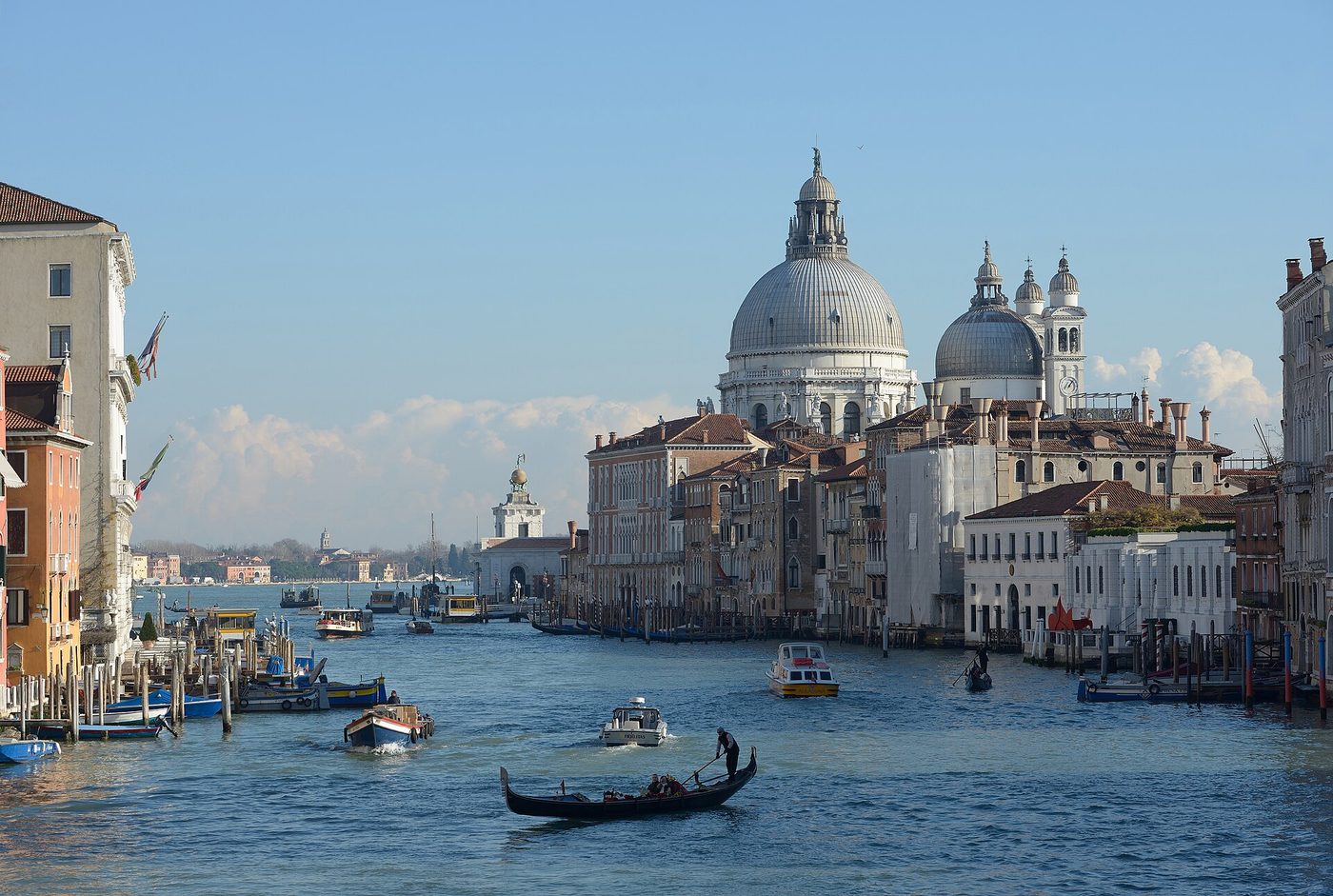
17. A traghetto crossing
Here is my favourite two euros in Italy. A traghetto is a working gondola ferry, rowed by two standing oarsmen, that crosses the Grand Canal at points where there is no bridge nearby. There are only four bridges over the whole canal, so the traghetti fill the gaps. It costs €2 for visitors and €0.70 for residents, it is cash only and exact change is appreciated, and the crossing takes one or two minutes.
Around seven routes still run. Hours are limited and some do not operate at weekends, so treat a working traghetto as a small piece of luck rather than a scheduled service. Venetians cross standing up. You are entirely allowed to sit down, and nobody minds.

Four more that did not make the numbered list
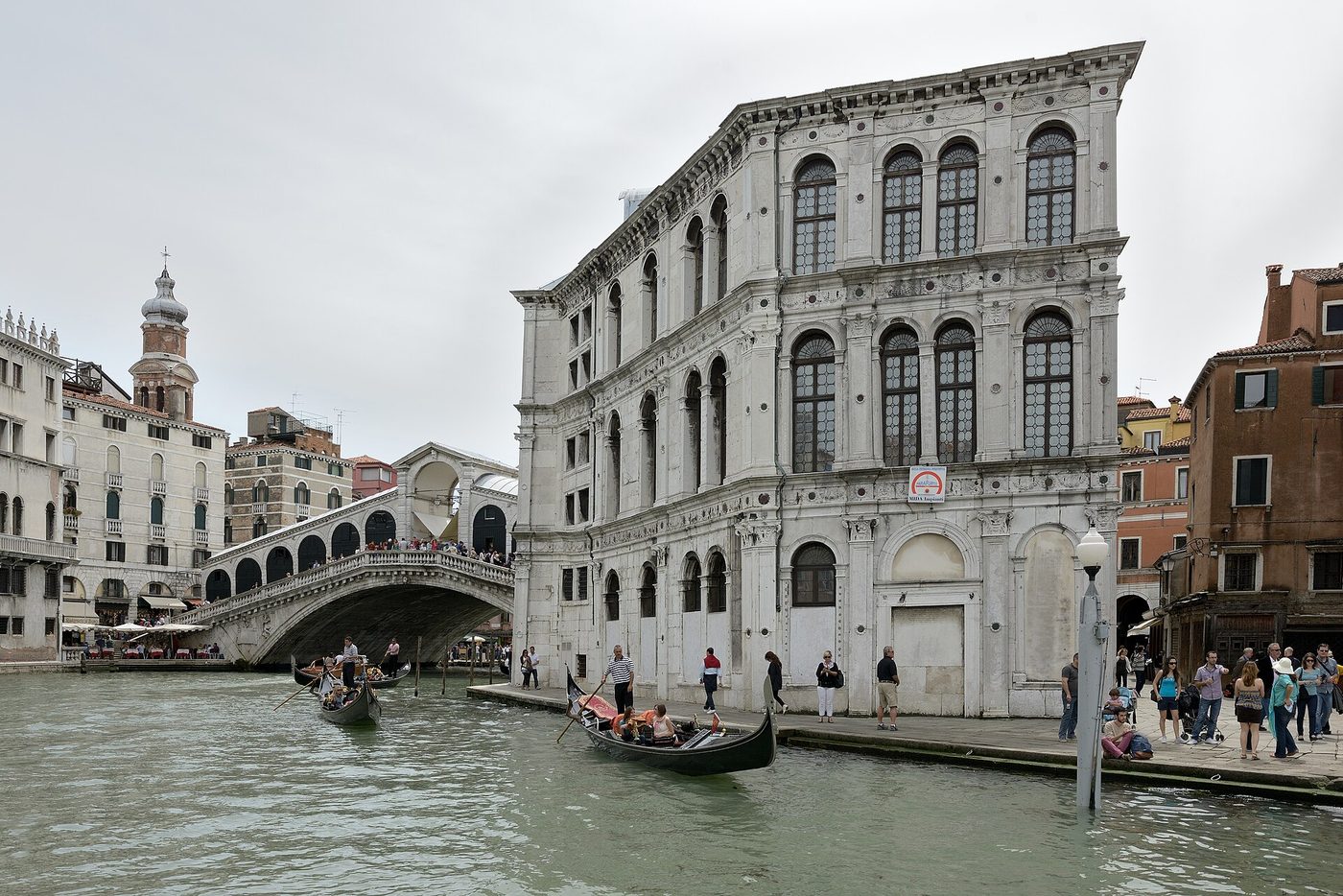
The Rialto Bridge itself costs nothing and needs no ticket, which surprises people who have seen it sold inside tours. Cross it once for the view down the Grand Canal, ideally at seven in the morning, then use the traghetti and the other three bridges for the rest of your stay.
The Squero di San Trovaso in Dorsoduro is one of the last working gondola boatyards, a wooden alpine-looking building where the hulls are repaired. You cannot go in, but you can stand on the fondamenta opposite with a spritz from the bar next door and watch. Fifteen minutes, free, and more interesting than most museums.
Scala Contarini del Bovolo is a spiral external staircase in a courtyard two minutes from Campo Manin, invisible from any main route, with a small charge to climb and a rooftop view over the tiles. It is the best-hidden building in central Venice.
The T Fondaco dei Tedeschi rooftop appears on almost every Venice list as a free bookable viewpoint over the Grand Canal. Its status is now unclear: the department store below it was reported to be closing, and sources disagree about whether the terrace is still open. If it is running, access is free in timed fifteen-minute slots with a reservation. Check on the day rather than building an evening around it.
18. Getting lost in Castello
Castello is the largest sestiere and the least visited, and the eastern half of it is where ordinary Venetians actually live. Washing across the calli, a football game in a campo, a bar where nobody speaks English and the coffee costs €1.20 standing up. Walk east from San Marco along Riva degli Schiavoni, then turn inland at the Arsenale and stop navigating.
This is the one thing on the list with no ticket, no opening hours and no way to do it wrong. Give it two or three hours, ideally in the late afternoon. Venice is small enough that you cannot stay lost for long, and every yellow sign eventually points back to San Marco, the Rialto or the Ferrovia.
19. Cannaregio’s fondamente at dusk
Northern Cannaregio has two long straight canalside walkways, the Fondamenta della Misericordia and the Fondamenta degli Ormesini, and they are where I would send anyone for their first Venetian evening. Bars with tables out on the water, students, locals, a low sun down the length of the canal, and the density of good cheap food per hundred metres is the highest in the city.
It is a twenty-minute walk north from the station and there is not a single souvenir mask in sight. Start around six, drift east, and let dinner happen.
20. Libreria Acqua Alta
The famous bookshop where stock is stored in bathtubs and a gondola against the flooding, with a staircase made from ruined encyclopedias out the back and several resident cats. It is free, it takes twenty minutes, and it is completely charming for about the first ten of those. It is also very well known now, so go at opening or expect a queue for the staircase photograph.
I include it because it is on every list and you will want to know whether it is worth it. It is, briefly, and it is two minutes from Santa Maria Formosa, which is a lovelier campo than the bookshop is a bookshop.
The lagoon islands
Half a day in the lagoon is the difference between having seen Venice and having seen the postcard. The main line is vaporetto 12 from Fondamente Nove on the northern shore, which serves Murano at the Faro stop, then Mazzorbo, Burano and Torcello. From Fondamente Nove, reckon on 10 to 15 minutes to Murano, around 45 to Burano and around 70 to Torcello, with a further 30 to 40 minutes between Murano and Burano.
The lagoon is also where Venice stops feeling like a museum, which is why it turns up in our roundup of underrated places in Europe. Two pieces of planning advice. Go in the morning and start with the furthest island, working backwards, because the organised tours all run Murano first and you will spend the day either ahead of them or inside them. And check the return timetable before you settle in for lunch on Torcello, because the service thins out considerably in the afternoon.
21. Murano
Glassmaking was moved here in 1291, officially to stop the furnaces burning Venice down and unofficially to keep the technique from walking out of the lagoon. The island is bigger and more workaday than people expect, with its own small grand canal and a Byzantine church, Santi Maria e Donato, whose twelfth-century mosaic floor is better than most of what you will queue for in San Marco.
The Museo del Vetro holds the world’s largest historical collection of Murano glass, from the fifteenth to the twentieth century, in the former residence of the bishops of Torcello. MUVE sells it inside the €20 Island Museums combined ticket, which covers Murano’s glass museum, Burano’s lace museum and the Torcello museum and is valid three months; a standalone adult price is not published on the official site. If you are doing more than one island museum that is the ticket to buy anyway.
On the demonstrations: the free furnace demonstration that a man at the vaporetto stop is offering to take you to is a sales funnel, and the shop at the end of it will be expensive. Real Murano glass carries a trademark; a lot of what is sold in Venice is not made there at all. If you want the genuine article, buy inside a furnace’s own showroom and expect to pay accordingly.
22. Burano
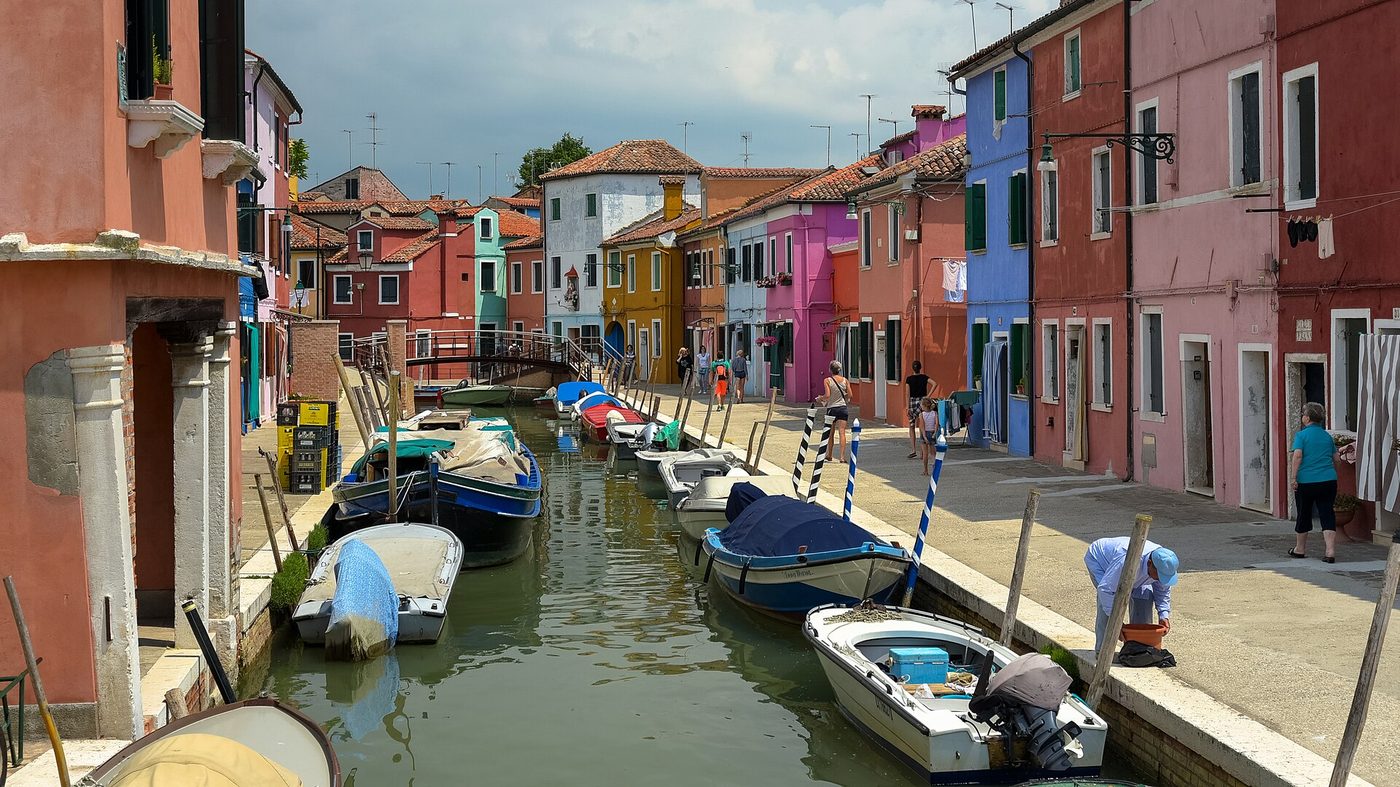
The one everybody has seen a photograph of, and it earns it. Fishermen’s houses painted in saturated colours, reportedly so they could be picked out through lagoon fog, on a small island with a drunkenly leaning campanile and a canal running through the middle. It is beautiful, and it is overrun between eleven and four.
Go early or go late. On the 8am boat you get an hour with the colours and the light and almost nobody in the frame. The lace tradition is real, the Museo del Merletto holds around 200 original pieces documenting five centuries of it, and most of the lace in the souvenir shops is imported machine work. Ask, and expect the honest sellers to tell you.
Mazzorbo, one stop before, is connected to Burano by a wooden footbridge, has a walled vineyard and about six visitors an hour. Walk over. It is ten minutes and it is the best trade on the island.
23. Torcello
People settled here before anywhere else in the lagoon, and for a few centuries this was the largest place in it. Twenty thousand people lived here before the malaria and the silting drove them to the Rialto. Today the permanent population is in the low double figures and there is grass, a stone bridge with no parapets, and the cathedral of Santa Maria Assunta with a Byzantine Last Judgement mosaic covering the entire west wall and a golden Madonna in the apse that is, to my eye, the most moving image in the whole lagoon.
You need about two hours including the boat. There is a bell tower you can climb, ticketed separately and cheaply, for the view across the marshes. It is the most atmospheric place in Venice and the one that gets skipped, because it is furthest out and has no shopping.
24. San Giorgio Maggiore
Two minutes on the number 2 vaporetto from San Zaccaria, and the answer to the Campanile queue. Palladio’s white church across the basin from the Piazza is free to enter, holds two late Tintorettos flanking the altar, and has a bell tower with a lift.
From the top you get the view that the San Marco tower cannot give you: the Piazza, the Doge’s Palace, the basilica domes and the Campanile itself, all in one frame, with the Giudecca on one side and the lagoon on the other. Published prices for the tower run between €6 and €8 depending on where you look, so carry a note and expect single figures. Either way it is cheaper than €15, quieter, and better.
25. The Lido
An eleven-kilometre sandbar with actual roads and actual cars, about twenty minutes by vaporetto from the centre, and the place Venetians go in summer. Free public beaches at either end, paid stabilimenti with loungers in the middle, faded Liberty-style hotels along the front, and the Palazzo del Cinema which hosts the film festival.
Rent a bike at the vaporetto stop and ride the length of it. If you are travelling with children in August, an afternoon here is worth more than another church, and if beaches are your thing generally, our roundup of the best beaches in Europe has better sand than this, but none of it twenty minutes from a Tintoretto.
26. Giudecca and the Redentore
Across the Giudecca Canal lies a long island, once industrial, still residential, and reachable in five minutes on lines 2, 4.1 or 4.2. Palladio’s Redentore church was built as a thank-you for the end of the 1577 plague, and every July the city lays a votive pontoon bridge of boats across the canal so people can walk to it. In 2026 that fell on Saturday 18 and Sunday 19 July, with fireworks over the basin on the Saturday night and a regatta on the Sunday. It is the best night of the Venetian year and it is a locals’ festival that tourists happen to attend rather than the other way round.
The rest of the time, the Fondamenta along the northern shore gives you the whole Venice skyline from the outside, with washing lines and children’s bikes in the foreground. Walk the length of it at sunset.
Eating and drinking in Venice
Venice has a reputation for bad expensive food which is half deserved and entirely avoidable, and it is the main reason the city rarely makes our shortlist of the best cities to visit in Europe for eating. The rule is simple and it works: the further you walk from San Marco and the Rialto Bridge, the better and cheaper you eat. A restaurant with a laminated four-language menu and a man outside inviting you in is not where Venetians go. Twelve minutes’ walk away, a bar with four cheeses on the counter and no English signage is. For the wider picture, see our guide to European food by country.
27. A bacaro crawl
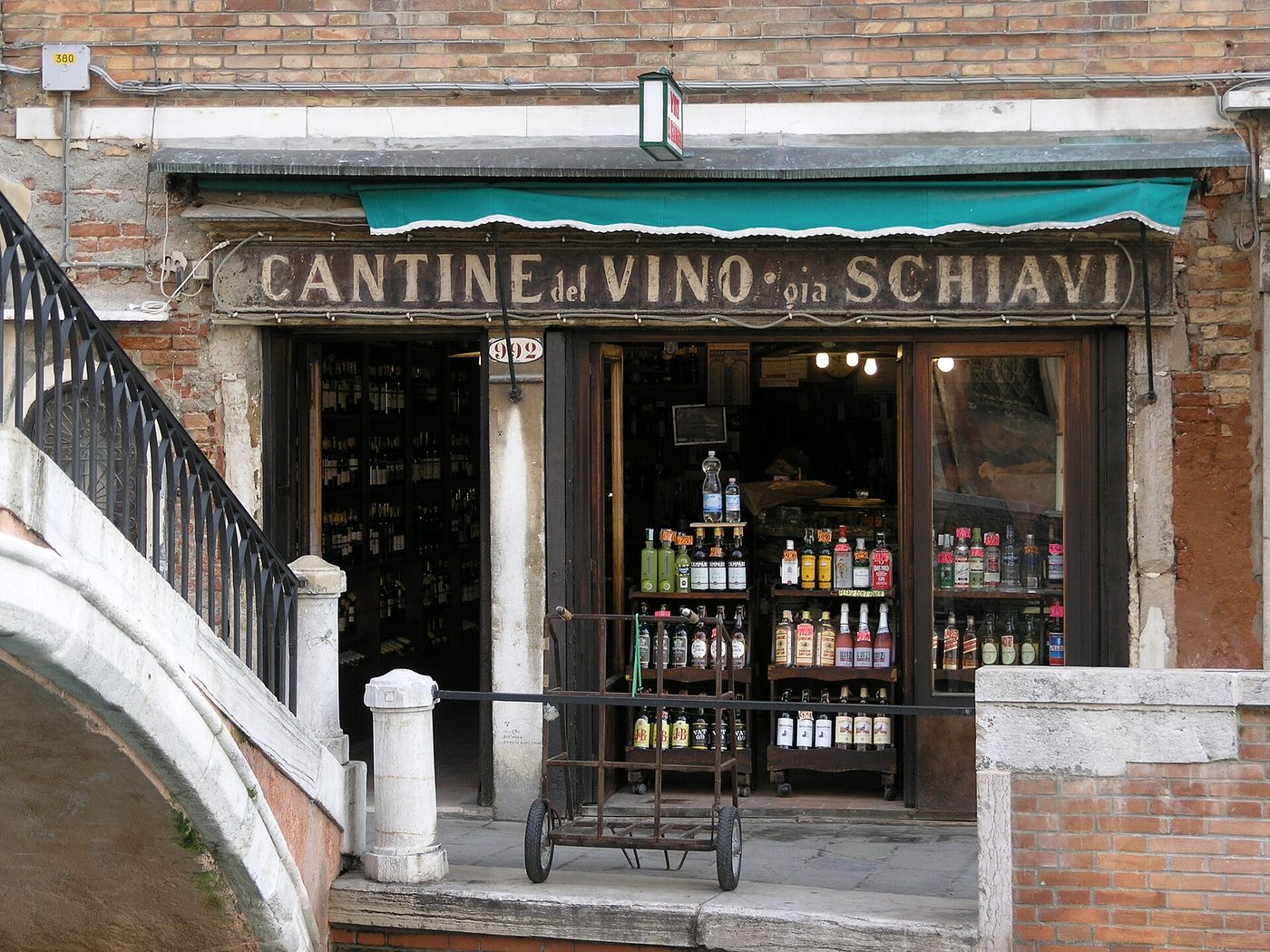
This is the thing to do in Venice if you only do one thing after dark. A bacaro is a small wine bar; cicchetti are the snacks on the counter, roughly Venice’s answer to tapas; and a giro d’ombre is the crawl between several of them. You stand, you point at things, you drink a small glass of wine or a spritz, you pay, you move on.
Cicchetti run about €1 to €4 a piece, with vegetable ones from around €1 and meat or seafood nearer €3. A single bar lunch of them comes to roughly €10 to €18, and a full evening crawl across three or four bacari lands nearer €15 to €25 a head. Baccalà mantecato on grilled polenta is the one to start with: whipped salt cod, and much better than that description suggests. Then sarde in saor, sardines in a sweet-sour onion, pine nut and raisin marinade that is a direct import from the medieval spice trade.
Where: Cannaregio first, particularly the Misericordia and Ormesini fondamente, then Dorsoduro around Campo Santa Margherita, then the streets immediately behind the Rialto market on the San Polo side, which are a genuine exception to the “walk away from the Rialto” rule because that is where the market workers drink.
28. The Rialto market at 7.30am
Under a neo-Gothic loggia on the Grand Canal, the Pescaria has been trading on this spot for around seven hundred years, and it is a working market rather than a heritage exercise. Soft-shell crabs in season, cuttlefish with the ink sacs intact, langoustines from the lagoon, and a lot of shouting. The fruit and vegetable stalls next door bring in the castraure artichokes from Sant’Erasmo in spring.
It is free, it takes 45 minutes, and it is finished by lunchtime, with the fish market closed on Sundays and Mondays. Go at half past seven, watch the restaurant buyers work, then have a coffee and a cicchetto in one of the bars on the edge with everyone else who has been up since five.
29. A spritz on a campo
The spritz was invented in the Veneto and Venice drinks it constantly. Order it con Select if you want the local version rather than Aperol, which is a Padua drink that colonised the world. In a neighbourhood bacaro it costs €3 to €6, and as little as €2.50 in the plainest places. In a tourist-zone bar it is €8 to €12, and in the historic cafés on the Piazza it is higher again, with a music surcharge added on top when the orchestra plays.
That gap is the whole economics of Venice in one drink. Campo Santa Margherita in Dorsoduro is the classic place to make the cheap version last an hour; Campo San Giacomo dall’Orio in Santa Croce is quieter and has trees.
Do buy one Piazza coffee at Florian or Quadri, once, sitting down, knowing what it costs. The rooms are eighteenth-century and the bill is a souvenir. Just do not do it twice.
30. A proper Venetian dinner
Reckon on €30 to €50 a head with wine at a good neighbourhood restaurant, and book, because the good small ones have about nine tables. What to order: bigoli in salsa, a thick wholemeal pasta with an anchovy and onion sauce; risotto de gò, made with lagoon goby; moeche, the soft-shell crabs, in spring and autumn only; fegato alla veneziana, calf’s liver with onions, which is much sweeter and lighter than it sounds; and seppie in nero, cuttlefish in its own ink with white polenta.
Check the menu posted outside for the coperto, the per-person cover charge, which is typically €1.50 to €3 and can reach €5 in heavily touristed spots. It is legally required to be displayed. Some places in the busiest areas add a service charge of 10 to 20% on top of that, which you should also see stated. If neither figure is visible outside, that tells you something about the restaurant.
Tap water is safe, good and drawn from deep mainland wells, and there are around 122 public drinking fountains in the historic centre. Carry a bottle and refill. Restaurants will still push bottled water; ask for acqua del rubinetto and some will oblige.
31. Pasticceria and gelato
Venetian baking is its own tradition and mostly ignored by visitors. Look for bussolai and esse, the ring and S-shaped butter biscuits from Burano that are made to be dunked in dessert wine; zaleti, cornmeal and raisin biscuits; frittelle, the fried carnival doughnuts that appear across the city from January and vanish the moment Lent begins; and galani, the brittle fried carnival pastry dusted with sugar.
Two to eight euros will cover most of this and it is the easiest win of the whole trip with children, who will have reached their limit on Tintoretto some hours before you have. Our guide to Europe with kids has more on that particular negotiation.
How crowded is Venice really?
Nearly six million people arrived and stayed overnight in Venice in 2024, an all-time record, and total annual visits including day-trippers are estimated at 25 to 30 million against a historic-centre population of somewhere around 48,000 to 50,000. On a peak day the centre can take 85,000 day-trippers on top of its residents. Those numbers sound unmanageable, and yet the crowding is astonishingly concentrated. Walk ten minutes off the San Marco to Rialto axis and the city empties out. The six things below are where that happens fastest, and most of them are free.
Quiet Venice, mostly free
32. The Jewish Ghetto
The original one. The word itself comes from this place, from the geto, the foundry that stood here before the Republic confined its Jewish population to the island in 1516. Because they could not build outwards they built upwards, which is why the Ghetto Nuovo has Venice’s tallest buildings and its lowest ceilings, and why five synagogues are hidden in the upper floors of what look like ordinary houses.
The campo itself is free to walk and quietly extraordinary, with a Holocaust memorial in bronze relief along one wall. The Jewish Museum runs guided tours into the synagogues themselves, which is the only way to see their interiors and which I would recommend. Tour prices and times change with the season, so check the museum’s own site rather than a listing page. Allow one to two hours, more with the tour. It is a ten-minute walk from the station and most people going the other way never turn left.
33. Santa Maria della Salute
Longhena’s great domed church guards the entrance to the Grand Canal, built as a votive offering after the plague of 1630 killed roughly a third of the city. Longhena’s design is octagonal and theatrical, and it is the shape that makes every Venice skyline photograph work. The church is free. The sacristy, which holds Titians and a Tintoretto Wedding at Cana, is €4 for adults and €2 for children and is worth the coins.
Every 21 November the city builds a temporary votive bridge of boats across the Grand Canal so people can walk to the Salute and light a candle, which they still do in very large numbers. If you are here in late November, that is your day.
34. San Pietro di Castello and the far east end
Venice’s cathedral until 1807 was not St Mark’s but San Pietro, out on its own island at the eastern tip of Castello, with a leaning white campanile and a grass campo where people hang washing. The basilica in the Piazza was the Doge’s private chapel; this was the actual seat of the bishop, deliberately kept as far from the seat of government as the city allowed.
It is a forty-minute walk from San Marco through the Arsenale district and Via Garibaldi, which is the widest street in Venice and functions as the local high street, with a market and bars full of people who live here. On a July afternoon you may see a dozen other visitors. It is the best antidote to Venice fatigue I know.
35. The Chorus network churches
A recent change worth knowing: the Chorus association’s own visitor information now states plainly that access to the churches in the Chorus network is free. The old model of €3 per church, or €14 to €16 for a pass, appears to have gone. What still carries a charge is four specific interior spaces: the Santo Stefano Museum, the San Zaccaria Museum, the Oratory of the Crucifix at San Polo and the Monumental Sacristy of the Redentore, each €3.50, or €2.50 reduced for students under 25 with ID.
Hours are Monday to Saturday 10:30 to 17:00, with the San Zaccaria Museum open Monday to Sunday 10:00 to 18:00. The churches close on Sundays, 1 January, Easter, 15 August and Christmas, and open only from midday on 6 January, 1 November and 8 December. Residents with ID, children up to 11, disabled visitors with a guide, ICOM and ICOMOS members and authorised guides on duty go free, and groups get one free entry per 15 participants.
What the Chorus Pass now costs, or whether it still has a purpose given free church entry, is not clear from the association’s own site. Turn up and see. Santa Maria dei Miracoli, a jewel box of coloured marble in Cannaregio, is the one to prioritise; San Sebastiano in Dorsoduro, with its Veronese ceilings and the painter’s own tomb, is the connoisseur’s pick.
36. Sant’Elena and the public gardens
The far eastern tip of the city, past the Biennale Giardini, is where Venice keeps its trees. Sant’Elena has pine avenues, a football stadium, playgrounds, benches and residents walking dogs. There is no attraction here whatsoever, which is exactly the point after three days of marble.
It is the last stop on several vaporetto lines, so you can ride out and walk back along the Riva with the lagoon on your left the whole way. Take a book and an hour.
What things to do in Venice actually cost in 2026
Every figure below was checked against the operator or museum’s own site in August 2026. Venice changes prices more often than most Italian cities, so treat these as the number to budget rather than a promise, and note the two rules that catch people out: the Doge’s Palace online discount needs 30 days’ notice, and the basilica’s 20% online reduction is applied automatically rather than by code.
| Ticket | Adult price | Reductions | Worth knowing |
|---|---|---|---|
| St Mark’s Basilica, admission | €10 | Free under 11; 20% off online; 50% off ages 10-18, students to 26, over-65s | Museum and Loggia only on Sunday mornings until 2pm |
| St Mark’s Basilica, Basilica + Pala d’Oro | €20 | As above | The jewelled Byzantine altarpiece |
| St Mark’s Basilica, Basilica + Museum and Loggia | €20 | As above | The bronze horses and the balcony |
| St Mark’s Basilica, Museum and Loggia alone | €14 | As above | Sunday mornings only |
| St Mark’s Basilica, full ticket | €30 | As above | Everything, including the Pala d’Oro |
| Campanile di San Marco | €15 | No free entry, even for those free elsewhere | Ticketed separately from the basilica |
| St Mark’s Square Museums ticket | €35 door / €30 online | €15 reduced | €30 rate needs booking 30+ days ahead; the only way to enter the Doge’s Palace |
| Doge’s Palace, Secret Itineraries tour | €40 | €20 reduced | Includes unguided access to all four St Mark’s Square museums |
| Doge’s Palace, Hidden Treasures tour | €40 | €20 reduced | Chiesetta and Antichiesetta; same included access |
| MUVE Museum Pass | €50 | €25 reduced | 12 civic museums, valid 6 months, one entry each. Clock Tower not included |
| Island Museums combined ticket | €20 | €10 reduced | Murano glass, Burano lace, Torcello. Valid 3 months |
| Museums of 18th Century Venice ticket | €20 | €10 reduced | Ca’ Rezzonico, Palazzo Mocenigo, Casa Goldoni. Valid 3 months |
| Modern and Contemporary Art ticket | €20 | €10 reduced | Ca’ Pesaro, Fortuny, MUVEC Mestre. Valid 3 months |
| Ca’ Rezzonico, single ticket | €15 | €7.50 reduced | Eighteenth-century Venice, on the Grand Canal |
| Torre dell’Orologio | About €14 | Not confirmed | Guided visit by prior booking only, about 1 hour |
| Gallerie dell’Accademia | €20 | €2 for EU citizens 18-25; free under 18 | Free first Sunday monthly; €15 Friday Arteritivo for ages 26-35 |
| Peggy Guggenheim Collection | About €18 | Free under 10 and disabled visitors with companion | Timed slot required; closed Tuesdays |
| Punta della Dogana and Palazzo Grassi | €20 | €15 reduced, €7 ages 20-26, free under 20 | One ticket covers both venues |
| Scuola Grande di San Rocco | €12 | €10 over-70s and Touring Club; €3 ages 8-18; €26 family | Door sales only, no online booking, in no pass |
| Basilica dei Frari | Free, per Chorus | Free during morning and evening worship | A Chorus network church. Carry a few euros in case the old €3 charge still applies |
| Ca’ d’Oro | €6 | €2 for EU citizens 18-25 | Galleria Giorgio Franchetti, on the Grand Canal |
| Teatro La Fenice, daytime visit | €12 | €9 over-65; €7 students 7-26; free under 6 | Audioguide in ten languages included |
| Santa Maria della Salute sacristy | €4 | €2 children | The church itself is free |
| Chorus network churches | Free | Free | €3.50 for four specific interior spaces, €2.50 reduced |
| La Biennale Arte 2026, one access | €30 | €20 over-65s and residents; €16 students and under-26s | 3-day €40; weekly €50; free up to age 6 |
Venice transport, passes and airport transfers
Venice public transport is expensive and the passes only pay off at real volume. Work out your journeys before you buy anything.
| Fare or pass | Price | Notes |
|---|---|---|
| ACTV single ticket | €9.50 | Valid 75 minutes, one direction, transfers allowed within the window |
| ACTV 24-hour travel card | €25 | Hours from first validation, not calendar days |
| ACTV 48-hour travel card | €35 | Covers vaporetti, mainland buses, Mestre tram and People Mover, but not the airport |
| ACTV 72-hour travel card | €45 | €27 with a Rolling Venice card |
| ACTV 7-day travel card | €65 | Worth it from about six journeys a day |
| Rolling Venice card | €6 | Ages 6 to 29. Cuts the 72-hour pass to €27 and unlocks reduced museum rates |
| Venezia Unica City Pass | Modular | Build-your-own; enabling it as an ACTV transport card costs €10 |
| Traghetto crossing | €2 | €0.70 for residents. Cash, exact change, around seven routes |
| Gondola, daytime 09:00 to 19:00 | €90 per gondola | 30 minutes, up to 5 passengers, cash. About €40 per extra 20 minutes |
| Gondola, evening after 19:00 | €110 per gondola | 35 minutes, same capacity and payment rules. Extensions about €50 per 20 minutes |
| Alilaguna, Marco Polo airport to Venice | €18 single / €32 return | Blue, Orange and seasonal Red lines. Over an hour to San Marco on the Blue; check the timetable |
| Alilaguna, airport to Murano | €10 single / €18 return | Same luggage rules |
| Alilaguna, station to San Marco | €10 single / €18 return | Useful if you land with heavy bags |
| Alilaguna timed tickets | €40 / €60 / €80 | 24, 48 and 72 hours. All lines except the Green. Ticket offices only |
| Alilaguna Green Line island excursion | From €25 per person | Murano, Torcello and Burano |
| ATVO bus, Marco Polo to Piazzale Roma | €10 single / €18 return | About 20 minutes, direct, roughly every 30 minutes |
| ACTV aerobus supplement | About €7 single / €13 return | Needed on top of a travel card for airport journeys. ACTV line 5 also runs the airport route |
| ATVO bus, Treviso airport to Piazzale Roma | About €12 | Journey time quoted variously between 50 and 70 minutes |
| Water taxi, airport to Venice, private | Roughly €140 to €280 | Quotes vary widely by operator and party size. 25 to 30 minutes |
| Water taxi, shared | About €30 to €40 per person | Around €10 night surcharge after 22:00 |
When to go, and what is on
Venice has no bad month, only different problems. Peak crowding runs June to August and peaks in July, when queues at the main sights can reach two hours. The best windows are April to May and September to October, with the caveat that the Biennale, the Film Festival and the Regata Storica all land inside those windows and push hotel prices up. Our wider guide to the best time to visit Europe puts this in context against the rest of the continent.
On climate, I want to be careful about what I can and cannot stand behind. What I could verify: January is the coldest month, averaging around 4°C, with daytime highs near 9°C. July and August are the warmest, averaging around 24°C, with August daytime highs around 28°C. Annual rainfall is roughly 1,127mm, with September the wettest month at about 134mm and January the driest at about 65mm. A reliable month-by-month table of highs, lows and rainfall is harder to source than it should be, so I am not going to print one. What that broad shape tells you is enough: summer is hot and humid with sudden heavy rain, winter is cold, damp and often foggy, and the shoulder months are mild and unpredictable. If you are building a summer route, see the best places to visit in Europe in summer; for the cold months, the winter equivalent makes the case for a February Venice.
| Season | Crowds | What it is good for | The catch |
|---|---|---|---|
| December to February | Lowest, except Carnival | Fog on the lagoon, empty churches, cheap hotels, frittelle in every pasticceria | Cold and damp, short days, some restaurants closed in January |
| Carnival, late Jan to mid Feb | Very high in the centre | The masks, the costume parades, the city at its most theatrical | Hotel prices spike; San Marco is packed solid |
| March to May | Rising through April | The best all-round weather, castraure artichokes, long light evenings by May | Easter is a spike; May brings the Biennale opening |
| June to August | Highest, peaking in July | Redentore in July, the islands, evening swimming from the Lido | Heat, humidity, mosquitoes, two-hour queues, canal smell at low tide |
| September to October | High in September, easing in October | Film Festival, Regata Storica, warm water, the best light of the year | September is the wettest month on average |
| November | Low | Festa della Salute, empty museums, the moodiest version of the city | The peak month for acqua alta |

The 2026 and 2027 events calendar
| Event | Dates | What to know |
|---|---|---|
| Carnival 2026 | 31 January to 17 February 2026 | Pre-Carnival 31 Jan to 6 Feb, main events 7 to 17 Feb. Theme: “Olympus, At the Origins of the Game” |
| Biennale Arte 2026 | 9 May to 22 November 2026 | 61st International Art Exhibition, “In Minor Keys”, curated by Koyo Kouoh. Closed Mondays with four exceptions |
| Festa del Redentore 2026 | 18 and 19 July 2026 | Pontoon bridge to the Redentore, fireworks Saturday night, regatta Sunday |
| Venice Film Festival 2026 | 2 to 12 September 2026 | 83rd edition, on the Lido |
| Regata Storica 2026 | Sunday 6 September 2026 | Historic costumed procession down the Grand Canal, then the racing |
| Festa della Salute | 21 November, annually | Temporary votive bridge across the Grand Canal to the Salute |
| Carnival 2027 | 23 January to 9 February 2027 | The official site gives these dates; some sources say 30 January. Confirm before booking flights |
| Biennale 2027 | To be announced | Architecture year. 2026 is Art |
Acqua alta, and whether it should change your plans
No, but you should understand it. Acqua alta is a tidal phenomenon, not a rainfall one: exceptional high tides combined with a strong Scirocco push water up the Adriatic and into the lagoon. It runs mainly October to March, with November the worst month. In practice it is usually minor and short-lived, lasting a couple of hours around high tide. Sirens sound, raised walkways called passerelle are laid out linking the transport hubs to the centre, and St Mark’s Square, the lowest point in the city, floods first and drains last.
Since 2020 the city has had MOSE, a system of 78 hinged steel barriers up to 30 metres long and 350 tonnes each, resting in housings on the seabed at the three lagoon inlets and raised when the forecast tide exceeds 110cm. It works, and it is used more than anyone expected. It was raised more than 30 times in 2024, and 30 times in the 23 days between 28 January and 19 February 2026 alone, at a cost of about €6 million for that one spell. Cumulatively it has closed the lagoon around 100 times in its first four years, for close to €20 million.
What this means for you: if you are here in November, pack waterproof boots you do not mind ruining, check the tide forecast on the city’s own app in the evening for the next morning, and treat a flooded Piazza as a photograph rather than a disaster. Venetians certainly do.
How long do you need in Venice, and what to do with the time
Two days is the minimum for a first visit. Three is the number I would defend, because it is the point at which the islands stop being a sacrifice. Beyond four you are into repeat-visitor territory, which Venice rewards more than almost any city in Europe.
One day, if that is all you have
Arrive early. Vaporetto line 1 down the Grand Canal from the station to San Zaccaria. Piazza San Marco before the crowds, then the basilica on a booked slot. Coffee standing at a bar. Walk to the Rialto through the back calli rather than along the signed route. Cross to San Polo, spend an hour at Scuola Grande di San Rocco and twenty minutes at the Frari. Cicchetti lunch behind the Rialto market. Afternoon walking east through Castello with no plan. Sunset at Punta della Dogana. Dinner in Cannaregio.
What you skip: the islands, the Doge’s Palace, and every tower. That is the correct trade for one day. Do not try to squeeze the palace in; it is two to three hours and it will eat the part of the day that makes Venice worth the visit.
Two days
Day one as above but slower, adding the Doge’s Palace on a timed morning slot and the Accademia in the late afternoon. Day two is the lagoon, and it will take the whole of it: the 8am boat from Fondamente Nove out to Torcello, then Burano, then Murano on the way back, home in the early evening, and a bacaro crawl through Cannaregio afterwards. If you would rather not rush, drop Murano. Consider the evening basilica visit or a Friday or Saturday late opening at the Doge’s Palace if your dates line up.
Three days, which is the right answer
Add a day with no monuments in it at all. San Pietro di Castello and Via Garibaldi in the morning, Giudecca and the Fondamenta at midday, the Jewish Ghetto in the afternoon, San Giorgio Maggiore’s bell tower at golden hour, gondola after dark in a quiet sestiere. That third day is the one people come home talking about, and it costs almost nothing.
Venice as part of a longer trip
Venice sits at the top of the Italian rail network and works well as a hinge. Just over two hours to Florence, a little under four to Rome, about two and a half to Milan on the fast trains. Our guide to train travel in Europe covers booking windows and pass maths, and things to do in Rome and the Tuscany travel guide are the natural next stops. If you are heading east instead, Venice is four hours from Ljubljana by bus and Croatia is close enough that our Croatia travel guide earns its place in the same trip.
Swap this for that
Most Venice disappointment comes from doing the right thing at the wrong place. These are the substitutions I make every time I come.
| What most visitors do | What I would do instead | Why |
|---|---|---|
| Queue for the Campanile di San Marco at €15 | The bell tower at San Giorgio Maggiore | Better photograph, because San Marco is in the frame rather than under your feet. Almost no queue, and it costs less |
| A gondola from the San Marco or Rialto ranks | The same gondola picked up in Cannaregio or Castello | Identical fixed price, but you get quiet side canals instead of a gondola traffic jam |
| Lunch on a canal terrace near the Rialto Bridge | Cicchetti standing up in a bacaro behind the market | Better food, a third of the price, and the people around you actually live here |
| A spritz sitting in Piazza San Marco | A spritz in Campo Santa Margherita | Roughly €3 to €6 rather than €8 to €12 and up, plus a music surcharge |
| A day trip to Murano only | Torcello and Burano first, Murano on the way back | You travel against the tour groups all day and see the two better islands with space around you |
| Bottled water everywhere | A refillable bottle and the public fountains | The tap water is safe, good and free, and there are around 122 fountains in the centre |
| The standard Doge’s Palace ticket | The €40 Secret Itineraries tour | It includes the same four museums, so the real premium is small and you get the guided route through the prisons and attics |
| Staying in Mestre to save money | Staying in Cannaregio or Castello | Mestre saves perhaps €60 a night and costs you the empty early mornings, which are the best thing Venice has |
| Booking a “free” Murano glass demonstration at the vaporetto stop | Walking into a furnace showroom yourself | The free tour is a sales funnel. Real Murano glass carries a trademark |
| Three museums in a day | One museum and three hours of walking | Venice is the exhibit. The buildings you pay to enter are the smaller half of it |
Things to do in Venice by traveller type
First-timers with two days
Numbers 1, 2, 7, 15, 22, 27 and 33. Book the basilica and the palace before you book anything else, do the Grand Canal twice, and give one whole morning to Burano. Our first-timer’s guide to Europe covers the wider logistics.
Second and third visits
Numbers 3, 10, 23, 26, 34 and 35. The Secret Itineraries tour, San Rocco, Torcello, Giudecca, San Pietro and the Chorus churches are the Venice that opens up once you have stopped needing to see the famous things.
Couples
The evening basilica visit, an after-dark gondola in a quiet sestiere, the Friday or Saturday late opening at the Doge’s Palace, dinner in Castello and a walk back along the Zattere. Venice does this better than anywhere, which is why it turns up so often in our Europe honeymoon guide.
Families
Numbers 5, 17, 21, 25 and 31: the clock tower mechanism, the two-euro traghetto, the glass furnaces, the Lido beach and bikes, and an aggressive pasticceria strategy. Be realistic about stepped bridges with a stroller. Most of Venice is not stroller-friendly and the St Mark’s Square area is the most navigable part of it.
Solo travellers
Bacaro crawls are made for eating alone: you stand, you point, nobody seats you at a table for one. Cannaregio and Campo Santa Margherita are the friendliest evenings, and Venice is one of the safest European city breaks to walk home from at midnight. More on this in our guide to travelling alone.
Budget travellers
If you are 29 or under, the €6 Rolling Venice card is the single best purchase in the city. Beyond that: the Chorus churches are free, San Giorgio’s church is free, the Salute is free, the Grand Canal costs a single fare, the traghetto is €2, and roughly a third of this list costs nothing at all. See also the cheapest places to travel in Europe, none of which are Venice, and backpacking Europe.
Art specialists
San Rocco, the Frari, the Accademia, San Sebastiano, the Miracoli, Punta della Dogana and, in season, the Biennale. Four full days minimum. Note that almost none of that list sits inside the €50 MUVE Museum Pass, which covers the civic museums rather than the churches and foundations. The pass earns its keep only if you are doing Ca’ Rezzonico, Ca’ Pesaro, Palazzo Mocenigo and the island museums as well.
Eight mistakes I still watch people make
- Booking the Doge’s Palace 20 days out and expecting €30. The online rate requires at least 30 days’ notice. Inside that window it is €35 at the door.
- Buying an undated museum ticket and turning up at nine. Without a specific time slot you are not admitted until 12 noon.
- Arriving at a museum with a suitcase. MUVE refuses entry outright to anyone carrying a trolley or a bag whose three sides total over a linear metre. It is not stored for you, you are turned away. Sort left luggage first; storage near Santa Lucia runs from a few euros a bag per day.
- Paying the access fee. It is not being charged. Check the city’s own page rather than a booking site.
- Treating the 75-minute vaporetto ticket as a day ticket. It is one direction, 75 minutes, and inspectors do check.
- Eating within sight of the Rialto Bridge or the Piazza. Nothing predicts a bad meal in Venice as reliably as a view of a famous thing.
- Sitting down on the steps to eat a sandwich. Eating or drinking while sitting on monuments, bridges, quaysides and walkways in the busy areas is prohibited and reportedly carries a €100 to €200 fine.
- Doing Venice as a day trip. The city is at its best between six in the evening and nine in the morning, and a day trip is engineered to miss both ends.
Accessibility, safety and the things nobody puts in a listicle
Venice is hard work on wheels. Most of the city is not stroller- or wheelchair-friendly because of the stepped bridges, and the St Mark’s Square area is the most navigable part of it. The vaporetti are the accessible way to move: they are level-boarding at most stops and cover the whole city. Plan routes by water rather than on foot if steps are an issue, and note that the MUVE museums admit disabled visitors and one companion free.
On safety: Venice has very little violent crime and a real pickpocket problem, concentrated exactly where you would expect, on crowded vaporetti on lines 1 and 2, in the Rialto and San Marco crush, and at Santa Lucia station. Front pockets, bag across the body, and pay particular attention while boarding a busy boat. Beyond that the city is one of the safest in Europe to walk at night, largely because there is no traffic and the alleys are short.
One more timing note if you are considering February. Carnival is spectacular and it is also the single most crowded fortnight of the Venetian winter in the centre, with hotel prices to match. The costumed set gather in Piazza San Marco in the mornings for photographs, and the best of the rest happens in the campi of Cannaregio and Castello, where the neighbourhood parties are. If you want the masks without the crush, come in the pre-Carnival week rather than the final weekend.
The rules that carry fines
Venice has become fairly assertive about visitor behaviour and it publishes the list. The ones worth knowing:
- Guided groups are capped at 25 people and tour guides may not use loudspeakers or megaphones. This came into force on 1 June 2024 and remains in force, with penalties from €25 to €500 levied on the guide. Children under two, school groups and educational trips are excepted. If your booked tour has 40 people on it, something is wrong.
- Sitting, lying or eating is prohibited on designated steps, bridges, monument bases, quaysides and walkways in crowded areas, particularly around St Mark’s, the Rialto and the main campi. Reported fines run €100 to €200.
- Feeding the pigeons has been banned since 2008, with fines reported between €25 and €500.
- Swimming in the canals carries a fine reported at around €350, and the canals are not clean.
- Buying from unlicensed street vendors is an offence for the buyer as well as the seller.
- Lingering on bridges is discouraged and can attract a fine. Keep right when you walk, and step aside to take photographs.
One claim I want to correct: you will read in a lot of places that Venice fines you for using a wheeled suitcase. I went looking for the ordinance and could not substantiate it. What is documented and enforced is the museum-level rule above. So roll your bag, but roll it quietly, keep right, and carry it up the bridges rather than bumping it.
Getting to Venice, and where to stay
Marco Polo airport sits on the mainland edge of the lagoon. The ATVO express bus to Piazzale Roma is €10 one way or €18 return and takes about 20 minutes with no intermediate stops, running roughly every half hour, and it is the sensible default. The Alilaguna water bus is €18 single or €32 return and takes over an hour to San Marco on the Blue Line, with published times varying enough that you should check the current timetable, which is slow but drops you at a landing stage instead of a bus terminus, and arriving in Venice by water is a real thing rather than a marketing line. The Blue Line runs via Murano, Fondamente Nove, the Lido, San Zaccaria, San Marco, Zattere, Giudecca, Tronchetto and Santa Lucia; the Orange goes the northern inland route via Madonna dell’Orto, Guglie, San Stae, Rialto, Sant’Angelo and Ca’ Rezzonico; the Red is seasonal. One large bag and one hand item are included, extra items are €4 each, under-6s are free with proof of age and strollers travel free.
A private water taxi runs anywhere from about €140 to €280 depending on operator and party size, taking 25 to 30 minutes, with roughly a €10 surcharge after 22:00. Shared water taxis work out around €30 to €40 per person. If you are four people with luggage and your hotel has a canal door, the private taxi is less absurd than it looks. Treviso airport, which the low-cost carriers use, is connected to Piazzale Roma by ATVO bus for about €12, with journey times quoted between 50 and 70 minutes.
Non-EU visitors should check the entry rules before booking; our guide to the Schengen visa and ETIAS covers what changed. By train, know the difference between the two stations. Venezia Santa Lucia is the terminus in the historic centre, right on the Grand Canal. Venezia Mestre is on the mainland about 8.4km away, roughly 11 minutes by regional train. Some cheap fares and some hotels quote Mestre. That is fine if you know what you are buying and a nasty surprise if you do not.
On accommodation: budget beds run roughly €60 to €100 a night, mostly hostels and Mestre hotels; mid-range is around €150 to €250, with a three-star in San Polo averaging near €185; luxury starts around €300 and the Grand Canal landmarks go far beyond it. My advice is to pay the premium and sleep in the historic centre, ideally Cannaregio or Castello rather than San Marco. The whole argument of this guide is that Venice is best when the day-trippers have gone, and you cannot be there for that from Mestre. Our guide to picking a base has more on the trade-off, and how to plan a trip to Europe covers the booking order.
Day trips from Venice
If you have four or five days, one of them is well spent on the mainland. The Venice to Verona line runs through Padua and Vicenza, so the whole Veneto is within easy reach.
| Destination | Journey | Rough fare | What you get |
|---|---|---|---|
| Treviso | About 35 minutes by train, around 58 services a day | From about €4.85 | Walled canal town, frescoed houses, the birthplace of tiramisu and prosecco country just north |
| Verona | Fastest about 1h09, average 1h19, Regionale just under 1h30 | Regional from about €11 to €15; high speed roughly €18 to €35 | The Roman arena, opera in summer, a completely different Veneto city |
| Padua | On the Venice to Verona line, before Vicenza | Fares and times not confirmed at time of writing | Giotto’s Scrovegni Chapel, one of the oldest universities in Europe, and vast arcaded squares |
| Vicenza | On the same line, between Padua and Verona | Fares and times not confirmed at time of writing | Palladio’s home city, and the Teatro Olimpico |
| Cortina and the Dolomites | About 2h37 by bus from Piazzale Roma; by train to Calalzo, about 2h39, then a local bus | Bus roughly €13 to €23 | The Alps in two and a half hours. Long but doable as a day, better as an overnight |
The Scrovegni Chapel in Padua requires advance booking with a timed slot and a dwell time in a climate lock before entry, so treat it as a fixed appointment you build the day around rather than a walk-in. If you are pushing further into the mountains, our hiking in Europe guide covers the Dolomite trails properly.
Frequently asked questions about things to do in Venice
Do you have to pay to enter Venice in 2026?
No, not at the moment. The Comune di Venezia states that the 2026 trial of the access fee ended on 26 July 2026 and that from 27 July the fee does not apply, with no payment and no exemption request needed. It ran for 60 chargeable days from 3 April. Whether it returns in 2027 has not been decided publicly, so check the city’s own access fee site before you travel rather than a third-party booking page.
How many days do you need in Venice?
Two days minimum for a first visit, three if you want to include the lagoon islands without rushing. Three days is the sweet spot and the number I would defend. One day is enough to see the famous things and almost none of what makes the city worth the journey.
How much is a gondola ride in Venice?
The official rates are €90 per gondola for 30 minutes between 09:00 and 19:00, and €110 for 35 minutes after 19:00, with roughly €40 for each additional 20 minutes in the day and €50 after seven. That is per boat, not per person, and a gondola carries up to five, so a group of four splits the daytime rate at €22.50 each. Bring cash. Singing is not included and is not a Venetian tradition.
What is the number one thing to do in Venice?
St Mark’s Basilica, if you mean a single attraction. If you mean the thing most likely to make the trip, it is standing in Piazza San Marco before eight in the morning, which costs nothing.
Is Venice expensive?
Yes, more than the rest of Italy, and the transport is the part that surprises people: a single vaporetto ticket is €9.50 and a 72-hour pass is €45. Hotels in the historic centre carry a real premium over Mestre. But food and drink can be cheap if you use bacari, roughly a third of the list above is free, and the €6 Rolling Venice card transforms the numbers for anyone aged 6 to 29.
What are the best free things to do in Venice?
Piazza San Marco at dawn, the Chorus network churches, Santa Maria della Salute, the church at San Giorgio Maggiore, the Jewish Ghetto campo, the Rialto market, the point outside Punta della Dogana at sunset, Libreria Acqua Alta, the walk out to San Pietro di Castello, the Cannaregio fondamente at dusk, the pine avenues at Sant’Elena, and simply getting lost in Castello. Giudecca and the islands cost only the vaporetto fare. The Gallerie dell’Accademia is free on the first Sunday of every month.
Can you drink the tap water in Venice?
Yes. It comes from deep mainland wells, it is safe and it tastes fine, and there are around 122 public drinking fountains in the historic centre. Carry a refillable bottle. Ask for acqua del rubinetto in restaurants if you would rather not buy bottled.
What is acqua alta and will it ruin my trip?
It is a tidal flood, mainly October to March and worst in November, caused by exceptional high tides and Scirocco winds rather than rain. It usually lasts a couple of hours around high tide. Raised walkways go out and life continues. The MOSE barriers are raised when the forecast tide exceeds 110cm, which happened more than 30 times in 2024. It will not ruin your trip; it may well make it more memorable.
What should you not do in Venice?
Do not sit down to eat on bridges, steps or monument bases in the busy areas, do not feed the pigeons, do not swim in the canals, do not buy from unlicensed street vendors, and do not book a museum ticket without a time slot if you want a morning entry. All of the first four carry fines.
Is Venice worth visiting despite the crowds?
Yes, and the crowding is more solvable than its reputation suggests. It is concentrated on one axis, in one part of the day, in a few months of the year. Stay overnight in the centre, be out before nine and after six, and walk ten minutes off the signed route, and you will have a genuinely quiet Venice for most of your stay.
Santa Lucia or Mestre, which station should I book?
Santa Lucia, unless you are deliberately staying on the mainland. Santa Lucia is the terminus in the historic centre on the Grand Canal. Mestre is 8.4km away on the mainland, about 11 minutes by regional train, and some cheap fares quote it without making that obvious.
What is the best area to stay in Venice?
Cannaregio for food and evening life at a slightly better price, Castello for quiet and space, Dorsoduro for the art and the student bars, San Polo for the market. San Marco is convenient and the least pleasant place to live for three days. Avoid the immediate Rialto Bridge area unless you like being woken by suitcases.
Final thoughts
Venice is not fragile in the way people say. It has survived plague, Napoleon, Austrian occupation, the loss of its entire economic purpose, and something in the region of 25 to 30 million annual visits, and it is still here being difficult and beautiful. What it does punish is haste. Everyone who comes back disappointed came for six hours, walked the yellow-signed corridor with forty thousand other people, paid four times the going rate for a spritz with a view, and left.
The version that stays with you costs less and asks only that you stay the night. Be out at seven. Walk east until the shops stop selling masks. Eat standing up. Take the two-euro ferry instead of the ninety-euro one, and then take the ninety-euro one anyway, after dark, somewhere nobody is watching. Every one of those is on the list above and most of them are free.
One honest note on what is missing here. I have not printed a full month-by-month climate table, a Chorus Pass price, a San Giorgio bell tower fare or Padua and Vicenza train times, because I could not verify them against a source I trust. I would rather leave a gap than print a number you plan around and find wrong at the ticket window. Everything I have quoted came from the operator’s own site in August 2026, and Venice being Venice, some of it will have moved by the time you read this.
Next in this silo: things to do in Florence, the Amalfi Coast travel guide and the Cinque Terre travel guide. For the whole country, start at the Italy travel guide. And if Venice has put you in the mood for more of the same, the most beautiful towns in Europe and the Europe bucket list are where to go next.
Hannah Brooks has spent fifteen years travelling, living and writing across Europe, from the Arctic tip of Norway to the south of Sicily. She has planned hundreds of European itineraries for readers and is Senior Europe Editor at EuropeanTourism.org.
Photo credits
All photographs are used under the licence stated. Thank you to the photographers.
- Things to do in Venice: the Grand Canal lined with palazzi, the classic view of the city: Photo: Didier Descouens (CC0) via Wikimedia Commons
- A gold mosaic lunette above a doorway on the facade of St Mark’s Basilica in Venice: Photo: Archaeodontosaurus / CC BY-SA 4.0 via Wikimedia Commons
- The campanile, Doge’s Palace and Marciana Library on the San Marco waterfront in Venice, seen across the basin: Photo: Wolfgang Moroder / CC BY-SA 3.0 via Wikimedia Commons
- Palazzi lining the Grand Canal in Venice, seen from the water: Photo: Didier Descouens / CC BY-SA 4.0 via Wikimedia Commons
- A gondola on the Grand Canal in Venice with the dome of Santa Maria della Salute behind: Photo: Wolfgang Moroder / CC BY-SA 3.0 via Wikimedia Commons
- An ACTV vaporetto waterbus on the Grand Canal in Venice: Photo: Jean-Pol GRANDMONT / CC BY 4.0 via Wikimedia Commons
- Gondolas passing the Rialto Bridge and the Palazzo dei Camerlenghi on the Grand Canal in Venice: Photo: Wolfgang Moroder / CC BY-SA 3.0 via Wikimedia Commons
- Brightly painted fishermen’s houses and moored boats along a canal on Burano in the Venetian lagoon: Photo: Jorge Franganillo / CC BY 2.0 via Wikimedia Commons
- The wooden shopfront of Cantine del Vino gia Schiavi, a historic bacaro serving cicchetti in Dorsoduro, Venice: Photo: Tim Sackton / CC BY-SA 2.0 via Wikimedia Commons
- Elaborate blue masks and costumes at the Venice Carnival in February: Photo: Onderkokturk / CC BY-SA 4.0 via Wikimedia Commons