Best Places to Visit in Europe in Summer: 26 Picks for 2026

July and August are not the same season, and treating them as one is how people end up in Seville in the middle of a heatwave with half the restaurants shut. If Spain is the target, read when to visit Spain before you fix your dates. August is when Italy shuts, when southern Spain becomes genuinely dangerous in the middle of the day, when prices peak and when the entire continent moves at once. July is busy. August is a different problem.
The best places to visit in Europe in summer divide cleanly along that line. For heat and warm sea: the Greek islands, Croatia’s Dalmatian coast, Sardinia, the Algarve and Albania’s Ionian shore. For escaping the heat: Norway, Iceland, the Baltic coast, Scotland and Ireland. And the answer most people overlook entirely is altitude, because the Alps, the Dolomites and the Tatras are 10 to 15 degrees cooler than the cities below them and at their absolute best in July and August.
Below are 26 destinations with August air and sea temperatures, what they cost at peak, how far ahead to book, and an honest account of the heat, the fires and the water, because summer 2026 has been the hottest on record in western Europe and pretending otherwise helps nobody.
July or August? The distinction that decides your trip
If you have any flexibility at all, this is the decision that matters most, and it is worth more than the choice of country.
| July | August | |
|---|---|---|
| Heat | Hot, and rising through the month | Peak, especially the first three weeks in Iberia and the Balkans |
| Sea temperature | Warm and still climbing | Warmest of the year, and stays warm into September |
| Crowds | Heavy, mostly northern Europeans and North Americans | Heaviest, because southern Europe joins in |
| Prices | High | Highest, typically 15 to 30 per cent above July |
| What is open | Everything | Family restaurants and small shops close for two or three weeks in Italy, Spain and France |
| Best for | Northern Europe, the Alps, city breaks | The far north, the coast, and anywhere at altitude |
The short version: if you are going to the Mediterranean, July beats August. If you are going north or up a mountain, August is the better month, because the season up there is genuinely short and July can still be unsettled. Our companion guide to Europe in summer sets out the August temperature for 33 cities and the timing that follows from it.
One specific for 2026: 15 August falls on a Saturday, which means Italy’s Ferragosto weekend is a straight three-day break rather than the midweek bridge that usually stretches to a full week. The closures are real but slightly shorter than in a typical year. Our guide to what closes in Italy and when lists the trades that shut and the ones that stay open.
The 26 at a glance
August air temperatures are typical daytime highs. Sea temperatures are typical August averages, which is the number that actually decides whether you swim. Costs are per person per day for a mid-range peak-season trip.
| Destination | Aug air | Aug sea | Crowds | Cost per day | Verdict |
|---|---|---|---|---|---|
| Milos and the small Cyclades | 29°C | 25°C | Moderate | €110 to €160 | The best swimming in Europe |
| Crete | 29°C | 26°C | Heavy | €100 to €150 | Big enough to absorb the crowd |
| Naxos and Paros | 26°C | 25°C | Heavy | €110 to €160 | Family islands with real towns |
| Dalmatian islands, Croatia | 29°C | 25°C | Very heavy | €120 to €180 | Beautiful, and at capacity |
| Sardinia | 30°C | 25°C | Heavy | €120 to €180 | The best beaches in Italy |
| Corsica | 29°C | 24°C | Moderate | €120 to €170 | Mountains and sea in one island |
| Menorca | 29°C | 26°C | Moderate | €110 to €165 | The calm Balearic |
| Albanian Riviera | 31°C | 26°C | Heavy and rising | €55 to €90 | Still the value pick |
| The Algarve | 29°C | 22°C east, 19°C west | Very heavy | €100 to €150 | Hot air, cool Atlantic water |
| Turquoise Coast, Türkiye | 33°C | 28°C | Moderate | €75 to €120 | Warmest sea in Europe |
| Bulgarian Black Sea | 28°C | 25°C | Moderate | €50 to €85 | The cheapest warm sea |
| The Dolomites | 18°C at 1,200m | Lakes, 14°C | Heavy on trails | €110 to €160 | Europe’s best summer mountains |
| Swiss Alps | 17°C at 1,500m | Lakes, 15°C | Moderate | €200 to €300 | Cool, expensive, superb |
| High Tatras, Slovakia | 19°C at 900m | n/a | Light | €55 to €85 | Alpine walking at a third of the price |
| Julian Alps and Lake Bohinj | 23°C | Lake, 21°C | Moderate | €85 to €125 | Swimmable mountain lakes |
| Norwegian fjords | 19°C | 16°C | Moderate | €165 to €230 | Peak season, and worth it |
| Lofoten | 14°C | 13°C | Moderate | €165 to €230 | Arctic beaches and endless light |
| Iceland | 13°C | 11°C | Heavy | €180 to €260 | The only reliable month |
| Scottish Highlands and Skye | 18°C | 14°C | Moderate | €110 to €160 | Long days, bring repellent |
| Wild Atlantic Way, Ireland | 19°C | 16°C | Moderate | €120 to €165 | The best month Ireland gets |
| Baltic coast, Poland | 22°C | 19°C | Moderate | €60 to €95 | Sandy, cheap, underrated |
| Stockholm archipelago | 22°C | 19°C | Light | €120 to €170 | Sweden’s best fortnight |
| Estonia and Saaremaa | 21°C | 19°C | Light | €70 to €110 | Quiet Baltic summer |
| Brittany and Normandy | 21°C | 18°C | Moderate | €110 to €155 | Cool coast, no heat risk |
| Galicia and the Cies | 24°C | 18°C | Light | €85 to €125 | Green Spain, cold Atlantic |
| Madeira and the Azores | 25°C | 23°C | Moderate | €90 to €135 | Atlantic mild, never scorching |
For the wider picture, our guide to the best places to visit in Europe covers every season, and the best time to visit Europe breaks the continent down month by month.
For heat and warm sea: the classic Mediterranean summer
If the point of the trip is swimming, this is where you go, and the sea temperature matters far more than the air temperature. A 29-degree day next to a 25-degree sea is a delight. A 29-degree day next to a 19-degree sea, which is the western Algarve in August, is a different sort of holiday.
Milos and the small Cyclades, Greece
Milos has more than seventy beaches on an island you can drive across in forty minutes, and the water is the clearest I have swum in anywhere in Europe. Sarakiniko is a moonscape of white volcanic rock that looks computer-generated; Firiplaka and Tsigrado are proper swimming beaches; and several coves are reachable only by boat, which keeps them empty. Folegandros, Sifnos and the Koufonisia are quieter again.
Sea temperature holds around 25 degrees through August and September. Ferries from Athens take three to five hours, and in August you must book them weeks ahead. Our Greece travel guide has the island-hopping logistics.
Crete, Greece
Crete is large enough that August does not overwhelm it. The north coast has the resorts and the crowds; the south coast around Sfakia and Loutro has villages reachable only by boat, and the west has Elafonisi’s pink sand and the Samaria Gorge, which is a serious 16km walk best started at first light in summer.
The sea reaches 26 degrees by late August and stays swimmable into November, which makes Crete one of the best late-season picks in Europe.

Sardinia and Corsica
Sardinia has the best beaches in Italy and it is not close: the Gulf of Orosei’s white shingle coves under limestone cliffs, La Pelosa in the northwest, and the Costa Smeralda if you want to see where the money goes. Cala Goloritzé admits 250 people a day through an app, which is exactly why it stays perfect.
Corsica next door does something rarer: 2,700-metre mountains and Caribbean-coloured water within an hour of each other. Palombaggia and Rondinara in the south are the beaches; the GR20 across the spine is the hardest long-distance walk in Europe.

The Dalmatian islands, Croatia
Hvar, Korčula, Vis and Brač are as beautiful as the photographs and, in August, as busy. The coast is at capacity, prices have risen sharply since Croatia adopted the euro, and Dubrovnik caps cruise arrivals at two ships a day. If August is your only window, go to Vis or Lastovo, which are further out and thinner on visitors, or head inland to Plitvice and Istria.
The Adriatic runs around 25 degrees in August and the water clarity is the best on the European mainland. See our Croatia travel guide.

Menorca and the calmer Balearics
Mallorca and Ibiza get the traffic. Menorca is a UNESCO biosphere reserve with a coastal path, the Camí de Cavalls, running 185km around the whole island, and calas like Turqueta and Macarella that look tropical. It is family territory rather than party territory.
One caveat that applies across the Balearics: water is the constraint here, supply comes largely from aquifers and desalination, and restrictions appear most summers. Be sensible with it, and expect your hotel to be as well.

The Albanian Riviera
Still the best value warm-water coast in Europe, with water the equal of the Ionian islands opposite and prices around 40 per cent below Greece. Ksamil is the famous stretch and is now noticeably busy in August; Himarë, Dhermi and the coves south of Vlorë are calmer. Albania recorded more than twelve million foreign border entries in 2025, so treat it as a good-value destination rather than an undiscovered one.

The Turquoise Coast, Türkiye
The warmest sea in Europe, at around 28 degrees in August, along a coast of pine-backed bays between Fethiye and Antalya. It is also the hottest air on this list, regularly into the mid-thirties, so plan around the middle of the day. Outside the euro, which makes it the cheapest way to have a serious Mediterranean holiday. See our Türkiye travel guide.
Naxos, Paros and the family islands
Not every Greek island is a honeymoon or a nightclub. Naxos has the longest sandy beaches in the Cyclades, shallow water at Agios Prokopios and Plaka, a real farming interior with mountain villages and a working town rather than a resort strip. Paros next door is livelier without being Mykonos, and the two are twenty-five minutes apart by ferry.
Both are around 26 degrees in August with a 25-degree sea, and both have the meltemi wind, which is a blessing for comfort and occasionally a problem for fast ferries.

The Bulgarian Black Sea
The cheapest warm sea in Europe by a clear margin. The coast has a bad reputation earned by two or three package resorts, which is unfair to the rest of it: Sozopol and Nesebar are old towns on peninsulas, the northern coast around Kavarna and Kaliakra has cliffs and near-empty beaches, and the sea reaches 25 degrees in August. A mid-range day runs €50 to €85, which is about half the Croatian equivalent.
Estonia’s islands and the Baltic coast
Saaremaa and Hiiumaa are flat, forested islands with juniper heath, a meteorite crater, windmills and a 13th-century bishop’s castle. The water is around 19 degrees in August, which is genuinely swimmable, and the islands are almost empty of foreign visitors. Estonia at €70 to €110 a day is the cheapest of the Nordic-adjacent options.
Madeira and the Azores
The Atlantic islands never scorch. Madeira sits around 25 degrees all summer with a 23-degree sea, and its levada walks along centuries-old irrigation channels are shaded and level, which matters in August. The Azores are cooler and wetter, with crater lakes, whale watching and hot springs. Both are two hours or less from Lisbon.
Sicily, with a caveat
The coast is superb in summer: Cefalù, the Aeolian Islands, San Vito Lo Capo and the Egadi islands, with a sea around 26 degrees. The interior is a different matter, regularly passing 40 degrees, and Agrigento’s temples or the Villa Romana del Casale in the middle of an August afternoon are genuinely punishing. Do Sicily’s inland archaeology at eight in the morning or save it for October.
A word on the Algarve and the Atlantic
The Algarve has hot air and cool water. The east, around Faro and Tavira, gets to about 22 degrees in August. The west, around Sagres and the Costa Vicentina, sits nearer 19 because of Atlantic upwelling, which is bracing rather than refreshing. If you want warm water in Portugal, go to Madeira, where the sea holds 23 degrees. Full detail in our Portugal travel guide, and the beach rankings are in the best beaches in Europe.

Altitude: the best summer decision you can make
This is the part of the guide I would most like you to read. Air temperature falls by roughly 6 degrees for every thousand metres you climb, which means a valley at 1,000m is around 22 degrees when Milan is 35. The Alps and the Carpathians in July and August are green, flowered, entirely walkable and cool enough to sleep. Their season is short, which is exactly why summer is when you go.
The Dolomites, Italy
Pale limestone towers that turn rose-gold at sunset, a network of refuges that serve dinner and a bed for around €70 to €80 half-board, and trails for every level from the flat Tre Cime loop to the multi-day Alta Via 1. August highs are around 18 degrees at Cortina’s altitude and cooler as you climb, while the valley floors below sit in the high twenties. The lakes, Braies and Carezza, hover around 14 degrees, so a dip is a brief and invigorating business.
Book refuges in January or February for July and August; the popular ones fill in days. Our guide to the best hikes in Europe has the routes.
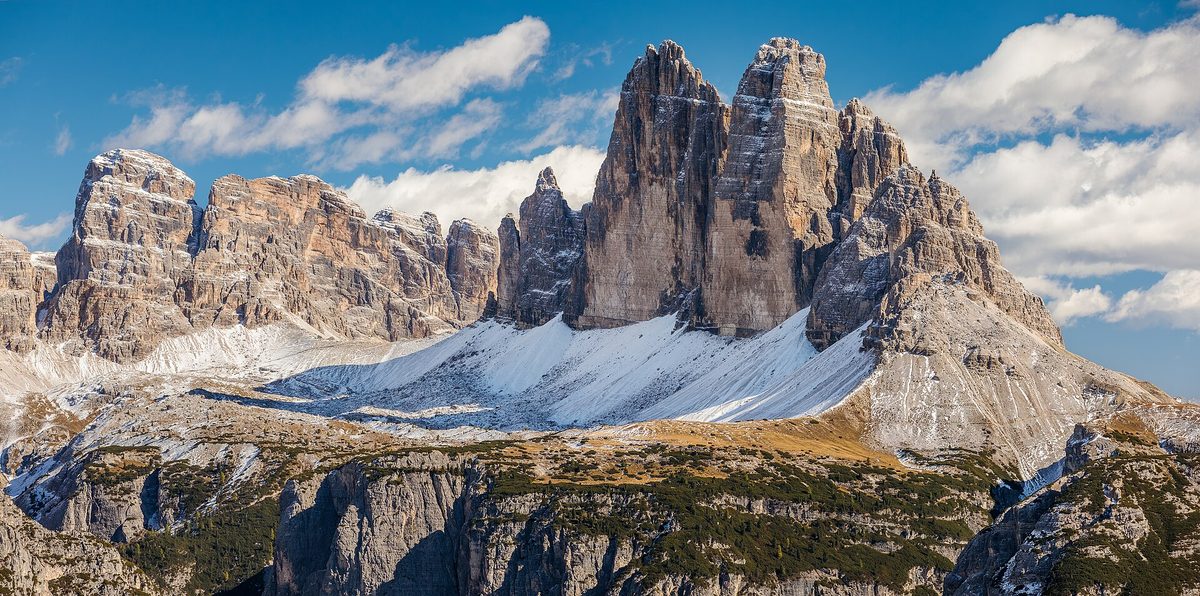
The Swiss Alps
Expensive, and the most reliable mountain infrastructure in the world. The Jungfrau region, Zermatt and the Engadine are all at their best in July and August, with cable cars running, huts open and wildflowers at their peak. Bachalpsee above Grindelwald and the Riffelsee reflection of the Matterhorn are the two walks I would do first.
Manage the cost with a Swiss Travel Pass, supermarket picnics and mountain huts rather than valley hotels. See our Switzerland travel guide.

The High Tatras, Slovakia
The same alpine experience at roughly a third of the Swiss price: 2,600-metre peaks, glacial tarns, a hut network you can walk between for a week, and August highs around 19 degrees at the resort villages. Almost no foreign visitors compared with the Alps. This is the best-value mountain week in Europe by a wide margin.
The Julian Alps and Lake Bohinj, Slovenia
The advantage here is swimmable mountain lakes. Bohinj sits at 525m, reaches about 21 degrees in August, and is bigger and wilder than Bled twenty minutes away. The Soča river is an improbable turquoise and the valley is the best rafting and canyoning country in the region.
Also worth the altitude
- The Picos de Europa, Spain. Limestone peaks 20km from the Atlantic, around 24 degrees, and the Cares Gorge is one of Europe’s finest day walks.
- The French and Spanish Pyrenees. Cooler than the Alps, cheaper, and far less walked. Ordesa and the Cirque de Gavarnie are the highlights.
- Austria’s Salzkammergut and Tyrol. Lake swimming at Altaussee and Gosau, cable cars from city streets in Innsbruck. See our Austria travel guide.
- The Bavarian Alps. The Königssee’s electric boats and a wall of mountains, two hours from Munich.
- Romania’s Carpathians. The Transfăgărășan is a summer-only road, usually open from mid-June to mid-October with the dates set each year, and daylight-hours only.
Lakes: the summer answer between the beach and the mountain
Europe’s lakes deserve far more of the summer traffic than they get. They give you swimming without salt, cool nights, mountains for scenery, and prices well below the equivalent coast. Several are warmer in August than the Atlantic is.
- Lake Balaton, Hungary. Shallow, which means it warms to about 25 degrees, the warmest large lake in central Europe. The north shore has wine villages and the Tihany peninsula; the south is where the crowds go.
- Lake Constance. Shared between Germany, Austria and Switzerland, about 22 degrees, and circled by a 260km cycle path with a ferry network that lets you skip sections.
- The Salzkammergut lakes, Austria. Altaussee, Gosausee and the Wolfgangsee are cold, clear and framed by limestone. Hallstatt is the famous one and by far the busiest.
- Lake Ohrid, North Macedonia. Europe’s oldest lake, around 24 degrees, with churches on bluffs and prices that make the Alps look absurd.
- The Bavarian lakes. The Königssee is emerald and electric-boat only; Eibsee under the Zugspitze is the most photogenic water in Germany.
- Lake Bled and Lake Como. Both beautiful, both busy. Como is better visited by ferry from Varenna than from Bellagio, and Bled is better in the early morning.
- Finnish Lakeland. Saimaa is the largest lake in Finland and about 17 degrees in August, with cabins, saunas and a ringed seal found nowhere else on earth.
- Plitvice and the Krka falls, Croatia. Not for swimming at Plitvice, where it is banned, but Krka permits it in a designated area, and both are cooler than the coast.
The practical case: a lakeside week in Slovenia, Austria or Hungary costs roughly half the equivalent week on the Croatian or Italian coast, and the nights are cool enough to sleep without air conditioning, which in August is not a small thing.

Heat risk, tiered honestly
Not all summer destinations carry the same risk, and this is worth knowing before you book rather than after.
| Risk | Where | What it means in practice |
|---|---|---|
| High | Inland Andalusia, Extremadura, inland Sicily, Athens, the Balkan interior, central Portugal | Regular 38 to 42 degrees. Plan indoors from noon to five, and expect occasional closures of open-air sites |
| Moderate | Rome, Madrid, Barcelona, southern Italy, mainland Croatia, southern France, Istanbul | Hot spells of a few days at a time. Manageable with an inverted daily routine and a cool room |
| Low | All the islands with a sea breeze, the Atlantic coasts, anywhere above 800 metres, northern France, the Alps | Comfortable almost all the time. Sea and altitude do the work |
| Negligible | Ireland, Scotland, Iceland, Norway, the Baltics, the Faroes | You will be reaching for a jacket, not a fan |
The single most useful adjustment is not the country. It is the altitude and the sea breeze. An island at 29 degrees with wind is pleasant; an inland town at 29 with no air movement is not.
For escaping the heat: the north, honestly assessed
The travel industry has spent two years promoting “coolcations”, and the logic is sound: northern Europe in August is 18 to 22 degrees, the days are enormous, and nothing is uncomfortable. What I would gently correct is the idea that everyone has already moved. The data says otherwise. Norway’s guest nights in June 2026 were slightly down on the year before, Tromsø’s hotel occupancy fell, and Spain recorded its busiest first half ever, with 46.6 million arrivals. The great northern migration is a story that publications like more than travellers do.
Which is good news, because it means the north is still comparatively quiet.
The Norwegian fjords and Lofoten
Peak season, and the only sensible time to go. Geirangerfjord and Nærøyfjord are at their most dramatic with meltwater still running, the coastal ferries run at full frequency, and in Lofoten the sun does not properly set from late May until the third week of July. Air temperatures sit around 14 to 17 degrees in Lofoten and a little higher in the fjords, so pack layers rather than shorts.
Camping is a legal right under allemannsretten, which takes a serious bite out of Norway’s costs. See our Scandinavia travel guide.

Iceland
July and August are the only months when the whole ring road and the interior F-roads are reliably open, and the highlands, Landmannalaugar and the Laugavegur trail are accessible. It is also the busiest and priciest window, at around 13 degrees and daylight until near midnight. One 2026 note: a total solar eclipse crosses western Iceland on 12 August, and accommodation for that week went months ago.

Scotland and Ireland’s Atlantic coasts
Around 18 to 19 degrees, sixteen hours of daylight, and coastline that rivals anything in the Mediterranean for drama if not for temperature. Skye, the Outer Hebrides’ shell-sand beaches at Luskentyre, the Wild Atlantic Way from Kerry to Donegal. The sea is 14 to 16 degrees, which is a wetsuit proposition.
The midges in the Scottish Highlands are genuinely bad from July, so carry repellent and a head net if you are camping.

The Baltic: Poland, Estonia and the Stockholm archipelago
The best-value summer coastline in Europe. Poland’s Baltic beaches around Hel and Łeba are long, sandy and cheap, with the sea at a swimmable 19 degrees in August. Estonia’s Saaremaa is quiet and forested. The Stockholm archipelago spreads across thousands of islands with ferries running all summer and swimming off the rocks that Swedes take entirely for granted.
All three sit around 21 to 22 degrees in August, which is the temperature most people actually want on holiday.

Brittany, Normandy and Galicia
If you want the Atlantic without leaving the mainland: Brittany’s pink granite coast and walled Saint-Malo, Normandy’s cliffs and D-Day beaches, and Galicia’s rías with the Cíes Islands, whose Playa de Rodas regularly tops European beach rankings and needs a free permit before you can board the ferry. All sit around 21 to 24 degrees with sea in the high teens.

Cities in summer: which ones work and which do not
City breaks in August are the most common summer mistake in Europe. Stone holds heat, air conditioning is not standard in older buildings, and the sights with the longest queues are the ones with the least shade.
Cities that work in August: Copenhagen, Stockholm, Tallinn, Edinburgh, Dublin, Amsterdam, Hamburg, Berlin, Kraków, Gdańsk, Vilnius, Bergen and Reykjavík. All northern, all comfortable, all with long evenings.
Cities that just about work: Paris, Vienna, Prague, Budapest, Ljubljana, Munich and Zurich. Hot spells happen but the buildings and the parks cope, and August is when locals leave, which thins the restaurants pleasantly.
Cities I would not visit in August: Seville, Córdoba, Madrid, Athens, Rome and inland Sicily. Seville and Córdoba regularly pass 40 degrees. Athens closed the Acropolis during the hottest hours of several days this summer. Rome is bearable if you treat the middle of the day as indoor time, but the queues are at their worst and half the good restaurants are shut.
If a southern city is non-negotiable, go for four days, book the headline sight for opening time, and plan a long lunch and a siesta into every day rather than fighting it. Our European city breaks guide has the neighbourhood detail.
What summer 2026 has actually been like
I would rather give you the real picture than a brochure, because it affects planning.
The heat has been exceptional. June 2026 was western Europe’s hottest June on record, averaging 20.74 degrees, more than three degrees above the 1991 to 2020 norm, according to the Copernicus Climate Change Service. Station temperature records fell across central Europe in the last week of June, and France issued red heat alerts across an unprecedented number of departments. Santé publique France has estimated 5,764 excess deaths between 17 June and 2 July, a rise of 36 per cent. This is not a detail to plan around casually.
Wildfires have been serious. Spain fought major fires through late July, with tens of thousands of people evacuated and many more told to stay indoors. France has had its worst fire season in decades, including a single blaze in the Gironde of roughly 40,000 hectares that led to more than 200,000 precautionary evacuations. Sicily has burned too. Fires are fast-moving and local: they close specific roads and beaches for a few days rather than ruining whole regions. Check the European Forest Fire Information System, and the national services, AEMET in Spain, Météo-France, and Italy’s Protezione Civile, before you travel, and be ready to change a day’s plan.
The water situation is more nuanced than the headlines. Spain is in a better position than last year, with reservoirs at just under 70 per cent in early August against about 66 per cent a year ago. That is the national picture, and it hides real local stress: small Mediterranean islands, which depend on desalination and shipped-in supply, are the places where restrictions actually bite. If you are on a small Greek island or in the Balearics, take short showers, and do not be surprised by hosepipe or pool-filling limits.
If you are travelling in the next few weeks
This guide publishes in the first week of August 2026, so here is what matters for the rest of this summer specifically.
- A total solar eclipse crosses Spain at sunset on 12 August, the first total eclipse visible from mainland Spain in more than a century, with the path also crossing Iceland. Totality runs in a broad band from Galicia and Asturias through Cantabria, the Basque Country, La Rioja, Navarra, Castilla y León, Aragón, Catalonia and Valencia, and reaches the Balearics; Madrid sees only a partial eclipse. The government has warned of severe and prolonged congestion on roads into the band. If you are anywhere near it, be in position hours early. If you are not, avoid driving across northern Spain that day.
- Heat warnings are live. AEMET has orange warnings running through the first week of August. Treat midday as indoor time in Iberia and the Balkans, and check the national forecast each evening for the following day.
- Venice’s day-tripper fee has finished for 2026. It ran on 60 dates between 3 April and 26 July and will not apply again this year. The city issued around 680,000 vouchers and took roughly €5.2m, and daily visitor numbers were down about a third on 2024. There is no requirement to book if you are visiting now.
- Check for strikes before you travel. August is a common month for transport action in Italy, Greece, France and Spain, and airport ground handling disputes have been running in several countries this summer. Italian strikes are published in advance on the transport ministry’s register, and airlines will email you. Build a buffer day before any onward flight.
- Big events to book around or avoid: the Edinburgh Fringe runs 7 to 31 August and the city is effectively full, the European Athletics Championships are in Birmingham from 10 to 16 August, Sziget is in Budapest 11 to 15 August, the Palio runs in Siena on 16 August, and La Tomatina is in Buñol on 26 August.
- What you can still book this month. Realistically gone for August: Greek island ferries on popular routes, Dolomite refuges, Croatian coastal apartments and anything in Edinburgh. Still widely available, in my searches this week: the High Tatras and Slovakia generally, the Bulgarian Black Sea, Poland’s Baltic coast, Estonia and Saaremaa, inland Albania and Bosnia, and the Portuguese interior. If you want a last-minute European fortnight, that is the list.
- Entry formalities. The EU’s biometric Entry and Exit System has been fully operational since April, so allow extra time at first crossings, although the UK juxtaposed controls at Dover, the Eurotunnel and St Pancras are not taking biometrics this summer. ETIAS is not live and is not required. Detail in our Schengen and ETIAS guide.
Sea temperatures month by month
This is the number that actually decides whether a beach holiday works. These are typical averages; individual weeks vary by two or three degrees.
| Sea | June | July | August | September | October |
|---|---|---|---|---|---|
| Turkish Mediterranean | 25°C | 27°C | 28°C | 27°C | 25°C |
| Crete and the south Aegean | 23°C | 25°C | 26°C | 25°C | 23°C |
| Cyclades | 22°C | 24°C | 25°C | 24°C | 22°C |
| Sardinia and Corsica | 23°C | 25°C | 26°C | 25°C | 22°C |
| Balearics | 23°C | 25°C | 26°C | 25°C | 22°C |
| Croatian Adriatic | 23°C | 25°C | 25°C | 24°C | 21°C |
| Amalfi and the Tyrrhenian | 23°C | 25°C | 26°C | 25°C | 22°C |
| Bulgarian Black Sea | 22°C | 24°C | 25°C | 23°C | 20°C |
| Costa del Sol | 21°C | 23°C | 24°C | 23°C | 21°C |
| Madeira | 21°C | 22°C | 23°C | 24°C | 23°C |
| The Algarve | 19°C | 20°C | 20°C | 21°C | 20°C |
| Baltic, Polish coast | 16°C | 18°C | 19°C | 17°C | 14°C |
| Brittany and Normandy | 16°C | 17°C | 18°C | 18°C | 16°C |
| Galicia and the Cies | 16°C | 17°C | 18°C | 18°C | 17°C |
| West of Ireland | 14°C | 15°C | 16°C | 16°C | 14°C |
| Norwegian fjords | 13°C | 15°C | 16°C | 14°C | 12°C |
| Iceland | 9°C | 10°C | 11°C | 10°C | 8°C |
The pattern worth internalising: the Mediterranean is warmer in September than in June, which is why September is the best swimming month in Europe and July is not. We rank 37 Mediterranean destinations by sea temperature and cost if you want to pick by the numbers.
What summer costs, and how far ahead to book
Peak season is the most expensive time to travel in Europe by a wide margin, and the gap between July and August is real.
- Accommodation in Mediterranean coastal areas runs 60 to 120 per cent above the shoulder season, and the first three weeks of August are the peak of the peak. A room that is €110 in late May is routinely €220 in mid-August.
- Flights have been rising modestly: EU air fares were up about 3 per cent year on year in June 2026. Book long-haul four to six months ahead for July and August, and European short-haul six to ten weeks ahead.
- Ferries to Greek and Croatian islands genuinely sell out. Book six to eight weeks ahead for August crossings, and remember that the fast catamarans cancel more readily in wind than the big slow boats.
- Mountain refuges in the Dolomites, the Alps and the Tatras open bookings in January or February and the popular ones fill within days.
- Timed-entry sights. Pompeii and the Acropolis both cap daily visitors at 20,000, Santorini caps cruise passengers at 8,000 a day and Dubrovnik at two ships. The Alhambra, the Sagrada Família, Pena Palace and Plitvice all sell out in summer. Book these before you book restaurants.
- Tourist taxes rose again for 2026. Barcelona’s combined charge reached about €12 a night for five-star stays in April, Vienna’s went from 3.2 to 5 per cent in July, and Edinburgh introduced a 5 per cent visitor levy in late July. Budget €3 to €12 per person per night in major cities.
One counterintuitive note for 2026: package prices to several southern beach destinations have actually fallen year on year, with some Spanish resort areas down 20 per cent or more, as operators respond to softer demand from a few markets. It is worth comparing a package against independent booking this year, which is not usually my advice.
The full cost picture is in our budget guide, and our accommodation guide covers picking a base.
What actually closes in August
This catches people out every year, and it is worst in the two weeks around 15 August.
- Italy. Ferragosto on 15 August is a national holiday and the traditional start of the summer shutdown. Family-run restaurants, bakeries and small shops close for one to three weeks, especially in cities. Museums and tourist infrastructure stay open. Rome and Milan empty out; the coast fills up.
- Spain. August is the national holiday month. In Madrid and Seville, a noticeable share of restaurants close for two or three weeks, and offices run skeleton hours. Coastal areas are the exception and are at full tilt.
- France. The fermeture annuelle is a real institution. Paris in August has excellent museums and a lot of shuttered neighbourhood bistros. 15 August is a public holiday.
- Greece. 15 August is the Dormition of the Virgin, one of the biggest holidays of the year, and domestic travel peaks. Ferries and island accommodation are at their fullest around it.
- Everywhere. 15 August is a public holiday in Italy, Spain, France, Greece, Portugal, Austria, Belgium and Poland. Banks, many shops and some transport run holiday timetables.
The good news for anyone travelling around it this year is that a Saturday holiday does not generate the midweek bridge that usually stretches the shutdown into a full week.
How to travel well in real heat
After several summers of this, these are the habits that actually work rather than the ones that sound sensible.
- Invert the day. Out early, back by noon, out again after five. This is what southern Europeans do, and it is not laziness, it is competence.
- Do not assume air conditioning. It is not standard in older hotels and apartments in Italy, Spain, Greece or Portugal. If it matters to you, check the listing explicitly rather than assuming.
- Pick a room with shutters and a fan over a room with a view. Old buildings in the south are designed to be closed during the day and opened at night. Use them as intended.
- Carry water and drink before you are thirsty. Public fountains are everywhere in Rome, Lisbon and much of Spain. Refill constantly.
- Watch for the actual danger signs. Heat exhaustion is dizziness, nausea and clammy skin: get into shade, cool down and rehydrate. Heatstroke, where sweating stops and confusion sets in, is a medical emergency. 112 works across the EU.
- Rethink the big walk. Gorges, ruins and open archaeological sites are the worst places to be at two in the afternoon. Samaria, Pompeii and the Acropolis should all be done at opening time.
- Check fire and heat warnings the night before. National meteorological services publish them clearly, and local advice changes fast.
The summer, week by week
The season has a shape, and knowing it is worth more than any list of destinations.
- Early June. The best two weeks of the whole summer in the Mediterranean. Warm air, quiet beaches, everything open, sea around 22 degrees and climbing. Prices are still shoulder-season. If you can only take one week off, take this one.
- Late June. Northern Europe wakes up. The midnight sun is at its peak in Lofoten and northern Finland, alpine passes open, and the Mediterranean starts filling. Heatwaves have arrived earlier each of the last few years, so watch the forecasts.
- Early July. Everything is open everywhere. Alpine huts and high trails clear of snow, ferries at full frequency, and the sea is properly warm. Busy but not yet oppressive.
- Late July. The peak begins. Prices climb, northern European school holidays start, and the first serious heat settles into Iberia and the Balkans.
- 1 to 20 August. The most crowded and expensive fortnight in Europe, and the hottest. Southern Europe joins the holiday, family businesses close, and coastal roads seize up. Go north, go up, or accept it.
- Late August. The tide turns. Northern European schools go back from about the 20th, prices soften, and the sea is at its warmest of the year. An excellent and underrated window.
- September. The best month in Europe, and it is not particularly close. Warm sea, thin crowds, harvest season, open everything, and prices back to sensible. If your dates are flexible at all, this is the answer.
Where Europeans themselves go in August
The most reliable crowd-avoidance intelligence on the continent is simply watching what locals do when their own countries get unbearable.
- Spaniards go north. The Basque coast, Cantabria, Asturias and Galicia are full of Madrileños in August, because the Atlantic is 10 degrees cooler than Seville. San Sebastián is the national summer capital.
- Italians go to the mountains and to Puglia. The Dolomites and the Val d’Aosta fill with northern Italians; the deep south fills with everyone else. Milan and Rome empty.
- French families head to Brittany, the Atlantic coast around Arcachon and the Alps, as much as to the Riviera. The grands départs of late July and mid-August are the two worst driving weekends of the year.
- Germans and Austrians go to the Baltic and North Sea coasts, to the Alps, and to Croatia. Rügen and Sylt are the domestic beach answer.
- Greeks leave Athens for islands most visitors have never heard of, and 15 August is the single biggest domestic travel day of the year.
- Poles and Scandinavians stay put: the Baltic coast and the Swedish and Finnish lake districts are at their brief best.
Follow any of those and you get better weather, better food and lower prices than the international honeypots on the same latitude.
Summer events worth planning around
Some are reasons to go, some are reasons to book early, and one or two are reasons to be somewhere else.
- The total solar eclipse, 12 August 2026. The path of totality crosses Iceland and a broad band of Spain at sunset, reaching the Balearics. Expect heavy congestion on roads into the band, and plan nothing that involves driving across northern Spain that day.
- Edinburgh Festival Fringe, 7 to 31 August. The largest arts festival on earth. The city is effectively full and accommodation triples in price. Go for the festival or avoid Edinburgh entirely.
- The Palio di Siena, 2 July and 16 August. A 90-second horse race around a medieval square, preceded by days of ritual. Free to watch from the centre if you arrive hours early.
- Sziget, Budapest, 11 to 15 August. One of Europe’s biggest music festivals, on an island in the Danube.
- La Tomatina, Buñol, 26 August. Ticketed, capped, and exactly as chaotic as it looks.
- Bastille Day, 14 July, and Ferragosto, 15 August. National holidays in France and Italy respectively, with fireworks, closures and packed transport.
- Midsummer, 19 to 20 June in 2026. The biggest celebration of the year in Sweden, Finland, Estonia and Latvia. Cities empty, the countryside fills, and much of Sweden closes for a long weekend.
- The Notting Hill Carnival, London, 30 and 31 August, and the Salzburg Festival, 17 July to 30 August, for classical music at the top end.
Our guide to European city breaks has more on timing a short trip around events.
Getting around in summer
Peak season changes the transport calculation, and a few things are worth knowing before you book.
Ferries are the bottleneck. Greek and Croatian island crossings sell out in August, particularly car spaces. Never book the last ferry of the day before a flight, and build slack into island-hopping itineraries, because the fast catamarans cancel in wind more readily than the big conventional boats. Ferryhopper and Direct Ferries aggregate schedules well.
Trains cope better with heat than roads. High-speed services in France, Spain, Italy and Germany are air-conditioned and reliable, though extreme heat occasionally triggers speed restrictions. Regional trains in the south are a lottery on air conditioning. Book long-distance advance fares as soon as the booking window opens, typically three to six months out, because summer walk-up fares are brutal. Our train travel in Europe guide has the detail.
Car hire is at its most expensive and its most necessary. August rates in Mediterranean island destinations can be double the shoulder season, and vehicles genuinely run out on smaller Greek and Croatian islands. Book at the same time as your flights. Check that the car has working air conditioning, and remember that a dark car parked in the sun in Andalusia is unusable for twenty minutes after you get in.
Driving days to avoid. The French grands départs on the last weekend of July and the weekend around 15 August are the worst driving days in Europe, and the Italian and Spanish equivalents are the same weekends. If you must move, move on a Tuesday.
Flights. European short-haul fares peak in the first three weeks of August. If your dates are flexible by even a few days, flying on a Tuesday or Wednesday in late August will usually beat a Saturday in early August by a wide margin. The full comparison is in our transport guide.
Four ready-made summer weeks
If you would rather not assemble a trip from a list, these four work exactly as written.
Cyclades, 8 nights, for warm sea. Athens (1), ferry to Naxos (4) for the beaches and the interior villages, ferry to Milos (3) for the swimming. Around €1,300 per person in August, less in June. Book the ferries the moment your flights are fixed.
Dolomites hut to hut, 7 nights, for cool mountains. Fly to Venice or Innsbruck, base in Cortina or Dobbiaco (2), then four nights in refuges on the Alta Via 1 or a Tre Cime and Sennes loop, with a final night in Bolzano. Around €1,000 including half-board in the huts. Book the refuges in February.
Norway’s fjords and Lofoten, 9 nights, for the far north. Bergen (2), the Bergen Railway and Flam (1), Geiranger by public ferry (2), fly north to Lofoten (4). Around €2,000 per person, or considerably less if you camp. Best from late June to mid-August.
Slovenia and Istria, 7 nights, for lakes and coast without the heat. Lake Bohinj (3) for swimming and the Julian Alps, the Soča valley (1), Motovun in inland Istria (2) and Rovinj (1). Around €900 per person with a hire car. Comfortable throughout August.
Best places to visit in Europe in summer by traveller type
- Families. Menorca, Naxos, the Polish Baltic coast, the Salzkammergut lakes and Brittany. Short transfers, shallow water and somewhere to be at four in the afternoon that is not a museum. More in our family travel guide.
- Couples. Milos, Corsica, the Dolomites and the Stockholm archipelago. See Europe honeymoon.
- Walkers. The Dolomites, the High Tatras, the Picos, Lofoten and the Julian Alps. The routes are in the best hikes in Europe.
- Tight budget. Albania, the Bulgarian Black Sea, the Polish coast, the Tatras and inland Croatia. All under €90 a day at peak, which is remarkable in August. See our budget guide and the backpacking guide.
- Solo travellers. Croatia’s islands, the Cyclades, Iceland and the Scottish Highlands all have good hostel and small-group infrastructure in summer. See our solo travel guide.
- Anyone who hates heat. Iceland, Lofoten, Ireland, the Faroes, Estonia and the Scottish islands. None of them will exceed 22 degrees, and most will not reach 20.
- Road trippers. Norway’s Atlantic Road, Iceland’s ring road, the Transfăgărășan and Corsica’s coast road. All are summer-only or summer-best. See Europe road trips.
Five mistakes people make with a European summer
- Booking a southern city break for mid-August. Seville at 41 degrees with half the restaurants shut is not the trip you imagined. Go north, go up, or go in May.
- Choosing on air temperature and ignoring the sea. The Algarve is 29 degrees on land and 20 in the water. Greece is 29 and 25. That difference is the entire holiday.
- Leaving ferries and refuges until the last month. Greek island crossings, Croatian catamarans and Dolomite huts all sell out. These are the first things to book, not the last.
- Planning a full day around midday. Every itinerary that has ruined someone’s August had them walking a ruin at two in the afternoon. Build the siesta in deliberately.
- Assuming a heatwave is just weather. France alone recorded an estimated 5,764 excess deaths in a fortnight this June. Check warnings, adjust plans, and do not treat a red alert as a challenge.
Frequently asked questions
Where is the best place to go in Europe in summer?
For warm sea and reliable sun, the Greek islands, and particularly Milos, Naxos and Crete, which combine 25 to 26 degree water with enough size to absorb the crowds. For a cooler summer, the Norwegian fjords and Lofoten in their short peak season. And for the best value of all, the Dolomites or the High Tatras, where the mountains are at their finest in July and August and the temperature sits in the low twenties.
Is July or August better for visiting Europe?
July, if you are going to the Mediterranean: slightly cooler, slightly cheaper, and everything is open. August, if you are going north or into the mountains, where the season is short and August is the most reliable month. August is the peak for prices, crowds and heat across southern Europe, and it is when Italian, Spanish and French businesses take their annual shutdown.
Where is not too hot in Europe in August?
Iceland at around 13 degrees, Lofoten at 14, Scotland and Ireland at 18 to 19, the Norwegian fjords at 19, and the Baltic coast and Stockholm archipelago at 21 to 22. In the south, altitude does the same job: Cortina in the Dolomites averages about 18 degrees in August and the Swiss mountain resorts a little less, while the valleys below them bake.
Where has the warmest sea in Europe in summer?
The Turkish Mediterranean, at around 28 degrees in August. Crete and the south Aegean reach 26, as do Sardinia, the Balearics and the Tyrrhenian coast of Italy. The Croatian Adriatic sits around 25. At the other end, the Algarve is only about 20 degrees despite the hot air, because of Atlantic upwelling.
Is Europe too hot in summer now?
Parts of it, in parts of the season. June 2026 was western Europe’s hottest June on record and there have been further heatwaves since. Southern Spain, inland Sicily, Athens and much of the Balkan interior are genuinely uncomfortable and occasionally dangerous in July and August. The coasts, the north and anywhere above about 800 metres remain entirely pleasant, which is why this guide is organised the way it is.
What is closed in Europe in August?
Small independent businesses across Italy, Spain and France close for one to three weeks around 15 August, which is a public holiday in most Catholic countries. Museums, major sights, hotels and transport all run normally. The effect is strongest in southern cities and almost absent on the coast, where August is the busiest trading period of the year.
How far in advance should I book a European summer trip?
Long-haul flights four to six months ahead, European short-haul six to ten weeks, island ferries six to eight weeks, and mountain refuges as soon as bookings open in January or February. Timed-entry sights such as the Alhambra, the Acropolis, Pompeii and the Sagrada Família should be booked before anything else, because they set the shape of the trip.
Are wildfires a reason to avoid southern Europe in summer?
Not in themselves, but they are a reason to stay informed. Spain, France and Italy have all had significant fires this summer. They are fast-moving and local, closing specific roads and beaches for a few days rather than affecting whole countries. Check the European Forest Fire Information System and the national meteorological service before you travel, take local instructions seriously, and keep one or two days of your itinerary flexible.
When is the sea warmest in Europe?
Late August into mid-September, not July. The Mediterranean lags the air temperature by about six weeks, which is why September is the best swimming month of the year across Greece, Italy, Spain and Croatia, with warm water, thinner crowds and lower prices. If you can travel in September rather than August, do.
Is September better than August in Europe?
For almost everyone, yes. The Mediterranean sea is at its warmest of the year in early September, the crowds thin sharply once northern European schools go back around 20 August, accommodation prices fall by a third or more, and everything that closed for the summer shutdown has reopened. The only reasons to prefer August are school holidays, the short northern and alpine seasons, and specific festivals.
Which European beaches are best for young children in summer?
Naxos and Paros in Greece, Menorca in the Balearics, the Polish Baltic coast around Hel, and the Adriatic beaches of Istria all have shallow, calm, gently shelving water. Avoid the Atlantic coasts of Portugal and southwest France, where the surf and rip currents are serious, and avoid pebble beaches in Croatia if your children are barefoot. Water shoes solve more problems than any other item you can pack.
Can you swim in Europe’s lakes in summer?
In most of them, and lakes are the summer swimming that gets forgotten. Lake Balaton in Hungary is the warmest large lake in central Europe at about 25 degrees, Bohinj in Slovenia sits around 21, Lake Constance about 22 and Finnish Lakeland around 17. Alpine lakes above 1,000 metres are cold enough to take your breath away, which in an August heatwave is precisely the point.
What should I pack for a European summer?
Linen or cotton rather than synthetics, a hat, high-factor sun cream, water shoes for pebble beaches, and a light layer for evenings, which are cool in the mountains and the north even in August. If you are going anywhere alpine or Atlantic, bring a proper rain shell. Full list in our Europe packing list.
Final thoughts
The best European summer I have had in the last decade was not on a beach. It was eight days walking hut to hut in the Dolomites in the first week of August, in a fleece by seven in the evening, eating dinner at long tables with strangers, while northern Italy below us sat at 36 and the news ran heatwave bulletins every hour.
That is the argument in one story. Summer in Europe has not stopped working. It has moved, north and upward, and the people having the best time are the ones who moved with it. Pick the sea if you want the sea, but pick it with the temperature chart in front of you, and if you cannot travel outside August, go somewhere the heat cannot reach you.
For the rest of the year, our guide to the best time to visit Europe covers each season, and the best places to visit in Europe in winter handles the other end. Start planning with the best places to visit in Europe, compare countries in the best countries to visit in Europe, and find the quiet corners in our guide to underrated destinations. When your dates are set, Europe itinerary has the routes and what to pack covers the heat.
Hannah Brooks has spent fifteen years travelling, living and writing across Europe, from the Arctic tip of Norway to the south of Sicily. She has planned hundreds of European itineraries for readers and is Senior Europe Editor at EuropeanTourism.org.
Photo credits
Images via Wikimedia Commons. Swimmers on the white volcanic rock at Sarakiniko on Milos: dronepicr / CC BY 2.0. pink sand and shallow lagoon at Elafonisi on Crete: trolvag / CC BY-SA 3.0. Pines and clear water at Palombaggia beach in southern Corsica: dronepicr / CC BY 2.0. shifting spit of Zlatni Rat on Brac in the Croatian Adriatic: Jeroen Komen from Utrecht, Netherlands / CC BY-SA 2.0. turquoise cove of Cala en Turqueta on Menorca: Markus Trienke / CC BY-SA 2.0. Islets and clear shallows at Ksamil on the Albanian Riviera: Pudelek / CC BY-SA 4.0. Portara gateway at sunset on Naxos in the Cyclades: moustakik (CC0). Cliffs and coves at Praia da Marinha in the Algarve: Klugschnacker / CC BY-SA 3.0. three towers of Tre Cime di Lavaredo in the Italian Dolomites in summer: Ximonic (Simo Räsänen) / CC BY-SA 4.0. Bachalpsee and the Bernese Alps above Grindelwald: Maru Bern / CC BY-SA 4.0. Lake Bled and its island church in the Julian Alps: Krzysztof Golik / CC BY-SA 4.0. Kvalvika beach below Arctic peaks in Lofoten: www.Pixel.la Free Stock Photos (CC0). Seljalandsfoss waterfall on Iceland’s south coast: Diego Delso / CC BY-SA 4.0. shell-sand beach at Luskentyre on the Isle of Harris: Neil Aitkenhead / CC BY-SA 3.0. Gamla Stan and the waterfront in Stockholm: Andy Eick / CC BY 2.0. Playa de Rodas on the Cies Islands off the Galician coast: Jules Verne Times Two / CC BY-SA 4.0.
1 comment