Austria Travel Guide: Cities, the Alps & First-Timer Tips

The first time Austria properly stopped me in my tracks, I was standing on a jetty in Hallstatt at about 7am, coffee going cold in my hand, watching the lake turn from slate to silver as the mist lifted off the mountains behind the village. I’d come for a quick photo and ended up staying three hours. That’s the thing about Austria: it looks like a postcard, and then it turns out the postcard undersells it.
This Austria travel guide is the one I wish someone had handed me before my first trip – honest about what’s worth your days and what’s a coach-tour trap, specific about trains and prices and the exact lake town to sleep in, and built to help you plan a real holiday rather than tick off a list. I’ve ridden the railways from Vienna to the Tyrol more times than I can count, eaten my body weight in schnitzel, frozen at Christmas markets and sweated up alpine trails in August. Here’s everything I’d tell a friend who said, “We’re thinking about Austria – where do we even start?”
Is Austria worth visiting? The short answer
Yes – Austria is one of Europe’s most rewarding countries, and it punches absurdly above its size. In one compact, superbly-organised nation you get imperial Vienna, baroque Salzburg, the storybook lakes of the Salzkammergut and some of the finest mountains in the Alps, all stitched together by trains that actually run on time. It’s safe, clean, walkable and easy. Go.
I’ll be candid where it earns its keep, because that’s what trust is made of. Austria is not a budget destination – Vienna and the big ski resorts will dent your wallet. Hallstatt in July is so crowded it can feel like a theme park. And the language barrier, while gentle, is real once you leave the cities. But every one of those has a fix – shoulder season, an early start, a few words of German – and I’ll walk you through all of them. None of it has dented my conviction that visiting Austria is worth every euro.
Austria at a glance
Before the detail, here’s the whole country on one screen – the places I’d actually steer a friend toward, who each one suits, and how long to give it. If you read only one part of this guide, make it this table.
| Destination | Best for | Give it | Best season | My quick take |
|---|---|---|---|---|
| Vienna | Palaces, art, coffee houses, music | 2–3 days | Apr–Jun, Sep, Dec | Grand without being stuffy; the easiest place to start |
| Salzburg | Baroque old town, Mozart, Sound of Music | 1–2 days | May–Sep, Dec | Pure storybook – and the gateway to the lakes |
| Hallstatt & the Salzkammergut | Lakes, villages, gentle hikes | 2–3 days | Jun–Sep | The most beautiful corner of the country – go early |
| Innsbruck & Tyrol | Mountains on the doorstep, skiing | 2–3 days | Dec–Mar, Jun–Sep | A real city with a cable car to the peaks |
| Wachau Valley | Danube, wine, abbeys, cycling | 1–2 days | May–Oct | Austria’s prettiest day trip from Vienna |
| Zell am See & Hohe Tauern | Alpine lakes, big peaks, road trips | 2–4 days | Jun–Sep | Where Austria goes full Sound of Music |
| Graz | Underrated old town, food, students | 1–2 days | May–Oct | The cool, walkable city most visitors skip |
If your time is tight, the classic first-timer route is simply Vienna – Salzburg – Hallstatt, and you’ll have a wonderful week. Add Innsbruck or the Wachau when you’ve got ten days. I’ve laid out exactly how to thread these together in the section on how many days you need and sample itineraries further down, and there’s a deeper companion piece on the best places to visit in Austria if you want to range wider.
Why visit Austria (and what it’s famous for)
Austria’s reputation abroad tends to collapse into two clichés: The Sound of Music and skiing. Both are real and both are wonderful, but they barely scratch it. What Austria actually does better than almost anywhere is the combination – high culture and high mountains within a couple of hours of each other. You can spend the morning with Klimt’s The Kiss in a Viennese palace and the afternoon on a lake so clear you can count the fish, and never feel rushed.
It’s famous, justifiably, for a handful of things: the Habsburg grandeur of Vienna; Mozart and a genuinely world-class classical music scene; the baroque beauty of Salzburg; Christmas markets that put most of the continent to shame; pastry and coffee elevated to a national art form; and the Alps, which cover roughly two-thirds of the country. It’s also one of the safest, cleanest and most efficient places you’ll ever travel – tap water you can drink anywhere, trains you can set your watch by, and a standard of public life that quietly makes everything easier. If you’re weighing it against neighbours, it’s greener and calmer than much of Italy, more compact than Germany, and an easy add-on to a wider Europe itinerary.
The cities and regions: where to go in Austria
I’ve organised this the way I’d actually plan a trip – by place, roughly in the order most people should visit them, with my honest take on how long each is worth. Treat it as a menu, not a checklist.
Vienna: imperial capital, coffee-house soul
Vienna (Wien) is where almost everyone starts, and rightly so. This was the seat of the Habsburg empire for six centuries, and the city still wears that grandeur lightly – vast palaces, a cathedral that dominates the skyline, boulevards built for emperors, and an art collection that ranks among the best on earth. But what makes Vienna livable rather than just impressive is the everyday stuff: the coffee houses where nobody hurries you, the green spaces, the wine taverns on the edge of town.
The unmissables, if it’s your first time: Schönbrunn Palace, the Habsburgs’ summer residence, with gardens you could lose a morning in (go at opening or skip the queues with a timed ticket); the Hofburg, their winter palace, now a warren of museums; St. Stephen’s Cathedral (Stephansdom) at the dead centre of the old town; and the Belvedere, where Klimt’s The Kiss actually lives. Carve out at least one slow morning for a proper coffee house – Café Central or Café Sperl – and order a Melange and a slice of cake like you mean it. There’s far more than I can fit here, so I’ve written a dedicated guide to the best things to do in Vienna that goes street by street.
Give Vienna two full days minimum, three if you like museums or want to day-trip into the Wachau. It’s also one of Europe’s great city break destinations in its own right if you only have a long weekend.
Salzburg: baroque beauty and Mozart’s hometown
If Vienna is the empire, Salzburg is the fairy tale. Wolfgang Amadeus Mozart was born here in 1756, The Sound of Music was filmed in and around the city, and the UNESCO-listed old town – a tight tangle of baroque churches, marble squares and the elegant shopping lane of Getreidegasse – is one of the most beautiful in Europe. Crowning it all is Hohensalzburg Fortress, a thousand-year-old castle you can reach by funicular for the best view in the city.
The honest truth is that Salzburg is small – you can walk the historic core in a couple of hours – but it rewards lingering. Climb to the fortress for sunset, wander the Mirabell Gardens (yes, the “Do-Re-Mi” steps), cross the Salzach river at dusk when the floodlights come on. The Sound of Music bus tours are touristy but genuinely fun if that’s your thing; I’d skip them and rent a bike to the nearby lakes instead. Salzburg is also the natural launchpad for the Salzkammergut and an easy hop across the border into Bavaria, so it links neatly to a Germany leg. My full Salzburg travel guide has the detail; here, just know you want a night or two.

Hallstatt and the Salzkammergut lakes
This is the Austria of your screensaver. The Salzkammergut is a region of impossibly clear lakes and steep green mountains east of Salzburg, and its most famous village, Hallstatt, is so photogenic it has literally been copied and rebuilt in China. The pastel houses stacked above the water, the slender church spire, the swans – it’s all real, and it’s all very, very busy by mid-morning.
My advice, hard-won: don’t day-trip Hallstatt from Salzburg if you can help it. Stay the night (or in nearby Obertraun or Bad Goisern), so you get the village in that golden hour before the coaches arrive and after they leave. Ride the funicular up to the Skywalk viewpoint, tour the 7,000-year-old salt mine – the oldest in the world, and the reason this region exists – and take the little ferry across the lake just to see the place from the water. Beyond Hallstatt, don’t sleep on the rest of the Salzkammergut: St. Wolfgang, Wolfgangsee, Gosausee and the Dachstein glacier (with its vertigo-inducing “Stairway to Nothingness” and a high suspension bridge) are every bit as lovely with a fraction of the crowds. I’ve put the logistics – how to get there, where to sleep, how to dodge the crush – in my dedicated guide to Hallstatt, Austria.
Innsbruck and Tyrol: the mountains move in
Innsbruck is my favourite of Austria’s cities, and the one most first-timers leave off the list. It’s the capital of Tyrol, a real working city of students and skiers, and the mountains don’t sit politely in the distance – they rear straight up at the end of the streets. From the medieval old town, with its famous Golden Roof (Goldenes Dachl) and pastel facades, you can be on an alpine ridge in twenty minutes flat: the Nordkette cable car, part-designed by Zaha Hadid, lifts you from the centre to 2,256m and a view that genuinely takes the breath away.
Innsbruck hosted the Winter Olympics twice and it shows – this is one of the great bases for both winter and summer mountain sports. In the cold months it’s a gateway to world-class skiing in Europe, with resorts like St. Anton and the Stöttinghof slopes within easy reach. In summer it’s all hiking, paragliding and via ferrata. Either way, give it two or three days and use my Innsbruck travel guide to plan the cable-car days. Tyrol also borders Italy and Switzerland, so it slots beautifully into a wider alpine trip that takes in Switzerland.
Graz, Linz and the cities most visitors skip
If you’ve got more than a week, or you’ve done the headline acts before, Austria’s “second cities” are a quiet joy. Graz, the country’s second-largest, has a UNESCO old town, a hill-top clock tower (the Uhrturm), a thriving food scene and a fraction of Salzburg’s crowds – it’s artsy, walkable and genuinely underrated. Linz, on the Danube, surprises people with its cutting-edge Ars Electronica museum and a riverside that’s been smartly reinvented. And tiny Bregenz, out west on Lake Constance, hosts a famous floating opera stage each summer. None of these are must-sees on a first trip, but they’re exactly the kind of places that turn a good Austria trip into a great one.

The Wachau Valley and the Danube
An hour west of Vienna, the Danube carves through the Wachau Valley, a UNESCO-listed ribbon of terraced vineyards, apricot orchards and hilltop ruins that is, for my money, the single best day trip in the country. The honey-coloured Melk Abbey presides over one end; the wine village of Dürnstein, with the castle ruin where Richard the Lionheart was once imprisoned, anchors the other. The classic way to do it is to take the train to Melk, tour the abbey, then board a slow boat downriver to Krems, watching the vineyards drift by with a glass of the local Grüner Veltliner in hand. Cyclists love it too – the riverside path is flat, well-signed and dotted with heuriger (wine taverns). It’s the kind of unhurried, deeply pleasant day that reminds you why you came.
Zell am See, Hohe Tauern and the high Alps
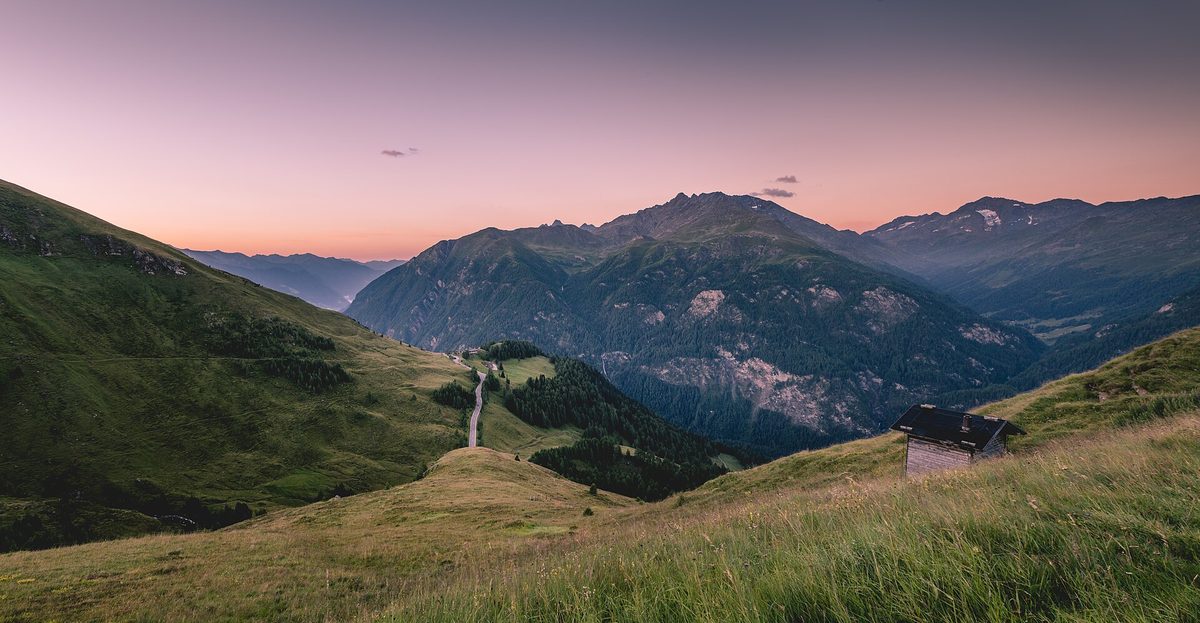
For the full, lump-in-the-throat alpine experience, head to the Hohe Tauern National Park, Austria’s largest, in the heart of the high mountains. This is where you’ll find the Grossglockner – at 3,798m the country’s highest peak – reachable in summer via the Grossglockner High Alpine Road, one of the great drives in Europe, all hairpins and glacier views and marmots by the roadside. Nearby, the Krimml Waterfalls thunder 380m down the mountainside, and the resort town of Zell am See sits on a mirror-calm lake with peaks all around – a perfect base for hiking, swimming and sheer staring. This region is the road-trip heart of the country; I’ve gathered the best of it, route by route, in my piece on the best places to visit in Austria, and it pairs naturally with a wider European road trip if you’ve got a car.
Best things to do in Austria, by what you love
Rather than another numbered list of attractions, here’s how I’d point you depending on what makes you tick – because the best things to do in Austria depend entirely on the traveller.
For culture and history lovers: Vienna is your city – the Kunsthistorisches Museum, the Belvedere, a night at the State Opera (standing tickets cost a few euros), and the imperial apartments at the Hofburg. Add Salzburg’s old town and Melk Abbey.
For mountain people: base yourself in Tyrol or the Salzkammergut and go up – the Nordkette above Innsbruck, the Dachstein glacier, the Grossglockner road, the Krimml Falls. Summer hiking here is world-class and far cheaper than the headline Swiss resorts.
For food and wine: a coffee-house crawl in Vienna, a Grüner Veltliner tasting in the Wachau, and a long lunch of fresh lake fish in the Salzkammergut. More on the food below.
For winter: Austria is one of the best-value ski destinations in the Alps. The Tyrol and Salzburger Land deliver reliable snow from late November, and the Christmas markets (more below) make December magical even if you never click into a binding.
Best time to visit Austria
Austria is a true year-round destination, but the “best” time depends entirely on whether you’re chasing mountains, cities or snow. Here’s how the seasons actually play out, and what I’d book for each.
| Season | Months | What it’s like | Best for |
|---|---|---|---|
| Spring | Apr–May | Green, fresh, blossom; some high trails still snowed in | Cities, Wachau, fewer crowds |
| Summer | Jun–Aug | Warm, long days, everything open; busiest | Lakes, hiking, the high Alps |
| Autumn | Sep–Oct | Crisp, golden, wine harvest; my favourite | Shoulder-season value, the Wachau |
| Winter | Dec–Mar | Cold, snowy, festive then ski season | Skiing, Christmas markets |
For first-time sightseeing, I’d aim for late May to June or September. The weather is reliably pleasant, the mountain cable cars and lake ferries are running, and you dodge both the July–August peak (when Hallstatt and Salzburg are at their most crowded and hotel prices spike) and the deep-winter closures. Autumn in particular – September into early October – is a sweet spot: warm enough for hiking, the Wachau vineyards turning gold, and the crowds thinned right out. It mirrors the wider pattern I lay out in my guide to the best time to visit Europe.
Winter, skiing and Christmas markets
Winter is a whole different Austria, and for many people the best one. Ski season runs roughly mid-December to mid-March (longer on the glaciers), and the country is studded with resorts – St. Anton, Kitzbühel, Ischgl, Sölden – that rival anywhere in Europe for snow reliability and, crucially, often cost less than their Swiss or French equivalents. If you’re planning a snow trip, my overview of skiing in Europe compares the regions.
And then there’s December. Austria does Christmas markets better than almost anywhere – Vienna’s Rathausplatz market glows in front of the floodlit city hall, Salzburg’s fills the baroque squares with the smell of roasting chestnuts and Glühwein, and Innsbruck’s sits beneath the snow-dusted Nordkette. Even if you’re not religious about the season, a few days in an Austrian city in December, ice rink and all, is one of the loveliest things you can do in Europe.

Austrian food and coffee culture
Austrian cooking is hearty, unfussy and quietly brilliant – a crossroads of German, Hungarian, Czech and Italian influences shaped by centuries of empire. You will not lose weight here, and you should not try to. These are the dishes I’d send you after:
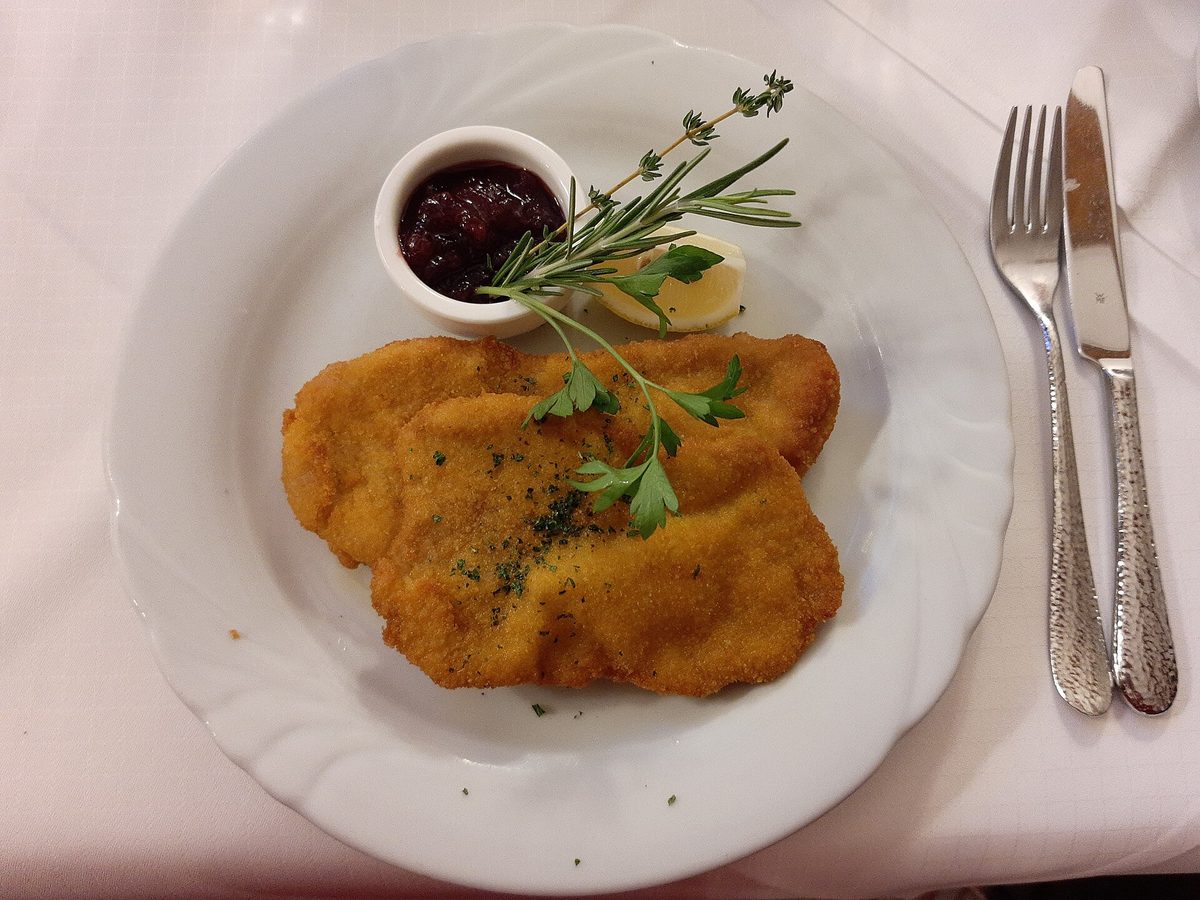
- Wiener Schnitzel – the national dish, and rightly. A thin veal cutlet pounded flat, breaded and fried in butter until it puffs and crisps, served with lemon, a vinegary potato salad and a dab of cranberry. Order it as veal (the real thing) at least once; “Schnitzel vom Schwein” is the cheaper pork version.
- Tafelspitz – boiled beef in broth with apple-horseradish, supposedly Emperor Franz Joseph’s favourite. More delicious than “boiled beef” has any right to be.
- Käsespätzle – Austria’s answer to mac and cheese, soft egg noodles with melted mountain cheese and crispy onions. Mountain-hut comfort food.
- Apfelstrudel and Kaiserschmarrn – the great desserts. Strudel is paper-thin pastry around spiced apple; Kaiserschmarrn is a fluffy shredded pancake with fruit compote, often eaten as a whole meal on the slopes.
- Sachertorte – the famous dense chocolate cake with a layer of apricot jam, invented in Vienna. Have it at Café Sacher with a coffee and don’t think about the calories.
Just as important is the coffee house, a Viennese institution UNESCO actually recognises as cultural heritage. The deal is simple: you buy one coffee and you’re entitled to sit, read, write or argue for as long as you like. Learn a couple of orders – a Melange (like a cappuccino), an Einspänner (espresso under a tower of whipped cream), or a Verlängerter (an Austrian Americano) – and settle in. It’s one of the genuine joys of the country, and it’s free of the rush you’ll feel almost anywhere else.
Getting around Austria
Here’s the good news: Austria is one of the easiest countries in Europe to travel without a car, because the train network is superb. Two operators run the rails – the national ÖBB and the private Westbahn – and between them they connect every city you’re likely to visit, punctually and comfortably. Vienna to Salzburg takes about 2.5 hours with departures roughly hourly; Salzburg to Innsbruck is around 2 hours (the line dips briefly through Germany); Vienna to Graz about 2.5 hours.
Two money-saving habits: book intercity tickets a few days ahead through ÖBB’s Sparschiene advance fares (often a fraction of the walk-up price), and consider point-to-point tickets rather than a rail pass unless you’re moving every day. If you’re combining Austria with neighbouring countries, my guide to train travel in Europe covers passes, reservations and the apps worth having, and the broader getting around Europe piece weighs trains against budget flights and buses.
You only really need a car for the high mountains – the Grossglockner road, the remoter Salzkammergut valleys, the dispersed Tyrol resorts – where trains and buses thin out. Driving is easy and the roads are immaculate, but note you must buy a vignette (motorway sticker, available digitally) before using the autobahns, and many high alpine roads charge a toll on top. In the cities, don’t bother with a car at all – park it, or don’t rent it until you leave town.

What does a trip to Austria cost?
Let’s be straight: Austria sits at the pricier end of Europe, broadly in line with Germany and a notch below Switzerland. It’s not a backpacker bargain, but it’s far from the most expensive country on the continent, and the quality you get – transport, accommodation, food – is high. Here’s roughly what to budget per person, per day, excluding flights, as of 2026.
| Style | Per person / day | What that looks like |
|---|---|---|
| Budget | around €80–100 | Hostel or guesthouse, public transport, self-catering and casual cafés, free sights and hikes |
| Mid-range | around €150–200 | Three-star hotel or good apartment, a sit-down meal or two, paid attractions and cable cars |
| Comfort / luxury | €300–500+ | Four-star and up, restaurants, guided tours, private transfers |
For a sense of scale, a typical double hotel room runs around €120–180 a night in the cities (more in peak summer and ski season), a Wiener Schnitzel lunch with a drink is roughly €18–25, a Vienna–Salzburg train booked ahead can be under €20, and a cable-car return up the Nordkette is around €40. The single biggest lever is timing: shoulder season can cut your accommodation costs by a third or more. If you’re watching every euro, my Europe on a budget guide has the tactics – rail-pass maths, free museum days, picnic culture – that work just as well here, and they stack neatly with a backpacking Europe route through the wider region.
How many days do you need? Sample Austria itineraries
You can get a real taste of Austria in a long weekend or fill three weeks without repeating yourself. Here’s how I’d shape the most common trip lengths – and there’s a far more detailed, day-by-day breakdown in my dedicated Austria itinerary guide.
A long weekend (3–4 days): pick one city and go deep. Vienna is the obvious choice – two and a half days of palaces, museums and coffee houses, with a half-day in the Wachau if you can. Salzburg works as a shorter break, ideally paired with a night in Hallstatt.
One week (7 days): the classic first-timer loop. Three nights in Vienna, the train to Salzburg for two nights (with a Wachau stop en route if you fancy), then two nights in or near Hallstatt for the lakes. You’ll finish relaxed, not frazzled.
Ten days to two weeks: add the mountains. From the week above, continue west from Salzburg to Innsbruck for two or three nights of cable cars and Tyrol, or loop south to Zell am See and the Grossglockner. With two weeks you can fold in Graz and the high Alps without rushing. This is also the sweet spot for combining Austria with a slice of Germany (Bavaria is right next door) or Italy over the Brenner Pass.
Entry requirements: visas, ETIAS and the practical bits
Austria is part of the Schengen Area, so the same entry rules apply as for most of mainland Europe. Visitors from the US, UK, Canada, Australia and many other countries can currently enter visa-free for up to 90 days in any 180-day period. The big change on the horizon: the EU’s new ETIAS travel authorisation is expected to launch in late 2026 and become mandatory around April 2027 for visa-exempt travellers – a quick, cheap online registration tied to your passport, not a visa. Because the timeline keeps shifting, check the official EU pages close to your trip; I keep the current state of play updated in my guide to the Schengen visa and ETIAS rules.
The everyday practicalities are blissfully simple. The currency is the euro. The language is German, but English is widely spoken in cities and tourist areas (a “Grüß Gott” hello and a “Danke” go a long way in the countryside). Tap water is excellent and free – ask for “Leitungswasser.” Tipping is modest: round up or add about 5–10% for good service. And it’s one of the safest countries you’ll ever visit; the main thing to watch is pickpockets in crowded tourist spots in Vienna and Salzburg, exactly as you would anywhere.
Austria travel tips (and what to skip)
A handful of things I wish I’d known earlier – the small stuff that makes a trip smoother.
- Sundays shut down. Most shops and many supermarkets close on Sundays across Austria. Stock up on Saturday, or plan a Sunday around museums, cafés and the outdoors, which stay open.
- Carry some cash. Cards are widely accepted, but plenty of cafés, bakeries, mountain huts and market stalls are still cash-first. Keep a few euros on you.
- Book the headline sights ahead. Schönbrunn, the salt mine in Hallstatt and popular cable cars sell timed tickets that save you long queues in summer – grab them online a day or two before.
- Validate the vignette. If you’re driving the motorways, buy the digital vignette before you join an autobahn – fines for going without are steep and enforced.
- Don’t over-schedule Hallstatt. It’s a village, not a city. Half a day of actual sightseeing plus a slow evening and morning is plenty – the magic is in the quiet hours, not in ticking off attractions.
- Pack layers, even in summer. Mountain weather flips fast; a sunny valley morning can be a chilly, drizzly afternoon at altitude. My Europe packing list has the full rundown.
What would I skip? The Sound of Music bus tours unless you’re a superfan; the overpriced Bermuda Triangle bar district in Vienna; and any plan that tries to “do” Vienna, Salzburg, Hallstatt and Innsbruck in four days – you’ll spend the trip on trains and remember none of it. Austria rewards going slower.
Who Austria suits (and how it compares)
Austria is one of the most universally easy countries in Europe, but it lands especially well for certain travellers. First-timers to Europe love how safe, clean and navigable it is – if you’ve found bigger trips overwhelming, this is a gentle, rewarding place to build confidence, and my how to plan a trip to Europe guide pairs well with it. Couples get baroque cities and lakeside sunsets made for slowing down. Families find palaces, the world’s oldest zoo (in Vienna) and lake swimming that keeps kids happy – see my Europe with kids guide. Outdoor and winter-sports travellers get some of the best, best-value mountains on the continent. And solo travellers will find it one of the safest and most welcoming places to go it alone; my solo travel tips apply here in full.
For where to base yourself in each city – which neighbourhoods are worth the money and which to avoid – my where to stay in Europe guide breaks it down, and you’ll find Austria woven through my roundup of the best places to visit in Europe.

Austria travel guide: frequently asked questions
How many days do you need in Austria?
For a first trip, aim for about a week. That gives you three nights in Vienna, two in Salzburg and two by the lakes around Hallstatt without rushing. A long weekend is enough for one city – usually Vienna – while ten days to two weeks lets you add Innsbruck and the high Alps. Austria rewards going slower, so resist cramming four bases into a short trip.
What is the best time to visit Austria?
Late May to June and September are the sweet spots: warm, reliable weather, everything open, and fewer crowds than the July–August peak. September also brings the wine harvest in the Wachau. For skiing, come mid-December to mid-March; for Christmas markets, the four weeks before Christmas. Spring and autumn give the best balance of price, weather and quiet.
Is Austria expensive to visit?
It’s moderately pricey – roughly on a par with Germany and below Switzerland. Budget travellers can manage on around €80–100 a day, mid-range trips run €150–200, and comfort travel €300-plus. The biggest savings come from visiting in shoulder season, booking ÖBB train tickets ahead on Sparschiene fares, and self-catering some meals. Quality is high across transport, food and lodging, so you get a lot for the money.
Do I need a visa or ETIAS to visit Austria?
Austria is in the Schengen Area, so travellers from the US, UK, Canada, Australia and many other countries can visit visa-free for up to 90 days in any 180-day period. From late 2026 the EU’s ETIAS authorisation is expected for visa-exempt visitors, becoming mandatory around April 2027 – a quick, low-cost online registration, not a visa. Always confirm the latest rules on official EU pages before booking.
Vienna or Salzburg – which should I visit?
If you can only choose one, pick Vienna: it’s bigger, busier and offers far more to fill several days, from palaces to coffee houses to world-class art. Salzburg is smaller and more immediately pretty – perfect for a day or two and as a base for the lakes and mountains. Honestly, though, they’re only 2.5 hours apart by train, so most itineraries include both.
Do they speak English in Austria?
German is the official language, but English is widely spoken in Vienna, Salzburg, Innsbruck and anywhere touristy, and most younger Austrians speak it well. You’ll have no trouble in cities, hotels or on the trains. In rural areas and mountain villages it thins out, so a few basic phrases – “Grüß Gott” for hello, “Danke” for thanks – are appreciated and genuinely useful.
Is Austria better in summer or winter?
Both are superb – it depends on what you want. Summer is for lakes, hiking, the high alpine roads and long days exploring the cities; it’s the most versatile season for a first visit. Winter is for skiing, Christmas markets and snow-globe scenery. If you’re not skiing, summer and the shoulder months give you the widest range of things to do.
Final thoughts
Here’s what I keep coming back to about Austria: it never makes you choose. You don’t have to pick between culture and nature, or between effort and ease – you get Klimt and a glacier, an imperial palace and a lake you can swim in, all within the most relaxed and well-run country imaginable. It hands you greatness without the friction you’ll feel almost anywhere else, and that’s a rarer thing than it sounds.
So my parting advice, distilled: build your trip around one city and one stretch of mountains rather than racing the whole map, travel in late spring or early autumn if you possibly can, take the train, and leave real time to sit still – on a jetty, in a coffee house, on a fortress wall at sunset. Do that, and Austria will get under your skin the way it did mine on that misty morning in Hallstatt. Gute Reise, and have a wonderful trip.
Photo credits
All images are used under their respective licenses via Wikimedia Commons. With thanks to the photographers:
- The lakeside village of Hallstatt, the postcard image behind any Austria travel guide – Photo: public domain (CC0) via Wikimedia Commons.
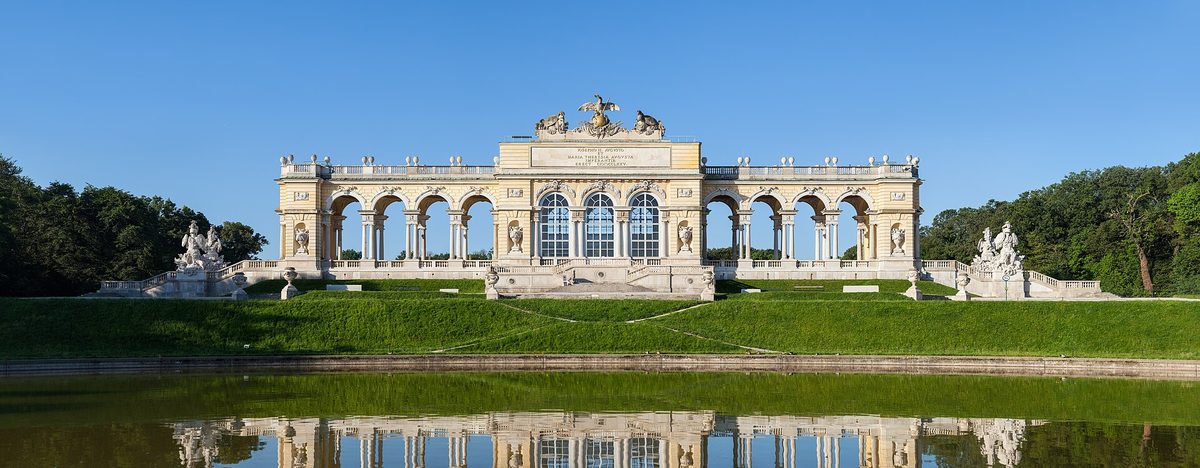
- The gardens and Gloriette of Schönbrunn Palace in Vienna – Photo: Thomas Wolf, www.foto-tw.de / CC BY-SA 3.0 de via Wikimedia Commons.
- Vienna’s Christmas market glowing in front of the floodlit Rathaus – Photo: Böhringer Friedrich / CC BY-SA 3.0 AT via Wikimedia Commons.
- A train winding through the Austrian Alps, the easiest way to get around – Photo: User:Möchtegern (CC0) via Wikimedia Commons.
- A winding alpine road through the Austrian mountains – Photo: Karsten Würth (@inf1783) inf1783 (CC0) via Wikimedia Commons.
- Hohensalzburg Fortress on its wooded hill above Salzburg – Photo: Jakub Hałun / CC BY 4.0 via Wikimedia Commons (source).
- Colourful houses on Maria-Theresien-Strasse in Innsbruck beneath the snow-capped Nordkette range – Photo: Wilfredor (CC0) via Wikimedia Commons (source).
- The Grossglockner High Alpine Road winding through the peaks of the Hohe Tauern at dusk – Photo: Karsten Würth (CC0) via Wikimedia Commons (source).
- A classic Wiener Schnitzel with lemon, parsley and cranberry, Austria’s national dish – Photo: Gerda Arendt (CC0) via Wikimedia Commons (source).