How Many Days Do You Need in Europe
Ten to 14 days is the honest answer for a first trip: enough for two or three cities, the trains between them and the morning an overnight flight steals. Beyond that, how many days in Europe you need is simple arithmetic, and the sums are below, city by city and leg by leg.
This page is for anyone fixing the length of a trip before buying flights, especially first-timers crossing an ocean. The one caveat: visa-free visitors get 90 days in any 180 across the whole Schengen area, counted together rather than per country. Trip length is the first decision in our step-by-step guide to planning a trip to Europe. Checked against official sources in September 2026.
| Question | Short answer |
|---|---|
| Time needed | 7 days on the ground at the least after a long-haul flight; 10–14 days for a first trip of two to four cities; 3 weeks for five or six bases |
| Nights per city | 3 by default; 4 for London, Paris and Rome; 2 for Venice, Porto and Athens |
| Cost of each extra day | Roughly $100–$150 per person on a budget, $200–$300 mid-range, flights excluded (2026 benchmarks) |
| Best for | Fixing the length of a trip before you book flights, trains or beds |
| Book ahead | Long-haul flights, fixed-fare high-speed trains (Eurostar sells up to 11 months out) and timed-entry museums |
| Legal limit | 90 days in any 180 across the 29 Schengen countries for visa-free visitors |
How many days in Europe is enough for a first trip?
From North America, 10 to 14 days on the ground is the sweet spot. That’s long enough to shake off the jet lag, see three or four cities properly and still have an afternoon with nothing planned. Seven days works if you stick to one or two places. Five is a city break, and a city break rarely justifies a transatlantic fare.
The logic is overhead. Every city you add costs half a day of packing, stations and check-ins, and the first day after an overnight flight is never a full one. Short trips lose a bigger share of their time to that overhead, so each extra day adds a lot up to about two weeks, then less and less after three.
| Days on the ground | Bases I’d plan | Moves | What it looks like |
|---|---|---|---|
| 5 | 1 | 0 | One city and a day trip or two |
| 7 | 2 | 1 | Two cities a short train ride apart |
| 10 | 3 | 2 | Three cities in one country or two neighbours |
| 14 | 4 | 3 | Four cities, or three plus a slow stretch by a lake or the sea |
| 21 | 5–6 | 4–5 | Two regions, with one long leg by sleeper or plane |
| 30 | 7–8 | 6–7 | Four or five countries, with rest days built in |
A first trip also has a learning curve: metro tickets, platform boards and shop hours all take longer the first time. Plan one fewer base than feels right. Our first trip to Europe tips cover the rest of that curve, and the first-time Europe itinerary shows a route built around it.
Verdict: if you can get two weeks off, take them. Going from 10 days to 14 buys one more city and, more usefully, the slack that stops a holiday turning into a train timetable.
The trip-length formula: count nights, then subtract the moves
Most itineraries go wrong at the counting stage, long before anyone opens a map. Four rules fix that.
Rule 1: count nights, not days
“Three days in Paris” usually means arriving mid-afternoon, one full day, and leaving after breakfast on the third. That’s two nights and about a day and a half of sightseeing. Plan in nights and the numbers stop flattering you.
Rule 2: every move costs half a day
London to Paris takes 2h16 on the fastest Eurostar. Add checkout, the ride to St Pancras, security and passport checks before boarding, then the Métro from Gare du Nord, and it’s four hours or more door to door. Flights cost more: transfers at both ends, bag drop and security turn a 90-minute hop into most of a day.
Rule 3: flight days aren’t sightseeing days
Overnight flights from the east coast of North America land in the morning, usually before your room is ready, so count that day as half at best. Flights home tend to leave Europe in the morning or around midday, which takes the last day too. From Australia or New Zealand, with the best part of a day in the air each way, write off one more.
Rule 4: day trips beat one-night stops
A night somewhere new means packing, checking out and checking in again. If a place can be seen in a day from a base you already have, do that. Florence to Pisa is about an hour on a regional train, at a fixed €8.50 each way with departures every 15–30 minutes, so there’s no reason to sleep there.
Put the rules together and a two-week holiday from the US looks like this.
| Day | Nights in Europe | Sightseeing days |
|---|---|---|
| Day 1: fly overnight | 0 | 0 |
| Day 2: land in the morning | 1 | 0.5 |
| Days 3–13 | 11 | 11, less 1.5 for three moves |
| Day 14: fly home | 0 | 0 |
| Total | 12 | About 10 |
Twelve nights split four ways gives four bases of three nights each, which is the shape of most good fortnights. It’s also why I’m wary of any two-week plan that promises six countries.
The shortcut: divide your nights by three and round down. That’s how many bases you can manage without the trip becoming a relay race. If any single leg runs past five hours, take one more off. For a month or longer, divide by four instead, because by then you’ll want rest days as much as new cities.
How many days to spend in each European city
These are the nights I’d give each city on a first visit, for someone who wants the main sights rather than a rest. They’re nights, not days: the arrival afternoon and departure morning come on top.
| City | Nights | Enough for | Add a night if |
|---|---|---|---|
| London | 4 | The British Museum, Westminster, the Tower, a West End show | You want Windsor or Oxford |
| Paris | 4 | The Louvre, the Musée d’Orsay, Montmartre, the Seine by night | You add Versailles |
| Rome | 3–4 | The Colosseum and Forum, the Vatican, the historic centre | You add Pompeii |
| Florence | 3 | The Uffizi, the Accademia, the Duomo climb, the Oltrarno | You want Siena, Pisa or Lucca |
| Venice | 2 | San Marco, the Rialto, the Grand Canal by vaporetto | You want Murano, Burano and Torcello |
| Barcelona | 3–4 | The Sagrada Família, Park Güell, the Gothic Quarter | You add Montserrat or Girona |
| Madrid | 3 | The Prado, the Reina Sofía, the Retiro | You add Toledo or Segovia |
| Seville | 3 | The Alcázar, the cathedral, Triana, a flamenco night | You add Córdoba |
| Lisbon | 3 | Alfama, Belém, the viewpoints | You add Sintra, which needs a full day |
| Porto | 2 | The Ribeira, the port lodges, the bridges | You want the Douro valley |
| Amsterdam | 3 | The Rijksmuseum, the Van Gogh Museum, the canals | You add Haarlem or Zaanse Schans |
| Berlin | 3–4 | Museum Island, the Wall sites, the Reichstag dome | You add Potsdam |
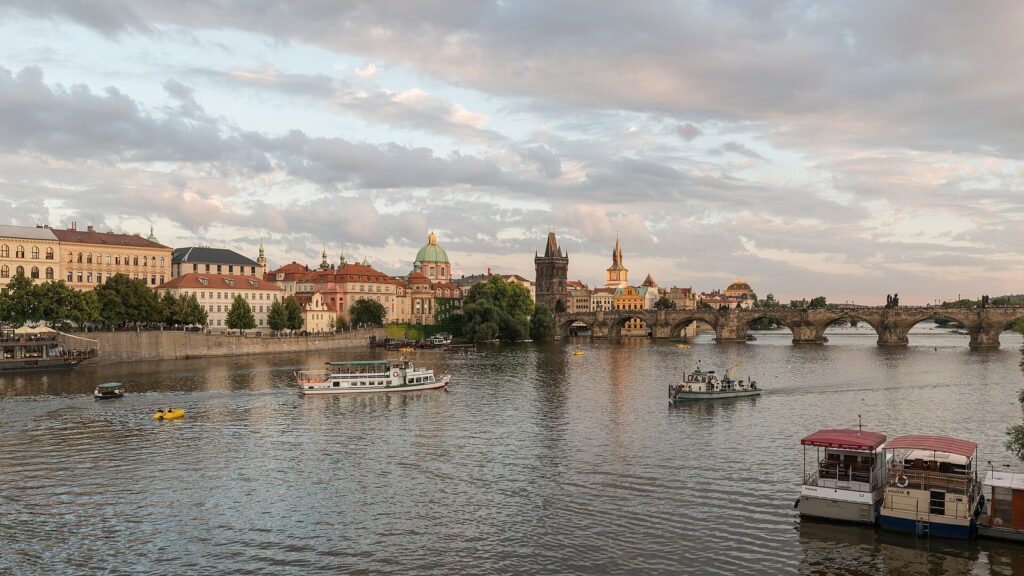
| Prague | 3 | The Old Town, the Castle, Malá Strana | You add Kutná Hora |
| Vienna | 3 | Schönbrunn, the Hofburg, the Kunsthistorisches Museum | You add the Wachau |
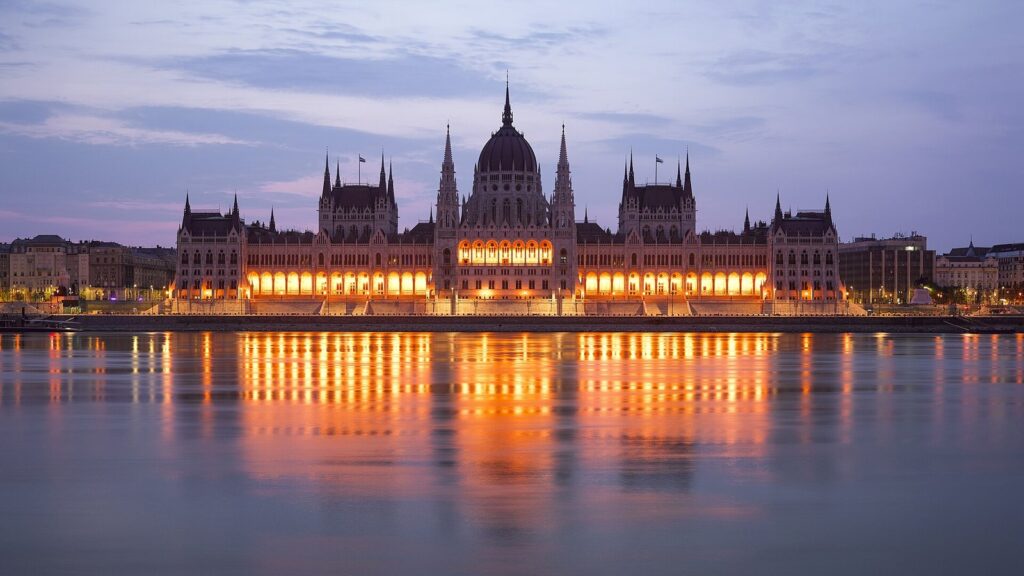
| Budapest | 3 | Parliament, Castle Hill, a thermal bath | You add Szentendre |
| Munich | 2–3 | The Altstadt, the Residenz, the beer gardens | You want Neuschwanstein |
| Athens | 2 | The Acropolis and its museum, the Agora, Plaka | You add Delphi |
| Santorini | 2–3 | Oia, Fira, the caldera path | You want beach days |
| Dubrovnik | 2 | The walls, Lokrum, the cable car | You add Kotor |
| Edinburgh | 3 | The castle, the Royal Mile, Arthur’s Seat | You add a Highlands day |
| Dublin | 2–3 | Trinity College, the Georgian squares, the pubs | You add Howth or Glendalough |
| Copenhagen | 2–3 | Nyhavn, Tivoli, the harbour | You add Roskilde or Malmö |
| Bruges | 1 | The canals, the Markt, the Belfry | Better as a day trip from Brussels |
| Salzburg | 1–2 | The old town and the fortress | You add Hallstatt |
Four nights: London, Paris and Rome
The big three need four nights because their headline museums each swallow most of a day, and because closing days can wreck a short stay. The Louvre shuts on Tuesdays. The Vatican Museums close on Sundays except the last Sunday of the month, when entry is free and the crowds are enormous. Four nights leaves room to shuffle. Three can work for Rome if you’re disciplined; I wouldn’t try it for Paris on a first visit, though our three-day Paris itinerary shows how far a tight stay can stretch.
Three nights: the default for most capitals
Amsterdam, Prague, Vienna, Budapest, Lisbon, Madrid, Berlin and Barcelona all sit well at three nights: two full days plus the edges. Florence belongs here too, with a warning. The Uffizi and the Palazzo Pitti close on Mondays, so a Sunday-to-Tuesday stay leaves only the arrival and departure half-days for the Uffizi. Check closing days before you fix the order of cities, not after.
Two nights: Venice, Porto, Athens and the smaller stars
Two nights gives one full day and two half days. That’s right for Venice’s centre, for Porto, and for Athens when the islands are the real goal. Don’t shrink Venice to a day trip, though. The city changes once the day-trippers leave, and the evening is half the point.
One night or a day trip: Bruges, Salzburg, Pisa and Toledo
Some places are best seen from somewhere else. Bruges works as a day out from Brussels, Pisa from Florence, Toledo from Madrid. Pompeii works from Rome if you’re keen and start early: 1h10 to Naples on the fast trains, then about 36 minutes on the Circumvesuviana.
Verdict: if a city only earns one night, ask whether it earns a place at all, or whether it’s a day trip from somewhere you’re already sleeping.
How long do the journeys between cities really take?
Timetables flatter. The first column below gives the fastest direct trains or ferries in 2026 timetables. The second is my rough planning figure for the whole move, from one hotel door to the next.
| Leg | Fastest service (2026) | Door to door | My call |
|---|---|---|---|
| London–Paris | 2h16, Eurostar, St Pancras to Gare du Nord | 4–4.5 hours | Morning train, afternoon in Paris |
| Paris–Amsterdam | 3h20, Eurostar (ex-Thalys) | 5 hours | Half a day |
| Paris–Barcelona | 6h50, TGV INOUI, two direct a day | 8.5 hours | A full day; fly if time is short |
| Madrid–Barcelona | 2h30 normally; about 3h02 in September 2026 under speed limits | 5 hours | Half a day |
| Rome–Florence | About 1h30, Frecciarossa; Italo from 1h25 | 3.5 hours | An easy morning move |
| Florence–Venice | About 2h05 | 4 hours | An easy morning move |
| Rome–Naples | 1h10, Frecciarossa or Italo | 3 hours | Works as a day trip |
| Milan–Venice | About 2h30, Frecciarossa | 4.5 hours | Half a day |
| Amsterdam–Berlin | About 6 hours, DB ICE, six a day each way | 8 hours | A full day |
| Berlin–Prague | 3h35–3h46, EuroCity | 5.5 hours | Half a day and more |
| Prague–Vienna | About 4 hours, Railjet | 6 hours | Leave early |
| Vienna–Budapest | About 2h20–2h40, Railjet | 4.5 hours | An easy morning move |
| Munich–Vienna | About 4 hours, Railjet | 6 hours | Leave early |
| Lisbon–Porto | 2h50–2h58, Alfa Pendular | 5 hours | Half a day |
| Piraeus–Santorini | 5h00–6h10, high-speed ferry | Most of a day | A full travel day |
Under three hours: move after breakfast
London–Paris, Rome–Florence, Florence–Venice, Rome–Naples and Vienna–Budapest are the gentle legs. Catch a mid-morning train, drop the bags, and the afternoon is still yours. Build a first trip around legs like these.
Three to five hours: the half-day rule
Paris–Amsterdam, Berlin–Prague, Prague–Vienna, Munich–Vienna and Lisbon–Porto take a real bite out of the day, so plan nothing for the arrival afternoon beyond a walk and dinner. Madrid–Barcelona normally belongs with the gentle legs, but Adif, Spain’s rail infrastructure manager, has imposed speed limits that add about 25 minutes through December 2026.
Over five hours: fly, sleep on it, or cut the leg
Paris–Barcelona and Amsterdam–Berlin take a whole day by train. That’s fine if you enjoy the ride and a waste if you don’t. A sleeper turns the lost day into a night’s sleep: ÖBB’s Nightjet runs from Vienna and Salzburg to Venice, Florence and Rome, and our guide to night trains in Europe covers the rest of the network. Otherwise fly, or swap in cities that sit closer together. For how the rail network fits together, see our guide to train travel in Europe.
Sample splits for 5, 7, 10, 14 and 21 days
Treat these as shapes, not prescriptions. Each keeps the legs short unless I say otherwise, and each ends in a city with plenty of flights home. Linking several countries raises its own questions, which our guide to planning a multi-country Europe trip answers.
| Trip | Route | Nights | Longest leg |
|---|---|---|---|
| 5 days (4 nights) | Rome, with a Pompeii day | Rome 4 | Rome–Naples, 1h10 |
| 7 days (6 nights) | London, then Paris | 3 and 3 | London–Paris, 2h16 |
| 10 days (9 nights) | Rome, Florence, Venice | 4, 3 and 2 | Florence–Venice, about 2h05 |
| 14 days (13 nights) | Berlin, Prague, Vienna, Budapest | 3, 3, 3 and 4 | Prague–Vienna, about 4 hours |
| 21 days (20 nights) | Paris, Amsterdam, Berlin, Prague, Vienna, Budapest | 4, 3, 3, 3, 3 and 4 | Amsterdam–Berlin, about 6 hours |
5 days: one city, one day trip
Five days is a city break, so treat it as one. Rome suits it: four nights covers the Colosseum, the Forum, the Vatican and the old centre, with a day left for Pompeii. Paris, London and Barcelona work the same way. Don’t bolt on a second city; the move would eat a fifth of the trip.
7 days: two cities, one train
London and Paris, three nights each and 2h16 apart by Eurostar, is the classic week and still the easiest. Rome and Florence, about 1h30 apart, is the Italian version. Book the Eurostar early: in 2026 advance Standard fares started at £39 one way, while walk-up tickets regularly topped £150. Our seven-day Europe itinerary sets out the week day by day.
10 days: three bases
Rome, Florence and Venice at four, three and two nights is my pick for a first 10-day trip: two short train legs and three very different cities. Fly into Venice and home from Rome, or the other way round; it works in either direction. Our 10-day Europe itinerary lays out the days, and the 10-day Italy itinerary goes deeper on this route.
14 days: four bases
Berlin, Prague, Vienna and Budapest make a four-capital fortnight with no leg much over four hours: Berlin–Prague 3h35–3h46, Prague–Vienna about 4 hours, Vienna–Budapest about 2h30. Give Budapest the spare night and fly home from there. The two-week Europe itinerary and our Eastern Europe itinerary have fuller versions.
21 days: two regions and one long day
Three weeks lets you join two regions. Start with four nights in Paris, take the 3h20 train to Amsterdam, then accept one long day, about six hours by ICE, to reach Berlin before the Central European run above. That’s six bases, 20 nights and a single leg over five hours. The three-week Europe itinerary has more routes at this length.
A month: slow down on purpose
A month is where rail passes start to pay and rest days stop being optional. Eurail and Interrail Global Passes come as flexi passes of 4, 5, 7, 10 or 15 travel days within a set period, or as continuous passes of 15 days, 22 days, or one, two or three months. On 2026 prices a 10-day adult flexi pass works out at about €45 per travel day, against about €64 on the 5-day version. Our comparison of Eurail and Interrail explains which you can buy, and the one-month Europe itinerary shows how to pace four weeks.
Verdict: the jump that matters most is from 10 days to 14. After three weeks, add rest days rather than cities.
Is a week in Europe worth the long-haul flight?
From the east coast of North America, yes, if you’re strict. The flight is overnight and roughly seven hours to London or Paris, and a week on the ground gives five or six real days: one city and a day trip, or two cities and one train.
From the west coast, where the flight is closer to 10 or 11 hours, a week starts to feel thin. From Australia or New Zealand, I’d say no. With the best part of a day in the air each way, usually via Asia or the Gulf, a week leaves four usable days at most. Wait until you can take two weeks, ideally three.
Travellers based in Britain and Ireland play a different game. Paris is 2h16 from London by train and dozens of cities are a short flight away, so three- and four-night city breaks make sense. One thing to remember if you hold a British passport: the UK isn’t in Schengen, so every continental trip counts towards your 90 days.
Verdict: a week works from the eastern US and Canada with one or two bases. From further away, save the days up.
How the season changes the days you need
The same city can need more or fewer days depending on the month, for three reasons: daylight, crowds and how often things run.
| Season | Daylight | Effect on your days | My adjustment |
|---|---|---|---|
| June | Paris about 16 hours, Rome about 15, Stockholm over 18 | Long evenings, peak queues, midday heat in the south | Same nights; start early, rest after lunch |
| December | Paris 8h18 on 21 December, Stockholm 6h04, Reykjavik about 4h25 on average | Outdoor sights squeeze into short days | Add a night per city for outdoor sights |
| April–May, September–October | In between | The best balance of light, prices and crowds | Plan as normal |
| Greek islands, off-season | Short winter days | Far fewer ferries; some daily routes drop to two or three a week in January | Add a buffer day before flying home |
Summer gives you more hours and takes some back. Rome gets about 15.2 hours of daylight in June, and Paris’s longest day runs almost eight hours longer than its shortest. The catch is the queue at every big museum and, in the south, heat that makes the early afternoon hard work in July and August. I’d keep the same number of nights, be at the door at opening time and save the hottest hours for a long lunch.
Winter works the other way. Paris gets 8h18 of daylight on 21 December and Stockholm just 6h04. If your list is mostly outdoors (viewpoints, gardens, old towns on foot), add a night per city. If it’s mostly museums you lose less: the Louvre stays open until 21:00 on Wednesdays and Fridays. Our guide to visiting Europe in winter covers what shuts and what gets better.

The islands need slack outside summer. Greek ferries still reach every island in winter, but some routes with daily summer sailings fall to two or three a week in January, and a few inter-island links stop altogether. For the month-by-month picture see Europe weather by month; for choosing the season in the first place, our guide to the best time to visit Europe.
The legal limit: Schengen’s 90/180 rule, EES and ETIAS
For long trips the law sets the ceiling. If your passport doesn’t need a Schengen visa (American, Canadian, British, Australian and New Zealand passports among them), you can spend 90 days in any 180-day period in the Schengen area. The count covers all 29 member countries together: 45 days in Italy and 45 in France uses the lot.
The window rolls. On any day you’re in Schengen, look back 180 days and add up every day spent inside; the total must be 90 or fewer. The day you arrive and the day you leave both count.
| Where | Counts towards the 90? | What applies |
|---|---|---|
| The 29 Schengen countries, including Switzerland, Norway, Iceland, Liechtenstein, Croatia, Romania and Bulgaria | Yes | 90 days in any 180, shared across all of them |
| United Kingdom | No | Visitors can usually stay up to 6 months; many nationalities need a £20 ETA |
| Ireland | No | EU member outside Schengen with its own entry rules; runs neither EES nor ETIAS |
| Cyprus | No | EU member outside Schengen with its own entry rules |
| Serbia, Bosnia and Herzegovina, Montenegro, Albania, North Macedonia, Kosovo | No | National rules; check each before you go |
That’s how long-trip travellers stretch a summer: time in the UK or the Balkans doesn’t touch the Schengen count, and old Schengen days drop out of the window while you’re away.
Since 10 April 2026 the EU’s Entry/Exit System (EES) has been fully running at Schengen’s external borders. It swaps passport stamps for a digital record with your fingerprints and a facial image (children under 12 skip the fingerprints), and it costs nothing. The practical upshot: overstays are now counted by a computer, not a border guard squinting at smudged stamps.
ETIAS, the online travel authorisation for visa-free visitors, comes next, and it wasn’t running as of September 2026. The EU says it will announce the start date several months ahead, and there’ll be a transition of at least six months in which you can still enter without one if you meet the other conditions. It will cost €20, free for under-18s and over-70s. Until then, any website selling you an ETIAS is selling you nothing. For passports, visas and the rest of the paperwork, see our guides to the documents needed to travel to Europe and to Schengen visas and ETIAS.
Planning the days: getting there, booking windows and what to skip
Getting there: fly into one city and out of another
An open-jaw ticket, into Venice and home from Rome for example, usually costs about the same as a standard return and less than two one-way fares. It also removes the backtracking day, the biggest single time cost on a 10-day trip. Our guide to cheap flights to Europe covers the fare side.
Booking windows and what to book ahead
| What to book | When to book | Why bother |
|---|---|---|
| Eurostar | Sales open up to 11 months ahead | From £39 one way in advance in 2026; walk-up often over £150 |
| TGV Paris–Barcelona | Sales open up to 6 months ahead, often less | Only two direct trains a day |
| Renfe high-speed trains | Sales open erratically: 30 to 90 days ahead, up to 9–11 months on Madrid–Barcelona | Keep checking if your date isn’t on sale yet |
| Vienna–Budapest Railjet | As soon as your dates are fixed | About €13 in advance against about €52.70 walk-up in 2026 |
| Vatican Museums | Before you travel | €20 plus a €5 online fee in 2026, and it skips the ticket-office queue |
Book the long-haul flights, the long or popular trains, your first and last nights’ beds and any timed-entry museum as soon as the dates are fixed. Leave loose the day trips, most restaurants and the order of days within each city. Our guide to when to book a trip to Europe sets out the order to book everything in, and how to book European train tickets covers the rail side step by step.
What each extra day costs
2026 benchmarks put a budget day at roughly $100–$150 per person and a mid-range day at $200–$300, flights excluded. Where you go changes that more than how you travel: backpackers get by on about $35–$55 a day in Poland or Hungary, while the Nordics run to $150–$200 a day even on a backpacker budget. If money is tight, spend the extra days in the cheaper places. Our guide to Europe on a budget has the detail.
What to skip
- The one-night stop. It costs nearly a day in packing and moving; make it a day trip or drop it.
- A rail pass for a two-leg week. The smallest flexi pass gives four travel days and you’d use two. Advance point-to-point tickets win; see whether a Eurail pass is worth it.
- The sixth country. Two weeks and six countries means a third of the trip on trains. Cut one and use the day for something slow.
- Both Italian coasts in 10 days. Cinque Terre and the Amalfi Coast are a long way apart. Pick one.
Once the length is fixed, work through our Europe trip planning checklist, and sort out travel insurance for Europe as soon as you’ve paid for anything non-refundable.
Frequently asked questions about how many days in Europe
Is 10 days enough for Europe?
Yes, for three bases in one country or two neighbouring ones. Ten days on the ground gives nine nights: Rome, Florence and Venice at four, three and two, or Amsterdam, Paris and London at three each. What it won’t do is a five-country loop. You’d spend a third of the trip on trains and in stations, and see each city in a hurry.
How many countries can I visit in two weeks?
Three or four is comfortable, as long as they’re neighbours with fast trains between them, such as Germany, Czechia, Austria and Hungary. I’d rather see four cities properly than six through a train window. If your list has more countries than the days allow, drop one and spend the saved day on a day trip or an afternoon off.
How many days do you need in Paris?
Four nights covers the Louvre, the Musée d’Orsay, Montmartre, the Seine and an evening or two with no plan at all. Three nights works if you skip Versailles. Watch the calendar: the Louvre closes on Tuesdays, so a short stay that includes a Tuesday needs its museum day moved rather than lost.
Is three weeks too long for a Europe trip?
Not if you pace it. Three weeks suits five or six bases plus one slow stretch, a lake or a beach town, where you do very little. Travel fatigue is real: by the third week most people want fewer museums and longer lunches. Build that in from the start rather than filling every day.
How long can I stay in Europe without a visa?
Visa-free visitors, including Americans, Canadians, Britons and Australians, can spend 90 days in any 180-day period across the 29 Schengen countries combined. Days in the UK, Ireland, Cyprus and the non-EU Balkan states don’t count towards that total. Since April 2026 the Entry/Exit System has recorded every crossing digitally, so overstays show up automatically.
Should I count flight days as trip days?
Count them, but don’t plan anything on them. From North America the outbound flight is overnight and you land tired, and the flight home takes most of the final day. A 14-day holiday therefore gives you about 12 nights in Europe and roughly 10 days of real sightseeing once three moves between cities come off.
How many days should I spend in each city?
Three nights is the default for most capitals, four for London, Paris and Rome, two for Venice, Porto or Athens, and one or none for Bruges or Pisa, which work better as day trips. Add a night whenever a stay would include a big museum’s closing day or a day trip you really want.
Is a week in Europe enough from Australia?
It’s hard to justify. With the best part of a day in the air each way and a full body-clock reset, a week leaves four usable days at most. I’d hold out for two weeks, or three if you can manage it, and fly into one city and home from another to save a day.
Final thoughts
Fix the length first, then the cities, never the other way round. Two weeks and four bases is the shape I’d recommend to most first-timers, with one slow stretch and no leg over five hours. Once the nights are settled, the rest of the sequence (flights, trains, beds, paperwork) is laid out in our Europe trip-planning guide.
Related Europe guides
- When to Book a Trip to Europe: the order to book flights, trains and beds once the length is fixed
- 2 Weeks in Europe Itinerary: 10 Routes That Actually Work: the four-base fortnight, day by day
- ETIAS & Schengen Visas: Europe Entry Requirements in 2026: the 90/180 count, EES and ETIAS in full
- Europe Itinerary: How to Plan the Perfect Trip (Routes & Day-by-Day): ready-made routes once you know your trip length
- Train Travel in Europe: The Complete 2026 Guide: how the trains between your bases work
- Europe on a Budget: How Much a Trip Really Costs in 2026: what each extra day costs and how to trim it
Sources and verification
Prices, timetables and rules in this guide were checked on 27 September 2026 against the official sources below. It is compiled from those sources rather than from other travel lists, and it does not describe first-hand visits. Fares, opening hours and entry rules change, so confirm with the operator before you book.
- EU Travel to Europe: ETIAS
- European Commission: main differences between the EES and ETIAS
- GOV.UK: Visit the UK as a Standard Visitor
- Eurostar
- Deutsche Bahn
- Musei Vaticani
- Gallerie degli Uffizi
- Musée du Louvre
Hannah Brooks has spent fifteen years travelling, living and writing across Europe, from the Arctic tip of Norway to the south of Sicily. She has planned hundreds of European itineraries for readers and is Senior Europe Editor at EuropeanTourism.org.
Photo credits
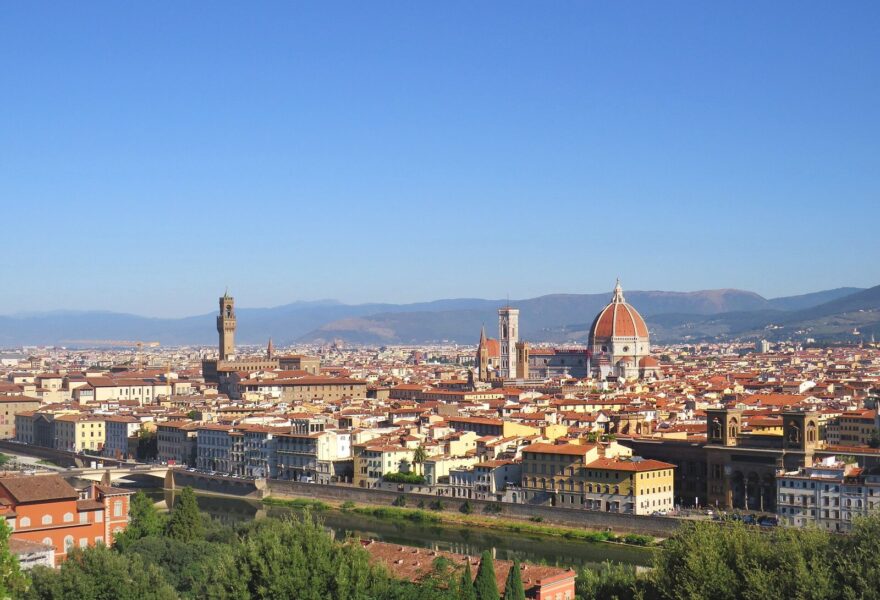
- Florence skyline with the Duomo from Piazzale Michelangelo, a classic stop when planning how many days in Europe (top photo): photo by PROPOLI87, Wikimedia Commons (CC BY-SA 4.0)
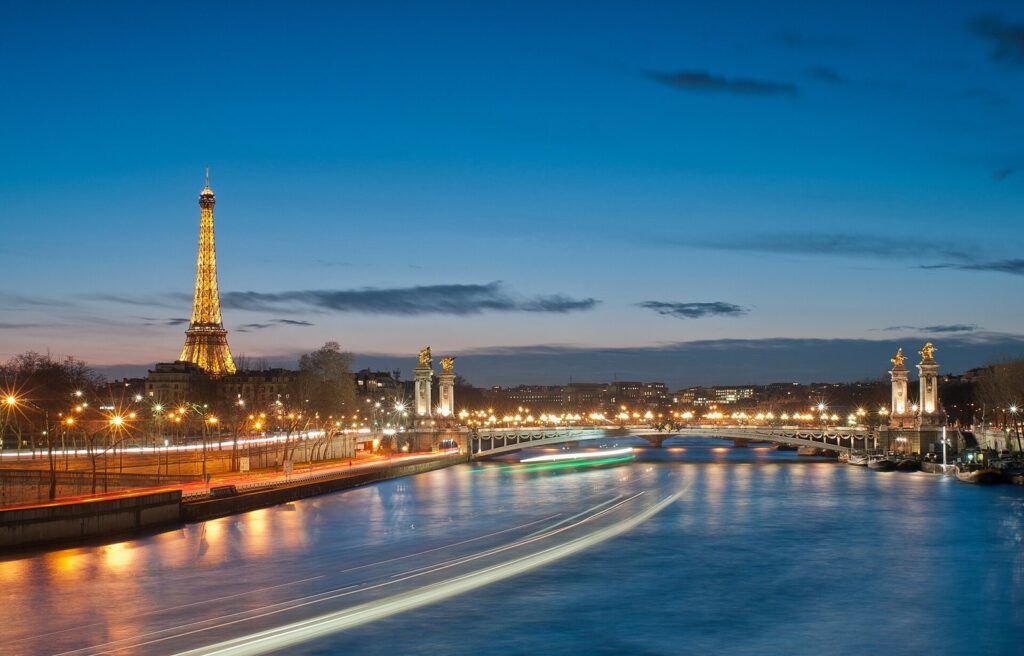
- Eiffel Tower and Pont Alexandre III lit up at night over the Seine in Paris: photo by Getfunky Paris, Wikimedia Commons (CC BY 2.0)
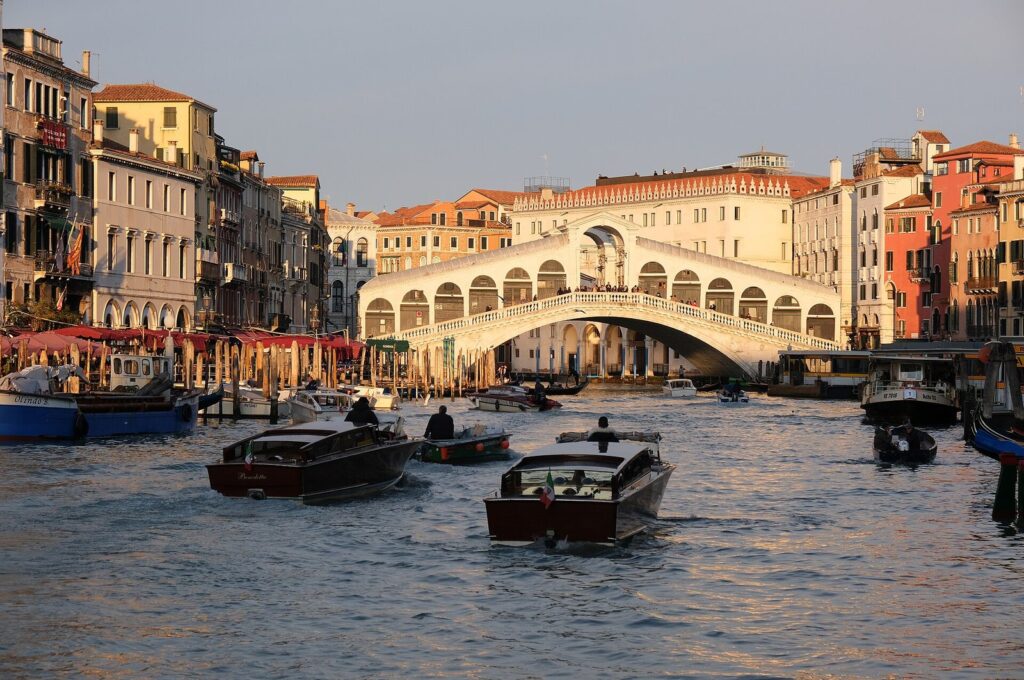
- Rialto Bridge over the Grand Canal in Venice, with boats on the water: photo by kallerna, Wikimedia Commons (CC BY-SA 4.0)
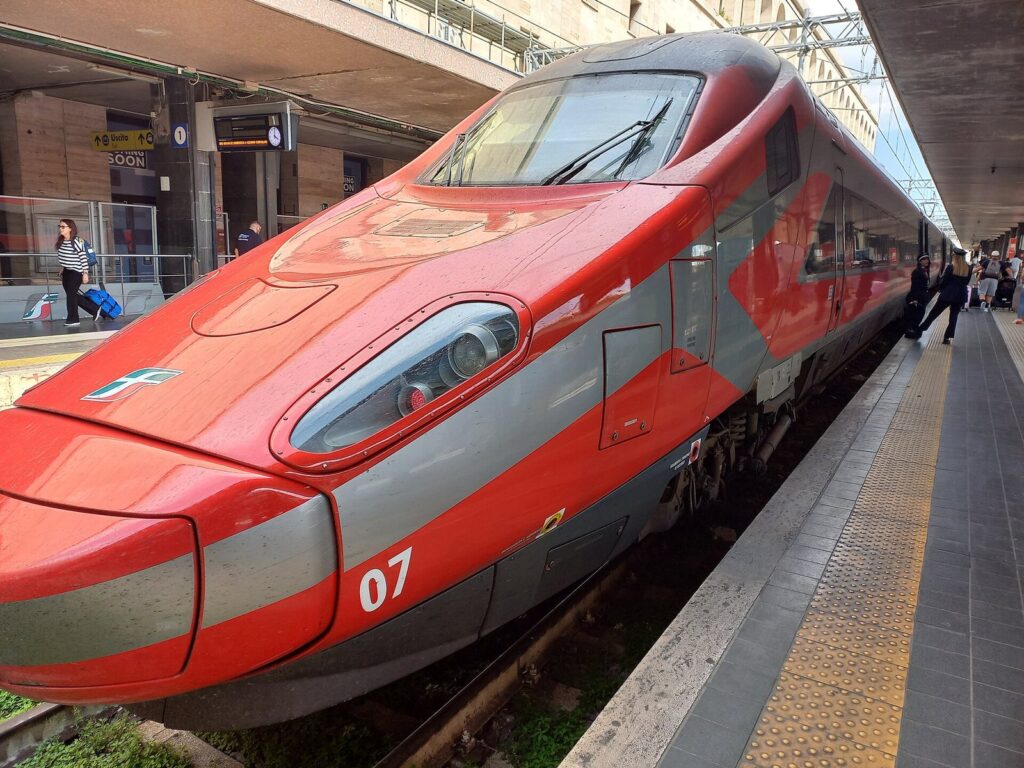
- Red Frecciarossa high-speed train at a platform in Rome: photo by CAPTAIN RAJU, Wikimedia Commons (CC BY-SA 4.0)
- Charles Bridge over the Vltava in Prague, seen from Mánes Bridge: photo by DXR, Wikimedia Commons (CC BY-SA 4.0)
- Hungarian Parliament Building lit up at dusk and reflected in the Danube, Budapest: photo by Godot13, Wikimedia Commons (CC BY-SA 4.0)
- Christmas market lights strung through bare trees on Vienna’s Rathausplatz at dusk: photo by Bybbisch94, Wikimedia Commons (CC BY 4.0)