Night Trains in Europe
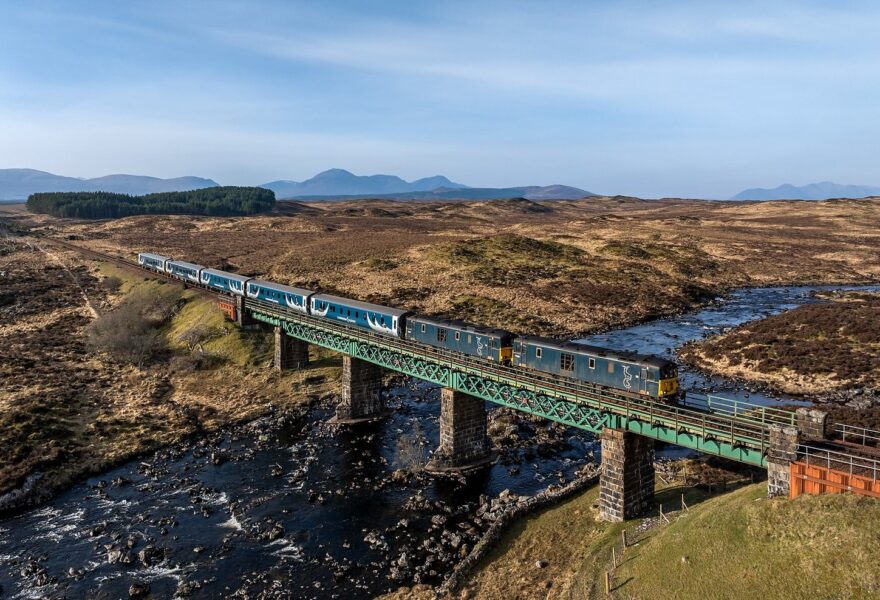
Night trains in Europe still cover most of the continent in 2026: roughly 205 regular sleeper connections, led by ÖBB’s Nightjet, European Sleeper, Italy’s Intercity Notte and the Caledonian Sleeper. Book a couchette or cabin, board after dinner and wake in another country, having saved a hotel night and a morning of travel.
This guide is for anyone who would rather sleep through a 12-hour journey than lose a day to it, and for travellers trying to swap short-haul flights for rail. The one caveat that matters: the network changes every December, and routes still vanish (Paris lost both of its Nightjets in 2025), so treat every timetable as provisional until you hold a ticket. For the wider picture of fares, passes and stations, start with our guide to train travel in Europe. Checked against official sources in September 2026.
| At a glance | Night trains in Europe, autumn 2026 |
|---|---|
| Cost | Nightjet seats from about €29.90, couchette berths roughly €49–€69 and private sleepers from about €89; European Sleeper shared berths from €49.99, with private compartments from €179.99 to Berlin and €209.99 to Paris, Prague or Milan |
| Time needed | One night: 10–16 hours on the main international routes, such as Hamburg–Zurich (about 11 hours) and Paris–Berlin (about 16) |
| Best for | City pairs a full day apart by rail, routes with no good day train, and anyone who would otherwise pay for a hotel and an early flight |
| Rail passes | Accepted, but sleeping accommodation always needs a reservation; supplements average about €20 |
| Book ahead | As soon as sales open: Nightjet up to 360 days, French and Italian sleepers about 4 months |
Night trains in Europe in 2026: what runs and what changed
Back-on-Track, the campaign group that plots every regular sleeper service on its interactive night-train map, counts about 205 connections for 2026. Five are new this year. Roughly ten have gone. That churn is the first thing to understand about sleeper travel here: the network as a whole is in decent health, but individual routes rise and fall with subsidies, rolling stock and track access, and a train that ran last summer may not run next spring.
ÖBB, Austria’s state railway, is the biggest international operator. Its Nightjet network ties together Vienna, Munich, Hamburg, Berlin, Zurich, Amsterdam and Brussels and runs south to Venice, Bologna, Florence and Rome, and its booking site also sells overnight trains into Czechia, Slovakia, Poland, Hungary, Slovenia and Croatia, many of them EuroNight services run with neighbouring railways. National railways keep the big domestic networks going: Trenitalia’s Intercity Notte in Italy, SNCF’s Intercités de Nuit in France, Vy and SJ in Norway, SJ in Sweden, VR in Finland, and in Britain the Caledonian Sleeper and GWR’s Night Riviera. Private operators fill the cross-border gaps, most visibly European Sleeper out of Brussels and Amsterdam, and Snälltåget between Germany and Sweden.
These are the changes that matter this year:
| Change | Date | What it means for you |
|---|---|---|
| Nightjet Paris–Vienna and Paris–Berlin withdrawn | 13/14 December 2025 | No Nightjet serves Paris; ÖBB pulled out after French state funding ended early |
| New-generation Nightjets reach Zurich | 15 June 2026 (Vienna–Zurich); Hamburg–Zurich also runs the new trains | More Mini Cabins and en-suite sleepers on Swiss routes |
| European Sleeper Paris–Berlin | 26 March 2026 | Paris has a Berlin sleeper again, three nights a week via Brussels |
| SJ’s Arctic sleeper reduced | 13 April 2026 | Fewer trains to Luleå, Kiruna and Narvik after Trafikverket scaled the service back |
| Snälltåget Hamburg–Copenhagen–Stockholm | 4 May 2026 | A direct daytime train from Germany to Sweden, not a sleeper |
| European Sleeper Brussels–Milan | 9 September 2026 | A direct overnight link from Belgium to Italy via Cologne and Lugano, three nights a week |
| Nightjet Amsterdam–Zurich re-equipped | Due 13 December 2026 | New-generation trains replace the older coaches |
The Paris story is the one that trips people up. Plenty of guides still list a Paris–Vienna Nightjet. It stopped at the December 2025 timetable change, as did Paris–Berlin, once the French government’s subsidy ended early. European Sleeper stepped in on Paris–Berlin in March 2026, but Paris–Vienna has no direct replacement, so for now the realistic option is a TGV Lyria to Zurich and the Zurich–Vienna Nightjet onwards.
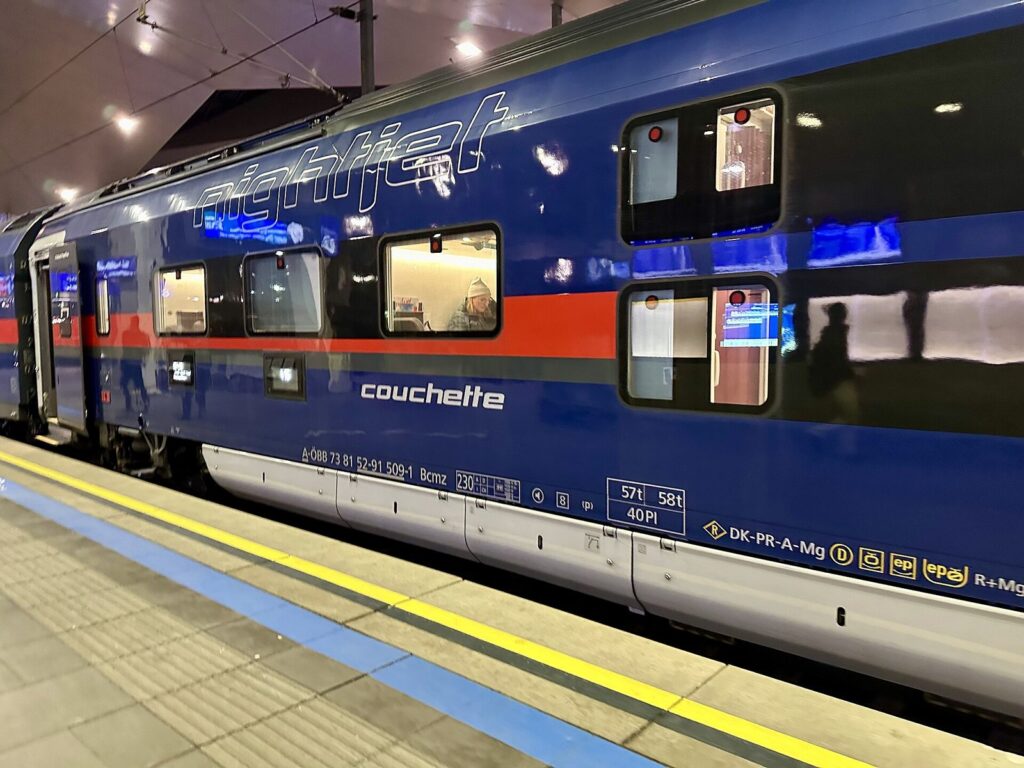
The new trains are the good news. ÖBB has spent more than €500 million on a Siemens-built fleet that first entered service in December 2023, with 24 trainsets due in service by mid-2026. Each seven-car set carries two sleeping cars, three couchette cars, a multi-function car with seats, luggage space and an accessible sleeper, and a seated coach. Where a route has them, they’re the reason to choose it.
Reliability deserves a straight word too. The revival has been bumpy, and operators themselves admit that parts of their fleets are old; late running and technical faults are a normal risk rather than a scandal. Never book a flight, a ferry or a paid tour for the morning you arrive by sleeper.
Verdict: the network is broad enough to plan a whole trip around, as long as you check each route with its operator rather than trusting an undated list, old versions of this one included.
What sleeping options do European night trains offer?
Every night train sells some mix of the same five things: a seat, a berth in a shared couchette, a private sleeper compartment and, on the newest trains, a single pod or an en-suite cabin. The names change by operator (European Sleeper says Classic and Comfort, the Caledonian Sleeper says Classic and Club, Trenitalia says Cuccetta), but the logic doesn’t. You pay first for privacy, then for space, then for plumbing.
Nightjet’s supplements for rail-pass holders make a handy price ladder, because they show what each step up costs on top of the journey itself:
| Option | Privacy | What you get | Nightjet pass holder supplement | Best for |
|---|---|---|---|---|
| Seat | None | A seat in an open coach or compartment | €4.90–€24.90 per person | Short runs and people who can sleep anywhere |
| Six-berth couchette | Shared | A bunk with bedding, six to a compartment | €19.90–€64.90 per person | Solo budget travellers, groups of six |
| Four-berth couchette | Shared | The same bunk, more room | €29.90–€94.90 per person | Families of four, pairs on a budget |
| Mini Cabin | Your own pod | A single sleeping pod in the couchette car | €29.90–€94.90 per person | Solo travellers who want privacy cheaply |
| Three-bed sleeper | Private for three | Proper beds and a washbasin | €59.90–€184.90 per person | Trios and families |
| Double sleeper | Private for two | Proper beds and a washbasin; shower and toilet in Comfort Plus | €69.90–€224.90 per person | Couples |
| Single sleeper | Fully private | One bed and a washbasin | €114.90–€479.90 per cabin | Light sleepers with a bigger budget |
Those bands come from the Interrail and Eurail fee tables, and they move with demand, because Nightjet prices dynamically by route, season and how full the train is. A full-fare ticket costs more, since it covers the journey as well as the bed.
Seats: cheap, and rarely a good idea
Seats are the cheapest way onto a night train and the worst way to spend one. A Nightjet seat costs a pass holder €4.90–€24.90 on top of the pass, and on Italy’s Intercity Notte it’s €3, so the temptation is real. But you get the lights, the announcements and every station stop, and a 12-hour run sitting up usually means a wasted first day at the other end.
The British sleepers also carry seated coaches, and pass holders pay nothing extra for them. That makes a seat a reasonable fallback on the Night Riviera to Cornwall, which is over in about eight hours, and a long, stiff night on the way to Inverness.
Verdict: a seat is a ticket, not a bed. I’d only book one for a short run or when every berth has gone.
Couchettes: the classic budget bunk
A couchette is a compartment of four or six bunks, made up with a sheet, pillow and blanket and shared with whoever else booked it. Compartments are normally mixed unless you choose a ladies-only one, which Nightjet sells. Most people sleep in their clothes or close to it. Couchettes are the backbone of Austrian and French night travel, and on SNCF’s Intercités de Nuit they’re the only beds on offer: six-berth compartments in second class and four-berth in first, with pass holder supplements of €19–€25 depending on the season.
The four-berth option earns its extra cost for two people: the same bunk, fewer strangers and more floor for bags. Travelling as four? Book the whole compartment and you have a private room at couchette prices.
Verdict: my default for solo trips on a budget, and I’d step up to a four-berth whenever the price gap is small.
Mini Cabins: Nightjet’s private pod
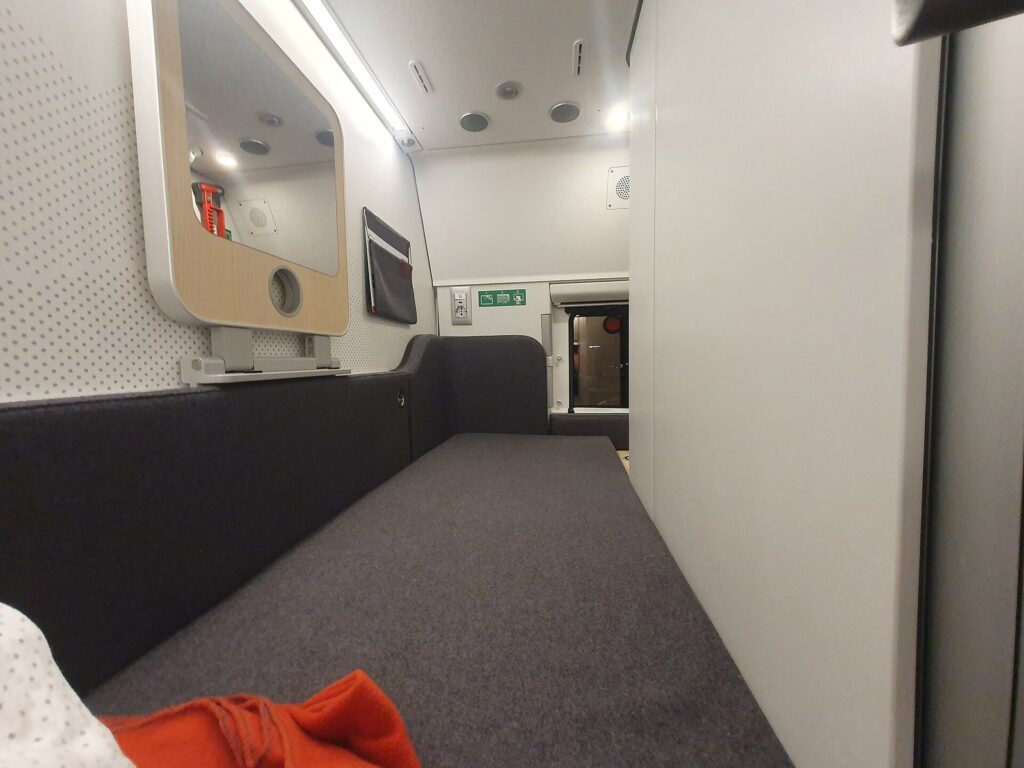
The new-generation Nightjets brought in the Mini Cabin: a compact single sleeping pod inside the couchette car. It’s a place to lie down rather than a room to sit in, but it has one enormous advantage over a couchette berth. Nobody else is in it. Pass holders pay €29.90–€94.90, the same band as a four-berth couchette, and full fares on Vienna–Hamburg were advertised from about €79.90 one way in September 2026. Each train carries only a limited number, so book early for busy nights.
Verdict: the best-value bed on any Nightjet route that has them, and a good reason to pick a new-generation train when you have the choice.
Sleeper compartments: a real bed and a door that locks
A sleeper is a private compartment with one, two or three beds, a washbasin and a door you lock from inside. Book every bed and the space is yours, which is why it suits couples, families who want to shut the door on the world, and anyone who sleeps badly with strangers. Nightjet charges pass holders €69.90–€224.90 per person for a double, and a single can reach €479.90 on peak nights.
Italy is the value outlier. Intercity Notte sleeper supplements are €48 for a berth in a triple, €58 in a double and €122 for a single, a fraction of Nightjet’s top band. European Sleeper splits its sleepers into Comfort Standard and Comfort Plus, each sold as singles, doubles or triples.
Verdict: the right call for couples and for any run over 12 hours. Solo travellers on Nightjet get most of the privacy from a Mini Cabin at a fraction of a single’s price.
En-suite and deluxe cabins
The top tier has its own shower and toilet. On the new-generation Nightjets that means the Comfort Plus sleepers, which appear on routes including Vienna–Hamburg, Vienna–Amsterdam, Vienna–Rome and Hamburg–Innsbruck. The Caledonian Sleeper’s Club Rooms are en-suite, and its Caledonian Double adds a proper double bed. Finland’s Santa Claus Express sells deluxe doubles with their own bathroom.
Is it worth it? On the long overnight run from Vienna to Rome, a private shower before you step out into the city is a real luxury. On a short hop, it’s hard to justify paying double.
Verdict: spend on privacy first and plumbing second.
Ladies-only and accessible compartments
Nightjet sells ladies-only compartments and lists a barrier-free compartment for wheelchair users; on the new-generation trains, that accessible sleeper sits in the multi-function car. Book either option directly with ÖBB, where you can choose the category, rather than through a reseller that sells only “a berth”. Other operators vary, so ask before you book rather than assuming.
Which option should you book?
Match the berth to the traveller, not the budget alone. This is how I’d choose on a long international run:
| You are | Book | Why |
|---|---|---|
| Solo on a tight budget | Six-berth couchette | The cheapest real bed on most routes |
| Solo and a light sleeper | Mini Cabin, or a single sleeper where there’s no Mini Cabin | Privacy without paying for a whole room when you don’t have to |
| A couple | Double sleeper | A lockable room and proper beds |
| Two friends on a budget | Four-berth couchette | Fewer strangers than a six-berth for a small premium |
| A family of three or four | Three-bed sleeper, or a whole four-berth couchette | A private room at close to shared-berth prices |
| A group of five or six | A whole six-berth couchette, or Snälltåget’s private six-berth compartment | The compartment becomes yours |
| A wheelchair user | Nightjet’s barrier-free compartment | Book it directly with ÖBB |
Torn between two options on a run of 12 hours or more? Take the more private one. The difference in how you feel the next morning is usually bigger than the difference in price.
The best night trains in Europe, route by route
There’s no single best sleeper, only the best one for the trip you’re making. These are the routes worth building a trip around in 2026, grouped by operator and region, with a candid line on each. If daytime scenery matters more than sleep, pair this with our best train routes in Europe; for the fast daytime alternatives, see high-speed trains in Europe.
| Route | Operator | Time and frequency | Why pick it |
|---|---|---|---|
| Vienna–Rome, plus Venice, Bologna and Florence | ÖBB Nightjet | Overnight; times and running dates vary | Austria to Italy |
| Hamburg–Zurich | ÖBB Nightjet | Overnight | North Germany to Switzerland |
| Vienna–Hamburg | ÖBB Nightjet | About 12½ hours | Mini Cabins on a long German run |
| Amsterdam–Zurich, Amsterdam–Vienna | ÖBB Nightjet | Overnight | The Netherlands to the Alps and Austria |
| Brussels–Vienna | ÖBB Nightjet | Three nights a week | Belgium to Austria in one hop |
| Brussels–Amsterdam–Berlin–Prague | European Sleeper | Two or three nights a week each way | The Low Countries to Berlin, Dresden and Prague |
| Paris–Brussels–Berlin | European Sleeper | About 16 hours, three nights a week | Paris to Berlin via Brussels |
| Brussels–Milan | European Sleeper | Three nights a week each way, since September 2026 | Belgium to Italy overnight |
| Budapest–Berlin; Prague and Budapest–Kraków–Warsaw; Przemyśl–Kraków–Vienna–Munich | EuroNight partners | Overnight | Central Europe on low supplements |
| London–Edinburgh, Glasgow, Inverness, Aberdeen and Fort William | Caledonian Sleeper | Six nights a week | London to the Highlands |
| London–Plymouth–Penzance | GWR Night Riviera | 8h05 on weekdays, six nights a week | London to Cornwall |
| Paris–Alps, Pyrenees, Languedoc and Riviera | SNCF Intercités de Nuit | Overnight | French mountains and coast |
| Northern Italy and Rome–Sicily, Calabria and Puglia | Trenitalia Intercity Notte | Overnight | The length of Italy, ferry included |
| Berlin–Stockholm; Hamburg–Copenhagen–Stockholm | Snälltåget, EN RDC EuroNight | Varies by season | Germany to Sweden |
| Stockholm–Luleå–Kiruna–Narvik | SJ | Until 12 December 2026, night train to Luleå and a day train on from Boden; direct to Narvik again from 13 December, about 18½ hours | Into the Arctic |
| Oslo–Bergen, Oslo–Trondheim, Trondheim–Bodø | Vy, SJ Nord | About 7–10 hours; the Trondheim–Bodø night train is suspended, with SJ expecting it back during January 2027 | Norway’s long lines |
| Helsinki–Rovaniemi | VR Santa Claus Express | Overnight | Finland to Lapland |
| Sofia–Istanbul | Cross-border service | Overnight; check it’s running | Into Türkiye by rail |
Vienna: the hub of the night-train map
If one station deserves the title of night-train capital, it’s Vienna. From the Austrian capital you can sleep your way to Rome, Venice, Florence and Bologna, to Hamburg, Amsterdam and Brussels, and to Zurich, while the Carpatia links it with Kraków in one direction and Salzburg and Munich in the other. That makes Vienna the natural pivot for a long rail trip: arrive on one sleeper, spend a day or two, leave on another. The Nightjet sections below take the main lines in turn.
Nightjet: Vienna to Venice, Florence and Rome
ÖBB’s Italian trains run from Vienna and Salzburg to Venice, Bologna, Florence and Rome, and the cabin types on offer vary by train. Times and running days change with the timetable, so check Vienna–Rome on ÖBB’s Nightjet site for your date: engineering works cut it back to Bologna on 5–6 May and 28–29 August 2027. The Alpine crossing happens in the dark, which makes this a transport choice rather than a scenic one; the reward is stepping out in Rome without having spent a day on trains or in airports.
It slots neatly into a 10-day Italy itinerary that starts or ends in Vienna, and the Venice train is the easy way to begin a trip on the lagoon rather than at Marco Polo airport. Book on ÖBB’s Nightjet site, which shows every category on each train.
Verdict: the best all-round Nightjet line in 2026, because the new trains are on it.
Nightjet: Hamburg and Berlin to Vienna, Zurich and Innsbruck
Hamburg–Zurich runs daily in about 11 hours and moved to new-generation trains in December 2025. Vienna–Hamburg takes about 12½ hours, and Hamburg–Innsbruck is another route with en-suite sleepers on the new stock. Berlin is on the network too, so northern Germany is well covered even after the loss of the Paris trains.
The case for these routes is simple arithmetic. Hamburg to Zurich by day eats most of a day; by night it costs you a berth and nothing else. The case against is that Germany’s main lines are busy and engineering works are frequent, so leave slack in the morning after.
Verdict: the obvious way from northern Germany to the Alps, and Hamburg–Zurich is the train to pick for new-generation comfort right now.
Nightjet: Amsterdam and Brussels to Vienna and Zurich
From the Netherlands, Nightjets run from Amsterdam, calling at Utrecht, to Zurich and to Vienna. Amsterdam–Zurich is due to switch to new-generation trains from 13 December 2026, so travel after that date should get the newer cabins. Brussels–Vienna runs three nights a week, and pass holders can reserve it through ÖBB.
Both make a natural second leg for travellers coming from Britain: Eurostar to Brussels or Amsterdam, then a Nightjet onwards, as long as the times line up on your date. Our Eurostar guide covers the first leg. One quirk to know about: ÖBB says direct Nightjet journeys can be booked up to 360 days ahead, but dates can open later around timetable changes, so if yours isn’t showing, it may simply not be loaded yet.
Verdict: the best rail route from London or the Low Countries to the Alps without flying.
European Sleeper: Brussels and Amsterdam to Berlin, Dresden and Prague
European Sleeper, a Dutch-Belgian start-up, launched its first route in May 2023 and still runs it: train ES 453 from Brussels via Antwerp, Rotterdam, Amsterdam, Berlin and Dresden to Prague, and ES 452 back, two or three times a week in each direction. Fares start from €49.99 to Berlin or Amsterdam and €59.99 to Prague (September 2026) on European Sleeper’s own site.
The coaches are older than Nightjet’s new fleet, and there’s no dining car: an attendant sells sandwiches and a breakfast box, so bring supper. Accommodation runs from Budget seats through Classic couchettes and private Classic compartments to Comfort sleepers. Pass holders pay €11–€21 for a seat, €64–€74 for a berth in a five-berth Classic compartment and €119–€139 in a Comfort Standard double, which is steep enough that you should compare it with an ordinary advance fare before spending a pass day on this train.
Verdict: good value if you book early and pick a couchette or sleeper; leave the seats to people who can sleep anywhere.
European Sleeper: Paris to Berlin
This is the train that filled the hole ÖBB left. European Sleeper launched Paris–Berlin on 26 March 2026, three nights a week, calling at Brussels-Midi and Liège in both directions; from Paris it leaves on Sunday, Tuesday and Thursday evenings (as of September 2026). Fares start from €59.99.
At roughly 16 hours it’s slow for the distance, because it runs via Brussels and Liège rather than taking the direct line east. Treat it as a moving hotel rather than a fast link: board after dinner, sleep, and arrive with the day ahead of you. If speed matters more than the hotel saving, any daytime train will get you there sooner.
Verdict: worth it when it replaces a Paris or Berlin hotel night; not worth it if you sleep badly on trains and have a meeting the next morning.
European Sleeper: Brussels to Milan
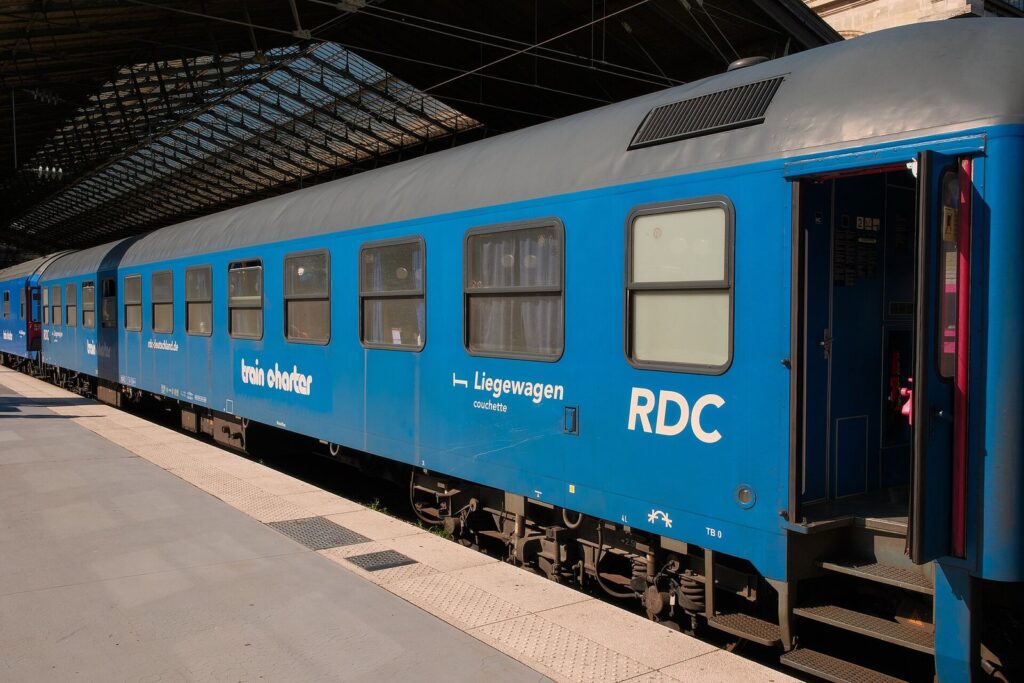
The newest route in this guide. European Sleeper’s Brussels–Milan service started on 9 September 2026, after one delayed launch, with fares from €59.99. It runs three times a week, leaving Brussels on Mondays, Thursdays and Saturdays and Milan on Wednesdays, Fridays and Sundays, and calls at Cologne and at Lugano in Switzerland on the way. From Milan, high-speed trains fan out across the rest of Italy.
Brand-new routes usually need a season to settle, so check the timetable close to departure and keep your first day’s plans loose. The stopping pattern is already set to grow: European Sleeper says that from 13 December 2026, with the new timetable, the train will also call at Antwerp, Breda and Eindhoven, which adds Belgian and Dutch boarding points.
Verdict: promising, but I’d give it a few months before building a tight itinerary on it.
EuroNights in Central Europe: Metropol, Chopin and Carpatia
Some of Central Europe’s EuroNight routes carry low supplements for pass holders: on the Prague–Košice–Humenné train, Interrail lists a six-berth couchette at €9 and a triple sleeper at €18 per person. The Metropol links Budapest with Berlin. The Chopin connects Prague and Budapest with Kraków and Warsaw. The Carpatia runs from Przemyśl, near the Ukrainian border, through Kraków to Vienna, Salzburg and Munich; confirm it on PKP Intercity’s timetable for your date.
| Train | Route | Pass holder supplements (September 2026) |
|---|---|---|
| EN Chopin | Prague–Kraków–Warsaw | Seat €3; six-berth couchette €34; four-berth €39; triple sleeper €44; double from €59; single from €104 |
| EN Chopin | Budapest–Warsaw | Seat €4; six-berth couchette €17; triple sleeper €32; double €44; single €83 |
| EN Metropol | Budapest–Berlin | Seat €19; six-berth €44; four-berth €54; triple €69; double €94; single €169 |
| EN Carpatia | Przemyśl–Kraków–Vienna–Salzburg–Munich | Check the fee when you reserve |
The catch is timing. Polish domestic sales open only 30 days out, and while Czech Railways can sell international tickets and reservations up to 180 days ahead, that depends on the route and the partner railway, so check the specific train rather than assuming it opens as early as a Nightjet. For where to go once you’re there, see our Eastern Europe travel guide.
Verdict: the Chopin is one of the cheapest proper sleepers a pass holder can book anywhere in Europe.
Caledonian Sleeper: London to Edinburgh, Glasgow and the Highlands
Britain’s flagship sleeper leaves London Euston six nights a week as two trains. The Lowlander serves Edinburgh and Glasgow; the Highlander divides in Scotland for Inverness, Aberdeen and Fort William. Fixed Advance and Flexible tickets go on sale well ahead of travel, from about £50, and prices climb with demand much as airfares do.
There are four ways to travel. Seats are the budget option. Classic Rooms have bunks for one or two, Club Rooms are en-suite, and the Caledonian Double adds a proper double bed. Pass holders ride in a seat at no extra charge, pay £155 solo or £195 twin for a Classic Room and £205 solo or £255 twin for a Club Room (first-class passes only), and can’t book the Caledonian Double at all.
The UK sits outside the EU and Schengen, but this is a domestic train, so there are no border formalities between London and Scotland. Pack for Scottish weather rather than London’s, even in summer.
The Fort William portion finishes on the West Highland Line across Rannoch Moor, the stretch in the photograph at the top of this page, so set an alarm and open the blind. Inverness is the gateway to the far north and Skye, and Aberdeen to Royal Deeside. Book on the Caledonian Sleeper website.
Verdict: the Highlander is the one worth the money. The Lowlander competes with fast daytime trains to Edinburgh and Glasgow, so it only wins if you’d otherwise pay for a London hotel or want a full day in Scotland.
Night Riviera: London to Cornwall
GWR’s Night Riviera runs from London Paddington to Penzance via Plymouth six nights a week, taking 8h05 on weekday services. Fares run from £25.50 to £135 depending on the accommodation and how early you book, with berths from £84 in a twin-berth standard cabin, and reservations open ahead of travel (check GWR for your date). Pass holders can take a seat at no extra cost, but sleeper berths are currently sold only at full fare.
It’s the shortest sleeper in this guide, which is exactly why it works. You lose no daylight at either end, and the whole of the next day is yours in west Cornwall, for St Ives, the Lizard or the South West Coast Path. Details are on GWR’s Night Riviera page.
Verdict: a cabin is worth it even on a short night; a seat only makes sense if you can nap anywhere.
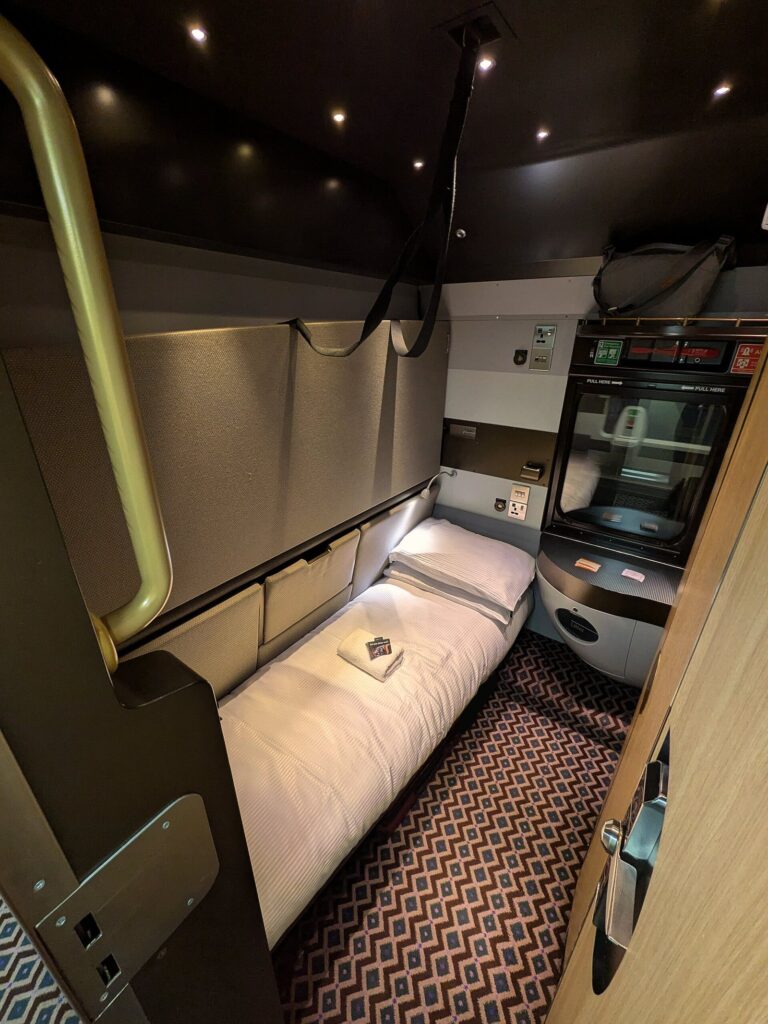
Intercités de Nuit: Paris to the Alps, Pyrenees and Riviera
SNCF’s night network fans out from Paris to the mountains and the south: Toulouse, then Foix and Latour-de-Carol in the eastern Pyrenees; Pau, Lourdes and Tarbes further west; Rodez, Albi and Aurillac inland; Briançon in the Alps; and the Mediterranean from Perpignan and Cerbère through Montpellier, Nîmes, Marseille and Toulon to Cannes and Nice. There are no private sleepers, only reclining seats and couchettes: six-berth in second class, four-berth in first. Pass holders pay €10 for a seat and €19–€25 for a couchette, depending on the season.
The booking window is the frustration. It should be four months, but sales often open only two or three months ahead, occasionally just one, so don’t panic if your date isn’t bookable yet. Book on SNCF Connect, where these trains appear as Intercités de Nuit.
My pick is Paris–Briançon, which delivers you to a high Alpine town that’s awkward to reach by day, in winter for skiing or in summer for walking. Latour-de-Carol, on the Spanish border, is the other one to know: it’s the terminus of the narrow-gauge Train Jaune, though you should check SNCF for that line’s current timetable before relying on it. For the Riviera, the Nice train saves you a hotel night in Paris and a morning on the TGV.
Verdict: couchette-only and basic, but cheap, and it serves mountain towns such as Briançon and Latour-de-Carol overnight.
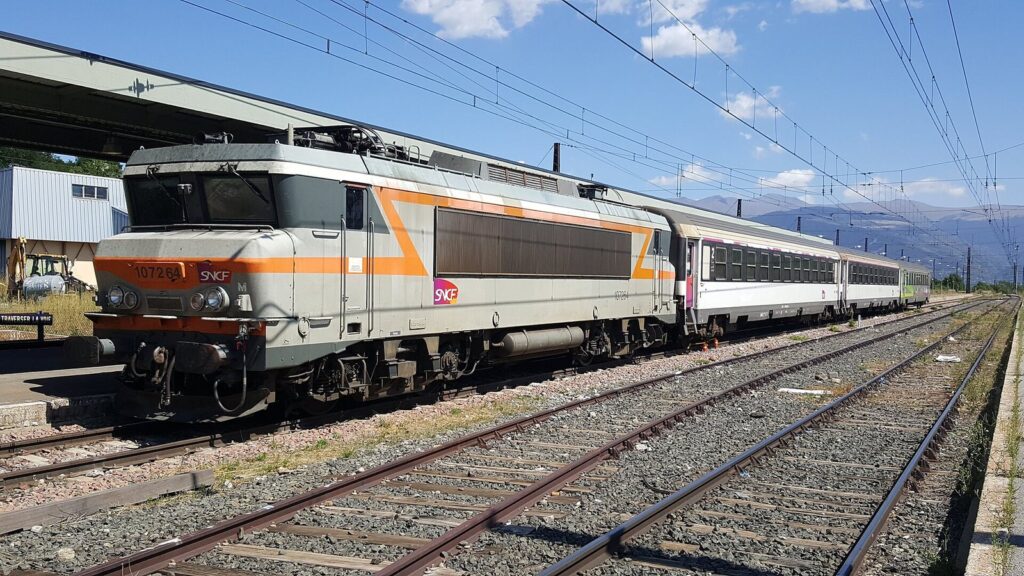
Intercity Notte: Milan and Rome to Sicily and Puglia
Trenitalia runs a large night network, almost entirely domestic. Trains link Milan, Turin, Genoa, Venice, Trieste, Verona, Bolzano, Bologna, Florence and Rome with the south: Naples and Salerno, Reggio Calabria, Bari, Brindisi, Taranto and Lecce, and across the water to Messina, Palermo, Catania and Syracuse. Pass holder supplements are low by European standards: €3 for a seat, €41 for a four-berth Cuccetta Comfort couchette, €48 in a three-bed sleeper, €58 in a double and €122 for a single.
The Sicily trains are the ones people remember. At Villa San Giovanni the coaches are shunted onto a train ferry to cross the Strait of Messina, then continue to Palermo or to Catania and Syracuse. Tickets usually go on sale about four months ahead, but Trenitalia loads its trains in blocks and the Intercity Notte sleepers come last, so they can appear later than the day trains on the same date. Book on Trenitalia’s site.
For Puglia, the overnight trains from Milan to Bari and Lecce are the practical choice, and they spare you both a hotel night and a domestic flight.
Verdict: the run from Rome or Milan to Sicily is the most memorable sleeper in Italy, ferry and all; for a night that long, book a sleeper rather than a couchette.
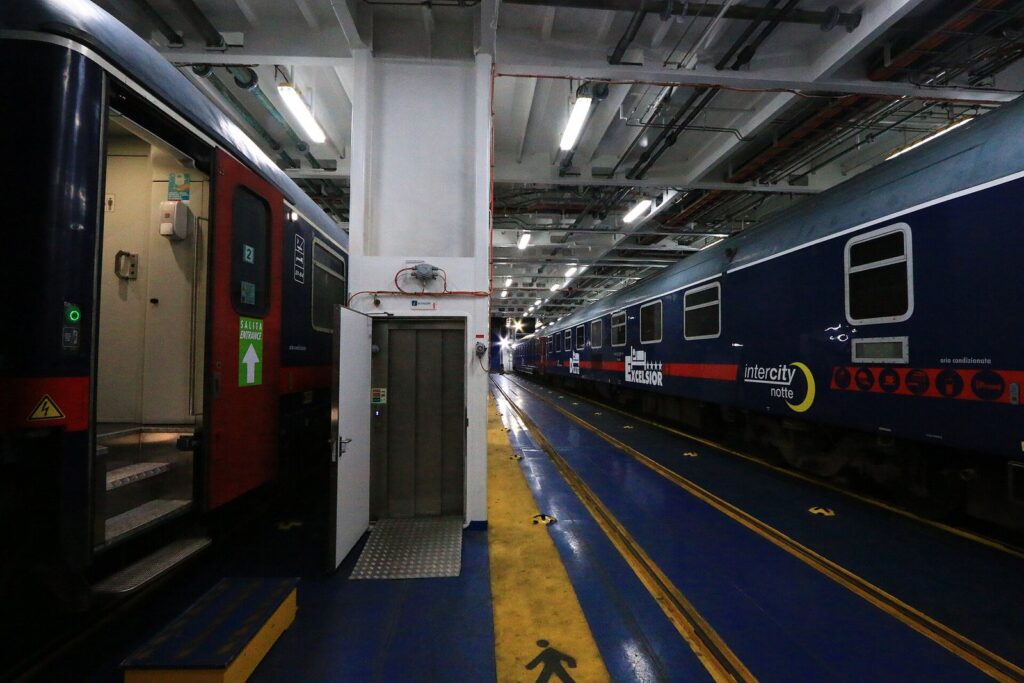
Germany to Sweden: Snälltåget and the EuroNight
Two operators share the Berlin–Stockholm night route. A EuroNight via Hamburg and Malmö, which Interrail lists as EN RDC, runs alongside private Snälltåget, which adds departures of its own. Snälltåget’s seats start from SEK 399 for Berlin–Malmö and SEK 499 for Berlin–Stockholm, and since 4 May 2026 it has also run a direct daytime train from Hamburg via Copenhagen to Stockholm.
On the Berlin–Stockholm EuroNight, which Interrail now lists as EN RDC, pass holders pay €18.50 for a seat, €37 for a couchette and €85 for a berth in a double sleeper. SJ’s domestic night trains in Sweden cost less: €3.50 for a seat, €22 in a six-berth couchette and €36 in a three-bed sleeper. Snälltåget prices by season. In low season a seat supplement is €5–€17, a six-berth couchette €35–€57 and a private six-berth compartment €87–€217; in high season (11–23 April, 28 May–31 August and 24 October–2 November) seats run €5–€45, couchettes €35–€74 and the private compartment €174–€305.
Germany, Denmark and Sweden are all in Schengen, but carry a passport or national ID card, because internal border checks can be reintroduced at short notice. Sweden and Denmark keep their own currencies rather than the euro. Book Snälltåget at snalltaget.se and SJ at sj.se.
Verdict: check both operators for your date before assuming there’s no train; in low season, Snälltåget’s private six-berth compartment is a bargain for a family or a group of friends.
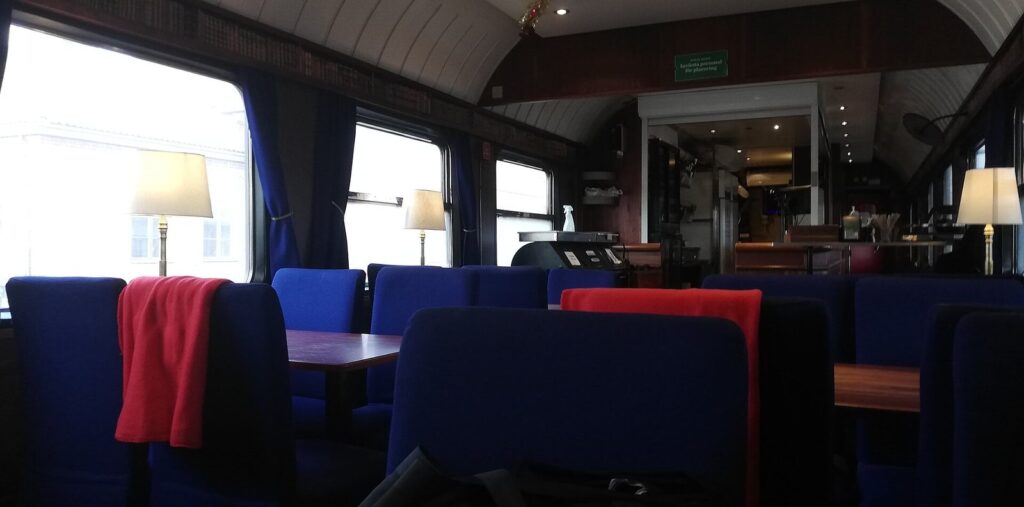
Sweden’s Arctic sleeper: Stockholm to Kiruna and Narvik
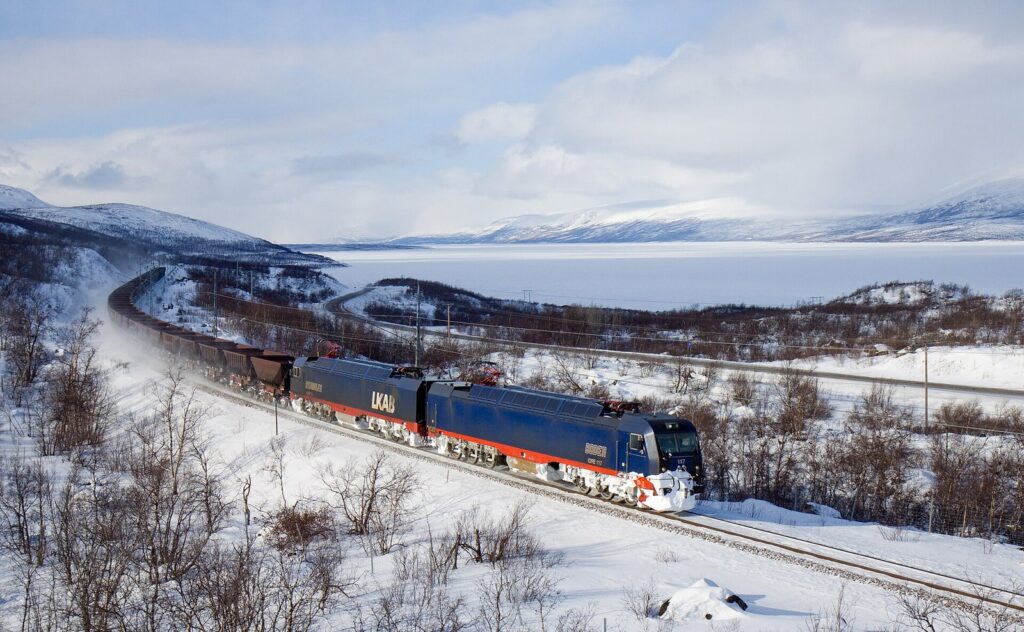
The line runs from Stockholm north to Luleå and Boden, then inland to Kiruna and Abisko and over the mountains to Narvik on the Norwegian coast. Until 12 December 2026 the night train from Stockholm stops at Luleå, and passengers for Kiruna, Abisko and Narvik change at Boden for a daytime train. Direct Stockholm–Narvik night trains resume on 13 December 2026, and SJ gives the full run as 18½ hours. SJ operates these night trains under contract to Trafikverket, the state transport agency. Trafikverket wanted less of the service in 2026 than in 2025, so SJ reduced it from 13 April 2026, but it has since awarded SJ the contract for December 2026 to December 2028, with at least one daily return service each on Stockholm–Narvik and Stockholm–Umeå. Check SJ’s own timetable for your date before building a trip on it.
The last stretch follows the Ore Line, built to carry iron ore to Narvik’s ice-free port, and it’s some of the wildest rail scenery in Scandinavia. Abisko, with its national park and dark winter skies, is the stop for northern lights trips, and around midsummer the sun doesn’t set at all this far north.
Verdict: the one Scandinavian sleeper worth a trip in itself; go in winter for the aurora or around midsummer for the endless light.
Norway: Oslo to Bergen, Trondheim and Bodø
Norway runs three overnight lines. Vy’s night train covers the Bergen Line, 471 kilometres from Oslo S to Bergen in about 6½ to 7½ hours depending on the departure, with PlusNight and Sleeper tickets alongside ordinary seats. SJ Nord runs Oslo–Trondheim, about 7½ hours by night, on most evenings, and the Nordland Line from Trondheim to Bodø: 729 kilometres, normally about ten hours. Its night train is suspended for now because of a locomotive shortage, and SJ expects it back during January 2027.
Here’s the candid bit. By night you miss the reason most people ride the Bergen Line, the high plateau of Hardangervidda, so if the scenery is the point, go by day and save the sleeper for when you need the time; our guide to scenic train rides in Europe covers the daytime trip. The Nordland Line is different. Ten hours in a seat is a long day, the line crosses the Arctic Circle on the way north, and Bodø is where ferries leave for Lofoten, so once the night train is back, arriving rested makes sense.
Norway is in Schengen but not the EU, and its currency is the krone. Book the Bergen train with Vy and the northern lines with SJ.
Verdict: the Trondheim–Bodø sleeper earns its place; for Oslo–Bergen, the daytime train is the better trip.
Finland: the Santa Claus Express to Rovaniemi
VR’s Santa Claus Express runs overnight from Helsinki to Rovaniemi, on the edge of the Arctic Circle, with private cabins from €59, and children aged 0–10 travel free when they share a berth with another passenger. There are standard cabins and deluxe cabins with their own bathroom. Pass holders pay half the full fare as a reservation: €5–€32.70 for a seat, €39–€150 for a double cabin and €39–€160 for a deluxe double, plus a €1 fee if booked at a station, and high-season fares carry up to 20 per cent extra.
December is when demand peaks, with Lapland’s Christmas trade at full stretch, so book as early as VR allows. Finland is in the EU, Schengen and the eurozone, which makes this the simplest Arctic trip in this guide: no border, no currency change.
Verdict: the easiest way to reach Lapland without flying, and a gentle first sleeper for families.
Sofia to Istanbul: the one to check twice
Eurail’s own guide still lists the Sofia–Istanbul Express, an overnight train from the Bulgarian capital into Türkiye. The route crosses the EU’s external border into Türkiye, so expect a full passport check at the Bulgarian–Turkish frontier, and find out in advance if you need a visa or e-visa for Türkiye. Bulgaria has been a full Schengen member since January 2025 and has used the euro since 1 January 2026, so the Bulgarian side is the easy part.
Book with care. How far ahead Bulgarian domestic tickets go on sale depends on the train and where you buy, so read BDZ’s online booking terms, and cross-border windows vary by operator and route. Balkan services change at short notice, so confirm the train is running close to your date rather than trusting a year-old blog.
Verdict: for travellers who enjoy the process as much as the destination; everyone else should fly.
Where night trains don’t go: Spain, Portugal and Barcelona
The Madrid–Lisbon Trenhotel Lusitania was suspended in March 2020. Today the rail journey between the two capitals takes three trains, via Badajoz and Entroncamento, with reservations needed on two of the legs. No Nightjet serves Spain or France. The nearest you get by night is an Intercités de Nuit to Cerbère or Latour-de-Carol on the French side of the border, then a day train into Catalonia.
Verdict: for Spain and Portugal, plan on fast day trains and the odd flight rather than sleepers.
How much does a night train in Europe cost?
There are two prices to understand. A full-fare ticket bought from the operator includes the journey and your bed. A pass holder’s reservation covers only the bed, because the pass pays for the journey. Mixing the two up is how people conclude that night trains are either absurdly cheap or absurdly expensive.
Full fares from the operator
| Train | Full fare “from” price, as of September 2026 | Notes |
|---|---|---|
| ÖBB Nightjet | Seats from about €29.90; couchette berths about €49–€69; private sleepers from about €89 | Dynamic pricing by route, season and demand |
| Nightjet Vienna–Hamburg | Mini Cabins from about €79.90 one way | New-generation stock |
| European Sleeper | Shared berths from €49.99 to Berlin or Amsterdam and €59.99 to Prague, Paris or Milan; private compartments from €179.99 to Berlin and €209.99 to Paris, Prague or Milan | Fares vary by route and date |
| Caledonian Sleeper | From about £50 | On sale well ahead of travel; fares rise with demand |
| GWR Night Riviera | £25.50–£135; twin-berth cabins from £84 | Check GWR for when your date opens |
| Snälltåget | Berlin–Malmö seats from SEK 399; Berlin–Stockholm from SEK 499 | Higher in high season |
| VR Santa Claus Express | Own cabin from €59 | Children aged 0–10 free when sharing a berth |
“From” prices are the floor, not the norm. Expect to pay well above them on Friday and Sunday nights, in school holidays and whenever you book late.
Pass holder supplements by operator
| Operator | Seat | Couchette | Private sleeper |
|---|---|---|---|
| ÖBB Nightjet | €4.90–€24.90 | €19.90–€64.90 (six-berth); €29.90–€94.90 (four-berth) | €69.90–€224.90 per person (double); €114.90–€479.90 (single cabin) |
| European Sleeper | €11–€21 | €64–€74 (Classic five-berth) | €119–€139 (Comfort Standard double); €229–€269 (Classic private cabin) |
| Trenitalia Intercity Notte | €3 | €41 (four-berth) | €48 (triple); €58 (double); €122 (single) |
| SNCF Intercités de Nuit | €10 | €19–€25 | No sleepers |
| Caledonian Sleeper | Free | No couchettes | Classic Room £155 solo, £195 twin; Club Room £205 solo, £255 twin |
| EN Chopin Prague–Warsaw | €3 | €34 (six-berth); €39 (four-berth) | €44 (triple); double from €59; single from €104 |
| EN Chopin Budapest–Warsaw | €4 | €17 (six-berth) | €32 (triple); €44 (double); €83 (single) |
| EN Metropol | €19 | €44 (six-berth); €54 (four-berth) | €69 (triple); €94 (double); €169 (single) |
| EN RDC Berlin–Hamburg–Copenhagen–Stockholm | €18.50 | €37 | €85 (double) |
| VR Santa Claus Express | €5–€32.70 | No couchettes | €39–€150 (double); €39–€160 (deluxe) |
Across all operators, Interrail puts the average night-train reservation at about €20.
What drives the price
Nightjet and European Sleeper price like airlines. The same six-berth Nightjet couchette runs from €19.90 to €64.90 for a pass holder depending on when you book and how full the train is, and full fares swing the same way. Season matters: Snälltåget publishes its high-season dates, and summer weekends fill first almost everywhere. Privacy is the biggest single driver, though. A single sleeper on Nightjet costs several times as much as a couchette berth on the same night, so the cheapest real upgrade in comfort is usually a four-berth couchette or a Mini Cabin, not a private room.
Is a night train cheaper than a hotel plus a day train?
Often, but only in the lower tiers. A couchette berth usually costs less than a budget hotel room in a big city in high season, and you save a day of travel on top. A private double sleeper split between two lands closer to a mid-range hotel room, which is still a fair trade for the day it gives back. A single sleeper on a peak night is a luxury purchase: it rarely beats a hotel on price, so book it for comfort, not savings.
Where you arrive matters as much as what you sleep in. City-centre hotels in places such as Amsterdam, Zurich, Venice and Paris sit at the top of the price range in summer and during big events, so a berth into those cities saves the most. Arriving in a smaller or cheaper city, the saving narrows and the case rests on time rather than money.
Verdict: the money case is strongest for couchettes, Mini Cabins and shared sleepers. Beyond that, you’re paying for time and for the ride itself, which can still be worth it.
Are night trains in Europe worth it?
For the right trip, yes. For the wrong one, a night train is a slower, more tiring way to spend money than a flight. The test is simple: does the journey take most of a day by rail, and would you otherwise need a hotel at one end? If both answers are yes, the sleeper usually wins.
| Factor | Night train | Day train | Short-haul flight |
|---|---|---|---|
| Daylight used | Little or none | Most of a day on long routes | Half a day or more, with airport transfers and security |
| Hotel night | Replaced by your berth | Needed | Needed |
| Arrival point | City-centre station | City-centre station | Airport outside town |
| Luggage | What you can carry | What you can carry | Airline limits and fees |
| Carbon | Low | Low | High |
| Sleep | Depends on your berth and your tolerance | Normal, in a hotel | Normal, in a hotel |
| Reliability | Delays and faults are a real risk on older stock | Varies by country | Varies by airline and airport |
Night trains are worth it when:
- the route is long enough to fill a night, such as Vienna–Rome, Hamburg–Zurich or Vienna–Hamburg, and would eat a full day by rail;
- you’d otherwise pay for a hotel and lose the next morning to an early flight;
- there’s no good direct day train, as on London–Fort William;
- you can book a berth, not a seat.
They’re not worth it when:
- the run is so short that you’d board near midnight and be turned out before dawn;
- only seats are left on a long route;
- you have something fixed and important the morning you arrive;
- you’re a very light sleeper travelling alone in a full six-berth couchette in August.
The reliability point deserves weight. Much of the fleet is old, and delays and technical faults are part of the deal, so build a buffer into the morning after and you’ll rarely regret the train. For a wider look at how rail stacks up against buses, ferries and budget flights, see our guide to getting around Europe.
Verdict: worth it for long, awkward journeys and for anyone who values their daylight; not worth it for short hops, or for travellers who’ll sleep badly whatever they book.
Can you use a Eurail or Interrail pass on night trains?
Yes, but the pass is only half the ticket. A couchette or sleeper always needs a reservation. Seats vary: in Deutsche Bahn’s seating carriages on the Zurich–Hamburg, Zurich–Berlin and Zurich–Amsterdam Nightjets, reserving is optional. Whatever you travel in carries a supplement, from €3 for an Intercity Notte seat to €479.90 for a Nightjet single on a peak night, with Interrail putting the average at about €20. Britain has two quirks. Caledonian Sleeper seats are free to pass holders, but its Club Rooms need a first-class pass and the Caledonian Double isn’t available at all; the Night Riviera sells sleeper berths to pass holders only at full fare.
The travel-day rule is kinder than many people think. Board a direct night train before midnight, don’t change trains after midnight, and the journey uses only one travel day on a Flexi pass: the day you left. The old “after 7pm” rule was scrapped in January 2019, so ignore any guide that still quotes it. A travel day runs from 00:00 to 23:59 local time, which matters on the rare night train that crosses a time zone.
Where to reserve depends on the train. For Nightjet, ÖBB sells pass holder reservations directly, which lets you choose the category. The Eurail and Interrail reservation service covers many other trains and usually takes bookings until three hours before departure, and the Caledonian Sleeper takes pass holder bookings through its Guest Service Centre. Our guide to using an Interrail pass walks through reservations step by step, and Eurail vs Interrail explains which pass you need.
Is a pass worth it for a sleeper-heavy trip? It depends on the supplements. On the Chopin or an Intercity Notte couchette, the pass saves a lot. On European Sleeper, where a Comfort sleeper supplement runs to three figures, compare it with an ordinary advance fare before you spend a pass day on it. We run the numbers in is the Eurail pass worth it, and our Interrail routes guide shows where night legs fit into a longer loop.
Verdict: a pass suits a trip with two or three cheap-supplement night trains; for a single Nightjet or European Sleeper journey, a point-to-point ticket is usually simpler and often no dearer.
How to book night trains in Europe: windows, sites and timing
This is the planning part: when sales open, where to buy, how to get to the train and what to book first. For a walk through the booking sites themselves, see our guide to booking European train tickets, and if this is your first rail trip, start with Europe by train for beginners.
When tickets go on sale
| Operator or market | Booking window, as of September 2026 |
|---|---|
| ÖBB Nightjet | Up to 360 days ahead, according to ÖBB; dates can open later around timetable changes |
| Caledonian Sleeper | Well ahead of travel; check the Caledonian Sleeper site for your date |
| GWR Night Riviera | Varies; check GWR for your date |
| SNCF Intercités de Nuit | Nominally 4 months; often 2–3, occasionally 1 |
| Trenitalia Intercity Notte | About 4 months, with sleepers loaded last |
| Czech Railways, key international trains | Up to 180 days, depending on route and partner railway |
| Cross-border trains in Poland, Slovakia, Croatia, Slovenia, Romania, Serbia and Bulgaria | Varies by operator and route; Belgrade–Bar night train requests open 30 days ahead |
| Polish domestic trains | 30 days |
| Bulgarian domestic trains | Varies by train and sales channel |
| Vy Bergen Line | Normally up to 115 days |
If your date isn’t on sale, it usually means the timetable hasn’t been loaded, not that the train has sold out. The December timetable change is the big pinch point: journeys after mid-December often can’t be booked until the new timetable is confirmed in the autumn, which is exactly when people start planning Christmas trips. Set a reminder and check weekly rather than booking a flight in frustration.
Where to buy
Book with the operator whenever you can: ÖBB for Nightjet, European Sleeper directly, SNCF Connect for France, Trenitalia for Italy, the Caledonian Sleeper and GWR for Britain, SJ and Snälltåget for Sweden, Vy for Norway and VR for Finland. Operators show every category, let you choose ladies-only or accessible compartments where they exist, and handle changes and disruption themselves.
Resellers can be handy for comparing times across several railways, but some sell only a generic “berth” and make changes harder. For EuroNight trains run jointly by two railways, either partner’s site will usually sell the ticket, so if one shows nothing, try the other before giving up.
Getting to the train
Night trains leave from main stations, mostly in the evening, and many stop for only a couple of minutes at intermediate calls, so be on the platform early. Find your coach before the train pulls in. Long night trains often split and join on the way, and the coach number on your ticket decides if you wake up in Inverness or in Fort William.
Eat before you board or bring food, because plenty of trains have no dining car, and European Sleeper’s attendant sells only sandwiches and a breakfast box. If you’re connecting from a flight or a day train, leave at least an hour’s margin: missing a once-nightly sleeper usually means a hotel and a new ticket.
What to book ahead, and what to skip
Book ahead:
- private compartments and Mini Cabins on any Friday or Sunday night, and throughout July and August;
- the Caledonian Sleeper and the Santa Claus Express for December;
- four-berth couchettes if you’re travelling as four, so the compartment is yours;
- anything on a brand-new route, where capacity is small and timetables still move.
Skip:
- seats on any run longer than about eight hours;
- a Nightjet single sleeper when a Mini Cabin is on sale for a fraction of the price;
- a tight onward connection, flight or tour on the morning you arrive;
- resellers that won’t show you the exact category you’re buying.
To time the whole trip around quieter, cheaper dates, see the cheapest time to visit Europe.
Tips for sleeping well and staying safe on a sleeper
Night trains are generally safe, and most problems are about comfort rather than crime. A few habits make the difference between a decent night and a long one.
- Lock the door and keep valuables with you. Sleeper compartments lock from inside. In a couchette, keep your phone, passport and wallet in a small bag by your pillow or at your feet, not in the luggage rack.
- Choose your berth. Top bunks are more private, and nobody perches on them in the evening; bottom bunks are easier to get in and out of, and the luggage space is usually beneath them.
- Use the ladies-only option if you want it. Nightjet sells ladies-only compartments; ask other operators what they offer before you book.
- Pack a small night bag. Earplugs, an eye mask, water, a charger, a toothbrush and a warm layer. Couchettes can run warm and corridors cold, and you won’t want to dig through a suitcase at midnight.
- Carry ID across borders. Inside Schengen there’s normally no routine passport check, but carry a passport or national ID card, because checks can be reintroduced at short notice. Switzerland and Norway are in Schengen but not the EU, so customs checks still happen there. Leaving the EU and Schengen, as on the train to Türkiye, means full passport control.
- Know your stop. Set an alarm for arrival, especially if your station comes before the terminus or your coach is uncoupled on the way.
- Plan for families. A four-berth couchette or a three-bed sleeper booked as a unit gives you a private room, and on the Santa Claus Express children under four travel free.
Three night-train trips worth building around
Night trains work best as the backbone of a trip rather than a one-off. These three use routes running in 2026, and our Europe train itinerary shows how overnight legs fit into a longer plan.
| Trip | Night trains | Book first |
|---|---|---|
| London to Prague without flying | European Sleeper from Brussels, after a daytime Eurostar | The sleeper berth, then the Eurostar |
| Amsterdam to Rome in two nights | Nightjet Amsterdam–Vienna, then Nightjet Vienna–Rome | Both Nightjets, as soon as your dates open |
| Berlin to the Arctic | Snälltåget or the EuroNight to Stockholm, then SJ north to Kiruna, Abisko or Narvik | The Arctic sleeper, which stops at Luleå until 12 December 2026, with a change at Boden |
London to Prague without flying
Take a daytime Eurostar to Brussels, then pick up European Sleeper for Amsterdam, Berlin, Dresden or Prague on one of the nights it runs. You reach Prague the next day having crossed six countries without seeing an airport. The Western Europe itinerary shows how to add a night or two in Brussels or Amsterdam first, and the sleeper’s two or three weekly departures are the fixed point to plan around.
Amsterdam to Rome in two nights
Take the Nightjet from Amsterdam to Vienna, spend a day or two in Vienna, then ride the Nightjet on to Rome overnight. Two nights on trains replace two hotel nights, and you see Vienna in daylight in between. It’s one of the easiest ways to string together cities from our list of the best cities to visit in Europe.
Berlin to the Arctic
Ride Snälltåget or the EuroNight from Berlin to Stockholm, spend a couple of days in the city, then take SJ’s sleeper north to Kiruna, Abisko or Narvik. In winter it’s an aurora trip; in June the nights never get dark. Until 12 December 2026 that train stops at Luleå and you change at Boden for the daytime leg, so book it before anything else, then fit the Stockholm leg around it.
Mistakes to avoid on European sleeper trains
- Trusting an old route list. The Paris–Vienna and Paris–Berlin Nightjets ended in December 2025, and every December’s timetable change brings more.
- Booking a seat for a long night. It’s the cheapest option and the one most likely to wreck your next day.
- Assuming your date is sold out. If it isn’t bookable, it usually isn’t on sale yet; check again in a week or two.
- Forgetting the reservation on a pass. Every couchette and sleeper needs one, and on some trains the supplement costs more than you’d expect.
- Sitting in the wrong half of the train. Trains that divide on the way only take you to the right place if you’re in the coach on your ticket.
- Planning a tight morning. Don’t book a flight, a tour or a check-in deadline for the morning you arrive.
- Skipping supper. Many trains have no restaurant, so eat first or bring food and something for breakfast.
- Buying through a reseller that hides the category. Book with the operator to choose Mini Cabins, ladies-only or accessible compartments.
Frequently asked questions about night trains in Europe
Are night trains in Europe safe?
Yes, for the vast majority of travellers. Sleeper compartments lock from inside, and Nightjet sells ladies-only compartments for women travelling alone. The realistic risk is petty theft in shared couchettes, so keep your passport, phone and wallet in the berth with you rather than on the luggage rack, and lock the door whenever you have one.
How far ahead should I book a night train in Europe?
As soon as sales open for your date. ÖBB now says Nightjet journeys can be booked up to 360 days ahead, and French and Italian sleepers open about four months ahead, sometimes later. Private compartments and Mini Cabins go first, so book those early, especially for Friday and Sunday nights and school holidays.
Do European night trains have showers?
Some do. The new-generation Nightjets have en-suite Comfort Plus sleepers with a shower and toilet, the Caledonian Sleeper’s Club Rooms are en-suite, and the Santa Claus Express sells deluxe cabins with their own bathroom. Standard sleepers usually have a washbasin, couchettes have none, and toilets are along the corridor, so pack wipes and a small wash kit.
Can I use a Eurail or Interrail pass on a night train?
Yes, but you must reserve a couchette or berth (a few night trains leave seat reservations optional) and pay a supplement, which Interrail puts at about €20 on average and which ranges from €3 for an Italian seat to several hundred euros for a Nightjet single. Board before midnight and don’t change trains after midnight, and the whole journey uses only one travel day on a Flexi pass: the day you left.
What is the difference between a couchette and a sleeper?
A couchette is a shared compartment of four to six bunks with basic bedding, usually mixed, where most people sleep more or less dressed. A sleeper is a private compartment for one to three people with proper beds and a washbasin, sometimes with its own shower. Couchettes cost less; sleepers give you a door that locks and the room to yourself.
Is there still a night train from Paris?
Yes, though not a Nightjet. ÖBB’s Paris–Vienna and Paris–Berlin trains ended in December 2025. European Sleeper has run Paris–Berlin via Brussels three nights a week since 26 March 2026, and SNCF’s Intercités de Nuit still leave Paris for the Alps, the Pyrenees and the Mediterranean coast, including Nice. Book the French trains on SNCF Connect.
Are there night trains in Spain or Portugal?
Not in any useful sense. The Madrid–Lisbon Trenhotel Lusitania was suspended in March 2020, and getting between the two capitals by rail now means three trains, changing at Badajoz and Entroncamento. No Nightjet serves Spain. The closest you get is an Intercités de Nuit from Paris to Cerbère or Latour-de-Carol on the French side of the border, then a day train on.
What should I pack for a night train?
A small night bag with earplugs, an eye mask, water, a charger, a toothbrush and a warm layer, plus food if there’s no dining car. Keep your passport or ID card, phone and wallet in the berth with you. Travel light if you can: space under the bunks and above the door is limited, especially in a full six-berth couchette.
Final thoughts
Night trains aren’t the cheapest or the fastest way around Europe, but on the right route they’re the most civilised: a bed instead of a departure lounge, and a city-centre arrival with the day ahead of you. Pick a berth rather than a seat, book the moment sales open and keep the first morning loose. The map will keep shifting, so check each route with its operator before you commit. For passes, stations and everything else about planning a rail trip, head back to our complete European rail travel guide.
Related Europe guides
- Eurail vs Interrail: Which Pass to Get: which pass suits a trip built around sleepers
- How to Use the Interrail Pass: how to add night-train reservations to your pass
- Is the Eurail Pass Worth It? A 2026 Cost Breakdown: whether a pass still pays once supplements are counted
- Best Train Routes in Europe: 33 Journeys Worth the Fare: the daytime journeys worth pairing with a sleeper
- Europe Train Itinerary: 12 Routes With Times and Costs: a full rail itinerary with overnight legs
- How to Get Around Europe: Trains, Planes, Buses & Cars (2026): how trains compare with flights, buses and ferries
Sources and verification
Prices, timetables and rules in this guide were checked on 26 September 2026 against the official sources below. It is compiled from those sources rather than from other travel lists, and it does not describe first-hand visits. Fares, opening hours and entry rules change, so confirm with the operator before you book.
- ÖBB Nightjet: destinations, comfort categories and booking
- European Sleeper: routes and fares
- Interrail: night train reservation fees
- Eurail: night train reservation fees
- Interrail: what is a travel day
- GWR: Night Riviera Sleeper
- Snälltåget: Berlin night train
- Back-on-Track: night trains running in 2026
Hannah Brooks has spent fifteen years travelling, living and writing across Europe, from the Arctic tip of Norway to the south of Sicily. She has planned hundreds of European itineraries for readers and is Senior Europe Editor at EuropeanTourism.org.
Photo credits
- Night trains in Europe: the Caledonian Sleeper crossing a river bridge on Rannoch Moor in the Scottish Highlands (top photo): photo by Kabelleger, Wikimedia Commons (CC BY-SA 4.0)
- New-generation ÖBB Nightjet coach with couchettes and Mini Cabins beside a station platform: photo by TheFrog001, Wikimedia Commons (CC0)
- Inside a Nightjet Mini Cabin: a grey padded berth with a mirror and a wall pocket: photo by Flygklubben, Wikimedia Commons (CC BY-SA 4.0)
- Blue European Sleeper couchette coaches under the train shed at Paris Gare du Nord: photo by Bvcmz248.5, Wikimedia Commons (CC0)
- Standard cabin on GWR’s Night Riviera sleeper made up as a single bed: photo by DangerAspect, Wikimedia Commons (CC BY-SA 4.0)
- SNCF electric locomotive heading an Intercités de Nuit train at Latour-de-Carol station: photo by Skola19, Wikimedia Commons (CC BY-SA 4.0)
- Intercity Notte coaches on rails inside the hold of the Strait of Messina train ferry: photo by Benjamin Smith, Wikimedia Commons (CC BY-SA 4.0)
- Snälltåget restaurant car interior with blue seats, table lamps and wood panelling: photo by Flygklubben, Wikimedia Commons (CC BY-SA 4.0)
- Iron ore train near frozen Lake Torneträsk in snowy Swedish Lapland: photo by Kabelleger / David Gubler (http://www.bahnbilder.ch), Wikimedia Commons (CC BY 3.0)
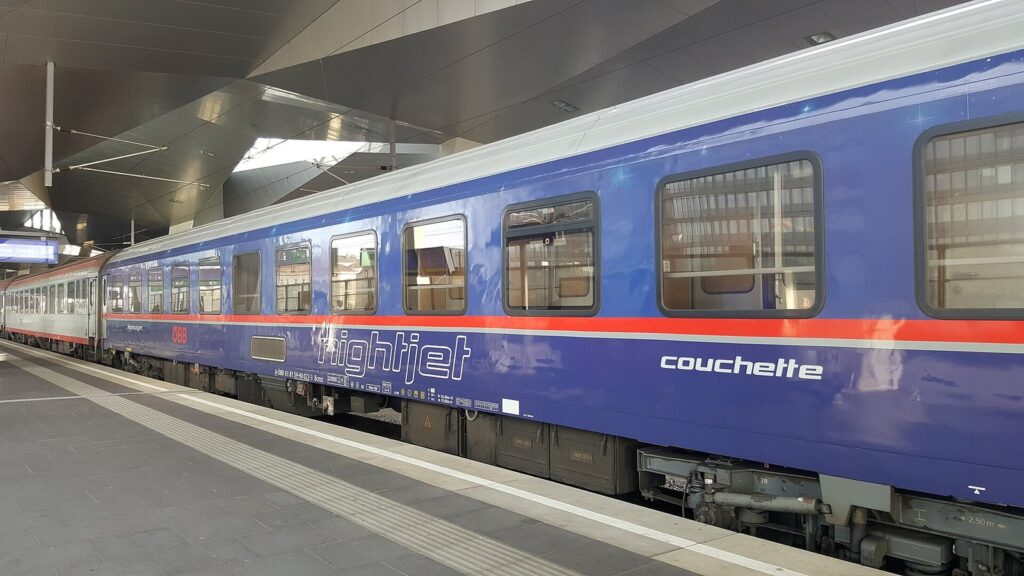
- Blue ÖBB Nightjet couchette coach at a platform in Vienna Hauptbahnhof: photo by Lukas3333, Wikimedia Commons (CC BY-SA 4.0)