Best Train Routes in Europe: 33 Journeys Worth the Fare
I think the phrase “scenic railway” does more harm than good. It suggests you need a special train, a special ticket and a special budget. Most of the time you need none of those. Some of the finest rail journeys in Europe run on ordinary regional and commuter trains at ordinary fares.
So this is a list of the best train routes in Europe with the marketing stripped out: what each one actually costs, whether you are obliged to pay a reservation supplement, which months the train does not run at all, and where the ordinary local service over the same track gives you ninety per cent of the view for a tenth of the money. Thirty three routes, with every price I could source checked in November 2026.
What counts as a route here, and what I left out
Four very different products get sold under one heading, which is how people end up paying CHF 54 for a compulsory panoramic-train reservation on a line where the ordinary regional train lets you reserve a seat for CHF 5, or not at all. Here is the taxonomy I am working with.
Panoramic tourist trains. The Glacier Express, the Bernina Express, the GoldenPass Express. Purpose built observation cars and, on the Glacier and Bernina Express, a paid reservation on top of any pass you hold; GoldenPass Express first and second class can be booked without a seat reservation. Lovely, and properly engineered for looking out of.
Ordinary services that happen to run through spectacular country. The Bergen Line, the West Highland Line, the Semmering, the Rhine valley stopper. No supplement, no reservation, turn up and go. These are where the value is.
Night trains. A different proposition entirely: you are buying a bed and a border crossing, not a view. Europe’s night train map changed significantly in December 2025 and again in 2026. I deal with the current network in its own section below, and there is more detail in our guide to night trains in Europe.
Flagship high-speed runs. Paris to Milan, Madrid to Barcelona, Milan to Naples. Not scenic in the postcard sense, but they are the routes that make a rail trip work instead of a flight, so they get a section of their own alongside our guide to high-speed trains in Europe.
What I left out: there is no Greek route here, no Icelandic one for obvious reasons, and no Ferrovia Circumetnea around Etna, because rail services between Catania and Paterno have been suspended since 17 June 2024 to build the Misterbianco to Paterno metro section. Leaving them out is no verdict on the places.
All 33 of the best train routes in Europe at a glance
Read this table first and the rest of the article second. The reservation column is the one that costs people money.
| Route | Where | Journey time | What kind of train | Rough cost | Reservation | 2026 season |
|---|---|---|---|---|---|---|
| Glacier Express | Zermatt to St. Moritz, Switzerland | About 8 hours | Panoramic tourist train | CHF 166 second class ticket plus CHF 54 reservation | Compulsory, CHF 54 | No service 11 Oct to 4 Dec 2026 |
| Bernina Express | Chur to Tirano, Switzerland and Italy | About 4 hours, 144 km | Panoramic tourist train | Ticket plus CHF 40 to CHF 44 reservation | Compulsory, CHF 40 low, CHF 44 high, Chur to Tirano | Year round, diverted 29 Oct to 13 Nov 2026 |
| GoldenPass Express | Montreux to Interlaken Ost, Switzerland | 3 hours 15 minutes | Panoramic tourist train | From CHF 76 point to point | Only for Prestige class, CHF 49 | Check the GoldenPass timetable |
| Gotthard Panorama Express | Lucerne to Lugano, Switzerland | About 5 hours 30 minutes | Boat plus panoramic train | CHF 164 plus CHF 24 reservation in 2026 | Compulsory, CHF 28 in 2027 | 2027 season 17 Apr to 17 Oct |
| Centovalli Railway | Locarno to Domodossola, Switzerland and Italy | About 2 hours, 52 km | Regional train, panorama option | CHF 47 second class single | None on regional trains | Year round |
| Jungfrau Railway | Interlaken Ost to Jungfraujoch, Switzerland | Half day round trip | Mountain rack railway | CHF 224.40 return from Interlaken Ost, 1 Nov to 12 Dec 2026 | CHF 10 per person, 1 May to 31 Oct | Year round, weather permitting |
| Semmering Railway | Gloggnitz to Murzzuschlag, Austria | 41 km on the Vienna to Graz run | Ordinary intercity service | Railjet Vienna to Graz from about EUR 19 | Optional | Year round |
| Salzkammergut Railway | Stainach-Irdning to Attnang-Puchheim, Austria | Half a day with stops | Regional train | Standard OBB regional fares | None | Year round |
| Bergen Line | Oslo to Bergen, Norway | 6.5 to 7.5 hours, 471 km | Ordinary intercity service | NOK 299 to NOK 899 | Included in the fare | Year round, six to seven departures daily |
| Flam Railway | Myrdal to Flam, Norway | About 1 hour each way | Tourist railway | About NOK 430 to NOK 510 one way | Book ahead in summer | Year round, thinner winter timetable |
| Rauma Line | Dombas to Andalsnes, Norway | About 1 hour 20 minutes, 114 km | Ordinary regional service | Standard SJ Norge fares | None | Year round |
| Nordland Line | Trondheim to Bodo, Norway | About 10 hours, 729 km | Intercity plus night train | Check sj.no | Night train suspended for now | Year round; night train expected back during January 2027 |
| Dovre Line | Oslo to Trondheim, Norway | About 7 hours by day | Intercity plus night train | Twin sleeper from about NOK 1,691 | Sleeper add-on to a standard ticket | Year round |
| Inlandsbanan | Kristinehamn or Mora to Gallivare, Sweden | Several days | Summer tourist railway | Pass fares on Inlandsbanan’s booking page | Book the whole pass | Summer only; 2026 ran 16 Jun to 12 Aug |
| Santa Claus Express | Helsinki to Rovaniemi, Finland | Overnight | Night train | Private cabin from EUR 59 | Cabins compulsory to book | Year round, busiest in December |
| West Highland Line | Glasgow Queen Street to Mallaig, Scotland | About 5 hours 20 minutes | Ordinary ScotRail service | Advance fares from about GBP 20 | Optional, free | Year round |
| Jacobite Steam Train | Fort William to Mallaig, Scotland | Same-day return trip | Heritage steam excursion | 2027 fares from West Coast Railways | Compulsory, sells out | 2027 dates on the operator’s website |
| Kyle of Lochalsh Line | Inverness to Kyle of Lochalsh, Scotland | About 2 hours 40 minutes | Ordinary ScotRail service | From GBP 17.40 one way | Optional, free | Year round, four departures Mon to Sat |
| Caledonian Sleeper | London Euston to Scotland | Overnight, six nights a week | Night train | From GBP 50 | Berths compulsory to book | Year round |
| Night Riviera | London Paddington to Penzance, England | 8 hours 5 minutes | Night train | GBP 25.50 to GBP 135 | Berths from about GBP 84 | Year round, six nights a week |
| Ffestiniog and Welsh Highland | Porthmadog to Blaenau and Caernarfon, Wales | Two connected narrow gauge lines | Heritage narrow gauge | Named excursion fares | Pre-booked excursions | Check festrail.co.uk for current excursions, including Christmas trains |
| Cinque Terre Express | La Spezia to Levanto, Italy | Short hops between villages | Regional trains | Ordinary Liguria regional fares, 2 Nov 2026 to 19 Mar 2027 | None | Regional trains year round; the 2026 Express season ran 14 Mar to 1 Nov |
| Circumvesuviana | Naples to Sorrento, Italy | About 1 hour 15 minutes | Commuter railway | About EUR 5 each way | None, rail passes not valid | Year round, every 30 to 40 minutes |
| Linha do Douro | Porto Campanha or Sao Bento to Pocinho, Portugal | 3 hours 20 minutes | Ordinary regional service | EUR 15.10 single, EUR 27.20 return | None | Year round, five trains daily from Campanha |
| Malaga to Ronda and El Chorro | Andalusia, Spain | See timetable | Renfe train | Check renfe.com | Check when booking | Year round |
| Cannes to Ventimiglia | French Riviera coast line | Check the timetable | TER regional train | From EUR 14.30 one way | None | Year round, multiple departures daily |
| Train Jaune | Villefranche-Vernet-les-Bains to Latour-de-Carol, France | Most of a morning | Narrow gauge regional line | Included in an Interrail pass | None | Year round, open carriage in summer |
| West Rhine Railway | Cologne to Mainz, Germany | About 3 hours | Regional train, RB26 | Regional day tickets about EUR 15 to EUR 25 | None | Year round, roughly hourly |
| Black Forest Railway | Konstanz to Offenburg, Germany | Best between Donaueschingen and Hornberg | Regional double decker | Standard DB regional fares | None, seating unallocated | Year round |
| Belgrade to Bar | Serbia to Montenegro | Check the timetable | Ordinary day and night trains | EUR 23.80 second class, EUR 35.60 first | EUR 3 seat reservation | Year round, two departures daily |
| Rhodope Narrow Gauge | Septemvri to Dobrinishte, Bulgaria | Check the BDZ timetable | Narrow gauge regional line | About EUR 3.37 to EUR 5.11 (BGN 6.60 to BGN 10) for the whole line | None | Year round |
| Oravita to Anina | Banat, Romania | Just over 2 hours | Ordinary regional service | Check CFR Calatori | Compulsory | Two trains a day |
| Dogu Ekspresi | Ankara to Kars, Turkey | About 26 hours, 1,365 km | Night train, tourist version in winter | From TRY 320 regular, from about TRY 5,250 tourist | Compulsory on the tourist train | Regular year round, tourist version Dec to Mar |
The Alpine classics: Switzerland and Austria
Switzerland is home to the Glacier Express, the Bernina Express and the GoldenPass, and it is also where the gap between the branded product and the ordinary train is widest. Eight routes here: four carry a compulsory supplement, four do not. The wider context on getting around the country sits in our Switzerland travel guide.
1. The Glacier Express, Zermatt to St. Moritz
Eight hours, 291 bridges and 91 tunnels, and a reputation as the slowest express train in the world. It is a real product rather than a marketing exercise: panoramic carriages are standard on every service, there is a kitchen on board and lunch comes to your seat.
The money, from the operator’s own price page. The full Zermatt to St. Moritz ticket is CHF 166 in second class and CHF 284 in first. On top of that sits an obligatory seat reservation of CHF 54, the same figure whether you ride the whole line or one section. So a second class end-to-end day is CHF 220. Excellence Class costs CHF 590 for the reservation alone, on top of a valid first class ticket or pass, and includes a five-course menu.
One thing to check before you plan around it: tickets open 180 days ahead but reservations only open at 93 days, which trips up a lot of people booking a Switzerland trip six months out. Children under six travel free, six to sixteen pay half fare but the full adult reservation. Skis, golf bags and bicycles are not carried at all.
The train does not run between 11 October and 4 December 2026. The winter season then runs from 5 December 2026 to 7 May 2027 with a single daily train each way, and a second on the busier winter weeks. If you want the passes snow free, aim for July to September. If you want them under snow, January to March.
A Swiss Travel Pass, Eurail Pass, Interrail Pass, Half Fare Travelcard or GA all cover the ticket element. None of them covers the CHF 54.
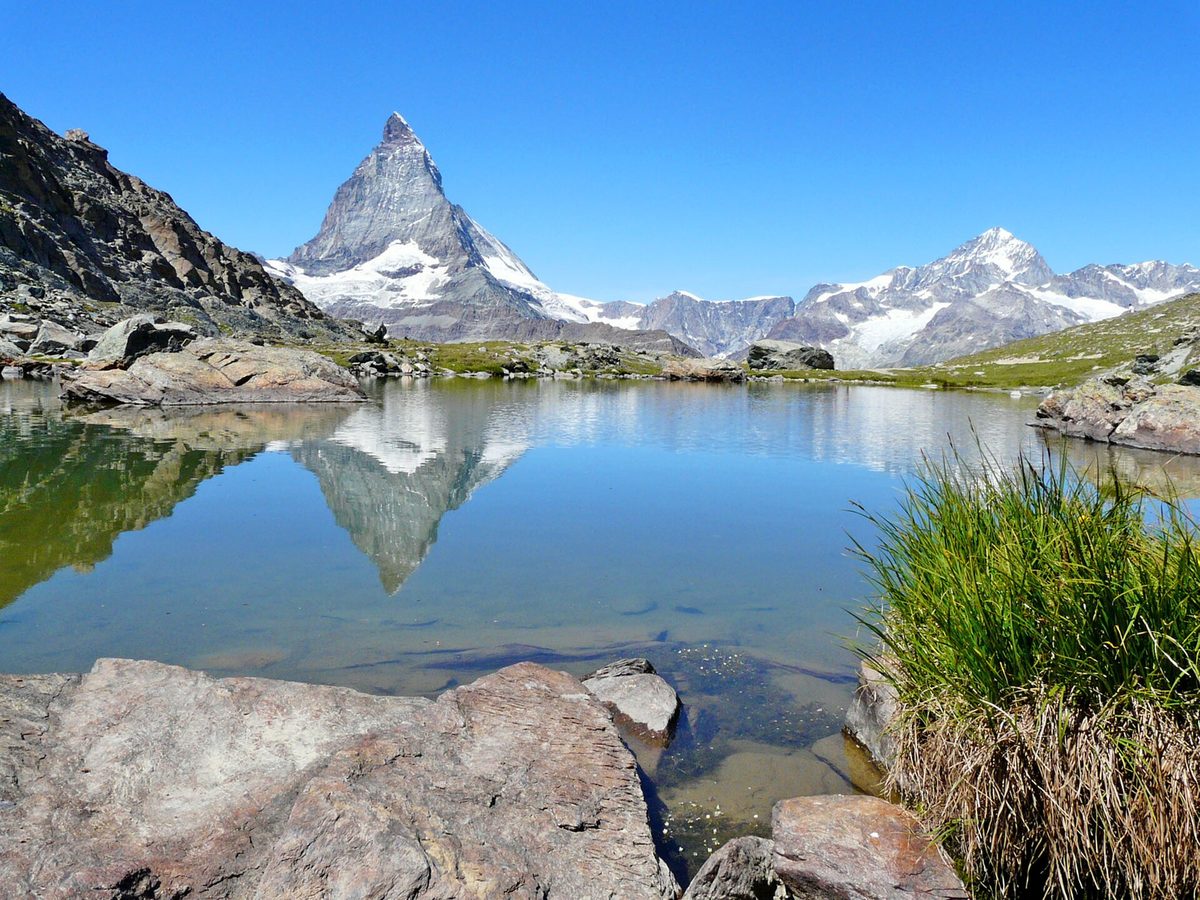
2. The Bernina Express, Chur to Tirano
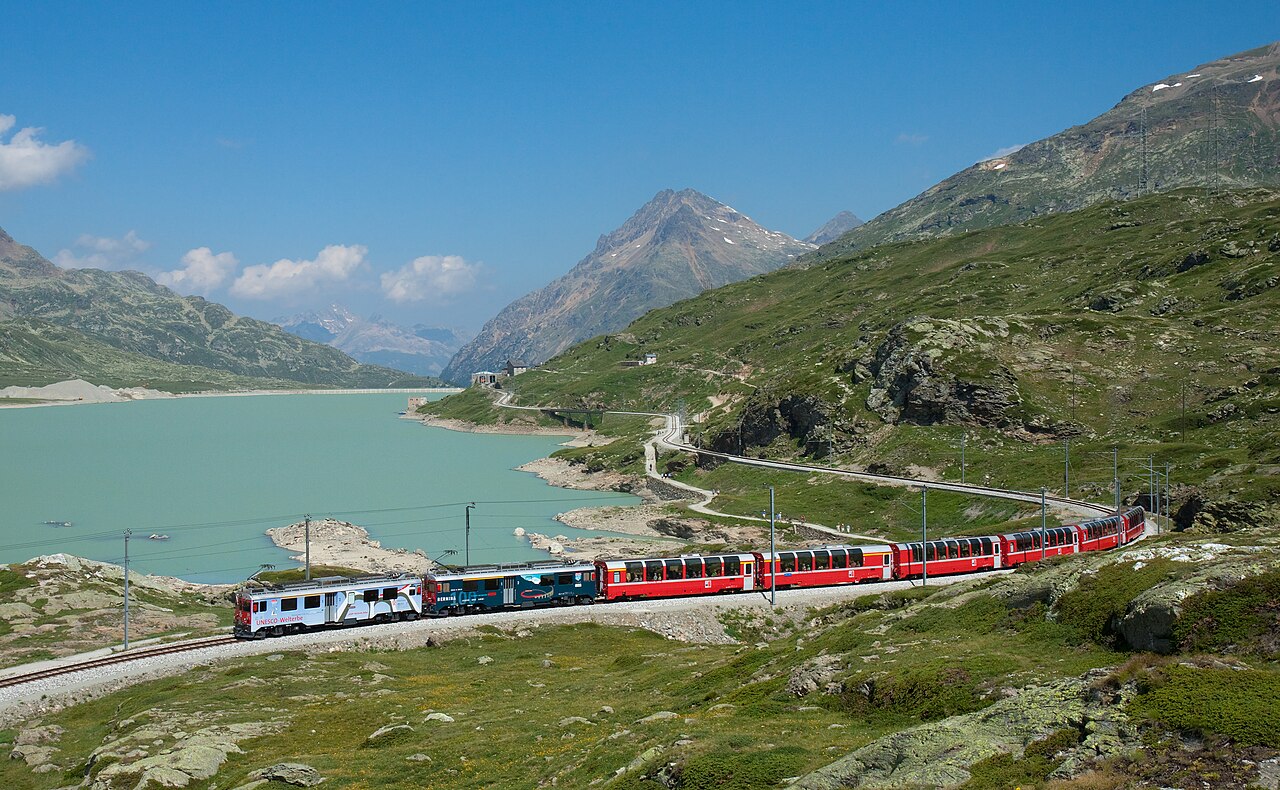
If I had to keep one, it would be this one. A hundred and forty four kilometres in about four hours, over 196 bridges and through 55 tunnels, climbing to 2,253 metres at Ospizio Bernina on gradients of up to 70 per mille without a rack rail, then dropping into Italian-speaking Valtellina by way of the circular Brusio viaduct. The Albula and Bernina lines were inscribed as UNESCO World Heritage in July 2008.
Here is the part that matters. The Bernina Express is a Rhaetian Railway product laid over a line that also carries an ordinary hourly regional service. Same track, same views, and a seat reservation that is optional rather than compulsory: RhB charges CHF 5 per person to hold a seat on the local, and nothing at all if you take your chances. On the branded train the 2026 reservation was CHF 40 in low season and CHF 44 in high season for the full Chur to Tirano run, with high season running 2 May to 25 October, or CHF 32 year round on the shorter St. Moritz to Tirano leg.
If you skip the branded train entirely, Zurich to Tirano is possible on ordinary regional trains, and a Saver Day Pass starts around CHF 52. From Tirano, Trenord’s second class fare to Milano Centrale is EUR 12.50, which I think makes this one of the best value border crossings on the continent.
One diary note: trains 951 and 952 are diverted via the Vereina tunnel from 29 October to 13 November 2026, which is a completely different and much less interesting routing. One more thing: Tirano to Lugano is a connecting bus, not a train.
3. The GoldenPass Express, Montreux to Interlaken Ost
Three hours and fifteen minutes from the vineyards above Lake Geneva to the Bernese Oberland, and the clever bit is invisible: variable-gauge bogies let a single train run right through the change of gauge at Zweisimmen, which used to mean everybody got out and swapped. Operated jointly by the MOB and BLS, four services a day, three classes.
Point to point it starts around CHF 76. Prestige class carries an obligatory CHF 49 supplement, reservation included. Transport tickets go on sale up to six months ahead. Beyond Interlaken the wider GoldenPass corridor carries on to Lucerne, so you can ride from Montreux to Lucerne over several trains.

4. The Gotthard Panorama Express, Lucerne to Lugano
Half boat, half train, which is why it does not feel like the others. You sail down Lake Lucerne from the city to Fluelen, then take panorama coaches over the historic Gotthard route to Bellinzona and Lugano. About five and a half hours in total. In 2026 the fare was CHF 164 plus a compulsory CHF 24 reservation, CHF 188 in all, and the announced reservation for 2027 is CHF 28.
The 2026 season ran from 18 April to 18 October with one service each way per day, and the 2027 season runs from 17 April to 17 October. On the 2026 timetable Lucerne departed at 11:12 and reached Lugano at 16:41; in the other direction, Lugano departed at 09:18 and Lucerne arrived at 14:47. Check the operator’s timetable before you book for 2027. In 2026 a first class Swiss Travel Pass covered both legs, leaving the compulsory CHF 24 reservation, while second class passholders also paid a CHF 31.50 upgrade. The reservation is CHF 28 for 2027.
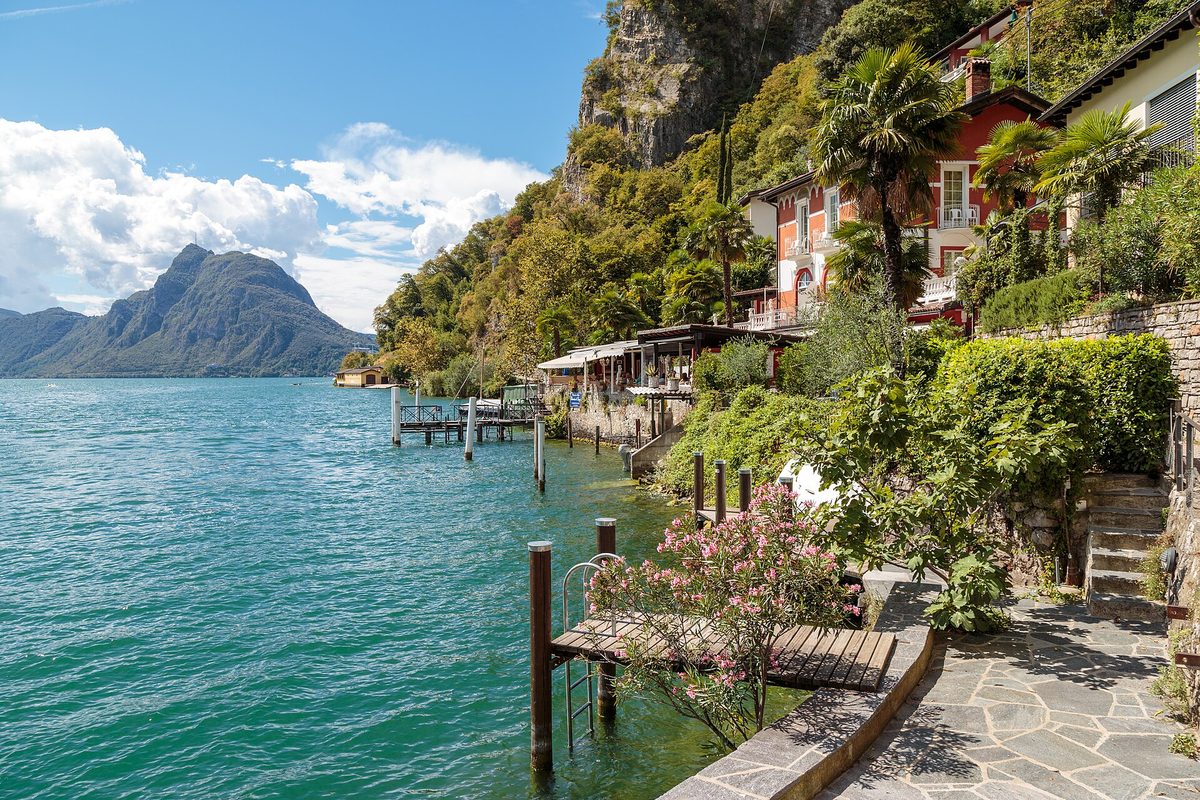
5. The Centovalli Railway, Locarno to Domodossola
Fifty two kilometres and about two hours through the hundred valleys, linking the Gotthard main line to the Simplon, half in Switzerland and half in Italy. A single is CHF 47 in second class, and a Vigezzina-Centovalli tourist ticket starts around CHF 31.
The Swiss Travel Pass and GA cover the whole thing including the Italian section, which is unusual and useful. Ordinary regional trains carry no supplement; certain panoramic departures add EUR 1.50, payable to the conductor or online, and the operator lists which trains it applies to. If you are threading together Italy and Switzerland, this beats going round by Milan.
6. The Jungfrau Railway to the Jungfraujoch
The one everyone means when they say they want to take a train up a mountain in Switzerland, and the one where the price makes people flinch. A return from Interlaken Ost to the Jungfraujoch was CHF 261.20 for the May to October 2026 season; from Grindelwald or Wengen it was CHF 239.20. From 1 November to 12 December 2026 the return from Interlaken Ost is CHF 224.40. A seat reservation of CHF 10 per person is mandatory in both directions on the Kleine Scheidegg to Jungfraujoch section between 1 May and 31 October. Holders of the Jungfrau Travel Pass buy a connecting ticket to the Jungfraujoch, CHF 89 from 1 May to 31 October 2026 and from CHF 63 outside that period.
Where I land on it: go if the summit is your reason for coming to Switzerland, and check the webcam the night before, because in cloud you are paying a great deal of money to stand inside a mountain. Otherwise the ride up to Kleine Scheidegg alone, or a day in the Lauterbrunnen valley on foot, gives you the same country for a fraction of the outlay.

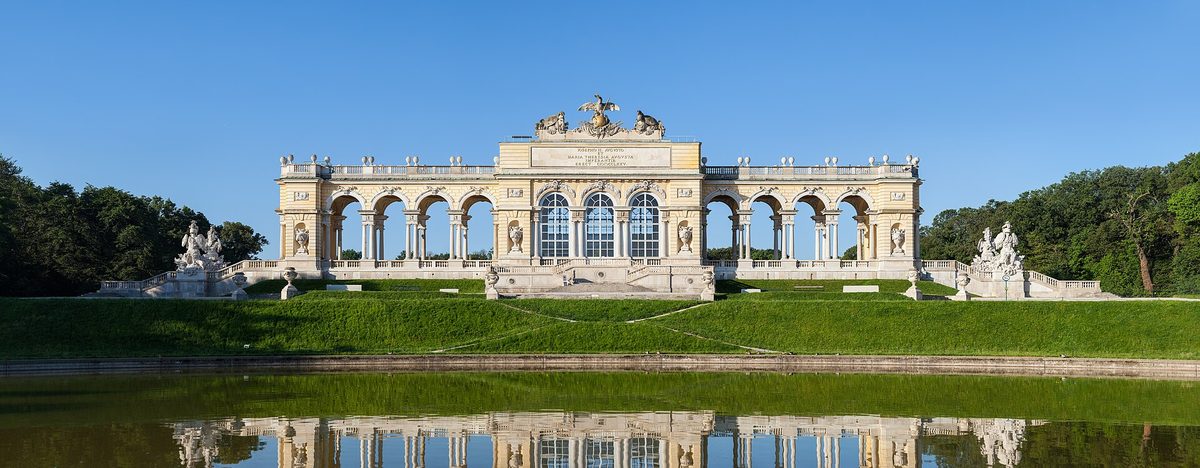
7. The Semmering Railway, Gloggnitz to Murzzuschlag
The first railway anywhere in the world to be given UNESCO World Heritage status, inscribed in 1998 and built between 1848 and 1854 under Carl Ritter von Ghega. Forty one kilometres, climbing from 436 metres at Gloggnitz to a summit of 895 metres after twenty nine kilometres, then down to 677 at Murzzuschlag. Fourteen tunnels, sixteen viaducts and more than a hundred curved stone bridges, cut into the hillside with hand tools.
The best thing about it is that no tourist train exists. The Semmering is simply part of the ordinary Vienna to Graz corridor. A Railjet does the full run in about two and a half hours from around EUR 19 booked ahead with OBB, Eurail and Interrail are valid, and OBB’s free Railnet audio guide narrates the Wiener Neustadt to Murzzuschlag stretch. Sit on the right leaving Vienna. Where to break the journey is covered in our Austria travel guide.

8. The Salzkammergut Railway, Stainach-Irdning to Attnang-Puchheim
A regional line through the Austrian lake district, and the reason to single it out is the arrival at Hallstatt, where the station sits on the far shore and a ferry meets the train to carry you across. That crossing is the best possible approach to a village that is otherwise defined by its coach parks. Standard OBB regional fares apply, no reservation, all year.
Norway, Sweden and Finland: the long northern lines
Scandinavia does something Switzerland does not: it puts scenery that competes with anywhere on ordinary state railway timetables at ordinary state railway prices. Seven routes, and only two of them are tourist products. The wider trip is set out in our Scandinavia travel guide.
9. The Bergen Line, Oslo to Bergen
Norway’s headline railway, and the best value long-distance ride in Europe by a clear margin. It covers 471 kilometres from Oslo S to Bergen in six and a half to seven and a half hours, six or seven departures a day, on a normal Vy intercity train with normal fares from NOK 299 to NOK 899 depending on how early you book. Komfort class adds roughly NOK 100 to NOK 200.
The line was built between 1894 and 1909, has 182 tunnels including the 10.3 kilometre Finsetunnelen, and tops out at 1,237 metres crossing the Hardangervidda plateau, which is arctic in feel and treeless for a long stretch. Vy publishes seat advice and it is worth following: for the Hardangervidda sit on the left travelling from Oslo and the right coming from Bergen; for the western fjords and valleys, the opposite.
The winter caveat is real. On the plateau there is daylight only from roughly 09:00 to 15:00 in midwinter, so take a morning or early afternoon departure or you will pay for a view of your own reflection. There is more on the light question in our guide to the best time to visit Europe.
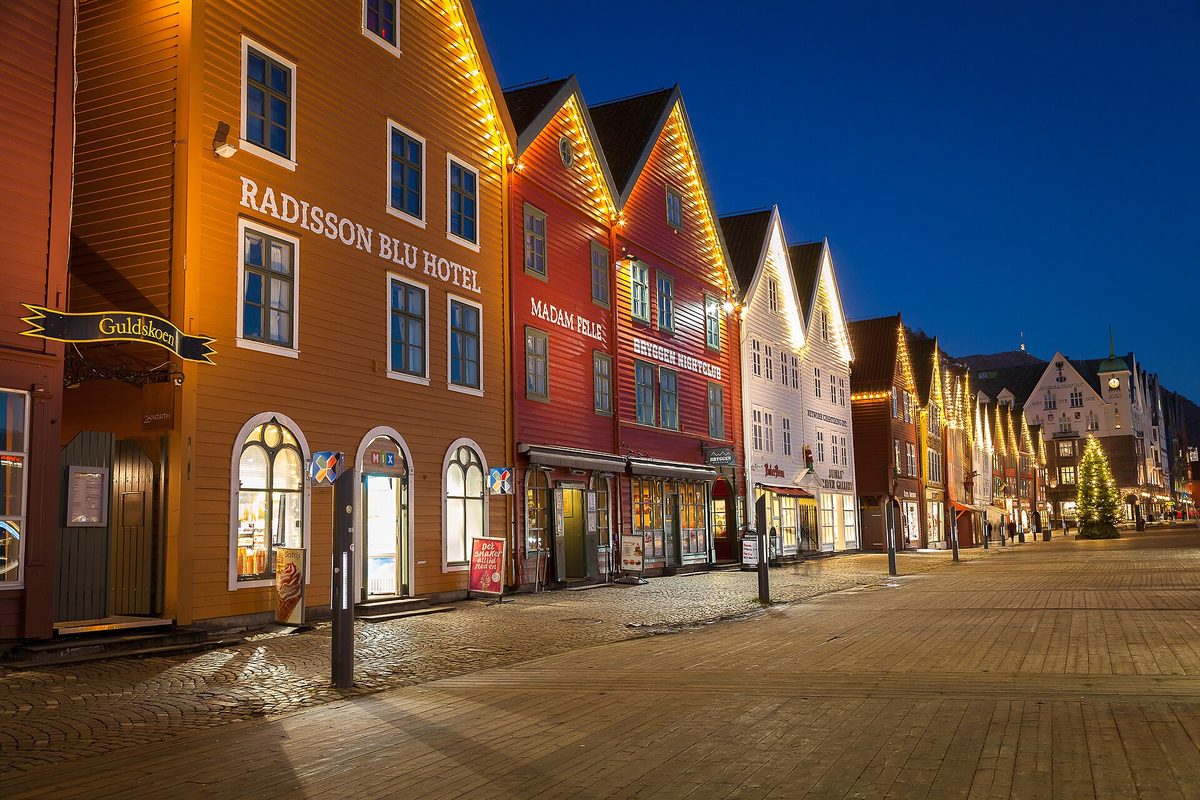
10. The Flam Railway, Myrdal to Flam
It drops 865 metres in twenty kilometres, about an hour of running, to sea level at the head of the Aurlandsfjord. It branches off the Bergen Line at Myrdal, so it slots into a bigger journey rather than needing a trip of its own.
It is a tourist railway, owned jointly by Vy and Norway’s Best, and priced like one: roughly NOK 430 one way in low season to NOK 510 in high, with returns around NOK 620 to NOK 730. Interrail and Eurail pass holders get 30 per cent off ordinary single tickets on an active travel day rather than free travel. You can buy that discounted ticket online at entur.no, at a Norwegian railway ticket office or by phone with Vy or Entur. Ask for the passholder ticket, or you pay full price.
In June to August book two to three weeks ahead, more for the popular midday departures. From October to April you can usually buy on the day.

11. The Rauma Line, Dombas to Andalsnes
About an hour and twenty minutes over 114 kilometres, dropping through the Romsdal valley under the Trollveggen, the tallest vertical rock face in Europe. It runs all year, it is operated by SJ Norge rather than Vy, and it is priced as an ordinary regional service. Combine it with the Dovre Line and you have the best day of a Norwegian rail trip for the price of two standard tickets.
12. The Nordland Line, Trondheim to Bodo
Ten hours and 729 kilometres, crossing the Arctic Circle on the way. The normal through service is two departures each way a day, one of them a night train, but SJ lists the night train as suspended for now, with its return expected during January 2027, so check the departures before you book. This is the line for people who want the north without an aeroplane.
Do check before you commit. A landslide closed the line near Nesvatnet, and passenger trains only ran past it again from 22 June 2026 after reconstruction, so look up the specific departure you want. SJ publishes the current position.

13. The Dovre Line, Oslo to Trondheim
About seven hours by day across the Dovrefjell, or roughly seven and a half overnight. Operated by SJ Norge, with a night train most evenings and a twin sleeper compartment from around NOK 1,691 for two, sold as an add-on to a standard ticket rather than a separate fare. Taking the night train up and the Rauma Line down is one of the tidiest three-day itineraries in Europe.
14. The Inlandsbanan, Kristinehamn to Gallivare
This one runs roughly 1,300 kilometres up the spine of Sweden, from the middle of the country to Lapland, and it is the least known route on this list by a distance. It is a summer railway and nothing else: the 2026 tourist season ran from 16 June to 12 August, with daily departures between Ostersund and Mora and between Ostersund and Gallivare. Next summer’s dates go up on Inlandsbanan’s timetable pages.
Pricing works as a pass rather than a ticket. Fourteen days cost SEK 2,645 in 2026, or you can buy legs individually: Kristinehamn to Mora SEK 340, Mora to Ostersund SEK 596, Ostersund to Gallivare SEK 1,378. Trains stop for moose sightings and coffee. It is slow in a way that is the entire point.

15. The Santa Claus Express, Helsinki to Rovaniemi
Overnight on VR from the Finnish capital to the Arctic Circle, with private cabins from EUR 59 and children aged 0 to 10 travelling free when they share a berth with another passenger. Cabins with a private shower cost more and are worth it if you are going straight into a Lapland programme on arrival. December sells out months ahead, which is worth knowing if you are building a trip around the Christmas season in Europe.
Britain: steam, sleepers and the West Highland Line
Britain is the awkward case. The scenery competes with anywhere in Europe and the fares system is the least legible on the continent, with the cheapest fares released in small advance quotas that vanish weeks before departure. Six routes, and one steam train that is not the point. The rest of a British trip is in our UK travel guide.
16. The West Highland Line, Glasgow to Mallaig
The run from Glasgow Queen Street to the fishing port of Mallaig takes five hours and twenty minutes, across Rannoch Moor, past Ben Nevis at Fort William and over the Glenfinnan Viaduct, with a branch running to Oban. Advance fares for the full run have been quoted from around GBP 20, and no reservation is needed.
This is the important thing about Glenfinnan: you do not need the steam train to cross it. The ordinary ScotRail service uses the same viaduct several times a day, all year, for a fraction of the money. The steam engine is what you photograph, not what you have to ride.
17. The Jacobite Steam Train, Fort William to Mallaig
The one people book a Scottish holiday around. It sells same-day returns only. West Coast Railways announces the dates, fares and timings for the 2027 season, and you can register on its website for booking updates before you plan connections.
July and August go months in advance, so book as soon as the season you want goes on sale. If it is sold out, take the ScotRail train and stand at the Glenfinnan viewpoint instead.
18. The Kyle of Lochalsh Line, Inverness to Kyle of Lochalsh
Across the top of Scotland to the bridge over to Skye in two hours and forty minutes, with four departures each way Monday to Saturday all year and fewer on Sundays. From GBP 17.40 one way based on a return fare, with no booking fee. Quieter, cheaper and I think lovelier than the West Highland Line in bad weather, because from Strathcarron the line follows the southern shore of Loch Carron with the water right beside the window.
19. The Caledonian Sleeper, London to Scotland
Six nights a week from London Euston, splitting into a Lowlander portion for Glasgow and Edinburgh and a Highlander portion for Inverness, Fort William and Aberdeen. The Fort William portion arrives in daylight and effectively hands you the West Highland Line as a bonus.
Fares start from GBP 50 and behave like airline pricing, rising steeply as the train fills. Tickets are released twelve months ahead, which is as far out as anything on this list and the most useful planning fact in this article.
20. The Night Riviera, London to Penzance
Great Western Railway’s sleeper to Cornwall, eight hours and five minutes on weekday services, six nights a week. Fares run from GBP 25.50 for a seat to about GBP 135, with berths from around GBP 84 for a twin-berth standard cabin. Reservations open up to three months ahead. You go to sleep in Paddington and wake up with the Atlantic at the end of the platform.
21. The Ffestiniog and Welsh Highland Railways, north Wales
Two connected narrow gauge lines: one from Porthmadog Harbour up to Blaenau Ffestiniog through the slate country, and one coast to coast from Caernarfon to Porthmadog around the foot of Snowdon. A Which? panel put the Ffestiniog top of its ranking of Europe’s most beautiful railway journeys back in 2022, ahead of the Bergen Line and the Bernina.
The 2026 season opened on 21 March on the Ffestiniog and 28 March on the Welsh Highland, and the railways’ train-services page lists what is running now, Christmas trains included. The service model catches people out: these are pre-booked, named end-to-end excursion trains rather than a hop-on-hop-off timetable, so book the specific excursion you want in advance.
Not one of the 33: the Eurostar, and how to reach all of this from London
Two hours and sixteen minutes city centre to city centre, London St Pancras to Paris Gare du Nord, with standard one-way fares from GBP 39, subject to availability, and up to GBP 300 on the busiest departures in the 2026 tariff. The cheap end appears midweek and well in advance. Eurostar says booking opens 10 to 11 months ahead, though engineering work can change that. Set an alert on eurostar.com rather than assuming the cheap seats are already on sale.

Southern Europe: Italy, Portugal, Spain and the French coast
The southern routes are the cheap ones. Not one of the six below carries a compulsory supplement, and the cheapest of them costs about five euros.
22. The Cinque Terre Express, La Spezia to Levanto
Every twenty minutes along the Ligurian cliffs, calling at Riomaggiore, Manarola, Corniglia, Vernazza and Monterosso, with hops between villages of four to ten minutes. It is the reason the Cinque Terre works without a car.
The 2026 Express season ended on 1 November. From 2 November 2026 to 19 March 2027 ordinary Liguria regional fares apply, so check the fare for your own journey on Trenitalia. The Cinque Terre Treno MS Card bundles unlimited regional trains between Levanto and La Spezia with the Via dell’Amore, the paid Blue Trail sections and the local village buses. From 2 November to 31 December 2026 an adult card costs EUR 17.30 for one day, EUR 29 for two consecutive days and EUR 34 for three; in the 14 March to 1 November season it was EUR 22 to EUR 35, EUR 36.50 to EUR 61 and EUR 49 to EUR 81. Do the arithmetic before you buy: if you are walking one trail and taking three trains, singles win. The trail-by-trail detail is in our Cinque Terre travel guide.
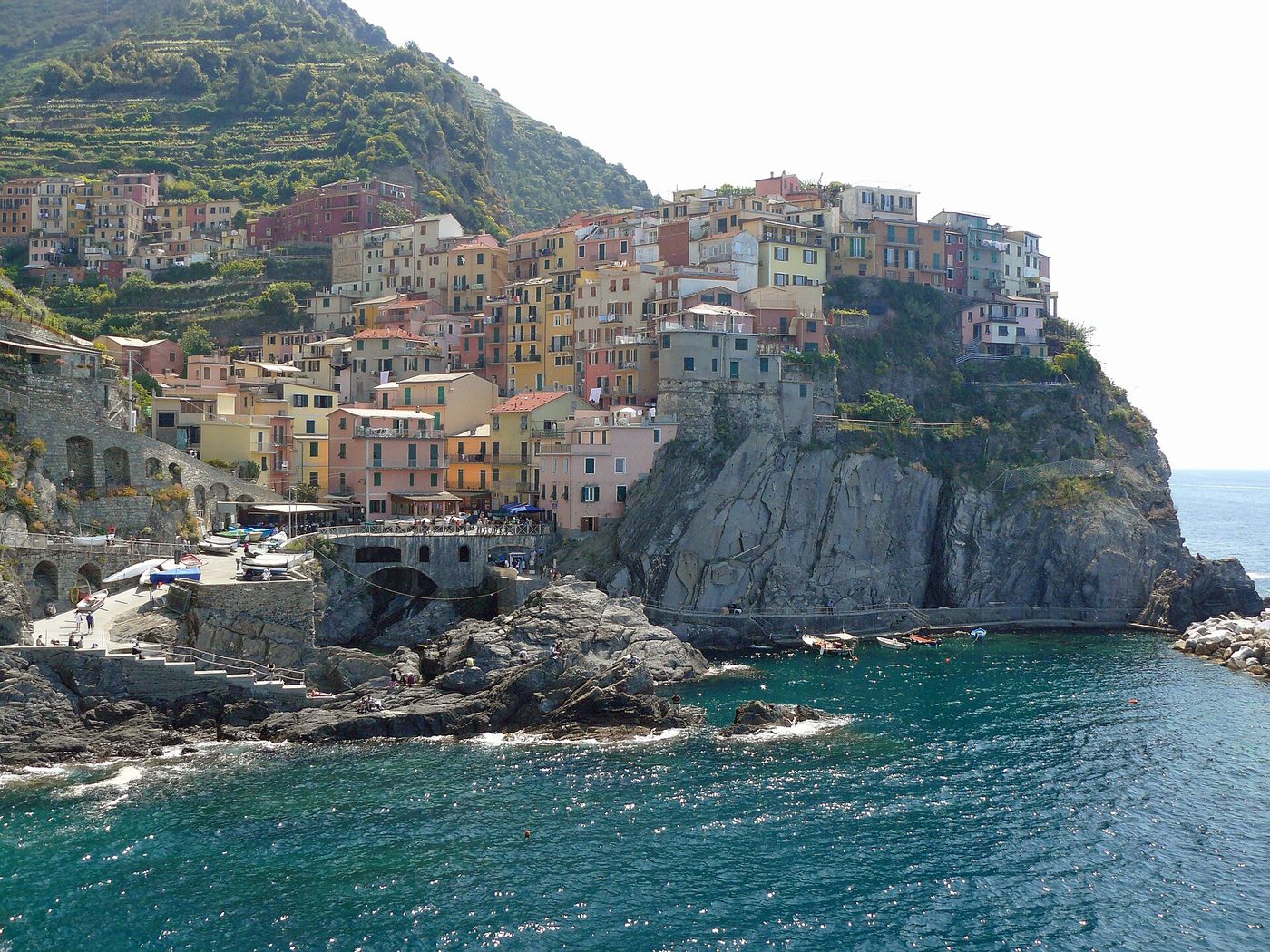
23. The Circumvesuviana, Naples to Sorrento
An hour and a quarter for about five euros, every thirty to forty minutes, calling at Ercolano and Pompei Scavi on the way. It is hot, crowded and scruffy, and it remains the most useful railway in southern Italy, because it delivers you to two of the great archaeological sites and the Sorrentine peninsula for the price of a coffee and a pastry.
One warning that costs people real money: Eurail and Interrail passes are not valid on the Circumvesuviana, because EAV is a separate regional operator. Buy a paper ticket at the station and validate it. Our Amalfi Coast travel guide picks up from Sorrento.
24. The Linha do Douro, Porto to Pocinho
Three hours and twenty minutes from Porto Sao Bento, the station with the twenty thousand azulejo tiles, out along the north bank of the Douro through the port vineyards. Five trains a day run from Porto Campanha to Pocinho, with a connection from Sao Bento on some journeys. The Inter-Regional fare is EUR 15.10 single and EUR 27.20 return, and Porto to Pinhao takes about two hours twenty if you want the best two thirds of it.
Eurail and Interrail are valid with no reservation fee. The trap is the timetable rather than the price: the last train back leaves Pocinho at 19:26 and Pinhao at 20:24, reaching Porto Sao Bento at 23:40, so check the timetable before you plan the day. CP also runs a historic train between Regua and Tua on selected days, from 6 June to 18 October in 2026, hauled by a 1400-series diesel locomotive rather than steam. The wine estates you can reach from the line are in our Portugal travel guide.
25. Malaga to Ronda and El Chorro
Renfe runs trains from Malaga up into the Serrania de Ronda, with a stop at El Chorro, gateway to the Caminito del Rey, and on to Ronda. Check Renfe’s timetable for journey times on your date.
For the fare, go straight to renfe.com: Renfe runs the trains from Malaga to Ronda, and its own site gives the price and booking conditions for your date. There is more on Andalusia by rail in our Spain travel guide.
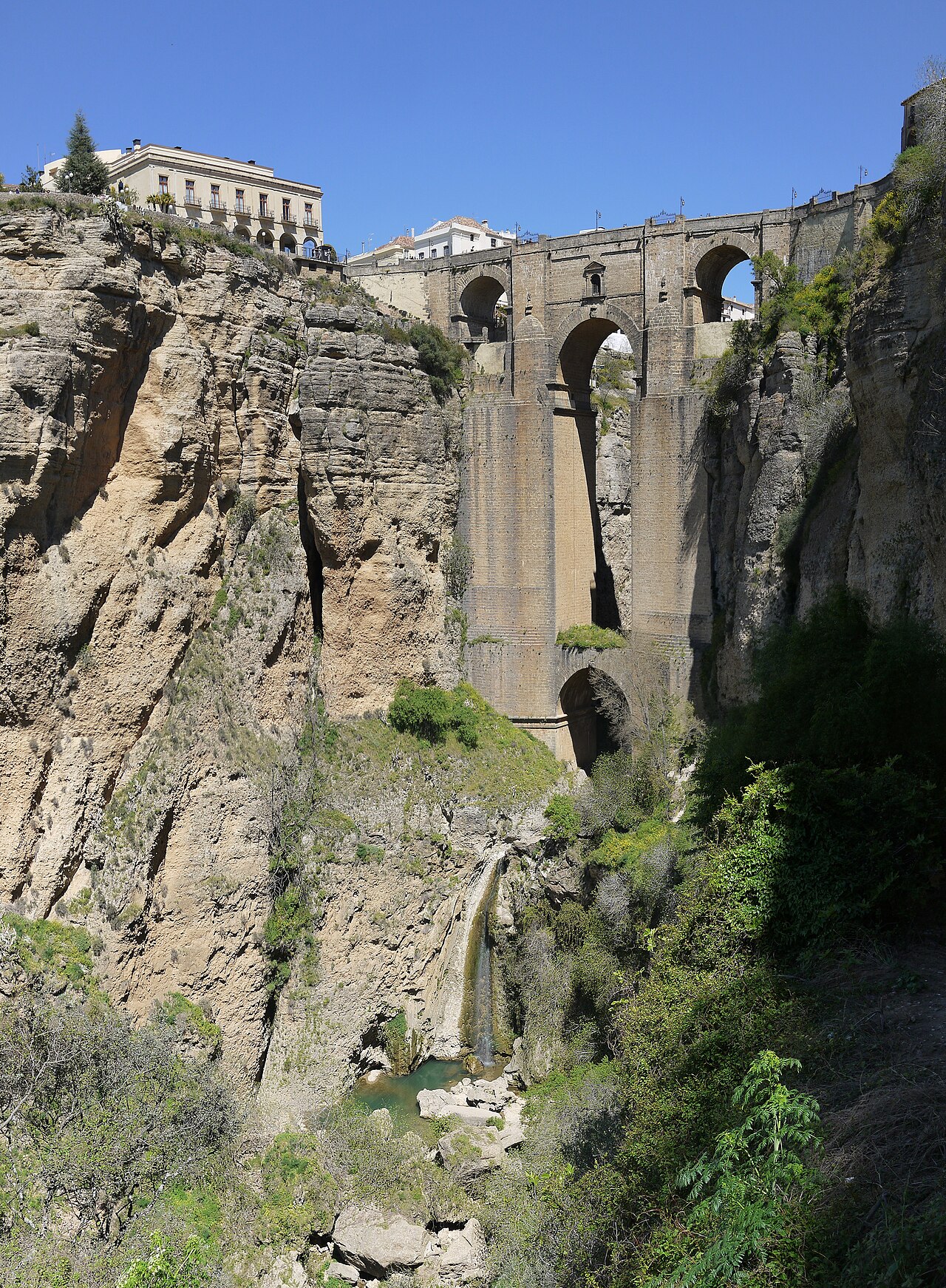
26. Cannes to Ventimiglia, the French Riviera coast line
An ordinary TER commuter train from EUR 14.30, running along the sea through Antibes, Nice, Villefranche-sur-Mer, Monaco and Menton to the Italian border; check SNCF Connect for the times on your day. Sit on the right leaving Cannes. Multiple departures daily, no reservation, and it is the cheapest way anybody has ever seen the Cote d’Azur. Every one of those stops is covered in our guide to the south of France.
27. The Train Jaune, French Pyrenees
The Little Yellow Train climbs from Villefranche-Vernet-les-Bains to Latour-de-Carol high in the Pyrenees, with an open-sided carriage in summer that is the closest thing to a fairground ride on a national network. It is fully included in an Interrail pass with no supplement. Line works are frequent, so check ter.sncf.com before you build a day around it. The wider region sits in our France travel guide.
Germany, the Balkans and the far east of the map
Six routes, and the cheapest thrills in this entire article. The Belgrade to Bar line alone justifies a trip.
28. The West Rhine Railway, Cologne to Mainz
The RB26 MittelrheinBahn runs the scenic stretch roughly hourly and takes about three hours end to end, following the west bank through Bonn and Koblenz. The section between Koblenz and Bingen is the UNESCO-listed Upper Middle Rhine Valley, with about forty castles, palaces, fortresses and ruins along the valley and the Lorelei rock.
No reservation. Regional day tickets run about EUR 15 to EUR 25, or the whole thing is covered by the Deutschland-Ticket, which rose to EUR 63 a month on 1 January 2026 and remains the best value transport product in Europe if you are spending more than a few days in the country. Where it does and does not apply is explained in our Germany travel guide, and a Rhine river cruise covers the same water at ten times the price.
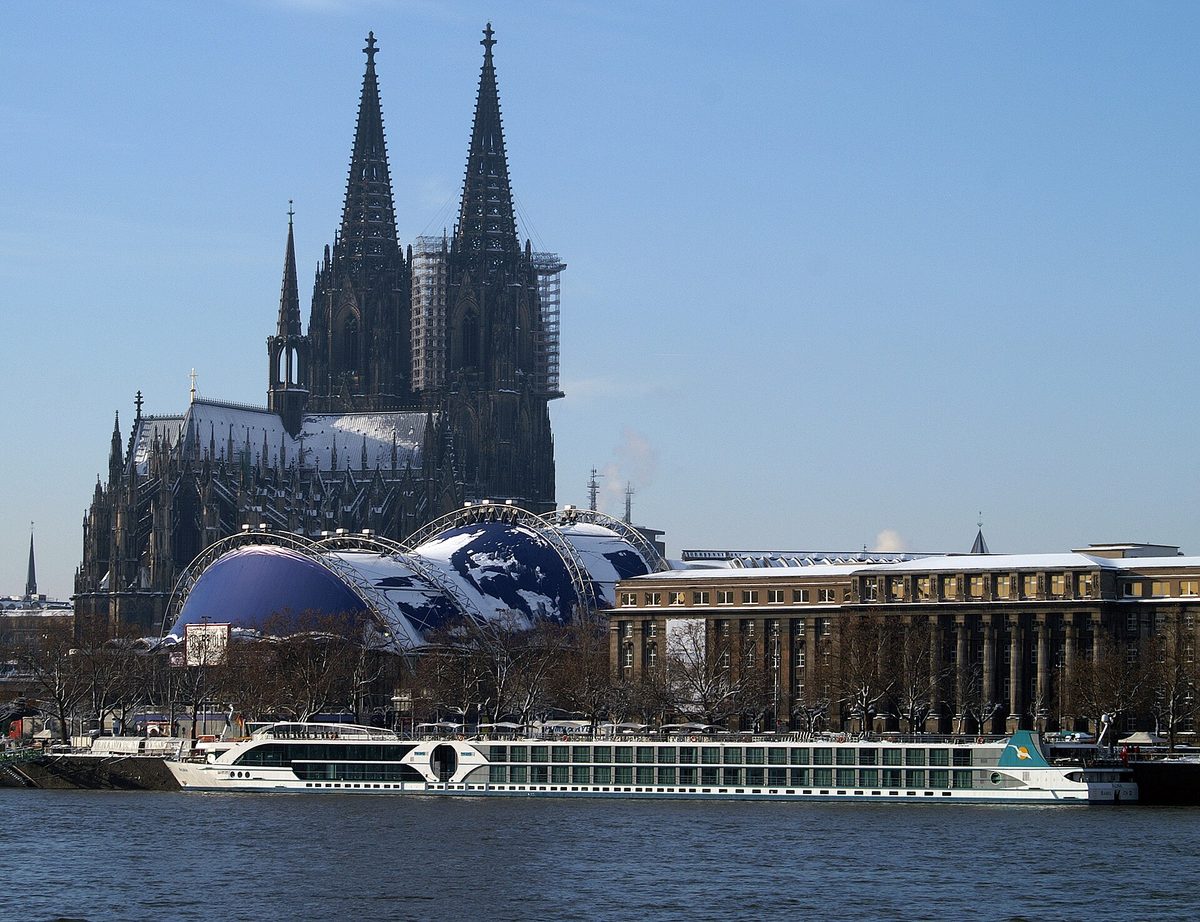
29. The Black Forest Railway, Konstanz to Offenburg
The best of it is the stretch between Donaueschingen and Hornberg, where the line loops and doubles back on itself to lose height through the forest. Ordinary DB regional double-deckers with unallocated seating, which means the top deck is first come first served. Get on early, go upstairs, sit at the front. Standard regional fares, no reservation, all year.
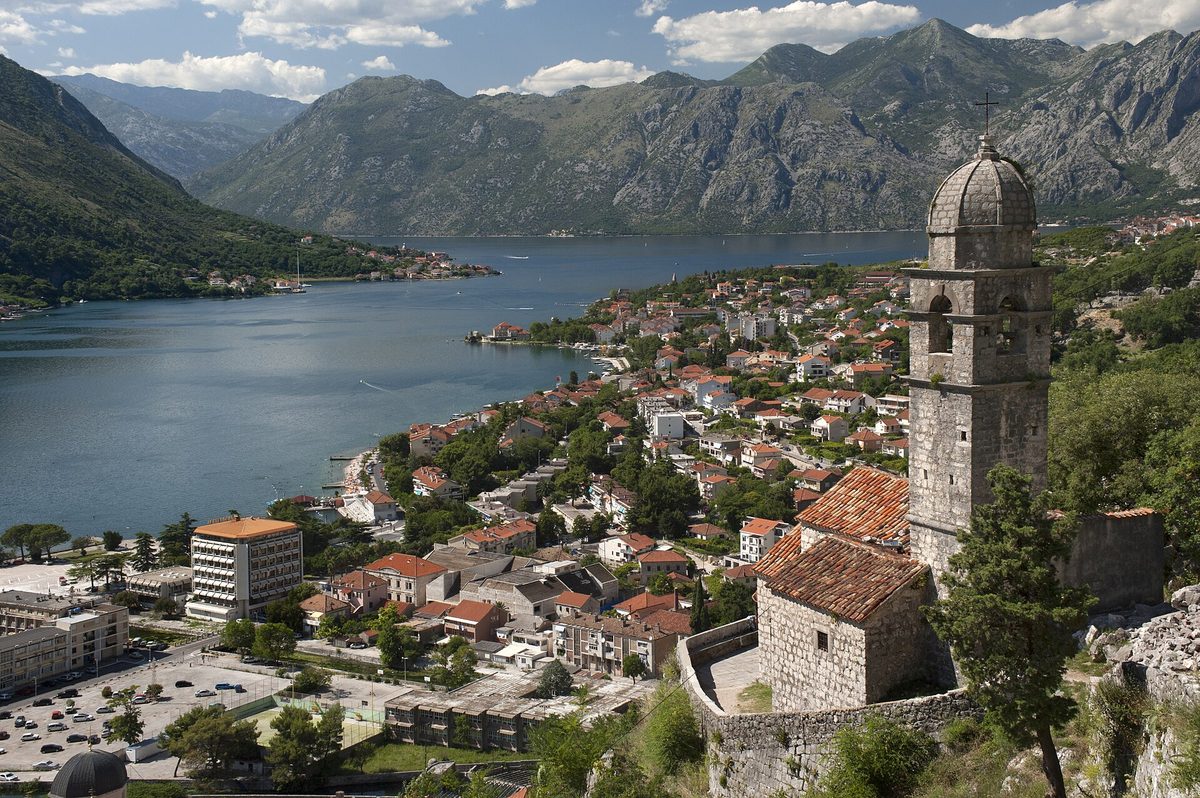
30. Belgrade to Bar, Serbia to Montenegro
The run from Beograd Centar down to the Adriatic passes through 254 tunnels and over the Mala Rijeka viaduct, one of the tallest railway viaducts in Europe. It is operated by the railways of Montenegro, and it costs EUR 23.80 in second class.
The overnight Lovcen leaves Beograd Centar at 19:54 and reaches Bar at 06:54. If you do want a bed, Interrail lists reservation fees on top of the fare: EUR 6 for a couchette berth, and EUR 15 for a place in a three-berth sleeper, EUR 20 in a two-berth or EUR 45 for sole occupancy.
Montenegro uses the euro unilaterally and Serbia uses the dinar, so fares quoted in euros are genuine rather than converted. The catch is that tickets cannot be bought online: buy at Belgrade station on the day or a day before. The wider region is covered in our Eastern Europe travel guide.

31. The Rhodope Narrow Gauge, Septemvri to Dobrinishte
Bulgaria’s last narrow gauge line, climbing from the Thracian plain into the Rhodope mountains at a pace that lets you get off and photograph your own train. Septemvri is easily reached from Sofia.
A currency note worth reading twice: Bulgaria adopted the euro on 1 January 2026 at the fixed rate of 1.95583 leva, with the lev ceasing to be legal tender for cash on 31 January 2026. BDZ gives a fare of BGN 6.60 to BGN 10 between the end stations, about EUR 3.37 to EUR 5.11 single. Older fare pages quote leva, so convert at the fixed rate and check the result against the current tariff on bdz.bg.
32. Oravita to Anina, Romania
Just over two hours to cover 33 kilometres through the Banat mountains, through fourteen tunnels and over ten viaducts. It has been in use since 1863, which makes it the oldest mountain railway in south-east Europe, and it is often called the Semmering of the Banat.
Two trains a day: R 9695 leaves Oravita at 11:15 and reaches Anina at 13:17, and R 9694 returns from Anina at 14:40, arriving back at 16:42. Seat reservation is compulsory. CFR Calatori sells the section at the station; check CFR Calatori’s site for the fare.
One clarification, because the names look alike: the Transalpina is a mountain road, not a railway. Oravita to Anina is the Romanian rail journey to plan for.
33. The Dogu Ekspresi, Ankara to Kars
A long haul across the Anatolian plateau to Kars in the far east of Turkey, operated by TCDD. The regular service starts from around TRY 320 for an economy couchette and runs all year, which makes it one of the great cheap adventures left in Europe.
The Turistik Dogu Ekspresi is a separate winter-only product running December to March, with longer station stops built in for sightseeing, from about TRY 5,250 per person. For 2026 to 2027 it runs Ankara to Kars from 21 December 2026 to 10 March 2027 and Kars to Ankara from 23 December 2026 to 12 March 2027, with individual tickets sold through TCDD Tasimacilik from 26 October 2026. The eastern route is covered in our Turkey travel guide.
Night trains in Europe: what runs in 2026 and what stopped
This is the section I would read first if you are planning for next year, because two flagship routes disappeared and two new ones appeared inside eighteen months.
OBB withdrew the Nightjet from Paris to Berlin and the Nightjet from Paris to Vienna at the timetable change on 13 and 14 December 2025, after France ended their operating subsidies for 2026. European Sleeper then launched Paris to Berlin on 26 March 2026, filling the gap with a different operator and a different service model, and added a Hamburg-Harburg stop in July 2026. European Sleeper’s Brussels to Milan service started on 9 September 2026. It leaves Brussels on Mondays, Thursdays and Saturdays and Milan on Wednesdays, Fridays and Sundays, calling at Cologne and Lugano, and from 13 December 2026 it will also stop at Antwerp, Breda and Eindhoven.
| Night train | Route | Status for 2026 | From |
|---|---|---|---|
| Nightjet | Paris to Berlin | Withdrawn 13/14 December 2025 | Gone |
| Nightjet | Paris to Vienna via Munich | Withdrawn 13/14 December 2025 | Gone |
| Nightjet | Vienna to Amsterdam | Running daily, new-generation trains since 28 May 2025 | Seat from about EUR 29.90 |
| Nightjet | Vienna to Rome, Bologna and Florence | Running since September 2024 | Couchette from about EUR 49 |
| Nightjet | Vienna to Brussels | Running, three times weekly via Munich and Cologne | Couchette from about EUR 49 |
| Nightjet | Vienna to Hamburg | Running | Mini cabin EUR 79.90, twin EUR 134.90 |
| Nightjet | Amsterdam to Zurich | Running, new-generation carriages due December 2026 | Sleeper from about EUR 89 |
| EN Carpatia | Przemysl to Krakow, Vienna and Munich | New since 14 December 2025 | Couchette from about EUR 49 |
| European Sleeper | Brussels to Berlin and Prague | Running since May 2023, two to three times a week | From EUR 49.99 to Berlin, EUR 59.99 to Prague |
| European Sleeper | Paris to Berlin | New, launched 26 March 2026 | From EUR 49.99 to Berlin, EUR 59.99 to Paris |
| European Sleeper | Brussels to Milan | Running since 9 September 2026, three times weekly via Cologne and Lugano | From EUR 59.99 to Milan |
| Snalltaget | Berlin to Malmo and Stockholm | Running | SEK 399 to Malmo, SEK 499 to Stockholm |
| Caledonian Sleeper | London to Glasgow, Edinburgh, Inverness, Fort William, Aberdeen | Running, six nights a week | From GBP 50 |
| Night Riviera | London to Penzance | Running, six nights a week | From GBP 25.50 seated |
| Lovcen | Belgrade to Bar | Running, Beograd Centar 19:54 to Bar 06:54 | Reservation fees: berth EUR 6, sleeper from EUR 15 |
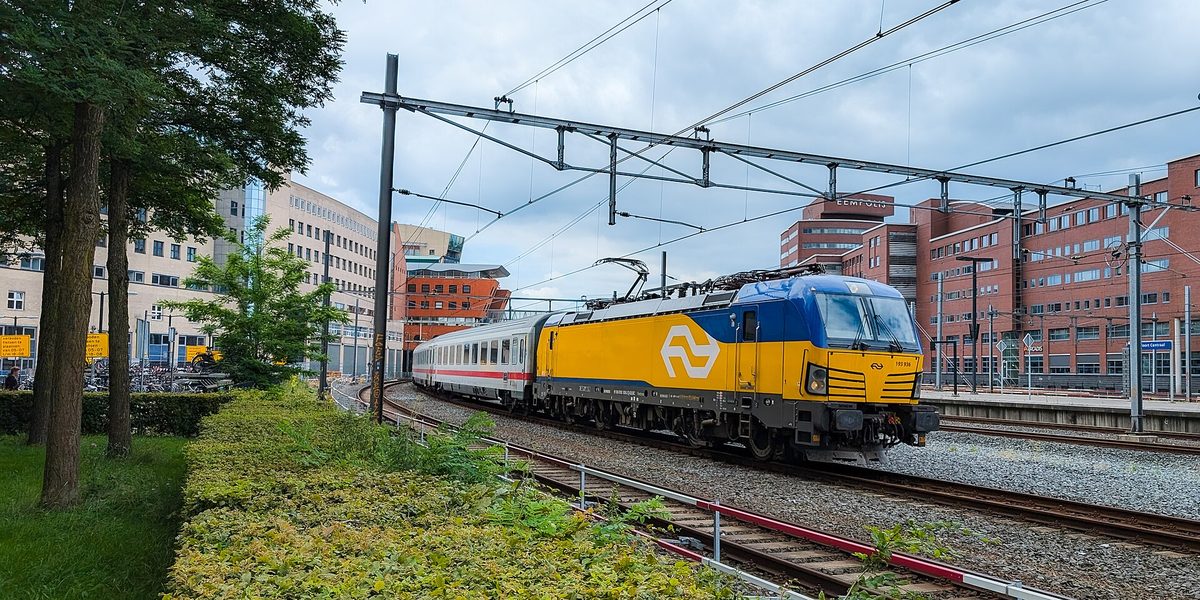
On the Nightjet fleet: the new-generation carriages introduced since late 2023 include single mini cabins with keycard access and two lockers, which have quietly solved the problem of solo travel on night trains. Vienna to Hamburg, Vienna to Amsterdam, Vienna to Rome and Hamburg to Innsbruck also have en-suite compartments. The new stock started on Zurich to Hamburg from 4 December 2025 and reaches Amsterdam to Zurich in December 2026.
European Sleeper works differently and it is fair to say so: there is no dining car, an attendant sells sandwiches and a breakfast box, and published fares vary widely between sources. Budget from about EUR 30 seated and around EUR 50 for a couchette berth, and expect a private compartment to cost several times that.
The flagship high-speed runs, and why they belong on this list
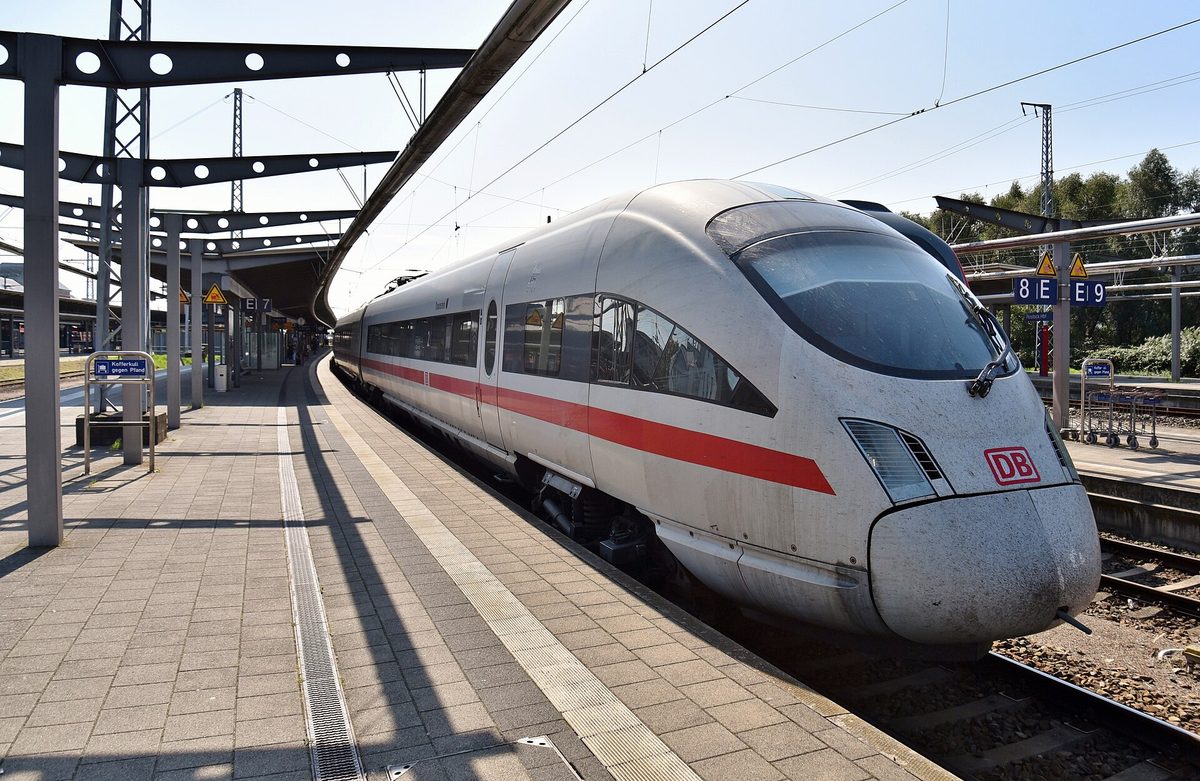
Nobody rides a Frecciarossa for the view. You ride it because it turns two cities four hundred miles apart into a morning, and because doing so is what makes a train trip beat a flight. Five runs are worth naming.
| Route | Time | Operators | Fares from | Passholder reservation |
|---|---|---|---|---|
| London to Paris | 2 hours 16 minutes | Eurostar | About GBP 39 | Separate passholder fare, limited quota |
| Paris to Milan | About 7 hours | Trenitalia and SNCF | About EUR 35 | EUR 31 on the TGV (EUR 45 in first) or EUR 13 on the Frecciarossa, as of September 2026 |
| Paris to Barcelona | About 6 hours 50 minutes, 1,080 km | SNCF TGV INOUI | Varies widely | EUR 35 in either class |
| Madrid to Barcelona | Normally 2 hours 30 minutes, but 3 hours 2 minutes at best through December 2026 while Adif speed limits apply; 621 km | Renfe AVE, Ouigo, iryo | Ouigo from EUR 9, AVE about EUR 17 | From EUR 10 on AVE, by class |
| Milan to Naples | From 4 hours 8 minutes on Italo | Trenitalia and Italo | About EUR 29.90 | EUR 13 on Trenitalia |
The Paris to Milan story is worth telling because the service spent nineteen months not existing. A landslide in the Maurienne valley in August 2023 cut the direct rail link between France and Italy until April 2025. Trenitalia’s Frecciarossa came back on 1 April 2025. Trenitalia now runs two return trips a day: until 12 December 2026 the Paris departures are at 06:30 on weekdays or 07:30 at weekends, plus 15:25, and Milan departures are at 06:25 and 15:53. SNCF runs TGV INOUI services on the route too, and the trains go via Lyon, Chambery, Saint-Jean-de-Maurienne, Modane, Oulx and Turin in about seven hours. The Maurienne section is properly beautiful, so this is the rare high-speed run that is also a scenic one.
The luxury tier, priced honestly
Three products, and the prices are the part people actually want, so they come first.
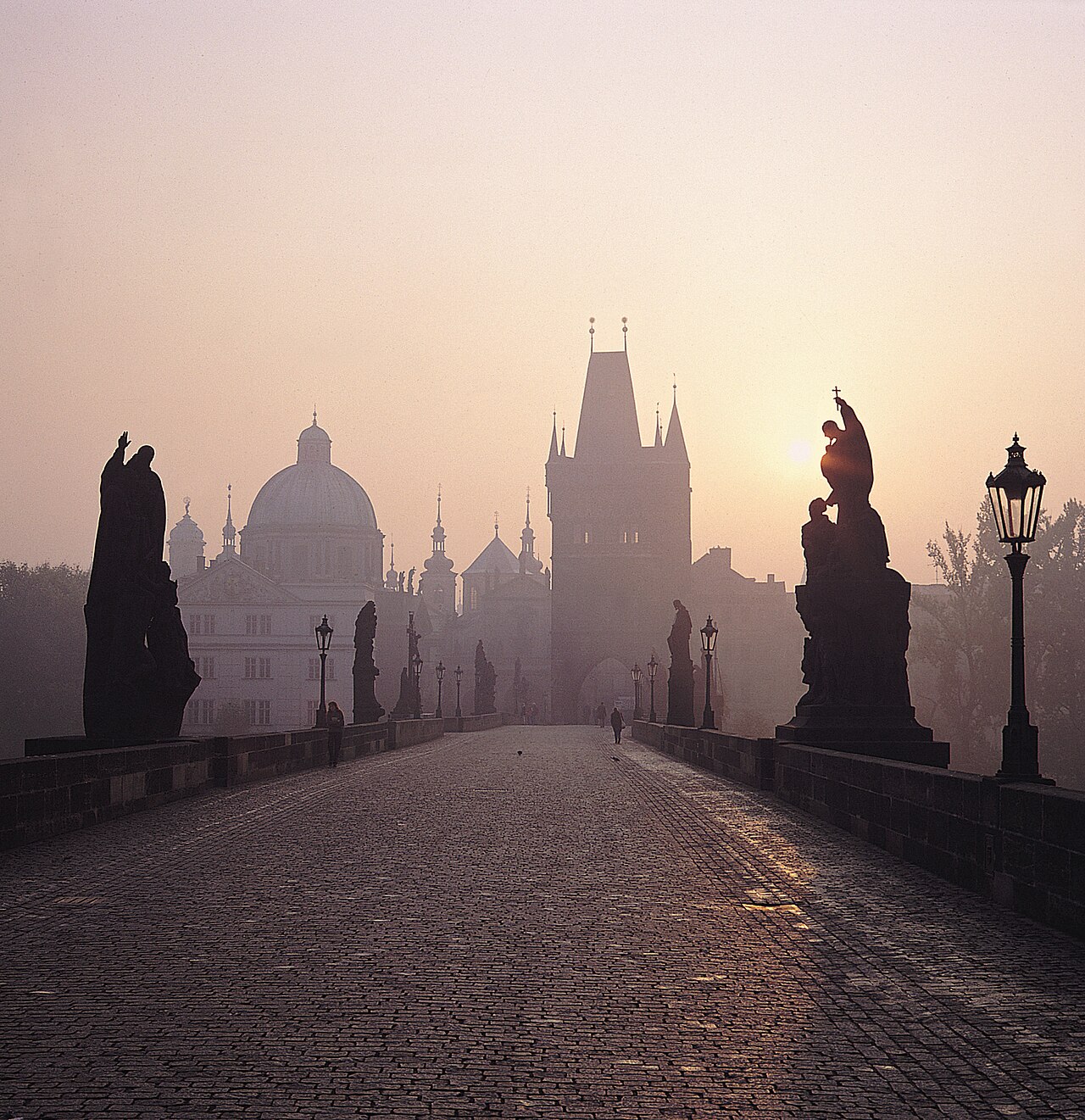
The Venice Simplon-Orient-Express, run by Belmond, is the famous one. The season runs roughly mid-March to November, weekly on the flagship London to Venice service, with the British Pullman to Folkestone, a coach across the Channel and the VSOE from Calais. Fares start from around GBP 3,800, USD 5,100 or EUR 4,450 per person in a twin cabin, with a Grand Suite from around GBP 8,400. Other sources quote slightly different figures by season, so treat those as a floor rather than a quote. All meals, afternoon tea, steward service and a champagne reception are included. Rail passes are not valid, which should not surprise anybody. Sources also disagree on whether London to Venice takes twenty four or thirty two hours, so ask when you book.
El Transcantabrico Gran Lujo runs eight days and seven nights along Spain’s northern coast, from San Sebastian through Santander, Llanes, Oviedo and Luarca to Santiago de Compostela. El Tren Al Andalus runs seven days and six nights in historic lounge and sleeping cars built between 1928 and 1930, and launched a new Seville to Madrid itinerary in April 2026 with visits including Cadiz, Cordoba, Jerez, Aranjuez and Merida. Both run in seasons, and each train’s own booking site gives the fares and the next season’s departures.
Booking windows: when tickets actually go on sale
This is where a rail trip is won or lost. The horizons differ wildly, and knowing them is worth more than any amount of advice about sitting on the left.
| Route or operator | When tickets open | When to actually book |
|---|---|---|
| Caledonian Sleeper | Up to 12 months ahead | As soon as your dates are fixed, then compare live prices for your date |
| Glacier Express tickets | 180 days ahead | In advance, as the operator advises, and remember the reservation is separate |
| Glacier Express reservations | 93 days ahead | Day one for July and August |
| Bernina Express | Reservations for the whole timetable period; tickets six months ahead | When RhB releases the next timetable period, normally mid to late October |
| Nightjet | Up to 360 days ahead, less around the December timetable change | Well ahead if you want a private compartment |
| GoldenPass Express | Up to 6 months ahead | A few weeks out is fine |
| Night Riviera | Check GWR availability for your date | As soon as your date opens, if you want a berth |
| Jacobite Steam Train | Season bookings usually open in January | January, for July and August |
| Flam Railway | Open well ahead | Two to three weeks in June to August, same day October to April |
| Eurostar | 10 to 11 months, Eurostar says | Set an alert, as fares more than five or six months out are often incomplete; book at least 90 days out for GBP 39 fares |
| Ordinary regional trains | No booking needed | Turn up |
When these trains do not run: the 2026 and 2027 calendar
Eight of the thirty three routes above have a closed season or a scheduled disruption. A November Swiss holiday built around the Glacier Express runs straight into its closed weeks.
| Route | Does not run | Notes |
|---|---|---|
| Glacier Express | 11 October to 4 December 2026 | Winter season 5 Dec 2026 to 7 May 2027, a daily train each way plus trains 920/905 from 12 Dec to 3 Jan and 30 Jan to 7 May; check the timetable for April engineering works |
| Bernina Express | Runs, but diverted 29 Oct to 13 Nov 2026 | Trains 951 and 952 go via the Vereina tunnel, a different route entirely |
| Gotthard Panorama Express | Until 17 April 2027 | 2027 season 17 April to 17 October |
| Inlandsbanan | Outside the summer season, which ran 16 June to 12 August in 2026 | Next summer’s dates appear on Inlandsbanan’s timetable page |
| Jacobite Steam Train | Between seasons | West Coast Railways publishes the 2027 dates, fares and timings; register on its site for updates |
| Ffestiniog and Welsh Highland | Between the main seasons | Named excursions, not a turn-up timetable; the current programme includes Santa Trains, Elf Express shuttles and the Christmas Aberglaslyn |
| Turistik Dogu Ekspresi | Outside its winter season | 2026 to 2027: Ankara to Kars 21 Dec to 10 Mar, Kars to Ankara 23 Dec to 12 Mar |
| Nordland Line | Night train suspended, expected back during January 2027 | Trains passed Nesvatnet again from 22 June 2026 after landslide repairs; check SJ for your departure |
Rail passes: what they cover, what they do not, and what 2026 changed
Two things happened this year. Bulgaria adopted the euro on 1 January 2026 at a fixed 1.95583 leva, so any older Bulgarian fare in leva needs converting at that rate and checking against the operator’s current tariff. And on 9 September the Eurail brand was retired and folded into Interrail worldwide, with the pass, the app and the network unchanged. If you have been comparing the two, our guide to Eurail vs Interrail explains what the merger means in practice, and whether the pass is worth it runs the numbers.
2026 Interrail Global Pass prices, adult second class
| Pass | Adult (28 and over) | Youth (12 to 27), 25% off | Senior (60 and over), 10% off |
|---|---|---|---|
| 4 days within 1 month | EUR 283 | EUR 212 | EUR 255 |
| 5 days within 1 month | EUR 318 | EUR 239 | EUR 286 |
| 7 days within 1 month | EUR 381 | EUR 286 | EUR 343 |
| 10 days within 2 months | EUR 447 | EUR 335 | EUR 402 |
| 15 days within 2 months | EUR 553 | EUR 415 | EUR 498 |
| 15 days continuous | EUR 476 | EUR 357 | EUR 428 |
| 22 days continuous | EUR 586 | EUR 440 | EUR 527 |
| 1 month continuous | EUR 696 | EUR 522 | EUR 626 |
| 2 months continuous | EUR 826 | EUR 620 | EUR 743 |
| 3 months continuous | EUR 956 | EUR 717 | EUR 860 |
What a reservation actually costs on top
| Where | Supplement with a pass | Compulsory? |
|---|---|---|
| France, TGV INOUI | EUR 10 to EUR 20 in either class | Yes |
| Italy, Frecciarossa | EUR 13 | Yes |
| Spain, AVE | EUR 10 second class, EUR 13 first class, EUR 23.50 Premium with a meal | Yes |
| Germany, ICE and IC | About EUR 5.50 for an optional seat | No |
| Glacier Express | CHF 54 | Yes, and no pass reduces it |
| Bernina Express | CHF 40 low, CHF 44 high on Chur to Tirano; CHF 32 on St. Moritz to Tirano | Yes on the branded train, avoidable |
| Jungfrau Railway, summer | CHF 10 per person round trip | Yes, 1 May to 31 October |
| Belgrade to Bar | EUR 3 | Yes |
| Ordinary regional trains, most countries | Nothing | No |
Two country passes matter even if you are not doing a multi-country trip. The Swiss Travel Pass costs CHF 254 for three days, CHF 309 for four and CHF 499 for fifteen in second class, and it covers travel across the Swiss train, bus and boat network, plus city transport in more than 90 towns. The Deutschland-Ticket costs EUR 63 a calendar month from 1 January 2026 and covers participating local and regional transport across Germany, including the Rhine valley run and the Black Forest Railway, though not some RE services run by DB Fernverkehr. Neither has an equivalent in most of the rest of Europe. The reservation mechanics are set out in full in our guide to how to use an Interrail pass.
The swaps: how to ride the same track for less
Every premium route in this article has a cheaper twin. Some of the swaps give up nothing at all.
| Instead of | Take | What you give up | What you save |
|---|---|---|---|
| Bernina Express, Chur to Tirano | The hourly RhB regional train over the identical line | Panoramic glazing, and a guaranteed seat unless you pay RhB CHF 5 to hold one | CHF 35 to CHF 39 per person |
| Glacier Express end to end | Ordinary regional trains Chur to Brig for CHF 88, or Brig to Zermatt for CHF 41 | Half the route and the on-board lunch | Up to CHF 125 on the ticket plus the CHF 54 reservation |
| Jacobite Steam Train | ScotRail over the Glenfinnan Viaduct | Steam, and the photograph of the train | About GBP 56 |
| Gotthard Panorama Express | A normal SBB train through the Gotthard base tunnel plus a Lake Lucerne boat separately | The historic mountain routing | Most of CHF 164, but you also lose the best part |
| GoldenPass Prestige class | Second class on the same train | The swivelling armchairs at the front | CHF 49 reservation |
| Cinque Terre Treno Card | Ordinary regional fares for each journey | Trail access and buses | Depends entirely on how much you walk |
| Flam Railway full fare | The Interrail passholder fare, online at entur.no or at a station | A travel day on your pass | About 30 per cent |
| Rhine valley cruise | The RB26 MittelrheinBahn, or a Deutschland-Ticket | The deck and the bar | Almost all of it |
| Zurich to Milan on the branded product | Zurich to Tirano CHF 96, then Tirano to Milan EUR 12.50 | Nothing except time | Substantial, and you get the Bernina line included |
Two practical things to sort before you book
Bikes and big luggage. The panoramic trains are the strictest. The Glacier Express carries no skis, no golf bags, no bicycles and no e-scooters at all, and recommends no more than one bag beyond hand luggage. Ordinary services are far more relaxed: Norwegian, German and Austrian intercity trains take bicycles with a reservation, the Scottish lines take two per train on a free reservation that does sell out in summer, and the Ffestiniog and Welsh Highland excursions have limited space that must be booked with the ticket. If you are travelling with a bike, book the bike before you book yourself.
Engineering work is the real risk, not strikes. Three of the routes on this page were affected by works in 2026 alone: the Bernina Express diversion via Vereina in late October and early November, the landslide repairs at Nesvatnet on the Nordland Line, where trains only ran again from 22 June, and frequent closures on the Train Jaune in the Pyrenees. Operators publish this months ahead and it almost never reaches the aggregator sites you book through. Check the operator’s own disruptions page for every route you are building a day around, not the booking engine.
Which route for which kind of traveller
If you have four days and want the best of it. Fly to Zurich, take the Bernina line to Tirano on the ordinary regional service, sleep in Tirano, run down to Milan for EUR 12.50 and out to the Cinque Terre. Two of the finest railways in Europe and a coast, for less than the Glacier Express reservation and ticket combined.
If you are travelling with children. Norway. The Bergen Line has proper tables, a family carriage and a buffet, the Flam Railway is short enough to hold attention, and nothing needs a reservation you might miss. The Santa Claus Express in December is the other obvious answer. There is more on travelling by rail as a family in our guide to Europe with kids.
If you are on a tight budget. The Balkans and the Rhine. Belgrade to Bar is a long ride through extraordinary country for EUR 23.80. The Deutschland-Ticket at EUR 63 a calendar month covers participating local and regional services all over Germany. The Rhodope narrow gauge costs a few euros for the whole line. Both Europe on a budget and backpacking Europe build on this.
If you want one big splurge. The Glacier Express in winter, when the Oberalp Pass is under two metres of snow and the train is one of very few things moving. CHF 220 second class, and worth it once.
If you are travelling alone. Night trains, and specifically the new-generation Nightjet mini cabins, which are individual cabins designed for one person rather than a double sold with a single supplement. The rest is in our guide to solo travel in Europe.
If you have limited mobility. Stick to the mainline operators: SBB, OBB, DB, Vy and Renfe all have assistance booking systems and level or ramped boarding at major stations. The heritage lines, the Circumvesuviana and the Belgrade to Bar service are the hardest going, with high steps and no lifts at intermediate stops.
If you want autumn colour. The Semmering and the Black Forest in mid-October, the Douro during the harvest in late September. For timing, see Europe in autumn and shoulder season travel.

Six mistakes I see people make
Booking the Glacier Express six months out. Tickets open at 180 days but reservations only at 93. People buy the ticket, assume they are done, and find in month four that every seat has gone.
Paying the Bernina supplement without knowing there is an alternative. The hourly Rhaetian Railway local runs the identical line, and a seat on it is optional at CHF 5 rather than compulsory at CHF 40 or CHF 44.
Assuming a rail pass covers everything in a country. It does not cover the Circumvesuviana, it does not cover the Glacier Express reservation, and on the Flam Railway it buys a 30 per cent discount rather than a free ride.
Booking a Swiss trip for November. The Glacier Express is out from 11 October to 4 December 2026 and the Gotthard Panorama Express finished for the season on 18 October. November in Switzerland is the between-seasons month for a reason.
Taking the night train for the scenery. On Belgrade to Bar the overnight service passes the best southern section in darkness. Check the ZPCG timetable for a daytime departure.
Trusting a fare page written before 2026. Bulgaria’s leva prices are historical, the Deutschland-Ticket went from EUR 58 to EUR 63 on 1 January, and two Paris night trains no longer exist. Where to look instead is in our guide to booking European train tickets.
Frequently asked questions
What is the most scenic train route in Europe?
If you want a single answer, the Bernina Express between Chur and Tirano, because it climbs to 2,253 metres without a rack rail, holds UNESCO World Heritage status and finishes in a completely different landscape and language from where it started. If you would rather skip the supplements, the Bergen Line: about seven hours across the Hardangervidda for as little as NOK 299 on an ordinary intercity train.
Do I need to book scenic trains in advance?
It depends entirely on the type of train. Most of the panoramic products require a reservation and some sell out months ahead: the Glacier Express opens reservations at 93 days. Ordinary regional services like the Rhine valley stopper, the Cinque Terre Express and the Black Forest Railway need nothing at all. Turn up, buy a ticket, get on.
Are scenic European train routes covered by a rail pass?
Mostly yes for the ticket, often no for the reservation. An Interrail or Eurail pass covers the ticket element of the Glacier Express and the Bernina Express but not their supplements, which are CHF 54 and CHF 40 to CHF 44 respectively. The Flam Railway gives passholders 30 per cent off rather than free travel. The Circumvesuviana in Naples does not accept passes at all. The Train Jaune in the Pyrenees is fully included with no supplement.
What is the best time of year for scenic train travel in Europe?
Late May to mid June and September, in most of Europe. You get long daylight, open mountain passes and no school holiday crowding. Norway is the exception at the top end, where the Hardangervidda gives you only about six hours of daylight in midwinter, and Switzerland is the exception at the bottom, where the Glacier Express under snow between January and March is arguably better than in summer.
Can I combine multiple scenic routes in one trip?
Easily, and the Swiss and Norwegian networks are built for it. Zermatt to St. Moritz on the Glacier Express, then St. Moritz to Tirano on the Bernina line, is a two-day combination with no backtracking. In Norway, the Dovre Line overnight to Trondheim and the Rauma Line down to Andalsnes fit into three days. Several ready-made combinations are set out in our Europe train itinerary.
How much does the Bernina Express cost?
The reservation was CHF 40 in low season and CHF 44 in high season for 2026 on the full Chur to Tirano run, and CHF 32 year round on the shorter St. Moritz to Tirano leg, on top of a ticket. A Saver Day Pass from Zurich to Tirano starts at about CHF 52; check SBB for the current through fare. If you hold a Swiss Travel Pass, Half Fare Travelcard or GA, the ticket element is covered and you pay only the supplement, or nothing at all if you take the ordinary regional train instead.
Is the Glacier Express worth it?
Once, yes, and preferably in winter. Eight hours is a long time to be looking out of a window, and the CHF 220 second class total for the full route is real money. If you are not sure, buy a section: Chur to Brig is CHF 88 plus the CHF 54 reservation and gives you the Rhine gorge and the Oberalp Pass, which is the best of it.
Which European train journeys require a seat reservation?
All the panoramic products: Glacier Express, Bernina Express, Gotthard Panorama Express, and GoldenPass Prestige class. The Jungfrau Railway between 1 May and 31 October, at CHF 10 a head. All high-speed services in France, Italy and Spain. Belgrade to Bar, at EUR 3. All night trains where you want a bed. The Jacobite, the Ffestiniog excursions and the Oravita to Anina service. Almost nothing else on this list.
Do you need a passport on the Bernina Express?
Carry one. The train crosses from Switzerland into Italy at Tirano, and although Switzerland is in the Schengen area, checks do happen at Tirano and on the Italian regional trains south of it. Our guide to Schengen rules and ETIAS explains the current position.
Is a rail pass worth it for a multi-country trip?
It depends on how fast you move. A 2026 Interrail Global Pass at EUR 447 for ten days within two months works out at about EUR 45 a travel day, which can beat point-to-point fares if you are covering long distances or booking late, and can lose to advance fares if you are making a few planned journeys booked months ahead. The supplements are what tip the balance: a domestic TGV INOUI reservation costs EUR 10 to EUR 20, and booking it through Interrail adds EUR 2 per passenger per train, which erodes the saving fast.
Final thoughts
The pattern that emerges from all thirty three of these is simple. The most memorable railways in Europe are not usually the ones with a brand name on the side. They are the Bergen Line at NOK 299, the Belgrade to Bar train at EUR 23.80, the Rhine stopper on a monthly ticket, the coast line from Cannes at EUR 14.30. The panoramic trains are a real product and the Glacier Express is worth riding if the scenery is the point, but the reason to know the difference is so that you spend the CHF 54 where you want to, rather than because a booking page implied you had to.
Pick two or three that fit your dates rather than trying to string them all together. Check the closed seasons before you book flights. And where there is an ordinary train over the same track, take it at least once, because the view does not know what you paid.
For the wider picture, our pillar guide to train travel in Europe covers ticketing, stations and etiquette, getting around Europe compares rail against buses and flights, and Europe by train for beginners is the place to start if this is your first rail trip. If you are still choosing where to go, try the best places to visit in Europe, the most beautiful towns in Europe and the underrated places that these lines happen to serve.
Hannah Brooks has spent fifteen years travelling, living and writing across Europe, from the Arctic tip of Norway to the south of Sicily. She has planned hundreds of European itineraries for readers and is Senior Europe Editor at EuropeanTourism.org.
Photo credits
- Photo: Kabelleger / David Gubler (http://www.bahnbilder.ch) (CC BY-SA 3.0) via Wikimedia Commons
- Photo: BECK François / CC BY-SA 4.0 via Wikimedia Commons
- Photo: Ank Kumar / CC BY-SA 4.0 via Wikimedia Commons
- Photo: JoachimKohler-HB (CC BY-SA 4.0) via Wikimedia Commons
- Photo: Frans-Banja Mulder (CC BY 3.0) via Wikimedia Commons
- Photo: Thomas Wolf, www.foto-tw.de / CC BY-SA 3.0 de via Wikimedia Commons
- Photo: Jakub Hałun / CC BY 4.0 via Wikimedia Commons
- Photo: Smtunli / CC BY-SA 4.0 via Wikimedia Commons
- Photo: Jorge Láscar from Melbourne, Australia / CC BY 2.0 via Wikimedia Commons
- Photo: Marcelo Quinan / CC BY 2.0 via Wikimedia Commons
- Photo: Andy Eick / CC BY 2.0 via Wikimedia Commons
- Photo: mattbuck (category) (CC BY-SA 3.0) via Wikimedia Commons
- Photo: Davcio / CC BY-SA 3.0 via Wikimedia Commons
- Photo: Christopher Down (CC BY 4.0) via Wikimedia Commons
- Photo: Rolf Heinrich, Köln (CC BY 3.0) via Wikimedia Commons
- Photo: User:Ggia / CC BY-SA 3.0 via Wikimedia Commons
- Photo: Avishai Teicher (CC0) via Wikimedia Commons
- Photo: Bvcmz248.5 (CC0) via Wikimedia Commons
- Photo: Bahnfrend (CC BY-SA 4.0) via Wikimedia Commons
- Photo: Estec GmbH, Billig Hotel in Prag (CC BY 3.0) via Wikimedia Commons
- Photo: Wolfgang Moroder / CC BY-SA 3.0 via Wikimedia Commons
- Photo: Pudelek (Marcin Szala) / CC BY-SA 4.0 via Wikimedia Commons