Turkey Travel Guide 2026: Istanbul, Cappadocia & the Coast
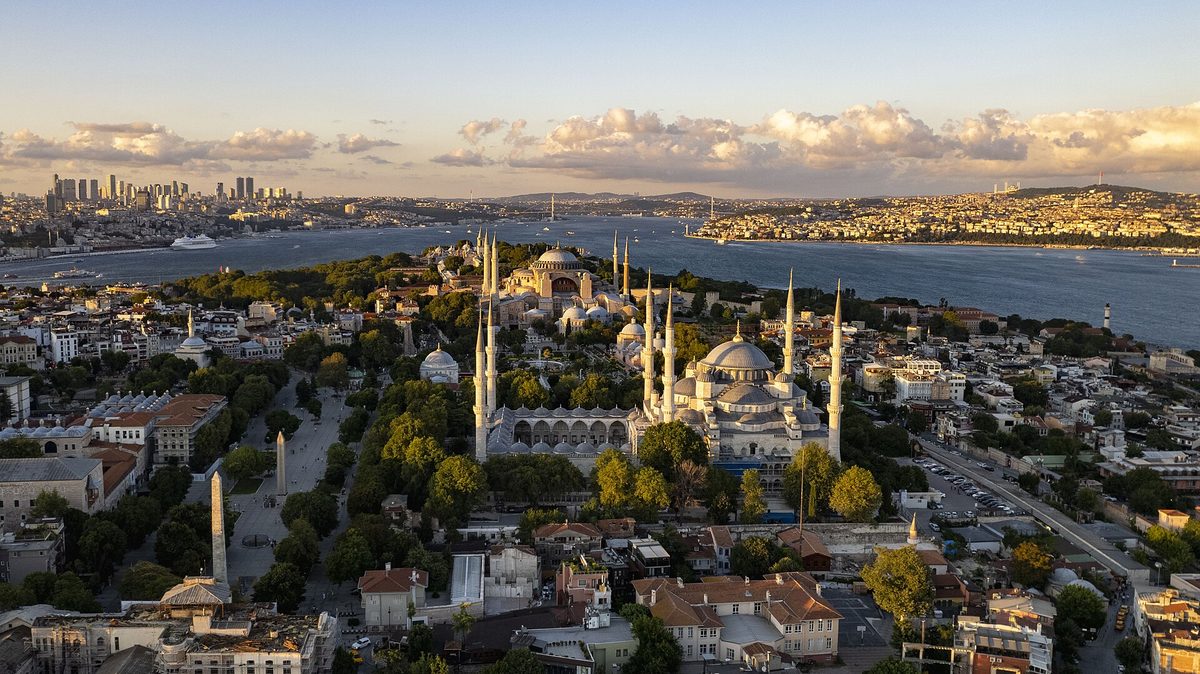
Welcome to my turkey travel guide — and let me begin with the moment this country won me over. The first time I crossed the Bosphorus by ferry — tea in a tulip glass, gulls wheeling over the wake, the minarets of the old city on one shore and the apartment blocks of Asia on the other — I understood why Turkey gets under people’s skin. You are, quite literally, sailing between two continents for the price of a bus ticket. Then a few days later I was standing in a cold pre-dawn field in Cappadocia watching a hundred balloons lift into a pink sky, and I gave up trying to be measured about the place.
This turkey travel guide is the honest, practical version I wish I’d had on that first trip: where to go, when to come, what things cost in 2026, how the entry rules actually work, and which famous sights earn their hype versus which ones I’d skip. Turkey straddles southeastern Europe and western Asia, and its biggest city, Istanbul, sits on both — which is exactly why it belongs in your wider Europe planning, especially if you’re already eyeing a Greek island hop next door.
Turkey at a glance
Here’s the snapshot I’d tape to the inside of your planning notebook. Prices are approximate for 2026 and — given how fast the Turkish lira moves — worth re-checking close to your trip.
| Essential | The short version |
|---|---|
| Currency | Turkish lira (₺ / TRY). High inflation, so quote prices loosely and pay in lira for the best rate. |
| Language | Turkish. English is common in tourist areas; a few words of Turkish go a long way. |
| Entry (most visitors) | US, UK, Irish and most EU citizens enter visa-free for up to 90 days. Some nationalities need an e-Visa (~US$50). Not in the EU or Schengen. |
| Best time | Spring (Apr–Jun) and autumn (Sep–Nov). Summer is hot and busy; winter is quiet and atmospheric. |
| Daily budget | Budget ~€30–55, mid-range ~€100–150, luxury €200+. Roughly 40–60% cheaper than Western Europe. |
| Classic first trip | Istanbul + Cappadocia (+ Ephesus/Pamukkale or the coast), 7–12 days. |
| Getting around | Cheap domestic flights (Turkish Airlines, Pegasus, AJet) for long hops; comfy intercity buses; Istanbulkart in the city. |
| Plugs & power | Type C/F, 230V — same as most of mainland Europe. |
Is Turkey worth visiting? (My honest take)
Yes — and it’s one of the few destinations I recommend almost without caveats. Few countries pack this much variety into one trip: a 1,500-year-old cathedral-turned-mosque, otherworldly volcanic valleys you explore on horseback or by balloon, Greco-Roman ruins that rival anything in Italy, turquoise coves that hold their own against the best beaches in Europe, and food that I’d put in my personal top three anywhere on earth.
It’s also a place where your money goes a long way right now. The weak lira means a mid-range trip here costs a fraction of what the same week would run you in Italy or France — which is why Turkey keeps showing up on lists of the cheapest places to travel in Europe. Add warm, genuinely hospitable people and an easy domestic flight network, and you have a destination that punishes you only for not staying longer.
Who is it not for? If you need everything to run on Swiss timetables, or you want a purely beach-flop holiday with no culture-shock, you might find Turkey a little loud and a little chaotic in the best way. Come with an open mind and an empty memory card.
Is Turkey in Europe or Asia? Why it belongs in your Europe trip
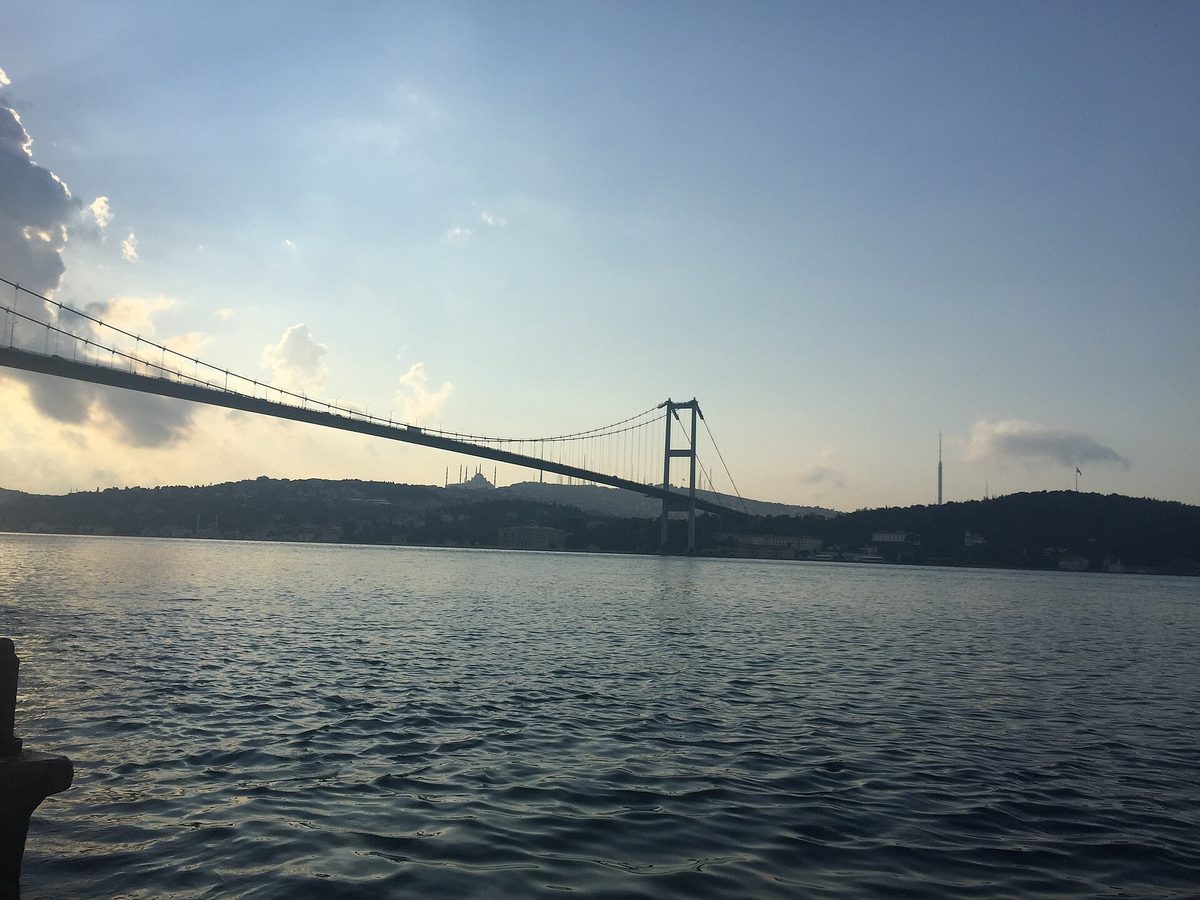
Both. About 3% of Turkey’s landmass — eastern Thrace, including roughly half of Istanbul — sits in Europe, west of the Bosphorus strait; the rest, the vast Anatolian peninsula, is in Asia. Istanbul is the only major city in the world that spans two continents, and crossing between them on a commuter ferry is one of travel’s great cheap thrills.
For trip-planning purposes, this makes Turkey a natural extension of a European holiday rather than a separate expedition. It pairs beautifully with Greece — short ferries link the Greek islands to the Turkish coast (Rhodes–Marmaris, Kos–Bodrum, Lesvos–Ayvalık, Chios–Çeşme), so a Greece-and-Turkey combo is very doable. And because Turkey is not in the Schengen Area, your days here don’t burn into the 90-in-180 Schengen allowance — a genuinely useful quirk if you’re stitching together a long, slow trip across the continent. I get into the practicalities of all of that below; if you’re still mapping the bigger picture, our guide to how to plan a trip to Europe is a good companion piece.

When is the best time to visit Turkey?
For most travelers, spring (April to early June) and autumn (mid-September to November) are the sweet spots: warm days, cool evenings, manageable crowds, and the best light for photos. Summer brings beach weather but also heat and peak prices on the coast; winter is cold inland but quiet, cheap, and — in Cappadocia under snow — genuinely magical. Turkey is a big country with several climates, so the “best” month depends on what you’re chasing.
| Season | What it’s like | Good for |
|---|---|---|
| Spring (Apr–Jun) | Mild, green, blossom; occasional spring showers. Istanbul tulips peak in April. | Sightseeing, Cappadocia balloons, ruins, city breaks. My top pick. |
| Summer (Jul–Aug) | Hot and dry; coast is buzzing and pricey; inland sites (Ephesus, Cappadocia) can scorch. | Beaches, Aegean and Mediterranean resorts, boat trips. |
| Autumn (Sep–Nov) | Warm sea, softer light, thinning crowds. One of the loveliest times to travel. | Coast + culture combined, hiking, photography. |
| Winter (Dec–Mar) | Cold and sometimes snowy inland; Istanbul is cool and atmospheric; lowest prices. | Snow-dusted Cappadocia, cheap city breaks, fewer tourists. |
A few timing notes from experience. Cappadocia balloon flights are weather-dependent year-round and get cancelled more often in winter — build a buffer day if floating over the fairy chimneys is non-negotiable. The coast (Antalya, Bodrum, Fethiye) is glorious from June to September but books out and charges accordingly in August. And the shoulder months are when Turkey feels like the best deal in the region — the same logic that drives our wider advice on the best time to visit Europe. For a month-by-month deep dive specific to the country, our best time to visit Turkey guide breaks it down region by region.
How many days do you need in Turkey?
Turkey rewards time, but you can get a real taste in a week. My rule of thumb: 5 days minimum (basically Istanbul plus one other region), 7–10 days for a satisfying first trip, and two weeks or more if you want to add the coast or venture east. Distances are large — Istanbul to Cappadocia is a 1.5-hour flight, not a day trip — so the secret is to fly the long legs and slow down once you’re in a region.
A classic 10-day first-timer’s route
This is the loop I steer most first-timers toward, and the one the tour operators run for good reason:
- Days 1–3 — Istanbul. Sultanahmet’s big hitters, a Bosphorus ferry, the bazaars, and at least one meal on the Asian side in Kadıköy.
- Days 4–5 — Cappadocia. Fly into Kayseri or Nevşehir. A sunrise balloon, the Göreme Open-Air Museum, an underground city, and a sunset over the valleys.
- Day 6 — Pamukkale. The white travertine terraces and the ruins of Hierapolis above them.
- Days 7–8 — Ephesus & the Aegean. One of the best-preserved ancient cities anywhere, plus the village of Şirince and a night in laid-back Selçuk or coastal Kuşadası.
- Days 9–10 — Antalya & the coast. Old-town Kaleiçi, a Mediterranean beach, or a Blue Cruise day boat before flying home.
Short on time? Cut Pamukkale and the coast and do a tight Istanbul–Cappadocia five-day version. Got two weeks? Add Fethiye and the Lycian coast, or Bodrum. I’ve laid out several versions — including budget and slower-paced ones — in our dedicated Turkey itinerary, and a focused Istanbul itinerary if the city is all you have time for. If Turkey is one leg of a bigger continental trip, our Europe itinerary guide shows how to slot it in.
Where to go in Turkey: the regions worth your time
Rather than rank a flat list of “top 20 sights,” here’s how I think about the country region by region — what each place is really for, and who should prioritise it. For a fuller rundown of standout spots beyond the headliners, see our guide to the best places to visit in Turkey.
Istanbul: the two-continent city you can’t skip
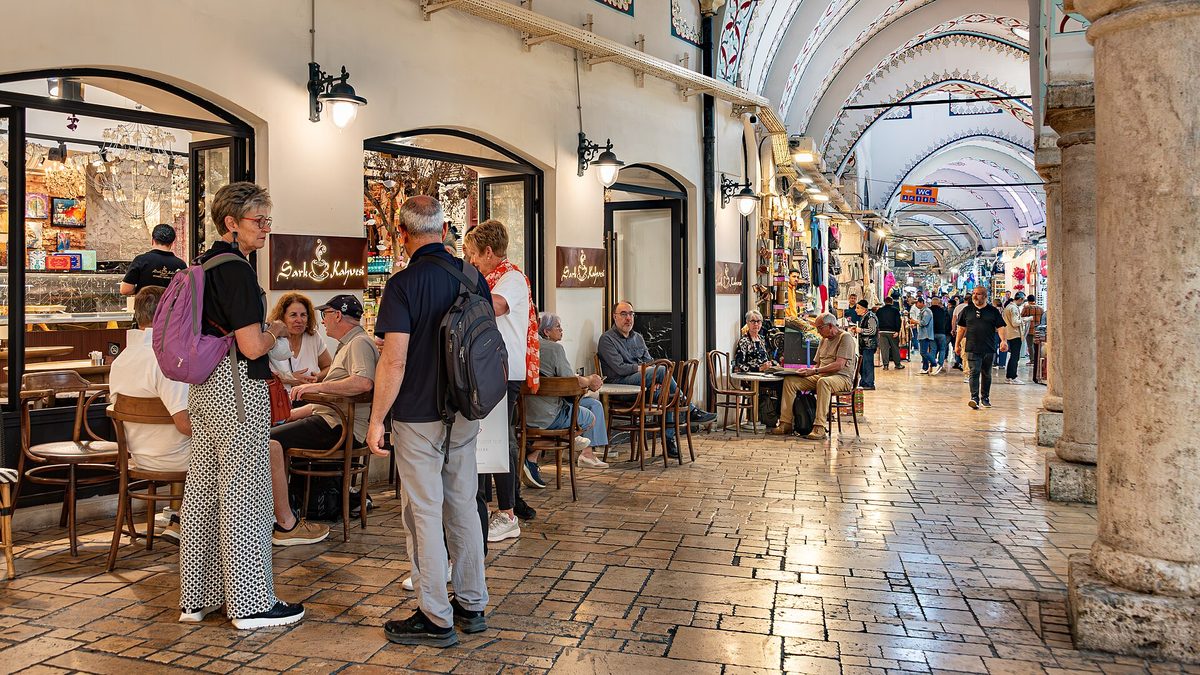
Istanbul is the reason many people fall for Turkey, and almost every trip starts or ends here. The historic heart, Sultanahmet, holds the heavy hitters within a ten-minute walk of each other: Hagia Sophia, a 1,500-year-old marvel that has been church, mosque, museum and — since 2020 — a working mosque again; the Blue Mosque with its cascade of domes and six minarets; the sprawling Topkapı Palace of the Ottoman sultans; and the cool, columned Basilica Cistern underground. Lose an afternoon in the Grand Bazaar and the fragrant Spice Bazaar, then cross the Galata Bridge — fishermen’s rods bristling over the rail — to the cafés and the Galata Tower in Beyoğlu.
But the Istanbul I love most is the everyday one: a Bosphorus commuter ferry at golden hour, a fish sandwich (balık ekmek) by the water in Eminönü, the hip cafés and produce market of Kadıköy on the Asian side, and the rainbow houses of Balat. Give it three days minimum. There’s far more than I can fit here, so I’ve put the full rundown in our things to do in Istanbul guide — and because the city makes a brilliant standalone long weekend, it’s a regular on our list of the best European city breaks.

Practical heads-up on tickets (2026): Hagia Sophia’s ground floor remains free for worship, but foreign visitors now pay €25 for the timed “visiting area” upstairs, where the Byzantine mosaics are — children under 8 go free. Topkapı Palace runs around ₺2,750 (roughly €55) for the combined palace-plus-Harem ticket, and note the Museum Pass Istanbul is great value for several sites but does not cover Hagia Sophia. Dress modestly for mosques: shoulders and knees covered, shoes off, and a scarf for women’s heads (loaners are usually available).
Cappadocia: balloons, fairy chimneys and cave hotels
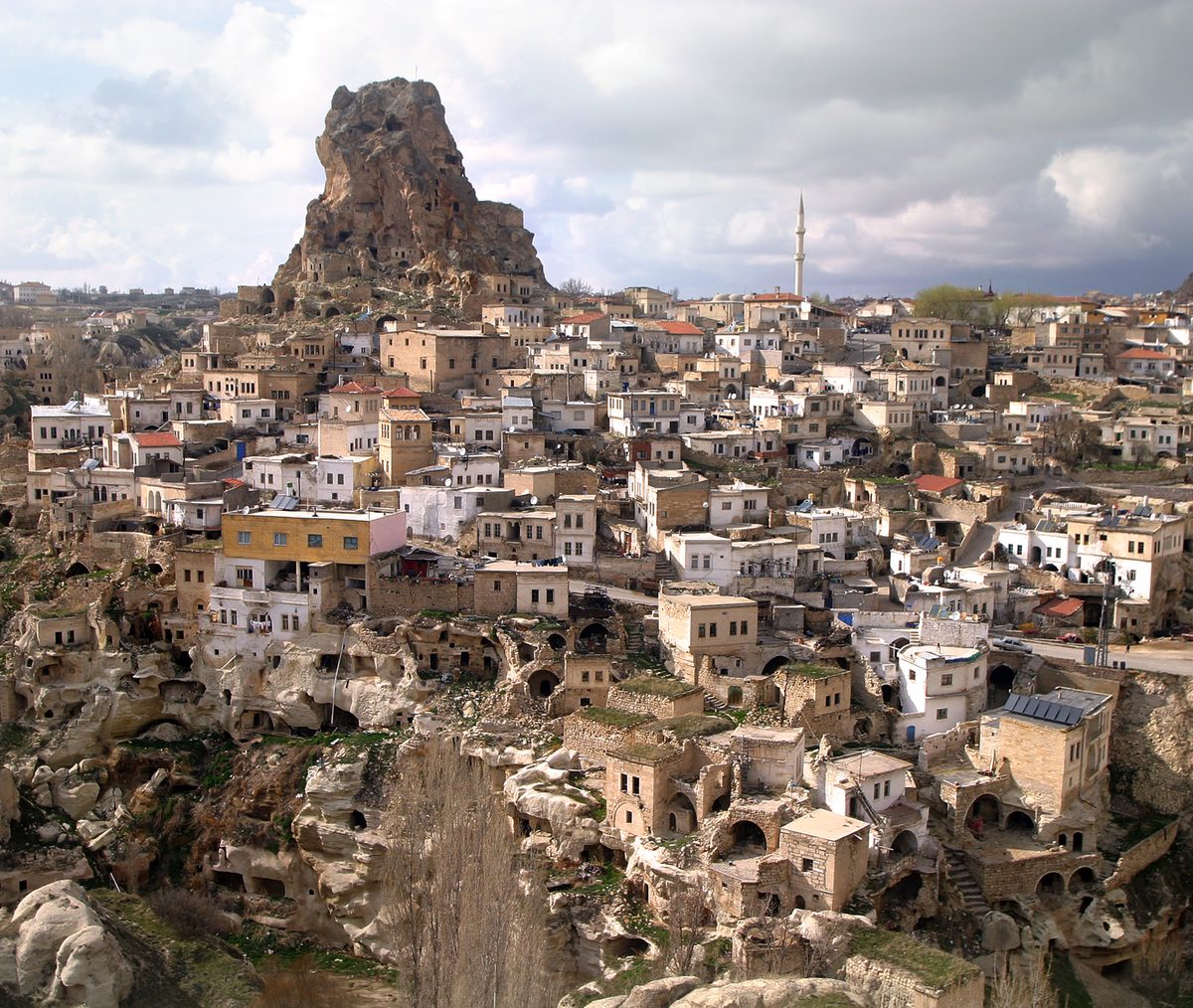
If Istanbul is the city you can’t skip, Cappadocia is the landscape you’ll never forget. Centuries of erosion carved the soft volcanic tufa into spires, cones and “fairy chimneys,” and people have been tunnelling homes, churches and entire underground cities into the rock for millennia. Base yourself in Göreme (most central, best for first-timers), Uçhisar (quieter, with the best castle-rock views) or boutique Ürgüp, and sleep in a cave hotel at least one night — it’s touristy and completely worth it.
The marquee experience is the sunrise hot-air balloon flight: drifting over the valleys as hundreds of balloons rise around you is as good as the photos promise. Expect to pay roughly €100–150 in the quiet months and €200–300 in peak season for a standard one-hour flight, including hotel transfer and the customary post-landing toast. Flights are weather-dependent and cancel often, so book early in your stay to allow a second chance. On the ground, don’t miss the rock-cut churches of the Göreme Open-Air Museum, a hike through the Rose or Ihlara valleys, and a descent into the Derinkuyu or Kaymaklı underground city. Our full Cappadocia travel guide covers which valley hikes are worth it and how to choose a reputable balloon operator.
Ephesus and the Aegean coast: ruins and easygoing villages
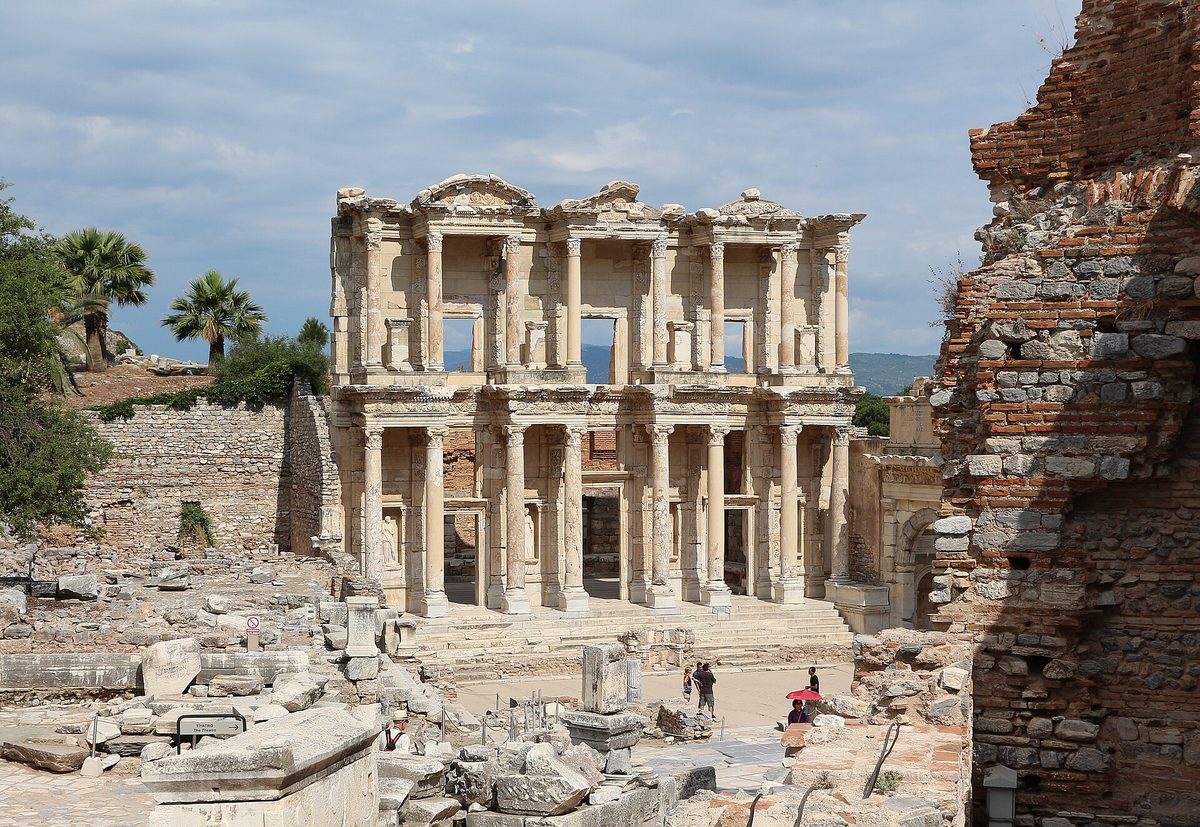
On the west coast, Ephesus is the showpiece — one of the best-preserved ancient cities in the Mediterranean, where you walk marble streets between the towering façade of the Library of Celsus, a 25,000-seat theatre, and the frescoed Terrace Houses. Come early or late to dodge the cruise-ship crush and the midday heat. Base yourself in the workaday town of Selçuk (closest, with its own castle and the ruins of the Temple of Artemis) or the pretty hillside wine village of Şirince nearby. The Aegean coast around here is gentler and more Greek-feeling than the Mediterranean — whitewashed villages, olive groves, and ferries that hop across to the Greek islands, which is why I often suggest pairing this leg with our Greece travel guide.
Pamukkale: the cotton castle
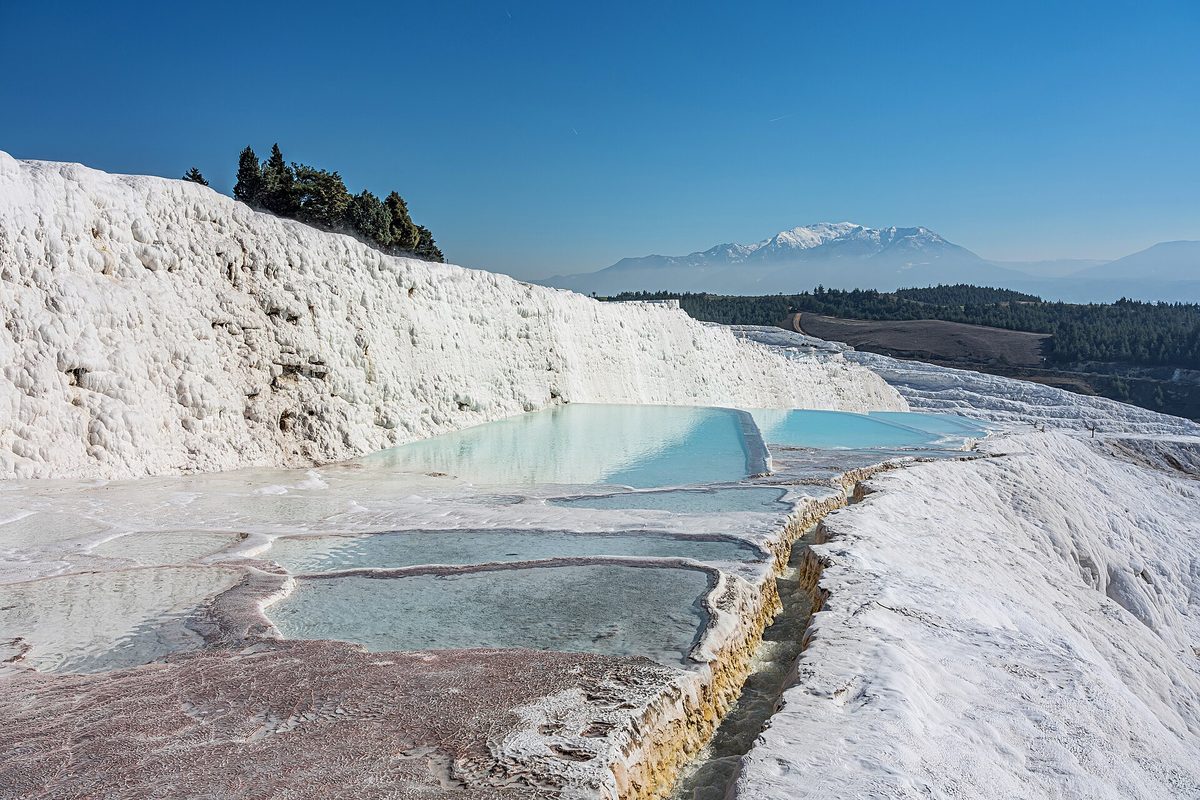
Pamukkale — “cotton castle” — is the surreal cascade of brilliant-white travertine terraces filled with warm, mineral-blue pools, formed over millennia by calcium-rich springs. You walk it barefoot (shoes off to protect the surface), and above the terraces sprawl the ruins of the Roman spa town of Hierapolis, where you can swim among submerged ancient columns in the Antique Pool. It’s busy and a touch over-photographed, but standing in those terraces at sunset is a genuine bucket-list moment. Most people visit as a day trip or an overnight from the coast or en route between Cappadocia and Ephesus.
Antalya and the Turquoise Coast: beaches with a side of ruins
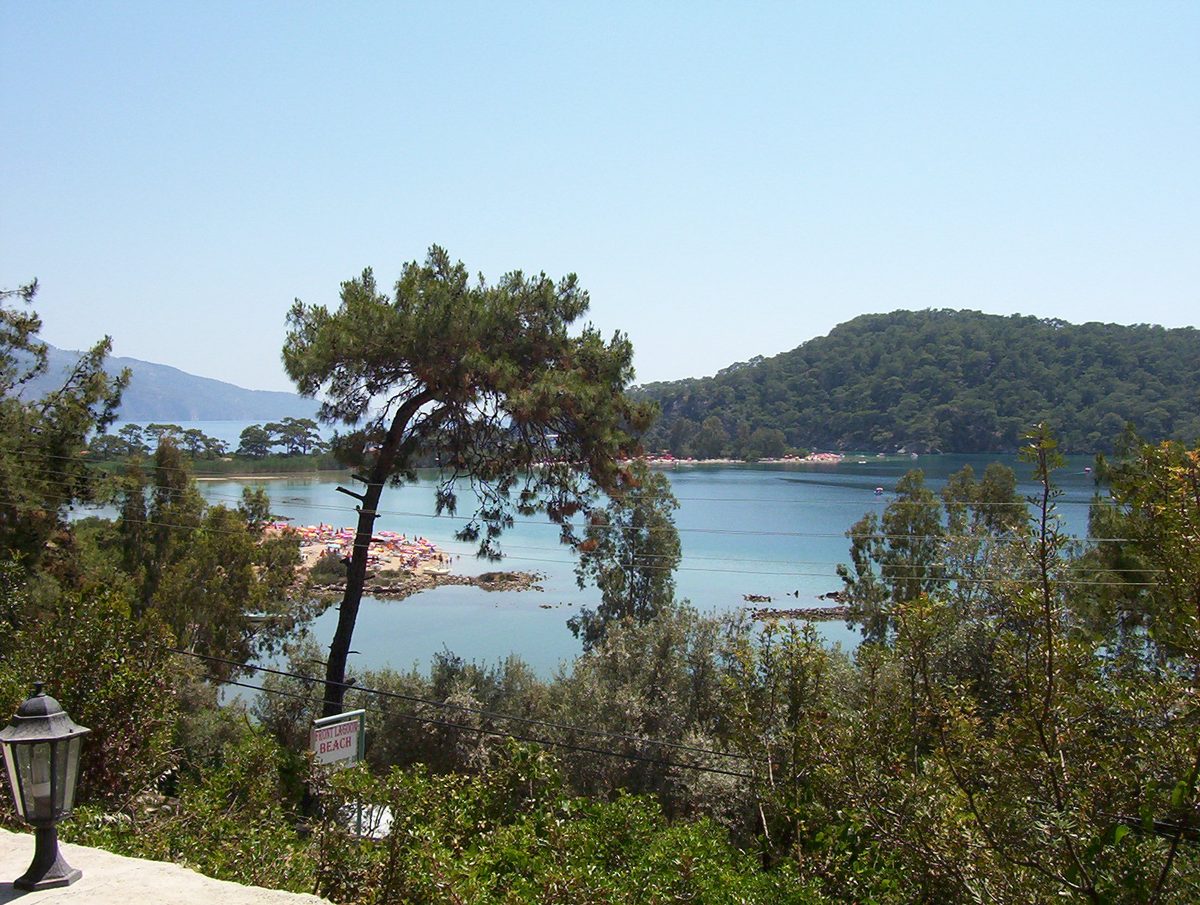
The Mediterranean coast — the “Turquoise Coast” — is where Turkey does sun, sea and sailing, and it’s the part that competes directly with anywhere on the Med. Antalya is the gateway: a big, lively city with a charming Ottoman old town (Kaleiçi), Roman gates, and beaches on its doorstep, plus the spectacular Greco-Roman ruins of Aspendos and Perge within easy reach. West from there you hit the prettiest stretches: Kaş, a low-key diving and kayaking town; Ölüdeniz, with its postcard Blue Lagoon and tandem paragliders drifting down off Babadağ mountain; and Fethiye, the launch point for “Blue Cruise” gulet sailing trips along the Lycian shore.
This coast is also strung with the Lycian Way, one of the world’s great long-distance walks, and ruins that sit right on the beach (Patara, Olympos). For where to stay and which resort town suits your style, our Antalya travel guide goes deep — and if you’re coast-hunting more widely, these shores feature in our roundup of the best beaches in Europe.
Bodrum and the Aegean resorts
Further north on the Aegean, Bodrum is Turkey’s glossiest resort scene — a yacht-filled bay beneath a Crusader castle, whitewashed streets, beach clubs, and a nightlife reputation to match. It’s more polished (and pricier) than the Lycian coast, popular with both Turkish and international holidaymakers, and an easy add-on if you want a few days of pure unwind after the ruins and balloons. Nearby Marmaris and the Datça peninsula offer quieter, more scenic alternatives.
Beyond the classics
If you’ve been before or want to go deeper, Turkey keeps giving. The eastern highlands hold the giant stone heads of Mount Nemrut at sunrise and the world’s oldest known temple at Göbekli Tepe near Şanlıurfa. The Black Sea coast around Trabzon is green, misty and utterly different — think cliff-clinging monasteries and tea plantations. And the battlefields of Gallipoli and the ruins of Troy on the Dardanelles make a sobering, fascinating detour between Istanbul and the Aegean. These are second- or third-trip territory for most, but worth knowing they’re there.
How much does a trip to Turkey cost in 2026?
Turkey is one of the best-value destinations within reach of Europe right now. Thanks to the weak lira, the same quality of trip costs roughly 40–60% less than in Western Europe — a sit-down dinner that’s €40 in Rome might be €15 here. Here’s a realistic per-person daily budget, excluding international flights:
| Style | Per day (pp) | What it buys |
|---|---|---|
| Backpacker | ~€30–55 | Hostel dorm (€10–15), street food and lokanta meals (€3–7), public transport, the occasional paid sight. |
| Mid-range | ~€100–150 | Comfortable 3–4★ hotel or cave room, restaurant meals, a balloon flight or two amortised, domestic flights, guided tours. |
| Luxury | €200–300+ | Boutique and 5★ stays, private guides and transfers, fine dining, premium experiences. |
Some real-world price anchors I’d budget around in 2026: a full meal at a lokanta (local canteen) €3–7; a mid-range restaurant dinner with a drink €10–18; an upscale Istanbul meal €25–50; a domestic flight booked a couple of weeks out €20–40; a sunrise balloon €100–300 depending on season; Hagia Sophia’s gallery €25; a night in a decent mid-range hotel €50–125. Backpackers can comfortably do Turkey on a tight budget — it slots neatly into our Europe on a budget and backpacking Europe playbooks.
Money tips: the lira, cards and the DCC trap
A few things that’ll save you money and hassle. Always pay in lira, not euros or dollars — many tourist businesses will happily quote and charge in foreign currency, but the rate they use is usually poor. Cards are widely accepted in cities and resorts; carry some cash for bazaars, small lokantas and rural areas. At ATMs and card terminals, decline “dynamic currency conversion” (the offer to charge in your home currency) and choose Turkish lira every time — it’s one of the most common ways travelers quietly overpay. Because inflation moves fast here, treat every price in this guide as a ballpark and check current rates before you go. For broader money strategy across the continent, our travel tips cover cards, cash and tipping.
Do you need a visa for Turkey? Entry rules for 2026
Good news for most readers: entry is straightforward, and easier than it used to be. Turkey is not a member of the EU or the Schengen Area, so it sets its own rules and its own currency — and crucially, time spent here doesn’t count against your Schengen 90/180 allowance.
- United States citizens: visa-free for tourism since 1 January 2024 — no more e-Visa. You can stay up to 90 days within any 180-day period.
- UK and Irish citizens: visa-free since 2020, up to 90 days in 180.
- Most EU citizens (Germany, France, the Netherlands, Italy, Spain, Scandinavia and more): visa-free, up to 90 days in 180.
- Some nationalities still need an e-Visa — apply online at the official portal evisa.gov.tr. It takes minutes and costs around US$50; a handful of nationalities also need a supporting Schengen/US/UK visa or residence permit.
Two important caveats. First, rules change — always confirm your own nationality’s status on the official e-Visa site before you travel, and beware copycat websites that charge a hefty “service fee” on top. Second, your passport should be valid for at least 150 days from your date of arrival and have a blank page for the stamp. Entry-stamp rules differ from the EU’s new EES and ETIAS systems — those apply to Schengen countries, not to Turkey — so don’t conflate the two when you’re planning a multi-country trip.
Getting around Turkey
Turkey is large — Istanbul to the eastern highlands is the better part of a continent — so the golden rule is fly the long legs and slow down within regions. The good news is that domestic transport is cheap, frequent and surprisingly comfortable.
Domestic flights
Three airlines do the heavy lifting: Turkish Airlines (the full-service flag carrier with the widest network), and the budget pair Pegasus and AJet. Book two to four weeks ahead and Istanbul–Cappadocia, Istanbul–Izmir or Istanbul–Antalya hops can cost as little as €20–40. Note that Istanbul has two airports: vast Istanbul Airport (IST) on the European side, the main international hub, and Sabiha Gökçen (SAW) on the Asian side, favoured by budget carriers — check which one your flight uses, because they’re an hour-plus apart.
Buses and trains
Turkey’s intercity coaches are a genuine pleasure: modern, air-conditioned, with WiFi, personal screens and an attendant pouring tea and water down the aisle. Reputable companies include Pamukkale, Metro and Kamil Koç, and overnight routes can save you a hotel night. For rail, the high-speed YHT trains link Istanbul, Ankara and Konya comfortably, though the network doesn’t yet reach the tourist coast. If you love the romance of the rails elsewhere, our train travel in Europe guide is the companion read — just know Turkey leans on planes and buses more than trains.
Cities, taxis and car hire
In Istanbul, buy an Istanbulkart (around ₺70 with starting credit) the moment you land — it works on the metro, tram, bus, ferry and the Marmaray tunnel under the Bosphorus, and saves over 30% versus single tickets. For taxis anywhere in the country, use the BiTaksi or Uber apps (Uber dispatches licensed yellow taxis) so the meter and the route are honest. Renting a car makes sense for the coast and for exploring Cappadocia’s valleys at your own pace, but it’s pointless — and stressful — in Istanbul itself. For the bigger picture on transport passes and border-hopping, see our overview of getting around Europe.
Eating and drinking in Turkey
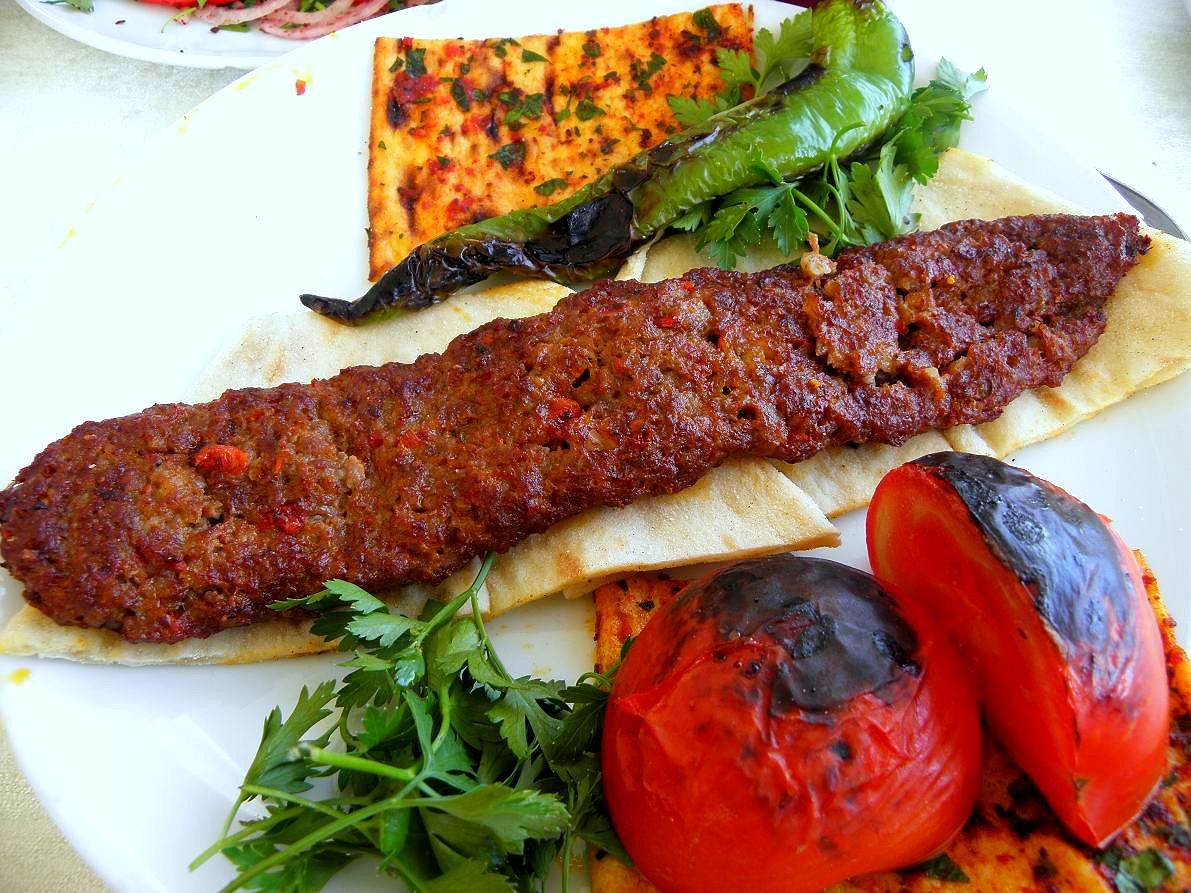
I’ll say it plainly: Turkish food is one of the great cuisines, and eating your way through the country is reason enough to come. Breakfast (kahvaltı) alone is a spread to write home about — cheeses, olives, tomatoes, honey, clotted cream, eggs, bread and endless tea. Beyond the familiar kebabs (try a smoky Adana, or the tomato-and-yoghurt-drenched İskender), seek out mezze spreads, pide and lahmacun (Turkey’s answer to pizza), flaky börek, mantı (tiny dumplings under garlicky yoghurt), grilled fish by the water, and street snacks like simit (sesame rings) and balık ekmek (fish sandwiches).
Save room for sweets: baklava, cheese-filled künefe, and lokum (Turkish delight) from a proper confectioner. Drinks are their own ritual — çay (black tea in tulip glasses) flows constantly, Turkish coffee is thick, strong and UNESCO-listed, and the national spirit is anise-flavoured rakı, sipped with mezze and water. Alcohol is legal and available (Turkey is a secular republic), though it’s taxed and pricier than you might expect, and more discreet in conservative areas. Tap water isn’t recommended for drinking — stick to bottled.
Turkey by traveler type
How you’ll experience Turkey depends a lot on who you are and who you’re with. A few tailored pointers:
First-timers
Stick to the well-trodden Istanbul–Cappadocia–coast triangle, fly between regions, and don’t over-schedule — Turkey is a place to linger over tea, not tick boxes. Hire a local guide for Ephesus and the Istanbul palaces; the context transforms them.
Couples
Few places do romance like a cave hotel in Cappadocia with a private terrace and a balloon at dawn, or a gulet cruise along the Lycian coast. Boutique stays in Istanbul’s Beyoğlu or a sunset-facing room in Uçhisar are easy wins. It’s no surprise Turkey features in our Europe honeymoon ideas.
Families
Kids tend to love Turkey: balloon rides and underground cities feel like a real-life adventure, the coast has gentle beaches and boat trips, and Turkish hospitality extends warmly to children. Portions are generous and the pace is relaxed. Our Europe with kids guide has more on travelling the wider region with little ones.
Solo travelers (and solo women)
Turkey is a rewarding and broadly safe place to travel solo, including for women — plenty do it every day, especially on the popular routes. Dress a little more modestly away from the resorts, be firm and polite with persistent vendors or unwanted attention, choose well-reviewed lodging, and you’ll find the country welcoming rather than intimidating. For more on going it alone across the continent, see our solo travel in Europe guide.
Budget travelers and backpackers
Your money goes a very long way here. Hostels are cheap and social, lokanta food is delicious and a few euros a plate, intercity buses are comfortable, and even the splurges (a balloon, a Blue Cruise) are affordable by Western-European standards. It’s one of the best-value runs in the region.
Luxury travelers
At the top end, Turkey overdelivers: world-class hotels in restored Ottoman mansions, private yacht charters, hammam spa rituals, and private guides for a fraction of what equivalent service costs in much of Europe. For where each type of traveler should base themselves, our accommodation guide is a useful frame.
Is Turkey safe to visit?
For the regions covered in this guide, yes — Turkey is a safe and welcoming destination, and the tourism hubs of Istanbul, Cappadocia, Antalya, Bodrum and the Aegean coast are well developed and well policed. Millions of visitors travel here every year without incident. As always, the honest answer comes with a few sensible caveats.
Earthquakes. Turkey is seismically active. The devastating February 2023 earthquake struck the southeast (Hatay, Gaziantep, Adıyaman) — regions that are not on standard tourist itineraries — and the main tourist areas were unaffected. Licensed hotels are built to seismic codes; it’s worth a glance at where the exits are, but this shouldn’t deter your trip.
Border regions. Government travel advisories consistently warn against the southeastern areas bordering Syria and Iraq. None of these are anywhere near the Istanbul–Cappadocia–coast routes, so this is easy to avoid in normal trip planning — but always check your own country’s current advisory before booking.
Scams and petty theft. The risks in tourist zones are the usual ones: overpriced or meterless taxis (use the apps), pushy carpet and “let me show you my shop” hustles, the occasional inflated bar bill in Istanbul’s nightlife streets, and pickpockets in crowds. Keep your wits about you in the bazaars and on the tram, agree prices before you accept anything, and you’ll be fine.
Culture and etiquette: what to know before you go
Turkey is a secular republic with a predominantly Muslim culture, and a little awareness goes a long way toward warmer encounters. None of this is onerous — Turks are forgiving of honest mistakes — but it helps to know the rhythms.
- Mosques: dress modestly (covered shoulders and knees; women cover their hair), remove your shoes, keep your voice down, and avoid visiting during the five daily prayer times, especially the busy Friday midday prayer. Scarves and wraps are usually available to borrow at the door.
- The call to prayer rings out five times a day from the minarets — an atmospheric soundtrack, including a pre-dawn one that can surprise light sleepers near a mosque.
- Bargaining is expected in the bazaars and for souvenirs, taxis without meters, and some markets — do it with good humour. It’s not done in regular shops, supermarkets or restaurants.
- Tipping (bahşiş) is customary: round up or leave about 5–10% in restaurants, and a little for hotel staff and guides.
- Ramadan: during the holy month, some restaurants in conservative areas adjust hours, though tourist zones carry on largely as normal. It’s a fascinating time to visit, with festive evening iftar meals.
- Language: Turkish is the language; English is widely spoken in tourist areas but thins out fast in rural regions. Learn merhaba (hello) and teşekkürler (thank you) — the goodwill it earns is real.
What I’d skip — and other honest advice
A few candid opinions after several trips. I’d skip the hard-sell carpet “tours” that some guides steer you into — buy a rug only if you genuinely want one and have compared prices. I’d not bother trying to see the whole country in one trip; the distances defeat you and you’ll spend the holiday in transit. I’d be wary of the cheapest balloon operators — this is one place to pay for safety and reviews, not to pinch pennies. And I’d resist doing Pamukkale and Ephesus as a single rushed day trip from the coast; each deserves an unhurried half-day.
On the flip side, the things I’d always do: take at least one Bosphorus ferry, eat on the Asian side of Istanbul, sleep in a Cappadocian cave, and say yes to the glass of tea a shopkeeper offers — it usually comes with no obligation and the best conversations of the trip. For more country-agnostic wisdom on packing, scams and etiquette across the region, our Europe travel tips and the broader best places to visit in Europe hub are worth a look.
Turkey travel guide: frequently asked questions
Is Turkey worth visiting?
Absolutely. Few countries combine this much — world-class historic cities, surreal landscapes like Cappadocia, Greco-Roman ruins, a stunning coastline and some of the best food anywhere — at such good value. Right now the weak lira makes it one of the most affordable rewarding trips within reach of Europe. For most travelers, Turkey punches well above its price.
Do US citizens need a visa to visit Turkey?
No. Since 1 January 2024, US passport holders can enter Turkey visa-free for tourism and stay up to 90 days within any 180-day period — the old e-Visa requirement was scrapped. UK, Irish and most EU citizens are also visa-free. Some other nationalities still need an e-Visa from the official site, evisa.gov.tr. Always confirm your own status before travelling.
Is Turkey safe to visit in 2026?
For the main tourist regions — Istanbul, Cappadocia, the Aegean and Mediterranean coasts — yes. These areas are well developed and see millions of visitors a year. Avoid the southeastern border zones near Syria, use taxi apps to dodge scams, and check your government’s current advisory. Turkey is also broadly safe for solo and female travelers on popular routes.
What is the best time to visit Turkey?
Spring (April–June) and autumn (September–November) are ideal almost everywhere: warm, uncrowded and good for both sightseeing and the coast. Summer is hot and busy but best for beaches; winter is cold inland yet atmospheric, with snow-dusted Cappadocia and the lowest prices. Shoulder season is my pick for the best balance.
How many days do you need in Turkey?
Five days covers Istanbul plus one other region; seven to ten days makes a satisfying first trip combining Istanbul, Cappadocia and either Ephesus/Pamukkale or the coast; two weeks lets you add the Turquoise Coast or venture further east. Because distances are large, fly the long legs and slow down within each region.
Is Turkey expensive for tourists?
No — it’s one of the best-value destinations near Europe. The weak lira means costs run roughly 40–60% below Western Europe. Budget travelers manage on €30–55 a day, mid-range trips around €100–150, with even splurges like balloon flights and yacht cruises affordable by European standards. Pay in lira and decline currency conversion for the best rates.
Is Turkey in Europe or Asia?
Both. A small but significant slice of Turkey — eastern Thrace, including about half of Istanbul — lies in Europe, while the larger Anatolian peninsula is in Asia. Istanbul is the only major city spanning two continents, divided by the Bosphorus strait. That cross-continental position is a big part of the country’s appeal.
What are the best things to do in Turkey?
The classics earn their fame: explore Istanbul’s Hagia Sophia, palaces and bazaars; float over Cappadocia by balloon at dawn; walk the ancient streets of Ephesus; wade Pamukkale’s white terraces; and unwind on the Turquoise Coast. Add a Bosphorus ferry, a hammam, a cave-hotel night and a long Turkish breakfast for the full experience.
Do they speak English in Turkey?
In tourist areas — Istanbul, Cappadocia, the resort coasts and major sights — English is widely spoken and you’ll get by easily. In rural areas and smaller towns it thins out, so a translation app and a few Turkish phrases help. Learning merhaba (hello) and teşekkürler (thank you) earns genuine warmth.
Can you drink alcohol in Turkey?
Yes. Turkey is a secular country and alcohol is legal and available in restaurants, bars and shops, from local rakı and Efes beer to Turkish wine. It’s taxed, so it’s pricier than you might expect, and consumed more discreetly in conservative neighbourhoods and the religious east. In Istanbul and the resort towns, the bar and nightlife scene is lively.
Final thoughts
Turkey is the rare destination that’s both bucket-list spectacular and genuinely easy — and, for now, remarkably good value. You can stand inside a 1,500-year-old wonder in the morning, float over a moonscape at dawn the next day, and end the week with your feet in a turquoise sea, all on a budget that would barely cover a long weekend in Paris. Come with curiosity and a loose schedule, say yes to the tea, and give yourself longer than you think you’ll need. I’ve never met anyone who came back from Turkey wishing they’d stayed home — only people already plotting their return.
Safe travels — and afiyet olsun.
About the author: Hannah Brooks is Senior Europe Editor at EuropeanTourism.org. She has spent fifteen years traveling and writing across Europe and the eastern Mediterranean, from the Greek islands to the valleys of Cappadocia, and focuses on practical, first-hand guidance that helps travelers plan smarter trips.
Last updated: June 2026. Prices, opening hours and entry rules change — please verify current details with official sources (the Turkish e-Visa portal evisa.gov.tr, Go Türkiye, and individual sites) before you travel.
Photo credits
All images are used under their respective licences via Wikimedia Commons:
- Istanbul’s historic skyline in this turkey travel guide, with the Blue Mosque, Hagia Sophia and the Bosphorus at sunset — Photo: Hunanuk / CC0 via Wikimedia Commons.
- A hot air balloon at sunrise over the valleys of Cappadocia, Turkey — Photo: MusikAnimal / CC BY-SA 4.0 via Wikimedia Commons.
- The Hagia Sophia and its courtyard fountain in Istanbul, Turkey — Photo: ImanFakhri / CC BY-SA 4.0 via Wikimedia Commons.
- Cave houses and rock formations in the Cappadocian town of Ortahisar — Photo: Brocken Inaglory / CC BY-SA 3.0 via Wikimedia Commons.
- The Library of Celsus at the ancient city of Ephesus, Turkey — Photo: Bernard Gagnon / CC BY-SA 3.0 via Wikimedia Commons.
- The white travertine terraces and blue pools of Pamukkale, Turkey — Photo: A.Savin / FAL via Wikimedia Commons.
- The turquoise water of the Blue Lagoon at Oludeniz on Turkey’s Mediterranean coast — Photo: Jongleur100 / Public domain via Wikimedia Commons.
- The Bosphorus Bridge linking the European and Asian shores of Istanbul — Photo: G. Elgun / CC BY-SA 4.0 via Wikimedia Commons.
- An Adana kebab served with grilled vegetables and flatbread — Photo: Anatolianpride / Public domain via Wikimedia Commons.
- Shoppers in a vaulted arcade of the Grand Bazaar in Istanbul — Photo: Jorge Franganillo / CC BY 4.0 via Wikimedia Commons.
2 comments