Scandinavia Travel: The Complete Nordic Guide for 2026

The first time I took the train out of Oslo toward Bergen, I spent four hours with my nose against the glass, watching the country fold itself into snowfields and frozen lakes and tiny red cabins with no road in sight. Somewhere past Finse I stopped trying to photograph it. That is the thing nobody quite prepares you for about Scandinavia travel: the landscapes are so large and so clean that they rearrange what you think a holiday is for.
I have been coming back ever since – summer and winter, on a journalist’s budget and once, memorably, on someone else’s expense account – and this is the guide I wish I’d had on that first trip. It is long, because Scandinavia is big and the questions are real ones (How much will this actually cost? When do I go for the northern lights? Do I need a car?). Use the table of contents, skip to what you need, and come back when you’re ready to book.
Scandinavia travel in a nutshell
Scandinavia travel means three countries at its core – Norway, Sweden and Denmark – though almost every trip I plan folds in the wider Nordic neighbours, Finland and Iceland. Expect glacier-carved fjords and design-obsessed cities, endless summer daylight or winter aurora, famously high prices softened by a few smart habits, and some of the safest, easiest, most beautiful travelling anywhere in Europe.
This guide is the hub for our whole Nordic section. It links down to deep-dives on the Norway travel guide, the Norwegian fjords, the best things to do in Stockholm and things to do in Copenhagen, hunting the northern lights in Norway, building a Scandinavia itinerary, the best time to visit Norway, and travelling Lapland, Finland. Start here, then dive deeper.
Scandinavia vs the Nordics: what this guide actually covers
Let’s clear up the geography that trips people up, because it changes what you book. Scandinavia, strictly, is the three monarchies that share a closely related language and a peninsula’s worth of history: Norway, Sweden and Denmark. The Nordic countries are a bigger family – those three plus Finland and Iceland (and the autonomous Faroe Islands, Greenland and Åland).
Finnish isn’t even in the same language family as Norwegian and Swedish; it’s a cousin of Estonian and Hungarian. Icelandic, by contrast, is the closest living thing to the Old Norse the Vikings actually spoke. Culturally, though, the five hang together – same flag design, same social model, same love of coffee, candles and being outdoors in weather that would send the rest of us indoors.
I’m writing this as a practical “Scandinavia & the Nordics” guide, because in the real world you’ll cross those borders without thinking about them. A Copenhagen–Stockholm–Oslo loop is “Scandinavia”; add Helsinki by overnight ferry or Reykjavík by a cheap flight and you’re doing “the Nordics”. Both are covered below.
The five Nordic countries at a glance
Here’s how I describe them to friends who only have one trip in them and want to know where to point it. Costs are rough daily mid-range budgets per person excluding flights; “best for” is what each country does better than its neighbours.
| Country | Currency | Best for | Signature experience | Mid-range €/day | Go for |
|---|---|---|---|---|---|
| Norway | Krone (NOK) | Scenery, fjords, the Arctic | Fjord cruise + the Flåm railway | €150–220 | Fjords, hiking, northern lights |
| Sweden | Krona (SEK) | Cities, design, value | Stockholm’s archipelago by boat | €110–170 | First-timers, the best price-to-Scandinavia ratio |
| Denmark | Krone (DKK) | Hygge, food, cycling | Renting a bike in Copenhagen | €120–190 | Short city breaks, design, families |
| Finland | Euro (€) | Lakes, sauna, Lapland | A wood-fired sauna by a frozen lake | €110–170 | Winter, Santa, getting off the trail |
| Iceland | Króna (ISK) | Raw nature, waterfalls, geysers | Driving the Ring Road | €150–230 | Road trips, otherworldly landscapes |
If you take one thing from that table: Sweden and Finland are the soft landing for your wallet, Norway and Iceland are where you’ll spend the most and gasp the most, and Denmark is the easy, joyful city break that doesn’t feel like a wilderness expedition. For a wider sense of when each shines, our guide to the best time to visit Europe sets the seasons in context.
Norway: fjords, the Arctic and the reason most people come
If you only have headspace for one Nordic country, make it Norway. Nowhere in Europe packs scenery this dramatic into a single nation: more than a thousand fjords, the Lofoten Islands stacked like green sharks’ teeth out of the sea, and an Arctic north where the sun either never sets or never rises depending on when you turn up.
Oslo and the cities
Most trips start in Oslo, and I used to dismiss it as a place to leave quickly. I was wrong. The waterfront has been transformed – the Opera House you can walk up like a marble glacier, the new Munch museum, the Astrup Fearnley by the harbour. Give it a day and a half. A single-trip transit ticket is around 42 NOK (about €3.60), and the Oslo Pass pays off fast if you hit two or three museums.

Bergen and the fjord gateway
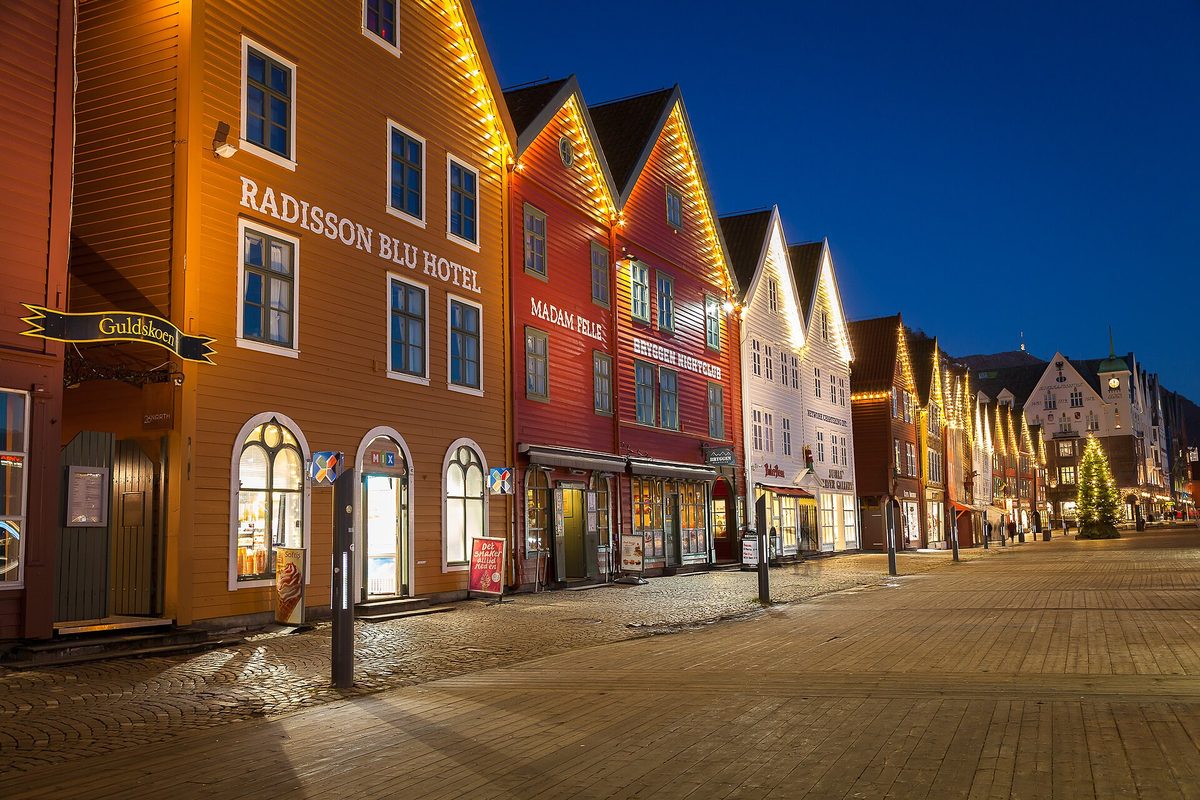
Bergen, seven hours west by one of Europe’s prettiest train lines, is the classic launch pad for the western fjords. Walk the crooked wooden Bryggen wharf (a UNESCO site), ride the Fløibanen funicular for the view, and brace for rain – Bergen gets around 230 wet days a year and locals are cheerfully unbothered. From here the Norwegian fjords open up: the Nærøyfjord, the Geirangerfjord with its Seven Sisters waterfall, the Sognefjord reaching 200km inland.
The Arctic north: Tromsø and Lofoten
Fly north and Norway changes character. Tromsø, 350km above the Arctic Circle, is the easy base for winter aurora and summer midnight sun, with enough bars and a cathedral-sized cable-car view to keep the days busy. Lofoten is my own favourite corner of the country – fishing villages painted ox-blood red, white-sand beaches you’d swear were tropical until you dip a toe in. It’s worth the effort to get there. Our full Norway travel guide breaks down each region, and if aurora is your goal, the northern lights in Norway guide covers exactly where and when.
Money note: Norway is the most expensive country in the region. A beer in a Bergen bar runs 100–130 NOK (€8.50–11); a basic hotel double in summer is rarely under €140. It’s worth it, but plan accordingly – more on costs below.
Sweden: the best-value way into Scandinavia
Sweden is where I send nervous first-timers, because it gives you the full Scandinavian hit – cool cities, forest, water, design – for noticeably less money than Norway. It’s also the easiest to reach and the most varied: you can be in a buzzing capital one morning and paddling a silent lake by evening.
Stockholm
Stockholm is built across fourteen islands and it shows; the city feels half water. Spend your first morning lost in Gamla Stan, the ochre-and-rust old town, then give a full afternoon to the Vasa Museum, where a 17th-century warship that sank on its maiden voyage stands almost completely intact – it’s the single most impressive museum I’ve seen anywhere in the Nordics. In summer, hop a cheap commuter ferry into the archipelago (24,000 islands) for the price of a transit ticket. There’s far more in our dedicated things to do in Stockholm guide.

Beyond the capital
Gothenburg on the west coast is Sweden’s likeable second city – seafood, a pretty canal-laced centre and one of the best Christmas markets in the north. For wilderness, Swedish Lapland and the original Icehotel at Jukkasjärvi sit far up north, a quieter and cheaper aurora alternative to Norway. A glass of wine in Stockholm runs around 110–140 SEK (€9.50–12) – pricey by European standards, gentle by Nordic ones.
Denmark: hygge, design and the easiest city break
Denmark is the flattest, mildest and most immediately likeable of the three Scandinavian countries, and Copenhagen might be the perfect long-weekend city. If your time is short and you want one effortless hit of the region, this is it – it slots neatly into our roundup of European city breaks.
Copenhagen
Copenhagen runs on bikes and hygge – that hard-to-translate Danish cosiness of candles, coffee and good company. Rent a bike (the city is gloriously flat), photograph the painted houses of Nyhavn, ride a rollercoaster at the 180-year-old Tivoli Gardens, and eat your way through Reffen street-food market and a smørrebrød lunch. Copenhagen has more Michelin stars than anywhere in the region, but a cardamom bun from a bakery is the cheaper religious experience. Our things to do in Copenhagen guide has a full itinerary.

Beyond Copenhagen
Cross the spectacular Øresund Bridge and you’re in Sweden in 35 minutes – a lot of people do Copenhagen and Malmö as a two-country day. North of the capital, the Louisiana Museum of Modern Art on the coast is worth the train ride for the building and sculpture garden alone. Over in Jutland, Aarhus is the cool, student-fuelled second city with the rainbow-rimmed ARoS art museum.
Finland: lakes, sauna and the magic of Lapland
Finland is the Nordic country people skip and then wish they hadn’t. It’s quieter, weirder and warmer-hearted than its reputation, with 188,000 lakes, a national obsession with the sauna (there are more saunas than cars), and the single best winter experience in the region.
Helsinki and the south
Helsinki is a handsome Baltic capital of granite and sea, with a design district worth a day and a ferry culture that makes day trips easy – including the overnight boat to Stockholm and a quick hop to Tallinn in Estonia. The Finnish capital uses the euro, which after the kroner of its neighbours feels almost relaxing for the wallet.
Lapland
The reason to come, though, is the north. Finnish Lapland is where winter does everything you imagined: husky sledding, reindeer herders, glass igloos under the aurora, and Rovaniemi, the “official” hometown of Santa Claus, straddling the Arctic Circle. I’ve done a wood-fired sauna and then run into the snow there, which I recommend exactly once. Our Lapland, Finland guide covers the practicalities – and yes, it’s a brilliant trip with kids, which is why it features in our Europe with kids planning.

Iceland: the Nordic outlier worth the detour
Iceland isn’t Scandinavian – it’s Nordic, and geologically it’s a different planet: a young volcanic island sitting on the mid-Atlantic ridge, where the landscape steams, erupts and freezes, sometimes in the same afternoon. It’s an easy add-on, with cheap flights from the mainland and a stopover programme from North America.
Base yourself in Reykjavík, the world’s northernmost capital, then choose your nature hit: the Golden Circle (Þingvellir’s continental rift, the Geysir hot springs, Gullfoss waterfall) for a day trip, or the full Ring Road for a week of waterfalls, black-sand beaches and glacier lagoons. The Blue Lagoon is the famous soak, but I prefer the cheaper local pools. Our complete Iceland travel guide plans the whole thing.

Scandinavian food and drink: what to actually eat
Nordic food has gone from punchline to pilgrimage in a generation – this is the region that gave us New Nordic cuisine and, for years, the world’s best restaurant in Copenhagen’s Noma. You don’t need a tasting menu to eat well, though. Here’s what I order, country by country.
- Denmark: smørrebrød, the open rye sandwich piled with pickled herring, prawns or roast beef, is lunch done perfectly. Finish with a cardamom or cinnamon snail from a bakery – Danish pastry on home soil is a different food.
- Sweden: do a proper fika (coffee and a cinnamon bun, treated as a daily ritual), try Swedish meatballs with lingonberry where they’re made fresh, and brave the herring in summer. Toast Skagen – prawns on fried bread – is my reliable order.
- Norway: seafood is the star – salmon, Arctic cod, shrimp straight off the boat in Bergen’s fish market. Brown cheese (brunost) on a waffle divides opinion; try it once.
- Finland: cinnamon buns (korvapuusti), creamy salmon soup (lohikeitto), and Karelian pasties. In Lapland you’ll meet sautéed reindeer with mashed potato and lingonberry – better than it sounds.
- Iceland: the famous lamb soup and a humble hot dog (pylsur) with crispy onions that Icelanders queue for. The fermented shark is a dare, not a meal.
Two universal tips. First, the bakery is your budget’s best friend – a coffee and a bun is a few euros and a cultural experience in one. Second, alcohol is pricey and oddly regulated (see the tips above), so if you enjoy a drink, the supermarket beer aisle in Denmark or duty-free on arrival saves a fortune over bars.
Best time to visit Scandinavia
There is no single best time – the region runs two completely different shows. Summer is the land of the midnight sun; winter is darkness, snow and the aurora. Pick your trip around which one you actually want, because they barely resemble each other.
| Season | Months | What it’s like | Best for | Crowds & price |
|---|---|---|---|---|
| Summer | Jun–Aug | Long days (midnight sun in the north), mild, everything open | Fjords, hiking, archipelagos, city life | Peak – busiest and priciest |
| Shoulder | May, Sep | Cooler, fewer people, autumn colour or spring green | Best value, photography, hiking | Lower – my sweet spot |
| Aurora season | Late Sep–Mar | Dark, cold, snowy north; long nights | Northern lights, husky sledding, ski | High in Lapland at Christmas/Feb |
| Deep winter | Dec–Feb | Polar night up north, festive cities | Christmas markets, sauna, snow | Spikes at Christmas, quiet otherwise |
For most first-timers I say June or early September. June gives you those absurd 20-hour days without the August peak; September brings autumn colour, lower prices and the first chance of aurora. If your dream is the northern lights, you need darkness – aim for the window from late September to late March. And if it’s festive sparkle you’re after, the region’s Christmas markets are among the prettiest in Europe, with Copenhagen’s Tivoli leading the pack.

Northern lights in Scandinavia: where and when
Chasing the aurora is the number-one winter reason people come, and it’s worth managing expectations: the lights are a forecast, not a timetable. You need three things to line up – darkness, clear skies and solar activity – so you stack the odds by going north, going in winter, and giving yourself several nights, not one.
The prime band runs across Arctic Norway (Tromsø, Alta, the Lofoten Islands), Swedish Lapland (Abisko, whose micro-climate gives famously clear skies, and Kiruna), and Finnish Lapland (Rovaniemi, Saariselkä). The season is roughly late September to late March, with the darkest, most reliable months being December through February. Tromsø is the easiest big-city base – you can have dinner, then join a minibus chase that drives until it finds clear sky. Build in three nights minimum; I’ve had a blank first night turn into a curtain of green on the third.

Scandinavia travel tips I wish I’d known sooner
A handful of small things change how smoothly a Nordic trip goes. These are the Scandinavia travel tips I find myself repeating to everyone before they fly.
- Carry almost no cash. This is the most cashless corner of the planet. In Sweden especially, many cafés and buses are card- or app-only and will look at your banknotes with mild alarm. A contactless card or phone covers 99% of everything.
- Five countries, four currencies. Norway (NOK), Sweden (SEK) and Denmark (DKK) each keep their own krone/krona; Finland is on the euro; Iceland uses the króna (ISK). Don’t bother buying euros for a Norway trip – just tap your card and let your bank do the conversion.
- English is everywhere. Younger Scandinavians speak excellent English and are happy to use it. Learn “tack” / “takk” / “tak” (thank you) and you’ve covered the social basics.
- Alcohol is taxed hard and sold strangely. Outside Denmark, strong drink comes from state monopoly shops – Systembolaget in Sweden, Vinmonopolet in Norway, Alko in Finland – with limited hours and none on Sundays. Buy ahead, and consider your duty-free allowance on the way in.
- Tipping is relaxed. Service is included; rounding up or 5–10% for a great meal is plenty. Nobody chases you down the street.
- Tap water is superb – among the best in the world. Carry a bottle and never buy it.
- Dress in layers, even in July. Nordic summer weather swings from T-shirt to wind-cheater in an hour, and the north is genuinely cold. Our Europe packing list has a full Scandinavia section, but the headline is: waterproof shell, warm mid-layer, proper shoes.
- It’s exceptionally safe. Violent crime is low, infrastructure is superb and solo travel is genuinely easy – one reason the region scores so well in our guide to solo travel in Europe.
One more, on entry: all five countries are in the Schengen Area, so a single short-stay allowance covers the lot. From late 2026 many visa-exempt visitors will also need an ETIAS travel authorisation – check the official EU page for the current go-live date before you book, as the timeline has shifted before.
How much does Scandinavia travel cost?
Let’s talk money honestly, because “Scandinavia is expensive” is true but lazy. It’s expensive the way a nice restaurant is expensive – the base price is high, but you control the bill more than you think. Here’s a realistic per-person daily budget, excluding international flights.
| Style | Per day (€) | Lodging | Food | How it feels |
|---|---|---|---|---|
| Backpacker | €70–100 | Hostel dorm, camping | Supermarket + self-catering | Doable, disciplined, still beautiful |
| Mid-range | €130–200 | 3-star hotel / good Airbnb | Lunch deals + one dinner out | Comfortable, the sweet spot |
| Comfort | €250–400+ | Design hotel | Restaurants, fjord cruises, tours | The full glossy version |
The biggest swing is food and drink. Restaurant dinners run €25–45 for a main; alcohol is the budget killer (a Norwegian bar beer can hit €10). The fix locals use is the dagens lunch – a fixed lunch special, often €12–16 including coffee – plus supermarkets (Rema 1000, Lidl, ICA, Netto) where a hot-counter meal or a serious open sandwich costs a few euros. I eat one proper restaurant meal a day and graze cheaply around it.
Where to save: travel in shoulder season; use city tourist cards if you’ll hit several museums; book trains and the budget airlines (Norwegian, SAS deals) early; pick Sweden and Finland over Norway and Iceland when you can; and self-cater breakfast. Done well, the region rewards exactly the habits in our Europe on a budget playbook, and the long-haul approach in our backpacking Europe guide. For where the smart-value beds are, see the full accommodation breakdown.
Getting around: trains, ferries, flights and the great fjord railways
The good news: public transport here is clean, punctual and beautiful, and you rarely need a car if your trip is city-led. The Nordic capitals are linked by fast trains and short flights, and the journeys themselves are part of the holiday.
Trains and the scenic lines
The Oslo–Bergen railway is one of the world’s great rides, and the Flåm railway (Flåmsbana) that branches off it – a steep, twisting plunge past waterfalls to a fjord-head village – is the single most beautiful hour of track I’ve travelled in Europe. The famous “Norway in a Nutshell” route stitches train, the Flåmsbana and a fjord cruise into one day. For the bigger picture of rail across the continent – passes, reservations, night trains – see our guides to train travel in Europe and getting around Europe.

Ferries, flights and cars
Overnight ferries are a Nordic institution – Stockholm–Helsinki and Copenhagen–Oslo both run comfortable cabin boats that double as your hotel and save a night’s lodging. The coastal Hurtigruten up Norway’s coast is a bucket-list voyage in its own right. Short-hop flights (SAS, Norwegian, Finnair) are essential for reaching the Arctic – book early and they’re cheap. A rental car earns its keep only when scenery is the point: the fjords, Iceland’s Ring Road, Lapland’s back roads. In the cities it’s a parking headache you don’t need.
How long do you need? Sample Scandinavia itineraries
Scandinavia rewards time, but you can get a real taste in a week. Here’s how I’d shape a trip depending on how many days you have; for a day-by-day version, see our dedicated Scandinavia itinerary.
- One week (cities): Copenhagen (2) → train/flight to Stockholm (2) → Oslo (2), adding the Flåm day if you can. Three capitals, easy and iconic.
- Ten days (cities + fjords): the above, but slow down in Norway – Oslo → Bergen by rail, a night on the fjords, and a flight up to Tromsø for aurora in winter.
- Two weeks (the grand tour): add Helsinki by overnight ferry and a Lapland leg, or tack on Iceland’s Golden Circle. This is the trip that earns the airfare.
- Winter aurora week: fly straight to Tromsø or Rovaniemi, base there, and chase the lights for 3–4 nights with husky and reindeer days in between.
Wherever you start, this slots neatly into a wider Europe itinerary – many people pair Scandinavia with a few days in Germany or the Baltics on the way in or out.

The Scandinavian outdoors: sauna, the right to roam and friluftsliv
To understand the Nordics you have to understand that being outside isn’t a hobby here, it’s a worldview. The Norwegians call it friluftsliv – “open-air living” – and once you tune into it, half the region’s appeal clicks into place. These are the cultural rituals worth joining.
Sauna culture
In Finland especially, the sauna is closer to a sacred space than a spa treatment. The etiquette is simple: you go in clean, usually naked (single-sex or with swimwear in mixed public ones), sit, sweat, then cool off – under a shower, in a lake, or by rolling in the snow. Don’t rush it, keep your voice low, and accept that the löyly (the burst of steam off the hot stones) is the whole point. A lakeside sauna at dusk is, for my money, the most quietly perfect thing you can do in this part of the world.
The right to roam
Sweden, Norway and Finland enshrine allemansrätten, the “right to roam” – you can walk, forage and wild-camp for a night on most uncultivated land, even private land, as long as you stay clear of homes and leave no trace. It makes hiking and kayaking here gloriously free. Pick berries and mushrooms in autumn, pitch a tent by a fjord, swim off a flat rock – just respect the simple rule: take nothing, damage nothing, leave it as you found it.
Cabins, islands and slow days
The Nordic summer ideal is the hytte or stuga – a simple cabin by water, often with no Wi-Fi and an outdoor sauna. Renting one for a few nights, even near a city, is the most local thing you can do and frequently cheaper than a hotel. Pair it with a cold swim and a slow barbecue and you’ve understood the assignment. It’s also a reminder that the best of Scandinavia travel often costs the least: the light, the water and the silence are free.
First-timer mistakes I see people make
A few honest course-corrections, learned the hard way so you don’t have to.
- Trying to “do” all five countries in a week. The distances are huge – Copenhagen to Tromsø is further than Copenhagen to Rome. Pick two or three and travel them properly; the region punishes the rushed.
- Booking one night for the northern lights. The aurora is weather plus luck. Give it three or four nights in the far north, or you’re gambling a whole trip on a single forecast.
- Underestimating summer crowds and prices. July and August in the fjords and on the Flåm railway are genuinely busy and dear. Shoulder season – late May, June, September – is the quiet, cheaper sweet spot.
- Eating every meal in restaurants. That’s how the “Scandinavia bankrupted me” stories happen. Mix in supermarket lunches and bakery breakfasts and your money stretches twice as far.
- Skipping Finland. It’s the one people cut for time and the one returnees rave about. If winter and wilderness appeal, it might be the best of the lot.
- Not planning around daylight. A December day in the Arctic has a couple of hours of twilight; a June night never goes properly dark. Both are magical – just know which you’re getting. Our guide on how to plan a trip to Europe walks through sequencing it all, and beach-chasers should temper expectations with our best beaches in Europe guide – Nordic sand is stunning, but the swimming is bracing.
Who is Scandinavia for?
Honestly? Almost everyone, but it flatters some travellers more than others.
- Couples get fjord cruises, design hotels and aurora nights – it’s quietly one of Europe’s most romantic regions, which is why it features in our thinking on the continent’s best places to visit.
- Families do brilliantly: Tivoli and Legoland in Denmark, Santa in Lapland, ferries kids love, and an unbeatable safety record.
- Solo travellers find it safe, walkable and easy to navigate in English.
- Outdoors people have hiking, kayaking, skiing and the allemansrätten “right to roam” that lets you wild-camp responsibly almost anywhere.
- Budget travellers can absolutely make it work – it just takes the shoulder-season, supermarket-and-trains discipline above.
Scandinavia travel FAQ
Is Scandinavia expensive to travel?
Yes, it’s among the pricier parts of Europe, with Norway and Iceland the steepest and Sweden and Finland the gentlest. But a mid-range trip runs around €130–200 a day per person, and budget travellers manage on €70–100 by using hostels, supermarket meals, lunch specials and shoulder-season travel. The base cost is high; the final bill is largely in your control.
What is the best month to visit Scandinavia?
June and early September are the all-rounders – long days, mild weather and open everything, without the August peak. For the northern lights, go between late September and March, when nights are dark enough to see them. December to February is coldest but best for snow, aurora and festive cities.
Do you need a car in Scandinavia?
Not for a city-based trip – trains, ferries and short flights link the capitals beautifully and a car is just a parking hassle. Rent one only when scenery is the point: exploring the Norwegian fjords at your own pace, driving Iceland’s Ring Road, or reaching remote corners of Lapland where buses are sparse.
Is Finland part of Scandinavia?
Geographically and linguistically, no – Scandinavia is just Norway, Sweden and Denmark, and Finnish belongs to a different language family. But Finland is firmly one of the five Nordic countries and shares the region’s culture, design and social model, so for travel purposes it absolutely belongs on the same itinerary.
Do they use the euro in Scandinavia?
Only Finland uses the euro. Norway, Sweden and Denmark each keep their own krone/krona (NOK, SEK, DKK) and Iceland uses the króna. The easy news: this is the most cashless region on earth, so you don’t need to change money at all – a contactless card or phone is accepted almost everywhere, and your bank handles the conversion.
How many days do you need in Scandinavia?
A week gives you a satisfying three-capital taste (Copenhagen, Stockholm, Oslo). Ten days lets you add the fjords or a slice of the Arctic. Two weeks is the grand tour – cities plus fjords plus either Finnish Lapland or Iceland. For aurora-focused winter trips, plan a dedicated 4–5 nights in the far north to beat the weather.
Is Scandinavia safe for solo travellers?
Exceptionally. The Nordic countries rank among the safest in the world, with low crime, superb infrastructure, widespread English and a strong solo-travel culture – women travelling alone consistently report feeling comfortable. Normal city sense applies, but this is about as easy and reassuring as independent travel in Europe gets.
Do I need a visa or ETIAS to visit Scandinavia?
All five countries are in the Schengen Area, so one short-stay allowance covers them all. Many visa-exempt visitors (including from the UK, US, Canada and Australia) will additionally need an ETIAS travel authorisation once it launches, expected in late 2026. It’s a quick online form, not a visa – but check the official EU ETIAS page for the current start date before you travel.
Final thoughts
People worry about the cost and the cold, and then they go, and they come back changed by the light – the gold of a midnight-sun fjord or the green of an aurora over the snow. Scandinavia travel asks a bit more of your planning and your wallet than southern Europe does, but it gives back a kind of clean, spacious, deeply civilised beauty you won’t find anywhere else on the continent. Start with one country, do it well, and I’d bet money you’ll be back for the rest. Use the deep-dive guides linked throughout to build your trip, and god tur – have a good journey.
Photo credits
All images are used under their respective licenses via Wikimedia Commons. With thanks to the photographers:
- The Seven Sisters waterfall tumbling into the Geirangerfjord, the postcard image of Scandinavia travel – public domain (CC0) via Wikimedia Commons
- The painted gabled houses and old boats of Nyhavn, Copenhagen’s most photographed canal – CC BY-SA via Wikimedia Commons
- Kvalvika beach framed by sheer peaks in the Lofoten Islands of Arctic Norway – CC BY-SA via Wikimedia Commons
- Kirkjufell mountain and its waterfall in west Iceland, the most northerly of the Nordic countries – CC BY-SA via Wikimedia Commons
- Tivoli Gardens lit up for the Christmas season in Copenhagen, peak hygge weather – CC BY-SA via Wikimedia Commons
- Gamla Stan, the medieval heart of Stockholm, spread across the water – Andy Eick / CC BY 2.0 via Wikimedia Commons (source)
- The Bryggen wharf in Bergen, the classic gateway to the western fjords – Smtunli / CC BY-SA 4.0 via Wikimedia Commons (source)
- Oslo’s Opera House, designed so you can walk right up its marble roof – Pudelek (Marcin Szala) / CC BY-SA 4.0 via Wikimedia Commons (source)
- The aurora over Arctic Norway near Tromso, the easiest big city for northern-lights hunting – Marcelo Quinan / CC BY 2.0 via Wikimedia Commons (source)
- A reindeer in Finnish Lapland, where Sami herders and Santa share the snow – Tauno Lautamatti (CC0) via Wikimedia Commons (source)
- The Flamsbana, the steep little railway that is the highlight of Norway in a Nutshell – Jorge Láscar from Melbourne, Australia / CC BY 2.0 via Wikimedia Commons (source)