Amalfi Coast Travel Guide: Towns, Costs and Getting Around
The first time I drove the Amalfi Coast I got it badly wrong. I picked up a hire car at Naples airport in August, joined the SS163 at about eleven in the morning, and spent four hours learning that my number plate ended in the wrong digit.
This Amalfi Coast travel guide covers all thirteen towns of the Costiera Amalfitana, the 2026 number plate rules that catch out a great many drivers, real fares for the buses and ferries, what everything costs in euros, and the month by month figures that decide when you should actually go.
I want to be straight with you about what this guide is and is not. It is not a list of the ten prettiest viewpoints. It is the practical layer underneath: which town to sleep in, how to move between them without a car, what a sunbed and a ferry and a villa ticket cost this year, and the specific rules that will ruin a day if nobody tells you about them in advance. Every price and date below comes from an operator, a museum or a municipal ordinance, checked in August 2026, and I have said plainly where I could not find an official figure.
What counts as the Amalfi Coast, and what does not
The Costiera Amalfitana is a strip of Campanian coastline roughly 50 kilometres long on the southern side of the Sorrentine Peninsula, running from Positano in the west to Vietri sul Mare in the east, where it meets the Gulf of Salerno. UNESCO inscribed it on the World Heritage List in 1997 as a cultural landscape, which is a useful way to think about it: the terraces, the lemon pergolas and the stacked villages are the heritage, not just the views.
Thirteen municipalities make up the coast. Nine of them touch the water: Positano, Praiano, Conca dei Marini, Amalfi, Atrani, Minori, Maiori, Cetara and Vietri sul Mare. Four sit up in the Monti Lattari behind: Ravello, Scala, Tramonti and Furore, the last of which has a fjord at sea level but a centre several hundred metres up the hill. A fourteenth comune, Agerola, sits on the ridge above and is bundled in with the coast for traffic and transport purposes even though it is not technically part of it.
Sorrento is not on the Amalfi Coast. This matters more than it sounds. Sorrento faces north across the Bay of Naples from the other side of the peninsula, it has a railway station and the Amalfi Coast does not, and it is a different sort of holiday: flatter, cheaper, better connected, and with almost no swimming to speak of. Plenty of people book Sorrento intending to be on the Amalfi Coast and then spend ninety minutes on a bus each way to get there. If that is what you want, fine, but decide it deliberately.
Capri is not on the Amalfi Coast either. It is an island about an hour away by hydrofoil, it has its own prices, its own landing tax and its own crowd, and it is a day trip rather than a base unless you have specifically come for Capri. Positano, Praiano and Amalfi all have direct seasonal ferries to it.
There is no train on the Amalfi Coast. There is one road, the SS163 Amalfitana, and there are boats. That single fact drives almost every planning decision in this guide, so I have given the transport section more space than anything else.
All 13 Amalfi Coast towns at a glance
The nine coastal comuni come first, west to east in the order you meet them driving from Positano toward Salerno, then the four that sit up in the hills behind. The numbering matches the sections below. Pay attention to the steps column: on this coast the difference between a lovely week and a miserable one is often nothing more than how far your room is above the road.
| Town | Type | In one line | Best for | Scheduled ferry stop | Steps | Price level |
|---|---|---|---|---|---|---|
| 1. Positano | Coastal | The vertical postcard. Pink and ochre houses stacked above a pebble beach. | First-timers, couples, photographs | Yes | Severe | High |
| 2. Praiano | Coastal | Positano’s quieter neighbour, strung along the cliff with the best sunsets on the coast. | Value near Positano, sunset watchers | Seasonal Capri boat only | Heavy | Mid |
| 3. Conca dei Marini | Coastal | A handful of white houses above a cove, plus the Emerald Grotto below the road. | Quiet stays, the grotto | No | Heavy | Mid to high |
| 4. Amalfi | Coastal | The working hub of the coast: cathedral, ferry pier, bus terminus, paper mills. | Car-free bases, sightseeing, connections | Yes | Light in the centre | Mid to high |
| 5. Atrani | Coastal | Italy’s smallest comune by area, a ten minute walk around the headland from Amalfi. | Atmosphere without the crowds | Mooring only | Moderate | Mid |
| 6. Minori | Coastal | A small flat resort town with a Roman villa and the coast’s best pastry counter. | Families, pastry, easy walking | Yes | Light | Low to mid |
| 7. Maiori | Coastal | The longest and sandiest beach on the coast, and the flattest town centre. | Families, limited mobility, value | Yes | Minimal | Low |
| 8. Cetara | Coastal | A genuine fishing port that still lands anchovies and makes colatura from them. | Food travellers, quiet evenings | Yes | Light | Low to mid |
| 9. Vietri sul Mare | Coastal | The ceramics town at the eastern gate, ten minutes from Salerno station. | Shopping, cheap sleeps, transport | Yes, plus Marina di Vietri mooring | Moderate | Low |
| 10. Ravello | Hill | Gardens and concerts 350 metres above the sea, with the coast’s best long view. | Gardens, music, calm evenings | No | Light in the centre | High |
| 11. Scala | Hill | The oldest settlement on the coast, facing Ravello across the valley and almost empty. | Walkers, budget stays with a view | No | Moderate | Low to mid |
| 12. Tramonti | Hill | Thirteen scattered hamlets in the Monti Lattari, all wine and pizza and no sea at all. | Food, wine, escaping the coast | No | Moderate | Low |
| 13. Furore | Hill and inlet | A comune with almost no centre, famous for a fjord you drive over rather than into. | A photo stop, terraced vineyards | No | Moderate | Mid |
Price level is relative to the coast itself, not to Italy. The Amalfi Coast is expensive by Italian standards almost everywhere, and its high season now runs from April to November, which means the genuine shoulder season bargain that works so well elsewhere in the country barely exists here. If your budget is the binding constraint, look at cheaper places to travel in Europe before you commit, or plan the coast as three nights inside a longer, cheaper trip.
The nine coastal towns, in the order you meet them
1. Positano: the one everybody comes for
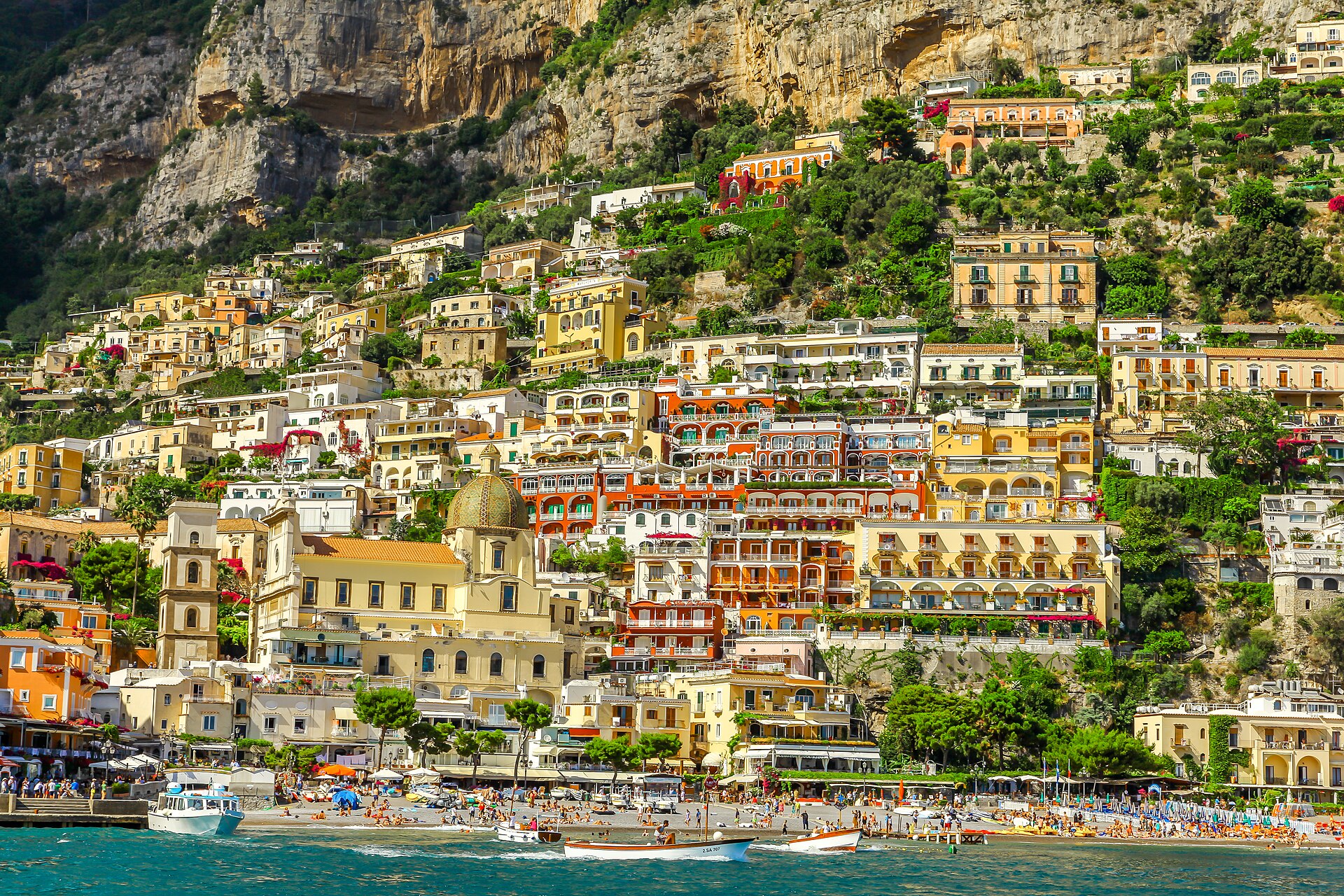
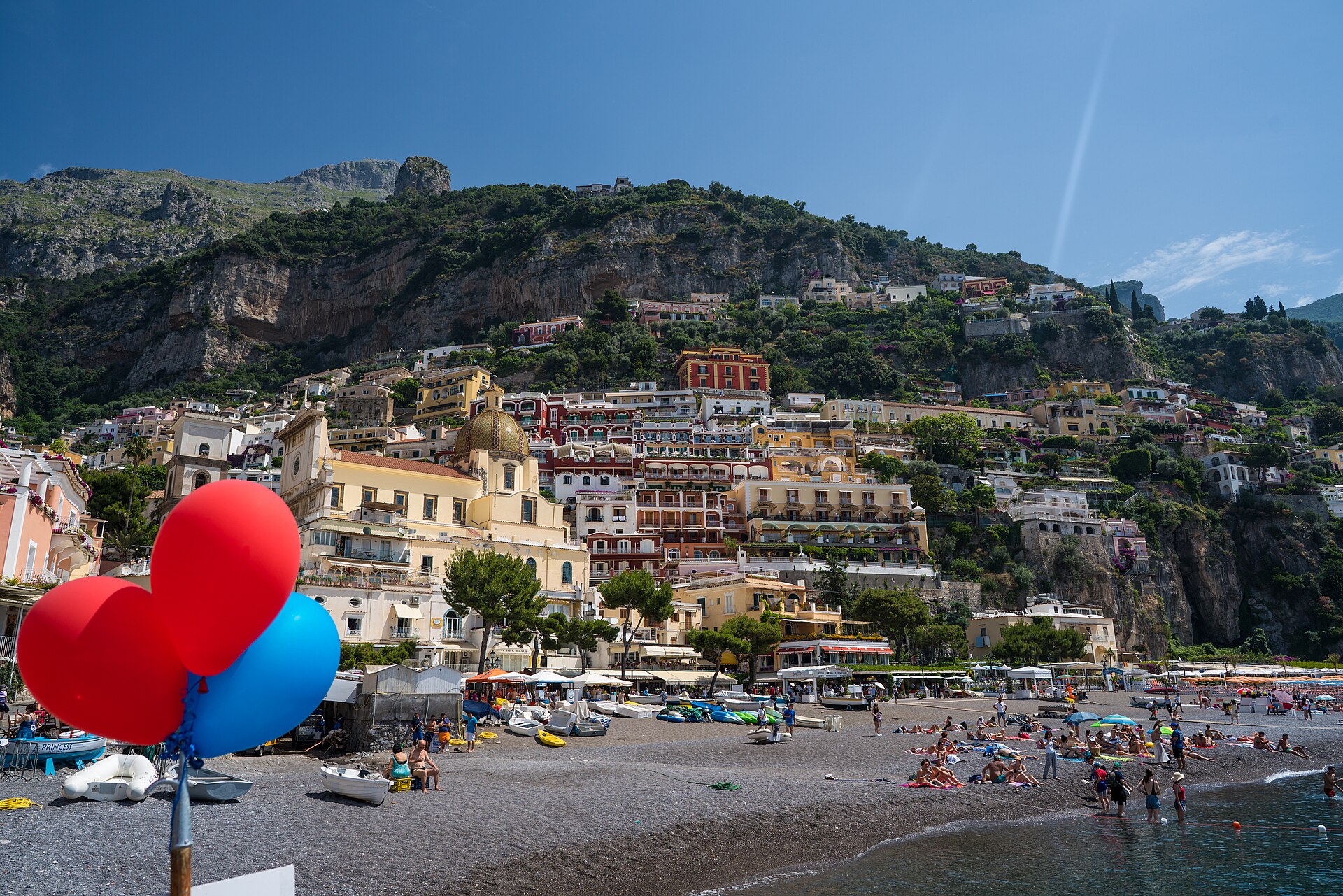
Positano is the image in your head, and it delivers on that image completely. The town pours down a ravine in tiers of pink, apricot and faded ochre, with the majolica dome of Santa Maria Assunta at the bottom and a grey pebble beach below that. Seen from a boat at six in the evening it is one of the most beautiful things in the Mediterranean, and I have never met anyone who was disappointed by the sight of it.
Living in it is a different question. Positano is essentially a staircase with hotels attached. There is no reliable published step count from Piazza dei Mulini down to Spiaggia Grande, and the figures you see quoted vary wildly, but three hundred to four hundred is the range locals give and it feels about right. Everything you do involves climbing back up, in heat, usually carrying something. Taxis cannot reach most addresses. Porters exist and cost money. If you have a knee that complains, or a pushchair, or a suitcase over about fifteen kilos, this is a real constraint rather than a charming quirk.
The beaches are Spiaggia Grande in the middle of town and Fornillo, ten minutes west along a cliff path. Both have a free public section flanked by paid clubs. Spiaggia Grande’s free strip sits in the central part of the beach and fills before eight in the morning in July and August, which is to say before the first ferries land. Fornillo’s free section is at the eastern end, has no facilities, and holds out until about ten. Sunbed prices on the coast generally run around twenty to twenty five euros a day, with front row at Positano’s main beach nearer forty; at the smarter clubs the figures reported for 2026 climb far above that, and at Da Ferdinando on Fornillo a first row pair with an umbrella was quoted at ninety to one hundred and twenty euros depending on the month, with other rows at seventy to eighty. Treat any single number you see online as a starting point and check the club’s own board.
Stay here if: it is your first visit, you are travelling as a couple, and the view is the point of the trip. Do not stay here if: you are on a budget, you have mobility limits, or you are travelling with small children and a lot of luggage.
2. Praiano: the sunset town
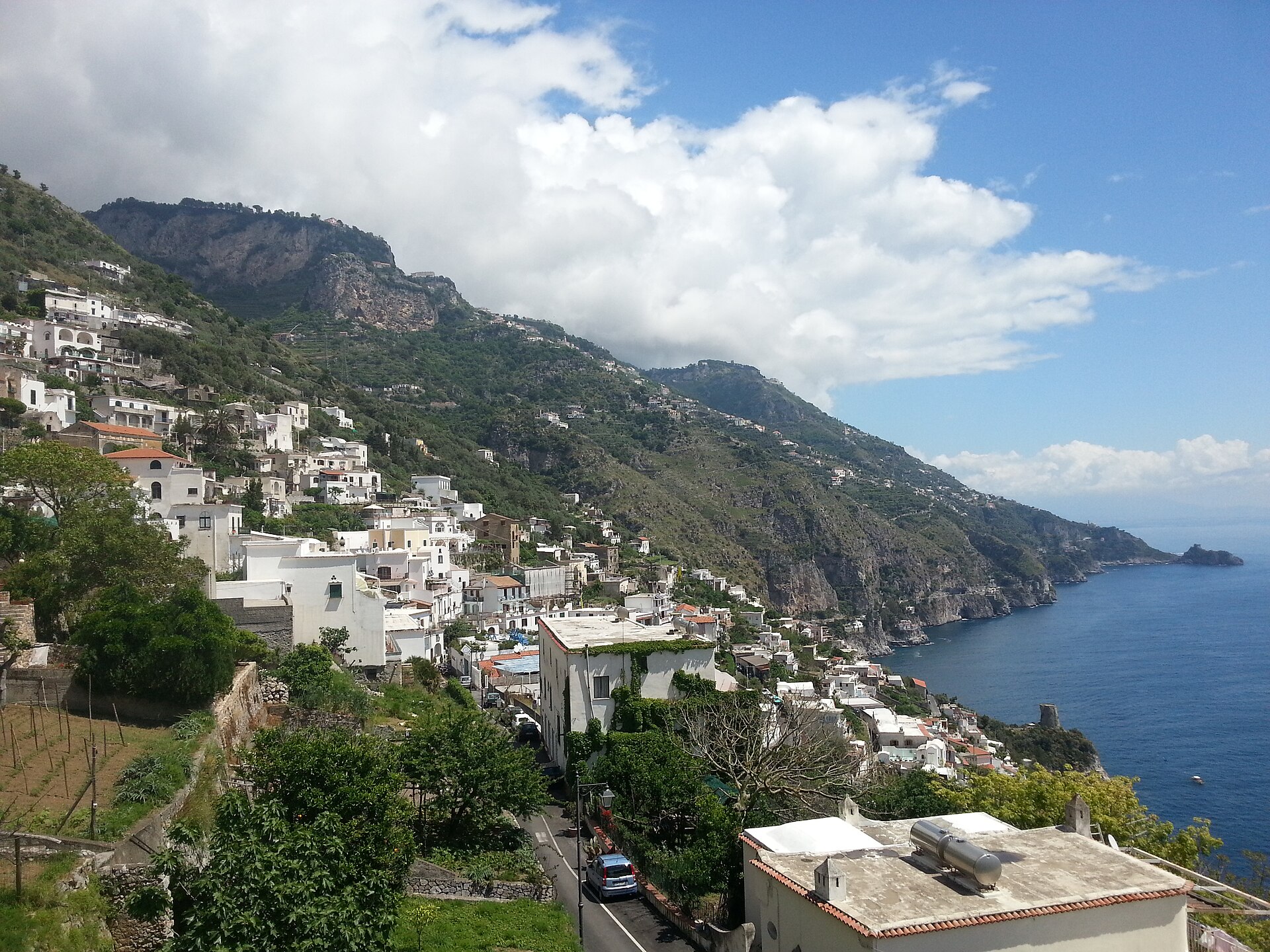
Praiano is four kilometres east of Positano and noticeably cheaper for a comparable room, and it is where I now send people who want Positano’s coastline without Positano’s prices. It is spread thin along the cliff rather than concentrated in a bowl, which means less drama and fewer crowds. Because it faces west it gets the last of the light, and the terrace of San Gennaro at dusk is the single best free thing on the coast.
The catch is that Praiano is not a scheduled stop on the Travelmar network, so for everyday movement along the coast you are dependent on the SITA bus or on private boats, though seasonal boats to Capri do call here. The bus between Positano and Praiano is short and frequent in season. The other catch is the sea access: Praiano’s beaches, Marina di Praia and La Gavitella, both involve a long descent, and La Gavitella in particular is a serious set of steps or a small paid boat shuttle in summer.
3. Conca dei Marini and the Emerald Grotto
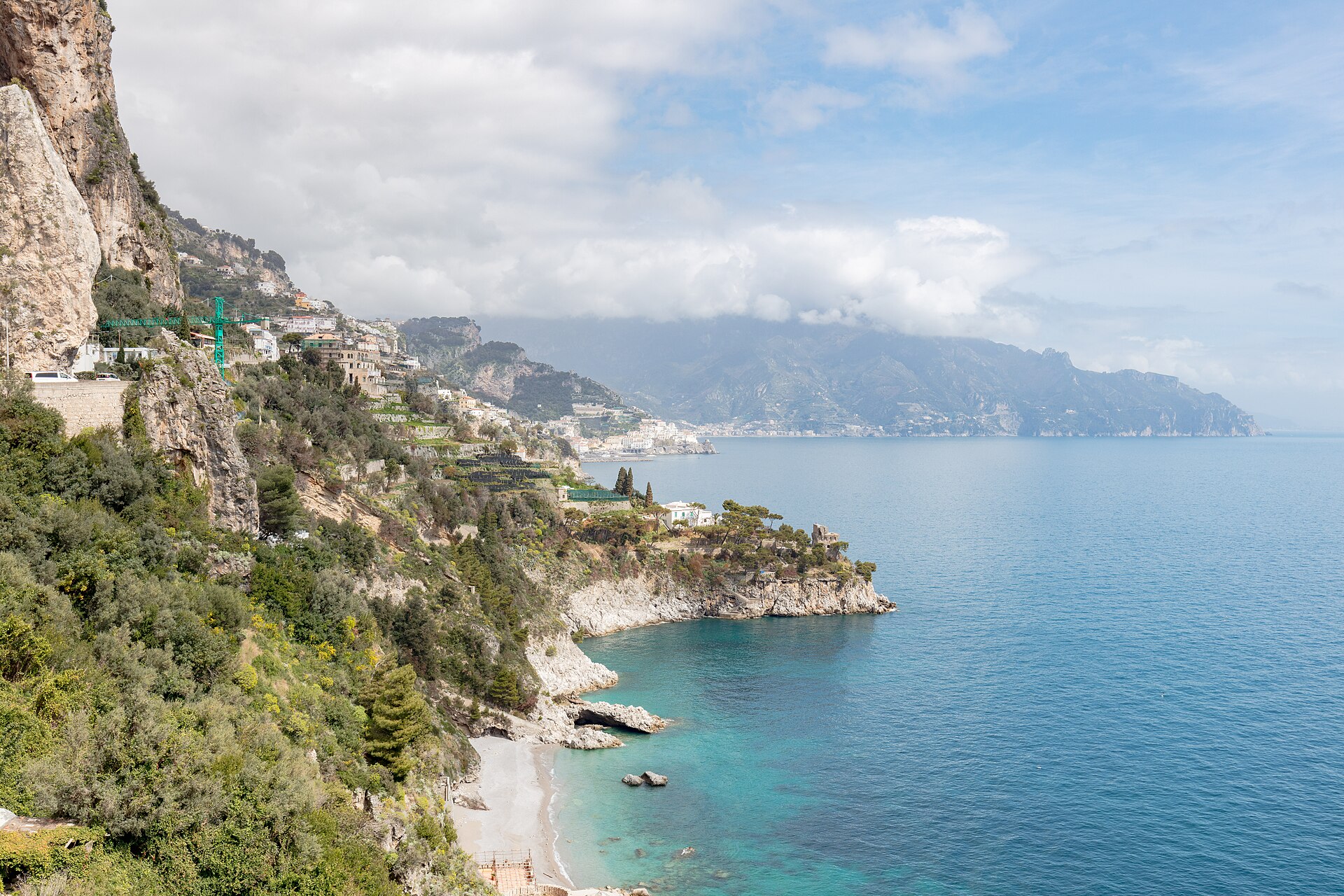
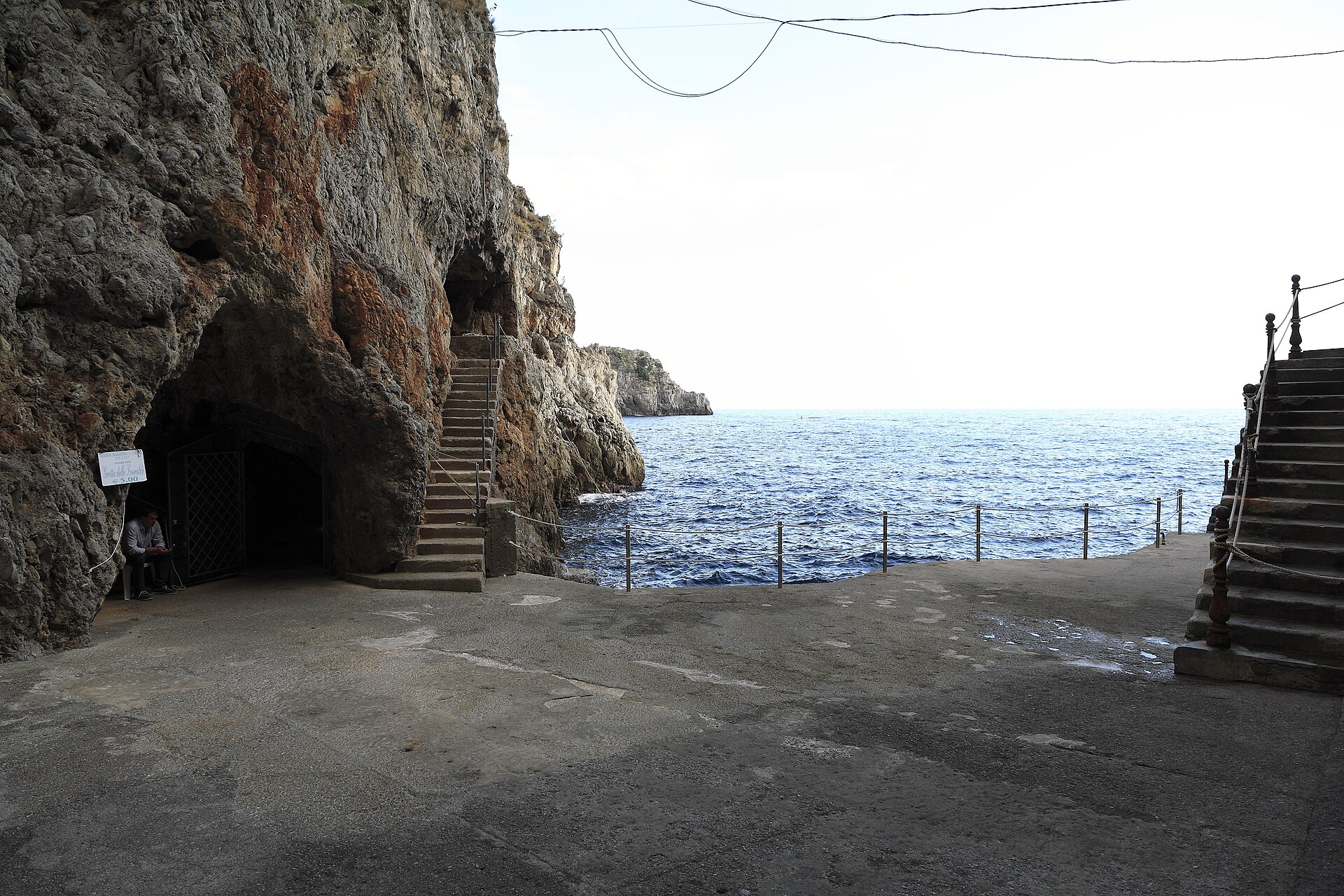
Conca dei Marini is barely a town, more a scatter of white houses above a cove, and it is quietly one of the loveliest stretches of the drive. Two things bring people here. The first is the Grotta dello Smeraldo, a sea cave whose water glows green because sunlight enters through a submerged opening rather than from above. Entry is around six euros for adults and five for under eighteens, with under twelves free, and you go in on a rowing boat with a boatman for a tour of fifteen to twenty minutes. Opening hours run 09:00 to 16:00 from April to October and 09:00 to 15:00 from November to March, and it closes outright in rough seas.
I will be honest about the Emerald Grotto: it is a fifteen minute experience reached by a lift or a long staircase from a layby on the SS163, and roughly half the people I know who have done it thought it was fine rather than remarkable. Go if the sea is flat and you are passing. Do not build a day around it.
The second draw is edible. The sfogliatella Santa Rosa, the shell-shaped pastry that eventually became Naples’s signature, was invented at the convent of Santa Rosa above Conca dei Marini. You can buy a version of it in most pastry shops on the coast.
4. Amalfi: the hub
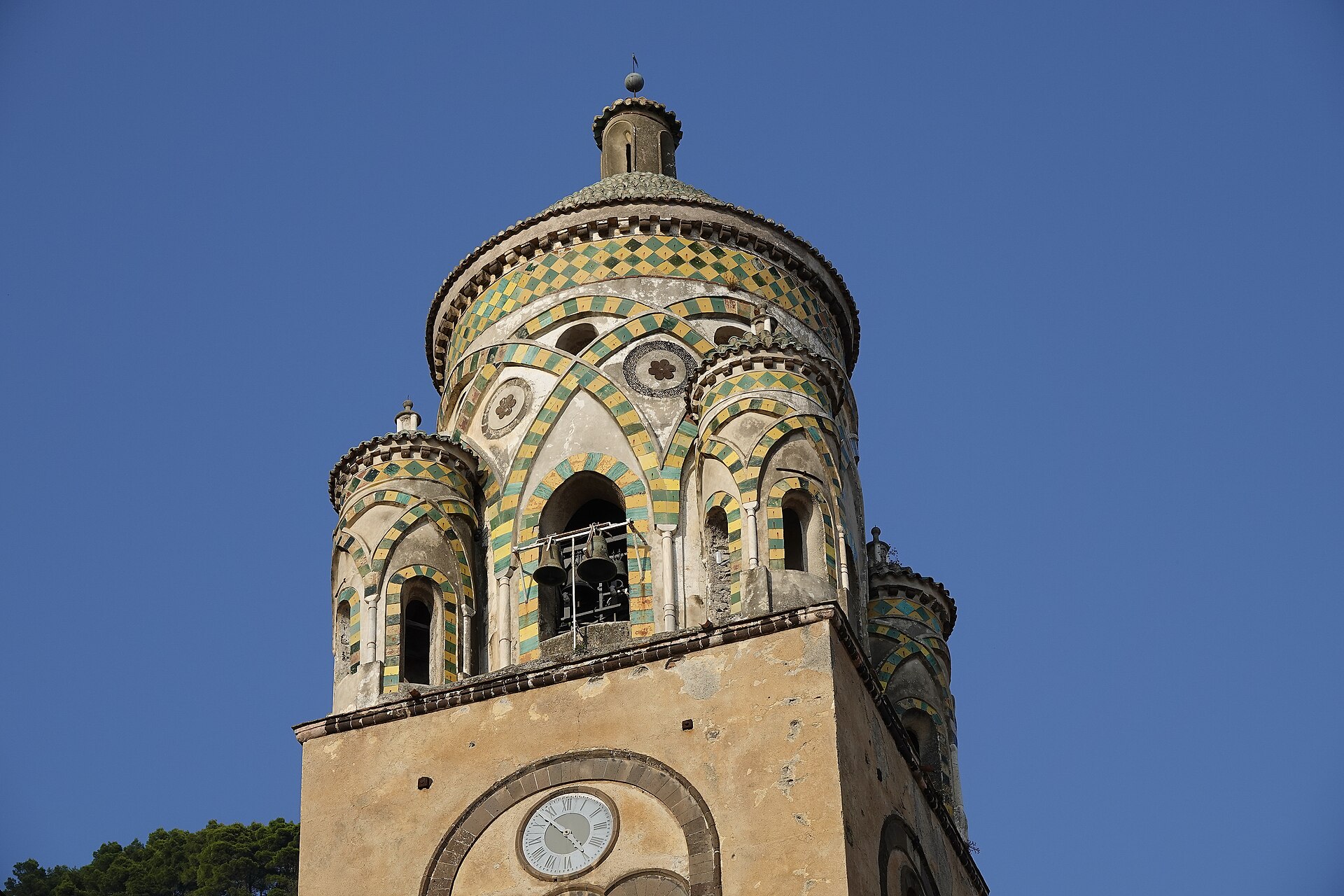
Amalfi is the town the coast is named after, and for the best part of three centuries from 839 it was an independent maritime republic that traded with Byzantium and North Africa on equal terms. What survives of that is mostly in the cathedral. The Duomo di Sant’Andrea sits at the top of a wide staircase off the main piazza, its facade a striped Arab-Norman confection that was heavily reworked in the nineteenth century but is no less impressive for it. Admission to the monumental complex is around three euros, though I have seen four quoted for the same ticket elsewhere, so carry a little cash and do not be surprised either way. Hours run 09:00 to 18:45 from March to June, 09:00 to 19:45 from July to September, and a much shorter split of 10:00 to 13:00 and 14:30 to 16:30 from November to February. October falls between the published bands, so check on the door.
The part worth the money is the Chiostro del Paradiso, the Cloister of Paradise, built between 1266 and 1268 for Archbishop Filippo Augustariccio as a burial ground for Amalfi’s nobility. Its interlaced pointed arches on paired slender columns are unmistakably Arab in inspiration, and on a quiet morning it is the most atmospheric interior space on the coast.
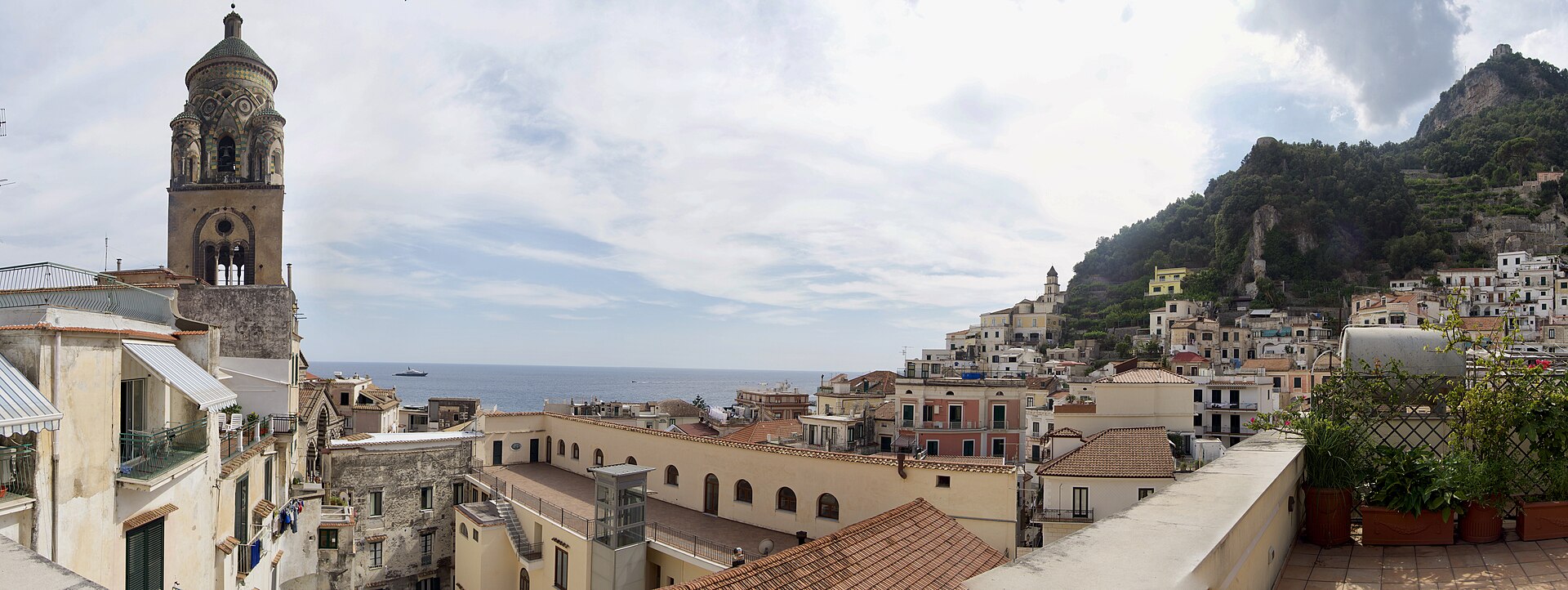
Beyond the cathedral, Amalfi is where the practical infrastructure lives: the main ferry pier, the SITA bus terminus, the pharmacies, the supermarkets, the cash machines. The Valle dei Mulini behind town has the ruins of the paper mills that made Amalfi’s other historic export, and you can still buy handmade Amalfi paper in the shops on Via Lorenzo d’Amalfi. There is a free public beach section, Spiaggia del Porto, just past the port.
Stay here if: you do not have a car and want to move around the coast easily. Amalfi is the single best-connected base, and the long flat concrete promenade along its marina makes it the most manageable of the classic towns for anyone with limited mobility.
5. Atrani: the smallest comune in Italy
Atrani is a ten to fifteen minute walk from Amalfi around the headland, and it is the smallest comune in Italy by area, at about 0.12 square kilometres. It has a piazza with a fountain, a beach, an arched clock tower and roughly nothing else, which is precisely the point. Coach parties do not stop. In the evening the piazza fills with people who live there rather than people photographing it.
If you want the medieval-village experience that Positano lost decades ago, this is where it survives, and it is one of the coast’s better value bases because it is close enough to Amalfi to use all of Amalfi’s transport. I have put it in the same bracket as places like the towns on my list of the most beautiful towns in Europe: small, walkable, and better in the hour after the day-trippers leave.
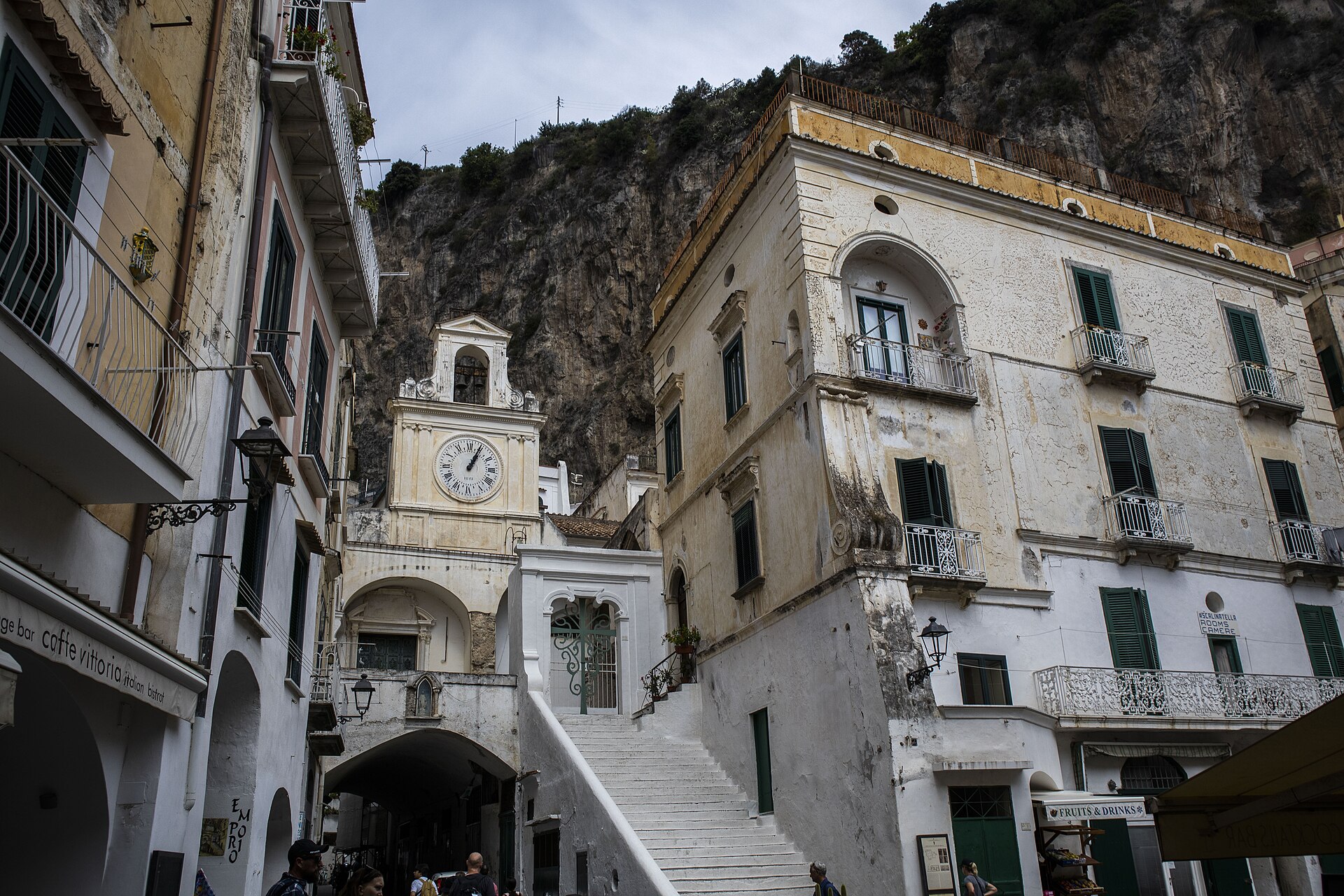
Atrani is also the easiest way to understand how these towns are built: one square, one church, one beach, and everything else stacked vertically behind. If you like that pattern you will like Venice’s quieter islands and the villages in Europe’s more underrated places for the same reasons.
6. Minori: pastry and a Roman villa
Minori is flat, unglamorous and extremely pleasant. It has the remains of a first century AD Roman maritime villa with surviving frescoes and a nymphaeum, at around six euros for adults and two reduced, free for under-18s and on the first Sunday of the month. It has a sandy-ish beach shelving gently enough for children. And it has Sal De Riso’s pasticceria on the seafront, which is the best pastry counter on the coast and a legitimate reason to make the trip in itself.
It is also a Travelmar ferry stop, which means you can base here cheaply and still reach Amalfi, Positano and Salerno by boat. For families this combination of flat streets, sand, boats and cake is hard to beat.
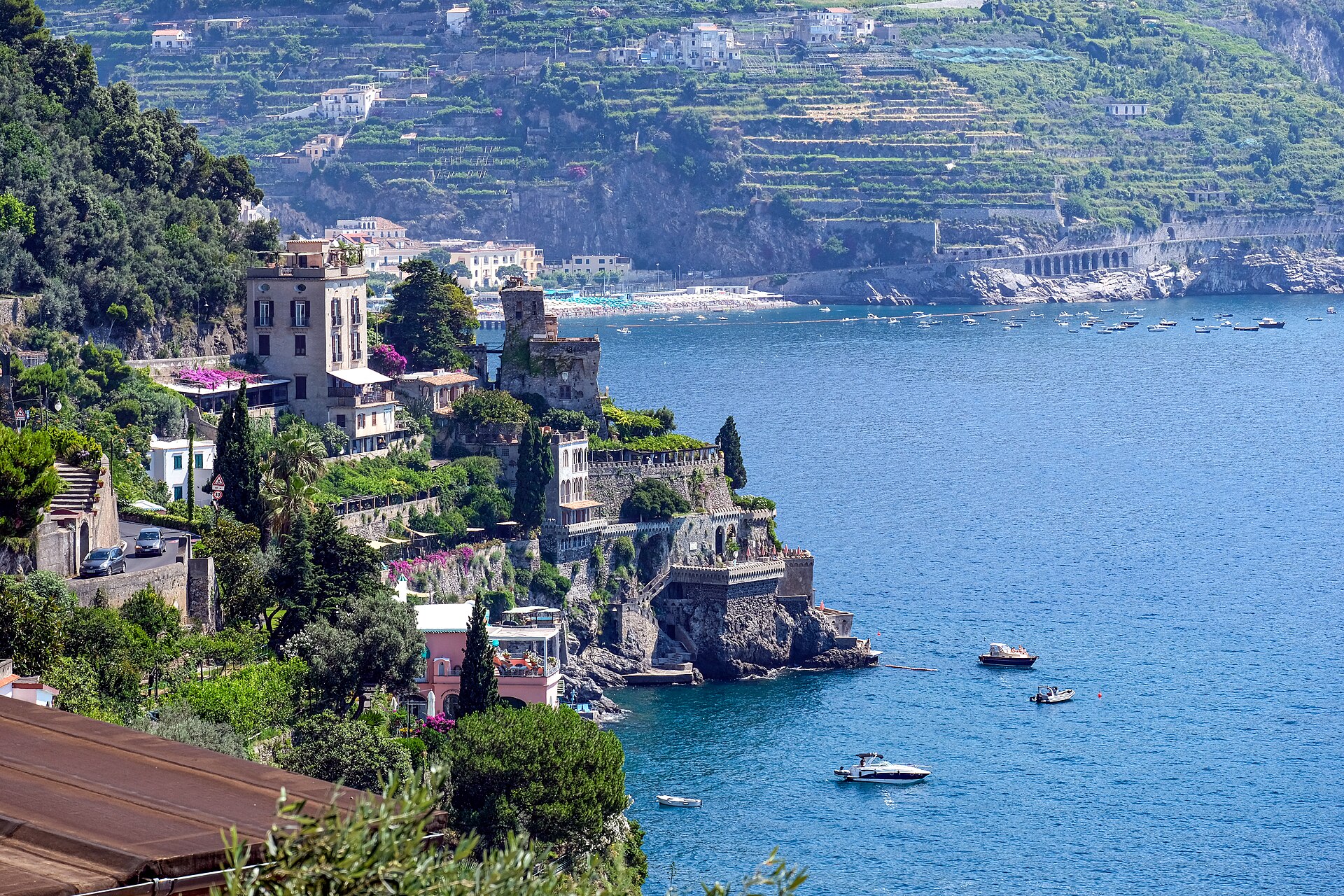
7. Maiori: the flattest town with the longest beach
Maiori has the largest and sandiest beach on the Amalfi Coast, a wide flat promenade behind it, and a town centre you can cross without climbing anything. It is not as pretty as its neighbours because it was badly damaged by a flood in 1954 and rebuilt in the fifties, and the architecture shows it. In exchange you get some of the cheapest rooms on the coast, the easiest logistics, and a proper Italian seaside-town atmosphere in the evenings.
If you are travelling with a wheelchair, a pushchair, a hip replacement or a teenager who wants to swim without a twenty minute descent, Maiori is the answer and the other twelve towns are not. It is a ferry stop and a SITA hub, so day trips work fine from here.
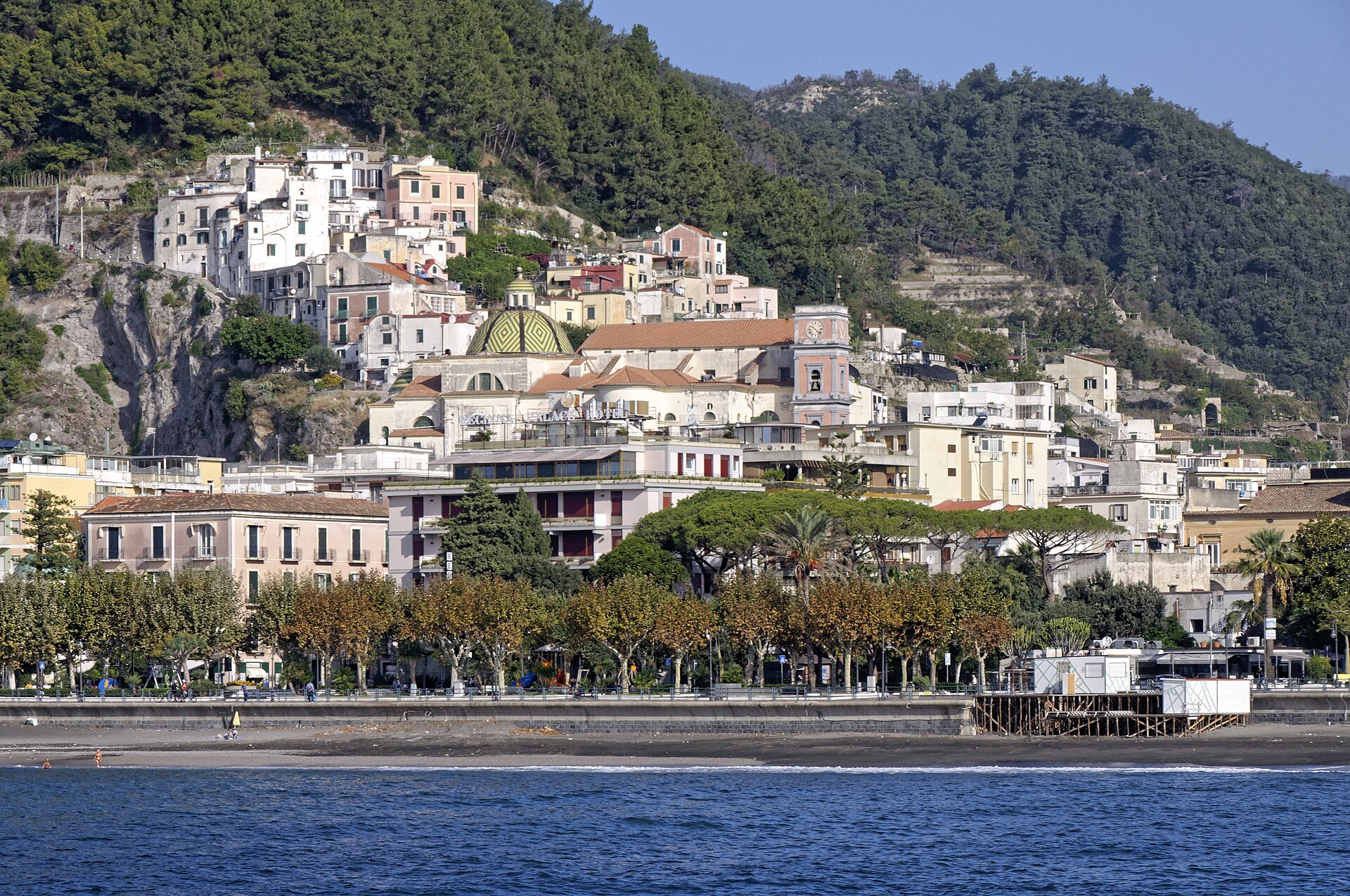
8. Cetara: anchovies and no tourists
Cetara is a working fishing port under the Torre Vicereale, an Angevin tower later enlarged under the Spanish viceroys, and it still lands anchovies and tuna. Its speciality is colatura di alici, a clear amber liquid made by pressing salted anchovies in chestnut barrels, which is a direct descendant of Roman garum and which you should buy a bottle of and take home. Order spaghetti alla colatura in any restaurant in town.
Almost nothing here is arranged for visitors, which is exactly why food travellers keep coming back. If you are the sort of person who plans trips around what you are going to eat, Cetara is your town on this coast.
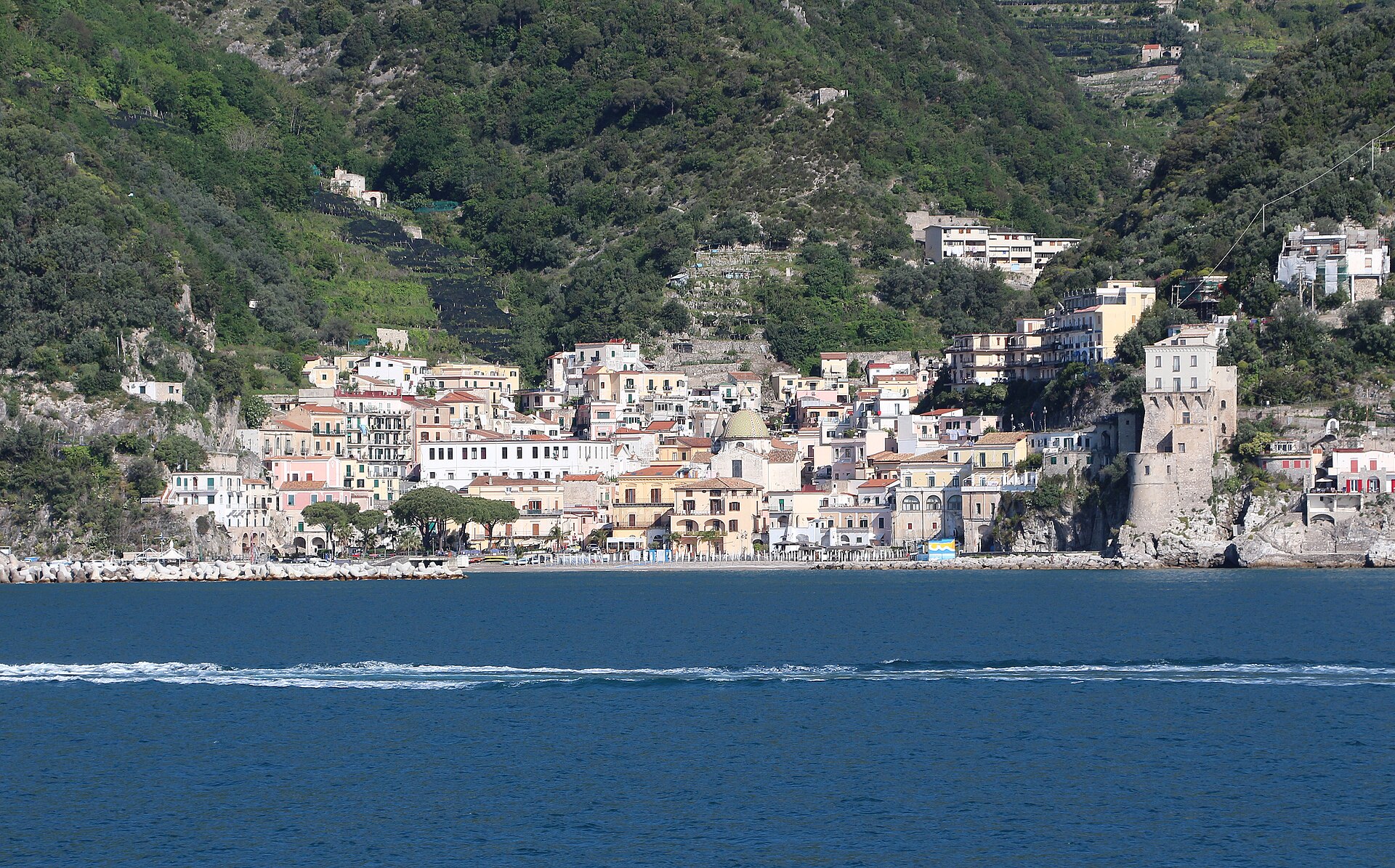
9. Vietri sul Mare: ceramics and the eastern gate
Vietri sul Mare is where the coast road begins if you are coming from Salerno, and it is the ceramics town. Ceramica di Vietri is a legally protected designation: look for the “Ceramica Artistica e Tradizionale” trademark rather than the mass-produced painted plates sold everywhere between here and Positano. The domes of the church of San Giovanni Battista are tiled in the local majolica and give you the best free demonstration of what the town does.
Vietri is ten minutes from Salerno station, which makes it the cheapest and simplest place to start or end a coast trip if you are arriving by train from Rome or Naples.
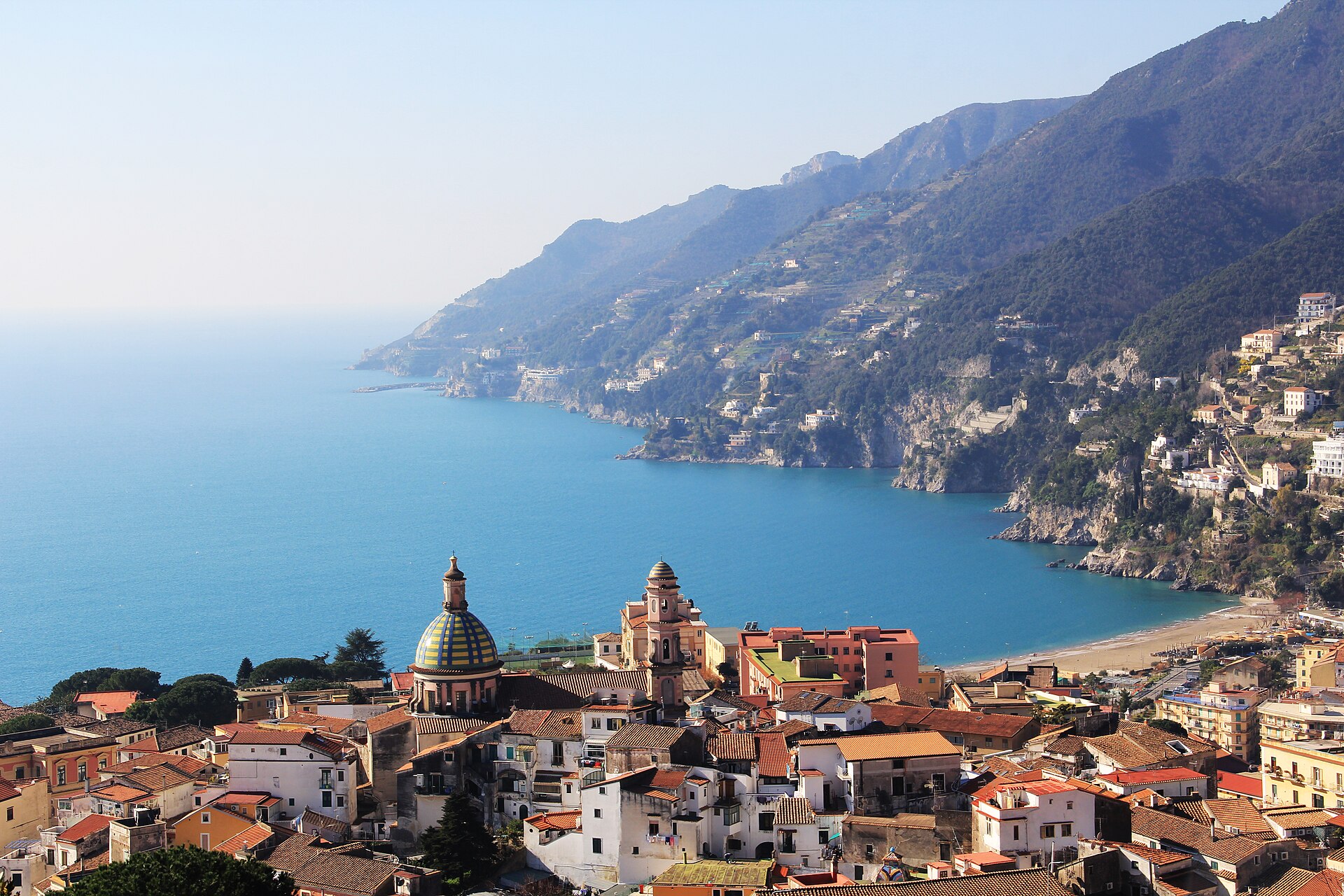
The four hill towns above the road
10. Ravello: gardens, music and the best view on the coast
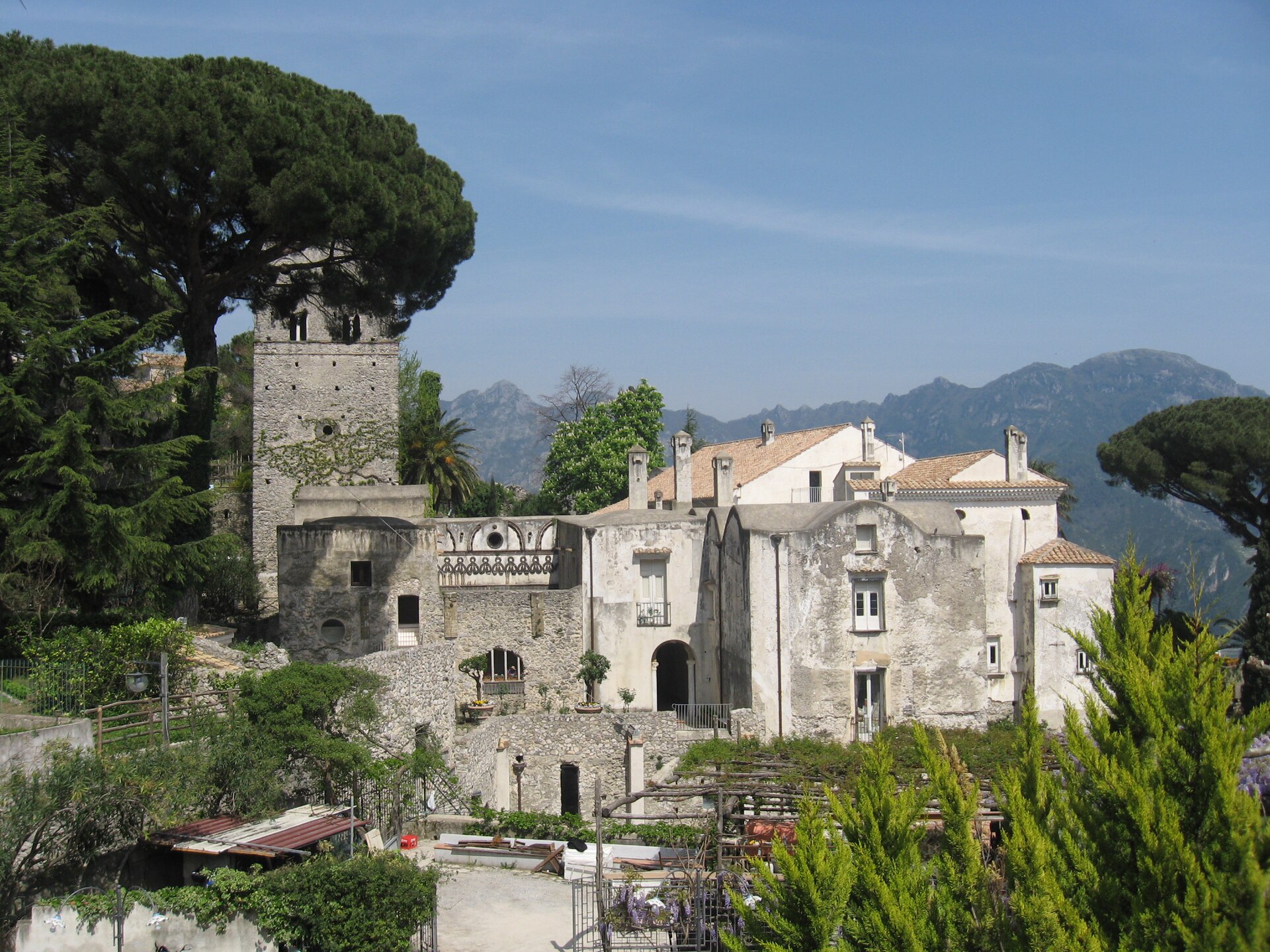
Ravello sits at about 350 metres above Amalfi and Atrani, reached by a switchback road rather than by cliff stairs, and it is the one place on the coast where the atmosphere changes completely. It is cooler, quieter, greener and considerably more expensive. Wagner came here in 1880 and decided the gardens of Villa Rufolo were Klingsor’s magic garden from Parsifal, which is the origin of the festival that has run every summer since.
Villa Rufolo costs eight euros for adults, seven for groups of fifteen or more, and six for over-65s and children aged five to twelve. From 29 March 2026 it opens daily 09:00 to 20:00 with last admission at 19:30. There is no advance booking; tickets are sold on site only. Children under five are not admitted to the Torre Museo for safety reasons. From May 2026 the villa runs free guided tours included in the ticket price, on 3 May, 2 June and then the first Saturday of every month through to March 2027, at 10:00 in Italian, 11:00 in English and 12:00 in Italian, booked on site from thirty minutes before with a maximum of thirty people per group. Between 4 July and 5 September 2026 the closing time can move because of festival events, and on 11 August 2026 the villa opens late, at 09:45, after the dawn concert.
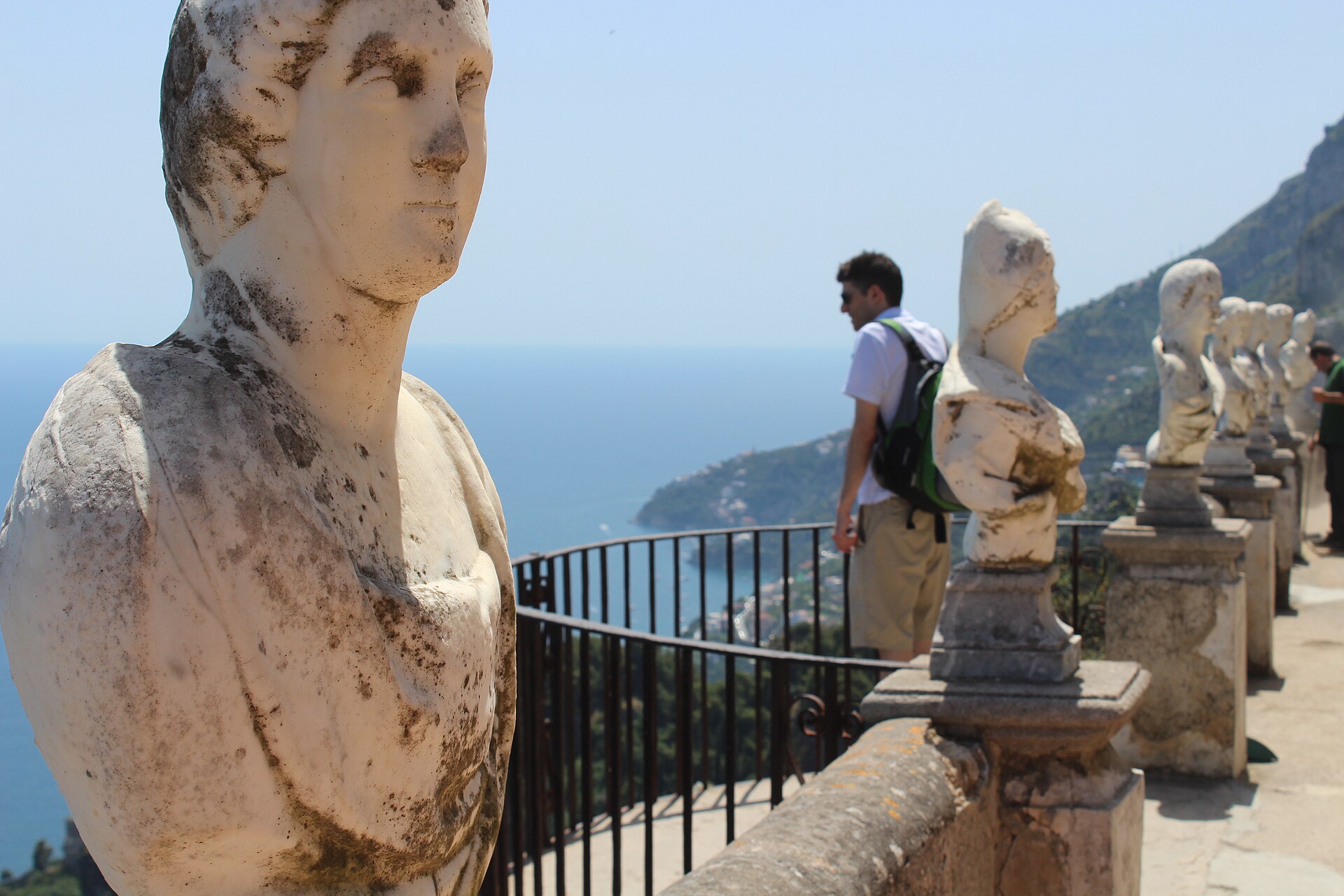
Villa Cimbrone is a ten minute walk further out and has the Terrace of Infinity, a stone balustrade lined with marble busts hanging out over the sea some 350 metres below. The gardens open 09:00 to 20:30 with last entrance at 20:00, and on 8 August 2026 they close early at 15:30 with the last ticket at 15:00. On price I have to be careful: the official hours page does not publish an admission figure, and the sources that do disagree, quoting seven euros and ten euros for the same ticket. Budget ten and be pleased if it is less.
The Ravello Festival runs 4 July to 5 September 2026, its seventy-fourth edition, with twenty-two events almost all staged at Villa Rufolo. It opens on 4 July at 20:00 on the Belvedere with the Orchestra del Maggio Musicale Fiorentino under Daniele Gatti and closes on 5 September with the Freiburger Barockorchester under Simon Rattle, with Isabelle Faust. Tickets go through ravellofestival.com or the box office on +39 089 858422. If you have any interest in orchestral music, a concert on that terrace at sunset is the best single evening available on this coast, and it is worth building your dates around.
11. Scala: the oldest and emptiest
Scala faces Ravello across the Dragone valley and local tradition holds it to be the oldest settlement on the coast, founded before Amalfi itself. It has a Romanesque cathedral, a scatter of hamlets, and almost no visitors at all. Rooms cost far less than Ravello’s for a view of Ravello, which is arguably the better view since it includes Ravello in it. It is also the trailhead for several of the best walks in the Monti Lattari, including the route down through the Valle delle Ferriere.
12. Tramonti: wine, pizza and no sea
Tramonti is thirteen scattered hamlets spread across the hills between the coast and the Valico di Chiunzi, and it has no coastline whatsoever. It is a wine comune, working with ungrafted pre-phylloxera vines in some vineyards, and it exported so many pizzaioli north in the twentieth century that a substantial share of Italy’s pizzerias trace back to families from here. It is also, usefully, connected to the coast by the Valico di Chiunzi road, which is explicitly excluded from the number plate restriction described below. That makes it a strategic base for anyone determined to drive.
13. Furore: the fjord you drive over
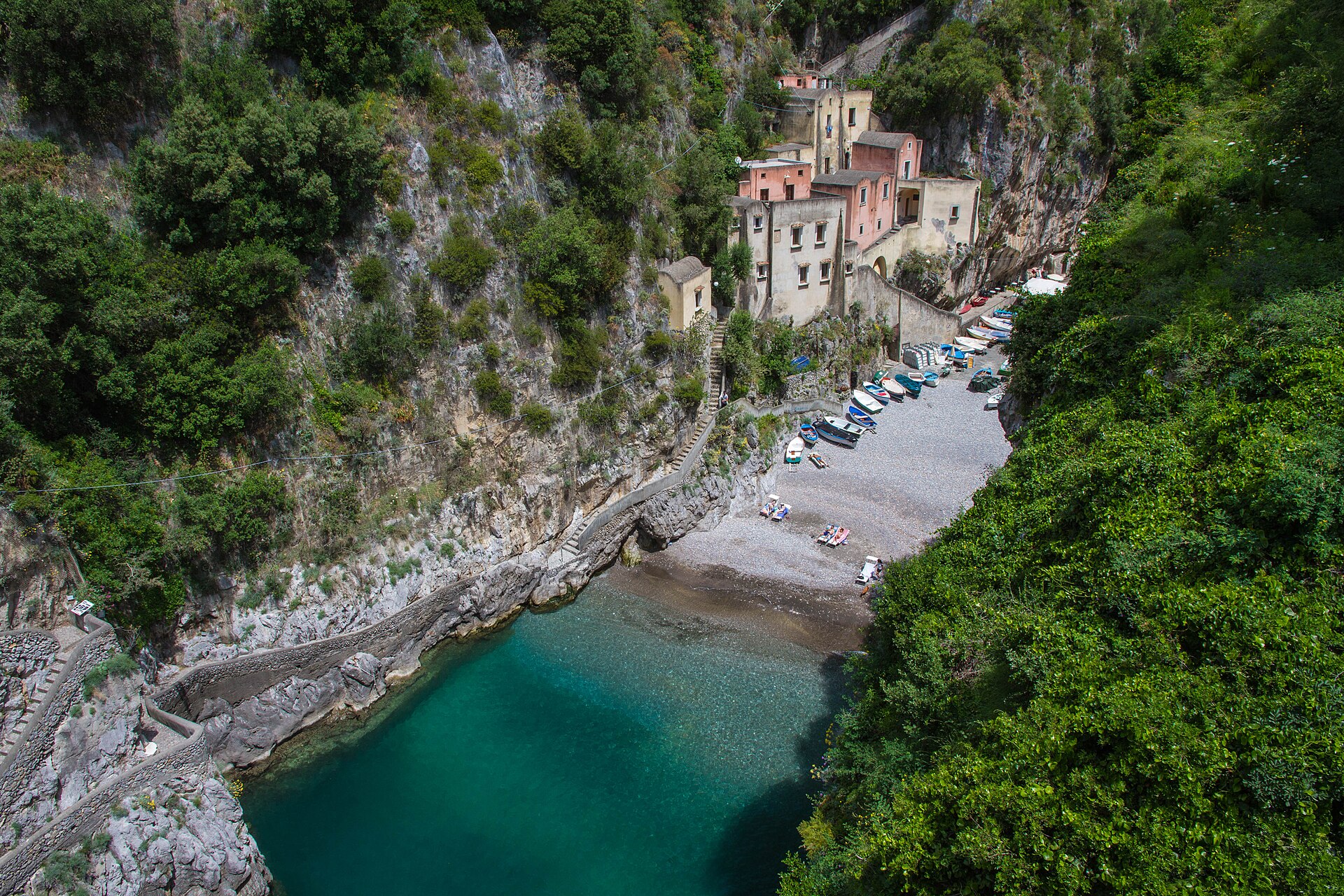
Furore’s centre is up the hillside and its famous feature is at sea level: the Fiordo di Furore, a narrow cleft in the rock spanned by a thirty metre road bridge, with a tiny pebble beach and a cluster of former fishermen’s houses at the bottom. It photographs extraordinarily well and it is very small, so in July and August the descent and the beach are both congested. The bridge hosts a cliff diving competition in summer.
Furore also calls itself the painted village, with murals on houses along the hill road, and the comune’s terraced vineyards produce the Costa d’Amalfi Furore wines you will see on every list from Positano to Vietri.
The 2026 number plate restriction on the SS163, explained properly
This is the single most expensive thing most visitors do not know about the Amalfi Coast, so I am giving it a full section rather than a line in a bullet list.
On busy dates the SS163 Amalfitana operates an alternating number plate system, the targhe alterne. The legal basis is ANAS Ordinance 340/2019, extended each year by ordinances of the coastal municipalities. The rule is simple to state and easy to get backwards:
- On even-numbered dates (the 2nd, 4th, 6th and so on), cars whose plate ends in an even digit may not use the road.
- On odd-numbered dates, cars whose plate ends in an odd digit may not use the road.
In other words, your plate must be the opposite parity to the date. It applies only between 10:00 and 18:00. Outside those hours the road is open to everybody, which is why early starts and late returns are the standard workaround.
It applies only to the SS163 itself, roughly 40 kilometres from Vietri sul Mare to Positano via Cetara, Maiori, Minori, Ravello, Atrani, Amalfi, Conca dei Marini, Furore and Praiano. Two roads are explicitly excluded: the provincial road over the Valico di Chiunzi, on both its Maiori and Ravello branches, and the SR366 Agerolina from Agerola. Those are your legal escape routes on a wrong-plate day.
The 2026 dates
| Period in 2026 | When the plate rule applies |
|---|---|
| 30 March to 6 April | Every day (Holy Week to Easter Monday) |
| 25 April to 2 May | Every day (Liberation Day to May Day) |
| 30 and 31 May | Weekend |
| 1 and 2 June | Public holiday period |
| June | Weekends only: 6-7, 13-14, 20-21, 27-28 |
| July | Weekends only: 4-5, 11-12, 18-19, 25-26 |
| 1 to 31 August | Every single day |
| 1 to 30 September | Every single day |
| October | Weekends only: 3-4, 10-11, 17-18, 24-25, plus Saturday 31 |
Note the discrepancy you will see quoted online: the ANAS ordinance itself specifies 15 June to 30 September, while the municipal ordinances extend the operative period to 1 June through 31 October. The municipal dates are the ones enforced on the ground, so plan against the table above.
Who is exempt, and the hotel clause that catches people out
Motorcycles and scooters are outside the ordinance entirely. Also fully exempt: residents of the thirteen Amalfi Coast comuni plus Agerola; vehicles displaying a disabled badge with the holder on board; taxis and licensed private hire cars; and emergency and police vehicles.
Then there is the derogation for guests of hotels and other accommodation, and this is where people get caught. If you have a confirmed booking you may drive in derogation only for the journey in on your check-in day and the journey out on your check-out day. Every other trip during your stay is subject to the plate rule like anybody else’s. I have watched more than one family discover this on day three, halfway to Ravello, and it is a genuinely bad moment. Non-resident employees with a valid work contract in the fourteen municipalities may drive for work journeys, and non-resident property owners may drive with an attestation requested from their comune.
The penalty is reported at eighty-seven to three hundred and forty-four euros under Article 7 comma 13 of the Codice della Strada, with a licence suspension of fifteen to thirty days for a repeat offence within two years. That figure comes from a single source rather than the ordinance text I could reach, so treat the exact band as indicative and the existence of the fine as certain. A vademecum in English, “Amalfi Coast Alternate plate system”, updated 27 May 2026, is downloadable from the Distretto Turistico Costa d’Amalfi site.
Separately, vehicles longer than 10.36 metres, caravans and anything towing a trailer are banned from the SS163 year round between 06:30 and midnight. A coach restriction affecting Ravello excursions was also reported in July 2026, so if you are booking a group trip, confirm the current position with the operator.
So should you hire a car at all?
No, for almost everybody. Here is the case against, laid out plainly.
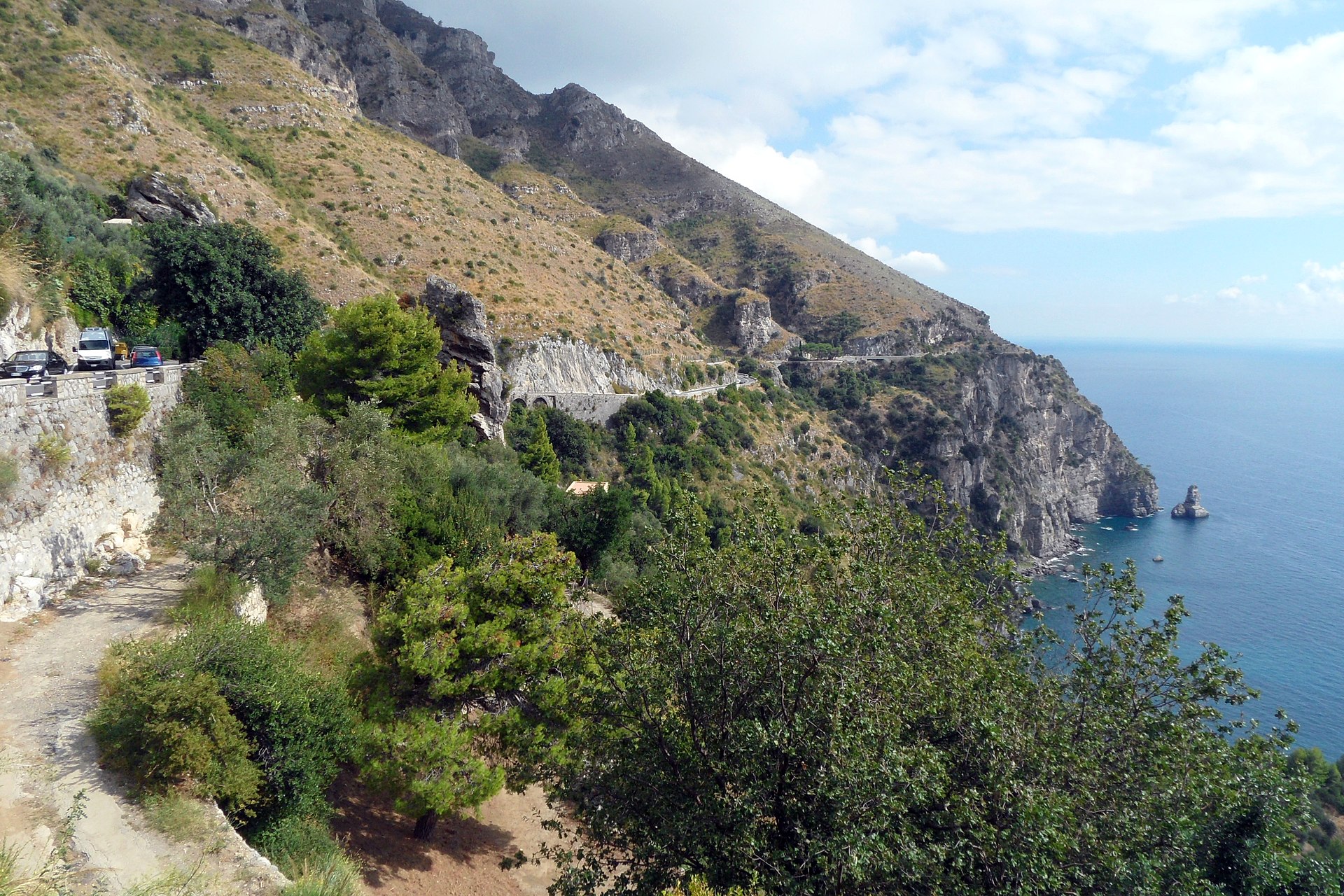
You are barred from the only road for eight hours of every day in August and September. Parking in Positano and Amalfi is scarce and expensive, and parking fines are reported at around one hundred euros. Positano’s ZTL covers most of the centre and the main access roads, is camera enforced, and an unauthorised entry brings a fine of roughly eighty to one hundred and sixty euros posted to your rental company months later with an administration fee on top. The road itself is two narrow lanes with blind bends, buses that need the full width, and scooters overtaking on both sides. And when you arrive, you still have to carry your luggage up the steps, because the car cannot reach the door.
The case for a car is narrow but real: you are staying inland at Tramonti, Scala or Agerola where buses are thin; you are visiting in November or February when the ferries have stopped; you are combining the coast with Cilento or the mountains; or you have a group of four or more and want to move on a fixed schedule. If that is you, base yourself somewhere reachable via the Valico di Chiunzi or the SR366, plan every SS163 movement before 10:00 or after 18:00, and check your plate’s last digit against the date every single morning.
For everything else, use the boats and the buses. I cover both next, and if you want the wider picture on moving around the continent, my guide to getting around Europe and the one on European road trips both cover where hire cars earn their keep and where they do not.
Getting to the Amalfi Coast
The nearest major airport is Naples Capodichino (NAP), about 60 kilometres north of the coast by road. Salerno Costa d’Amalfi (QSR) at Pontecagnano Faiano, roughly 20 kilometres southeast of Salerno, began commercial flights in summer 2024 and is closer to the eastern end: around an hour and a quarter to Amalfi and an hour and a half to Positano.
From Naples airport, allow the following by road, and add thirty to sixty minutes in July and August:
| From Naples airport to | Distance | Typical drive time |
|---|---|---|
| Positano | 65 km | 90 to 120 minutes |
| Amalfi | 75 km | 100 to 130 minutes |
| Ravello | 80 km | 110 to 140 minutes |
The four ways in, ranked
1. Train to Salerno, then ferry. This is my default recommendation from April to October and it is not close. Trenitalia runs well over a hundred services a day between Naples and Salerno, taking 42 to 47 minutes, with regional fares from about four to five euros. From Salerno’s Piazza della Concordia pier, Travelmar runs to Amalfi in around 25 to 40 minutes, with up to seventeen departures a day at the summer peak between roughly 07:40 and 18:00. Fares on this crossing are reported in the range of nine to twenty-six euros depending on operator and season, commonly twelve to sixteen for an adult; Travelmar renders its fare table in JavaScript and I could not extract an official 2026 figure, so buy at the pier or on the operator’s app and expect something in that band. You arrive in the middle of Amalfi with no traffic, no plate rules and no parking problem.
2. Circumvesuviana to Sorrento, then bus or ferry. The EAV Circumvesuviana runs from Napoli Porta Nolana and Garibaldi to Sorrento in about 75 minutes with 34 intermediate stops, including Herculaneum and Pompeii, roughly every 30 minutes from about 05:39 to 22:14. Reported fares are five euros single and ten return in 2026. It is cheap, useful for the ruins, and frequently crowded and hot. The Campania Express is the tourist alternative: reserved seats, about an hour and ten minutes, a fare of fifteen euros one way or twenty-five return, running mid-March to mid-October and bookable through EAV or at the Circumvesuviana ticket office from twenty minutes before departure. From Sorrento you take the SITA bus to Positano and Amalfi or a seasonal ferry.
3. Direct ferry from Naples. NLG and Alilauro run from Molo Beverello to Positano in about an hour and a quarter and Amalfi in about an hour and fifty, in summer only and with just a few departures a day. When the timing works it is the most pleasant arrival of the lot. When it does not, do not build your flight around it.
4. Private transfer. Quoted prices from Naples to Positano vary widely: one operator lists one hundred and sixty euros by day and two hundred at night between midnight and 06:00, another one hundred and eighty-eight, and cheaper Mercedes E-class options from around ninety-seven. A general range of one hundred and twenty to two hundred euros is realistic. Waiting charges of about thirty euros an hour after one free hour are standard. For a group of three or four with luggage this is often the sane choice, particularly late at night.
There is also the Curreri Viaggi coach from Naples airport direct to Sorrento in about 75 minutes, and the Alibus into Napoli Centrale and the ports. For the wider European context on rail, my train travel in Europe guide covers the Rome to Naples high-speed leg, which takes about an hour and is the sensible way down from Rome. If you are stitching several cities together, Florence and Rome both sit on the same line north.
Getting around once you are there
SITA Sud buses
SITA Sud runs the coast road. The three routes that matter are Amalfi to Minori, Maiori, Cetara and Vietri sul Mare, continuing to Salerno; Amalfi to Conca dei Marini, Praiano and Positano, continuing to Sorrento; and the short shuttle from Amalfi up to Scala and Ravello.
The ticket to know about is COSTIERASITA, which still exists in 2026 at ten euros for unlimited SITA Sud travel for 24 hours from first validation. It covers a generous list of comuni: Agerola, Amalfi, Atrani, Cetara, Conca dei Marini, Furore, Maiori, Massa Lubrense, Meta di Sorrento, Minori, Positano, Piano di Sorrento, Praiano, Ravello, Salerno, Sant’Agnello, Scala, Sorrento, Tramonti and Vietri sul Mare. It is personal and non-transferable, and you must write your name and date of birth on it in pen. Validate it on first use, and if the validator is broken, write the date and time by hand.
Two variants are reported but not confirmed on SITA’s own pages: a twelve euro version including Positano’s urban services, and a fifteen euro “Costiera Terra & Mare” combining unlimited SITA travel with one Travelmar crossing. Ask at the ticket counter.
Single fares are the frustrating part. SITA’s official site links only to a tariff schedule dated 2023, and no 2026 single-fare table is published. Third-party sources quote a two-zone structure of about one euro eighty for two successive towns and about two euros sixty for longer hops such as Positano to Amalfi, and a general range of one euro thirty to three euros forty. If you plan more than three journeys in a day, the ten euro pass wins regardless.
Buy before you board, from a tobacconist or bar displaying the ticket sticker, or the SITA office on Via Vinciprova in Salerno, open weekdays 06:45 to 18:45. Then validate on board. The buses are not step-free, the steps are high, and in August they run full, which is worth knowing before you plan a day around one.
Ferries
Ferries are the best way to travel this coast and, for four or five months a year, often the fastest. Travelmar states that it operates year round and serves Salerno, Amalfi, Positano, Minori, Maiori, Cetara and Vietri sul Mare, with additional moorings at Marina di Atrani and Marina di Vietri. One piece of hand luggage measuring 45 by 35 by 20 centimetres is included in the fare, which matters if you are moving hotels by boat. Travelmar also connects its Amalfi arrivals with its own shuttle buses up to Agerola for the Path of the Gods.
Amalfi to Positano takes about 25 minutes with multiple operators and frequent departures. Most services on the coast run April to October, weather permitting, with very limited winter operation. For Capri, Alicost runs from Amalfi via Positano from about twenty-eight euros and NLG from about twenty-nine, and Positano to Capri takes roughly forty minutes at similar prices. Alicost’s 2026 pattern is weekends only until it goes daily from 1 June to 30 September; NLG’s Amalfi to Capri line via Positano is listed as running 1 April to 3 November 2026. Sorrento to Amalfi via Positano with Alicost starts from about twenty euros.
Two practical notes. Ferries are cancelled in rough seas with no notice and no alternative, so never plan an unmissable connection on the last boat of the day. And there is no Uber or Lyft anywhere on the Amalfi Coast or on Capri, so if the boat is cancelled your options are the bus, a licensed taxi at a negotiated rate, or a long evening.
What the Amalfi Coast actually costs in 2026
Every figure in this table was checked in August 2026 against the operator, museum or municipality named. Where I could not find an official published figure I have said so rather than filling the cell with a plausible number.
| Item | 2026 price | Notes |
|---|---|---|
| COSTIERASITA 24-hour bus pass | €10.00 | Official SITA Sud price. Personal, must be signed and validated |
| SITA single, short hop | ~€1.80 | Two successive towns. No official 2026 table published |
| SITA single, longer hop | ~€2.60 | Positano to Amalfi or Positano to Sorrento |
| Salerno to Amalfi ferry | ~€12 to €16 | Reported range €9 to €26. No official 2026 fare table reachable |
| Amalfi or Positano to Capri | from €28 to €29 | Alicost from €28, NLG from €29 |
| Sorrento to Amalfi via Positano | from €20 | Alicost |
| Circumvesuviana Naples to Sorrento | €5 single, €10 return | Roughly 75 minutes |
| Campania Express, Naples to Sorrento | €15 one way, €25 return | Reserved seats, mid-March to mid-October |
| Trenitalia Naples to Salerno | from €4 to €5 | Regionale, 42 to 47 minutes |
| Private transfer Naples to Positano | €120 to €200 | €160 day and €200 night quoted by one operator |
| Villa Rufolo, Ravello | €8.00 | €6 concession, €7 groups of 15+. On-site sales only |
| Villa Cimbrone gardens, Ravello | €7 to €10 | Sources conflict and the official page publishes no price |
| Amalfi cathedral complex | €3.00 | One source quotes €4 adult and €2 for ages 6 to 17 |
| Emerald Grotto, Conca dei Marini | €6 adult, €5 under-18 | Free under 12. Some sources say €5 to €7 |
| Pompeii, Pompeii Express ticket | €20.00 | Official, from 12 January 2026. Ancient city only |
| Pompeii+, with suburban villas | €25.00 | Includes Villa of the Mysteries and Boscoreale with shuttle |
| Pompeii 3-day multi-site ticket | €30.00 | Pompeii+ plus Oplontis, Villa Arianna, Villa San Marco, Stabiae |
| Herculaneum | €16.00 | Official. Many guides still quote €13, which is out of date |
| Blue Grotto, Capri | €19.00 | Entrance fee. Boat transfer to the cave is extra |
| Monte Solaro chairlift, Capri | €15 return, €12 one way | Official operator price |
| Capri funicular or island bus | ~€2.40, or €2.90 on board | Some 2026 sources quote €2.00. Buy before boarding where you can |
| Capri landing tax | €5.00 per person | 1 April to 31 October, usually collected inside the ferry fare |
| Sunbed and umbrella, typical | €20 to €25 per day | Front row at Positano’s main beach nearer €40 |
| Fornillo beach club, first row pair | €90 to €120 | Da Ferdinando 2026. Other rows €70 to €80 |
| Sorrento tourist tax | €1.50 to €5 per night | Frozen at 2025 levels for all of 2026 |
| Amalfi tourist tax | ~€3 to ~€5 per night | Full rate first four nights, then 50% off from the fifth |
| Positano tourist tax | Not published in accessible form | 2026 rates confirmed unchanged by resolution but held inside a PDF |
| Ravello tourist tax | Not published in accessible form | Levied and collected at checkout via the PayTourist platform |
How the tourist tax works
Italy’s imposta di soggiorno is charged per person per night and levied by well over a thousand municipalities, ranging nationally from one to ten euros a night. It is almost never included in the price you book online. You pay it in cash at the property on checkout, and most comuni cap it at somewhere between five and fourteen consecutive nights.
For the Amalfi Coast specifically: Sorrento has frozen its 2026 rates at two euros a night up to three-star, four euros for four-star, bed and breakfasts and holiday homes, five euros for five-star and one euro fifty for campsites and agriturismi. Amalfi charges roughly three euros for a bed and breakfast or holiday home rising to about five for higher hotel categories, with the full rate for four nights and half from the fifth. Positano set its 2026 rates by Giunta Comunale resolution number 181 of 19 November 2025, published on 9 February 2026, confirming the 2025 figures for stays from 1 April to 31 October, with children up to age ten exempt; the amounts themselves are published only inside a linked PDF I could not open, so I am not going to invent them. Ravello levies the tax through the PayTourist platform and does not publish current per-night amounts on any page I could reach. Ask your property when you book, and budget four or five euros per person per night as a working figure.
A realistic daily budget
Two people travelling without a car, staying in a mid-range room in Amalfi or Minori in June, using the bus pass and eating one sit-down dinner a day, should plan on roughly one hundred and eighty to two hundred and fifty euros a day all in. The same trip based in Positano in August, with a beach club and taxis, comfortably doubles that. Moving your base four kilometres east is the single biggest lever you have on this coast, and it costs you nothing but the postcard.
If you are assembling a longer trip, my guides to Europe on a budget and how to plan a trip to Europe both go deeper on sequencing expensive stops with cheap ones.
When to visit the Amalfi Coast, month by month
The coast has a Mediterranean climate, Koppen Csa, and the important thing to understand about it is that the winters are wetter than the summers by a very wide margin. Amalfi’s mean annual temperature is 15.8 °C, annual rainfall is 1,143 mm, and there are around 3,224 hours of sunshine a year. All figures below are 1991 to 2021 normals for Amalfi.
| Month | Avg high | Avg low | Rainfall | Rainy days | Sea temp | My verdict |
|---|---|---|---|---|---|---|
| January | 10.7 °C | 6.6 °C | 128 mm | 9 | 14.8 °C | Closed. Ferries stopped, many hotels shut. |
| February | 10.9 °C | 6.4 °C | 109 mm | 8 | 13.8 °C | Coldest sea of the year. For residents, not visitors. |
| March | 13.2 °C | 8.0 °C | 107 mm | 8 | 13.8 °C | Things reopen late in the month. Easter is chaos in 2026. |
| April | 16.0 °C | 10.5 °C | 94 mm | 9 | 15.3 °C | Excellent walking, cool sea, everything open. My pick for hikers. |
| May | 19.6 °C | 13.9 °C | 62 mm | 6 | 18.7 °C | The best all-round month. Warm, dry, swimmable, not yet full. |
| June | 23.7 °C | 17.9 °C | 30 mm | 4 | 22.7 °C | Hot, dry, sea properly warm. Plate rule on weekends only. |
| July | 26.4 °C | 20.6 °C | 18 mm | 3 | 25.3 °C | Driest month of the year. Very busy, very expensive. |
| August | 27.0 °C | 21.2 °C | 25 mm | 3 | 26.0 °C | Warmest sea. Plate rule every day. Avoid if you have a choice. |
| September | 23.3 °C | 18.2 °C | 91 mm | 7 | 24.2 °C | Sea still 24C but rain triples. Plate rule every day. |
| October | 19.9 °C | 15.1 °C | 139 mm | 8 | 21.8 °C | Warm sea, thinning crowds, real chance of a washout day. |
| November | 15.8 °C | 11.6 °C | 190 mm | 10 | 19.3 °C | Wettest month of the year. The coast winds down. |
| December | 12.1 °C | 8.1 °C | 150 mm | 10 | 16.8 °C | Quiet, wet and atmospheric if you have a car. |
Two numbers do most of the work here. July is the driest month at 18 mm across three rainy days, and November is the wettest at 190 mm across ten, which is more than ten times as much rain. Sea temperature peaks at roughly 26.1 °C in early August and bottoms out around 13.6 °C in late February, averaging 19.4 °C across the year.
The best time to visit the Amalfi Coast, in one paragraph
Go in late May or early June. The sea has reached 19 to 23 °C, rainfall has dropped to 62 mm and then 30 mm, the plate restriction applies only at weekends in June, and the coast is busy without being unusable. Late September into early October is the alternative if warm water matters more than dry weather: the sea is still 24.2 °C in September and 21.8 °C in October, but rainfall rises fivefold from July’s 18 mm to 91 mm in September and then to 139 mm in October. April is the walkers’ month, cool enough for the long trails and green before the terraces burn off, with the sea too cold for most people at 15.3 °C.
Avoid August unless you have no choice. It is the hottest month, the plate restriction runs every single day, the free beach sections are gone before eight in the morning, and prices peak. If August is your only window, base yourself in Maiori or Minori, use the ferries, and start every day early.
Between November and March, many ferries stop and a large share of hotels and restaurants close, particularly in the smaller towns. It can be a beautiful time to be here with a car and low expectations, and it is a poor time for a first visit. For the wider seasonal picture across the continent, see the best time to visit Europe.
Walking the Amalfi Coast
The walking here is as good as the views, and it is the part of the coast that rewards effort most directly. Three routes are worth planning around.
The Path of the Gods (Sentiero degli Dei)
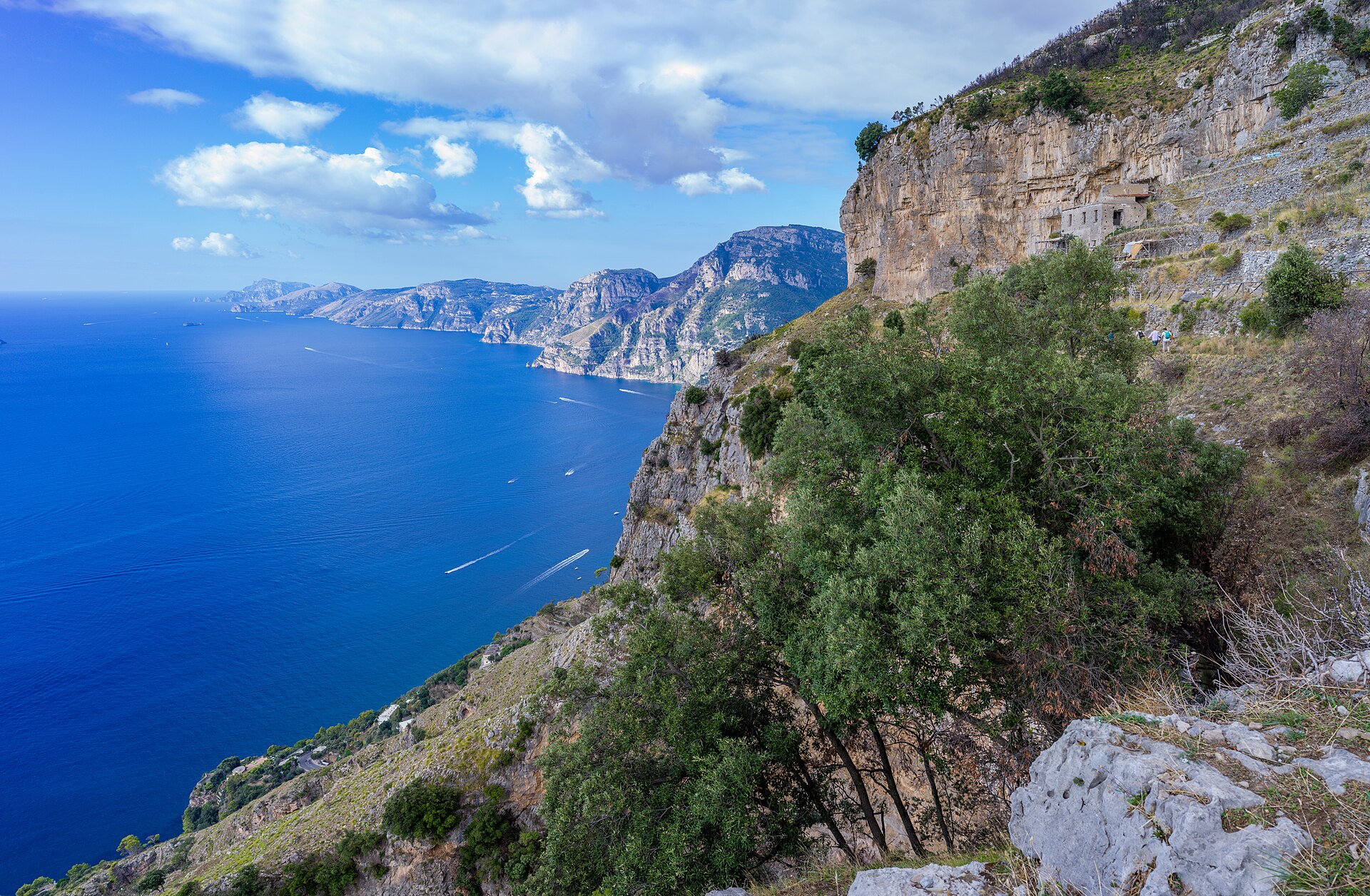
The famous one. It runs along the ridge between Bomerano, a frazione of Agerola, and Nocelle above Positano, high enough that you look down on the towns and across to Capri for most of it. Sources put the distance at anything from 6.5 to 7.8 kilometres, call it around eight all in, with roughly 230 metres of elevation gain and a walking time of two to two and a half hours, or three to four at a relaxed pace with photograph stops.
Walk it east to west, Bomerano to Nocelle. That keeps the view in front of you and the gradient mostly downhill, which is worth a great deal on a hot day. At Nocelle you have a choice: a bus down to Positano, or roughly 1,500 to 1,700 steps on foot. I have done the steps twice and would do them again in April and never in July.
Getting to the start is easier than it looks. Travelmar ferries into Amalfi connect with the operator’s own shuttle buses up to Agerola, or take the SITA 5020 from Amalfi. You can also start from Praiano, but that adds a long stair climb up to the ridge before the walk proper begins.
One thing I want to flag clearly: you will find claims online that booking is now mandatory in July and August at around five euros. I could not confirm that on any Comune di Agerola page or other official source, and other sources describe the trail as free public access with no booking. Check with the Agerola tourist office before you travel rather than trusting either version, including mine.
Sentiero dei Limoni (the Path of the Lemons)
A three kilometre mule track between Maiori and Minori through working lemon terraces, easy enough for most people and short enough to do before lunch. It is the walk to choose if the Path of the Gods sounds like too much, and it ends at a pastry counter in Minori, which is not an accident of routing on my part.
Valle delle Ferriere
A walk up from Amalfi through Pontone into a nature reserve that sits in the comune of Scala, past the ruined paper mills and a series of waterfalls. The published short route inside the reserve is about 1.7 kilometres from Pontone, and the full loop from Amalfi is a half day. The damp micro-climate supports ferns that are Tertiary relicts, species that survived the glaciations here after dying out elsewhere in Europe. It is shaded, which makes it the best hot-weather walk on the coast, and it is a completely different landscape from the terraces above it. It also links up to Scala for a longer day.
For grading these against the rest of the continent, my hiking in Europe guide has the comparison.
Beaches and swimming
Set your expectations correctly: Amalfi Coast beaches are pebbly rather than sandy, they are small, and most of them are divided between free public sections and paid clubs. Water shoes earn their place in the bag. The water itself is clear and deep close in, which makes for excellent swimming and poor paddling.
| Beach | Town | Surface | Free section | Getting there |
|---|---|---|---|---|
| Spiaggia Grande | Positano | Grey pebble | Yes, central strip. Full by 08:00 in summer | 300 to 400 steps from Piazza dei Mulini |
| Fornillo | Positano | Pebble | Yes, eastern end, no facilities. Full by 10:00 | 10 minute cliff path from Spiaggia Grande |
| Marina di Praia | Praiano | Pebble, in a gorge | Partial | Steps down from the SS163 |
| La Gavitella | Praiano | Pebble, sun until late | Partial | Long stairway or seasonal boat shuttle |
| Spiaggia del Porto | Amalfi | Pebble and sand | Yes, just past the port | Flat walk from the centre |
| Atrani beach | Atrani | Pebble and sand | Yes, most of it | Flat, right off the piazza |
| Minori beach | Minori | Coarse sand | Yes, generous | Flat seafront |
| Maiori beach | Maiori | Sand, longest on the coast | Yes, generous | Flat promenade |
| Fiordo di Furore | Furore | Pebble, tiny | Yes, all of it | Steps down from the bridge |
| Conca dei Marini cove | Conca dei Marini | Pebble | Yes, small | Steps down from the SS163 |
| Cetara beach | Cetara | Dark sand and pebble | Yes, most of it | Flat, beside the harbour |
| Marina di Vietri | Vietri sul Mare | Sand, one of the best on the coast | Yes, plus clubs | Short descent from the town |
The pattern is obvious once you see it laid out: the prettier the town, the worse the beach access and the higher the sunbed price. Maiori and Minori have the swimming, Positano has the photograph. For the coast in a wider context, see my roundup of the best beaches in Europe and the guide to the best Mediterranean destinations. For a swimming-first trip, the best places to visit in Europe in summer is the wider shortlist.
Day trips from the Amalfi Coast
Pompeii
Pompeii changed its ticketing on 12 January 2026, so here is the current position. The Pompeii Express ticket is twenty euros and covers the ancient city only. Pompeii+ is twenty-five euros and adds the suburban villas, meaning the Villa of the Mysteries and the Villa of Diomedes, plus Villa Regina at Boscoreale with its Antiquarium, and the shuttle bus. A three-day multi-site ticket at thirty euros extends that to Oplontis, Villa Arianna, Villa San Marco and the Stabiae Archaeological Museum. Single-site tickets for Boscoreale, Oplontis and the Stabiae museum are eight euros each, and Villa Arianna and Villa San Marco are free. EU citizens aged eighteen to under twenty-five pay two euros. The MyPompeii annual pass is forty-five euros, or ten for EU under-25s.
If you buy the twenty euro Express ticket and change your mind on site, you can add the suburban villas route for eight euros at the Herculaneum Gate entrance, card payment only. The villas route cannot be bought on its own.
The part that catches people out is the capacity system. Pompeii admits a maximum of 20,000 visitors a day, and between 16 March and 14 October that is split into time slots: 15,000 in the 09:00 to 13:00 window, of which 12,000 are Express and 3,000 Pompeii+, and only 5,000 in the 13:00 to 17:30 window, of which 3,000 are Express and 2,000 Pompeii+. Tickets are also nominative, carrying the visitor’s name. Book ahead through Vivaticket, the official channel, and book the morning slot, because the afternoon allocation is a third of the size and sells out first on hot days when everyone reschedules.
Opening hours are 09:00 with last entry at 17:30 and closing at 19:00 from 16 March to 14 October, and 09:00 with last entry at 15:30 and closing at 17:00 from 15 October to 15 March. Closed 25 December and 1 January. Free on the first Sunday of every month, which is precisely when I would not go. Bags are limited to 30 by 30 by 15 centimetres. There is a step-free “Pompeii for all” route from the Piazza Anfiteatro entrance.
Herculaneum
Herculaneum costs sixteen euros. Reduced entry is two euros for EU citizens aged eighteen to twenty-five. Hours are 08:30 to 19:30 with last entry at 18:00 from 16 March to 14 October, and 08:30 to 17:00 with last entry at 15:30 from 15 October to 15 March. It is open every day except 1 January and 25 December, and free on the first Sunday of each month plus 25 April, 2 June and 4 November, with free tickets collected in person on the day. An annual card costs thirty euros, or fifty-eight for a family of two adults and children.
Two closures are currently in force: the Villa dei Papiri is shut for works with no announced reopening date, and the Ancient Theatre is closed until further notice. Visitors under twelve must be accompanied.
My honest recommendation is Herculaneum over Pompeii if you only have one morning. It is a quarter of the size, the buildings survive to second-storey height with wooden fittings and carbonised furniture intact, and you will not spend the day walking between insulae in full sun. Both are on the Circumvesuviana line from Sorrento, which is the reason the Sorrento base has a genuine argument in its favour.
Capri
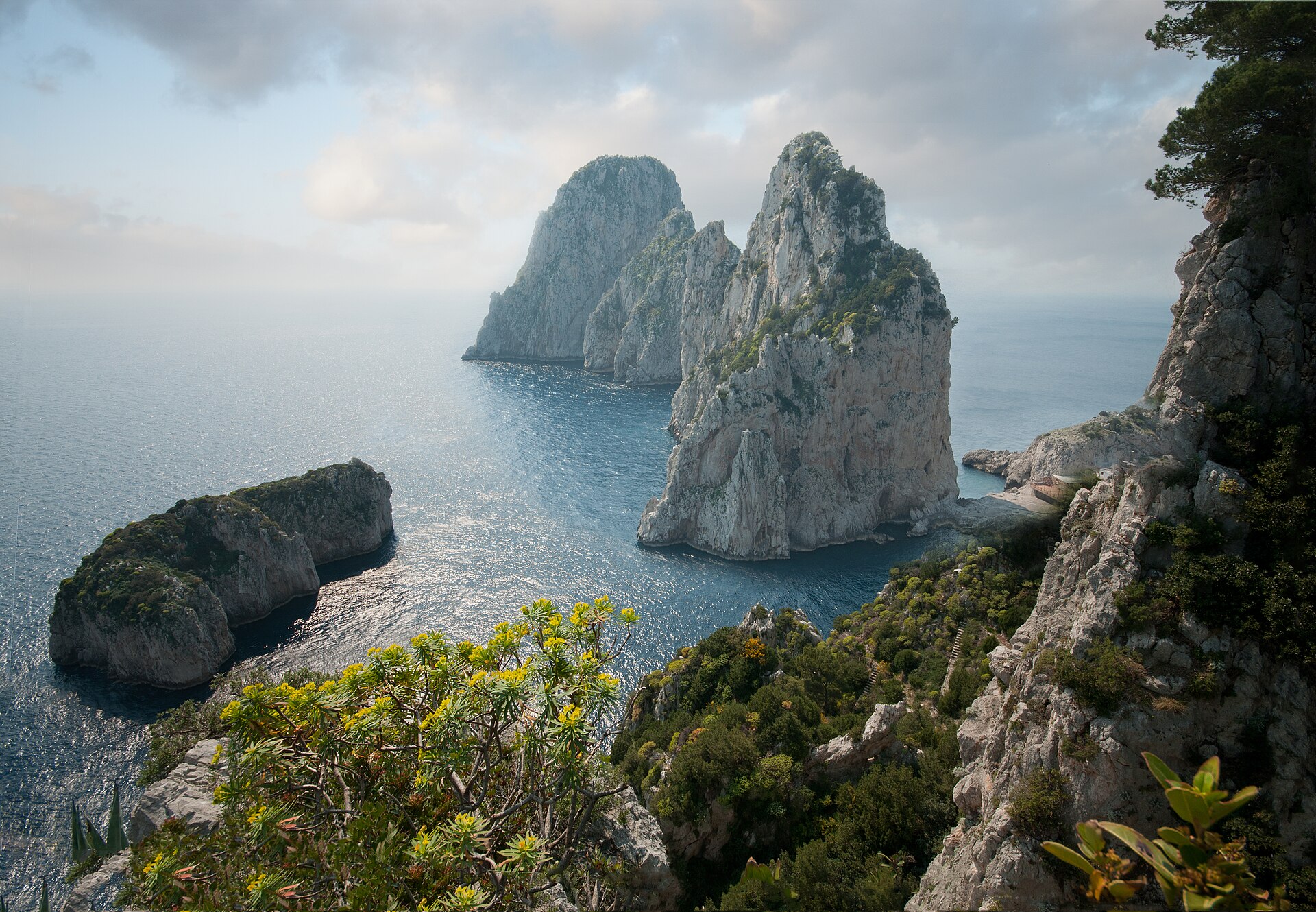
Capri is about forty minutes by hydrofoil from Positano and rather more from Amalfi, and there is a five euro landing tax per person applied from 1 April to 31 October, normally collected inside your ferry fare rather than charged separately.
Once ashore, the funicular from Marina Grande up to Capri town and the island buses cost around two euros forty a ticket, or two euros ninety bought on board, with some 2026 sources quoting two euros flat, sold at Marina Grande, the Piazzetta and the bus terminals in Capri and Anacapri. The Monte Solaro chairlift from Anacapri is fifteen euros return or twelve one way, running 09:15 to 17:00 with the last ride down at 17:30 from April to October, and 09:30 to 16:00 with the last ride down at 16:30 in February, March, November and December. In June and July it runs late on Fridays and Saturdays with the last ride down at 20:30, and in August on Fridays and Saturdays it operates 09:15 to 19:15 with the last descent at 20:00. At 589 metres, Monte Solaro is the highest point on the island and the view is the best thing on Capri.
The Blue Grotto entrance fee is quoted at nineteen euros by Capri’s tourist board, though you will see fourteen and eighteen elsewhere, and it sits on top of whatever you pay to get to the cave mouth. Carry cash and check the board at Marina Grande. Hours are 09:00 to 18:00 with last admission 17:30 from June to September, sometimes extended to 18:30 when very busy; 09:00 to 16:00 with last admission 15:30 in April, May and October; and 09:00 to 14:00 with last admission 13:30 from November to March. You transfer into a rowing boat holding a maximum of four passengers and lie flat while the skipper hauls the boat through an opening about two metres wide and a metre high. The cave inside is roughly 60 metres long and 25 wide. It closes in rough seas or high wind and on 25 December and 1 January.
I will say the quiet part: the Blue Grotto involves queueing in a boat, paying twice, lying down, spending perhaps five minutes inside, and being asked for a tip. The light really is extraordinary. Whether that trade is worth it is a personal calculation and I have made it both ways on different visits.
Paestum
South of Salerno, and the least-visited great classical site in Campania: three Greek Doric temples from the sixth and fifth centuries BC standing more or less intact in a field. It is a train ride from Salerno and it makes an easy half day from the eastern end of the coast, and it belongs on any list of the most beautiful places in Europe. If you are basing yourself in Vietri, Cetara or Maiori, it is a great deal closer than Pompeii.
Where to stay: choosing a base by what you actually want
| If you are | Base yourself in | Because | Not in |
|---|---|---|---|
| A first-time visitor with five nights | Amalfi | Ferries, buses, shops and cash machines all in one flat centre | Positano, unless the view is the trip |
| A couple on a short romantic break | Positano or Ravello | The two places worth paying the premium for | Maiori, which is practical rather than romantic |
| Travelling with young children | Maiori or Minori | Flat, sandy, cheap, with prams and buggies usable | Positano and Praiano, both very steep |
| Using a wheelchair or with limited mobility | Maiori, then Amalfi or Ravello | Maiori is flat; Amalfi has a long ramped promenade; Ravello is reached by road | Positano, which is essentially a staircase |
| On a tight budget | Vietri sul Mare, Maiori or Scala | Cheapest rooms, and Vietri is ten minutes from Salerno station | Positano and Ravello |
| Here to walk | Agerola, Scala or Praiano | Trailheads on the doorstep instead of an hour of buses | Vietri, which is at the wrong end |
| Here to eat | Cetara or Tramonti | Anchovies and colatura in one, wine and pizza in the other | Positano, where you pay for the terrace not the kitchen |
| Determined to drive | Tramonti, Scala or Agerola | Reachable via the Valico di Chiunzi or the SR366, both exempt roads | Anywhere that can only be reached along the SS163 |
| Doing Pompeii and Herculaneum properly | Sorrento | On the Circumvesuviana line, and cheaper | The eastern coast towns, which are 2 hours away |
| Visiting in winter | Amalfi or Salerno | The only places where enough stays open to be worth it | Praiano, Conca dei Marini, Furore |
One more consideration that people underrate: the height of your room above the road. On listings sites this appears as a lovely photograph and a sentence about panoramic views. In practice it means a hundred and twenty steps with a suitcase, twice a day, in thirty degrees. Message the property before booking and ask two questions: how many steps from the nearest road, and is there a porter service. A good host will answer honestly. For a broader look at the accommodation question, see where to stay in Europe, and if you are bringing children, Europe with kids covers the same trade-off across the continent.
Eating on the Amalfi Coast, and what to take home
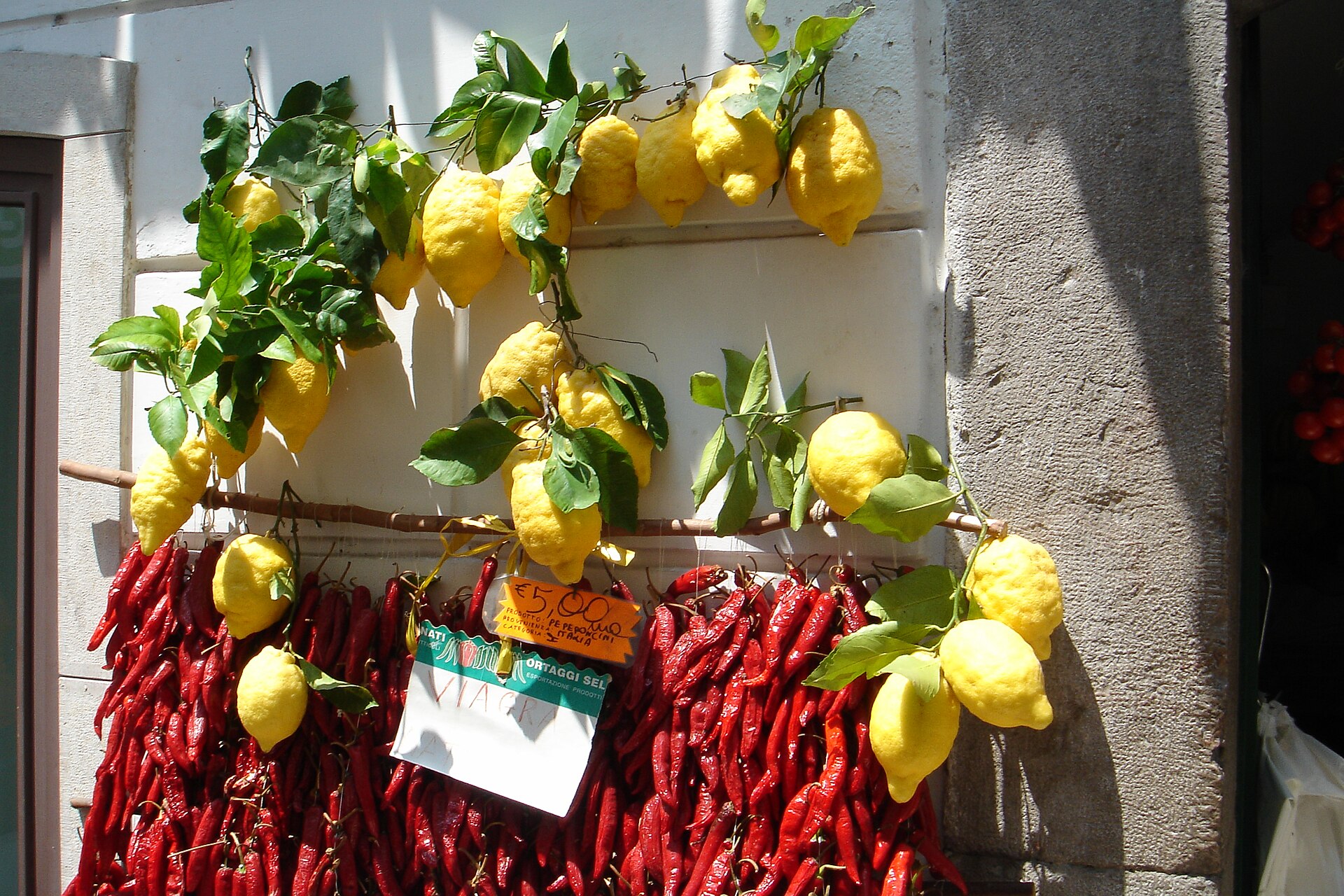
The coast’s food is simpler than its scenery. Lemons run through everything: the sfusato amalfitano is a large, thick-skinned, low-acid lemon grown on the terraces under chestnut pergolas, and it is the basis of limoncello, of delizia al limone, and of the lemon-and-oil dressings you will see on everything from grilled fish to the local rabbit.
The things worth ordering by name:
- Scialatielli ai frutti di mare, a short thick fresh pasta created in the 1970s by the Amalfi chef Enrico Cosentino, served with seafood.
- Spaghetti alla colatura di alici in Cetara, dressed with the fermented anchovy liquid the town has been making for centuries. It is a direct descendant of Roman garum.
- Alici di Cetara themselves, marinated or salted, on bread.
- Delizia al limone, a lemon cream dome. Sal De Riso’s version in Minori is the benchmark.
- Sfogliatella Santa Rosa, invented at the convent above Conca dei Marini before Naples adopted it.
- Ndunderi from Minori, ricotta dumplings claimed as one of the oldest pasta shapes in Italy.
To take home: a bottle of colatura from Cetara, a tin of anchovies, Amalfi handmade paper from the shops on Via Lorenzo d’Amalfi, and Vietri ceramics carrying the “Ceramica Artistica e Tradizionale” trademark rather than the transfer-printed plates sold at every stop on the coast road. Limoncello is fine and everyone buys it, but the colatura is the thing you will still be using in six months. More on regional eating in my guide to European food and in the breakdown of Italian food by region.
Itineraries that work
Three days, no car
Day 1. Train Naples to Salerno, ferry to Amalfi, drop bags. Afternoon in the cathedral and the Cloister of Paradise, then the walk round the headland to Atrani for dinner in the piazza.
Day 2. Early SITA bus up to Ravello, before the coaches. Villa Rufolo at opening, Villa Cimbrone by mid morning, lunch in the town, and back down in the afternoon for a swim off the Spiaggia del Porto.
Day 3. Ferry to Positano first thing, walk down through the town to Fornillo, swim, lunch, and take the last afternoon boat back with the light behind you. Ferry or bus to Salerno the following morning.
Five days, no car
As above, then:
Day 4. Path of the Gods. Ferry or bus to Amalfi, shuttle up to Bomerano, walk to Nocelle, then the steps or the bus down to Positano and a boat home.
Day 5. Either Herculaneum, going out on the Circumvesuviana from Sorrento, or a slow eastern day: ferry to Minori for the Roman villa and the pastry, walk the Sentiero dei Limoni to Maiori, swim on the long beach, bus back.
Seven days, no car, one base in Amalfi
The five-day plan plus a full day on Capri, taking the first hydrofoil out and the last one back, and a final slow day split between Cetara for lunch and Vietri for ceramics before you leave from Salerno. If you would rather see more of the country, my 10-day Italy itinerary shows how to sequence the coast with Rome, Florence and Venice, and the broader Europe itinerary guide covers the multi-country version.
Day trips in from Rome or Naples
From Naples the coast is a viable long day: train to Salerno, ferry to Amalfi, three hours ashore, ferry and train back. From Rome it is not. The high-speed train to Naples takes about an hour, but you then need the Salerno leg and the ferry at both ends, and you will spend more of the day in transit than on the coast. Stay a night. If your Italy trip is Rome-centred, spend the time on things to do in Rome instead and save the coast for a trip that can give it three days.
Swaps: if the obvious choice is full or too expensive
| Instead of | Try | Why it works |
|---|---|---|
| Positano | Praiano | Same coastline, same sunsets, noticeably cheaper rooms, four km east |
| Positano’s Spiaggia Grande | Fornillo, or Atrani beach | Fornillo holds out two hours longer; Atrani is free and flat |
| Ravello | Scala | A view that includes Ravello, for far less, five minutes away |
| Amalfi in August | Amalfi in late May | Sea already 18.7 °C, rainfall 62 mm, plate rule not yet daily |
| Pompeii | Herculaneum | Quarter the size, twice the preservation, four euros cheaper |
| The Blue Grotto on Capri | Monte Solaro chairlift | Fifteen euros, no queue in a boat, the better view |
| The Emerald Grotto | Fiordo di Furore | Free, outdoors, and you can swim in it |
| A hire car | COSTIERASITA pass plus ferries | Ten euros a day, no plate rule, no ZTL fines, no parking |
| Sorrento as a coast base | Amalfi or Minori | You are actually on the coast rather than 90 minutes from it |
| Capri as a day trip in August | Procida or Ischia | Far fewer day-trippers. Ischia charges no landing tax, though it does bar non-resident vehicles from 3 April to 31 October 2026 |
Accessibility, without the gloss
The Amalfi Coast is difficult for anyone with limited mobility, and it is worth saying so plainly rather than leaving people to find out on arrival.
Maiori is the most workable base: flat centre, flat promenade, the coast’s largest sandy beach. Amalfi is next, with a long concrete promenade along the marina and ramped access to the beach and pier, no stairs involved. Ravello works better than its altitude suggests, because you arrive by road rather than by cliff staircase and the centre is mostly flat cobblestone, manageable with assistance. Minori is flat too.
Positano is strongly not recommended as a base for wheelchair users. The town is steps and climbs almost from end to end and there is no way to plan around that. Praiano and Conca dei Marini have similar problems on a smaller scale.
SITA Sud buses are not step-free, have high steps, and stop at kerbs that often lack accessible infrastructure. Ferries vary by vessel and pier. Pompeii has a signed step-free “Pompeii for all” route from the Piazza Anfiteatro entrance, which is genuinely good. Vehicles carrying a disabled badge with the holder on board are exempt from the number plate restriction, so a private car with the right documentation is the most reliable way to move around, and licensed taxis and NCC hire cars are exempt too.
Twelve mistakes I see people make
- Hiring a car for August without checking the plate rule. The restriction runs every day in August and September, 10:00 to 18:00, and the hotel derogation covers only your arrival and departure days.
- Booking Sorrento and calling it the Amalfi Coast. It is a fine holiday and a ninety minute bus ride from Positano.
- Packing a large hard-shell suitcase. There is no wheeled-luggage ban here, whatever you may have read about Italy; that rule is Venice’s. The problem is simply that you carry your bag up the steps yourself.
- Planning tight ferry connections. Boats are cancelled for weather at short notice, and there is no Uber to fall back on.
- Arriving at the beach at eleven. The free section of Spiaggia Grande is gone by eight in high summer and Fornillo’s by ten.
- Buying single bus tickets. Four journeys at the longer-hop fare and the ten euro COSTIERASITA pass has already paid for itself.
- Trying to see the coast as a day trip from Rome. The transit alone eats the day.
- Booking Pompeii’s afternoon slot. The afternoon allocation is 5,000 against the morning’s 15,000, and the site has no shade.
- Not asking how many steps are between the road and the room. This decides your week more than the hotel’s star rating does.
- Budgeting nothing for the tourist tax. It is charged per person per night, in cash, at checkout, and it is not in your booking price.
- Doing Ravello in the middle of the day. Go up on the first bus. The villas are transformed by having them nearly to yourself.
- Assuming September is the safe shoulder month. The sea is lovely at 24 °C, but rainfall jumps from 25 mm in August to 91 mm, nearly four times as much,, and the plate restriction still runs every single day.
Amalfi Coast travel guide: frequently asked questions
How many days do you need on the Amalfi Coast?
Three nights is the minimum that justifies the journey, five is comfortable, and seven lets you add Capri and a proper walking day without rushing. Anything under three nights and you will spend a disproportionate share of your time in transit, because there is no fast way in or out.
Is the Amalfi Coast worth visiting?
Yes, with a caveat. The landscape genuinely is among the finest in the Mediterranean and the towns are the real thing rather than a reconstruction. But it is expensive, crowded from April to November, and physically demanding in a way the photographs do not convey. If your idea of a good holiday involves lying on a big sandy beach with easy access and cheap dinners, Puglia or the Greek islands will serve you better.
What is the best month to visit the Amalfi Coast?
Late May or early June. The sea reaches 18.7 °C in May and 22.7 °C in June, rainfall drops to 62 mm and then 30 mm, and the number plate restriction applies only at weekends in June rather than every day as it does in August and September.
Can you visit the Amalfi Coast without a car?
Yes, and you should. The SITA Sud bus network plus the Travelmar and Alicost ferries reach every town that matters, the COSTIERASITA pass costs ten euros for 24 hours of unlimited bus travel, and going without a car removes the plate restriction, the ZTL fines and the parking problem in a single decision.
What is the best town to stay in on the Amalfi Coast?
Amalfi for most people, because it has the ferry pier, the bus terminus and a flat centre. Positano if the view is the point of the trip and the budget allows. Maiori or Minori for families and anyone who wants flat ground and a real beach. Ravello for gardens, music and quiet evenings.
Can you walk between towns on the Amalfi Coast?
Some of them. Amalfi to Atrani takes ten to fifteen minutes round the headland. Maiori to Minori is a three kilometre lemon-terrace path. The Path of the Gods links Bomerano to Nocelle above Positano in about eight kilometres. There is no continuous coastal footpath along the whole 50 kilometres, and walking along the SS163 itself is unpleasant and unsafe.
Is the Amalfi Coast expensive?
Yes, by Italian standards, and its high season effectively runs April to November so the usual shoulder-season discount is thin. Two people without a car, based in Amalfi or Minori in June, should budget roughly one hundred and eighty to two hundred and fifty euros a day. Positano in August will comfortably double that.
Can you visit the Amalfi Coast on a day trip from Naples or Rome?
From Naples, yes: train to Salerno in about 45 minutes, ferry to Amalfi in 25 to 40, giving you three or four useful hours ashore. From Rome it does not work well. Even with the hour-long high-speed train to Naples you will spend most of the day travelling.
What is the fastest way from Naples to the Amalfi Coast?
Train to Salerno then ferry to Amalfi, roughly an hour and a half door to door in season and immune to road traffic. A private transfer is quicker on paper at about an hour and a half and slower in practice on any summer afternoon.
Can you get a taxi on the street on the Amalfi Coast?
Not reliably. There are licensed taxi ranks in the main towns and drivers who work by arrangement, but hailing one on the road is not how it works, and neither Uber nor Lyft operates on the coast or on Capri. Agree a price before you set off.
Is Sorrento on the Amalfi Coast?
No. Sorrento is on the northern side of the Sorrentine Peninsula facing the Bay of Naples. The Amalfi Coast is the southern side, running from Positano east to Vietri sul Mare. They are about an hour and a half apart by bus.
How far is the Amalfi Coast from Naples?
Naples to Positano is around 56 kilometres by road, roughly an hour and a half without traffic. Naples airport is about 60 kilometres from the coast, with typical drive times of 90 to 120 minutes to Positano and 100 to 130 to Amalfi, plus another half hour to an hour in July and August.
Final thoughts
The Amalfi Coast rewards planning more than almost anywhere else I write about, and it punishes the absence of it in ways that are specific and avoidable. The number plate calendar, the ferry timetable, the height of your room above the road and the month you choose will shape your week far more than which restaurant you pick.
Get those four right and the rest takes care of itself. My own ideal version is five nights in Amalfi in the last week of May: the boat to Positano one morning, Ravello on the first bus another, the Path of the Gods on a cool day, and a long lunch in Cetara with a bottle of something from Furore. No car, no parking, no fines, and the whole coast reachable for ten euros a day.
If Italy is the wider trip, the Italy travel guide is the place to start, and it links out to Tuscany, the Cinque Terre, Sicily and Lake Como, along with the best time to visit Italy and the best places to visit in Italy. If you are still deciding where in the continent to go at all, start with the best places to visit in Europe or the Europe bucket list. Couples planning something bigger should read the Europe honeymoon guide, and if you are packing for steps and heat, the Europe packing list is the one to check before you zip the case.
About the author
Hannah Brooks has spent fifteen years travelling, living and writing across Europe, from the Arctic tip of Norway to the south of Sicily. She has planned hundreds of European itineraries for readers and is Senior Europe Editor at EuropeanTourism.org.
Photo credits
All photographs are freely licensed and used with attribution.
- The cliffside town of Positano, the most photographed stop on any Amalfi Coast travel guide · Cris Saur crisaur · CC0 · via Wikimedia Commons
- Umbrellas and sunbeds on Spiaggia Grande, the main beach at Positano · Nan Palmero from San Antonio, TX, USA · CC BY 2.0 · via Wikimedia Commons
- The white houses of Praiano spread across the hillside between Positano and Amalfi · Barochat · CC BY-SA 3.0 · via Wikimedia Commons
- The cove and terraced hillside at Conca dei Marini on the Amalfi Coast · Diego Delso · CC BY-SA 4.0 · via Wikimedia Commons
- The roadside entrance and landing stage for the Emerald Grotto at Conca dei Marini · Falk2 · CC BY-SA 4.0 · via Wikimedia Commons
- The majolica-tiled dome and bell tower of the Duomo di Sant Andrea in Amalfi · Luciano Tronati · CC BY-SA 4.0 · via Wikimedia Commons
- The rooftops of Amalfi town below the cathedral bell tower · Nick Amoscato · CC BY 2.0 · via Wikimedia Commons
- The arched clock tower and stepped lanes of Atrani, next door to Amalfi · Cristina Morettini 95 · CC BY-SA 4.0 · via Wikimedia Commons
- Terraced lemon gardens above the small resort town of Minori · Kasa Fue · CC BY-SA 4.0 · via Wikimedia Commons
- The long beach and seafront promenade at Maiori, the flattest town on the coast · © Ra Boe / Wikipedia · CC BY-SA 3.0 de · via Wikimedia Commons
- The fishing village of Cetara and its Norman watchtower on the Gulf of Salerno · Bernard Gagnon · CC BY 4.0 · via Wikimedia Commons
- The tiled church domes of Vietri sul Mare at the eastern end of the Amalfi Coast · Anila amataj · CC BY-SA 4.0 · via Wikimedia Commons
- The tower and umbrella pines of Villa Rufolo in Ravello · Istvánka · CC BY-SA 3.0 · via Wikimedia Commons
- The marble busts on the Terrace of Infinity at Villa Cimbrone in Ravello · Deror_avi · CC BY-SA 4.0 · via Wikimedia Commons
- The narrow inlet and arched road bridge of the Fiordo di Furore · yashima from Karlsruhe, Germany · CC BY-SA 2.0 · via Wikimedia Commons
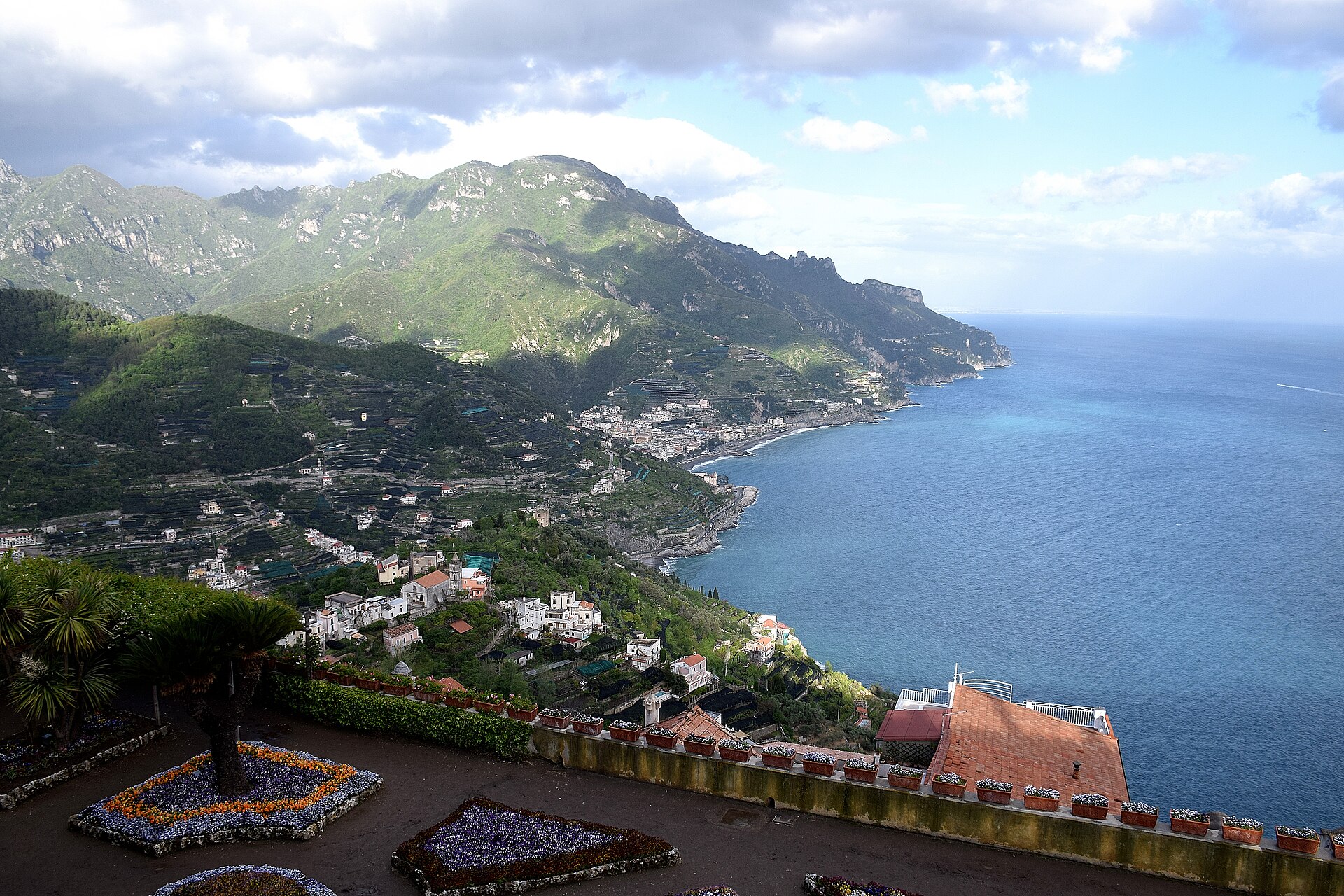
- The Amalfi Coast seen from the gardens of Ravello, 350 metres above the sea · gian luca bucci · CC BY 3.0 · via Wikimedia Commons
- The SS163 Amalfitana coast road cut into the cliffs above the sea · Falk2 · CC BY-SA 4.0 · via Wikimedia Commons
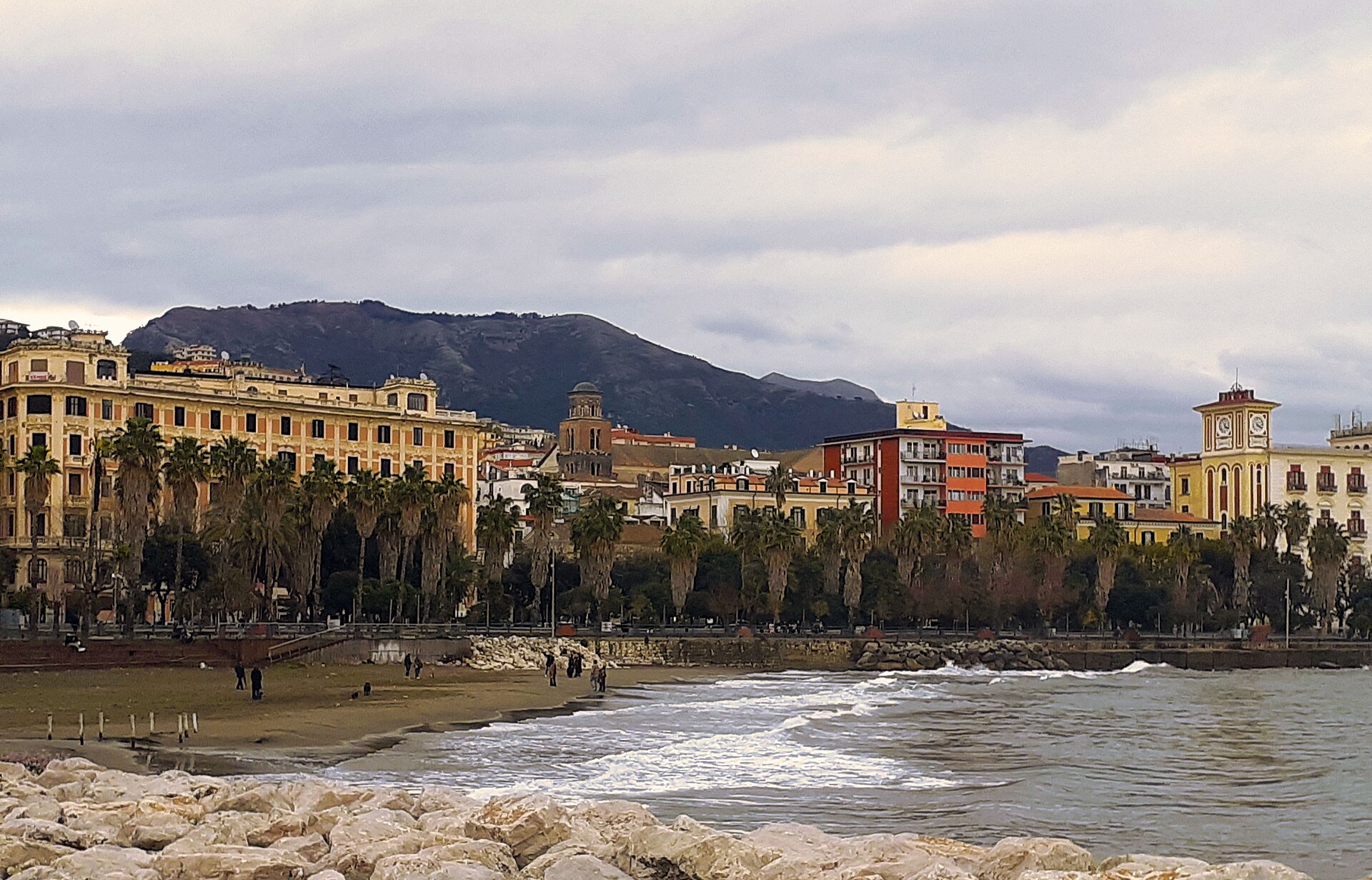
- The palm-lined Lungomare Trieste at Salerno, the eastern gateway to the coast · Andrea Novello · CC BY-SA 4.0 · via Wikimedia Commons
- The Path of the Gods footpath running high above the sea between Bomerano and Nocelle · This Photo was taken by Wolfgang Moroder . Feel free to use my photos, but please mention me as the author and send me a message . This image is not in the public domain . Please respect the copyright protection. It may only be used according to the rules mentioned here. This specifically excludes use in social media , if applicable terms of the licenses listed here not appropriate. Please do not upload an updated image here without consultation with the Author. The author would like to make corrections only at his own source. This ensures that the changes are preserved. Please if you think that any changes should be required, please inform the author. Otherwise you can upload a new image with a new name. Please use one of the templates derivative or extract . · CC BY-SA 3.0 · via Wikimedia Commons
- The Faraglioni sea stacks off the island of Capri · sneakerdog · CC BY 2.0 · via Wikimedia Commons
- Amalfi lemons and dried peppers hanging outside a shop in Amalfi · Yvon from Netherlands · CC BY 2.0 · via Wikimedia Commons
3 comments