The Ultimate Europe Bucket List: 48 Things Worth Doing
A Europe bucket list is a strange kind of document. It is half planning tool, half confession. Mine has been rewritten so many times that the original paper version, started in a Bratislava hostel in 2011, is now mostly crossings-out. Some of the things I wrote down were wonderful. Some were expensive disappointments I only understood after standing in front of them at the wrong hour of the wrong month with the wrong ticket.
So this is not a list of pretty photographs. A useful Europe bucket list is a list of 48 experiences with the practical detail attached: the actual price, the month that works, how far ahead you have to book, and how long it eats out of a trip. Every entry below carries those four columns, because the difference between a good day and a wasted one in Europe is almost always logistics, not taste. Where an operator does not publish a price, the cell says so instead of guessing.
I have kept this to things that are still worth doing in 2026, which meant cutting a few classics that have been loved into unpleasantness. It also meant checking the prices myself rather than copying them forward from last year, and being honest in the table where an official source would not give me a number. Around a third of the price cells below say the fare varies, is set by dynamic pricing, or is published only inside a booking engine. That is what the operator gives out, and an invented figure gets you to the desk short of cash.
What actually belongs on a Europe bucket list
Four categories, and they behave completely differently when you try to plan around them.
Great monuments are the ones everyone knows. They are reliable, they are almost all ticketed, and the only real skill is booking correctly and going at the right hour. Sixteen of them made the list.
Landscapes are weather-dependent and season-locked. Twenty here. You can book them perfectly and still get nothing, which is why the good ones deserve two days, not one.
Journeys are experiences measured in days rather than hours: four of them, and they are the ones people remember most vividly years later.
Date-locked events are the cruel ones. Eight entries, and if you are not there in the right two-week window, you are simply not doing it this year. La Tomatina happens on one Wednesday morning. That is the whole event.
A word on what this list is not. It is not a ranking, because ranking the aurora against the Sistine Chapel is a category error. The numbering runs by type, not by merit, and item 48 is not worse than item 1.
All 48 things on this Europe bucket list, at a glance
Prices are what the official operator published when I checked in August 2026. Where a cell says the fare varies, the operator uses dynamic pricing or hides the price behind a booking engine, and I have not guessed. Currency is stated per row, because Europe is not one currency and two countries have changed theirs in the last three years.
| # | Bucket list entry | Where | Type | What it costs | Best months or fixed dates | How far ahead to book | Time needed |
|---|---|---|---|---|---|---|---|
| 1 | Standing on the Eiffel Tower summit | Paris, France | Great monument | EUR 36.70 summit, EUR 23.50 second floor | Sept-Oct, Apr-May | Days ahead; stairs tickets become reservation-only from 29 Sept 2026 | 2-3 hours |
| 2 | Walking the Colosseum and the Roman Forum | Rome, Italy | Great monument | EUR 18 for the 24-hour combined ticket (EUR 16 + EUR 2 fee) | Oct-Nov, Mar-Apr | Mandatory; sales open 30 days before your date | Half a day |
| 3 | Looking up in the Sistine Chapel | Vatican City | Great monument | EUR 20 on the door, EUR 25 booked online | Nov-Feb | Weeks in peak season | 3-4 hours |
| 4 | Sagrada Família, inside and up a tower | Barcelona, Spain | Great monument | EUR 26 basilica, EUR 10 extra per tower | Oct-Apr | 2-4 weeks in summer | 2 hours |
| 5 | The Nasrid Palaces of the Alhambra | Granada, Spain | Great monument | EUR 21 on site, EUR 22.27 online | Apr-May, Sept-Oct | 2-3 months for a good slot | 3-4 hours |
| 6 | Sunrise on the Acropolis | Athens, Greece | Great monument | Timed ticket, price set by the Greek state | Mar-Apr, Oct-Nov | A week; take the first slot of the day | 2-3 hours |
| 7 | Neuschwanstein, on a 30-minute tour | Bavaria, Germany | Great monument | EUR 21 plus a EUR 2.50 online booking fee | Late Sept, Oct | Weeks; the on-site desk only sells same-day | Half a day with travel |
| 8 | Pena Palace above Sintra | Sintra, Portugal | Great monument | EUR 20 Essential Visit, EUR 45 Full Tour | Mar-Apr, Oct | 2-3 weeks; there is no delay tolerance | Half a day |
| 9 | Crossing the Charles Bridge into Prague Castle | Prague, Czechia | Great monument | Castle circuit ticket, valid two days | Sept-Oct, Jan-Feb | A few days | Half a day |
| 10 | Stonehenge on a timed ticket | Wiltshire, England | Great monument | Timed entry, up to 25% cheaper booked ahead | May-June, Sept | Up to three hours before; book anyway | 2 hours |
| 11 | Mont Saint-Michel at high tide | Normandy, France | Great monument | Abbey admission plus EUR 9 per village museum | Sept-Oct | Days; check the tide tables first | Half a day |
| 12 | The Anne Frank House | Amsterdam, Netherlands | Great monument | EUR 16.50 adult, EUR 7 for ages 10-17 | Any month | Tuesdays 10:00 CEST for six weeks out | 1 hour |
| 13 | Auschwitz-Birkenau, slowly | Oświęcim, Poland | Great monument | Free, but the entry card must be reserved | Apr-May, Sept-Oct | Weeks; online only, nothing at the gate | Half a day, and nothing after it |
| 14 | Pompeii under a hot sky | Campania, Italy | Great monument | EUR 25 for the Pompeii+ ticket | Apr, Oct | A few days | 4-5 hours |
| 15 | Circling the Dubrovnik city walls | Dubrovnik, Croatia | Great monument | Fare not published openly; expect a premium ticket | May, Oct | Days; go at opening instead | 1.5-2 hours |
| 16 | Climbing to the Meteora monasteries | Thessaly, Greece | Great monument | EUR 5 cash per monastery | Apr-May, Oct | None; check each monastery's closing day | Full day |
| 17 | Northern lights over Tromsø | Troms, Norway | Landscape | Chase tours vary; the sky itself is free | Sept-Mar | Chase tours 1-2 weeks ahead | 3-6 hours per night |
| 18 | Waiting for the aurora in Abisko | Swedish Lapland | Landscape | National park entry free | Sept-late Mar | Beds sell out months ahead | Several nights |
| 19 | The Trolltunga hike | Hardangerfjord, Norway | Landscape | Free; shuttle buses cost extra | June-Sept unguided | Shuttle and bed weeks ahead | 10-12 hours |
| 20 | The Flåm Railway and the Nærøyfjord | Sognefjord, Norway | Landscape | Rail fare plus fjord cruise | May-Sept | 1-2 weeks in summer | About 6 hours combined |
| 21 | Plitvice Lakes on the wooden walkways | Lika, Croatia | Landscape | EUR 40 peak, EUR 23 shoulder, EUR 10 winter | Apr-May, Oct | Days; slots do sell out | 5-6 hours |
| 22 | The Cliffs of Moher in wind | County Clare, Ireland | Landscape | EUR 15 at the gate, less booked online | May, Sept | Days; pick an off-peak slot | 2-3 hours |
| 23 | The Giant's Causeway | County Antrim, Northern Ireland | Landscape | GBP 15 per car to walk it, GBP 55 for the Clifftop Experience | May-June, Sept | Days | 2-4 hours |
| 24 | Floating in the Blue Lagoon | Reykjanes, Iceland | Landscape | Dynamic pricing; Comfort includes towel and a drink | Sept-Oct, Feb-Mar | Essential, weeks ahead | 2-3 hours |
| 25 | Whale watching in the Azores | São Miguel and Pico, Portugal | Landscape | Operator boat fare | Apr-Oct on Pico, year-round on São Miguel | A few days | 3-4 hours |
| 26 | Sunrise balloons over Cappadocia | Nevşehir, Türkiye | Landscape | Operator fare, varies by basket size | Spring and autumn | Weeks; keep spare days for wind | 1-1.5 hours in the air |
| 27 | The Path of the Gods above Positano | Amalfi Coast, Italy | Landscape | No entry fee | Apr-May, Oct | None; the bus to Bomerano fills | 4-6 hours |
| 28 | Walking between the Cinque Terre villages | Liguria, Italy | Landscape | From EUR 17.30 one-day Train Card, by season | Apr-May, Oct | Via dell'Amore needs a reservation | Full day |
| 29 | Jungfraujoch, the Top of Europe | Bernese Oberland, Switzerland | Landscape | From CHF 85 return on the Good Morning Ticket | Jan-Mar, June-Sept | 1-2 weeks | Full day |
| 30 | Santorini's caldera without the cruise crowd | Cyclades, Greece | Landscape | Free to look at | May, Oct | Hotels 3-6 months ahead | 2-3 days |
| 31 | Keukenhof in full tulip | Lisse, Netherlands | Landscape | EUR 38.50 combi ticket from Amsterdam RAI | 19 Mar-10 May in 2026; similar window in 2027 | Timed entry, weeks ahead | 4-5 hours |
| 32 | The Douro Valley during the harvest | Northern Portugal | Landscape | Quinta tour fees vary | Late Aug-Oct | Quintas book out for the vindima | 2-3 days |
| 33 | The Lofoten Islands by road | Nordland, Norway | Landscape | Free to drive; ferries cost extra | June for midnight sun, Feb-Mar for lights | Cars and cabins months ahead | 4-5 days |
| 34 | The Faroe Islands in cloud | Faroe Islands | Landscape | Free; some landowner paths charge | May-Sept | Flights and cars months ahead | 4-6 days |
| 35 | Lake Bled and its island church | Upper Carniola, Slovenia | Landscape | Pletna boat fare to the island | May-June, Sept | None | Half a day |
| 36 | Hallstatt, early or not at all | Salzkammergut, Austria | Landscape | Free to walk; the salt mine is ticketed | Late Apr, Oct | Coaches book slots; go independently | Half a day |
| 37 | The Bernina Express through the Alps | Chur to Tirano, Switzerland and Italy | Journey | CHF 32 low season, CHF 36 peak, for the mandatory reservation | Jan-Feb for snow, Sept-Oct | Opens three months ahead; reservation compulsory | About 4 hours |
| 38 | The last 100 km of the Camino de Santiago | Galicia, Spain | Journey | Albergue beds and the credential | May-June, Sept | Beds days ahead in summer | 5-6 days |
| 39 | A month on the rails with an Interrail or Eurail pass | Continent-wide | Journey | Pass price plus seat reservations | Apr-June, Sept-Oct | Reservations for high-speed trains | 2 weeks to 3 months |
| 40 | A night in the Icehotel at Jukkasjärvi | Swedish Lapland | Journey | Nightly rate varies by suite | Dec-Apr for the ice build | Months; art suites go first | One night |
| 41 | Oktoberfest, standing on a bench | Munich, Germany | Date-locked | Free to enter; EUR 4 for the Oide Wiesn | 19 Sept-4 Oct 2026 | Tent tables months ahead | A full day |
| 42 | Venice Carnival in a mask | Venice, Italy | Date-locked | Free in the streets; balls are ticketed | Late Jan to mid-Feb | Hotels and balls months ahead | 2-3 days |
| 43 | La Tomatina | Buñol, Spain | Date-locked | EUR 50-110 for coach and entry packages | 26 August 2026 | Now; the cap is 22,000 tickets | One morning |
| 44 | The encierro at San Fermín | Pamplona, Spain | Date-locked | Free to watch from the street | 6-14 July | Beds six months ahead | About 2 minutes |
| 45 | The Edinburgh Festival Fringe | Edinburgh, Scotland | Date-locked | Ticket prices per show; many are free | 7-31 August 2026 | Beds by February | 3-5 days |
| 46 | Glühwein at the Nuremberg Christkindlesmarkt | Franconia, Germany | Date-locked | Free to enter | 27 Nov-24 Dec 2026 | Hotels months ahead | 2 days |
| 47 | Vienna's Christmas markets, all of them | Vienna, Austria | Date-locked | Free to enter | 6 Nov 2026-6 Jan 2027 depending on the market | Weeks | 2-3 days |
| 48 | Midnight sun at the North Cape | Finnmark, Norway | Date-locked | Nordkapp Hall admission | Mid-May to late July | Weeks | Full day |
The great monuments: 16 that survive their own fame
These are the entries that will be on every list you read. That does not make them wrong. It makes the booking mechanics matter more, because you are competing with everyone else who read the same list.
1. Standing on the Eiffel Tower summit

The summit is 276 metres up, the second floor is at 116 metres, and the first is at 57. Most visitors stop at the second floor, which is a fine view and a different one. The summit, and the rest of the city, is covered in our France travel guide: colder, windier, more claustrophobic, and the only place where Paris stops looking like a map and starts looking like a city with a shape.
The lift to the summit is EUR 36.70 for an adult, against EUR 23.50 to stop at the second floor. Youth aged 12 to 24 pay EUR 18.40 to the summit, children aged four to eleven EUR 9.20. Under-fours are free but still need a ticket issued. If you take the stairs to the second floor and the lift onward you pay EUR 28.00, and the stairs to the second floor alone are the cheapest way in at EUR 14.80. A summit visit with a glass of champagne is EUR 60.70; a guided tour to the top is EUR 71.70.
Two things to know for late 2026. From 29 September, advance reservations become required for stairs tickets, which until now have been the reliable walk-up option, and groups of more than nine must buy through the tower’s dedicated group site. Summer opening runs 09:00 to midnight with last ascents at 22:45. Note also that the tower closed to the public on 13 July 2026 rather than the 14th, which caught out a lot of people planning around Bastille Day.
Summit access can be suspended in high wind, so if the sky looks unstable, go early rather than saving it for sunset. The summit and the stairways are not suitable for visitors with limited mobility.
2. Walking the Colosseum and the Roman Forum

The standard 24-hour ticket is EUR 18, made up of EUR 16 admission and a EUR 2 booking fee, and it covers a single timed entry to the Colosseum’s first and second tiers, plus untimed entry to the Roman Forum, the Palatine and the Imperial Fora. What it does not cover is the arena floor. If you want the arena and the underground passages you need the Full Experience ticket, which is valid across two consecutive days and limits you to 90 minutes inside the Colosseum itself.
Booking is not optional. The 24-hour, arena-only and Full Experience tickets must all be reserved, and they go on sale exactly 30 days before the date of visit. Set a reminder for the day the window opens, because the underground slots disappear fastest. The 30-day rule also explains the “sold out” screens people hit two months before a trip: the tickets do not exist yet.
Go in October or March if you have the choice, which is also the advice in our Italy travel guide. Roman summer inside a stone bowl is brutal and the queue for the security check is uncovered.
3. Looking up in the Sistine Chapel

The Vatican Museums cost EUR 20 if you turn up and buy at the desk, and EUR 25 if you book on the official site, because online carries a EUR 5 reservation charge. That is an unusual pricing structure and it means the cheapest way in is the one that requires you to queue. In November or February the queue is manageable and I would take the saving. In July I would pay the five euros without thinking about it.
Your ticket is valid only on the day it is issued. There is no two-day version.
The route to the chapel runs through about a kilometre and a half of galleries, and most people arrive at the Sistine already exhausted, having photographed the map room for twenty minutes. Skip things deliberately. Walk briskly to the chapel, sit on the bench along the wall, and give it half an hour with your head back. Then walk the galleries on the way out, when they are emptying.
4. Sagrada Família, inside and up a tower
Entry to the basilica is EUR 26 including the audioguide app, with seniors at EUR 21 and under-30s and students at EUR 24. A tower visit is EUR 10 on top of that, charged separately, and a guided tour is EUR 30 with the tower still extra. The towers are worth the ten euros, and our Spain travel guide has more on fitting Barcelona into a wider route. The stair descent is tight and spiralling and not for anyone uneasy about heights or confined spaces.
Go for the light rather than the architecture. Morning sun comes through the blue and green windows on the eastern side, evening through the reds and oranges on the west. Book a slot around 09:00 or after 17:00 and the interior does something no photograph reproduces.
5. The Nasrid Palaces of the Alhambra
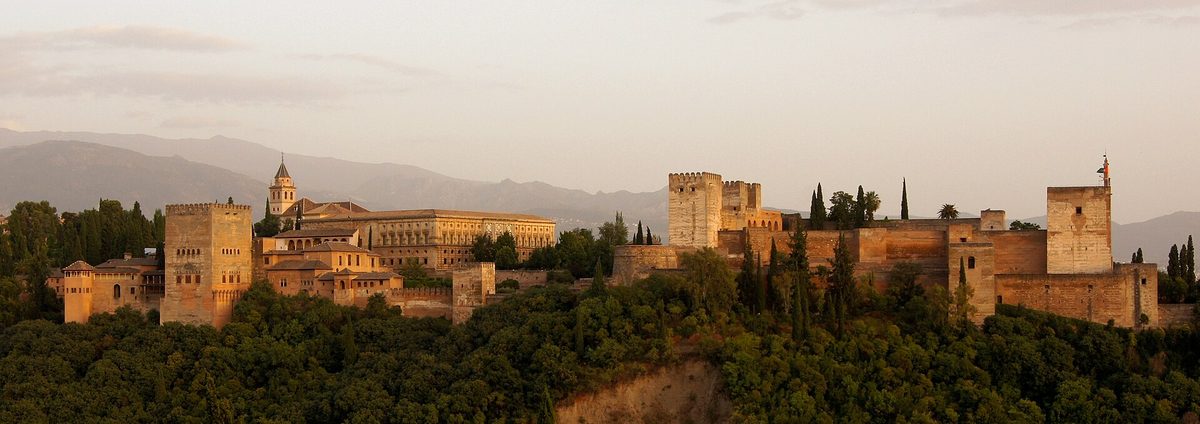
The general day visit is EUR 21 at the ticket office, or EUR 22.27 booked online once the reservation fee is added, and it covers everything including the gardens. The critical detail is that your ticket carries a date and a time, and that time applies only to the Nasrid Palaces. You may enter those only in your slot. The rest of the complex, the Alcazaba, the Partal and the Generalife, is open to you from 08:30 until closing whenever you like.
That structure is the whole planning problem. Get a Nasrid slot in the last hour or two of the day and you can do the Generalife in the morning, break for lunch in the Albaicín, and arrive at the palaces when the light is low and the courtyards are half empty. Get a midday slot and you will spend the day arranging yourself around it.
Two to three months out for a good slot in spring or autumn, and see our step-by-step guide to planning a trip to Europe for how far ahead the rest of a trip needs locking in. This is the hardest ticket here to get at short notice.
6. Sunrise on the Acropolis

Since April 2024 the Acropolis has run on strict timed entry. Your ticket is valid from fifteen minutes before your slot to fifteen minutes after, and the official advice is to arrive half an hour early for the security check. Take the first slot of the day, as we recommend throughout our Greece travel guide. The rock is west-facing marble, it becomes a griddle by eleven, and the first hour is the only time you will get the Parthenon without a crowd in every frame.
Admission is set by the Greek Ministry of Culture and the price is published inside the state booking flow rather than on a public page, so check it inside the booking flow when you reserve. There is free admission on the first and third Sunday of each month between 1 November and 31 March, which is a real saving in winter and correspondingly busy.
7. Neuschwanstein, on a 30-minute tour

Adult admission is EUR 21, reduced EUR 20, with a EUR 2.50 fee to book online. You cannot wander around Neuschwanstein. The castle can only be seen as part of a guided tour, the tour lasts about 30 minutes, and reservations are not possible on site. The ticket centre in Hohenschwangau sells remaining tickets for the same day only, subject to availability, which in July means turning up hopefully and being turned away.
Summer hours for 2026 run 28 March to 15 October with tours daily 09:00 to 16:30; from 16 October the schedule shifts to 10:00 to 16:00. No photography inside. Rucksacks, prams and child carriers are not allowed in, animals are not permitted, and drones are banned over the site.
Thirty minutes is short for the amount of effort involved in getting there, and I would only recommend the whole exercise if you commit to the walk up to the Marienbrücke afterwards. The castle from inside is a Wagner set. The castle from the bridge is the thing you came for. Our Germany travel guide has the rest of Bavaria.
8. Pena Palace above Sintra
Parques de Sintra sells two versions. The Essential Visit is EUR 20 for an adult, EUR 18 for ages 6 to 17 and for seniors, free under six, and EUR 65 for a family of two adults and two children. The Full Tour is EUR 45. Park-only is EUR 12. A guided visit is EUR 75, and the shuttle between the park gate and the palace is EUR 4.50 return for anyone aged six and over.
Your ticket has a date and a time and there is no delay tolerance at all. Arrive late and you do not get in. Tickets bought online can be rescheduled through the website within a year, which is the safety net, but not on the day.
Sintra rewards a full day rather than a palace dash, and our Portugal travel guide explains how to fit it around Lisbon. The Moorish Castle is EUR 12, the National Palace of Sintra EUR 13 on the Essential Visit, Monserrate EUR 12, the Convent of the Capuchos EUR 11, and Queluz EUR 13. Cabo da Roca lighthouse is EUR 5. Note that limited traffic circulation is in force in Sintra’s historic centre, so driving in is a poor plan; take the train from Rossio.
9. Crossing the Charles Bridge into Prague Castle
Do these as one movement, early. Cross the bridge at first light when the statues are still in silhouette and the only other people on it are photographers and a busker setting up, then walk up through Malá Strana to the castle for opening.
Castle buildings open 10:00 to 19:00 from April to June, 10:00 to 20:00 in July and August, 10:00 to 19:00 in September and 10:00 to 17:00 in October with last entry at 15:40. The ticket is valid for two days, though each building may only be entered once, so you can split St Vitus and the Golden Lane across a morning and an evening if you want the cathedral without a coach group in it.
I have deliberately not quoted a koruna price here. The official price lists I could reach were dated between 2020 and 2024 and I will not present a stale figure as current. Check hrad.cz when you book. Our Central and Eastern Europe guide covers the wider region.
10. Stonehenge on a timed ticket
Admission runs on timed tickets and English Heritage offers a discount of up to 25% for booking in advance rather than paying at the gate. You can book online up to three hours before your visit, and there is no booking fee, so there is no reason not to. Limited walk-up tickets are sold at the admissions tills but treating that as your plan in August is optimistic.
Go in the last slot of the day in May or September. The stones face west and the low sun through the trilithons is the whole point. The midday coach shuttle experience, by contrast, is thirty minutes of shuffling along a rope. Our UK travel guide has the rest of southern England.
11. Mont Saint-Michel at high tide

The tidal drama is real, and smaller than its reputation. The Mont is completely surrounded by water on only about fifteen days a year. On those high-tide days there is roughly an hour when water covers the access esplanade, but the footbridge stays above the water line and the shuttle buses keep running. Access is otherwise possible 24 hours a day. So the honest version is: check the tide tables, aim for a high coefficient, and expect a spectacular hour rather than an island cut off for a day.
The abbey is open every day except 1 January, 1 May and 25 December. An unlimited-access annual pass starts at EUR 29. In the village, individual museums are EUR 9 each or EUR 18 for a pass covering all four.
Stay overnight on the causeway side, and see our guide to where to stay in Europe for how to choose a base generally. The Mont after the last coach leaves, lit and empty, is the best hour in France, and the day-trip version misses it entirely.
12. The Anne Frank House
EUR 16.50 for an adult, EUR 7.00 for ages 10 to 17, both including a EUR 1.00 booking fee. There is no door sale. None. You can only visit with an online ticket for a specific time slot, and tickets are non-transferable.
The booking rule deserves stating plainly: every Tuesday at 10:00 CEST the museum releases all tickets for a visit exactly six weeks later. Not a rolling window, not a monthly drop. One release, one moment, six weeks out. Work backwards from your Amsterdam dates, put the relevant Tuesday in your calendar, and be at the screen.
Only your start time is fixed. Once you are inside you may take as long as you want, though most visits run about an hour. Take longer, and read our Netherlands and Amsterdam guide for the rest of the city. The rooms are small and the last section, after the annexe, is where the visit lands.
13. Auschwitz-Birkenau, slowly
Admission to the Memorial grounds is free, but you must reserve an entry card, and since the rule change the reservation is available only online at visit.auschwitz.org. There are no entry cards at the museum entrance. The only thing that costs money is engaging a guide-educator.
Take the guide. General tours run 2.5 and 3.5 hours; the guided tour for individual visitors runs 3 hours 45 minutes and begins at Auschwitz I. Arrive at least 30 minutes before your start time. There is also an online guided tour of about two hours priced at PLN 690, which is a serious option for anyone who cannot travel.
I put this on a bucket list without any hesitation and with one request: do not treat it as a stop between Kraków and the salt mine. Give it the whole day and nothing after it.
14. Pompeii under a hot sky
From 1 April to 31 October the site opens 09:00 to 19:00 with last entrance at 17:30; from 1 November to 31 March it runs 09:00 to 17:00 with last entrance at 15:30. The Pompeii+ ticket is EUR 25 and adds the suburban villa route, which takes in the Villa dei Misteri, the Villa di Diomede, Villa Regina and the Antiquarium at Boscoreale. If you are going to be in the region repeatedly, the MyPompeii annual card is EUR 45, or EUR 10 for EU citizens under 25, and gives a year of unlimited admission to every site in the archaeological park.
There is almost no shade at Pompeii and the stones hold heat. April and October, then, and start early. Naples and the coast are covered in our guide to European food, which is one good reason to stay in the region. Enter at Piazza Anfiteatro rather than Porta Marina if you want to walk the site backwards against the flow of tour groups, which works better than it should.
15. Circling the Dubrovnik city walls
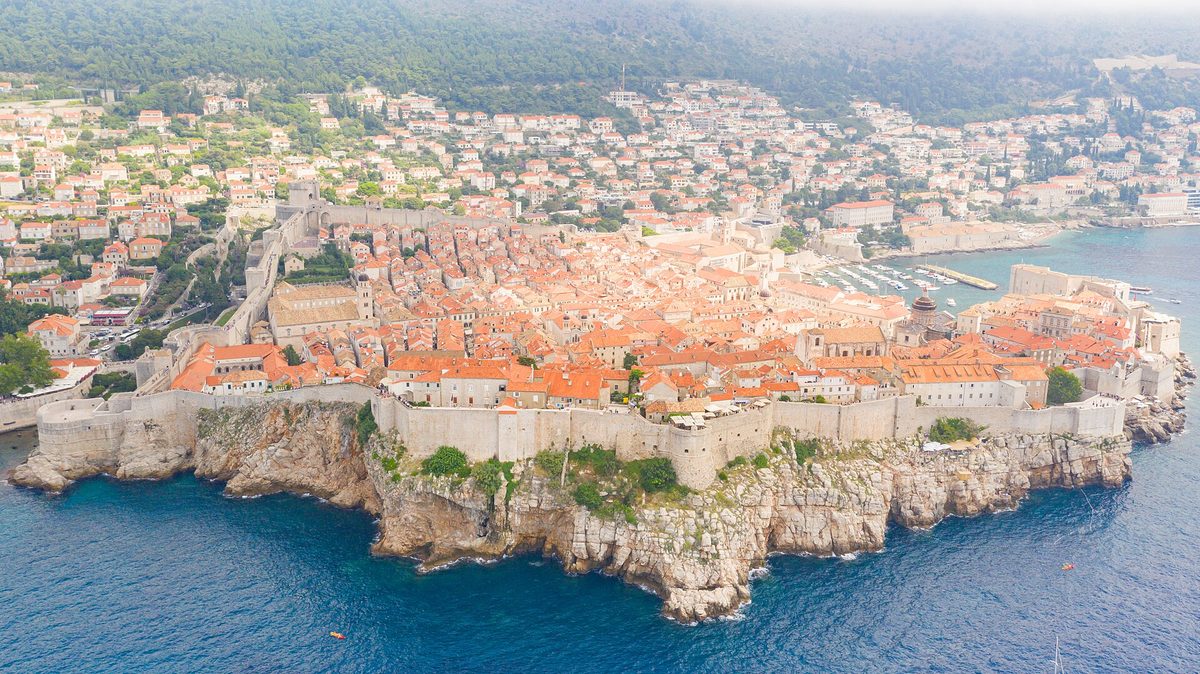
The circuit is 2 km and takes most people 1.5 to 2 hours, though it can be anything from 45 minutes at pace to three hours with photographs. There are three entry points: Pile Gate, Ploče Gate, and the one near the Maritime Museum by Fort St John. Your walls ticket also covers Lovrjenac Fortress, which is worth redeeming. On price I have to be honest: the official operator does not publish the adult walls fare on an open page, and the “from EUR 40” figure that circulates comes from reseller listings for an all-access pass rather than the walls ticket itself. Budget for one of the pricier tickets on this list and check citywallsdubrovnik.hr before you travel.
Summer hours are 08:00 to 19:30 in July, 08:00 to 19:00 in August, 08:00 to 18:30 for the first half of September and 08:00 to 18:00 for the second, then 08:00 to 17:30 in October and 10:00 to 17:00 from April to June. Winter is 09:00 to 15:00 from November to March, closed on 25 December.
Start between 08:00 and 09:00, as our Croatia travel guide recommends. The walls are unshaded, south-facing and stone, and by eleven in August the walk becomes an endurance event. Croatia prices in euro now. The fixed conversion rate of 7.53450 kuna to the euro is still printed on some Croatian official price lists, which is handy if you are converting an older figure.
16. Climbing to the Meteora monasteries

Entry is EUR 5 per person per monastery, cash at the door, with under-12s free. Six are open to visitors, and three in a day is a comfortable maximum.
The planning trap is the closing-day rotation, because each monastery closes on a different day and the pattern changes with the season. Great Meteoron closes on Tuesdays in summer and Tuesday through Thursday in winter. Varlaam closes on Fridays in summer and Thursday and Friday in winter. Roussanou closes on Wednesdays all year. Summer schedules run roughly April to October and winter schedules November to March, and hours can shift for religious celebrations, public holidays or bad weather. Check the day before you go, not the week before.
There is a dress code and it is enforced. Women need skirts below the knee and covered shoulders, and wrap-around skirts are available at the entrances. Men need long trousers. Sleeveless tops are not allowed for anyone, and visitors who turn up non-compliant can be refused entry.
The landscapes: 20 that depend on the sky
Monuments are open when they say they are. Landscapes are not. Every entry in this section can be planned perfectly and still refuse to happen, which is why the advice attached to each one is mostly about giving yourself a second attempt.
17. Northern lights over Tromsø

The aurora is most frequent from September to late March, but the peak activity months are the shoulders: March and April, September and October, because that is when the Earth’s orientation to the sun maximises the chance of solar flares interacting with the magnetic field. That is counter-intuitive if you have absorbed the idea that the coldest, darkest month must be the best one.
Around Tromsø the lights are often visible from late August to early April, though most organised chase activities do not begin running until early September. September has a practical advantage worth weighing: you can watch without a heavy thermal suit, which changes a four-hour night from an ordeal into an evening.
Give it three nights minimum, and see our Scandinavia travel guide for how to build the rest of the trip around it. One night is a coin toss and I have watched people spend a small fortune on a single-night trip and get low cloud. The chase tours exist precisely because they can drive two hundred kilometres inland to find a hole in it.
18. Waiting for the aurora in Abisko
Abisko is the other half of this entry and it deserves its own line. The national park sits in a gap between surrounding mountains, and that position frequently gives it clear skies when everywhere nearby is overcast. It is the most statistically reliable aurora spot in Sweden for exactly that reason.
The lights first appear around Kiruna in early September and the season typically ends in late March. Park entry is free. What is not free, and what sells out first, is a bed: Abisko has a small number of rooms and they go months ahead in the aurora season.
Combine it with the train. The Malmbanan line from Stockholm up through Kiruna to Abisko and on to Narvik is a spectacular way in, and gets you there without a winter drive.
19. The Trolltunga hike
Know the numbers before you commit. From P2 at Skjeggedal it is 27 km round trip with almost 800 metres of ascent and takes 10 to 12 hours including breaks. From the higher P3 car park at Mågelitopp it is 20 km with about 320 metres of ascent and an estimated 7 to 10 hours. Shuttle buses run between Odda, P1 at Tyssedal and P2, with a further shuttle from P2 up to P3.
The season runs from the beginning of June, depending on snowmelt, to the end of September. In that window experienced hikers can go unguided. From October to May the recommendation is guided hiking only, and that recommendation exists because people have died ignoring it.
It sits near the top of our round-up of the best hikes in Europe for good reason. Ten to twelve hours is a full working day of walking with a photograph at the end. If that sounds like a lot, it is, and the Preikestolen hike gets you a comparable cliff-edge photograph in four hours.
20. The Flåm Railway and the Nærøyfjord
The combination sold as one trip runs about six hours: a two-hour fjord cruise on the Nærøyfjord, a twenty-minute bus from Gudvangen to Flåm, and roughly two hours ten minutes on the Flåm Railway as a round trip. The railway itself climbs from sea level at Flåm to 867 metres at Myrdal in an hour.
Do the cruise first and the train second if you can choose, because the light in the fjord is better in the morning and the train’s best views are on the descent.
May and September. July puts four cruise ships in Flåm at once and the village has about 350 residents.
21. Plitvice Lakes on the wooden walkways
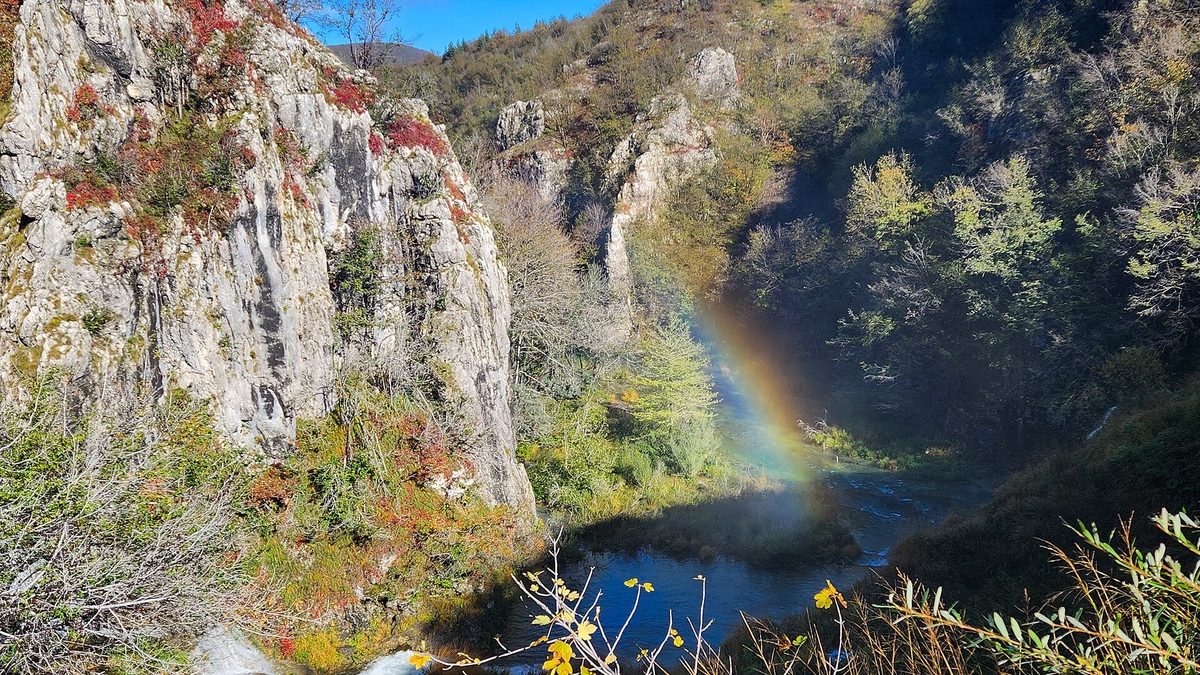
Plitvice has the most legible pricing of anything on this list, and it varies by a factor of four across the year. From 1 June to 30 September an adult day ticket is EUR 40 in the morning and EUR 25 in the afternoon. In April, May and October it is EUR 23. From November to March it is EUR 10. The morning-to-afternoon cutover is 16:00 from June to August and 15:00 in September.
Students pay EUR 25 peak, EUR 14 shoulder and EUR 6 in winter. Children aged 7 to 18 pay EUR 15, EUR 6 and EUR 4. Under-7s are free, as are visitors with movement difficulties or over 50% disability and their accompanying person. A two-day adult ticket is EUR 60 in peak season, EUR 39 in shoulder and EUR 15 in winter, and it carries the visitor’s name.
The ticket includes the electric boat and panorama train within your chosen sightseeing programme, plus insurance and VAT. There are 22 km of lake-system trails and 36 km of hiking trails. Parking is EUR 1.50 an hour in spring and autumn and EUR 2.00 an hour in summer, with campers and buses at EUR 15 to 18 a day.
Go in late April or October, pay EUR 23 instead of EUR 40, and walk the boardwalks without a queue at every junction. Guided tours exist at EUR 120 for a half day and EUR 170 for a full day, but they are only sold to organised groups of at least fifteen.
22. The Cliffs of Moher in wind
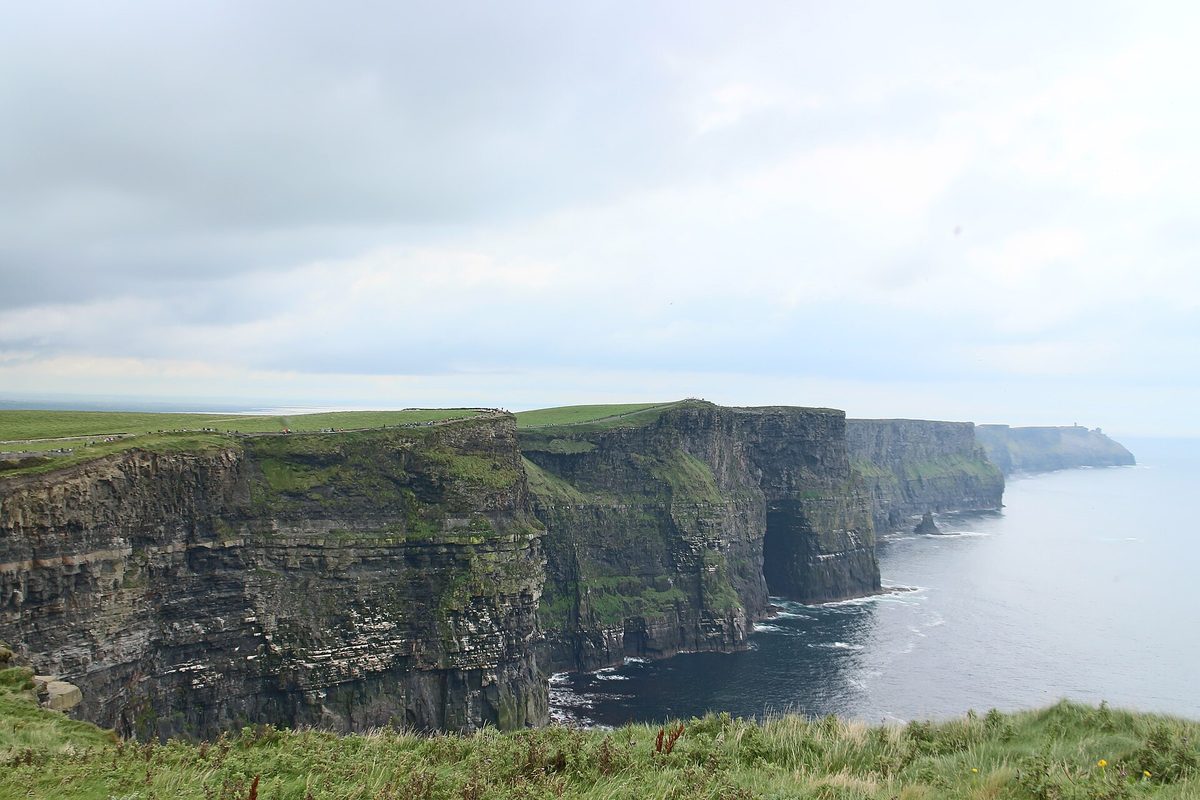
The gate rate is EUR 15 for an adult, EUR 12 for students and over-65s, and EUR 30 for a family of two adults and two children. Children under 12 go free with a parent or guardian, up to four of them. If you do not book online you pay the full gate rate, which is the polite way of saying online is cheaper.
Slots matter: off-peak morning is 08:00 to 11:00, peak is 11:00 to 16:00, and off-peak afternoon runs from 16:00 to closing. Opening hours are 09:00 to 17:00 from November to February, 08:00 to 19:00 in March, April, September and October, and 08:00 to 21:00 from May to August.
Admission covers the visitor centre and exhibition, the virtual-reality theatre, 800 metres of paved path, O’Brien’s Tower and its rooftop, the audio guide app, unlimited secure parking, and the loan of binoculars and picnic blankets. Dogs on leads are welcome outdoors but not inside the centre.
Aim for the last off-peak slot on a May evening with the light behind the cliffs. It is a different place from the eleven o’clock version. Our Ireland travel guide has the rest of the west coast.
23. The Giant’s Causeway
You do not have to pay to see the stones. The Causeway Coast Way car park charges GBP 15 per vehicle through the JustPark app and you can walk down from there. The full Visitor Experience adds reserved parking, guided tours every half hour, hand-held audio guides in eleven languages, the exhibition, the shop and café, and accessibility equipment loan. The Clifftop Experience, a guided walk along the cliffs with the Rambler bus, is GBP 55 per person.
One timely note: a temporary VAT reduction is in force from 25 June to 1 September 2026, so what you pay may be less than the advertised price.
Go at low tide and in the hour before closing. The stones are basalt and they are best when they are wet and the light is sideways.
24. Floating in the Blue Lagoon

Pre-booking is essential and the Blue Lagoon uses dynamic pricing, so the cost genuinely varies by ticket type and time of visit rather than sitting at a fixed number. The Comfort package covers entry, the silica mud mask, a towel and one non-alcoholic drink. Premium adds two more masks, a bathrobe, another drink and a skincare gift.
The best slot is the last one of the evening in late September or February, when the light is long, the day-trip buses from Keflavík have gone, and there is a plausible chance of aurora over the water. It is a manufactured experience and I still think it earns its place, provided you do not treat it as your only Icelandic bathe. Our Iceland travel guide covers the alternatives. The Sky Lagoon and the local municipal pools are cheaper and, in some moods, better.
25. Whale watching in the Azores
São Miguel runs whale watching year-round; Pico’s season is April to October. More than twenty cetacean species have been recorded in Azorean waters and, remarkably, whales or dolphins are sighted on 98% of trips regardless of season. Blue whales are easiest to see at the end of winter. Sperm whales and sei whales are common through the summer.
That 98% figure is why the Azores beat almost anywhere else in Europe for this. Book a morning boat, take a seasickness tablet an hour before whether or not you think you need one, and pick an operator that uses land-based spotters, which is the old whaling-station technique and still the most effective.
26. Sunrise balloons over Cappadocia

Flights operate year-round but spring and autumn are the seasons, because the weather is mild and, more importantly, regular. Flights launch just before sunrise and you should expect to be getting ready around 04:00. A standard flight lasts a minimum of one hour with 14 to 20 people in the basket; smaller balloons carrying 10 to 12 people fly for 75 to 90 minutes.
Cancellations are common and they are a wind decision, not an operator decision. A regulatory body determines whether conditions are suitable and every operator must comply. The Directorate General of Civil Aviation oversees safety, and pilots hold an international licence they must renew every two years with regular competence testing.
Build spare days in, and see our Turkey travel guide for what to do with them. Three nights in Göreme gives you three attempts. One night gives you one, and a refund is not the thing you came for.
27. The Path of the Gods above Positano
The standard start is at Bomerano, a hamlet of Agerola sitting at 650 metres, and the trail runs at roughly 500 metres between Agerola, Praiano and Positano. There is no entry fee. From the square at Nocelle a staircase of 1,700 steps drops to Arienzo on the old SS163, with central Positano about 500 metres further along the road.
Walk it from Bomerano towards Positano, not the other way. You descend rather than climb, the sea is in front of you the whole way rather than behind, and you finish somewhere with a beach and a beer. The 1,700 steps at the end are harder on the knees than the walk is on the lungs, so take poles if you have them.
April, May and October. In August the trail is exposed, the sun is direct and there is no water for most of it.
28. Walking between the Cinque Terre villages
A one-day Cinque Terre Train Card starts at EUR 17.30 for an adult, and the park charges by season, so the peak-summer rate is higher. For 2026 the park approved a restructure of the card system, dropping the “Plus” category and returning to two categories, Train and Trekking, with an overall cost reduction of EUR 7.50 against the previous arrangement. Check the park’s own price list for the band covering your dates.
The Via dell’Amore, the Manarola to Riomaggiore stretch of the Sentiero Verde Azzurro, is now integrated into the Cinque Terre Card but requires a reservation. Do not turn up at the trailhead expecting to walk on.
The best walking is the Vernazza to Monterosso section, which is also the hardest, and the best hour is the first one after sunrise before the trains start delivering. Sleep in Vernazza or Riomaggiore rather than day-tripping from La Spezia and you get the villages in the two hours at each end of the day when they belong to the people who live there.
29. Jungfraujoch, the Top of Europe
The Good Morning Ticket starts at CHF 85 return from Grindelwald Terminal with a half-fare reduction, and the conditions are strict: it is valid only on one of the first three connections up, and you must be descending on the 13:17 connection or earlier. That is not a limitation, it is the whole point. The first trains put you at 3,454 metres before the cloud builds and before the crowds arrive, and you are back down for lunch in Grindelwald.
Check the summit webcam before you buy, a habit our Switzerland travel guide recommends for every Alpine excursion. Jungfraujoch in cloud is an expensive corridor with a gift shop, and the trip is only worth the money on a clear morning. That flexibility is the argument for basing yourself in Lauterbrunnen or Grindelwald for several nights rather than making a day trip from Zurich.
30. Santorini’s caldera without the cruise crowd

Looking at the caldera costs nothing. Doing it without four thousand other people requires timing. The Municipal Port Fund of Thira has been re-evaluating cruise arrival requests to respect the destination’s capacity and has lowered intraday arrival limits to manage passenger flows, which helps, but the underlying pattern still holds: ships arrive mid-morning and leave in the early evening. Our Santorini travel guide covers how to time it.
So the answer is to be in Oia before 09:00 and after 19:30, and to spend the middle of the day somewhere else entirely. Better still, stay in Imerovigli or Pyrgos rather than Oia, and watch the sunset from the Skaros Rock path where perhaps thirty people gather instead of three thousand.
May and October, which is also when the best beaches in Europe are at their most usable. Hotels on the caldera edge book three to six months ahead for those months and the good ones go first.
31. Keukenhof in full tulip
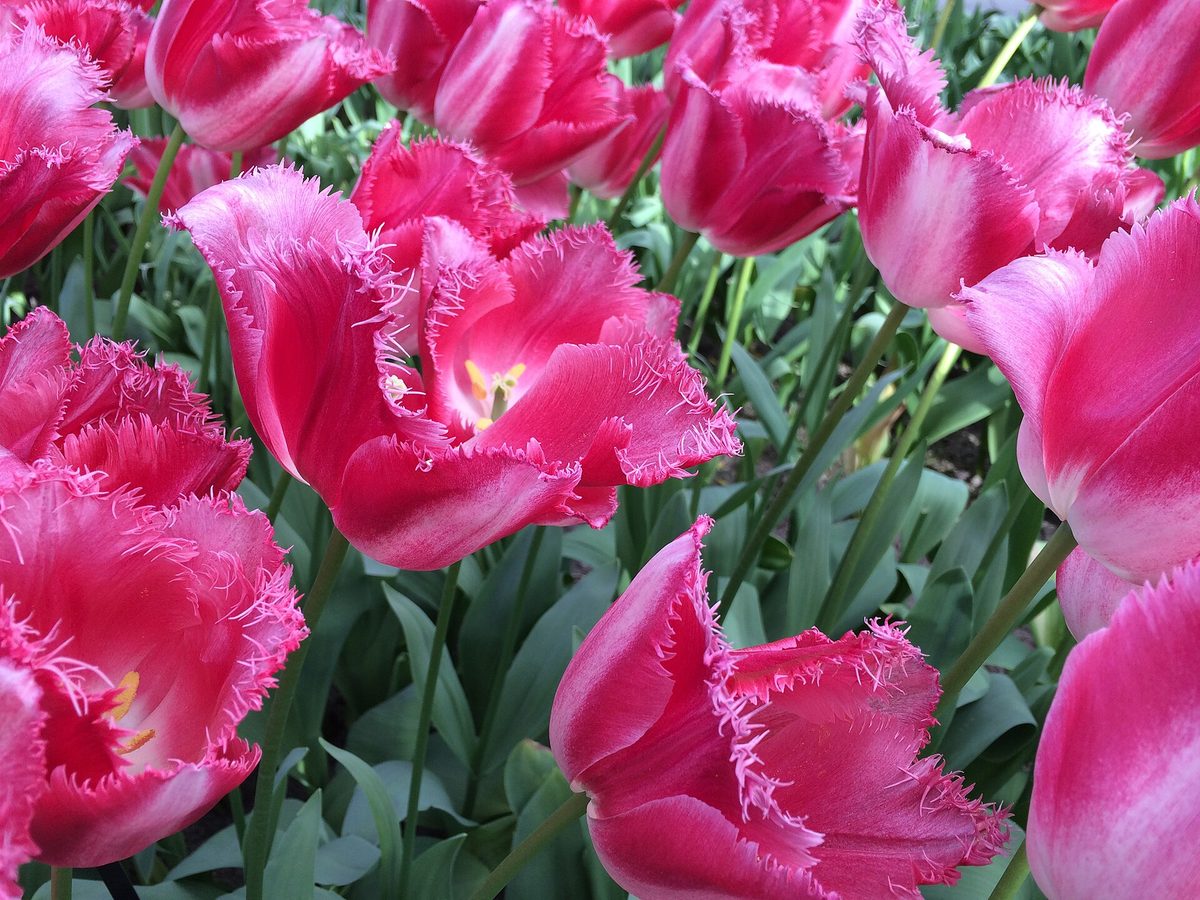
Keukenhof 2026 opened on 19 March and closed on 10 May. That is the entire year: seven and a half weeks, then the gardens shut and you wait twelve months. If you are reading this in the second half of 2026, that season has already closed and you are planning for spring 2027. Tickets for 2027 go on sale in autumn 2026 and the dates usually sit in the same late-March to early-May window. Opening hours are 08:00 to 19:00 daily including Sundays and holidays, and tickets are timed.
The combi ticket including transport from Amsterdam RAI is EUR 38.50 for an adult and EUR 17.50 for children aged 4 to 17. From Haarlem, Hoofddorp or Leiden it is EUR 33.50 and EUR 15.00. The bus is the sensible option; parking on a weekend in late April is a special kind of misery.
Go for the 08:00 slot on a weekday. And rent a bike for an hour afterwards to ride the commercial bulb fields outside the gardens, which are free, enormous and, for photographs, better than anything inside the fence.
32. The Douro Valley during the harvest
The vindima begins between the end of August and mid-October, and visitor participation is offered through September and October at most quintas geared to wine tourism. The end of August through September is generally reckoned the best time to experience Douro culture and the village festivities that come with it. The terraced landscape is a UNESCO World Heritage Site, and the demarcated region traces back to 1756 and the founding of the Companhia Geral da Agricultura das Vinhas do Alto Douro.
Sort the quinta before the flight. Harvest beds are limited and the estates that let you tread grapes rather than watch someone else do it fill first.
Come by train from Porto along the river rather than driving. The Linha do Douro from Peso da Régua to Pocinho is the cheapest great rail journey in Europe.
33. The Lofoten Islands by road

Two completely different trips share this entry. June gives you the midnight sun and green mountains falling into turquoise water. February and March give you aurora over snow-covered peaks and the Skrei cod season, when the racks go up and the villages smell of drying fish.
Fly to Bodø and take the ferry, or fly into Leknes, and book the car months ahead because the island fleet is small. Give it four or five days. It ranks high in our Europe road trip guide. The E10 runs the length of the archipelago and the good parts are the detours off it: Nusfjord, Henningsvær, the beach at Kvalvika if you are prepared to walk over the ridge for it.
34. The Faroe Islands in cloud
The Faroes are the entry I recommend hardest and explain worst. Eighteen islands, fifty thousand people, and a landscape that spends much of the year inside a cloud, which turns out to be the point rather than the problem. Some landowner paths carry a fee; most of the walking is free.
The Faroes sit near the top of our list of underrated places in Europe. May to September for daylight and ferry frequency. Flights and hire cars need booking months ahead because both are genuinely scarce. Allow four to six days, expect at least one to be written off by weather, and plan the Mykines puffin ferry for early in the trip so you have a spare day to try again.
35. Lake Bled and its island church
Half a day, no ticket for the lake itself, and a pletna boat out to the island where you ring the bell inside the church. It is the most photographed thing in Slovenia and it fully earns it. We go deeper in our guide to the best lakes in Europe.
The trick is elevation and timing. Walk up to the Ojstrica viewpoint at 07:00 for the picture everyone has, then have coffee in town, then take the boat at midday when the viewpoint is a scrum. May, June and September work best; July and August turn the lakeside path into a procession.
36. Hallstatt, early or not at all
Hallstatt is a village of under a thousand people receiving something on the order of a million visitors a year, and Austria has responded with logistics rather than a hard cap. Since 1 June 2020 every coach bringing passengers into the Hallstatt UNESCO region must book an entry and exit slot on a dedicated platform, and the exit slot has to be at least two hours and twenty minutes after entry. At the terminal, drivers have twenty minutes to drop off or collect and must then leave; day-trip bus parking sits about 1.5 km away towards Obertraun.
I found no numeric daily visitor cap on any official Austrian source, only the coach slot system, so plan around coach timings rather than around a cap.
What works: arrive by train and the ferry across the lake, or stay a night. Between 07:00 and 10:00 and after 17:00 the village is the place in the photographs. Between those hours it is a queue for a viewpoint. Late April and October, again. Hallstatt also appears in our round-up of the most beautiful towns in Europe, and our Austria travel guide covers the Salzkammergut properly.
The journeys: 4 that are measured in days
These four are different in kind. They are not stops on an itinerary, they are the itinerary, and they are the ones people describe in detail twenty years later.
37. The Bernina Express through the Alps
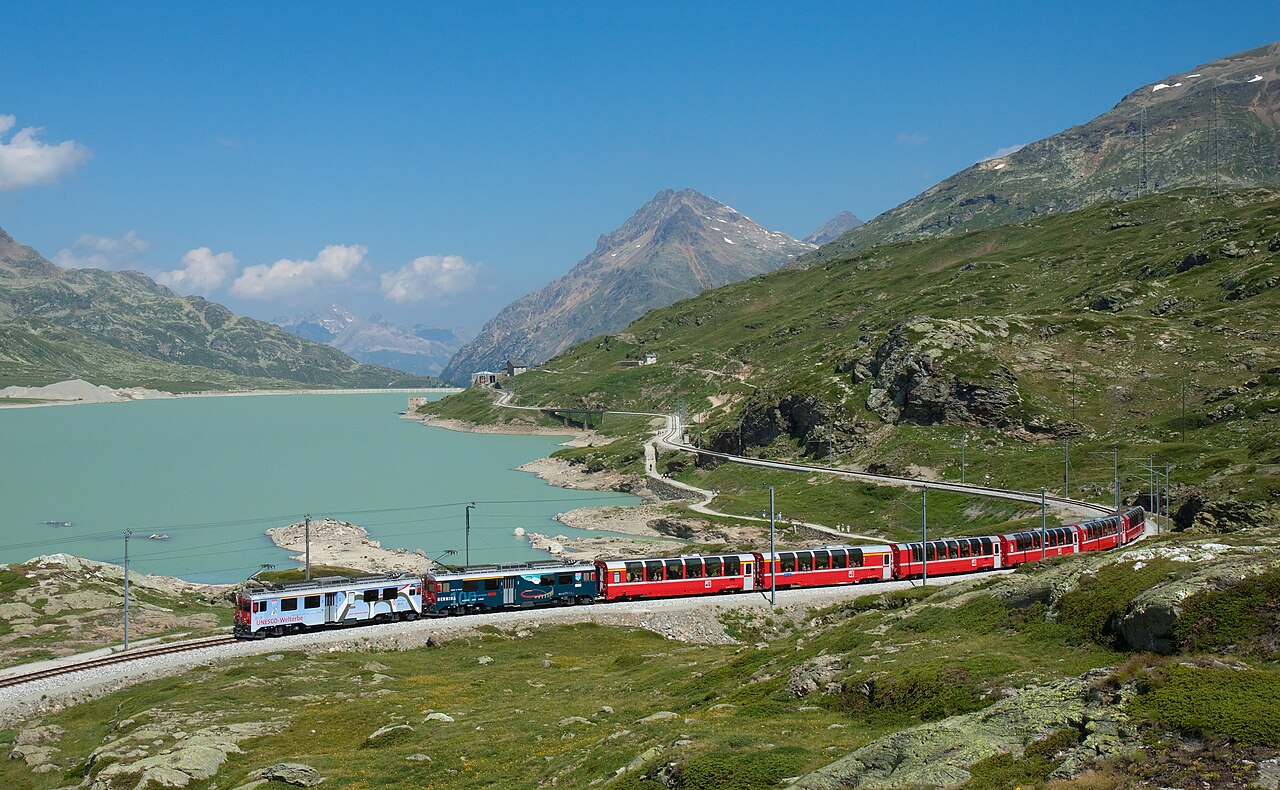
Chur to Tirano takes about four hours and crosses from Swiss glacier country to Italian palm trees without a tunnel through the main ridge. The Thusis to Tirano section of the line is UNESCO-listed. A seat reservation is mandatory. Not recommended: mandatory. It costs CHF 32 in low season and CHF 36 in peak, on top of the fare, and can be booked online, by phone or at any European ticket office from three months before travel at the earliest.
If you are booking late, the railway sells a last-minute all-in fare from CHF 87 for the full journey including ticket and reservation, with a separate offer advertised from CHF 79. Worth checking against the standard fare plus supplement before you assume it is a saving.
Take it southbound in January or February. Snow on the Bernina pass, the Landwasser viaduct, then Poschiavo and vineyards. See our complete guide to train travel in Europe for the wider network. The regional service on the same tracks costs less and has windows that open, which for photographs beats the panoramic glass every time.
38. The last 100 km of the Camino de Santiago
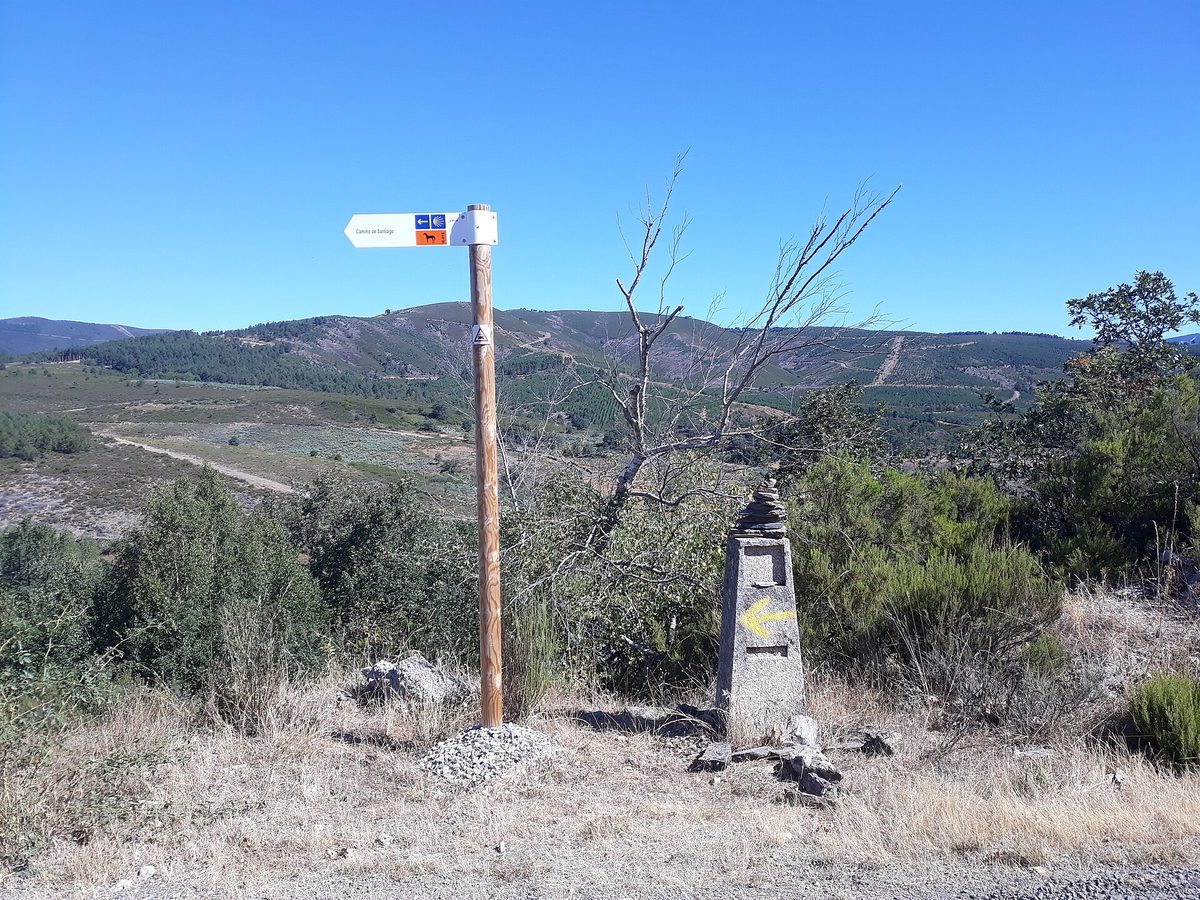
You need to walk at least 100 km, or cycle 200 km, to receive the Compostela. You need a credential, and for that final stretch you must collect at least two stamps a day. The walk need not be consecutive in time: you can do it across several trips over several years. It must, however, be geographically consecutive, and you must resume where you stopped or the Compostela is forfeited.
There is also a Certificate of Distance issued by the Cathedral Chapter, which records the kilometres you covered from wherever you actually started. If you walked from Léon or Saint-Jean-Pied-de-Port, that is the certificate that says so.
Sarria to Santiago is the classic 100 km and takes five or six days. May, June and September, and pack light using our Europe packing list. In July and August the albergues on that stretch fill by early afternoon and the walk becomes a race for a bed, which is the opposite of the intended experience.
39. A month on the rails with an Interrail or Eurail pass
Neither Interrail nor Eurail publishes the Global Pass price on an open page; both sit behind booking engines. So rather than print a number that will be stale by the time you read it: check interrail.eu if you hold a European passport or residence permit, and eurail.com if you do not, and price your specific pass duration before you commit.
What I can tell you is the shape of the trip. A pass is good value if you are moving frequently and using slower regional trains, and poor value if your route is mostly high-speed services in France, Spain and Italy, where compulsory seat reservations add a fee to every leg and eat the saving. The sweet spot is central Europe: Germany, Austria, Czechia, Switzerland, the Netherlands, where regional trains are frequent and reservations are mostly optional.
Our guides to transport and backpacking Europe both go deeper on this. April to June and September to October. Two weeks minimum to feel like a journey rather than a sprint.
40. A night in the Icehotel at Jukkasjärvi
The winter Icehotel, rebuilt each year from the Torne river, runs December to April. ICEHOTEL 365 is the permanent, year-round section, cooled by solar power in summer, which means this is technically a bucket-list item you can do in July.
Nightly rates were not published in a form I could verify, and they vary enormously by suite, so treat this as an expensive night rather than a budget one. The art suites, each designed by a different artist, are the ones that sell out first and they go months ahead.
The standard advice is right: book one night in the ice and the rest in a warm room. Sleeping at minus five in a reindeer skin is a memorable experience precisely once. It is a highlight of our guide to Europe in winter.
The date-locked eight: events you either make or miss
Everything else on this list can slide by a week. These cannot. If your dates do not contain the event, the event does not happen for you this year.
41. Oktoberfest, standing on a bench

The 191st Oktoberfest runs 19 September to 4 October 2026 on the Theresienwiese, sixteen days. The fact that surprises most first-timers: entry to the festival grounds is free, and so is entry to the tents. The only paid section is the historical Oide Wiesn, which costs EUR 4.
On the opening Saturday the tents open at 09:00, non-alcoholic drinks are served from 10:00, and the ceremonial tapping, the “O’zapft is!”, happens at noon. Nothing alcoholic is poured before that moment.
Free entry does not mean free access. Tables are reserved months in advance through the individual tents and a reserved table is the difference between a seat and standing in an aisle. If you have no reservation, arrive before 10:00 on a weekday, take whatever seat you find, and stay in it. Munich hotel prices roughly double for the fortnight, which is worth weighing against our list of the cheapest places to travel in Europe if the budget is tight. , so consider Augsburg and the regional train.
42. Venice Carnival in a mask
Carnival 2026 ran 31 January to 17 February on the theme “Olympus, the origins of the game”, tied to the Milano-Cortina Winter Olympics, opening with the Grand Carnival Ball in St Mark’s Square on the Saturday and the Festa Veneziana water parade on the Grand Canal on the Sunday. There was a children’s programme, the Carnevale Internazionale dei Ragazzi, running 7 to 15 February with workshops at Ca’ Giustinian.
The pattern repeats: expect roughly two and a half weeks ending on Shrove Tuesday, so a late-January to mid-February window each year. The streets and the costume parade in the Piazza are free. The balls are ticketed and expensive.
One piece of 2026 news worth having before you book: the Venice access fee trial ended on 27 July 2026. Since that date the day-tripper charge is no longer in effect and you can enter Venice without paying it or applying for an exemption. Any decision about a scheme for 2027 rests with the City of Venice, and none has been announced. If you read that you must pay five or ten euros to enter Venice on a spring weekend, that information predates the change.
43. La Tomatina
Wednesday 26 August 2026, in Buñol. One morning, once a year, capped at 22,000 tickets. There is no ticket, no entry, and no exceptions, so this is the entry on the list with the least room for improvisation.
Coach and entry packages from Valencia run roughly EUR 50 to EUR 110 depending on the departure city, and the Valencia ticket typically includes the return coach, event entry, travel insurance and a T-shirt. Longer tour packages run from about GBP 149 for a day trip up to GBP 669 for a three-day package with a five-star hotel.
Goggles. Closed shoes you will throw away. Nothing you care about, and a phone in a sealed bag. Tomato acid ruins fabric and the water cannons afterwards do the rest.
44. The encierro at San Fermín
The festival runs 6 to 14 July. The bull runs take place from the 7th to the 14th at 08:00 sharp. The course is 848.6 metres and the run lasts about two minutes.
Two minutes. That is the whole event you flew to Pamplona for, and it is worth understanding that clearly before you go. Watching from a balcony or the barrier costs nothing beyond the price of getting to a spot by around 06:00. Beds in Pamplona for those dates are booked six months ahead and priced accordingly.
I am not going to tell you to run. People are gored most years and the ones who get hurt are usually the ones who have never seen the course. If you do go, watch first, and read the Ayuntamiento’s own safety guidance rather than a tour operator’s.
45. The Edinburgh Festival Fringe
Fringe 2026 runs 7 to 31 August with 3,649 shows across 258 venues and performers from 71 countries. The programme is released in batches: this year those landed on 11 February, 1 April, 6 May and 4 June.
The strategy that works is to book two or three shows you actively want and leave everything else empty. The Fringe rewards walking into a room above a pub at 14:00 because someone handed you a flyer. Ticket prices are per show and a large number of them are free or pay-what-you-want.
Edinburgh ranks near the top in our list of the best cities to visit in Europe. Book accommodation by February. Edinburgh’s August rates are the single biggest cost of the trip and they climb steeply from spring onwards.
46. Glühwein at the Nuremberg Christkindlesmarkt

The 2026 Christkindlesmarkt runs 27 November to 24 December, opening with a ceremony at 17:30 on the 27th, and trades daily from 10:00 to 21:00. It is the most traditional of the big German markets, the stalls are regulated for what they may sell, and the Nuremberg gingerbread and the little grilled Rostbratwürste in a roll are the reason to be there rather than the glühwein.
Weekdays, and after 19:00 when the coach parties have gone. Our full guide to Christmas markets in Europe ranks all the big ones. Two days is enough for Nuremberg, and Bamberg is forty minutes away by train with a quieter market and better beer.
47. Vienna’s Christmas markets, all of them
Vienna is the one city where the plural genuinely matters. For 2026: Rathausplatz runs 13 November to 26 December, daily 10:00 to 22:00, closing at 18:30 on Christmas Eve. The Christmas Village on Stephansplatz runs 6 November to 26 December, 11:00 to 21:00, with shorter hours on 24 December and 11:00 to 19:00 on the 25th and 26th. Karlsplatz runs 13 November to 23 December, 12:00 to 20:00 with food until 21:00. Schönbrunn runs 6 November all the way to 6 January 2027. Freyung runs 14 November to 23 December and Am Hof 13 November to 23 December.
Rathausplatz is the spectacle and the busiest. Karlsplatz is the one I would send you to: handmade rather than mass-produced, a straw pit for children, and a manageable crowd. Schönbrunn is the one that stays open past New Year, which is useful if your trip falls in that dead week.
48. Midnight sun at the North Cape
Mid-May to late July, when the sun does not set at 71 degrees north. Nordkapp Hall charges admission and the cliff is, honestly, a car park with a globe sculpture on it. What you are there for is the fact of standing at the top of continental Europe at one in the morning in full daylight.
Drive up through Finnmark rather than flying to Honningsvåg, or take the Hurtigruten coastal ship, which stops at Honningsvåg and runs an excursion. Give the whole thing a full day and treat the road as the experience. It is among the most striking entries in our list of the most beautiful places in Europe.
The booking rules that actually decide your trip
Most of the disappointment on a European trip comes from about a dozen booking mechanics that are not obvious until you have been caught by one. Here they are in one place.
| Experience | The rule | What it means for you |
|---|---|---|
| Anne Frank House | All tickets released every Tuesday at 10:00 CEST for a visit six weeks later. No door sales at all | Count back six weeks from your Amsterdam dates, diarise that Tuesday, be at the screen at 10:00 |
| Colosseum | Tickets go on sale 30 days before the visit date, not earlier. Booking is mandatory | If it looks sold out three months out, it is not: the inventory has not opened yet |
| Neuschwanstein | Guided tour only. Reservations impossible on site; the ticket centre sells same-day leftovers only | Book online with the EUR 2.50 fee or accept a real chance of being turned away |
| Alhambra | Nasrid Palaces are a fixed timed slot printed on the ticket; the rest of the site is open all day | Choose a late Nasrid slot and build the day around it. Book 2-3 months ahead |
| Pena Palace, Sintra | Timed entry with zero delay tolerance; online tickets reschedulable within a year | Do not stack Pena tight behind another Sintra site. Give yourself an hour of slack |
| Bernina Express | Seat reservation compulsory, bookable at the earliest three months out | CHF 32 low season, CHF 36 peak, on top of the fare. Diarise the three-month mark for August travel |
| Auschwitz-Birkenau | Free entry but the card must be reserved online. Nothing available at the entrance | Reserve weeks out, arrive 30 minutes early, take the guide-educator |
| Eiffel Tower | From 29 September 2026 stairs tickets require advance reservation; groups over nine must buy online | The old walk-up-with-the-stairs-ticket trick stops working this autumn |
| Via dell’Amore, Cinque Terre | Integrated into the Cinque Terre Card but requires a separate reservation | Reserve before you travel; the trailhead will turn you back without one |
| Acropolis | Timed slot valid 15 minutes either side; arrive 30 minutes early for security | Take the first slot of the day and treat the stated time as a hard boundary |
| La Tomatina | Hard cap of 22,000 tickets. No ticket, no entry, no exceptions | For 26 August 2026 this is a now-or-next-year decision |
| Keukenhof | Open only 19 March to 10 May 2026. Timed tickets. 2027 sales open in autumn 2026 | Eight weeks a year. Everything else is a photograph of a bulb field |
What changed in Europe in 2026
Five things moved this year, and any itinerary put together before the spring needs checking against them.
| Change | Date | Why it matters |
|---|---|---|
| The Venice access fee ended | 27 July 2026 | The day-tripper charge is no longer in effect. No payment, no exemption request. No 2027 scheme has been announced |
| Bulgaria joined the euro | 1 January 2026 | Sofia, Plovdiv and the Black Sea coast now price in euro at the fixed rate of BGN 1.95583 to EUR 1. Dual pricing in both currencies is mandatory until 8 August 2026 |
| The EU Entry/Exit System became fully operational | 10 April 2026 | Biometric entry and exit records replace passport stamping for non-EU nationals on short stays. Expect fingerprints and a facial image at your first crossing |
| ETIAS is coming | Expected in the last quarter of 2026 | The travel authorisation for visa-exempt non-EU nationals. The exact start date is still to be officially communicated. Check before booking anything in late 2026 or 2027 |
| Eiffel Tower stairs tickets go reservation-only | 29 September 2026 | The cheapest and most spontaneous way up the tower, at EUR 14.80, stops being a walk-up option |
The Schengen rule underneath all of this has not changed. Non-EU nationals may spend up to 90 days in any 180-day period in the Schengen area, and the 180 days is a rolling window: count back 180 days from any given day and your total inside must not exceed 90. Holders of an EU residence permit or a long-stay visa are outside the rule. If you are planning a long, slow European trip, read our full guide to ETIAS and Schengen entry requirements before you book, because the 90-day arithmetic is where good itineraries fall apart.
Swaps: the crowded version and the better one
Several of the entries above have a quieter twin that delivers most of the same experience. I am not suggesting you skip the famous one. I am suggesting that if your dates land in July, the right-hand column is where you will enjoy yourself.
| The famous one | The swap | What you gain, what you lose |
|---|---|---|
| Trolltunga (10-12 hours) | Preikestolen, Lysefjord | A comparable cliff-edge photograph in about four hours. You lose the sense of having earned it |
| Blue Lagoon, Iceland | Sky Lagoon or a municipal pool in Reykjavík | Far cheaper and more Icelandic. You lose the milky-blue water everyone recognises |
| Oia at sunset, Santorini | Skaros Rock path from Imerovigli | A handful of people instead of the Oia crush, same caldera. You lose the blue domes in frame |
| Hallstatt in the middle of the day | Hallstatt before 10:00, or Gosau and Obertraun | The village as photographed. You lose nothing at all |
| Cinque Terre in August | Cinque Terre in late April, or Portovenere | Trails you can walk. You lose swimming weather |
| Nuremberg Christkindlesmarkt on a Saturday | Bamberg, or Nuremberg after 19:00 | Space to stand and better beer. You lose the scale of the big square |
| Neuschwanstein interior | The Marienbrücke and the walk back down | The view that made the castle famous, free. You lose the throne room |
| Bernina Express panoramic coach | The regional train on the same line | Windows that open and no compulsory reservation supplement. You lose the curved glass roof |
| Plitvice in July at EUR 40 | Plitvice in late April or October at EUR 23 | Room on the boardwalks and a EUR 17 saving. You lose the deepest green |
| Vatican Museums at 10:00 | Vatican Museums at 08:00, or a November weekday | The Sistine with space to look up. You lose a lie-in |
Which of these belong on your list
Forty-eight is a life’s worth, not a trip. Here is how I would pick.
First trip to Europe, ten to fourteen days. Do not try to spread across five countries. Pick Rome, Florence and Venice, or Paris and the Loire, or Barcelona and Andalusia. From this list: the Colosseum, the Sistine Chapel, the Eiffel Tower summit, the Alhambra. Four big things done properly beat twelve done at a jog. Our guide to the best places in Europe for first-time visitors goes into the routing.
Travelling with children. Keukenhof, the Cliffs of Moher with the binocular loan, Plitvice’s boats and panorama train, the Vienna Christmas markets, the Bernina Express. Avoid the Alhambra’s rigid slots and the Fringe’s evening timings. Auschwitz is not a children’s visit and the museum itself advises against bringing under-14s. See our family travel guide for the practical side.
On a tight budget. Fifteen of the forty-eight cost nothing to see: the Path of the Gods, the Trolltunga trail, the aurora over both Tromsø and Abisko, Santorini’s caldera, the Faroese hills, the Lofoten road, Hallstatt village, Lake Bled’s shore, Auschwitz-Birkenau’s grounds, Oktoberfest’s tents, the Venice Carnival streets, the San Fermín encierro from a barrier, and the Nuremberg and Vienna Christmas markets. Add the Giant’s Causeway at GBP 15 a car and the free shows at the Fringe and you have a fortnight that costs very little in tickets. Europe on a budget has the daily-cost arithmetic.
Travelling solo. The Camino is the obvious one and it is obvious for a reason: it is the easiest place in Europe to fall into company. The Fringe works solo because nobody notices a single seat. Aurora chase tours are sociable by design. See our solo travel guide.
Short on time. The entries that fit a long weekend: Prague Castle and the Charles Bridge, Lake Bled, the Anne Frank House, Sintra from Lisbon, the Cliffs of Moher from Shannon, Nuremberg’s market. Our city breaks guide has twenty more.
Chasing weather. If your only free weeks are July and August, lean north. The Lofoten Islands, the Faroes, Abisko and the Norwegian fjords are at their best exactly when the Mediterranean is at its worst. Where to go in Europe in summer covers this properly.
Eight mistakes I have made so you do not have to
Booking the aurora for one night. The most expensive error I have made in Europe. Cloud does not care about your schedule. Three nights minimum, and pick a base with chase tours that can drive out from under the weather.
Treating the second floor of the Eiffel Tower as the summit. They are EUR 13.20 and 160 metres apart, EUR 23.50 against EUR 36.70, and only one of them is the thing people mean.
Assuming a monument is sold out because a reseller says so. Resellers list inventory they do not have and price it at three times face value. The Colosseum’s official window opens 30 days out. Check the operator’s own page first, and see our travel tips page for the rest of the money advice.
Stacking two timed tickets in one afternoon. Pena Palace has no delay tolerance, the Alhambra’s Nasrid slot cannot be moved, and Sintra’s traffic is restricted. Two rigid slots in a day is how a holiday turns into a scheduling exercise.
Going to Hallstatt, Oia or Cinque Terre between eleven and four. These places are all still lovely. They are lovely at 08:00 and at 19:00. In the middle of the day you are queueing at a viewpoint behind a coach group and wondering what the fuss was.
Buying a rail pass for a high-speed itinerary. Compulsory seat reservations on French, Spanish and Italian high-speed trains add a fee per leg and can wipe out the pass saving entirely. Passes shine on frequent regional trains in central Europe.
Underestimating the walk out. Trolltunga’s 27 km is a round trip and the return leg is the hard one. The Path of the Gods finishes with 1,700 steps down to Arienzo. Both are fine if you know. Both are grim if you assumed the day ended at the viewpoint.
Planning a summer trip around a Christmas market. Obvious when written down, and yet the number of people who arrive in Vienna in October expecting Rathausplatz is not small. It opens on 13 November this year.
Frequently asked questions
What is the number one bucket list destination in Europe?
There is no honest single answer, but if you forced me to defend one choice for a first-time visitor it would be Rome, because the Colosseum, the Forum, the Pantheon and the Sistine Chapel sit within walking distance of each other and no other European city concentrates that much history in that small a footprint. For a second trip I would send you to Norway instead, because the fjords and the aurora are experiences that Rome cannot offer at any price.
How many days do you need for a Europe bucket list trip?
Ten to fourteen days suits three or four cities properly. A month lets you go deeper and move slower, and it is the length at which a rail pass starts to make financial sense. What does not work is trying to fit six countries into ten days: you will spend a third of the trip in transit and remember the stations better than the sights.
What is the cheapest time of year to go to Europe?
Broadly, November to March excluding the Christmas and New Year fortnight. Airfares, hotels and, in several cases, entry tickets all drop. Plitvice is EUR 10 in winter against EUR 40 in peak summer, which is the clearest illustration of the pattern you will find. The trade is daylight and, in the north, whether the thing you came for is open at all.
What is the best month to travel to Europe?
September, and it is not close. The Mediterranean sea is still warm, the crowds have thinned after the last week of August, prices come off their peak, the Douro harvest is running, the aurora season has begun in the north, and Oktoberfest starts on the 19th. April, May, June and October are the other good ones. July and August are the hottest, busiest and most expensive months of the year. Our month-by-month guide to the best time to visit Europe breaks it down region by region.
Do you still have to pay to enter Venice?
No. The access fee trial ended on 27 July 2026 and the day-tripper charge is no longer in effect. You do not need to pay it or apply for an exemption. Any decision on a scheme for 2027 sits with the City of Venice and nothing has been announced.
What is ETIAS and when does it start?
ETIAS is a travel authorisation that visa-exempt non-EU nationals will need before travelling to most European countries. It is due to begin in the last quarter of 2026, with the exact start date still to be officially communicated. Separately, the EU Entry/Exit System has been fully operational since 10 April 2026 and already replaces passport stamping with biometric records at the border.
Where is the best place in Europe to see the northern lights?
Abisko in Swedish Lapland has the strongest case, because its position between mountains often produces clear skies when the surrounding region is clouded over. Tromsø is the more practical base: better flights, more chase operators, more to do in the daytime, and a season that runs from late August to early April. Take Abisko if you have several nights and want the best odds. Take Tromsø if you want the best trip.
What should be on everyone’s Europe bucket list?
Three things that cross every taste: one great interior you have to book properly, which for most people is the Sistine Chapel or the Alhambra; one landscape that depends on weather, which is the aurora, a fjord or a hot-air balloon; and one journey measured in days rather than hours, which is the Camino, a rail pass or the Bernina line. Those three shapes cover almost everything above, and if you are planning it as a couple, our honeymoon guide arranges them differently.
Is it cheaper to book European attractions in advance?
Often, yes, and it is worth checking rather than assuming. Stonehenge offers up to 25% off advance tickets with no booking fee. The Cliffs of Moher charge the full gate rate if you have not booked online. But the Vatican Museums run the other way: EUR 20 at the desk and EUR 25 online, because the online reservation carries a fee. Read the operator’s own page, since the pattern is not consistent across Europe.
How much does a Europe bucket list trip cost?
The tickets themselves are rarely the problem. Most of the monument tickets above sit between EUR 15 and EUR 26, and around a third of the forty-eight entries cost nothing at all to see. What costs money is beds in peak season and moving between countries quickly. Shifting a trip from August to late September will save more than every entry ticket combined. Our budget guide has real daily figures by country.
The honest gaps in this list
There is no entry from Bulgaria, Romania, the Baltics or Albania, no Alpine ski experience, and, most obviously, no great art museum: no Louvre, no Prado, no Uffizi, no Rijksmuseum. That last one is a scope decision rather than an oversight, because a museum day is a different kind of day from a fjord or a festival and deserves its own guide. The geographical gaps are a limit of what I could source and check to a standard I was willing to publish. There are also several prices I have deliberately left as “varies” rather than filled in: the Acropolis, Prague Castle, the Blue Lagoon, the Flåm Railway fare, the Icehotel and the Interrail and Eurail passes. In each case the operator either uses dynamic pricing or keeps the number inside a booking engine. Better to send you to the official page than to the desk with the wrong amount in your head.
If you spot something here that has moved, it probably has. Prices in this niche change in January and again in April, and access rules change with less notice than that.
Final thoughts
The best thing I ever crossed off my own list was not on it. I had gone to Norway for Trolltunga, got weathered out on the first attempt, and spent the spare day on a slow ferry down the Hardangerfjord in horizontal rain with a thermos and no plan. I still think about that ferry more than the photograph I eventually got.
So treat the forty-eight above as scaffolding rather than a checklist. Book the things that must be booked, the Anne Frank House and the Alhambra and the Colosseum, because those genuinely close to you if you do not. Turn up early for the things that get crowded. And leave two or three days in every trip completely empty, because the entry that ends up mattering most is usually the one you did not write down.
Start with our complete guide to the best places to visit in Europe for the shape of a whole trip, then use the itinerary planner to string the entries you want into a route that works.
Hannah Brooks has spent fifteen years travelling, living and writing across Europe, from the Arctic tip of Norway to the south of Sicily. She has planned hundreds of European itineraries for readers and is Senior Europe Editor at EuropeanTourism.org.
Photo credits
All images are used under their stated licences via Wikimedia Commons.
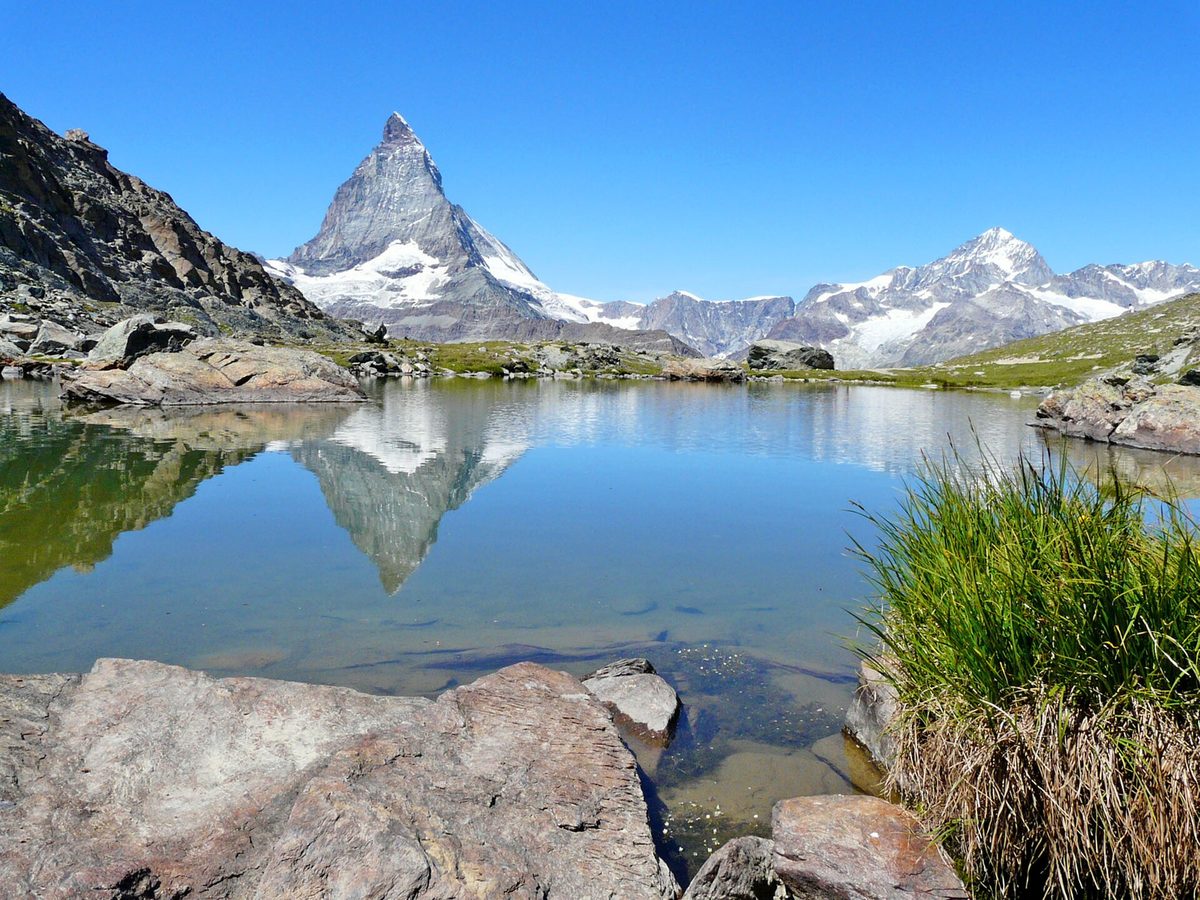
- Europe bucket list: the Matterhorn reflected in the Riffelsee above Zermatt, Switzerland · Photo: BECK François / CC BY-SA 4.0 via Wikimedia Commons
- The Eiffel Tower rising above Paris, seen from the Champ de Mars · Photo: Pierre Blaché from Paris, France (CC0) via Wikimedia Commons
- The Colosseum in Rome, where the 24-hour ticket also covers the Roman Forum · Photo: Wilfredor (CC0) via Wikimedia Commons
- St Peter's Basilica and Square in Vatican City, next to the Vatican Museums · Photo: Wouter Engler / CC BY-SA 4.0 via Wikimedia Commons
- The Alhambra palace complex above Granada in Andalusia, Spain · Photo: Jebulon (CC0) via Wikimedia Commons
- The Parthenon on the Acropolis in Athens, best visited in the first slot of the day · Photo: Jebulon (CC0) via Wikimedia Commons
- Neuschwanstein Castle above the Bavarian forest, visitable only on a guided tour · Photo: Wilfredor (CC0) via Wikimedia Commons
- The abbey of Mont-Saint-Michel rising from its bay in Normandy, France · Photo: Jorge Láscar from Melbourne, Australia / CC BY 2.0 via Wikimedia Commons
- Dubrovnik Old Town from the air, with the 2 km circuit of city walls around it · Dubrovnik Old Town from the air · Photo: dronepicr / CC BY 2.0
- Monasteries perched on the rock pinnacles of Meteora in central Greece · Photo: Jolovema / CC BY 4.0 via Wikimedia Commons
- The northern lights over snowy mountains near Tromso in northern Norway · Photo: Marcelo Quinan / CC BY 2.0 via Wikimedia Commons
- Waterfalls and boardwalks at Plitvice Lakes National Park in Croatia · Plitvice Lakes · Photo: OrionCro / CC BY-SA 4.0
- The Cliffs of Moher rising from the Atlantic in County Clare, Ireland · Photo: Suicasmo / CC BY-SA 4.0 via Wikimedia Commons
- Milky-blue water and steam at the Blue Lagoon geothermal spa in Iceland · Milky-blue water and steam at the Blue Lagoon geothermal spa, Iceland · Photo: Ralf Roletschek / GFDL 1.2
- A hot air balloon at sunrise over the valleys of Cappadocia, Turkiye · Photo: MusikAnimal / CC BY-SA 4.0 via Wikimedia Commons
- Whitewashed cave hotels and blue domes above the caldera in Santorini, Greece · Where to stay in Europe: whitewashed cave hotels and blue domes above the caldera in Oia, Santorini
- Kvalvika beach framed by steep peaks in the Lofoten islands, Norway · Photo: www.Pixel.la Free Stock Photos (CC0) via Wikimedia Commons
- Rows of red and yellow tulips in bloom at Keukenhof in the Netherlands · Photo: Arian Zwegers from Brussels, Belgium / CC BY 2.0 via Wikimedia Commons
- The Bernina Express curving over the Brusio spiral viaduct in Switzerland · Photo: Kabelleger / David Gubler (http://www.bahnbilder.ch) (CC BY-SA 3.0) via Wikimedia Commons
- A Camino de Santiago waymarker with its yellow arrow and scallop shell · Photo: Simon Burchell / CC BY-SA 4.0 via Wikimedia Commons
- A Bavarian beer garden under chestnut trees in Munich, Germany · Photo: Flo Sorg (CC0) via Wikimedia Commons
- The Nuremberg Christkindlesmarkt lit up in the Hauptmarkt at dusk · Photo: Magnus Gertkemper / CC BY-SA 2.0 de via Wikimedia Commons