The Most Beautiful Places in Europe: 50 Spots Worth the Trip

I have a photograph on my desk of a jetty on Lake Bled at six in the morning, taken on a work trip I had every intention of rushing through. The mist was sitting on the water, the island church was half-dissolved in it, and a man in a rowing boat was pulling towards the shore with the unhurried competence of someone who does it every day. I missed my train. I have never once regretted it.
The most beautiful places in Europe are the ones that stop you mid-sentence: Lake Bled and the Norwegian fjords, Hallstatt and the Dolomites, Santorini’s caldera and the Amalfi Coast, Meteora’s monasteries and the Alhambra, Colmar and Bruges. Below are the fifty-odd that have earned it, organised by the kind of beauty they offer, with the month to see each one, what it costs, and the 2026 rules you now need to know before you turn up.
The most beautiful places in Europe at a glance
Most lists stop at the photograph. This one carries the month, the transport and the current access rules, because those are what decide whether you get the view or the queue.
| Place | Country | Why it stops you | Best months | Getting there |
|---|---|---|---|---|
| Lake Bled | Slovenia | Island church, glassy water, Alps behind | May, Jun, Sep | 1hr bus from Ljubljana |
| Geirangerfjord | Norway | Waterfalls falling 1,000m into blue-black water | Jun to Aug | Bus or ferry from Ålesund |
| Hallstatt | Austria | Wooden village pinned between lake and cliff | May, Sep, Oct | Train from Salzburg plus ferry |
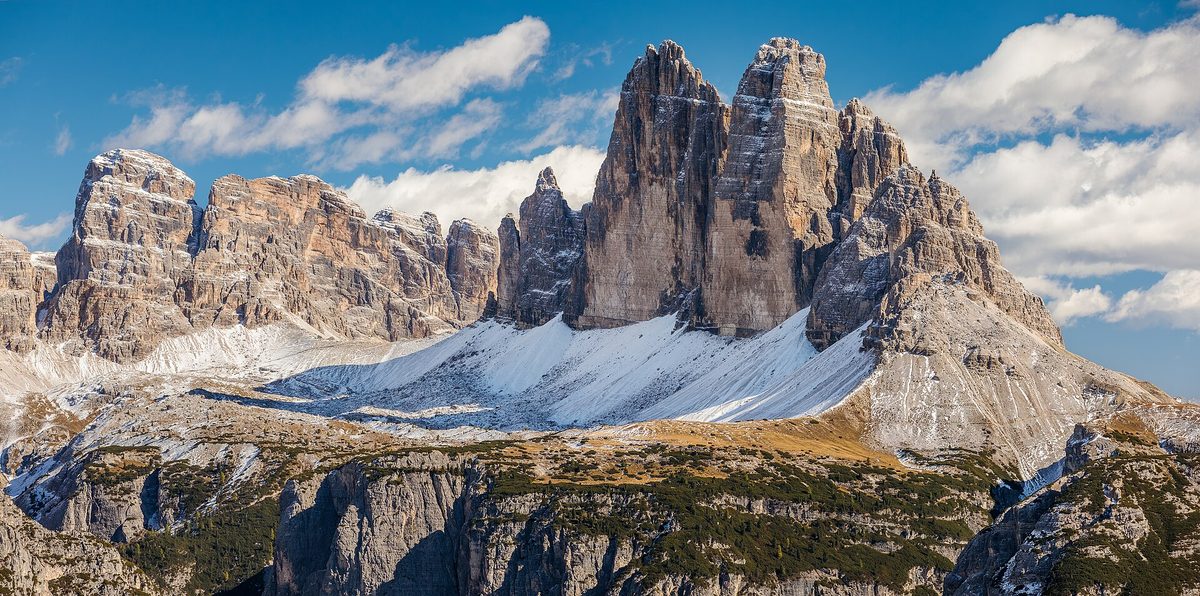
| Tre Cime di Lavaredo | Italy | Three limestone towers, one perfect loop walk | Jul to Sep | Toll road or bus from Cortina |
| Santorini caldera | Greece | White villages on the lip of a drowned volcano | May, Jun, Oct | Ferry or flight from Athens |
| Meteora | Greece | Monasteries balanced on sandstone pillars | Apr, May, Oct | Direct train from Athens to Kalambaka |
| Plitvice Lakes | Croatia | Sixteen turquoise lakes falling into each other | May, Jun, Oct | 2hr drive from Zagreb |
| Lofoten | Norway | Red cabins, white sand, Arctic mountains | Jun to Aug, Feb | Fly to Svolvær or Leknes |
| Colmar | France | Half-timbered houses in sherbet colours | May, Jun, Dec | 30min train from Strasbourg |
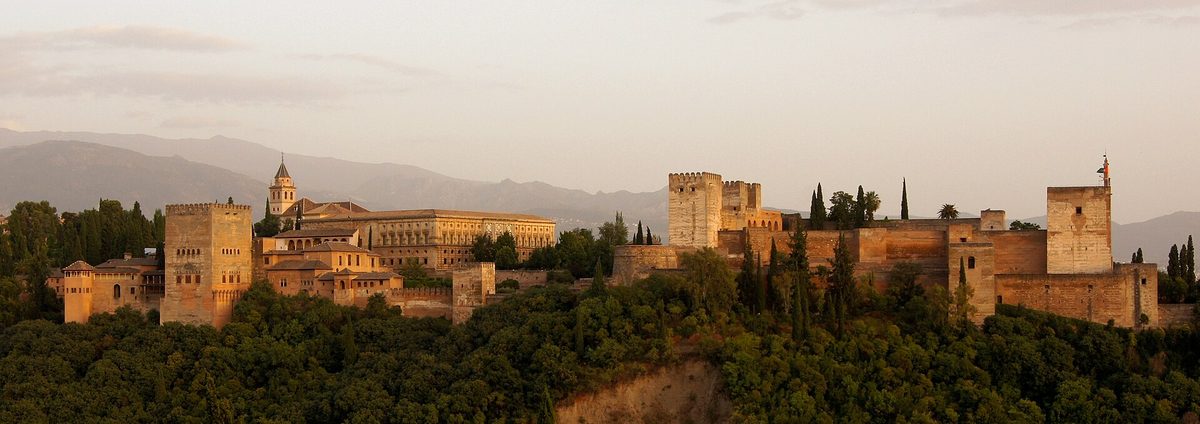
| The Alhambra | Spain | Moorish palaces above Granada, snow behind | Apr, May, Oct | Train from Madrid or Seville |
| Val d’Orcia | Italy | Cypress ridgelines and hill towns, unimproved | Apr to Jun, Sep | Car from Siena, essential |
| Snæfellsnes | Iceland | Kirkjufell, black beaches, a volcano at the end | Jun to Aug, Feb | 2hr drive from Reykjavík |
| Venice | Italy | A city built on water, beautiful in every direction | Oct to Mar | Train to Santa Lucia |
| Positano and Amalfi | Italy | Pastel houses stacked above a cliff road | May, Jun, Sep | Ferry from Sorrento or Salerno |
| Cinque Terre | Italy | Five painted villages on a cliff path | May, Jun, Oct | Local train from La Spezia |
| Prague | Czechia | Gothic, baroque and art nouveau all standing | Apr, May, Oct, Nov | Train from Berlin or Vienna |
| The Alhambra | Spain | Moorish palaces, timed entry, book early | Apr, May, Oct | Train to Granada |
| Bruges | Belgium | An intact medieval city with canals | May, Sep, Dec | 1hr train from Brussels |
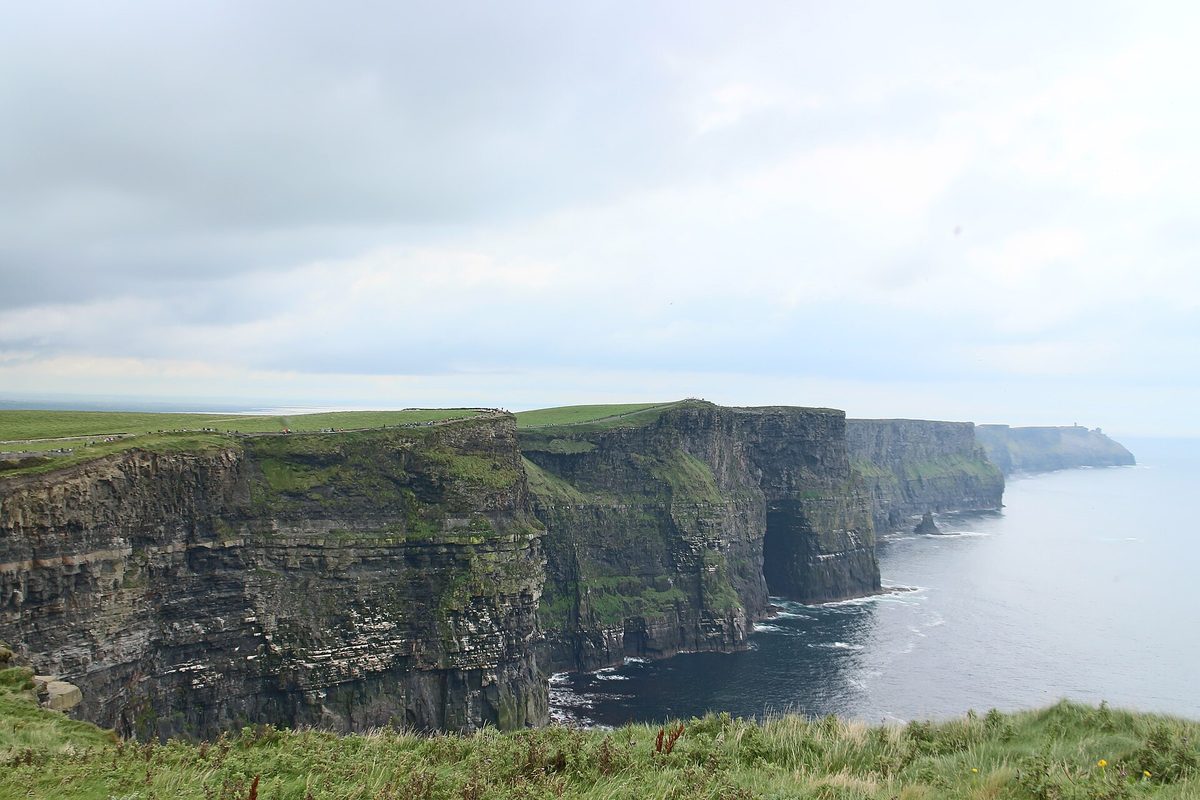
| Cliffs of Moher | Ireland | 14km of Atlantic cliff, 214m at the top | May, Jun, Sep | Bus or car from Galway |
| Douro Valley | Portugal | Terraced vineyards above a river gorge | Sep, Oct | Scenic train from Porto |
That is the shortlist. The rest are below, and if you would rather start from the bigger picture, our guide to the best places to visit in Europe covers the whole continent by country, season and traveller type.
How I chose these, and why beauty is not one thing
Beauty in Europe comes in at least six flavours, and they are not interchangeable. The person who wants alpine drama is not the person who wants a lane of crooked houses in Alsace. So this guide is grouped by the kind of beauty on offer: lakes and mountains, the wild north, coast and islands, small towns, whole cities, ancient landscapes, and the pastoral middle distance of vineyards and valleys.
Three rules kept places off the list. It had to look extraordinary in real life, not only through a long lens from one marked viewpoint. It had to be reachable by a normal person on a normal budget, so no helicopter-only glaciers. And it had to still be worth it in 2026. The Trevi Fountain and Amsterdam’s Bloemenmarkt did not make the cut for exactly that reason: both are lovely and both are now experienced as a scrum. Where a place is struggling with crowds, I say so instead of pretending the photographs tell the truth.
Lakes and mountains: Europe’s showpiece scenery
If you only have one week and you want the continent at its most cinematic, come here. The Alps and their outliers pack more beauty per kilometre than anywhere else in Europe, and the public transport is good enough that you rarely need a car.
Lake Bled, Slovenia
It tops more European beauty polls than anywhere else, and for once the internet and I agree. A lake the colour of bottle glass, a small wooded island with a church on it, a castle on a crag above, and the Julian Alps stacked up behind. Row yourself out (roughly €25 to hire a boat, or about €20 a seat on a traditional pletna; check current rates) and ring the wishing bell, then walk the 6km shore path, which takes about 90 minutes and loses 95% of the crowd within ten. The Ojstrica viewpoint is a steep 20-minute scramble and gives you the shot everyone else queues for at Mala Osojnica.
Go in late May or September. July and August fill the car parks by nine in the morning. Bled is an easy hour by bus from Ljubljana, so you do not need a car, and it pairs beautifully with Lake Bohinj half an hour further on, which is bigger, wilder and about a tenth as busy.
Hallstatt and the Salzkammergut, Austria
Hallstatt is 700 residents, one impossibly photogenic waterfront, and coach parties that outnumber the population many times over on a summer day. It is still worth going, but only if you sleep there. Day-trippers arrive by coach from about ten and are gone by four, and the two hours on either side of that window are what you came for. Take the ferry across from the train station instead of driving in, and give the wider Salzkammergut lake district a couple of days; Gosausee and Altaussee are just as lovely with a fraction of the phones.

Zermatt, the Matterhorn and Riffelsee, Switzerland
There is no better mountain in Europe. The Matterhorn is so improbably shaped that it looks drawn rather than eroded. The classic view is the reflection in Riffelsee, a fifteen-minute walk from Rotenboden station on the Gornergrat railway, and it is best in the first hour after the railway opens, before the wind ruffles the water. The train is not cheap, at around CHF 132 return in summer and less in winter, though a Swiss Travel Pass takes a large bite out of that. Zermatt itself is car-free, which does wonders for the silence.
Tre Cime di Lavaredo and the Dolomites, Italy
Three vertical limestone slabs standing in a row, circled by a 10km loop path that is close to flat and takes about four hours with stops. It is the single best introduction to the Dolomites, a mountain range that looks less like the Alps and more like a coral reef that got lifted 3,000 metres into the sky. The toll road up to Rifugio Auronzo now costs around €40 per car in summer and has to be booked online in advance, which catches people out; the bus from Cortina or Dobbiaco is the simpler option. Come in September for empty trails and refuges still open. Our guide to the best hikes in Europe has the multi-day version, the Alta Via 1.
Plitvice Lakes, Croatia
Sixteen terraced lakes in impossible shades of turquoise and jade, linked by waterfalls and a network of timber walkways that take you right across the water. It is one of the few places where the photographs undersell it, because no photograph carries the noise. Entry runs around €40 in peak summer and closer to €10 in winter, and timed entry slots are now the norm, so book. First entry of the day, before the coach parties from the coast arrive around eleven, is a different park entirely. More on routing it into a trip in our Croatia travel guide.
The rest of the alpine shortlist
- Lauterbrunnen valley, Switzerland. Seventy-two waterfalls dropping off vertical walls into a green trough of a valley. Tolkien-adjacent, and the model for Rivendell.
- Lake Como, Italy. Villas, cypresses and steep green shores. Base yourself in Varenna rather than Bellagio and take the ferry everywhere.
- Lake Bohinj, Slovenia. Bled’s quieter, larger sister, with swimming you will actually want to do.
- Berchtesgaden and the Königssee, Germany. Electric boats gliding to a red-domed pilgrimage chapel under 2,000m walls. See our Germany travel guide.
- Lake District, England. Softer beauty, but Buttermere at dawn in October is as good as anything on this list.
The wild north: fjords, Arctic light and volcanic Iceland
Northern Europe deals in a different currency: scale, weather and light. The summer nights never properly end and the winter days barely start, and both are reasons to go rather than problems to solve.
Geirangerfjord and the Norwegian fjords
A fjord is a valley that a glacier gouged out and the sea moved into, and Geiranger is the most theatrical of them: 15km long, walls rising 1,000 metres straight out of the water, farms clinging to ledges that look unfarmable, and the Seven Sisters waterfall falling in seven separate ribbons. The public ferry from Geiranger to Hellesylt costs a fraction of a cruise excursion and shows you the same walls. Nærøyfjord, narrower and part of the same UNESCO listing, is arguably prettier and much less visited.
Go between June and August, accept that it may rain, and build it into the wider loop in our Scandinavia travel guide. Norway’s coastal ferries are the local equivalent of a slow cruise, and they cost a fraction of one.

Lofoten, Norway
Granite peaks that come straight out of the sea, red fishermen’s cabins on stilts, and beaches whose water is Caribbean turquoise and roughly four degrees. Kvalvika beach is a 45-minute walk over a saddle and worth every step; Reine is the village on the postcards. June gives you the midnight sun and February gives you northern lights over snow-dusted peaks, which is the version I would choose.

Snæfellsnes and Kirkjufell, Iceland
Iceland compresses a continent’s worth of landscape into a peninsula you can drive in a day: Kirkjufell, the arrowhead mountain with its tidy waterfall foreground, black church at Búðir, seal colonies at Ytri-Tunga and a glacier-topped volcano at the end. It is two hours from Reykjavík and a fraction as busy as the Golden Circle. One 2026 note: a total solar eclipse crosses western Iceland on 12 August 2026, with totality over the Westfjords, Snæfellsnes and Reykjavík in the early evening. If you are reading this in time, beds for that week went months ago. Full detail in our Iceland travel guide.

Tromsø and the Arctic winter light
From late September to late March, the sky above northern Norway does things that no photograph has ever quite captured. We are still near the peak of the solar cycle, which has made the last two winters exceptional. Tromsø is the easiest base: flights are frequent, the town is charming, and you can be out of the light pollution in 20 minutes. Give it at least three nights, because the aurora does not perform on demand.

Coast and islands: where Europe goes to be looked at
The Mediterranean has been in the beauty business for three thousand years and it shows. The trick is timing: the same coastline that is sublime in early June is a slow-moving queue in the second week of August.
The Santorini caldera, Greece
Whatever you have heard about the crowds, the caldera is still one of the great sights of Europe: a drowned volcanic crater 400 metres deep with white villages iced along its rim. The mistake is treating it as a sunset. Stay two nights in Imerovigli or Pyrgos instead of Oia, walk the 10km caldera path from Fira to Oia in the early morning, and you will have the edge of the volcano largely to yourself. Come in May, June or October; on a big cruise day in August the Oia sunset is genuinely unpleasant. For the ferry times, ticket prices and where to watch the sunset instead, see our full guide to Santorini.

The Amalfi Coast and Positano, Italy
Pastel houses stacked up a ravine above a small beach, lemon terraces, and a road that clings to the cliff with more confidence than most drivers have. Positano is the icon; Ravello, high above, is the one I would actually stay in, for the gardens at Villa Cimbrone and the fact that you can hear yourself think. Do not drive between June and September if you can avoid it. The SITA buses and the seasonal ferries are cheaper, faster and infinitely less stressful. The Path of the Gods, a 7km cliff walk from Bomerano to Nocelle, gives you the whole coast from above for the price of a bus ticket.

Cinque Terre, Italy
Five villages spilling down the Ligurian cliffs, painted in colours that were originally intended to help fishermen spot home from the water. Take the train between them, walk the sections of coastal path that are open, and stay the night: after the last day-trippers leave, Vernazza’s harbour becomes one of the loveliest places in Italy to eat a plate of anchovies. The Cinque Terre Trekking Card runs around €7.50 for a day and covers the main paths; the Manarola to Corniglia coastal section remains closed for stabilisation work. Our Italy travel guide has the wider Ligurian routing.
Sarakiniko, Milos, Greece
A moonscape of white volcanic rock, scoured smooth by wind and sea, dropping into water so clear that boats appear to hover. It looks computer-generated and it is free. Go early or late; there is no shade at all, and the white rock reflects the midday sun straight back at you. Milos generally is the Cyclades island I recommend to people who found Santorini too polished.
Navagio, Zakynthos, and a 2026 warning
The shipwreck cove is the single most photographed beach in Greece, and for the whole of the 2026 season it is closed. Landings are prohibited, swimming in the bay is banned and boats must hold about 50 metres offshore after rockfalls made the cliffs unsafe, with the current order running to 31 October. You can still see it from the cliff-top viewing platform, which is where the famous photograph is taken from anyway. It is a useful reminder that beauty lists go stale: always check before you build a day around one beach. Our guide to the best beaches in Europe tracks the closures and the caps.
More coastline worth the detour
- Ponta da Piedade, Algarve, Portugal. Ochre sea stacks and arches; go by kayak at eight in the morning. Benagil cave is now boat or kayak tour only.
- Cala Goloritzé, Sardinia. A limestone spire above white shingle, capped at 250 visitors a day and booked through an app for around €7. The walk in takes about an hour and a half.
- Praia de Monte Clérigo, Costa Vicentina. Voted Europe’s best beach in 2026, and still refreshingly ordinary in the best way: a cove, a cliff, two cafes.
- The Dalmatian islands, Croatia. Zlatni Rat’s shifting spit and Stiniva’s cliff-walled cove, reachable on the ferries in our transport guide.
- Ksamil, Albania. The Ionian at a third of the Greek price, for now.
Towns that stop you in the street
Some of the most beautiful places in Europe are not landscapes at all. They are three streets and a bell tower, and you can see the whole thing in an afternoon.
Colmar and the Alsace wine route, France
Half-timbered houses in raspberry, mustard and duck-egg blue, leaning over a canal in a quarter optimistically called Little Venice. Colmar is the showpiece, but the wine route villages either side of it, Eguisheim, Riquewihr, Kaysersberg, are just as pretty and considerably quieter. In December the whole region becomes the densest concentration of Christmas markets in Europe. Lovely in the first week, heaving by the third.

Bruges, Belgium
Medieval Bruges got rich, then its harbour silted up and the money left, which is the only reason the fifteenth century is still standing. Canals, step-gabled guildhouses, a belfry you can climb for 366 steps, and chocolate that justifies the cliche. It is small and it is busy: stay overnight, walk the canals before nine, and use the quieter Sint-Anna quarter as your base.
Alberobello, Puglia, Italy
An entire town of trulli, conical drystone houses built without mortar, originally so they could be dismantled quickly when the tax inspector came. There are around 1,500 of them, and they are UNESCO-listed. It is undeniably touristy in the centre; walk fifteen minutes into the Aia Piccola quarter and people are simply living in them.
The rest of the small-town list
- Sintra, Portugal. Pena Palace in custard yellow and blood red, above a hillside of romantic ruins and fog. Book a timed slot and go on a weekday.
- Neuschwanstein, Bavaria. The castle that Disney borrowed, on a crag above two lakes. Best seen from the Marienbrücke, and best photographed in October.
- Mont Saint-Michel, France. An abbey on a tidal island that becomes an island properly a few times a month. Stay the night on the mount or in Beauvoir and walk in at dusk.
- Kraków, Poland. Europe’s largest medieval market square, an intact old town, and prices that still surprise western visitors.
- Ronda, Spain. A white town split by a 100-metre gorge with a bridge across it that beggars belief.
- Počitelj, Bosnia and Herzegovina. An Ottoman village built into a hillside above the Neretva, essentially frozen in the sixteenth century.
- Český Krumlov, Czechia. A castle, a river loop, and a baroque theatre that still works.
- Giethoorn, Netherlands. No roads, only canals and footbridges. See our Netherlands travel guide.
Cities that are beautiful the whole way through
Most European cities have a beautiful quarter. A handful are beautiful in every direction you look, and those are the ones worth building a trip around. Our guide to European city breaks goes deeper on the logistics of each, and we rank the top cities to visit in Europe by cost, crowding and how long to stay.
Prague, Czechia
Prague was barely bombed, so its gothic, baroque and art nouveau layers are all still standing on top of each other. Charles Bridge at six in the morning, with the mist off the Vltava and the statues in silhouette, is one of the great free experiences in Europe. By ten it is a market. Climb Petrin instead of queueing for the astronomical clock, and cross to Vinohrady for dinner.

Venice, Italy
Venice is the most beautiful city in Europe and most people visit it wrong. Day-trippers see St Mark’s Square at noon and leave grumbling. Stay two nights, and once the cruise crowds thin around six you get a city of silent canals and footsteps echoing off stone. Get lost in Cannaregio and Castello on purpose. Note that the day-tripper access fee applied on 60 dates between April and July in 2026, at €5 booked ahead or €10 late, so a 2027 spring trip will likely need the same paperwork; overnight guests are exempt.
Budapest, Hungary
Two cities that merged: hilly, castle-topped Buda and flat, grand, slightly scruffy Pest, with the Danube and the most theatrical parliament building in Europe between them. Széchenyi baths on a cold weekday morning, with steam coming off the outdoor pools, is one of the continent’s great cheap luxuries. It remains outstanding value; our budget travel guide has the numbers.
Seville and Granada, Spain
Seville does beauty as heat and colour: orange trees, tiled courtyards, the Plaza de España’s absurd semicircle, and a cathedral with a Moorish minaret for a bell tower. Two and a half hours away, Granada has the Alhambra. Go in April or October; Seville in August sits around 36 to 38 degrees and nobody is at their best. Our Spain travel guide covers the Andalusian loop.
The rest of the beautiful cities
- Porto, Portugal. Tiled facades tumbling to the Douro, port lodges across the water, and the best-value grand city in western Europe.
- Edinburgh, Scotland. A volcanic crag with a castle on it, a medieval Old Town, and a Georgian New Town, all in one skyline.
- Paris, France. Obvious, and still correct. Walk the Seine at dusk from Île de la Cité to the Eiffel Tower.
- Barcelona, Spain. A city where the buildings look grown rather than built. Gaudí’s Sagrada Família was architecturally completed in 2026 after 144 years: the 172.5m Tower of Jesus Christ was topped out in February and inaugurated on 10 June, the centenary of Gaudí’s death, making it the tallest church in the world.
- Ljubljana, Slovenia. Small, green and built along a river you can walk in an hour. The best-value capital in western Europe.
- Dubrovnik, Croatia. Honey-stone lanes inside sea walls, best walked at eight in the morning. Book the walls in advance now; see the 2026 rules below.
- Vienna, Austria. Imperial scale without the crush, and coffee houses that have earned their reputation.
Ancient and sacred landscapes
These are the places where the beauty is partly geological and partly the fact that people have been coming to them for a very long time.
Meteora, Greece
Six working monasteries perched on top of sandstone pillars that rise 400 metres out of the Thessalian plain, built in the fourteenth century by monks who wanted to be closer to God and further from everyone else. Visit at least two, dress modestly (shoulders and knees covered, wrap skirts provided), and walk the old monks’ footpaths between them instead of driving the loop. Sunset from the Psaropetra viewpoint is the one. There is a direct train from Athens to Kalambaka, which makes this one of the easiest great sights in Europe to reach without a car. More in our Greece travel guide.

The Alhambra, Granada, Spain
The finest surviving Islamic palace complex in Europe: honeycombed ceilings, courtyards built around water, calligraphy carved into every surface, and the Sierra Nevada holding snow behind it. Tickets sell out weeks ahead in spring and autumn, and the Nasrid Palaces are timed to the half hour, so book the moment your dates are firm. Go early or take the last slot of the day, when the light through the arches is worth the whole trip.
Giant’s Causeway and the Cliffs of Moher, Ireland
Forty thousand hexagonal basalt columns stepping into the Atlantic on the Antrim coast, formed by cooling lava around 60 million years ago, or by a giant building a bridge to Scotland, depending on who you ask. You do not need a visitor centre ticket to walk to the stones. On the other coast, the Cliffs of Moher run for about 14km and top out around 214 metres, and the walk south towards Hag’s Head empties out within twenty minutes. Both are in our Ireland travel guide.
Newer to the list
UNESCO inscribed 25 new properties at its 2026 session, and the European additions are worth knowing if you like being early: Mount Olympus in Greece, the D-Day landing beaches in Normandy, Alvar Aalto’s works in Finland, the interwar port city of Gdynia in Poland, and Berlin’s Waldsiedlung Zehlendorf. Mount Olympus is the one I would move on first. It has the mythology, a two-day hut walk to the summit ridge, and it will be considerably busier in 2027 than it was in 2025.
Pastoral beauty: vineyards, valleys and lavender
The quietest category, and my favourite. None of these will make you gasp from a viewpoint. All of them will make you want to move.
Val d’Orcia, Tuscany, Italy
Cypress-lined ridges, hill towns the colour of the earth they stand on, and fields that turn from green to gold between April and July. It is a UNESCO landscape precisely because it has not been improved. Base yourself in Pienza or Montalcino, drive the back roads between San Quirico and Bagno Vignoni at first light, and accept that every third bend is a photograph.

The Douro Valley, Portugal
Two thousand years of hand-built terraces contouring a river gorge, the oldest demarcated wine region in the world, and a railway that hugs the water for the final hour into Pinhão. Take the train, sit on the left, and stay at a quinta if the budget stretches. Multi-day sailings up from Porto are the laziest way to see it, and they are covered in our guide to European river cruises. Harvest, from mid-September into early October, is the magic window. See our Portugal travel guide.
Provence in lavender season, France
The Valensole plateau and the Sault plateau turn violet for roughly four weeks, usually late June to mid-July at Valensole and a fortnight later at higher, cooler Sault. It is a short window and it moves with the weather, so check with local tourist offices before booking flights around it. Combine it with the perched villages of the Luberon, in our France travel guide and in our detailed guide to visiting Provence.

The Mosel Valley, Germany
Germany’s prettiest river, looping between Trier and Koblenz past some of the steepest vineyards on earth, half-timbered wine villages and Burg Eltz, a castle that looks like a fever dream and has been in the same family for 850 years. Quieter than the Rhine, and better wine.
When to see each one: a month-by-month cheat sheet
Timing matters more than ranking does. The same place can be transcendent in one month and a disappointment in another, and nowhere on this list is good all year.
| Month | Where it is at its best | What to avoid |
|---|---|---|
| January to March | Tromsø and Lofoten for the aurora; the Dolomites and Zermatt under snow; Venice out of season | Alpine lakes (frozen access roads), most of Greece (much of it shut) |
| April | Andalusia, Sintra, Meteora, the Amalfi Coast before the buses | High alpine trails, still under snow |
| May | Lake Bled, Plitvice, Cinque Terre, Val d’Orcia, Colmar | Nothing much; May is the best all-round month in Europe |
| June | Norwegian fjords, Lofoten’s midnight sun, Santorini, Provence lavender from late June | The Amalfi Coast road, which seizes up |
| July | Tre Cime and the high Alps, Lofoten, Sault’s lavender | Everywhere Mediterranean and coastal; prices peak |
| August | Iceland (and the 12 August eclipse), Scandinavia, high mountain huts | Santorini, Dubrovnik, Hallstatt, the Cinque Terre. Genuinely, avoid |
| September | Almost everything. Warm sea, thinner crowds, Douro harvest | Very little; book early because everyone else has worked this out |
| October | Tuscany, Meteora, the Alhambra, the Lake District, Plitvice in autumn colour | Northern Norway’s shoulder weather, which can be grey and wet |
| November | Prague and Budapest without queues; Madeira | Alpine resorts between seasons, with lifts closed |
| December | Colmar, Strasbourg, Vienna and the Christmas market belt | Anywhere you wanted daylight for photographs |
If you are building a route rather than a single trip, cross-reference our guide to the best time to visit Europe, which breaks the continent down region by region.
How to actually get to them
Half of these places are genuinely easy to reach and half will eat a day if you plan them badly. Here is which is which.
Reachable by train, no car needed: Lake Bled (bus from Ljubljana), Hallstatt (train plus ferry from Salzburg), Zermatt and the Matterhorn (car-free village, trains all the way in), Meteora (direct from Athens to Kalambaka), Cinque Terre (local train between all five villages), Colmar, Bruges, Prague, Venice, Budapest, Porto, Edinburgh, Granada. Our train travel in Europe guide covers passes and booking windows.
Ferry or boat is the best way in: Geirangerfjord and Nærøyfjord, the Dalmatian islands, Santorini and Milos, the Amalfi Coast in summer, Lake Como.
A car genuinely helps: Val d’Orcia, the Douro back roads, Provence’s lavender plateaus, Snæfellsnes, the Mosel, Lofoten, the Ring of Kerry. These are the trips in our Europe road trips guide. Check whether your licence needs an International Driving Permit for the country you are hiring in, because several require one and the paperwork is easier to sort at home.
A car is a liability: Amalfi in summer, every historic Italian centre with a ZTL zone, Dubrovnik, central Prague, Hallstatt village. Fines arrive months later, by post, and they are not small.
What this costs in 2026
Beauty is mostly free. Getting to it, sleeping near it and eating next to it is not, and the range across Europe is enormous.
- Entry tickets. Most of the landscapes here cost nothing. The exceptions: Plitvice around €40 in peak season and about a quarter of that in winter, the Alhambra around €21, Meteora €5 per monastery, Pena Palace around €20, Cala Goloritzé around €7, the Cinque Terre trekking card about €7.50 a day. Mountain railways are the real cost: Gornergrat runs around CHF 132 return in summer unless you hold a Swiss pass.
- Daily budget. Roughly €60 to €90 a day in Slovenia, Croatia outside August, Portugal or Greece off the islands; €100 to €150 in Italy, France and Spain; €150 to €230 in Norway, Iceland and Switzerland. The full breakdown is in our budget guide, and the cheapest bases are ranked in our guide to the cheapest places to travel in Europe.
- The beauty premium. A room with the view costs two to three times a room five minutes’ walk from the view. In Santorini, Positano, Hallstatt and Bled specifically, that is the single biggest line in your budget, and it is optional. Our where to stay guide has the neighbourhood-by-neighbourhood version.
Crowds, caps and the rules that changed in 2026
Europe has spent the last two years rewriting how you access its most photographed places. All of the following was accurate in August 2026; check the official site before you book, because these rules move every season.
- Venice charged day-trippers on 60 dates between 3 April and 26 July 2026, €5 booked in advance or €10 within three days, between 08:30 and 16:00. Overnight guests, residents and under-14s were exempt. Expect a similar or wider window in 2027.
- Dubrovnik caps cruise arrivals at two ships a day and around 4,500 disembarking passengers, and from 2026 the city walls require an advance timed booking. Turning up at the gate is no longer a plan.
- Navagio beach, Zakynthos, is closed to landings for the whole 2026 season, with boats held offshore.
- Cala Goloritzé, Sardinia, admits 250 people a day, booked through an app, and the trail gate shuts in the early afternoon.
- The Cíes Islands, Spain, need a free regional permit before you can board the ferry.
- The Alhambra, Pena Palace, Plitvice and the Sagrada Família all run timed entry and all sell out in season.
The pattern is obvious: the most beautiful places in Europe are moving from turn-up-and-queue to book-in-advance. Assume any famous single sight now needs a slot, and check its official site the week you book flights. Entry rules for the continent as a whole are in our Schengen and ETIAS guide. As of August 2026 the ETIAS launch date has slipped again and is not scheduled, so it is not yet required.
Accessibility: which of these you can actually reach
If steps are a problem for you, or you are pushing a buggy, the honest picture varies enormously from place to place. Always confirm with the site itself, because access arrangements change.
Manageable with wheels. Lake Bled’s shore path is largely flat and mostly surfaced, with a few gravel stretches. The Norwegian fjord ferries and Geiranger’s waterfront are step-free. Colmar, Bruges and central Ljubljana are flat, though the cobbles are real. The Douro railway and the Zermatt mountain trains are accessible, and Vienna and Prague both have good step-free metro coverage.
Partly accessible with planning. The Alhambra has an adapted route through the Nasrid Palaces and the Generalife; Venice publishes step-free routes and its vaporetti take wheelchairs, though bridges dictate everything; Plitvice has some boardwalk sections that are step-free and many that are not, so check the park’s current route map before you travel.
Realistically difficult. Meteora’s monasteries are reached by long flights of stone steps cut into rock. Positano is a staircase pretending to be a village. Cinque Terre’s paths are steep and uneven. Santorini’s caldera path involves cobbles and gradients throughout. None of these are impossible, but go in knowing.
The most beautiful places in Europe by traveller type
- First trip to Europe. Venice, Prague, the Amalfi Coast and Lake Bled. Famous for a reason, easy to reach, and forgiving if your planning is imperfect. Start with how to plan a trip to Europe.
- Couples. Ravello, Bruges, Hallstatt in the evening, the Douro, and a fjord cabin. Our Europe honeymoon guide goes further.
- Families. Plitvice’s boardwalks, Giethoorn’s boats, the Cliffs of Moher, Berchtesgaden’s electric ferries. Practical detail in our family travel guide.
- Walkers. Tre Cime for the day loop, the Path of the Gods above Amalfi, Lofoten’s Kvalvika for the beach at the end, and Mount Olympus if you want two days and a hut.
- Solo travellers. Slovenia, Norway and Portugal are the easiest of these to do alone: small distances, good buses, and hostels and guesthouses where people talk to each other. More on travelling alone in Europe.
- Tight budget. Počitelj, Ksamil, Kraków, Meteora and the Mosel will all give you a fortnight for what a week costs in Switzerland. The wider region is in our Eastern Europe travel guide, and the hostel-and-night-train version is our backpacking guide.
- Winter. Tromsø, the Dolomites, Colmar’s markets, and the ski regions in our our ski guide guide.
Five mistakes that ruin beautiful places
- Arriving at eleven and leaving at four. That is precisely the coach window. The first and last two hours of daylight are a different place entirely, and they are free.
- Building a day around one viewpoint. Weather in the Alps, the fjords and Iceland does what it likes. Have a second plan, or give the place two days.
- Chasing the exact photograph. The queue at Mala Osojnica exists because everyone wants an identical picture. Walk ten minutes further and you will have a better one and no queue.
- Underestimating transfer time. Hallstatt is not a day trip from Vienna, whatever the tour desk says, and Cinque Terre is not a day trip from Rome.
- Not booking the one thing that needs booking. The Alhambra, Pena Palace, the Dubrovnik walls, Plitvice and Cala Goloritzé all sell out. Book those first and build the rest around them. More hard-won lessons in our collected travel tips.
Frequently asked questions
What is the most beautiful place in Europe?
If you want a single answer: Lake Bled in Slovenia, and I would defend the choice in person. It combines water, mountains, a castle and that island church in one view, and unlike many rivals it is small, walkable and reachable without a car. Runners-up would be the Norwegian fjords for scale and Meteora for sheer improbability.
Which country is the most beautiful in Europe?
Italy has the widest range: Alps, lakes, Tuscan hills, two coastlines and Venice, all in one country. Norway wins on raw drama, Greece on light and sea, Switzerland on polish, and Slovenia is the best small package on the continent, with Bled, the Julian Alps and a stretch of Adriatic inside two hours’ drive of each other. For the full comparison on cost, days needed and best months, see our guide to the best countries to visit in Europe.
What is the most beautiful city in Europe?
Venice, and it is not particularly close. Here are 36 things worth your time in Venice, priced and timed. Few cities hold up in every direction, at every hour, from every angle, and Venice manages it while sinking. Prague and Porto are the closest challengers, Edinburgh has the best skyline, and Seville has the loveliest streets to simply walk without a plan.
What are the most beautiful places in Europe for nature lovers?
The Norwegian fjords, Iceland’s Snæfellsnes peninsula, Plitvice Lakes, the Dolomites and Lofoten. All five are landscapes rather than sights, which means you experience them by walking or sailing rather than queueing. Our guide to the best hikes in Europe covers the trails through most of them.
What are some lesser-known beautiful places in Europe?
Počitelj in Bosnia, Lake Ohrid in North Macedonia, the Mosel Valley in Germany, Milos in the Cyclades, Bosa in Sardinia, and the Costa Vicentina in Portugal. Each has the beauty of a famous name and a fraction of the visitors, which is exactly the trade most people are looking for.
When is the best time to visit the most beautiful places in Europe?
May, June, September and early October, in that order. You get warm weather, open mountain trails, running ferries and roughly half the crowds of August. July and August are worth it only in the far north, where the season is genuinely short. February is the underrated month for the Arctic and the Alps.
How many of these can I see in two weeks?
Three or four properly, not ten. Pick one region and go deep: the Slovenia to Croatia run, the Italian lakes into the Dolomites, Norway’s fjords and Lofoten, or Andalusia into Portugal. Sample routes for each length of trip are in our Europe itinerary guide.
Do I need a visa or ETIAS to visit these places?
Most visitors from the US, UK, Canada and Australia can travel visa-free in the Schengen Area for 90 days in any 180. The biometric Entry/Exit System has been live since 10 April 2026. ETIAS, the €20 travel authorisation, has been delayed again and has no confirmed launch date as of August 2026, so it is not yet required. The UK runs its own separate ETA. Check our Schengen and ETIAS guide before you travel, since these dates keep moving.
Final thoughts
The thing I would most like you to take from this list is that beauty in Europe is not scarce. It is not locked behind one viewpoint in one village that 4,000 people are photographing at the same moment. It is in the second valley over, at seven in the morning, in the month either side of the one everyone else picked.
Every genuinely great travel memory I have from this continent came from lingering somewhere I had planned to pass through. Book the two or three things that need booking, then leave room to miss a train on purpose.
For the full picture of where to go next, start with our guide to the best places to visit in Europe, then narrow it down with the most beautiful towns in Europe, the best lakes in Europe, our list of underrated destinations, and the full Europe bucket list.
Hannah Brooks has spent fifteen years travelling, living and writing across Europe, from the Arctic tip of Norway to the south of Sicily. She has planned hundreds of European itineraries for readers and is Senior Europe Editor at EuropeanTourism.org.
Photo credits
Images via Wikimedia Commons. Lake Bled: Krzysztof Golik (CC BY-SA 4.0). Hallstatt: public domain (CC0). Tre Cime di Lavaredo: Ximonic, Simo Räsänen (CC BY-SA 4.0). Geirangerfjord: Virtual-Pano (CC BY-SA 4.0). Kvalvika, Lofoten: www.Pixel.la Free Stock Photos (CC0). Kirkjufell: Beardhatcode (CC0). Northern lights, Tromsø: Marcelo Quinan (CC BY 2.0). Santorini: Giles Laurent (CC BY-SA 4.0). Positano and the Amalfi Coast: Wiki.Bianco (CC BY-SA 4.0). Colmar: M.Strīķis (CC BY-SA 3.0). Prague: Godot13 (CC BY-SA 4.0). Meteora: Jolovema (CC BY 4.0). The Alhambra: Jebulon (CC0). Cliffs of Moher: Suicasmo (CC BY-SA 4.0). Val d’Orcia: Teseo (CC BY-SA 4.0). Provence lavender: Astronautilus (CC BY 2.0).