Seville Travel Guide
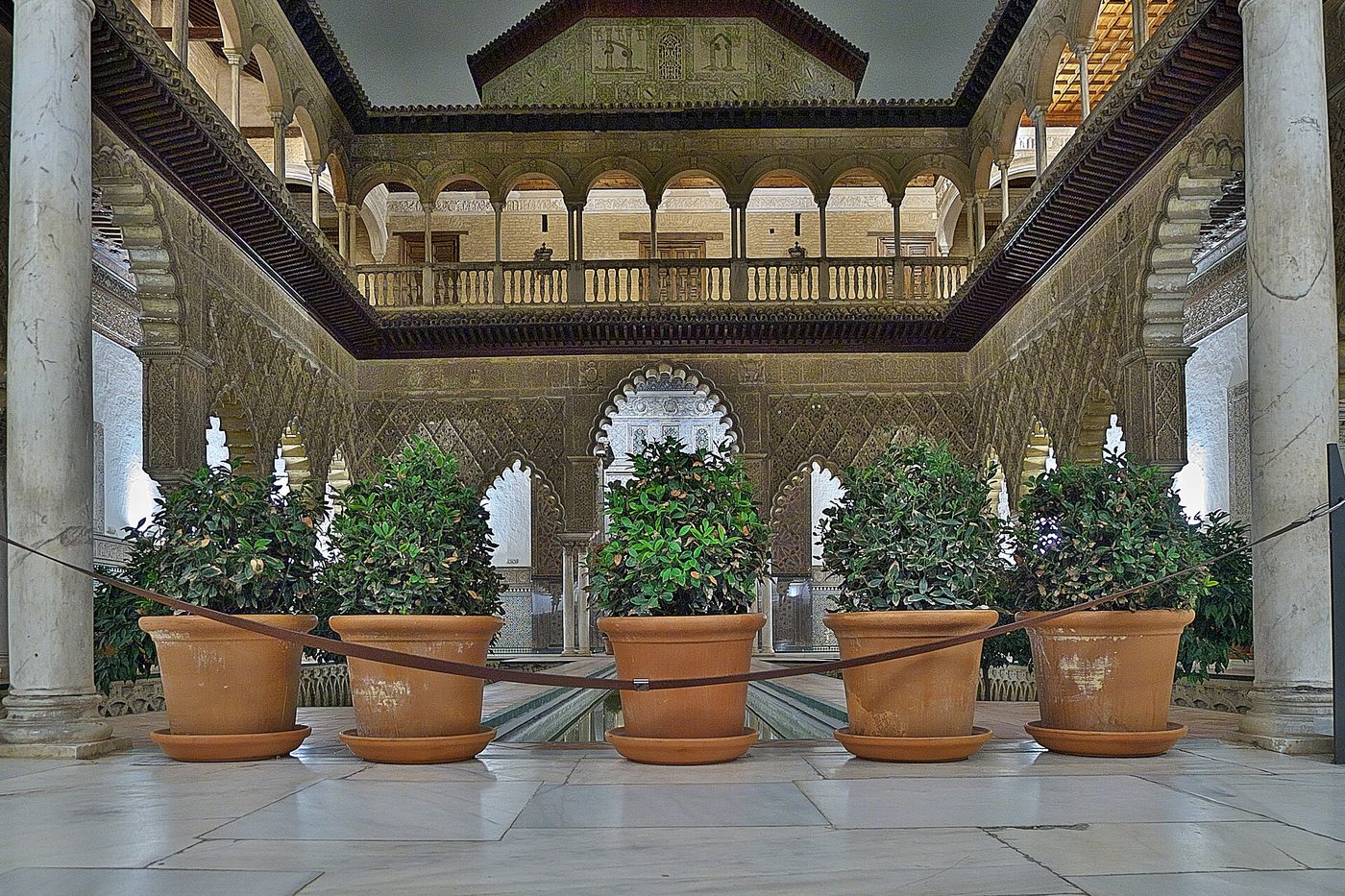
Seville is the only city in Spain where I have arrived with a plan and abandoned it by lunchtime. The plan involved museums. What actually happened was four hours moving between bars in Triana, a nap, and then the discovery that the Alcázar tickets I had not booked were sold out for three days. I have been back eleven times since, and I have got better at it.
This Seville travel guide is the version I wish someone had handed me on that first trip. It covers what everything costs in 2026, what you have to book and how far ahead, which free-entry slots are real, what the heat does to a summer visit, and which of the famous sights earn the queue. Prices here were checked in August 2026 against official ticketing pages.
Is Seville worth visiting? The short answer
Yes, and it is one of the few cities where I would argue the case without any hedging. Seville gives you a UNESCO World Heritage listing with three components, all within a five minute walk of each other, the finest Mudéjar palace in Europe, a food culture that runs on small plates and cheap beer, and a river district that feels like a separate town. It is compact enough to walk, cheap enough that a good evening costs under €30, and it has two of the most extraordinary annual festivals in Europe.
The honest counterweight: from mid-June to mid-September the heat is not a quirk, it is a structural constraint on your day. In 2025 Seville recorded 30 days at or above 40°C, the most since records began in 1951. If you visit in August you will be planning around shade the way people elsewhere plan around rain. And the centre is busy. Santa Cruz in April at 11am is a slow-moving crowd, not a maze of quiet lanes.
If you want the wider context on where Seville sits among Spanish destinations, our Spain travel guide covers the country as a whole, and this article is the deep dive on its Andalusian capital.
Seville travel guide at a glance: what everything costs in 2026
This is the table I would have paid for on my first trip. Every price below was checked against the venue’s own ticketing page in August 2026. Prices in Seville moved in January 2026, and a lot of the figures circulating online are from 2023 and 2024, so if you see the Alcázar quoted at €14.50 or the cathedral at €9 anywhere, that page has not been updated.
| Sight | 2026 price | Advance booking? | Time to allow | Worth knowing |
|---|---|---|---|---|
| Real Alcázar de Sevilla | €15.50 (reduced €8) | Yes, timed slot, book weeks ahead | 2–3 hours | The single unmissable sight in the city |
| Seville Cathedral & the Giralda | €13 online / €14 at the door | Recommended, not essential | About 75 minutes | Giralda climb is ramps, not stairs |
| Plaza de España | Free | No | 45 minutes, longer if you row | No entry charge is in force in 2026 |
| Setas de Sevilla (Metropol Parasol) | From €16 | No | 60–90 minutes | Best at dusk, ticket now bundles a film and light show |
| Casa de Pilatos | €12 both floors / €10 ground floor | No | 1 hour | The quiet alternative to the Alcázar |
| Torre del Oro | €3 (reduced €1.50) | No | 30 minutes | Free for everyone on Mondays |
| Palacio de las Dueñas | €12 (reduced €10) | No | 45 minutes | Free on Monday afternoons from 16:00, but only 50 same-day tickets |
| Hospital de los Venerables | Around €8 (reduced €4) | No | 45 minutes | Opening hours vary by source, so check before going |
| Archivo General de Indias | Free | No | 30–45 minutes | The third UNESCO site, and nobody queues |
| Museo de Bellas Artes | €1.50, free for EU citizens | No | 1.5–2 hours | Spain’s great Zurbarán and Murillo collection |
| Centro Andaluz de Arte Contemporáneo | About €3 | No | 1–2 hours | Free Tuesday to Friday 19:00–21:00 and Saturdays |
| Iglesia del Salvador | Included with the cathedral ticket | No | 20 minutes | Do not pay for this separately |
| Parque de María Luisa | Free | No | 1 hour of shade | Your midday heat strategy in summer |
| Jardines de Murillo | Free | No | 20 minutes | Shaded benches right beside the Alcázar walls |
| Itálica, Santiponce | Free for EU citizens, €1.50 otherwise | No | Half a day with travel | Roman amphitheatre, 10km north of the city |
| Alcázar Cuarto Real Alto | €5.50 on top of general admission | Yes, sold with your entry slot | Extra 30 minutes | The royal apartments still used by the Spanish crown |
| Cathedral rooftop guided tour | €20 online / €21 at the door | Yes | About 90 minutes | Same flat rate as every other cathedral guided tour |
| Alcázar theatrical night visit | €15 | Yes | About 75 minutes | Runs Thursday to Saturday, June to October |
| Noches en los Jardines del Alcázar | €7 per concert | Yes | About 1 hour | Late June to mid-September, concerts from 22:30 |
| Museo del Baile Flamenco, museum only | €6 | No | 1 hour | Museum and show are priced separately |
Two things jump out of that table. The first is how cheap Seville is once you are past the Alcázar: the Torre del Oro is €3, the Museo de Bellas Artes is €1.50, and the Archivo de Indias, a UNESCO World Heritage site holding Columbus’s letters and privileges, costs nothing at all. The second is that the Alcázar is the only sight that will turn you away. The cathedral rooftop tour, the Alcázar night visits, the garden concerts and the free Sunday cathedral slot all need booking too, but they are add-ons rather than the core of your trip. Everything else you can decide on the morning.
How many days do you need in Seville?
Three full days is the number I give people, and it is the number most experienced Seville writers land on too. Two days works if you are ruthless and skip the day trips. Four or five is right if you want to add Córdoba or Cádiz without turning your trip into a series of train platforms.
Here is how the days actually break down in practice. Day one is the UNESCO cluster: Alcázar in the morning on a booked slot, cathedral and Giralda after lunch, Archivo de Indias if you still have energy, then an evening in Santa Cruz. Day two is the other side of the river and the north: Triana market in the morning, a wander up through the Alameda, Setas at dusk. Day two ends with Plaza de España and María Luisa in the cooler hours. Day three is the second tier of monuments, a proper long lunch, and the far side of the centre. Anything beyond that is a day trip or a slower version of the same three days, which in Seville is a perfectly good use of time.
If you are fitting Seville into a longer trip, it slots naturally into an Andalusian loop with Granada and Córdoba. Our Europe itinerary planner and the best Europe travel routes guide both cover how to string southern Spain into a wider route without backtracking.
The Real Alcázar: the one thing you genuinely must book ahead
The Alcázar is a working royal palace that has been continuously inhabited for over a thousand years, and the upper floor is still used by the Spanish royal family. What you walk through is layer upon layer: Almohad walls, the Mudéjar palace Pedro I built between 1356 and 1364 using craftsmen from Granada, Toledo and Seville, Gothic vaults from Alfonso X, Renaissance additions, and gardens that keep going long after you think you have seen the last of them. It was inscribed by UNESCO in 1987 as part of the joint listing that also covers the cathedral and the Archivo de Indias.
General admission is €15.50. Reduced admission is €8 for over-65s, for students aged 14 to 30, and for European Youth Card holders in that age band. That reduced rate is now open to all nationalities rather than EU citizens only, which is a recent and welcome change. Free entry applies to people born or resident in Seville, under-13s with an adult, visitors with over 33% disability plus a companion, registered unemployed residents of Seville province, accredited researchers working on site, and ICOMOS members. Free does not mean you skip the ticket: you still have to obtain one.
Booking is the part people get wrong. Entry is by timed slot with a per-hour capacity cap, and tickets are released up to two months ahead. In high season, aim for a month out. Two to three weeks is the absolute minimum I would risk. There is no waiting list and no secret release channel. The box office at the Patio de Banderas opens at 09:00 and sells same-day tickets only, card payment only, and the reported daily allocation is around fifty tickets, which typically means a pre-dawn queue with no guarantee at the end of it. Do not plan around it.
Your ticket also unlocks a set of other city-run museum spaces, including the Antiquarium, the Museo de la Cerámica de Triana and the Museo Bellver at Casa Fabiola, all operated by ICAS. Most visitors never notice this. If you are staying more than two days, it turns a €15.50 ticket into decent value.
The Cuarto Real Alto, and whether to pay the extra
The Cuarto Real Alto is a separate €5.50 add-on that takes you into the upper royal apartments, bringing your total to €21. It is a guided visit with tight capacity. My view: worth it if you are interested in the palace as a living building rather than a monument, and worth skipping if you are travelling with children or on a tight schedule, because the timing is inflexible and the ground floor is where the visual drama is.
Opening hours, closures and the two evening options
From 1 April to 30 September the Alcázar opens 09:30 to 19:00, with site clearing beginning at 19:45. From 1 October to 31 March it opens 09:30 to 17:00, with clearing from 17:45. It closes entirely on 1 and 6 January, Good Friday and 25 December. That Good Friday closure matters if you are visiting during Semana Santa.
Two evening formats are worth knowing about. The theatrical night visits cost €15, run roughly 75 minutes on Thursday, Friday and Saturday, and the 2026 edition is themed on the 1526 imperial wedding of Charles V and Isabel of Portugal. Sessions run at 21:00, 21:30, 22:00 and 22:30 from June to September, shifting an hour earlier in October. Separately, Noches en los Jardines del Alcázar is a concert cycle in the gardens at €7 a concert, running from late June to mid-September, with music from 22:30 and access through the Puerta de la Alcoba on Paseo Catalina de Ribera. In August, an evening in those gardens is a far more pleasant experience than the same gardens at 2pm.
Seville Cathedral and the Giralda: ramps, not stairs
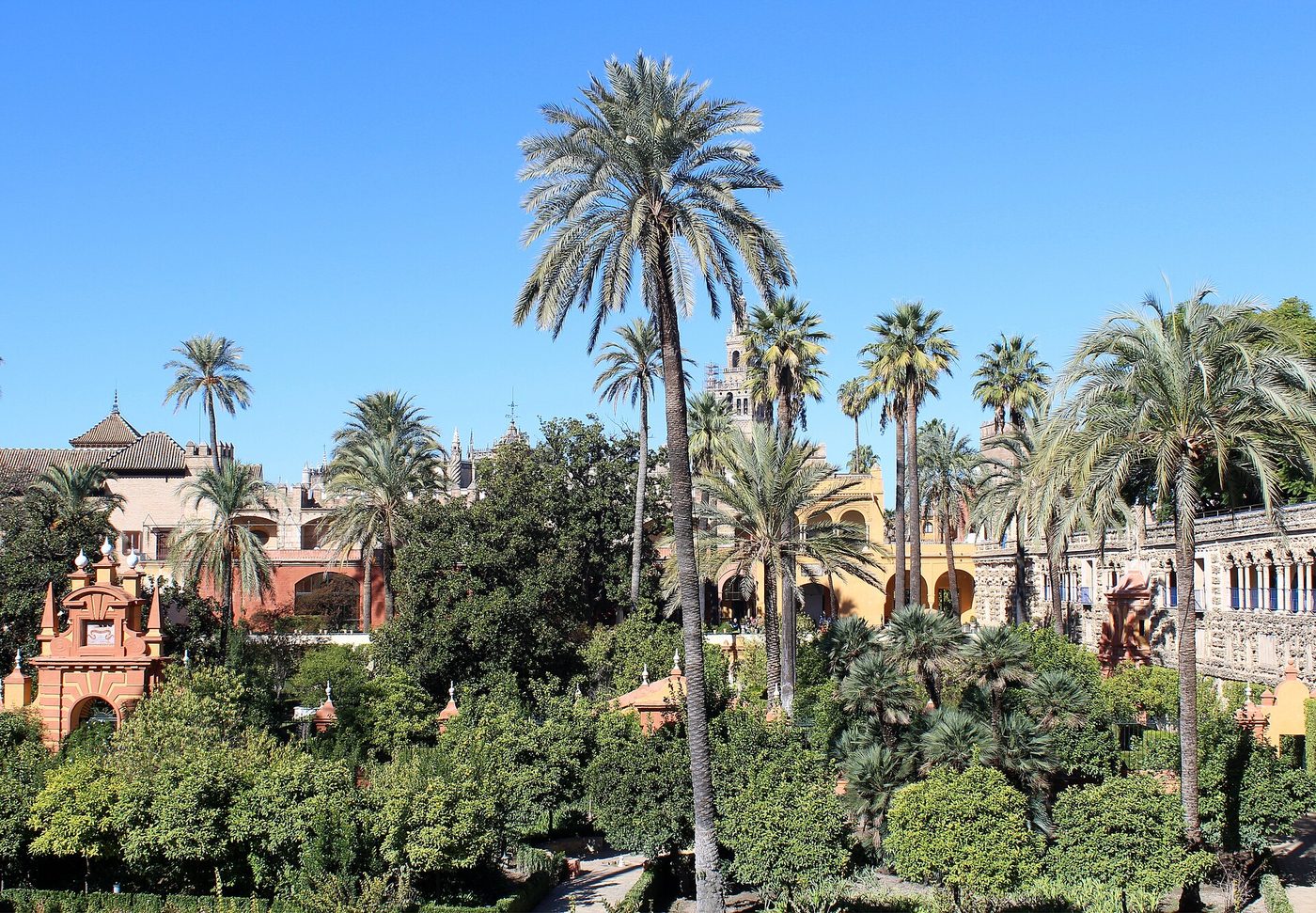
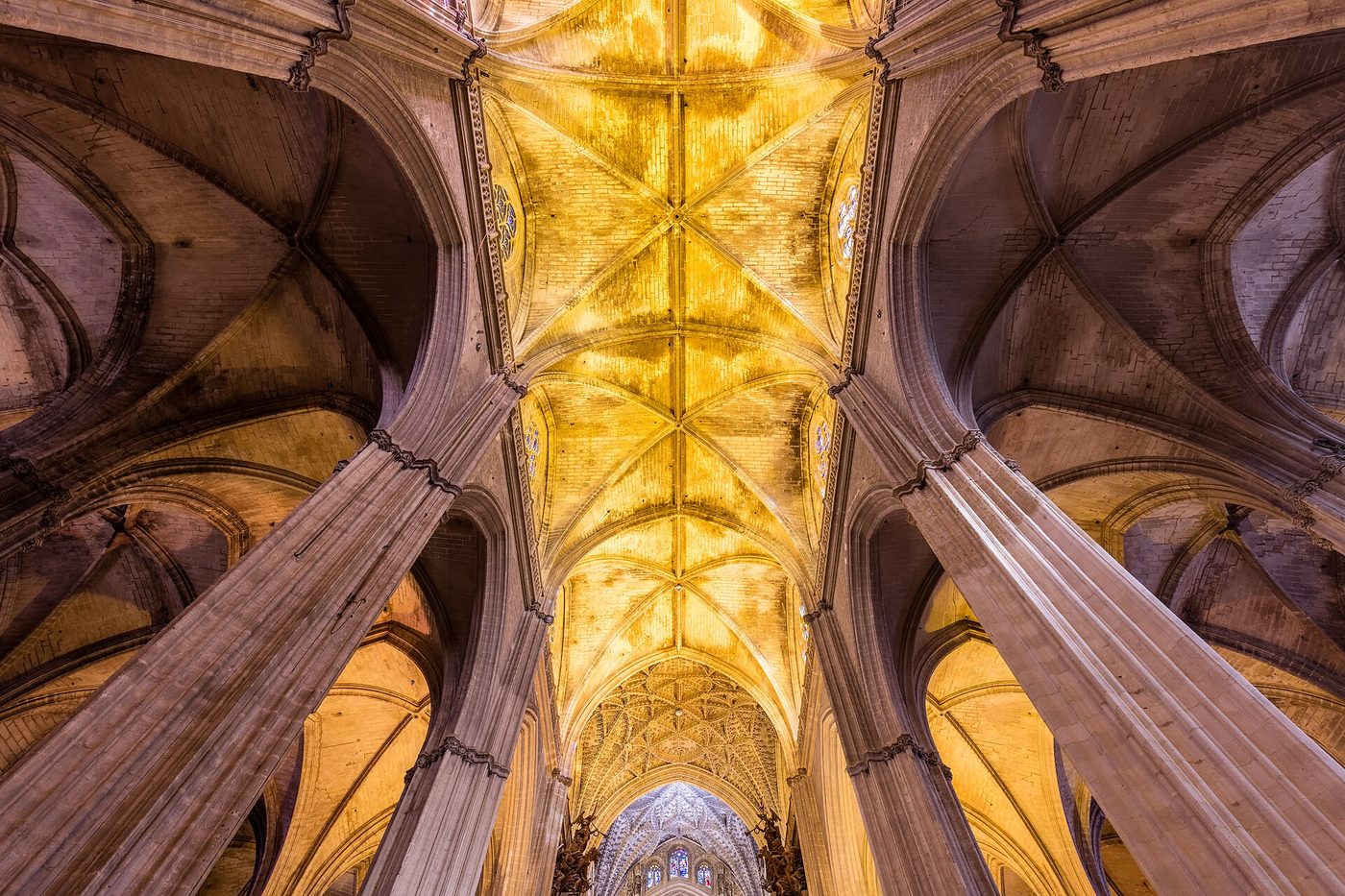
Seville Cathedral is enormous in a way photographs flatten. It was built on the footprint of the Almohad mosque it replaced, and the Giralda beside it is that mosque’s minaret with a Renaissance bell stage dropped on top by Hernán Ruiz in the sixteenth century. On the very top stands the Giraldillo, a bronze female figure about four metres high representing the victorious faith, which doubles as a weathervane.
The single most useful thing I can tell you about this building is that the Giralda is almost entirely stair-free. You climb 35 shallow ramps, built wide and gentle enough that, in the cathedral’s own words, the tower could be ascended on horseback, and only the last short section into the belfry is a flight of 17 steps. If you have knees that object to tower climbs, or you are travelling with a child who will refuse a spiral staircase halfway up, this changes the calculation entirely. It is still a climb and there is no lift, but it is a walk up a slope rather than a scramble.
Columbus’s tomb, and whether he is actually in it
The thing most people come into the cathedral looking for is the tomb of Christopher Columbus, in the south transept: a raised coffin carried on the shoulders of four bronze pallbearers representing the medieval kingdoms of Castile, León, Aragón and Navarre. It is one of the last things added to the building, installed in 1899.
Whether Columbus is in it was disputed for centuries, because the Dominican Republic claims the same honour. That argument is now largely settled. In October 2024 a team from the University of Granada led by the forensic scientist José Antonio Lorente confirmed, after two decades of work, that the remains in Seville are his, matching them against DNA from his son Hernando and his brother Diego, both also buried in this cathedral. Their finding affirmed an earlier study run between 2003 and 2005.
Prices, free entry and the rooftop tour
The combined cathedral and Giralda ticket, effective from 1 January 2026, is €13 online or €14 at the ticket office, and it includes free admission to the Iglesia del Salvador a few streets north. Reduced entry is €7 online or €8 at the door for over-65s, students up to 25, visitors with 33 to 65% disability, and adult members of large families. Children up to 13 with an adult, visitors with over 65% disability and unemployed Spanish nationals go free with proof.
There is a genuine free slot: Sundays, excluding public holidays, from 16:30 to 18:00. Capacity is limited and you must reserve online in advance. Turning up hopefully at the door on a Sunday afternoon will not work.
The rooftop tour, which takes you out onto the cubiertas above the vaults, costs €20 online or €21 at the door and runs about 90 minutes. That is the flat rate for every cathedral guided tour, rooftops included, plus a €1 per ticket online handling fee. It is the best view of the Giralda you will get, because you are looking across at it rather than standing on it.
Hours shift with the season and with worship. General hours are Monday to Saturday 11:00 to 18:00 and Sunday 14:30 to 19:00, with access and the Giralda closing at 17:00, extended by an hour during daylight saving. In July and August it opens earlier, at 09:30 Monday to Saturday. Tourist visits stop during liturgical acts, and the cathedral reserves the right to change schedules without notice for worship. Allow about 75 minutes for the cathedral and Giralda together. Dress respectfully and remove hats on entry. Photography is fine without flash or tripod.
Plaza de España: is there an entry fee in 2026?
No. Plaza de España is free to enter, and no charge is in force as of August 2026. I am putting that in bold because the question generates a startling amount of confused search traffic, and the answer online is mostly two years out of date.
Here is what actually happened. In February 2024 Seville City Council announced it intended to enclose the plaza and charge tourists to fund maintenance and round-the-clock security. In September 2024 the mayor said the measure was decided, at three or four euros, payable only by people not registered in Seville capital or province, with locals free. That is the version that got picked up worldwide.
What stopped it is jurisdiction. The council does not have sole competence over the site: central government manages the main building, the council manages the open-air part, and any revenue would split 25% to the state and 75% to the council. That requires an agreement with central government, and central government rejected the proposal outright, describing it as the privatisation of a public space. So the plan sits unimplemented. If it ever changes, it will be widely reported, but as things stand you walk in.
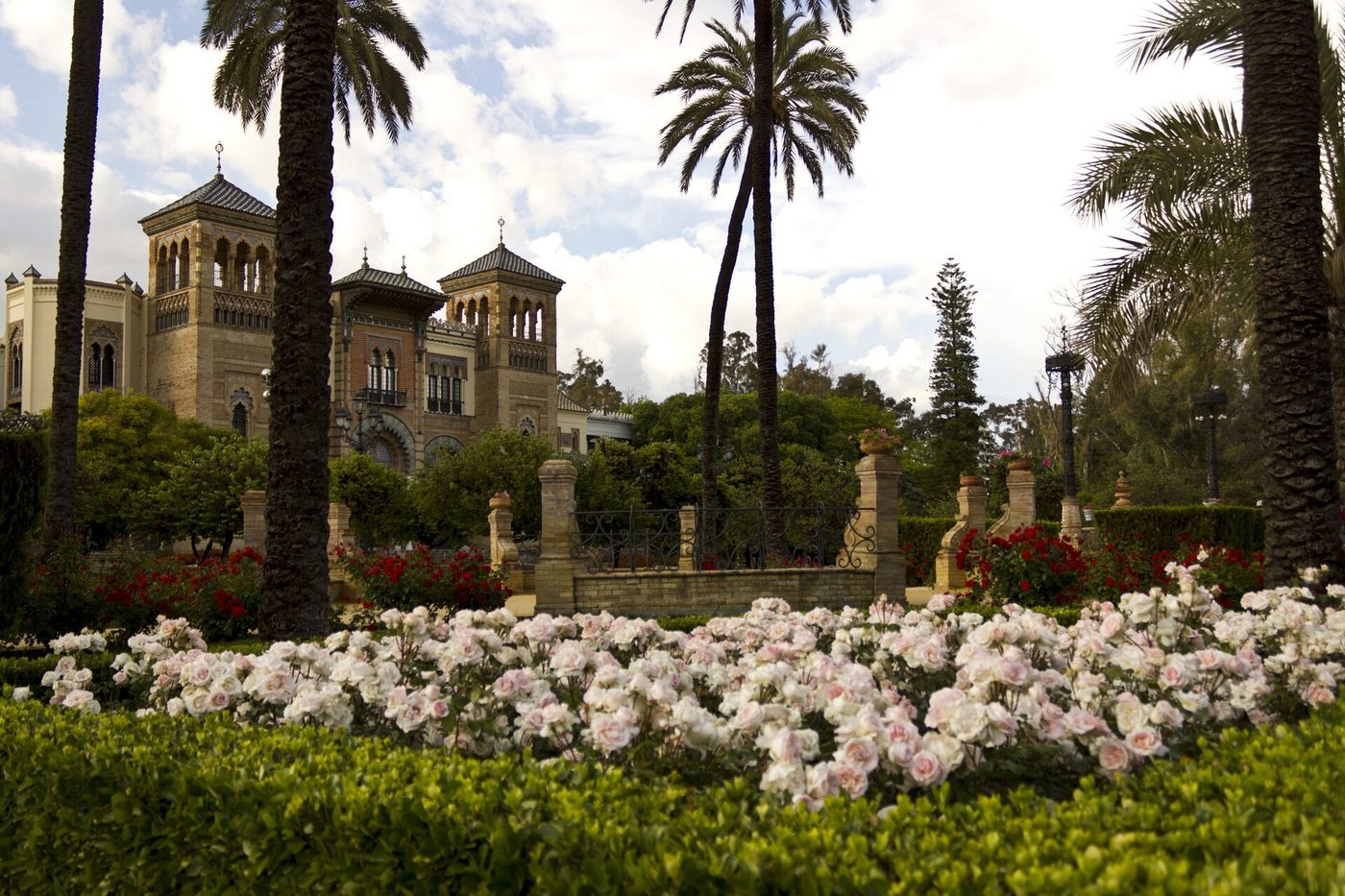
The plaza was built for the 1929 Ibero-American Exposition and sits at the edge of the Parque de María Luisa. Tiled alcoves around the curve represent the Spanish provinces, though sources disagree on whether there are 48, 49 or 52 of them, so I would not repeat a number confidently. Reports also conflict on whether the site is now fenced with opening hours or remains open around the clock, so check locally if you are planning a late-night visit.
The rowing boats on the canal are one of the better cheap pleasures in Spain. Hire is €6 for 35 minutes plus a €4 deposit, or €10 for an hour and ten minutes, up to four people per boat. Motor boats are €12 for 15 minutes and take up to twelve. Summer hire runs roughly 10:00 to 22:00 with last boats around 20:30, and winter to 20:00. The service is suspended for several weeks in early summer during the Icónica festival, so it is not guaranteed in June or July.
Free entry in Seville: the full calendar in one place
You can build a genuinely good two-day visit to Seville and pay for almost nothing except the Alcázar. The free slots are scattered across different days and institutions, so they take some assembling. Here they all are.
| Sight | When it is free | Opening pattern | The catch |
|---|---|---|---|
| Archivo General de Indias | Always free | Tue–Sat 09:30–16:45, Sun and holidays 10:00–14:00, closed Monday | Just walk in. No ticket, no booking. |
| Itálica, Santiponce | Always free for EU citizens | Tue–Sat 09:00–18:00, Sun and holidays 09:00–15:00 | Non-EU visitors pay €1.50. Bring ID. |
| Museo de Bellas Artes | Always free for accredited EU citizens and ICOM members | Closed Mondays, as most Andalusian state museums are | Everyone else pays €1.50, which is hardly a barrier. |
| Torre del Oro | Free every Monday | Mon–Fri 10:00–19:00, Sat–Sun 10:30–19:00 | The easiest free win in the city centre. |
| Palacio de las Dueñas | Free on weekday Mondays from 16:00 | Afternoon only | Fifty same-day tickets at the box office, one per person, no reservation. |
| Hospital de los Venerables | Reported free on the first Thursday of the month | Sources disagree on current hours | Check the day before you go. This one I could not pin down. |
| Seville Cathedral & Giralda | Free Sundays 16:30–18:00, except public holidays | Reservation required | Online booking is compulsory and slots go early. |
| Centro Andaluz de Arte Contemporáneo | Reported free Tue–Fri 19:00–21:00 and Sat 11:00–21:00 | Evening and Saturday windows | Housed in a Carthusian monastery across the river. |
| Museo de Bellas Artes special days | Free for everyone on 28 Feb, 18 May, 27 Sep and 4 Dec, plus European Heritage Days | Normal opening hours on those dates | Andalusia Day, Museum Day, Tourism Day, Flag Day. |
| Iglesia del Salvador | Not free, but bundled into any cathedral ticket | Standard church hours | Never buy a separate ticket for this. |
| Parque de María Luisa and Jardines de Murillo | Always free | Daylight hours | Your two best free places to sit down in the heat. |
| Plaza de España | Always free | Open air, no ticket desk | The proposed tourist charge was never implemented. |
Monday looks like the strongest free day at first glance: the Torre del Oro is free all day and the Palacio de las Dueñas opens free from 16:00. Be careful with it though, because Monday is also when the Archivo de Indias and Itálica are closed, so what you are left with is a half day rather than a full one. Sunday afternoon is the better free window, thanks to the cathedral slot, provided you booked it.
One caution on the Alcázar. You will see a widely repeated claim that it offers free entry on Monday evenings, 18:00 to 19:00 from April to September and 16:00 to 17:00 from October to March. The official page does not confirm those times; it says only that free public visits happen on days and times set by its executive committee. Treat the Monday slot as plausible but unconfirmed, and do not build a trip around it.
The rest of the centre: monuments that earn your time
Once the big three are done, Seville rewards a slower kind of sightseeing. These are the ones I keep going back to.
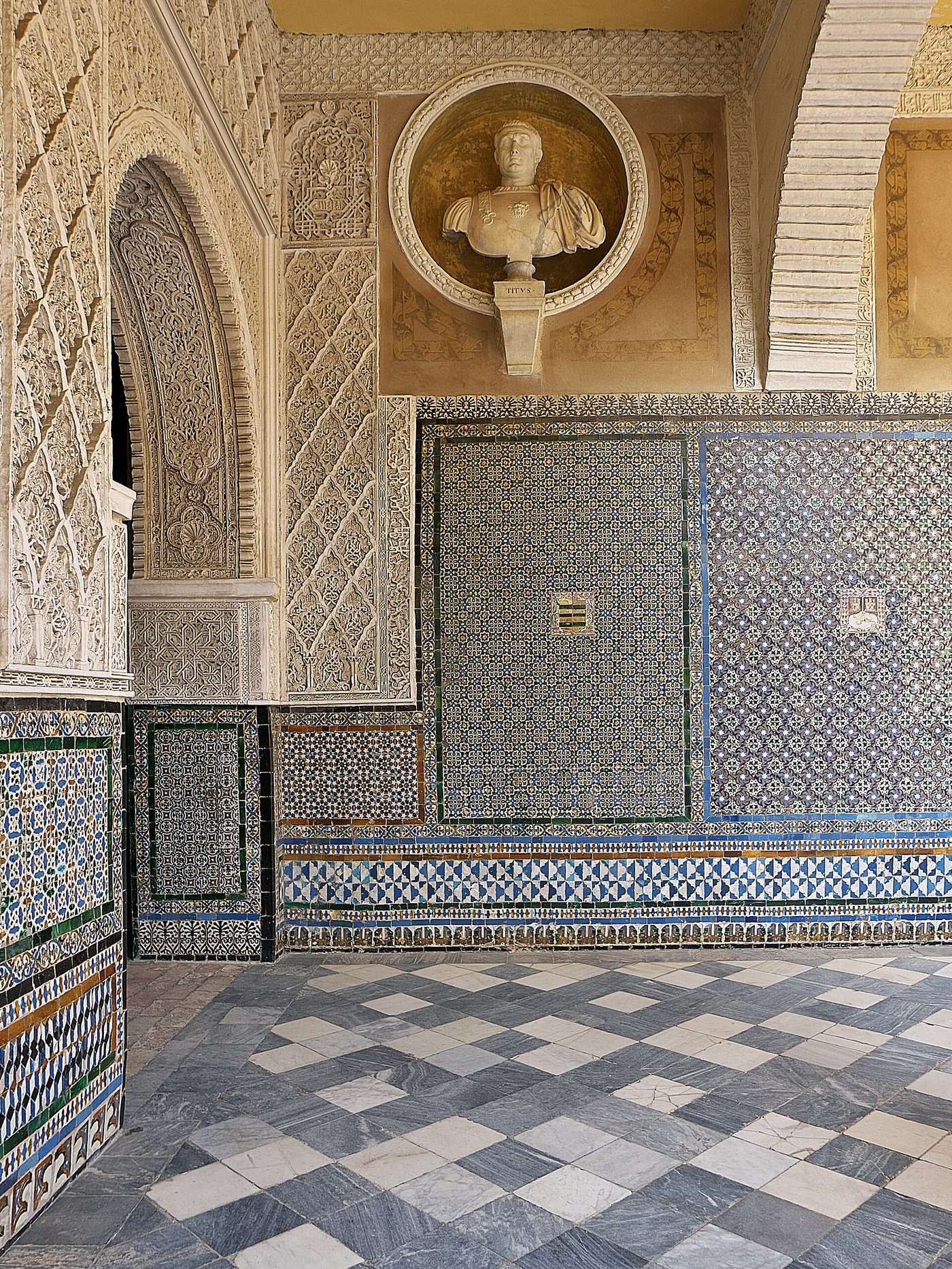
Casa de Pilatos is the palace I send people to when the Alcázar is sold out, and honestly it is worth visiting even when it is not. It is the residence of the Dukes of Medinaceli, run by the Fundación Casa Ducal de Medinaceli, and it does the same trick as the Alcázar at a fifth of the crowd: Mudéjar tilework, Roman sculpture, a central patio that stops conversation. Entry is €12 for both floors or €10 for the ground floor only, free for under-11s, open daily 09:00 to 18:00. Pay for both floors.
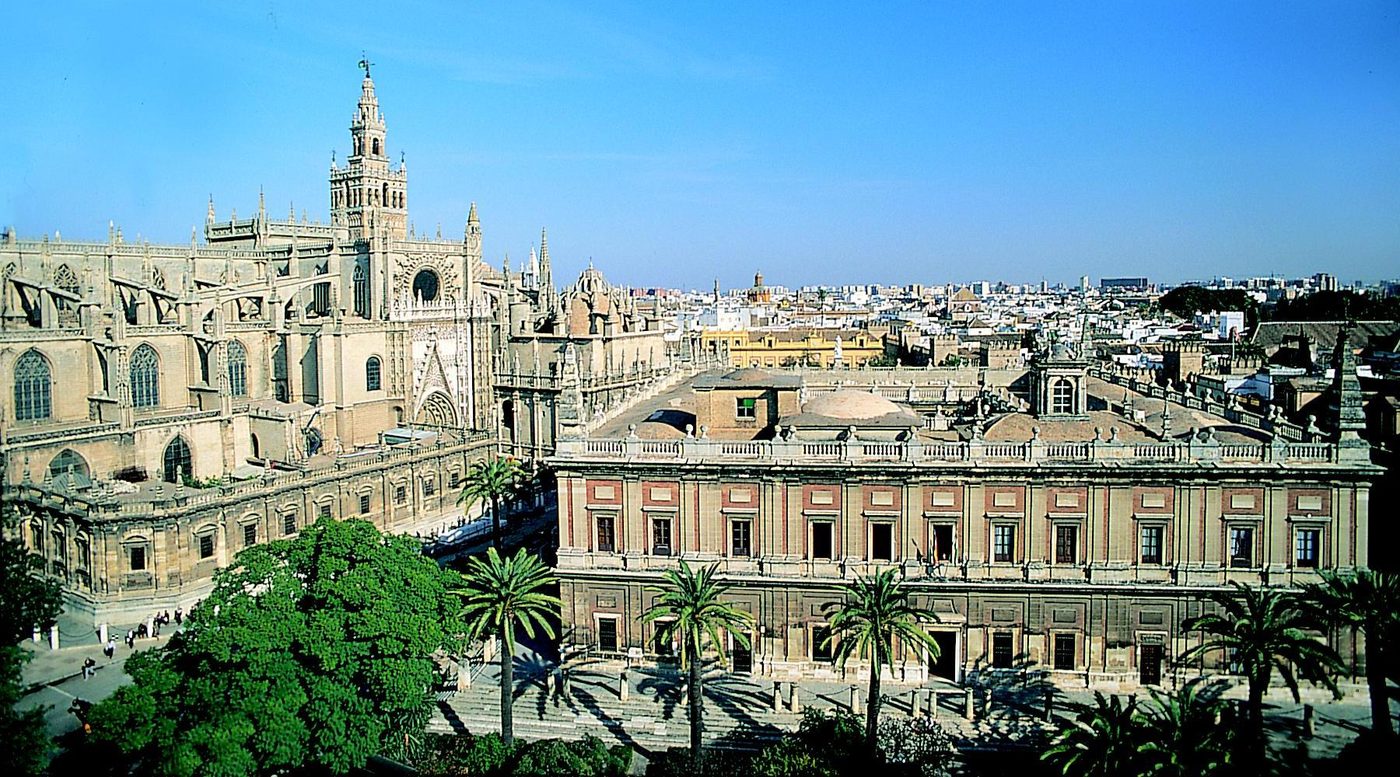
Of everything in Seville, the Archivo General de Indias takes the most persuading, which is odd given that it costs nothing. This is where Spain filed its empire: the documents of colonisation, Columbus’s letters and privileges, and the Portuguese ratified original of the Treaty of Tordesillas, which divided the New World between Spain and Portugal on a map. The building is the Casa Lonja, a restrained merchants’ exchange raised between 1584 and 1598 in the austere Herreran style, which after the cathedral feels like a glass of cold water. Tuesday to Saturday 09:30 to 16:45, Sunday and holidays 10:00 to 14:00, closed Mondays.
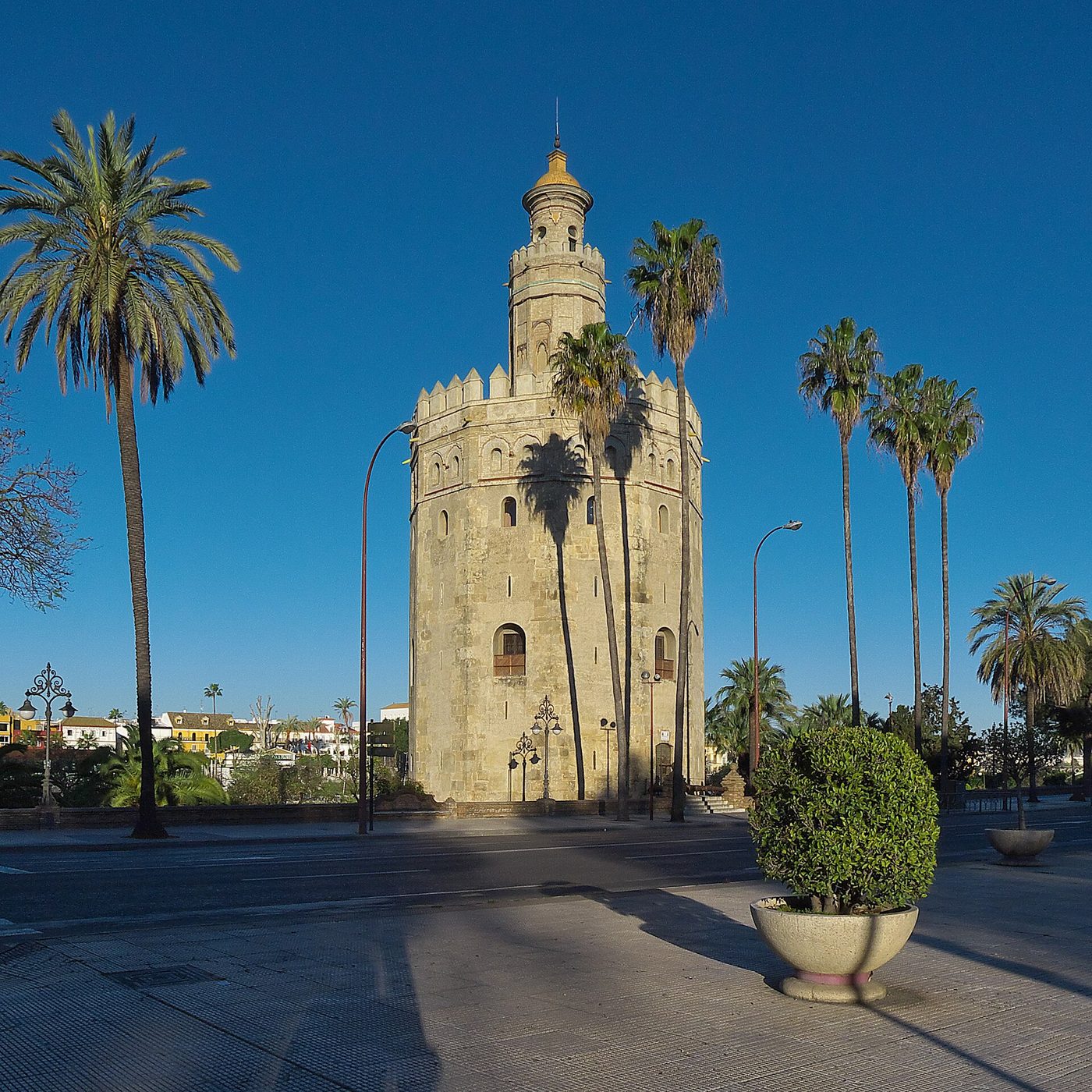
Three euros and half an hour gets you into the Torre del Oro. It is an Almohad watchtower built in 1220 and 1221, standing on the Guadalquivir and housing a small naval museum, and the upper terrace gives you the river in both directions. Free on Mondays. Reduced to €1.50 for students, seniors and visitors with disabilities.
For paintings, go to the Museo de Bellas Artes, often described as Spain’s second picture gallery after the Prado. It occupies a former convent, the building you see raised by Juan de Oviedo between 1603 and 1612, and the strength is Sevillian: Zurbarán, Murillo, Valdés Leal. It costs €1.50, and nothing at all if you are an EU citizen with ID.
Palacio de las Dueñas was the Duchess of Alba’s Seville home, opened to the public in 2016, and its courtyard gets photographed more than it gets understood. Entry is €12, reduced €10. It is free on weekday Mondays from 16:00, but that means fifty same-day tickets at the box office, one per person, with no reservation, so arrive early.
Hospital de los Venerables is a seventeenth-century baroque complex in Santa Cruz housing the Centro Velázquez, with frescoes by the Valdés family. Admission is around €8, or €4 reduced, with free entry reported on the first Thursday of the month. I have to flag this one: sources disagree sharply on its current opening hours, some giving a narrow Thursday to Saturday morning window and others a full week. Check on the day.
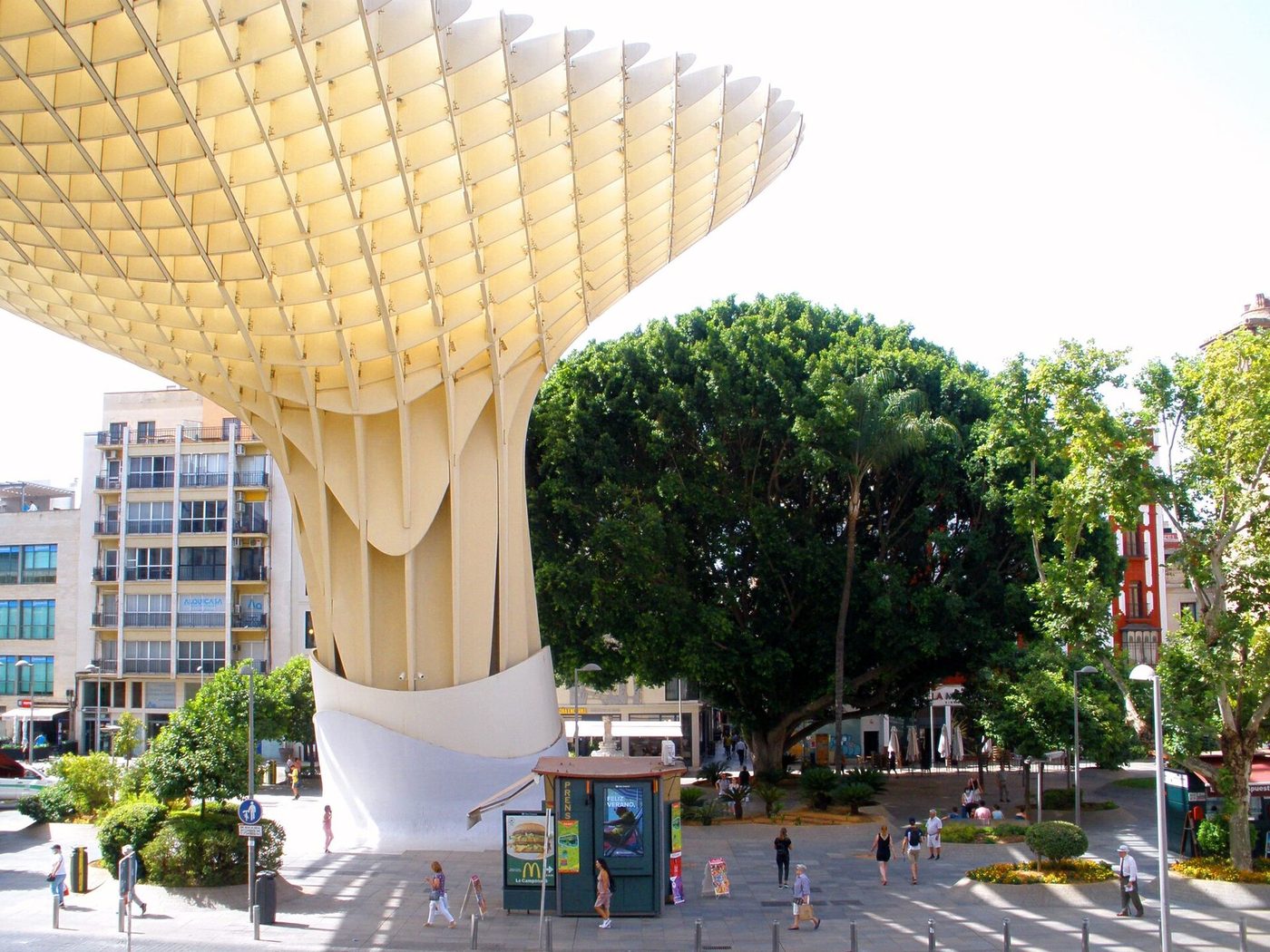
The Setas de Sevilla, the timber canopy officially called Metropol Parasol and universally called the mushrooms, has changed its offer. The general experience now starts at €16 and bundles the 360-degree walkway with a multisensory film called Feeling Sevilla, the Aurora light show, an eight-language audioguide and an exhibition. Reduced tickets start at €13, family packs run from €27 for two up to €60 for five, and Spanish residents get two for one. It opens daily 09:30 to 01:00 with last access at 00:15, and the Aurora show runs 21:30 to 01:00 from April to October. Free cancellation up to two hours before. Go at dusk, when the walkway gives you the cathedral silhouette against a pink sky.
The Plaza de Toros de la Real Maestranza is worth an hour whatever you think of bullfighting, because the guided visit is a museum tour rather than an endorsement. General admission is €10, €6 for seniors and students under 25, €3.50 for children aged 7 to 11 and free under 7. It takes you through the stands, the stables, the royal box and the chapel, plus a museum holding twelve Goya prints alongside costumes, capes and posters from the eighteenth century onward. It opens 09:30 to 19:30 daily, closing at 15:30 on days with a bullfight, with tours in Spanish and English every twenty minutes.
Seville neighbourhoods: what each one is for
How a district looks matters less than what it does, because that is what determines where you sleep, where you eat and where your evening ends up.
| Neighbourhood | What it is for | The character | The honest caveat |
|---|---|---|---|
| Barrio de Santa Cruz | Sightseeing, and staying if you do not mind crowds | The old Jewish quarter and historic core. All three UNESCO sites sit inside or on its edge. | Busiest part of the city. Restaurant quality drops sharply the closer you get to the cathedral. |
| Triana | Eating, drinking, flamenco and river evenings | Across the Guadalquivir. Historically the district of flamenco artists, bullfighters, ceramicists and the Roma community. | Fifteen minutes on foot from the cathedral, which people underestimate and then love. |
| Alameda de Hércules | Nightlife and going out where locals go out | The most alternative part of the city: terraces, live music, students and creatives around a long open plaza. | Regenerated over the past decade. Still worth watching your bag late at night. |
| La Macarena | Street art, real neighbourhood life and lower prices | Centred on the Basílica de la Macarena and its famous processional Virgin. Façades across the district have become an open-air gallery. | Less polished, fewer tourists, comes alive at night rather than at midday. |
| El Arenal | Riverside walking, theatre and bullfighting history | The old harbour district, now the cultural quarter. Holds the Plaza de Toros de la Real Maestranza and the Torre del Oro. | Elegant and central but thin on late-night life compared to the Alameda. |
| Nervión | Shopping and football, not sightseeing | Modern, commercial and residential. Nervión Plaza mall, mainstream shops, Sevilla FC’s stadium. | This is where locals shop. There is no reason to base a short trip here. |
| Los Remedios | Quiet family stays, and the practical base during Feria | Residential, next to Triana and immediately beside the Real de la Feria fairground. | The value play during Feria week when central hotels go to €200–500 a night. |
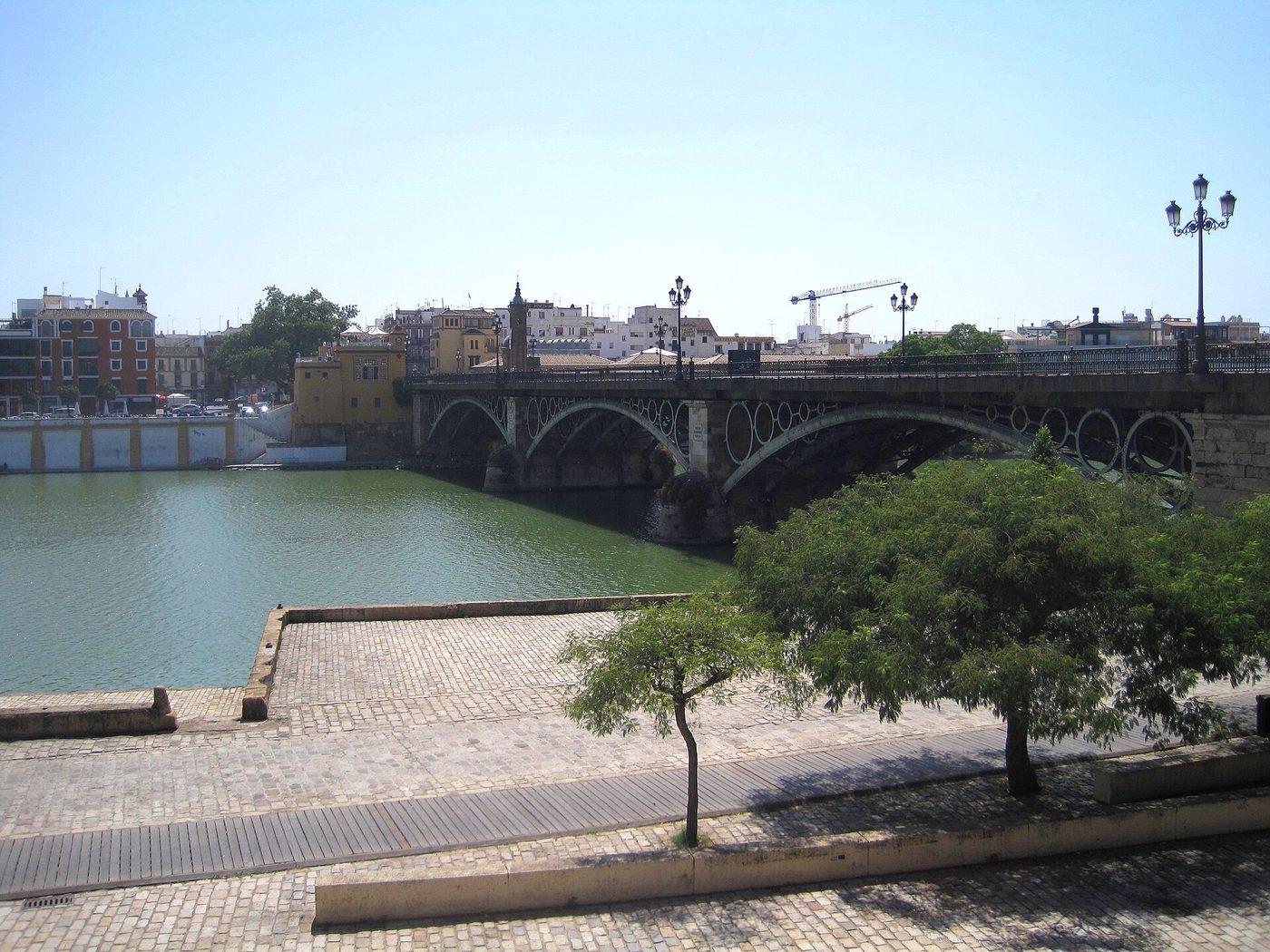
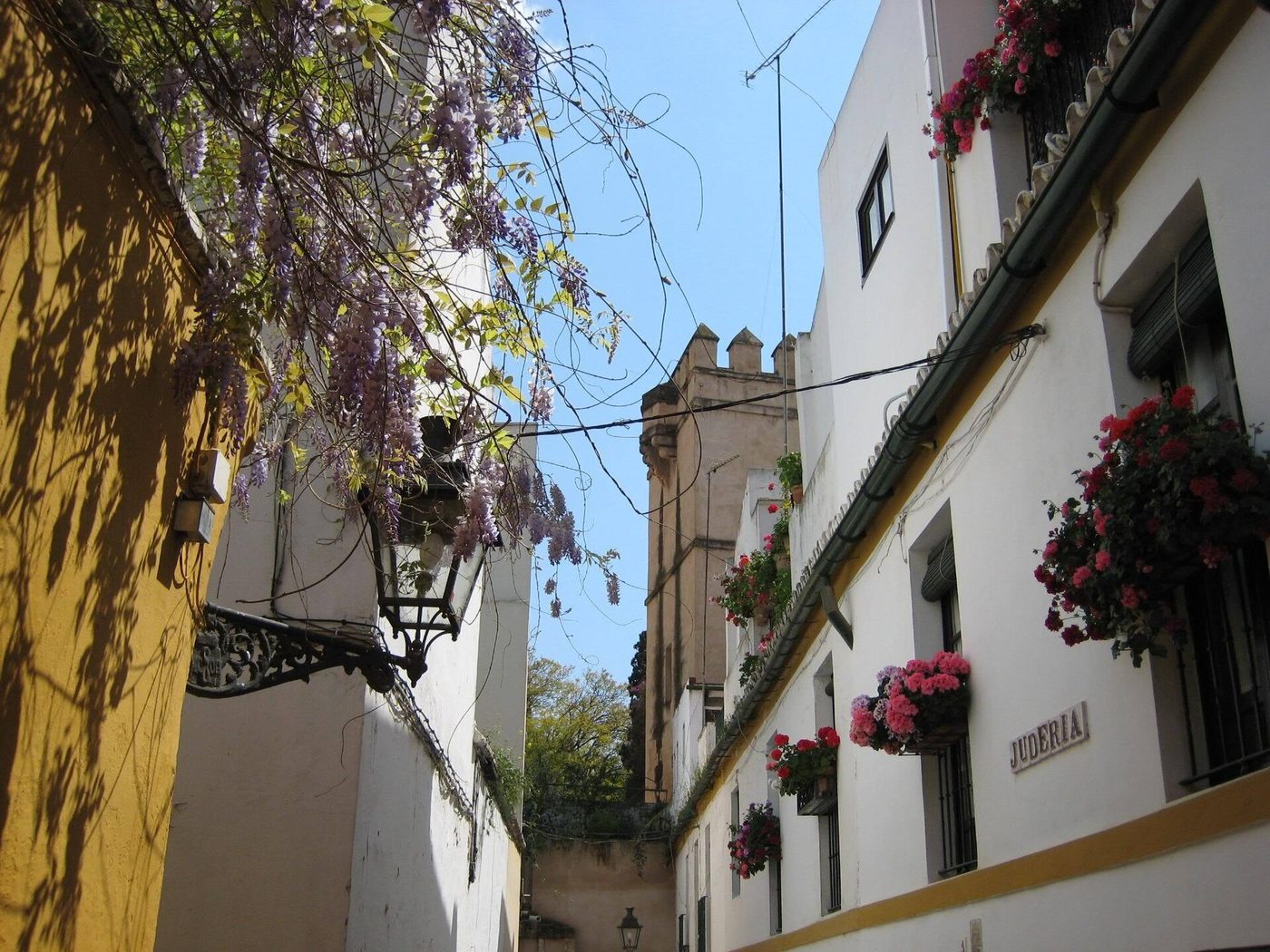
My own pattern, refined over those eleven visits: sleep in Triana or on the edge of the Alameda, sightsee in Santa Cruz, eat wherever I am at the time except within three streets of the cathedral. Triana in particular is the district I would defend hardest. It has its own identity, its own market, its own patron saints and a bridge that acts as a psychological border. Cross the Puente de Isabel II at sunset and the whole city rearranges itself in your head.
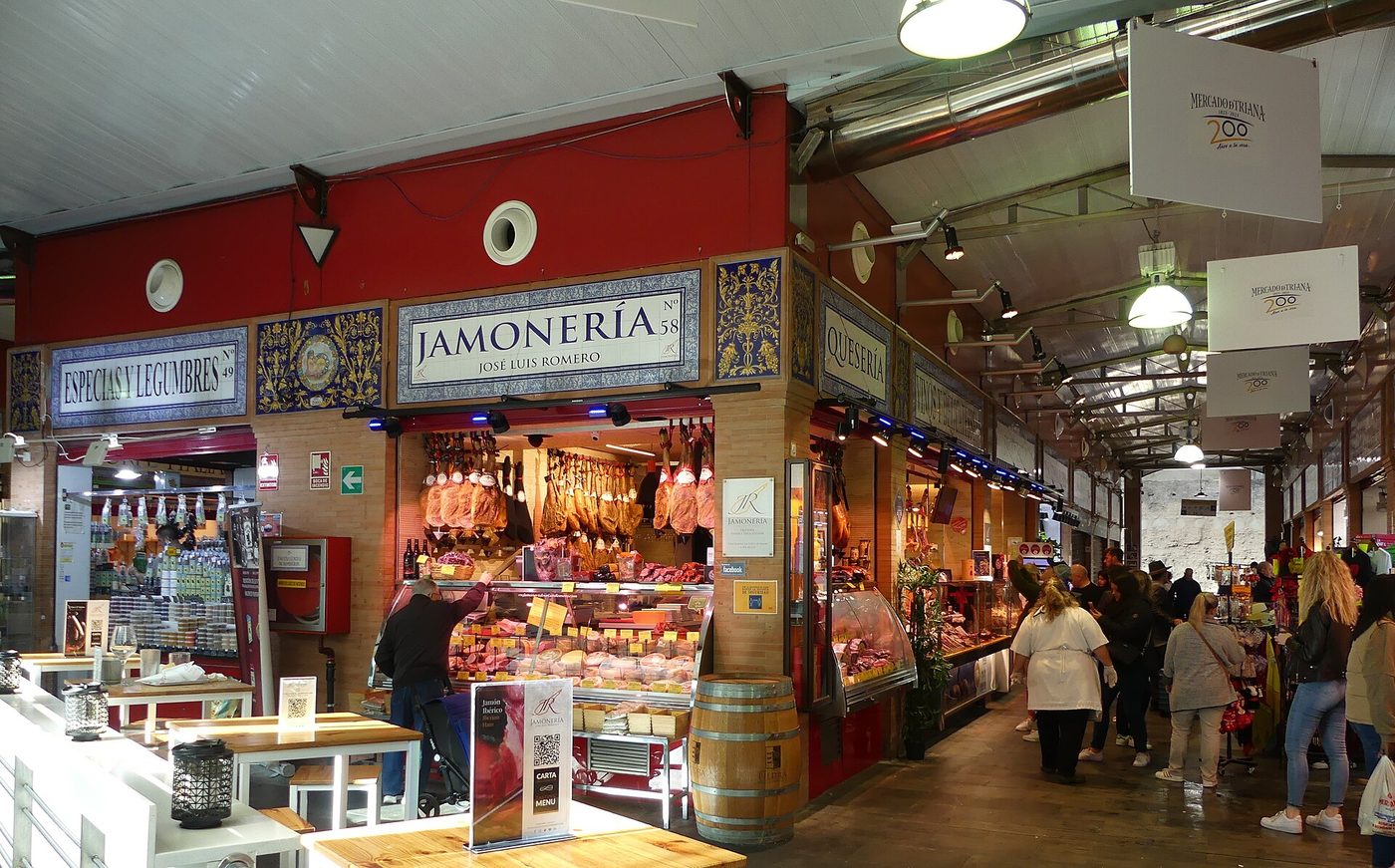
The Mercado de Triana, built over the ruins of the Castillo de San Jorge, is the best single hour of food in Seville. It is a working market with bar counters wedged between the stalls, so you can eat standing up beside somebody buying prawns for their dinner. Go before 14:00.
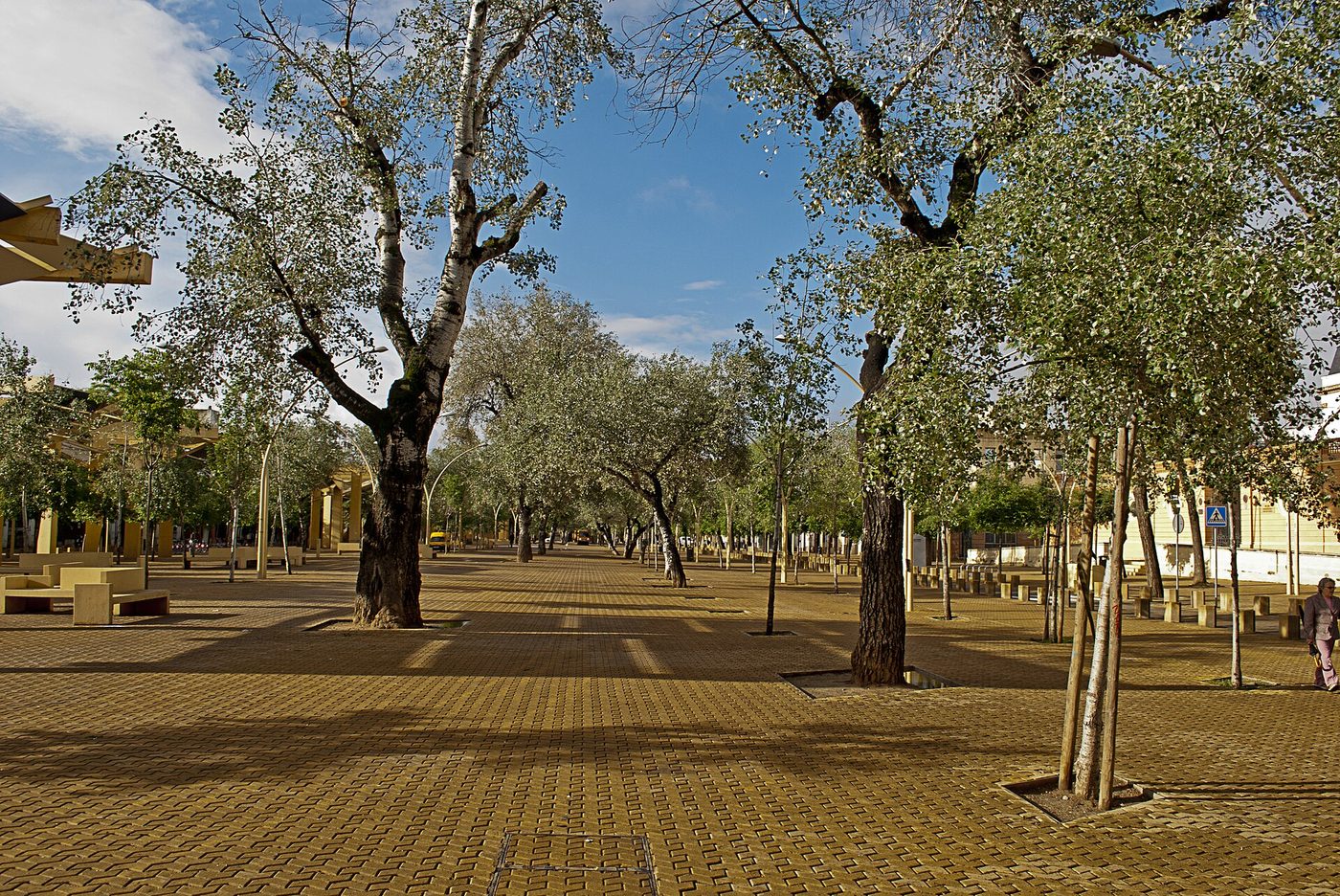
The Alameda de Hércules is not pretty in the way Santa Cruz is pretty. It is a long dusty rectangle with two Roman columns at one end and bars down both sides, and on a warm evening it is the most alive place in the city. People buy their own drinks and sit in the plaza. There are buskers at weekends. It is where I would send anyone who wants to feel like they are in a city rather than a monument.
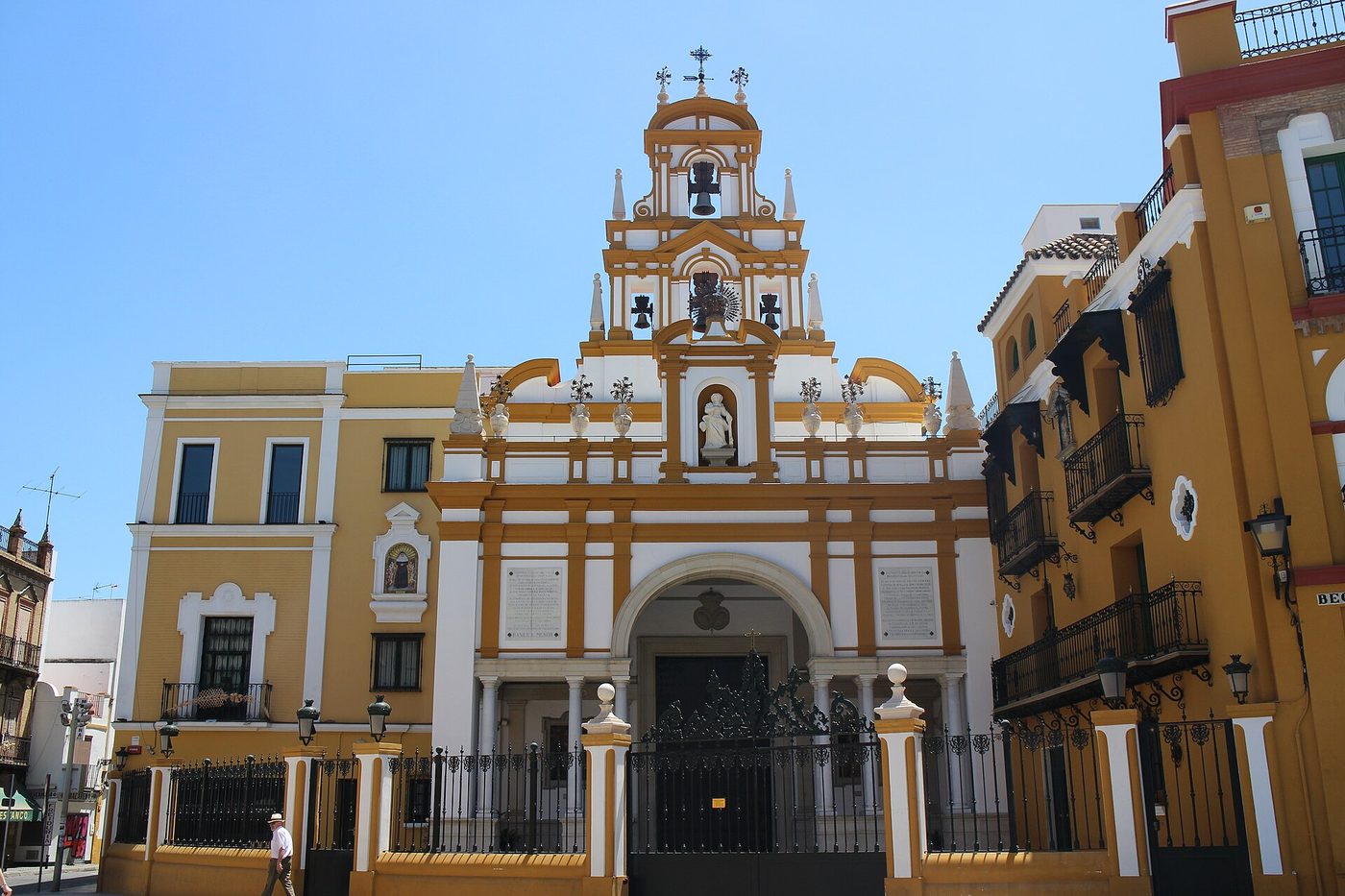
La Macarena rewards an aimless walk more than a checklist. The basilica holds the Virgen de la Macarena, one of the most venerated processional images in Spain, and the streets around it have filled with large-scale murals over the last decade. It is also where the Museo de Bellas Artes sits, on the district’s southern edge.
For a wider view of how to choose a base in a European city, our guide to where to stay in Europe works through the same logic across dozens of destinations.
Flamenco in Seville: what the different prices buy
There are three tiers of flamenco in Seville, and the price gap between them buys quite different things. Knowing which tier you are booking matters more than any venue recommendation, including mine.
| Venue or format | 2026 price | What you get | What to know |
|---|---|---|---|
| Casa de la Memoria | €18 adult, €15 students and residents | About 1 hour, four performers, no microphones | Book direct on Calle Cuna 6. Marketplaces have listed the same show at €22–26. |
| La Casa del Flamenco | €25 general, €20 residents and students under 26, €15 children 6–12 | Courtyard setting in Santa Cruz | Mid-price, central, reliable. The safe choice. |
| Museo del Baile Flamenco, show only | €29 adult, €22 students, €15 children 4–12 | The Puro Flamenco show | Founded by the bailaora Cristina Hoyos. Museum is a separate ticket. |
| Museo del Baile Flamenco, show plus museum | €33 adult, €26 students, €19 children 4–12 | Combined ticket | A summer pass to 6 September drops this to €25 adult. |
| Museo del Baile Flamenco, museum only | €6, free under-6s | 11:00–18:45, last admission 18:00 | On the first Monday of the month it opens at 14:30. |
| Setas de Sevilla plus tablao | From €48 | Setas experience, show, preferential seat and a cocktail | Convenient bundle rather than a purist’s evening. |
| A typical Seville tablao | €20–25, up to €30 at smaller venues | 60–90 minutes, usually with a drink | The broad market rate. Anything far above it is paying for dinner or a view. |
| Tablao with dinner | At the upper end of the €20–45 spread across all venues | Show plus a meal | Judge these on the food, because the flamenco is rarely the differentiator. |
| A peña flamenca | Often free or a nominal charge | Members’ cultural association, variable schedule | Some restrict entry to members. The council’s EmPEÑAdos por Sevilla recital cycle is open to the public, to capacity. |
The three tiers, plainly. A peña is a membership cultural association where local aficionados go, often free or nearly so, unpredictable in scheduling and sometimes closed to non-members. It is the most rewarding and the least reliable. A tablao is a commercial venue with a fixed nightly show, typically €20 to €25, and it is what most visitors should book. A dinner show adds a meal and a markup, and is usually the weakest value of the three.
If you want one recommendation: Casa de la Memoria at €18. It runs two shows a day, at 19:30 and 21:00, in a small room with four performers and no amplification, which means you hear the guitar and the footwork rather than a PA system. Under-sixes are not admitted. Book through the venue itself on Calle Cuna 6 or through its own website rather than a general tour marketplace, where the same show has been listed at around €22 to €26.
Triana is the district most associated with flamenco’s development in Seville, and while the great tablaos are mostly on the other side of the river now, an evening that starts with the Mercado de Triana and ends at a show is the sequence I would build.
Eating and drinking in Seville: how the system works and what it costs
Seville runs on tapas, and the word means something more specific here than it does abroad. A tapa is a small plate, usually one or two mouthfuls beyond a taste. A media ración is a half portion meant for two people to share. A ración is a full plate. Ordering four tapas each because that is what you would do at home is how people end up spending forty euros and leaving hungry.
Prices are the part where I have to be careful, because the sources disagree sharply. A 2026 Seville tapas guide puts a tapa at €3.50 to €5. Another source gives €1.50 to €2.50, which reads like older pricing or a very traditional bar. A third quotes €7 to €15 per plate, which almost certainly describes raciones rather than tapas. My working assumption for 2026 is that you should budget around €3.50 to €5 a tapa in the centre and be pleasantly surprised in the outer neighbourhoods.
Around that: a caña, the small draught beer that is the default order, runs €1.60 to €2.50, and up to €3 in the smartest spots. A media ración is €9 to €14. A menú del día, the fixed weekday lunch, is around €15 in a central restaurant and is the single best value meal in Spain. A glass of wine is about €5, a coffee about €1.50, a straightforward sit-down dinner about €20. A proper tapas crawl across three or four bars comes to €20 to €35 a head.
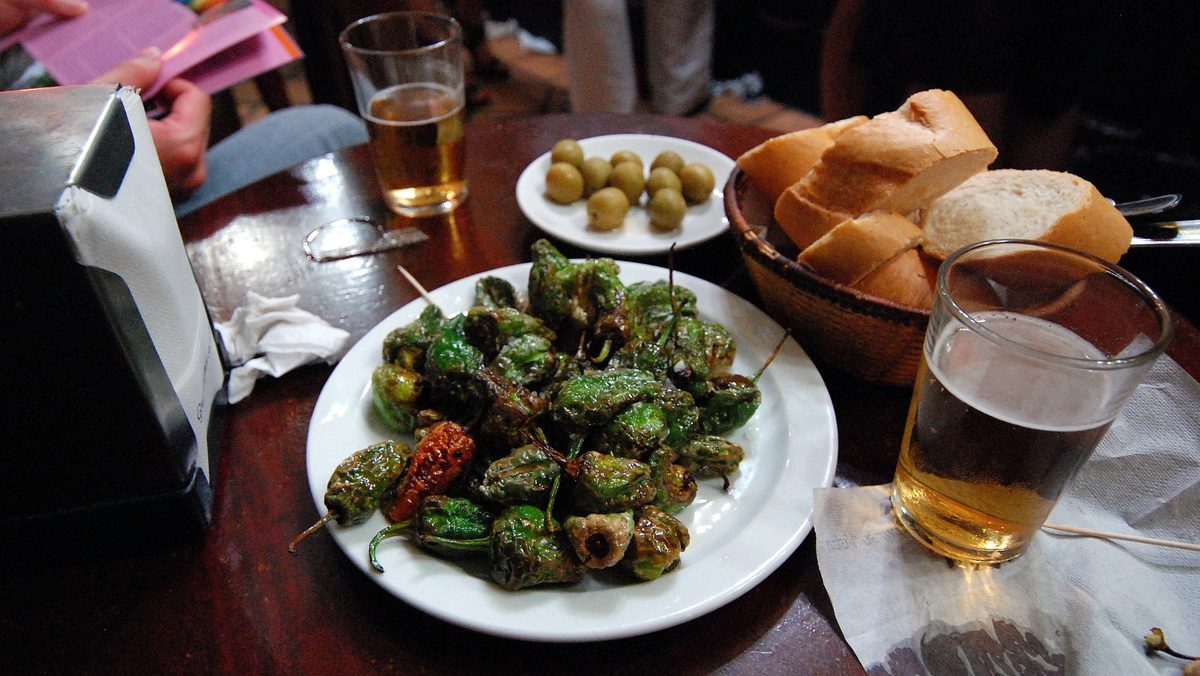
Practical rules I follow. Stand at the bar rather than sit at a table, because many places charge more for terrace service and the bar is where the atmosphere is. Order two or three things, eat them, then order again, rather than ordering everything at once. Move between bars instead of settling into one. Eat late: 14:00 for lunch, 21:30 for dinner, and anywhere serving dinner at 19:00 is serving it to tourists. Tap water is safe to drink. And be aware that one long-term resident writer flags Sunday closures as a real drawback, so if you are in town on a Sunday, check before you walk somewhere specific.
For the wider picture on how Spanish food fits into the continent, our guide to European food covers the regional distinctions worth knowing, and Italian food by region does the same job one country over.
Getting to Seville and getting around once you are there
Seville is one of the easiest cities in Spain to reach and one of the least necessary to use transport in once you have arrived. The historic centre is compact and flat, and almost everything in this guide is within a half-hour walk of the cathedral. That said, here is what things cost.
| Option | 2026 price | Journey time | Notes |
|---|---|---|---|
| Airport bus, line EA | €6 single, €8 return valid same day | About 35 minutes | Runs 365 days a year. Stops at Santa Justa and Plaza de Armas. Cash, contactless or the Tussam app. |
| Airport taxi, fixed fare | €26 weekdays 07:00–21:00; €29 nights, weekends, holidays, Semana Santa, Feria, 24 and 31 December | About 15 minutes | A published flat fare including VAT, so there is nothing to negotiate. |
| Tussam bus or tram, single | €1.40 | Varies | A proposed rise to €1.50 was not approved. Reports say fares were frozen for 2026. |
| Tourist travelcard | €5 for one day, €10 for three days | Unlimited bus and tram | Only worth it if you will use buses, which in central Seville you may not. |
| Metro line 1 | €1.35 within one zone, €1.60 one hop, €1.80 two hops | 22 stations on a single line | Fares are based on zone hops, not distance. Useful for Nervión and the outskirts. |
| Sevici bike share | About €2.59 for a day, €13.33 for a week | Unlimited 30-minute journeys | Figures come from an official Sevici post, not a live tariff page, so confirm at the terminal. |
| Bike rental, non-Sevici | Around €15 a day | All day | Better if you want a bike for a whole day rather than short hops. |
| City taxi | Meter from about €2.50 plus roughly €1 per km | Varies | The 2026 tariff rose about 5% generally, so treat this as indicative. |
| AVE from Madrid | From €22.90 on the cheapest fare, about €77 average; AVLO from €9 on one daily service | About 2 hours 33 minutes fastest | Roughly 19 trains a day each way. Book early for the low fares. |
From the airport. Seville airport, SVQ, sits about 10km northeast of the city. The EA bus at €6 is operated by Tussam and takes around 35 minutes depending on traffic, running from roughly 04:30 to midnight into the centre and 05:20 to 01:00 outbound. The taxi has a published fixed fare, €26 on weekday daytimes and €29 at night, at weekends, on public holidays and throughout Semana Santa and Feria, and takes about 15 minutes. For two or more people travelling with luggage, the taxi is straightforwardly better value than the bus.
From Madrid. The AVE takes about two and a half hours at its fastest, on roughly 19 services a day. Fares start at €22.90 on Renfe’s cheapest bucket and average around €77, with the low-cost AVLO from €9 on a single daily departure. This is one of the best rail links in Europe which makes a Madrid to Seville combination very easy. Our guides to train travel in Europe and getting around Europe go deeper on booking windows and passes, and the Europe train itinerary shows how Spanish high-speed connects onward.
Around the city. Walk. I am serious about this: Seville’s centre is consistently ranked among the most pedestrian-friendly in Spain, and the sights cluster tightly around Santa Cruz, El Arenal and Plaza Nueva. The tram, MetroCentro, is a short line through the middle at standard Tussam fares, and the single metro line is mainly useful for reaching Nervión or the outer districts. Buy the three-day travelcard only if you have worked out that you will actually use it.
When to visit Seville, and the truth about the heat
Seville has a Mediterranean climate with hot dry summers and mild, often wet winters. Annual rainfall is 500 to 600mm across about 52 rain days, concentrated between October and April. Summer is effectively rainless. December is the wettest month at around 95mm.
| Month | Average daily high | What it feels like | What to plan around |
|---|---|---|---|
| January | 16°C | Wet, mild, very quiet | Cheapest month alongside February. Bring a coat for the evenings, not the days. |
| February | Rising | Cool and often wet | Free entry everywhere on 28 February, Día de Andalucía. |
| March | Warming | The best month many years | Semana Santa lands here in 2027, from 21 to 28 March. Book far ahead. |
| April | Pleasant | Peak season, peak prices | Feria de Abril in 2027 runs 13 to 18 April. Orange blossom and full hotels. |
| May | 20–28°C typical highs | The consensus best month | Warm without being punishing. Expect crowds and spring pricing. |
| June | Hot and climbing | Shoulder into summer | June 2025 hit 45.2°C, a June record for the city. Do not assume June is safe. |
| July | 35.8°C average high | Genuinely difficult | Effectively rainless. Plan mornings and evenings only. |
| August | 35.7°C average high | The hardest month, and the cheapest | Many locals leave. Hotels discount. Sightseeing before 11:00 and after 20:00. |
| September | Cooling from the top | Excellent from mid-month | The Alcázar garden concerts run to mid-September. Free museum entry on 27 September. |
| October | Warm days, cool nights | The other consensus best month | Rain returns, around 76mm. Alcázar switches to winter hours on 1 October. |
| November | Mild | Quiet and good value | Low season begins properly. Short days, long lunches. |
| December | 16.6°C average high | Wettest month, around 95mm | Christmas and New Year push prices back up briefly. |
The consensus, which I share, is that May and October are the optimum months, with March to May and September to November the broader good windows. Spring daytime highs sit in a comfortable 20 to 28°C band. The catch is that spring is also peak season for both prices and crowds, so the reward for perfect weather is queuing for it.
How hot does Seville actually get?
Hot enough that it deserves a straight answer rather than a shrug. The average daily high is 35.8°C in July and 35.7°C in August. The official record, recognised by AEMET, is 46.6°C on 23 July 1995. You will see 47.2°C quoted from an airport station reading on 1 August 2003, but AEMET never homologated that figure, so the 1995 record stands.
The number that matters more is how often it exceeds 40°C, and here there is no honest average to give you, because the figure is rising and varies enormously. In 2025 Seville recorded 30 days at or above 40°C, the most since records began in 1951. The previous highs were 26 days in 2022, 22 in 2023 and 20 in 1992. In 1969, 1972, 1977 and 1997 the city did not reach 40°C at all. A single typical figure would average across a rising trend, which hides the point.
What this means for a summer visit, practically. Sightsee from opening until about 11:30 and again from 19:00. Spend the middle of the day indoors or in the Parque de María Luisa, which is around 100 acres of mature shade and the reason it appears twice in this guide. Book the Alcázar for the first slot of the day. Take the evening options seriously: the Setas walkway to 01:00, the garden concerts, dinner at 22:00. Carry water, and understand that the two hours after sunset are the best part of a Sevillian summer day, not a consolation prize.
If timing is your main question, our best time to visit Europe guide covers seasonal trade-offs continent-wide, and the best places to visit in Europe in summer is worth reading before committing to southern Spain in August. For the opposite end of the calendar, Europe in winter makes the case for Seville’s quiet season.
Semana Santa and the Feria de Abril: 2027 dates and what changes
These two weeks are the reason some people fall permanently in love with Seville and the reason others should deliberately avoid it. In 2027 they fall just over two weeks apart, and they could not be less alike.
Semana Santa 2027: 21 to 28 March
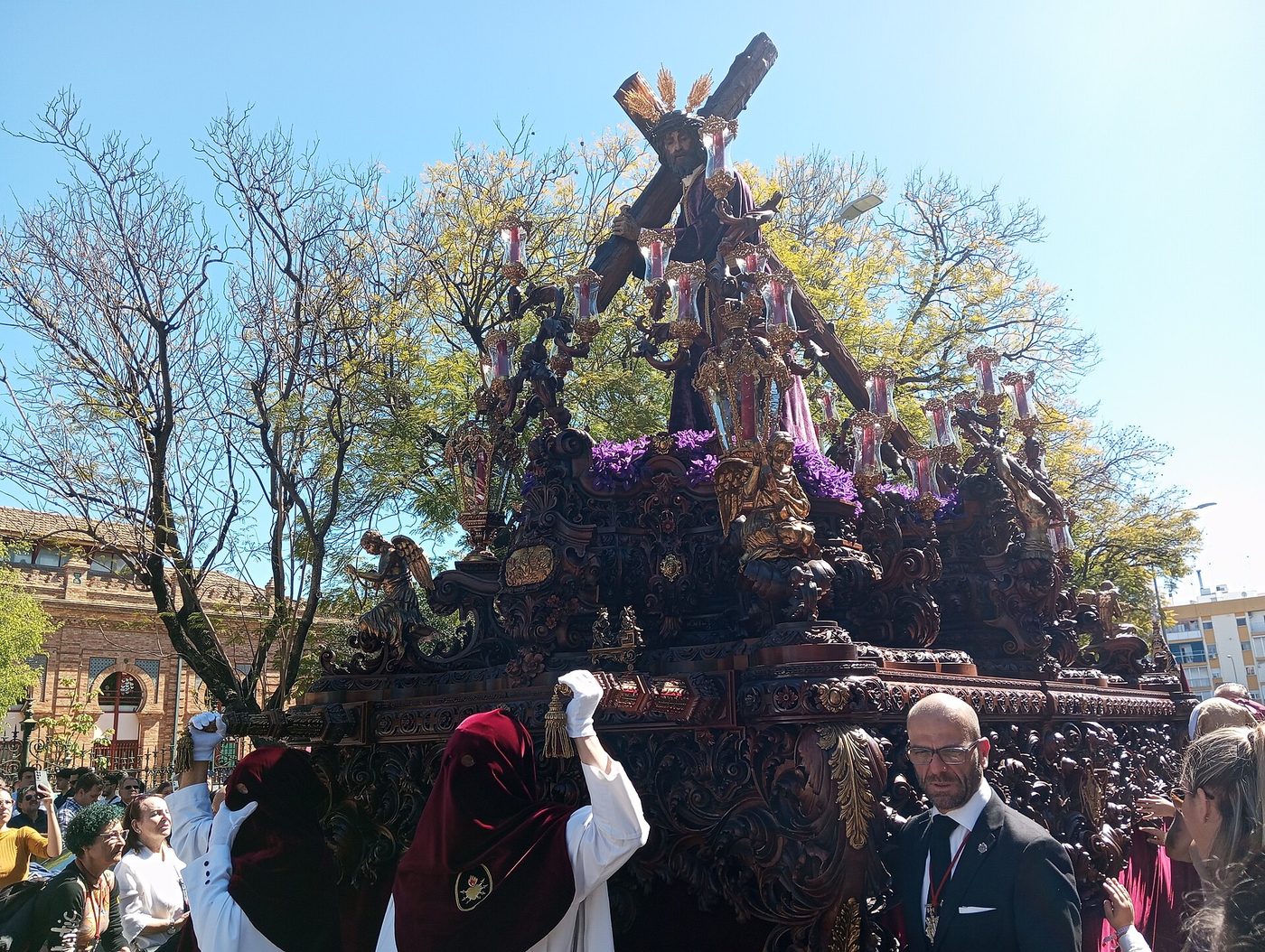
Easter Sunday 2027 falls on 28 March, which puts Palm Sunday on 21 March and Holy Week across the intervening days. Maundy Thursday is 25 March, and La Madrugá, the overnight procession from the night of 25 March into the early hours of 26 March, is the most intense night of the Sevillian year. Good Friday is 26 March.
What changes: almost everything. Brotherhoods process from their home churches to the cathedral and back along fixed routes, carrying pasos that weigh over a tonne. A dedicated mobility plan closes central streets on a rolling basis with parking restrictions across the week. In 2026 the Plaza de la Campana was fully closed from Tuesday morning until Easter Sunday. Walking becomes the only practical way to move around the centre, and even that is constrained by bullas, the dense crowd crushes that form in narrow streets when a procession passes.
The Alcázar is closed on Good Friday, which in 2027 means 26 March. Cathedral tourist visits stop during liturgical acts and its schedule may change without notice, so do not book a rooftop tour for Holy Week and assume it will run.
My advice if you are going: check the Consejo de Hermandades pages for the official routes and download the current digital guides, because routes shift. Watch from wide avenues and squares rather than narrow lanes. Position yourself before a procession arrives or after the last paso has passed, not while it is going by. And accept that you will not be sightseeing in the ordinary sense that week.
Feria de Abril 2027: 13 to 18 April
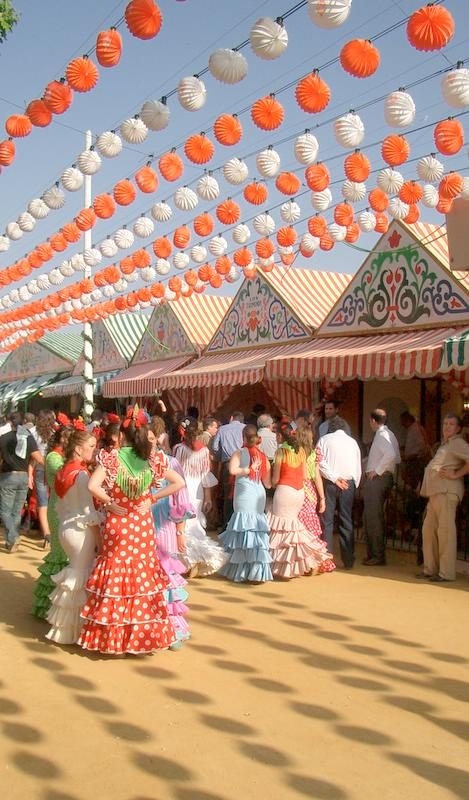
The Feria proper runs Tuesday 13 April to Sunday 18 April 2027 at the Real de la Feria on Avenida de la Prensa in Los Remedios. It opens with the alumbrado, the switching-on of the lights, at midnight on Monday 12 April, following the traditional cena del pescaíto, a dinner of fried fish.
The part worth knowing before you go is that most casetas are private. The fairground held 1,059 striped tents in 2026, and well over 90% of them belong to families, businesses and associations who admit invited guests only. Only around twenty are genuinely public, run by the council and by political and civic groups. They are perfectly good, but if you arrive imagining you will wander into any tent you like, you will have an odd afternoon. Go with someone local if you can. Go in the daytime for the horses and carriages, which are genuinely spectacular, and in the evening for the sevillanas.
Prices during both weeks. Central hotels see heavy demand and sell out early, with four-star properties during Feria reported at €200 to €500 a night. Triana and Los Remedios are the value alternatives, and Los Remedios in particular is walking distance from the fairground. Book six months out or accept what is left.
What a day in Seville costs: three budgets
| Style | Daily budget | What that covers | Where it breaks |
|---|---|---|---|
| Backpacker | About €40–65, commonly quoted at €50 | Hostel dorm at €12–20, self-catering or menu del día, mostly free sights, walking everywhere | One €15.50 Alcázar ticket and one €18 flamenco show is most of a day’s budget |
| Midrange | About €135 | A central double room, lunch out, a tapas crawl, two or three paid sights, the odd taxi | Feria and Semana Santa accommodation, which can triple the room line alone |
| Upscale | About €250 and upward | Boutique hotel, restaurant dinners, guided tours, the rooftop cathedral tour, private transfers | Nothing much. Seville is not an expensive city at this tier by European standards |
Seville sits at the affordable end of Western European city breaks. A €15 menu del día, a €1.40 bus ticket, a €1.50 art museum and a €3 tower are not prices you find in Paris or Amsterdam. If cost is driving your planning, our guides to Europe on a budget and the cheapest places to travel in Europe put those numbers in context, and backpacking Europe covers the hostel end properly.
The best day trips from Seville
Seville is the best-connected base in Andalusia, and the train station at Santa Justa puts several very good places within an hour. Times and fares below are indicative and booked-ahead prices, so they move.
| Destination | How and how long | Rough cost each way | Frequency | Why go |
|---|---|---|---|---|
| Córdoba | Train, about 40–45 minutes | From €7 booked ahead | About 24 trains a day on AVE, Avlo and Avant services | The Mezquita. The single best day trip in Andalusia and the easiest to reach. |
| Jerez de la Frontera | Train, about 47 minutes | From about €9, averaging €12 | Renfe only, Media Distancia and Alvia, several a day | Sherry bodegas and the Andalusian riding school. Underrated. |
| Itálica, Santiponce | Train, about 42 minutes to Valencina-Santiponce | About €1–5 | Hourly from Santa Justa | Roman amphitheatre and mosaics. Free for EU citizens. Half a day, not a full one. |
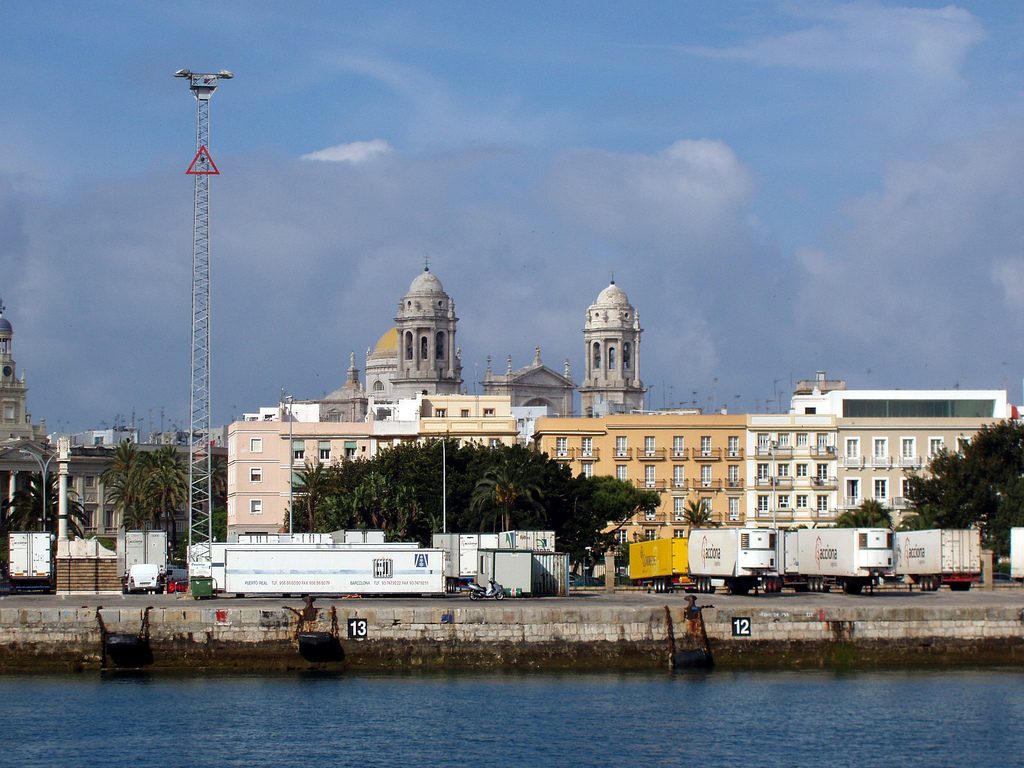
| Cádiz | Train, about 1 hour 28 minutes fastest, 1 hour 46 average | From €11 booked ahead | About 16 trains a day | Often called the oldest continuously inhabited city in Western Europe, and the sea. |
| Carmona | Bus M-124 from San Bernardo | Fare not published on any source I could confirm | Roughly hourly on weekdays 06:00–21:00, fewer at weekends | Roman necropolis and a walled hilltown. The quiet option. |
| Ronda | Bus about 2 hours 24 minutes, or train about 2 hours 42 minutes | Bus from about €15, train averaging about €25 | Around six buses a day, roughly one train | The Puente Nuevo over the Tajo gorge. Long day but a famous one. |
| Granada | Organised full-day tours are the common option | Varies by operator | Independent times and costs I could not confirm within research | The Alhambra. Better as an overnight than a day trip, in my view. |
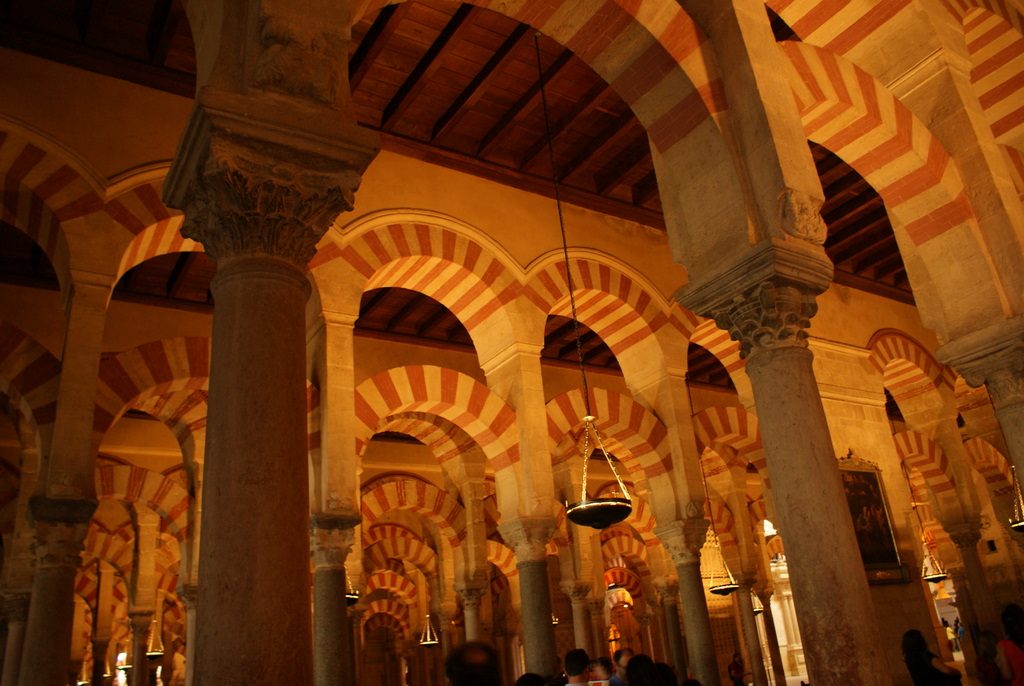
Córdoba is the one to do. Forty minutes on the train, from seven euros if you book ahead, and at the end of it the Mezquita, a mosque-cathedral of red and white double arches receding in every direction. Go early, be inside before the tour groups, and give yourself the afternoon for the Jewish quarter and the Alcázar de los Reyes Cristianos.
Cádiz is the one people forget. An hour and a half on the train and you are in a small, salt-bleached Atlantic city on a spit of land, with a cathedral facing the sea and beaches inside the city limits. It is a completely different register from Seville and a good corrective in high summer, because there is a breeze.
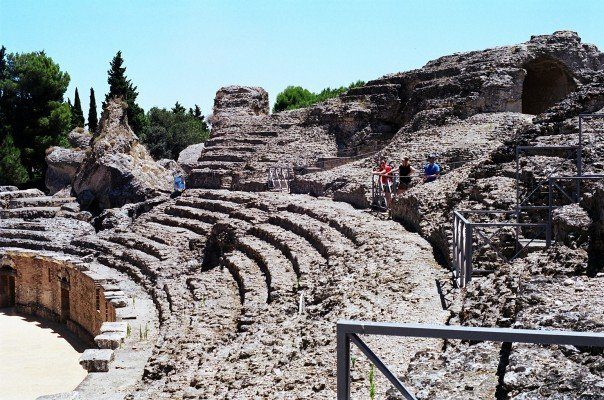
Give Itálica half a day. Founded in 206 BC, birthplace of the emperors Trajan and Hadrian, with a large amphitheatre, mosaic floors and the Hadrianic quarter laid out on a grid you can still read. It is free for EU citizens and €1.50 for everyone else, open Tuesday to Saturday 09:00 to 18:00 and Sundays and holidays 09:00 to 15:00. Get there in the morning, because there is very little shade.
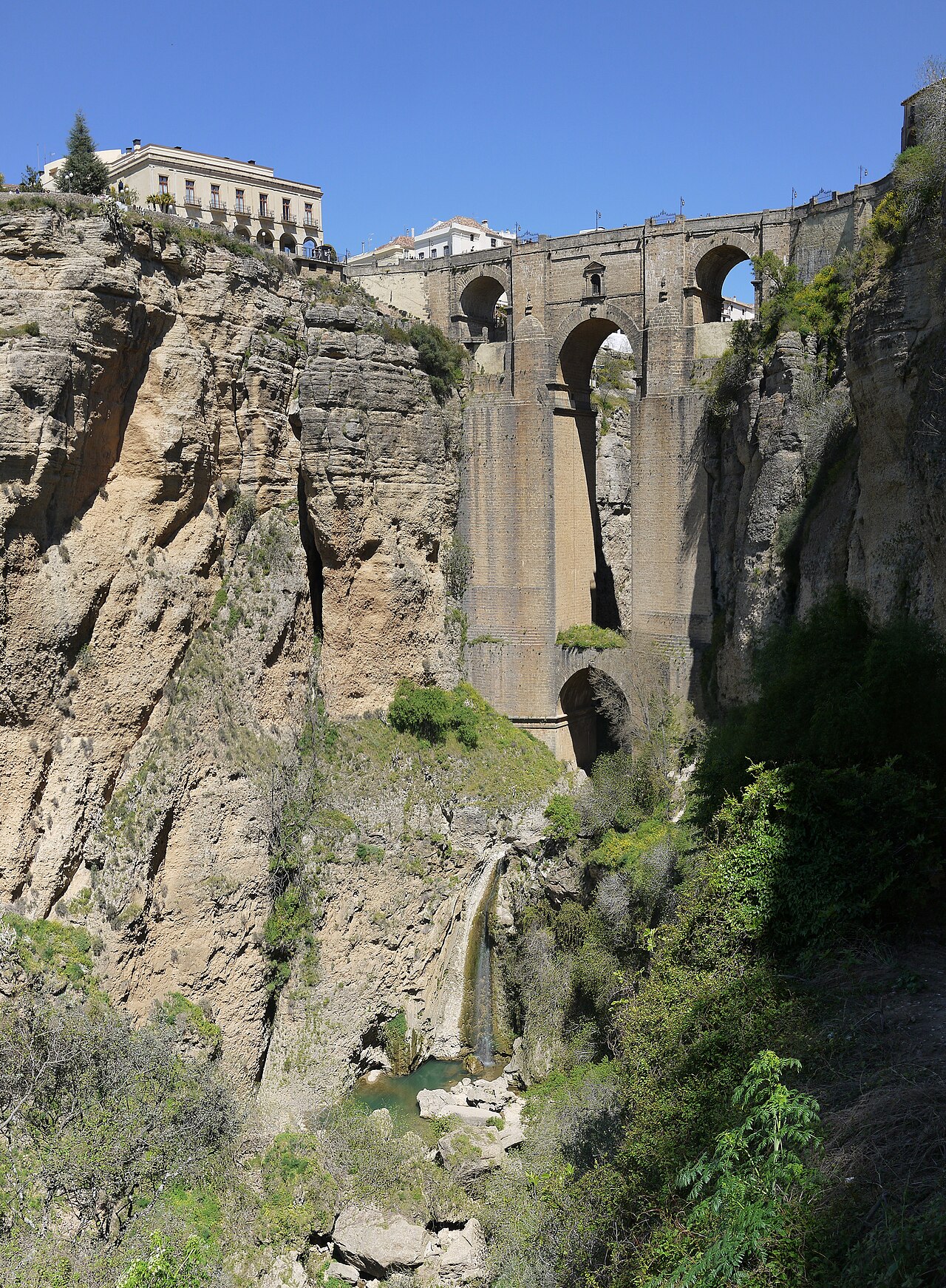
Ronda and Granada need a decision. Ronda is beautiful and it is a long day: nearly two and a half hours each way by bus, which is the fastest option. Granada I would not do as a day trip at all. The Alhambra deserves its own overnight, and the Alhambra plus five hours of travel in one day is a bad trade. Our future guides to Granada and the Alhambra and Andalusia will cover both properly.
Entry requirements, EES, ETIAS and the tourist tax question
This section changes faster than any other part of a European travel guide, so here is the position as of August 2026, checked against European Commission sources.
The Entry/Exit System is live. EES began progressive operations on 12 October 2025 and became fully operational on 10 April 2026 at all external border crossing points of the 29 European countries using it. It automatically registers non-EU nationals on each crossing for short stays, and since April it has replaced passport stamping entirely. Biometric registration is mandatory for non-EU nationals. In practice this means your first crossing after the switch takes longer than you expect while your biometrics are captured, and subsequent ones are faster.
ETIAS is not in force. The Commission originally targeted the last quarter of 2026, but the official ETIAS site has removed that target and now says a start date will be announced several months before go-live. As of mid-2026 the launch is officially unscheduled, and 2027 is the realistic expectation. The Home Affairs Commissioner has attributed part of the delay to national governments, citing staffing and infrastructure gaps alongside EES-related issues, and a transition window is expected before it becomes strictly mandatory. The fee is widely reported as €20, but I could not confirm that on an official page, so treat it as unconfirmed. Our Schengen visa and ETIAS guide tracks this in detail.
Spain itself asks nothing unusual. Standard Schengen rules apply. Your passport must have been issued within the last ten years and remain valid for at least three months beyond your departure from the Schengen Area, undamaged, with a blank page. Visa-exempt non-EU nationals get 90 days in any 180-day period, counted across the whole Schengen Area rather than Spain alone. Be prepared to show onward travel out of Schengen, and note that proof of funds is reported at around €122 per person per day, though that figure comes from a single source.
Is there a tourist tax in Seville?
No, and there is none in Andalusia either. But the debate is live right now, so this is worth watching if you are booking for 2027 or later.
In early August 2026 Mayor José Luis Sanz announced he would seek a meeting with the Junta de Andalucía’s new vice-president and tourism councillor to press the case for one. On 7 August, IU publicly demanded the tax, arguing the city risks dying of its own success. The Asociación de Hoteles de Sevilla y Provincia rejects it and warns about employment. The decisive point is jurisdictional: tourism competence sits with the Junta de Andalucía, so Seville cannot introduce the tax on its own, and a previous regional government closed the door on it. Nothing is imminent, but the direction of travel across southern Europe is clear enough.
Mistakes I see people make in Seville
Not booking the Alcázar. This is the big one and it is the mistake I made myself. It is the only sight in the city that will turn you away at the door. Book it before you book anything else, including dinner.
Eating within three streets of the cathedral. The concentration of mediocre, overpriced food in Santa Cruz’s tourist core is remarkable given how well the rest of the city eats. Walk ten minutes in any direction.
Treating the heat as a mood rather than a constraint. Arriving in August with a 10am to 6pm sightseeing plan will not work. Restructure the day around it.
Paying a marketplace price for Casa de la Memoria. The show is €18 direct from the venue. General tour marketplaces have listed it at €22 to €26, which is markup for nothing.
Buying a separate ticket for the Iglesia del Salvador. It is included with the cathedral ticket. Keep your stub.
Assuming Feria casetas are open to all. Most are private. Aim for the public ones or go with someone who has an invitation.
Doing Granada as a day trip. Five hours of travel for one palace complex, when you could give it a night and see the Albaicín at dusk.
Skipping the Archivo de Indias because it is free. A curious inversion, but I see it constantly. A UNESCO World Heritage building holding Columbus’s letters and the Treaty of Tordesillas, with no queue, is not a lesser sight because it costs nothing.
Ignoring Triana. Fifteen minutes on foot from the cathedral and most visitors never cross the bridge. It is half the reason to come.
Seville itineraries: two, three and four days
Two days, if that is all you have
Day one. Alcázar on the first available slot, booked weeks ago. Coffee afterwards in the Jardines de Murillo. Cathedral and Giralda in the early afternoon, allowing 75 minutes. Archivo de Indias if you have an hour spare, because it is free and thirty metres away. Early evening walk through Santa Cruz, then dinner well away from it. Casa de la Memoria at 21:00.
Day two. Cross to Triana early for the market. Walk the river north, cross back at the Puente de Isabel II, work up through the Alameda for lunch. Plaza de España and Parque de María Luisa in the late afternoon, boats on the canal if they are running. Setas at dusk for the view. Late dinner.
Three days, the version I recommend
Days one and two as above, more slowly. Day three adds the second tier: Casa de Pilatos in the morning, which is the best hour of the day for it, then the Museo de Bellas Artes, then lunch in La Macarena and an afternoon walking the murals and the basilica. Torre del Oro at sunset for three euros, or free if it happens to be Monday. Evening: a tapas crawl across three or four bars in Triana rather than a single restaurant.
Four days, with a day trip
As above, and give day four to Córdoba. First train out of Santa Justa, Mezquita before the groups, lunch in the Judería, back by early evening. If you have already seen Córdoba, make it Cádiz instead, or take a half day at Itálica and spend the rest of the afternoon in the Alcázar gardens, which your ticket does not cover twice but which are worth a second visit at a different hour if you are willing to pay again.
For longer routes, our 10-day Europe itinerary and two weeks in Europe guides show how a Seville stop fits a wider trip, and the forthcoming Spain itinerary covers the ten-day national loop.
Seville for different kinds of traveller
First-timers to Europe. Seville is an unusually forgiving first city: compact, cheap, safe, walkable, and with one sight of real international standing to anchor the trip. Our first-time Europe itinerary and best places for a first European trip both make the case.
Solo travellers. Excellent. Tapas culture is built around standing at a bar, which is the easiest solo dining format in Europe, and the Alameda is sociable without being a party district. Petty theft is the only real risk. See solo travel in Europe.
Families. Strong, with caveats. The Giralda’s ramps make the climb possible for small children and grandparents alike, the Plaza de España boats are a genuine highlight at €6, and Parque de María Luisa is a park rather than a monument. The caveat is summer heat, which is hard on young children. Our Europe with kids guide covers the wider logistics.
Couples. The Alcázar garden concerts at €7, dinner at 22:00, the river at dusk from the Triana side. Seville does this better than almost anywhere. See Europe honeymoon ideas.
Budget travellers. Come in August or in winter, use the free-entry table above, eat menu del día at lunch and tapas at night, and walk everywhere. Fifty euros a day is realistic.
Culture-first travellers. Three UNESCO sites, the Bellas Artes, Casa de Pilatos, the Venerables and a living flamenco tradition. Come in March or November when you can actually think.
Where to stay in Seville
Base yourself in one of four places. Santa Cruz if you want to walk out of the door into the sights and you accept the crowds and the restaurant quality. El Arenal for the same centrality with a slightly calmer evening and the river close by. Triana for my own preference: better food, real neighbourhood life, fifteen minutes on foot from the cathedral. Alameda de Hércules if nightlife matters more than proximity to monuments.
Avoid Nervión for a short trip. It is a good place to live and a dull place to visit. And if you are coming for Feria, look hard at Los Remedios, which is next to the fairground and cheaper than the centre during exactly the week when the centre is at its most expensive.
What I could not pin down
Some things I could not confirm to my own satisfaction, so here they are. Sevici’s official tariff page returns an empty page rather than prices, so the day and week rates above come from an official Sevici post rather than the live tariff table, and I could not establish the public annual pass price at all. The Carmona bus fare eluded me entirely. Independent train and bus costs to Granada I did not confirm, which is part of why I recommend it as an overnight rather than a day trip. No comprehensive list of monument closures for Semana Santa 2027 has been published yet beyond the Alcázar’s Good Friday closure. I have also left out the claim that Seville has the largest Gothic cathedral in the world, because I could not find it on the cathedral’s own pages.
On the tapa price, the range in this guide is wide because the sources conflict, not because I hedged. Anyone giving you a single confident number for what a tapa costs in Seville in 2026 is rounding off a real disagreement.
Seville travel guide FAQ
Is Seville worth visiting?
Yes. A UNESCO World Heritage listing whose three components sit within a five-minute walk of each other, Europe’s finest Mudéjar palace, a food culture built on cheap small plates, and two of the continent’s great festivals. The only serious reason to hesitate is summer heat.
How many days do you need in Seville?
Three full days is the sweet spot. Two works if you skip day trips. Four or five lets you add Córdoba or Cádiz comfortably.
What is the best time to visit Seville?
May and October. March to May and September to November are the broader good windows. August is cheapest and hardest.
Is Seville expensive?
No, by Western European standards. Budget around €50 a day backpacking, €135 midrange and €250 upscale. A fixed-price weekday lunch is about €15 and a small draught beer is usually €1.60 to €2.50.
Do I need to book Real Alcázar tickets in advance?
Yes, and this is the one booking that matters. Entry is by timed slot with hourly capacity caps. Tickets release two months ahead; aim for a month out in high season and treat two to three weeks as the minimum risk.
How far in advance do Alcázar tickets sell out?
Commonly weeks ahead in summer and around long weekends. The Patio de Banderas box office sells same-day tickets only, reportedly around fifty a day, card only, from 09:00. Do not rely on it.
How much does the Real Alcázar cost in 2026?
€15.50 general admission, €8 reduced for over-65s and for students and European Youth Card holders aged 14 to 30. The Cuarto Real Alto is a €5.50 add-on, taking the total to €21.
How much is Seville Cathedral?
€13 online or €14 at the door as of 1 January 2026, including the Giralda and free entry to the Iglesia del Salvador. Reduced is €7 or €8. Free on Sundays 16:30 to 18:00 with compulsory advance online booking.
Can you climb the Giralda?
Yes, and it is easier than most tower climbs. You walk up 35 shallow ramps, built wide enough that the tower could historically be ascended on horseback, with a final flight of 17 steps into the belfry. There is no lift.
Is Plaza de España free?
Yes. No entry charge is in force in 2026. The 2024 proposal to charge tourists three or four euros was never implemented, because the council lacks sole competence over the site and central government rejected it.
Is there a tourist tax in Seville?
No. There is no tourist tax in Seville and none in Andalusia. The debate reopened in August 2026, but tourism competence sits with the Junta de Andalucía, so the city cannot introduce one alone.
How much is a flamenco show in Seville?
A typical tablao is €20 to €25, up to about €30 at smaller venues. Casa de la Memoria is €18, La Casa del Flamenco €25, and the Museo del Baile Flamenco show €29. Dinner shows run €20 to €45. Peñas are often free.
Where is the best flamenco in Seville?
For a first visit, Casa de la Memoria on Calle Cuna: four performers, no microphones, about an hour, €18, two shows nightly at 19:30 and 21:00. Buy at the door, because resellers add several euros.
Is Christopher Columbus really buried in Seville Cathedral?
Yes, on the current evidence. The tomb in the south transept, carried by four bronze pallbearers representing Castile, León, Aragón and Navarre, was installed in 1899. In October 2024 researchers from the University of Granada confirmed through DNA analysis, matched against his son Hernando and brother Diego, that the remains are his.
Is Seville safe?
Yes. It ranks among Spain’s safer cities and violent crime against visitors is very rare. Pickpocketing and opportunistic theft are the real risks, especially distraction groups and bags left on restaurant chairs. Central areas are busy and well lit at night. Emergency number is 112.
Is Seville walkable?
Very. The historic centre is compact and flat, and it is consistently described as one of Spain’s most pedestrian-friendly cities. Most of the sights in this guide sit within a half-hour walk of the cathedral.
How do I get from Seville airport to the centre?
The EA bus costs €6 single or €8 return and takes about 35 minutes, stopping at Santa Justa and Plaza de Armas. A taxi has a fixed fare of €26 on weekday daytimes and €29 at nights, weekends, holidays, Semana Santa and Feria, and takes about 15 minutes.
How long is the train from Madrid to Seville?
About 2 hours 33 minutes on the fastest AVE services, with roughly 19 departures a day each way. Fares start at €22.90 with an average around €77, and AVLO runs from €9 on one daily service.
What are the best day trips from Seville?
Córdoba first, at 40 to 45 minutes and from €7. Then Jerez at 47 minutes, Itálica as a half day, and Cádiz at about 90 minutes. Ronda is a long day. Granada is better as an overnight.
Is Seville worth visiting in summer?
It can be, if you restructure the day. Average July and August highs are around 35.8°C and 35.7°C, and 2025 set a record with 30 days at or above 40°C. Sightsee early and late, use the evening openings, and take the €7 garden concerts seriously.
When is Semana Santa 2027 in Seville?
21 to 28 March 2027, with Easter Sunday on 28 March. Maundy Thursday is 25 March and La Madrugá runs through the night of 25 into 26 March. The Alcázar closes on Good Friday, 26 March.
When is the Feria de Abril 2027?
Tuesday 13 April to Sunday 18 April 2027, at the Real de la Feria in Los Remedios, opening with the alumbrado at midnight on Monday 12 April.
Do I need ETIAS to visit Spain?
Not yet. ETIAS is not in force as of August 2026 and its launch is officially unscheduled, with 2027 the realistic expectation. The Entry/Exit System, which replaced passport stamping, has been fully operational since 10 April 2026.
Final thoughts
Seville is a city that rewards being slightly less organised than you think you should be. Book the Alcázar, and then let the rest of it happen. The best hours I have had here were not at any of the sights in the table near the top of this page: they were a Tuesday afternoon at a bar counter in Triana, a garden concert in August that started at half past ten at night, and a walk back across the Puente de Isabel II at two in the morning with the Torre del Oro lit up on the far bank.
The practical version, in four lines. Book the Alcázar a month out. Come in May or October if you can, August if you want it cheap and are willing to change your hours. Cross the river. Eat late.
If you are building a wider Spanish or European trip around this, start with our complete Spain travel guide, then look at things to do in Barcelona and things to do in Madrid for the other two cities most people pair with Seville. The forthcoming best places to visit in Spain and best time to visit Spain guides will round out the silo, and the best cities to visit in Europe places Seville in continental company.
Hannah Brooks has spent fifteen years travelling, living and writing across Europe, from the Arctic tip of Norway to the south of Sicily. She has planned hundreds of European itineraries for readers and is Senior Europe Editor at EuropeanTourism.org.
Photo credits
Photo: H. Zell / CC BY-SA 3.0 via Wikimedia Commons
Photo: Jl FilpoC / CC BY-SA 4.0 via Wikimedia Commons
Photo: Martinvl / CC BY-SA 4.0 via Wikimedia Commons
Photo: Diego Delso / CC BY-SA 4.0 via Wikimedia Commons
Photo: Roberta Morea from Madrid / CC BY-SA 2.0 via Wikimedia Commons
Photo: Seville Tourism Bureau (CC0) via Wikimedia Commons
Photo: Zarateman (CC0) via Wikimedia Commons
Photo: Roberto Chamoso G / CC BY-SA 3.0 es via Wikimedia Commons
Photo: CarlosVdeHabsburgo / CC BY-SA 4.0 via Wikimedia Commons
Photo: Anual / CC BY-SA 4.0 via Wikimedia Commons
Photo: Suicasmo / CC BY-SA 4.0 via Wikimedia Commons
Photo: Takeaway / CC BY-SA 3.0 via Wikimedia Commons
Photo: Jose Luis Filpo Cabana / CC BY 3.0 via Wikimedia Commons
Photo: Cofrades 2020 sevilla / CC BY 4.0 via Wikimedia Commons
Photo: EdTarwinski / CC BY 2.0 via Wikimedia Commons
Photo: AdriPozuelo / CC BY-SA 3.0 es via Wikimedia Commons
Photo: Emilio J. Rodríguez Posada / CC BY-SA 3.0 via Wikimedia Commons
Photo: Keiran Thomas (CC0) via Wikimedia Commons
Photo: Christopher Down (CC BY 4.0) via Wikimedia Commons
Photo: Heinz Joerg Kretschmer / CC BY 3.0 via Wikimedia Commons
Photo: Jl FilpoC / CC BY-SA 4.0 via Wikimedia Commons