Things to Do in Madrid
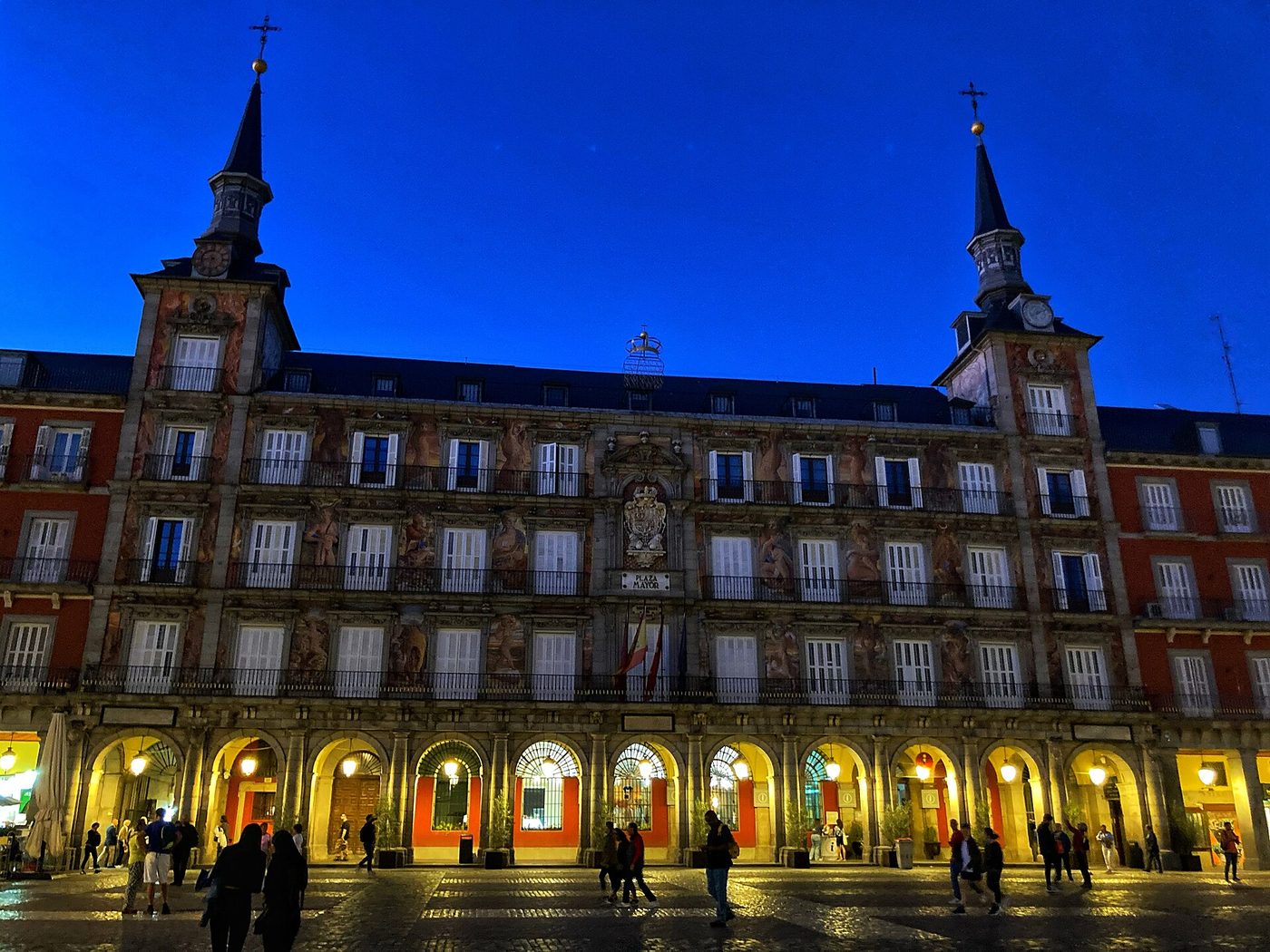
Madrid takes a while to declare itself. Barcelona hands you Gaudí and the sea within an hour of arrival. Madrid makes you work, and then it does not let you leave. If you are fitting both into one trip, our three tested 10-day routes through Spain show how the two cities connect.
The best things to do in Madrid divide neatly into three: the concentrated art of the Paseo del Arte, the royal and civic set pieces around the Palacio Real and Plaza Mayor, and the eating and drinking that is really the point of the place. Give it three full days. Four is better.
Seville gives you orange trees before you have found your hotel; Madrid gives you nothing on arrival and everything by the third night. The pleasure here is not one knockout view. It is the Prado on a wet Tuesday, a caña at a zinc counter at half past one, a park the size of a small town, and the discovery that the city eats dinner at an hour you would call the middle of the night. It is why Madrid keeps climbing our list of the best cities to visit in Europe.
I have been coming to Madrid for fifteen years. This guide leads with what has changed in the city this year, then gives you every price, every free window and every closure I could source in August 2026. Where a figure would not confirm, you will see “check current price” instead of a guess.
What has changed in Madrid for 2026
Five things, and between them they will reshape a first-time itinerary.
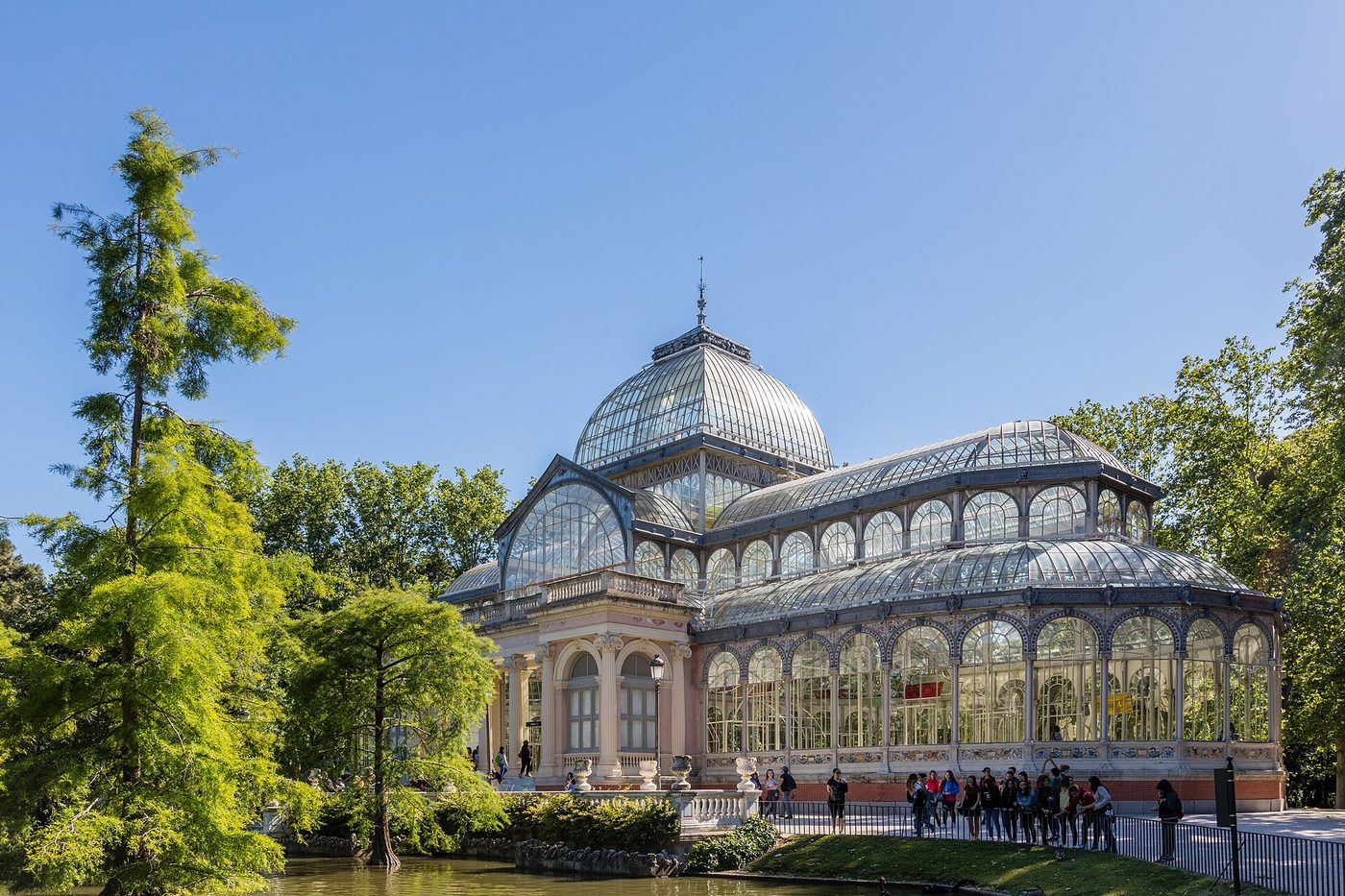
The Palacio de Cristal is shut. Retiro’s glasshouse, the single most photographed structure in the park, closed for restoration on 13 January 2026 and is not due to reopen until 1 January 2027. You can still walk to it and look at it through the hoarding. The Palacio de Velázquez, its stone sibling a few hundred metres away, reopened in late June and is showing again.
The Museo Sorolla is closed too. The painter’s house-studio in Chamberí is shut for renovation and expansion, and as of August 2026 there is no published reopening date. This is the one I mind most, because it was the best small museum in the city.
Metro Line 10 does not reach the Bernabéu. The stretch between Nuevos Ministerios and Cuzco is suspended while the Santiago Bernabéu station is rebuilt, with a free EMT replacement bus in its place, and the works are scheduled to run to the end of 2026. Lines 6, 7 and 9B also had sections closed through the summer. Check the Metro’s live status the morning you travel, not the night before.
The Royal Palace has two new rooms. The Reliquary and Ante-Reliquary of the Royal Chapel opened to visitors on 17 March 2026 after a full restoration, joining the Sacristy added in 2025. The route is meaningfully longer than it was two years ago.
ETIAS is not live, and you do not need it. The EU dropped its late-2026 target in July, so the travel authorisation now points at 2027. What is live is the Entry/Exit System, fully operational at Schengen external borders since 10 April 2026, which fingerprints and photographs non-EU arrivals. It has meant longer queues at Barajas through this summer. Build in the extra time, and read our guide to the Schengen visa and ETIAS rules before you fly.
One more, in the good-news column: Madrid hosts the Spanish Grand Prix from 11 to 13 September 2026, on a new part-street circuit near IFEMA. It is the region’s first Formula One race in 45 years, since Jarama in 1981, and the first ever held inside the city itself; Barcelona keeps a second Spanish round in June. If you are travelling in mid-September, book early, because the city will be full.
All 50 things to do in Madrid at a glance
The whole set in one table: what it is, what it costs, and the free window if there is one. Everything in it is explained properly further down, and the closures are in there too.
| What | Where | What it actually is | Cost | Free window | Time to allow |
|---|---|---|---|---|---|
| Museo del Prado | Paseo del Prado | Spain’s great picture gallery, around 35,000 works | €15 | Last two hours: Mon–Sat 18:00–20:00, Sun 17:00–19:00, ticket office only | 2–3 hrs |
| Museo Reina Sofía | Atocha | 20th-century Spanish art, with Guernica in Room 206 | €12 | Last two hours Mon and Wed–Sat 19:00–21:00, plus a Sunday afternoon slot | 2 hrs |
| Museo Thyssen-Bornemisza | Paseo del Prado | The private collection that fills the gaps the other two leave | around €13 | Mondays 12:00–16:00, permanent collection, tickets at the door | 1.5–2 hrs |
| Paseo del Arte pass | Paseo del Prado | One visit to each of the big three, valid a year | €32.80 | n/a | half a day plus |
| Royal Palace | Ópera | More than 3,000 rooms, the largest royal palace in Western Europe | €18 | Mon–Thu 17:00–19:00 summer, 16:00–18:00 winter, EU citizens, walk-up only | 2 hrs |
| Changing of the Guard | Ópera | Wednesdays and Saturdays, 11:00–14:00 | Free | Always free | 20 min |
| Solemn Changing of the Guard | Ópera | First Wednesday of the month, around 400 people and 100 horses | Free | Always free | 50 min |
| Almudena Cathedral | Ópera | Only finished in the 1990s, and it shows | Free, €1 donation asked | Always | 30 min |
| Almudena museum and dome | Ópera | The panoramic climb, bought separately | €7 | n/a | 45 min |
| Royal Collections Gallery | Ópera | Patrimonio Nacional’s newest museum, off the Mirador de la Cornisa | Check current price | n/a | 1.5 hrs |
| Mirador de la Cornisa | Ópera | Free terrace between the palace and the cathedral, daily 12:00–22:00 | Free | Always | 15 min |
| Teatro Real tour | Ópera | Guided tour of the opera house. No tours in August | €10, €8 reduced | n/a | 1 hr 15 |
| Campo del Moro gardens | Príncipe Pío | The palace’s formal gardens, entered from Cuesta de San Vicente | Free | Always | 45 min |
| Retiro Park | Retiro | Over 125 hectares and 15,000 trees, UNESCO-listed since 2021 | Free | Always | 1–3 hrs |
| Retiro rowing boats | Retiro | Forty-five minutes on the Estanque, up to four people | €6 weekday, €8 weekend | n/a | 45 min |
| Palacio de Cristal | Retiro | Closed for restoration, 13 January 2026 to 1 January 2027 | Closed | n/a | n/a |
| Real Jardín Botánico | Paseo del Prado | The botanical garden right beside the Prado | around €4 | Tuesday mornings 10:00–13:00 | 1 hr |
| Temple of Debod | Parque del Oeste | A 2nd-century BC Egyptian temple, given to Spain by Egypt | Free | Always, but book the free timed slot | 30 min |
| Plaza Mayor | Centro | Felipe III’s arcaded square, nine entrances, one bad restaurant per arch | Free | Always | 30 min |
| Puerta del Sol | Centro | Kilometre zero, and the bear-and-strawberry-tree statue | Free | Always | 15 min |
| Gran Vía | Centro | 1.3 km of early-20th-century commercial swagger | Free | Always | 45 min |
| Plaza de Cibeles | Cibeles | The fountain, the city hall, and the Mirador Madrid deck on top | Free, €4 for the deck | Square always | 30 min |
| Puerta de Alcalá | Retiro | Sabatini’s neoclassical gate, finished 1778 | Free | Always | 15 min |
| Barrio de las Letras | Centro | Cervantes’s quarter, now the city’s best-looking bar-crawl grid | Free | Always | 1–2 hrs |
| Mercado de San Miguel | Centro | Iron-and-glass tapas hall, open to midnight, later at weekends | Free entry, tapas priced per piece | Always | 1 hr |
| Mercado de la Cebada | La Latina | A working neighbourhood market, closed Sundays | Free entry | Mon–Sat only | 30 min |
| Mercado de San Antón | Chueca | Three floors that finish in a rooftop bar | Free entry | Shops Mon–Sat, upper floors daily | 1 hr |
| Chocolatería San Ginés | Centro | Churros con chocolate since 1894, main room open around the clock | around €3.70 | n/a | 30 min |
| Sobrino de Botín | Centro | Guinness-recognised oldest operating restaurant, trading since 1725 | €32 for the cochinillo | n/a | 2 hrs |
| El Rastro | La Latina | More than 1,000 vendors, Sundays and holidays 09:00–15:00 | Free | Always | 2 hrs |
| San Francisco el Grande | La Latina | Zurbarán and Goya under an enormous dome | €6, €3.50 reduced | Free on Thursdays | 45 min |
| Círculo de Bellas Artes rooftop | Centro | The classic Gran Vía rooftop, and still the best-value one | around €5–7 | n/a | 45 min |
| Riu Plaza España 360° | Plaza de España | The highest of the paid rooftops, with a glass-floor panel | €5 weekday daytime, €10 otherwise | n/a | 1 hr |
| Faro de Moncloa | Moncloa | An observation deck 92 metres up, away from the crowds | Check current price | n/a | 30 min |
| Santiago Bernabéu tour | Chamartín | Real Madrid’s museum and stadium tour, mid-rebuild | from €35 online | n/a | 2 hrs |
| Cívitas Metropolitano tour | San Blas | Atlético’s stadium, quieter and cheaper | around €15–30 | n/a | 1.5 hrs |
| Museo Arqueológico Nacional | Serrano | Spain from prehistory to the Bourbons, and the Lady of Elche | Check current price | n/a | 2 hrs |
| Muralla Árabe | Ópera | The surviving stretch of Madrid’s 9th-century Muslim wall | Free | Always | 10 min |
| Museo Cerralbo | Plaza de España | A 19th-century aristocratic house left exactly as it was | €3 | Thu 17:00–20:00, Sun 10:00–15:00 | 1 hr |
| Museo Lázaro Galdiano | Salamanca | Another private collection, in a Salamanca mansion | €6, €3 students | 15:30–16:30 Tue–Sat, 14:00–15:00 Sun | 1.5 hrs |
| Museo Sorolla | Chamberí | Closed for expansion, with no reopening date published | Closed | n/a | n/a |
| CaixaForum vertical garden | Paseo del Prado | Patrick Blanc’s living wall, around 24 metres of it | Free from the square | Always | 15 min |
| Matadero Madrid | Arganzuela | A contemporary arts complex in the old slaughterhouse | Free to wander | Always | 1–2 hrs |
| Madrid Río | Arganzuela | Around 10 km of riverside park where the ring road used to be | Free | Always | 1–2 hrs |
| Casa de Campo | West Madrid | 1,722 hectares, Madrid’s largest park by a distance | Free | Always | 2 hrs plus |
| Corral de la Morería | La Latina | The world’s best-known tablao, open since 1956 | show from around €55 | n/a | 1.5–2 hrs |
| Cardamomo | Barrio de las Letras | Four shows a day, one drink included | €39–49 | n/a | 1 hr |
| Toledo day trip | 34 min by train | A walled hill city that was Spain’s capital before Madrid | train from around €7 each way | n/a | full day |
| Segovia day trip | 25–31 min by train | A Roman aqueduct and a castle that looks invented | train from around €5 each way | n/a | full day |
| El Escorial day trip | 39 min to 1 hr by Cercanías | Philip II’s monastery-palace in the Sierra foothills | train from around €4 each way | n/a | full day |
The Paseo del Arte: three museums, and how to do them properly
Three of the best art museums in Europe sit within a fifteen-minute walk of each other along one boulevard, and the boulevard itself, together with Retiro Park at the top of it, was inscribed by UNESCO in July 2021 as the “Paseo del Prado and Buen Retiro, a landscape of Arts and Sciences”. It was the first World Heritage listing inside the city of Madrid, and it earns the city a place among the most beautiful places in Europe.
The tempting move is to buy the combined pass and do all three in a day. Do not. Two museums in a day is the realistic limit for most people, and one museum done slowly beats three done at a trot. My preference: Prado on a morning when you are fresh, Reina Sofía on a separate afternoon, Thyssen only if you have a third slot or it is raining.
Museo del Prado
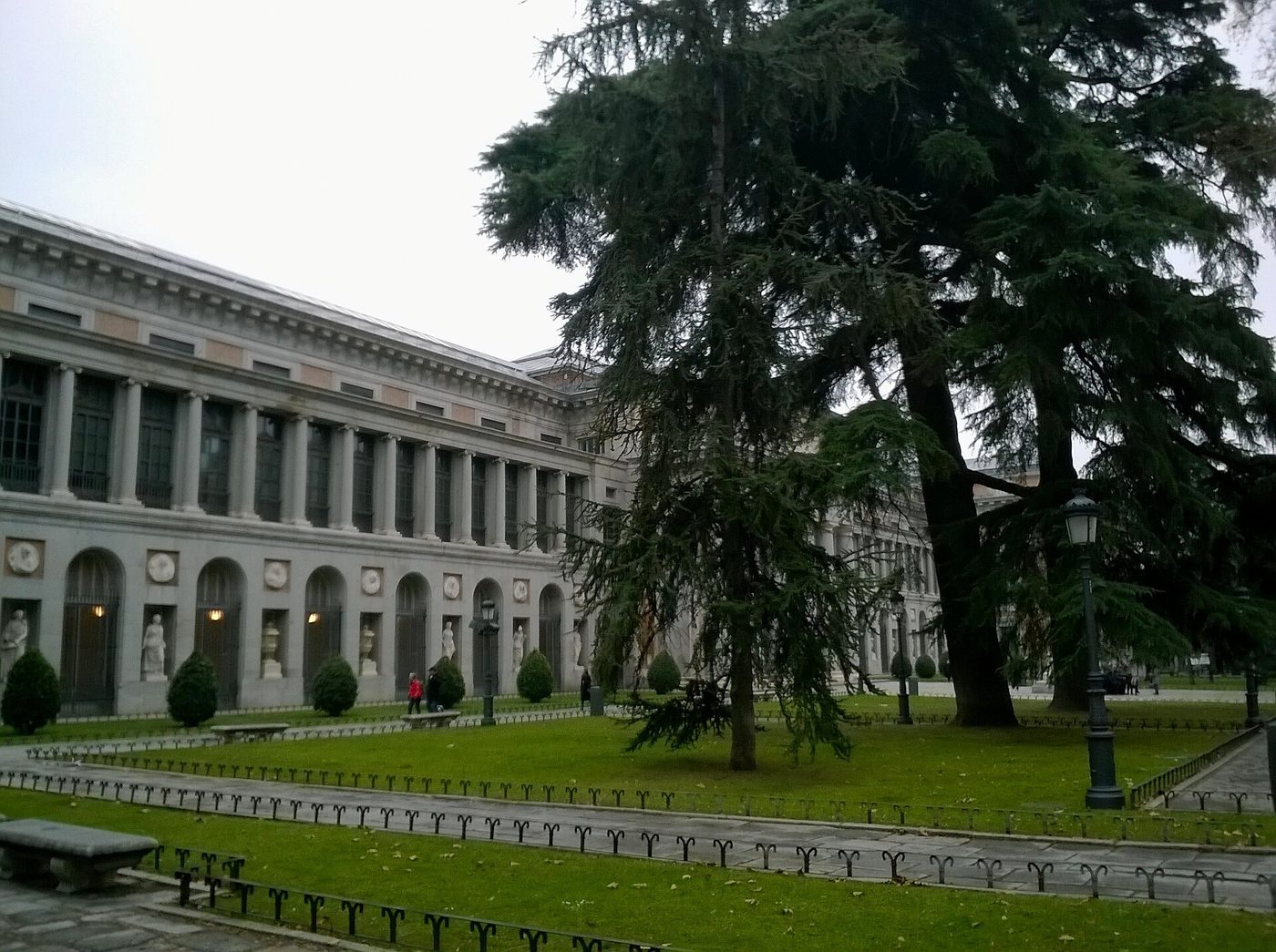
Around 35,000 works, of which the ones you came for are Velázquez’s Las Meninas, Goya’s Black Paintings and Bosch’s Garden of Earthly Delights. General admission is €15, reduced €7.50 for over-65s and holders of a youth or large-family card, and the ticket covers the permanent collection and the temporary exhibitions together. Add €5 for the audio guide, €10 for a guided visit, or €24 for admission plus the official Prado guidebook, which is better value than it sounds if you like reading about paintings afterwards.
You need a timed pass, chosen when you buy. Opening is Monday to Saturday 10:00 to 20:00 and Sunday and public holidays 10:00 to 19:00, with last admission thirty minutes before closing and the galleries cleared ten minutes before. It shuts entirely on 1 January, 1 May and 25 December, and runs a short 10:00 to 14:00 day on 6 January and on Christmas Eve and New Year’s Eve.
The free window, and its catch. The last two hours before closing are free: Monday to Saturday 18:00 to 20:00, Sunday and holidays 17:00 to 19:00. It also gets you 50% off the temporary exhibitions. The catch is that those tickets are issued at the ticket office only, not online, and they are capped by capacity. In practice that means a queue on the Goya side that starts forming well before the window opens. Two hours is enough for the greatest hits and nothing else. If the Prado is the reason you came to Madrid, pay the €15 and go in the morning.
Free all the time, no queue needed: under-18s, students aged 18 to 25, visitors with a disability of 33% or more, the legally unemployed, active teaching staff, members of large families, and official guides, journalists and ICOM members.
Through 2026 the museum is reorganising its 18th-century and Goya rooms. It stays open throughout, but the hang may not match the guidebook you bought last year.
Museo Reina Sofía
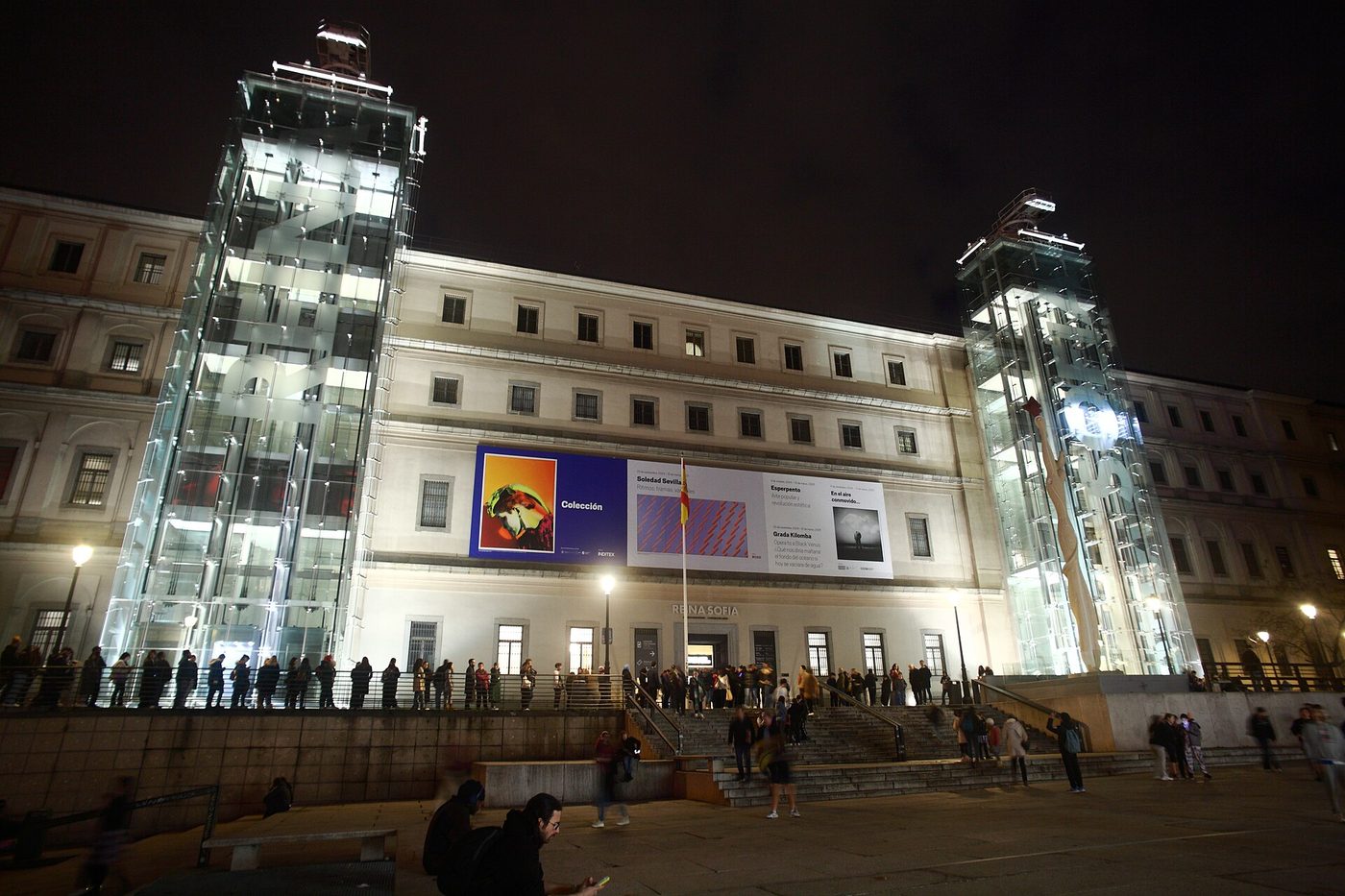
The Reina Sofía holds around 25,000 pieces of 20th-century and contemporary art, and one painting that most visitors come for. Guernica hangs on floor 2 of the Sabatini building, in room 206 at the time of writing, and it is the rare famous work that is better in person: the scale of it, and the preparatory sketches hung alongside, change what you thought you knew from reproductions. It commemorates the destruction of the Basque town of Gernika in 1937 by German bombers flying for Franco.
Admission is around €12. It is closed on Tuesdays, which catches people out more than any other scheduling fact in this article, and otherwise opens Monday and Wednesday to Saturday 10:00 to 21:00, with a short Sunday of 10:00 to 14:30. The free window is the last two hours before closing, so 19:00 to 21:00 on the long days, plus a slot on Sunday; sources give slightly different Saturday and Sunday times, so check the museum’s own page for the week you are there. You still need to claim a ticket, and you can do that online rather than queueing, which makes this the easiest free museum window in the city to use. There are also fully free days on 18 April, 18 and 23 May, 12 October and 6 December.
Two practical notes. There are two entrances, the Sabatini building and the Nouvel building on Ronda de Atocha; if you already hold a ticket, the Nouvel side is usually quicker. And the museum also programmes the two exhibition halls inside Retiro Park, so if you are heading up there anyway, check what is on at the Palacio de Velázquez.
Museo Thyssen-Bornemisza
The Thyssen is the collection that fills the gaps. Where the Prado is Spanish and the Reina Sofía is modern, the Thyssen runs chronologically from early Italians through Dutch portraiture to Impressionism and American realism, and it does it in a building small enough to finish without exhaustion. Admission is around €13 for the permanent and temporary collections together.
The free slot is Mondays 12:00 to 16:00, permanent collection only, tickets at the door. Note that Monday is also the museum’s short day: it opens only for those four hours, then closes. Tuesday to Sunday it runs 10:00 to 19:00, extended on Saturdays under the summer timetable. Under-18s, the unemployed, visitors with a disability of 33% or more and active teachers go free.
The museum’s own website did not render for me when I checked in August 2026, so treat these figures as good but confirm at the door if the exact price matters to your budget.
Is the Paseo del Arte pass worth it?
The combined pass is €32.80 and gives one visit to each of the three, valid for a year from purchase. Bought separately the same three tickets come to roughly €40, so you save around €7.20, or about 18%. It includes selected temporary exhibitions at the Prado and Reina Sofía.
Worth it if you are certain you will do all three and you want to walk in without paying at each door. Not worth it if you are the kind of traveller who might swap the third museum for a long lunch, and definitely not worth it if you intend to use the free windows, which cost nothing at all. The year-long validity is the underrated part: buy it on one trip, finish it on the next.
The cheaper pass: “5 Museums. Another Madrid”
Not the same product, and worth knowing about. It costs €12 and gives ten days of free entry to the museums of Decorative Arts, Cerralbo, Romanticism, Sorolla and Lázaro Galdiano. With the Sorolla closed you are down to four, but if small house-museums are your thing it is the best-value ticket in the city.
Royal Madrid: the palace, the guard and the cathedral
Palacio Real
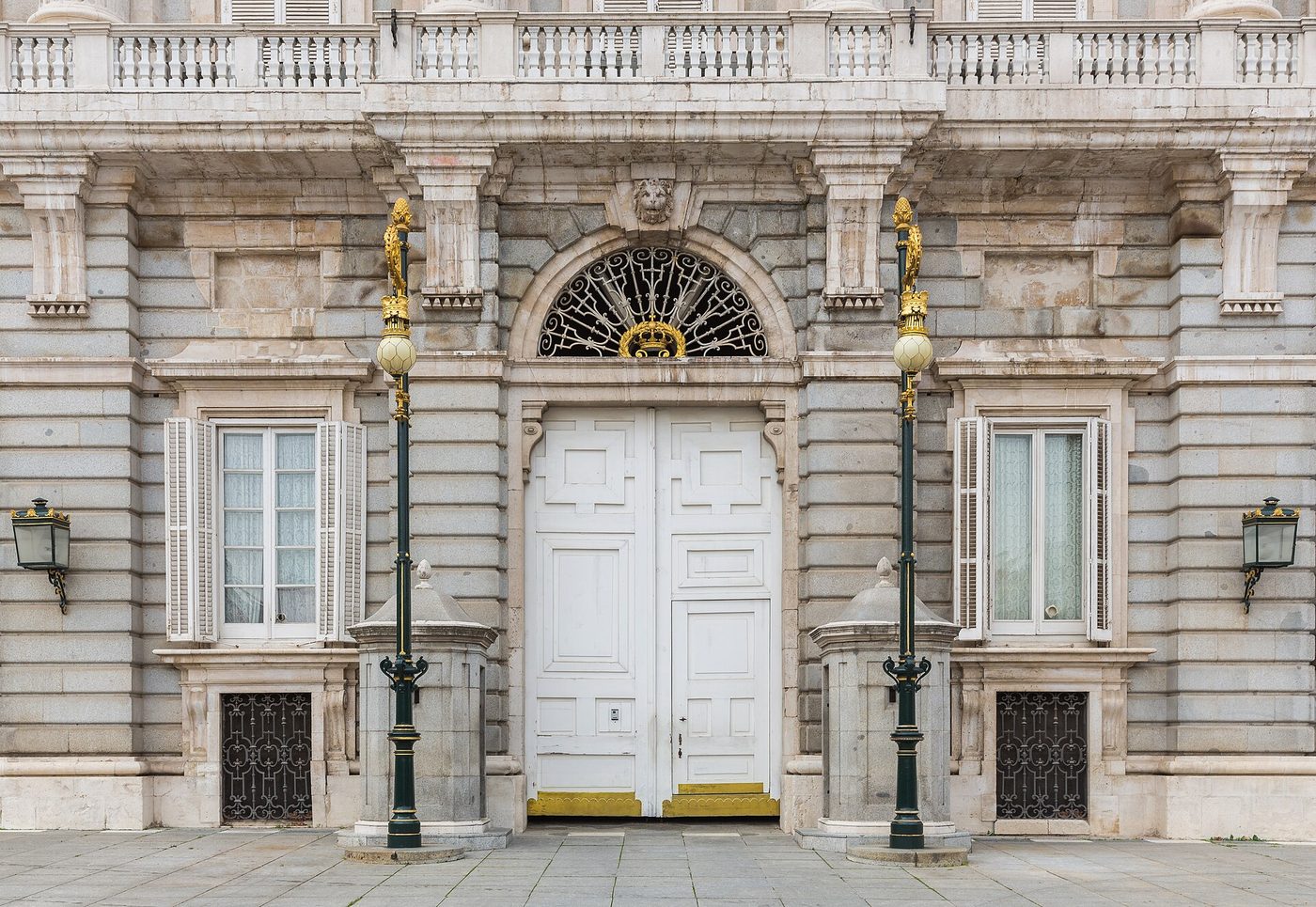
The old Alcázar burned down in 1734. Philip V, a Bourbon with French ideas about how a monarchy should present itself, ordered something considerably grander in its place. The first stone went down in 1738 and the building took seventeen years; Charles III was the first monarch actually to live in it. Filippo Juvarra drew the initial plans, his pupil Juan Bautista Sachetti finished them, and Bernini’s rejected sketches for the Louvre are somewhere in the DNA. The result has more than 3,000 rooms and is the largest royal palace in Western Europe, which is the sort of statistic that sounds inflated until you are forty minutes into the route and still going.
General admission is €18, reduced €9 for ages 5 to 16, students and over-65s. That figure has risen from the €14 that half the internet still quotes, so budget for the higher number. Summer hours, April to September, are Monday to Saturday 10:00 to 19:00 and Sunday and holidays 10:00 to 16:00; in winter the weekday close moves back to 18:00. Last admission is an hour before closing, and you will want that hour.
Because of renovation work, the current way in is through the archway on Calle Bailén at the corner of Calle Requena, which is not where the obvious gates are. It is closed all day on 1 and 6 January, 1 May and 25 December, opens only from 17:30 on 12 October, and shuts at 15:00 on 24 and 31 December.
The free window has conditions. Monday to Thursday, 17:00 to 19:00 in summer and 16:00 to 18:00 in winter, entry is free for citizens and residents of the EU, holders of EU work permits and citizens of Ibero-American countries. You need to show proof, and it is walk-up only, so British, American, Canadian and Australian passport holders should not plan around it. If you do qualify, arrive before the window opens; two hours is thin for this route.
Three things inside worth knowing about. The Royal Chapel holds a collection of Stradivari string instruments, which is as remarkable as it sounds and very easy to walk past. The Reliquary and Ante-Reliquary opened in March 2026 and are new even to repeat visitors. And the Real Cocina, the royal kitchens, are not on the standard route: they cost extra at the entrance, and they are the oldest well-preserved kitchens of any European royal residence, open daily 10:15 to 17:00 in winter and to 19:00 in summer. If you like the domestic underside of grand houses more than the throne rooms, pay the supplement.
Changing of the Guard
Free, twice a week, and better than its reputation suggests. Four Royal Guard members are relieved at the Puerta del Príncipe gate, two on foot and two mounted, every Wednesday and Saturday between 11:00 and 14:00. There is no single set-piece moment; the mounted soldiers pass the palace front roughly every ten minutes across the three hours, so you can turn up at any point in the window and see something. From 1 July to 31 August it shifts earlier, to 10:00 to 12:00, because of the heat. It does not run on 25 December or 1 January, and gets cancelled for official events and bad weather.
The one to plan around is the Solemn Changing of the Guard, on the first Wednesday of the month at around midday, running about fifty minutes. Some 400 people and 100 horses in uniforms modelled on those of Alfonso XII and XIII, entering through the Puerta de Santiago from Calle de Bailén into the Plaza de la Armería. It is free, and it is one of the great free spectacles in Europe. It does not happen in January, August or September. As of August 2026 the next one is 7 October.
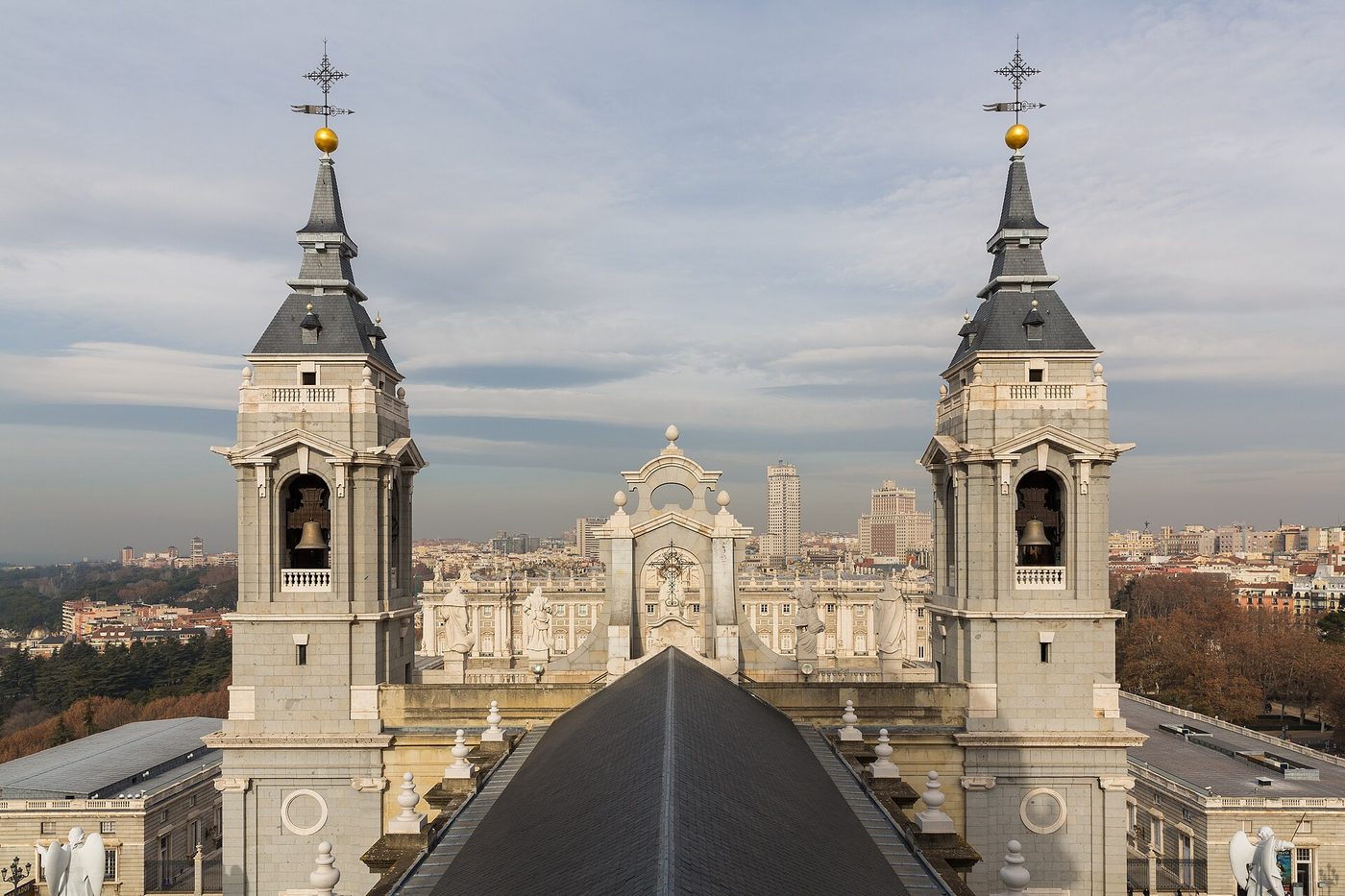
Almudena Cathedral, and the free terrace next door
Madrid’s cathedral was only completed in the 1990s, which is why it feels less like a medieval survivor and more like a very confident 20th-century interpretation of one: neo-Gothic bones, a startlingly bright modern ceiling, chapels by living artists. Entry is free with a €1 donation requested. The museum and the panoramic dome climb are a separate €7, and the view from up there is the best cheap one in this part of town.
Between the cathedral and the palace is the Mirador de la Cornisa, a free public terrace open daily 12:00 to 22:00, looking west over the Casa de Campo. The entrance to the Royal Collections Gallery, Patrimonio Nacional’s newest museum, is off it. I could not find a current published price for the gallery, so check at the door.
Downhill from the palace, the Campo del Moro gardens are free and almost always empty of tourists, because the entrance is on Cuesta de San Vicente rather than anywhere near the ticket queue. April to September they open 10:00 to 20:00, October to March 10:00 to 18:00.
Teatro Real
The opera house on Plaza de Oriente runs guided tours daily at 10:00, 12:00 and 13:30, about an hour and a quarter, for €10, or €8 for over-65s, students up to 26 and large families; under-7s go free. There is a self-paced audio option covering the halls and the Royal Box. No tours run in August. If opera is your thing, a cheap upper-tier seat to an actual performance is a better evening than any tour, and cheaper than a flamenco show.
Getting to the royal quarter
Everything in this section sits within ten minutes of two stations: Ópera on lines 2, 5 and R, or Plaza de España on 2, 3 and 10. Walking down from Plaza de España past the Temple of Debod and approaching the palace from the Campo del Moro side is the better arrival, if you have the legs for the climb back.
The squares, the streets and the free walk that ties them together
You can string most of central Madrid’s set pieces into one loop of about three hours, and it costs nothing. Start at Sol, finish at Debod for sunset.
Puerta del Sol
Not beautiful, and that is fine. Sol is the functional centre of Spain: set into the pavement is the plaque marking kilometre zero, the point from which the country’s road distances are measured. The Casa de Correos behind it is the seat of the Community of Madrid’s government, and its clock is the one the whole country watches on New Year’s Eve. Look for El Oso y el Madroño, the bear and the strawberry tree, four metres tall and twenty tonnes, which is Madrid’s civic symbol and the standard meeting point. Fifteen minutes, then move on. Keep your bag in front of you here.
Plaza Mayor
Built under Felipe III in the early 17th century, and his equestrian statue in the middle was designed by Giambologna and finished by Pietro Tacca in 1616. Nine entrances, of which the Arco de Cuchilleros, rebuilt by Juan de Villanueva after the fire of 1790, is the one to use: it drops you down a stone stair into the tapas streets of La Latina.
The square is magnificent and the restaurants ringing it are not. Every arch has a terrace with a laminated menu in six languages charging double for worse food. Buy a beer if you want to sit in the sun, and eat literally one street away.
Gran Vía
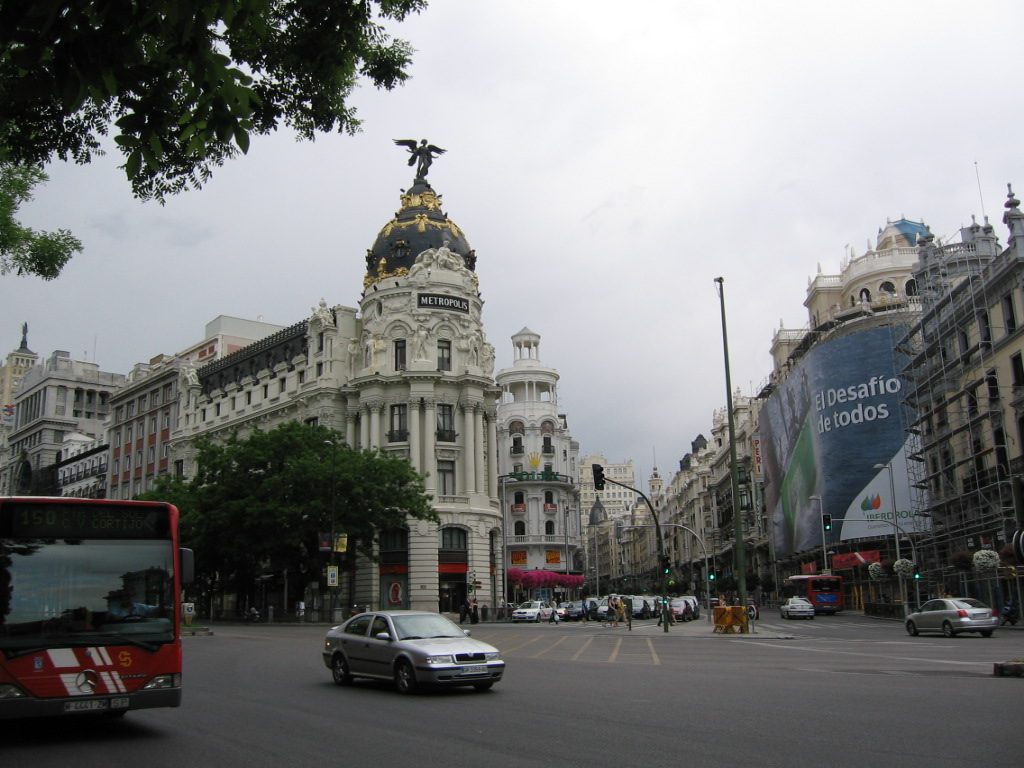
Madrid’s great commercial boulevard runs 1.3 km from Calle de Alcalá to Plaza de España, cut through the old city in the early 20th century and home to Spain’s first department stores. It only officially took the name Gran Vía in 1981, after a century of changing titles; during the Civil War, when shells landed on it regularly, Madrileños called it the Avenue of Mortars. Walk it at dusk when the signage comes on. The building you will photograph without knowing its name is the Edificio Metrópolis, at the Alcalá corner, black dome and gilt detail and a winged Victory on top.
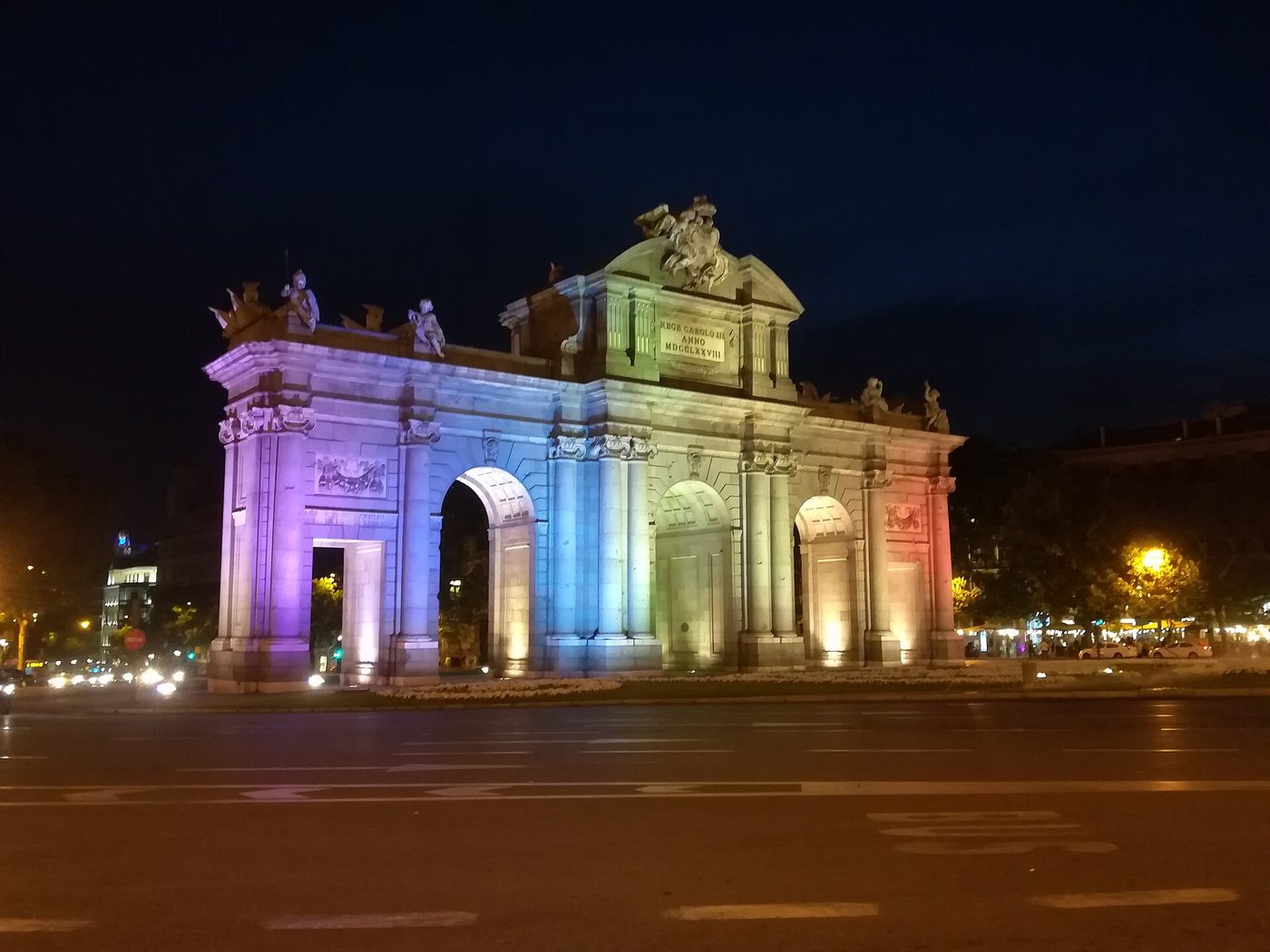
Plaza de Cibeles and the Puerta de Alcalá
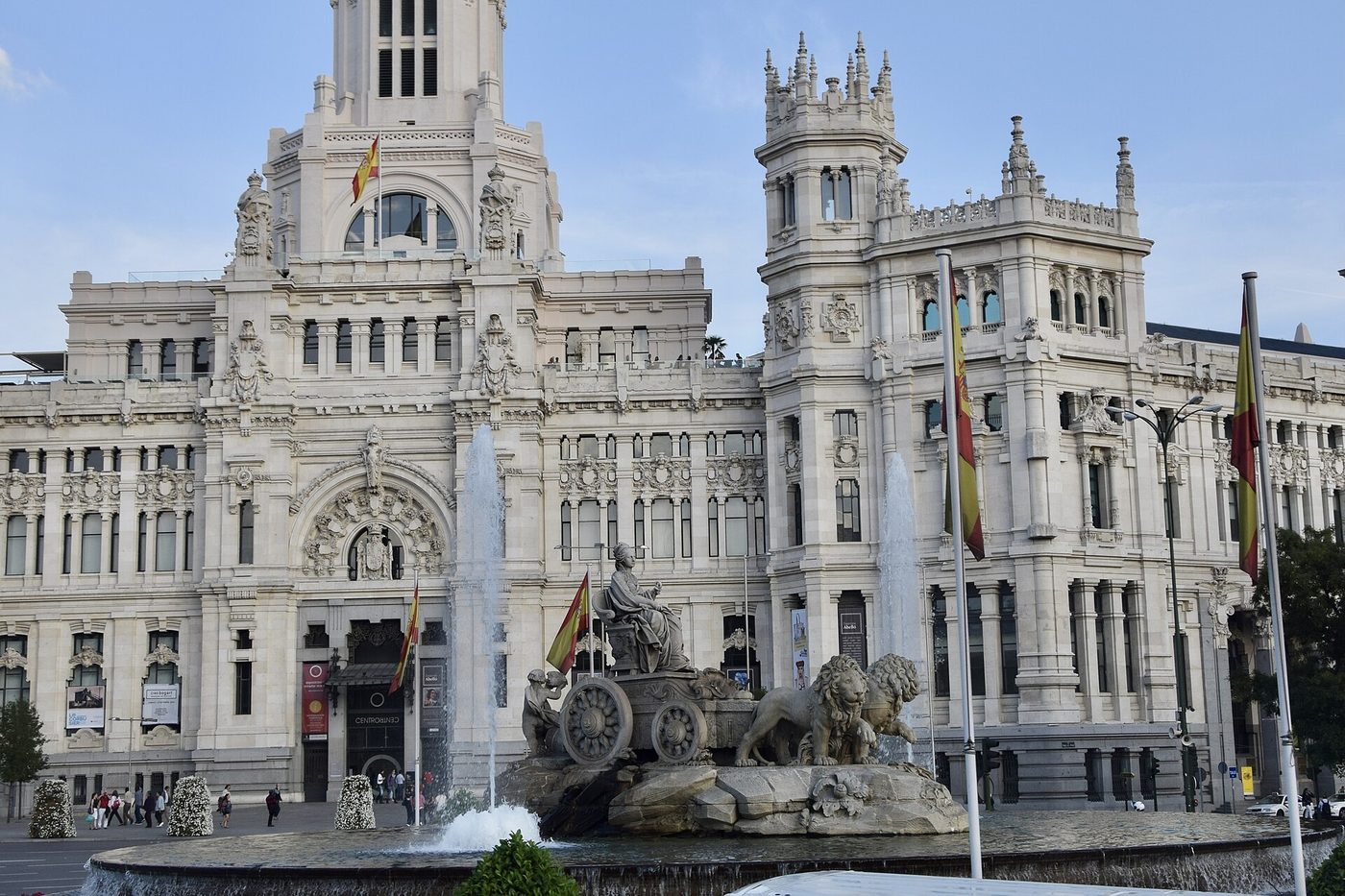
Cibeles is where Madrid does grandeur properly: the goddess in her lion-drawn chariot in the fountain, the wedding-cake former post office behind her, now the city hall. Up on top is the Mirador Madrid observation deck, around €4, and inside is the Galería de Cristal, a glass-roofed courtyard you can walk into for free. Five minutes east, in Plaza de la Independencia, stands the Puerta de Alcalá, Francesco Sabatini’s neoclassical gate, completed in 1778 and one of five former entrances to the city.
One lovely piece of Madrid absurdity: on a Sunday each autumn, the Trashumancia festival drives around 2,000 sheep through the centre of the city and out through the Puerta de Alcalá, exercising a droving right that predates the traffic. If your dates coincide, cancel whatever else you had planned.
Barrio de las Letras
Cervantes lived and died in this grid of streets between Sol and the Prado, and it is now the best-looking bar-crawl territory in central Madrid: quotations set into the paving, small independent shops, and a density of decent vermouth bars that makes the evening plan itself. Calle de las Huertas is the spine.
The Muralla Árabe
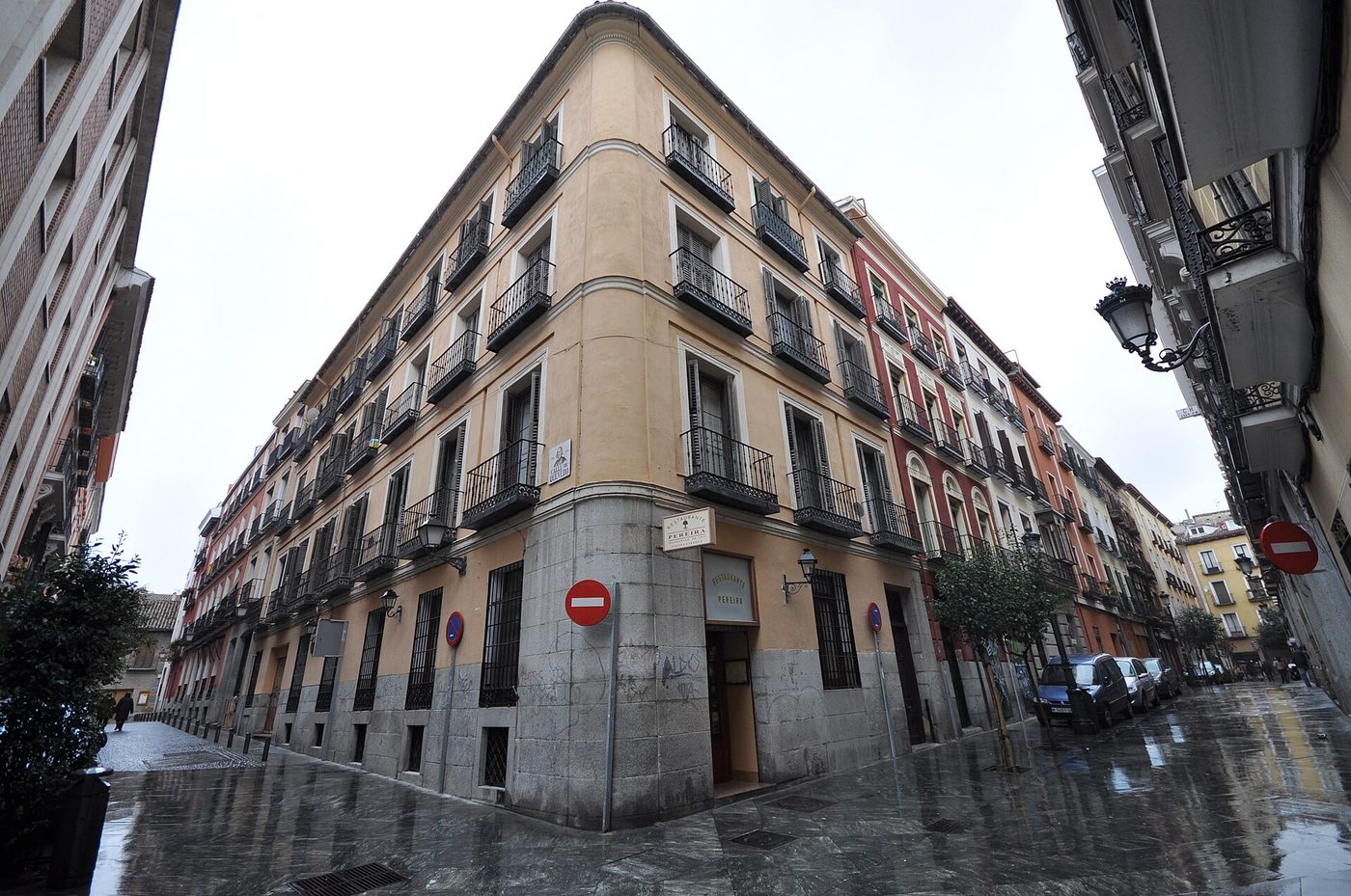
Below the Almudena, on Cuesta de la Vega, is a surviving stretch of the 9th-century Muslim wall of the settlement that became Madrid. It is the oldest built thing in the city, it is free, it takes ten minutes, and you will have it to yourself. Most people walk straight past it on the way down to the Campo del Moro.
Temple of Debod
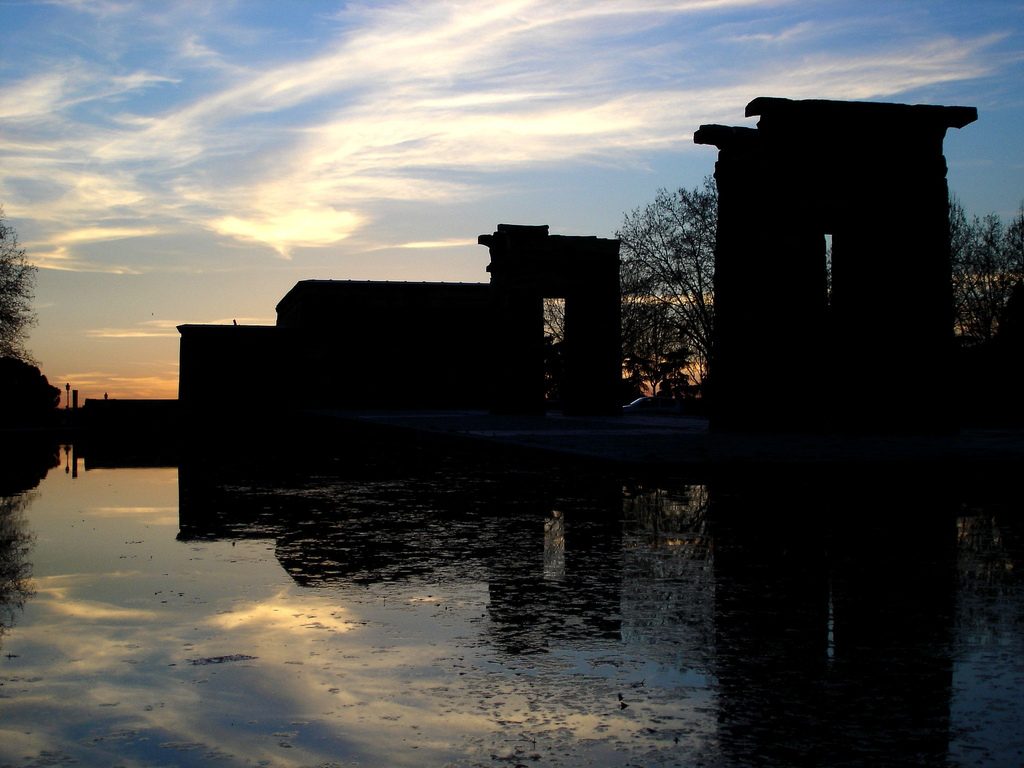
The strangest thing in Madrid and one of the best. This is an actual ancient Egyptian temple, built in the 2nd century BC and dedicated to Isis, standing in a park west of Plaza de España. Egypt and UNESCO gave it to Spain in 1968 in thanks for Spanish help saving the Abu Simbel temples from the rising water behind the Aswan Dam, and it was shipped over and rebuilt stone by stone in its original orientation. It is the only fully preserved Egyptian temple in Spain.
Entry is free, with one wrinkle that catches people out: capacity inside is about thirty people, so the city runs a free timed booking system and states that access is not guaranteed without one. Book it. Visits are capped at roughly half an hour. It opens Tuesday to Sunday 10:00 to 20:00 through the year, closed every Monday and on 1 and 6 January, 1 May and 24, 25 and 31 December, with last entry thirty minutes before close.
Even without going in, the terrace it sits on is the standard answer to where to watch the sunset in Madrid, looking out over the Casa de Campo with the Sierra behind. Get there thirty minutes early in summer, when the sun does not set until around 21:45 in mid-July.
Parks, gardens and the green half of the city
Parque del Retiro
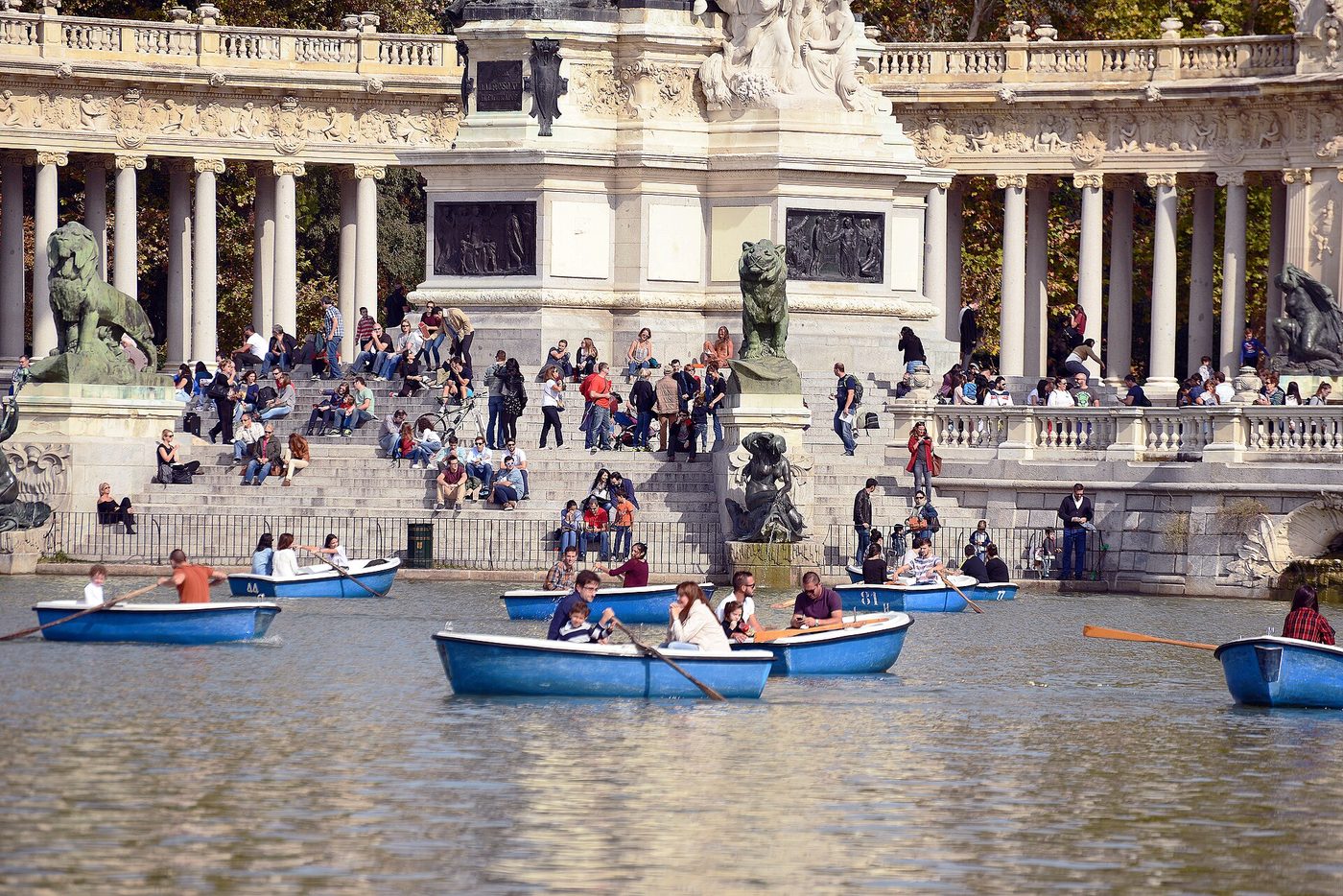
Over 125 hectares and more than 15,000 trees, once the private garden of the Habsburg court and public since the 19th century. If I could keep only one item on this whole list, it would be this one, because Retiro is where you see how Madrid uses its own city. On a Sunday it holds drum circles, tarot readers, puppet theatre, rollerbladers of a certain age, and several thousand people doing nothing in particular extremely well.
The set pieces: the colonnade and monument to Alfonso XII by José Grases Riera, curving around the Estanque; the Rosaleda rose garden, best in May; the Ángel Caído, a Fallen Angel statue that is one of very few public monuments to the devil anywhere; the Casa de Vacas cultural centre; and the Casón del Buen Retiro, now part of the Prado. The Palacio de Cristal is closed until 1 January 2027, so adjust your expectations and your photo plans accordingly.
Rowing boats on the Estanque are €6 on weekdays and €8 at weekends for forty-five minutes, up to four people. They run 10:00 to 14:00 and then from 15:15 until the park’s closing, which shifts with the daylight from around 17:15 in winter to 20:30 in summer. It is touristy and I do it every time.
Real Jardín Botánico
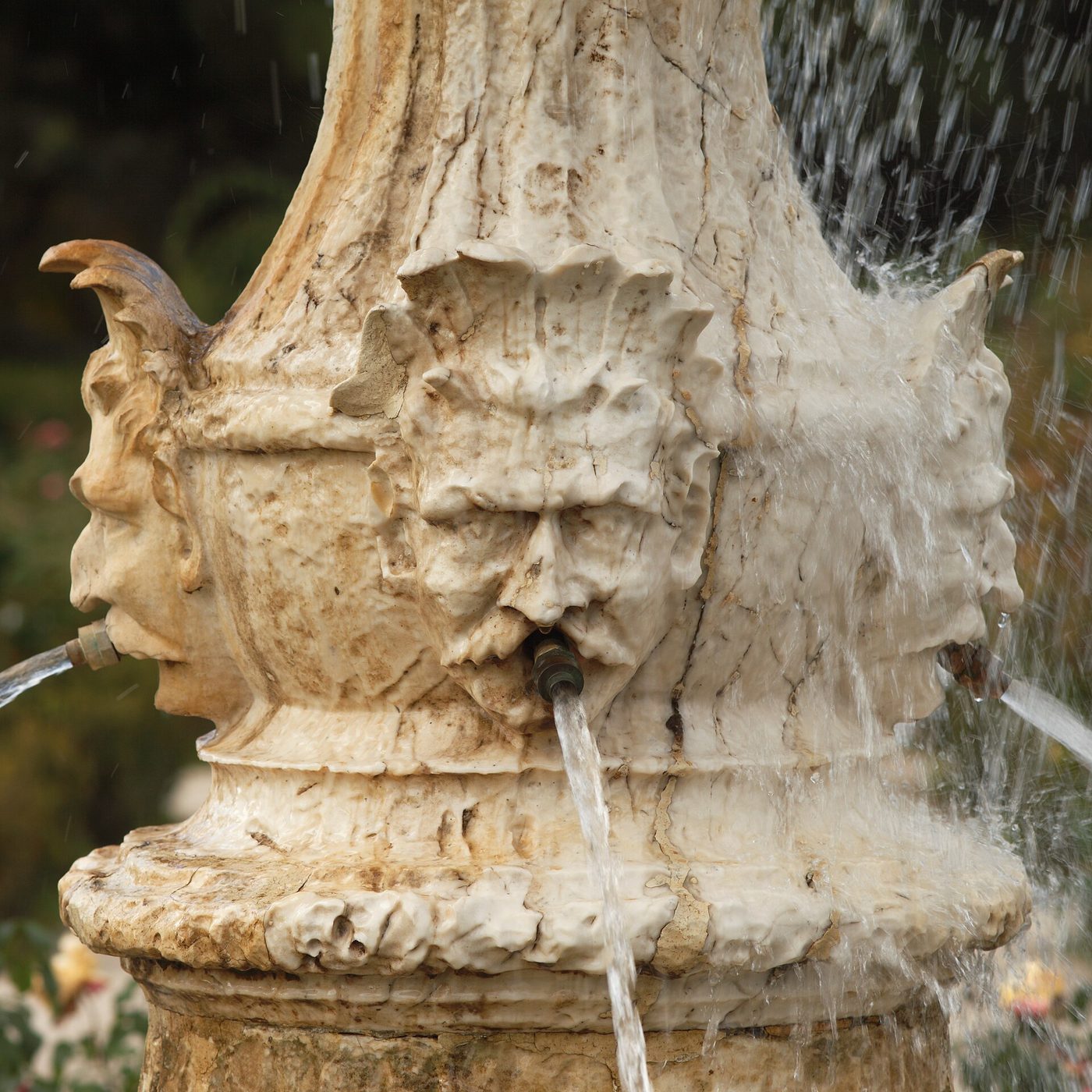
Directly beside the Prado, around €4, and free on Tuesday mornings from 10:00 to 13:00. Three terraced levels of ordered planting, a good greenhouse, and about a tenth of the foot traffic of Retiro. If you have just done the Prado and your legs have gone, this is the correct next move.
Madrid Río
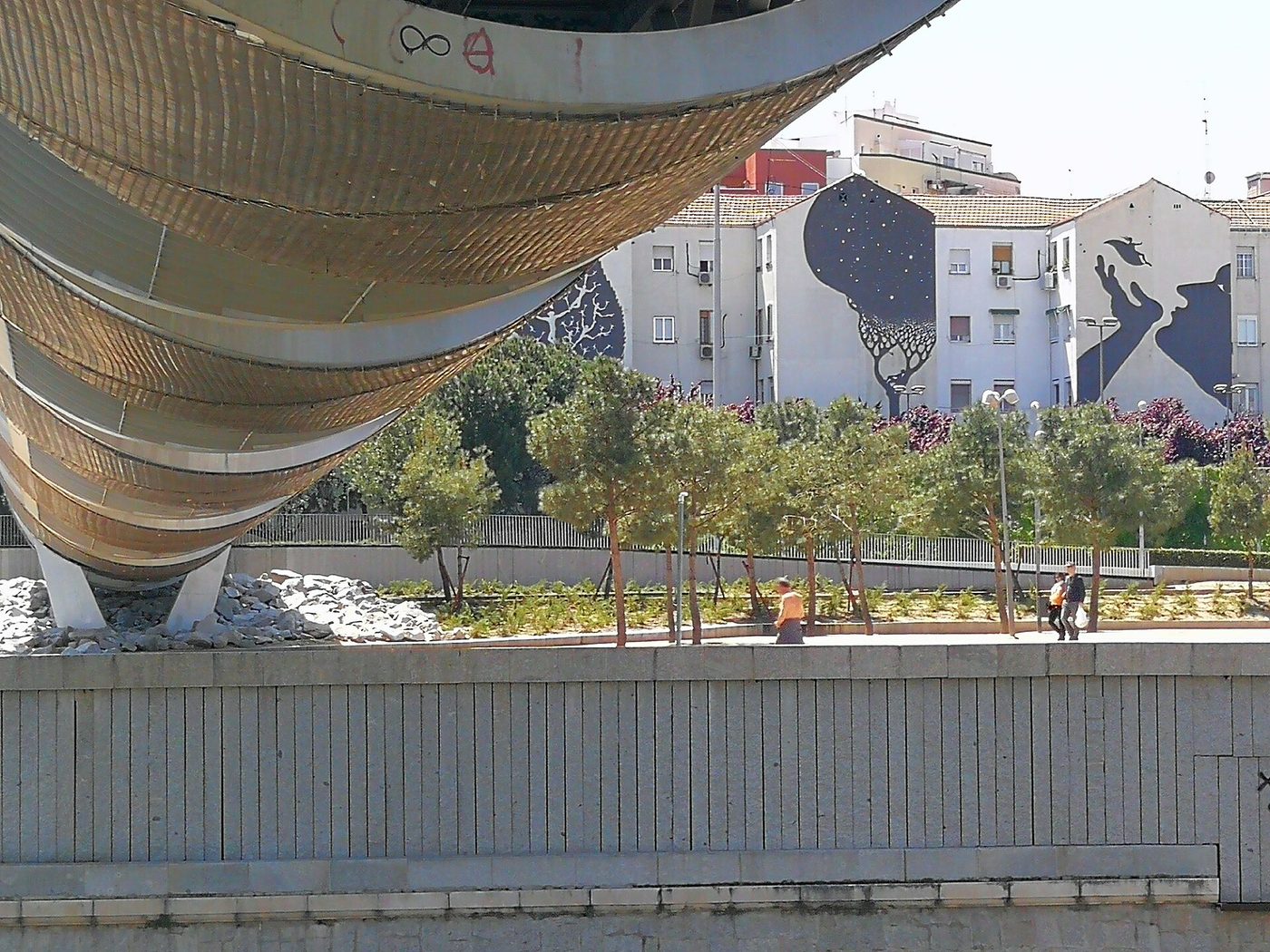
Around ten kilometres of riverside park along the Manzanares, created by burying a stretch of the M-30 ring road and landscaping the top of it, opened in 2011. It is the best piece of city-making Madrid has done in fifty years, and it sits well outside the usual visitor circuit. Cycle paths, playgrounds, a beach-style splash area for children in summer, Dominique Perrault’s twin bridges, and a straight run along the water to the Matadero. Free, obviously.
Casa de Campo
At 1,722 hectares, Madrid’s biggest park by a wide margin, roughly five times the size of Central Park, and formerly a royal hunting estate. Inside it are the Parque de Atracciones amusement park, the third oldest in Spain, and the Zoo Aquarium. The cable car that used to carry people over from the Parque del Oeste, the Teleférico, has been closed for modernisation and was reported as due back in 2026 with larger cabins, but I could find no confirmed reopening date in August 2026. Treat it as closed and do not build an afternoon around it.
Eating and drinking in Madrid, which is the real reason to come
Madrid is not a city with one signature dish so much as a city with a signature rhythm. Get the rhythm right and the food follows. Get it wrong and you will eat badly at 19:00 alongside other confused foreigners.
When Madrid actually eats
Breakfast is light and runs roughly 08:00 to 11:30. Lunch is the serious meal: restaurants start serving somewhere between 13:00 and 14:00, but the reliable window opens at 14:00 and runs to about 16:00. Kitchens then close between services, often 16:00 until 20:00, and dinner service starts around 20:00 to 21:00, with locals sitting down between 21:30 and 23:00.
The siesta thing is widely misunderstood. Restaurants do not close for the siesta; that is precisely when lunch is being served. Some shops do close from around 13:30 to 16:30, and many restaurant kitchens shut between lunch and dinner. Plan the afternoon around a long lunch, not around shopping.
The menú del día, and why it is the best deal in Spain
A legally-rooted institution: a fixed weekday lunch of three courses plus a drink and usually bread, for €10 to €16 in 2026, with €12 to €15 typical at a good neighbourhood place. It is the single best-value thing you can eat in Madrid, and it is served at exactly the hour you should be eating anyway. Walk two streets off any tourist axis at 14:00 and read the chalkboards.
What to actually order
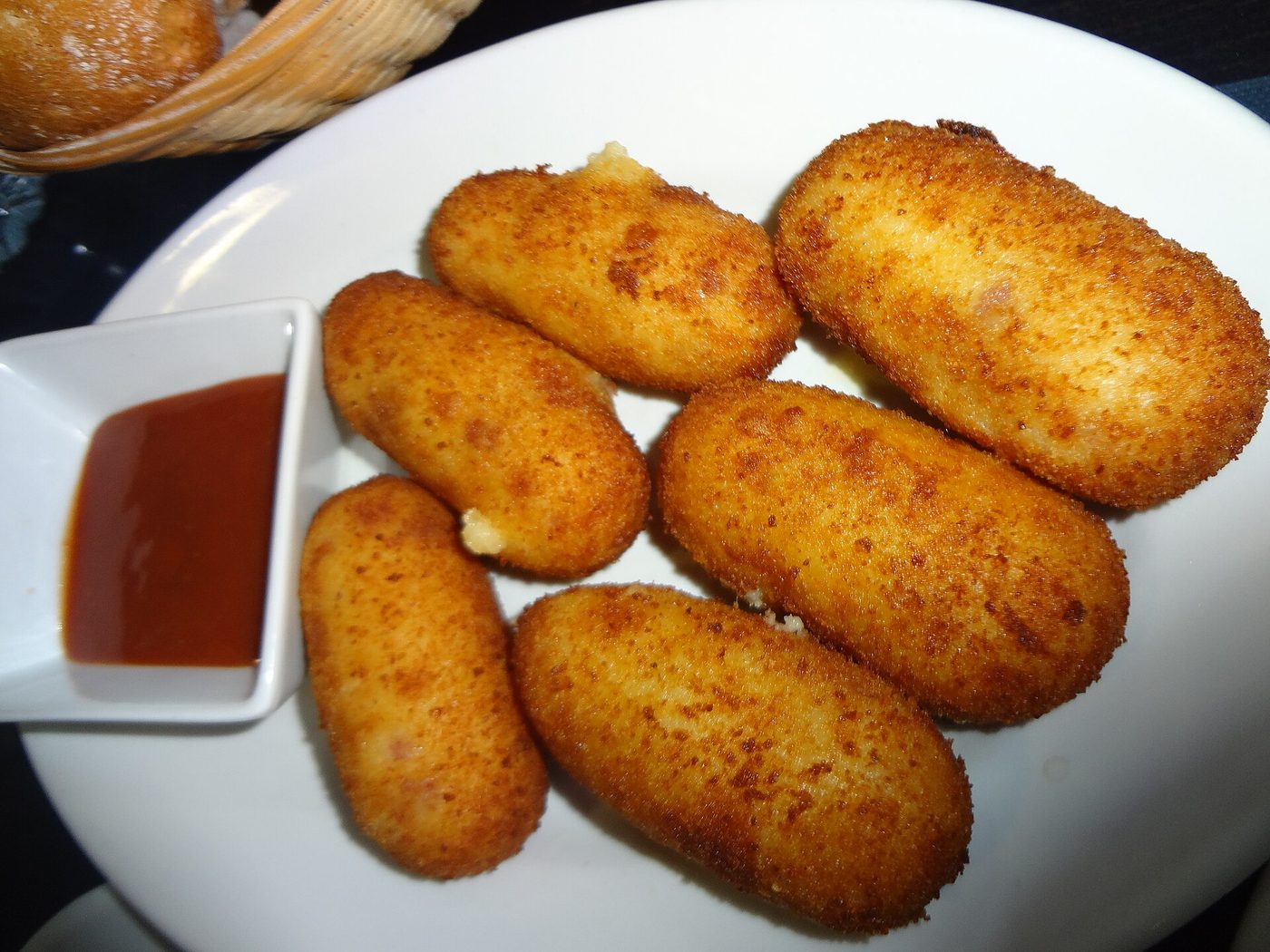
Madrid’s own dishes are heavier than the seafood-and-sunshine Spanish food most people picture: cocido madrileño, a slow chickpea stew served in courses; callos, tripe, if you are brave; huevos rotos; and the bocadillo de calamares, a fried-squid sandwich in a bread roll that makes no concessions to anybody, traditionally eaten near Plaza Mayor at La Campana. Croquetas are the universal bar order and the fastest way to judge a kitchen. If you want the wider picture, our guide to the best food in Europe by country puts Spanish cooking in context.
Prices, August 2026: a caña, the small draught beer that is the correct unit of measurement here, runs €2 to €3 in most of the city and around €2.70 to €2.80 centrally. There are terraces charging €8, and they are choosing to. A cortado is €1.50 to €2.50, a cappuccino €2.50 to €3.
One piece of local knowledge worth having: bars that have been trading for a century or more often have a brass plaque set into the pavement outside. When you see one, go in.
The markets, from prettiest to most useful
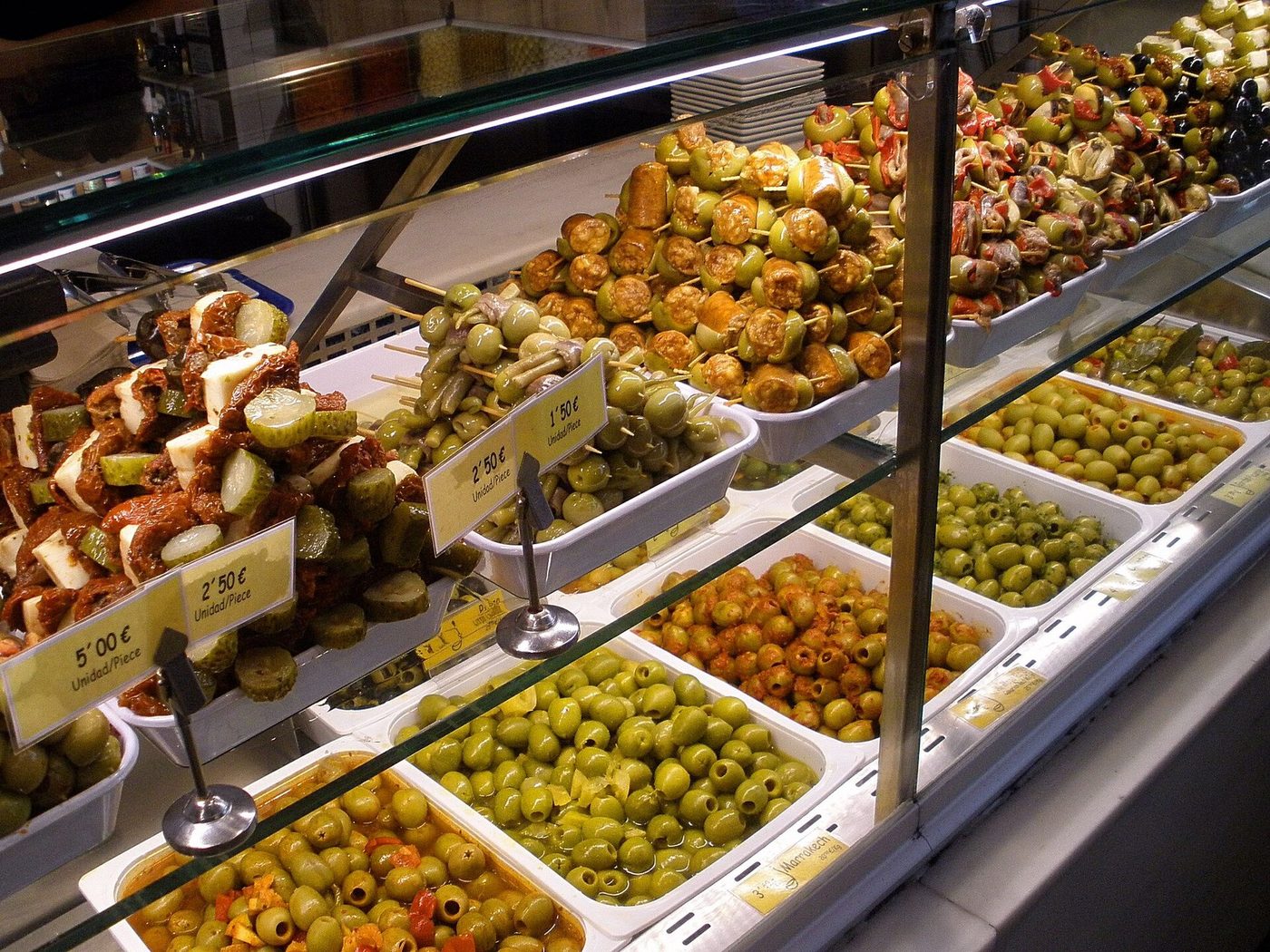
Mercado de San Miguel is the beautiful one: a wrought-iron-and-glass hall from the early 20th century beside Plaza Mayor, now entirely given over to tapas stalls, wine counters and bakeries rather than groceries. It is expensive per bite, packed by 20:00, and worth exactly one visit for the room itself. Open Sunday to Thursday 10:00 to midnight, Friday and Saturday to 01:00.
Mercado de San Antón in Chueca is the sensible middle: food shops and grocers at street level, prepared-food stalls above them, and a bar with a rooftop terrace at the top. The shop floor runs Monday to Saturday 09:30 to 21:30, the stall floor daily from midday, and the roof from 13:00 to 01:00.
Mercado de la Cebada in La Latina is the real one: a large, still-working neighbourhood market where people buy fish and vegetables. Monday to Friday 09:00 to 14:00 and 17:30 to 20:30, Saturday 09:00 to 15:00, closed Sunday. Also worth naming: Mercado de la Paz in Salamanca, home of the Casa Dani tortilla that Madrid argues about, and Mercado de Vallehermoso.
Sobrino de Botín, and the argument about it
Guinness World Records recognises Botín as the oldest operating restaurant in the world, in continuous business since 1725, when a French cook called Jean Botín and his Asturian wife opened it. It turned 300 in 2025. The wood-fired oven has been running since the 18th century and the cochinillo asado, roast suckling pig from animals of exactly 21 days, is €32; expect €50 to €80 a head with wine and service.
Worth knowing before you book: the claim is contested. A Madrid tavern called Casa Pedro has publicly challenged it, arguing its own foundation is earlier. Botín is a real restaurant serving real food in an extraordinary room, not a museum with a kitchen, and I would still go. Just go for the pig and the cellar, not for a record that may not survive the century.
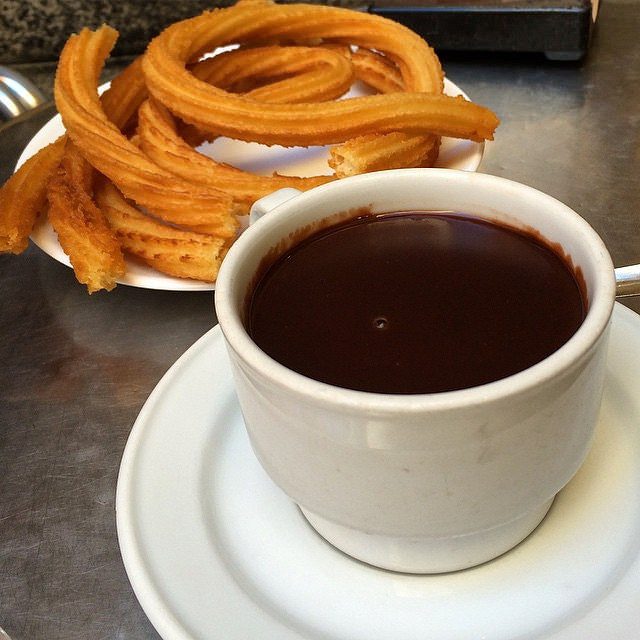
Chocolatería San Ginés
Founded 1894, in an alley off Calle Arenal at Pasadizo de San Ginés 5, and the first place in Madrid to sell churros con chocolate. Around €3.70 gets you six churros or two porras plus a cup of chocolate thick enough to stand a spoon in. The main room is open 24 hours a day, every day of the year, which is why the correct time to come is 04:00 on a Saturday, on the way home, alongside everyone else who has made the same decision. Some listings show shorter weekday hours for parts of the premises, so the round-the-clock service may not cover every room.
Rooftops and viewpoints
Madrid is low-rise, dry-aired and 655 metres above sea level, which makes it a rooftop city with unusually clear evening light and the Sierra de Guadarrama on the horizon. Those mountains are an hour away and full of trails, if you want to combine the city with some of the best hiking in Europe.
| Viewpoint | Cost | What you get |
|---|---|---|
| Mirador de la Cornisa | Free, daily 12:00–22:00 | Between palace and cathedral, looking west over Casa de Campo. The best free one. |
| El Corte Inglés, Callao | Free | Top-floor terrace over the Gran Vía rooftops. Buy a drink or do not, nobody minds. |
| Azotea del Círculo de Bellas Artes | around €5–7 | The classic. Entry covers the exhibition halls too. Sources differ on the exact fee. |
| Mirador Madrid, Palacio de Cibeles | around €4 | Straight down onto the Cibeles fountain and up the Gran Vía. |
| Riu Plaza España 360° | €5 weekdays before 17:00, €10 after and at weekends | Highest of the paid rooftops, glass floor panel, full circuit of the city. |
| Almudena dome | €7 with the museum | A climb rather than a lift, and quieter than any of the bars. |
| Faro de Moncloa | Check current price | An observation deck 92 metres up, out west, with almost no queue. |
If you only do one, make it the Mirador de la Cornisa at around 20:30 in summer, then walk ten minutes to Debod for the actual sunset.
Flamenco in Madrid
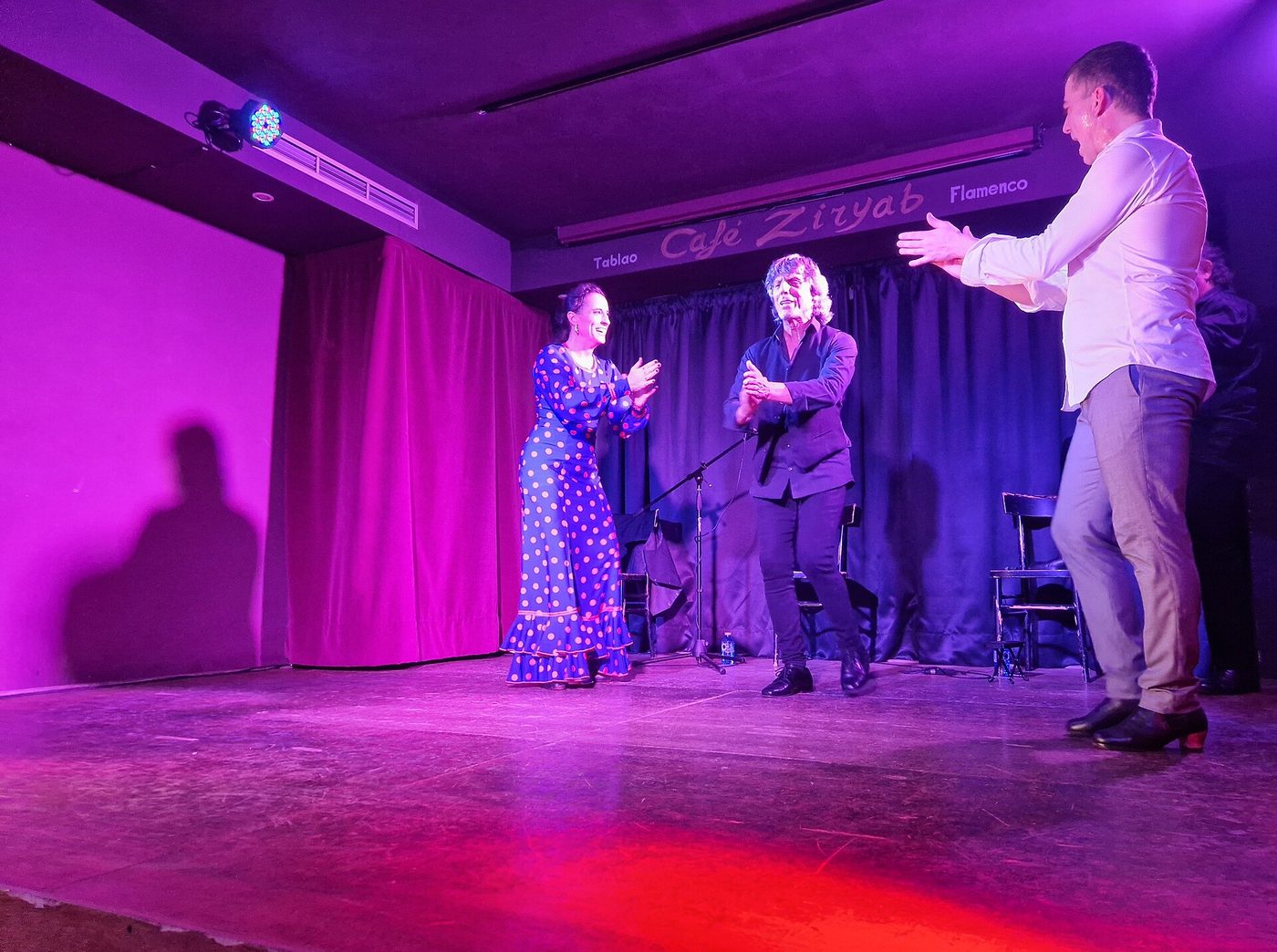
Flamenco is Andalusian by origin, and Madrid is where it went professional. The city’s tablaos are where dancers from Seville and Jerez come to be seen, which makes the quality here high and the pricing frank.
Corral de la Morería in La Latina, open since 1956 and founded by Manuel del Rey, is the best-known tablao in the world and has a Michelin-starred restaurant attached. Show-only tickets start around €55 to €60; show plus a three-course dinner runs roughly €120 to €145. Those figures come from resellers quoting in dollars, so treat them as a band rather than a price list and buy direct.
Cardamomo, near the Barrio de las Letras, is the better first-timer’s choice: €39 for Zone C up to €49 for Zone A, an hour of performance and a drink included, with four shows a day at 18:00, 19:30, 21:00 and 22:30. Less grand, more immediate, and you are close enough to hear the floor.
A correction worth making, because a lot of lists have not caught up: Villa Rosa no longer exists under that name. The venue closed after 110 years during the pandemic and has reopened as Tablao Flamenco 1911, still in the Barrio de las Letras, still billing itself as one of the oldest flamenco rooms in the world.
Two rules if you have never been. Book the earliest show if you want the room quieter and the seats closer. And skip anything on a street where a man with a laminated board is trying to sell you a ticket.
Football, and the stadium tours
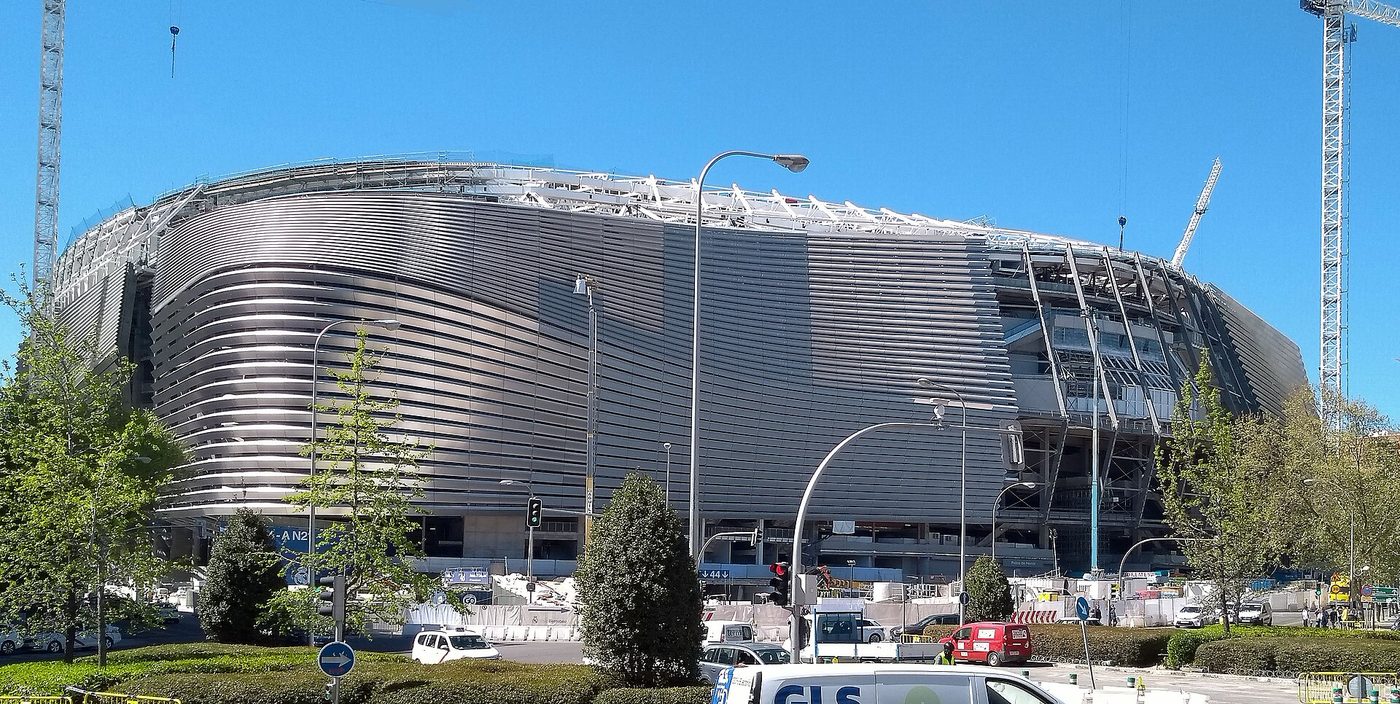
Santiago Bernabéu. Real Madrid’s tour starts from €35 online, or €38 at the ticket office, on dynamic pricing that climbs with demand; premium and VIP tiers reach €60 to €120. There is a €2 booking fee per person. Usual hours are Monday to Saturday 09:00 to 19:00. The tour takes in the trophy room and its wall of European Cups, original kits and boots, a panoramic view from the stands, and the dressing rooms and dugouts.
Two caveats that matter more than the price. On match days the tour only runs up to five and a half hours before kick-off, and the dressing rooms and dugouts are closed both on match day and the day before, which removes the part most people came for. And the stadium is still in the middle of its redevelopment: retractable pitch, new roof, new towers on the Castellana side, the old La Esquina shopping centre demolished. Meanwhile Metro Line 10 does not currently stop at the Bernabéu, with the Nuevos Ministerios to Cuzco stretch suspended for the station rebuild until the end of 2026 and a free replacement bus running instead. Allow more time than the map suggests.
New for 2026: Bernabéu Infinito, an immersive experience built with Apple using Vision Pro headsets, launched on 15 July 2026, free for Members and Madridistas Platinum.
Cívitas Metropolitano. Atlético’s stadium tour is cheaper, quieter and in some ways more satisfying: pitchside from the dugout, the first-team dressing rooms, the press room, the presidential box. Self-guided tickets run roughly €15 to €20 and guided ones around €25 to €30; I found a range rather than a fixed price, so check before you go. Roughly 11:00 to 18:00 daily on some listings and 09:30 to 18:30 on others, suspended on match days and the day before major European fixtures.
If you can get to an actual match instead, do that. A midweek La Liga fixture at the Metropolitano is cheaper than either tour and about a hundred times better.
The smaller museums, and the contemporary city
This is where Madrid rewards a second visit, and where it beats every other big European capital on price.
Museo Cerralbo, beside Plaza de España, is the former home of the Marquess of Cerralbo, preserved as a 19th-century aristocratic mansion with the furniture, the armour and the clutter still in place. It costs €3, and it is free on Thursdays 17:00 to 20:00 and Sundays 10:00 to 15:00, always free for under-18s, and free on 18 May, 12 October and 6 December. For €3 it is the best-value hour in Madrid.
Museo Arqueológico Nacional on Calle Serrano is the one big Madrid museum that gets left off the standard lists, and it should not be. It runs from Iberian prehistory through Roman Hispania and Al-Andalus to the Bourbons, and it holds the Dama de Elche, the carved limestone bust that is probably the most famous object made in ancient Iberia. Allow two hours. I could not confirm a current admission price, so check before you go.
Museo Lázaro Galdiano in Salamanca is the same idea at greater scale: a collector’s mansion, €6 general and €3 for students, free 15:30 to 16:30 Tuesday to Saturday and 14:00 to 15:00 on Sunday.
Museo Sorolla is closed for renovation and expansion with no published reopening date. When it does return it is €3, free Saturdays from 14:00 and all day Sunday, and it is the one I would send you to first.
San Francisco el Grande in La Latina has a dome you will not believe from the outside, and paintings by Zurbarán and Goya inside. It is €6, or €3.50 for children and seniors, on Tuesday, Wednesday, Friday and Saturday, and free on Thursdays. The museum section closes on Sundays and Mondays, and on Saturdays in summer. Attending Mass is free.
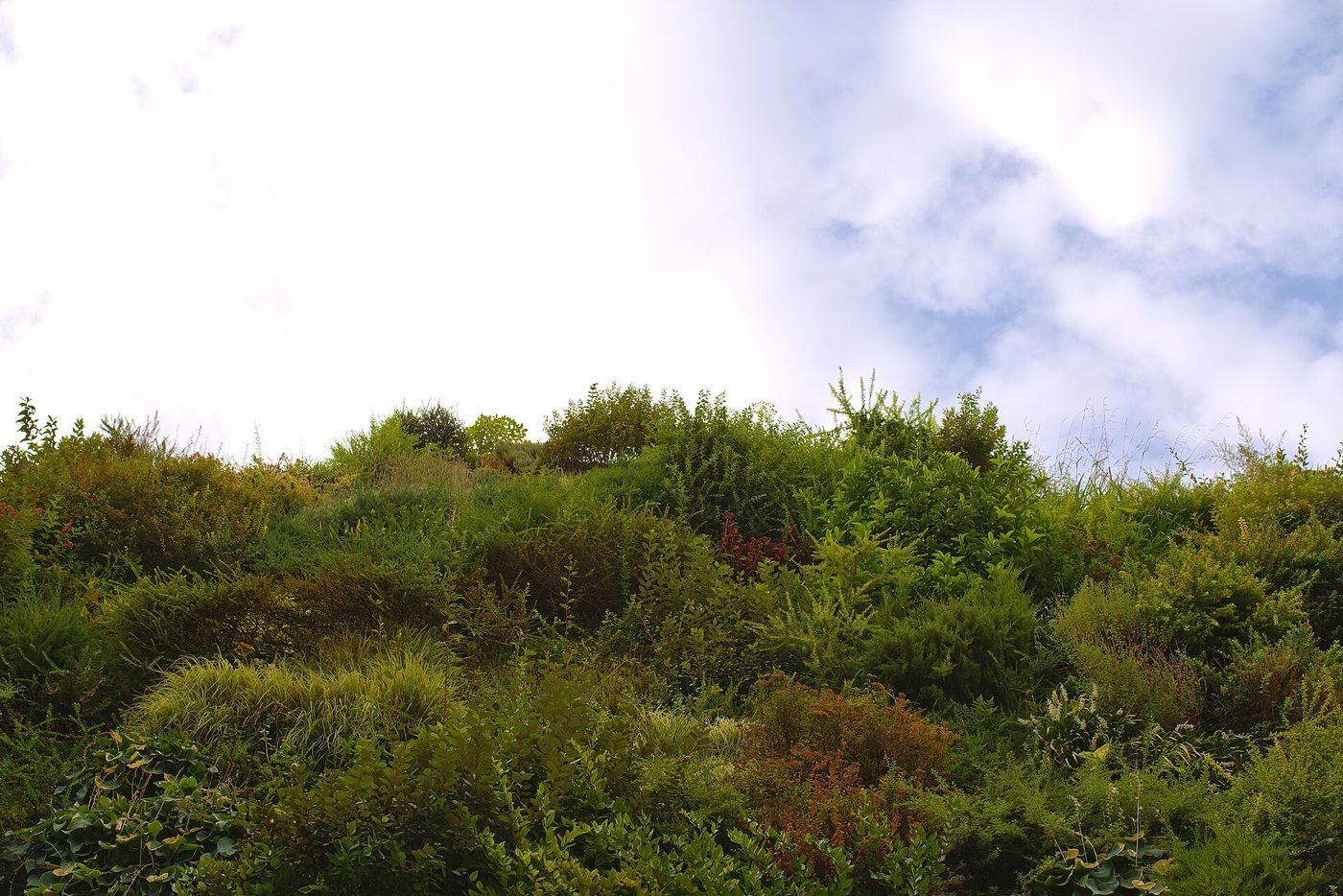
CaixaForum’s vertical garden, on the wall facing the square beside the arts centre on the Paseo del Prado, is the French botanist Patrick Blanc’s living wall: around 24 metres tall, some 250 plant species, roughly 15,000 plants, all grown hydroponically with no soil at all. Free to look at from the square, and a fifteen-minute detour from the Prado.
Matadero Madrid, in Arganzuela at the Madrid Río end, is a contemporary arts complex spread across the pavilions of the city’s old slaughterhouse, and each pavilion has its own discipline: performing arts in Nave 10, design at the Central de Diseño, film at the Cineteca, literature at the Casa del Lector. Wandering the site is free. Check what is programmed before you go, but even empty it is one of the best pieces of industrial reuse in Europe.
El Rastro, and shopping without shopping
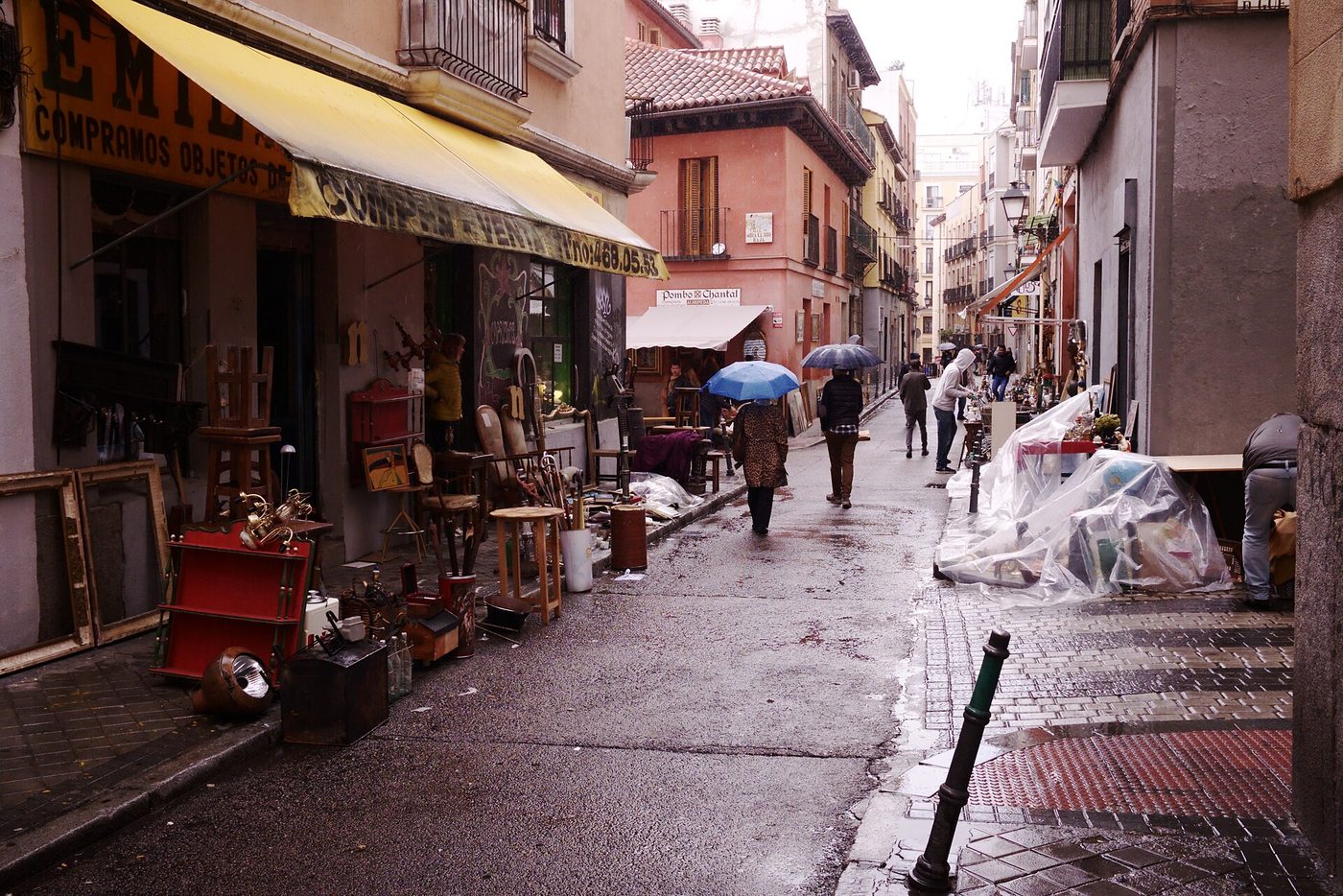
Every Sunday and public holiday, 09:00 to 15:00, more than a thousand street vendors set up around the Plaza de Cascorro and down the Calle Ribera de Curtidores in La Latina. El Rastro has run for over 250 years and is formally recognised as Cultural Heritage of the City of Madrid. The name comes from the tanneries that once stood here beside the old slaughterhouse, now the Matadero.
It is 40% genuine junk, 30% clothes, 20% antiques worth a look, and 10% people selling phone cases. That is not a criticism. Arrive before 11:00, because after that the main street becomes a slow-moving crush, then peel off into the La Latina bars around Cava Baja and Plaza de la Paja for the part Madrileños actually come for. Keep your bag in front of you: this is the single highest-risk pickpocketing setting in the city, and Sunday is its day.
Free things to do in Madrid
Madrid is one of the cheapest major capitals in Western Europe to sightsee in, largely because so much of the good stuff has a free window. Every free window and free-entry option I could confirm is below. Note that the squares, streets, markets and parks in the big table above are also free to walk into; this list is the ones with a rule attached.
| Free | When | The catch |
|---|---|---|
| Museo del Prado | Mon–Sat 18:00–20:00, Sun 17:00–19:00 | Ticket office only, capacity-capped, real queue |
| Museo Reina Sofía | Last two hours, Mon and Wed–Sat; Sunday afternoon | Free ticket still needed, but bookable online |
| Museo Thyssen-Bornemisza | Mondays 12:00–16:00 | Permanent collection only, door tickets only |
| Royal Palace | Mon–Thu 17:00–19:00 summer, 16:00–18:00 winter | EU and Ibero-American citizens only, proof required, walk-up |
| Changing of the Guard | Wed and Sat 11:00–14:00, or 10:00–12:00 in July and August | None. Genuinely free, genuinely good |
| Solemn Changing of the Guard | First Wednesday of the month, around 12:00 | Not in January, August or September |
| Temple of Debod | Tue–Sun, daytime | Free timed booking required, small capacity |
| San Francisco el Grande | Thursdays | Museum shut Sundays, Mondays and summer Saturdays |
| Museo Cerralbo | Thu 17:00–20:00, Sun 10:00–15:00 | None |
| Museo Lázaro Galdiano | 15:30–16:30 Tue–Sat, 14:00–15:00 Sun | A one-hour window, so plan around it |
| Real Jardín Botánico | Tuesday mornings 10:00–13:00 | None |
| Almudena Cathedral | Opening hours | €1 donation asked; dome and museum cost extra |
| Mirador de la Cornisa | Daily 12:00–22:00 | None |
| El Corte Inglés Callao terrace | Store hours | None |
| CaixaForum vertical garden | Always | Viewed from the square, not from inside |
| Retiro, Madrid Río, Casa de Campo, Campo del Moro | Daylight hours | None |
| El Rastro | Sundays and holidays 09:00–15:00 | Free to browse, not to buy |
| Matadero Madrid | Site open daily | Some individual shows ticketed |
| Free walking tours | Daily, multiple operators | Tip-based, not free; book ahead in high season |
The free walking tours are worth a word. They are tip-based rather than free, there is no fixed amount, and the themed ones are better than the general circuit: myths and legends, food, and a Retiro Park walk are all offered. Book ahead in summer and turn up on time, because groups leave without stragglers. Our guide to planning a trip to Europe covers the booking order that saves the most money.
If you are travelling on a tight budget, Madrid belongs on the shortlist alongside the places in our roundups of the cheapest places to travel in Europe and how to see Europe on a budget.
Getting around Madrid
Central Madrid is walkable in a way few capitals are: the historic core, the museum boulevard, the palace and Retiro all sit inside a square roughly two kilometres across, and you can cross it on foot in under half an hour. The metro is for the outer stuff: the stadiums, the airport, Matadero, Moncloa. It is clean, frequent and cheap, and the summer 2026 closures are the only real complication.
Fares, checked August 2026
The Community of Madrid extended its discounts and held public transport prices flat for 2026, so these figures should hold through the year.
| Ticket | Price | Notes |
|---|---|---|
| Metro single, Zone A | €1.50 to €2.00 | €1.50 up to 5 stations, rising with distance to €2.00 |
| Metrobús, 10 trips | €7.30 | Valid on metro, EMT buses and Light Metro ML1. Shareable |
| EMT bus single | €1.50 | TransBus at €1.80 allows 60 minutes of EMT transfers |
| Tarjeta Multi card | around €2.50 | Ten-year life, and free when you buy a Tourist Travel Pass |
| Airport supplement | €3.00 | On top of the normal fare. Included in the Tourist Travel Pass |
| Tourist Travel Pass, Zone A | 1 day €10.30, 2 days €17.50, 3 days €23.10, 4 days €27.80, 5 days €33.40, 7 days €43.20 | Madrid municipality only. 50% off for under-11s |
| Tourist Travel Pass, Zone T | 1 day €15.40, 2 days €26.20, 3 days €35.00, 4 days €43.20, 5 days €50.40, 7 days €62.80 | The whole region, so it covers El Escorial and Aranjuez |
| Cercanías single | €1.70 for 1–2 zones, up to €5.50 for 7 | The suburban rail network. Airport journeys are charged above the base fare |
Which one to buy. For three days of ordinary sightseeing in the centre, the Metrobús ten-trip at €7.30 is almost always cheaper than the three-day tourist pass at €23.10, because you will walk more than you ride. The tourist pass wins in one situation: heavy daily metro use combined with arriving and leaving by metro, since the €3 airport supplement is included both ways. Do not buy the pricier Zone T version just for a day trip, because a Cercanías return to El Escorial runs around €8 against €15.40 for a single day of Zone T. Note also that the pass does not cover the airport express bus. Reporting through 2026 suggests Madrid is moving from eight fare zones to two, so the structure above may change.
From Barajas airport into the city
| Option | Cost | Time | Best for |
|---|---|---|---|
| Metro Line 8 | around €4.50–5.00 with the supplement | 12–20 min to Nuevos Ministerios, 25–30 to Sol with one change | Cheapest. Every 4–8 min by day, 15 min at night |
| Cercanías C-1 | around €2.60–3.50 | 25–35 min to Atocha or Chamartín | T4 arrivals with onward trains. Every 15–30 min |
| Express bus 203 | €5.00 | 30 min to T1, 35 to T2, 40 to T4 | Luggage, and night arrivals. Runs 24/7 |
| Taxi | €33 flat | 25–40 min depending on traffic | Groups, late nights, early flights |
Taxis and ride-hailing
The €33 taxi flat fare is the thing to know. It applies in both directions as long as one end is inside the M-30, it is set by the city, and split three ways it beats the metro on convenience for very little more money. Do not accept a meter for that journey. Uber, Cabify, Bolt, FreeNow and PideTaxi all operate here; from May 2026 the city requires anti-counterfeit stickers on private-hire vehicles and caps surge pricing during major events, which is a useful piece of consumer protection to know exists. Driverless taxi trials from Uber, Cabify and Bolt are due to begin in Madrid in autumn 2026.
For the wider picture on trains, buses and passes across the continent, see our guides to getting around Europe and train travel in Europe.
Day trips from Madrid
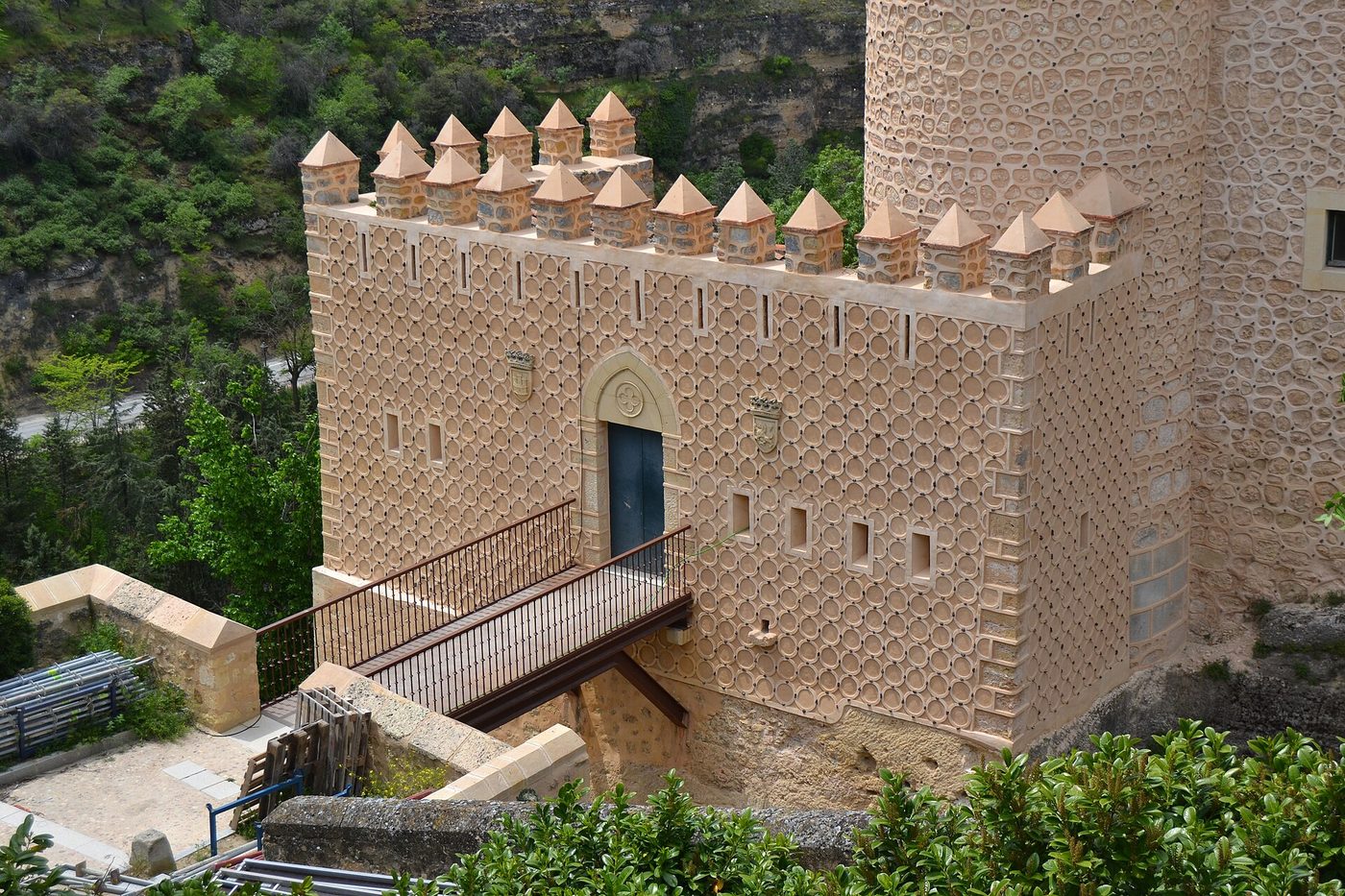
Madrid’s position in the middle of the peninsula is its great practical advantage. Three of Spain’s best small cities are within an hour by train, two of them inside forty minutes, which means a day trip here costs you a morning rather than a day.
| Where | From | Journey | Fare, each way | What you go for |
|---|---|---|---|---|
| Toledo | Atocha | around 34 min, Renfe Avant | from around €7 | A walled hill city above the Tagus that was Spain’s capital before Madrid. Cathedral around €12, with tower and roof access sold as a separate upgrade |
| Segovia | Chamartín | around 25–31 min, Avant | from around €5 | A UNESCO-listed Roman aqueduct and the Alcázar, €7, or €10 with the tower |
| El Escorial | Cercanías C-3 | 39 min to 1 hr | from around €4 | Philip II’s monastery-palace. A 10 to 20 minute walk from the station |
| Aranjuez | Cercanías | check current timetable | Cercanías fares | A royal summer palace and gardens on the Tagus |
| Ávila | Ch. or Atocha | check current timetable | check current fares | The most complete medieval walls in Spain, UNESCO-listed |
If you only have one day, take Toledo. It is the more complete experience: a whole city inside its walls, three religions layered into the same streets, and El Greco everywhere. Segovia is the better half-day, and roast suckling pig is the traditional order there rather than in Madrid. El Escorial suits people who like architecture as an expression of power, and it is austere in a way that some visitors find magnificent and others find cold.
One planning note: buy Avant tickets in advance. The advance fares above roughly double if you walk up on the day, and the trains to Toledo sell out on summer weekends.
If a wider loop appeals, our Spain travel guide maps the standard routes, and the best places to visit in Spain covers what to add either side of Madrid.
When to go to Madrid
Madrid sits at 655 metres on a dry plateau, which gives it a continental climate: hard summers, brisk winters, glorious shoulder seasons, and around 2,800 hours of sunshine a year, which makes it one of the sunniest capitals in Europe.
| Month | Avg high °C | Avg low °C | Rain mm | Rain days | Verdict |
|---|---|---|---|---|---|
| January | 10.8 | 1.9 | 40 | 6 | Cold, clear, cheap. Museums empty |
| February | 12.8 | 2.5 | 35 | 6 | Still cold, lengthening days |
| March | 16.4 | 5.1 | 25 | 5 | Driest of the cool months. Good |
| April | 19.0 | 7.4 | 50 | 7 | Lovely by the end, chilly at the start |
| May | 23.8 | 11.0 | 55 | 8 | The best month. Rosaleda in bloom |
| June | 29.8 | 15.8 | 30 | 4 | Already hot by mid-month |
| July | 33.4 | 18.6 | 15 | 2 | The hottest month. Plan around it |
| August | 32.9 | 18.6 | 15 | 2 | Hot, and half the city is away |
| September | 28.0 | 14.9 | 25 | 3 | Excellent from mid-month |
| October | 21.3 | 10.4 | 50 | 6 | The other best month |
| November | 14.6 | 5.3 | 55 | 7 | Grey by Madrid standards |
| December | 11.4 | 2.6 | 60 | 7 | Wettest month, but Christmas lights |
Go in May, or between mid-September and mid-October. Those are the two windows where the weather does the work for you. April is a gamble at the start of the month and delightful by the end. June is already hot by the middle.
About the summer. July averages a high of 33.4°C, and that average undersells it badly. The record stands at 43°C at Barajas in August 2021. The saving grace is that the humidity is low, around 33% in July, so it is a dry heat that a shaded terrace and a cold caña can handle, and nights fall back to 15 to 20°C. The sun does not set until roughly 21:45 in mid-July and 21:10 in mid-August, which is why Madrid simply moves its day later rather than shortening it. Sightsee before noon, eat and sleep in the afternoon, go out at nine. Pack accordingly: our Europe packing list has a hot-weather section, and where to go in Europe in summer has cooler alternatives if 36°C is not your idea of a holiday.
What closes in August. Not everything, but specific things: Teatro Real runs no guided tours, there is no Solemn Changing of the Guard in August or September, the weekly Changing of the Guard moves to 10:00 to 12:00, and a good number of neighbourhood bars and family restaurants shut for the month while the owners go to the coast. The museums stay open. So does San Ginés.
The festivals worth planning around
San Isidro, on 15 May, is the feast of Madrid’s patron saint, and it is the city’s own festival rather than a tourist event: concerts on Las Vistillas, chotis dancing, people in chulapo dress, and the serious part of the bullfighting season at Las Ventas. If you can pick only one date to be in Madrid, pick this one, and it falls in the best month anyway.
MADO, Madrid Pride, takes over Chueca and much of the centre in early July and is among the largest Pride celebrations anywhere. It is enormous and completely unavoidable if you are staying centrally, so book early or deliberately avoid the week.
Veranos de la Villa ran its 42nd edition from 7 July to 30 August 2026, spreading music, dance, flamenco and theatre across the city through exactly the weeks when everything else feels shut. In high summer, this is what to look at instead of a closed museum.
Winter has a strong case. January and February are cold but bright and dry, hotel prices drop sharply, and the museums are as close to empty as they ever get. Christmas in Madrid is a real reason to come: the lights on Gran Vía, the Belén displays, and the roscón season. For a wider seasonal view, see the best time to visit Europe and our picks for where to go in Europe in winter.
How many days do you need in Madrid?
Three full days is the right answer for a first visit: enough for two of the three big museums, the palace, Retiro, one proper night out and one day trip, without rushing. Two days works if you cut the day trip. Four is where Madrid starts to feel like a city you know rather than a city you visited.
One day in Madrid
Prado at 10:00 for two hours. Walk up through the Botanical Garden to Retiro and around the Estanque. Late lunch at 14:00 somewhere off Calle Huertas. Cross to Plaza Mayor and Sol in the afternoon, down the Arco de Cuchilleros into La Latina. Mirador de la Cornisa at 20:00, Debod for sunset, dinner at 21:30. It is a lot, and it is doable. If you are choosing a base for a longer trip, where to stay in Europe covers the neighbourhood question city by city.
Two days
Day one as above. Day two: Royal Palace at opening, then the Changing of the Guard if it is a Wednesday or Saturday, Almudena and the dome, lunch in La Latina, Reina Sofía in the afternoon for Guernica, flamenco in the evening.
Three days
Add a day trip. Toledo if you want a whole city, Segovia if you want a half-day and a long lunch. Or, if you would rather stay put, spend the third day on the parts most visitors miss: Madrid Río and Matadero in the morning, Mercado de la Cebada at lunchtime, Cerralbo in the afternoon, a rooftop at seven.
Four days or more
Now you can put a Sunday in the middle for El Rastro, do the Thyssen properly, get to a football match, ride the Cercanías out to El Escorial, and spend an evening in Chueca or Malasaña rather than the centre. This is also the point at which Madrid becomes a base rather than a stop: our Europe itinerary planner shows how it slots into a longer route, and Barcelona is two and a half hours away by high-speed train if you want to pair it with the best things to do in Barcelona.
Madrid by traveller type
| If you are | Do this | Skip this |
|---|---|---|
| First-timer, three days | Prado, Royal Palace, Retiro, La Latina tapas, Debod at sunset, Toledo | The Thyssen. Come back for it |
| Art-first | All three big museums across three mornings, plus Cerralbo and Lázaro Galdiano | The stadium tours |
| On a budget | Free museum windows, Metrobús ten-trip, menú del día at 14:00, El Rastro, Mirador de la Cornisa | The Paseo del Arte pass and the paid rooftops |
| With children | Retiro rowing boats, Madrid Río splash area, Casa de Campo, San Ginés churros, Bernabéu tour | Long museum days. Two hours is the ceiling |
| Travelling solo | Tapas at bar counters, where eating alone is normal; free walking tours; the earliest flamenco show | Formal restaurant dinners for one at 22:00 |
| Food-focused | Mercado de la Cebada and Mercado de la Paz, a menú del día daily, Botín once, cocido on a cold day | Eating anywhere with a photo menu on Plaza Mayor |
| Second or third visit | Matadero, Madrid Río, Cerralbo, Faro de Moncloa, El Escorial, a La Liga match | Re-queueing at the Prado. Use the free window this time |
| Visiting in July or August | Morning sightseeing, indoor afternoons, 21:00 dinners, rooftops after dark | Midday walking tours and anything unshaded from 14:00 to 18:00 |
Which neighbourhood to base yourself in
Madrid’s centre is small enough that no central choice is wrong, but they are not interchangeable.
Sol and Plaza Mayor put you within ten minutes of everything and inside the noise. Fine for two nights, wearing after four. Barrio de las Letras is the best compromise: quiet streets, good bars, five minutes from the Prado. La Latina is where you want to be on a Sunday for El Rastro and the Cava Baja tapas run, and it is loud on a Saturday night. Chueca and Malasaña are the going-out districts, young and busy, with the best independent shops and the worst sleep. Salamanca is the smart, expensive, calm option, closer to Retiro than to the museums, and where to stay if you want a residential Madrid rather than a visiting one. Around Atocha is cheap and convenient for the day-trip trains, and dull in the evening.
What a day in Madrid actually costs
| Item | Budget | Mid-range | Comfortable |
|---|---|---|---|
| Breakfast | €3 coffee and tostada | €6 | €12 hotel buffet |
| Lunch | €12 menú del día | €20 tapas and wine | €45 sit-down |
| Dinner | €10 bocadillo and a caña | €30 shared plates | €70 plus |
| Drinks | €6 for two cañas | €15 | €30 on a rooftop |
| Sights | €0 using free windows | €15 one museum | €33 palace plus Prado |
| Transport | €0, walk | €1.50 to €3 a couple of rides | €10 to €15 taxis |
| Daily total | around €31 | around €88 | around €200 |
And one piece of good news for the budget: Madrid charges no city tourist tax. In Spain only Catalonia and the Balearics levy one. The city has debated introducing a tax repeatedly, driven by the growth in tourist apartments, and had not done so as of 2026. Your accommodation will still register you with the national SES Hospedajes system, which is a formality, not a charge.
Mistakes to avoid in Madrid
Eating dinner at seven. You will get a table instantly, which should tell you something. Kitchens open around 20:00 to 21:00 and locals eat from 21:30. If you are starving at seven, that is what tapas are for.
Turning up at the Reina Sofía on a Tuesday. Closed. This is the most common wasted morning in Madrid.
Planning around the Prado’s free window without allowing for the queue. Ticket-office only, capacity-capped, and the line forms well before it opens. If the Prado matters to you, pay.
Assuming the Royal Palace free slot applies to you. It is for EU and Ibero-American citizens with proof. Everyone else pays €18.
Booking the Bernabéu tour for a match day. The dressing rooms and dugouts, which are the point, are closed on match day and the day before.
Eating on Plaza Mayor. One street away is half the price and twice the food.
Turning up at the Temple of Debod without a booking. Free, yes. Walk-in, no.
Buying the three-day tourist travel pass by reflex. At €23.10 against €7.30 for ten metro trips, it only pays if you are doing airport runs at both ends or heading out of the municipality.
Applying for an ETIAS. It does not exist yet. You cannot apply, and anyone charging you to is not helping.
Underestimating the pickpockets. Violent crime against visitors is rare here. Theft by distraction is not. The hotspots are Puerta del Sol, Gran Vía, Plaza Mayor, El Rastro, the streets around Atocha and the busy metro lines, and El Rastro on a Sunday is the highest-risk combination of place and time in the city. The tactics are choreographed: a staged bump, a spilt drink, a sudden argument, a street performance that puts three strangers unusually close to you. Spanish police have also warned about people posing as officers who ask to inspect your wallet or bank card and then leave with the cash; real officers do not do this. Zipped crossbody bag worn at the front, nothing in a back pocket, passport in the hotel safe with a copy on your phone. See our general Europe travel tips for more.
Trying to do all three big museums in one day. You can. You will remember none of it.
Frequently asked questions about things to do in Madrid
Is 3 days enough for Madrid?
Yes, and it is the number I would recommend for a first visit. Three full days covers two of the three great museums, the Royal Palace and Changing of the Guard, Retiro, the central squares, a proper evening of tapas and one flamenco show or football match. Add a fourth day if you want a day trip to Toledo or Segovia without cutting anything else.
What is Madrid best known for?
Three things above all: the art, above all the Prado and Guernica at the Reina Sofía; the food and drink culture, particularly the late hours and the menú del día; and Real Madrid. After that, Retiro Park, the Royal Palace, and a nightlife that runs later than almost anywhere else in Europe.
What is the number one attraction in Madrid?
The Museo del Prado, without much argument. It is one of the two or three best picture galleries in the world, and the Velázquez and Goya rooms are why people come to Spain for art rather than to Italy.
Is Madrid walkable?
Very. The historic centre, the Paseo del Arte, the Royal Palace, Retiro and La Latina all sit within a walkable core about two kilometres across. Sol to the Prado is twelve minutes on foot, and Sol to the Royal Palace fifteen. You need the metro for the stadiums, the airport, Matadero and Moncloa, and little else.
Is Madrid expensive?
No, by the standards of Western European capitals. A three-course menú del día with a drink runs €10 to €16, a caña €2 to €3, a metro ride €1.50 to €2. Every major museum has a free window. A careful day costs around €31 excluding your room; a mid-range one about €88.
What is the best time to visit Madrid?
May, or mid-September to mid-October. Both give you highs in the low to mid twenties, long evenings and a city that is fully open. Avoid mid-July and August if heat bothers you: July averages a high of 33.4°C and the record is 43°C. Winter is cold and dry but bright, cheap and quiet, and the museums are close to empty.
Is Madrid safe?
Yes. Violent crime against visitors is rare and the city is comfortable to walk at night in the central districts. The real and persistent risk is pickpocketing, and the hotspots are listed in the mistakes section above. Carry a zipped bag in front of you, keep nothing in your back pockets, and be sceptical of anyone who creates a sudden reason to stand very close to you.
Is there Uber in Madrid?
Yes. Uber, Cabify, Bolt and FreeNow all operate, as does the PideTaxi app for licensed taxis. For the airport, remember the €33 fixed taxi fare, which often beats a surging app. From May 2026 the city requires anti-counterfeit stickers on private-hire vehicles and caps surge pricing during major events.
Is the Royal Palace of Madrid worth visiting?
Yes, and more so than it was two years ago, since the route now includes the Sacristy and, from March 2026, the restored Reliquary and Ante-Reliquary. At €18 it is not cheap, but with more than 3,000 rooms it is the largest royal palace in Western Europe, and the Stradivari instruments in the Royal Chapel alone justify the ticket. Allow two hours, and pay the supplement for the royal kitchens if domestic history interests you more than throne rooms.
Do I need to book museum tickets in advance in Madrid?
For the Prado, yes: a timed pass is required and is chosen at purchase. For the Reina Sofía and Thyssen it is advisable in summer but rarely essential. For the Temple of Debod a free timed reservation is required even though entry costs nothing. The Royal Palace does not require advance booking, but the queue in August will make you wish you had.
Is Madrid or Barcelona better?
They are answers to different questions. Barcelona gives you Gaudí, the sea and a more immediate visual hit. Madrid gives you better art, better and cheaper food, later nights, no tourist tax, and a city that feels lived in rather than visited. If it is your first trip to Spain and you want the postcard, go to Barcelona. If you want the country, come here.
What is there to do in Madrid at night?
Eat, from 21:30. Then a tablao show, a rooftop, a vermouth bar in the Barrio de las Letras, live music in Malasaña, or a terrace in Chueca. The Mercado de San Miguel runs to midnight and to 01:00 at weekends, and San Ginés serves churros round the clock, which is how a Madrid night traditionally ends.
Final thoughts
The best things to do in Madrid are not, in the end, the individually famous ones, though the Prado deserves every word written about it and the Solemn Changing of the Guard is the most under-attended free spectacle in Europe. What Madrid gives you is a city that has never particularly needed tourists to like it, and behaves accordingly: the prices are what locals pay, the restaurant hours are set by residents rather than visitors, and the great park is full of Madrileños doing nothing on a Sunday.
Go in May or early October. Give it three days. Use the free windows, walk more than you ride, eat lunch at two and dinner at half nine, and accept that on the first evening you will be hungry at seven and everything will be shut. By the third night you will be the one arriving at a tapas bar at ten and wondering why anyone eats earlier.
What I could not pin down: a current price for the Royal Collections Gallery, the Faro de Moncloa or the Museo Arqueológico Nacional, current Aranjuez and Ávila train times, and a confirmed reopening date for the Teleférico. Where you see “check current price” in the tables above, that is why.
For what to add either side of Madrid, start with our complete Spain travel guide, then look at Seville and Andalusia for the south. If Spain is only one stop on a longer trip, our roundups of the best countries to visit in Europe and the Europe bucket list will help you build the rest, and the best Europe travel routes shows the sensible orders to do it in.
Comparable city guides worth reading next: things to do in Rome, Venice and Florence, plus our European city breaks shortlist. For the countries next door, see Portugal and France, or the best Mediterranean destinations if you want coast after all this stone. Backpackers should read backpacking Europe; couples, Europe honeymoon ideas. And if Madrid still has not convinced you, try the most underrated places in Europe or the best places to visit in Europe overall.
About the author
Hannah Brooks has spent fifteen years travelling, living and writing across Europe, from the Arctic tip of Norway to the south of Sicily. She has planned hundreds of European itineraries for readers and is Senior Europe Editor at EuropeanTourism.org.
Photo credits
All images are freely licensed. Full attribution below.
- Things to do in Madrid: the arcaded Casa de la Panaderia on Plaza Mayor · Artem Vynohradov / CC BY-SA 4.0 via Wikimedia Commons
- The colonnaded west facade of the Museo del Prado on the Paseo del Prado in Madrid · rene boulay / CC BY-SA 3.0 via Wikimedia Commons
- The Museo Reina Sofia seen from Plaza de Juan Goytisolo in Madrid · Javier Perez Montes / CC BY-SA 4.0 via Wikimedia Commons
- The Royal Palace of Madrid, the largest royal palace in Western Europe · Diego Delso / CC BY-SA 4.0 via Wikimedia Commons
- The Almudena Cathedral beside the Royal Palace in Madrid · Diego Delso / CC BY-SA 4.0 via Wikimedia Commons
- The Puerta de Alcala in Madrid lit in rainbow colours during WorldPride · Wikier 2017 (CC0) via Wikimedia Commons
- The Edificio Metropolis at the corner of Gran Via and Calle de Alcala in Madrid · myself (CC0) via Wikimedia Commons
- The Cibeles fountain in front of the Palacio de Cibeles in Madrid · Ank Kumar / CC BY-SA 4.0 via Wikimedia Commons
- A street in the Barrio de las Letras, Madrid · Jorge Láscar / CC BY-SA 2.0 via Wikimedia Commons
- The Egyptian Temple of Debod reflected in its pool in Madrid · Territorio Comanche / CC BY 2.0 via Wikimedia Commons
- The Estanque and Alfonso XII colonnade in Retiro Park, Madrid · Harvey Barrison from Massapequa, NY, USA / CC BY-SA 2.0 via Wikimedia Commons
- The Cupid fountain in the Rosaleda rose garden of Retiro Park, Madrid · Javier Perez Montes / CC BY-SA 4.0 via Wikimedia Commons
- The Palacio de Cristal glasshouse in Retiro Park, Madrid, closed for restoration through 2026 · Diego Delso / CC BY-SA 4.0 via Wikimedia Commons
- Under one of the Perrault bridges in the Madrid Rio riverside park · María Sacristán / CC BY-SA 4.0 via Wikimedia Commons
- A plate of croquetas, the universal tapas order in Madrid · David Adam Kess / CC BY-SA 4.0 via Wikimedia Commons
- Olive and pincho stalls inside the Mercado de San Miguel in Madrid · Zarateman (CC0) via Wikimedia Commons
- Churros con chocolate at Chocolateria San Gines in Madrid · Ash Chuan from London, United Kingdom / CC BY-SA 2.0 via Wikimedia Commons
- Dancers clapping during a flamenco performance at a Madrid tablao · Gerda Arendt (CC0) via Wikimedia Commons
- The Santiago Bernabeu stadium in Madrid during its rebuild, new slatted facade in place · Luis García (Zaqarbal) / CC BY-SA 4.0 via Wikimedia Commons
- Patrick Blanc’s vertical garden on the wall beside CaixaForum Madrid · Javier Perez Montes / CC BY-SA 4.0 via Wikimedia Commons
- Stalls and second-hand furniture at the El Rastro flea market in La Latina, Madrid · Nicolas Vigier (CC0) via Wikimedia Commons
- The Alcazar of Segovia, an easy day trip by train from Madrid · Emilio J. Rodríguez Posada / CC BY-SA 2.0 via Wikimedia Commons