Best Places to Visit in Europe in Winter

Choosing between the best places to visit in Europe in winter comes down to four questions: how warm do you need it, how much daylight can you live with, is the thing you came for actually open, and can you get there when the passes and ferries shut. Get those right and winter is the best season on the continent.
The best places to visit in Europe in winter fall into four groups: winter sun in the Canary Islands, Madeira, Malta, Cyprus and southern Spain, where December highs sit between 16°C and 22°C; Christmas market cities such as Strasbourg, Vienna, Nuremberg and Tallinn; alpine snow in the Tyrol, the Dolomites and the French Alps; and the Arctic north for northern lights.
I learned those four questions the hard way. The first winter I spent working my way across Europe, I made every mistake available. I booked Vienna for the first week of January and found the Rathausplatz market dismantled, the huts gone, the square back to being a square. I took a ferry timetable printed in July and stood on a Greek quay in February watching nothing arrive. I also, by accident, had the single best travel week of my life: Venice in a cold fog in early February, with the Basilica queue at four people and a bar in Cannaregio serving me cicchetti for the price of a coffee in June.
Winter is the season where Europe stops performing for you and simply gets on with itself. It is also the season with the most moving parts. The sun sets in Vienna at four in the afternoon. Half of Crete’s restaurants are shut until spring. The Christmas market you flew in for may well have closed on the 23rd. Our full guide to visiting Europe in winter sets out the 2026/27 market dates in a table. None of that is a reason to stay home, but all of it is a reason to plan differently.
That is the short version. The long version is this article, and the reason it is long is that winter in Europe has more variables than any other season. In July you need to know where the crowds are. In December you need to know how much daylight you get, what temperature it actually is, whether the thing you came for is open, and whether the road, ferry or lift is running. Those four questions decide whether your trip works.
So I have built this around answers rather than adjectives. Every destination below carries its average December daytime high and its real daylight figure for the winter solstice, calculated from sunrise and sunset times rather than guessed. There is a section on what closes and when, a section on Christmas market dates for the 2026 season, and a plain accounting of costs. The useful fact is not that Vienna is pretty under snow. It is that on 21 December the sun rises there at 7.42am and sets at 4.03pm, giving you eight hours and twenty minutes, and your itinerary has to fit inside that.
The four winters of Europe, and how to choose between them
Europe is not one winter destination. It is four, and they barely overlap. Picking the wrong one for what you actually want is the most common and most expensive mistake people make in this season.
Winter sun runs along the southern and Atlantic edges: the Canary Islands, Madeira, Malta, Cyprus, southern Spain, Crete and Rhodes. You are buying warmth and light. The Canaries hold around 22°C through January and give you ten hours and twenty minutes of daylight at the solstice, over two hours more than Berlin. What you are not buying is summer. Sea temperatures around Malta and Crete drop to roughly 16°C to 17°C by February, which is swimmable if you are hardy and unpleasant if you are not.
Christmas markets run from late November to a hard stop that varies by city, and this is where most trips go wrong. German markets overwhelmingly close on 23 or 24 December. Austrian, Czech, Hungarian and Baltic markets often run to early January. If you are travelling between Christmas and New Year, that distinction is the whole trip.
Alpine snow is reliable from mid-December in the high resorts and from January almost everywhere. It is the most expensive winter in Europe during the Christmas and February half-term peaks and one of the best-value in mid-January, when the same bed can cost half as much.
The Arctic is its own category. Tromso, Abisko, Rovaniemi and northern Iceland are about darkness rather than in spite of it, because darkness is the raw material for the aurora. Tromso sees no sunrise at all between 27 November and 15 January, and that is the selling point rather than the drawback.
A useful rule: pick your winter by the thing you would be sad to miss. If you would be sad to miss warmth, everything north of the Alps is out. If you would be sad to miss a market, you are working to a three-and-a-half week window. If you would be sad to miss the aurora, you need dark skies and, more importantly, you need to give it enough nights.
The best places to visit in Europe in winter, compared
This is the table I wish had existed the first winter I planned one of these trips. Temperatures are average December daytime highs, rounded, and should be read as a typical afternoon rather than a promise. Sunrise, sunset and daylight are calculated for 21 December 2026, the winter solstice, in each place’s own local time. The budget column is a rough mid-range daily spend per person covering accommodation, food and local transport, excluding flights and lift passes. Sort your shortlist by whichever column you care about most.
| Destination | Winter type | Avg Dec daytime high | Sunrise / sunset, 21 Dec | Daylight, 21 Dec | Best winter window | Rough daily budget |
|---|---|---|---|---|---|---|
| Tenerife, Canary Islands | Winter sun | 22°C | 07:53 / 18:13 | 10h 20m | Dec to Mar | EUR 90-150 |
| Gran Canaria, Canary Islands | Winter sun | 22°C | 07:49 / 18:10 | 10h 21m | Dec to Mar | EUR 85-145 |
| Madeira, Portugal | Winter sun | 20°C | 08:06 / 18:06 | 10h 00m | Dec to Mar | EUR 85-140 |
| Paphos, Cyprus | Winter sun | 19°C | 06:54 / 16:43 | 9h 49m | Dec to Feb | EUR 75-130 |
| Valletta, Malta | Winter sun | 17°C | 07:08 / 16:51 | 9h 43m | Dec to Feb | EUR 85-140 |
| Chania, Crete | Winter sun | 16°C | 07:29 / 17:14 | 9h 45m | Dec to Feb | EUR 65-110 |
| Seville, Spain | Winter sun and city | 17°C | 08:34 / 18:09 | 9h 35m | Dec to Feb | EUR 90-150 |
| Malaga, Spain | Winter sun and city | 17°C | 08:26 / 18:05 | 9h 38m | Dec to Feb | EUR 85-145 |
| Athens, Greece | Mild city | 15°C | 07:37 / 17:09 | 9h 31m | Nov to Feb | EUR 80-135 |
| Lisbon, Portugal | Mild city | 15°C | 07:51 / 17:18 | 9h 27m | Dec to Feb | EUR 95-160 |
| Rome, Italy | Mild city | 13°C | 07:34 / 16:42 | 9h 07m | Jan to Feb | EUR 110-180 |
| Dubrovnik, Croatia | Mild city, quiet | 13°C | 07:14 / 16:17 | 9h 02m | Dec to Feb | EUR 70-120 |
| Venice, Italy | Cold city, atmospheric | 8°C | 07:47 / 16:30 | 8h 43m | Jan to early Feb | EUR 120-200 |
| Paris, France | Cold city | 8°C | 08:41 / 16:56 | 8h 14m | Dec and Jan | EUR 130-210 |
| Colmar, France | Christmas market | 6°C | 08:18 / 16:39 | 8h 22m | Late Nov to late Dec | EUR 110-180 |
| Strasbourg, France | Christmas market | 5°C | 08:18 / 16:35 | 8h 17m | Late Nov to late Dec | EUR 120-190 |
| Nuremberg, Germany | Christmas market | 4°C | 08:09 / 16:18 | 8h 09m | Late Nov to 24 Dec | EUR 110-175 |
| Munich, Germany | Christmas market and alpine base | 4°C | 08:01 / 16:22 | 8h 21m | Late Nov to 24 Dec | EUR 120-190 |
| Vienna, Austria | Christmas market and city | 4°C | 07:42 / 16:03 | 8h 20m | Late Nov to early Jan | EUR 110-180 |
| Budapest, Hungary | Christmas market, thermal baths | 4°C | 07:29 / 15:55 | 8h 26m | Late Nov to early Jan | EUR 70-120 |
| Dresden, Germany | Christmas market | 4°C | 08:06 / 16:00 | 7h 54m | Late Nov to 24 Dec | EUR 90-145 |
| Prague, Czechia | Christmas market and city | 5°C | 07:58 / 16:02 | 8h 04m | Late Nov to early Jan | EUR 75-125 |
| Krakow, Poland | Christmas market, budget | 2°C | 07:36 / 15:40 | 8h 04m | Late Nov to early Jan | EUR 60-105 |
| Copenhagen, Denmark | Christmas market, Tivoli | 4°C | 08:37 / 15:38 | 7h 01m | Mid Nov to end Dec | EUR 140-220 |
| Edinburgh, Scotland | Winter city, Hogmanay | 7°C | 08:42 / 15:39 | 6h 58m | Dec, Hogmanay | EUR 110-180 |
| Tallinn, Estonia | Christmas market, snow | 1°C | 09:18 / 15:20 | 6h 03m | Late Nov to early Jan | EUR 70-115 |
| Stockholm, Sweden | Winter city | 2°C | 08:43 / 14:48 | 6h 05m | Dec to Feb | EUR 120-195 |
| Chamonix, France | Alpine snow | 3°C | 08:11 / 16:50 | 8h 39m | Jan to Mar | EUR 150-250 |
| Zermatt, Switzerland | Alpine snow | 1°C | 08:08 / 16:46 | 8h 38m | Dec to Apr | EUR 200-330 |
| Reykjavik, Iceland | Aurora and geothermal | 3°C | 11:22 / 15:29 | 4h 07m | Sep to Mar | EUR 160-260 |
| Rovaniemi, Finland | Arctic, Lapland | -5°C | 11:08 / 13:22 | 2h 14m | Dec to Mar | EUR 140-240 |
| Tromso, Norway | Arctic, aurora | 0°C | no sunrise | Polar night | Late Sep to Mar | EUR 160-270 |
| Abisko, Sweden | Arctic, aurora | -3°C | no sunrise | Polar night | Dec to Mar | EUR 130-220 |
Two things jump out of that table if you sit with it. The first is the daylight spread. Tenerife gives you ten hours and twenty minutes on the solstice, Tallinn gives you six hours and three minutes, and Tromso gives you none at all. That is a four-hour swing between southern and northern Europe, and it changes how many things you can physically do in a day. The second is that the mild-city column is where the value is. Dubrovnik at 13°C in December for around EUR 70 to 120 a day is the same city that costs three times as much and comes with cruise crowds in July.
Winter sun: where it is actually warm in Europe
Let me set expectations, because this is where disappointment lives. Nowhere in Europe is hot in January. The warmest reliable places sit around 21°C to 22°C in the afternoon and drop to 14°C or 15°C overnight. Overnight lows in the Canaries sit around 16°C to 17°C, so it is jumper-after-dark weather rather than shorts-at-midnight weather. If you are picturing a beach holiday, the Canaries are the only part of Europe that consistently delivers it, and even there the water is around 20°C rather than the 24°C you would get in September.
What you are really buying in a European winter sun trip is light and the ability to eat outside. Both are worth a great deal in January.
The Canary Islands: the only genuinely reliable winter warmth
The Canaries sit off the coast of Morocco, about 1,000km south of mainland Spain, which is why they behave nothing like the rest of Europe in winter. Average December and January highs in Santa Cruz de Tenerife and Las Palmas hold around 22°C. You get ten hours and twenty minutes of daylight on the solstice, and overnight lows hold around 16°C to 17°C. Sea temperatures stay around 20°C to 21°C. Nothing else in Europe comes close on all three at once.
The islands are not interchangeable and picking the wrong one is a real risk. Tenerife splits sharply: the north around Puerto de la Cruz is greener, cloudier and more Spanish; the south around Costa Adeje is drier, sunnier and built for package tourism. If you want reliable sun in January, go south. Gran Canaria has the same north-south split plus the best hiking in the archipelago in the interior around Roque Nublo, and Las Palmas is a proper working city with a decent old quarter rather than a resort strip. Lanzarote is the driest and the strangest, all black volcanic fields and Cesar Manrique’s architecture, and it is the one I would choose if I wanted somewhere that felt like a place rather than a product. Fuerteventura has the best beaches and the most wind. La Palma and La Gomera are for walkers and have almost no winter package market.
The practical bit. Winter is high season here, which inverts the usual European pattern. Flights and hotels are at their most expensive from mid-December to early January and again in February. The cheapest windows are the first two weeks of December and the back half of January. Trade winds mean the north coasts can be cloudy even when the south is clear, so if your hotel is in Puerto de la Cruz and the forecast looks grey, a 90-minute drive south usually fixes it.
Tenerife’s Mount Teide deserves more attention than the package brochures give it. At 3,715m it is the highest point in Spain, it frequently has snow in winter, and the summit cable car closes in high winds with no notice. If it matters to you, build in a spare day.
Madeira: the walker’s winter sun
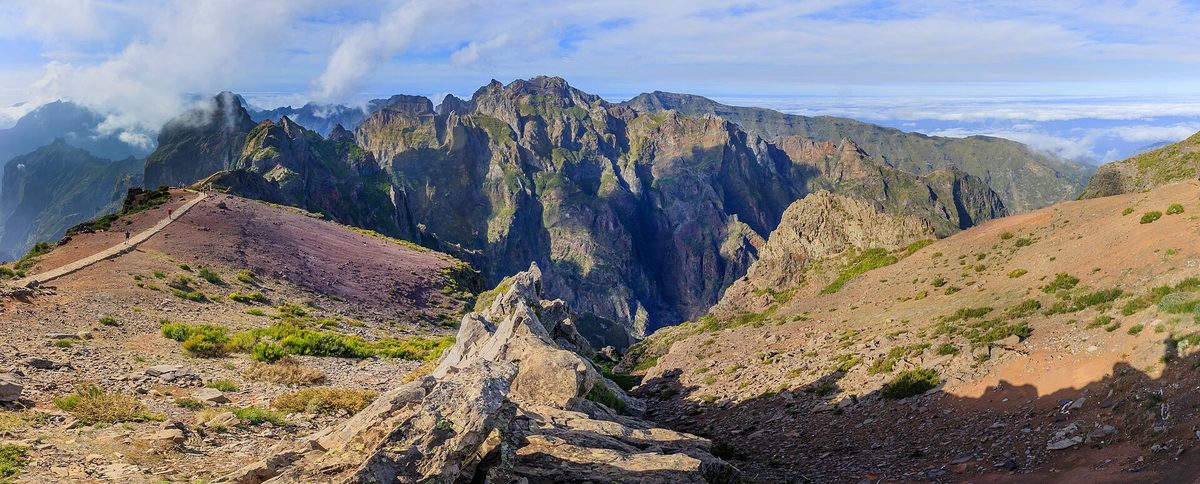
Madeira runs about 20°C in December, two degrees cooler than the Canaries, and gets almost exactly ten hours of daylight at the solstice. Do not come for the beaches. Prainha is the one natural golden-sand beach on the island, Seixal has natural black sand, and the rest is rock, sea pools and cliff. What Madeira has instead is the best winter walking in Atlantic Europe, on the levada paths that follow the island’s irrigation channels through laurel forest.
The levadas are the reason to go in winter specifically. In summer they are hot and busy; in January they are cool, green and half empty. Do the Levada do Caldeirao Verde for the classic version, or the Pico do Arieiro to Pico Ruivo ridge walk if you have a head for heights and are willing to start before dawn.
Two warnings. Madeira’s mountain weather turns fast, and the ridge walk gets closed for wind and ice more often in winter than the tourist board mentions. And Funchal on New Year’s Eve is one of the biggest firework displays in Europe, which is spectacular and means hotel prices roughly double for that week. Book by September or come in mid-January instead.
Malta and Gozo: winter culture with an outside table

Malta sits at around 17°C in December and January, with nine hours and forty-three minutes of daylight on the solstice, among the highest figures in this article. It is too cool to swim comfortably for most people and warm enough to sit outside at lunch, which for a cultural trip is the better trade.
Winter is the correct season for Malta and I will argue that with anyone. The island is small, dense with history, and unbearably hot and crowded from June to September. In January you can walk Valletta’s grid without queuing, get into St John’s Co-Cathedral to see the Caravaggio in something close to peace, and take the ferry across to Gozo for the day without booking anything.
The catch: Comino and its Blue Lagoon are effectively a summer operation. Ferries run a reduced winter service and the lagoon in February is beautiful and freezing and has no facilities open. Treat it as a boat trip and a photograph rather than a swim. Some coastal restaurants in Marsalforn and Xlendi on Gozo close from November to March, so eat in Victoria or Valletta and you will never notice.
Cyprus: the warmest thing in the eastern Mediterranean
Coastal Cyprus around Paphos and Larnaca holds roughly 19°C in December, which makes it the warmest place in Europe outside the Atlantic islands, and it has nine hours and forty-nine minutes of daylight at the solstice. It also has the strangest winter offer on this list: you can ski in the Troodos Mountains and sit on a beach on the same day, because Mount Olympus at 1,952m gets enough snow for a short season, typically January to March.
I would not fly to Cyprus for the skiing, which is four short lifts and a novelty. I would fly to Cyprus in January for the archaeology, the Akamas peninsula walks, and the fact that it is warm when nowhere else at this longitude is. Paphos has the Roman mosaics and the Tombs of the Kings; the Troodos painted churches are UNESCO-listed and almost empty in winter.
Note that some Ayia Napa and Protaras hotels close entirely from November to March. Base yourself in Paphos, Limassol or Larnaca and this is not an issue.
Crete and Rhodes: cheap, quiet, partly shut

Crete runs about 16°C on the north coast in December with nine hours and forty-five minutes of solstice daylight, and it is the best-value warm-ish destination in this article at roughly EUR 65 to 110 a day. Chania’s Venetian harbour in January, with the tavernas that stay open full of Cretans rather than visitors, is one of my favourite things in European travel.
Be clear-eyed about the closures, though, because this is the destination where the gap between the brochure and February is widest. Outside Chania, Rethymno and Heraklion, a large proportion of the tourist infrastructure shuts down from November and reopens around late March. The south coast villages, Elafonisi, most of the beach hotels, many of the car hire desks at the smaller offices: closed. Bus services drop to a skeleton timetable. If you want Crete in winter, base yourself in one of the three main north-coast towns, hire a car from the airport, and treat the rest of the island as day trips.
Rhodes is similar but smaller in scale. The medieval Old Town stays open year-round because people live in it, and walking those streets in January without the cruise crowds is a completely different experience from July. Lindos, by contrast, largely closes.
Andalusia: Seville, Granada, Malaga and Cordoba
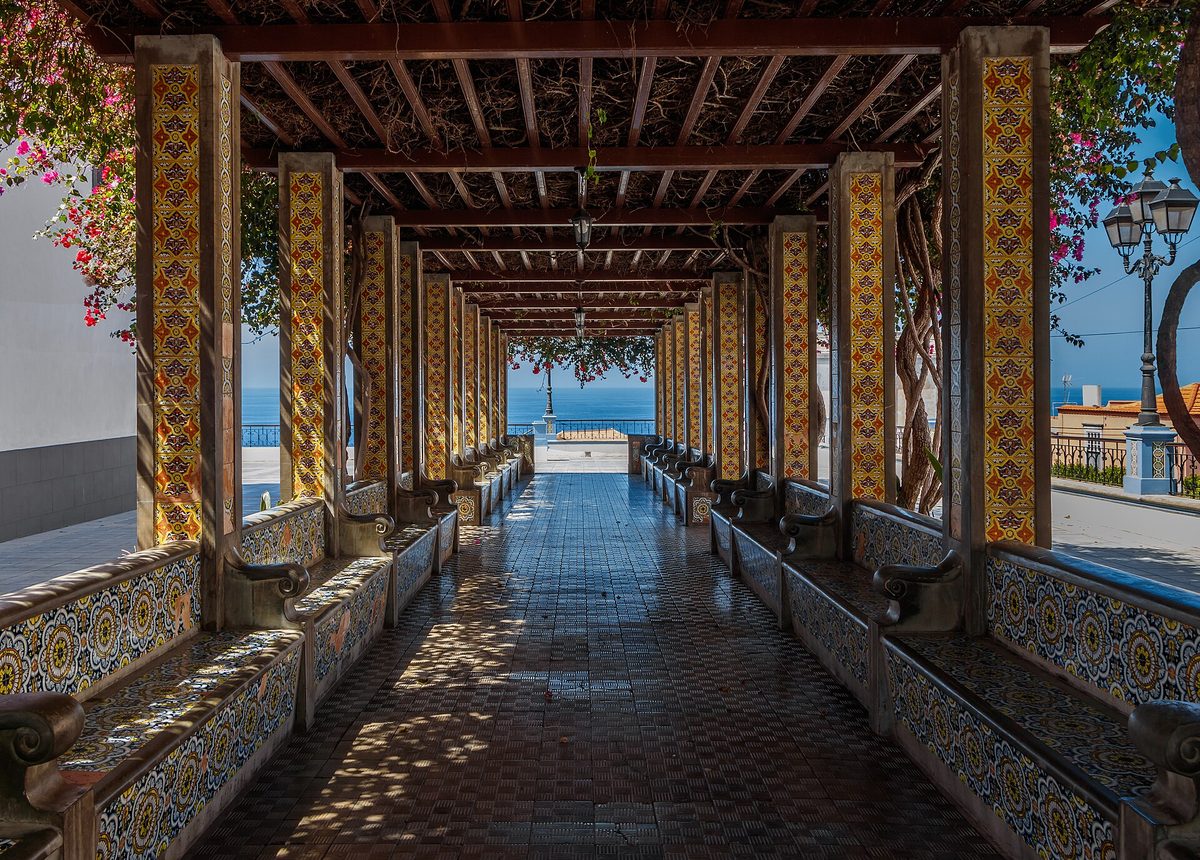
Southern Spain in winter is the answer for people who want warmth and a city rather than warmth and a beach. Seville and Malaga both sit around 17°C in December with roughly nine and a half hours of daylight. Seville in January has orange trees in fruit, no queue for the Alcazar, and hotel rates well below the ruinous levels of Semana Santa and the April feria.
Granada catches people out. It sits at 738m, so it is colder than the rest of Andalusia, around 12°C to 13°C in the day and near freezing at night. But the Alhambra with the Sierra Nevada snow-capped behind it is the single best view in Spain, and you can be skiing at Sierra Nevada, mainland Europe’s most southerly resort, within an hour of the city. Book Alhambra tickets weeks ahead regardless of season; the daily cap applies in January just as it does in August.
Malaga has quietly become one of Spain’s better city breaks, with the Picasso Museum, the Centre Pompidou outpost and a very good food scene around the Mercado Atarazanas. It also has the best winter flight connections in Andalusia, which matters more than it sounds.
Lisbon and the Algarve
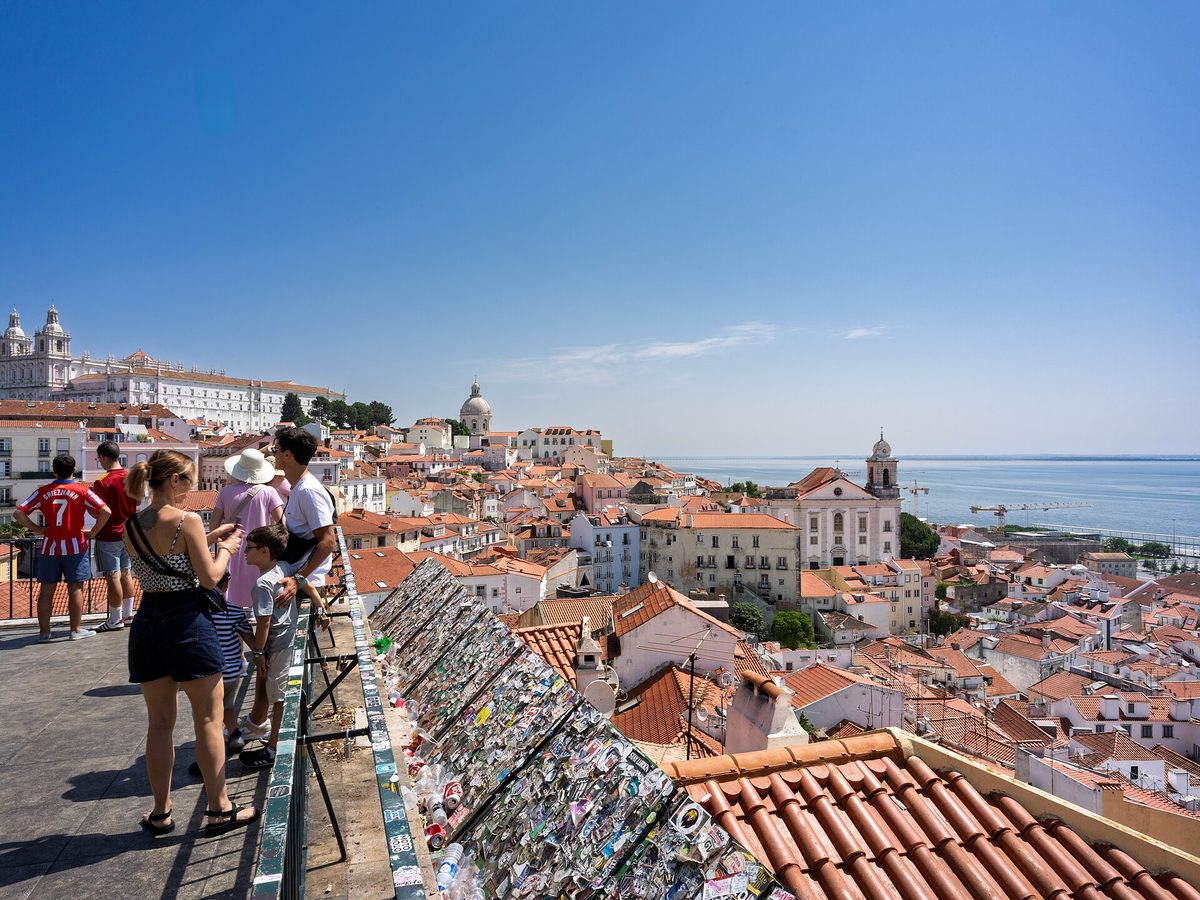
Lisbon in winter is around 15°C and gets nine hours and twenty-seven minutes of solstice daylight, more than any other western European capital in this article. It also rains. December and January are Lisbon’s wettest months, and the tiled pavements turn treacherous when wet, which is not a joke if you are walking the hills of Alfama. Bring shoes with grip.
Set against that, you get a great city at half the summer price with no queue for the tram 28 and no cruise ship crowds in Belem. The Algarve, an hour and a half south by train, is milder and drier than Lisbon and largely asleep. Faro, Tavira and Lagos stay open; the resort strips do not.
Christmas markets: the cities, and the dates that actually matter

If you read one paragraph of this article, make it this one. Christmas markets do not all run until Christmas, and they certainly do not all run past it. German markets overwhelmingly pack up on 23 or 24 December. If you have booked a trip for the 27th expecting Nuremberg’s Christkindlesmarkt, you will find an empty square and a lot of scaffolding.
Most markets are governed by a fixed rule rather than an arbitrary date, which means you can work out the shape of any season before the official announcement. The anchor is the first Sunday of Advent, which in 2026 falls on 29 November. Nuremberg opens the Friday before it. Dresden’s Striezelmarkt opens the Wednesday before it, which in 2026 means 25 November. Many others open the Monday before it. Then they close, and where they close is the part that varies.
Christmas market dates for the 2026 season
The table below gives expected 2026 opening and closing dates. Markets that follow a fixed Advent rule are reliable. Markets whose dates are set annually by the city are marked as provisional, and I would confirm those on the official tourist board site before booking anything non-refundable, because organisers typically only publish final dates four to six weeks ahead.
| Market | Expected 2026 dates | Confidence | Open after Christmas? |
|---|---|---|---|
| Nuremberg Christkindlesmarkt | 27 Nov to 24 Dec | High, fixed Advent rule | No |
| Dresden Striezelmarkt | 25 Nov to 24 Dec | High, fixed Advent rule | No |
| Cologne (Cathedral market) | Around 16 Nov to 23 Dec | Opens early, dates provisional | No |
| Munich Marienplatz | Around 20 Nov to 24 Dec | Provisional | No |
| Rothenburg Reiterlesmarkt | Around 20 Nov to 23 Dec | Provisional | No |
| Strasbourg Christkindelsmarik | 27 Nov to 24 Dec, possibly later | Closing date not yet announced | Check before booking |
| Colmar | Around 23 Nov to 29 Dec | Provisional | Yes |
| Vienna Rathausplatz | Mid Nov to 26 Dec | Provisional | Yes, one day |
| Vienna Schonbrunn | Around 6 Nov to 6 Jan 2027 | Provisional | Yes, becomes a New Year market |
| Prague Old Town Square | Late Nov to around 6 Jan 2027 | Provisional | Yes |
| Budapest Vorosmarty and Basilica | Mid Nov to early Jan 2027 | Provisional | Yes |
| Tallinn Town Hall Square | Late Nov to around 28 Dec | Provisional | Yes, briefly |
| Copenhagen Tivoli | Mid Nov to around 3 Jan 2027 | Provisional | Yes |
| Krakow Main Market Square | Late Nov to early Jan 2027 | Provisional | Yes |
What to do with that table. If your trip is between Christmas and New Year, go to Vienna, Prague, Budapest, Krakow or Colmar. If your trip is in the first three weeks of December, everywhere is open and you should choose on other grounds. The last full weekend of German markets in 2026 is 19 to 20 December, which will be the busiest weekend of the season by a distance. The best combination of full markets and manageable crowds is the first ten days of December, and that is when I would go.
One more piece of timing: most markets are closed or on drastically reduced hours on 24 December itself, and almost everything in Germany and Austria shuts on 25 and 26 December, including supermarkets and many restaurants. Book Christmas Day dinner in advance or eat at your hotel.
Strasbourg and Colmar: the Alsace double

Strasbourg has been running a Christmas market since 1570 and calls itself the Capital of Christmas, which is the kind of claim that usually irritates me and in this case is roughly fair. The market is not one market but a dozen scattered across the city, and the setting, a UNESCO-listed island of half-timbered houses around a pink sandstone cathedral, does most of the work. December daytime highs are around 6°C and you get eight hours and seventeen minutes of solstice daylight.
Colmar, 70km south and 30 minutes by train, is the better one. I will defend that. It is smaller, the six markets are more concentrated, the canal quarter is lovely at night, and it is meaningfully cheaper to sleep in. The classic move is to stay in Colmar and day-trip to Strasbourg rather than the reverse.

Practical: Strasbourg is on the TGV, 1h50 from Paris Gare de l’Est. Colmar is 30 minutes further on a regional train. Hotel prices in Strasbourg roughly double for market weekends and sell out by September; Colmar sells out too but later. Both cities have security controls at the market entrances, which means bag checks and queues at peak times. Go on a weekday if you possibly can.
If you have a car, the Alsace wine route villages between them, Riquewihr, Ribeauville, Eguisheim and Kaysersberg, run smaller markets on specific weekends only rather than continuously. Check individual village dates; turning up midweek to a closed village is a common disappointment.
Nuremberg: the traditionalist’s market

The Christkindlesmarkt has rules, and I like it for that. Stalls must use traditional materials, plastic garlands and piped music are banned, and the result is a market that looks like the thing everyone else is imitating. It runs from the Friday before first Advent, so 27 November 2026, to 24 December, in the Hauptmarkt under the Frauenkirche.
Eat the Nurnberger Rostbratwurst, three in a bread roll, standing up, and the Lebkuchen, which is a completely different substance from the gingerbread sold elsewhere. December highs are around 4°C with eight hours and nine minutes of solstice daylight.
The market gets extremely crowded on December weekends, to the point where you are shuffling rather than walking. If that sounds unappealing, Rothenburg ob der Tauber, a little over an hour away by car, gives you the same aesthetic in a walled medieval town without the crush.
Dresden: the oldest, and the underrated one

The Striezelmarkt dates to 1434, which makes it the oldest documented Christmas market in Germany, and it happens in front of a rebuilt baroque old town that is itself an extraordinary story. December highs around 4°C, seven hours and fifty-four minutes of solstice daylight, and prices noticeably below Munich or Cologne.
Dresden’s advantage is that it has four or five other markets within walking distance of the Striezelmarkt, including a very good medieval-themed one at Stallhof in the palace courtyard, so you are not dependent on a single square. The Frauenkirche and the Zwinger are both indoor options for the hours when it is too cold to keep standing outside, which in Dresden in December is most afternoons.
Vienna: markets plus a city that works in the cold
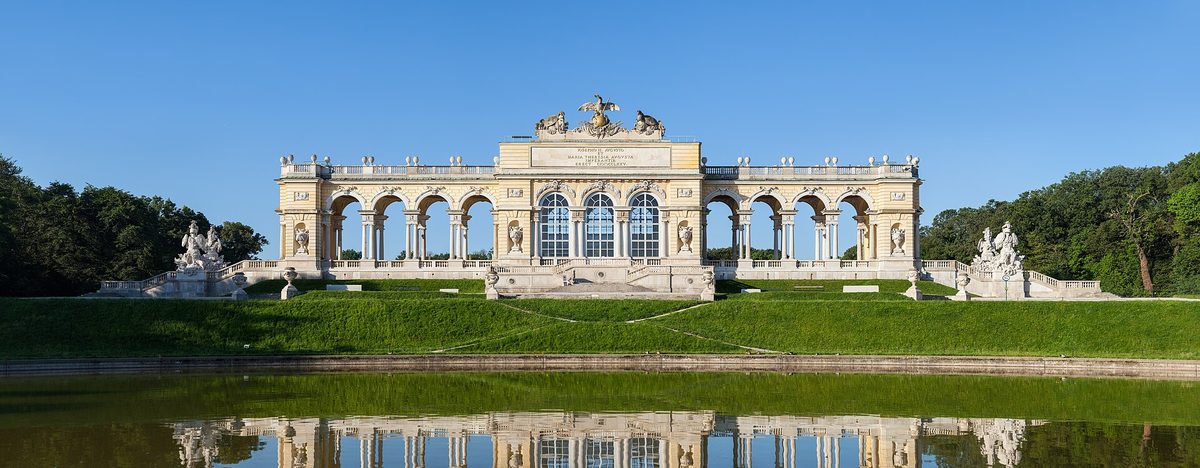
Vienna is my recommendation for anyone who wants a Christmas market trip but suspects they will be bored of markets by day two. December highs are around 4°C with eight hours and twenty minutes of solstice daylight, and the city has more indoor culture per square kilometre than almost anywhere in Europe.
The Rathausplatz market in front of the city hall is the big one and the most touristy. Schonbrunn’s is prettier and calmer. Spittelberg, in the seventh district, is the one Viennese people actually go to, tucked into cobbled lanes with better craft stalls and less tat. Am Hof and Karlsplatz are both worth an hour.
Crucially, Schonbrunn typically continues as a New Year market to around 6 January, so Vienna works for a trip after Christmas when Germany does not. Add the Kunsthistorisches Museum, an afternoon in a proper coffee house with a newspaper on a wooden holder, and if you can get a ticket, something at the Staatsoper. Standing-room tickets go on sale at 10am on the day of the performance, at roughly EUR 13 to 18, and are one of the best-value nights out in Europe.
Prague, Budapest, Tallinn and Krakow: the after-Christmas group

These four are grouped because they share the useful property of running into early January, and because they are the best value in this section.
Prague puts its main market in the Old Town Square under the astronomical clock, and it is beautiful and mobbed. The Wenceslas Square market is quieter, and the small one at Prague Castle has the best view. December highs around 5°C, eight hours and four minutes of daylight. Prague in January after the market ends is also excellent and dramatically cheaper.

Budapest is the one I would pick for a first winter trip on a budget. It has two central markets, at Vorosmarty Square and outside St Stephen’s Basilica, where there is a light projection show onto the basilica facade every half hour after dark. It also has the thermal baths, which are the best cold-weather activity in any European city. Szechenyi in the snow, sitting in the outdoor thermal pool at around 38°C with steam coming off the surface and your hair freezing, is worth the flight on its own. The big 50m pool alongside it is a good deal cooler, so check which one you are getting into. Go early, before 9am, to have it close to yourself.

Tallinn has the most reliable snow of the four and one of the most complete medieval old towns in northern Europe. It is also cold: an average December high of around 1°C and just six hours and three minutes of daylight at the solstice, sunrise at 9.18am and sunset at 3.20pm. Plan around that. Two long outdoor stints with a long lunch in between works far better than trying to sightsee straight through.
Krakow is the cheapest city in this article at roughly EUR 60 to 105 a day, has a huge market in Europe’s largest medieval town square, and is within reach of Auschwitz-Birkenau and the Wieliczka salt mine. Winter is a serious and appropriate time to visit Auschwitz, and it is far less crowded than summer. Book the guided entry slot well in advance even so.
Copenhagen and Tivoli

Tivoli Gardens is a fairground that becomes something else entirely in December, lit by around a million lights, and it is the reason to come. It typically opens in mid-November and runs to around 3 January, then reopens for a separate winter season in February.
Copenhagen is expensive, around EUR 140 to 220 a day, and December highs of 4°C with seven hours of daylight mean you will be indoors a lot. Budget for that: the food is superb and costs accordingly, and a Tivoli entry plus rides adds up. If money is the constraint, this is the one to swap for Tallinn or Krakow.
Snow and mountains: where to go, and when the season actually starts
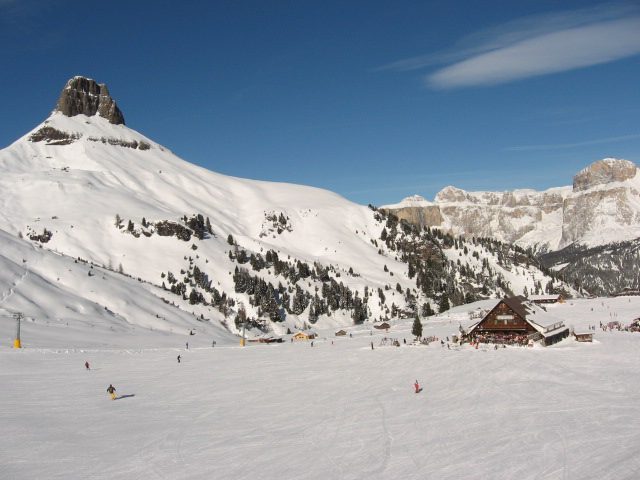
The alpine winter has a shape that is worth understanding before you book, because the price difference between the right week and the wrong week is enormous, often a factor of two for the identical apartment.
The alpine calendar in five parts
Late October to late November is glacier-only. A handful of high or glacier resorts open early, typically Solden, Hintertux, Cervinia, Val Thorens and Tignes. Snow is limited to upper runs, the atmosphere is thin, and it is for keen skiers rather than holidays.
Early to mid December is when most resorts open properly and it is the best-value skiing of the season. Lift passes and accommodation are at low-season rates, the slopes are quiet, and conditions in the high resorts are usually good. The risk is snow cover lower down.
20 December to around 3 January is the most expensive fortnight of the entire European year. Everything is booked, prices peak, and the slopes are full. Avoid unless the dates are fixed for you.
Early to mid January is the sweet spot and the answer to most people’s question. Snow is generally reliable, crowds evaporate after the New Year exodus, and prices fall back sharply. The window from roughly 4 to 17 January 2027 is where I would send anyone with flexible dates.
February to March brings the best snow depth of the season and the school holiday peaks. British, French and Dutch half-terms cluster in mid-February and push prices back up. March gives you long days, softer snow and spring skiing conditions, and is underrated.
Expected 2026/27 season opening dates
These are the typical opening patterns for major resorts based on recent seasons rather than confirmed dates, because resorts only commit once they see the snow. Treat them as a planning guide and check the resort site before booking.
| Resort | Country | Typical season start | Notes |
|---|---|---|---|
| Hintertux | Austria | Around September to June | Austria’s longest season, no longer 365 days |
| Zermatt | Switzerland | Late November | Summer glacier skiing suspended as of 2026 |
| Solden | Austria | Late September | Glacier first, full resort from around late Nov |
| Val Thorens | France | Mid to late November | Highest resort in Europe at 2,300m |
| Cervinia | Italy | Late October | Links to Zermatt across the border |
| Ischgl | Austria | Late November | Known for the season-opening concert |
| Val d’Isere | France | Late November | |
| St Moritz | Switzerland | Late November | |
| Cortina d’Ampezzo | Italy | Late November | Dolomiti Superski area |
| St Anton | Austria | Early December | |
| Chamonix | France | Early December | Some lifts run year-round |
| Val Gardena | Italy | Early December | |
| Bansko | Bulgaria | Mid December | Cheapest major resort in Europe |
Easter falls early in 2027, on 28 March, near the front of its 22 March to 25 April range. That pulls the family peak forward into late March, and it means the quiet, high-sun weeks of April are unusually good value in the resorts that stay open. February half-term crowds cluster in the middle two weeks of the month across the UK, France and the Netherlands, so avoid roughly 8 to 22 February if you can.
The Austrian Tyrol and Innsbruck

If you want one alpine base that is not a purpose-built resort, make it Innsbruck. It is a real city of 130,000 people with a medieval old town, museums, proper restaurants and a Christmas market, and the Nordkette cable car takes you from the city centre to 2,256m in about twenty minutes. You can ski in the morning and be in a coffee house by two.
The Ski Plus City Pass covers around a dozen resorts in the surrounding valleys plus city attractions and swimming pools, which is the right product for anyone who wants to ski three days out of six. Beginners should look at the Stubai valley or Axamer Lizum; stronger skiers at the Stubai glacier or a day trip out to St Anton.
Innsbruck sits at 574m, so the valley itself often has no snow while the mountains above are covered. That surprises people. It also means the city is easy to walk around in winter without ice underfoot.
The Dolomites: the most beautiful skiing in Europe
I have skied a lot of Europe and nothing looks like the Dolomites. The pale limestone towers turn pink at sunrise and sunset in a way that photographs badly and is remarkable in person. The Dolomiti Superski pass covers twelve areas and over 1,200km of pistes on a single ticket, the largest area you can ski on one pass anywhere. Not all twelve are lift-linked to each other, so check the map before assuming you can ski between them.
The signature run is the Sellaronda, a circuit of four mountain passes around the Sella massif that you can ski clockwise or anticlockwise in a day. It is not technically hard, mostly blue and red, but it takes about five to six hours with lifts and you need to start by 9am to be sure of finishing before the last lifts. Do it anticlockwise for better afternoon light.
Food is the other reason to come. Mountain huts in the Dolomites serve actual meals, canederli dumplings and speck and strudel, at tables with tablecloths, because this is South Tyrol and the culture is Austrian as much as Italian. It is a different proposition from a French self-service cafeteria.
Chamonix, Zermatt and the serious mountains
Chamonix is not a beginner’s resort and does not pretend to be. Its skiing is spread across separate areas requiring buses, the Vallee Blanche off-piste descent needs a guide and glacier equipment, and the town is full of people who take mountains very seriously. What it gives you is Mont Blanc out of the window, the Aiguille du Midi cable car, which tops out at 3,777m with a terrace at 3,842m reached by a lift inside the rock, and an atmosphere no purpose-built resort can manufacture. It is also the easiest major alpine resort to reach without a car, about an hour and fifteen minutes from Geneva airport.
Zermatt is car-free, expensive at roughly EUR 200 to 330 a day, and has the Matterhorn, which does not get less impressive however many photographs of it you have seen. It has the highest lift-served skiing in Europe and links across to Cervinia in Italy, where lunch costs noticeably less. You reach Zermatt by train from Tasch; there is no road in for private cars. Note that the Matterhorn Alpine Crossing, the year-round cable car link through to Italy, is scheduled to close for maintenance from 7 January to 26 February 2027, so check before planning to cross.
Bansko: the budget alternative that is actually good
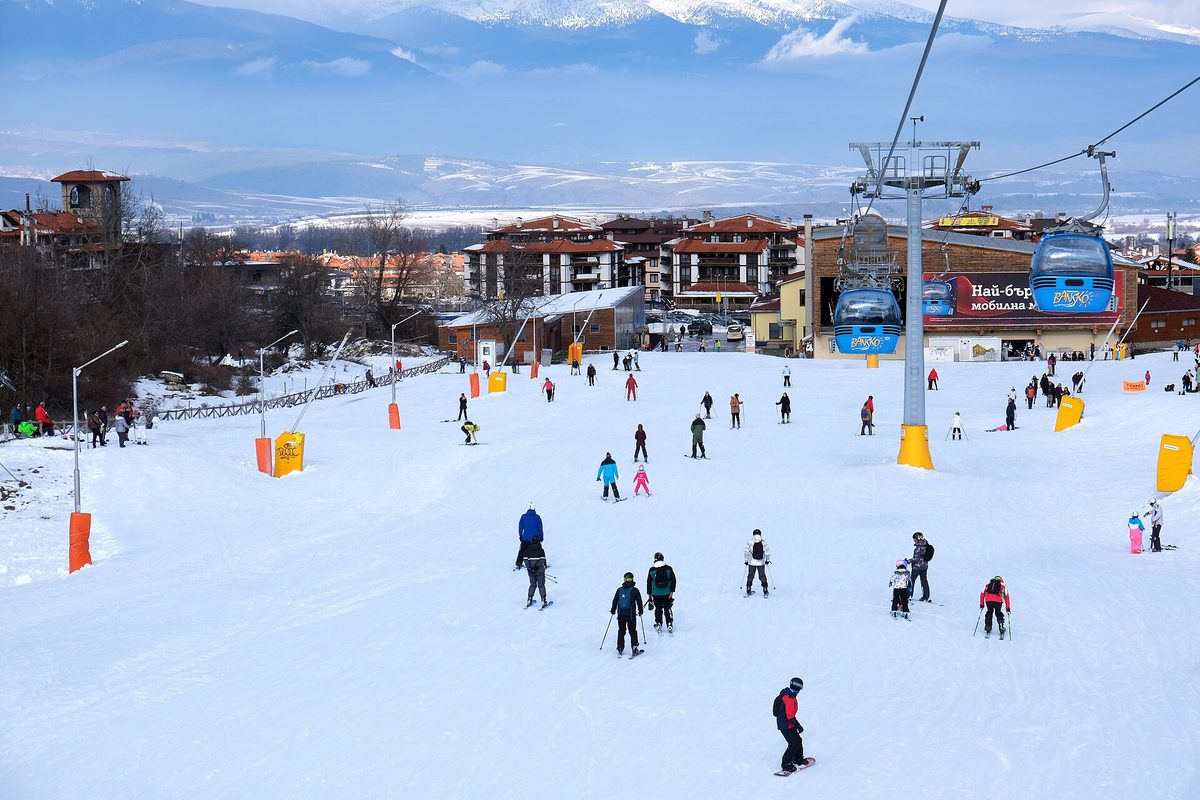
Bansko in Bulgaria is roughly a third of alpine prices for lift passes, food and accommodation, and the skiing is genuinely decent: about 75km of pistes, a long gondola from town, and reliable snow-making. The town has a real old quarter with mehana taverns serving grilled meat and rakia, and it has become a winter base for remote workers, which has improved the coffee considerably.
What you give up is scale and lift efficiency. The main gondola queue in the morning during peak weeks is legendary and not in a good way. Buy your pass the day before, get there before 8.30am, or stay at the mid-mountain hotels and skip the queue entirely.
The Arctic: northern lights, and how to actually see them

This is the section where I most want to correct the record, because the way northern lights trips are sold sets people up to be disappointed.
What actually determines whether you see the aurora
Three things have to line up: darkness, clear sky, and geomagnetic activity. You control the first by choosing the season and the second, partly, by choosing the location. You do not control the third at all.
Season. The aurora happens year-round but is only visible when the sky is dark enough, which in the Arctic means roughly late September to late March. The two commonly cited peaks, around the equinoxes in late September and late March, are a real effect but a modest one. More useful: those months give you dark nights plus slightly better weather odds than midwinter.
Location. You want to be under the auroral oval, the ring of activity centred on the magnetic pole, which passes over Tromso, the Lofoten islands, Abisko, Kiruna, Alta and northern Finland. Iceland sits at the lower edge of it, which means Iceland needs slightly stronger activity for the same show.
Cloud is the real enemy, not activity. Coastal Tromso gets a lot of weather off the Atlantic. Abisko, in Swedish Lapland, sits in a rain shadow created by the mountains around Lake Tornetrask and is reliably among the clearest places in the region. That is why serious aurora chasers go to Abisko rather than somewhere prettier.
Check the forecast, both kinds. For geomagnetic activity, the NOAA Space Weather Prediction Center publishes a 30-minute aurora forecast and a three-day Kp index outlook. Kp 3 is usually enough this far north. For cloud, use the local meteorological service, yr.no in Norway or the Finnish and Swedish equivalents, because a clear sky at Kp 2 beats an overcast sky at Kp 5 every time. One more thing worth knowing: Solar Cycle 25 peaked in 2024 and 2025, so the 2026/27 season sits on the declining side of it. Activity is still good, just past its best.
How many nights you need
On a good week in Tromso, a chase tour that drives to find clear sky will typically deliver something on a majority of nights. On a bad week you can go five nights and see nothing but cloud.
My honest advice: book a minimum of three nights, and four or five if the aurora is the main reason for the trip. A two-night trip is a coin flip. Book a guided chase rather than standing outside your hotel, because the guides drive, sometimes for two hours, to wherever the sky is clear, and that mobility is most of the value. Expect to pay somewhere around NOK 1,700 to 2,200 per person for a small-group minibus chase from Tromso, less for a large coach tour, and check whether the operator offers a free repeat if you see nothing.
Manage the photography expectation too. A camera on a long exposure sees far more colour than your eye does. A moderate aurora often looks like a pale grey-green smudge in person and spectacular on the resulting photograph. A strong one is unmistakable and moves.
Tromso
Tromso is the practical Arctic base: a real city of around 80,000 people with restaurants, a university, direct flights, and the highest concentration of tour operators in the north. December daytime highs hover around 0°C, which is remarkably mild for 69 degrees north and roughly five degrees warmer than inland Lapland, thanks to the Gulf Stream. What it is, is dark. The sun does not rise at all between 27 November and 15 January. What you get instead is several hours of blue twilight in the middle of the day, a long slow blue hour that is unlike anything further south.
There is more to Tromso than the sky: the Fjellheisen cable car for the view over the city, the Arctic Cathedral, and dog sledding. Whale watching runs roughly November to January, when orcas and humpbacks follow the herring, though the herring have shifted north in recent years and most trips now sail from Skjervoy, about two hours away by road. Budget a full day for it.
Rovaniemi and Finnish Lapland

Rovaniemi sits almost exactly on the Arctic Circle and is the Santa Claus Village destination, which makes it the obvious choice with children and the obvious thing to avoid without them. It is properly cold, with December daytime highs averaging around -5°C and cold snaps dropping well below -20°C, and it gets two hours and fourteen minutes of daylight at the solstice, sunrise at 11.08am and sunset at 1.22pm.
It is inland, so it is colder and drier than Tromso with better odds of a clear sky. Husky and reindeer sledding, snowmobiling and glass igloo accommodation are all here and all expensive. If you want Lapland without the Santa infrastructure, look at Levi, Yllas or Saariselka further north.
Abisko and Swedish Lapland
Abisko is a tiny place with a national park, a mountain station and the Aurora Sky Station, reached by chairlift, and it exists on this list for one reason: the clearest skies in the Arctic. If seeing the lights is the only thing that matters, this is the highest-probability location in Europe. There is very little else to do, which is the trade.
Combine it with Kiruna and the Icehotel in Jukkasjarvi, which is rebuilt each winter from ice off the Torne river and is a genuine piece of craft rather than a gimmick.
Iceland: aurora plus everything else

Iceland is the compromise pick, and a good one. Aurora odds are lower than Abisko because it sits at the edge of the oval and the weather is famously unstable, but Iceland gives you a full itinerary that does not depend on the sky. Waterfalls, the ice cave season, black sand beaches, geothermal pools and a capital city with a proper restaurant scene.
Reykjavik gets four hours and seven minutes of daylight on the solstice, sunrise at 11.22am and sunset at 3.29pm, and December highs sit around 3°C, which is milder than most people expect. The wind is what gets you, not the temperature.

Winter-specific Iceland warnings. The F-roads into the interior are closed and the Highlands are inaccessible. Route 1, the ring road, is open but can close at short notice in storms, and the north and east are far harder in winter than the south. If you have less than a week, do the south coast out and back rather than attempting the full ring. Check road.is every morning, without exception. Ice caves, which are only accessible in winter, run roughly November to March and must be booked with a guide.
Great cities that are better in winter than in summer
This is my favourite category, and it sits awkwardly between the winter-sun and Christmas-market framings, which is probably why it gets overlooked. Some of Europe’s best cities are actively improved by cold weather, mainly because the crowds that make them difficult in July simply are not there.
Venice in January and early February

Venice in winter is the best version of Venice, by a distance. December highs are around 8°C, it is damp, the fog rolls in off the lagoon, and a city that logged over 13 million overnight stays in 2024, before you count the day trippers, briefly belongs to the fewer than 50,000 people who still live in the historic centre. St Mark’s Square at eight in the morning in January, empty, with the mist sitting on the water, is one of the great sights in Europe.
Practicalities favour you too. The access fee for day trippers applied in 2026 only on selected days between spring and midsummer, and no winter scheme has been announced, so a winter visit is not currently affected. Check the city’s official page before you travel, since the scheme has changed each year. Hotel rates are at their annual low in January. Restaurant tables that require booking weeks ahead in September are available on the night.
Acqua alta is the trade-off. High water peaks between October and January, and it is worth understanding rather than fearing. Flooding is tidal, so it lasts a couple of hours around high tide and then recedes; the city puts up raised walkways on the main routes; the MOSE barrier system now protects against the most serious events. Bring waterproof boots, download the Hi!Tide Venice app for tide forecasts, and treat it as an inconvenience rather than a disaster.
Carnival is the exception to everything above. It fills the city and pushes prices to summer levels. In 2027 Carnival ends on Shrove Tuesday, 9 February, with the roughly two weeks before that being the busy period. If you want quiet Venice, come in January or after Ash Wednesday on 10 February. If you want Carnival, book by October.
Rome

Rome averages around 13°C in December and gets nine hours and seven minutes of solstice daylight, comfortably more than Paris, London or Vienna. It is the warmest major cultural capital on the continent in winter and its main sites are the ones most improved by an absent queue.
January and February are the quietest months. You will still queue for the Vatican Museums, but you will queue for forty minutes rather than three hours, and the Colosseum, Forum and Palatine become pleasant rather than an endurance event. The city empties again in the weeks after Epiphany on 6 January.
It does rain, more than in summer, and some outdoor terraces close. Rome’s food, however, is at its best in winter: carciofi alla giudia when Roman artichokes come into season from late winter, and the heavy pasta dishes the city is actually built around.
Paris
Paris in December is around 8°C with eight hours and fourteen minutes of daylight, sunrise at 8.41am and sunset at 4.56pm. Both are late, because France runs on Central European Time despite sitting well to the west of it. The late sunrise is the more noticeable effect. Breakfast happens in the dark for most of December.
What Paris does well in winter is the indoor half of itself. The Louvre, the Musee d’Orsay and the Orangerie are all considerably more manageable, the department store windows on Boulevard Haussmann are an event in themselves, and sitting in a heated cafe terrace watching the street is a legitimate way to spend an afternoon. January is also the month of the soldes, the government-regulated national sales, which is a genuine reason to come if you shop.
Edinburgh and Hogmanay

Edinburgh gets just six hours and fifty-eight minutes of daylight on the solstice, sunset at 3.39pm, and December highs around 7°C. It is dark, often wet, and frequently windy, and it is still one of the best winter city breaks in Europe because the architecture suits the weather. A city of black stone and steep closes looks right in low light.
Hogmanay is the draw: a multi-day New Year festival with a torchlight procession, a street party and the Loony Dook cold-water swim on 1 January. Ticketed events sell out months ahead and accommodation over 30 December to 1 January costs roughly triple the January rate. If you want Edinburgh cheaply, come in the second half of January instead, when the city is quiet and hotel prices are at their annual floor.
Budapest, Krakow and Ljubljana in deep winter
All three cities appear above for their Christmas markets. They are also excellent in January and February, once the markets have gone and the prices have dropped further. Budapest’s baths, Krakow’s cellar bars and Ljubljana’s compact riverside centre all work better without crowds, and you can eat and sleep well in any of them for under EUR 100 a day.
The daylight problem, in numbers
Daylight trips up more winter itineraries than weather does, and it is easy to check before you book rather than after. Here are the figures for 34 destinations, calculated for 2026 and 2027 in local time. Note how much changes between the solstice and mid-February; a Tallinn trip in late February gets over three hours more usable light than the same trip in December.
| City | Sunrise 21 Dec | Sunset 21 Dec | Daylight 21 Dec | Daylight 15 Jan | Daylight 15 Feb |
|---|---|---|---|---|---|
| Tromso, Norway | no sunrise | no sunset | Polar night | Sun returns approx 15 Jan | 7h 21m |
| Abisko, Sweden | no sunrise | no sunset | Polar night | 2h 46m | 7h 42m |
| Rovaniemi, Finland | 11:08 | 13:22 | 2h 14m | 4h 11m | 8h 07m |
| Reykjavik, Iceland | 11:22 | 15:29 | 4h 07m | 5h 22m | 8h 34m |
| Tallinn, Estonia | 09:18 | 15:20 | 6h 03m | 6h 50m | 9h 13m |
| Stockholm, Sweden | 08:43 | 14:48 | 6h 05m | 6h 52m | 9h 14m |
| Edinburgh, Scotland | 08:42 | 15:39 | 6h 58m | 7h 35m | 9h 35m |
| Copenhagen, Denmark | 08:37 | 15:38 | 7h 01m | 7h 38m | 9h 37m |
| Dresden, Germany | 08:06 | 16:00 | 7h 54m | 8h 23m | 10h 01m |
| Krakow, Poland | 07:36 | 15:40 | 8h 04m | 8h 32m | 10h 05m |
| Prague, Czechia | 07:58 | 16:02 | 8h 04m | 8h 32m | 10h 05m |
| Nuremberg, Germany | 08:09 | 16:18 | 8h 09m | 8h 37m | 10h 07m |
| Paris, France | 08:41 | 16:56 | 8h 14m | 8h 41m | 10h 10m |
| Strasbourg, France | 08:18 | 16:35 | 8h 17m | 8h 43m | 10h 11m |
| Vienna, Austria | 07:42 | 16:03 | 8h 20m | 8h 46m | 10h 13m |
| Munich, Germany | 08:01 | 16:22 | 8h 21m | 8h 47m | 10h 13m |
| Colmar, France | 08:18 | 16:39 | 8h 22m | 8h 47m | 10h 13m |
| Budapest, Hungary | 07:29 | 15:55 | 8h 26m | 8h 51m | 10h 15m |
| Zermatt, Switzerland | 08:08 | 16:46 | 8h 38m | 9h 02m | 10h 21m |
| Ljubljana, Slovenia | 07:41 | 16:19 | 8h 38m | 9h 01m | 10h 21m |
| Chamonix, France | 08:11 | 16:50 | 8h 39m | 9h 02m | 10h 22m |
| Venice, Italy | 07:47 | 16:30 | 8h 43m | 9h 05m | 10h 23m |
| Dubrovnik, Croatia | 07:14 | 16:17 | 9h 02m | 9h 23m | 10h 32m |
| Rome, Italy | 07:34 | 16:42 | 9h 07m | 9h 27m | 10h 35m |
| Lisbon, Portugal | 07:51 | 17:18 | 9h 27m | 9h 45m | 10h 45m |
| Athens, Greece | 07:37 | 17:09 | 9h 31m | 9h 49m | 10h 47m |
| Seville, Spain | 08:34 | 18:09 | 9h 35m | 9h 52m | 10h 49m |
| Malaga, Spain | 08:26 | 18:05 | 9h 38m | 9h 55m | 10h 50m |
| Valletta, Malta | 07:08 | 16:51 | 9h 43m | 9h 59m | 10h 53m |
| Chania, Crete | 07:29 | 17:14 | 9h 45m | 10h 01m | 10h 53m |
| Paphos, Cyprus | 06:54 | 16:43 | 9h 49m | 10h 04m | 10h 56m |
| Funchal, Madeira | 08:06 | 18:06 | 10h 00m | 10h 14m | 11h 01m |
| Santa Cruz de Tenerife | 07:53 | 18:13 | 10h 20m | 10h 31m | 11h 11m |
| Las Palmas, Gran Canaria | 07:49 | 18:10 | 10h 21m | 10h 32m | 11h 12m |
How to read this. Below about seven hours of daylight, you can realistically do one major outdoor thing and one indoor thing per day, and you should book the outdoor one for late morning. Below five hours, plan a single outdoor activity and build the rest around interiors, food and dark-adapted things like markets and light displays. Above nine hours you can travel more or less normally.
Two things are worth flagging. First, sunrise time matters more than day length for how a trip feels. Paris and Vienna get almost identical daylight, but Vienna’s sun is up at 7.42am and Paris’s at 8.41am, so Vienna mornings feel usable and Paris mornings do not. Second, cloud in northern Europe in December can make even the light hours dim enough that photographs need a tripod at midday.
What closes in winter, and what stays open
Winter closures in Europe are extensive, predictable, and almost entirely unpublicised by the businesses that would like you to book a flight first and find out later.
Reliably closed or heavily reduced
- Greek island infrastructure. Outside Crete’s three main north-coast towns, Rhodes Old Town and Corfu Town, most island tourism closes from roughly November to late March or Easter. This includes hotels, most tavernas, car hire desks and inter-island ferry routes, which drop to a minimal winter schedule.
- Croatian and Montenegrin coast. Hvar, Korcula and most of the smaller islands largely shut. Dubrovnik, Split and Zadar stay open because people live and work in them year-round.
- Alpine passes. Many high passes close from around late October or November until May or June, including the Grossglockner High Alpine Road in Austria, the Stelvio in Italy, and the Furka, Susten and Grimsel in Switzerland. Satellite navigation will happily route you over a closed pass. Check before you drive.
- Iceland’s interior. All F-roads and the Highlands are closed. Non-negotiable.
- Norwegian mountain roads. Trollstigen and several high mountain passes close for winter, typically until late April or May. The Atlantic Road stays open year-round, and so does the coastal Hurtigruten route, but many fjord sightseeing operations pause.
- Coastal resort towns everywhere. Ayia Napa, Lindos, Marsalforn on Gozo, most of the Algarve resort strip, the Costa Brava beach towns. If a town exists only for summer tourism, assume it is shut.
- Some mountain cable cars run reduced or no service between the summer hiking and winter ski seasons, roughly late October to late November and again in late April.
Reliably open
- Major city museums and galleries. Most close one day a week, usually Monday, and shut on 25 December and 1 January. A handful close in January for maintenance, so check.
- Rail networks. European trains run year-round with minimal winter disruption. The night train picture is mixed rather than uniformly improving: several routes have been withdrawn in recent years while new ones, including Brussels to Milan, have launched.
- Thermal baths and spas. Budapest, Iceland, Slovenia and Baden-Baden all operate normally and are better in the cold.
- Canary Islands and Madeira. Winter is their high season, so everything is open.
- Christmas markets and ski resorts, obviously, within their own windows.
The dates that shut Europe down
Two periods where a lot more closes than people expect. 24 to 26 December: in Germany, Austria, Switzerland and much of central Europe, shops, supermarkets, many restaurants and most attractions close from midday on the 24th through the 26th. 1 January: almost everything, everywhere, is closed. Plan meals for both. 6 January, Epiphany, is a public holiday in Italy, Spain, Austria, Poland and parts of Germany, with widespread closures. It is not a holiday in Czechia, Hungary or most of northern Germany, so check the specific country.
What a European winter trip actually costs
Winter pricing in Europe swings violently in both directions, and knowing which direction applies where is worth more than any discount code.
Where winter is cheaper
Mediterranean cities and coastal destinations hit their annual low from mid-January to late February. Venice, Rome, Athens, Dubrovnik, Seville and Lisbon can all be booked at roughly half their summer rates. Central and eastern European cities drop steeply once the markets close in the first week of January. City-break flights are cheapest in the second half of January, which is the deadest travel fortnight of the European year.
Where winter is more expensive
The Canary Islands and Madeira are in high season and price accordingly, so expect to pay more in January than in May. Ski resorts peak from 20 December to 3 January and again during February half-terms. Any city with a famous Christmas market prices its December weekends at a premium, often double the November rate for the same room. Reykjavik, Tromso and Lapland are in aurora high season and are expensive throughout.
Rough daily budgets, per person
| Trip type | Budget | Mid-range | Comfortable |
|---|---|---|---|
| Central European city break, January | EUR 55-75 | EUR 90-140 | EUR 200+ |
| Christmas market weekend, December | EUR 90-120 | EUR 140-200 | EUR 300+ |
| Canary Islands, January | EUR 60-85 | EUR 90-150 | EUR 250+ |
| Ski week, mid-January, Austria or France | EUR 110-150 | EUR 180-260 | EUR 400+ |
| Ski week, Bansko | EUR 55-80 | EUR 90-130 | EUR 200+ |
| Northern lights, Tromso or Lapland | EUR 120-160 | EUR 180-260 | EUR 450+ |
| Iceland, winter, with car | EUR 110-150 | EUR 170-260 | EUR 400+ |
These cover accommodation, food and local transport, and exclude international flights, lift passes and big-ticket tours. Ski figures exclude equipment hire and the lift pass, both of which are significant.
Specific costs worth knowing
- Gluhwein at a German or Austrian Christmas market is typically around EUR 4 to 6 per cup, and up to EUR 7 in Berlin, plus a refundable mug deposit of roughly EUR 2 to 5. Return the mug or keep it as a souvenir; the deposit is designed to make either acceptable.
- Ski lift passes are the largest variable in a ski budget after accommodation, and I am not going to quote figures because they are reset every autumn and a stale number is worse than none. What holds is the ratio: Bulgarian and eastern European resorts run at roughly a third of Alpine prices, Italian resorts undercut French and Swiss ones, and Switzerland is the most expensive. Buy multi-day passes online in advance, where most resorts discount them, and check whether your accommodation includes a regional pass.
- Northern lights chase tours from Tromso run somewhere in the region of NOK 1,700 to 2,200 per person for a small-group minibus, less for a large coach, more for a photography-focused or boat trip.
- City tourist taxes apply in most major destinations and are charged per person per night on top of your booking. They have risen across the board in 2026, so check the specific rate for your city rather than assuming.
- Winter car hire in Iceland and the Alps costs more than the headline rate once you add mandatory winter tyres, gravel and sand-and-ash protection in Iceland, and possibly snow chains.
Winter logistics: the things that go wrong
Entry rules: EES is live, ETIAS is not yet

This has changed recently and a lot of older guides are wrong about it. The EU’s Entry/Exit System (EES) completed its phased rollout and became fully operational across all 29 Schengen countries on 10 April 2026. If you are a non-EU national, your passport is no longer stamped. Instead your face and fingerprints are registered at the border on your first crossing and checked electronically thereafter. Practically, this means longer queues at some land and air borders, particularly at the first crossing, so allow extra time at the airport.
ETIAS, the separate travel authorisation that visa-exempt visitors will need to apply for online in advance, has been delayed and is not in force. Official guidance points to a launch after EES is bedded in, with industry expectation now centred on 2027. Note that Cyprus and Ireland are outside the Schengen area and still stamp passports. It is set to cost EUR 20 and to be valid for three years or until your passport expires, whichever comes first. For a winter 2026/27 trip, you almost certainly do not need it, but check the official EU travel site before you go rather than relying on any article, including this one.
The 90-in-180-day Schengen rule is unchanged and is now enforced automatically by EES rather than by an official counting stamps, which makes overstaying much easier to detect.
Driving in winter
Winter tyre rules are legal requirements, not suggestions, and the fines are real.
- Austria: winter tyres are compulsory in wintry conditions from 1 November to 15 April.
- Germany: winter or all-season tyres are required whenever conditions are wintry, with no fixed dates.
- Italy: many regions mandate winter tyres or carrying chains from 15 November to 15 April, signposted locally.
- Switzerland: no blanket law, but you are liable if you cause an accident on unsuitable tyres, and insurers apply that.
- Scandinavia and the Baltics: winter tyres compulsory across a defined winter period, with dates varying by country.
Hire cars in alpine and Nordic countries usually come fitted with winter tyres as standard, but confirm at booking rather than at the desk. Chains are a separate charge almost everywhere. And check pass closures before trusting a satnav route, because navigation apps are unreliable about seasonal closures.
Trains

Rail is the best way to move around Europe in winter, and it is the recommendation I make most often in this season. Trains run in weather that grounds aircraft, stations are in city centres rather than an hour out, and the scenic routes are better under snow. The Bernina Express, the Glacier Express and the Semmering line are all improved by winter.
Book the high-speed international routes in advance, because walk-up fares are punishing. Night trains are useful for covering distance without losing daylight, which matters more in December than in June, though the network has contracted on some corridors even as new routes open elsewhere. One winter-specific point on flying: if your flight is cancelled or heavily delayed on a departure from the EU, or on an EU carrier into it, EU261 gives you a right to rerouting and care. Snow at the airport counts as an extraordinary circumstance and removes the compensation, but not the airline’s duty to get you there and feed you meanwhile. For the full picture, our guide to train travel in Europe covers passes, reservations and the routes worth taking for their own sake.
What to pack for a European winter
Most people dress for the temperature rather than for standing still in it.
That distinction matters more than it sounds. Christmas markets and aurora chases both involve being stationary outdoors for hours, which is a completely different thermal problem from walking around.
- Layers, not bulk. A merino or synthetic base layer, a fleece or down mid-layer, and a windproof waterproof shell handles almost every European winter except the Arctic.
- Waterproof footwear with grip. More important than warmth in most of Europe, because the real hazard is wet cobbles and refrozen slush rather than deep snow. Cities do not always grit side streets.
- Hat, gloves and a scarf, which lose you more heat than anything else when missing.
- For the Arctic specifically, most tour operators lend you a full thermal oversuit and boots. Confirm before buying expensive kit you will use once.
- A power bank. Cold flattens phone batteries fast, and you will be using your phone for tickets and maps in the dark.
Our Europe packing list has the full version, including the winter-specific section.
Where to go by what you actually want
You want warmth above all else
Tenerife or Gran Canaria, southern coasts. Around 22°C, ten and a half hours of daylight, and the only part of Europe where a beach holiday in January is a realistic proposition. Second choice: Madeira if you would rather walk than swim, or coastal Cyprus if you want warmth plus archaeology.
You want the classic Christmas market experience once
Nuremberg or Strasbourg, in the week or so after the markets open. Both are the archetype, both are reachable by train, and early December avoids the worst of the crowds while everything is fully open. If you have a car, base in Colmar and range across Alsace. Salzburg is the alternative if you want the market wrapped around a small baroque city with mountains behind it.
You are travelling between Christmas and New Year
Vienna, Prague, Budapest, Krakow or Colmar, because German markets will be closed by then. Vienna gives you the most to do if the weather turns, and its Schonbrunn market runs on into January.
You want the northern lights and nothing else matters
Abisko, for the clearest skies in the Arctic, with four or five nights minimum. If you want a town with restaurants and things to do when the sky is cloudy, Tromso instead.
You want the northern lights but also a proper holiday
Iceland. Lower aurora odds, far more to do when the sky is against you. Base in Reykjavik and do the south coast, and budget carefully because Iceland is expensive.
You are travelling with children
Rovaniemi for the Santa Claus Village if the budget allows and the children are the right age. Otherwise Tivoli in Copenhagen, or an Austrian family ski area like the Zillertal, where ski schools and childcare are built into the resort model. Our guide to travelling in Europe with kids goes further on this.
You want to ski and money is tight
Bansko in Bulgaria, in January. A third of alpine prices with real skiing attached. Second choice: an Austrian valley resort in the second week of January, which is often cheaper than a French resort in December.
You want a city break and want it cheap
Krakow, Budapest or Sofia in the second half of January. Under EUR 100 a day comfortably, no crowds, and short flights from most of western Europe. Our roundup of the cheapest places to travel in Europe has more in this bracket.
You want romance
Venice in January, with the fog. Or Colmar in December, or a mountain hotel in the Dolomites with a wood fire and a long dinner. Our Europe honeymoon guide covers the winter options in more detail.
You are travelling alone
Vienna, Budapest or Edinburgh. All three have strong indoor culture, good public transport, easy solo dining and a reassuring feel after dark, which matters more when dark starts at four. See our guide to solo travel in Europe.
Nine mistakes people make booking a European winter trip
- Assuming the Christmas market will still be there. The most common and most avoidable error in this season. German markets close on 23 or 24 December. Check the specific market, not the general idea of markets.
- Ignoring daylight hours. Booking three museums and a walking tour into a Tallinn day that has six hours of light does not work. Build the itinerary around the light, not the clock.
- Expecting swimming weather in the Mediterranean. Malta and Crete in January are pleasant for walking and cold for swimming. If the sea is essential, the Canaries are the only reliable answer.
- Booking a Greek island in February. Beautiful, empty and largely closed. Stick to Crete’s main towns, Rhodes Old Town or Corfu Town.
- Booking two nights for the northern lights. Three minimum, four or five if it is the point of the trip.
- Skiing between 20 December and 3 January. The most expensive and most crowded fortnight of the year. Move to the second week of January and pay roughly half.
- Trusting satnav over pass closures. Alpine passes close for months and navigation apps do not always know.
- Underestimating 25 and 26 December and 1 January. In much of central Europe everything shuts, including places to eat. Book ahead or self-cater.
- Packing for cold rather than for standing still in cold. Two hours at a market or waiting for an aurora is a different problem from walking around a city.
Frequently asked questions
Where is the warmest place in Europe in winter?
The Canary Islands, comfortably. Tenerife and Gran Canaria average around 22°C in December and January. Madeira follows at around 20°C, then coastal Cyprus at around 19°C, then Malta, Crete and southern Spain at around 17°C.
Is Europe worth visiting in winter?
Yes, and for several destinations it is the better season. Venice, Rome, Malta, Seville and Dubrovnik are all improved by the absence of crowds and the fall in prices. The trade-offs are real: less daylight, colder weather and more closures. Choose a destination that suits the season rather than visiting a summer destination out of season.
What is the cheapest month to visit Europe?
The second half of January and the first half of February are the cheapest travel weeks of the European year for flights and city accommodation, once the Christmas and New Year traffic has cleared. The exceptions are ski resorts during half-term and the Canary Islands, which are in high season throughout.
When do European Christmas markets open in 2026?
Most open in the week before the first Sunday of Advent, which in 2026 falls on 29 November. Nuremberg opens the Friday before, on 27 November. Dresden’s Striezelmarkt opens the Wednesday before, on 25 November. A number of larger city markets open earlier than the Advent rule, including Cologne in mid-November and Vienna’s Schonbrunn in early November.
When do European Christmas markets close in 2026?
German markets almost all close on 23 or 24 December. Colmar typically runs to around 29 December, though Strasbourg’s closing date for 2026 has not been announced and ended on 24 December in 2025. Markets at Vienna’s Schonbrunn, in Prague, Budapest and Krakow often continue to around 6 January 2027. Tallinn usually finishes a little earlier, around 28 December. Always confirm on the official city site before booking.
Are European Christmas markets open on Christmas Day?
Very few. Most German and Austrian markets have already closed by then, and those that continue into January usually pause on 25 December. Assume closed unless the official site says otherwise.
What is the best week to visit European Christmas markets in 2026?
The first ten days of December. Everything is open, the crowds are far below the peak, and hotel prices have not yet reached their December weekend maximum. The busiest weekend will be 19 to 20 December, the last full weekend before the German markets close.
Which European city is best for Christmas?
Vienna, if you want markets plus enough museums, music and coffee houses to fill the days when standing outside stops being fun. Strasbourg or Nuremberg if the market itself is the whole point. Budapest if the budget is the constraint.
How many days do I need to see the northern lights?
Three nights minimum, four or five if the aurora is the main reason for the trip. Cloud is the limiting factor more often than geomagnetic activity, so give yourself enough nights for the weather to turn. Book a guided chase that drives to find clear sky rather than waiting outside your hotel, and check both the NOAA Kp forecast and the local cloud forecast each afternoon.
Can you swim in the Mediterranean in winter?
Technically yes, comfortably no for most people. Sea temperatures around Malta, Crete and Cyprus fall to roughly 16°C to 18°C by February, which is bracing. Canary Islands sea temperatures hold around 20°C to 21°C, which is the closest Europe gets to swimmable in winter.
Do I need ETIAS to visit Europe in winter 2026?
Almost certainly not. ETIAS has been delayed and is not currently in force; expectation has moved to 2027, and it is set to cost EUR 20 rather than the lower figure often quoted. The Entry/Exit System, which registers biometrics at the border instead of stamping passports, has been fully operational across all 29 Schengen states since 10 April 2026. Check the official EU travel information site before you travel, since these dates have shifted repeatedly. Our Schengen visa and ETIAS guide tracks the current position.
Is it safe to drive in Europe in winter?
Yes, with the right preparation. Winter tyres are legally required in Austria, Germany, Italy and the Nordic countries under defined conditions or dates, and hire cars in those countries usually come fitted. The bigger risks are seasonal road and pass closures and short daylight, so plan shorter driving days and check road conditions each morning.
What should I wear for a Christmas market?
Dress for standing still in the cold rather than walking in it. Thermal base layer, insulating mid-layer, windproof outer, waterproof boots with grip, hat and gloves. Markets often run on cobbles that are wet or icy after dark.
When is Venice Carnival 2027?
Carnival ends on Shrove Tuesday, which falls on 9 February 2027, with the main programme running for roughly two weeks before that. Prices and crowds during Carnival approach summer levels, so visit in January or after 10 February if you want the quiet version of winter Venice.
Final thoughts
The best places to visit in Europe in winter are not the same places you would choose in July, and the trips that go wrong are almost always the ones that treated winter as summer with a coat on. Pick a destination that is genuinely better in the cold, whether that is the Canaries for warmth, Alsace for a market, the Dolomites for snow or Abisko for the sky. Then plan around the two variables that summer travel lets you ignore: how much daylight you have, and what is actually open.
Do that and you get the version of Europe that most visitors never see. Venice without the crowds. Malta without the heat. Vienna with the smell of gluhwein and the lights on the Rathaus at half past four in the afternoon. It is the season I look forward to most, and it took me several badly planned Decembers to work out why.
If you are still deciding where to go, start with our guide to the best places to visit in Europe for the year-round picture, or read our detailed guide to Christmas markets in Europe if December is the month you have in mind.
More on planning a European winter trip
- Best places to visit in Europe
- The best time to visit Europe
- Christmas markets in Europe
- Skiing in Europe
- Best places to visit in Europe in summer
- The most beautiful places in Europe
- Underrated places in Europe
- The best countries to visit in Europe
- Iceland travel guide
- Scandinavia travel guide
- Austria travel guide
- Germany travel guide
- Switzerland travel guide
- Spain travel guide
- Portugal travel guide
- Greece travel guide
- Italy travel guide
- France travel guide
- Croatia travel guide
- Eastern Europe travel guide
- UK travel guide
- European city breaks
- Europe on a budget
- Where to stay in Europe
- Transport across Europe
- How to plan a trip to Europe
- Europe itinerary ideas
- Europe travel tips
- Best Mediterranean destinations
- Best cities to visit in Europe
- The most beautiful small towns in Europe
- Hiking in Europe
- Best beaches in Europe
- European food guide
Photo credits
- Photo: Böhringer Friedrich / CC BY-SA 3.0 AT via Wikimedia Commons
- Photo: H. Zell / CC BY-SA 3.0 via Wikimedia Commons
- Photo: Frank Vincentz / CC BY-SA 3.0 via Wikimedia Commons
- Photo: Cayambe / CC BY-SA 4.0 via Wikimedia Commons
- Photo: H. Zell / CC BY-SA 3.0 via Wikimedia Commons
- Photo: Dale Cruse – 10M views from San Francisco, CA, USA / CC BY 4.0 via Wikimedia Commons
- Photo: BKP / CC BY-SA 3.0 via Wikimedia Commons
- Photo: francois (Strasbourg) / CC BY 2.0 via Wikimedia Commons
- Photo: rene boulay / CC BY-SA 3.0 via Wikimedia Commons
- Photo: Magnus Gertkemper / CC BY-SA 2.0 de via Wikimedia Commons
- Photo: Daderot (CC0) via Wikimedia Commons
- Photo: Thomas Wolf, www.foto-tw.de / CC BY-SA 3.0 de via Wikimedia Commons
- Photo: Lgerzsenyi at en.wikipedia (CC0) via Wikimedia Commons
- Photo: Elekes Andor / CC BY-SA 4.0 via Wikimedia Commons
- Photo: Ypsilon from Finland (CC0) via Wikimedia Commons
- Photo: Stig Nygaard / CC BY 2.0 via Wikimedia Commons
- Photo: Bunny (CC0) via Wikimedia Commons
- Photo: Wilfredor (CC0) via Wikimedia Commons
- Photo: kallerna / CC BY-SA 4.0 via Wikimedia Commons
- Photo: Marcelo Quinan / CC BY 2.0 via Wikimedia Commons
- Photo: Tauno Lautamatti (CC0) via Wikimedia Commons
- Green northern lights swirling over a snowy Icelandic landscape · Photo: Vincent Guth vingtcent / CC0
- Milky-blue water and steam at the Blue Lagoon geothermal spa, Iceland · Photo: Ralf Roletschek / GFDL 1.2
- Photo: Onderkokturk / CC BY-SA 4.0 via Wikimedia Commons
- Photo: Wilfredor (CC0) via Wikimedia Commons
- Photo: James Moore (CC0) via Wikimedia Commons
- Photo: Marseille Provence Airport 20190107 12.jpg: Okki derivative work: Bonus bon / CC BY-SA 4.0 via Wikimedia Commons
- Photo: Daniel Schwen / CC BY-SA 3.0 via Wikimedia Commons
About the author
Hannah Brooks has spent fifteen years travelling, living and writing across Europe, from the Arctic tip of Norway to the south of Sicily. She has planned hundreds of European itineraries for readers and is Senior Europe Editor at EuropeanTourism.org.