Skiing in Europe: The Complete 2026 Guide to the Best Resorts
My first taste of skiing in Europe was a budget week in the Austrian Tyrol that I booked mostly because the train fare was cheap, and it ruined me for everything else. The pistes rolled on for what felt like forever, lunch was a two-hour affair with a view of three valleys, and the whole thing cost less than a long weekend in the Rockies. I’ve spent a good part of every winter since on the continent’s slopes — carving groomers in the Three Valleys, white-knuckling it down the Streif in Kitzbühel, eating far too much speck in the Dolomites — and this is the guide I wish someone had handed me at the start.
Skiing in Europe means access to the largest linked ski areas on earth, hundreds of resorts across a dozen countries, and prices that undercut North America for everything from lift passes to lunch. The season runs roughly late November to late April, snow is most reliable from mid-January through February, and you can reach many of the best resorts by train. France has the biggest areas, Austria the best value and nightlife, Switzerland the scenery, and Italy the food.
That paragraph is the whole article in miniature, but the detail is where the good trips are won or lost. Below I’ll break skiing in Europe down by country, by ability, by traveler type and by budget, with the practical planning — costs, season, how to get there, entry rules for 2026 — that the glossy resort lists skip. If you’re still sketching out the bigger picture of your trip, my overview of the best places to visit in Europe is a good companion piece; bookmark it and come back here for the snow.
Skiing in Europe at a Glance: The Big Four Compared
Four Alpine nations — France, Austria, Switzerland and Italy — account for the overwhelming majority of European ski trips, and each has a distinct character. Here’s how I’d summarise them before we go deeper, with rough weekly costs per person for a mid-range trip including travel, lodging, pass and food.
| Country | Best for | Vibe | Typical week (mid-range) | Standout areas |
|---|---|---|---|---|
| France | Big mileage, ski-in/ski-out, mixed groups | Efficient, purpose-built, huge | €1,200–2,200 | Three Valleys, Tignes–Val d’Isère, Paradiski, Chamonix |
| Austria | Value, charm, après-ski, intermediates | Cosy villages, lively, sociable | €1,000–1,800 | Arlberg, Ischgl, Sölden, Kitzbühel, Saalbach |
| Switzerland | Scenery, snow-sure highs, car-free villages | Polished, scenic, pricey | €1,600–2,800 | Zermatt, Verbier, St Moritz, Jungfrau, Saas-Fee |
| Italy | Food, sunshine, beginners, value | Relaxed, long lunches, friendly | €1,000–1,800 | Dolomites (Sella Ronda), Cervinia, Courmayeur, Livigno |
If I had to caricature it: France is where you go to ski hard and rack up the kilometres; Austria is where you go to ski well and have the most fun doing it; Switzerland is where you go when scenery and service matter more than the bill; and Italy is where you go to ski a bit, eat a lot, and pay less than you expected. Every one of them beats the big North American resorts on price, and most beat them on sheer scale — the linked areas here are measured in hundreds of kilometres, not dozens. For a deeper ranking of individual resorts across all four, see my companion guide to the best ski resorts in Europe.
France: The Biggest Linked Ski Areas on Earth
No country does scale like France. The purpose-built resorts of the Tarentaise valley were designed in the 1960s and 70s around a simple idea — build high, link everything, and let people ski from their front door — and the result is a cluster of ski areas so vast you genuinely cannot cover them in a week. If you want the most piste for your pass and reliable ski-in/ski-out convenience, start in France. I’ve put together a dedicated guide to skiing in the French Alps, but here are the heavy hitters.
The Three Valleys: the world’s largest linked area
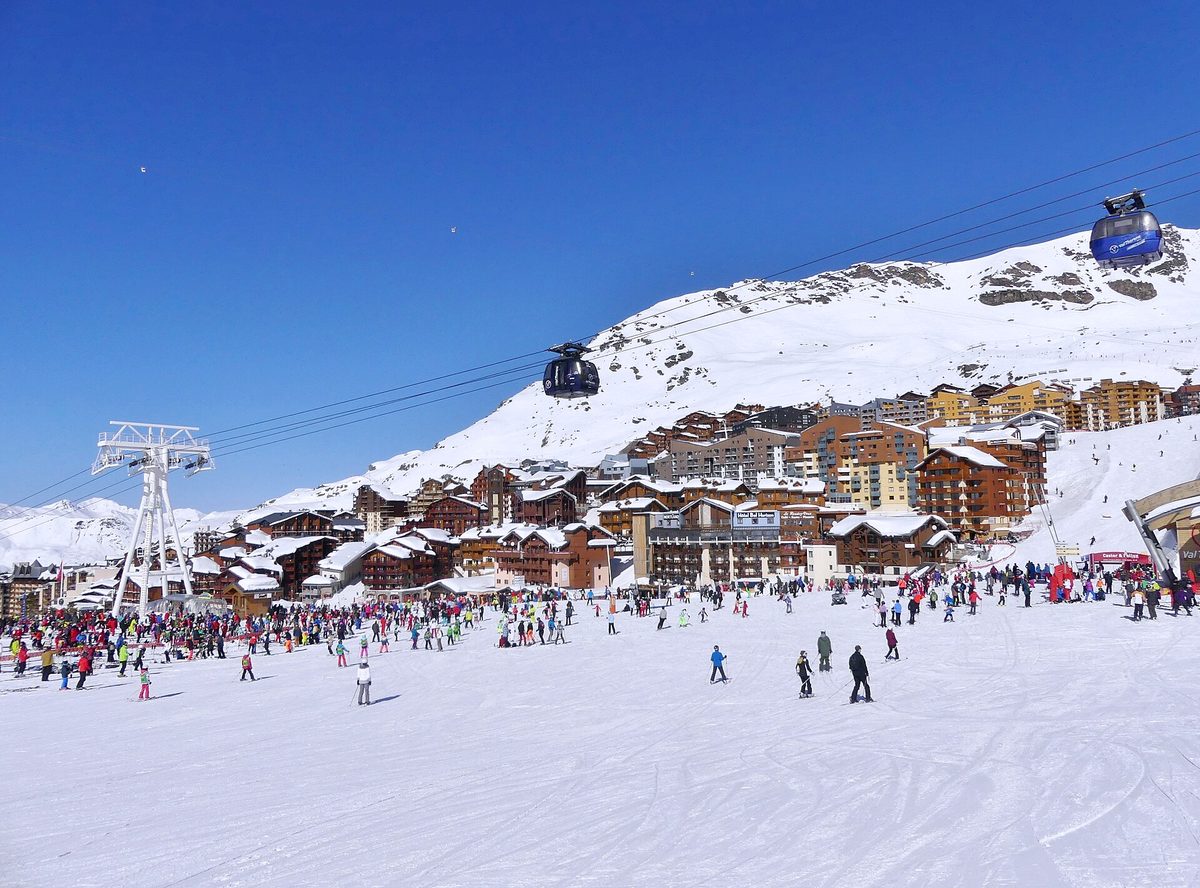
Les Trois Vallées links Courchevel, Méribel, Val Thorens, Les Menuires and La Tania across roughly 600 km of connected pistes — one lift pass, eight resort villages, more terrain than you can ski in a fortnight. Val Thorens, at around 2,300 m, is the highest resort village in Europe and the most snow-sure; Méribel sits prettily in the middle and makes the best base for mixed-ability groups; Courchevel is the glossy, Michelin-starred end of things. This is my default recommendation for a first big French trip, because whatever the snow is doing, somewhere in 600 km will be skiing well.
Tignes–Val d’Isère and Paradiski
The Espace Killy — Tignes and Val d’Isère — offers around 300 km of high, snow-sure terrain with the Grande Motte glacier guaranteeing turns into spring; Val d’Isère is the more characterful village, Tignes the higher and more functional. Next door, Paradiski connects Les Arcs and La Plagne via the double-decker Vanoise Express cable car for another 425 km. Les Arcs, with its gentle Arc 1800 sector, is one of the best places in France for nervous beginners to find their feet on long, forgiving greens.
Chamonix, Alpe d’Huez and the rest
Chamonix is the spiritual home of Alpine mountaineering and a rite of passage for strong skiers: the Vallée Blanche, a 20 km off-piste glacier descent from the Aiguille du Midi (3,842 m), is one of the great days in skiing — hire a guide, no exceptions. It is not a beginner’s town. For sunshine and variety, Alpe d’Huez bills itself as the “Island in the Sun” and hides the 16 km Sarenne, one of the longest black runs in the Alps, while Les Deux Alpes offers glacier skiing and rare high-altitude green runs so beginners can ride the views. France is also the easiest country to reach without flying, which I’ll come back to — and there’s far more detail in my full France travel guide.
Austria: Best Value, Best Après, and Villages You’ll Actually Love

If France is engineered, Austria is enchanting. The resorts are real villages with onion-domed churches and family-run guesthouses, the food is hearty and cheap, and the après-ski is in a league of its own — this is the country that invented the slope-side dance floor in ski boots. Crucially, it’s also noticeably cheaper than France or Switzerland: lift passes, lessons, rentals and beer all cost less, which is why Austria is where I send anyone who wants a brilliant week without a brutal bill. My full rundown of Austria’s ski resorts goes resort by resort; these are the ones I keep returning to.
St Anton and the Arlberg: experts and legends
The Arlberg region — St Anton linked with Lech, Zürs, Stuben and Warth — is Austria’s largest connected ski area at around 300 km and its most serious. St Anton is a proper expert’s mountain, with steep off-piste, demanding reds and a snow record that holds up; it’s also home to the most notorious après on the continent, where the Mooserwirt and Krazy Kanguruh empty entire chairlifts into the bar by mid-afternoon. Ski hard, then ski home carefully.
Ischgl, Sölden and Kitzbühel
Ischgl pairs 230 km of high, immaculately groomed pistes in the Silvretta Arena with duty-free shopping across the border in Samnaun, Switzerland, and a party scene that books stadium acts to play on the snow. Sölden, with three peaks above 3,000 m and two glaciers, is snow-sure, scenic and a regular World Cup opener (you may recognise its ridges from a James Bond film). Kitzbühel is the romantic one: a gorgeously preserved medieval town that, every January, hosts the Hahnenkamm downhill on the Streif — the scariest race in skiing. Its altitude is lower, so I’d book it for January or February rather than a mild late-season week.
Saalbach, the SkiWelt and family country
For intermediates who like to cover ground, the Saalbach-Hinterglemm-Leogang-Fieberbrunn circuit (270 km) and the gentle, sprawling SkiWelt around the Wilder Kaiser are pure cruising heaven. And for families, Austria is hard to beat — Serfaus-Fiss-Ladis is practically engineered around children, with magic carpets, snow gardens and an underground village funicular. I get into the family specifics below, and in my guide to visiting Europe with kids. For everything beyond the slopes — Vienna, Salzburg, the lakes — my Austria travel guide has you covered.
Switzerland: The Scenery Is the Point (and So Is the Price)
Switzerland is the most beautiful place I have ever skied, full stop. It’s also the most expensive — you pay for the scenery, the immaculate trains, the car-free villages and the service, in Swiss francs rather than euros, and lunch on the mountain can cost what a half-day pass does elsewhere. Go anyway, at least once, and budget honestly. My Switzerland ski resorts guide breaks down the numbers; here’s the shortlist.
Zermatt and the Matterhorn
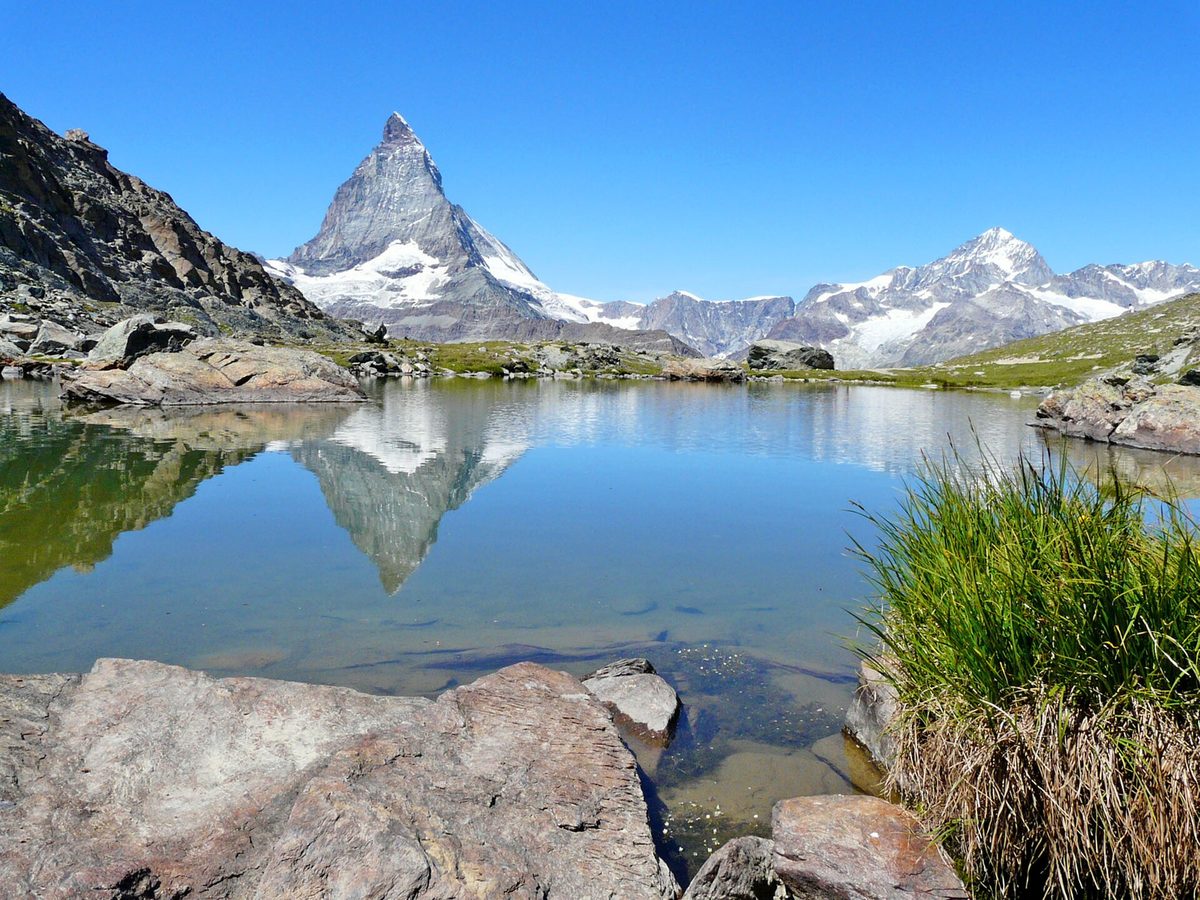
Zermatt is car-free, impossibly pretty, and overlooked by the Matterhorn from nearly every piste. It’s high, snow-sure and connected by glacier to Cervinia in Italy, so you can ski across the border for a cheaper lunch and ski back — one of my favourite tricks anywhere in the Alps. The skiing tops out above 3,800 m and runs essentially year-round on the glacier. It is not cheap, but it is unforgettable, and the train-only access keeps the village calm.
Verbier, St Moritz and Saas-Fee
Verbier anchors the 4 Vallées (around 410 km) and is the freeride capital of Switzerland — steep, lift-served off-piste off the Mont Fort, and a moneyed, lively scene below. St Moritz is glamour and Engadine sunshine, with two separate mountains and a long history of inventing winter tourism. Saas-Fee, the “Pearl of the Alps”, is another car-free, glacier-backed village that’s gentler and more family-friendly than its neighbours.
The Jungfrau region: Wengen, Grindelwald and Mürren

For my money the most scenic skiing in the country, and some of it surprisingly approachable. Car-free Wengen hosts the Lauberhorn, the longest downhill on the World Cup circuit; Grindelwald is the lively, accessible hub beneath the Eiger’s north face; and tiny, cliff-perched Mürren gives you the Schilthorn and its revolving Piz Gloria restaurant. The whole region is laced together by cogwheel trains, so a non-skiing partner can ride up and meet you for lunch with the Eiger, Mönch and Jungfrau filling the sky. There’s far more on the country in my Switzerland travel guide.
Italy: The Dolomites, Long Lunches and Gentle Prices
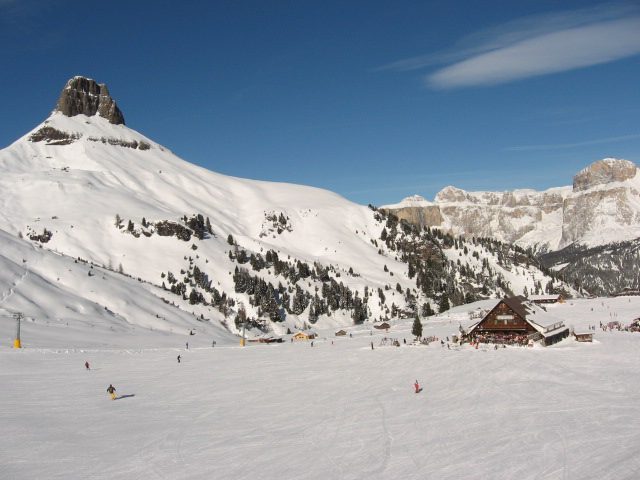
Italy is the value-and-pleasure pick. The pistes tend to be sunnier and quieter than France’s, the mountain food is the best in the Alps by a distance, and a long lunch with a glass of something local is treated as the point of the day rather than an interruption to it. Prices sit closer to Austria than to Switzerland. And the scenery in the Dolomites — pale limestone towers glowing pink at sunset over impeccable corduroy — is unlike anywhere else on the continent. I’ve written a whole guide to skiing in the Dolomites, because it deserves one.
The Dolomites and the Sella Ronda
The Dolomiti Superski pass is the headline act: a single ticket covering twelve linked areas and roughly 1,200 km of pistes. The signature experience is the Sella Ronda, a 40 km circuit that loops the Sella massif on lifts and pistes — you can ski a full circle around a mountain range in a day, in either direction, stopping for strudel. Val Gardena, Alta Badia and Arabba make characterful bases; Cortina d’Ampezzo, fresh off co-hosting the Milano Cortina 2026 Winter Olympics this past February, is the glamorous one. Most of the terrain is blue and red cruising, which makes the Dolomites a dream for confident intermediates.
Cervinia, Courmayeur and the snow-sure high ground
On the other side of the Matterhorn from Zermatt, Breuil-Cervinia is high, sunny and gentle — long, wide, easy runs and a shared lift area with Switzerland. Courmayeur sits under the Italian flank of Mont Blanc and pairs serious mountain credibility with the most civilised lunches in the Alps. And for snow-sure, wallet-friendly skiing, high-altitude Livigno doubles as a duty-free zone, so your après-ski and your new goggles both come cheap. Italy as a whole — the food, the cities, the coast — gets the full treatment in my Italy travel guide.
Beyond the Alps: Where to Ski for Less
The Alps get the headlines, but some of the smartest skiing in Europe happens in the Pyrenees, the Carpathians and the far north — usually for a lot less money. If your priority is value or novelty rather than sheer mileage, these are the regions I’d point you to, and they anchor my guide to cheap ski holidays in Europe.
Andorra and the Pyrenees
The tiny principality of Andorra punches absurdly above its weight: Grandvalira (around 210 km across Pas de la Casa, Soldeu and El Tarter) and Vallnord offer big-area skiing, famously good English-speaking ski schools, lively bars and duty-free prices — and it uses the euro despite sitting outside the EU. Soldeu is one of the best places in Europe to learn. Over the border, Spain’s Baqueira Beret is the Pyrenean favourite of Madrid’s smart set, while Sierra Nevada near Granada lets you ski in the morning and see the Mediterranean in the afternoon. My Spain travel guide covers the southern options.
Eastern Europe: the value champions
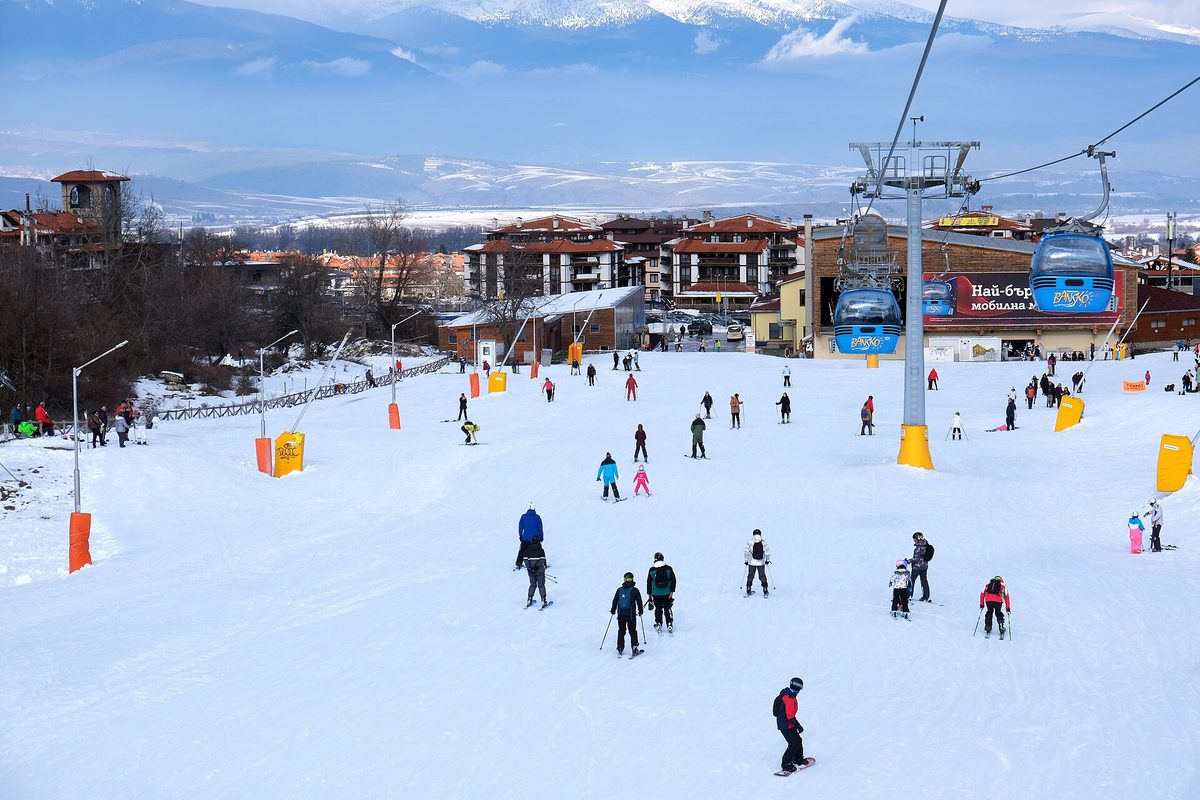
For the lowest prices on the continent, head east. Bansko in Bulgaria — a modern gondola, 75 km of Pirin-mountain pistes, and a six-day lift pass around €340 — backs it up with absurdly cheap food, drink and lessons (Bulgaria adopted the euro in January 2026, which makes budgeting simpler than it used to be). Jasná in Slovakia’s Low Tatras has modern lifts and terrain that genuinely rivals the Alps for a fraction of the cost; Zakopane in Poland and Kranjska Gora in Slovenia are charming, cheap and great for beginners; and Romania’s Poiana Brașov is about as inexpensive as European skiing gets. None of these will give you 600 km of pistes, but a week can cost half what the Alps do. There’s more context in my Eastern Europe travel guide.
Scandinavia: reliable cold and the northern lights
Nordic skiing is a different animal — lower mountains and lighter snowfall, but bone-reliable cold, no altitude to worry about, ski-in/ski-out simplicity and a genuine shot at the aurora overhead. Sweden’s Åre is the region’s biggest resort; Norway’s Hemsedal and Trysil are superb for families; and in Finnish Lapland, Levi and Ruka offer reindeer, polar-night atmosphere in December and astonishingly long daylight by April. It’s the antidote to crowded Alpine half-terms, and it pairs naturally with my Scandinavia travel guide.
Skiing in Europe by Ability: From First Turns to Off-Piste
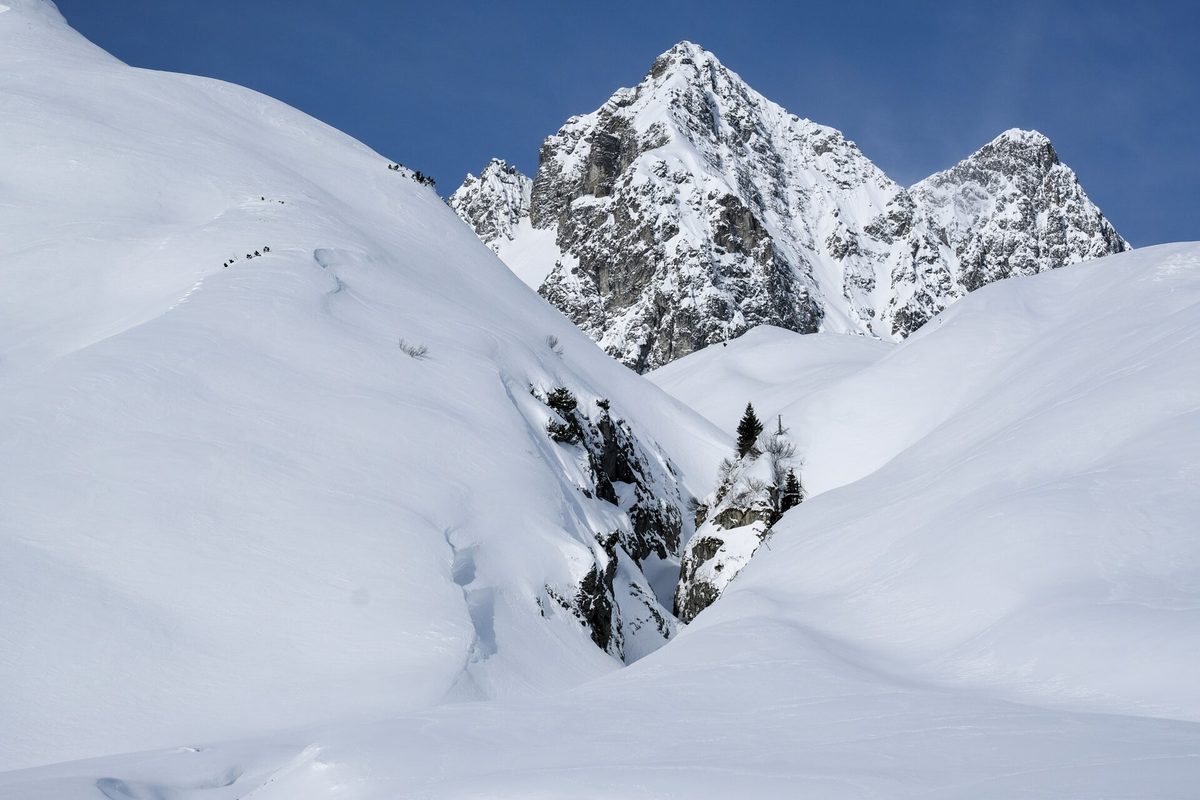
The single most common mistake I see is booking the resort with the famous name rather than the resort that fits your group’s ability. A nervous first-timer on a steep, high expert mountain has a miserable week; an expert on a gentle beginner hill gets bored by Tuesday. Match the mountain to the skier.
Best for beginners
You want gentle, wide nursery slopes close to the village, a good English-speaking ski school, and ideally some easy runs high up so you’re not reliant on low-altitude snow. My top picks: Soldeu in Andorra and the Austrian family resorts (Serfaus-Fiss-Ladis, Alpbach), where teaching is a fine art; Les Arcs and La Plagne in France for long, forgiving greens; Cortina and the wider Dolomites, where more than half the terrain is easy and the sun shines; and Les Deux Alpes, where the glacier gives beginners green runs with a 3,200 m view. I rank these in detail in my guide to the best ski resorts for beginners in Europe. Whatever you pick, book group lessons in advance — they’re cheaper than private and you’ll make friends.
Best for intermediates
This is the sweet spot for European skiing, because the giant linked areas are essentially intermediate playgrounds. The Three Valleys, the Dolomites’ Sella Ronda, Austria’s SkiWelt and Saalbach, and the Portes du Soleil circuit straddling France and Switzerland all let a confident blue-and-red skier travel for miles, ticking off villages and mountain huts. If you can link turns on a red with control, the whole continent opens up.
Best for experts and off-piste
For steeps, couloirs and lift-served off-piste, the classic trio is Chamonix (the Vallée Blanche and the Grands Montets), Verbier (the Mont Fort freeride lines) and St Anton (the Arlberg’s legendary back bowls). Add Engelberg in Switzerland for the Laub, and La Grave in France for un-pisted, un-patrolled, guide-only mountaineering terrain that isn’t for the faint-hearted. Hire a local guide for anything off-piste — avalanche risk is real, and a guide will also find you the good snow.
Skiing in Europe by Traveler Type
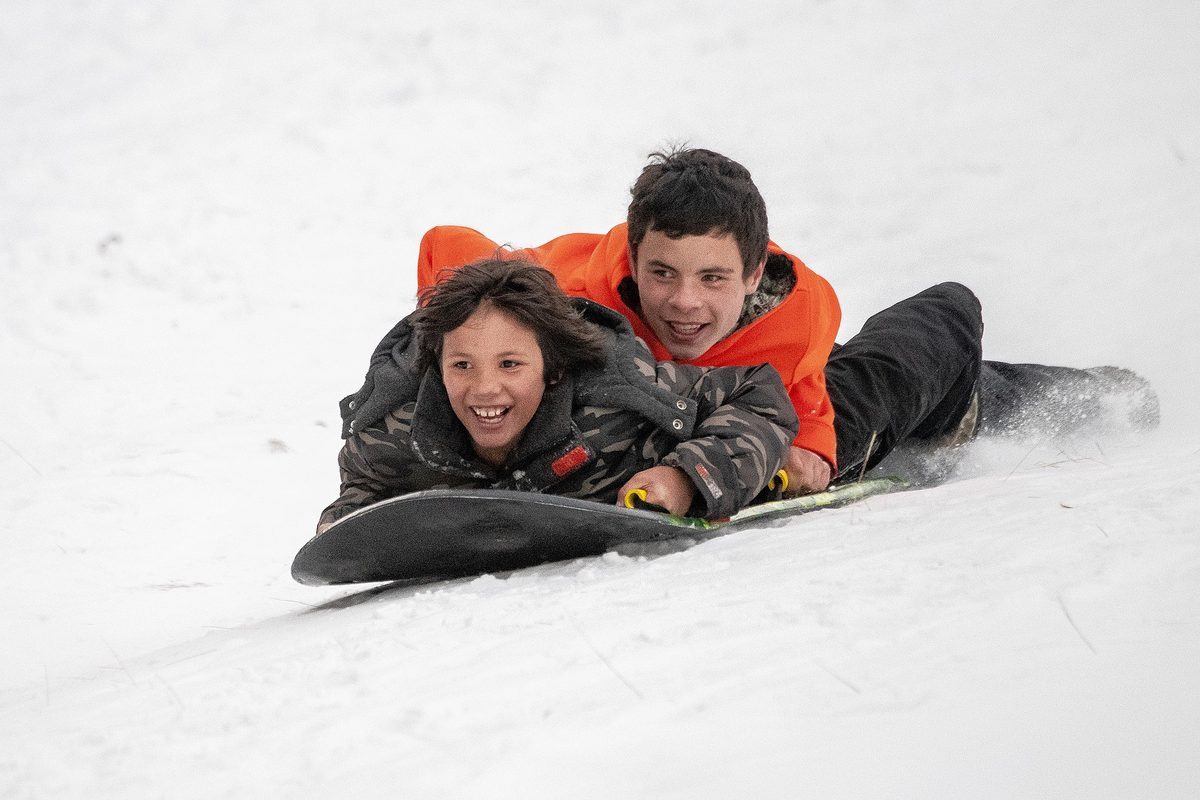
Who you’re travelling with should shape the booking as much as your ability does. Here’s how I’d steer different groups.
Families
Prioritise ski-in/ski-out or a car-free village, a dedicated children’s ski area, and short transfers so the journey doesn’t eat the first day. Austria (Serfaus-Fiss-Ladis, Alpbach), France’s purpose-built resorts (Les Arcs, La Plagne, Avoriaz — the last is entirely car-free, with lessons starting at the village edge), the family-friendly Dolomites, and Norway’s Hemsedal all excel. Many resorts offer free or cut-price lift passes for under-6s and family pass bundles — always ask. My guide to Europe with kids has more on keeping small humans happy in the cold.
Couples and groups
Couples after romance and good food gravitate to the Dolomites, Courmayeur or a chocolate-box Swiss village like Wengen. Groups with mixed abilities should choose a big linked area (the Three Valleys is the classic answer) so everyone can ski their own level and meet for lunch. Friends who came for the party want St Anton, Ischgl, Val d’Isère or Mayrhofen.
Solo skiers and non-skiers
Skiing is a wonderfully sociable solo trip — ski schools, group lessons and lively après make it easy to fall in with people — and lively, walkable resorts like St Anton or Val d’Isère suit going alone; I’ve gathered more in my guide to going it alone. Travelling with someone who doesn’t ski? Choose a resort with a strong non-ski offer: Zermatt, St Moritz, Cortina and the Jungfrau villages all have cable cars to panoramic restaurants, winter walking trails, spas, tobogganing and pretty towns to potter in.
Budget and luxury
On a budget, ski Bulgaria, Slovakia, Poland or Andorra, travel in low season (early December or mid-January), book self-catering, and bring your own gear or rent in town rather than on the mountain — the tactics are all in cheap ski holidays in Europe and my broader Europe on a budget guide. At the luxury end, Courchevel 1850, St Moritz, Zermatt, Lech and Cortina offer five-star hotels, Michelin stars, ski butlers and private guiding — for a price that, even so, often undercuts the equivalent in Aspen or Vail.
When to Go: The Europe Ski Season Month by Month

The European ski season runs from roughly late November to late April, but the experience changes enormously across those five months. The glacier resorts — Hintertux, Zermatt, Sölden, Tignes, Val Thorens and Saas-Fee — open as early as October and run latest into spring; most other resorts open in early December and close in the first half of April. For a full breakdown, see my dedicated guide to the Europe ski season; here’s the short version.
December is festive and magical but the least snow-sure, especially below 1,500 m — book high or book a glacier, and treat early December as a gamble that pays off in low prices and empty pistes. The week between Christmas and New Year is the most expensive and crowded of the entire winter, which is why our guide to winter travel in Europe points people at mid-January instead. January, particularly the weeks after the holidays, is my favourite value window: cold, reliable snow and prices that drop sharply once the school holidays end. It is also the cheapest month for winter trips beyond the ski resorts, if you want to pair a few days on snow with a city. February has the best, most dependable snow of the season but also the European half-term crowds — brilliant conditions, busy slopes, peak prices. March and April bring longer days, warmer sunshine, spring snow and bargain late-season deals; the skiing softens in the afternoon, but a sunny March terrace is one of the great pleasures of the sport. Aim high in altitude as the season ages.
The honest climate note for 2026: lower-altitude resorts are seeing shorter, less reliable seasons, so altitude is now your best insurance. As a rule of thumb I look for a base above 1,500 m and a top lift above 2,500 m, plus solid snowmaking. The most reliable snow across the whole continent falls from mid-January into February. If your dates are fixed and you can’t move them, choose your resort for altitude and you’ll rarely be disappointed — and cross-reference my month-by-month when-to-go guide for the wider seasonal picture.
What Does Skiing in Europe Cost?
A week of skiing in Europe runs anywhere from about €800 per person at the budget end to €2,500 or more for a premium Alpine week, before you start adding luxury. The big variables are the country (Switzerland can cost double Bulgaria), the timing (January undercuts February by a wide margin) and how you handle food and lodging. Here’s a realistic per-person breakdown for a week.
| Item | Budget (E. Europe / self-catered) | Mid-range (Austria / Italy) | Premium (France / Switzerland) |
|---|---|---|---|
| 6-day lift pass | €150–220 | €250–320 | €350–400+ |
| Accommodation (7 nights) | €200–400 | €500–900 | €1,000–2,000+ |
| Ski + boot rental (6 days) | €80–110 | €120–150 | €150–200 |
| Group lessons (if needed) | €100–150 | €150–220 | €200–300 |
| Food & drink | €120–200 | €250–400 | €400–700 |
| Travel (from W. Europe) | €100–250 | €150–350 | €200–400 |
| Rough weekly total | €750–1,300 | €1,300–2,200 | €2,200–3,500+ |
The biggest savings, in order of impact: ski somewhere cheap (the swap from Switzerland to Bulgaria can halve everything); travel in January rather than February or the holidays; self-cater rather than book a catered chalet or half-board hotel; and book six to eight months ahead, when early-bird discounts on lodging and passes can reach 30%. A mountain lunch is the silent budget-killer — €15–25 a head in France or Switzerland, and easily double if you order wine — so a packed lunch a few days a week genuinely adds up. I go deep on all of this in cheap ski holidays in Europe.
How to Get to the Alps

Half the appeal of skiing in Europe is how easy the slopes are to reach — and increasingly, how easy they are to reach without flying.
By train
This is the way the Alps were meant to be reached: city centre to mountain, no airport queues, no de-icing delays, and skis ride free. Eurostar’s seasonal Snow trains run direct from London (with a quick change at Lille), Brussels and Amsterdam to Bourg-Saint-Maurice in the heart of the French Alps on winter Saturdays, with onward coaches to Val Thorens, Val d’Isère, Tignes, Courchevel and Méribel. From Paris, high-speed TGVs serve the Tarentaise; Austria’s resorts connect through Innsbruck and Salzburg; and Switzerland’s car-free villages like Zermatt and Wengen are reached entirely by train. It’s lower-stress, lower-carbon and often genuinely competitive on price — I make the full case in my guide to train travel in Europe.
By plane and by car
Geneva is the great gateway airport — within one to three hours of dozens of French and Swiss resorts — with Innsbruck, Salzburg and Munich serving Austria, and Verona, Venice and Bolzano opening up the Dolomites. Transfers by shared shuttle or hire car are straightforward; just remember that winter tyres or snow chains are a legal requirement on Alpine roads in winter, and several of the prettiest villages (Zermatt, Saas-Fee, Wengen, Mürren, Avoriaz) ban cars entirely, so you’ll park below and ride a train or cable car up. For the bigger picture on trains, buses, flights and car hire, see getting around Europe.
Planning Your Ski Trip: Booking, Gear and the Paperwork
When to book and what to lock in early
The two things that sell out and get pricier the longer you wait are ski-in/ski-out accommodation and the popular peak weeks (Christmas, New Year and February half-term). Book those six months out. Lift passes, lessons and rentals can wait longer, but pre-booking lessons online almost always beats turning up at the ski-school desk on a busy Sunday, and many resorts discount lift passes bought online in advance. If you’re new to assembling a European trip from scratch, my step-by-step guide on how to plan a trip to Europe walks through the whole sequence, and where to stay in Europe covers the chalet-versus-hotel-versus-apartment question.
Gear, lessons and insurance
Rent skis and boots rather than flying with your own unless you’re committed — it’s cheaper than airline ski-bag fees and you can swap kit if conditions change. Do buy your own base layers, warm socks, goggles, gloves and a helmet (most schools now require one for children). Crucially, take out travel insurance that explicitly covers winter sports and, if you plan to leave the marked pistes, off-piste skiing and mountain rescue — standard policies often exclude both, and a helicopter evacuation in the Alps is eye-wateringly expensive. My packing list has a full cold-weather and ski checklist, and these Europe travel tips cover the wider practicalities.
Entry rules and currency for 2026
A quick, current housekeeping note — and do re-check the official pages before you travel, because this is genuinely changing in 2026. Most Alpine ski countries (France, Austria, Italy, Switzerland) are in the Schengen Area, so one entry covers them; the EU’s biometric Entry/Exit System is now rolling out at Schengen borders, and the ETIAS travel authorisation (around €20, valid three years) is expected to begin for visa-exempt visitors in late 2026, becoming mandatory in 2027. Switzerland is in Schengen but uses the Swiss franc, not the euro. Bulgaria joined the euro in January 2026, so its bargain ski resorts now price in euros. Andorra sits outside the EU but uses the euro and is reached overland through France or Spain. I keep the detail current in my Schengen visa and ETIAS guide — check it (and your government’s travel advice) close to departure.
Skiing in Europe: FAQ
Which country is best for skiing in Europe?
It depends on what you want. France has the largest linked areas and the best ski-in/ski-out convenience; Austria offers the best value, the cosiest villages and the liveliest après-ski; Switzerland has the most spectacular scenery and snow-sure highs (at the highest prices); and Italy delivers the best food, the sunniest pistes and gentle prices, especially in the Dolomites. For a first trip with a mixed group, I usually steer people to France or Austria.
When is the best time to ski in Europe?
For the most reliable snow, mid-January through February. For the best value, the weeks of January after the Christmas holidays. For sunshine and bargains with slightly softer snow, March and April — ski high to keep the conditions good. December is festive but the least snow-sure below 1,500 m, and the Christmas–New Year week is the most expensive of the season. Avoid the February half-term weeks if you can’t stand crowds.
How much does a ski holiday in Europe cost?
Budget roughly €800–1,300 per person per week in Eastern Europe or self-catering in a cheaper Alpine country, €1,300–2,200 for a mid-range week in Austria or Italy, and €2,200–3,500 or more for a premium week in France or Switzerland. A six-day lift pass alone is €150–220 at value resorts and €350–400+ at the big-name French and Swiss areas. Skiing in January, self-catering and booking early are the biggest levers on the total.
What is the cheapest place to ski in Europe?
Eastern Europe wins on price: Bansko and Borovets in Bulgaria, Jasná in Slovakia, Zakopane in Poland and Poiana Brașov in Romania all deliver a full week for around half what the Alps cost, with especially cheap food, drink and lessons. Andorra is the best-value pick with genuinely big terrain and excellent ski schools. Within the Alps, Italy and the smaller Austrian resorts are the most wallet-friendly.
Is it cheaper to ski in Europe or the USA?
Europe, almost always — often dramatically so. Lift passes are a fraction of the big US resorts’ walk-up prices, mountain food and drink cost far less, the linked areas are bigger, and even premium European resorts tend to undercut Aspen or Vail. The catch is the flight if you’re coming from North America; once you’ve crossed the Atlantic, your on-the-ground costs drop sharply compared with skiing at home.
Where should beginners ski in Europe?
Look for gentle nursery slopes by the village, a strong English-speaking ski school and easy runs high enough to be snow-sure. Soldeu in Andorra, the Austrian family resorts (Serfaus-Fiss-Ladis, Alpbach), Les Arcs and La Plagne in France, and the sunny, mostly-easy Dolomites are all excellent first-timer choices. Book group lessons in advance and give yourself a full week — most people are linking turns confidently by day three or four.
Can you get to the Alps by train?
Yes, and increasingly easily. Eurostar’s seasonal Snow trains run direct from London, Brussels and Amsterdam to the French Alps on winter Saturdays, with onward coaches to the big Tarentaise resorts; high-speed trains from Paris serve the same valleys; and Switzerland’s car-free villages like Zermatt and Wengen are reached entirely by rail. It’s lower-stress and lower-carbon than flying, skis travel free, and you step off in the mountains rather than at an airport an hour away.
How many days do you need for a ski holiday?
A week (six days on snow) is the European standard and the best value, since passes, rentals and accommodation are priced around it. A long weekend of three to four days works well if you can reach a resort quickly — easy from within Europe, less so from overseas. For a first-ever ski trip, a full week with lessons is worth it: you’ll spend the first two days learning and the back half actually enjoying it.
Final Thoughts
After a couple of decades of European winters, the advice I give friends has boiled down to three things: match the resort to your group’s ability and budget rather than its reputation, ski high if your dates are fixed, and don’t try to “do” three countries in a week. Pick one valley, learn its mountain, eat its food, and let the trip be slow. Whether that’s a value week in Bansko, a big-mileage blowout in the Three Valleys, a long-lunch fortnight in the Dolomites or a once-in-a-lifetime splurge under the Matterhorn, skiing in Europe rewards depth over breadth every time.
When you’re ready to build the rest of the trip around your week on the snow, my guides to the best places to visit in Europe and the best time to visit Europe are the natural next stops, and if you’re tempted to bolt a city or two onto the start or end, European city breaks and my ready-made Europe itinerary blueprints will get you there. See you on the slopes.
Sources and further reading: national tourism boards (Atout France, the Austrian National Tourist Office, Switzerland Tourism, ENIT Italy), resort operators and lift companies for piste mileage and pass prices, Eurostar and national rail operators for current Snow train timetables, and the official EU pages on the Entry/Exit System and ETIAS. Prices and dates were checked in June 2026 and will change — confirm with official sources before booking.
Photo Credits
- Val Thorens, Three Valleys, France — Photo: Florian Pépellin / CC BY-SA 4.0 via Wikimedia Commons
- Sella Ronda, Dolomites, Italy — Photo: Bunny (CC0) via Wikimedia Commons
- Bansko, Bulgaria — Photo: kallerna / CC BY-SA 4.0 via Wikimedia Commons
- Skier in fresh powder, the Alps — Photo: Erich Fend (CC0) via Wikimedia Commons
- Family skiing together — Photo: Kaibab National Forest / CC BY-SA 2.0 via Wikimedia Commons
- Mont Blanc above Chamonix, France — Photo: Ximonic, Simo Räsänen / CC BY-SA 3.0 via Wikimedia Commons
- The Matterhorn and Riffelsee, Zermatt, Switzerland — Photo: BECK François / CC BY-SA 4.0 via Wikimedia Commons
- Aletsch Glacier, Jungfrau region, Switzerland — Photo: Frans-Banja Mulder (CC BY 3.0) via Wikimedia Commons
- Nordkette above Innsbruck, Austria — Photo: Wilfredor (CC0) via Wikimedia Commons
- Train through the snowy Alps — Photo: User:Möchtegern (CC0) via Wikimedia Commons