Things to Do in Barcelona: 46 Ideas, Priced and Timed
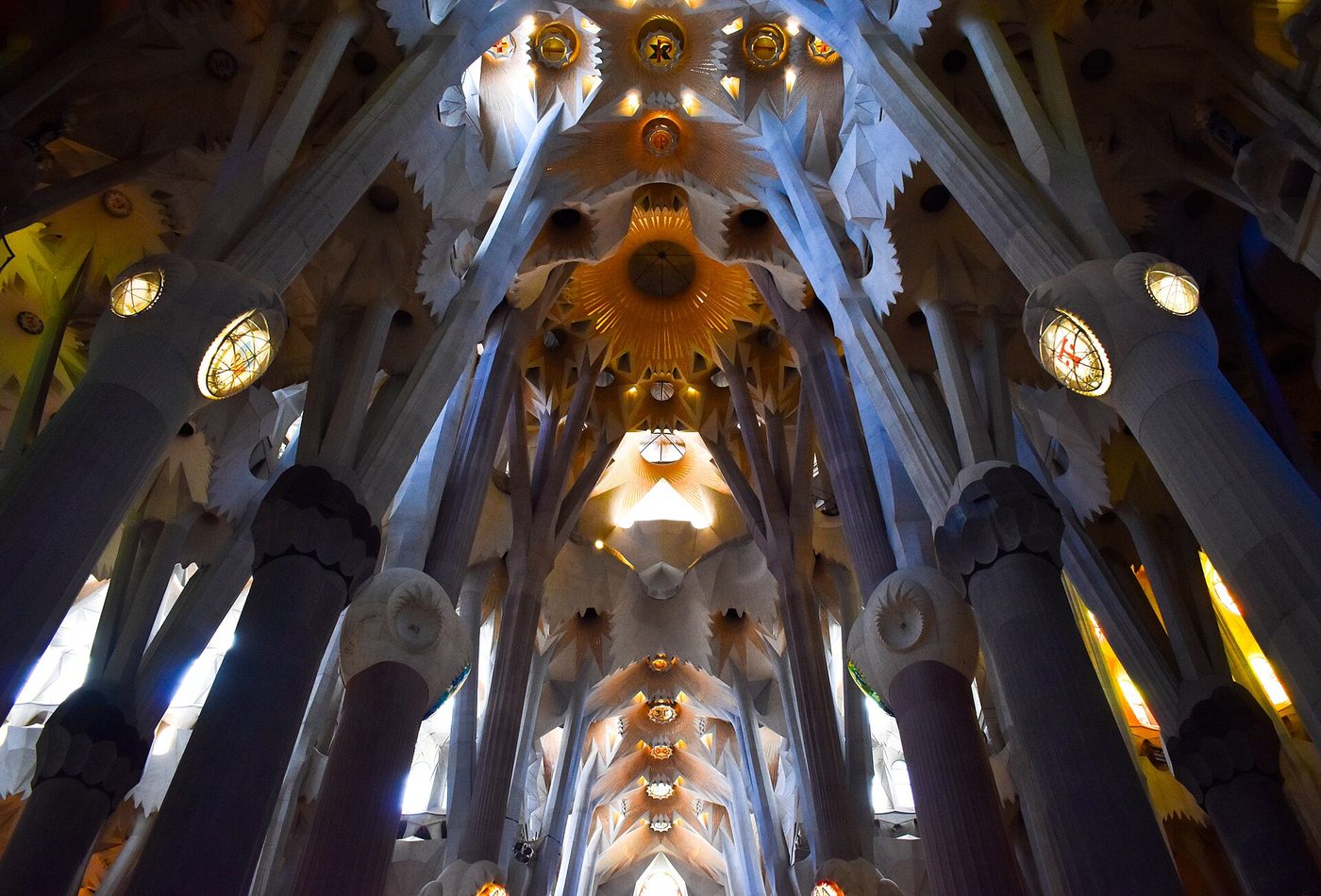
I have been coming to Barcelona for the better part of fifteen years, and 2026 is the first time I have arrived and found the skyline finished. The Sagrada Família has a top on it. That single fact changes the shape of a trip here, and it is worth arriving knowing it.
The best things to do in Barcelona split into four strands the city does better than anywhere else in Europe: Gaudí and the modernista architecture around it, a dense medieval old town you can walk in an afternoon, a hill full of museums and viewpoints, and four and a half kilometres of city beach. Budget three days to cover them without rushing, and book the Sagrada Família and Park Güell before you book anything else.

What follows is 46 things worth your time, priced and timed, plus the parts of a Barcelona trip that cost real money and cause arguments: the tourist tax, which doubled in April, the passes that are worth it and the two that are not, how far ahead the Gaudí sites really sell out, and which of the free museum windows are worth planning around.
I have sourced every price from a 2026 page and said so where I could not. Barcelona changes its rules faster than most European cities right now, and a fare or a fine you looked up last year has probably moved.
What changed in Barcelona for 2026
Five things, and they all affect what you do, what you pay and where you sleep.
The Sagrada Família is externally complete. The upper arm of the seventeen-metre, hundred-tonne cross went onto the Tower of Jesus Christ on 20 February 2026, and Pope Leo XIV inaugurated it on 10 June, the hundredth anniversary of Gaudí’s death. At 172.5 metres it is now the tallest church in the world, ahead of Ulm Minster’s 161.53 metres. Gaudí kept it deliberately below the 177.7 metres of Montjuïc, on the principle that nothing made by people should rise above a hill made by God. If you were here before and skipped it because it was a building site, that reason has expired.
The tourist tax jumped on 1 April 2026. Two charges stack, and both moved: the Catalan regional levy roughly doubled its base rates, and Barcelona’s own municipal surcharge went from €4 to €5 per person per night, scheduled to rise by €1 a year to €8 by 2029. A couple spending four nights in a four-star hotel now pays about €67 in tax alone. There is a full table further down.
The classic Camp Nou tour is still not running. The stadium is mid-renovation, capacity was 62,652 as of March 2026 against a target of 105,000, and what is on sale is the Barça Immersive Tour. It is good. It is not the dressing rooms and the players’ tunnel.
Rental e-scooters were banned in January 2026. If your plan involved grabbing one at Barceloneta, it does not work any more. Private scooters are still legal with a helmet and off the pavements.
The city is phasing out tourist apartments entirely. All 10,101 licences go by November 2028, a decision the Constitutional Court upheld in March 2025. For 2026 the practical effect is fewer legal flats, higher hotel prices and a noticeably shorter temper in residential neighbourhoods about short-let noise. Rents in the city have risen close to 70% in ten years, which is the reason behind the policy and worth knowing before you complain about the tax.
One thing that has not changed, and that people keep asking about: flamenco is Andalusian, not Catalan. Barcelona has good tablaos and they are worth an evening if you have never seen it, but you are watching an import. The local equivalent, the thing the city does that nowhere else does, is the castellers building human towers in a square, and that is free.
All 46 of the best things to do in Barcelona at a glance
Prices are 2026 adult rates, checked in August 2026. Where an attraction uses dynamic pricing, and several of the Gaudí houses now do, the figure is the cheapest online rate rather than what you will pay on a Saturday in July. Three cells read differently from the rest, and I have explained why underneath.
| # | Thing to do | Where | Price, 2026 | Time needed | Book ahead? | Best time to go |
|---|---|---|---|---|---|---|
| 1 | Sagrada Família | Eixample | From €26; €36 with one tower | 1.5–2 hrs | Yes, 4–6 weeks in peak | First slot of the day |
| 2 | Park Güell | El Carmel / Gràcia | €18; €13.50 reduced | 1.5 hrs | Yes, 2–3 days ahead | 09:30 entry |
| 3 | Casa Batlló | Eixample | From €29 (Blue tier) | 1.5 hrs | Yes, 1–2 days | Last slots, open to 22:30 |
| 4 | La Pedrera (Casa Milà) | Eixample | From €25 day; €39 Night Experience | 1.5 hrs | Advisable | After dark |
| 5 | Casa Vicens | Gràcia | From €20 | 1 hr | Rarely needed | Weekday morning |
| 6 | Palau Güell | El Raval | €12; €5 ages 12–18 | 1 hr | No | Sat or Sun free guided tour |
| 7 | Recinte Modernista de Sant Pau | El Guinardó | From €17; €34 guided | 1.5 hrs | No | Morning, for the light |
| 8 | Palau de la Música Catalana | Sant Pere | Around €22–€24 for the tour | 1 hr tour | Yes in summer | A concert, not a tour |
| 9 | Casa Amatller | Eixample | €17 with audio guide and chocolate | 1 hr | No | Straight after Casa Batlló |
| 10 | Passeig de Gràcia and the Block of Discord | Eixample | Free to walk | 45 mins | No | Before the shops open |
| 11 | Barri Gòtic on foot | Ciutat Vella | Free | 2–3 hrs | No | Before 09:00 |
| 12 | Barcelona Cathedral and its cloister | Barri Gòtic | Not published for 2026 (see note) | 45 mins | No | Late afternoon |
| 13 | Plaça Reial | Barri Gòtic | Free | 30 mins | No | Vermut hour, around 12:30 |
| 14 | Santa Maria del Mar | El Born | Free nave; €5 cultural visit; €8.50–€10 guided | 45 mins | No | Weekday morning |
| 15 | Museu Picasso | El Born | €14 online, €15 at the door | 1.5–2 hrs | Yes | First Sunday of the month, free |
| 16 | Parc de la Ciutadella | El Born | Free | 1–2 hrs | No | Sunday morning |
| 17 | Mercat de la Boqueria | Off La Rambla | Free to enter | 1 hr | No | 08:00, and walk to the back |
| 18 | Mercat de Santa Caterina | Sant Pere | Free to enter | 45 mins | No | Mid-morning |
| 19 | Mercat de Sant Antoni | Sant Antoni | Free to enter | 1 hr | No | Sunday, for the book stalls |
| 20 | Mercat dels Encants | Glòries | Free to enter | 1 hr | No | Mon, Wed, Fri, Sat from 09:00 |
| 21 | La Rambla, walked properly | Ciutat Vella | Free | 45 mins | No | Before 09:00 or after 22:00 |
| 22 | El Raval, on purpose | Ciutat Vella | Free | 2 hrs | No | Daylight |
| 23 | MNAC, the Museu Nacional d’Art de Catalunya | Montjuïc | €12; €2 rooftop only | 2–3 hrs | No | Saturday from 15:00, free |
| 24 | Fundació Joan Miró | Montjuïc | Around €15–€18 (see note) | 1.5 hrs | No | Weekday afternoon |
| 25 | Magic Fountain of Montjuïc | Montjuïc | Free | 1 hr | No | Show nights, 30 mins early |
| 26 | Montjuïc Castle | Montjuïc | €12; €8 ages 8–12 | 1.5 hrs | No | Sunset |
| 27 | Telefèric de Montjuïc | Montjuïc | €12 one way, €19 return | 30 mins | No | A clear day |
| 28 | Transbordador Aeri, the port cable car | Barceloneta to Montjuïc | €12.50 one way, €20 return | 30 mins | No | Late afternoon |
| 29 | Poble Espanyol | Montjuïc | €13.50; €9 ages 4–12 | 2 hrs | No | Evening, when it empties |
| 30 | Bunkers del Carmel | El Carmel | Free | 2 hrs with the climb | No | An hour before closing |
| 31 | Tibidabo and the Temple del Sagrat Cor | Collserola | €39 park ticket | Half a day | No | A weekday, for the view |
| 32 | Mirador Torre Glòries | Glòries | €18; €22 with the sculpture; free under 13 | 1 hr | Advisable | Dusk |
| 33 | Parc del Laberint d’Horta | Horta | €2.23; free Wed and Sun | 1.5 hrs | No | Wednesday, free |
| 34 | Barceloneta beach | Barceloneta | Free | Half a day | No | Weekday, May to October |
| 35 | Sant Sebastià beach | Barceloneta | Free | Half a day | No | Early morning swim |
| 36 | Nova Icària beach | Vila Olímpica | Free | Half a day | No | With small children |
| 37 | Bogatell beach | Poblenou | Free | Half a day | No | Any weekday |
| 38 | L’Aquàrium de Barcelona | Port Vell | From around €27 online, €29 at the door | 2 hrs | No | A wet day |
| 39 | Museu Marítim de Barcelona | Drassanes | €10 | 1.5 hrs | No | Sunday after 15:00, free |
| 40 | MUHBA Plaça del Rei, the Roman city | Barri Gòtic | €7 combined MUHBA ticket | 1.5 hrs | No | First Sunday, free |
| 41 | CCCB | El Raval | €6 for one exhibition, €8 for two | 1.5 hrs | No | Sunday 15:00–20:00, free |
| 42 | MACBA and the Raval skate plaza | El Raval | Around €12–€15 (see note) | 1.5 hrs | No | Saturday from 16:00, free |
| 43 | Spotify Camp Nou and the Barça Immersive Tour | Les Corts | €28–€31 adult, €21 child | 2 hrs | Yes | A non-match day |
| 44 | The Gràcia square crawl | Gràcia | Free to walk | An evening | No | Festa Major, mid-August |
| 45 | Vermut in Poble-sec or Sant Antoni | Poble-sec | €3–€5 a glass | 1–2 hrs | No | Sunday, around 12:30 |
| 46 | Montserrat | 60 km northwest | €15 return on the rack railway | A full day | No | First train, on a weekday |
The three awkward cells. Barcelona Cathedral does not publish a clear 2026 admission price in English: entry is free during worship hours and a cultural-visit fee applies otherwise, but I could not source the current figure, so the cell says so rather than repeating a number off a blog. MACBA and the Fundació Joan Miró are given as ranges because reputable sources disagree by several euros and neither museum surfaced a clean 2026 price list. Check all three on the day.
Gaudí and modernisme: the buildings worth paying for
Barcelona has up to 2,200 buildings that are either fully modernista or carry modernista decoration, according to the city’s Institute of Urban Landscape and Quality of Life. You are not going to see 2,200. Nine of them justify a ticket, and they are not equally worth it.
1. Sagrada Família
General admission is €26. Adding a tower lift, either the Nativity or the Passion façade, takes it to €36, and the both-towers ticket runs to about €46. A fifty-minute live guided tour is around €33, the audio-guide tier €30. Children pay €7 and under-11s go free. There is no ticket office at all: everything is sold online, and the Gaudí centenary means a modest surcharge of a few euros has been applied through the second half of 2026.
Book four to six weeks ahead between April and October, two to three weeks in winter. The both-towers ticket in summer goes eight to twelve weeks out. Those are the numbers that decide whether you get in, and they move earlier every year.
The trick worth knowing: the international mass at 09:00 on Sunday is free and open to anyone. Doors on Carrer de la Marina open at 08:30, capacity is limited and the queue is long, but you get the interior at its best hour with no ticket at all. You will not get the towers or the museum, and it is a service rather than a visit, so behave accordingly.
Go first thing if you are paying. The nave is designed around morning light through the eastern windows, blues and greens on the Nativity side, and by mid-afternoon the whole west end has gone orange and everybody is photographing the same thing. 4.87 million people came in 2025, a record, which makes it the second most-visited monument in Spain after the Alhambra. It feels like it at noon.
2. Park Güell
€18 for the Monumental Zone, €13.50 reduced for ages 7 to 12 and over-65s, free for under-7s who still need a ticket issued. The rest of the park, and it is a large park, remains free. The ticket covers twelve hectares of monumental and green areas, and the entry system is strict: you get a thirty-minute grace period on your time slot and after that you lose the entry, and once you leave you cannot re-enter. Capacity runs at 1,400 people an hour, which sounds generous until you are inside it.
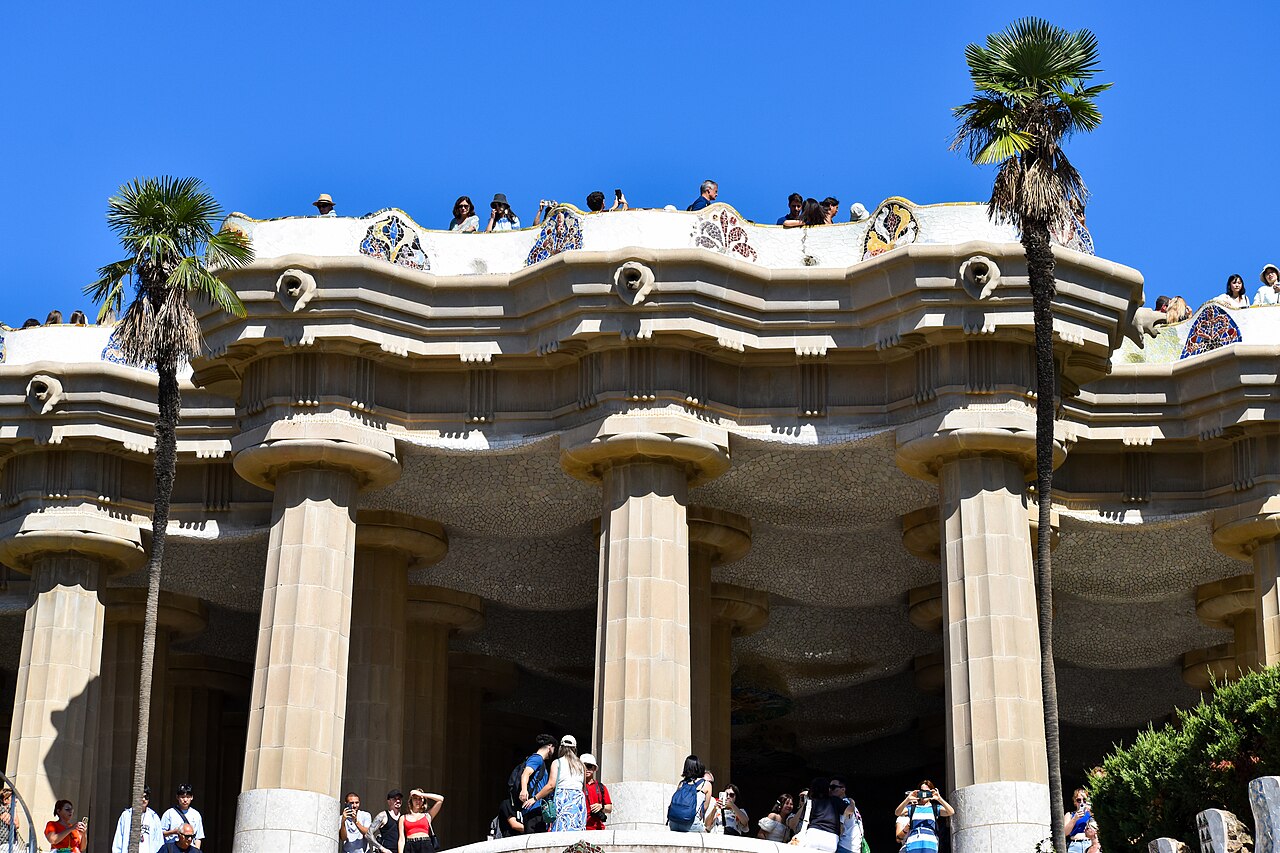
Summer slots go 48 to 72 hours ahead and weekends and holidays need one to two weeks. Take the 09:30 entry. The mosaic bench catches the light early, the terrace is survivable before the coaches arrive, and you can be back down in Gràcia for a second breakfast by 11:00. Guided tours run in Catalan, Spanish, English and French with a maximum group of 25. Smoking is banned throughout, and Barcelona residents get in free daily on a Passi Verd reservation, which is why the locals you see are locals.
Getting there is the part people underestimate. It is a genuine hill. The metro leaves you a steep fifteen minutes below the entrance, and the outdoor escalators from Lesseps only take you part of the way. The 116 bus from Lesseps drops you at the top.
3. Casa Batlló
From €29 for the Blue tier online, which gets you the Noble Floor, the SmartGuide audio in fifteen languages and the Gaudí Cube, a 360-degree LED room that is far better than it sounds. The rooftop is not in that tier. Silver adds the Dragon’s Rooftop from about €34, Gold adds an augmented-reality tablet, the Gaudí Dôme and the private Batlló residence from about €39, and Platinum from about €53 buys priority entry and flexible dates. Pricing is dynamic, so the closer you book to the day, the more it costs.
Get the rooftop tier. The rooftop is the building. The house reopened in July 2025 after a major renovation and added a contemporary exhibition space, Casa Batlló Contemporary, in January 2026. It is open daily until 22:30, which makes it the best late-evening ticket in the city: book the last slot, come out onto Passeig de Gràcia at ten at night, and the façade is lit and the pavement is finally walkable.
4. La Pedrera (Casa Milà)
The day visit starts at about €25 online and includes the audio guide, the Warrior Rooftop, the Whale Attic and the restored tenants’ apartment. Children under 12 are free. One reputable source quotes €29 for the standard adult entry, so treat €25 as the floor rather than the certainty.
The one to book is the Night Experience at €39. You get the rooftop after dark with a projected audiovisual piece across the chimneys, and the chimneys are what you came for. If you can only afford one Gaudí house on top of the Sagrada Família, and Casa Batlló and La Pedrera face each other down the same street, my honest view is that Casa Batlló is the better interior and La Pedrera is the better roof.
5. Casa Vicens
From around €20 to €21 for standard skip-the-line entry, €23 guided, €40 for early access, free for under-10s. This was Gaudí’s first house, finished when he was in his thirties, and it looks almost nothing like the later work: tiles and Moorish geometry rather than melting stone. It is up in Gràcia, it is small, it is rarely busy, and it is the one I send people to on their second trip: a fair candidate for any list of underrated places in Europe. An hour, no advance booking, and you will have rooms to yourself on a weekday morning.
6. Palau Güell
€12 for adults including the audio guide, €9.50 for over-65s and EU students, €5 for ages 12 to 18, free for under-12s. That is the cheapest serious Gaudí interior in the city by a wide margin, and it sits just off La Rambla in El Raval, which is why people walk past it. Free guided tours are included with admission on Saturdays at 10:30 in English and 12:00 in Spanish, and Sundays at 10:30 in French and 12:00 in Catalan.
The basement stables and the parabolic brick arches are the reason to go, along with a roof terrace of tiled chimneys that reads as a rough draft for La Pedrera. It is dark, strange and much more Gothic than the sunlit Gaudí on the postcards.
7. Recinte Modernista de Sant Pau
From €17 self-guided for adults 30 to 64, €11 for ages 12 to 29 and over-65s, free under 12. The guided tour is €34, €27 concession, €12 for children 3 to 11, running Monday, Wednesday and Saturday at 11:15 for about 75 minutes in English and Spanish. Open daily 09:30 to 18:30 from April to October and to 17:00 from November to March. Free on the first Sunday of every month, and also on 12 February, 23 April and 24 September.
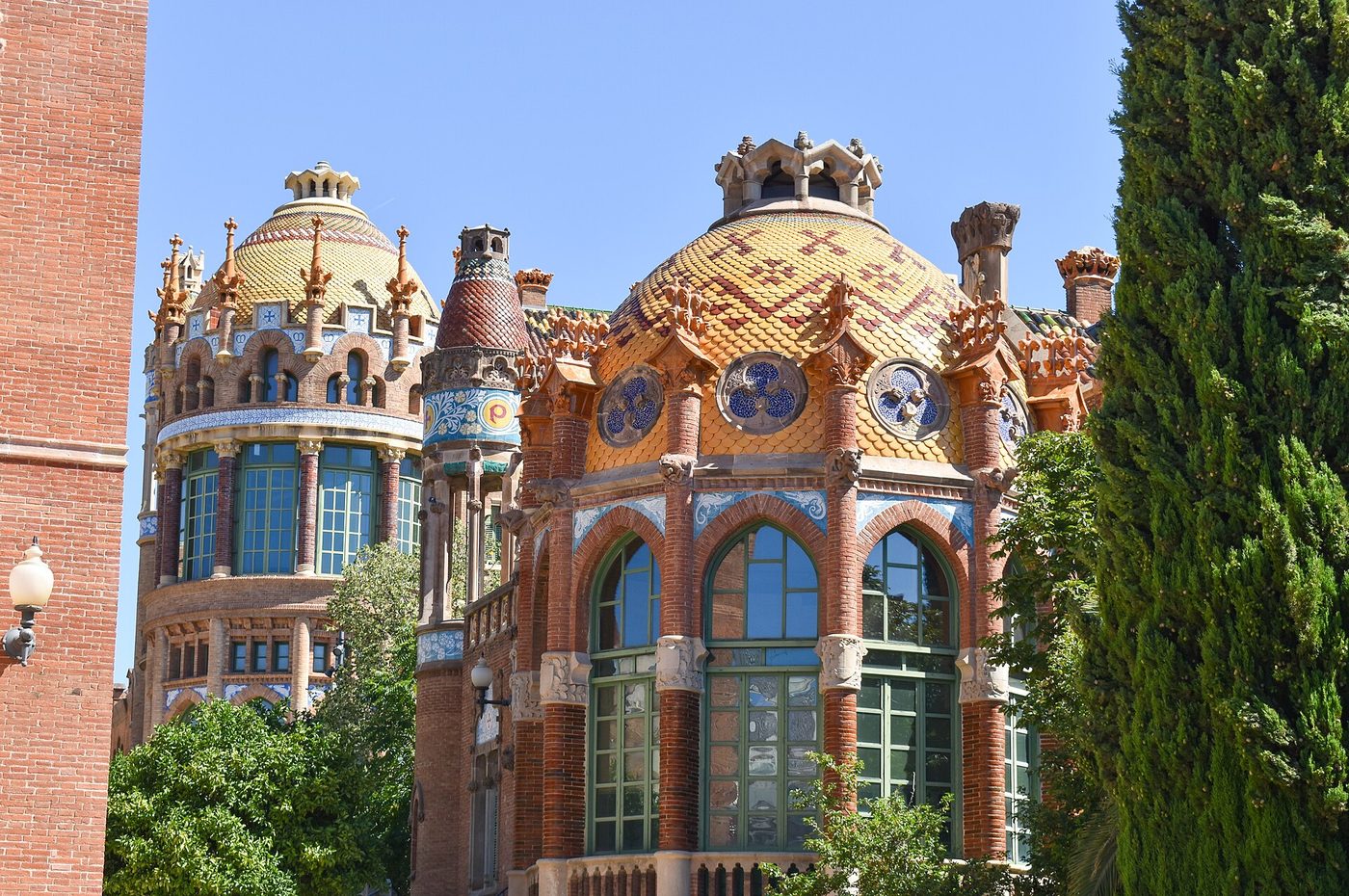
This is the one I argue about. It is a former hospital by Lluís Domènech i Montaner, twelve pavilions of tile and stained glass connected by underground tunnels, ten minutes’ walk up Avinguda de Gaudí from the Sagrada Família, and it is quieter than everything else on this list by an order of magnitude. Pair the two in a morning and you will understand modernisme better than three days of façade-spotting on Passeig de Gràcia would teach you.
8. Palau de la Música Catalana
Tours run about an hour and cost roughly €22 to €24 through resellers; the venue did not surface a clean 2026 price list when I checked, so treat that as a range. It is a UNESCO-listed concert hall with an inverted stained-glass dome that drops into the room like something falling through the ceiling.
Skip the tour and buy a concert ticket instead. Short lunchtime guitar and flamenco programmes run through the season for not much more than the tour price, you get the hall lit and used rather than empty, and you get to sit in it for an hour. It is the single best-value evening in Barcelona for anyone who likes buildings.
9. Casa Amatller
€17 for priority entry with the audio guide, which includes a chocolate tasting, or €20 for the theatrical guided tour with wine and chocolate. Free for under-7s. It is the stepped-gable Puig i Cadafalch house directly next door to Casa Batlló, half the price, a tenth of the queue, and the preserved family apartment gives you something Casa Batlló does not: a sense of what it was like to live in one of these places. Do both, in that order, and the contrast is the point.
10. Passeig de Gràcia and the Block of Discord
Free, forty-five minutes, and the best single street in the city for architecture. The block between Carrer del Consell de Cent and Carrer d’Aragó is called the Block of Discord because three of the era’s rival architects built next door to one another in wildly different registers: Casa Lleó Morera by Domènech i Montaner, Casa Amatller by Puig i Cadafalch, and Casa Batlló by Gaudí. You can read the whole argument of Catalan modernisme off one pavement.
Look down as well as up. The hexagonal paving tiles under your feet were designed by Gaudí, originally for a different building, and they carry a starfish, an ammonite and a piece of seaweed. Walk it before the shops open, when the street belongs to people going to work rather than to Zara.
The old city: Gòtic, Born, Raval and the markets
Ciutat Vella is small. You can cross it in twenty-five minutes. The mistake almost everyone makes is treating it as one place rather than three quite different neighbourhoods pressed together, and then wondering why La Rambla was disappointing.
11. Barri Gòtic on foot
Free, two to three hours, and it only works early. The Gothic Quarter is narrow winding alleys, medieval buildings and small squares, and by eleven in the morning in summer those alleys are a single slow-moving column of people. At eight they are empty, the shutters are going up, the light comes down the streets in blades, and you get the version of the neighbourhood the photographs promised.
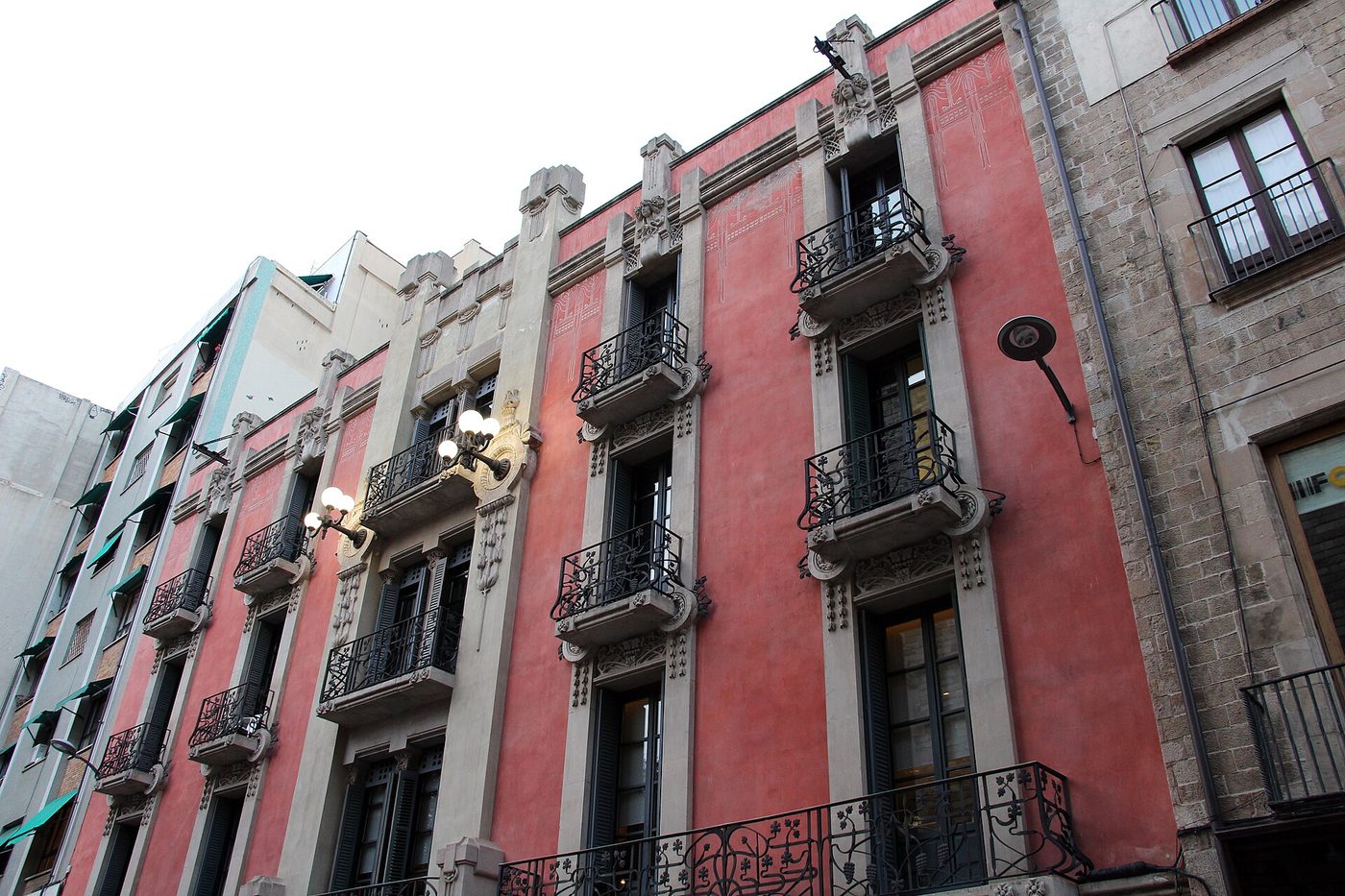
Route I use: start at Plaça Nova by the cathedral, cut through to Plaça Sant Felip Neri, which still carries shrapnel scars from a 1938 bombing, then down to Plaça Sant Jaume, out through Carrer del Bisbe under the neo-Gothic bridge that everybody thinks is medieval and which was in fact built in 1928, and finish in Plaça Reial for coffee. Ninety minutes at a wander.
12. Barcelona Cathedral and its cloister
The cathedral is free during worship hours and charges for a cultural visit at other times. I could not find a 2026 price published in English, which is why the table cell above is honest rather than confident, so budget a small fee and check on the door. Go for the cloister, not the nave: thirteen geese live in it, one for each year of Saint Eulàlia’s life, and the sound of them in an enclosed Gothic courtyard is one of those things you remember longer than the architecture.
13. Plaça Reial
Free. A palm-filled arcaded square just off La Rambla with lamp posts designed by a very young Gaudí, in his first paid commission for the city. It is touristy and the restaurants on it are mediocre. Come at 12:30 for a vermut, sit for half an hour, and leave to eat somewhere else.
14. Santa Maria del Mar
The nave is free at certain hours, a €5 cultural visit gets you the interior, crypt and museum, and guided tours with roof and tower access run €8.50 to €10. Built between 1329 and 1384, just 55 years, which is why it is so unusually coherent inside: one style, one plan, no centuries of second thoughts. The columns are further apart than any other medieval Spanish church, so the interior reads as one enormous room rather than a corridor. It is a five-minute walk from the Picasso Museum and it is free. Go in.
15. Museu Picasso
€14 online, €15 at the door, €19 with the temporary exhibition, €7.50 reduced for ages 18 to 25, over-65s and students, free under 18. More than 3,800 works, and the collection’s strength is the early material: Picasso as a teenager in Barcelona, painting like a nineteenth-century academic, which makes everything that came afterwards legible.
The free windows are excellent and undersold. First Sunday of the month all day, Thursdays 16:00 to 19:00 from October to April, and from 31 March to 27 September also Thursday, Friday and Saturday 19:00 to 21:00. Free slots are released four days in advance and sell out within hours, so set an alarm. There are also open-door days on 4 January, 12 February for Santa Eulàlia, 17 May and 24 September for La Mercè.
16. Parc de la Ciutadella
Free. The city’s central park, built on the site of the fortress the Bourbons imposed on Barcelona after 1714 and which the city demolished with some feeling. There is a Domènech i Montaner café building, a monumental cascade a young Gaudí worked on, and rowing boats on the lake. Sunday morning it fills with drum circles, families and people doing tai chi, and it is the most straightforwardly pleasant free hour in the city.
17. Mercat de la Boqueria
Free to enter, more than 300 stalls behind a stained-glass modernista gate. Here is the thing about the Boqueria: the front thirty metres, the bit you see from La Rambla, is fruit cups and juice stands aimed squarely at people passing through, and it is where most visitors stop. The interior, where the seafood, the butchers, the cheese and the salt cod are, is a working market that Barcelona cooks still shop in.
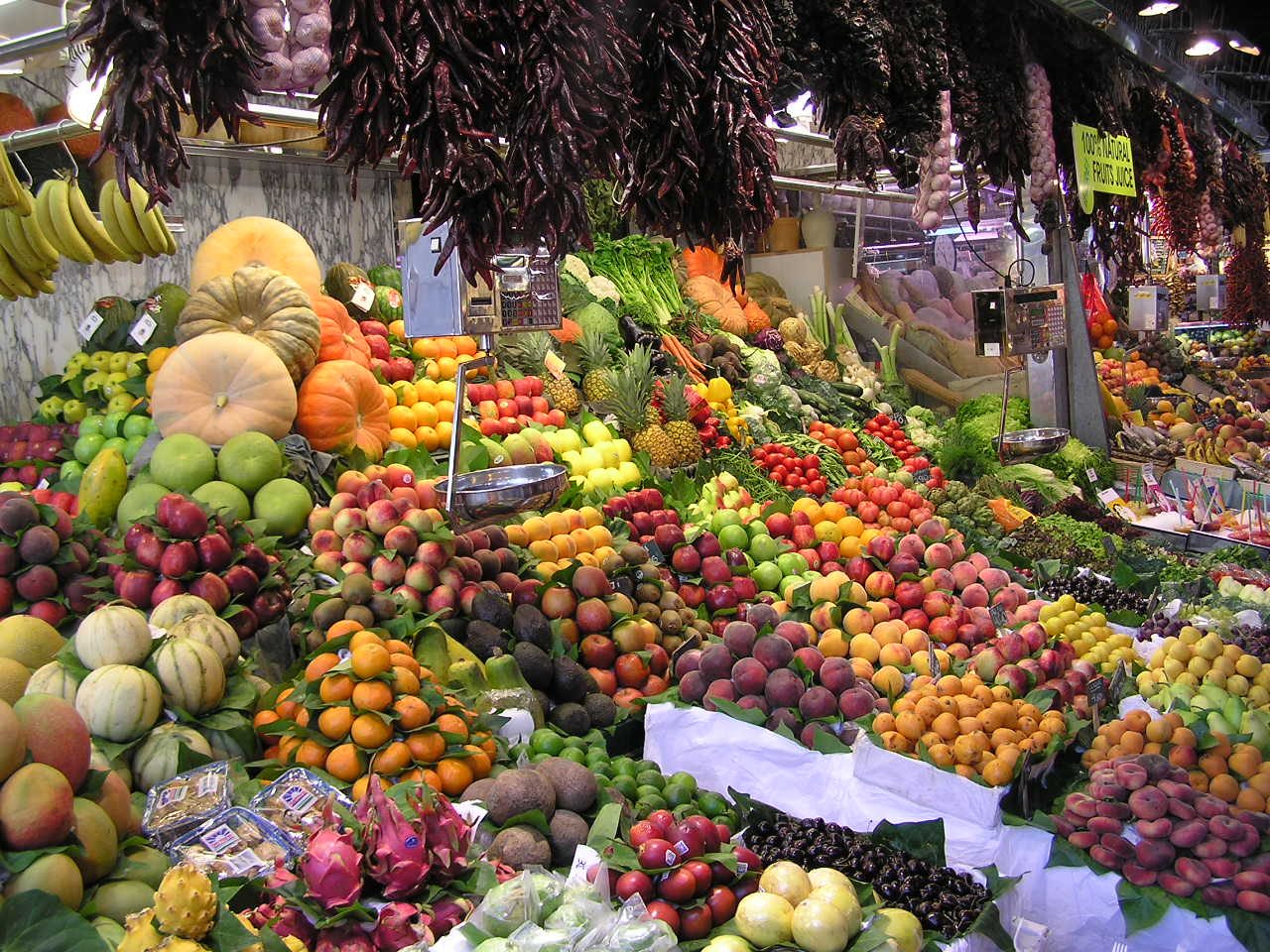
Go at eight in the morning and walk to the back. Sit at Bar Pinotxo for an esmorzar de forquilla, the fork breakfast that is the local institution: chickpeas with morcilla, or cap i pota, at a counter, at an hour when a full plate of stewed offal feels perfectly reasonable. That is the market. The smoothie is not.
18. Mercat de Santa Caterina
Free. Ten minutes east in Sant Pere, under a wavy roof of 325,000 coloured ceramic tiles by Enric Miralles, and used almost entirely by people who live nearby. Fewer stalls than the Boqueria, no tour groups, and the restaurant inside is very good. If you found the Boqueria oppressive, this is the answer.
19. Mercat de Sant Antoni
Free, 250 stalls, in an iron-and-glass hall that reopened after a nine-year restoration which uncovered a stretch of seventeenth-century city wall now visible under the floor. Sunday morning is the second-hand book and comic market that wraps around the outside, and it is one of the last local Sunday rituals left in the centre.
20. Mercat dels Encants
Free to enter, around 300 stalls, open Monday, Wednesday, Friday and Saturday from 09:00 to 21:00. Barcelona’s flea market, with origins traceable to the fourteenth century, now under a mirrored golden canopy at Glòries that reflects the whole thing back at itself. Come at nine when the ground-level lots are being sorted, not at three when it is picked over.
21. La Rambla, walked properly
Free, forty-five minutes, and worth doing once at the right hour. Before 09:00 or after 22:00 it is a boulevard with a Miró pavement mosaic set into it at Pla de l’Os, the Liceu opera house, a Canaletes fountain that Barça fans still gather at, and enough plane trees to justify the walk. Between eleven and eight it is the most concentrated pickpocketing environment in Spain and the restaurants on it are the worst value in the city. Both things are true.
22. El Raval, on purpose
El Raval divides people, in the way the less polished quarters of most European city break destinations do. It is the most mixed part of the old city, students and skateboarders and a large immigrant population, and it has a rougher edge after dark than the Gòtic. It also has the CCCB, MACBA, Palau Güell, the Sant Antoni market and the best-value eating in Ciutat Vella. Go in daylight, keep your bag in front of you on Rambla del Raval after midnight, and do not let anybody tell you to avoid it entirely. That advice is thirty years old.
Montjuïc: the hill that holds half the museums
Montjuïc is 177.7 metres of hill between the city and the port, and it holds two of the best museums in Spain, a castle, a botanical garden, the 1992 Olympic ring and two separate cable cars. It is the most underused half-day in any of the great European cities, largely because people look at a map, see a hill, and go to the beach instead.
How to do it in one go: take the Transbordador Aeri from Barceloneta across the port, land at Miramar, walk to the castle, take the Telefèric down to Parc de Montjuïc, visit the Miró, walk down past MNAC and finish at the Magic Fountain as the show starts. That is a full afternoon and evening, and it is the best value in the city.
23. MNAC, the Museu Nacional d’Art de Catalunya
€12, or €2 for the building and rooftop terrace alone, which is one of the great cheap views in Europe. Free for under-16s and over-65s, and free for everyone on Saturdays from 15:00 and on the first Sunday of the month. Open Tuesday to Saturday 10:00 to 20:00 in summer and to 18:00 in winter, Sundays 10:00 to 15:00.
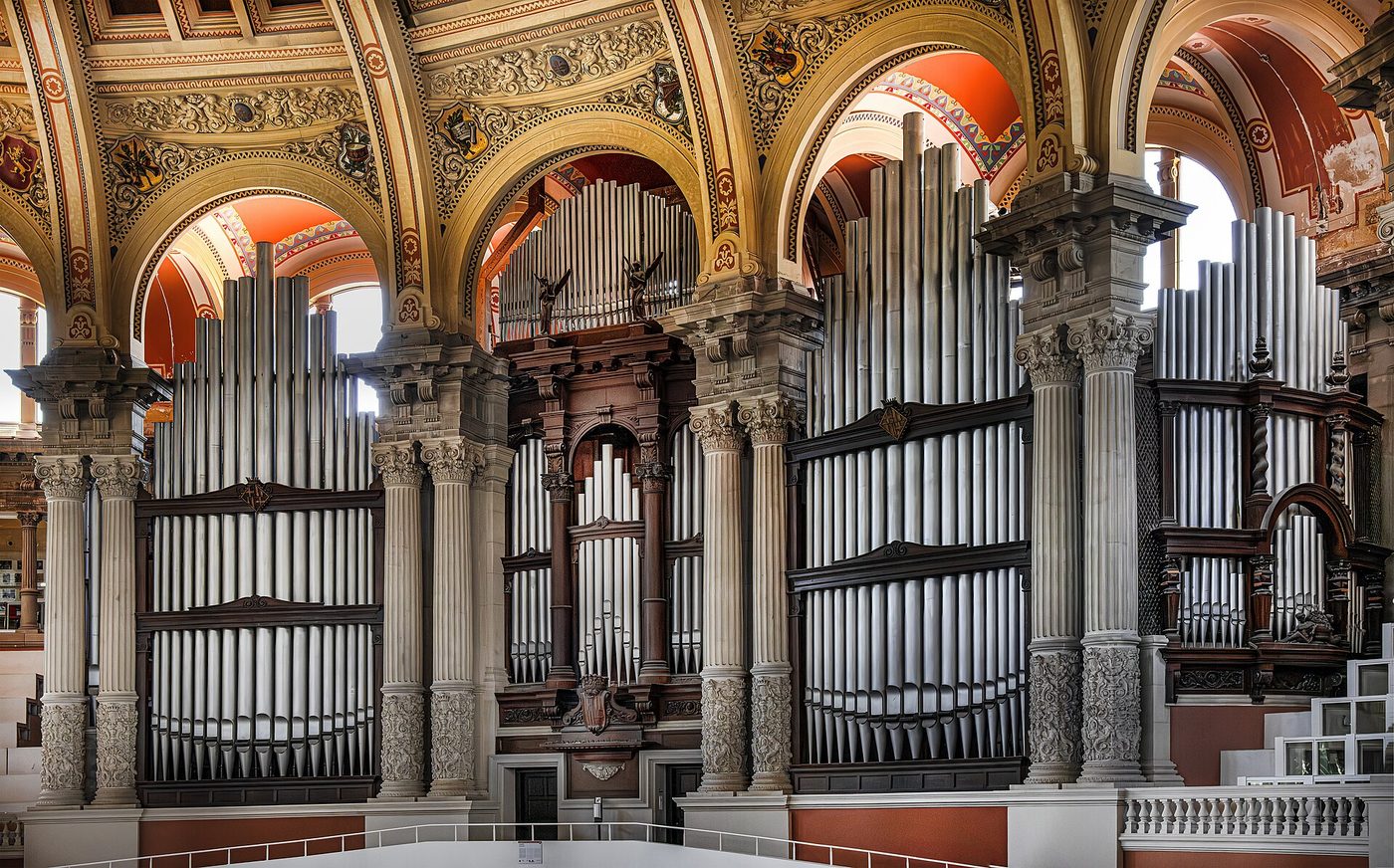
Go for the Romanesque collection, which is not a sentence anybody expects to enjoy reading. In the 1920s teams removed the frescoes from remote Pyrenean churches that were falling down or being sold off, and reinstalled them here in reconstructed apses. The Christ Pantocrator from Sant Climent de Taüll is a genuinely startling thing to stand under. It is the single best collection of Romanesque mural painting anywhere, and it sits two flights up from a fountain everyone photographs.
24. Fundació Joan Miró
Around €17 to €18 for adults according to one source and €15 according to another, with concessions around €11 to €12 and under-15s free. I could not resolve that difference against an official 2026 price list, so budget the higher figure. The building is by Josep Lluís Sert, Miró’s friend, and it is one of the best gallery buildings in Europe: white, top-lit, arranged around courtyards, designed so the sculpture sits in Mediterranean daylight rather than under spotlights.
Even if you are lukewarm on Miró, go for the roof terrace and the way the light works. Ninety minutes is plenty.
25. Magic Fountain of Montjuïc
No ticket, no reservation, no charge. Built for the 1929 International Exhibition and still running water, light and music down the axis below Plaça d’Espanya. The 2026 schedule runs Thursday to Saturday 20:00 to 21:00 in winter, Thursday to Saturday 21:00 to 22:00 in spring and autumn, and Wednesday to Sunday 21:30 to 22:30 in summer, with several separate shows across each operating evening. It closes for maintenance in December and parts of January.
Metro Espanya on L1 and L3, then five minutes up Avinguda de la Reina Maria Cristina. Arrive half an hour early and stand on the MNAC steps rather than at the fountain rail: you see the whole sequence and the city behind it. During La Mercè in September the fountain hosts the pyromusical, when the fireworks are synchronised to the water, and it is the best free thing that happens in Barcelona all year.
26. Montjuïc Castle
€12 for over-13s, €8 for ages 8 to 12, free on the first Sunday of the month and after 15:00 on other Sundays. You can walk the exterior and the moat for nothing; the ticket buys the interior exhibits and the upper battery.
It is a seventeenth-century fortress that spent most of its life pointing its guns at Barcelona rather than at the sea, which is a thing worth sitting with. It was used as a prison and an execution site, most notoriously for Lluís Companys, the president of Catalonia, in 1940. The views over the container port and down the coast are the best sea views in the city, and sunset from the upper terrace is worth planning around.
27. Telefèric de Montjuïc
€12 one way, €19 return, with 10% off online and 15% with a Barcelona Card. It runs from Parc de Montjuïc up to the castle in small gondolas, and it does the steep last stretch that otherwise costs you twenty sweaty minutes. Worth it on a clear day, skippable in cloud.
28. Transbordador Aeri, the port cable car
€12.50 one way, €20 return, under-6s free, typically running 10:30 to 19:00 with the last trip at 17:30 in winter. This is the old 1931 cable car that crosses the harbour at 70 metres in a nineteen-person cabin, taking about ten minutes from the Sant Sebastià tower at Barceloneta to Miramar on Montjuïc.
It is expensive for what it is and there is often a queue at the Barceloneta tower, so go one way only, in the late afternoon, from the beach up to the hill. You get the whole city laid out against the mountains and you arrive on Montjuïc in time for the castle at sunset.
29. Poble Espanyol
€13.50 for over-13s, €9 for ages 4 to 12, free under 4. This was built for the same 1929 exhibition as an open-air museum of Spanish vernacular architecture: 117 buildings copied from villages across the country and assembled into a walkable fake town. It sounds terrible and it is much better than it sounds, mostly because craft workshops still operate in it and because it empties completely in the evening. Go after six, when the day-trippers have gone and the squares are lit.
Viewpoints, high ground and one very old garden
Barcelona is a bowl. The sea is on one side, the Collserola ridge is on the other, and everything in between slopes. That geometry means the city has more good free viewpoints than almost anywhere in Europe, and most visitors use exactly one of them.
30. Bunkers del Carmel
No reservation, no charge, and the widest view in Barcelona by some distance: a genuine 360 degrees, city and sea one way, Collserola the other, with the Sagrada Família dead centre. The concrete platforms are the remains of an anti-aircraft battery built during the Civil War, later a shanty settlement that was cleared for the 1992 Olympics.
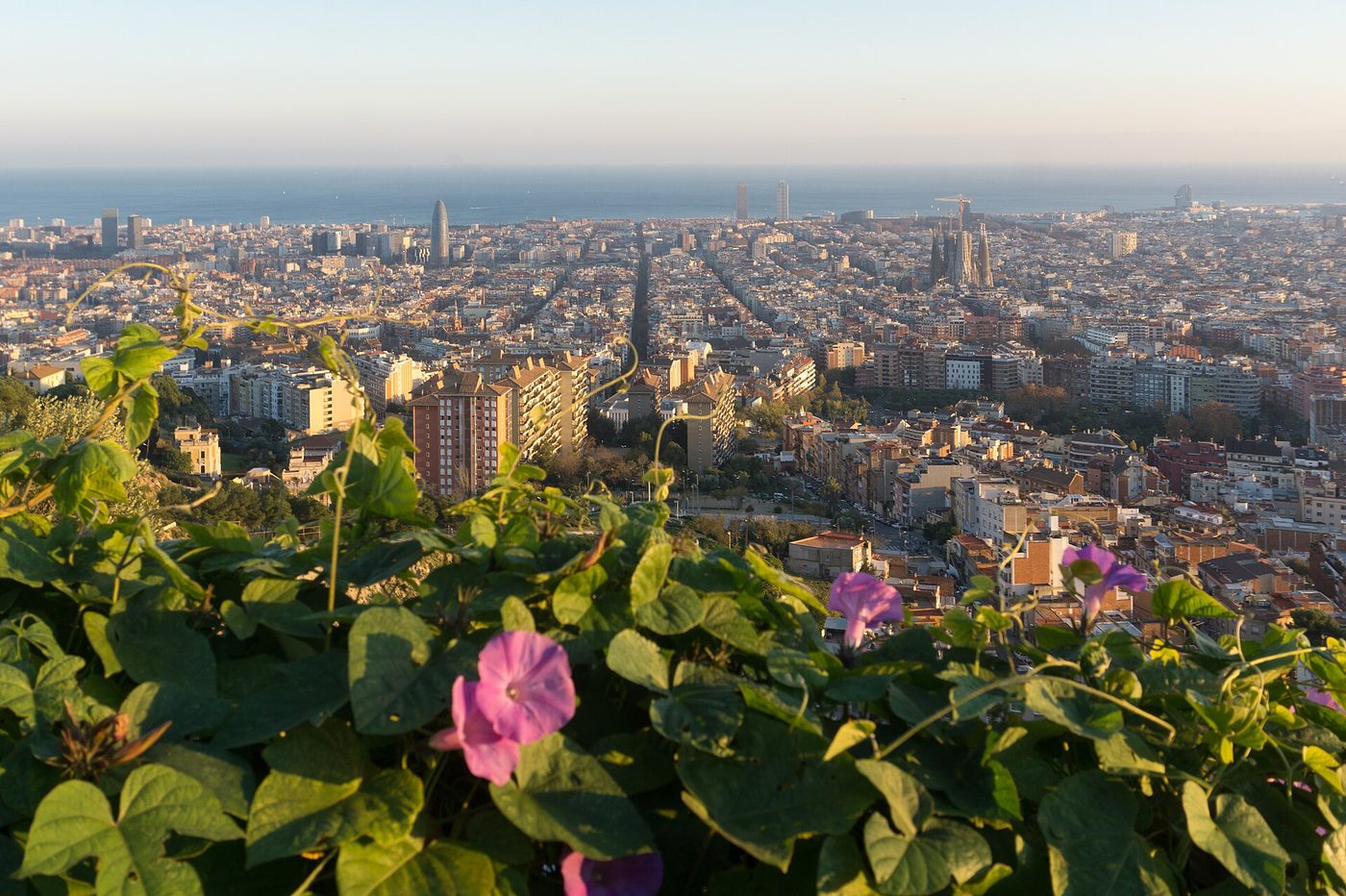
The rules have tightened and it matters. Opening runs 09:00 to 19:30 in summer with winter closing brought forward to 17:30, and there has been a night-time closure since 2023 after years of complaints from the neighbourhood below about noise and rubbish. No alcohol, no loud music, no litter, and there is an automatic entry-control system to stop the platform overfilling. In other words: the famous sunset-with-a-tinnie photograph is now the thing that will get you turned away.
Come an hour before closing instead. The climb is real, twenty minutes up from Alfons X on L4 or the 119 bus that drops you much closer, and there is no shade at the top. Take water.
31. Tibidabo and the Temple del Sagrat Cor
€39 for the full amusement park ticket, free under 90 cm, child pricing 90 to 120 cm and adult pricing above that. Tibidabo is the highest point of the Collserola ridge at 512 metres and it holds two things: a small early-twentieth-century amusement park, some of whose rides date to the 1920s and are more charming than thrilling, and the Temple Expiatori del Sagrat Cor, a neo-Gothic church with a bronze Christ on top.
I could not confirm a 2026 admission price for the church itself, so treat the lift to the upper terrace as an unknown cost. What I can tell you is that if you are not travelling with children, the park ticket is not the point. The point is the ride up on the Tramvia Blau and the funicular, the view across the whole city from 512 metres, and the fact that almost nobody comes up here on a weekday.
32. Mirador Torre Glòries
€18 general and €22 with the immersive sculpture inside, with a surcharge of a few euros if you buy at the ticket office rather than online. General admission is free for under-13s; the €6 child rate applies to the sculpture ticket. The viewpoint sits above 125 metres in Jean Nouvel’s cucumber-shaped tower at Glòries. Summer hours are daily 10:00 to 21:00; in winter it runs Wednesday to Monday 10:00 to 18:30 and closes on Tuesdays.
This is the newest of the paid viewpoints and the argument for it is simple: it is the only high vantage point on the eastern side of the city, so you get the Sagrada Família in profile against the sea rather than lost in a grid. Book it for dusk. It is also, unlike the Bunkers, a lift rather than a hill.
33. Parc del Laberint d’Horta
€2.23 general, €1.42 reduced, free on Wednesdays and Sundays, open 10:00 to 20:00 from April to October and 10:00 to 18:00 from November to March. Barcelona’s oldest surviving garden, laid out in the 1790s, with a neoclassical cypress maze at the centre that is a real maze rather than a knee-high decorative one. It is a long way out on L3 to Mundet, and that is exactly why it stays quiet.
The beaches, ranked
Barcelona has about 4.5 kilometres of beach inside the city limits, almost all of it engineered, and most of it created or rebuilt for the 1992 Olympics out of what had been industrial waterfront. That is not a criticism. It is the reason you can swim twenty minutes’ walk from a Gothic cathedral, which few other European cities can offer. But the beaches are not interchangeable, and Barceloneta, the one everybody goes to, is the one I would send you to least.
| Beach | Metro | Character | Water | Best for |
|---|---|---|---|---|
| Sant Sebastià | Barceloneta (L4) | The closest to the old city, backed by the W hotel; swimming clubs and beach sports, plus an unofficial nudist section | Open, some swell | An early swim before breakfast |
| Barceloneta | Barceloneta (L4) | Busiest and most touristed; restaurants along the dyke; roughly 20 minutes on foot from the old city | Open, choppy in wind | Convenience, and nothing else |
| Nova Icària | Ciutadella-Vila Olímpica (L4) | About 400 m, Blue Flag, sheltered by the Port Olímpic breakwater | The calmest of any city beach | Families and nervous swimmers |
| Bogatell | Poblenou (L4) | The city’s longest beach at 702 m and, per council data, its most visited; noticeably more local | Open | Space, and a weekday afternoon |
| Mar Bella | Poblenou (L4) | Younger crowd, sports courts, a designated nudist stretch | Open | Volleyball and a mixed crowd |
| Castelldefels | R2 Sud from Sants, 25–30 mins | 20 km southwest, wide, long and properly sandy; a real resort beach | Open, shallow entry | A whole beach day |
34. Barceloneta beach
No charge, and no peace. It is the closest beach to the centre and the most crowded stretch of sand in Spain in August. Come for the walk along the dyke, the seafood restaurants behind it and Frank Gehry’s copper fish sculpture at the Port Olímpic end, and then go and swim somewhere else. If you do swim here, do it before nine in the morning, when the sand has been cleaned and the beach belongs to old men doing exercises.
35. Sant Sebastià beach
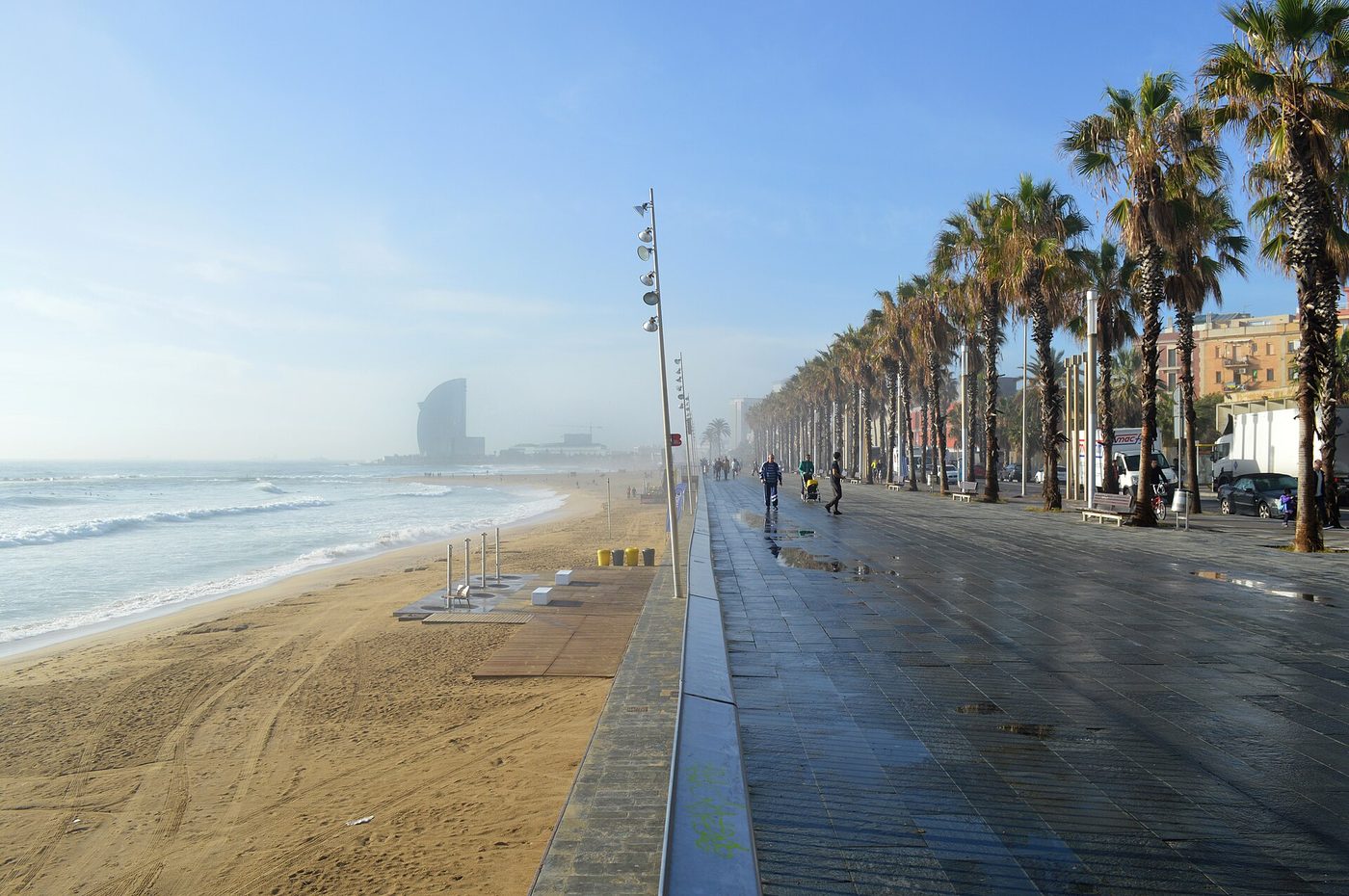
The oldest of the city beaches, predating the Olympic rebuild, and still the one with the strongest local swimming culture, thanks to the Club Natació Atlètic-Barceloneta at its western end. There are people in that water at seven in the morning in February. Sea temperature runs 13 to 15 degrees in December to February, 21 to 26 in summer and 18 to 22 through autumn, which makes September and October the best swimming months of the year: warm water, thinner crowds, and the sea still holding August’s heat.
36. Nova Icària beach
About 400 metres of Blue Flag sand tucked behind the Port Olímpic breakwater so the water is flatter than anywhere else on the city front. This is the family beach: shallower entry, calmer surface, playgrounds and volleyball behind it, and the tide of promenade vendors is thinner than at Barceloneta. If you have children under ten, go here and nowhere else.
37. Bogatell beach
At 702 metres this is the longest beach in the city and, according to council figures, the most visited, which surprises everyone who assumes that is Barceloneta. It reads as more local, the beach bars are less aggressive, and there is simply more room. Metro Poblenou on L4, then five minutes down. This is where I go.
Two rules that apply to every Barcelona beach
Every one of them is smoke-free and vape-free, with fines running from €30, and drinking alcohol on the sand is banned outright. Both are enforced, and the second is the origin of most of the fines handed to visitors in summer.
And if you want a beach that would be considered good in a country without Barcelona, take the R2 Sud from Sants for half an hour to Castelldefels or Sitges. The Costa del Garraf beaches are a different class, and they hold their own against the best beaches in Europe and the wider Mediterranean destinations we rate most highly.
The port, the Roman city and the wet-day museums
Barcelona rains less than almost anywhere in northern Europe, 644 millimetres a year with October the wettest month at about 98 millimetres, but when it does rain in October it commits. These five are the wet-day list, and three of them are better than the weather deserves.
38. L’Aquàrium de Barcelona
€29 at the box office and from around €27 online, €22 for ages 5 to 10, €14 for ages 3 to 4, free under 3. It sits in the Maremagnum complex at Port Vell and its centrepiece is an eighty-metre transparent tunnel through the Mediterranean tank. It is expensive for what it is and it is the right answer if you are travelling with children on a wet Tuesday. If you are not, spend the money on the Museu Marítim next door and eat the difference.
39. Museu Marítim de Barcelona
€10, and free on Sundays after 15:00. The building alone justifies the ticket: the Drassanes Reials, the medieval royal shipyards, are the largest surviving Gothic industrial building in the world, a forest of stone arches built to construct galleys under cover. Inside there is a full-scale replica of the Real, the galley that led the Christian fleet at Lepanto in 1571. Your ticket also covers the Santa Eulàlia, a 1918 schooner moored at the Moll de la Fusta, though she is sometimes away sailing.
40. MUHBA Plaça del Rei, the Roman city
€7 for the combined ticket to all MUHBA sites, free on the first Sunday of every month and every Sunday from 15:00 to close. Under Plaça del Rei there are four thousand square metres of excavated Roman Barcino: streets, a laundry, a dyeworks, a garum factory and a fifth-century episcopal complex, all walkable on raised platforms.
This is the most underrated ticket in Barcelona. You descend from a medieval square into a first-century town, walk it for an hour, and come up understanding why the Gothic Quarter is shaped the way it is. Almost nothing else in the city gives you that.
41. CCCB
€6 for one exhibition, €8 when two are running, free every Sunday from 15:00 to 20:00 with advance booking required. The Centre de Cultura Contemporània de Barcelona occupies a converted almshouse in El Raval and programmes exhibitions about cities, media and ideas rather than about art objects. It is consistently the most interesting thing on in Barcelona and it costs six euros. The courtyard, with its angled mirrored wall reflecting the Collserola ridge over the old building, is worth walking into even if you do not go in.
42. MACBA and the Raval skate plaza
Quoted at €12 by one source and €15 by another, and I could not resolve it against an official 2026 list. Free on Saturday afternoons from 16:00. Richard Meier’s white museum landed in El Raval in 1995 as an instrument of urban regeneration, and the argument about whether that worked is still running.
The plaza in front of it became one of the most famous skate spots on earth without anyone planning it. Even if you never go inside, sit on the steps for twenty minutes and watch: it is the clearest picture you will get of how the neighbourhood actually works, teenagers on boards and Pakistani grocers and museum-goers using the same square without much friction.
Football, neighbourhoods, vermut and the mountain
43. Spotify Camp Nou and the Barça Immersive Tour
€28 to €31 for adults 14 to 69, €21 for children 6 to 13 and over-65s, €20 for students. Read this before you book: the classic Camp Nou Experience, the one with the dressing rooms, the players’ tunnel and pitchside access, is suspended while the stadium is rebuilt. What you get is the FC Barcelona Museum, a 360-degree immersive room, a construction viewpoint and an audio guide. Several major guides still describe the old tour as if it were running, so check what you are buying.
The renovation started in June 2023. Capacity was back to 62,652 as of March 2026 against a final target of 105,000, the club’s 2026/27 home schedule is confirmed at Spotify Camp Nou from 16 August 2026, and the full stadium tour is expected back in late 2026 or 2027. If you want the real experience, buy a match ticket instead. A midweek league game against a mid-table side costs less than you think and is a hundred times the tour. It belongs on a Europe bucket list far more than a museum queue does.
44. The Gràcia square crawl
Costs nothing but your evening. Gràcia was an independent town until 1897 and it still behaves like one: low buildings, a street grid that refuses to line up with the Eixample, independent boutiques and local designers rather than chains. The evening plan is to walk between its squares, Plaça de la Virreina, Plaça del Sol, Plaça de la Vila de Gràcia, Plaça de la Revolució, having one drink in each. That is the whole activity and it is one of the best nights out in the city.
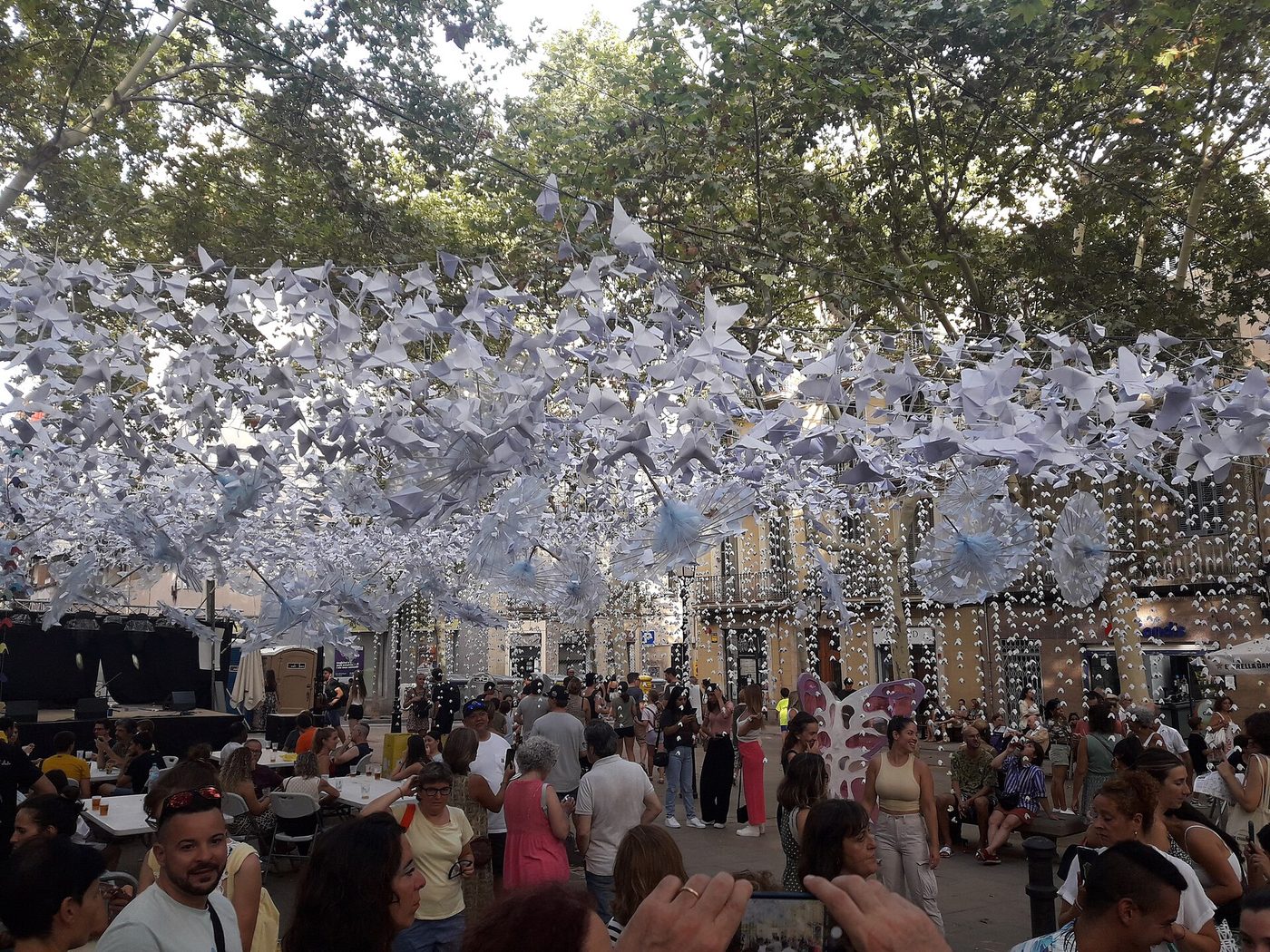
If you are here from 15 to 21 August 2026, the Festa Major de Gràcia takes over. Twenty-three streets close to traffic and are decorated by twenty-three neighbour groups who compete, seriously, over themes built from recycled material over months. It is entirely free. The castellers, the human towers, go up around 18:00 on 19 August, and the correfoc, the fire run, starts at 21:30 on 21 August from Plaça Trilla and finishes at Plaça de la Vila de Gràcia around 23:00. Wear cotton, long sleeves and a hat if you go anywhere near the fire run.
45. Vermut in Poble-sec or Sant Antoni
€3 to €5 a glass. Fer el vermut, to do the vermouth, is a weekend midday ritual rather than a drink: a glass of red vermouth over ice with a slice of orange and an olive, taken standing or sitting around 12:30 on a Saturday or Sunday, with olives, anchovies, crisps and a potato dish alongside. Barcelona’s tourist board publishes a list of seven classic vermut bars, which tells you the city considers it a sight rather than a habit.
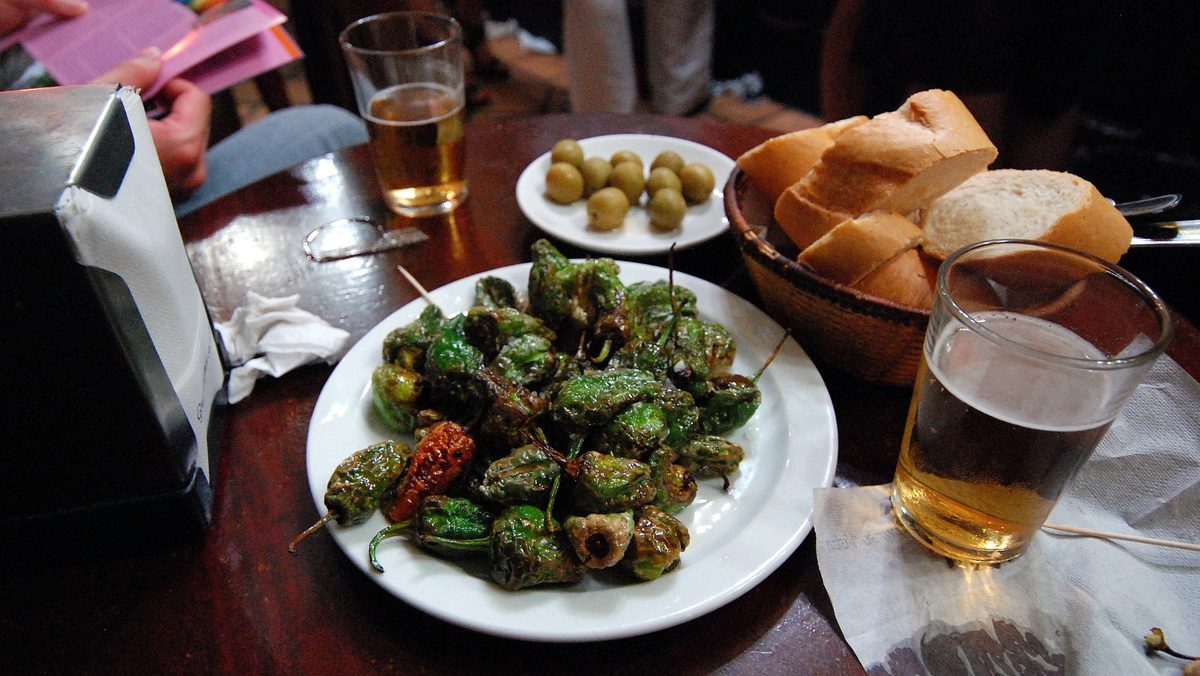
Do it in Poble-sec, which is the city’s pintxos capital and cheaper than the centre, or in Sant Antoni around the market, where the coffee roasters and everyday cafés serve a younger local crowd. Carrer de Blai in Poble-sec is a pedestrian street of pintxos bars where you pay by the stick. It is not a secret, but it is local, and two people eat well there for thirty euros.
46. Montserrat
€15 return on the rack railway, or €15 return on the cable car, and roughly a full day. Take FGC line R5 from Plaça Espanya, roughly hourly, about an hour to either Monistrol de Montserrat for the Cremallera rack railway or Montserrat-Aeri for the cable car. Door to door from central Barcelona is an hour and a half to two hours. The cable car takes about five minutes and the rack railway about fifteen.
Which one? The cable car is faster, more dramatic and small enough that a queue is a real risk in summer. The rack railway is slower, has far more capacity, and runs in bad weather when the cable car sometimes does not. Take the railway if you are travelling with anyone who dislikes heights or if the forecast is windy.
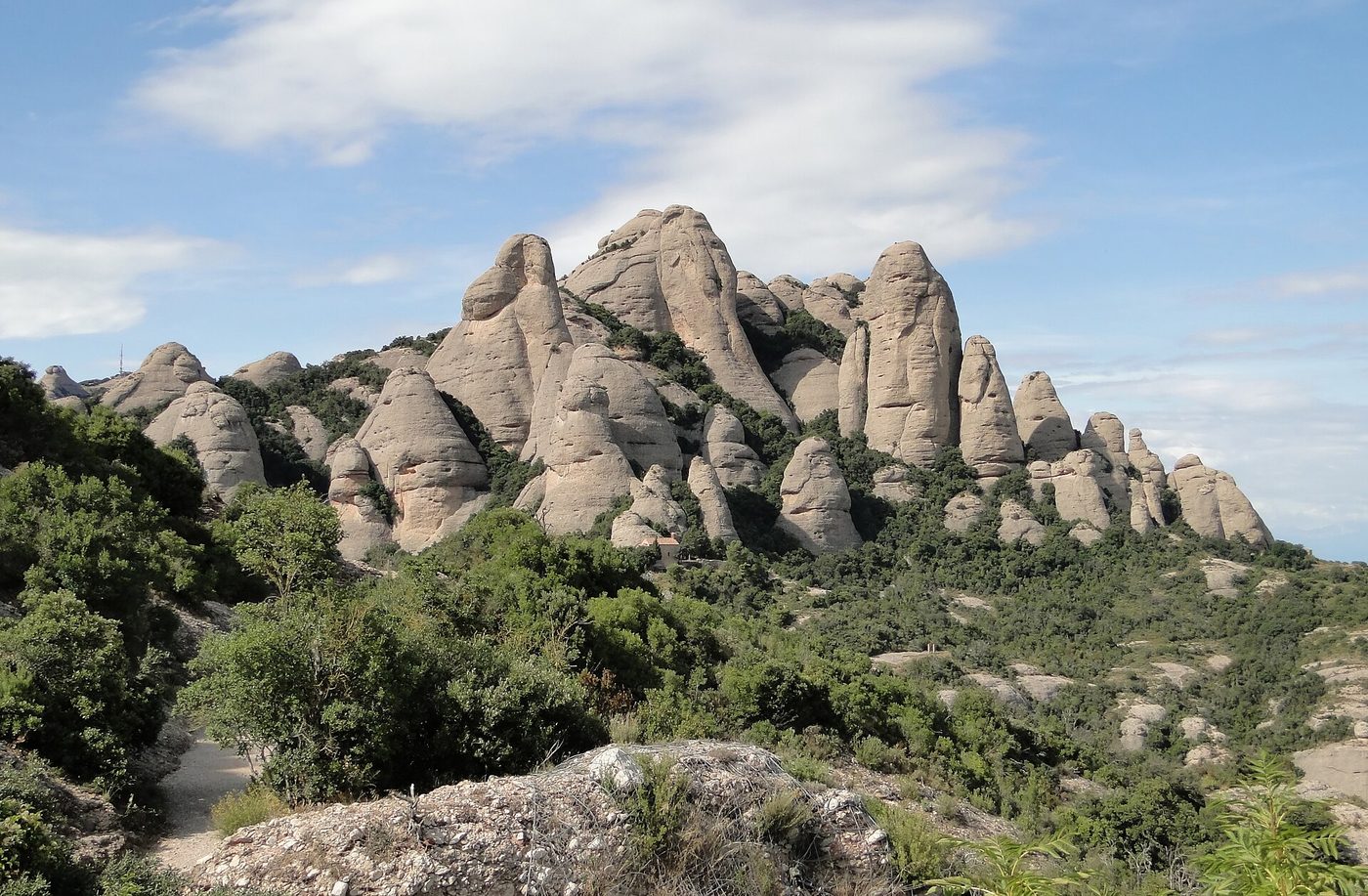
The serrated massif itself is the reason to go, more than the monastery: 1,236 metres of eroded conglomerate that looks like a set of organ pipes, with marked walking paths of one to three hours running out from the top station along the ridges. Go on the first train on a weekday. By eleven the coach tours have arrived and the whole plateau changes character.
What Barcelona actually costs in 2026
Barcelona is not a cheap European city any more, and the gap between what you expect and what you pay is mostly made up of two things nobody budgets for: the tourist tax and the Gaudí tickets. Attraction entry alone will run a couple to €200 over three days if you do the headline sites properly.
| Travel style | Per person, per day, once you are here | Four days, one person, bed included, flights excluded | What that buys |
|---|---|---|---|
| Lean | Around €60 | €320–€470 | Hostel or shared room, menú del día at lunch, market food at night, metro, two paid sights |
| Mid-range | €90–€120 | €750–€1,000 | Three-star or good four-star hotel, a proper dinner most nights, the main Gaudí sites, a day trip |
| Luxury | €400+ | €1,800+ | Five-star, tasting menus, private guides, taxis |
The tourist tax, which doubled in April 2026
Two charges stack: the Catalan regional levy, the Impost sobre les Estades en Establiments Turístics, whose base rates roughly doubled, and Barcelona’s own municipal surcharge, which rose from €4 to €5 per person per night on 1 April 2026. The rates below are the combined totals inside the city and hold until 31 March 2027. The surcharge is scheduled to rise by €1 a year to €8 by 2029.
| Accommodation | Total per person, per night, in Barcelona | Four nights, two people |
|---|---|---|
| Five-star, grand luxe and luxury campsites | €12.00 | €96.00 |
| Tourist dwellings and holiday apartments (HUT) | €9.50 | €76.00 |
| Four-star and four-star superior | €8.40 | €67.20 |
| Other campsites and establishments | €7.00 | €56.00 |
| Youth hostels | €6.00 | €48.00 |
| Anywhere in Catalonia outside Barcelona, five-star | €4.50 | €36.00 |
The one piece of good news: the tax applies only to the first seven nights of a continuous stay in the same accommodation. Nights eight onwards are free of it. And it is charged at the property, usually at check-out, not through your booking site, so it is a cash surprise rather than a line on your confirmation.
Worth knowing why: a quarter of the revenue is earmarked for housing. Barcelona took 16 million visitors in 2025, up 2.9% on the year before, and 26.1 million across the wider Destination Barcelona area, generating €14,041 million. The tax is a policy response to that, not a shakedown, and the receptionist charging it did not set it.
Eating for what locals pay
The menú del día is the single best value in Spanish food and it is a weekday lunchtime institution: three courses and a drink for €13 to €20 in most of the city, and €10 to €15 at neighbourhood restaurants away from the centre. By area, expect €14 to €18 in the centre, €10 to €12 in El Raval, €11 to €14 in Poble-sec and €13 to €16 in Sant Antoni. It is served roughly 13:00 to 16:00 and it disappears at weekends.
Dinner is later than you think. Tapas hours run about 13:30 to 15:30 and from 19:30 onwards, and a Barcelona restaurant at 20:00 is a Barcelona restaurant full of tourists. Budget €20 to €30 a head at a well-regarded tapas bar, or about €15 without drinks at a classic like Bar Tomás, whose entire reputation rests on potatoes. Our guide to European food by country and region puts Catalan cooking in context, and it is genuinely distinct from what you will eat in Madrid or Seville.
Free Barcelona: the windows worth planning around
This is the biggest saving available in the city and it is scattered across a dozen different websites. Fifteen municipal museums are free on the first Sunday of every month, and most of the major museums are free every Sunday from 15:00 until closing. The catch, and it is a real one, is that first Sundays are the single most crowded slot of the month. The per-day figures in the budget table above assume you are paying for tickets; a Sunday-heavy trip cuts them hard.
| Site | Free when | Normally | Worth queueing for? |
|---|---|---|---|
| Museu Picasso | First Sunday all day; Thu 16:00–19:00 Oct–Apr; also Thu, Fri, Sat 19:00–21:00 from 31 Mar to 27 Sep | €14 | Yes, but book the free slot the moment it drops, four days ahead |
| MNAC | Saturdays from 15:00 and the first Sunday of the month | €12 | Yes. Saturday afternoon is the free window I would build a weekend around |
| MACBA | Saturdays from 16:00 | Around €12–€15 | Yes |
| CCCB | Sundays 15:00–20:00, advance booking required | €6 | Only if the show appeals; €6 is not a barrier |
| MUHBA sites | First Sunday, and every Sunday from 15:00 | €7 | Yes, easily |
| Museu Marítim | Sundays after 15:00 | €10 | Yes |
| Fundació Joan Miró | Sundays from 15:00 | Around €15–€18 | Yes |
| Montjuïc Castle | First Sunday, and after 15:00 on other Sundays | €12 | Yes |
| Recinte Modernista de Sant Pau | First Sunday, plus 12 Feb, 23 Apr and 24 Sep | From €17 | Yes, this is the biggest single saving |
| Parc del Laberint d’Horta | Wednesdays and Sundays | €2.23 | Go on a Wednesday and have it to yourself |
| Sagrada Família | Sunday 09:00 international mass, capacity limited | €26 | Yes, if you treat it as a service |
Add the open-door days that apply across many city museums: 12 February for Santa Eulàlia, 23 April for Sant Jordi, 17 May for International Museum Day and 24 September for La Mercè. If your dates are flexible, building a trip around one of those is worth more than any pass, and it is the same instinct behind backpacking Europe cheaply. There is more of this thinking in our guide to Europe on a budget and our roundup of the cheapest places to travel in Europe, where Spain still does better than its reputation suggests.
Getting around, and which pass is worth it
Barcelona’s metro is fast, clean and covers almost everything on this list. Tibidabo needs a tram and a funicular, the Bunkers need a bus or a climb from Alfons X, and Montserrat and the coast beaches run on separate rail networks. You will use it three or four times a day and then walk the rest, which is how planning a trip to Europe should generally work, because the distances in Ciutat Vella and the Eixample are shorter than the map suggests.
| Ticket | Price 2026 | Covers | Buy it if |
|---|---|---|---|
| Single ticket, zone 1 | €2.90 | One journey, metro or bus | You are here for a day and walking most of it |
| T-casual | €13 | 10 journeys, zone 1, one person only, not valid at the airport metro stations | Two to four days of normal sightseeing. This is the default answer |
| T-usual | €22.80 | 30 days unlimited, zone 1, one person | You are staying two weeks or more |
| Hola Barcelona travel card | About €25.94 for 72 hours; the 48-hour to 120-hour range runs roughly €18.70 upwards | Unlimited metro, bus, tram, plus airport metro L9 Sud and Renfe R2 Nord. Excludes the Aerobús, funiculars and cable cars | You are using the metro heavily and arriving by air |
| Aerobús | €7.45 single, €12.85 return | Airport to Plaça de Catalunya, about 35 minutes, every 5–10 minutes, 24 hours. A1 for T1, A2 for T2 | You have luggage and want one seat, no changes |
| Airport taxi | Metered, typically €35–€45, minimum around €21, plus a €4.60 airport supplement | Door to door in 25–40 minutes | You are three or four people, when it beats the Aerobús |
Two things worth being clear about. There is no flat-rate airport taxi fare in Barcelona. Fares are metered with a €4.60 airport supplement, and anybody quoting you a fixed price at the rank is not running a normal taxi. And the T-casual, which is otherwise the right ticket for most visitors, is not valid at the airport metro stations, so it will not get you in from the plane.
The airport metro on L9 Sud runs about €11.80 for a standalone return. It is the cheapest way in, it takes longer than the bus, and it involves a change at Collblanc or Torrassa for the city centre, which is a genuine nuisance with cases.
Barcelona Card, Articket, or neither
| Pass | Price | What it covers | My verdict |
|---|---|---|---|
| Barcelona Card | €39 for 48h up to €79 for 120h; the five-day card works out at €15.80 a day | Unlimited public transport including to the airport, free entry to 20-plus museums including the Picasso, MNAC, Miró and MACBA, and 70-plus discounts | Worth it only if you are a heavy museum visitor. Sagrada Família and Park Güell are not included, which is the thing most buyers get wrong |
| Articket BCN | €38 | Six art museums: MACBA, Museu Picasso, Fundació Antoni Tàpies, Fundació Joan Miró, MNAC and CCCB. Valid 12 months from first use, skip-the-line at all six | The one pass I would actually buy, if you will visit four or more. Four separate tickets already cost more than €38 |
| Hola Barcelona | About €25.94 for 72 hours | Transport only, airport included | Buy it if you are arriving by air and staying central; otherwise a T-casual plus an Aerobús ticket usually costs less |
| Nothing at all | €13 T-casual, then pay per sight | Everything, à la carte | What I do, and what I would recommend to most people on a three-day trip |
The maths that decides it: if your itinerary is Sagrada Família, Park Güell, Casa Batlló and two viewpoints, a card saves you nothing, because the first two are excluded from the standard version. If your itinerary is four art museums on a rainy weekend, the Articket pays for itself on the third one. Our wider guide to getting around Europe covers the same trade-off in other cities, and train travel in Europe is the piece to read if Barcelona is one stop on a longer run.
How far ahead to book
| Site | Peak season, April to October | Winter |
|---|---|---|
| Sagrada Família, general entry | 4–6 weeks | 2–3 weeks |
| Sagrada Família, both towers | 8–12 weeks in summer | 2–3 weeks |
| Park Güell | 48–72 hours; 1–2 weeks for weekends and holidays | A day or two |
| Casa Batlló | 1–2 days is usually enough, but prices rise as the date nears | Same day often fine |
| Museu Picasso free slots | Released 4 days ahead and gone within hours | Same |
| Camp Nou Immersive Tour | A few days | A few days |
| Everything else on this list | Walk up | Walk up |
That table is the single most useful thing on this page. The difference between booking the Sagrada Família four weeks out and four days out in July is the difference between seeing it and photographing a fence.
Which neighbourhood to base yourself in
Where you sleep changes a Barcelona trip more than in most cities, because the character shifts hard across a ten-minute walk. With the tourist apartment licences being withdrawn by 2028, hotel supply is tighter and prices are firmer than they were, so book earlier than instinct says.
| Neighbourhood | What it is | Best for | The downside |
|---|---|---|---|
| Barri Gòtic | Medieval alleys, small squares, antique shops and centuries-old cafés, plus tourist-facing restaurants | First-timers who want to walk out of the door into the postcard | Noise, crowds by mid-morning, and the highest pickpocketing density in the city |
| El Born | Culture and old buildings close to both the centre and the beach; creative shops, good bars | The best all-round base for a three-day trip | Nightlife noise on the main streets |
| Eixample | The modernista core and the best shopping; wide grid, quieter streets, most of the good hotels | Couples, architecture, anyone who values sleep | Less atmospheric at street level; twenty minutes’ walk from the old city |
| Gràcia | A former village with its own grid, squares and independent boutiques | Repeat visitors and anyone who wants to feel resident rather than touristic | A metro ride from the beach and the old city |
| Poble-sec | The pintxos capital, under Montjuïc, still resolutely local | Eating well on a budget | Thin on hotels; mostly apartments and small guesthouses |
| Sant Antoni | Everyday cafés, coffee roasters and young professionals, anchored by the market | Anyone who wants the Eixample at lower prices | Few sights within walking distance |
| Barceloneta | Beach access, seafood, a slower pace | Families and sun-first trips | Cramped, hot in August, and a long walk from anything modernista |
| El Raval | The most mixed part of the old city; museums, cheap eating, real edge | Seasoned travellers on a budget | Rougher after dark on some streets; not the place for a first trip abroad |
| Poblenou | The 1992 Olympic Village and the tech district behind it; wide streets, new buildings | Longer stays, families, anyone with a car | Little historic character; you commute to the sights |
My honest ranking for a first three-day trip: El Born, then Eixample, then Gràcia. Barri Gòtic is the one people book and the one they complain about at 03:00. There is more on this in our guide to where to stay in Europe, and the same neighbourhood logic applies across the country in our Spain travel guide.
Day trips from Barcelona, costed and timed
Barcelona sits inside an unusually good day-trip radius, the kind of thing worth building a Europe itinerary around, and every one of these is doable on public transport without a tour.
| Destination | How | Journey time | Approximate fare | Go for |
|---|---|---|---|---|
| Montserrat | FGC R5 from Plaça Espanya, then rack railway or cable car | 1.5–2 hrs door to door | Around €15 return on the final ascent, plus the train | The mountain, the monastery and the ridge walks |
| Sitges | Rodalies R2 Sud from Sants or Passeig de Gràcia | About 34 minutes, around 70 trains a day | From about €6 one way | Beaches, a whitewashed old town, and one of the prettiest small towns on this coast |
| Girona | AVE high speed, or regional services | About 38 minutes by AVE, about an hour regional, roughly 25 trains a day | From about €9.90 one way | Intact medieval walls, the Jewish quarter, the cathedral steps |
| Tarragona | Renfe from Sants | 1 hr 6 mins, around 32 trains a day | €8.10 each way regional, from about €10.39 faster | A Roman amphitheatre on the sea, and far fewer visitors |
| Penedès wine country | Renfe from Plaça Catalunya to Sant Sadurní d’Anoia | 50–54 minutes, roughly every half hour | From about €6 one way | Cava. Over 100 wineries around Sant Sadurní alone |
| Tossa de Mar, Costa Brava | Bus, around 118 connections a day, first at 07:50 | 1 hr 20 at best, 1 hr 43 typical | Around €14 one way | A walled medieval town on a cove |
| Figueres | Renfe from Sants, often combined with Girona | Around 1 hr by high-speed service | Similar to Girona | The Dalí Theatre-Museum, which is a building as much as a collection |
| Castelldefels | Rodalies R2 Sud from Sants | 25–30 minutes | A few euros | A proper wide beach, half an hour from the city |
One warning about high summer: the 2026 Rodalies timetable shows a stretch of the R2 with no weekday service between 27 July and 30 August for engineering work. I could not verify how that affects the Sitges and Castelldefels legs specifically, so if you are travelling in high summer, check the Rodalies site the week before rather than the month before.
If Barcelona is one stop in a longer trip, our best places to visit in Spain roundup and the ten-day Spain itinerary pick up where this article stops, and Andalusia makes the obvious second week.
When to go, month by month
Barcelona has a mild Mediterranean climate and no truly bad month, which is unusual in Europe and is why the shoulder seasons here are so much better value than they are further north. January and February sit around 15°C by day and 9°C at night; July and August run 28 to 29°C by day and 22 to 23°C at night. Annual rainfall is 644 millimetres, October is wettest at about 98 millimetres, and July is driest at about 27 millimetres across roughly five rainy days. July gets 311 hours of sunshine, about 10.4 hours a day; December gets 137, about 4.6.
| Season | Daytime feel | Sea | Crowds | Verdict |
|---|---|---|---|---|
| March to June | Mild in March, warm from April, long evenings, occasional spring rain | Warming, swimmable from late May | Building; June is already peak | The best window of the year. April and May especially |
| July and August | 28–29°C, humid, city hot at night | 21–26°C, at its warmest | The busiest months by a distance | Only if you are tied to school holidays. See summer Europe, and book everything |
| September and October | Still warm, softer light, the wettest month is October | 18–22°C, still holding summer heat | Falling from mid-September | The best swimming and the best value. La Mercè lands here |
| November, January, February | Around 15°C by day, 9°C at night, bright and dry-ish | 13–15°C, for the hardy only | Quietest of the year | Cheapest flights and hotels; museums and Gaudí without queues. See our winter Europe picks |
| December | Mild, short days, 137 hours of sunshine all month | Cold | Busy around Christmas markets and New Year | Fine, but the Magic Fountain shuts for maintenance |
Two caveats on that table. The 311 and 137 figures are sunshine hours, not hours of daylight, and I could not source a reliable daylight-length table for Barcelona, so do not use them to plan how late you can walk. And “quietest of the year” is relative: cruise traffic rose 10% in 2025, with more than 3.56 million cruise passengers between January and October alone. There is no month in which Barcelona is empty. Our guide to the best time to visit Europe puts these seasons alongside the rest of the continent, and the best time to visit Spain goes region by region.
The festival calendar worth planning around
| Festival | 2026 dates | Cost | What happens |
|---|---|---|---|
| Three Kings, Cavalcada de Reis | 5 January | Free | The Kings arrive by boat at Port Vell around 16:00; the parade starts around 18:00 |
| Santa Eulàlia | 12 February | Free | The city’s winter festival, and a free-museum open day |
| Sant Jordi | 23 April | Free | Books and roses on every street; the best day of the year to be in Catalonia |
| Primavera Sound | 4–6 June 2026, Parc del Fòrum | Ticketed | One of Europe’s biggest music festivals |
| Sónar | 18–20 June 2026 | Ticketed | Electronic music and digital art, by day and by night |
| Sant Joan | Night of 23 into 24 June | Free | The Nit del Foc: bonfires, firecrackers, coca de Sant Joan and cava, mostly on the beaches |
| Festa Major de Gràcia | 15–21 August 2026 | Free | 23 streets decorated by 23 neighbour groups; castellers around 18:00 on 19 Aug, correfoc 21:30 on 21 Aug |
| La Mercè | 23–27 September 2026 | Free | The city’s main festival, ending with the pyromusical at the Magic Fountain |
If you can only plan around one, make it La Mercè. It is free, it takes over the whole city, and the pyromusical, where the fireworks are timed to the Magic Fountain, is the best hour Barcelona gives away all year. Sant Jordi on 23 April is the one I love most: the whole city hands each other books and roses, and it happens to be a free-museum day as well.
The rules that catch visitors out
Barcelona updated its bylaws in 2026 and the enforcement is real, particularly along the seafront in summer. None of it is obscure, and all of it is cheaper to know than to learn.
| Rule | Fine | Where it bites |
|---|---|---|
| Walking through town in swimwear only, or shirtless, away from the seafront | €120–€300 | Barceloneta’s inland streets, on the walk back from the beach |
| Drinking alcohol on the beach or in public spaces | €100–€3,000, rising steeply for group botellón and repeat offences | The beaches at night, and squares in Gràcia and the Gòtic |
| Smoking or vaping on any Barcelona beach | €30–€2,000 | All city beaches, which are smoke-free |
| Rental e-scooters | Banned outright since January 2026 | The whole city. The rental apps are gone |
| Private e-scooters on pavements, or riding under the influence | €500–€1,000 for riding impaired; helmets required | Seafront promenades |
| Organising or leading group drinking tours | Treated as a serious offence under the 2026 bylaws | Ciutat Vella and El Born |
Pickpockets, plainly
Barcelona has a real and specific problem, and pretending otherwise does nobody any favours. Pickpocketing accounted for over 48% of all crime reported in the city in 2023, more than 100,000 incidents. Violent crime against visitors is rare; the risk is almost entirely opportunistic theft.
It is improving. Operation Pla Kanpai, a Mossos d’Esquadra effort targeting repeat offenders, extended to TMB buses in January 2026 and reported pickpocketing on public transport down 40% in the first half of 2026, with 85 multi-offenders detained between January and June, four times the same period in 2025.
The specifics that matter: highest risk is La Rambla, the Gothic Quarter, around the Sagrada Família and Barceloneta beach, and on metro lines L1, L3 and L5, with 08:00 to 09:30 and 17:00 to 20:00 the worst windows. Front pockets, bag in front of you on the metro, phone off the café table, nothing under the sunlounger. That is the whole of the advice. Our general Europe travel tips cover the same ground for other cities, and solo travellers in Europe may want the extra detail there.
How many days you need, and what to do with them
Two days is enough to see the headline sights badly. Three is the right answer for a first trip. Four or five lets you add a day trip and a second Gaudí house without running.
One day in Barcelona
Sagrada Família on the first slot of the day. Walk up Avinguda de Gaudí to Sant Pau for an hour. Metro to Passeig de Gràcia, walk the Block of Discord, lunch on a menú del día in the Eixample. Afternoon in the Barri Gòtic, ending at Santa Maria del Mar. Vermut in El Born, dinner late. You will not get to Montjuïc or Park Güell, and that is the correct sacrifice.
Two days
Day one as above. Day two: Park Güell at 09:30, down into Gràcia for breakfast, metro to Espanya, MNAC for two hours, the castle and the cable car in the afternoon, and the Magic Fountain in the evening if it is a show night.
Three days, the version I would actually book
Day one, the Gaudí day. Sagrada Família first slot, Sant Pau, lunch, Casa Batlló on the last evening slot so you come out onto a lit Passeig de Gràcia. Dinner in the Eixample.
Day two, the old city and the sea. Boqueria at eight for a fork breakfast, Barri Gòtic before the crowds, MUHBA under Plaça del Rei, Santa Maria del Mar, Museu Picasso in the afternoon. Swim at Bogatell. Dinner in El Born.
Day three, Montjuïc. Port cable car across the harbour, castle, Telefèric down, Fundació Joan Miró, MNAC rooftop for €2, then the Magic Fountain. If it is a Saturday, do MNAC properly after 15:00 when it is free.
Four or five days
Add Montserrat on the first train of a weekday, one of the better short walks in our hiking in Europe guide, and Park Güell plus Bunkers del Carmel on another morning. If you have a fifth day, take the R2 Sud to Sitges and do nothing at all.
Barcelona by traveller
| If you are | Do this | Skip this |
|---|---|---|
| A first-timer | Sagrada Família, Park Güell, Casa Batlló, Barri Gòtic, Montjuïc. See first-time Europe | Poble Espanyol and the Aquàrium. They are not the story |
| Back for a second trip | Sant Pau, Casa Vicens, Palau Güell, MUHBA, the Laberint d’Horta, a concert at the Palau de la Música | La Rambla in daylight |
| Travelling with children | Nova Icària beach, Tibidabo, the Aquàrium, Poble Espanyol, Ciutadella rowing boats, the port cable car. More in Europe with kids | The Picasso Museum and anything requiring queueing in August sun |
| On a tight budget | Sunday afternoon museums, Bunkers del Carmel, the Magic Fountain, menú del día, the free Sunday mass at the Sagrada Família | The Barcelona Card, unless you have counted the museums |
| A couple | La Pedrera Night Experience, a concert at the Palau de la Música, Montjuïc Castle at sunset, dinner in Gràcia. See also honeymoons in Europe | Barceloneta in August |
| Travelling solo | The Gràcia square crawl, vermut on Carrer de Blai, Sunday museums, a Montserrat ridge walk | Nothing. Barcelona is one of the easiest solo cities in Europe |
| Here for the architecture | Sant Pau, Palau de la Música, Palau Güell, Casa Vicens, the Drassanes at the Museu Marítim | Racing between the three famous houses in one day |
| Here in the rain | MNAC, Museu Marítim, MUHBA, CCCB, Casa Batlló, the Boqueria | Montjuïc, Bunkers, and anything involving a cable car |
Swaps: what to do instead
Most of the frustration people report in Barcelona comes from doing the right thing at the wrong time or in the wrong place. These are direct substitutions.
| Instead of | Do | Why |
|---|---|---|
| Eating on La Rambla | Eating on Carrer de Blai in Poble-sec | Half the price, pintxos by the stick, and locals at the bar |
| The front of the Boqueria | The back of the Boqueria, or Mercat de Santa Caterina | The front is juice stands; the back is a working market |
| Barceloneta beach | Bogatell, or the R2 Sud to Castelldefels | More space, calmer, and a better beach at the end of the line |
| A Camp Nou tour | A midweek league match ticket | The classic tour is suspended; the match is the real thing |
| A Palau de la Música guided tour | A lunchtime concert in the same hall | Similar money, and the room lit and used rather than empty |
| Queueing for the Sagrada Família at noon | The first slot, or the free 09:00 Sunday mass | Morning light through the east windows is the entire point of the interior |
| Sunset at the Bunkers with a drink | An hour before closing, with water | Alcohol is banned, closing is 19:30 in summer and 17:30 in winter, and the platform is capped |
| Casa Batlló at midday | Casa Batlló at 21:00 | Open to 22:30, the queue has gone, and the façade is lit when you come out |
| A guided day tour to Montserrat | The first R5 train and the rack railway | Half the cost, twice the time on the mountain, and you leave before the coaches |
| The Barcelona Card, bought on arrival | An Articket if you like art, a T-casual if you do not | The card excludes the two sites you most want |
Ten mistakes I see people make in Barcelona
1. Booking the Sagrada Família last. Book it first, then build the trip around the slot. Four to six weeks in peak.
2. Assuming the Barcelona Card covers the Gaudí sites. The standard card does not include the Sagrada Família or Park Güell. That is the single most common pass mistake here.
3. Turning up at Park Güell without a timed ticket. Entry is capped by the hour, and the grace period on your slot is half an hour, after which the ticket is dead.
4. Not budgeting the tourist tax. Plan for it as carefully as you would our Europe packing list. Four nights for two in a four-star is €67.20 you did not plan for, payable at the property.
5. Eating at 20:00. Dinner service properly starts around 21:00. At eight you are eating with other tourists, off a menu written for them.
6. Using the T-casual to get in from the airport. It is not valid at the airport metro stations. Buy the Aerobús ticket or a Hola Barcelona card.
7. Walking back from the beach in swimwear. €120 to €300, and it is enforced in Barceloneta.
8. Treating Ciutat Vella as one place. The Gòtic, El Born and El Raval want different things from you and reward different hours.
9. Doing all three Gaudí houses in a day. By the third one you are looking at a rooftop and thinking about your feet. Two, with a long lunch between them.
10. Skipping Montjuïc because it looks like a hill on the map. Two cable cars go up it and one museum on it holds the best Romanesque collection in the world.
What I could not pin down
A handful of things in this guide are softer than the rest, and I would rather say so than dress them up.
Barcelona Cathedral, MACBA and the Fundació Joan Miró do not surface clean 2026 price lists in English, and the sources that quote them disagree by several euros. Those cells carry ranges or a note rather than a number. The Palau de la Música tour price is a reseller range for the same reason, and the Barcelona Card and Hola Barcelona prices are bands rather than fixed figures because both vary by duration and channel. The admission to the Temple del Sagrat Cor at Tibidabo, as distinct from the amusement park, I could not confirm at all. And the sunshine-hours figures in the climate section are sunshine hours, not daylight length, which is not the same measurement.
There is also no Barcelona month-by-month temperature table here, because I could not source a complete one I trusted. Seasonal bands are what the evidence supports, so seasonal bands are what you get.
Frequently asked questions about things to do in Barcelona
How many days do you need in Barcelona?
Three. Two covers the headline sights in a rush. Four or five adds a day trip and lets you go slowly. Fewer than two and you are choosing between Gaudí and the old city. If Barcelona is one leg of a longer Spanish trip, our Costa del Sol guide covers the southern coast.
Is Barcelona expensive?
Moderately, and it has got more so. On the ground, budget around €60 a day lean, €90 to €120 mid-range and €400 upwards for luxury. With a bed included, a four-day trip for one person runs roughly €320 to €470 lean and €750 to €1,000 mid-range, excluding flights. Attraction tickets and the tourist tax are the two lines people underestimate.
What is the tourist tax in Barcelona in 2026?
Between €6.00 and €12.00 per person per night depending on your accommodation, combining the Catalan regional levy with a €5 municipal surcharge that took effect on 1 April 2026. Four-star hotels are €8.40, holiday apartments €9.50, five-star €12.00, hostels €6.00. It only applies to the first seven nights of a stay and it is paid at the property, usually at check-out.
How far in advance should I book Sagrada Família tickets?
Four to six weeks between April and October, two to three weeks in winter. The both-towers ticket in summer goes eight to twelve weeks ahead. There is no ticket office, so if it is sold out online it is sold out. The free alternative is the 09:00 international mass on Sunday, capacity limited, doors on Carrer de la Marina from 08:30.
Do you need to book Park Güell in advance?
Yes in practice. Summer slots go 48 to 72 hours ahead and weekends and holidays need one to two weeks. Adult entry to the Monumental Zone is €18, €13.50 reduced, and hourly capacity is 1,400. Arrive within half an hour of your slot, and remember there is no re-entry once you leave.
Is Barcelona safe?
Yes for violence, which is rare against visitors. No for pockets: pickpocketing made up over 48% of reported crime in 2023. It is improving, with theft on public transport down 40% in the first half of 2026 under a dedicated police operation. Keep your bag in front of you on L1, L3 and L5, and be alert on La Rambla and around the Sagrada Família.
Is the Camp Nou stadium tour open?
Not the classic one. During the renovation you can book the Barça Immersive Tour at €28 to €31, which covers the museum, a 360-degree immersive room and a construction viewpoint, but not the dressing rooms, the tunnel or pitchside. The full tour is expected back in late 2026 or 2027, and the club’s 2026/27 home fixtures are confirmed at Spotify Camp Nou from 16 August 2026.
What is the best time to visit Barcelona?
April to June and September to October. September and October have the warmest sea, 18 to 22°C, with thinner crowds. November, January and February are the cheapest and quietest. July and August are hot, humid and the busiest by a wide margin.
How much is lunch and dinner in Barcelona?
A weekday menú del día is €13 to €20 for three courses and a drink, and €10 to €15 in neighbourhood restaurants. Dinner at a good tapas bar runs €20 to €30 a head with drinks. Vermut is €3 to €5 a glass.
Montserrat rack railway or cable car?
The cable car takes about five minutes and is more dramatic; the rack railway takes about fifteen, carries far more people and keeps running when wind stops the cable car. Both are around €15 return. Take the railway with anyone who dislikes heights, or on a windy day.
How many people visit the Sagrada Família?
4.87 million in 2025, a record, making it the second most-visited monument in Spain after the Alhambra.
Can you see Barcelona for free?
More than most European cities. The Barri Gòtic, the beaches, Parc de la Ciutadella, the Bunkers del Carmel, Passeig de Gràcia, the Magic Fountain, Santa Maria del Mar’s nave and every major festival are free, and fifteen municipal museums open free on the first Sunday of the month with most major museums free every Sunday from 15:00.
Is Barcelona worth visiting given the overtourism debate?
Yes, and go with your eyes open. Anyone travelling from outside the EU should also read our Schengen visa and ETIAS explainer. The city took 16 million visitors in 2025, rents have risen close to 70% in ten years, and every tourist apartment licence in Barcelona is being withdrawn by November 2028. Stay in a licensed hotel rather than an unlicensed flat, pay the tax without complaining, learn four words of Catalan, and spend money in Gràcia and Poble-sec rather than only on La Rambla. That is not moralising; it is the difference between being welcome and being tolerated.
Final thoughts
The thing that has changed about Barcelona in 2026 is not really the finished spire, although standing under 172.5 metres of it is a strange experience after fifteen years of scaffolding. It is that the city, like several of the most visited countries in Europe, has stopped pretending it can absorb unlimited visitors and started pricing and legislating accordingly. The tax is up, the flats are going, the scooters are gone and the bunkers close at sunset.
That makes Barcelona a better trip if you plan it and a worse one if you do not. Book the Sagrada Família and Park Güell before anything else. Put the free Sunday afternoons in your calendar. Eat at nine. Stay in El Born or the Eixample. Take the R5 to Montserrat on the first train, and the R2 Sud to a real beach on your last day.
Do that, and Barcelona is still what it has always been: the most concentrated collection of extraordinary buildings in Europe, standing on a hill, next to a sea, in a city where lunch costs fourteen euros. It earns its place among the most beautiful places in Europe. For the wider picture, our Spain travel guide covers the whole country, and the best cities to visit in Europe shows you where Barcelona sits against its rivals.
Hannah Brooks has spent fifteen years travelling, living and writing across Europe, from the Arctic tip of Norway to the south of Sicily. She has planned hundreds of European itineraries for readers and is Senior Europe Editor at EuropeanTourism.org.
Photo credits
- Photo: Didier Descouens / CC BY-SA 4.0 via Wikimedia Commons
- Photo: Julian Lupyan (CC0) via Wikimedia Commons
- Photo: Fred Romero / CC BY 2.0 via Wikimedia Commons
- Photo: Dungodung (CC0) via Wikimedia Commons
- Photo: Alexey Komarov / CC BY-SA 4.0 via Wikimedia Commons
- Photo: DimiTalen (CC0) via Wikimedia Commons
- Photo: Pere López Brosa / CC BY-SA 4.0 via Wikimedia Commons
- Photo: Takeaway / CC BY-SA 3.0 via Wikimedia Commons
- Photo: Bernard Gagnon / CC BY-SA 3.0 via Wikimedia Commons