Italian Food by Region: A Complete Guide to All 20 Regions
The first time I tried to eat my way across Italy in one trip, I did it wrong. I ordered carbonara in Bologna, asked for parmesan on a plate of clams in Naples, and spent a week convinced that Italian food meant a fixed list of about fifteen dishes that showed up everywhere. It took a Bolognese waiter, patient but unimpressed, to explain that I was effectively ordering haggis in Cornwall.
Italian food by region is not a marketing angle. It is the actual organising principle of the country’s cooking: twenty regions, unified politically only in 1861, each with its own fats, its own grains, its own pasta shapes and its own idea of what dinner looks like. Learn the map and you eat better everywhere.
This guide covers all twenty regions, with what to eat in each one, which protected products are worth buying, what things actually cost in euros, and which month to show up for the thing you came for. There is also a short section on a few claims about Italian food that are repeated far more confidently than the evidence supports. If you are still deciding where in the country to base yourself, start with our complete Italy travel guide and come back here to plan the eating.
How Italian regional cooking actually splits
Before the region-by-region list, three lines on the map explain most of what you will taste.
Fat. The north cooks in butter and lard. The centre and south cook in olive oil. The transition runs broadly through Lazio, which is why Rome tastes like a hinge between two countries. The one loud exception is Liguria, a northern region that is coastal, hilly and covered in olive trees, and which therefore cooks like the south. That single exception is why Genoa produces pesto and focaccia while Milan, three hours away, produces risotto and breaded veal.
Carbohydrate. The north leans on rice and polenta. Risotto alla milanese and polenta concia are northern foods because the Po Valley grows rice and maize. The south leans on dried durum pasta, because durum wheat likes heat and drought. Fresh egg pasta, meanwhile, belongs to the middle belt, Emilia-Romagna above all, where there were eggs and there was time.
History. Sicily was Arab, Norman and Spanish in turn, which is why you eat couscous in Trapani and cinnamon in a cassata. South Tyrol was Austrian until 1919, which is why the dumplings are called Knödel. Friuli sits against Slovenia and eats goulash. None of this is decorative. It is the reason the food changes every two hours of driving.
One number to hold on to before the regions themselves: Italy had 897 registered geographical indications as of 11 November 2025, split into 331 agri-food products, 530 wines and 36 spirits. No other EU country comes close, and the geography of those 897 is essentially the geography of this article.
Italian food by region: all 20 regions at a glance
Every region of Italy, what to order on your first night there, the product worth carrying home, the wine to drink with it and the months when the region is at its best for eating. The product column mixes protected designations with local specialities that carry no label; the region sections say which is which.
| Region | Area | Order this first | The product to buy | The wine | Best months |
|---|---|---|---|---|---|
| Valle d’Aosta | North | Fonduta valdostana | Fontina Val d’Aosta DOP | Donnas, Enfer d’Arvier | Dec to Mar |
| Piedmont | North | Tajarin with white truffle | Nocciola del Piemonte IGP hazelnuts | Barolo, Barbaresco, Gavi | Oct to Dec |
| Liguria | North | Trofie al pesto | Basilico Genovese DOP | Vermentino, Pigato, Sciacchetra | May to Sep |
| Lombardy | North | Risotto alla milanese | Grana Padano DOP, Bresaola della Valtellina IGP | Franciacorta | Sep to Nov |
| Trentino-Alto Adige | North | Canederli in broth | Speck Alto Adige IGP | Lagrein, Gewurztraminer | Sep to Oct, Dec |
| Veneto | North | Cicchetti and an ombra | Radicchio Rosso di Treviso IGP | Prosecco Superiore, Amarone | Apr to Jun, Oct |
| Friuli-Venezia Giulia | North | Frico with polenta | Prosciutto di San Daniele DOP | Friulano, Ribolla Gialla | Sep to Nov |
| Emilia-Romagna | North | Tortellini in brodo | Parmigiano Reggiano DOP | Lambrusco, Sangiovese di Romagna | Sep to Nov |
| Tuscany | Centre | Bistecca alla fiorentina | Lardo di Colonnata IGP | Brunello, Chianti Classico | Sep to Nov |
| Umbria | Centre | Pasta alla norcina | Lenticchia di Castelluccio di Norcia IGP | Sagrantino, Torgiano Rosso Riserva | Oct to Mar |
| Marche | Centre | Vincisgrassi | Ciauscolo IGP | Verdicchio | May to Sep |
| Lazio | Centre | Cacio e pepe | Pecorino Romano DOP | Frascati | Feb to May |
| Abruzzo | South | Arrosticini | Zafferano dell’Aquila DOP | Montepulciano d’Abruzzo, Cerasuolo | May to Sep |
| Molise | South | Cavatelli | Caciocavallo di Agnone | Tintilia del Molise | May to Oct |
| Campania | South | Pizza napoletana | Pomodoro San Marzano DOP | Taurasi, Greco di Tufo | Apr to Jun, Sep |
| Puglia | South | Orecchiette con le cime di rapa | Burrata di Andria IGP | Primitivo di Manduria Dolce Naturale | May to Oct |
| Basilicata | South | Baccala con peperoni cruschi | Peperone di Senise IGP | Aglianico del Vulture Superiore | Sep to Nov |
| Calabria | South | Anything with ‘nduja | ‘Nduja di Spilinga | Ciro Classico | Jun to Sep |
| Sicily | Islands | Pasta alla Norma | Pistacchio Verde di Bronte DOP | Cerasuolo di Vittoria, Etna DOC | Dec to Mar, Apr to Jun, Sep to Oct |
| Sardinia | Islands | Porceddu | Bottarga di muggine | Vermentino di Gallura, Cannonau | May to Jun, Sep |
Two notes on that table. “Best months” is about food, not weather: Piedmont in November is cold and grey and also the only time to eat Alba white truffle at its peak. And the wine column names flagships rather than full lists, because Italy has somewhere around 78 DOCG appellations and several hundred DOCs on top of them.
The North: Alpine pastures and the Po Valley
Eight regions, and the ones where Italy tastes least like the postcard. Butter, cured pork, hard cheese, rice, dumplings and some of the most serious wine in Europe. If your only Italian meals so far have been in Rome or Naples, the north will genuinely surprise you.
1. Valle d’Aosta: cheese, and then more cheese
Italy’s smallest and most mountainous region cooks like the Alps it sits in, which is to say it cooks with Fontina. Fonduta valdostana is melted Fontina for dipping bread into. Polenta concia is polenta enriched with Fontina, usually alongside beef or venison stew. Costoletta alla valdostana is a breaded veal cutlet with Fontina and ham inside it. You see the pattern.
Fontina Val d’Aosta DOP is made from raw cow’s milk from Alpine pasture, semi-soft and gently earthy, and the rind carries a stamped outline of the Matterhorn so you can tell the real thing from the impostors on a supermarket shelf. The region’s second DOP cheese, Valle d’Aosta Fromadzo, is a rustic farmhouse cheese with a slight tang. There is also mocetta, cured muscle from the leg of chamois or goat, and seupa a la Vapelenentse, a farmhouse soup that is essentially bread and Fontina.
The drink to try is caffe alla valdostana: coffee with grappa, sugar, lemon zest and spices, served in a many-spouted wooden grolla that gets passed around the table. The region has no DOCG wines. Its reds, Donnas and Enfer d’Arvier, sit under the Valle d’Aosta DOC and are worth ordering precisely because you will never see them outside the valley.
Come between December and March, when the food makes sense in context and the valley is at its best for skiing in Europe.
2. Piedmont: truffles, hazelnuts and the best wine list in Italy
If you care more about what is in the glass than what is on the plate, this is the region. Piedmont has 19 DOCG wines, more than any other Italian region, including Barolo, Barbaresco, Gavi and Moscato d’Asti. It also has the Alba white truffle, the Fassone Piemontese beef breed, and hazelnuts good enough that a whole confectionery tradition grew out of them.
Order tajarin al tartufo bianco, ribbons of egg pasta cut extremely thin, dressed in butter and buried under shaved white truffle. Then agnolotti del plin, small ravioli pinched shut by hand and filled with mixed roast meats. Then brasato al Barolo, beef braised in the region’s flagship red. Vitello tonnato, cold sliced veal under a tuna and caper sauce, is stranger on paper than on the plate. Bollito misto, a trolley of boiled meats with two sauces called bagnet verd and bagnet ross, is the great Piedmontese winter ritual.
The dip to know is bagna cauda: garlic, anchovies and olive oil kept hot at the table, with raw vegetables for dunking. The nuts are Nocciola del Piemonte IGP, grown across the Langhe, Roero and Monferrato hills in the provinces of Cuneo, Asti and Alessandria, and they are the base of gianduja. The cheeses to look for are Castelmagno DOP and Bra DOP.
Timing matters more here than anywhere else in Italy. The Alba white truffle season runs October to December and peaks in November. The Fiera Internazionale del Tartufo Bianco d’Alba runs 10 October to 6 December 2026, its 96th edition, with a truffle market every weekend at the Cortile della Maddalena.
3. Liguria: the northern region that cooks like the south
Liguria is a thin arc of coast and steep terraces, and it is the reason the butter-versus-oil rule needs an asterisk. Liguria is northern and cooks in olive oil, because it has the sun and the slopes for olive trees and very little flat pasture for cows.
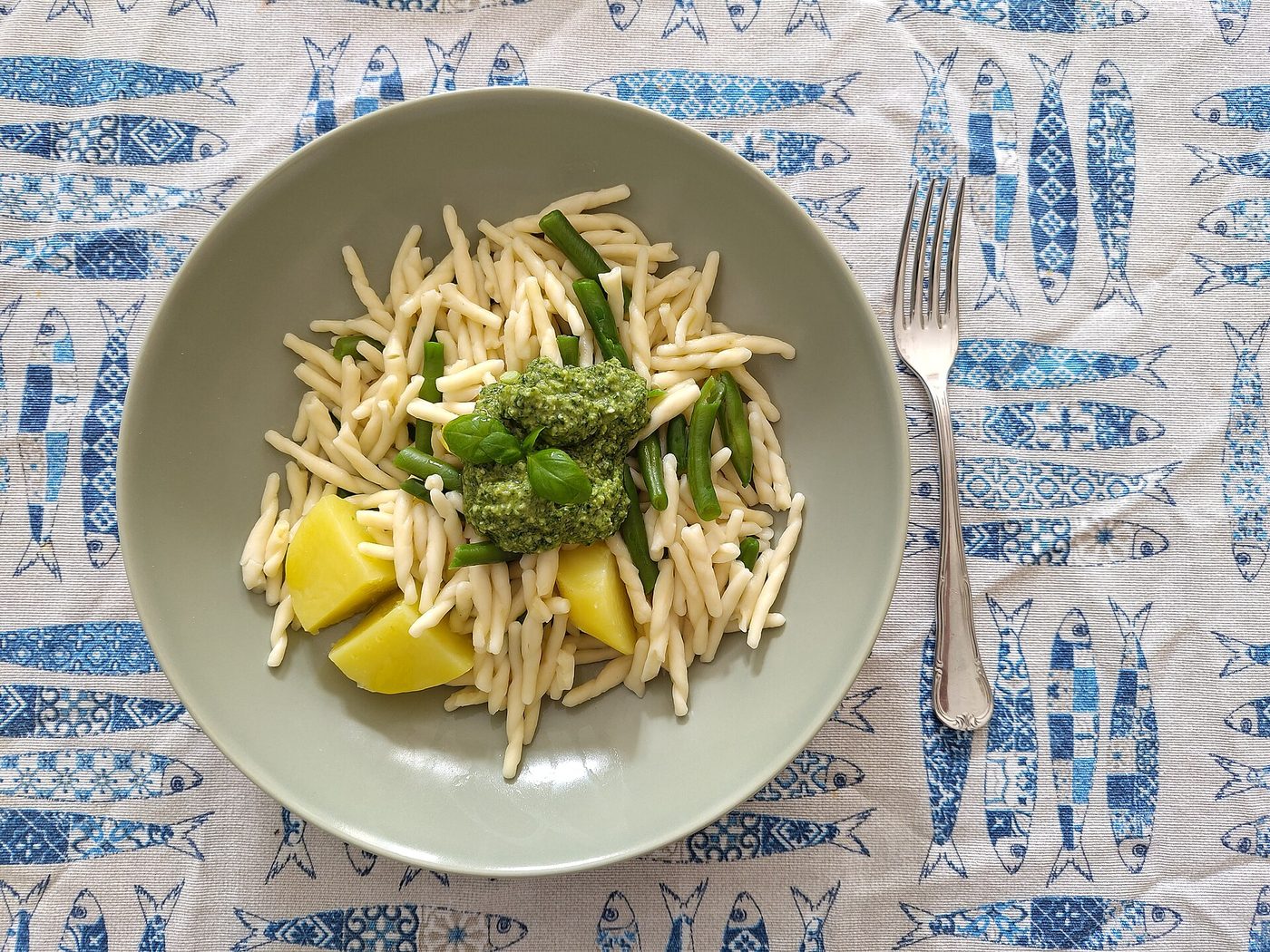
Trofie al pesto is the dish: short twisted pasta with pesto alla genovese, classically served with potato and green beans cooked in the same pot. Farinata is a thin chickpea-flour pancake baked in a hot oven and scattered with black pepper, sold by the slice and eaten standing up. Focaccia genovese is dimpled, salted and slick with oil. Coniglio alla ligure is rabbit with pine nuts, olives and white wine. Ciuppin is the local fish stew, served with grilled bread.
One thing worth getting right here: pesto genovese itself is not a protected designation. The DOP covers Basilico Genovese, the basil, which the EU granted PDO status in 2005 and which remains the only basil in the world with a DOP. The Consorzio’s own rule is that DOP basil should make up no less than 25 percent of the finished pesto. There is a private Consorzio Pesto Genovese, but no PDO for the sauce. Buy the jar that names the basil.
Also here: Focaccia di Recco col Formaggio IGP, two paper-thin sheets of unleavened dough with soft cheese melted between them, and Riviera Ligure DOP olive oil. The region has 11 DOCs and no DOCG. Drink Vermentino, Pigato or Rossese, and if you are in the Cinque Terre, the sweet Sciacchetra.

4. Lombardy: rice, saffron and more Michelin stars than any other region
Milan’s region eats richly and cooks in butter. Risotto alla milanese is rice cooked in saffron stock and finished with butter and Parmigiano, classically with bone marrow. Ossobuco is cross-cut veal shank braised with vegetables, white wine and broth, and the two are traditionally served together. Cotoletta alla milanese is a bone-in veal rib chop, breaded and fried in butter, which is not the same thing as a schnitzel however similar it looks. At Christmas the city eats panettone.
The cheese board is extraordinary: Grana Padano DOP (minimum nine months’ ageing, produced across 33 provinces of the Po Valley spanning Piedmont, Lombardy, Veneto, Trentino-Alto Adige and Emilia-Romagna), Gorgonzola DOP in its two styles, dolce creamy and mild, piccante firmer and sharper, plus Taleggio and Robiola. From the Alpine valleys comes Bresaola della Valtellina IGP, air-dried salted beef produced exclusively in Valtellina.
Lombardy has more starred restaurants than any other Italian region: 64 in the Michelin Guide Italy 2026, holding 76 stars between them, three of those at the top level. For sparkling wine, Franciacorta DOCG is made by the traditional method in the hills between Brescia and Lake Iseo, and it is the bottle to order on Lake Como instead of prosecco.
5. Trentino-Alto Adige: the region that eats in German
South Tyrol was Austrian until 1919 and the kitchens never fully changed sides. Canederli, or Knödel, are bread dumplings bound with speck, milk, eggs and cheese and usually served in broth. Strangolapreti are spinach and bread or potato gnocchi with butter and Parmigiano. Spatzle turn up as gnocchetti tirolesi. Dessert is strudel di mele or Kaiserschmarrn, shredded sweet pancake with fruit compote.
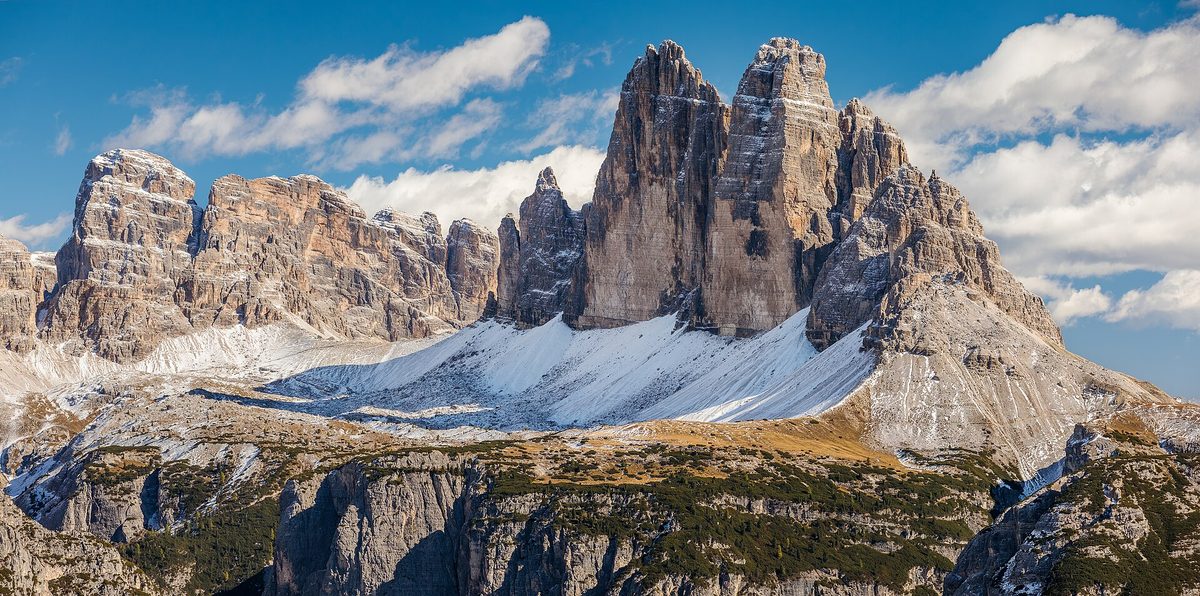
The region’s flag product is Speck Alto Adige IGP, dry-cured and lightly smoked pork thigh with a minimum six months’ ageing, though some producers take it to 20 or 24 months. Eat it thick-cut on a wooden board in a mountain hut with rye bread and horseradish, ideally after a morning in the Dolomites. There are no DOCG wines here, but the whites are excellent: Gewurztraminer, Pinot Grigio and Riesling, alongside reds from Lagrein, Teroldego, Schiava and Pinot Nero.
Come in September and October for the harvest and the mountain huts, or in December for the Alpine Christmas markets, which in Bolzano and Merano are more Austrian than Italian. It is also the base for some of the best hiking in Europe.
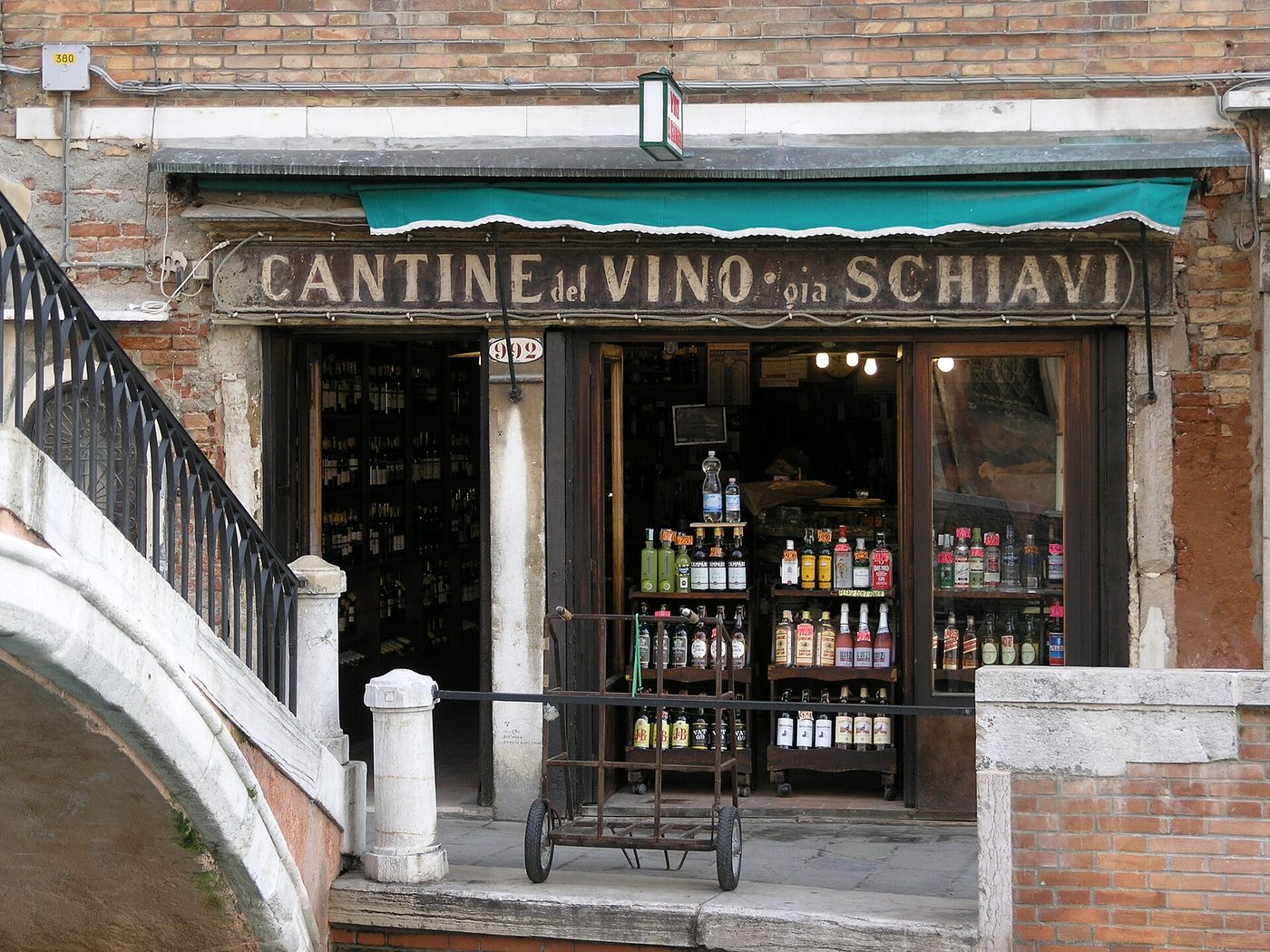
6. Veneto: standing up, small plates, good wine
Venice invented one of Europe’s great eating formats and it travels badly, so you have to come here for it. Cicchetti are bar snacks eaten standing at a counter with an ombra of wine or a spritz, and doing a circuit of three or four bacari is a better dinner than any restaurant with a picture menu. Our guide to Venice has the specific bars.
Beyond the counter: risi e bisi, a thick spring rice and pea dish with stock made from the pods, not quite a risotto and not quite a soup. Baccala mantecato, salt cod whipped with olive oil until it turns to cream, served on grilled polenta. Baccala alla vicentina, a different fish entirely, stockfish stewed slowly with onion, milk and anchovy. Sarde in saor, fried sardines marinated with vinegar, onion, pine nuts and raisins, a preservation technique from the days of long voyages. Fegato alla veneziana, calf’s liver with onions cooked down almost to jam.
Sweet things: pandoro from Verona, and tiramisu, whose invention is disputed between Treviso in the Veneto and Friuli-Venezia Giulia next door. Nobody has settled it and anyone who tells you they have is picking a side.
The region has 14 DOCGs, including Conegliano Valdobbiadene Prosecco Superiore in the hills north of Treviso, Amarone and Recioto della Valpolicella, Soave Superiore and Bardolino Superiore. The vegetable to look for in winter is Radicchio Rosso di Treviso IGP, and the cheese is Asiago DOP.
7. Friuli-Venezia Giulia: ham, white wine and a Slavic accent
Tucked against Slovenia and Austria, and the region Italians name when they are asked where the country’s best white wine comes from. Frico is Montasio cheese crisped in a pan, often with potato and onion, and it is the regional comfort food. Cjarsons are Carnic ravioli with a sweet and savoury filling that catches people off guard. Gulasch triestino is a leftover of the Austro-Hungarian empire, thicker and darker than the Hungarian version. Gubana is a rolled cake of nuts, dried fruit and spices with a Slavic lineage.
The headline product is Prosciutto di San Daniele DOP, matured at least 13 months and noticeably sweeter and softer than Parma, in part because less salt is needed where Adriatic and Alpine air do the drying. The cheese is Montasio DOP, whose origins are traced to the abbey at Moggio Udinese in the 13th century. Drink Friulano, Ribolla Gialla, Refosco, Verduzzo or, in the Carso above Trieste, Terrano.
This is one of Italy’s genuinely under-visited regions. Trieste is a coffee city with a Habsburg skeleton, and the wine roads inland are empty in a way that Tuscany has not been for forty years.
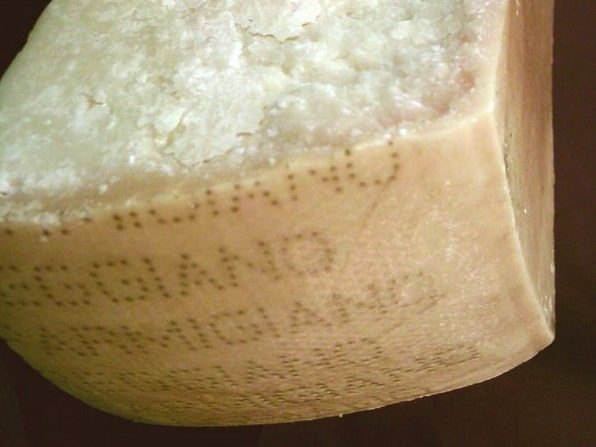
8. Emilia-Romagna: the region with the most protected products in Italy
If you only eat in one Italian region, eat here. Emilia-Romagna holds 44 DOP and IGP products, the most of any Italian region, and the list reads like a shopping trip: Parmigiano Reggiano DOP, Prosciutto di Parma DOP, Aceto Balsamico Tradizionale di Modena DOP, Culatello di Zibello DOP, Mortadella Bologna IGP.
On the plate: tortellini in brodo, tiny filled pasta floating in capon broth, which is a Christmas dish that has become an everyday one. Tagliatelle al ragu alla bolognese, and note the pasta shape, because spaghetti bolognese is not a dish in Bologna. Lasagne alla bolognese made with green spinach egg pasta, ragu, bechamel and Parmigiano. Piadina Romagnola, a thin griddled flatbread folded around squacquerone cheese and rocket, or prosciutto, and sold from roadside kiosks all over Romagna.
The ragu is worth being precise about, because there is an official text. The Bologna delegation of the Accademia Italiana della Cucina deposited the original recipe at the Bologna Chamber of Commerce on 17 October 1982, and deposited an updated version on 20 April 2023 which supersedes it. The registered recipe uses coarsely ground beef, fresh pork belly or pancetta, onion, carrot, celery, wine, tomato passata and concentrate, and milk. It contains no garlic and no herbs. The 1982 text specified butter; the 2023 revision standardises on olive oil.
The region also produced Pellegrino Artusi, born at Forlimpopoli, whose 1891 book La scienza in cucina e l’arte di mangiar bene is the foundational text of modern Italian home cooking. Drink Lambrusco, properly dry and properly cold, with the fatty cured meats. It works far better than the wine list suggests.
The Centre: bread, bean soup and the four Roman pastas
Four regions where the cooking is poorer in the historical sense and better for it. This is cucina povera country: stale bread rescued into soup, offal cooked slowly, cheese and pepper turned into a sauce.
9. Tuscany: salt-free bread and enormous steak
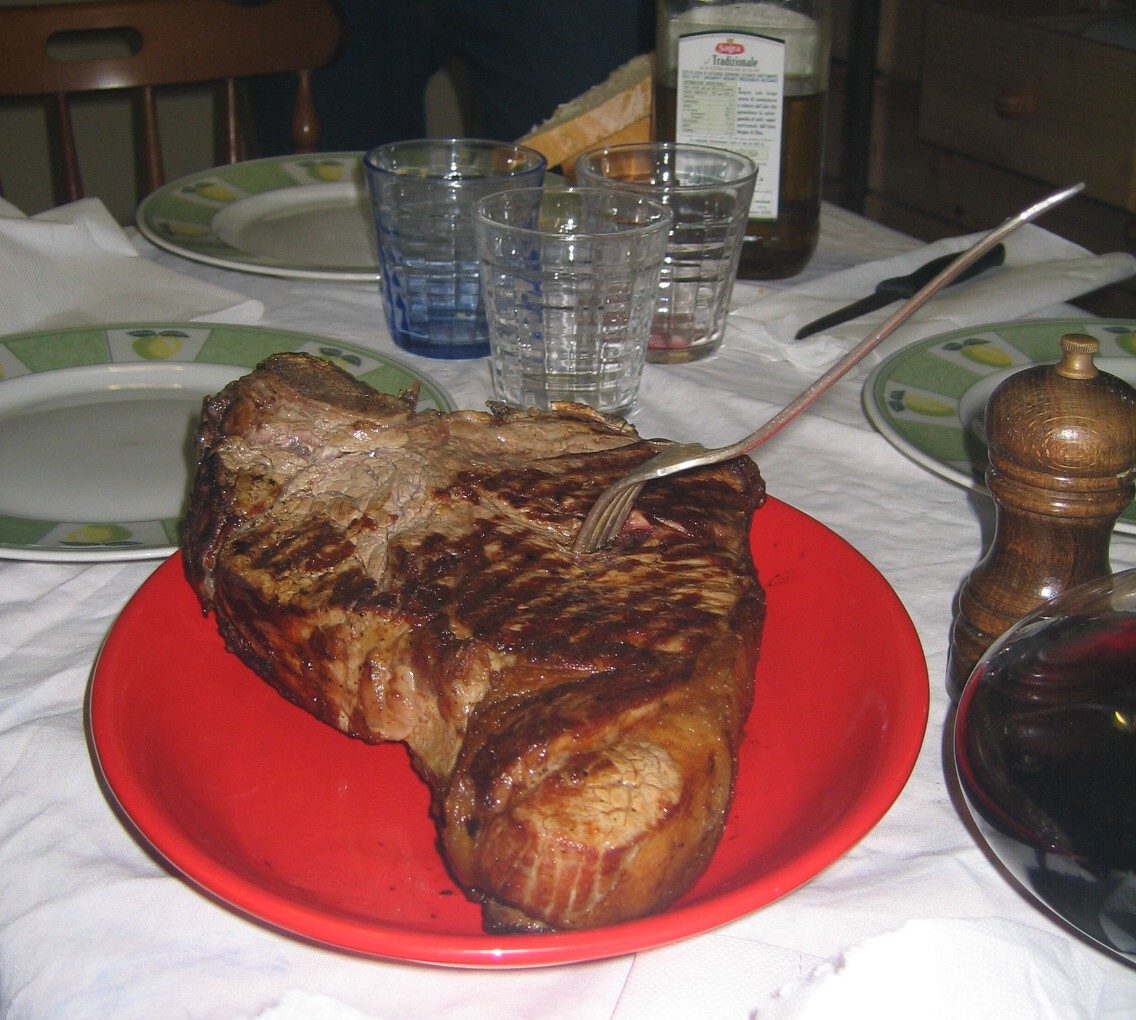
Bistecca alla fiorentina is a thick T-bone from Chianina cattle, grilled over embers and served rare, and asking for it well done will get you a look. Portions are sold by weight and a proper one feeds two or three people, so plan the table accordingly.
The rest of the Tuscan repertoire is built on bread. Ribollita is a twice-cooked soup of bread, cavolo nero and beans, the name meaning reboiled. Panzanella is a summer salad of stale bread, tomato, onion and basil. Pappa al pomodoro is thick bread and tomato soup with garlic and oil. All three exist because Tuscan bread, pane toscano, is made without salt and goes stale fast, so the region built a cuisine around using it up.
For pasta, pici, thick hand-rolled Sienese noodles, and pappardelle al cinghiale with wild boar ragu. On the coast at Livorno, cacciucco, a fish stew that tradition says should contain five types of fish, one for each C in the name. Worth carrying home: Lardo di Colonnata IGP, pork back fat cured in marble basins in a village above the Carrara quarries, and Pecorino Toscano DOP, a sheep’s milk cheese protected since 1996.
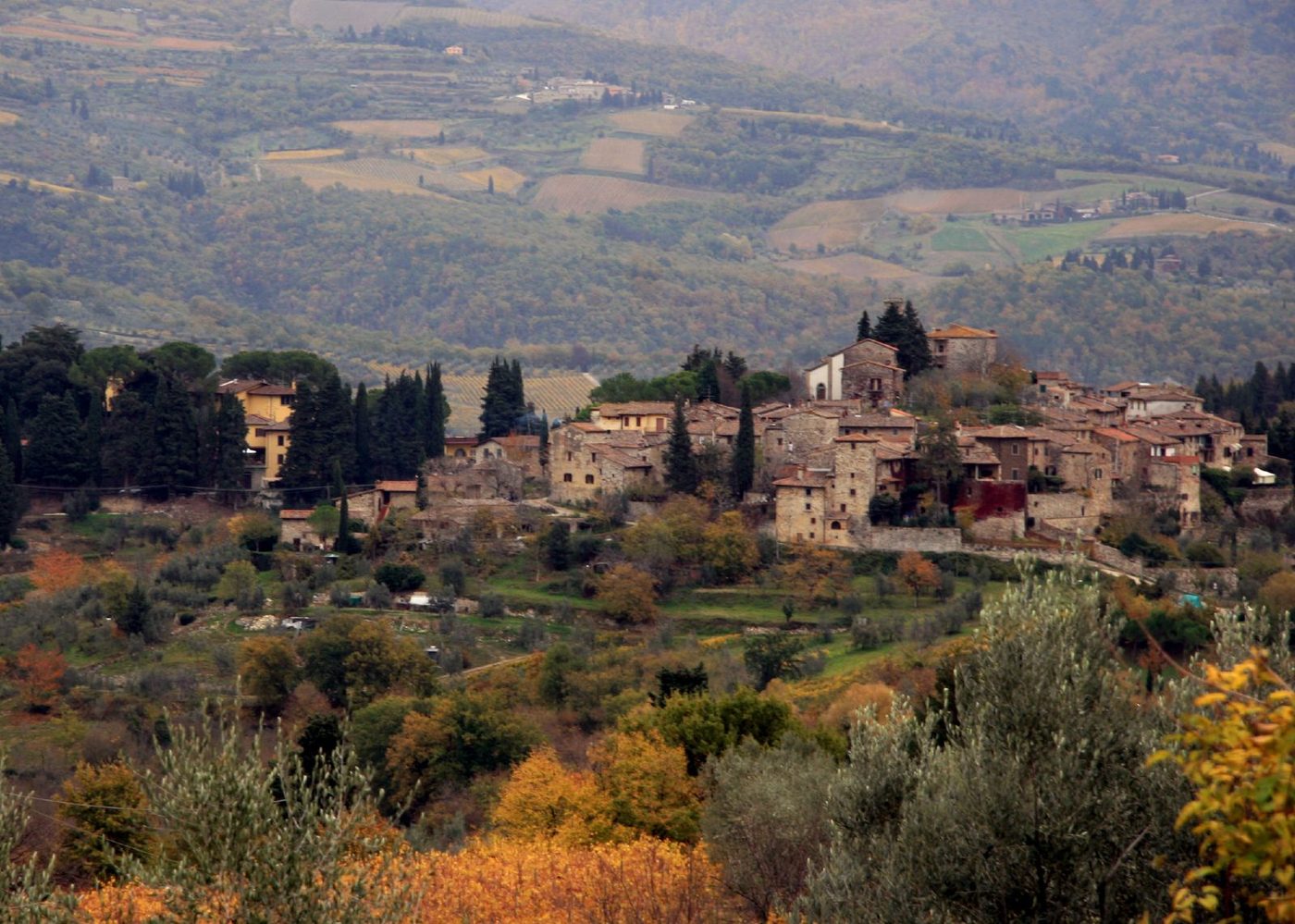
Tuscany has 11 DOCGs, including Chianti Classico, Brunello di Montalcino, Vino Nobile di Montepulciano, Vernaccia di San Gimignano and Carmignano. Our Tuscany travel guide covers the wine towns; Florence is where to eat the steak.
10. Umbria: truffles, pork and lentils
Landlocked, green and quietly one of the best-value food regions in the country. Pasta alla norcina is made with crumbled Norcia sausage, often with black truffle. Strangozzi alla spoletina is hand-rolled pasta from around Spoleto with a garlic, tomato and chilli sauce. Porchetta is a whole boned pig, herbed and spit-roasted for hours, sliced into a roll at markets and roadside vans. Torta al testo is a flat griddle bread, split and filled.
The town of Norcia gave its name to the Italian word for a pork butcher, norcino, and it also produces tartufo nero di Norcia, the black truffle, which is cheaper and more forgiving than the Alba white and available for a much longer season. Two IGP products to carry home: Prosciutto di Norcia IGP, distinctively pear-shaped, and Lenticchia di Castelluccio di Norcia IGP, small lentils grown on a high plain that turns purple and yellow with wildflowers in early summer.
Umbria has two DOCGs, Torgiano Rosso Riserva and Montefalco Sagrantino, the latter one of the most tannic reds in Italy and worth a long decant. Orvieto is the white. The black truffle fair at Norcia, Nero Norcia, runs over a weekend in late February or early March.
11. Marche: the most underrated food region in Italy
The Marche has an Adriatic coast, hill towns and truffles inland, and receives a small fraction of the visitors its neighbours do. Vincisgrassi is the regional baked pasta: sheets layered with a meat and giblet ragu, bechamel and Parmigiano, often with truffle. It is related to lasagne and locals will tell you firmly that it is not lasagne. The Maceratese version was reported to have received a protected designation in 2022, though the exact category is worth checking on the EU register if it matters to you.
Olive all’ascolana are large green Ascoli olives stuffed with minced meat, breaded and deep-fried, and they are the single most addictive bar snack in Italy. Brodetto di pesce all’anconetana is the Adriatic fish stew, made with tomato in the north of the region and saffron in the south. Ciauscolo IGP is a soft, spreadable salami of finely minced lean pork with garlic and pepper, PGI since 2009, and it goes on bread like pate.
The wine is Verdicchio, in two Riserva DOCG forms from Castelli di Jesi and Matelica, plus Rosso Conero from the slopes behind Ancona. Ascoli Piceno is the town to sleep in. If you want the coast without the crowds of the Amalfi Coast, this is where to look, and there is more in our roundup of underrated places in Europe.

12. Lazio: four pastas and an artichoke season
Rome’s food is built on the pig’s cheek and the sheep’s milk cheese, and its four canonical pastas are variations on the same two ingredients. Cacio e pepe is Pecorino Romano and black pepper emulsified with pasta water, and nothing else. Pasta alla gricia adds guanciale. Bucatini all’amatriciana adds tomato and chilli. Spaghetti alla carbonara takes the gricia and adds egg yolk. No cream in any of them, in any Roman kitchen, ever.
Beyond pasta: coda alla vaccinara, oxtail cooked slowly with celery; saltimbocca alla romana, veal escalope with sage and prosciutto finished in white wine; and suppli al telefono, breaded fried rice croquettes whose mozzarella centre stretches like a phone cord when you pull them apart. Roman pizza is thin and crisp, a completely different technique from Naples, and pizza al taglio is sold by weight from a tray.
Take home Pecorino Romano DOP, hard and aggressively salty, produced in Lazio, Sardinia and the province of Grosseto. In season: Carciofo Romanesco del Lazio IGP, the round Roman artichoke, from February to May. Porchetta di Ariccia IGP comes from the Castelli Romani hills just south of the city, which is a good half-day escape. Frascati is the local white and is better than its reputation when it is fresh. Our things to do in Rome guide covers the neighbourhoods where the trattorias are actually Roman.
The South: chilli, durum wheat and the best tomatoes in the world
Six regions, olive oil throughout, and the part of Italy where vegetables carry the meal rather than garnishing it. Prices drop noticeably here too, which our Europe on a budget guide gets into in more detail.
13. Abruzzo: mountain lamb and a pasta cut on guitar strings
Arrosticini are small skewers of castrato or lamb grilled over a long, narrow charcoal brazier and eaten by the fistful, pulled off the stick with your teeth. They are the region’s social food, cooked at roadside stalls and in back gardens. Spaghetti alla chitarra is square-section egg pasta pressed through a wire-strung wooden frame that does in fact look like a guitar. Scrippelle ‘mbusse are thin crepes rolled with pecorino and served in hot broth, which sounds odd and tastes like the best possible thing to eat in February. Virtu teramane is a 1 May soup of spring vegetables, legumes and pork, made to empty the winter larder.
The feast to know about is La Panarda, a single sitting of 35 to 40 local dishes, which is less a dinner than an endurance event. The shopping list here is short and unusual: Zafferano dell’Aquila DOP, saffron grown in the Navelli valley since the 14th century and among the most concentrated in the world, and Mortadella di Campotosto, a pork salami with a baton of lard running down the middle.
Abruzzo has two DOCGs: Montepulciano d’Abruzzo Colline Teramane, a DOC subzone from 1995 promoted in 2003, and Terre Tollesi (Tullum). The everyday bottles are Montepulciano d’Abruzzo in red, Cerasuolo d’Abruzzo in rose and Trebbiano d’Abruzzo in white, and they are among the best-value wines in the country.
14. Molise: Italy’s least-visited region
Molise is small, mountainous and so overlooked that Italians make jokes about whether it exists. It suits two or three nights, usually bolted onto Abruzzo or Puglia. Cavatelli, small hand-rolled semolina shells, are the pasta, served with sausage ragu or with beans. Pezzata is sheep or lamb stewed slowly with tomato, onion, rosemary, parsley and chilli, a shepherd’s dish from the high pastures.
The product worth the detour is Caciocavallo di Agnone, a stretched-curd cow’s milk cheese from Agnone in Alto Molise, hung in pairs over a rope and aged until it turns sharp and crystalline. Mostaccioli molisani are the honey and chocolate biscuits.
The wine is Tintilia del Molise DOC, made from the native Tintilia grape at a minimum 95 percent, in red, rose and riserva versions, the riserva aged at least two years. The grape had nearly disappeared and has been revived over the last few decades, which makes it one of the more interesting bottles in southern Italy. The region has no DOCG.
15. Campania: pizza, buffalo mozzarella and the reference tomato
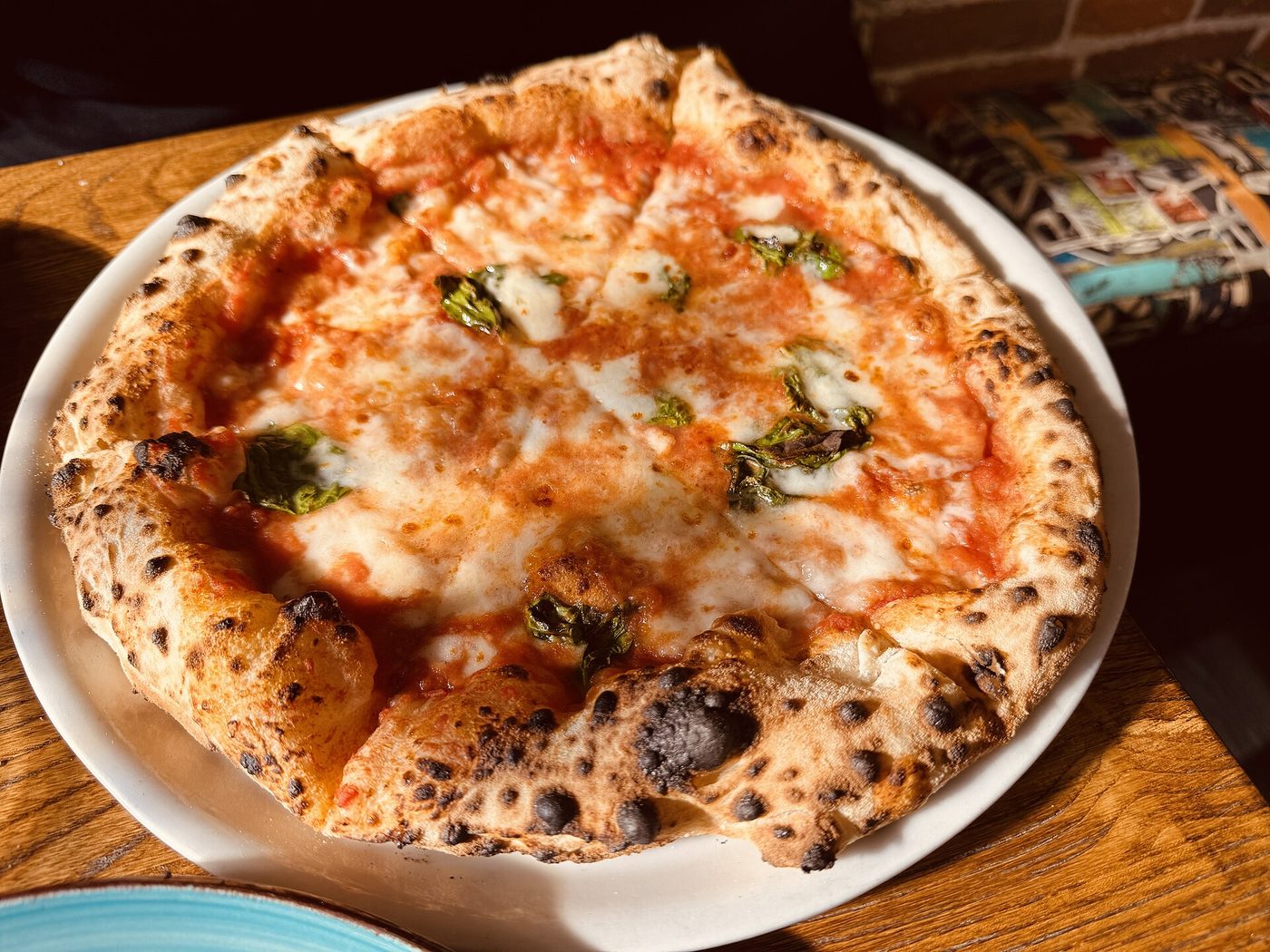
Naples is the most concentrated eating city in Italy and the food is cheap, fast and standardised in the best sense. Pizza napoletana has a soft, puffed, leopard-spotted rim and a wet centre, and it is a regulated object: registered as an EU Traditional Speciality Guaranteed by Commission Regulation (EU) No 97/2010 in February 2010. The Associazione Verace Pizza Napoletana’s rules specify a wood-fired oven at 430 to 480 degrees Celsius, a bake of 60 to 90 seconds, dough balls of 200 to 280 grams and a finished diameter of 22 to 35 centimetres. In 2017 UNESCO inscribed the “Art of the Neapolitan Pizzaiuolo”, meaning the craft of the pizza maker rather than the pizza itself, on the Representative List of the Intangible Cultural Heritage of Humanity.
Beyond pizza: parmigiana di melanzane, layered fried aubergine with tomato, basil and cheese; spaghetti alla puttanesca with capers, anchovies, olives and chilli; impepata di cozze, mussels with parsley, pepper and lemon and nothing else; mozzarella in carrozza, mozzarella sandwiched in bread, egged and fried. The pastry counter is the best in Italy: sfogliatella in both riccia and frolla forms, baba al rum, pastiera napoletana at Easter, delizia al limone and torta caprese.
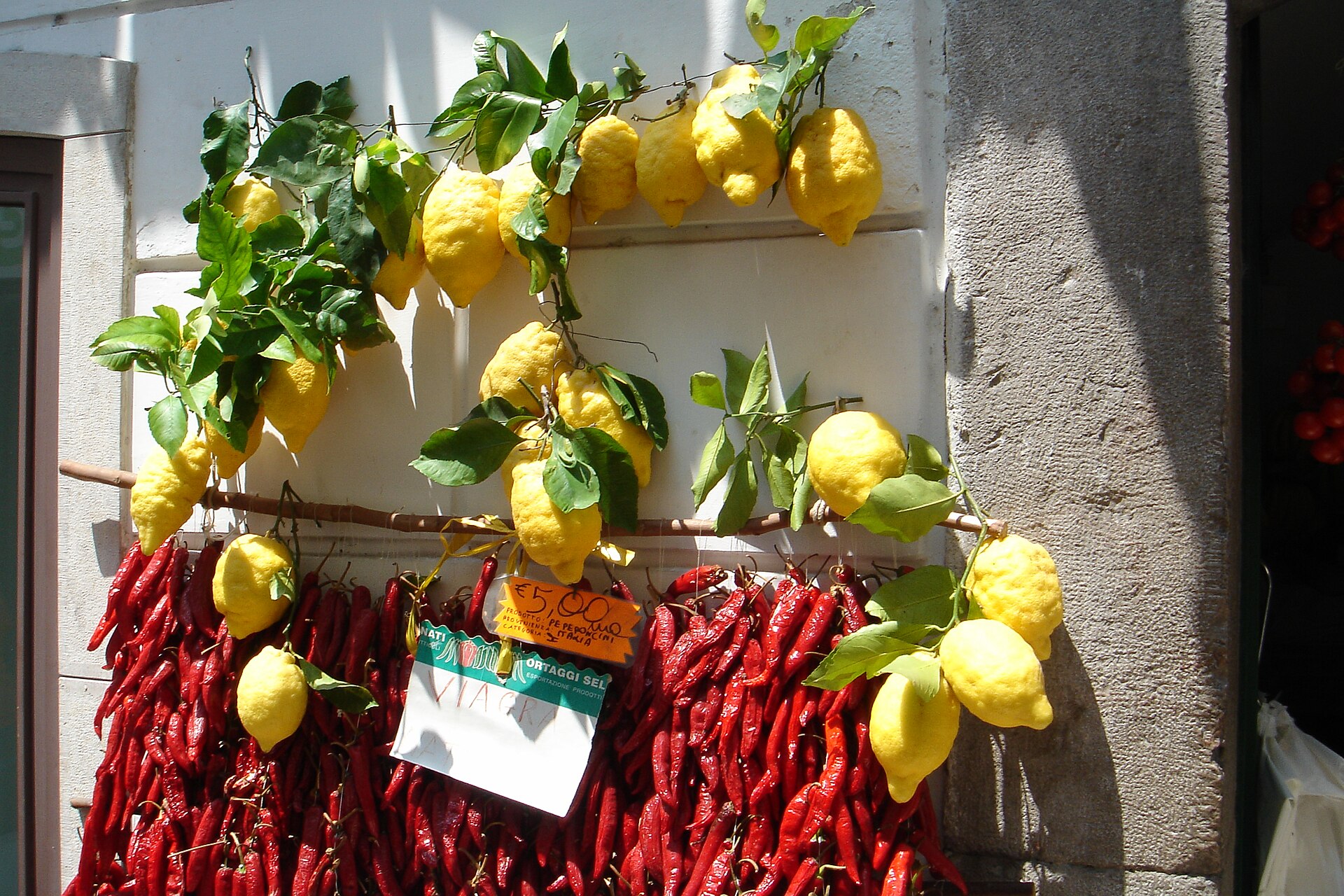
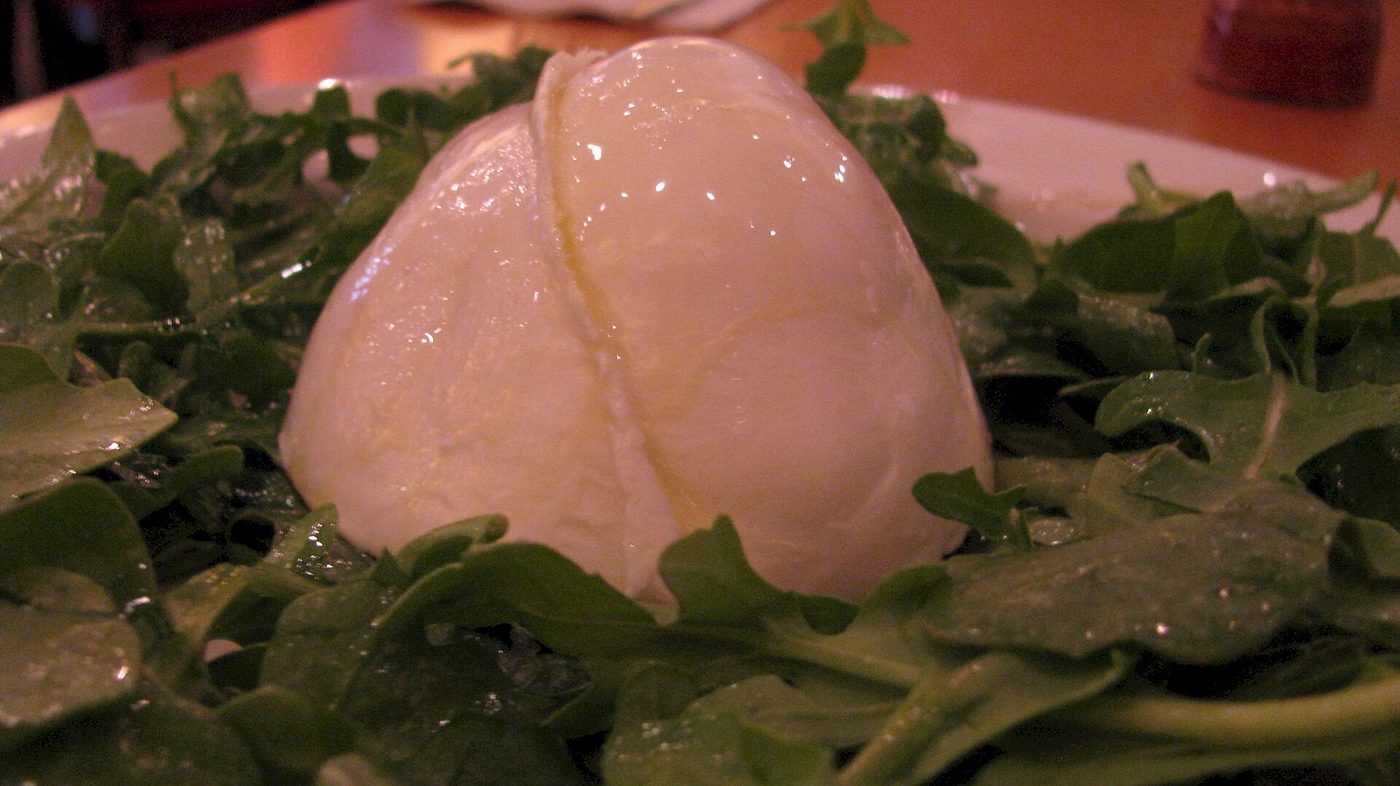
To buy: Mozzarella di Bufala Campana DOP, whose production area covers the whole of Caserta and Salerno provinces plus parts of Napoli, Benevento, Latina, Frosinone, Roma, Foggia and the comune of Venafro in Molise. Pomodoro San Marzano dell’Agro Sarnese-Nocerino DOP, the reference peeled plum tomato, harvested from early August to the end of September. Limone Costa d’Amalfi IGP, thick-skinned and intensely aromatic, the base of limoncello. And colatura di alici di Cetara, an anchovy essence from a single fishing village on the Amalfi Coast that will transform any plate of spaghetti you make at home.
Campania has four DOCGs: Taurasi and Aglianico del Taburno in red, Fiano di Avellino and Greco di Tufo in white. It also holds 48 starred restaurants in the Michelin Guide Italy 2026, second only to Lombardy.
16. Puglia: vegetables, olive oil and burrata
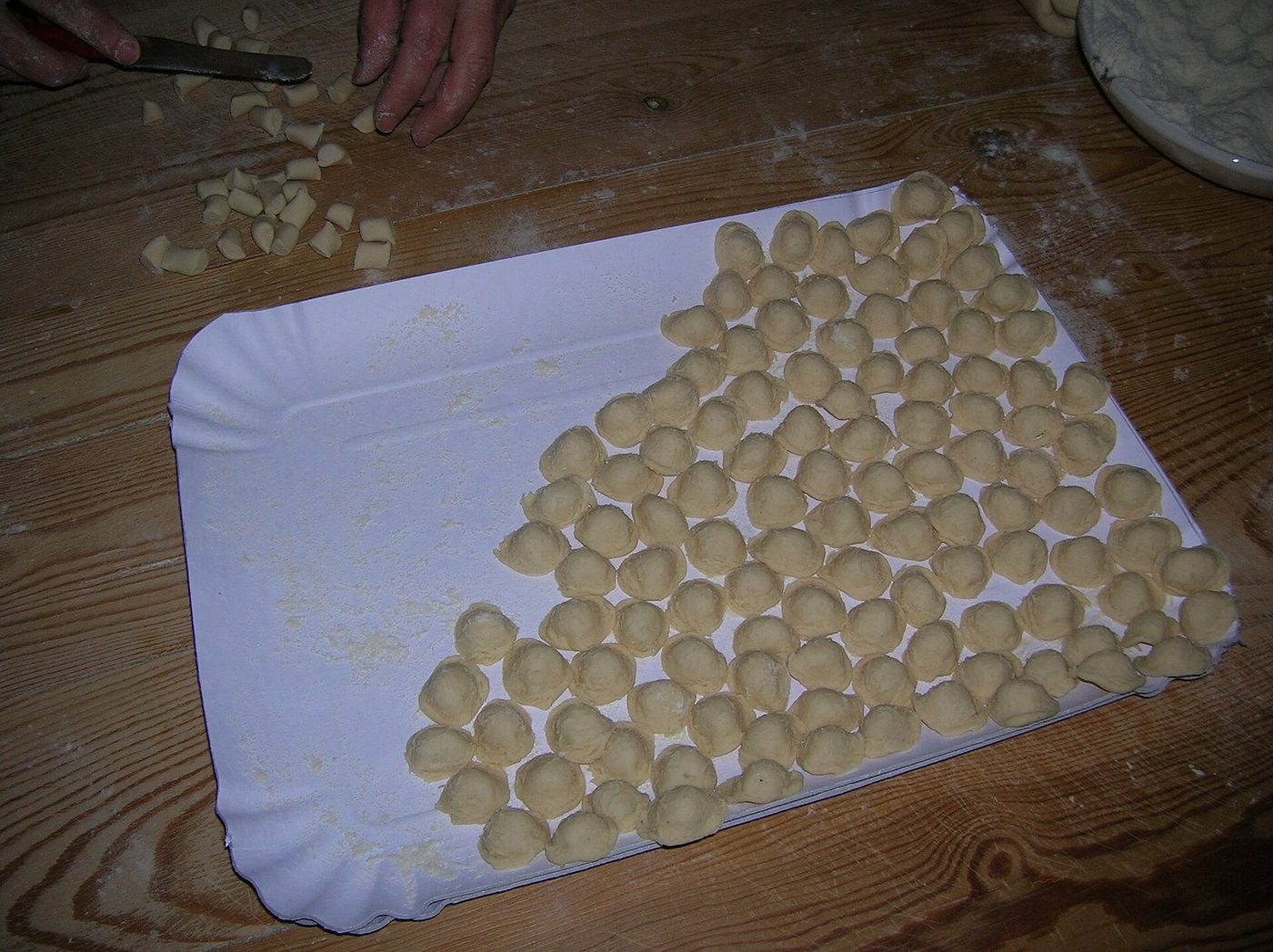
Puglia produces more olive oil than any other Italian region and has the country’s most vegetable-forward kitchen. Orecchiette con le cime di rapa is the one to order first: ear-shaped pasta with turnip tops, garlic, anchovy and chilli, and in Bari you can still watch women making the pasta by hand in the street. Pure di fave e cicoria, known locally as incapriata, is a broad bean puree with bitter wild chicory, poor food that has aged into a delicacy. Ciceri e tria from the Salento combines chickpeas with pasta strips that are part boiled and part fried, so the texture changes bite to bite. Friselle are twice-baked ring breads that you wet under the tap and top with tomato, oregano and oil.
The cheese is burrata, a mozzarella pouch filled with cream-soaked curd shreds, protected as Burrata di Andria IGP, and its filling stracciatella. At Christmas, cartellate, fried pastry ribbons soaked in honey or vincotto.
Puglia has four DOCGs, all recognised in 2011: Primitivo di Manduria Dolce Naturale, the region’s first, a sweet Primitivo made from grapes often dried on the vine and declared only in suitable vintages, plus three Castel del Monte designations (Bombino Nero, Nero di Troia Riserva and Rosso Riserva). Stay in Lecce or the Valle d’Itria and drive, because the region is made for a road trip.
17. Basilicata: peppers, bread and one great red
Basilicata sits between Puglia and Calabria, mountainous and largely empty, with Matera as the only town most visitors reach. The signature is peperoni cruschi, sweet peppers dried in the sun and then flash-fried so they shatter like crisps, classically served with baccala. Cicorie e fave is the same bean puree and chicory as Puglia’s, cooked slightly differently and claimed just as fiercely.
The pastas are lagane, wide ribbons traditionally cooked with chickpeas, and strascinati. The sausage is lucanica, long and thin, and it is the ancestor of a whole family of Italian sausages: the Romans named it after Lucania, which is what this region used to be called. The pepper to buy is Peperone di Senise IGP. Matera’s bread is famous, tall and yellow-crumbed, and widely sold as Pane di Matera IGP.
The wine is Aglianico del Vulture Superiore DOCG, recognised in 2011, grown on volcanic soils around Monte Vulture in the province of Potenza. It is the region’s only DOCG and it is superb, structured and ageworthy, at maybe a third of what a Barolo of equivalent quality costs.
18. Calabria: chilli, bergamot and spreadable salami
The toe of Italy is the country’s chilli region, and peperoncino goes into almost everything. ‘Nduja di Spilinga is the export: a soft, spreadable, very spicy pork salami from the town of Spilinga that melts into pasta sauces and onto bread. Soffritto di maiale is a rich pork offal, tomato and chilli stew eaten on crusty bread. Pesce spada alla ghiotta is swordfish with tomato, capers and olives, cooked on both sides of the strait. Sarde a scapece are breadcrumbed fried sardines with mint, vinegar and oil.
Two ingredients define the region’s produce. Cipolla Rossa di Tropea Calabria IGP is a red onion so sweet it is sold as jam and, occasionally, as gelato. Bergamotto di Reggio Calabria DOP is bergamot, grown almost nowhere else on earth in commercial quantity, and the reason your Earl Grey smells the way it does.
Calabria’s first DOCG, Ciro Classico, was approved on 16 November 2023, which makes it one of the newest in the country. Other wines to look for are Ciro in all three colours, Pollino, Savuto, Melissa and Lamezia.
The Islands: Sicily and Sardinia
Two islands that are culturally further from mainland Italy than the distance suggests, and which have the most distinctive food in the country as a result.
19. Sicily: Arab, Norman, Spanish and Greek in one kitchen
Every empire that passed through left something on the menu, which is why Sicilian food tastes unlike anything else in Italy. Pasta alla Norma, from Catania, combines tomato, fried aubergine, basil and salted ricotta. Caponata is sweet-and-sour aubergine with celery, capers, olives and pine nuts, a technique that comes straight from the Arab period. Couscous alla trapanese is fish couscous on the Trapani coast, from the same lineage.
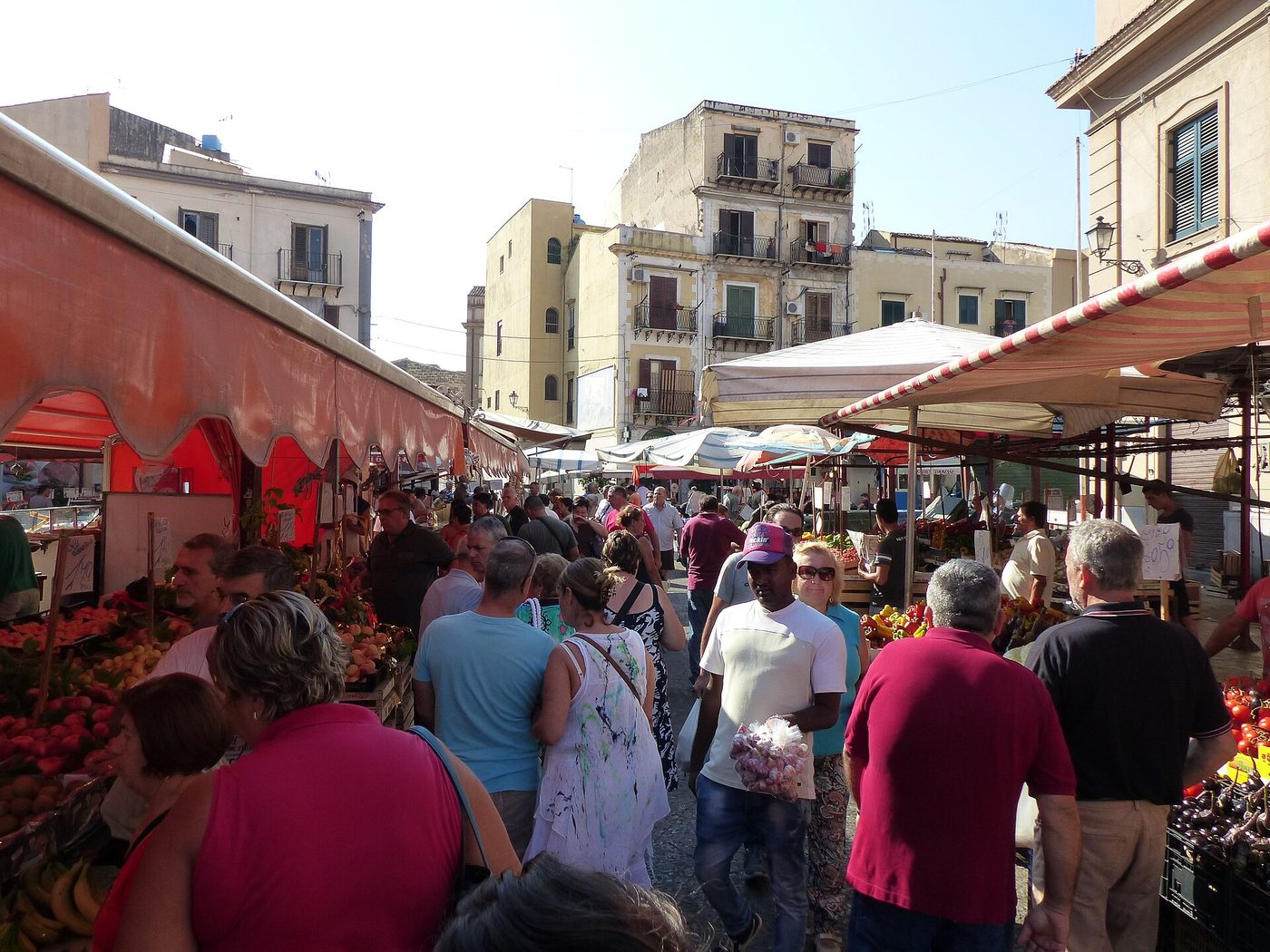
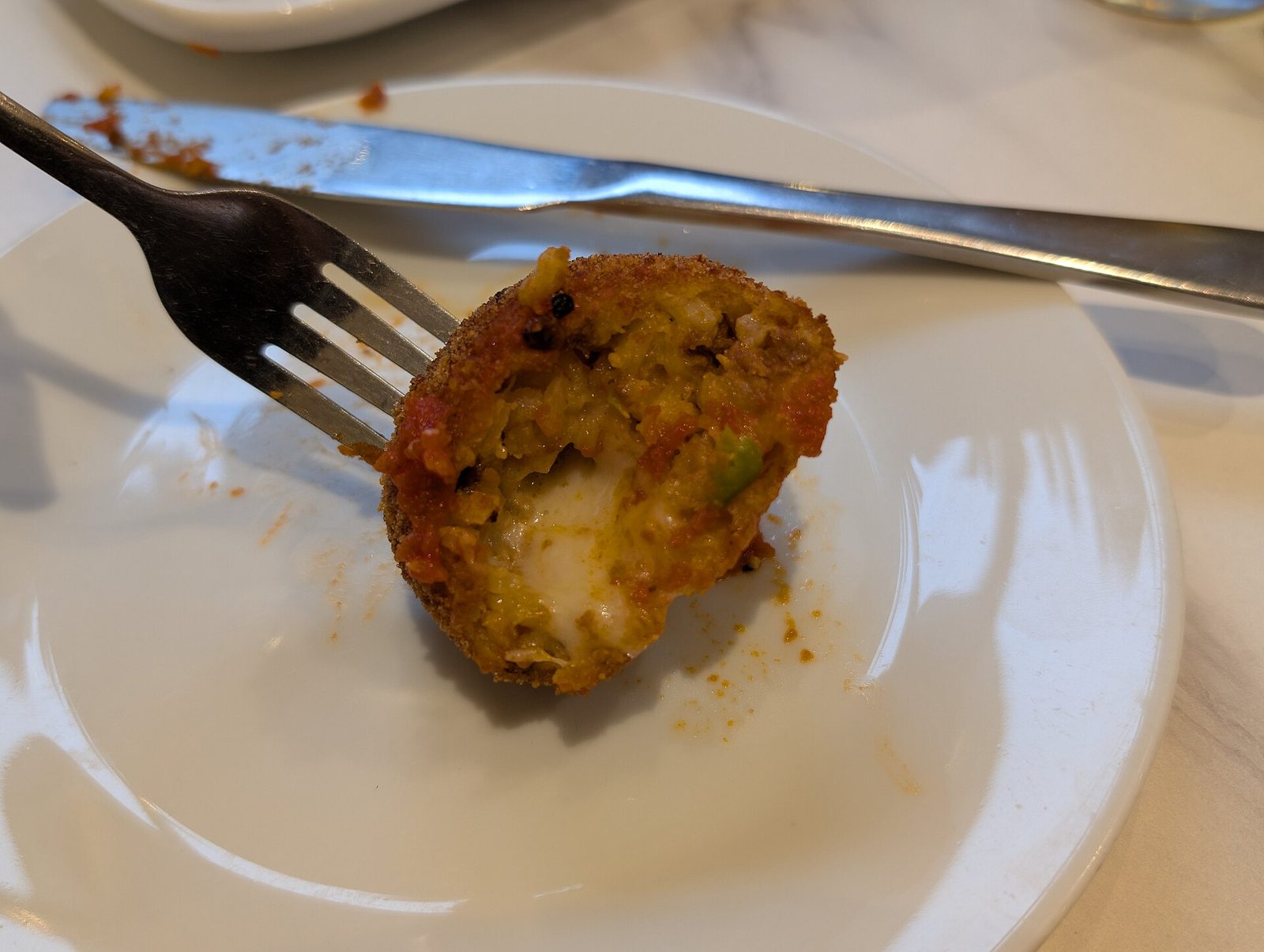
The street food deserves its own trip. Arancini are fried stuffed rice balls, conical in Catania and round in Palermo, and the name changes gender as you cross the island: feminine arancine in the west, masculine arancini in the east. Pani ca’ meusa is a Palermo spleen sandwich, which is more delicate than the description suggests and worth the nerve it takes. Sfincione is the thick, spongy Palermitan pizza-bread sold from carts.
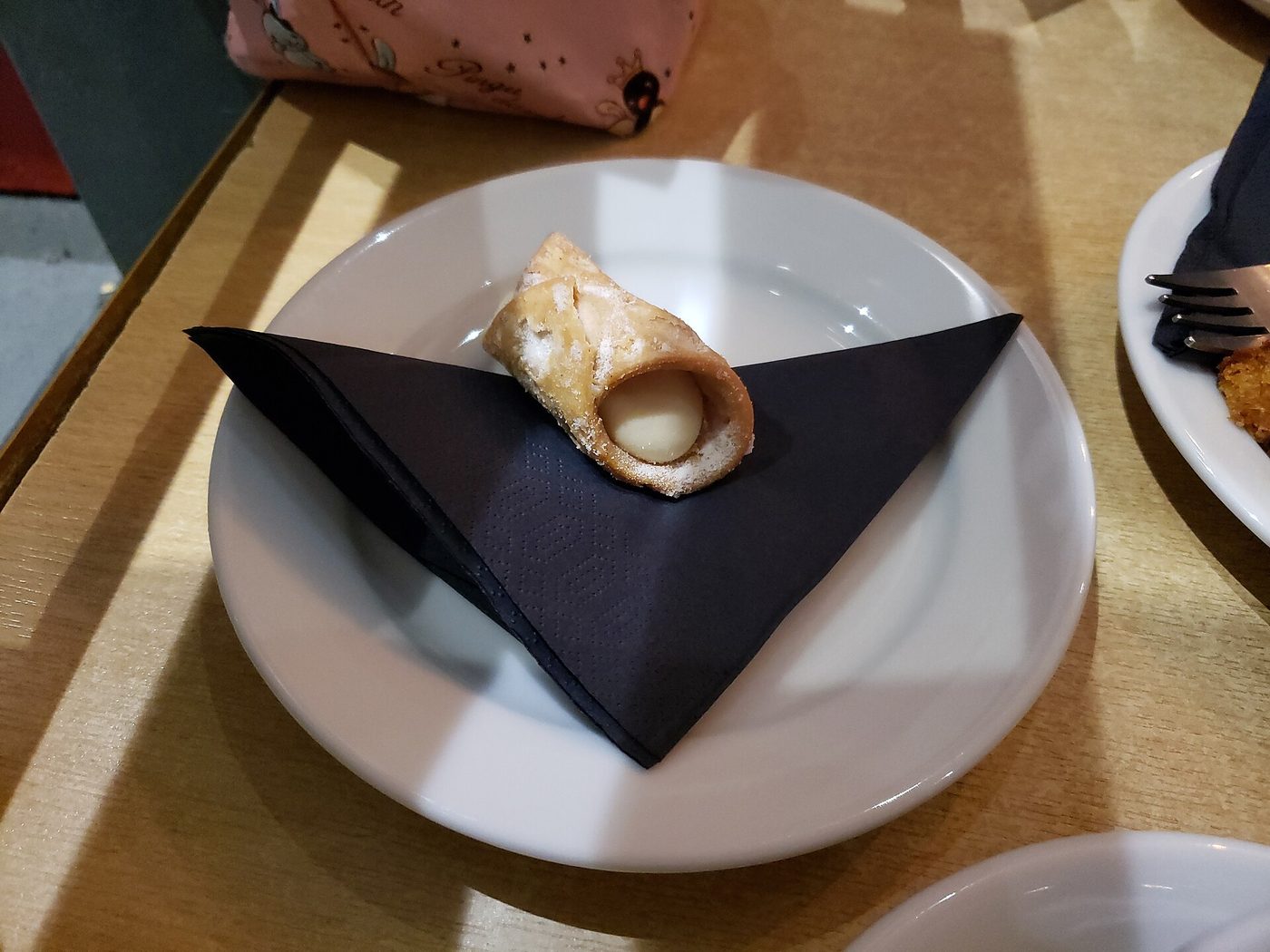
Then the sweets, which are the best in Italy and they are not a close contest: cannoli filled to order and never in advance, cassata, frutta martorana shaped from marzipan, and granita eaten for breakfast with a brioche col tuppo for dunking. Almond granita in July in Noto is one of the great European breakfasts.
Fill your bag with Pistacchio Verde di Bronte DOP, grown only on the volcanic slopes of Etna in the province of Catania, and Arancia Rossa di Sicilia IGP, the blood oranges of Catania, Siracusa and Enna, which run from December to May depending on the variety. Cioccolato di Modica is worked cold in a technique that arrived via the Spanish from the Aztecs, so the sugar stays grainy.
The island has one DOCG, Cerasuolo di Vittoria, a blend of 50 to 70 percent Nero d’Avola with Frappato. Also drink Etna DOC reds and whites, Grillo, Catarratto, the sweet Zibibbo of Pantelleria, and Marsala. The Cous Cous Fest at San Vito Lo Capo runs 18 to 27 September 2026. Our Sicily travel guide has the rest of the island.
20. Sardinia: shepherds, not fishermen
The counterintuitive thing about Sardinia is that its traditional food is not seafood. Historically the coast meant malaria and pirates, so the culture faced inland, and the food is pastoral. Porceddu is suckling pig slow-roasted on a spit over aromatic wood and myrtle, and it is the celebration dish. Pane carasau, also called carta da musica for its thinness, is a crisp flatbread that keeps for weeks, designed for shepherds away from home.
Culurgiones are pleated pasta parcels filled with potato, pecorino and mint, closed with a plait that takes years to do quickly. Malloreddus are small ridged semolina gnocchetti, often saffron-scented, classically alla campidanese with a sausage ragu. Fregola is toasted semolina in pearls, cooked like a risotto with clams and saffron.
The one great sea product is bottarga di muggine, the salted, pressed and dried roe pouch of grey mullet, amber-coloured and tasting of brine with a hint of almond. Its heartland is the lagoons of Cabras on the central-west coast, where the roe is cleaned, salted, pressed and dried on wooden planks for 15 to 30 days. Grated over spaghetti with oil and lemon it makes one of the best five-minute meals in Europe. It carries no protected designation, so buy it on the producer’s reputation rather than on a label.
The cheeses are Fiore Sardo DOP, raw sheep’s milk and lightly smoked, and Pecorino Sardo DOP; a large share of Pecorino Romano is also made here despite the name. The digestivo is mirto, myrtle-berry liqueur, served ice cold. The island’s only DOCG is Vermentino di Gallura, and the red to drink is Cannonau. The Festa di Sant’Efisio in Cagliari runs 1 to 4 May every year, a four-day procession of about 70 kilometres to Nora and back, and the food that goes with it is worth timing a trip around.
How an Italian meal is actually structured
Regional differences sit on top of a national grammar, and knowing the grammar makes ordering much easier.
The courses. A full meal runs antipasto, primo (pasta, risotto or soup), secondo (meat or fish) with a contorno (a side, ordered separately and not included), then dolce, coffee and possibly a digestivo. Nobody expects you to order all of them. Two courses is entirely normal, and ordering a primo and a contorno is a perfectly respectable dinner. What you should not do is expect vegetables to arrive alongside your secondo unless you ordered them.
Where you are eating. A ristorante is the formal end: tablecloths, longer menu, higher prices. A trattoria is family-run, shorter menu, regional cooking, and where most of the food in this guide is best eaten. An osteria was historically a wine shop that fed you, and today usually means something simple and cheap, though the word has been borrowed by expensive places too. A tavola calda is a hot counter for a fast lunch, and a friggitoria fries things.
Aperitivo. Between roughly 6pm and 8pm, a drink comes with food attached. In Milan and Turin this can be a substantial spread included in the price of the drink, sometimes called apericena. In Venice it is cicchetti at the bar. It is the cheapest good meal in northern Italy and the easiest way to eat alone without feeling conspicuous.
Gelato. Regional in its own way: pistachio in Sicily leans on Bronte, hazelnut in Piedmont on Nocciola del Piemonte IGP, and lemon on the Amalfi Coast on Limone Costa d’Amalfi IGP. Two signals of a good gelateria are muted natural colours rather than fluorescent ones, and metal tins with lids rather than heaped mountains on display. Ask for it in a coppetta or a cono, and expect to pay at the till first in busier places.
Sagre. A sagra is a village food festival built around one ingredient or dish: the sagra della porchetta, the sagra del tartufo, the sagra delle lumache. They run mostly between May and September, they are cheap, they are almost entirely local, and they are the single best way to eat a region’s food in its own context. Search “sagra” plus the province name and the month before you travel.
What eating in Italy actually costs
Prices are the hardest thing to pin down about eating in Italy and the easiest thing to get wrong when you are budgeting. Treat everything below as a band rather than a quote, and expect the top of each band in Venice, Florence and central Milan.
| Item | Typical price | Notes |
|---|---|---|
| Pizza margherita in Naples | €6 to €8 | Above €9 for a plain margherita in Naples is a warning sign about the place, not the pizza |
| Espresso standing at the bar | €1.25 national average | Up from €1.04 in 2021. Central city bars can hit €2, and sitting down costs more than standing |
| Pasta course in a trattoria | Around €10 | Long-running budget trattorias in Florence still list a primo at around €5 |
| Full trattoria meal per person | Around €25 | Two courses, house wine, coperto |
| Simple pizza, pasta or panino meal | €10 to €20 | Casual restaurants nationally |
| Coperto (cover charge) | €1 to €3 per person | €5 or more in tourist-heavy or upmarket places; must be printed on the menu by law |
| Traditional balsamic, 100 ml | Roughly €40 to €80 | Aceto Balsamico Tradizionale di Modena DOP Affinato, bought direct from a producer in Modena. Supermarket “balsamic glaze” is a different product entirely |
Two things worth internalising. The coperto is not a scam and it is not a tip: it is a legal per-person charge covering linen, tableware, bread and table service, and it has to be declared on the menu. And tipping in Italy is genuinely optional. Rounding up or leaving small change is normal; 5 to 10 percent only when you were delighted. Nobody is calculating 20 percent. If you are pricing a whole trip, our guide to the cheapest places to travel in Europe puts Italy in context against the rest of the continent.
The protected products worth planning around
DOP and IGP labels appear on every menu and shop shelf in the country, and the rules behind them are what separate a genuine article from a supermarket approximation. Here is what to know about the products you are most likely to buy.
| Product | Region | What to know |
|---|---|---|
| Parmigiano Reggiano DOP | Emilia-Romagna | Minimum 12 months’ ageing. Milk, cheesemaking, ageing and packaging all within Parma, Reggio Emilia, Modena, Bologna (left bank of the Reno) and Mantua (right bank of the Po) |
| Grana Padano DOP | Lombardy and the Po Valley | Minimum 9 months’ ageing, across 33 provinces in five regions |
| Prosciutto di Parma DOP | Emilia-Romagna | At least 14 months from first salting, some hams to three years. Sea salt only, no other preservatives |
| Prosciutto di San Daniele DOP | Friuli-Venezia Giulia | At least 13 months of ageing. Less salt is needed than in Parma because Adriatic and Alpine air does more of the drying, so it tastes sweeter and softer |
| Culatello di Zibello DOP | Emilia-Romagna | More than 10 months at 13 to 17 degrees Celsius, in eight comuni of the Parma province |
| Speck Alto Adige IGP | Trentino-Alto Adige | Minimum 6 months, dry-cured and lightly smoked |
| Aceto Balsamico Tradizionale di Modena DOP | Emilia-Romagna | Minimum 12 years for Affinato, minimum 25 for Extravecchio. 100 percent cooked grape must, aged through a battery of progressively smaller barrels |
| Basilico Genovese DOP | Liguria | PDO since 2005, and the only basil in the world with a protected designation. The Consorzio del Pesto Genovese asks that DOP basil make up at least 25 percent of a finished pesto |
| Mozzarella di Bufala Campana DOP | Campania and neighbours | Defined zone across Caserta, Salerno, parts of Napoli, Benevento, Latina, Frosinone, Roma, Foggia and Venafro |
| Pomodoro San Marzano DOP | Campania | Grown in the Agro Sarnese-Nocerino; harvest roughly early August to end of September |
| Fontina Val d’Aosta DOP | Valle d’Aosta | Raw Alpine-pasture cow’s milk; rind stamped with a Matterhorn outline |
| Pistacchio Verde di Bronte DOP | Sicily | Grown only on the slopes of Etna in the province of Catania |
Italy’s protected-product economy is not a small thing. DOP, IGP and STG products were worth about €20.7 billion in 2024, up 3.5 percent on 2023 and 25 percent on 2020, roughly 19 percent of total Italian agri-food turnover. Exports passed €12.3 billion in 2024, split €5.15 billion food and €7.19 billion wine, and the sector employs 864,441 people across 183,823 certified operators and 328 authorised consortia.
A month-by-month calendar for eating in Italy
The single biggest improvement you can make to a food trip is going at the right time for the thing you want. Here is the year, with the region attached.
| Month | What is in season | Where |
|---|---|---|
| December to May | Blood oranges (Arancia Rossa di Sicilia IGP). Tarocco runs the whole window, Moro December to March, Sanguinello February to April | Catania, Siracusa, Enna, Sicily |
| February to May | Roman artichokes, the round cimaroli; Italian artichokes generally peak February to April, earlier in Sicily | Lazio, and the south |
| Late February to early March | Nero Norcia black truffle fair, over a weekend in Piazza San Benedetto | Norcia, Umbria |
| 1 May | Virtu teramane, the spring larder-clearing soup | Teramo, Abruzzo |
| 1 to 4 May | Festa di Sant’Efisio, a four-day procession of about 70 km from Cagliari to Nora | Sardinia |
| April | Pastiera napoletana at Easter; the first Roman artichokes of the cimarolo cut | Campania, Lazio |
| May to September | Sagra season, peaking in July and August; Ferragosto weekend (15 August) is the busiest | Nationwide, and thickest in Tuscany, Umbria and Emilia-Romagna |
| Early August to end September | San Marzano tomato harvest, about 50 days | Agro Sarnese-Nocerino, Campania |
| 21 to 23 August 2026 | Sagra della Bruschetta | Osimo Stazione, Marche |
| September to October | Vendemmia, the grape harvest | Nationwide, Piedmont and Tuscany above all |
| 18 to 27 September 2026 | Cous Cous Fest, ten days of international couscous | San Vito Lo Capo, Sicily |
| 17 October to 15 November 2026 | Frantoi Aperti, five weekends of olive mills open to visitors, 29th edition | Umbria |
| 10 October to 6 December 2026 | Alba White Truffle Fair, 96th edition, with a truffle market every weekend | Alba, Piedmont |
| October to December | Alba white truffle season, peaking in November | Langhe and Roero, Piedmont |
| Mid to late October | Eurochocolate, one of Europe’s largest chocolate festivals | Perugia, Umbria |
| October to November | Chestnuts: caldarroste, castagnaccio, chestnut-flour polenta | Tuscany, Piedmont, the Apennines |
| Late October to November | Olio nuovo, the season’s first pressing, straight from the frantoio. The olive harvest runs October to December depending on region, most commonly November | Tuscany, Umbria, Puglia |
| December | Panettone in Milan, pandoro in Verona, cartellate in Puglia | Lombardy, Veneto, Puglia |
If you are building the trip around one of these, our guide to the best time to visit Italy covers weather and crowds alongside the food calendar, and the best time to visit Europe does the same at continental scale.

Five things people get told about Italian food that do not hold up
Each of these changes what you would buy or what you would order, which is why they are worth the two minutes.
1. “Pesto Genovese DOP.” There is no protected designation for the sauce. The DOP protects Basilico Genovese, the basil, granted in 2005. Buy the jar that names the DOP basil, not the one that claims the sauce is protected.
2. “Traditional balsamic is aged at least 14 years.” The minimum for Aceto Balsamico Tradizionale di Modena DOP is 12 years for Affinato and 25 years for Extravecchio. Fourteen is not a threshold that appears anywhere in the specification.
3. “Bagna cauda is UNESCO recognised.” It is not. The Italian food entry on UNESCO’s Representative List that people are thinking of is the Art of the Neapolitan Pizzaiuolo, inscribed in 2017, and it protects the craft of the pizzaiolo rather than a dish.
4. “Pizza margherita was invented for Queen Margherita in 1889.” Possibly, but historians are not convinced. Zachary Nowak of the Umbra Institute in Perugia examined the founding royal thank-you note and found it inconsistent with genuine royal documents of the period in seal, signature, stationery and handwriting, and argued in Food, Culture & Society that the whole thing is an invented tradition. There is also a plain chronological problem: pizza with tomato, mozzarella and basil is documented in Naples by 1849. Enjoy the pizza, hold the certainty about the story.
5. “Carbonara is an ancient Roman dish.” The origins are contested. Food historian Luca Cesari argues it most likely emerged in Rome around 1944, enabled by American soldiers’ bacon and egg rations. A rival claim by the Bolognese cook Renato Gualandi, made in a 1991 book, has no documentary support predating 1991. A Dutch newspaper report from August 1939 describing spaghetti alla carbonara in a Trastevere trattoria has surfaced more recently and would push the date back before the Allied arrival, but it is a single contested source. What is safe to say is that nobody was eating carbonara in the Renaissance.
If you loved X, go and eat in Y
The most useful thing anyone did for my Italian eating was tell me which region to try next based on what I already liked.
| If you loved | Go next to | Because |
|---|---|---|
| Bologna and its ragu | Marche | Vincisgrassi is the same idea of layered baked pasta, executed differently, in a region very few foreign visitors reach |
| Roman pasta | Abruzzo | Spaghetti alla chitarra and mountain lamb come from the same shepherding tradition that produced cacio e pepe |
| Neapolitan pizza | Puglia | Same olive oil, same tomatoes, same instinct for making vegetables the point of the meal |
| Barolo and Alba truffles | Basilicata | Aglianico del Vulture Superiore DOCG delivers comparable structure at a fraction of the price |
| Sicilian street food | Sardinia | Utterly different, equally non-mainland; go for the pastoral cooking and the bottarga |
| Venetian cicchetti | Friuli-Venezia Giulia | Trieste’s buffet culture and San Daniele ham, an hour and a half up the coast |
| Alpine cheese in Valle d’Aosta | Trentino-Alto Adige | The same mountain larder with an Austrian accent and better wine |
| Tuscan bread soups | Umbria | Same cucina povera logic, more truffle, half the price |
Which region to choose, by what kind of traveller you are
First trip to Italy, want the greatest hits done properly. Campania and Lazio. Naples for pizza and pastry, Rome for the four pastas, and the train between them takes about an hour. Pair it with our 10-day Italy itinerary.
Serious about food above everything else. Emilia-Romagna. Base in Bologna, day-trip to Parma and Modena for the cheese, ham and vinegar, and eat tortellini in brodo on a cold day.
Wine first. Piedmont for 19 DOCGs and the truffle season, or Tuscany for Brunello and Chianti Classico if you want the landscape to match.
Travelling with children. Puglia. Simple food children will eat without negotiation, burrata, beaches and short drives. Our Europe with kids guide has the logistics.
On a tight budget. Basilicata, Calabria, Abruzzo or Umbria. Inland and southern prices, almost no international demand, and food that was designed to be cheap in the first place.
Honeymoon or a big anniversary. The Amalfi Coast for the setting, Lombardy for the Michelin density, or Piedmont in truffle season for the most indulgent version of all three. See our Europe honeymoon guide.
Want somewhere nobody has been. Marche, Friuli-Venezia Giulia and Molise. All three have serious food, all three are easy to reach, and none of them shows up on a first-timer’s list.
Travelling alone. Naples and Palermo. Street food and counter service mean eating alone never feels awkward, which is not true of a Tuscan agriturismo dining room. More on this in our solo travel in Europe guide.
Mistakes people make eating their way around Italy
Ordering the same dish everywhere. If carbonara is on the menu in Palermo, it is there for you, not for the locals. Order what the region makes.
Putting cheese on seafood pasta. This one holds. Italians do not grate Parmigiano or pecorino over fish or shellfish pasta, on the grounds that aged cheese flattens delicate seafood. You can do it, but you will be doing it alone.
Worrying too much about the cappuccino rule. Softer than the rule implies. Cappuccino is a breakfast drink and Italians rarely order one with or after a meal, but ordering one at four in the afternoon is unremarkable. At 9pm in a neighbourhood trattoria you will get mild surprise, not offence.
Treating the coperto as a rip-off. It is legal, per person, and printed on the menu. Check it before you sit down if it matters to you, then let it go.
Eating on the main square. The rule that has never failed me: walk five minutes off the piazza, look for a handwritten menu in Italian only, and check whether the tables are full of people speaking the local dialect.
Booking nothing in truffle season. Alba in November is fully booked months out, both restaurants and rooms. Same for Bologna during Ferragosto and any coastal town in August.
Trying to do too many regions. Three regions in two weeks is plenty. Four is a stretch. Our Europe itinerary guide and train travel in Europe both make the case for slowing down, and Italian regional trains make it easy.
Italian food by region: frequently asked questions
What food is each Italian region known for?
The table near the top of this guide gives one dish per region, from fonduta in Valle d’Aosta to porceddu in Sardinia. As a rough rule: cheese and butter in the Alps, rice and risotto in the Po Valley, egg pasta and cured pork in Emilia-Romagna, bread soups in Tuscany, pecorino and guanciale in Rome, tomatoes and mozzarella in Campania, and vegetables and durum pasta everywhere further south.
Which region of Italy has the best food?
Emilia-Romagna has the strongest claim on paper, with 44 DOP and IGP products, more than any other region, plus Parmigiano Reggiano, Prosciutto di Parma, traditional balsamic and the best fresh pasta in the country. Sicily wins on variety and surprise, and Piedmont on what you drink alongside it.
What is Italy’s national dish?
There is not one, which is the whole point of this guide. Italy unified in 1861 and its food never did. Pizza and pasta are the closest things to national foods, but both are regional in origin and treated very differently region to region.
Which Italian region has the most DOP products?
Emilia-Romagna, which holds 44 of them. Nationally, Italy had 897 registered geographical indications as of 11 November 2025, more than any other EU country.
What is the difference between northern and southern Italian food?
Fat, grain and protein. The north cooks in butter and lard, eats rice, polenta and fresh egg pasta, and leans on beef, pork and hard cheeses. The centre and south cook in olive oil, eat dried durum pasta, and build meals around vegetables, legumes, sheep’s cheese and seafood. Liguria is the exception that proves the rule, a northern region cooking in olive oil.
What is the food capital of Italy?
Bologna is the usual answer and it is a defensible one, sitting in the region with the most protected products and the deepest fresh-pasta tradition. Naples has a stronger claim on street food and pastry, and Palermo on markets.
Which Italian region has the most Michelin stars?
Lombardy, with 64 starred restaurants holding 76 stars in the Michelin Guide Italy 2026, followed by Campania with 48 and Tuscany with 45. Italy had 394 starred restaurants overall for 2026: 15 three-star, 38 two-star and 341 one-star.
Is it rude to order a cappuccino after lunch in Italy?
No, but it is unusual. Cappuccino is understood as a breakfast drink. Nobody will refuse to serve you, and in tourist areas nobody will react at all.
How much should I tip in Italy?
Very little or nothing. Rounding up the bill or leaving small change is normal, and 5 to 10 percent is generous. The coperto is not a tip and does not go to the server as one.
Which Italian region is best for a food trip on a budget?
Basilicata, Calabria, Abruzzo or Umbria. Inland and southern prices, few international visitors, and cuisines that were built on cheap ingredients in the first place.
What should I eat in Italy on a first trip?
Pizza napoletana in Naples, cacio e pepe in Rome, tagliatelle al ragu in Bologna, bistecca alla fiorentina in Florence, cicchetti in Venice and arancini in Palermo. That is six regions and a fair introduction to how different they are.

Final thoughts
What changed my eating in Italy was giving up on the idea of an Italian menu. There is no such thing. There are twenty regional menus, most of them shaped by what would grow on that particular soil and what could be preserved through that particular winter, and the pleasure of the country is that you can drive for two hours and land in a completely different larder.
So pick fewer places and eat more thoroughly in each. Order the thing the region is known for on your first night, even if you think you do not like it. Ask what is in season rather than what is popular. And when a waiter raises an eyebrow at your order, take the hint: they are almost always about to tell you something useful.
Where to go next: our Italy travel guide for the country as a whole, the best places to visit in Italy for region-picking, and European food for how Italy compares with the rest of the continent. If you are still working out the shape of the trip, how to plan a trip to Europe is the place to start, and getting around Europe covers moving between regions.
Hannah Brooks has spent fifteen years travelling, living and writing across Europe, from the Arctic tip of Norway to the south of Sicily. She has planned hundreds of European itineraries for readers and is Senior Europe Editor at EuropeanTourism.org.
Photo credits
- Italian food by region: a pizza margherita with the puffed, leopard-spotted rim of the Neapolitan style · Missvain, CC0, via Wikimedia Commons
- Produce stalls and shoppers at a street market in Palermo, Sicily · Benjamín Núñez González, CC BY-SA 4.0, via Wikimedia Commons
- Trofie with pesto alla genovese, potato and green beans, the classic Ligurian plate · Eluinie, CC BY-SA 4.0, via Wikimedia Commons
- Lake Como and the village of Varenna in northern Italy, in the region that produces Franciacorta · Photo: Ray in Manila / CC BY 2.0 via Wikimedia Commons
- Hikers below the Tre Cime di Lavaredo in the Dolomites, Trentino-Alto Adige · Photo: Ximonic (Simo Räsänen) / CC BY-SA 4.0 via Wikimedia Commons
- The wooden shopfront of a historic Venetian bacaro serving cicchetti · Photo: Tim Sackton / CC BY-SA 2.0 via Wikimedia Commons
- A wedge of Parmigiano Reggiano with the pin-dot lettering stamped into its rind · Dominik Hundhammer, 2004, CC BY-SA 3.0, via Wikimedia Commons
- A bistecca alla fiorentina, the thick-cut Tuscan T-bone, served rare · Photo: Lucarelli / CC BY-SA 3.0 via Wikimedia Commons
- A stone hill village above vineyards and olive groves in the Chianti hills of Tuscany · Photo: Rob and Lisa Meehan / CC BY 2.0 via Wikimedia Commons
- Crowds at the Trevi Fountain in Rome, capital of Lazio · Photo: Ypsilon from Finland · CC0 · via Wikimedia Commons
- Amalfi lemons and dried peppers hanging outside a shop in Amalfi, Campania · Photo: Yvon from Netherlands · CC BY 2.0 · via Wikimedia Commons
- A ball of mozzarella di bufala campana served on rocket · Punch Pizza, CC BY 2.0, via Wikimedia Commons
- Freshly shaped orecchiette drying on a tray, the pasta of Puglia · Original uploader was Signorealex at it.wikipedia, Public domain, via Wikimedia Commons
- An arancino cut open to show the rice, ragu and melted cheese inside, Sicily · Photo: Andy Li / CC0 via Wikimedia Commons
- A cannolo filled to order, the Sicilian pastry that should never be filled in advance · Andy Li, CC0, via Wikimedia Commons
- Cypress trees and clay hills in the Val d’Orcia, Tuscany · Photo: Teseo / CC BY-SA 4.0 via Wikimedia Commons
- The cliffside town of Positano on Italy’s Amalfi Coast · Photo: Wiki.Bianco / CC BY-SA 4.0 via Wikimedia Commons