Sicily Travel Guide: 23 Places, Real Prices and When to Go
The first time I landed at Catania and drove south with the windows down, I understood within twenty minutes that I had been thinking about Sicily wrong. I had it filed as “Italy, but hotter.” It is not that. It is Greek and Arab and Norman and Spanish, layered up over three thousand years, with a volcano in the middle that was throwing lava into the sky the week I wrote this. So here is the Sicily travel guide I wish I had been handed on that first drive.
Sicily is the biggest island in the Mediterranean, roughly 25,700 square kilometres of it, and people routinely try to see the whole thing in five days and come home exhausted and slightly disappointed. This guide is built to stop that happening. It covers 23 places worth your time, what every major site costs in 2026, when to go, and the honest answer to whether you need a car.
I have been coming here for fifteen years, in every month except August, which I will explain later. What follows is the version I keep wishing I had on paper: ticket prices taken from the parks’ own pages, the transport advice that decides how well a Sicilian trip goes, and a clear-eyed section on Mount Etna, which as of early August 2026 is in the middle of an eruption that began in late December 2025.
All 23 places in this Sicily travel guide at a glance
Start here. If you only read one thing, read the “car needed” column, because it is the single decision that shapes a Sicilian trip more than any other.
| # | Place | Part of Sicily | What it is | Time to give it | Car needed? | Best months | Headline cost |
|---|---|---|---|---|---|---|---|
| 1 | Catania | East | Lava-black baroque city, best market in Sicily, main airport | 1 to 2 days | No | Apr-Jun, Sep-Oct | Monastero dei Benedettini tour €10 |
| 2 | Taormina | East | Clifftop resort town with a Greek theatre over the sea | 1 to 2 days | No | May, Jun, Sep | Teatro Antico €14 |
| 3 | Mount Etna | East | Europe’s most active volcano, currently erupting | 1 day | Helpful | Apr-Jun, Sep-Oct | Cable car return €54 |
| 4 | Alcantara Gorges | East | Basalt canyon you can wade into, 30 min from Taormina | Half day | Helpful | Jun-Sep | River access free, private park ticketed |
| 5 | Syracuse and Ortigia | Southeast | Greek superpower turned the loveliest island old town in Sicily | 2 days | No | Apr-Jun, Sep-Oct | Neapolis park €17 |
| 6 | Noto | Southeast | The showpiece of Sicilian baroque, honey-coloured and theatrical | Half day | Helpful | Mar-Jun, Sep-Oct | Town free to walk |
| 7 | Modica | Southeast | Baroque town stacked up a ravine, famous for gritty cold-worked chocolate | Half day | Yes | Mar-Jun, Sep-Oct | Town free to walk |
| 8 | Ragusa Ibla | Southeast | The most photogenic of the Val di Noto towns, and the best fine dining | 1 day | Yes | Mar-Jun, Sep-Oct | Town free to walk |
| 9 | Scicli | Southeast | Quieter baroque town, Montalbano filming location | Half day | Yes | Mar-Jun, Sep-Oct | Town free to walk |
| 10 | Marzamemi | Southeast | Tiny former tuna-fishing village, all piazza and seafood | Half day | Yes | May-Jun, Sep | Village free to walk |
| 11 | Agrigento and the Valley of the Temples | South | The finest Greek temples outside Greece, in an almond grove | 1 day | Helpful | Mar-May, Oct | Park ticket €14 |
| 12 | Scala dei Turchi | South | White marl cliff stepping into turquoise sea, now ticketed and capped | Half day | Yes | May-Jun, Sep | Timed ticket €6 |
| 13 | Villa Romana del Casale | Interior | Roman mosaics under a modern shelter, the best preserved anywhere | Half day | Yes | Mar-Jun, Sep-Oct | Ticket €14 |
| 14 | Palermo | North coast | Arab-Norman capital, chaotic and glorious, street food to rival anywhere in Italy | 2 to 3 days | No | Mar-Jun, Sep-Nov | Palazzo dei Normanni from €15.50 |
| 15 | Monreale | North coast | Golden mosaic cathedral on the hill above Palermo | Half day | No | Year round | Cloister €7 |
| 16 | Cefalù | North coast | Norman cathedral, a proper sandy beach and a rock to climb | 1 day | No | May-Sep | Beach free, lidos extra |
| 17 | Trapani and the salt pans | West | Working port town, windmills and salt flats, ferries to the islands | 1 day | Helpful | May-Jun, Sep-Oct | Salt pan walk free |
| 18 | Erice | West | Medieval stone village on a mountain, often above the clouds | Half day | Helpful | May-Oct | Cable car up from Trapani |
| 19 | Segesta | West | An unfinished Doric temple standing alone in a green valley | Half day | Yes | Mar-Jun, Sep-Nov | Ticket €14 |
| 20 | Selinunte | West | The largest archaeological park in Europe, and almost empty | Half day | Yes | Mar-Jun, Sep-Oct | Ticket, see note |
| 21 | San Vito Lo Capo and the Zingaro reserve | West | White-sand crescent beach and a coastal walking reserve next door | 2 days | Yes | Jun, Sep | Zingaro entry €5 |
| 22 | The Aeolian Islands | Islands | Seven volcanic islands, one of which erupts on schedule most nights | 3 to 5 days | No | Jun, Sep | Milazzo-Lipari hydrofoil from €16 |
| 23 | Favignana and the Aegadian Islands | Islands | Flat cycling island with coves the colour of swimming pools | 1 to 2 days | No | Jun, Sep | Hydrofoil from Trapani |
Is Sicily worth visiting? An honest answer
Yes, and I would put it in my top three European destinations. But it is worth being straight about who it suits, because Sicily is not a soft landing.
What you get: Greek temples in better condition than most of what survives in Greece, a baroque region rebuilt from scratch after a 1693 earthquake and therefore weirdly coherent, seven UNESCO World Heritage sites, food that is properly different from mainland Italian food, and prices that in the shoulder season are a long way below Tuscany or the Amalfi Coast.
What you also get: roads in the interior that will test your patience, buses that thin out to almost nothing on Sundays, a rail network that serves one coastal corridor properly and much of the island badly, and a habit of closing everything between about one and four in the afternoon. Adventurous Kate, who has spent a lot of time here, describes Sicily as a challenging place to travel while noting that the popular destinations have well developed infrastructure. That is the fairest summary I have read.
My rule of thumb: if you liked Naples, you will love Sicily. If Naples felt like too much, start on the east coast, where Taormina, Syracuse and the baroque towns are gentler.
Sicily in numbers
| Fact | Figure |
|---|---|
| Size | About 25,711 km² (9,927 sq mi), the largest island in Italy and the Mediterranean |
| UNESCO World Heritage sites | 7 |
| Main airports | Catania (CTA), Palermo (PMO), Trapani (TPS), Comiso (CIY) |
| Busiest airport | Catania Fontanarossa, about 12.3 million passengers in 2025, fifth largest in Italy |
| Highest point | Mount Etna, around 3,369 m, and it moves |
| Highest temperature ever recorded in continental Europe | 48.8°C at Floridia, province of Syracuse, on 11 August 2021 |
| Blue Flag coastal destinations, 2026 | 16 |
| Currency | Euro |
| Minimum sensible trip length | 7 days for one half of the island, 10 to 14 for the lot |
How many days do you need in Sicily?
One week minimum for the highlights, and 10 to 14 days if you want the whole island without feeling like you are on a coach tour of your own making. That is not me being precious. Palermo to Syracuse is a three hour drive if nothing goes wrong, and something usually goes wrong.
Here is how I would actually allocate the time.
| Trip length | What is realistic | Where to fly into and out of |
|---|---|---|
| 4 to 5 days | One base only. Either Syracuse plus Noto and Ortigia, or Palermo plus Monreale and Cefalù. Do not attempt Etna and the Valley of the Temples in the same short trip. | In and out of the same airport |
| 7 days | Half the island properly. East: Catania, Taormina, Etna, Syracuse, Noto. Or west: Palermo, Cefalù, Trapani, Erice, Segesta, Agrigento. | Same airport, or CTA in and PMO out |
| 10 days | A full east-to-west traverse with the Valley of the Temples in the middle and one baroque town per day in the southeast. | CTA in, PMO out (or reverse) |
| 14 days | Everything above plus three or four nights in the Aeolian Islands, or Favignana and the Aegadians off Trapani. | CTA in, PMO out, with a Milazzo hydrofoil leg |
The single most useful planning decision is the open-jaw flight. Flying into Catania and out of Palermo saves you half a day of retracing your own route, and it usually costs the same or less than a return.
The six Sicilies: how the island actually divides up
People talk about Sicily as one destination. It behaves like six, and knowing which one you are in explains almost everything about the food, the architecture and how hard the driving will be.
- The east coast and Etna. Catania, Taormina, Acireale, the volcano. Black lava stone, baroque built from it, superb granita, and the easiest arrival point for a first trip.
- The southeast, or Val di Noto. Syracuse, Noto, Modica, Ragusa, Scicli, Palazzolo Acreide. Rebuilt in honey-coloured limestone after the 1693 earthquake and inscribed by UNESCO in 2002. Slow, elegant, and where I would happily spend a fortnight eating.
- The south coast. Agrigento, Scala dei Turchi, Sciacca. Greek archaeology and a long, underused coastline.
- Palermo and the north coast. Palermo, Monreale, Cefalù, Bagheria. Arab-Norman architecture, the loudest markets, the best street food.
- The west. Trapani, Erice, Marsala, Segesta, Selinunte, San Vito Lo Capo. Salt pans, tuna, couscous, and a noticeably North African feel.
- The interior. Enna, Piazza Armerina, Caltagirone, Corleone. Empty, high, hot, and where the Villa Romana del Casale mosaics are.
Add the offshore islands, which are their own thing again: the Aeolians off the north coast and the Aegadians off Trapani.
The east coast and Mount Etna
If it is your first trip, start here. The airport is the biggest, the roads are the best, and you can do Catania, Taormina and the volcano without ever hiring a car if you are prepared to be a little organised about it.
1. Catania
Catania gets written off as the airport city, right up until you see the fish market. La Pescheria happens every morning behind Piazza Duomo, and it is loud, wet, theatrical and completely unbothered by you watching. Swordfish heads on marble. Men shouting prices in Catanese, which is not the same as shouting them in Italian.
The city is built out of lava. That is not a metaphor: the 1693 earthquake and the eruptions before it gave Catania a baroque centre made from black volcanic stone and pale limestone, which is why it looks like nowhere else in Italy. Via Etnea runs dead straight from the cathedral towards the volcano, and on a clear morning Etna sits at the end of it like a stage backdrop.
Give it a day and a half. Go to the Monastero dei Benedettini, one of the largest Benedictine monasteries in Europe and now part of the university, on a guided tour at €10 standard, €7.50 for over 65s and groups of 20 or more, and €6 for university students. Tours run daily between 10:00 and 17:00 in Italian and English, and booking ahead is sensible in summer. Then eat a granita with a brioche for breakfast the next morning and understand why nobody here has cereal.
Getting in from the airport: the Alibus runs to the city centre for €4 one way, takes about 20 minutes, leaves every 25 minutes from 04:40 to 00:30, and the ticket stays valid for 90 minutes on any other AMT urban line. It stops at Catania Centrale station and terminates at Piazza Stesicoro. Buy on board with cash or card, or use the AMTS app. There is no reason to take a taxi.
2. Taormina
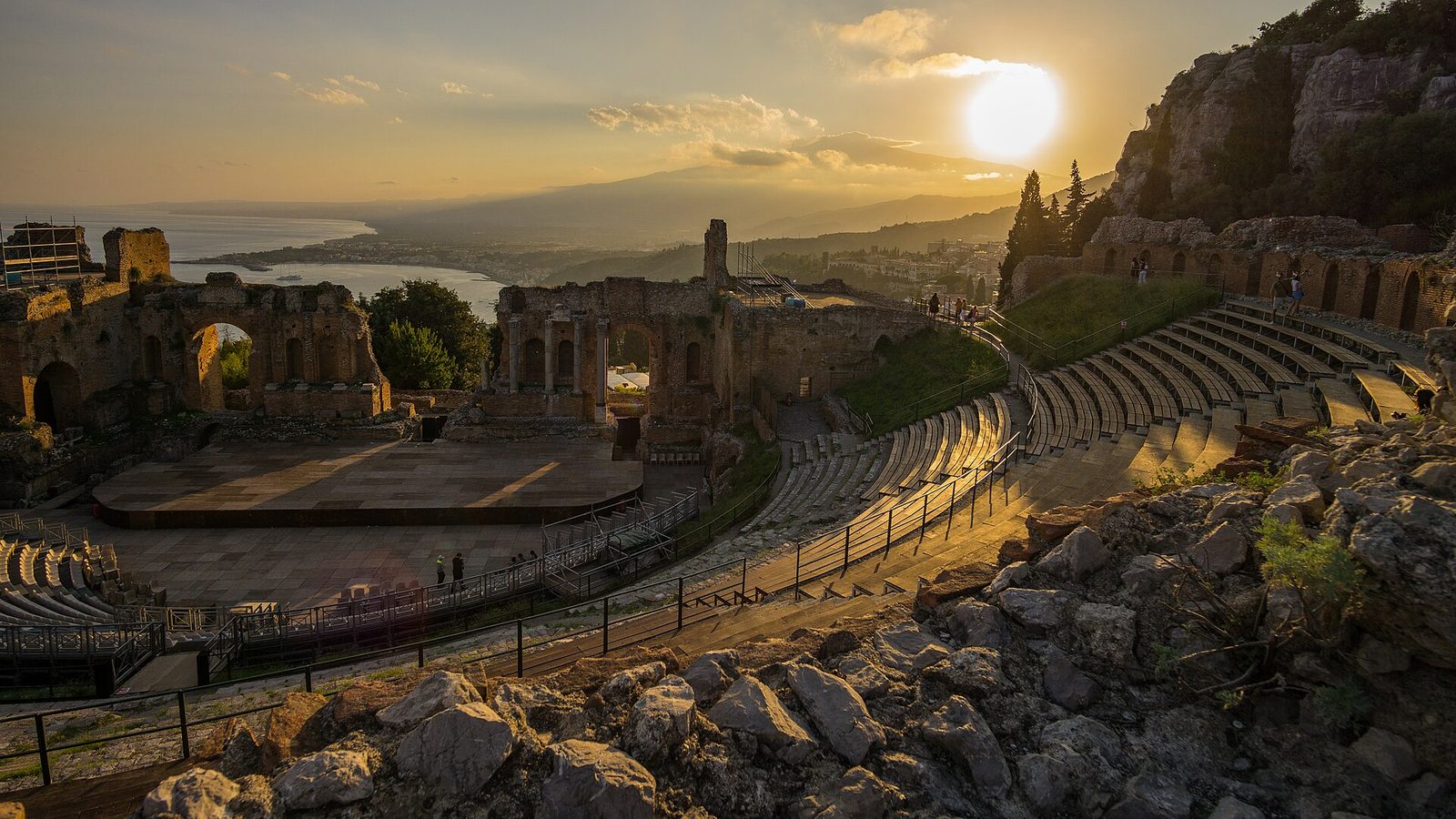
Taormina is the most touristed place in Sicily and it is still worth it, which is a sentence I do not write often. The Teatro Antico is a Greek theatre from the third century BC, rebuilt by the Romans, and it is positioned so that the stage is framed by the sea on one side and Etna on the other. Whoever chose that site knew exactly what they were doing.
Entry is €14 for adults and €7 reduced, open daily 09:00 to 19:45 with last entry at 19:00. There is one special late opening in 2026, on 13 July, when it stays open until midnight with last entry at 23:00. If you can be there for that, be there for that. The address is Via del Teatro Greco 40.
The town itself is a single main street, Corso Umberto, and it is rammed from about ten in the morning until seven at night in high season. The trick is to sleep there. Between eight and ten in the morning Taormina is a genuinely beautiful hill town with nobody in it, and the light on the bay at that hour is the reason people keep painting the place.
Below the town, Isola Bella sits on a pebble beach reached by cable car or a steep path. It is lovely and it is crowded. If you want sand, you want Cefalù or San Vito Lo Capo instead, and I have covered both further down. Both make our roundup of the best beaches in Europe. Taormina charges a tourist tax of €4 per person per night, which is worth budgeting for.
3. Mount Etna
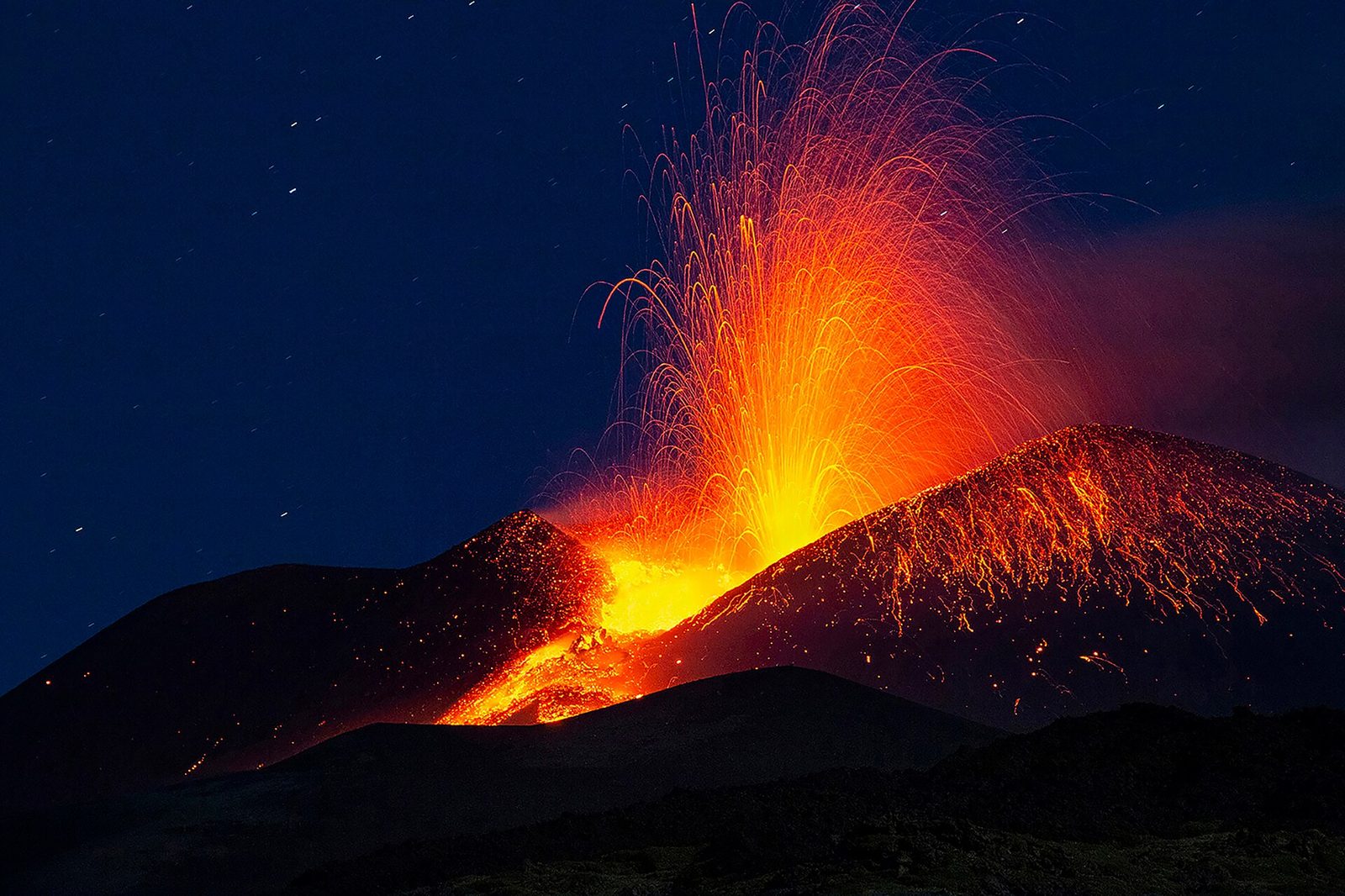
Etna is around 3,369 metres high, it is a UNESCO World Heritage site inscribed in 2013, it is Europe’s most active volcano, and as I write this in August 2026 it is erupting.
That is not alarmism. The current eruptive phase began in late December 2025 and has continued through 2026 in multiple episodes. On 6 and 7 August 2026 there was a paroxysm from the Voragine crater with lava fountaining and an ash column, and INGV raised the aviation colour code to red, with an ash advisory to 24,000 feet. A fissure opened at around 2,750 metres in the Valle del Leone, and a further vent at about 2,550 metres near Monte Rittmann, with lava fronts running down into the Valle del Bove and reaching roughly 2,000 metres. The Valle del Bove is essentially uninhabited, which is why an eruption of this scale can happen without anyone needing to be evacuated.
What this means for you, practically: check the day before you go, and expect access rules to change at short notice. Ash can close Catania airport for hours at a time. It usually reopens quickly. Build a buffer day into any trip that ends with a flight out of CTA during an active phase.
The 2,900 metre rule
Above 2,900 metres, a certified guide is a legal requirement, not a suggestion. It comes from Sicilian Regional Law 28 of 1996, and the guides are certified by the regional mountain and volcanological guides body, C.R.G.A.V.S. Below 2,900 metres you can walk freely. Groups with an accredited mountain guide can now access the summit area at their own judgement and risk even when it is closed to the general public, a change that prompted a protest by Etna guides in January 2026.
Getting up the mountain, with prices
| Option | 2026 price | What it gets you |
|---|---|---|
| Funivia dell’Etna cable car, return | €54 | 1,923 m up to 2,500 m |
| “Tour 3000” combo | €82 | Cable car, then 4×4 bus (snowcat in winter) to 2,800 m, then a short trek to 3,000 m with a volcanological guide |
| Child fare, ages 5 to 10 | €51 | As above |
| Ages 0 to 4 | Free | On a parent’s lap |
| Walking from Rifugio Sapienza | Free | Up to 2,900 m only, on your own two feet |
The south side, from Rifugio Sapienza, is where the cable car is and where 90 per cent of visitors go. The north side, from Piano Provenzana, is quieter, greener and better for walking. If you want a proper day on foot rather than a lift ride, take the north. For more European volcano and mountain walking, our guide to hiking in Europe covers the routes worth planning a trip around.
One more thing: bring a fleece and closed shoes even in July. It was 34°C in Catania and about 8°C at 2,900 metres the last time I went up, and half the group was in shorts and regretting it.
4. Alcantara Gorges
Thirty minutes inland from Taormina, a river has cut a narrow canyon through a basalt lava flow, leaving columns of black rock that look industrially machined. You can wade into the water in summer, which is glacial, and walk a short way up between the walls.
There are two access points: a public stairway down to the river, which is free, and a privately run park with lifts, paths and a botanical garden, which charges. It is a half day at most, and it pairs neatly with Etna’s north side if you have a car. Skip it in winter and early spring, when water levels make wading impossible.
The southeast: Syracuse and the Val di Noto
This is my favourite corner of Sicily and the one I would send a first-timer to if they only had five days. In 1693 an earthquake flattened the whole region, and the towns were rebuilt at once, in one style, by architects who had the rare luxury of starting from nothing. The result was inscribed by UNESCO in 2002 as the Late Baroque Towns of the Val di Noto: Caltagirone, Militello in Val di Catania, Catania, Modica, Noto, Palazzolo Acreide, Ragusa and Scicli. Eight towns, one earthquake, one architectural moment.
5. Syracuse and Ortigia
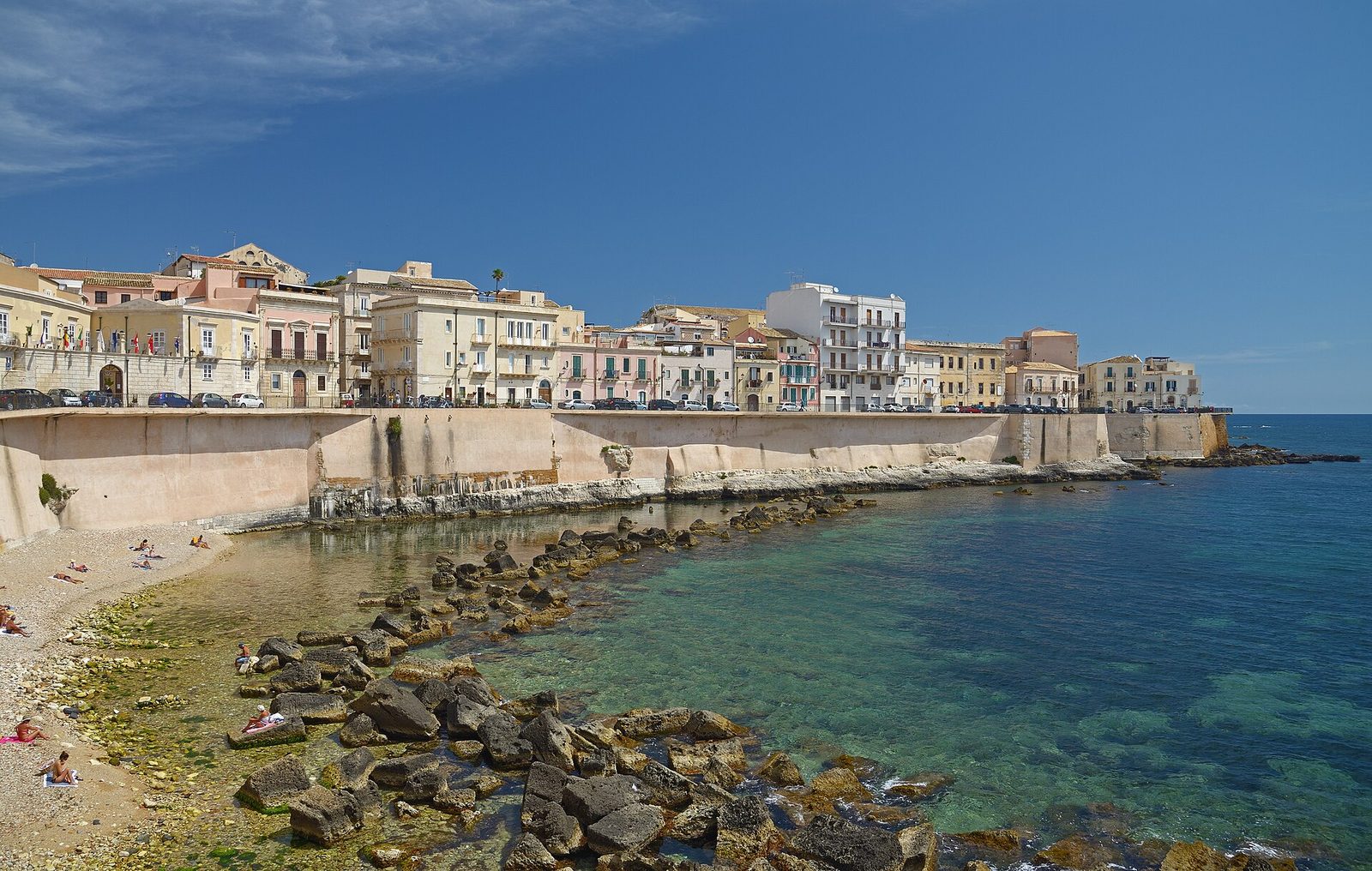
Syracuse was, for a while, the most powerful Greek city in the world, and Ortigia is the small island at the end of it where the old town sits. You cross a bridge and the temperature of the place changes. Narrow lanes, sea on three sides, a baroque piazza in white limestone that in the evening light looks lit from inside.
The Duomo on that piazza is the reason I keep going back. It is a seventh-century church built directly inside a fifth-century BC Greek temple to Athena, and the Doric columns are still standing in the walls, absorbed rather than demolished. You walk down the nave past twenty-five centuries at once. Entry is a couple of euros.
Across the bridge on the mainland is the Neapolis Archaeological Park, which holds the Greek theatre, the Roman amphitheatre and the Ear of Dionysius, a limestone cave with acoustics so good the story goes that a tyrant used it to eavesdrop on prisoners. Adult entry is around €17, reduced €10 for EU citizens aged 18 to 24. Go early: there is very little shade and it gets brutal by eleven.
Syracuse and the Rocky Necropolis of Pantalica were inscribed together by UNESCO in 2005. Pantalica itself, a canyon wall pocked with thousands of Bronze Age rock tombs, is an hour inland and almost always empty.
The city charges tourist tax at 4 per cent of the room rate, capped at €5 per person per night and charged for a maximum of seven consecutive nights. Give Syracuse two nights. One is not enough and you will resent leaving.
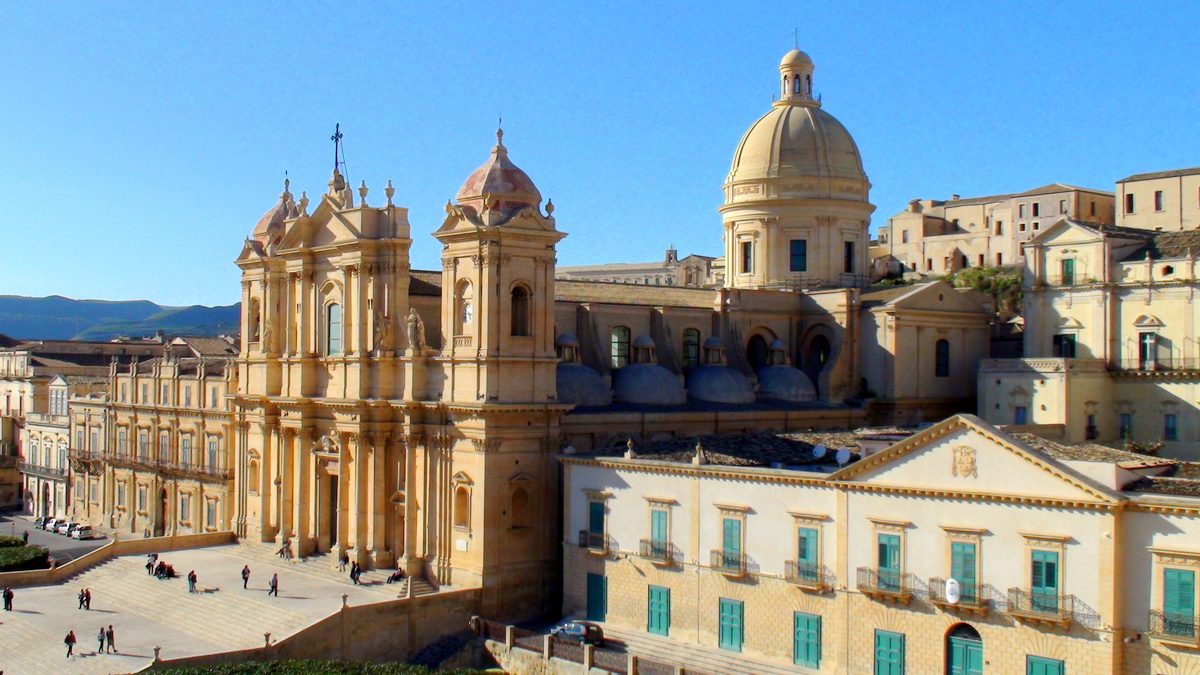
6. Noto
Noto is the showpiece. Corso Vittorio Emanuele runs for about a kilometre with three churches and a cathedral opening off it, all in a limestone that goes from cream at noon to deep honey at six in the evening. Sit on the steps of San Francesco with a granita and watch the passeggiata. That is the whole activity, and it is enough.
The one date to know is the Infiorata, when Via Nicolaci is carpeted in flower petals laid into pictures. In 2026 it is the 47th edition: laid out on Friday 15 May, then viewable from 16 to 19 May, 09:00 to 23:00. The theme is “La Cultura Pop si racconta”, covering music, cinema, fashion, comic art and Pop Art. Book accommodation months ahead if you want to be there for it.
7. Modica
Modica is stacked up both sides of a ravine, with a staircase of 250 steps climbing to the church of San Giorgio, and it is the most vertical town in Sicily. Wear the shoes you would wear for a hill walk.
The chocolate is the other reason to come. Modican chocolate is cold-worked, following a technique that arrived with the Spanish from Mesoamerica, so the sugar never dissolves and the texture is grainy rather than smooth. It tastes archaic in a way that takes a bar or two to appreciate. Buy from the old shops on Corso Umberto and try the cinnamon and the chilli, in that order. If food is what pulls you around a country, our guide to European food puts Sicilian cooking in context with the rest of the continent.
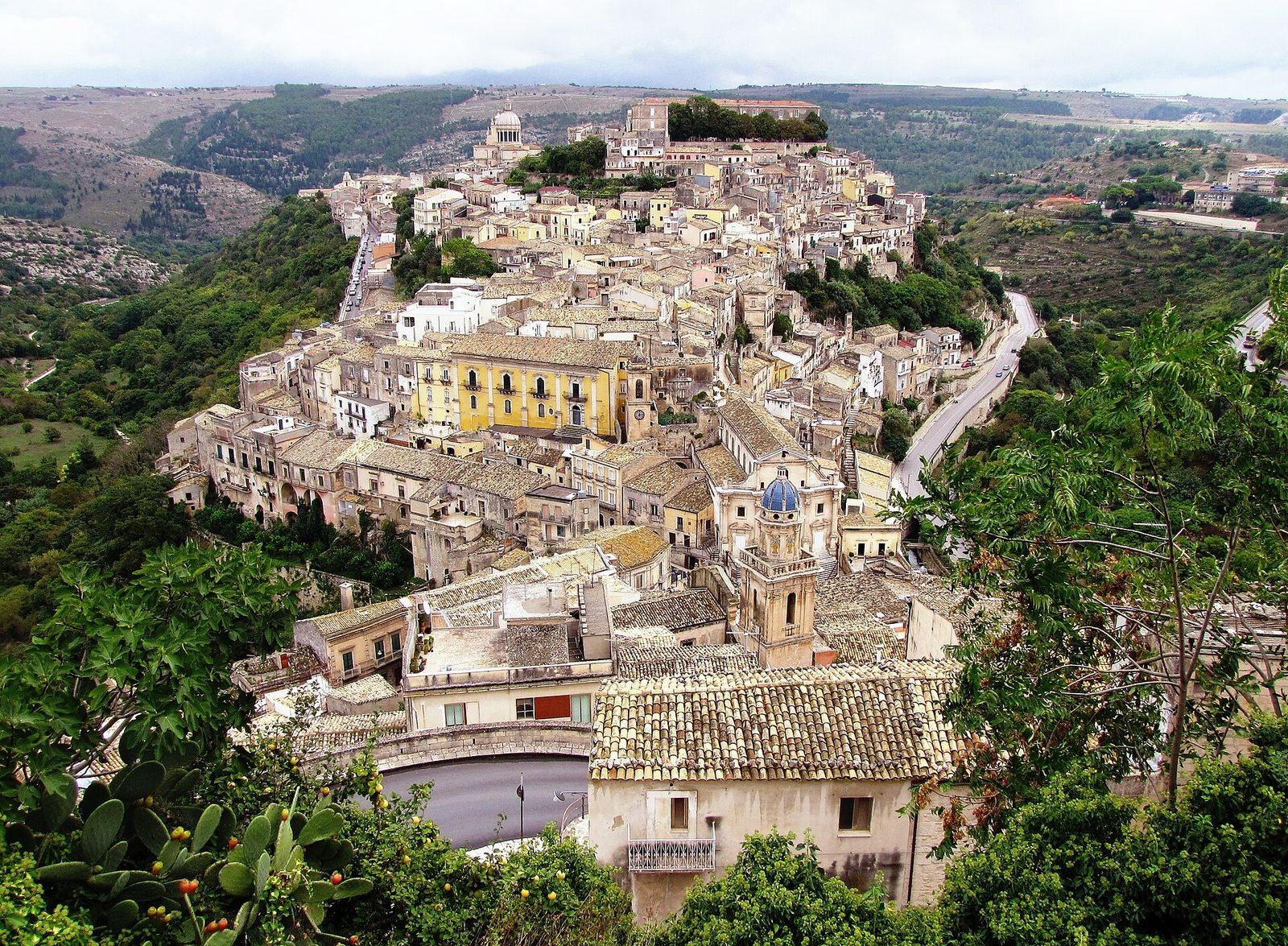
8. Ragusa Ibla
Ragusa is two towns: Ragusa Superiore on top of the hill, rebuilt after 1693 on a grid, and Ragusa Ibla below it, rebuilt on the old medieval street plan by people who wanted their homes back where they had been. Ibla is the one you have seen photographs of, tumbling down the hillside with the dome of San Giorgio in the middle of it.
It is also, per head, where Sicily eats best, with two of the island’s most serious restaurants inside a few hundred metres of each other. Book before you travel, not on the day.
The walk down from the upper town takes about twenty minutes and the walk back up takes considerably more than twenty minutes. There is a bus. Take the bus on the way back.
9. Scicli
Scicli is the one I would keep when the schedule tightens. Three ravines meet here and the baroque centre sits in the join, with a rock church and a ruined castle above it. Italian television made it famous as a setting for the Montalbano series, which brings a certain kind of visitor in coach parties for two hours in the middle of the day. Come at six in the evening and it is yours.
10. Marzamemi
A former tuna-fishing village on the southeastern tip, built around a single small piazza with a church at one end and the sea at the other, with the old tonnara buildings converted into restaurants. It is touristy now, obviously. It is also about the most pleasant place in Sicily to eat grilled fish outdoors as the light goes, and it takes twenty-five minutes from Noto.
Go for dinner, not lunch. And avoid it entirely in August, when the piazza is standing room only. More broadly, the Val di Noto belongs on any list of the most beautiful towns in Europe, and it is one of the few clusters where you can walk five of them in a week.
The south coast and the interior
The south is where the Greek archaeology is, and the interior is where the Romans left the best mosaics in the world. Both need a car, and both are hotter than the coast in summer by a margin that surprises people.
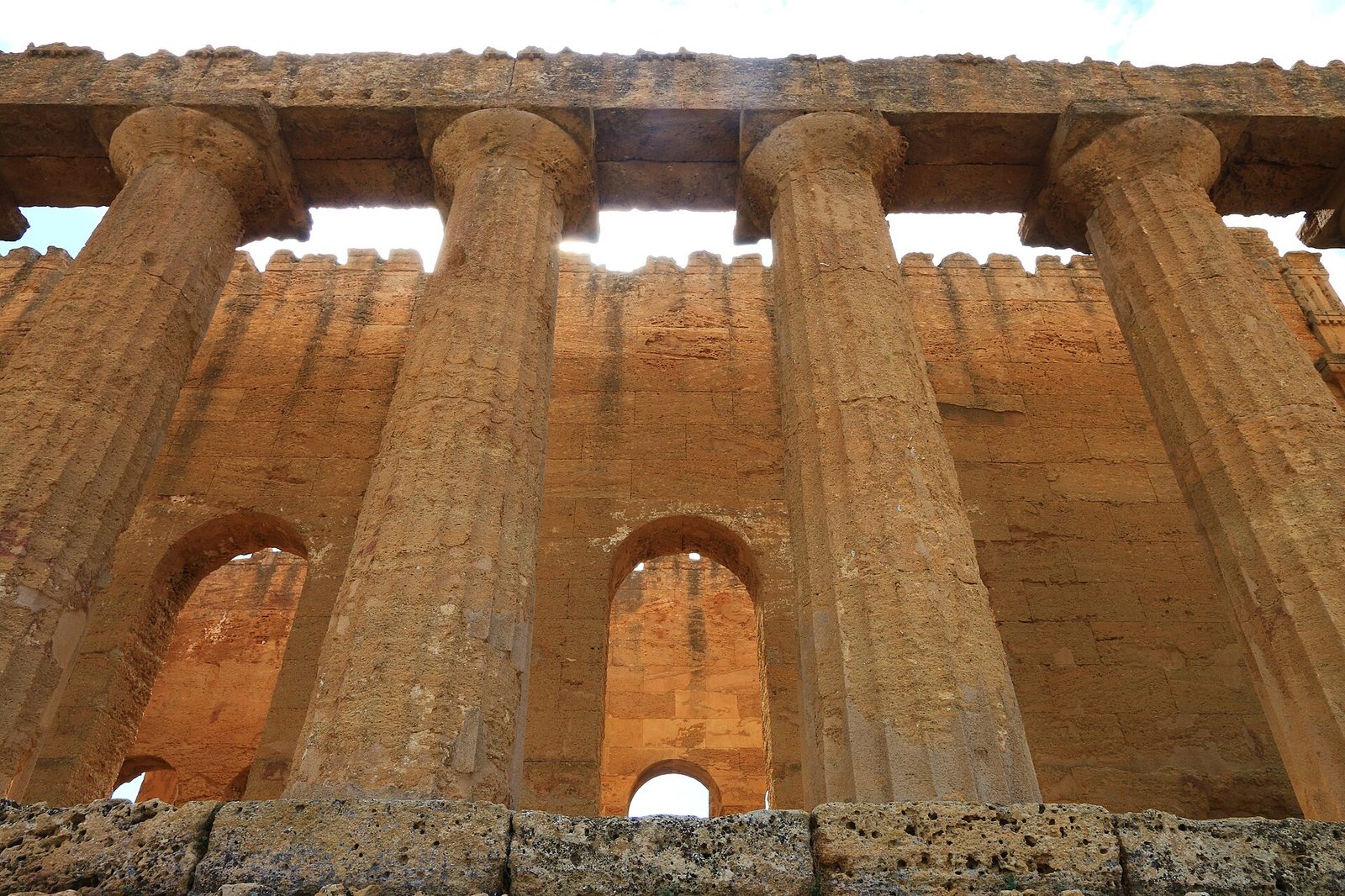
11. Agrigento and the Valley of the Temples
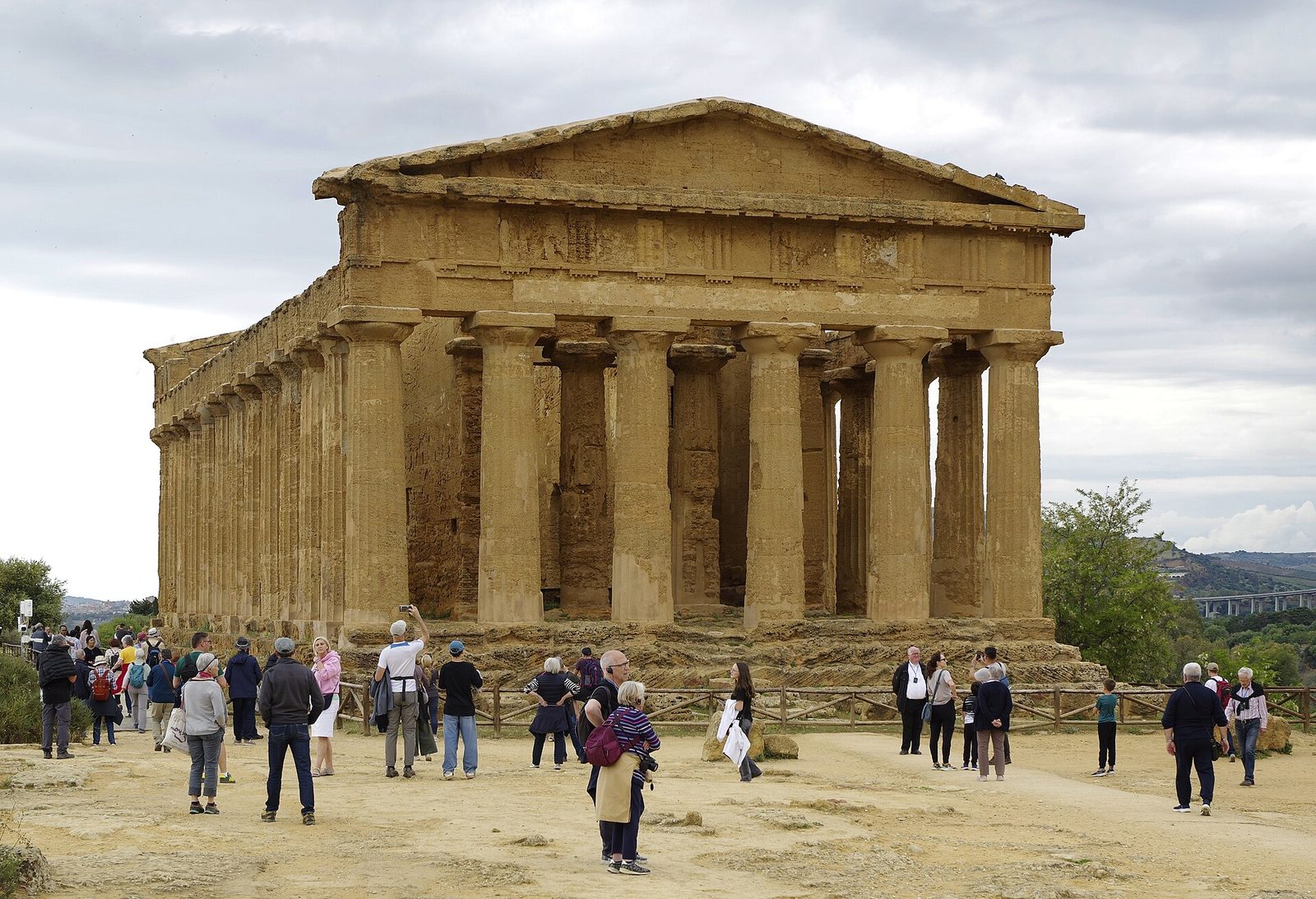
The Valle dei Templi is the best Greek archaeological site outside Greece, and it is arguably better than most of what is in Greece, because the Temple of Concordia is very nearly complete. Seven temples along a ridge above the sea, in an almond grove, inscribed by UNESCO in 1997.
Adult entry is €14, reduced €7 for EU citizens aged 18 to 25. The park is open daily 08:30 to 19:00 with exit by 20:00, and entry is free on the first Sunday of every month until 19:00. Two combined tickets are worth knowing about: the park plus the “Pietro Griffo” archaeological museum is €19.60, reduced €9.60, and the park plus the Kolymbethra Garden is €20, reduced €12. The museum on its own is €10.
One caution on price. Third-party ticketing pages quote €16 for the park and €22 for the park-plus-museum combination, while the park’s own timetables and tickets page quotes €14 and €19.60. I could not reconcile the two, so check the official site the week you go and buy from it if you can.
Go at opening or in the last two hours. The site runs along a ridge with almost no shade, and midday in July is genuinely unpleasant. The Temple of Concordia lit at night, seen from the road below, is free.
Agrigento held the title of Italian Capital of Culture for 2025, under the banner “La natura della cultura”. The title was the Italian one, not the European one, and the two get mixed up constantly. The year drew a reported 12 per cent rise in international arrivals but also heavy criticism, with one arts publication reporting that of 44 programmed interventions only four were completed. The title has now passed to L’Aquila for 2026, handed over at Agrigento’s Teatro Luigi Pirandello, so do not plan a 2026 trip expecting a festival programme.
12. Scala dei Turchi
A cliff of white marl stepping down into turquoise water, about twenty minutes from Agrigento, and one of the most photographed things in Sicily. It was closed to access from 2020 until early 2025 because of erosion and a legal dispute, reopened in summer 2025, and now runs on a managed-access system.
Under the rules introduced in May 2026: entry is €6 and there is a daily cap of 1,800 visitors, admitted in timed groups of about 50 every 20 minutes. Movement is confined to designated areas and free climbing on the formation is not allowed. Advance online booking was dropped when the new system came in, so tickets are bought at the site itself by card or phone, with no cash. That means arriving early on a July or August morning, because 1,800 places go quickly. The arrangements here have changed twice in two years, so check the current position in the week you travel.
If you cannot get a slot, the adjacent beach and the roadside viewpoints are still free, and boat trips from Porto Empedocle give you the cliff from the water, which is the better photograph anyway.
13. Villa Romana del Casale
Outside Piazza Armerina, in the middle of the island, a fourth-century Roman villa was buried by a landslide and forgotten for seven hundred years, which is why its floor mosaics are the most extensive and best preserved in the Roman world. Around 3,500 square metres of them, including the famous hunting scenes and the ten women in what look unmistakably like bikinis. UNESCO inscribed it in 1997.
Adult entry is €14, reduced €7, free for under-18s, teachers and disabled visitors. Open daily 09:00 to 19:00 with the ticket office closing at 18:00. Since July 2025 there has been a €3 supplement for the Aceves sculpture exhibition, which takes the full ticket to €17 and the reduced to €10. Check whether that is still running when you book.
The best-value option in 2026 is the evening opening: from 10 May to 21 September the villa opens 20:00 to 23:00, last entry 22:30, for €10. The mosaics under artificial light with almost nobody there is a completely different experience from the coach-party middle of the day, and it is cheaper.
There is also a combined ticket at €16, reduced €8, covering the villa plus Morgantina, the Aidone museum, Palazzo Trigona and Enna, which is good value if you are staying in the interior rather than day-tripping.
It is a genuine detour: about an hour and twenty minutes from Catania, a little over two from Palermo. Put it on the drive between the two rather than treating it as a day trip from either.
Palermo, the north coast and the west
The western half is louder, older-feeling and closer to North Africa in almost every respect, from the couscous in Trapani to the Arab-Norman domes in Palermo. It is also, for my money, where Sicily is most itself.
14. Palermo
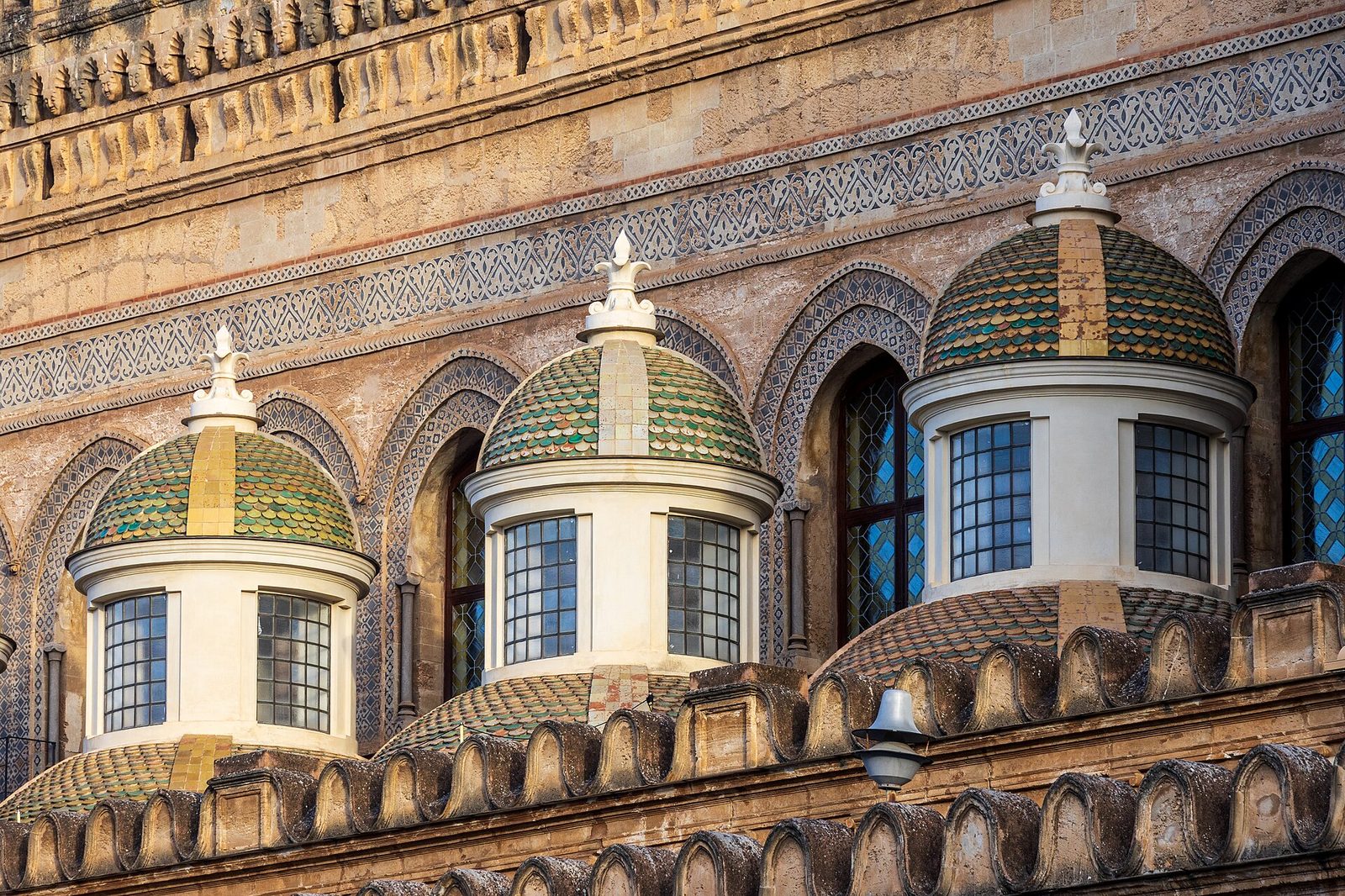
Palermo is not a pretty city and it is a magnificent one. Nine hundred years of Arab, Norman, Spanish and Bourbon rule stacked on top of each other, half of it beautifully restored and half of it still showing 1943 bomb damage, and markets that function as social institutions rather than tourist attractions.
The Arab-Norman circuit is what UNESCO inscribed in 2015, together with the cathedrals of Cefalù and Monreale. The centrepiece is the Cappella Palatina inside the Palazzo dei Normanni: a twelfth-century royal chapel with Byzantine gold mosaics, a carved wooden muqarnas ceiling made by Fatimid craftsmen, and Latin, Greek and Arabic inscriptions in the same room. It is the single best argument I know that medieval Europe was less monocultural than we tend to assume.
Ticketing depends on the day, because the Royal Apartments are only open Friday to Monday. On Tuesday, Wednesday and Thursday the ticket is around €15.50, with €13.50 for 18 to 25s and over-65s and €9 for 14 to 17s. When the apartments are open, expect around €19. The chapel is generally open Monday to Saturday 09:30 to 17:00 with last entry at 16:30, and closed or restricted on Sundays for services. Under-13s and disabled visitors with a companion go free. Check the official site before you go, because these hours move.
Then the markets. Ballarò is the biggest and least polished, Capo is the most photogenic, Vucciria is half market and half open-air bar after dark. Eat as you walk: pane e panelle (chickpea fritters in a bun), arancine, sfincione, and if you are feeling brave, pani ca meusa, a spleen sandwich which is much better than that description suggests. Most items run €2 to €5.
The Catacombe dei Cappuccini, at Piazza Cappuccini 1, hold the remains of around eight thousand people, of whom roughly 1,250 are mummified, many in clerical dress and standing in the corridors. Entry is a few euros, reported at €3, and it is open daily 09:00 to 12:10 and 15:00 to 17:10. It is not for everyone, and it is not for children.
Palermo charges a tourist tax of €4 per person per night on short lets, holiday homes and B&Bs, introduced from 1 July 2025, and capped at four consecutive nights, so nothing is charged from the fifth night onward. Give the city two to three days, which places it firmly among the best cities to visit in Europe for anyone who likes their history messy and lived-in.
15. Monreale
The hill village above Palermo is the reason people book a whole extra day in the city, and it is only about eight kilometres out. The cathedral’s interior is covered in roughly 6,300 square metres of gold-ground Byzantine mosaic telling the Old and New Testaments across the nave, with a Christ Pantocrator in the apse that is one of the great images of medieval Europe.
The cloister of Santa Maria La Nuova next door is ticketed separately at €7 full and €3.50 reduced, with a €2 exhibition supplement that can bring the online price to €8. It opens Monday to Saturday 09:00 to 19:00 and Sunday and holidays 09:00 to 13:30, with last admission thirty minutes before closing, and it is open 09:00 to 19:00 on 15 August. The cathedral closes on 25 December and 1 January. On European Museum Night, 23 May 2026, the cloister opens 19:00 to 22:00 for €1, last admission 21:30.
Prices for the church itself are quoted between about €4 and €6 by secondary sources and I could not confirm a figure on an official page, so treat that as indicative and bring cash.
Get there on bus 389 from Piazza Indipendenza in Palermo. Note on accessibility: only the cloister is wheelchair accessible, with the entrance from the Villa Comunale.
16. Cefalù
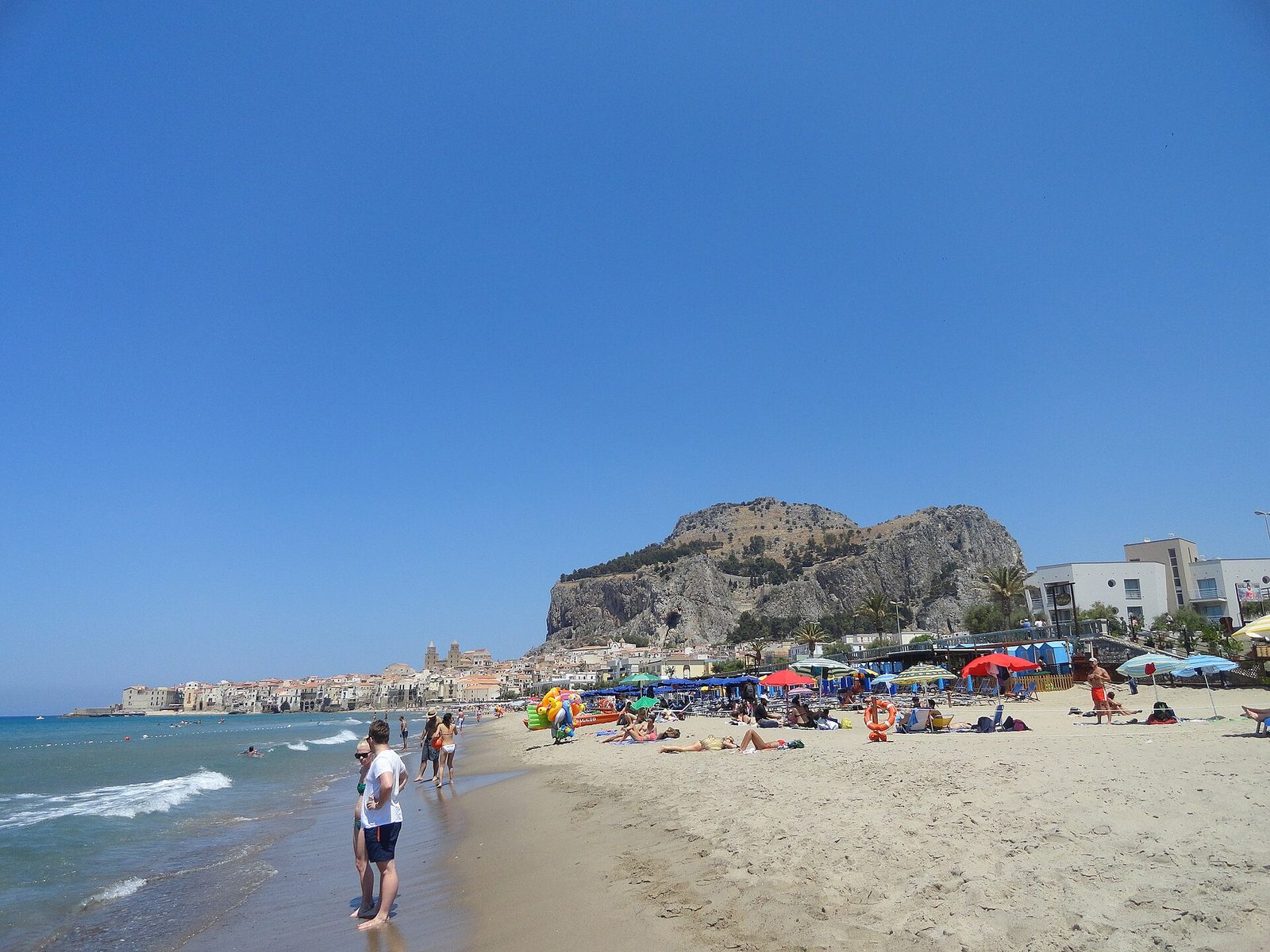
An hour east of Palermo by train, and the rare Sicilian town that combines a first-rate sandy beach with a first-rate monument. The Norman cathedral, begun in 1131, has an apse mosaic of Christ Pantocrator that predates Monreale’s and which some people, including me on alternate visits, prefer.
Behind the town, La Rocca is a limestone crag with a path up it and the ruins of a Norman castle on top. It takes about forty-five minutes up and it is steep. Do it early or at the end of the day.
The old town lanes run down to the water, and there is a medieval washhouse fed by a spring where women did laundry into the twentieth century. Cefalù is the easiest good day trip from Palermo without a car, which makes it the obvious choice if you have decided against driving.
17. Trapani and the salt pans
Trapani is a working port on a sickle of land, with a compact old town that most people pass through on their way to a ferry. Stay a night. The seafood is exceptional, couscous is on every menu as a local dish rather than an import, and the sunsets over the salt flats are the best on the island.
The Via del Sale, between Trapani and Marsala, is a road running past shallow salt pans divided by low walls, with restored windmills and pyramids of harvested salt under terracotta tiles. It is free to drive and walk. Late afternoon, when the water goes pink, is the time.
Marsala at the southern end gives you the fortified wine, and Mozia, a Phoenician island settlement in the lagoon, reached by a small boat.
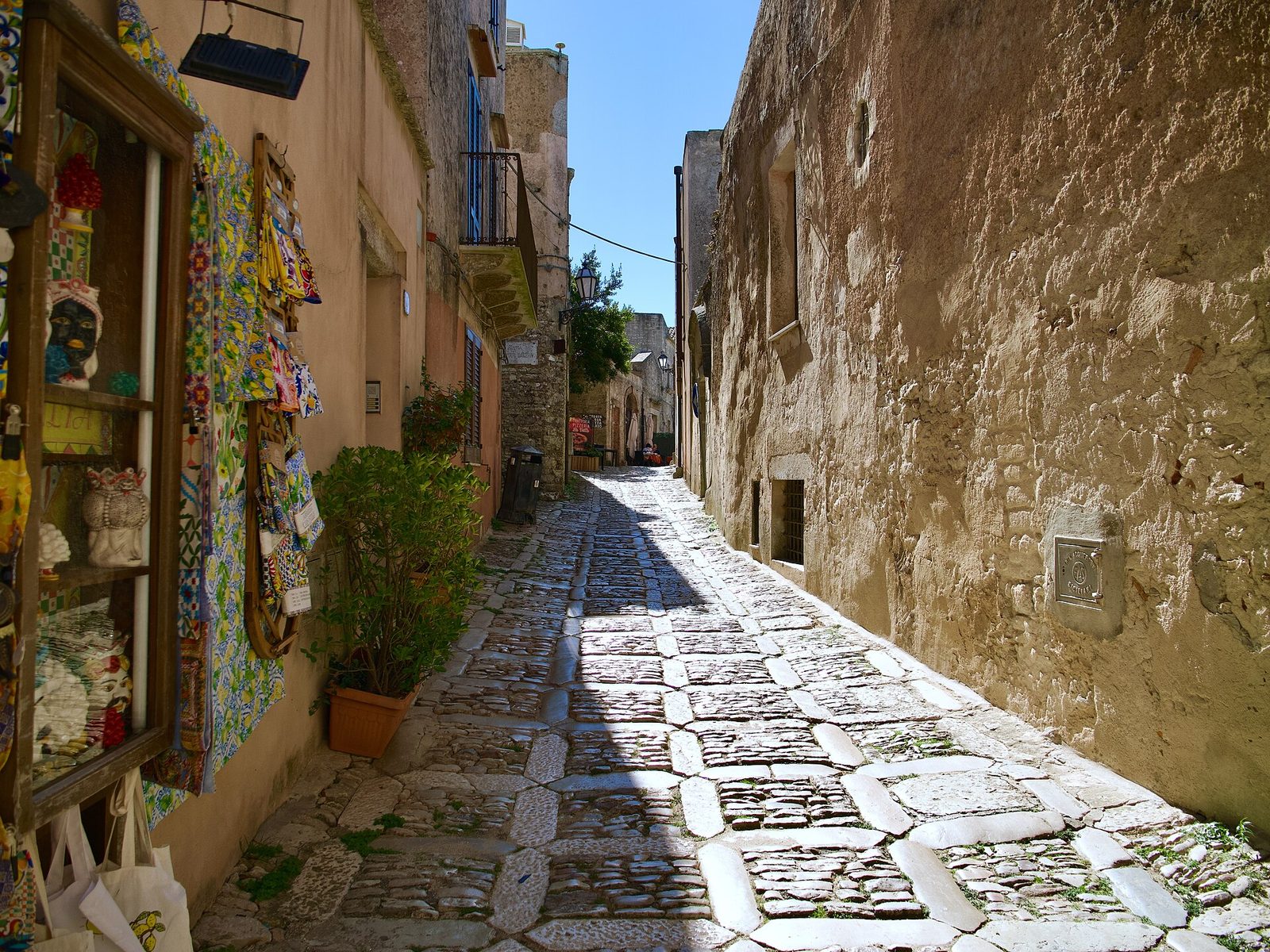
18. Erice
A medieval walled village at 750 metres directly above Trapani, reached by cable car, and frequently in cloud when the coast below is in full sun. Stone lanes, a Norman castle on the cliff edge, and on a clear day a view to the Aegadian Islands and, occasionally, Tunisia.
Come for the pastries. Erice is known across Sicily for almond sweets and genovesi, warm custard-filled pastries dusted with sugar, and the town’s most famous pastry shop has a queue for good reason. Half a day is plenty, and it combines with Segesta in a single outing.
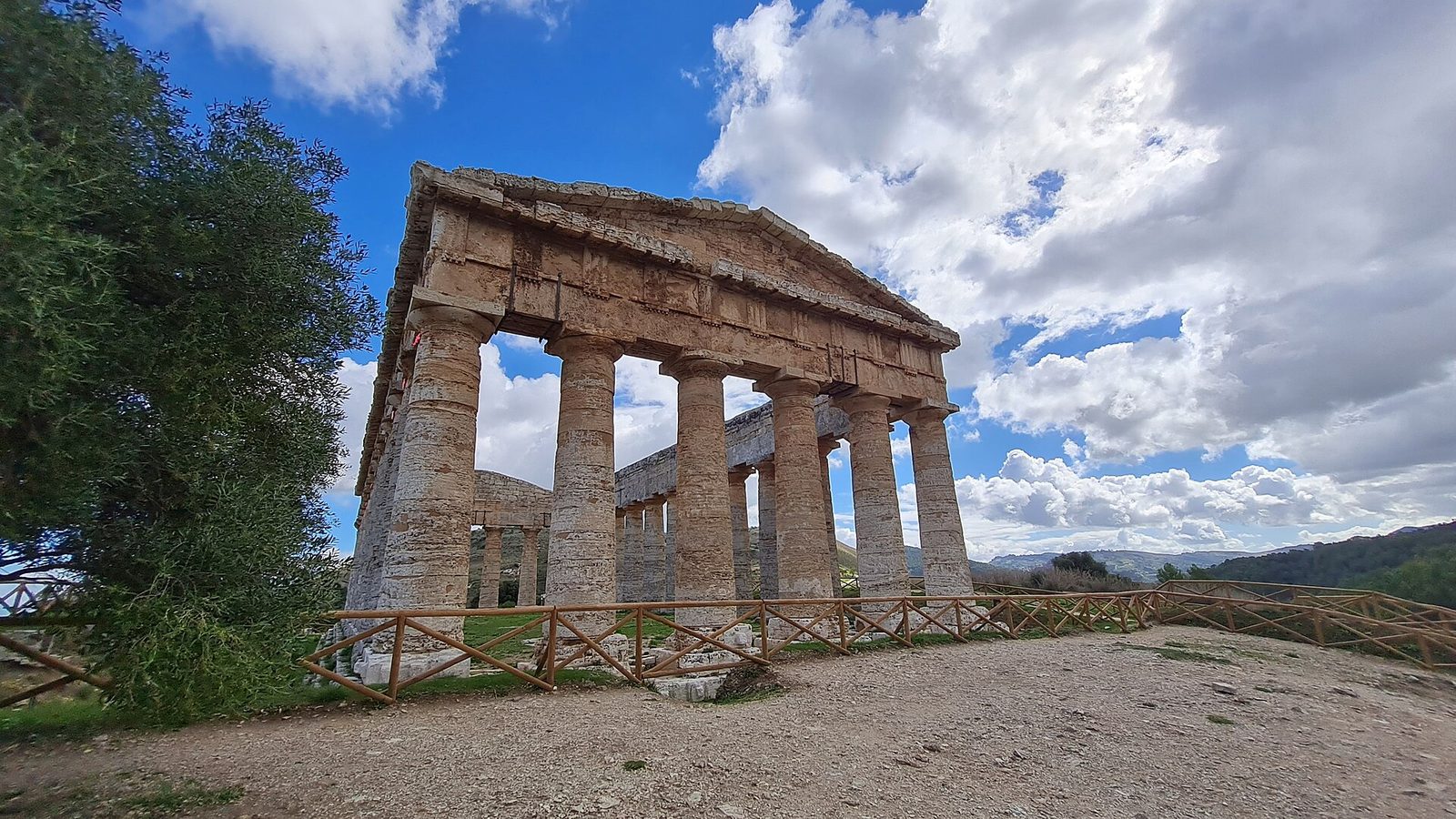
19. Segesta
An unfinished Doric temple from the fifth century BC standing on its own in a green valley, with a Greek theatre on the hill above it looking out towards the sea. It has no roof and no cella because it was never completed, which somehow makes it more striking rather than less.
Adult entry is €14, reduced €7 for EU citizens aged 18 to 25. A combined ticket with Pianto Romano is €17 full and €10 reduced, and a ticket including the internal shuttle up to the theatre is €16.50. The shuttle is not included in the base ticket, which catches people out, and the walk up is steep in full sun. An audioguide is €5. Under-18s go free, as does everyone on the first Sunday of the month, on 10 March for Sicilian Cultural Heritage Day, and women on 8 March. It is at Contrada Barbaro on the S.P. 68, Calatafimi Segesta.
20. Selinunte
The largest archaeological park in Europe, on the southwest coast, with a Greek city spread over 270 hectares of headland, temples toppled by earthquakes and left where they fell, and very few visitors. You can walk for two hours and see a handful of people.
The current adult ticket price is not published on any official page I could find. What I can give you is the ticket office schedule for 2026: 1 January to 11 March, 09:00 to 15:30 last admission; 12 to 28 March, to 16:30; 29 March to 30 April, to 18:00; 1 May to 14 September, 08:00 to 19:00; 14 September to 4 October, 09:00 to 18:00. Bring cash and a hat.
21. San Vito Lo Capo and the Zingaro reserve
San Vito Lo Capo has the finest sand in Sicily: a wide white crescent under a limestone headland, with water that stays shallow a long way out. It is the one Sicilian beach that looks like the brochure. In August it is also completely full, and the single road in becomes a traffic jam.
Next door, the Riserva dello Zingaro is a seven-kilometre stretch of protected coast with no road through it, a walking trail along the cliffs and a series of pebble coves you climb down to. Entry is €5 full and €3 reduced, which covers under-14s as well as students and teachers, with €1 for school groups, and it is free for Italian citizens over 65, for children of any nationality under 10, and for on-duty law enforcement. Opening hours are seasonal, roughly 07:00 to 19:30 in summer and 08:00 to 16:00 in winter. Two things catch people out: since March 2026 the reserve takes electronic payment only, so a card is essential, and there is no water for sale inside. Carry everything you will drink.
Walk the coastal path from the southern Scopello entrance and swim at Cala Capreria and Cala del Tonnarella. Two hours in and two back is a good day. This stretch of coast is one of the strongest arguments for Sicily on any best Mediterranean destinations shortlist.
The offshore islands
Sicily has islands of its own, and they are worth building a trip around rather than squeezing in. Everything below runs on hydrofoils, mostly operated by Liberty Lines, which serves the Aeolian, Aegadian and Pelagie groups.
22. The Aeolian Islands
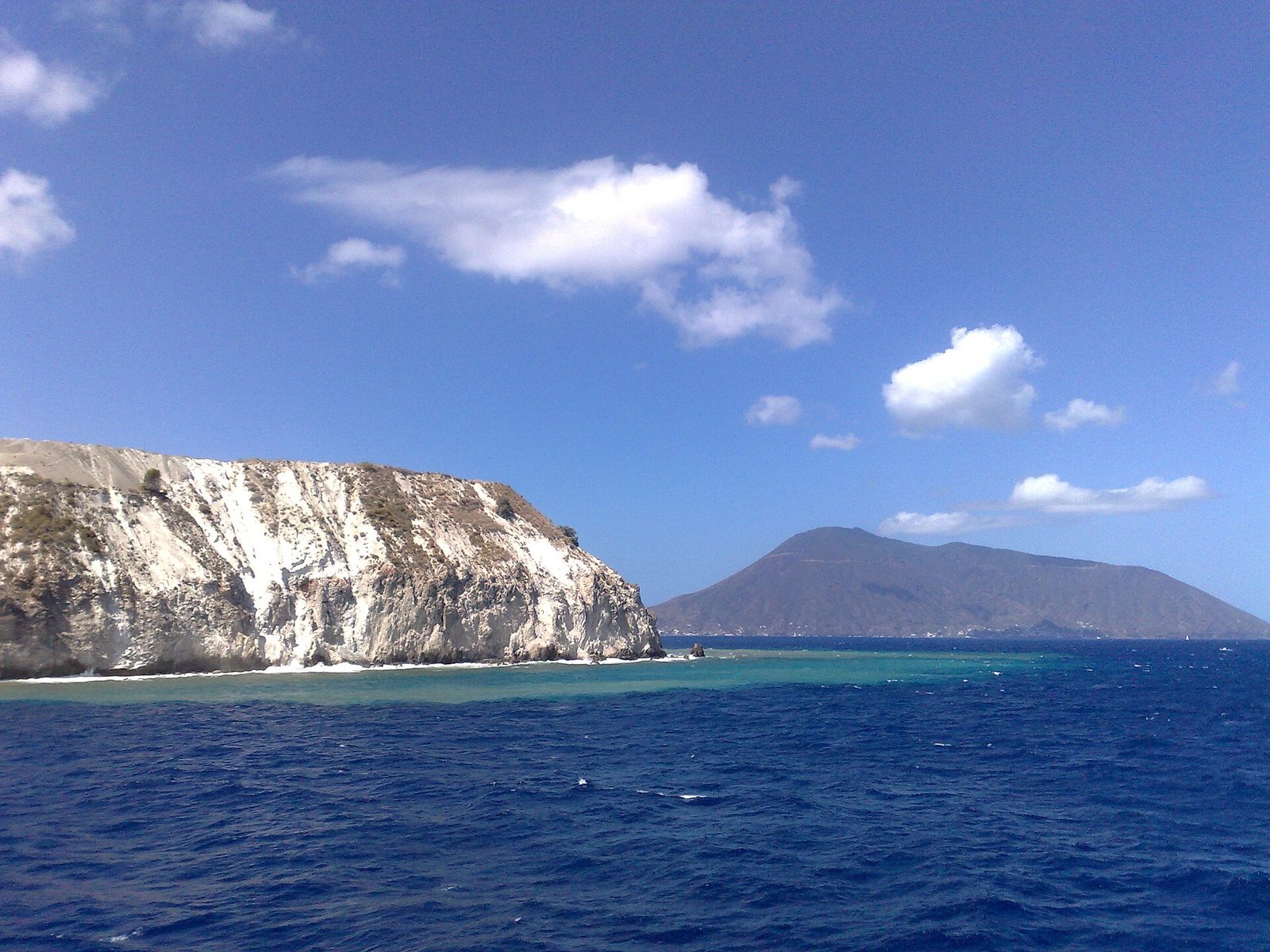
Seven volcanic islands off the north coast, inscribed by UNESCO in 2000: Lipari, Vulcano, Salina, Stromboli, Filicudi, Alicudi and Panarea. They gave their name to the entire scientific vocabulary of volcanology, because this is where the phenomena were first described.
- Lipari is the biggest and the practical base, with the ferry connections, the shops and an excellent archaeological museum in the citadel.
- Salina is the green one, with vineyards making Malvasia and the archipelago’s best cooking.
- Stromboli erupts in small bursts most nights, and boat trips run out at dusk to watch the Sciara del Fuoco from the water. Climbing it is restricted and rules change with activity levels, so check locally.
- Vulcano has sulphurous mud baths, a smell you will not forget, and a crater walk.
- Panarea is the fashionable one, tiny and expensive in August.
- Filicudi and Alicudi are the far ones, with almost no cars, and Alicudi has essentially none. Go if you want to disappear.
Get there from Milazzo, about 40 minutes west of Messina. The direct hydrofoil to Lipari takes about 1 hour 5 minutes, or 2 hours 25 if it calls at other islands on the way. Deck fares start around €16 to €20 per adult. Under-11s get 50 per cent off and under-3s travel free, and a return for two adults and two children can start from around €80.
Give the Aeolians three to five days. Two nights is not worth the crossing, and hydrofoils cancel in bad weather, so do not schedule your flight home for the morning after your last island night.
23. Favignana and the Aegadian Islands
Favignana is flat, low and shaped like a butterfly, about twenty minutes out of Trapani on a direct hydrofoil and half an hour if it calls at Levanzo, and the way to see it is on a bicycle you hire at the port for a few euros. The coves are old tufa quarries flooded by the sea, which is why the water sits in these squared-off, improbably turquoise pools: Cala Rossa and Bue Marino are the ones worth the ride.
The island’s tuna cannery, the Ex Stabilimento Florio, is now a museum and is a very good one on the industrial history of the mattanza, the traditional tuna kill.
Levanzo next door is smaller and has the Grotta del Genovese, a cave with Palaeolithic engravings and Neolithic paintings, visitable only with a guide booked in advance. Marettimo is the wild one, three hours from anywhere, with walking trails and no development to speak of.
One to two days does Favignana. Day trips from Trapani work fine, but staying a night after the last hydrofoil leaves is a different island entirely.
When to visit Sicily, month by month
The consensus among people who know the island well is May to June and September to October, and I agree with it without reservation. Mild weather, warm sea, everything open, and none of the August madness.
| Month | What it is like | Verdict |
|---|---|---|
| January | Coolest and among the wettest months. Palermo averages a low of about 6.8°C in February, the coldest point of the year. Etna has snow. | Cities and skiing on Etna only |
| February | Almond blossom starts. Sant’Agata in Catania, 3 to 5 February 2026, with the full cycle 30 January to 12 February. | Excellent for festivals, poor for beaches |
| March | Wild flowers, empty archaeological sites, cheap car hire. Almond Blossom Festival in Agrigento, 7 to 15 March 2026. | Underrated |
| April | Daily temperatures around 16 to 24°C. Easter processions are extraordinary and book out. | Very good, watch Easter pricing |
| May | The sweet spot. Warm, dry, sea beginning to be swimmable. Infiorata di Noto 15 to 19 May 2026. | Best month overall |
| June | Hot but not yet savage, sea warm, everything open. Taormina Film Festival 10 to 14 June 2026. | Best month for beaches |
| July | Very hot. Palermo averages a high of 29.8°C and the interior is far worse. Festino di Santa Rosalia 10 to 15 July 2026. | Coast only |
| August | Peak Italian holiday month. Sea at its warmest, around 27°C off Palermo. Also the most crowded and most expensive, with many family-run businesses closed for ferragosto. | The month I avoid |
| September | Sea still warm, crowds gone by mid-month, prices dropping. | Best month for a first trip |
| October | Sea around 22°C and still swimmable. Rain starts late in the month. Archaeological sites at their most pleasant. | Excellent value |
| November | Wettest stretch begins. Cheapest car hire of the year, around $20 a day. | Cities, food and wine |
| December | Wettest month in Palermo, about 79 mm. Christmas markets and nativity scenes. | Cities only |
The heat is not a joke
On 11 August 2021, Floridia in the province of Syracuse recorded 48.8°C, the highest temperature ever registered in continental Europe, beating the previous record of 48.0°C set at Athens and Elefsina in July 1977. The reading was confirmed by a WMO panel in January 2024, and the weather system responsible was an anticyclone the Italian press nicknamed Lucifer.
Palermo’s overall range runs from about 12°C in February to about 27°C in August, with 615 mm of rain a year falling almost entirely between autumn and winter. The practical version: between late June and early September, do outdoor sites before 10:00 or after 17:00, and plan the middle of the day around a museum, a long lunch or the sea. For a wider view of the continent’s seasons, see our guide to the best time to visit Europe, and for Italy specifically, the best time to visit Italy goes region by region.
Swimming season runs comfortably July to September, with October still decent. If the beach is the point of the trip, June and September are your months.
Getting to Sicily
Four airports, two of which matter, plus ferries from the mainland if you are bringing a car or you like arriving somewhere by sea.
| Airport | Passengers | Best for | Into town |
|---|---|---|---|
| Catania Fontanarossa (CTA) | About 12.3 million in 2025, fifth busiest in Italy | Etna, Taormina, Syracuse, the Val di Noto | Alibus, €4, about 20 minutes, every 25 minutes 04:40 to 00:30 |
| Palermo Falcone Borsellino (PMO) | 9.2 million in 2025, up 3.3 per cent and a record | Palermo, Cefalù, Trapani, Agrigento | Prestia e Comandè bus €6.30 one way or €11 return, about 50 minutes, every 30 minutes; or the Trinacria Express train, about €5.80 and about 60 minutes, twice hourly, last train around 22:00 |
| Trapani-Birgi (TPS) | 1,007,409 in 2025, up 6.29 per cent | The west, Erice, San Vito Lo Capo, the Aegadians | Bus to Trapani port; no direct rail link I could confirm |
| Comiso (CIY) | 260,438 in 2024 | Ragusa, Modica, Scicli, the far southeast | Car hire, realistically |
Palermo is targeting 10 million passengers in 2026, with 105 routes to 28 countries in the summer schedule, so European connections keep improving. For context, Italian airports handled 229.7 million passengers in 2025, up 5 per cent.
Arriving by ferry
| Route | Duration | Fares | Operators |
|---|---|---|---|
| Villa San Giovanni to Messina | About 20 minutes, frequent | Foot passengers from about €10; €17.90 to €41.90 depending on vehicle | Bluferries, Caronte & Tourist |
| Naples to Palermo, overnight | 10h 15m with Tirrenia, 10h 30m with GNV | Deck from about €33 with GNV; basic fares from about €56; cabins vary widely | GNV, Tirrenia, Grimaldi Lines |
| Salerno to Palermo | About 10 hours, up to 6 weekly | From about €30 | Grimaldi Lines |
| Milazzo to Lipari (Aeolians) | 1h 05m direct, 2h 25m with island calls | From about €16 to €20 deck | Liberty Lines |
Nine operators serve Sicily in total, including Grimaldi Lines, GNV, Liberty Lines, SNAV, Alilauro, Siremar, Caronte & Tourist, Virtu Ferries and Ponte Ferries. The Naples overnight runs year-round, with two overnight departures in winter, a weekend daytime sailing in late July and August, and up to 21 weekly departures at peak.
The Naples to Palermo overnight in a cabin is one of the more civilised ways to enter a country. You board at nine, eat dinner on deck, and wake up sailing into Palermo with Monte Pellegrino on your right.
Getting around Sicily: the honest verdict
This is the question I get asked most, so here is the direct answer: hire a car unless your entire trip is Palermo, Cefalù, Catania, Taormina and Syracuse. Those five are all on the rail corridor and connect fine. Everything else, and particularly the Val di Noto, the west and the interior, is far harder without one.
Trains
| Route | Journey time | Typical fare | Frequency |
|---|---|---|---|
| Palermo to Catania | Average 2h 57m, fastest 2h 47m | About €19 to €24 | Limited |
| Palermo to Agrigento | About 3h 31m, fastest 3h 23m | From about €11 on Regionale | About 16 a day |
| Catania to Syracuse | About 1h 18m | From about €10 | About 14 a day |
| Messina to Palermo | Average 3h 40m, fastest 2h 48m | About €15 to €28 | 34 connections a day, 04:50 to 22:17 |
| Catania to Agrigento | Fastest 4h 05m | Varies | Sparse, usually with a change |
| Agrigento to Syracuse | Average 8h 47m, quickest 4h 57m | Varies | About 8 a day |
Look at that last row for a moment. Even the quickest train from Agrigento to Syracuse takes just under five hours, and the average is closer to nine. The drive is about three. That gap is the whole argument for a car in one line.
Rail serves the coastal corridor well and the interior badly. If you are used to train travel in Europe at its best, in Switzerland or Germany, calibrate downwards.
Buses, which are often faster than trains
The Interbus express coach from Palermo to Catania runs up the A19 autostrada in about 2 hours 45 minutes, which beats the train, and fares start from around €9. On the island’s busiest intercity route, the bus wins on both time and money. That is worth knowing before you book anything.
SAIS Autolinee has been running Sicilian services since 1926 and links Catania, Palermo, Messina and Catania airport. Two rules to remember: you generally cannot buy intercity tickets on board, so buy before you board; and services drop dramatically on Sundays and public holidays, with many routes running once or twice a day or not at all. That last point has stranded more visitors than anything else on this island.
Car hire, ZTLs and the licence question
| Season | Typical daily rate |
|---|---|
| August (peak) | The most expensive month, averaging around $48 a day |
| June to August generally | About €30 to €35 a day, with small cars sometimes €25 to €30 |
| November (cheapest) | Around $20 a day |
| Late autumn, winter, early spring | As low as €6 to €10 a day for economy or mid-size |
| 2026 headline rates quoted by budget guides | €35 to €45 economy, €50 to €70 automatic or larger, insurance a further €15 to €25 a day |
Book an automatic months ahead if you need one. They are scarce and they carry a large premium.
ZTLs. A Zona a Traffico Limitato is a limited-traffic zone in a historic centre, open only to residents and permit holders, marked with a white circle and a red border. Palermo, Catania, Siracusa’s Ortigia and Taormina all have one, and effectively every Sicilian historic centre does. Cameras at the gates read your plate automatically, 24 hours a day, and the fine is issued without anyone stopping you. Amounts vary by comune, with sources quoting anywhere from about €50 to €320, and some reporting €80 to €130 per camera. Because rental companies forward these months later with an administration fee on top, the first you hear of it is usually a letter in spring.
The workaround, if your hotel is inside a zone: ask them to pre-register your plate with the local authority for your arrival and departure days. Most hotels inside ZTLs do this routinely, but you have to ask.
Licences. If you hold a US licence, you need an International Driving Permit. Article 135 of the Italian Vehicle Code requires non-EU licences to be accompanied by one, and an IDP costs around $20 from AAA and needs two passport photos. For UK licence holders the position is contested: the UK-Italy mutual recognition arrangement indicates a full UK licence is sufficient for short tourist visits, while several rental-industry sources insist on an IDP for any non-EU licence. Confirm with your rental company in writing before you travel rather than arguing at the desk.
Tolls and fuel. Not every Sicilian motorway is tolled, but the A20 between Messina and Palermo is, and so is part of the A18 along the east coast. Keep a few euro coins and a card in the door pocket. Petrol stations often close for the riposo and on Sunday afternoons, and many switch to automated self-service when they do, so do not run the tank down in the interior.
One last practical point: hire the smallest car you can live with. The lanes in Erice, Ragusa Ibla and Cefalù were laid out for donkeys, and a mid-size SUV is a liability. Our wider guide to road trips in Europe and to getting around Europe covers the general rules; Sicily is at the demanding end of them.
What Sicily costs in 2026
Sicily is meaningfully cheaper than northern Italy outside July and August, and roughly the same as it in peak season. Here is the shape of it.
| Item | Low season | July to August |
|---|---|---|
| Mid-range hotel, island average | 40 to 50 per cent below summer | €150 to €250 a night |
| Mid-range hotel, Palermo | €80 to €120 | €150 to €200 |
| Budget hotel, Palermo | €45 to €65, roughly half the summer rate | €90 to €140 |
| Car hire, per day | €6 to €10 in deep winter, around $20 in November | €30 to €35, peaking around $48 in August |
| Arancina or arancino | €2 to €3.50 | |
| Cannolo | €2.50 to €4 | |
| Palermo street food generally | €2 to €5 an item | |
| Sunbed and umbrella at a lido | €15 to €25 per person typically; about €35 for two beds and an umbrella at Mondello; €25 to €30 per person in Taormina | |
| Major archaeological site | €14 is the standard adult rate across the regional parks | |
Peak-season accommodation runs sharply above shoulder-season rates, with one budget survey putting the premium at 60 to 80 per cent, which is the single biggest reason to move your trip from August to late September. On a two-week trip that difference alone can cover the flights. If keeping costs down is the priority, our guides to Europe on a budget and the cheapest places to travel in Europe put those numbers in continental context.
Tourist tax, town by town
Italy’s imposta di soggiorno is set by each comune, capped nationally at €5 per person per night, and the 2026 Budget Law lets provincial capitals add up to €2 more. It is charged at the property, usually in cash, and it is not in your online booking total.
| Town | 2026 rate | Notes |
|---|---|---|
| Catania | €5.00 in 5-star hotels; €3.50 up to 3-star hotels, residences, B&Bs and rooms; €3.00 holiday homes, agriturismi and hostels | Raised for 2026 from €3.50 and €2.00. The highest on the island. The €3.00 band applies for the first 4 days |
| Siracusa | 4 per cent of the room price, capped at €5.00 per person per night | Charged for a maximum of 7 consecutive nights |
| Palermo | €4.00 on short lets, holiday homes and B&Bs | In force from 1 July 2025, capped at 4 consecutive nights |
| Taormina | €4.00 | Per person per night |
Exemptions generally cover minors, residents, people with disabilities and some professional categories on duty, though the detail varies by comune.
Bring cash. Plenty of places prefer it or do not take cards at all, particularly market stalls, small trattorias and the tourist tax itself.
Tipping
Tipping is not expected in Sicily. The coperto on your bill is a cover charge for bread and the table, not a service charge and not a tip, and it is entirely standard. If the bill says servizio incluso, you are done. If it says servizio non incluso, rounding up or leaving small change is generous. Some Sicilians do not tip at all, and nobody will chase you down the street.
Food and drink: what to order
Sicilian food is not southern Italian food with extra sunshine. It has an Arab layer that mainland cooking does not: sweet and sour together, raisins with fish, saffron, almonds, aubergine, couscous in the west.
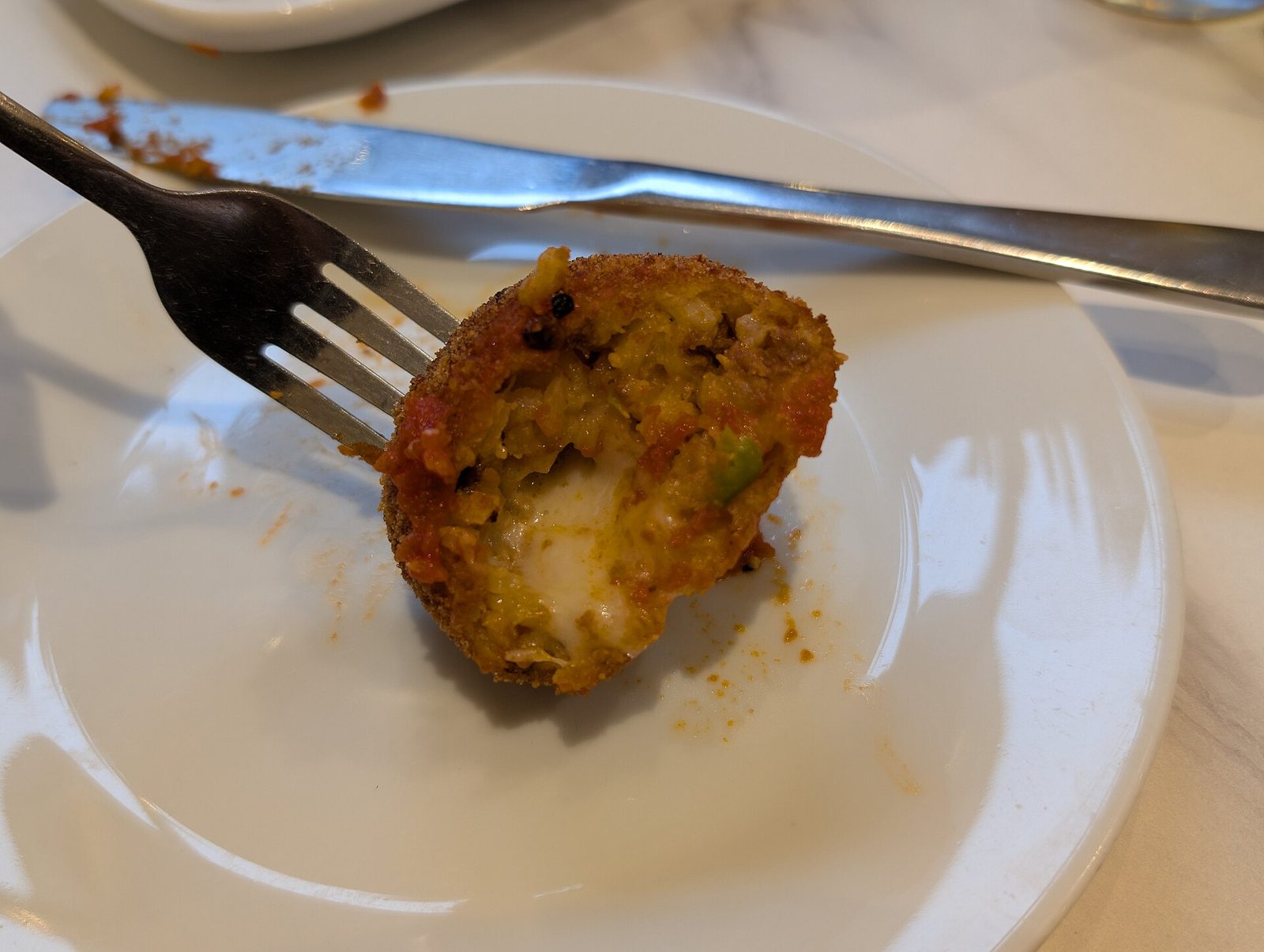
- Arancine (Palermo, feminine) or arancini (Catania, masculine). Fried rice balls, ragu or butter and ham inside. The gender argument is real and locals enjoy it. €2 to €3.50.
- Pane e panelle. Chickpea fritters in a sesame bun, the definitive Palermo street snack.
- Sfincione. Thick, spongy Palermitan pizza with onion, breadcrumbs and anchovy, sold from vans.
- Pasta alla Norma. Catania’s dish: tomato, fried aubergine, basil and salted ricotta.
- Pasta con le sarde. Sardines, wild fennel, pine nuts, raisins and saffron. The Arab layer in one plate.
- Caponata. Sweet and sour aubergine, better at room temperature the next day.
- Couscous alla trapanese. Fish couscous in the west, served with a broth you pour over yourself.
- Granita with brioche col tuzzu. Breakfast, not dessert. Almond, coffee, lemon or mulberry. Best in Catania and Acireale.
- Cannolo. Fried shell filled with sheep’s ricotta to order. If it is pre-filled and sitting in a case, walk away. €2.50 to €4.
- Cassata and frutta martorana, marzipan sculpted into fruit, at their best around All Saints.
Wines to look for: Etna Rosso from Nerello Mascalese grown on volcanic soil, which drinks more like Burgundy than anything else in Italy; Nero d’Avola from the southeast; Grillo and Catarratto whites from the west; Malvasia delle Lipari as a dessert wine; and Marsala, which is far better than its reputation suggests.
The rhythm of the day
Most restaurants and shops close around 13:00 and reopen between 16:00 and 17:00. Aperitivo is around 19:00 and dinner is around 21:00. If you turn up at a restaurant at 19:30 expecting to eat, you will be the only people there and the kitchen may not have started. Adjust, and use the closed hours for the beach or a nap, which is what they are for.
Where to stay in Sicily
Choosing a base matters more here than in most of Italy, because the distances between good bases are large and the parking situation in every historic centre is difficult. My general advice: fewer bases, longer stays, and pick the one where you can walk out to dinner.
| Base | Stay here | Not here | Why |
|---|---|---|---|
| Syracuse | Ortigia, the island old town | The mainland grid around the station | Ortigia is where every restaurant, bar and evening walk is. The mainland is cheaper and considerably duller. Drop bags at your hotel and park outside the ZTL |
| Palermo | Between Teatro Massimo and the Kalsa, or around Piazza Marina | Anywhere requiring a car in the centre | Walkable to all four historic quarters and the markets. The Kalsa has changed enormously in ten years |
| Taormina | Taormina town itself | Giardini Naxos, unless you want a beach resort | Sleeping in town buys you the two empty hours in the morning, which is the whole point. Giardini is cheaper and on the sea, but you will be riding the bus up and down |
| Catania | Around Via Etnea and the Duomo | Near the port | Everything is walkable from the centre, and the Alibus drops you there |
| The Val di Noto | One base in Ragusa Ibla or Noto | A different town every night | The towns are 30 to 45 minutes apart. Moving daily wastes a lot of the trip on packing |
| The west | Trapani old town, or San Vito Lo Capo for a beach week | Erice, unless you want cloud | Trapani has the ferries, the restaurants and the airport. Erice is wonderful for a night and cold and empty after dark |
| Agrigento | San Leone, on the coast, or a masseria in the valley | Agrigento’s modern upper town | The upper town is not attractive and the temples are 15 minutes below it |
| The Aeolians | Lipari for connections, Salina for food and quiet | Panarea in August | Lipari has the ferry hub and the shops. Salina has the vineyards and the better dinners |
Two booking notes. Anywhere inside a ZTL, ask the property to register your car’s plate with the comune for arrival and departure. And in July and August, book at least three months out for Ortigia, Taormina, San Vito Lo Capo and the Aeolians, all of which sell out. For the general principles, our guide to where to stay in Europe covers how to think about bases and neighbourhoods.
The full ticket price list for Sicily’s major sites
This is the table I built the article around. All figures are 2026 adult rates, checked in August 2026 against official park and operator pages where possible. Opening hours in Sicily move, so treat this as a planning tool and confirm on the day.
| Site | Adult | Reduced | Hours | Worth knowing |
|---|---|---|---|---|
| Valley of the Temples, Agrigento | €14 | €7 (EU 18 to 25) | 08:30 to 19:00 daily, exit by 20:00 | Free on the first Sunday of the month until 19:00. Third-party sellers quote €16, so buy from the official site |
| Valley of the Temples + archaeological museum | €19.60 | €9.60 | Museum 09:00 to 19:00 daily | Museum alone is €10, reduced €5 |
| Valley of the Temples + Kolymbethra Garden | €20 | €12 | As park | The garden is a shaded almond and citrus valley, and a relief in heat |
| Villa Romana del Casale | €14 | €7 | 09:00 to 19:00, ticket office closes 18:00 | Free for under-18s, teachers, disabled visitors. A €3 exhibition supplement has applied since July 2025 |
| Villa Romana del Casale, evening opening | €10 | n/a | 20:00 to 23:00, last entry 22:30, 10 May to 21 September 2026 | Cheaper, cooler and quieter. The best-value ticket in Sicily |
| Villa Romana + Morgantina + Aidone + Palazzo Trigona + Enna | €16 | €8 | Varies by site | Only worth it if you are staying in the interior |
| Teatro Antico di Taormina | €14 | €7 | 09:00 to 19:45, last entry 19:00 | Open until midnight on 13 July 2026, last entry 23:00 |
| Segesta Archaeological Park | €14 | €7 (EU 18 to 25) | Seasonal | Shuttle to the theatre is not included; a ticket with shuttle is €16.50. Audioguide €5 |
| Segesta + Pianto Romano | €17 | €10 | Seasonal | Free entry on the first Sunday of the month, on 10 March, and for women on 8 March |
| Neapolis Archaeological Park, Syracuse | About €17 | About €10 (EU 18 to 24) | Daytime, seasonal | Almost no shade. Go at opening |
| Ortigia Duomo, Syracuse | About €2 | n/a | Check locally | A Greek temple inside a cathedral, and the cheapest great sight on the island |
| Monreale cloister of Santa Maria La Nuova | €7 | €3.50 | Mon to Sat 09:00 to 19:00; Sun and holidays 09:00 to 13:30 | €2 exhibition supplement can take the online price to €8. €1 on European Museum Night, 23 May 2026 |
| Monreale cathedral (church only) | Not published on an official page; secondary sources quote €4 to €6 | n/a | Closed 25 December and 1 January | Bring cash. Bus 389 from Piazza Indipendenza in Palermo |
| Palazzo dei Normanni and Cappella Palatina | Around €19 Fri to Mon; about €15.50 Tue to Thu | €13.50 for 18 to 25s and over-65s; €9 for 14 to 17s | Mon to Sat 09:30 to 17:00, last entry 16:30 | Royal Apartments open Fri to Mon only. Sundays restricted for services. Free under 13 |
| Monastero dei Benedettini, Catania | €10 guided | €7.50 over-65s, groups of 20+, carers; €6 university students | Tours daily 10:00 to 17:00 | Italian and English. Book online ahead. Piazza Dante 32 |
| Catacombe dei Cappuccini, Palermo | Around €3 | n/a | 09:00 to 12:10 and 15:00 to 17:10 daily | Piazza Cappuccini 1. Not for children |
| Riserva dello Zingaro | €5 | €3 under 14; €1 school groups | Seasonal, about 07:00 to 19:30 summer and 08:00 to 16:00 winter | Card payment only since March 2026. Free for Italian over-65s and all under-10s. No water for sale inside |
| Scala dei Turchi | €6 | n/a | Timed slots through the day | 1,800 a day, in timed groups of about 50 every 20 minutes. Bought on site, card only |
| Funivia dell’Etna, cable car return | €54 | €51 ages 5 to 10, free 0 to 4 | Weather and activity dependent | “Tour 3000” with 4×4 and guide is €82 |
| Selinunte Archaeological Park | Price not confirmed on an official page | n/a | 1 May to 14 Sep 08:00 to 19:00; shorter in winter | Largest archaeological park in Europe and usually near-empty |
Two gaps in that table are deliberate. Selinunte’s adult ticket price and Monreale cathedral’s church-only price are not published on any official page I could find, so those cells say so rather than carrying a guess.
Sicily’s seven UNESCO World Heritage sites
| Site | Inscribed | Where |
|---|---|---|
| Archaeological Area of Agrigento | 1997 | South coast |
| Villa Romana del Casale | 1997 | Piazza Armerina, interior |
| Aeolian Islands | 2000 | Off the north coast |
| Late Baroque Towns of the Val di Noto | 2002 | Southeast, eight towns |
| Syracuse and the Rocky Necropolis of Pantalica | 2005 | Southeast |
| Mount Etna | 2013 | East |
| Arab-Norman Palermo and the cathedrals of Cefalù and Monreale | 2015 | Northwest |
Sicily’s Opera dei Pupi, the puppet theatre with its armoured knights and Saracen villains, was inscribed in 2008 on the Intangible Cultural Heritage list, which is a separate register. It is not one of the seven. You can still see performances in Palermo and Syracuse, and you should.
Seven sites on one island is a remarkable density by any measure, and it is the strongest single case for putting Sicily near the top of a Europe bucket list.
Beaches, lidos and how the system works
Sicilian beaches are either privately managed lidi, with rows of umbrellas, sunbeds and a bar, or spiaggia libera, the free public beach. Both exist on most stretches of coast, and the free sections are usually the gaps between or just outside the organised umbrella rows.
Lido prices run €15 to €25 per person for a sunbed and umbrella for the day, more in peak season and for front-row positions. At Mondello, Palermo’s city beach, expect around €35 for two sunbeds and an umbrella, with a budget alternative at Bassa Marea offering marked spots without sunbeds for roughly €6 to €8 per person if you bring your own umbrella. In Taormina, €25 to €30 per person is normal, with one reported at around €30 in September 2025.
Sicily held 16 Blue Flag coastal destinations in 2026, with Ispica and Lipari newly awarded. Messina province dominates, with Alì Terme, Nizza di Sicilia, Santa Teresa di Riva, Letojanni, Mazzeo near Taormina, Messina itself, Furci Siculo, Roccalumera, Tusa and Lipari. Ragusa province brings Marina di Modica and Maganuco, Pietre Nere and Raganzino at Pozzallo, Marina di Ragusa, Sampieri-Pisciotto at Scicli, and Santa Maria del Focallo at Ispica. Agrigento province contributes Menfi, with Lido Fiori Bertolino and Porto Palo Cipollazzo. Italy as a whole gained 38 new Blue Flag beaches in 2026, 14 of them newly awarded.
Note what is not on that list: San Vito Lo Capo and Mondello, two of the most famous beaches on the island. Blue Flag is an environmental-management award, not a beauty contest, so use it as a water-quality signal rather than a ranking. For the wider picture, see our roundup of the best beaches in Europe.
Sicily’s 2026 festival calendar
Sicilian festivals are not folkloric performances laid on for visitors. They are enormous, loud, devotional civic events that shut whole cities down, and they are among the best reasons to time a trip precisely.
| Festival | 2026 dates | Where | What happens |
|---|---|---|---|
| Festa di Sant’Agata | 3 to 5 February, with the full cycle 30 January to 12 February | Catania | One of the largest Catholic gatherings of its kind in the world. On 4 February, eleven candelore, carved wooden structures, are carried through the streets by the city’s historic trade guilds |
| Sagra del Mandorlo in Fiore (Almond Blossom Festival) | 7 to 15 March, 78th edition | Agrigento | International folklore festival, with groups from around the world parading through the city and into the Valley of the Temples |
| Infiorata di Noto | Laid 15 May, viewable 16 to 19 May, 09:00 to 23:00, 47th edition | Noto | Via Nicolaci carpeted in flower petals. The 2026 theme is “La Cultura Pop si racconta” |
| Taormina Film Fest | 10 to 14 June, 72nd edition | Taormina | Screenings in the 2,300-year-old Greek theatre above the sea, with Etna behind the screen |
| Festino di Santa Rosalia | 10 to 15 July, peaking on the night of 14 to 15 July, 402nd edition | Palermo | The triumphal chariot of Santa Rosalia processes along the Cassaro on the evening of 14 July, with music, dance and video projections |
If you can only build one trip around one festival, make it Santa Rosalia in Palermo. Nothing else in Italy quite matches a city of half a million people out on the street at two in the morning for a saint who ended a plague in 1624.
Sample Sicily itineraries
Seven days, east side, no car needed
| Day | Base | Plan |
|---|---|---|
| 1 | Catania | Fly into CTA, Alibus in for €4, fish market, Via Etnea, granita |
| 2 | Catania | Monastero dei Benedettini tour, then Etna in the afternoon by organised trip |
| 3 | Taormina | Train up the coast to Taormina-Giardini, which sits at sea level, then the shuttle bus or the cable car up to the town. Teatro Antico late in the day, sleep in town |
| 4 | Taormina | Isola Bella, or the Alcantara Gorges on the Interbus service from Taormina, evening on Corso Umberto |
| 5 | Syracuse | Train down, afternoon in Ortigia, dinner by the sea |
| 6 | Syracuse | Neapolis park at opening, Duomo, then the market |
| 7 | Syracuse | Bus day trip to Noto, then back to Catania for the flight |
Seven days, west side, car for the last four
| Day | Base | Plan |
|---|---|---|
| 1 to 3 | Palermo | Cappella Palatina, the three markets, Catacombe dei Cappuccini, Monreale on bus 389, day trip to Cefalù by train |
| 4 | Trapani | Pick up a car, drive west via Segesta, salt pans at sunset |
| 5 | Trapani | Erice by cable car in the morning, Marsala and the Via del Sale in the afternoon |
| 6 | San Vito Lo Capo | Zingaro coastal walk and swimming, beach evening |
| 7 | Palermo | Drop the car, fly out of PMO |
Ten days, coast to coast, car throughout
| Day | Base | Plan |
|---|---|---|
| 1 to 2 | Catania | City, market, Etna |
| 3 | Taormina | Theatre and the bay |
| 4 to 5 | Syracuse | Ortigia, Neapolis, Marzamemi for dinner |
| 6 | Ragusa Ibla | Noto and Modica on the way, a serious dinner in Ibla |
| 7 | Agrigento | Villa Romana del Casale en route, temples at sunset |
| 8 | Agrigento | Scala dei Turchi slot in the morning, Kolymbethra Garden after |
| 9 to 10 | Palermo | Drive north, Monreale, the markets, fly out of PMO |
For how these slot into a bigger Italian trip, our 10-day Italy itinerary and the broader Europe itinerary guide are the places to look next.
Smart swaps when somewhere is too busy
| If this is too crowded or too expensive | Go here instead | Why it works |
|---|---|---|
| Taormina in August | Cefalù | A Norman cathedral with a Pantocrator, a real sandy beach and a rock to climb, an hour by train from Palermo |
| San Vito Lo Capo | The Zingaro reserve coves | Five euros, a walk in, and the coves thin out fast after the first kilometre |
| Scala dei Turchi, if you cannot get a slot | The adjacent free beach, or a boat from Porto Empedocle | You get the cliff from the sea, which photographs better anyway |
| Valley of the Temples at midday | Selinunte | Far emptier, just as Greek, and you may have a temple to yourself |
| Noto on a coach-party afternoon | Scicli or Palazzolo Acreide | The same baroque, the same UNESCO listing, a small share of the visitors |
| Panarea in August | Salina or Filicudi | Better food on Salina, near-total quiet on Filicudi |
| Etna’s south side and the cable car queue | Piano Provenzana on the north side | Greener, quieter, better walking, no €54 ticket |
| Palermo’s Vucciria at night | Ballarò in the morning | A working market rather than an open-air bar |
Sicily by traveller type
| Who you are | Where to go | Practical note |
|---|---|---|
| First-timer with a week | East coast: Catania, Taormina, Etna, Syracuse, Noto | No car needed. Fly in and out of CTA |
| Second visit | The west and the interior: Trapani, Erice, Selinunte, Piazza Armerina | Car essential |
| Families | Cefalù, San Vito Lo Capo, Etna cable car, Favignana by bike | Under-4s ride the cable car free, and under-10s enter the Zingaro free |
| Couples | Ortigia, Ragusa Ibla, Salina, Taormina out of season | Villa Romana’s €10 evening opening is the cheapest good idea in this article |
| Solo travellers | Palermo, Catania, Syracuse | Cities have hostels and walkable centres. Standard urban caution in Palermo and Catania |
| Walkers | Zingaro, Etna’s north side, the Aeolians, Pantalica | Above 2,900 m on Etna, a certified guide is legally required |
| Food travellers | Palermo markets, Ragusa Ibla, Modica, Trapani, Etna wineries | Book Ibla restaurants before you fly |
| Winter visitors | Palermo, Catania, the Val di Noto | Car hire falls to €6 to €10 a day, and Etna has skiing |
Travelling alone or with children changes the calculation more here than in most of Italy, and our guides to solo travel in Europe and Europe with kids go into the detail.
Nine mistakes people make in Sicily
- Trying to see the whole island in five days. Palermo to Syracuse is about three hours in good conditions, and that is one leg of many. Pick one half.
- Booking a return flight into one airport. Open-jaw into Catania and out of Palermo saves an entire day of backtracking and rarely costs more.
- Driving into a historic centre. ZTL cameras are automatic and the fine arrives months later with a rental admin fee attached. Park outside and walk in.
- Arriving on a Sunday and expecting buses. Services drop sharply on Sundays and public holidays. Some routes do not run at all.
- Visiting the Valley of the Temples at midday in July. There is almost no shade on the ridge. Go at 08:30 or after 17:00.
- Assuming you can walk to Etna’s summit. Above 2,900 metres a certified guide is a legal requirement under Sicilian regional law, and during the current eruptive phase access changes at short notice.
- Turning up at Scala dei Turchi late in the day. Since May 2026 access is capped at 1,800 people a day, admitted in timed groups of about 50 every 20 minutes, and tickets are sold at the site rather than online. Get there in the morning.
- Not carrying cash. Markets, small trattorias and the tourist tax itself are frequently cash-only.
- Booking August. Rates run far above the shoulder season, family-run places close for ferragosto, and the beaches are full. September gives you the same sea at a fraction of the stress.
Entry requirements for Sicily in 2026
Sicily is part of Italy, which is in the EU and the Schengen area, so the rules are Italy’s rules. Two things have changed recently.
EES, the Entry/Exit System, is live. The progressive rollout began on 12 October 2025 and full implementation followed on 9 April 2026. It replaces passport stamping for non-EU nationals with biometric registration of your face and fingerprints at the border. In Italy it started at Rome Fiumicino and Milan Malpensa on 12 October 2025, reached Palermo and Genoa from 20 October 2025, and covered all Italian airports and ports by April 2026. EU rules allow member states to ease or pause checks temporarily to manage queues, so your experience at Catania or Palermo may vary. Allow extra time on first entry.
ETIAS has not launched. As of August 2026 it is not in operation and no applications are being collected. The official EU travel site has removed its previous late-2026 target and says a start date will be announced several months before go-live, with independent reporting pointing to 2027 and eu-LISA expected to publish a revised timeline after a board meeting in September 2026. When it does arrive it will apply to visa-exempt travellers from countries including the UK, US, Canada and Australia, for short stays in 30 European countries, at a fee of €20.
Until then, if you are visa-exempt, you need a valid passport and nothing else. Our guide to the Schengen visa and ETIAS tracks the position as it changes.
Is Sicily safe? And other practical worries
Yes. The organised-crime reputation has almost no bearing on a visitor’s experience, and violent crime against tourists is rare. What you should do is take standard urban precautions in Palermo and Catania: keep bags closed and in front of you in crowded markets, do not leave anything visible in a parked car, and do not flash cash.
Tap water is generally safe on the municipal supply. Italy follows EU drinking-water rules and Sicilian public water is chlorinated and monitored. Caveats worth knowing: the mineral taste is stronger than you may be used to, some older buildings draw from private roof tanks, and if the water is discoloured or smells odd, or there is a local notice, switch to bottled.
Timetables are treated loosely. Leave generous margins for airports and ferry ports, particularly on hydrofoil legs where a cancellation for weather can cost you a day.
The heat is the genuine risk, not crime. Between late June and early September, carry more water than you think you need, particularly at Selinunte and the Valley of the Temples, where there is nowhere to buy any once you are inside.
Frequently asked questions about visiting Sicily
Is Sicily worth visiting?
Yes. Seven UNESCO World Heritage sites, the best-preserved Greek temples outside Greece, Europe’s most active volcano, a distinctive Arab-influenced cuisine and shoulder-season prices well below northern Italy. The trade-off is harder logistics than the mainland.
How many days do you need in Sicily?
One week minimum for the highlights of one half of the island, 10 to 14 days for a comprehensive trip. Four or five days means picking a single base.
What is the best time to visit Sicily?
May to June and September to October. Mild weather, warm sea, everything open, and none of the August crowds or prices. September is my pick for a first visit.
Do you need a car in Sicily?
Not if your trip is Palermo, Cefalù, Catania, Taormina and Syracuse, which are all on the rail corridor. Yes for the Val di Noto, the west and the interior. Agrigento to Syracuse by train averages nearly nine hours; by car it is about three.
Can you get around Sicily without a car?
On the coastal corridor, yes, using trains plus the Interbus and SAIS coaches. The Palermo to Catania express coach takes about 2 hours 45 minutes on the autostrada, beating the train, from around €9. Buy tickets before boarding, and remember services thin out drastically on Sundays.
Is Sicily expensive?
Less than northern Italy outside peak season. Mid-range hotels run €150 to €250 a night in July and August but 40 to 50 per cent less the rest of the year, street food is €2 to €5 an item, and the standard adult ticket at the major archaeological parks is €14.
Can you hike Mount Etna without a guide?
Up to 2,900 metres, yes. Above that a certified guide is legally required under Sicilian Regional Law 28 of 1996, with guides certified by the regional body C.R.G.A.V.S. During the eruptive phase that began in December 2025, access rules change at short notice, so check before you set out.
Is Scala dei Turchi open in 2026?
Yes, with restrictions. It was closed from 2020 until early 2025 and reopened in summer 2025. Under rules introduced in May 2026, entry is €6 with a cap of 1,800 visitors a day, admitted in timed groups of about 50 every 20 minutes. Tickets are sold on site by card rather than booked online, and climbing on the formation is not permitted.
Which airport should I fly into for Sicily?
Catania for the east, Etna, Taormina, Syracuse and the Val di Noto. Palermo for the capital, Cefalù, Trapani and Agrigento. Trapani for the far west and the Aegadian Islands, Comiso for the far southeast. On any trip longer than a week, book an open jaw between Catania and Palermo.
Is tap water safe to drink in Sicily?
Generally yes on the municipal supply, which follows EU drinking-water rules and is chlorinated and monitored. Use bottled water if the building draws from an old private tank, if the water looks or smells unusual, or if there is a local notice.
Do I need an International Driving Permit in Italy?
If you hold a US licence, yes. Article 135 of the Italian Vehicle Code requires non-EU licences to be accompanied by an IDP, which costs around $20 from AAA. For UK licence holders the position is contested between the UK-Italy mutual recognition arrangement and rental-industry practice, so confirm with your rental company in writing before travelling.
Is Sicily good for a first trip to Italy?
It is a good second trip. If it is your first, take the east coast, where Catania, Taormina, Etna and Syracuse are well connected and forgiving. Our complete Italy travel guide covers how Sicily fits alongside Rome, Florence and Venice.
What is Sicily famous for?
Mount Etna, Greek temples, baroque towns, street food, cannoli and granita, Nero d’Avola and Etna Rosso wine, mosaic-covered Norman churches, and being the largest island in the Mediterranean.
Should I visit Sicily in August?
I would not. It is the peak Italian holiday month, accommodation carries a premium of well over half again on shoulder-season rates, many family-run businesses close for ferragosto, and the beaches and sites are at their fullest. The sea is at its warmest, around 27°C off Palermo, but September gives you nearly the same water without the rest of it.
Final thoughts
Sicily rewards a slightly slower trip than most people plan. The instinct is to line up Palermo and Syracuse and Agrigento and Taormina and drive between them, and what you end up with is a lot of motorway and a blur of temples.
The better version is to pick a half, take a car if you are going anywhere off the coast, book September rather than August, and leave two afternoons entirely unplanned. Those afternoons are when you end up eating grilled fish in Marzamemi at nine in the evening, or walking into the Ortigia Duomo at closing time and finding Doric columns in the walls, or standing on a road above Agrigento watching the Temple of Concordia light up for free.
A note on what this guide does not cover. There is no Enna, no Caltagirone, no Pantelleria or Lampedusa, and only a glance at Messina and Marsala, all of which deserve more. That is a limit of how much I could cover properly in one piece rather than a verdict on any of them.
Go in May. Go in September. Bring a small car and a bigger appetite.
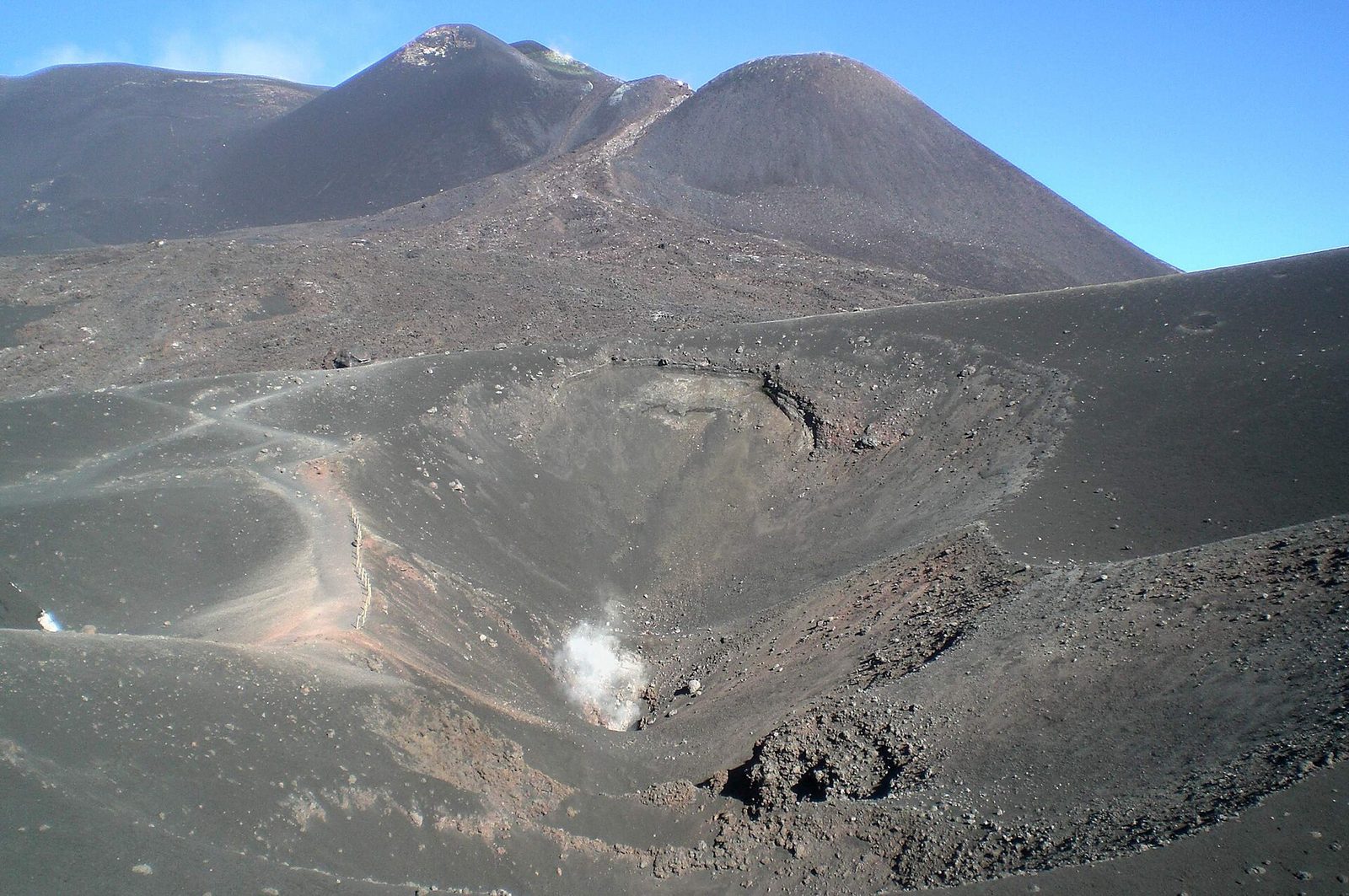
Where to read next
- Italy travel guide, the pillar this article sits under
- Best places to visit in Italy
- Amalfi Coast travel guide and Tuscany travel guide
- Things to do in Rome, Florence and Venice
- Greece travel guide, for anyone weighing Sicily’s temples against the originals
- Best places to visit in Europe in summer and underrated places in Europe
- Europe packing list and Europe travel tips
- Where to stay in Europe and how to plan a trip to Europe
- Best places to visit in Europe, most beautiful places in Europe and best countries to visit in Europe
- Cinque Terre travel guide, Lake Como travel guide and Italian food by region
Hannah Brooks has spent fifteen years travelling, living and writing across Europe, from the Arctic tip of Norway to the south of Sicily. She has planned hundreds of European itineraries for readers and is Senior Europe Editor at EuropeanTourism.org.
Photo credits
All images are freely licensed. Full attribution:
- The Temple of Concordia in the Valley of the Temples at Agrigento, the centrepiece of any Sicily travel guide · Berthold Werner / CC BY-SA 4.0 via Wikimedia Commons
- The Greek theatre at Taormina at sunset, with the bay and the bulk of Mount Etna behind it · Radek Kucharski from Warsaw, Poland / CC BY 2.0 via Wikimedia Commons
- Lava fountaining from a crater on Mount Etna at night, Europe’s most active volcano · Giuseppe.amenta / CC BY-SA 4.0 via Wikimedia Commons
- The seafront and pastel houses of Ortigia, the island old town of Syracuse in Sicily · Ввласенко / CC BY-SA 3.0 via Wikimedia Commons
- Ragusa Ibla stacked down its ridge above a ravine in southeastern Sicily · Hein56didden / CC BY-SA 3.0 via Wikimedia Commons
- Doric columns and the arcaded cella wall of the Temple of Concordia at Agrigento · Benjamin Smith / CC BY-SA 4.0 via Wikimedia Commons
- Majolica-tiled domes and Arab-Norman detailing on Palermo Cathedral in Sicily · Matthias Süßen / CC BY-SA 4.0 via Wikimedia Commons
- The unfinished Doric temple at Segesta standing alone in its valley in western Sicily · Derbrauni / CC BY 4.0 via Wikimedia Commons
- The white pumice cliffs of Lipari with another Aeolian island on the horizon · Dedda71 / CC BY 3.0 via Wikimedia Commons
- The sandy beach at Cefalu with the old town and La Rocca headland behind it · l0da_ralta / CC BY 2.0 via Wikimedia Commons
- A narrow cobbled lane in the hill village of Erice in western Sicily · Terry Kearney from liverpool, merseyside / CC0 via Wikimedia Commons
- An arancino cut open to show the rice, ragu and melted cheese inside · Andy Li / CC0 via Wikimedia Commons
- The baroque cathedral and dome of Noto in the Val di Noto, southeastern Sicily · Ainars Brūvelis / CC BY-SA 3.0 via Wikimedia Commons
- Black ash and a crater rim high on the flank of Mount Etna in Sicily · gnuckx / CC BY 2.0 via Wikimedia Commons