Provence Travel Guide: 32 Places, Prices and 2026 Timings
The first time I drove into the Luberon I did the thing everybody does. I set the satnav for Gordes, arrived at eleven in the morning in the third week of July, and spent forty minutes crawling up a hill behind a coach before paying to park in a field. The village was lovely. I could barely see it.
I have been back perhaps twenty times since, in every month of the year, and the one thing I would put at the top of any Provence travel guide is this: the region rewards a small number of decisions made early far more than it rewards effort made on the day. Which week you come. Whether you have a car. Which side of the Rhône you sleep on. Get those three right and the region opens up. Get them wrong and you will spend your holiday in a queue with a view.
This Provence travel guide covers 32 towns, villages and landscapes across the Vaucluse, the Luberon, the Alpilles, the Bouches-du-Rhône and Haute-Provence, with current 2026 admission prices, market days, train and bus times, the real lavender calendar by altitude, and the booking rules that now apply at the Calanques. It is written for a first visit of three days to two weeks.
What people mean by Provence, and what they usually mean by mistake
Provence is not an administrative unit any more. It was a Roman province, then a county, then a French province abolished in 1790. Today the name floats over roughly the eastern half of the modern region of Provence-Alpes-Côte d'Azur, and travel writing has stretched it in two directions that cause real confusion when you are booking.
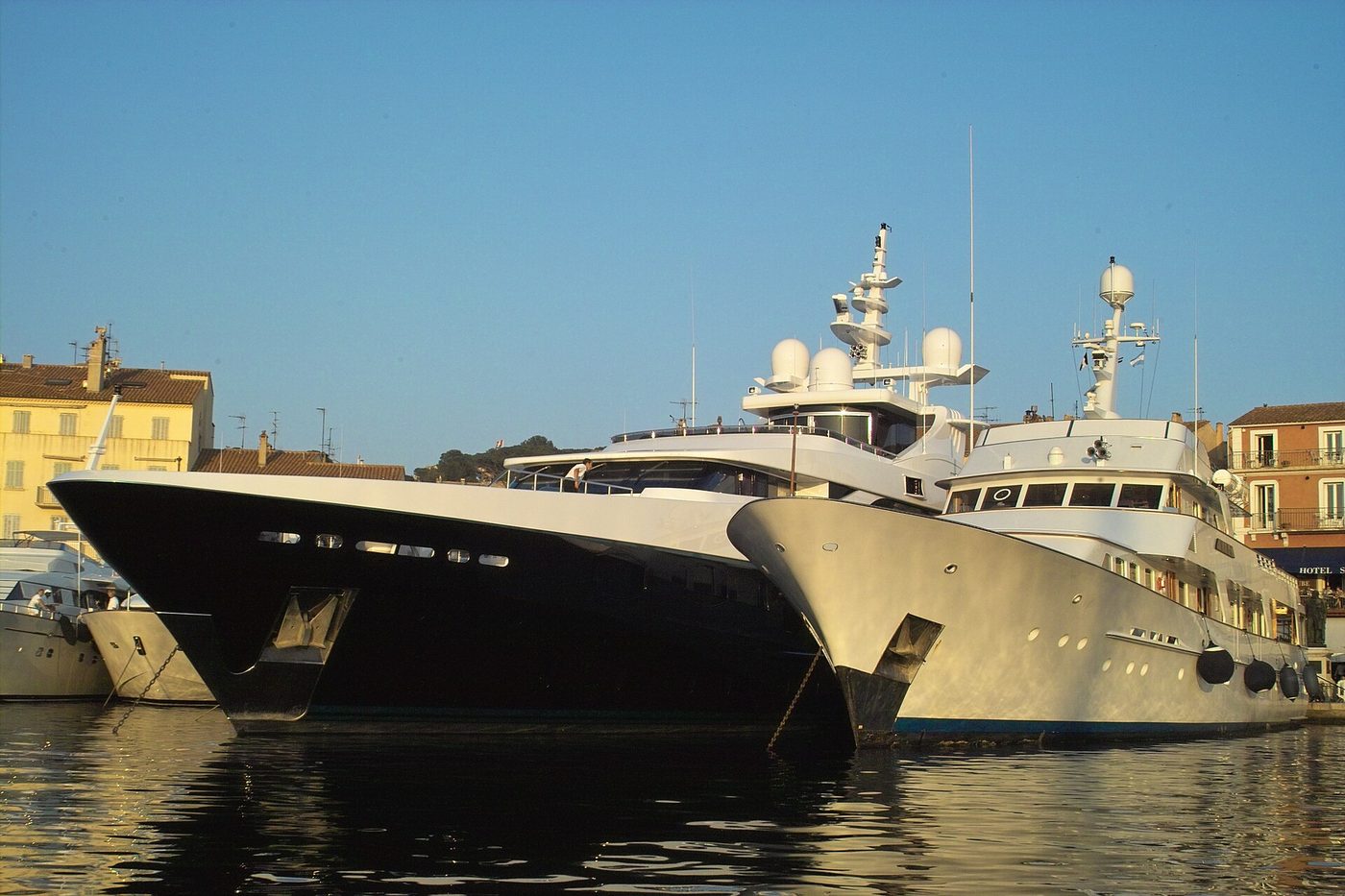
Stretch one: the Côte d'Azur. Nice, Cannes, Antibes, Saint-Tropez and Monaco sit inside the same administrative region and often get filed under Provence. Culturally and practically they are a different holiday: a coastal strip, expensive, glossy, well served by trains, busy with a different crowd. If you want beach clubs and a promenade, you want the Riviera and you should read our south of France travel guide instead, which covers the whole coast properly.
Stretch two: the Gard. Nîmes, Uzès and the Pont du Gard sit on the western bank of the Rhône, in Occitanie, not Provence. Nobody in Avignon minds you visiting them, and the Pont du Gard in particular is one of the great sights of southern Europe, so I have kept it in this guide. Just know that when a hotel advertises itself as “in the heart of Provence” and its address is in the Gard, the marketing department has been generous with itself.
What I am calling Provence here is the interior: the Vaucluse around Avignon, the Luberon hills, the Alpilles above Arles, Aix and Marseille and the coast as far as Cassis, the Camargue delta, and the high country around the Verdon. It is a landscape of limestone, vines, olives, plane trees and wind, and it is emphatically not a beach destination for most of its area. If sea swimming is your priority, look at our roundup of the best beaches in Europe and plan Provence as a second week.
All 32 places in this Provence travel guide, at a glance
Everything below is covered in detail further down. Read the “car needed” column carefully, because it is the single thing that decides how your trip works.
| Place | Where | Best for | Nearest station | Car needed? | Headline cost |
|---|---|---|---|---|---|
| Avignon | Vaucluse | Papal palace, July festival, best rail hub in Provence | Avignon Centre and Avignon TGV | No | Palais des Papes €16 |
| Villeneuve-lès-Avignon | Gard bank | Fort views back over Avignon, far fewer people | Avignon Centre, then bus | No | Free to walk the streets |
| Châteauneuf-du-Pape | Vaucluse | Southern Rhône reds and cellar-door tastings | Avignon, then car or bus | Yes | Many tastings free |
| Orange | Vaucluse | Roman theatre with its stage wall still standing | Orange | No | Théâtre Antique €11.50 |
| Vaison-la-Romaine | Vaucluse | Roman excavations plus a big Tuesday market | Orange, then bus | Helpful | Market free |
| Carpentras | Vaucluse | Friday market, winter truffle market | Carpentras | No | Market free |
| Mont Ventoux | Vaucluse | The cycling climb and a bare white summit | None | Yes | Free |
| Sault | Vaucluse | Highest and latest lavender, 15 August festival | None | Yes | Festival entry free |
| L'Isle-sur-la-Sorgue | Vaucluse | Sunday antiques market, water wheels | L'Isle-sur-la-Sorgue–Fontaine-de-Vaucluse | No | Market free |
| Fontaine-de-Vaucluse | Vaucluse | The spring that starts the river Sorgue | L'Isle-sur-la-Sorgue, then short hop | Helpful | Free to view |
| Gordes | Luberon | The hilltop village on every Provence poster | None | Yes | Parking charged |
| Abbaye de Sénanque | Luberon | Working Cistercian abbey, lavender in early July | None | Yes | €8, guided visit only |
| Roussillon | Luberon | Ochre cliffs and a village painted to match | None | Yes | Ochre trail €3.50 |
| Rustrel (Colorado Provençal) | Luberon | Bigger, wilder, emptier ochre landscape | None | Yes | €6–€9 per car |
| Ménerbes | Luberon | Ridge village, Peter Mayle country | None | Yes | Free |
| Bonnieux | Luberon | Terraced village with the longest views in the Luberon | None | Yes | Free |
| Lacoste | Luberon | Ruined Sade castle, steep silent lanes | None | Yes | Free |
| Lourmarin | Luberon | Friday market, Renaissance château, serious food | None | Yes | Market free |
| Apt | Luberon | Saturday market, 300-plus stalls, year round | None, bus from Avignon | Helpful | Market free |
| Saint-Rémy-de-Provence | Alpilles | Van Gogh, Glanum, the Wednesday market | Avignon, then bus or car | Yes | Market free |
| Les Baux-de-Provence | Alpilles | Clifftop citadel plus the Carrières des Lumières | None | Yes | Château €10, parking €5 first hour |
| Arles | Alpilles and Camargue edge | Roman monuments, Van Gogh, summer photography festival | Arles | No | Pass Avantage €19 |
| The Camargue | Rhône delta | Flamingos, white horses, salt lagoons | Arles, then car | Yes | Free to drive and look |
| Aix-en-Provence | Bouches-du-Rhône | Cours Mirabeau, Cézanne, daily markets | Aix Centre and Aix TGV | No | Musée Granet €14 |
| Camp des Milles | Near Aix | Internment camp memorial, one of the most affecting sites in France | Aix, then bus 4 | Helpful | €14 |
| Marseille | Bouches-du-Rhône | Big, loud, unpolished port city with the region's best museums | Marseille Saint-Charles | No | Free to wander |
| Cassis | Bouches-du-Rhône | Fishing harbour, white wine, Calanques gateway | Cassis, 3 km outside town | Helpful | Free |
| Calanques National Park | Bouches-du-Rhône | Limestone inlets and turquoise water | Marseille or Cassis, then bus | No | Free, Sugiton needs a reservation |
| Pont du Gard | Gard, just outside Provence | Three-tier Roman aqueduct, 1985 UNESCO listing | Nîmes or Avignon, then bus | Helpful | €8 plus €9 parking |
| Gorges du Verdon | Alpes-de-Haute-Provence and Var | The deepest river canyon in France, second in Europe | None | Yes | Electric boat €40 per hour |
| Moustiers-Sainte-Marie | Alpes-de-Haute-Provence | Faience village hung under a cliff at the Verdon gate | None | Yes | Free |
| Valensole plateau | Alpes-de-Haute-Provence | The lavender rows in every photograph | None | Yes | Free |
A note on what those columns mean in practice. “Nearest station” is where a train can deposit you, not the nearest place with a bus stop. “Car needed” answers whether you can reach the site in a morning without one, assuming you are willing to walk twenty minutes at the far end. “Car needed: Yes” means there is no public transport you could sensibly build a day around; a few of those villages do have seasonal or infrequent ZOU! buses, which are listed in the transport table further down. And “headline cost” is the main charge you will meet on arrival, which in several villages is now parking, not admission.
Provence also sits inside a bigger picture. It appears on our lists of the most beautiful places in Europe and the most beautiful towns in Europe, it is one of the strongest entries in our guide to the best Mediterranean destinations, and it earns a place on any serious Europe bucket list. If you are still deciding where to go at all, start with the best places to visit in Europe and how to plan a trip to Europe.
The five Provences, and which one suits you
Rather than treat this as a countdown, it helps to think of five clusters. Each has a natural base, and most people who try to cover more than two in a week end up seeing car parks.
| Cluster | Base I would pick | What it is for | Days to do it properly | Works without a car? |
|---|---|---|---|---|
| Vaucluse and the Rhône | Avignon | Popes, Romans, wine, the Sunday antiques market | 2 to 3 | Yes, largely |
| The Luberon | Bonnieux, Lourmarin or Gordes | Hilltop villages, ochre, lavender, slow lunches | 2 to 4 | No |
| The Alpilles and Arles | Arles or Saint-Rémy | Roman monuments, Van Gogh, photography, the Camargue | 2 to 3 | Arles yes, the Alpilles no |
| Aix, Marseille and the coast | Aix or Cassis | City life, museums, sea swimming, the Calanques | 2 to 4 | Yes |
| Haute-Provence and the Verdon | Moustiers-Sainte-Marie | Canyon, lake, lavender plateau, empty roads | 2 to 3 | No |
My standard advice for a first week: Avignon for three nights, then the Luberon or the Alpilles for four, with a car collected on the morning you leave Avignon rather than at the airport. You will pay for four days of hire instead of seven, and you will not have to park in a walled city.
Avignon and the Vaucluse
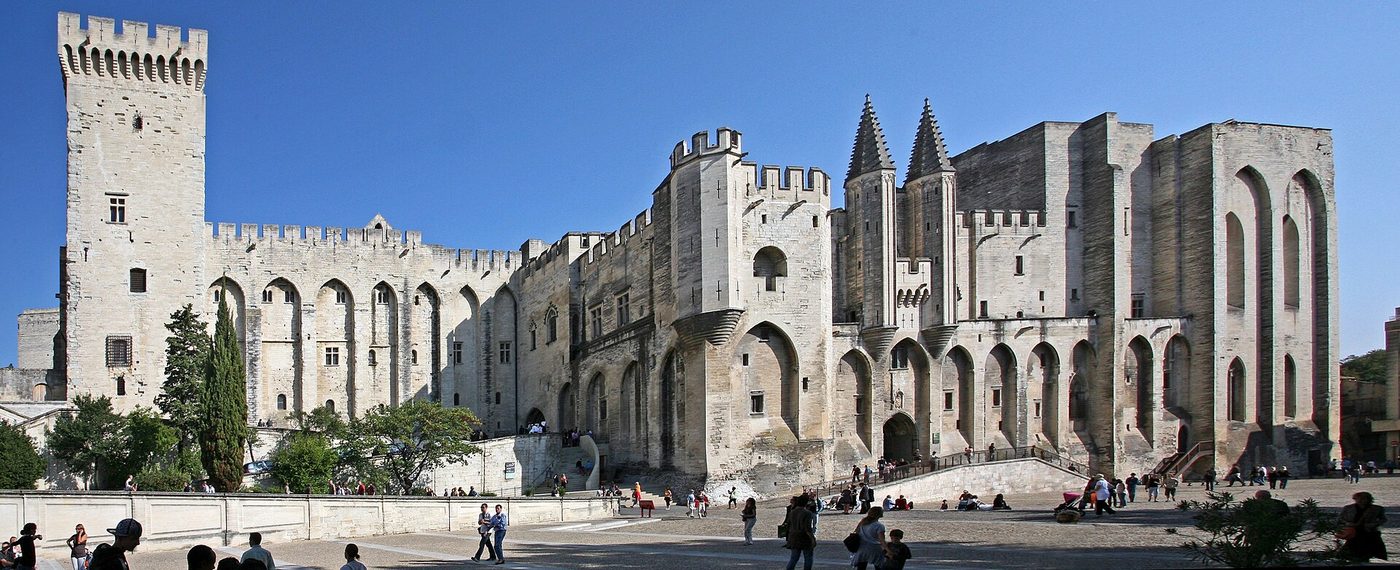
Avignon is the practical capital of a Provence holiday, and it happens to be a strange and absorbing city in its own right. For most of the fourteenth century the papacy sat here instead of in Rome, and the building it left behind is the largest Gothic palace in the world.
Palais des Papes
Adult admission is €16, reduced €13, and €10 for children aged 10 to 17, with under-10s free. The combined ticket covering the palace, the pontifical gardens and the Pont Saint-Bénézet is €19.50 adult, €16 reduced and €12 for 10 to 17s, which is the one almost everyone should buy. It opens daily all year, 09:00 to 19:00 from 1 March to 1 November, with last entry an hour before closing. Winter hours are shorter and vary by fortnight, so check before a January visit.
Two things worth knowing for 2026. From 1 May a new visitor route opened, taking in rooms that had never been shown to the public, and the associated works continue until spring 2027, so parts of the building may be screened off. And the free Histopad augmented-reality tablet, available in seven languages, is the rare audio-guide-style device I would press on you: the rooms are enormous and bare, and the reconstructions are what make them legible.
If you are staying two days or more, the Avignon City Pass costs €32 for 48 hours, or €24 for 24 hours. It pays for itself if you do the palace, the bridge and one museum. Note also that Avignon residents get in free every Saturday, Sunday and public holiday, which is why weekend mornings feel busier than the visitor numbers suggest.
The historic centre of Avignon, taking in the papal palace, the episcopal ensemble and the bridge, was inscribed by UNESCO in 1995. If you can time it, the Festival d'Avignon runs 4 to 25 July 2026, its 80th edition, with Korean as the guest language and Marlène Monteiro Freitas as artistic associate. It fills every bed in the city and turns the streets into a rolling fringe, and it is either exactly what you want or precisely what you should avoid.
The Pont d'Avignon
The bridge of the song is the Pont Saint-Bénézet, and it famously stops in the middle of the Rhône. Four of an original twenty-two arches survive. The official ticket office sells it bundled with the palace and not as a standalone, so there is no separate price quoted here. It takes twenty minutes and the best view of it is free, from the Rocher des Doms park above or from the far bank at Villeneuve-lès-Avignon.
Villeneuve-lès-Avignon
Across the river and technically in the Gard, Villeneuve was where the cardinals built their own houses to escape the crush of the papal city. It has a fort, a charterhouse and a tower, and on a summer afternoon it has perhaps a twentieth of Avignon's foot traffic. Walk or take the local bus. It is the easiest good decision in the Vaucluse.
Châteauneuf-du-Pape
Twenty minutes north of Avignon, this is the most famous appellation in the southern Rhône, planted on a plateau of rounded stones that hold the day's heat into the night. The permitted grape list is unusually long and includes Grenache, Syrah, Mourvèdre, Bourboulenc, Cinsaut, Clairette, Counoise, Muscardin, Picardan, Piquepoul, Roussanne, Terret noir and Vaccarèse. Most cellar doors in the village will pour you three wines without charging. See the wine section below for what tastings actually cost across the region.
Orange
Orange has the best-preserved Roman theatre stage wall in Europe, thirty-seven metres high, and Louis XIV reportedly called it the finest wall in his kingdom. Admission is €11.50 for adults and €9.50 for 7 to 17s, students and jobseekers, with a family ticket at €38. On animation days between 4 July and 13 August 2026 there is a €1.50 supplement per adult ticket, and the family ticket rises from €38 to €42. The theatre and its surroundings, together with the town's triumphal arch, were inscribed by UNESCO in 1981.
A small mercy for budgets: the Arc de Triomphe at Orange is free, with an audio route accessible daily from 09:00 to 20:30. Do not confuse it with the one in Paris, which is a paid monument and a different thing entirely. If Paris is also on your itinerary, our guide to things to do in Paris covers that one.
Vaison-la-Romaine, Carpentras and the Ventoux
Vaison-la-Romaine has two Roman excavation sites, a medieval upper town across a Roman bridge, and a Tuesday market from 08:00 to 13:00 that locals will tell you is the biggest in the Provence des Papes. It runs all year.
Carpentras holds its market on Friday from 08:00 to 13:00, and from November to March it also runs a truffle market on Friday mornings. Mont Ventoux, the bald white mountain you can see from half the Vaucluse, is a cycling pilgrimage and a spectacular drive when the summit road is open. There is no station and no bus worth the name. Bring layers even in August, because the summit sits in its own weather.
L'Isle-sur-la-Sorgue and Fontaine-de-Vaucluse
L'Isle-sur-la-Sorgue is built on channels of the river Sorgue, with mossy wooden water wheels still turning in the middle of town, and it is the antiques capital of the south. The Sunday market is the big one, roughly 07:00 to 13:00, and it is where the brocante and antique dealers set up alongside the food stalls. There is a smaller Thursday market on the same hours if you want the town without the scrum.
It also has something almost no other Luberon-adjacent town has: a working railway station, on the line to Cavaillon and Avignon. That single fact makes it the best base in the area for anyone who does not want to drive every day.
Eight kilometres upstream, Fontaine-de-Vaucluse is where the Sorgue simply appears, boiling out of the base of a cliff from a flooded shaft nobody has fully explored. In spring it is astonishing. In late summer the pool can be still and green and the crowd rather larger than the phenomenon. Go in April or after heavy autumn rain.
The Luberon: the villages everyone comes for

The Luberon is a limestone ridge running east to west with villages perched along both flanks, and it is the mental image most people carry of Provence: honey-coloured stone, cypresses, a bell tower, a valley falling away. It is also, and I want to be straightforward about this, the part of the region where you will be least alone.
None of the villages below has a railway station. The nearest usable railheads are Cavaillon and L'Isle-sur-la-Sorgue, and from Avignon a TER train reaches Cavaillon in around 35 minutes with no change, or about an hour and a quarter from Marseille. From there you need a car, a taxi or a ZOU! bus. Plan for it before you book, not on arrival.
Gordes
Gordes is the poster village, stacked up a rock face below a Renaissance castle, and the classic view is from the lay-by on the D15 as you climb from the south. Parking in the village is charged daily from 08:00 to 19:00. There is a Tuesday morning market around the foot of the castle. My honest advice is to see it at eight in the morning or at seven in the evening and spend the middle of the day somewhere else.
Abbaye de Sénanque
Four kilometres down a hairpin road from Gordes sits a twelfth-century Cistercian abbey with a field of lavandin in front of it, which together make the single most photographed composition in Provence. It is a working monastery, and access is by guided visit only: €8 for adults, €6 for students aged 18 to 25, €4 for children 6 to 17 and for jobseekers and visitors with a disability, free under 6.
Visits run Monday to Saturday at 09:40, 10:00, 10:30, 13:00, 13:45, 14:30, 15:15, 16:00 and 16:45, and on Sunday from 13:00 onwards on the same afternoon pattern. Places are limited and I would book online. Dress modestly, keep silence in the areas set aside for prayer, and do not step into the lavandin. The plants at the entrance have been replaced with young stock and are not yet impressive; the large field in front of the abbey chevet is the one you have seen, and early July is when it looks right.
Roussillon and the ochre country
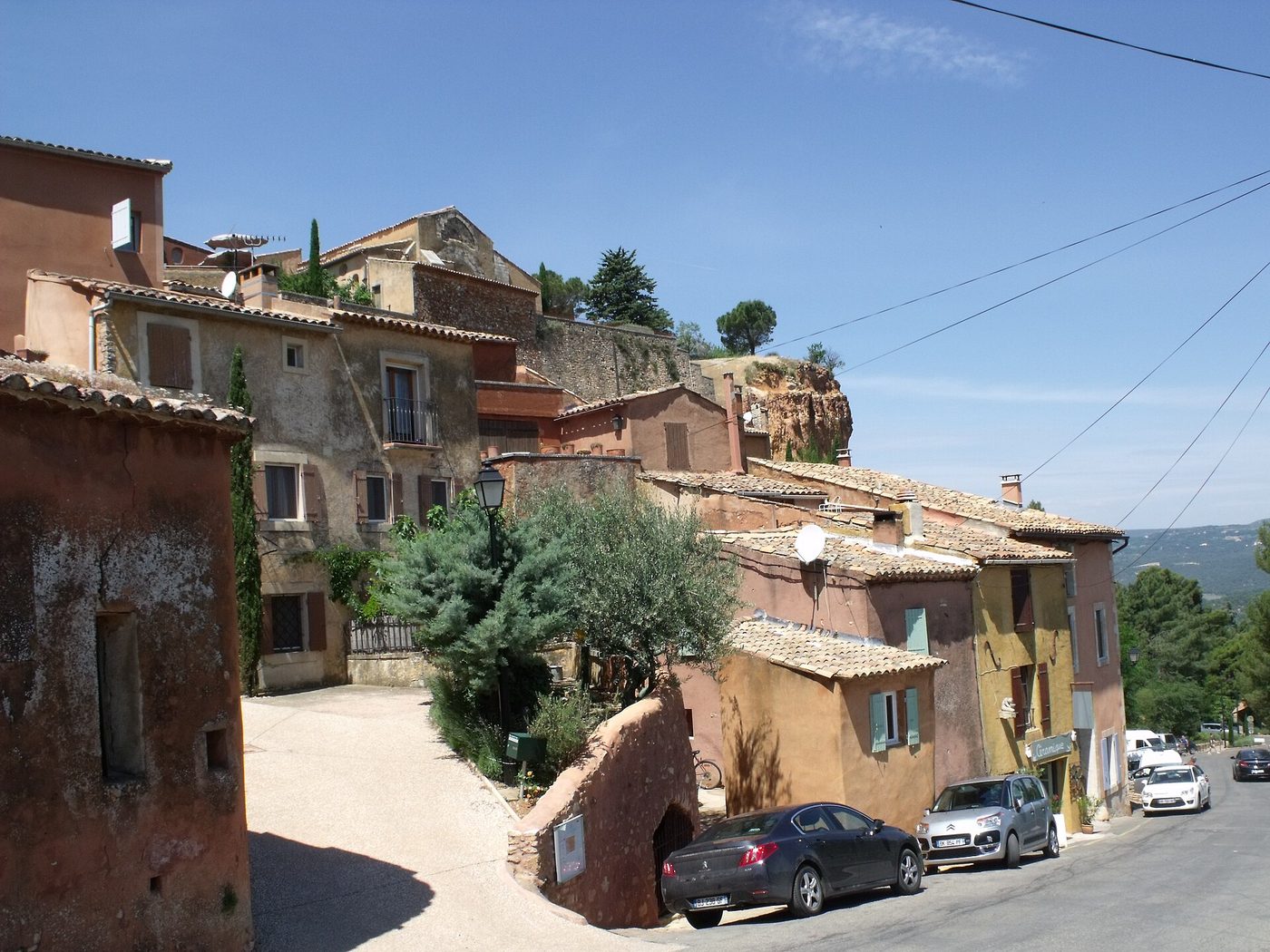
Roussillon sits on one of the largest ochre deposits in the world, and the whole village is rendered in the reds, oranges and pinks that came out of the ground beneath it. The Sentier des Ocres, a short waymarked trail through the old workings, costs €3.50 for adults, €2.50 per person for groups of 15 or more, and is free for under-10s and visitors with a disability. Wear shoes you do not love, because the dust stains.
Village parking is €4 per day, having been free until the end of February 2026.
Ten minutes away at Rustrel, the Colorado Provençal is the same geology on a much larger and wilder scale, with proper walking trails through pinnacles and gullies. It is charged per vehicle instead of per person, which makes it very good value for a family: a car is €6 in low season rising to €9 in high season, a campervan €10 to €12, a motorcycle €4 to €6, a minibus €13 to €15, and arriving on foot or by bike is €2 to €3. The fee covers parking, site access and the mobile discovery app. Guided group visits are €9 per adult and €4 per accompanied child aged 6 to 12. If you only have time for one ochre site and you like walking, I would take Rustrel over Roussillon.
Ménerbes, Bonnieux, Lacoste and Lourmarin
These four sit within twenty minutes of each other and can be done as one loop. Ménerbes is the long thin ridge village where Peter Mayle set A Year in Provence, and it has borne the consequences with reasonable grace. Bonnieux is terraced up a steep hill with a stiff climb to the old church and, from the top, the best long view in the Luberon. Lacoste is dominated by the ruined castle of the Marquis de Sade, later bought and partly restored by Pierre Cardin, and its lanes are quiet in a way the others are not. Lourmarin is the flattest, greenest and most sociable of the four, with a Renaissance château, Albert Camus buried in the cemetery, and a Friday morning market that is one of the nicest in the region.
Four of the Luberon villages in this guide carry the official Plus Beaux Villages de France label: Gordes, Roussillon, Ménerbes and Lourmarin. Across the whole Vaucluse there are seven: Ansouis, Gordes, Roussillon, Lourmarin, Ménerbes, Séguret and Venasque. Nationally the network stood at 184 communes in 2026, spread across 72 departments, so the Vaucluse is carrying a disproportionate share. Bonnieux and Lacoste, for what it is worth, are not on the list, and both are lovely.
Apt
Apt is not a pretty village. It is a working town, and its Saturday market is the biggest Provençal market in the Luberon, with more than 300 vendors, running all year until about one in the afternoon. If you want to buy, not photograph, this is the one. Coustellet, between Gordes and Cavaillon, runs a good producers’ market on Sunday from April to December, 08:00 to 13:00, plus a Wednesday evening market in summer.
Arles, the Alpilles and the Camargue
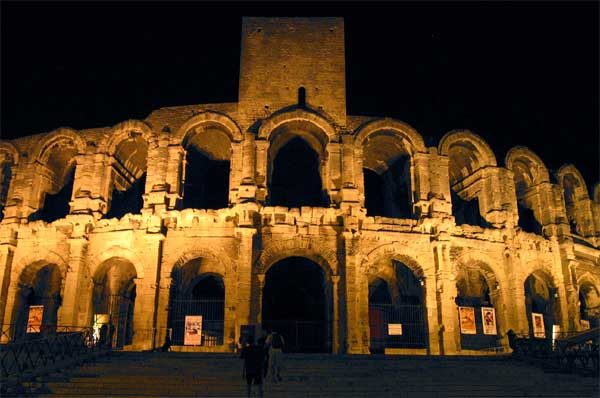
If the Luberon is Provence at its prettiest, Arles is Provence at its densest. It has a Roman amphitheatre still used for bullfights and concerts, a Roman theatre, a cryptoporticus, the Alyscamps necropolis, the baths of Constantine and the cloister of Saint-Trophime, and the whole ensemble has been UNESCO-listed since 1981. Van Gogh spent fifteen extraordinarily productive months here and painted a large part of his mature work in them. Every summer the town turns itself over to one of the biggest photography festivals in the world.
Getting into everything in Arles
Buying monuments individually in Arles is a false economy. The Pass Avantage costs €19 for adults and €16 reduced, is valid for six months, and covers six UNESCO-listed monuments plus four museums. Under-18s accompanied by a parent go free. The shorter Pass Liberté costs in the region of €13 to €15, is valid a month, and lets you pick four monuments plus the Musée Réattu and one more museum of your choice. Prices for the Liberté are quoted as a range by the regional tourist board, not as a single figure, so confirm at the ticket desk.
The Fondation Vincent van Gogh is separate and charges €10 for adults and €8 reduced, with students under 26 paying €3 and under-18s going free. Combined tickets are €17 with LUMA Arles and €12 with the Musée Réattu. It is a small building with a sharply curated programme, not a big permanent collection, and at €3 for students it is one of the best-value art spaces in France.
Arles markets and ferias
Arles holds its market on Wednesday and Saturday, 08:00 to 12:45, strung out along the boulevard des Lices on the ring road. The Saturday one is the larger.
The town's ferias are a genuine cultural fault line and worth understanding before you book. The Feria de Pâques runs 3 to 6 April 2026 and the Feria du Riz 11 to 13 September 2026, and both include Spanish-style corridas in the Roman arena as well as the bloodless Camarguaise races in which competitors snatch ribbons from a bull's horns. If corridas are something you would rather not be near, avoid those weekends. If you want the Camarguaise races without the rest, they run on other dates through the summer.
Rencontres d'Arles
The photography festival runs 6 July to 4 October 2026, with the theme “Des mondes à relire” and an opening week of 6 to 12 July. It takes over churches, chapels, industrial sheds and the LUMA tower, and it is the single best reason to be in Arles in high summer despite the heat. Accommodation in the town books out for opening week specifically, so if the exhibitions matter more to you than the opening parties, come in September when the same shows are still hanging and rooms are back to normal rates.
Saint-Rémy-de-Provence and Glanum
Twenty-five minutes north of Arles, Saint-Rémy is a plane-tree-shaded market town at the foot of the Alpilles with an unusually good Wednesday market. Just outside it are two things worth the detour: Glanum, a Greek then Roman town excavated out of the hillside, and the monastery of Saint-Paul de Mausole where Van Gogh admitted himself in 1889 and painted The Starry Night. The wheat field and the olive grove he painted are still there.
Les Baux-de-Provence
Les Baux is a ruined fortress on a limestone spur with a village clinging to its skirts, and it is the most visited site in the Alpilles. The Château des Baux charges €10 for adults, €9 for over-65s, €8 reduced for students, 18 to 25s and jobseekers, €7 for children 7 to 17 and nothing under 7, with a family ticket at €27 for two adults and two children. It opens every day of the year.
Budget for parking separately, because it stings: all parking at Les Baux is charged year round, 08:00 to 19:00, at €5 for the first hour, €1 for the second and €0.50 for each hour after that. Overstay without paying and the fixed penalty is €35. The pricing is deliberately front-loaded to discourage short stops, so if you are coming at all, come for half a day, not twenty minutes.
In a disused bauxite quarry below the village, the Carrières des Lumières projects enormous animated art shows onto raw rock walls. The standard adult ticket is €16.50, with €15.50 for over-65s, €14 on the general reduced rate and €13 for youth tickets; children are €12 and under-5s free. Because most people do both, note the combined ticket with the Château des Baux at €21 for an adult and €58 for a family. The 2026 programme was “Picasso, l'Art en Mouvement” paired with “Frida Kahlo, en Plein Cœur” from 13 February to 19 April, followed by “Océan, Immersion dans le Monde Sous-Marin” from 4 July to 12 September. It divides people. I find it moving and I know serious art historians who find it vulgar. It is also reliably twelve degrees cooler than the car park, which in August is an argument in itself.
The Camargue
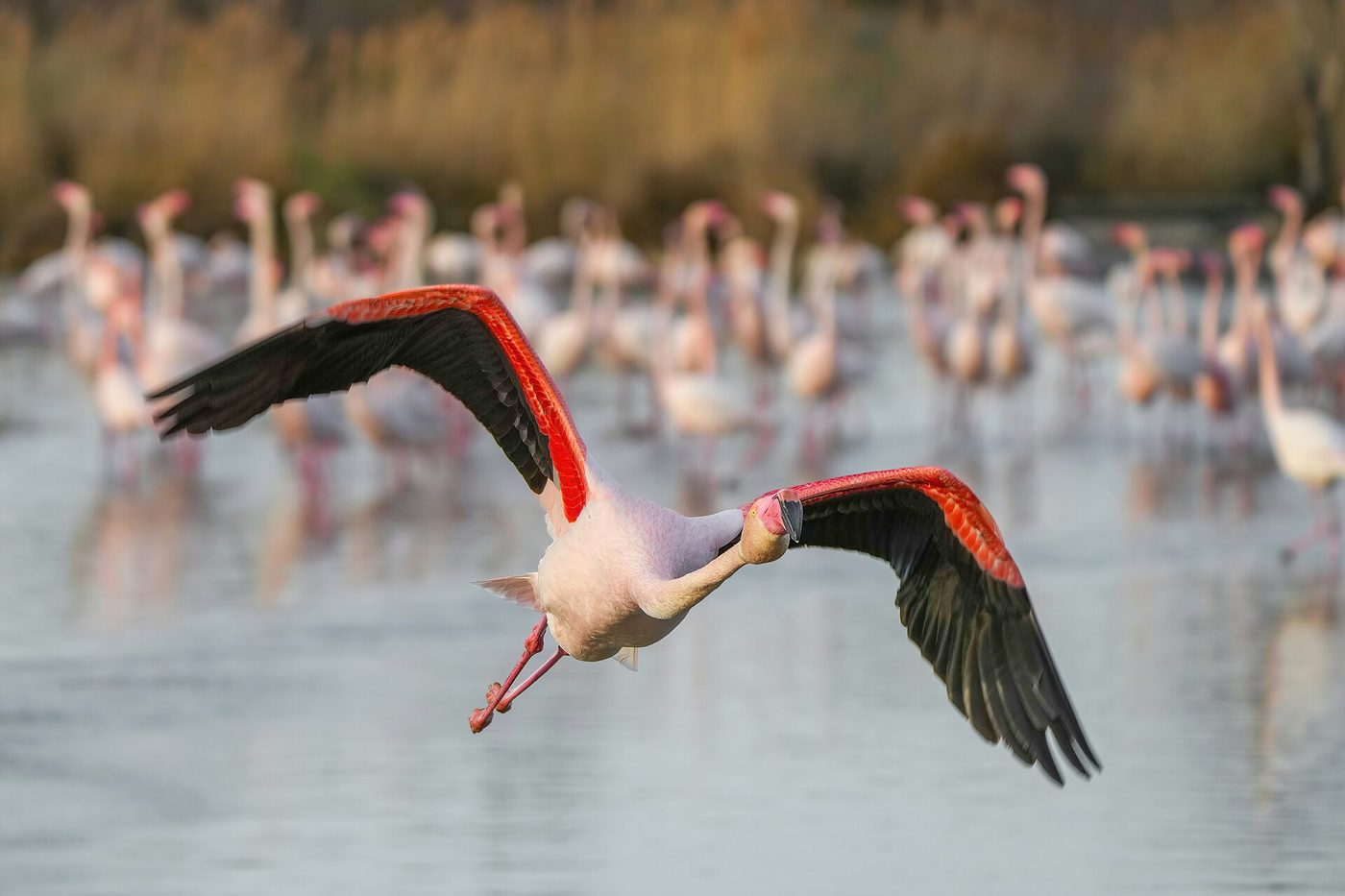
South of Arles the land flattens into the Rhône delta and becomes something else entirely: more than 930 square kilometres of lagoon, reed bed, rice paddy and salt pan, with white horses standing in water up to their hocks and black bulls behind wire. It was designated a UNESCO Biosphere Reserve in 1977, extended in 2006 to cover the whole biogeographical delta.
It is the only place in France, and one of very few anywhere in the Mediterranean, where greater flamingos breed. They nest mainly in the salt pans, where the constant water level keeps eggs safe from both flooding and predators. Published colony counts vary widely and I could not tie any of them to a reliable census, so I am not going to give you a number.
Come in spring or autumn. Migration peaks then, the birdlife is at its best, and the temperature is bearable. Summer brings heat, glare and mosquitoes in quantities that surprise people. Saintes-Maries-de-la-Mer is the obvious base and the closest thing the delta has to a capital. You need a car; the roads are long, straight and largely empty, which after a week of Luberon hairpins is a pleasure in itself.
Aix-en-Provence, Marseille and the coast
Aix-en-Provence
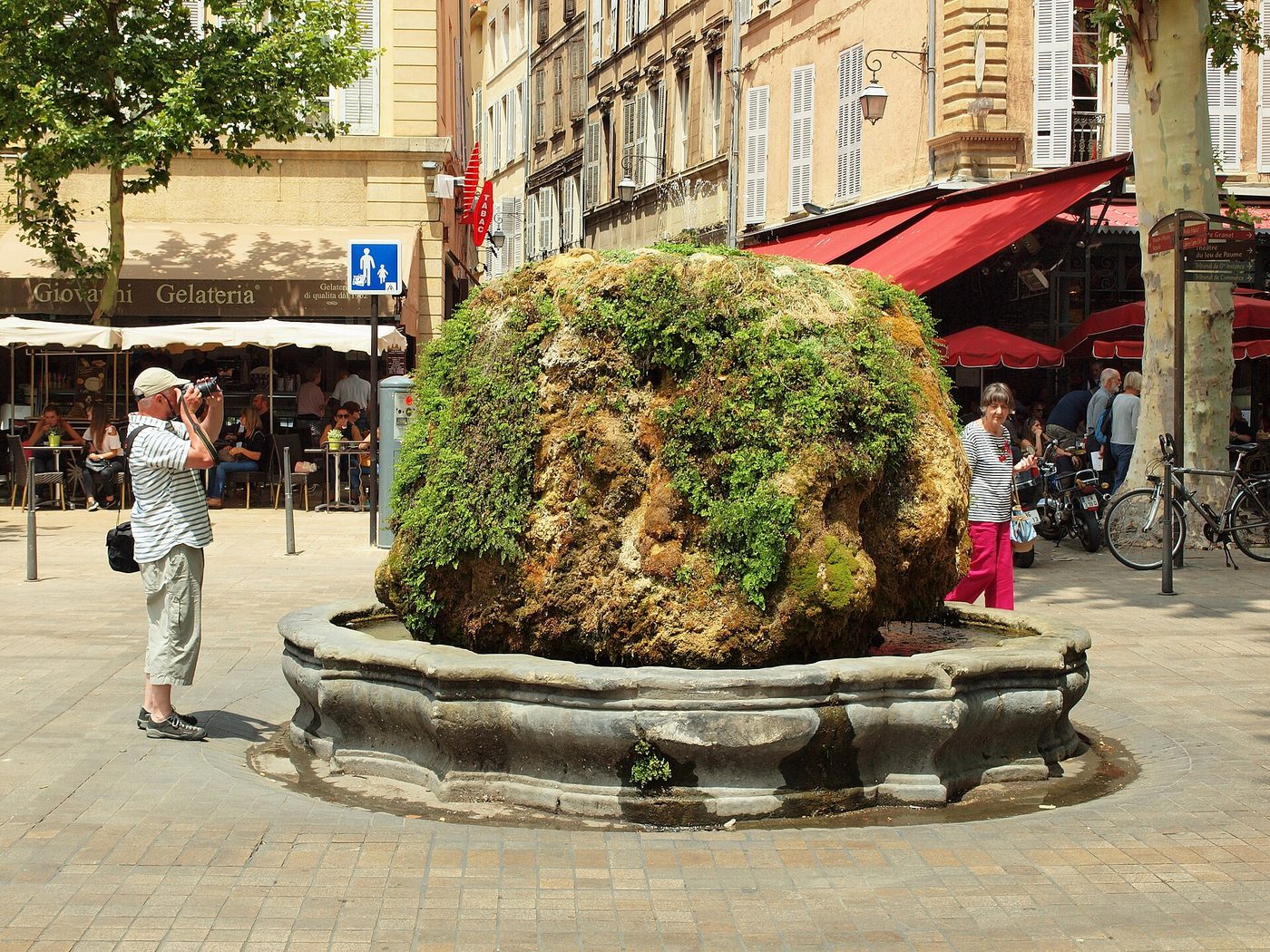
Aix is the elegant one: a university town of fountains, ochre facades and a main avenue, the Cours Mirabeau, roofed by four rows of plane trees. It has daily markets in the old town, a serious cafe culture, and enough hotel stock that it works well as a base without a car, with its own city station and a TGV station outside town.
The Musée Granet is the main gallery, with Ingres, Cézannes and a strong twentieth-century holding. For the exhibition period of 4 July to 1 November 2026 admission is €14 full and €12 reduced, Tuesday to Sunday 10:00 to 18:00. Outside major exhibitions the standard price is lower, so check before you assume. Entry is free on the first Sunday of the month, and free year round for under-18s, students under 26, long-term jobseekers, disability card holders and cultural professionals.
Cézanne's studio, the Atelier des Lauves, closed for restoration on 1 April 2024 and has been shut for most of the time since. For 2026, marking 120 years since the painter's death, it reopened for a defined season: 4 July to 31 October, daily, 09:00 to 18:00 until 30 September and 10:00 to 17:00 through October. Tickets run from €9.50 for the self-guided audio visit to €15 for the in-depth guided one. Capacity is tightly limited and booking ahead is close to essential.
Camp des Milles
Five minutes from Aix by the D9 is the only large French internment camp still standing intact, used between 1939 and 1942 to hold foreign nationals and later as a transit point from which more than two thousand Jewish men, women and children were deported to Auschwitz. The tile factory buildings survive, including murals painted by interned artists.
Admission is €14 full and €11 reduced, including the temporary exhibition, with a family pass at €40 for two adults and two children aged 9 to 18, or €54 including guided visits. A guided tour of the museum route is €6 on top of entry, and runs on Saturdays and Sundays at 10:30 and 14:30. It opens daily 10:00 to 19:00 with the ticket office closing at 17:30, and you should allow two and a half hours. Parking opposite is free, with a 1.97 metre height limit. Bus 4 from Aix serves it every day except Sunday, when bus 18 runs instead.
Several outdoor parts are free to visit, including the permanent outdoor exhibition, the mural paintings room, the exhibition on children rescued by the OSE, the Klarsfeld national exhibition, the Wagon du Souvenir and the Allée des Justes. Take children over about twelve. It is not a comfortable morning and it is one of the most important places in the region.
Marseille
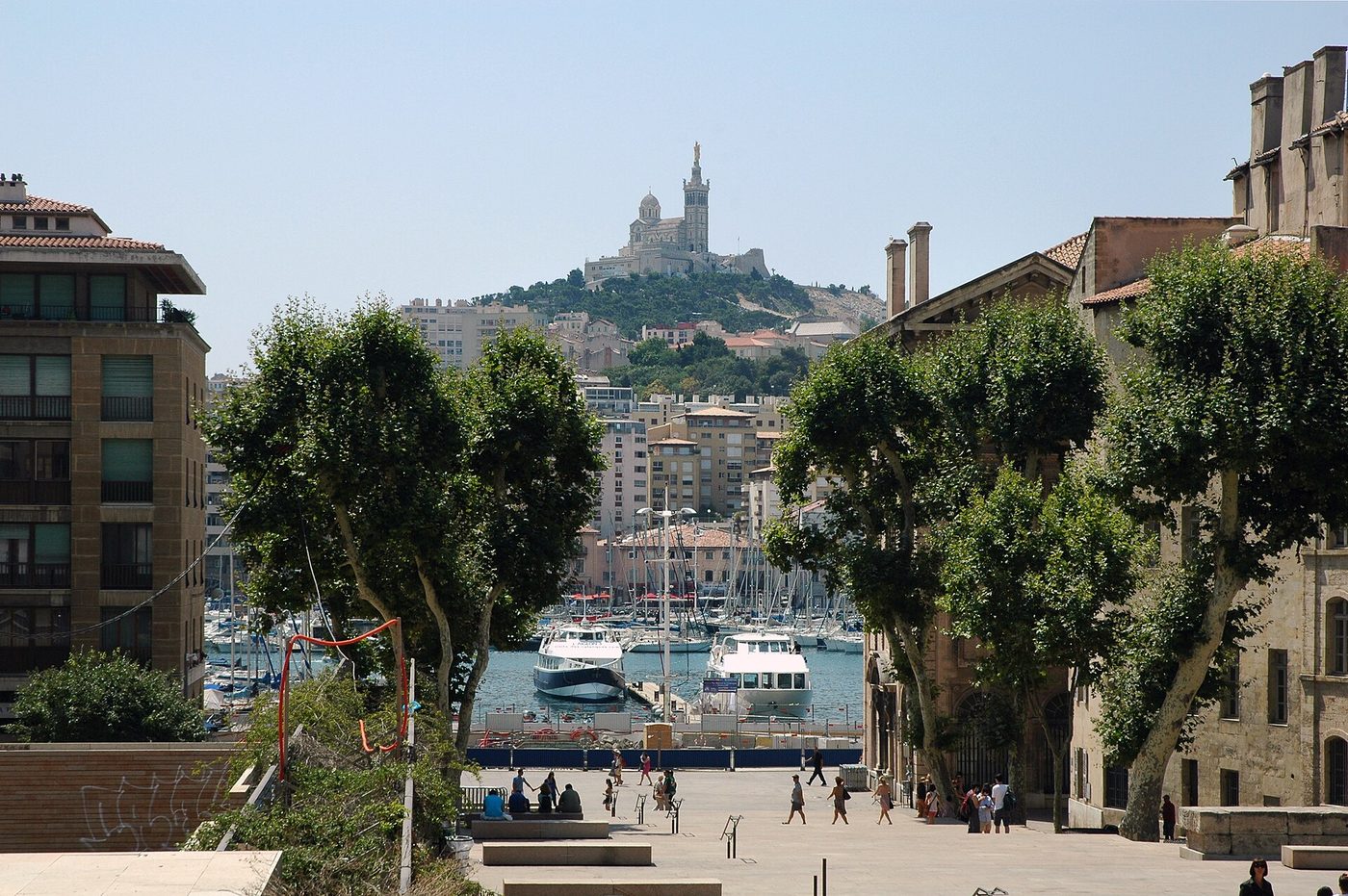
Marseille is 2,600 years old, France's second city, and nothing like the rest of Provence. It is loud, North African and Corsican and Comorian as much as Provençal, scruffy in patches, and it has been in the middle of a two-decade cultural rebuild that has given it the best museums in the south. Wandering the Vieux-Port, Le Panier and the Cours Julien costs nothing. The MuCéM and the Palais Longchamp are the two I would prioritise.
It is also the transport hub for the whole region. Marseille Provence airport and Marseille Saint-Charles station are the two doors most visitors come through, and the shuttle times and fares are in the transport section below.
Cassis and the Calanques
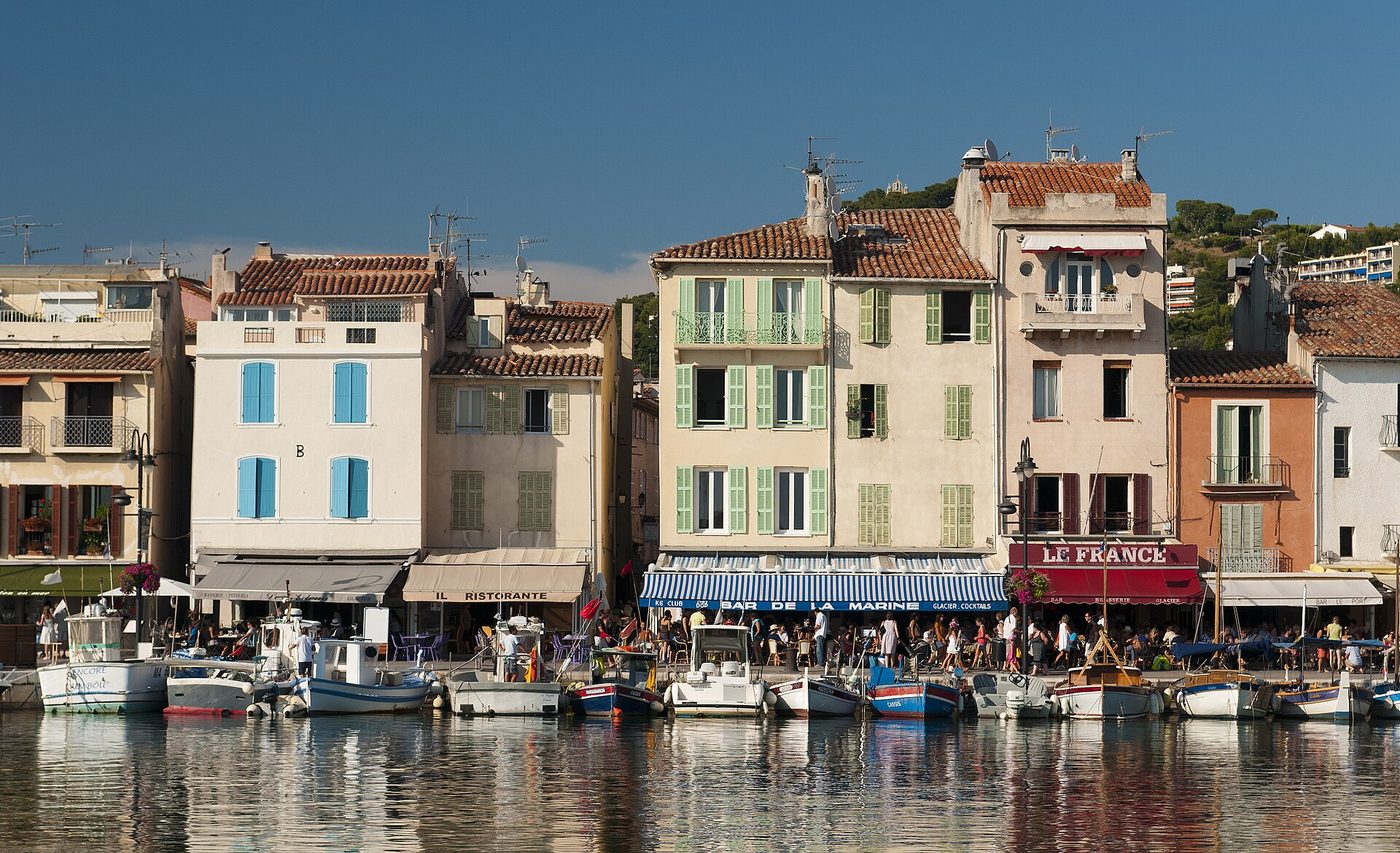
Cassis is a pastel fishing harbour half an hour east of Marseille, backed by vineyards producing one of France's smallest and best dry white appellations, mostly from Marsanne. The station is three kilometres out of town and uphill, which catches people out; there is a shuttle bus, or budget for a taxi.
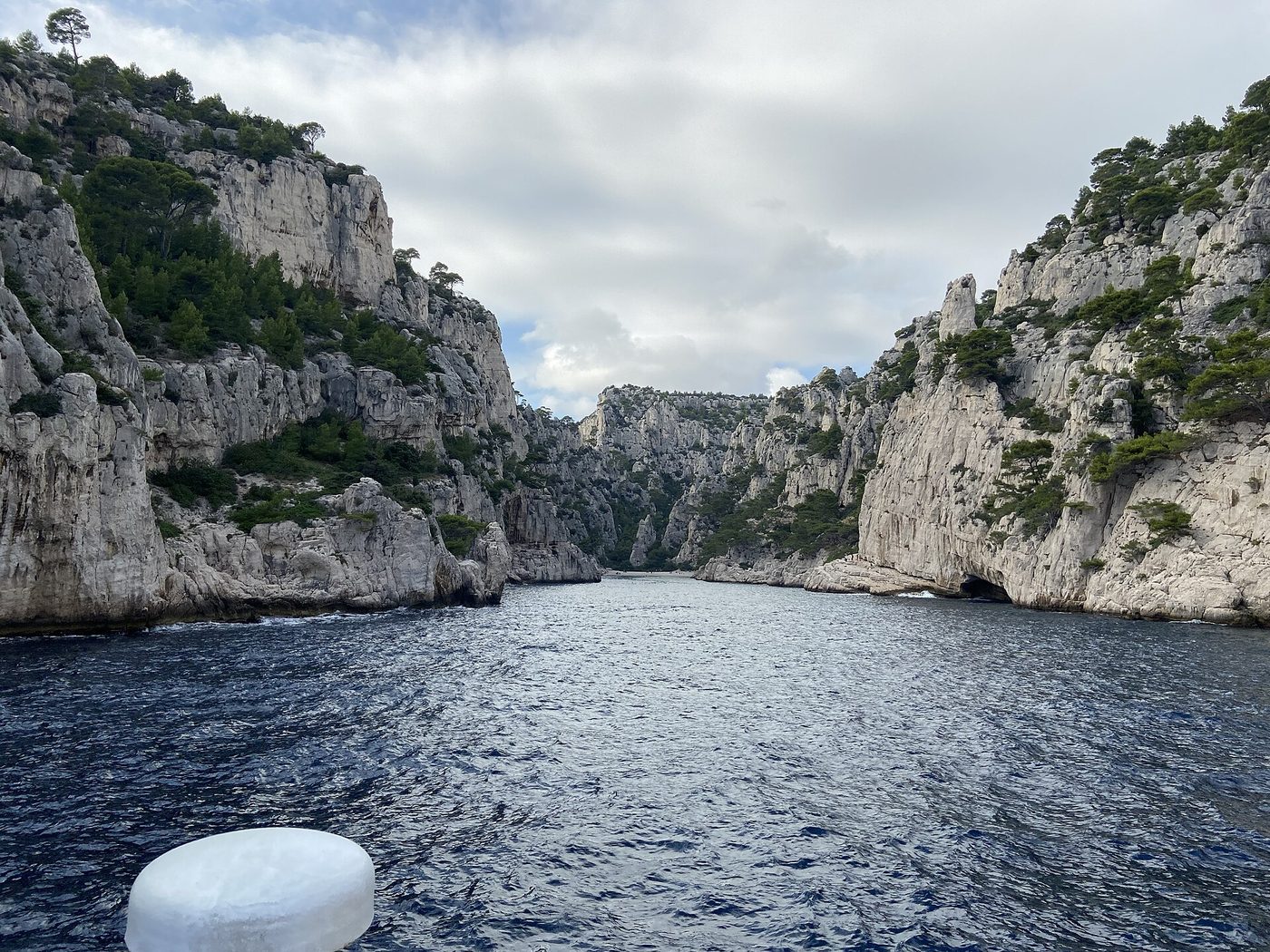
West of the town, the Calanques National Park runs twenty kilometres along the coast: white limestone fingers dropping into water of a colour that looks edited. En-Vau, Port-Pin, Sugiton and Morgiou are the famous ones. Access is on foot, by kayak or by boat, and the walking is properly rough in places and not a stroll.
The 2026 reservation rule. Calanque de Sugiton and Calanque des Pierres Tombées now require a free but compulsory reservation on peak days, capped at 400 visitors per day in groups of no more than five. For 2026 the scheme applied on 20 and 21 June, every day from 27 June to 30 August, and on 5 to 6 and 12 to 13 September. Booking opens three days before your visit at 09:00 and closes at 18:00 the day before. Outside those dates access is free and unrestricted, though the park asks people to go easy on a fragile site. No comparable quota applies at En-Vau, Port-Pin or Morgiou.
Separately, the massif closes on high fire-risk days in summer, which is decided in the morning and weather-dependent. Check the day's access map before you set off in July or August, so you do not drive to a closed barrier.
Sea temperatures at Cassis average 14.4°C in winter, 15°C in spring, 22.1°C in summer and 19.9°C in autumn, with February the coldest month at around 12.4°C and August the warmest at around 22.7°C. The comfortable swimming season runs June to October. In the Marseille calanques the water sits around 21°C in July and 22°C in August and September.
Haute-Provence, the Verdon and the Pont du Gard
Gorges du Verdon
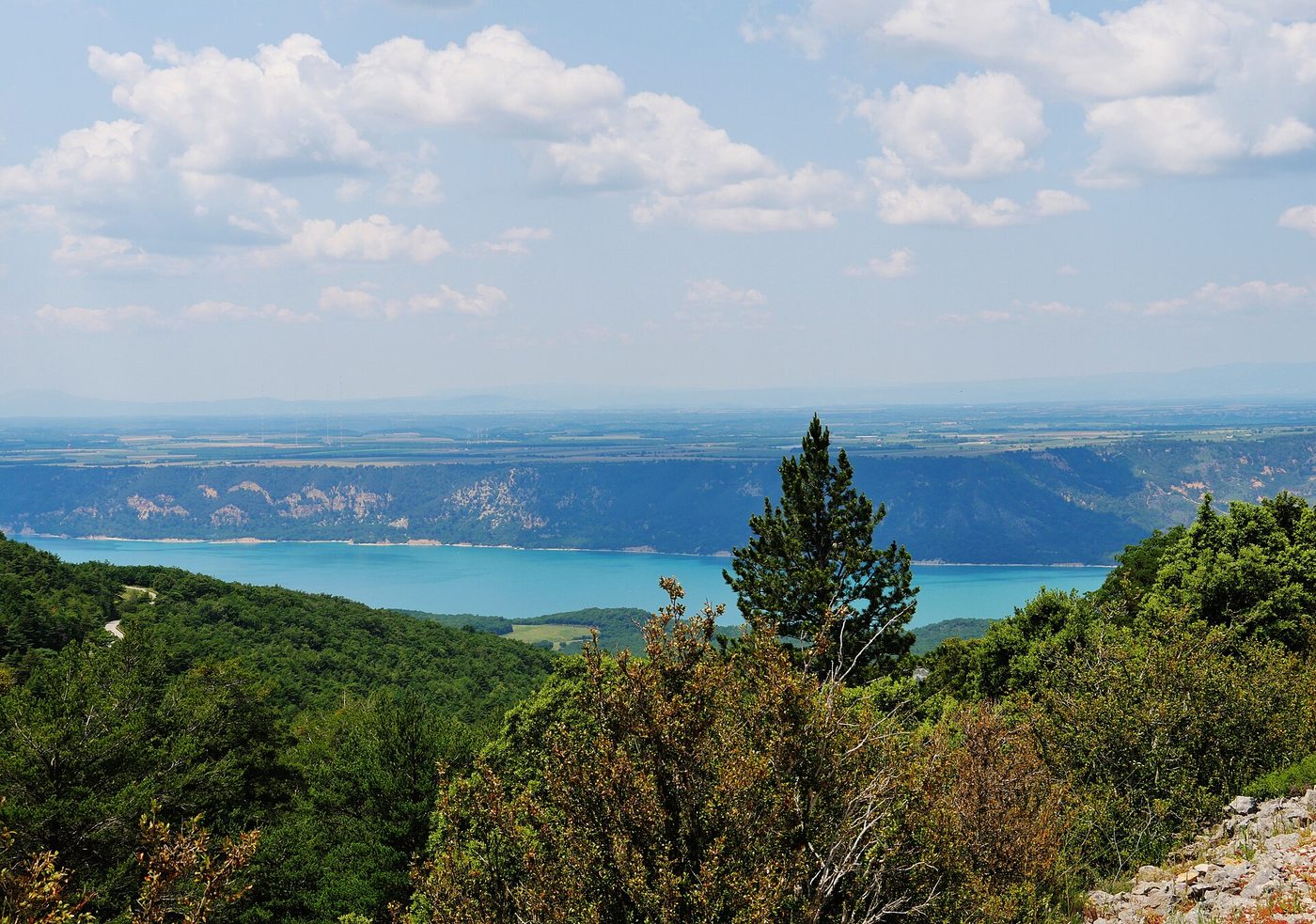
The Verdon is the deepest river canyon in France and the second deepest in Europe after the Tara in Montenegro, cut up to seven hundred metres into limestone, with water the colour of bottle glass. Two rim roads run along the north and south sides and you can drive the full circuit in a long day, though I would rather do half of it and stop.
On Lac de Sainte-Croix at the western mouth, petrol engines are banned outright, which keeps the lake quiet. Electric boats seating five, no licence required, cost around €40 an hour. Pedalos are cheaper by the hour at €25 for one hour, €50 for two, €75 for three and €100 for four. Paddling into the mouth of the gorge from Pont du Galetas is one of the great two-hour experiences in France and it does not require any skill.
The Sentier Blanc-Martel is the classic gorge-floor hike, running roughly six hours point to point with ladders and unlit tunnels, so bring a torch. A shuttle minibus service from the La Palud car park makes the logistics work, running daily until 13 September 2026, roughly 08:00 to 21:30, with a return ticket at €8.50 for adults and €5.50 for children. Dogs are banned on Blanc-Martel and on the Sentier de l'Imbut for safety reasons, because of the ladders; elsewhere in the regional park leads are compulsory.
Parking is the pinch point. Relay car parks with shuttle links operate June to September, and once the 300 spaces at the Sainte-Croix nautical base fill, barriers can close automatically after 10:00. Arrive before nine or plan on the relay system.
Moustiers-Sainte-Marie and the Valensole plateau
Moustiers hangs under a cliff with a gilded star strung on a chain between two rock faces above it, a tradition supposedly dating to a crusader's vow. It has been making tin-glazed faience since the seventeenth century and the shops selling it are the real thing and not a tourist reconstruction. It is the natural base for the Verdon.
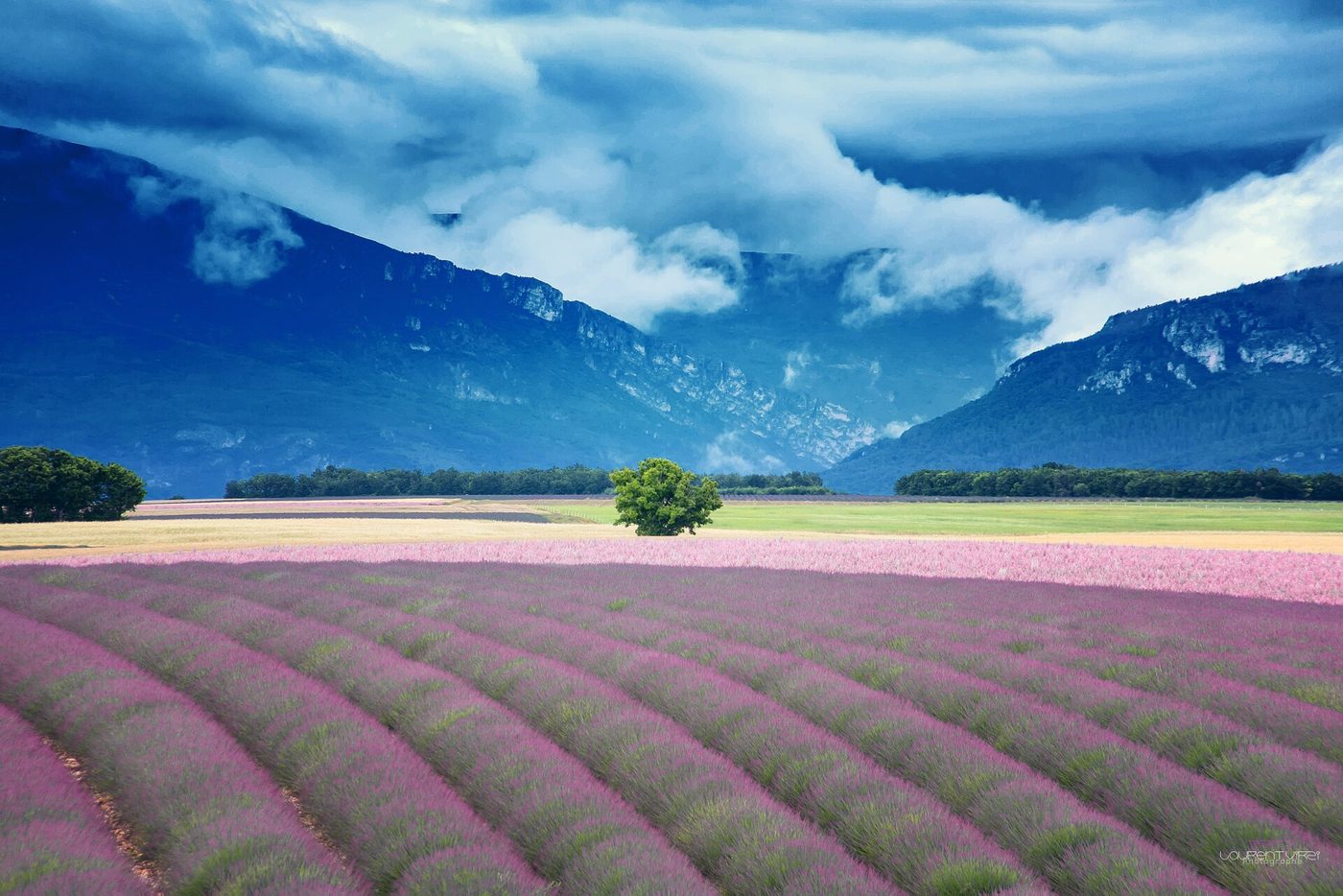
North-west of it, the Valensole plateau is where the lavender photographs come from. There is no station, no bus, and nothing to do there except drive slowly and look, which is exactly the point. See the lavender section below for timing, because getting the week wrong here is the single most common way to be disappointed in Provence.
Pont du Gard
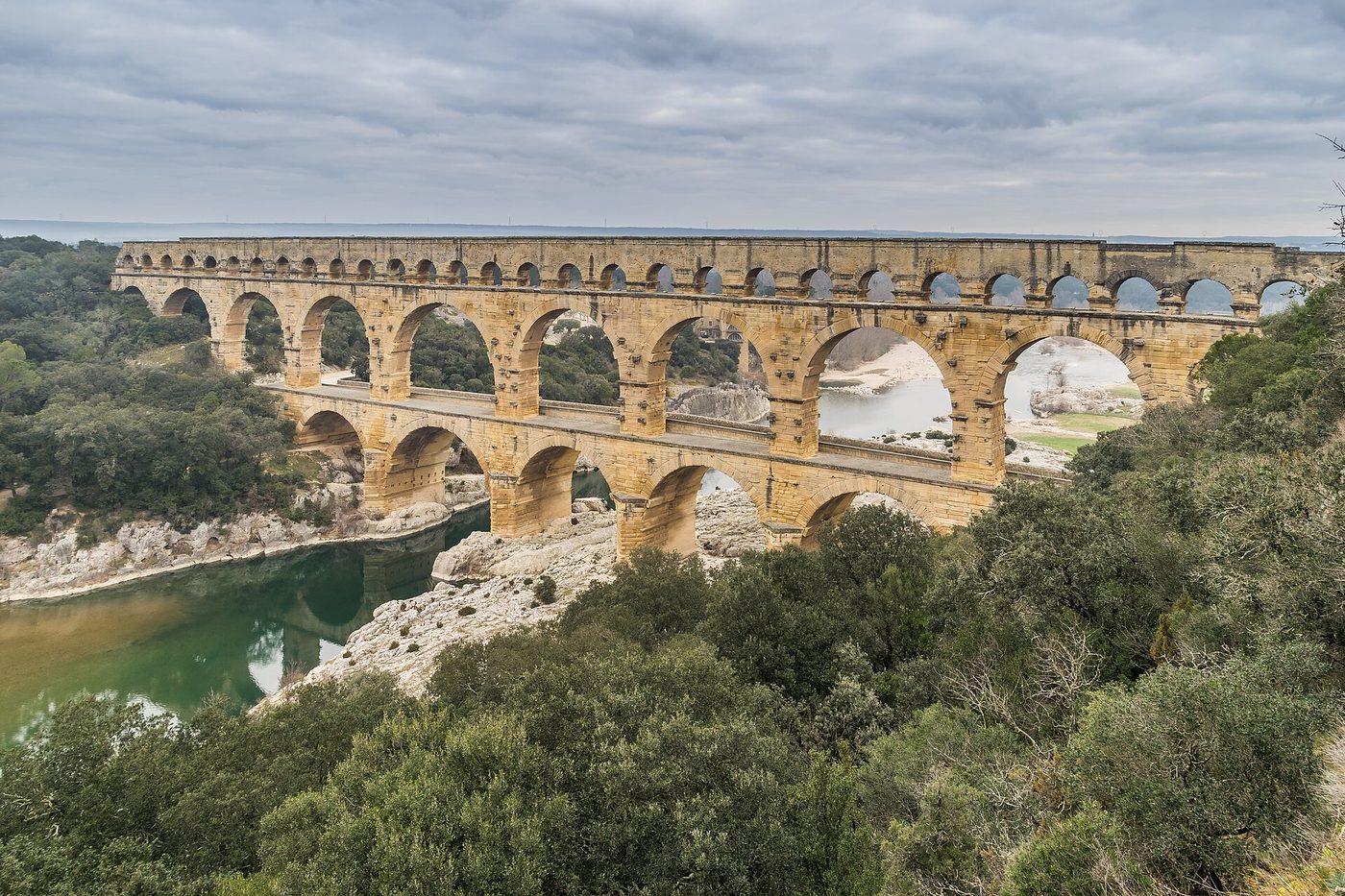
Strictly in the Gard rather than Provence, the Pont du Gard is a three-tier Roman aqueduct bridge forty-nine metres high, built to carry water to Nîmes, and UNESCO-listed since 1985. It is the most impressive Roman structure in France and it looks better in person than in any photograph, largely because of the scale of the stones.
Admission is charged per person at €8 for adults, having replaced a former flat rate of €18 per car at the start of the year. One source quotes €8.50, so treat €8 to €8.50 as the band. Under-18s, students and visitors with a disability go free. The ticket covers the museum, the Ludo children's space, the cinema and the temporary exhibition for the day. Parking is a separate €9 per day and is not included, which is the detail that catches families out.
A warning about the official website: the English rates page returns an empty response, and prices are only readable via the FAQ path. If you land on a blank page, you have not broken anything.
Lavender in Provence: the real calendar
Lavender is usually described as a single season running from June to August. That is true of the region as a whole and useless for planning a specific week, because bloom timing is governed by altitude and the three main areas peak roughly a fortnight apart, with their harvests as much as a month apart.
| Area | Rough altitude | Bloom window | Peak | Harvest |
|---|---|---|---|---|
| Luberon and Plateau de Claparèdes | 350 to 700 m | Late June to early July | Very end of June | Early to mid-July |
| Valensole plateau | Around 500 to 600 m | Mid-June to mid-July | Around 1 July | Generally around 15 July, earlier in hot years |
| Sault | 800 to 900 m | Colour from early July, into August | Mid-July | First or second week of August |
The safest single window for seeing lavender somewhere in Provence in full bloom is the last ten days of June through the end of July. If you can only travel in the first days of August, go to Sault and nowhere else, and go early in the month before the cut begins. If you can only travel in June, go to the Luberon and Valensole and accept that Sault will still be green.
One timing trap worth flagging: the Valensole lavender festival fell on 19 July in 2026, by which point a good proportion of the plateau may already have been cut. A festival date is not a bloom guarantee. Recent seasons have also been running four to seven days earlier than the historic averages, so if you are building a trip around this, weight your dates towards the early side.
The Fête de la Lavande at Sault is the bigger and better event and it is fixed: Saturday 15 August 2026, the 39th edition, at the Hippodrome du Deffends about 1.5 km outside the village, from 10:00, with more than 30,000 visitors expected. Entry and parking are both free. There is a producers’ market, an artisans’ area, a mobile lavender still working through the day, Provençal performances, a vintage car and moped display, and a mini farm with pony rides for younger children.
How to behave in a lavender field
These are commercial crops on private land, grown for distillation, not a public attraction. Do not pick. Do not walk into the middle of the rows and flatten plants for a photograph. Stay on the field edge or in the bare alleys that border the plots, which you can identify by the absence of flower spikes or by wooden boundary stakes. Park in designated areas and not on the verges of narrow roads, where you will block farm machinery during exactly the fortnight it needs to move.
There is no legally binding visitor charter in force. The local growers’ association has been pushing for one along national-park lines, and the mairie at Valensole puts out awareness leaflets each summer in English, Italian, Mandarin and Spanish. More than fifteen farms around Valensole run guided visits in season, and paying one of them for an hour gets you into a field legitimately, with someone who can explain the difference between true lavender and lavandin.
What everything costs to get into: 2026 admission prices
Checked in late summer 2026 against official ticketing pages wherever one existed. Prices change, so treat this as a planning tool and not a contract. Where an operator does not publish a figure, the cell says so.
| Site | Adult | Reduced | Child | Worth knowing |
|---|---|---|---|---|
| Palais des Papes, Avignon | €16 | €13 | €10 (10–17), free under 10 | Combined with gardens and bridge €19.50 |
| Avignon City Pass | €24 / 24h, €32 / 48h | – | – | Pays off across palace, bridge and one museum |
| Pont du Gard | €8 (one source €8.50) | – | Free under 18 | Parking a separate €9 per day |
| Théâtre Antique, Orange | €11.50 | €9.50 | €9.50 (7–17) | €1.50 supplement on animation days 4 Jul–13 Aug |
| Arc de Triomphe, Orange | Free | Free | Free | Audio route open daily 09:00–20:30 |
| Arles Pass Avantage | €19 | €16 | Free with a parent | 6 months, 6 monuments plus 4 museums |
| Arles Pass Liberté | €13–€15 | – | – | 1 month, 4 monuments plus 2 museums |
| Fondation Van Gogh, Arles | €10 | €8, students under 26 €3 | Free under 18 | €17 with LUMA, €12 with Musée Réattu |
| Château des Baux | €10 | €8, over-65s €9 | €7 (7–17), free under 7 | Family €27; open every day of the year |
| Carrières des Lumières | €16.50 standard | €15.50 over-65s, €14 other reduced, €13 youth | €12, free under 5 | Combined with the Château des Baux, €21 adult |
| Musée Granet, Aix | €14 (exhibition period) | €12 | Free under 18 | Free first Sunday of the month |
| Atelier Cézanne, Aix | €9.50–€15 | – | – | Open only 4 Jul–31 Oct 2026; book ahead |
| Camp des Milles | €14 | €11 | Free under 9 | Family €40; guided route €6 extra; allow 2h30 |
| Abbaye de Sénanque | €8 | €6 students 18–25, €4 jobseekers | €4 (6–17), free under 6 | Guided visit only, places limited, book online |
| Sentier des Ocres, Roussillon | €3.50 | €2.50 in groups of 15+ | Free under 10 | The dust stains shoes and trousers |
| Colorado Provençal, Rustrel | €6–€9 per car | €2–€3 on foot or by bike | Included in vehicle fee | Charged per vehicle, not per head |
| Calanque de Sugiton | Free | Free | Free | Reservation compulsory on peak dates, 400 per day |
| Verdon electric boat | €40 per hour | – | – | Seats 5, no licence needed, no petrol engines on the lake |
| Verdon pedalo | €25 / 1h, €50 / 2h | – | – | €75 for 3h, €100 for 4h |
| Blanc-Martel trail shuttle | €8.50 return | – | €5.50 return | Daily to 13 Sep 2026, roughly 08:00–21:30 |
Getting to Provence, and getting around once you are there

Arriving by train
From Paris Gare de Lyon, the fastest TGV reaches Avignon TGV in about 2 hours 37 minutes, with a typical journey nearer 3 hours 14 once slower services are counted. Aix-en-Provence TGV takes about 2 hours 55 at best and 3 hours 26 on average, with roughly 24 trains a day. Advance lead-in fares start around €24 one way. I could not find any source publishing a credible full fare band, and walk-up prices on a July Friday bear no relationship to the lead-in, so book early instead of budgeting from an average.
The single most useful thing to understand about Avignon is that it has two stations. Avignon TGV sits outside the city; Avignon Centre is inside the walls. They are linked by a shuttle train nicknamed “La Virgule” that takes four minutes, runs roughly 35 return trips a day, costs from €1.60 and often comes bundled into a through ticket. It leaves from the same platform your TGV arrives at, so there is no scramble with luggage. The alternative, if you do not know it exists, is a taxi fare many times that for a four-minute journey.
For the wider picture on rail passes, seat reservations and night trains, our guide to train travel in Europe goes into the mechanics, and Europe train itinerary shows how Provence slots into a longer rail trip.
Arriving by air
Marseille Provence (MRS) is the main airport. Shuttles reach Marseille Saint-Charles in 25 to 35 minutes for €10 single or €16 return, every 10 to 20 minutes from about 04:30 to 00:30. A second shuttle reaches Aix-en-Provence in around 30 minutes, every 15 minutes, every day of the year, calling at Aix TGV. That line was renumbered from 40 to A2, so signage may not match your notes; no 2026 fare was published on any page I could reach.
Buses, and why they are worth a look
The regional network is branded ZOU! and a single journey on a Proximité bus costs a flat €2.20, or €2.60 bought on board, across roughly 200 intercity lines. That is a flat fare regardless of distance. Fares rose 4% on 2 June 2026 for single tickets, mini-group tickets and ten-journey carnets, while season tickets held steady after a 20% cut in July 2025.
Buses will not get you to a hilltop village at eight in the morning for the light, and services thin out badly on Sundays. But for Avignon to Apt, or Aix to Marseille, or airport to town, they are absurdly cheap and they run all year.
Which villages have no station at all
This is the practical fact that shapes a Provence itinerary more than any other. The usable railheads for the Luberon are Cavaillon and L'Isle-sur-la-Sorgue–Fontaine-de-Vaucluse. Avignon to Cavaillon is about 35 minutes by TER with no change; Marseille to Cavaillon about an hour and a quarter.
| Village | Rail station? | How you actually get there |
|---|---|---|
| Gordes | No | Car from Cavaillon or Avignon; seasonal bus |
| Roussillon | No | Car; bus from Apt or Cavaillon |
| Les Baux-de-Provence | No | Car or bus from Arles or Saint-Rémy |
| Ménerbes | No | Car from Cavaillon |
| Bonnieux | No | Car from Cavaillon or Apt |
| Lacoste | No | Car from Cavaillon or Apt |
| Lourmarin | No | Car from Aix, or ZOU! bus; nearest railhead is Pertuis |
| Valensole | No | Car from Manosque or Aix |
| Moustiers-Sainte-Marie | No | Car from Aix or Manosque |
| Avignon | Yes | Avignon Centre inside the walls, Avignon TGV outside |
| Arles | Yes | Walkable from the station to the arena |
| Aix-en-Provence | Yes | Aix Centre, plus Aix TGV outside town |
| Cassis | Yes | Station 3 km uphill; shuttle bus or taxi into town |
| L'Isle-sur-la-Sorgue | Yes | Directly in town, on the Avignon–Cavaillon line |
Driving and parking
Hire a car for the Luberon, the Alpilles, the Camargue, Valensole and the Verdon, and skip it for Avignon, Arles, Aix, Marseille and Cassis. Collect it on the day you leave the city rather than at the airport.
Village parking is now charged almost everywhere in season. Les Baux runs 08:00 to 19:00 year round at €5 for the first hour, €1 for the second and €0.50 an hour after that, with a €35 penalty for not paying. Gordes charges daily 08:00 to 19:00, though I could not find its 2026 tariff published anywhere. Roussillon is €4 per day. Mobile signal in the Luberon is patchy, so download offline maps before you set off, and remember that country roads there are unlit at night. Our Europe road trips guide has more on driving in France, and getting around Europe covers the broader transport picture.
Markets by day of the week

Markets are the best free thing in Provence and the easiest to get wrong, because most run on one fixed morning and finish by one in the afternoon. Build the week around them and do not leave it to luck.
| Day | Market | Hours | What it is good for | Seasonal? |
|---|---|---|---|---|
| Tuesday | Vaison-la-Romaine | 08:00–13:00 | The biggest in the Provence des Papes | All year |
| Tuesday | Gordes | Morning | Small, scenic, at the foot of the castle | All year |
| Wednesday | Saint-Rémy-de-Provence | Morning | The big Alpilles market | All year |
| Wednesday | Arles | 08:00–12:45 | Food, on the boulevard des Lices | All year |
| Wednesday evening | Coustellet | Evening | Summer producers’ market | Summer only |
| Thursday | L'Isle-sur-la-Sorgue | 07:00–13:00 | The town without the Sunday crush | All year |
| Friday | Carpentras | 08:00–13:00 | Large general market | All year |
| Friday | Carpentras truffle market | Morning | Black truffles at source | November to March |
| Friday | Lourmarin | Morning | One of the most pleasant in the Luberon | All year |
| Saturday | Apt | To about 13:00 | 300-plus vendors, the serious shopping one | All year |
| Saturday | Arles | 08:00–12:45 | The larger of the town's two markets | All year |
| Saturday | Uzès | Morning | 200-plus stalls; food, linens, jewellery | All year |
| Saturday | Richerenches truffle market | 09:00–13:00 | The most important truffle market in Europe | Mid-November to mid-March |
| Sunday | L'Isle-sur-la-Sorgue | 07:00–13:00 | Antiques and brocante plus food | All year |
| Sunday | Coustellet | 08:00–13:00 | Producers’ market | April to December |
Two notes. Uzès is in the Gard, so you are crossing out of Provence for it, and it is still worth the drive. And Aix-en-Provence has excellent daily markets in the old town, and no source I checked stated the specific days for the larger ones, so confirm with the tourist office on arrival.
At Richerenches, the wholesale trade happens on the Cours du Mistral and retail sales on the Avenue de la Rabasse, and the season runs mid-November to mid-March. The prices set here set the tone for the whole French truffle season. It is a strange, quiet, cash-heavy scene conducted largely out of car boots, and it is one of my favourite mornings in France. For more on regional eating across the continent, see our guide to European food.
Provence wine without the mystique
There are around 600 producers in Provence and the region is the volume source of the pale dry rosé that now sells worldwide. But rosé is only part of it, and the appellations are worth telling apart.
| Appellation | Known for | Nearest base |
|---|---|---|
| Châteauneuf-du-Pape | Powerful southern Rhône reds from an unusually long list of permitted grapes | Avignon, 20 minutes |
| Gigondas | Grenache, Syrah, Mourvèdre and Cinsault reds under the Dentelles de Montmirail | Vaison or Carpentras |
| Vacqueyras | Rich garnet Grenache-based reds; Syrah and Mourvèdre must be at least 20% of the blend | Carpentras |
| Bandol | Warmly spicy oaked Mourvèdre reds, plus dry rosés from Cinsaut and Grenache | Cassis or Toulon |
| Cassis | One of France's smallest appellations; strong, fresh, very dry Marsanne whites | Cassis itself |
| Côtes de Provence | The dominant appellation and the engine room of Provence rosé | Aix or the Var |
| Coteaux d'Aix-en-Provence | A similar grape mix to Côtes de Provence, centred on Aix | Aix |
| Les Baux-de-Provence | A higher proportion of Cabernet Sauvignon than its neighbours | Saint-Rémy or Arles |
What tastings cost: the range runs from free to around €25. A typical structure is three wines poured free, six wines for around €5, and a 90-minute cellar tour with tasting at around €25. Most visitors will spend €5 to €15. Domaine de la Citadelle in the Luberon and Château de Pibarnon in Bandol are both cited as pouring free, the latter for small groups.
Bottle prices are lower than the export shelf suggests. Entry-level Provence rosé starts around €5, and well-regarded bottles sit around €10 to €15. Those are retail figures, not cellar-door prices, and buying at the domaine is usually a little cheaper again.
Opening hours vary enormously between domaines and very few publish them clearly, so phone ahead the day before. Many close for two hours at lunch and some open by appointment only.
When to go: season by season, and the mistral
Avignon has a hot-summer Mediterranean climate, Köppen Csa, with roughly 2,800 hours of sunshine a year and 749 mm of rain. July averages a high of 33°C and a low of 20°C, and it is the driest month with about 26 mm of rain across five rain days. January averages a high of 12°C and a low around 3°C. November is the wettest month, with about 101 mm over nine rain days.
| Period | What it is like | Come if | Avoid if |
|---|---|---|---|
| December to February | Cool and bright between rain; mistral makes it feel far colder. Truffle season. Many rural restaurants shut. | You want santon fairs, truffles and empty monuments | You need village life or long daylight |
| March to April | Almond and cherry blossom, green hills, unpredictable wind. Fontaine-de-Vaucluse at full flow. | You want walking weather and low prices | You want to swim |
| May to mid-June | The best all-round window. Warm, long evenings, everything open, lavender not yet out. | You want the region at its most comfortable | Lavender is the whole reason you are coming |
| Late June to July | Lavender, festivals, heat and the year's worst crowds and prices, all at once. | You want lavender and the big festivals | You dislike queues or heat |
| August | Hottest and busiest. French holidays. Sault lavender still standing; the rest cut. | You want sea swimming and the Sault fête | You want the Luberon to yourself |
| September to October | My favourite. Warm sea, vendange, thinning crowds, Rencontres d'Arles still hanging. | You want the summer without the summer | You specifically want lavender |
The mistral
The mistral is a cold dry wind funnelled down the Rhône valley and it is a genuine planning factor and not just local colour. In exposed areas such as the Crau plain near Arles it blows on 100 to 150 days a year, with an average often quoted at around 120. Episodes can last one or two days, frequently several, and occasionally more than a week. It averages around 74 km/h with gusts over 90 to 100 km/h. It is commonest in winter and spring and strongest in the transition between them, with a separate thermally-driven summer version in July.
Practically: it flattens the light into something photographers love, it makes an 8°C January day feel like freezing, it cancels boat trips at Cassis and in the Verdon, and it will take an unweighted parasol off a terrace. Pack a windproof layer even in June.
What it costs to be there
Provence has a reputation for expense that is half deserved. Sights are cheap. Lunch is cheap if you eat the way locals do. Accommodation in July is where the money goes.
The tourist tax
France charges a taxe de séjour, added to your bill at checkout and not included in the advertised rate. For unclassified accommodation it is set between 1% and 5% of the per-person nightly price; classified hotels pay a fixed per-person, per-night amount set by each commune. Nationally the amounts run from €0.20 to €15.93 per person per night. On top of the communal figure sits a departmental levy of 10%, and in Bouches-du-Rhône, the Var and the Alpes-Maritimes a further regional levy of 34% that funds the new rail line. Arles, Aix, Marseille and Cassis carry it; Avignon and the rest of the Vaucluse do not. Children under 18 are exempt.
A worked example published for Aix-en-Provence puts the tax at €3.60 per person for a €100 night shared by two adults. Per-category euro rates for Avignon, Aix and Arles were not published for 2026 at the time of writing, so there is no table of them here. Arles confirms only that its rates from 1 January 2026 were set by a deliberation of June 2025 and are revalued annually in line with consumer prices excluding tobacco, which was +1.8%. There is no national reform in 2026; the mechanism is simply annual indexation by each commune.
Eating, and what to eat
Eat the region, not the menu you would get anywhere: bouillabaisse in Marseille and only in Marseille, tapenade and anchoiade with bread before lunch, ratatouille and daube provençale, goat cheeses from the Luberon plateaus, calissons in Aix, nougat around Sault, and a pastis at six o'clock because everyone else is having one.
The plat du jour at a normal restaurant runs around €15. A full three-course menu is around €25, with plenty of places at €26 to €28. A starter-plus-main lunch formule lands near €23.50, and fixed-price lunches start from €15. Eat your main meal at lunch and the difference over a fortnight is considerable.
Sleeping
The only accommodation figures I could source reliably for 2026 sit at the luxury end: four-star spa hotels from around €460 a night in high season, new five-stars in the €400 to €800-plus range, and villa rentals from €1,680 to €4,615 a night with seven-night minimums. No credible mid-range or budget band was published anywhere I could reach.
What I can tell you from booking these trips repeatedly: rates in Avignon, Arles and Aix roughly double between May and mid-July, the Luberon villages run higher than the towns for less comfort, and September is the sweet spot where summer weather meets shoulder pricing. For strategies that apply across the continent, see where to stay in Europe and Europe on a budget.
| Daily spend, per person | Frugal | Comfortable |
|---|---|---|
| Lunch | Market picnic, €8 | Formule, €20–€25 |
| Dinner | Plat du jour, €15 | Three courses with wine, €40–€55 |
| One paid sight | €3.50–€10 | €10–€19 |
| Transport | ZOU! bus, €2.20 a hop | Share of a hire car and fuel |
| Parking | Avoided entirely | €4–€9 per village or site |
| Wine tasting | Free pour of three | €5–€25 |
Three itineraries that actually work
Three days without a car
Fly or take the train to Avignon. Day one: Palais des Papes with the Histopad, the bridge, the Rocher des Doms for the view, and walk across to Villeneuve-lès-Avignon in the late afternoon. Day two: TER to Arles, Pass Avantage, the arena, Saint-Trophime, the Van Gogh foundation, back for dinner. Day three: TER to L'Isle-sur-la-Sorgue for the Sunday market, or ZOU! bus to Orange for the Roman theatre. Total transport spend under €30.
Five days, car from day two
Two nights in Avignon doing the first two days above, then collect a car and move to Bonnieux or Lourmarin for three. Day three: Gordes before nine, Sénanque on the 09:40 or 10:00 guided slot, Roussillon and the ochre trail after lunch. Day four: Apt market first if it is a Saturday, since it winds up by one, then Rustrel in the afternoon and Ménerbes and Lacoste in the evening light. Day five: Saint-Rémy, Glanum, and Les Baux with the Carrières in the hottest part of the afternoon.
Ten days, the full region
Three nights Avignon, three nights the Luberon, two nights Arles with a Camargue day, two nights Cassis or Moustiers depending on whether you want sea or canyon. If you take Cassis, book Sugiton three days ahead and check the fire-risk map each morning. If you take Moustiers, do Valensole on the drive in and the gorge rim road on the full day. This is the shape I would use for a first proper trip. Our broader Europe itinerary and 10-day Europe itinerary guides show how to bolt this onto Paris or the Riviera.
Crowd swaps: same feeling, fewer people
| Instead of | Try | Why it works |
|---|---|---|
| Gordes at midday | Bonnieux or Lacoste | The same perched-village geometry, a small share of the coaches |
| Roussillon ochre trail | Colorado Provençal at Rustrel | Bigger, wilder, charged per car, proper walking |
| Calanque de Sugiton in August | Port-Pin or En-Vau | No reservation required and the water is the same colour |
| Valensole in mid-July | Sault in late July | Higher, later, cooler, and the fields are still standing |
| Avignon during the July festival | Avignon in late September | Same city, half the price, monuments still open daily |
| Les Baux in the afternoon | Les Baux at opening, then the Carrières at three | The village empties early and the quarry is cool when the heat peaks |
| Saint-Tropez | Cassis | A working harbour with better wine and a national park attached |
| Rencontres d'Arles opening week | The same festival in September | Identical exhibitions, beds at normal rates |
Provence by traveller type
| If you are | Base yourself | Prioritise | Skip |
|---|---|---|---|
| First-timer, one week | Avignon then the Luberon | Palais des Papes, Sénanque, Roussillon, Arles | The Verdon; it needs its own days |
| Travelling without a car | Avignon, Arles or Aix | Rail towns, ZOU! buses, L'Isle-sur-la-Sorgue | Luberon hill villages and Valensole |
| With young children | Cassis for the sea, or Moustiers for the lake | Pedalos on Sainte-Croix, Camargue flamingos from Arles, Colorado Provençal from the Luberon | Long monument days in July heat |
| Walkers | Moustiers for the gorge, Cassis for the coast, Bonnieux for the hills | Blanc-Martel from Moustiers, the Calanques from Cassis, the ridge paths from Bonnieux | August, at any altitude |
| Food and wine | Lourmarin or Châteauneuf | Saturday at Apt, Friday at Carpentras, cellar doors | Sunday, when much is closed |
| Art and photography | Arles | Rencontres, Van Gogh sites, Carrières des Lumières | Nothing; this is the region's strongest suit |
| Winter visitors | Avignon or Aix | Truffle markets, santon fairs, empty monuments | The Verdon and high Haute-Provence |
Travelling with children across several countries? Our Europe with kids guide covers pacing and rail logistics, and solo travel in Europe is worth a read if you are going alone.
Eight mistakes I see people make in Provence
- Hiring a car at the airport for the whole trip. You will pay to park it for three days in Avignon and then pay again in every village. Collect it the day you leave the city.
- Arriving at Avignon TGV and taking a taxi. La Virgule shuttle is four minutes, from €1.60, from the platform you land on.
- Booking a lavender trip for mid-July on the Valensole plateau. The harvest is generally around 15 July and hot years run earlier. Late June is safer.
- Assuming Sugiton is walk-up. On peak dates it is a compulsory free reservation, 400 people a day, and the booking window opens only three days ahead.
- Turning up at a village on the wrong morning. Markets are once a week and over by one. Lourmarin on a Thursday is a nice, quiet, empty square.
- Treating the Pont du Gard ticket as covering parking. Parking is a separate €9 per day.
- Planning around Cézanne's studio. It has been shut since April 2024 and in 2026 opened only from 4 July to 31 October, with limited capacity.
- Ignoring the mistral. It cancels boats, ruins picnics and makes winter feel arctic. Check the forecast before booking anything on water.
Entry rules for 2026
The EU's Entry/Exit System went live on 12 October 2025 and became fully operational on 10 April 2026. It registers non-EU nationals at every short-stay crossing of the external borders of 29 European countries, recording name, travel document data, fingerprints, facial image, and the date and place of entry and exit. It replaces manual passport stamping. In practice, expect a biometric enrolment the first time you cross after the rollout and faster processing afterwards.
ETIAS, the separate travel authorisation for visa-exempt travellers, has not launched. As of July 2026 the EU had removed its previous target date and now says only that a launch will be announced several months in advance, which puts 2027 as the realistic expectation. When it does arrive it will apply to UK, US, Canadian and Australian passport holders among others, for short stays in 30 European countries. Our Schengen visa and ETIAS guide tracks the detail, and Europe travel tips covers the rest of the practicalities.
Provence travel guide FAQ
When is the best time to visit Provence?
May to mid-June and September to mid-October, if you can choose freely. That maps closely onto the best time to visit France as a whole, though Provence runs a few weeks ahead of the north. Both give warm days, long evenings, everything open and prices well below July. If lavender is the point, come in the last ten days of June for the Luberon and Valensole, or in the third week of July for Sault. If you want to swim, the sea at Cassis averages 22.1°C across the summer and stays comfortable into early October.
How many days do you need in Provence?
Five is the minimum for a trip that does not feel rushed: two in a town, three with a car in the villages. Seven to ten is where it starts to feel like a holiday instead of a march. Three days works if you stay in Avignon and use the trains and give up on the hilltop villages.
Is Provence expensive?
Sights are not. The ochre trail at Roussillon is €3.50, the Sugiton reservation is free, and the biggest attraction in the region, the Palais des Papes, is €16. A three-course lunch menu runs around €25. What is expensive is July accommodation and car hire, and to a lesser degree parking, which is now charged in almost every village in season. Shift to September and the same trip costs meaningfully less.
What is the best way to get around Provence?
A combination. Trains reach Avignon, Arles, Aix, Marseille, Cassis, Orange, Carpentras, Cavaillon and L'Isle-sur-la-Sorgue, and are fast and cheap. ZOU! buses cover much of the rest at a flat €2.20 a journey. But Gordes, Roussillon, Les Baux, Lourmarin, Ménerbes, Bonnieux, Lacoste, Valensole and Moustiers have no station, so a car is required for the villages most people come to see.
Is Provence worth visiting without seeing lavender?
Yes, and I would argue it is a better trip. Lavender is in flower for perhaps five weeks and pulls the entire year's crowd into them. The Roman monuments, the markets, the ochre country, the Calanques, the Camargue and the food are all at their best in May or September, when the villages belong to the people who live in them.
Which Provence village is most worth visiting?
For the view of it, Gordes. For being in it, Lourmarin. For something genuinely different, Roussillon. If I could send you to one and only one, and it was a Saturday, I would send you to Apt for the market and Bonnieux for the evening.
Where should I stay in Provence?
Avignon if you want rail access, monuments and restaurants within the walls. Arles if you want Roman history and the Camargue. Aix if you want an elegant, walkable city with good transport. The Luberon villages if you have a car and want quiet. Cassis if you want to swim. Moustiers if the Verdon is the priority.
Do I need to book anything in advance?
Four things. The Sugiton reservation on peak dates, which opens only three days ahead. Guided visits at Sénanque, where places are limited. Cézanne's studio during its short 2026 season. And accommodation for the July festivals in Avignon, Aix, Arles and Orange, which sells out months out.
Is Provence the same as the Côte d'Azur?
No. They sit in the same administrative region but they are different holidays. The Côte d'Azur is the coastal strip from Cassis eastward through Saint-Tropez, Cannes, Antibes and Nice to Menton and Monaco: beaches, promenades, higher prices, excellent trains. Provence in the sense used here is the interior, and it is about villages, markets, Roman remains and landscape.
Can you do Provence as a day trip from Paris?
Technically yes, since the fastest TGV reaches Avignon in around two hours forty, and I would not. You would get four or five hours on the ground, and a same-day return booked late is the most expensive way to buy that ticket. Two nights is the realistic minimum for it to be worth the journey.
Final thoughts
What I want you to take from this is that Provence is unusually sensitive to planning. The gap between a good trip and a frustrating one is not money, it is a handful of decisions: which fortnight, which base, whether you have a car and from what day, and which morning of the week you turn up in which village.
Two honest limits on what is above. There are no per-category tourist tax figures or mid-range hotel bands here, because no reliable 2026 source published them. And there are places I have left out entirely, including Salon-de-Provence, Manosque, Forcalquier, the Dentelles de Montmirail and most of the Var: that is a limit of what would fit in one guide, not a verdict on any of them.
If I had to give you one instruction, it would be this. Set an alarm. Provence at eight in the morning, in the low gold light with the shutters still closed and one van unloading bread, is the region everybody comes for. By eleven it has gone, and it comes back at seven in the evening. Almost nothing else about your trip matters as much.
Next, read our France travel guide for the country in full, our best places to visit in France roundup for where Provence sits among the alternatives, and our 3-day Paris itinerary if you are pairing it with the capital.
Hannah Brooks has spent fifteen years travelling, living and writing across Europe, from the Arctic tip of Norway to the south of Sicily. She has planned hundreds of European itineraries for readers and is Senior Europe Editor at EuropeanTourism.org.
Photo credits
- Provence travel guide: rows of lavender in flower across the Valensole plateau · Photo: Laurent Virzi / CC BY-SA 3.0 via Wikimedia Commons
- Yachts moored along the old port at Saint-Tropez on the Cote d’Azur, east of Provence · Photo: Ed g2s / CC BY-SA 3.0 via Wikimedia Commons
- The Gothic facade of the Palais des Papes in Avignon, Provence · Photo: Jean-Marc Rosier (de/from http://www.cjrosier.com + http://www.gordes-immobilier / CC BY-SA 3.0 via Wikimedia Commons
- The hilltop village of Gordes in the Luberon, Provence · Photo: Astronautilus / CC BY 2.0 via Wikimedia Commons
- The ochre cliffs and red-washed houses of Roussillon in the Luberon · Photo: Elliott Brown from Birmingham, United Kingdom / CC BY 2.0 via Wikimedia Commons
- The Roman amphitheatre in Arles, a UNESCO World Heritage monument in Provence · Photo: Rolf Süßbrich (CC0) via Wikimedia Commons
- Pink flamingos wading in a shallow lagoon in the Camargue, the Rhone delta south of Arles · Photo: Giles Laurent / CC BY-SA 4.0 via Wikimedia Commons
- Plane trees lining the Cours Mirabeau in Aix-en-Provence · Photo: François GOGLINS / CC BY-SA 4.0 via Wikimedia Commons
- Fishing boats in the Vieux-Port of Marseille with Notre-Dame-de-la-Garde on the hill above · Photo: DimiTalen (CC0) via Wikimedia Commons
- Pastel houses around the fishing harbour at Cassis in Provence · Photo: Michal Osmenda from Brussels, Belgium / CC BY-SA 2.0 via Wikimedia Commons
- Turquoise water between white limestone cliffs at Calanque d’En-Vau near Cassis · Photo: DanielMichaelPerry (CC0) via Wikimedia Commons
- The green water of the Verdon Gorge running between limestone cliffs in Haute-Provence · Photo: Zairon / CC BY 4.0 via Wikimedia Commons
- The three tiers of the Roman Pont du Gard aqueduct spanning the Gardon river · Photo: Krzysztof Golik / CC BY-SA 4.0 via Wikimedia Commons
- A TGV high-speed train, the fastest way to reach Provence from Paris · Photo: Ermell / CC BY-SA 4.0 via Wikimedia Commons
- A display of French cheeses on a market stall in France · Photo: Elekes Andor / CC BY-SA 4.0 via Wikimedia Commons