How to Use the Interrail Pass

The classic way to waste an Interrail Pass is to stand on a platform with a phone you have not charged, in front of a conductor who wants a barcode you have not generated, on a train you have not added to your pass. The conductor may be patient. You can still end up paying the full fare.
So here is how to use Interrail Pass travel properly, in one paragraph, before anything else: buy the pass, install the Rail Planner app, add the pass with your surname and pass number, activate it with a passport number and a start date, then add each journey to your pass before you board. Book seat reservations separately, because the pass is not a reservation.
That is the mechanical answer. The useful answer runs a lot longer, because the mechanics are the easy part. What separates a good Interrail trip from an expensive one is knowing which countries will charge you thirty-five euros to sit down, which will wave you onto a two-hundred-kilometre-an-hour train with no paperwork at all, and how the travel-day arithmetic works when a night train crosses midnight and a time zone in the same breath.
The pass has a reputation as a rite of passage for nineteen-year-olds with terrible rucksacks, and it is also one of the most misunderstood products in European travel. People buy it expecting a magic ticket and discover reservation fees. People avoid it expecting reservation fees and discover they would have saved four hundred euros. What follows is the whole thing, start to finish, with the actual numbers.
How to use an Interrail Pass: the short version before the long one
If you read nothing else, read this. Seven steps, and the rest of the article takes each of them in turn, in this order.
- Check you are eligible. Interrail was the pass for residents and citizens of Europe and a handful of neighbouring countries, and everyone else bought the near-identical Eurail pass, which we compare with Interrail here. Since 9 September 2026 the two have been one brand, Interrail: you select the country where you live and see the passes available to you.
- Pick Global or One Country, then flexi or continuous. Global covers 33 countries. One Country covers exactly one and cannot be used where you live. Flexi gives you a set number of travel days inside a window; continuous gives you every day in the period.
- Buy it. Up to eleven months ahead. Mobile is the default; paper still exists.
- Set up the Rail Planner app. Add the pass with your surname and pass number, connect a trip to it, activate with a passport number and a start date, and then toggle each journey onto the pass before you board. That last part is the step people forget.
- Understand travel days. They run midnight to midnight in local time, they allow unlimited trains, and the night-train rule is not what you have probably read.
- Know your home-country allowance. One outbound journey and one inbound journey, and no more.
- Book seat reservations separately for the trains that need them, and check whether the train you want needs one before you plan around it.
Everything else, and there is a lot of everything else, is detail hanging off those seven points.
What an Interrail Pass actually is
An Interrail Pass is a ticket that lets you board ordinary scheduled trains across 33 European countries for a fixed number of days, without buying individual tickets for each journey. There is no special Interrail train. You use the same Frecciarossa to Florence, the same Railjet to Budapest, the same suburban rattler out to the coast that everyone else uses. The pass is simply the ticket you show instead of a ticket.
It covers high-speed trains, intercity trains, sleepers, regional services and most suburban lines run by the national railway. A second-class pass is valid in second class only. A first-class pass is valid in both, which is more useful than it sounds, because on a hot August afternoon out of Milan the ability to walk into either carriage is worth something.
The 33 countries are Austria, Belgium, Bosnia-Herzegovina, Bulgaria, Croatia, the Czech Republic, Denmark, Estonia, Finland, France, Germany, Great Britain, Greece, Hungary, Ireland, Italy, Latvia, Lithuania, Luxembourg, Montenegro, the Netherlands, North Macedonia, Norway, Poland, Portugal, Romania, Serbia, Slovakia, Slovenia, Spain, Sweden, Switzerland and Turkey. Russia, Ukraine, Belarus, Moldova and Albania are outside the scheme.

What the pass does not cover
This is where the “magic ticket” idea starts to fray, and it is better to know now than at a barrier in Naples.
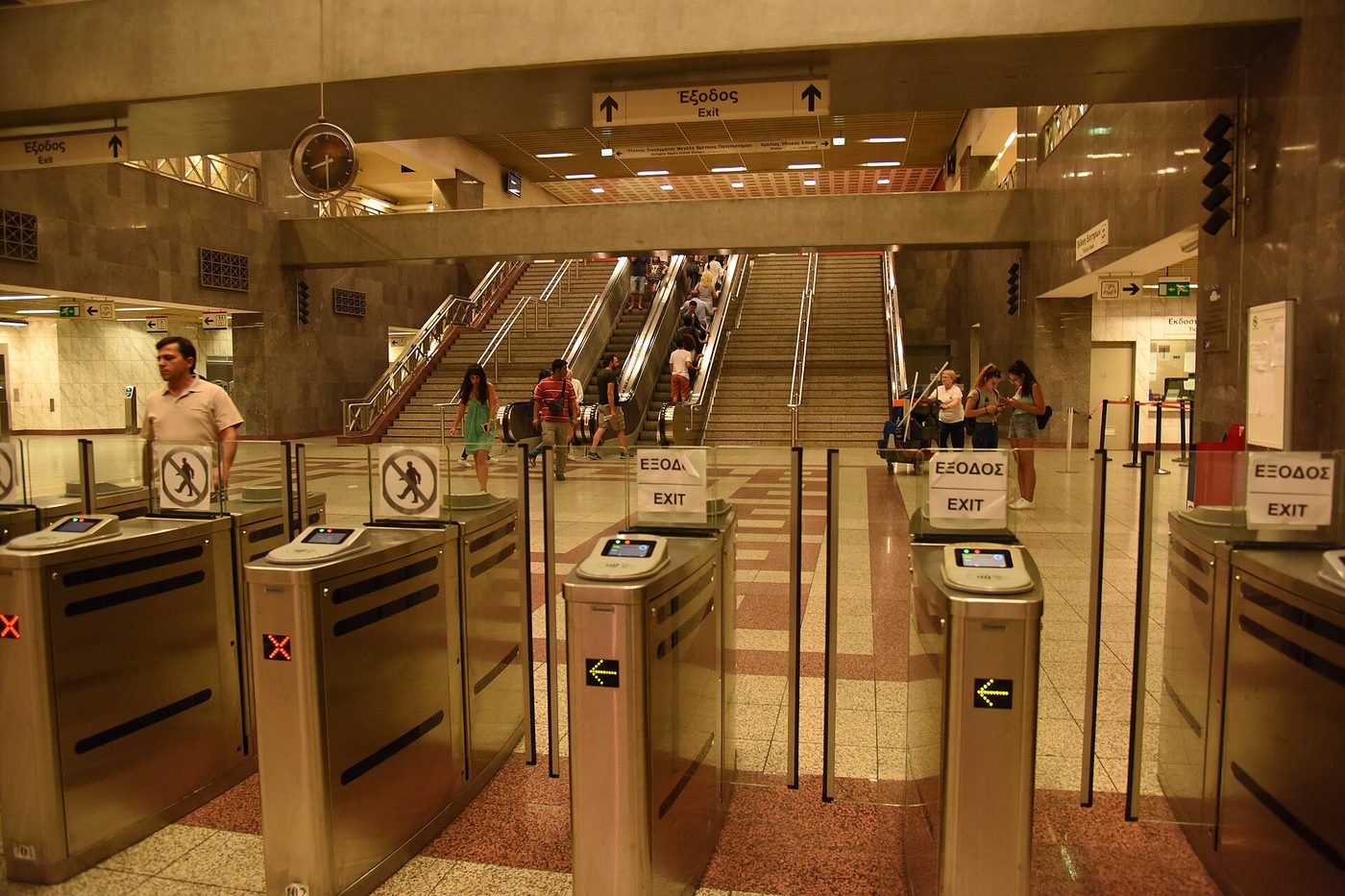
- City transport. A rough guide is whether the national railway runs it. DB’s S-Bahn in Germany, ÖBB’s S-Bahn in Austria and DSB’s S-tog in Copenhagen are covered, because those are national-railway services. For metros, U-Bahn, trams and city buses you will generally need a separate ticket, though some cities offer passholders a discount, so check with the local operator before you board.
- Some private operators. Italo in Italy and Ouigo in Spain compete with the state railway and do not accept the pass. Nor do low-cost state sub-brands like Renfe’s Avlo.
- Some small private railways. Euskotren in the Basque Country, the Circumvesuviana out to Pompeii, and various funiculars and mountain lines are outside the scheme, though Switzerland in particular gives passholders discounts on a lot of them.
- Seat reservations. Always a separate charge. This is the single biggest source of Interrail disappointment and it gets a long section of its own below.
- Sleeping accommodation on night trains. The pass gets you aboard. The bunk is extra.
Eurail became Interrail on 9 September 2026
On 9 September 2026 Eurail and Interrail became one brand, Interrail, and Interrail’s own site carries the notice on every page: if you were looking for Eurail, you are in the right place.
What this means in practice, according to Interrail, is very little for you. Existing passes stay valid. Bookings stay booked. Accounts stay live. The Rail Planner app was already the same app for both products and had been for years.
What it does change is the language you will see. Two products that were functionally the same thing with different eligibility rules became one product with an eligibility test, and the practical question has shifted from “which pass am I allowed to buy” to “which price am I quoted”. The hard line between the two has gone. Our full Eurail versus Interrail comparison goes through what survives the merger and what does not.
Step 1: are you eligible for an Interrail Pass?
Interrail was the European product and Eurail the one for everyone else. Since the two brands merged in September 2026, the test is where you live: select your country of residence, as shown on your ID or residency document, and you see the passes available to you.
Eligibility goes by the country where you live. You qualify for Interrail if you are a legal resident of a European country in the scheme, and residency also covers people living in Iceland, Albania, Latvia, Estonia, Moldova, Malta, Cyprus, Morocco, Algeria, Tunisia, Russia, Ukraine and Turkey. The rule is present legal residence: you need to be legally resident when you buy, and your residency must not expire before the pass validity ends.
If you live in Australia, the United States, Canada, Japan, Brazil or anywhere else outside that list, you used to buy a Eurail pass instead, all but identical in what it did. Since 9 September 2026 both have been sold under the one name, Interrail, and the country of residence you select decides which passes you are offered.
The age brackets, and the two that catch people
| Pass type | Age on your trip start date | Price relative to adult |
|---|---|---|
| Child | 4 to 11 inclusive | Free |
| Youth | 12 up to and including 27 | 25% off |
| Adult | 28 to 59 | Full price |
| Senior | 60 and over | 10% off |
| Under 4 | 0 to 3 | Free, no pass needed |
The two that catch people. First, the age is fixed on the first day of validity you choose, not the day you buy. Turn 28 in August and start your trip in July and you still get the youth price for the whole pass, which is a useful piece of arithmetic if your birthday falls in the middle of a gap year. Second, the youth bracket runs to your 28th birthday, not your 26th. It was raised from under 26 back in 2017 and plenty of people still assume they aged out years before they did.
Children under 12 travel free on a Child Pass, up to two children per accompanying adult, youth aged 18 or over, or senior. Beyond two children, you buy a Youth Pass for each extra one. The adult does not need to be a relative, but the child must be accompanied at all times, travels in the same class as the adult, and cannot be added to your order after you have paid. Add them at checkout or buy again. And a free child still pays full reservation fees, which on a family run down through France adds up faster than you expect. Our family travel guide to Europe goes deeper on that arithmetic.
Under-fours travel free without any pass at all, though on a busy train they may be expected to sit on your lap. If you want a seat reserved for a toddler, add a free Child Pass and reserve one.
Step 2: Global Pass or One Country Pass?
There are two products, plus a third in beta.
| Global Pass | One Country Pass | Plus Pass (beta) | |
|---|---|---|---|
| Covers | All 33 countries | One country or country group | All 33, plus most reservations |
| Durations | 4, 5, 7 days in 1 month; 10 or 15 days in 2 months; 15 or 22 days continuous; 1, 2 or 3 months continuous | 3, 4, 5, 6 or 8 days in 1 month | 5 or 7 days in 1 month (Global); 4 days in 1 month (Italy, Germany) |
| Usable in your home country | Yes, one outbound and one inbound journey | No, not sold for your country of residence | Same as Global |
| Cross-border travel | Yes | Generally no, cannot be used to enter or leave | Yes |
| Reservations | Extra, per train | Extra, per train | Included on most trains, credits on high-demand ones |
| Must be activated within | 11 months of purchase | 11 months of purchase | 3 months of purchase |
| Adult 2nd class price range 2026 | €283 to €956 | €67 to €337 | Roughly €100 above the equivalent Global Pass |
The decision is usually simple. If your trip stays inside one country, buy the One Country Pass, because it is dramatically cheaper. If you are crossing borders, or if the country you want is your own, buy Global. Bosnia-Herzegovina and Montenegro have no One Country Pass at all, so a trip to either means a Global Pass.
Two special cases worth knowing. Benelux counts as one country: Belgium, the Netherlands and Luxembourg on a single pass. So does the Nordic Pass, covering Denmark, Norway, Sweden and Finland, which is the rare One Country Pass that lets you cross borders. And the German Rail Twin Pass permits travel between Germany and selected cities in Italy, Austria, Switzerland and Belgium, which is the other exception to the no-crossing rule.
Flexi or continuous?
A flexi pass gives you a number of travel days to spend inside a window. Five days in one month means five days of your choosing, any five, inside one month of validity, which runs 28, 29, 30 or 31 days depending on the date you activate. A continuous pass makes every single day a travel day for the length of the validity.
The rule of thumb I use: if you are moving more often than every other day, continuous wins. If you are staying put for three or four nights at a time, flexi wins. A 15-day continuous adult pass at €476 costs less than 15 days in two months at €553, because you are paying a premium for the freedom to spread those days out. Whether that premium is worth it depends entirely on how many nights you plan to sleep in the same bed.
Do the sums honestly. Most people overestimate how much they will move. Look at your Europe itinerary, whether that is two weeks or a full month, and count the actual days on which a train leaves a station with you on it. That number, not your ambition, is the number of travel days you need.
Interrail Global Pass prices for 2026
These are the 2026 fares in euros. Youth means under 28, senior means 60 or over, children under 12 are free when accompanied.
Second class
| Duration | Adult | Youth | Senior | Child |
|---|---|---|---|---|
| 4 days in 1 month | €283 | €212 | €255 | Free |
| 5 days in 1 month | €318 | €239 | €286 | Free |
| 7 days in 1 month | €381 | €286 | €343 | Free |
| 10 days in 2 months | €447 | €335 | €402 | Free |
| 15 days in 2 months | €553 | €415 | €498 | Free |
| 15 days continuous | €476 | €357 | €428 | Free |
| 22 days continuous | €586 | €440 | €527 | Free |
| 1 month continuous | €696 | €522 | €626 | Free |
| 2 months continuous | €826 | €620 | €743 | Free |
| 3 months continuous | €956 | €717 | €860 | Free |
First class
| Duration | Adult | Youth | Senior | Child |
|---|---|---|---|---|
| 4 days in 1 month | €367 | €275 | €330 | Free |
| 5 days in 1 month | €413 | €309 | €371 | Free |
| 7 days in 1 month | €495 | €371 | €445 | Free |
| 10 days in 2 months | €581 | €435 | €522 | Free |
| 15 days in 2 months | €718 | €538 | €646 | Free |
| 15 days continuous | €618 | €463 | €556 | Free |
| 22 days continuous | €761 | €570 | €684 | Free |
| 1 month continuous | €904 | €678 | €813 | Free |
| 2 months continuous | €1,073 | €804 | €965 | Free |
| 3 months continuous | €1,242 | €931 | €1,117 | Free |
Reduced to a cost per travel day, the pattern is clear: the more days you buy, the cheaper each one gets. An adult on a 5-day flexi pass is paying about €64 per travel day. The same adult on a 10-day flexi pass pays about €45. A youth on the 10-day flexi is down to roughly €34 a day, which for a Munich to Venice run is very good value and for a Vienna to Bratislava hop is terrible value. The pass rewards long journeys, and it punishes short ones.
Prices are broadly flat on 2025, with small rises on some durations. Check the live figure before you buy, because Interrail does adjust these.
Interrail One Country Pass prices for 2026
One Country Passes are grouped into price bands. These are the official 2026 fares, valid from 1 June 2026, showing the cheapest and most expensive durations. Youth, adult and senior, second class then first class.
| Band | 3 days, 2nd (Y / A / S) | 8 days, 2nd (Y / A / S) | 3 days, 1st (Y / A / S) | 8 days, 1st (Y / A / S) |
|---|---|---|---|---|
| Great Britain | €164 / €218 / €196 | €253 / €337 / €302 | €212 / €283 / €254 | €328 / €438 / €394 |
| Spain, Sweden, Switzerland | €145 / €193 / €174 | €239 / €318 / €287 | €187 / €250 / €225 | €309 / €413 / €371 |
| Norway | €145 / €193 / €174 | €239 / €318 / €287 | 2nd class only | 2nd class only |
| France, Italy, Austria | €124 / €165 / €149 | €219 / €292 / €263 | €160 / €214 / €192 | €284 / €379 / €341 |
| Benelux, Denmark, Finland, Ireland | €103 / €137 / €123 | €194 / €259 / €233 | €133 / €178 / €160 | €252 / €336 / €302 |
| Estonia, Greece, Portugal, Romania, Czechia, Hungary | €79 / €105 / €94 | €162 / €216 / €194 | €102 / €136 / €122 | €210 / €280 / €252 |
| Bulgaria, Croatia, Latvia, Lithuania, North Macedonia, Poland, Serbia, Slovakia, Slovenia, Türkiye | €50 / €67 / €60 | €113 / €150 / €135 | €65 / €87 / €78 | €146 / €195 / €175 |
Two notes on the bands. The Ireland Pass covers the Republic and Northern Ireland together, while the Great Britain Pass covers England, Scotland and Wales, so Belfast sits under Ireland rather than Britain. And Benelux is a single pass covering Belgium, the Netherlands and Luxembourg, so it appears as one line rather than three.
Intermediate durations of four, five and six days sit between these figures on the same sheet. A One Country Pass must be started within 11 months of purchase, same as a Global Pass.
The Greek Islands Pass, which is a ferry pass wearing a train pass costume
Greece has two One Country options and they behave differently. The four-day Greek Islands Pass covers domestic ferry routes between the islands only, in economy class, and cannot be used to enter or leave Greece. It runs €97 youth, €129 adult, €117 senior.
The six-day version is newer and more interesting: four domestic island journeys plus two international ones, meaning it covers ferries between Italy and Greece as well. Second class is €176 youth, €235 adult, €211 senior. First class is €196, €260 and €233. You must reserve a seat on each ferry, but reservations are free. If you are planning a Greek island hopping route, run the numbers on this against buying individual ferry tickets, and read our guide to the best Greek islands to visit before you commit to an order.
Step 3: buying the pass, and when to buy it
You can buy up to 11 months before your start date, and you must activate within 11 months of purchase. Those two windows overlap in a way that quietly gives you longer than you think: activate on the last permitted day, and a two-month flexi pass then runs for two months from there, so the outer edge of usefulness is closer to thirteen months from purchase.
Buying early has one real advantage beyond price certainty. An activated pass unlocks partner discounts, and some ferry, rail and attraction operators sell discounted tickets to holders of an active pass without requiring you to spend a travel day. If you are going to buy anyway, activating a little earlier than you strictly need can pay for itself.
Mobile or paper?
The large majority of buyers now take the mobile pass, which arrives as a pass number in an email and lives inside the Rail Planner app. Paper passes are still sold and still posted to you. There is no print-at-home PDF option that I could find, so it is app or post.
Paper makes sense in three situations: you do not trust your phone battery, you are travelling somewhere your mobile pass is not accepted, or you simply prefer ink. That third case is more common than you would think among people who have been Interrailing since the nineties. Note that the mobile pass is not currently accepted on ZRS trains in Bosnia-Herzegovina, which is the only outright exclusion I am aware of.
Where to buy it
Interrail sells directly through its own site, and a number of national railways and agencies resell the same passes: Deutsche Bahn, Rail Europe, Trainline and various country-specific sellers. The pass itself is the same product at the same face price wherever you buy it, so the differences are in the extras. Some resellers charge less for the reservation booking service, some bundle it, and Interrail runs periodic promotional sales that resellers may or may not match. Buy from whoever is cheapest on the day, and check whether a sale is running before you assume the list price is the price.
The catches with paper: the start date is printed on it and cannot be changed, delivery estimates vary from about ten days to three weeks depending on who you ask, so allow three weeks to be safe, and a lost or stolen paper pass cannot be replaced or refunded. You buy a new one. That risk alone is reason enough to pick the mobile pass.
Step 4: setting up the Rail Planner app, screen by screen
The app is called Rail Planner and it is the same app for Eurail and Interrail. It needs Android 6.0 or later, or iOS 16.0 or later, which rules out some very old handsets. Download it before you leave, not at the station.
1. Add your pass
Open the app, go to My Pass, tap Add your Pass, and enter your last name and pass number exactly as they appear in your confirmation email. Exactly means exactly: this field is case-sensitive and a capital letter in the wrong place will bounce you. You may be sent a six-digit verification code by email, one per pass in your order. Sometimes it appears, sometimes it does not.
2. Connect a trip
Create a trip, or pick an existing one, and connect it to the pass. Each pass needs its own trip, though you can duplicate a trip if two of you are travelling together on separate passes.
Understand what a trip is, because the naming is misleading. A trip is a holding folder for journeys you are thinking about. Putting a train into a trip books nothing, reserves nothing and commits you to nothing. You can stuff a trip with fourteen possible routes out of Vienna and use one of them. This is the most useful feature of the app and the one people are most nervous about touching.
3. Activate the pass
Enter the passport or ID number you will be travelling with, and choose your start date. You must be online to activate. And you cannot board your first train until you have: Interrail’s own wording is blunt about this.
Activation is reversible right up to the moment it starts. Go to My Pass, tap the three dots, choose Deactivate Pass, and you can pick a different start date. The deadline is midnight, local time, at the start of the date you chose. Once the validity period has begun, the pass cannot be deactivated. If your plans wobble, that midnight is the one to watch.
4. Add each journey to your pass before you board
This is the step that separates people who use their pass correctly from people who have an awkward conversation on a train. Search for your journey inside the app, add it to your trip, then toggle it onto your pass. Until that toggle is on, the journey is a plan, not a ticket.
The toggle makes your pass valid for that specific train and records the journey on your pass. It does not reserve a seat and it does not book the train. Those are run by different systems, and conflating them is the single most expensive misunderstanding in this whole article.
If the app cannot find your train, scroll to the bottom of the search results and tap the option to add it manually. Enter origin, destination, departure time and, if you know it, the train number. Regional services in the Balkans and eastern Europe often need this.
5. Show the ticket
In My Pass, tap Show ticket. You get a scannable barcode. Each travel day has its own ticket, listing every journey you added that day. The conductor scans the barcode, checks that the train you are sitting on appears in the list, and may ask for the passport or ID whose number you entered at activation. Carry it. They do ask.
If the barcode will not display, two fixes work in order. Toggle the train off and back on. If that fails, put the phone into aeroplane mode and restart the app, which forces it to display the pass from data stored on the device rather than waiting on a signal. Try it once at home, so you know it works before you need it at a rural station with no signal.

Offline use, and how often you must connect
The app works offline. Timetables are stored locally, tickets render locally, and you can travel for days without a signal. But it does need to phone home to stay valid: Interrail asks you to open Rail Planner with an internet connection at least once every 24 hours to keep the mobile pass active.
The practical answer: connect once a day. Station wifi, a cafe, your hotel, whatever. It costs you nothing and removes the entire question.
Two more app behaviours worth knowing
Moving your pass to a new phone. Install the app on the new device, enter your pass number and surname, and tap Move pass. There is an anti-fraud limit on how often you can do it, and it is low. Exceed it and you are on the phone to customer service, which is not how you want to spend a morning in Porto.
Multiple passes on one device. You can hold several passes in one app, which is convenient for couples and families. The condition is that everyone then has to travel together on every journey, because the passes are yoked. If you might split up for a day, keep the passes on separate phones. A Child Pass in particular should have its own trip and its own inspection ticket, even if it sits on a parent’s handset.
Step 5: how to use Interrail Pass travel days
A travel day is a calendar day. It runs from 00:00 to 23:59, and inside it you can take as many trains and cover as many kilometres as you can physically manage. Six trains in a day costs the same one travel day as a single twenty-minute hop, which is why Interrail rewards ambition and punishes dithering.
A travel day is triggered by having any journey added to your pass on that date. On a continuous pass, every day of the validity is a travel day automatically. A one-month continuous pass activated on 10 July runs from 00:00 on 10 July to midnight at the end of 9 August.
You can cancel a travel day up until midnight the day before, which is worth remembering if you add a journey speculatively and then change your mind.
The time zone trap
For a mobile pass, the day runs 00:00 to 23:59 in local time. Cross a time zone and you gain or lose an hour of travel day. Interrail’s own worked example is a trip from Poland into Lithuania. Your train out of Poland has to leave before midnight Polish time, but Lithuania is an hour ahead, so a connecting train you board once you are over the border must leave before midnight Lithuanian time to count on the same travel day. Get that backwards and you have burned a second travel day for a train you thought you had squeezed in.
The same works in your favour heading west. A late train out of Vienna into Germany buys you an extra hour of the same day.
The night train rule, which is not the 7pm rule any more
This one has genuinely changed, so it is worth being precise.
The current rule: if you take a night train that departs on one day and arrives the next, and you do not change trains after midnight, you use only one travel day, the day of departure. If you do change trains after midnight, you use two.
That is it. On a direct night train the departure time is irrelevant. A sleeper leaving at 20:15 and one leaving at 23:50 both cost one travel day, and the old 7pm rule no longer applies.
Two conditions still apply. Your arrival date must fall inside your pass validity, so on a five-days-in-one-month pass you cannot arrive on day 32. And you cannot take a night train on the final day of your pass validity at all, because the pass expires at 23:59 and the train has not arrived yet.
In the Rail Planner app, a direct overnight journey with no change of train after midnight shows on the ticket for your departure day, so that is the travel day you activate.
Overnight ferries covered by the pass work the same way: one travel day, the day of departure, with both departure and arrival dates needing to fall inside validity. Ferries that give passholders a discount rather than free passage do not consume a travel day at all.

Step 6: the home country rule
A Global Pass is not a free run of your own country. The official wording is that the pass is “valid for travel in your country of residence during one outbound journey and one inbound journey that occur during travel days at any point in your trip”.
Two journeys, then. One out, one back. They consume travel days from your total rather than being added to it, so a seven-day pass used with both home journeys leaves you five days for everywhere else.
Within each of those two journeys you can take any number of trains, provided every leg falls inside the same calendar travel day. Getting from a village in Yorkshire to London St Pancras with two changes is one journey and one travel day, not three.
The app enforces it. When you add a journey inside your home country the app prompts you, badges it “Out” or “In”, and refuses to let you add a third. You must be online to add an outbound or inbound journey. Once it is on the pass you can travel offline as normal.
Technically the two journeys do not have to be the first and last days of your trip, though that is what they are designed for. The intent is a continuous run between home and a border, an airport or a ferry port, not a fortnight of domestic sightseeing.
A specific and painful case for British travellers: Eurostar counts as home-country travel for UK residents, so London to Paris burns one of your two allowances immediately. Plan accordingly.
None of this applies to One Country Passes, which simply cannot be bought for or used in your country of residence at all.
Step 7: seat reservations, the part that costs you money
Reservations cost extra, and the figures are what turn a vague budget into a real one. Here they are.
Interrail’s own averages are €10 for a domestic reservation, €15 for an international one and €20 for a night train. Those averages hide an enormous spread, so below are the real per-operator figures for 2026.
One structural point first: a reservation is charged by the railway company, not by Interrail, and booking through Interrail’s own reservation service adds a €2 fee per passenger per train on top of the operator’s charge.
Pass-friendly and pass-unfriendly countries
Countries fall into two camps and this should drive your route planning more than anything else.
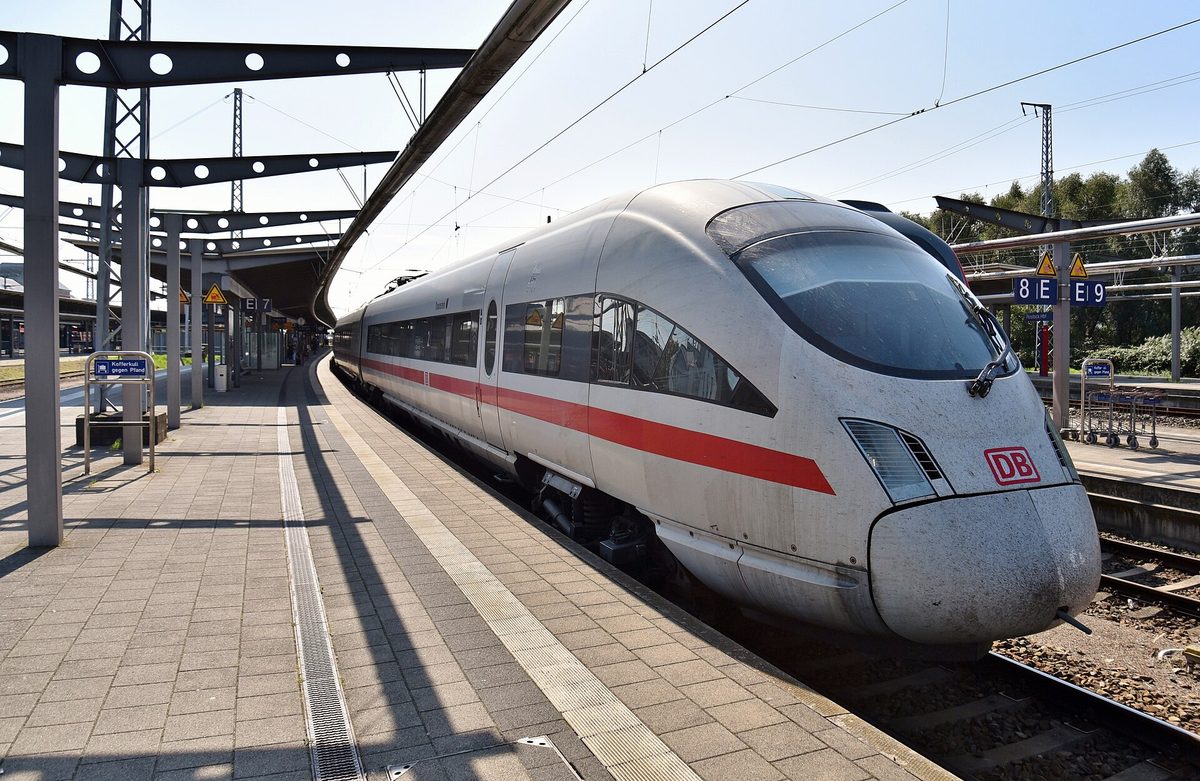
Pass-friendly, where reservations are usually optional and a passholder can walk onto an intercity train and sit down: Germany, Austria, Switzerland, the Netherlands, Belgium, Luxembourg, Ireland, Denmark and most of central and eastern Europe. In these countries a train cannot sell out to you. A German ICE or an Austrian Railjet will take you with no paperwork at all.
Pass-unfriendly, where inter-city trains are all-reserved and you pay every single time: France, Italy, Spain, Portugal and Sweden. That charge applies to international journeys starting or ending in those countries too, so France to Spain costs you a reservation even though you are leaving French territory.
In virtually every country, local, regional and suburban trains can be boarded at any time with no reservation, often because reservation is not even possible on them. That fact is the basis of every fee-avoidance trick below.

Domestic seat reservation fees, 2026
These are Interrail’s published fees in euros. They are indicative and do change, but they are the right order of magnitude and the relative differences between countries are stable.
| Country and train | Compulsory? | Fee, 2nd / 1st class |
|---|---|---|
| Italy Frecciarossa | Yes | €10 to €13 |
| Italy Frecciargento | Yes | €13 / €13 |
| Italy Frecciabianca | Yes | €10 / €10 |
| Italy Intercity | Yes | €3 / €3 |
| France TGV INOUI | Yes | €10 to €20 |
| France OUIGO Grande Vitesse | Yes | €10 to €20 |
| France OUIGO Train Classique | Yes | €5 to €10 |
| France Intercités, mandatory routes | Yes | €10 to €20 |
| France Intercités, recommended routes | No | €1.60 |
| France Frecciarossa (Paris to Lyon, Modane, Marseille) | Yes | €10 / €10 |
| France AVE (Lyon and Marseille to Perpignan) | Yes | €10 Elige / €13 Elige Confort |
| Spain AVE | Yes | €10 Elige / €13 Elige Confort / €23.50 Premium |
| Spain iryo | Yes | €10 / €13 |
| Spain Euromed | Yes | €6.50 / €10 / €23.50 Premium |
| Spain Alvia and Intercity | Yes | €6.50 / €10 |
| Spain Avant and Media Distancia | Yes | €4 |
| Germany all long distance (ICE, IC, EC, ECE) | No, recommended | €5.50 / €6.90 |
| Austria IC, Railjet, Railjet Express | No | €3 / €3 |
| Switzerland Intercity | No | €4.40 |
| Netherlands Intercity Direct (Schiphol to Rotterdam) | Supplement for domestic tickets; Interrail passes are exempt | €3.20 each way on a domestic ticket, or €1.92 off-peak from a platform supplement pole; nothing with an Interrail pass |
| Belgium Diabolo supplement to Brussels Airport | Supplement | €6.40 either class |
| Czechia IC, EC, Railjet | Mostly no | €3.60 |
| Czechia SuperCity | Yes | €2.90 / €5.15 |
| Poland EIP Express InterCity Premium | Yes | €10 / €10 |
| Poland EIC, TLK | No, recommended | €0.70 |
| Poland IC | Recommended, compulsory on selected trains | €0.70 |
| Hungary Intercity | Yes | €1.70 to €2.60 / €3 to €5 |
| Denmark IC and IC Lyn | No, recommended | €4 |
| Sweden SJ High Speed | Yes | €6.50 / €14.40 |
| Sweden Intercity | No | €3.50 / €8.30 |
| Sweden Snälltåget | Yes | €4.50 / €13 |
| Finland IC and Pendolino | Priced at 25% of a full fare | from €3 Eko / from €5.90 Ekstra |
| Norway VY Tog Regiontog | No, advised | €6 2nd; 1st class Premium free |
| Norway SJ Norge and Go-Ahead Nordic | No, advised | €4.30 2nd; 1st class Premium free |
| Portugal Alfa Pendular and IC | Yes, bought locally only | €5 |
| Greece Intercity | Yes | Free |
| Great Britain long distance | No, mandatory on some services | €0 |
| Türkiye long distance | Yes | Free |
| Bulgaria fast trains | Yes in 1st class and on named routes | about €0.30 |
| Croatia ICN, IC, R | No | €1 to €3.60 |
| Romania IR and IC | Yes | €1.20 |
| Romania RegioExpress | Yes on selected routes | €0.80 |
| Serbia fast trains and IC SOKO | Yes | about €1 |
| Slovakia IC and EC | Yes | €5 to €10 / €11 to €16 |
| Slovakia SuperCity | Yes | €1 / €3 |
| Slovenia IC and Pendolino | No, recommended | €2 under 60 km, €4 over |
| Lithuania domestic | Yes on selected routes | €3 to €5 |
| Estonia | 1st class only | Free |
| Bosnia-Herzegovina | No reservations exist | Not applicable |
Read that table for a minute and the geography of a cheap Interrail trip draws itself. A month spent between Berlin, Prague, Vienna, Krakow and Budapest will cost you almost nothing in supplements. A month spent between Paris, Barcelona, Madrid, Rome and Lisbon will cost you a second pass in reservations. Neither is wrong. But you should choose it knowingly, and our guide to travelling eastern Europe exists partly because of that arithmetic.
Panoramic and scenic trains, which are their own category
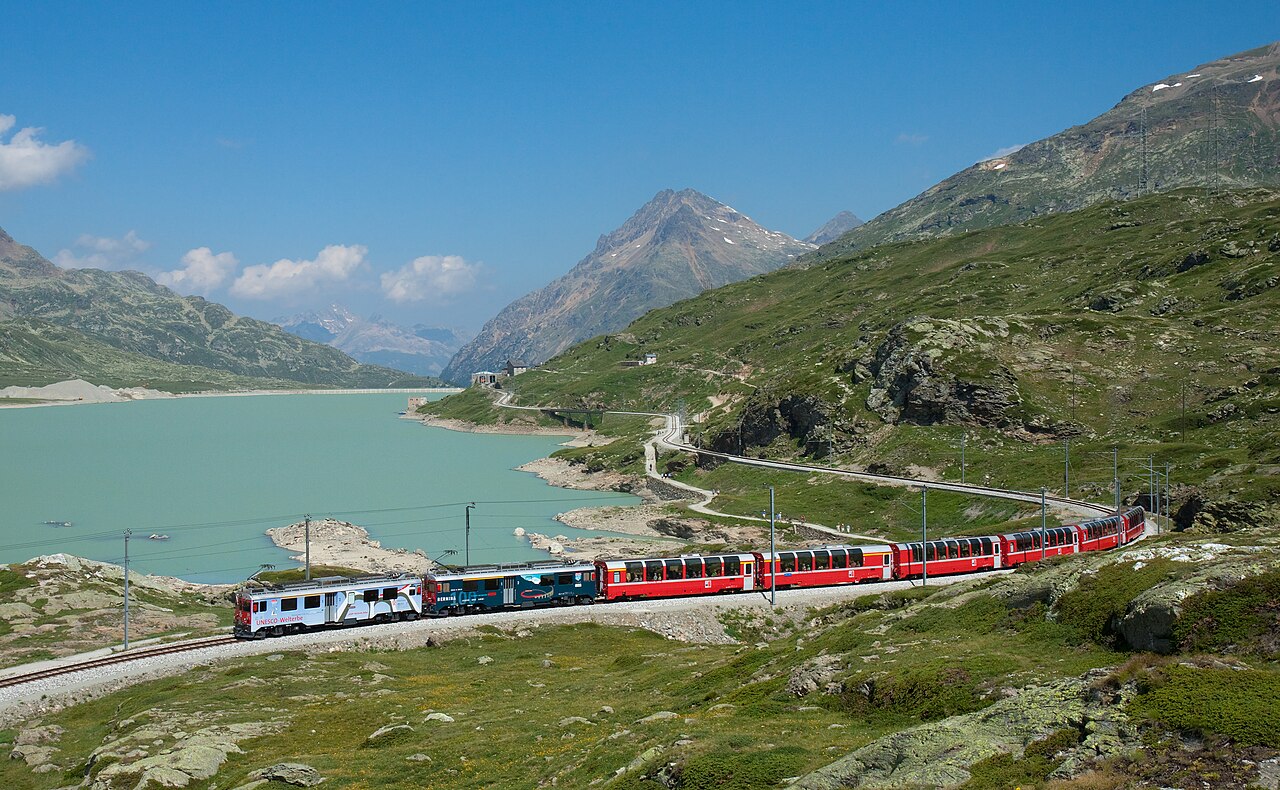
Switzerland is generally the friendliest country in Europe for a passholder, right up until you want to ride the famous scenic services, which carry supplements that dwarf ordinary reservation fees.
| Train | Supplement |
|---|---|
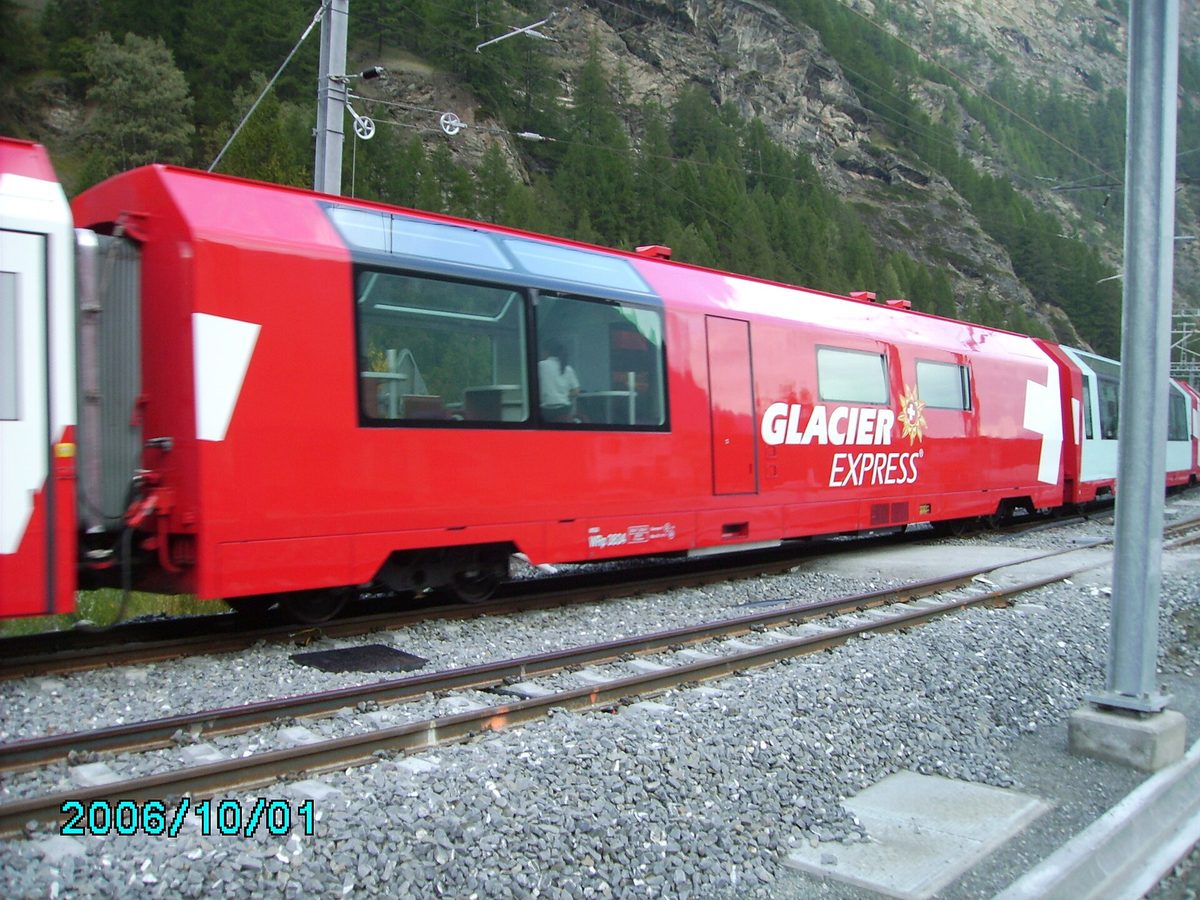
| Glacier Express | CHF 54 compulsory, first or second class, short or long journey; CHF 590 Excellence Class, with first-class travel entitlement |
| Bernina Express observation car | CHF 32 short; CHF 40 low season or CHF 44 high season (2 May to 25 October 2026) for the long run from Chur |
| Gotthard Panorama Express | CHF 24 compulsory supplement in 2026, CHF 28 in 2027; in 2026 the full boat-and-train journey cost CHF 41 extra with a first-class pass, or CHF 75 before the supplement with a second-class one |
| Flåm Railway (Norway) | 30% passholder discount rather than a flat supplement |
Worth knowing: the Bernina line’s ordinary regional trains run the same spectacular route over the Landwasser and through the Brusio spiral for no supplement at all. You lose the panoramic glass and the commentary. You keep the Alps. That is the trade, and on a tight budget it is an easy one. Our Switzerland travel guide and the round-up of Europe’s most scenic train journeys both go into which sections are worth paying for.

International seat reservation fees, 2026
Cross-border trains are where the money goes. These are the fees for a passholder, in euros, second class then first.
| Route | Train | Compulsory? | Fee |
|---|---|---|---|
| Paris to Barcelona or Girona | TGV | Yes | €35 / €35 |
| Lyon, Montpellier or Perpignan to Barcelona | TGV | Yes | €25 / €25 |
| Paris to Turin or Milan | TGV | Yes | €31 / €45 |
| Paris to Turin or Milan | Frecciarossa | Yes | €13 / €13 |
| Paris to Basel, Bern, Geneva, Lausanne, Zurich | TGV Lyria | Yes | €29 / €39 |
| Paris or Strasbourg to Frankfurt, Stuttgart, Munich | ICE and TGV | Yes | €19 / €19 passholder fare |
| Paris to London | Eurostar | Yes | €35 Standard / €40 Plus |
| London to Brussels or Lille | Eurostar | Yes | €35 Standard / €40 Plus |
| London to Rotterdam or Amsterdam | Eurostar | Yes | €35 Standard / €43 Plus |
| Paris to Brussels | Eurostar | Yes | €27 Standard / €32 Plus |
| Paris to Amsterdam | Eurostar | Yes | €32 Standard / €37 Plus |
| Paris to Cologne and Dortmund | Eurostar | Yes | €32 Standard / €37 Plus |
| Brussels to Amsterdam | Eurostar | Yes | €22 Standard / €27 Plus |
| Brussels to Cologne and Dortmund | Eurostar | Yes | €27 Standard / €32 Plus |
| Paris to Brussels | OUIGO Train Classique | Yes | €10 to €15, one class only |
| Belgium and France cross-border | TGV | Yes | €20 to €35 / €30 to €45 |
| Barcelona or Madrid to Lyon and Marseille | AVE | Yes | €25 Elige / €28 Elige Confort |
| Milan or Venice to Zurich, Basel, Geneva | EuroCity | Yes | €13 to €17 |
| Milan to Zurich, Basel, Frankfurt | EuroCity Express | Yes | €13 to €17 |
| Munich to Innsbruck, Verona, Venice, Bologna, Rimini | Railjet Brenner | Supplement compulsory to, from and within Italy; seat reservation optional | €10 2nd / €15 1st supplement including a seat, plus €5 if bought on board |
| Prague to Berlin | Railjet | No | €5.50 / €6.90 |
| Prague to Vienna | Railjet or Regiojet | Railjet no, Regiojet yes | €3 Railjet / €1 to €2.80 Regiojet |
| Amsterdam to Berlin | ICE | Required 25 June to 5 September 2027, optional otherwise | €5.50 / €6.90, plus any booking fee |
| Amsterdam to Frankfurt | ICE | Compulsory in summer 2027 (25 June to 5 September) | €5.50 / €6.90, plus any booking fee |
| Hamburg to Copenhagen | ECE or Railjet | Required in high summer, end date disputed | €5.50 / €6.90 |
| Germany to Poland | EuroCity | Yes | €5.50 / €6.90 |
| Austria general | Railjet and EuroCity | Varies by route and season | €3 / €3 |
| Germany general | EuroCity and EuroCity Express | Varies by route and season | €5.50 / €6.90 |
| Vilnius to Riga, Valga and Tallinn | International | Yes | €5 / €5 |
| Dublin to Belfast | Enterprise | No, recommended | €0 2nd / €16 1st |
| Porto to Vigo | Intercity | Yes | €0 |
| Leo Express international | LE | Yes | €0 |
| Regiojet international | IC | Yes | €1.30 to €2.80 |
Two of the cells above carry a caveat worth spelling out. Interrail’s own pages quote the TGV Lyria and EuroCity Express fees slightly differently in different tables, so treat those two as approximate and confirm at booking. Note the summer clauses too. Several German cross-border ICE routes that are reservation-optional for most of the year become compulsory from late June into early September. If you are travelling Amsterdam to Berlin in July, budget for it and book ahead, because those quotas do fill. Interrail lists conflicting summer end dates for the Hamburg to Copenhagen window, so check the dates for your own train when you book.
Also note what is currently not running: the X2000 Copenhagen to Stockholm service is listed as temporarily suspended, there are no international day trains to or from Turkey at present, and no international trains operating in Greece. Route planning around any of those needs a fallback.
How to spend less on reservations, concretely
Four tactics, in descending order of how much they save.
1. Take the slower train. Rome to Florence on a Frecciarossa costs €13. On an Intercity it costs €3. On a regional train it costs nothing and takes about an hour longer. Over a two-week Italian trip that difference funds a decent dinner every other night. Same principle across the whole country: our Italy travel guide has the regional alternatives for most of the popular hops, and the same trick works between Rome, Florence and Venice.
2. Take the parallel operator. Brussels to Amsterdam on Eurostar, the service that used to be Thalys, takes around 1h52 and costs a €22 reservation. The hourly EuroCity Direct takes 2h08 and costs nothing. Sixteen minutes for twenty-two euros is a poor trade unless you are late.
3. Use the app’s filter. Rail Planner can filter out trains that require a reservation. Switch it on when you are planning a day and the pass-friendly options surface immediately.
4. Know when not to bother. On some routes there is no alternative and no point pretending otherwise. Paris to Brussels, Paris to Amsterdam, Paris to Nice and Paris into Italy are all effectively single-option corridors. Pay the fee, book early, move on.
One more: book Italian reservations locally at the station where you can. Reservations made in Italy carry a €2 booking fee and are 80% refundable before departure, which is unusually generous and useful if your plans are loose.
Three ways to actually book a reservation
Knowing the fee is half of it. Here is where you pay it.
- Interrail’s own reservation service. The path of least resistance: one account, one basket, most European trains in one place, and a €2 fee per passenger per train on top of the operator’s charge. Interrail says it can handle reservations for the large majority of European trains. Use this for anything international and anything you want locked in before you leave home.
- The operator’s own website. Usually cheaper, because you skip the €2, and usually more fiddly, because each railway hides the passholder fare in a different place. SNCF, Trenitalia, Renfe, DB and ÖBB all sell passholder reservations directly. Worth the effort on a route you are booking several times.
- The station ticket counter. Sometimes the only option. Portuguese Alfa Pendular and Intercity reservations can only be bought locally, and Italian reservations bought in Italy are 80% refundable. The trade is that you are committing to a train while standing in a queue.
For international routes there are also agencies: Rail Europe charges €2 per person and waives it if you bought your pass there, B-Europe charges €4 per booking, and Allaboard charges €2 for up to three people. On a Eurostar booking for four, those differences are real money.
Delays, strikes and cancellations
A pass is not a contract for a specific train, which cuts both ways. If your train is cancelled you simply take the next one, add it to your pass, and carry on. No rebooking fee, no lost ticket, nothing to argue about. This is the single most underrated advantage of a pass and it is exactly why an itinerary built on a chain of non-refundable advance tickets is fragile in a way a pass is not.
The flip side: because you have not bought a ticket for a specific service, delay compensation is limited. You paid for a pass, not for that train, so there is generally no cash payout for a late arrival. What you lose is a paid reservation, if the train you reserved on does not run. Reservation refunds follow each operator’s own rules and vary by country of departure, so keep the booking reference.
During a French or Italian strike, the pass is at its best. Regional services usually keep running on a reduced timetable, and a passholder can board whichever one shows up. Someone holding a €25 non-refundable TGV ticket cannot.
Night trains with an Interrail Pass, and what a bed costs
Night trains are the best argument for an Interrail Pass and the biggest hole in most people’s budgets. A couchette or a bed always needs a reservation, though a few night trains, Finnish ones and Bulgarian domestic services among them, let you sit in a seat without one. What you pay depends on whether you want a seat, a couchette or a proper bed.
The vocabulary matters. A couchette is a padded bunk in a compartment of four or six, with a sheet, a rug and a pillow. A sleeper is a proper bed in a compartment of one to three, usually with a washbasin. One ticket buys one bed, not one compartment: book a berth in a double and you share with a passenger of the same gender, book the single and the room is yours.
A useful quirk: on the Nightjet network a second-class pass is enough for every class of accommodation, including the deluxe single sleepers. In parts of eastern Europe the opposite applies and a first-class pass is often required for a single berth, though a second-class pass covers a double or triple.
ÖBB Nightjet, 2026
Nightjet pricing is dynamic, so these are bands rather than fixed fares. The low end applies to quiet nights on short routes, the high end to August on the popular ones.
| Accommodation | Passholder price |
|---|---|
| Seat | €4.90 to €24.90 per person |
| 6-bed couchette | €19.90 to €64.90 per person |
| 4-bed couchette | €29.90 to €94.90 per person |
| Mini Cabin | €29.90 to €94.90 per person |
| 3-bed sleeper | €59.90 to €184.90 per person |
| Double sleeper | €69.90 to €224.90 per person |
| Single sleeper | €114.90 to €479.90 per cabin |
| 3-bed sleeper Plus | €79.90 to €249.90 per person |
| Double sleeper Plus | €94.90 to €299.90 per person |
| Single sleeper Plus | €149.90 to €624.90 per cabin |
There is one exception to the compulsory-reservation rule: Nightjet services carrying a DB seating carriage on the Zurich to Hamburg, Zurich to Berlin and Zurich to Amsterdam runs do not require one.
Other night trains, 2026 passholder prices
| Service | Seat | Couchette | Sleeper |
|---|---|---|---|
| European Sleeper Budget | €11 to €21 | Classic 5-berth €64 to €74 | Classic private cabin €229 to €269 |
| European Sleeper Comfort Standard | Not applicable | Triple €79 to €99 | Double €119 to €139; single €149 to €169 |
| European Sleeper Comfort Plus | Not applicable | Triple €89 to €109 | Double €129 to €149; single €159 to €179 |
| EN Metropol, Budapest to Berlin | €19 | 6-bed €44; 4-bed €54 | Triple €69; double €94; single €169 |
| EN Dacia, Vienna to Bucharest | €3 | 6-bed €13.40; 4-bed €20 | Triple €28; double €42; single €98 |
| EN RDC, Berlin to Copenhagen and Stockholm | €18.50 | 6-bed €37 | Double €85 |
| France Intercités de Nuit | Reclining seat €10 | 6-bed 2nd €19 to €25; 4-bed 1st €19 to €25 | Not applicable |
| Italy InterCity Notte | €3 | 4-bed €41 | Triple €48; double €58; single €122 |
| Poland night trains | €0 to €4 | 6-bed €13; 4-bed €17.50 | Triple €20; double €33; single €66 |
| Sweden SJ night train | €3.50 | 6-bed €22 | Triple €36; private with bathroom €71 per cabin |
| Finland Santa Claus Express | €5 to €32.70 | Not applicable | Double cabin €39 to €150; deluxe double with bathroom €39 to €160 |
| Bulgaria domestic | €0.30, optional | Not applicable | Triple €5.80; double €7.80; single €15 |
| Türkiye night trains | Pullman seat €0 | 4-bed €8 | Private 2-bed at full fare only |
| Caledonian Sleeper, Great Britain | Free, booked by phone | Not applicable | Classic solo £155, twin £195; Club en-suite solo £205, twin £255, first class passes only |
| Night Riviera Sleeper, Great Britain | €0 | Not applicable | Full fare only at present |
Look at the spread between the Dacia and the Metropol and you can see the whole economics of European night travel in one table. Vienna to Bucharest in a six-bed couchette costs €13.40 on top of your pass. Budapest to Berlin in the same class of berth costs €44. Both are overnight, both save you a hotel, both use one travel day. Eastern Europe is simply cheaper, and if the budget is the binding constraint, that is where the pass stretches furthest. Our guide to the cheapest places to travel in Europe covers where else that logic applies.
Finland is a small exception in how it prices: night reservations cost 50% of a full fare, there is a €1 station booking fee, and high season adds up to 20% on top.

Eurostar with an Interrail Pass: the quota problem
On Eurostar a pass alone does not guarantee you a place, because seats for passholders are limited, so reserve as early as you can.
The fares are fixed and low: €35 in Standard from London to Paris, Lille or Brussels, €40 in Plus. London to Rotterdam or Amsterdam is €35 Standard and €43 Plus. A second-class pass gets you Standard only. A first-class pass gets you Standard or Plus. Premier is not available to passholders at all, whatever pass you hold.
Only a Global Pass qualifies. A One Country Pass does not.
The quota is the problem. Passholder seats sit in roughly the third of about twelve price buckets, which means they disappear once a train fills. A Eurostar can be entirely sold out to passholders while still selling full-fare tickets happily. There is a rough field test: if Eurostar’s regular price for a given train is around €143 or less, passholder places are probably still available. At €160 or more, they are gone.
In winter you will find passholder space on most trains, with the possible exception of Friday and Sunday afternoons. In summer, book the moment you can. Travellers have reached Paris in August and found no passholder places for three days running. Booking opens eleven months out but passholder allocations sometimes only appear about six months before departure, so if you look very early and see nothing, try again later.
Two practical points. Children need a reservation too, so a child travelling on a free Child Pass still needs one alongside your €35 Standard seat from London, while under-fours travel free on a lap, without a seat of their own. And when you add a Eurostar to your pass in the Rail Planner app, check the departure time against your Eurostar reservation so you pick the right train.
For passholder reservations bought on or after 6 May 2025, changes are free up to seven days before departure; from six days out they cost €15 in Eurostar Standard or €20 in Eurostar Plus. Handle exchanges through Eurostar’s own Manage Booking rather than Interrail. And remember: booking the Eurostar reservation does not put the journey on your pass. You still have to add it in the app.

Crossing the Channel without Eurostar
If the quota beats you, the alternatives are ferries, each ticketed separately from the pass. Stena Line’s Rail and Sail from London or any Greater Anglia station to Hoek van Holland starts around £75 each way at the time of writing. Overnight ferries run Hull to Rotterdam and Newcastle to Amsterdam, and Brittany Ferries goes Portsmouth to Caen. All of them cost extra, so check each operator’s own fares and any passholder discount before you count on one. Our Eurostar guide weighs the options properly.
Ferries, bonuses and the discounts nobody claims
Interrail advertises hundreds of discounts and rewards across Europe for passholders. A few are worth the trouble.
Italy to Greece ferries. A Global Pass gets you free passage on Superfast Ferries, Minoan Lines and Blue Star Ferries between Italy and Greece. Treat “free” as shorthand: you still pay port taxes and a fuel surcharge, a cabin berth costs extra, and Superfast among others adds a summer supplement. It is a substantial reduction rather than a free ride, and it is still one of the best-value things a Global Pass does. Read it alongside our Greece travel guide if you are building a route that way.
Attica Group brands, which covers Superfast, Blue Star, Hellenic Seaways and Africa Morocco Link, give Global Pass holders discounted travel. Between the islands, the Greek Islands Pass covered above is the way to use them.
Grimaldi Lines discounts ship passage and accommodation supplements such as Pullman seats, berths and cabins for passholders; check the current terms on Interrail’s benefits pages before you book. Port taxes are excluded.
Sweden to Finland ferries are where Tallink Silja Line comes in: on its Stockholm to Helsinki and Stockholm to Turku routes, Interrail holders get 20% off overnight crossings. Given what a night on the Baltic costs otherwise, this is one of the better deals in the scheme, and it fits neatly into any Scandinavia and Nordics route.
Hostels and activities. Up to 20% off with Europe’s Famous Hostels, 10% at Generator and at A&O Hotels and Hostels, and a GetYourGuide partnership covering tens of thousands of activities. None of these will change your life but on a month-long trip they compound. See our guide to where to stay in Europe for how those chains compare.
Switzerland’s bonuses are the most generous per capita: free or discounted travel on lake boats and private mountain railways, including a discount on the Grindelwald to First cable car. If Switzerland is on your route, spend twenty minutes on the bonus list before you go.

Is an Interrail Pass actually worth it? The break-even maths
The honest answer is that if you know your exact dates months in advance and you book every ticket the moment booking opens, point-to-point tickets will almost always be cheaper than a pass. Advance fares in Europe are extraordinarily low: Amsterdam to Berlin can be had from around €37.90.
What the pass buys you is not usually a lower headline price. It is the right to change your mind.
Here is the comparison that matters. These are indicative fares seen in September 2026 rather than live quotes, so treat them as the shape of the thing rather than prices you can book today.
| Route | Cheapest advance ticket | Walk-up or flexible fare | Cost with a pass |
|---|---|---|---|
| Prague to Berlin | from €18.99 | around €95 | €0 to €5.50 reservation |
| Amsterdam to Berlin | from €37.90 | around €170 2nd class | €5.50, and compulsory in high summer |
| Vienna to Prague | from €12.90 | rarely above €40 | €1 to €3 |
| Munich to Venice | from €39.90 2nd class | not published | €10 2nd / €15 1st supplement |
| Rome to Florence | from €19.90 | €55 on the day | €13 Frecciarossa, €3 Intercity, €0 regional |
| Zurich to Milan | from €19.99 | not published | €13 to €17 |
| Copenhagen to Stockholm | from about €17, booking opens 90 days out | €76 to €200 and up | €6.50 2nd / €14.40 1st |
| Paris to Barcelona | from €25 | not published | €35 reservation, either class |
Read the right-hand two columns together and you can see exactly where the pass earns its money. Against the advance fare, the case for a pass is much weaker, and Paris to Barcelona shows why: the passholder reservation is compulsory and costs €35 in either class, so set it against the actual ticket price for your departure. Against the flexible fare, the pass wins overwhelmingly: Prague to Berlin costs a pass holder an optional €5.50 reservation at most.
So the question is really: which sort of traveller are you?
Buy the pass if
- You are travelling for more than about two weeks and moving frequently.
- You want to decide where to go next over breakfast, not in March.
- You are travelling in peak season on popular dates, when advance fares have long gone and only expensive buckets remain.
- Your route runs through pass-friendly countries where reservations are cheap or optional.
- You are under 28, or 60 or over, which is a 25% or 10% discount respectively, and worth pairing with solo travel planning if you are going alone.
- Your itinerary is a chain of non-refundable advance tickets where one delay would collapse the lot.
Skip the pass if
- You have fixed dates and can book everything the day booking opens.
- Your trip is mostly short hops. Runs like Vienna to Bratislava or Florence to Pisa are cheap even bought on the day, and spending a travel day on one is poor value.
- Your route is France, Spain, Portugal and Italy end to end, where reservations will eat the saving.
- You are basing yourself in one or two cities and taking day trips, which our European city breaks guide covers better.
We go through the arithmetic in far more detail in our full analysis of whether a rail pass is worth it, including some worked itineraries.

The Plus Pass, which solves the reservation problem for a price
Interrail is running a Plus Pass in beta, and it is aimed squarely at the complaint that runs through this entire article. A Plus Pass includes seat reservations on most trains at no extra fee, plus three reservation credits for high-demand services.
The credit system works like this. Most trains cost zero credits, meaning the reservation is simply included. High-demand trains cost one credit, occasionally two. Eurostar is one or two credits, depending on demand. ICE services between Germany and France are one. EuroCity between Switzerland and Italy is one. SNCF domestic reservations are zero or one. SNCF international is one, rising to two for first class between France and Italy. Nightjet and European Sleeper seats are zero or one.
What it does not cover: paper seat reservations, sleeping accommodation on night trains, and any train outside the Interrail timetable.
Two conditions differ from a standard pass. The activation window is three months from purchase rather than eleven, which is a meaningful restriction if you plan far ahead. And once you book any included reservation, the Plus Pass becomes non-refundable and non-exchangeable, where a standard pass stays refundable until activation.
Variants at the time of writing are Global Plus, Italy Plus and German Rail Plus, in five or seven days in one month for Global and four days in one month for the country versions. The premium over a standard pass is easiest to see at checkout: price the Plus Pass against a standard pass of the same duration, then against your own route.
My read: if your trip is France, Spain and Italy, where you would otherwise pay €25 to €35 per international leg, the Plus Pass can pay for itself in three journeys. If your trip is Germany, Austria, Czechia and Poland, where reservations are optional and cost a few euros, it is money burned.
Refunds, exchanges and changing your mind
Interrail’s refund policy, currently version 12 and last updated on 10 September 2026, is more generous than most people assume, provided you have not activated. The version in force when you bought your pass is the one that applies to it.
| Situation | Without Refund Protection | With Refund Protection |
|---|---|---|
| Refund within 7 days of purchase | Full refund, including the protection fee | Full refund |
| Refund after 7 days, pass not activated | 10% fee per pass | Full refund, protection fee not returned |
| Exchange within 7 days | Free | Free |
| Exchange after 7 days, pass not activated | €25 fee per pass | Free |
| After activation | No refund | No refund |
| Unused travel days | Not refundable on their own; only a refundable pass gets money back | Not refundable on their own; only a refundable pass gets money back |
| Shipping costs | Never refundable | Never refundable |
The window for all of this is the last possible activation date, eleven months from purchase. Refunds take up to ten working days to appear.
Refund Protection is the add-on formerly called Plus, available on mobile passes only, and it becomes non-refundable itself after seven days. Check the price at your own checkout: one reseller quotes around €23, which I would treat as indicative. Whether it is worth it comes down to a simple sum: it converts a 10% refund fee and a €25 exchange fee into zero. On a €956 three-month pass that 10% is €95.60, a fee the protection lets you avoid on an eligible cancellation after the first seven days, so weigh it against the checkout price and how likely you are to cancel. On a €212 youth flexi pass the same 10% is €21.20.
Changing your start date is free and simple as long as the pass has not started: deactivate it in the app before midnight, local time, as your chosen start date begins, then activate it with a new date. This is not an exchange and costs nothing.
Paper passes are refundable or exchangeable only if unused: apply before the first date of validity, or up to one month after the last validity date if the pass is certified NOT USED. Both the pass and the pass cover must be returned using the free label. The pass number on a paper pass is printed on the back of the cover, not the pass, which is why they insist on getting both. Seat reservations follow an entirely separate refund policy that varies by country of departure, and reservations booked with Plus Pass credits are never refundable.
Nine mistakes that cost people money
- Forgetting to add the journey to the pass before boarding. The barcode is generated from journeys you have toggled on. No toggle, no ticket, and a conductor who has heard the excuse before.
- Assuming the pass includes a seat. It does not, anywhere, ever. Board a compulsory-reservation train without one and you are treated as ticketless: expect to buy a reservation from the conductor at a penalty rate, and on some operators a fine on top.
- Planning a route through France, Spain and Italy on a budget. Those are the three most expensive countries to hold a pass in, and the reservation fees are not optional.
- Believing the 7pm rule. It no longer applies. Departure time no longer matters on a night train; what matters is whether you change trains after midnight.
- Losing a travel day to a time zone. The clock that counts is the local one where you are, so board before midnight at your departure station, and remember a connection after a border runs on the new country’s time.
- Burning both home-country journeys early. UK residents in particular: Eurostar uses one of your two before you have even left the country.
- Buying a continuous pass for a slow trip. If you are sleeping three nights in each city, you are paying for days you will not use.
- Not carrying the ID you activated with. Conductors do ask, and the number has to match.
- Letting the phone die. Carry a power bank. The pass lives on that screen and there is no paper backup.
Which pass suits which traveller
| Traveller | Best pass | Why |
|---|---|---|
| Gap-year backpacker, two months, no fixed plan | Global, 15 days in 2 months, youth | €415 for fifteen moves across two months, with the freedom to stay somewhere an extra week |
| Two-week summer trip, four or five cities | Global, 7 days in 1 month | €381 adult; match the number of travel days to the train journeys you plan |
| Interrailing hard, moving daily for three weeks | Global, 22 days continuous | €586 works out at €27 a day and removes all travel-day arithmetic |
| Retired couple, slow trip, comfort matters | Global 1st class, 10 days in 2 months, senior | €522 each with a 10% senior discount and access to either carriage |
| Family with two children under 12 | Global for the adults, free Child Passes | Children are free; budget for their reservations, which are not |
| One country, one or two weeks | One Country Pass, 8 days in 1 month | Between €150 and €337 adult depending on the country band |
| France, Spain and Italy only | Global Plus, or no pass at all | Reservations dominate the cost; either include them or buy advance tickets |
| Central and eastern Europe | Global, any flexi duration | Reservations are mostly €1 to €10 and often optional, so almost all of your spend goes on the pass itself |
If none of those quite fits, our Europe by train itinerary planner and the guide to the best Interrail routes work through more shapes of trip.
A worked example: seven travel days, two weeks, no reservations panic
To make all of this concrete, here is a sample route built to use a 7-days-in-1-month Global Pass and keep supplements under €100 for the whole fortnight, or under €65 if you skip Eurostar.
| Travel day | Journey | Reservation | Nights after |
|---|---|---|---|
| 1 | Home to Brussels via Eurostar (uses one home-country journey) | €35 | 2 in Brussels |
| 2 | Brussels to Amsterdam by EuroCity Direct, not Eurostar | €0 | 2 in Amsterdam |
| 3 | Amsterdam to Berlin by ICE | €5.50, compulsory 25 June to 5 September 2027 | 3 in Berlin |
| 4 | Berlin to Prague by Railjet | €5.50, optional | 2 in Prague |
| 5 | Prague to Vienna by Regiojet | €2.80 | 2 in Vienna |
| 6 | Vienna to Budapest by Railjet | €3 | 2 in Budapest |
| 7 | Budapest to Berlin on the EN Metropol night train, six-bed couchette (uses one travel day) | €44 | Fly or connect home |
Total reservations: €95.80, of which €35 is the Eurostar and €44 is a bed you would otherwise have paid a hostel for. Take the ferry instead of Eurostar and the supplement total drops to €60.80. Seven travel days on an adult second-class pass is €381, or €286 for a youth. That is thirteen nights in six countries for €476.80 as an adult and €381.80 as a youth, and every single day of it changeable.
Compare it to the same route booked as advance tickets and you would likely save maybe €60 to €100 in a good scenario, at the price of committing to every date in advance.
If you have a paper pass: the travel diary
Paper passes are a minority sport now, but they still exist and the rules are different enough to catch people who have only ever used the app.
Your paper pass arrives stapled inside a paper cover. The pass number is printed on the back of that cover rather than on the pass itself, so every refund and support process asks for the “pass cover number”, and you must send both back if you ever claim a refund. Do not throw the cover away.
Instead of toggling journeys in an app, you fill in a travel diary by hand, in indelible black or blue ink, before you board. Write the date, the origin and the destination for each train. A journey with a change counts as two entries: Brussels to Nuremberg via Frankfurt needs a Brussels to Frankfurt line and a Frankfurt to Nuremberg line. On a flexi pass you also write the date in one of the printed travel-day boxes, working through them in order.
At the end of your trip you post the diary back, postage free, so the revenue can be allocated to the railways you used. It feels quaint. Keep the pass safe as well as the diary: a lost paper pass cannot be replaced.
The start date is printed on a paper pass and cannot be changed, so the flexibility of deactivating and re-activating in the app simply does not exist. If your dates are uncertain, take the mobile pass.
What is new for 2026
Several things have shifted this year.
- Eurail became Interrail on 9 September 2026. Existing passes, bookings and accounts remain valid.
- The Plus Pass is in beta, in Global, Italy and German Rail variants, bundling most reservations into the pass price.
- Prague to Copenhagen by day. Since 1 May 2026, direct ČD ComfortJet trains have linked Prague, Berlin, Hamburg and Copenhagen, the first through service between the Czech and Danish capitals in more than ten years. Check the timetable before planning around it.
- Austria’s Koralmbahn opened for the 2026 timetable, a 130 km high-speed line containing one of the world’s longest railway tunnels, cutting the Graz to Klagenfurt run dramatically.
- Westbahn now runs Vienna to Graz, Klagenfurt and Villach, from March 2026.
- Regiojet withdrew its domestic Polish trains on 3 May 2026, though its international services continue.
- iryo is now in the pass network on Spain’s Mediterranean corridor, at €10 second class and €13 first.
- Transdev’s Marseille to Toulon to Nice regional service has been added to the pass network, which is good news for anyone building a South of France route.
- Trenitalia’s Paris to Lyon to Turin to Milan Frecciarossa now carries a mandatory €13 reservation in either class, which undercuts the SNCF TGV on the same corridor by €18 in second class and €32 in first.
- Bulgaria joined the euro on 1 January 2026 at a fixed rate of 1.95583 leva to the euro. Mandatory dual pricing in leva and euros was set to run until 8 August 2026. Bulgaria remains in the cheapest One Country Pass band.
That last one is worth a beat. If a Bulgarian price you are quoted is in leva, it predates January 2026 and the currency itself has changed, not just the number. Our central and eastern Europe travel guide has been updated for it.
Frequently asked questions
Can I travel in my home country with an Interrail Pass?
Yes, but only twice: one outbound journey and one inbound journey, each consuming a travel day from your total. Within each journey you can take as many trains as you like as long as they all fall on the same calendar day. The app tracks it and will not let you exceed two. One Country Passes cannot be used in your country of residence at all.
What counts as a travel day?
Any calendar day, 00:00 to 23:59 local time, on which you have a journey added to your pass. Unlimited trains within it. On a continuous pass every day of validity is a travel day automatically.
Do I have to reserve seats with an Interrail Pass?
It depends entirely on the country and train. Compulsory in France, Spain, Italy, Portugal and Sweden on inter-city services, and on all international high-speed and night trains. Optional in Germany, Austria, Switzerland, the Netherlands, Belgium, Denmark, Ireland and most of central and eastern Europe. Local and regional trains almost never need one anywhere.
What is the night train rule for Interrail, the one people call the 7pm rule?
The 7pm rule is gone. The current rule is that a night train departing one day and arriving the next uses only one travel day, the day of departure, provided you do not change trains after midnight. If you do change after midnight, it costs two travel days. Departure time is irrelevant.
Do children travel free with an Interrail Pass?
Yes. Children aged 4 to 11 get a free Child Pass, up to two children per accompanying adult, youth aged 18 or over, or senior. Under-fours travel free with no pass at all. Children still pay full seat reservation fees, and Child Passes must be added to your order before you pay.
How many travel days do I actually need?
Count the days on your itinerary on which you will physically board a train that takes you somewhere new. That is your number. Most people overbuy by two or three days because they plan on ambition rather than on how they travel.
Can I get a refund on my Interrail Pass?
If it is not activated, yes. Full refund within seven days of purchase. After seven days, a 10% fee per pass, or free if you bought Refund Protection. Exchanges cost €25 per pass after seven days, or nothing with Refund Protection. Once the validity period has started, nothing is refundable.
Can I change my start date after activating?
Yes, provided the start date has not arrived. Deactivate the pass in the app before your start date begins at midnight local time, then choose a new date. This costs nothing and is not treated as an exchange. Paper passes have their start date printed and cannot be changed.
Does the Rail Planner app work offline?
Yes for timetables and tickets, which are stored on the device. It does need to connect to stay valid: open Rail Planner online at least once every 24 hours to keep the mobile pass active. Make that a daily habit and you never have to think about it. You must be online to activate the pass and to add a home-country outbound or inbound journey.
Can I take a bike or a lot of luggage?
Luggage is easy: European trains have no weight limit and no check-in, you carry what you can lift, and there are racks at the ends of carriages and above the seats. That freedom is one of the quiet reasons rail beats flying on a long trip.
Bikes are the awkward one. An Interrail Pass does not cover your bicycle. Most long-distance trains that take bikes require a separate bike reservation, typically €5 to €15, and the spaces are limited and book out in summer. Folding bikes usually travel free as luggage. Regional trains across Germany, Austria, Denmark and the Netherlands are the most bike-friendly; French and Spanish high-speed services are the least.
Is the Interrail Pass worth it?
Against advance-purchase tickets bought months ahead, usually not on price alone. Against walk-up and flexible fares, it often is: Prague to Berlin costs a pass holder an optional €5.50 reservation at most, so price the flexible fares on your own route against the reservation fees. The pass buys flexibility and protection against a single delay collapsing a chain of non-refundable tickets. Whether that is worth somewhere between €283 and €956 depends on how you travel.
Which Interrail Pass should I choose?
One country, one pass. Multiple countries or your own country, Global. Moving more often than every other day, continuous. Staying put for three or four nights at a stretch, flexi. Route dominated by France, Spain and Italy, look hard at the Plus Pass.
Do I need a Eurail or an Interrail Pass?
Since 9 September 2026 there has been one brand, Interrail, and the country where you live decides which passes you can buy. Before that, Interrail was for European citizens and legal residents of a European or neighbouring country in the scheme, and Eurail for everyone else; the products were already near-identical.
Can I use my Interrail Pass on the metro?
Almost never. The test is whether the national railway runs the service. DB’s S-Bahn in Germany, ÖBB’s S-Bahn in Austria and DSB’s S-tog around Copenhagen are covered. Metros, U-Bahn, trams and city buses are run by municipal transport authorities and are not. Budget separately for city transport everywhere else, as our guide to getting around Europe explains.
Can I take Eurostar with an Interrail Pass?
Yes, with a Global Pass only, at €35 in Standard or €40 in Plus for London to Paris, Lille or Brussels. Places are quota-controlled and do sell out, particularly in summer, so book as early as you can. A second-class pass restricts you to Standard.
Are there benefits beyond trains?
Hundreds of discounts and rewards. The valuable ones are Superfast’s Italy to Greece ferries, where a Global Pass covers the passenger fare on a travel day and you pay the taxes and surcharges, Tallink Silja’s 20% off overnight Baltic crossings, and the passholder benefits on selected Swiss lake boats and mountain railways. Hostel and activity discounts exist but are marginal.
How far in advance should I buy?
You can buy up to eleven months ahead and must activate within the same period from purchase. There is no standing early-bird discount, though Interrail does run periodic promotional sales, so check before you assume the list price is the price. The other reason to buy early is that an activated pass unlocks partner discounts that do not consume a travel day.
Final thoughts
The Interrail Pass is not a discount product. It is a flexibility product that happens, on the right route and in the right season, to also be cheaper. If you approach it expecting the cheapest possible way to cross Europe you will be disappointed, because a diligent person with a spreadsheet and a booking calendar will always beat you on price.
But that is not the trip most people want. The trip most people want is the one where you meet someone in a hostel in Ljubljana who says the coast is beautiful right now, and you go, because going costs you a travel day rather than a new ticket. That is what you are buying. Price it honestly against the reservation tables above, choose a route that runs through countries where the supplements are small, and the pass will do exactly what it promises.
Two things to do before you go, in order. Read the reservation fee table for the countries on your route, checking the entry requirements in our Schengen and ETIAS guide while you are at it, and add up what your specific journeys will cost, because that number belongs in your budget alongside the pass price. And download the app, add your pass and open it once at home, so the first time you use it is not on a platform in front of a conductor.
For the wider picture, our complete guide to train travel in Europe covers the network beyond passes, and Europe by train for beginners is the gentler starting point if this article was your first encounter with any of it. Seasonal timing matters too, so the best time to visit Europe is worth a look before you fix your dates. If budget is the driving constraint, Europe on a budget and our backpacking guide put rail costs in context with everything else you will spend.
About the author
Hannah Brooks has spent fifteen years travelling, living and writing across Europe, from the Arctic tip of Norway to the south of Sicily. She has planned hundreds of European itineraries for readers and is Senior Europe Editor at EuropeanTourism.org.
Photo credits
All images are used under the licences noted. Thank you to the photographers who made them available.
- How to use an Interrail Pass: a Eurostar high-speed train at London St Pancras · Photo: FrogsLegs71 / CC BY-SA 3.0 via Wikimedia Commons
- Travellers and trains under the vaulted train shed of Antwerpen-Centraal station in Belgium · Photo: Phil Richards from London, UK / CC BY-SA 2.0 via Wikimedia Commons
- A platform on the Athens metro · Photo: Rakoon (CC0) via Wikimedia Commons
- A high-speed ICE train at the platform · Photo: Bahnfrend (CC BY-SA 4.0) via Wikimedia Commons
- A yellow-and-blue Dutch Intercity train at Amsterdam Centraal station · Photo: Bvcmz248.5 (CC0) via Wikimedia Commons
- A white-and-red Deutsche Bahn ICE high-speed train · Photo: Joachim Seyferth / CC BY 4.0 via Wikimedia Commons
- An OBB Nightjet sleeper train at a European platform · Photo: Bahnfrend / CC BY-SA 4.0 via Wikimedia Commons
- A French TGV high-speed train · Photo: Ermell / CC BY-SA 4.0 via Wikimedia Commons
- A red Rhaetian Railway train curving across the Landwasser Viaduct in Switzerland · Photo: Daniel Schwen / CC BY-SA 3.0 via Wikimedia Commons
- The Bernina Express curving over the circular Brusio spiral viaduct in Switzerland · Photo: Kabelleger / David Gubler (http://www.bahnbilder.ch) (CC BY-SA 3.0) via Wikimedia Commons
- A scenic train in the Swiss Alps · Photo: User:Möchtegern (CC0) via Wikimedia Commons
- Eurostar trains under the arched roof of London St Pancras station · Photo: mattbuck (category) (CC BY-SA 3.0) via Wikimedia Commons
- The Flam Railway descending through Norway’s fjord scenery · Photo: Jorge Láscar from Melbourne, Australia / CC BY 2.0 via Wikimedia Commons
- A hiker with a full pack on the Walenpfad trail in the Swiss Alps · Photo: Trougnouf (Benoit Brummer) / CC BY 4.0 via Wikimedia Commons
- The platform and station building at Soller · Photo: Antekbojar / Wikimedia Commons (CC0)
- Gondolas passing the Rialto Bridge and the Palazzo dei Camerlenghi on the Grand Canal in Venice · Photo: Wolfgang Moroder / CC BY-SA 3.0 via Wikimedia Commons
- The bright red Glacier Express panoramic train in the Swiss Alps · Photo: User:Mochtegern (CC0) via Wikimedia Commons
- The red cars of the Como to Brunate funicular at the upper station · Photo: Chris j wood · CC BY-SA 3.0 · via Wikimedia Commons