The 43 Best Greek Islands to Visit in 2027
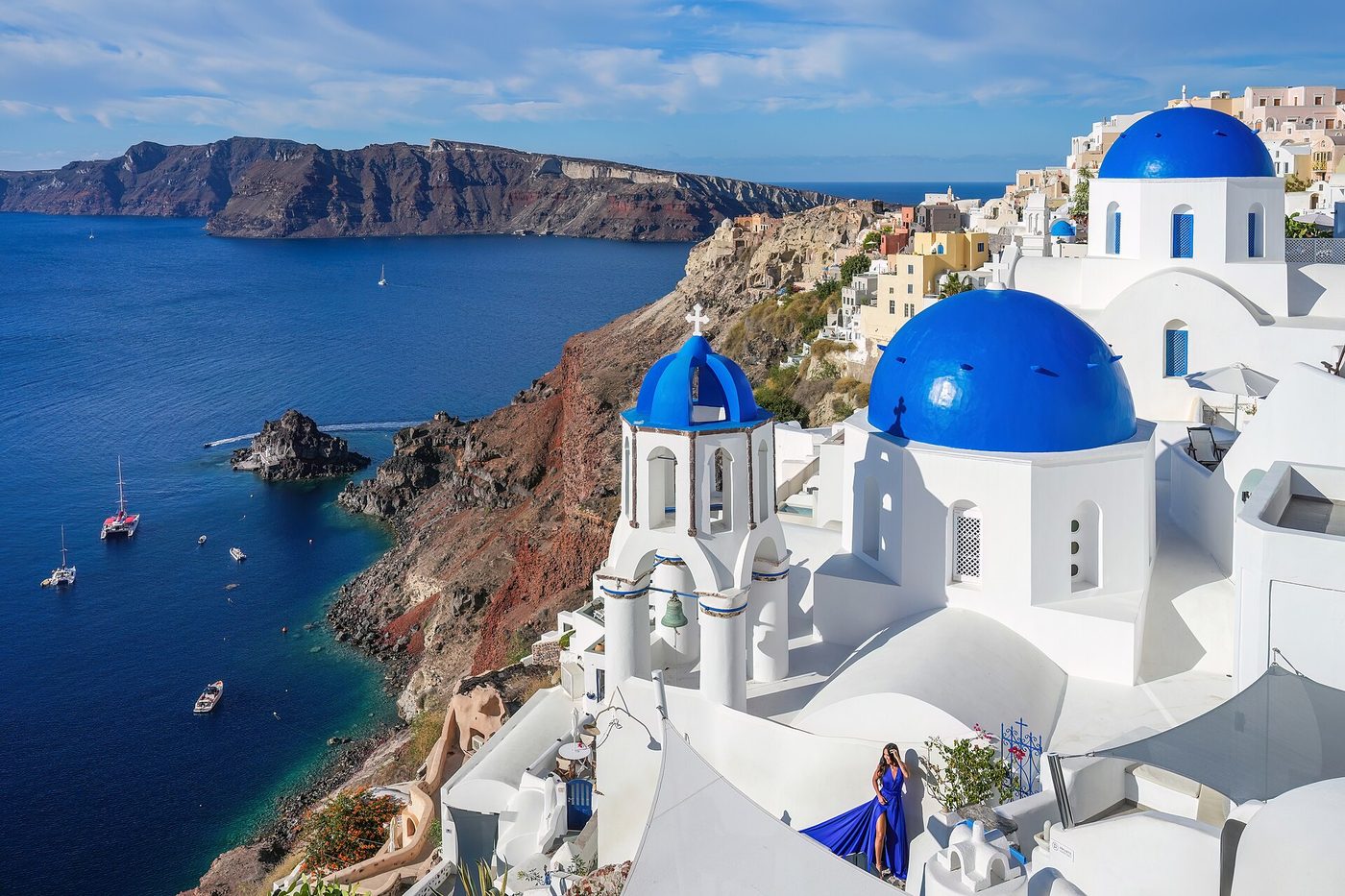
The question I get asked more than any other, every spring, is some version of this: there are more than two hundred inhabited Greek islands, I have nine days, which one do I pick. And the honest answer is that the picking is the easy part. What decides whether the holiday works is the ferry timetable, the month, and a per-night accommodation levy that is not in the price you are quoted.
The best Greek islands for most travellers are Naxos, Milos, Sifnos, Crete and Paros, because they combine good beaches, real towns and frequent ferries from Athens. Santorini and Mykonos are still worth going to, but only outside July and August, when their crowds and prices stop making sense.
I have been going to the Greek islands for fifteen years, first as a broke twenty-something sleeping on Ios, later with a notebook and a budget for hotels. What follows is 43 islands sorted into the seven groups Greeks themselves use, with the residents, the airports, the ferry times and the 2026 costs set out in tables so you can compare them side by side.
I have put the money first, because it decides more trips than scenery does. Greece charges an overnight accommodation levy that runs from 50 cents to 15 euros per room per night, and it is not in the price you see on Booking.com. If you are cruising, Santorini and Mykonos charge 20 euros a head to step ashore in summer. Both of those numbers change the arithmetic of a trip, and both are set out below.
The seven island groups, and why the group matters more than the island
Greeks do not think of the islands as a list. They think of them as clusters, and the cluster you choose determines your entire trip, because ferries run along a group rather than across the sea. Picking two islands from different groups usually means routing back through Athens, which costs you a day in each direction.
The Cyclades are the postcard: white cubes, blue domes, dry brown hills, hard sunlight. This is where Santorini, Mykonos, Naxos, Paros and Milos sit, and where most first-time visitors go. They are the best connected group in Greece and the windiest.
The Dodecanese run down the Turkish coast, from Patmos in the north to Kastellorizo in the far southeast. They are greener than the Cyclades in places, heavily layered with Ottoman, Italian and crusader history, and reached by long overnight ferries or by air into Rhodes and Kos.
The Ionian islands are on the other side of the country, off the west coast, and they look nothing like the Aegean. Cypress, olive and pine instead of bare rock, Venetian rather than Ottoman history, and a lot more rain in winter. Corfu, Kefalonia, Zakynthos, Lefkada and Ithaca are all here.
Crete is its own thing. At 8,336 square kilometres and 624,408 residents it is less an island than a small country with mountains, gorges, a Minoan civilisation and four distinct regions. You do not island-hop Crete. You give it a week minimum.
The Sporades sit off the mainland at Volos: Skiathos, Skopelos, Alonnisos. Pine forest running down to the sand, a marine park, and a mainland crossing of under two hours.
The Saronic islands are Athens’ back garden. Aegina is thirty minutes from Piraeus by fast boat. Hydra and Poros are both reachable in around two hours, and Spetses in an hour and a half on the fastest boats, which makes them the only Greek islands you can sensibly visit on a long weekend.
The North Aegean is the group almost nobody in the English-speaking world books: Chios, Samos, Ikaria, Lemnos, Lesvos, Thasos, Samothraki. Twelve-hour crossings, barely any direct international flights, and by a wide margin the best value in Greece in August.
If you take one thing from this section, take this: choose your group first, then choose two or three islands inside it. A trip that reads Santorini, then Corfu, then Rhodes is not a trip, it is three airport transfers with beaches attached. Our Greece travel guide goes deeper on how the groups fit together, and the Greek island hopping itinerary sets out the routes that actually connect.
All 43 of the best Greek islands at a glance
Residents are 2021 Greek census figures where I could source them, and where a figure covers a regional unit rather than the island alone I have said so in the notes below the table. Crowding and cost band are my own editorial calls after fifteen years of going, not published data: cost band runs from € (cheapest) to €€€€ (Santorini and Mykonos in August).
| Island | Group | Residents (2021 census) | Airport | What it is best at | Peak-season crowding | Cost band |
|---|---|---|---|---|---|---|
| Santorini | Cyclades | 15,500 | International (JTR) | The caldera view, and nothing else quite like it | Extreme | €€€€ |
| Mykonos | Cyclades | 10,704 | International (JMK) | Nightlife, beach clubs, very good food | Extreme | €€€€ |
| Crete | Crete | 624,408 | International (HER, CHQ) | A whole country in one island | Moderate | €€ |
| Rhodes | Dodecanese | ~125,000 | International (RHO) | Medieval city plus reliable beach resorts | High | €€ |
| Corfu | Ionian | 101,600 | International (CFU) | Venetian town, green interior, easy access | High | €€€ |
| Naxos | Cyclades | 22,539 | Domestic (JNX) | The best all-round first Greek island | Moderate | €€ |
| Paros | Cyclades | 15,785 | Domestic (PAS) | Pretty harbours with real nightlife | High | €€€ |
| Milos | Cyclades | 10,130 | Domestic (MLO) | Extraordinary volcanic coastline | Moderate | €€€ |
| Kefalonia | Ionian | 36,064 | International (EFL) | Big beaches, mountains, few crowds inland | Moderate | €€ |
| Kos | Dodecanese | 38,137 | International (KGS) | Cycling, ruins and long sandy beaches | High | €€ |
| Syros | Cyclades | 21,124 | Domestic (JSY) | A working Greek town, not a resort | Low | €€ |
| Sifnos | Cyclades | 2,777 | None | The best food in the Cyclades | Low | €€€ |
| Folegandros | Cyclades | 719 | None | Cliffs and a Chora with no traffic | Low | €€€ |
| Serifos | Cyclades | 1,241 | None | Close to Athens, still genuinely quiet | Low | €€ |
| Amorgos | Cyclades | 1,961 | None | Hiking, a cliff monastery, deep water | Low | €€ |
| Koufonisia | Cyclades | 391 | None | Walkable, sandy, tiny | Moderate | €€ |
| Antiparos | Cyclades | 1,265 | None | A quieter Paros with a cave | Low | €€€ |
| Tinos | Cyclades | 8,934 | None | Villages, marble, pilgrimage, food | Low | € |
| Andros | Cyclades | 8,883 | None | Waymarked hiking and green valleys | Low | €€ |
| Kea (Tzia) | Cyclades | 3,346 | None | The closest island Athenians keep for themselves | Low | €€ |
| Ios | Cyclades | 2,297 | None | Beaches by day, a party town by night | High | €€ |
| Anafi | Cyclades | 293 | None | The end of the line, deliberately | Low | € |
| Symi | Dodecanese | 2,603 | None | The prettiest harbour in Greece | Moderate | €€€ |
| Patmos | Dodecanese | 3,283 | None | A monastery, a cave and a hilltop Chora | Low | €€€ |
| Karpathos | Dodecanese | 6,567 | International (AOK) | Wind sports and a mountain village that kept its dress | Low | €€ |
| Kalymnos | Dodecanese | 17,752 | Domestic (JKL) | Sport climbing on limestone, at world level | Low | € |
| Leros | Dodecanese | 7,992 | Domestic (LRS) | Italian architecture and a deep harbour | Low | € |
| Astypalea | Dodecanese | 1,376 | Domestic (JTY) | A butterfly-shaped island going all-electric | Low | €€ |
| Zakynthos | Ionian | ~40,000 | International (ZTH) | Shipwreck Beach, turtles, and the consequences of both | High | €€ |
| Ithaca | Ionian | 2,862 | None | Homer, harbours and almost no resorts | Low | €€ |
| Lefkada | Ionian | 22,826 | None | Drive-on access to Ionian beaches | Moderate | €€ |
| Skiathos | Sporades | 6,088 | International (JSI) | More than sixty beaches on one small island | High | €€ |
| Skopelos | Sporades | 4,518 | None | Pine forest to the waterline, and Mamma Mia | Moderate | €€ |
| Alonnisos | Sporades | 3,138 | None | A marine park and very little else | Low | €€ |
| Hydra | Saronic | 2,070 | None | No cars, no bicycles, no exceptions | Moderate | €€€ |
| Aegina | Saronic | 12,911 | None | A temple, pistachios and a half-hour commute | Moderate | € |
| Poros | Saronic | 3,261 | None | A clocktower town a few hundred metres off the Peloponnese | Low | € |
| Spetses | Saronic | ~3,800 | None | Horse-drawn carriages and Athenian old money | Moderate | €€€ |
| Chios | North Aegean | 51,692 | Domestic (JKH) | Mastic villages that look like nowhere else in Greece | Low | € |
| Samos | North Aegean | 32,642 | International (SMI) | Wine, forest and a short hop to Turkey | Low | € |
| Ikaria | North Aegean | 10,186 | Domestic (JIK) | Long life, late nights, no schedule | Low | € |
| Thasos | North Aegean | 13,104 | None | Green, cheap, and full of Balkan road-trippers | Moderate | € |
| Samothraki | North Aegean | 2,596 | None | Waterfalls, a mountain and an ancient sanctuary | Low | € |
Three notes on the numbers. Naxos, Paros, Milos and Kea are given as regional-unit populations, which fold in smaller neighbouring islands, so the island itself is smaller than the figure suggests. The Skiathos figure is the 2021 census count for the municipality. Rhodes is quoted between roughly 115,000 and 129,521 across the sources I checked, so I have given it as an approximation rather than pretending to a precision that does not exist.
The five famous Greek islands, and whether they still deserve it
These are the five that people have heard of. Two of them are in genuine trouble, two are large enough to absorb their visitors, and one is halfway between.
1. Santorini: still extraordinary, still the hardest to get right
Santorini received roughly 3.4 million visitors in 2024 against about 15,500 permanent residents. That is a ratio of something like 220 to one, on 76 square kilometres of rock with no natural fresh water. Around 1.34 million of those arrivals came off cruise ships.
The response has been a daily cruise cap of 8,000 passengers, and for 2026 the municipality tightened how the slots are counted: a ship now consumes slots equal to its full stated capacity rather than 80 per cent of it, so a 3,000-berth vessel books 3,000 slots instead of 2,400. Scheduled cruise arrivals for 2026 fell to 595 ships from 728 in 2025, a drop of 18.27 per cent. Peak days before the cap regularly put 11,000 to 17,000 cruise passengers ashore.
So is it worth going? Yes, and I will not pretend otherwise. The caldera is one of the unrepeatable sights in Europe, and standing on the rim at Imerovigli at seven in the morning with a coffee is worth the whole journey. But go in late April, May, or the second half of October. Avoid the hours between 10am and 4pm in Oia entirely, because that is the cruise window. Stay in Pyrgos or Megalochori rather than Oia if you want to sleep. And be aware that the island’s water infrastructure is stretched: the Oia desalination plant failed in May 2025 and cut supply to fifteen villages during pre-season peak demand.
Our full Santorini travel guide covers where to stay by village and how to time the caldera walk.
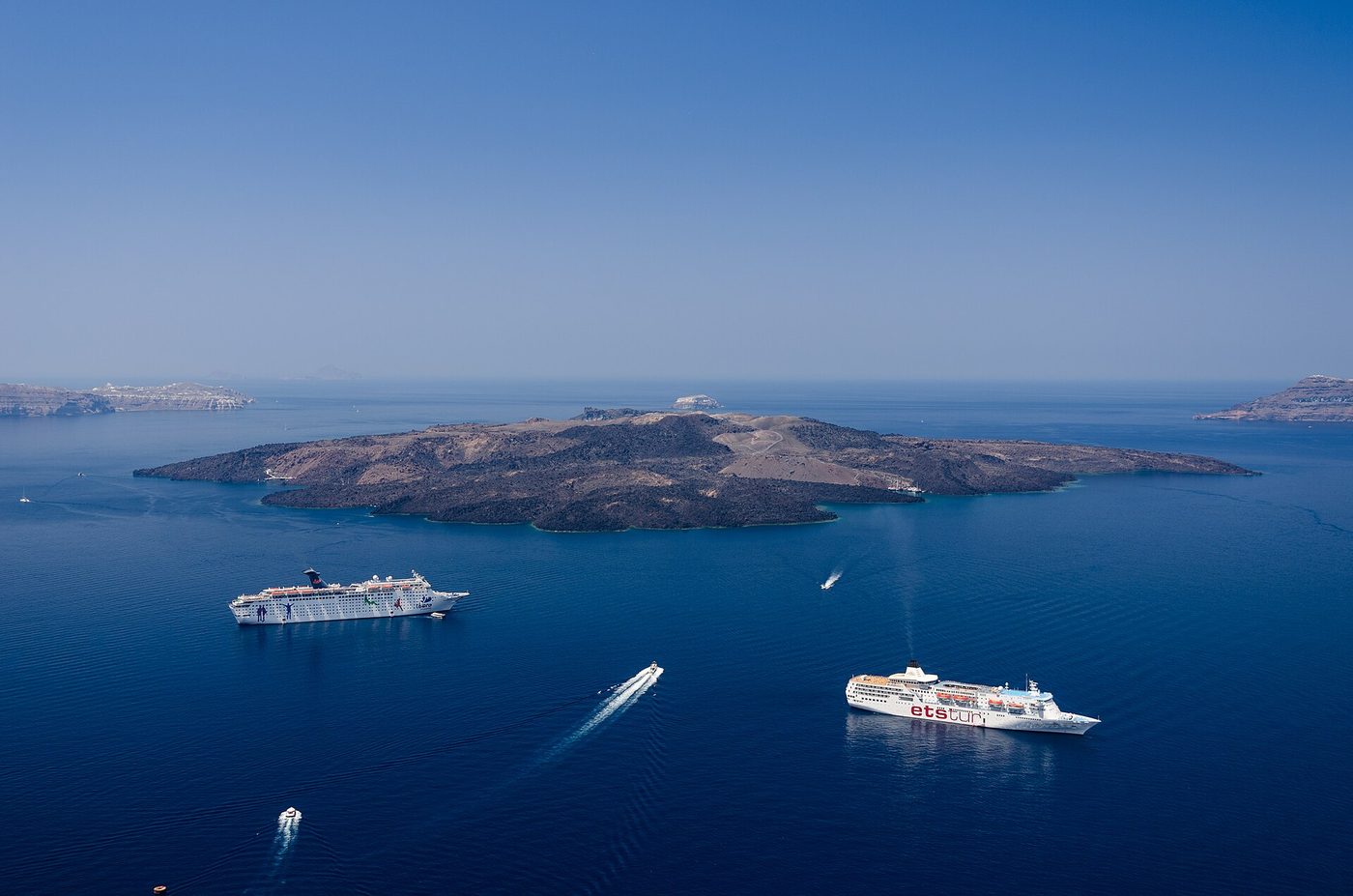
2. Mykonos: the best restaurants in Greece, at a price
Mykonos took roughly 2.2 million visitors in 2024, about 1.29 million of them cruise passengers across 768 port calls, on an island of 10,704 residents. Peak-summer live population is estimated at 80,000 people. Tourism accounts for over 90 per cent of the local economy, and residential property runs 7,250 to 12,000 euros a square metre, the most expensive island market in Greece.
Unlike Santorini, Mykonos has no daily cruise cap. It charges the same 20 euro summer cruise levy and its cruise calls still grew around 16 to 17 per cent in 2025, which tells you exactly how much a 20 euro fee deters a cruise line.
What Mykonos has is the best restaurant scene of any island in Greece and a beautiful Chora if you walk it at 8am. Rooms that go for about 90 euros in late May or early October can hit around 250 euros in August, and three and four-star rates run 300 to 600 euros a night in peak against 120 to 250 in shoulder season. July is the most expensive month of all.
Go in June or late September, stay in Ano Mera or the Chora rather than a beach resort, and skip the beach clubs unless a 200 euro sunbed is your idea of a good afternoon. The Mykonos travel guide has the beach-by-beach breakdown.

3. Crete: the one island that can absorb everything thrown at it
Crete is 8,336 square kilometres and 624,408 people, and its tourism density works out at roughly 792 visitors per square kilometre per year against Santorini’s 44,737. That is a factor of about 56. It is why Crete feels normal in August while Santorini does not.
Heraklion and Chania airports together handled 5.35 million arrivals in 2024, and international air arrivals to the island reached 6.31 million between January and November 2025, up 5.8 per cent. Those are big numbers spread across an island with four regional units, a 250-kilometre mountain spine, and hundreds of villages that see no tourists at all.
Crete is also the cheapest of the major Greek islands by a clear margin. You will eat better for less here than anywhere in the Cyclades. Base yourself in Chania for the Venetian harbour and the west, in Rethymno for the middle, or in the Lasithi east for quiet. Hire a car: buses serve the north coast well and the interior barely at all.
One caution. The Samaria Gorge takes around 130,000 walkers a year, and peak summer days put 4,000 people on a single 16-kilometre trail. Start at first light or walk one of the smaller gorges instead. Our Crete travel guide goes region by region, and hiking in Europe has the gorge in context.

4. Rhodes: a medieval city that happens to have beaches
Rhodes took 3.5 million arrivals between January and September 2024, and Diagoras Airport handled over seven million passengers in 2025, a record. It is a large island, roughly 1,401 square kilometres, with about 125,000 residents, and the crowds concentrate in the northern resorts and the old town.
The old town is the reason to come. It is one of the largest inhabited medieval towns in Europe, walled, cobbled, and quiet in a way it never manages by day, once the day-trippers leave at six. Lindos, down the east coast, is beautiful and completely overwhelmed by mid-morning: get there at 8am or after 6pm.
Rhodes is also honest value. It sits in the same cost band as Crete, has direct flights from most of northern Europe, and works as a beach holiday in a way that Santorini never has. The 2023 wildfires burned 17,773 hectares and forced the evacuation of around 20,000 people, the largest forced civilian evacuation in Greek history, and the affected area was in the island’s south and east. Most of the island was untouched, and it has recovered.

5. Corfu: the greenest of the famous five, and the most Italian
Corfu is Ionian, which means olive groves, cypress, and a properly wet winter. Corfu Town is Venetian rather than Ottoman, with arcaded streets, two fortresses and a cricket ground, and it is one of the loveliest urban spaces on any Greek island.
The island takes about 2.5 million overnight visitors plus 800,000 day-trippers, with 1.97 million international air arrivals in 2024 and roughly 700,000 cruise passengers in 2025. Tourism is over 90 per cent of the local economy, the highest share among the major Greek islands. The strain shows in ways visitors do not see: the island spent 11 million euros in 2024 shipping municipal waste to mainland incinerators at Ioannina and Kozani.
Go in May, June or September, stay in the north-west around Paleokastritsa or in the town itself rather than the package strip at Kavos, and rent a car for the interior villages. Corfu is also among the cheapest islands in this guide to reach from the mainland: the Igoumenitsa crossing takes 1 hour 10 minutes and starts around 6 euros, beaten only by Thasos, at roughly 3 to 6 euros from Keramoti.
The all-rounders: big enough for a week, easy enough to reach
This is where I send most people. Each of these six has a real town, more than one good beach, frequent ferries and enough to do that you will not be bored on day four. None of them will bankrupt you.
6. Naxos: the answer to most people’s question
If you asked me to pick one island for a first Greek trip and never revise the answer, it would be Naxos. It is the largest of the Cyclades, it has the best beaches in the group on its west coast, it grows its own food, and its Chora has a Venetian kastro you can get lost in. Readers of Condé Nast Traveller voted it first in Europe’s Best Islands in the 2025 Readers’ Choice Awards, announced that October, with a score of 95.71, ahead of Ibiza, Capri, Hvar, the Canary Islands, Mallorca and Sicily.
Practically: Piraeus to Naxos runs up to seven times a day, from 3 hours 15 minutes, starting around 43 euros. There is a domestic airport with Athens connections. Naxos to Santorini is up to eight sailings a day year-round, 1 hour 5 minutes at the fastest, from 31.50 euros, which makes it the obvious base for a Cyclades trip. Naxos to Ios is 25 to 40 minutes; Naxos to Katapola on Amorgos is 25 minutes at the fastest.
Stay in Agios Prokopios or Plaka for the beach, in the Chora for the town, or in Halki in the interior if you want olive groves and no sea view at all. A car is useful for about half a stay. One thing to know: Naxos had wells run dry in 2024, and water is a real constraint here in a dry summer.

7. Paros: harbours, wind and more nightlife than you expect
Paros has two towns rather than one. Parikia is the ferry port and the workaday centre; Naoussa in the north is a small fishing harbour that has become one of the best-dressed evenings in the Cyclades. Between them are decent beaches, a marble quarry that supplied the Venus de Milo, and a serious windsurfing scene at Golden Beach.
It has been getting busier fast. The island takes roughly 450,000 visitors a season, and its cruise calls more than doubled in 2025, from 53 to 107. There is a short-term-rental freeze in place. Prices have followed: residential property runs around 3,450 euros a square metre, with villas at one to three million.
Ferries from Piraeus run up to seven a day, 2 hours 45 minutes to 5 hours, from around 41 euros. Paros to Ios is 50 minutes from 9.50 euros, Paros to Katapola 1 hour 10 minutes. The airport takes regular Athens flights, though international routes have not operated for a couple of years. If Naoussa in August sounds like too much, cross to Antiparos.
8. Milos: the strangest coastline in the Aegean
Milos is a volcanic island whose coastline looks like it was made by someone testing materials. Sarakiniko is bleached white rock scoured into curves, like walking on a glacier at 35 degrees. Kleftiko is a sea-cave complex reachable only by boat. Firopotamos and Klima have the syrmata, the boat-garage houses painted in flat primary colours, which are the most photographed doors in Greece after Santorini’s.
It is a working island as well as a pretty one: mining is still an industry here, which gives Milos a grounded quality that Santorini lost decades ago. Adamas, the port, is functional rather than lovely. Plaka on the hill is where you want to eat.
Piraeus to Milos runs up to six a day in season, from 2 hours 30 minutes to 7 hours 30 minutes, starting around 42 euros. There is a domestic airport with Olympic Air and Sky Express flights from Athens. Milos to Paros runs one or two daily year-round; Milos to Mykonos operates April to October only. You want a car here, and ideally a boat trip: much of the best coast has no road.

9. Kefalonia: mountains, caves and a beach you have seen without knowing it
Kefalonia is the largest Ionian island, 36,064 residents, and it is dramatic in a way the Cyclades are not: Mount Ainos rises to over 1,600 metres and carries its own species of fir. Myrtos Beach, the white crescent between two headlands, is the one on every Greek tourist board poster. Melissani Cave is a collapsed cavern where you row across water lit blue from above.
The island has never been fashionable in the way Santorini is, which is precisely its virtue. Assos and Fiskardo in the north are gorgeous villages; Sami and Argostoli are practical bases with ferries and supermarkets. Sami declared a water emergency in 2024, which is worth knowing if you are booking a villa with a pool.
Kyllini to Poros on Kefalonia runs four to five times a day, around 1 hour 30 minutes, from about 14.50 euros. There is an international airport at Kefalonia with summer charters. Ferries also connect onward to Ithaca, Zakynthos and Lefkada, which makes an Ionian loop straightforward.
10. Kos: the cycling island, and better than its reputation
Kos has a package-holiday reputation and a much better reality. The town has a Hippocrates plane tree, a crusader castle and a Roman agora sitting in the middle of the shopping streets, and the island is flat enough that it works on two wheels: there are over 6,500 bicycles for hire and an eight-mile coastal cycle path, which is why Greeks call it the bicycle island.
It also has the best beaches in the Dodecanese and a very short hop to Turkey. Piraeus to Kos takes 9 to 12 hours 10 minutes, six or seven sailings a week, from 63 euros, so most visitors fly into the international airport instead. Kos to Katapola on Amorgos runs once a week from mid-June, 3 hours 15 minutes, from 34.50 euros, which is one of the few genuine Dodecanese-to-Cyclades links.
Stay in Kos Town or Kefalos rather than the northern resort strip, and use the bike.
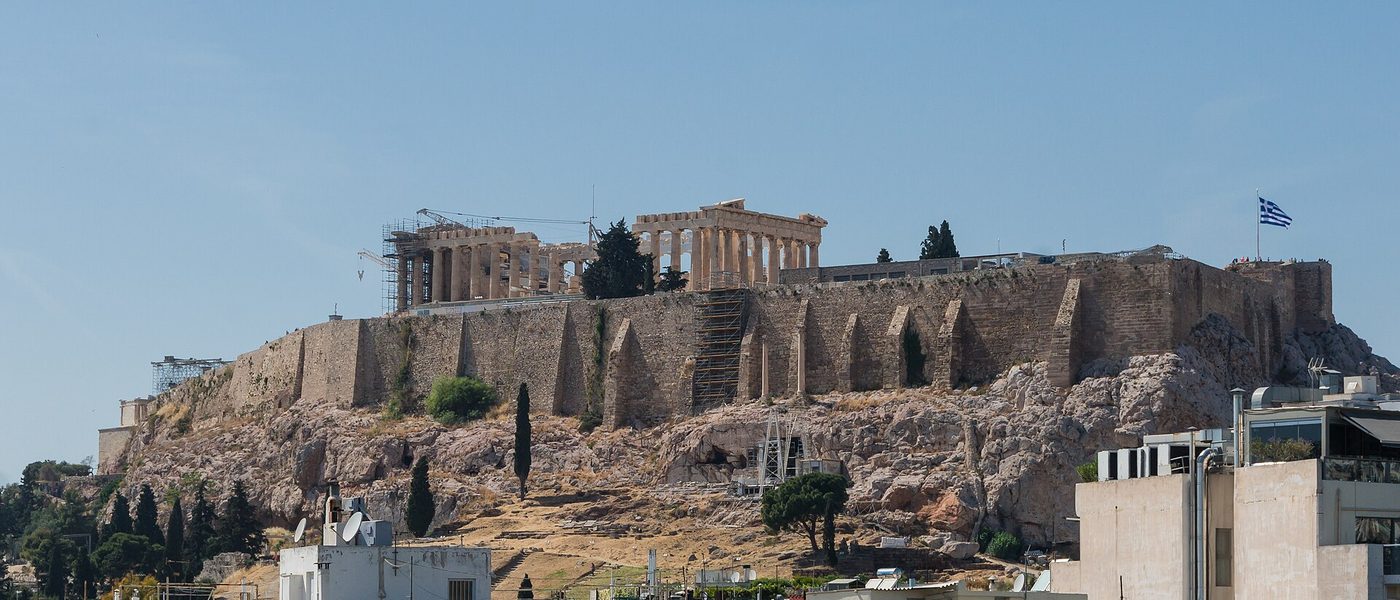
11. Syros: a real Greek town that happens to be on an island
Syros is the administrative capital of the Cyclades and it feels it. Ermoupoli is a neoclassical port city with an opera house modelled on La Scala, a marble main square and a functioning shipyard. Around 21,124 people live here year-round, which means the shops, the schools and the restaurants are open in February.
That is the appeal, and it is also why Syros rarely turns up on a shortlist: it is not a resort. The beaches are decent rather than remarkable. What you get instead is a place with its own life that does not perform for you, plus two hills, one Catholic and one Orthodox, facing each other across the town.
Piraeus to Syros runs up to six a day, 2 to 4 hours, from 46.50 euros, and it is a hub, so onward connections across the Cyclades are frequent. There is a small domestic airport. If you have one night to spare at the start or end of a Cyclades trip, spend it here rather than at an airport hotel in Athens. Speaking of which, things to do in Athens is worth reading before you take that first ferry out of Piraeus.
The quiet Cyclades, where the same sea costs half as much
Every one of these islands is in the same archipelago as Santorini and Mykonos, sits in the same water, and costs a half or a third of what they do. All eleven have no airport at all, which is not a coincidence: the absence of a runway is the single most reliable predictor of a quiet Greek island.
12. Sifnos: the food island
Greeks will tell you Sifnos is where you go to eat, and they are right. There is no airport, 2,777 residents, an astonishing number of good tavernas, and a standing reputation as the culinary island of the Cyclades. The cookbook that formalised modern Greek cooking was written by a Sifnian, Nikolaos Tselementes, and the island still runs on clay-pot cooking: revithada, chickpeas baked slowly overnight, is the Sunday dish.
It also has the best-signed walking network in the Cyclades, a restored set of old stone paths linking Apollonia, Kastro, Artemonas and the coast. Kastro, the medieval capital on a cliff, is one of the loveliest villages in Greece.
Piraeus to Sifnos is about 2 hours 30 minutes at the fastest, from around 35 euros, which makes it one of the closest quiet islands to Athens. Sifnos declared a water emergency in 2024. Go in June or September and eat everything.
13. Folegandros: 719 people and a cliff
The Chora sits on a 200-metre cliff edge and is, to my eye, more striking than anything on Santorini, because nothing has been built to spoil it. There are 719 residents on 32 square kilometres. There are no cars in the main square. Children play in it.
The beaches take effort: Katergo needs a boat or a hot forty-minute walk, Agali is the accessible one. The walk up to the Panagia church above the Chora at sunset is the thing everyone does, and it deserves the reputation.
Piraeus to Folegandros is about 4 hours 30 minutes, and the fare I saw quoted for 2026 starts around 83 euros, which is high for the distance because the fast Seajets service carries most of the traffic. Folegandros to Ios is 30 to 55 minutes from 5.50 euros, and Folegandros to Santorini is a short hop, so it pairs naturally with either. Note that Folegandros is one of the southern Cyclades whose catamaran services get suspended first when the meltemi blows.
14. Serifos: close to Athens and still nobody goes
Serifos is 2 to 4 hours 30 minutes from Piraeus and has 1,241 residents. Its Chora spills down a conical hill above the port at Livadi in a way that photographs like Santorini and costs like nowhere. There are old iron mines to walk to, a scatter of beaches reachable by bus or scooter, and very little organised entertainment.
It did not appear on a single one of the five competing guides I read for this article. That is the entire recommendation.
15. Amorgos: the hiking island, and the cliff monastery
Amorgos is long, thin and mountainous, at the eastern edge of the Cyclades with 1,961 residents. The Monastery of Panagia Hozoviotissa is built into a vertical cliff face 300 metres above the sea, eight storeys deep and three metres wide, and the walk up to it is the defining thing you do here. Agia Anna, below it, is the cove from Luc Besson’s The Big Blue, which is why French visitors have been coming since 1988.
The island has two ports, Katapola and Aegiali, and they are 50 minutes apart by boat or half an hour by road. Piraeus to Katapola is 4 hours 35 minutes at the fastest and up to 9 hours 30 minutes on a conventional overnight, from 42 euros. Naxos to Katapola is 25 minutes. Aegiali on Amorgos to Astypalea takes about 1 hour 40 minutes from 9 euros, which is the rare direct Cyclades-to-Dodecanese link.
The walking here is on old mule paths rather than restored footpaths, rougher than Sifnos and more rewarding for it. Bring boots, not sandals.
16. Koufonisia: 391 people, and you can walk it
Ano Koufonisi is small enough to circumnavigate on foot in a day, with a coastal path linking a string of sand and rock coves on the north-east shore. Population 391. No airport, no cars worth speaking of, no nightlife beyond a handful of bars by the port.
It is not undiscovered. Greeks found it a decade ago and it fills in August. But in June or late September it is exactly what people mean when they say they want a small Greek island. Piraeus to Koufonisia runs year-round, one or two daily in high season, 4 to 9 hours, from 42 euros. Katapola on Amorgos to Koufonisia is 20 to 25 minutes from 5.50 euros, and Naxos is close as well, so it slots easily into a Lesser Cyclades loop.
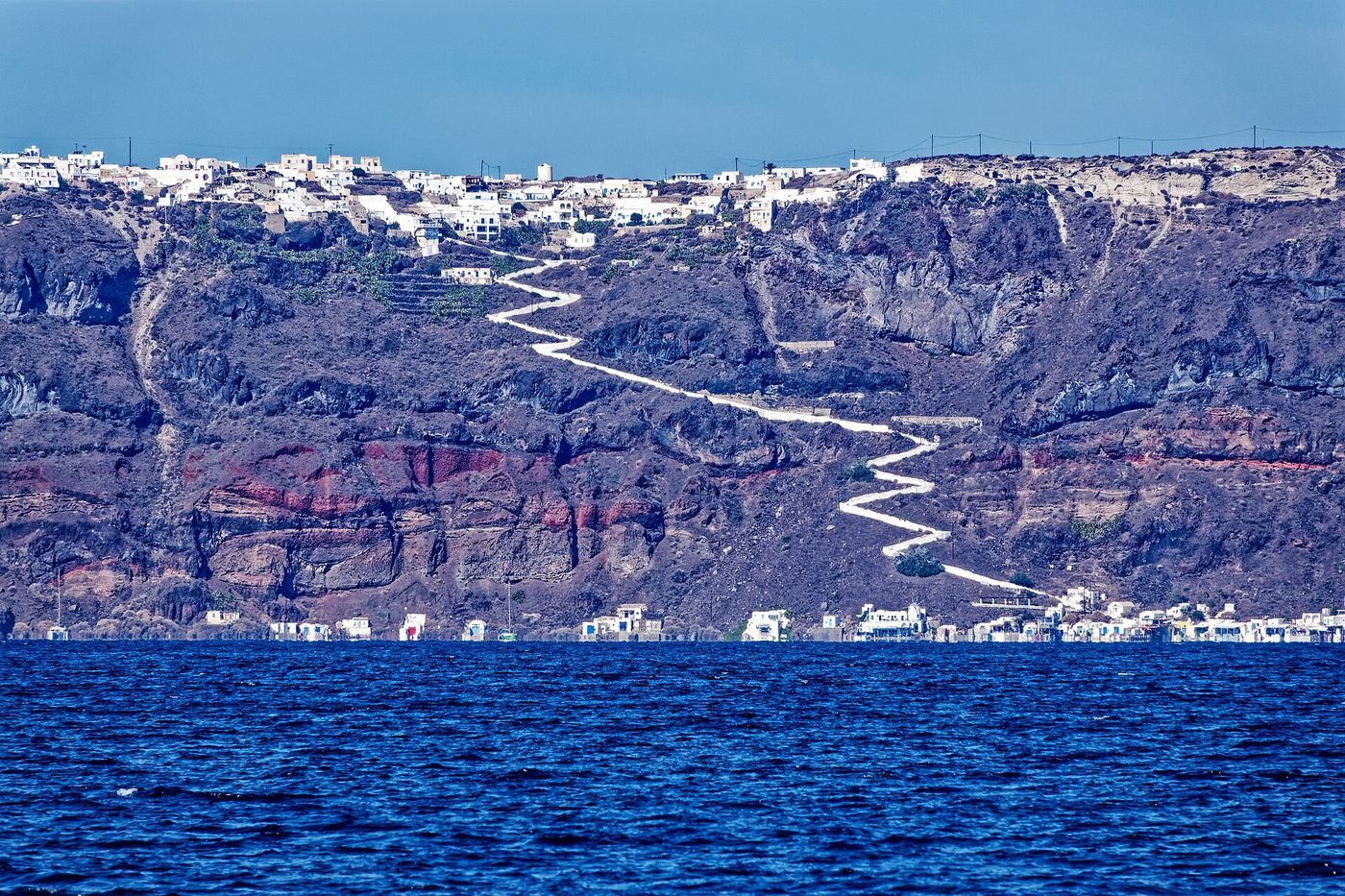
17. Antiparos: Paros without the volume
Antiparos sits a few hundred metres off Paros and has 1,265 residents. It is reached by a short local ferry from Pounta on the Paros west coast, running frequently through the day, though I could not find a published crossing time or fare in the sources I checked, so treat it as a walk-on service rather than something to book.
The draw is a single main street with good tavernas, beaches on the east side that stay calm when the meltemi is up, and the Cave of Antiparos, a stalactite cavern with 411 steps down into it and graffiti carved by visitors going back to the eighteenth century. It has a quiet celebrity following, which has pushed prices above what the size of the island would suggest.
18. Tinos: villages, marble, and the cheapest food in the Cyclades
Around fifty villages are scattered across Tinos, 8,934 residents between them, alongside a marble-carving tradition that supplied sculptors to the whole of Greece, and the most important Orthodox pilgrimage site in the country at the Church of the Annunciation. On 15 August, thousands of pilgrims come to venerate the icon, many of them crawling up the hill from the port on their knees. It is extraordinary to witness and an impossible day to arrive as a tourist.
The rest of the year Tinos is a quiet, cheap, food-focused island with dovecotes scattered across terraced hillsides and a growing scene of young Greek chefs. Rafina to Tinos is 3 to 5 hours, from 38 euros for an economy seat. It is also, alongside Andros, one of the two islands the meltemi hits hardest.
19. Andros: waymarked trails and green valleys
Andros is the northernmost large Cycladic island, 8,883 residents on 380 square kilometres, and it is green in a way the rest of the group is not, with running water, plane trees and stone-walled terraces. It has the longest waymarked trail in the Cyclades, the Andros Route, which runs the length of the island and is properly maintained.
Chora is a neoclassical shipowners’ town on a spit of land with a contemporary art museum. Batsi and Gavrio are the practical bases. Rafina to Andros takes around an hour on the high-speed service, level with Kea from Lavrio as the shortest crossing to any Cycladic island, which makes it startling that so few foreign visitors go. Like Tinos, it takes the full force of the meltemi.
20. Kea (Tzia): the island Athenians keep for themselves
Kea is an hour from Lavrio and up to four sailings a day, from 11.50 euros, which is the cheapest crossing to any Cycladic island in this guide and among the cheapest anywhere in Greece. It has 3,346 residents, a lion carved into a hillside rock face some time around 600 BC, an old stone footpath network, and almost no foreign tourism at all.
What it has instead is Athenians, who own weekend houses here and drive down on Friday afternoons. That means it is busy at weekends in summer and empty midweek, which is the reverse of most Greek islands and worth planning around.
21. Ios: the party island that grew up, partly
Ios carries the reputation of a Greek Magaluf, which is roughly a third accurate. There are 2,297 residents and a hilltop Chora ringed by windmills. Mylopotas is a long sand beach with bars, and Chora at midnight in August is exactly what you fear. The other three quarters of the island is empty, with Blue Flag beaches like Manganari and Kalamos reachable by boat or a hot drive.
Practically it is very well placed: Piraeus to Ios is 4 hours 15 minutes by high-speed and around 7 hours on a conventional ferry, from 39 euros, with six or seven sailings a week year-round. Santorini to Ios is 30 to 35 minutes from 6.50 euros and Naxos to Ios is 25 to 40 minutes from 8.50 euros, which puts it among the cheapest hops in the Cyclades alongside Folegandros and the Lesser Cyclades. Ferry operators advise against drinking the tap water here, as on several other Cycladic islands. Bring a filter bottle or ask at your accommodation.
22. Anafi: the end of the line, deliberately
Anafi has 293 residents and sits beyond Santorini on the southern Cyclades line. It has one village, a monastery under the second-largest monolith in the Mediterranean, and beaches you will have to yourself. There is no airport, and I could not source a reliable published duration or fare for the Piraeus service, which tells you something about how few people make the journey.
I am including it because no other guide to the best Greek islands does, and because if what you want is an island where nothing happens, this is the one. Take a week’s worth of patience and check the return sailing before you commit.
The Dodecanese beyond Rhodes
The Dodecanese are the long way from Athens. Piraeus to Rhodes takes between 12 hours 15 minutes and a full 24 depending on the vessel, which is why almost everyone flies in and hops locally. Blue Star Ferries runs a single trunk route linking Piraeus with Kalymnos, Kos, Rhodes, Astypalea, Patmos, Lipsi, Leros, Nisyros, Tilos, Symi, Karpathos, Kasos and Kastellorizo, and understanding that one line is most of what you need to plan a Dodecanese trip.
23. Symi: the prettiest harbour in Greece
Symi is a small island with 2,603 residents whose harbour at Gialos is an amphitheatre of neoclassical mansions in ochre, terracotta and cream, built on sponge-diving money in the nineteenth century and protected by a preservation order since. Arriving by boat is one of the great sights in the Aegean.
It gets day-trippers from Rhodes, which means the harbour is busy from eleven to four and yours the rest of the time. Stay overnight. Climb the Kali Strata, the 500-step staircase up to the old village of Chorio, in the early evening. Piraeus to Symi averages around 15 hours, so realistically you come via Rhodes.
24. Patmos: quiet, holy, and expensive for its size
The Book of Revelation was written here, in a cave that is now a UNESCO-listed monastery complex along with the fortified Monastery of Saint John above it. Around 3,283 people live on the island. The Chora around it is one of the best-preserved medieval settlements in the Aegean, all white walls and heavy wooden doors.
It has become quietly fashionable with a European set who arrive by yacht, which has pushed prices up. Piraeus to Patmos takes around 7 hours on up to five sailings a week, the fastest link from Athens into the Dodecanese, from about 44 euros. There is no airport. Skala is the port and the practical base.
25. Karpathos: wind, mountains and a village that kept its dress
Karpathos is a long mountainous island between Crete and Rhodes with 6,567 residents. Olymbos, in the far north, is a village where older women still wear traditional dress daily and where the local dialect retains features of ancient Greek. It is not a performance for visitors; the road to it was only finished in the 1980s.
The island has an international airport with some summer and autumn services, and its west coast at Afiartis is one of the best windsurfing and kitesurfing sites in Europe, precisely because of the wind that makes the ferry crossings uncomfortable. Karpathos sits on the Blue Star trunk route from Piraeus, though I could not source a published crossing time or fare for it.
26. Kalymnos: the climbing island
Sponge diving shaped this island and climbing is remaking it. Kalymnos holds 17,752 residents and several thousand bolted sport-climbing routes on limestone walls above the west coast at Massouri. It is one of the two or three most important sport-climbing destinations in the world, and from March to November the island runs on climbers.
If you do not climb, Kalymnos is still worth a couple of days for Pothia, a working port town in ochre and blue, and for the boat to Telendos, a car-free islet ten minutes offshore. Piraeus to Kalymnos is 8 hours 30 minutes to 11 hours, six or seven sailings a week, from 50 euros. There is a domestic airport with Sky Express connections to Athens, Kos, Leros, Rhodes and Astypalea.
27. Leros: Italian architecture and a very deep harbour
Leros is the strangest-looking Greek island: Lakki, its main port, is a planned Italian Rationalist town built in the 1930s when the Dodecanese were under Italian rule, with wide boulevards and curved modernist facades that look transplanted from a different Mediterranean entirely. The bay is one of the deepest natural harbours in the Mediterranean, which is why the Italians built there.
It has 7,992 residents, a hilltop crusader castle, and almost no international tourism. Piraeus to Leros takes 8 hours 15 minutes to 13 hours 40 minutes, four or five sailings a week, from 49 euros; there is a small domestic airport. Leros declared a water emergency in 2024 and the Greek Navy delivered water by ship, which is a useful reminder that small islands run dry.
28. Astypalea: a butterfly-shaped island going electric
Look at Astypalea on a map and it reads as two islands joined by a 100-metre isthmus. There are 1,376 residents and a Chora crowned by a Venetian castle as good as anything in the Cyclades. It is administratively Dodecanese but Cycladic in appearance, which confuses people pleasantly.
It is also the site of a Greek government and Volkswagen project to convert the entire island to electric vehicles and renewable power, which makes it an unlikely test bed for what small-island transport looks like next. Piraeus to Astypalea runs four to five times a week from around 45 euros, and there is a domestic airport. Aegiali on Amorgos to Astypalea takes about 1 hour 40 minutes from 9 euros.
The Ionian islands: green, and a different Greece entirely
The Ionian sits off the west coast, which changes everything: more rain, more vegetation, Venetian rather than Ottoman architecture, and a different food tradition. Mainland departure ports for 2026 are Patras and Kyllini in the western Peloponnese, Astakos in western central Greece, and Igoumenitsa in the northwest. Corfu and Kefalonia are covered above; these are the other three worth your time.
29. Zakynthos: the beach everyone photographs, and the cost of that
Zakynthos recorded 149,887 overnight stays per 1,000 residents in 2023, the highest ratio of any European destination in the Which? Travel analysis of European Commission data published in May 2025. Around six million overnight stays a year land on roughly 40,000 residents, with about 849,000 international air arrivals in 2024.
Navagio, the shipwreck cove reachable only by boat, is the image that drives all of it, and it deserves the fuss. It is also the reason the island’s north coast is a queue of tour boats from nine in the morning. The loggerhead turtles that nest at Laganas Bay are protected inside a national marine park, and the tension between that and the resort strip immediately behind it is the island’s defining problem.
Go anyway, but go in May or October, stay in the hill villages or the quiet west coast rather than Laganas, and take the earliest boat to Navagio there is. Kyllini to Zakynthos takes 1 to 1 hour 30 minutes and is the only year-round link, run exclusively by Levante Ferries, with up to six sailings each way daily in July and August. There is an international airport.

30. Ithaca: Homer, and almost nothing else
No island of this size has a stronger claim on the Western literary imagination, and almost none has less built on it: no airport, no resorts to speak of, 2,862 residents. Vathy is a horseshoe harbour town, Kioni and Frikes are small and pretty, and the interior is olive terraces and goat tracks.
It is reached via Kefalonia or from Astakos on the mainland; I could not source a published duration or fare for either service, and schedules here are seasonal, so check before you build a trip around it. Come for a slow three days at the end of a Kefalonia week rather than as a destination in itself.
31. Lefkada: the Ionian island you can drive to
Lefkada is joined to the mainland by a causeway with a floating bridge, so no ferry is required at all. That single fact makes it the easiest Ionian island to reach with a car, and it explains why it fills with Greek and Italian road-trippers in August while foreign visitors cluster on Corfu.
The west coast beaches, Porto Katsiki, Egremni and Kathisma, are chalk cliffs above impossibly bright water and are among the best in Greece. The east coast is calmer, with sailing out of Nydri and hops to Meganisi. There are 22,826 residents. Note that the nearest airport, Aktion at Preveza, is on the mainland rather than the island. Ferries also link Lefkada onward to Kefalonia, Ithaca and Zakynthos, which makes an Ionian island loop straightforward by car.
The Sporades: pine forest running down to the sand
Three islands off Volos, reached in under two hours from the mainland, with a landscape that does not look Greek at all: dense Aleppo pine growing right to the waterline above pale sand and green water. If your image of Greece is dry brown rock, the Sporades will surprise you.
32. Skiathos: sixty beaches on a very small island
Skiathos is 49.9 square kilometres and takes roughly 500,000 visitors a year against a resident population of 5,802 at the 2021 census, a ratio of roughly 86 to one. That density is concentrated: the town and Koukounaries take most of it, and the smaller coves on the north coast do not.
Lalaria, a beach of white pebbles under a rock arch, is boat-access only and worth the trip. Koukounaries is the famous one and very good in June. The town is a proper harbour town with a good evening.
Volos to Skiathos takes just under two hours from around 34 euros, and there is an international airport with the notoriously short runway that plane spotters come for. Skopelos is 30 minutes to an hour away from about 15 euros, so the two pair naturally.
33. Skopelos: the green one, and the Mamma Mia one
Pine covers most of Skopelos’ 96 square kilometres, making it the most heavily forested island in Greece, with 4,518 people living under it. The chapel of Agios Ioannis Kastri, up 200 steps on a rock stack, is where the wedding scene in Mamma Mia was filmed, and it is busy for exactly that reason between eleven and three.
The rest of the island is quiet. Skopelos Town is a tiered amphitheatre of slate roofs above the harbour, and Glossa in the north is a village that has kept its own character. There are only two main roads, so walking and cycling are the practical way around. Volos to Skopelos is about three hours.
34. Alonnisos: a marine park and very little else
The whole island sits inside the National Marine Park of Alonnisos and the Northern Sporades, the largest marine protected area in Europe and the last stronghold of the Mediterranean monk seal. Around 3,138 people live here. The regulations mean fewer boats, less fishing pressure and clearer water than anywhere in the Aegean I have swum.
The old village, Palaia Alonnisos, was abandoned after a 1965 earthquake and slowly restored; it is now the prettiest place to stay. Alonnisos to Skopelos is 5 to 30 minutes from about 8 euros, and to Skiathos 1 to 2 hours, so it is easy to add on. There is no airport.
The Saronic islands you can reach before lunch
These four are the reason a Greek island can be a weekend rather than a holiday. All can be reached from Piraeus in two hours or less on the fastest sailings, all run year-round, and all are used by Athenians as much as by tourists.
35. Hydra: no cars, no bicycles, no exceptions
Hydra bans motor vehicles entirely, and bicycles too, under a law dating to the 1950s. Movement on the island is on foot, by water taxi, or by donkey and mule, which still carry the shopping up from the port. There are 2,070 residents, one harbour, and a stone amphitheatre of shipowners’ mansions around it.
The silence is the point. Two hours out of Athens you are somewhere with no engine noise at all, and the effect after a few hours is disorienting. Piraeus to Hydra runs up to eleven times a day, 1 hour 10 minutes to 2 hours, from 40 euros. It is expensive for its size because there is no cheap accommodation and no way to self-cater cheaply. Come for two nights, walk to Vlychos or Mandraki, and swim off the rocks.
36. Aegina: pistachios, a temple, and a forty-minute commute
Aegina is thirty minutes from Piraeus on a fast boat, with around twenty crossings a day to its three ports, from 9.50 euros. That makes it the most accessible Greek island there is, and one of the cheapest. It has 12,911 residents and a proper year-round life.
The Temple of Aphaia, a Doric temple from around 500 BC, is one of the best-preserved in Greece and sits above pine woods with views to Attica. The island’s pistachios have protected designation of origin status and are better than the imported ones. Perdika is where to eat fish. It is the obvious day trip from Athens if you have one spare day and no time for a real island.
37. Poros: a clocktower town a few hundred metres from the mainland
Poros is separated from the Peloponnese by a channel a few hundred metres wide, which gives its waterfront an unusual quality: you look across at hills and lemon groves rather than open sea. There are 3,261 residents, a clocktower on the hill above a tight amphitheatre of tiled roofs, and a sailing school scene.
It is quiet, cheap and easy: Piraeus to Poros runs five or six times a day, 1 to 2 hours 30 minutes, from 17 euros. Take the small boat across to Galatas and walk into the lemon forest behind it.
38. Spetses: horse-drawn carriages and Athenian money
Spetses restricts cars in the town, so transport is on foot, by scooter, by water taxi or in a horse-drawn carriage, which sounds twee and is in practice how people get around. Around 3,800 people live here. Dapia, the old harbour, is lined with the mansions of shipowning families, and the island has a long naval history it takes seriously.
It is the most expensive of the Saronic four and the most Athenian in feel, with old-money weekenders rather than package tourism. Piraeus to Spetses runs up to ten times a day, 1 hour 30 minutes on the fast boats and up to 4 hours on the slow ones, from 50 euros. Ride the coast road round the island on a scooter; it takes an hour and is one of the best short rides in Greece.

The North Aegean, where Greece is still cheap
These five islands answer the hardest question in Greek travel: where can you go in August without paying August prices. Long ferries, few direct international flights, and consequently very little foreign volume. If your holiday dates are fixed by school terms, look here first, and read our guide to the cheapest places to travel in Europe alongside it.
39. Chios: mastic villages that look like nowhere else in Greece
Mastic, a resin from a tree that grows commercially nowhere else on earth, is harvested in the south of Chios and has been for centuries. The island holds 51,692 people. The mastihochoria, the mastic villages, are fortified medieval settlements built as single defensive blocks; Pyrgi has its houses covered in black-and-white geometric sgraffito patterns and looks like nothing else in the country.
Nea Moni, an eleventh-century monastery with Byzantine mosaics, is UNESCO-listed. The beaches are pebble and volcanic and largely empty. Piraeus to Chios takes 7 to 10 hours on one or two daily sailings from two operators, from 40 euros, and there is a domestic airport with connections to Athens, Thessaloniki, Lemnos, Mytilene, Rhodes and Samos.
40. Samos: wine, forest and a short hop to Turkey
Samos is 477 square kilometres and 32,642 residents across two municipalities, and it is unusually green for the Aegean, with pine and cypress running up two mountains over 1,400 metres. It produces a sweet Muscat wine with protected designation status, has the Heraion and the Eupalinian aqueduct as a joint UNESCO site, and sits a short boat ride from Kusadasi in Turkey, which makes an Ephesus day trip realistic.
Piraeus to Samos takes 8 to 11 hours on up to three daily sailings from two operators, from 75.50 euros, which is one of the two most expensive mainland crossings in this guide alongside Folegandros. Flying to the international airport is usually the better call. Read our Turkey travel guide if you plan to cross.
41. Ikaria: long life, late nights, no schedule
Ikaria is one of the world’s so-called blue zones, where an unusual proportion of the 10,186 residents live past ninety. Whether or not you find the longevity research persuasive, the island’s culture is real: shops open when they open, the summer panigiria festivals run until dawn, and the pace is slower than anywhere else in Greece.
The north coast around Nas and Armenistis has the beaches, the interior has hot radioactive springs at Therma and stone villages built deliberately hidden from pirates. Piraeus to Ikaria takes 6 hours 15 minutes to 7 hours 45 minutes on up to two daily sailings, from 59.50 euros, arriving at Evdilos or Agios Kirykos. There is a small domestic airport.
42. Thasos: green, cheap, and full of Balkan road-trippers
Thasos is the northernmost Greek island, 13,104 residents, and the easiest to reach of any island in this guide if you are driving: Keramoti to Thasos runs every two hours, takes about 35 minutes, and costs roughly 3 to 6 euros as a foot passenger. Kavala airport is half an hour from the ferry port.
It is forested, marble-quarried, ringed by a single coast road you can drive in a day, and cheap. The crowd is Bulgarian, Romanian, Serbian and Greek rather than Western European, which keeps prices well below anything you will find in the Aegean’s fashionable half. Golden Beach and Paradise Beach on the east coast are the ones to aim for.
43. Samothraki: waterfalls, a mountain and an ancient sanctuary
Homer put Poseidon on top of Fengari, the 1,600-metre mountain here, to watch the Trojan War. Below it live 2,596 people, and the Sanctuary of the Great Gods, where the Winged Victory now in the Louvre was found. It also has vathres, freshwater rock pools and waterfalls in the gorges running off the mountain, which is unusual enough in Greece to be worth the journey by itself.
Alexandroupoli to Samothraki takes about 1 hour 45 minutes from around 10 euros. There is no airport. It draws a young Greek camping and hiking crowd rather than a hotel crowd, and it is the least conventional island in this guide.
What a Greek island holiday costs in 2026: the two taxes that are not in the room rate
This is the section I most wanted to write, because I checked the five guides ranking above this one for the phrase “climate crisis” and got nothing. Greece has two tourist taxes that materially change what a trip costs, neither is included in the price you see on Booking.com, Airbnb or Vrbo, and one of them has a date in it that can halve your bill.
The Climate Crisis Resilience Fee, charged per room per night
Greece replaced its old stayover tax on 1 January 2024 with the Climate Crisis Resilience Fee, known in Greek as the TAKK, introduced under Law 5073/2023. Rates were raised on 1 January 2025 by Law 5162/2024, which also pushed the start of the peak season from March to April. The 2026 rates are unchanged from 2025.
Two things matter about the mechanics. It is charged per room, per night, not per person, so a family of four in one room pays once. And it is not subject to VAT. Most properties collect it at checkout on a separate receipt, though some ask at check-in.
| Accommodation type | Peak: 1 April to 31 October | Off-peak: 1 November to 31 March |
|---|---|---|
| 5-star hotel | €15 per room per night | €4 |
| 4-star hotel | €10 | €3 |
| 3-star hotel | €5 | €1.50 |
| 1 to 2-star hotel | €2 | €0.50 |
| Short-term rental under 80 m² | €8 | €2 |
| Short-term rental 80 m² or larger, or a villa | €15 | €4 |
| Furnished rooms to rent (enoikiazomena domatia) | €2 | €0.50 |
Work the 31 October date. Ten nights in a four-star room in October costs you 100 euros in levy. The same ten nights starting 1 November costs 30 euros. That is a 70 euro swing on a single calendar boundary, on top of the hotel rate itself falling. If your dates are flexible in autumn, this is free money.
The exemptions are narrow: architectural heritage buildings, youth hostels, campsites and complimentary stays. There is no child exemption, no long-stay discount and no cap on the number of nights. The fee raised 368.92 million euros in its first full year, 82.5 per cent above the government’s own forecast, and 588 million euros in 2025. It goes to central government rather than back to the islands that generate it, which is a source of considerable local irritation and worth knowing when a hotelier sighs while handing you the receipt.

The cruise levy, charged per passenger per port call
If you are arriving by cruise ship, a second charge applies. The Cruise Sustainable Tourism Development Fee launched on 21 July 2025, delayed from 1 July because of seismic activity near Santorini, and it is charged to every passenger who disembarks, regardless of age, at every port call.
| Port | Peak: 1 June to 30 September | Shoulder: April, May and October | Off-peak: 1 November to 31 March |
|---|---|---|---|
| Santorini and Mykonos | €20 per passenger | €12 | €4 |
| Every other Greek port, including Piraeus, Rhodes, Corfu, Heraklion, Souda Bay, Katakolon and Patmos | €5 | €3 | €1 |
A family of four calling at both Santorini and Mykonos in August pays 160 euros in cruise tax before they have bought a coffee. Whether that changes behaviour is another matter: Mykonos cruise calls grew around 16 to 17 per cent in 2025 despite the levy, because Mykonos has no daily passenger cap to go with it.
What the rest of it costs
Beyond the taxes, the pattern across the islands is consistent. July and August run roughly 60 to 100 per cent above April to May and September to October. On Santorini specifically, May and late September run 30 to 50 per cent below the July and August maximum. On Mykonos, three and four-star rooms go for 300 to 600 euros a night in peak against 120 to 250 in shoulder season, and July averages between 589 and 897 euros a night across all categories.
Crete is the cheapest of the major islands by a clear margin. Tinos is the cheapest of the Cyclades I would send anyone to. The North Aegean group, Chios, Samos, Ikaria, Thasos and Samothraki, is the best value in Greece in July and August. Santorini and Mykonos are the most expensive, and it is not close. For the wider picture, our guide to Europe on a budget and the cheapest time to visit Europe both apply here.
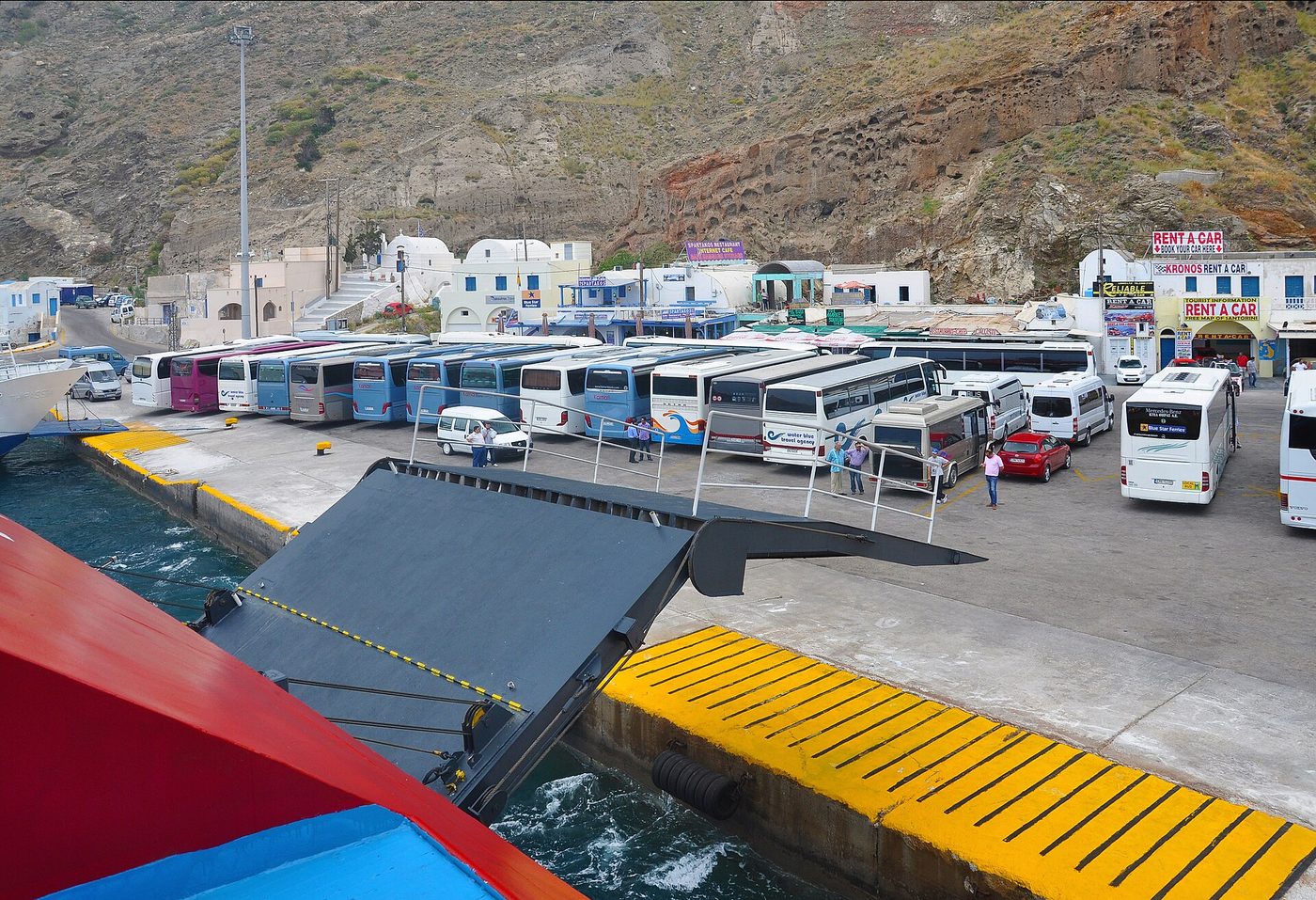
Ferry times and fares from the mainland, island by island
These are indicative starting fares for a foot passenger, one way, as quoted for the 2026 season, together with the fastest published crossing. Real fares move with vessel type, season and how far ahead you book, and a high-speed catamaran can cost twice a conventional ferry on the same route while halving the journey. Where I could not find a published figure I have said so rather than guessing.
| Island | Group | Fastest mainland ferry, and the fare it starts at |
|---|---|---|
| Santorini | Cyclades | Piraeus, 5h to 11h+, from ~€46 |
| Mykonos | Cyclades | Rafina 2h05 to 4h40, from €35.50 |
| Crete | Crete | Piraeus to Heraklion from 7h50, from ~€33 |
| Rhodes | Dodecanese | Piraeus, 12h15 to 24h, from €59 |
| Corfu | Ionian | Igoumenitsa, 1h10 to 1h30, from ~€6 |
| Naxos | Cyclades | Piraeus, from 3h15, from ~€43 |
| Paros | Cyclades | Piraeus, 2h45 to 5h, from ~€41 |
| Milos | Cyclades | Piraeus, 2h30 to 7h30, from ~€42 |
| Kefalonia | Ionian | Kyllini to Poros, ~1h30, from ~€14.50 |
| Kos | Dodecanese | Piraeus, 9h to 12h10, from €63 |
| Syros | Cyclades | Piraeus, 2h to 4h, from €46.50 |
| Sifnos | Cyclades | Piraeus, from ~2h30, from ~€35 |
| Folegandros | Cyclades | Piraeus, ~4h30, from ~€83 |
| Serifos | Cyclades | Piraeus, 2h to 4h30, from ~€63 |
| Amorgos | Cyclades | Piraeus to Katapola, 4h35 to 9h30, from €42 |
| Koufonisia | Cyclades | Piraeus, 4h to 9h, from €42 |
| Antiparos | Cyclades | Via Paros (Pounta); no published duration in my sources |
| Tinos | Cyclades | Rafina, 3h to 5h, from €38 |
| Andros | Cyclades | Rafina, from ~1h by high-speed |
| Kea (Tzia) | Cyclades | Lavrio, ~1h, from €11.50 |
| Ios | Cyclades | Piraeus, 4h15 by high-speed, from €39 |
| Anafi | Cyclades | Piraeus southern Cyclades line via Santorini; no published fare in my sources |
| Symi | Dodecanese | Piraeus ~15h; usually reached via Rhodes |
| Patmos | Dodecanese | Piraeus, ~7h, from ~€44 |
| Karpathos | Dodecanese | Piraeus via the Dodecanese trunk route; no published duration in my sources |
| Kalymnos | Dodecanese | Piraeus, 8h30 to 11h, from €50 |
| Leros | Dodecanese | Piraeus, 8h15 to 13h40, from €49 |
| Astypalea | Dodecanese | Piraeus, 4 to 5 sailings a week, from ~€45 |
| Zakynthos | Ionian | Kyllini, 1h to 1h30 |
| Ithaca | Ionian | Via Kefalonia or Astakos; no published duration in my sources |
| Lefkada | Ionian | No ferry needed; a causeway links it to the mainland |
| Skiathos | Sporades | Volos, just under 2h, from ~€34 |
| Skopelos | Sporades | Volos, ~3h |
| Alonnisos | Sporades | Via Skiathos 1h to 2h, or Skopelos 5 to 30 min |
| Hydra | Saronic | Piraeus, 1h10 to 2h, from €40 |
| Aegina | Saronic | Piraeus, from 30 min, from €9.50 |
| Poros | Saronic | Piraeus, 1h to 2h30, from €17 |
| Spetses | Saronic | Piraeus, ~1h30 to 4h, from €50 |
| Chios | North Aegean | Piraeus, 7h to 10h, from €40 |
| Samos | North Aegean | Piraeus, 8h to 11h, from €75.50 |
| Ikaria | North Aegean | Piraeus, 6h15 to 7h45, from €59.50 |
| Thasos | North Aegean | Keramoti, ~35 min, roughly €3 to €6 |
| Samothraki | North Aegean | Alexandroupoli, ~1h45, from ~€10 |
Four practical rules come out of that table. First, the fastest crossing and the cheapest crossing are almost never the same sailing. Piraeus to Crete overnight leaves around 21:00 and arrives 06:00 to 07:00, which buys you a night’s accommodation as well as the passage. Second, book two to three months ahead for June to August, especially with a vehicle; off-season you can turn up days before. Third, there is no Greek island ferry pass. Tickets are individual and route-specific, and the only pass that exists is the Interrail Greek Islands Pass, which gives a discount rather than free travel. Fourth, ferry luggage allowances are generous and bags are not routinely weighed, which is the single biggest practical advantage of the boat over a budget airline.

How to actually book a Greek ferry
Tickets are sold by the operators and by aggregators, and the operators you will meet are Blue Star Ferries, Hellenic Seaways and Superfast, all part of Attica Group, plus Seajets, Golden Star Ferries, Fast Ferries, Aegean Sea Lines, Minoan Lines, Anek Lines, Magic Sea Ferries, Small Cyclades Lines, Levante Ferries in the Ionian and Alpha Lines in the Saronic. Which company runs your route matters less than which type of vessel: a conventional ship is slower, cheaper and far more likely to sail in wind, while a high-speed catamaran halves the crossing and is the first thing cancelled.
Tickets typically go on sale three to six months before departure. For June to August, book two to three months out, and sooner still if you are taking a vehicle. Outside the season you can turn up a few days before. Discounts are fixed rather than negotiable and cover children aged roughly 5 to 10 or 12, ISIC and Greek university students, and passengers with disabilities plus a companion; infants up to four normally travel free. Vehicles are expensive: Piraeus to Ios is around 130.50 euros for a car against 39 for a foot passenger, and Piraeus to Amorgos around 118 against 42. On a short trip, hire on the island instead.
Two habits worth forming. Arrive at the port an hour before departure in summer, particularly at Piraeus, Rafina, Lavrio and Santorini, and particularly with a car. And pack a light layer in your day bag: ferry air conditioning is fierce and open decks are cold at 6am even in August.
For the mechanics of moving around, our guide to getting around Europe covers the wider picture, and the Greece itinerary puts specific routes together.
Which Greek islands have an airport, and which do not
Across Greece as a whole there are 13 islands with an international airport and another 13 with a domestic-only field. Of the 43 islands in this guide, 11 have an international airport, 9 have a domestic airport, and 23 have no airport at all.
That last number is the useful one. If you want quiet, look for the islands with no runway and accept the ferry as the price. Seven of the nine islands I marked extreme or high for crowding have an international airport, and 14 of the 22 I marked low have no airport at all. The rule has exceptions in both directions, and they are instructive: Ios is busy without a runway because the ferries from Piraeus, Naxos and Santorini are cheap and constant, while Karpathos and Samos have international airports and stay quiet because almost nobody flies to them.
| Airport status | Islands in this guide |
|---|---|
| International airport (11) | Crete (Heraklion and Chania, plus Sitia for charters), Rhodes, Corfu, Santorini, Mykonos, Kos, Zakynthos, Kefalonia, Skiathos, Karpathos, Samos |
| Domestic airport (9) | Naxos, Paros, Milos, Syros, Kalymnos, Leros, Astypalea, Chios, Ikaria |
| No airport (23) | Sifnos, Folegandros, Serifos, Amorgos, Koufonisia, Antiparos, Tinos, Andros, Kea, Ios, Anafi, Symi, Patmos, Ithaca, Lefkada, Skopelos, Alonnisos, Hydra, Aegina, Poros, Spetses, Thasos, Samothraki |
Four qualifications. Paros has regular Athens flights but its international routes have not operated for a couple of years, so treat it as domestic in practice. Only six Cycladic islands have any airport at all: Santorini, Mykonos, Paros, Naxos, Milos and Syros. Lefkada is listed with no airport because Aktion at Preveza, the field people call Lefkada’s airport, is on the mainland. And island airports close for runway works out of season more often than you would expect, Mykonos among them, so check before booking a winter trip.
The domestic carriers are Aegean Airlines, Olympic Air and Sky Express, all routing through Athens. Sky Express in particular runs the small inter-island hops in the Dodecanese, linking Astypalea, Kalymnos, Kos, Leros and Rhodes, which can save a full day against the equivalent ferry.
The meltemi, and the week in August you should not book
Two things will disrupt a Greek island trip more reliably than anything else, and neither of them is rain.
The meltemi
The meltemi is a dry northerly that blows down the Aegean in summer, strongest in July and August and usually peaking in the afternoon. It commonly reaches Beaufort 5 to 7. Most Greek operators cancel conventional sailings from Beaufort 9, but smaller high-speed catamarans can stop from Beaufort 7, which means the fast boat you booked is the one most likely to be pulled.
The Cyclades take the worst of it. Andros and Tinos experience it most strongly, which is why Mykonos is called the island of the winds. The small southern Cyclades, Ios, Sikinos and Folegandros, have limited harbour shelter and their catamaran services are suspended first. The single most disrupted route in Greece is Santorini to Mykonos, an exposed central-Cyclades crossing where catamarans are frequently cancelled or delayed from Beaufort 5 upwards. In Attica on 1 August 2026 the meltemi gusted to 150 km/h.
The practical response is not to avoid August, it is to build slack into the itinerary. Book the large conventional ferry rather than the catamaran where both exist; it is slower, cheaper and far more likely to sail. Never plan to island-hop on the same day as a flight home. And if the whole trip depends on one crossing, put a spare day in front of it. I could not source anything on whether the meltemi affects the Ionian islands, so if you are worried about wind and want the Aegean out of the equation, the Ionian and Sporades are the safer bets on general geography.
15 August, and the week around it
The Feast of the Assumption on 15 August, Dekapentavgoustos, is the third most important religious festival in Greece after Easter and Christmas. Factories close, Athens empties, and Greek families travel to island homes en masse. Ferries, domestic flights and accommodation sell out weeks ahead, and roughly 10 to 17 August is the absolute peak.
This is not a foreign-tourist crowd you can dodge by going somewhere obscure. It is a domestic one, and it lands hardest on exactly the small islands that are empty in June. Tinos is the extreme case: thousands of pilgrims converge on the Church of the Annunciation to venerate the icon, and the island is effectively full.
If your dates are fixed and they include that week, book everything, and I mean the ferries as well as the beds, two to three months out. If your dates are flexible, move them. Across the year, Greece takes fewer than a million visitors a month from November to March against more than six times that in August, and the difference is felt on every quay in the country. Our guides to shoulder season Europe and the least crowded time to visit Europe go into the timing in more depth.
So when should you go to the Greek islands?
June and September, if you can. Both are warm, the sea is swimmable, everything is open, and the July and August crowds are absent. May is excellent for walking and sightseeing at lower prices, though the water is still cool. October works best on the larger southern islands, Crete and Rhodes, where the season runs longer. The Aegean warms slowly and cools slowly, so late August through September gives the warmest sea of the year, which is the strongest argument for September over June if swimming is the priority.
Shoulder-season averages across April, May, June, September and October run about 18C to 27C. July and August afternoons can reach 40C. Full detail is in our best time to visit Greece guide and in Europe weather by month.
Swaps: if you were going to book one of these, consider the other
Almost everything people love about the famous islands exists somewhere cheaper and quieter in the same archipelago. This is not an argument against Santorini, which I have already said is worth going to. It is a list of substitutions that work when the dates are August, the budget is finite, or you have been to the original already.
| If you were going to | Consider | Why it works |
|---|---|---|
| Santorini, for the views | Folegandros | A cliff-edge Chora 200 metres above the sea, no cruise ships, 719 residents, and a car-free main square |
| Santorini, for the volcanic landscape | Milos | Sarakiniko and Kleftiko are stranger geology than anything on Thira, at a cost band lower and a shorter crossing from Piraeus |
| Mykonos, for nightlife | Ios | The same late nights at roughly a third of the price, plus beaches that empty completely by day |
| Mykonos, for the harbour and the food | Paros (Naoussa) | A working fishing harbour that dresses up beautifully after dark, with better value and more to do inland |
| Paros, if it feels too busy | Antiparos or Sifnos | Antiparos is a short local ferry away; Sifnos is the food island and 2 hours 30 minutes from Piraeus |
| Naxos, if you want green and walking | Andros | Running water, plane trees, the best waymarked trail network in the Cyclades, and about an hour from Rafina |
| Corfu | Kefalonia or Lefkada | The same Ionian greenery with a fraction of the package volume; Lefkada you can drive to |
| Zakynthos, for Navagio | Kefalonia, for Myrtos | Comparable beach drama without the highest overnight-stay-per-resident ratio in Europe |
| Rhodes old town | Symi or Chios | Symi for the harbour, Chios for the fortified mastic villages, both with a fraction of the visitors |
| Crete, if it is too big a commitment | Samos or Chios | Mountains, wine, forest and real towns on an island you can still cover in a week |
| Hydra, for a car-free weekend | Poros or Kea | Both are cheaper and quieter; Poros is 17 euros from Piraeus, Kea is 11.50 from Lavrio |
| Skiathos | Skopelos or Alonnisos | Same pine-and-sand landscape, a small share of the 500,000 annual visitors, one short hop further |
| Kos | Kalymnos or Leros | Kalymnos for climbing and a working port town, Leros for Italian Rationalist architecture nobody expects |
| A Santorini sunset | Amorgos, at Hozoviotissa | A monastery built into a vertical cliff 300 metres above the sea, and you will share it with a dozen people |

The best Greek islands by traveller type
First-time visitors
Naxos, Paros, Milos, or Crete. All four have real towns, decent beaches, frequent ferries and enough variety for a week. Naxos in particular is the safest single recommendation in Greece. Pair it with Santorini as a two-night side trip rather than a base, and take the 1 hour 5 minute fast boat between them. If it is your first trip to the continent generally, our guide to the best places to visit in Europe for first-timers puts Greece in context.
Families
Crete, Kos, Kefalonia or Naxos. You want shallow sandy beaches, a car, a supermarket and a hospital, and those four have all of it. Kos is flat enough that children can cycle it. Avoid Santorini with small children entirely: the cliff paths, the cable car queues and the donkey steps are all miserable with a pushchair. Our Europe with kids guide covers the practicalities.
Couples and honeymooners
Folegandros, Sifnos, Patmos or Amorgos if you want quiet and beautiful. Santorini in late April or October if you want the view and can time it. Hydra if you have four days rather than ten and want silence two hours from Athens. Our Europe honeymoon guide has the wider shortlist.
Solo travellers
Naxos, Paros, Ios or Crete. Islands with hostels, group boat trips and other people travelling alone. Ios has the youngest crowd by a distance. Sifnos and Amorgos both work well solo if what you want is walking rather than company. See solo travel in Europe for the general approach.
Walkers and hikers
Sifnos, Amorgos, Andros, Crete and Samothraki. Sifnos and Andros have the best waymarked networks in the Cyclades, Amorgos has old mule paths and the cliff monastery, Crete has the gorges, and Samothraki has waterfalls and a 1,600-metre mountain. Go in April, May or October: walking the Cyclades in August is genuinely unpleasant.
Beaches
Naxos on the west coast, Milos for the strangeness of it, Lefkada for the chalk-cliff beaches on the Ionian west coast, Crete for sheer choice, and Skiathos if you want more than sixty of them on one small island. If you want a single beach to build a trip around, Myrtos on Kefalonia and Porto Katsiki on Lefkada are the two I would go back for. Our guide to the best beaches in Europe puts them against the rest of the continent.

Food
Sifnos first, then Crete, Tinos and Mykonos. Sifnos for the clay-pot tradition and the best cooking in the Cyclades, Crete for the best value eating anywhere in Greece, Tinos for a young chef scene at low prices, and Mykonos for the best restaurants in the country if you are willing to pay for them. Our European food guide sets the regional scene.
August on a budget
Chios, Samos, Ikaria, Thasos or Samothraki. The North Aegean is the answer, and it is the only honest one. You pay for it in journey time and you get back roughly half the room rate.
Limited mobility
Crete, Kos, Rhodes or Corfu. Large islands with modern hotel stock, level promenades, taxis and adapted transport. The islands I have praised most warmly in this guide, Folegandros and Amorgos above all, are built on cliffs with stepped paths and are difficult or impossible with a wheelchair. That is worth saying plainly rather than leaving you to discover it.
Winter
Crete, Rhodes, Corfu, Syros or Aegina. These are the islands with enough year-round population that things stay open. Most of the small Cyclades effectively close from November to March, with reduced ferries and shuttered tavernas. Our visiting Europe in winter guide covers what stays open where.
Three routes that actually work
Seven days: the Cyclades starter
Fly into Athens, one night in the city or straight to Piraeus. Ferry to Naxos, three nights. Fast boat to Santorini, two nights, timed so you are in Oia at seven in the morning and nowhere near it at midday. Ferry or flight back. This is the trip most people should take, it involves two crossings rather than five, and Naxos to Santorini runs up to eight times a day year-round from 31.50 euros.
Ten days: Cyclades, slower
Athens, one night. Sifnos, three nights, for the food and the walking. Milos, three nights, for the coastline and a boat day to Kleftiko. Folegandros, two nights, for the Chora. Home via Santorini or back to Piraeus. Milos to Paros runs one or two daily year-round if you want to swap Paros in, and Folegandros to Ios is 30 minutes if you want a loud night at the end.
Fourteen days: two groups, done properly
Crete for a week, based half in Chania and half in the east, with a car. Then either fly to Athens and take the Saronic islands slowly, Hydra and Aegina, for the last few days; or in September and October take the Blue Star from Heraklion up to Ios and Naxos, which runs three to six times a week from around 46 euros and saves the backtrack through Piraeus entirely. Do not attempt Crete plus the Ionian in two weeks. That is a country’s width apart and it will cost you two days in transit.
For longer trips and multi-country routes, our Europe itinerary and Italy and Greece itinerary guides pick up where this one stops.
Nine mistakes I watch people make every year
1. Booking three islands in seven days. Each move costs you the morning of departure and the afternoon of arrival, so a third island in a week buys you roughly one usable extra day at the price of two travel days. Two islands in seven, three in ten, four in fourteen.
2. Mixing island groups. Ferries run along a group, not across the Aegean. Santorini to Corfu means going back through Athens. If you must combine, use the few genuine cross-group links: Kos to Amorgos once a week from mid-June, Amorgos to Astypalea in well under two hours, or Heraklion to Ios and Naxos in September and October.
3. Booking the catamaran because it is faster. The high-speed vessels are the first to be cancelled when the meltemi blows, sometimes from Beaufort 7 while the conventional ships run to 9. On an exposed route, and Santorini to Mykonos is the worst of them, take the big slow boat.
4. Planning to island-hop on the day you fly home. A cancelled sailing becomes a missed flight. Get back to your departure airport the night before, always.
5. Not budgeting for the accommodation levy. It is not in the price you see. A fortnight in a four-star room in July adds 140 euros; a villa or a large short-term rental adds 210. It is small next to the room rate and it is annoying to discover at checkout.
6. Renting an ATV. Quad bikes offer almost no protection, handle poorly on tarmac, and Greek island roads are steep, busy and badly lit. Every summer produces a crop of injured tourists on them. Rent a small car, which is often cheaper anyway and always safer.
7. Assuming your driving licence is enough. US licences have been legally recognised for driving and renting in Greece since 5 November 2021, so an International Driving Permit is not a legal requirement. But Hertz, Avis, Europcar, Sixt, Budget and most local island agencies still list one in their rental terms and will ask at the desk. Get the permit in your home country before you travel, because you cannot obtain one in Greece.
8. Drinking the tap water without checking. On several islands it is not potable, Ios among them. Leros, Sifnos, Sami on Kefalonia and parts of Crete declared water emergencies in 2024, Naxos’ main reservoir dried up, and the Oia desalination plant on Santorini failed in May 2025. Ask at your accommodation, and carry a filter bottle rather than buying crates of plastic.
9. Booking 10 to 17 August without booking everything else first. The Assumption week is a domestic surge, not a foreign one, and it fills the small islands as thoroughly as the famous ones. Ferries, flights and rooms all go weeks ahead.
Frequently asked questions
Which Greek island should I visit?
If it is your first trip and you want one answer: Naxos. It has the best beaches in the Cyclades, a Venetian old town, its own agriculture so the food is good and cheap, an airport for the return leg, and up to eight fast boats a day to Santorini if you want the famous view for two nights. If you want a bigger island with more variety, Crete. If you want quiet, Sifnos or Folegandros.
What is the best Greek island?
There is no single answer, but the closest thing to a consensus pick is Naxos, which readers of Condé Nast Traveller voted the best island in Europe in the 2025 Readers’ Choice Awards with a score of 95.71, ahead of Ibiza, Capri, Hvar, the Canary Islands, Mallorca and Sicily. My own answer changes with the trip: Naxos to recommend, Sifnos to eat, Amorgos to walk, Crete to spend a fortnight.
How many Greek islands can I see in a week?
Two, comfortably. Three if they are close together and you accept that two of your seven days are spent on boats. The Lesser Cyclades and the Saronic group are the exceptions where three or four is realistic, because the crossings are 20 to 60 minutes rather than half a day.
Is Santorini or Mykonos better?
Santorini for the landscape, Mykonos for the food and the nightlife. Santorini is more spectacular and more overwhelmed: 3.4 million visitors against Mykonos’ 2.2 million, on an island slightly smaller than Mykonos, with a daily cruise cap that Mykonos does not have. If you want to look at something, Santorini. If you want to do something, Mykonos. In August, neither.
Is Naxos or Paros better?
Naxos for beaches, food, mountains and value; Paros for harbours, nightlife and a slightly more polished evening. Naxos is bigger and cheaper, Paros is busier and better dressed. Ferries between them take about half an hour, so on a longer trip the honest answer is both.
Should I fly or take the ferry?
Fly for Crete, Rhodes, Samos and Kos, where the sea crossing from Piraeus runs 8 to 24 hours, and for Karpathos, whose crossing I could not find published at all. Take the ferry everywhere in the Cyclades, the Saronic and the Sporades, where crossings are 30 minutes to 5 hours, luggage allowances are generous and bags are not weighed. The overnight Piraeus to Heraklion sailing, leaving around 21:00 and arriving 06:00 to 07:00, is the one long crossing worth taking on purpose, because the cabin replaces a hotel night.
Do I need a car on the Greek islands?
On Crete, yes, without qualification. On Naxos, Paros, Milos, Kefalonia and Karpathos, for part of the stay. On Santorini and Mykonos, no, if you are based centrally. On Hydra it is not possible: the island bans cars and bicycles alike. Buses serve the main towns and popular beaches on the larger islands and thin out sharply beyond them.
What is the best month to visit the Greek islands?
June or September. Both give you warm weather, swimmable sea and everything open, without the July and August crowds and prices. September has the warmer sea, because the Aegean cools slowly. May is excellent for walking. October works on Crete and Rhodes and starts to close down in the small Cyclades.
Which Greek islands are cheapest?
Crete among the majors, by a clear margin. Tinos among the Cyclades. The North Aegean group, Chios, Samos, Ikaria, Thasos and Samothraki, is the best value in the country in July and August. Aegina and Kea are the cheapest islands to reach from Attica, at 9.50 euros from Piraeus and 11.50 from Lavrio. Nationally, Thasos at roughly 3 to 6 euros from Keramoti and Corfu at around 6 euros from Igoumenitsa are the cheapest crossings of all, though both mainland ports are a long drive from Athens.
Which Greek islands can I fly to directly?
Of the 43 in this guide, 11 have an international airport: Crete, Rhodes, Corfu, Santorini, Mykonos, Kos, Zakynthos, Kefalonia, Skiathos, Karpathos and Samos. Nine more have domestic airports reached via Athens. Only six Cycladic islands have any airport at all.
Do I need a visa, and what is changing at the border?
Greece is in the EU and the Schengen area and uses the euro. Visa-exempt visitors get 90 days in any 180. Your passport must have been issued less than 10 years before arrival and must be valid for at least three months after you leave the Schengen area. The EU Entry/Exit System began a phased rollout on 12 October 2025 and reached full operation on 10 April 2026: it is free, replaces passport stamping with a biometric record valid for three years, and children aged 11 and under are not fingerprinted. ETIAS is not yet operational and, as of late September 2026, has no start date: the EU says it will announce the date several months before launch, trade reports point to 2027, and a transition period of at least six months will follow before it becomes mandatory. Our Schengen visa and ETIAS guide tracks it.
Are Greek island cruises worth it?
They solve the logistics and they cost you the islands. A cruise gives you four to six hours ashore in exactly the window when a place is at its worst, and at Santorini and Mykonos you now pay 20 euros a head in summer for the privilege. If a cruise is how you will realistically go, take one, and pick an itinerary that overnights somewhere rather than day-tripping everything. See our guide to European river cruises for the freshwater alternative.
Is there a Greek island ferry pass?
No. Tickets are individual and route-specific, and there is no multi-stop pass equivalent to an Interrail rail pass. The Interrail Greek Islands Pass exists but gives a discount rather than free passage. Ferry operators do offer fixed discounts, including for children aged 5 to 10 or 12, ISIC holders and passengers with disabilities, and infants up to four usually travel free.
What this guide does not cover, and why
Forty-three islands out of more than two hundred inhabited ones is a selection, not a census, and the gaps are worth naming rather than hiding.
There is no Lesvos or Lemnos here, both of which deserve a place and neither of which I could source enough current ferry and cost detail on to include honestly. Kythira, Skyros, Kasos, Tilos, Nisyros, Kimolos, Sikinos, Kythnos, Agistri, Paxos, Meganisi, Donousa, Iraklia and Schinoussa are all missing for the same reason. Delos, which is not somewhere you stay, is a half-day archaeological trip from Mykonos rather than an island on a list like this one.
The number of inhabited Greek islands is itself disputed. My sources gave 227, 119 and “over 200” depending on how they counted, which is a reminder that even the base facts here are softer than they look. Areas in square kilometres are absent from the main table because I could source them for fewer than half the islands and a half-populated column is worse than none.
Fares are the softest data in this guide. They are indicative starting prices for a foot passenger as quoted for the 2026 season, and they move with vessel type, season and booking window. A few of them look strange next to each other, Serifos at around 63 euros and Folegandros at around 83 against Sifnos at 35, and that is because the quoted starting fare on those routes reflects a fast Seajets service rather than the cheapest conventional sailing. Treat the whole column as a ranking rather than a quotation.
Where I could not find a published figure at all, Antiparos, Anafi, Ithaca and Karpathos crossings among them, I have written that rather than filling the cell with something plausible. Check the operator before you build a plan around any of those four.
Final thoughts
The best Greek islands are not the ones with the best photographs. If the mainland is also on your list, our guide to the 45 best places to visit in Greece puts the islands alongside the Peloponnese and the north. They are the ones where the ferry timetable, your dates and your budget line up, which is why so much of this guide is tables.
If you want the short version: go in June or September. Pick one island group and stay in it. Choose two islands for a week, three for ten days. Take the big conventional ferry rather than the catamaran on any exposed crossing. Budget the accommodation levy separately. Avoid 10 to 17 August unless you have booked everything two months out. And if the choice paralyses you, book Naxos, because it has never once disappointed anyone I have sent there.
The islands that changed how I think about Greece were not Santorini or Mykonos. They were Sifnos, where I ate the best meal I have had in the country in a village square for 22 euros, and Amorgos, where I walked four hours on a mule path and met two people. Both are on the same ferry lines as the famous ones, cost half as much, and are still there. That is the whole argument.
Start with our Greece travel guide for the mainland context, the best beaches in Europe if the sand is the point, and the best Mediterranean destinations if you are still deciding which country to fly to. If you are planning around crowds, the best places to visit in Europe in summer and underrated places in Europe both cover the same problem from a different angle, and our Europe packing list has the ferry-specific advice about the light sweater you will want at 6am on a deck.
Hannah Brooks has spent fifteen years travelling, living and writing across Europe, from the Arctic tip of Norway to the south of Sicily. She has planned hundreds of European itineraries for readers and is Senior Europe Editor at EuropeanTourism.org.
Photo credits
- Best Greek islands: the blue-domed churches and whitewashed houses of Oia on Santorini above the caldera · Photo: Giles Laurent / CC BY-SA 4.0 via Wikimedia Commons
- Cruise ships anchored in the Santorini caldera with the Nea Kameni volcano behind them · Photo: Norbert Nagel / CC BY-SA 3.0 via Wikimedia Commons
- The whitewashed windmills on the hill above Mykonos town · Photo: Warren LeMay from Chicago, IL, United States / CC BY-SA 2.0 via Wikimedia Commons
- The Venetian harbour and lighthouse at Chania on Crete · Photo: Cayambe / CC BY-SA 4.0 via Wikimedia Commons
- A cobbled street in the medieval old town of Rhodes · Photo: Nikolay Gromin from Moscow, Russia / CC BY 2.0 via Wikimedia Commons
- The Portara marble gateway at sunset on Naxos in the Cyclades · Photo: moustakik (CC0) via Wikimedia Commons
- The white volcanic rock formations of Sarakiniko on Milos · Photo: dronepicr / CC BY 2.0 via Wikimedia Commons
- The Parthenon on the Acropolis rock above Athens, where most Greek island trips begin · Photo: Jebulon (CC0) via Wikimedia Commons
- The cliffs of Thirassia, the quiet island across the caldera from Santorini · Photo: Holger Uwe Schmitt / CC BY-SA 4.0 via Wikimedia Commons
- Navagio shipwreck beach on Zakynthos, reachable only by boat · Photo: kallerna / CC BY-SA 4.0 via Wikimedia Commons
- The Venetian old town and fortress of Corfu · Photo: Dietmar Rabich / CC BY-SA 4.0 via Wikimedia Commons
- Whitewashed cave hotels and blue domes above the caldera in Oia, Santorini · Where to stay in Europe: whitewashed cave hotels and blue domes above the caldera in Oia, Santorini
- A ferry ramp and waiting buses at Athinios, the main commercial ferry port of Santorini · Photo: Moonik / CC BY-SA 3.0 via Wikimedia Commons
- A ferry crossing between the Greek islands, the standard way to island hop · Photo: Jean Housen / CC BY-SA 4.0 via Wikimedia Commons
- Pink-tinged sand and a shallow turquoise lagoon at Elafonisi beach on Crete · Photo: trolvag / CC BY-SA 3.0 via Wikimedia Commons
- A plate of Greek souvlaki and meze at a traditional taverna · Photo: Benoît Prieur (CC0) via Wikimedia Commons