Best Time to Visit Greece: Month by Month, With Real Numbers
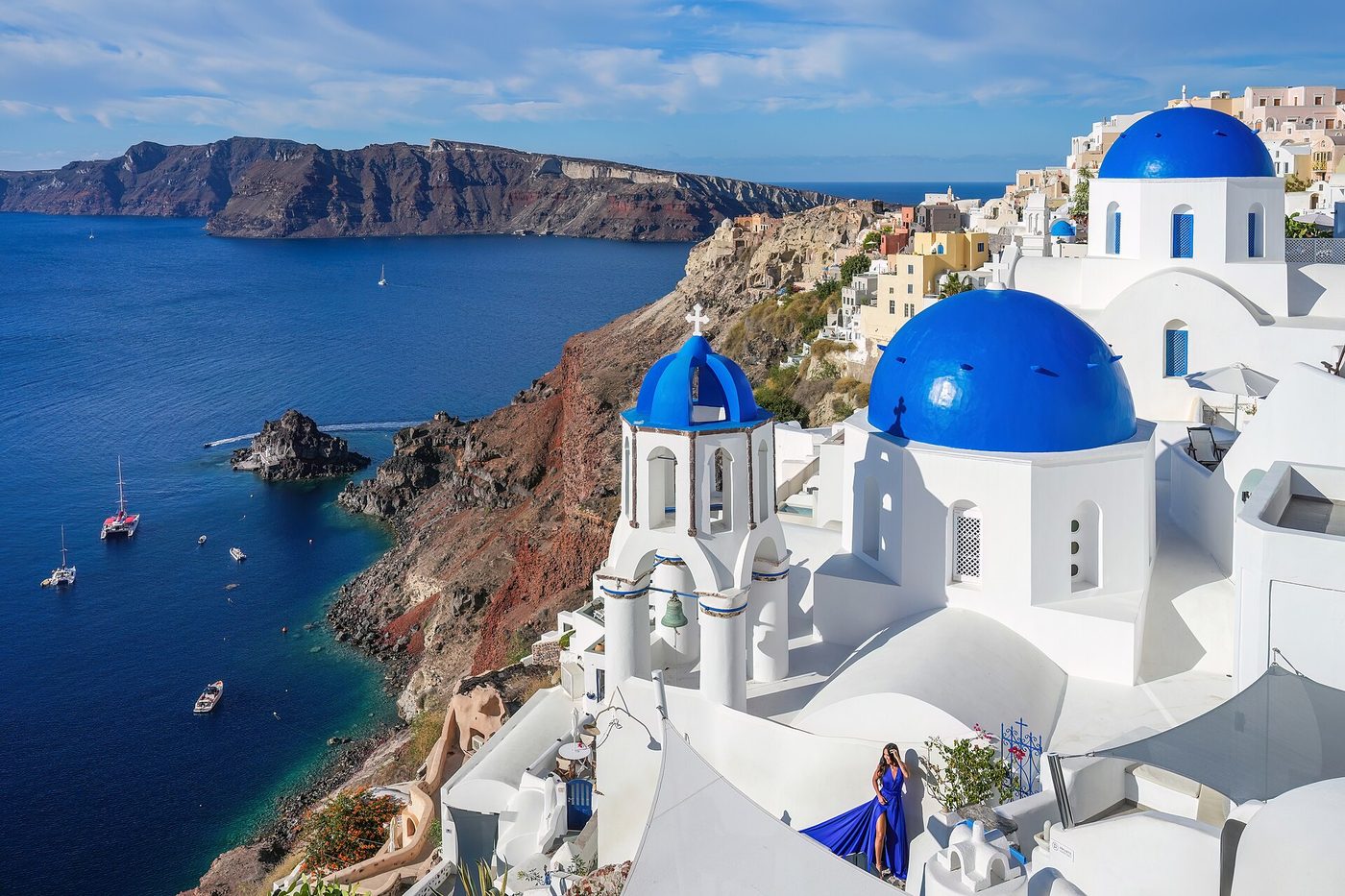
There is no single best time to visit Greece, because Greece is not one place. It is several different countries wearing the same flag, and they peak at different times. The Cyclades in August are a wind-blasted, gorgeous, oversubscribed circus. Crete in late October is still swimmable. Athens in February is a serious European capital with cheap hotel rooms and no queue at the Acropolis. Thessaloniki in June is hotter than Corfu, and in January it is colder than anywhere else in this guide. If you pick a month without picking a Greece, you can easily land in the wrong one.
So this guide puts numbers next to the advice. Sourced monthly air and sea temperatures for five parts of the country, the actual per-night accommodation tax and how it halves and halves again in winter, the cruise levy by month, ferry frequencies that run from eight sailings a day on the Santorini route down to two a week on the line to Sitia, and the site opening hours that quietly shorten on 1 November.
The short version: the best time to visit Greece is late May to mid June, or the first three weeks of September. Late May gives you the country at its greenest, with the sea warming through 22°C by the start of June; September gives you the warmest water of the year, at around 25°C. Both give you ferries at full frequency, every hotel open, and none of the July and August crush. If cost matters more than swimming, go between November and March, when the accommodation tax falls to between a quarter and a third of its summer rate.
Best time to visit Greece at a glance
One table, twelve months. Air temperature is the Athens average daily maximum; sea temperature is the Saronic Gulf off Athens, which sits roughly in the middle of the Greek range. Crete runs about a degree warmer in autumn, Thessaloniki a degree or two colder in early spring.
| Month | Athens average high | Athens sea temperature | Crowds | Accommodation prices | Best for |
|---|---|---|---|---|---|
| January | 13.3°C | 15.4°C | Lowest of the year | Cheapest of the year | Athens, Thessaloniki, museums, snow in the mountains |
| February | 14.2°C | 15.0°C | Very low | Cheapest of the year | City breaks, carnival build-up, skiing |
| March | 17.0°C | 15.2°C | Low | Low | Wildflowers, ruins with nobody on them, Meteora |
| April | 21.1°C | 15.7°C | Rising | Rising after 1 April | Hiking, the mainland, early island openings, and Easter in the years it falls in April |
| May | 26.5°C | 18.5°C | Moderate | Moderate to high | Almost everything except swimming |
| June | 31.6°C | 22.6°C | High | High | Islands, sailing, long daylight, sea finally warm |
| July | 34.3°C | 25.7°C | Highest of the year | Highest of the year | Beaches, nightlife, festivals, if you tolerate heat |
| August | 34.3°C | 26.3°C | Highest of the year | Highest of the year | Warmest sea, biggest crowds, hardest to book |
| September | 29.6°C | 25.0°C | Falling fast after the first week | Falling | The best all-round month in my opinion |
| October | 24.4°C | 22.2°C | Low | Low | Crete and Rhodes, sightseeing, last swimmable sea |
| November | 18.9°C | 19.1°C | Very low | Very low | Athens, food, the Athens Marathon, olive harvest |
| December | 14.4°C | 16.6°C | Lowest of the year | Cheapest of the year | Cities, Christmas, mountains, no islands |
Read that column of sea temperatures carefully, because it is where most trips go wrong. May feels like summer on land and is 18.5°C in the water, which is a brisk ten-minute swim, not an afternoon. October feels like autumn on land and is 22.2°C in the water, which is a very pleasant afternoon. Air temperature and sea temperature run about six weeks out of phase, and the sea is the one that decides whether your beach day works.
The short answer for ten kinds of trip
Before the month-by-month detail, here is the compressed version. Find the row that matches what you are actually going for.
| If this is your trip | Go in | Why |
|---|---|---|
| First trip, want the postcard islands | Late May to mid June, or the first three weeks of September | Ferries at full frequency, every hotel open, and crowds off the August peak |
| Beaches and swimming above all | Mid July to late September | Sea above 25°C almost everywhere; Crete stays above 22°C into late October |
| Ancient sites and museums | Late March to early May, or mid October to mid November | You can stand in the sun at Delphi without suffering, and queues fall away |
| Hiking and gorges | April and May, September and October | Samaria and the Crete gorges are open, the ground is dry and the days are long |
| Lowest possible cost | January and February | Accommodation tax is at its winter rate, Athens room rates are at their floor and flights are at their cheapest |
| Sailing and island hopping under your own sail | June and early September | Warm enough, but off the meltemi peak of late July and August |
| Nightlife | July and August | Mykonos and Ios run at full volume only in these two months |
| Travelling with young children | Early June or mid September | Sea warm, heat manageable, ferries running, but not the August scrum |
| Food, wine and harvest | Late September through November | Grape harvest ends, olive harvest begins, and tavernas cook for locals again |
| Greek Easter | Whenever Orthodox Easter falls (2 May 2027, 16 April 2028) | The single most atmospheric week in the Greek calendar, and a logistical test |
If you want the wider European context, our guide to the best time to visit Europe sets Greece against the rest of the continent, and the best time to visit southern Europe compares it directly with Italy, Spain and Portugal, which share the same shoulder-season logic and not much else.
Greece month by month
Each month below gets the same treatment: what the weather does, what is open, what it costs, and who should book it. Temperatures are Athens averages unless I say otherwise.
January in Greece
Athens averages a daily high of 13.3°C and a low of 7.1°C, with about 48 mm of rain. That is Rome in winter, not Stockholm. Heraklion is warmer still, at 15.7°C, the mildest January of any city in this guide.
This is the cheapest month of the year and the one where the maths is most in your favour. The accommodation tax on a five-star room falls from €15 a night to €4. State museums and archaeological sites are free on the first and third Sunday of the month. Long-haul fares to Athens bottom out here, with KAYAK’s own route averages putting January and February at roughly half the June price. Those are US round-trip figures; the seasonal shape holds from the UK and northern Europe even if the absolute numbers do not.
What you give up: the islands. Most island hotels, restaurants and bars close from November to March, and the convenient inter-island ferry hops disappear entirely. There are no Santorini to Mykonos sailings in March, to take one example. Stick to Athens, Thessaloniki, Nafplio, Meteora and Crete’s north coast, all of which have real year-round life. The ski centres are running: Parnassos opened on 23 December for the 2025 to 2026 season.
Book January if: you want ancient Greece without other people in your photographs, and you are happy to swap the beach for a museum and a long lunch.
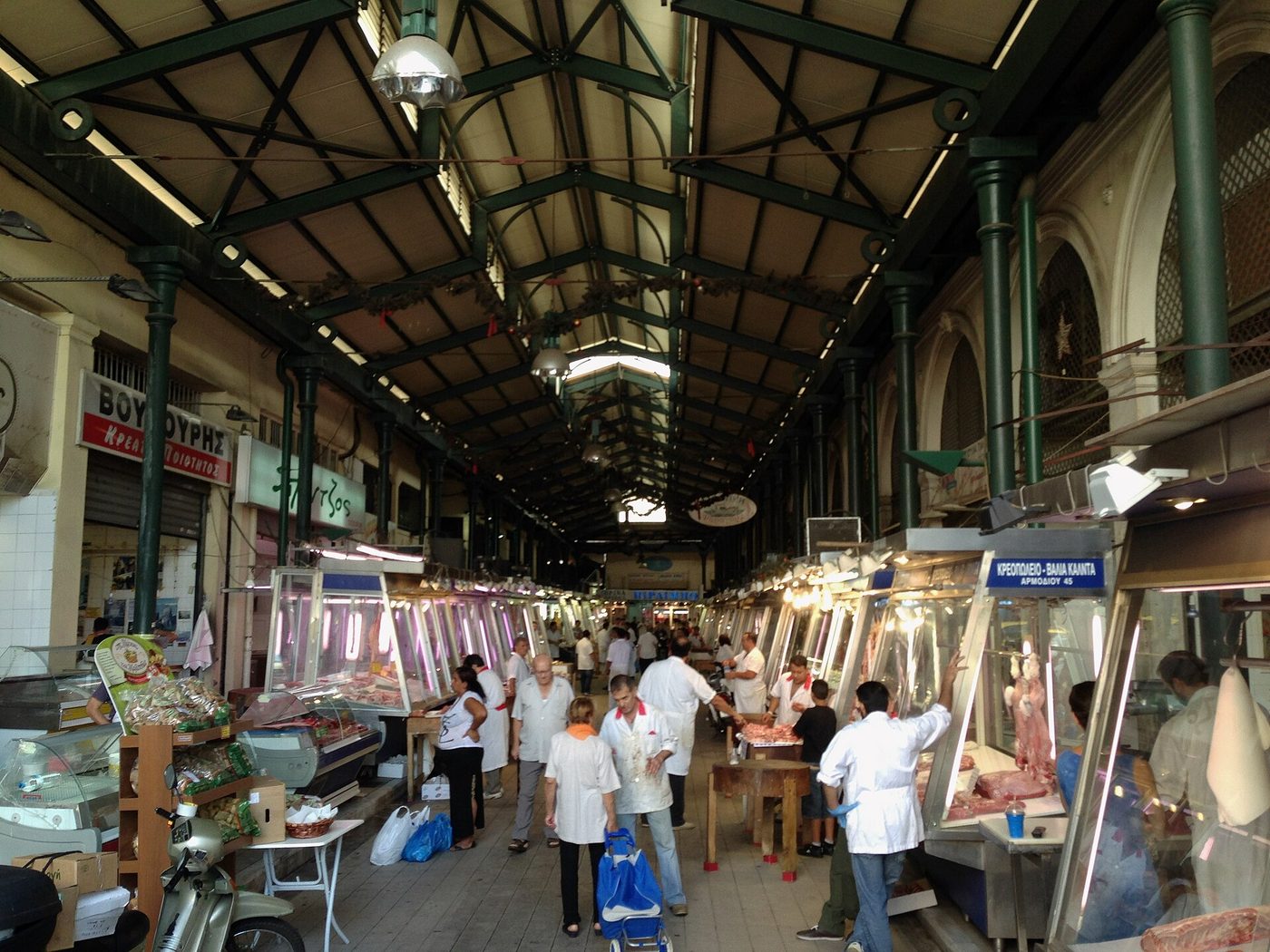
February in Greece
Barely warmer than January on land at 14.2°C, and marginally colder in the water: the Saronic Gulf bottoms out at 15.0°C, and Thessaloniki’s sea is down to 13.5°C in February and 13.3°C in March. Rain eases slightly to 44 mm in Athens.
The reason to come in February is Apokries, the three-week carnival season that runs up to Clean Monday and the start of Lent. In 2027 it runs from 21 February to Clean Monday on 15 March. Patras throws the largest carnival in Greece; Corfu’s is the most Venetian, with processions and a closing bonfire. Skiing is at its best. So are the wildflowers in western Crete, which bloom right through the winter and only start fading in the heat around 1 May.
Book February if: you want a city break with a party attached, or you are combining Athens with the mountains.
March in Greece
The light changes completely in March, and Athens climbs to 17.0°C. Rainfall is still around 46 mm, and the sea is scraping its annual floor: 15.2°C in Athens, and 16.5°C off Santorini, which is Santorini’s coldest reading of the year. Do not plan a swim.
Independence Day on 25 March brings military parades, traditional dress and closed offices. The island season has not started: ferries are on winter frequencies, most island hotels are still shut, and 1 April is the switch date for almost everything, from Acropolis summer hours to the higher accommodation tax band. Which makes the last week of March a genuine sweet spot for the mainland and for anyone whose priority is seeing Athens properly rather than lying down.
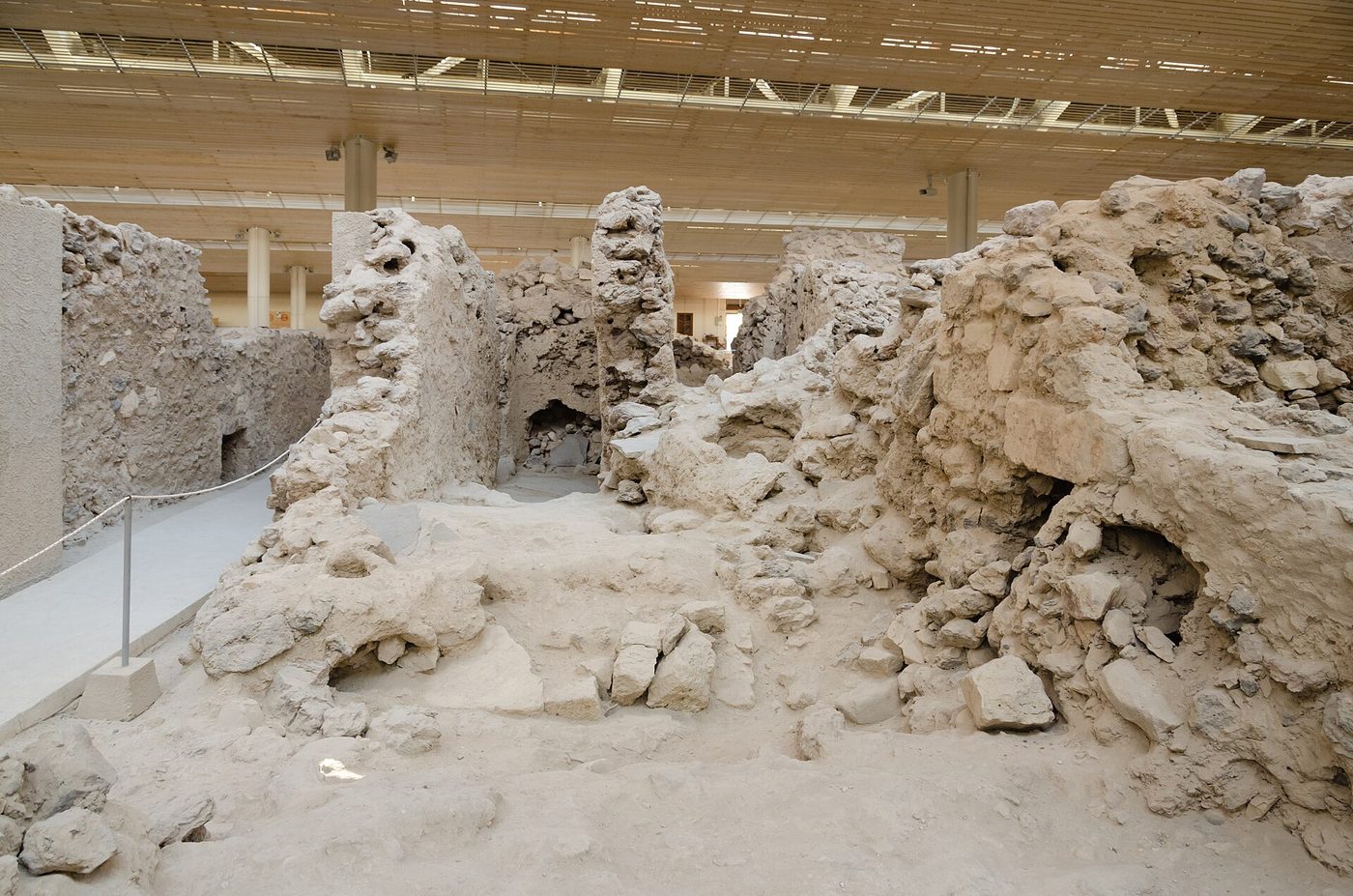
Book March if: you are here for the ruins, Meteora and the Peloponnese, and you want the last of the low-season prices.
April in Greece
The month everything switches on. Athens hits 21.1°C, rainfall drops by nearly 40 percent to 28 mm, and the mainland is at its greenest. Sites move to summer hours on 1 April: the Acropolis stays open until 20:00 in high summer instead of closing at 17:00. The accommodation tax jumps back up to its April to October rate on the same date, so a five-star room goes from €4 a night to €15.
Island hotels begin reopening through the month, but unevenly. Big islands and big resorts open early; the small Cyclades and the family-run places often wait until May. The sea is still only 15.7°C off Athens, so April is a walking and looking month, not a swimming one.
Greek Orthodox Easter is the wild card. It fell on 12 April in 2026, falls on 2 May in 2027 and on 16 April in 2028, which is the rare year when Orthodox and western Easter coincide. Holy Week is the most atmospheric thing in the Greek calendar and simultaneously the hardest week of the year to move around in. Ferries and domestic flights fill with Greeks going home, hotel prices spike, and restaurants serve mostly Lenten food until Saturday night. Book it months out or avoid it deliberately, but do not stumble into it.
Book April if: you want the mainland at its best, or you want Easter and you have planned for it.
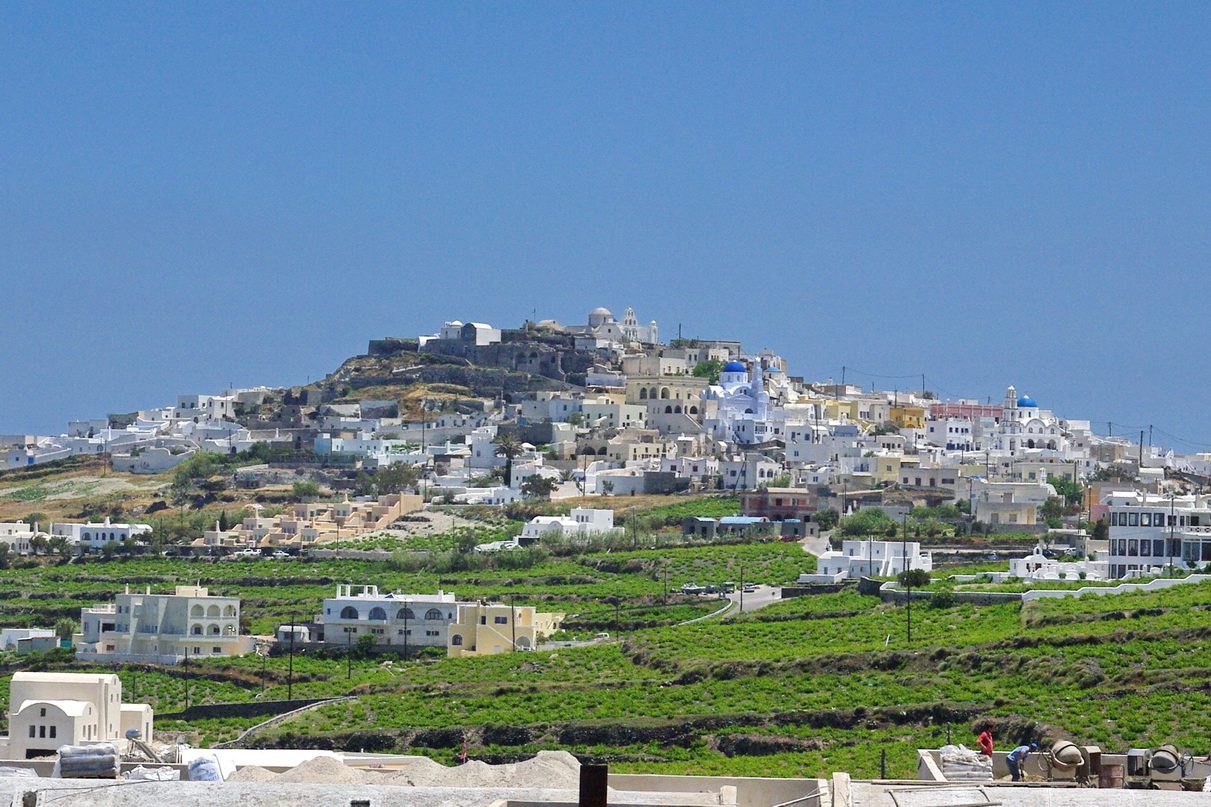
May in Greece
Everything turns green and then starts to turn gold. Athens reaches 26.5°C, Corfu 23.8°C, Heraklion 23.1°C. Rain drops to 21 mm in Athens and 11 mm in Naxos. This is the month Greece looks its absolute best and, on the evidence, does not price like a bargain: Athens hotels ran an average daily rate of €210.95 in May 2025 at 87.9 percent occupancy, which is higher than the July figure of €207.85.
The catch remains the water. The sea reaches 18.5°C in Athens, 19.0°C off Santorini and 19.3°C at Heraklion. Northern Europeans will swim in that. Most other people will get in once and then sit down.
Everything else is aligned: ferries are ramping to full schedules, Samaria Gorge usually opens around 1 May (in 2026 it opened late, on 19 May, after winter damage), and 1 May itself is a public holiday that reliably brings strikes and demonstrations, so leave slack around it.
Book May if: you want to hike, drive and look at things. Book late May if you also want to swim.
June in Greece
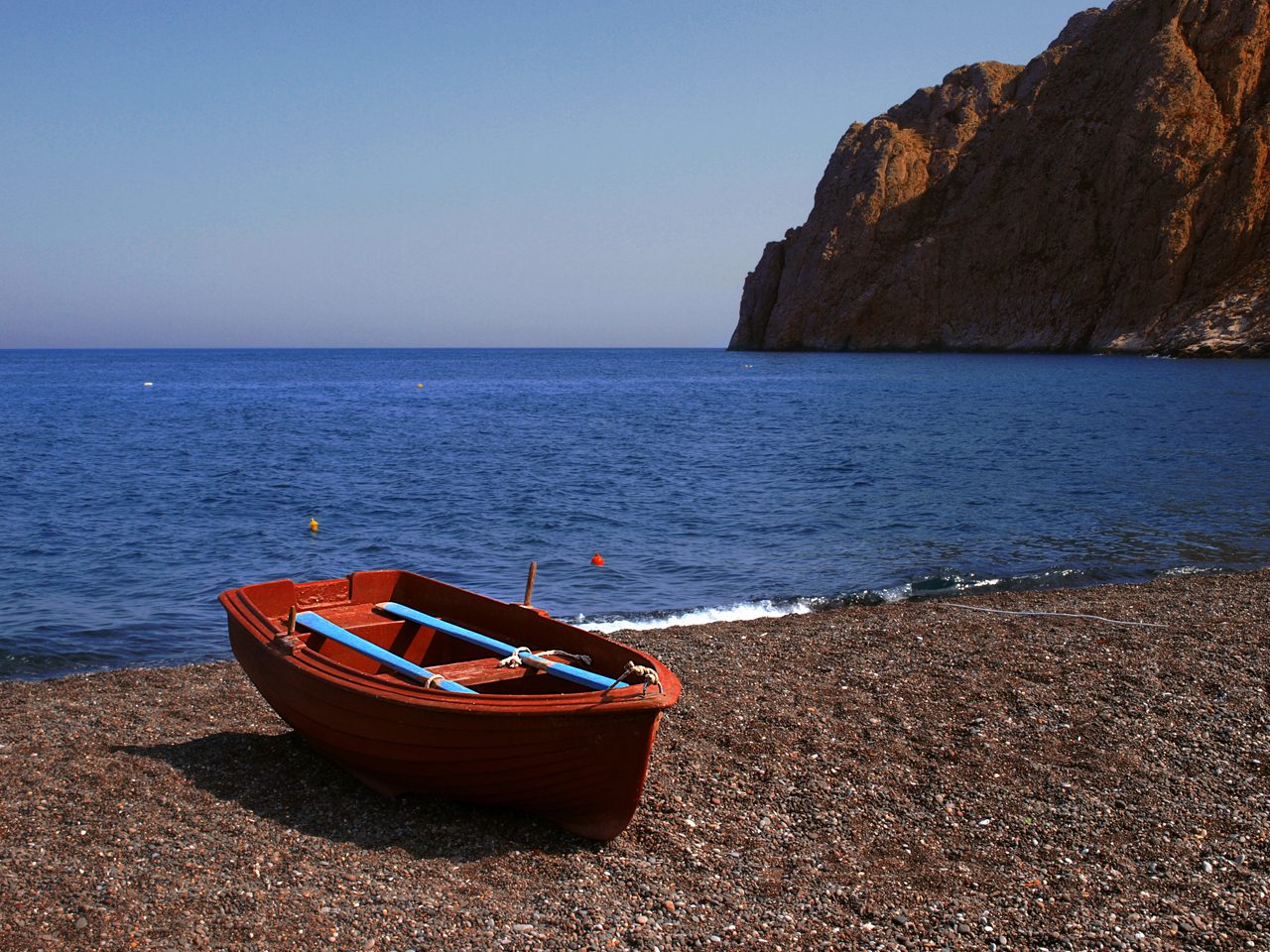
The first month where everything works at once. Athens averages 31.6°C, which is hot but not yet punitive, and the sea finally arrives: 22.6°C in Athens, 22.8°C at Heraklion and Corfu. Rainfall in the Cyclades is effectively zero, at 2 mm in Naxos.
Daylight is at its maximum, with Corfu averaging 14 hours 54 minutes. Sailing charters consider June the best month of the year, because the temperatures and the winds are both lower than they will be in a fortnight. The Athens Epidaurus Festival opens, running roughly late June to late August. Every island is open, every ferry route is running, and the August crowd has not arrived.
The price is that June is expensive to fly into. KAYAK’s route averages put June at around $1,302 round trip from the United States, roughly twice the February figure.
Book June if: you want the full island experience and you can pay for the flight. Early June is the single best fortnight for families with small children.
July in Greece
Athens averages 34.3°C and 10.7 mm of rain. Heraklion records 0.2 mm for the month, which is functionally rainless. July was the peak month for international air arrivals in 2025, with 5.2 million people landing in a single month, about one sixth of the annual total.
Two things define July. The first is the meltemi, the north wind that blows from roughly mid May to mid September and is strongest now: Beaufort 7 to 8, occasionally 9, arriving in clear weather with no warning. It cancels ferries and it is the reason you should never book a ferry that lands in Athens a few hours before an international flight. The second is heat. The Culture Ministry has closed the Acropolis from 12:00 to 17:00 during heatwaves in recent summers, including 2024, 2025 and 2026, with no published temperature threshold and the decision announced on the morning.
The islands are cooler than the mainland, and by a serious margin: the July gap between Naxos and Athens is more than seven degrees. If you are going to Greece in high summer, go to an island.
Book July if: you are here for beaches and nightlife, you are heat-tolerant, and you book everything early.
August in Greece
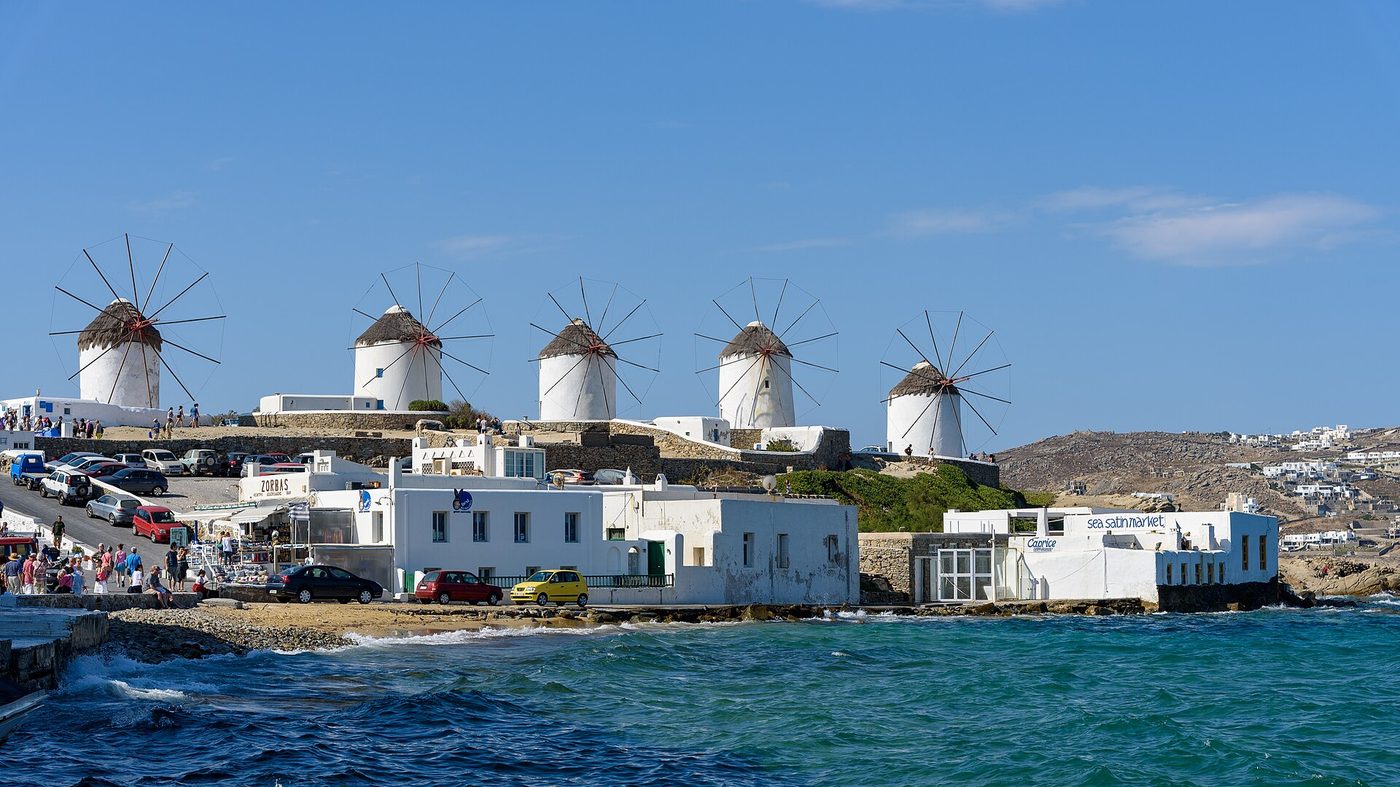
The same air temperature as July at 34.3°C, the warmest sea of the year at 26.3°C off Athens, the driest month in the capital at 5.4 mm, and the busiest. August brought 5.0 million international air arrivals in 2025; between them, July and August took 10.2 million of the 31 million international air arrivals Greece recorded that year. Close to a third of the year’s visitors, in two months.
Then there is 15 August, the Dormition of the Theotokos, known as Dekapentavgoustos. It is the biggest domestic travel weekend in Greece. Ferries, flights, hotels and rental cars sell out, most shops and tourist sites close on the day itself, and transport runs Sunday schedules. If you are moving between islands in the middle of August, build in a spare day.
Wildfire risk peaks in July and August, when heat, drought and the meltemi combine. Open fires are banned across the whole 1 May to 31 October season, Civil Protection publishes a daily fire-risk map, and 112 alerts are pushed to phones. It is worth knowing how that system works before you need it.
Book August if: school holidays leave you no choice, or you want the warmest possible water and will accept everything else that comes with it.
September in Greece
My pick for the best month in Greece, and it is not close. Athens falls to 29.6°C, the sea is still 25.0°C in Athens, 25.0°C at Heraklion and 25.2°C off Corfu. Rainfall is 26 mm in Athens. The meltemi is fading. The crowds fall away noticeably after the first week, once northern European schools go back.
Prices follow. Santorini rates fall 30 to 50 percent from the August ceiling in late September and early October, and Greece-wide the shoulder-season discount runs 25 to 40 percent against August. Everything is still open: ferries at near-full frequency, every hotel trading, every taverna cooking.
The last weekend of September is a free-admission weekend at every state archaeological site and museum in the country, for European Heritage Days. If your dates are flexible, that is worth a nudge on the calendar. The grape harvest is finishing in the south, and Aegina’s pistachios come in.

Book September if: you want one month that does everything. The second and third weeks are the sweet spot.
October in Greece
This is the month Greece splits in two. Athens comes down to 24.4°C with 39 mm of rain. The Cyclades start closing: ferry services and flights thin out from late October, small islands shutter, and the wind turns. Crete does the opposite. Heraklion still averages 23.1°C on land and 22.8°C in the water, which is a full degree warmer than Santorini’s 21.8°C, and the island holds swimmable sea and mild days into early November.
The accommodation tax and the cruise levy are both still in their higher shoulder bands through October, then drop on 1 November. Site hours revert to winter on the same date. Ochi Day on 28 October is a national holiday with parades and free entry to state sites. Samaria Gorge typically closes somewhere between mid October and the end of the month, so check the park’s own status page rather than assuming.
Book October if: you are going to Crete, Rhodes or the mainland. I would not build an October trip around the small Cyclades.

November in Greece
The rain arrives properly now. Athens averages 18.9°C and 71 mm, its second-wettest month. Corfu gets 187 mm, the wettest month anywhere in this guide. The sea is still 20.1°C at Heraklion, which is warmer than the Athens sea in May.
On 1 November the low-season rates begin: the accommodation tax drops to €0.50 to €4 a night depending on class, the cruise levy at Santorini and Mykonos falls from €12 to €4, and state sites go free on the first and third Sunday of every month until 31 March. Site hours shorten. Most island hotels and restaurants have closed, and the majority of Santorini’s caldera hotels shut by early November for renovation, though Fira keeps a reasonable selection open.
November is a strong month on the mainland. The Athens Marathon, The Authentic, runs the original course on Sunday 8 November 2026. The Thessaloniki International Film Festival holds its 67th edition from 5 to 15 November 2026. The olive harvest is in full swing, and November and December are the commonest picking months.
Book November if: you want Athens or Thessaloniki at their most livable, at winter prices, with something on.
December in Greece
Athens’s wettest month, at 76 mm, with the sea down to 16.6°C on its way to a February low of 15.0°C, though the air still averages 14.4°C. Thessaloniki drops to 12.7°C, with a record low of minus 9.3°C on the books.
Christmas Day and 26 December are both public holidays. The ski season opens, typically in the second half of December. The islands are effectively closed, and winter gales cancel ferries with little notice, which is the real argument against island-hopping now: it is not the cold, it is that the boat may simply not run and there may be no flight either.
Book December if: you want a warm-ish European city break with archaeology attached, or you are heading for the mountains. Our guide to visiting Europe in winter covers how Greece compares with the alternatives, and the best places to visit in Europe in winter puts Athens in context.
Greek weather by month: the actual numbers
Adjectives are not much use when you are deciding between the second week of May and the second week of October. Here are five parts of the country, twelve months, four measures.
A word on the sources, because they matter. The air and rainfall figures for Athens, Naxos, Heraklion and Thessaloniki come from the published climate normals in each city’s climate table; the Corfu figures come from Weather Atlas. Sea temperatures are monthly satellite averages. Different stations and different reference periods will move any of these by a few tenths of a degree, so treat them as a reliable shape rather than a forecast.
Average daily maximum temperature, °C (°F)
| Month | Athens | Naxos (Cyclades) | Heraklion (Crete) | Corfu | Thessaloniki |
|---|---|---|---|---|---|
| January | 13.3 (56) | 14.4 (58) | 15.7 (60) | 13.9 (57) | 11.1 (52) |
| February | 14.2 (58) | 14.6 (58) | 16.1 (61) | 14.2 (58) | 12.8 (55) |
| March | 17.0 (63) | 15.8 (60) | 17.2 (63) | 16.0 (61) | 15.6 (60) |
| April | 21.1 (70) | 18.7 (66) | 19.9 (68) | 19.0 (66) | 19.5 (67) |
| May | 26.5 (80) | 22.1 (72) | 23.1 (74) | 23.8 (75) | 24.3 (76) |
| June | 31.6 (89) | 25.9 (79) | 26.2 (79) | 28.0 (82) | 29.1 (84) |
| July | 34.3 (94) | 27.1 (81) | 28.3 (83) | 30.9 (88) | 31.7 (89) |
| August | 34.3 (94) | 27.0 (81) | 28.3 (83) | 31.3 (88) | 31.5 (89) |
| September | 29.6 (85) | 25.1 (77) | 26.4 (80) | 27.6 (82) | 27.0 (81) |
| October | 24.4 (76) | 21.9 (71) | 23.1 (74) | 23.2 (74) | 21.5 (71) |
| November | 18.9 (66) | 18.8 (66) | 20.8 (69) | 18.7 (66) | 17.0 (63) |
| December | 14.4 (58) | 15.9 (61) | 17.5 (64) | 15.3 (60) | 12.7 (55) |
Three things jump out. Athens is the hottest place in this table in July and August by a wide margin, which is why Athenians leave. The Cycladic islands are materially cooler than the capital in high summer: Naxos peaks at 27.1°C against Athens at 34.3°C. And Thessaloniki, which people file mentally under “the cold north”, is hotter than Athens in nothing and hotter than Corfu in July at 31.7°C, while also being the coldest of the five in January at 11.1°C. It has a continental climate, not a Mediterranean one.
Average daily minimum temperature, °C (°F)
| Month | Athens | Naxos (Cyclades) | Heraklion (Crete) | Thessaloniki |
|---|---|---|---|---|
| January | 7.1 (45) | 9.6 (49) | 10.5 (51) | 5.5 (42) |
| February | 7.3 (45) | 9.4 (49) | 10.8 (51) | 6.8 (44) |
| March | 9.2 (49) | 10.4 (51) | 11.9 (53) | 9.1 (48) |
| April | 12.3 (54) | 12.5 (55) | 14.5 (58) | 12.6 (55) |
| May | 17.0 (63) | 15.7 (60) | 17.8 (64) | 17.2 (63) |
| June | 21.6 (71) | 19.6 (67) | 21.9 (71) | 21.7 (71) |
| July | 24.2 (76) | 22.0 (72) | 24.9 (77) | 24.3 (76) |
| August | 24.4 (76) | 22.2 (72) | 25.1 (77) | 24.3 (76) |
| September | 20.4 (69) | 20.1 (68) | 22.4 (72) | 20.3 (69) |
| October | 16.2 (61) | 17.0 (63) | 18.7 (66) | 15.5 (60) |
| November | 12.2 (54) | 13.7 (57) | 15.9 (61) | 11.6 (53) |
| December | 8.7 (48) | 11.1 (52) | 12.5 (55) | 7.4 (45) |
The minimums are the reason August feels relentless. Athens does not drop below 24.4°C on an average August night, and Heraklion averages 25.1°C. Nights do not give the heat back. In April and October the same table reads very differently: 12.3°C and 16.2°C in Athens, which is a jumper in the evening and a good night’s sleep. Corfu is not in this table because I could only source its January low of 5.1°C and its August low of 18.8°C rather than a full series.
Average monthly rainfall, mm
| Month | Athens | Naxos (Cyclades) | Heraklion (Crete) |
|---|---|---|---|
| January | 56 | 68 | 62 |
| February | 44 | 56 | 49 |
| March | 46 | 46 | 31 |
| April | 28 | 18 | 13 |
| May | 21 | 11 | 13 |
| June | 12 | 2 | 4 |
| July | 11 | 1 | 0 |
| August | 5 | 2 | 2 |
| September | 26 | 8 | 15 |
| October | 39 | 39 | 44 |
| November | 71 | 52 | 32 |
| December | 76 | 69 | 53 |
Greek rain in the south is a winter phenomenon and very little else. Athens takes 433 mm a year and Heraklion just 319 mm, almost all of it between October and March. Corfu takes 1,097 mm across 129 rain days, which is roughly 2.5 times Athens and 3.4 times Heraklion. If you are picturing “Greek islands” and thinking of Corfu, adjust: the Ionian is a green, wet place and that is exactly why it is green. Its wettest month is November at 187 mm, its most persistent is December at 17.5 rain days, and its driest is July at 9 mm across 2.3 rain days.
Two caveats on this table. Corfu is not in it because I could source annual and individual-month figures for the island but not a full monthly series, and the Naxos figures were published in inches and converted here. I have also left Thessaloniki out: the published monthly series for the city disagree substantially with one another, and northern Greece follows a more continental pattern, with summer thunderstorms the south does not get, so I would rather give you nothing than give you a column I cannot stand behind.
Average sea temperature, °C (°F)
| Month | Athens / Saronic | Santorini | Heraklion (Crete) | Corfu | Thessaloniki |
|---|---|---|---|---|---|
| January | 15.4 (60) | 16.9 (62) | 16.8 (62) | 15.4 (60) | 14.1 (57) |
| February | 15.0 (59) | 16.6 (62) | 16.2 (61) | 15.2 (59) | 13.5 (56) |
| March | 15.2 (59) | 16.5 (62) | 16.4 (62) | 15.3 (60) | 13.3 (56) |
| April | 15.7 (60) | 16.8 (62) | 16.9 (62) | 16.2 (61) | 14.4 (58) |
| May | 18.5 (65) | 19.0 (66) | 19.3 (67) | 19.0 (66) | 18.7 (66) |
| June | 22.6 (73) | 22.3 (72) | 22.8 (73) | 22.8 (73) | 23.7 (75) |
| July | 25.7 (78) | 24.5 (76) | 25.4 (78) | 25.3 (78) | 26.1 (79) |
| August | 26.3 (79) | 25.1 (77) | 25.9 (79) | 25.6 (78) | 26.0 (79) |
| September | 25.0 (77) | 23.9 (75) | 25.0 (77) | 25.2 (77) | 24.6 (76) |
| October | 22.2 (72) | 21.8 (71) | 22.8 (73) | 21.9 (71) | 21.0 (70) |
| November | 19.1 (66) | 19.0 (66) | 20.1 (68) | 19.4 (67) | 17.6 (64) |
| December | 16.6 (62) | 17.4 (63) | 17.8 (64) | 16.9 (62) | 14.9 (59) |
This is the table I would use to choose a month. A few readings worth holding onto:
- The Aegean crosses 22°C in June and stays above 22°C into October at Athens and Heraklion, with Corfu a whisker short at 21.9°C. That is your swimming season: four and a half months, not six.
- May is 18.5°C to 19.3°C nearly everywhere. Warm air, cold water.
- August is the warmest month for four of the five, peaking at 26.3°C in the Saronic Gulf. Thessaloniki is the exception, warmest in July at 26.1°C.
- Crete holds swimmable water longest: 22.8°C in October and 20.1°C in November, a full degree above Santorini in both months.
- The coldest water in Greece is off Thessaloniki in March, at 13.3°C.
The same logic applies across the region, and our roundup of the best beaches in Europe and the best Mediterranean destinations both work off similar seasonal windows.
The meltemi: the wind that decides your ferry
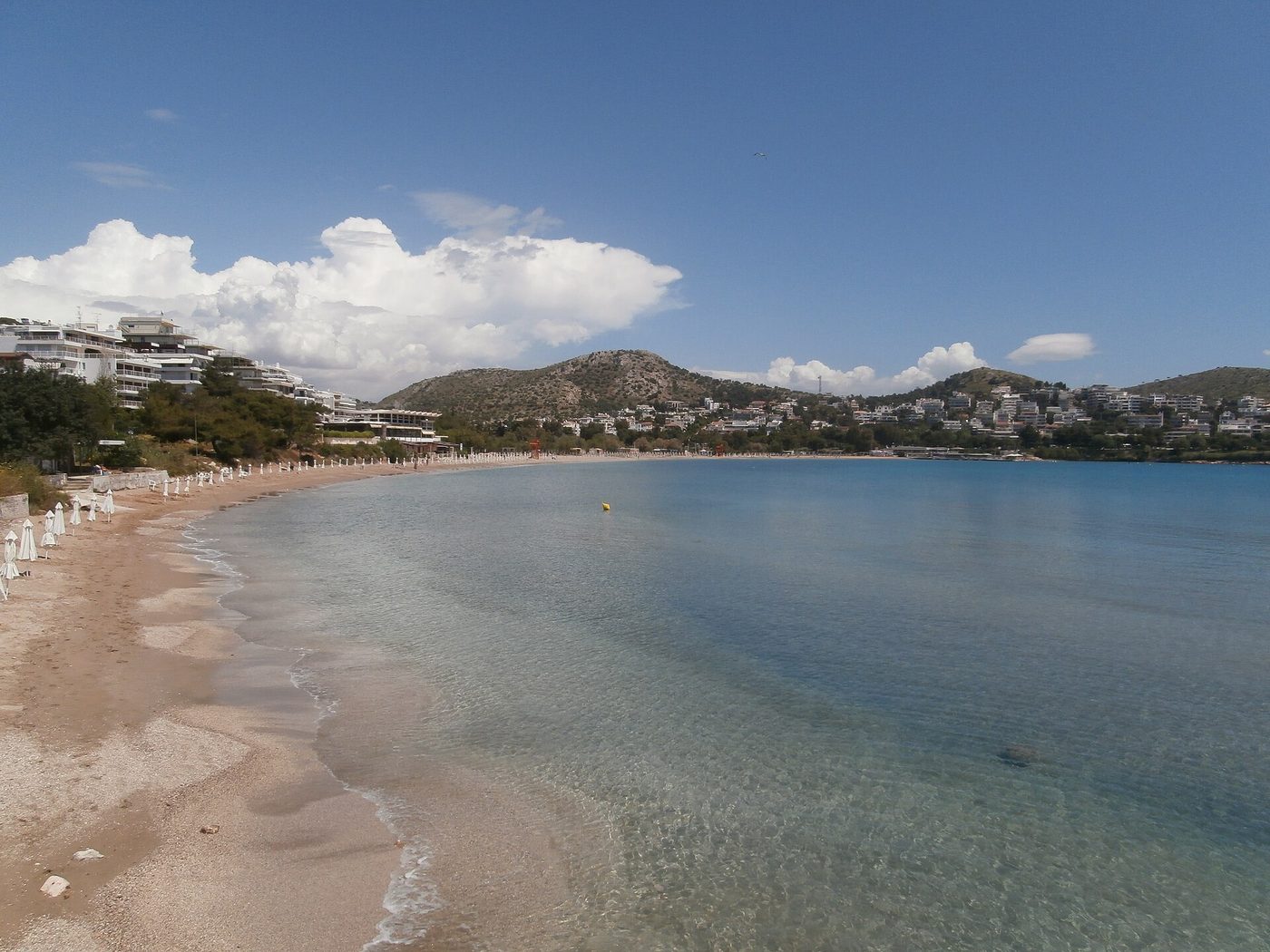
The meltemi, or etesian wind, blows from roughly mid May to mid September and is strongest in July and August. It runs at Beaufort 7 to 8 and can reach 9, it comes up in clear blue weather with no warning, it is strongest in the afternoon, and it can blow for days at a stretch. Direction shifts by region: northeast to north in the north Aegean, north in the central Aegean, northwest in the south Aegean and around Crete.
Mykonos is nicknamed the island of the winds for a reason, and Andros and Tinos get it just as hard. Paros, Naxos, Milos, Ios and Santorini follow. What this means in practice:
- Smaller high-speed catamarans can stop sailing from Beaufort 7. Most operators cancel from Beaufort 9. Large conventional ferries handle it far better than fast craft, so in a windy week the slow boat is the reliable boat.
- Cancellations cluster. On 14 August 2026 a 48-hour gale-force meltemi with gusts locally above 100 km/h produced sailing bans from Rafina and Lavrio and cancelled Blue Star and SeaJets services across the Cyclades, on the eve of the busiest travel day of the Greek year.
- Never schedule a ferry to arrive in Athens only a few hours before an international flight. Give it a night.
- The upside is real: the meltemi cuts humidity, makes 34°C bearable, and produces some of the best windsurfing in Europe.
If you are building an island route, our Greek island hopping itinerary and the wider guide to getting around Europe both assume you have read this section.
Ferries: how the season changes what is possible
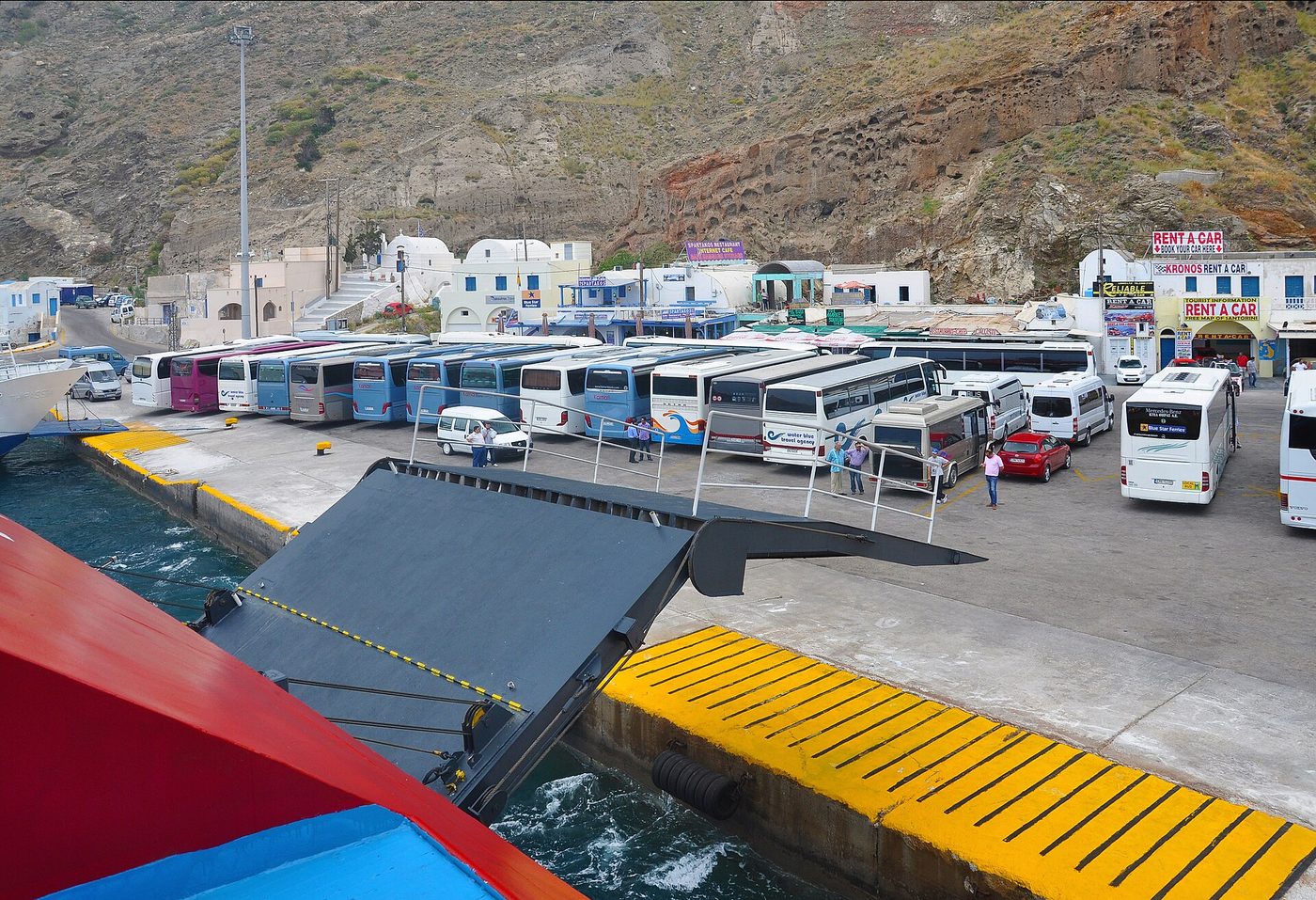
Ferry frequency is the hidden variable in Greek trip planning. In August you can improvise; in February you cannot. In the table below, the first nine rows give peak-season maxima and lead-in fares for 2026; the last six are routes that never get much busier than the figure shown, in any season.
| Route | Typical frequency | Fare from |
|---|---|---|
| Piraeus to Santorini | Up to 8 daily | From around €46 |
| Piraeus to Mykonos | Up to 5 daily | From around €44 |
| Rafina to Mykonos | Up to 12 daily | From around €38 |
| Piraeus to Paros | Up to 7 daily | From around €41 |
| Piraeus to Naxos | Up to 7 daily | From around €43 |
| Piraeus to Milos | Up to 6 daily | From around €42 |
| Piraeus to Syros | Up to 6 daily | From around €37 |
| Piraeus to Heraklion, Crete | Up to 5 daily, season dependent | From around €33 |
| Igoumenitsa to Corfu | Up to 30 daily, all year | €6 to €13 |
| Piraeus to Sitia, Crete | About 2 a week | Varies |
| Piraeus to Kissamos, Crete | 1 to 2 a week | Varies |
| Piraeus to Lemnos | Up to 2 a week | Varies |
| Piraeus to Ikaria | Up to 5 a week | Varies |
| Piraeus to Astypalea | 4 to 5 a week | Varies |
| Thessaloniki to the north Aegean islands | 1 to 2 a week | Varies |
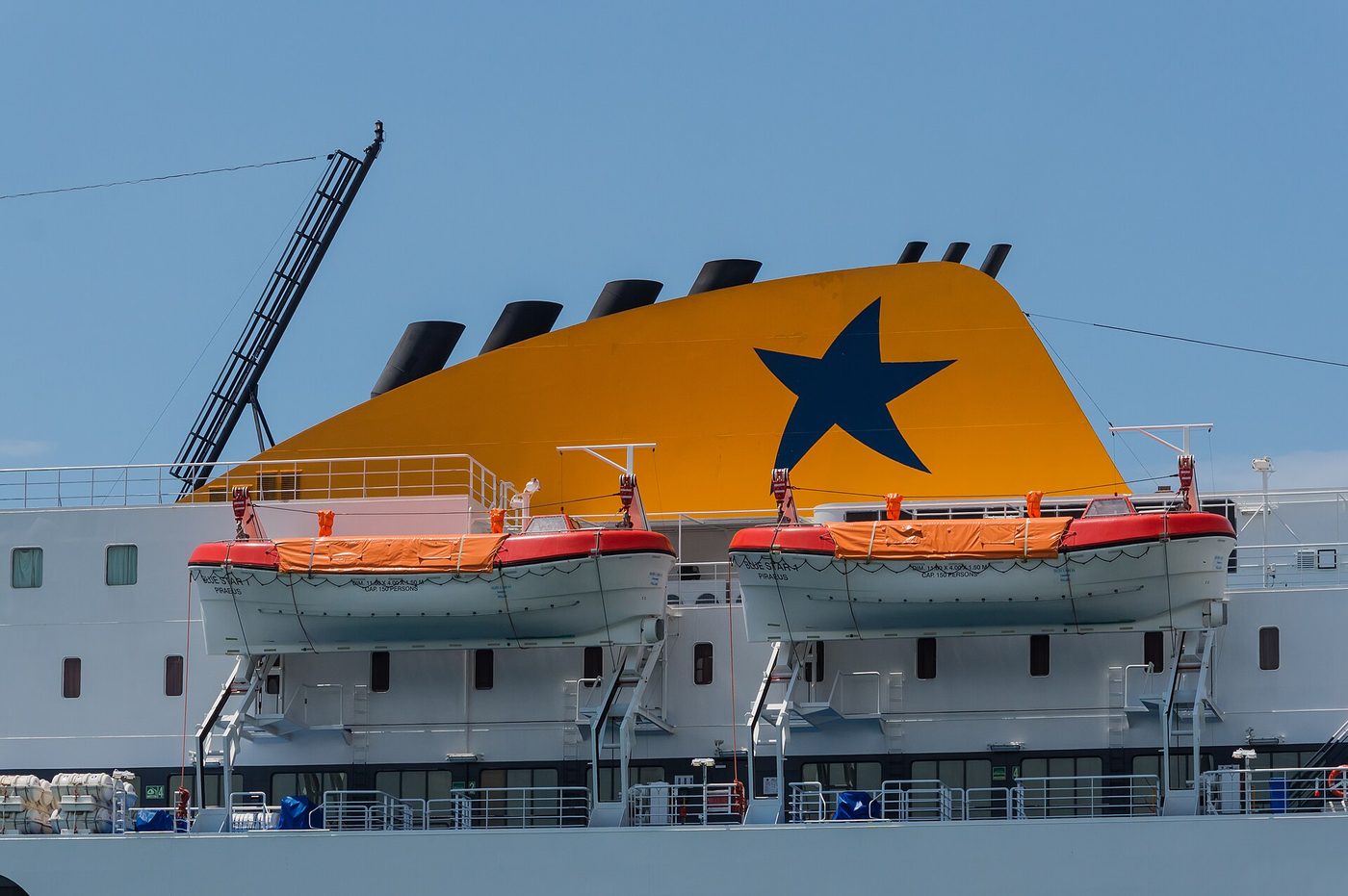
Athens to the Cyclades and Athens to Crete both run all year, and Crete is served year-round by Minoan, SeaJets, ANEK, Fast Ferries, Blue Star and Hellenic Seaways. What disappears in winter is the island-to-island connection. There are no Santorini to Mykonos ferries in March and no Santorini to Crete ferries in November, and routes such as Piraeus to Sitia drop to two sailings a week. A winter island trip is a hub-and-spoke trip out of Piraeus, not a hop.
What Greece costs, month by month
Season changes the price of a Greek holiday in four separate ways, and only one of them shows up on a hotel booking page. Here they are in order of how much they surprise people.
1. The Climate Crisis Resilience Fee
Greece charges a per-night accommodation levy, formerly the overnight stay tax, now the Climate Crisis Resilience Fee. It is charged per room or rental unit rather than per person, it is collected on departure rather than at booking, and it falls to between a quarter and a third of its summer level in the November to March band. Architectural heritage buildings, youth hostels and campsites are exempt.
| Accommodation type | April to October, per night | November to March, per night |
|---|---|---|
| Hotel, 1 or 2 star | €2.00 | €0.50 |
| Hotel, 3 star | €5.00 | €1.50 |
| Hotel, 4 star | €10.00 | €3.00 |
| Hotel, 5 star | €15.00 | €4.00 |
| Furnished rooms and apartments to rent | €2.00 | €0.50 |
| Short-term rental, under 80 m² | €8.00 | €2.00 |
| Short-term rental, detached house over 80 m² | €15.00 | €4.00 |
| Furnished holiday home, under 80 m² | €8.00 | €2.00 |
| Furnished holiday home, 80 m² and over | €15.00 | €4.00 |
| Furnished tourist villa | €15.00 | €4.00 |
These bands took effect on 1 January 2025 and no rate change has been announced for 2026. Look at the five-star row: €15 a night in September, €4 a night in November. On a ten-night trip for two rooms that is a €220 swing, before anyone has discounted anything. It is a small tax that quietly rewards off-season travel, and it is worth putting in your budget before you compare two sets of dates.
2. The cruise passenger levy
Since 21 July 2025 every disembarking cruise passenger pays a port levy, charged to the onboard account before you step off. Santorini and Mykonos are in a band of their own, and the seasonal spread is steep.
| Port | 1 June to 30 September | April, May and October | November to March |
|---|---|---|---|
| Santorini and Mykonos | €20 | €12 | €4 |
| Every other Greek port | €5 | €3 | €1 |
The same rates apply through 2026. A family of four disembarking at Santorini in July pays €80 in levy alone; in November they pay €16. The government expects the scheme to raise more than €50 million a year.
3. Hotel rates
Athens is the counter-example to the standard shoulder-season advice, and it is worth knowing before you assume May is cheap. Athens hotels averaged a daily rate of €177 across 2025 at 77.1 percent occupancy. But May 2025 came in at €210.95 with 87.9 percent occupancy, higher than July at €207.85 and 83.3 percent. In Athens, spring is peak. What is genuinely cheap in Athens is winter, and that gap is closing: in 2025, January to March and November to December saw occupancy up 5.3 percent and rates up 5.4 percent year on year, while April to October occupancy actually fell 1.2 percent.
The islands behave the way you expect. Peak season adds 40 to 60 percent to Santorini accommodation against the April to May and September to October shoulders, and rates fall 30 to 50 percent from the August ceiling by late September and early October. One price tracker puts a typical Santorini October night at around £192. Greece-wide, the shoulder-season discount against August runs 25 to 40 percent.
4. Flights
The cheapest window to fly to Athens from the United States is consistently November to March, though the aggregators disagree on the exact winner: KAYAK’s route averages put February at around $620 round trip, while momondo puts October at around $618. Both agree on the expensive end. June averages around $1,302 and July around $1,103, so a June flight costs roughly twice a February one on the same route.
If cost is the deciding factor, our guides to the cheapest time to visit Europe and Europe on a budget go further into how to sequence a trip around low-season pricing.
How crowded is Greece, actually
Here is the arithmetic behind the word “crowded”.
Greece received 37.98 million inbound visitors in 2025 according to the Bank of Greece, up 5.6 percent on 2024, generating a record €23.6 billion in travel receipts. ELSTAT counted 38.2 million arrivals at tourist accommodation and 156.3 million overnight stays. Of the 31 million international air arrivals INSETE recorded, July alone took 5.2 million and August took 5.0 million. Together those two months are 10.2 million, close to a third of the annual total.
So roughly one visitor in three arrives in July or August, and a large share of them funnel onto a handful of small islands. Santorini alone received about 1.3 million cruise passengers in 2024, on top of everyone arriving by air and by ferry.
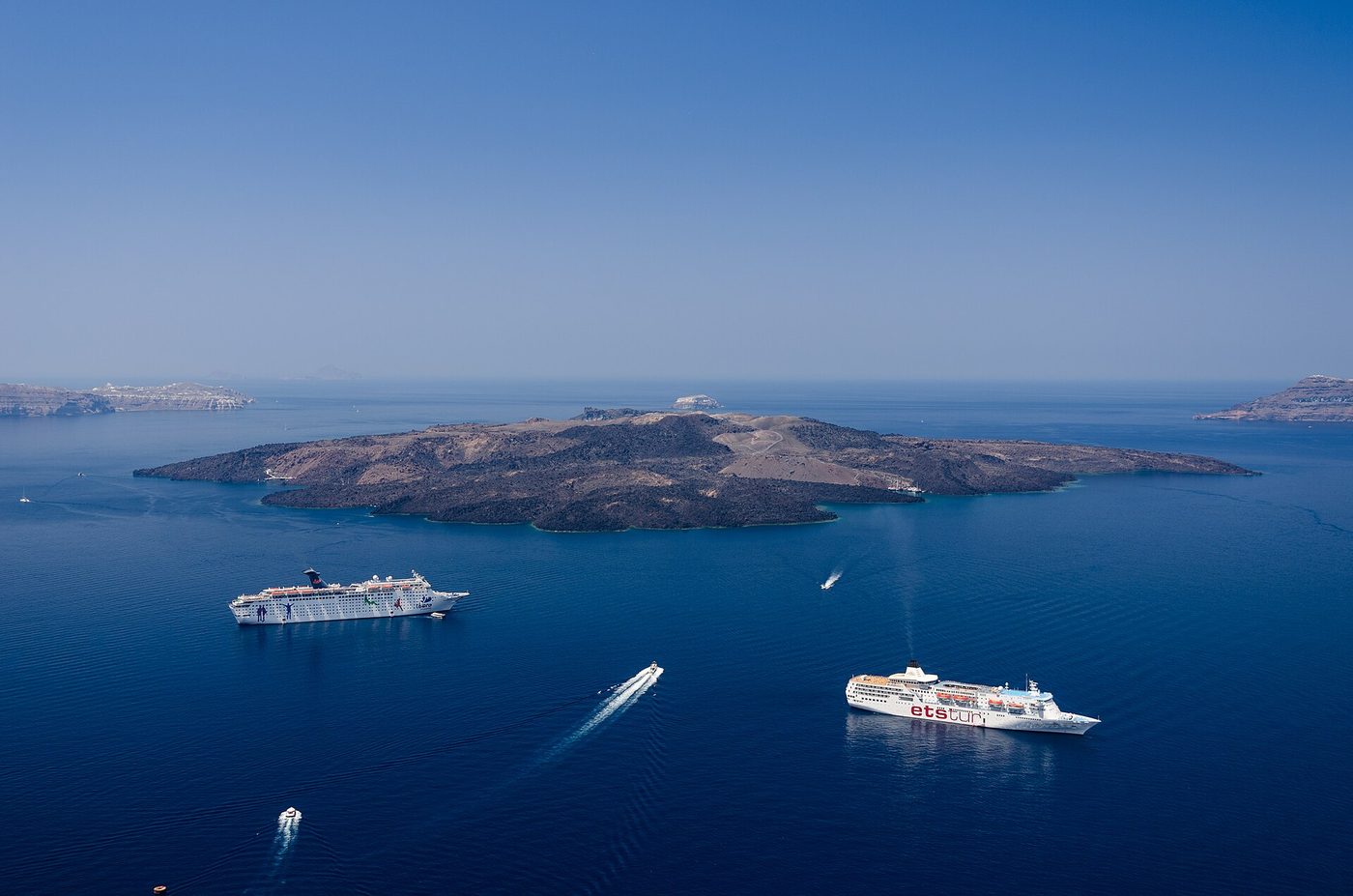
Two things have changed recently. Santorini now enforces a cap of 8,000 cruise passengers a day, down from peak days of around 17,000 in 2023, allocated through an algorithmic berth-booking system months in advance rather than turned away at the quay. Cruise arrivals to the island are estimated to have fallen more than 30 percent in 2025, on the combined effect of the cap, the levy and the winter 2025 earthquake swarm. Mykonos, which has no published daily cap, is reported to have grown 16 to 17 percent over the same period. The Santorini cap also does not touch air or ferry arrivals, which remain uncapped, so it changes the shape of the crowd rather than its size.
INSETE also reports that the Greek season is lengthening, with the fastest growth outside the peak months. That is good news if you travel in May or October, and it means the shoulder-season advantage is smaller each year than it was. Our guides to the least crowded time to visit Europe and shoulder season in Europe track the same trend across the continent.
Opening hours and ticket prices change on 1 April and 1 November
Greek state archaeological sites run two timetables, and the changeover dates are the same ones that govern the accommodation tax: summer from 1 April to 31 October, winter from 1 November to 31 March. A winter afternoon at Delphi is short. Plan around it.
| Site | Summer | Winter | Adult ticket |
|---|---|---|---|
| Acropolis of Athens | 08:00 to 20:00 in high summer, tapering through September and October | November to March, 08:00 to 17:00, last entry 16:30 | €30 all year |
| Knossos, Crete | April to October, 08:00 to 20:00 | November to March, 08:00 to 17:00 | €20 |
| Delphi | 1 April to 31 August, 08:00 to 20:00, last admission 19:30; September and October sit between the two published schedules | November to March, 08:30 to 15:30 | Quoted between €12 and €20 depending on whether the museum is included; confirm on hhticket.gr |
| Delos, from Mykonos | Boats run roughly 1 April to 30 November; site 08:00 to 20:00 in high summer | 08:30 to 16:00 in November, then written request only from December to March | €20 full, €10 reduced, plus around €25 for the return boat |
| Meteora monasteries | Summer schedule 1 April to 31 October, broadly 09:00 to 16:00 or 17:00 | Winter schedule 1 November to 31 March, shorter hours and extra closure days | Around €3 to €5 per monastery, cash at the gate |
| Ancient Olympia | Longer summer hours, as at all state sites | Shorter winter hours | Quoted between €12 and €20; the published sources disagree, so check before you go |
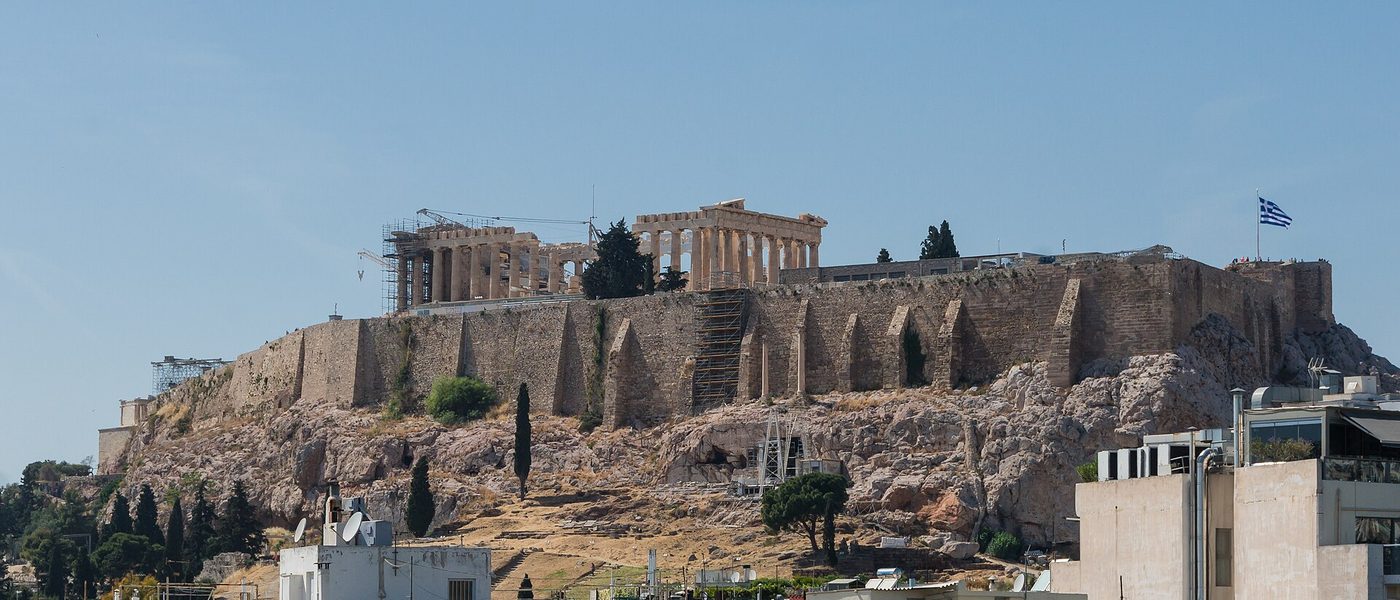
The Acropolis deserves its own paragraph, because the rules changed and a lot of the advice online has not caught up. A standard timed single-entry adult ticket is €30 all year. The 50 percent winter reduction that used to apply from November to March was abolished on 1 April 2025, along with the €30 combination ticket that covered six other Athens sites; you now buy Hadrian’s Library, the Ancient Agora, the Roman Agora, the Lyceum, Kerameikos and the Olympieion separately. Pages quoting €15 for a winter visit are describing the old rules.
Other Acropolis mechanics worth knowing:
- Entry is capped at 20,000 visitors a day, in compulsory hourly timeslots booked at purchase. You can arrive 15 minutes early or 15 minutes late; there is no time by which you must leave.
- Tickets are reported to sell out five to seven days ahead from June to August and around Greek public holidays. The first slots after opening and the last slots before closing go first, because they are the ones that avoid the heat.
- Buying on the day means queues of roughly 45 to 50 minutes in early October, and reportedly up to two hours from May to September.
- The official e-ticketing service is hhticket.gr, run by the Ministry of Culture. No refunds and no changes after purchase.
- Private out-of-hours visits were introduced in 2024 at €5,000 per group of up to five people, in two-hour slots from 07:00 or 20:00 on Tuesdays, Fridays and Saturdays. I could not confirm whether those slots are still being sold for 2026.
When Greek sites are free
The Ministry of Culture publishes a fixed list of free-admission days at every state-owned archaeological site, monument and museum. This is the ministry’s own wording, and it is worth checking against hhticket.gr for the site you want, because individual sites occasionally opt out:
- 6 March, in memory of Melina Mercouri
- 18 April, International Monuments Day
- 18 May, International Museums Day
- The last weekend of September, European Heritage Days
- 28 October, Ochi Day
- Every first and third Sunday of the month, from 1 November to 31 March
Entry is free but you still collect a ticket in person at the site office, and free-admission tickets are issued only at the gate rather than online. Note where those dates fall: five of the six sit outside the June to September peak, and the winter window gives you two free Sundays in every month from November through March.
Separately, the ministry gives EU and EEA citizens over 65 a 50 percent reduction, but only from 1 October to 31 May, which is another quiet nudge towards the shoulder and low seasons. Under-25s from EU member states and under-18s from everywhere else go free year-round, as do EU secondary and vocational students, teachers on educational visits, ICOM and ICOMOS members, journalists, licensed guides, refugees, and visitors with disabilities plus one escort.
Best month for what you actually came to do
The table near the top of this guide sorts by the kind of trip you are taking. This one sorts by the single activity you would be most annoyed to miss, which is a different question if your trip only has one non-negotiable in it.
| What you want to do | Go in | The reason |
|---|---|---|
| Swimming | Mid July to late September | The Aegean crosses 22°C in June and holds above 22°C into October at Athens and Heraklion, with Corfu just short at 21.9°C. May is 18 to 19°C, which is cold. |
| Beach days without a crowd | Second half of September, first half of October | Warm water, thinning crowds, sunbeds available |
| Archaeological sites | April, May, October, early November | Bearable temperatures and no midday heat closures |
| Hiking | April and May, September and October | Samaria typically opens around 1 May and closes in the second half of October |
| Sailing the Cyclades | June, then early September | Prime season is May to September, but June has lower temperatures and lighter winds than the meltemi peak |
| Windsurfing and kitesurfing | July and August | The meltemi runs at Beaufort 7 to 8, which is exactly what boards want and ferries do not |
| Wildflowers | February to April | In western Crete the flowers bloom through winter and start fading in the heat by around 1 May |
| Grape harvest | Late August in the hottest regions to late October in the north | The window shifts with altitude and latitude, so a September visit catches it almost anywhere |
| Olive harvest | Late September to late January, most commonly November and December | Early-harvest agourelaio is pressed from early October to late November |
| Skiing | Mid December to March, snow permitting | Parnassos opened on 23 December for the 2025 to 2026 season, alongside Voras Kaimaktsalan |
| Nightlife | July and August | Mykonos and Ios beach clubs run at full tilt only in these weeks |
| Cheapest flights and rooms | January to March | Athens hotel rates and long-haul fares both bottom out here |
Two of those rows deserve expanding. Samaria Gorge, the walk most people build a Crete trip around, is not on a fixed calendar. It typically opens around 1 May and closes between mid and late October, with the exact dates set annually by the park authority based on water levels and flash-flood risk. In 2026 the park stayed shut until 16 May and the gorge opened on 19 May after winter damage. Entry is from early morning and the gorge closes at 16:00, and it can shut on rainy days at short notice. Check the national park’s own status before you drive to Omalos.
Swimming is worth restating as a rule of thumb: if you want water above 24°C you are looking at July, August and September, full stop. If 22°C will do, you gain June and October. If you will swim at 19°C, May and November open up, and Crete is your best bet in both. More on that in our Crete travel guide.
Where to go when
Same question, sliced by region rather than by activity. The “sweet spot” column is where I would send a friend.
| Where | Season | Sweet spot | When I would avoid it |
|---|---|---|---|
| Athens | All year | November to March, when the ADR falls and the Acropolis is not shut for heat | August, when Athenians leave and half the good tavernas close |
| Santorini | April to October | Late September and October, when rates fall 30 to 50 percent from the August ceiling | The first ten days of August |
| Mykonos | Late April to early October | June and mid September | Late July and August, when the meltemi and the crowds peak together |
| Crete | All year on the north coast | May, June, September and October; the sea holds 22.8°C in October | Nothing is truly bad, but the south coast gorges shut in winter |
| Corfu and the Ionian | May to early October | June and September | November and December, Corfu’s wettest months at around 187 mm and 186 mm |
| Rhodes and the Dodecanese | April to early November | May, June, late September | January and February, when the small islands go quiet |
| Meteora and the mainland north | All year | April, May, October | August, when the Thessaly plain is brutal |
| The Peloponnese | March to November | April, May, October | Midsummer, unless you are on the coast |
| Thessaloniki | All year | May, June, September, and November for the film festival | July and August, when it runs hotter than Corfu at 31.7°C |
| Small Cyclades and remote islands | Mid June to mid September | June and early September | Winter, when ferries drop to a couple of sailings a week |
For the detail behind each of those, start with the complete Greece travel guide, then the specific guides to Santorini, Mykonos, Corfu and the Ionian, and our roundups of the best Greek islands and the best places to visit in Greece.
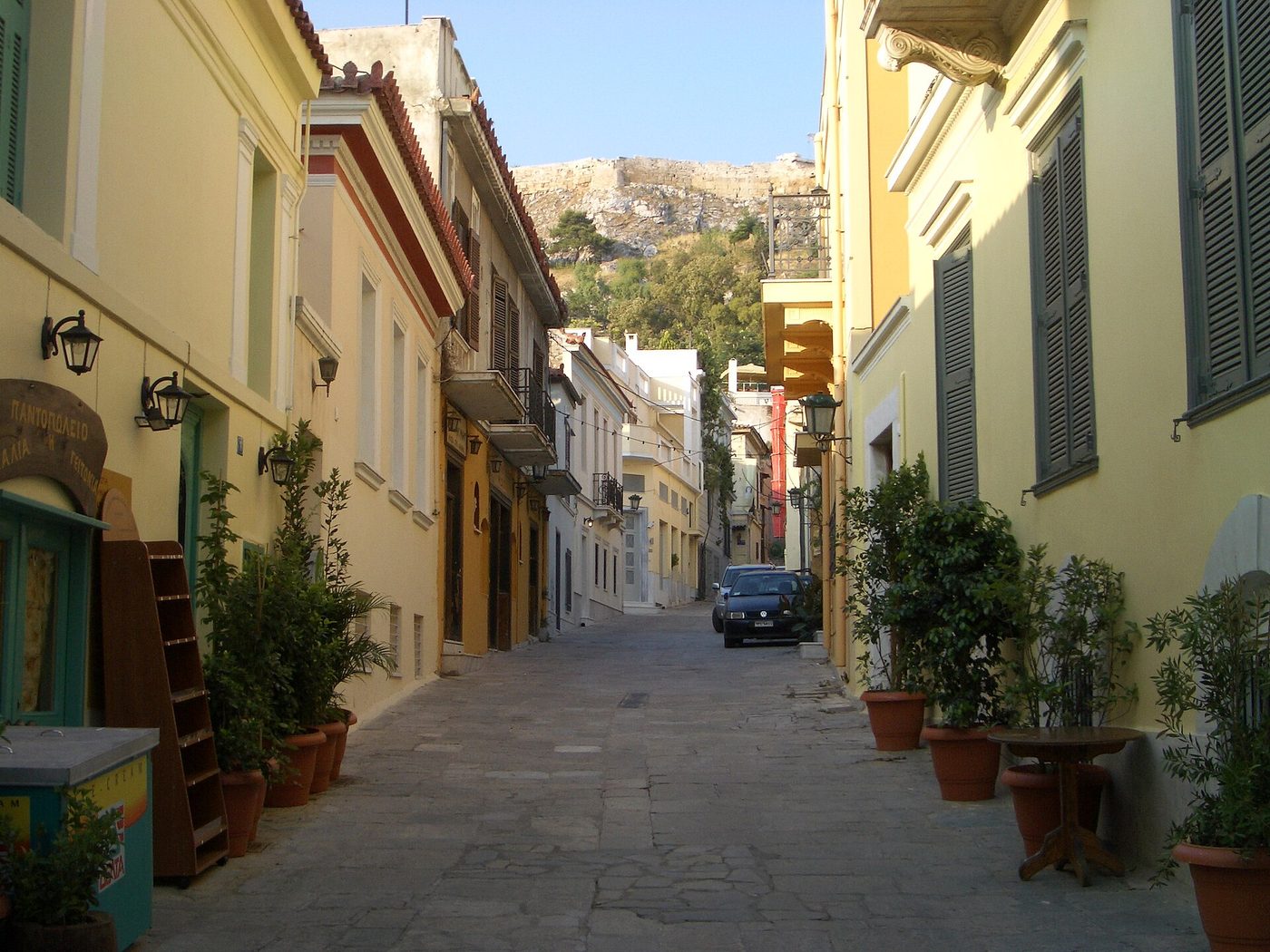
Greece in winter: what is genuinely open
Winter Greece is a real trip, but it is a different trip, and the honest version is that it works on the mainland and on the big islands and fails on the small ones.
What works. Athens, Thessaloniki, Nafplio, Delphi and Meteora all keep full year-round services, with far fewer people in them. Meteora and the Delphi area can see snow in January and February, which is worth the trip on its own. Crete and Rhodes are the two islands that keep functioning in winter, because they have large resident populations, proper towns, museums and year-round ferries and flights. Corfu and Syros stay accessible too. Greek ski resorts run from around mid December to March, snow permitting.
What does not. Most island hotels, restaurants, cafes and bars close from November to March, and many small-island properties shut from late October until mid April. On Santorini the majority of hotels and restaurants close by November, with the caldera hotels going first for renovation and staff breaks, though Fira keeps a decent selection trading and Oia holds on to a handful. Island-to-island ferry routes vanish, and the ones that remain get cancelled by winter gales at short notice.
That last point is the one that catches people. It is not the cold that ruins a winter island trip, it is that the boat may not run and the replacement flight may not exist.
The risk calendar
Every month in Greece has a characteristic way of going wrong. None of these should stop you travelling; all of them should shape which week you book and what you book around.
| What | When | What it actually means for you |
|---|---|---|
| Wildfire risk | 1 May to 31 October, peaking in July and August | Open fires, including barbecues, are banned nationally for the whole season. Civil Protection publishes a daily risk map and sends 112 alerts to phones. |
| Extreme heat and site closures | June to August | The Culture Ministry has closed the Acropolis from 12:00 to 17:00 during heatwaves in 2024, 2025 and 2026. There is no published temperature threshold; the decision is made and announced on the morning. |
| Meltemi disruption | Mid May to mid September, worst in July and August | Small high-speed craft can stop sailing from Beaufort 7, and most operators cancel from Beaufort 9. |
| Jellyfish | June to September | The mauve stinger is the species of concern. In 2026 the confirmed outbreak ran from Chalkida and the northern Evian Gulf up to Skiathos and Skopelos. |
| Ferry weather cancellations | November to March | Winter gales cancel sailings with little notice, and the alternative flight may not exist. |
| Public holiday shutdowns | 25 March, 1 May, Orthodox Good Friday and Easter Monday, 15 August, 28 October | Sites close or shorten hours, transport runs a Sunday timetable, and 1 May often brings strikes. |
On heat specifically: the Athens metro area holds a record of 48.0°C, set at Elefsina on 10 July 1977, which stood as the European record until 2021. The Acropolis closures accompanied temperatures reported at around 42°C. If you are going in July or August, book the first slot of the morning rather than one at midday, and treat the middle of the day as indoor time.
One piece of admin that does not change with the season but does need doing before you book: Greece is in the Schengen area, so most non-EU visitors are limited to 90 days in any 180-day period, and the EU has been phasing in new border and pre-travel authorisation systems. Check the current position for your nationality in our guide to Schengen rules and ETIAS before you commit to dates.
Easter, Dekapentavgoustos and the dates that move
Two dates in the Greek year will reshape your trip whether or not you planned around them, and one of them moves.
Greek Orthodox Easter follows the Julian calculation and so drifts against the western date, sometimes by weeks. It fell on 12 April in 2026, falls on 2 May in 2027, and on 16 April in 2028, which is one of the rare years the two Easters coincide. Holy Week is extraordinary, particularly in the villages: candlelit processions on Good Friday, midnight fireworks on Saturday, whole-lamb lunches on Sunday. It is also the week Greeks travel home, which means full ferries, full domestic flights, spiked hotel prices, altered opening hours everywhere, and restaurants serving mostly Lenten food until Saturday night. Many summer tavernas have not opened yet.
15 August, the Dormition of the Theotokos, is fixed and just as disruptive. It is the biggest domestic travel weekend of the Greek year. Ferries, flights, hotels and rental cars sell out, most shops and tourist sites close on the day, and public transport runs a Sunday timetable.
Here is the rest of the calendar worth having in front of you when you pick dates.
| Date in the Greek calendar | When | Fixed or movable |
|---|---|---|
| Epiphany (Theophany) | 6 January | Fixed |
| Apokries, the carnival season | Three weeks before Lent; 21 February to 15 March in 2027 | Movable |
| Clean Monday, the start of Lent | 15 March 2027 | Movable |
| Independence Day and the Annunciation | 25 March | Fixed |
| Orthodox Good Friday and Easter Sunday | Easter Sunday 2 May 2027, 16 April 2028 | Movable |
| Labour Day | 1 May | Fixed |
| Athens Epidaurus Festival | Roughly late June to late August; 20 June to 29 August in 2026 | Annual |
| Dormition of the Theotokos | 15 August | Fixed |
| European Heritage Days, free entry | The last weekend of September | Annual |
| Ochi Day | 28 October | Fixed |
| Athens Marathon, The Authentic | 8 November 2026 | Annual, early November |
| Thessaloniki International Film Festival | 5 to 15 November 2026 | Annual, early November |
| Christmas and the Synaxis of the Theotokos | 25 and 26 December | Fixed |
Greece observes twelve national holidays. Holidays that fall on a Sunday are not moved to the Monday, with the exception of 1 May. And 1 May itself is worth flagging separately: it reliably brings strikes, demonstrations, site closures and transport changes, so do not put a tight connection on it.
Six mistakes people make with Greek timing
These are the ones I see repeatedly, and they are all avoidable.
- Booking May for a beach holiday. The land is 26°C and the sea is 18.5°C. May is a spectacular month for walking, driving and looking at ruins. It is a poor month for lying on a beach.
- Treating October as a single month. Early October in Crete is a beach holiday. Late October in the small Cyclades is a closed hotel and a cancelled ferry. The difference is three weeks and about 400 kilometres.
- Putting a ferry and a flight on the same day in July or August. The meltemi does not care about your itinerary. Give yourself a night in Athens.
- Assuming shoulder season is cheap everywhere. It is on the islands, where the discount runs 25 to 40 percent against August. It does not hold in Athens, where May 2025 was more expensive than July 2025.
- Arriving at a site in the winter afternoon. Delphi closes at 15:30 from November to March. The Acropolis takes its last entry at 16:30. Several Meteora monasteries add closure days. Winter mornings, not winter afternoons.
- Planning an August trip without checking 15 August. If your ferry, your flight or your car hire falls on or beside the Dekapentavgoustos weekend, book it as far ahead as the operator will let you.
Some of these apply well beyond Greece. Our Europe travel tips and how to plan a trip to Europe cover the same traps at continental scale, and the Europe packing list is worth a look if you are going in either extreme of the Greek year.
Best time to visit Greece: your questions answered
What is the best month to visit Greece?
September, if you want one month that does everything. Athens averages 29.6°C, the sea is still 25.0°C, the meltemi is fading, everything is open, and the crowds fall away after the first week. June is the close runner-up and the better choice if your dates are locked to the school year at the front end rather than the back.
What is the cheapest month to go to Greece?
January or February. Long-haul fares to Athens are at their lowest, the accommodation tax falls to between €0.50 and €4 a night depending on your hotel class, Athens hotel rates are at their annual floor, and state sites are free on the first and third Sunday of the month. The catch is that the islands are largely shut.
When should you avoid Greece?
There is no month I would tell you to write off. But I would avoid the small Cyclades from November to March, when hotels close and ferries thin to a couple of sailings a week; I would avoid the week of 15 August unless you have booked everything months out; and I would avoid the mainland interior in late July and August, when Athens averages 34.3°C and midday site closures are a live possibility.
What is the rainiest month in Greece?
It depends where you are, which is the whole point of this guide. Athens is wettest in December at 76 mm. Naxos is also wettest in December, at 69 mm. Heraklion is wettest in January at 62 mm. Corfu is wettest in November at 187 mm, which is the heaviest month anywhere in this guide by a wide margin.
Is Greece too hot in August?
On the mainland, often yes. Athens averages a daily maximum of 34.3°C and an overnight minimum of 24.4°C, and the Acropolis has been closed from 12:00 to 17:00 during heatwaves in each of the last three summers. On the islands it is a different question: Naxos averages 27.0°C in August, more than seven degrees cooler than the capital, and the meltemi cuts the humidity. August in the Cyclades is hot but workable. August in Delphi at midday is not much fun.
How much does it rain in Greece in August?
Almost not at all in the south. Athens records 5.4 mm across the whole of August, its driest month; Naxos records 1.5 mm; Heraklion records 1.6 mm in August and just 0.2 mm in July, which is functionally rainless. Northern Greece is the exception and does get summer storms.
Is May a good time to visit Greece?
Excellent for everything except swimming. Athens hits 26.5°C, the countryside is green, the ruins are comfortable and the light is at its best. The sea is 18.5°C to 19.3°C, which most people find too cold for more than a quick dip. Note also that Athens hotels are not cheap in May: the citywide average daily rate in May 2025 was €210.95, above July.
Is June a good time to visit Greece?
It is the first month everything works simultaneously. Sea at 22.6°C, air at 31.6°C, near-zero rain in the Cyclades, the longest days of the year, full ferry schedules and the crowds still building. Flights are the expensive part.
What is the best time to visit the Greek islands?
Late May to mid June, or the first three weeks of September. The sea crosses 22°C at the start of June and is still around 25°C in September, every hotel and taverna is open, ferries run at full frequency and the meltemi is off its peak. If you can only travel in high summer, choose an island over the mainland, which runs several degrees hotter.
Is October a good time to visit Greece?
For Crete, Rhodes and the mainland, yes, very. Heraklion still averages 23.1°C on land and 22.8°C in the sea, which is warmer than the Athens sea in May. For the small Cyclades, October is the month things start closing, so front-load it.
When is the sea warmest in Greece?
August almost everywhere, peaking around 26.3°C in the Saronic Gulf off Athens and 25.9°C at Heraklion. Thessaloniki is the exception, warmest in July at 26.1°C. September is barely behind August and comes with far fewer people.
Can you visit the Greek islands in winter?
Crete, Rhodes, Corfu and Syros work. Santorini is possible if you stay in Fira. The small islands are not really viable: hotels close, tavernas close, inter-island ferries disappear, and gales cancel what is left. If you want winter island atmosphere, go to Crete.
Do hotels close in Santorini and Mykonos in winter?
Most of them, yes. By November the majority of hotels and restaurants on Santorini have closed, the caldera properties going first for renovation and staff breaks. Fira keeps a reasonable selection open and Oia keeps a few. Nobody publishes a percentage, so treat “most” as the honest answer rather than a number.
When is Greek Easter?
Orthodox Easter Sunday falls on 2 May in 2027 and 16 April in 2028. It fell on 12 April in 2026. Holy Week is the most atmospheric week of the Greek year and the hardest one to travel in.
How much is the entrance fee to the Acropolis, and when is it free?
€30 for a timed adult ticket, all year. The winter half-price reduction was abolished on 1 April 2025. Under the Ministry of Culture rules, state sites are free on 6 March, 18 April, 18 May, the last weekend of September, 28 October, and on the first and third Sunday of each month from 1 November to 31 March. You still collect a ticket at the gate on free days, and it is worth confirming on hhticket.gr for the specific site.
Is Santorini worth visiting in March?
Only if you want the island empty and you accept the trade. The sea is at its annual coldest, 16.5°C. Most hotels and restaurants are shut. The inter-island ferry links you would want are not running. You will get the caldera to yourself and very little else.
What this guide does not cover
A few honest limits. I could not pin down current 2026 ticket prices for Delphi or Ancient Olympia to a single figure, because the published sources disagree on whether the quoted price includes the museum, so both appear as ranges rather than numbers. Meteora’s per-monastery fee is quoted variously at €3 and €5 and I have given the range. I could not find a full monthly rainfall series for Corfu or a published monthly arrivals series for every month of 2025, so the crowd section leans on July and August, which happen to be the two months that matter most. And there is no published temperature threshold for Acropolis heat closures, because the Ministry has not set one; the decision is made on the morning.
Final thoughts
If you take one thing from all of this, take the six-week lag between the air and the sea. It explains why May disappoints beach travellers and October delights them, why September beats June for swimming and June beats September for everything else, and why Crete stays viable a month longer than the Cyclades at both ends of the year.
My own booking rule for Greece is simple. If I want islands and water, I take the second and third weeks of September. If I want ruins, mountains and food, I take late April or the first half of October. If I want a cheap week and I do not care about swimming, I take February in Athens, walk everywhere, and spend the difference on dinner.
Next, work out the shape of the trip: our Greece itinerary lays out routes from one week to three, the Italy and Greece itinerary is the classic pairing, and if you are still choosing a country, Europe weather by month and the best countries to visit in Europe will help you decide. For seasonal alternatives, see Europe in spring, Europe in summer and Europe in autumn. Travelling with children changes the calculus, and Europe with kids explains how. If you are combining Greece with its neighbour across the Aegean, the Turkey travel guide runs on a similar seasonal clock, and the best time to visit Italy and the best time to visit Spain complete the Mediterranean picture. Two practical last stops: the Schengen and ETIAS rules, and hiking in Europe or skiing in Europe depending on which end of the Greek year you have chosen. If food is the reason you are going, European food by country and the best cities to visit in Europe are the natural next reads.

Hannah Brooks has spent fifteen years travelling, living and writing across Europe, from the Arctic tip of Norway to the south of Sicily. She has planned hundreds of European itineraries for readers and is Senior Europe Editor at EuropeanTourism.org.
Photo credits
All photographs are used under the licences shown. Thank you to the photographers.
- Photo: Giles Laurent / CC BY-SA 4.0 via Wikimedia Commons
- Photo: athenswalk (CC0) via Wikimedia Commons
- Photo: Norbert Nagel / CC BY-SA 3.0 via Wikimedia Commons
- Photo: Bgabel / CC BY-SA 3.0 via Wikimedia Commons
- Photo: Eric Hossinger / CC BY 2.0 via Wikimedia Commons
- Photo: Joe deSousa (CC0) via Wikimedia Commons
- Photo: Dan Taylor from London, UK / CC BY 2.0 via Wikimedia Commons
- Photo: trolvag / CC BY-SA 3.0 via Wikimedia Commons
- Photo: C messier (CC0) via Wikimedia Commons
- Photo: Moonik / CC BY-SA 3.0 via Wikimedia Commons
- Photo: Jebulon (CC0) via Wikimedia Commons
- Photo: Norbert Nagel / CC BY-SA 3.0 via Wikimedia Commons
- Photo: Jebulon (CC0) via Wikimedia Commons
- Photo: Berthold Werner / CC BY-SA 3.0 via Wikimedia Commons
- Photo: JFKennedy at English Wikipedia (CC0) via Wikimedia Commons
- Photo: Jebulon (CC0) via Wikimedia Commons
- Photo: Dimitri Raftopoulos / public domain via Wikimedia Commons