Europe Weather by Month: A Data-Led Guide

Look up “average temperature in Europe” and you get a single number. That number is useless. In July, Reykjavik averages a daytime high of under 15°C, while coastal Athens averages about 32°C.
So this is Europe weather by month, done properly: real temperature, rainfall, sunshine and sea figures for thirty-five cities across five climate zones, month by month, with the dates that matter for tulips, lavender, snow, autumn colour and the midnight sun. The sources are listed at the foot of the page.
Europe is five climates, not one
Almost every guide to Europe weather by month splits the continent into “north” and “south”, which puts Reykjavik and Rome in a two-bucket system and tells you nothing. Five zones is the minimum that works:
- Northern and Nordic. Iceland, Norway, Sweden, Denmark, Finland. Mild-ish coasts, brutal daylight swings, and a summer that is short but often lovely. Reykjavik’s warmest month, July, tops out at an average daily high of 14.9°C.
- Western and Atlantic. Ireland, Britain, France’s north, the Low Countries. Rain in every month and short, dim winter days. At Heathrow, London’s 1991–2020 averages run from a 2.7°C January low to a 23.9°C July high, and individual days can be much colder or hotter.
- Central and Alpine. Germany, Austria, Switzerland, Czechia, northern Italy. Proper continental swings: at the Clementinum, Prague’s average daytime high goes from 3.9°C in January to 26.5°C in July, and the mountains do their own thing on top of that.
- Southern and Mediterranean. Portugal, Spain, southern France, Italy, Greece, Malta, coastal Croatia. Bone dry in summer, surprisingly wet in autumn, and mild rather than warm in winter.
- Eastern. Poland, Hungary, Romania, the Balkans, Turkey. Colder winters and hotter summers than the west at the same latitude. At Bucharest Băneasa, the 1991–2020 averages swing from a January low of -5.0°C to a July high of 30.4°C.
Keep those five in your head and the rest of this article makes sense. If you want the shorter strategic version rather than the data, my guide to the best time to visit Europe covers the same ground at a higher altitude.
All twelve months of Europe weather by month at a glance
Start here. This is my own verdict on each month, with the single figure I think should decide it for you.

| Month | Best for | Worst for | Crowd level | One number that decides it |
|---|---|---|---|---|
| January | Northern lights, ski, cheap city breaks | Beach, long sightseeing days | Lowest | Glasgow gets 38 hours of sunshine all month |
| February | Carnival, Alpine snow, almond blossom | Anywhere you need daylight after 17:00 | Low, except ski half-term | Tromso’s coldest month averages -3.3°C |
| March | Spring cities, late-season skiing, tulip gardens opening | Swimming, Alpine hiking | Low | Keukenhof opens 18 March in 2027 |
| April | Blossom, gardens, Mediterranean cities before the heat | Sea swimming, high Alpine passes | Rising, Easter spikes | The sea runs from about 13°C at Venice to 18°C at Limassol |
| May | Almost everything except beach | Peak-season budgets | Moderate | Athens is warm by day and mild at night |
| June | Long days, lavender, first swimmable sea | Value | High | June 2026 was western Europe’s hottest June on record |
| July | Northern Europe, the Alps, high latitudes | Southern city sightseeing at midday | Peak | Athens gets 364 hours of sunshine, Glasgow 149 |
| August | Warmest sea of the year, Scandinavia, the Baltics | Southern Europe on a budget | Absolute peak | Croatia records 41.1 times more nights in August than January |
| September | Islands, cities, wine harvests, Finnish autumn colour | Nothing much | Falling | The sea averages about 21°C at Marseille and 27°C at Antalya |
| October | Autumn colour, cities, shoulder-season prices | The Riviera and the Bay of Naples | Low | Rome Ciampino’s 88 mm of October rain is about four and a half times its July total |
| November | Value, Christmas markets from late month, museums | Daylight, coastal Croatia | Lowest | The Adriatic coast is in its rainy season |
| December | Christmas markets, Alpine snow, Arctic darkness | Long days anywhere north of Rome | Spikes 20 Dec to 2 Jan | Stockholm gets 6 hours 4 minutes of daylight on 21 December |
The temperature table: 35 cities, four benchmark months
January, April, July and October are the four months that tell you the shape of a climate: deep winter, mid-spring, peak summer, mid-autumn. If you know those four for a city, you can interpolate the rest without much error.

| City | Zone | January high / low | April high / low | July high / low | October high / low |
|---|---|---|---|---|---|
| Reykjavik | Northern and Nordic | Cold | Cool | Cool | Cool |
| Oslo | Northern and Nordic | 0°C / -5°C | 11°C / 2°C | 23°C / 13°C | 10°C / 4°C |
| Stockholm | Northern and Nordic | 1°C / -3°C | 11°C / 3°C | 24°C / 15°C | 10°C / 6°C |
| Copenhagen | Northern and Nordic | 3°C / 1°C | 11°C / 4°C | 23°C / 14°C | 12°C / 7°C |
| Helsinki | Northern and Nordic | -2°C / -7°C | 9°C / 0°C | 23°C / 13°C | 9°C / 3°C |
| London | Western and Atlantic | 8°C / 3°C | 15°C / 6°C | 24°C / 14°C | 16°C / 9°C |
| Dublin | Western and Atlantic | 8°C / 2°C | 12°C / 4°C | 20°C / 11°C | 14°C / 7°C |
| Glasgow | Western and Atlantic | 6°C / 1°C | 12°C / 4°C | 19°C / 11°C | 12°C / 6°C |
| Paris | Western and Atlantic | 8°C / 3°C | 17°C / 7°C | 26°C / 16°C | 16°C / 10°C |
| Amsterdam | Western and Atlantic | 6°C / 1°C | 14°C / 5°C | 23°C / 14°C | 15°C / 8°C |
| Brussels | Western and Atlantic | 6°C / 1°C | 15°C / 6°C | 23°C / 14°C | 15°C / 8°C |
| Berlin | Central and Alpine | 3°C / -2°C | 15°C / 4°C | 25°C / 14°C | 14°C / 6°C |
| Munich | Central and Alpine | Cold | Cool | Warm | Cool |
| Vienna | Central and Alpine | Cold | Mild | Warm to hot | Mild |
| Prague | Central and Alpine | 4°C / -1°C | 16°C / 7°C | 27°C / 17°C | 14°C / 8°C |
| Zurich | Central and Alpine | 4°C / -1°C | 15°C / 5°C | 24°C / 14°C | 14°C / 7°C |
| Vaduz | Central and Alpine | 5°C / -2°C | 16°C / 6°C | 25°C / 15°C | 16°C / 7°C |
| Milan | Central and Alpine | 7°C / 0°C | 19°C / 8°C | 31°C / 19°C | 19°C / 10°C |
| Ljubljana | Central and Alpine | 4°C / -2°C | 17°C / 6°C | 28°C / 16°C | 16°C / 8°C |
| Rome | Southern and Mediterranean | 12°C / 3°C | 19°C / 9°C | 31°C / 19°C | 22°C / 12°C |
| Naples | Southern and Mediterranean | 13°C / 5°C | 19°C / 10°C | 30°C / 21°C | 23°C / 14°C |
| Palermo | Southern and Mediterranean | Mild | Mild | Hot | Warm |
| Barcelona | Southern and Mediterranean | Mild | Mild | Hot | Warm |
| Madrid | Southern and Mediterranean | 10°C / 3°C | 19°C / 8°C | 33°C / 20°C | 20°C / 11°C |
| Lisbon | Southern and Mediterranean | 15°C / 9°C | 20°C / 12°C | 28°C / 18°C | 23°C / 15°C |
| Nice | Southern and Mediterranean | 13°C / 6°C | 17°C / 11°C | 28°C / 21°C | 21°C / 14°C |
| Marseille | Southern and Mediterranean | 12°C / 4°C | 19°C / 9°C | 31°C / 20°C | 21°C / 13°C |
| Athens | Southern and Mediterranean | 14°C / 7°C | 20°C / 12°C | 32°C / 23°C | 23°C / 16°C |
| Valletta | Southern and Mediterranean | 16°C / 10°C | 20°C / 13°C | 32°C / 22°C | 25°C / 18°C |
| Dubrovnik | Southern and Mediterranean | Mild | Mild | Hot | Warm |
| Zagreb | Eastern | 5°C / -2°C | 18°C / 7°C | 28°C / 16°C | 17°C / 8°C |
| Budapest | Eastern | 5°C / -1°C | 19°C / 9°C | 29°C / 18°C | 17°C / 9°C |
| Warsaw | Eastern | 1°C / -4°C | 15°C / 4°C | 25°C / 15°C | 13°C / 5°C |
| Bucharest | Eastern | 3°C / -5°C | 19°C / 5°C | 30°C / 16°C | 18°C / 6°C |
| Istanbul | Eastern | Cool | Mild | Hot | Mild |
A few things jump out of that table. Lisbon’s January high, about 15°C, matches London’s April high. Milan in July (31°C at Linate) is hotter than Lisbon or Nice (both 28°C), which upends most people’s mental map of the Mediterranean. And Helsinki’s July high of 23°C at the airport is within a degree of London’s, which is why “Scandinavia is cold” is a statement about January, not about summer.
Rain: the number that ruins more trips than temperature
Temperature you can dress for. Rain you cannot. And the pattern of European rainfall is counter-intuitive in ways that catch people out every year: the Mediterranean is dry in summer and wet from autumn into winter, peaking in October or November in some places and December in others, and Alpine cities are at their wettest from late spring into summer, because that is when the thunderstorms build.
| City | January | April | July | October | Wettest of the four |
|---|---|---|---|---|---|
| Amsterdam | 67 mm / 12 days | 40 mm / 9 days | 82 mm / 11 days | 87 mm / 12 days | October |
| Athens | 48 mm / 13 days | 26 mm / 9 days | 6 mm / 2 days | 46 mm / 9 days | January |
| Barcelona | 41 mm / 5 days | 49 mm / 5 days | 20 mm / 2 days | 91 mm / 6 days | October |
| Berlin | 42 mm / 16 days | 28 mm / 11 days | 70 mm / 13 days | 40 mm / 14 days | July |
| Brussels | 76 mm / 19 days | 47 mm / 13 days | 77 mm / 14 days | 68 mm / 16 days | July |
| Bucharest | 40 mm / 6 days | 50 mm / 6 days | 69 mm / 7 days | 61 mm / 6 days | July |
| Budapest | 33 mm / 6 days | 33 mm / 6 days | 54 mm / 6 days | 44 mm / 7 days | July |
| Copenhagen | 37 mm / 9 days | 33 mm / 7 days | 51 mm / 9 days | 50 mm / 9 days | July |
| Dublin | 62 mm / 13 days | 55 mm / 11 days | 61 mm / 12 days | 78 mm / 12 days | October |
| Glasgow | 112 mm | 65 mm | 97 mm | 124 mm | October |
| Lisbon | 104 mm / 10 days | 72 mm / 8 days | 3 mm / 1 days | 111 mm / 9 days | October |
| London | 59 mm / 12 days | 42 mm / 9 days | 46 mm / 8 days | 65 mm / 11 days | October |
| Madrid | 32 mm / 6 days | 46 mm / 7 days | 9 mm / 2 days | 64 mm / 7 days | October |
| Marseille | 47 mm / 5 days | 52 mm / 6 days | 11 mm / 1 days | 73 mm / 6 days | October |
| Milan | 36 mm / 5 days | 58 mm / 7 days | 44 mm / 5 days | 82 mm / 7 days | October |
| Naples | 92 mm / 9 days | 99 mm / 9 days | 29 mm / 2 days | 136 mm / 9 days | October |
| Nice | 74 mm / 6 days | 69 mm / 6 days | 14 mm / 2 days | 128 mm / 8 days | October |
| Oslo | 58 mm / 10 days | 48 mm / 8 days | 87 mm / 11 days | 93 mm / 11 days | October |
| Prague | 18 mm | 25 mm | 67 mm | 30 mm | July |
| Reykjavik | 87 mm / 15 days | 59 mm / 12 days | 50 mm / 10 days | 80 mm / 13 days | January |
| Rome | 66 mm / 7 days | 69 mm / 7 days | 20 mm / 2 days | 88 mm / 7 days | October |
| Stockholm | 37 mm | 29 mm | 62 mm | 51 mm | July |
| Warsaw | 31 mm / 8 days | 35 mm / 7 days | 82 mm / 9 days | 40 mm / 8 days | July |
| Zagreb | 46 mm / 10 days | 61 mm / 13 days | 80 mm / 11 days | 89 mm / 11 days | October |
| Zurich | 63 mm / 10 days | 80 mm / 11 days | 126 mm / 12 days | 85 mm / 10 days | July |
Three findings worth carrying with you. Zurich in July gets 126 mm of rain across about twelve wet days, twice its January total of 63 mm. Lake weather, yes, but soggy lake weather. Nice gets 14 mm in July and 128 mm in October, a nine-fold jump, and worth knowing before you book a cheap late-autumn week on the Riviera. And Brussels has 19 wet days in January, counting every day with 0.1 mm or more, which is more about persistent drizzle than volume: 76 mm spread thin.
The wettest place most travellers will meet is Bergen, on Norway’s west coast, where the 1991–2020 normals at Florida station put the wettest month, December, at roughly 290 mm, and even the driest month, May, still gets about 109 mm. Pack for it or route around it; my Scandinavia travel guide has more on the fjord coast’s habits.

Sunshine hours: the stat most weather guides skip
Two cities can share a temperature and feel completely different because one of them has twice the sunshine. The table below sets the four benchmark months side by side, with July’s total as a multiple of January’s.
| City | January | April | July | October | July as a multiple of January |
|---|---|---|---|---|---|
| Marseille | 148 h | 251 h | 372 h | 196 h | 2.5x |
| Valletta | 169 h | 254 h | 377 h | 224 h | 2.2x |
| Athens | 130 h | 231 h | 363 h | 208 h | 2.8x |
| Madrid | 149 h | 230 h | 355 h | 199 h | 2.4x |
| Lisbon | 159 h | 248 h | 350 h | 196 h | 2.2x |
| Nice | 157 h | 229 h | 349 h | 191 h | 2.2x |
| Naples | 115 h | 189 h | 313 h | 189 h | 2.7x |
| Barcelona | 149 h | 220 h | 310 h | 180 h | 2.1x |
| Helsinki | 38 h | 196 h | 291 h | 84 h | 7.7x |
| Bucharest | 79 h | 195 h | 293 h | 150 h | 3.7x |
| Budapest | 54 h | 180 h | 279 h | 151 h | 5.2x |
| Zagreb | 69 h | 190 h | 294 h | 131 h | 4.2x |
| Copenhagen | 46 h | 188 h | 260 h | 103 h | 5.7x |
| Stockholm | 44 h | 216 h | 280 h | 96 h | 6.4x |
| Oslo | 47 h | 182 h | 243 h | 94 h | 5.2x |
| Zurich | 60 h | 178 h | 229 h | 109 h | 3.8x |
| Prague | 52 h | 188 h | 229 h | 111 h | 4.4x |
| Berlin | 53 h | 196 h | 234 h | 114 h | 4.4x |
| Amsterdam | 69 h | 198 h | 225 h | 117 h | 3.3x |
| Brussels | 59 h | 171 h | 203 h | 113 h | 3.4x |
| London | 61 h | 177 h | 218 h | 115 h | 3.6x |
| Dublin | 59 h | 161 h | 157 h | 105 h | 2.6x |
| Glasgow | 39 h | 137 h | 149 h | 81 h | 3.9x |
Look at what happens in January. Marseille-Marignane gets about 148 hours of bright sunshine; Glasgow’s Springburn station gets 39. That is a factor of nearly four, and it explains why a 6°C day in Provence feels like a treat and a 6°C day in Scotland feels like a punishment. In July the absolute gap more than doubles, to about 223 hours, while the ratio narrows to 2.5: Marseille 372 hours, Glasgow 149.
The right-hand column is the seasonality of light. Stockholm’s July is 6.4 times sunnier than its January, and London’s, at Heathrow, 3.6 times. Valletta’s is only 2.2 times, because Malta is sunny all year. If you struggle with dark winters, that ratio matters more than the temperature column.
Sea temperature: when the Mediterranean is actually swimmable
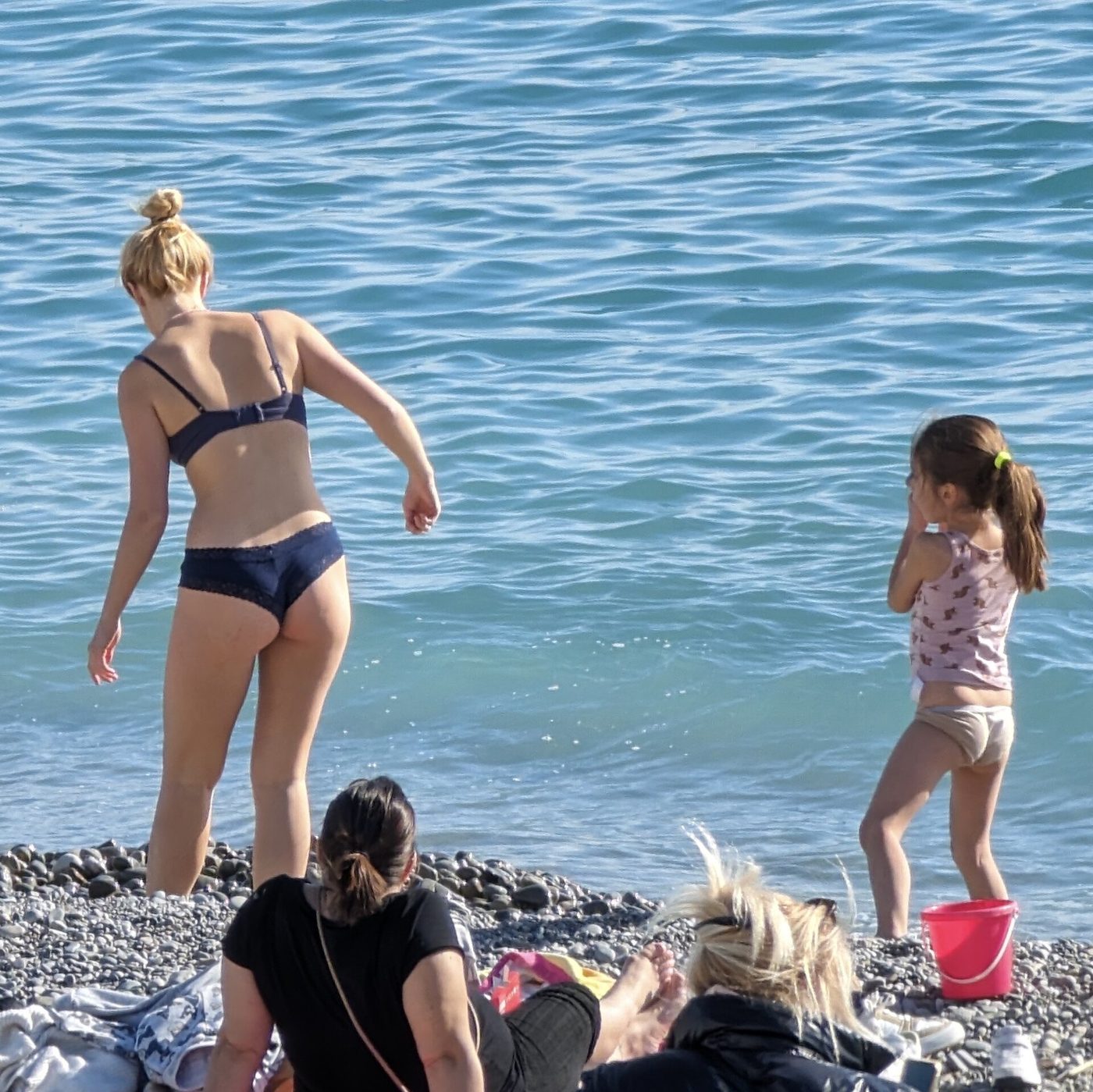
Sea temperature is the number that decides a beach trip, and it is the one most weather summaries leave out. The sea warms weeks after the air does, so a hot day in May can still mean cold water and a very short swim.
| Sea | Jan | Feb | Mar | Apr | May | Jun | Jul | Aug | Sep | Oct | Nov | Dec |
|---|---|---|---|---|---|---|---|---|---|---|---|---|
| Nice | 13.4 | 13 | 13.4 | 14.6 | 18 | 21.8 | 23.1 | 23.6 | 22.2 | 19.6 | 17.4 | 14.9 |
| Athens (Saronic Gulf) | 16 | 15 | 15 | 16 | 18.5 | 22 | 24 | 25 | 24 | 22 | 19.5 | 17 |
The pattern is not symmetrical around the summer peak. The sea warms through June, peaks in August and cools slowly, so October water is roughly as warm as June water, on beaches that have emptied out since August. Compiled averages put Marseille at about 18°C in both months, and Antalya at 24°C in June against 25°C in October. Athens holds 22°C in both. Nice slips from 21.8°C in June to 19.6°C in October, and is the more bracing of the two seas in the table.
Water lags air by roughly two months, which is the whole explanation. It also means June, the month everyone books for a beach holiday, has the coolest water of the summer. Climates to Travel calls the Athens sea in June “a bit cool” at around 22°C and only rates July to September as properly warm.
North of the Med, swimming is a different proposition. Reykjavik’s sea stays cold all summer. Tromso’s runs 4.5°C to 11.5°C. People do swim in both. They wear neoprene. For where the water is worth the trip, see my guide to the best beaches in Europe.
Daylight: the variable that changes a city break more than weather
A December afternoon in Stockholm ends at about half past two. That is not a weather problem, it is a scheduling problem, and it will halve the number of things you see.
Stockholm’s longest day in 2026 runs 18 hours 37 minutes, from a 03:31 sunrise to a 22:07 sunset. Its shortest is 6 hours 4 minutes. That is a swing of 12 hours 33 minutes across the year. Athens goes from about 14 hours 45 minutes of daylight in June to about 9 hours 35 minutes in December, a range of about 5 hours, which is less than half of Stockholm’s.

Further north it stops being a range and becomes an on-off switch. In Tromso, at about 69°N, the polar night runs from late November to mid-January, and the midnight sun from about 20 May to 22 July. For weeks either side of the midnight sun it never gets fully dark. Reykjavik, at 64°09’N, is gentler: on 21 December the sun comes up around 11:20 and is gone by 15:30, giving a December average of 4 hours 25 minutes, while on 21 June it rises at 02:55 and sets three minutes after midnight.
The practical rule: from November to February, every hour of daylight north of the Alps is a resource you have to budget. Open at nine, close at four, and plan indoor things for the dark end of the day.
Europe month by month, January to June
January in Europe
January is the coldest month almost everywhere in Europe, and the emptiest. Warsaw runs 1°C by day and -4°C at night; Oslo 0°C and -5°C; Helsinki -2°C and -7°C. Prague’s daytime high averages just 4°C. Meanwhile Lisbon is at 15°C, Valletta at 16°C, Athens at 14°C, and none of them are warm enough to sit outside comfortably after dark.
Light is the real constraint. Glasgow gets about 39 hours of sunshine in the whole of January, and Stockholm 44. Athens gets about 130 and Nice 157. If January is your only window and you need daylight, go south; if you want the aurora, go north and accept that you will be doing it in the dark, which is rather the point.
What January is best at: skiing between the Christmas peak and the February half-term peak, which is the cheapest good-snow week of the season; northern lights in Arctic Norway, Iceland and Finnish Lapland; and city breaks at their lowest prices of the year. Across the EU as a whole, August records 3.6 times as many overnight stays as January. That gap is your discount.
Watch out for: museum and restaurant closures in Mediterranean resort towns, which shut properly in January; and Alpine valley fog, which can sit below the ski resorts for days.
February in Europe
Statistically the coldest month in the far north. Tromso’s coldest month is February, with a 1991–2020 mean of -3.3°C at the Vervarslinga station, and Kraków’s January mean of -1.6°C only nudges up. But February has one thing January does not: the light is back. The Tromso polar night ends in mid-January, so by February you get proper blue-hour afternoons over the snow, which is the best possible backdrop for the aurora.

Southern Europe starts to signal. Mallorca’s almond blossom runs late January through February across roughly seven million trees, and mid-February is usually the best single week. Venice Carnival lands in February most years and is the one time a northern Italian winter city is busier than its summer self.
The catch is half-term. UK, French and Dutch school holidays cluster through February and Alpine lift-pass prices and chalet rates spike with them. If you can ski in the third week of January instead, do.
March in Europe
Meteorological spring starts on 1 March, which the weather does not care about. March is two different months depending on where you stand: Athens is already mild by day, while Prague’s average high is only 10°C and the Alps are still deep in the ski season.
Two dates to know. Keukenhof, the Dutch bulb garden that is the reason people come to the Netherlands in spring, opens 18 March in 2027 and runs to 9 May, and tickets for the 2027 season are on sale on the garden’s website. And the clocks go forward on the last Sunday in March, which adds an hour of usable evening overnight.
March is my pick for southern European cities. Seville, Rome, Athens and Lisbon are all warm enough to walk all day and cool enough that walking all day is pleasant, and the crowds have not arrived. See visiting Europe in spring for the longer version.
April in Europe
April is the most photogenic month in Europe and the least reliable. It is when the continent’s flowering calendar peaks, though the weather sets the dates: Keukenhof’s tulips flower through the garden’s 18 March to 9 May season, and nobody can promise the peak week in advance. Bonn’s cherry blossom on Heerstrasse peaked in April in 2026, and its timing shifts from year to year too. Copenhagen’s Sakura Festival at Langelinie ran 18 to 19 April in 2026.
Temperatures are moderate everywhere and extreme nowhere: Rome 19°C, Paris about 17°C, Berlin 15°C, Stockholm 11°C. What April does not have is warm water. The Mediterranean averages 14.6°C at Nice, and the Adriatic about 13°C at Venice. Anyone selling you an April beach holiday in Europe is selling you a beach walk.
Easter is the wildcard. It moves, it spikes prices and crowds wherever it lands, and it closes things in Catholic countries on Good Friday and Easter Monday. Easter Sunday falls on 28 March in 2027 and 16 April in 2028, so in 2027 the Easter weekend and the clock change collide on the same night.
May in Europe
If you made me pick one month for a first trip to Europe, it would be May. Athens and Dubrovnik are warm by day and mild at night, Rome and Barcelona are comfortable, Paris and Berlin are at their best, and the Alpine valleys are green. Days are long, prices are below peak, and the heat has not arrived.
The one thing May cannot give you is swimming. The sea at Nice averages 18°C in May. Bracing at best.
May has also become the month when the summer heat starts early. Copernicus recorded four heatwaves in western Europe in 2026, and the first of them was in May. Treat May as reliably pleasant rather than guaranteed mild.
June in Europe
June brings the longest days of the year and the start of the real season. On 21 June, Stockholm gets 18 hours 37 minutes of daylight, sunrise at 03:31 and sunset at 22:07. Reykjavik averages about 21 hours across the whole month. Tromso’s midnight sun runs from about 20 May to 22 July, so June is entirely inside it.

Southern Europe crosses into summer proper, with hot afternoons in Athens, Dubrovnik and Palermo. The sea finally becomes swimmable: 21.8°C at Nice and around 22°C off Athens.
Provence’s lavender starts flowering on the Valensole plateau in mid-June and holds for about a month, with the strongest colour from late June into the first fortnight of July. Book that trip for the last week of June and you will usually be right.
The warning attached to June is new and it is serious. June 2026 was the warmest June ever recorded in western Europe, averaging 20.74°C, which is 3.06°C above the 1991 to 2020 norm and ahead of the record set only a year earlier in June 2025. Across Europe as a whole June 2026 averaged 19.14°C, 1.78°C above normal and second only to June 2019. June is no longer a safely mild month in the south.
Europe month by month, July to December
July in Europe
Peak everything. July shares the hottest stretch of the year with August across most of the continent, is one of the two busiest months, and is the one where the gap between “north” and “south” becomes a genuine decision rather than a preference.
The southern numbers: Madrid 33°C by day, Athens about 32°C by day and 23°C at night on the coast, Valletta 32°C, Rome and Marseille 31°C. Sunshine peaks too: Valletta 377 hours, Marseille 372, Athens about 363. Glasgow, at the other end, gets 149.
Rain is not evenly distributed. Athens gets about 6 mm in July, spread over one or two wet days, and Lisbon 3 mm. Zurich gets 126 mm over about twelve days, because Alpine July is thunderstorm season. If you are hiking in the Alps in July, the afternoon storm is the thing you plan around, not the temperature.
On the Valensole plateau, Provence’s lavender usually flowers between mid-June and mid-July, and the harvest date varies from field to field and year to year. Aim for the first ten days of July if the fields are the reason you are going. The Sault plateau, higher up, runs July into August.
July is also when Europe’s heat has started to break things. The Acropolis closed to visitors on the worst afternoons of the 22 to 25 July heatwave in 2025, as it had during heat spells in 2024, and Greek heatwaves can bring temporary limits on outdoor work in the hardest-hit regions. In Barcelona, the Fabra Observatory recorded 40.9°C during the 6 to 9 July 2026 heatwave, a record in its 113-year series.
August in Europe
August gives you the warmest sea of the year and the worst value of the year. August water averages 23.6°C at Nice and around 25°C off Athens. Air temperatures roughly match July’s.
The crowd figures are worth stating plainly, because they are worse than most people assume. Across the EU in 2025, 31.1% of all tourist overnight stays fell in July and August, and in every single EU country those were the two busiest months. Croatia concentrated 54.5% of its nights in those two months, Bulgaria 43.4%, Greece 41.6%. Croatia’s August was 41.1 times busier than its January.
The countries that spread their season best were Malta at 21.9%, Germany at 24.0% and Finland at 24.1%, which is a good clue about where to go in August if you must travel then.
My advice for August is the inversion: go north. Stockholm, Copenhagen, Helsinki, the Baltic capitals, Scotland and the Norwegian coast are at their annual best in August, and Tromso’s warmest month, July, still has a mean of only 12.3°C at the Vervarslinga station, so the Arctic in August is pleasant rather than hot. Heading to Scandinavia and the Nordics in August is the single easiest way to travel in peak season without feeling it.
September in Europe
The month experienced travellers book. The sea is still close to its summer peak: 22.2°C at Nice, about 21°C at Marseille and 27°C at Antalya. Air temperatures have dropped just enough to make cities walkable again, and the school-holiday crowd has gone home.

Northern Europe has its own September event. In Finnish Lapland, ruska, the autumn colour, peaks on average in the second week of September and lasts about ten days, then moves south at roughly 500 km every couple of weeks, reaching central and southern Finland in late September and early October.
The one thing to watch is that Mediterranean autumn rain begins. Nice goes from 14 mm in July to 128 mm by October. It is still mostly sunny in September; it just is not bone dry any more.
October in Europe
October is the best-value month whose weather still works, and a trap if you pick the wrong coast. Athens still averages about 23°C by day on the coast, with a 22°C sea. Lisbon reaches 23°C, Rome 22°C, Marseille 21°C. That is short-sleeve weather with October prices.
The trap is rain. October is the wettest of the four benchmark months for a long list of places: Naples at 136 mm, Nice 128 mm, Glasgow 124 mm, Barcelona 91 mm, Rome 88 mm, Amsterdam 87 mm, Milan 82 mm. The Tyrrhenian and Ligurian coasts in particular flip from the driest place in Europe to one of the wettest inside eight weeks.
Clocks go back on the last Sunday in October, which takes an hour off your afternoon at exactly the point in the year you notice it most. They went back on 25 October 2026, and the next change back is on 31 October 2027. Travel-industry data suggests everyone is catching on: European Travel Commission figures for late 2025 put revenue passenger kilometre growth at 6.7% in October and 7.1% in November, ahead of 4.4% in July.
November in Europe
Objectively the worst weather month in Europe and, for some trips, the best month to travel. It is dark, it is wet, and it is cheap. November is Dubrovnik’s wettest month of the year, wetter even than its 130 mm October. In the Arctic, the Tromso polar night begins on the 28th. Most of northern Europe is running four to six hours of usable light.
What November has: empty museums, cheap flights, and the start of the Christmas market season, though each city keeps its own calendar. Vienna’s Rathausplatz market opens on 13 November in 2026, while Berlin’s traditional markets start after 22 November. Val Thorens opens for the 2026/27 ski season on 21 November 2026, with its La Grande Premiere weekend on 21 and 22 November, and runs to 2 May 2027.
If the point of your trip is indoors, November is unbeatable value. If the point is anything outdoors below the snowline, pick another month. My cheapest time to visit Europe guide goes into the pricing in more detail.
December in Europe
Two Decembers exist in Europe and they have almost nothing in common. There is the Christmas market December, when Vienna, Nuremberg, Dresden, Strasbourg, Prague, Budapest, Tallinn and Colmar are the best versions of themselves and hotel prices reflect it. Each market sets its own dates: in 2026, Vienna’s Rathausplatz runs 13 November to 26 December, Colmar 23 November to 29 December, and Budapest’s Basilica fair 13 November to 1 January. Then there is the holiday week after Christmas, when prices climb again for a different reason and plenty of museums, shops and restaurants shut or shorten their hours, so check holiday opening times before you go.

Light is the defining fact. Stockholm gets 6 hours 4 minutes of daylight on 21 December. Reykjavik averages 4 hours 25 minutes across the month, with the sun up around 11:20 and gone by 15:30 on the solstice. Tromso gets none at all. Athens, by contrast, still manages 9 hours 35 minutes.
December is the wettest month of the year in both Bergen, at roughly 290 mm, and Reykjavik. December in the Alps means snow at higher altitudes and the start of the ski season. For where to go, my guide to European Christmas markets and to skiing in Europe both cover December in depth.
The five extremes, all twelve months
The four-month benchmark table is good for planning but it hides the shape of the year. Here are five places that between them define the outer edges of the European climate, with every month filled in.
| Place | Jan | Feb | Mar | Apr | May | Jun | Jul | Aug | Sep | Oct | Nov | Dec |
|---|---|---|---|---|---|---|---|---|---|---|---|---|
| Reykjavik, Iceland | Cold | Cold | Cold | Cool | Cool | Cool | Cool | Cool | Cool | Cool | Cold | Cold |
| Tromso, Norway | -0.4/-5.5 | -0.7/-5.7 | 0.7/-4.5 | 3.9/-1.6 | 8.6/2.7 | 12.5/6.7 | 15.6/9.3 | 14.5/8.5 | 10.7/5.3 | 5.5/0.9 | 2.6/-2.1 | 0.9/-4 |
| Palermo, Sicily | Mild | Mild | Mild | Mild | Warm | Warm | Hot | Hot | Warm | Warm | Mild | Mild |
| Dubrovnik, Croatia | Cool | Cool | Mild | Mild | Warm | Warm | Hot | Hot | Warm | Warm | Mild | Cool |
| Athens, Greece | Cool | Cool | Mild | Mild | Warm | Hot | Hot | Hot | Warm | Warm | Mild | Cool |
Reykjavik never gets hot: even July, its warmest month, tops out at an average high of 14.9°C. Athens swings from cool winters to hot summers. Tromso, at about 69°N, has average daily highs below freezing in January and February (-0.4°C and -0.7°C at the airport) and then reaches 15.6°C in July, mild for a city that far north; that is the warm Atlantic current running up the Norwegian coast.
Heat is now a planning variable, not a footnote

It is tempting to treat European summer heat as a matter of packing sunscreen. The last four summers say otherwise, and the figures below are all from primary sources.
- 48.8°C at Siracusa (Syracuse), Sicily, on 11 August 2021 is the highest temperature ever recorded in continental Europe, verified by the World Meteorological Organization. It broke a record of 48.0°C set at Athens and Elefsina on 10 July 1977 that had stood for 44 years.
- 47.8°C at Siracusa again, on 24 July 2023, during the Cerberus heat event that began on 10 July that year.
- 46.8°C at Agios Vasileios, Cyprus, in July 2024.
- 46.6°C at Mora, Portugal, on 29 June 2025, a provisional national June record, alongside 46°C at El Granado in Spain, a Spanish June record per AEMET.
- June 2026 was western Europe’s hottest June on record at 20.74°C, 3.06°C above the 1991 to 2020 average. June and July 2026 together, at 21.62°C and 2.79°C above average, were the hottest such period on record, beating 2022.
The knock-on effects are real and they are seasonal. The Acropolis closed at midday during heat spells in 2024 and 2025, with hours that changed from one closure to the next. A Greek heatwave can also mean temporary restrictions on outdoor work, so watch official notices if one arrives while you are there. Our guide to Greek weather month by month breaks the country into five regions, because Crete, the Cyclades and Thessaloniki behave very differently. Wildfire risk in Greece is highest in the heat of high summer, and 2026 was an exceptional year across the west: EFFIS data put EU burnt area at 568,415 hectares from 1,647 fires by 13 August 2026, against a 20-year average of 197,347 hectares by early August. France set a modern record for area burned and Spain had one of its worst seasons on record.
None of that means avoid southern Europe in summer. It means: book accommodation with air conditioning, do your sightseeing before 11:00, treat 13:00 to 17:00 as siesta whether or not the country does, and have an indoor plan. My visiting Europe in summer guide has the full heat playbook.
One asymmetry worth noting from the 2026 data: July 2026 was only the eleventh warmest July on record for Europe as a whole, at 20.49°C, because while France, Spain, England and Ireland baked, eastern Europe and Scandinavia ran cooler than average. Europe’s summers are increasingly a west-east story, not a north-south one.
The natural calendar: blossom, lavender, foliage, snow
These are the dates people plan whole trips around, and they are the ones worth pinning down before you book flights.
| What | When | Notes |
|---|---|---|
| Mallorca almond blossom | Late January to February | Mid-February is usually the single best week |
| Keukenhof tulip gardens, Netherlands | 18 March to 9 May 2027 | The weather decides when the bloom peaks, so no week is guaranteed |
| Bonn cherry blossom, Germany | April, depending on the weather | Peaked around the second weekend of April in 2026 |
| Copenhagen cherry blossom | Spring, depending on the weather | The Sakura Festival at Langelinie ran 18 to 19 April 2026; the organisers post each year’s dates on sakurafestival.dk |
| Valensole lavender, Provence | Mid-June, for about a month | Strongest colour late June into the first fortnight of July |
| Sault lavender, Provence | July into August | Higher altitude, so it runs later than Valensole |
| Valensole lavender harvest | After the mid-June to mid-July flowering | Harvest dates vary by field and by year |
| Ruska, northern Finland | Second week of September, for about ten days | Moves south at roughly 500 km in a couple of weeks |
| Ruska, central and southern Finland | Late September into early October | The tail end of the same wave |
| Midnight sun, Tromso | About 20 May to 22 July | The surrounding mountains affect when you can actually see the sun |
| Polar night, Tromso | 28 November to 14 January | The sun does not clear the horizon at all |
| White nights, Reykjavik | Late April to mid-August | June averages about 21 hours of daylight |
| Val Thorens ski season | 21 November 2026 to 2 May 2027 | Season opens with La Grande Premiere on 21 and 22 November |
| Matterhorn Glacier Paradise, Zermatt | Open 365 days a year | At 3,883 m, one of only a handful of places in the Alps with year-round skiing |
| Hintertux glacier, Austria | Late September to late July | Skiing season, subject to conditions |
The general rule for blooms is that they move earlier in a hot year. Build a week of slack into any trip whose whole point is a flowering plant.
Where to go in each month instead
The most useful thing a weather table can do is hand you a swap. Same trip, better month, or same month, better place.
| If you were planning | In this month | Do this instead | Why |
|---|---|---|---|
| A Riviera beach week | October | Sicily or the Aegean | Nice gets 128 mm of October rain; Athens gets 46 mm and a 22°C sea |
| Greek islands | August | Late September | The sea is still warm, the air has eased off, and the July-August crowd surge is over |
| Anywhere Mediterranean | June, for swimming | Early September | The sea warms from about 18°C in June to 21°C in September at Marseille, and from 24°C to 27°C at Antalya |
| Alpine hiking | July | Early September | July is thunderstorm season in the Alps; September tends to be drier |
| A Scandinavian city break | December | August | Stockholm’s December afternoon is over by mid-afternoon; its July high is 24°C |
| Tulips at Keukenhof | Early May | Flexible dates inside the season | The garden runs 18 March to 9 May 2027, and the weather decides when the bloom peaks |
| Provence lavender | Late July | Last week of June | Valensole lavender flowers between mid-June and mid-July, and harvest dates vary by field |
| Skiing on a budget | February half-term | Third week of January | Same snow, between the Christmas and half-term price peaks |
| Northern lights | December | February | Same aurora odds, but the light is back for daytime landscape and the cold is manageable |
| Southern Spain or Portugal | August | March or April | Madrid’s July high is 33°C; April is 19°C and far quieter |
Picking a month by what kind of traveller you are
- First trip to Europe. May or September. Long days, moderate temperatures, everything open, prices below peak. Start with how to plan a trip to Europe and a Europe itinerary that does not try to do six countries.
- On a tight budget. Late January to early March, or November. The EU’s August-to-January overnight-stay ratio of 3.6 to one is a price signal as much as a crowd one. See Europe on a budget and the cheapest places to travel in Europe.
- With kids. Late June or early September if you are tied to school terms, and northern Europe rather than southern in August. Europe with kids has the age-by-age version.
- Beach and swimming. Late July to early October, with September the sweet spot on every measure except air temperature.
- Cities and museums. October to March. Shorter days, but no queues, and rain matters less when the plan is indoors. European city breaks covers the weekend versions.
- Hiking and the outdoors. June for wildflowers and long days, September for stable weather and clear air. Avoid July in the Alps unless you like afternoon thunder. See hiking in Europe.
- Skiing. January for value, February and March for reliable snow, late April for spring conditions at altitude.
- Solo. May, June and September, when hostels and group tours are running but not yet full.
- Road trips. May, June and September, with the caveat that high Alpine passes are often shut until late May or June. Europe road trips has the routes.
The warmest place in Europe in winter is not in Europe
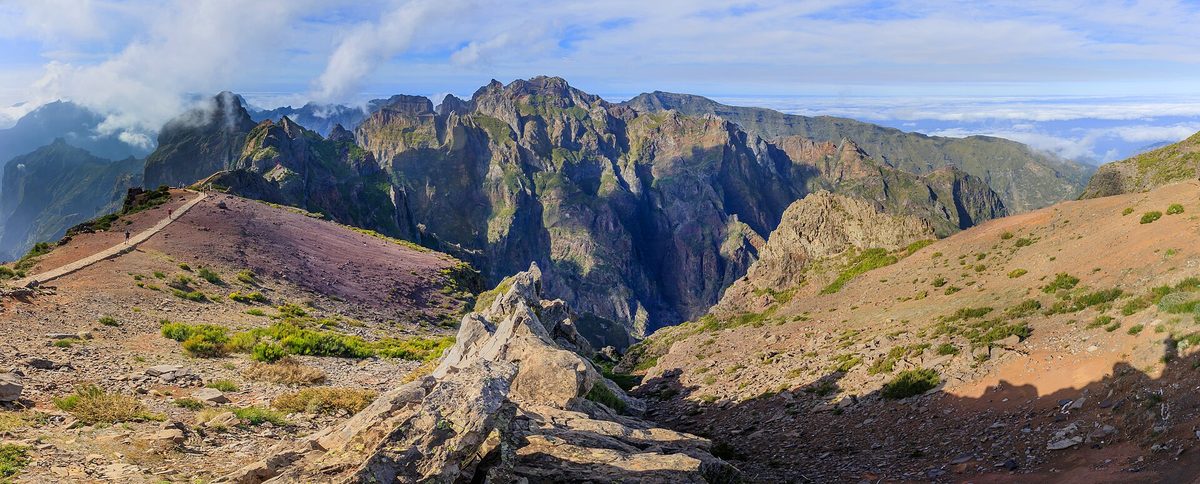
Ask which European destination is warmest in January and the honest answer is the Atlantic islands: the Canaries and Madeira, both politically European, both geographically off the coast of Africa, and both roughly six degrees warmer in winter than anywhere on the Mediterranean.
| Island | Jan | Feb | Mar | Apr | May | Jun | Jul | Aug | Sep | Oct | Nov | Dec |
|---|---|---|---|---|---|---|---|---|---|---|---|---|
| Gran Canaria air | Warm | Warm | Warm | Warm | Warm | Warm | Hot | Hot | Hot | Warm | Warm | Warm |
| Gran Canaria sea | 19 | 19 | 19 | 19 | 20 | 21 | 22 | 23 | 24 | 23 | 22 | 21 |
| Gran Canaria rain | Light | Light | Light | Little | Dry | Dry | Dry | Dry | Little | Light | Light | Light |
| Tenerife South air | 22/15 | 22/15 | 23/16 | 23/16 | 24/17 | 25/19 | 28/20 | 28/21 | 28/21 | 27/20 | 25/18 | 23/17 |
| Tenerife South rain (mm) | 17 | 20 | 15 | 7 | 1 | 0 | 0 | 1 | 4 | 12 | 26 | 30 |
| Lanzarote air | 21/14 | 21/14 | 23/15 | 24/16 | 25/17 | 26/19 | 28/20 | 29/21 | 29/21 | 27/19 | 24/17 | 22/15 |
| Lanzarote sea | 19 | 18 | 18 | 19 | 20 | 21 | 21 | 22 | 23 | 23 | 21 | 20 |
| Lanzarote rain (mm) | 16 | 18 | 12 | 5 | 2 | 0 | 0 | 0 | 2 | 10 | 15 | 29 |
| Fuerteventura air | 21/15 | 21/15 | 22/16 | 23/16 | 24/17 | 26/19 | 27/21 | 28/22 | 28/21 | 26/20 | 24/18 | 22/16 |
| Fuerteventura sea | 19 | 18 | 18 | 19 | 20 | 21 | 21 | 22 | 23 | 23 | 21 | 20 |
| Fuerteventura rain (mm) | 14 | 16 | 12 | 5 | 1 | 0 | 0 | 0 | 2 | 8 | 13 | 26 |
| La Palma air | 21/16 | 21/15 | 22/16 | 22/17 | 23/18 | 24/19 | 26/21 | 27/22 | 27/22 | 26/20 | 24/19 | 22/17 |
| La Palma sea | 20 | 19 | 19 | 20 | 20 | 22 | 22 | 23 | 24 | 24 | 22 | 21 |
| La Palma rain (mm) | 40 | 50 | 25 | 20 | 5 | 0 | 0 | 0 | 10 | 40 | 55 | 75 |
| Funchal, Madeira air | 20/14 | 20/14 | 21/14 | 21/15 | 22/16 | 24/18 | 25/20 | 27/21 | 27/20 | 25/19 | 23/17 | 21/16 |
| Funchal, Madeira rain (mm) | 67 | 72 | 62 | 45 | 27 | 8 | 2 | 1 | 23 | 91 | 80 | 95 |
| Porto Santo, Madeira air | 18/14 | 18/13 | 19/14 | 20/14 | 21/16 | 23/18 | 25/19 | 26/21 | 25/20 | 24/19 | 21/16 | 19/15 |
| Porto Santo, Madeira rain (mm) | 45 | 45 | 33 | 30 | 18 | 10 | 4 | 4 | 17 | 48 | 64 | 63 |
Lanzarote and Tenerife South run a daytime high of about 21 to 22°C in January, against about 14°C on the Athens coast and 15°C in Lisbon. Rain in the southern Canaries is close to nothing: Fuerteventura Airport averages 97 mm a year, and May through September are effectively dry. Sunshine is generous too, at about 2,725 hours a year at Tenerife South Airport and 2,836 at Fuerteventura’s (1981–2010 normals).
The trade-offs are real and worth stating. The sea is cooler than the Mediterranean in summer, around 22 to 24°C at its best, because a cool current runs past the islands. The north-facing slopes are cloudier and wetter than the south, and even Funchal, on Madeira’s south coast, averages 67 mm of rain in January and 574 mm a year. And in July and August the Canaries can get a calima, a Saharan dust episode that can push temperatures past 40°C, mainly on the southern slopes of Gran Canaria and Tenerife, and fills the air with sand. Madeira has its own version, the Leste, from June to October.
Madeira is the mild one rather than the hot one: Funchal’s daytime highs sit at about 20 to 21°C from December through March and only reach 27°C in August. Its sea is at its warmest in late summer and early autumn. If you want winter walking rather than winter sunbathing, that is the profile you want.
The named winds, and the months they show up in
Southern Europe’s weather is often not about the season but about which wind is blowing. These are seasonal enough to plan around:
- The mistral, in Provence and the Rhone valley. A cold, dry northerly that can blow for days, most often in winter and spring. It brings brilliant clear skies and makes a mild day feel far colder than the thermometer says.
- The bora, on the Croatian and Slovenian Adriatic. A cold gusty north-easterly, strongest from autumn through early spring, capable of closing coastal roads and cancelling island ferries. If you are island-hopping in Croatia in November or March, build a spare day into the plan.
- The sirocco, from North Africa across Malta, Sicily and southern Italy. A hot, humid, dust-laden southerly, most common in spring and autumn, which can add ten degrees and leave a film of red dust on everything.
- The meltemi, in the Aegean. A strong dry northerly that blows through July and August, at its most persistent in the central Cyclades. It is the reason August in Greece is often more bearable than August in Rome, and also the reason your Mykonos to Naxos ferry gets cancelled.
- The calima, in the Canaries. Saharan dust and heat, most frequent in July and August, and the one weather event that genuinely spoils a Canaries week.
These are qualitative descriptions rather than measured figures, so they carry no frequency numbers.
Six mistakes people make reading Europe weather by month
- Treating an average as a forecast. Every number in this article is a long-term normal, usually a thirty-year one. Rome’s July average high is 32°C; Rome has been 40°C in July. Averages tell you what to pack, not what will happen.
- Booking a beach trip on air temperature. Air and sea are two months out of phase. Warm May air often sits over water that is still cold, and the sea holds its summer heat well into autumn. Check the sea table.
- Assuming Mediterranean winter is warm. Athens in January averages 14°C by day and 7°C at night, and many buildings in southern Europe are built to shed heat rather than hold it. Indoors can be colder than you expect.
- Ignoring daylight. A November trip to Edinburgh and a November trip to Seville are not the same trip, even at similar temperatures, because one of them is dark from mid-afternoon.
- Thinking the Alps are dry in summer. Zurich gets 126 mm in July, twice its January total. Alpine summer is thunderstorm country.
- Using pre-2020 heat expectations. Eight of Europe’s nine warmest Junes on record have come since 2019, and June 2026 was the second warmest, behind June 2019. Plan southern European summers around the heat, not in spite of it.
Frequently asked questions about Europe weather by month
Which is the best month to visit Europe?
May and September, for almost everybody. Both give you long days, moderate temperatures, everything open and prices below the July and August peak. September edges ahead if swimming matters, because the sea is close to its warmest (about 21°C at Marseille, 27°C at Antalya); May edges ahead if you want everything green and the Alpine meadows in flower.
What is the coldest month in Europe?
January in most of the continent, February in the far north. Tromso’s coldest month is February, with a mean of -3.3°C at the Vervarslinga station. Helsinki’s January low averages -7°C at the airport and Oslo’s -5°C. The coldest inhabited parts of Europe in winter are in the north-east, not the north-west, because the Atlantic keeps the coasts mild.
What is the rainiest month in Europe?
It depends entirely on where. In the Mediterranean it is October or November: Nice’s wettest of the four benchmark months is October at 128 mm, and Dubrovnik’s wettest month of the year is November. In the Alps it is late spring and summer: Zurich’s wettest month is May at 128 mm, with June and July close behind. In Atlantic Europe it is spread through autumn and winter, with Bergen’s wettest month being December at roughly 290 mm.
When is the sea warm enough to swim in Europe?
Late June to early October in the Mediterranean and Adriatic, though the numbers depend on the coast. Compiled averages put Marseille at 18°C in June, 22°C in August and 18°C in October, while Antalya runs 24°C, 29°C and 25°C. North of that, the answer is essentially never without a wetsuit: Reykjavik’s sea stays cold all summer, and Tromso’s tops out at 11.5°C.
When do the clocks change in Europe?
Forward on the last Sunday in March and back on the last Sunday in October, across the EU and the UK. The clocks went back on 25 October 2026; the next changes are on 28 March and 31 October 2027. The EU voted to scrap the twice-yearly change back in 2019, but the proposal stalled in the Council and was never adopted, so the changes are still happening. Iceland is the notable exception in Europe: it does not observe daylight saving at all.
Where is the warmest place in Europe in winter?
The Canary Islands, by a clear margin. Lanzarote and Tenerife South average a daytime high of about 21 to 22°C in January, against about 14°C in Athens and 15°C in Lisbon. Madeira is a step behind at 20°C and much greener. On the European mainland, look to the Algarve and Andalusia for mild winter weather; Sicily is the island alternative.
Which months are shoulder season in Europe?
The travel industry usually means April to May and September to October. Our guide to shoulder season in Europe breaks those windows down destination by destination. Eurostat frames it more broadly as March to June and September to November, meaning everything between the bottom and the peak. The industry definition is the more useful one for pricing.
Which month is cheapest to travel to Europe?
January and November, with early February close behind. Across the EU, August records 3.6 times more overnight stays than January, and in Croatia the ratio reaches 41.1 to one. Demand that low pulls flights, hotels and car hire down with it.
What is the hottest month in Europe?
July and August are close, and which one wins depends on the city. Inland Spain tends to peak in July. The sea, though, is unambiguously warmest in August everywhere in the Mediterranean.
When is the best time to visit Keukenhof?
There is no fixed week: the weather decides when the bloom peaks, so keep your dates flexible. The 2027 season runs 18 March to 9 May, open daily 08:00 to 19:00, and tickets are on sale on the garden’s website. Go on a weekday morning; the garden is at its worst on an April weekend afternoon.
When can you see the northern lights in Europe?
Roughly late September to late March, when the nights are long enough. In Tromso the polar night runs 28 November to 14 January, which gives maximum darkness, but February is my pick because you get aurora at night and enough daylight to see the landscape you are standing in. The visiting Europe in winter guide covers the practicalities.
Does it snow in Europe in winter?
Reliably in the Alps, the Nordics, the Carpathians and much of eastern Europe; occasionally and briefly in London, Paris, Amsterdam and Berlin; almost never at sea level in Portugal, southern Spain, Sicily, Malta or coastal Greece. Snow at low altitude in western Europe is an event, not a season.
Is Europe too hot to visit in summer now?
Not too hot, but hot enough to change how you plan. Southern Europe in July and August now routinely brings heatwaves, midday monument closures and wildfire smoke. Northern Europe and the Alps in the same weeks are close to perfect. The answer is to move north in the peak, not to stay home.
Final thoughts
The single most useful shift you can make is to stop asking when to visit Europe and start asking when to visit a specific climate zone. There is no month that is good for the whole continent and no month that is bad for all of it. December is dreadful in Stockholm and lovely in Vienna. August is unbearable in Seville and superb in Tromso. October is glorious in Athens and a washout in Nice.
If you want one rule: for a general trip, book May or September. For beaches, book late September. For cities and museums, book November to March and go somewhere that is good in the dark. For snow, book January or March rather than February. And whatever month you choose, check the sea table before you pack a swimsuit and the daylight numbers before you pack an itinerary.
Two limits on the tables. They carry no month-by-month normals for a high Alpine resort such as Zermatt or Interlaken, so the Alpine rows are valley cities (Zurich, Munich, Vaduz) rather than altitude; add roughly 0.6°C of cooling per 100 m of ascent if you need a rough figure. And several cities in the temperature table are missing from the sunshine or rainfall tables because the underlying datasets do not carry them, so those cells are left empty.
For the strategic version of all of this, read my pillar guide on the best time to visit Europe, then pick your season: spring, summer, autumn or winter. If crowds are your main concern rather than weather, the least crowded time to visit Europe is the companion piece to this one.
Country guides, by climate zone
Weather is only half the decision. These are the country guides that go with each of the five zones above:
- Northern and Nordic: Iceland and Scandinavia and the Nordics.
- Western and Atlantic: France, the United Kingdom, Ireland and the Netherlands.
- Central and Alpine: Germany, Austria and Switzerland.
- Southern and Mediterranean: Italy, Spain, Portugal, Greece and Croatia and the Adriatic.
- Eastern: Central and Eastern Europe and Turkey and Istanbul.
And for the mechanics of the trip itself: train travel in Europe, getting around Europe, where to stay in Europe, what to pack for Europe, Schengen visa and ETIAS rules and general Europe travel tips. And if you plan trips around what is in season on the plate, what to eat where in Europe tracks which regions peak in which months.
Sources
Temperature, precipitation and sunshine normals from national weather services and station tables (KNMI, IPMA, AEMET, the Met Office and Wikipedia’s station tables), Current Results and Climates to Travel. Sea temperatures from Seatemperature.org and Climates to Travel. Heat, drought and wildfire data from the Copernicus Climate Change Service. The continental European temperature record from the World Meteorological Organization. Seasonality and overnight-stay data from Eurostat. Garden and resort dates from Keukenhof, Val Thorens and Visit Finland.
Hannah Brooks has spent fifteen years travelling, living and writing across Europe, from the Arctic tip of Norway to the south of Sicily. She has planned hundreds of European itineraries for readers and is Senior Europe Editor at EuropeanTourism.org.
Photo credits
- Europe weather by month: hikers beside the Bachalpsee in the Bernese Oberland: Photo: Maru Bern / CC BY-SA 4.0 via Wikimedia Commons
- The northern lights over the snowy mountains near Tromso in Arctic Norway: Photo: Marcelo Quinan / CC BY 2.0 via Wikimedia Commons
- Colourful houses on Maria-Theresien-Strasse in Innsbruck below the snow-capped Nordkette range in Austria: Photo: Wilfredor (CC0) via Wikimedia Commons
- The mountains of Glencoe in the Scottish Highlands under low cloud: Photo: Gil Cavalcanti / CC BY-SA 3.0 via Wikimedia Commons
- Swimmers on the pebble beach below the Promenade des Anglais in Nice on the French Riviera: Photo: Spielvogel / CC BY-SA 4.0 (via Wikimedia Commons)
- The view over Reykjavik’s rooftops and Faxafloi bay from the Hallgrimskirkja tower in Iceland: Photo: Jakub Hałun / CC BY-SA 4.0 via Wikimedia Commons
- Elaborate blue masks and costumes at the Venice Carnival: Photo: Onderkokturk / CC BY-SA 4.0 via Wikimedia Commons
- Rows of lavender in flower across the Valensole plateau in Provence: Photo: Laurent Virzi / CC BY-SA 3.0 via Wikimedia Commons
- Umbrellas and sunbeds on Spiaggia Grande: Photo: Nan Palmero from San Antonio, TX, USA · CC BY 2.0 · via Wikimedia Commons
- Terraced vineyards of the Douro Valley curving above the river near Pinhao in northern Portugal: Photo: Grand Parc · Bordeaux, France from France / CC BY 2.0 via Wikimedia Commons
- Terraced vineyards and the blue church tower of Duernstein in Austria’s Wachau Valley on the Danube: Photo: Hochauer / CC BY-SA 2.0 via Wikimedia Commons
- The Strasbourg Christmas market at night with its giant illuminated tree: Photo: francois (Strasbourg) / CC BY 2.0 via Wikimedia Commons
- The Parthenon on the Acropolis in Athens: Photo: Jebulon (CC0) via Wikimedia Commons
- Jagged peaks above a sea of clouds at Pico do Arieiro on Madeira in the Atlantic: Photo: H. Zell / CC BY-SA 3.0 via Wikimedia Commons