The 45 Best Places to Visit in Greece (2026 Guide)

The first time I took a ferry out of Piraeus I did what almost everyone does. I booked Santorini and Mykonos, back to back, in the second week of August, and I spent a fair amount of that fortnight queueing. It was still beautiful. It was also the least interesting version of Greece I have ever had, and it cost me more than the three weeks I spent in the Peloponnese two years later.
The best places to visit in Greece split three ways: the Cycladic islands everybody has already seen photographs of, a second tier of quieter islands that get the same light for half the money, and a mainland of Byzantine towns and ancient cities that most itineraries skip completely. This guide covers 45 of them, with 2026 prices. If it is purely islands you are after, start instead with our ranking of the best Greek islands to visit.
What actually changed in Greece for 2026
Start here, because a lot of the practical advice floating around online was written before three separate rule changes landed, and several of the headline numbers in it have since risen by 50 to 70 per cent.
Archaeological site prices were rebuilt on 1 April 2025. The old system had a summer tariff and a winter tariff at half price. That is gone. State-run sites and museums now sit in five flat tiers, charged the same in January as in July: €30 for the Acropolis, €20 for anything drawing more than 200,000 visitors a year, €15 for the 75,000 to 200,000 band, €10 for 15,000 to 75,000, and €5 for the smallest. The reform was announced by the Ministry of Culture in December 2023 and covers roughly 350 sites. If you see Delphi quoted at €12, that is the pre-reform price.
One casualty worth knowing about: the €30 Athens combined ticket, which covered seven sites over five days, was abolished on the same date. Buying those seven individually now runs to roughly €125 to €130, depending on which seven you count. Some 2026 listings do show a discounted multi-site Athens pass back on sale, so check hhticket.gr before you buy singles.
The Acropolis is capped. Twenty thousand visitors a day, booked into timed slots through the official platform at hhticket.gr, with the first hour of the morning capped at 3,000 and the hour after that at 2,000. Booking opens 60 days ahead. In June, July and August the morning slots go weeks in advance and the site sells out five to seven days ahead across the board. The cap exists because summer 2023 was running at roughly 23,000 people a day, which anyone who was there will remember.
There is a bed tax and a cruise tax. The Climate Crisis Resilience Fee replaced the old overnight stay tax and is charged per room per night, not per person: €15 a night on five-star hotels and furnished villas from April to October, €8 on short-term rentals, €2 on one and two-star hotels, all dropping sharply from November to March. Separately, cruise passengers landing on Santorini or Mykonos pay €20 a head between 1 June and 30 September, €12 in April, May and October, and €4 in winter. Other Greek ports charge €5 in peak season, €3 in the shoulders and €1 in winter.
Santorini caps cruise arrivals at 8,000 people a day. Mykonos does not. That one difference should shape which island you give the daylight hours to. Santorini’s scheduled cruise arrivals for 2026 are down 18.27 per cent, 595 ships against 728 the year before, which is the first time in a decade the island has been meaningfully quieter in daylight hours.
And Santorini is geologically fine. The earthquake swarm that started in late January 2025 was real and it was large: more than 1,200 quakes between magnitude 1.0 and 5.2 in a fortnight, over 25,000 seismic events across two months, and a declared state of emergency across Santorini, Amorgos and Anafi. It has been quiet since May 2025, with only negligible micro-seismic activity recorded as of March 2026, and there are no remaining access restrictions. Visitor numbers dipped hard in 2025, with airport traffic down 16 per cent across the full year and accommodation revenue down 22 per cent in the second quarter, and then came back. If you were putting Santorini off, you can stop.
How I have organised this, and what “Greece” means here
Greece has around 6,000 islands and islets and 227 of them are officially inhabited, from Crete with something near 680,000 people down to Agios Minas Fournoi, where two people live. No list of 45 places is going to be complete. What it can do is be honest about the trade-offs.
So the entries below are grouped by where they are and how you would realistically reach them, not ranked one to 45 in a countdown that pretends Mykonos and Ancient Messene are competing for the same trip. Within each entry I have tried to give you the thing the photographs cannot: what it costs, when the crowd arrives, how long the ferry takes, and whether I would send you there on a first trip or a fourth.
Two structural notes. Greece has 21 UNESCO World Heritage properties as of 2026, up from 19, because the Minoan Palatial Centres were inscribed in 2025 and the wider Mount Olympus area in 2026. And the island months that matter are late May to mid-June and September into early October. July and August are hotter, fuller and dearer, and the meltemi wind runs hardest from mid-July to mid-August. More on both further down.
All 45 of the best places to visit in Greece at a glance
Crowd level is my own read for a normal week in August, where 1 means you may have the place largely to yourself, 3 means the main sights have queues but the edges are calm, and 5 means sustained crowds from mid-morning to early evening. Headline ticket is the single admission most people actually buy.
| Place | Region | When I would go | August crowd level | Headline ticket | Go for |
|---|---|---|---|---|---|
| 1. Santorini | Cyclades | Late May to mid-June, late Sep to mid-Oct | 5 · heaving in Aug | Akrotiri €20 | The caldera, Bronze Age Akrotiri, volcanic wine |
| 2. Mykonos | Cyclades | June, September | 5 · heaving in Aug | Delos €20 plus c. €25 boat | Chora’s lanes, beach clubs, the Delos day trip |
| 3. Delos | Cyclades | April to June, September to October | 3 · busy in parts | €20 site entry | The most complete ancient city in the Aegean |
| 4. Naxos | Cyclades | May to June, September | 3 · busy in parts | Free to wander the Chora | Mountain villages, long sand, cheap good food |
| 5. Paros | Cyclades | May to June, September | 4 · busy | Free | Naoussa harbour, Parian marble, the busiest ferry interchange |
| 6. Milos | Cyclades | June, September | 3 · busy in parts | Free beaches | Over 70 beaches and the lunar rock of Sarakiniko |
| 7. Sifnos | Cyclades | May to June, September | 2 · quiet | Free | Greece’s best island cooking, and a footpath network to walk it off |
| 8. Folegandros | Cyclades | June, September | 2 · quiet | Free | 719 residents, a cliff-edge Chora, almost no cruise traffic |
| 9. Amorgos | Cyclades | June, September (avoid peak meltemi) | 2 · quiet | Free | The Hozoviotissa monastery bolted to a 300m cliff |
| 10. Syros | Cyclades | May to June, September | 2 · quiet | Free | Ermoupoli, the neoclassical capital of the Cyclades, open year-round |
| 11. Tinos | Cyclades | May to June, September | 2 · quiet | Free | Marble villages, dovecotes and Greece’s most important pilgrimage church |
| 12. Andros | Cyclades | April to June, September to October | 2 · quiet | Free | A 300km footpath network, walkable in spring |
| 13. Crete | Crete | April to June, September to October | 4 · busy | Knossos €20 | A country in itself: Minoan palaces, the Samaria Gorge, four mountain ranges |
| 14. Rhodes | Dodecanese | May to June, September to October | 4 · busy | Lindos Acropolis €20 | A walled medieval city that people still live in |
| 15. Symi | Dodecanese | May to June, September | 2 · quiet | Free | 2,603 people and the prettiest harbour in the Dodecanese |
| 16. Kos | Dodecanese | May to June, September | 4 · busy | Free to cycle the flat coast | Ancient Kos, a flat cyclable island and long sand |
| 17. Karpathos | Dodecanese | June, September | 1 · empty | Free | Olymbos, a mountain village that kept its own dialect |
| 18. Patmos | Dodecanese | May to June, September | 2 · quiet | Monastery donation | The Cave of the Apocalypse, UNESCO-listed since 1999 |
| 19. Corfu | Ionian | Early June, late September, October | 4 · busy | Free to walk the Old Town | A Venetian-Italian old town that looks nothing like the Aegean |
| 20. Kefalonia | Ionian | June, September | 3 · busy in parts | Free | Myrtos beach, Melissani cave, and mountains that keep the crowds thin |
| 21. Zakynthos | Ionian | June, September | 4 · busy | Free | Navagio, sea caves, and turtle nesting beaches in the south |
| 22. Lefkada | Ionian | June, September | 3 · busy in parts | Free | The only Ionian island you can drive to, with the best west-coast beaches |
| 23. Hydra | Saronic | April to June, September to October | 3 · busy in parts | Free | Car-free by law, and reachable from Athens before lunch |
| 24. Skiathos and Skopelos | Sporades | June, September | 4 · busy | Free | Pine-backed beaches and the Mamma Mia church |
| 25. Samos | North Aegean | May to June, September | 2 · quiet | Eupalinian aqueduct ticket | UNESCO-listed Pythagoreion and the Heraion, with wine and forest behind |
| 26. Chios | North Aegean | May to June, September | 1 · empty | Nea Moni free | The mastic villages, and a Byzantine monastery on the UNESCO list since 1990 |
| 27. Ikaria | North Aegean | June, September | 1 · empty | Free | A Blue Zone island that keeps its own hours, and its own calendar |
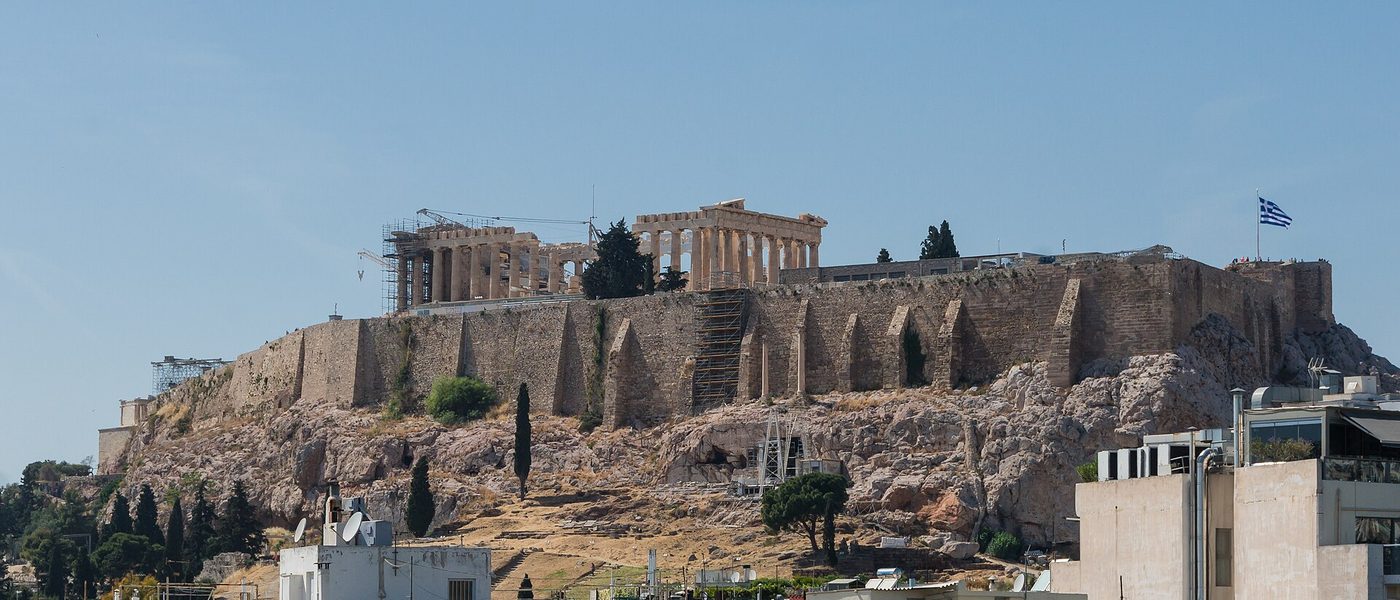
| 28. Athens | Attica | April, May, October, early November | 5 · heaving in Aug | Acropolis €30 | The Acropolis, the Agora, and a food city that has quietly got very good |
| 29. Delphi | Central Greece | April to May, October | 4 · busy | €20 site and museum | The navel of the ancient world, on a mountainside above olive groves |
| 30. Meteora | Thessaly | April to May, October | 4 · busy | €5 per monastery, cash | Six working monasteries on 400m sandstone pinnacles |
| 31. Pelion | Thessaly | May to June, September to October | 2 · quiet | Free | Stone villages, cobbled kalderimi paths, and beaches on two coasts |
| 32. Mount Olympus | Thessaly and Macedonia | Late May to October for the summit | 2 · quiet | Free | Greece’s newest UNESCO listing, inscribed in 2026 |
| 33. Nafplio | Peloponnese | April to June, September to October | 3 · busy in parts | Free to walk the old town | The prettiest small town in Greece and the best Peloponnese base |
| 34. Mycenae | Peloponnese | April to May, October | 3 · busy in parts | €20 site, tomb and museum | The Lion Gate and the shaft graves of Agamemnon’s city |
| 35. Epidaurus | Peloponnese | April to June, September (summer festival) | 3 · busy in parts | €20, reduced €10 | The best-preserved ancient theatre anywhere, still used for performance |
| 36. Ancient Olympia | Peloponnese | April to May, October | 3 · busy in parts | €20 covering site and three museums | Where the Games began in 776 BC |
| 37. Monemvasia | Peloponnese | April to June, September to October | 2 · quiet | No published entry fee found | A whole Byzantine town hidden behind a rock, invisible from the mainland |
| 38. Mystras | Peloponnese | April to May, October | 2 · quiet | €20 | A Byzantine capital left standing on a hillside, UNESCO-listed 1989 |
| 39. Ancient Messene | Peloponnese | April to May, October | 1 · empty | €15 site entry | A complete ancient city with almost nobody in it |
| 40. The Mani | Peloponnese | April to June, September to October | 2 · quiet | Free | Tower villages, wild coast and the deepest cave system in Greece |
| 41. Thessaloniki | Macedonia | April to June, September to October | 3 · busy in parts | Free to walk the waterfront | Greece’s best eating city, with 15 UNESCO-listed monuments in it |
| 42. Vergina (Aigai) | Macedonia | April to May, October | 2 · quiet | €20, reduced €10 | Philip II’s tomb, found intact, in the museum built over it |
| 43. Zagori and the Vikos Gorge | Epirus | May to June, September to October, and December for Greeks | 2 · quiet | Free | 46 stone villages and a gorge, UNESCO-listed in 2023 |
| 44. Halkidiki | Macedonia | June, September | 3 · busy in parts | Free | Three peninsulas of beach, and the closest a woman can get to Mount Athos |
| 45. Kavala and Philippi | Macedonia | May to June, September to October | 1 · empty | Philippi site entry | A tobacco-warehouse port town and a UNESCO Roman city that sees very little foreign traffic |
The famous Cyclades, and how to do them without hating them
These are the islands the algorithm sells you, and I am not going to pretend they do not deserve it. Santorini is one of the strangest landscapes in the Mediterranean. What I would push back on is the assumption that you have to see them in the same week, in the same fortnight of the year, as everyone else.
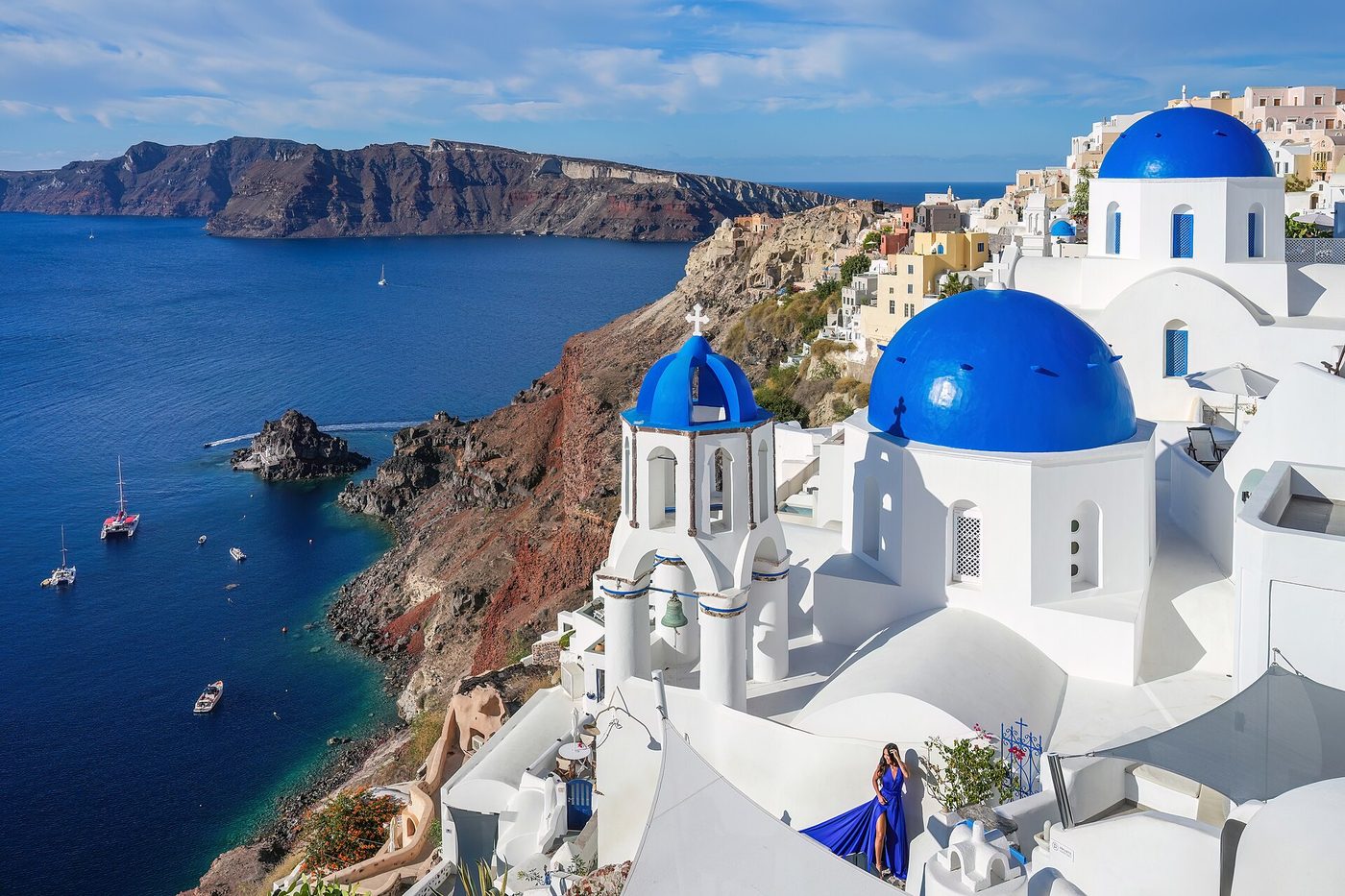
1. Santorini
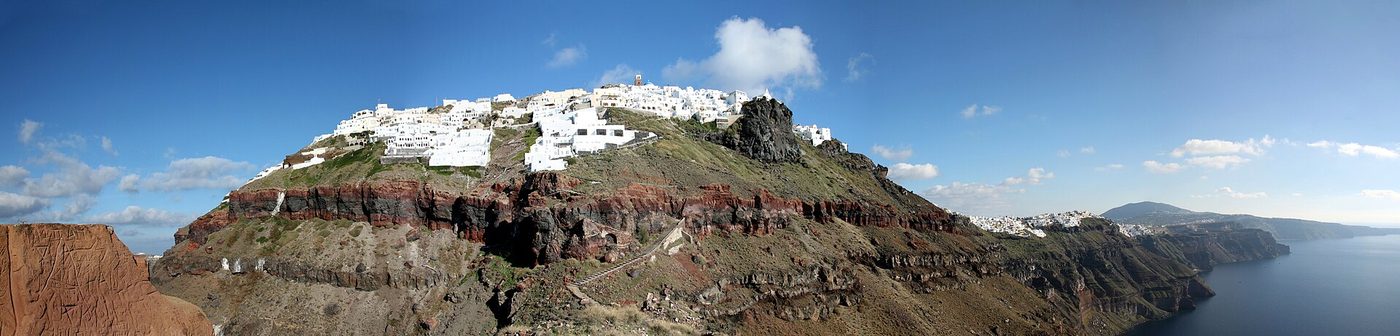
A drowned volcano with villages balanced on the rim of it. That is the whole pitch, and standing at Imerovigli looking down 300 metres of cliff into flooded caldera, it lands.
The thing most people get wrong is treating Santorini as a beach island. It is not, particularly. The beaches are black volcanic sand at Perissa and Kamari and they are perfectly good, but you did not come for them. You came for the caldera villages, for Oia and Fira and Firostefani and Imerovigli, and for Akrotiri, which is the reason I would put Santorini on a first trip even for people who dislike crowds.
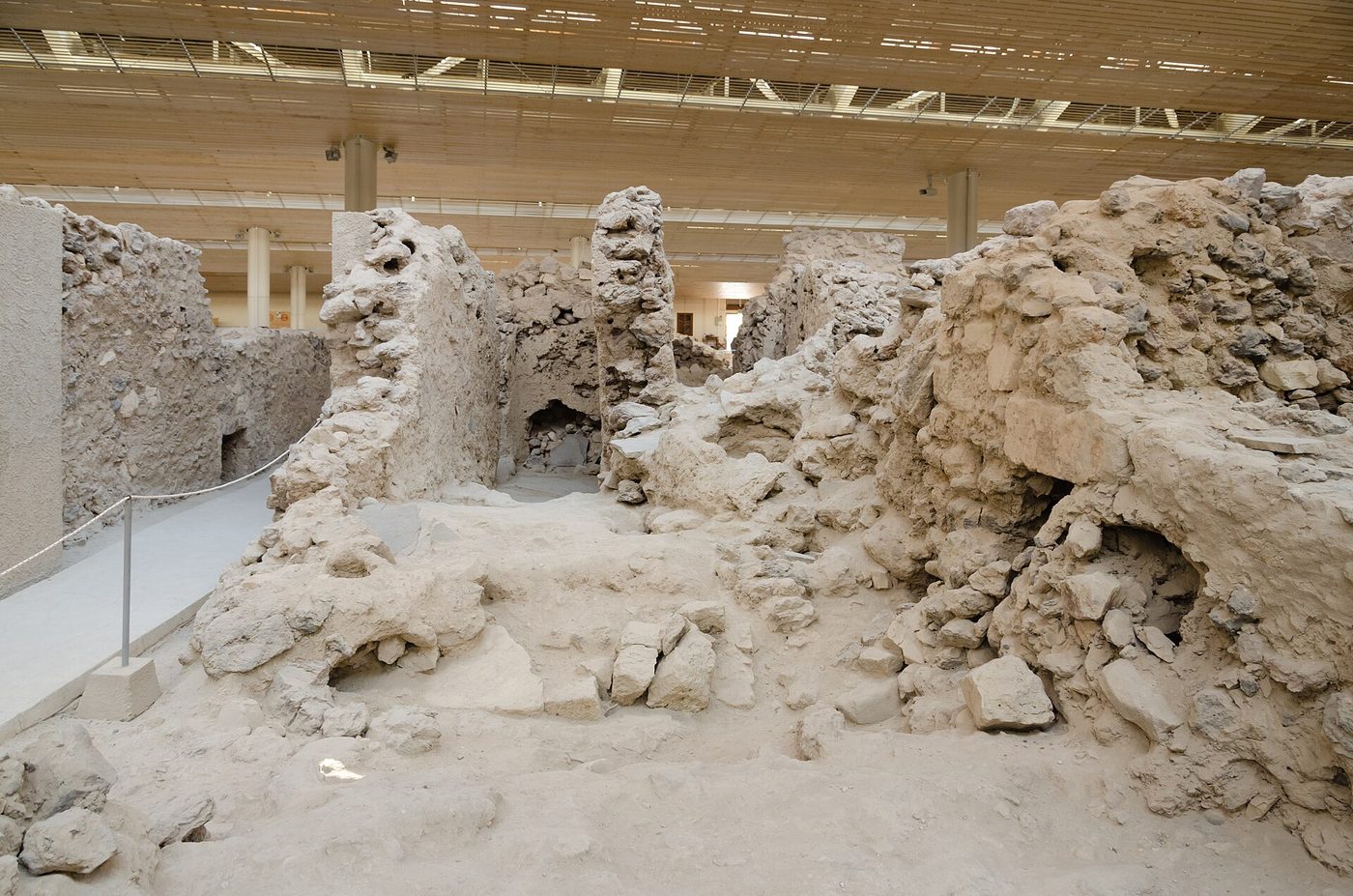
Akrotiri (€20) is a Bronze Age town buried by the eruption and excavated under a modern roof, with two and three-storey buildings still standing and drainage systems still visible. It is Pompeii seventeen centuries earlier and it takes an hour. Give it an hour before the caldera walk.
Getting there: ferry from Piraeus, 6h10m to 9h10m on a Blue Star conventional from around €46.50, or 5h to 6h10m on a SeaJets high-speed from around €79.70 in economy. Up to eight crossings a day in summer, running year-round. Flights from Athens take 45 to 50 minutes and often cost less than the fast ferry once you account for the day you get back.
When: late May to mid-June, or the second half of September. July and August are the hottest, busiest, windiest and most expensive weeks of the year here, and the meltemi makes the caldera-side terraces less romantic than they photograph. The 8,000-a-day cruise cap has taken real pressure off the middle of the day, so 2026 is a better year to try Oia at four in the afternoon than 2023 was.
2. Mykonos
Mykonos is two islands wearing one name. There is the Chora, a lovely maze of whitewashed lanes and small churches that the Venetians laid out to confuse pirates and which now confuses everybody, and there is the beach club economy on the south coast, where a sunbed can cost more than a hotel room somewhere else.
I like the first one very much. If you get up at seven and walk Little Venice and the lanes behind Paraportiani before the day boats arrive, it is one of the best hours in the Cyclades. By eleven it is a different island.
Mykonos has no cruise cap. It applies the €20 peak-season passenger levy and it uses the berth allocation system, but there is no hard daily ceiling, and cruise traffic grew 16 to 17 per cent in 2025 despite the tax. Plan around that. Check what is in port before you decide which day to do the Chora.
Getting there: from Piraeus in as little as 2h40m on a high-speed, or from Rafina in 2h05m to 4h40m from around €35.50, which is the better port if you are coming straight from the airport. Direct flights from Athens too.
3. Delos
Half an hour off Mykonos by excursion boat and, for my money, the single most impressive archaeological site in the Aegean. Delos was the sacred island, birthplace of Apollo and Artemis in the myth and a trading city of some size at its height, and because nobody lives there and nobody has built over it, what survives is a whole city plan: streets, houses with mosaic floors still in place, the terrace of the lions, a theatre, cisterns, shops.
It has been UNESCO-listed since 1990. Entry is €20 on top of about €25 for the return boat, so budget around €45 to do it independently. Boats leave Mykonos Old Port at 09:00, 10:00 and 11:00 in high season, returning at 12:00, 13:30 and 15:00. Take the first one, take water, and take a hat, because there is no shade anywhere on the island and no cafe worth the name.
The other reason to go: it is the one day on Mykonos where you will be surrounded by people who came for the same reason you did.
4. Naxos
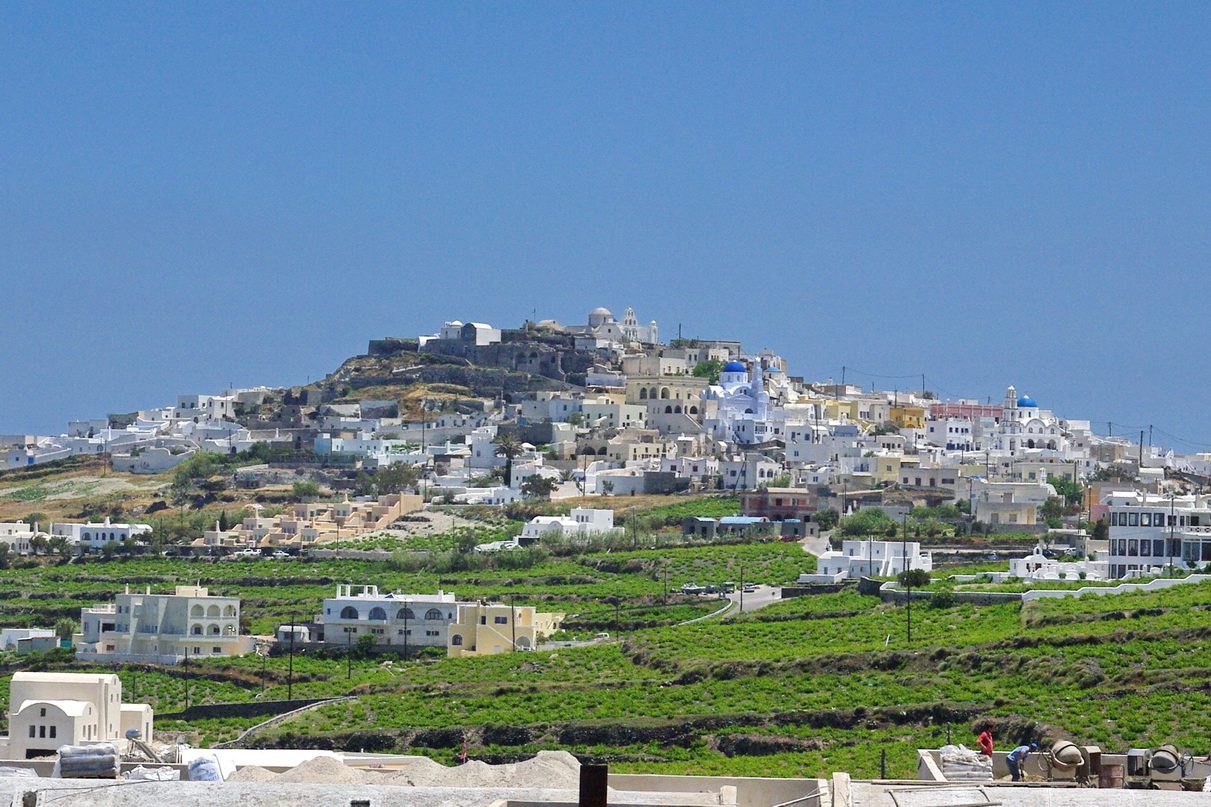
If somebody tells me they have one island and want it to be good rather than famous, I say Naxos. It is my pick of the best Greek islands for a first trip. It is the biggest of the Cyclades and the only one with a real interior: mountain villages at Halki and Apiranthos, olive terraces, marble quarries with unfinished archaic statues still lying in them, and a working agricultural economy that means the food is better and cheaper than on the islands that only do tourism.
The Chora has a Venetian kastro on top and a half-built marble temple gate on an islet at the harbour mouth, which is the sunset everyone photographs. Plaka and Agios Prokopios are long, sandy, shallow and excellent for children.
Getting there: from Piraeus in 3h15m at the fast end, around €52, and there is a small airport with Athens flights. Naxos is also the best base for island hopping in the central Cyclades, with 25-minute hops to Paros and 35 minutes to Mykonos. If you are building a Greek island hopping itinerary, this is where I would put the middle of it.
5. Paros
Paros is the transport hub of the Cyclades and has quietly become one of the more fashionable islands, which has pushed prices up without quite spoiling it. Naoussa, the fishing harbour in the north, is the picture: a Venetian breakwater half sunk in the water, tavernas on the quay, and lanes behind that fill up nicely in the evening.
The marble is the interesting part of the history. Parian marble is translucent to a depth of several centimetres, which is why sculptors wanted it, and archaeologists have estimated that something in the region of 80 per cent of Greek antiquities were carved from it. The quarries at Marathi are open, free, and quiet even in August.
Getting there: from Piraeus in about 2h45m, roughly €44, with an airport for Athens flights. Twenty-five minutes to Naxos, forty to Mykonos, and connections to Milos, Santorini, Ios and Folegandros. If you want one base and day trips rather than packing every second morning, Paros is the island; Naxos is the better place to actually stay.
6. Milos
Milos is a volcanic island that looks like it belongs to a different planet in places, and it has more than 70 beaches, which is an absurd number for somewhere you can drive across in forty minutes. Sarakiniko is the famous one: white pumice worn smooth into ridges and hollows, no vegetation at all, water the colour of a swimming pool. Kleftiko, on the south-west coast, is reachable only by boat.
The important practical note, and it does not come through in the photographs: only the eastern half of the island is accessible without a four-wheel drive. If you have booked a small hire car and pinned twelve beaches on a map, roughly half of those pins are not happening. Either book a boat trip round the west coast or hire something with clearance.
Getting there: from Piraeus in 2h30m to 7h30m with up to six crossings a day, from around €41. A SeaJets high-speed does it in 2h40m for about €78.70; a Minoan conventional in four hours for about €44. There is an airport with Athens flights.
The quiet Cyclades, where the same light costs half as much
Same sea, same whitewash, same absurd light, and a great deal less traffic in the harbour. These six are all in the Cyclades, all reachable from Piraeus or by hopping from Paros, and collectively they carry fewer permanent residents than a single London suburb.
7. Sifnos
Sifnos is where Greeks who care about food go. The island is closely associated with Nikolaos Tselementes, the chef whose name became the ordinary Greek word for a cookery book, and it has a ceramic tradition that means the chickpea stew comes to the table in a clay pot that was made two villages away.
Population 2,777. There is a network of restored footpaths, well over 100 kilometres of them, linking Apollonia in the centre to Kastro on the east coast and down to Chrysopigi, where a whitewashed monastery sits on a spit of rock with a bridge over the gap. Walk it in the morning, eat properly at lunch, swim in the afternoon.
No airport. Ferry from Piraeus, or short hops from Paros and Milos, which is the neat way to build a western Cyclades loop.
8. Folegandros
Seven hundred and nineteen people. A Chora on the edge of a 200-metre cliff, reached by a road that gives no warning, with three linked squares of plane trees and tavernas and a zigzag path up to the church of Panagia above it. That is essentially the island, plus a handful of beaches you mostly walk or boat to.
What Folegandros has that its neighbours have lost is scale. Cruise ships do not call. There is no airport. The evening in the squares is made up of the people staying on the island and the people who live there, and it is quite easy to be the only foreigner at a table.
Getting there takes effort, usually via Santorini, Milos or Paros, and that effort is the whole point. Go before you go to Santorini, not after, or the comparison will be unkind.
9. Amorgos
The easternmost of the Cyclades, long and thin and mountainous, with 1,961 residents. The image is the monastery of Panagia Hozoviotissa: eight storeys of white building wedged into a fold of a cliff 300 metres above the sea, founded in the eleventh century, reached by a stepped path that takes a sweaty twenty minutes. Monks still live there and still hand you a shot of psimeni raki and a piece of loukoumi when you arrive, which after that climb is a genuinely good idea.
Amorgos is also where Luc Besson filmed The Big Blue, and the wreck below Liveros bay is a free-diving landmark. A word of warning: Amorgos sits in the teeth of the meltemi, and mid-July to mid-August crossings here get cancelled more than anywhere else in this list. Come in June or September.
10. Syros
Syros is the administrative capital of the Cyclades and the one island on this list that is not principally a holiday island, which is exactly why I like it. Ermoupoli was the busiest port in Greece before Piraeus took over, and it spent that money on neoclassical architecture: a marble-paved main square, a nineteenth-century opera house modelled on La Scala, mansions on two hills, one Catholic and one Orthodox, facing each other.
Because there is a real year-round population, Syros works in April and it works in November, when half the Cyclades is shuttered. Athens flights take about 35 minutes. If your trip lands outside the season and you still want an island, this is the answer.
11. Tinos
Tinos is the great Greek pilgrimage island, and the church of Panagia Evangelistria at the top of the main street draws enormous crowds every 15 August, which is precisely the week not to come. The rest of the year it is a marble island: 40-odd villages, sculptors’ workshops, and hundreds of ornate dovecotes built by the Venetians and still standing in the fields.
Volax, a village sitting in a field of enormous round granite boulders, does not look like it belongs in Greece at all. Pyrgos is the marble-carving village and has a museum for it.
Getting there is easy and cheap: Rafina to Tinos runs 1h50m to 5h with up to a dozen crossings a day, from around €30. No airport.
12. Andros
The second largest Cyclade and, oddly, the least visited of the near ones, despite being about an hour from Rafina with up to eleven sailings a day at €19.70 to €38 for a foot passenger. Andros is green, with running water in summer, and it has a footpath network of around 300 kilometres, roughly 240 of them waymarked and maintained, which is the best on any Greek island. The Andros Route is the only island trail in Europe to hold the Leading Quality Trails Best of Europe certification.
Come in April or May and walk. Old mule paths, stone bridges, terraced valleys, and a Chora on a spit of rock with a good modern art museum in it. Come in August and you will find a normal, pleasant, slightly underwhelming beach island, because the walking is the point and 34 degrees is not walking weather.
Crete and the Dodecanese
Crete is not really an island in the sense the others are, and the Dodecanese, strung down the Turkish coast, have a completely different history: Italian occupation until 1947, Knights of St John before that, and a look that owes as much to the Levant as to the Aegean.
13. Crete
Two hundred and sixty kilometres long, four mountain ranges, around 680,000 people, its own dialect, its own music and a fierce sense of not quite being Greece. Crete only joined the Greek state in 1913 and it has never entirely stopped mentioning it.
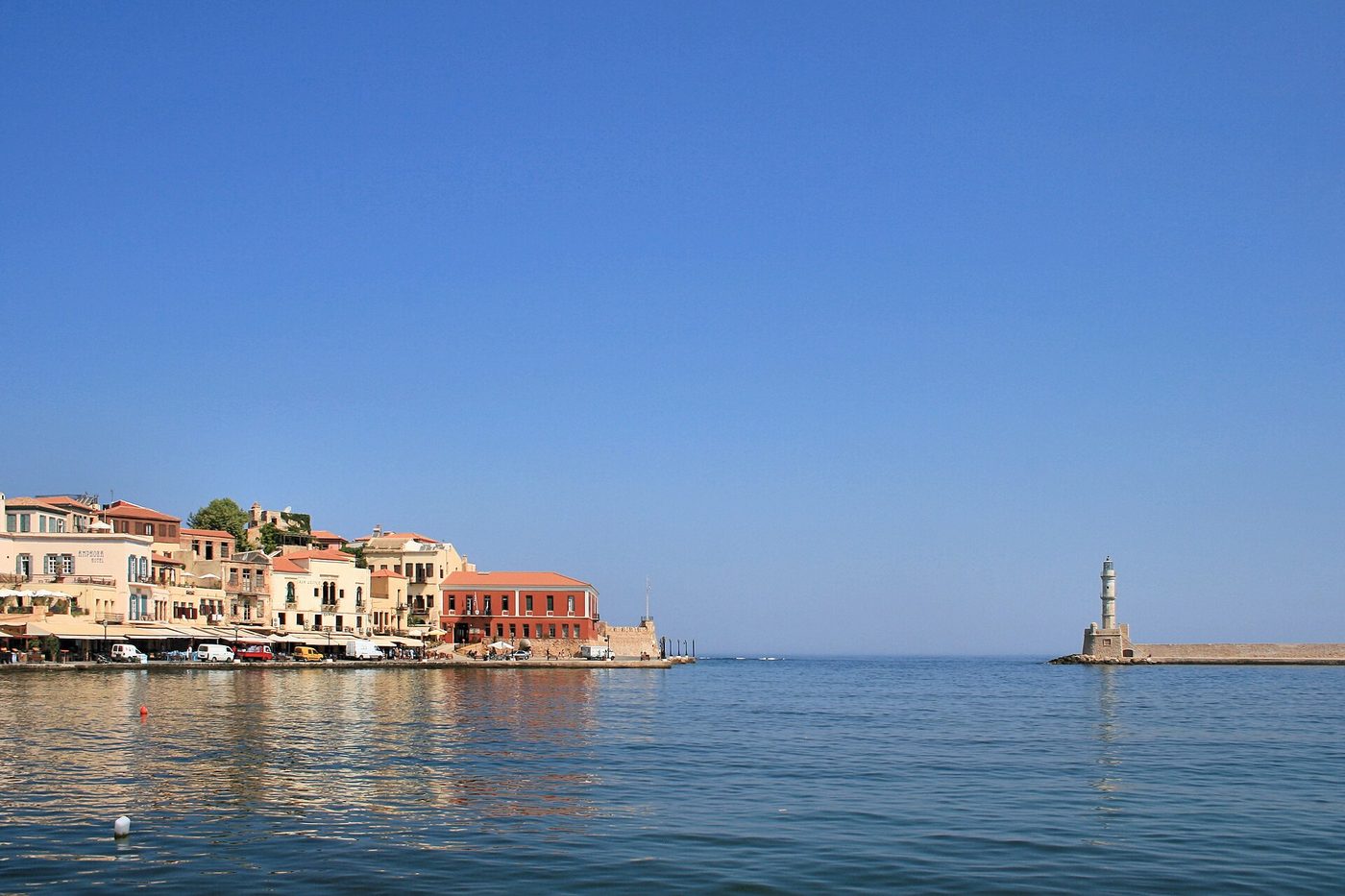
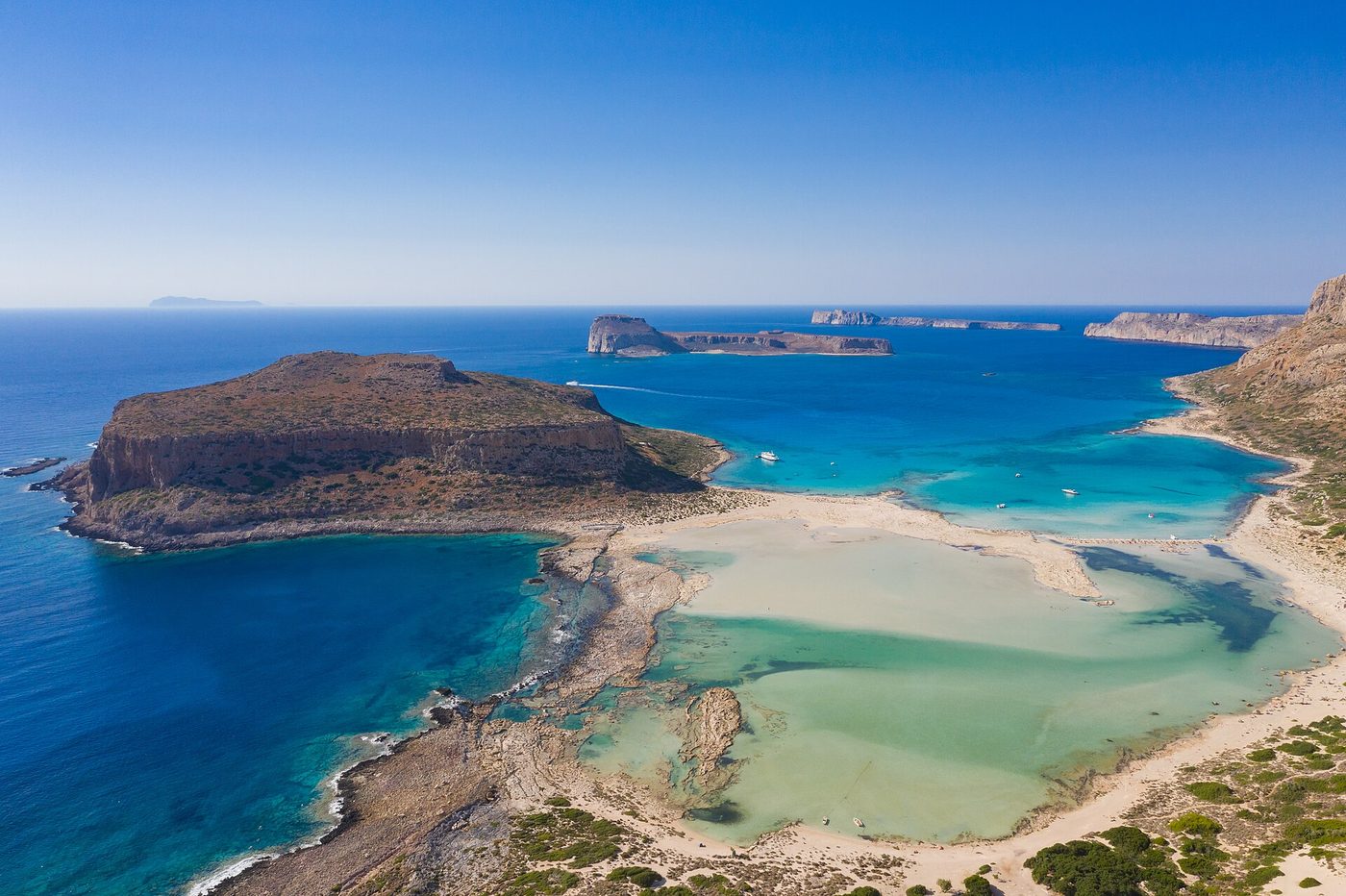
You cannot see it in three days. What you can do is pick a half. The west, based in Chania, gives you a Venetian harbour with a lighthouse, the Samaria Gorge, the pink shell sand at Elafonissi and the lagoon at Balos. The east, based in Heraklion or Agios Nikolaos, gives you Knossos, the Lasithi plateau, the Venetian leper island of Spinalonga and the palm beach at Vai.
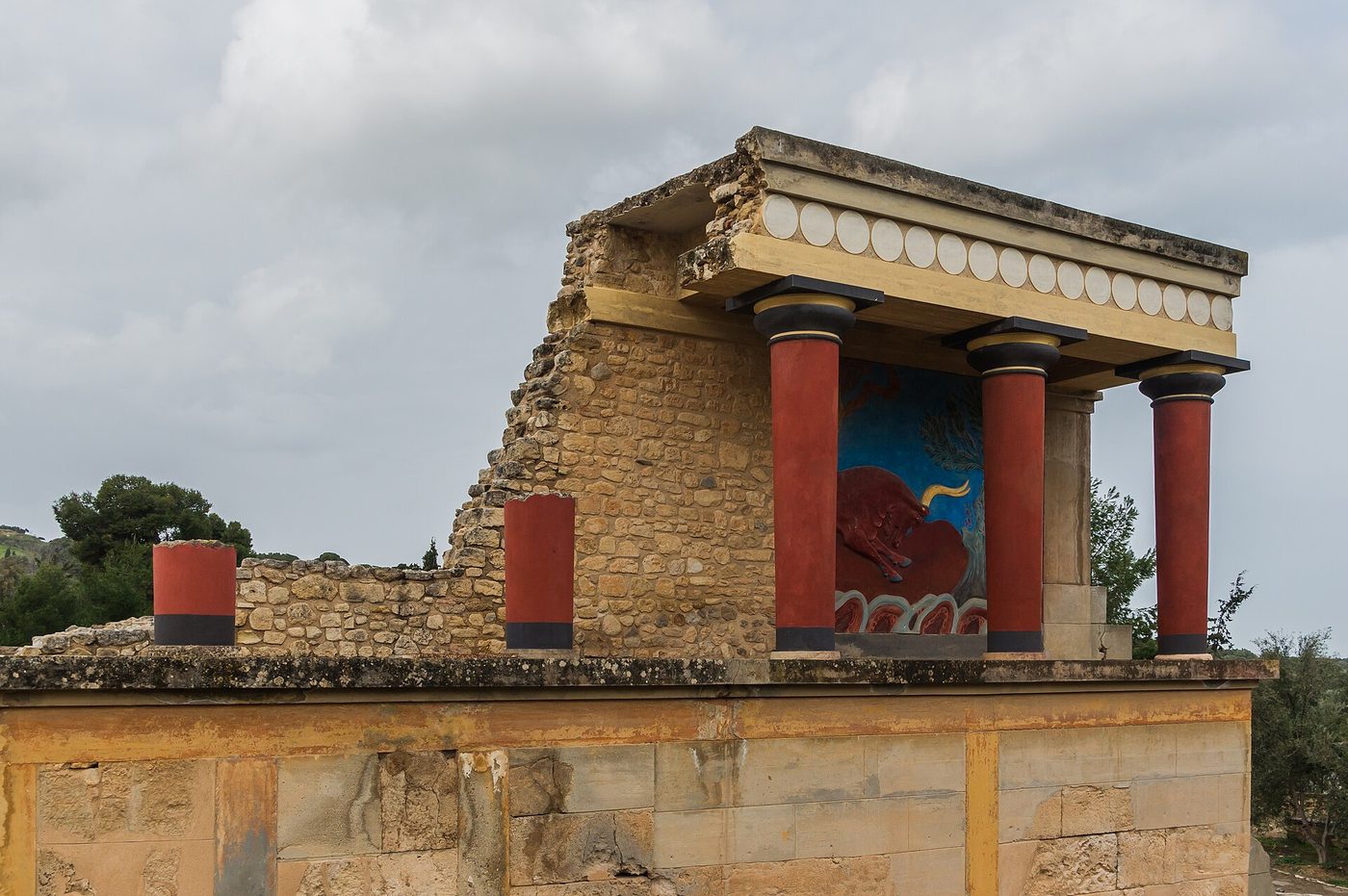
Knossos costs €20. Note that it is no longer a standalone UNESCO listing: it was folded into the Minoan Palatial Centres inscription in 2025. Also note that reports on whether the old Knossos plus Heraklion Archaeological Museum combined ticket still exists in 2026 directly contradict each other, so budget €40 for the pair and be pleasantly surprised if a combined ticket is on sale at the window.
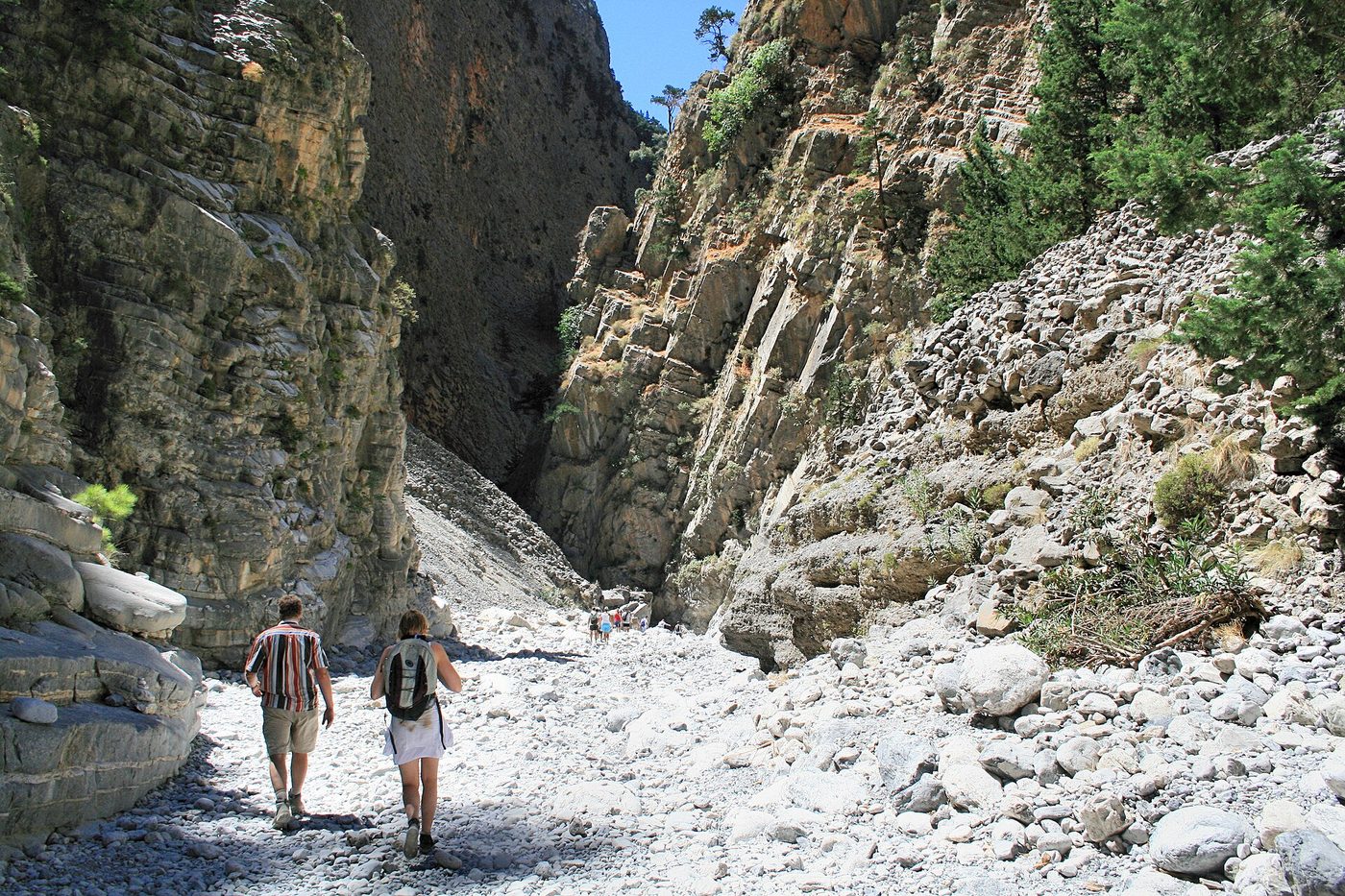
The Samaria Gorge is 15.9 kilometres, downhill, five to seven hours, ending at Agia Roumeli where you take a boat out because there is no road. It is open May to November. Do not attempt it in sandals, which the wardens will tell you at the top and several people will ignore.
Getting there: Piraeus to Heraklion is roughly 8 to 13 hours with up to six daily sailings across three operators, from around €33, which is the cheapest long ferry in Greece and best done overnight in a cabin. Piraeus to Chania is 8h to 9h30m, usually one daily, from about €52.50. Flights from Athens to Heraklion take about 54 minutes.
14. Rhodes
The medieval city of Rhodes has been on the UNESCO list since 1988, and the thing that makes it unusual among European walled towns is that it is not a museum. Around 6,000 people live inside the walls. There are schools, shops that sell washing powder, and cats asleep on Ottoman doorsteps, alongside the Street of the Knights and the Palace of the Grand Master.
The Palace of the Grand Master is €20, having moved up to the main tier in the April 2025 reform. The Archaeological Museum, in the Knights’ hospital, is €10, reduced €6. Lindos, 50 kilometres south, has an acropolis on a headland above a white village and a bay, charges €20, and now runs timed entry with a chosen one-hour window sold through hhticket.gr. Book it. The queue in August without a slot is punishing and there is no shade on the steps.
Worth knowing for 2026: Greece’s new Special Spatial Framework for Tourism, reported as introduced in May 2026, designates parts of Rhodes as Category A “saturated”, capping new tourist accommodation and requiring a carrying-capacity assessment for new hotels. The detail is still settling, so treat it as direction of travel rather than a fixed rule. There is no cruise passenger cap, though the port authorities are watching the Santorini scheme.
Athens flights take about 55 minutes.
15. Symi
An hour off Rhodes by boat, and the arrival is the best thing about it. The ferry comes round a headland into a horseshoe harbour with tier upon tier of neoclassical houses in ochre and terracotta and dusty pink climbing the slopes on both sides. Symi got rich on sponge diving and shipbuilding in the nineteenth century, built accordingly, then lost the trade, which is why nothing modern was ever put up over the top.
Population 2,603. Most people come as a day trip from Rhodes and leave at five, which means the harbour empties in the evening and you get the good half. Stay two nights. Walk or take a taxi boat to Agios Georgios Dysalonas, a beach under a 300-metre cliff, and up to the Panormitis monastery in the south.
16. Kos
Kos is the practical Dodecanese island: flat, cyclable end to end, with a long sandy coast, direct Athens flights and enough package hotels to keep prices sensible. It is also, for a place that gets written off as a beach resort, seriously historic. Hippocrates was born here around 460 BC. The Asklepieion, the healing sanctuary above the town, is a seriously impressive terraced site, and the town itself has a Roman agora sitting in the middle of the shopping streets.
The reason to prefer Kos to Rhodes: you can hire a bike rather than a car and still see the island, plus there is a short hop to Nisyros, a volcano you can walk into the crater of.
17. Karpathos
The most remote-feeling island on this list that still has an airport with direct Athens flights. Karpathos is long, mountainous and windy enough to be a serious kitesurfing destination, and the north of it is nearly cut off: Olymbos, a village strung along a ridge, was isolated for so long that its dialect preserves features of ancient Greek and older residents still wear traditional dress that is not put on for anybody.
You need a car, the road north is slow, and there is very little in the way of luxury. If your objection to Greek islands is that they feel processed, this is the antidote.
18. Patmos
Patmos is where John is said to have received the Revelation, in a cave halfway up the hill from the port at Skala. The Cave of the Apocalypse and the fortified Monastery of Saint John above it have been UNESCO-listed since 1999, along with the Chora that grew up around the monastery walls.
What surprises people is how good the Chora is as a place quite apart from the religion: a dense white maze of eighteenth-century sea-captains’ houses, almost no cars, and views over half the Dodecanese from the monastery roof. Dress modestly, or you will be handed a wrap at the gate. Ferry only, no airport, and that keeps the numbers manageable outside the Orthodox Easter week.
The Ionian islands, green and Venetian
Off the west coast, facing Italy, and a different country to look at. The Ionians get Atlantic weather systems and therefore rain, which is why they are green when the Cyclades are the colour of a paper bag. They were never Ottoman: Venice held them for four centuries, then Britain until 1864, so the architecture has balconies and shutters and campaniles rather than domes.
19. Corfu
Corfu Old Town has been UNESCO-listed since 2007 and it does not look Greek at all. Two Venetian fortresses, arcaded streets built by the French on the model of the Rue de Rivoli, a cricket ground left by the British, and tall narrow buildings in ochre and rose that would sit happily in Puglia.
The island is big, around 101,600 people, and it splits sharply. The north-east coast around Kalami and Agni is the Durrell country: coves, cypresses, small tavernas you reach down a track. The north-west has the enormous cliffs at Paleokastritsa. The far north around Sidari and the strip south of the town are mass package tourism and I would not send anybody there.
When: early June and late September are the sweet spots, and October stays sunny and pleasant. Flights from Athens take about 1h05m; there are also ferries from Igoumenitsa and direct sailings from Italy, which makes Corfu the obvious hinge in an Italy and Greece itinerary.
20. Kefalonia
The largest Ionian island and the most dramatic, because Mount Ainos runs down the spine of it at over 1,600 metres and the coast falls away hard. Myrtos, the white crescent seen from a viewpoint on the road above, is on more Greek tourism posters than any beach except Navagio. Melissani is a cave lake with a collapsed roof, so that at midday the sun comes straight down and the water goes an unreasonable shade of blue.
Kefalonia rewards a car and punishes anyone without one. Assos and Fiskardo in the north are the pretty villages, Fiskardo being the only settlement to survive the 1953 earthquake that flattened most of the island. Athens flights take 55 to 60 minutes, and there is a useful 1h30m ferry across from Zakynthos.
21. Zakynthos
Zakynthos has an image problem, and it is half deserved. Laganas in the south is a strip, and it sits directly on top of the most important loggerhead turtle nesting beach in the Mediterranean, which is an uncomfortable arrangement that the national marine park manages rather than resolves.
Ignore the strip. The west coast is a wall of cliffs with sea caves at Keri and the Blue Caves in the north, and Navagio, the shipwreck cove, is one of the few over-photographed places that is exactly as good as advertised. Note that the clifftop viewing platform has been closed and reopened repeatedly because of rockfall, and access to the beach itself by boat has been restricted at times, so check locally rather than booking on the strength of a photograph.
22. Lefkada
The Ionian island you drive to. A causeway and a floating bridge connect Lefkada to the mainland, which means no ferry timetable and no flight, though Preveza/Aktion airport is about 20 kilometres away if you would rather fly.
The west coast is the reason to come: Egremni, Porto Katsiki and Kathisma sit under white cliffs with water that goes an implausible turquoise because of the limestone. These are the best beaches in the Ionian and arguably among the best beaches in Europe. Be aware that the 2015 earthquake reshaped some of the access roads and staircases, and Egremni in particular has had a long and complicated reopening history.
The east coast is a different holiday: sheltered water, Vassiliki for windsurfing, and a chain of small islands off the coast including Meganisi that you can reach on a day boat.
The Saronic, the Sporades and the north Aegean
Three groups with nothing in common except that none of them is the Cyclades. The Saronic sits an hour from Athens, the Sporades hang off the coast of Thessaly, and the north Aegean islands press up against Turkey and see very few foreign visitors at all.
23. Hydra
The best day trip from Athens in Greece, and better still as an overnight. Hydra is car-free by law, the largest island in Europe where that is true, and the absence is total: no scooters, no quad bikes, no delivery vans. Goods move by mule and by handcart. The silence in the harbour at nine in the evening is the thing you remember.
The town is a bowl of grey stone mansions built by shipowners who made fortunes running the Napoleonic blockade, and it has been a painters’ and writers’ island since the 1950s. There are no real beaches, which keeps the wrong crowd away. Swim off the rocks at Spilia or take a water taxi round to Bisti.
High-speed catamarans run from Piraeus in 1h05m to 1h40m, up to twelve a day, year-round, for €35 to €42. No car ferry, because there is no point.
24. Skiathos and Skopelos
The Sporades are pine-covered and green in a way the Aegean rarely is, with the trees growing down to the sand. Skiathos has the beaches, 60-odd of them including Koukounaries, and an airport with 40-minute Athens flights and a famously short runway that plane spotters travel for.
Skopelos, a short hop across, has no airport and is the better island: a hillside town of slate roofs, thick forest, and the tiny clifftop church of Agios Ioannis where the wedding scene in Mamma Mia! was filmed, up 200 steps cut into a rock. Ferries run from Volos in 1h30m to 4h at around €35, and from Mantoudi on Evia, which is a two-hour drive from Athens and often the quicker option.
25. Samos
Samos gave the world Pythagoras and Epicurus and it has the UNESCO listing to prove the first: the Pythagoreion and the Heraion have been inscribed since 1992. The Eupalinian aqueduct at Pythagoreion is the one to see, a 1,036-metre tunnel dug through a mountain in the sixth century BC from both ends simultaneously, meeting in the middle, which is a piece of applied geometry that still seems improbable when you are standing in it.
The island is green, forested and mountainous, produces a good sweet muscat wine, and sits close enough to Turkey that you can see the coast clearly. Ferries from Piraeus run once or twice daily at around €60, and there are direct Athens flights.
26. Chios
Chios is the mastic island. Mastiha, the resin of a shrub that only produces it in the south of this one island, built a set of fortified medieval villages, of which Pyrgi is decorated head to foot in geometric black and white plasterwork called xysta and looks like nowhere else in Europe. Mesta is a walled village built as a single defensive block with no outward-facing windows.
Nea Moni, an eleventh-century monastery in the hills with mosaics of the first rank, has been UNESCO-listed since 1990 as part of the Daphni, Hosios Loukas and Nea Moni group. Ferries from Piraeus run up to eight times weekly at about €40, and Chios airport has year-round flights from Athens, Thessaloniki, Lemnos, Mytilene, Rhodes and Samos.
27. Ikaria
One of the world’s Blue Zones, where an unusual proportion of the population lives past 90, and the island wears it lightly. Ikaria keeps its own hours: shops that open at five in the afternoon, village festivals that start at midnight and run until dawn, and a general indifference to the clock that visitors either love or find maddening within two days.
It is mountainous, has hot radioactive springs at Therma, and a beach at Seychelles reached down a path through boulders. Ferries from Piraeus run up to five times a week at around €47 and there are direct Athens flights. Come for a week, not for two nights, because the island does not perform on demand.
Athens, which deserves more than a night
28. Athens
The standard Athens itinerary is one night at the start of a trip and one at the end, and it is a mistake. The city has changed enormously in the last decade. It has a serious food scene now, a set of neighbourhoods worth walking for their own sake, and a coastline forty minutes from the centre by tram.
The Acropolis is €30, up from where most people remember it, and you must book a timed slot at hhticket.gr. Sixty days ahead is when booking opens; in summer, morning slots go weeks out. Aim for the first entry at 08:00 or the last two hours before the 19:30 final admission, because the site can close between roughly 13:00 and 17:00 when the temperature passes 40 degrees, and because the middle of the day on that rock in July is genuinely unpleasant. You get 15 minutes either side of your slot.
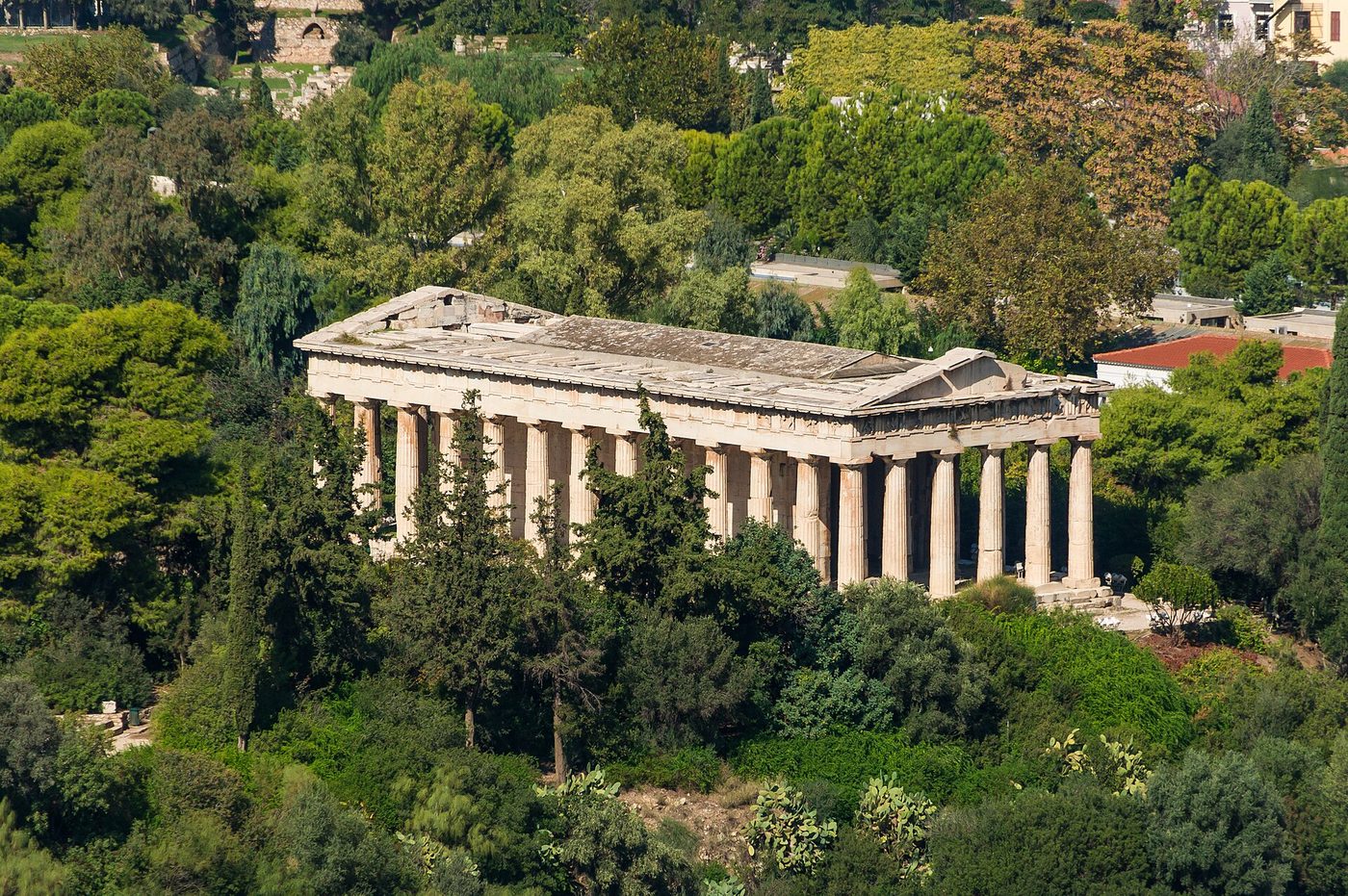
The Acropolis Museum is separate, legally and financially: €15 from 1 April to 31 October and €10 from 1 November to 31 March, one of the few places in Greece that still prices seasonally. The Ancient Agora, with the almost complete Temple of Hephaestus, is €20 and includes the Stoa of Attalos museum. The National Archaeological Museum went to €20 on 1 January 2026 and is, for my money, the best thing in the city.
With the old €30 combined ticket abolished, doing the seven classic Athens sites individually now runs to roughly €125 to €130. Check hhticket.gr for a current multi-site pass before you buy singles, then choose. I would take the Acropolis, the Agora and the National Archaeological Museum and spend the rest on dinner.
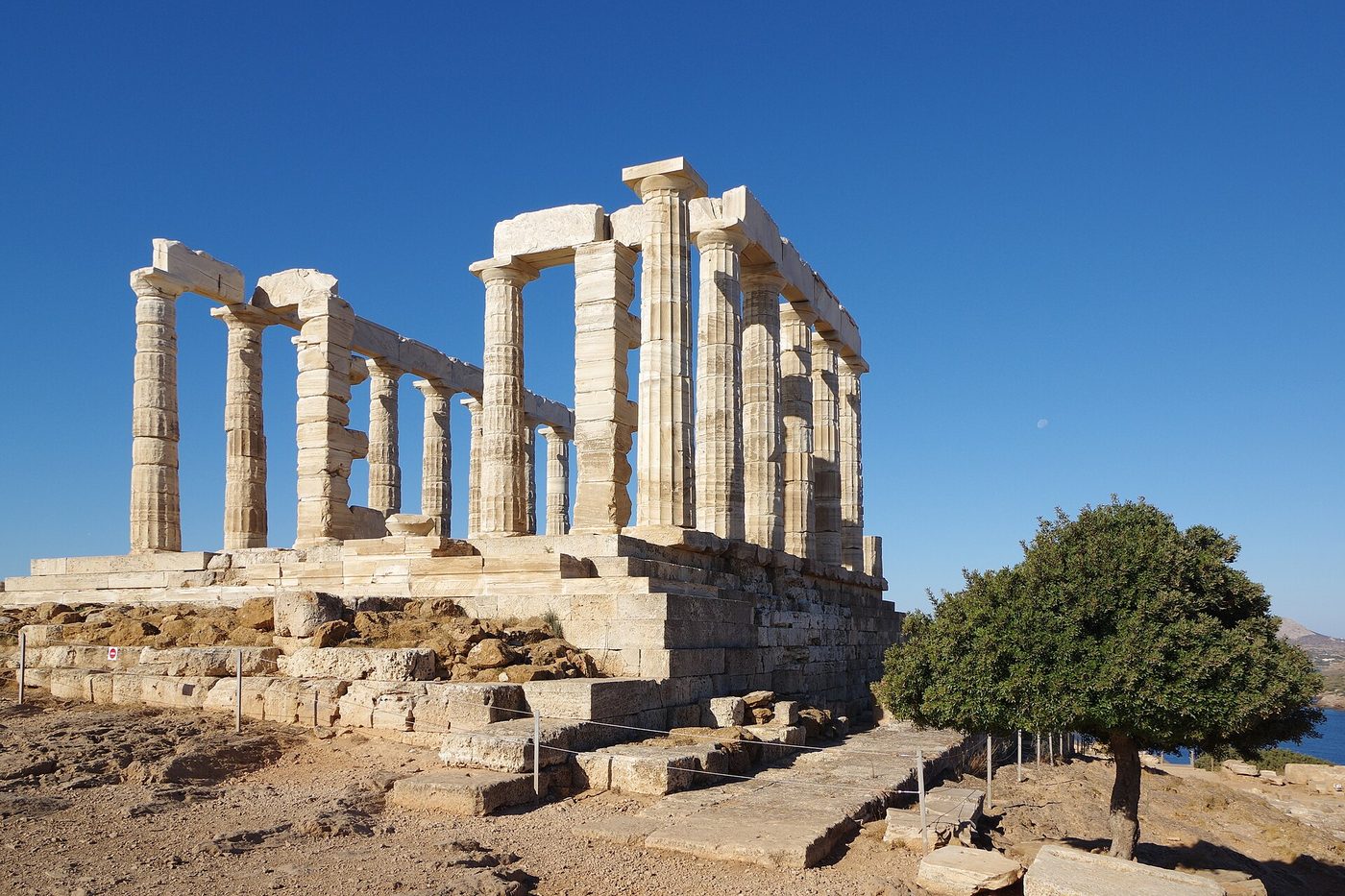
Beyond the ruins: Anafiotika, the Cycladic village built on the Acropolis slope by masons from Anafi, the Varvakios meat and fish market, the Stavros Niarchos park, and Cape Sounion, 65 kilometres down the coast, where the Temple of Poseidon was built between 444 and 440 BC on a headland that is the single best sunset in Attica.
Practical: the X96 express bus from the airport to Piraeus port costs €5.50, takes about an hour, runs every 40 minutes and operates 24 hours. The metro is €9 and takes about the same. A taxi is €55 to €60. If you have an early ferry, the bus is the answer.
Delphi, Meteora and central Greece
29. Delphi
The ancient Greeks thought Delphi was the centre of the world, and the site does a good job of explaining why. It is built up a steep mountainside on the flank of Parnassus, above a valley of olive groves that runs to the Gulf of Corinth, and you climb it: treasuries, the temple of Apollo where the oracle sat, a theatre, and a stadium at the top that few people bother to walk up to, which is the best part.
Ticket is €20, covering both the site and the museum, and in peak season they generally do not sell separate single-element tickets. The museum holds the bronze Charioteer, which is one of maybe a dozen large Greek bronzes to survive, and you should not skip it to save half an hour.
Sources differ on the drive from Athens, ranging from two hours to three; I would allow three, because the last section is mountain road and because everybody stops at Arachova. If you can, sleep there rather than day-tripping, and be at the gate when it opens.
30. Meteora
Six working monasteries on top of sandstone pinnacles that rise up to about 550 metres out of the Thessalian plain, built mainly from the second half of the fourteenth century onwards when there were 24 of them and access was by rope ladder and net. Now there are steps, and roads, and it is still one of the strangest things in Europe.
The single most useful practical fact here: there is no combined Meteora ticket. You pay €5 in cash at the door of each monastery you enter, individually, and under-12s go free. Visit four and that is €20 a head in coins you need to have with you.
The second most useful fact: each of the six closes on a different day of the week, and all six are open at weekends. Summer hours run roughly 09:00 to 16:00 or 17:00; winter roughly 09:00 to 14:00 or 15:00, and the Great Meteoron shuts Tuesday, Wednesday and Thursday in winter. Check the current day-closure table before you build a route, or you will drive up to a locked gate. Shoulders and knees covered, and skirts are provided at the door for those who need them.
Meteora is 347 kilometres from Athens. The train to Kalabaka is comfortable and cheap and drops you at the bottom of the rocks.
31. Pelion
A mountain peninsula curling into the Aegean above Volos, thick with beech and chestnut, with 24 stone villages of slate roofs and mansions strung around it and beaches on both coasts: the sheltered Pagasetic gulf on one side, open Aegean on the other. Mylopotamos and Fakistra are the good ones on the east.
The kalderimia, cobbled mule paths, connect the villages and are the reason to come in May or October rather than August. There is also a narrow-gauge steam railway from Ano Lechonia to Milies that is unashamedly a tourist ride and entirely worth doing. In myth this was the home of the centaurs, which after two days of the terrain makes a certain amount of sense.
32. Mount Olympus
Greece’s newest UNESCO listing. The wider Mount Olympus area was inscribed as a mixed cultural and natural property in 2026, joining Meteora and Mount Athos as the country’s only mixed sites.
Mytikas, the highest point at 2,917 metres, is advised from May to October and the final scramble is exposed enough that a lot of people stop at Skala. The standard route goes from Prionia up to the Spilios Agapitos refuge, sleep, then summit early. If you are not climbing, the Enipeas gorge from Litochoro is a good day’s walk and the archaeological site of Dion at the foot of the mountain is quiet and interesting.
The Peloponnese, the best road trip in the country
If I had two weeks in Greece and had already done an island trip, I would spend all of it here with a hire car. The Peloponnese has five of the country’s UNESCO sites, the best small town in Greece, an entire Byzantine city standing on a hillside, and coastline that nobody photographs because everyone is looking at the Cyclades. It is also, per euro, the best value part of the country.
33. Nafplio
The first capital of independent Greece and the prettiest town in the country. Venetian and Ottoman layers, a marble-paved old town of balconied houses and bougainvillea, three separate fortresses including Palamidi on the rock above and the little Bourtzi sitting on an islet in the harbour, and a promenade round the headland to a swimming platform.
It is also the perfect base. Mycenae is 30 minutes away, Epidaurus 45, and Athens is about two hours by bus. Stay four nights here and you have done the Argolid without packing once. A note on Palamidi: published ticket prices for it are all over the place, with sources quoting both €8 and €20, so check at the kiosk rather than budgeting in advance. The climb is 900-odd steps, or you can drive round to the top.
34. Mycenae
Homer’s “rich in gold” city, and the seat of Agamemnon in the story. The Lion Gate is the oldest monumental sculpture in Europe still standing where it was put, the cyclopean walls are made of blocks later Greeks assumed had been stacked by giants, and Grave Circle A is where Schliemann found the gold death masks now in the Athens museum.
The €20 ticket covers the citadel, the site museum and the Treasury of Atreus, a beehive tomb 500 metres down the road with a corbelled dome that stood as the widest of its kind in the ancient world for centuries. Walk down to it; the coaches often skip it. Inscribed by UNESCO in 1999 jointly with Tiryns, which is on the road back to Nafplio and takes twenty minutes.
35. Epidaurus
The theatre is the reason, and it survives the hype. Built into a hillside in the fourth century BC, seating around 14,000, and with acoustics so good that the demonstration everybody does, dropping a coin or striking a match in the orchestra and hearing it in the back row, actually works.
€20, reduced €10, UNESCO-listed since 1988. The site is a sanctuary of Asklepios, a healing centre, and the rest of it is worth an hour: the tholos foundations, the guest house, the stadium. If your dates fall in summer, the Athens and Epidaurus Festival stages ancient drama in the theatre itself, which is the way to see it.
36. Ancient Olympia
Where the Games were held from 776 BC, in a sanctuary of Zeus in a green river valley that feels nothing like the dry sites further east. The €20 ticket, reduced €10, valid one day, covers the archaeological site plus three museums: the main Archaeological Museum, the Museum of the History of the Ancient Olympic Games, and the Museum of the History of Excavations. That is unusually good value by current Greek standards.
The stadium took its final form in the early fifth century BC and you enter it through a vaulted tunnel exactly as the athletes did, which is the moment the site earns itself. In the museum, the Hermes of Praxiteles and the pediments from the Temple of Zeus. UNESCO-listed 1989. It is about three and a half hours from Athens and two from Nafplio.
37. Monemvasia
A slab of rock the size of Gibraltar, split from the mainland by an earthquake in AD 375 and reconnected by a causeway about 400 metres long. From the road you see nothing but cliff. You drive across, walk round the far side, go through a bent tunnel gate in the wall, and a complete Byzantine and Venetian town opens up in front of you: vaulted lanes, a twelfth-century church on the main square, no cars at all.
Above it, up a zigzag path, is the upper town, largely ruined and empty except for the church of Agia Sofia on the cliff edge. The lower town appears to be freely accessible and I could not find a published entrance fee anywhere, which I mention because you will find references to one. Around four hours from Athens, and worth staying inside the walls for a night, expensive though that is.
38. Mystras
A Byzantine capital left on a hillside. The Franks built the castle on top in the thirteenth century, the Byzantines took it and made it the seat of the Despotate of the Morea, and for two centuries this was the intellectual centre of a shrinking empire. Then it was abandoned, slowly, and what is left is churches with their frescoes still in place, a palace complex, monasteries, and a fortified town plan you walk through in the shade of cypresses.
Mystras gets left off a lot of Peloponnese routes and it should not be. Give it three hours, start at the top gate and walk down, and go in the morning because the hillside faces west and cooks in the afternoon. UNESCO-listed 1989. The €20 price follows the national tier system, so bring more than the older figures suggest.
39. Ancient Messene
The best site in Greece that nobody goes to. Messene was founded in 369 BC as a brand new fortified city after Thebes broke Spartan power, and because it was never built over, what you get is not a temple in a field but an actual city: a stadium with its colonnade rebuilt, a theatre, an agora, a council house, streets, a fountain house, and nine kilometres of city wall with towers still standing.
Entry is €15 for the site. The museum is ticketed separately on the official platform, and one source quotes €12 for the site, so allow a little more than you expect. Messene is on the UNESCO Tentative List, submitted in 2014, not yet inscribed. Roughly three hours from Athens and thirty minutes from Kalamata. Free admission days follow the national pattern, which includes 6 March, 18 April, 18 May, the last weekend of September, 28 October, and the first and third Sunday of each month from November to March.
40. The Mani
The middle prong of the southern Peloponnese, a limestone finger running down to Cape Tainaron, which the ancients thought was an entrance to the underworld. The Mani was effectively ungoverned for centuries, feuding clan by clan, and the result is villages of stone tower houses built to shoot at each other from, standing empty on terraced hillsides.
Vathia is the famous one. Areopoli and Kardamyli are the places to stay, Kardamyli being where Patrick Leigh Fermor built his house, now open to visitors. The Diros caves near Pyrgos Dirou are toured by boat along a flooded river passage. There is no public transport worth attempting; this is a hire car region and the driving is slow, spectacular and empty.
Northern Greece, where the coach tours do not go
Macedonia and Epirus account for a large share of the country’s land and a tiny share of its foreign visitors. There is a UNESCO city few people outside Greece have heard of, the intact tomb of Alexander’s father, and mountain villages that Greeks themselves fill at Christmas.
41. Thessaloniki
Founded in 316 BC and the best place to eat in Greece, which I say having eaten a great deal in Athens. Thessaloniki earns its place on any list of the best cities to visit in Europe. It was Ottoman until 1912 and had one of the largest Sephardic Jewish populations in Europe until 1943, and the food carries both: bougatsa for breakfast, trigona, tsipouro bars with small plates, a Levantine spice trade in the Modiano and Kapani markets.
It also has 15 UNESCO-listed monuments inside the city, inscribed collectively in 1988 as the Paleochristian and Byzantine Monuments of Thessalonika. The Rotunda, Agios Dimitrios over its Roman crypt, and Osios David with a fifth-century apse mosaic are the three I would not miss. Add the Archaeological Museum for the gold from Macedonian tombs.
The train from Athens takes roughly four to five hours, which is a comfortable journey and a sensible entry point if you are arriving overland. There is an international airport too. Full details on getting around in our guide to train travel in Europe.
42. Vergina (Aigai)
An hour and a quarter from Thessaloniki, and if you go to one thing in northern Greece, this. Aigai was the first capital of Macedon, and in 1977 Manolis Andronikos excavated the Great Tumulus and found royal tombs that had never been robbed, including one now widely identified as that of Philip II, Alexander’s father. The gold larnax with the Macedonian star, the gold wreaths, the ivory portrait heads, the painted hunting frieze across the tomb facade: all of it is displayed underground, in the dark, inside the mound where it was found.
Ticket for the Polycentric Museum of Aigai is €20, reduced €10, and it covers the central museum building, the Royal Tombs treasures display, the necropolis and royal cluster of the Temenides, the ancient theatre where Philip was assassinated, the Palace of Aigai, and the post-Byzantine church of Saint Demetrius at Palatitsion. UNESCO-listed since 1996. There is also a three-day €15 package running 1 April to 31 October that adds the Archaeological and Byzantine Museums of Veria, each of which is €5 on its own.
43. Zagori and the Vikos Gorge
Forty-six stone villages in the Pindus mountains of Epirus, UNESCO-inscribed as a cultural landscape in 2023, connected by arched packhorse bridges and cobbled paths, with the Vikos Gorge cutting through the middle of them. Vikos is extremely deep relative to its width and the walk along the rim, or the harder route down through it, is the best hiking in Greece outside Crete.
Papingo, Monodendri and Vitsa are the villages to base in. The best gorge entrance is about 27 kilometres north of Ioannina just past Karies, and the Northern Pindos National Park boundary is around 30 kilometres from the city. Ioannina itself, on a lake with an Ottoman citadel and an island in the middle, is worth a night.
Timing: May to June and September to October for walking. Also worth knowing that Zagori is busy in December, especially over Christmas, because it is a winter destination for Greeks and the stone guesthouses fill with people from Athens and Thessaloniki. Getting there: an hour from Ioannina, about three and a half hours’ drive from Thessaloniki, and roughly seven hours by bus from Athens Kifissos station. From Meteora it is 180 kilometres and nominally two and a half hours, but the road is two-lane mountain the whole way and often in cloud on the pass, so allow three.
44. Halkidiki
Three peninsulas hanging off Thessaloniki like fingers, one to two hours’ drive away. Kassandra is the busy one, developed and Greek-holiday-crowded in August. Sithonia is the good one: pine down to the water, coves you park above and scramble into, and the sandbar beaches at Kalogria and Karydi.
The third finger is Athos, an autonomous monastic republic of twenty monasteries, closed to women entirely, a prohibition dating from 1046 that applies to the whole peninsula. Men need a permit issued in advance and numbers are limited daily. Everyone else sees it from a boat: cruises run along the coast from Ouranoupoli and give you the monasteries from 500 metres offshore, which is closer than most people expect.
45. Kavala and Philippi
Kavala is a port city built up a hillside under a Byzantine citadel, with a Roman aqueduct striding across the middle of it and a district of enormous nineteenth-century tobacco warehouses that are slowly being converted. It is a real working town, cheap, with a good fish market, and it has its own airport.
Fifteen minutes inland is Philippi, UNESCO-listed in 2016 and one of the least-visited major sites in Greece. Founded by Philip II, site of the battle in 42 BC where Antony and Octavian beat Brutus and Cassius, and the place where Paul preached his first sermon in Europe. There is a Roman forum, a theatre still used for performances, two large basilicas and an octagonal church, and on a weekday in May the car park will have space in it.
What everything actually costs: 2026 site and museum tickets
All prices below are adult full-price admission in euros, charged year-round at state sites since the seasonal tariff was abolished on 1 April 2025. The Acropolis Museum is the exception because it is a separate legal entity and still prices by season.
| Site or museum | Where | 2026 adult price | Notes |
|---|---|---|---|
| Acropolis of Athens | Athens | €30 | Timed slot required; reduced €15 |
| Acropolis Museum | Athens | €15 Apr to Oct / €10 Nov to Mar | Reduced €10 / €5. Still seasonal |
| Ancient Agora | Athens | €20 | Includes the Stoa of Attalos museum |
| National Archaeological Museum | Athens | €20 | New price from 1 January 2026 |
| Delphi site and museum | Central Greece | €20 | Single combined ticket covering both |
| Ancient Olympia | Peloponnese | €20 | Site plus three museums, one day, reduced €10 |
| Mycenae | Peloponnese | €20 | Citadel, museum and Treasury of Atreus |
| Epidaurus | Peloponnese | €20 | Theatre, sanctuary and museum; reduced €10 |
| Mystras | Peloponnese | €20 | Tier price since April 2025 |
| Ancient Messene | Peloponnese | €15 | Site; museum ticketed separately. One source quotes €12 |
| Knossos | Crete | €20 | Combined ticket with Heraklion museum reported discontinued; budget €40 for both |
| Akrotiri | Santorini | €20 | Bronze Age town under cover |
| Delos | Cyclades | €20 | Plus c. €25 return boat from Mykonos |
| Lindos Acropolis | Rhodes | €20 | Timed one-hour entry window via hhticket.gr |
| Palace of the Grand Master | Rhodes | €20 | Tier price since April 2025 |
| Archaeological Museum of Rhodes | Rhodes | €10 | Reduced €6 |
| Polycentric Museum of Aigai | Vergina | €20 | Six components; reduced €10. 3-day €15 package Apr to Oct |
| Archaeological or Byzantine Museum of Veria | Veria | €5 each | Reduced €3 |
| Meteora monasteries | Thessaly | €5 each, cash | Per monastery. No combined ticket exists. Under-12s free |
Concessions. Under-18s go free at state sites. EU citizens under 25 go free with ID; non-EU under-25s get a reduced rate from April to October. EU citizens over 65 get a reduced rate, generally around half, though the exact reduction varies site by site. There are also free admission days across the national network, typically 6 March, 18 April, 18 May, the last weekend of September, 28 October, and the first and third Sunday of each month from November to March.
Two things I could not pin down, and would rather tell you than guess at: the current entrance price for Palamidi fortress in Nafplio, where sources give both €8 and €20; and whether any entrance fee applies to the lower town of Monemvasia, where I found no published figure at all and every indication that it is free to walk in.
Booking, incidentally, goes through the official Hellenic Heritage platform at hhticket.gr, which charges no booking fee. The older etickets.tap.gr address appears to be decommissioned. And yes, there is still a €5,000 private Acropolis visit for up to five people outside public hours, at dawn or in the evening, with 80 bookings taken by the start of the 2026 summer season. I mention it mostly because people assume it is a rumour.
Ferry routes, times and fares from Athens
Fares are the cheapest one-way foot-passenger fares I found for 2026 and will rise in August. High-speed catamarans cost roughly double a conventional ferry and are more likely to be cancelled in strong meltemi. Conventional ferries all take cars; most, though not all, high-speed SeaJets vessels do too. The main operators are Blue Star Ferries, SeaJets, Hellenic Seaways, Golden Star Ferries, Fast Ferries, Minoan Lines and Anek Lines.
| Route | Duration | From | Type | Notes |
|---|---|---|---|---|
| Piraeus to Santorini | 6h10m to 9h10m | €46.50 | Conventional | Year-round, up to 8 daily in summer |
| Piraeus to Santorini | 5h to 6h10m | €79.70 | High-speed | SeaJets economy |
| Piraeus to Mykonos | From 2h40m | Varies | High-speed | Rafina is usually the better port |
| Rafina to Mykonos | 2h05m to 4h40m | €35.50 | Both | Closer to Athens airport than Piraeus |
| Piraeus to Naxos | From 3h15m | c. €52 | Both | Best central Cyclades base |
| Piraeus to Paros | From 2h45m | c. €44 | High-speed | The main interchange island |
| Piraeus to Milos | 2h30m to 7h30m | €41 | Both | Up to 6 daily |
| Piraeus to Heraklion | c. 8h to 13h | €33 | Conventional | Up to 6 daily, 3 operators, best overnight |
| Piraeus to Chania | 8h to 9h30m | €52.50 | Conventional | Usually 1 daily, overnight |
| Piraeus to Hydra | 1h05m to 1h40m | €35 | High-speed | Up to 12 daily, year-round, no cars |
| Rafina to Tinos | 1h50m to 5h | c. €30 | Both | Up to 12 daily |
| Rafina to Andros | c. 1h | €19.70 | Both | Up to 11 daily |
| Piraeus to Chios | Overnight | c. €40 | Conventional | Up to 8 weekly |
| Piraeus to Samos | Overnight | c. €60 | Conventional | 1 to 2 daily |
| Piraeus to Ikaria | Overnight | c. €47 | Conventional | Up to 5 weekly |
| Volos to the Sporades | 1h30m to 4h | c. €35 | Both | Mantoudi on Evia is the faster option from Athens |
| Naxos to Paros | 25m to 1h50m | €5.50 | Both | Cheapest hop in the Cyclades |
| Mykonos to Delos | 30 to 40 min | c. €25 return | Excursion boat | Departures 09:00, 10:00, 11:00 in season |
Getting to the port. From Athens airport, the X96 express bus to Piraeus is €5.50, takes about an hour, runs every 40 minutes and operates 24 hours a day. The metro is €9 and takes about the same. A taxi is €55 to €60. For Rafina, take the KTEL bus from the airport, which is much shorter.
The taxes that appear at checkout
The Climate Crisis Resilience Fee is charged per room or apartment per night, not per person, collected at the property rather than included in the booking price. It replaced the old overnight stay tax in 2024 and the rates rose on 1 January 2025; they are unchanged for 2026. The money goes to central government for climate resilience and disaster reconstruction.
| Accommodation type | April to October | November to March |
|---|---|---|
| 5-star hotel | €15 per night | €4 per night |
| Furnished tourist villa | €15 per night | €4 per night |
| Short-term rental (Airbnb type) | €8 per night | €2 per night |
| Short-term rental in a detached house over 80 sq m | €15 per night | €4 per night |
| 1 to 2-star hotel | €2 per night | €0.50 per night |
| 4-star hotel | €10 per night | €3 per night |
| 3-star hotel | €5 per night | €1.50 per night |
| Furnished rooms for rent | €2 per night | €0.50 per night |
Two things people miss. The band runs €0.50 to €15 and the jump between categories is steep, so a four-star room costs five times a three-star in tax alone. And a short-term rental in a detached house over 80 square metres is charged at the top rate, not the €8 apartment rate, which catches out anyone booking a villa through a rental platform.
The cruise levy. Since 1 July 2025, passengers disembarking at Santorini or Mykonos pay €20 a head from 1 June to 30 September, €12 in April, May and October, and €4 from November to March. Every other Greek port charges €5 from June to September, €3 in the shoulder months and €1 in winter. Cruise lines are generally absorbing it into fares rather than collecting at the gangway, so you may never see it itemised.
All 21 UNESCO World Heritage sites in Greece
Greece ratified the World Heritage Convention on 17 July 1981 and now has 21 inscribed properties: 18 cultural and three mixed. Two of those arrived very recently, and the total moved twice in eighteen months.
| Property | Type | Inscribed | In this guide |
|---|---|---|---|
| Temple of Apollo Epicurius at Bassae | Cultural | 1986 | No |
| Acropolis, Athens | Cultural | 1987 | Yes, no. 28 |
| Archaeological Site of Delphi | Cultural | 1987 | Yes, no. 29 |
| Medieval City of Rhodes | Cultural | 1988 | Yes, no. 14 |
| Paleochristian and Byzantine Monuments of Thessalonika | Cultural | 1988 | Yes, no. 41 |
| Sanctuary of Asklepios at Epidaurus | Cultural | 1988 | Yes, no. 35 |
| Meteora | Mixed | 1988 | Yes, no. 30 |
| Mount Athos | Mixed | 1988 | Yes, no. 44 |
| Archaeological Site of Mystras | Cultural | 1989 | Yes, no. 38 |
| Archaeological Site of Olympia | Cultural | 1989 | Yes, no. 36 |
| Delos | Cultural | 1990 | Yes, no. 3 |
| Monasteries of Daphni, Hosios Loukas and Nea Moni of Chios | Cultural | 1990 | Partly, no. 26 |
| Pythagoreion and Heraion of Samos | Cultural | 1992 | Yes, no. 25 |
| Archaeological Site of Aigai (Vergina) | Cultural | 1996 | Yes, no. 42 |
| Archaeological Sites of Mycenae and Tiryns | Cultural | 1999 | Yes, no. 34 |
| Historic Centre (Chorá) with the Monastery of Saint John and the Cave of the Apocalypse, Pátmos | Cultural | 1999 | Yes, no. 18 |
| Old Town of Corfu | Cultural | 2007 | Yes, no. 19 |
| Archaeological Site of Philippi | Cultural | 2016 | Yes, no. 45 |
| Zagori Cultural Landscape | Cultural | 2023 | Yes, no. 43 |
| Minoan Palatial Centres | Cultural | 2025 | Yes, no. 13 (includes Knossos) |
| The wider area of Mount Olympus | Mixed | 2026 | Yes, no. 32 |
Ancient Messene, which is no. 39 here, is on the Tentative List, submitted in 2014, and not yet inscribed. Also waiting: the Samaria Gorge, the Petrified Forest of Lesvos, the fortress of Spinalonga, the ancient Greek theatres as a group, the Prespes lakes, Nikopolis, Ancient Lavrion, Dadia National Park, the late medieval bastioned fortifications, and the ancient towers of the Aegean. Eleven in total.
Swaps: if you want that, go here instead
The single highest-value thing in this guide. Most trips get built around three or four famous names, and in almost every case there is a version that gives you 80 per cent of the experience with a quarter of the people and a much better bill.
| If you had planned | Consider instead | Because |
|---|---|---|
| Santorini for the whitewashed cliff village | Folegandros (no. 8) | Same cliff-edge Chora, 719 residents, no cruise ships, roughly half the room rate |
| Mykonos for the lanes and nightlife | Paros, Naoussa (no. 5) | Same Cycladic maze and a harbour scene, better food, no €20 cruise levy pressure |
| Mykonos for the ruins day trip | Delos is the day trip (no. 3) | You are already going. Take the 09:00 boat and skip the beach club |
| Crete for Minoan archaeology | Ancient Messene (no. 39) if it is really ruins you want | €15, a whole city rather than a single palace, and a fraction of the visitors |
| Rhodes Old Town | Monemvasia (no. 37) | An entire inhabited medieval town, no cruise passengers, and it is on the mainland |
| Corfu for green and Venetian | Kefalonia (no. 20) | Same Ionian weather and architecture, mountains, far less package development |
| A Cyclades beach week | Milos (no. 6) | Over 70 beaches on one small island, and geology you will not see elsewhere |
| Athens as a two-night stopover | Athens plus Hydra (no. 23) | 1h05m each way by catamaran, up to 12 daily, and a car-free island evening |
| Delphi as a day tour from Athens | Delphi overnight, or Ancient Olympia (no. 36) | Same €20 tier, three museums at Olympia, and no coach schedule |
| Meteora as a rushed day trip | Meteora plus Zagori (no. 43) | 180km apart, and Zagori is UNESCO-listed and thinly visited |
| The Amalfi Coast | The Pelion peninsula (no. 31) | Mountain villages above two coastlines, at Greek prices |
| Anywhere in August | The same place in late September | Sea still around 24°C, wind dropped, rates down, sites not capped out |
When to go, and the wind that shapes the summer
The consensus among people who work in Greek tourism is narrower than you would expect: late May to mid-June, and September into early October. May and October are better still if your trip is about archaeology, hiking and road trips rather than swimming, because the sites are bearable and hotel rates drop sharply.
July and August are the hottest, busiest and most expensive weeks, which is true across the region: see the best places to visit in Europe in summer and the best time to visit Europe. That is not a reason never to go, but it is a reason to book the Acropolis 60 days out and to expect Santorini and Mykonos at capacity.
Sea temperature is the constraint on the early and late edges. June runs 19 to 23°C and is the start of reliable swimming. July and August reach 25 to 27°C, warmest in the second half of August, when the south-east Aegean sits around 26°C. September holds about 24°C with less wind, which is why so many people quietly prefer it. October starts around 22°C and falls to roughly 20°C by the end of the month, comfortable on the southern islands. The practical swimming window is June to early or mid-October.
The meltemi deserves more attention than it gets. It is a dry northerly that blows across the Aegean from May to September and peaks from mid-July to mid-August, when it can reach Force 7 or 8 and occasionally exceed 120 km/h. It builds through the morning and usually drops in the evening. It is strongest in the Cyclades, which means Santorini, Mykonos, Paros, Naxos, Ios and Amorgos, and it affects three things: ferry cancellations, small-boat excursions such as Delos and Kleftiko, and whether the north-facing beach you drove to is usable. If your trip depends on one specific boat on one specific day in early August, build in a spare day.
Off-season honesty. May is when the islands open fully for the season. In deep winter, most of the smaller Cyclades are shut: not quiet, shut, with two tavernas and no ferry on some days. Syros and Crete are the islands that work year-round. For a fuller month-by-month breakdown see our guide to the best time to visit Greece, and for the wider region, the best time to visit southern Europe.
Which of these suits your trip
First time in Greece, ten to twelve days. Athens (three nights), then Naxos and Paros or Santorini and Milos. Do not attempt four islands. See our ten-day Greece itinerary for a worked version.
Second or third trip. The Peloponnese by car: Nafplio, Mycenae, Epidaurus, Mystras, Monemvasia, the Mani, Ancient Messene, Olympia. Two weeks, one hire car, and the whole thing costs less than a week on Mykonos. See our Europe itinerary planner if Greece is one leg of something longer.
Travelling with children. Naxos for the shallow sand at Plaka and Agios Prokopios, Kos because it is flat and cyclable, or Crete because there is enough variety to absorb a bad weather day. Ferry crossings under three hours only. More ideas in Europe with kids.
On a budget. Northern Greece and the Peloponnese, where a room costs a third of an island equivalent, plus the €33 overnight ferry to Crete with a deck ticket. Ikaria, Chios, Karpathos and Samos are the cheapest islands here. See Europe on a budget and the cheapest places to travel in Europe.
Walking. Andros in April or May for its 300km footpath network, Zagori and the Vikos Gorge, Crete for the Samaria Gorge from May to November, Sifnos for the linked village paths, Mount Olympus from May to October. More in hiking in Europe.
Honeymoon. Santorini if you want the picture, Folegandros or Symi if you want the evening to yourselves, Hydra if you want both and only have four nights. See Europe honeymoon ideas.
Solo. Naxos, Paros and Milos are easy to move between and sociable without being a party circuit. Athens is a very good solo city. See solo travel in Europe.
Shoulder or off-season. Athens, Thessaloniki, Nafplio, Crete, Syros and the whole Peloponnese, all of which function in November. See shoulder season Europe.
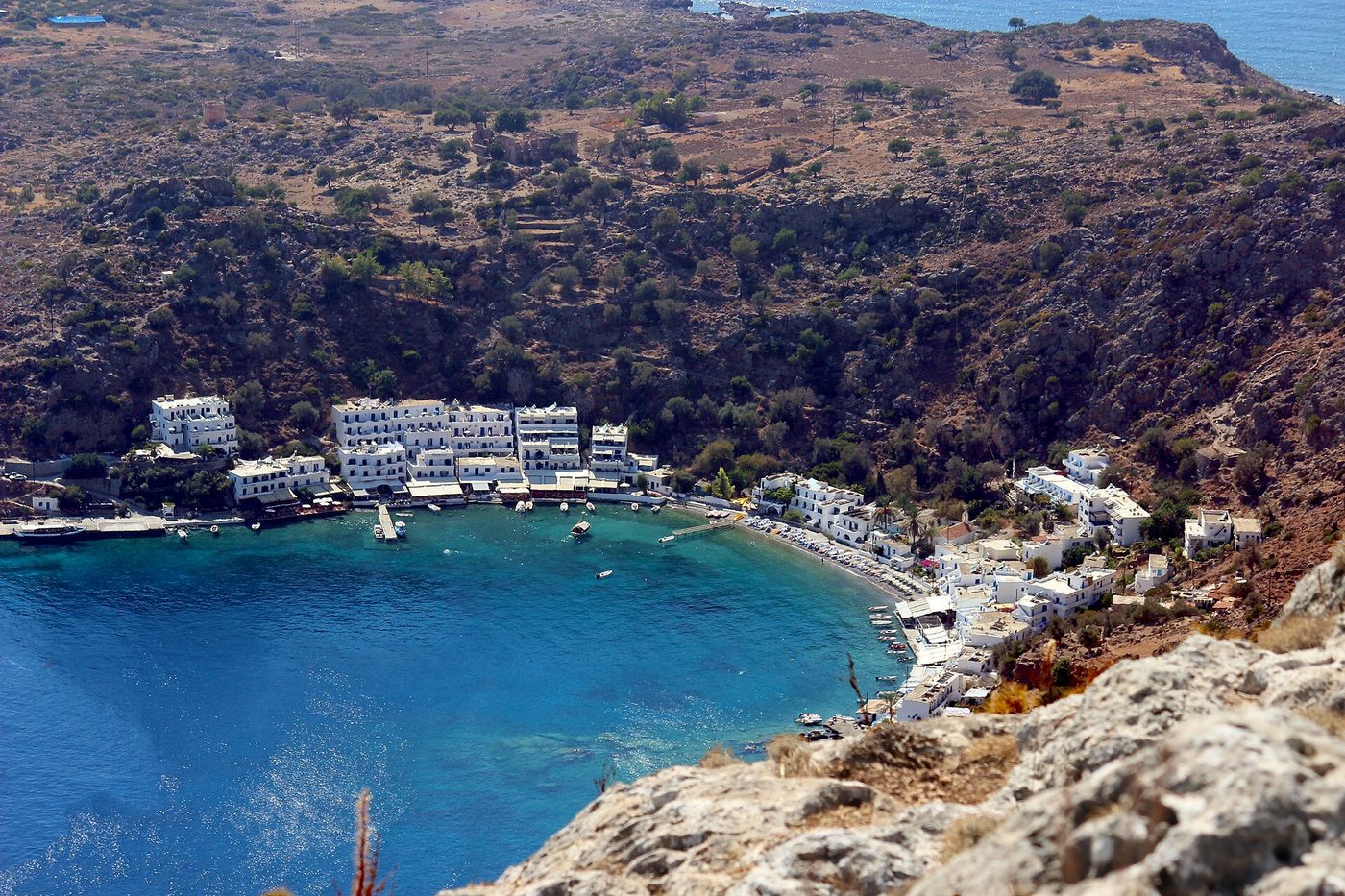
Three routes that work
Ten days, classic. Athens 3 nights, ferry to Naxos 3 nights, hop to Paros 2 nights, high-speed to Santorini 2 nights, fly home from Santorini. One long ferry, two short hops, no backtracking.
Fourteen days, mainland. Athens 2, Delphi 1, Meteora 2, Zagori 3, Thessaloniki 2, Vergina as a day trip, then fly out of Thessaloniki. Add Kavala and Philippi if you have two more days.
Fourteen days, Peloponnese and one island. Athens 2, Nafplio 4 with Mycenae, Epidaurus and Tiryns, Monemvasia 2, the Mani 2, Olympia 1, back to Piraeus and out to Hydra for the last 2 nights. See also Europe road trips and the best Europe travel routes.
Mistakes I see people make in Greece
Booking four islands in ten days. Every island change costs you a morning and an afternoon. Three islands in ten days is already brisk. Two is better.
Assuming ferries connect everything. They connect within a group. Getting from the Cyclades to the Dodecanese or the Ionian usually means going back through Athens. Sketch the map before you book the hotels.
Turning up at the Acropolis without a slot. Twenty thousand a day, 3,000 in the first hour, 2,000 in the second, sold out five to seven days ahead in summer. It is not a queue problem now, it is an admission problem.
Arriving at Meteora without cash. Five euros per monastery, at the door, and the closure day varies by monastery.
Budgeting from pre-2025 ticket prices. A family of two adults doing Athens properly is now looking at €140 or so in admissions before anybody eats.
Renting a small car on Milos and pinning the west-coast beaches. Half of them need four-wheel drive or a boat.
Ignoring the meltemi in early August and then being surprised when the Delos boat is cancelled.
Doing Santorini and Mykonos back to back. They are 2h30m apart and they are the two most expensive, most crowded islands in the country. Put something between them, or drop one.
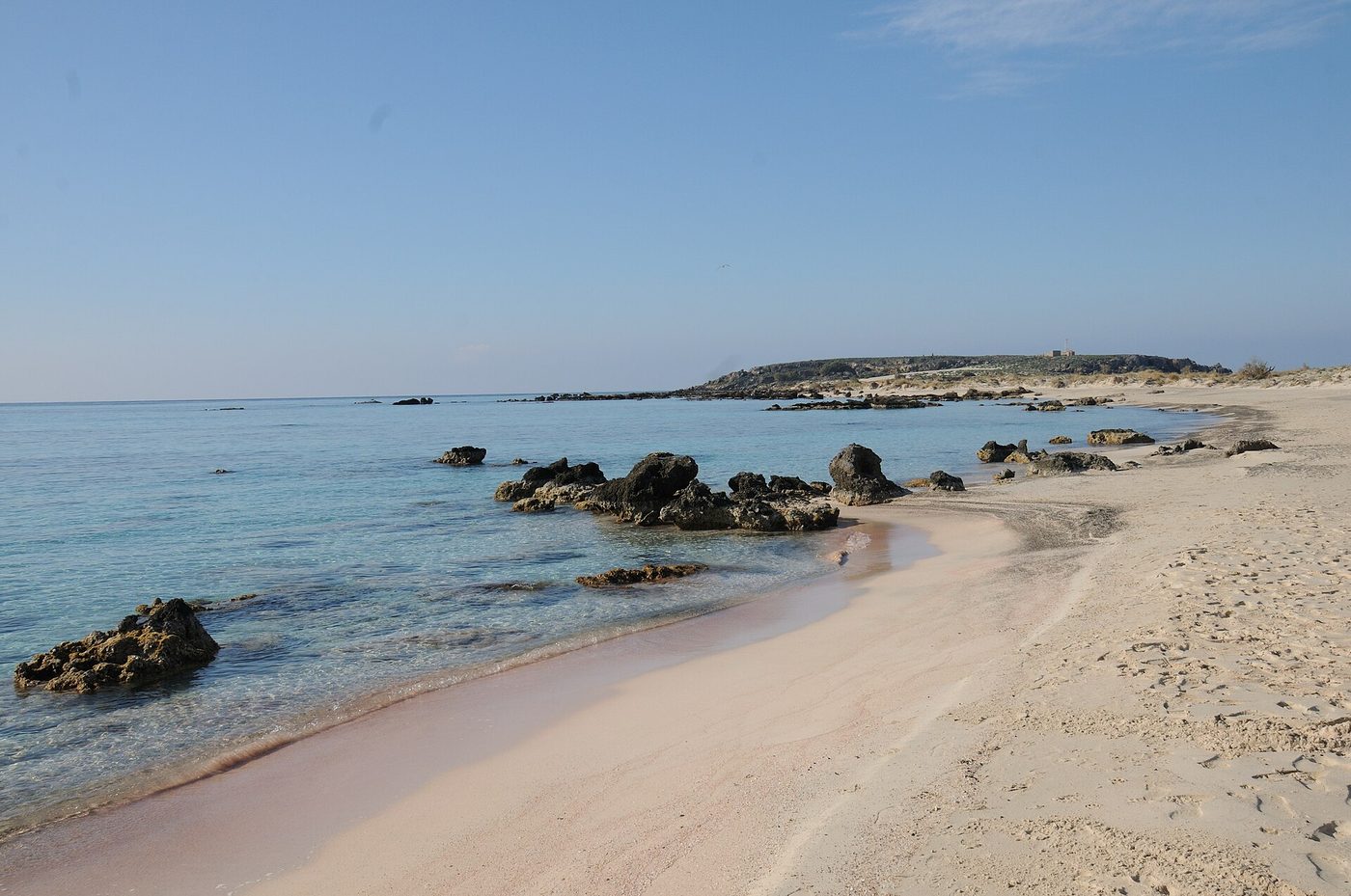
Practical things to sort before you go
Entry. Greece is in the Schengen area and uses the euro, which has not changed and is not about to. Since 10 April 2026 the EU Entry/Exit System has been fully operational at Schengen borders, which means non-EU visitors have fingerprints and a facial image registered on first entry instead of getting a passport stamp. Expect it to add time at Athens airport in July and August, and rather less once your record exists. See also our notes on getting around Europe. ETIAS, the separate travel authorisation, is not live yet and, as of late September 2026, has no start date; trade reports point to 2027. Our guide to the Schengen visa and ETIAS tracks where that stands.
Heat and wildfire. The Acropolis closes in the early afternoon when the temperature passes 40 degrees, and it is not the only site that does. Greek summers now routinely produce wildfire emergencies, most often in Attica, Evia and the Peloponnese, and the civil protection service sends emergency alerts to every phone on the network in an affected area. Take those seriously, keep the 112 emergency number to hand, and if you are driving in July or August have a plan for a road being closed. Other numbers: ambulance 166, fire 199, police 100.
Driving. A hire car is close to essential for the Peloponnese, the Mani, Kefalonia, Karpathos and Zagori, and useless on Hydra, where cars are banned outright. Non-EU licence holders should check whether an International Driving Permit is required alongside their national licence; UK, US, Canadian and Australian visitors are commonly asked for one at the desk and turned away without it. Book automatics well ahead, because the default is manual and the supply is thin.
Cash. Cards work almost everywhere, with two consistent exceptions: the Meteora monasteries, which take €5 in coins at each door, and small village tavernas and beach canteens on the quieter islands.
Frequently asked questions
How many days do you need in Greece?
Ten days is the realistic minimum for Athens plus two islands, or for a proper Peloponnese loop. Seven works if you pick one island and stay put. Fourteen is where the country starts to open up.
What is the best month to visit Greece?
June and September for most people, because the sea is warm and the crowds are manageable. May and October if you care more about ruins, hiking and cost than about swimming. July and August are hottest, busiest and dearest.
Which Greek island is best for first-time visitors?
Naxos, if you want one island that does everything: sand, mountain villages, good cheap food and easy connections. Crete if you want variety and are prepared to drive. Santorini if the caldera is genuinely the thing you came for.
What are the cheapest Greek islands?
Ikaria, Chios, Karpathos and Samos, all in the north and east Aegean, where there is less foreign tourism and rooms cost a fraction of Cycladic rates. Naxos is the cheapest of the well-connected Cyclades.
How do you island hop in Greece on a budget?
Stay within one group so the hops are short, take conventional ferries rather than high-speed, and use Paros or Naxos as a hub. The Naxos to Paros hop starts at €5.50. Book deck class on the long Crete crossings. Our Greek island hopping itinerary works through the practicalities.
Is Santorini or Mykonos better?
They are different holidays. Santorini is a landscape and an archaeological site with a view; Mykonos is a town and a beach scene. Santorini now caps cruise arrivals at 8,000 a day and Mykonos does not, which in practice makes Santorini’s daytime quieter than it was. If you only have room for one, take Santorini.
How do I get from Athens to Santorini?
Ferry from Piraeus, 6h10m to 9h10m on a conventional from around €46.50, or 5h to 6h10m on a high-speed from around €79.70. Or fly from Athens in 45 to 50 minutes. Up to eight sailings a day in summer, and the route runs year-round.
Which Greek islands have airports?
Crete (Heraklion and Chania), Rhodes, Corfu, Kos, Santorini, Mykonos, Zakynthos, Kefalonia, Naxos, Paros, Milos, Syros, Skiathos, Karpathos, Ikaria, Chios, Lesvos, Samos, Astypalaia, Kalymnos, Kythira, Skyros, Leros, Kastellorizo and Lemnos. Hydra, Folegandros, Sifnos, Amorgos, Symi, Tinos, Andros, Patmos, Skopelos and Lefkada have none, though Lefkada is joined to the mainland by road and Preveza/Aktion airport is 20km away.
What is the best Greek island for beaches?
Milos for variety and geology, with more than 70. Lefkada for the west-coast turquoise. Crete for Elafonissi and Balos. Naxos for long, shallow, family sand. Zakynthos for Navagio, with the caveat about access.
Do I need to pay a tourist tax in Greece?
Yes. The Climate Crisis Resilience Fee is charged per room per night at the property: €15 on five-star hotels and villas from April to October, €8 on short-term rentals, €2 on one and two-star hotels, all much lower from November to March. Cruise passengers landing on Santorini or Mykonos pay a separate levy of up to €20.
Is Santorini safe after the 2025 earthquakes?
Yes. The swarm ran from late January 2025, produced more than 25,000 seismic events over two months and led to a state of emergency, but the island has been geologically calm since May 2025 with only negligible micro-seismic activity as of March 2026. No access restrictions remain.
What this list does not cover
Some honesty about the edges. There is no entry here for Ios, Astypalaia, Alonissos, Lemnos, Kythira, Kalymnos, Nisyros, Serifos or Kythnos, all of which have their advocates and several of which I like. Thrace and the Evros delta are absent entirely, as is most of Evia. Ioannina appears only as an aside under Zagori when it deserves its own entry.
Two figures above are gaps rather than answers: the Palamidi entrance fee in Nafplio, where sources give both €8 and €20, and whether the lower town of Monemvasia is ticketed at all. There is also no accommodation price table here, because I could not source nightly rate bands I would stand behind. I have left all three as unknowns because the alternative is a plausible-looking figure that turns out to be wrong at the window.
And a scope note. “Best places to visit in Greece” is a phrase that flattens a country of 6,000 islands and three thousand years of building into a numbered list. Treat 45 as a starting shortlist, not a ranking, and treat the groupings as the useful part. For the wider continent, our list of the most beautiful places in Europe and our guide to underrated places in Europe both put Greece in context.
Final thoughts
If there is one argument running under all of this, it is that Greece is much larger than its own postcard. The Cyclades are extraordinary and I would not tell anyone to skip Santorini. But the country also contains a Byzantine city on a hillside above Sparta that you can walk through nearly alone, an intact royal tomb under a mound in Macedonia, a Roman city outside Kavala where you might be the only visitor on a Tuesday, and 46 stone villages in Epirus that UNESCO only got round to listing in 2023.
Prices have moved a long way since 2024 and the rules have tightened in ways that reward planning: book the Acropolis sixty days out, carry cash for Meteora, budget the bed tax, and go in June or September if you possibly can. Do that and Greece is still, by a distance, the best-value great trip in southern Europe.
For the wider picture, start with our Greece travel guide, or see how Greece fits alongside the rest of the region in the best Mediterranean destinations and the best places to visit in Europe.
Hannah Brooks has spent fifteen years travelling, living and writing across Europe, from the Arctic tip of Norway to the south of Sicily. She has planned hundreds of European itineraries for readers and is Senior Europe Editor at EuropeanTourism.org.
Photo credits
- Best places to visit in Greece: the flooded volcanic caldera at Santorini seen from the cliff villages · Photo: Dimitri Raftopoulos / public domain via Wikimedia Commons
- Blue-domed churches and whitewashed houses above the caldera at Oia, Santorini · Photo: Giles Laurent / CC BY-SA 4.0 via Wikimedia Commons
- Bronze Age walls and lanes under the protective roof at the Akrotiri excavation on Santorini · Photo: Norbert Nagel / CC BY-SA 3.0 via Wikimedia Commons
- The hilltop village of Pyrgos rising above vineyards in the interior of Santorini · Photo: Bgabel / CC BY-SA 3.0 via Wikimedia Commons
- The village of Imerovigli along the highest stretch of the Santorini caldera rim · Photo: Klearchos Kapoutsis / CC BY 2.0 via Wikimedia Commons
- The Venetian lighthouse and waterfront of the old harbour at Chania, Crete · Photo: Lapplaender / Wikimedia Commons (CC BY-SA 3.0 de)
- The reconstructed north entrance and charging bull fresco at the Minoan palace of Knossos, Crete · Photo: Jebulon / Wikimedia Commons (CC0)
- The gorge walls and dry riverbed inside Samaria National Park in western Crete · Photo: Lapplaender / Wikimedia Commons (CC BY-SA 3.0 de)
- The shallow turquoise lagoon and sandbar at Balos on the Gramvousa peninsula, Crete · Photo: dronepicr / Wikimedia Commons (CC BY 2.0)
- The white houses of Loutro around its bay on the south coast of Crete · Photo: Maesi64 / Wikimedia Commons (CC0)
- The shallow water and pale shell sand at Elafonissi beach in south-west Crete · Photo: Josep M. Gracia / Wikimedia Commons (CC BY-SA 4.0)
- The Parthenon on the Acropolis rock above Athens · Photo: Jebulon (CC0) via Wikimedia Commons
- The Temple of Hephaestus in the Ancient Agora of Athens · Photo: Jebulon (CC0) via Wikimedia Commons
- Whitewashed Cycladic-style houses in Anafiotika on the slopes of the Acropolis, Athens · Photo: Zde / CC BY-SA 4.0 via Wikimedia Commons
- The Temple of Poseidon on the cliffs at Cape Sounion near Athens · Photo: Berthold Werner / CC BY-SA 3.0 via Wikimedia Commons