3 Weeks in Europe Itinerary: 8 Routes, Costs and Timings

The first time I tried to plan three weeks in Europe I filled a page with twelve cities, felt very pleased with myself, then worked out the train times and realised I had built a schedule in which I would spend roughly a quarter of my holiday sitting down watching fields go past. I cut it to six. That trip is still one of the best I have had.
A 3 weeks in Europe itinerary gives you around 21 nights, which in practice means three to seven bases, three to five countries, and one or two long travel days you plan around rather than pretend will not happen. Below are eight routes that hold up on the ground, with train times, 2026 fares, ticket-release dates and daily budgets.
I have written this the way I would plan it for a friend. That means the routes come with the legs costed and timed, the sights come with the exact day their tickets are released, and the budget section gives you per-city numbers rather than a national average. It also means I have told you where the numbers are soft.
If you want the shorter versions of this trip first, we have a 7 day Europe itinerary, a 10 day Europe itinerary and a 2 weeks in Europe itinerary, all built on the same principles. The full Europe itinerary hub sits above all of them, and if you are going longer still, the one month Europe itinerary picks up where this one stops.
The eight best 3 weeks in Europe itinerary routes at a glance
Read this table first and pick a shape, then read the route in full. The cost tier is about daily spending on the ground, not flights. Pace is about how many times you pack a bag: brisk means six or seven moves in 21 days, slow means two or three.
| Route | Stops | Countries | Pace | Cost tier | Best for | Best months |
|---|---|---|---|---|---|---|
| 1. The Classic Capitals London, Paris, Amsterdam, Berlin, Prague, Vienna, Budapest |
7 | 7 | Brisk | Mid to high | First-timers who want the famous names | May, June, September |
| 2. Paris, the Riviera and Italy Paris, Lyon, Nice, Milan, Florence, Rome |
6 | 2 | Moderate | Mid to high | Food, art and a few days by the sea | May, June, September, October |
| 3. Italy End to End Milan, Venice, Florence, Rome, Naples and the Amalfi Coast |
5 | 1 | Moderate | Mid | Travellers who would rather go deep than wide | April, May, September, October |
| 4. The Iberian Grand Tour Barcelona, Madrid, Seville, Granada, Lisbon, Porto |
6 | 2 | Moderate | Low to mid | Warm weather, late dinners and lower daily costs | April, May, October |
| 5. Central Europe on a Budget Berlin, Krakow, Budapest, Vienna, Prague |
5 | 5 | Moderate | Low | Stretching a small budget the furthest | May, June, September |
| 6. The Adriatic and the Aegean Ljubljana, Lake Bled, Split, Dubrovnik, Athens, one Greek island |
6 | 3 | Slow to moderate | Low to mid | Swimming, boats and old stone towns | June, September |
| 7. The Nordic Summer Run Copenhagen, Stockholm, Oslo, Bergen |
4 | 3 | Slow | High | Long daylight, big landscapes, no crowds by Mediterranean standards | June, July, August |
| 8. The Slow Three Paris, Barcelona, Rome, a week in each |
3 | 3 | Slow | Mid | Repeat visitors, families, and anyone who hates packing | Any month, including winter |
Two things worth saying before the detail. First, the country count is not a score. The Slow Three visits three cities and is a better trip than a badly planned seven-country sprint, every time. Second, every one of these routes can be reversed, and most can be entered halfway if your flights are cheaper into a different city. Check the getting around Europe guide before you commit to an open-jaw booking.
How to think about 21 days, before you pick a route
Twenty-one nights sounds enormous. It is not, once you subtract arrival and departure days, which are almost never full days. Assume you land tired and lose the first afternoon, and assume the final morning goes on getting to an airport. You are really planning nineteen usable days.
The arithmetic I use is simple. Give every city a minimum of two nights, which buys you one full day. Give the cities you came for three or four nights. Then count your travel days separately: any leg over about four hours eats a day, not an hour.
Eurail’s own three-week suggested route uses a two-night minimum across ten cities, which is the absolute floor and only works because the legs are short. Creative Travel Guide, at the other end, argues for three to four days per city. Rick Steves forum regulars converge on three to five countries as the sensible band for 21 days, roughly a country a week. My own preference sits at the slower end: five bases, one of them for a full week.
The pacing rule I would give a first-timer
Alternate. A big, demanding city (Rome, Paris, London) followed by somewhere small and slow (a lake, a coastal town, a hill town) followed by another big one. Three consecutive capitals in six days will flatten you by day nine and you will start resenting cathedrals, which is a sad thing to do to yourself on holiday.
Do not plan by country, plan by corridor
The single most common planning failure, and the one most cited when people look back on a first European trip, is choosing places that sound good individually and make no geographic sense together. One widely shared three-week route runs London, Paris, Brussels, Split, Rome. That Brussels to Split hop is an unflagged flight of well over 1,000 kilometres. It is not wrong to fly, but it should be a decision, not an accident.
Think in corridors instead: the Rhine and Danube corridor (Amsterdam, Cologne, Berlin, Prague, Vienna, Budapest), the Atlantic and Iberian corridor (Paris, Bordeaux, Barcelona, Madrid, Lisbon), the Italian spine (Milan, Florence, Rome, Naples), the Adriatic (Ljubljana, Split, Dubrovnik). Stay inside one or two corridors and your travel days stay short.
Should three weeks be one trip or two halves?
If your flights are flexible, consider treating 21 days as two ten-day trips joined by one deliberate flight in the middle. Ten days in Spain and Portugal, one EUR 40 flight, ten days in Italy. You get two distinct trips instead of one long blur, and you skip the two-day rail slog that would otherwise connect them. This is how I plan most of my own three-week runs now.
Route 1: The Classic Capitals, London to Budapest
London 3 · Paris 4 · Amsterdam 3 · Berlin 3 · Prague 3 · Vienna 2 · Budapest 3
This is the route most people picture when they imagine a first big European trip, and it earns its reputation for one unglamorous reason: the legs are short and almost all of them are direct trains. You cross seven countries without ever spending a full day in transit, because the longest single hop is Amsterdam to Berlin at five and a half hours on the fastest service.

Days 1 to 3, London. Land, sleep, and give yourself a low-effort first day. The British Museum, Borough Market and a walk along the South Bank will fill it without asking anything of you. Book nothing expensive for day one. On day two do one big thing properly rather than three things badly. Note that a rail pass will not cover your domestic UK trains: passes only cover international services leaving the UK, essentially Eurostar. And check the UK Electronic Travel Authorisation before you book, because it now applies to visitors who never needed anything before. See the admin section below.
Day 4, London to Paris. Two hours sixteen minutes, St Pancras to Gare du Nord, and the fastest border crossing in Europe if you are not fighting the queue at the wrong time. Standard fares start from around GBP 39 booked early, and Eurostar runs periodic flash sales down to about EUR 25. Booking opens 180 days ahead, sometimes further out for peak seasons. If you hold an Interrail or Eurail Global Pass, the passholder fare is EUR 35 in Standard and EUR 40 in Plus, but the quota is limited and can sell out even when the train itself has seats, so book that the day you land on your dates.
Days 4 to 7, Paris. Four nights, which is the fewest I would give it. Budget around EUR 95 to 145 a day at the sensible end, with dorms at EUR 35 to 50 and bistro dinners at EUR 15 to 25. The Navigo Jour day pass is EUR 12.30, but a carnet works out at EUR 1.69 a ride against EUR 2.55 for a single, and most people ride less than they expect. Coffee standing at the bar is EUR 2 to 2.50 and sitting down is more, which is a real pricing rule and not a myth.
Book the Louvre for a timed slot a few days out. It is EUR 22 for EEA visitors and EUR 32 for everyone else after a 45 per cent increase, and it is free for under-18s and for EU residents under 26 with ID. For the Eiffel Tower, the summit lift at EUR 36.70 sells out first; the stairs to the second floor cost EUR 14.80 and are the better experience anyway.
Day 8, Paris to Amsterdam. Three hours twenty minutes, centre to centre, on Eurostar. Advance fares start around EUR 28. There is no reason to fly this.
Days 8 to 10, Amsterdam. Three nights. The one thing to organise months out is the Anne Frank House: tickets are sold online only, released every Tuesday at 10:00 Amsterdam time for the whole week exactly six weeks later, and popular slots go within minutes. Adult entry is EUR 16.50. Set a calendar alarm; this is the single hardest ticket on this entire route.
Amsterdam runs about EUR 80 to 120 a day, with dorms around EUR 45 and roughly EUR 40 on food if you shop for breakfast and eat one casual dinner out. A three-day GVB transit pass is EUR 21.50. The tourist tax is 12.5 per cent of the room rate before VAT, roughly EUR 18 per person per night, and Dutch accommodation VAT rose from 9 to 21 per cent on 1 January 2026, so the total load on an Amsterdam room bill is considerably heavier than it was last year. It is the highest on this route and is worth adding to your accommodation maths rather than discovering at checkout.

Day 11, Amsterdam to Berlin. Five and a half hours on the fastest service, six hours twenty on the direct Intercity, longer if you route via changes. Advance fares from around EUR 21, with NS International listing from EUR 38. Reservations are optional on German trains, which is a relief after France.
Days 11 to 13, Berlin. The cheapest of the four western cities on this route at EUR 60 to 90 a day. Dorms EUR 20 to 40, or EUR 30 to 45 if you want to be in Mitte, Kreuzberg or Friedrichshain. Food runs EUR 20 to 30 a day on bakeries, doner and supermarkets. A beer is EUR 4.50 in a bar and about a euro plus deposit in a supermarket, which explains a great deal about how Berliners spend summer evenings. City tax is 7.5 per cent of the net room price.

Day 14, Berlin to Prague. Direct, about four and a half hours, from roughly EUR 20. One of the great value legs in Europe.
Days 14 to 16, Prague. Around EUR 60 a day all in, with dorms at EUR 15 to 25 in Zizkov or Holesovice, lunch at about EUR 7, dinner with a beer at about EUR 9, and a half-litre of lager at EUR 2 to 4. The 24-hour transit pass is EUR 5 and the tourist tax is 50 CZK a night, roughly EUR 2. Czechia still uses the koruna: the ECB reference rate in January 2026 was EUR 1 to 24.286 CZK.
Day 17, Prague to Vienna. Three hours fifty-seven at the fastest, around twenty trains a day, and RegioJet fares from about EUR 11. Reservations are optional.
Days 17 to 18, Vienna. Two nights is tight and I have argued with myself about it. Vienna deserves three. If you can steal a night from London, do. Budget around EUR 85 a day at the low end and EUR 175 to 200 mid-range; coffee is EUR 4 to 5.50 and a half-litre of beer EUR 5 to 6.50, so the famous cafe habit is not a cheap one. The 24-hour transport ticket is EUR 6.40.
Day 19, Vienna to Budapest. Two hours twenty on a Railjet, about twenty-two trains a day, fares from around EUR 13. If you have a spare afternoon, Bratislava is an hour from Vienna by regional train and makes an easy stop en route.
Days 19 to 21, Budapest. The cheapest city on the route and the right place to end. Dorms USD 25 to 35, street-food lunch about USD 10, a proper restaurant meal USD 20 to 35, and a 24-hour travel card USD 8.90. Hungary uses the forint: EUR 1 to 385.33 HUF at the January 2026 ECB rate.
Total travel time on trains: roughly 22 hours across six legs, which is about four and a half per cent of your trip. That is the number that makes this route work.
Who this route is wrong for
If you want beaches, warm sea or long lazy lunches, this is not your trip. It is a cities route through northern and central Europe, and in July it will be pleasant rather than hot: Amsterdam averages 22 C in July, Prague 23 C, London 23 to 24 C. Go in May, June or September and you will have the same cities with better light and lower prices.
Route 2: Paris, the Riviera and Italy
Paris 4 · Lyon 2 · Nice 3 · Milan 2 · Florence 4 · Rome 6
My favourite of the eight, and the one I have done most often. Two countries, six bases, and a trip that gets steadily warmer as it goes, because the transitions make sense: you go from grand and formal, to a city that exists to feed you, to the sea, then into Italy at its most concentrated.
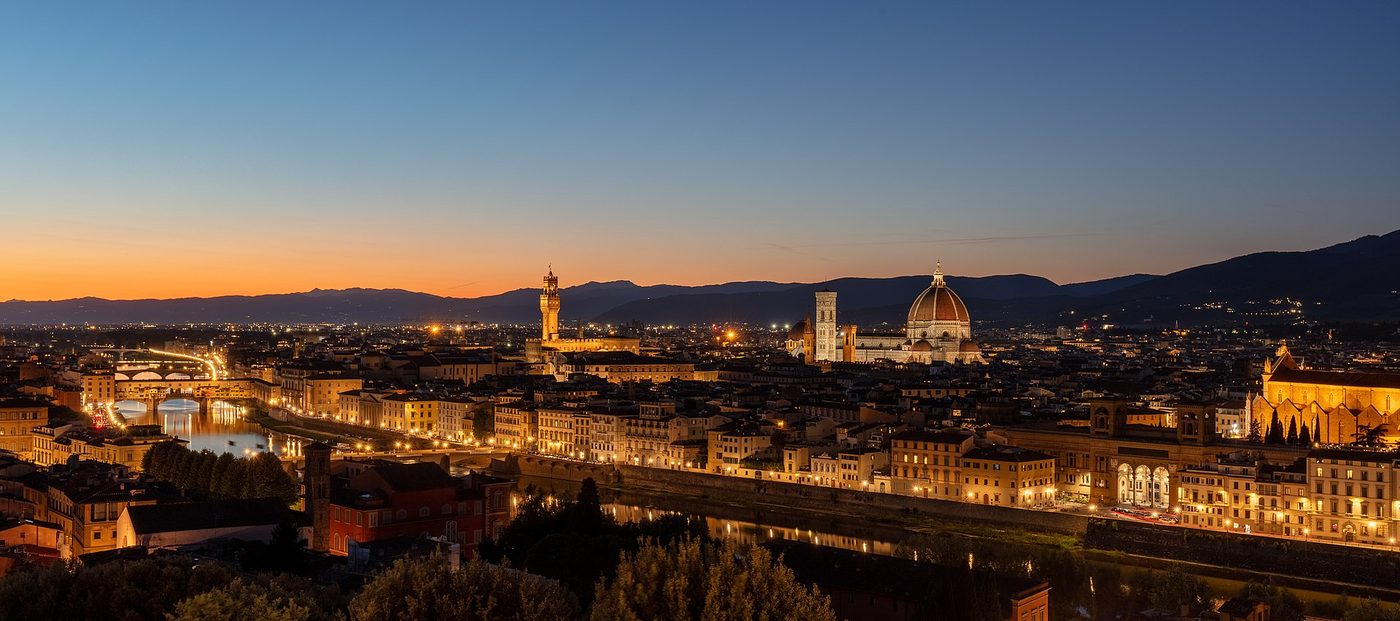
Days 1 to 4, Paris. As above. Book the Louvre and, if you want the Eiffel Tower summit, book that too.
Day 5, Paris to Lyon. One hour fifty-three minutes. OUIGO fares start around EUR 9 to 12 if you book at release. SNCF opens international services 120 days out, and the France to Switzerland TGV Lyria services around eight months out; domestic French fares typically open a few months ahead, so watch from about four months. Reservations on TGV are compulsory and paid, which matters enormously if you are travelling on a rail pass: expect EUR 10 to 20 in second class on top of the pass, EUR 15 to 25 in first.
Days 5 to 6, Lyon. Two nights. You are here to eat. Lyon is the one stop on this route where I would happily spend the entire budget on lunch and call it a cultural activity. It also breaks the long run south into two short hops instead of one six-and-a-half-hour haul.
Day 7, Lyon to Nice. Around five hours with a change, or take the direct Paris to Nice TGV Duplex logic in reverse if you skip Lyon: Paris to Nice direct is six and a half hours.
Days 7 to 9, Nice. Three nights on the Cote d’Azur, using Nice as a base rather than trying to sleep in three different Riviera towns. The regional trains along the coast are cheap, frequent and need no reservation, so Villefranche, Antibes and Menton are all easy half-days.
Day 10, Nice to Milan. Just over five hours, changing at Ventimiglia. The French half is a TER regional service at around EUR 10 with no reservation; the Italian half from Ventimiglia to Milan is an Intercity with reserved seats at around EUR 20. Call it EUR 30 and a slow, beautiful morning along the coast rather than a free ride. This is the leg that makes people fall in love with European trains.
Days 10 to 11, Milan. Two nights, mostly as a hinge. Do the Duomo rooftop: EUR 16 by stairs, EUR 18 by lift, or EUR 22 and EUR 26 for the combined cathedral, museum and rooftop ticket. The stairs cost two euros less and are considerably more satisfying.
Day 12, Milan to Florence. Under two hours on the high-speed network. Italian booking opens around four months out and Economy fares on the Milan to Rome spine run EUR 19 to 25 at release against EUR 60 to 90 flexible or last minute, which tells you everything about when to book.
Days 12 to 15, Florence. Four nights, which lets you take one day out to Siena or the Chianti and still have three full days in the city. Budget EUR 60 to 100 a day, dorms EUR 30 to 45 in shoulder season, and a weekly transport ticket at EUR 18 if you need one, though Florence is a walking city.
Book the Accademia for David: EUR 20 online including the EUR 4 booking fee, timed entry, and one to two weeks ahead between June and September because walk-up queues regularly run 60 to 90 minutes. The Uffizi is EUR 25 at the ticket office from April to October or EUR 29 online, and reservation is recommended rather than compulsory. Since 1 January 2026 there is a late ticket: EUR 16 at the door from 16:00 with last entry at 17:30, or EUR 20 booked online. On a hot July afternoon that is the best-value ticket in Florence.
Day 16, Florence to Rome. One hour twenty-five on Italo from EUR 14.90, or one hour forty-two on the fastest Frecciarossa. There are around 43 trains a day, so this is a leg you can be relaxed about.
Days 16 to 21, Rome. Six nights. Rome absorbs it. Budget EUR 60 to 82 a day per person, dorms EUR 30 to 40 in peripheral neighbourhoods, a trattoria meal EUR 12 to 18, a margherita EUR 8 to 12, cappuccino and cornetto EUR 3 to 4, and about EUR 3.50 a day on transport if you buy the weekly pass. City tax is roughly EUR 7.50 a night for most four-star stays and is charged for up to ten consecutive nights.
Three bookings need doing in a specific order. The Colosseum standard ticket is EUR 18 plus a EUR 2 booking fee and releases about 30 days ahead; the Full Experience with arena floor and underground is EUR 22 plus the same EUR 2 fee, so about EUR 24 all in, and peak-season underground slots have sold out in seconds. The underground can only be visited with a licensed guide. The Vatican Museums open availability 60 days ahead at EUR 20 on site or EUR 25 online including the EUR 5 fee, with morning slots going three to four weeks out in peak season. The Borghese Gallery is EUR 18 including a compulsory EUR 2 reservation, runs five strict two-hour sessions a day from 09:00 to 17:00 with 180 people per slot and no walk-ins, and official slots open roughly ten days ahead.
The heat problem with this route in high summer
Rome averages 31 C in July and August and has had considerably worse. Seville, further west on Route 4, averages 36 C. The 2025 European heatwaves peaked at 46.6 C at Mora in Portugal on 29 June, Spain recorded its hottest summer on record at an average of 24.2 C across June to August, and 2026 has continued the pattern with 45.1 C at Andujar in southern Spain on 22 June and a provisional German national record of 41.7 C in late June. If you are doing this route in July or August, plan indoor sights for the middle of the day and treat the 16:00 Uffizi ticket as a strategy rather than a saving.
Route 3: Italy End to End
Milan 2 · Venice 3 · Florence 4 · Rome 5 · Naples and the Amalfi Coast 7
One country, five bases, and the least travel time of any route here. If this is your first trip to Europe and you already know you love Italy, stop trying to be efficient across borders and just do this. Our Italy travel guide and the shorter Italy itinerary for 10 days cover the country in more depth.
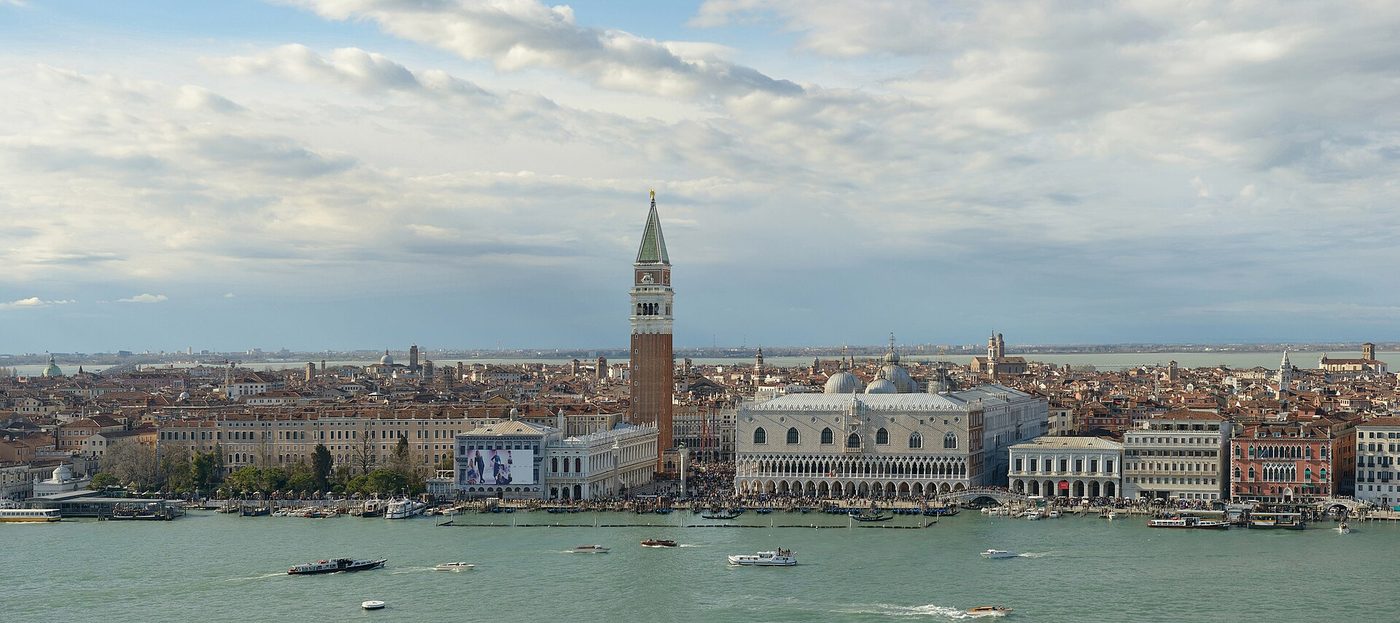
Days 1 to 2, Milan. Land, do the Duomo rooftop, eat, go.
Day 3, Milan to Venice. Two and a half hours.
Days 3 to 5, Venice. Three nights, and staying overnight matters here for a reason beyond atmosphere: the access fee applies to day visitors only. In 2026 the fee runs on 60 dated days between April and July, from 08:30 to 16:00, at EUR 5 per person booked more than four days ahead or EUR 10 booked closer in, and it applies to day visitors over 14 who arrive and leave the same day. Anyone with a lodging booking in Venice is exempt, as are residents, Venetian-born visitors, students and workers.
Venice is the most expensive Italian city on this route at EUR 100 to 150 a day, roughly 20 to 30 per cent above Rome or Florence for equivalent accommodation and dining. Dorms run EUR 30 to 50 in a six to eight bed room. A single vaporetto ride is EUR 9.50, which is the number that shocks people, so buy a multi-day pass on arrival or plan to walk. Our things to do in Venice guide goes deeper.
Day 6, Venice to Florence. Two hours on Italo from EUR 18.90, with eleven Italo trains a day each way plus the Trenitalia services.
Days 6 to 9, Florence. As Route 2, with an extra day for Tuscany. See our Tuscany travel guide and things to do in Florence.
Day 10, Florence to Rome. Ninety minutes.
Days 10 to 14, Rome. Five nights, with the same three timed-entry bookings as Route 2. Our things to do in Rome guide has the day-by-day.
Day 15, Rome to Naples. An hour and ten minutes on the high-speed line, with advance fares in the same EUR 15 to 25 band as the rest of the Italian network.
Days 15 to 21, Naples and the Amalfi Coast. A week in the south, based in Naples for two or three nights and then on the coast. This is where the route earns itself: you have spent a fortnight moving between museums and you finish with lemon groves and boats. Our Amalfi Coast travel guide covers the logistics, which are more complicated than the trains further north. If you would rather swap the Amalfi week for an island, our Sicily travel guide makes the case.
Why I like this route: total rail time is around seven hours across the four northern legs, plus a little over an hour down to Naples. Compare that with 22 hours on Route 1. Every hour you do not spend on a train is an hour you spend somewhere.
Route 4: The Iberian Grand Tour
Barcelona 4 · Madrid 3 · Seville 3 · Granada 2 · Lisbon 5 · Porto 4
Spain and Portugal give you the best value per day of any western European route, along with the latest dinners and the most reliable sunshine. Spanish daily budgets run EUR 50 to 70, Lisbon and Porto EUR 50 to 65 and EUR 50 to 60 respectively, against EUR 95 to 145 for Paris.

Days 1 to 4, Barcelona. Dorms EUR 25 to 35 in the Gotic, Born or Gracia, and the menu del dia at lunch runs EUR 12 to 18, which is how you eat well here without spending. Book the Sagrada Familia: EUR 26 for essential entry with the audio guide app, EUR 36 with tower access, EUR 33 for a guided tour. The basilica itself is bookable close in; the tower slots are the constraint, and you should book those any time from March to November. Park Guell is EUR 18 after a rise of around 80 per cent at the start of 2026, which caught a lot of people out this spring. The tourist tax is EUR 7.50 per person per night in five-star hotels and less further down, with the municipal surcharge rising by EUR 1 a year until it caps at EUR 8 in 2029.
Day 5, Barcelona to Madrid. Two hours twenty-nine typically, on AVE, Avlo or Iryo. This is the best-value competitive corridor in Europe: Avlo fares start at EUR 15 booked ahead, while the Renfe Turista walk-up was EUR 94.90 in January 2026 and Preferente EUR 179.65. The gap between booking early and turning up is more than six times the fare. Booking opens 62 days out on Avant and Spanish regional services; Renfe does not separately publish the release window for AVE long-distance, so watch the site from about two months out.
Days 5 to 7, Madrid. Dorms EUR 20 to 30 in Malasana, Lavapies or near Sol. Menu del dia EUR 10 to 14, a draft beer EUR 2 to 3, a single metro ride EUR 2 to 2.50 with ten journeys for EUR 10 to 15. The Prado, Reina Sofia and Thyssen sit within ten minutes of each other and all three have free evening windows worth checking before you buy.
Day 8, Madrid to Seville. About two and a half hours. From EUR 14 booked well ahead, around EUR 37 average, up to EUR 70 last minute.
Days 8 to 10, Seville. The heat warning is real and specific: Seville averages 36 C in July and August, 32 C in September and 26 C in May. It gets 2.2 mm of rain across two rainy days in July. April, May and October are the months this city was built for. In July, do the Alcazar at opening, sleep through the afternoon like everyone who lives there, and come out again at eight.
Day 11, Seville to Granada. About two and a half hours by train, or roughly three hours by bus from around EUR 12.

Days 11 to 12, Granada. The Alhambra is EUR 21 and tickets are released about three months ahead, bookable from two hours to three months before your visit. Morning slots from 08:00 to 12:00 fill first. Book this the day the release window opens for your dates. The release window is 90 days, so you cannot book four months out however early you want to be. Work to three months and set the reminder.
Day 13, Granada to Lisbon. This is the one leg on the route where I would fly or take a long bus rather than fight the rail connection. Iberian cross-border rail is the weak link in an otherwise excellent network. Budget-airline base fares are fully dynamic and I could not source a reliable typical figure, but the bag rules are worth knowing before you book: on Ryanair, easyJet, Wizz and Vueling basic fares, only the underseat bag is free and the overhead cabin bag costs extra. Ryanair and Wizz checked bags up to 20 kg run EUR 8 to 79 online and EUR 55 at the airport. Getting caught at the gate costs GBP 70 to 75 on Ryanair and Wizz, or around GBP 48 on easyJet, which will comfortably exceed your fare.
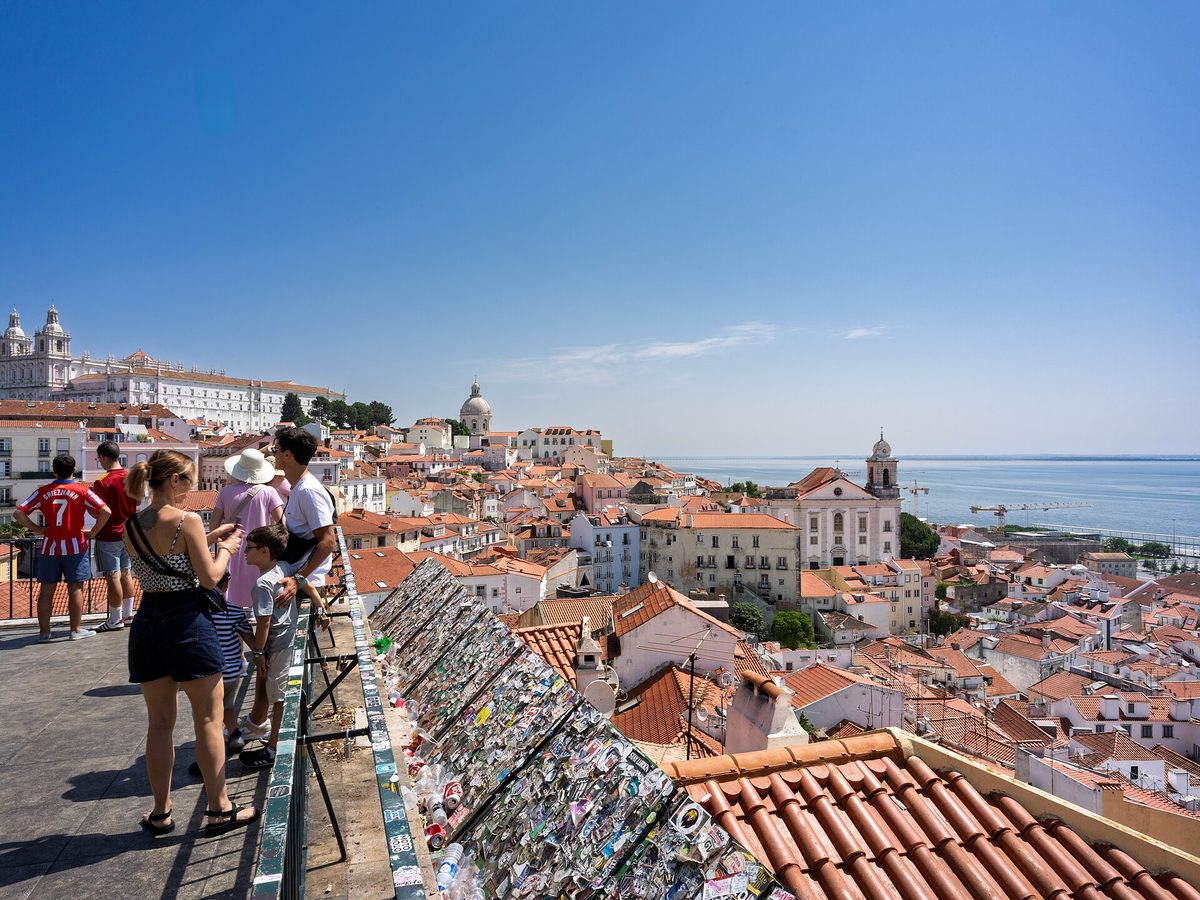
Days 13 to 17, Lisbon. Five nights. Dorms EUR 25 to 40, a tasca lunch special EUR 8 to 12, and a EUR 4 per person per night tourist tax. Sintra takes a full day and is worth it. Our Portugal travel guide has more.
Day 18, Lisbon to Porto. Around three hours on the Alfa Pendular, booked ahead for the cheap fares.
Days 18 to 21, Porto. Cheaper than Lisbon across the board, with dorms at EUR 22 to 30 and daily totals of EUR 50 to 60. and the right place to finish a trip that started in Barcelona: smaller, slower, and pointed at a river.
Route 5: Central Europe on a Budget
Berlin 4 · Krakow 4 · Budapest 5 · Vienna 3 · Prague 5
If money is the binding constraint, this is the route. Krakow runs about EUR 48 a day with dorms around EUR 16, daily food around EUR 25 and pub beer at EUR 2.50 to 3. Prague comes in around EUR 60 with dorms at EUR 15 to 25. Budapest sits in the same band. Eastern Europe and the Balkans broadly run EUR 45 to 65 a day against EUR 60 to 90 for western Europe and southern Italy.

You will notice the cities get more nights each here. That is deliberate: fewer moves means fewer paid legs, and slow travel is cheap travel. Our Eastern Europe travel guide and cheapest places to travel in Europe guide expand on the region.
Days 1 to 4, Berlin. Cheapest of the western capitals. Use the day passes or the Deutschland-Ticket and you will spend EUR 2 to 9 a day on transport.
Day 5, Berlin to Krakow. The direct EC Wawel takes about seven and a half hours and carries a compulsory reservation, and between June and December 2026 it starts from Berlin Gesundbrunnen rather than the Hauptbahnhof. That is a full travel day by my own four-hour rule, so consider the bus instead. FlixBus pricing on this kind of corridor follows a predictable curve: on Berlin to Prague, EUR 19 booked 30 days out becomes EUR 29 at seven days, EUR 35 standard and EUR 45 on the day. Book buses three to four weeks ahead and you keep the early fare. A 23 kg checked bag is included in the standard FlixBus fare, which quietly makes it better value than a budget flight once bags are counted.

Days 5 to 8, Krakow. Four nights, one of them given to Auschwitz-Birkenau, which needs booking well ahead and a clear day either side. Poland uses the zloty: EUR 1 to 4.2248 PLN at the January 2026 ECB rate.
Day 9, Krakow to Budapest. An overnight train or a bus, depending on the season. Night trains always require a reservation, and the supplement is charged on top of a pass rather than covered by it.

Days 9 to 13, Budapest. Five nights. The baths alone justify two of them. A 24-hour travel card is USD 8.90 and street food lunch about USD 10.
Day 14, Budapest to Vienna. Two hours twenty on a Railjet from about EUR 13.
Days 14 to 16, Vienna. The expensive stop. Vienna at EUR 85 a day budget is nearly double Krakow, so this is where you use the free options: the Ringstrasse, the Naschmarkt, the churches, and standing tickets at the opera.
Day 17, Vienna to Prague. Four hours, from about EUR 11 on RegioJet.
Days 17 to 21, Prague. Five nights to finish, which sounds like a lot for Prague and is exactly right if you use two of the days for Kutna Hora and Cesky Krumlov.
Realistic total on the ground: weight the per-city figures in the cost table and this route averages around EUR 63 a day, so about EUR 1,320 for 21 days before flights and before the four intercity legs. Vienna to Budapest and Vienna to Prague are around EUR 13 and EUR 11 booked ahead. Berlin to Krakow and Krakow to Budapest are the two long ones and I have no confirmed 2026 fare for either, so price them yourself before you commit to the route.
Route 6: The Adriatic and the Aegean
Ljubljana 3 · Lake Bled 2 · Split 4 · Dubrovnik 3 · Athens 4 · one Greek island 5
Come here to swim. Three countries, a lot of stone and salt water, and daily costs at the low end of western Europe: Ljubljana around EUR 42 a day with dorms from about EUR 21 and a cappuccino at EUR 2.10; Split EUR 50 to 80 budget or EUR 100 to 150 mid-range, with dorms at EUR 15 to 25 and konoba meals at EUR 10 to 15; Athens EUR 50 to 80 with dorms EUR 20 to 35 in summer and a day transit pass at EUR 4.50.

Days 1 to 3, Ljubljana. The most underrated capital in Europe for my money, and small enough that three nights covers it comfortably with a day trip built in. Slovenia is in Schengen and uses the euro.
Days 4 to 5, Lake Bled. An hour and a bit from Ljubljana. Two nights, a swim, a rowing boat, and the walk up to Ojstrica for the photograph everyone has seen. Our best lakes in Europe guide has the alternatives if Bled feels too busy in August, which it will.
Day 6, Bled to Split. A long day on a bus, roughly eight and three quarter to ten and a quarter hours, and running only around four times a week rather than daily. There is no direct Ljubljana to Split flight in 2026, only connections, so check the bus timetable before you fix your dates. Build in a full travel day and schedule nothing for the evening.
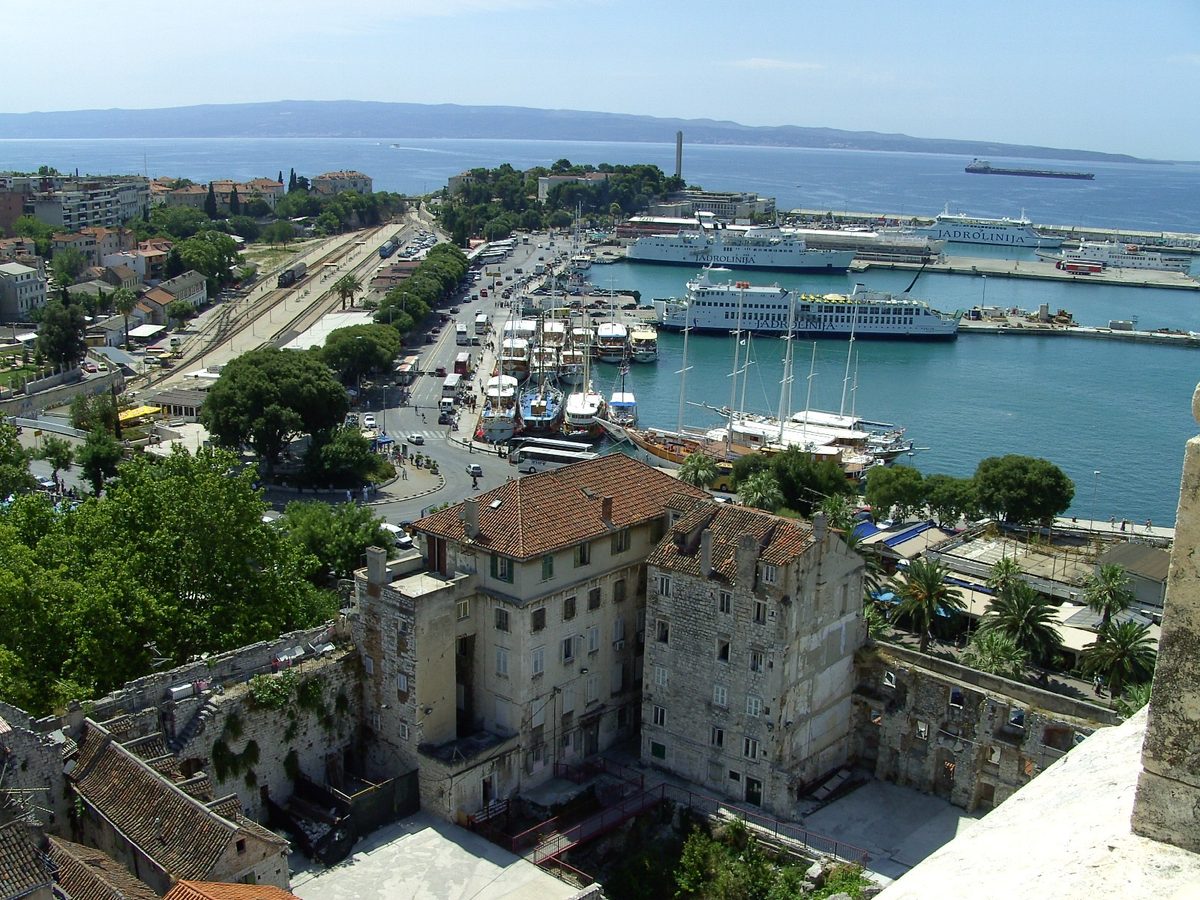
Days 6 to 9, Split. Four nights using Split as a base for Hvar, Brac and the Krka waterfalls. Local transport runs EUR 4 to 6 a day. Croatia joined Schengen in 2023 and uses the euro, so no border faff and no currency change from Slovenia.
Day 10, Split to Dubrovnik. Four to five hours by bus down the coast, or a catamaran in summer, which is slower but far more pleasant. There is no railway.
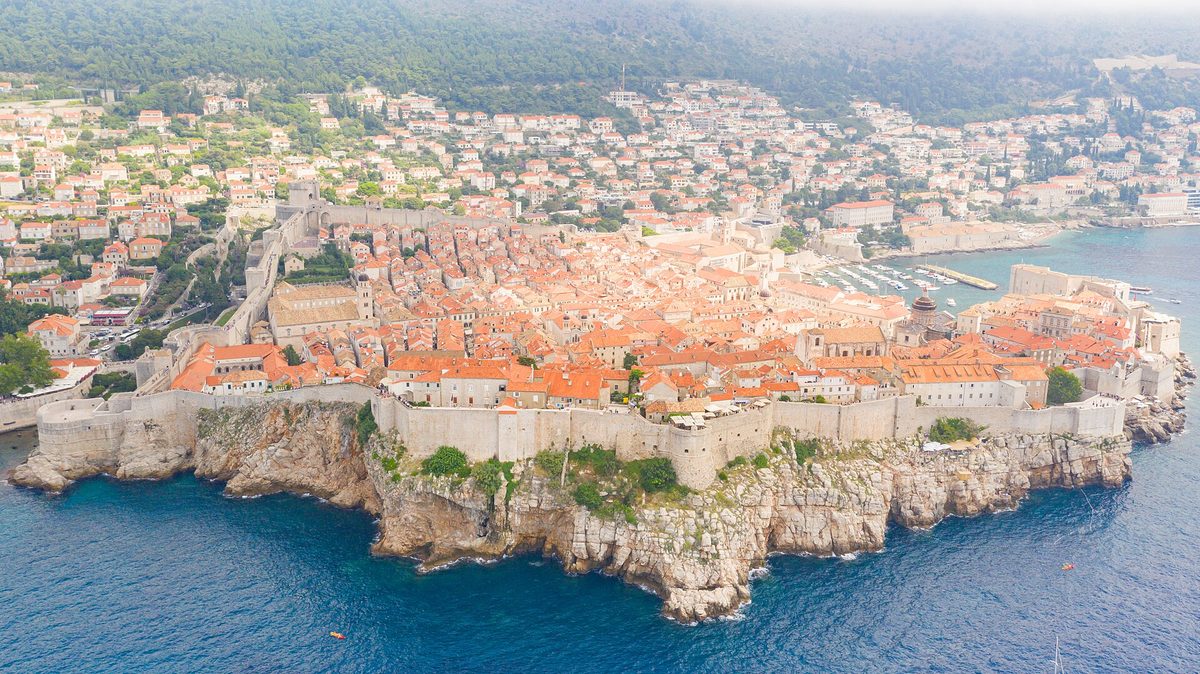
Days 10 to 12, Dubrovnik. Three nights, and I would give it no more. It is spectacular and it is crowded, and the ratio of the two is best managed by walking the walls at opening and leaving the old town in the middle of the day. Our Croatia travel guide covers the coast properly.
Day 13, Dubrovnik to Athens. Fly. There is no reasonable land route and pretending otherwise wastes two days.

Days 13 to 16, Athens. The Acropolis is EUR 30 with mandatory timed entry and a cap of 20,000 visitors a day, so book a slot rather than assuming. July averages 30.9 C, and August is the driest month of the year at around 1.3 rainy days, which sounds appealing until you are climbing marble steps at noon. Go at opening. Greece’s climate resilience fee, which replaced the old accommodation tax, runs EUR 1.50 to EUR 10 a night in high season depending on hotel category. Our Greece travel guide has more.
Days 17 to 21, one island. One. Not four. Ferry hopping in the Cyclades eats days and money, and five nights in a single place at the end of a three-week trip is the best gift you can give yourself. Naxos and Milos both have enough to do for five days and neither will bankrupt you the way Santorini can.
Route 7: The Nordic Summer Run
Copenhagen 5 · Stockholm 5 · Oslo 4 · Bergen 7
The expensive one, and worth being honest about that up front: Switzerland, Norway and Iceland run EUR 120 to 250 a day against EUR 60 to 90 for western Europe. Three weeks in Scandinavia will cost roughly double three weeks in Spain and Portugal for the same standard of comfort.
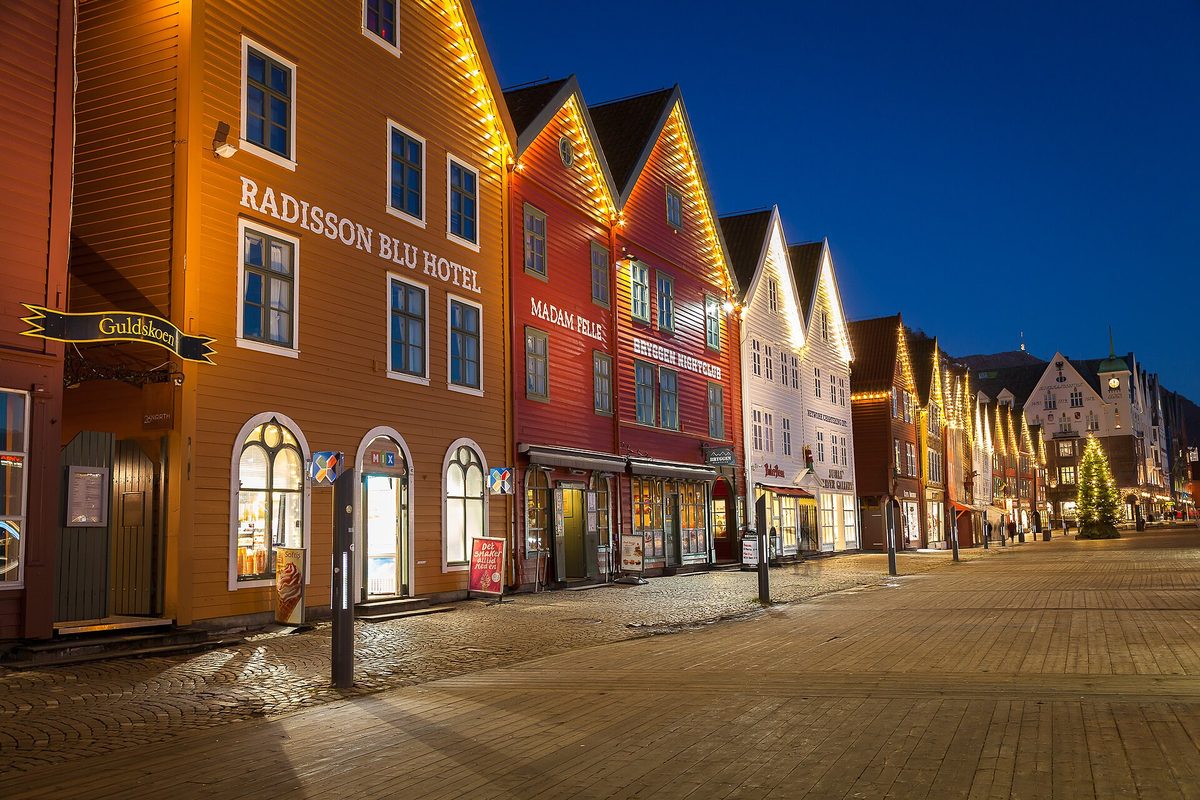
What you get for it is daylight. In June the sun barely sets, and Stockholm averages 22 to 23 C in July and August with nine to ten rainy days a month. This is one of the very few European routes where high summer is the right choice rather than a compromise, which also makes it the route to consider if your leave is fixed to July or August and you want to avoid the Mediterranean heat entirely.
Four bases in 21 days is the slowest pace on this list, and it should be. The distances are long, the rail legs are scenic rather than fast, and the Bergen Line between Oslo and Bergen is one of the great train journeys anywhere and deserves a whole day, not a rushed morning.
Currencies matter here more than anywhere. Denmark uses the krone at EUR 1 to 7.4712 DKK, Sweden the krona at EUR 1 to 10.7190 SEK, and Norway the krone at EUR 1 to 11.7203 NOK, all at the January 2026 ECB reference rates. Three currencies in one trip, none of them the euro, and card payment is close to universal in all three, so carry very little cash.
Days 1 to 5, Copenhagen. Five nights, with one given to Malmo across the bridge in Sweden, which takes about 35 minutes and is the cheapest extra country you will ever add to a trip.
Day 6, Copenhagen to Stockholm. Around five hours by train. A travel day, and a scenic one.
Days 6 to 10, Stockholm. Five nights. The archipelago takes one of them and the Vasa Museum takes half of another.
Day 11, Stockholm to Oslo. Roughly five and a half to six hours.
Days 11 to 14, Oslo. Four nights, and the least essential stop on the route if you need to buy time elsewhere.
Day 15, Oslo to Bergen. Around seven hours on the Bergen Line, and the single best value on the whole route. Take the earliest departure, sit on the left, and treat it as a day out rather than a transfer.
Days 15 to 21, Bergen. Seven nights at the end sounds excessive and is not: it is a base for the fjords, and the fjords are the reason you came. Book the Norway in a Nutshell style day trips or the Flam railway a few weeks out in July. Our Scandinavia travel guide covers the region in detail.
Route 8: The Slow Three
Paris 7 · Barcelona 7 · Rome 7
Seven nights in each of three cities, with only two travel days in the whole trip. I recommend it to families, to repeat visitors, and to anyone who has done a fast European trip before and came home needing a holiday.

A week in a city changes what you do in it. You stop queueing for the famous things on day one and start going to the market on a Tuesday morning because that is when it is good. You book an apartment instead of a hotel and cook twice, which knocks a serious amount off the food line: in Paris that is the difference between EUR 15 to 25 bistro dinners every night and EUR 15 to 25 twice. You take the local train out to a town nobody has heard of and it turns out to be the day you remember.
Paris to Barcelona is about six hours fifty by TGV inOui, with advance fares from around EUR 21 and last-minute fares that climb to USD 260 to 420 on the resale sites. Barcelona to Rome is a flight, and a short one. Two moves in 21 days.
The cost picture is better than it looks. You pay Paris and Rome prices, but weekly apartment rates are materially below nightly ones, you buy two intercity legs instead of six, and you stop paying the invisible tax of arriving somewhere new tired and buying an expensive dinner near the station because you cannot face walking further.
If Paris, Barcelona and Rome feel too obvious, the same structure works with Lisbon, Seville and Porto, or with Vienna, Prague and Budapest at roughly half the daily cost. What matters is the number three, not the names. Our best cities to visit in Europe guide is a good place to pick your own.
The main train legs, timed and priced
These are the trunk legs that appear across several of the routes above, plus a few useful alternatives. Journey times are the fastest scheduled services. Fares are realistic ranges rather than a single number, because European rail pricing is dynamic and the cheapest seats are almost always the first ones released. The last column is the one that decides whether a rail pass is worth buying.
| Leg | Operator | Journey time | Realistic fare range | Booking opens | Seat reservation |
|---|---|---|---|---|---|
| London to Paris | Eurostar | 2h 16m | From GBP 39 booked early; flash sales from EUR 25 | 180 days | Yes, fare includes the seat |
| Paris to Amsterdam | Eurostar | 3h 20m | From about EUR 28 | 180 days | Yes, fare includes the seat |
| Amsterdam to Berlin | DB / NS Intercity | 5h 30m fastest, 6h 20m on the direct Intercity | From about EUR 21, NS International lists from EUR 38 | 180 days | Optional |
| Berlin to Prague | EC direct | 4h 39m average, about 4h 30m direct | From about EUR 20 | 180 days | Optional |
| Prague to Vienna | RegioJet / Railjet | 3h 57m fastest, 4h 15m average | From about EUR 11 on RegioJet | Varies by operator | Optional |
| Vienna to Budapest | OeBB Railjet | 2h 20m | From about EUR 13 | 180 days | Optional |
| Paris to Lyon | TGV / OUIGO | 1h 53m | From about EUR 9 to 12 on OUIGO | 120 days | Compulsory and paid |
| Paris to Barcelona | TGV inOui | About 6h 50m | From about EUR 21 | 120 days | Compulsory and paid |
| Barcelona to Madrid | AVE / Avlo / Iryo | 2h 29m typical | From EUR 15 on Avlo; EUR 94.90 Turista walk-up | 62 days on Avant and regional | Compulsory and paid |
| Madrid to Seville | AVE | About 2h 30m | From EUR 14 well ahead, about EUR 37 average, up to EUR 70 last minute | 62 days on Avant and regional | Compulsory and paid |
| Milan to Rome | Frecciarossa / Italo | 2h 55m non-stop | EUR 19 to 25 Economy, EUR 60 to 90 flexible | About 4 months | Compulsory and paid |
| Rome to Florence | Italo / Frecciarossa | 1h 25m on Italo, 1h 42m fastest Frecciarossa | From EUR 14.90 | About 4 months | Compulsory and paid |
| Rome to Naples | Frecciarossa / Italo | 1h 10m | EUR 15 to 25 booked ahead | About 4 months | Compulsory and paid |
| Lisbon to Porto | Alfa Pendular | About 3h | Cheapest at release | About 60 days | Compulsory and paid |
| Milan to Florence | Frecciarossa / Italo | 1h 45m | Same booking curve as Milan to Rome | About 4 months | Compulsory and paid |
| Seville to Granada | Rail or bus | About 2h 30m by rail, about 3h by bus | Bus from about EUR 12 | 62 days on regional rail | Compulsory on rail, not on the bus |
| Berlin to Krakow | EC Wawel direct | About 7h 30m | Not confirmed for 2026 | 180 days | Compulsory |
| Florence to Venice | Italo / Frecciarossa | 2h 00m | From EUR 18.90 | About 4 months | Compulsory and paid |
| Venice to Milan | Frecciarossa | 2h 30m | Same booking curve as Milan to Rome | About 4 months | Compulsory and paid |
| Venice to Munich | DB EC direct | 7h 00m over the Brenner | From about EUR 30 | 180 days | Optional |
| Munich to Vienna | Railjet | 4h 00m | From about EUR 30 | 180 days | Optional |
| Munich to Prague | Train with one change, or bus | 7h 40m by rail, 5h 30m by bus | Rail from EUR 16, bus USD 30 to 55 | 180 days | Optional on rail |
| Budapest to Prague | EC direct or night train | 6h 45m by day, about 8h overnight | Advance fares similar to Prague to Vienna | Varies by operator | Compulsory on the night train |
| Paris to Nice | TGV Duplex | 6h 30m | Books like other TGV routes, cheapest at release | 120 days | Compulsory and paid |
| Nice to Milan | TER to Ventimiglia, then Italian Intercity | Just over 5h | About EUR 10 for the French half plus about EUR 20 for the Italian half | TER turn up and go, Intercity a few months | Not on the TER, reserved on the Intercity |
| Vienna to Bratislava | Regional | 1h 00m | A few euros | Turn up and go | Not needed |
A few patterns fall out of that table. France, Italy and Spain make reservations compulsory and charge for them on high-speed services. Germany and Austria do not. Regional trains almost never need one, which is why the Nice to Milan leg costs so little and can be taken on a whim.
Rail pass or point-to-point tickets: the actual maths
We go further into whether a rail pass beats buying tickets in a dedicated 2026 guide, with the full price grid and reservation fees by country.
A Eurail or Interrail Global Pass covers 33 European countries. Which one you buy is not a preference: only non-European residents can use a Eurail Pass, and European residents buy Interrail instead. The threshold for Interrail is six months or more of residency in a European country. Same trains, same network, different eligibility.
Published 2026 adult second-class prices I could confirm: the Eurail Global Pass at 10 days within two months is EUR 472. Reseller data puts the 15 days within two months pass at USD 542 in second class and USD 723 in first, the 15 consecutive days pass at USD 487 in second class, and the 22 consecutive days pass at USD 570. Interrail adult second-class passes span EUR 283 to EUR 956 across all durations, with youth at EUR 212 to EUR 717 and senior at EUR 255 to EUR 860. Youth passes are 25 per cent off the adult price and cover ages 12 up to and including 27 on the date the trip starts; senior passes are 10 per cent off and start at 60.
The pass price is not the whole cost. Seat reservations are not included. They are a supplement charged by the railway company, and the published averages are EUR 10 on domestic high-speed trains, EUR 15 on international trains and EUR 20 on night trains. Night trains always need one. On top of that, booking reservations through Eurail’s own service adds EUR 2 per passenger per train.
Run Route 1 through that. Six legs, of which Eurostar London to Paris and Eurostar Paris to Amsterdam are the two that carry a real supplement. Passholder Eurostar fares are EUR 35 in Standard and EUR 40 in Plus, and the quota is limited: it can sell out even when the train has seats, and only Global Passes qualify, not One Country Passes. The four German, Czech and Austrian legs are reservation-optional. So a 10-days-in-2-months pass at EUR 472 plus two Eurostar passholder fares at EUR 35 and two EUR 2 booking charges, about EUR 74, comes to roughly EUR 546, against point-to-point advance fares of roughly GBP 39, EUR 28, EUR 21, EUR 20, EUR 11 and EUR 13, which is under EUR 140 if you book at release.
For a planned three-week route with six or seven legs, booked in advance, point-to-point tickets win comfortably. The pass wins in three specific situations: you want to change your mind daily, you are doing far more than seven legs, or you are travelling in Germany, Austria, Switzerland and eastern Europe where reservations are mostly optional and walk-up fares are punishing. There is also a Global Plus Pass in beta that covers reservation costs on most trains, which changes this calculation if the pricing works for your route.
Some useful pass small print: first-class passes are valid in both classes, passes must be activated within 11 months of issue, children under four travel free without a pass, children aged four to eleven travel free on a Child Pass with up to two per adult, and unused standard passes are refundable or exchangeable. An Interrail pass is valid for one outbound and one inbound journey in your own country of residence, which is less generous than people assume.
Our train travel in Europe guide goes through the operators one by one.

When the bus beats the train
On some corridors it plainly does. Munich to Prague is five and a half hours by bus at USD 30 to 55 against seven hours forty by rail with a change, from EUR 16. Berlin to Prague by bus is EUR 19 booked 30 days ahead against roughly USD 21 to 24 by train, and the train is only modestly faster. Paris to Berlin by FlixBus starts at USD 44 and Vienna to Hamburg at USD 35. The standard fare includes a 23 kg checked bag, which is more than any budget airline gives you.
And when the plane beats both
Dubrovnik to Athens. Granada to Lisbon. Anything crossing the continent diagonally. The trap is that the fare you see is not the fare you pay: on Ryanair, easyJet, Wizz and Vueling basic fares, only the underseat bag is free, and the overhead cabin bag needs paying for or a fare upgrade. Vueling’s overhead bag runs about EUR 10 to 59 online or EUR 45 to 75 at the airport. Ryanair and Wizz checked bags to 20 kg cost EUR 8 to 79 online and EUR 55 at the airport, and Wizz sells a 10 kg option at EUR 5 to 59. easyJet allows up to three bags at 23 kg each and sells extra weight in 3 kg units at EUR 15.
Then add the airport. Beauvais to Paris is EUR 12.50 and about 80 minutes, with departures every 20 minutes after landings. Girona to Barcelona is around EUR 22 and one hour fifty. Bergamo to Milan starts at EUR 5, Ciampino to Rome at EUR 6, Stansted to London at GBP 12. Weeze to Dusseldorf is EUR 24 on the direct shuttle, with no direct public bus. A EUR 20 flight into Beauvais with a cabin bag and a transfer is not a EUR 20 flight.
What three weeks in Europe actually costs in 2026
Here is the per-city picture. Hostel dorm rates are summer rates. The three-star hotel figures come from a different dataset and are averages across the year, so treat them as a relative signal rather than a quote: they are also climbing at around 12 per cent year on year.
| City | Hostel dorm, per night | Average 3-star hotel | Budget day total, per person | A price that tells you a lot | Cost tier |
|---|---|---|---|---|---|
| London | GBP 25 to 35 | About USD 247 | Not sourced separately | About EUR 3 to 5 a pint | High |
| Paris | EUR 35 to 50 | About USD 174 | EUR 95 to 145 | EUR 2 to 2.50 standing at the bar | High |
| Amsterdam | About EUR 45 | About USD 140 | EUR 80 to 120 | EUR 40 a day on food | High |
| Barcelona | EUR 25 to 35 | About USD 130 | EUR 50 to 70 (Spain-wide) | Menu del dia EUR 12 to 18 | Mid |
| Madrid | EUR 20 to 30 | Not sourced separately | EUR 50 to 70 (Spain-wide) | Menu del dia EUR 10 to 14 | Mid |
| Rome | EUR 30 to 40 | Not sourced separately | EUR 60 to 82 | Margherita EUR 8 to 12 | Mid |
| Florence | EUR 30 to 45 | Not sourced separately | EUR 60 to 100 | Weekly transport ticket EUR 18 | Mid |
| Venice | EUR 30 to 50 | Not sourced separately | EUR 100 to 150 | Vaporetto single EUR 9.50 | High |
| Vienna | EUR 25 to 45 | Not sourced separately | EUR 85 budget, EUR 175 to 200 mid-range | 24-hour transit EUR 6.40 | Mid to high |
| Prague | EUR 15 to 25 | About USD 220 | About EUR 60 | Half-litre of lager EUR 2 to 4 | Low to mid |
| Budapest | USD 25 to 35 | About USD 182 | Not sourced as a single figure | 24-hour travel card USD 8.90 | Low to mid |
| Berlin | EUR 20 to 40 | Not sourced separately | EUR 60 to 90 | Bar beer EUR 4.50 | Mid |
| Lisbon | EUR 25 to 40 | About USD 180 | EUR 50 to 65 | Tasca lunch EUR 8 to 12 | Low to mid |
| Porto | EUR 22 to 30 | Not sourced separately | EUR 50 to 60 | Cheaper than Lisbon across the board | Low |
| Athens | EUR 20 to 35 | Not sourced separately | EUR 50 to 80 | Day transit pass EUR 4.50 | Low to mid |
| Split | EUR 15 to 25 | Not sourced separately | EUR 50 to 80 | Konoba meal EUR 10 to 15 | Low to mid |
| Krakow | About EUR 16 | Not sourced separately | About EUR 48 | Pub beer EUR 2.50 to 3 | Low |
| Ljubljana | About EUR 21 to USD 30 | Not sourced separately | About EUR 42 | Cappuccino EUR 2.10 | Low |
Two oddities in that table are worth flagging. Prague’s average three-star rate of USD 220 sits above Barcelona’s USD 130 and Amsterdam’s USD 140, which does not match the on-the-ground experience at all: Prague is comfortably cheaper for dorms, food and transport. Average hotel rates are skewed by property mix and by which nights get sampled, so I would trust the dorm and daily-total columns far more. The same caution applies to Budapest at USD 182.
One presentational note: the Budapest figures come from a source that prices in US dollars, so they sit in USD while everything around them is in euro. At the January 2026 reference rates the two are close enough for planning, but do not treat the columns as directly comparable to the decimal.
The three budget tiers, per person, for 21 days
Working from the published regional bands rather than guessing:
- Budget. Eastern Europe and the Balkans run EUR 45 to 65 a day; western Europe and southern Italy EUR 60 to 90. Prague, Budapest and Krakow sit in a USD 25 to 50 band; Lisbon, Berlin and Barcelona in a USD 70 to 120 band. Over 21 days that is roughly EUR 950 to 1,400 for a central and eastern European route and EUR 1,250 to 1,900 for a western one. One published total for a three-week trip at this style is about USD 3,000 including flights.
- Mid-range. USD 60 to 120 a day in eastern Europe, USD 120 to 180 in western Europe. Daily line items at this tier run USD 90 to 150 for a three-star hotel or apartment, USD 45 to 75 for two sit-down meals, USD 25 to 40 for a paid attraction and USD 15 to 25 on transit and the occasional taxi. Three weeks lands near USD 5,000 including flights.
- Comfortable to luxury. Vienna at the top end is EUR 550 or more a day. Switzerland, Norway and Iceland run EUR 120 to 250 a day even without trying particularly hard. USD 10,000 and upwards for three weeks is the published band.
Two multipliers to apply on top. Summer raises every line item by 20 to 50 per cent against May or September, which is the strongest argument for shoulder season that exists. And a round-trip transatlantic flight runs USD 400 to 1,000 or more depending on season, route and how far ahead you book.
At the budget end, the line item people underestimate is not accommodation. It is the drip: EUR 9.50 for one vaporetto ride, EUR 12.30 for a Paris day pass you did not need, EUR 5 booking fees on museum tickets, EUR 2 per reservation on a rail pass. Across 21 days that is easily EUR 200. Our Europe on a budget guide and the backpacking Europe guide go further on keeping it down.
Tourist taxes, which nobody budgets for and everybody pays
These are charged per person per night, on top of the room rate, usually at checkout, and over 21 nights they add up to a real number. For two people doing Route 1, the accommodation taxes alone come to somewhere around EUR 200.
| City | What you pay in 2026 | The detail that matters |
|---|---|---|
| Venice | EUR 5 booked more than four days ahead, EUR 10 closer in | Day visitors over 14 arriving and leaving the same day, 08:30 to 16:00 on 60 dated days between April and July 2026 |
| Amsterdam | 12.5% of the room rate excluding VAT, roughly EUR 18 per person per night | Everyone staying overnight |
| Paris | About EUR 6.60 per person per night mid-range, EUR 9.20 in a five-star | Raised from 1 January 2026 by up to EUR 4 a night |
| Barcelona | EUR 7.50 per person per night in five-star hotels, less further down | The municipal surcharge rises by EUR 1 a year until it caps at EUR 8 in 2029 |
| Rome | About EUR 4 at one star up to EUR 10 at five star, most four-star stays EUR 7.50 | Charged for up to ten consecutive nights |
| Berlin | 7.5% of the net room price before VAT | Stays up to 21 nights, business trips included since 2024 |
| Lisbon | EUR 4 per person per night | Flat rate |
| Prague | 50 CZK per person per night, roughly EUR 2 | One of the cheapest in Europe |
| Athens and Greece | EUR 1.50 to EUR 10 in high season depending on category | The climate resilience fee that replaced the old accommodation tax |
Venice is the odd one out because it is not an accommodation tax at all. It is an access fee for day visitors, and the way to avoid it is simply to sleep in Venice, which exempts you entirely. If you are day-tripping from Padua or Mestre on one of the 60 dated days between April and July 2026, book more than four days ahead and pay EUR 5 rather than EUR 10, and note it only applies between 08:30 and 16:00. Arriving at five in the afternoon is free.
Left luggage, the small cost that saves whole days
On a three-week trip you will have four or five days where you check out at ten and your train goes at seven. Station left luggage at Gare du Nord in Paris is EUR 4 for up to four hours, EUR 7.50 for four to twelve, EUR 9.50 for twelve to twenty-four and EUR 6 per extra day, open 06:15 to 23:15. Rome Termini runs around EUR 10 to 12 per bag per day, open 07:00 to 21:00, though private storage near the station starts at EUR 3.90 a day. Amsterdam Centraal lockers are EUR 7 small and EUR 10 large for the first 24 hours, open 07:00 to 01:00. Ten euros to get a whole extra day of a city is the best value on this page.
The 2026 admin: EES, ETIAS, Schengen and which currency goes where
The border rules changed materially in the last year. Here is where things stand.
The Entry/Exit System is live
The EU’s Entry/Exit System started operating on 12 October 2025 with a progressive rollout, and became fully operational across 29 European countries on 10 April 2026. It replaces passport stamping with a digital record of entries, exits and refusals for non-EU nationals on short stays, and it registers your facial image, fingerprints and passport data. More than 45 million border crossings have been registered so far, with over 24,000 refusals of entry.
What this means on the day: your first crossing into the Schengen Area takes longer than it used to, because you are being enrolled. Subsequent crossings are quicker. Build in extra time at your arrival airport, particularly if you land at a major hub in July.
ETIAS is not live yet, and anyone charging you for it now is a fraud
ETIAS goes live in the fourth quarter of 2026, between October and December, and becomes mandatory in April 2027 with a six-month grace period after that during which it is operational but not strictly enforced. The fee is EUR 20, confirmed by the European Commission on 17 July 2025; the older EUR 7 figure that still circulates is obsolete. It lasts three years and is linked to your passport, with under-18s and over-70s exempt from the fee.
As of August 2026 the application portal is not open. Any website currently accepting ETIAS applications is fraudulent. If your trip is in autumn 2026 or later, check the official EU travel site rather than a search result. Our Schengen visa and ETIAS guide is kept current.
The UK now needs an ETA, which catches people out
If your route starts or ends in London, this one is easy to miss because it is not an EU rule at all. The UK Electronic Travel Authorisation became a legal requirement for European visitors on 25 February 2026, and the fee rose to GBP 20 on 8 April 2026. It applies to travellers from the EU, the United States, Canada, Australia and other previously visa-exempt countries who are visiting for short stays. Apply through the official UK government service or the app, not through a third-party site, and do it before you book anything non-refundable. Our UK travel guide has more.
The 90/180 rule, and why it does not affect a three-week trip
The Schengen short-stay rule allows up to 90 days in any rolling 180-day period, counted across the whole area rather than per country. Twenty-one days fits comfortably. It only becomes relevant if you have already spent time in Schengen countries in the preceding six months, or if you are planning a second European trip later in the same window. Time in the UK, Ireland and the non-Schengen Balkan states does not count toward it.
Who is in Schengen in 2026
Twenty-nine full members. Bulgaria and Romania joined in full on 1 January 2025 and Croatia joined in 2023, which is why Route 6 crosses from Slovenia into Croatia without a border check. Ireland has a permanent opt-out and keeps its own visa policy to preserve the Common Travel Area with the UK. The UK is not in Schengen and has its own entry rules, which is why Route 1’s first leg is a real border crossing.
Currencies: more of them than you think
Bulgaria adopted the euro on 1 January 2026, becoming the twenty-first euro-area member, at a fixed and irrevocable rate of EUR 1 to BGN 1.95583. During January 2026 both currencies circulated, with payments accepted in lev and change given in euro. If you are reading an older guide quoting lev prices for Sofia, those numbers are dead.
The EU member states still outside the euro in 2026 are Denmark, Sweden, Poland, Hungary, Romania and Czechia. Add Switzerland, the UK and Norway from outside the EU. The January 2026 ECB reference rates: EUR 1 buys 24.286 Czech koruna, 385.33 Hungarian forint, 4.2248 Polish zloty, 0.9313 Swiss francs, 0.86700 pounds, 10.7190 Swedish krona, 7.4712 Danish krone and 11.7203 Norwegian krone.
Practical version: Route 1 crosses three non-euro currencies, Route 5 crosses three, Route 7 crosses three and touches the euro not at all. Routes 2, 3 and 4 are euro throughout, which is one less thing to think about. Card payment is close to universal in all of these countries and the cheapest way to handle the rest is a card that does not charge foreign transaction fees, not a bureau de change.
Phones and data
EU roaming protections run through at least 2032 for EU citizens, but they stopped applying to UK providers on 31 December 2020, and UK operators are no longer legally required to offer surcharge-free roaming in the EU, Norway, Iceland or Liechtenstein. Typical UK daily roaming passes run GBP 1.50 to GBP 6 a day, though some plans still include EU roaming in the monthly allowance, so check before you assume. Over 21 days at GBP 6 that is GBP 126, which is absurd when a Europe eSIM with 10 GB for 30 days costs around USD 10 to 15, or 20 GB for about USD 16. Entry-level plans start from USD 4.99 and the best mid-tier plans work out at about USD 0.87 per gigabyte.
The booking calendar: what to reserve, and exactly when
This is the section that separates a smooth three weeks from a frustrating one. European timed-entry rules have tightened sharply, and several of the sights on these routes cannot be visited at all without a ticket bought weeks in advance. Sorted from hardest to easiest.
| Sight | Adult ticket | When booking opens or how far ahead to book | What actually catches people out | How hard to get |
|---|---|---|---|---|
| Anne Frank House, Amsterdam | EUR 16.50 | Online only, every Tuesday at 10:00 Amsterdam time for the week exactly six weeks later | Set an alarm. Popular slots go within minutes | Hardest |
| Colosseum underground, Rome | EUR 22 plus EUR 2 booking fee, underground edition around EUR 24 | About 30 days ahead | Peak-season underground slots have sold out in 60 to 120 seconds | Hardest |
| Borghese Gallery, Rome | EUR 18 including the compulsory EUR 2 reservation | Official slots open roughly 10 days ahead | Five two-hour sessions a day, 180 people each, no walk-ins | Hard |
| Alhambra, Granada | EUR 21 | About 3 months ahead | Morning slots from 08:00 to 12:00 fill first | Hard |
| Vatican Museums, Rome | EUR 20 on site, EUR 25 online including the EUR 5 fee | 60 days ahead | Morning slots go 3 to 4 weeks out in peak season | Moderate |
| Sagrada Familia, Barcelona | EUR 26 basic, EUR 36 with tower access | Book ahead year round, essential March to November | Tower slots are the constraint, not general entry | Moderate |
| Accademia Gallery, Florence | EUR 20 online including the EUR 4 fee | 1 to 2 weeks ahead June to September | Walk-up queues regularly run 60 to 90 minutes | Moderate |
| Acropolis, Athens | EUR 30 | Timed entry, book at least a few days ahead in summer | There is a 20,000 visitor per day cap | Moderate |
| Uffizi, Florence | EUR 25 at the door April to October, EUR 29 online | Recommended rather than compulsory | From 16:00 the door price drops to EUR 16, or EUR 20 online | Easier |
| Louvre, Paris | EUR 22 for EEA visitors, EUR 32 for everyone else | Timed entry, a few days ahead is usually enough | Under-18s free, EU residents under 26 free with ID | Easier |
| Eiffel Tower, Paris | EUR 14.80 stairs to the second floor, EUR 23.50 lift, EUR 36.70 to the summit | Summit lift tickets go first, book a couple of weeks ahead | The stairs ticket is both cheaper and easier to get | Easier |
| Neuschwanstein, Bavaria | EUR 23.50 online plus a EUR 2.50 booking fee | Timed entry, buy from the official shop in good time | Under-18s go free | Easier |
| Park Guell, Barcelona | EUR 18 | A few days ahead in summer | The price rose by around 80% at the start of 2026 | Easier |
| Duomo rooftop, Milan | EUR 16 by stairs, EUR 18 by lift | Same-week booking is usually fine | The stairs are only two euros cheaper and far more fun | Easier |
If you build one spreadsheet before this trip, make it this one. Work backwards from your travel dates: Alhambra at 90 days, Vatican at 60 days, Colosseum at 30 days, Anne Frank House on the correct Tuesday six weeks out, Borghese at ten days. Rail fares release earlier still, at 180 days for Eurostar, Deutsche Bahn and OeBB Nightjet, 120 days for SNCF international services, around four months for Trenitalia and 62 days for Renfe Avant and regional services, with no separately published window for AVE long-distance. The general rule across operators is that the cheapest fares are the first released, so two to six months ahead is the sweet spot.
Where to buy, once you know when
Buy direct from the operator wherever you can: SNCF Connect, Trenitalia or Italo, Renfe, Deutsche Bahn, OeBB, NS International, Eurostar. Direct is where the cheapest fare buckets appear first and where you have the clearest position if a train is cancelled. Nightjet is the sharpest example: booking direct at nightjet.com has run 30 to 50 per cent cheaper than reselling through other operators.
Aggregators such as Trainline, Omio and Rail Europe are genuinely useful for two things: working out what connections exist across borders, and buying a leg where the operator site refuses foreign cards or will not display in English. They add a booking fee, usually small. Use them to plan and the operator to pay, where you can do both.
One quiet cost to know about if you are travelling on a rail pass: reserving through Eurail’s own booking service adds EUR 2 per passenger per train on top of whatever the operator charges.
Night trains, if you want to save a hotel night
OeBB Nightjet couchettes start from EUR 49.90 in a four or six berth, with advance fares from EUR 29, and private sleeper cabins from EUR 69.90 to 79. Vienna to Rome overnight runs EUR 29 to 59 booked ahead and covers around 1,200 km while you sleep. Booking opens 180 days out and summer sleepers on Vienna to Rome or Vienna to Amsterdam should be booked two to three months ahead. Book direct at nightjet.com: reselling through other operators has run 30 to 50 per cent more expensive. If you are on a rail pass, remember the night-train reservation supplement is EUR 15 to 50 for a couchette and EUR 50 to 150 or more for a private cabin, which erodes the pass advantage considerably.
When to go, and the heat question
Late spring and early autumn win on every measure that matters: mild weather, lower prices and thinner crowds. Summer raises costs 20 to 50 per cent. But your leave dates are your leave dates, so here is what the numbers actually say.
| City | May average high | July average high | August average high | September | Rain, in numbers |
|---|---|---|---|---|---|
| Rome | 20 C or more | About 31 C | About 31 C | 21 C to 28 C | 17 mm over 4 rainy days in July |
| Seville | 26 C | About 36 C | About 36 C | 32 C | 2.2 mm over 2 rainy days in July |
| Athens | Not sourced | 30.9 C | Not sourced | Not sourced | About 1.3 rainy days in August, the driest month of the year |
| Paris | Not sourced | 25 C | Not sourced | Not sourced | 6 rainy days in July, 8 in June |
| London | Not sourced | 23 to 24 C | 23 to 24 C | Not sourced | Rain about one day in three, 7 to 10 days a month |
| Amsterdam | Not sourced | 22 C | 20 to 22 C | Not sourced | July is the wettest month at 88 mm |
| Prague | Not sourced | 23 C | 24 C | Not sourced | 8 rainy days in September against 11 in May |
| Stockholm | Not sourced | 22 to 23 C | 22 to 23 C | Not sourced | 9 to 10 rainy days a month, July peaks at 65 mm |
The southern European heat is not a footnote any more. The 2025 heatwaves peaked at 46.6 C at Mora in Portugal on 29 June, Portugal and Spain both broke national June maximum records above 46 C, and regional records fell in at least ten other countries. Spain had its hottest summer on record at an average of 24.2 C from 1 June to 31 August. In 2026 the first major heatwave arrived on 22 to 24 May, six days earlier than the year before, with 45.1 C recorded at Andujar in southern Spain on 22 June and a provisional German national record of 41.7 C in late June. Researchers cited in the Washington Post described the 2026 event as the worst heatwave recorded on the continent.
The practical response is not to cancel your July trip. It is to change the shape of the day. Sights at opening, indoors or by water from one until five, dinner at nine like the people who live there. And if your dates are fixed to July or August and you have any flexibility on destination, Route 7 through Scandinavia or Route 1 through the north exists precisely for this: Stockholm at 22 to 23 C and Amsterdam at 20 to 22 C are a different holiday from Seville at 36 C.
Our best time to visit Europe guide has the month-by-month detail, and the best places to visit in Europe in summer is built around exactly this problem.
Swaps: how to adapt any of these routes
None of these routes is sacred. If a stop is too hot, too crowded or too expensive for the month you are travelling, here is what I would put in its place and why.
| If you want to swap out | Swap in | Why it works |
|---|---|---|
| Venice, too crowded or too expensive | Ljubljana or Trieste | Both are two to four hours away, both are a fraction of the daily cost, and neither charges an access fee |
| Paris, if you have been | Lyon plus Bordeaux | Two French cities for the price of one, better food, no queues |
| Dubrovnik in August | Kotor or Sibenik | Same coast, same stone, a fraction of the cruise traffic |
| Santorini | Naxos or Milos | Five nights on either costs less than three on Santorini and you can swim off the beach |
| Amsterdam, if the tourist tax stings | Utrecht or Haarlem | Both under half an hour by train, both far cheaper, Amsterdam becomes a day trip |
| The whole Nordic route, if the budget will not stretch | Route 5 through central Europe | Roughly a third of the daily cost for the same number of nights |
| Barcelona in peak August | San Sebastian and the north coast | Cooler, greener, better eating, and the beaches are not a queue |
| A Greek island week | A week in Puglia | Reachable by train from Rome, cheaper, and the ferry logistics disappear |
Which route suits which traveller
- First time in Europe, wants the famous names. Route 1 or Route 2. Route 2 if you would rather have depth than country count. See also our guide to the best places to visit in Europe for the first time.
- Travelling on a tight budget. Route 5. Nothing else comes close on cost per day.
- With children. Route 8, and give one of the three weeks to somewhere with a pool. The Europe with kids guide explains why fewer moves matters more than anything else.
- Solo. Route 5 or Route 6. Both have strong hostel scenes and short, social legs. Our solo travel in Europe guide covers the practicalities.
- Honeymoon or a big anniversary. Route 3 or Route 6. See the Europe honeymoon guide.
- Fixed to July or August. Route 7, or Route 1. Do not do Route 4 in those months unless you genuinely enjoy 36 C.
- Been to Europe several times. Route 8, or build your own from the underrated places in Europe list.
- Driving rather than taking trains. None of these directly, but the Europe road trips guide has three-week routes built for a car.
Nine mistakes I would talk you out of
1. Booking the flights before the route. Open-jaw tickets, into one city and out of another, are frequently the same price as a return and save you a wasted day backtracking. Every route on this page is designed to be flown into one end and out of the other.
2. Two nights everywhere. Two nights is one full day. Do that seven times and you will have seen seven main squares and nothing else. Pick three places to give four or five nights and let the rest be short.
3. Treating a four-hour train as a morning. It is a day. You check out, you get to the station early, you arrive, you find the apartment, you work out where to eat. Plan nothing else.
4. Buying a rail pass reflexively. For a fixed six-leg route booked in advance, point-to-point advance fares can come to a quarter of the pass price plus supplements. Do the sum for your own legs before you buy.
5. Leaving timed-entry tickets until you arrive. The Borghese Gallery has no walk-in option at all. Colosseum underground slots have gone in 60 to 120 seconds. Anne Frank House releases on a strict six-week rolling Tuesday and sells out in minutes.
6. Forgetting the tourist tax and the booking fees. Over 21 nights, Amsterdam’s 12.5 per cent and Paris’s EUR 6.60 to 9.20 a night are not rounding errors. Nor are the EUR 5 Vatican fee, the EUR 4 Uffizi fee and the EUR 2 Colosseum fee, once you have paid twenty of them.
7. Flying a leg the train does better. Paris to Amsterdam is three hours twenty centre to centre. The flight, with the airport transfers at both ends and the bag fee, is slower and usually dearer.
8. Packing for three weeks. You are doing laundry either way, so pack for eight days and find a launderette on day nine. Every extra kilo is a bag fee on the one leg where you fly and a misery on the cobbles everywhere else. Our Europe packing list is built around carry-on.
9. Planning the last three days. Leave them loose. By day eighteen you will have found somewhere you want to go back to, or you will need to do nothing at all for 48 hours. Both are better uses of the time than a schedule you wrote in March.
Frequently asked questions
Is 3 weeks enough for Europe?
It is enough for three to five countries at a civilised pace, or one country in real depth. It is not enough to see Europe, and nothing is. Twenty-one nights gives you roughly nineteen usable days after arrival and departure, which is about four to seven bases.
How much does 3 weeks in Europe cost?
On the ground, budget travel runs EUR 45 to 65 a day in eastern Europe and the Balkans and EUR 60 to 90 in western Europe and southern Italy, so roughly EUR 1,000 to 1,900 for 21 days. Mid-range runs USD 120 to 180 a day in the west. One published total puts a budget three-week trip at around USD 3,000 including flights, mid-range at USD 5,000 and luxury at USD 10,000 and up. Add USD 400 to 1,000 or more for a round-trip transatlantic flight, and add 20 to 50 per cent to everything if you go in July or August.
How many countries can you visit in 3 weeks in Europe?
You can physically visit seven, as Route 1 does. Three to five is the band most experienced planners recommend, roughly a country a week. The constraint is not distance, it is how much of your holiday you are willing to spend in transit.
Is a Eurail pass worth it for 3 weeks?
Usually not, if your route is fixed and you book at release. A 10-days-in-2-months Global Pass is EUR 472 before supplements, and the six advance point-to-point fares for Route 1 come to under EUR 140. The pass wins when you want daily flexibility, when you are taking many more than seven legs, or when you are travelling mainly in Germany, Austria and central Europe where reservations are optional.
Do I need ETIAS for a 3-week Europe trip in 2026?
Not yet. ETIAS goes live in the fourth quarter of 2026 and becomes mandatory in April 2027, followed by a six-month grace period. It costs EUR 20, lasts three years and is tied to your passport. The application portal is not open as of August 2026, so any site taking ETIAS applications right now is fraudulent.
Does a 3-week trip count against the Schengen 90/180 rule?
Yes, the days count, but 21 nights sits well inside the 90-day allowance in any rolling 180-day period. It only matters if you have already spent time in Schengen countries in the previous six months. Days in the UK, Ireland and the non-Schengen Balkans do not count.
What is the best time of year for a 3-week Europe trip?
May, June, September and early October, in that order, for the combination of weather, price and crowds. Summer costs 20 to 50 per cent more and southern Europe now routinely exceeds 40 C in heatwaves. If you are locked into July or August, go north.
How far in advance should I book?
Rail fares are cheapest at release, so two to six months. Eurostar, Deutsche Bahn and Nightjet open 180 days out, SNCF international 120 days, Trenitalia around four months, Renfe Avant and regional services 62 days, with no separately published window for AVE long-distance. Alhambra tickets release about three months ahead, Vatican 60 days, Colosseum 30 days, Anne Frank House on a six-week rolling Tuesday and Borghese around ten days.
Should I do a loop or a one-way route?
One-way, almost always. Backtracking to your arrival city to catch a flight costs you a day and a fare. Open-jaw flights are usually priced the same as returns.
Can I do 3 weeks in Europe with only carry-on?
Yes, and you should. The complication is the cabin-bag rules: on Ryanair, easyJet, Wizz and Vueling basic fares only the underseat bag is free, and being caught at the gate costs GBP 70 to 75 on Ryanair and Wizz or around GBP 48 on easyJet.
Is 3 weeks in Europe too long?
Only if you plan it as twenty-one days of sightseeing. Build in two or three days with nothing scheduled and it will feel too short.
What if I only want one country?
Then do that. Route 3 is a single-country three weeks and has the least transit time of anything here. The same structure works for France, Spain, Germany or Greece.
Final thoughts
Three weeks is the sweet spot for Europe. It is long enough that you stop being a visitor and start having a routine somewhere, and short enough that you still feel the urgency that makes you get up early for the good light. The mistake is trying to make it into a longer version of a ten-day trip.
Whichever route you pick, the two decisions that matter most are made before you leave: how many bases you allow yourself, and how early you book the tickets that cannot be bought on the day. Get those right and the rest of a three-week trip mostly plans itself.
One honest limit on this guide. The costs and rules here are sourced to published 2026 figures, and where a number was not available I have said so: there are no city tax figures here for London, Vienna, Madrid, Florence, Budapest, Krakow, Split or Ljubljana, no Paris climate normals for August, and no confirmed 2026 price for the one-month continuous Eurail pass. Prices also move. Treat every figure here as a planning band and check the operator or ticket office before you pay.
If you want to keep planning, the how to plan a trip to Europe guide covers the mechanics, where to stay in Europe covers accommodation, and Europe travel tips collects the small things that make a long trip easier. For inspiration rather than logistics, try the Europe bucket list, the most beautiful places in Europe and the best countries to visit in Europe.
Hannah Brooks has spent fifteen years travelling, living and writing across Europe, from the Arctic tip of Norway to the south of Sicily. She has planned hundreds of European itineraries for readers and is Senior Europe Editor at EuropeanTourism.org.
Photo credits
All images are used under their stated licences via Wikimedia Commons.
- Eurostar trains under the arched roof of London St Pancras · Photo: mattbuck (category) (CC BY-SA 3.0) via Wikimedia Commons
- The Sacre-Coeur basilica above Montmartre in Paris · Photo: Terragio67 / CC BY-SA 4.0 via Wikimedia Commons
- Canal houses along an Amsterdam waterway · Photo: Basile Morin / CC BY-SA 4.0 via Wikimedia Commons
- The Brandenburg Gate in Berlin at dusk · Photo: Norbert Nagel / CC BY-SA 3.0 via Wikimedia Commons
- Florence at dusk from Piazzale Michelangelo · Photo: Diego Delso / CC BY-SA 4.0 via Wikimedia Commons
- The campanile and Doge’s Palace on the San Marco waterfront in Venice · Photo: Wolfgang Moroder / CC BY-SA 3.0 via Wikimedia Commons
- Gaudi’s Sagrada Familia in Barcelona · Photo: Didier Descouens / CC BY-SA 4.0 via Wikimedia Commons
- The Alhambra palace above Granada · Photo: Jebulon (CC0) via Wikimedia Commons
- View over Alfama’s terracotta rooftops to the Tagus River in Lisbon · Photo: Dale Cruse · 10M views from San Francisco, CA, USA / CC BY 4.0 via Wikimedia Commons
- Charles Bridge and Prague Castle · Photo: Godot13 / CC BY-SA 4.0 via Wikimedia Commons
- Krakow’s Main Market Square and Cloth Hall · Photo: Ingo Mehling / CC BY-SA 4.0 via Wikimedia Commons
- The Hungarian Parliament on the Danube in Budapest · Photo: Ercsaba74 (CC0) via Wikimedia Commons
- Aerial view of Dubrovnik Old Town and its city walls · Dubrovnik Old Town from the air · Photo: dronepicr / CC BY 2.0
- The Triple Bridge and old town of Ljubljana · Photo: Ben Snooks / CC BY-SA 2.0 via Wikimedia Commons
- Split harbour and ferry port seen from the cathedral bell tower · Split harbour and ferry port · Photo: Martin Brož / CC BY 3.0
- The Parthenon atop the Acropolis in Athens · Photo: Jebulon (CC0) via Wikimedia Commons
- The historic wooden Bryggen wharf in Bergen · Photo: Smtunli / CC BY-SA 4.0 via Wikimedia Commons
- The Colosseum in Rome · Photo: Wilfredor (CC0) via Wikimedia Commons
- A white-and-red ICE high-speed train of Deutsche Bahn · Photo: Joachim Seyferth / CC BY 4.0 via Wikimedia Commons