How to Find Cheap Flights to Europe

Finding cheap flights to Europe comes down to three things you control: when you fly, which airport you land at, and how much of the trip you let the fare decide. Search a whole month and a whole continent rather than one date and one city, compare gateways, and price the bags before you call anything cheap.
This guide is for anyone flying into Europe from outside it, with a section for UK travellers and another on hopping around once you’re there. The one caveat that matters: low-cost long-haul has had a rough couple of years, so the cheapest airline in an old article may no longer exist. Checked against official sources in November 2026. It sits alongside our step-by-step guide to planning a trip to Europe, which covers everything the flight has to fit around.
| At a glance | |
|---|---|
| What a “cheap” fare means | Below the usual price on your route, not a magic number: watch it for a few weeks first |
| Time needed | An hour to set up price tracking; then a few minutes a week |
| Best for | Travellers who can move dates by a few days or land in a different city |
| Cheapest season | Winter outside Christmas and New Year, then the shoulder months |
| Book ahead | Summer, Christmas and school holidays; the long-haul leg before the short hops |
| Biggest hidden cost | Cabin bags on low-cost carriers, and missed connections on self-built itineraries |
How much does a flight to Europe cost in 2026?
There isn’t one price, and anyone who gives you a single “average cheap flight to Europe” figure is averaging very different trips: a February hop from Boston to Dublin and an August flight from Los Angeles to Athens have little in common.
What you can use is published data from the fare trackers, read as a rough benchmark rather than a promise. Going.com, which tracks fares from the US, lists these average return fares by month and destination on its Europe page:
| Destination | Month | Going.com average return fare (USD) |
|---|---|---|
| Reykjavík | January | $930 |
| Vienna | January | $946 |
| Zermatt (nearest airports) | January | $859 |
| Barcelona | February | $893 |
| Venice | February | $930 |
| Paris | March | $887 |
| Kraków | March | $900 |
| Lisbon | April | $889 |
Two things stand out. First, the spread is narrow: Paris in March, Kraków in March and Lisbon in April sit within about $15 of each other. So I wouldn’t choose between Portugal and Poland on the fare alone; your departure city and your exact dates are the levers worth pulling. Second, these are averages, so some travellers paid less. Your job is to be one of them.
Cheap flights to Europe per day: how to think about the fare in your budget
A flight isn’t a daily cost, but it helps to treat it as one when you’re deciding how long to stay. Divide the return fare by the number of nights on the ground. A $900 return spread over a 7-night trip adds about $129 a night to your budget; over 14 nights it’s about $64. That’s why a longer trip on a slightly dearer fare often works out cheaper per day than a short one on a bargain.
If you’re still deciding how long to go for, our guide to how many days you need in Europe works through trip lengths by route, and the Europe on a budget guide covers the costs on the ground that the fare has to sit beside.
Verdict: forget the headline averages once you’ve glanced at them. Set up tracking on your own route and learn its normal range; a fare is cheap when it’s clearly below that.
The moves that actually lower the fare
Most “cheap flight hacks” are recycled folklore: clearing your cookies, searching in a private window, booking at 3am. I wouldn’t spend a minute on them. The moves below are the ones that change what you pay, roughly in order of how much they tend to save.
1. Search the continent, then pick the city
One of the biggest savings usually comes from letting the fare choose your arrival city. If your trip is “two weeks in Europe” rather than “two weeks in Rome”, you have dozens of possible gateways, and on any given week some will be far cheaper than others.
Most fare search engines let you leave the destination open or browse a map of prices from your home airport. Start there, note the three or four cheapest arrival airports for your dates, and then check how easily each connects to where you actually want to go. Landing in Lisbon or Madrid and taking a short low-cost flight or train onward is a perfectly good way to start an Italian holiday if it saves real money.
2. Search the calendar, not a date
Prices move by day of the week and by week of the month. On Google Flights, the help pages describe two tools for this: Dates, which shows which travel dates have the best fares, and Price graph, which lets you “explore fare trends by month or week” when your dates are flexible.
Use both before you commit to a departure day. Moving a Saturday departure to a Tuesday, or shifting the whole trip by a week, often does more than any other trick.
Then switch on Track prices. Google’s help page says you can track a route for your searched dates, for “Any dates”, or for one specific flight. The “Any dates” option is the useful one early on: it emails you when the route drops, without you having to pick dates first.
Which day you buy matters far less than which day you fly. If you see a fare well below your route’s normal range on a Friday, buy it on the Friday.
3. Fly into a gateway airport
Some airports are cheap to fly into because of competition, airline hubs or tourism volume. The usual candidates for travellers from North America:
| Gateway | Why it can be cheaper | Onward options | Watch out for |
|---|---|---|---|
| London (Heathrow, Gatwick) | Huge transatlantic competition | Eurostar, low-cost flights from Gatwick, Stansted and Luton | UK is outside the EU and Schengen, so onward flights mean another border |
| Dublin | Strong transatlantic links from the US east coast | Low-cost flights to most of Europe | Ireland is in the EU but not Schengen |
| Lisbon | TAP hub with a free stopover programme | Flights and trains into Spain | Long onward trips if your real goal is central Europe |
| Madrid | Iberia hub with strong Latin American and US links | Spain’s high-speed network, low-cost flights | Barajas is huge: allow time between terminals |
| Reykjavík (Keflavík) | Icelandair’s transatlantic hub | Icelandair to much of northern Europe | A stopover in Iceland is pricey on the ground |
| Paris, Frankfurt, Amsterdam | Big hubs, frequent sales from full-service carriers | Rail across western Europe | Fares are rarely the cheapest outside sales |

Verdict: for a first trip with a fixed main destination, compare your target city against the two nearest gateways. If the saving is under the cost and time of the onward leg, fly direct.
4. Book an open jaw instead of a return
An open jaw means flying into one city and home from another: into Amsterdam, out of Rome, say. It saves you the day and the fare it takes to get back to your arrival city, and it’s often priced close to a simple return on the same airline.
Use the multi-city option on your search engine rather than two one-ways, which are often dearer on long-haul. This pairs naturally with a multi-country Europe trip, where backtracking is a big waste of time.
5. Split the journey: long-haul to a hub, then low-cost onward
This is where big savings are found, and big risks. You book a cheap long-haul ticket to a big gateway, then a separate low-cost flight to your final city.
It works because the long-haul leg to London or Madrid can be far cheaper than a through ticket to a smaller city. The catch: the two bookings know nothing about each other. If your first flight lands late and you miss the second, the low-cost airline treats you as a no-show. You lose the fare and buy a new one.
How to do it safely:
- Leave a long gap. On a transatlantic arrival I’d want at least four or five hours before a self-booked onward flight, and more if you have to clear immigration and recheck bags.
- Better still, overnight in the gateway and fly on the next morning. One hotel night is cheaper than a last-minute walk-up fare.
- Check whether the two flights leave from the same airport. London has several, and they’re not close together.
- Fly with hand luggage only if you can, so there’s no baggage reclaim and recheck.
Verdict: worth it on a long trip with flexible days; not worth it on a short break where one missed connection wrecks the plan.
6. Use a stopover programme
Some airlines let you break the journey at their hub for a few days at little or no extra fare. TAP Air Portugal’s Portugal Stopover offers a free stopover in Lisbon or Porto of up to 10 days, on either the outbound or the return. That turns the connection into a short second holiday.

Icelandair also runs a stopover programme through Reykjavík. Check the terms and the number of nights allowed on icelandair.com before planning around it, and budget carefully: Iceland is an expensive place to spend a few days, so the stopover rarely saves money even when the flight does.
7. Watch for sales from full-service airlines
People assume the low-cost carriers are always cheapest. On long-haul routes, that’s often wrong once you add a checked bag, a seat and a meal. The big network airlines (the ones flying into London, Paris, Frankfurt, Amsterdam, Madrid and Dublin) run sales that can undercut low-cost long-haul fares. Read the fare rules, though: their cheapest “basic” or “light” economy fares may leave out the checked bag or seat choice that the next fare up includes. Compare the total for the trip you’ll actually take, not the base fare.
When is the cheapest time to fly to Europe?
Demand sets the price, and demand for Europe peaks in summer. Going.com describes January through early March, and October to early December, as the off-season for cheap flights to Europe, and says it finds the most deals for January travel. The Christmas and New Year fortnight is the exception: that’s peak pricing in the middle of the cheap season.
The shoulder months (April to May, and September to October) cost more than deep winter but far less than July and August, and the weather is far better for most of the continent. For a first trip they’re the sweet spot. Our guide to the cheapest time to visit Europe breaks this down by month and region, and visiting Europe in winter covers what you get (and don’t) for the lowest fares.
When to book
There’s no official rule, and the “book exactly 47 days out” claims don’t hold up across routes. What does hold:
- Summer and holidays: book early. Seats on peak dates sell, and the cheap fare classes go first.
- Off-season: you have more room, so track your route for a few weeks and book when it dips.
- Low-cost carriers within Europe: I wouldn’t count on a late discount on a popular route in peak season. Book the short hops once the long-haul flight is fixed, not before.
Our full guide to when to book a trip to Europe has the booking windows for flights, trains and accommodation in one place.
Verdict: if your dates are fixed to school holidays, book as soon as you see a fair price and stop looking. If they’re flexible, track for a few weeks and pounce on a dip.
Which airlines are cheapest for flights to Europe now?
Low-cost long-haul has thinned out, and plenty of older guides haven’t caught up.
- PLAY, the Icelandic low-cost airline that sold cheap fares to Europe via Reykjavík, ceased operations and cancelled all flights on 29 September 2025. Any article still recommending it is out of date.
- Norse Atlantic cancelled all its Los Angeles routes for summer 2026, citing high jet fuel prices, according to its own second-quarter report. Check the current schedule on flynorse.com before planning around it, and don’t assume a route you flew last year is still there.
- Icelandair still sells transatlantic itineraries through Keflavík with its stopover option. Check what flies from your city.
- French bee continues to sell long-haul low-cost fares; check its own site for current routes.

What this means for you: the low-cost long-haul market is smaller than it was, and the full-service airlines’ sale fares are often the real bargains now. If you do book a low-cost long-haul carrier, pay by credit card and keep the travel insurance question in mind, because a small airline in financial trouble is the scenario where both matter most.
Verdict: don’t pick an airline first. Search the route, compare the total with bags, and treat any brand loyalty to a struggling carrier as a cost.
Flying around Europe on budget airlines
Once you’re in Europe, low-cost airlines can cross the continent for less than the train, though not always. A Greenpeace analysis of 109 cross-border routes across 31 European countries found flights cheaper than trains on 54 per cent of them. The flip side is that on nearly half the routes, the train won, before you count the time and cost of getting to an outlying airport.

The cabin-bag trap
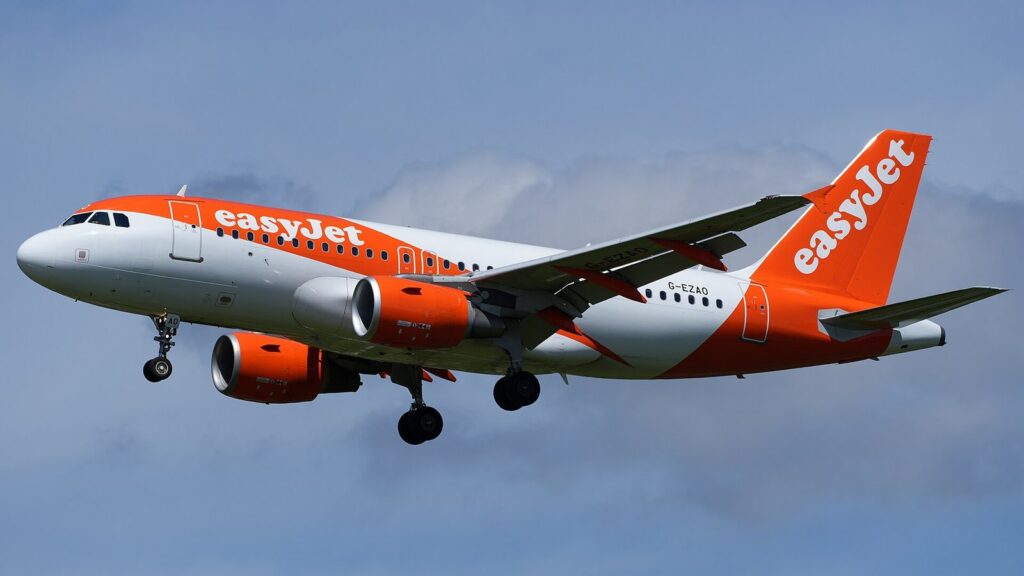
The fare is rarely what you pay. On Ryanair, easyJet and Wizz Air, the basic fare covers one small bag that fits under the seat; a bigger cabin bag costs extra or comes with a higher fare. easyJet publishes exact sizes, so it’s the clearest example:
| easyJet cabin bag | Maximum size | Weight limit | Cost |
|---|---|---|---|
| Small under-seat bag | 45 x 36 x 20 cm, including handles and wheels | Up to 15 kg | Free for every passenger |
| Large cabin bag (overhead locker) | 56 x 45 x 25 cm | Up to 15 kg | Paid add-on; included with easyJet Plus membership and Inclusive Plus fares |
Ryanair and Wizz Air work on the same principle (one small free bag, a larger one paid), but their size limits and fees change, so check each airline’s bag policy on its own site at the time you book, not the week before you fly. Measure your bag with the wheels and handles in. A bag that doesn’t fit the sizer at the gate is the most expensive thing you’ll buy on a budget flight.
Price the whole trip, not the fare
Before you book a short hop, add up:
- The fare, plus any bag you’ll actually carry.
- Seat selection, if you’re travelling with someone and care about sitting together.
- The transfer from the airport to where you’re staying, in money and time.
- The time cost: arriving two hours early, then the transfer, against a train from city centre to city centre.
For trips under about four or five hours by fast train, I’d look at rail first. Our guide to booking European train tickets covers the main operators and when their fares open.
Verdict: low-cost flights are excellent for long hops across the continent and poor value for short ones where the train runs city centre to city centre.
Flying to Europe from the UK: what the tax adds
UK travellers pay Air Passenger Duty on most flights leaving a UK airport, and it’s built into the fare you see. All EU and EEA destinations fall in the lowest distance band. The rates from 1 April 2026, per passenger:
| APD from 1 April 2026 | Reduced rate (lowest class of travel) | Standard rate | Higher rate |
|---|---|---|---|
| Domestic UK | £8 | £16 | £142 |
| Band A (all EU and EEA destinations) | £15 | £32 | £142 |
The reduced rate applies to the lowest class of travel where the seat pitch is under 1.016 metres (40 inches): in practice, standard economy. Rates rise slightly from 1 April 2027, so a booking for spring 2027 may carry the new figure. You can’t avoid APD by flying from a different UK airport, but you can avoid paying for premium seats you don’t need, since the standard rate is more than double.
For UK travellers, the bigger saving is usually the departure airport. Low-cost carriers fly to Europe from many regional airports, and a direct flight from somewhere near home can beat a cheaper fare from London once you add the train to Stansted or Gatwick.
What happens if your flight is delayed or cancelled?
EU law (Regulation 261/2004, usually called EU261) gives passengers compensation when a flight arrives three hours or more late, or is cancelled, unless the cause was extraordinary circumstances outside the airline’s control. It covers flights leaving the EU, and flights into the EU only when an EU airline operates them.
| Flight distance | Compensation |
|---|---|
| 1,500 km or less | €250 |
| More than 1,500 km within the EU, and other flights of 1,500–3,500 km | €400 |
| More than 3,500 km (outside the EU), with a delay of 4 hours or more | €600 |
| More than 3,500 km, delay of 3 to 4 hours | €300 |
These amounts come from the EU’s own passenger rights pages, which also explain how to claim. Two practical points: keep your boarding passes and receipts for meals and hotels, and note that a self-built connection on two separate tickets gets no protection for the missed second flight, whatever happens to the first.
Planning your flights: a booking order that saves money
Book in this order, and most of the expensive mistakes disappear:
- Fix your trip length and rough route. Our Europe itinerary ideas and the pillar guide to planning a European trip from scratch help here.
- Track the long-haul flight for a few weeks across a range of dates and two or three gateways.
- Book the long-haul flight once you see a fare clearly below your route’s normal range.
- Book the short hops and trains that depend on it, with generous connection time.
- Book accommodation near your arrival point first, since that’s the night you can’t move.
- Check entry rules. The EU’s Entry/Exit System has been fully operational across Schengen since 10 April 2026, replacing passport stamps for non-EU short-stay visitors, so allow extra time at your first Schengen airport. For ETIAS and passport validity, see our guide to the documents you need to travel to Europe and the EU’s travel-europe.europa.eu site.

What to book ahead: the long-haul flight, peak-season low-cost flights and your first night’s bed. What to skip: paid “flight alert” subscriptions if you’re happy to use free tracking; seat selection on short hops if you’re travelling alone; airport currency exchange.
The Europe trip planning checklist puts all of this on one page, and the guide to how to book a Europe trip covers the bookings in detail.
Mistakes that turn a cheap fare into an expensive one
- Booking the bargain without the bag. On a low-cost carrier, sorting out a bigger bag at the gate is the dearest way to pay for it. Add it when you book.
- Ignoring the airport. A cheap flight to an outlying airport with a long, costly coach ride isn’t cheap.
- Tight self-transfers. Two separate tickets with a short gap are a gamble with no safety net.
- Chasing the last few dollars. If a fare is clearly below your route’s normal range, buy it. Waiting another week to save a little more often loses the fare entirely.
- Trusting an old list of “cheap airlines”. Airlines fold and cut routes; PLAY is gone and Norse has shrunk. Search the route as it stands.
First-time visitors will find more of these pitfalls, beyond flights, in our first trip to Europe tips.
Frequently asked questions about cheap flights to Europe
What is the cheapest month to fly to Europe?
Going.com describes January through early March as off-season for cheap flights to Europe, and says it finds the most deals for January travel. The Christmas and New Year fortnight is the exception, priced as peak. The shoulder months of April, May, September and October are a good middle ground on both price and weather.
How much is a cheap flight to Europe?
It depends on your departure city and dates. The average return fares from the US on Going.com’s Europe page cluster around $890–$900 for destinations such as Paris, Lisbon, Barcelona and Kraków. A cheap fare is one clearly below the normal range for your own route, which you’ll learn by tracking it on Google Flights for a few weeks.
Is it cheaper to fly into London or a city in mainland Europe?
Sometimes. London has heavy transatlantic competition, which can bring fares down, but the UK is outside the EU and Schengen, so an onward flight means another passport check. Compare your target city against London, Dublin, Madrid and Lisbon for the same dates, then add the cost and time of the onward leg before deciding.
What day of the week is cheapest to buy a flight to Europe?
There is no reliable cheapest day to buy. Which days you fly matters far more than which day you buy, so use Google Flights’ Dates and Price graph tools to compare departure days, and buy whenever a fare drops below your route’s usual range.
Are low-cost long-haul airlines still worth it?
They can be, but the market is smaller. PLAY stopped flying in September 2025 and Norse Atlantic cancelled its Los Angeles routes for summer 2026. Full-service airlines’ sale fares often match them once a checked bag is added. Compare the total price, pay by credit card, and check the airline’s current schedule before planning around it.
Can I claim compensation if my flight to Europe is delayed?
Under EU261 you can claim €250 to €600 for an arrival delay of three hours or more, or a cancellation, unless extraordinary circumstances caused it. Flights into the EU from outside are covered only if an EU airline operates them. Flights leaving the EU are covered whatever the airline. The EU’s Your Europe pages explain how to claim.
Is booking two separate tickets to save money a good idea?
Only with a long buffer. Separate tickets aren’t linked, so if the first flight is late and you miss the second, the second airline owes you nothing and you’ll buy a new fare. Leave several hours between flights, or better, stay a night at the gateway and fly on in the morning.
Final thoughts
Cheap flights to Europe are mostly a matter of flexibility and arithmetic: let the fare choose the week and the gateway, then add up bags, transfers and connection risk before calling anything a bargain. Book the long-haul leg first and build around it. For everything else on the list, from budgets to bookings, go back to our Europe trip planning guide and pick up the next step.
Related Europe guides
- When to Book a Trip to Europe: booking windows for flights, trains and beds in one place
- How Many Days Do You Need in Europe: how long to stay so the fare works out per day
- Europe Trip Planning Checklist: every booking on one page
- Cheapest Time to Visit Europe: A Month-by-Month Guide for 2027: month-by-month prices on the ground as well as in the air
- Europe on a Budget: How Much a Trip Really Costs in 2026: the daily costs the fare has to sit beside
- Cheapest Places to Travel in Europe in 2026: Where Your Money Goes Furthest: where a cheap fare goes furthest
Sources and verification
Prices, timetables and rules in this guide were checked on 10 November 2026 against the official sources below. It is compiled from those sources rather than from other travel lists, and it does not describe first-hand visits. Fares, opening hours and entry rules change, so confirm with the operator before you book.
- GOV.UK: Rates and allowances for Air Passenger Duty
- Your Europe: Air passenger rights
- European Commission: Entry/Exit System fully operational
- easyJet: Cabin bags
- Google Flights Help: Track flights and prices
- Google Flights Help: Find the best dates and prices
- TAP Air Portugal: Portugal Stopover
- Norse Atlantic Airways: Q2 2026 report
Hannah Brooks has spent fifteen years travelling, living and writing across Europe, from the Arctic tip of Norway to the south of Sicily. She has planned hundreds of European itineraries for readers and is Senior Europe Editor at EuropeanTourism.org.
Photo credits
- Terminal 4 at Madrid-Barajas, a gateway for cheap flights to Europe (top photo): photo by Diego Delso, Wikimedia Commons (CC BY-SA 3.0)
- Dublin Airport Terminal 2 building seen from above the forecourt: photo by 瑞丽江的河水, Wikimedia Commons (CC BY-SA 4.0)
- Check-in hall of Terminal 1 at Lisbon Humberto Delgado Airport: photo by Sharon Hahn Darlin, Wikimedia Commons (CC BY 2.0)
- Keflavík International Airport terminal seen from the tarmac: photo by APK, Wikimedia Commons (CC BY 4.0)
- Ryanair Boeing 737 parked at London Stansted Airport: photo by Photograph by Mike Peel (www.mikepeel.net), Wikimedia Commons (CC BY-SA 4.0)
- easyJet Airbus A319 with landing gear down over Hamburg Airport: photo by MarcelX42, Wikimedia Commons (CC BY-SA 4.0)
- Concourse in Frankfurt Airport Terminal 1: photo by MNXANL, Wikimedia Commons (CC BY-SA 4.0)