Visiting Europe in Winter: The Complete 2026/27 Guide

The first time I spent a December in Vienna I made the mistake almost everyone makes when visiting Europe in winter. I booked six days, filled every one of them with outdoor sightseeing, and discovered on day two that the light goes at half past four and the Ringstrasse in a wet northerly is not a place you linger. By day four I had rebuilt the whole trip around coffee houses, the Kunsthistorisches, one market a night and a thermal bath in Budapest at the end. It was the best week I have ever had in Central Europe.
That is the short version of everything I know about visiting Europe in winter, and the coldest quarter of our wider guide to the best time to visit Europe. The continent does not shut down between November and March. It reorganises itself around interiors, darkness and one very good reason to be outside in the cold, whether that is a market, a mountain or an aurora forecast. Plan around that and winter is the best-value season Europe has. Plan against it and you will spend a lot of money being cold in the dark.
The short answer on visiting Europe in winter
Winter in Europe splits three ways: a dark, cold north built around snow and northern lights, a mild south where Canary Island afternoons hit 21°C in January, and a Central European middle that trades daylight for Christmas markets, thermal baths and empty museums. Costs outside the two festive weeks fall sharply. Pick a lane and winter beats summer.
Below are forty-two places I would actually book between late November and early March, sorted by what they are for rather than by some arbitrary countdown. Then the things that decide whether the trip works: what the temperature and daylight really are, what closes, what the new border paperwork means for winter 2026/27, and what it all costs.
What “winter” actually means in Europe, and why the answer is three different things
Ask a Finn and a Sicilian what a European winter is and you will get two answers that have nothing to do with each other. Rovaniemi’s average January high is minus 7.3°C. Gran Canaria’s is 21.1°C. That is a 28-degree spread inside the same continent in the same month, which makes it the single most useful fact for planning a winter trip.
Practically, I think of it as three winters.
The northern winter runs from roughly Bergen and Tallinn upwards. Cold is a given, daylight is the real constraint, and the whole tourist economy is built around it: huskies, ice hotels, aurora chasing, reindeer, saunas. Reykjavik gets four hours and twenty-five minutes between dawn and dusk in December. Tromso loses the sun entirely from late November to mid-January. You do not fight this. You book the things that only work in the dark.
The middle winter covers most of what people picture when they picture Europe: Vienna, Prague, Paris, Berlin, Krakow, Amsterdam, Budapest. Temperatures hover a few degrees either side of freezing, daylight runs eight or nine hours, and the sky is often grey rather than dramatic. Vienna gets about fifty hours of sunshine in the whole of December, an average of an hour and a half a day. This is museum, market, cafe and concert territory, and it is very good at it.
The southern winter is the one most travellers underrate. It is not beach weather anywhere in mainland Europe, but Seville in February averages a daytime high of 18.6°C, Palermo sits at 15 to 17°C all winter, and the Canaries and Madeira hold the low twenties. It is the closest thing the continent has to Mediterranean weather out of season. Add Cyprus, which records over 3,300 hours of sunshine a year at Larnaca, and you have a real winter-sun option that does not require leaving the continent.
The seasons do not line up with the calendar either, and the shoulder months work differently again: see Europe in spring and Europe in autumn for those. Alpine ski areas open from late November and run to April. Most German and Austrian Christmas markets stop dead on 24 December, which catches people out constantly. Prague, Tallinn, Zagreb and Brussels keep going into January. And the far north’s aurora season stretches from late August to early April, far wider than the December-to-February window most people assume.
All 42 places worth visiting in Europe in winter, at a glance
Use this to narrow down fast. The “window” column is the 2026/27 season as published by the operator or tourist board in August 2026, so dates for the smaller markets are still provisional and worth a check before you book flights. The cost band is my own judgement of what a comparable few days costs, not a sourced number, and it moves a lot between the third week of December and the third week of January.
| Destination | Country | What it is for | Window for winter 2026/27 | Book ahead? | Cost band |
|---|---|---|---|---|---|
| 1. Vienna | Austria | The biggest, most polished Christmas market circuit in Europe | 13 Nov to 26 Dec, ice rink to 6 Jan | Hotels yes, markets no | EUR EUR EUR |
| 2. Prague | Czechia | A market that runs past New Year in a city built for cold light | 28 Nov to 6 Jan | Hotels yes | EUR EUR |
| 3. Budapest | Hungary | Markets plus thermal baths, the best warm-cold combination on the continent | Mid Nov to 1 Jan | Baths and hotels yes | EUR EUR |
| 4. Krakow | Poland | Central Europe’s cheapest big Advent city | Late Nov to 1 Jan | Hotels yes | EUR |
| 5. Tallinn | Estonia | A single perfect medieval square, snow more likely than not | 20 Nov to 6 Jan | No | EUR EUR |
| 6. Zagreb | Croatia | A city-wide Advent that spills into parks and squares | 28 Nov to 7 Jan | No | EUR EUR |
| 7. Nuremberg | Germany | The traditionalist’s Christkindlesmarkt, strict about what can be sold | 27 Nov to 24 Dec | Hotels yes, weeks ahead | EUR EUR |
| 8. Dresden | Germany | The oldest of the German markets and the Stollen capital | 25 Nov to 24 Dec | Hotels yes | EUR EUR |
| 9. Cologne | Germany | Seven markets inside a walkable ring, cathedral overhead | 16 Nov to 23 Dec | No | EUR EUR |
| 10. Strasbourg | France | The Capitale de Noel, running since 1570 | Late Nov to 27 Dec | Hotels yes, months ahead | EUR EUR EUR |
| 11. Colmar | France | Six small markets in an Alsatian town you can cross in twenty minutes | 23 Nov to 29 Dec | Hotels yes | EUR EUR |
| 12. Basel | Switzerland | Switzerland’s largest market, and the easiest festive day trip in Europe | 26 Nov to 23 Dec | No | EUR EUR EUR EUR |
| 13. Bruges | Belgium | A market plus a light trail that runs deep into February | 20 Nov to 3 Jan, lights to 14 Feb | Weekends yes | EUR EUR EUR |
| 14. Copenhagen | Denmark | Tivoli, which is less a market than a small illuminated country | 13 Nov to 3 Jan | Tickets yes | EUR EUR EUR EUR |
| 15. Gran Canaria | Spain | The most reliable winter warmth in Europe, full stop | Dec to Feb | Flights yes | EUR EUR |
| 16. Tenerife | Spain | Same latitude, more mountain, better hiking | Dec to Feb | Flights yes | EUR EUR |
| 17. Funchal, Madeira | Portugal | Mild, green, walkable, and busy at New Year for the fireworks | Dec to Feb, avoid 31 Dec unless booked | New Year months ahead | EUR EUR |
| 18. Larnaca and the Cyprus coast | Cyprus | Europe’s sunniest winter, and almost nobody goes | Dec to Feb | No | EUR EUR |
| 19. Valletta and Malta | Malta | Winter sun with two thousand years of stonework attached | Dec to Feb | No | EUR EUR |
| 20. Seville | Spain | Orange trees, empty Alcazar queues, jacket weather | Dec to Feb | Alcazar yes | EUR EUR |
| 21. Faro and the Algarve | Portugal | Golf-course sunshine and coastal walking without the crowds | Dec to Feb | No | EUR |
| 22. Palermo and western Sicily | Italy | The mildest big city in Italy and the best winter market food | Dec to Feb | No | EUR |
| 23. Rovaniemi | Finland | Santa, huskies and a genuine two-week polar night | Dec for atmosphere, Feb for light | Everything, months ahead | EUR EUR EUR |
| 24. Tromso | Norway | The best-connected aurora base in Europe | Late Nov to mid Feb | Tours and hotels yes | EUR EUR EUR EUR |
| 25. Swedish Lapland and Jukkasjarvi | Sweden | The Icehotel, and the clearest skies of the three Nordic options | Dec to Mar | Icehotel far ahead | EUR EUR EUR EUR |
| 26. Reykjavik | Iceland | Aurora, geothermal water and four and a half hours of daylight | Late Sep to Mar | Cars and lagoons yes | EUR EUR EUR EUR |
| 27. Bergen | Norway | Mild, wet, dramatic, and the gateway to winter fjords | Dec to Feb | Fjord tours yes | EUR EUR EUR EUR |
| 28. Val Thorens and Les 3 Vallees | France | The largest linked ski area in the world, and the earliest reliable snow | Opens 21 Nov 2026; full links 5 Dec to 18 Apr 2027 | Accommodation yes | EUR EUR EUR |
| 29. Zermatt | Switzerland | Year-round glacier skiing under the Matterhorn, no cars | Dec to Apr | Yes | EUR EUR EUR EUR |
| 30. St Anton am Arlberg | Austria | Steep terrain and the loudest apres-ski in the Alps | From 2 Dec 2026 | Yes | EUR EUR EUR |
| 31. Kitzbuhel | Austria | Medieval town first, ski resort second | Dec to Apr | Hahnenkamm week yes | EUR EUR EUR |
| 32. Innsbruck | Austria | A real city with nine ski areas on a free shuttle | Dec to Mar | No | EUR EUR |
| 33. Grandvalira | Andorra | Big Alpine-scale terrain at Pyrenean prices | Dec to Apr | No | EUR EUR |
| 34. Bansko | Bulgaria | The cheapest lift-served skiing in Europe by a distance | Dec to Apr | No | EUR |
| 35. Rome | Italy | The Forum without the queue, and mild enough to keep walking | Jan and Feb | Vatican still yes | EUR EUR EUR |
| 36. Paris | France | Museums at their emptiest and the lights on until early January | Jan and Feb | Some museums | EUR EUR EUR |
| 37. Barcelona | Spain | Gaudi without the scrum, and lunch outside on a good day | Jan and Feb | Sagrada Familia yes | EUR EUR EUR |
| 38. Amsterdam | Netherlands | Dark, cheap by its own standards, and built for indoor days | Jan and Feb | Anne Frank House yes | EUR EUR EUR |
| 39. Berlin | Germany | The one big European city that is arguably better cold | Dec to Feb | No | EUR EUR |
| 40. Edinburgh | Scotland | Seven hours of daylight, and the best New Year in Europe | Dec, and Jan for quiet | Hogmanay far ahead | EUR EUR EUR |
| 41. Istanbul | Turkey | Grey, wet, cheap and completely uncrowded | Dec to Feb | No | EUR |
| 42. Venice | Italy | Fog, no access fee, and Carnival if you want the opposite of quiet | Jan for quiet, Feb for Carnival | Carnival yes | EUR EUR EUR |
Two things that table will not tell you. The first is that “book ahead” in winter means something different from summer: outside Christmas week, New Year and the ski holidays, most of Europe has spare beds, and I have walked into hotels in Istanbul and Palermo in January at a rate that would be a fantasy in July. The second is that the cheap window is very precisely defined. Prices spike from around 15 December to 1 January and then collapse. Mid-January to the end of February is the cheapest stretch of the European year.
Winter temperatures and daylight, city by city
“Mild” and “crisp” are useless words for deciding whether you need a proper coat or a fleece, so here are the 1991 to 2020 normals for thirty-one cities, ranked by December daytime high, with the December day length beside them, because day length shapes a winter day more than temperature does.
| City | Dec avg high / low °C | Jan avg high / low °C | Feb avg high / low °C | Dec daylight, dawn to dusk | Source |
|---|---|---|---|---|---|
| Gran Canaria (airport) | 22.4 / 16.5 | 21.1 / 15.2 | 21.4 / 15.3 | 10h 25m | Climates to Travel |
| Santa Cruz de Tenerife | 22.2 / 16.8 | 21.1 / 15.5 | 21.3 / 15.4 | not published | Wikipedia climate box |
| Funchal, Madeira | 20.8 / 15.7 | 19.8 / 14.6 | 19.8 / 14.1 | about 10h | Climates to Travel |
| Larnaca, Cyprus | 18.9 / 9.7 | 17.1 / 7.8 | 17.5 / 7.6 | about 10h | Climates to Travel |
| Faro, Algarve | 17.3 / 9.6 | 16.5 / 8.2 | 17.1 / 8.7 | 9h 40m | Climates to Travel |
| Seville | 17.2 / 7.2 | 16.6 / 5.8 | 18.6 / 6.8 | 9h 35m | Climates to Travel |
| Valletta, Malta | 17.2 / 11.8 | 15.7 / 10.1 | 15.7 / 9.5 | not published | Wikipedia climate box |
| Palermo | 16.7 / 11.0 | 15.4 / 9.5 | 15.3 / 9.1 | 9h 35m | Climates to Travel |
| Lisbon | 15.2 / 9.6 | 14.9 / 8.8 | 16.1 / 9.2 | 9h 30m | Climates to Travel |
| Barcelona | 14.7 / 6.3 | 14.1 / 5.5 | 14.6 / 6.0 | 9h 10m | Climates to Travel |
| Naples | 14.4 / 5.9 | 13.5 / 4.7 | 14.0 / 5.0 | 9h 20m | Climates to Travel |
| Athens | 14.4 / 8.7 | 13.3 / 7.1 | 14.2 / 7.3 | not published | Wikipedia climate box |
| Nice | 14.1 / 6.6 | 13.3 / 5.8 | 13.5 / 6.1 | not published | Wikipedia climate box |
| Dubrovnik | 13.4 / 7.8 | 12.3 / 6.6 | 12.6 / 6.8 | not published | Wikipedia climate box |
| Rome | 12.8 / 4.7 | 11.9 / 3.5 | 13.0 / 3.8 | 9h 10m | Climates to Travel |
| Madrid | 11.4 / 2.6 | 10.8 / 1.9 | 12.8 / 2.5 | 9h 20m | Climates to Travel |
| Istanbul | 11.0 / 5.3 | 9.0 / 3.3 | 9.7 / 3.4 | 9h 20m | Climates to Travel |
| Paris | 8.1 / 2.2 | 7.6 / 1.7 | 8.8 / 1.6 | 8h 20m | Climates to Travel |
| Edinburgh | 6.9 / 0.9 | 6.9 / 1.1 | 7.6 / 1.1 | 7h 5m | Climates to Travel |
| Amsterdam | 6.9 / 1.9 | 6.2 / 1.2 | 6.9 / 1.0 | 7h 50m | Climates to Travel |
| Bergen | 5.3 / 1.0 | 4.7 / 0.6 | 4.9 / 0.1 | not published | Wikipedia climate box |
| Prague | 4.8 / 0.6 | 3.9 / -0.5 | 5.6 / 0.0 | not published | Wikipedia climate box |
| Innsbruck | 4.1 / -3.4 | 3.9 / -4.5 | 7.2 / -3.6 | not published | Wikipedia climate box |
| Berlin | 4.1 / -0.9 | 3.2 / -2.2 | 4.9 / -1.8 | not published | Wikipedia climate box |
| Vienna | 3.8 / -1.8 | 3.2 / -2.9 | 5.7 / -2.0 | 8h 25m | Climates to Travel |
| Reykjavik | 3.6 / -2.0 | 3.4 / -2.2 | 3.4 / -2.4 | 4h 25m | Climates to Travel |
| Budapest | 3.5 / -1.4 | 3.0 / -2.5 | 5.8 / -1.3 | not published | Wikipedia climate box |
| Krakow | 2.7 / -3.4 | 1.6 / -4.7 | 3.7 / -3.7 | not published | Wikipedia climate box |
| Tallinn | 1.2 / -3.1 | -0.7 / -5.5 | -1.0 / -6.2 | not published | Wikipedia climate box |
| Tromso | 0.3 / -3.9 | -1.0 / -5.3 | -1.2 / -5.6 | polar night | Wikipedia climate box |
| Rovaniemi | -4.9 / -10.6 | -7.3 / -13.5 | -7.3 / -13.3 | about 2.5h at solstice | Wikipedia climate box |
A few things jump out of that table once you sit with it.
The warm end is warmer than people expect, and the gap is enormous. Gran Canaria’s December high of 22.4°C is 27.3 degrees above Rovaniemi’s minus 4.9°C in the same month. Both are in Europe. Both are a direct flight from London.
Southern Europe is mild, not warm. Rome in January averages 11.9°C by day and 3.5°C at night, and Rome sees snow perhaps once every few years. Naples looks similar on paper and then rains on you for eleven days in December. Athens, Nice and Dubrovnik all sit in the 12 to 14°C band. That is jacket, scarf and a warm lunch indoors, not a terrace.
Daylight matters more than temperature in the middle band. Edinburgh gets seven hours and five minutes between dawn and dusk in December, and only about an hour and a half of actual sunshine a day. On 21 December the sun comes up at 08:40 and is gone by 15:40. Amsterdam and Paris are barely better. If you are used to a long day, this is the thing that will surprise you, not the cold.
Istanbul is the sleeper. It sits at 11°C in December, which sounds fine, and then gives you two hours of sun a day and 105mm of rain across twelve days. Istanbul in winter is grey and wet. It is also empty, and the food and the hammams do not care about the weather, which is why it stays on my list.
Reykjavik’s four hours and twenty-five minutes is the number to plan around. Sunrise at 11:20, sunset at 15:30 on the solstice. You get one long, low, orange hour that photographers call the whole day, and then you go inside. That is workable. It just means a five-day trip has about twenty-two usable daylight hours in it, and you should build the itinerary accordingly.
One caveat on the data: several of these stations sit outside the city centre. Madrid’s figures come from Cuatro Vientos airport, Paris’s from Orly, Rome’s from Ciampino, and the Gran Canaria row is the airport on the east coast rather than Las Palmas itself. Urban centres usually run a degree or so warmer at night than their airports. If you are deciding what to pack off the back of this table, our Europe packing list has the winter version, and the month-by-month weather tables for Europe put these winter numbers next to the other nine months.
Christmas markets and festive cities
Fourteen places where the market is the reason to go, not a bonus. For the full circuit, including the ones that did not make this list, see our guide to Christmas markets in Europe. One structural point before the list: the German and Austrian tradition treats the market as Advent, so most of them close on 24 December and the city goes quiet for a week. Vienna is the notable exception: its Rathausplatz market runs to 26 December and the skating carries on into January. The Central and Eastern European ones treat it as a winter festival and run to Epiphany on 6 January. If you want lit-up squares between Christmas and New Year, go east.
1. Vienna, Austria
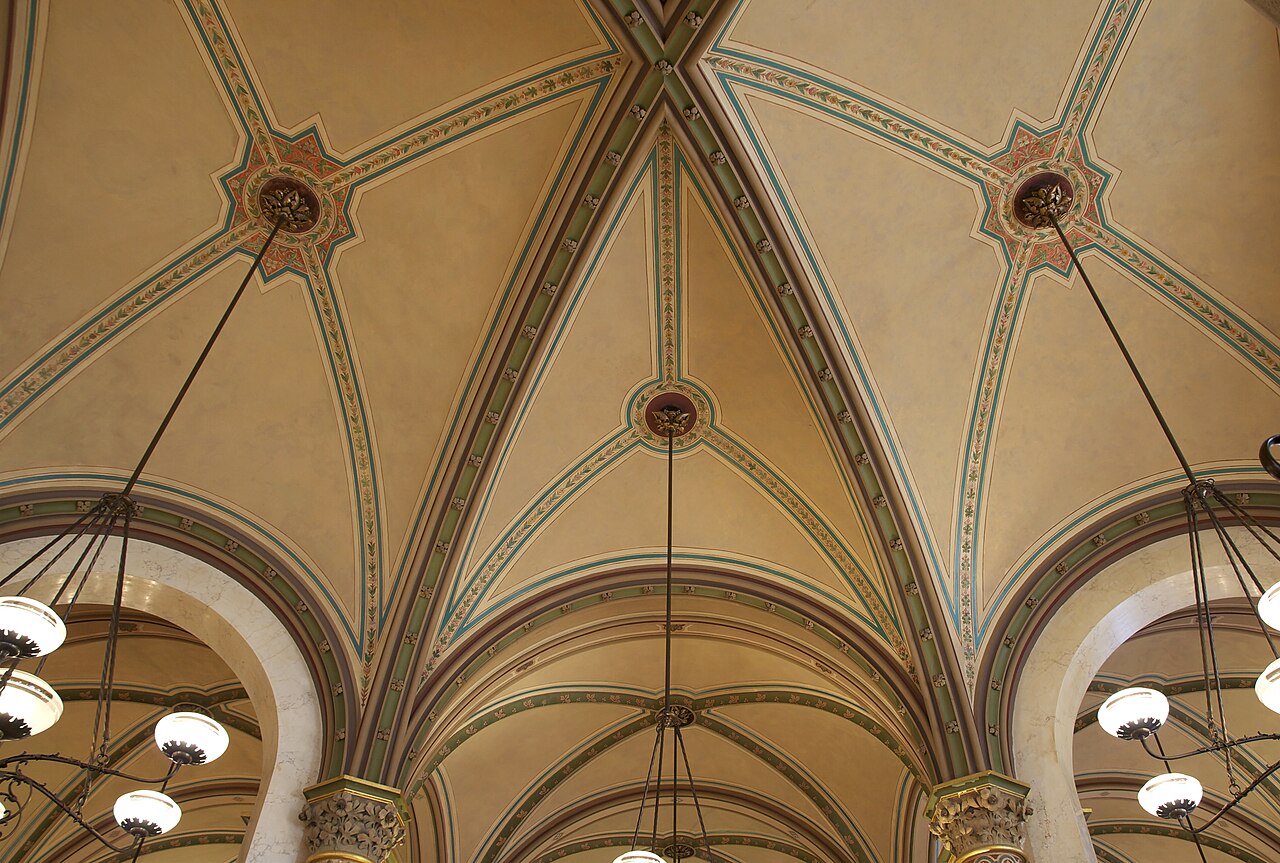
Vienna does not have a Christmas market. It has more than a dozen, and they are graded by temperament. The Rathausplatz one in front of the town hall is the big, loud, family one, expected to run from 13 November to 26 December 2026 with a skating trail through the park that carries on to 6 January. Spittelberg, in the Biedermeier lanes behind the Museumsquartier, is the one I actually send people to: smaller stalls, better craft, fewer inflatable snowmen. Karlsplatz is the arty one. Schoenbrunn is the one with the palace behind it.
What makes Vienna the strongest festive base in Europe is that the market is the evening and the city is the day. December here averages an hour and a half of sunshine a day and about eight and a half hours of daylight, so you are indoors a lot, and Vienna has more good indoors per square kilometre than anywhere else on this list. The Kunsthistorisches, the Albertina, a standing ticket at the Staatsoper from about €13, and a coffee house where nobody will ask you to leave. Average December high is 3.8°C, low minus 1.8°C.
2. Prague, Czechia
Prague’s Old Town Square market is the one on every calendar for good reason: a Gothic square, a tree the height of the buildings, and the astronomical clock going off every hour to a crowd of several hundred. It is expected to run from 28 November 2026 to 6 January 2027, daily, which makes Prague one of the few places where a 30 December trip still gets you the full festive set-up.
The honest note is that Old Town Square in mid-December is very crowded and the food there is priced for people who will not check. Walk ten minutes to the Namesti Miru market by the church in Vinohrady and you are among Czech families eating the same trdelnik for a third of the price. Prague in December is also the darkest big city in Central Europe by sunshine hours: 46.2 hours for the whole month, the lowest of its year. Bring the coat and lean into the beer halls.
3. Budapest, Hungary
The single best winter combination in Europe is a cold afternoon at a Budapest market followed by ninety minutes in 38°C water at Szechenyi with steam coming off the surface. Nothing else on the continent does the hot-cold contrast this well, which is the reason Budapest outranks cities with better markets.
The markets themselves are Vorosmarty Square, which is the polished one with the good design stalls, and the Advent Basilica market in front of St Stephen’s, which has the light show projected onto the basilica facade and a small ice rink. Official 2026 dates had not been published when I checked in August 2026. Both have historically opened around the middle of November and run to 1 January, so plan on that and confirm before you book. Budapest is also one of the cheaper capitals in this section: December high 3.5°C, low minus 1.4°C.
4. Krakow, Poland
Krakow’s market fills the Rynek Glowny, which at roughly 40,000 square metres is one of the largest medieval squares in Europe, and it does so without feeling like a theme park. Expect it to open on 27 or 28 November 2026 (sources disagree, and the city has not settled it publicly) and run to 1 January, roughly 10:00 to 20:00 with the food stalls going later.
Come for oscypek, the smoked sheep’s cheese grilled and served with cranberry, and for the fact that Krakow is properly cold: December high 2.7°C, January high 1.6°C with lows around minus 4.7°C. It snows. Wawel Castle in snow with nobody on the approach is one of the better sights in Central Europe. It is also in the cheapest cost band on this list for a comparable standard of hotel, alongside Istanbul, Palermo and the Algarve, and a natural anchor for an Eastern Europe itinerary, which is why I keep sending people here instead of Prague.

5. Tallinn, Estonia
Everything good about Tallinn follows from how small it is. The market sits in Raekoja plats, the Town Hall Square, which has had an annual Christmas tree since 1441 and claims to be the first place in Europe to have put one up in public. It is expected to run 20 November 2026 to 6 January 2027, roughly 10:00 to 20:00 with the drink stalls open later.
You can see the entire market in twenty minutes. You should then spend two days in the walled Old Town around it, which in snow is the most convincing medieval city in northern Europe, and eat elk soup and black bread at Olde Hansa if you can tolerate the costumes, or at Rataskaevu 16 if you cannot. Tallinn is properly cold: January high minus 0.7°C, February high minus 1.0°C, which makes February the coldest month here. Snow is likely rather than possible.
6. Zagreb, Croatia
Zagreb’s Advent won a European best-Christmas-market title three years running in the 2010s and then quietly kept getting better while everyone carried on flying to Vienna. It is expected to run 28 November 2026 to 7 January 2027, and calling it a market undersells it. This is a city-wide occupation, with more than twenty-five locations across the city, with an ice rink in King Tomislav Square, a food strip on Strossmayer Promenade and DJ sets in Zrinjevac park.
It is also cheap, walkable and almost entirely Croatian in its crowd, which is unusual for a market with this reputation. Pair it with a day trip to Plitvice if you want, but check the section below on what closes first: the Upper Lakes of Plitvice shut for winter and the park runs 08:00 to 16:00 from November to March, with the ticket offices closing at 14:00.
7. Nuremberg, Germany
The Christkindlesmarkt is the purist’s choice and it has confirmed dates: 27 November to 24 December 2026, on the Hauptmarkt, daily 10:00 to 21:00, closing at 14:00 on Christmas Eve. The opening ceremony is at 17:30 on the first evening, when the Christkind reads a prologue from the balcony of the Frauenkirche to a square packed shoulder to shoulder.
Nuremberg’s market committee polices what can be sold, which is why you will not find the plastic tat that has crept into larger markets. What you will find is Nuremberg Rostbratwurst, three to a roll, and Lebkuchen from bakeries that have been making it since the fifteenth century. A practical warning on both ends of the trip. The hotel supply in the old town is small and books out weeks ahead for December weekends, and the market closes at 14:00 on the 24th, so a Christmas Eve arrival gets you almost nothing.
8. Dresden, Germany
The Striezelmarkt on the Altmarkt runs 25 November to 24 December 2026 and claims descent from a market first held in 1434, which would make it the oldest in Germany. It is named after Striezel, the early word for Stollen, and the Stollen is the reason to come: the Stollenfest parades a cake weighing several tonnes through the city on the Saturday before the second Advent Sunday, cut with an oversized silver knife.
Dresden has the best skyline-to-effort ratio of any German market city. The Frauenkirche, the Zwinger and the Semperoper are all within a few minutes of the market, and the Baroque quarter across the river has a smaller, better market at Neustaedter Markt. It is a one-night city with a very good two days in it.
9. Cologne, Germany
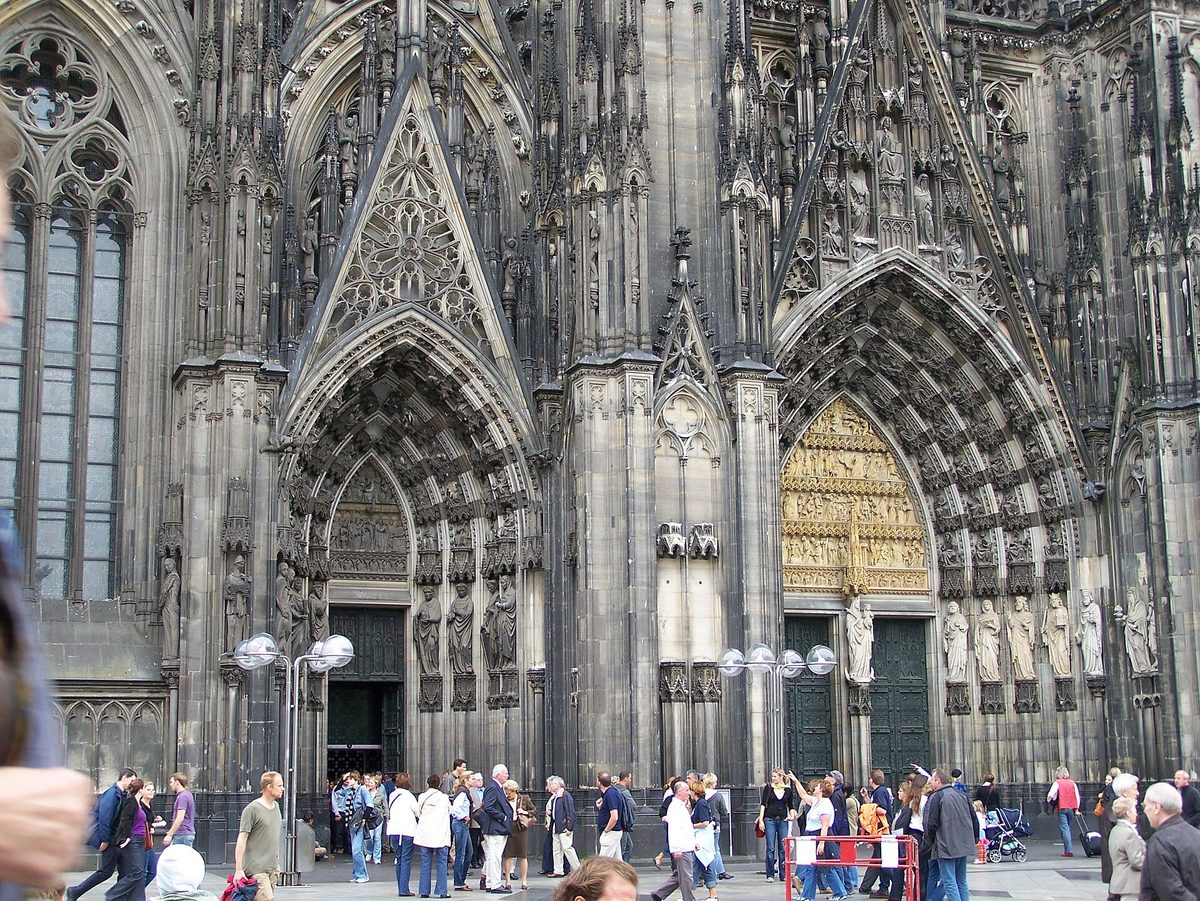
Seven markets sit inside a walkable ring here, which means you can do the entire Cologne circuit on foot in a single evening. The cathedral market on Roncalliplatz, directly under the Dom, is expected to run 16 November to 23 December 2026, as is the Angels’ Market on Neumarkt and the Nikolausdorf at Rudolfplatz, while Heinzels Wintermaerchen in the Altstadt is expected to open a week later on 23 November.
Note the closing date. Cologne’s markets stop on 23 December, a day earlier than the Bavarian ones, so a 24 December arrival gets you a cathedral and a closed square. The compensating factor is Karneval, which technically opens on 11 November at 11:11 and then goes dormant until the street carnival in the days before Ash Wednesday, when the Rose Monday parade runs about 8.5 kilometres with around 12,000 participants and takes roughly three and a half hours to pass. If you want the loudest week in Germany, that is February, not December.
10. Strasbourg, France
Strasbourg calls itself the Capitale de Noel and has the receipts: a market first recorded in 1570, which makes it the oldest continuously running one in France and among the oldest anywhere. Dates for 2026 are expected to be 27 November to 27 December, following the city’s long-standing rule of opening on the fourth Friday of November, though the official confirmation had not appeared when I checked.
The market spreads across a dozen squares in the Grande Ile, with the big tree on Place Kleber and the best stalls around the cathedral. It is also, by some distance, the most difficult festive city on this list to book. Alsace in December is a coach-tour destination and the central hotels go months ahead. If you are late, stay in Colmar or across the Rhine in Kehl, or treat it as a stop on a wider France trip and take the tram, which is a fifteen-minute ride and costs less than a coffee.
11. Colmar, France
Colmar is Strasbourg’s better-behaved smaller relative: six markets in a town you can walk across in twenty minutes, canals with timber-framed houses leaning over them, and an atmosphere in the early evening that is very hard to be cynical about. Expected dates are 23 November to 29 December 2026 for the main markets, with the gourmet market running to 3 January 2027. Hours are roughly 11:00 to 19:00 Monday to Thursday and 11:00 to 20:00 at weekends.
Go on a weekday. Colmar at 14:00 on a December Saturday is a slow-moving crowd, and the whole appeal is being able to stop and look at things. The Unterlinden Museum, which holds the Isenheim Altarpiece, is a first-rate museum and is at its emptiest in exactly the weeks the streets are fullest.
12. Basel, Switzerland
Basel runs Switzerland’s largest Christmas market, confirmed for 26 November to 23 December 2026, daily 11:00 to 20:30, across Barfuesserplatz and Muensterplatz. It is smaller and calmer than the German giants and noticeably better made: this is a city with money and taste, and the stalls reflect it.
Basel is also the easiest festive day trip in Europe because the city sits on the corner where Switzerland, France and Germany meet, with an airport that has separate French and Swiss exits. You can be at the market from Colmar or Freiburg in under an hour. The cost band is the catch. Switzerland is the most expensive country in this guide and a mug of Gluehwein in Basel will cost roughly double what it costs in Krakow. If you are going once, go for the Muensterplatz stalls at dusk with the cathedral lit behind them, then eat dinner in France.

13. Bruges, Belgium
Bruges has a market on the Markt and a smaller one on Simon Stevinplein, expected to run 20 November 2026 to 3 January 2027, but the reason it is on this list is the light trail. Winter Glow strings installations through the city and, unusually, runs until 14 February 2027, which means Bruges stays worth a trip for six weeks after everywhere else has taken the lights down.
January and early February are when I would go. The canals do the work, the day-trip coaches from the cruise ports are gone, and the museums that queue in summer are walk-ins. Book weekends ahead regardless, because Bruges is small and Brussels is forty minutes away by train, which makes it a default Saturday for a lot of people. Brussels itself runs Winter Wonders from around 27 November 2026 to 3 January 2027 if you want both.
14. Copenhagen, Denmark
Tivoli in December is not a Christmas market. It is a nineteenth-century pleasure garden with about a thousand trees and several hundred thousand lights, running from 13 November 2026 to 3 January 2027 and opening at 11:00. You pay to get in, the rides cost extra, and it is still the single most atmospheric festive site in northern Europe after dark.
Copenhagen is expensive and the daylight is short, so I would treat this as a two- or three-night trip built around evenings: Tivoli one night, the Nyhavn market and a long dinner the next, Louisiana up the coast on the day in between. Buy Tivoli tickets online in advance for December weekends. The rest of the city is quiet in a way it never is in June, and the restaurant scene that is impossible to book in summer will take you at a week’s notice.
Winter sun in Europe: eight places that actually deliver
“Winter sun” is a loose phrase, so here is the threshold I use: an average daytime high of 15°C or better through December, January and February, and enough sunshine that you are not just standing in mild drizzle. Eight places clear it, and several of them also appear in our roundup of underrated places in Europe. Everywhere else marketed as European winter sun is really mild-winter city-break territory, which is a fine thing to want but a different thing.
15. Gran Canaria, Spain
The Canaries are geographically off the coast of Morocco and politically Spain, and they are the only part of Europe where you can reliably sit outside in a t-shirt in January. Gran Canaria averages 22.4°C in December, 21.1°C in January and 21.4°C in February by day, with lows around 15°C, six hours of sunshine a day in December and only about 30mm of rain across four days. The sea holds around 20.6°C.
The island splits sharply. The south around Maspalomas and Playa del Ingles is where the winter sun charter market lands, exactly as you would expect. Las Palmas in the north is a real Spanish city of nearly 400,000 people with a beach in the middle of it, and that is where I would stay. One honest caveat: the figures above are recorded at the airport on the east coast, and the north of the island is cloudier and greener than the south. If you want guaranteed sun, go south.
16. Tenerife, Spain
Same latitude, same numbers, more mountain. Santa Cruz de Tenerife averages 22.2°C in December, 21.1°C in January and 21.3°C in February. What Tenerife adds is Teide, a volcano of roughly 3,715 metres with a cable car, a national park at 2,000 metres that is above the cloud layer more often than not, and some of the best winter hiking in Europe. There is frequently snow on Teide while people are swimming at sea level, which is a genuinely strange thing to see.
The north around Puerto de la Cruz and La Orotava is greener, more Canarian and cheaper. The south around Costa Adeje is sunnier and more resort. For a walking trip go north and rent a car; for pure sun-on-a-lounger go south. Either way, book the flights early: the Canary routes from northern Europe are the most in-demand winter flights on the continent and they price accordingly from mid-December.
17. Funchal and Madeira, Portugal
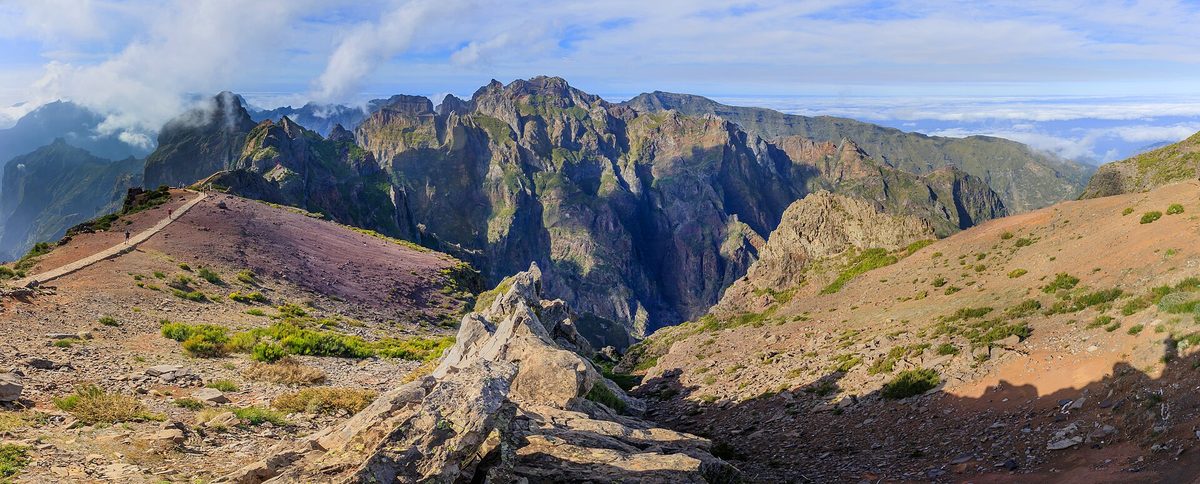
Come to Madeira for mildness rather than heat. Funchal averages 20.8°C in December, 19.8°C in January and 19.8°C in February, with lows around 14 to 15°C. Those are pleasant numbers rather than sunbathing numbers, and Madeira in December is wet, roughly 100mm across thirteen days. What you get in exchange is the best winter walking in the Atlantic: the levada paths, irrigation channels cut into the mountainsides, give you flat, shaded, spectacular routes at any fitness level.
Watch two dates. Funchal’s New Year fireworks held the Guinness record for the largest display in the world from 2007 until 2012, and the island still fills up completely for them, so 31 December is either the reason you go or the week you avoid. And Funchal’s own Christmas illuminations, switched on in early December, are worth a night on their own. Outside those windows Madeira is cheap, quiet and badly underbooked in January, and our Portugal travel guide covers the mainland alternatives.
18. Larnaca and the Cyprus coast
Nowhere in this guide gets more winter sunshine than Cyprus, and hardly anyone treats it as a winter destination. Larnaca records over 3,300 hours of sunshine a year, with Limassol at 3,415 and Paphos at 3,335, and December still delivers five and a half hours of sun a day. Daytime highs run 18.9°C in December, 17.1°C in January and 17.5°C in February. Nights are cool, around 8°C, so pack a jumper for the evening.
What makes Cyprus interesting rather than merely mild is that you can ski and swim on the same day in February, because Mount Olympus in the Troodos holds snow at 1,950 metres while the coast sits at 17°C. The archaeology is exceptional and the winter crowds are close to zero, which is the whole argument for off-season city breaks: Kourion, Paphos’s mosaics and the Tombs of the Kings are effectively private in January. Hotel rates are a fraction of the summer number.

19. Valletta and Malta
Malta gets 17.2°C in December, 15.7°C in January and 15.7°C in February by day, with lows near 10°C. That is jumper weather with the occasional shorts afternoon, and it comes attached to more history per square kilometre than anywhere else in the Mediterranean. Valletta is a Baroque city built by a military order on a peninsula, and it is small enough to walk end to end in half an hour.
Winter is objectively the better time to see it. The summer heat in Valletta is punishing and the cruise crowds are relentless; in January you get St John’s Co-Cathedral and its two Caravaggios without a scrum, Mdina’s silent streets in the evening, and the Hypogeum, which limits visitor numbers year-round and is therefore the one thing you must still book weeks ahead. Ferries to Gozo run all winter. The sea is around 17°C, which is swimmable if you are hardy and unpleasant if you are not.
20. Seville, Spain
Seville is the best winter city in mainland Europe and I will argue with anyone about it. December averages 17.2°C, January 16.6°C and February 18.6°C by day, with five hours of sunshine a day in December, and the city that becomes unbearable at 44°C in August is perfect at 17°C in January.
The practical win is enormous. The Real Alcazar and the cathedral, which involve timed tickets and long queues from March onwards, are straightforward in January. Tapas bars in Santa Cruz and Triana that turn away walk-ins in spring will seat you. Orange trees are in fruit through the winter. Our Seville travel guide and the wider Andalusia guide go deeper on the city. The two caveats: December is Seville’s wettest month, about 100mm across eight days, so it is not guaranteed; and nights drop to 6 to 7°C, and Andalusian buildings are built to shed heat, not hold it, so a cheap apartment can be genuinely cold indoors.
21. Faro and the Algarve, Portugal
The Algarve is the budget end of European winter sun and the numbers hold up: Faro averages 17.3°C in December, 16.5°C in January and 17.1°C in February, with about five hours of sunshine a day in December and roughly 3,045 hours a year, among the sunniest in Europe.
The winter Algarve is a different place from the summer one. Albufeira’s strip is largely shut; the golf courses, the coastal walking on the Rota Vicentina, and the towns of Tavira, Lagos and Faro itself are open, and the coastal walking is some of the best hiking in Europe at this time of year and busy with a much older, longer-staying crowd. Prices in January are the lowest of any winter-sun destination in this guide. The sea is around 16°C and the Atlantic wind means it feels colder than the Mediterranean at the same temperature, so treat this as a walking and eating trip, not a swimming one.
22. Palermo and western Sicily, Italy
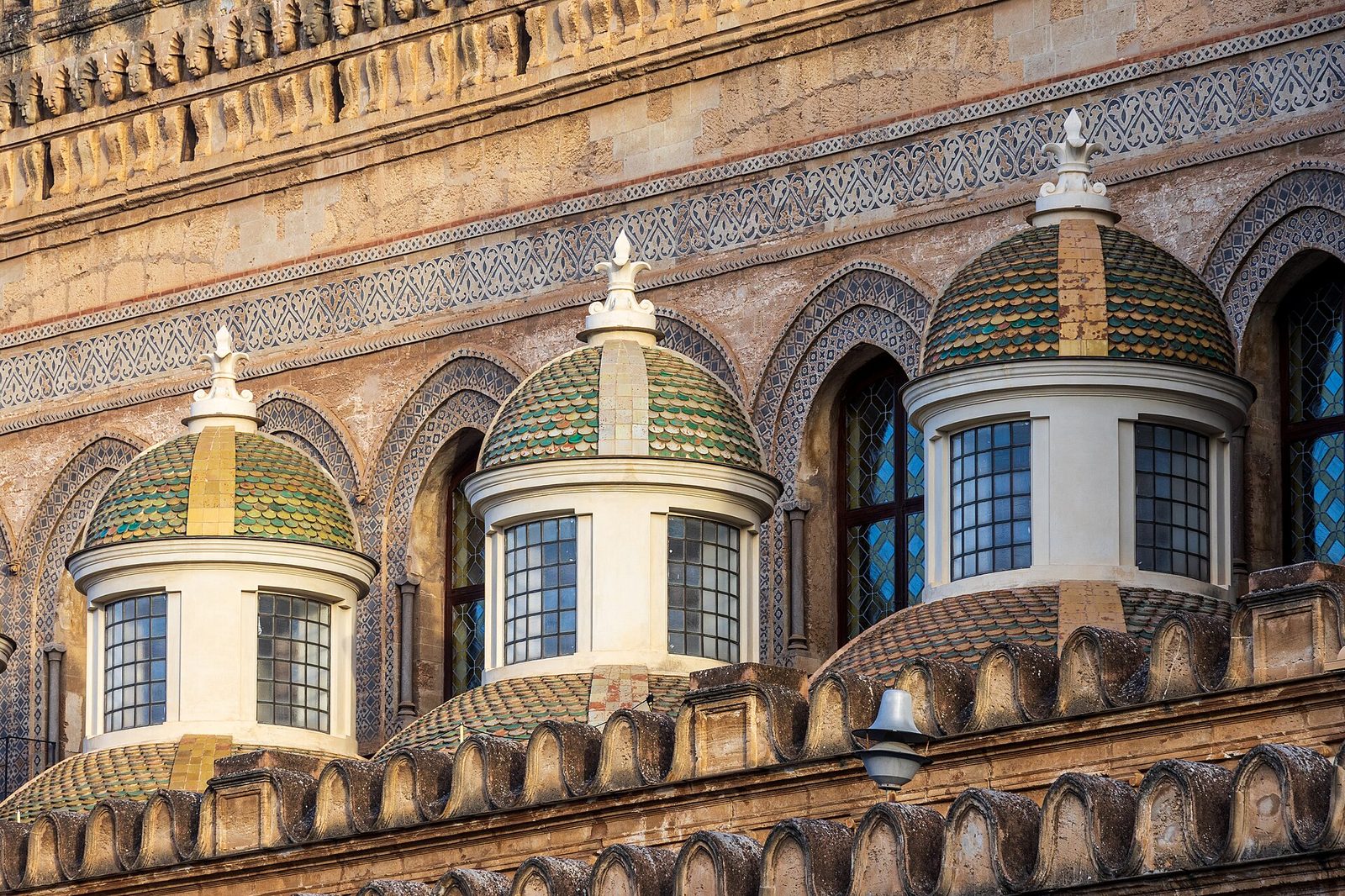
Palermo is the mildest big city in Italy in winter: 16.7°C in December, 15.4°C in January, 15.3°C in February, with overnight lows around 9 to 11°C, warmer at night than any other Italian city in this guide. It sits in the cheapest cost band here, alongside Istanbul, Krakow and the Algarve.
Winter is when Palermo’s food makes most sense. The street markets at Ballaro and Capo are working food markets rather than tourist attractions in January, blood oranges and artichokes are in season, and panelle and sfincione are hot food that suits 15°C weather. The Cappella Palatina and Monreale’s mosaics are walk-ins, and our Sicily travel guide has the rest of the island. A word of warning on logistics: February is Sicily’s wettest stretch in some years, and the ferries and hydrofoils to the smaller Aeolian islands run a thin winter timetable that cancels readily for weather, so build in slack if you plan to island-hop.
Snow, fjords and the northern lights: the Nordic north
Five Nordic bases, four of them Arctic and one, Bergen, comfortably south of the circle, and then what the sun is doing in winter 2026/27, which changes the aurora odds more than any tour operator will tell you.

23. Rovaniemi, Finland
Rovaniemi sits on the Arctic Circle and has built an entire winter economy on it: the Santa Claus Village, husky and reindeer farms, snowmobile safaris, glass igloos, and a genuine polar night of roughly two weeks around the solstice when the sun does not clear the horizon at all. Around 21 December you get about two and a half hours of usable light, and it is blue rather than gold.
It is cold in a way that most visitors underestimate. December averages minus 4.9°C by day and minus 10.6°C at night; January averages minus 7.3°C and minus 13.5°C. Every operator provides thermal suits and boots and you should use them; our Scandinavia travel guide covers the wider region. My scheduling advice: December is for the Christmas machinery and the polar-night atmosphere, February is for seeing things, because the light is back, the snow is deepest and the prices have fallen off the December cliff. Book huskies, igloos and Santa slots months out for December; February is much more forgiving.
24. Tromso, Norway
Tromso is the most practical aurora base in Europe. It sits at 69 degrees north, inside the auroral oval, and it has an airport with direct flights from several European hubs, a university, actual restaurants and around 44,000 people in the town itself, which means you are not stuck in a resort. The polar night runs roughly 27 November to 15 January, with the surrounding mountains extending the effective darkness from about 21 November to 21 January and a twilight window around 09:00 to 14:00.
It is also milder than the latitude suggests: the Gulf Stream holds December at 0.3°C by day, so this is not the deep cold of inland Lapland. The trade-off is cloud, which is the real enemy of aurora hunting on the coast, and the reason the good tour operators drive inland or into Finland when the forecast is bad. Pay for a small-group chase tour that commits to driving rather than a bus that parks at a fixed viewpoint. Sami Week runs 31 January to 7 February 2027, with reindeer racing and lasso throwing in the city centre, and it is the best week of the Tromso year.
25. Swedish Lapland and Jukkasjarvi
If cloud is what defeats aurora trips, Swedish Lapland is the answer to it. Abisko, in particular, sits in a rain shadow that gives it a reliable hole in the cloud, which is why the Aurora Sky Station there has the reputation it does. Jukkasjarvi, near Kiruna, is home to the Icehotel, rebuilt from scratch every winter out of ice harvested from the Torne River, with art suites carved by a different set of artists each year.
Be careful with Icehotel dates and prices. The seasonal hotel historically opens in mid-December and runs to mid-April, and the 2025/26 edition opened on 12 December 2025, but the 2026/27 opening date had not been published when I checked in August 2026. Day tickets start around SEK 325 and are the figure I would quote, because the overnight rates move constantly and the numbers circulating on third-party sites are unreliable. The permanent ICEHOTEL 365 structure stays open year-round.

26. Reykjavik, Iceland
Iceland in winter is the trip that most rewards lowering your ambitions. Reykjavik gets four hours and twenty-five minutes between dawn and dusk in December, with the sun up at about 11:20 and gone by 15:30, and half an hour of actual sunshine a day. Temperatures are mild for the latitude, 3.6°C by day and minus 2°C at night, because the Atlantic does the work, and that mildness is exactly why the weather is so violent: wind and rain, not deep cold.
Do not attempt the Ring Road in December. Do the south coast to Vik, the Golden Circle, a geothermal lagoon and a couple of aurora nights, and accept that road closures will rewrite your plan at least once. Check road conditions daily rather than trusting a forecast, book the lagoons in advance because they are timed-entry, and take a four-wheel-drive with proper winter tyres if you are driving at all. The compensation is that Iceland’s summer crowding disappears entirely.
27. Bergen, Norway
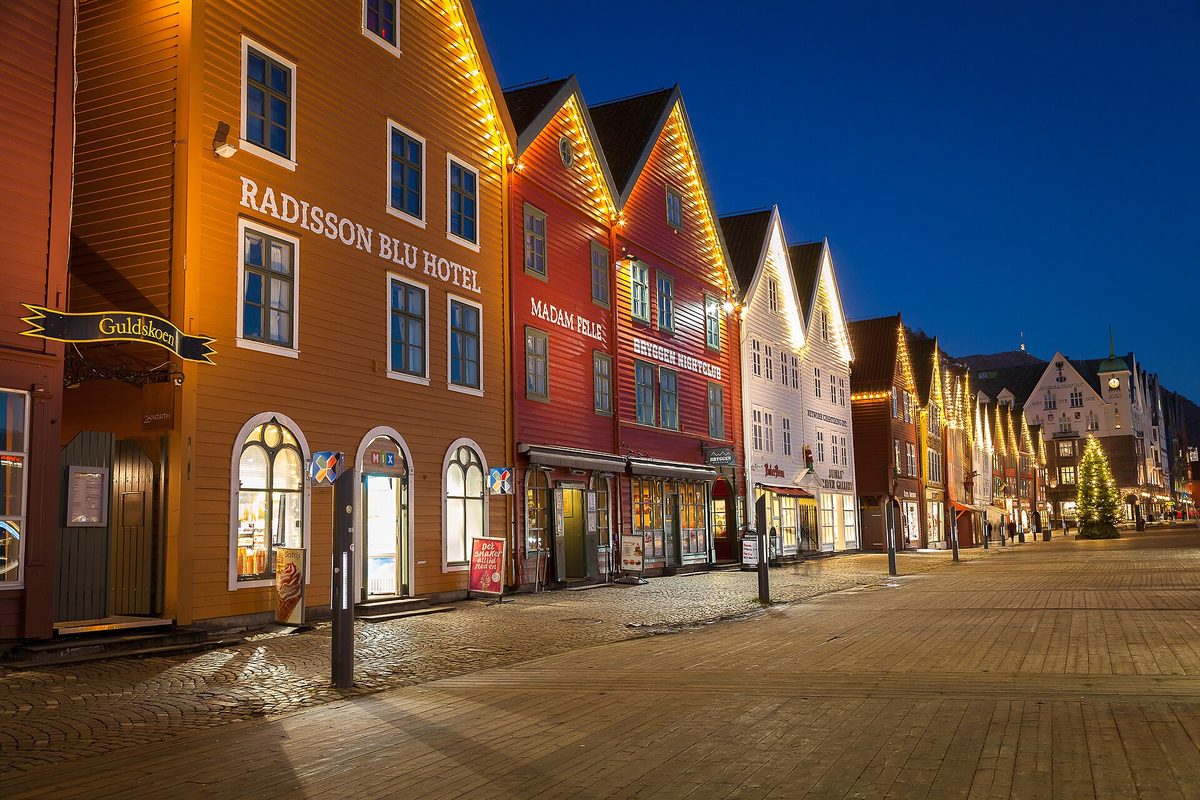
Nowhere in the Nordic north is as underrated in winter as Bergen, and nowhere is as wet. It runs 5.3°C in December, 4.7°C in January, 4.9°C in February, which is warmer than Prague or Vienna in December and January, though February closes the gap. What it is not is dry. Bergen’s rain is a local institution and you should plan for it rather than around it.
Come for the fjords with almost nobody in them. The Bergen to Flam railway, one of the great rail journeys in Europe, and the Naeroyfjord cruise run through the winter on a reduced timetable and are dramatically better without the summer coach traffic, with snow to the waterline. In the city, Bryggen’s wooden warehouses and the fish market are five minutes apart, the funicular up Floyen runs year-round, and the whole place is small enough that bad weather never strands you far from somewhere warm.
What solar cycle 25 means for your northern lights odds in 2026/27
Aurora activity tracks the roughly eleven-year solar cycle, and solar cycle 25 peaked in October 2024 with a smoothed sunspot number of about 161, one of the stronger maxima in decades. Winter 2026/27 therefore falls in the declining phase, and there will be fewer sunspots, flares and coronal mass ejections than there were at the peak.
That sounds like bad news and mostly is not. The strongest individual geomagnetic storms historically occur during the declining phase, sometimes years after maximum, driven by coronal holes rather than flares. The practical translation: the background rate of quiet green displays is lower than in 2024, but the chance of a genuinely spectacular night is not gone, and you are still well inside a good stretch of the cycle. Anyone telling you 2026/27 is a write-off is wrong, and anyone recycling 2024’s solar-maximum language without noting the change is a couple of years out of date.
For a one-week trip, two other things matter far more than the solar cycle. The first is latitude: get inside the auroral oval rather than hoping it reaches down to you. The second is nights. The Finnish Meteorological Institute reports that in the far north around Kilpisjarvi and Utsjoki, three nights in four are lit by aurora when the sky is clear, and Visit Finland puts it at around 200 nights a year in the far north, with roughly 150 across Finnish Lapland as a whole. Those are frequencies of occurrence, not frequencies of you seeing one, because cloud decides that. Give yourself three or four nights minimum. One night is a coin toss you will probably lose.
Aurora season runs late August to early April, and the darkest, most reliable window is roughly 21 November to 15 February. If you have flexibility, late February is my pick in the far north: full aurora season, snow at its deepest, daylight returning fast, and prices well below the December peak.
Ski: seven resorts and what they actually cost
Skiing is the one part of the European winter that is high season rather than low, and pricing works the opposite way round from everything else in this guide. The dates below are the 2026/27 season dates published by the resorts as of August 2026. Our guide to skiing in Europe covers resort choice in more depth. Lift pass prices are mostly the 2025/26 rates, because most resorts had not released 2026/27 pricing yet, so treat them as a guide to relative cost rather than a quote.
28. Val Thorens and Les 3 Vallees, France
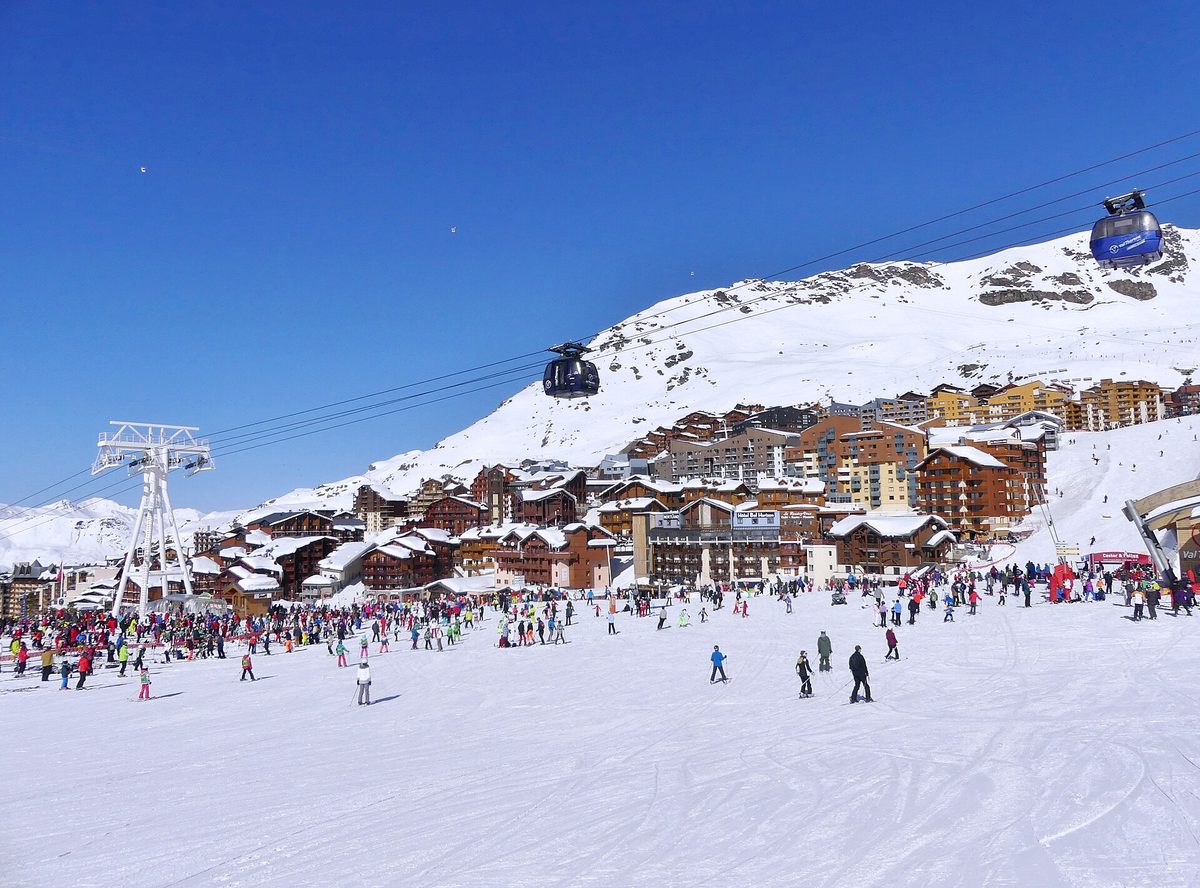
Les 3 Vallees is the largest linked ski area in the world, and Val Thorens at 2,300 metres is the highest resort in Europe, which is why it opens before anywhere else. The resort is scheduled to open on 21 November 2026, with the full three-valley lift links running 5 December 2026 to 18 April 2027. That November opening is the single most useful fact in Alpine skiing: it is the only reliable way to ski in Europe before the December holidays.
Val Thorens itself is a purpose-built resort and looks like one. If you want a village, stay in Meribel or Saint-Martin-de-Belleville and ride up. If you want to ski from the door in a snowstorm in early December, Val Thorens is the answer and the architecture is the price you pay.
29. Zermatt, Switzerland
Zermatt is car-free, sits under the most photographed mountain in Europe, and has the only year-round skiing on this list: the Matterhorn Glacier Paradise tops out at 3,883 metres and runs all twelve months. A one-day adult pass for the Zermatt-only area was CHF 79 in the 2025/26 season, with the international pass including Cervinia on the Italian side at CHF 92. Teenagers were CHF 40 and CHF 46 respectively. Zermatt uses dynamic pricing, so the advertised “from” rate depends on how far ahead you book and how busy the date is.
Our Switzerland travel guide has more on getting around. It is the most expensive resort here by a wide margin, worth one trip in a lifetime for the setting alone. The trick that makes it cheaper is to ski over to Cervinia for lunch, where the same mountain costs Italian prices.
30. St Anton am Arlberg, Austria
St Anton’s ski area is scheduled to open on Wednesday 2 December 2026, with the Stanton Ski Open event on 4 to 6 December. It is the steepest mainstream resort in Austria, with a serious off-piste culture and the loudest apres-ski in the Alps, which is either the reason you are going or the reason you are not. The Mooserwirt at 15:30 on a Saturday is not a place for a quiet drink.
The Ski Arlberg pass links St Anton with Lech, Zuers, Warth and Stuben into one of the largest areas in Austria. The closing date for 2026/27 had not been published when I checked; the area typically runs into late April. If you want the terrain without the noise, base yourself in Lech and commute.
31. Kitzbuhel, Austria
Kitzbuhel is a medieval town that happens to have a ski area attached, which puts it in a small category with Innsbruck and against the purpose-built French resorts. The old town is handsome, the non-skiing options are real, and the skiing is mid-altitude and therefore more snow-dependent than the high French resorts. A six-day adult lift pass runs roughly €213 to €266 depending on dates.
The week to know about is the Hahnenkamm downhill in late January, when the Streif, the most feared course in ski racing, brings tens of thousands of people into a small town. Accommodation prices multiply and the town is a party. Avoid it or plan for it, but do not arrive by accident.

32. Innsbruck, Austria
Innsbruck is my recommendation for anyone who wants to ski without committing a whole trip to it. It is a real city of about 130,000 people with a university, museums, a baroque old town and two Winter Olympics behind it, and it has nine ski areas within reach on a free ski-bus shuttle for pass holders. You can ski in the morning and be in a city cafe by two.
The climate numbers are a good illustration of Alpine valleys: December averages 4.1°C by day and minus 3.4°C at night, and February jumps to 7.2°C by day, which is warmer than it sounds because the valley sits in sun while the slopes above stay cold. It is also considerably cheaper to base yourself here than in a resort, and it is a straightforward add-on to a Munich or Vienna trip on a longer Europe itinerary.
33. Grandvalira, Andorra
Grandvalira is the largest ski area in the Pyrenees and it delivers Alpine-scale terrain at prices the Alps cannot match. Adult day passes for 2025/26 ran €56 to €67 depending on date and how early you booked, with the lowest advertised rate from €44. Season passes started at €589 and ran €685 to €935 depending on the purchase window. The senior pricing is unusually generous: €42.50 a day at 65 to 69, €25 at 70 to 74, and free at 75 and over.
Andorra’s other advantage is that it is a duty-free micro-state, so alcohol, tobacco, electronics and ski gear are all noticeably cheaper than in France or Spain. The downsides are the drive, which is three hours from Barcelona or two from Toulouse with no airport of its own, and a resort aesthetic that nobody would call charming.
34. Bansko, Bulgaria
Bansko is the cheapest lift-served skiing in Europe and it is not close. A full 2025/26 season pass was BGN 1,700, roughly €869, with students and pensioners at BGN 1,600 and children aged 7 to 11 at BGN 900. For comparison, that season pass costs less than a fortnight of day passes in Zermatt. Borovets, the other Bulgarian option, was BGN 2,303.97 for an annual pass including night skiing.
Note the currency: Bulgaria adopted the euro on 1 January 2026, so prices quoted in leva on older pages are historical and you will be charged in euros. What you get for the money is a substantial lift-served area, a real old town underneath it with mehanas serving grilled meat and rakia, and a gondola queue that is a local legend for the wrong reasons. Go in January or March rather than February half-term, and buy the gondola upload sensibly early.
Great cities at their emptiest
These eight are on the list for a single reason: in January and February you get the same city for less money with a fraction of the people. Rick Steves puts it well: the sights that require advance booking from March onwards are usually straightforward walk-ins in January. That is the whole trade, and the reason winter dominates our list of the best cities to visit in Europe for value. You give up daylight and you get the place itself.

35. Rome, Italy
Rome in January averages 11.9°C by day, which is comfortable walking weather, and 3.5°C at night, which is not. It rains: about 66mm across seven days in January, and 98mm across nine days in December. Snow happens perhaps once every several years and stops the city dead when it does.
What January buys you is the Forum and the Palatine in the low winter sun with room to move, a Colosseum queue measured in minutes, and restaurants in Trastevere and Testaccio that will take a table for two at 20:30 without a booking. Our guide to things to do in Rome has the detail. The Vatican Museums still need booking, because the Sistine Chapel is busy every day of the year, but everything else relaxes. Bring waterproof shoes and plan a museum for the afternoon, because it is dark by about 17:00 and Rome’s streets are for daylight.
36. Paris, France
Paris in winter is grey and short of light: 8.1°C by day in December, an hour and a half of sunshine a day, and eight hours and twenty minutes from dawn to dusk. It is also the version of Paris that people who live there prefer, and hotel rates run roughly 25 to 30% below the peak.
The city keeps its Christmas lights up on the Champs-Elysees and the big department store windows into early January, and the markets at the Tuileries and La Defense run through December. After that it becomes a museum city, which is what it does best. The Italian museums empty out the same way. The Louvre in a wet February Tuesday afternoon is an entirely different institution from the Louvre in July. Note that the tourist tax rose from 1 January 2026 by up to €4 per person per night depending on category, reaching roughly €9.20 a night at five-star properties and around €6.60 at mid-range hotels once the Ile-de-France regional uplift is included. Check what your booking quotes and what it adds at checkout.
37. Barcelona, Spain
Barcelona sits at 14.7°C in December and 14.1°C in January, which is the warmest of the eight cities in this section and just about warm enough for lunch outside on a sunny day. Four and a half hours of sunshine a day in December is a lot by northern standards.
Winter is when Barcelona is bearable. The Sagrada Familia still needs a timed ticket, but Park Guell, the Picasso Museum and the Gothic Quarter all become navigable rather than gridlocked, and the Boqueria goes back to being a market. Watch the tax: from 1 April 2026 the Catalan regional tax for a five-star hotel is €7.00 a night on top of which Barcelona adds a municipal surcharge, currently €5.00, rising by a euro a year to a cap of €8.00 in 2029. That is around €12 per person per night at the top end today. On a five-star booking it is a meaningful line item.
38. Amsterdam, Netherlands
Amsterdam is cold, dark and wet in winter: 6.9°C by day in December, two hours of sunshine, seven hours and fifty minutes of daylight. It is also a city of superb interiors, and the queues that define it in spring are gone. The Rijksmuseum and the Van Gogh Museum in January are calm. The Anne Frank House is the exception and still needs booking well ahead.
The canals occasionally freeze hard enough to skate on, which happens rarely enough that the whole country stops when it does. Budget carefully: Amsterdam’s tourist tax is 12.5% of the room rate excluding VAT, the highest in Europe, and it is charged on the room rather than per head. Dutch accommodation VAT rose from 9% to 21% on 1 January 2026, taking the combined tax load on a room to around 33.5%. Confirm what your booking includes before you commit; our Netherlands travel guide has more.

39. Berlin, Germany
Berlin is the one big European city I would argue is better in winter. The things it is famous for, the museums, the bars, the clubs, the restaurants, the enormous indoor spaces, all work better when it is 3°C outside and there is no pressure to be in a park. December averages 4.1°C by day and minus 0.9°C at night.
It is also cheap by Western European capital standards, and it has roughly seventy Christmas markets, or about a hundred if you count every festive event, from the polished one at Gendarmenmarkt, which charges a small entry fee of a couple of euros, to the scruffier ones at Kollwitzplatz and RAW-Gelaende. Museum Island in January is a genuine pleasure, and Berlin ranks high in our Europe on a budget guide. And Berlin has no meaningful low season problem, because the city’s cultural life is built for residents rather than visitors and does not thin out when the tourists leave.
40. Edinburgh, Scotland
Edinburgh gives you seven hours and five minutes between dawn and dusk in December and an hour and a half of sunshine a day, and on 21 December the sun sets at 15:40. That is the shortest day of any mainland European city in this guide. Temperatures are mild, around 6.9°C by day, and the wind makes it feel colder.
Hogmanay is the draw and it is a serious three-day event with a torchlight procession and a street party. The Loony Dook, the New Year’s Day swim, still runs at South Queensferry on the Firth of Forth, but it was dropped from the official Hogmanay programme after 2023 and is now a free local event about ten miles out of town, so do not buy a Hogmanay ticket expecting it. It books out months ahead and prices accordingly. Our UK travel guide covers the rest of Britain. Mid-January is my preference: the same city, the castle without the queue, the pubs at their best, and rates back to normal. Budget for the new visitor levy, which applies to paid overnight stays from 24 July 2026 at 5% of the accommodation cost, capped at five consecutive nights. It is the first city-wide visitor levy in the UK.
41. Istanbul, Turkey
Istanbul in winter is grey, wet and cheap, and I keep going back. December averages 11°C by day with two hours of sunshine, which is only 24% of available daylight, and 105mm of rain across twelve days. January drops to 9°C. It snows most winters, usually for a day or two, and the sight of the Bosphorus in snow is worth the gamble on its own.
None of the reasons to go there care about the weather. Hagia Sophia, the Basilica Cistern, the Grand Bazaar, the Suleymaniye, a hammam and a long lunch are all indoor propositions, and the winter queues are a small share of the summer ones. It shares the cheapest cost band here with Krakow, Palermo and the Algarve. Take proper waterproof shoes: Istanbul’s hills plus wet marble is a bad combination in trainers.
42. Venice, Italy
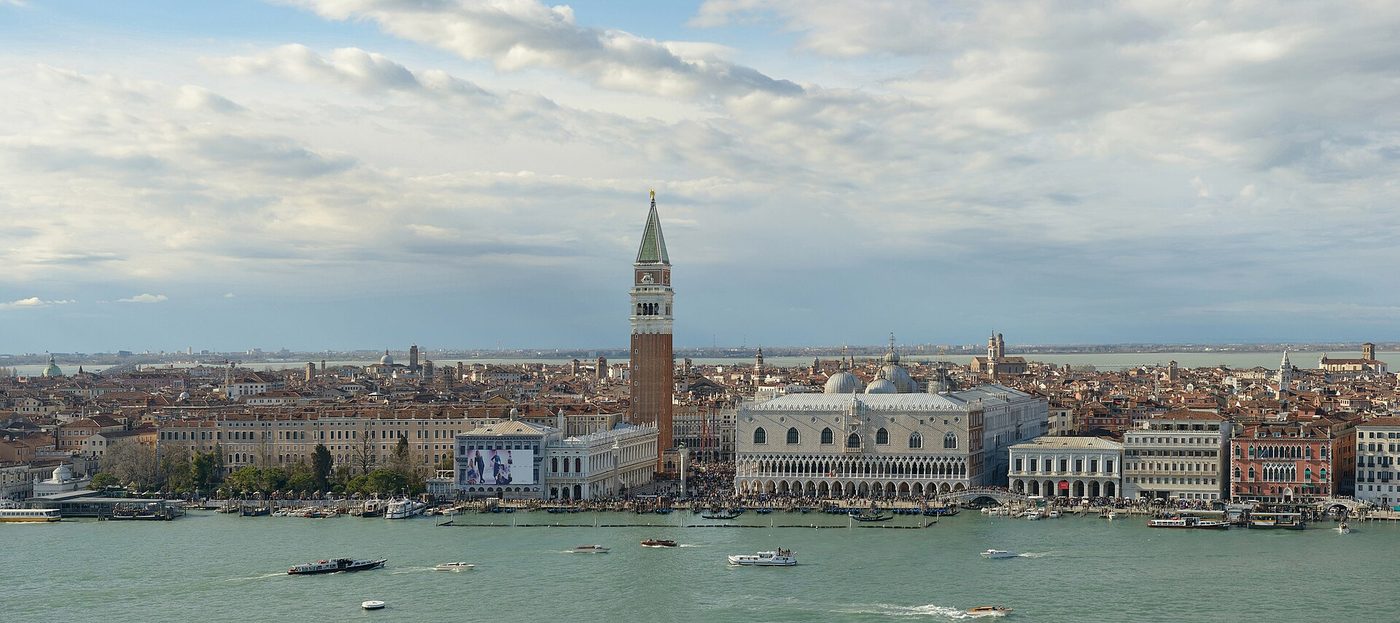
Venice has two winters. From January to early February it is foggy, quiet and, for the only time in the year, close to being a normal city; the day-tripper crush is gone and the acqua alta season has mostly passed its worst. Then Carnival arrives and it becomes the busiest it gets outside August. See things to do in Venice for the quieter version.
Carnival 2027 runs 23 January to 9 February according to the official site, with the main period widely given as 30 January to 9 February, roughly eighteen days of costumes, parades and masked balls ending with a dance in St Mark’s Square. Book accommodation months ahead for it. One useful piece of news for winter visitors: the Venice access fee does not apply. The 2026 scheme ran on 60 specified days between 3 April and 26 July, only between 08:30 and 16:00, and it has not been in effect since 27 July 2026, so a winter day trip carries no entry charge at all.
December, January or February: they are three different trips
The three winter months barely resemble each other, and picking the wrong one is the most common way a winter trip goes sideways.
December: atmosphere, at a price
December is the festive month and the expensive one. Markets run, cities are lit, and everything from about 15 December to 1 January costs a great deal more than it does three weeks either side. It is also the darkest month everywhere: the solstice falls on 21 December, Vienna gets eight hours and twenty-five minutes of daylight, Edinburgh seven hours and five, Reykjavik four hours and twenty-five.
Our roundup of the best places to visit in Europe in winter ranks the December options. Go in December if the market, the lights or the polar night is the point. Go in the first two weeks if you can, because most German and Austrian markets are fully running by the end of November and the price ramp starts around the middle of the month. Be aware that 24, 25 and 26 December close a lot of Europe: markets stop, museums shut, restaurants close and public transport runs a holiday timetable. Christmas Day in a European city is a walk and a hotel dinner, and not much else.
January: the cheapest month in Europe
After the first week, January is the quietest and cheapest stretch of the European year, and the Eurostat figures behind that are in our guide to when Europe is least crowded. Flights and hotels drop sharply, sights that need booking in summer become walk-ins, and cities go back to their residents. It is also the coldest month almost everywhere: January is the coldest month in Vienna, Rome, Lisbon and most of the continent, with Tallinn and Rovaniemi at their bitterest.
January is my default recommendation for a European city break, and the opposite of what we suggest for Europe in summer. The exceptions are the far north, where the aurora is good but the light is still minimal, and the ski resorts, where mid-January is a fine window between the holiday crowds and the February half-terms.
February: the underrated one
February is where the season turns. Daylight is noticeably back, the deepest snow of the winter is on the ground in the Alps and the Arctic, and several of the best events in the European calendar land in this month: Venice Carnival, the Vienna Opera Ball on 4 February 2027, Sanremo from 16 to 20 February 2027, Basel’s Fasnacht from 15 to 17 February 2027, Sami Week in Tromso from 31 January to 7 February 2027.
It is also the month when southern Europe starts to feel pleasant: Seville averages 18.6°C in February, its warmest winter month, and Vienna, Budapest, Krakow and Berlin all warm up by a degree or two from January. The one thing to watch is half-term, which fills Alpine resorts and pushes prices back up for two or three weeks depending on the country.
The border paperwork for winter 2026/27, which has changed
Three separate border systems changed in the eighteen months to August 2026, and this is the part of the plan most likely to cost you an actual missed flight. There is a great deal of out-of-date guidance in circulation, so here is where things stand in late September 2026.
The EU Entry/Exit System is now live
The EES began a progressive rollout on 12 October 2025 and became fully operational on 10 April 2026. It replaces passport stamping for non-EU nationals with a biometric record: your face and fingerprints are registered on first entry, and every subsequent crossing is logged automatically. It also detects overstayers automatically, which passport stamps never reliably did.
What this means practically is queues. The rollout has been uneven, several member states used the flexibility the EU permits to pause or ease checks during busy periods, and waits of two to five hours were reported at some crossings during the summer 2026 peak. Winter traffic is lower, which helps, but allow more time than you used to at land borders, and read our guide to planning a trip to Europe for the sequence and at airports with heavy non-Schengen traffic, and expect your first registration to take longer than subsequent ones.
ETIAS is not live yet
ETIAS, the European travel authorisation that visa-exempt visitors will eventually need before travelling, is still not in operation as of late September 2026, and no start date has been set. It was pencilled in for the last quarter of 2026, but the EU’s official ETIAS pages now say only that the date will be announced several months before launch, and trade reports point to 2027. Once it starts, a transition period of at least six months follows before it becomes mandatory. The fee, when it does launch, is €20 per application, with applicants under 18 and over 70 exempt.
For winter 2026/27 this means: you do not need ETIAS, you cannot apply for it, and any website charging you for one now is not legitimate. Our explainer on the Schengen visa and ETIAS tracks this. Check the official EU travel pages closer to any 2027 trip.
The UK ETA applies if you are crossing to Britain
Running the other way, EU, Swiss, Norwegian, Icelandic and Liechtenstein nationals have needed a UK Electronic Travel Authorisation since 2 April 2025. The fee rose from £16 to £20 on 8 April 2026, and some cached pages still quote the old figure. It is valid for two years and unlimited entries on the same passport, and every traveller needs their own, including infants. Since 25 February 2026 carriers cannot board a passenger who needs an ETA and does not have one, so this is not a formality you can sort out on arrival.
The Schengen 90/180 rule, now counted automatically
Non-EU visitors may spend up to 90 days in any rolling 180-day period across the Schengen area, pooled across all 29 countries rather than counted per country, with both your entry and exit days counting as full days. That rule has not changed. What has changed is that since EES became fully operational, the count is recorded biometrically at every crossing rather than reconstructed from stamps, so the informal tolerance that used to exist has gone. If you are combining a long winter stay with earlier trips this year, count carefully.
What visiting Europe in winter actually costs
Winter is cheaper, but not uniformly and not everywhere, and the savings are concentrated in a narrower window than most people realise.
The savings
The European Travel Commission’s shoulder-season figures put flights and hotels roughly 20 to 30% below summer rates, Our cheapest places to travel in Europe guide breaks this down by country. Independent flight data puts January to March fares to Europe well below summer levels, with March the cheapest month of all for flights. Paris hotels sit roughly 25 to 30% below peak. In places with a genuine seasonal shutdown, the French Riviera and the Greek islands among them, winter room rates can be around half the summer number.
The critical detail is the shape of the curve. Prices spike hard from about 15 December to 1 January and then fall off a cliff. If your dates are flexible, moving a trip from 27 December to 12 January can halve the total cost without changing anything else about it.
Where winter is not cheap
Winter is high season, not low, in three categories. Alpine ski resorts price their peak weeks at or above summer rates. Christmas market cities are at their most expensive in December, particularly Vienna, Strasbourg and Nuremberg where the central hotel supply is small. And Venice at Carnival, Edinburgh at Hogmanay, Funchal at New Year and Kitzbuhel during the Hahnenkamm are all effectively peak-season events with peak-season pricing.
The taxes that have moved
City taxes have risen sharply across Europe and several changes landed in 2026. Amsterdam charges 12.5% of the room rate excluding VAT, the highest rate in Europe, levied on the room rather than per person, and Dutch accommodation VAT rose from 9% to 21% on 1 January 2026, taking the total tax load on a room to about 33.5%. Paris raised its tourist tax from 1 January 2026 by up to €4 per person per night, reaching roughly €9.20 at five-star properties and around €6.60 at mid-range hotels once the Ile-de-France regional uplift is counted. Barcelona’s Catalan regional tax for a five-star hotel is €7.00 from 1 April 2026, with a municipal surcharge on top, currently €5.00 and rising a euro a year to a cap of €8.00 in 2029. Edinburgh’s new 5% visitor levy applies to stays from 24 July 2026, capped at five consecutive nights.
The one that moves in your favour: Venice’s access fee does not apply in winter at all. It ran on 60 specified days between 3 April and 26 July 2026, between 08:30 and 16:00 only, and has not been in effect since. When it does run it is €5 if booked by the fourth-last day before the visit and €10 thereafter, with overnight guests in the municipality and under-14s exempt.
The small stuff
A cup of Gluehwein at a German market runs roughly €3 to €5, with recent reports around €4.50 to €5, plus a mug deposit, the Pfand, of typically €3 to €5. Ceramic and glass mugs sit at the top of that range. You get the deposit back when you return the mug, or you keep the mug, which is how most people end up with a shelf of them. Two people doing three markets in an evening in Germany will spend around €30 on drinks alone before food, so it is not a trivial line.
On skiing, the spread across Europe is enormous. A Zermatt day pass was CHF 79 in 2025/26. A full Bansko season pass was BGN 1,700, roughly €869, which is less than a fortnight of Zermatt day passes. Andorra sat in the middle at €56 to €67 a day, and Kitzbuhel’s six-day pass at €213 to €266.

Rail passes and night trains
An Interrail Global Pass covers 33 countries. Since 9 September 2026 the Eurail pass, the version for people who live outside Europe, has been sold under the Interrail name at the same prices, and your country of residence still decides which one you get. For 2026, the continuous Global Passes run to several hundred euros for a fortnight and a few hundred more for a full month, and the exact rate depends on age band and class, so price it on interrail.com rather than from a secondary source. Winter is the season where a rail pass makes the most sense, our guide to getting around Europe compares it against flying, and because trains run regardless of the weather while regional flights and mountain roads do not.
The night train network has grown. European Sleeper’s Paris to Berlin service launched on 26 March 2026, running three times a week via Brussels, and the same operator’s Brussels to Milan train followed on 9 September 2026. That one also runs three nights a week each way, calling at Cologne and Lugano, with Antwerp, Breda and Eindhoven added from 13 December 2026. The EN Carpatia has run from Przemysl and Krakow through Vienna and Salzburg to Munich since 14 December 2025. Back-on-Track’s 2026 map counts around 205 regular sleeper connections across Europe, though about ten lines were lost, including several OeBB Nightjet routes, so check that a service still exists before planning around it.
What closes in winter, honestly
This is where winter trips go wrong. The savings are real, and so is the fact that a meaningful share of Europe’s tourist infrastructure simply stops between November and March. Here is the specific list.
Whole regions that largely shut
The Amalfi Coast. Ferries run until the end of October or early November, and the Positano to Amalfi routes do not run in winter at all; the few winter sailings that exist are cancelled for weather frequently. SITA buses do run year-round on a reduced timetable; our Amalfi Coast travel guide has the seasonal detail. Most hotels close, with Positano close to total shutdown all winter. Amalfi town keeps most restaurants and shops open to Epiphany, then many close through February.
The smaller Greek islands. Crete, Rhodes and Corfu operate year-round with reduced services, and Santorini and Naxos keep a skeleton set open, but the smaller islands largely close until early April. Ferries drop to the slow boats only: Athens to Santorini takes around eight hours in winter, there is usually at least one crossing a day, and weather cancellations are common. Our Greece travel guide covers which islands stay open. Crete’s tourist businesses reopen in numbers around Greek Independence Day on 25 March.
High alpine passes. Most close from November to May or June depending on snow and avalanche risk. The Stelvio typically opens late May to early June and closes late October or early November; the Grossglockner High Alpine Road opens in early May. In 2026 the Furka reopened on 29 May and the Susten on 12 June. If your winter itinerary involves a scenic mountain road, check before you plan it, because the tunnels stay open and the passes above them do not.
Sights on reduced winter hours
The Alhambra runs 08:30 to 18:00 from 15 October to 31 March, with night visits on Fridays and Saturdays only from 20:00 to 21:30, and closes entirely on 25 December and 1 January.
Plitvice Lakes runs 08:00 to 16:00 from November to March with ticket offices closing at 14:00, and the Upper Lakes are closed to visitors in winter, reopening in April. Boats and trams run every thirty minutes until 16:00.
Cinque Terre drops the trail card requirement in winter: all trails were free with no card required from 3 November 2025 to 14 March 2026, and the same seasonal pattern repeats each year. The Trekking Card is around €7.50 for a day in season, and now includes the Via dell’Amore, which reopened in August 2024 after restoration. The Manarola to Corniglia coastal path remains closed until at least 2028; see our Cinque Terre travel guide.
The general rule
Across Europe, sights run shorter off-season hours and often close around sunset, English-language guided tours are far less common, and small tourist towns close down substantially. Rick Steves’s framing is the right one: much of Europe sits at Canadian latitudes and it is generally dark by 17:00 in midwinter, so a winter sightseeing day is genuinely shorter, not just colder.
The compensating advantage is the queue. Sights that require timed advance booking from March onwards are usually walk-ins in January, including Florence’s Uffizi, Paris’s Musee d’Orsay and Barcelona’s Picasso Museum. That is the trade in one sentence: fewer open hours, but you use all of them.
The winter 2026/27 events calendar
Thirty-one dates worth building a trip around, with an honest column on how firm each date is. The German and Swiss markets publish early and reliably; the Central European ones often do not confirm until October, and I would rather tell you that than print a date that turns out to be wrong.
| Dates | Event | Where | Notes | Status of the date |
|---|---|---|---|---|
| 11 Nov 2026 | Karneval season opens | Cologne, Germany | Opens at 11:11 on 11 November, then goes dormant until the pre-Lent street carnival | Verified pattern |
| 13 Nov 2026 to 3 Jan 2027 | Tivoli Christmas | Copenhagen, Denmark | Paid entry, opens 11:00; about a thousand trees and several hundred thousand lights | Provisional |
| 16 Nov to 23 Dec 2026 | Cathedral, Neumarkt and Rudolfplatz markets | Cologne, Germany | Heinzels Wintermaerchen opens a week later on 23 Nov | Provisional |
| 20 Nov 2026 to 14 Feb 2027 | Winter Glow light trail | Bruges, Belgium | The market closes 3 Jan but the light trail runs six weeks longer | Provisional |
| 20 Nov to 24 Dec 2026 | Christkindlmarkt, Marienplatz | Munich, Germany | Confirmed by the market’s own site | Confirmed |
| 20 Nov 2026 to 6 Jan 2027 | Christmas Market, Raekoja plats | Tallinn, Estonia | Tree on the square since 1441; 10:00 to 20:00, drink stalls later | Provisional |
| 21 Nov 2026 | Val Thorens opens | Les 3 Vallees, France | Earliest reliable lift-served skiing in Europe; the full three-valley links open 5 Dec 2026 | Provisional |
| 23 Nov to 29 Dec 2026 | Six Christmas markets | Colmar, France | Gourmet market runs to 3 Jan 2027 | Provisional |
| Late Nov 2026 to 26 Dec 2026 | Rathausplatz Christkindlmarkt | Vienna, Austria | Expected 13 Nov to 26 Dec; the ice rink in the park continues to 6 Jan 2027 | Provisional |
| Late Nov 2026 to 1 Jan 2027 | Christmas Market, Rynek Glowny | Krakow, Poland | Sources disagree on whether it opens 27 or 28 November | Provisional |
| Late Nov to 27 Dec 2026 | Christkindelsmaerik | Strasbourg, France | Running since 1570; opens the fourth Friday of November | Provisional |
| 25 Nov to 24 Dec 2026 | Striezelmarkt, Altmarkt | Dresden, Germany | Traces to 1434; Stollenfest before the second Advent Sunday | Confirmed |
| 26 Nov to 23 Dec 2026 | Christmas Market | Basel, Switzerland | Daily 11:00 to 20:30; Switzerland’s largest | Confirmed |
| 27 Nov to 24 Dec 2026 | Christkindlesmarkt, Hauptmarkt | Nuremberg, Germany | Daily 10:00 to 21:00; closes 14:00 on 24 Dec; opening ceremony 27 Nov at 17:30 | Confirmed |
| 28 Nov 2026 to 6 Jan 2027 | Old Town Square and Wenceslas Square markets | Prague, Czechia | Daily 10:00 to 22:00 | Provisional |
| 28 Nov 2026 to 7 Jan 2027 | Advent Zagreb | Zagreb, Croatia | City-wide across more than 25 locations | Provisional |
| 2 Dec 2026 | St Anton am Arlberg opens | Arlberg, Austria | Stanton Ski Open event 4 to 6 December | Provisional |
| 5 Dec 2026 | Krampusnacht | Salzburg and the Eastern Alps | Krampus runs around this date; not for small children | Verified pattern |
| Mid Dec 2026 | Icehotel season opening | Jukkasjarvi, Sweden | 2026/27 date not published as of August 2026; the 2025/26 edition opened 12 Dec 2025 | Not published |
| 24 to 26 Dec 2026 | Christmas closures | Most of Europe | Markets stop, museums close, transport runs holiday timetables | Verified pattern |
| 30 Dec 2026 to 1 Jan 2027 | Hogmanay | Edinburgh, Scotland | Torchlight procession, street party and the Loony Dook on 1 January | Verified pattern |
| 31 Dec 2026 | New Year fireworks | Funchal, Madeira | Held a Guinness record for the largest display in the world; the island fills up | Verified pattern |
| 20 Jan 2027 | La Tamborrada | San Sebastian, Spain | Flag raised at midnight in Konstituzio Plaza, 24 hours of drumming, 147 plus companies | Confirmed |
| 23 Jan to 9 Feb 2027 | Carnevale di Venezia | Venice, Italy | Official site dates; the main period is widely given as 30 Jan to 9 Feb | Confirmed, with a documented discrepancy |
| Late Jan 2027 | Hahnenkamm downhill | Kitzbuhel, Austria | The Streif; tens of thousands of visitors and multiplied room rates | Verified pattern |
| 26 Jan 2027 | Up Helly Aa | Lerwick, Shetland | Always the last Tuesday in January; galley burning | Confirmed |
| 31 Jan to 7 Feb 2027 | Sami Week | Tromso, Norway | Reindeer racing and lasso throwing in the city centre; Sami National Day is 6 February | Confirmed |
| 4 Feb 2027 | Vienna Opera Ball | Vienna, Austria | At the Staatsoper; the ball season runs November to February | Confirmed |
| 9 to 28 Feb 2027 | Carnaval de Nice | Nice, France | Theme “Vive l’Amour”; parades and flower battles on Place Massena | Provisional |
| 15 to 17 Feb 2027 | Fasnacht | Basel, Switzerland | Morgestraich begins at 04:00 on Monday 15 February | Confirmed |
| 16 to 20 Feb 2027 | Sanremo Music Festival | Sanremo, Italy | 77th edition, Teatro Ariston | Confirmed |
Two scheduling notes from that table. First, the cluster in the first week of February is remarkable: the Vienna Opera Ball, Sami Week in Tromso, the start of Venice Carnival and Sanremo all fall within a fortnight, which makes early February the most event-dense stretch of the European winter. Second, if you are travelling between 24 and 26 December, plan for closure rather than atmosphere. That is the one window where a European city can genuinely leave you with nothing to do.

Twelve winter swaps
If you had a summer destination in mind and are now wondering what the winter equivalent is, this is the shortcut.
| If you were going to | Go here instead in winter | Why |
|---|---|---|
| The Amalfi Coast | Palermo and western Sicily | Amalfi hotels and ferries largely close; Palermo stays at 15 to 17°C all winter with its markets running |
| The Greek islands | Malta and Gozo | Small Greek islands shut until April; Malta runs year-round at 15 to 17°C with ferries to Gozo all winter |
| The French Riviera | The Canary Islands | Nice is pleasant at 13 to 14°C but not warm; Gran Canaria delivers 21 to 22°C and six hours of sun a day |
| Santorini | Funchal, Madeira | Santorini runs a skeleton service in winter; Madeira is 20°C, green and set up for walking |
| Barcelona in August | Barcelona in January | Same city, 14°C instead of 30°C, Park Guell navigable, and rooms at a fraction of the price |
| Rome in July | Rome in January | 11.9°C and rain instead of 31°C and queues; bring an umbrella and a museum plan |
| Interlaken and the Bernese Oberland | Innsbruck | Innsbruck is a real city with nine ski areas on a free shuttle and costs far less than a Swiss resort |
| Zermatt | Grandvalira or Bansko | Andorra at €56 to €67 a day, or a Bulgarian season pass for less than a fortnight of Zermatt day passes |
| Iceland’s Ring Road | Iceland’s south coast only | Winter road closures make the full loop a bad bet; the south coast and Golden Circle work |
| Prague at Christmas | Krakow at Christmas | A comparable medieval square, more reliable snow, and the cheapest hotels of any market city here |
| Venice at Carnival | Venice in mid-January | Fog, no access fee, and the only weeks of the year the city is quiet |
| A Christmas market weekend in Vienna | A February city break in Vienna | Same museums and coffee houses, an extra two hours of daylight, and roughly half the room rate |
Driving in a European winter: the tyre and chain rules
If any part of your trip involves a hire car in the Alps, the Pyrenees or Central Europe, this is the section that matters most, because the rules are legal requirements rather than advice and hire companies do not always supply what you need as standard.
Austria runs a seasonal rule from 1 November to 15 April: winter tyres are required whenever conditions demand it, meaning snow, slush or ice, with a minimum tread depth of 4mm for radial tyres and 5mm for cross-ply. Snow chains may be used instead of winter tyres only where the road is continuously or almost continuously covered in snow or ice. Fines for getting this wrong are steep.
Germany has no fixed calendar dates. The requirement is situational: if there is snow, ice or slush on the road, your tyres must carry the 3PMSF alpine symbol. Studded tyres are not permitted for cars or commercial vehicles.
Italy works by road sign, with the obligation generally running 15 November to 15 April on affected routes, and tyres marked M+S with at least 1.6mm of tread accepted. The Aosta Valley is stricter and clearer: winter tyres fitted or chains carried from 15 October to 15 April.
Three practical points. Hire cars in Alpine countries are usually supplied with winter tyres in season but not always with chains, and chains are frequently a paid extra you have to request. Winter tyres fitted in one country do not exempt you from a chains requirement signposted in another. And the high passes are closed anyway, so if your route crosses one, check before you plan the drive rather than after.
When winter travel goes wrong
Winter is the season with the most disruption in Europe: snow closes airports, storms cancel ferries, and Icelandic and Alpine roads shut at a few hours’ notice. Two things worth knowing.
First, EU air passenger rights still apply when weather cancels your flight. Weather counts as an extraordinary circumstance, so cash compensation is generally not payable, but the airline still owes you a choice of a refund or rerouting at the earliest opportunity, plus meals and accommodation while you wait. Those duties do not disappear because it snowed, and airlines are not always quick to volunteer them.
Second, check that your travel insurance actually covers what you are doing. Standard policies routinely exclude skiing, snowboarding and off-piste activity, and a surprising number exclude snowmobiling and dog sledding too, which catches out people booking Lapland trips. If your itinerary is weather-dependent and non-refundable, that is exactly the case travel insurance exists for.
Four winter itineraries that work
Five days, festive, first two weeks of December. Vienna for three nights, doing Rathausplatz and Spittelberg on separate evenings, then the train to Budapest for two nights with an afternoon at Szechenyi. Two capitals, two and a half hours apart by rail, and the strongest market-and-baths combination in Europe.
Seven days, cities, mid-January. Seville for three nights, Madrid for two, and either Barcelona or Lisbon for two, all at the cheapest point in the European year and all with the queues gone. If you would rather stay in one place, seven nights in Rome in January is a better trip than four in October.
Four nights, aurora, late January or February. Tromso, with three separate chase nights booked with a small-group operator that commits to driving inland when the coastal forecast is bad, plus a day for the cable car and a day for a fjord trip. Three or four nights is the difference between a good bet and a coin toss.
Seven days, winter sun, any time from December to February. Gran Canaria or Tenerife, split between the sunnier south and a few nights in the north or the high country. Add a day above the cloud layer on Teide if you are on Tenerife, which is the single best thing on either island.
New Year’s Eve in Europe
Beyond Edinburgh’s Hogmanay and Funchal’s fireworks, four more worth planning around. Berlin closes the road at the Brandenburg Gate for a large open-air party. Prague’s Old Town market runs to 6 January, so New Year sits inside a fully lit festive city rather than after it. Reykjavik does something distinctive, with neighbourhood bonfires on the evening of the 31st before a city-wide fireworks free-for-all at midnight. And Vienna runs a Silvesterpfad trail of stages and stalls through the old town, which pairs neatly with the ball season starting straight afterwards.
Wherever you go, book that night’s accommodation early and expect a fixed-price dinner menu rather than an a la carte one. The 31 December restaurant surcharge is close to universal in European cities.
Which winter trip suits you
First time in Europe
Vienna, Prague or Berlin in the first half of December, or Rome and Seville in January. You want a city with enough indoors to absorb a bad weather day and enough transport that you are never stuck. Avoid the far north on a first trip: the daylight is a shock and the logistics are unforgiving.
Travelling with children
Rovaniemi in December if the budget allows, because the Santa machinery is done well and children do not mind the cold the way adults do. Our Europe with kids guide has more. Otherwise Tivoli in Copenhagen, Zagreb’s Advent with its ice rink, or Innsbruck, where you can put a family on snow without committing to a resort week.
On a tight budget
Krakow, Istanbul, Palermo, Faro or Bansko, in mid-January. All five are cheap in absolute terms and at their cheapest in that window. A week in Krakow or Istanbul in late January can cost less than a long weekend in Basel or Copenhagen in December.
You want warmth, not atmosphere
Gran Canaria or Tenerife for the highest reliable temperatures, Larnaca for the most sunshine, Madeira for walking, the Algarve for value. In that order, depending on what you are optimising for.
Photography
The far north, and specifically Tromso or Swedish Lapland in late January or February. The light in the Arctic winter is long, low and blue for hours rather than minutes, which is the opposite of the ten-minute golden hour you get further south. Failing that, Venice in January fog, or the Dolomites.
Travelling alone
Berlin, Istanbul or Edinburgh. Our solo travel in Europe guide agrees. All three have a strong indoor culture, are easy to eat alone in, and have enough going on that a solo evening does not feel like a solo evening. Ski resorts are the hardest solo trip in this guide and small festive towns are the second hardest.
Accessibility and mobility
Winter adds ice, and Europe’s medieval centres are already difficult. Vienna, Berlin, Copenhagen and Barcelona have the best step-free public transport of the cities here. Our Europe travel tips cover this in general terms. Christmas markets are generally flat and crowded, which is a mixed picture. I would avoid Edinburgh’s Old Town, Bergen’s steep lanes and any Italian hill town in ice, and I would treat the far north as workable but requiring operator-by-operator checks, because many aurora and husky excursions are not adapted.
Six mistakes people make in a European winter
1. Assuming the market is still on. The single most common error. Most German and Austrian markets close on 24 December, and Cologne’s on 23 December. People book Christmas week in Nuremberg and arrive to an empty square.
2. Planning a summer-length day. Eight and a half hours of daylight in Vienna and seven in Edinburgh means roughly two sights, not four. Build the day around the light: outdoors in the morning, indoors after three.
3. Booking 27 December to 2 January because the flights looked fine. They looked fine because you checked in August. That week is the most expensive of the European year and delivers closures on top.
4. Underestimating wet cold. Minus 10°C in Rovaniemi with the right kit is comfortable. Plus 4°C and rain in Amsterdam or Edinburgh, in a coat that is not waterproof, is worse. Waterproof shoes matter more than a thick jacket in most of Europe.
5. Giving the northern lights one night. Aurora frequency is not the same as aurora visibility, because cloud decides. Three or four nights turns a coin toss into a good bet.
6. Trusting a summer transport plan. Alpine passes close, Greek and overland routes change, Amalfi ferries stop or thin out, Icelandic roads shut at short notice, and several night train routes were withdrawn in 2026. Check the specific service, not the general route.
Winter in Europe: frequently asked questions
Is winter a good time to visit Europe?
Yes, if you choose the right part of it. Winter gives you the lowest prices of the year outside the Christmas fortnight, the smallest crowds at sights that are unbearable in summer, and several experiences that exist only in winter: markets, northern lights, skiing, Carnival. What you give up is daylight and outdoor time. If your ideal trip is long days walking a coastline, wait for spring. If it is museums, food, mountains or atmosphere, winter is better than summer.
What is the cheapest month to travel to Europe?
January after the first week, and March for flights specifically. Flight data suggests January to March fares often run 40 to 60% below summer, with March the cheapest month for flights, while hotels bottom out in mid-January to mid-February. The most expensive stretch is 15 December to 1 January, and moving a trip two weeks later can halve the cost.
Where is the warmest place in Europe in winter?
The Canary Islands. Gran Canaria averages 22.4°C by day in December, 21.1°C in January and 21.4°C in February, with Tenerife within a degree of that. Madeira is next at around 20°C. Seville at 17.2°C in December is the warmest big city in mainland Europe, with Palermo in Sicily at 16.7°C just behind. Our list of the best places to visit in Europe has the year-round picture.
Where is hot in February in Europe?
Nowhere is hot, and any guide telling you otherwise is measuring in a swimming pool. The warmest February figures in this guide are Gran Canaria at 21.4°C, Tenerife at 21.3°C, Funchal at 19.8°C, Seville at 18.6°C and Larnaca at 17.5°C. February is also the month when southern Spain starts turning: Seville is warmer in February than in December or January.
Where should I go in Europe in December?
If you want the festive version: Vienna, Nuremberg, Dresden, Strasbourg, Colmar, Basel, Prague, Krakow, Tallinn or Zagreb, ideally in the first two weeks. If you want warmth: the Canaries or Madeira. If you want the far north at its most atmospheric: Rovaniemi or Tromso, during the polar night. Avoid arriving in a German market city on 24 December, because the market will have closed that afternoon or the day before. Vienna is the exception, running to 26 December.
Where should I go in Europe in January?
January rewards cities. Rome, Paris, Barcelona, Berlin, Istanbul, Seville and Venice are all at their emptiest and cheapest, and the sights that need booking in summer become walk-ins. For snow, mid-January in the Alps sits between the holiday crowds and the half-term wave. For the aurora, January is the darkest part of the season.
Which European cities are cheapest to visit in December?
Krakow, Istanbul, Palermo and Faro, on my reckoning, with Budapest and Zagreb close behind. All of them run a full festive or winter programme without capital-city pricing. Basel, Copenhagen, Zermatt and Reykjavik sit at the other end.
Is Europe less crowded in winter?
Substantially, with three exceptions. Alpine ski resorts are in high season. Christmas market cities are busy in December, particularly at weekends. And specific events, Venice Carnival, Edinburgh’s Hogmanay, the Hahnenkamm in Kitzbuhel, Funchal at New Year, sell out and price like peak summer. Everything else is quieter than at any other point in the year.
When is the best time to see the northern lights?
Aurora season runs from late August to early April, with the darkest and most reliable window roughly 21 November to 15 February. Winter 2026/27 falls in the declining phase of solar cycle 25, which peaked in October 2024, so background activity is lower than it was two years ago, though the strongest individual storms historically occur during exactly this phase. Give yourself three or four nights and get inside the auroral oval rather than hoping it stretches south.
Do I need ETIAS to visit Europe in winter 2026/27?
No. As of late September 2026 ETIAS is not in operation and has no start date: the EU has promised several months’ notice, trade reports point to 2027, and a transition period of at least six months will follow the launch. What is live is the Entry/Exit System, fully operational since 10 April 2026, which registers your biometrics at the border instead of stamping your passport. If you are heading to the UK from the EU, EEA or Switzerland, you do need a UK ETA, which now costs £20.
What should I pack for Europe in winter?
For most of the continent: waterproof shoes with grip, a genuinely waterproof outer layer, thin merino layers rather than one thick jumper, gloves, and something that covers your ears. Wet cold at 4°C beats dry cold at minus 10°C for making a day miserable. For the far north, take base layers and let the operators supply the thermal suits and boots, which they all do and which are better than anything you will bring. For winter sun destinations, pack for 20°C days and 14°C evenings, which means a jacket you will resent carrying at lunchtime and be glad of at eight.
When does the winter season start and end in Europe?
Meteorologically, December to February. Practically, the travel winter runs from the market openings in the third or fourth week of November to somewhere around mid-March, when southern Europe warms up and the Greek islands start reopening around 25 March. Ski seasons run longer at altitude, with Val Thorens opening 21 November 2026 and the Three Valleys lifts running to 18 April 2027, and aurora season is wider still at late August to early April.
What is not in this guide
Three honest gaps. There is no Swiss ski resort other than Zermatt in the destination list, because I could not source current season dates or pricing for the others in the detail this guide demands. There is no Balkan winter destination beyond Zagreb and Bansko, which our Eastern Europe travel guide would fill in, which under-represents Slovenia, Montenegro and Romania. And several Christmas market dates in Central Europe are marked provisional because the organisers had not published 2026 dates when I checked in August 2026, which is normal for that region and not a reason to assume they have changed.
Where I could not source a number, the guide says so rather than filling the gap. The Icehotel’s 2026/27 opening date, several 2026/27 ski closing dates, and Kitzbuhel’s full season window all fall into that category.

Final thoughts
The mistake I made in Vienna, and the one I see most often, is treating a winter trip as a summer trip with a coat on. It is not. The daylight is half as long, a third of the outdoor infrastructure is closed, and the weather will rewrite at least one day of your plan. Accept all of that at the booking stage and winter becomes the best-value season in Europe by a wide margin: the same cities, the same museums, the same food, at half the price and a fifth of the crowd, plus a set of things you simply cannot do in July.
My three recommendations, if you want them plainly. For a first winter trip, Vienna or Prague in the first fortnight of December, and our first-timer’s guide if this is your first visit at all. For value, Krakow or Istanbul in the third week of January. And for the trip you will still be talking about in ten years, four nights in Tromso in February with a small-group aurora chase that commits to driving. Book the flexible thing, not the fixed one, and let the weather have its say.
About the author
Hannah Brooks has spent fifteen years travelling, living and writing across Europe, from the Arctic tip of Norway to the south of Sicily. She has planned hundreds of European itineraries for readers and is Senior Europe Editor at EuropeanTourism.org.
Photo credits
All photographs are used under Creative Commons or public domain licences via Wikimedia Commons.
- Visiting Europe in winter: the Vienna Christkindlmarkt on Rathausplatz lit in front of the city hall · Photo: Böhringer Friedrich / CC BY-SA 3.0 AT via Wikimedia Commons
- Marble tables and vaulted ceilings inside Cafe Central, one of Vienna’s grand coffee houses · Photo: Jebulon (CC0) via Wikimedia Commons
- Prague Old Town Square Christmas market with the Tyn Church spires and the lit tree behind the stalls · Photo: Lgerzsenyi at en.wikipedia (CC0) via Wikimedia Commons
- The twin spires of Cologne Cathedral above the city, with the Roncalliplatz market at its foot · Photo: T.Voekler / CC BY-SA 3.0 via Wikimedia Commons
- A canal lined with medieval houses in Bruges, Belgium · Photo: InSapphoWeTrust from Los Angeles, California, USA / CC BY-SA 2.0 via Wikimedia Commons
- Jagged peaks above a sea of clouds at Pico do Arieiro on Madeira · Photo: H. Zell / CC BY-SA 3.0 via Wikimedia Commons
- The electric-blue water of the Blue Lagoon on Comino, Malta · Photo: Frank Vincentz / CC BY-SA 3.0 via Wikimedia Commons
- Majolica-tiled domes and Arab-Norman detailing on Palermo Cathedral in Sicily · Photo: Matthias Süßen / CC BY-SA 4.0 via Wikimedia Commons
- The northern lights over the snowy mountains near Tromso in Arctic Norway · Photo: Marcelo Quinan / CC BY 2.0 via Wikimedia Commons
- The view over Reykjavik’s rooftops and Faxafloi bay from the Hallgrimskirkja tower · Photo: Jakub Hałun / CC BY-SA 4.0
- The historic wooden Bryggen wharf in Bergen, the gateway to the Norwegian fjords · Photo: Smtunli / CC BY-SA 4.0 via Wikimedia Commons
- Skiers on a wide groomed piste above Val Thorens in the French Three Valleys · Photo: Florian Pépellin / CC BY-SA 4.0 via Wikimedia Commons
- Colourful houses on Maria-Theresien-Strasse in Innsbruck beneath the snow-capped Nordkette range · Photo: Wilfredor (CC0) via Wikimedia Commons
- The Hagia Sophia and its courtyard fountain in Istanbul · Photo: ImanFakhri / CC BY-SA 4.0 via Wikimedia Commons
- The Brandenburg Gate in Berlin at dusk · Photo: Norbert Nagel / CC BY-SA 3.0 via Wikimedia Commons
- The campanile, Doge’s Palace and Marciana Library on the San Marco waterfront in Venice · Photo: Wolfgang Moroder / CC BY-SA 3.0 via Wikimedia Commons
- The Flam Railway descending through Norway’s fjord scenery · Photo: Jorge Láscar from Melbourne, Australia / CC BY 2.0 via Wikimedia Commons
- Krakow’s Main Market Square and the Cloth Hall · Photo: Ingo Mehling / CC BY-SA 4.0 via Wikimedia Commons
- Tivoli Gardens in Copenhagen glowing with Christmas illuminations · Photo: Stig Nygaard / CC BY 2.0 via Wikimedia Commons