Europe in Spring: Where to Go and What’s Open

I have a rule about European travel that I have never had reason to change: if you can only go once, go between the middle of April and the middle of May. Not because the weather is perfect, because it is not. Because that is the narrow window when the continent is fully awake, mostly open, still affordable, and not yet full.
Europe in spring runs from March to May, and the three months are not interchangeable. March is a southern month, warm only in Andalusia, Sicily and the Algarve. April brings the blooms, the big religious festivals and the first properly long days. May is the sweet spot: 20°C or better in most of the south, everything open, and prices still 20 to 30 percent below July.
What follows is the guide I wish existed when I started planning spring trips professionally fifteen years ago. It has the actual dates for 2027, which matters more than usual in a year when Easter falls on 28 March. It has real climate normals for sixteen cities. It has sea temperatures, so you can decide for yourself whether swimming is realistic, and the wider Europe weather by month tables extend the same data across the full year. It has the opening dates of the Alpine passes, because in April most of them are still under snow. And it has the prices and booking windows for the tickets that sell out.
One promise up front: there are a few “not published yet” entries in the tables below, where an operator had not released 2027 information when I checked. Those are honest gaps rather than oversights.
All sixteen cities: what Europe in spring actually feels like, month by month
This is the table I use myself. Average daily maximum temperature, average number of rainy days, and average daily sunshine hours, for March, April and May. Cities are sorted by May warmth, hottest first.
A word on what these numbers are. Temperature, rainfall and rainy-day figures are 1991 to 2021 climate normals; sunshine hours are 1999 to 2019, both from Climate-Data.org. They are averages, not forecasts. A cold snap in late April can drop Prague ten degrees below the figure in this table for a week. Use them for choosing between destinations, not for deciding what to wear on a particular Tuesday.
| City | March | April | May | ||||||
|---|---|---|---|---|---|---|---|---|---|
| Avg high | Rain days | Sun hrs | Avg high | Rain days | Sun hrs | Avg high | Rain days | Sun hrs | |
| Seville, Spain | 19.7°C | 4 | 8 | 22.2°C | 4 | 10 | 26.7°C | 4 | 11 |
| Athens, Greece | 15.9°C | 5 | 8 | 20°C | 4 | 10 | 25.3°C | 4 | 12 |
| Rome, Italy | 15.2°C | 6 | 8 | 18.4°C | 8 | 9.9 | 22.5°C | 6 | 11.3 |
| Lisbon, Portugal | 16.5°C | 6 | 8 | 18.3°C | 7 | 9 | 21.1°C | 5 | 10 |
| Barcelona, Spain | 15.5°C | 4 | 9 | 17.6°C | 7 | 9 | 20.9°C | 6 | 11 |
| Dubrovnik, Croatia | 12.8°C | 8 | 8 | 16.2°C | 10 | 10 | 20.3°C | 8 | 12 |
| Istanbul, Turkey | 11.4°C | 8 | 7 | 15.4°C | 6 | 9 | 20.3°C | 4 | 11 |
| Vienna, Austria | 10.3°C | 8 | 7 | 16.1°C | 8 | 9 | 20.1°C | 9 | 10 |
| Prague, Czechia | 8.9°C | 9 | 6 | 14.6°C | 8 | 9 | 18.9°C | 9 | 10 |
| Berlin, Germany | 8.4°C | 9 | 5 | 14.4°C | 8 | 9 | 18.9°C | 8 | 10 |
| Paris, France | 11.6°C | 8 | 6 | 15.2°C | 8 | 8 | 18.6°C | 9 | 9 |
| London, UK | 10.3°C | 8 | 5 | 13.6°C | 8 | 7 | 16.7°C | 8 | 8 |
| Amsterdam, Netherlands | 9.1°C | 9 | 5 | 13.1°C | 9 | 8 | 16.4°C | 9 | 9 |
| Copenhagen, Denmark | 6.1°C | 8 | 5 | 11.6°C | 8 | 9 | 16.2°C | 8 | 10 |
| Stockholm, Sweden | 3.5°C | 7 | 6 | 9°C | 7 | 9 | 14°C | 7 | 11 |
| Reykjavik, Iceland | 2.6°C | 14 | n/a | 5.8°C | 12 | n/a | 9.3°C | 11 | n/a |
Read down the columns and the shape of the European spring becomes obvious. Seville in March, at 19.7°C, is already warmer than Amsterdam manages in May. Reykjavik in May, at 9.3°C, is more than ten degrees colder than Seville is in March. The continent is not having one spring, it is having about four of them at once, and they arrive six to ten weeks apart depending on where you stand.
Three things in that table are worth pulling out.
Reykjavik has eleven rainy days in May and it is still Iceland’s driest stretch of the season. That is not a reason to skip it. Spring is when the waterfalls run hardest on snowmelt, and there is still enough darkness in late March and early April to catch the aurora before the midnight sun swallows it. Our Iceland travel guide has the seasonal detail. Just do not go expecting to sit outside.
Dubrovnik has more rainy days in April than London does. Ten against eight. The Adriatic in spring is unsettled, and the picture of a sun-drenched empty old town in April is a picture of a good day, not an average one. See our Croatia travel guide for the coast in detail.
Barcelona in March has four rainy days and nine hours of sun. It ties Seville for the fewest rainy days of any city on the list in March, and its nine hours of daily sunshine is the highest March figure in the table. It is the city break I recommend most often to people who want a March trip that does not feel like an act of endurance. Our Spain travel guide goes deeper on regional timing.
March, April or May? Choosing your month
Spring is not one season, it is three, and picking the wrong month is the easiest way to undo an otherwise well-planned trip.
March: go south, or go for a city
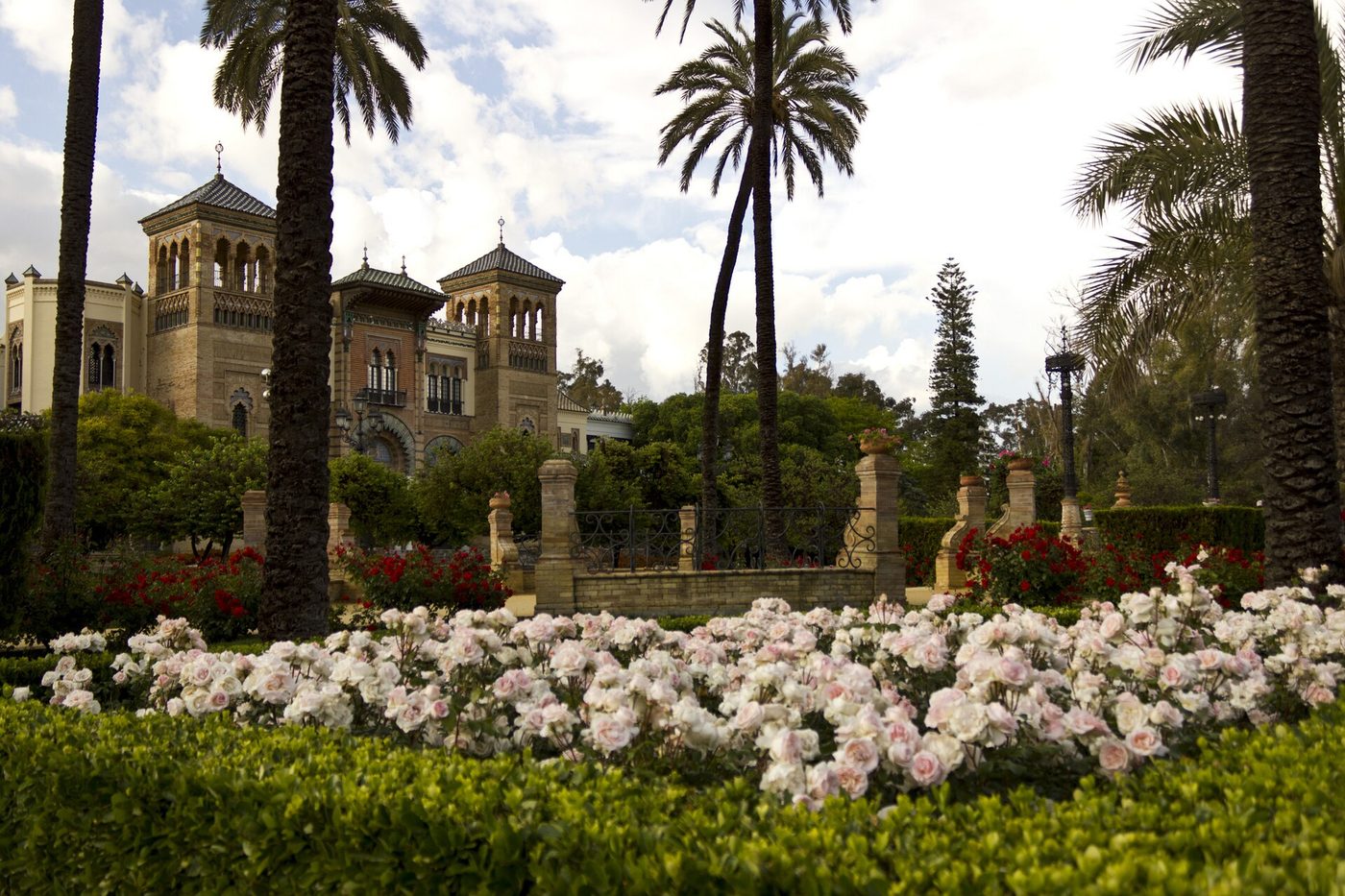
March is the month with the widest gap between the brochure and the reality. Seville, Lisbon and the Algarve are properly pleasant. Everything north of the Alps is still winter wearing a lighter coat: Berlin averages 8.4°C by day with nine rainy days, Copenhagen 6.1°C, Stockholm 3.5°C.
What March is good for is the almond and orange blossom, which is the most underrated sight of the European spring. The almond trees of Trás-os-Montes above the Douro flower through February and March, strongest around Freixo de Espada à Cinta, Torre de Moncorvo and Vila Nova de Foz Côa. Mallorca does the same thing in late February and March. Sicily builds a whole festival around it at Agrigento, the Festa del Mandorlo in Fiore, running 7 to 15 March in 2027 among the Greek temples of the Valle dei Templi, which is about as good a setting for a blossom festival as exists anywhere.
And Seville fills with the smell of azahar, orange blossom, for roughly three weeks starting in late February or early March. The city has over 14,000 bitter orange trees. On a warm evening in the Santa Cruz quarter it is overwhelming, in the good way. Note the timing carefully: in years when Easter is late, the blossom is long gone by Semana Santa.
March also holds Las Fallas in Valencia, fixed to 15 to 19 March every year, and St Patrick’s Festival in Dublin around the 17 March parade.
April: the blooms, the crowds and the Easter problem
April is when the tulips peak, when the cherry blossom runs through Bonn, Copenhagen and Stockholm, when the first Alpine roads reopen, and when a very large number of Europeans are on school holiday at the same time.
April is also the month where averages mislead most. Look at the table again: Dubrovnik has ten rainy days in April, Rome eight, Paris eight. April in Europe is a showery month almost everywhere except the far south. Pack for it and it is delightful. Pack for the photographs and you will be cold and wet.
May: the best month, and I do not think it is close

By May the numbers tip decisively. Athens hits 25.3°C with only four rainy days and twelve hours of sun. Rome reaches 22.5°C. Vienna reaches 20.1°C and Prague 18.9°C, which is city-walking weather. Even Copenhagen manages 16.2°C with ten hours of daily sunshine, and Stockholm 14°C with eleven.
Crucially, May is when the mountains start to become usable and when the Mediterranean stops being an idea and starts being a place you can actually swim. It is also the last month before the summer pricing takes hold. If someone gives me one week in Europe and no other constraints, I book the second or third week of May.
The one thing May is not is empty. It is quieter than July, not quiet. If you want properly thin crowds you want late March or early November, and you will pay for them in weather.
The spring bloom calendar, with dates you can book around
Blooms are easy to treat as a vague seasonal mood rather than as events with windows you can miss by a fortnight. They are events. This is the calendar I work from.
| What | When | Where | Notes |
|---|---|---|---|
| Almond blossom, Trás-os-Montes / Douro, Portugal | February to March | Freixo de Espada à Cinta, Torre de Moncorvo, Vila Nova de Foz Côa, Mogadouro, Vila Flor | Regional and weather-dependent. Treat as a bonus, not a guarantee. |
| Almond blossom, Mallorca, Spain | Late February and March | Island-wide | Locals call it the pink snow. Well before the tourist season. |
| Almond blossom festival, Agrigento, Sicily | 7 to 15 March 2027 | Valle dei Templi | Festa del Mandorlo in Fiore, staged among the Greek temples. |
| Orange blossom (azahar), Seville | About three weeks from late February or early March | Santa Cruz and the old centre | Over 14,000 bitter orange trees. Some sources put the window across March and April. |
| Keukenhof gardens, Netherlands | 18 March to 9 May 2027 | Lisse, 45 km from Amsterdam | Early season is crocus and daffodil; later season is the big tulips. |
| Cherry blossom, Bispebjerg Cemetery, Copenhagen | Last week of March to mid-April | Copenhagen | Langelinie Park blooms slightly later. |
| Cherry blossom, Kungsträdgården, Stockholm | Late March to late April | Central Stockholm | Roughly 10 to 14 days once open. |
| Cherry blossom, Heerstrasse, Bonn | Late March to late April, peak in the first two weeks of April | Bonn old town | Germany’s most photographed blossom street. |
| Amsterdam Tulp Festival | March to May | Over 85 locations across the city | Around 7 million spring bulbs planted citywide. |
| Dutch bulb fields at peak | Mid-April to early May | The Bollenstreek, and the Noordoostpolder in Flevoland | Later than Keukenhof’s opening. You cannot walk in the fields. |
| Bluebells, United Kingdom | Mid-April to early May | Southern England first | Northern Ireland into mid-May; northern England and Scotland up to four weeks later, occasionally early June. |
| Alpine wildflowers | NOT in spring. From June | Alps generally | Spring is the dead season in most Alpine resorts: too much snow to hike, too little to ski. |
| Lavender, Provence | NOT in spring. Late June to early August | Valensole, Luberon, Pays de Sault | Valensole peaks late June to the first week of July; harvest around 15 July. |
Keukenhof, properly
Keukenhof in Lisse, about 45 km southwest of Amsterdam, is the one everybody asks about, so here are the specifics for 2027.
The garden runs 18 March to 9 May 2027, open daily, 08:00 to 19:00, with the entrance closing at 18:15. Tickets go on sale from mid-October 2026, and only through keukenhof.nl. The park is completely cashless, so bring a card and leave the cash. It covers 32 hectares and plants over seven million bulbs.
Keukenhof’s own advice on timing is refreshingly blunt: the bloom follows the weather, so no exact best date can be given. Early in the season you get crocus, daffodil, hyacinth and the early tulips. Later you get the larger, later tulip varieties. If tulips specifically are the goal rather than “a beautiful garden”, aim for the middle third of the season.
For crowds, the official line is to arrive before 10:30 or after 16:00, and to come on a Monday, Tuesday or Wednesday. I would add: the last two hours are the best light of the day and the thinnest crowds of the day at the same time, which is not a combination you get often.
One rule worth taking seriously: you cannot walk in the bulb fields. They are private commercial property belonging to the growers. Photograph them from the road. The main bulb-field belt, the Bollenstreek, sits around Lisse, Hillegom, Noordwijkerhout, De Zilk, Voorhout, Sassenheim and Noordwijk, roughly 40 km from Amsterdam. If you want scale rather than proximity, the largest tulip-growing area in the country is actually the Noordoostpolder in Flevoland, not the Bollenstreek at all.
The fields themselves peak from mid-April into early May, which is later than Keukenhof’s opening and a distinction worth understanding: you can arrive in late March to a magnificent garden surrounded by bare brown fields. Our Netherlands travel guide covers getting out to the Bollenstreek without a car.
Lavender is not a spring flower
I need to be direct about this one, because it comes up constantly and the answer is counterintuitive if you have only seen the photographs. The lavender of Provence does not bloom in spring. It runs from late June into early August. Valensole, the plateau in the photographs, peaks from late June into the first week of July, with harvest around 15 July, and in hot years many Valensole fields are already cut by mid-July. The Valensole lavender festival is fixed to the third Sunday in July.
There is altitude variation worth knowing: the Luberon valley blooms first, and the higher Pays de Sault runs later and can push into August. But no part of it is a spring sight. If lavender is the reason for your trip, you want the summer guide, not this one. Provence in spring is still very much worth going to, for the Calanques and the villages and the food; just not for the purple.
Cherry blossom in Europe
Europe’s cherry blossom is real, and it is smaller and more local than Japan’s, which is part of the charm. The three best-known spots:
- Heerstrasse, Bonn. Season runs late March to late April, typically peaking in the first two weeks of April. One residential street, a tunnel of pink, absolutely rammed at peak.
- Bispebjerg Cemetery, Copenhagen. Last week of March to mid-April. Langelinie Park blooms slightly later, so if you miss one you may catch the other.
- Kungsträdgården, Stockholm. Late March to late April is the prime window.
Berlin, Heidelberg and Schwetzingen also have well-known displays. Whichever you pick, the flowers last roughly ten to fourteen days once open, so build flexibility into the dates and accept that a cold March can shunt the whole thing a week later.
Sixteen spring festivals worth planning a trip around
Spring is the densest festival season in the European calendar, and unlike the summer festivals most of them are free to attend and none of them are aimed at tourists. That combination is rarer than it sounds.
The complication is that the big ones move every year, because they hang off Easter, which hangs off the lunar calendar. Here are the confirmed 2027 dates.

| Festival | Where | 2027 dates | What to know |
|---|---|---|---|
| Las Fallas | Valencia, Spain | 15 to 19 March (fixed every year) | Wider programme opens 1 March with La Crida; daily mascletà at 14:00. Children’s fallas burn from 22:00 on 19 March, the main ones from midnight, the Plaza del Ayuntamiento falla last at around 01:00. |
| St Patrick’s Festival | Dublin, Ireland | Around 17 March | Four-day festival; the parade runs from Parnell Square to near St Patrick’s Cathedral. |
| Festa del Mandorlo in Fiore | Agrigento, Sicily | 7 to 15 March 2027 | Almond blossom festival in the Valley of the Temples. |
| Semana Santa | Seville, Spain | 21 to 28 March 2027 | Palm Sunday 21 March to Easter Sunday 28 March. La Madrugá is the night of Thursday 25 into Friday 26 March: Macarena, Gran Poder, Esperanza de Triana. |
| Easter Sunday (Western) | Across Europe | 28 March 2027 | Palm Sunday 21 March, Good Friday 26 March. In Spain, Jueves Santo 25 March and Viernes Santo 26 March are national holidays. |
| Scoppio del Carro | Florence, Italy | Easter Sunday | The Explosion of the Cart: costumed parade, decorated cart and fireworks at the cathedral. |
| Papal Holy Week services | Rome, Italy | Holy Week | Good Friday Stations of the Cross at the Colosseum; Easter Sunday Mass in St Peter’s Square. Tickets are free but must be reserved months ahead. |
| Feria de Abril | Seville, Spain | 13 to 18 April 2027 | Alumbrado at midnight on Monday 12 April after the cena del pescaííto. Miércoles de Feria, 14 April, is a local holiday and the busiest day. Closing fireworks at midnight on 18 April. |
| Sechseläuten | Zurich, Switzerland | 19 April 2027 | Around 3,500 guild members, 350 riders and 30 musical ensembles. |
| Koningsdag (King’s Day) | Amsterdam, Netherlands | 27 April 2027 | Koningsnacht the evening before, 26 April. |
| Pálení čarodějnic (Witches’ Night) | Prague, Czechia | 30 April | Bonfires with rag witch effigies across the city. |
| Orthodox Pascha | Greece, Cyprus, the Balkans | 2 May 2027 | Five weeks after Western Easter in 2027. On Chios, rival parishes in Vrontados fire homemade rockets at each other’s bell towers the night before. |
| Queima das Fitas | Coimbra, Portugal | Late spring, dates vary | Traditionally about a week beginning on the first Friday of May, but the 2026 edition ran 22 to 30 May, so the rule is not reliable. 2027 dates were not published at the time of writing. |
| Giro d’Italia | Across Italy | 8 to 30 May 2027 (provisional) | Finishes in Rome. Grande Partenza location still to be announced. |
| Prague Spring International Music Festival | Prague, Czechia | 12 May to 3 June 2027 (provisional) | Always opens on 12 May, the anniversary of Smetana’s death. |
| RHS Chelsea Flower Show | London, UK | Late May, four days | Tickets frequently sell out months ahead, sometimes within hours of release. |
Semana Santa and Feria de Abril: read this before you book Seville
These two are the reason Seville is the most misplanned city in the European spring, so it is worth spelling out how they work.
Semana Santa 2027 runs 21 to 28 March, from Domingo de Ramos to Domingo de Resurrección. The most intense night by far is La Madrugá, the small hours between Thursday 25 and Friday 26 March, when the Macarena, Gran Poder and Esperanza de Triana brotherhoods process through the night. It is extraordinary, it is free, and it is not a spectator sport in the way people expect: the city is packed solid, streets close without much warning, and moving across the centre can take hours.
Feria de Abril 2027 runs Tuesday 13 to Sunday 18 April. It opens with the alumbrado, the switching-on of the lights, at midnight on Monday 12 April after the traditional cena del pescaíto. Note that the Monday itself is not officially part of the calendar. Wednesday 14 April, Miércoles de Feria, is a local public holiday and the busiest day of the week. It closes with fireworks over the Real at midnight on Sunday 18 April.
The scheduling rule, under Seville’s 2025 municipal ordinance, is that the Feria falls in the third week after Palm Sunday. That means it can land in April or in May depending on the year, so never assume it is “the last week of April”.
The practical point most people miss: the Feria site covers about 450,000 square metres with more than 1,000 casetas, and most of them are private, belonging to families, businesses and associations. You cannot simply walk into one. There are public casetas that anyone can enter, and they are perfectly good fun, but if you arrive imagining you will be waved into a family tent you will have a flat evening. Go with a local if you can. Our Andalusia travel guide and Seville travel guide go deeper on both weeks.
Can you swim in Europe in spring? The honest answer
Here is the number, which is the only honest way to answer it.
These are ten-year average May sea temperatures from Seatemperature.info’s Mediterranean tables. My rule of thumb: 20°C and above is comfortable for most people for a real swim; 18 to 20°C is a bracing dip that you will enjoy for about eight minutes; below 18°C is a photograph, not a swim.
| Location | Average sea temperature, May 2026 | My verdict |
|---|---|---|
| Antalya, Turkey | 20.8°C | Swimmable |
| Paphos, Cyprus | 20.2°C | Swimmable |
| Valencia, Spain | 20.0°C | Swimmable |
| Kerkyra (Corfu), Greece | 19.9°C | Bracing |
| Ierapetra, Crete | 19.8°C | Bracing |
| Valletta, Malta | 19.5°C | Bracing |
| Venice, Italy | 19.5°C | Bracing |
| Genoa, Italy | 19.5°C | Bracing |
| Naples, Italy | 19.4°C | Bracing |
| Barcelona, Spain | 19.2°C | Bracing |
| Falasarna, Crete | 19.0°C | Bracing |
| Nice, France | 18.7°C | Bracing |
| Athens, Greece | 18.6°C | Bracing |
| Gibraltar | 17.0°C | Photograph only |
So the honest verdict on May: only the eastern and southern Mediterranean reliably clears 20°C. Antalya, Paphos and Valencia get there. Corfu and Crete sit just under. Athens at 18.6°C and Nice at 18.7°C do not, and Gibraltar at 17.0°C is properly cold, whatever the beach photographs suggest.
Two caveats worth having. First, the Atlantic coasts run colder than the Mediterranean at the same latitude: Climate-Data.org puts Lisbon’s May sea at about 16°C, and the Algarve is in the same range. A sunny 21°C day in Lagos does not mean a swimmable ocean. Second, air temperature and water temperature move on completely different schedules, which is why our Mediterranean guide pushes so hard towards September. The Mediterranean’s warmest month is August, a month after the air peaks, which is exactly why September and early October are such good swimming months and May is not.
If swimming is the whole point of the trip, spring is the wrong season. Go to Europe’s best beaches in June at the earliest, or better, in September.
What is still shut: mountains, passes and highland roads
The mountains of Europe are, for most of spring, closed.
Not metaphorically. Physically. Roads gated, huts shuttered, lifts stopped, trails under snow. Spring is the dead tourist season across most Alpine areas: too much snow to hike, too little to ski, and a good number of hotels and lifts simply shut for several weeks between the two.

| Route or area | Country | Spring access | Detail |
|---|---|---|---|
| Stelvio Pass | Italy / Switzerland | Opened 22 May 2026 at 10:00 | All three approaches: Bormio, Prato allo Stelvio, and the Umbrail from Santa Maria Müstair. Opening swings by two to four weeks with the winter snowfall. Summer glacier skiing began 1 June 2026. |
| Furka Pass | Switzerland | Opened 29 May 2026 at 09:00 | One of the later Swiss passes to clear. |
| Grossglockner High Alpine Road | Austria | Opened 25 April 2026 | Normal season is the start of May to the start of November. May hours 06:00 to 20:00; June to August 05:30 to 21:00. |
| Trollstigen | Norway | Opened 27 April 2026 at 12:00 | The earliest opening on record. A normal season starts mid-May and runs to October or November. |
| Iceland F-roads | Iceland | Mostly mid-June to early July | F35 Kjölur usually opens first, late May to early June. F208 Landmannalaugar and F249 Þórsmörk mid to late June. Askja, Kverkfjöll and Sprengisandur often not until early July. |
| Dolomites high trails | Italy | Not usable in May | Above 2,000 m is still winter with frequent snow; rifugi mostly closed. Snow lingers on north-facing slopes above 1,800 m into early June. Valley floors at 1,200 to 1,500 m run 10 to 18°C by day with nights near freezing. The hiking season proper is mid-June to late September. |
| Julian Alps, Slovenia | Slovenia | Lower trails workable in late spring | The Juliana Trail and Alpe-Adria are fine. Triglav’s summit and the high huts are still snowbound and closed. |
| Samaria Gorge | Crete, Greece | May to October only | The guided full-day trek does not run before May. |
| Calanques National Park | France | Spring is the best season | March to May, or the autumn shoulder season. Too hot to hike in summer and often closed June to September for fire risk. |
The pattern in that table is worth internalising. The Norwegian and Austrian routes open first, in late April. The Swiss and Italian high passes open last, at the end of May. Iceland’s interior does not open until well into June. If your spring itinerary involves driving a famous mountain road, check its status page before you commit, and have a valley-floor alternative ready.
None of this means avoiding mountains in spring. It means going to the right ones. Slovenia’s lower Julian Alps are excellent in May. The Calanques near Marseille reverse the usual logic entirely: best in spring, often shut in summer for fire risk. Madeira, the Azores, the Picos de Europa foothills and the Peak District are all working properly by April, and Portugal in particular is at its best right now. Our guide to hiking in Europe has the full seasonal breakdown.
Is Europe actually cheaper in spring?
Yes, with one large and specific exception.
Across flights and hotels, April to early June runs roughly 20 to 30 percent below the summer months, and the same source puts July and August at 30 to 50 percent above the equivalent May or September trip. Those two ranges are quoted independently rather than being strict inverses of each other, so treat them as indicative. July is the single most expensive month for transatlantic travel. At the sharper end, a US East Coast to London return costing around $900 in peak July has been found as low as $500 in May, which is a best-case saving rather than a typical one.
Beyond the headline rate, shoulder season travel in Europe buys you things that do not appear on the invoice: better car-rental availability, fewer sold-out experiences, and restaurant tables that do not need booking three weeks out. Rail fares behave the same way; see train travel in Europe and getting around Europe.
Now the exception. Easter is carved out of the discount entirely. Spring is the quiet, cheap season right up until Holy Week, at which point Spain and Italy in particular become as busy and expensive as any week in August.
In 2027 this is worse than usual, and here is the specific reason. Easter Sunday falls on 28 March 2027, which is unusually early. Semana Santa in Seville runs 21 to 28 March. Most English schools break from 26 March to 9 April 2027, with some local authorities starting in the week of 22 March. French school holidays run 1 to 16 April 2027, staggered by zone. German Osterferien vary by federal state and I could not source confirmed 2027 dates for them, so treat Germany as an unknown rather than as clear.
Stack those up and the fortnight from roughly 21 March to 9 April 2027 is the most expensive and most crowded stretch of the entire European spring. If you have any flexibility at all, travel after 12 April, when English schools go back. You will get better weather and lower prices at the same time, which almost never happens. For more on stretching a budget, see Europe on a budget and the cheapest places to travel in Europe.
One caveat on sourcing: these figures come from travel-industry sources rather than hotel-industry data such as STR or Eurostat. Treat the 20 to 30 percent as a well-supported rule of thumb rather than an audited statistic.
Tickets, caps and tourist taxes: the 2026 and 2027 position
Spring’s thinner crowds do not exempt you from the booking systems, and several of Europe’s headline sights now have hard caps that sell out regardless of season.

| Sight | City | Price | Booking window | What to know |
|---|---|---|---|---|
| Colosseum | Rome | €18 adult; €2 for EU citizens aged 18 to 25 | Official site releases tickets 30 days before the visit date | Full Experience is €22 for Arena Floor or Attic, €24 for Underground and Arena. Peak-season queues regularly run one to two hours and same-day tickets sell out in summer. |
| Vatican Museums | Rome | €20 plus a €5 online booking fee, so €25 in total | Buy a timed ticket online in advance | The booking fee is unavoidable if you want a guaranteed slot. |
| Sagrada Família | Barcelona | €26 basic; €30 with audio guide; €33 guided tour; €40 Top View with tower access | Slots fill several days ahead | Demand is higher than usual through 2026 because of the Gaudí centenary. |
| Acropolis | Athens | €30 adult, year round | Book at hhticket.gr well ahead; peak slots go 5 to 7 days out | Hard cap of 20,000 visitors per day with timed one-hour entry windows. Open 08:00 to 20:00 April to October, last entry 19:30. |
| Alhambra | Granada | €21 official adult ticket. The full Alhambra General entrance is listed at €22.27 once booking fees are included | Sells out quickly; buy well in advance | Alhambra General covers the Nasrid Palaces, the Generalife and the daytime Alcazaba. |
| Keukenhof | Lisse, Netherlands | 2027 prices not published at the time of writing | Tickets on sale from mid-October 2026, via keukenhof.nl only | Open 18 March to 9 May 2027, 08:00 to 19:00, entrance closes 18:15. Completely cashless. Quietest before 10:30, after 16:00, and on Monday to Wednesday. |
The Acropolis cap is the one that catches people
Athens now runs a 20,000 visitors per day cap on the Acropolis, with mandatory timed entry in one-hour windows, booked through hhticket.gr. In peak season the slots sell out five to seven days in advance, and the 08:00 to 10:00 and 17:00 to 19:00 windows go first, because those are the only ones where the rock is not brutally hot. From April to October the site runs 08:00 to 20:00 with last entry at 19:30. More in our Greece travel guide.
Also worth knowing: the Greek Ministry of Culture abolished the seasonal winter discount from 2026, so the €30 adult ticket now applies year round.
Tourist taxes have moved in three places
Three changes matter for spring 2027 budgeting.
Barcelona roughly doubled its tourist tax on 1 April 2026, after the Catalan Parliament approved an increase. The current per-person, per-night totals are €12.00 in five-star hotels, €8.40 in four-star, €9.50 in tourist-use dwellings, €7.00 in other establishments and campsites, and €6.00 in youth hostels. The structure is a regional levy that varies by category, up to €7.00 for five-star hotels, plus a flat €5.00 municipal surcharge set by the city council. On a week for two in a four-star that is an extra €117 or so, which is enough to notice. See things to do in Barcelona.
Amsterdam charges 12.5 percent of the net room price, applied before the 21 percent VAT. A coalition proposal would raise it to 16 percent in 2027 and then by one percentage point a year to 20 percent by 2030. With national hotel VAT having gone from 9 to 21 percent, the combined tax burden on an Amsterdam hotel room reaches around 33.5 percent on a simple additive basis.
Venice’s access fee is currently not in force. The 2026 trial applied on 60 specified days between 3 April and 26 July 2026, charging €5 per person per day if paid up to and including the fourth-last day before the visit and €10 thereafter, between 08:30 and 16:00. That trial ended, and as of 27 July 2026 Venice can be visited without payment or an exemption request. Any return in 2027 is for the Municipality of Venice’s governing bodies to decide and has not been announced. If you are travelling in spring 2027, check before you go rather than assuming either way.
For what it is worth, the fee only ever applied to the Ancient City, the historic centre. It never applied to Lido, Pellestrina, Murano, Burano, Torcello and the other minor islands, nor to people who entered only Piazzale Roma, Santa Lucia station or the Tronchetto without going into the centre. Children under 14 and overnight guests in registered accommodation were exempt. See things to do in Venice for the rest.
Borders, clocks and paperwork for spring 2027
Three practical things have changed or are about to, and getting them wrong is expensive.
EES is live. The Entry/Exit System completed its rollout and has been fully operational at every Schengen external border since 10 April 2026. If you are a non-EU national, expect biometric registration on entry. Build extra time into the first arrival of your trip.
ETIAS is not live, and anyone charging you for it right now is defrauding you. As of late September 2026 ETIAS is still not in effect, and no start date has been set. It was pencilled in for the last quarter of 2026, but the EU’s official ETIAS pages now say only that the date will be announced several months before launch, and trade reports point to 2027. Once it launches, a transition period of at least six months follows before it becomes strictly mandatory. The application portal is not open. Any website currently accepting ETIAS applications is fraudulent. Our Schengen visa and ETIAS guide is where we track this.
The clocks change on Easter Sunday in 2027. European daylight saving begins on the last Sunday in March, which in 2027 is 28 March, the same day as Easter. If you have a Sunday morning flight, a Semana Santa service or an early train that weekend, you lose an hour overnight. The European Parliament voted in 2019 to abolish the seasonal change and it has never been implemented, because member states cannot agree, so plan on the clocks changing as normal.
Where I would actually go, by month and by traveller
Enough data. Here is what I would book.
If you only have March
Go to Andalusia. Seville at 19.7°C with four rainy days, orange blossom in the air, and the whole of the Andalusian circuit in comfortable walking weather. Second choice: Lisbon and the Alentejo, at 16.5°C with eight hours of sun. Third: Sicily, for the temples without the summer heat. All three appear in our best cities in Europe round-up.
If it has to be a northern city, make it Barcelona, or make it an indoor trip. March in Prague or Berlin is a museum-and-restaurant holiday, and there is nothing wrong with that as long as you have booked it deliberately.
If you only have April
The Netherlands, if the tulips matter to you, timed for the second half of the month when the fields peak rather than just Keukenhof’s opening. Rome, at 18.4°C, for the city at its most walkable. Cyprus, if you want warmth: it is the warmest mainstream European destination in April at 15 to 24°C with only three rainy days, nine hours of sun and an 18°C sea.
Avoid, in April 2027: Seville during Feria week unless that is specifically why you are going, and anywhere in Spain or Italy during 21 to 28 March.
If you only have May

Almost anywhere. This is the month the whole continent works. Greece, before the July heat and with 25.3°C in Athens. The Dalmatian coast, at 20.3°C in Dubrovnik, though the Adriatic is still too cold for a real swim. Vienna at 20.1°C and Prague at 18.9°C, for central European cities at their best. Slovenia for lower-altitude hiking. Scotland and Ireland, which are as good in May as they ever get.
By traveller type
| If you are travelling for | Go here | Why |
|---|---|---|
| Warmth above all | Cyprus, or Seville and the Andalusian interior | Cyprus averages 15 to 24°C in April with three rainy days, nine sun hours and an 18°C sea. Seville reaches 22.2°C in April and 26.7°C in May with four rainy days in both. |
| First trip to Europe | Rome in April, or Vienna and Prague in May | Rome is 18.4°C in April; Vienna 20.1°C and Prague 18.9°C in May. See our first-timer’s guide. |
| Flowers and gardens | The Netherlands, mid-April to early May | Keukenhof runs 18 March to 9 May 2027, but the fields peak mid-April into early May. Pair with the Amsterdam Tulp Festival across 85-plus city locations. |
| Hiking | The Calanques in March to May, or Slovenia’s lower Julian Alps in May | The Calanques are at their best now. Skip the Dolomites and the high Alps until mid-June. |
| Festivals and atmosphere | Seville, Valencia or Prague | Semana Santa 21 to 28 March 2027, Las Fallas 15 to 19 March, Witches’ Night in Prague on 30 April. |
| Travelling with children | The Netherlands, Ireland or a Mediterranean island in May | Mild, short transfers and plenty outdoors. Note the Easter school-holiday price spike. See Europe with kids. |
| On a tight budget | Central and eastern Europe in late March, or anywhere after 12 April 2027 | Spring runs 20 to 30 percent below summer, but Easter is excluded from the discount. Travelling after English schools return on 12 April 2027 gets you warmer weather and lower prices at once. |
| Photography | Sicily and Agrigento in early March, or Iceland in May | Almond blossom among the temples 7 to 15 March 2027. Iceland’s waterfalls are at full snowmelt volume in May. |
| Road trips | Norway or Austria, not Switzerland or Italy | Trollstigen opened 27 April 2026 and the Grossglockner on 25 April; the Stelvio not until 22 May and the Furka 29 May. See Europe road trips. |
| Solo travellers | Lisbon, Barcelona or Prague | Walkable, well connected and sociable without needing a beach. See solo travel in Europe. |
Swap this for that: better spring alternatives
Some of Europe’s most-booked spring destinations have a near neighbour that is better in exactly this season. These are the swaps I make most often.
| Instead of | Consider | Why it is better in spring |
|---|---|---|
| Provence for lavender | Provence for the Calanques, or wait until July | The lavender does not bloom until late June. The Calanques are the reason to be there this early. |
| Keukenhof in late March | Keukenhof in mid to late April | Same garden, but the surrounding bulb fields are actually in flower. Fields peak mid-April to early May. |
| The Dolomites in May | The Julian Alps in Slovenia, or the Calanques | Dolomite high trails are snowbound and the rifugi shut until roughly mid-June. Slovenia’s lower trails work fine. |
| Santorini at Easter | Chios or a smaller Greek island at Orthodox Pascha | Orthodox Pascha 2027 falls on 2 May. Orthodox Easter is the bigger event in Greece, and the smaller islands mark it far better than Santorini does. |
| Amsterdam in April | Haarlem, Leiden or the Bollenstreek | Closer to the fields, and Amsterdam’s tax now runs 12.5 percent of the net room rate with a proposal to reach 16 percent in 2027. |
| Barcelona for a beach | Valencia for a beach | Valencia’s sea reaches 20.0°C in May against Barcelona’s 19.2°C, and Barcelona’s tourist tax roughly doubled on 1 April 2026. |
| Seville during Feria week | Seville in early March, or Córdoba and Granada | Unless the Feria is the point, you are paying peak rates for a city where most of the 1,000-plus casetas are private and you cannot get in. |
| Iceland’s highlands in May | Iceland’s south coast and Ring Road in May | F-roads mostly do not open until mid-June to early July, so the interior is off the table either way. |
| Rome at Easter | Rome in the second half of April | Papal Holy Week tickets are free but need reserving months ahead, and the city is at its most crowded. Rome averages 18.4°C in April either way. |
The spring closures nobody budgets for: public holidays
A guide built around what is open owes you this section. Spring carries more public holidays than any season except Christmas, and on several of them museums shut, transport thins out and shops close entirely. Almost all of them move with Easter, which means they move a long way in 2027.
Working from Easter Sunday on 28 March 2027, the movable holidays fall as follows. These are calculated from the Easter date rather than taken from a national calendar, so confirm against the country you are visiting.
- Good Friday, 26 March 2027. A public holiday in Spain, Germany, the UK and much of Europe. In Spain, Jueves Santo on 25 March is also a national holiday.
- Easter Monday, 29 March 2027. A holiday in most of western Europe though not in Spain nationally or in Portugal. In Italy it is Pasquetta and everyone goes out of town.
- Ascension Day, Thursday 6 May 2027, thirty-nine days after Easter. A full public holiday in France, Germany, the Netherlands, Belgium, Austria, Denmark, Norway and Sweden. In France in particular it triggers a mass long weekend.
- Pentecost, Sunday 16 May 2027, and Whit Monday, 17 May. A holiday in Germany, France, Austria, Belgium, the Netherlands and much of Scandinavia.
Then the fixed dates, which do not move:
- 25 April, Liberation Day in Italy. Museums and many restaurants close. It also sits at the front of a very heavy Italian holiday block.
- 1 May, Labour Day. The big one. Spain, Italy, France, Germany, Portugal, Greece and most of the continent stop. Museums shut, public transport runs to a Sunday timetable or worse, and in France almost nothing opens at all. If you have one day in Paris and it is 1 May, plan a walking day.
- Early May bank holiday in the UK, the first Monday in May, plus a late May bank holiday at the end of the month.
None of this is a reason to avoid those dates. Several of them are the best days to be in a European city, because the locals are out and the parks are full. It is a reason to check opening hours before you build a day around a specific museum.
One more thing about the Greek islands in April
I recommend the Greek islands in May rather than April for a reason that has nothing to do with weather. Many island hotels, restaurants and ferry routes do not move onto their summer schedules until late April or into May. In early April you can arrive on a smaller island to find half the town shut and two ferries a week instead of two a day. Crete, Rhodes and Corfu are large enough to function year round. The smaller Cyclades are not, and Santorini’s April is thinner than its photographs suggest. Check the ferry timetable before you commit to an island-hopping route in early spring; our Greece travel guide has the seasonal detail.
Nine mistakes people make planning Europe in spring
- The Stelvio opened on 22 May in 2026 and the Furka on 29 May. An April Alpine road trip is an April valley road trip.
- Lavender is a July flower, not a May one, and Provence in spring is a different trip entirely.
- In 2027 Easter falls on 28 March, not in April, and the school-holiday and pricing structure of the whole season moves with it.
- The garden and the fields are not the same thing. Keukenhof opens in March; the surrounding bulb fields do not peak until mid-April at the earliest.
- Packing for the average. Vienna’s 20.1°C average daily high in May still means cold evenings. Sicily can hit 25°C by day in April and still drop to around 10°C at night. Layers, always. Our Europe packing list has the detail.
- Only three places in the sea table above reach 20°C in May: Antalya, Paphos and Valencia. Do not plan a swimming holiday around it.
- The Acropolis cap, the Sagrada Família slots and the Alhambra do not care what season it is. Book timed entry anyway.
- The clocks go forward on 28 March 2027, which is also Easter Sunday. Check any early flight or service that weekend.
- Never pay for an ETIAS. It does not exist yet and the portal is not open.
What this guide does not cover
Two honest gaps, so you know where to look elsewhere.
I have not given city-by-city figures for eastern Europe beyond Prague, or for the Baltics, or for most of the Balkans, because the sixteen cities in the weather table are the ones I could source consistent 1991 to 2021 normals for within a sensible amount of checking. Riga, Kraków, Ljubljana and Tirana are all excellent spring destinations and their absence is a limit of this article, not a verdict on them. Several appear in our underrated places in Europe. The eastern Europe travel guide is the better starting point for those.
I have also not attempted week-by-week bloom forecasting, because it cannot be done reliably. Keukenhof itself declines to name a best date. What you get above are the windows; the rest is weather.
Europe in spring: frequently asked questions
Is spring a good time to visit Europe?
Yes, and for most travellers it is the best time. You get 20 to 30 percent lower flight and hotel prices than the summer months, comfortable walking temperatures across the south from March and across the whole continent by May, the densest festival calendar of the year, and crowds that are meaningfully thinner everywhere except during Holy Week. The trade-offs are unsettled weather, cold seas, and closed mountains.
What is the best month to visit Europe in spring?
May, comfortably. Athens reaches 25.3°C with four rainy days, Rome 22.5°C, Vienna 20.1°C, and even Stockholm gets eleven hours of daily sunshine. Everything is open, the passes are clearing, and summer pricing has not started. April is second, with better blooms but showery weather and the Easter crowds. March works only if you go south.
When is spring in Europe?
Meteorological spring runs 1 March to 31 May. Astronomical spring starts at the vernal equinox, around 20 March. In practice the season arrives at very different times in different places: Seville is springlike in February, and Reykjavik in May averages 9.3°C with eleven rainy days.
Where is warmest in Europe in April and May?
In April, Cyprus, at 15 to 24°C with only three rainy days and nine hours of sun. Among the cities in our table, Seville leads at 22.2°C in April and 26.7°C in May, followed by Athens at 20.0°C and 25.3°C. Malta, Sicily, Crete and the Algarve all sit in the high teens to low twenties by April.
Is it warm enough to swim in Europe in May?
Only in a few places. Of the locations in our sea-temperature table, only Antalya at 20.8°C, Paphos at 20.2°C and Valencia at 20.0°C clear the 20°C mark. Corfu at 19.9°C and Crete at 19.0 to 19.8°C are borderline. Athens at 18.6°C, Nice at 18.7°C and Gibraltar at 17.0°C are bracing at best. Atlantic coasts run colder still: Lisbon’s sea averages 16.3°C in May. For real swimming, wait for June, or better, go in September.
Is Europe cheaper in spring than in summer?
Yes. April to early June runs roughly 20 to 30 percent below the summer months on flights and hotels, and July and August run 30 to 50 percent above the same trip in May or September. July is the most expensive month for transatlantic travel. The exception is Easter, which is excluded from the discount entirely. In 2027 the expensive fortnight is roughly 21 March to 9 April.
What should I pack for Europe in spring?
Layers, and a genuinely waterproof outer layer rather than a fashionable one. April has eight or more rainy days in most of the cities in our table, including ten in Dubrovnik. Bring proper walking shoes, something warm for evenings even in the south, and a compact umbrella. Expect a wide swing between afternoon and midnight in the Mediterranean spring. The full list is in our Europe packing list, and there is more in Europe travel tips.
When is the best time to see the tulips in the Netherlands?
Mid-April to early May for the fields, which is when the main display peaks. Keukenhof’s own season is wider than that, so the garden can be magnificent while the fields around it are still bare. Early in Keukenhof’s run you see crocus, daffodil and hyacinth; later you see the big tulip varieties.
When is Keukenhof open in 2027?
18 March to 9 May 2027, daily, 08:00 to 19:00, with the entrance closing at 18:15. Tickets go on sale from mid-October 2026 and only through keukenhof.nl. The park is entirely cashless. The quietest times are before 10:30 or after 16:00, and Mondays, Tuesdays and Wednesdays.
Where can you see cherry blossom in Europe?
Heerstrasse in Bonn is the best known, running late March to late April and peaking in the first two weeks of April. Bispebjerg Cemetery in Copenhagen runs from the last week of March to mid-April, with Langelinie Park slightly later. Stockholm’s Kungsträdgården peaks late March to late April. Berlin, Heidelberg and Schwetzingen also have notable displays. Expect ten to fourteen days of bloom once open.
Is Europe crowded in April?
Less than in summer, but not empty, and April contains the single busiest non-summer period of the year. In 2027, Semana Santa runs 21 to 28 March and the English school holidays run 26 March to 9 April, with French holidays 1 to 16 April. Travel after 12 April and the difference is immediate.
Where should I go in Europe in March?
South. Seville at 19.7°C with four rainy days, Lisbon at 16.5°C, Sicily for the almond blossom festival in Agrigento from 7 to 15 March 2027, or Barcelona at 15.5°C with the most March sunshine of any city in our table at nine hours a day. Valencia for Las Fallas, 15 to 19 March. Everything north of the Alps is still cold: Stockholm averages 3.5°C by day.
What is there to do in Europe at Easter?
A great deal, most of it free. Semana Santa in Seville is the most spectacular, with La Madrugá on the night of 25 to 26 March 2027. Rome holds the Good Friday Stations of the Cross at the Colosseum and Easter Sunday Mass in St Peter’s Square, with free tickets that must be reserved months ahead. Florence stages the Scoppio del Carro at the cathedral on Easter Sunday. Prague runs Easter markets in Wenceslas Square and the Old Town Square in the preceding weeks. Orthodox Easter falls five weeks later in 2027, on 2 May.
How cold does it get in Europe in spring?
Colder than the daytime averages suggest, because those averages are daily maximums. Reykjavik averages 2.6°C by day in March. Stockholm 3.5°C. Copenhagen 6.1°C. Even in warm places, nights are cool: the Dolomites’ valley floors run 10 to 18°C by day in May with nights near or below freezing.
Do I need an ETIAS to visit Europe in spring 2027?
Not yet, and possibly not by then. As of late September 2026 ETIAS is not in effect, the application portal is not open and no start date has been set. The EU has promised several months’ notice, trade reports point to 2027, and a transition period of at least six months will follow the launch before it becomes mandatory. EES biometric checks, by contrast, have been live at every Schengen external border since 10 April 2026. Any website taking ETIAS applications today is fraudulent. Check our Schengen and ETIAS page for the current position.
Final thoughts
Spring is the season where a bit of planning pays the highest dividend, because the variables are all moving at once. The blooms shift by a fortnight. Easter drags the school holidays and the pricing with it. The passes open on a different date every year. The sea lags the air by two months. Get those four things right and you get the best of Europe at three-quarters of the price.

My own booking, if you want the short version: the second or third week of May, somewhere between Athens and Vienna, with tickets bought sixty days out and a waterproof in the bag. And if it has to be earlier than that, go south and go to a city, because March north of the Alps is a lovely place to be indoors.
For more on timing your trip, our pillar guide to the best time to visit Europe compares all four seasons side by side, and you can read the companion pieces on Europe in summer and visiting Europe in winter. If you are still choosing a destination, start with the best places to visit in Europe or the best countries to visit in Europe, and if you are building the trip itself, our guide to planning a trip to Europe and the Europe itinerary collection will take it from there. For inspiration, browse the Europe bucket list, the most beautiful places in Europe and our European city breaks.
Hannah Brooks has spent fifteen years travelling, living and writing across Europe, from the Arctic tip of Norway to the south of Sicily. She has planned hundreds of European itineraries for readers and is Senior Europe Editor at EuropeanTourism.org.
Photo credits
All images are reproduced under their stated licences. Full attribution below.
- Europe in spring: rows of red and yellow tulips in bloom at Keukenhof in the Netherlands · Photo: Arian Zwegers from Brussels, Belgium / CC BY 2.0 via Wikimedia Commons
- Flowerbeds and palms in the Parque de Maria Luisa, Seville, in early spring · Photo: Roberta Morea from Madrid / CC BY-SA 2.0 via Wikimedia Commons
- Flower-lined canals in Annecy, France, in late spring · Photo: Guilhem Vellut from Annecy, France / CC BY 2.0 via Wikimedia Commons
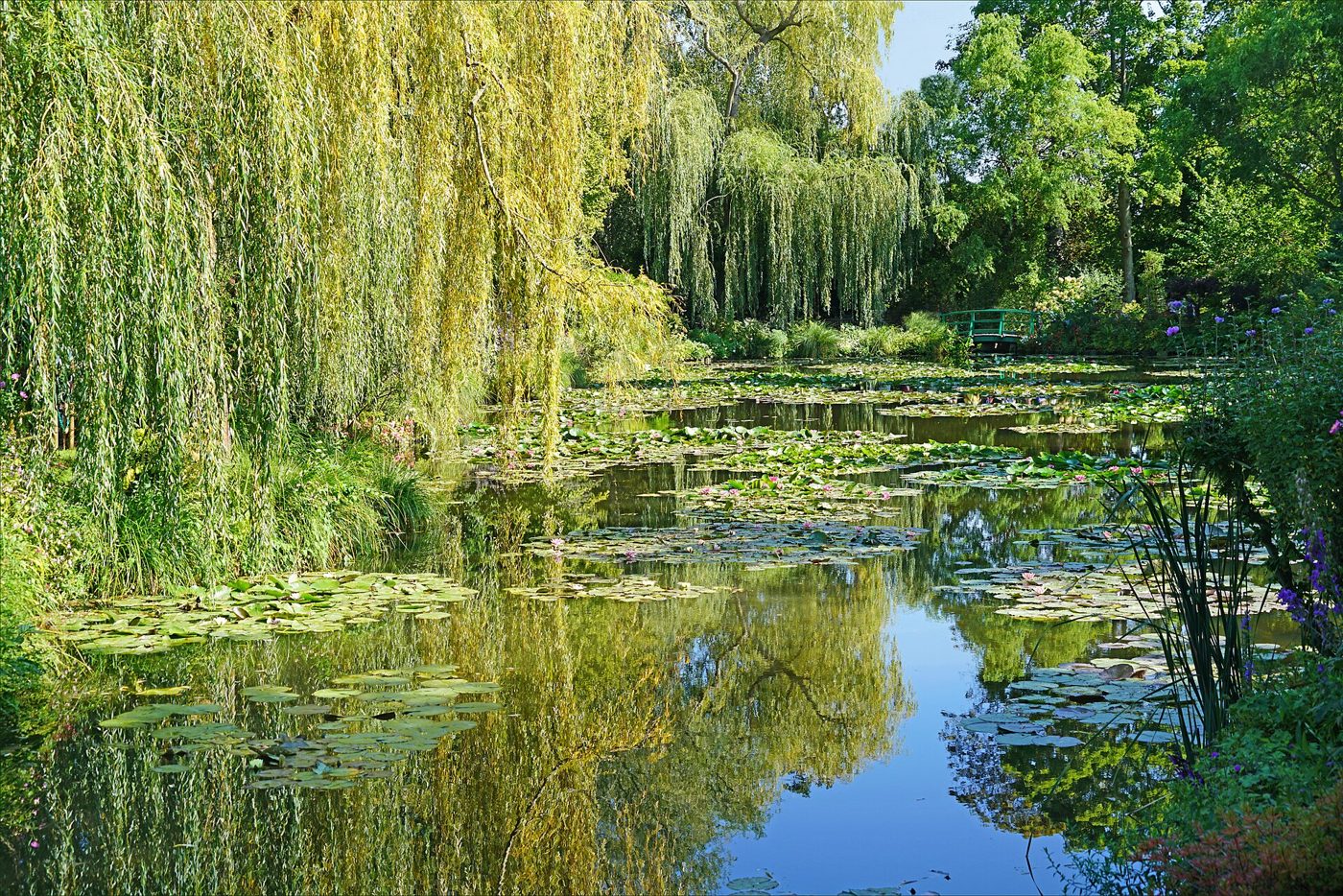
- Willows and water lilies in Claude Monet’s garden at Giverny, Normandy · Photo: Jean-Pierre Dalbéra from Paris, France / Wikimedia Commons, CC BY 2.0
- A Semana Santa paso carried through a crowded street in Seville · Photo: Cofrades 2020 sevilla / CC BY 4.0 via Wikimedia Commons
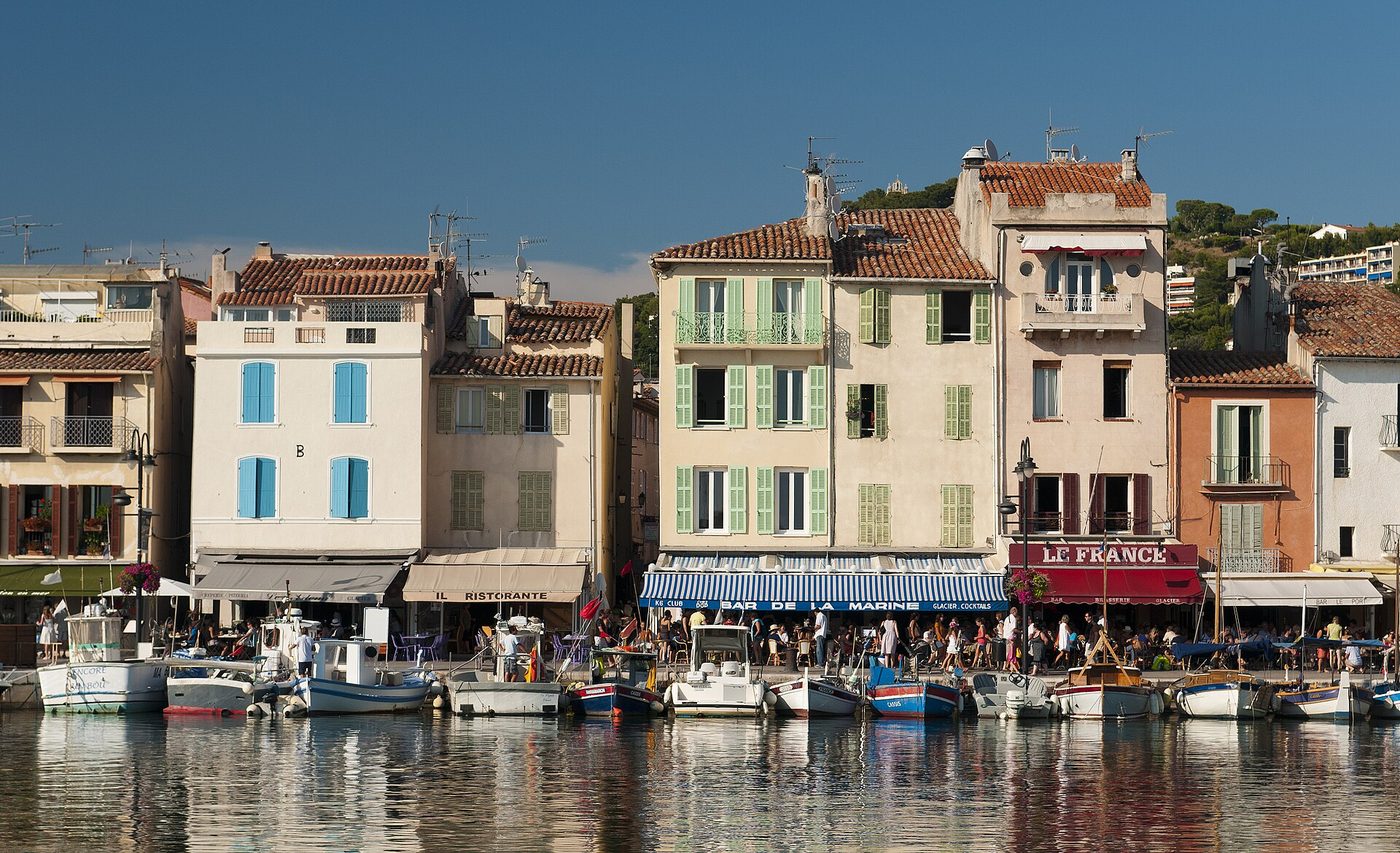
- Pastel houses around the fishing harbour at Cassis in Provence · Photo: Michal Osmenda from Brussels, Belgium / CC BY-SA 2.0 via Wikimedia Commons
- Hairpin bends of the Stelvio Pass road in the Italian Alps, closed until late May · Photo: Raul Taciu raultaciu (CC0) via Wikimedia Commons
- The Colosseum in Rome, where timed-entry tickets are released 30 days ahead · Photo: Wilfredor (CC0) via Wikimedia Commons
- The seaside town of Nafplio and the Bourtzi fortress in the Peloponnese, Greece · Photo: Ava Babili / CC BY-SA 4.0 via Wikimedia Commons
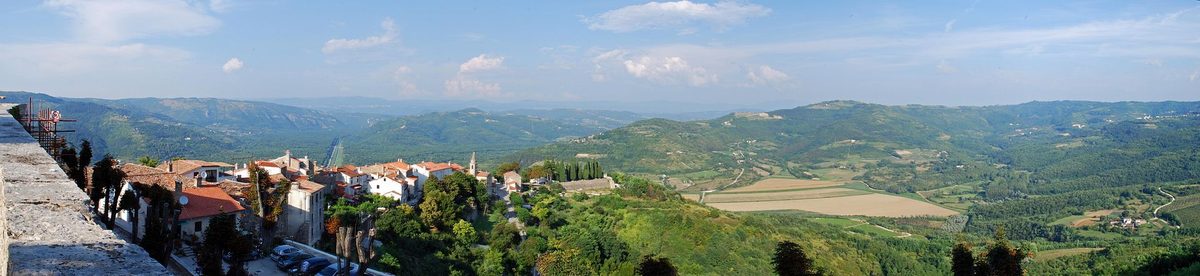
- The hilltop town of Motovun above the Mirna valley in Istria, Croatia · Motovun, Istria · Photo: Alex Smith (public domain)
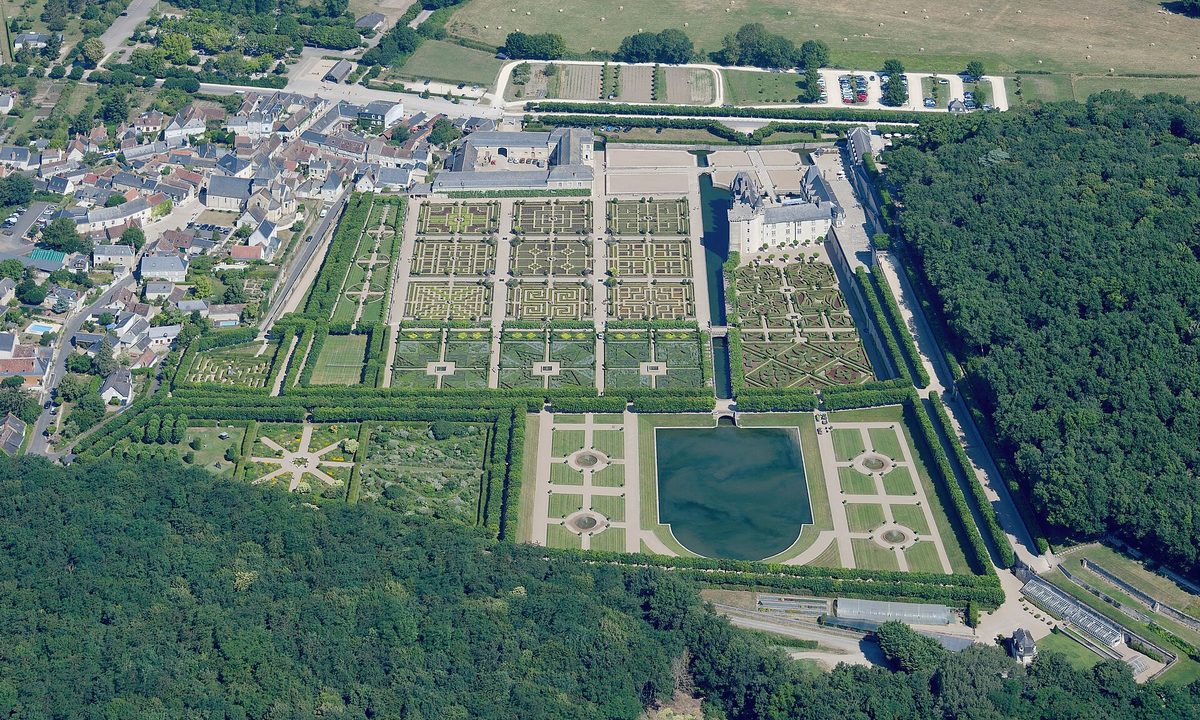
- The geometric Renaissance kitchen gardens of Villandry in the Loire Valley · Photo: Carsten Steger / CC BY-SA 4.0 via Wikimedia Commons
- The Parthenon atop the Acropolis in Athens · Photo: Jebulon (CC0) via Wikimedia Commons