Is the Eurail Pass Worth It? A 2026 Cost Breakdown

A Eurail pass can be the best travel money you spend on a trip, or a €447 ten-day pass that ends up covering six trains you could have booked cheaply in advance. Which one you get is mostly arithmetic, so build the spreadsheet before you build the itinerary.
Is Eurail pass worth it in 2026? It is worth it if you are moving often, moving far, moving on short notice, or travelling in countries where walk-up fares are punishing. It is not worth it if you have fixed dates, a short list of cities, and the discipline to book advance tickets two months out. A pass is not a discount card. Think of it as an insurance policy against your own indecision. In 2026 a €283 four-day adult pass works out at €70.75 per travel day, a €956 three-month pass ridden on all 90 days comes to about €10.62, and every day you leave unused pushes the real cost up. Reservations are extra.
One thing to know before you read anything else: Eurail is now Interrail
As of 9 September 2026, the Eurail brand has been folded into Interrail worldwide. Passes, existing bookings and accounts all stayed the same, and the eligibility rules did not change. What changed is the name on the website and the app. If you go looking for eurail.com and find the word Eurail has vanished, nothing has gone wrong. I mention it first because plenty of what is written about Eurail still treats the two as separate products with separate price lists, and they have not been for some time. Eurail and Interrail passes have had identical prices and identical reservation fees for some time. The real difference was who could buy which one, since the two passes served residents of different countries, and where you live still shapes the rules: residents of the network countries get only one outbound and one inbound journey in their home country.
Here is the rule, since it decides which half of this article applies to you:
- The Eurail pass, now sold as Interrail for non-European residents, is for people who do not live in Europe. Americans, Canadians, Australians, New Zealanders, Japanese, Brazilians, South Africans and so on.
- The Interrail pass proper is for European residents, and the UK counts as European for this purpose.
Same pass, same price, same rules on board, and now the same brand. If you want the detail on which one you qualify for and what happens if you have dual residency, I have written that up separately in Eurail vs Interrail. Everything else on this page applies to both.
Is Eurail pass worth it for your trip? The short version
Find yourself in this table. The full reasoning for each row is further down.
| If this is you | Verdict | Why |
|---|---|---|
| Two or three cities, fixed dates, booking three months out | No | Advance fares undercut the pass badly. DB sells Berlin to Prague from €19.99 booked early, against a pass day worth €37 to €71. |
| Backpacking a month, no fixed plan, deciding at breakfast | Yes | This is the exact scenario the pass is built for. Walk-up fares are where the pass earns its keep. |
| Under 28, long trip, second class | Usually yes | The 25% youth discount drops a one-month continuous pass to €522, about €17 per day if you ride most days. |
| Interailing mostly in Germany, Austria, Switzerland, Czechia, Hungary | Yes | Low or zero compulsory reservation fees. You walk onto trains. The pass behaves like the marketing says it does. |
| Mostly France, Spain and Italy high-speed | Usually no | Compulsory reservations on almost everything, and cheap advance fares you are not allowed to use with the pass. |
| One country only, one to two weeks | Rarely | A national pass or a national railcard almost always wins. The Swiss Travel Pass and the Deutschland-Ticket both beat Eurail on their home turf. |
| Travelling with children under 12 | Leans yes | Two children aged 4 to 11 travel free per adult pass, which on a family of four means two passes covering everyone. |
| Long trip but only a few long hops | Flexi, not continuous | The 7-day-in-1-month flexi at €381 usually beats the one-month continuous at €696 unless you are riding more than about 13 days in the month. |
| Night trains a lot | Leans yes, with caveats | A direct night train uses only the departure day, as long as you do not change trains after midnight. Couchettes and sleepers cost extra: a Nightjet double sleeper can reach €224.90 per person, and some cabins cost more. |
| You value not thinking about tickets | Yes, and stop reading | This is a real reason. The pass buys attention back. Just do not pretend to yourself it is a discount. |
If your row says no and you are disappointed, hold on. There is a section further down on the cases where the pass wins even when the arithmetic says it should not, and it is not a consolation prize. It is the strongest argument for buying one.
What a Eurail pass buys you in 2026
Strip the marketing away and a Eurail pass is rail travel across a network of 33 countries, with one step people miss: you add each journey to your pass to generate the ticket you show on board. You still need a reservation on many of them, you still pay for that reservation, and there are trains the pass does not touch at all. What you stop doing is buying individual tickets and committing to individual departures.
The 33 countries take in most of Western and Central Europe plus Scandinavia, the Baltics, much of the Balkans, Greece, Türkiye and Great Britain, with the pass valid on each country’s participating railways. The notable absences are Albania, Kosovo, Ukraine, Belarus, Russia and Moldova. Great Britain being included surprises people; the pass does work on British long-distance trains, and reservations there are free.
You choose between two shapes of pass:
- Flexi: 4, 5 or 7 travel days within 1 month, or 10 or 15 travel days within 2 months. You pick which days you travel as you go.
- Continuous: 15 days, 22 days, 1 month, 2 months or 3 months of unlimited travel every single day.
A travel day runs from 00:00 to 23:59 and gives you unlimited trains and unlimited distance inside it. This is the feature most people leave on the table. If you are going to burn a travel day, burn it properly. Rome to Florence, a long lunch, Florence to Bologna, dinner, Bologna to Venice, all on one day, is one travel day, not three. Travellers who treat each hop as a separate decision and use a travel day for a 40-minute regional train are the ones who come home saying the pass was not worth it.
What it does not cover
Metros, trams and city buses are all out. So are a handful of quirky private lines you will actually want, including the Circumvesuviana to Pompeii and Euskotren in the Basque Country. More importantly for the maths, three big low-cost high-speed operators refuse the pass outright:
- Italo in Italy. This matters, because Italo runs the same city pairs as Frecciarossa and often undercuts it.
- Ouigo España in Spain. Ouigo in France is now a different story: Interrail lists compulsory pass-holder reservations on OUIGO Grande Vitesse at €10 to €20 and on OUIGO Train Classique at €10 to €15, and the Classique service between Paris and Brussels includes the right to a large bag.
- Renfe Avlo in Spain, Renfe’s own budget brand, with fares from €7 on routes such as Madrid to Valencia, Alicante, Málaga and Seville. On Madrid to Barcelona, the €9 fares come from Ouigo España.
So on the exact routes where Europe’s cheapest high-speed tickets live, your pass is sitting in your pocket doing nothing. Keep that in mind when you read a “Madrid to Barcelona from €9” headline.
Eurail pass prices 2026: the full table
These are 2026 Global Pass prices in euros. Eurail sells in several currencies, so if you check on a US or Australian site you will see a converted figure that moves with the exchange rate. The euro tariff is the underlying one.
| Pass | Adult 2nd | Adult 1st | Youth 2nd (12 to 27) | Senior 2nd (60+) |
|---|---|---|---|---|
| 4 days in 1 month | €283 | €367 | €212 | €255 |
| 5 days in 1 month | €318 | €413 | €239 | €286 |
| 7 days in 1 month | €381 | €495 | €286 | €343 |
| 10 days in 2 months | €447 | €581 | €335 | €402 |
| 15 days in 2 months | €553 | €718 | €415 | €498 |
| 15 days continuous | €476 | €618 | €357 | €428 |
| 22 days continuous | €586 | €761 | €440 | €527 |
| 1 month continuous | €696 | €904 | €522 | €626 |
| 2 months continuous | €826 | €1,073 | €620 | €743 |
| 3 months continuous | €956 | €1,242 | €717 | €860 |
Those figures match Deutsche Bahn’s official 2026 Interrail price sheet cell for cell. If a reseller shows a different price, compare the same pass, currency, age category and class, or simply buy direct from eurail.com or interrail.com rather than from a reseller. Prices still move at the annual tariff change and during sales, so check the live price on the day you buy.
The discount structure, which is simpler than it looks
- Youth is 25% off the adult price, for anyone aged 12 up to and including 27 on the first day of validity. If you turn 28 mid-trip, you are still fine.
- Senior is 10% off, from 60 on the first day of validity.
- Adult is 28 to 59.
- Children under 4 travel free and need no pass, unless they take their own seat or bed, in which case they need a Child Pass (or a Youth Pass where that is required).
- Children 4 to 11 get a free Child Pass, up to two per accompanying adult, youth aged 18 or over, or senior.
The child rule has a trap in it. The Child Pass has to be added at the time of purchase and cannot be bolted on afterwards. And children pay the full adult reservation fee, with no discount, so a family of four on French high-speed still pays four reservation fees even though two of the passes were free.
A first class pass is valid in both classes, so it is not a restriction, just an upgrade. A second class pass is only valid in second.
What a travel day costs you per day
| Pass | Adult cost per travel day | Youth cost per travel day |
|---|---|---|
| 4 days in 1 month | €71 | €53 |
| 5 days in 1 month | €64 | €48 |
| 7 days in 1 month | €54 | €41 |
| 10 days in 2 months | €45 | €34 |
| 15 days in 2 months | €37 | €28 |
| 1 month continuous, riding 15 of 30 days | €46 | €35 |
| 1 month continuous, riding 22 of 30 days | €32 | €24 |
| 3 months continuous, riding 45 days | €21 | €16 |
That last block is the whole argument in one place. A continuous pass is only cheap if you ride. A one-month continuous pass used on eight days costs €87 a day, which is worse than every flexi option on the list. Buy the shape of pass that matches how you travel, not the one that sounds most generous.
The break-even table: pass day versus point-to-point ticket
The comparison people usually run sets the pass against full-price walk-up fares and declares a heroic saving. The honest version needs two columns, because European rail fares are not one number. Nearly every operator sells a cheap advance fare that is non-refundable and locks you to one train, and a much higher flexible or walk-up fare for turning up on the day. Your pass competes against the first number if you plan, and against the second if you do not.
| Route | Advance fare | Walk-up or full flex | Pass beats advance? | Pass beats walk-up? |
|---|---|---|---|---|
| Berlin to Prague | from €19.99 (DB, limited seats) | varies by departure; check DB | No | Yes |
| Berlin to Amsterdam | from €37.99 | €167 | No | Yes |
| Paris to Barcelona | from €39 | check SNCF on the day | No | Yes |
| Rome to Florence | from €14.90 with Italo | Trenitalia Base fares have several price levels | No | Marginal |
| Rome to Venice | from €29.90 | €99 Base | No | Yes |
| Madrid to Barcelona (AVE) | from €17.05 | €43 on the classic line | No | No |
| Zurich to Milan | from €29 | check the operator on the day | No | Likely |
| Munich to Venice | from €37.99 | check DB on the day | No | Likely |
| Munich to Salzburg | from €6.99 on some DB Railjets | check DB for the day’s fare | No | No |
| Prague to Vienna | from €15 | check the operator on the day | No | No |
| Vienna to Budapest | from €19.90 (ÖBB Sparschiene, limited seats) | check ÖBB’s booking system | No | No |
| Prague to Budapest | from €30 (ČD) | check ČD for your departure | No | No |
| Lisbon to Porto | CP Promo from €10.50 (Intercidades, 2nd class) | check CP | No | No |
| Vienna to Bratislava | n/a | about €12 walk-up | No | No |
| Florence to Pisa | n/a | about €9 walk-up | No | No |
| Nice to Cannes | n/a | about €5 walk-up | No | No |
Read the fourth column and the case against the pass is overwhelming. On an advance fare the pass loses on every route here, and that holds against a well-used €956 three-month pass, which works out at about €21.24 a travel day if you ride on 45 days and less only if you ride more. Read the fifth column and the case flips on the long international hops, where a walk-up ticket can cost three or four times a pass day. That is the whole debate in one table, and it explains why two experienced travellers can argue about this forever and both be right. They are answering different questions.
Several operators, particularly in Central Europe, effectively only sell one fare, which is why those rows say the pass loses on both counts. On a €12 Vienna to Bratislava hop, nothing beats a €12 ticket.
Three worked itineraries, with the reservations included
Here are three real shapes of trip with the reservation fees added in, because a pass comparison that ignores reservation fees is a fantasy.
Trip one: the classic two-week Western Europe run
Paris, Amsterdam, Berlin, Prague, Vienna, Munich. Five travel days over 14 days, booked eight weeks ahead.
| Leg | Advance ticket | With a pass |
|---|---|---|
| Paris to Amsterdam | €35 (includes reservation) | €32 reservation, Eurostar Standard |
| Amsterdam to Berlin | €38 | €5.50 reservation, optional except 25 June to 5 September 2027 |
| Berlin to Prague | from €19.99 | €5.50 optional reservation |
| Prague to Vienna | €15 | €3 optional reservation |
| Vienna to Munich | about €30 | €3 optional reservation |
| Ticket total | about €138 | €49 in reservations |
| Plus the pass | n/a | €318 (5 days in 1 month, adult 2nd) |
| Grand total | about €138 | about €367 |
The pass loses by about €230. It is not close. If you know your dates and you are willing to book, this trip is a straightforward no. A youth pass narrows the gap to about €150, which is still a loss.
Trip two: the same route, decided as you go
Same six cities, but you are deciding each morning and buying at the station. The fares that make Trip One cheap, DB’s from €19.99 to Prague and NS International’s from €38 to Berlin, are advance prices on a limited number of seats, and on the day you pay whatever is left on that departure. Check the live fares on both operators’ sites for the trains you want. Every leg bought at a walk-up price eats into that €230 gap, while the pass costs the same €367 however late you decide.
So even in the pass’s favourite scenario the margin is not enormous, and I would rather tell you that than sell you a fantasy. What the pass adds on top of the money is the thing that does not appear in the column: you can change your mind at 8am, and it costs you nothing.
This is the honest answer to the question. A pass is worth it exactly to the degree that you will not book in advance. Most people who buy one do so because they know, correctly, that they are not going to.
Trip three: a month of hard backpacking, under 28
Twenty-two travel days in a month, mostly regional and intercity trains through Germany, Austria, Czechia, Poland, Hungary, Slovenia and Croatia, plus two night trains.
| Line | Cost |
|---|---|
| Youth 1-month continuous pass | €522 |
| Optional and mandatory reservations, roughly 12 at €2 to €6 | about €45 |
| Two night train couchettes at €19.90 to €44 | about €65 |
| Total | about €632, or €29 per travel day |
Buying twenty-two separate advance tickets across seven countries, at typical fares of €15 to €40 each, lands somewhere between €330 and €880, plus the two sleepers, plus a month of sitting in hostel common rooms working out booking sites in six languages. So the pass wins on cost whenever your average fare would have topped about €26, and wins on sanity every time. This is its home ground.
Seat reservations: the second budget you have to plan for
If you take one thing from this article, take this. A Eurail pass does not include seat reservations, and on some of Europe’s most useful trains a reservation is compulsory. That means you cannot board without paying extra, however valid your pass is. Eurail’s own rough guide is €10 for a domestic reservation, €15 for an international one and €20 for a night train, but those averages flatten enormous variation. Budget for them train by train. Two weeks spent between Paris, Milan and Barcelona could cost you €150 to €250.
Here is the country by country picture, with 2026 pass-holder fees.
Reservation fees by country and operator
| Country | Service | Pass-holder fee | Compulsory? |
|---|---|---|---|
| France | TGV INOUI domestic | €10 to €20 in either class | Yes |
| France | Intercités, mandatory-reservation routes | €10 to €20 | Yes |
| France | Intercités, recommended routes | €1.60 | No |
| France | TER regional (Normandy, Grand Est) | €2.50 on selected Nomad trains in Normandy; €1.70 on FLUO trains in Grand Est | On selected Nomad trains, and FLUO trains to or from Paris |
| France to Italy | TGV Paris to Turin or Milan | €31 2nd, €45 1st | Yes |
| France to Germany | TGV and ICE Paris to Frankfurt, Munich, Stuttgart | €19 either class | Yes |
| France to Luxembourg | TGV | €10 to €20 | Yes |
| Belgium | TGV Brussels to Lille, CDG, Marne-la-Vallée | €20 to €35 2nd, €30 to €45 1st | Yes |
| Belgium | Brussels Airport Diabolo supplement | €6.40 either class | Yes |
| UK and cross-Channel | Eurostar London to Paris, Brussels, Lille | €35 Standard, €40 Plus | Yes |
| UK and cross-Channel | Eurostar London to Amsterdam | €35 Standard, €43 Plus | Yes |
| France to Belgium | Eurostar Paris to Brussels | €27 Standard, €32 Plus | Yes |
| France to Netherlands | Eurostar Paris to Amsterdam or Rotterdam | €32 Standard, €37 Plus | Yes |
| Belgium to Netherlands | Eurostar Brussels or Antwerp to Rotterdam, Amsterdam | €22 Standard, €27 Plus | Yes |
| Belgium to Germany | Eurostar Brussels to Cologne, Dortmund | €27 Standard, €32 Plus | Yes |
| Italy | Frecciarossa and Frecciargento | €13 either class | Yes |
| Italy | Frecciabianca | €10 either class | Yes |
| Italy | Intercity domestic | €3 | Yes |
| Italy | Regional trains | None possible | No |
| Italy to Austria and Germany | Railjet and EuroCity over the Brenner | €10 2nd, €15 1st supplement (seat reservation included), plus €5 if bought on board | Supplement compulsory to, from or within Italy; seat reservation optional |
| Italy to Switzerland | EuroCity | €13 to €17 either class | Yes |
| Spain | Renfe AVE, Elige | €10 2nd, €13 Elige Confort | Yes |
| Spain | Renfe AVE Premium with meal | €23.50 | Yes |
| Spain | Alvia, Intercity, Euromed | €6.50 2nd, €10 1st | Yes |
| Spain | Avant, Media Distancia | €4 2nd | Yes |
| Spain | Regional Exprés | €4 where offered | Not always |
| Spain | iryo high-speed | €10 2nd, €13 1st | Yes |
| Spain to Portugal | Madrid to Lisbon, IC plus RE plus IC | €5 plus €6.50 2nd | Yes |
| Portugal | Alfa Pendular and Intercidades | €5 either class, bookable only locally | Yes |
| Portugal to Spain | Porto to Vigo Intercity | Free, but compulsory | Yes |
| Germany | ICE, IC and EC domestic | €5.50 2nd, €6.90 1st | No |
| Germany | Overnight IC and ICE seat | €5.90 2nd, €6.90 1st | No |
| Switzerland | Domestic Intercity | €4.40 | No |
| Switzerland to Germany | ICE services | €5.20 2nd, €6.50 1st | No |
| Switzerland | Glacier Express reservation | CHF 54 short or long, either class; CHF 590 Excellence Class (first-class pass needed) | Yes |
| Switzerland | Bernina Express supplement | CHF 32 St. Moritz to Tirano; CHF 40 Chur to Tirano, or CHF 44 from 2 May to 25 October 2026 | Yes |
| Switzerland | Gotthard Panorama Express | CHF 24 in 2026, CHF 28 in 2027; in 2026 the full boat-and-train trip also cost CHF 41 with a first-class pass, CHF 75 with a second-class one | Yes |
| Switzerland | GoldenPass | €4.40 to €24.40 | Optional in 1st and 2nd class, but no seat is guaranteed without one |
| Austria | ÖBB Intercity, Railjet, Railjet Express | €3 either class | No |
| Austria | ÖBB Business Class upgrade | €15, 1st class passes only | No |
| Netherlands and Belgium | Domestic trains | None possible | No |
| Netherlands to Belgium | EuroCity Direct Amsterdam to Brussels | None possible | No |
| Netherlands to Germany | Amsterdam to Berlin ICE | €5.50 2nd, €6.90 1st | Only 25 June to 5 September 2027 |
| Czechia | Intercity and EuroCity domestic | €3.60 either class | No, except direct IC trains Prague to Ostrava Svinov and Opava |
| Czechia | SuperCity domestic | €2.90 2nd, €5.15 1st | Yes |
| Czechia | RegioJet | €1.30 to €2.80 by class | Yes |
| Czechia | Leo Express | Free, but compulsory | Yes |
| Czechia to Austria | Prague to Vienna Railjet | €3 | No |
| Czechia to Germany | Berlin to Prague EuroCity or Railjet | €5.50 2nd, €6.90 1st | No |
| Hungary | Intercity domestic | €1.70 to €2.60 2nd, €3 to €5 1st | Yes |
| Poland | Express InterCity Premium | €10 either class | Yes |
| Poland | EIC, IC and TLK | €0.70 either class | Recommended; compulsory on selected IC trains |
| Slovenia | Intercity and Pendolino | €2 under 60 km, €4 over | Recommended |
| Croatia | Domestic ICN, IC and R | €1 to €3.60 | No |
| Romania | InterRegio and Intercity | €1.20 | Yes |
| Sweden | SJ High Speed X2000 domestic | €6.50 2nd, €14.40 1st | Yes |
| Sweden | SJ Intercity | €3.50 2nd, €8.30 1st | No |
| Sweden | Regional trains | €3.50 2nd, €4.35 1st | No |
| Sweden | Snälltåget | €4.50 2nd, €13 1st | Yes |
| Sweden | Inlandsbanan scenic train | €5 | No |
| Norway | Vy Regiontog | €6 2nd, free for 1st class passes | No |
| Norway | SJ Norge and Go-Ahead Nordic Regiontog | €4.30 2nd, €43 for a 1st class reclining seat | No |
| Denmark | Intercity and Intercity Lyn | €4 either class | No |
| Denmark to Sweden | Øresund train Copenhagen to Malmö | None possible, free with a pass | No |
| Denmark to Czechia and Germany | Railjet, new from May 2026 | €3 either class | Recommended; compulsory 26 June to 31 August |
| Greece | Intercity domestic | Free, but compulsory | Yes |
| Great Britain | Long-distance trains | Free, mandatory on some services | Varies |
| Ireland | Dublin to Belfast Enterprise | Free 2nd, €16 1st | No |
| Türkiye | Long-distance trains | Free, but mandatory | Yes |
Read that table as a map of where your pass is a pass and where it is a discount voucher. In Germany, Austria, Czechia, the Netherlands, Belgium, Hungary and Denmark you can walk onto trains, pay nothing or a couple of euros, and change your plans an hour before departure. In France, Spain and Italy many high-speed trains charge for a reservation, as does everything Eurostar runs, though most slower national and regional trains in those countries need none. That is why the pass suits some itineraries and fights others.
The Eurostar numbers deserve a second look, because they are the harshest on the list. €35 to cross from London to Paris on top of a pass you already bought is roughly what a cheap Eurostar advance ticket costs outright, at around £39. And a second class pass only gets you Eurostar Standard; Premier is never available to pass holders at any price.
The French €10 to €20 reservation, and why to book it early
French TGV INOUI reservations are quoted as “€10 to €20”, and on Interrail’s fee table in September 2026 that range applies in first class as well as second. Neither Interrail nor SNCF publishes what decides the price on a given train, so I’d budget €20 a leg and treat anything less as a bonus. TGVs between France and Brussels cost more, at €20 to €35 in second class and €30 to €45 in first.
This matters for planning because the spread adds up. Four French high-speed legs for two people come to €80 in reservations at the bottom of the range and €160 at the top, and pass-holder places on busy trains can run out altogether, so book them as soon as the booking window allows.
Is there a pass-holder quota, or not?
Whether French, Spanish and Italian high-speed trains hold a separate allocation for pass holders is contested. Two well-regarded rail sites say they do, and that those places sell out weeks before general seats on popular French and Spanish summer routes. Eurostar is the one operator that says so plainly for its own trains: pass-holder availability is limited.
Whichever side is right about the high-speed trains, three things are clear:
- Eurostar and the ex-Thalys Eurostar Red services genuinely do have pass-holder quotas, and they genuinely do sell out for pass holders while still selling normal tickets. This is the one case where “sold out” can mean “sold out to you specifically”.
- On those services, availability tends to reappear the next day, so a sell-out today does not mean a sell-out for that date.
- Everywhere else, the fee is published as a range, €10 to €20 on French TGVs, and no official source says what moves a given train from one end of it to the other.
The practical conclusion is the same either way: book your French, Spanish, Italian and Eurostar reservations as early as you can, and treat everything else as walk-on.
The summer compulsory-reservation windows
Here is a small, nasty detail that catches people out every July. Several routes that require no reservation for most of the year flip to compulsory during the summer peak:
- Amsterdam to Berlin ICE, compulsory 25 June to 5 September 2027.
- Frankfurt to Amsterdam ICE, where the summer requirement is set year by year, so check the reservation rules for your travel dates.
- Hamburg to Copenhagen, where Interrail’s fee tables give two different end dates for the summer requirement, 16 and 31 August, so check the train you pick.
- Brussels to Cologne and Frankfurt ICE is the odd one out: no summer window applies, but a reservation is highly recommended on every train.
If your mental model of German rail travel is “just turn up”, that model is wrong for eight weeks of the year on exactly the routes tourists use most.
Night trains, and why they change the maths more than anything else
A night train uses one travel day, not two. On a direct night train you use the departure day only, provided you do not change trains after midnight.
Done well, a night train is the best value on the network. You save a hotel night, you save a daytime travel day, and you wake up 800 km away. Done badly, you pay €224.90 for a sleeper berth and then discover the pass covered the seat you did not want anyway.
| Night service | Seat | Couchette | Sleeper |
|---|---|---|---|
| ÖBB Nightjet (dynamic pricing) | €4.90 to €24.90 | 6-bed €19.90 to €64.90; 4-bed €29.90 to €94.90 | 3-bed €59.90 to €184.90; double €69.90 to €224.90; single €114.90 to €479.90 |
| Nightjet Plus grades | n/a | Mini Cabin €29.90 to €94.90 | 3-bed €79.90 to €249.90; double €94.90 to €299.90; single €149.90 to €624.90 |
| EuroNight Metropol (Budapest to Prague and Berlin) | €19 | 6-berth €44; 4-berth €54 | Triple €69; double €94; single €169 |
| EuroNight Chopin (Prague to Krakow and Warsaw) | €3 | 6-berth €34; 4-berth €39 | Triple, double and single sleepers offered |
| EuroNight Dacia (Vienna to Budapest and Bucharest) | €3 | 6-berth €13.40; 4-berth €20 | Triple €28; double €42; single €98 |
| European Sleeper | €11 to €21 | 5-berth Classic €64 to €74 | Comfort double €119 to €139 |
| France Intercités de Nuit | Reclining seat €10 | €19 to €25 by season | Not offered |
| Italy InterCity Notte | €3 | 4-bed €41 | 3-bed €48; double €58; single €122 |
| Sweden SJ night train | €3.50 | 6-berth €22 | 3-bed €36; private en-suite €71 |
| Norway night train | €4 to €6; reclining €43 to €56 | n/a | Sleeping compartment €86 to €107 |
| Caledonian Sleeper (Great Britain) | Free | n/a | Classic Room £155 solo, £195 twin; Club En-suite £205 solo, £255 twin, 1st class passes only |
Compare the two ends of that table and you can see where the money is. A €34 Chopin couchette from Prague to Warsaw, on top of a pass day, covers your bed and your journey in one go. A Nightjet single sleeper near the top of its €114.90 to €479.90 band is a hotel with wheels, and it is priced like one. Nightjet supplements move with demand, so a four-berth couchette berth can cost anywhere from €29.90 to €94.90, and the date, the route and how full the train is decide where your quote lands.
One useful exception: the Deutsche Bahn seating car attached to the Zurich to Hamburg, Berlin and Amsterdam Nightjets needs no reservation at all. If you can sleep sitting up, that is an overnight journey on a single travel day.
I have written up the whole overnight network in more detail in my guide to night trains in Europe, including which routes are worth the sleeper upgrade and which are better in a couchette.
Booking horizons: the constraint that overrides your planning
You cannot book a reservation before the operator opens sales, and European booking horizons vary from twelve months to five days. So the advice “book your pass reservations early” runs straight into the fact that on some routes you physically cannot.
| Operator or country | How far ahead you can book |
|---|---|
| Deutsche Bahn domestic | Up to 12 months |
| ÖBB Nightjet | Up to 360 days for direct Nightjet journeys; other night trains can open later, and dates may open late around timetable changes. No Nightjet has served Paris since December 2025 |
| Eurostar to and from London | 10 to 11 months, Eurostar says, though engineering work can shift opening dates, and pass-holder places open only up to 6 months ahead |
| Eurostar (formerly Thalys) Paris to Brussels to Amsterdam | 10 to 11 months, Eurostar says, with later openings where engineering work is planned |
| European Sleeper, including Paris to Berlin via Brussels | Every route was on sale to 7 September 2027 when checked in late September 2026 |
| Renfe, where it faces competition | Once Renfe releases the dates in its system; check your route |
| Deutsche Bahn international | Up to 12 months to Belgium, Luxembourg, the Netherlands and Switzerland; up to 6 months to other European destinations, subject to timetable publication |
| ÖBB day trains, including Railjet | Up to 6 months (180 days) |
| Swiss Federal Railways domestic | Up to 6 months |
| TGV Lyria, Paris to Barcelona, Paris to Milan | Up to 6 months, often less |
| SNCF domestic TGV and Intercités | Up to 4 months, released in blocks |
| Trenitalia | Varies by train; check Trenitalia for your departure |
| Intercités de Nuit | Nominally 4 months, often 2 to 3 |
| Czech Railways, key international routes | Varies by route; check Czech Railways |
| Portugal, Slovakia, Croatia, Slovenia, Romania, Serbia, Bulgaria | 60 days |
| Polish domestic | 30 days |
| Baltic states | Varies by country; check each national operator |
| Renfe on non-competitive routes | Tickets go on sale when Renfe loads the dates; check your journey directly |
| Bulgarian domestic | Up to 5 days at stations and railway offices; 20 days at holidays and in the summer season |
Two consequences follow. First, if your itinerary runs through Spain, Poland or the Balkans, you cannot lock it down months ahead even if you want to, so the pass’s flexibility is worth more there than the spreadsheet suggests. Second, every European timetable changes at midnight on the second Saturday in December, and booking horizons collapse for dates after it. French, German and Austrian sales for the new timetable typically open in mid-October; Spanish, Portuguese, Hungarian, Polish, Slovak, Czech and Bulgarian services can be as little as ten days ahead. Planning a mid-December trip in September is an exercise in patience.
E-ticket reservations can be booked up to three hours before departure, while paper reservations need six days, so leave yourself that margin when plans change.
Where a Eurail pass wins, country by country
The country you are in matters more than the pass you bought. Here is my traffic light, built from the reservation table above plus what advance point-to-point tickets cost in each market.
| Country | Pass verdict | The reason |
|---|---|---|
| Germany | Strong | No compulsory domestic reservations. Walk onto an ICE with a pass and sit down. Only the summer window on a few international routes breaks this. |
| Austria | Strong | €3 optional reservations, dense network, and Vienna is a hub for half of Central Europe. |
| Czechia | Strong | Many trains need no reservation; IC, EC and Railjet seats are €3.60, and SuperCity is compulsory at €2.90 2nd or €5.15 1st. |
| Netherlands | Strong | No reservations possible on domestic trains. The pass is a true walk-on ticket. |
| Belgium | Strong | Regular domestic trains need no reservation, as in the Netherlands; Eurostar reservations are compulsory and priced by route and class. |
| Switzerland | Strong for coverage, weak on value | Eurail covers SBB, BLS, MGB and RhB, so the full Glacier Express and Bernina Express routes are included. But the Swiss Travel Pass covers more and is usually the better buy if Switzerland is your trip. |
| Denmark | Strong | €4 optional reservations on IC and IC Lyn trains. |
| Hungary | Strong | Reservations under €3 in second class. |
| Poland | Good | €0.70 on most services, €10 only on the premium EIP trains. |
| Croatia and Slovenia | Good | €1 to €4 reservations. Slow trains, but the pass works cleanly. |
| Sweden and Norway | Good | Modest fees and enormous distances, so the per-kilometre value is high. Norway shows reservations as optional but the trains fill, so book anyway. |
| Greece | Mixed | Reservations are free but compulsory, and there are currently no international trains, so a Greek leg is an island in your itinerary. |
| Great Britain | Mixed | Free reservations and full validity, but Britain’s own advance fares are cheap and the Channel crossing costs €35 on top. |
| Italy | Weak on high-speed, strong on regional | €13 on every Frecciarossa adds up, and Italo is not covered at all. But regional trains need no reservation and are free with the pass. |
| France | Weak | Compulsory €10 to €20 on every TGV INOUI, €31 in 2nd class (€45 in 1st) to Milan, and Ouigo now takes a compulsory €10 to €20 reservation (€10 to €15 on Train Classique). France is where passes go to lose money. |
| Spain | Weak | AVE reservations are compulsory at €10 2nd, €13 Elige Confort or €23.50 Premium, and Avant and Media Distancia at €4, though Regional Exprés does not always need one. Check Renfe directly for when dates open in Spain. |
| Portugal | Weak | €5 reservations on Alfa Pendular and Intercidades, which you can only buy locally in Portugal. |
Line up your itinerary against that table before you buy. A trip that is Germany, Austria, Czechia, Hungary and Poland is a completely different proposition from one that is France, Spain and Portugal, even at identical distances.
The national alternatives, with the prices attached
“Consider a national pass” is standard advice, and it is useless without the prices. Here they are.
| Product | 2026 price | Beats Eurail when |
|---|---|---|
| Swiss Travel Pass, 3 days 2nd | CHF 254 | Almost always in Switzerland. It covers trains, buses and boats across its network, city transport in more than 90 towns and free entry to more than 500 museums. Eurail also covers several Swiss private railways and BLS boats, so compare the routes you will actually ride. |
| Swiss Travel Pass, 4 days 2nd | CHF 309 | As above |
| Swiss Travel Pass, 6 days 2nd | CHF 399 | As above |
| Swiss Travel Pass, 8 days 2nd | CHF 439 | As above |
| Deutschland-Ticket | €63 per month from 1 January 2026, up from €58 | Any German trip of more than about four days that can live without ICE trains. It covers all regional and local transport nationwide, including city metros, which Eurail does not. |
| France Carte Avantage | €49 for a year | Any French trip with more than about four TGV legs. The Adulte card gives you and one accompanying adult 30% off eligible TGV INOUI and Intercités fares, with weekend or travelling-with-a-child conditions. |
| Eurail One Country Pass | Travel days within 1 month, with options that vary by product | Single-country trips where no national alternative exists. |
The Deutschland-Ticket deserves a moment. For €63 a calendar month you get local and regional public transport across Germany, regional trains, buses, trams and metros included, with a few exceptions such as some RE services run by DB Fernverkehr. It does not cover ICE or IC long-distance trains, so a Munich to Hamburg run means a long day on regional services. But if you are basing yourself in a few German cities and hopping between them, €63 buys a month of what a Eurail pass gives you for a week, plus the city transport a Eurail pass never touches.
One catch that catches visitors out: it is a rolling subscription, not a ticket. You sign up, usually with a European bank account and a SEPA direct debit, and you have to cancel by the 10th of the month or you are charged again. Some transport operators sell a visitor-friendly version with other payment methods, so check before you plan a trip around it.
A correction on Spain that most 2026 guides have not caught up with
You will still read that Spanish Cercanías and Media Distancia trains are free, which was true for the first half of 2025. The general free passes ended after 30 June 2025, and discounted passes replaced them from 1 July 2025, with some free-travel exceptions. The replacement is a €20 per month unlimited Cercanías and Rodalies pass, €10 per month for those born between 2000 and 2011, a free annual pass for children born 2012 to 2026, 40% off Media Distancia season passes and 50% off AVANT.
The catch, and it is the whole catch for a visitor: the youth and child schemes require Spanish nationality or legal residence in Spain. They are not open to tourists. So Spain’s case against Eurail now rests on Avlo and Ouigo España fares instead, which is still a strong case.
Buying, activating and the Rail Planner app
Almost everyone now buys a mobile pass, which lives in the Rail Planner app on your phone. Paper passes still exist and have their own refund rules, and there is one situation where you still want one: ŽRS trains in Bosnia and Herzegovina currently accept only a paper pass, not a mobile one. If your route uses ŽRS trains, that is worth knowing before you buy, and check pass acceptance separately with the country’s other operator.
The rules that trip people up:
- You have 11 months from the issue date to activate. After that the pass expires unused.
- You can activate online at checkout, in the app, or at a station in Europe.
- You can change your start date, or deactivate a mobile pass, until the day before it begins. Validity starts at 00:00 local time on that date, and from then on the pass cannot be deactivated for a standard refund or exchange.
- Logging a train in the app does not reserve a seat. It exists so Eurail can allocate revenue between operators. People miss this and board a compulsory-reservation train with a logged journey and no reservation, which is a conversation with a conductor you do not want.
- A lost or stolen paper pass cannot be re-issued or refunded. A mobile pass can be recovered with your account.
Refunds and exchanges, with the fees
The current policy is version 12, updated on 10 September 2026, and the version in force when you bought your pass is the one that applies to it. These are the numbers that decide whether buying early is safe.
| Situation | What happens |
|---|---|
| Within 7 days of purchase, not activated | Fully refundable |
| After 7 days, not activated, no Refund Protection | Refundable minus a 10% handling fee per pass |
| Exchange after 7 days, no Refund Protection | €25 per pass |
| With Refund Protection, after 7 days | Fully refundable and exchangeable with no exchange fee, but the Refund Protection premium itself becomes non-refundable |
| Refund window on a non-activated mobile pass | Until the last possible activation date, so 11 months from purchase |
| Plus Pass refund window | Only 3 months from purchase, and void once any included reservation is booked |
| Unused travel days on an activated pass | Non-refundable, non-exchangeable |
| Paper pass shipping costs | Never refundable |
| Reservation booking fees | Never refundable |
| Promotional passes bought in a sale | May be non-refundable and non-exchangeable. Read the specific promo terms. |
| Payment timing | Up to 10 business days |
The 10% fee is the one to plan around. On a €696 one-month pass that is €70 to change your mind. Refund Protection is sold as an add-on at checkout, so weigh the price your checkout quotes against that €70 and against the €25 exchange fee. As a rule it earns its keep on an expensive pass bought many months ahead for a trip that is not yet certain, and rarely on a €283 four-day pass bought three weeks out.
Sales, and the trick that makes them better than they look
Eurail discounts passes several times a year, and the big one is Black Friday. The 2025 Black Friday sale ran 25 November to 17 December at 25% off Global and One Country Passes, in every age category, class and format, with a few products excluded. A 20% sale is also on record from earlier years. There was a spring sale in 2026 as well, with 15% off eligible Global and One Country Passes from 10 to 31 March, Plus Passes excluded.
Here is the part worth knowing. Because a pass is valid for activation for 11 months from purchase, you can buy in a November sale, activate the following October, and still have a month or two of travel validity running past that. Effectively you get twelve or thirteen months of usable window on a discounted price. A 25% saving on a €696 pass is €174, which is more than the entire reservation budget for a Central European month.
If your trip is more than four months away and you are already leaning towards a pass, waiting for a sale is close to free money. If your trip is in six weeks, buy it and stop refreshing the page.
The Global Plus Pass, quietly in beta
There is a newer product in the Eurail range that is easy to miss on the buying page. The Global Plus Pass bundles seat reservation costs for most trains into the pass price, using a credit system, and is currently in beta with a limited set of durations.
Whether it is worth it depends entirely on the routes you are taking, and the honest answer is that I do not have enough verified pricing to run that comparison for you yet. What I can say is the shape of the decision. If your itinerary is French, Spanish, Italian and Eurostar heavy, where reservations might add €150 to €250 to a two-week trip, a bundled product is exactly what you want. If your itinerary is German, Austrian and Czech, where reservations might total €45, you would be paying a premium to avoid a cost you were barely incurring.
One warning from the terms: the Plus Pass refund window is three months rather than eleven, and it voids the moment you book any included reservation. That is a much less forgiving product to buy early on a maybe.
Where to buy, and where not to
Buy direct from the official Interrail site. Since the September 2026 rebrand both the old Eurail and Interrail addresses lead to the same place, with the non-European residents’ passes still sold under their own eligibility rules. That sounds like an obvious instruction until you go looking, at which point you will find a large tier of resellers and comparison sites selling the same passes, and several of them quote prices that are simply wrong.
Two channels are legitimate and worth knowing about. National operators including Deutsche Bahn and Comboios de Portugal sell Interrail passes at the official tariff, which is useful if you would rather deal with a railway than a travel site. And the Trainline sells them as an official retailer. Beyond that, be careful. A “discount code” site that shows a price below the official tariff outside a sale window is either quoting a stale figure or is not selling you what you think.
Whichever channel you use, the pass itself is identical. There is no premium version, no better inventory and no reservation advantage. You are buying the same product, so buy it where the price is right and the refund policy is the published one.
The bonuses: ferries, mountain railways and the things you forget you paid for
Pass bonuses read like a marketing afterthought. Two of them are worth real money.
Free ferries between Italy and Greece. Superfast Ferries, Minoan Lines and Blue Star Ferries carry pass holders between Bari, Brindisi, Ancona or Trieste and Corfu, Igoumenitsa or Patras. A deck passage on that crossing is a substantial fare in high summer, and it turns an Italian trip and a Greek trip into one continuous journey without flying. If Greece is on your list at all, this single bonus can justify a chunk of the pass price. My Greece travel guide covers what to do at the other end.
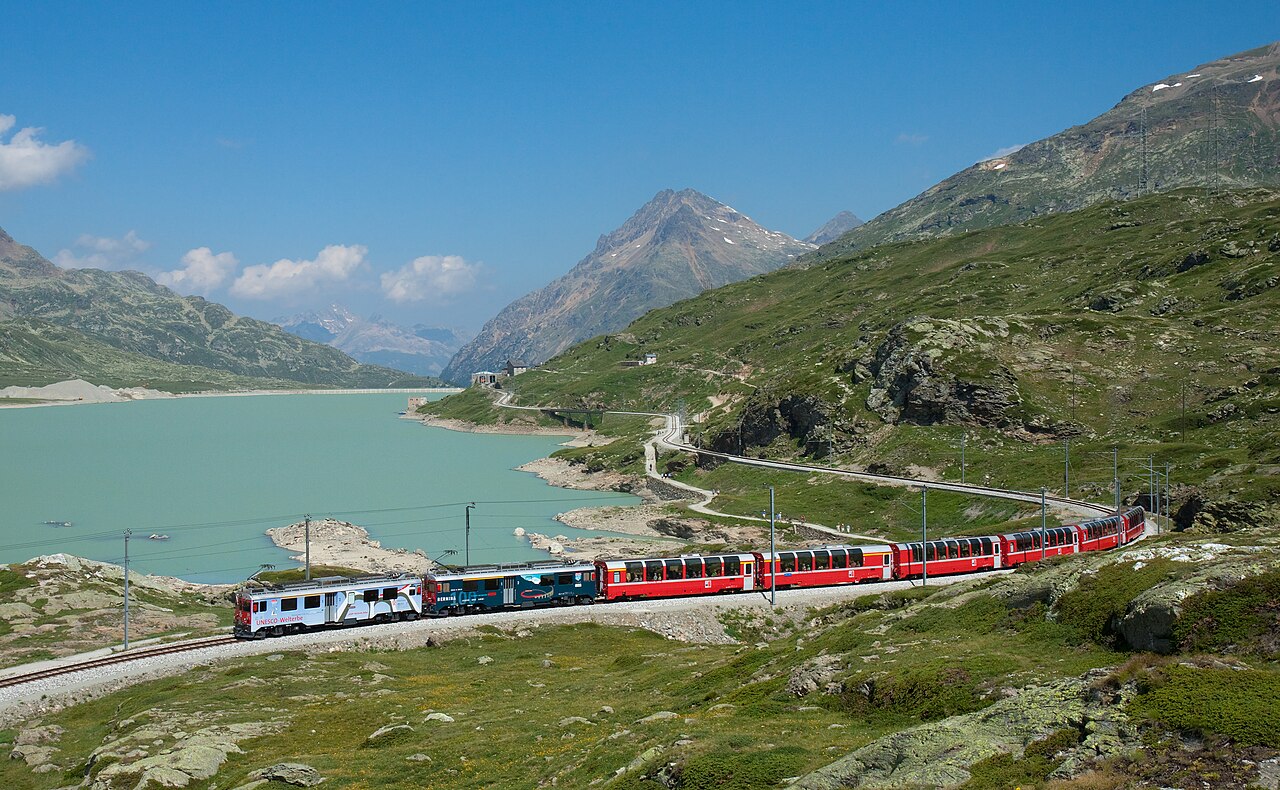
Swiss mountain railways. Eurail covers SBB, BLS, MGB and RhB, which between them own the full Glacier Express and Bernina Express routes. The panoramic charges still apply, at CHF 54 for a Glacier Express reservation in either class and, for the 2026 timetable year, CHF 32 to CHF 44 for the Bernina depending on route and season, but the underlying journey is covered. Those are two of the great train rides on earth and the supplement is a fraction of a full ticket.
The Flåm Railway in Norway gives pass holders 30% off, which is a discount rather than a bonus, but on Norway’s most photographed line it is worth taking.
Beyond that, expect discounts on some museums, buses and boats that vary by country and change without notice. Do not build your budget on them.
Ten mistakes that make a good pass a bad buy
- Using a travel day for one short hop. A €45 travel day spent on a €9 Florence to Pisa regional train is €36 set on fire. Batch your movement.
- Buying continuous when you needed flexi. A one-month continuous pass used eight times costs €87 a day. The 10-day flexi in 2 months would have covered the same eight journeys at €447, saving €249, and left two days spare.
- Forgetting reservations exist. This is the big one. Budget €10 to €20 per compulsory-reservation leg and check the country table above before you commit.
- Assuming the app books your seat. Logging a journey is not reserving one. They are separate actions.
- Booking French and Eurostar reservations late. Eurostar pass-holder places can sell out while full-fare tickets are still on sale, and busy TGVs fill up like any other train.
- Planning a Spanish itinerary you cannot pre-book. Renfe sells tickets only once it releases the dates in its system, so check your route and dates directly and build slack in.
- Buying a Global Pass for one country. Switzerland, Germany and France all have national products that beat it on their own territory.
- Adding children after purchase. Child Passes have to be added at the time of buying. There is no retrofit.
- Booking a night train that lands outside your validity window. The arrival day has to be inside the pass period, not just the departure.
- Activating too early to “get started”. A pass becomes valid at 00:00 local time on the start date you pick, and after that it cannot be deactivated for a standard refund or exchange. Set the start date for the day of your first real journey.
Is Eurail pass worth it? The verdict by traveller type
The under-28 backpacker
Yes, more often than not. The 25% youth discount for 12 to 27-year-olds takes a big slice off the adult price, and backpackers travel in exactly the improvised, high-frequency way the pass rewards. A one-month continuous youth pass at €522, used 20 or more days, is about €26 a day for unlimited European rail. Nothing else comes close.
The two-week couple with fixed dates
Usually no. You will book advance fares, they will be cheap, and you will spend €225 for the privilege of not having done so. Buy the tickets. Use the money on a better hotel in Vienna. If you cannot face six booking websites, a pass is a reasonable purchase of your own time, but call it that.
The family with young children
Leans yes, and it is closer than you expect. Two children aged 4 to 11 travel free per adult pass, which on a family of four means two full passes covering four people. Reservation fees are still charged per child, so a French itinerary erodes the advantage fast, but in Germany, Austria and Czechia a family pass setup is very good value. My guide to Europe with kids has more on making long train days survivable.
The over-60 traveller
Marginal. The senior discount is only 10%, so a €626 one-month senior pass still needs real mileage to pay off. Where it wins is comfort: a one-month first class pass at €904 generally gets you more space and quieter carriages, with lounge access at some stations under each station’s own rules. A one-month pass will not stretch to six weeks, though, so a trip that long needs a longer pass.
The solo traveller with a loose plan
Yes. This is the archetypal case. Every day you change your mind, the pass pays a small dividend. I have written more about travelling this way in my guide to solo travel in Europe.
The business traveller
No. Your dates are fixed, your employer is paying, and you want a specific train at a specific time in a specific seat. Buy flexible tickets.
The scenic-railway traveller
Yes, with the Swiss caveat. If your trip is built around the Glacier Express, the Bernina, the Flåm and the Rauma lines, a pass covers the base journeys on the Glacier, the Bernina and the Rauma line, leaving you supplements to pay, while the Flåm Railway gives pass holders only 30% off an ordinary single ticket on an active travel day. If it is built around Switzerland alone, buy the Swiss Travel Pass.
What to buy instead: the swaps
| If you were going to buy | Consider instead | Why |
|---|---|---|
| A Global Pass for a Swiss trip | Swiss Travel Pass, from CHF 254 for 3 days | Adds city transport in 90+ towns and entry to 500+ museums to its trains, buses and boats; check which of your routes Eurail already covers |
| A Global Pass for a German trip | Deutschland-Ticket at €63 per month | Includes participating city and regional transport across Germany, with a few exceptions such as some DB Fernverkehr RE services. Regional trains only. |
| A Global Pass for a French trip | Carte Avantage Adulte at €49 per year | 30% off eligible TGV INOUI and Intercités fares for you and an accompanying adult, subject to weekend or child conditions, with no reservation surcharges layered on top |
| A Global Pass for Madrid to Barcelona | Ouigo España from €9, or an advance fare on Renfe’s AVE (from €17.05) or iryo | Ouigo takes no passes, and a pass holder on the AVE or iryo still pays at least €10 to reserve a seat on top of the pass day. Avlo left this route in September 2025 |
| A Global Pass for Rome to Florence to Venice | Trenitalia or Italo advance fares, with Italo from €14.90 between Rome and Florence | Italo is not pass-valid; Frecciarossa reservations cost €13 anyway |
| A one-month continuous pass used lightly | 15 days in 2 months flexi at €553 | €37 per travel day versus €87 if you only ride eight days on the continuous |
| A Global Pass for a single country | One Country Pass, travel days within 1 month (options vary by product) | Some products cover several countries. |
| A full-price pass for a trip four months out | The same pass in the next sale | The 2025 sale took 25% off from 25 November to 17 December |
How to book pass reservations, country by country
Owning the pass is the easy part. Getting reservations onto it is where people lose afternoons, because there is no single booking channel that works everywhere. Here is what works in practice.
| Where you are going | Best booking channel | Notes |
|---|---|---|
| France, Eurostar, Spain, most international | The Eurail reservation service or the Rail Planner app | Convenient, and one route to pass-holder Eurostar fares, which SNCB International (b-europe) also sells. Booking fees apply and are never refundable. |
| Italy | Rail Planner app, the Eurail service, or a staffed counter in Italy | The Trenitalia website cannot sell pass-holder reservations at all. Booked locally in Italy, reservations are 80% refundable before departure with a €2 booking fee. |
| Portugal | Only locally, at a Portuguese station | Alfa Pendular and Intercidades reservations are €5 and cannot be bought from abroad |
| Germany, Austria, Czechia, Denmark | Often nothing at all | Reservations are optional. Walk on. Book only for peak-summer long hauls or the compulsory summer windows. |
| Czech international routes | The Czech Railways site, Můj vlak app, international ticket counters or phone sales | Prague to Budapest from €30 |
| Nightjet and EuroNight | ÖBB directly, or the Eurail service | Dynamic pricing, so early booking saves the most money of any reservation type |
| Greece and Türkiye | At the station | Free but compulsory, so you cannot skip the counter |
| Great Britain | At the station or on board | Free. Mandatory on some services, so ask. |
A method that works: before you leave home, book every compulsory reservation for France, Spain, Italy high-speed, Eurostar and any night train. Leave everything else alone, and book optional German or Austrian reservations the night before if the train looks busy. That splits the difference between the pass’s flexibility and the risk of standing between Cologne and Berlin.
Seven ways to make a pass pay for itself
1. Batch your movement into fewer, bigger travel days
A travel day is unlimited trains and unlimited distance. Three cities in one day is one travel day. It is the simplest way to get more out of a flexi pass, though any reservations still cost extra. Rome to Florence for the morning, Florence to Bologna for lunch, Bologna to Venice for the evening: one day, three cities, no extra cost beyond three €3 Intercity reservations. My guides to things to do in Florence and things to do in Venice are both built around short, sharp visits of exactly this kind.
2. Ride night trains where the supplement is low
A €34 couchette from Prague to Warsaw on the EuroNight Chopin saves a hostel bed and a daytime travel day. A €13.40 six-berth on the Dacia from Vienna towards Budapest does the same. Compare that with a Nightjet double sleeper, anywhere from €69.90 to €224.90 depending on date and demand, and you can see why “take night trains” only works as advice once you check the specific route.
3. Book French reservations early to catch the €10 tier
Not because seats vanish, but because the cheap price tier does. Two people with four French legs could save up to €80 if they land the €10 tier on all eight reservations rather than paying €20.
4. Use the pass where reservations are free or optional
In Germany, Austria, Czechia, the Netherlands and Denmark many daytime trains need no reservation, so the pass behaves much as advertised, though optional reservations, night trains and a few compulsory supplements still cost extra. In France and Spain the fee depends on the train: the high-speed services charge, while many slower national and regional trains need no reservation. Weighting your itinerary towards the first group is worth more than any booking trick.
5. Take the Italy to Greece ferry
Free deck passage on Superfast, Minoan and Blue Star between Bari, Brindisi, Ancona or Trieste and Corfu, Igoumenitsa or Patras. This is the best-value bonus in the scheme and it opens up an itinerary shape, Italy then Greece overland, that most people assume requires a flight.
6. Buy in a sale and activate up to eleven months later
A 25% Black Friday discount on a €696 one-month pass is €174 saved for the cost of planning slightly further ahead.
7. Split expensive walk-up journeys at the border
This one is for the days you are not using the pass. On a long international journey such as Paris to Barcelona, compare the through fare with two domestic tickets split at the border, at Perpignan in that case. Border-splitting works because international through fares are priced separately from domestic ones. It is a useful trick to have in reserve if you decide against the pass entirely.
First class or second class?
A first class pass costs about 30% more than second and is valid in both classes, so on daytime trains the choice is about comfort rather than access, though some night-train sleepers are tied to the class of your pass. The gap in cash terms is real: €904 against €696 for a one-month adult pass, or €618 against €476 for 15 continuous days.
| Pass | Adult 2nd | Adult 1st | Extra cost |
|---|---|---|---|
| 4 days in 1 month | €283 | €367 | €84 |
| 5 days in 1 month | €318 | €413 | €95 |
| 7 days in 1 month | €381 | €495 | €114 |
| 10 days in 2 months | €447 | €581 | €134 |
| 15 days in 2 months | €553 | €718 | €165 |
| 15 days continuous | €476 | €618 | €142 |
| 22 days continuous | €586 | €761 | €175 |
| 1 month continuous | €696 | €904 | €208 |
| 2 months continuous | €826 | €1,073 | €247 |
| 3 months continuous | €956 | €1,242 | €286 |
What the extra buys: generally more space and quieter carriages, and lounge access at some stations, each of which sets its own entry rules. It also unlocks free Vy Regiontog reservations in Norway and the Caledonian Sleeper’s Club En-suite rooms.
What it does not buy is Eurostar Premier. A first class pass does open Eurostar Plus, at €40 rather than €35 between London and Paris or Brussels, but Premier is not sold to pass holders at any price or class. Reservation fees are charged separately in either class, and some cost more in first, €6.90 against €5.50 on German ICEs, so the €208 upgrade on a one-month pass is not the whole difference.
My rule: second class for trips under three weeks, first class for anything over a month, for anyone travelling with heavy luggage, and for anyone over sixty who is going to be on trains most days. Second class in Europe is genuinely fine, which is not something you can say about every continent.
Which pass shape fits which trip
Most people get the buy-or-not decision right and then get the shape wrong, which costs almost as much. Work down this table until a row matches your trip.
| Trip shape | Buy | Adult 2nd price | Reasoning |
|---|---|---|---|
| 10 days, 3 or 4 long hops | 4 days in 1 month | €283 | You will only move on four days. Everything else is city time. |
| 2 weeks, 5 cities | 5 days in 1 month | €318 | One travel day per city change, with batching to keep it at five |
| 3 weeks, 7 or 8 cities | 7 days in 1 month | €381 | €54 per travel day, and one month of validity is plenty |
| 6 weeks, moving twice a week | 10 days in 2 months | €447 | €45 per travel day, and the 2-month window matches the trip |
| 2 months, moving every 3 or 4 days | 15 days in 2 months | €553 | €37 per travel day, the cheapest flexi rate available |
| 2 weeks of hard, near-daily movement | 15 days continuous | €476 | Cheaper than 15 flexi days by €77 if you use them consecutively |
| 3 weeks of near-daily movement | 22 days continuous | €586 | €27 per day if you ride every day |
| A month of backpacking | 1 month continuous | €696 | €23 per day at 30 days ridden, €46 at 15 |
| A gap-year style summer | 2 months continuous | €826 | The cost per day collapses below €20 if you genuinely ride most days |
| A full season of travel | 3 months continuous | €956 | €21 per travel day at 45 days ridden, and under €11 if you ride most of the 90 |
The 15-day comparison is the one worth staring at. Fifteen flexi days spread across two months costs €553. Fifteen continuous days costs €476. If your travel is bunched into a fortnight, the continuous pass is €77 cheaper for the same number of days. If it is spread out, the flexi pass is the only option that works. It is an easy thing to miss at checkout, because the two products sit in different tabs.
Six real trips, scored
Here are six itinerary shapes I get asked about constantly, with a verdict on each.
Seven days: Paris, Amsterdam, Brussels
Verdict: no. Three cities and two hops. Paris to Amsterdam is Eurostar at €32 in pass-holder fees, and Amsterdam to Brussels runs on the EuroCity Direct, where seats cannot be reserved. You would be paying €283 for a four-day pass to cover two journeys that cost around €70 booked in advance. Buy tickets. If you want this trip done properly, my 7-day Europe itinerary lays out a better route for the time.
Ten days: Rome, Florence, Venice, Milan
Verdict: no. Italy is a bad pass country for high-speed. Three legs at €13 each in reservations on top of a €283 pass, against advance Frecciarossa or Italo fares of €19.90 to €29.90 that total under €80. This is the clearest loss in the whole article. My 10-day Italy itinerary assumes point-to-point tickets for exactly this reason.
Two weeks: Munich, Salzburg, Vienna, Prague, Berlin
Verdict: yes if you are improvising, no if you are booking. This is the pass’s ideal country set, taking in three of the best rail countries in Europe: Germany, Austria and the run through Bohemia. Reservations are mostly optional: €5.50 in second class or €6.90 in first on German long-distance trains, €3 on Austrian IC and Railjet, and €3.60 on Czech IC, EC and Railjet, where a few services such as SuperCity need one. You can mostly turn up unplanned. But the arithmetic is the same as Trip One. Five travel days at €318 against four advance fares of roughly €18 to €38 per leg means the pass loses by well over €100 if you book in March. Where it flips is the day-tripping: because a travel day is unlimited, Vienna to Bratislava and back, or Prague out to Kutná Hora, cost nothing extra. Build in four or five of those and the pass is comfortably ahead.
Three weeks: Amsterdam down through Germany to Italy and across to Greece
Verdict: yes, strongly. German and Austrian reservations are optional, the Italian high-speed section carries compulsory fees, and the Italy to Greece ferry has its own pass conditions to check before you count on it. My Italy travel guide and Netherlands travel guide cover the two ends of it. A 10-day flexi at €447 covers it with days left over. If this shape appeals, my 3-week Europe itinerary is a good starting frame.
One month: Eastern Europe, Poland through Slovakia, Hungary, Slovenia and Croatia
Verdict: yes, but check the numbers. Most reservations are cheap, though Poland’s EIP costs €10 and Slovak IC and EC seats run €5 to €10 in second class or €11 to €16 in first. Local tickets in this region are also cheap, sometimes under €15 for a long hop, so the pass’s margin is thinner than it looks. Buy it for the flexibility, not the savings. My Eastern Europe itinerary and Eastern Europe travel guide have the routes, and Croatia is the natural place to finish.
Two months: everywhere, no plan, aged 24
Verdict: yes, obviously. A youth two-month continuous pass at €620 works out at €10 a day if you ride 60 days, or €21 if you ride 30. There is no competing product. This is the trip the pass was invented for, and it is worth reading backpacking Europe and the one-month Europe itinerary alongside this page.
Where the pass wins even when the maths says it loses
I promised to come back to this. There are four situations where I would buy a pass knowing full well I would spend more.
When you are travelling with someone who changes their mind. Two people with fixed tickets have to agree, in March, about where they will be on 14 August. Two people with passes can argue about it over breakfast and then just go. This is not a small thing.
When strikes are likely. French and Italian rail strikes are a recurring feature of European summers. A non-refundable advance ticket on a cancelled train becomes an admin problem in a foreign language. A pass becomes a shrug and a different train.
When you are travelling with a lot of luggage or small children and might need to abandon a day. The ability to get off at Verona because someone has had enough, and get back on tomorrow, is worth real money to any parent who has tried the alternative.
When the booking sites defeat you. European rail retail is fragmented in a way that is hard to convey until you have tried it. Some routes are only bookable on the operator’s own site, in its own language, with a card it may not accept. A pass replaces eleven booking accounts with one app. If you value your evenings, price that in.
None of those show up in a spreadsheet, and all four are why people who have travelled Europe a lot buy passes more often than people who have travelled it once. For the wider planning picture, my guide to how to plan a trip to Europe and my getting around Europe guide both cover the modes the pass does not.
Eurail versus the other ways of getting around
The pass is usually compared only against train tickets, which is too narrow. On a lot of European itineraries the real competition is a budget airline or a bus.
| Mode | Typical cost | Wins when | Loses when |
|---|---|---|---|
| Eurail pass | €70.75 a day on a four-day pass, about €10.62 on a three-month pass ridden daily, plus reservations | Frequent movement, long distances, loose plans, night trains | Fixed dates, few hops, France and Spain high-speed |
| Advance point-to-point tickets | €15 to €40 per typical leg | You know your dates two months out and will not change them | Anything changes. Most are non-refundable. |
| Walk-up train tickets | €5 to €170 on the routes I sampled, depending wildly on distance | Almost never, unless the route is short and cheap anyway | Long international journeys, where they are brutal |
| Budget flights | Often €20 to €60, plus bags and two airport transfers | Very long hops, such as Lisbon to Warsaw | Anything under about 700 km, once you count the transfers |
| Long-distance buses | €10 to €35 | Tight budgets and routes with no rail link, such as parts of the Balkans | Comfort, speed and your back |
| Car hire | €30 to €70 per day plus fuel, tolls and parking | Rural regions, national parks, island loops | City-to-city travel, where parking alone can beat a pass day |
The honest summary: trains beat flights on most journeys up to about four hours of rail time once you count airport transfers and bag drops, and the pass is competitive against advance rail fares only when you are moving often. A car wins on trips built around scenery rather than cities, which is a different holiday entirely and one I have written about in Europe road trips.
Before you buy: a nine-point checklist
- Count your actual travel days. Not your trip length. The number of days you will physically be on a train going somewhere new.
- List your legs and look up an advance fare for each. Ten minutes of work that decides the whole question.
- Check your countries against the reservation table. A France and Spain trip and a Germany and Czechia trip are different products at the same price.
- Add up your compulsory reservation fees. Then add them to the pass price before comparing anything.
- Check the booking horizons. If half your route opens 30 days out, you cannot plan your way out of the pass anyway.
- Decide flexi or continuous by counting days, not weeks. A one-month continuous pass at €696 only beats the 7-day flexi at €381 once you are riding about 13 days in the month. Below that, flexi.
- Check whether a national product beats it. Switzerland, Germany and France all have one.
- Check for a sale, if your trip is more than four months out. The 11-month activation window makes waiting cheap.
- Decide whether you want to be a person who books. Be honest. Most of us are not, and the pass is priced for us.
If you work through those nine points and the pass still looks marginal, buy it. Marginal on paper plus flexibility in practice is a win. If it looks clearly worse, it is clearly worse, and no amount of romance about European trains changes a €225 gap.
A note on where these numbers come from
Every price, fee and rule in this article was checked in November 2026 against operator and rail-authority sources. Rail pricing moves constantly: tariffs change annually, Nightjet supplements move with demand, several figures here are euro conversions from krona, koruna and złoty that drift with the exchange rate, and Bulgaria’s adoption of the euro on 1 January 2026 made a whole set of previously correct lev prices obsolete. Treat every number here as accurate on the day it was checked and worth a thirty-second verification on the day you buy.
If you are still weighing up the trip itself rather than the ticket, my guides to the best places to visit in Europe, the best cities to visit in Europe and the best time to visit Europe will tell you more about whether the route is worth the fare than any pricing table can. And if the budget is the real constraint, Europe on a budget and the cheapest places to travel in Europe will move the needle further than the pass decision will.

Frequently asked questions
Is the Eurail Pass worth buying in 2026?
It is worth it if you are travelling frequently, spontaneously, or over long international distances, and it is not worth it if you have fixed dates and will book advance tickets. A €283 four-day adult pass works out at €70.75 per travel day, a €956 three-month pass ridden on all 90 days comes to about €10.62, and every day you leave unused raises the real cost. Reservations are extra. The pass beats walk-up fares comfortably and loses to advance fares almost always.
How much does a Eurail Global Pass cost in 2026?
From €283 for four travel days in one month, adult second class, up to €956 for three months of continuous travel. First class runs from €367 to €1,242. Youth passes are 25% cheaper and senior passes 10% cheaper. Check the live price on the day you buy, because retailers quote in several currencies and prices move.
What countries are included in the Eurail Global Pass?
Thirty-three, covering Western Europe, Scandinavia, the Baltics, Central Europe, the Balkans, Greece, Türkiye and Great Britain. Albania, Ukraine, Belarus, Russia and Moldova are not included.
Do I need seat reservations with a Eurail Pass?
On many trains yes, and they cost extra. Reservations are compulsory on almost all French, Spanish, Italian high-speed and Eurostar services, and on some trains in Portugal, Poland, Greece, Türkiye and Slovenia. They are optional in Germany, Austria, Czechia, Denmark and Switzerland, and impossible in the Netherlands, Belgium and on Italian regional trains. Fees vary by train and accommodation, from nothing on many services to CHF 54 for a Glacier Express seat reservation in either class, and sleeper berths cost more again.
What is the difference between Eurail and Interrail?
Mainly who was eligible. Eurail was for non-European residents, Interrail for European residents including the UK. On 9 September 2026 the two became one product, the Interrail Pass, but country-of-residence rules still apply: residents of the network countries get one outbound and one inbound journey in their home country.
Can I use a Eurail Pass in the UK?
Yes. Great Britain is one of the 33 countries, reservations on British long-distance trains are free, and they are mandatory on some services. The Caledonian Sleeper is included but the sleeping accommodation costs extra, and its Club En-suite rooms are only available to first class pass holders. Getting to Britain by Eurostar costs €35 on top of your pass.
Can I buy a Eurail Pass once I am already in Europe?
Yes. Mobile passes are bought online and can be activated immediately, and you can also activate at a European station. There is no requirement to buy before you travel, though buying ahead lets you catch a sale.
How do I activate my Eurail Pass?
Online at checkout, in the Rail Planner app, or at a station in Europe. You have 11 months from the issue date. You can move the start date until the day before; validity begins at 00:00 local time on that date, and from then the pass cannot be deactivated for a standard refund or exchange.
Is the Eurail Pass valid on night trains?
Yes, and a night train uses only one travel day, the departure day, provided you do not change trains after midnight. Couchette and sleeper supplements are charged on top. A Chopin couchette from Prague to Warsaw costs €34 or €39, while Nightjet prices move with route, demand and cabin, up to €624.90 for a single sleeper Plus.
What age groups get discounts on Eurail passes?
Youth passes, for 12 to 27 year olds on the first day of validity, are 25% off. Senior passes, from 60, are 10% off. Children under 4 travel free without a pass, and children 4 to 11 get a free Child Pass, up to two per accompanying adult, but it must be added at the time of purchase.
Why is Eurail so expensive?
Because it is priced against flexible fares, not advance fares. A pass buys the right to board almost any train at any time, which is the most expensive product every European operator sells. Compared against full-flex tickets, a pass is cheap. Compared against a non-refundable advance ticket bought eight weeks out, it looks terrible. Both comparisons are fair. They measure different things.
When do Eurail Passes go on sale?
Black Friday is the big one. In 2025 it ran from 25 November to 17 December at 25% off Global and One Country Passes, excluding Plus Passes and the Switzerland One Country Pass. Smaller sales appear through the year, most often in the off-season. Because passes are valid for activation for 11 months, buying in a sale for a trip up to a year later works well.
What trains can I not use with a Eurail Pass?
Italo in Italy, Ouigo España and Renfe Avlo. Metros, trams and city buses are excluded everywhere, as are a few private lines including the Circumvesuviana to Pompeii and Euskotren in the Basque Country. French Ouigo trains, high-speed and Classique, Paris to Brussels included, now take the pass with a reservation.
Can I get a refund on a Eurail Pass?
Within seven days of purchase and before activation, in full. After seven days without Refund Protection, minus a 10% handling fee, with exchanges at €25 per pass. Once a pass is activated there is no refund at all. The Plus Pass has a shorter three-month window.
Is first class worth it on a Eurail Pass?
Rarely on cost, sometimes on comfort. A first class pass costs roughly 30% more and is valid in both classes, so it is never a restriction. It buys you quieter carriages, more space on long hauls, lounge access at some stations, and the right to book a Caledonian Sleeper Club En-suite room at the pass-holder rate, though the room still costs extra. On trips of a month or more, or for anyone travelling with a lot of luggage, it is a defensible upgrade.
What this guide does not cover
Three honest gaps, so you know where to go looking elsewhere.
I have not priced the One Country Passes individually. Their prices move independently of the Global Pass, and the travel-day options vary by product, so check the live price for your country on the Interrail site. Benelux is sold as one product covering Belgium, the Netherlands and Luxembourg, and Nordic as one covering Denmark, Finland, Norway and Sweden. Germany has a Twin Pass letting a second traveller ride on the same pass.
The Global Plus Pass is in beta, so check its current price on the Interrail site.
Walk-up fares in the break-even table depend on the day and the operator. Where a cell says to check an operator, look at its site for your departure.
Final thoughts: the question behind the question
Whenever someone asks me if a Eurail pass is worth it, the arithmetic is almost never the real question. The real question is what kind of trip they want.
If you want to see six specific cities on six specific dates, the pass is a bad financial product and you should not buy it. Book your advance tickets in March, save yourself two hundred euros, and put it into hotels.
But if you want the trip where you meet someone in a hostel in Ljubljana who tells you about a lake two hours north, and you go, and it changes the whole second week, then the pass stops looking overpriced. What you are buying is the ability to say yes. That is worth something, and every experienced European traveller I know has at some point paid it happily and never checked whether they came out ahead.
My rule: buy one when the trip is longer than two weeks, crosses more than four countries, and has fewer than half its nights booked. Otherwise buy tickets.
For the wider picture on how the network fits together, start with my pillar guide to train travel in Europe, then look at the best train routes in Europe for the journeys actually worth building a trip around. If you are a European resident, how to use an Interrail pass covers the same ground from your side of the residency line.
About the author
Hannah Brooks has spent fifteen years travelling, living and writing across Europe, from the Arctic tip of Norway to the south of Sicily. She has planned hundreds of European itineraries for readers and is Senior Europe Editor at EuropeanTourism.org.
Photo credits
- Photo: mattbuck (category) (CC BY-SA 3.0) via Wikimedia Commons
- Photo: Bvcmz248.5 (CC0) via Wikimedia Commons
- Photo: Bahnfrend (CC BY-SA 4.0) via Wikimedia Commons
- Photo: Antekbojar / Wikimedia Commons (CC0)
- Photo: Kabelleger / David Gubler (http://www.bahnbilder.ch) (CC BY-SA 3.0) via Wikimedia Commons
- Photo: Maru Bern / CC BY-SA 4.0 via Wikimedia Commons