The 26 Best Europe Travel Routes: Rail, Road, Ferry and Foot

The first time I planned a proper trip across Europe I opened a map, drew a line through eight countries, and spent three weeks mostly sitting on trains and regretting it. I had picked cities instead of picking a route.
The best Europe travel routes are the ones where the getting there is not dead time. They follow a river, a coast, a mountain chain or a rail corridor built for a reason, so the hours between the highlights become part of the trip rather than a tax on it. Below are twenty-six of them, with 2026 costs and opening dates.
A route is a different thing from a list of cities. It has a shape, a rhythm, a mode of transport that suits it, and a season in which it works and a season in which it does not. Get those four right and the trip more or less plans itself. Get them wrong and you spend your holiday in transit.
I have put real numbers against every route here: 2026 rail fares, pass prices from the official Interrail price sheet, reservation fees, road tolls, vignette costs, ferry fares and the dates the Alpine passes open and close. That last part decides more trips than the scenery does. Half the famous drives on this list are physically shut for five months of the year, and a route that is glorious on 20 June is a locked gate on 20 March.
A note on what this list is not. It is not twenty-six separate holidays you should try to string together, and it is not an attempt to name every good road in Europe. There is nothing here from Poland, nothing from the Baltics, and no Sicilian or Sardinian coastal drive, all of which deserve a place. That is a limit of what I could source properly for 2026, not a verdict on them. Where I could not verify a price, I have said so rather than inventing one.
How I judged these routes
Four things, in this order.
Does the journey earn its own time? The Bergen Railway is seven hours long and I would not shorten it by a minute. A five-hour drive across the Hungarian plain to reach a nice town is five hours of nothing. Routes where the transit is the point score highest.
Is the transport any good? Frequency, reliability and whether you can book it without a degree in European rail ticketing. Vienna to Budapest runs hourly and takes 2h37. Zagreb to Split takes six hours on a good day and rather more on a bad one. Both are on this list, but you should know which is which before you commit.
Is it open when you want to go? The Grossglockner road runs from early May until 2 November 2026 and then closes. The Transfăgărășan’s high section reopened on 19 April 2026 and is expected to hold until 31 October. The Glacier Express switches to its summer timetable on 2 May 2026 and runs to 10 October. These are not suggestions.
What does it cost? A figure rather than an adjective. A CHF 54 reservation on the Glacier Express is payable even if you are holding a Swiss Travel Pass. A one-way car hire across a European border can add more than EUR 500 to a road trip, which is often more than the fuel. These are the figures that change which route you choose, so they are in the tables.
All 26 of the best Europe travel routes at a glance
Scan this first. The “days I would give it” column is the number I would block out, not the minimum that is technically possible, and the 2026 window column reflects real opening dates where a route has them.
| Route | Mode | Countries | Scale | Days I would give it | Best window in 2026 | Headline cost |
|---|---|---|---|---|---|---|
| The Capitals Line: Paris to Budapest by train | Rail | France, Netherlands, Germany, Czechia, Austria, Hungary | 5 legs, about 19h 20m of moving time | 12 to 16 days | Late April to June, September to October | From about EUR 100 in advance point-to-point fares |
| The Italian Spine: Milan to Naples | Rail | Italy | 4 legs, about 7h 15m of moving time | 10 to 14 days | April to May, late September to October | From about EUR 68 in advance fares |
| The Swiss Panoramic Loop: Glacier Express and Bernina Express | Rail | Switzerland, Italy | 291 km plus 144 km of panoramic track | 5 to 7 days | May to October, or December to March for snow | CHF 54 plus CHF 40 to 44 in reservations alone |
| The Iberian High-Speed Run: Barcelona to Seville, with a Portuguese tail | Rail | Spain, Portugal | 3 core legs, about 8h 06m of moving time | 10 to 14 days | March to May, September to October | From about EUR 45 in advance fares |
| The Scandinavian Arc: Copenhagen to Bergen | Rail | Denmark, Sweden, Norway | Three long legs, roughly 18 to 20 hours of moving time | 10 to 14 days | June to August | From about EUR 125 in advance fares |
| The Belgrade to Bar Sleeper | Rail | Serbia, Montenegro | About 11 hours in one run | 3 to 5 days | May to September | EUR 21 in second class, plus EUR 3 reservation |
| The Nightjet Triangle: Vienna, Rome, Paris, Amsterdam by sleeper | Rail | Austria, Italy, France, Netherlands | Three overnight legs of roughly 14 hours each | 10 to 14 days | Year-round | From EUR 29.90 per Nightjet ticket, sleepers from about EUR 59 |
| The West Highland Line: Glasgow to Mallaig | Rail | Scotland | 5h 18m one way | 3 to 5 days | May to September | From about GBP 50 one way |
| The Iceland Ring Road | Road | Iceland | 1,322 km | 7 to 10 days, 10 to 12 to do it properly | June to August, or November to March for ice caves | Fuel plus hire car; no tolls on Route 1 itself |
| The North Coast 500 | Road | Scotland | 830 km (516 miles) | 5 to 7 days, 7 to 10 to enjoy it | May to September | Fuel plus hire car; no vignette, no tolls |
| The Wild Atlantic Way | Road | Ireland | 2,500 km | 10 to 14 days for the full run | May to September | Fuel plus hire car; no vignette |
| The Amalfi Coast: SS163 Amalfitana | Road | Italy | 50.36 km | 3 to 5 days | April to May, October | Fuel, parking and motorway tolls to reach it |
| The Romantic Road | Road | Germany | 460 km | 4 to 6 days | May to June, September, December for the markets | Fuel only; German motorways are toll-free for cars |
| The Grossglockner High Alpine Road | Road | Austria | 48 km and 36 hairpin bends | 2 to 3 days as part of a longer loop | Early May to 2 November 2026 | EUR 46.50 per car per day, plus the EUR 12.80 Austrian vignette |
| The Route des Grandes Alpes, with a Stelvio detour | Road | France, Italy | 720 km on the main route | 7 to 9 days | Mid-June to September | Fuel only on the French passes; no vignette in France |
| The Transfăgărășan | Road | Romania | 90 km | 3 to 5 days | 19 April to 31 October 2026 for the high section | Free to drive; no toll |
| The Danube: Passau to Budapest | Water | Germany, Austria, Slovakia, Hungary | Seven nights on the classic itinerary | 7 to 9 days | April to October | Cruise fares vary widely by operator and season |
| The Rhine Gorge: Bingen to Koblenz | Water | Germany | 65 km of UNESCO-listed river | 2 to 3 days | May to September | Scheduled KD boats, plus rail along both banks |
| The Adriatic Crossing: Ancona to Split, Bari to Patras | Water | Italy, Croatia, Greece | 11h 15m and 16h 30m at sea | 2 crossing days inside a longer trip | May to September | EUR 56 to 82 and EUR 56 to 117 as a foot passenger |
| The Cyclades Hop: Athens, Santorini, Naxos, Mykonos | Water | Greece | About 10 hours of ferries in total | 8 to 12 days | May to June, September | From about EUR 46.50 for the first leg |
| Rails and Ferries to Greece: Rome to Athens overland | Mixed | Italy, Greece | Rail down Italy plus a 16h 30m crossing | 12 to 16 days | May to June, September | From about EUR 71 in fares for the core legs |
| Vienna to the Dalmatian Islands and back into Italy | Mixed | Austria, Croatia, Italy | Rail south plus an 11h 15m crossing | 12 to 14 days | June to September | From about EUR 50 in fares for the core legs |
| The Fjord Combination: Bergen Railway plus a hire car | Mixed | Norway | 492 km by rail, then driving the coast | 8 to 12 days | Late May to July | NOK 299 to 899 for the rail leg, plus hire |
| Alpine Rail to the Danube: Munich, Salzburg, Vienna, Budapest | Mixed | Germany, Austria, Slovakia, Hungary | Rail east, then the river | 10 to 14 days | May to September | From about EUR 29 in advance rail fares |
| The Camino Francés: Saint-Jean-Pied-de-Port to Santiago | On foot | France, Spain | 790 km (490 miles) | 30 to 35 days at about 25 km a day | April to June, September to October | Albergues from EUR 8 to 12 a night |
| EuroVelo 6: the Atlantic to the Black Sea | By bike | France, Switzerland, Germany, Austria, Slovakia, Hungary, Croatia, Serbia, Romania, Bulgaria | 4,700 km on the official route | Two to three months end to end, or a week per section | May to September | Supported week-long sections from about EUR 189 |
Five modes, kept separate because they behave differently. Rail routes reward booking early and punish improvisation. Road routes reward improvisation and punish anyone who assumes a mountain pass is open. Water routes are governed almost entirely by season. Mixed routes, which change mode halfway, are where the best trips live: a train down Italy and a ferry across to Greece is a better fortnight than either country alone. And the two self-powered routes at the end are the cheapest things in this article by a wide margin.
Part one: the eight best rail routes in Europe
Europe’s railways are the reason this continent is easier to travel than any other. You can leave central Paris at breakfast and be eating dinner in central Amsterdam having never seen an airport. The eight routes below are the ones where the track itself is worth the ticket.
1. The Capitals Line: Paris to Budapest by train
This is the backbone route, and it is the one I recommend to most people planning a first big European trip. Paris, Amsterdam, Berlin, Prague, Vienna, Budapest. Five legs, six capitals, and not one of them longer than six hours.
The numbers, west to east. Paris to Amsterdam runs in 3h20 direct on Eurostar, with roughly nine or ten departures a day via Brussels-Midi and Rotterdam. Amsterdam to Berlin is 5h42 on the direct ICE, about six a day. Berlin to Prague is just under four hours, around 3h50, on the ComfortJet services that run every two hours over the 388 km. Prague to Vienna is 4h12 at its fastest with roughly twenty trains a day. Vienna to Budapest is 2h37, hourly, Vienna Hbf to Budapest Keleti.
Add it up and you are looking at 19h 41m of moving time spread across a trip of twelve to sixteen days. That is a comfortable three or four hours between cities, which is the sweet spot: long enough to feel like you have travelled, short enough that you arrive with the afternoon intact.
Booked in advance, the fares are lower than most people expect. Paris to Amsterdam starts around EUR 29 to 35 one way if you book twelve to twenty weeks out. Amsterdam to Berlin and Berlin to Prague both start around EUR 22. Prague to Vienna can be found from about EUR 14, and Vienna to Budapest from about EUR 10. That is about EUR 100 for the whole spine if you book early and stay flexible on times.
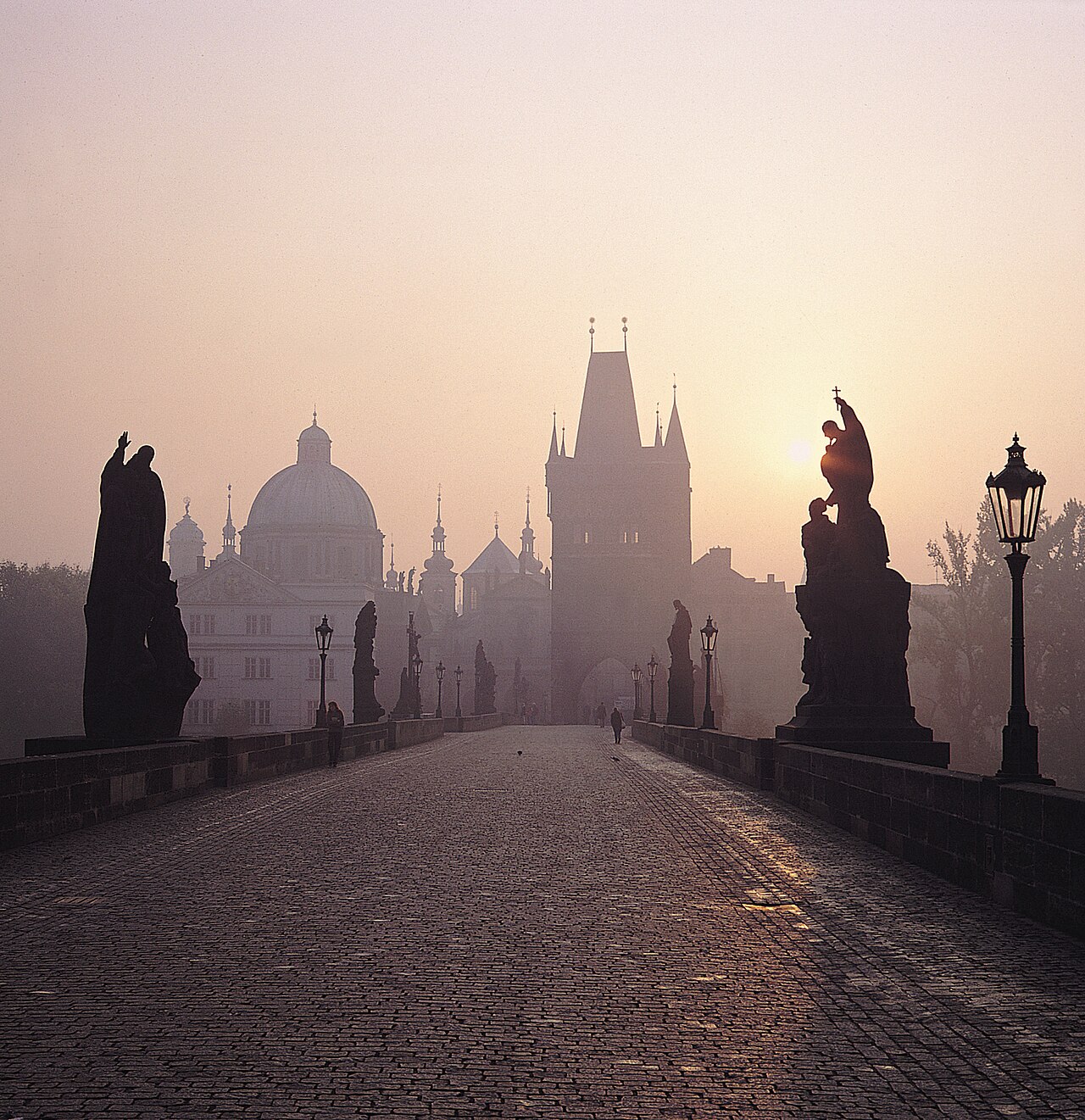
The direction matters. Travelling west to east, the prices fall as you go, and so does the pressure on your budget. Travelling east to west, you start cheap and get progressively squeezed, which is a worse feeling even though the total is identical. I go west to east and end in Budapest, where a good dinner costs what a mediocre one costs in Amsterdam.
For a day-by-day version of this corridor, see the Europe train itinerary, or the two weeks in Europe itinerary, which is built around almost exactly these cities.

2. The Italian Spine: Milan to Naples
Italy has the best value high-speed network in Europe and the shortest gaps between things worth stopping for. Milan to Venice is about 2h30 on a Frecciarossa. Venice to Florence is 2h01 to 2h15, usually quoted at 2h05. Florence to Rome is about 1h30. Rome to Naples is 1h10, on both Frecciarossa and the competing Italo services.
Seven and a quarter hours of total moving time for four of the great cities of Europe plus Naples, which is the best food city on the continent and the one people cut first. Do not cut it.
Frecciarossa advance fares start at EUR 19.90. Realistically, Milan to Venice runs EUR 15 to 60 depending on how far ahead you book, Venice to Florence from about EUR 19 with a range up to around EUR 70, Florence to Rome roughly EUR 19 to 55, and Rome to Naples from about EUR 15 to 20 and up to around EUR 55. Book a fortnight out and the whole spine costs less than one short-haul flight.
The thing that catches people is that Italy has two competing high-speed operators on the same tracks. Trenitalia’s Frecce and the private Italo run the same city pairs at similar speeds, and checking both regularly saves EUR 15 to 20 on a leg. Rail pass holders should note that reservations are compulsory on all Frecce services, and I could not confirm whether Italo accepts passes at all, so plan around Trenitalia if you are travelling on a pass.
Add Bologna if you have a spare day. It sits on the line between Venice and Florence, it costs less than either, and it is where Italians go to eat. The 10-day Italy itinerary and the best places to visit in Italy both work off this corridor, and there are dedicated guides to Rome, Florence and Venice for the stops themselves.
3. The Swiss Panoramic Loop: Glacier Express and Bernina Express
Two trains, one loop, and the most concentrated scenery per hour anywhere on this list.
The Glacier Express runs Zermatt to St Moritz in about eight hours over 291 km, and by coincidence crosses 291 bridges on the way. It is not fast and it is not trying to be. The 2026 summer timetable runs from 2 May to 10 October, with the winter timetable covering 6 December 2025 to 1 May 2026, which means there is a short gap in early May and another in late autumn when it does not run at all.
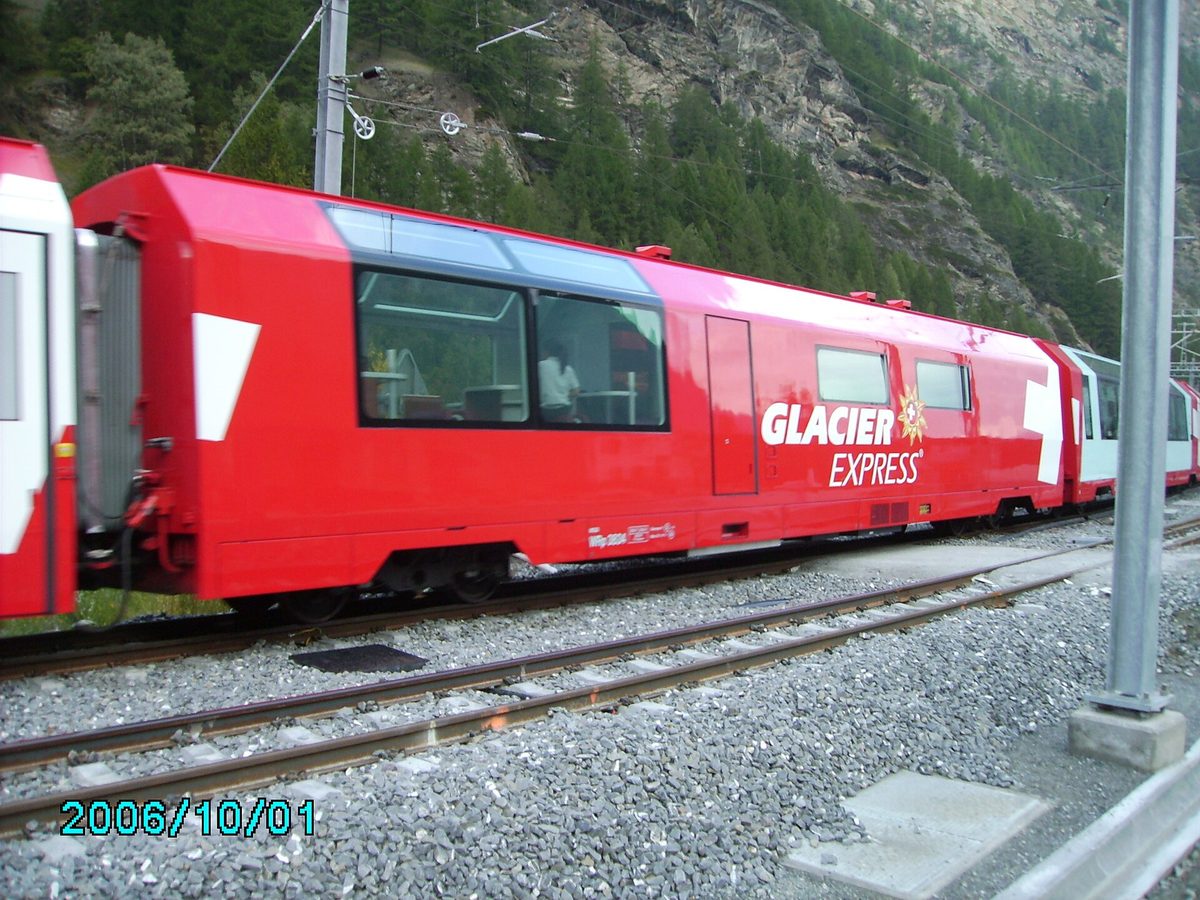
The Bernina Express runs Chur to Tirano in four to four and a half hours over 144 km, crossing from Switzerland into Italy without a tunnel through the main Alpine ridge. It climbs to the Bernina Pass and then drops into the Valtellina, and the Brusio spiral viaduct on the descent is the single most photographed piece of railway in the Alps.
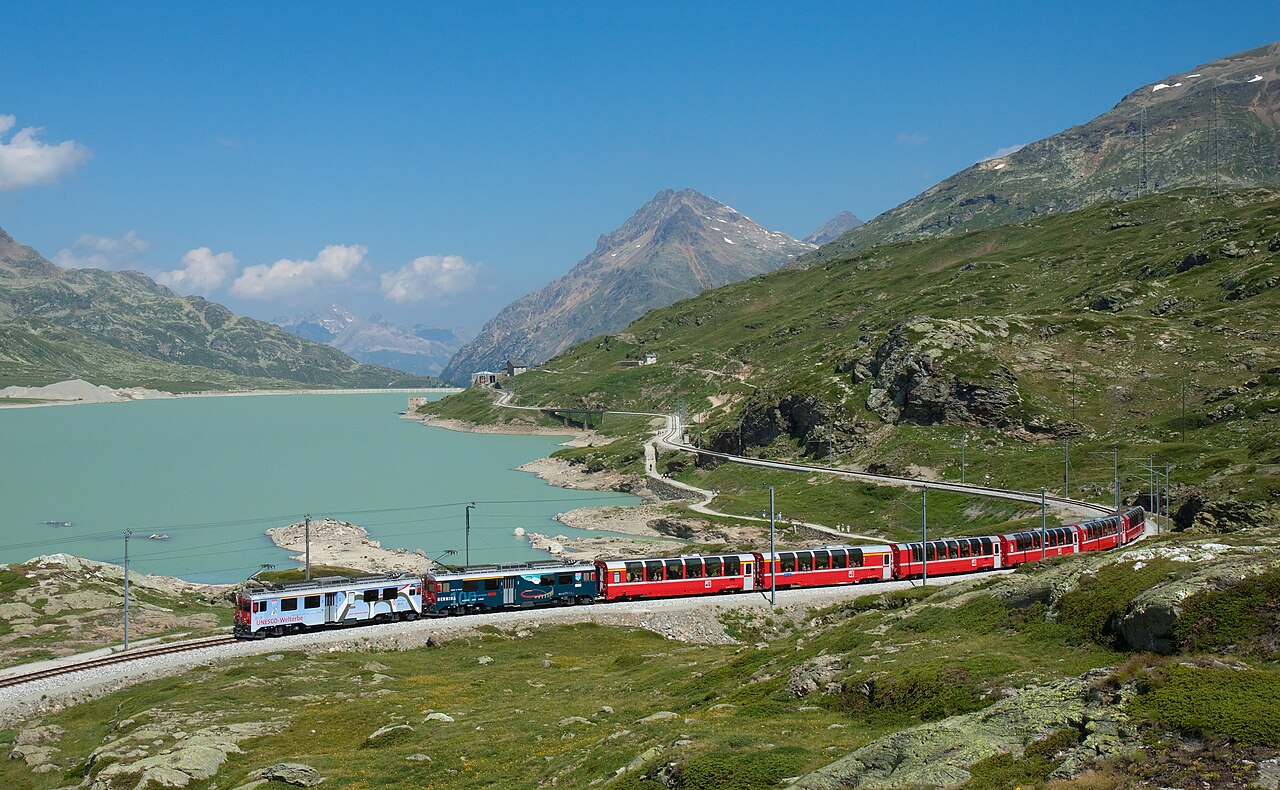
Now the cost detail that decides whether this loop fits your budget. Both trains require a compulsory reservation for the panoramic carriages, and the reservation is charged on top of your fare or your pass. The Glacier Express reservation is CHF 54 in either first or second class, or CHF 540 for Excellence Class. The Bernina Express reservation is CHF 40 in low season and CHF 44 in high season, with high season running 2 May to 25 October 2026. A Swiss Travel Pass covers the base fare on the Glacier Express at the class of your pass, but it does not cover that CHF 54. Budget roughly CHF 100 in reservations before you have bought a single ticket.
Book the Glacier Express four to six weeks ahead for July and August, three to four weeks ahead for December to March. Bernina Express reservations open around three months before travel at rhb.ch. One 2026 quirk worth knowing: Bernina Express trains 951 and 952 divert via the Vereina tunnel from 29 October to 13 November 2026, which changes the route out of Chur.
A Swiss Travel Pass costs around CHF 254 for three days and CHF 499 for fifteen in second class, with an eight-day option in between. Travellers aged 16 to 24 get 30% off. If you are doing both panoramic trains plus a few lake boats and mountain railways, the eight-day pass usually wins. The Switzerland travel guide works through the sums in more detail.
4. The Iberian High-Speed Run: Barcelona to Seville, with a Portuguese tail
Spain’s AVE network is the largest high-speed system in Europe and it is quietly the cheapest to use if you book early. Barcelona to Madrid takes about 2h30. Madrid to Seville covers 389 km in about 2h46. For a route built entirely around those legs, see how to plan 10 days in Spain.
The advance fares on Madrid to Seville are the outlier of this entire article. Booked early enough you can pay EUR 5.60 to 14 for a 389 km high-speed journey. The average sits around EUR 37 and last-minute climbs to around EUR 70, but the floor is genuinely that low. Barcelona to Madrid starts around EUR 23 in advance, against a walk-up AVE Tourist Class single of EUR 94.90 and First Class of EUR 179.65 as quoted in January 2026. The gap between booking ahead and turning up is larger in Spain than anywhere else on this list.
Add the Portuguese tail and the route becomes a fortnight. Seville to Lisbon is the weak link, since there is no fast rail connection and the bus or a flight is the practical answer, but once you are in Portugal the Alfa Pendular covers Lisbon to Porto in 2h50 over 332 km for EUR 35.70 in second class at 2026 fares, or from about EUR 16 booked in advance.
Rail pass holders should budget for reservations, which are compulsory on AVE at EUR 10 in Elige or EUR 13 in Elige Confort. For the stops themselves, see the Spain travel guide and the Portugal travel guide.
5. The Scandinavian Arc: Copenhagen to Bergen
Three legs, three capitals and then a descent to the Atlantic that is worth the whole trip on its own.
Copenhagen to Stockholm covers 522 km in 5h35 at its fastest, typically five to six and a half hours. Stockholm to Oslo takes 5h25 to 6h45 with SJ running four or five trains a day. And then Oslo to Bergen on the Bergensbanen, 492 km in six and a half to seven and a half hours with six or seven departures daily, climbing over the Hardangervidda plateau above the treeline and dropping down the other side into rain and fjords.
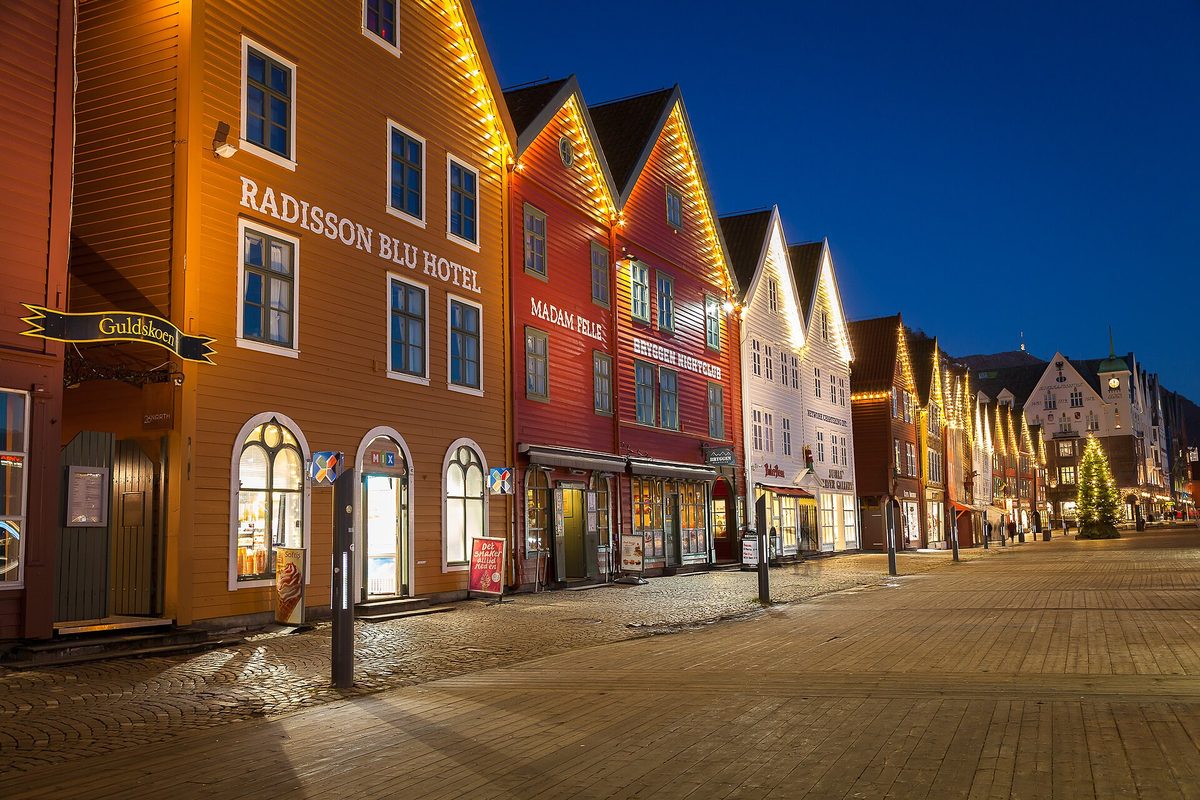
The Bergen Railway is the best long-distance train journey in Europe that does not charge a panoramic premium. It is an ordinary Vy service. You pay an ordinary fare, somewhere between NOK 299 and NOK 899 depending on how early you book and which fare class, with Komfort adding roughly NOK 100 to 200. Tickets open ninety days before departure, and in summer you want to be booking at least thirty days out.
The other two legs are pricier. Copenhagen to Stockholm bottoms out around EUR 76 booked well ahead, with the best prices about ninety-one days out. Stockholm to Oslo is kinder, from roughly EUR 22 to 26.

Break the Bergen line at Myrdal and take the Flåm Railway down to the fjord: 20 km, eight stations, about an hour each way, with the photo stop at the Kjosfossen waterfall. Ticket prices are quoted around NOK 538 for a regular single and NOK 399 for a winter single, though these move with the season and the sales channel, so check flamsbana.no before budgeting a return.
Go between June and August. This is a summer route and the daylight is the point, and the Scandinavia travel guide has the wider picture.
6. The Belgrade to Bar Sleeper
The best value on this entire list, and it is not close: an eleven-hour crossing of the Dinaric Alps for a second-class ticket costing EUR 21.
The line runs from the Serbian plain to the Montenegrin coast through 254 tunnels and over 435 bridges, one of which, the Mala Rijeka Viaduct, is Europe’s highest railway bridge at around 200 m. First class is EUR 32. The seat reservation is EUR 3.
There is a daily sleeper, the Lovćen, which runs year-round with six-berth and four-berth couchettes and one, two and three-bed sleepers with a washbasin. I would take the day train southbound for the views and the sleeper northbound, because the good scenery is concentrated in the Montenegrin half and you want it in daylight.
This is not a punctual railway. Delays of two or three hours are routine and the rolling stock is old. Take it anyway. Three to five days lets you ride it, spend time on the Montenegrin coast and get back. Our Eastern Europe travel guide and cheapest places to travel in Europe both cover this corner properly.
7. The Nightjet Triangle: Vienna, Rome, Paris, Amsterdam by sleeper
ÖBB’s Nightjet network has quietly become the most useful thing in European travel: it turns a wasted travel day into a night’s accommodation you were paying for anyway.
Vienna to Rome runs daily via Venice in about fourteen hours. Vienna to Amsterdam runs daily via Frankfurt in about the same. Vienna to Paris runs overnight via Salzburg, Innsbruck and Zurich. All three radiate from Vienna, so treat this as a hub rather than a loop: base yourself in Vienna and fan out, taking a sleeper in one direction and either the same line or a daytime train back. Done that way it is a fortnight that never involves an airport and rarely wastes a daytime hour on transit.
Nightjet’s headline lead-in fare is EUR 29.90, and on the cheapest routes a seat can go as low as EUR 19. Couchettes start around EUR 29 to 49.90 and sleepers around EUR 59 to 69.90. On Vienna to Rome specifically, a seat is EUR 39, a couchette EUR 79 and a sleeper EUR 189. Vienna to Paris couchettes start around EUR 49.

Rail pass holders pay a supplement rather than a fare, and it is steep: EUR 14 for a seat, EUR 34 for a six-berth couchette, EUR 44 for a four-berth, EUR 54 for a three-bed sleeper, EUR 74 for a two-bed and EUR 114 for a single. On a couchette the pass barely saves you anything against booking a standalone Nightjet ticket, which is worth knowing before you buy the pass.
Reservations open around six months ahead on most routes and the best fares go ninety to a hundred and twenty days out. Book at nightjet.com rather than through DB. There is also a new night train linking Prague, Berlin and Copenhagen announced for 2026, which would open a new north-south corridor.
8. The West Highland Line: Glasgow to Mallaig
The shortest route on this list and the one with the highest scenery-to-effort ratio in Britain. Glasgow to Mallaig takes about 5h18, running across Rannoch Moor, past Ben Nevis and over the Glenfinnan Viaduct, from about GBP 50 one way depending on when you book and what class.

There is a second branch, Glasgow to Oban, which is shorter and gets you to the Mull ferry. Both are ScotRail services on ordinary tickets, so this is a scenic railway without a scenic railway premium. It is one of Europe’s best rail journeys, and most of them cost far less than people expect.
Three to five days does it: Glasgow, the train, a couple of nights on the west coast, back. Combine it with the UK travel guide or bolt it onto the North Coast 500 below for a fortnight in Scotland.
Part two: the eight best road trip routes in Europe
Driving in Europe gets you to the places the trains cannot reach, which in practice means coastlines, mountain passes and anywhere with fewer than about five thousand residents. It also gets you tolls, vignettes, one-way drop fees and the recurring problem that the best roads are shut in winter. All of that is priced out further down.
9. The Iceland Ring Road
The reason this works so well as a first road trip is that you cannot get lost. There is one road, Route 1, it circles the island in 1,322 km, and you drive it in one direction until you are back where you started.
Most people do it in seven to ten days. Seven is doable and feels rushed; ten to twelve is where it stops being a driving holiday and starts being a proper trip, because you have time for the F-road detours and the days when the weather closes in and you simply wait. The national speed limit is 90 km/h, so the driving times are longer than the distances suggest.

The season question here is not “when is it open” but “what do you want”. Summer gives you green landscapes, waterfalls at full flow, puffins and whales, and near-endless daylight. Winter gives you ice caves and the northern lights but shorter days and real driving risk. One detail people get wrong: Diamond Beach has no floating ice in high summer, so if the black-sand-and-icebergs photograph is why you are going, that is a winter or shoulder-season trip.
There are no tolls on Route 1 itself. Your costs are the hire car, the fuel and the accommodation, and Iceland is expensive on all three, as the Iceland travel guide sets out.
10. The North Coast 500
Scotland’s answer to a coastal touring route starts and finishes at Inverness Castle and loops the top of the country over 516 miles, or 830 km. It launched in 2015 and became popular so fast that the single-track roads and the passing places are now part of the planning problem rather than a charming detail.

The route is commonly done in five to seven days. Seven to ten is the honest recommendation, and the difference is whether you spend the trip looking at the road or at Scotland. Applecross, Durness, Wester Ross: these are places to stop, not places to drive through.
No vignette, no tolls, no border paperwork. Your costs are fuel, hire and accommodation, and accommodation on the NC500 in July needs booking months ahead because the supply is small. Go in May or September if you can.
11. The Wild Atlantic Way
Ireland put a name and a set of signposts on its entire Atlantic seaboard in 2014, and the result is the longest defined coastal route in Europe: 2,500 km from the Inishowen Peninsula in Donegal to Kinsale in County Cork, through nine counties.
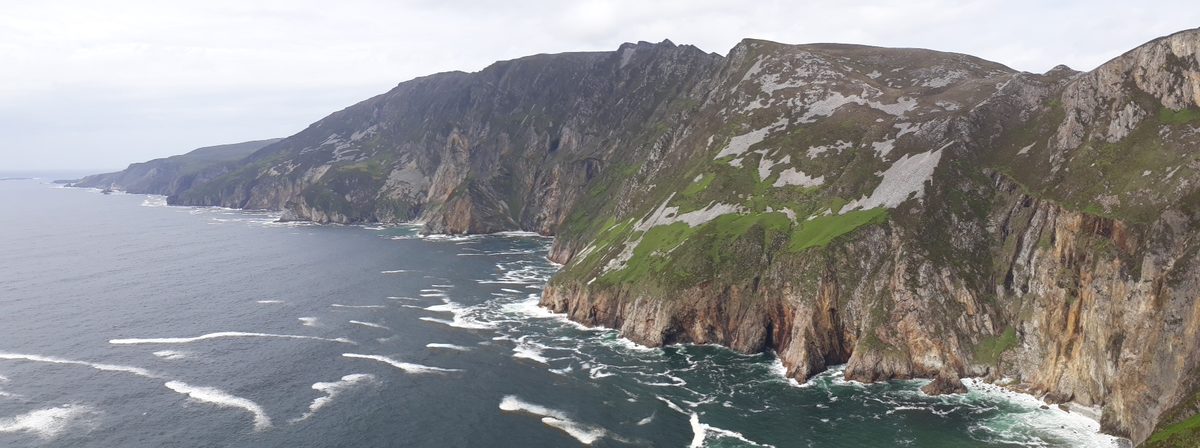
The full run needs ten to fourteen days. Very few people drive all of it, and that is fine: the route is designed to be sampled. The Donegal and Mayo sections in the north are emptier and wilder; the Clare, Kerry and Cork sections in the south have the famous stops and the traffic to match.
Ireland has no motorway vignette, tolls are limited and the roads are good. Two things will surprise you: how slow the coastal sections are, because they are narrow and beautiful and you will keep stopping, and how fast the weather changes. For where to break the drive, see the Ireland travel guide.
12. The Amalfi Coast: SS163 Amalfitana
The most famous coastal road in Europe is 50.36 km long. That is it. Sorrento to Amalfi, a distance you could cycle in an afternoon, and it will take you most of a day by car because of the traffic, the bends and the fact that you will want to stop constantly.
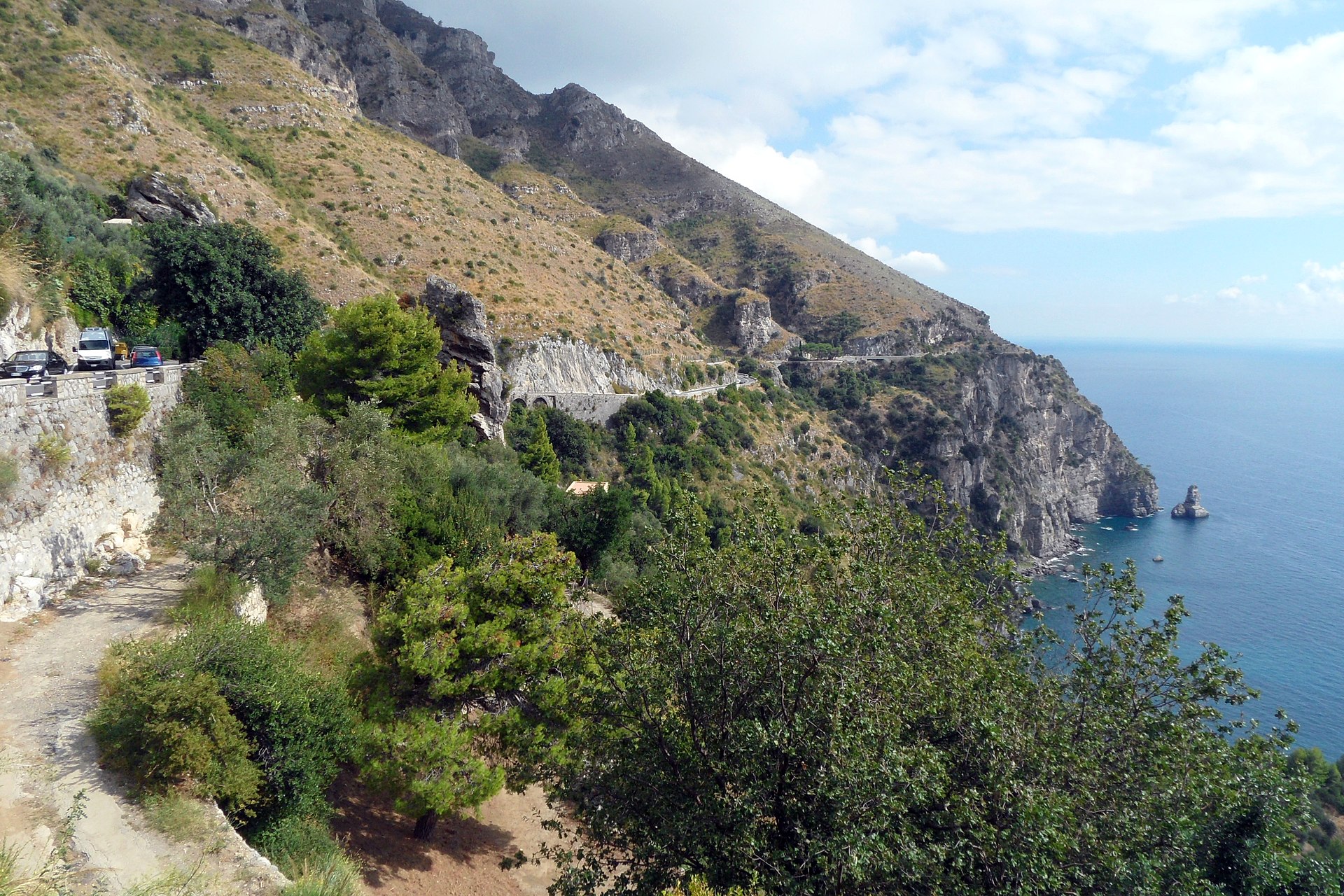
Now the part that will ruin your trip if you do not check it. The SS163 operates an alternating number plate system, the targhe alterne, during busy periods. On odd-numbered dates, cars with plates ending in an odd digit are banned; on even dates, even-ending plates. It runs from 10:00 to 18:00. For 2026 the schedule covered 30 March to 6 April and 24 April to 2 May, then Saturdays, Sundays and Italian public holidays from 1 June to 31 July, then every single day in August and September, then Saturdays and Sundays through October. Motorbikes and scooters are exempt.
Read that again if you are planning an August drive. Every day in August, half the cars are banned for eight hours. Check your hire car’s plate before you collect it.
My honest advice: do not drive the Amalfi Coast at all. Base yourself in Sorrento or Salerno and use the SITA buses and the ferries, both of which are frequent, cheap and free of the parking problem. Drive it in mid-May or on an October weekday if you must drive it, and check the plate calendar first. The Amalfi Coast travel guide has the bus and ferry logistics.
13. The Romantic Road
Germany’s oldest branded tourist drive runs from Würzburg to Füssen through Bavaria and Baden-Württemberg, ending at Neuschwanstein. The official route map puts it at 460 km, though you will see 400 to 413 km quoted depending on where a given source cuts it.
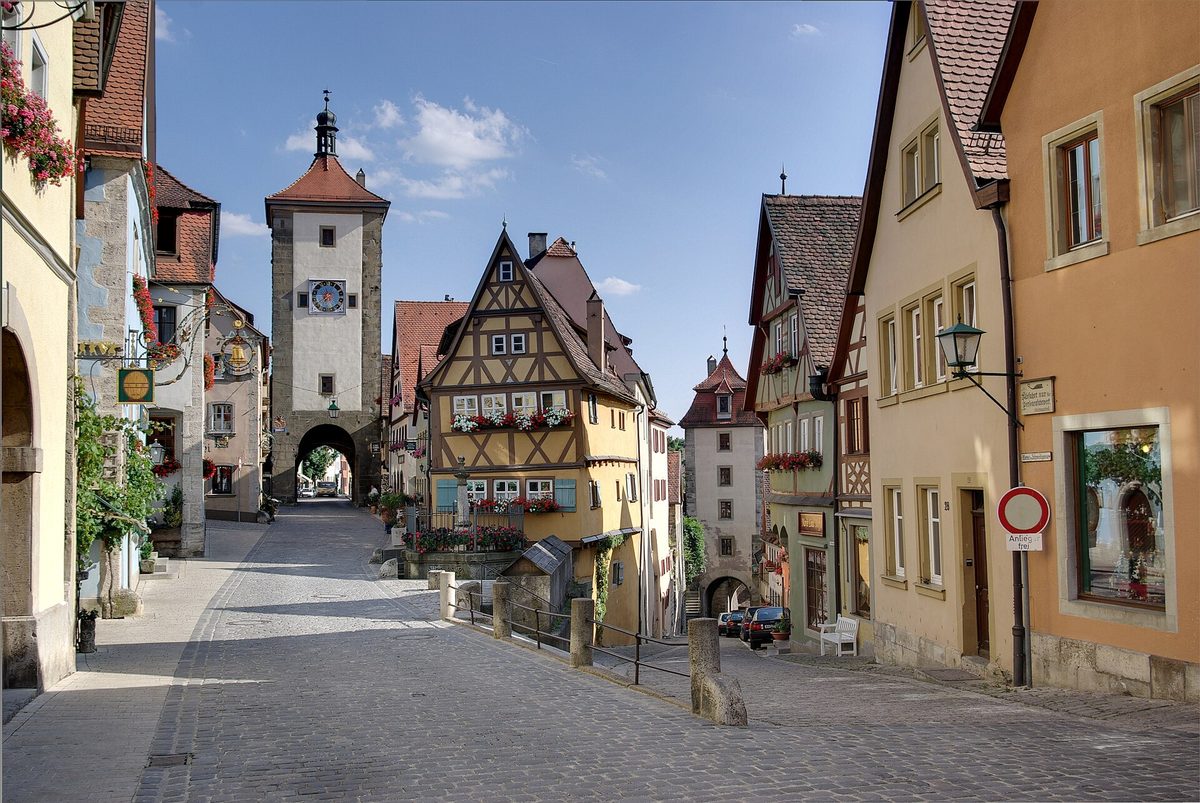
Four to six days. The set pieces are Rothenburg ob der Tauber, which is the best-preserved walled town in Germany and knows it, Dinkelsbühl, which is nearly as good and half as busy, and Nördlingen, which sits inside a meteorite crater. The southern end delivers the Alps and the castles.
German motorways are toll-free for cars, so this is one of the cheapest drives in Western Europe once you have paid for fuel, which at recent German prices is not nothing. Go in May and June for the flowers, September for the light, or December if you want the route’s Christmas markets, which are among the best in Europe. Our Germany travel guide has the town-by-town detail.
14. The Grossglockner High Alpine Road
48 km, 36 hairpin bends, and the best-engineered mountain road in Europe. It climbs from Bruck in Salzburg province over the shoulder of Austria’s highest mountain and down into Carinthia.
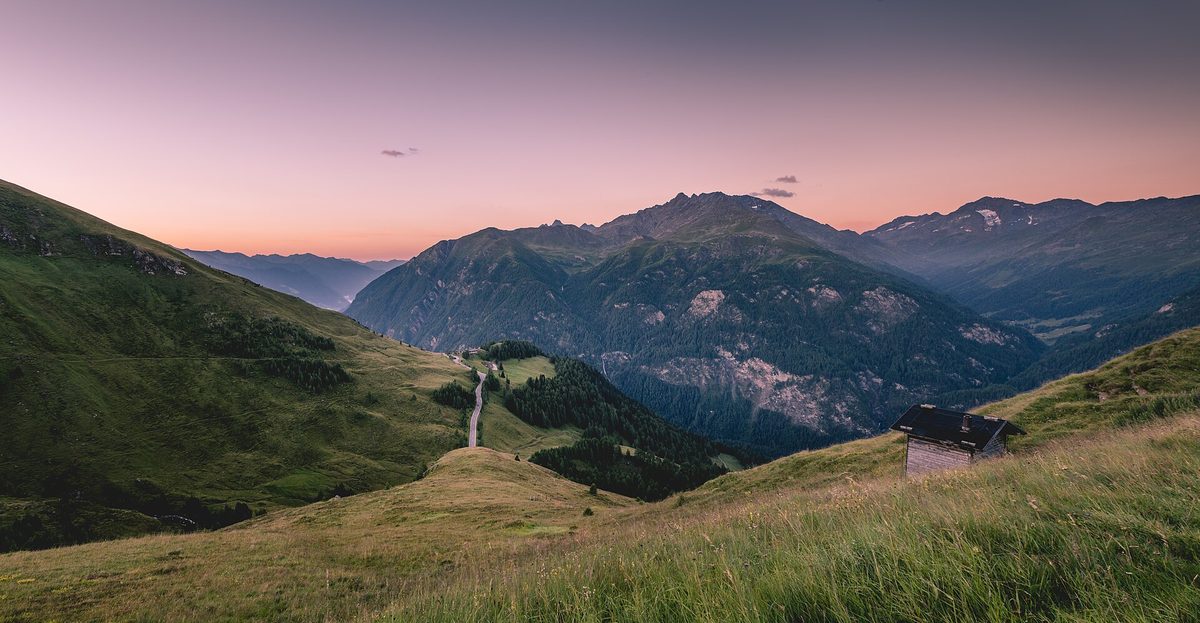
The 2026 season opened in early May and runs until and including 2 November. Opening hours change through the season: 06:00 to 20:00 from opening until the end of May with last entry at 19:15, then 05:30 to 21:30 from 1 June to 31 August with last entry at 20:15, then 06:00 to 19:30 from 1 September to the end of October with last entry at 18:45.
The toll is EUR 46.50 per car per day, or EUR 40.00 for an electric car, dropping to EUR 36.50 if you enter after 18:00. Two things about that. First, it is a private toll road, so the Austrian motorway vignette does not cover it. Second, that evening rate is the best value on this list in June and July, when you get the pass to yourself in the long northern dusk.
You need a couple of days either side to make it worthwhile, and it slots naturally into a wider Austrian loop of the kind set out in the Austria travel guide.
15. The Route des Grandes Alpes, with a Stelvio detour
720 km from Lake Geneva to the French Riviera, crossing the highest passes in the French Alps. It opened in 1913 and it is still the definitive Alpine drive.
Seven to nine days, and the timing is dictated entirely by the passes. The Col de l’Iseran opens in June and is normally closed from the second Monday in November to the second Friday in May. Mid-June to September is the window where you can be confident the whole route is drivable end to end. I could not confirm the 2026 opening date for the Col du Galibier, so check it directly before you commit to a June start.

The detour worth making is east into Italy for the Stelvio Pass: 2,758 m and 48 hairpins stacked up the mountainside in a way that looks fake in photographs. It typically opens on 1 June and closes on 31 October, but the actual opening varies by two to four weeks with snowfall, as late as mid-June in heavy years.
France has no motorway vignette, so on the mountain sections you pay for fuel and nothing else. If you route via Switzerland at any point, note that the Swiss vignette is CHF 40 and annual only: there is no short-stay option, so a single day of Swiss motorway costs the same as a year of it.
16. The Transfăgărășan
The Romanian army drove this road over the Făgăraș Mountains in the 1970s for reasons that were more military than sensible, which is exactly why it goes where it goes. Ninety kilometres, most of it above the treeline.

It is free to drive. No toll. The 2026 season opened on 19 April, and the high section between Bâlea Cascadă and Piscu Negru is expected to stay open until 31 October 2026. Traditionally that upper stretch is closed from 31 October to 1 July, so 2026’s April opening is unusually generous and should not be assumed to repeat.
Three to five days gives you the road, Bâlea Lake at the top, and enough of Transylvania either side to justify the flights. Pair it with the Transalpina if you want a second high road, and use our Eastern Europe itinerary for the wider loop.
Part three: the four best water routes in Europe
Rivers and ferries are the most underused way to move around Europe. A ferry crossing replaces a flight and a night’s hotel at once, and a river route delivers you to the middle of a city rather than to an airport thirty kilometres outside it.
17. The Danube: Passau to Budapest
The classic seven-night Danube itinerary runs Passau or Vilshofen, Linz, Melk, Dürnstein and the Wachau Valley, Vienna, Bratislava, Budapest. Danube cruises range from six to twenty days, but seven or eight nights is by far the most common length and it is the one the whole industry is built around.
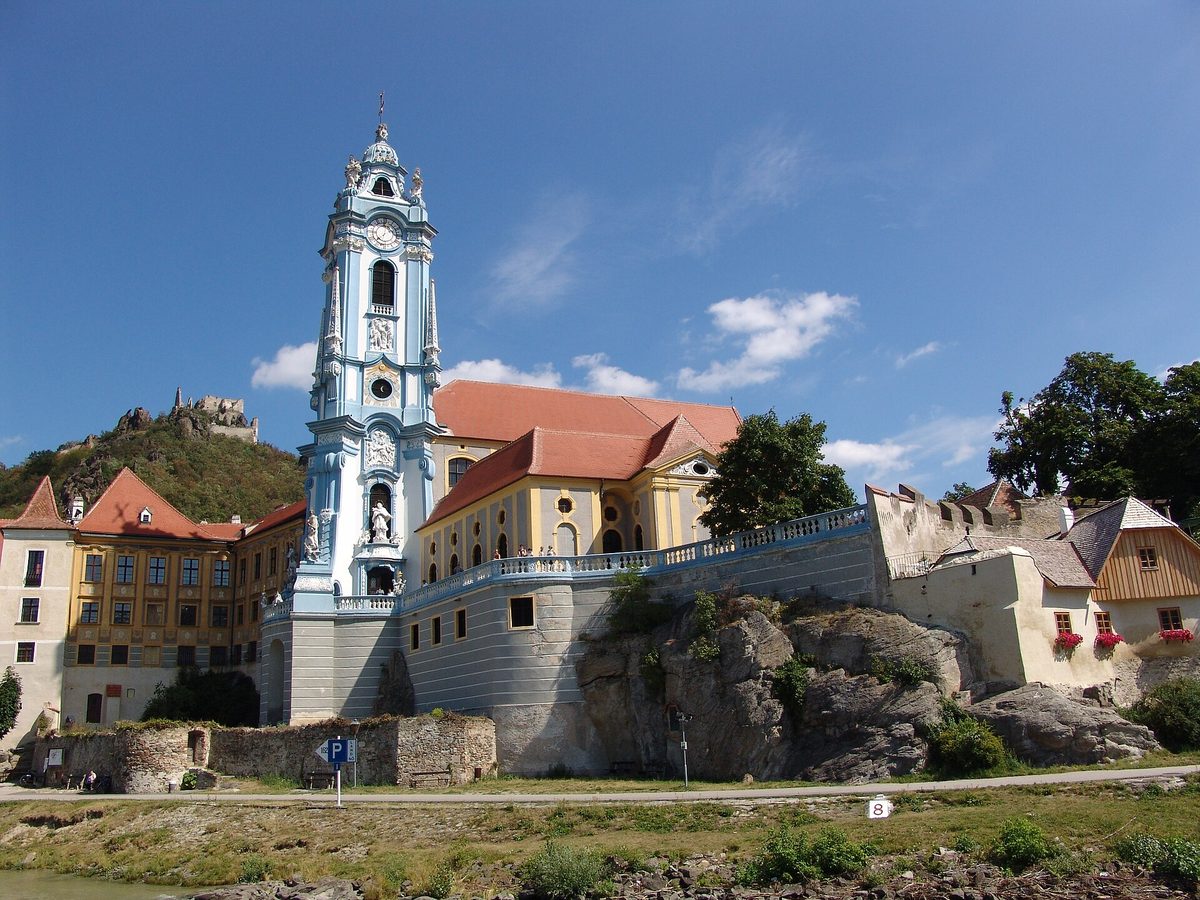
The Vienna to Budapest stretch alone is about 325 km, and the Wachau section between Melk and Dürnstein is the prettiest water in central Europe: terraced vineyards, an abbey on a bluff, ruined castles on both banks.
River cruise pricing varies so much by operator, cabin grade and season that no honest single figure exists, and the headline numbers quoted are usually promotional. Get a quote rather than trusting a price in an article. Our European river cruises guide covers how the pricing works.
You can also do this route independently and far more cheaply by train along the same corridor, stopping in the same towns. That is route 24 below.
18. The Rhine Gorge: Bingen to Koblenz
UNESCO inscribed this stretch of the Rhine in 2002 as Germany’s first cultural landscape listing: sixty-five kilometres of river between Bingen and Koblenz. More than forty hilltop castles and ruins in that stretch, which is the highest density of castles anywhere in the world.
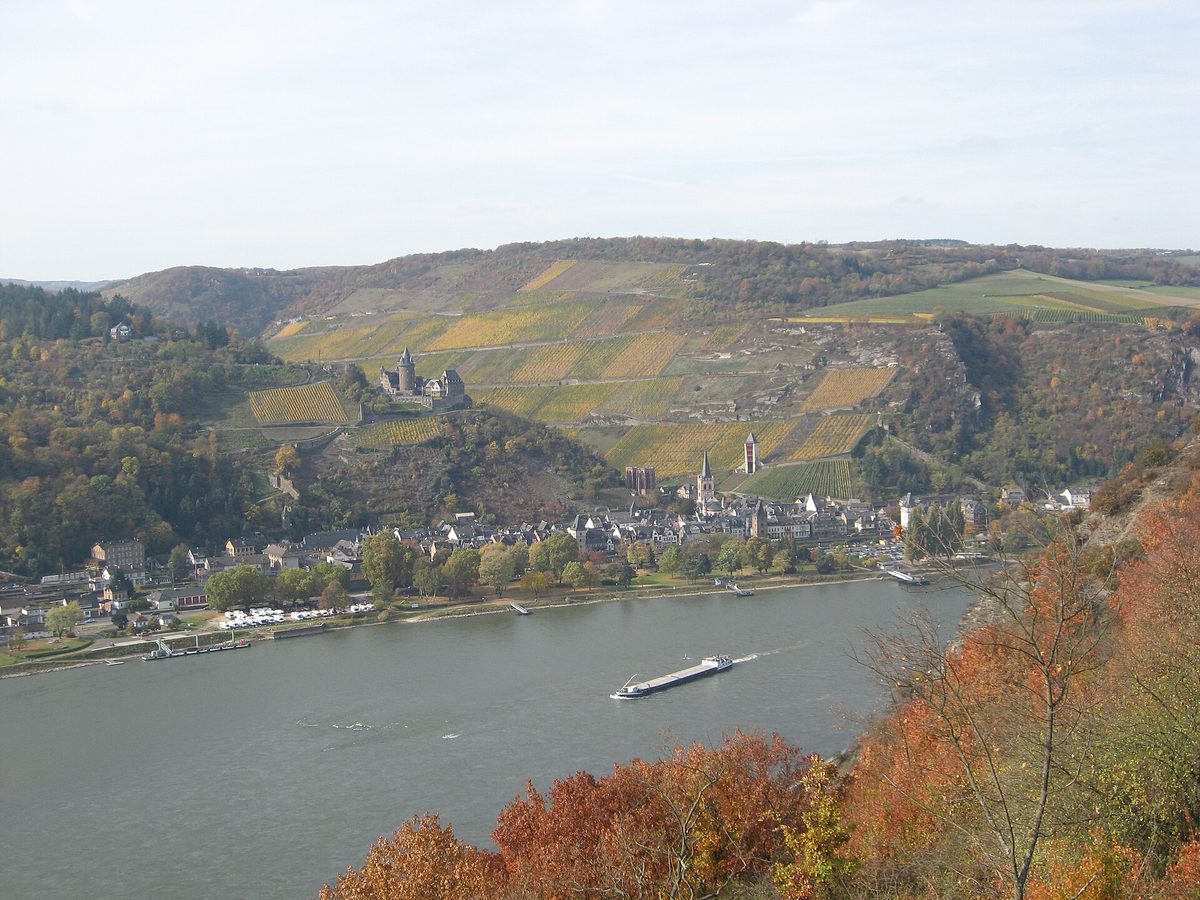
The Loreley rock rises about 120 m above the water at Rhine-kilometre 555, where the river narrows to roughly 113 m. That narrowing is why the legend exists and why the shipping still gets nervous there.
Köln-Düsseldorfer runs the scheduled passenger boats between Mainz, Bingen, Rüdesheim, Bacharach, Boppard, St Goar and Koblenz; current fares are on k-d.com. The trick that makes this route work is this: there are railway lines on both banks, so you can take the boat one way and the train back, or hop between the two all day. Two to three days is plenty.
19. The Adriatic Crossing: Ancona to Split, Bari to Patras
These two ferry routes are the hinges that let you build a proper multi-country trip out of Italy, Croatia and Greece rather than treating them as three separate holidays.
Ancona to Split takes 11h15 with Jadrolinija and 11h30 with SNAV. Jadrolinija runs three sailings a week and SNAV four. Foot passengers pay roughly EUR 56 to 82; with a vehicle it runs from about EUR 100 up to around EUR 122.
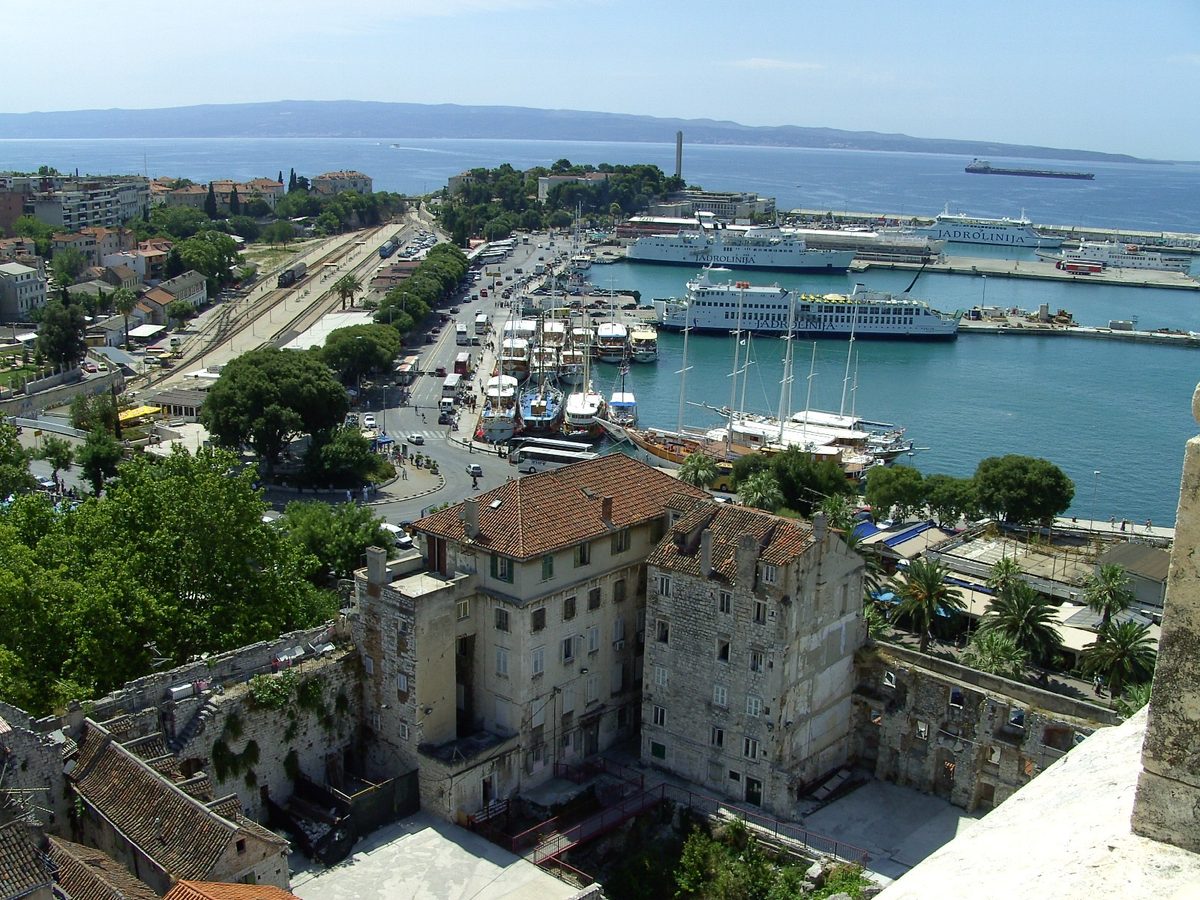
Bari to Patras takes about 16h30 to 17h, with roughly fourteen sailings a week on ANEK Superfast and Blue Star Ferries, at about EUR 56 to 117. That crossing puts you three hours by road or rail from Athens.
Both are overnight sailings, which is the whole point: you board in the evening, you sleep, you wake up in another country. Book a cabin rather than a deck seat if you want to be useful the next day. May to September is the practical season for both.
20. The Cyclades Hop: Athens, Santorini, Naxos, Mykonos
The most efficient island route in Greece, and the one I would give anyone with eight to twelve days.
Piraeus to Santorini takes five hours to over eleven depending on the vessel, with SeaJets high-speed catamarans doing it in about 4h50 to 5h35, from around EUR 46.50. Santorini to Naxos averages about 2h04 at roughly EUR 31.50 to 68.70 for foot passengers. Naxos to Mykonos is anywhere from twenty-five minutes to an hour and a half at about EUR 35.90 to 57.70. If you skip Naxos, Santorini direct to Mykonos is two to three and a half hours from about EUR 80.

Do not skip Naxos. It is the largest of the Cyclades, it has the best food and the highest mountain in the Cyclades, Mount Zas at 1,004 m, and it costs a fraction of what its neighbours do. It also breaks the Santorini to Mykonos crossing into two short hops, which matters when the meltemi wind is blowing and the fast catamarans get cancelled.
Go in May, June or September. July and August are hot, full and expensive, and the ferries are at their most oversubscribed. The Greece travel guide and the best beaches in Europe roundup cover which islands suit which traveller.
Part four: the four best mixed-mode routes in Europe
The best European trips tend to change mode partway through. A train down a spine, a ferry across a sea, a hire car for the last week where the trains do not go. Routes built that way are harder to plan and much better to travel, and these four are the ones I keep returning to.
21. Rails and Ferries to Greece: Rome to Athens overland
Rome to Naples in 1h10, down to Bari by rail, then the overnight ferry to Patras in about 16h30, then across to Athens. Twelve to sixteen days with stops.
The core transport cost is small: from about EUR 15 to 20 for Rome to Naples, a regional rail leg across to Bari on top of that, and EUR 56 to 117 for the crossing. Call it somewhere around EUR 90 to 150 for the moving parts of a trip covering southern Italy and Greece without a single flight, depending on how far ahead you book and whether you take a cabin.
What makes this route good is the transition. You go from Roman ruins to Greek ruins by sea, over a night, in roughly the direction the ideas travelled in the first place. Our Italy and Greece itinerary builds this out day by day.
22. Vienna to the Dalmatian Islands and back into Italy
Vienna south by rail to Zagreb, then Zagreb to Split in about 6h10 on the fastest service, roughly EUR 15 to 28 for a standard adult single. Islands from Split for four or five days. Then the Jadrolinija ferry across to Ancona in 11h15 and into Italy.
Twelve to fourteen days, three countries, and a loop rather than a line, which means you can fly into Vienna and out of Rome or Bologna. Be honest with yourself about the Zagreb to Split leg: six hours is the fast service, some options take considerably longer, and this is not a punctual railway. The Croatia travel guide covers which islands are worth the ferry, and the best Mediterranean destinations roundup puts them in context.
23. The Fjord Combination: Bergen Railway plus a hire car
Take the train from Oslo to Bergen, 492 km in six and a half to seven and a half hours for NOK 299 to 899, and pick up a hire car at the other end. The railway does the long boring transit beautifully; the car does the fjords and the coast, which no train reaches.

From Bergen you can work north through the fjord country to the Atlantic Ocean Road, which is a mere 8.3 km of County Road 64 linking Averøy to the mainland in Møre og Romsdal and is on every list of great drives on the strength of a single bridge. It is worth it, but budget the day it takes to get there rather than expecting a road trip.
Eight to twelve days. Late May to July is the window: the midnight sun runs roughly 28 May to 14 July in Lofoten and 14 May to 29 July at Nordkapp if you go that far north. Book fjord accommodation four to six months ahead for June and July, because supply is tiny.
Two warnings. Norwegian fuel is expensive, running around NOK 20.70 a litre in August 2026, roughly USD 2.24. And a Norwegian one-way car hire is among the worst in Europe for drop fees, so pick the car up and drop it in the same place if you possibly can.
24. Alpine Rail to the Danube: Munich, Salzburg, Vienna, Budapest
This is the Danube route done independently, and it costs a small share of the cruise price.
Munich to Salzburg is 1h28 on a Railjet. Munich to Vienna is about four hours, roughly hourly, with advance fares from EUR 19 in second class through ÖBB. Salzburg sits on that line, and here is the useful part: a Munich to Vienna ticket lets you break the journey at Salzburg and continue the same day on any later Railjet at no extra cost. So the Salzburg stop is free. Then Vienna to Budapest is 2h37, hourly, from about EUR 10.
Ten to fourteen days. Add a Wachau Valley day trip from Vienna by boat or bike, and a Bratislava day trip on the hourly train, and you have covered most of the classic Danube itinerary for something like EUR 29 in rail fares plus whatever you spend on hotels. Passau, Linz and Melk need a deliberate break in the Munich to Vienna run, which the free Salzburg stopover rule makes easier than it sounds.
Our Europe itinerary hub and the 10-day Europe itinerary both work this corridor from different angles.
Part five: the two best routes you travel under your own power
Both of these are routes in the fullest sense: waymarked, centuries or decades in the making, and designed to be travelled slowly. They also solve the problem that every route above shares, which is that you spend the trip watching Europe through glass.
25. The Camino Francés: Saint-Jean-Pied-de-Port to Santiago
790 km, or 490 miles, from the French side of the Pyrenees across northern Spain to Santiago de Compostela. At an average of about 25 km a day it takes 30 to 35 days, which is why this is the one route on this list that most people build a sabbatical or a career break around.
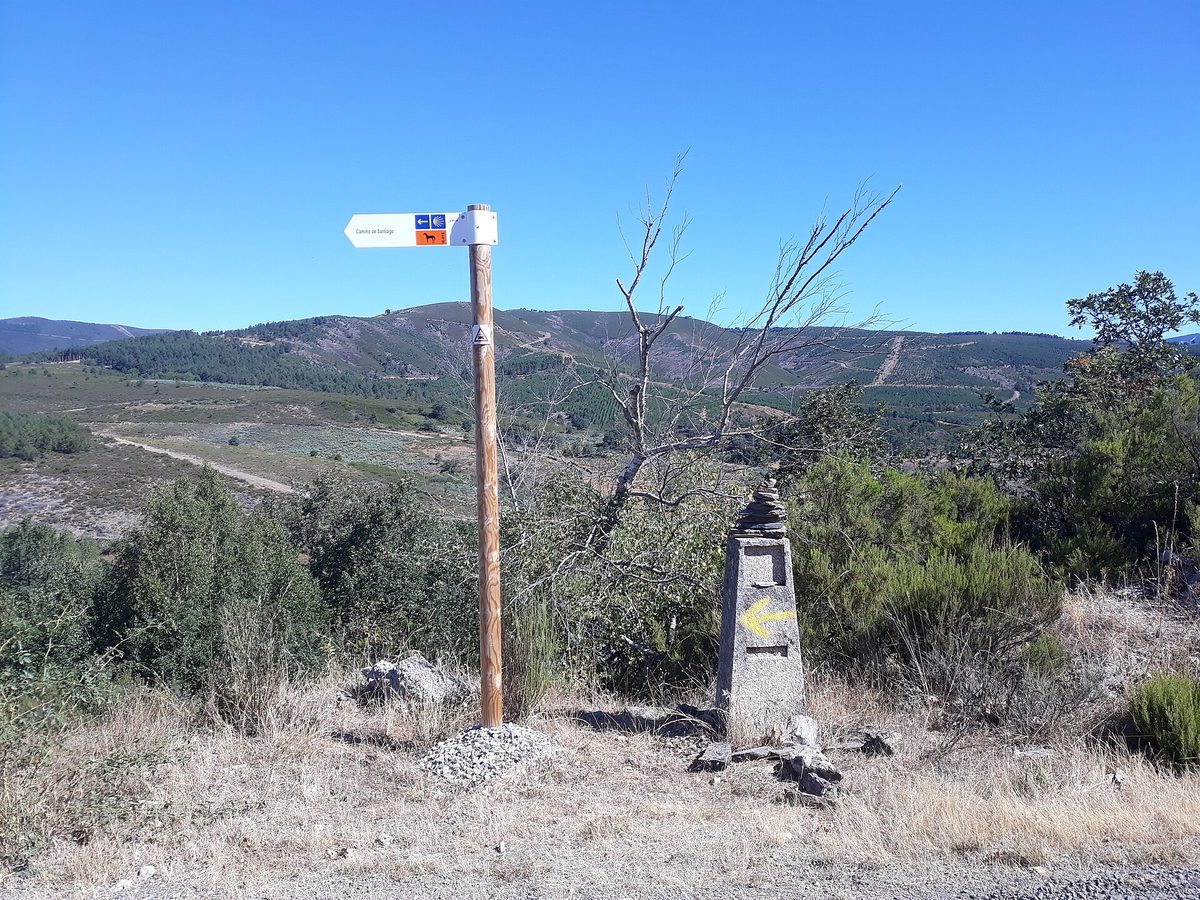
It is also the cheapest long route in Europe by a distance. Municipal albergues run EUR 8 to 12 a night, with almost all the public albergues in Galicia charging EUR 10 in 2026. Private albergues are EUR 12 to 20 and can usually be booked ahead. The smarter private places, with proper beds, curtains, lockers and towels, run from about EUR 25. Sleep in municipal albergues and eat pilgrim menus and you can walk across Spain for less than a week in Amsterdam costs.
You do not have to walk all of it. To receive the Compostela certificate in Santiago you need to have walked the last 100 km, which means starting at Sarria, or cycled the last 200 km from Ponferrada. A week from Sarria is the standard short version and it is a perfectly honest way to do it.
The one warning is volume. More than 530,000 pilgrims received a Compostela during 2025, the highest annual figure on record, and 240,000 were issued in the first six months of 2026 alone, up about 5% year on year. The Camino Francés carries the largest share of arrivals at around 43.5%. The Sarria to Santiago stretch in July and August is busy in a way that surprises people who came for solitude. Walk in April, May, September or October, or take one of the quieter routes such as the Camino Portugués or the Primitivo.
Our hiking in Europe guide covers the other long-distance walks worth the time.
26. EuroVelo 6: the Atlantic to the Black Sea
The finest long-distance cycle route in Europe, and the one that best rewards a rider who is not a cyclist. It runs 4,700 km on the official route from Nantes on the French Atlantic coast to Constanța on the Black Sea, through ten countries, past eleven UNESCO sites, following six European rivers: much of the Loire, part of the Saône, a short stretch of the upper Rhine and nearly the whole Danube.
Route-length figures vary by source, with some quoting around 3,650 km, so treat 4,700 km as the official EuroVelo measurement of the full waymarked route rather than the shortest possible line.
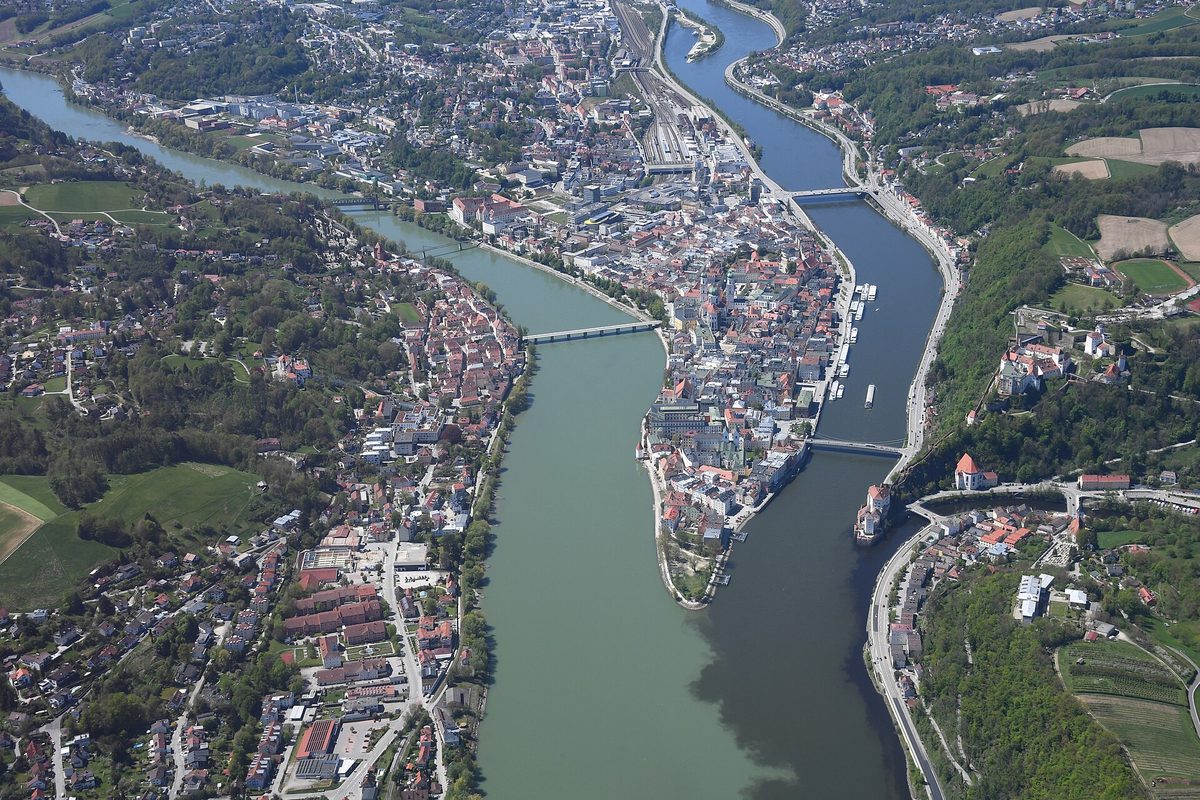
The reason it suits ordinary riders is the topography. Rivers do not climb, so this is a flat route for thousands of kilometres, with good surfaces and dense signage. The official stages are Nantes to Nevers, Nevers to Basel, Basel to Ulm, Ulm to Passau, Passau to Vienna, Vienna to Budapest, Budapest to Belgrade, Belgrade to Giurgiu and Ruse, and Giurgiu and Ruse to Constanța. Ride one stage and you have had a proper holiday.
Very few riders do the whole thing, and there is no need to. The Passau to Vienna and Vienna to Budapest sections are the most developed and the most popular, and they overlap exactly with the Danube cruise itinerary in route 17, at a fraction of the cost. Supported week-long packages on those sections start from about EUR 189 for a five-day Budapest to Vienna trip and around EUR 799 for eight days Passau to Vienna with hotels and luggage transfer. Do it independently and it costs whatever you spend on beds and food.
One detail that makes the Austrian section particularly forgiving: there are train stations along the route roughly every five kilometres, so if the weather turns or your legs give out, you get on a train. Very few long-distance routes anywhere have that safety net.
May to September, and note that the Balkan sections in July and August get genuinely hot.
What the rail and ferry legs cost in 2026
Here are the numbers, checked on 9 August 2026 unless a different date is given alongside them. Everything is per person, one way, in second class unless stated.
Rail fares on the routes above
| Leg | Journey time | Advance fare from | Route |
|---|---|---|---|
| London to Paris (Eurostar) | 2h16 fastest | About EUR 59 | Feeder to route 1 |
| Paris to Amsterdam (Eurostar) | 3h20 | About EUR 29 to 35 | 1 |
| London to Amsterdam (Eurostar) | About 4h04 | Not verified | Feeder to route 1 |
| Amsterdam to Berlin (ICE) | 5h42 | About EUR 22 | 1 |
| Berlin to Prague (ComfortJet) | About 3h50, 388 km | About EUR 22 | 1 |
| Prague to Vienna | 4h12 fastest | About EUR 14 | 1 |
| Vienna to Budapest (Railjet, EC) | 2h37 | About EUR 10 | 1, 24 |
| Milan to Venice (Frecciarossa) | About 2h30 | EUR 15 to 60 | 2 |
| Venice to Florence | 2h01 to 2h15 | From about EUR 19 | 2 |
| Florence to Rome (Frecciarossa) | About 1h30 | EUR 19 to 55 | 2 |
| Rome to Naples | 1h10 | EUR 15 to 20 | 2, 21 |
| Rome to Milan (the spine end to end) | About 2h55 | Frecciarossa lead-in fare EUR 19.90 | Return leg for route 2 |
| Zurich to Milan (EuroCity) | 3h15 to 3h17, 219 km | From EUR 18.90 | 3 |
| Barcelona to Madrid (AVE) | About 2h30 | About EUR 23 advance, EUR 94.90 walk-up | 4 |
| Madrid to Seville (AVE) | About 2h46, 389 km | EUR 5.60 to 14 booked early | 4 |
| Lisbon to Porto (Alfa Pendular) | 2h50, 332 km | From about EUR 16, EUR 35.70 standard | 4 |
| Paris to Nice (TGV) | 5h42 fastest | From about EUR 26 to 31 | Feeder to route 15 |
| Copenhagen to Stockholm | 5h35 fastest, 522 km | From about EUR 76 | 5 |
| Stockholm to Oslo (SJ) | 5h25 to 6h45 | About EUR 22 to 26 | 5 |
| Oslo to Bergen (Bergensbanen) | 6h30 to 7h30, 492 km | NOK 299 to 899 | 5, 23 |
| Belgrade to Bar | About 11h | EUR 21 second class, EUR 32 first | 6 |
| Zagreb to Split | About 6h10 fastest | EUR 15 to 28 | 22 |
| Munich to Salzburg (Railjet) | 1h28 | Not verified separately | 24 |
| Munich to Vienna (Railjet) | About 4h | From EUR 19 | 24 |
| Glasgow to Mallaig (West Highland Line) | 5h18 | From about GBP 50 | 8 |
| Locarno to Domodossola (Centovalli) | 1h45 to 1h49, 52 km | CHF 47 second class | Add-on to route 3 |
Two things stand out in that table. The first is how cheap the eastern half of route 1 is: Prague to Vienna to Budapest is under EUR 25 in total for nearly seven hours of travel. The second is Madrid to Seville, where a 389 km high-speed journey can be had for less than the price of a Madrid airport transfer if you book early enough.
Ferry and water fares
| Crossing | Duration | Foot passenger fare | Frequency |
|---|---|---|---|
| Ancona to Split (Jadrolinija) | 11h15 | About EUR 56 to 82 | 3 sailings a week |
| Ancona to Split (SNAV) | 11h30 | About EUR 56 to 82 | 4 sailings a week |
| Ancona to Split with a vehicle | 11h15 | About EUR 100 to 122 | As above |
| Bari to Patras | 16h30 to 17h | About EUR 56 to 117 | About 14 sailings a week |
| Piraeus to Santorini | 4h50 to 11h+ | From about EUR 46.50 | Daily in season |
| Santorini to Naxos | About 2h04 average | EUR 31.50 to 68.70 | Daily in season |
| Naxos to Mykonos | 25 minutes to 1h30 | EUR 35.90 to 57.70 | Daily in season |
| Santorini to Mykonos direct | 2h to 3h30 | From about EUR 80 | Daily in season |
Worth knowing: an Interrail or Eurail pass is valid with participating ferry and public transport companies as well as trains, so some of these crossings can be part-covered by a pass. Check the operator before you assume.
Rail passes: doing the arithmetic
The pass question comes up on every route in part one, and the honest answer is that it depends on numbers rather than on vibes. Here are the numbers.
Interrail Global Pass 2026 prices
These are the official 2026 adult second-class prices for European residents, valid from 5 January 2026.
| Pass | Adult 2nd class | Youth (12 to 27) | Senior (60+) |
|---|---|---|---|
| 4 days in 1 month | EUR 283 | EUR 212 | EUR 255 |
| 5 days in 1 month | EUR 318 | 25% off adult | 10% off adult |
| 7 days in 1 month | EUR 381 | EUR 286 | EUR 343 |
| 10 days in 2 months | EUR 447 | 25% off adult | 10% off adult |
| 15 days in 2 months | EUR 553 | 25% off adult | 10% off adult |
| 15 days continuous | EUR 476 | 25% off adult | 10% off adult |
| 22 days continuous | EUR 586 | 25% off adult | 10% off adult |
| 1 month continuous | EUR 696 | 25% off adult | 10% off adult |
| 2 months continuous | EUR 826 | 25% off adult | 10% off adult |
| 3 months continuous | EUR 956 | EUR 717 | EUR 860 |
The youth discount is 25% off the adult price and applies if you are 12 up to and including 27 on your first travel day. The senior discount is 10% and applies if you are 60 or older when you start. First class costs roughly 30% more: the seven-day pass is EUR 381 in second and EUR 495 in first. Children under 4 travel free without a pass, and 4 to 11-year-olds travel free on a Child Pass, up to two children per adult, senior or youth aged 18 or over.
Non-European residents buy a Eurail Pass instead, which is a different product at different prices. The figures I could find for Eurail 2026 came from a secondary source rather than an official page, and they run slightly higher: around EUR 293 for four days in a month, EUR 396 for seven days, EUR 472 for ten in two months and EUR 703 for a month continuous. Treat those as indicative and check eurail.com. A Eurail pass must be activated within eleven months of its issue date.
The reservation problem
This is where the pass maths falls apart. Your pass does not cover seat reservations on most high-speed and night trains. Reservations run from about EUR 3 to EUR 25 on most services, and considerably more on some.
| Train or country | Reservation for pass holders | Compulsory? |
|---|---|---|
| Eurostar (London and Paris routes) | EUR 30 Standard to EUR 38 Standard Premier; London to Lille, Brussels and Paris quoted at EUR 35 Standard and EUR 40 Plus | Yes, and quotas sell out |
| France, TGV INOUI | EUR 10 to 20 | Yes |
| Spain, Renfe AVE | EUR 10 Elige, EUR 13 Elige Confort | Yes |
| Italy, Frecciarossa | EUR 13 either class on Paris to Milan services from 29 May 2026 | Yes on all Frecce |
| Italy, Italo | Could not verify pass validity or fee | Unknown |
| Nightjet, seat | EUR 14 | Yes |
| Nightjet, 6-berth couchette | EUR 34 | Yes |
| Nightjet, 4-berth couchette | EUR 44 | Yes |
| Nightjet, 3-bed sleeper | EUR 54 | Yes |
| Nightjet, 2-bed sleeper | EUR 74 | Yes |
| Nightjet, single sleeper | EUR 114 | Yes |
| Switzerland, domestic SBB | None normally required | No |
| Switzerland to Italy EuroCity | Charged | Yes |
| Glacier Express | CHF 54 (CHF 540 Excellence Class) | Yes |
| Bernina Express | CHF 40 low season, CHF 44 high season | Yes for panoramic carriages |
| Germany ICE and Austria Railjet, domestic | Optional | No |
| Belgrade to Bar | EUR 3 | Yes |
The Eurostar line in that table is the one to look at hardest. Eurostar allocates a limited number of pass-holder seats per train, and in peak summer those can sell out weeks or months ahead. A train can look completely full to a pass holder while still cheerfully selling normal tickets. If your route starts in London, book that leg the moment your pass is issued.
Interrail publishes a page listing alternative routes between popular cities that avoid compulsory reservations altogether, which is worth bookmarking. There is also a Global Plus Pass in beta for 2026 that bundles most reservation costs into the pass price. If you are doing route 1 or route 2, where nearly every leg carries a compulsory reservation, that product is worth pricing up.
So is the pass worth it?
Run the sum against the fare table above. Route 1 in advance point-to-point fares comes to about EUR 100 for five legs. A seven-day Interrail pass is EUR 381, plus a Eurostar reservation at EUR 30 to 38 if you start in London. The pass loses badly, and it loses on almost any route where you know your dates and can book three months ahead.
The pass wins in three situations. When you do not know your dates and want to move on a whim. When you are travelling in countries where walk-up fares are punishing, which is Spain, France and Switzerland rather than Italy or central Europe. And when you are under 27, because 25% off changes the arithmetic considerably. Our train travel in Europe guide goes deeper on the booking mechanics.
Driving costs: vignettes, tolls and the one-way trap
Road routes look cheaper than rail routes until you add up the things that are not fuel. Here is what the road trips on this list cost to enter.
| Charge | 2026 price | Applies to |
|---|---|---|
| Austria motorway vignette, 10 days, car | EUR 12.80 | Route 14 and any Austrian motorway driving |
| Czechia motorway vignette, 10 days, car | CZK 300, about EUR 12 | Any driving between routes 1 and 13 |
| Slovenia motorway vignette, car | EUR 16 for 7 days, EUR 32 for a month. There is no 10-day option | Alps to Adriatic driving, including route 22 |
| Switzerland motorway vignette | CHF 40, annual only | Any Swiss motorway, including a single day |
| Grossglockner High Alpine Road toll, car | EUR 46.50 per day | Route 14 only; not covered by the vignette |
| Grossglockner toll, electric car | EUR 40.00 per day | Route 14 |
| Grossglockner toll, entry after 18:00 | EUR 36.50 | Route 14 |
| Transfăgărășan | Free | Route 16 |
| Germany motorways, cars | Free | Route 13 |
| France motorways | Per-journey tolls, no vignette | Route 15 |
| Ireland and Scotland | No vignette, limited tolls | Routes 10 and 11 |
| Iceland Route 1 | No tolls on the ring road | Route 9 |
All four vignette countries listed now issue digital e-vignettes linked to your number plate, so there is nothing to stick on a windscreen and nothing to buy at a border kiosk. Buy online before you travel and make sure you register the plate on the car you are actually driving, which on a hire car means checking at pickup.
The Swiss vignette deserves a flag. CHF 40 and annual only, with no short-stay option, means a single afternoon on a Swiss motorway costs the same as twelve months of them. If your route only clips a corner of Switzerland, the non-motorway roads are free and, on Alpine sections, better anyway.
Fuel
The EU-27 average for the week to 9 August 2026 was EUR 1.838 a litre for petrol and EUR 1.957 for diesel. Country figures move a long way either side of that. The most recent country-level petrol numbers I could source were from April 2026, so treat them as a guide to the spread rather than as today’s price: Germany EUR 2.13, France EUR 2.01, Spain lower again. Norway is the expensive outlier, running around NOK 20.70 a litre in August 2026, which is roughly USD 2.24.
The spread is worth doing the sum on. A 2,500 km Wild Atlantic Way at a realistic 7 litres per 100 km burns about 175 litres, so a EUR 0.50 difference in pump price is around EUR 90 across the whole route. Norway is where fuel genuinely reshapes a budget, because you are paying roughly a third more per litre than the EU average on a route where the distances are long.
The one-way drop fee, which is the real budget killer
This is the cost that ruins more European road trips than any other, and it never appears in the headline hire price.
Dropping a hire car at a different location within the same country usually costs EUR 0 to 150. Dropping it in a different country can exceed EUR 500 and reach EUR 1,000 or more, with quotes commonly in the range of USD 250 to USD 1,200-plus. The worst offenders are Italy, Scandinavia and eastern Europe. On top of that sits a separate cross-border surcharge of typically EUR 30 to 100 covering additional insurance and paperwork, which some companies charge even if you return the car where you got it.
What this means in practice for the routes above: the Iceland Ring Road and the North Coast 500 both start and finish in the same place, so they carry no drop fee at all. That is a structural advantage over a linear route like the Route des Grandes Alpes, where Lake Geneva to Nice is a one-way rental across a border and the fee can outweigh a week of fuel.
Three other things to check before you book a car. Many European cities operate low-emission zones with fines for unregistered entry, and the country-by-country rules are collected on the Urban Access Regulations in Europe site. Citizens of some non-EU countries need an International Driving Permit for certain European countries, so check per country rather than assuming. And on the Amalfi Coast, check your plate against the alternating plate calendar before you accept the keys.
When to go: the 2026 season calendar
The single biggest planning error on these routes is arriving before the road opens. Here are the dates I could confirm for 2026.
| Route or pass | 2026 season | Notes |
|---|---|---|
| Transfăgărășan high section | Opened 19 April, expected to hold to 31 October | Traditionally closed 31 October to 1 July, so 2026 opened unusually early |
| Grossglockner High Alpine Road | Early May to 2 November | Hours vary by month; last entry 18:45 in autumn |
| Furka Pass | Reopened 29 May at 09:00 | Switzerland |
| Grimsel Pass | Reopened 29 May | Switzerland |
| Susten Pass | Reopened 12 June | Switzerland |
| Stelvio Pass | Typically 1 June to 31 October | Opening varies two to four weeks with snowfall |
| Col de l’Iseran | Opens in June | Normally closed second Monday in November to second Friday in May |
| Col du Galibier | Not confirmed for 2026 | Check directly before a June start |
| Glacier Express, summer timetable | 2 May to 10 October | Winter timetable ran 6 December 2025 to 1 May 2026 |
| Bernina Express high season | 2 May to 25 October | Reservation CHF 44 in this window, CHF 40 outside it |
| Bernina Express Vereina diversion | 29 October to 13 November | Trains 951 and 952 only |
| Midnight sun, Lofoten | About 28 May to 14 July | Route 23 territory |
| Midnight sun, Nordkapp | About 14 May to 29 July | Far north extension |
| Amalfi Coast alternating plates | Every day in August and September | Plus weekends and holidays June, July, October |
| Venice access fee 2026 | 3 April to 26 July, ended | Not in force for the rest of 2026 |
Two general rules sit on top of that table. Alpine passes can close at short notice even in midsummer if the weather turns, so check live status on the morning you plan to drive rather than the week before. And the best shoulder windows across Europe as a whole are late April to mid-June and mid-September to October, where flights and hotels typically run 20% to 50% below peak, with late May and early September in southern Europe quoted at 30% to 50% under July.
One caveat on September that catches people out: it is frequently still peak in Rome, Florence and Venice. Route 2 does not get quiet until late October. Our best time to visit Europe guide breaks this down region by region.
The 2026 entry admin, which has changed
This section matters more than usual right now, because two of the three systems governing entry to Europe changed during 2026.
The Schengen 90/180 rule still governs everything. Non-EU nationals may spend a maximum of 90 days in any rolling 180-day period across the 29 Schengen countries, with unlimited entries inside that allowance. The 180-day window rolls forward daily, which is why people miscount it. The European Commission publishes a free Short-Stay Calculator, and if your route touches more than three or four countries you should use it rather than doing the arithmetic in your head.
EES is live. The Entry/Exit System became fully operational on 10 April 2026, after a phased rollout that began on 12 October 2025. It replaces manual passport stamping with biometric registration for non-EU nationals at Schengen borders, which means fingerprints and a facial image on first entry. Expect slower processing at land borders in particular for the rest of 2026. Member states may partially suspend EES checks for up to 90 days after full rollout, extendable by a further 60, to manage peak travel, so your experience may vary by crossing.
ETIAS is not live yet, and it no longer has a published date. The official EU travel site has removed its previous late-2026 target, and launch is now expected in 2027 with the date still to be confirmed. The EU has said it will give several months’ notice before it starts. The fee will be EUR 20. This timetable has slipped repeatedly, so check the official page rather than any article, including this one, before you travel. When it does open, apply as soon as applications are accepted, because airlines may refuse boarding without an approval. Our Schengen visa and ETIAS guide tracks this.
The UK ETA is live and mandatory. Since 25 February 2026, all visitors from visa-exempt countries must hold an approved ETA before boarding. It costs GBP 20, raised from GBP 16 on 8 April 2026, and it is non-refundable even if refused. It is valid for two years and multiple entries. EU citizens have needed one since 2 April 2025; Irish citizens are exempt, including dual citizens. This is relevant to route 8 and to anyone starting a rail trip in London.
On passports: you need at least three months remaining beyond your intended departure date from Europe, and the passport must have been issued within the past ten years. The second condition is the one that catches people with older ten-year passports that were extended.
Currency, and one 2026 change to watch
Bulgaria adopted the euro on 1 January 2026, becoming the 21st euro-area member state, at a fixed and irrevocable rate of EUR 1 to BGN 1.95583. The euro became sole legal tender on 1 February 2026 after a month of dual circulation, and mandatory dual pricing in both currencies ran from 8 August 2025 to 8 August 2026. Any Bulgarian price still quoted in leva is a pre-2026 figure.
The routes above still cross plenty of non-euro countries: Swiss francs, Norwegian and Danish and Swedish kroner, Czech koruna, Hungarian forint, Polish zloty, Romanian leu, Serbian dinar, British pounds and Icelandic krona. On route 1 alone you will handle three: euros, Czech koruna and Hungarian forint. Route 5 adds three more.
Tourist taxes and access fees on the route cities
| City | 2026 charge | Applies on route |
|---|---|---|
| Amsterdam | 12.5% of the room price excluding VAT, the highest percentage rate in Europe | 1, 7 |
| Barcelona | From 1 April 2026: up to EUR 12.00 a night at five-star hotels, EUR 8.40 at four-star, EUR 9.50 in tourist apartments, EUR 6.00 in hostels. Under-16s exempt | 4 |
| Prague | CZK 50, about EUR 2, per person per night for stays up to 60 nights; under-18s exempt | 1 |
| Venice, day visitors | EUR 5 paid by the fourth-last day before access, EUR 10 within 3 days; 2026 window has ended | 2 |
The Amsterdam figure is the one that bites, and it got worse in 2026: VAT on short-stay overnight accommodation rose from 9% to 21% on 1 January 2026, on top of a 12.5% tourist tax. On a EUR 200 room that is a meaningful nightly premium, and it is a reason to make Amsterdam a two-night stop on route 1 rather than a four-night one.
On Venice: the access fee applied on 60 specific days from 3 April to 26 July 2026, enforced 08:30 to 16:00, covering every Friday, Saturday and Sunday in that window plus 6 April, the whole week of 27 April and the whole week of 1 June. It applies to day visitors only, in the historic centre only, and not on Murano, Burano, Torcello or Lido. Children under 14 are exempt. Overnight guests in registered accommodation in the Municipality of Venice are exempt but must still register on cda.ve.it for a free QR code, which is the step people miss. The 2026 window has now closed, so it does not affect an August to December trip, but assume a similar calendar for 2027.
Swaps: what to do when the famous route is full
Every route on this list has a busier and a quieter version. If your dates are fixed in July and August, or if the accommodation on your first choice is gone, these are the substitutions I would make.
| Instead of | Try | Why |
|---|---|---|
| The Amalfi Coast drive (12) | The Amalfi Coast by SITA bus and ferry from Sorrento or Salerno | No alternating plate ban, no parking problem, and you can look at the view |
| The Glacier Express (3) | The Centovalli Railway, Locarno to Domodossola, 1h45 for CHF 47 | Similar Alpine drama, no CHF 54 reservation, no booking window |
| Santorini and Mykonos (20) | Naxos and Paros on the same ferry line | Better food, real towns, far cheaper, same sea |
| The North Coast 500 (10) | The West Highland Line by train (8) | Same landscape, no single-track passing places, no accommodation scramble |
| The Capitals Line in July (1) | The same route reversed, Budapest to Paris, in late September | Prices fall, crowds thin, and the eastern cities are at their best in autumn |
| A Danube river cruise (17) | The independent rail version, route 24 | Most of the same towns, roughly EUR 29 in rail fares, and you choose the hotels |
| The Route des Grandes Alpes one way (15) | A Grenoble or Annecy base with day loops | Avoids the cross-border one-way drop fee entirely |
| The Wild Atlantic Way in full (11) | The Donegal and Mayo half only | The northern sections are emptier and the driving is better |
| Interrail on a fixed-date trip | Advance point-to-point tickets booked 8 to 12 weeks out | Route 1 costs about EUR 100 in fares against EUR 381 for a 7-day pass |
| Iceland’s Ring Road in July (9) | The Ring Road in early June or September | Same daylight in June, far fewer cars, cheaper hire |
| A Danube cruise or a driving holiday | The Passau to Budapest sections of EuroVelo 6 (26) | Same river, same towns, flat riding, and trains every few kilometres in Austria if you stop |
| The full Camino Francés (25) | Sarria to Santiago, the last 100 km | Still earns the Compostela, and fits a week rather than a month |
The pattern in that table is worth naming. Almost every swap trades a famous name for a shorter, cheaper, less-booked version of the same experience. That is usually the right trade in high summer and usually the wrong one in shoulder season, when the famous version is perfectly pleasant.
Which route suits which traveller
First trip to Europe, two weeks. Route 1, the Capitals Line, west to east. It is the most forgiving route here: high train frequency, English widely spoken, big cities with real infrastructure, and if something goes wrong there is always another train in an hour. Our first-time Europe itinerary and best places for a first visit cover the same ground.
Travelling on a tight budget. Route 25, the Camino Francés, is the cheapest way to spend a month in Europe that I know of: albergues at EUR 8 to 12 a night and nothing to pay for transport. After that, route 6, Belgrade to Bar, extended into the Balkans. Backpacker daily budgets in eastern Europe and the Balkans sit around USD 30 to 50, against USD 80 to 130 in western Europe and USD 150 to 200 in the Nordics. That is not a small gap: it is the difference between three weeks and one. See Europe on a budget and backpacking Europe.
Travelling with children. Route 13, the Romantic Road, or route 2 done slowly. Short driving legs, castles, and the ability to stop whenever someone needs to. On the rail side, children under 4 travel free on a pass and 4 to 11-year-olds travel free on a Child Pass. Our Europe with kids guide has more.
Solo. Route 25 first, because the Camino is the most reliably sociable long trip in Europe and nobody there thinks it is odd to be walking alone. Otherwise route 1 or route 20. Both have the hostel density and the traveller traffic that make solo trips sociable rather than lonely, and both are easy to abandon halfway through if you meet people going somewhere better. See solo travel in Europe.
A honeymoon or a special trip. Route 3 with the Glacier Express in first class, or route 7 in a two-bed Nightjet sleeper, around EUR 189 as a standalone Vienna to Rome ticket or a EUR 74 supplement if you hold a rail pass. Both feel like an occasion rather than a transfer. Our Europe honeymoon guide has the rest.
You hate driving. Routes 1, 2, 3, 4, 5, 6, 7, 8, 17, 18, 19, 20, 21, 22, 24, 25 and 26 involve no car at all. That is seventeen of the twenty-six, which is a good indication of how well this continent works without one. Our getting around Europe guide covers the alternatives.
You want to drive and nothing else. Routes 9, 10, 11, 12, 13, 14, 15 and 16. Of those, Iceland’s Ring Road and the North Coast 500 are true loops that start and finish in the same place, so they avoid the one-way drop fee entirely and are cheaper than the distances suggest. The Transfăgărășan is a linear crossing, but at 90 km you can drive it out and back. Our Europe road trips guide expands the list.
Winter. Route 7 runs year-round, route 3 switches to a winter timetable from December to the start of May, and route 13 is at its best in December for the markets. Most of the road routes here are closed or unwise. Our best places to visit in Europe in winter and skiing in Europe guides pick it up from there.
Six mistakes I see people make on these routes
1. Buying the pass before doing the sum. A seven-day Interrail Global Pass is EUR 381. Route 1 in advance fares is about EUR 100. The pass is a flexibility product, not a discount product, and the reservation fees on top erode it further.
2. Assuming a mountain road is open because it is spring. The Susten Pass reopened on 12 June 2026. The Stelvio typically opens on 1 June and can slip to mid-June. If your route depends on a single pass and you are travelling before late June, have a plan B in the valley.
3. Booking a one-way hire car without checking the drop fee. Cross-border drops can exceed EUR 500 and have been quoted well above EUR 1,000. Price the loop version of your route before you commit to the linear one.
4. Leaving the Eurostar leg until last. Pass-holder quotas on Eurostar are limited per train and sell out weeks or months ahead in summer, and a train that appears full to you may still be selling ordinary tickets. If London is your starting point, book that leg first.
5. Underestimating how much the mode changes the pace. Rail routes want you to book ahead and reward planning. Road routes want you to be flexible and punish rigid schedules. Trying to run a road trip on a rail timetable, with a booked hotel every night and no slack, is how people end up driving Iceland’s Ring Road in the rain at nine at night.
6. Counting Schengen days wrong. The 180-day window rolls forward daily rather than resetting, and with EES now live the days are recorded biometrically rather than by a stamp someone might miss. Use the Commission’s Short-Stay Calculator if you are anywhere near the limit.
7. Building a rail route with no slack for strikes. Industrial action is a routine feature of French and Italian rail, and it is usually announced days in advance rather than on the morning. Two habits cover it. Do not book a non-refundable hotel that depends on a single train arriving, and leave a spare half-day before anything unmissable, such as a flight home or a booked panoramic train. On the routes here, that mainly affects route 2, route 15’s rail approaches and any leg through France.
Frequently asked questions
What is the best route to travel Europe by train?
Paris, Amsterdam, Berlin, Prague, Vienna, Budapest, travelling west to east. Five legs, none longer than 5h42, 19h 41m of total moving time, and advance fares of about EUR 100 for the whole spine. It suits twelve to sixteen days and it is the most forgiving big European route for a first trip.
How many days do you need to travel around Europe?
Two weeks gets you one good route properly, which usually means four or five stops. Three weeks lets you combine two adjoining routes, such as the Capitals Line and the Italian Spine. Anything under ten days should be a single country or a single corridor rather than a multi-country dash.
Is the Eurail or Interrail pass worth it in 2026?
Only sometimes. A seven-day Interrail Global Pass is EUR 381 for adults, EUR 286 for under-28s and EUR 343 for over-60s. It wins when your dates are genuinely flexible, when you are travelling in France, Spain or Switzerland where walk-up fares are high, or when you qualify for the 25% youth discount. It loses against advance point-to-point fares in Italy, Germany and central Europe. Remember that most high-speed and night trains charge a reservation on top of the pass, from about EUR 3 to EUR 25 and up to EUR 114 for a single Nightjet sleeper.
What is the best road trip route in Europe?
For a first road trip, Iceland’s Ring Road: 1,322 km, one road, no tolls, and it is a loop so there is no one-way drop fee. For sheer driving quality, the Grossglockner High Alpine Road, 48 km and 36 hairpins for a EUR 46.50 day toll. For length and coastline, the Wild Atlantic Way at 2,500 km.
Is it better to fly or take the train in Europe?
Train, on most of the routes in part one. Paris to Amsterdam is 3h20 city centre to city centre against roughly the same door to door by air once you add airports. The break-even is around five to six hours of rail time, and beyond that flying starts to win on the clock, though rarely on cost once you add bags and transfers. The legs on this list that sit past that break-even, Copenhagen to Stockholm at 5h35 and Oslo to Bergen at up to 7h30, are exactly the ones where the view is the reason to stay on the train.
Can you do a one-way car rental across European countries?
Yes, but check the price first. Same-country one-way drops usually cost EUR 0 to 150. Cross-border drops can exceed EUR 500 and reach EUR 1,000 or more, worst in Italy, Scandinavia and eastern Europe, plus a separate cross-border surcharge of typically EUR 30 to 100. This is why loop routes are structurally cheaper than linear ones.
Do I need an ETIAS to travel to Europe in 2026?
No. As of August 2026, ETIAS is still not live and no launch date has been published. The previous late-2026 target has been removed from the official EU travel site and launch is now expected in 2027, with the EU promising several months’ notice beforehand. The fee will be EUR 20. What is already live is the EES biometric entry system, fully operational since 10 April 2026, and the UK ETA, mandatory since 25 February 2026 at GBP 20.
What is the best time of year to travel Europe?
Late April to mid-June and mid-September to October, where flights and hotels typically run 20% to 50% below peak. In southern Europe, late May and early September are quoted at 30% to 50% below July. The exception is that September is often still peak in Rome, Florence and Venice, and the Nordic and Alpine routes have hard seasonal limits: late May to July for Norway, and roughly June to September for the high passes.
How many countries should you visit in one European trip?
Fewer than you want to. On a two-week trip, three or four countries is comfortable and six is a blur. The routes in this article are built around three to six countries over ten to sixteen days precisely because that is the density where you still remember the places afterwards.
Which route is cheapest?
Route 6, Belgrade to Bar, on almost any measure: EUR 21 for the headline train journey plus a EUR 3 reservation, in a region where backpacker daily budgets run USD 30 to 50 against USD 80 to 130 in western Europe. Route 24, the independent Danube rail route, is the cheapest of the classic corridors at around EUR 29 in advance rail fares. Our cheapest places to travel in Europe guide has the country-level detail.
Final thoughts
If you take one thing from this, take the shape rather than the list. Pick a corridor that has a reason to exist, whether that is a river, a coast, a mountain chain or a rail line, and let it carry you. The routes that feel effortless are the ones where the geography is doing the planning.
And do the arithmetic before you buy anything. The single largest cost differences on this list are not hotels or flights: they are a EUR 381 rail pass against EUR 100 of advance fares, a EUR 500 one-way drop fee against a loop that has none, and a July booking against a late-September one. Three decisions, several hundred euros, and none of them affect where you go.
Start with the table at the top. Pick the row where the days column matches the holiday you have, and the 2026 window matches the dates you can travel. That is usually a shorter list than you expect, and it is almost always the right one.

Hannah Brooks has spent fifteen years travelling, living and writing across Europe, from the Arctic tip of Norway to the south of Sicily. She has planned hundreds of European itineraries for readers and is Senior Europe Editor at EuropeanTourism.org.
Photo credits
- Best Europe travel routes: a red Rhaetian Railway train crossing the Landwasser Viaduct in the Swiss Alps · Photo: Daniel Schwen / CC BY-SA 3.0 via Wikimedia Commons
- Morning light on Charles Bridge in Prague, the midpoint of the Paris to Budapest rail route · Photo: Estec GmbH, Billig Hotel in Prag (CC BY 3.0) via Wikimedia Commons
- Eurostar trains under the arched roof of London St Pancras station · Photo: mattbuck (category) (CC BY-SA 3.0) via Wikimedia Commons
- The red Glacier Express panoramic train on the Zermatt to St Moritz route in Switzerland · Photo: User:Mochtegern (CC0) via Wikimedia Commons
- The Bernina Express curving over the circular Brusio spiral viaduct in Switzerland · Photo: Kabelleger / David Gubler (http://www.bahnbilder.ch) (CC BY-SA 3.0) via Wikimedia Commons
- The wooden Bryggen wharf in Bergen, the western end of the Bergen Railway · Photo: Smtunli / CC BY-SA 4.0 via Wikimedia Commons
- The Flam Railway descending through Norwegian fjord scenery from Myrdal · Photo: Jorge Láscar from Melbourne, Australia / CC BY 2.0 via Wikimedia Commons
- An OBB Nightjet sleeper train waiting at a European platform · Photo: Bahnfrend / CC BY-SA 4.0 via Wikimedia Commons
- The mountains of Glencoe in the Scottish Highlands, near the West Highland Line · Photo: Gil Cavalcanti / CC BY-SA 3.0 via Wikimedia Commons
- Iceland’s Ring Road, Route 1, cutting through moss-covered lava fields · Iceland’s Ring Road (Route 1) cutting through moss-covered lava fields · Photo: Neil D’Cruze / CC BY 2.0
- The Old Man of Storr on the Isle of Skye in the Scottish Highlands · Photo: Lauwz The Kiwistralian (CC0) via Wikimedia Commons
- The Slieve League sea cliffs in County Donegal on the Wild Atlantic Way · Photo: Joli Rumi / CC BY-SA 4.0 via Wikimedia Commons
- The SS163 Amalfitana coast road cut into the cliffs above the Amalfi Coast · Photo: Falk2 · CC BY-SA 4.0 · via Wikimedia Commons
- The Plonlein corner in Rothenburg ob der Tauber on Germany’s Romantic Road · Photo: Berthold Werner (CC0) via Wikimedia Commons
- The Grossglockner High Alpine Road winding through the Austrian Alps · Photo: Karsten Würth (CC0) via Wikimedia Commons
- Hairpin bends of the Stelvio Pass road in the Italian Alps · Photo: Raul Taciu raultaciu (CC0) via Wikimedia Commons
- The Transfagarasan road snaking up the Carpathian mountains in Romania · Photo: Dariusz Grosa (CC0) via Wikimedia Commons
- Terraced vineyards and the church tower of Durnstein in Austria’s Wachau Valley on the Danube · Photo: Hochauer / CC BY-SA 2.0 via Wikimedia Commons
- Bacharach and its vineyards in the Upper Middle Rhine Valley in Germany · Photo: Prankster (CC0) via Wikimedia Commons
- Split harbour and ferry port in Croatia seen from the cathedral bell tower · Split harbour and ferry port · Photo: Martin Brož / CC BY 3.0
- The Portara marble gateway at sunset on Naxos in the Greek Cyclades · Photo: moustakik (CC0) via Wikimedia Commons
- The Geirangerfjord in Norway, reached by car from the Bergen Railway · Photo: Virtual-Pano / CC BY-SA 4.0 via Wikimedia Commons
- A Camino de Santiago waymarker with its yellow arrow and scallop shell · Photo: Simon Burchell / CC BY-SA 4.0 via Wikimedia Commons
- The Danube curving past the baroque old town of Passau, a EuroVelo 6 stage town · Photo: Carsten Steger (CC BY-SA 4.0) via Wikimedia Commons
- A TGV high-speed train, the backbone of long-distance rail travel in France · Photo: Ermell / CC BY-SA 4.0 via Wikimedia Commons