Best Mediterranean Destinations: 37 Places Ranked for 2026

I have been swimming in the Mediterranean since I was nine years old, and in fifteen years of writing about Europe I have never found a single sentence that covers it honestly. It is not one sea. It is a warm shallow bathtub off Rhodes in late October, a bracing 21 degrees off Málaga in June, a wind-hammered channel in the Cyclades in August, and a glass-flat morning in the Kornati islands where the only sound is your own oars.
So the best Mediterranean destinations below each come with the month I would actually book, what the water is doing when you get there, roughly what a day costs, and which 2026 tax, fee or cap you will run into. Some of these places I would send anyone. A few I would quietly steer you away from, and I say so.
One note on scope. This covers the European shore of the Mediterranean plus Türkiye, which is what almost everyone means by the phrase and what our readers can reach on a European trip. North Africa and the Levant have wonderful coastlines and different entry rules, and they deserve their own guide rather than three lines at the end of this one.
The best Mediterranean destinations in 2026 are Crete for sheer range, Puglia for value, the Albanian Riviera for wild coastline, Menorca for families, Corsica for hiking and swimming on the same day, and Rhodes for the warmest late-season sea. Santorini and Dubrovnik still earn their reputations, but only outside July and August.
The 37 best Mediterranean destinations at a glance
Read this table first. It is the part I wish someone had handed me before my first island-hopping summer, when I booked Mykonos in mid-August because a magazine told me to and spent four days watching cancelled ferries from a hotel terrace.
How to read the cost column. These are broad bands for one mid-range traveller per day, covering accommodation, food and local transport but not flights. They come from aggregated traveller-reported spending, so treat them as the shape of the thing rather than a quote: € is under about €125, €€ is roughly €125 to €190, €€€ is roughly €190 to €280, and €€€€ is €280 and up. August typically runs well above the annual average everywhere on this list.
How to read the sea column. That is the average August sea-surface temperature in Celsius. Where I could not find a figure I trust, the cell says n/a rather than a guess. Four rows fall into that category and I would rather admit it than invent a number you might pack around. For the Italian entries here, our Italy seasonal guide gives sea temperatures for every month, not just August.
| Destination | Country | Months I would book | Sea in Aug | Cost band | My honest verdict |
|---|---|---|---|---|---|
| Crete | Greece | May, Jun, Sep, Oct | 26°C | €€€ | The one island that works for a fortnight. My first pick overall. |
| Rhodes | Greece | May to Oct | 28°C | €€€ | Warmest water on this table. Best late-October swim in Europe. |
| Santorini | Greece | Jun, Sep | 25°C | €€€€ | Worth it. Sleep in Pyrgos or Megalochori, not Oia. |
| Naxos | Greece | Jun, Sep, Oct | 25°C | €€€ | What people imagine Santorini is. Better beaches, half the fuss. |
| Milos | Greece | Jun, Sep | 25°C | €€€ | Extraordinary coastline. Hire a boat or you will miss the point. |
| Mykonos | Greece | Jun, Sep | 25°C | €€€€ | Superb if you want the nightlife. Poor value if you do not. |
| Corfu | Greece | May to early Sep | 26°C | €€€ | Greenest Greek island. Autumn is properly wet, so go early. |
| Kefalonia | Greece | May to Sep | 27°C | €€€ | Myrtos beach deserves the fuss. You need a car. |
| Zakynthos | Greece | May to Sep | 26°C | €€€ | Split personality: quiet south, rowdy Laganas. Choose carefully. |
| Athens & the Attica coast | Greece | May, Sep, Oct | 27°C | €€ | Underrated as a beach base. The tram reaches real swimming. |
| The Peloponnese | Greece | May, Jun, Sep, Oct | 26°C | €€ | Greece without the ferry queue. Nafplio is the loveliest town. |
| Amalfi Coast | Italy | May, Jun, Sep | 26°C | €€€€ | Spectacular and exhausting. Base in Salerno and use the boats. |
| Capri & Ischia | Italy | May, Jun, Sep | 26°C | €€€€ | Capri after 6pm is a different island. Ischia is the better stay. |
| Sicily | Italy | May, Jun, Sep, Oct | 26°C | €€ | The best food-to-price ratio in the Mediterranean. August is brutal. |
| Sardinia | Italy | Jun, Sep | 25°C | €€ | The clearest water in Italy. Inland August heat is punishing. |
| Puglia | Italy | Jun, Sep | 26°C | €€ | My value pick for Italy. October water drops off fast, though. |
| Cinque Terre | Italy | May, Jun, Sep | 24°C | €€€ | A hiking destination that happens to touch the sea. Cool water. |
| Venice & the north Adriatic | Italy | Apr, May, Jun, Sep | 25°C | €€€ | Not a swimming trip. October water falls to about 19°C. |
| Mallorca | Spain | May, Jun, Sep, Oct | 26°C | €€€ | Far more varied than its reputation. The Serra de Tramuntana is superb. |
| Menorca | Spain | Jun, Sep, Oct | 26°C | €€€ | My family pick. Calm coves, short drives, no nightlife pressure. |
| Ibiza | Spain | May, Jun, Sep, Oct | 26°C | €€€€ | The north of the island is nothing like the brochure. Expensive. |
| Barcelona & the Costa Brava | Spain | Jun, Sep, Oct | 24°C | €€€ | City plus coast in one trip. Cooler water than people expect. |
| Valencia & the Costa Blanca | Spain | Jun, Sep, Oct | 26°C | €€ | Best-value big city on the Mediterranean. Warm sea into November. |
| Málaga & the Costa del Sol | Spain | Jun, Sep, Oct | 23°C | €€€ | Great city, coldest sea on this table. That surprises people. |
| Dubrovnik | Croatia | Jun, Sep | 25°C | €€€ | Go in June, sleep outside the walls, walk them at opening. |
| Split & Hvar | Croatia | Jun, Sep | 25°C | €€€ | The best-connected base in Dalmatia. Hvar is a day trip, not a week. |
| Korčula | Croatia | Jun, Sep | 25°C | €€ | Everything Hvar promises without the price. Bring a snorkel. |
| Istria & Rovinj | Croatia | Jun, Jul, Aug, Sep | 25°C | €€ | Italy-adjacent food, Croatian prices, and a dry autumn. |
| Bay of Kotor | Montenegro | Jun, Sep | 25°C | €€ | Stunning, but it is a fjord-shaped bay, not a beach coast. |
| Ksamil & the Albanian Riviera | Albania | Jun, Sep, Oct | 26°C | € | The cheapest clear water in Europe. Developing fast, so go now. |
| Piran & the Slovenian coast | Slovenia | Jun, Jul, Aug | 25°C | €€ | Forty-six kilometres of coast, one gorgeous town. A two-day stop. |
| Nice & the French Riviera | France | Jun, Sep | 24°C | €€€ | Glorious light, pebble beaches, and a sea that never gets truly warm. |
| Corsica | France | Jun, Sep | 24°C | €€€ | Mountains and beaches in one day. Cooler water than Greece. |
| Malta & Gozo | Malta | May, Jun, Sep, Oct | n/a | €€ | Long swimming season, almost no sand. Gozo is the better half. |
| Cyprus | Cyprus | May, Jun, Sep, Oct, Nov | n/a | €€ | The longest beach season in Europe. Outside Schengen, which matters. |
| Antalya & the Turquoise Coast | Türkiye | May, Jun, Sep, Oct | n/a | € | Best value on the whole sea. October is still dry and swimmable. |
| Bodrum & the Turkish Aegean | Türkiye | Jun, Sep | n/a | € | Gulet sailing country. The peninsula is far nicer than the town. |
This piece sits inside our pillar guide to the best places to visit in Europe, alongside companion pieces on the best places to visit in Europe in summer, the best beaches in Europe and the most beautiful places in Europe.
A word on that n/a column before anyone writes in. Malta, Cyprus and the Turkish coast are all warm-water destinations with long seasons; I simply could not source August sea temperatures for them from a met service or satellite dataset I would stand behind, and a plausible-looking number in a table is worse than an honest blank. If you need precision for those three, check a live sea-temperature service in the fortnight before you travel.
What changed in the Mediterranean for 2026: entry rules, taxes and caps
This is the layer that catches people out, because it moves every year. Below is where things stand in August 2026.
Entry: the EU border system that is already live, and the one that is not
The EU Entry/Exit System has been fully operational at every Schengen external border since 10 April 2026, after a phased rollout that began in October 2025. If you hold a non-EU passport, your face and fingerprints are now registered digitally on first entry and your passport is no longer stamped by hand. In practice that has meant slower arrivals: peak summer queues of two to five hours were reported at several airports this year, and a group of member states asked for the checks to be eased during the rush. Build in an extra hour on arrival and, if the option exists, pre-register before you fly.
ETIAS is not live, and no confirmed start date is in place. The timeline has slipped more than once and reporting through mid-2026 suggests a 2026 launch is no longer expected, so treat any specific date you see quoted with caution and check the EU’s own travel portal before you fly. When it does arrive it is set to cost €20, with under-18s and over-70s exempt, and there will be a transitional period before anyone is refused boarding for not having one. Our guide to the Schengen visa and ETIAS rules tracks the detail as it firms up.

One Schengen quirk worth knowing. Cyprus is in the EU but not in the Schengen area, so days spent there do not count against your 90-in-180 Schengen allowance. Croatia, Malta, Slovenia, Italy, Spain, France and Greece are all inside. Spain is the most seasonally variable of them, so it is worth checking when the Spanish coast and interior are at their best before booking. Montenegro, Albania and Türkiye are outside the EU entirely and have their own rules. If you are stitching together a long trip, that difference is the single most useful thing on this page.
Accommodation taxes, country by country
Greece replaced its old overnight-stay tax with a climate resilience fee, and the crucial detail is that it is charged per room per night, not per person. From April to October it runs €2 for one and two-star hotels, €5 for three-star, €10 for four-star and €15 for five-star, with short-term rentals at €8 (or €15 above 80 square metres). From November to March those drop to €0.50, €1.50, €3 and €4. You will see €4 quoted widely for three-star properties; the statute says five, so budget for five.
Croatia is the one people get wrong most often, because the old A/B/C/D zone tables that circulate online were abolished back in 2019. Since then each county sets its own per-municipality rate within a national band: roughly €1.33 to €2.65 per person per night from 1 April to 30 September, and €0.93 to €1.86 the rest of the year. Dubrovnik sits at the top of the band. Precise figures for smaller towns are worth confirming with the property, since they are set locally and change.
Spain has the most-reported and least-accurate tax story of the year. The Balearic ecotax has not gone up for 2026, despite a great deal of coverage suggesting it would. It remains €4, €3, €2 or €1 per person per night by accommodation category during the high season of 1 May to 31 October, with a 75% reduction outside it, a 50% discount from your ninth night onward, under-16s exempt, and 10% VAT on top. The talked-about €6 summer rate was a proposal that was never enacted.
Barcelona did change, though. A new Catalan law came into force on 1 April 2026 raising the regional tourist levy in the city to €7.00 per person per night for five-star hotels, €3.40 for four-star, €4.50 for tourist apartments, €2.00 for other accommodation and €1.00 for youth hostels, with cruise passengers charged €6.00 for calls of twelve hours or less and €4.00 for longer calls. The same law lifted the ceiling on the city’s own additional surcharge to €8. Barcelona has been widely reported to have set its surcharge at €5 from April, which would put a five-star night at €12 in total, but I could not confirm that specific figure in the official municipal bulletin, so treat €5 as reported rather than certain.
Italy charges city tax per person per night almost everywhere. Rome runs €4 to €10 by hotel category, capped at ten nights, with under-11s exempt. Florence runs €3.50 to €8.00, capped at seven nights, under-12s exempt. Naples revised its rates upward during 2026 to roughly €4.00 to €6.00. All three are worth confirming at booking, since municipalities adjust them without much notice. On the coast, Capri charges a landing tax of €5.00 from April to October and €2.50 in winter, usually bundled into your ferry ticket rather than charged separately.
For Malta, Cyprus, Montenegro, Albania, Slovenia, Türkiye and France, small nightly accommodation charges are common and vary by municipality and property class. I did not find current 2026 figures I would put in print for those seven, so budget a couple of euros per person per night and confirm at booking.
Venice: the access fee is over for this year
Venice ran its day-visitor access fee again in 2026 on 60 non-consecutive days between 3 April and 26 July, from 08:30 to 16:00, at €5 if you booked four or more days ahead and €10 inside that window. The trial period for 2026 has now ended, so a day trip in August or September costs you nothing extra. No decision has been published for 2027, and anyone telling you the fee is confirmed for next year is guessing. If Venice is on your list, our Italy travel guide covers the timing question properly.
Cruise levies and passenger caps
Greece now charges cruise passengers a landing levy that varies sharply by port and season: €20 at Santorini and Mykonos from 1 June to 30 September, €12 in April, May and October, and €4 in winter. Every other Greek port charges €5, €3 and €1 across the same three windows. It is charged to the cruise line, which means it reaches you inside the fare rather than at the gangway.
Santorini’s daily cruise cap of 8,000 passengers was tightened for 2026 by counting a ship’s full berth capacity rather than 80% of it, which in practice reduces the number of hulls the island accepts on a busy day. Our Santorini travel guide sets out how the cap and the new 70/30 landing rule change what a day on the island feels like. Dubrovnik allows a maximum of two cruise ships at once, around 8,000 passengers at peak. The city also enforces two rules that surprise visitors: wheeled suitcases must be carried rather than rolled through the Old Town, with a fine of €265, and public drunkenness can be penalised up to €4,000.
Mallorca has gone further than anywhere else. Party boats are banned from operating within a nautical mile of Palma Bay, all-inclusive guests in Magaluf and Playa de Palma are limited to six alcoholic drinks a day, street drinking outside licensed premises carries fines from €500 to €3,000, and Palma has stopped issuing new tourist rental licences. Barcelona will not renew its 10,101 short-term rental licences when they expire in November 2028, which is already tightening apartment supply.
Three headline sites also now run hard daily limits worth booking around: Pompeii at 20,000 visitors a day with timed entry slots, the Acropolis at 20,000 a day with a €30 ticket, and and Rome has been trialling crowd-control measures at the Trevi Fountain, including a proposed small entry charge for non-residents, so check before you go. None of that ruins a trip, but all of it rewards booking ahead, which is the theme of our guide to planning a trip to Europe.
Greece: the deepest bench on the Mediterranean
No other country gives you this much choice. Greece has thousands of islands, six island groups with distinctly different characters, and a mainland coast that most visitors skip entirely. If you have never been, start here. Our Greece travel guide goes deeper on regions and logistics; what follows is where I would actually send you.
Crete: the one I recommend most often
Crete is the answer when someone tells me they have two weeks and cannot decide. It is 260 kilometres long, which means the western end around Chania and the eastern end around Sitia feel like separate holidays. You get a Venetian harbour town, the Samariá Gorge, a mountain range with snow into May, and Elafonisi’s pink sand at the far southwest corner, all in one place with no ferry required between them.
Water sits around 26°C in August and holds near 23°C into October, so the season runs long. Fly into Chania (CHQ) for the west or Heraklion (HER) for the centre and east; Chania’s airport is out on the Akrotiri peninsula about 14 kilometres from town, while Heraklion’s sits just three to five kilometres from the centre, which makes it the easier late arrival.
What I would change about most Crete itineraries: people cram Knossos, Chania, Elafonisi and Balos into four days and spend the trip in a hire car. Pick one end. Give it a week.

Rhodes: the longest swimming season in Greece
Rhodes has the warmest average August sea on this entire table at roughly 28°C, and it is still about 24°C in October, which is warmer than most of the Mediterranean manages in June. That single fact should reorganise how you think about a late-autumn beach trip in Europe.
The medieval Old Town is a walled city you can lose yourself in, and Lindos, an hour down the east coast, has a whitewashed village stacked under an acropolis above a sheltered bay. The west coast is windier and better for kitesurfing than for lounging, which is useful to know before you book a hotel there by accident.
Santorini: worth it, if you stop trying to stay in Oia
I understand the eye-rolling. Santorini is crowded, expensive and photographed to death. It is also a flooded volcanic caldera with a 300-metre cliff wall, and standing on it at seven in the morning is one of the genuinely great sights in Europe. The problem is not the island, it is that everyone books the same two villages.
Stay in Pyrgos or Megalochori inland instead. You lose the caldera view from your balcony and gain a village where people live, dinner at half the price, and a fifteen-minute drive to the sunset. Book June or September; August adds heat, cruise crowds and the levy on ships calling at the port.
Worth knowing before you build a Cycladic itinerary: Santorini’s water is cooler than its image suggests, at about 25°C in August against nearly 28°C off Rhodes. The summer wind is a large part of why.
Getting there: Thira (JTR) airport is five to six kilometres from Fira, ten to fifteen minutes outside peak season and twenty to thirty in August. By sea, a fast ferry from Piraeus takes about five hours and a conventional Blue Star sailing about five hours forty, with fares in the €47 to €90 range. From Heraklion in Crete it is only about ninety minutes on the fast boat.
Naxos: the island I would book instead
My ranking of the Cyclades, for what it is worth: Naxos first, Milos second, Santorini third for the view and Mykonos last unless you are there to dance. We set all of them out side by side in our guide to choosing between the Greek islands. Naxos has the best beaches in the group, a proper agricultural interior with mountain villages and cheese and potatoes people actually farm, and the Portara, a marble doorway to an unfinished temple standing alone on an islet by the harbour.
It is also cheaper than its neighbours because it never became a luxury destination. A fast ferry from Piraeus takes about three hours fifteen, the conventional boat about five, and Naxos to Santorini is barely an hour on the fast catamaran, so you can have both.

Milos: hire a boat or do not bother
Milos is a mining island, and that is exactly why it looks the way it does. Sarakiniko is a moonscape of white volcanic rock sloping into water so clear it reads as fake in photographs. Kleftiko, the sea-cave complex on the southwest coast, is reachable only by boat.
That last point is the whole trip. People come to Milos, stay in Adamas, drive to three beaches and leave slightly puzzled. Budget for a full-day boat trip around the island, or hire a small boat yourself if you are competent, and the island opens up completely. Fast ferries from Piraeus take about two and a half hours.
Mykonos: excellent at one thing
Mykonos is very good at what it does. The beach clubs are properly run, the town is beautiful in the early morning before the day-trippers land, and the windmills are worth the walk. If nightlife is what you want, nothing on the Mediterranean does it better.
If it is not what you want, you are paying Mykonos prices for Naxos experiences. Our complete guide to visiting Mykonos breaks down the beaches, the fares and what a sunbed actually costs. Daily costs here run at the top of the Greek range, and the cruise levy of €20 per passenger in high summer tells you how hard the island is being managed. September is the sweet spot: warm water, functioning bars, noticeably better value.
Corfu, Kefalonia and Zakynthos: the Ionian, and its autumn rain
The Ionian islands are the green ones. Corfu has Venetian architecture, cypress hills and a very good food scene, and our full guide to visiting Corfu compares its coasts beach by beach; Kefalonia has Myrtos, a beach that photographs like a screensaver and is every bit as good in person; Zakynthos has Navagio, the shipwreck cove, and a resort strip at Laganas that you should look at on a map before booking anything near it.
Now the thing that gets people. The Ionian has a real rainy season, and it starts earlier than you would guess. Corfu takes somewhere between 110 and 150 millimetres of rain in October, around seven times its July figure, and between 175 and 222 millimetres in November, by which point it is roughly twelve times. Zakynthos jumps about fourfold from September to October. Kefalonia averages ten rainy days in October and thirteen in November. This is the greenest part of Greece precisely because it is the wettest, and an October Ionian booking made on the strength of “Greece in autumn is lovely” can go badly. Go May to early September and it is close to perfect.

Athens and the Attica coast: a beach destination in disguise
Very few people plan a swimming trip to Athens, and they are missing something. The Attica coast south of the city, the stretch locals call the Athens Riviera, runs from Glyfada down to the temple at Sounion, and the tram gets you to real swimming beaches from the centre. August sea temperatures sit around 27°C.
Treat Athens as a three-day city stop with afternoons at the sea rather than a museum march, and see our guide to what is actually worth doing in Athens for the mornings. Book the Acropolis ahead: it caps entry at 20,000 visitors a day and the ticket is €30. Athens also happens to be the cheapest capital-city base on this list, which our round-up of European city breaks gets into.
The Peloponnese: Greece without the ferry
If ferry timetables stress you out, drive here instead. The Peloponnese is a large peninsula connected to the mainland by a bridge, so a Greek coastal trip becomes a road trip. Nafplio is the loveliest small town in the country, with a Venetian fortress above a harbour and streets built for evening walking. Monemvasia is a Byzantine town hidden on the seaward face of a rock. Mycenae and Epidaurus are both here.
Costs run well below the islands, the roads are good, and you can be swimming an hour after leaving an archaeological site. It is my pick for a second trip to Greece, and it pairs neatly with the ideas in our Europe road trips guide.
Italy: the most beautiful coast, and the most badly planned trips
Italy has the best-looking Mediterranean shoreline in Europe and the highest rate of trips that go slightly wrong, because the famous stretches are narrow, poorly parked and served by roads designed for donkeys. Almost every problem is solved by using boats instead of cars. Our Italy travel guide has the wider picture. This is the coastal edit.
The Amalfi Coast: base in Salerno, travel by ferry
Positano stacked up its cliff is one of the sights of Europe, and the Amalfi Coast in June, before the buses gridlock, is close to unimprovable. In August it is a traffic jam with a view, and the accommodation is among the most expensive on the Mediterranean.
The fix I give everyone: stay in Salerno. It is a normal Italian city with normal prices at the eastern end of the coast, it has a train station connecting to Naples and Rome, and it is the ferry hub. From there, Travelmar runs Salerno to Amalfi in about 35 to 40 minutes for €12, Amalfi to Positano in 25 to 30 minutes for around €10, and Salerno straight to Positano in about an hour for around €17. You skip the coastal road entirely, you arrive at each town by sea, which is how they were meant to be seen, and you halve your accommodation bill.
Sea temperature runs about 26°C in August and drops to around 21.5°C by October, so the swimming window really is May to September here rather than the longer season further east.

Capri and Ischia: day-trip one, sleep on the other
Capri after the last hydrofoil leaves is a completely different island: quiet lanes, restaurants full of people who live there, and the Piazzetta functioning as a village square rather than a bottleneck. Few visitors ever see it, because most come for six hours from Naples or Sorrento.
From Naples, the NLG hydrofoil from Molo Beverello takes about 45 minutes for around €25, roughly a dozen sailings a day from April to November, while the Caremar car ferry from Porta di Massa takes about an hour twenty for around €14.80 and runs year-round. Sorrento to Capri is about half an hour for around €22. Note the €5 landing tax from April to October, usually inside the ticket price.
My preference is Ischia. It is bigger, greener, has thermal springs and actual beaches rather than rock platforms, costs meaningfully less, and Italians go there in numbers, which is always a good sign. Hydrofoils and ferries run from Naples year-round.
Sicily: the best food-to-price ratio on the Mediterranean
Sicily is where I send people who want the Mediterranean at its most layered, and our complete Sicily travel guide covers the island in detail. Greek temples at Agrigento and Segesta, Norman-Arab cathedrals at Monreale and Palermo, baroque hill towns in the southeast at Noto and Ragusa, and a live volcano you can climb. The street food in Palermo is the best in Italy and costs almost nothing.
Average August highs in Palermo run around 31°C and inland Sicily is considerably hotter, which is why locals treat August as the month to survive rather than enjoy. May, June, September and October are the months, and the sea is still about 26°C in August with 22°C holding into October.
Daily costs here sit roughly half those of the Amalfi Coast, which makes Sicily the value play in Italy along with Puglia. If you are watching the budget across a longer trip, our Europe on a budget guide and the cheapest places to travel in Europe both put southern Italy near the top for a reason.
Sardinia: the clearest water in Italy
The Costa Smeralda in the northeast is where Italian water goes turquoise, and the beaches around La Maddalena archipelago are as good as anything in the Caribbean. It is also expensive in that specific pocket; the rest of the island is not. The west coast around Alghero and the south around Chia give you the same water at ordinary prices.
Two things to plan for. Sardinian August sea temperatures around Cagliari average about 25°C, cooler than the Tyrrhenian coast, and inland August air temperatures average around 32°C, which is punishing if your accommodation is a farmhouse without air conditioning. Ferries run to Olbia from Livorno in about eight to nine hours and from Civitavecchia in about seven to seven and a half, daily and year-round.
Puglia: my Italian value pick, with one caveat
The heel of Italy has whitewashed towns, the trulli of Alberobello, a baroque city at Lecce that people call the Florence of the south, and two coastlines: the Adriatic on one side, the Ionian on the other. Prices are close to Sicily’s, food is exceptional, and you can drive the whole region comfortably.
The caveat is the water calendar. Puglia’s sea peaks around 25.5°C in August but falls to roughly 20.3°C by October, a much sharper drop than Greece or the Tyrrhenian coast. If you want autumn swimming, this is not the place; if you want June or September with warm sea and manageable crowds, it is close to ideal.
Cinque Terre: a hiking destination that touches the sea
Five villages pinned to a cliff, connected by a coastal path and a train line that runs every few minutes. The walking is the reason to come and the swimming is incidental, because the Ligurian coast has one of the cooler Augusts on this list at around 24°C, dropping to about 20°C in October.
Liguria runs cooler than its latitude suggests, and the western half of the coast, the Riviera di Ponente around San Remo, is cooler still than the Riviera di Levante where the Cinque Terre sits. The influence of the wind-cooled water in the Gulf of Lion, just along the coast in France, is the usual explanation, and it is the same effect that keeps Nice from ever getting truly warm.
October is also Liguria’s wettest month, around 170 millimetres at Genoa. Come in May, June or early September, walk the paths, eat the pesto, and treat any swim as a bonus. There is more on the trails in our guide to hiking in Europe.

Venice and the northern Adriatic: beautiful, but not a swimming trip
Venice belongs on any Mediterranean list for what it is, not for the beach. The northern Adriatic is shallow, which means it heats fast to about 25°C in August and then collapses to roughly 19°C by October, the steepest seasonal fall on this table. The Lido has sand and is pleasant in July and August; nobody should plan an autumn swimming trip here.
What Venice does give you in the shoulder months is the city without the crush, and in 2026 with no access fee to pay after 26 July. April, May, June and September are the months. Combine it with a run down the Istrian coast, which is only a couple of hours away by road and covered further down this page.
Spain and the Balearics: warmer in autumn than in early summer
Spanish Mediterranean water behaves differently from Greek water, and understanding that will improve your trip more than any hotel recommendation. The Spanish coast warms late and holds late. Barcelona sits at about 21.4°C in June and 24.4°C in August, and it is still 21.2°C in October. So the received wisdom about June being a lovely quiet month is only half right: quiet, yes, but the sea is cold enough to make you flinch. Our Spain travel guide covers the country beyond the coast.
Mallorca: much better than its reputation
Everyone thinks they know Mallorca and most people are picturing Magaluf. The island is 3,600 square kilometres, and the Serra de Tramuntana along the northwest is a UNESCO-listed mountain range with terraced villages, a hairpin road down to Sa Calobra, and Deia and Sóller sitting in orange groves above the sea. Palma is a proper city with a cathedral I would fly to see on its own.
Water reaches about 26°C in August and stays near 22.7°C in October, so the swimming season runs June to October comfortably. Ferries from Barcelona take about three and a half hours on the fast boat and around seven and a quarter on the conventional one, with fares from roughly €20 to €80.
Do read the Mallorca rules in the section above before booking a stag or hen trip; the island has been serious about enforcement since the drinking limits came in.
Menorca: where I would take children
Menorca is the one I recommend to families, and I recommend it hard. The south coast calas are small sheltered coves with shallow turquoise water and sand rather than pebbles, Cala Turqueta and Macarella being the famous pair. Nothing on the island is more than a forty-minute drive from anywhere else. There is a UNESCO Biosphere Reserve designation, a coastal path called the Camí de Cavalls that circles the whole island, and almost no nightlife pressure.
August sea temperatures run about 25.6°C and October about 22.7°C. The Alcúdia to Ciutadella ferry from Mallorca takes an hour and a quarter from around €30, which makes a two-island trip easy. Our Europe with kids guide has more on making island trips work with small children.

Ibiza: two islands sharing one name
The clubbing Ibiza is real, well-run and eye-wateringly expensive; it also occupies a small part of the map. The north of the island around Sant Joan and Portinatx is farmland, pine forest and quiet coves, and the Wednesday hippy market at Punta Arabí has been running since the 1970s. Dalt Vila, the walled upper town, is UNESCO-listed.
Ibiza carries the highest daily costs in Spain by a wide margin. If the budget is the constraint, Formentera is thirty minutes away by ferry with departures every half hour to hour from around €30, and it has the best sand in the Balearics. Both islands sit in our complete Spain destination guide, alongside the mainland coast.
Barcelona and the Costa Brava: city plus coast, cooler sea
Barcelona is a city break with beaches attached, and the Costa Brava north of it, around Cadaqués, Begur and the Cap de Creus headland, is one of the loveliest rocky coastlines in Spain. Combine the two and you have a strong week.
Two practical notes. The sea here is among the coolest on this list, peaking around 24.4°C in August, so September and October are better swimming months than June. And Barcelona’s tourist taxes went up on 1 April 2026, as covered above, on top of an accommodation market being squeezed by the licence phase-out. Book earlier than you think you need to.
Valencia and the Costa Blanca: the best-value big city on this sea
Valencia gets less attention than Barcelona and I struggle to see why. It has a Gothic quarter, the Ciutat de les Arts i les Ciències, a nine-kilometre park laid out in a drained riverbed running through the city, an actual city beach, and it is the birthplace of paella, which locals will remind you is a rice dish from the fields rather than a seafood platter.
The sea reaches about 25.7°C in August and holds near 22.2°C in October, warmer than Barcelona in both months, and August air temperatures average around 31°C. One weather quirk worth knowing: annual rainfall is low, but this stretch of coast can deliver much of it in a handful of intense autumn days, so an October forecast here is worth checking rather than assuming.
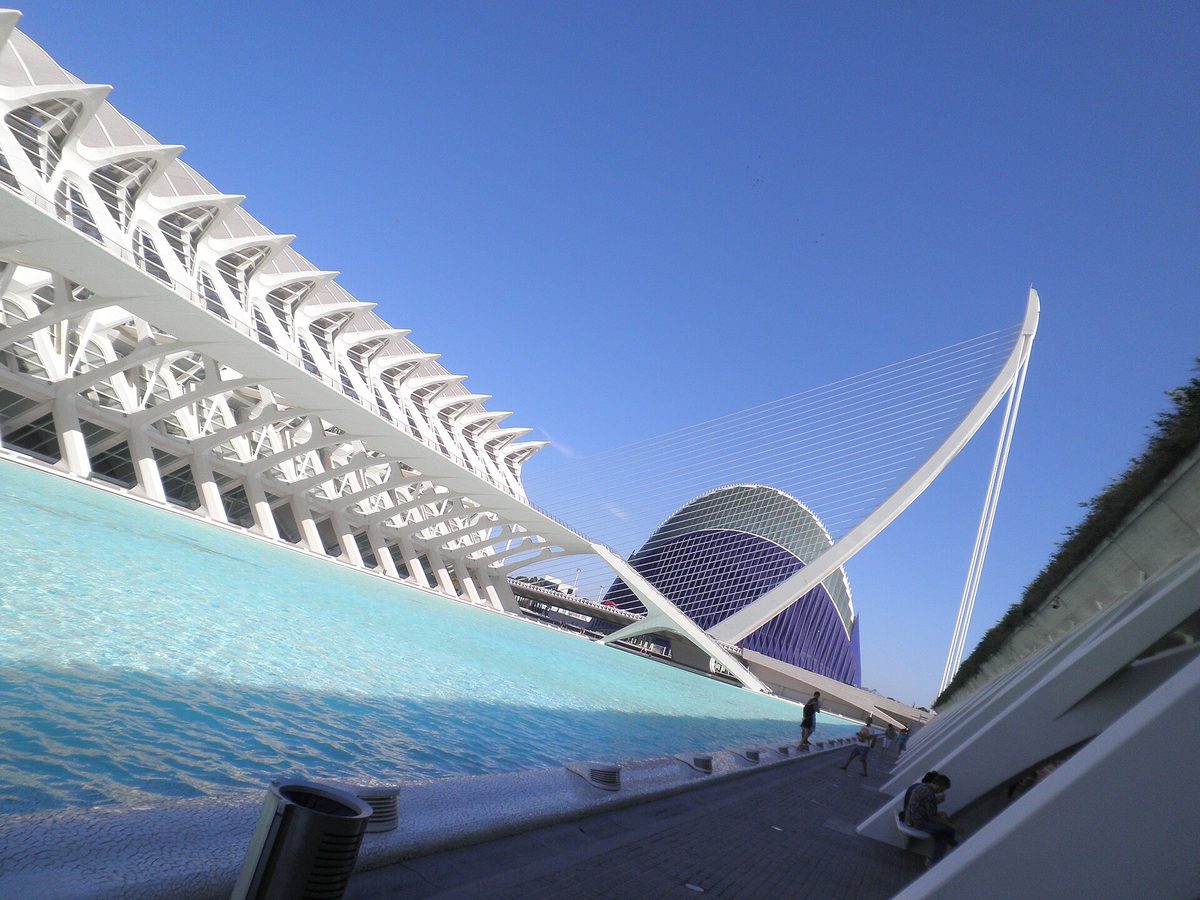
Málaga and the Costa del Sol: superb city, coldest sea on the list
We compare every town on that coast, with 2026 prices, in our guide to travelling the Costa del Sol.
Málaga has quietly become one of Spain’s best city breaks: two Picasso institutions, a Roman theatre under a Moorish fortress, a seriously good food scene, and a restored port. Granada and the Alhambra are ninety minutes inland, and Ronda’s gorge is an easy day trip.
But be honest with yourself about the water. Málaga has the coldest sea of the 37 destinations here, averaging about 20.9°C in June and only 23.4°C in August, with the flattest annual curve of anywhere I looked at. Proximity to the Atlantic through the Strait of Gibraltar is the usual explanation given, and whatever the mechanism, the effect is consistent. Come for the city, the mountains and the winter sun, not for a warm swim.
Croatia and the Adriatic: the clearest water, the trickiest weather
The eastern Adriatic has water clarity that beats almost anywhere in Greece or Italy, because there is very little sand to stir up and a chain of more than a thousand islands sheltering the coast. It also has the most misunderstood autumn on this sea, which I will come back to. Our Croatia travel guide covers the country in full.
Dubrovnik: go in June, sleep outside the walls
The walled city is worth every superlative it gets, and the walk around the ramparts at opening time, before the cruise passengers land and while the light is still low, is one of the best hours you can spend in Europe. By eleven in the morning in July it is a queue.
Three specific pieces of advice. Stay in Lapad or Gruž rather than inside the Old Town, where you will pay a premium for a room you can barely reach with luggage. Remember the rule about carrying rather than rolling suitcases inside the walls, which carries a €265 fine. And check the cruise schedule before you pick your days; the city takes a maximum of two ships at once, and the difference between a two-ship day and a no-ship day is enormous.
August water is about 25.4°C, dropping to 20.7°C in October. Dubrovnik is also the wettest major city in Dalmatia, which brings me to the thing people get wrong.
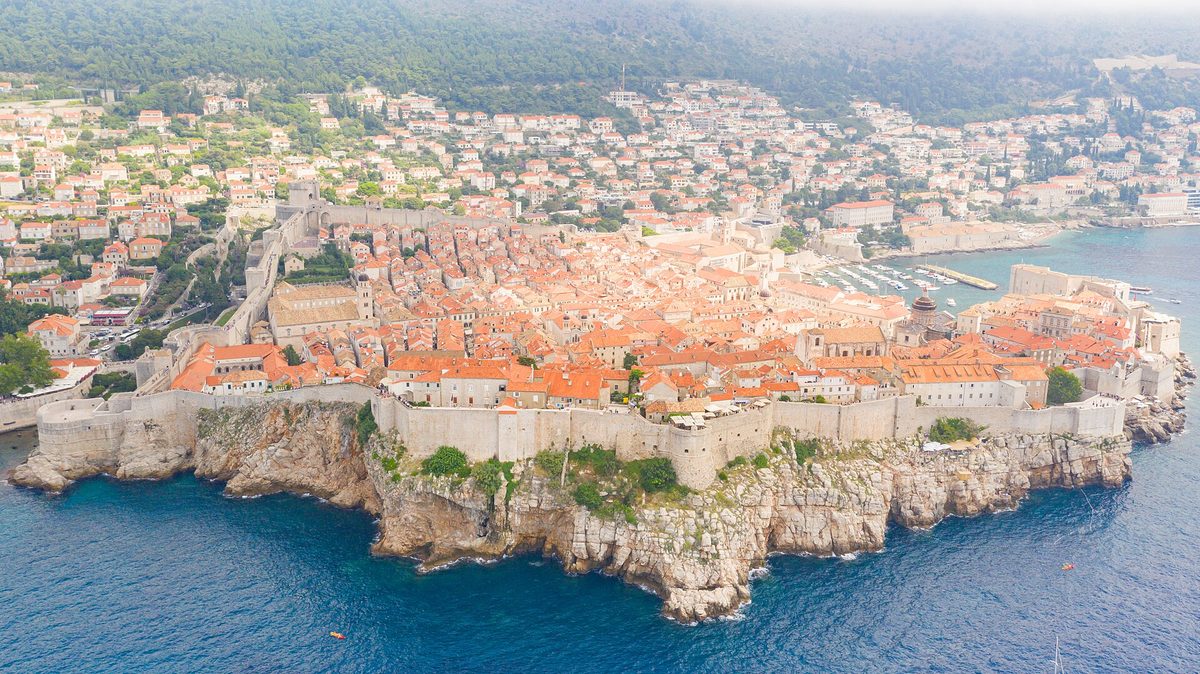
Split and Hvar: the base and the day trip
Split is built inside a Roman emperor’s retirement palace, which is a sentence that undersells it. Diocletian’s Palace is not a ruin you visit; it is the middle of a working city, with flats and bars and laundry inside fourth-century walls. It is also the ferry hub for central Dalmatia, which makes it the smartest base on the coast.
From Split, the Jadrolinija catamaran reaches Hvar Town in about an hour and five minutes for €25, running twice daily from mid-May to mid-October, while the car ferry to Stari Grad takes two hours and costs €5.90 off-peak or €8.40 in season. Hvar is beautiful and expensive and the harbour scene is very much a scene; I would give it a day and a night rather than a week, and spend the saved money on the Pakleni islands just offshore.
One route correction, because it trips people constantly: there is no direct fast catamaran from Split to Dubrovnik in 2026. The Krilo 9807 service does the run in about four and a half hours for around €50, daily from 1 April to 31 October, but it calls at Milna, Hvar, Korčula and Pomena on the way. Plan it as a scenic island-hopping day, not a transfer.
Korčula: my pick of the Croatian islands
Korčula town is a fortified medieval peninsula whose streets are laid out in a herringbone pattern, traditionally explained as a way of catching the summer breeze while blocking the winter wind. The island has vineyards producing Grk and Pošip, quiet bays on the south coast, and prices meaningfully below Hvar’s.
The TP Line catamaran from Dubrovnik takes about two hours twenty to two hours forty and costs €10.20, or €13.55 in peak season, and it runs year-round, which is unusual for a Croatian island route.
Istria and Rovinj: Italian food, Croatian prices, dry autumn
Istria was Venetian for five centuries and it shows in the food: truffles from the Motovun forest, olive oil that wins international awards, and Malvazija white wine. Rovinj is a pastel town on a peninsula with a bell tower modelled on St Mark’s. Pula has a Roman amphitheatre in remarkable condition.
Further south, if you want the emptiest water in Croatia, the Kornati archipelago is a national park of 89 largely uninhabited islands reached on a day boat from Murter, Zadar or Šibenik. It is bare limestone and silence, and it is the closest thing on this coast to sailing through nothing at all.
And now the payoff. Istria is not a wet-autumn destination. Pula averages roughly 85 millimetres of rain in October and 80 in November, which is drier than Nice and a fraction of what falls on the Kvarner coast an hour north, where Rijeka takes around 205 millimetres in October and 210 in November. “Croatia in autumn” is not one climate, and choosing the right hundred kilometres changes the trip completely. Split, at around 800 millimetres a year, is also far drier than Dubrovnik.
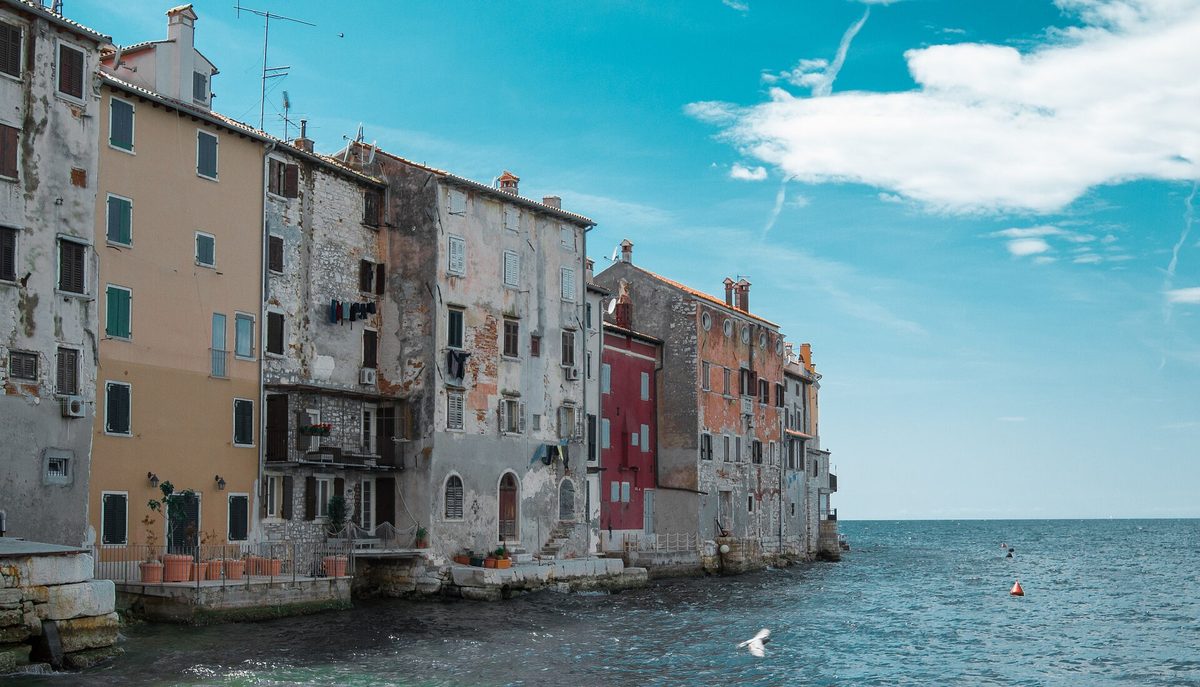
The Bay of Kotor: spectacular, and not a beach holiday
Kotor sits at the end of a deep winding inlet backed by mountains that drop straight into the water, and arriving by road at dusk is genuinely startling. The old town is walled, compact and full of cats, and the climb to the fortress above it is 1,350 steps with the best view in Montenegro at the top.
Set expectations correctly, though. This is a sheltered bay, not an open coast; the swimming is mostly from small platforms and pebble strips rather than beaches. For sand, Budva and Sveti Stefan are half an hour away on the open sea. And the mountains behind Kotor are extraordinarily wet: the town of Cetinje above the bay averages around 3,295 millimetres of rain a year, and Herceg Novi at the bay mouth takes about 175 millimetres in October and 230 in November. June and September are the months.
There is no scheduled international ferry to Kotor; you arrive by road, or by air into Tivat, or on a cruise ship.
Ksamil and the Albanian Riviera: the cheapest clear water in Europe
Albania is the outlier on this list and the one I would prioritise if you have not been. The Riviera runs from Vlorë south to Saranda, past Himarë and Dhёrmi, and Ksamil at the southern end has small islands just offshore in water that reads as tropical. Daily costs sit at roughly half those of Croatia and a third of the Cyclades. Butrint, a Greek and Roman city in a lagoon, is fifteen minutes away and is one of the better archaeological sites on the Mediterranean.
The easiest arrival is not from Tirana. Corfu to Saranda takes 30 to 45 minutes by hydrofoil at around €30, or 50 to 70 minutes by conventional ferry at around €25, with up to thirteen crossings a day from July to September. So you can fly to a Greek island and be in Albania before lunch.
August water is about 25.6°C, holding near 21.9°C in October, and August air temperatures average around 31°C. Development is moving fast along this coast, so the version of Ksamil you visit in 2029 will not be the one you visit now. Albania also appears in our guide to underrated places in Europe, where it has been near the top for years.

Piran and the Slovenian coast: forty-six kilometres, one perfect town
Slovenia has one of the shortest coastlines of any country with a sea, and it packs a Venetian-Gothic town onto the end of it. Piran is a peninsula of terracotta roofs around a marble square, with a bell tower you can climb and seafood restaurants along the waterfront. Portorož next door has the beach resorts and the salt pans behind it are a nature reserve.
Two days is right. August water is around 24.8°C but the northern Adriatic cools fast, down to about 19°C by October. Combine it with Venice, two hours west, or Istria, half an hour south, and you have a very good short trip. Our Eastern Europe travel guide puts Slovenia in its wider context.
France, Corsica and the islands of the eastern Mediterranean
Nice and the French Riviera: the light is the point
Everything below in brief; our full Nice travel guide has the 2026 museum prices, tram fares and beach detail.
Matisse, Chagall, Picasso and Renoir all worked on this coast, and once you have seen the light coming off the Baie des Anges in late afternoon you understand why. Nice has the best old town on the French coast, a Cours Saleya market worth planning a morning around, and a promenade that is a pleasure to walk. Antibes, Villefranche and Menton are all short train rides away, and the regional line hugging the coast is one of the better cheap journeys in Europe.
Two honest caveats. The beaches are pebble, not sand, so bring shoes you can swim in. And the water is cool for the latitude: about 22°C in June, only 23.7°C in August and down to 19.6°C by October, for the same reason Liguria runs cold. October is also Nice’s wettest month at around 135 millimetres. June and September are the months to book. Our France travel guide has more on the region inland, where Provence is at its best in the same weeks.

Corsica: mountains and sea on the same afternoon
Corsica is the most physically dramatic island on the Mediterranean. It is a mountain range that happens to be surrounded by water, with peaks above 2,700 metres, and the GR20 running its spine is widely considered the hardest long-distance path in Europe. Down at sea level, Palombaggia and Santa Giulia in the southeast have the sort of pine-backed white sand that people associate with the tropics, and Bonifacio sits on a limestone cliff that looks structurally implausible.
Water runs about 23.8°C in August and 20.8°C in October, cooler than Greece, and June and September are the sweet spots. Getting there by sea from Nice, Corsica Ferries reaches Île-Rousse in around six hours and Bastia in around eight and a half, with Porto-Vecchio also served. Sailings and ports vary by season, and not every Corsican port is reachable from Nice on every timetable, so confirm your arrival port before you book accommodation. Ajaccio and Bastia both have airports if the ferry does not suit.
Malta and Gozo: a long season and almost no sand
Malta is a limestone archipelago with 7,000 years of building on it, from the Ħaġar Qim temples, which predate the pyramids, to Valletta, a baroque capital laid out by knights on a grid. English is an official language, which makes it the easiest Mediterranean country to travel in if you speak no other, and the swimming season is one of the longest anywhere in Europe.
What surprises people is the coastline. Malta swims from rock platforms and ladders rather than beaches; there is sand at Golden Bay and Mellieħa, but not much of it. That is not a flaw once you adjust, because the snorkelling off the rocks is better than off any beach.
Gozo is the better half. It is greener, slower and more agricultural, with the Ġgantija temples and the Blue Lagoon on Comino in between. The Gozo Channel ferry from Ċirkewwa takes about 25 minutes and costs €4.65 return on foot or €15.70 for a car and driver, with one quirk that catches everyone: the fare is collected only on the Gozo to Malta leg, so you board outbound without paying and wonder whether you have done something wrong.

Cyprus: the longest beach season, and a passport quirk
Cyprus is the far eastern end of this sea and has the longest reliable beach season in Europe, running comfortably from May into November. It has mountains with pine forests and a ski season, Greek and Roman mosaics at Paphos that are among the best preserved anywhere, and painted Byzantine churches in the Troodos.
The practical thing to know is the border status. Cyprus is in the EU but not in the Schengen area, so time spent there does not count against your 90-days-in-180 Schengen allowance. On a long European trip that can be worth a lot, and it is the sort of detail people miss until you are counting days at a border.
The Turkish coast: the best value on this sea
The stretch from Antalya west through Kaş and Kalkan to Fethiye, which people call the Turquoise Coast, gives you the clearest water and the lowest prices of anywhere on this list at a comparable standard. Lycian rock tombs are cut into the cliffs above the road, the Lycian Way runs 500-odd kilometres along the coast, and the sunken city at Kekova is snorkelling over ruins.
The seasonal advice you will read about Turkey is usually mistimed. October on this coast is still fairly dry: Antalya averages around 75 millimetres in October, rising to 150 in November and 270 in December. So the deluge comes late, and an October trip that would be a gamble in Corfu is a reasonably safe bet here. Marmaris follows the same pattern.
Further north, Bodrum is the base for gulet sailing, the wooden-boat cruises that work the Aegean coast, and the peninsula around it with villages like Gümüşlük and Yalıkavak is far nicer than Bodrum town itself. Türkiye is not in the EU or Schengen, so entry rules are separate. Our Türkiye travel guide covers visas and the interior.
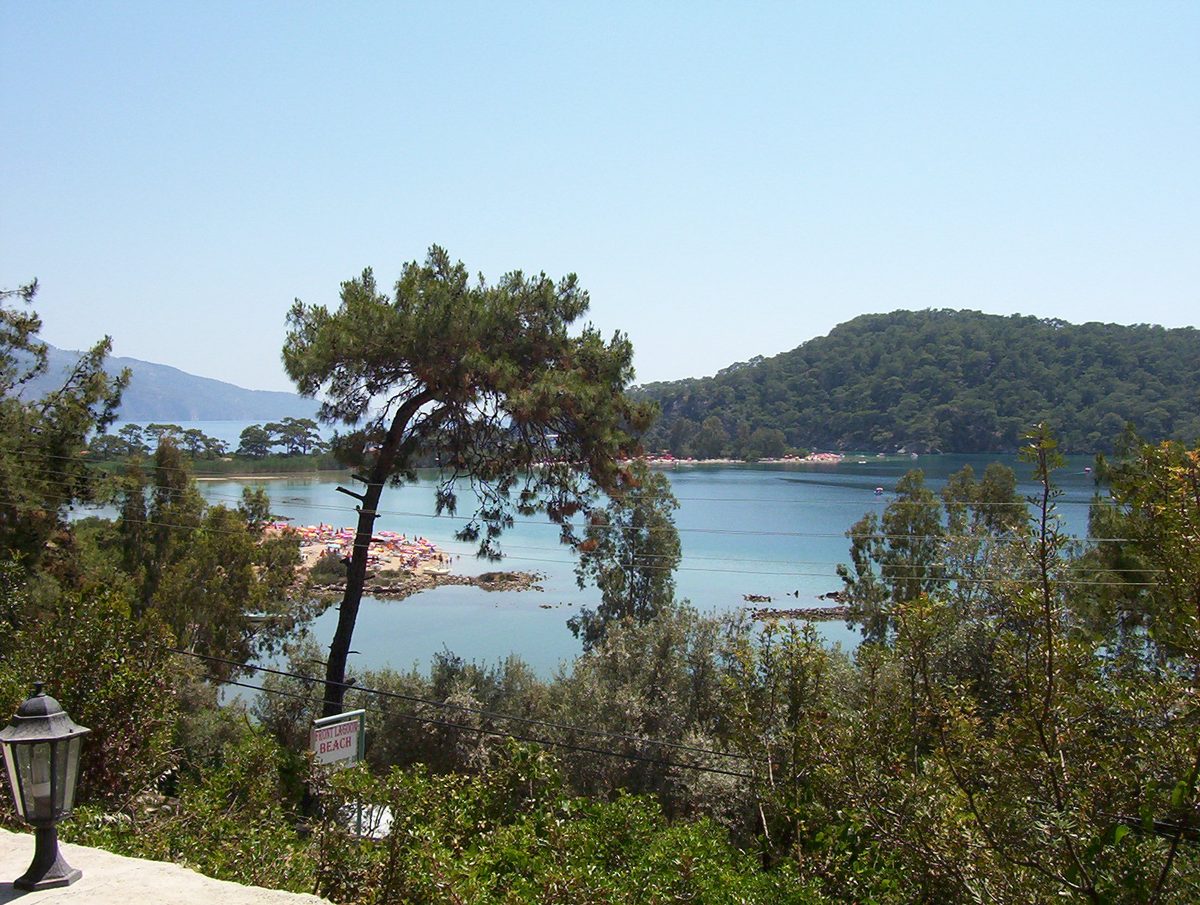
When to go: what the sea is actually doing, month by month
This is the table I built for myself years ago and have been refining since. It shows average sea-surface temperature in Celsius for June, August and October, sorted by the October column, because late season is where the differences become dramatic and where most people plan badly.
| Destination | June | August | October | What that means |
|---|---|---|---|---|
| Rhodes | 23.7 | 27.8 | 23.9 | Warmer in October than most places are in June |
| Athens & Attica | 23.0 | 26.6 | 23.2 | City break with real autumn swimming |
| Kefalonia | 23.3 | 26.9 | 23.2 | Warm late, but October rain rises sharply |
| Zakynthos | 23.3 | 26.2 | 22.9 | Same warning as Kefalonia |
| Ibiza | 22.5 | 26.2 | 22.8 | October is the value month here |
| Crete | 22.8 | 25.9 | 22.8 | Season genuinely runs May to November |
| Mallorca | 22.5 | 26.0 | 22.7 | Swimmable long after the crowds leave |
| Menorca | 22.2 | 25.6 | 22.7 | Excellent late-season family option |
| Milos | 22.9 | 25.4 | 22.5 | Warmest of the western Cyclades |
| Sicily | 23.3 | 26.4 | 22.4 | Escape the August heat, keep the sea |
| Valencia | 22.8 | 25.7 | 22.2 | Warmer than Barcelona in every month |
| Corfu | 22.8 | 25.6 | 21.9 | Water is fine; the rain is the problem |
| Ksamil, Albania | 22.8 | 25.6 | 21.9 | Cheapest warm October water in Europe |
| Santorini | 22.3 | 25.1 | 21.8 | Cooler than its image suggests |
| Mykonos | 22.1 | 24.8 | 21.7 | Exposed and breezy in high summer |
| Naxos | 22.3 | 24.6 | 21.7 | Fine into mid-October |
| Sardinia | 22.3 | 24.8 | 21.6 | Cooler water than mainland Italy |
| Amalfi & Capri | 23.6 | 26.0 | 21.5 | Warm early, falls away fast |
| Barcelona & Costa Brava | 21.4 | 24.4 | 21.2 | September beats June for swimming |
| Corsica | 21.9 | 23.8 | 20.8 | Bracing in June, pleasant in September |
| Dubrovnik | 23.1 | 25.4 | 20.7 | Great June, sharp autumn drop |
| Bay of Kotor | 23.2 | 25.4 | 20.7 | Follows Dubrovnik closely |
| Málaga | 20.9 | 23.4 | 20.4 | Coldest June on this table |
| Puglia | 22.5 | 25.5 | 20.3 | Big autumn fall for a southern region |
| Split & Hvar | 22.1 | 24.7 | 20.1 | Cooler than Dubrovnik all summer |
| Cinque Terre | 22.7 | 24.3 | 20.1 | Coolest August water here |
| Nice & the Riviera | 22.0 | 23.7 | 19.6 | Never gets truly warm |
| Istria | 23.1 | 25.2 | 19.4 | Shallow water, fast cooling |
| Venice | 23.4 | 25.3 | 19.1 | Not an autumn swimming destination |
| Piran | 22.7 | 24.8 | 19.0 | Coldest October on this table |
Read these as monthly averages, not forecasts. They come from satellite sea-surface datasets, which means a few caveats matter. Positano and Capri read identically in the dataset, as do Split and Hvar, and Corfu and Ksamil, which reflects how closely those pairs sit rather than two independent measurements. Treat every figure as accurate to within roughly half a degree, and remember that a sheltered south-facing cove will run warmer than the open water the satellite is reading.
The four patterns worth internalising
The eastern basin is warmer, and the gap widens in autumn. Rhodes in October is warmer than Nice, Venice or Málaga manage at any point in the year. If you want a genuine late-October swimming holiday in Europe, go east.
Shallow seas heat fast and cool fast. The northern Adriatic hits 25°C in August and falls to 19°C by October, a six-degree swing. Deep open water like the southern Aegean moves far less. This is why Venice, Piran and Istria are early-summer destinations while Crete and Rhodes are late ones.
The western Mediterranean starts cold. June around Málaga, Barcelona, Nice and Corsica sits in the 21°C range, which is swimmable but not the warm-bath experience people picture. September consistently beats June for swimming across the whole western basin.
Air temperature and sea temperature peak a month apart. Air peaks in late July or August; the sea peaks in late August and holds through September. September is therefore the best-value month on this entire sea: warm water, softening prices, thinning crowds. Our guide to the best time to visit Europe makes the same case for the continent as a whole.
Wind, rain and the days your ferry does not sail
Mediterranean summer is not uniformly calm, and the local winds have real consequences for anyone travelling by boat.
The bora is the one to understand on the Adriatic. Cold dense air pools behind the Dinaric mountains and spills over them into the warm sea below, arriving in violent gusts that are strongest at night and weaken as you move offshore. It blows from roughly October to April and is most common in winter, typically at force 5 to 7 with far stronger gusts. The record gust at the Maslenica Bridge was 248 kilometres an hour in December 1998, and Trieste routinely sees gusts above 120. The worst stretches are the Gulf of Trieste, Kvarner Bay, the Velebit Channel around Senj, the water off Cape Ploča near Šibenik, and the Omiš to Makarska coast.
What matters for your holiday is what it does to the sea: short, steep waves of one to two and a half metres. That wave shape is exactly what fast catamarans handle worst, which is why fast services are cancelled before large car ferries are. If you are travelling in the shoulder months on a tight connection, the slower conventional ferry is the more reliable booking, not the faster one.
The meltemi is the northerly wind that runs down the Aegean, and it is the reason a Cyclades trip can involve a cancelled boat on an otherwise cloudless day. It starts around mid-May, is strongest in July and August, and can still blow through a fine autumn, so it overlaps the June and September weeks I recommend everywhere else on this page. It is persistent rather than random: it tends to blow from the north for several days at a stretch, mostly in daylight and hardest in the afternoon, which means the forecast is worth reading and a morning crossing is usually the calmer one. Mykonos, Paros and exposed northern coasts feel it most, while sheltered south-facing bays can be flat on the same afternoon. It is also part of why Mykonos water averages about 25°C in August while Rhodes, further from the wind’s path, reaches nearly 28°C.
The mistral is the equivalent in the Gulf of Lion and along the Provençal coast, and its side effect is the one covered earlier: it is part of why the water off Nice and Liguria stays cooler than the latitude suggests.
And the autumn rain map is not what people assume. The wettest places on this list in October and November are the Ionian islands, the Kvarner coast around Rijeka, the mountains behind Kotor and the Ligurian coast around Genoa. The driest autumns belong to Istria, Split, Valencia and the Turkish coast. “Southern Europe in autumn” is far too coarse a category to plan around.
Island hopping and ferries: how it actually works
Greece is where most people do this, and the mechanics there are worth their own guide: see nine Greek island hopping routes for the crossing times, fares and port detail.
Ferries are the part of a Mediterranean trip that most rewards a bit of homework. This is the operating knowledge.
Fast versus conventional. Almost every busy route has both. Fast catamarans cost roughly double and halve the journey; conventional ferries are slower, cheaper, far more stable in rough water and much less likely to be cancelled. On Piraeus to Santorini that is about five hours on the fast boat against five hours forty on a Blue Star, so the premium buys you very little; on Piraeus to Mykonos it is two hours forty against four, which is a real difference. Check both before assuming the fast one is worth it.
Book ahead in July and August, not otherwise. High-season Greek and Croatian routes do sell out, particularly with a vehicle. Outside those months you can usually walk up. Vehicle space always goes first, so if you are taking a car, book that weeks ahead even when foot passengers can stroll on.
Ports are not always where you think. Athens has three: Piraeus for most Cycladic routes, Rafina for some operators and for Andros, Tinos and parts of the Mykonos traffic, and Lavrio for others. Naples has two adjacent terminals, Molo Beverello for hydrofoils and Porta di Massa for car ferries. Turning up at the wrong one is the single most common ferry mistake I see.

Useful crossings, with real numbers. Piraeus to Mykonos runs about two hours forty fast or four hours conventional, roughly €43 to €88. Piraeus to Naxos is about three hours fifteen fast, five conventional, roughly €52 to €67. Naxos to Santorini is about an hour fast or two conventional, from around €31. Heraklion to Santorini is about ninety minutes fast, from around €16. Santorini to Mykonos runs March to November only, around one hour fifty, about €79.
Some routes exist that people never think of. Bari to Dubrovnik still runs with Jadrolinija, eight hours by day or ten overnight, roughly one to three sailings a week between 31 March and 21 October. Bari to Igoumenitsa in Greece takes eleven to twelve hours with deck fares published from around €47. Corfu to Saranda in Albania is a 30-to-45-minute hydrofoil. These are the connections that turn two separate holidays into one trip.
And some do not exist any more. The Bar to Bari route from Montenegro has gone. There is no scheduled international ferry to Kotor. Nice to Ajaccio is not currently bookable, though Nice to Bastia, Île-Rousse and Porto-Vecchio all run. Verify a route on the operator’s own timetable rather than an aggregator before you build a trip around it. Our guide to getting around Europe covers the wider transport picture, and train travel in Europe is often the better way to reach the ports.
What a Mediterranean trip actually costs
Prices vary more across this sea than across any comparable region in the world. A day in Albania and a day in Ibiza differ by a factor of four for a similar standard of accommodation and food. This is the shape of it.
| Destination | Peak August, per person per day | May or October |
|---|---|---|
| Ibiza | ~€415 | ~€295 |
| Greek Cyclades | ~€310 | ~€220 |
| Amalfi Coast & Capri | ~€310 | ~€210 |
| Corsica | ~€240 | ~€170 |
| Croatia, Dalmatian coast | ~€235 | ~€165 |
| Mallorca | ~€205 | ~€145 |
| Spanish mainland coast | ~€205 | ~€145 |
| French Riviera | ~€205 | ~€145 |
| Sardinia | ~€175 | ~€125 |
| Malta | ~€165 | ~€118 |
| Sicily & Puglia | ~€160 | ~€110 |
| Montenegro | ~€155 | ~€110 |
| Cyprus | ~€155 | ~€110 |
| Slovenia | ~€130 | ~€92 |
| Turkish coast | ~€120 | ~€80 |
| Albania | ~€110 | ~€78 |
Be careful with these. They are built from aggregated traveller-reported spending, and there are three weaknesses worth naming. The August-versus-shoulder split is a modelling assumption applied across the board rather than four separate measurements per destination. The country-level figures for Montenegro, Albania, Cyprus and Slovenia average coastal resorts with cheap inland towns, so they understate what August on the actual beach costs. And regional figures like “Greek Cyclades” hide a real spread, since Mykonos and Naxos are not the same holiday. Use these to compare destinations against each other, not to build a budget. For that, our Europe on a budget guide gets into the mechanics.
The four levers that move your bill most, in order: the month you travel, whether you are on an island or the mainland, whether you booked accommodation with a kitchen, and whether you hired a car. Shifting from mid-August to late September typically saves around 30% on accommodation across this whole region while improving the sea temperature. That is the single best trade available to anyone with flexible dates.
Accessibility: an honest assessment
Specific facilities change from year to year, so let me set expectations from geography, which does not.
The hard ones. Santorini’s caldera villages are built into a cliff, and Oia and Fira are connected by stepped lanes with no level route between many hotels and the road. Kotor’s fortress is 1,350 steps. Dubrovnik’s city walls are a stair circuit with no lift. Positano is a staircase town. Capri’s Piazzetta area involves steps in most directions. Cinque Terre’s villages are steep and its coastal path is not a wheelchair route, though the train between the villages is step-free at most stations. These are not places I would promise a step-free holiday.
The more workable ones. Valencia, Málaga, Athens’s coastal tram corridor, Palma, Nice’s promenade and the flatter Turkish resort coast around Antalya are all built on level ground with modern infrastructure. Purpose-built resort areas generally handle mobility needs far better than medieval hill towns, which is an unglamorous but useful rule.
Beaches. Sand is easier than pebble, and pebble is much easier than the rock-platform-and-ladder swimming that Malta, Croatia and much of the Greek coast rely on. If getting into the water matters, the sandy south coasts of Menorca, the Turkish coast, the Albanian Riviera and Puglia are the friendliest on this list.
Ferries vary enormously, from large modern car ferries with lifts and accessible toilets to small catamarans boarded down a narrow gangway. I could not verify facility-level detail operator by operator for 2026, so contact the operator directly rather than relying on any guide, including this one.
Overrated, underrated, and what to book instead
These are the swaps I make most often when someone shows me a draft itinerary.
| The plan people bring me | What I suggest instead | Why |
|---|---|---|
| A caldera-view hotel in Oia | Pyrgos or Megalochori, drive to the sunset | Same island, roughly half the price, a village that functions |
| A week on Mykonos | Naxos, with two nights on Mykonos | Better beaches and food, and you still get the nightlife |
| A week on Hvar | Korčula | The same Dalmatian island town without the harbour scene or the prices |
| A hotel in Positano | Salerno, then Travelmar ferries daily | You see more of the coast and avoid the road entirely |
| A day trip to Capri | Two nights on Ischia | Ischia has beaches, thermal springs and evenings that belong to residents |
| Dubrovnik in late July | Dubrovnik in June, or the Bay of Kotor | Cruise pressure peaks in high summer and the water is barely different |
| Ibiza for the beaches | Formentera or Menorca | Better sand, calmer coves, dramatically lower cost |
| The Costa del Sol for swimming | Valencia or the Costa Blanca | Two to three degrees warmer water in every month |
| Nice for a beach holiday | Nice for the city, Corsica or Sardinia for the beach | Riviera beaches are pebble and the sea runs cool |
| Cinque Terre in August | Cinque Terre in May, or Puglia in June | Cool water and heavy crowds are a poor combination |
| Corfu or the Ionian in October | Rhodes, Crete or the Turkish coast | Ionian October rain is real; eastern October water is 23°C |
| The Adriatic for an autumn swim | The southern Aegean | Venice and Piran fall to 19°C while Rhodes holds near 24°C |
Which Mediterranean destination suits you
First trip to the Mediterranean. Crete or Mallorca, for the reasons set out in the FAQ below: size, air connections and no dependence on a boat. If you want a city in the mix, Athens or Valencia.
Families with young children. Menorca first, then Puglia and the Turkish coast. Sheltered shallow coves, short drives, sand rather than rock, and no pressure to be out late. Our Europe with kids guide goes further.
Couples. Ischia over Capri, Korčula over Hvar, Naxos over Santorini if you want the evenings to yourselves and Santorini if you want the view. Our Europe honeymoon guide covers the splurge end properly.
Solo travellers. The Cyclades in June or September, where the ferry network makes it easy to meet people and change plans, or Split as a base with day boats out. Read our solo travel in Europe guide first.
On a tight budget. Albania, then the Turkish coast, then Sicily and Puglia. All four deliver excellent food and clear water for far less than the Balearics or the Cyclades cost. Also see the cheapest places to travel in Europe and backpacking Europe.
Walkers and active travellers. Corsica for the GR20 and the coastal paths, Crete for the gorges, Mallorca’s Tramuntana, and the Lycian Way in Türkiye. Sea in the afternoon, mountains in the morning.
Late-season sun in October. Rhodes, Crete, the Turkish coast, Cyprus, Ibiza and Menorca. Avoid the Ionian, the northern Adriatic and Liguria in that month.

Six routes that work
Ten days in the Cyclades, June or September. Athens two nights, ferry to Naxos for four, Milos for two with a boat day, Santorini for two, fly home from Thira. Books easily, no backtracking, and the fast ferries between Naxos and Santorini take about an hour.
Two weeks in Dalmatia and Montenegro, June. Split four nights with day trips to Hvar and the Pakleni islands, Krilo catamaran down to Korčula for three, on to Dubrovnik for three, then a two-hour drive to Kotor for the last three. One-way car hire across the Croatia to Montenegro border needs arranging in advance.
Ten days across Greece and Albania. Corfu four nights, hydrofoil to Saranda, Ksamil three nights with a morning at Butrint, then back to Corfu or onward by road to Gjirokastër. This is the best value on this page and the crossing takes well under an hour.
Ten days on southern Italian ferries. Naples three nights, Ischia three, then Salerno four using Travelmar to reach Amalfi and Positano by sea. Pompeii is a train ride from Naples and caps entry at 20,000 a day, so book a slot.
A week in the Balearics with children. Mallorca four nights on the north coast, Alcúdia to Ciutadella ferry, Menorca three nights in the south near the calas. Under two hours of ferry time in total.
Late October sun, one week. Rhodes, or Antalya and the Turquoise Coast. Both give you sea temperatures around 23°C or better, low rainfall and shoulder-season prices. It is the trip almost nobody plans and the one I recommend most in autumn. If you want more, see our Europe itinerary planner.
Nine mistakes I watch people make
Booking August because that is when the holidays are, then being surprised. August is the hottest, priciest and most crowded month everywhere on this sea, and it is not even the best swimming month, because the water keeps warming into September. Southern Europe now sees regular heat warnings and wildfire risk through July and August, particularly in Greece, southern Italy, Spain and Türkiye; check national civil-protection alerts before you travel and take midday heat seriously rather than as a joke about mad dogs.
Assuming all Mediterranean water is warm. Málaga in June is 21°C. Nice in October is under 20°C. Check the table above before you picture the trip.
Scheduling a ferry on the day you fly home. Wind cancels boats. Sleep near the airport the night before, always.
Booking the fast catamaran in the shoulder season. It is the first service cancelled when the sea gets up. The slow ferry is the reliable one.
Turning up at the wrong port. Piraeus and Rafina in Athens, Beverello and Porta di Massa in Naples. Check your ticket twice.
Hiring a car on a small island and then not using it. On Milos, a boat day does more than three days of driving. On Kefalonia and Crete, the car is essential. Know which kind of island you have picked.
Budgeting for the room and forgetting the levies. Accommodation tax, city tax, landing tax and parking add up across a fortnight, particularly in Greece and Italy, where the two systems work quite differently: the numbers are broken down in this Italy and Greece trip planner.
Believing “Croatia in autumn” or “Greece in autumn” is one thing. Istria is dry in October, Kvarner is soaked. Rhodes is warm, the Ionian is wet. The differences are bigger than the labels.
Booking mid-October without checking what is open. Late-season water is warm, but seasonal hotels, restaurants and ferry frequencies on the smaller Greek and Croatian islands thin out sharply from around mid-October, and some shut entirely. Larger islands like Crete, Rhodes and Mallorca keep running; small ones may not. Check that your accommodation and your return crossing both operate on your dates.
Overpacking the itinerary. Three islands in ten days is comfortable. Five is a logistics exercise with swimming attached. Our Europe travel tips and Europe packing list both make the case for doing less.
Mediterranean destinations: your questions answered
What is the most beautiful destination in the Mediterranean?
If I had to pick one view, it is the Santorini caldera at first light from the path between Fira and Imerovigli. For a whole destination rather than a single sight, Corsica, because you can be above 2,000 metres in the morning and swimming off Palombaggia in the afternoon. Beauty is the one thing this sea has in surplus, which is why the rest of this guide spends its time on cost and timing instead.
Which Mediterranean destination should I choose for a first trip?
Crete or Mallorca. Both are large enough to fill two weeks, well connected by air, and do not depend on ferries, so a cancelled boat cannot derail the trip. Add Athens or Valencia if you want a city alongside the coast. Save the multi-island Cycladic route for a second visit, when timetables feel less daunting.
What is the best time to visit the Mediterranean?
September, almost everywhere. Sea temperatures peak in late August and hold through September, while crowds and prices fall away from the last week of that month. June is the next best, though the western basin is noticeably cooler then. July and August give you the warmest air and the worst of everything else.
Which Mediterranean destinations are most affordable?
Albania is the cheapest by a clear margin, at roughly €110 a day in peak August against €415 in Ibiza. The Turkish coast is next, then Sicily and Puglia, then Montenegro and Cyprus. All of them deliver clear water and excellent food; you are paying less for reputation, not for quality.
Which Mediterranean destinations are best for families?
Menorca first, for shallow sheltered coves, short drives and sand rather than rock. Then Puglia, the Turkish coast around Antalya and the Albanian Riviera. Avoid cliff-built destinations like Positano, Santorini and the Cinque Terre with a pushchair, and be aware that much of Croatia and Malta swims from rock platforms rather than sand.
Which Mediterranean destination is best for a romantic weekend?
Ischia for two nights, Korčula if you want somewhere quieter, or Piran for a short break with Venice attached. If the budget stretches, a caldera room in Santorini in late September is hard to beat, though I would still eat dinner in Pyrgos.
What is the best Mediterranean island to visit?
Crete, for range. Nowhere else gives you a gorge walk, a Venetian harbour, a Minoan palace and a pink-sand beach without a ferry between them. If you want a smaller island, Naxos in Greece, Korčula in Croatia and Menorca in Spain are the three I recommend most.
Which Mediterranean country is best to visit?
Greece, on depth of choice alone: six island groups, a long mainland coast and the longest usable season in the eastern basin. Italy wins on food and scenery, Spain on infrastructure and city life, Türkiye and Albania on value. Our guides to the best countries to visit in Europe and the best cities to visit in Europe take the comparison further.
Where is the warmest sea in the Mediterranean?
Of the places I could verify, Rhodes has the warmest average water, at about 27.8°C in August and still 23.9°C in October. The eastern basin generally runs warmer than the west, and the gap widens as the season goes on. The coldest is Málaga, which only reaches about 23.4°C at its August peak.
How warm is the Mediterranean in October?
It depends enormously on where you stand. Rhodes averages about 23.9°C, Crete and Athens about 22.8°C to 23.2°C, and Ibiza and Mallorca around 22.7°C. At the other end, Venice falls to about 19.1°C, Piran to 19.0°C and Nice to 19.6°C. That is a five-degree spread across the same sea in the same month.
Do I need ETIAS to travel to the Mediterranean in 2026?
No. ETIAS is not operational and its launch date is currently unannounced, after the previously advertised late-2026 target was withdrawn in July. When it does start it will cost €20, with under-18s and over-70s exempt, and there will be a transitional period first. What is already live is the Entry/Exit System, fully operational at Schengen external borders since 10 April 2026, which registers biometrics instead of stamping passports and has been adding significantly to arrival times.
Is the Venice access fee still being charged?
Not at the moment. It ran on 60 non-consecutive days between 3 April and 26 July 2026, at €5 booked four or more days ahead or €10 inside that window, and that period has ended for this year. No decision has been announced for 2027.
Is Mediterranean island hopping difficult?
Less than people fear, if you respect three rules. Book vehicle space well ahead in July and August. Never schedule a crossing on the day you fly home. And in the shoulder season take the conventional ferry rather than the fast catamaran, because the slow boat handles rough water and gets cancelled far less often.
Which Mediterranean destinations are getting harder to visit?
Santorini tightened its 8,000-passenger daily cruise cap for 2026. Dubrovnik allows a maximum of two ships at once. Barcelona is phasing out 10,101 short-term rental licences by November 2028 and raised its tourist levy in April 2026. Mallorca has banned party boats from Palma Bay and capped all-inclusive drinks in two resort areas. None of this affects a well-planned trip, but it does reward booking accommodation earlier than you used to.
Final thoughts
The thing I want you to take from this is that “the Mediterranean” is not a destination, it is roughly twenty of them wearing the same name. The sea off Rhodes in late October and the sea off Piran in the same week differ by five degrees. A day in Ksamil and a day in Ibiza differ by three hundred euros. October in Istria is dry and October ninety minutes north at Rijeka is one of the wettest places on this coast.
Once you plan around those differences instead of around a list of pretty names, the trip gets better and usually cheaper. If you take one piece of advice from all of this, make it the September one: move your dates back three weeks from August, and you get warmer water, thinner crowds and a smaller bill, all at once.
For where this fits into a wider trip, start with our pillar guide to the best places to visit in Europe, then narrow down with the best places to visit in Europe in summer, the best beaches in Europe, the most beautiful places in Europe and where to stay in Europe. If the food is the reason you are going, and for a good many people it is, our guide to European food by region is the place to start.

Hannah Brooks has spent fifteen years travelling, living and writing across Europe, from the Arctic tip of Norway to the south of Sicily. She has planned hundreds of European itineraries for readers and is Senior Europe Editor at EuropeanTourism.org.
Photo credits
Every image here is used under a free licence. Full attribution below.
- whitewashed houses and blue domes above the caldera in Santorini, Greece · Photo: Giles Laurent / CC BY-SA 4.0 via Wikimedia Commons
- Passport control at a Schengen airport, where the EU Entry/Exit System now registers biometrics · Photo: Marseille Provence Airport 20190107 12.jpg: Okki derivative work: Bonus bon / CC BY-SA 4.0 via Wikimedia Commons
- The Venetian harbour and lighthouse at Chania, Crete · Photo: Cayambe / CC BY-SA 4.0 via Wikimedia Commons
- The Portara, a marble temple doorway standing alone on the islet beside Naxos harbour · Photo: moustakik (CC0) via Wikimedia Commons
- Venetian architecture in the old town of Corfu, the greenest of the Greek islands · Photo: Dietmar Rabich / CC BY-SA 4.0 via Wikimedia Commons
- Positano stacked up its cliff above the sea on Italy’s Amalfi Coast · Photo: Wiki.Bianco / CC BY-SA 4.0 via Wikimedia Commons
- Coloured houses above the water in the Cinque Terre on the Italian Riviera di Levante · Photo: WikiLucas00 / CC BY-SA 4.0 via Wikimedia Commons
- The sheltered turquoise cove of Cala Turqueta on the south coast of Menorca · Photo: Markus Trienke / CC BY-SA 2.0 via Wikimedia Commons
- The Ciutat de les Arts i les Ciencies in Valencia, Spain · Photo: CivArmy / CC BY-SA 4.0 via Wikimedia Commons
- Dubrovnik Old Town and its city walls from the air, Croatia · Dubrovnik Old Town from the air · Photo: dronepicr / CC BY 2.0
- The pastel old town and bell tower of Rovinj on the Istrian peninsula, Croatia · Rovinj, Istria · Photo: Nils Söderman (CC0)
- Clear shallow water and small offshore islands at Ksamil on the Albanian Riviera · Photo: Pudelek / CC BY-SA 4.0 via Wikimedia Commons
- The Baie des Anges and the pebble beach at Nice on the French Riviera · Photo: Lspigon (CC0) via Wikimedia Commons
- The Blue Lagoon between Comino and Malta · Photo: Frank Vincentz / CC BY-SA 3.0 via Wikimedia Commons
- Cliffs and clear water along the coast near Antalya on Turkiye’s Turquoise Coast · Photo: Jongleur100 / Public domain via Wikimedia Commons
- A Greek island-hopping ferry loading passengers in the Cyclades · Photo: Jean Housen / CC BY-SA 4.0 via Wikimedia Commons
- Walkers on the GR20 long-distance path through the mountains of Corsica · Photo: Chabe01 / CC BY-SA 4.0 via Wikimedia Commons
- A spread of Greek meze dishes on a taverna table · Photo: Benoît Prieur (CC0) via Wikimedia Commons
1 comment