Lake Como Travel Guide: 18 Towns, Ferries and 2026 Prices
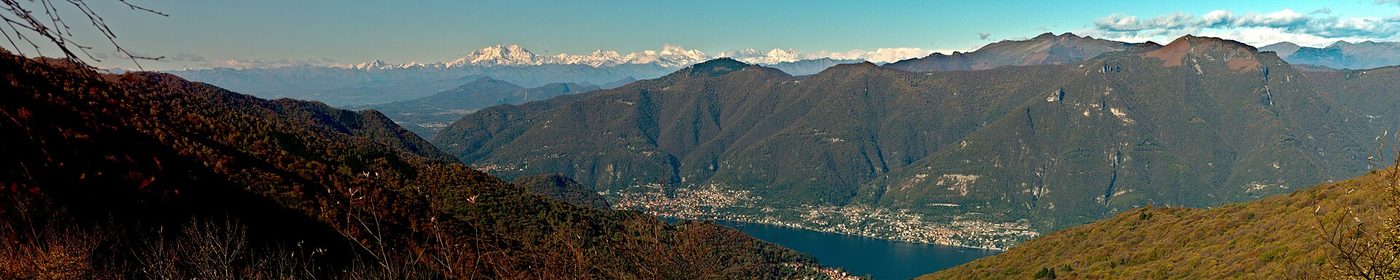
The first thing to understand about Lake Como is that it is not really one lake. It is an upside-down Y, 46 km long and 425 m deep at its deepest point, with two southern arms that meet at a wooded promontory. Which arm you land on decides almost everything about your trip: what you can reach in a morning, what a bed costs, and whether you spend your days on boats or in a car park.
This Lake Como travel guide covers all 18 towns and villages worth your time, with 2026 ferry fares, villa admission prices, train times, the new rules in Varenna that carry fines, and honest advice on where to base yourself. Everything priced here comes from the operator or the municipality.
I have been coming here for fifteen years, first as a broke twenty-something on the Milan train and later with a hire car I regretted within an hour. The lake rewards planning more than almost anywhere in our Italy travel guide covers, because the geography is unforgiving. Pick the wrong village and you will spend your holiday watching boats leave for somewhere better.
Lake Como at a glance
| Official name | Lario. Locals use it more than you would expect |
|---|---|
| Maximum length | 46 km (29 miles) |
| Maximum width | 4.5 km (2.8 miles) |
| Maximum depth | 425 m (1,394 ft), the deepest lake in Italy |
| Average depth | 154 m (505 ft) |
| Surface area | 146 km² (56 sq miles), Italy’s third-biggest lake |
| Shore length | 160 km (99 miles) |
| Surface elevation | 198 m (650 ft) |
| Water volume | 22.5 km³, with a residence time of 5.5 years |
| Lake type | Glacial. Inflows Adda and Mera, outflow the Adda |
| Islands | One: Isola Comacina |
| Main towns | Como (population 83,361) and Lecco |
| Scheduled ferry landing stages | 42 |
| Nearest airports | Milan Malpensa, Milan Linate, Bergamo Orio al Serio, Lugano |
The shape of the lake, and why it decides your holiday
Look at a map for thirty seconds and the whole thing makes sense. The lake starts wide and open at the top, near Colico and Domaso. It narrows through the middle. Then at Bellagio it forks: the western arm runs down to the city of Como, the eastern arm down to Lecco.
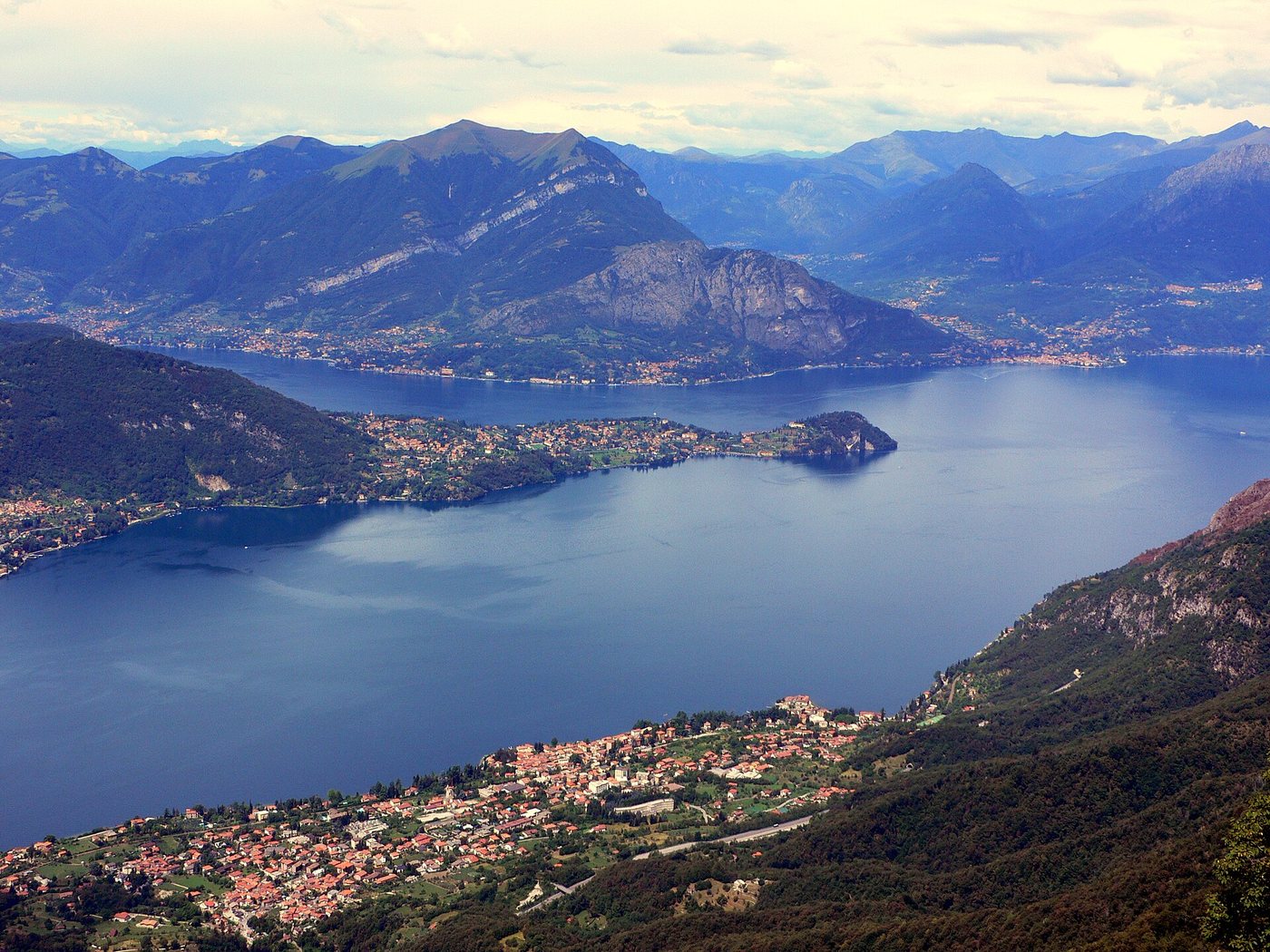
The middle is called the Centro Lago, and it is the part everyone means when they say Lake Como. Four towns sit within sight of each other there: Bellagio on the tip of the promontory, Varenna across the water to the east, Menaggio to the west, and Cadenabbia just south of Menaggio. Boats shuttle between them all day, including a car ferry. From any of those four you can be in any of the others in ten to twenty minutes.
Now compare that with the ends. From Como city to Bellagio is an hour to an hour and a half on the slow boat. From Lecco or the far south of the eastern arm, reckon on an hour and a half to two hours to reach the middle. The distances look small. The water does not care.
That single fact drives most of the disappointment I hear about this lake. People book a cheap room in Como or Lecco, look at the map, and assume they will hop between villages. In practice they lose two to three hours a day to boats, and the good bit of the lake stays theoretical.
There is a second geographical fact worth internalising: the mountains come almost straight out of the water. The shore road is narrow, carved into rock, with tunnels and blind bends and buses that will not give way. This is not the Amalfi Coast, where the drive is part of the point. Here the drive is mostly a chore with occasional glimpses.
All 18 towns in this Lake Como travel guide at a glance
The whole cast is below, with the two facts that decide whether a place is practical for you: does a scheduled boat stop there, and can you get there by train. Seventeen of the eighteen are on the ferry network. Five have their own railway station. One, Brunate, has neither and is reached by funicular.
| Place | Where it is | Scheduled ferry stop | Train station | Best for |
|---|---|---|---|---|
| Bellagio | Promontory, where the lake splits | Yes | No, nearest Varenna (8 km) | First-timers who want the postcard |
| Varenna | Eastern shore | Yes | Yes, Varenna-Esino-Perledo | Arriving by train without a car |
| Menaggio | Western shore | Yes | No | Families and anyone wanting a real town |
| Tremezzina (Tremezzo, Cadenabbia, Griante) | Western shore | Yes | No | Garden visits and grand hotels |
| Lenno | Western shore | Yes | No | Villa del Balbianello |
| Como | Southern tip, western branch | Yes | Yes, Como San Giovanni and Como Lago | Cheap beds, late trains and rainy days |
| Cernobbio | Western shore | Yes | No | Splurging on Villa d’Este |
| Moltrasio | Western shore | Yes | No | Quiet luxury |
| Torno | Eastern side of the Como branch | Yes | No | Getting away from tour buses |
| Nesso | Eastern side of the Como branch | Yes | No | A gorge and a swim |
| Argegno | Western shore | Yes | No | Cheap views from height |
| Sala Comacina and Ossuccio | Western shore | Yes, at Sala Comacina | No | The island and the Sacro Monte |
| Colonno | Western shore | Yes | No | Starting the Greenway |
| Brunate | Hillside above Como | No, funicular only | No | A cheap thrill and a big view |
| Lecco | Foot of the eastern branch | Yes | Yes, Lecco | Mountains and lower prices |
| Lierna | Eastern shore | Yes | Yes, Lierna | A beach day |
| Bellano | Eastern shore | Yes | Yes, Bellano-Tartavalle Terme | A gorge walk and quiet evenings |
| Domaso | Upper lake, western shore | Yes | No | Wind sports |
How to choose in one paragraph
Arriving by train with no car: Varenna, then Como. Want the classic view and do not mind paying: Bellagio. Travelling with children or on a budget: Menaggio or Lecco. Here for the gardens: Tremezzina. Coming for the walking: Lecco or Varenna. Two nights only: stay in the Centro Lago and nowhere else.
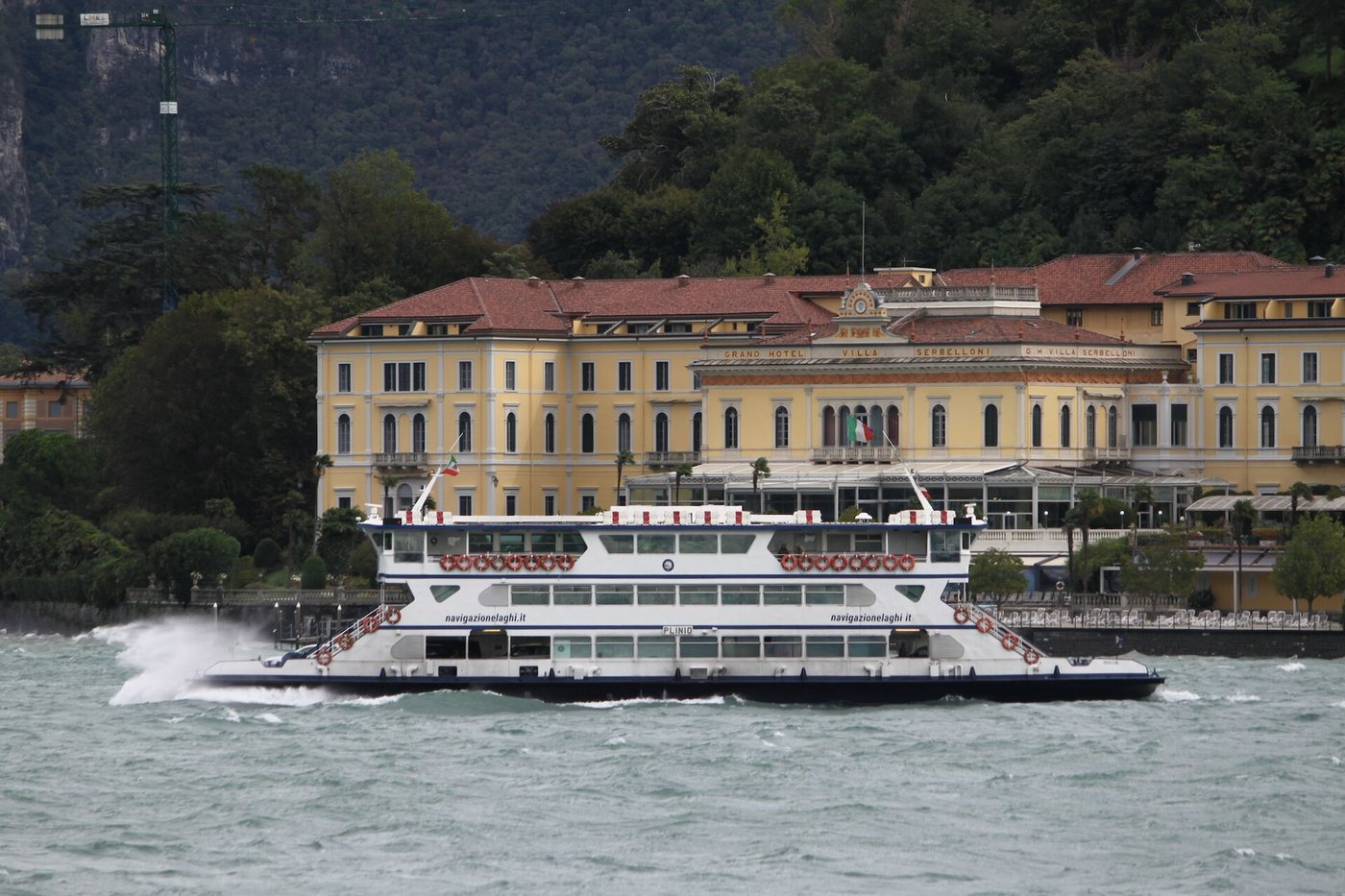
The Centro Lago: the middle of the lake, and where most people should stay
If you read one section of this guide, read this one. Four of the five places below sit within a twenty-minute boat ride of each other, and a single day pass covers unlimited hops between them for €17.50. Nowhere else on the lake concentrates that much in that little water.
1. Bellagio
Bellagio occupies the tip of the promontory, which means it looks down both arms of the lake at once. That geography is the entire reason for its fame, and it is genuinely as good as advertised: stepped alleys of grey stone climbing away from the water, oleanders, a small harbour, and views in three directions.
It is also the busiest place on the lake between 10am and 4pm, because every day trip from Milan ends up here. The ferries share a dock with the car ferry traffic, queues at the ticket window run long in July and August, and the main square can feel like a cruise terminal. Arrive before ten or after four and it is a different town. Stay the night and you get the evening to yourself, which is the single best argument for paying Bellagio prices.
What to do: walk the Salita Serbelloni steps, visit the gardens of Villa Melzi (€10, daily 10:00 to 19:00, last admission 18:30, no booking needed), and take the guided tour of Villa Serbelloni park if you can get on it. That one is guided-tour-only: €13 per person, €7 for ages 7 to 13, free under 7, about two hours with the first hour uphill, capped at 30 people, in Italian and English. Book online through the Bellagio tourist board; the meeting point is the Promobellagio office in Piazza della Chiesa. Tour dates for 2026 were still being confirmed when I checked, so treat the season as roughly spring to early November and book rather than turn up.
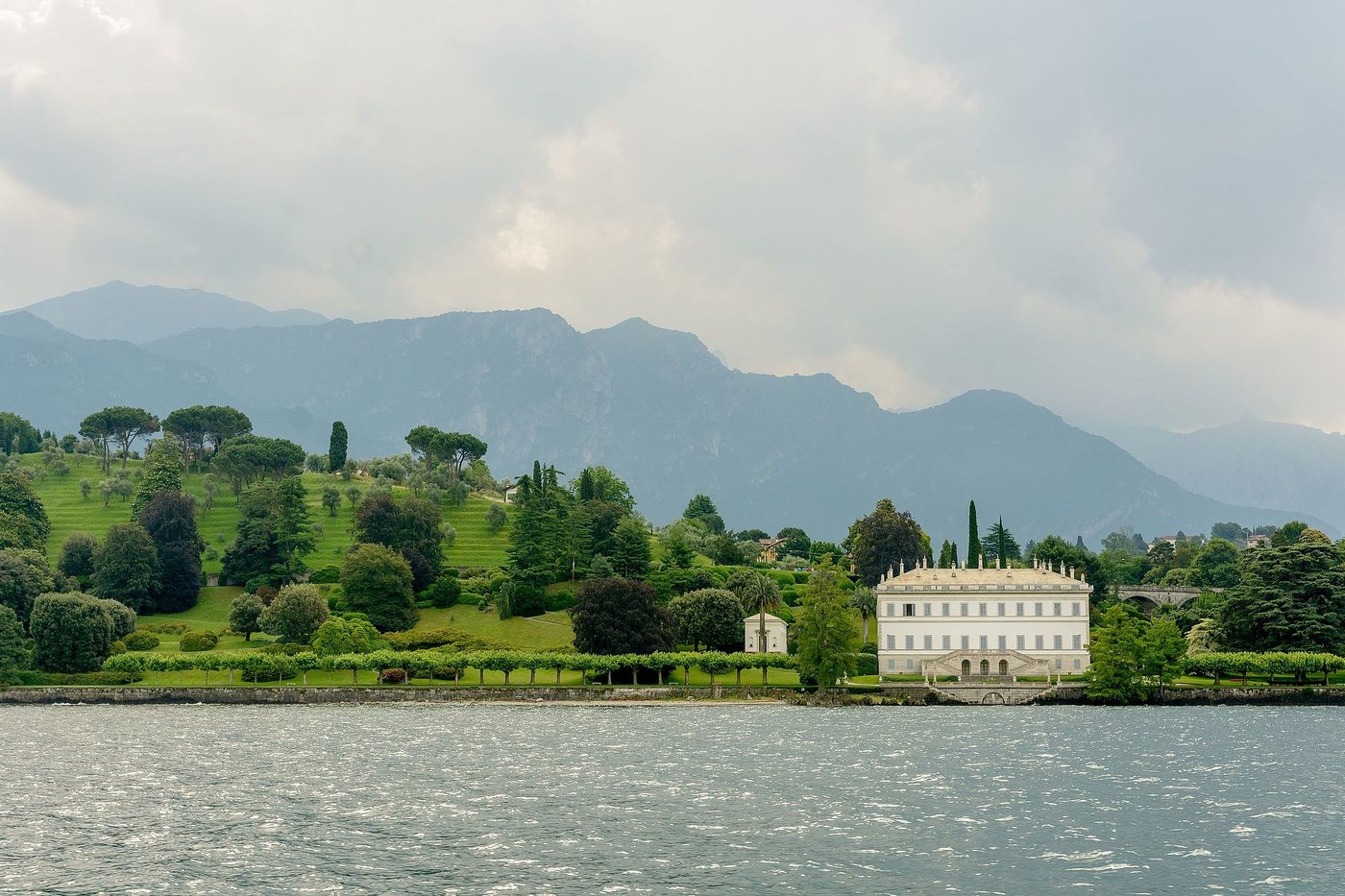
The village of San Giovanni, a short walk or a ride on the little tourist train south of the centre, has the best small public beach in the area: pebbles, quiet, a proper swim. There are no lifeguards, here or at most of the lake’s small beaches.
One planning note that trips people up: Bellagio has no railway station. The nearest is Varenna, 8 km away across the water. If you are arriving by train you will finish the journey by boat, and that is fine, but check the last sailing before you book a late flight.
2. Varenna
Varenna is my recommendation for most people arriving without a car, and the reason is embarrassingly simple: the train station is a ten to fifteen minute walk from the middle of the village, along the lake. Milano Centrale to Varenna-Esino-Perledo takes about an hour and three minutes on the regional line towards Lecco, Sondrio and Tirano, with roughly seventeen direct services a day and fares from around €7. You can be at your hotel two hours after landing at Linate.
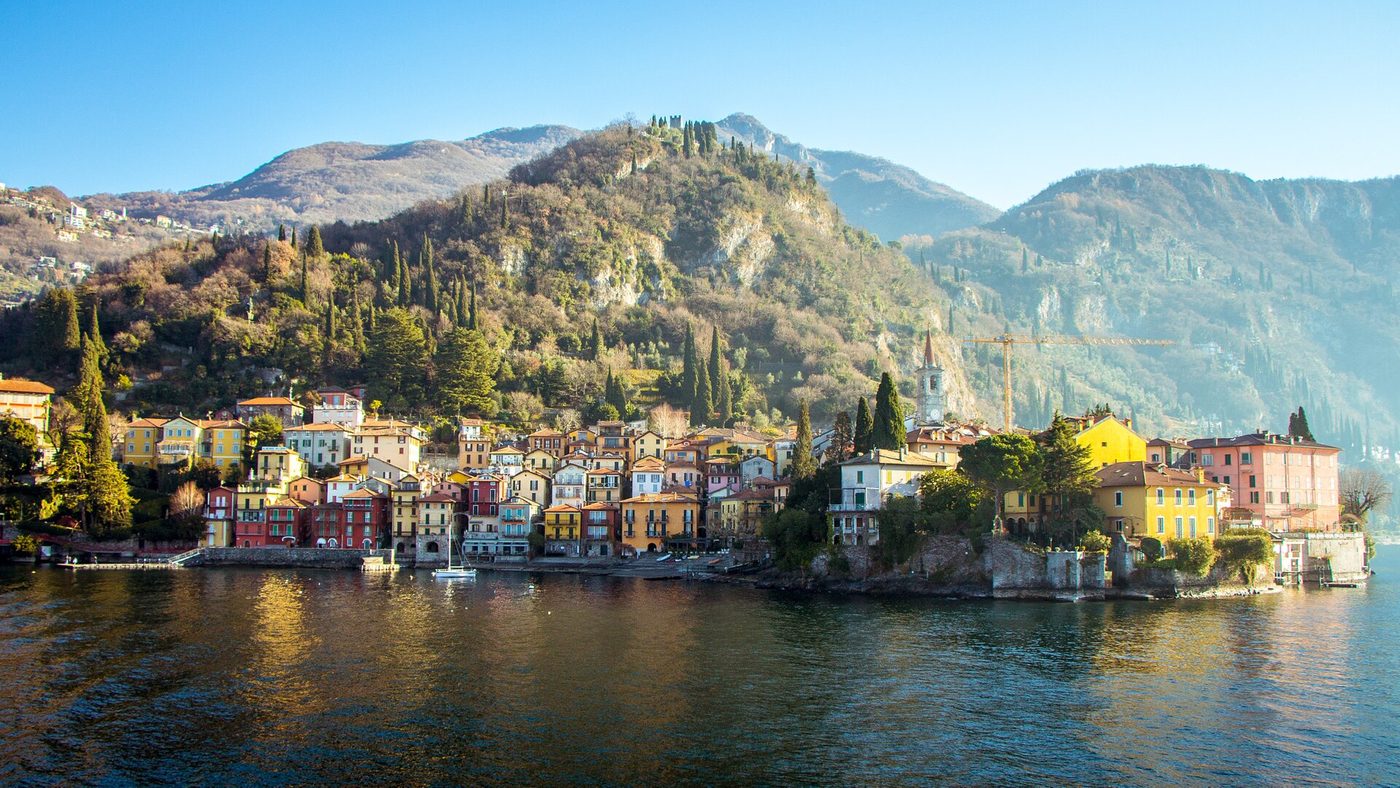
The village itself is tiny and vertical: ochre and pink houses stacked above a waterfront walkway, a couple of squares, and two gardens worth your money. Villa Monastero combines a house museum and a botanical garden that runs about 2 km along the shore, €15 for both, and from June through August it opens daily 09:30 to 20:00 with last entry at 19:00. Next door, Villa Cipressi is a working hotel whose terraced garden is open to non-guests; from 1 January 2026 a combined ticket covering Villa Monastero’s museum, garden and Villa Cipressi costs €27.
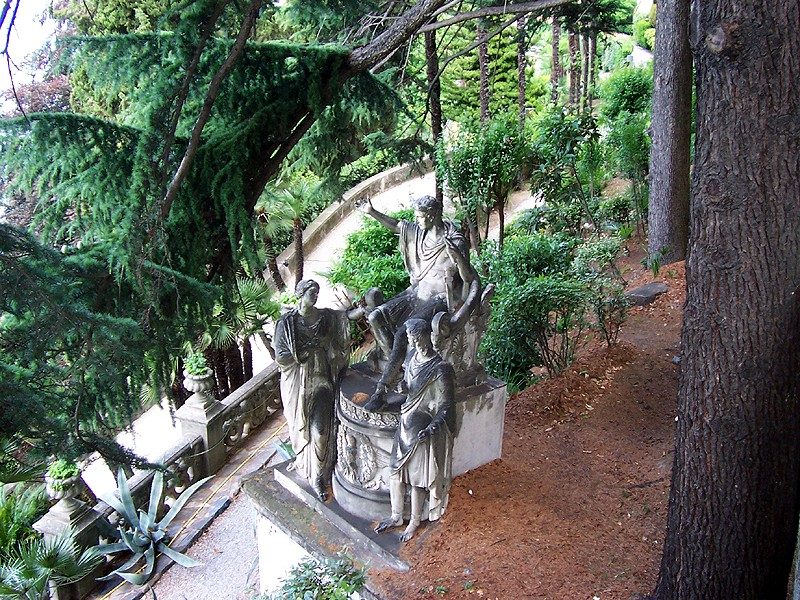
Above the village, Castello di Vezio is a twenty to twenty-five minute climb and gets a fraction of Varenna’s foot traffic. Go for the view down onto the promontory. There is a small admission charge that the castle does not publish reliably online, so carry a few euros in cash.
Varenna made international news in 2026 and you need to know about it before you arrive. On 26 June the town council amended its urban policing rules: walking around shirtless or in swimwear outside designated bathing areas now carries a fine of €50 to €200. Beaches, piers and boat docks are exempt. Churches, restaurants and the main square are not. The same amendments cap tourist groups at 25 people and ban guides from using megaphones.
3. Menaggio
Menaggio is the sensible one. It is a working town rather than a film set, with flat streets, a supermarket, a proper lido, and rooms that cost noticeably less than Bellagio’s for the same fifteen-minute boat ride. Families do well here. So do people who want to eat dinner somewhere that is not entirely full of other visitors.
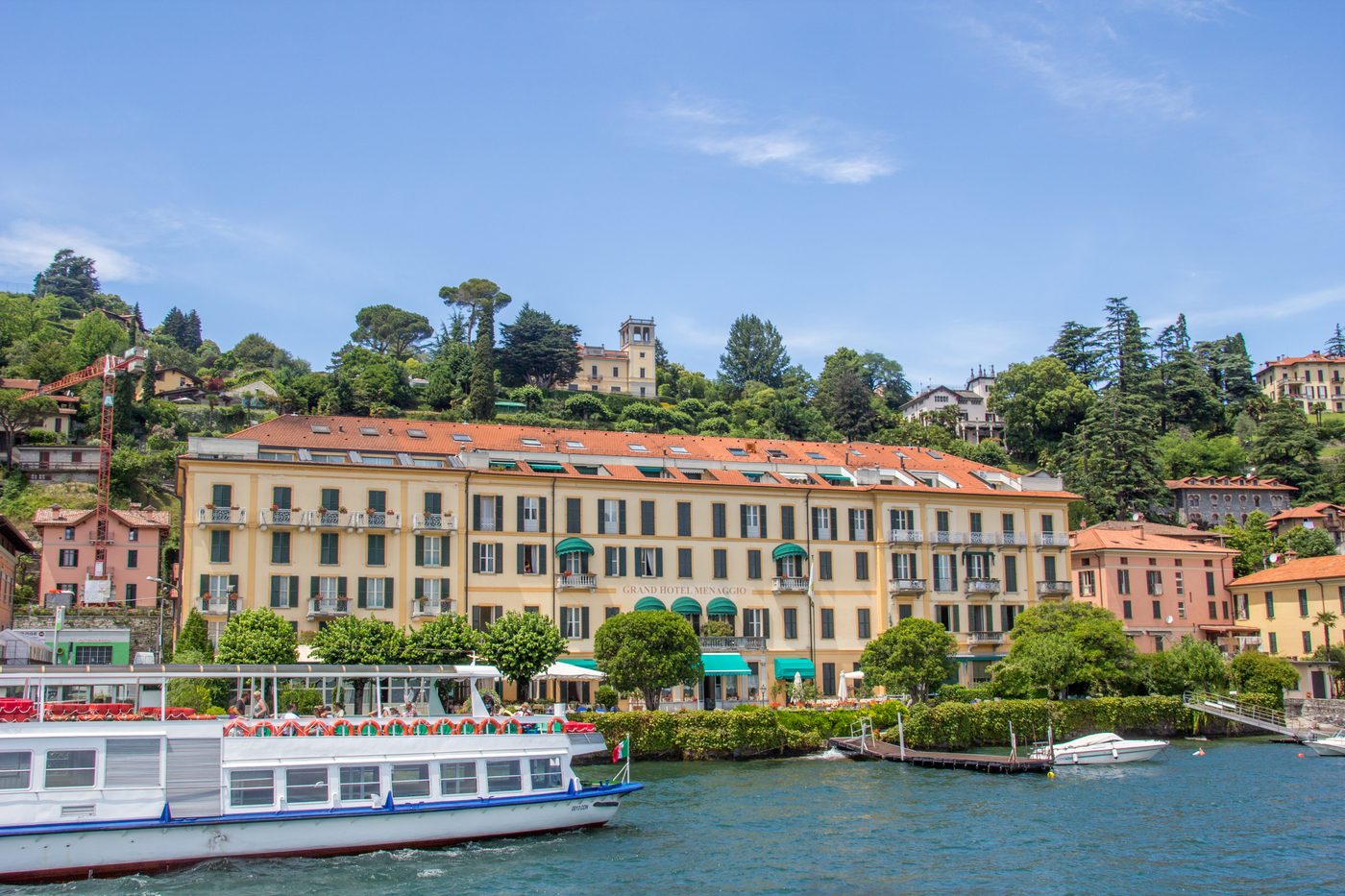
It is also the western end of the Centro Lago triangle, so you get the same €5.50 hops to Bellagio and Varenna and the same €17.50 day pass. Buses run from here down the western shore towards Como and north towards Colico on ASF line C110, which is the cheap way to reach Villa Carlotta if the boat timings do not suit. ASF prices by distance band rather than a flat fare, so check at the machine.
4. Tremezzina (Tremezzo, Cadenabbia, Griante)
Tremezzina is a single comune that swallowed several villages, and the reason to come is Villa Carlotta. Twenty acres of botanical garden plus a museum for €17.50, open 20 March to 18 October 2026, 10:00 to 19:00 with last tickets at 18:00. The azaleas peak for a few weeks each May and the citrus tunnel is worth the trip on its own. Bring your train or ASF bus ticket from the same day and you get a discount on admission.
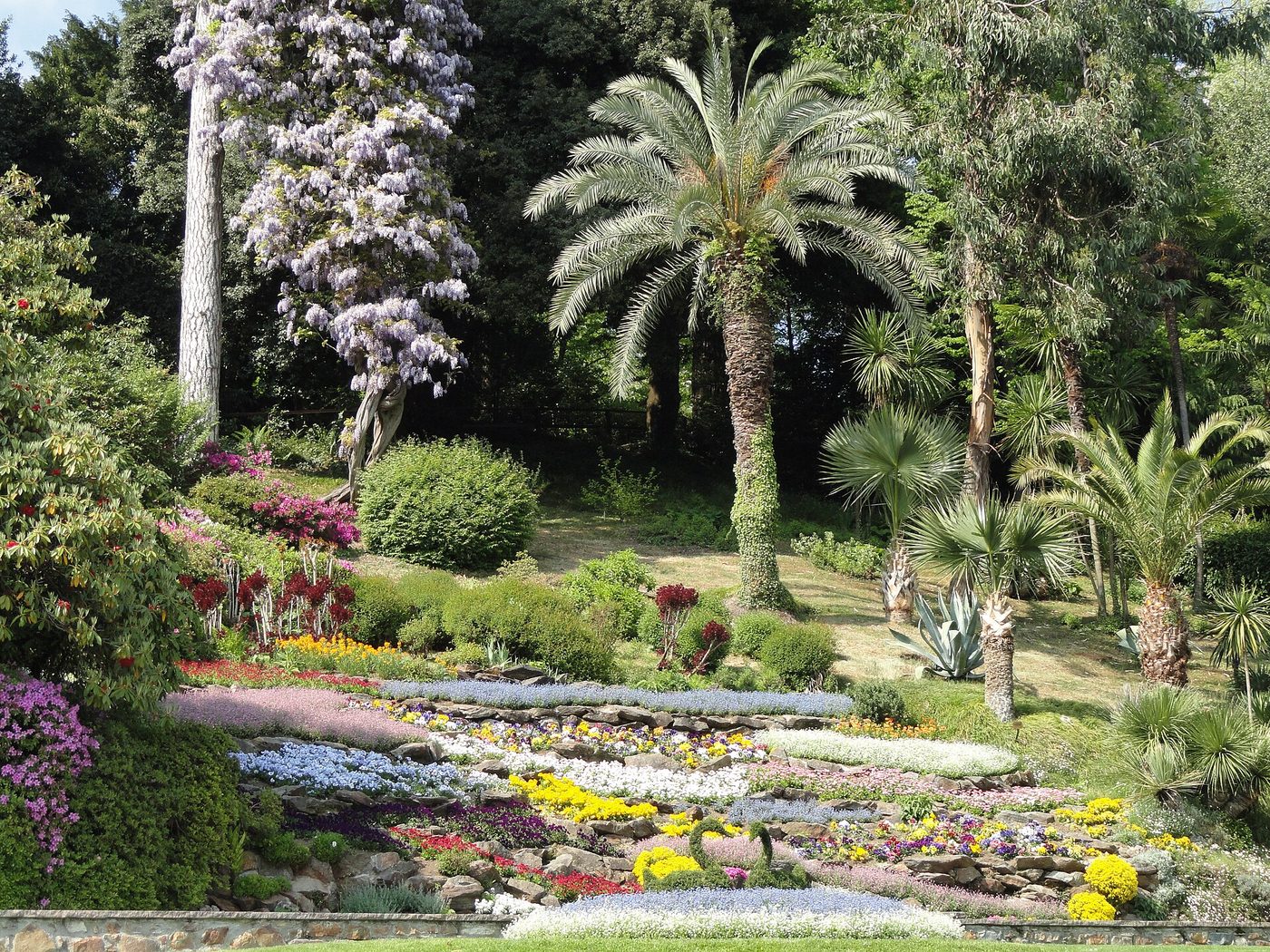
Access is easy: the boat stop is called Tremezzo – Villa Carlotta and sits 400 m from the entrance, about 45 minutes from Como by water. Driving, use the Villa Mainona multi-storey on Via Peduzzi rather than hunting for street spaces in August.
Tremezzo is also where the Grand Hotel Tremezzo has been standing since 1910, with its famous pool floating in the lake. Published rates start around €1,500 a night. If that is not your holiday, walk past it anyway, then have a coffee two doors down for €1.50.
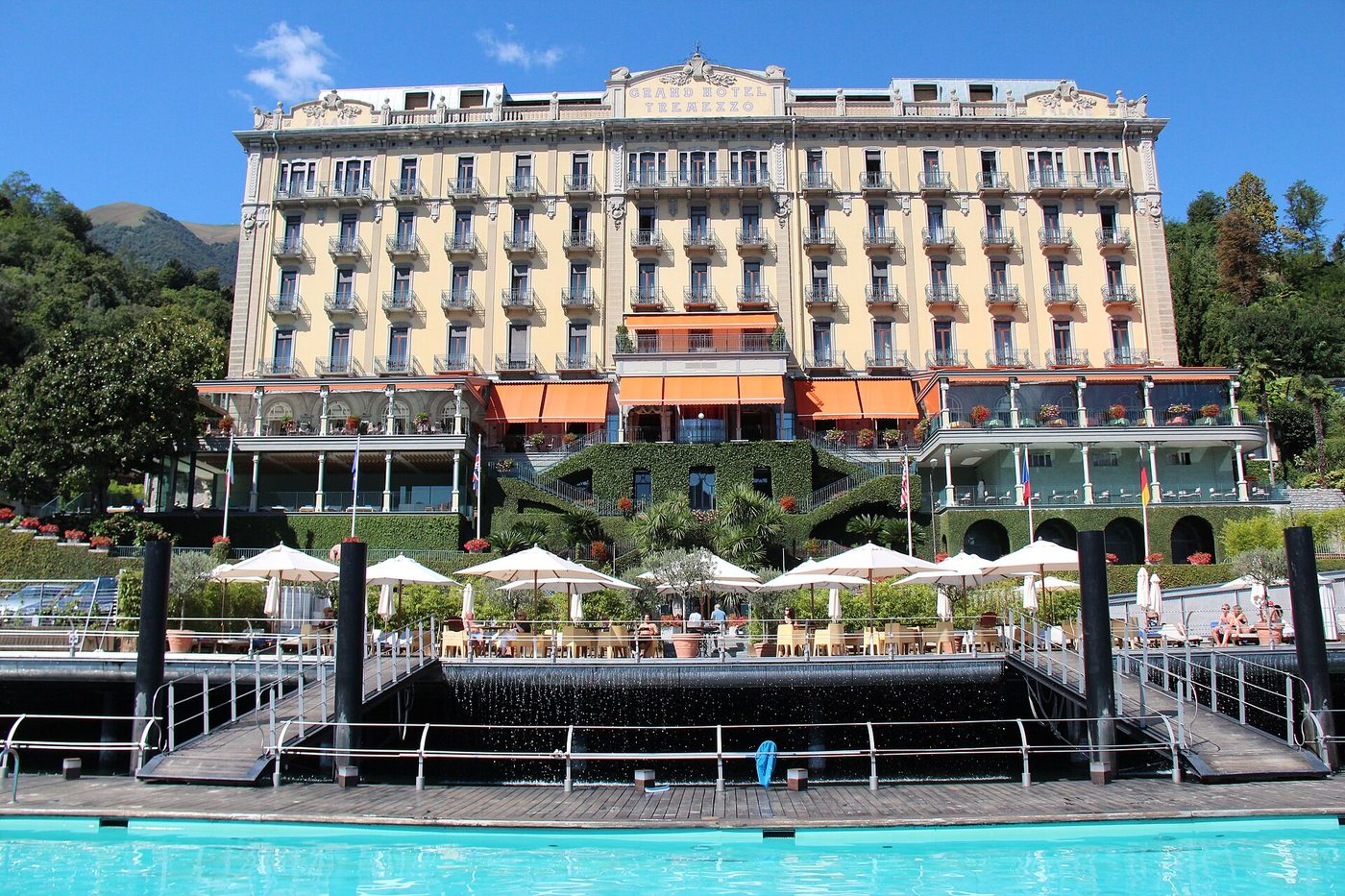
One 2026 wrinkle: the Cadenabbia ferry stop opened in July 2026 after a closure, and the summer car ferry route runs Bellagio to Cadenabbia to Varenna to Menaggio, while the spring timetable skips Cadenabbia entirely. Check which timetable is in force for your dates.
5. Lenno
Lenno is a quiet bay with an outsized attraction on the headland beside it: Villa del Balbianello, the one with the arched loggia that shows up in Casino Royale and Star Wars Episode II. It belongs to FAI, the Italian national trust, and it is the single most rule-bound visit on the lake, so read this carefully.
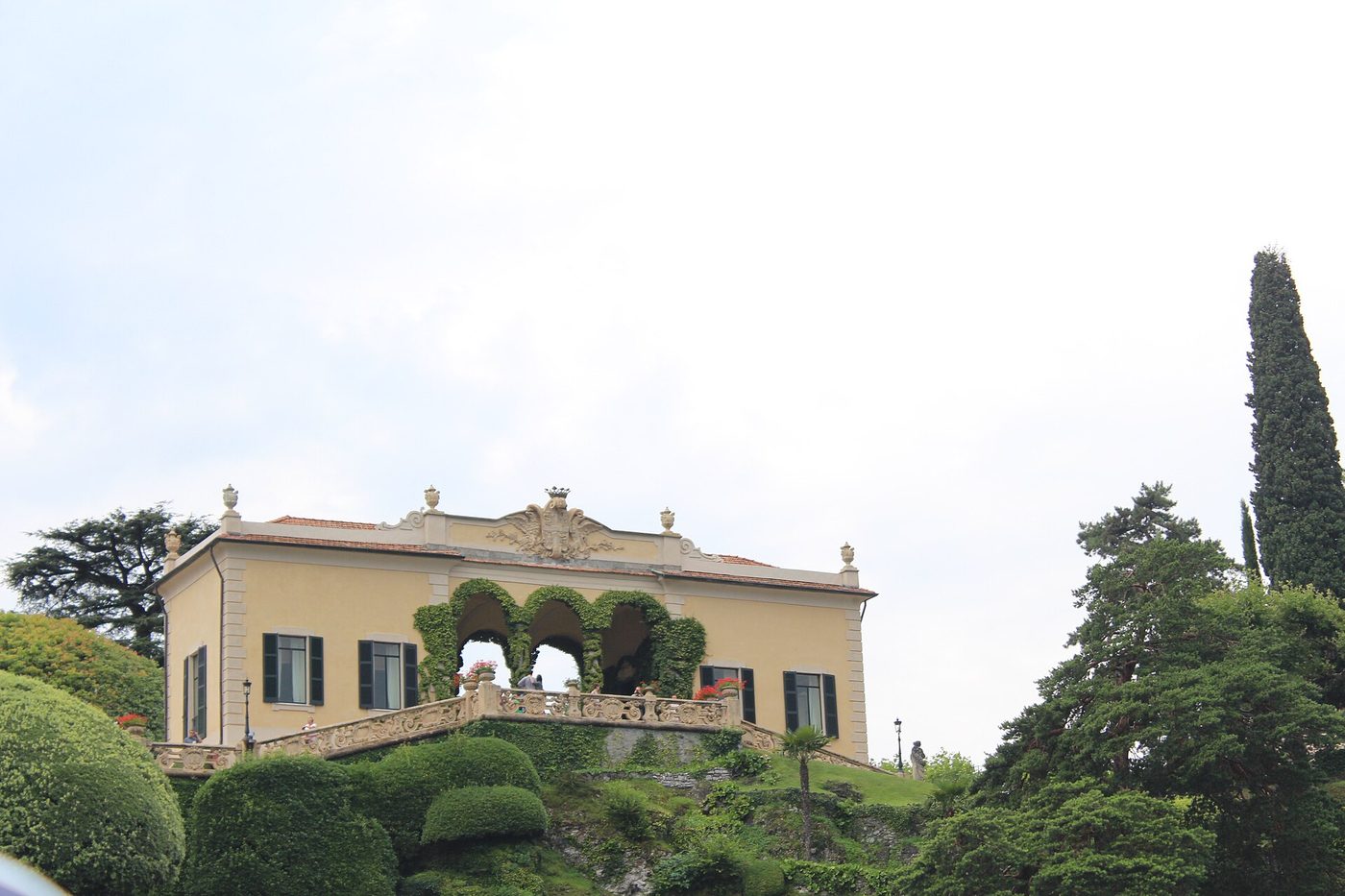
Booking is compulsory, for the park-only ticket and the villa-plus-park ticket alike. Park only is €15 for an adult; villa plus park is €25 and the interiors are accessible only on a 50-minute guided tour in Italian or English, capped at 16 people, with the start time given to you at the ticket desk and a maximum wait of an hour. FAI members pay nothing for the park and €5 for the villa.
You cannot drive to it. Park at the Parcheggio Mercato di Tremezzina on Via Comoedia in Lenno, then either walk the 1 km uphill pedestrian path, partly gravel, about 25 minutes, or take a paid taxi boat from the Lido di Lenno. The taxi boat is not run by FAI, must be booked, and depends on availability. The path is not suitable for pushchairs or anyone with walking difficulties. There is a longer 2.5 km trekking route that takes about 45 minutes.
There is no cafe on site, only a bookshop selling water and snacks. Dogs are allowed in the garden on a lead. And if you are walking the Greenway, note that the pedestrian entrance from the trail is only open mid-March to mid-November, and only on Tuesdays, Saturdays and Sundays.
The Como branch: the city end and the western shore
The western arm runs 30-odd km from the city of Como up to the promontory. It has the best road, the best bus service, the cheapest beds and the longest boat journeys. Nine of our eighteen places sit along it.
6. Como
Como is a real city of 83,361 people, and I think it is underrated as a base for anyone on a budget or arriving late. Two railway stations serve it: Como San Giovanni on the Milano Porta Garibaldi to Chiasso line, and Como Nord Lago on the Trenord line from Milano Cadorna, which runs every 30 minutes, covers 47 km in about an hour, and puts you a two-minute walk from the boat docks. First train out of Como Lago is 05:46, last is 22:16. From Milano Cadorna the first is 06:13 and the last 22:43.
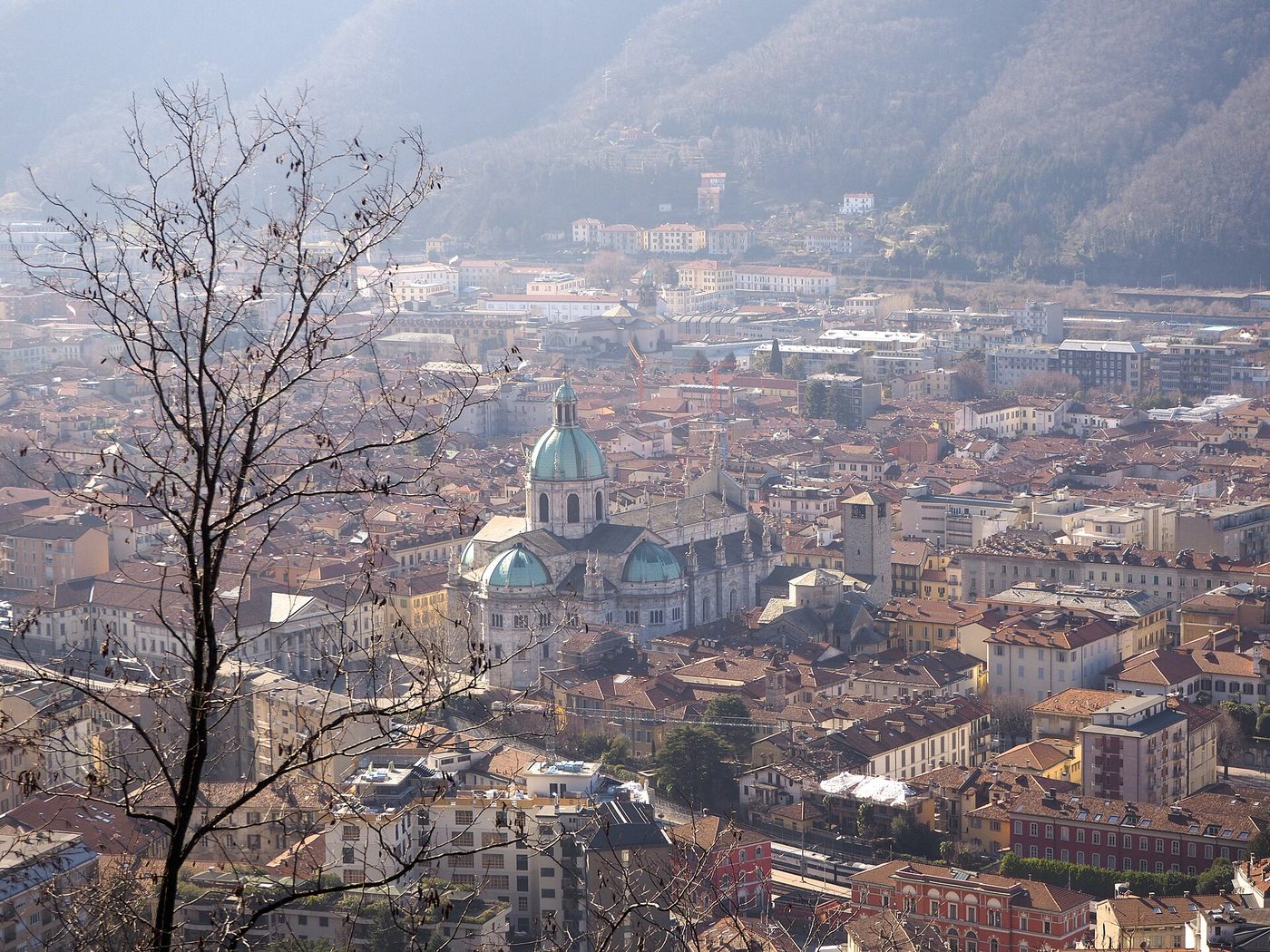
The Duomo is one of the last Gothic cathedrals built in Italy: begun in 1396, façade finished in 1457, the whole thing not completed until 1740, topped with a rococo dome by Filippo Juvarra. It is a strange and very good building. Nearby, Giuseppe Terragni’s Casa del Fascio is an early landmark of modern European architecture, and the Basilica of Sant’Abbondio was consecrated in 1095 by Pope Urban II.
Como was also Alessandro Volta’s home town; he was born here in 1745, and the Tempio Voltiano on the waterfront is his museum. The lakefront Passeggiata Lino Gelpi is named after the 19th-century mayor who prised the shoreline back off the villa owners to make public paths. Wisteria along it flowers in spring, and seaplanes still land on the water beside it. Sections of the waterfront that had been fenced off since 2008 for expansion works reopened to walkers in spring 2024.
Silk is the city’s other inheritance: mulberry trees went in on these hills in the 15th century, and shops like A Picci still sell Como silk scarves. Villa Olmo, begun in 1797 for the Odescalchi family, is now an exhibition venue with a park you can walk in. And the Lido di Villa Olmo is a proper municipal swimming set-up: about €8 to get in, with a swim cap mandatory and available on site for around €3.50.
One thing worth knowing if you do base in Como: you are not limited to the boat. ASF bus line C30 runs Como to Bellagio by road down the eastern side of the western branch, which is often faster than the slow boat and cheaper, though with none of the view. Line C10 runs down the western shore towards Lenno and line C110 continues to Menaggio and Colico.
The trade-off: Como is a city, so the water is busier and less pretty than the middle of the lake, and everything good in the Centro Lago is 60 to 90 minutes away by boat. Base here for the transport and the prices, not for the view from your window.
7. Cernobbio
Five minutes north of Como by boat and a different economy entirely. Cernobbio’s reason for existing in guidebooks is Villa d’Este, where published rates run from €1,150 a night to about €3,700 for the premium suites. The village around it is pleasant and ordinary, and the lakefront walk south towards Como is one of the easiest good strolls on the lake.
8. Moltrasio
Before we get to Moltrasio itself, a word about the question everybody actually types into a search box. George Clooney’s Villa Oleandra is at Laglio, a few minutes further north up the same shore. You cannot visit it, you cannot see much of it from the water, and there is nothing at Laglio arranged for visitors. Boat tours will point at a gate. If that is your reason for coming, adjust your expectations now rather than at the dock.
Steep, green, and quiet, Moltrasio is where Passalacqua opened and was promptly named the world’s top hotel by The World’s 50 Best in 2023, a year after it launched. It is guests only, so there is nothing to visit, but the village is a good example of the western shore’s real character: villas behind gates, a small harbour, and stone steps going almost vertically uphill.
9. Torno
Twenty minutes from Como on the boat, on the eastern side of the western arm, Torno has a tight harbour, a couple of restaurants on the water, and very little else. Coach tours do not come here because there is nowhere to put a coach. That is the appeal.
10. Nesso
Nesso is the one that photographs better than it lives. The village splits either side of a ravine where the Orrido di Nesso waterfall drops under an arched stone bridge, the Ponte della Civera, and the houses climb both walls. It is a long staircase down and a longer one back up.
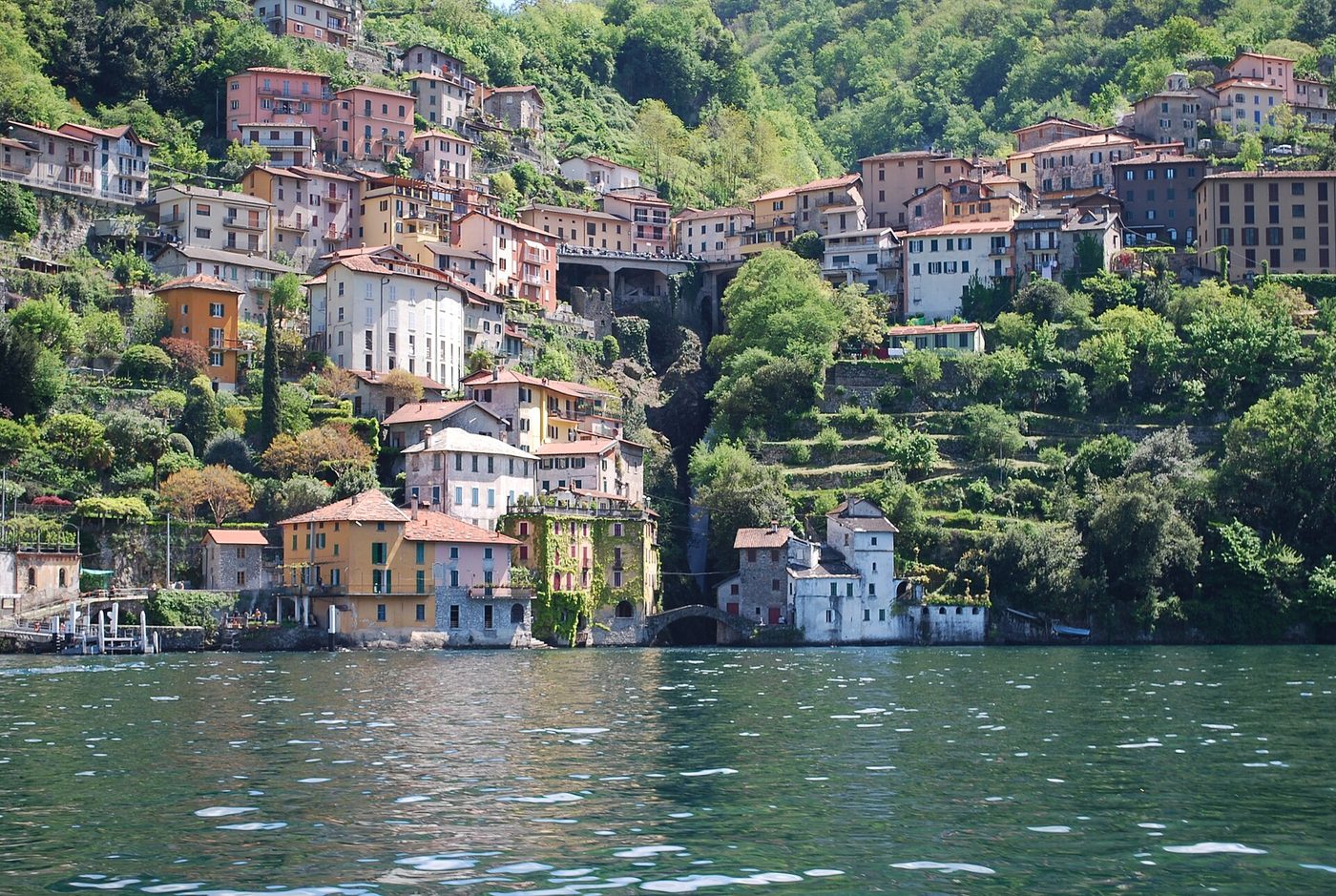
People jump into the lake from the rocks at the bottom. Confident swimmers only, no lifeguards, and the water below the falls is cold even in August. There is a circular boat ticket from Como to Nesso for €16.70 that allows intermediate stops and expires when you get back to Como. It makes a tidy half day.
11. Argegno
Argegno’s asset is vertical. The Argegno to Pigra cable car climbs in six minutes for €4.10 one way or €8.20 return, with cars every fifteen minutes carrying twelve people, and the valley station is about 100 m on foot from the boat dock. Opening hours are 09:00 to 17:00 Monday to Friday and 09:00 to 19:00 at weekends, extended to 09:00 to 19:00 daily from 10 to 16 August 2026. A family return for two adults and two children is €26.40.
For the money it is the best value viewpoint on the lake, and Pigra at the top is a working mountain village rather than a viewing platform with a gift shop. The cabin is wheelchair accessible, and the Comune di Pigra runs a free shuttle between the stations that you book 24 to 48 hours ahead through the local Red Cross.
12. Sala Comacina and Ossuccio
These two neighbouring villages face Isola Comacina, the lake’s only island, and they are how you get to it. Boat transport is separate from admission: scheduled Navigazione boats stop at Isola Comacina, or you take a private taxi boat, and a return transfer runs around €7 per person paid on board.
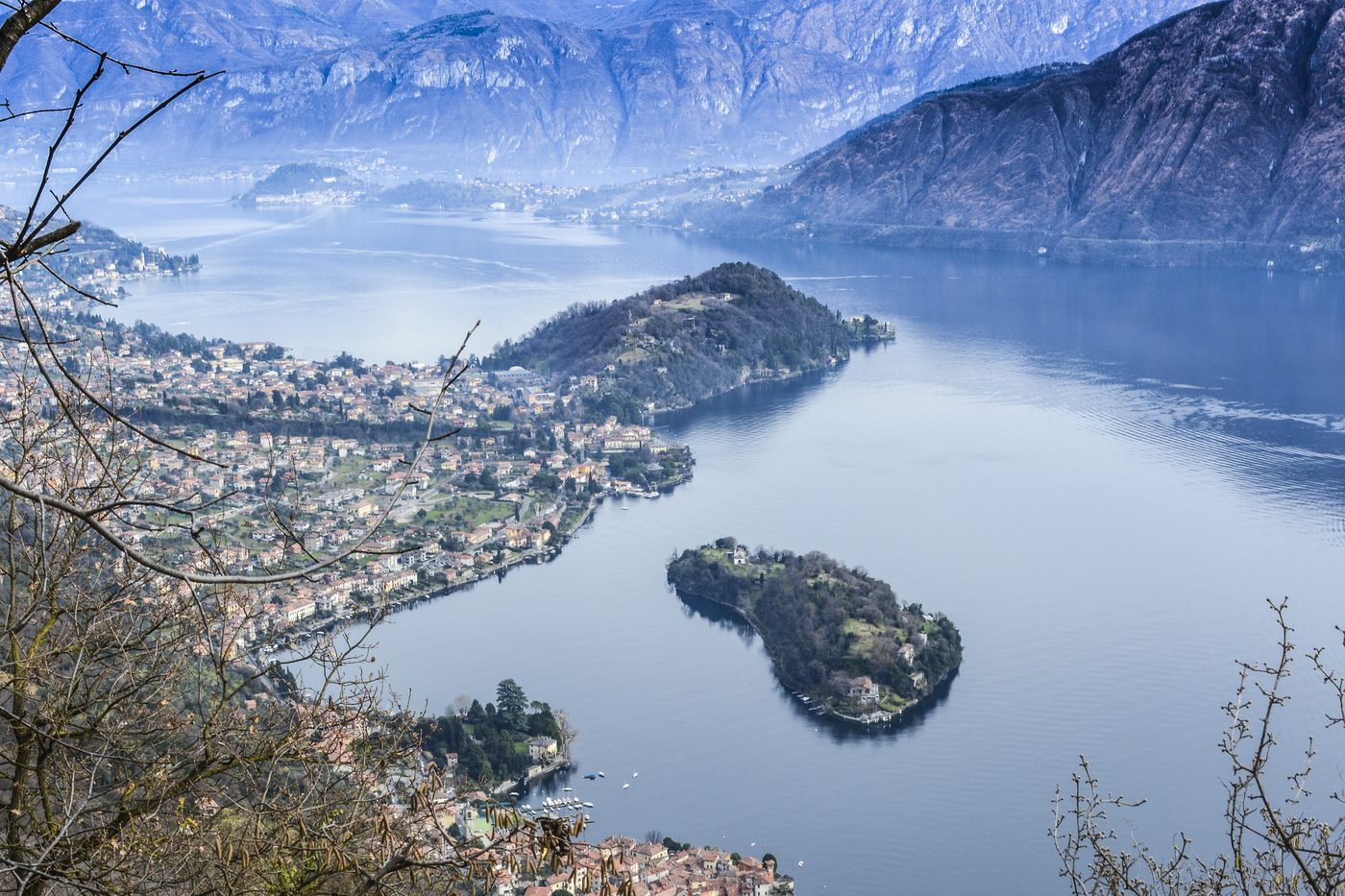
Once ashore you need a ticket, and this catches almost everyone out. The archaeological park alone is €4 for an adult, bought from an automatic machine on the island that takes cards only. Park plus the Antiquarium museum is €6. There are penalties for being found without one. The island opens May to the end of October, daily 10:00 to 18:00, with the Antiquarium open Thursday to Sunday 11:00 to 17:00. Critically for a place with no shade and a lot of steps: the restaurant, bar and restrooms are closed indefinitely. Bring water.
The island was razed in 1169 by Como’s forces allied with Frederick Barbarossa, and every June the San Giovanni festival re-enacts the fire with a red firework display over the water. Behind Ossuccio, the UNESCO-listed Sacro Monte di Ossuccio climbs the hillside through fourteen chapels to a sanctuary.
13. Colonno
Colonno matters mainly as a trailhead. The Greenway del Lago di Como starts at the south end of the village, where there is a bus stop and a car park, and climbs via Cappella then via Civetta before settling into its route north. More on the walk itself below.
14. Brunate
Brunate sits several hundred metres above Como and is the only place in this guide with no road worth using and no boat at all. You get there on the Como to Brunate funicular, running since 1894: seven minutes, €3.60 one way, €7.20 return, services from 06:00 to midnight, roughly every fifteen minutes, cars leaving both ends simultaneously.
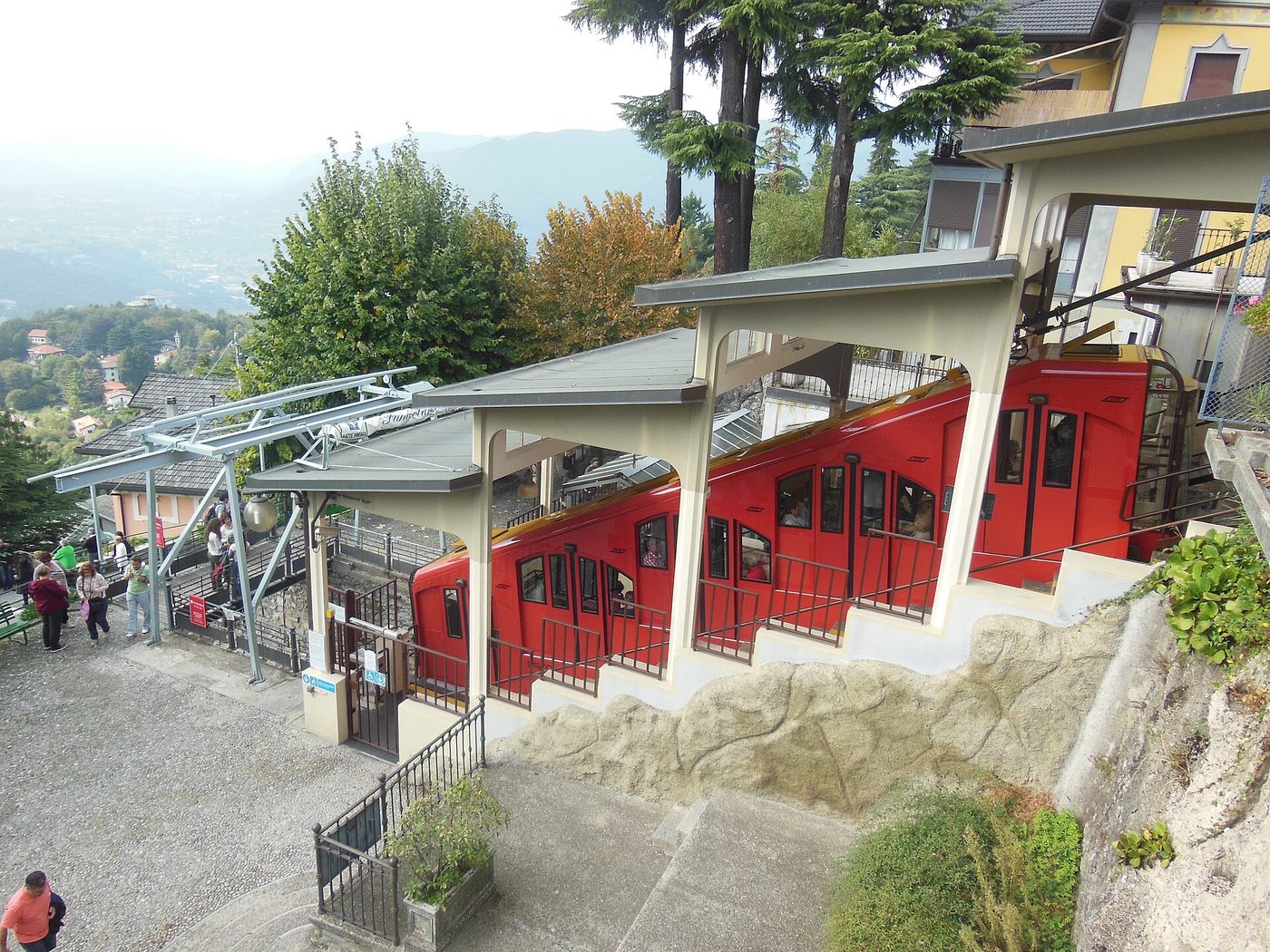
Be careful where you read the price. The old funicular website still publishes a tariff dated 1 November 2004 quoting €2.35 single and €4.05 return. The current operator’s own tariff sheet is the one to trust. What you go up for, beyond the view, is the Faro Voltiano, the lighthouse built for the centenary of Alessandro Volta’s death, about a half-hour walk on from the top station. The lower funicular station is on Piazza Alcide De Gasperi, a short walk from the docks, there is a request stop at Carescione on the way up, the cabin is wheelchair accessible, and regional Io Viaggio tickets are valid. A 7-day pass is €11 if you are staying in Como and plan to go up more than once, which you might.
The Lecco branch: mountains, beaches and lower prices
The eastern arm is the one visitors skip, and it is the one with the mountains. The Grigne rise straight off the eastern shore, the long-distance footpath runs its whole length, and rooms cost less because fewer people compete for them. The trade-off is distance from the Centro Lago.
15. Lecco
Lecco is a proper Lombard town at the foot of the branch, with its own railway station on the Milan to Sondrio and Tirano line, a lakefront, and the best hiking access on the lake. If your holiday is mostly about walking rather than villas, this is a better base than anywhere in the middle.
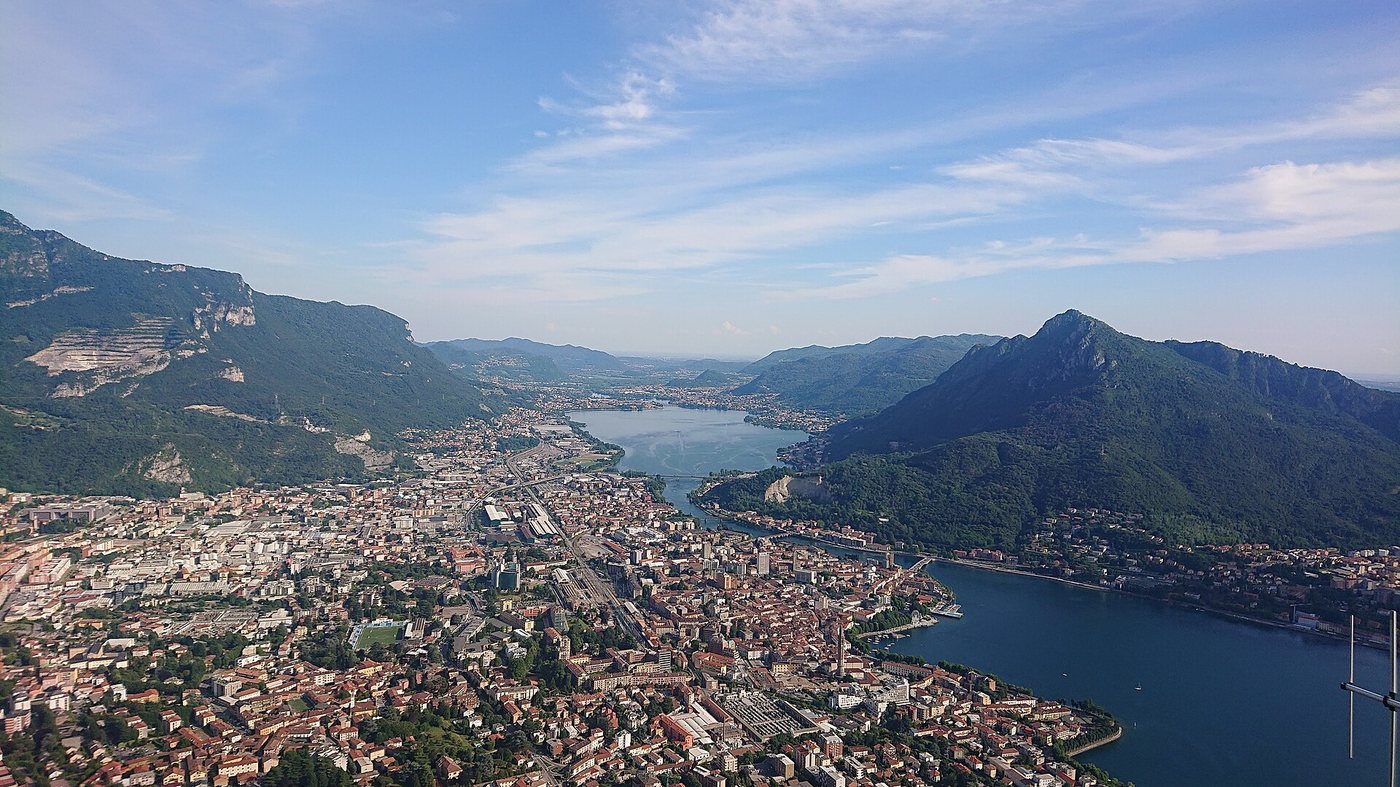
There is a circular boat ticket from Lecco to Onno for €11.00 that lets you stop en route, which is the cheapest way to see this arm from the water. Be realistic about the geography: from Lecco you are an hour and a half to two hours from Bellagio by scheduled boat. Treat the Centro Lago as one big day out, not as somewhere you pop to.
16. Lierna
Lierna has something rare on this lake: an actual sandy beach, at Riva Bianca. Most of Lake Como’s shoreline is pebble or rock, so a sheltered bay with sand is a real find, and Lierna has its own station on the Milan line, which makes it an easy beach day from the city.
17. Bellano
Bellano’s draw is the Orrido di Bellano, a gorge carved by the Pioverna stream with walls up to 50 m high, on a walkway that costs €7 for an adult and €5 reduced, including for holders of a train or ferry ticket. The town has a station of its own, and it empties out completely after the last boat, which is either the point or the problem depending on your temperament. There is also an excursion ticket from Como via Bellano to Bellagio for €29.50, adults, if you want to combine the gorge with the promontory in a day.
The Alto Lago: the wide, windy top of the lake
North of the promontory the lake stops being a canyon and becomes something closer to an inland sea: wider, brighter, with the mountains stepping back and the Alps proper visible at the head of it. Prices drop, the crowds thin out almost entirely, and the wind arrives every afternoon. It is a different holiday from the Centro Lago, and for wind-sports people it is the only part of the lake that matters.
18. Domaso
The top of the lake opens out, the mountains step back a little, and the afternoon wind arrives reliably enough that Domaso has built a small wind-sports economy on it. It is a ferry stop on the Como to Colico line, and it is a long way from everything in this guide: a different holiday rather than a day trip. Across the water on the Colico side, the Romanesque Piona Abbey sits on its own little peninsula and is free to visit.
Getting to Lake Como
Four airports are in play, and the official Bellagio tourist board publishes the distances, which is what the table below uses.
| Airport | Distance to Bellagio | Driving time to Bellagio | Verdict |
|---|---|---|---|
| Milan Malpensa (MXP) | 95 km | 1 h 40 min | Most long-haul and budget flights. Malpensa Express rail into Milan, then change for the lake |
| Milan Linate (LIN) | 75 km | 1 h 20 min | The quickest transfer if your route allows it |
| Bergamo Orio al Serio (BGY) | 65 km | 1 h 20 min | Closest on paper, but the poorest public-transport links to the western shore |
| Lugano (LUG), Switzerland | 40 km | 1 h 30 min | Shortest distance, slowest road. Worth checking for Swiss connections |
There is no direct train from any of these airports to the lake. Every rail routing changes in Milan. If you are flying into Malpensa, the Malpensa Express takes you into the city and you pick up a Trenord or Trenitalia service from there.
Trains: the three routes that matter
| Route | Journey time | Fare (2nd class) | Which shore it serves |
|---|---|---|---|
| Milano Cadorna to Como Nord Lago (Trenord) | About 60 min, no changes, every 30 min, 47 km | No fixed fare published; Trenord prices by distance and STIBM zone. Third parties quote around €4.80 to €5.20 | Southern tip. Two minutes’ walk from the Como boat docks |
| Milano Centrale to Varenna-Esino-Perledo | About 1 h 03 min, roughly 17 direct services a day, 59 km | From about €7.00, averaging around €8.00 | Eastern shore. The best rail arrival on the lake |
| Milano Porta Garibaldi to Como San Giovanni | Varies by service; not a fixed published figure | Not published as a fixed fare | Southern tip, on the Chiasso international line |
Two things worth knowing. First, Como has two unconnected stations on two different lines, and they sit about 1.5 km apart, a twenty-minute walk or a short bus ride. Como Nord Lago is five minutes from the docks; Como San Giovanni is nearer fifteen. Book to the wrong one and you will not miss your trip, but you will be annoyed. Second, there is a combined Trenord train plus Como-Brunate funicular ticket, which is a small saving and one fewer queue.
For the wider picture on rail across the continent, our guide to train travel in Europe covers passes and reservations, and getting around Europe compares trains against buses and flights.
Should you hire a car?
Mostly, no. If you are staying in the Centro Lago and doing the villas and villages, a car is a liability: the shore road is narrow and slow, parking in Varenna and Lenno is genuinely difficult in season, Bellagio has a camera-enforced ZTL, and you will still take boats. Hire a car if you are basing on the Alto Lago, doing the mountains behind Lecco, or continuing into the Alps afterwards. Our Europe road trips guide is a better home for that kind of itinerary than this lake is.
Lake Como ferries: how the fares actually work
This is worth ten minutes of your attention, because it is the part that costs you the most money if you improvise.
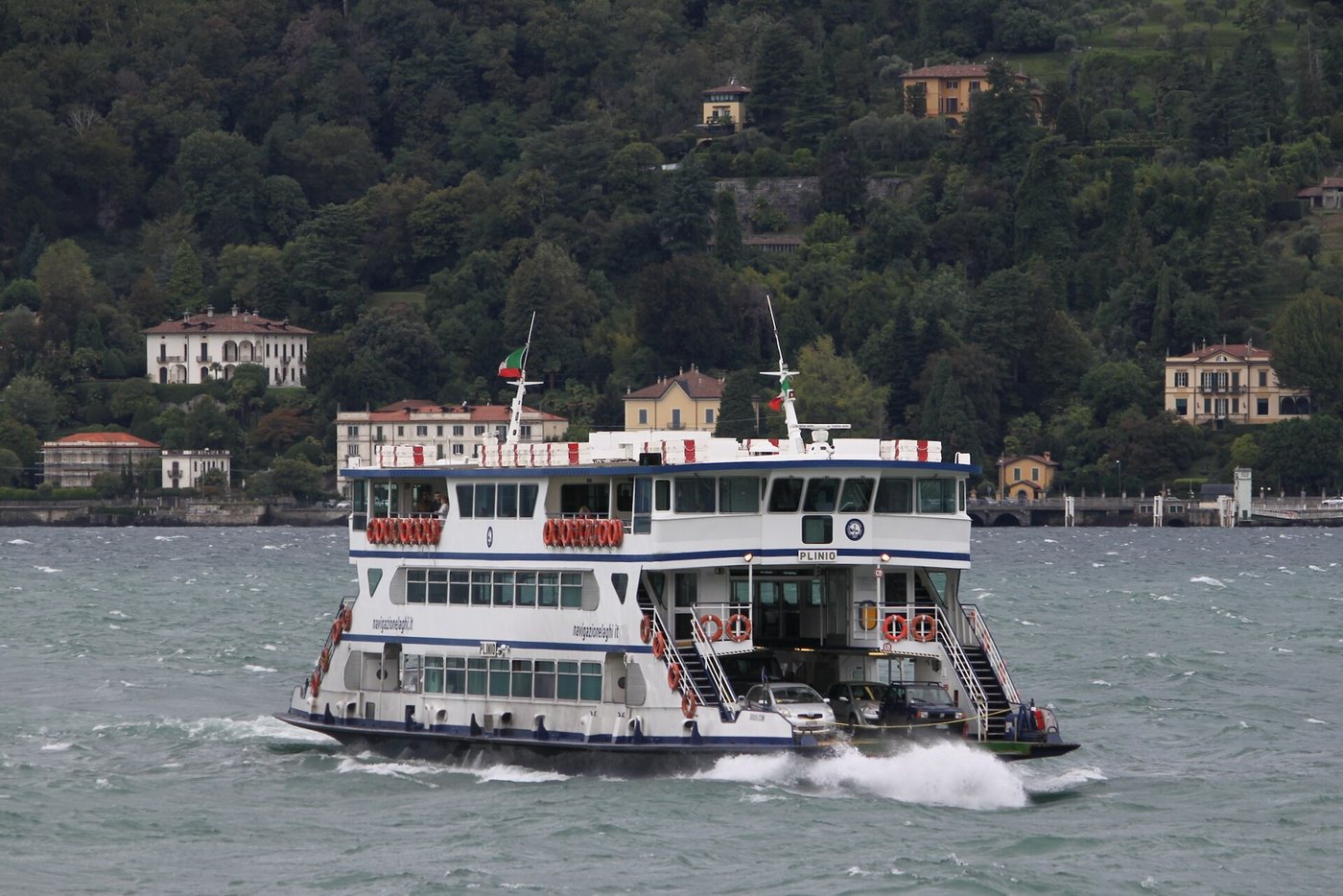
Navigazione Lago di Como, the state operator, does not price by named route. It prices by stretch, numbered 1 to 8, according to how far you travel. A hop between neighbouring villages is stretch 1. Como to the middle of the lake is stretch 6. Once you know which stretch your journey falls into, every ticket type follows from the same table. That table, valid from 1 April 2026, is below.
| Stretch | One-way adult | Over 65 / group of 15+ | Child 4 to 11 | Fast service supplement | One-day pass, adult |
|---|---|---|---|---|---|
| 1 | €3.00 | €2.40 | €1.80 | €1.50 | €8.00 |
| 2 | €4.50 | €3.60 | €2.30 | €2.00 | €11.50 |
| 3 (the Centro Lago) | €5.50 | €4.40 | €2.80 | €3.00 | €17.50 |
| 4 | €8.00 | €6.40 | €4.00 | €3.50 | €18.50 |
| 5 | €9.50 | €7.60 | €4.80 | €4.50 | €22.50 |
| 6 | €12.00 | €9.60 | €6.00 | €5.00 | €27.00 |
| 7 | €13.50 | €10.80 | €6.80 | €5.50 | €29.50 |
| 8 | €14.50 | €11.60 | €7.30 | €5.50 | €32.00 |
The Centro Lago triangle, and the one ticket most people should buy
The four ports of Cadenabbia, Bellagio, Menaggio and Varenna are all stretch 3. So any single hop between them is €5.50 for an adult and €2.80 for a child aged 4 to 11.
Now do the arithmetic. Three hops in a day costs €16.50, which is 6% less than the €17.50 day pass, so a three-hop day is a coin toss. Four hops costs €22.00 and the pass saves you €4.50. Any itinerary involving four or more crossings, and any itinerary where you might change your mind, is a day pass. The pass covers unlimited trips including intermediate stops between the ports it was issued for, it is personal and non-transferable, and it comes in one-day and six-day versions. The six-day stretch-3 pass is €52.50, which is the equivalent of nine and a half single hops.
Two catches on the pass. It is valid on the fast hydrofoil services only if you pay the supplement, which for stretch 3 is €3.00. And it is not valid on night cruises.
Como to Bellagio, and how the stretch pricing works out
Como to Bellagio is a long journey by lake standards, an hour to an hour and a half on a slow boat, and it falls into stretch 6. That means roughly €12.00 one way, about €17.00 on the fast service once you add the €5.00 supplement, and around €27.00 for a day pass. I say roughly because the operator publishes the stretch prices but not a plain route-to-stretch map, so treat those three figures as well corroborated rather than quoted off an official page.
If you want a single fixed price with no arithmetic, the operator sells named excursion tickets: Como to Bellagio for €24.00 adult and €12.00 child, or Como via Bellano to Bellagio for €29.50 adult and €14.80 child. There are also circular tickets that let you stop en route and expire when you get back to where you started: Como to Urio €10.40, Como to Nesso €16.70, Lecco to Onno €11.00.
The car ferry, and an important 2026 caveat
A separate traghetto carries vehicles between Bellagio, Cadenabbia, Menaggio and Varenna. It uses its own dock, which in practice means it runs closer to time than the passenger boats. Foot passengers travelling aboard a vehicle pay the ordinary stretch 3 passenger fare.
The problem with vehicle prices is this: the operator’s only published vehicle tariff is dated 15 April 2012. There is no 2026 table. For scale rather than for budgeting, that 2012 sheet listed a car up to 3.50 m at €4.00 for the vehicle or €8.60 including the driver, a car over 4.50 m at €9.80 or €14.40 with driver, a camper at €11.10 or €15.70, a bicycle at €1.00 and a moped up to 250cc at €1.80. Assume today’s prices are higher and ask at the window.
One live issue as I write in August 2026: the operator posted a notice on 6 August imposing a load limitation on the car ferries because of low lake water level. If you are planning to put a vehicle on a boat this summer, check the notices page the day before.
Ticketing rules that save or cost you money
- Buy before you board. Boarding at a port with a staffed ticket office and paying on the boat adds a flat €1.00 per passenger, per bag and per vehicle.
- Children under 4 travel free if they do not occupy a seat, up to three children per accompanying adult. Ages 4 to under 12 pay the reduced child fare.
- Over 65s get the reduced fare on singles, returns and day passes, on production of ID.
- Groups of 15 or more travelling together get the reduced rate plus one free ticket per 25 paying. School groups need a minimum of 10 students and get one free teacher per 10 students.
- Dogs under 50 cm at the withers travel free; larger dogs pay the reduced fare.
- Bicycles are not allowed on fast services or catamarans. They are fine on the ordinary boats and the car ferry.
- Delays over 60 minutes or a cancelled run entitle you to a full refund.
- A contactless card system called NaviTap operates on the lake, and there is a toll-free information line on 800-551801 within Italy.
Timetable seasons, and the trap of booking on old information
The lake changes timetable several times a year and the differences are not cosmetic. For 2026: spring ran 23 March to 31 May, extended to 30 June; summer runs 1 July to 4 October; and the winter timetable that preceded all this was in force from 31 October 2025 to 22 March 2026. Winter means dramatically fewer sailings, and some routes disappear entirely.
Service notices also matter more here than on most transport networks. Bellagio’s ferry service was suspended until 1 April 2026 under a notice posted that March. If your whole plan rests on one crossing, look at the notices page before you commit.
Last boats, and why you should look them up
I have deliberately not printed last-sailing times, because they change with each of the year’s timetables and per route, and a wrong last boat is the single most expensive mistake in this guide. What I will tell you is the shape of it: in high summer the final crossings around the Centro Lago run into the evening, and in the winter timetable some routes stop in the middle of the afternoon. Before any day that ends somewhere you are not sleeping, check that route’s last departure on the operator’s timetable for your exact date. Do the same for the last train if you are staying in Varenna or Como.
Ferry queues and delays
In July and August the passenger boats at Bellagio and Varenna share docks, which is the mechanical reason they run late: a boat waits for a berth, then the delay compounds through the day. Delays of 30 to 45 minutes are realistic in peak season. The car ferries, with their own dock, are usually on time. Build slack into any day where you have a dinner booking or a train to catch, and remember the day-tripper flood arrives around ten and drains away by early evening.
| Reached by scheduled boat | Road or lift access only |
|---|---|
| Bellagio, Varenna, Menaggio, Cadenabbia, Tremezzo, Lenno, Como, Cernobbio, Moltrasio, Torno, Nesso, Argegno, Sala Comacina, Colonno, Isola Comacina, Lecco, Lierna, Bellano, Domaso, Colico, Dervio, Gravedona and about twenty more | Brunate (funicular from Como), Pigra (cable car from Argegno), Perledo, Esino Lario, Mezzegra, Griante village centre, Bonzanigo, Sorico, Civenna, Vezio and its castle |
Villas and gardens: every 2026 admission price in one table
The villas are the reason Lake Como is not just a pretty lake, and their pricing and access rules vary far more than you would expect. Here is the whole set in one place.
| Villa or garden | Where | Adult 2026 | Booking | What you actually get |
|---|---|---|---|---|
| Villa Carlotta | Tremezzo | €17.50 | Not required | Museum plus 20 acres of botanical garden. Over 65 €15, ages 6 to 18 €7, 19 to 25 €12, under 6 free, family of four €35 |
| Villa del Balbianello (park only) | Lenno | €15 | Compulsory | Gardens and the loggia terrace. Ages 6 to 18 and students to 25 €11, family €42, FAI members free |
| Villa del Balbianello (villa plus park) | Lenno | €25 | Compulsory | Adds a 50-minute guided tour of the interiors, max 16 people. Ages 6 to 25 €17, family €66, FAI members €5 |
| Villa Monastero (museum plus garden) | Varenna | €15 | Not required | House museum plus 2 km of lakeside botanical garden. Over 65 and groups of 20+ €11, ages 15 to 25 €9, under 15 free |
| Villa Monastero plus Villa Cipressi | Varenna | €27 | Not required | Combined ticket from 1 January 2026. Reduced €20, ages 15 to 25 €15. Garden only plus Cipressi is €25 |
| Villa Melzi gardens | Bellagio | €10 | Not required | Garden, chapel and museum. Two-day ticket €14, groups of 15+ €8, free up to age 11, season pass €50. The villa itself is private and closed |
| Villa Serbelloni park | Bellagio | €13 | Compulsory, online | Guided tour only, about 2 hours with the first hour uphill, max 30 people, Italian and English. Ages 7 to 13 €7, under 7 free |
| Isola Comacina (park only) | Sala Comacina | €4 | Not required | Archaeological park. Machine on the island, cards only. Students 6 to 26 €3, family €10 |
| Isola Comacina (park plus museum) | Sala Comacina | €6 | Not required | Adds the Antiquarium. Over 65 and groups of 10+ €5, students €4, family €15. Museum alone €3 |
| Orrido di Bellano | Bellano | €7 | Not required | Walkway through a gorge with walls up to 50 m high. Reduced €5 for ages 6 to 14 and for train or ferry ticket holders. Last entry 20 minutes before closing |
| Villa Olmo | Como | Varies by exhibition | Depends on the show | Neoclassical villa begun 1797, now an exhibition venue. The park is public |
| Piona Abbey | Colico peninsula | Free | No | Romanesque monastery on its own headland at the top of the eastern shore |
Season dates, which matter more than the prices
The single most common wasted journey on this lake is arriving at a closed villa. Villa Carlotta’s main 2026 season is 20 March to 18 October, with a late-season window from 19 October to 8 November at shorter hours, then scattered special openings on named November and December weekends. Villa Melzi runs roughly 21 March to the end of October. Villa Serbelloni’s park tours run on a season the tourist board sets each year and had not been finalised for 2026 when I checked, so book online before you build a day around it.
Villa Monastero is the useful outlier because it stays open through winter at reduced hours: February is Wednesday to Monday, 10:00 to 17:00. In June, July and August it runs daily 09:30 to 20:00, which makes it the one garden you can visit properly in the cool of the evening.
Balbianello’s calendar is the fiddliest of all. In February 2026 it opened only on the 14th, 15th, 21st, 22nd and 28th. In March, only the 1st, 7th and 8th before opening regularly from 14 March. November is 10:00 to 17:00 with last park entry at 16:00 and the last villa tour at 15:00. December has sixteen scattered open days. If you are coming outside high summer, look up your exact date rather than the month.
A small trap worth flagging: Villa Carlotta’s own opening-hours sub-page still carries text about waiting for a 2024 reopening. The main visit page is the current one. Villa Monastero’s official site returns a blank page for its ticket section, and the CoopCulture listing is where the real prices live.
Walking on Lake Como
The Greenway del Lago di Como
The Greenway is the lake’s signature walk and it is free. It runs along the western shore between Colonno and Griante, following sections of the old Roman Strada Regina, through seven stages and the villages of Colonno, Sala Comacina, Ossuccio, Lenno, Mezzegra, Tremezzo and Griante. Reckon on about three and a half hours at a walking pace, and it is suitable for most abilities and rideable on a mountain bike.
On length, I will give you both numbers rather than pick one: the official site’s own text calls it a 10 km hike, while the same page’s metadata says 11.2 km. Some Italian sources give the finish as the Lido di Cadenabbia, which is in the comune of Griante anyway, so the discrepancy is smaller than it looks.
Practicalities: buses and scheduled boats get you back, so you can walk it one way. Highlights on the route include the church of San Michele Arcangelo at Colonno, the Sanctuary of the Beata Vergine del Soccorso, Villa del Balbiano, the baptistery of San Giovanni Battista at Lenno, the Casa dei Presepi at Mezzegra, and Villa Carlotta at the Tremezzo end. If you want to detour into Balbianello, it is a 1 km diversion near Hotel Lavedo, and the pedestrian entrance from the trail only works mid-March to mid-November on Tuesdays, Saturdays and Sundays.
One correction that matters if you search for this walk: the domain greenwaydellago.it is widely cited as the official site and no longer is. It now serves unrelated commercial pages. The live official site is greenwaylagodicomo.com.
The Sentiero del Viandante
The Viandante is the serious one: roughly 45 km along the eastern shore from Lecco up to Colico, in five official stages, running at mid-slope above the lake rather than along it. The five stages are Lecco to Abbadia, Abbadia to Lierna, Lierna to Varenna, Varenna to Dervio and Dervio to Colico. The table below breaks the northern part into the shorter sections most people actually walk. It is not technical and not brutally steep, but the cumulative ascent, the constant up and down and the rough surfaces make it more taxing than the distances suggest.
| Section | Distance | Time | Ascent and descent |
|---|---|---|---|
| Abbadia Lariana to Lierna | 10.6 km | 3 h 30 | ± 360 m |
| Lierna to Varenna | 9.4 km | 3 h 30 | ± 655 m |
| Varenna to Bellano | 4.8 km | 1 h 40 | ± 125 m |
| Bellano to Dervio | 4.8 km | 1 h 30 | ± 100 m |
| Dervio to Dorio | 3.9 km | 1 h 15 | ± 130 m |
| Dorio to Colico | 9.5 km | 3 h | ± 120 m |
A neat perk: the Viandante via Lago travel ticket gets you into Villa Monastero at a reduced price, €7.50 for the house museum and garden or €6.50 for the garden alone, on production of the ticket. If your walking is the point of the trip, our hiking in Europe guide covers the rest of the continent’s long-distance routes.
Swimming in Lake Como
Yes, you can swim, and no, most of the shoreline is not set up for it. Swimming is not prohibited, but the lake’s edge is largely rock, retaining wall and private garden. The practical options are the sanctioned lidos and a handful of small public beaches.
The water reaches its warmest in August, with modelled monthly averages around 26 °C, and holds above 20 °C through July, August and September. In May the average sits nearer 16 °C. Those numbers come from aggregator services rather than a meteorological office, so treat them as a guide to the shape of the season rather than as gospel.
| Where | Type | Notes |
|---|---|---|
| San Giovanni, Bellagio | Small public pebble beach | The best free swim near Bellagio. Quiet, no lifeguard |
| Lido di Villa Olmo, Como | Municipal lido | Around €8 entry. Swim cap mandatory, sold on site for about €3.50 |
| Lido di Bellagio | Lido with pool | Sandy beach, swimming pool, bar and restaurant. Entry price not published anywhere I could verify |
| Riva Bianca, Lierna | Sandy beach | Genuinely sandy, which is rare here. Own railway station |
| Lido di Lenno | Lido | Also the departure point for Balbianello taxi boats |
| Lido di Menaggio (Victoria Beach) | Lido | The best family option in the Centro Lago |
| Lido di Argegno | Lido | Small, handy if you are riding the Pigra cable car |
| Lido di Faggeto Lario | Lido | On the eastern side of the Como branch |
| Ponte della Civera, Nesso | Wild swim and jump spot | Confident swimmers only. Cold, deep, no supervision |
If beach time is a big part of your holiday, be honest with yourself: a glacial lake in the Alps is not the best of Europe’s beaches, and our guide to the best Mediterranean destinations will serve you better.
When to visit Lake Como, month by month
The climate table for Como is below, and the rainfall column contradicts what most people assume about spring.
| Month | Average high | Average low | Rainfall | My verdict |
|---|---|---|---|---|
| January | 6 °C | -2 °C | 3.1 in | Coldest month. Many businesses shut, ferries thin, villas mostly closed |
| February | 8 °C | -1 °C | 2.9 in | Quiet and cheap. Villa Monastero and a handful of Balbianello dates are open |
| March | 13 °C | 4 °C | 4.3 in | The lake wakes up. Spring timetable from 23 March, Villa Carlotta from 20 March |
| April | 17 °C | 7 °C | 6.2 in | Wisteria month, and the azaleas start in the second half. Excellent |
| May | 23 °C | 12 °C | 7.9 in, the wettest | Peak gardens, peak green, peak rain. Villa Carlotta’s azaleas are at their best |
| June | 27 °C | 16 °C | 6.9 in | Warm, still wet, crowds building. San Giovanni festival on Isola Comacina |
| July | 30 °C | 19 °C | 5.4 in | Hottest month. Summer timetable from 1 July. Busy and swimmable |
| August | 29 °C | 19 °C | 6.8 in | Warmest water, most Italians, worst ferry queues |
| September | 23 °C | 13 °C | 6.3 in | My favourite. Water still above 20 °C, crowds thinning, everything open |
| October | 19 °C | 9 °C | 5.8 in | Good to mid-month. Summer timetable ends 4 October, Villa Carlotta 18 October |
| November | 12 °C | 4 °C | 5.0 in | Shutting down. Balbianello runs to 17:00 with a 15:00 last tour |
| December | 9 °C | 2 °C | 2.6 in, the driest | Dry, cold, largely closed. Scattered Balbianello dates only |
Read that column again. May and June are wetter than July and August. Every “visit in spring for the weather” recommendation you have absorbed is really a recommendation about crowds and flowers, and it is a good one, but it is not about staying dry. If you want the gardens at their best, come in the second half of April or in May and pack a jacket. If you want the driest warm month, that is July.
My own ranking, if you have a free choice: mid-September to mid-October first, for warm water and open attractions without the August crush. Mid-April to May second, for the flowers. July and August only if school holidays dictate it. November to February only if you actively want a shut lake, which is a legitimate taste, and cheap.
For how the lake fits into a wider trip, our guide to the best time to visit Europe compares seasons across the continent, and there is a dedicated best time to visit Italy guide for the rest of the country.
What Lake Como costs
I am going to be straight with you about the limits of this section. Accommodation pricing on Lake Como is almost entirely unpublished outside the grand hotels. No credible published mid-range rate for Bellagio or Varenna exists, so there is no row for it. Below is what is documented.
| Item | Documented figure | Note |
|---|---|---|
| Villa d’Este, Cernobbio | From €1,150, up to about €3,700 for premium suites | Published by the hotel |
| Grand Hotel Tremezzo | From around €1,500 | Headline rate. A separate 2024 report put August at about €1,438 |
| Albergo Terminus, Como | Doubles from €277 | The upper-mid end of the city market |
| Mid-range hotel, Bellagio / Varenna / Como | Not published | No reliable figure exists. Search your dates; expect Bellagio to be the dearest and Como or Lecco the cheapest |
| Booking late versus early | One writer found the same hotel about 30% dearer a week out than months ahead | Anecdotal, but the direction is consistent |
| Espresso at the counter | Averaged €1.21 nationally in 2024; some cities passed €1.40 in 2025 | National figures, not lake-specific |
| Cappuccino | Frequently above €2.50; national range €1.00 to €4.50 | National |
| Bar breakfast (espresso and cornetto) | €1.50 to €2.50 | National |
| Pasta dish, Lake Como | €10 at a back-street trattoria, €20 at a lakefront table | The gap is about the view, not the cooking |
| Aperitivo and dinner bands, Lake Como | Not published | Too variable, and nobody publishes it credibly |
| Bus, Como to the lake towns | Not a flat fare. ASF prices by distance band | Still the cheapest way down the western shore, and cheaper than the boat. Buy at the machine or on board |
| Self-drive boat rental | €75 to €350 excluding fuel, by duration | No licence needed for the small boats |
| Handmade sandals, Bellagio | €80 to €200 | The Rolando workshop, if you want a souvenir with a fitting |
Restaurants keep Italian hours: lunch roughly noon to 15:00, dinner roughly 19:00 to 22:00, and some places do not open until 19:30. Cards are widely accepted, American Express less so, and a few small places are cash only. Free public drinking fountains are common around the lake, so carry a bottle rather than buying water.
The overall shape of it: Lake Como is expensive for accommodation and reasonable for everything else. Boats, gardens, funiculars and lunch are all fairly priced. It is the bed that hurts. If that is a problem, our guides to Europe on a budget and the cheapest places to travel in Europe are worth a look before you commit, and where to stay in Europe covers the accommodation types.
Rules and charges that catch visitors out
The new Varenna conduct rules
On 26 June 2026 Varenna town council amended its urban policing regulations, and the changes were covered by four Italian national outlets and picked up by The Guardian. Walking around shirtless or in swimwear outside designated bathing areas now attracts a fine of €50 to €200. Bathing areas, meaning beaches, piers and boat docks, are exempt. Churches, restaurants and the main square require covered-up clothing. Separately, tourist groups are capped at 25 people and guides may no longer use megaphones.
None of this is onerous if you know about it. Put a t-shirt in your bag when you go for a swim and you will never think about it again.
Tourist tax
Como charges an imposta di soggiorno per person per night, on rates approved in November 2023 and in force since 1 January 2024.
| Accommodation type | Per person, per night |
|---|---|
| 5-star and 4-star hotel | €5.00 |
| 3-star hotel | €4.00 |
| 2-star and 1-star hotel | €3.00 |
| Holiday flats, short lets, rented flats run as a business | €3.00 |
| Affittacamere, foresterie lombarde, B&B | €3.00 |
| Youth hostels, alpine refuges, campsites, agriturismi | €2.00 |
Two exemptions worth knowing. Minors under 14 are exempt entirely. And the tax is capped at four consecutive nights, so nights five onwards are free. There is a long further list of exemptions covering residents, carers, coach drivers and guides with organised groups, out-of-town students at Como universities up to age 26, and public servants on duty. Exemptions need a signed declaration handed to your accommodation, which keeps it for inspection. You pay the operator directly and they issue a receipt.
Driving, parking and ZTL zones
Bellagio operates a camera-enforced ZTL in the historic centre from April to October, running 09:40 to 05:00 the following morning, with Loppia and Pescallo on 10:00 to 06:00. Paid blue-line parking runs every day 08:00 to 20:00 at about €1.50 an hour. From November to the end of March the ZTL still applies on holidays and the days before them.
Varenna has no ZTL, but the historic centre is pedestrian and not car-accessible at all. Its public car park fills by mid-morning, and once full the police turn cars away rather than allow a queue, because queuing cars block the shore road. If you are driving to Varenna in season, arrive early or do not drive to Varenna.
For Balbianello, park at the Parcheggio Mercato di Tremezzina on Via Comoedia in Lenno; Via Diaz and Via Silvio Pellico are alternatives. For Villa Carlotta, the Autosilo Villa Mainona on Via Peduzzi is the reliable option in high season, and a traffic-management order operates around the villa.
Itineraries that respect the geography
One day from Milan
Take the Trenord service from Milano Cadorna to Como Nord Lago, about an hour, and walk two minutes to the docks. Ride the funicular up to Brunate and back for €7.20. Then either take the €16.70 circular boat to Nesso, or use the €24.00 excursion ticket to Bellagio and back. See the Duomo on your way to the station. You will not reach the Centro Lago and Como in the same day and do either justice, so pick one.
Two days, no car
Train to Varenna-Esino-Perledo. Sleep in Varenna both nights. Day one: Villa Monastero and Villa Cipressi on the combined €27 ticket, then the climb to Castello di Vezio. Day two: buy the €17.50 Centro Lago day pass and use it properly. Boat to Bellagio for the Villa Melzi gardens, boat to Cadenabbia and walk five minutes to Villa Carlotta, boat to Menaggio for a swim and dinner, boat home. That is four crossings, all within the four pass ports, so the pass saves you €4.50 and a lot of queueing. The pass covers Cadenabbia but not the separate Tremezzo landing stage, so use Cadenabbia and your legs.
Three days
As above, plus a third day on the western shore. Book Balbianello in advance, take the boat to Lenno, walk the mule track up, do the villa-plus-park ticket at €25, then walk part of the Greenway north to Tremezzo and catch a boat or the C110 bus back. If the weather turns, swap it for the Argegno cable car to Pigra and a long lunch.
Five days
Three days as above. Then a day on the eastern branch: train to Bellano for the Orrido, walk the Varenna to Bellano stage of the Sentiero del Viandante in reverse, 4.8 km and about an hour and forty. And a final day either at Isola Comacina and the Sacro Monte di Ossuccio, or up to Lecco for the mountains. Five days is also the point at which the six-day stretch-3 boat pass at €52.50 starts making sense.
A week or more
Split your stay. Four nights in the Centro Lago, three at the top of the lake around Domaso or Colico, where the water is open, the wind is reliable and the prices drop. Or use the lake as one leg of a longer trip: it sits neatly between Milan and the Alps, and pairs well with Switzerland to the north or Tuscany to the south. Our 10-day Italy itinerary shows one way to string it together, and the wider Europe itinerary guide covers longer routes.
Lake Como by traveller type
| Who you are | Where to base | What to prioritise | What to skip |
|---|---|---|---|
| First-timer, four nights | Varenna or Bellagio | Centro Lago day pass, Villa Carlotta, Villa Melzi | Anything requiring a car |
| Couple on a honeymoon | Bellagio or Tremezzo | Balbianello, evenings after the day boats leave | Como city, August |
| Family with young children | Menaggio | The lido, the car ferry as a cheap thrill, San Giovanni beach | Balbianello’s mule track, long boat legs |
| On a tight budget | Como or Lecco | Brunate funicular, Pigra cable car, the Greenway, free Piona Abbey | Villas at €25 a head, lakefront dinners |
| Walker | Varenna or Lecco | Sentiero del Viandante, Greenway, Castello di Vezio | Basing in Como, too far from the trails |
| Garden and architecture person | Tremezzina | Villa Carlotta in May, Balbianello, Villa Monastero | Visiting outside 20 March to 18 October |
| Arriving late or leaving early | Como | Trains to 22:43 from Cadorna, two stations, real city services | Booking Bellagio and hoping for a late boat |
| Wind and water sports | Domaso or Colico | Afternoon breeze at the top of the lake | The Centro Lago, too sheltered and too busy |
| Solo traveller | Como or Varenna | Easy transport, places to eat alone comfortably | Isolated villages with two restaurants |
Nine mistakes I see people make on Lake Como
- Basing in Como or Lecco and planning to hop between villages. The boat from either end to the middle is an hour to two hours. Stay at the ends for price and transport, not for village-hopping.
- Turning up at Villa del Balbianello without a booking. The operator’s own word is “compulsory”. Several guides call it “recommended”, and that is simply wrong.
- Buying single ferry tickets on the day and paying the boarding surcharge. Paying on board at a staffed port adds €1.00 per person, per bag and per vehicle. Buy at the window.
- Assuming the funicular costs €2.35. That price dates from 2004 and is still on an old website. It is €3.60 one way, €7.20 return.
- Landing on Isola Comacina with cash and no water. The ticket machine on the island takes cards only, and the restaurant, bar and restrooms are closed indefinitely.
- Driving to Varenna in July. The car park fills by mid-morning and the police will turn you away rather than let you wait.
- Coming for the gardens in November. Villa Carlotta’s main season ends 18 October. Balbianello and Villa Monastero have winter dates, and they are specific dates, not months.
- Expecting spring to be dry. May is the wettest month of the year here at 7.9 inches. July, at 5.4, is the driest of the warm months.
- Wearing swimwear through Varenna’s main square. Since 26 June 2026 that is a €50 to €200 fine.
Is Lake Como worth visiting, or is it overrated?
It is worth visiting, and the criticism is not baseless.
The case against goes like this. It is about an hour and a half by car from Milan, which makes it one of the most accessible beauty spots in northern Italy and therefore one of the most day-tripped. Como province recorded that 86.3% of its tourists came from abroad in 2025, and Lombardy as a whole took 22,354,234 arrivals and 56,713,901 overnight stays that year, up by roughly 1.5 million arrivals on 2024. The lake feels that. In August the Centro Lago between ten and four is a queue with a view.
The case for is that the crowd is compressible in time and space. Almost all of it lands between mid-morning and late afternoon, in four towns, in July and August. Move outside any one of those three variables and the lake is what it was: a deep glacial trench with 160 km of shoreline, botanical gardens two centuries old, and villages you reach by boat. Stay overnight rather than day-tripping and you get Bellagio’s alleys at eight in the evening with nobody in them.
My honest verdict: come, but come in September or late April, sleep on the lake rather than in Milan, and stay in the middle. Do that and it earns every bit of its reputation. Do the opposite, arriving from Milan at eleven on an August Saturday for six hours, and you will go home wondering what the fuss was about. That is a fair conclusion from a bad plan.
It also has the distinction of being one of the few places that looks the way it does in the films. Ocean’s Twelve, Casino Royale, Star Wars Episode II and Succession all shot here, and the lake has been drawing visitors on the grand tour since the 18th century. Some reputations are old for a reason. If you like this kind of place, our guides to the best lakes in Europe and the most beautiful towns in Europe have more of them, and the most beautiful places in Europe casts wider still.
What to eat on Lake Como
The food here is not the Italy of the postcards, and that surprises people. This is a mountain and freshwater cuisine: perch and whitefish out of the lake, polenta, risotto. The dish to order is risotto con pesce persico, risotto with perch fillets, which is on almost every menu around the lake once you step back from the waterfront. Drink Valtellina reds, made from Nebbiolo, known locally as Chiavennasca, from the mountain valleys just north.
Pizza exists and is fine. It is not what the lake does. Our guide to European food covers the regional map more widely, and there is a separate piece on Italian food by region if you want to eat your way around the country properly.
Lake Como travel guide FAQ
How many days do you need in Lake Como?
Three full days is the sweet spot: one for your base village, one for the Centro Lago on a day pass, one for Balbianello and the Greenway. Two days works if you stay in Varenna or Bellagio and do not try to include Como city. One day works only as a day trip from Milan, and only if you pick either Como or the Centro Lago, not both.
Is 3 days enough in Lake Como?
Yes, comfortably, provided you sleep in the middle of the lake. Three days from a base in Como or Lecco is more like two, because of the time the boats eat.
Is it better to stay in Bellagio or Como?
Bellagio if you want the lake, Como if you want the transport and the price. Bellagio puts you inside the Centro Lago triangle where every good crossing costs €5.50 and takes fifteen minutes. Como gives you two railway stations, trains until 22:43 from Milano Cadorna, cheaper beds, a cathedral and a funicular, and a 60 to 90 minute boat ride to anywhere scenic. Varenna, honestly, beats both for most first-timers because it has the train and the lake.
Is Lake Como expensive?
Accommodation, yes. Everything else, no. Boats cost €3.00 to €14.50 a leg, the big gardens are €10 to €27, the funicular is €7.20 return, a bus down the western shore is about €2.50 and a pasta dish is €10 away from the waterfront. The grand hotels publish rates from €1,150 to €1,500 a night, and those numbers distort everyone’s sense of the place. A modest room in Como or Lecco plus boats and gardens is a perfectly normal Italian holiday budget.
Where can you swim in Lake Como?
Swimming is permitted and the practical spots are the lidos and small beaches: San Giovanni at Bellagio for a free pebble swim, Lido di Villa Olmo in Como for about €8 with a compulsory swim cap, Riva Bianca at Lierna for actual sand, and the lidos at Menaggio, Lenno, Argegno and Faggeto Lario. There are no lifeguards at the small beaches. Water is warmest in August at around 26 °C on average and stays above 20 °C through September.
How do you get around Lake Como?
By boat for anything scenic, by train along the eastern shore and into Como, by ASF bus down the western shore, and by funicular or cable car for the two viewpoints. A car is useful only at the ends of the lake and a liability in the middle.
Does a day pass let you hop on and off anywhere between Como, Bellagio and Varenna?
Within the ports it was issued for, yes. The pass gives unlimited trips including intermediate stops between those ports. So a stretch-3 pass at €17.50 covers unlimited hopping around Cadenabbia, Bellagio, Menaggio and Varenna. If you want Como included you need the wider stretch-6 pass at about €27.00. The pass is personal, non-transferable, needs the supplement on fast services, and does not cover night cruises.
How long is the train from Milano Cadorna to Como, and what does it cost?
About 60 minutes with no changes, every 30 minutes, covering 47 km to Como Nord Lago. Trenord does not publish a flat fare for it, because it prices by kilometres travelled or STIBM zones crossed; third-party sellers quote roughly €4.80 to €5.20. First departure from Como Lago is 05:46 and the last is 22:16.
What should you not miss on Lake Como?
Villa Carlotta’s garden in May, Villa del Balbianello from the water, the Centro Lago crossing between Varenna and Bellagio at about six in the evening when the light drops, and the Brunate funicular for €7.20. If you only do one thing, make it the day pass and three crossings.
Do you need to book Lake Como ferries in advance?
No, and you cannot for the scheduled services. Buy at the ticket window before boarding to avoid the €1.00 on-board surcharge. Villa del Balbianello and the Villa Serbelloni park tour are the two things that do require booking.
Is there a tourist tax on Lake Como?
Yes, and it varies by municipality. Como charges €5.00 per person per night at 4 and 5-star hotels, €4.00 at 3-star, €3.00 at 1 and 2-star hotels and at B&Bs and holiday flats, and €2.00 at hostels, campsites and agriturismi. Under-14s are exempt and it stops after four consecutive nights. Bellagio, Varenna and Tremezzina set their own rates.
Can you visit Lake Como in winter?
You can, with reduced expectations. The winter boat timetable ran 31 October 2025 to 22 March 2026 with far fewer sailings, many businesses close from November to February, and most villas shut. Villa Monastero stays open at reduced hours and Balbianello opens on specific scattered dates. January averages a high of 6 °C. It is cheap, quiet and atmospheric, if that is the holiday you are after.
Which airport is best for Lake Como?
Milan Linate is closest in driving time to the Centro Lago at 1 h 20 to Bellagio over 75 km. Malpensa is 95 km and 1 h 40 but has far more flights, including long haul, and the Malpensa Express into Milan. Bergamo is 65 km and 1 h 20 by road but has the weakest public-transport links to the western shore. There is no direct train from any airport to the lake; every rail routing changes in Milan.
Do you need a visa for Lake Como?
Italy is in the Schengen area, so the rules are the standard Schengen ones for your nationality. Our guide to the Schengen visa and ETIAS covers the current position.
Final thoughts
Lake Como is a planning problem disguised as a romantic destination. Get two decisions right, where you sleep and which month you come, and everything else falls into place cheaply and easily. Get them wrong and no amount of good weather will rescue the trip.
So: sleep in the Centro Lago if you possibly can, Varenna if you are on the train, Menaggio if you are counting money or bringing children. Come in the second half of September or the second half of April. Buy the €17.50 day pass rather than singles. Book Balbianello before you leave home. Put a shirt in your swimming bag. And do at least one crossing in the last hour of daylight, when the day boats have gone and the water goes flat and silver and you get the lake more or less to yourself.
Before you book, our guides to how to plan a trip to Europe, the Europe packing list and general Europe travel tips will save you some avoidable mistakes. For more of Italy, start with the best places to visit in Italy, then Rome, Venice, Florence, the Cinque Terre and Sicily. For the wider continent, see the best places to visit in Europe, underrated places in Europe, European city breaks, best cities to visit in Europe, the Europe bucket list, best countries to visit in Europe and Europe in summer. Skiers heading to the Alps afterwards should read skiing in Europe, and anyone continuing to the Adriatic our Croatia travel guide and Greece travel guide. Coming from further afield in the region, our France, Austria and Germany guides cover the road north.
Hannah Brooks has spent fifteen years travelling, living and writing across Europe, from the Arctic tip of Norway to the south of Sicily. She has planned hundreds of European itineraries for readers and is Senior Europe Editor at EuropeanTourism.org.
Photo credits
Every photograph in this guide is freely licensed. Full credits and licences below.
- Photo: Kaitu · CC0 · via Wikimedia Commons · source
- Photo: Carlo Maria Pensa · CC BY-SA 3.0 · via Wikimedia Commons · source
- Photo: NAC · CC BY-SA 4.0 · via Wikimedia Commons · source
- Photo: Henry Kellner · CC BY-SA 4.0 · via Wikimedia Commons · source
- Photo: Sira Sripairojkul · CC BY 3.0 · via Wikimedia Commons · source
- Photo: Geobia · CC BY-SA 3.0 · via Wikimedia Commons · source
- Photo: Photograph by Mike Peel (www.mikepeel.net) · CC BY-SA 4.0 · via Wikimedia Commons · source
- Photo: Daderot · Public domain · via Wikimedia Commons · source
- Photo: Business Slayer · CC BY-SA 3.0 · via Wikimedia Commons · source
- Photo: Deror_avi · CC BY-SA 3.0 · via Wikimedia Commons · source
- Photo: Romain.pontida · CC BY-SA 4.0 · via Wikimedia Commons · source
- Photo: Civvì · CC BY-SA 4.0 · via Wikimedia Commons · source
- Photo: Vittto · CC BY-SA 4.0 · via Wikimedia Commons · source
- Photo: Chris j wood · CC BY-SA 3.0 · via Wikimedia Commons · source
- Photo: Skaffo90 · CC BY-SA 4.0 · via Wikimedia Commons · source
- Photo: Corradox · CC BY-SA 4.0 · via Wikimedia Commons · source
- Photo: NAC · CC BY-SA 4.0 · via Wikimedia Commons · source
1 comment