Europe Train Itinerary: 12 Routes With Times and Costs

The first time I tried to plan a trip across Europe by train, I did what everyone does. I opened a map, drew a loop through eight countries, decided it would take two weeks, and felt clever for about an hour. Then I went to book it and discovered that the Paris to Barcelona train I had casually pencilled in for a Tuesday in July had been sold out to pass holders since roughly the previous Christmas.
That is the layer this guide works at. A Europe train itinerary is not a line on a map. It is a sequence of specific trains, each with its own reservation rules, its own booking window, its own supplement, and its own habit of vanishing months before you think to look. Get the sequence right and rail travel in Europe is the most civilised way to move on the continent. Get it wrong and you spend your holiday on replacement buses.
So below you will find twelve complete routes, sized from seven days to a month, each broken into individual legs with the operator, the fastest scheduled time I could source, and the seat reservation fee a rail pass holder actually pays on top of the pass. Then the arithmetic on whether a pass beats point-to-point tickets on each one, the booking horizons that decide when you can buy, the 2026 night train network as it currently stands, and the border admin that changed this year.
The short answer: how to build a Europe train itinerary that works
A good Europe train itinerary moves in one direction, allows two to three nights per city, and keeps single rail legs under about six hours. For a first trip, two weeks and five or six cities is the sweet spot. Book any train that requires a compulsory reservation, which means most French, Italian, Spanish and cross-Channel high-speed services, the moment the booking window opens, and leave the flexible countries such as Germany, Austria, Switzerland and the Benelux to the day itself.
That is the whole thing in a paragraph. Everything below is the detail that makes it survive contact with a real timetable.
A note on my numbers, and where they stop
Every price, journey time and reservation fee in this guide was checked against an operator, regulator or specialist source on 9 August 2026, and the fee tables come from the Interrail reservation-fee pages, which label their own figures as indicative and subject to change. Where a cell says check the timetable or not sourced, it means I could not pin a current figure to a source I trust. I have left the hole rather than filled it with something plausible. Two live examples: the fastest Stockholm to Oslo time is quoted as both 4h29 and 5h23 by different retailers, and I have not resolved it, so I give you the range. And ETIAS, the EU travel authorisation, has no publishable launch date right now because the sources conflict, so I am not going to give you one.
Reservation fees are quoted for second class Interrail and Eurail pass holders. If you are buying ordinary tickets rather than travelling on a pass, the reservation is baked into the fare and these numbers do not apply to you, though the compulsory-or-not column still tells you which trains you must commit to in advance.
All twelve Europe train itinerary options at a glance
Twelve routes, sized from a week to a month. The reservation column is the one that decides whether a rail pass is worth buying, so it comes before everything else. Three of these itineraries carry over €100 in compulsory supplements before you have paid for the pass itself. One carries under three.
| # | Itinerary | Days | Countries | Rail legs | Compulsory reservation spend, 2nd class | Pass or tickets? |
|---|---|---|---|---|---|---|
| 1 | The Classic Six London, Paris, Amsterdam, Berlin, Prague, Vienna |
14 | 6 | 5 | €67 | Pass wins |
| 2 | The Rhine Run Paris, Brussels, Cologne, Berlin |
7 | 3 | 3 | €27 | Point-to-point wins |
| 3 | The Central Europe Loop Berlin, Prague, Vienna, Budapest |
10 | 4 | 4 | €44 (couchette) | Pass wins narrowly |
| 4 | The Alpine-Italian Loop Zurich, Milan, Rome, Florence, Venice |
9 | 2 | 5 | €65 to €73 | Close, lean point-to-point |
| 5 | The Alpine Line Paris, Zurich, Interlaken, Zermatt, St Moritz, Milan |
10 | 3 | 6 | €116 to €121 | Point-to-point wins |
| 6 | The Iberian Line Paris, Barcelona, Madrid, Seville |
10 | 2 | 3 | €55 | Point-to-point wins |
| 7 | The Nordic Line Berlin, Copenhagen, Stockholm, Oslo |
8 | 4 | 3 | Not sourced | Pass wins |
| 8 | The Adriatic Approach Vienna, Budapest, Ljubljana, Zagreb |
9 | 4 | 3 | €1.70 to €2.60 | Pass wins on flexibility, not on price |
| 9 | The Central and Eastern Arc Berlin, Prague, Krakow, Vienna, Budapest |
12 | 5 | 4 | None sourced | Pass wins comfortably |
| 10 | The Grand Tour London to Rome via Amsterdam, Berlin, Prague, Vienna, Budapest |
21 | 8 | 10 | €93 plus one unsourced leg | Pass wins outright |
| 11 | The Sleeper Circuit Brussels, Prague, Vienna, Rome, Florence, Venice |
14 | 5 | 6 | €150 to €290 | Pass wins, sleeper supplements dominate |
| 12 | The One-Month Interrail London, Paris, Zurich, Milan, Rome, Florence, Venice, Vienna, Budapest, Ljubljana, Zagreb |
30 | 8 | 10 | €118 to €123 plus one unsourced leg | Pass wins by a mile |
The compulsory column counts only the reservations you cannot legally board without. Optional reservations are worth paying anyway in July and August, and I will flag where in each route below.

How to choose between them: three questions
How many rail days do you actually have? Not holiday days. Rail days. If you are in Europe for fourteen nights and want two or three nights in each of five cities, you will board a long-distance train four times. That is four travel days on a flexi pass, not fourteen. This single confusion costs people hundreds of euros, because they buy a continuous month pass when a four-day flexi would have covered them. A four-days-in-one-month Global Pass is €283 in second class for an adult. A one-month continuous pass is €696. Same trip, two and a half times the price.
Are you crossing France, Italy or Spain? These three countries run compulsory-reservation high-speed networks, and their reservation fees are where a pass quietly loses its advantage. A Frecciarossa reservation is €13 with a pass or without one. A Renfe AVE reservation is €10. A Paris to Barcelona TGV is €35. String four of those together and you have spent €71 on top of a pass to sit on trains you could often have booked outright for €20 each in advance.
Are you travelling in high summer? Between roughly 26 June and 31 August, several German and Danish routes flip their reservations from optional to required. Interrail’s own guidance is to reserve as early as possible on high-speed trains in June, July and August. In April or October you can turn up at Berlin Hauptbahnhof, look at the board and get on the next train to Prague. In August you cannot rely on that.
If you want the broader planning frame before the routes, our Europe itinerary guide covering routes and how many days to allow sets out the pacing logic, and our guide to train travel in Europe covers stations, classes and etiquette. This piece is the operational layer underneath both.
The twelve Europe train itinerary routes in full
Each route below runs in one direction, with the leg table first and the day-by-day pacing after it. Reverse any of them if your flights work better that way; the reservation fees are the same in both directions.
1. The Classic Six: London to Vienna in 14 days
| Leg | Operator | Fastest scheduled time | Reservation | Pass holder fee, 2nd class |
|---|---|---|---|---|
| London → Paris | Eurostar | 2h16 | Compulsory | €35 |
| Paris → Amsterdam | Eurostar (ex-Thalys) | 3h20 | Compulsory | €32 |
| Amsterdam → Berlin | DB ICE | 5h41 | Optional (required 26 Jun to 31 Aug) | €5.50 |
| Berlin → Prague | EuroCity (DB / ČD) | 3h35 | Optional | €5.50 |
| Prague → Vienna | ÖBB Railjet | approx. 4h | Optional | €3 |
This is the route most people are half-imagining when they say they want to do Europe by train, and there is a reason it has survived decades of repetition. It moves steadily east, the legs get progressively cheaper and more relaxed as you go, and the two expensive compulsory reservations are both at the front where you can get them out of the way in one booking session.
Pacing: two nights London, three Paris, two Amsterdam, three Berlin, two Prague, two Vienna. Fourteen nights, five travel days.
The critical booking is London to Paris. Eurostar releases seats up to eleven months ahead, but pass holder places sit in a limited fare bucket rather than a fixed block, which means they disappear once the cheap fares sell out. On popular summer departures that happens weeks and sometimes months in advance. If you are on a pass, book this leg the day your booking window opens, six months out, and treat it as the fixed point the rest of the trip hangs off. If you cannot get a pass place, an ordinary Eurostar ticket from around £39 booked early is often cheaper than the €35 supplement anyway, which is an odd feature of this route and worth checking both ways.
Paris to Amsterdam on the former Thalys, now branded Eurostar, is 3h20 direct and €32 with a pass. The booking horizon here is only four months, which catches people out: if you are planning in January for an August trip, the train simply will not be on sale yet. That is not the same as sold out, and the distinction matters enormously. As a rule, if you are more than two months out and a train is not showing, you are almost certainly looking at a booking window that has not opened rather than a full train.
From Amsterdam eastward the trip changes character. Amsterdam to Berlin is 5h41 on a DB ICE and the reservation is optional for most of the year at €5.50, becoming required between 26 June and 31 August. Berlin to Prague is 3h35 on a EuroCity, reservation optional. Prague to Vienna is about four hours on an ÖBB Railjet, three euros if you want a seat guaranteed. From Amsterdam onwards you can more or less turn up.
Pass maths: five travel days, so a five-days-in-one-month Global Pass at €318 for an adult in second class, €239 for anyone under 28. Add €67 in compulsory reservations and the optional ones if you are travelling in summer, and you are at roughly €385 to €400 all in. Buying the same five legs individually, with Eurostar and the Amsterdam train booked early and the eastern legs bought on the day, lands in a similar place but with none of the flexibility. On this route the pass wins, mostly because the last three legs are effectively free once you hold it.
Where I would change it: if you have never been to Europe before, cut Amsterdam and give the days to Paris and Prague. Amsterdam is the leg that most often gets described as rushed in hindsight. Our first-time Europe itinerary makes the case for fewer cities more forcefully than I will here.
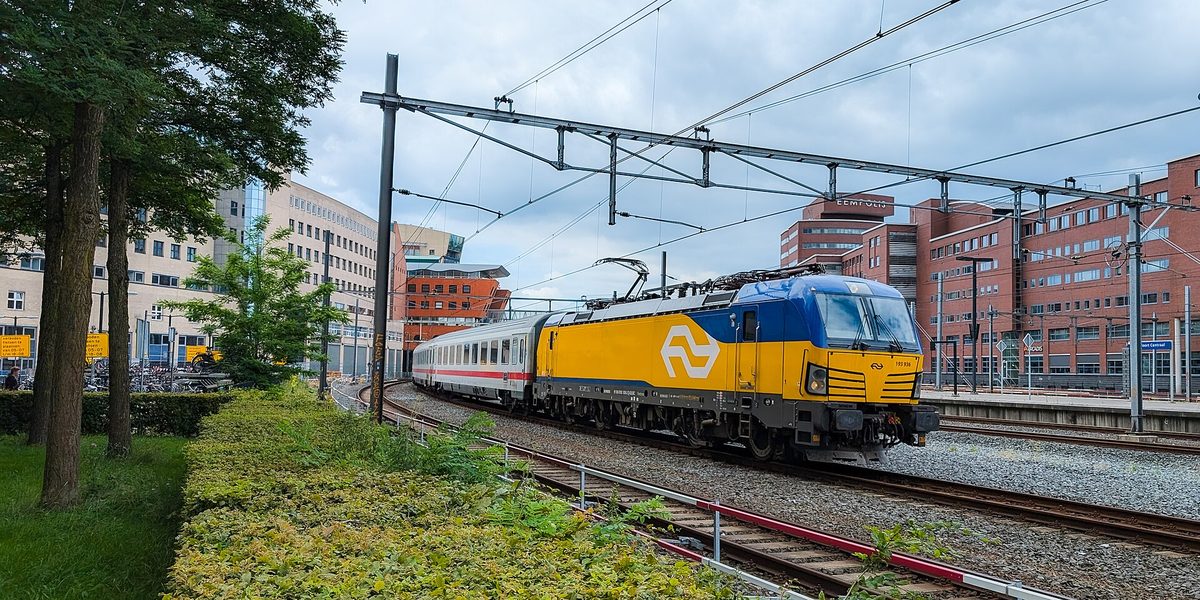
2. The Rhine Run: Paris to Berlin in 7 days
| Leg | Operator | Fastest scheduled time | Reservation | Pass holder fee, 2nd class |
|---|---|---|---|---|
| Paris → Brussels | Eurostar | 1h22 | Compulsory | €27 |
| Brussels → Cologne | DB ICE | 1h49 | Optional | Not sourced |
| Cologne → Berlin | DB ICE | 3h43 | Optional | €5.50 |
This is the shortest route here, and the one where I would tell you not to buy a pass. Three legs, one of them compulsory at €27, the other two on German ICEs where reservations are optional. A four-day flexi pass costs €283. Three advance tickets on these routes cost considerably less than that, and you are not using the fourth day.
Pacing: two nights Paris, one Brussels, one Cologne, three Berlin. Seven nights, three travel days.
Paris to Brussels is 1h22 on Eurostar, the highest-frequency international high-speed route in Europe, roughly hourly from Gare du Nord to Bruxelles-Midi. Advance fares start around €29 booked two to three months ahead. Brussels to Cologne is 1h49 on a DB ICE. Cologne to Berlin is 3h43 direct, around thirty trains a day, and German advance fares on this kind of route start at €17.99 on a Sparpreis while the walk-up Flexpreis can pass €150 on the day. That spread is the single most important number in German rail travel, and the reason a country with no compulsory reservations still rewards booking ahead.
One 2026 caveat that applies to any Rhine itinerary: the Right Bank Rhine line between Troisdorf and Wiesbaden is closed in both directions from 10 July 2026 until mid-December 2026, and the Cologne to Hagen corridor was under overhaul from 6 February to 10 July 2026. German engineering work in 2026 has been unusually heavy, and the pattern is full-closure reconstruction rather than weekend patching. Check your specific date rather than assuming the map.
Where I would change it: add Amsterdam between Brussels and Cologne if you have two more nights, or swap Cologne for Hamburg if you would rather have water than a cathedral. Cologne earns its stop mainly because the cathedral is roughly ninety seconds from the platform, which on a one-night stay is worth more than it sounds. There is more on the country itself in our Germany travel guide.
3. The Central Europe Loop: Berlin, Prague, Vienna, Budapest in 10 days
| Leg | Operator | Fastest scheduled time | Reservation | Pass holder fee, 2nd class |
|---|---|---|---|---|
| Berlin → Prague | EuroCity (DB / ČD) | 3h35 | Optional | €5.50 |
| Prague → Vienna | ÖBB Railjet | approx. 4h | Optional | €3 |
| Vienna → Budapest | ÖBB Railjet Xpress | 2h16 | Optional on Railjet | €3 |
| Budapest → Berlin | EuroNight Metropol | overnight | Compulsory | €19 seat / €44 six-bed couchette |
My favourite route to recommend to someone who has already done the western capitals. Four cities that are properly distinct from each other, short legs between all of them, almost no compulsory reservations, and a night train home that saves you a hotel night and a travel day at once.
Pacing: three nights Berlin, two Prague, three Vienna, one Budapest, then the overnight Metropol back to Berlin. Ten nights away, four travel days.
Berlin to Prague is 3h35, Prague to Vienna about four hours, Vienna to Budapest 2h16 on a Railjet Xpress. None of these is long enough to eat a day. You can leave after breakfast and be checked in and walking around by mid-afternoon every single time, which is what makes ten days feel generous rather than frantic.
The Budapest to Berlin EuroNight Metropol is the piece that makes the loop close neatly. Pass holder supplements are €19 for a seat, €44 per person in a six-bed couchette, €54 in a four-bed, €69 per person in a triple sleeper, €94 in a double and €169 for a single. Night train reservations are always compulsory, without exception. The rule that matters for pass holders: board an overnight train before midnight and do not change trains after midnight, and the whole journey uses one flexi day, the day of departure. The arrival time on day two is irrelevant. That rule replaced the old post-19:00 rule in January 2019.
Pass maths: four travel days, so a four-days-in-one-month pass at €283 adult or €212 youth. Compulsory spend is the couchette at €44. Total around €327 for an adult. Point-to-point on these legs is cheap. Vienna to Budapest has been listed from around €9.55 with RegioJet, and seat61 quotes roughly €13 booked ahead against about €52.70 walk-up in second class. So the pass wins here on the night train and the flexibility rather than on raw arithmetic. It is close. If your dates are fixed and you book everything three months out, tickets are the better deal by perhaps thirty euros. If they are not, buy the pass.
Where I would change it: add Bratislava as a day trip from Vienna. It is under an hour and the old town is a pleasant half day. Do not give it an overnight. Our Eastern Europe itinerary extends this loop properly if you want to go further.

4. The Alpine-Italian Loop: Zurich, Milan, Rome, Florence, Venice in 9 days
| Leg | Operator | Fastest scheduled time | Reservation | Pass holder fee, 2nd class |
|---|---|---|---|---|
| Zurich → Milan | EuroCity (SBB / Trenitalia) | 3h12 | Compulsory | €13 to €17 |
| Milan → Rome | Frecciarossa | just under 3h non-stop | Compulsory | €13 |
| Rome → Florence | Frecciarossa | 1h23 | Compulsory | €13 |
| Florence → Venice | Frecciarossa | approx. 2h05 | Compulsory | €13 |
| Venice → Zurich | EuroCity (Trenitalia / SBB) | check the timetable | Compulsory | €13 to €17 |
A closed loop that starts and ends in Zurich, which is useful if you are flying into Switzerland or connecting from a TGV. It is also the route that best illustrates why Italy is expensive on a rail pass despite being cheap on tickets.
Pacing: one night Zurich, one Milan, three Rome, two Florence, two Venice, then the return leg. Nine nights, five travel days.
Every single leg here is compulsory. The two EuroCity crossings of the Alps are €13 to €17, and the three Frecciarossa legs are €13 each in both first and second class. That is €65 to €73 before you have paid a cent for the pass. Meanwhile Rome to Florence can be booked with Italo from €14.90, and Trenitalia regional services on the same corridor have been listed from as little as €3.12. On this route the pass is close to pointless unless it is part of a longer trip.
The trap on this loop is Italo. Italo is Italy’s private high-speed operator, it runs the same city pairs as Trenitalia at competitive prices, and Eurail and Interrail passes are not valid on it at all. Not discounted, not supplemented: not valid. If you hold a pass, you want Trenitalia’s Frecciarossa, Frecciargento or Frecciabianca, which carry €13, €13 and €10 supplements respectively, or the ordinary Intercity at €3. If you do not hold a pass, Italo is often the better buy.
On journey times: Milan to Rome is just under three hours non-stop and just over three and a half with the Bologna and Florence stops, so the non-stop departures are worth hunting for. Rome to Florence is 1h23. Florence to Venice is around 2h05 on the fastest Frecciarossa, with roughly seventeen to nineteen direct trains a day, and note that many of them call at Venezia Mestre on the mainland before Venezia Santa Lucia on the island. Get off at Mestre by accident and you are a bus or a shuttle away from Venice proper.
Trenitalia’s booking horizon is usually around four months, loaded in blocks, so a train missing today may appear next week. If you are building around the best things to do in Rome and Venice, book the intercity legs and let the sightseeing float.
Where I would change it: drop Milan to one afternoon and give the night to Florence. Milan rewards a specific interest, in fashion, in Leonardo’s Last Supper, in football, rather than a general wander. Our ten-day Italy itinerary restructures this properly if Italy is the whole trip rather than a segment.

5. The Alpine Line: Paris to Milan the slow way, 10 days
| Leg | Operator | Fastest scheduled time | Reservation | Pass holder fee, 2nd class |
|---|---|---|---|---|
| Paris → Zurich | TGV Lyria | 4h03 | Compulsory | €29 |
| Zurich → Interlaken Ost | SBB InterCity | 1h31 | Optional | €4.40 |
| Interlaken → Zermatt | SBB / MGB, two changes | 2h10 | Optional | €4.40 |
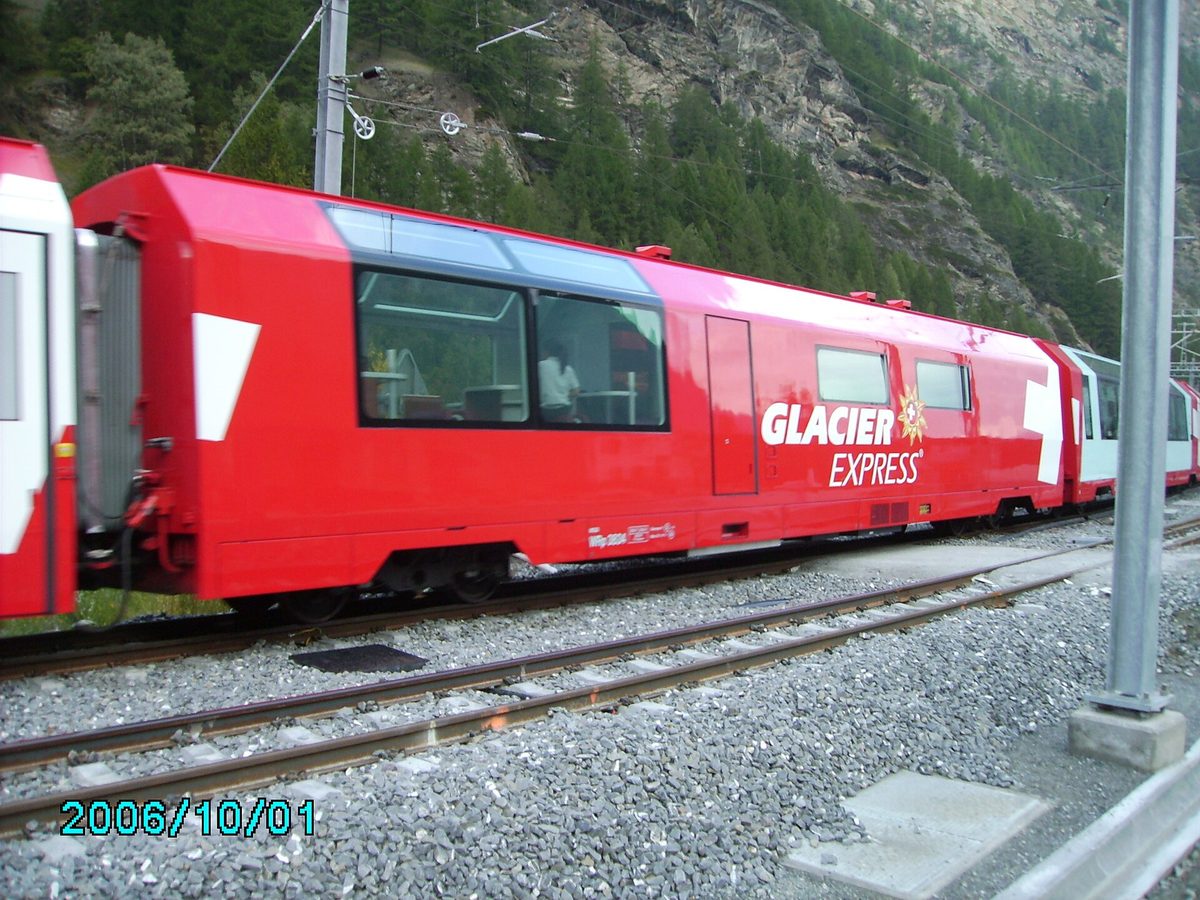
| Zermatt → St Moritz | Glacier Express | approx. 8h | Compulsory | €53 |
| St Moritz → Tirano | Bernina Express | check the timetable | Compulsory | €34 low season / €39 high |
| Tirano → Milan | Trenord regional | check the timetable | None | Free |
This is the scenic route, and it carries the heaviest supplements of any itinerary here. Two of its legs are tourist attractions rather than transport, and they are priced accordingly.
Pacing: two nights Paris, one Zurich, two Interlaken, two Zermatt, one St Moritz, two Milan. Ten nights, six travel days.
Paris to Zurich is 4h03 on a TGV Lyria, €29 with a pass, booking horizon six months and often less. Inside Switzerland the picture flips completely: Swiss InterCity reservations are optional at €4.40, and only the scenic panoramic trains are mandatory. You can travel most of Switzerland on a pass by walking onto the platform and sitting down, which is why the country feels so unusually easy after France.
The two panoramic trains are the exceptions and they are not cheap. The Glacier Express from Zermatt to St Moritz is €53 for pass holders on the long routes, €37 on short ones, and Excellence Class runs to €506. The Bernina Express observation car is €30 on short routes, and on long routes €34 in low season rising to €39 in high season. Both are worth doing once. Neither is fast, and neither is a sensible way to get somewhere.
Interlaken to Zermatt has no direct service and needs two changes, around 2h05 in total. That is a normal Swiss journey rather than a warning; Swiss connections are timed to work and the changes are usually a few minutes across a platform.
Pass maths: six travel days on a seven-days-in-one-month pass at €381 adult, plus €116 to €121 compulsory. Around €500. This is the route where I would seriously consider skipping the pass, buying the Paris to Zurich TGV outright, and using a Swiss Travel Pass or Half Fare Card inside Switzerland instead. Our Switzerland travel guide goes into the Swiss-specific pass options, which are a different product entirely from Interrail.
Where I would change it: do one panoramic train, not both. The Bernina Express is the better of the two for the money, it climbs higher and costs a third of what the Glacier Express does, and it drops you at Tirano where an ordinary Italian regional train takes over. Also note that the Glacier Express does not run at all between 11 October and 4 December 2026.
6. The Iberian Line: Paris, Barcelona, Madrid, Seville in 10 days
| Leg | Operator | Fastest scheduled time | Reservation | Pass holder fee, 2nd class |
|---|---|---|---|---|
| Paris → Barcelona | SNCF TGV INOUI | 6h25 to 6h50 | Compulsory | €35 |
| Barcelona → Madrid | Renfe AVE | 2h29 | Compulsory | €10 (Elige) |
| Madrid → Seville | Renfe AVE | check the timetable | Compulsory | €10 (Elige) |
Three legs, all compulsory, €55 in supplements, and a booking system that is the most erratic in western Europe. Spain is a wonderful country to travel by train and an irritating one to plan.
Pacing: two nights Paris, three Barcelona, two Madrid, three Seville. Ten nights, three travel days.
Paris to Barcelona is direct on an SNCF TGV INOUI, quoted at anywhere between 6h25 and 6h50 depending on the source and the departure, and it is the leg that ruins itineraries. The pass supplement is €35, the booking horizon is six months and often less, and with only a handful of departures a day the passholder quota is thin. Advance fares have been available from around €23 to €29, while the same journey booked seven days out has been quoted around US$299. The gap between planning ahead and not is larger on this route than almost anywhere else in Europe.
Barcelona to Madrid is the opposite experience: 2h29 on a Renfe AVE with roughly forty direct trains a day, €10 for a pass holder in the Elige fare, €13 in Elige Confort and €23.50 in Premium with a meal. Renfe’s booking horizon is unpredictable, sometimes 30 days, sometimes 90, and up to nine to eleven months on the most competitive routes such as Madrid to Barcelona. Check weekly rather than assuming.
Spain also has a third high-speed operator, iryo, and unlike Italo in Italy, iryo is bookable with a rail pass at €10 in second class and €13 in first. That asymmetry between the two countries catches out people who assume private operators are always excluded.
The Lisbon question. People routinely append Lisbon to this itinerary. There is no direct train from Madrid to Lisbon. The Trenhotel Lusitania sleeper was suspended in March 2020 and has been permanently discontinued. The actual routing runs via Badajoz on three separate trains, a Renfe Alvia to Badajoz, a CP regional to Entroncamento and a CP service into Lisbon, requiring two separate bookings and taking ten to eleven and a half hours for around €55 to €75. A direct five-hour service is expected around 2030 and roughly three hours on full high-speed lines by 2034. Until then, fly, or make Portugal a separate trip using our Portugal travel guide.
Pass maths: three travel days against a four-day flexi pass at €283 plus €55 in supplements is €338, and three advance tickets on these routes will come in well under that. Buy tickets. Our Spain travel guide has the regional detail.
Where I would change it: swap Seville for Valencia if you would rather have a beach and a market than Moorish architecture, or add San Sebastián on the way south from Paris and break the 6h50 leg into two comfortable halves. Splitting that journey is the single best structural improvement you can make to this route.

7. The Nordic Line: Berlin, Copenhagen, Stockholm, Oslo in 8 days
| Leg | Operator | Fastest scheduled time | Reservation | Pass holder fee, 2nd class |
|---|---|---|---|---|
| Berlin → Copenhagen | DB / DSB | approx. 7h04 | Optional (required 26 Jun to 16 Aug on the Hamburg leg) | €5.50 |
| Copenhagen → Stockholm | SJ, one change | 5h33 | Not sourced | Not sourced |
| Stockholm → Oslo | SJ, direct | 4h29 to 5h23, sources conflict | Not sourced | Not sourced |
Scandinavia gives you long legs and high daily costs on the ground, and it is where a pass pays for itself fastest, because walk-up fares up here are punishing.
Pacing: one night Berlin, two Copenhagen, two Stockholm, three Oslo. Eight nights, three travel days.
Berlin to Copenhagen is around 7h04 direct with five departures a day. It no longer uses the Puttgarden to Rødby train ferry, which stopped carrying trains in December 2019; services now run overland via Jutland. The Fehmarn Belt tunnel has slipped repeatedly and current reporting puts an opening no earlier than 2031, so the long way round is the way for the rest of this decade. On the Hamburg to Copenhagen section, reservations are optional at €5.50 but required between 26 June and 16 August, a fortnight shorter than the German window.
Copenhagen to Stockholm is quoted at 5h33 with one change. Retailers disagree about whether a direct SJ service is currently running, so plan for the change and treat a direct train as a bonus. Stockholm to Oslo is direct, roughly five departures a day, and here I have to be honest: two reputable retailers quote the fastest time as 4h29 and 5h23 respectively, and I could not resolve which is current. Budget five and a half hours and be pleased if it is quicker.
I could not source SJ reservation fees for pass holders on the Interrail fee pages I checked, so I am not going to publish a figure. Budget for something in the ordinary domestic range and confirm at booking.
Pass maths: three travel days, four-day flexi pass at €283, and essentially no compulsory supplements that I could verify. Scandinavian point-to-point fares bought late are among the highest in Europe, so the pass is the safe choice here even on three legs. Our Scandinavia travel guide covers what the three capitals are like.
Where I would change it: if you can find four more days, continue Oslo to Bergen on the Bergensbanen and take the Flåm Railway branch. It is the single best scenic rail day in northern Europe and it is included on a Global Pass as ordinary travel rather than a supplemented panoramic train. It is one of 33 routes we price and date individually.

8. The Adriatic Approach: Vienna, Budapest, Ljubljana, Zagreb in 9 days
| Leg | Operator | Fastest scheduled time | Reservation | Pass holder fee, 2nd class |
|---|---|---|---|---|
| Vienna → Budapest | ÖBB Railjet Xpress | 2h16 | Optional on Railjet | €3 |
| Budapest → Ljubljana | MÁV / SŽ | 7h36 | Mandatory on Hungarian IC | €1.70 to €2.60 |
| Ljubljana → Zagreb | Slovenian Railways (SŽ) | 1h35 | Recommended | €2 to €4 |
The cheapest route here by a wide margin. The only compulsory reservation across four countries is the Hungarian Intercity leg at €1.70 to €2.60, and even paying every optional and recommended fee as well you would spend under ten euros in total. If you want to understand why people still travel Europe by train on a budget, this is the answer.
Pacing: three nights Vienna, two Budapest, two Ljubljana, two Zagreb. Nine nights, three travel days.
Vienna to Budapest is 2h16 on a Railjet Xpress and about as easy as international rail gets. Budapest to Ljubljana is the long one at 7h36, and Hungarian Intercity reservations are mandatory but cost €1.70 to €2.60 in second class. Ljubljana to Zagreb is 1h35 on Slovenian Railways with eight trains a day, reservation recommended at €2 to €4.
The catch is booking horizons rather than money. Poland, Portugal, Slovakia, Croatia, Slovenia, Romania, Serbia and Bulgaria all sell only sixty days ahead, Polish domestic trains only thirty, and Bulgarian domestic just five. You cannot plan this route in detail in February for an August trip, and you do not need to. Buy the pass, book Budapest to Ljubljana when the window opens, and treat everything else as walk-up.
Pass maths: three travel days against a four-day flexi at €283 or €212 for a youth. Point-to-point fares in this part of Europe are low enough that tickets probably win on pure cost. The pass wins on not having to think about it, and on the freedom to add an unplanned day trip without opening an app. That is a real benefit and I will not pretend it is worth nothing, but it is not a saving. For the region more broadly, see our Eastern Europe travel guide and the Croatia travel guide.
9. The Central and Eastern Arc: Berlin, Prague, Krakow, Vienna, Budapest in 12 days
| Leg | Operator | Fastest scheduled time | Reservation | Pass holder fee, 2nd class |
|---|---|---|---|---|
| Berlin → Prague | EuroCity (DB / ČD) | 3h35 | Optional | €5.50 |
| Prague → Krakow | ČD / PKP, direct | 5h37 | Not sourced | Not sourced |
| Krakow → Vienna | ÖBB, direct | 5h21 | Optional | €3 |
| Vienna → Budapest | ÖBB Railjet Xpress | 2h16 | Optional on Railjet | €3 |
Five cities, five countries touched, twelve nights, and not one compulsory reservation that I could source. This is the route where a rail pass does exactly what the marketing says it does.
Pacing: three nights Berlin, two Prague, three Krakow, two Vienna, two Budapest. Twelve nights, four travel days.
Prague to Krakow is 5h37 direct with five trains a day, and Krakow to Vienna is 5h21 direct with about three. Both are long enough to want a booked seat and cheap enough that it barely matters. Polish domestic booking opens only thirty days ahead, which sounds alarming and rarely is, because these trains do not sell out the way a TGV does.
The reason I rate this arc so highly is the contrast. Berlin and Vienna are grand capitals with imperial and industrial scale. Prague is compact and relentlessly beautiful and, in July, relentlessly busy. Krakow is the one that surprises people, and the three nights are there because Auschwitz-Birkenau is a day and you should not do it on the same day as anything else. Budapest closes the trip on thermal baths and ruin bars, which is the right order.
Pass maths: four travel days, four-day flexi at €283 adult or €212 youth, and near-zero supplements. There is no version of buying four separate international tickets across five countries that is meaningfully cheaper once you account for the fares you will get wrong. Buy the pass. For where this sits in a longer trip, our three weeks in Europe itinerary stitches it to the west.

10. The Grand Tour: London to Rome in 21 days
| Leg | Operator | Fastest scheduled time | Reservation | Pass holder fee, 2nd class |
|---|---|---|---|---|
| London → Paris | Eurostar | 2h16 | Compulsory | €35 |
| Paris → Amsterdam | Eurostar (ex-Thalys) | 3h20 | Compulsory | €32 |
| Amsterdam → Berlin | DB ICE | 5h41 | Optional (required 26 Jun to 31 Aug) | €5.50 |
| Berlin → Prague | EuroCity (DB / ČD) | 3h35 | Optional | €5.50 |
| Prague → Vienna | ÖBB Railjet | approx. 4h | Optional | €3 |
| Vienna → Budapest | ÖBB Railjet Xpress | 2h16 | Optional on Railjet | €3 |
| Budapest → Vienna | ÖBB Railjet Xpress | 2h16 | Optional on Railjet | €3 |
| Vienna → Venice | ÖBB Railjet via Graz | 7h10 to 7h15 | Check at booking | Not sourced |
| Venice → Florence | Frecciarossa | approx. 2h05 | Compulsory | €13 |
| Florence → Rome | Frecciarossa | 1h23 | Compulsory | €13 |
Three weeks and eight countries, and the point at which a rail pass stops being a close call and becomes obvious. Ten long-distance journeys bought individually would run to several hundred euros before you factor in the ones you book badly.
Pacing: two nights London, three Paris, two Amsterdam, three Berlin, two Prague, two Vienna with one Budapest night inside the Vienna block, two Venice, two Florence, three Rome. Twenty-one nights, ten travel days.
Budapest sits inside the Vienna block as an out-and-back rather than a through leg, because the alternative, continuing south from Budapest towards Italy, adds a seven and a half hour day and a set of thirty and sixty day booking horizons that are hard to plan around. Two hours sixteen each way from Vienna, one night in Budapest, and you keep the trip moving in one direction.
The Vienna to Venice Railjet is the leg to watch. For 2026 the service was retimed and routed via Graz, with a reduced journey time, departing Wien Hbf at 08:53 and 12:53 and arriving Venezia Santa Lucia at 16:09 and 20:03. Two direct trains a day, roughly seven hours and ten to fifteen minutes. Take the 08:53 and you get an afternoon in Venice. Take the 12:53 and you get a dark arrival and a vaporetto queue. I could not source a current pass holder reservation fee for this specific service, so check it at booking rather than trusting my table.
Pass maths: ten travel days spread over three weeks, so either a ten-days-in-two-months flexi at €447 adult and €335 youth, or a fifteen-day continuous pass at €476. The flexi is the right buy and it fits exactly, with the Budapest return leg taking the tenth day. Add €93 in sourced compulsory reservations plus the Vienna to Venice fee and the optional summer ones, and the whole trip’s rail cost lands somewhere around €540 to €600 for an adult. For twenty-one days and eight countries that is difficult to beat by any other means, including flying.
Our three weeks in Europe itinerary and Western Europe itinerary both cover variants of this shape with different city weightings.

11. The Sleeper Circuit: three night trains in 14 days
| Leg | Operator | Fastest scheduled time | Reservation | Pass holder fee, 2nd class |
|---|---|---|---|---|
| Brussels → Prague, via Berlin | European Sleeper | overnight | Compulsory | Classic five-berth €64 to €74 |
| Prague → Vienna | ÖBB Railjet | approx. 4h | Optional | €3 |
| Vienna → Rome | ÖBB Nightjet | overnight | Compulsory | Four-bed couchette €29.90 to €94.90 |
| Rome → Florence | Frecciarossa | 1h23 | Compulsory | €13 |
| Florence → Venice | Frecciarossa | approx. 2h05 | Compulsory | €13 |
| Venice → Vienna | ÖBB Nightjet | overnight | Compulsory | Four-bed couchette €29.90 to €94.90 |
Built around night trains rather than around cities, which is a different way to plan and worth trying once. Every overnight saves you a hotel night and a daylight travel day, and costs you a certain amount of sleep quality.
Pacing: two nights Brussels, sleeper to Prague, two Prague, two Vienna, sleeper to Rome, three Rome, one Florence, one Venice, sleeper back to Vienna. Fourteen nights, three of them on a train, six travel days.
Pass maths: six travel days, so a seven-days-in-one-month pass at €381 adult or €286 youth. Compulsory supplements run €150 to €290 depending on which berths you take and when, which is the widest range on this page and the reason I will not give you a single figure. Total somewhere between €530 and €670 for an adult. The pass wins on paper, but the sleeper supplements dominate the number so completely that the pass is close to incidental. Buy it for the day legs and the flexibility, then choose your berths on price.
Where I would change it: take the six-bed couchette rather than the four-bed on at least one night. The saving is real, the sleep is barely worse, and the company is usually the best part of the journey.
The European night train network has been in flux and 2026 has been a year of both losses and gains. Back-on-Track’s 2026 map counts around 205 regular sleeper connections, with five new for the year and roughly ten dropped. On the loss side, ÖBB withdrew from its own Paris links in December 2025 and the Paris to Berlin Nightjet was discontinued after 14 December 2025, attributed to French funding cuts. The Stockholm to Narvik night train, one of the longest in Europe, has also gone.
On the gain side, European Sleeper launched Paris to Berlin on 26 March 2026, running three times a week and calling at Brussels-Midi and Liège in both directions, and has a Brussels to Milan service planned for 9 September 2026, a date that has already slipped once. The EuroNight Carpatia, running Przemyśl to Kraków, Vienna, Salzburg and Munich, started on 14 December 2025.
Nightjet’s new-generation trains are the ones to seek out. Siemens built 22 to 24 sets, the first entered service in December 2023, and the full fleet of 24 was due in service by mid-2026, an ÖBB investment of over €500 million. Each has seven cars: two sleeping cars, three couchette cars, a multi-function car with seats, luggage space and an accessible sleeper compartment, and a seats car. Vienna to Zurich was running with new-generation stock from 13 June 2026 and Amsterdam to Zurich is scheduled to follow from 13 December 2026. The Mini Cabin, a compact single pod inside the couchette car, is the interesting new product at €29.90 to €94.90 for pass holders and it books out fast.
Costs: Nightjet pricing is dynamic and varies by route, season and demand. As of June 2026 the pass holder ranges are €4.90 to €24.90 for a seat, €19.90 to €64.90 in a six-bed couchette, €29.90 to €94.90 in a four-bed couchette or a Mini Cabin, €59.90 to €184.90 per person in a three-bed sleeper, €69.90 to €224.90 in a double and €114.90 to €479.90 for a single cabin. The en-suite Plus sleepers run higher again, up to €624.90 for a single. European Sleeper’s Classic five-berth is €64 to €74 and its Comfort Standard double €119 to €139.
The Nightjet booking horizon is nominally six months, but the Paris, Brussels and Amsterdam services have typically opened only two to four months ahead, which is exactly the kind of asymmetry that ruins a plan built in a spreadsheet in January.

12. The One-Month Interrail: eleven cities in 30 days
| Leg | Operator | Fastest scheduled time | Reservation | Pass holder fee, 2nd class |
|---|---|---|---|---|
| London → Paris | Eurostar | 2h16 | Compulsory | €35 |
| Paris → Zurich | TGV Lyria | 4h03 | Compulsory | €29 |
| Zurich → Milan | EuroCity (SBB / Trenitalia) | 3h12 | Compulsory | €13 to €17 |
| Milan → Rome | Frecciarossa | just under 3h non-stop | Compulsory | €13 |
| Rome → Florence | Frecciarossa | 1h23 | Compulsory | €13 |
| Florence → Venice | Frecciarossa | approx. 2h05 | Compulsory | €13 |
| Venice → Vienna | ÖBB Railjet via Graz | 7h10 to 7h15 | Check at booking | Not sourced |
| Vienna → Budapest | ÖBB Railjet Xpress | 2h16 | Optional on Railjet | €3 |
| Budapest → Ljubljana | MÁV / SŽ | 7h36 | Mandatory on Hungarian IC | €1.70 to €2.60 |
| Ljubljana → Zagreb | Slovenian Railways (SŽ) | 1h35 | Recommended | €2 to €4 |
This is the full backpacker route, and the one where the pass economics stop being arguable. Ten long-distance legs across eight countries, with three-night stays almost everywhere and enough slack to change your mind twice.
Pacing: two nights London, four Paris, two Zurich, two Milan, four Rome, two Florence, three Venice, three Vienna, three Budapest, three Ljubljana, two Zagreb. Thirty nights, ten travel days.
Pass maths: ten travel days over a month, so a ten-days-in-two-months flexi at €447 adult, €335 youth, €402 senior. Compulsory supplements of €118 to €123 plus the unsourced Venice to Vienna fee. Total rail cost around €565 for an adult, €455 for a youth under 28. Ten international high-speed journeys bought as individual tickets, several of them booked late because your plans changed, would comfortably exceed that.
The alternative pass shape is a one-month continuous at €696 adult, €522 youth. It only makes sense if you are moving more than ten times, which on a thirty-day trip with three-night stays you are not. Continuous passes are for people doing one or two trains a day for weeks, not for people staying places.
Note the activation rule, because it is useful: you do not have to fix dates when you buy. You can activate on any date within eleven months of purchase, and then run a two-month flexi window from there. So a pass bought today can, in effect, cover travel up to twelve or thirteen months out. If prices rise on 1 January, buying in December for a summer trip is a legitimate move.
Our one-month Europe itinerary and backpacking Europe guide handle the on-the-ground side of a trip this length, which is a different problem from the rail side.
Where I would change it: build in two nights with nothing planned, somewhere cheap, around day eighteen. Thirty days of moving is longer than it sounds and the trip that survives is the one with slack in it.
Journey times reference: 33 legs, sourced
Build your own route from this rather than from a map. Every time below is the fastest scheduled journey I could source on 9 August 2026, and where a figure is contested or a direct service does not exist I have said so instead of rounding it away.
| Leg | Fastest scheduled | Operator | Notes |
|---|---|---|---|
| London to Paris | 2h16 | Eurostar | Quota-limited for pass holders |
| Paris to Brussels | 1h22 | Eurostar | Roughly hourly, Gare du Nord to Bruxelles-Midi |
| Paris to Amsterdam | 3h20 | Eurostar, ex-Thalys | Direct |
| Brussels to Cologne | 1h49 | DB ICE | Optional reservation |
| Cologne to Berlin | 3h43 | DB ICE | About 30 trains a day |
| Amsterdam to Berlin | 5h41 | DB ICE | Reservation required 26 Jun to 31 Aug |
| Berlin to Prague | 3h35 | EuroCity, DB and ČD | Sources range 3h35 to 3h46 |
| Prague to Vienna | approx. 4h | ÖBB Railjet | Direct |
| Prague to Kraków | 5h37 | ČD and PKP | 5 direct trains a day |
| Vienna to Kraków | 5h21 | ÖBB | About 3 direct trains a day |
| Munich to Vienna | approx. 4h | ÖBB Railjet | Roughly hourly |
| Vienna to Budapest | 2h16 | ÖBB Railjet Xpress | The easiest international leg in Europe |
| Vienna to Venice | 7h10 to 7h15 | ÖBB Railjet via Graz | Retimed for 2026: dep 08:53 and 12:53, arr 16:09 and 20:03 |
| Budapest to Ljubljana | 7h36 | MÁV and SŽ | The long one |
| Ljubljana to Zagreb | 1h35 | Slovenian Railways | 8 trains a day |
| Munich to Zurich | 3h32 | EuroCity, DB and SBB | Direct |
| Paris to Zurich | 4h03 to 4h04 | TGV Lyria | Compulsory reservation |
| Zurich to Milan | 3h12 | EuroCity, SBB and Trenitalia | Direct, through the Gotthard |
| Zurich to Interlaken Ost | 1h31 | SBB | 7 direct trains a day |
| Interlaken to Zermatt | 2h10 | SBB and MGB | No direct service, two changes |
| Zermatt to St Moritz | approx. 8h | Glacier Express | 291 km, 91 tunnels, the Oberalp Pass at 2,033 m. Not running 11 Oct to 4 Dec 2026 |
| Nice to Milan | 5h01, also quoted 5h41 | SNCF and Trenitalia | 2 trains a day |
| Milan to Rome | just under 3h non-stop | Frecciarossa | Just over 3h30 with Bologna and Florence stops |
| Rome to Florence | 1h23 | Frecciarossa | The busiest domestic high-speed corridor in Italy |
| Florence to Venice | approx. 2h05 | Frecciarossa | Around 17 to 19 direct a day. Many call at Mestre first |
| Rome to Venice | 3h45 | Frecciarossa | Direct |
| Paris to Barcelona | 6h25 to 6h50 | SNCF TGV INOUI | Three to six direct trains a day depending on the season |
| Barcelona to Madrid | 2h29 | Renfe AVE | About 40 direct trains a day |
| Madrid to Lisbon | 10h to 11.5h | Renfe Alvia and CP | No direct train. Three trains, two bookings, via Badajoz |
| Berlin to Copenhagen | approx. 7h04 | DB and DSB | 5 departures a day, overland via Jutland |
| Copenhagen to Stockholm | 5h33 | SJ | Plan for one change. Retailers disagree on whether a direct runs |
| Stockholm to Oslo | 4h29 or 5h23 | SJ | Sources conflict. Direct, about 5 a day. Budget the longer figure |
Three rows carry a warning in bold and they are worth reading twice before you commit to a route. Madrid to Lisbon is not a train journey in any useful sense. Copenhagen to Stockholm should be planned around one change. Interlaken to Zermatt needs two. None of those is a problem if you know about it while you are drawing the route, and all three are a problem if you find out at the station.
Notice also how few legs on this list exceed six hours. That is the practical ceiling for a day that still leaves you capable of enjoying the evening. Five cross it: Budapest to Ljubljana at 7h36, Vienna to Venice at 7h10 to 7h15, Berlin to Copenhagen at around 7h04, Paris to Barcelona at up to 6h50, and Madrid to Lisbon at ten to eleven and a half hours, which is in a category of its own. All of them are better done first thing in the morning or, where a sleeper exists, overnight.
Seat reservation fees across Europe, by operator
This is the table that changes how you plan. Every fee below is what an Interrail or Eurail pass holder pays on top of the pass, checked on 9 August 2026 against the Interrail reservation-fee pages, which describe their own figures as indicative and subject to change. The average international reservation is quoted at €15, the average domestic one at €10 and the average night train one at €20, but the averages hide everything interesting.
International routes
| Route | Reservation | 2nd class | 1st class |
|---|---|---|---|
| Eurostar London to Paris | Compulsory | €35 | €40 |
| Eurostar London to Brussels | Compulsory | €35 | €40 |
| Eurostar London to Amsterdam | Compulsory | €35 | €43 |
| Eurostar Paris to Amsterdam | Compulsory | €32 | €37 |
| Eurostar Paris to Brussels | Compulsory | €27 | €32 |
| OUIGO Train Classique Paris to Brussels | Compulsory | €10 | €15 |
| Eurostar Paris to Cologne and Dortmund | Compulsory | €32 | €37 |
| TGV Paris to Barcelona | Compulsory | €35 | €35 |
| TGV Paris to Turin and Milan | Compulsory | €31 | €45 |
| TGV Lyria Paris to Basel, Geneva, Zurich | Compulsory | €29 | €39 |
| TGV and ICE Paris to Stuttgart, Munich, Frankfurt | Compulsory, passholder fare required | €19 | €19 |
| EuroCity Milan and Venice to Zurich, Basel, Geneva | Compulsory | €13 to €17 | €13 to €17 |
| ICE Amsterdam to Berlin | Optional, required 26 Jun to 31 Aug | €5.50 | €6.90 |
| ICE Amsterdam to Frankfurt | Optional, required 26 Jun to 31 Aug | €5.50 | €6.90 |
| Railjet Prague to Berlin | Optional | €5.50 | €6.90 |
| Railjet Prague to Vienna | Optional | €3 | €3 |
| RegioJet Prague to Vienna | Mandatory | €1 | €1 |
| EuroCity Express and Railjet Hamburg to Copenhagen | Optional, required 26 Jun to 16 Aug | €5.50 | €6.90 |
| Railjet over the Brenner, Munich to Verona and Bologna | Optional, supplement required | €5.50 | €6.90 |
Look at the shape of that table for a moment. Everything involving France or the Channel is between €19 and €43. Everything east of Germany is between one and six euros. The border between expensive and cheap European rail runs roughly along the Rhine, and it has nothing to do with distance and everything to do with whether the operator runs a compulsory-reservation yield-managed high-speed network.
Domestic reservation fees by operator
| Operator or service | Country | Reservation | Pass holder fee |
|---|---|---|---|
| TGV INOUI | France | Compulsory | €10 to €20 |
| Intercités, mandatory-reservation routes | France | Compulsory | €10 to €20 |
| Intercités, recommended-reservation routes | France | Recommended | €1.60 |
| OUIGO Grande Vitesse | France | Compulsory, seat emailed 4 days before | €10 to €20 |
| Frecciarossa | Italy | Compulsory | €13 both classes |
| Frecciargento | Italy | Compulsory | €13 both classes |
| Frecciabianca | Italy | Compulsory | €10 both classes |
| Trenitalia Intercity, daytime | Italy | Compulsory | €3 both classes |
| Italo | Italy | Passes not valid at all | Full fare ticket required |
| Renfe AVE | Spain | Compulsory | €10 Elige, €13 Elige Confort, €23.50 Premium |
| Renfe Alvia and Intercity | Spain | Compulsory | €6.50 second, €10 first |
| Renfe Avant and Media Distancia | Spain | Compulsory | €4 second class |
| iryo | Spain | Compulsory, pass valid | €10 second, €13 first |
| ICE, IC, EC, ECE | Germany | Optional or recommended | €5.50 second, €6.90 first |
| IC, Railjet, Railjet Express | Austria | Optional | €3 both classes |
| InterCity | Switzerland | Optional | €4.40 |
| Glacier Express | Switzerland | Compulsory | €37 short, €53 long, €506 Excellence |
| Bernina Express observation car | Switzerland | Compulsory | €30 short; long €34 low season, €39 high |
| Intercity Direct, Schiphol to Rotterdam only | Netherlands | Compulsory supplement | €3 |
| Brussels Airport Diabolo supplement | Belgium | Compulsory | €6.40 both classes |
| Intercity | Hungary | Mandatory | €1.70 to €2.60 second, €3 to €5 first |
| IC and Pendolino | Slovenia | Recommended | €2 under 60 km, €4 over |
| Long-distance operators | Great Britain | Recommended, mandatory on some services | Free |
Two things fall out of this that will save you money. First, in the Benelux, Switzerland, Germany, Austria, Denmark and most of central and eastern Europe you can generally board and sit in any unreserved seat with no fee at all. Second, Italy is the only major country where a private high-speed operator is completely excluded from rail passes, and Spain is the country where the equivalent operator is included. Do not generalise from one to the other.
What a rail pass costs in 2026
Global Pass prices below are in euros, for the 33 countries the pass covers. Interrail is for residents of those countries, Eurail for everyone else; they are the same passes at the same prices from the same operator, and residency simply decides which one you may buy. Child prices are zero across the board, with the conditions set out further down.
| Global Pass | Adult 2nd | Youth 2nd | Senior 2nd | Adult 1st | Youth 1st | Senior 1st |
|---|---|---|---|---|---|---|
| 4 days in 1 month | €283 | €212 | €255 | €367 | €275 | €330 |
| 5 days in 1 month | €318 | €239 | €286 | €413 | €309 | €371 |
| 7 days in 1 month | €381 | €286 | €343 | €495 | €371 | €445 |
| 10 days in 2 months | €447 | €335 | €402 | €581 | €435 | €522 |
| 15 days in 2 months | €553 | €415 | €498 | €718 | €538 | €646 |
| 15 days continuous | €476 | €357 | €428 | €618 | €463 | €556 |
| 22 days continuous | €586 | €440 | €527 | €761 | €570 | €684 |
| 1 month continuous | €696 | €522 | €626 | €904 | €678 | €813 |
| 2 months continuous | €826 | €620 | €743 | €1,073 | €804 | €965 |
| 3 months continuous | €956 | €717 | €860 | €1,242 | €931 | €1,117 |
The Youth price applies if you are aged 12 up to and including 27 on the day your trip starts, and it is a 25 percent saving at every tier. The Senior price applies from 60 and is a 10 percent saving. Under-fours travel free without a pass, though they may be asked to sit on a lap when trains are busy; children aged four to eleven travel free on a free Child Pass, accompanied at all times by an adult, youth over 18 or senior pass holder, with a maximum of two children per adult.
A first class pass is valid in both first and second class carriages. A second class pass is valid only in second. And there is now a Global Plus Pass in beta that bundles seat reservation costs for most trains, which given the tables above is a more interesting product than it sounds, particularly for anyone doing France, Italy or Spain.
Pass versus tickets, six routes compared
| Itinerary | Travel days | Cheapest pass that fits, adult 2nd | Compulsory supplements | Total on a pass | Verdict |
|---|---|---|---|---|---|
| 2. The Rhine Run | 3 | €283 (4 in 1 month) | €27 | €310 | Tickets win. Three advance fares cost a fraction of this |
| 6. The Iberian Line | 3 | €283 (4 in 1 month) | €55 | €338 | Tickets win if your dates are fixed |
| 4. The Alpine-Italian Loop | 5 | €318 (5 in 1 month) | €65 to €73 | €383 to €391 | Close. Italian advance fares are low enough to tip it |
| 1. The Classic Six | 5 | €318 (5 in 1 month) | €67 | €385 | Pass wins on flexibility, roughly level on cost |
| 10. The Grand Tour | 9 | €447 (10 in 2 months) | €93 plus one unsourced | €540 and up | Pass wins outright |
| 12. The One-Month Interrail | 10 | €447 (10 in 2 months) | €118 to €123 | €565 to €570 | Pass wins by a mile |
The pattern is simple once you see it, and it is geographic as much as numerical. Below about five travel days spent mostly in France, Spain or Italy, buy tickets: the compulsory supplements swallow the pass’s advantage. Below five travel days in Germany, Austria, Scandinavia or central Europe the calculation flips, because supplements there are close to zero and walk-up fares are brutal. Above about eight travel days across three or more countries, buy the pass regardless of geography. Between those points it comes down to how fixed your dates are, and my honest answer is that most people’s dates are less fixed than they think by week two of a long trip.
Worth knowing on the ticket side: European advance fares are extraordinarily cheap and walk-up fares are extraordinarily expensive, and the spread is bigger than most people expect. Berlin to Munich is €17.99 on a DB Sparpreis and over €150 on a Flexpreis bought on the day. Vienna to Budapest runs about €13 booked ahead against roughly €52.70 walk-up in second class. London to Paris rises from around US$107 at thirty days out to around US$215 at seven days. Amsterdam to Berlin roughly doubles over the same window. That asymmetry is the actual argument for a rail pass: not that it is cheaper than the best possible ticket, but that it is cheaper than the ticket you will actually buy when your plans change.
Rail pass rules that decide your itinerary
- A travel day is a calendar day. Midnight to midnight, and you can take as many trains and cover as many kilometres inside it as you can physically manage. Chaining three legs into one day is free.
- The night train rule. Board an overnight train before midnight and do not change trains after midnight, and you spend one travel day: the day of departure. Arrival time on day two does not matter. The old post-19:00 rule was replaced in January 2019.
- The home-country rule. If you live in one of the 33 network countries, the Global Pass is valid in your country of residence for one outbound and one inbound journey, taken on travel days at any point in the trip. Not unlimited domestic travel.
- Activation. You need not fix dates when you buy. Activate on any date within eleven months of purchase.
- Mobile versus paper. 97 percent of buyers now choose the mobile pass. Paper passes still exist and require you to fill in the travel diary by hand for every journey.
- Refunds. Standard passes are refundable or exchangeable if returned unused. Promotional passes may not be.

Booking horizons: when each country’s trains go on sale
More itineraries are wrecked by this than by anything else, because the failure mode looks identical to a sold-out train. If you search for a train two months out and see nothing, it is almost never full. It is not on sale yet.
| Operator or route | Booking opens | Notes |
|---|---|---|
| Eurostar, London to Paris, Lille, Brussels, Amsterdam | Up to 11 months | Data is often incomplete beyond 5 to 6 months |
| Eurostar pass holder reservations | Up to 6 months | Quota-limited, sells out first on popular departures |
| DB, journeys within Germany and ICE to Brussels | Up to 12 months | The longest horizon in Europe |
| DB international, most routes | Up to 6 months | Paris, Amsterdam, Luxembourg, Switzerland, Copenhagen, Prague, Bratislava, Budapest |
| SNCF domestic TGV and Intercité | Up to 4 months | Sales open in blocks, so the horizon moves. Regional TER 3 to 5 months |
| Eurostar Paris to Brussels, Amsterdam, Cologne | Up to 4 months | Shorter than the London routes, which surprises people |
| TGV Lyria, Paris to Barcelona, Paris to Milan | Up to 6 months, often less | Thin quotas on the three-a-day Barcelona route |
| Intercités de Nuit | Nominally 4 months | Often opens late, sometimes 2 to 3 months, occasionally 1 |
| Trenitalia | Around 4 months | Loads in blocks. Intercity Notte sleepers load last |
| Renfe | Erratic: 30 to 90 days | Up to 9 to 11 months on competitive routes such as Madrid to Barcelona |
| ÖBB including Nightjet | Up to 6 months | Paris, Brussels and Amsterdam Nightjets typically only 2 to 4 months |
| SBB Swiss domestic | Up to 6 months | Some panoramic trains less |
| Poland, Portugal, Slovakia, Croatia, Slovenia, Romania, Serbia, Bulgaria | 60 days | Polish domestic only 30 days |
| Latvia, Lithuania, Estonia | 29 to 30 days | Estonian domestic about a week; Bulgarian domestic 5 days |
Two heuristics that come straight from the timetable and will stop you panicking. If a ticket shows as unavailable and you are travelling tomorrow or next week, it is sold out. If you are two or more months out, you can be roughly 99 percent certain it simply is not on sale yet. And if a train is missing three or more months ahead, there is around a 90 percent chance it will appear later; if it is still missing at two months it is probably not running; if it is still missing at one month, it is near-certain the train will not run and you are looking at engineering work.
One more date to have in your head: every European railway changes timetable at midnight on the second Saturday in December. Bookings for dates after that changeover open late, mid-October for France, Germany and Austria, and late November or early December for Spain, Portugal, Hungary, Poland, Slovakia, Czechia and Bulgaria. If you are planning a Christmas markets trip, that is the constraint you are working against. Our guide to Christmas markets in Europe covers which cities are worth the December cold.
The 2026 night train network

Night trains do two things for an itinerary that day trains cannot: they collapse a travel day into a night you were going to spend somewhere anyway, and they let you cover distances that would otherwise be a flight. They also cost more in supplements than any other category of train, and the reservation is always compulsory, on every night train, with no exceptions.
| Operator | 2026 status | Pass holder supplement, second class |
|---|---|---|
| ÖBB Nightjet | Running. Network reaches Berlin, Hamburg, Cologne, Munich, Vienna, Zurich, Milan, Florence, Rome, Warsaw, Ljubljana, Zagreb, Brussels, Budapest, Prague and Amsterdam | Seat €4.90 to €24.90; six-bed couchette €19.90 to €64.90; four-bed or Mini Cabin €29.90 to €94.90; three-bed sleeper €59.90 to €184.90; double €69.90 to €224.90; single cabin €114.90 to €479.90 |
| Nightjet Paris links | Withdrawn. ÖBB dropped its Paris services in December 2025; Paris to Berlin ended after 14 December 2025 | Not applicable |
| European Sleeper, Brussels to Berlin to Prague | Running, the original route | Budget seat €11 to €21; Classic five-berth €64 to €74; Comfort Standard double €119 to €139 |
| European Sleeper, Paris to Berlin | New. Began 26 March 2026, three times a week via Brussels-Midi and Liège | As above |
| European Sleeper, Brussels to Milan | Planned for 9 September 2026. The date has already slipped once | Not yet published |
| EuroNight Carpatia | New. Przemyśl to Kraków, Vienna, Salzburg and Munich since 14 December 2025 | Not sourced |
| EuroNight Metropol, Budapest to Berlin | Running via Bratislava and Prague | Seat €19; six-bed €44; four-bed €54; triple sleeper €69; double €94; single €169 |
| EuroNight Berlin to Hamburg to Malmö to Stockholm | Running | Seat €17; six-bed couchette €35; double sleeper €76 |
| Snälltåget | Running. Stockholm to Berlin and Stockholm to the Alps seasonally, plus Swedish domestic | Low season seat €4.60 to €19, six-bed €37 to €61; high season seat €4.60 to €47, six-bed €37 to €80 |
| Stockholm to Narvik | Discontinued. One of Europe’s longest night routes, now gone | Not applicable |
| Intercités de Nuit, France | Running. Paris to the Pyrenees, Languedoc, Alps and Côte d’Azur | Reclining seat €10; six-bed couchette €19 to €25 by season |
| Trenitalia Intercity Notte | Running. One of Europe’s largest night networks, reaching Sicily and Puglia | Seat €3; four-bed Cuccetta Comfort €41; three-bed sleeper €48; double €58; single €122 |
| Caledonian Sleeper | Running. London Euston to Edinburgh, Glasgow, Aberdeen, Inverness, Fort William | Seat free; Classic Room solo £155, twin £195; Club En-suite requires a first class pass |
| Night Riviera | Running. London Paddington to Plymouth and Penzance | Seat free; berths currently only at full fare |
A detail that saves money on three specific routes: the seating carriages on the Zurich to Hamburg, Zurich to Berlin and Zurich to Amsterdam Nightjets are run by DB, and seat reservations on those are not mandatory. Everywhere else on a night train, they are.
Borders, EES and the 90/180 rule

This changed in 2026 and it changes how a multi-country rail itinerary works, so it is worth two minutes.
The EU Entry/Exit System became fully operational on 10 April 2026, after a progressive rollout that began on 12 October 2025. It replaces passport stamping with a digital record of every non-EU and non-Schengen national crossing a Schengen external border, and it automatically detects overstayers. France’s foreign ministry confirms the same 10 April 2026 date. For rail travellers the practical effect is concentrated at the handful of places where a train crosses a Schengen external border, which in practice means the Eurostar routes out of London and the services to and from non-Schengen neighbours. Internal Schengen borders, which is almost every leg in every itinerary above, still have no routine checks.
ETIAS, the travel authorisation that visa-exempt travellers will eventually need, is not yet required as at 9 August 2026 and no website currently issues a genuine one. I am not going to give you a launch date, because the sources disagree: the European Council indicated the fourth quarter of 2026 back in March 2025, the official ETIAS site has since removed its late-2026 target and now says the EU will announce a start date several months before go-live, and eu-LISA is reported to have concluded that a 2026 launch is no longer feasible. When it does arrive there is expected to be a transitional period during which ETIAS is available but not enforced, with mandatory enforcement following roughly six months later. Check the official EU travel pages close to your departure rather than trusting anything with a date on it, including this. Our Schengen visa and ETIAS guide is updated as the position moves.
The 90/180 rule still governs how long you can stay. Non-EU and non-EEA nationals may spend a maximum of 90 days in any 180-day period across the Schengen area. It is a rolling window: on any given day, count back 180 days and your total Schengen days inside that window must be 90 or fewer. Both your entry day and your exit day count, and the day you enter is day one. It applies to the 29 Schengen member states rather than to all EU countries, which matters if your itinerary includes Ireland, or Croatia’s neighbours outside the zone, or the UK. On a one-month rail trip this is not going to trouble you. On a three-month continuous pass it absolutely will, and the pass will happily sell you more days than you are legally allowed to use.
If your train is delayed: what you are owed
European rail passenger rights are set out in Regulation (EU) 2021/782, applicable from 7 June 2023. The compensation thresholds are worth memorising, and worth claiming.
| Delay at your destination | Compensation |
|---|---|
| 60 to 119 minutes | 25 percent of the ticket price |
| 120 minutes or more | 50 percent of the ticket price |
Keep your ticket or your reservation confirmation, note the actual arrival time, and claim through the operator that ran the delayed train rather than through the retailer you bought from. On a rail pass the calculation is less obvious, since there is no per-journey ticket price, and operators handle this differently; the reservation fee is the figure they usually work from.
Apps, luggage and the practical layer
The Rail Planner app is the one to install if you hold a pass. Its timetable and journey search work fully offline with no wifi or data, which on a European rail trip is worth more than any other feature, and it holds the mobile pass itself for paperless boarding. Live disruption, delay, cancellation and platform-change information for some carriers requires a connection. It searches local, national, high-speed and sleeper services together, saves journeys to a trip, and shows real-time station boards.
DB Navigator is the free timetable app that covers all of Europe and is generally faster and more accurate than any national alternative outside its home country. Install both.
On luggage, European trains are refreshingly relaxed. There is no formal weight or piece limit on mainstream services; you carry your bags on and put them in the rack. The exceptions are the low-cost operators, where OUIGO includes one bag of 90 by 130 by 50 cm and iryo includes a case of 55 by 35 by 25 cm. I could not find a published general limit that applies across all European operators, and I suspect that is because there is not one.
Eurostar is the exception to all of that and the rules are specific. Standard and Plus tickets carry two pieces of luggage plus one item of hand luggage; Premier gets three plus one. Each piece can be up to 85 cm long on routes to and from London and 75 cm on all other routes. There is no weight limit at all, and no restriction on liquids beyond some rules on alcohol. Excess luggage on London routes is £35, oversized items £60, bikes from £45, musical instruments from £35 and sports equipment from £45, all if booked at least 48 hours ahead; on non-London routes it is €30 per extra item paid on the day with no pre-booking. Arrive at the ticket gates at least 30 minutes before departure in Standard and Plus, 15 minutes in Premier.
One Eurostar class rule that catches pass holders: a second class pass gets you Standard only, a first class pass gets you Standard or Plus, and Premier is not available to pass holders at any price. Our Europe packing list is built around the assumption that you will be lifting your own bag onto a rack, which is the right assumption.
Where to buy, and first class versus second
Buying a pass. Interrail and Eurail are the same product from the same company, Eurail B.V. Residents of the 33 network countries buy the Interrail version, everyone else buys Eurail, and the prices are identical. You can buy direct or through a reseller; the price is the same, so buy wherever the customer service is easiest to reach from your time zone. The mobile pass is what 97 percent of buyers now choose and it lives in the Rail Planner app, and we cover setting the pass up and using it screen by screen.
Buying reservations. This is the fiddly part, because no single retailer sells pass holder reservations for every operator. Interrail’s own booking system covers a good share of them. For the rest you may need to go to the operator: SNCF Connect for French services, Trenitalia for the Frecce, Renfe for AVE, ÖBB for Nightjet and Railjet, Eurostar for the Channel services. Budget an evening for this on a long itinerary and do it in one sitting while you have all the dates in front of you.
Buying ordinary tickets. Each national operator sells its own, and the aggregators sell most of them with a small booking fee for the convenience of one basket and one language. On a simple two or three leg trip, buying direct from the operator is cheapest. On a complex multi-country trip, the aggregator’s fee is usually less than the cost of one mistake.
First class or second? A first class pass runs roughly 30 percent above second across every tier, and a first class pass is valid in both classes while a second class pass is valid only in second. What you get for the money varies enormously by country. On German ICE, Austrian Railjet and Swiss InterCity, first class means a wider seat, a quieter carriage and at-seat service on some trains, and it is a modest, pleasant upgrade. On Italian Frecciarossa the reservation supplement is the same €13 in both classes, so a first class pass genuinely buys you a better seat for no extra reservation cost. On Eurostar a second class pass gets you Standard only and a first class pass gets you Standard or Plus, with Premier closed to pass holders entirely.
My honest view: on trips of two weeks or less, put the difference into hotels instead. On a month-long trip where you are on a train every third day, first class is worth it, mostly because the luggage racks are less contested and you can work.
One thing to know about delay compensation. The 25 and 50 percent thresholds in Regulation (EU) 2021/782 are not absolute. Operators can decline compensation where the delay was caused by circumstances outside railway operation that they could not have avoided, which in practice covers extreme weather, major natural disasters and certain third-party actions. Strikes by the operator’s own staff generally do not qualify. Claim anyway; the worst outcome is a no.
Swaps: what to substitute when a leg does not work
Half of itinerary planning is knowing what to do when a train is full, closed for engineering or simply not on sale yet. These are the substitutions I use.
| If this is the problem | Swap to | Why it works |
|---|---|---|
| Eurostar pass places sold out, London to Paris | Buy an ordinary Eurostar ticket, or route via Brussels | Advance fares are frequently cheaper than the €35 pass supplement anyway |
| Paris to Barcelona full or not on sale | Paris to Perpignan or Montpellier, then a Spanish regional connection | A handful of direct trains a day, so the quota is thin. Domestic French legs have far more capacity |
| Paris to Brussels at €27 | OUIGO Train Classique at €10 | Slower, but €17 cheaper on the same city pair |
| Italian high-speed reservations gone | Trenitalia Intercity at €3, or a regional service | Rome to Florence on a regional has been listed from €3.12. It is slower, not worse |
| You are not on a pass and Trenitalia is expensive | Italo | Same city pairs, competitive fares, from €14.90 Rome to Florence. Just remember passes are not valid |
| Madrid to Lisbon | Fly, or split Iberia into two trips | No direct train exists. The Badajoz routing is three trains, two bookings and 10 to 11.5 hours |
| Vienna to Venice sold out | Munich to Verona over the Brenner on a Railjet at €5.50, then Verona to Venice | Cheap supplement, high frequency, and the Brenner is the better scenery |
| German long-distance disrupted in 2026 | Check the specific date before committing | The Right Bank Rhine line is closed Troisdorf to Wiesbaden from 10 July to mid-December 2026 |
| Nightjet to Paris | European Sleeper Paris to Berlin, three times a week | ÖBB withdrew from Paris in December 2025. European Sleeper took the route on in March 2026 |
| A country’s tickets are not on sale yet | Buy the pass and travel unreserved | 60-day and 30-day horizons across central and eastern Europe make advance planning impossible anyway |
| Glacier Express at €53 is too much | Ordinary SBB regional trains on the same alignment | Same mountains, same track for much of it, €4.40 optional reservation instead |
| Copenhagen to Stockholm needs a change | The Snälltåget or EuroNight sleeper instead | Turns a 5h33 daytime leg with a change into a night you were paying for anyway |
Which itinerary suits which traveller
First trip to Europe, two weeks: the Classic Six. It is the standard route because the legs are short, the cities are well connected and nothing about it requires you to be good at this yet. Cut Amsterdam if two weeks feels tight. Compare it against our two weeks in Europe itinerary, which solves the same problem with a different city list.
Second or third trip: the Central and Eastern Arc, or the Adriatic Approach. Cheaper, less crowded, and the trains are the easy kind where reservations are optional and you can improvise. This is where Europe by train becomes genuinely relaxing rather than logistically impressive.
Travelling with children: the Central Europe Loop. Every leg is under four hours except the night train, children under twelve travel free on a Child Pass, and there is a swimming pool or a funicular in every one of the four cities. Our Europe with kids guide has more on pacing with small people.
Solo and on a budget: the One-Month Interrail on a Youth Pass at €335 for ten days in two months. That is the best value in European travel, and it is not close. See solo travel in Europe and Europe on a budget.
Scenery above all: the Alpine Line, accepting that it is the most expensive route here in supplements. Or the Nordic Line extended to Bergen, which gets you comparable scenery with almost no supplements at all.
Short holiday, fixed dates, want it easy: the Rhine Run or the Alpine-Italian Loop, both bought as ordinary tickets rather than on a pass. Book early, accept the fixed departures, save money.
Honeymoon or a special trip: the Sleeper Circuit in a Nightjet double sleeper, or the Alpine-Italian Loop in first class. Our Europe honeymoon guide covers the non-rail side.
Eight mistakes that wreck a Europe train itinerary
1. Buying a continuous pass when you need a flexi. A one-month continuous pass is €696. A four-day flexi is €283. If you are staying three nights per city, you are boarding a long-distance train four or five times, not thirty. This single error costs more than any other on this page.
2. Treating “not available” as “sold out”. Two months out, it almost always means the booking window has not opened. Learn each operator’s horizon from the table above and stop refreshing.
3. Ignoring the reservation quota on Eurostar and Paris to Barcelona. Pass holder places on Eurostar sit in a fare bucket rather than a fixed block, so they vanish when the cheap fares sell out, weeks or months ahead on popular departures. Paris to Barcelona runs only a handful of times a day. Book both on the day your window opens.
4. Assuming every high-speed operator takes a pass. Italy’s Italo does not; Spain’s iryo does. The two countries look alike and behave differently.
5. Putting Madrid to Lisbon in the plan. There has been no direct train since March 2020, and the overland alternative is a day.
6. Scheduling a long leg the day before a flight. A 7h36 Budapest to Ljubljana or a 7h04 Berlin to Copenhagen is fine in the middle of a trip and reckless at the end of one. Leave a night’s buffer before any flight home.
7. Forgetting that summer flips optional reservations to required. Several German and Danish routes require reservations between 26 June and 31 August. In July, reserve everything you can.
8. Building the itinerary around cities rather than around trains. The good version of this trip is a sequence of comfortable legs with cities in between. The bad version is a list of cities with whatever trains happen to connect them. Start from the leg table, not the map. Our guide to planning a trip to Europe makes the same argument at trip level.
Stations, connections and the small things that go wrong
A few operational details that no route table captures and that cost people trains.
Cities with more than one long-distance station. Paris is the worst offender: Gare du Nord for London, Brussels and Amsterdam, Gare de Lyon for the south and Switzerland, Gare de l’Est for Germany and Austria, Montparnasse for the west. A Paris connection between two of these is a Metro ride of twenty to forty minutes with luggage, not a platform change, and you should budget an hour. Milan, Rome, Brussels, Berlin and Vienna are all simpler, with one dominant station handling almost everything.
Venice Mestre is not Venice. Many Frecciarossa services call at Mestre on the mainland before continuing to Venezia Santa Lucia on the island. Santa Lucia is the one where you walk out of the station onto the Grand Canal. Check which one your ticket says.
Airport supplements are separate. The Brussels Airport Diabolo supplement is €6.40 in either class, and the Dutch Intercity Direct between Schiphol and Rotterdam Centraal carries a compulsory €3 supplement. Neither is included in a pass, and both are the kind of thing that generates a fine if you assume otherwise.
OUIGO Grande Vitesse emails your seat four days before departure, not at booking. That is normal and not a fault, but it unsettles people who like a printed seat number.
Book the connection, not just the journey. On a pass, a missed connection is a minor annoyance because you take the next train. On a point-to-point ticket with a compulsory reservation, a missed connection can mean buying a new ticket. That asymmetry is one of the strongest arguments for a pass on complex days with two or three changes, and it does not show up in any price comparison.
Our guide to getting around Europe covers the buses, ferries and budget flights that fill the gaps where the rail network does not work, which is mostly Iberia to Italy, anything involving Greece, and the Baltic to Nordic crossings. For where to base yourself in each city, see where to stay in Europe, and for the cities themselves, the best cities to visit in Europe and European city breaks.
When to go, and what season does to the plan
Peak season runs roughly from mid-May to early September. Shoulder season is April, early May, late September and October. Fares in shoulder season typically drop 30 to 50 percent against the July peak, and airfares into Paris, Barcelona and Rome run 20 to 40 percent cheaper in spring and autumn. Crowds thin sharply once European school holidays end around 15 September.
The caveat is that September has been getting more popular and more expensive for several years, to the point where it is closer to peak than to shoulder in the big destinations. If you want the shoulder-season experience as it used to be, late April and early October are the more reliable windows now.
For rail specifically, season changes three things. Reservations flip from optional to required on several German and Danish routes between 26 June and 31 August. Interrail’s own advice for June through August is to reserve as early as possible on high-speed trains. And night train supplements are explicitly seasonal on several operators: Snälltåget’s six-bed couchette runs €37 to €61 in low season and €37 to €80 in high, and its private compartments jump from €94 to €235 in low season to €188 to €329 in high. Our best time to visit Europe guide has the month-by-month picture.
Europe train itinerary FAQ
Is a Eurail or Interrail pass worth it?
Above about eight travel days across three or more countries, yes, clearly. Below about five travel days, especially if those days are in France, Spain or Italy where compulsory supplements run €10 to €35 a leg, buy tickets instead. Between the two it depends on how fixed your dates are. The pass is rarely cheaper than the best possible advance ticket; it is usually cheaper than the ticket you end up buying when plans shift.
How much does a Global Pass cost in 2026?
Second class adult prices run from €283 for four days in one month to €956 for three months continuous. Youth prices, for anyone aged 12 to 27 on the day the trip starts, are 25 percent lower; senior prices from 60 are 10 percent lower. First class runs roughly 30 percent above second.
Do I need seat reservations on European trains?
It depends entirely on the country. Compulsory on almost all French, Italian, Spanish and cross-Channel high-speed services, and on every night train without exception. Optional or recommended in Germany, Austria, Switzerland, the Benelux, Denmark and most of central and eastern Europe, where you can board and sit in any unreserved seat.
How much do seat reservations cost?
The averages quoted by Interrail are €15 international, €10 domestic and €20 for night trains. The real range runs from €1 on a RegioJet between Prague and Vienna to €506 for Glacier Express Excellence Class and €479.90 for a Nightjet single cabin, with Eurostar at €35 and Frecciarossa at €13.
What is the difference between Interrail and Eurail?
Residency, and nothing else that matters. Interrail is sold to residents of the 33 network countries, Eurail to everyone else. Same passes, same operator, same prices.
How far ahead can I book European trains?
From five days to twelve months depending on the operator. German domestic opens twelve months ahead, Eurostar eleven, most French and Italian services four, and Poland, Croatia, Slovenia, Romania, Serbia and Bulgaria only sixty days. Polish domestic is thirty days and Bulgarian domestic five.
Eurostar is showing sold out for pass holders. What now?
Pass holder places are quota-limited and disappear when the cheap fares sell out. Buy an ordinary Eurostar ticket, which starts around £39 booked early and is often cheaper than the €35 supplement, or route London to Brussels and pick up your itinerary from there.
Can I use a rail pass on Italo?
No. Eurail and Interrail passes are not valid on Italo at all. Trenitalia serves the same routes with a €13 supplement on Frecciarossa. Spain’s equivalent private operator, iryo, does accept passes at €10 in second class, so do not assume the rule is the same everywhere.
How many days do I need to travel Europe by train?
Ten days is enough for three or four cities in one region. Two weeks is the sweet spot for five or six cities. Three weeks lets you cross the continent properly. A month lets you stop rushing. Below a week, pick one country.
Which travel day does an overnight train use?
The day of departure, and only that day, provided you board before midnight and do not change trains after midnight. The arrival time the next morning is irrelevant. The old post-19:00 rule was replaced in January 2019.
Is there a direct train from Madrid to Lisbon?
No. The Trenhotel Lusitania sleeper was suspended in March 2020 and permanently discontinued. The overland route runs via Badajoz on three trains and two separate bookings, taking 10 to 11.5 hours for around €55 to €75. A direct five-hour service is expected around 2030.
Do I need ETIAS to travel to Europe?
Not as at 9 August 2026. ETIAS is not yet operational and no website currently issues a genuine authorisation. The launch date is disputed between official sources, so check the EU’s own travel pages close to your departure. The EU Entry/Exit System, which is a different thing, has been fully operational since 10 April 2026.
What is the best time of year to travel Europe by train?
Late April to early June, and late September to October. Fares fall 30 to 50 percent against the July peak, reservations stay optional on the routes that require them in summer, and you are not competing for the last four-bed couchette on a Nightjet.
Final thoughts
The thing I would most like you to take from this page is that a Europe train itinerary is a sequence of bookings, not a shape on a map. The shape is the easy part and everybody gets it roughly right. What separates a trip that works from a trip that fights you is knowing that Eurostar opens six months out for pass holders and Renfe might open thirty days out, that a Frecciarossa costs you €13 whatever your pass says and a Railjet costs you three, and that the train missing from your search in February is not full, it is not yet born.
Start with the two or three legs that are compulsory and quota-limited. Book them first, immovably. Then hang everything else off them, and leave the eastern and central European legs unreserved, because that is where the pleasure of this kind of travel lives: standing on a platform in Vienna at nine in the morning deciding, right then, whether today is a Prague day or a Budapest day.

Hannah Brooks has spent fifteen years travelling, living and writing across Europe, from the Arctic tip of Norway to the south of Sicily. She has planned hundreds of European itineraries for readers and is Senior Europe Editor at EuropeanTourism.org.
Photo credits
- Photo: mattbuck (category) (CC BY-SA 3.0) via Wikimedia Commons
- Photo: FrogsLegs71 / CC BY-SA 3.0 via Wikimedia Commons
- Photo: Bvcmz248.5 (CC0) via Wikimedia Commons
- Photo: Godot13 / CC BY-SA 4.0 via Wikimedia Commons
- Photo: Didier Descouens (CC0) via Wikimedia Commons
- Photo: User:Mochtegern (CC0) via Wikimedia Commons
- Photo: Didier Descouens / CC BY-SA 4.0 via Wikimedia Commons
- Photo: Jorge Láscar from Melbourne, Australia / CC BY 2.0 via Wikimedia Commons
- Photo: Ingo Mehling / CC BY-SA 4.0 via Wikimedia Commons
- Photo: Wilfredor (CC0) via Wikimedia Commons
- Photo: Bahnfrend / CC BY-SA 4.0 via Wikimedia Commons
- Photo: Ermell / CC BY-SA 4.0 via Wikimedia Commons
- Photo: Phil Richards from London, UK / CC BY-SA 2.0 via Wikimedia Commons
- Photo: Marseille Provence Airport 20190107 12.jpg: Okki derivative work: Bonus bon / CC BY-SA 4.0 via Wikimedia Commons
- Photo: Kabelleger / David Gubler (http://www.bahnbilder.ch) (CC BY-SA 3.0) via Wikimedia Commons
- Photo: User:Möchtegern (CC0) via Wikimedia Commons