2 Weeks in Europe Itinerary: 10 Routes That Actually Work

Fourteen nights sounds like a lot until you start drawing lines on a map. Then you discover that the friend who “did nine countries in two weeks” spent four of those days on trains and remembers almost none of it. A good 2 weeks in Europe itinerary is mostly an exercise in subtraction: deciding what to leave out so the things you keep get the time they deserve.
The short version: three or four bases, two or at most three countries, one region. Fourteen days, which is thirteen nights in a hotel, buys you roughly eleven usable days once you subtract the arrival fog and the departure morning. Move by train where the train is fast, fly only when the map forces you to, and book the timed-entry attractions before you book the hotels.
I have planned this trip, in one shape or another, several hundred times: for honeymooners, for four generations of one family travelling together, for a nineteen-year-old with a rail pass and a budget of forty euros a day. What follows is ten routes I would put my name to, with the day-by-day, the train times, the ticket prices, the tourist taxes and the paperwork you now need in 2026.
The pacing rule that decides everything else
Before the routes, the arithmetic. This is the single thing that separates a trip people remember fondly from one they describe as “exhausting but amazing”, which is what people say when they mean exhausting.
Start by counting properly. A fourteen-day trip is thirteen nights, and it is not thirteen usable days either. Day one you land, you are useless by four in the afternoon, and you go to bed at nine. Day fourteen you are at an airport. Every city change costs you roughly half a usable day even when the train is only two hours, because you check out at ten, you drag a bag across a station, you cannot check in until three, and by the time you have found the room and washed your face it is late afternoon. Two hours on a train is four hours of your life.
So the honest maths for a fourteen-day trip looks like this:
| Number of bases | Nights each | Days lost to moving | Usable full days | My verdict |
|---|---|---|---|---|
| 2 bases | 7 + 6 nights | ~0.5 | ~11.5 | Wonderful if you like day trips. Most people find it slow after day nine. |
| 3 bases | 5 + 4 + 4 nights | ~1 | ~11 | The sweet spot. Enough time to have a second favourite restaurant. |
| 4 bases | 4 + 3 + 3 + 3 nights | ~1.5 | ~10.5 | Works well if the hops are short. My default for first-timers. |
| 5 bases | 3 + 3 + 3 + 2 + 2 nights | ~2 | ~10 | Only with short legs and hand luggage. You will be tired. |
| 6+ bases | 2 nights each | ~2.5+ | ~9.5 | This is a transport itinerary wearing a holiday costume. |
Notice that the difference between two bases and six is only about two usable days, but the difference in how the trip feels is enormous. You are not buying more time by adding cities. You are buying more stations.
My rule: minimum three nights per base, four if the city has a famous museum queue. Three nights means two full days, which is one day for the big obvious thing and one day for whatever you discovered on the first day. That second day is where the trip actually happens. Two nights removes it entirely.
If you are still deciding on trip length, our guide to Europe itineraries by length lays out how the same regions compress and expand. The 7-day Europe itinerary and the 10-day Europe itinerary are the same routes with cities removed, not with days shortened, which is the right way to cut.
All 10 two-week Europe itineraries at a glance
Each of these is built around three or four bases. The cost column is a rough per-person estimate for the full fourteen days, excluding your long-haul flights, at a mid-range standard: private room, one paid attraction most days, restaurant dinner most nights, second-class trains booked in advance. Budget travellers should assume roughly 55% of these numbers, comfortable travellers roughly double.
| # | Route | Bases | Countries | Main transport | Best months | Mid-range cost, 14 days | Best for |
|---|---|---|---|---|---|---|---|
| 1 | The Classic First-Timer | London, Paris, Amsterdam | 3 | Eurostar | May, Jun, Sep | €3,600–4,600 | First trip, no rental car, English everywhere |
| 2 | Italy in Full | Rome, Florence, Venice | 1 | Frecciarossa | Apr–May, Sep–Oct | €2,900–3,900 | Art, food, one language, short hops |
| 3 | The Central Europe Loop | Berlin, Prague, Vienna, Budapest | 4 | Regional rail | May, Jun, Sep | €1,700–2,400 | Best value per euro in Europe |
| 4 | The Iberian Grand Tour | Lisbon, Seville, Granada, Barcelona | 2 | AVE + one flight | Apr–May, Oct | €2,600–3,500 | Warmth outside summer, big food |
| 5 | Alps and Bavaria | Munich, Salzburg, Lucerne, Lauterbrunnen | 3 | Rail + cable cars | Jun–Sep | €3,400–4,800 | Mountains, walking, families |
| 6 | Greece: Mainland and Islands | Athens, Naxos, Santorini | 1 | Ferries | May–Jun, Sep | €2,800–3,800 | Ruins plus swimming, honeymoons |
| 7 | The Adriatic Run | Ljubljana, Lake Bled, Split, Dubrovnik | 2 | Bus + ferry | Jun, Sep | €2,400–3,300 | Coast and mountains in one trip |
| 8 | Nordic Cities and Fjords | Copenhagen, Stockholm, Oslo, Bergen | 3 | Rail + one flight | Jun–Aug | €4,200–5,600 | Long daylight, design, no crowds |
| 9 | Paris to Madrid by Rail | Paris, Lyon, Barcelona, Madrid | 2 | TGV + AVE | Apr–Jun, Sep–Oct | €3,000–4,000 | Zero flights, big-city energy |
| 10 | The Cheap Two Weeks | Kraków, Budapest, Sofia, Bucharest | 4 | Night trains + Wizz | May, Jun, Sep | €1,300–1,900 | Lowest cost, fewest crowds |
How to choose between them in about ninety seconds
If this is your first time and you want the version with the smallest chance of going wrong, our nine routes for a first trip to Europe compare the alternatives side by side. Take route 1. If you have a fixed and modest budget, take route 10 and then route 3. If you are travelling in April or October and want to be warm, take route 4 or route 6. If you are travelling with children who need to run around, take route 5. If someone in the party will not fly within Europe, take route 2 or route 9. If you want the trip nobody else in your office has done, take route 7.
And if none of that lands, the honest answer is that the region matters less than the pacing. A well-paced two weeks in a region you were lukewarm about beats a frantic two weeks in your dream region. I have watched this happen enough times to state it flatly.
1. The Classic First-Timer: London, Paris and Amsterdam
There is a reason this route is the default. Three capitals, two train rides, no flights after you land, English spoken fluently in all three, and three quite different characters: imperial London, formal Paris, low-rise Amsterdam where the buildings lean. It is also the route where the trains do the most work for you. You are never on one for more than three and a half hours, and both legs run city centre to city centre.

| Days | Base | What the days look like |
|---|---|---|
| 1–5 | London (4 nights) | Day 1 arrive, walk the South Bank, eat early. Day 2 Westminster, Churchill War Rooms, Soho at night. Day 3 British Museum in the morning, Bloomsbury, then Borough Market. Day 4 a day trip: Oxford, Bath and Stonehenge, or Greenwich if you would rather not sit on a coach. Day 5 morning in Notting Hill or Hampstead, afternoon Eurostar. |
| 5–10 | Paris (5 nights) | Day 5 arrive Gare du Nord, settle, dinner in the 11th. Day 6 Île de la Cité, Sainte-Chapelle, Latin Quarter. Day 7 Louvre in the morning, Tuileries, Palais-Royal. Day 8 Musée d’Orsay, Rodin, Eiffel Tower at dusk. Day 9 Versailles or Montmartre plus the Marais. Day 10 morning at a market, then the train. |
| 10–14 | Amsterdam (4 nights) | Day 10 arrive Amsterdam Centraal, canal walk. Day 11 Rijksmuseum and Vondelpark. Day 12 Anne Frank House at your booked slot, Jordaan, Nine Streets. Day 13 day trip: Zaanse Schans and Haarlem, or Utrecht, or Kinderdijk. Day 14 fly home from Schiphol, which is 17 minutes by train from Centraal. |
The transport legs
| Leg | Service | Journey time | Advance fare, 2nd class | Booking opens |
|---|---|---|---|---|
| London → Paris | Eurostar | 2h16 | From around €39 Standard; up to €395 in Business Premier at peak | Exactly 6 months ahead |
| Paris → Amsterdam | Eurostar (formerly Thalys) | 3h20 | From around €35 booked months out; some advance fares from €29; €149 fully flexible on the day | Around 6 months ahead |
What to book before anything else
Anne Frank House is the hard one, and it is hard in an unusual way. Tickets are sold online only, at annefrank.org, with no walk-up sales at all. They are released every Tuesday at 10:00 Amsterdam time, and each release covers the whole week exactly six weeks later. So if you want a Friday in mid-June, you need to be at your laptop on a Tuesday morning six weeks before, and you need to know which Tuesday. Adult entry is €16.50, ages 10 to 17 pay €7, under-10s pay €1, and the version with the 30-minute introductory programme starts at €23.50 for adults.
The Louvre got expensive if you are not European. From 14 January 2026 visitors from outside the European Economic Area pay €32, up from €22, a rise of about 45%. EEA visitors, including Norway, Iceland and Liechtenstein, keep the €22 rate. Non-EEA guided groups pay €28 per person. Book a timed slot; the difference between a booked slot and the standby queue at the Pyramid in July is roughly ninety minutes of your life.
The Eiffel Tower charges €36.70 for the summit by lift, €23.50 for the second floor by lift, and €28.00 if you climb the stairs to the second floor and take the lift the rest of the way. Note that “adult” here means 25 and over, which quietly saves a lot of young travellers money. The summit closes every January for maintenance, so a winter trip should plan for the second floor. And from 29 September 2026, groups can no longer buy at the ticket office at all.
The money nobody warns you about
Paris tripled its tourist tax on 1 January 2026. The mechanism is an Île-de-France Mobilités surcharge set at 200% of the base rate, so the base is multiplied by three before it reaches your bill. In 2026 that means roughly €5.53 per person per night in a 3-star, €8.45 in a 4-star, €11.70 in a 5-star and €15.93 in a palace hotel. Unclassified accommodation is charged at 5% of the net nightly rate, capped at €15.93 per adult per night. Under-18s are exempt, and no traveller can be charged more than €100 in tourist tax in a month.
Amsterdam is worse, and it is worse in a way that hides inside the room rate. The city charges 12.5% of the accommodation price, the highest rate in Europe, and on 1 January 2026 Dutch VAT on hotel accommodation rose from 9% to 21%. Combined, that is roughly a third on top of the base rate. A room advertised at €180 is not a €180 room. Check whether your booking site is quoting tax-inclusive before you compare prices between cities.
London, meanwhile, is outside both Schengen and the euro. You will need pounds, your days there do not count against your Schengen allowance, and you cross a real border twice. The Eurostar border check at St Pancras is where the new EU Entry/Exit System applies to you, which I cover in detail further down.
The honest downside
This is the most expensive of the ten routes per day, and it is the least surprising. You will not have a single moment where you feel like you found something. Everything you see, several million people saw this year. If that bothers you, run the same three cities but give each of them one day of deliberate wandering with no ticket booked, or swap Amsterdam for Bruges and Ghent, which are an hour apart and a third of the price. Our first-timer’s guide to Europe goes deeper on why the obvious choices are usually the right ones anyway.

2. Italy in Full: Rome, Florence and Venice
One country, one language, one rail operator, and hops of ninety minutes and two hours. If your group contains someone who is nervous about the logistics of European travel, this is the route that will convince them it is easy. The trains between these three cities are frequent enough that you barely need to plan around them: Rome to Florence runs roughly every half hour through the morning peak.

| Days | Base | What the days look like |
|---|---|---|
| 1–6 | Rome (5 nights) | Day 1 arrive, Trastevere for dinner. Day 2 Colosseum, Forum, Palatine on the combined ticket, then Monti. Day 3 Vatican Museums and St Peter’s, afternoon off. Day 4 Pantheon, Piazza Navona, Campo de’ Fiori, Aventine keyhole at sunset. Day 5 day trip to Ostia Antica or Tivoli. Day 6 Borghese Gallery if you booked it, then the train. |
| 6–11 | Florence (5 nights) | Day 6 arrive, walk to the Duomo, climb Giotto’s campanile. Day 7 Uffizi in the afternoon on the discounted ticket. Day 8 Accademia at 08:15, then Oltrarno and San Miniato at sunset. Day 9 day trip into Chianti or to Siena. Day 10 Pitti and Boboli, or Fiesole. Day 11 morning market at Sant’Ambrogio, then the train. |
| 11–14 | Venice (3 nights) | Day 11 arrive Santa Lucia, get lost on purpose. Day 12 Basilica and Doge’s Palace early, Cannaregio in the evening for cicchetti. Day 13 Burano and Torcello by vaporetto. Day 14 fly out of Marco Polo, or take the train south if you added days. |
The transport legs
| Leg | Service | Journey time | Advance fare | Walk-up fare |
|---|---|---|---|---|
| Rome → Florence | Frecciarossa | 1h30 | From €14.90 booked 90+ days out | Considerably higher; the fare climbs as the train fills |
| Florence → Venice | Frecciarossa or Italo | 2h01–2h05 direct | €18.90–25 booked 60–90 days ahead | €60–85 on the day |
What to book before anything else
The Colosseum releases standard tickets 30 days in advance, at 08:45 Rome time on the official platform ticketing.colosseo.it, and not before. This trips people up constantly: they try to book in February for a June trip, find nothing, and buy an overpriced third-party bundle. Set a reminder for exactly 30 days out. The standard adult ticket is €18 including a €2 online reservation fee, and it is a 24-hour combined ticket covering the Colosseum’s first two levels, the permanent exhibitions, the Roman Forum and Palatine Hill. The premium ticket at €22 adds the Arena Floor, the Underground and the Attic. EU citizens aged 18 to 25 pay €2; EU under-18s and all under-6s are free but still need a timed slot.
Vatican Museums cost €20 without an online booking, or €25 in total once you add the €5 online booking fee, and the ticket covers the Museums and the Sistine Chapel on the issued day only. Your booked ticket is valid for a fifteen-minute window at the booked entry time, so do not plan a leisurely coffee beforehand. Admission is free on the last Sunday of each month, which sounds like a bargain and feels like a football crowd. One thing to know for 2026: Michelangelo’s Last Judgment is under restoration this year, and scaffolding may partly or fully obstruct the altar wall.
Florence’s two big galleries fill their timed slots weeks ahead from April to September. The Accademia, where the David is, costs €20 online: €16 admission plus a €4 booking fee. Book at least one to two weeks ahead in summer, and two to four weeks is the safer advice for 2026. The 08:15 slot sells out first, and it is also the best one. At the Uffizi, a useful trick arrived on 1 January 2026: entry from 16:00 onwards costs €16. If you are a reasonably brisk gallery visitor, the late slot is both cheaper and calmer. There is also a €40 combined ticket covering the Uffizi, Pitti Palace and Boboli Gardens, valid for five consecutive days with one priority admission to each.
The Venice access fee, and whether it applies to you
Venice charges day visitors an access fee to enter the historic centre on selected dates. It is €5 if you pay by the fourth-last day before your visit and €10 if you pay within three days. In 2026 it applied on 60 dates between 3 April and 26 July; the trial period has now ended and the fee does not apply from 27 July 2026 onwards. Announcements for 2027 dates usually land in the winter.
The part people miss: if you are staying overnight anywhere in the Municipality of Venice, you do not pay it. Nor do children under 14, Veneto residents, students, people with disabilities and their escorts, or Armed Forces, Police and Fire Brigade personnel on duty. On this itinerary you are sleeping in Venice for three nights, so the charge itself does not apply to you, though exempt visitors are still asked to register on the city portal for a QR code. Two more details worth having: the fee applies between 08:30 and 16:00 on the listed dates, so a late-afternoon arrival falls outside it, and the whole scheme is aimed squarely at the coach and cruise traffic.
Italy’s overnight tourist tax is a separate matter and you will pay it everywhere. In Rome it runs from €4 per person per night in a 1-star up to €10 in a 5-star, with campsites at €3, applied for a maximum of ten consecutive nights. Florence charges €4 to €10 per adult per night by star rating, with a flat €6 for B&Bs, holiday flats and room rentals, children under 12 exempt, and a seven-night cap. Rome also introduced a €2 access ticket for the Trevi Fountain from 1 February 2026, which is new and catches people out.
The honest downside
Italy in July and August is hot and extremely crowded, and this route has almost no shade in it. There is also the Ferragosto problem, which I go into below. Move this trip to late April, May, late September or October and it becomes a different and much better holiday. For the deeper version of each city, we have full guides to things to do in Rome, things to do in Florence and things to do in Venice, plus a dedicated 10-day Italy itinerary if you decide to give the whole trip to one country.

3. The Central Europe Loop: Berlin, Prague, Vienna and Budapest
If someone tells me they want the most trip for the least money without going anywhere obscure, this is what I send them. Four capitals in a rough diagonal, each about half a day apart, each with a completely different personality, and Prague and Budapest noticeably cheaper than anywhere in western Europe. This corridor also has the best cafes, the best classical music and the best late-night eating in Europe, and I will happily argue about all three.

| Days | Base | What the days look like |
|---|---|---|
| 1–5 | Berlin (4 nights) | Day 1 arrive, Brandenburg Gate and Tiergarten to shake off the flight. Day 2 Museum Island, Berliner Dom, then Prenzlauer Berg. Day 3 the East Side Gallery, Kreuzberg, Topography of Terror. Day 4 Sachsenhausen or Potsdam. Day 5 morning at a flea market, afternoon train. |
| 5–9 | Prague (4 nights) | Day 5 arrive, Old Town Square in the evening when the day groups have gone. Day 6 Prague Castle from opening, then Malá Strana downhill. Day 7 Vyšehrad, Nové Město, a beer hall that is not on Instagram. Day 8 Kutná Hora or Český Krumlov as a long day trip. Day 9 train to Vienna. |
| 9–12 | Vienna (3 nights) | Day 9 arrive, Ringstrasse walk, coffee house in the late afternoon. Day 10 Kunsthistorisches Museum, Hofburg, standing tickets at the opera if it is in season. Day 11 Schönbrunn in the morning, Naschmarkt in the afternoon. Day 12 short train to Budapest. |
| 12–14 | Budapest (2 nights) | Day 12 arrive by lunchtime, Parliament from across the river, ruin bar in the evening. Day 13 Széchenyi or Gellért baths in the morning, Castle Hill in the afternoon, Danube at night. Day 14 fly home. |
| Leg | Service | Journey time | Advance fare, 2nd class |
|---|---|---|---|
| Berlin → Prague | Direct EuroCity | Check the live timetable | Advance fares are cheap on this corridor; book on the DB site |
| Prague → Vienna | RegioJet or ÖBB | 4h00 on ÖBB, 4h15 on RegioJet | From about €15 |
| Vienna → Budapest | ÖBB Railjet | 2h40 | From €14.90 one-way in Economy |
The currency thing that catches people out
Germany and Austria use the euro. Czechia does not: it uses the Czech koruna. Hungary does not: it uses the forint. So on a fourteen-day trip you will handle three currencies, and you will be offered “dynamic currency conversion” at card terminals in Prague and Budapest roughly every second transaction. When the machine asks whether you want to pay in your home currency, say no every single time. The exchange rate the terminal offers is set by the payment processor and it is never in your favour.
The other Prague-specific warning: the currency exchange booths in the Old Town are a well-documented tourist trap. Use a bank ATM inside a branch and you will do far better.
The taxes, which are mercifully mild here
Prague charges the equivalent of about €2 per person per night for anyone aged 18 or over, for stays up to 60 nights. Vienna charges 5% of the room rate per room per night, raised from 3.2% on 1 July 2026, with a further rise to 8% due on 1 July 2027. Check which rate applies to your dates. Budapest charges 4% of the room rate per room per night for guests 18 and over. Berlin charges 7.5% of the net room rate. Compare that to Amsterdam’s 12.5% and you can see where the value in this route comes from.
The honest downside
Prague’s Old Town between about ten in the morning and six in the evening is one of the most concentrated tourist crushes in Europe, and Berlin in November is bleak in a way that some people find romantic and others find simply grey. Also: this route has no coastline and no mountains. If your idea of a holiday involves either, take route 5 or route 7. For more on the region, see our Eastern Europe travel guide and the Germany and Austria country guides.

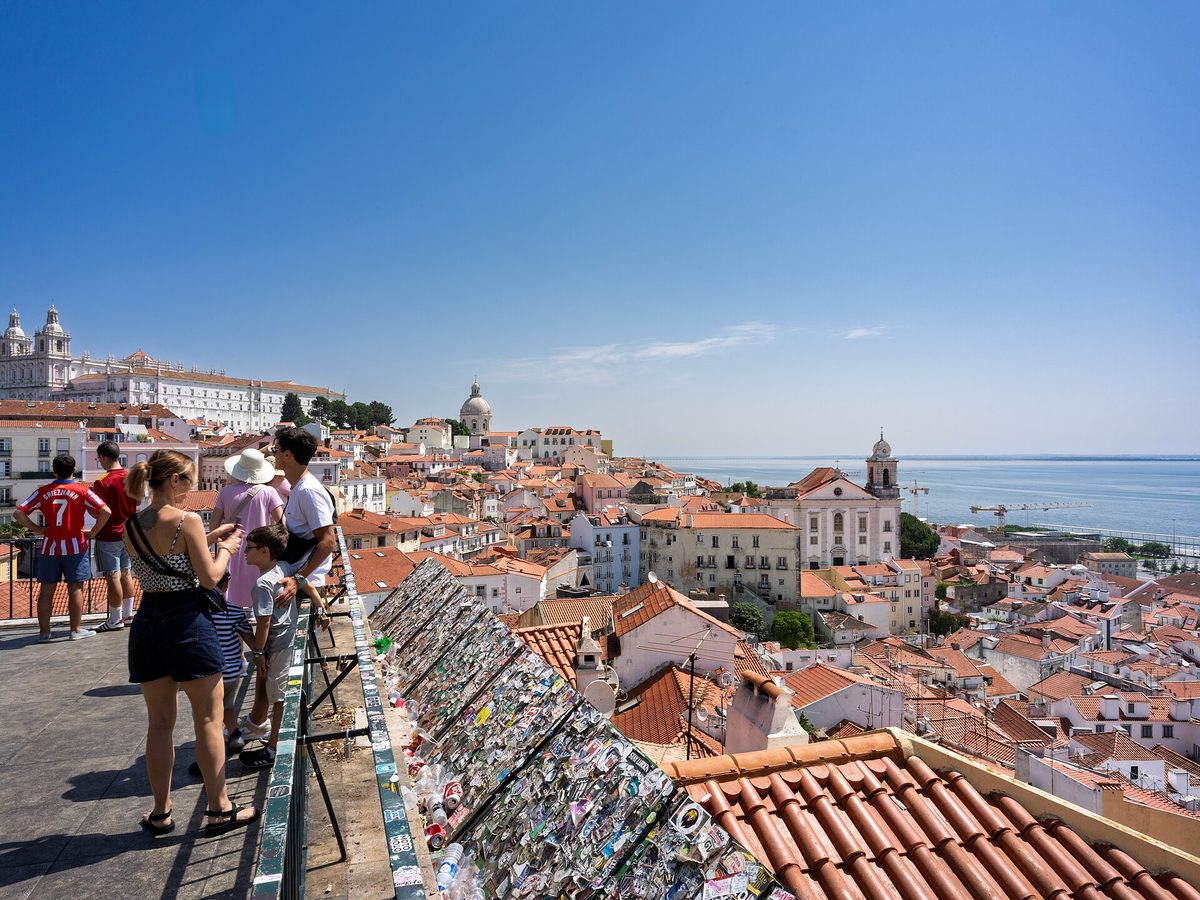
4. The Iberian Grand Tour: Lisbon, Seville, Granada and Barcelona
This is my answer to “we can only travel in April, or October, and we want to be warm”. Southern Iberia in the shoulder months is roughly what northern Europe gets in a good summer, the food is spectacular and cheap, and the crowds at the Alhambra in October are a small share of what they are in July. This is where I most often tell people to accept a single internal flight rather than lose a day to a train.
| Days | Base | What the days look like |
|---|---|---|
| 1–5 | Lisbon (4 nights) | Day 1 arrive, Alfama at sunset, grilled fish. Day 2 Belém: the monastery, the tower, the original pastéis. Day 3 Sintra as a full day, going early. Day 4 Chiado, Bairro Alto, the Gulbenkian, a fado house at night. Day 5 travel to Seville. |
| 5–9 | Seville (4 nights) | Day 5 arrive, Plaza de España in the evening light. Day 6 Alcázar early, Cathedral and Giralda after. Day 7 Triana, the tapas crawl, a flamenco peña rather than a dinner show. Day 8 Córdoba as a day trip for the Mezquita. Day 9 travel to Granada. |
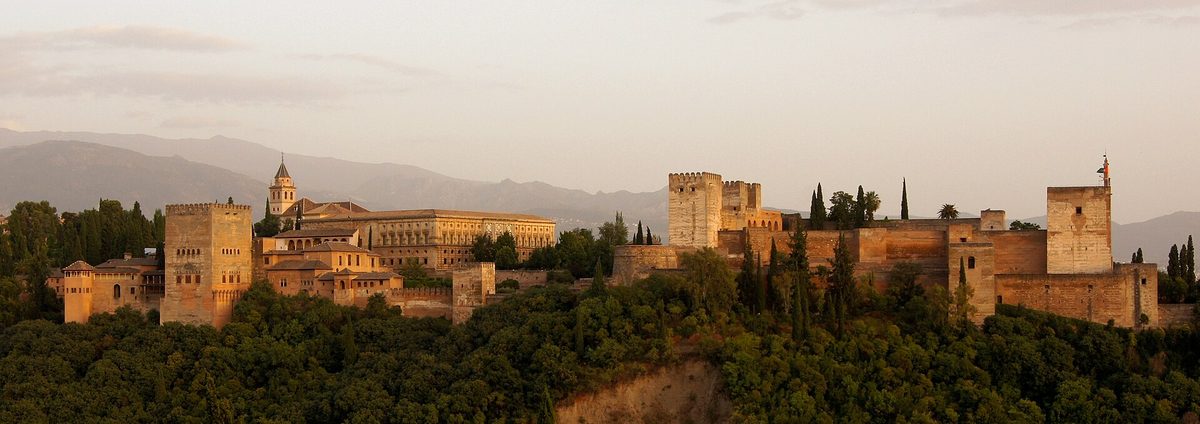
| 9–12 | Granada (3 nights) | Day 9 arrive, Albaicín and the Mirador de San Nicolás at sunset. Day 10 the Alhambra on your booked slot, the whole day. Day 11 Sacromonte, the Realejo, free tapas with every drink. Day 12 fly to Barcelona. |
| 12–14 | Barcelona (2 nights) | Day 12 arrive, Gothic Quarter and the Born. Day 13 Sagrada Família at your slot, Park Güell, Barceloneta in the evening. Day 14 fly home from El Prat. |
On the transport, and being honest about it
Iberian rail is superb on the main Spanish high-speed corridors and awkward everywhere this route needs it to be. Lisbon to Seville has no fast direct service across the border, and Granada to Barcelona is a very long way around by rail. My advice on this route is to take the bus or a short flight for Lisbon to Seville, use the regional train down to Granada, and fly Granada to Barcelona. That is one flight in fourteen days, which I think is a fair trade for the extra day it buys you.
What to book, and when
The Alhambra is the tightest booking in this guide. Tickets are released up to three months ahead on tickets.alhambra-patronato.es and the General ticket, covering the Nasrid Palaces, the Alcazaba, the Generalife and the Partal, costs €19.09. In June, July, August and Easter week, morning Nasrid Palaces slots sell out weeks to months in advance, sometimes within minutes of release. The Nasrid Palaces admission is timed to the half hour and it is strictly enforced; miss your slot and you have lost the ticket. Put the release date in your calendar the day you fix your travel dates.
Sagrada Família in 2026 is busier than usual because of the Gaudí centenary, and tickets frequently sell out several days ahead. Basic entry with the audioguide app is €26; with the tower lift it is €36; a guided tour is €30, and guided plus towers is €40. Seniors pay €21, under-30s and student cardholders pay €24, under-11s and visitors with disabilities enter free on the basic ticket. Barcelona residents get 50% off any ticket throughout 2026, which will not help you but explains some of the demand. Park Güell is a separate and much cheaper ticket: €10 for the Monumental Zone, €7 for ages 7 to 12 and over-65s, free under 7.
The Barcelona tax situation, which has two layers
Barcelona charges a municipal surcharge of €5 per person per night on all tourist accommodation inside the city, raised from €4 on 1 April 2026. On top of that sits the Catalan regional tourist tax, whose operational rates for 1 April 2026 to 31 March 2027 reach up to €12 per night for five-star accommodation. Catalan law sets a statutory ceiling of €15, but that is a legal maximum rather than what you are being charged. Practically: budget somewhere between €7 and €17 per person per night in tax alone, depending on your hotel class. Lisbon is far gentler at €4 per person per night, capped at seven consecutive nights in the same property, with under-13s exempt.
The honest downside
Two nights in Barcelona is not enough and I know it. This route is really a Portugal-and-Andalucía trip with a Barcelona coda, and if Barcelona is the thing you want, take route 9 instead. Also, Seville in July and August regularly exceeds 40 °C, which is not a “bring a hat” situation but a “the city stops functioning between two and six” situation. See our Spain travel guide and Portugal travel guide for the longer versions.
5. Alps and Bavaria: Munich, Salzburg, Lucerne and Lauterbrunnen
The route I recommend most often to families, and the one that most reliably produces the photographs people put on the wall. It is also the only itinerary here where the transport is part of the attraction: the run up the Lauterbrunnen valley on a clear morning is worth more than most museums. You need summer for this one, or at least late June through September, because the high cable cars and mountain trails are seasonal and a rainy Alpine week is a long week.

| Days | Base | What the days look like |
|---|---|---|
| 1–5 | Munich (4 nights) | Day 1 arrive, Marienplatz, a beer garden in the Englischer Garten. Day 2 the Residenz and the Alte Pinakothek, Viktualienmarkt for lunch. Day 3 Neuschwanstein as a full day, leaving early. Day 4 Dachau in the morning, Schwabing in the afternoon. Day 5 train to Salzburg. |
| 5–8 | Salzburg (3 nights) | Day 5 arrive, Altstadt and Hohensalzburg fortress. Day 6 the Salzkammergut: Hallstatt, St Gilgen, Wolfgangsee. Day 7 Mirabell, the Mozart houses, Untersberg cable car. Day 8 the long train west. |
| 8–11 | Lucerne (3 nights) | Day 8 arrive, Chapel Bridge and the lakefront. Day 9 Mount Pilatus or Rigi by cogwheel and boat. Day 10 a lake steamer and a village on the far shore. Day 11 train to the Bernese Oberland. |
| 11–14 | Lauterbrunnen (3 nights) | Day 11 arrive, the valley floor, Staubbach and Trümmelbach falls. Day 12 Mürren and the Schilthorn, or up to Kleine Scheidegg. Day 13 the Eiger Trail or the Grindelwald First ridge walk. Day 14 down to Zurich or Geneva to fly. |
Neuschwanstein, and the booking rule that catches people out
This is the single most misunderstood booking in Bavaria. Admission for 2026 is €21 regular and €20 reduced, with a €2.50 per-ticket online booking fee. Under-18s go free, but they still need a ticket, and the booking fee still applies if you get it online. The important bit is the alternative: the box office sells same-day tickets only, first come first served, and no reservations are possible there. It sells out very early in summer. If you have not booked online, the practical plan is to be at the Hohenschwangau Ticket Centre for its 08:00 opening, and even then you are gambling. Book online. It costs €2.50 and removes the only real risk in the day.
The other thing: your ticket is for a specific guided tour time, and the walk or bus up from the ticket centre takes long enough that people miss slots. Build in forty-five minutes more than you think you need.
Money, and the Swiss problem
Germany and Austria are on the euro. Switzerland is not; it uses the Swiss franc, and it is not an EU member, though it is inside the Schengen area, so your passport days still count. Switzerland is also the most expensive country on this list by a wide margin. Daily budgets in Switzerland and Iceland sit in the region of 180 to 280 US dollars per person, against 120 to 200 for the western European mid-range, so about half as much again at both ends of the band. That is the price of the scenery and there is no clever way around it.
There are two partial workarounds. First, stay in the valley rather than on the mountain: Lauterbrunnen and Wilderswil cost meaningfully less than Wengen and Mürren, and the trains up run all day. Second, buy food at Coop and Migros. A picnic on a mountain in Switzerland is not a compromise, it is arguably the better version of the day. Our Switzerland travel guide goes into the regional passes in detail, and hiking in Europe covers the trails properly.
The honest downside
Weather risk. Three days of low cloud in the Bernese Oberland and you have paid Swiss prices to look at fog. Build one flexible day into the mountain section and keep an indoor alternative in your pocket. The other caveat: this route is scenery-led rather than culture-led, and if you measure a trip in galleries you will find it thin.

6. Greece: Mainland and Islands
Two weeks is exactly the right length for Greece, because it lets you do the thing that a week does not: sit still on an island for four nights and stop checking the ferry timetable. One country, one currency, one long-haul flight, and the best swimming in this guide.

| Days | Base | What the days look like |
|---|---|---|
| 1–4 | Athens (3 nights) | Day 1 arrive, Plaka and a rooftop with a view of the rock. Day 2 Acropolis on the first entry slot, then the Acropolis Museum, then Anafiotika. Day 3 the Agora, Kerameikos, the National Archaeological Museum, Psyrri at night. Day 4 morning ferry from Piraeus. |
| 4–10 | Naxos (6 nights) | Day 4 arrive, the Portara at sunset. Days 5 to 9 the villages of the interior, Apeiranthos and Halki, the beaches at Plaka and Agios Prokopios, a day walking to the marble quarries and the abandoned kouros. Day 10 ferry onward. |
| 10–14 | Santorini (4 nights) | Day 10 arrive, settle in Oia or Imerovigli. Day 11 the caldera walk from Fira to Oia, early. Day 12 Akrotiri and the red beach, a wine tasting inland. Day 13 a boat to the volcano and the hot springs. Day 14 fly out of Santorini or back via Athens. |
The Acropolis has real rules now, and they bite
Entry is capped at 20,000 visitors per day with mandatory timed entry. You choose a one-hour window when you book; the 08:00 to 09:00 hour is capped at 3,000 people and the following hour at 2,000, so those two slots go first and they are also the only civilised times to be up there in summer. Arrive fifteen minutes before your window. The adult ticket is €30 flat year-round with no seasonal discount. EU seniors aged 65 and over pay €15. EU citizens under 25 go free but must book a zero-value ticket and show ID at the gate. Under-18s are free regardless of nationality.
Book on hhticket.gr, which is the only official Greek government ticketing site; the search results are thick with resellers charging a premium for the same slot. In peak summer and around Greek public holidays, slots sell out five to seven days ahead. Opening hours are 08:00 to 20:00 from April to October with last entry at 19:30, and 08:00 to 17:00 from November to March with last entry at 16:30.
One more thing, and it is the reason I would not put this route in July or August: the site can close in the middle of the day during extreme heat events, announced at short notice. Athens in July and August averages a daily high of about 33 °C and the rock has no shade at all. In May the average high is around 26 °C and in September around 29 °C, with very little rain in either. That is a better trip and a cheaper one.
The Greek climate levy
Greece charges a climate resilience levy on accommodation, running from €0.50 to €15 per night depending on the season and the type of property. There are two seasons, April to October and November to March. A typical short-term rental attracts around €8 per night in high season and €2 in low season, and the 2025 rates have been carried through to the end of 2026. On a ten-night island stay that is real money, so read the small print on your booking.
The honest downside
Ferries. They are wonderful when they run and they are a genuine planning risk when the meltemi wind blows in July and August, which can cancel sailings at a few hours’ notice. Never book a ferry that arrives on the same day as your international flight home. Give yourself a night in Athens at the end, or fly the last leg. See the Greece travel guide for the island-hopping detail and the best beaches in Europe if the swimming is the point.

7. The Adriatic Run: Ljubljana, Lake Bled, Split and Dubrovnik
My favourite of the ten, and the one people are most surprised by. In fourteen days you get a small green capital that you can walk across in twenty minutes, an Alpine lake, a Roman palace that people still live inside, and a walled city on the sea. Both countries are inside Schengen and both use the euro, so the border is a formality and your wallet only holds one currency.

| Days | Base | What the days look like |
|---|---|---|
| 1–4 | Ljubljana (3 nights) | Day 1 arrive, the riverside and Triple Bridge in the evening. Day 2 the castle funicular, the central market, Metelkova at night. Day 3 the Škocjan or Postojna caves, or Lake Bohinj. Day 4 bus north. |
| 4–7 | Lake Bled (3 nights) | Day 4 arrive, walk the lake circuit, row out to the island. Day 5 Vintgar Gorge in the morning, Bled Castle in the afternoon. Day 6 into Triglav National Park, or the Vršič Pass toward Kranjska Gora. Day 7 the long transfer south. |
| 7–11 | Split (4 nights) | Day 7 arrive, Diocletian’s Palace at dusk. Day 8 Marjan hill, the Riva, Bačvice. Day 9 a boat day to Hvar or Brač. Day 10 Trogir or Krka waterfalls. Day 11 catamaran or bus down the coast. |
| 11–14 | Dubrovnik (3 nights) | Day 11 arrive, Old Town in the evening once the cruise passengers have gone. Day 12 the city walls at opening, then Lokrum. Day 13 the cable car, the Elafiti islands, or a day in Cavtat. Day 14 fly home from Dubrovnik. |
The logistics, honestly
Slovenia and Croatia are bus countries rather than train countries, and the buses are good: modern coaches, frequent, and cheap. Ljubljana to Bled is short. The Slovenia to Split leg is the long one and it is the only tiring day on this route; some people fly it or break it in Zadar. Split to Dubrovnik can be a coastal bus or a Jadrolinija catamaran, and in summer the catamaran is far more pleasant, though it books out.
Croatia joined the Schengen area on 1 January 2023 and adopted the euro the same day, which removed the two things that used to make this trip fiddly. There is no longer a passport queue at the Slovenian border and there is no longer a kuna to change.
The honest downside
Dubrovnik on a heavy cruise day is genuinely unpleasant between about ten and four, and the Old Town is small enough that there is nowhere to escape to. Check a cruise arrival schedule before you fix your walls-walk day. And in July and August the Dalmatian coast is at capacity: accommodation prices roughly double and the beaches near Split are shoulder to shoulder. June and September are the months, and the Croatia travel guide has the island detail if you want to rebuild the Dalmatian half.

8. Nordic Cities and Fjords: Copenhagen, Stockholm, Oslo and Bergen
The summer route. In June and July the light in Scandinavia does not properly go away, which changes what a day is: you can eat dinner at nine and then go for a two-hour walk in what still feels like late afternoon. It is the most expensive itinerary in this guide and the one with the fewest crowds, and those two facts are related.

| Days | Base | What the days look like |
|---|---|---|
| 1–5 | Copenhagen (4 nights) | Day 1 arrive, Nyhavn and a harbour swim if it is warm. Day 2 Rosenborg, the Design Museum, Torvehallerne. Day 3 Louisiana Museum up the coast, or Roskilde for the Viking ships. Day 4 Christianshavn, Refshaleøen, a bicycle. Day 5 train to Stockholm. |
| 5–9 | Stockholm (4 nights) | Day 5 arrive, Gamla Stan in the evening. Day 6 the Vasa Museum, Skansen, Djurgården. Day 7 the archipelago by boat: Vaxholm or Sandhamn. Day 8 Södermalm, Fotografiska, the city hall tower. Day 9 fly to Oslo. |
| 9–12 | Oslo (3 nights) | Day 9 arrive, the Opera House roof, Aker Brygge. Day 10 the Fram and Kon-Tiki museums, the new Munch. Day 11 Vigeland Park, Holmenkollen, the Oslofjord ferries. Day 12 the Bergen Railway west. |
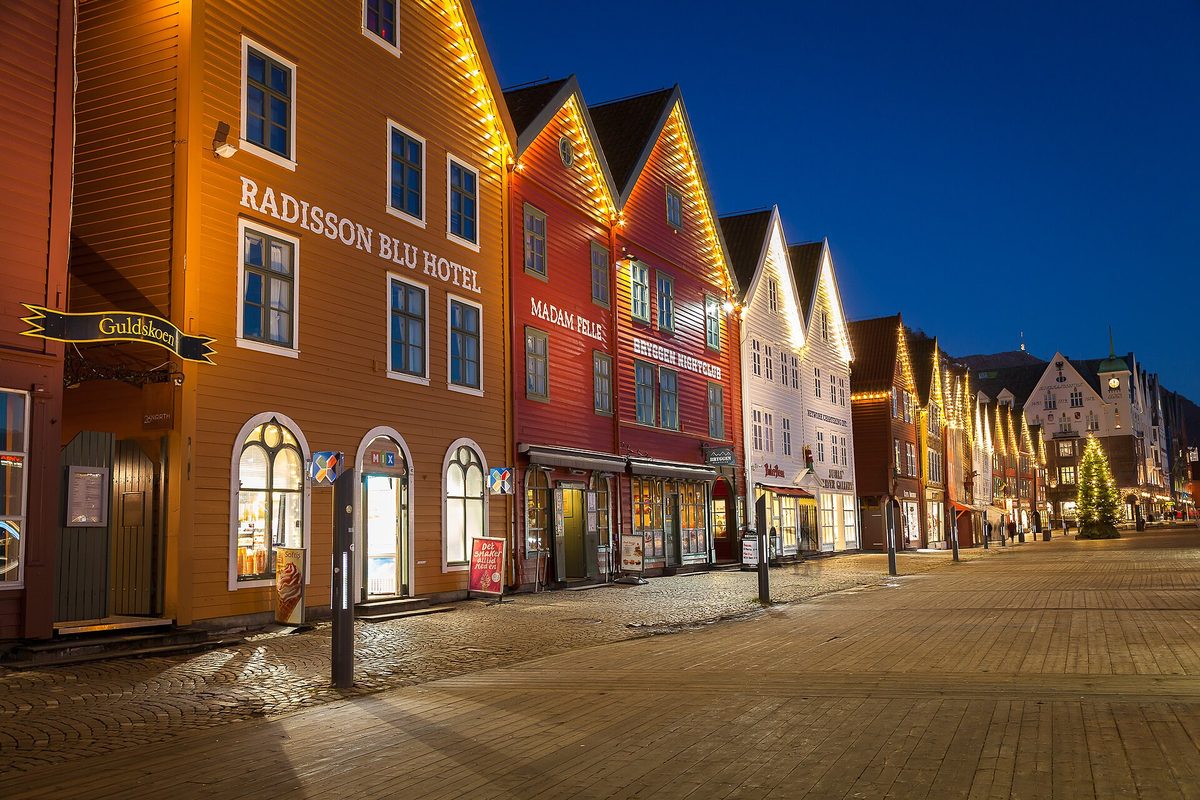
| 12–14 | Bergen (2 nights) | Day 12 arrive by the Bergen Railway, Bryggen in the evening. Day 13 the Flåm railway and a fjord cruise, or Mount Uløriken and the fish market. Day 14 fly home from Bergen. |
The currency and cost picture
Three countries, three currencies, none of them the euro. Denmark uses the Danish krone and holds a treaty opt-out from the euro. Sweden uses the Swedish krona. Norway, which is not in the EU at all though it is inside Schengen and the EEA, uses the Norwegian krone. All three are almost entirely cashless: I have gone a fortnight in Norway without touching a banknote, and several places will look mildly surprised if you offer one.
On cost, treat Norway the way you treat Switzerland: assume roughly double the western European mid-range daily figure and plan around it. Supermarket lunches, the free museum days, and staying slightly outside the centre all help. Alcohol is where budgets die; a bottle bought in the state monopoly shop in Norway costs a fraction of the same bottle in a bar.
One useful quirk for the Louvre-style ticket-price question: Norway, Iceland and Liechtenstein count as EEA, so Norwegian visitors to Paris still pay the €22 Louvre rate rather than the €32 non-EEA rate. It is a small thing but it illustrates how often “EU” and “EEA” and “Schengen” mean three different sets of countries.
The honest downside
Cost, and the fact that this route collapses outside summer. In November the Bergen Railway is dark for most of the journey, the fjord boats run a reduced service, and Copenhagen at four in the afternoon is night. Go in June, July or August, or go somewhere else. If you have longer, the Scandinavia travel guide covers the extensions further north.
9. Paris to Madrid by Rail
For the traveller who does not want to fly inside Europe and does not want to compromise on cities to get that. Four stops on a single westward line, all of them major, all of them connected by high-speed rail, with the added pleasure that the longest leg crosses the Pyrenees in daylight.

| Days | Base | What the days look like |
|---|---|---|
| 1–5 | Paris (4 nights) | Day 1 arrive, walk the Seine. Day 2 Louvre morning slot, Tuileries, Palais-Royal. Day 3 Orsay, Saint-Germain, Eiffel Tower at dusk. Day 4 Montmartre and the Marais, or Versailles. Day 5 TGV south. |
| 5–8 | Lyon (3 nights) | Day 5 arrive by lunchtime, Vieux Lyon and the traboules. Day 6 Fourvière, the Roman theatres, a bouchon for dinner. Day 7 Les Halles Paul Bocuse, the Croix-Rousse, the Confluence. Day 8 the long TGV to Barcelona. |
| 8–12 | Barcelona (4 nights) | Day 8 arrive, Eixample and an early dinner. Day 9 Sagrada Família and Park Güell on booked slots. Day 10 Gothic Quarter, Picasso Museum, the Born. Day 11 Montjuïc, the beach, Gràcia at night. Day 12 AVE to Madrid. |
| 12–14 | Madrid (2 nights) | Day 12 arrive by lunchtime, Retiro and the Prado. Day 13 Reina Sofía, La Latina for vermouth, Malasaña at night. Day 14 fly home from Barajas. |
| Leg | Service | Journey time | Advance fare, 2nd class |
|---|---|---|---|
| Paris → Lyon | TGV | About 2 hours on the fastest services | Book on the day the horizon opens for the cheapest Prem’s fares |
| Paris → Barcelona (direct) | TGV | 6h45–7h00 most days | From €39–49 |
| Barcelona → Madrid | AVE | 2h29–2h30 | From around €14; roughly 30 departures a day |
The booking horizon problem on this route
French and Spanish operators open sales on very different schedules, and this is the route where that matters most. As a rough guide: Eurostar and Deutsche Bahn open around 180 days ahead; TGV international services around 120 days; most operators around 90 days; Trenitalia around four months and extending toward six; and Renfe is erratic, typically 30 to 90 days but sometimes as much as nine months on the Madrid to Barcelona corridor. Eastern European operators tend to open around 60 days.
Practically, that means you cannot book this whole trip in one sitting. Book Paris to Barcelona when the TGV horizon opens, then set a second reminder for the Spanish leg. If you are travelling in high summer, the €39 Paris to Barcelona fares go first and the difference between booking on day one and booking six weeks out can be a hundred euros.
The honest downside
Two nights in Madrid is the same compromise route 4 makes with Barcelona, and it is the weakest part of the plan. If you can add three days, this becomes an excellent three-week trip. See France and train travel in Europe for the fuller picture, and the 3-week Europe itinerary if you are tempted.
10. The Cheap Two Weeks: Kraków, Budapest, Sofia and Bucharest
Fourteen days for less than the cost of a week in Switzerland, and not a compromise version of a trip: a good one. Poland, Hungary, Bulgaria and Romania are among the best value in Europe, all four are now fully inside the Schengen area, and the food and the architecture are underrated in roughly equal measure.

| Days | Base | What the days look like |
|---|---|---|
| 1–5 | Kraków (4 nights) | Day 1 arrive, the Rynek at dusk. Day 2 Wawel, the Cloth Hall, Kazimierz in the evening. Day 3 Auschwitz-Birkenau, booked well ahead. Day 4 the Wieliczka salt mine, or Zakopane in the Tatras. Day 5 fly or take the night train south. |
| 5–9 | Budapest (4 nights) | Day 5 arrive, the Danube embankment at night. Day 6 Castle Hill and the Fisherman’s Bastion early, Parliament in the afternoon. Day 7 Széchenyi baths, the Great Market Hall, a ruin bar. Day 8 Szentendre or the Danube Bend. Day 9 fly to Sofia. |
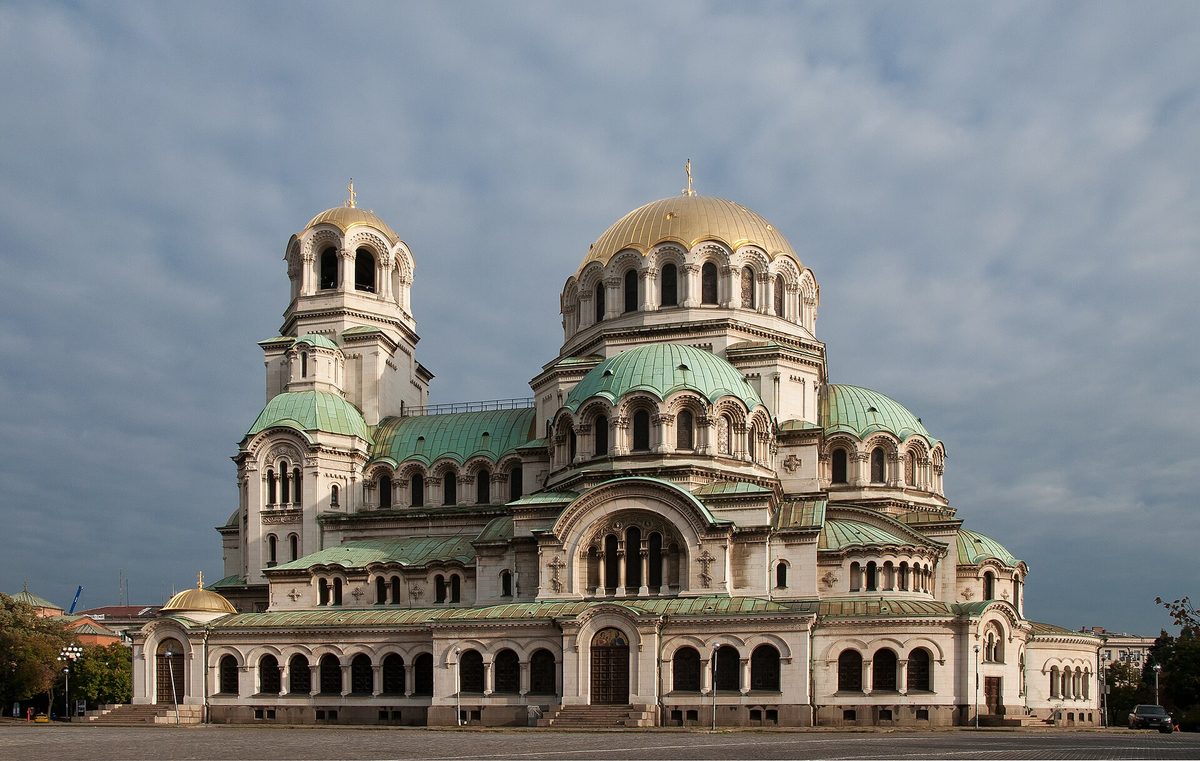
| 9–12 | Sofia (3 nights) | Day 9 arrive Sofia, Alexander Nevsky, the Roman ruins under the city. Day 10 Rila Monastery as a day trip. Day 11 Plovdiv: the Roman theatre, the old town, Kapana. Day 12 on to Bucharest. |
| 12–14 | Bucharest (2 nights) | Day 12 arrive, Lipscani and the old town. Day 13 the Palace of the Parliament, the Village Museum, an evening in a wine bar. Day 14 fly home from Otopeni. |
The currency map here changed in 2026
This is the route where the paperwork has moved, so read this carefully.
Bulgaria adopted the euro on 1 January 2026, becoming the twenty-first euro-area member state. The irrevocable conversion rate is €1 to 1.95583 leva. Both currencies circulated during January 2026 with change given in euro only, and dual price display was mandatory from 8 August 2025 until 8 August 2026. Sofia and Plovdiv now price in euro, so any advice to change money into leva at the airport belongs to a previous year.
Romania has not adopted the euro and still uses the Romanian leu, despite being a full Schengen member since land borders opened on 1 January 2025. Poland uses the zloty and Hungary the forint. So on this route you will use euro in Bulgaria and three different national currencies elsewhere, which is exactly the opposite of what most people assume about “eastern Europe”.
What it actually costs
Budget travel in eastern Europe runs in the region of 40 to 70 US dollars a day against 90 to 150 in western Europe, and mid-range runs 50 to 100 against 120 to 200. Portugal, Hungary and Poland are consistently named as the best value in Europe for travellers paying in dollars. On this route a mid-range fortnight lands around €1,300 to €1,900 per person excluding your international flights, which is roughly what a week in Switzerland costs.
The honest downside
Distances are longer than they look and the rail network is slower than in the west, which is why I have you flying two of the three internal legs. Bucharest is also the city on this list I would most readily cut: if you would rather have four nights in Plovdiv and the Bulgarian mountains, take them. See the cheapest places to travel in Europe and Europe on a budget for how far this can be pushed.
What two weeks in Europe actually costs in 2026
Here is where most itinerary guides go quiet. I counted the currency figures on the two longest two-week guides currently ranking for this search: between them, across roughly 22,000 words, they contain six. So this section is the one I would keep if I had to delete the rest.

Daily budget bands
| Style | Western Europe | Central and Eastern Europe | Switzerland, Norway, Iceland | What it buys |
|---|---|---|---|---|
| Backpacker | Around €105 a day, or USD 90–150 depending on the source | USD 40–70 a day | Assume the top of the western band as a floor | Dorms, buses over trains, cooking most meals, free and low-cost sights |
| Mid-range | Around €190 a day on one costing; another puts the band at USD 120–200, which is lower | USD 50–100 a day | USD 180–280 a day | Private room or two-star hotel, eating out most meals, some paid attractions |
| Comfortable | Roughly double the mid-range figure | Roughly double the mid-range figure | Higher again | Four-star hotels, taxis, guided access, first class on the long legs |
For the whole fortnight, excluding your international flights, the widely quoted bands are USD 1,800 to 3,500 per person for budget travel, USD 3,500 to 7,000 for mid-range and USD 8,000 and up for luxury. The route table at the top spans the budget and mid-range bands, with routes 3, 7 and 10 at the lower end and route 8 at the top. Almost all of that spread is geography rather than style.
One number worth planning around: flights and hotels in June, July and August run roughly 30% to 50% above shoulder-season rates. Moving the same trip from late July to late September, with no other change, is usually the single biggest saving available to you. It also buys you shorter queues and better weather in the south.
Tourist taxes, city by city
These are charged on top of your room rate, usually collected at check-out, and they are almost never included in the price you compared on a booking site. Over thirteen nights they add up to real money: two people staying in four-star hotels through Paris, Amsterdam and Barcelona can easily pay €300 in tax alone.
| City or country | 2026 rate | Basis | Notes |
|---|---|---|---|
| Amsterdam | 12.5% of the accommodation price | Per booking | The highest rate in Europe. Excludes VAT and the tax itself. Dutch hotel VAT rose from 9% to 21% on 1 January 2026, taking the combined load to roughly a third on top of the base rate. |
| Paris | €5.53 (3-star), €8.45 (4-star), €11.70 (5-star), €15.93 (palace) | Per person per night | Tripled on 1 January 2026 by a 200% Île-de-France Mobilités surcharge. Unclassified stays pay 5% of the net rate capped at €15.93. Under-18s exempt; €100 per month cap per traveller. |
| Barcelona | €5 municipal surcharge, plus the Catalan regional tax on top, up to €12 for 5-star | Per person per night | Municipal rate rose from €4 on 1 April 2026. Catalan law sets a €15 statutory ceiling, which is a maximum rather than the charge. |
| Rome | €4 (1-star) to €10 (5-star); €3 campsites | Per person per night | Charged for a maximum of 10 consecutive nights. A separate €2 Trevi Fountain access ticket started on 1 February 2026. |
| Florence | €4 to €10 by star rating; flat €6 for B&Bs, holiday flats and room rentals | Per adult per night | Under-12s exempt. Payable for up to 7 continuous nights. Sources differ on the top rate, quoting €8 and €10 for 5-star; check your booking confirmation. |
| Venice | Day-visitor access fee: €5 if paid four or more days ahead, €10 within three days | Per day visitor | Applied on 60 dates between 3 April and 26 July 2026; not charged from 27 July 2026. Overnight guests in the municipality are exempt, as are under-14s, Veneto residents, students, and people with disabilities and their escorts. |
| Lisbon | €4 | Per person per night | Doubled from €2 in September 2024 and still €4 through 2026. Capped at 7 consecutive nights in the same property; under-13s exempt. |
| Vienna | 5% of the room rate | Per room per night | Raised from 3.2% on 1 July 2026, and due to rise again to 8% on 1 July 2027. |
| Budapest | 4% of the room rate | Per room per night | Guests aged 18 and over. |
| Berlin | 7.5% of the net room rate | Per booking | Charged as a City Tax on the accommodation element, excluding VAT and any meals. |
| Prague | About €2 equivalent | Per person per night | Age 18 and over, for stays up to 60 nights. |
| Greece | €0.50 to €15 climate resilience levy | Per night, by season and property type | Two seasons: April to October and November to March. A typical short-term rental is around €8 in high season and €2 in low. 2025 rates carried through to the end of 2026. |
Attraction prices and how far ahead to book
The booking lead time column is the one to read. What you need is the specific window rather than a general instruction to book early, because several of these open on a fixed date and sell out the same week.
| Attraction | City | 2026 adult price | When tickets are released or sell out |
|---|---|---|---|
| Colosseum, Forum and Palatine | Rome | €18 standard including the €2 online fee; €22 premium with Arena Floor, Underground and Attic | Exactly 30 days ahead, at 08:45 Rome time on ticketing.colosseo.it, and not a day earlier |
| Vatican Museums and Sistine Chapel | Rome | €20, or €25 with the €5 online booking fee | Weeks ahead in summer. Free on the last Sunday of the month, and extremely busy. Your slot is a 15-minute window |
| Uffizi Gallery | Florence | €16 for entry from 16:00 onwards, new from 1 January 2026; €40 combined ticket with Pitti and Boboli over five days | Timed slots fill in advance from April to September |
| Accademia (the David) | Florence | €20 online: €16 admission plus a €4 booking fee | One to two weeks ahead June to September; two to four weeks is safer. The 08:15 slot goes first |
| Eiffel Tower, summit by lift | Paris | €36.70; second floor by lift €23.50; stairs plus lift to the summit €28.00 | Released about 60 days ahead. Summit closes every January for maintenance |
| Louvre | Paris | €32 for non-EEA visitors from 14 January 2026; €22 for EEA visitors; €28 non-EEA guided groups | Timed slots; book a week or more ahead in summer |
| Anne Frank House | Amsterdam | €16.50 adult; €7 ages 10–17; €1 under 10; from €23.50 with the 30-minute introduction | Every Tuesday at 10:00 Amsterdam time, releasing the week exactly six weeks later. Online only, no walk-ups |
| Sagrada Família | Barcelona | €26 basic; €36 with towers; €30 guided; €40 guided plus towers; €21 seniors; €24 under-30s and students | Several days ahead minimum in 2026, and longer in the centenary peak |
| Park Güell Monumental Zone | Barcelona | €10 general; €7 ages 7–12 and over-65s; free under 7 | Same-day is often possible outside peak, but book the slot you want |
| Alhambra | Granada | €19.09 General ticket | Released up to 3 months ahead. Morning Nasrid Palaces slots sell out weeks to months out in summer and Easter week, sometimes in minutes |
| Neuschwanstein Castle | Bavaria | €21 regular, €20 reduced, plus a €2.50 online booking fee. Under-18s free but still need a ticket | Book online. The box office is same-day only, first come first served, and sells out early |
| Acropolis | Athens | €30 flat year-round; €15 for EU seniors 65+; free for EU under-25s with a zero-value ticket and ID; free for all under-18s | Five to seven days ahead in peak summer. Book on hhticket.gr, the only official site |
Two of these deserve their own line in your planning notes because they behave unlike anything else: the Colosseum’s rigid 30-day release, and the Anne Frank House’s Tuesday-morning drop six weeks out. Both are the sort of rule you find out about too late.
A worked budget: route 3, mid-range, two people
To make the numbers concrete, here is the Central Europe Loop costed out for a couple travelling in September at a mid-range standard. I have used the tax rates from the table above and advance train fares.
| Line | Per couple, 13 nights | How it breaks down |
|---|---|---|
| Accommodation | €1,700–2,300 | Roughly €120–165 a night for a good three-star double, cheaper in Budapest than Berlin |
| Tourist taxes | €60–100 | Prague at about €2 per person per night, Vienna at 5% and Budapest at 4% of the room rate |
| Intercity trains | €80–140 | Prague to Vienna from about €15 each, Vienna to Budapest from €14.90 each, plus the Berlin leg |
| Local transport | €120–180 | Multi-day travel cards in all four cities, plus airport transfers |
| Attractions | €300–450 | Museums, castles, the baths, one concert, two day trips |
| Food and drink | €1,100–1,600 | Breakfast in, lunch out, dinner out, at central European rather than western prices |
| Total, excluding international flights | €3,360–4,770 | Which is €1,680–2,385 per person, the figure given in the route table at the top |
The 2026 paperwork: EES, ETIAS and the 90/180 rule
Europe’s entry system has changed more in the last year than in the previous decade. Here is the current state of play as of August 2026.

The Entry/Exit System (EES)
EES is the big one, and it is already happening. It replaces the manual passport stamp with a biometric record: fingerprints and a facial image, taken the first time you cross an external Schengen border, then reused on subsequent crossings. It applies to non-EU travellers on short stays.
The progressive rollout began on 12 October 2025, with full operation at all Schengen external borders reported for 10 April 2026. In practice the rollout has been uneven. Member states are permitted to partially suspend EES checks for up to 90 days after rollout completion, extendable by a further 60 days, and several have used that flexibility to ease checks during the summer peak. Queues of two to five hours have been reported at some crossings at peak times, and some countries paused EES at specific airports to clear backlogs.
What this means for a fourteen-day trip: budget more time at your first Schengen entry point than you would have two years ago, particularly if you land at a major hub on a summer morning. If your itinerary has a same-day onward connection after your first EU arrival, give it three hours rather than ninety minutes. That single planning habit is worth more to you than understanding how the database works.
On route 1, note that the London to Paris Eurostar border check happens at St Pancras before you board, which is where EES applies to you rather than on arrival in France.
ETIAS
ETIAS is the travel authorisation, not a visa. It is an online application, processed automatically, with a decision usually returned within minutes, covering travel to 30 European countries.
The fee is €20, raised from the €7 that was originally legislated. Applicants under 18 and over 70 are exempt.
On timing, the European Commission has said the fee “will enter into effect as soon as ETIAS is operational, which is expected for the last quarter of 2026”, and that the system “will start operations at the end of 2026”. As of the middle of 2026, no firm public launch date has been announced, and some industry trackers expect slippage into 2027. The sensible position for anyone travelling in 2026: check the official Home Affairs page four to six weeks before you fly. If ETIAS is live by your dates, apply as soon as you have your flights booked. If it is not, you need nothing.
The 90/180 rule, which is not per country
This is the misunderstanding I correct most often. Visa-exempt visitors may stay up to 90 days in any rolling 180-day period, and the limit applies to the whole Schengen zone, not to each country separately. Two weeks in Italy and two weeks in Spain is 28 days against the same allowance, not 14 against each.
Schengen now has 29 members, and the membership changed recently in ways that affect the maths:
| Country | In Schengen? | Do your days count toward 90/180? | Currency |
|---|---|---|---|
| Bulgaria | Yes, full member | Yes | Euro since 1 January 2026 |
| Romania | Yes: air and sea from March 2024, land borders from 1 January 2025 | Yes | Romanian leu |
| Croatia | Yes, since 1 January 2023 | Yes | Euro since 2023 |
| Switzerland | Yes, though not an EU member | Yes | Swiss franc |
| Norway | Yes, though not an EU member | Yes | Norwegian krone |
| Czechia | Yes | Yes | Czech koruna |
| Hungary | Yes | Yes | Forint |
| Poland | Yes | Yes | Zloty |
| Denmark | Yes | Yes | Danish krone, under a treaty opt-out from the euro |
| Sweden | Yes | Yes | Swedish krona |
| Ireland | No. EU member outside Schengen, inside the Common Travel Area with the UK | No | Euro |
| Cyprus | No. EU member, not a full Schengen member in 2026; a Schengen visa does not grant entry | No | Euro |
| United Kingdom | No. Outside both the EU and Schengen | No | Pound sterling |
Two practical consequences. First, if you are near your 90-day limit, days in London, Dublin or Cyprus are free days. Second, and more relevant to most readers of a two-week guide: none of this constrains you at all on a fourteen-day trip. You are using 14 of 90. The reason to understand it is if this is your second or third European trip in six months.
The euro map, which changed on 1 January 2026
The euro area now has 21 member states, following Bulgaria’s adoption on 1 January 2026 at an irrevocable rate of €1 to 1.95583 leva. The EU members still outside the euro are Czechia, Denmark, Hungary, Poland, Romania and Sweden. Add the non-EU Schengen countries, Switzerland and Norway, plus the non-Schengen United Kingdom, and you have the full picture of when you need a second currency.
The practical rule for all of them: withdraw from a bank ATM rather than an airport exchange booth. Our Schengen visa and ETIAS guide goes into the applications in more depth, and how to plan a trip to Europe covers the wider paperwork sequence.
Trains, passes and budget flights: the part that decides your budget

Should you buy a rail pass for two weeks? Usually not
The Eurail Global Pass, sold to non-European residents, and the Interrail Global Pass, sold to European residents, cover 33 countries on one ticket. They are excellent products for a certain kind of trip. That trip is not this one.
Here is the arithmetic. A two-week itinerary with three or four bases involves two or three intercity journeys. On route 3, those journeys cost roughly €15 each booked in advance. On route 2, they cost about €15 and about €20. A pass has to beat that, and it cannot.
| Global Pass option | Adult 2nd class | Sensible for a two-week trip? |
|---|---|---|
| 4 days within 1 month | €283 | Only if your four journeys are long international ones |
| 5 days within 1 month | €318 | Rarely |
| 7 days within 1 month | €381 | Only on a fast-moving trip with six or more long legs |
| 10 days within 2 months | €447 | Not for fourteen nights |
| 15 days continuous | €476 | Only if you are moving nearly every day |
| 15 days within 2 months | €553 | No |
| 1 month continuous | €696 | No |
The pass makes sense when you are moving nearly every day, when your legs are long and international, or when you value the freedom to change your mind more than you value the money. On a three-base fortnight, buying three advance point-to-point tickets will cost you somewhere between €40 and €90 in total. There is no version of the maths where a €381 pass wins.
The useful pass details, if you decide you are the exception: the Youth Pass covers ages 12 up to and including 27 on the first day of travel, the Senior Pass covers 60 and over, children under 4 travel free without a pass and children aged 4 to 11 travel free on a Child Pass with a maximum of two children per adult. First class passes are valid in both classes; second class passes are valid in second only. A Eurail Pass must be activated within 11 months of its issue date. And there is now a Global Plus Pass that bundles seat reservation costs for most trains, which addresses the pass’s biggest hidden expense.
Reservation fees, the hidden cost of pass travel
Most high-speed and night trains require a paid seat reservation on top of the pass, and you cannot board without one even with a valid pass: you risk a fine or being put off at the next stop. This is where pass holders get caught.
| Country or service | Reservation fee for pass holders |
|---|---|
| France, TGV and TGV INOUI | €10 on a limited quota, rising to €20 in second class once the €10 places sell out; €15–25 in first class |
| Italy, Frecciarossa | Compulsory, €13 in either class, including the Paris to Milan service since 29 May 2026 |
| Spain, AVE | €6.50–13 |
| Night trains, couchette | Around €34 |
| Night trains, bed in a two-berth sleeper | Around €94 |
| Eurail booking service fee | €2 per passenger per train reservation |
Booking horizons, or why you cannot book the whole trip in one evening
| Operator | Booking opens |
|---|---|
| Eurostar and Deutsche Bahn | Around 180 days ahead |
| TGV international services | Around 120 days ahead |
| Most European operators | Around 90 days ahead |
| Trenitalia | Around 4 months, extending toward 6 |
| Renfe | Erratic: typically 30 to 90 days, occasionally up to 9 months on Madrid to Barcelona |
| Eastern European operators | Around 60 days ahead |
The long legs that are still worth doing by train
Not every long journey should be flown. Amsterdam to Berlin runs direct in 5h42, six services a day, with advance fares from about €38 in second class and €50 to €57 in first. That is a comfortable working day with a table and no airport at either end, and it beats the flight door to door once you count the transfers. Paris to Barcelona at 6h45 to 7h00 from €39 to €49 is the same argument. Munich to Prague, by contrast, is a case for the bus: FlixBus does it in about 4h30 to 4h45 from roughly €12 to €15.
Budget airlines, and the cabin bag rules that changed
One rule changed recently: airlines flying to the EU, and European airlines flying from the EU, must now allow every passenger a free cabin bag of at least 40 by 30 by 15 centimetres. Ryanair has announced a 20% increase to its free cabin bag size as carriers adopt the EU minimum dimensions.
| Airline | Free bag | Paid larger cabin bag |
|---|---|---|
| Ryanair | 40 x 30 x 20 cm, must fit under the seat | 55 x 40 x 20 cm in the overhead locker, with Priority |
| easyJet | 45 x 36 x 20 cm, under the seat in front | 56 x 45 x 25 cm in the overhead locker |
| Wizz Air | 40 x 30 x 20 cm | 55 x 40 x 23 cm with WIZZ Priority or Plus |
On fares and checked-bag charges I am going to leave a gap rather than fill it with a guess. Low-cost fares swing so widely by route, date and how far ahead you book that any single band I printed would mislead you, and I could not source current checked-bag fees I would stand behind. Price your specific route on the airline’s own site and add the bag before you compare it to the train. The bag is usually what closes the gap.
For the wider transport picture, see getting around Europe and train travel in Europe.

When to go, and why August is the wrong answer
Most people take this trip in July or August because that is when the school holidays are. If you have any flexibility at all, use it. The shoulder months give you lower prices, shorter queues, and in southern Europe, better weather rather than worse.
Average daily high temperatures
| Month | Rome | Paris | Barcelona | Amsterdam | Prague | Athens |
|---|---|---|---|---|---|---|
| April | 18.8 °C | 16.6 °C | 18 °C | 14 °C | 14.5 °C | 21 °C |
| May | 23.3 °C | not sourced | 21 °C | 17 °C | 18.9 °C | 26 °C |
| July | 31.0 °C | not sourced | 27 °C | 22 °C | 24.5 °C | 33 °C |
| August | 31.4 °C | not sourced | 28 °C | 22 °C | 24.4 °C | 33 °C |
| September | 26.5 °C | 21.8 °C | 25 °C | 19 °C | 19.1 °C | 29 °C |
| October | 22.0 °C | not sourced | 22 °C | 15 °C | 12.9 °C | 25 °C |
Rome in July and August routinely reaches 35.5 to 36 °C on hot days, with a recorded high of 41 °C in August 1981. Prague gets roughly 18 days a year above 30 °C in the city centre. For Paris, the fuller picture is that daily highs range from about 8 °C in winter to about 25 °C at the height of summer, with July the hottest month at a monthly mean of 19.8 °C and annual precipitation around 650 mm.
Rainfall, where the record is solid
| Month | Rome precipitation | Rome rain days | Prague precipitation | Prague rain days |
|---|---|---|---|---|
| April | 69 mm | 7 | 28 mm | 6 |
| May | 57 mm | 6 | 60 mm | 9 |
| July | 20 mm | 2 | 79 mm | 10 |
| August | 30 mm | 2 | 67 mm | 9 |
| September | 65 mm | 6 | 38 mm | 7 |
| October | 88 mm | 7 | 34 mm | 7 |
The pattern to notice: Rome is dry in high summer and wet in October, while Prague is wettest in July. The best windows on the published record are mid-April to mid-June and September to early October for Rome, and mid-May to mid-September for Prague. That maps neatly onto the shoulder-season advice.
Ferragosto and the August shutdown
This is the part that surprises first-time visitors to Italy and France, and it is the reason a mid-August trip can feel oddly hollow. Ferragosto falls on 15 August, and in 2026 that is a Saturday.
In Italy, most neighbourhood restaurants and trattorias close for roughly 10 to 20 August, with the 15th as the peak. Most small shops, artisan workshops and markets close too, and many family-run businesses take the whole stretch from about 1 to 20 August. What stays open: restaurants and hotels in tourist areas, gelaterie, bars in tourist zones, beach establishments, and supermarkets in larger cities, some on reduced hours. Importantly, all state and municipal museums stay open, so the Colosseum and the Uffizi are not affected.
The effect is that mid-August Italy serves you the tourist version of itself while the local version takes a fortnight off. France does something similar: independent restaurants, neighbourhood cafes, bakeries, boutiques and artisan workshops close for two to three weeks clustered roughly 3 to 23 August, while tourist-facing Paris around the Champs-Élysées and the Marais keeps running.
If you must travel in August, plan around it: put the museum-heavy days in the middle of the month and save the neighbourhood-wandering days for either end.
The 2026 restrictions worth knowing about
| City | What changed | Effect on your trip |
|---|---|---|
| Venice | Paid access fee for day visitors on selected dates; short-term rental leases capped at 120 days a year for operators registered within specified windows | Fewer apartments available; stay overnight and the access fee does not apply to you |
| Amsterdam | Hotel development freeze; short-term rentals banned outright in parts of the centre and limited to 30 nights a year elsewhere; 12.5% tourist tax | Fewer rooms, higher prices, book earlier than you would elsewhere |
| Barcelona | No new hotel or short-term rental permits in the most visited neighbourhoods; municipal surcharge raised to €5 from April 2026 | Tight supply in Ciutat Vella and the Eixample in summer |
| Florence | Expanded bans on short-term rentals | More hotel, less apartment; price accordingly |
| Athens | Hard cap of 20,000 visitors a day at the Acropolis with mandatory timed entry | Book the slot before you book the flight in July and August |
Our best time to visit Europe guide breaks the seasons down region by region, and where to go in Europe in summer is the version for people who cannot move their dates.

Swaps: same trip, different city
Every route above has one stop that is doing more work for its reputation than for you. Here is what I would put in its place, and why.
| Instead of | Try | Why |
|---|---|---|
| Amsterdam | Bruges and Ghent | An hour apart, canals without the crush, and no 12.5% tourist tax on top of 21% VAT |
| Venice | Bologna or Verona | Bologna eats better than anywhere in Italy and costs a third less. Verona gives you the opera and a stone city on a river |
| Santorini | Milos or a second week on Naxos | Milos has the geology and the swimming without the caldera-view surcharge |
| Dubrovnik | Kotor, Montenegro | A fjord-like bay, walls to climb, and a fraction of the cruise traffic |
| Barcelona | Valencia or San Sebastián | Valencia has the beach, the market and the paella at half the accommodation cost. San Sebastián has the best eating in Spain |
| Prague in high summer | Kraków | The same medieval old town, better value, and the crowds thin out two streets from the square |
| Lauterbrunnen | The Dolomites | Comparable drama, Italian food, Italian prices |
| Paris | Lyon | If you have done Paris. Two rivers, Roman ruins, and the bouchons |
| Athens in August | Nafplio and the Peloponnese | Ruins, a sea castle, and a town that is still a town in summer |
| London | Edinburgh | Cheaper, more walkable, and a better base for the countryside |
If swapping is what interests you, our guides to underrated places in Europe and the most beautiful towns in Europe are full of these.
Which route suits which traveller
| You are | Take | Because |
|---|---|---|
| First-timers, nervous about logistics | Route 1 or route 2 | English widely spoken, two train legs, nothing to work out on the day |
| A couple on a honeymoon | Route 6 or route 7 | One long island stay and one coastal city beat four capitals when you want to be together rather than efficient |
| Travelling with children under 10 | Route 5 | Mountains, cable cars, lakes, castles, and space to run. Short train legs |
| Travelling with teenagers | Route 3 | Cities with night life, cheap enough that you can say yes to things, and the baths in Budapest |
| Solo, and want to meet people | Route 10 or route 3 | Strong hostel scenes, low costs, and a well-worn traveller trail |
| Over 65 and want a slower pace | Route 2 with three bases | Short flat hops, and a Senior rail discount of around 10% if you do buy a pass |
| On a hard budget under €1,600 | Route 10 | The only route on this list that lands there without cutting anything you would miss |
| Unwilling to fly inside Europe | Route 9 or route 2 | Every leg is high-speed rail, city centre to city centre |
| Going in April or October | Route 4 or route 6 | Southern Iberia and Greece are at their best; northern Europe is not |
| Going in July or August anyway | Route 8 or route 5 | Scandinavia and the Alps are the two regions where high summer is the right season |
For more on travelling in specific configurations, see Europe with kids, solo travel in Europe and Europe honeymoon ideas.
Ten mistakes I watch people make
1. Booking the flights before the timed-entry tickets. The Alhambra releases three months out and the Colosseum thirty days out. If your dates are fixed and the slot is gone, you have lost the thing you came for. Check the release windows first, then book flights.
2. Flying in and out of the same city. Fly into the first city and out of the last. The open-jaw ticket usually costs about the same and saves you a whole day of backtracking.
3. Two nights in a city with a famous museum. Two nights is one full day. One full day plus a timed-entry ticket at 14:00 is not a day in the city, it is a day around a ticket.
4. Comparing hotel prices without tax. A €180 room in Amsterdam and a €180 room in Prague are not the same price. One carries 12.5% tourist tax on top of 21% VAT; the other carries about €2 per person per night.
5. Buying a rail pass for a three-base trip. Run the numbers on point-to-point fares first. On most two-week itineraries the pass costs four or five times what the tickets do.
6. Accepting dynamic currency conversion. When the card terminal offers to charge you in your home currency, the rate is set by the payment processor and it is never better than your bank’s. Decline every time.
7. Booking a ferry or a long train on the day you fly home. Greek ferries cancel for wind. Give yourself a night’s buffer in the departure city.
8. Assuming the 90-day allowance is per country. It applies across the whole Schengen zone. On a two-week trip it will not bite, but on a second trip in the same six months it might.
9. Underestimating the first border crossing. With EES biometric registration now in force, the first Schengen entry can take significantly longer than it used to. Do not book a tight same-day connection after your arrival flight.
10. Packing for the whole fortnight rather than for laundry once. You will move that bag up four flights of stairs in a building with no lift, in a heatwave, at least once. Our Europe packing list is built around a single carry-on and one laundry stop.
Five practical things that sit outside the itinerary
These are not route decisions, but they come up in every planning conversation I have, and leaving them out would make this guide less useful than it should be.
Mobile data. An eSIM is now the simplest answer for most travellers: you buy a regional Europe plan online before you leave, activate it on landing, and keep your home number active for calls and messages. Roaming charges within the EU were abolished for EU residents, so an EU SIM works across the bloc at domestic rates, but that does not help a visitor from outside Europe on a home-country plan. Check what your carrier charges per day abroad before you assume it is fine, because daily roaming passes at ten dollars a day for fourteen days are their own line item. Note that the United Kingdom and Switzerland sit outside the EU roaming rules, so a plan that covers the EU may not cover routes 1, 5 or 9 in full.
Travel insurance. Take it, and buy it when you book rather than the week before you fly, because cancellation cover only works if you buy it before the thing you might cancel for has happened. The two clauses to read are the medical limit and whether the policy covers missed connections, which matters more than usual on itineraries where a delayed train can cost you a non-refundable timed-entry ticket. European travellers should also carry the European Health Insurance Card, which is not a substitute for insurance but covers state healthcare on the same terms as a local.
Pickpockets, honestly assessed. Violent crime against tourists in the cities on these routes is rare. Opportunistic theft is not, and it clusters in exactly the places you would guess: the metro in Barcelona and Rome, the area around the Sagrada Família, the Paris Metro line 1, Prague’s Charles Bridge, and any crowded tram. The practical version is boring and effective: nothing valuable in a back pocket, a bag that closes and sits in front of you on public transport, and a card in a different place from your phone. Do not buy a money belt. Do photograph your passport and email it to yourself.
Tipping. Europe does not run on tips the way North America does, and service is usually included. The rough convention across most of the continent is to round up or leave 5% to 10% for good service in a restaurant, nothing in a bar for a drink at the counter, and a euro or two for a hotel porter. Italy often adds a per-person coperto to the bill, which is a cover charge rather than a tip. In Scandinavia, tipping is genuinely optional and often skipped. Nobody will chase you down the street.
A winter version of this trip. All ten routes above are written for shoulder season or summer, which is when most people take them. If your fourteen days fall between late November and February, the ones that still work are route 2 with fewer queues and cheaper hotels, route 3 with the Christmas markets in Berlin, Prague, Vienna and Budapest, and route 5 rebuilt around skiing rather than hiking. Routes 6, 7 and 8 do not survive the season: island ferries thin out, the Dalmatian coast closes, and Nordic daylight runs to a few hours. Our guides to Christmas markets in Europe, where to go in Europe in winter and skiing in Europe cover the cold-weather version properly.
Frequently asked questions about a 2 weeks in Europe itinerary
How many countries can you visit in 2 weeks in Europe?
Comfortably, two or three. Technically, seven or eight, and I have watched people do it. The limiting factor is not distance, it is that every city change costs you about half a usable day. Three or four bases in two or three countries gives you roughly eleven usable days out of a fourteen-day trip; six bases gives you about nine and a half and a lot of station concourses. If crossing borders is the goal in itself, route 3 and route 10 each give you four countries with short legs, which is the honest maximum I would recommend.
Is it worth going to Europe for 2 weeks?
Yes, and two weeks is arguably the ideal length for a first trip. It is long enough to have three real bases and to build in one flexible day for weather or exhaustion, and short enough that you are not paying for a fourth week of accommodation. A week feels like a sprint. Three weeks is wonderful but requires either annual leave most people do not have or a slower budget. Fourteen nights is the sweet spot.
Can you do Europe for 100 dollars a day?
In central and eastern Europe, yes, fairly easily: budget travel there runs in the region of 40 to 70 US dollars a day and mid-range 50 to 100. In western Europe it is tight but possible at the backpacker end, where the published figures land around 90 to 150 dollars a day, or about €105. In Switzerland, Norway and Iceland, no: those countries sit at 180 to 280 dollars a day and no amount of hostel-booking closes that gap. Route 10 is the one that lands under 100 dollars a day without feeling like a compromise.
What is ETIAS, and do I need it for my trip?
ETIAS is a travel authorisation, not a visa: an online application processed automatically, with a decision usually within minutes, valid for travel to 30 European countries. The fee is €20, up from the €7 originally legislated, with applicants under 18 and over 70 exempt. On timing, the European Commission expects the system to be operational in the last quarter of 2026, but no firm public launch date has been announced and some trackers expect it to slip into 2027. Check the official Home Affairs page four to six weeks before you fly. If it is live, apply once your flights are booked; if it is not, you need nothing.
What is the Entry/Exit System, and will it slow me down?
EES replaces the passport stamp with a biometric record: fingerprints and a facial image taken at your first external Schengen crossing. The progressive rollout began on 12 October 2025 and full operation at all external borders was reported for 10 April 2026, though the rollout has been uneven and member states may partially suspend checks for up to 90 days, extendable by 60. Queues of two to five hours have been reported at some crossings at peak times. Practical answer: allow three hours rather than ninety minutes for any same-day onward connection after your first EU arrival.
What is the best month to visit Europe?
September, for most of the continent and most of these routes. The sea is still warm in the south, the crowds thin after the first week, prices drop from the summer peak, and Rome sits at an average high of 26.5 °C rather than 31.4 °C. May is the close second, and better if you want the north. The exceptions are routes 5 and 8: the Alps and Scandinavia need June to August.
What is the cheapest time to visit Europe?
Anything outside June, July and August, for the reason given in the pricing section above: the summer premium on flights and hotels is substantial. Late autumn and the weeks after New Year are cheapest of all, with the trade-off that daylight in northern Europe is short and some mountain and island services stop running. For a two-week city-based trip, late September to early November and mid-January to March are the value windows.
How far in advance should I book?
Work backwards from the tightest constraint on your itinerary. The Alhambra releases three months ahead. Eurostar opens exactly six months ahead and its cheapest fares go on day one. Deutsche Bahn also opens around 180 days out, TGV international around 120, most operators around 90, Trenitalia around four months and Renfe erratically between 30 and 90 days. The Colosseum releases exactly 30 days ahead, and the Anne Frank House drops tickets every Tuesday at 10:00 Amsterdam time for the week six weeks later. Accommodation in Venice, Amsterdam, Barcelona, Florence and Athens should be booked around three months out because supply is now restricted in all five.
Do I need a Eurail or Interrail pass?
On a two-week trip with three or four bases, almost certainly not. A Global Pass starts at €283 for four travel days within a month and runs to €381 for seven days within a month, while the individual advance fares on these routes are €13 to €25 a leg. Passes also require paid seat reservations on most high-speed and night trains: €13 on Frecciarossa, €10 to €20 on TGV, €6.50 to €13 on AVE, around €34 for a couchette and around €94 for a bed in a two-berth sleeper. Buy point-to-point tickets in advance instead.
Do I need to worry about the 90-day Schengen limit?
Not on a fourteen-night trip: you are using 14 of your 90 days. It matters if this is your second or third European trip within a rolling 180 days. Remember that the limit is zone-wide rather than per country, that Bulgaria and Romania now count toward it, and that days in the UK, Ireland and Cyprus do not.
Which countries on these routes do not use the euro?
Czechia uses the koruna, Hungary the forint, Poland the zloty, Romania the leu, Denmark the krone and Sweden the krona. Outside the EU, Switzerland uses the franc, Norway the krone and the United Kingdom the pound. Bulgaria joined the euro on 1 January 2026 at a fixed rate of €1 to 1.95583 leva, so Sofia and Plovdiv now price in euro. The euro area has 21 member states.
Will I need a plug adapter?
Yes, and possibly more than one. Most of continental Europe runs at 230 volts on the two-pin type C and F sockets, with type E in France, Belgium, Poland and Czechia, which takes the same plug. The United Kingdom and Ireland use the three-pin type G. Switzerland uses type J, Italy uses type L and Denmark uses type K, and all three accept a standard European two-pin Europlug in most sockets, though not universally. A universal adapter with two USB ports solves all of it for about ten euros.
Is the tap water safe to drink?
Across the European Union it is regulated to a drinking standard and safe. Rome and Vienna have public drinking fountains fed by mountain and spring water, and refilling from them is normal rather than eccentric. Carry a bottle: buying water twice a day for fourteen days is a needless line in your budget and a needless pile of plastic.
Do I need cash?
Less than you think, and it varies enormously by country. Scandinavia is close to fully cashless. Germany and Austria still have cash-only bakeries, market stalls and small bars. Greece and southern Italy have plenty of places that prefer notes. Carry a modest amount in each currency, withdraw from bank ATMs rather than airport exchange booths, and decline dynamic currency conversion every time a terminal offers it.
Should I take the train or fly between cities?
Take the train when the journey is under about five hours, because the door-to-door time is comparable once you count airport transfers and security. Amsterdam to Berlin at 5h42 is a comfortable working day from €38. Paris to Barcelona at just under seven hours from €39 is still worth it for the scenery. Fly when the map forces you to: Granada to Barcelona, Kraków to Budapest, Stockholm to Oslo. And price the flight with a bag included, because the bag fee is usually what closes the gap.
Final thoughts
The best two-week trip I ever planned had three cities in it and a spare day in the middle of each stay with nothing booked. The worst had nine and a spreadsheet. Fourteen days is a generous amount of time if you spend it in a small number of places, and a stressful one if you spread it thin.
So: pick one region from the ten above. Put the timed-entry release dates in your calendar before you look at flights. Book the flights open-jaw, in and out of different airports. Budget for the tourist tax as well as the room rate, because in Paris, Amsterdam and Barcelona it is no longer a rounding error. Allow generous time at your first Schengen border. And leave one day in each city with nothing on it.
That last one is the piece of advice I would keep if I had to throw the rest away. The days people describe to me years later are almost never the ones with a ticket attached.
If you want the same regions at a different pace, the 10-day Europe itinerary cuts a base and keeps the nights, the 3-week Europe itinerary adds the stop each of these routes is missing, and the one-month Europe itinerary lets you combine two of them. The Europe itinerary hub has the full set, and the best places to visit in Europe is the place to start if you have not settled on a region yet.
Hannah Brooks has spent fifteen years travelling, living and writing across Europe, from the Arctic tip of Norway to the south of Sicily. She has planned hundreds of European itineraries for readers and is Senior Europe Editor at EuropeanTourism.org.
Photo credits
All images are used under the licences shown.
- The Eiffel Tower in Paris, the classic first stop on a 2 weeks in Europe itinerary · Photo: Pierre Blaché from Paris, France (CC0) via Wikimedia Commons
- Big Ben and the Houses of Parliament seen from Westminster Bridge, London · Photo: Colin / CC BY-SA 4.0 via Wikimedia Commons
- Canal houses along an Amsterdam waterway, the Netherlands · Photo: Basile Morin / CC BY-SA 4.0 via Wikimedia Commons
- The Colosseum in Rome, booked exactly 30 days ahead on the official platform · Photo: Wilfredor (CC0) via Wikimedia Commons
- The Grand Canal in Venice, Italy · Photo: Didier Descouens (CC0) via Wikimedia Commons
- Charles Bridge and Prague Castle on the Central Europe route · Photo: Godot13 / CC BY-SA 4.0 via Wikimedia Commons
- The Hungarian Parliament on the Danube in Budapest · Photo: Ercsaba74 (CC0) via Wikimedia Commons
- View over Alfama’s terracotta rooftops to the Tagus from a Lisbon miradouro · Photo: Dale Cruse and 10M views from San Francisco, CA, USA / CC BY 4.0 via Wikimedia Commons
- The Alhambra above Granada, the tightest booking on any of these routes · Photo: Jebulon (CC0) via Wikimedia Commons
- Hikers beside the Bachalpsee in the Bernese Oberland, Switzerland · Photo: Maru Bern / CC BY-SA 4.0 via Wikimedia Commons
- The lakeside village of Hallstatt in the Austrian Salzkammergut · Photo: Public domain (CC0) via Wikimedia Commons
- The Parthenon on the Acropolis in Athens, now capped at 20,000 visitors a day · Photo: Jebulon (CC0) via Wikimedia Commons
- White houses and blue domes in Oia, Santorini, Greece · Photo: Giles Laurent / CC BY-SA 4.0 via Wikimedia Commons
- The island church on Lake Bled, Slovenia · Photo: Krzysztof Golik / CC BY-SA 4.0 via Wikimedia Commons
- The walled old town of Dubrovnik on the Croatian coast · Photo: Diego Delso / CC BY-SA 3.0 via Wikimedia Commons
- Colourful townhouses along Nyhavn harbour in Copenhagen · Photo: Sven Lindner from Lund, Sweden / CC BY 2.0 via Wikimedia Commons
- The historic wooden Bryggen wharf in Bergen, Norway · Photo: Smtunli / CC BY-SA 4.0 via Wikimedia Commons
- A TGV high-speed train, the spine of the Paris to Madrid rail route · Photo: Ermell / CC BY-SA 4.0 via Wikimedia Commons
- Krakow’s Main Market Square and Cloth Hall on the low-cost route · Photo: Ingo Mehling / CC BY-SA 4.0 via Wikimedia Commons
- The gold domes of Alexander Nevsky Cathedral in Sofia, Bulgaria · Photo: Plamen Agov (user:MrPanyGoff) (CC BY-SA 4.0) via Wikimedia Commons
- Euro banknotes and coins, the currency of 21 EU member states in 2026 · Photo: Avij / Public domain (CC0) via Wikimedia Commons
- Automated passport e-gates at a European airport, where EES biometric registration now applies · Photo: Okki, derivative work by Bonus bon / CC BY-SA 4.0 via Wikimedia Commons
- An OBB Nightjet sleeper train at a European platform · Photo: Bahnfrend / CC BY-SA 4.0 via Wikimedia Commons
- A budget airline jet on approach, the right call on two legs of the low-cost route · Photo: Alf van Beem (CC0) via Wikimedia Commons
- Crowds around the Trevi Fountain in Rome in high season · Photo: Ypsilon from Finland (CC0) via Wikimedia Commons
1 comment