The Most Beautiful Towns in Europe: 41 Places Worth the Trip

I have a rule about beautiful towns, learned the hard way in a car park outside Hallstatt on a wet Tuesday in August. The photograph is never the problem. Getting to the photograph, paying for the photograph, and finding somewhere to stand where four hundred other people are not also taking the photograph: that is the problem. So this guide is built back to front. The beauty is assumed. What follows is the logistics.
The most beautiful towns in Europe are, to my eye, places like Hallstatt in Austria, Bled in Slovenia, Rovinj in Croatia, Colmar in France and Kuldiga in Latvia: small, walkable, architecturally coherent and old enough to have stopped changing. Below are 41 of them across 27 countries, each with its population where one is published, its UNESCO status, 2026 prices where there is something to pay, and whether you can actually get there without a car.
I have been to most of these. The ones I have not been to, I have researched to the point of irritation, because I would rather write “no official source publishes this” than invent a number that sends you to a ticket office with the wrong money. You will see that phrase a few times. I have left it in on purpose.
One note on scope before we start. This is Europe west of Ukraine and Belarus, including Iceland and the Western Balkans, and it is not a ranking. A countdown would imply that Reine in the Lofoten Islands and Alberobello in Puglia are competing at the same event, which they are plainly not.
It is also not exhaustive, and I would rather say where the holes are than let you find them. There is no Greek town here, nothing from Ireland, Scotland or Wales, no Tuscan or Umbrian hill town, nothing on Lake Como and nothing from Malta. That is a limit of what I could pin to an official source at the standard the rest of this list is held to, not a verdict on San Gimignano, Nafplio, Bellagio or Portree. A gap is more useful to you than a paragraph I had to invent.
First, what counts as a town
This matters more than it sounds, because the word covers Bruges, at 119,636 people, and Reine, at 297. Those are different trips. A village is a two-hour visit with a coffee. A small city is a three-day base with a laundrette.
So I have split the list roughly this way, and given you the population for every entry so you can judge for yourself:
- Villages, under about 1,500 people. Reine (297), Castle Combe (356), Mürren (430), Bibury (627), Seyðisfjörður (710), Monsaraz (782), Ærøskøbing (942), Albarracín (998). You visit these. You do not base yourself in them unless you want a very quiet week.
- Small towns, roughly 1,600 to 15,000. The heart of this list: Gordes (1,661), Kazimierz Dolny (2,530), Giethoorn (2,795), Burano (about 2,800), Óbidos (about 3,100), Positano (3,643), Piran (3,827), Santillana del Mar (3,983), Trakai (5,426), Sigtuna (9,689), Alberobello (10,237), Rothenburg (11,365), Rovinj (11,629), Kotor (about 13,000) and Cesky Krumlov (13,148). Enough restaurants to eat somewhere different each night for three nights.
- Small cities that look like towns. Sighisoara (23,927), Szentendre (27,534), Ronda (33,671), Ohrid (38,818), Rauma (about 40,000, but only 800 inside the World Heritage area), Ålesund (55,684), Veliko Tarnovo (59,166), Mostar (60,195), Bruges (119,636), Annecy (128,199), Sibiu (134,309). Their historic cores are town-sized even though the municipality is not.
That accounts for 34 of the 41. The other seven, Hallstatt, Bled, the Cinque Terre villages, Colmar, Riquewihr, Sintra and Kuldīga, publish no population figure I could source, which is itself a small lesson in how patchy official tourism data is.
Bruges and Sibiu are on the list because their old centres behave exactly like small towns and because leaving them off would be perverse. But if you are picking somewhere for the small-town feeling specifically, look at the middle group first.
All 41 of the most beautiful towns in Europe at a glance
Read this table first. It answers the two questions that actually decide a trip: how big is the place, and can I get there without hiring a car. Where a column says “not verified” or “not published”, it means I could not find an official source, and I would rather tell you that than guess.
| Town | Country | Population | UNESCO World Heritage | Car-free core | Reaching it without a car |
|---|---|---|---|---|---|
| Hallstatt | Austria | Not published | Yes, 1997 (Hallstatt-Dachstein / Salzkammergut) | No, but coaches are heavily controlled | Train from Salzburg or Vienna, or bus line 150 from Salzburg |
| Bled | Slovenia | Not published | Not verified | No | Not verified |
| Mürren | Switzerland | 430 year-round residents | Not verified | Yes, completely: no public road reaches it | Cable car and mountain railway from Lauterbrunnen or Stechelberg |
| Annecy | France | 128,199 (commune, post-2017 merger) | No listing found | No | Train to Gare d’Annecy from Lyon, Geneva, Paris and Grenoble |
| Vernazza and the Cinque Terre | Italy | Not published | Yes, 1997 (Portovenere, Cinque Terre and the Islands) | Villages are effectively pedestrian | Regional train, La Spezia to Levanto |
| Positano | Italy | 3,643 (2026) | Yes, 1997 (within Costiera Amalfitana) | No | No railway. SITA bus from Sorrento, roughly 45 to 50 minutes |
| Burano | Italy | About 2,800 (year not stated) | Yes, 1987 (within Venice and its Lagoon) | Yes, an island reached only by boat | Vaporetto line 12 from Fondamente Nove, about 45 minutes |
| Alberobello | Italy | 10,237 (2022) | Yes, 1996 (The Trulli of Alberobello) | No | Ferrovie del Sud Est station; journey time not published |
| Rovinj | Croatia | 11,629 city proper (2021) | No | Yes, the old town is car-free year-round | No railway. Bus from Pula or Zagreb; summer catamaran from Venice |
| Piran | Slovenia | 3,827 (2021) | No | Yes, no parking is allowed in town | No railway. Bus from Ljubljana, around 2 hours |
| Kotor | Montenegro | About 13,000 (urban area) | Yes, 1979 (Natural and Culturo-Historical Region of Kotor) | Old town is pedestrian | Tivat airport is 5 km; bus or car from Dubrovnik |
| Mostar | Bosnia and Herzegovina | 60,195 city (2013) | Yes, 2005 (Old Bridge Area of the Old City of Mostar) | Old bazaar is pedestrian | One train daily from Sarajevo, about 2 hours; buses 5 to 6 times daily |
| Ohrid | North Macedonia | 38,818 (2021) | Yes, 1979, mixed cultural and natural | Lakefront old town is largely pedestrian | No rail since 1966. Bus from Skopje; no airport bus, taxi about 12 euros |
| Sighișoara | Romania | 23,927 (2021) | Yes, 1999 (Historic Centre of Sighisoara) | Citadel is largely pedestrian | On the rail network; journey times not published |
| Sibiu | Romania | 134,309 (2021) | No, tentative list only since 2004 | Central squares are pedestrian | Airport 3 km from the centre; CFR lines 200 and 206 |
| Veliko Tarnovo | Bulgaria | 59,166 town (2022) | No | No | Bus from Sofia, about 3 hours. Its own airport has no scheduled flights |
| Český Krumlov | Czechia | 13,148 (January 2026) | Yes, 1992 (Historic Centre of Cesky Krumlov) | Historic core is largely pedestrian | Bus from Prague about 3 hours; from Ceske Budejovice about 30 minutes |
| Rothenburg ob der Tauber | Germany | 11,365 (December 2024) | No entry found | No | Not verified |
| Colmar | France | Not published | Not verified | Centre closes to vehicles during the Christmas markets | TER Grand Est trains from Strasbourg and Mulhouse |
| Riquewihr | France | Not published | Not verified | No | No railway. Fluo 68 bus line 16 from Colmar |
| Gordes | France | 1,661 (2023) | No listing found | No, but parking outside marked car parks is banned | Not verified |
| Giethoorn | Netherlands | 2,795 (2020) | Not verified | Partly: the old centre only, not the whole village | At least 2h30 from Amsterdam by public transport |
| Bruges | Belgium | 119,636 municipality (January 2024) | Yes, 2000 (Historic Centre of Brugge) | No | Station Brugge, on the Belgian rail network |
| Bibury | England | 627 parish (2011) | No, it sits in the Cotswolds National Landscape | No, though coach access is being restricted | Not verified |
| Castle Combe | England | 356 parish (2021) | No | Car park sits outside the village, up a steep hill | Not verified |
| Sintra | Portugal | Not published | Yes, 1995 (Cultural Landscape of Sintra) | Private cars cannot drive up to Pena Palace | CP train on the Sintra Line from Lisbon, then Scotturb bus 434 |
| Óbidos | Portugal | About 3,100 (year not stated) | No. It is a UNESCO City of Literature, a different programme | No | Not verified |
| Monsaraz | Portugal | 782 parish (2011) | No listing found | No | Not verified |
| Ronda | Spain | 33,671 (2025) | No. Spanish Bien de Interes Cultural since 1966 | No | Trains from Algeciras and Cordoba; twice daily direct from Madrid |
| Albarracín | Spain | 998 (2025) | No, a candidate only. Monumento Nacional since 1961 | No | Not verified |
| Santillana del Mar | Spain | 3,983 (2006) | No for the town. The nearby Altamira cave was listed in 1985 | No | Bus from Santander, about 40 minutes, 38 services a week |
| Trakai | Lithuania | 5,426 (2021) | No, tentative list only | No | 28 km from Vilnius by road; local bus runs to the Island Castle |
| Kuldīga | Latvia | Not published for the town | Yes, 2023 (Old town of Kuldiga) | No | Not verified |
| Kazimierz Dolny | Poland | 2,530 (2019) | No. A Polish national Historic Monument since 1994 | No | No railway. Nearest station is Pulawy Miasto |
| Szentendre | Hungary | 27,534 (2021) | Not verified | Centre is compact and pedestrianised | H5 suburban railway from Batthyany ter, about 40 minutes |
| Reine | Norway | 297 (2023) | No entry found | No | Bus along the E10 from Svolvaer and Leknes, but sparse |
| Ålesund | Norway | 55,684 urban settlement (2024) | No. UNESCO-listed Geirangerfjord is 110 km away | No | Alesund Airport Vigra; 18 local bus lines |
| Ærøskøbing | Denmark | 942 (2020) | No. Europa Nostra Award 2002 | No | Ferry from Svendborg, 1h15; the island bus is free |
| Rauma | Finland | About 800 inside Old Rauma, 40,000 in the town | Yes, 1991 (Old Rauma) | Old Rauma is a living district, not a ticketed site | No train until 2027. Buses from Pori, Turku, Tampere and Helsinki |
| Sigtuna | Sweden | 9,689 (December 2020) | No listing found | No | Not verified. Arlanda airport is about 10 km away |
| Seyðisfjörður | Iceland | 710 (2018) | No listing found | No | Route 93 over a 600 m pass; weekly car ferry from Denmark |
Lakes, fjords and mountains
These five are the postcard towns, and every one of them has a logistical catch that only becomes obvious once you are standing there.
1. Hallstatt, Austria
Hallstatt is the town that broke first. It sits on a shelf of land between a lake and a cliff, it has been mining salt since the Bronze Age, and in 2018 someone counted more than 19,000 coaches arriving in a single year, with up to 10,000 people in the village on peak days against a permanent population that would fit in a school hall.
The response has been quietly aggressive, and knowing about it will shape your visit more than anything else here. From 1 May 2026 a coach pays €126 to enter the bus terminal, must book its slot online in advance, gets a twenty-minute drop-off window and then has to move to the P3 car park, and cannot leave for at least two hours and twenty minutes. Unbooked coaches face injunction proceedings. There is no entry fee for individuals; the whole scheme is aimed at day-trip buses.
Which means the sensible way to see Hallstatt is to arrive under your own steam and stay the night. The tourist office itself names the train from Salzburg or Vienna as the most relaxed approach, and bus line 150 runs from Salzburg. One warning for 2026: the Salzwelten salt mine, the town’s main paid attraction, is closed for renovation and does not reopen until 29 August 2026. The funicular alone still runs at €29 return, which buys you the Skywalk viewing platform. The Hallstatt-Dachstein Salzkammergut landscape has been UNESCO-listed since 1997.
2. Bled, Slovenia
An island with a church on it, in a lake, under an Alpine ridge, with a castle on a crag above. Bled is almost too neatly composed, and I love it anyway.
The pletna is the thing people get wrong. These are flat-bottomed wooden boats, a design documented back to 1590, seven metres long, rowed standing with two oars, and there are 23 of them. They have no timetable. A pletnar waits until he has roughly twelve to twenty passengers and then goes, so if you arrive alone on a quiet morning in November you may sit for a while. The fare is around €20 return and it is cash only, paid to the boatman. I want to flag that the Bled tourist board publishes no pletna fare on any official page, so treat that figure as a strong local report rather than gospel.
The official alternative is better documented and cheaper: the electric line boat is €16 return for adults, with a published timetable running hourly through the summer. Once you land, entry to the island itself, covering the church, the wishing bell, the viewing tower and the Provost’s House museum, is €12, and there is no time limit on how long you stay. Bled Castle is separate at €19, and its discounted tickets are only sold at the castle ticket office, not online. Kayaks and paddleboards may use the lake but may not land on the island.

3. Mürren, Switzerland
Mürren is car-free in the strictest sense available in Europe: no public road reaches it at all. You arrive by cable car and mountain railway from Lauterbrunnen, or by the direct cable car from Stechelberg that opened in December 2024. That single fact changes the texture of the place. There is no through traffic because there is no through.
430 people live here year-round against roughly 2,000 hotel beds, which tells you what the winter economy is. The Schilthorn above it, at the top of the cable car, was Piz Gloria in the 1969 Bond film and still trades on it. A return from Mürren to the summit is CHF 85.60, or CHF 108 if you start down at Stechelberg. A Swiss Travel Pass, GA travelcard or Berner Oberland Pass brings that down to CHF 42.80, which is the single biggest discount on any ticket in this guide and worth planning around if you are doing a broader Switzerland trip. Since March 2025 the connection has run 365 days a year. Note that the operator’s published tariff table is still headed 2025, so budget for a modest rise.

4. Annecy, France
Annecy is the largest thing in this section and the one I would send a first-time visitor to, because it is the easiest. Trains run in from Lyon, Geneva, Paris and Grenoble, Geneva airport is 45 km away and Chambéry 35 km, and you can be walking beside the canals within twenty minutes of arriving.
The old town is threaded by the Thiou, with the Palais de l’Isle sitting mid-channel like a stone ship. It is a twelfth-century building that has been a prison, a courthouse and a mint, and has been a listed Historical Monument since 1900. The Musée-Château above the town charges €7 in July and August and €6.50 the rest of the year, although I will note the tariff block on the official tourist-office page is dated 2024, so expect a small increase.
The honest caveat: at 128,199 people in the merged commune, Annecy is a city that contains a beautiful town, not a beautiful town. In June, when the animation festival fills every hotel, it feels like one.

5. Reine, Lofoten, Norway
297 people. A red-and-white fishing village on a promontory on Moskenesøya, with granite walls rising straight out of the water behind it. Reine has been a trading post since 1743 and the E10 highway runs through it, which is the only reason it is reachable at all.
Getting there is the entire challenge. Lofoten has three airports; Widerøe flies into Leknes and Svolvær several times daily from Bodø, with direct summer services from Oslo and Bergen. The alternative is the ferry from Bodø to Moskenes, about three and a half hours, and there is a detail worth knowing: all passengers on that route must now register their full name, nationality and date of birth before boarding under new security rules, done through the operator’s digital system via a QR code at the pier. Order tickets at least a day ahead in summer.
Can you do Reine without a car? Buses run along the E10 from Svolvær towards Leknes and Å, and Reine is on that road, so it is served. No official source publishes the frequency, and everything I have read suggests sparse rather than convenient. Treat it as possible but constraining. Reinebringen, the 448 m peak that produces the famous view, now has a stone staircase built between 2016 and 2019, which has made the climb survivable rather than dangerous. More on the wider region in our Scandinavia travel guide.

The Mediterranean and Adriatic coast
Six coastal towns, and the reason to group them is that they share a problem: they are all reached by a bottleneck, and the bottleneck is where your day gets lost.
6. Vernazza and the Cinque Terre, Italy
Five villages strung along fifteen kilometres of Ligurian cliff between Levanto and La Spezia, UNESCO-listed since 1997 as part of Portovenere, Cinque Terre and the Islands. Before the Genoa to La Spezia railway went in during the 1870s the whole stretch was, in UNESCO’s phrase, almost inaccessible except by sea. The railway is still how you move between them.
The ticketing changed for 2026, so this is what the park’s own shop sells today. There are now only two cards, the Plus type having been abolished. The Cinque Terre Trekking Card is €10.00 for one adult day and €17.00 for two; you will still see €7.50 quoted in places, and that figure contradicts the park’s live shop. The Rail MS card at €22.00 for one day adds unlimited second-class regional trains between La Spezia, the five villages and Levanto, plus the village buses, park Wi-Fi and the station toilets that otherwise cost a euro. Two days is €36.50, three is €49.00.
Two rules people fall foul of. The cards are nominative: you write your name on the back and you may be asked for photo ID, and you must validate in a Trenitalia machine before your first train. And the Via dell’Amore, the cliff path between Riomaggiore and Manarola, costs €10 extra on top of a valid card and has limited access with a compulsory reservation. If an orange or red weather warning is in force, card sales stop entirely.
Corniglia is the odd one out: the only village of the five not on the water, perched on a high promontory, which is exactly why it is the quietest and my pick of them. For the whole coastline in context, see our Italy travel guide.

7. Positano, Italy
Ochre and pink houses stacked almost vertically above a grey beach, with 3,643 residents holding on underneath the traffic. Positano became famous after John Steinbeck published an essay about it in Harper’s Bazaar in May 1953, and it has never really recovered.
There is no train. That is the fact to build your day around: no railway runs along the Amalfi Coast, so the only public transport by land is the bus. The SITA service from Sorrento station takes roughly 45 to 50 minutes to the Sponda stop. From Naples there is no direct bus; you take the Circumvesuviana to Sorrento first. A COSTIERASITA 24-hour ticket is €10, or €12 with local Positano buses included, and you cannot buy it on board. Buy it in a tabaccheria, a newspaper stand or a bar before you queue.
The bus warning is real. From May to October there are consistently long waits, especially heading back to Sorrento in the afternoon, and buses frequently arrive from Amalfi already full, so people waiting at the intermediate stops, Positano included, simply cannot board. If you are driving instead, check the alternate-plate restrictions. The 2026 windows I could pin down are 30 March to 6 April and 24 April to 2 May, and during them odd-numbered plates are barred on odd dates and even on even, from 10:00 to 18:00 along the SS163. Hotel guests are exempt only for arrival and departure, not for driving around all day. There are conflicting reports of a summer regime as well, which I could not pin down to a reliable source, so check locally before you commit.

8. Burano, Italy
The painted island in the Venetian lagoon, about 2,800 people packed at more than 13,000 per square kilometre, which is over twenty times the density of neighbouring Mazzorbo. The colours are regulated: to repaint a house you send a request to the government, which replies telling you which specific colours are permitted for your lot.
Two things worth having straight. First, Burano is not subject to the Venice access fee, and never was. The fee explicitly excluded all the minor lagoon islands, Burano among them by name. As of late July 2026 the fee is not in force anywhere at all, the trial having ended, with any future scheme resting on a new municipal decision. When it did apply it was €5 a day paid early or €10 late, in the Ancient City only.
Second, the vaporetto maths. Line 12 from Fondamente Nove via Murano takes about 45 minutes, and the standard ACTV ticket is €9.50 and valid for 75 minutes, which does not comfortably cover a return. If you are going out to the lagoon islands at all, a 24-hour pass at €25 or a 48-hour at €35 is the sane purchase. Children under six travel free. On the island: Piazza Baldassare Galuppi is the only square, the campanile of San Martino leans convincingly, and there is a 1727 Tiepolo Crucifixion inside.
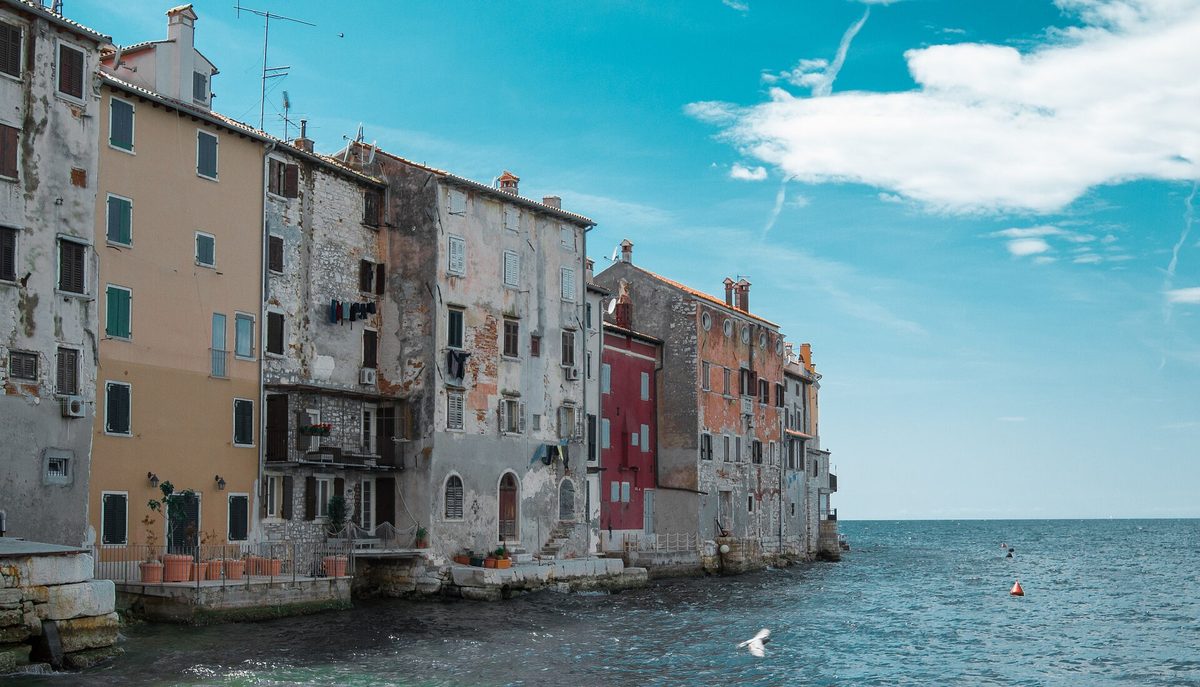
9. Rovinj, Croatia
My favourite town on the Adriatic, and the one I would move to. Rovinj is a peninsula of tall Venetian houses crowned by the campanile of St Euphemia, officially bilingual Croatian and Italian, with 11,629 people in the city proper.
The old town is car-free year-round apart from residents with permits, and you park in the Valdibora or Porton Biondi garages and walk in, at roughly €2 to €3 an hour in peak season. Entry to St Euphemia’s church is free; the bell tower climb charges a fee at the door that the official site does not print, reported at around €3. It is about sixty metres up more than 200 narrow, open-tread wooden stairs with nothing solid underfoot, so skip it if heights bother you, and avoid going up at noon unless you enjoy bells at close range.
The tourist board is unusually straight about timing, and I will just quote it: June and September are the sweet spot, with sea at 22 to 24 degrees, half the crowds and accommodation 25 to 40 percent cheaper. Peak is mid-July to mid-August, when old-town restaurants need reservations several days ahead and parking becomes a problem. Winter is beautifully empty but many restaurants and some hotels close.
Getting there is the catch. There is no railway to Rovinj; the branch line to Kanfanar closed in 1966, and the nearest station is ten miles away. Pula airport is the closest at about 40 minutes by car. Official sources say the Pula bus takes 45 minutes and independent guides say 90, a discrepancy I could not resolve, so allow the longer figure. From Venice there is a summer catamaran of about three hours, June to September, which fills up fast in July and August. Croatia has used the euro since January 2023, which surprises people who last visited a few years ago. More options in our Croatia travel guide.
10. Piran, Slovenia
Slovenia has 46 kilometres of coast and Piran is the best of it: a Venetian-Gothic town of 3,827 people on a spit in the Gulf of Piran, built around a square named for the violinist Giuseppe Tartini, who was born here. Snow falls about three days a year and 22 days top 30 degrees, so the season is long and the winter mild rather than absent.
Parking is not allowed in Piran at all. Every option is outside town: the Arze garage runs about €20 per 24 hours and Fornace about €29 with a free bus in, and you get one 30-minute free drive-in to drop luggage. There is no railway either. The bus from Ljubljana takes around two hours with a few departures a day, and there is one irritating detail: if you buy your bus ticket online you have to print it, because the buses do not accept electronic tickets.
The town walls are the view, reached by a 400-metre uphill trek of ten to fifteen minutes with a lot of stairs, unsuitable for wheelchairs and hard going with mobility problems. Entry is by a token dropped into an automatic gate. On the price I have to hedge: sources say €2 and €3 and I could not settle it, so carry small change and expect two or three euros. The walls close when it rains, for safety. Do not confuse the St George’s bell tower, 46 metres and 146 steps, with the lighthouse at the peninsula tip; they are different buildings with different tickets.
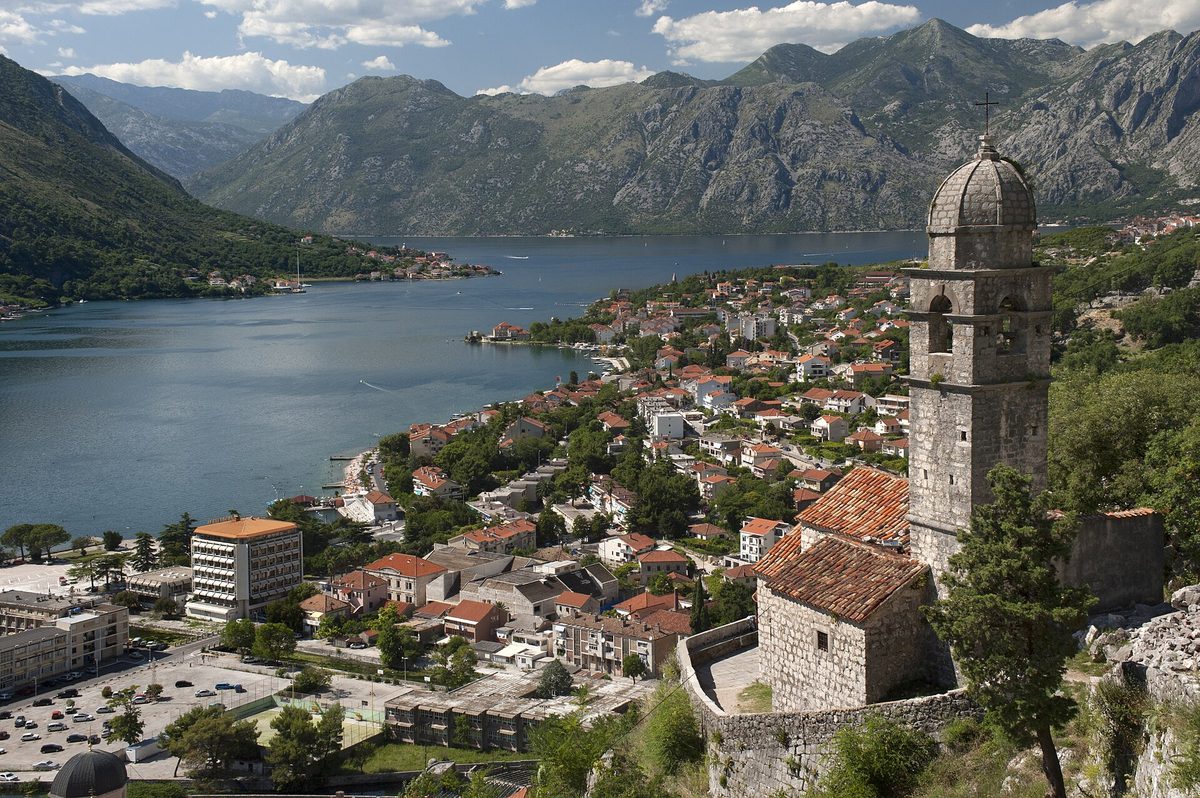
11. Kotor, Montenegro
Kotor is a fortified town at the head of a drowned river canyon, UNESCO-listed since 1979 and on the danger list until 2003 after the earthquake that prompted the inscription. It is also part of the separate Venetian Works of Defence listing from 2017. The published population of the town proper is 1,360, which is misleading because the administrative boundary covers only the old town; with Dobrota and Skaljari the urban area is closer to 13,000.
Walking into the old town is free. The walls are not: the climb to the San Giovanni fortress is €15 per adult, paid at a staffed gate, up around 1,350 steps to a fortress 260 metres above the town. Reckon 40 to 60 minutes up, 30 to 40 down, and one and a half to two and a half hours return with stops. You do not need to pre-book. I would treat the widely repeated claim that it is free before 8am with suspicion; ticket hours vary by season and the local sources warn against relying on it. The Lovcen cable car is reported at €25 return, though the operator’s own page was down when I checked, and it stops running in strong wind.
Two 2026 changes, both reported locally rather than announced on an official page, so treat them as likely rather than certain. In May the municipality is said to have sealed the informal gaps in the walls that people were using as unofficial entrances. And motorised vessels may no longer enter the Blue Cave, with speedboats stopping outside.
On timing, the local consensus is firm: late April to June and September to mid-October, with May, June and September strongest. July and August the old town is genuinely overcrowded between 10:00 and 15:00, or from 09:00 to 16:00 when several cruise ships are in. There is no cruise cap at Kotor: four independent cruise-focused sources confirm no passenger cap, ship limit, berth quota or entry fee exists. Up to four large ships can be in on the same August day. Montenegro uses the euro but is not in the EU.
Walled towns and fortress towns
Eight places where the defensive architecture is the attraction. In most of them the walls are free to look at and the tower is where they charge you.
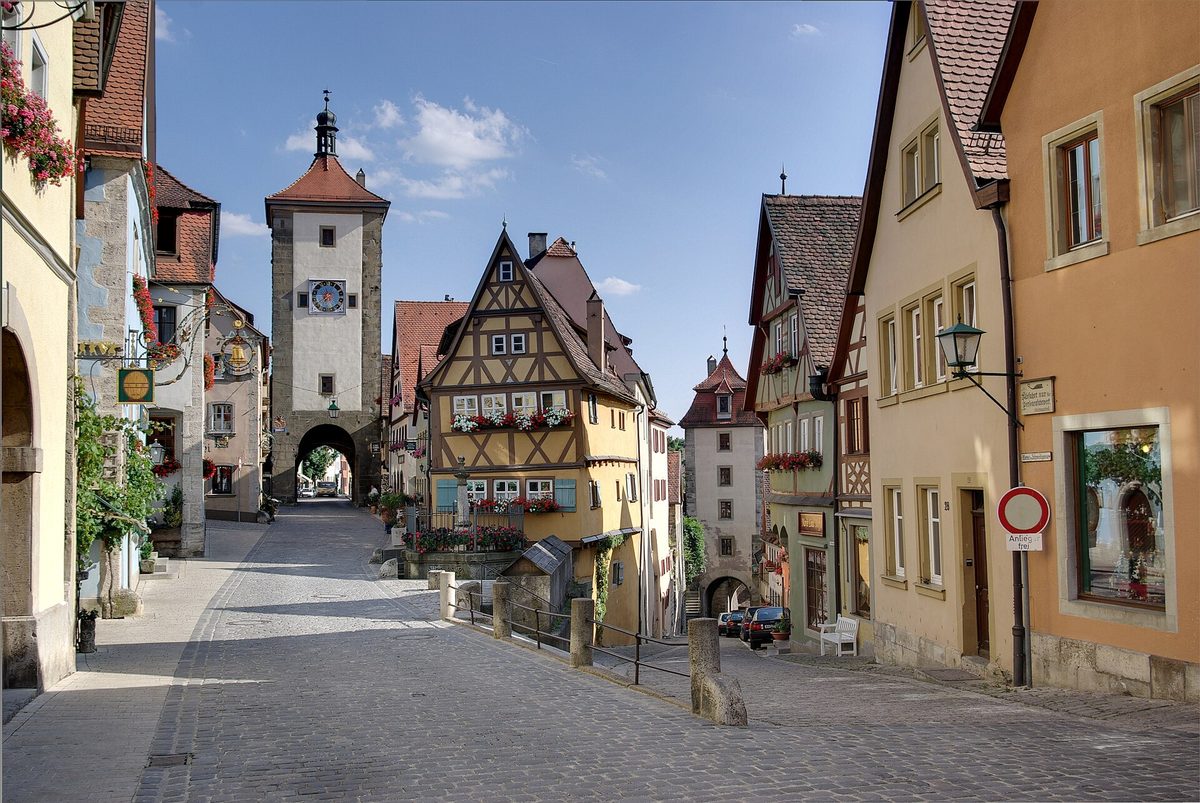
12. Rothenburg ob der Tauber, Germany
11,365 people inside one of only four German towns with completely intact medieval walls, the others being Nördlingen, Dinkelsbühl and Berching. Rothenburg is not a UNESCO site, incidentally. I found no entry for it anywhere on the World Heritage list.
The Christmas question comes up constantly, so let me separate two things that get merged. The Reiterlesmarkt, the actual Christmas market, is seasonal: 61 stalls, running 20 November to 23 December 2026, Sunday to Thursday 11:00 to 19:00 and Friday and Saturday until 20:00, closed on Remembrance Sunday. It opens on the Friday before the first Advent with a rider arriving on horseback and the mayor lighting the tree. The town’s own page prints a 2025 date inside its 2026 listing, so I am not going to give you a specific closure date; check on arrival.
What is open all year is Käthe Wohlfahrt, the roughly 1,000 square metre Christmas shop on Herrngasse, daily 10:00 to 18:00 according to its own site. Its own site gives 10:00 to 18:00 every day. Above it, the German Christmas Museum charges €5 and is not wheelchair accessible. The Town Hall tower is €4, cash only, paid at a turnstile on the third floor, 220 steps to the platform. In winter it opens weekends only, 12:00 to 15:00. Our guide to European Christmas markets has the wider December picture.
13. Český Krumlov, Czechia
A Vltava meander wrapped almost entirely around a town of 13,148, with a castle complex along the ridge above it. UNESCO-listed since 1992, and one of the better-value historic towns in Europe once you understand the ticketing, which is unusually granular.
The cheap and cheerful option is the Castle Museum plus Castle Tower combined ticket at 280 CZK for adults, unguided and needing no reservation. The interiors are guided and separate: Route I, the Renaissance and Baroque apartments, is 300 CZK; Route II, the nineteenth-century apartments, is 260 CZK. The Baroque Theatre at 400 CZK is the one to plan around, because it must be reserved and its 2026 season runs only 8 August to 13 September and 21 September to 31 October. The castle garden is free.
Season matters here more than almost anywhere on this list. Route I closes on 31 October; Route II closes on 30 September and runs weekends only through that month. Interiors are shut on Mondays. If you turn up in November expecting the full castle, you will get the tower and the museum and nothing else. Two free-admission Sundays are scheduled for 2026, on 30 August and 27 September, with a free ticket that must still be booked online because capacity is limited.
Getting there is easy and slow: buses from Prague take about three hours, several times daily, with Student Agency, FlixBus and others on the route. From Ceské Budejovice it is 22 km and about half an hour. By train from Prague you change at Ceské Budejovice for a four to five hour trip, and the station is two kilometres from the centre.
14. Sighișoara, Romania
The only one of Transylvania’s Saxon citadels still properly inhabited, and that is what makes it work. 23,927 people, down almost fifteen percent between the 2011 and 2021 censuses, and down by a third since the 1992 peak of 36,170. UNESCO-listed in 1999 as a fine example of a small fortified medieval town on the fringes of central Europe. Vlad Dracul, father of the more famous Vlad, lived here in exile and minted coins in the town.
The Clock Tower is the centrepiece, 64 metres, begun in the late thirteenth century with a Baroque roof rebuilt over six months in 1677, housing the History Museum since 1898, and the balcony is the main viewpoint. On the admission price I have to stop. No official municipal or museum page would load for me, and visitor reports conflict between 12 and 16 lei across different years, so I am not printing a figure. Budget a few euros, allow about thirty minutes inside, and go early, since crowd-sourced data suggests the majority of visitors start between one and two in the afternoon.
The medieval festival takes over the citadel every July, which is either the reason to go or the reason to avoid it.
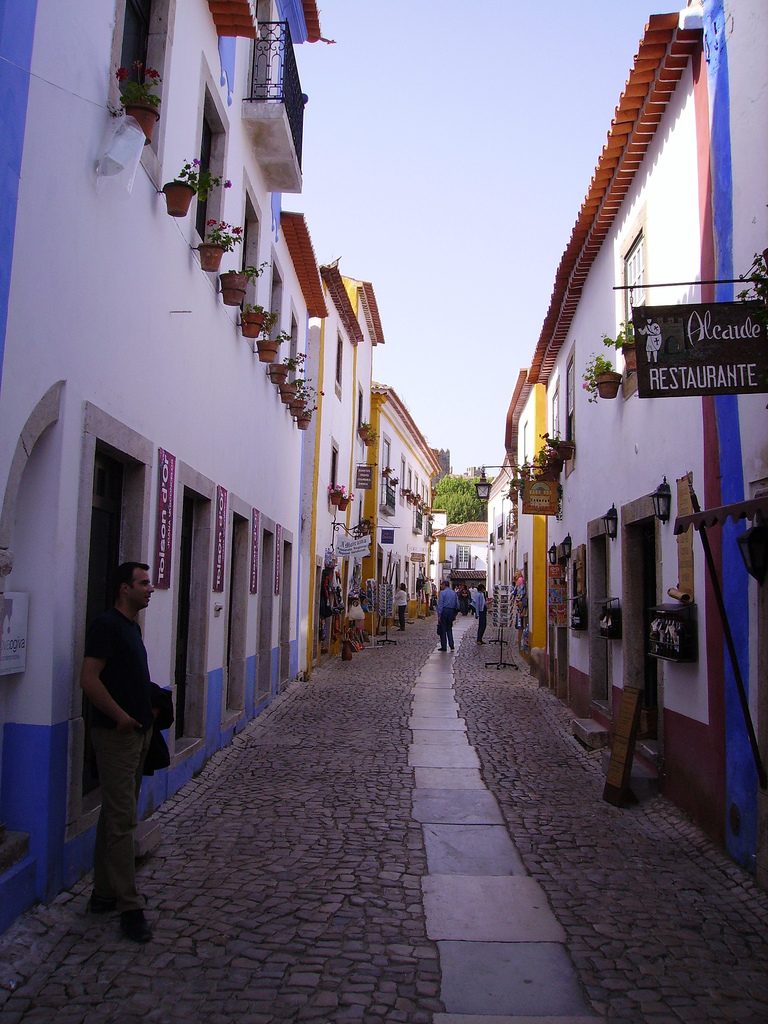
15. Óbidos, Portugal
A whitewashed walled town of roughly 3,100 in the Oeste region, known as the town of the Queens because Afonso II handed it to Queen Urraca in 1210 and it stayed a royal gift for centuries.
One thing to know before you arrive: the castle cannot be visited. It was converted into a Pousada in the 1950s and it is still a hotel. What you can actually see is the garden and terrace, the belvedere in front of the Pousada entrance, the walls, and the courtyard behind the castle when no event is on. All of that is free, as is the town itself, with museums charging separately and closing on Mondays.
The walls are the walk: 1,565 metres of walkable perimeter with no protection barrier at all. The official castle site says plainly that it is not suitable for small children, and having done it I would extend that to anyone who dislikes exposure. It is genuinely unfenced.
Óbidos is a UNESCO City of Literature, awarded in 2015, which is a Creative Cities Network designation rather than a World Heritage listing. It earns it: fourteen bookshops in a town this size, one inside a church and one that sells fish alongside the books, and the Folio literary festival every October. Peak crowds come with the July medieval fair and the chocolate festival in early March. More at our Portugal travel guide.
16. Monsaraz, Portugal
Monsaraz is a hilltop of white houses and one street inside a castle wall, looking east over the Alqueva reservoir towards Spain. The parish counts 782 people across 88 square kilometres, so the walled village itself is a fraction of that.
The reason it looks the way it does is bureaucratic: the municipal seat moved to Reguengos in 1838, and permanently after 1851, and the village simply stopped. What was left is a medieval street plan with a Restoration-era bastion added after 1640, when Monsaraz became part of the defensive chain linking Elvas, Juromenha, Olivenca and Mourão.
The castle is listed by the regional tourism board as always open and never closed, with guided visits available and no admission price published. Around it are some of Iberia’s better megalithic sites, the Xerez cromlech, the Olival da Pega dolmens and the Bulhoa and Outeiro menhirs, and I could not verify charges for any of them. Come for sunset. The Alentejo does light better than almost anywhere in Europe, and the Alqueva sky is one of the darkest on the continent.
17. Albarracín, Spain
Pink-red houses stacked on a bend of the Guadalaviar at 1,182 metres in the mountains of Teruel, and a population of 998 as of the 2025 register, down about six percent since 1996. It is a founding member of Los Pueblos Más Bonitos de España and has been a Monumento Nacional since June 1961, with a Gold Medal for Merit in the Fine Arts from 1996.
You will see Albarracín described as a UNESCO site. It is not. It has been put forward as a candidate, which is a different thing, and there is no entry for it on the World Heritage list. The distinction matters if you are building an itinerary around inscribed sites.
The second draw is less obvious: the red sandstone boulders around the town make it a serious rock climbing and bouldering destination, and in autumn the town fills with climbers rather than coach parties. On transport I have nothing solid: no airport, rail connection, bus operator or journey time appears on any official page I could reach. Plan on driving from Valencia or Zaragoza and confirm locally.
18. Trakai, Lithuania
A red-brick castle standing on its own island in a lake, half an hour from a capital city, and still not busy. Trakai was the medieval capital of Lithuania, has 5,426 residents, and sits 28 kilometres from Vilnius by road, making it the most straightforward day trip in this guide that does not involve a train.
The Island Castle costs €14 for adults from April to September and €12 from October to March, with students and seniors at €7 and €6. A combined ticket with the Peninsula Castle is €17 in summer. Be careful with third-party price listings: one well-known museum aggregator publishes roughly half the official rate, and another site still quotes litas, a currency retired in 2015. The official museum price list is the only one to trust. There is no photography fee, only a requirement to agree professional shoots in advance. Allow two to three hours.
Hours are the fiddly part, and the official site contradicts itself between its body text and its footer over April. The safe version is May to September, 10:00 to 19:00 daily, with last admission half an hour before closing; shorter hours and fewer days the rest of the year, down to Wednesday to Sunday in December, January and February.
Trakai is on UNESCO’s tentative list only, not inscribed. The town’s other story is the Karaim, resettled here from Crimea by Grand Duke Vytautas in 1397 and 1398, whose kenesa is a rare surviving wooden synagogue and whose kibinai pastries are the thing to eat. Lake Galve, which the castle sits in, has 21 islands. Vilnius itself is one of the cheapest city breaks in Europe, which makes the pairing good value.

19. Veliko Tarnovo, Bulgaria
The historical capital of the Second Bulgarian Empire, built across three hills inside the meanders of the Yantra, with the Tsarevets fortress on the largest of them. 59,166 in the town proper. Not UNESCO-listed, and not on Bulgaria’s tentative list either, which surprised me.
One thing to get right before you arrive: Bulgaria adopted the euro on 1 January 2026, and the lev stopped being legal tender on 1 February. Any price you see quoted in leva is now stale, which matters because plenty of them are still circulating. On the museum’s own ticket shop, Tsarevets is €7.67 for a standard adult ticket and €10.23 for a family. The panoramic elevator is not included: it is separate, at about €2.60, paid at the platform, and it runs March to October and into mid-November in good weather. Visiting involves real walking on cobbles.
Now the transport trap, which is a big one. Veliko Tarnovo has an airport at Gorna Oryahovitsa, ten to twelve kilometres away, and it has no scheduled passenger flights. It handled 78 passengers in the whole of 2025. The tourist board says so itself. Your arrival airport is Sofia, and from there the bus takes about three hours to Bus Station South and costs somewhere around seven to eleven euros. Trains from Sofia do not reach the town either: they stop at Gorna Oryahovitsa, seven kilometres out, and you change to a bus, train or taxi, with a total journey nearer four hours. Direct trains do exist from Plovdiv and Russe. There is a light show over the fortress most evenings; accounts of whether and when it is free are so contradictory that I would just ask at your hotel. Bulgaria in general is covered in our Eastern Europe travel guide.
Canal towns and waterfalls
20. Giethoorn, Netherlands
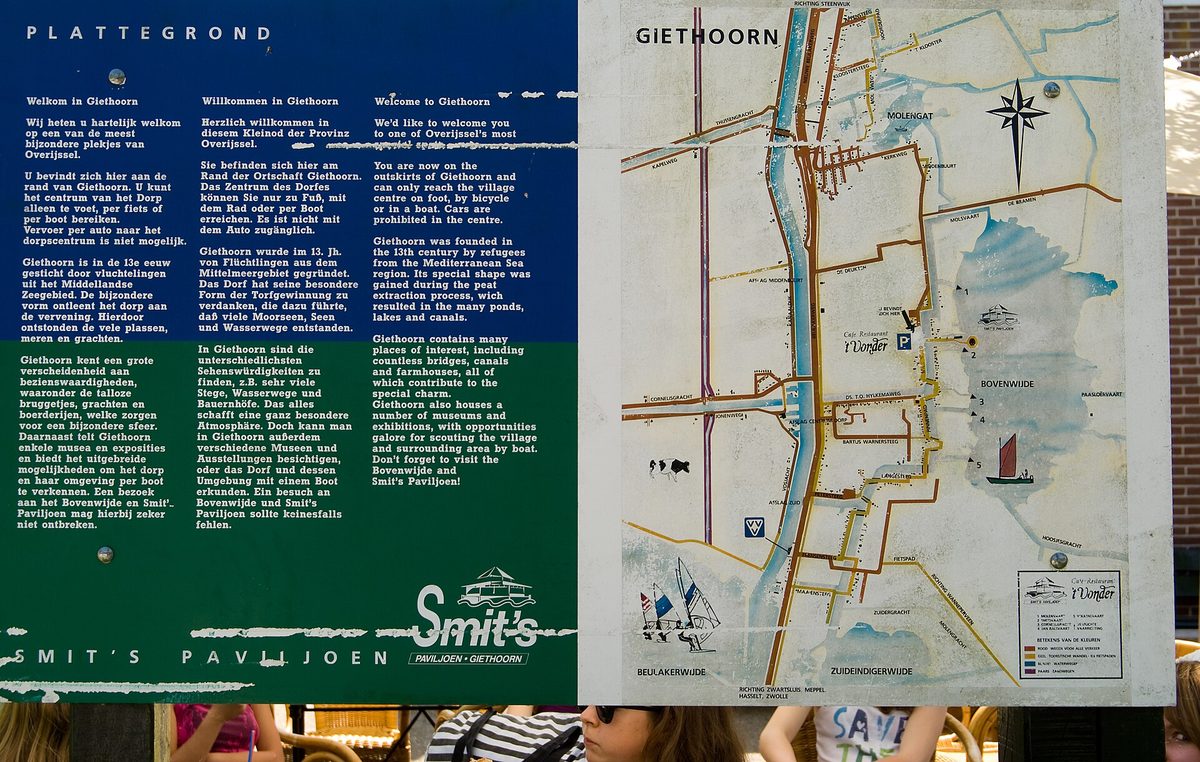
Let me correct something first, because it is repeated everywhere and it is wrong. Giethoorn is not a village without roads. The local village site says so in almost those words: the story is not completely true. The old centre has no roads, because it was unsuitable for cars and residents voted to leave it that way, but outside the centre there are normal roads and normal car parks, and most of those car parks are free.
What is true is the rest of it: 176 bridges, a village six kilometres long and one wide, split into South, Centre and North, with 2,795 residents in 2020 and somewhere between 800,000 and a million visitors depending on which page of the local site you read.
Boats are the point and the prices are clear. A whisper boat for two, for ninety minutes, is €28.50 booked online or €35 if you turn up and pay on the spot, and a three to four seater is €30 online or €40 on location. Full-day rates run from €95 for a one to five person whisper boat to €129 for a ten-seater. Kayaks are €29 for the day, canoes from €32. No licence is needed, minimum age 16 at one operator with ID required, and the season runs roughly April to October, 09:30 to 17:30. The canal is at most seventy centimetres deep and there is one-way traffic along most of the village stretch, so the worst outcome of incompetence is embarrassment.
The crowd data here is better than anywhere else in this guide, so use it. Monday is the quietest day and crowds build steadily to a weekend peak. Most visitors arrive around 11:00 and leave around 17:00, so arrive before 08:00 or after 17:00 and you will have a different village; there is no closing time. The two historically busiest days of the year are Ascension Day and Pentecost. From Amsterdam it is at least two and a half hours each way by public transport at around €29.50 one way, an hour and twenty-five by car for 120 kilometres, or about €39 return on an organised coach. Our Netherlands travel guide covers the rest of the country.
21. Bruges, Belgium
Of the 119,636 people in the municipality, only 20,072 live in Bruges Centre, and that centre is what everyone means when they say Bruges. UNESCO-listed since 2000, with the Belfry separately inscribed in 1999 as part of the belfries of Belgium and France.
The Belfry is 83 metres, thirteenth century, 366 stairs, and carries a carillon of 47 bells. Admission is €16 from 1 April to 2 November and €15 in winter, with weekends and the last week of December charged at the summer rate. Under-sevens are free. Two practical notes that catch people out: no group visits are possible at all, and in gusty or stormy weather the belfry can close for safety, though ticket holders can rebook at no cost. Last entry is an hour before closing and booking ahead is sensible.
UNESCO’s own file notes that Bruges has made considerable efforts to manage visitor impact, and it shows in small ways: the centre absorbs enormous numbers without feeling like a theme park, largely because 20,000 people live in it. Stay a night. The difference between Bruges at four in the afternoon and Bruges at nine in the evening is the whole reason to come. It also makes a strong stop on a wider Europe itinerary.

22. Kuldīga, Latvia
Kuldīga was added to the UNESCO World Heritage list on 17 September 2023, at the 45th session of the committee in Riyadh, under criterion (v), as a remarkably intact example of a small Northern European trading town. More than seventy percent of the masonry buildings put up before the nineteenth century survive.
The Venta Rapid is the headline: at 249 metres across, and up to 275 in spring flood, it is the widest waterfall in Europe, corroborated by the national tourism portal. It is also only about two metres high, which is the joke and the charm, and there is a wooden walkway along the river to see it from. It has been a protected natural monument since 1977 and part of Natura 2000 since 2004, and draws around 130,000 visitors a year. Next to it stands a brick bridge from 1874, 164 metres long, said to be the longest operating brick bridge in Europe.
The town threads a second waterfall, the 4.2-metre Aleksupite, directly along the walls of its houses, which has earned it the nickname the Venice of Latvia. It was first mentioned in 1242, joined the Hanseatic League in 1368, and served as the primary residence of the first ruler of the Duchy of Courland and Semigallia. It is about 150 kilometres west of Riga. No transport page would load, so there is no bus route or journey time here, and the town population appears only as vague figures over 10,000 that are not worth quoting as fact. The municipality was 26,666 in 2025.
Wine country, half-timbering and lavender
23. Colmar, France
The capital of the Alsace wine road, and the place that has ended up standing in for every half-timbered French fantasy since Beauty and the Beast borrowed it. What Colmar has that its smaller neighbours do not is trains: TER Grand Est lines run from Strasbourg via Sélestat and on to Mulhouse, plus branches to Munster and Sainte-Marie-aux-Mines, and there is a large bus station. A cross-border Fluo 68 bus runs several times a day to Breisach in Germany, connecting to Freiburg trains.
Once you arrive, there is a free electric shuttle, three minibuses running the town centre every fifteen minutes, Monday to Saturday 09:00 to 19:00, at no charge at all. I have never seen a town this size do that so well.
The Christmas markets, six of them, run 23 November to 29 December 2026, Monday to Thursday 11:00 to 19:00 and Friday to Sunday 10:00 to 20:00, with reduced hours on Christmas Eve and slightly different ones on the 25th and 26th. The gourmet market and the Ferris wheel stay open to 3 January, daily 11:00 to 22:00. From 25 November the downtown closes to all vehicles during market hours, so if you are driving, use the weekend Park and Ride at the Parc des Expositions: €3 per day and the bus is free, with the shuttle running Saturday 09:00 to 23:30 and Sunday 09:00 to 21:10. Coaches pay €45 a day at weekends, or €50 if they arrive without an online booking.

24. Riquewihr, France
Fifteen minutes from Colmar and a quarter of the size, Riquewihr is the walled wine village that Colmar’s day-trippers come to see: one main street climbing between timber-framed houses to a gate tower, vineyards starting where the houses stop.
Riquewihr has no railway station. The regular way in without a car is the Fluo 68 bus, line 16, which runs a Colmar to Riquewihr to Ribeauvillé circuit; two independent official sources confirm the route, but neither publishes a journey time, which is a small failure of the local transport information rather than of the bus. Colmar is your rail hub either way.
The Christmas market runs Friday 27 November to Sunday 20 December 2026, open every day, 10:00 to 18:30 on weekdays and to 19:00 at weekends. In December there are paid shuttles from Colmar at €17 per person per day, free for under-12s, looping Colmar, Kaysersberg, Riquewihr and Ribeauvillé hourly on Fridays and every half hour at weekends, with tickets going on sale on 12 November. I have to flag that the shuttle operating window printed on the official page still carries 2025 dates, so confirm before you build a day around it. There is also a park and ride at Hunawihr, €10 per vehicle including the shuttle for everyone in it.
25. Gordes, France
The dry-stone village that Travel + Leisure named the most beautiful in the world in February 2023, ahead of Shirakawa-go and Giethoorn, which will tell you something about how the light falls on it from the Cavaillon road. 1,661 people in a commune of 48 square kilometres in the Monts de Vaucluse, thirty-eight kilometres east of Avignon and its TGV station.
Parking in Gordes is a system, not an afterthought, and getting it wrong is expensive. A municipal by-law prohibits parking anywhere outside the designated car parks and marked spaces. There are three car parks, Gendarmerie with 96 spaces plus motorhome pitches, Charles De Gaulle with 270 and Reservoir with 120, plus about sixty metered spaces in the village. You get thirty minutes free if you take it at the meter, then €8 up to four hours, €10 for four to eleven, and €30 beyond that. There is no entry fee for the village itself.
Four kilometres away is the Abbaye de Sénanque, the Cistercian abbey that appears in every Provence photograph with lavender in the foreground. Entry is €8, and the one-hour guided tour is in French only, so non-French speakers should take the self-guided HistoPad tour available in eleven languages. Then the part that matters: access to the lavender fields is forbidden, because the monks harvest them, and drones are strictly banned over the valley and the abbey. Photograph from the path. Market day is Tuesday morning around the castle. Anyone building a wider Provence trip should start with our France travel guide, then our Provence travel guide for admission prices, market days and the lavender calendar by altitude.

The Balkans and Central Europe
26. Mostar, Bosnia and Herzegovina
Stari Most is four metres wide, thirty long and twenty-four above the Neretva. Suleiman the Magnificent commissioned it in 1557, Mimar Hayruddin designed it, it stood for more than four centuries, it was destroyed on 9 November 1993, and it reopened on 23 July 2004 after a reconstruction costing around fifteen and a half million dollars. UNESCO listed the Old Bridge Area in 2005 under criterion (vi), the one reserved for places of outstanding symbolic significance. You do not need me to explain why.
Practically: the Old Bridge Museum in the Tara tower at the eastern end is around €5 and takes half an hour. Diving off the bridge has been a formal competition since 1968 and a Red Bull Cliff Diving stop since 2015; visitors can jump with the local club for roughly €25 after compulsory practice, which I mention mainly so you understand that the people you see leaping are not doing it spontaneously.
Timing is well documented here and worth following: April to early June and September to early October. July and August push above forty degrees and the old town is miserable in the middle of the day. Coach groups arrive from about 11:00 and leave about 17:00, so walk the bazaar before or after that. From Sarajevo there is exactly one train a day, leaving at 10:20 and taking about two hours with limited luggage space, or five to six buses at two and a half to three hours for ten to fifteen euros. It is 125 kilometres and about two and a quarter hours by road with no border crossing. From Dubrovnik it is roughly 140 kilometres and two and a half hours with one crossing, which makes it the region’s most popular day trip. The currency is the convertible mark, fixed by law at about 1.96 to the euro.
27. Ohrid, North Macedonia
Ohrid sits on a lake old enough to have evolved its own endemic species, and it holds one of only a handful of mixed cultural and natural UNESCO listings in Europe, inscribed in 1979 and extended in 2019 across the border to cover the Albanian side of the lake. 38,818 people. Churches on cliffs, a fortress on the hill, and a waterfront that in September is one of the best places in Europe to do nothing.
Two honest gaps. First, I could not settle on a price for Samuel’s Fortress. Five figures circulate across five years, from 30 denars to three euros, and no operator page confirms any of them; recent visitor accounts cluster around 150 denars, roughly two to three euros. Bring small notes, because the cashier is reported not to have change for a 500. Opening hours are equally unresolved across four variants and are probably seasonal. The climb takes about ten minutes from the old town, the fortress stands a hundred metres above the lake, and reviewers consistently warn that the steps are crumbling and slippery.
Second, transport. Ohrid has its own airport nine kilometres away, and there are no buses at all between it and the town; a taxi is about twelve euros or 730 denars. The railway closed in 1966 and has not returned. From Skopje, organised day tours run eight to eleven hours door to door, which tells you it is a long day rather than an easy one.
28. Sibiu, Romania
Sibiu is the largest place on this list at 134,309 people, and it earns its inclusion through a historic core of linked squares that behaves entirely like a small town. It was European Capital of Culture in 2007 alongside Luxembourg City, and the investment from that year is still visible.
It is not a UNESCO World Heritage Site. It has been on Romania’s tentative list since 2004, as the Historic Centre of Sibiu and its Ensemble of Squares, which is a nomination and not an inscription. That changes what protections apply and what you should expect.
The practical case for Sibiu is access. The airport is three kilometres from the centre and handled nearly 695,000 passengers in 2025, so you can fly in directly, and it sits on CFR main line 200 from Brasov through to Arad. Atlassib, Romania’s largest coach operator, is based here. The Brukenthal is a complex of six museums whose collections were started around 1790 and opened to the public in 1817, making it the oldest museum institution in modern Romania, though I could not reach its ticket page. Weather-wise, July and August average maximums of around 27 degrees and June is the wettest month; January means run to minus two and a half with roughly 120 hard-frost days a year. Peak demand comes with the theatre festival at the end of May, the medieval festival in August and the December Christmas market.

29. Szentendre, Hungary
Twenty-five kilometres north of Budapest, a riverside town of 27,534 that filled with Serb refugees after 1690, was majority Serb through the eighteenth century, and kept the Orthodox churches long after the community dispersed; by 2001 only about a hundred of its inhabitants were ethnic Serbs. An artists’ colony was founded in 1929 and more than two hundred artists, writers and musicians still live here.
Getting there is the easiest day trip in Central Europe, with one catch. The H5 suburban railway, opened in 1888, runs frequently from Batthyány tér in Buda, which is on metro line M2. Journey time is usually quoted at around forty minutes, though I could not confirm that on an operator page, so allow an hour. Your Budapest travel pass does not cover the whole journey. Standard BKK tickets are valid only inside the city boundary, which on this line means as far as Békásmegyer; from there to Szentendre you need a separate extension ticket. Buy it before you board. The alternatives are a bus from Újpest-Városkapu, or a river boat from Vígádó tér that runs roughly April to September and takes appreciably longer than the train.
The Skanzen, Hungary’s national open-air museum, is 4,000 HUF for adults on normal days and 5,000 on festival days, with students and seniors at 2,000. Parking is 2,000 HUF for a car. It does not take foreign currency, only cards and Hungarian SZÉP cards. Crucially, it is not walkable from the station: it sits out of town on Sztaravodai út and you need a local bus or taxi. Four to six hours covers the town centre comfortably; May and September are the recommended months, with June to August busiest at weekends.
30. Kazimierz Dolny, Poland
A Renaissance market square on the Vistula, fifty kilometres from Lublin, with 2,530 residents. Kazimierz Dolny got rich on the sixteenth-century grain trade, then stopped getting rich, and the stagnation preserved a street plan and a set of merchant houses and granaries that would otherwise have been rebuilt three times over. Travel + Leisure put it on a list of Europe’s most beautiful small towns in 2024, and Poland made it a national Historic Monument in September 1994.
It is not UNESCO-listed and has no tentative-list entry, so treat the Historic Monument designation as the meaningful one. There is no railway station; the nearest is Puławy Miasto, which has long-distance connections. Bus routes, journey times, castle admission and tower admission are all unsourced here, so research this one locally rather than taking my word for it.
The one date to plan around is August, when the Two Riversides Film and Art Festival brings a national crowd into a town of two and a half thousand people. The parish church of St Bartholomew and John the Baptist dates from 1586 to 1589 and its organs from 1620, which makes them among the older working instruments in Poland.
Stone, tile and hilltop towns of the south
31. Alberobello, Italy
Over 1,600 conical dry-stone trulli, concentrated in two neighbourhoods, Rione Monti with 1,030 and Rione Aia Piccola with 590, UNESCO-listed in 1996 across a serial property of just 10.52 hectares in six parcels. Alberobello has 10,237 residents and is twinned with Shirakawa-go in Japan, which is a pairing that makes complete sense once you have seen both.
The rules that keep it standing are strict and interesting: it is illegal to demolish a trullo, to reconstruct one, to add a floor, or to build a fake, and only traditional lime whitewash may be used on the outside. A conservation report recorded roughly thirty percent of the trulli in commercial use, mostly tourist accommodation, forty percent abandoned and thirty percent lived in, with the residential share concentrated in Aia Piccola. That is the neighbourhood to walk if you want to see people living in these buildings rather than selling things from them.
The Trullo Sovrano is the one paid sight and it costs €2.50, which for a UNESCO monument is close to a rounding error. It is a rare two-storey trullo, a national monument since 1923, open 10:00 to 12:45 and 15:30 to 18:00 in winter, half an hour later in the evening from April to October. UNESCO itself flags high-season visitor numbers as a threat to the site’s authenticity, without naming months; Puglia’s peak is unmistakably July and August.
32. Ronda, Spain
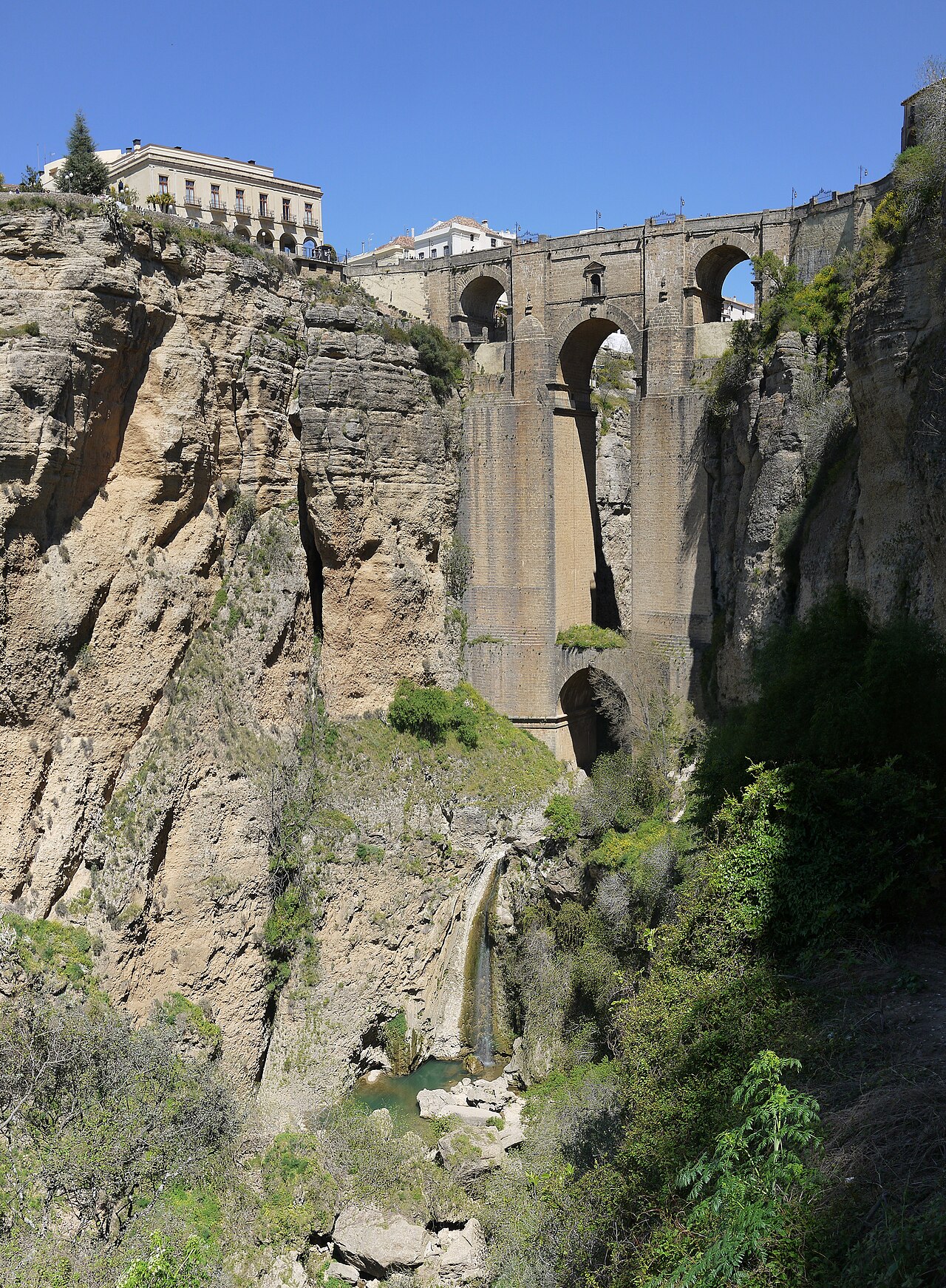
33,671 people on a plateau at 750 metres, split by the Tajo gorge, which is over a hundred metres deep and spanned by the Puente Nuevo, begun in 1751 and finished in 1793 and standing 120 metres above the canyon floor. Ronda is not UNESCO-listed; its historic centre has been a Spanish Bien de Interés Cultural since 1966, which is a national designation.
The best-value ticket is the municipal Bono Turístico at €12, or €9 reduced for groups of ten or more, pensioners and students, covering the Puente Nuevo interpretation centre, the Casa del Gigante, the Arab Baths and the Palacio de Mondragón, plus two more subject to availability. Under-eights, disabled visitors and Ronda residents go free. If you only want the bridge centre on its own I cannot help you: no official page renders a standalone price, and the figure circulating on aggregator sites is not one I could confirm. Note that the interpretation centre is classified as not accessible.
The Plaza de Toros is €12 with an audioguide in thirteen languages, €10 without, and it opens every single day, 10:00 to 20:00 from April to September. Consolidation works were under way as of late July 2026, so expect some scaffolding. Ronda is reachable by rail, with services from Algeciras and Córdoba and a direct train from Madrid twice a day, on a station that opened in 1892. Our Spain travel guide covers the wider picture, and our guide to visiting Andalusia has the ticket prices and train times for this circuit.
33. Santillana del Mar, Spain
The Cantabrian locals call it the town of three lies: not holy, not flat, not by the sea. Sartre called it the prettiest village in Spain in La Nausée, and the cobbled lanes of ochre stone around the Romanesque Colegiata de Santa Juliana make the case. The most recent population figure I could see rendered on a page was 3,983 from 2006, which is old, and the newer numbers circulating I could not confirm.
The town itself is not a World Heritage Site. The Cave of Altamira, two kilometres away, has been one since 1985, extended in 2008 to cover seventeen further caves across northern Spain. And before you build a day around it, know this: the original cave cannot be visited. It closed in 1977, reopened to limited access in 1982, and closed again after green mould appeared in 2002. What you see instead is the Neocueva, a full-scale replica completed in 2001 as part of the museum, and it does the job far better than the phrase "replica" suggests.
Museum hours are Tuesday to Saturday 09:30 to 20:00 from May to October and to 18:00 the rest of the year, with Sundays and holidays 09:30 to 15:00, closed Mondays and on a handful of fixed dates. Admission is around €3 general and half that reduced, free on Saturday afternoons and all day Sunday, although the page carrying those figures dates from 2023 and its own authors warn it is not kept current, so treat it as indicative. Tickets sell out fast in high season and at weekends. The museum is two kilometres from town with a free car park, walkable, about twenty euros by taxi, or a shuttle bus in high season only. Buses run from Santander in about forty minutes, thirty-eight a week; there is no railway station.
34. Sintra, Portugal
Sintra is the most heavily engineered visit in this guide, and turning up without a plan will cost you the day. Read this bit twice.
The Palace of Pena requires a booked date and time. This is a rule rather than a suggestion. Entrance to the palace is only with a previously booked date and time, and there is no delay tolerance whatsoever. Arrive late and you do not get in, and the ticket is not refunded. You will also not be admitted early. The timed slot applies to the palace interior, not to the park. The walk from the park entrance to the palace interior takes about thirty minutes however you travel, so build that in before your slot rather than after.
The “Essential visit” covering park and palace is €20 for adults, €18 for six to seventeens and over-65s, and €65 for a family of two adults and two youths. Park only is €12. A round-trip transfer from the park entrance up to the palace is €4.50. Booking online is not compulsory, since counters and machines exist, but the reservation is, and there is no online discount; the only benefit is free rescheduling within a year. For everything else: the National Palace is €13, the Moorish Castle €12, Monserrate €12, the Convent of the Capuchos €11.
Private cars are not authorised to drive up to Pena, and the historic centre is limited to residents, so use the peripheral car parks or, better, do not drive at all. The CP train runs on the Sintra Line from Lisbon Oriente, Rossio or Entrecampos, and Scotturb bus 434 runs from Sintra station up to Pena. From the station to the National Palace is a ten to fifteen minute walk. If you would rather climb, there are three marked trails up: Santa Maria at 1,770 metres and about an hour, Seteais at 2,410 metres and an hour and a half, and Villa Sassetti at 1,850 metres and forty-five minutes.
Parques de Sintra’s own advice on crowds is to do the park in the morning and book the palace for the afternoon. Take it. As of early August 2026 there were two live restrictions on site: the road between Pena and Capuchos was closed, and access to Monserrate’s south tower was limited. There is no daily visitor cap.

The English villages
Two of the prettiest villages in England, and both are now case studies in what happens when a place designed for a few hundred people receives a few thousand.
35. Bibury, England
William Morris called Bibury the most beautiful village in England, Arlington Row appears on the inside cover of some British passports, and a parish of 627 people now absorbs more than fifty coaches a day at peak. A traffic survey in July recorded over 4,500 vehicle movements across Swan Bridge in one day. The village proper, on the east bank of the Coln, is about forty homes and businesses.
Gloucestershire County Council has been doing something about it, and the current state of play matters if you are planning a visit. A trial in May 2025 closed the existing coach bays and replaced them with designated bus stops for safer drop-off and pick-up; feedback was positive and the council is proposing to make it permanent, adding a loading bay and disabled spaces. Also proposed: pay-and-display parking along The Street and near the primary school with resident exemptions, extended yellow lines to stop displacement, and seating and raised kerbing to part-pedestrianise the centre. Consultation closed in December 2025 and, if approved, the measures could be in place by early summer 2026. Prices have not been published. There is no village entry fee.
Arlington Row itself was built in 1380 as a monastic wool store and converted to weavers’ cottages in the seventeenth century; Rack Isle opposite, where the washed wool was hung to dry, is now a National Trust wildfowl reserve. The village’s relationship with photography has been strained for years: in 2017 the BBC reported that a resident’s car, parked outside her own house, had been vandalised, apparently by visitors who felt it spoiled their pictures. Go early, park properly, and remember people live there.

36. Castle Combe, England
A Wiltshire valley with 107 listed buildings in the parish, 356 residents, and no new houses in the historic centre since around 1600. That last fact is why it looks the way it does, and why film crews keep coming: Doctor Dolittle in 1967, Stardust, War Horse, and Slow Horses, where it plays the village of Upshott.
The parking is the practical bit, and it costs less than you would expect. Dunns Lane car park sits outside the village at the top of a steep hill, 91 spaces including one blue badge, open 24 hours. Charges apply Monday to Saturday 8am to 6pm including bank holidays, and Sunday 10am to 4pm. An hour is 40p, four hours £2.40, and all day £5.60; Sunday is a flat 80p. Coaches pay £5.40 for up to three hours or £8.60 all day. The one machine is coin only and gives no change, so bring coins or use the MiPermit app with location code 710182. Blue badge holders park free.
The walk down is steep, the toilets are over the bridge at the bottom, and the small village museum closed in 2012. The fourteenth-century market cross and the Weavers’ Steps buttercross are scheduled monuments and the Church of St Andrew is Grade I. Combine it with a Cotswolds run through Bibury and Lacock and see our UK travel guide for the rest.
The Nordic wooden towns
Northern Europe kept timber towns that fire destroyed almost everywhere else. Here are five of the survivors, one of which burned to the ground anyway and rebuilt itself into something better.
37. Ålesund, Norway
Ålesund is here because of a catastrophe. Almost the entire town burned on the night of 23 January 1904, and it was rebuilt in Art Nouveau over the following three years, which is why a fishing port in Møre og Romsdal now has one of the most coherent Jugendstil townscapes in Europe. 55,684 people in the urban settlement.
The view is from Aksla, reached by 418 steps from Byparken. Allow ten to fifteen minutes when it is quiet and twenty to thirty when two or more cruise ships are in; forty-five to seventy-five minutes for the whole outing. The public area at the top is free, but there is a NOK 100 charge to use the automated revolving door onto the viewing platform, though on some days that door simply stands open. Hop-on hop-off buses no longer drive up following road restrictions the municipality imposed in early 2025, and public buses do not go up either; the blue road trains still do, at around NOK 190 for a seventy-minute circuit.
Ålesund itself is not UNESCO-listed. The listed Geirangerfjord is 110 kilometres away, and there is a rule change worth understanding if fjord cruising is part of your plan. From 1 January 2026 a zero-emission requirement applies to all passenger ships under 10,000 gross tons in the five World Heritage fjords: Nærøyfjord, Aurlandsfjord, Geirangerfjord, Sunnylvsfjord and Tafjord. Larger ships have until 2032. So large cruise ships can still visit Geiranger in 2026, with over 120 port calls scheduled. Sognefjord, Hardangerfjord, Lysefjord and Romsdalsfjord are unaffected, as are calls at Ålesund, Bergen, Stavanger and Tromsø that do not enter the five. Separately, Norway’s visitor levy law passed in June 2025 and comes into force on 1 July 2026.

38. Ærøskøbing, Denmark
Denmark’s best-preserved eighteenth-century town sits on the island of Ærø in the South Funen archipelago, has 942 residents, and carries total preservation orders on many of its houses. It won a Europa Nostra Award in 2002. It is not UNESCO-listed, which I suspect is a matter of nobody having pushed for it.
Ærø is the only one of the larger Danish Baltic islands with no bridge, so the ferry is the entire access story, and documented far better than most. Ærøfærgerne runs Svendborg to Ærøskøbing, Faaborg to Søby and Fynshav to Søby, with up to twenty sailings a day across all routes year-round. Svendborg to Ærøskøbing takes 1h15, roughly every two hours, first at 07:00 and last at 22:00. Fares valid from 3 January 2026 to 4 January 2027: an adult foot passenger is DKK 68, a child four to fifteen DKK 43, a bicycle DKK 25, a car under six metres DKK 142 not including the driver, and a motorhome DKK 330. All tickets must be booked and paid in advance.
The best part: the island bus is free for everyone, runs several times a day all year, and takes dogs and non-electric bicycles. You do not need a car on Ærø and I would argue you are better off without one. Svendborg, the gateway, is 195 kilometres from Copenhagen by road.
39. Rauma, Finland
Old Rauma is the largest coherently preserved wooden town area in the Nordic countries and has been UNESCO-listed since 1991: 29 hectares, more than 600 buildings, most of them privately owned, with around 800 people living inside the World Heritage area and about 40,000 in the town as a whole. Nobody has turned it into a museum. It stayed a working residential and commercial district that you walk into for free, which is exactly what makes it good.
The access situation is unusual and about to change. There is no passenger train to Rauma at present; the nearest station is Pori, fifty kilometres away. Rail service returns in 2027, from Tampere, which is worth knowing if you are the kind of traveller who plans a year out. Until then it is buses from Pori, Turku, Tampere and Helsinki through Matkahuolto and Onnibus, from a temporary station on Tallikedonkatu with no station building. Road distances: Pori 50 km, Turku 90, Tampere 140, Helsinki 240.
The Church of the Holy Cross, inaugurated in 1512 and formerly part of a Franciscan monastery, keeps its medieval wall paintings. One seasonal signal to note: the tourist information office opens daily only from 1 June to 31 August, so the season is narrower than you might assume.
40. Sigtuna, Sweden
Sweden’s oldest town, established as a harbour around 980, where the country’s first coins were struck at the turn of the tenth and eleventh centuries. 9,689 people, a single long main street called Stora gatan, runestones standing in gardens, and the ruins of St Per’s, St Olof’s and St Lars alongside the surviving thirteenth-century Brick Gothic St Mary’s.
The practical hook is location: Stockholm Arlanda airport is about ten kilometres away. If you have a long layover or an early flight, Sigtuna is a far better use of the time than an airport hotel bar. I have to be straight: no bus or train route, operator or journey time appeared on any official page I could reach, so confirm locally or budget for a taxi.
It is not UNESCO-listed. It does not need to be. Read our guide to the best time to visit Europe before committing to a Nordic trip, because the shoulder seasons up here are shorter and sharper than in the south.
41. Seyðisfjörður, Iceland
A cluster of Norwegian-built timber houses at the head of an East Iceland fjord, with a pale blue church at the end of a rainbow-painted street that has become one of the most photographed spots in the country. The population is around 700, depending on which figure you take, and it has been falling.
You reach it over the Fjarðarheiði pass on Route 93, 600 metres up and 27 kilometres from the Ring Road at Egilsstaðir. That road is the thing to respect: it is high, it is exposed, and in winter it closes. The other way in is the weekly Norröna car ferry from Hirtshals in Denmark via Tórshavn, which is the only car ferry between Iceland and anywhere else. No public bus route or fare surfaced anywhere, so assume you are driving.
Two corrections worth carrying. First, the LungA Art Festival ran from 2000 to 2024 and has ended, so do not plan a trip around it. Second, this is a town that has been through something: mudflows in December 2020 damaged 39 houses, destroying twelve outright, with damage put at over a billion krónur, and residents were only allowed home from October 2021 after protective works. July and August are the warm months, and warm here means a daily mean of about ten degrees and daily maximums around thirteen. More context in our Iceland travel guide.

What these towns actually cost in 2026
This is the table I always want and rarely have when I am planning: the headline paid sight in each town and what it costs, read off official operator pages in August 2026.
Currencies are left as they are charged, because that is what you will hand over. Roughly, at the time of writing, 100 CZK is about €4, 1,000 HUF about €2.50, DKK 68 about €9 and CHF 85 about €90. One change worth knowing: Bulgaria adopted the euro on 1 January 2026 and the lev ceased to be legal tender on 1 February, so any Bulgarian price quoted in leva is out of date.
| Town | The headline paid sight | 2026 price | Worth knowing |
|---|---|---|---|
| Hallstatt, Austria | Salzwelten salt mine plus funicular, return | €49.00 adult | Funicular return alone is €29.00. The mine is closed for renovation until 28 August 2026 and reopens on the 29th |
| Cinque Terre, Italy | Cinque Terre Trekking Card, 1 day | €10.00 adult | The Rail MS card, which adds the regional trains, is €22.00 for one day. Via dell’Amore costs €10.00 more and must be reserved |
| Bled, Slovenia | Bled Island entry: church, bell tower, museum | €12.00 adult | The official electric line boat is €16.00 return. Bled Castle is a separate €19.00 |
| Sintra, Portugal | Pena Palace and Park, the "Essential visit" | €20.00 adult | Park only is €12.00. The palace interior needs a booked date and time, with no lateness tolerance at all |
| Český Krumlov, Czechia | Castle Museum plus Castle Tower | 280 CZK adult | Interior Route I is 300 CZK. The Baroque Theatre is 400 CZK and must be reserved. The castle garden is free |
| Kotor, Montenegro | City walls and San Giovanni fortress | €15.00 adult | About 1,350 steps. The Lovcen cable car is a separate €25.00 return |
| Bruges, Belgium | The Belfry | €16.00 in summer, €15.00 in winter | 366 stairs, no group visits, and it can close in high wind |
| Trakai, Lithuania | Island Castle | €14.00 April to September | €12.00 October to March. A combined Island plus Peninsula ticket is €17.00 in summer |
| Mürren, Switzerland | Cable car to the Schilthorn, return | CHF 85.60 adult | From Stechelberg it is CHF 108.00. A Swiss Travel Pass cuts it to CHF 42.80. These are the 2025 tariffs, still current on the operator’s page |
| Ronda, Spain | Bono Turístico, four monuments | €12.00 per person | €9.00 reduced. The Plaza de Toros is separate at €12.00 with an audioguide |
| Rothenburg, Germany | Town Hall tower | €4.00 adult, cash only | 220 steps. The German Christmas Museum is €5.00. Kathe Wohlfahrt itself is a shop and free to walk into |
| Veliko Tarnovo, Bulgaria | Tsarevets fortress | €7.67 adult | €10.23 for a family. The panoramic elevator is separate, about €2.60. Bulgaria switched to the euro on 1 January 2026, so leva prices online are stale |
| Szentendre, Hungary | Skanzen open-air museum | 4,000 HUF adult | 5,000 HUF on festival days. Parking is 2,000 HUF. The museum is out of town, not walkable from the station |
| Giethoorn, Netherlands | Whisper boat, 2 people, 90 minutes | €28.50 booked online | €35.00 if you turn up and pay on the spot. No licence needed. Most car parks are free |
| Gordes, France | Abbaye de Sénanque | €8.00 adult | Parking in Gordes is €8.00 for up to four hours and €30.00 beyond eleven. Walking into the lavender fields is forbidden |
| Alberobello, Italy | Trullo Sovrano | €2.50 | The lowest admission charge in this table, and a rare two-storey trullo |
| Burano, Italy | ACTV waterbus, single ticket | €9.50 | Valid 75 minutes, which is tight for a 45-minute crossing. A 24-hour pass is €25.00 |
| Positano, Italy | COSTIERASITA 24-hour bus ticket | €10.00 | €12.00 including local Positano buses. Tickets cannot be bought on board |
| Ærøskøbing, Denmark | Ferry from Svendborg, foot passenger | DKK 68.00 single | A car under six metres is DKK 142.00 and does not include the driver. All tickets must be booked in advance |
| Castle Combe, England | Dunns Lane car park, all day | GBP 5.60 | Coins only at the machine, or the MiPermit app. Blue Badge holders park free |
| Mostar, Bosnia and Herzegovina | Old Bridge Museum | Around €5.00 | Kravica Waterfalls, 40 minutes south, are 20 convertible marks, about €10.00 |
| Colmar, France | Christmas weekend Park and Ride | €3.00 per day | The shuttle bus itself is free. Coach parking at weekends is €45.00 a day |
| Óbidos, Portugal | Walking the town and the walls | Free | The castle is a hotel and cannot be visited. Museums in the centre charge separately and close on Mondays |
Three things jump out of that table when you look at it as a whole. Alberobello’s Trullo Sovrano at €2.50 and Rothenburg’s town hall tower at €4 are absurdly good value for what they are. The Schilthorn cable car at CHF 85.60 is by a distance the most expensive single item here, and the one where a rail pass makes the biggest difference, cutting it to CHF 42.80. And the towns that charge nothing at all, Óbidos, Rauma, Sigtuna, Kazimierz Dolny, Monsaraz, the streets of Kotor, are not the lesser experiences.
What is not in that table is accommodation, and I want to be honest about why. I could not find a published mid-range double-room rate for a single one of these 41 towns from a source I would stand behind. The only two real figures I saw anywhere were Rovinj’s five-star Monte Mulini waterfront at €400 to €700 a night in August and Rovinj guesthouses at €50 to €70 in shoulder season, and interpolating between those would be inventing a number. Use a booking site for your specific dates. For general strategy, our guides to choosing a base and budget travel are more use than any average I could give you.
The 2026 access rules worth knowing before you book
This is the section that dates fastest and matters most. A surprising number of these places introduced or tightened restrictions in the last eighteen months, and turning up unaware is how people lose an afternoon.
| Where | What changed | What it means for you |
|---|---|---|
| Hallstatt | Coach entry fee rises to €126 from 1 May 2026, with compulsory advance booking, a 20-minute drop-off window and a minimum 2h20 stay | No charge for individuals. If you are on an organised coach tour, your operator is paying this and it shapes your itinerary |
| Hallstatt | The Salzwelten salt mine is closed for renovation until 28 August 2026 | Visiting before then means funicular and Skywalk only, at €29 return. Online tickets for the reopening go on sale 1 September 2026 |
| Sintra | Pena Palace entry requires a booked date and time with zero lateness tolerance | Miss your slot and you lose the ticket. Allow 30 minutes to walk up from the park entrance before your slot time |
| Cinque Terre | The Cinque Terre Card "Plus" type was abolished for 2026; only Trekking and Rail MS remain. Via dell’Amore needs a reservation | Old advice about which card to buy is out of date. Cards are nominative and must be validated before your first train |
| Amalfi Coast | Alternate number-plate restrictions on the SS163, confirmed for 30 March to 6 April and 24 April to 2 May 2026, 10:00 to 18:00 | Hotel guests are exempt only for arrival and departure. Sources conflict on whether a summer regime also applies, so check before driving |
| Venice and Burano | The Venice access fee is not in force anywhere as of late July 2026, and never applied to Burano or the other minor islands | Nothing to pay or register for a lagoon-island day. Any future scheme is a fresh municipal decision |
| Kotor | In May 2026 the municipality sealed informal openings in the city walls; motorised vessels banned from the Blue Cave | Use the official ticketed gate for the walls. Speedboat tours now stop outside the cave |
| Bibury | Coach bays replaced by designated bus stops in a 2025 trial, now proposed permanently, with pay-and-display parking proposed | Could be in force by early summer 2026. Prices are not published yet, so carry a card and check signage |
| Bourton-on-the-Water | Coaches banned from the centre; in a new trial they park a 10-minute walk away | Some coach operators have dropped the village from itineraries entirely |
| Portofino | No-waiting zones around the harbour and Piazzetta, enforced daily 10:30 to 18:00 until the end of October, with fines up to €275 | This is a loitering rule, not a photography ban. Take your picture and keep moving. Barefoot, bare-chested and swimwear are also prohibited in the streets |
| Norway’s heritage fjords | Zero-emission requirement from 1 January 2026 for passenger ships under 10,000 GT in five fjords; 2032 for larger ships | Large cruise ships can still call at Geiranger in 2026. Only Nærøy, Aurlands, Geiranger, Sunnylvs and Tafjord are covered |
| Norway, nationwide | The visitor levy law passed in June 2025 and enters into force on 1 July 2026 | Expect a small local charge on accommodation in participating municipalities |
| Santorini | Hard cap of 8,000 cruise passengers a day, tightened for 2026, with scheduled arrivals down 18.27 percent | Air and ferry arrivals are uncapped. A per-passenger cruise levy of €20 applies at Santorini and Mykonos from June to September |
| Dubrovnik | The 2026 berthing policy limits simultaneous cruise visitors to 4,000 and sets minimum stay durations by ship size | Ships of 500 passengers or fewer are exempt from parts of the rule |
| Kotor, cruise | No cap of any kind exists, contrary to widespread claims | Up to four large ships can be in on the same August day. Plan the old town for before 10:00 or after 16:00 |
One thing deliberately absent from that table: I found no evidence of a photography ban anywhere in Europe. Portofino’s rule is about standing still in a marked zone, not about cameras.
Which of these towns you can reach without a car
This is the question I get asked most, and it has a more interesting answer than yes or no. Some of these places are easier without a car. Others will cost you a day each way.
Easy without a car
- Bruges: Station Brugge is on the main Belgian network and the centre is a short walk.
- Annecy: direct trains from Lyon, Geneva, Paris and Grenoble.
- Colmar: TER Grand Est trains from Strasbourg and Mulhouse, plus a free electric town shuttle every fifteen minutes.
- Sintra: CP trains from three Lisbon stations, then Scotturb bus 434 up the hill. Driving to Pena is not even permitted.
- Szentendre: the H5 railway from Batthyány tér in about forty minutes, remembering the extension ticket beyond Békásmegyer.
- Burano: an island. There is no other option, and vaporetto line 12 runs frequently.
- Mürren: no road exists, so the cable car and mountain railway are the only way in for everyone including residents.
- The Cinque Terre: the regional train is faster than the road and the Rail MS card makes it unlimited.
- Ronda: trains from Algeciras and Córdoba, and twice daily direct from Madrid.
- Sibiu: an airport three kilometres from the centre, plus main-line rail.
- Ærøskøbing: ferry in, and then a genuinely free island bus.
- Ålesund: its own airport at Vigra with daily flights to four cities, plus eighteen local bus lines.
Doable without a car, with planning
- Hallstatt: train from Salzburg or Vienna, or bus 150, both officially recommended over driving.
- Český Krumlov: three hours by bus from Prague, or half an hour from Ceské Budejovice. The train works but takes four to five hours and leaves you two kilometres out.
- Mostar: one train a day from Sarajevo at 10:20, or five to six buses.
- Giethoorn: at least two and a half hours from Amsterdam, or an organised coach at about €39 return.
- Piran: bus from Ljubljana in about two hours, but print your ticket, because electronic tickets are not accepted on board.
- Rovinj: no railway. Bus from Pula or Zagreb, or the summer catamaran from Venice.
- Positano: no railway. SITA bus from Sorrento, with real queues from May to October.
- Riquewihr: no station. Fluo 68 bus line 16 from Colmar, or the December shuttle at €17 a day.
- Veliko Tarnovo: three hours by bus from Sofia. Ignore the local airport, which has no scheduled flights.
- Trakai: 28 kilometres from Vilnius with a local bus running to the Island Castle.
- Rauma: buses only until the railway returns in 2027.
- Santillana del Mar: thirty-eight buses a week from Santander, about forty minutes.
- Ohrid: buses from Skopje, but note there is no bus at all from Ohrid’s own airport, so budget about twelve euros for a taxi.
- Alberobello: it has a Ferrovie del Sud Est station on the line from Bari, though no operator publishes the journey time.
- Kotor: Tivat airport is five kilometres away and buses run down from Dubrovnik in roughly two to two and a half hours with a border crossing.
- Sighișoara: it sits on the Romanian rail network between Brasov and Cluj, again with no published journey time.
Realistically, bring a car
- Reine: buses do run the E10, but sparse is the right word and no operator publishes frequency.
- Gordes: no verified bus route, and the Sénanque abbey is four kilometres further on.
- Monsaraz, Albarracín, Kazimierz Dolny, Kuldīga, Sigtuna: I could not verify a route, operator or journey time for any of these from a source worth quoting.
- Bibury and Castle Combe: rural Cotswolds and Wiltshire, where the practical options are a car, a tour or a taxi from Cirencester, Chippenham or Bath.
- Seyðisfjörður: a 600-metre mountain pass, no verified public bus, and the ferry runs weekly.
Almost certainly fine, but I could not confirm it
Three towns I have left out of the lists above because I refuse to send you somewhere on an assumption. Bled, Rothenburg ob der Tauber and Óbidos are all well known to be served by regular buses, and Rothenburg sits on a branch line, but no official page I could reach published a route, an operator or a journey time. They are almost certainly straightforward. Confirm before you build a day around one.
If you are building a longer trip around rail, our guide to train travel in Europe is the place to start, and our transport round-up covers the buses and ferries that fill the gaps. If you would rather drive, Europe road trips has routes that string several of these together.
When to go, and when not to
I am only going to give you crowd timing where an official or local source publishes it, which turns out to be a shorter list than I would like. Everywhere else, the honest answer is that late May, June, September and early October are better than July and August almost everywhere in this guide, and that is a general rule rather than a researched fact.
| Town | Best window | Avoid | Source of the advice |
|---|---|---|---|
| Rovinj | June and September: sea at 22 to 24 degrees, half the crowds, accommodation 25 to 40 percent cheaper | Mid-July to mid-August. November to March many restaurants and some hotels close | Official tourist board |
| Kotor | Late April to June and September to mid-October, with May, June and September strongest | July and August between 10:00 and 15:00, or 09:00 to 16:00 on multi-ship days | Local operators, corroborated |
| Mostar | April to early June and September to early October | July and August, when it passes forty degrees and midday in the old town is unpleasant. Coaches occupy 11:00 to 17:00 | Local transfer operator, repeated across pages |
| Giethoorn | Monday, and before 08:00 or after 17:00 any day. The village never closes | Weekends, Dutch school holidays mid-July to end August, and above all Ascension Day and Pentecost, the two busiest days of the year | Local village site |
| Szentendre | May and September. December to March is very quiet and cheaper | June to August, especially weekends | Secondary source, treat as indicative |
| Sintra | Park in the morning, palace slot in the afternoon | Booking a morning palace slot, which is when everyone else books | Parques de Sintra, official |
| Sighișoara | Before 13:00 at the Clock Tower | 13:00 to 14:00, when crowd data suggests the majority of visitors arrive. Also the July medieval festival unless that is why you came | Crowd-sourced visitor data |
| Seyðisfjörður | July and August are the warm months, at a daily mean around 10 degrees | Winter, when the Route 93 pass over Fjarðarheiði can close | Climate normals |
A few festival dates worth avoiding or targeting depending on temperament: the Sighisoara medieval festival every July, the Óbidos medieval fair every July and its chocolate festival in early March, the Two Riversides film festival in Kazimierz Dolny every August, the Sibiu theatre festival at the end of May and its medieval festival in August, the Annecy animation festival in June, and St Euphemia’s day in Rovinj on 16 September, which is a town-wide celebration and rather lovely. Our guides to Europe in summer and Europe in winter go further on seasonality.

Swaps: the same experience, a quieter town
If your heart is set on one of the famous ones and the dates are wrong, these substitutions give you the same essential thing with a fraction of the queue. I have paired them on what the place is, not on a similar mood.
| If you wanted | Try instead | Why it works |
|---|---|---|
| Bled, Slovenia | Trakai, Lithuania | Both are a building on an island in a lake, thirty minutes from a capital, reached by boat or causeway. Trakai’s castle is a full red-brick fortress and costs €14 rather than a cash-only pletna at around €20 plus €12 island entry |
| Giethoorn, Netherlands | Ærøskøbing, Denmark | Both are small, water-defined, absurdly tidy northern villages. Ærø adds a free island bus and 942 residents, against Giethoorn’s 800,000 to a million visitors a year |
| Hallstatt, Austria in August | Rauma, Finland | A UNESCO-listed timber town where 800 people still live inside the World Heritage area, free to walk into, with no coach infrastructure at all |
| Cinque Terre, Italy | Rovinj, Croatia | Tall pastel houses dropping into clear Adriatic water, a car-free old town, and a tourist board that will tell you outright to come in June or September |
| Bruges, Belgium | Kuldīga, Latvia | A Hanseatic trading town with a brick bridge and a waterfall running past the houses, UNESCO-listed in 2023 and almost unvisited |
| Bibury, England | Kazimierz Dolny, Poland | A Renaissance market town preserved by economic stagnation, 2,530 people, a national Historic Monument, and no coach problem to speak of |
| Sintra, Portugal | Monsaraz, Portugal | If what you want is a hilltop with a view and a castle, Monsaraz gives you that with no timed entry, no ticket and one of Europe’s darkest night skies |
| Colmar in December | Sibiu, Romania | A December Christmas market in a coherent Saxon old town with an airport three kilometres away, at Romanian prices |
| Positano, Italy | Piran, Slovenia | A Venetian-Gothic town on a sea-facing spit, walkable, with walls to climb for two or three euros rather than a bus queue in the afternoon heat |
If quiet is the whole point of your trip, our list of underrated destinations pushes further in that direction, and the most beautiful places in Europe covers the landscapes rather than the towns.
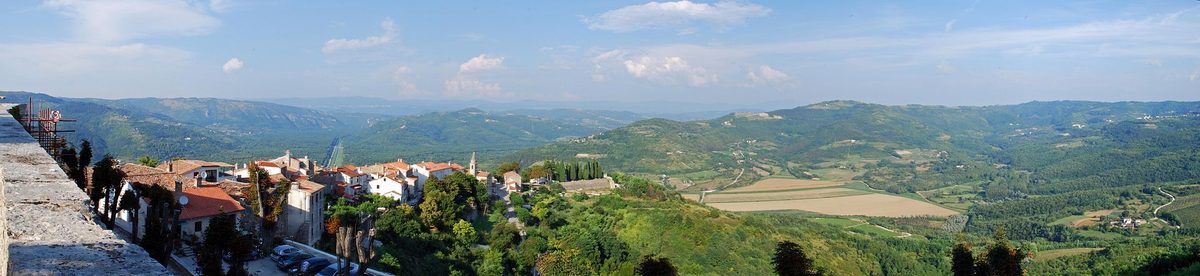
Which of these suits you
First trip to Europe
Pick towns with a station. Bruges, Colmar, Annecy, Sintra and the Cinque Terre all work on rail alone, all have enough infrastructure that a mistake is recoverable, and none of them require you to understand a local bus network in a language you do not read. Pair one with a city and see our guide to the best places to visit in Europe for the wider shape of a first itinerary.
Travelling with children
Giethoorn is the outstanding choice on this list: you rent a boat with no licence, the water is seventy centimetres deep, and the whole thing is a novelty rather than an endurance test. Trakai works for the same reason, a castle on an island reached by a bridge, plus swimming in Lake Galve in summer. Alberobello is essentially a village of stone houses that look like they were drawn by a child, at €2.50 to go inside one. Avoid Óbidos with small children specifically because the walls have no barrier of any kind. More at our family travel guide.
Travelling alone
Small towns can be quietly hard work solo, because they are built around couples at dinner. The ones that work best are the ones with enough of a resident population to have a bar culture: Sibiu, Ronda, Ohrid, Veliko Tarnovo, Mostar and Annecy. Five of the six are cheap enough that a single room does not wreck the budget; Annecy is the expensive outlier, and it earns it. See our solo travel guide for more.
Honeymoons and slow weeks
Mürren, because no road reaches it and that changes how a week feels. Reine, if you can face the logistics, for the same reason at the other end of Europe. Ærøskøbing for genuine quiet with a free bus and nothing to achieve. Rovinj in June, before the July crush. Our Europe honeymoon guide has the fuller list.
Small budgets
The Balkans and the Baltics do this best, and the numbers back it up. The Trullo Sovrano at Alberobello is €2.50 and Piran’s town walls are two or three euros. Kotor’s old town, Rauma, Sigtuna, Óbidos, Monsaraz and Kazimierz Dolny cost nothing at all to walk. A sit-down lunch for two with drinks in Kotor runs €25 to €40. Compare that with CHF 85.60 for one cable car in Switzerland and you can see where a week disappears. Our backpacking guide plans around exactly this.
Photographers
Reine and Seyðisfjörður for landscape, Burano and Alberobello for pattern, Ronda and Monsaraz for the drop, Ålesund for Art Nouveau detail. Two rules that will keep you out of trouble: you may not walk into the lavender at Sénanque and drones are banned over the whole valley, and in Portofino standing still in the harbour photo spots between 10:30 and 18:00 can cost you up to €275.
Five mistakes I keep seeing
Booking a morning slot at Pena Palace. Parques de Sintra publishes advice to do the opposite, and the thirty-minute walk from the park entrance to the palace door catches people who booked tightly. With no lateness tolerance and no refund, a missed slot is a wasted twenty euros and a wrecked morning.
Assuming the famous town has a station. Positano, Rovinj, Riquewihr, Kazimierz Dolny and Piran have no railway at all, and Rauma has none until 2027. Veliko Tarnovo’s trains stop seven kilometres away at Gorna Oryahovitsa, and its airport, ten kilometres out, handled 78 passengers in the whole of 2025.
Trusting a third-party ticket price. This is the single most reliable source of error in trip planning, worst of all where a currency or a card system has changed. Bulgaria moved to the euro on 1 January 2026, so every price still quoted in leva is stale. Lithuania dropped the litas in 2015 and you can still find Trakai priced in it. Always click through to the operator’s own page.
Treating the whole town as the paid attraction. In Kotor, walking the old town is free and only the walls cost €15. In Óbidos everything outside the museums is free and the castle is a hotel you cannot enter. In Rauma the World Heritage site is a residential district, not a ticketed one. Knowing which is which changes your budget more than any discount card.
Arriving in the coach window. The pattern repeats almost identically across four of these towns: buses arrive around 11:00 and leave around 17:00. Giethoorn, Mostar, Kotor and Bibury are all transformed by turning up before or after that. It is the cheapest upgrade available to you, and it costs an early alarm.
Frequently asked questions
What is the most beautiful town in Europe?
There is no defensible single answer, but there is a defensible award: in February 2023 Travel + Leisure ranked Gordes in Provence the most beautiful village in the world, ahead of Shirakawa-go in Japan and Giethoorn in the Netherlands. William Morris gave Bibury the English title. My own vote among the 41 here goes to Rovinj, because it is beautiful and also a real town where 11,629 people live and work, which the prettiest places often are not.
How many days do you need in a small European town?
Most of these are half-day visits and a handful are three-day bases. Szentendre’s own tourism advice says four to six hours covers the town centre. Kotor’s walls take one and a half to two and a half hours return on their own. Trakai’s castle takes two to three hours. The towns that reward an overnight stay are the ones where the day-trippers leave at five: Hallstatt, Bruges, Giethoorn, Mostar, Bibury and Kotor are completely different places in the evening.
Can you visit Europe’s most beautiful towns without a car?
Roughly two thirds. A dozen are straightforward: Bruges, Annecy, Colmar, Sintra, Szentendre, Burano, Mürren, the Cinque Terre, Ronda, Sibiu, Ærøskøbing and Ålesund, and of those Mürren and Burano cannot be reached by car at all. Another sixteen work with planning, including Hallstatt, Cesky Krumlov, Mostar, Giethoorn, Piran, Rovinj, Positano, Trakai and Veliko Tarnovo. Ten realistically need a car or a tour: Reine, Gordes, Monsaraz, Albarracín, Kazimierz Dolny, Kuldīga, Sigtuna, Seyðisfjörður, Bibury and Castle Combe.
Which European towns are actually car-free?
Four on this list, in different ways. Mürren is the strictest: no public road reaches it, so everyone including residents arrives by cable car or mountain railway. Burano is an island in the Venetian lagoon reached only by boat. Rovinj‘s old town is car-free year-round apart from permit-holding residents. Piran allows no parking in town at all, only a thirty-minute drive-in for luggage. Giethoorn is often described as car-free and only its old centre is; the rest of the village has normal roads and mostly free car parks.
Softer than that, but still worth knowing, a further six have pedestrianised historic cores you cannot drive into: the Cinque Terre villages, Kotor’s old town, Mostar’s bazaar, Sighisoara’s citadel, Cesky Krumlov’s centre and Szentendre’s. Sintra bans private cars from the road up to Pena, and Castle Combe puts its car park outside the village at the top of a steep hill.
Do you have to pay to enter any of these towns?
No individual visitor entry fee applies to any of the 41. Hallstatt charges coaches €126 from May 2026, not people. Bibury has proposed pay-and-display parking but no entry fee. Venice’s access fee is not in force as of late July 2026 and never applied to Burano. What you pay for are specific sights, walls, towers, boats and car parks, which is what the price table above covers.
Which of these towns are UNESCO World Heritage Sites?
Fourteen of the 41 are inscribed, either in their own right or as part of a larger property: Hallstatt (1997), the Cinque Terre (1997), Positano within the Amalfi Coast (1997), Burano within Venice and its Lagoon (1987), Alberobello (1996), Kotor (1979), Mostar (2005), Ohrid (1979), Sighisoara (1999), Cesky Krumlov (1992), Bruges (2000), Kuldiga (2023), Rauma (1991) and Sintra (1995). Several that are commonly assumed to be listed are not: Rothenburg, Ronda, Reine, Bibury, Piran, Kazimierz Dolny, Veliko Tarnovo, Rovinj, Sibiu and Trakai. Sibiu and Trakai are on tentative lists only, and Óbidos is a UNESCO City of Literature, which is a different programme entirely.
Is Hallstatt worth visiting given the crowds?
Yes, if you stay the night and no if you arrive at midday in July. The coach controls are working in the sense that they price and time-limit the day-trip traffic: a €126 fee, a compulsory booked slot, a twenty-minute drop-off and a two-hour-twenty minimum stay. Individuals arriving by train are not affected. Just check the calendar first, because the salt mine, the main attraction, is closed until 29 August 2026.
What is the cheapest beautiful town in Europe to visit?
On ticket prices, Alberobello: €2.50 to go inside the Trullo Sovrano, though Puglian accommodation pushes the day back up. On the whole day, Mostar and Ohrid, where a fortress or a museum runs two to five euros and lunch for two comes in well under twenty. Kazimierz Dolny and Sighisoara belong in the same conversation, and Kotor is nearly free if you skip the walls. Our guide to the cheapest places to travel in Europe goes further.
Is Giethoorn really a village with no roads?
No, and the local village site says so plainly. The old centre has no roads and 176 bridges, which is where the photographs come from. Outside the centre there are ordinary roads and car parks, and most of those car parks are free. The village is roughly six kilometres long, so the car-free part is a modest fraction of it.
Which is better, Colmar or Riquewihr?
Colmar if you are without a car or staying more than a day, because it has trains, a bus station, a free town shuttle and six Christmas markets. Riquewihr if you want the smaller, denser, more theatrical version and are willing to take bus line 16 or the €17 December shuttle to get there. Doing both in a day is easy and is what most people should do.
Do I need to book anything in advance?
Four bookings you have to make in advance. Pena Palace at Sintra needs a booked date and time with no lateness tolerance. The Via dell’Amore in the Cinque Terre needs a reservation. The Baroque Theatre at Cesky Krumlov must be reserved, and its 2026 season is short. The Ærø ferry requires all tickets to be booked and paid in advance. Separately, every passenger on the Bodø to Moskenes ferry must register their full name, nationality and date of birth before boarding, which is a registration rather than a booking but will stop you getting on if you skip it. Beyond that, book restaurants in Rovinj in July and August several days ahead, order Lofoten ferry tickets at least a day ahead in summer, and buy Altamira museum tickets early in high season.
Final thoughts
Writing this I kept running into the same shape. The town is beautiful, everyone knows the town is beautiful, and the only variable left is whether you show up at the same moment as everyone else. Hallstatt has priced the coaches. Sintra has timed the tickets. Bibury has moved the coach bays. Kotor has sealed the holes in its walls. Portofino has made standing still an offence. Every one of those is a town trying to stay habitable, and every one of them is a signal you can plan around.
So if I had to compress all of this into one paragraph: go in June or September rather than August, arrive before eleven or after five, check the operator’s own page for the price, and stay the night somewhere you were told to visit for two hours. The towns are still there when the buses leave. That is the entire trick.
And if there is one on this list you have not heard of, make it Kuldīga. UNESCO added it in September 2023, it has the widest waterfall in Europe running past a brick bridge from 1874, and about 130,000 people a year go to see it. Bibury, a village of 627 people, takes more than 4,500 vehicle movements across one bridge on a single July day.
Next, work out where these fit in a longer trip with our guide to how to plan a trip to Europe, then check the practicalities in our travel tips and the Schengen and ETIAS rules before you book.
About the author
Hannah Brooks has spent fifteen years travelling, living and writing across Europe, from the Arctic tip of Norway to the south of Sicily. She has planned hundreds of European itineraries for readers and is Senior Europe Editor at EuropeanTourism.org.
Photo credits
Every image on this page is used under a Creative Commons licence or is in the public domain. Credits are reproduced as recorded by the source.
- Hallstatt, Austria, one of the most beautiful towns in Europe, on its shelf of land between lake and cliff · Photo: public domain (CC0) via Wikimedia Commons
- Bled Island and its church on the lake in Slovenia, seen from the shore · Photo: Krzysztof Golik / CC BY-SA 4.0 via Wikimedia Commons
- The Bachalpsee in the Bernese Oberland, the range that car-free Mürren sits above · Photo: Maru Bern / CC BY-SA 4.0 via Wikimedia Commons
- Canals and painted houses in the old town of Annecy, Haute-Savoie, France · Photo: Guilhem Vellut from Annecy, France / CC BY 2.0 via Wikimedia Commons
- Kvalvika beach in the Lofoten Islands of Norway, the archipelago that holds the village of Reine · Photo: www.Pixel.la Free Stock Photos (CC0) via Wikimedia Commons
- Cliffside houses in the Cinque Terre, Liguria, Italy · Photo: WikiLucas00 / CC BY-SA 4.0 via Wikimedia Commons
- Positano stacked above its beach on the Amalfi Coast, Italy · Photo: Wiki.Bianco / CC BY-SA 4.0 via Wikimedia Commons
- The old town of Rovinj in Istria, Croatia, crowned by the campanile of St Euphemia · Rovinj, Istria · Photo: Nils Söderman (CC0)
- The Bay of Kotor in Montenegro, with the fortified old town at its head · Photo: User:Ggia / CC BY-SA 3.0 via Wikimedia Commons
- The Plönlein corner in Rothenburg ob der Tauber, Bavaria, Germany · Photo: Berthold Werner (CC0) via Wikimedia Commons
- Whitewashed houses inside the walls of Óbidos, Portugal · Photo: lele3100 / CC BY 2.0 via Wikimedia Commons
- The baroque old town of Vilnius, Lithuania, 28 kilometres from the island castle at Trakai · Photo: Augustas Didžgalvis / CC BY-SA 4.0 via Wikimedia Commons
- Thatched houses and footbridges along the canal in Giethoorn, the Netherlands · Photo: piotr iłowiecki from POLAND / CC BY-SA 2.0 via Wikimedia Commons
- Canal houses in the UNESCO-listed historic centre of Bruges, Belgium · Photo: InSapphoWeTrust from Los Angeles, California, USA / CC BY-SA 2.0 via Wikimedia Commons
- Half-timbered houses on the water in Colmar, Alsace, France · Photo: M.Strīķis / CC BY-SA 3.0 via Wikimedia Commons
- The hilltop village of Gordes above the lavender of Provence, southern France · Photo: Astronautilus / CC BY 2.0 via Wikimedia Commons
- The Transfăgărășan road through the Carpathians in Romania, south of the Saxon towns of Transylvania · Photo: Dariusz Grosa (CC0) via Wikimedia Commons
- Ronda, Andalusia, split by the Tajo gorge and spanned by the Puente Nuevo · Photo: Christopher Down (CC BY 4.0) via Wikimedia Commons
- The Palace of Pena above Sintra, Portugal · Photo: Jakub Hałun / CC BY 4.0 via Wikimedia Commons
- Arlington Row in Bibury, Gloucestershire, England · Photo: John H Darch / CC BY-SA 2.0 via Wikimedia Commons
- The UNESCO-listed Geirangerfjord in Norway, reached from Ålesund · Photo: Virtual-Pano / CC BY-SA 4.0 via Wikimedia Commons
- Iceland’s Ring Road, Route 1, which the mountain pass down to Seyðisfjörður connects to · Iceland’s Ring Road (Route 1) cutting through moss-covered lava fields · Photo: Neil D’Cruze / CC BY 2.0
- The Christmas market in Colmar, Alsace, France · Photo: rene boulay / CC BY-SA 3.0 via Wikimedia Commons
- Motovun, a hilltop town in Istria, Croatia, and a quieter alternative to the Adriatic coast · Motovun, Istria · Photo: Alex Smith (public domain)
1 comment