Best Places to Visit in Spain
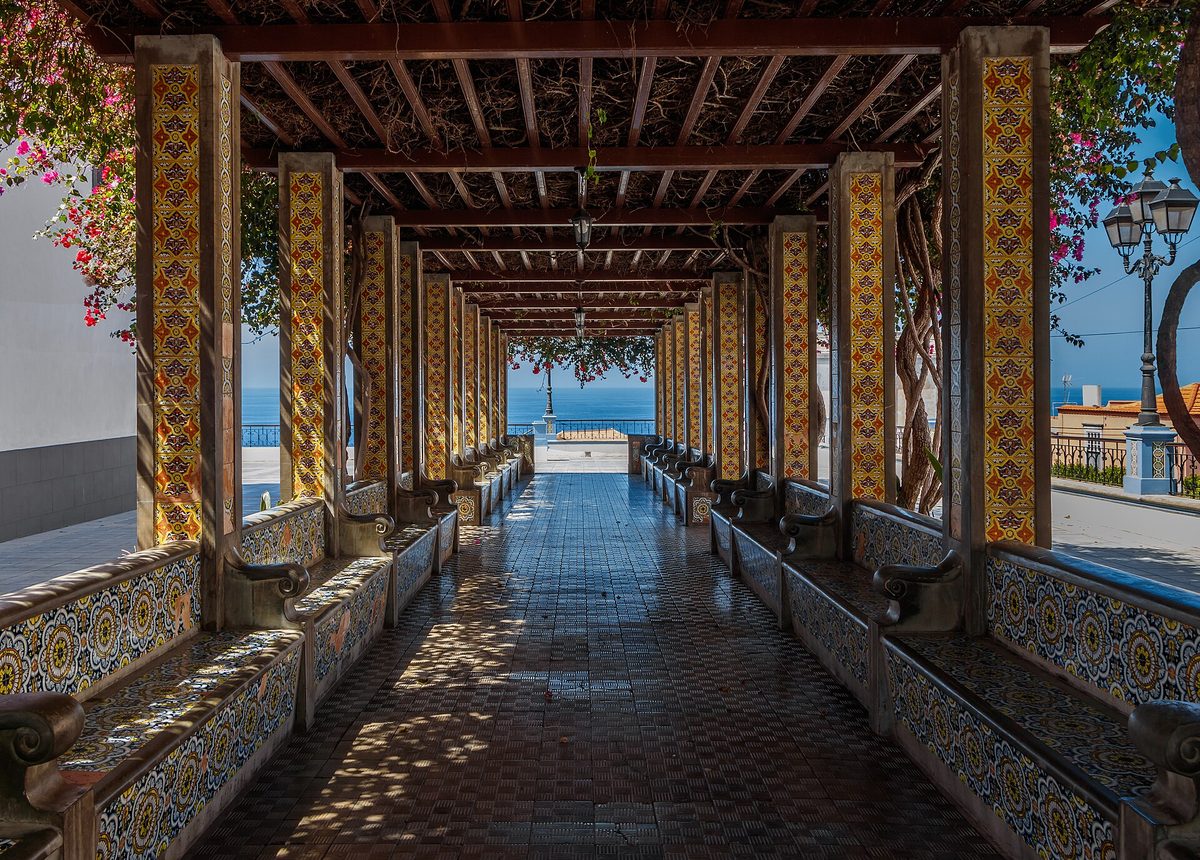
Spain is the second most visited country on earth, and most of those visitors go to about six places. That is not a criticism: Barcelona, Madrid, Seville, Granada, Valencia and the Balearics are famous because they are extraordinary. But a country with four official languages, two archipelagos in two different oceans and a rainfall range of eight to one between its wettest and driest corners deserves more than a shortlist of six.
The best places to visit in Spain fall into three groups: the headline cities that deserve their reputation, the small walled towns an hour from those cities that get treated as half-day stops, and the green north, which looks and eats nothing like the Spain on the postcards. This guide covers all forty, with what each one costs and when to go.
How I chose these forty, and what I have left out
I have spent fifteen years travelling in Spain, and the thing I most often want from a list like this is the planning detail. It is easy to learn that Granada is beautiful. It is harder to learn what the Alhambra costs, that the Nasrid Palaces run on a fixed entry slot that is void if you miss it, or that the advance ticket sale shuts at 23:59 the night before. Those are the things that decide whether a trip works.
So this list is built around four things: a real 2026 price for every headline sight I could source from an official page, a best-month recommendation for each destination, actual train times between them, and the access rules that changed this year. Where I could not source a price from an official site, I have said so rather than invented one. There are a few of those admissions below, and I would rather you saw them than trusted a number I made up. Prices in Spain move, so treat everything here as correct in August 2026 and check before you pay.
What is missing: I have no Sierra Nevada ski entry, nothing from the Rias Baixas wine country, and only two places in Extremadura when it deserves five. There is no Basque inland at all, so no Vitoria-Gasteiz. That is a limit of what I could research properly in one pass, not a verdict on those places. And a warning on scope: “Spain” here includes the Canary Islands, which sit off the coast of Morocco, roughly 1,800 kilometres from Galicia. You cannot road trip between them, whatever you may have read.
All 40 of the best places to visit in Spain at a glance
Sorted by region rather than ranked, because a countdown implies that Cadaques is competing with Madrid, and it is not. “Days” means the number of nights I would give it, not the minimum you can survive on.
| Place | Region | Best months | Days | Why you go |
|---|---|---|---|---|
| 1. Barcelona | Catalonia | May, June, September, October | 3 to 4 | Gaudi at full volume, a Gothic core, and a city beach you can walk to |
| 2. Madrid | Community of Madrid | April, May, October, November | 3 | The best art in Spain within one 15-minute walk, and the country’s most relentless eating city |
| 3. Valencia | Valencian Community | March, April, May, October | 2 to 3 | Paella at its source, a dry riverbed turned into a park, and Calatrava’s white spaceships |
| 4. Seville | Andalusia | March, April, October, November | 3 | The Real Alcazar, orange trees, and the loudest Holy Week on earth |
| 5. Granada | Andalusia | April, May, September, October | 2 | The Alhambra, and the Albaicin lanes staring back at it |
| 6. Cordoba | Andalusia | April, May, October | 1 to 2 | A mosque with a cathedral built inside it, and courtyards competing in May |
| 7. Ronda | Andalusia | April, May, September, October | 1 | A town split by a 100-metre gorge with a bridge thrown across it |
| 8. Malaga | Andalusia | April to June, September, October, and January for winter sun | 2 | A Moorish fortress, a serious Picasso museum, and the best airport in the south |
| 9. Cadiz | Andalusia | May, June, September | 2 | Sea on three sides, Atlantic light, and a carnival with actual teeth |
| 10. Caminito del Rey | Andalusia | March, April, May, October | half a day | A walkway pinned to a gorge wall 100 metres above the river |
| 11. Tarifa | Andalusia | May, June, September | 2 | Wind, kitesurfers, whales offshore and Africa on the horizon |
| 12. Toledo | Castilla-La Mancha | April, May, October, November | 1 to 2 | A walled city of three faiths on a rock in a river bend |
| 13. Segovia | Castile and Leon | April, May, September, October | 1 | A Roman aqueduct running straight through the middle of town |
| 14. Salamanca | Castile and Leon | April, May, September, October | 1 to 2 | Golden sandstone, an eight-century-old university and Spain’s best plaza |
| 15. Avila | Castile and Leon | May, June, July, September | 1 | The most complete medieval walls in Spain, walkable along the top |
| 16. Cuenca | Castilla-La Mancha | April, May, September, October | 1 | Houses hanging off a cliff above two river gorges |
| 17. Burgos | Castile and Leon | May, June, September | 1 | A Gothic cathedral that stops conversation, and the Camino passing the door |
| 18. San Sebastian | Basque Country | June, July, September | 2 to 3 | A perfect city beach and the densest pintxos bar-hopping in Spain |
| 19. Bilbao | Basque Country | May, June, September | 2 | The Guggenheim, plus an old town that has quietly got very good at food |
| 20. Santiago de Compostela | Galicia | May, June, September | 2 | The end of the Camino, and granite streets that look best wet |
| 21. Picos de Europa | Asturias, Cantabria and Leon | June, July, August, September | 2 to 3 | Limestone walls, the Cares Gorge, and cheese caves |
| 22. Cudillero and the Asturian coast | Asturias | June, July, August, September | 2 | Fishing villages stacked in amphitheatres above tiny harbours |
| 23. A Coruna | Galicia | June, July, August, September | 1 to 2 | Glass galleries facing the Atlantic and a working Roman lighthouse |
| 24. Lugo | Galicia | May, June, September | 1 | The only Roman town wall that survives complete around its whole circuit |
| 25. Pamplona | Navarre | May, June, September | 1 to 2 | A handsome Navarrese capital that is not only about the bulls |
| 26. Girona | Catalonia | April, May, September, October | 1 to 2 | A colour-washed river frontage and the best-preserved Jewish quarter in Spain |
| 27. Cadaques | Catalonia | May, June, September | 2 | Whitewash against black slate, Dali’s house, and a headland like nowhere else |
| 28. Tarragona | Catalonia | May, June, September, October | 1 to 2 | A Roman amphitheatre with the Mediterranean directly behind it |
| 29. Sitges | Catalonia | May, June, September | 1 to 2 | Seventeen beaches, modernista villas and Spain’s most relaxed gay scene |
| 30. Alicante | Valencian Community | May, June, September, October | 2 | A castle on a rock, a palm promenade and beaches inside the city |
| 31. Zaragoza | Aragon | April, May, October | 1 to 2 | A vast riverside basilica, Roman ruins under the streets and no crowds |
| 32. Albarracin | Aragon | May, June, September, October | 1 | Pink-plastered houses on a rock loop, often called Spain’s prettiest village |
| 33. Merida | Extremadura | April, May, October | 1 to 2 | The best Roman remains in Spain, still used for summer theatre |
| 34. Caceres | Extremadura | April, May, October | 1 | A walled old town so intact that film crews book it out |
| 35. Mallorca | Balearic Islands | May, June, September, October | 4 to 7 | A serious mountain range on one side, quiet coves on the other |
| 36. Menorca | Balearic Islands | June, September | 4 to 5 | The calmest Balearic, with the best coves of the four main islands |
| 37. Ibiza | Balearic Islands | May, June, September, October | 3 to 4 | A UNESCO old town, north-coast quiet, and the clubs if you want them |
| 38. Tenerife | Canary Islands | November to April | 4 to 6 | Spain’s highest mountain, and winter weather that behaves |
| 39. La Palma | Canary Islands | November to April, June | 4 to 5 | Laurel forest, one of the world’s great observatories and a very new volcano |
| 40. Gran Canaria | Canary Islands | November to April | 4 to 6 | A desert of dunes at one end and cloud forest ravines at the other |
The three cities almost every trip is built around
These three carry most of Spain’s visitor numbers between them, and all three earn it. If you are weighing them against the rest of the continent, they also occupy three of the higher places on my list of the best cities to visit in Europe.
1. Barcelona, Catalonia
Barcelona has spent the last few years arguing with itself about tourism, and 2026 is the year that argument turned into prices. The Catalan tourist tax roughly doubled on 1 April 2026: a five-star hotel now carries 12.00 EUR per person per night, made up of a 7.00 EUR regional stay tax and a 5.00 EUR city surcharge, against 7.50 EUR in 2025. Four-star is 8.40 EUR. Tourist apartments pay 9.50 EUR, which is more than a four-star hotel, and that is deliberate. Two adults in a five-star for four nights now owe 96 EUR in tax alone, collected at checkout, and rarely budgeted for.
Go anyway. The Sagrada Familia is the one building I have never met anyone who was disappointed by, and the basic ticket including the audioguide app is 26.00 EUR, or 36.00 EUR with tower access. Under-11s are free on every ticket type and visitors with disabilities enter free. One point of precision: the basilica is not its own World Heritage site. Only the Nativity facade and the crypt are inscribed, as components of the serial property Works of Antoni Gaudi, listed in 1984 and extended in 2005. 2026 is the Gaudi centenary year and the basilica has a dedicated events programme running alongside the normal visit, so expect slots to go faster than usual.
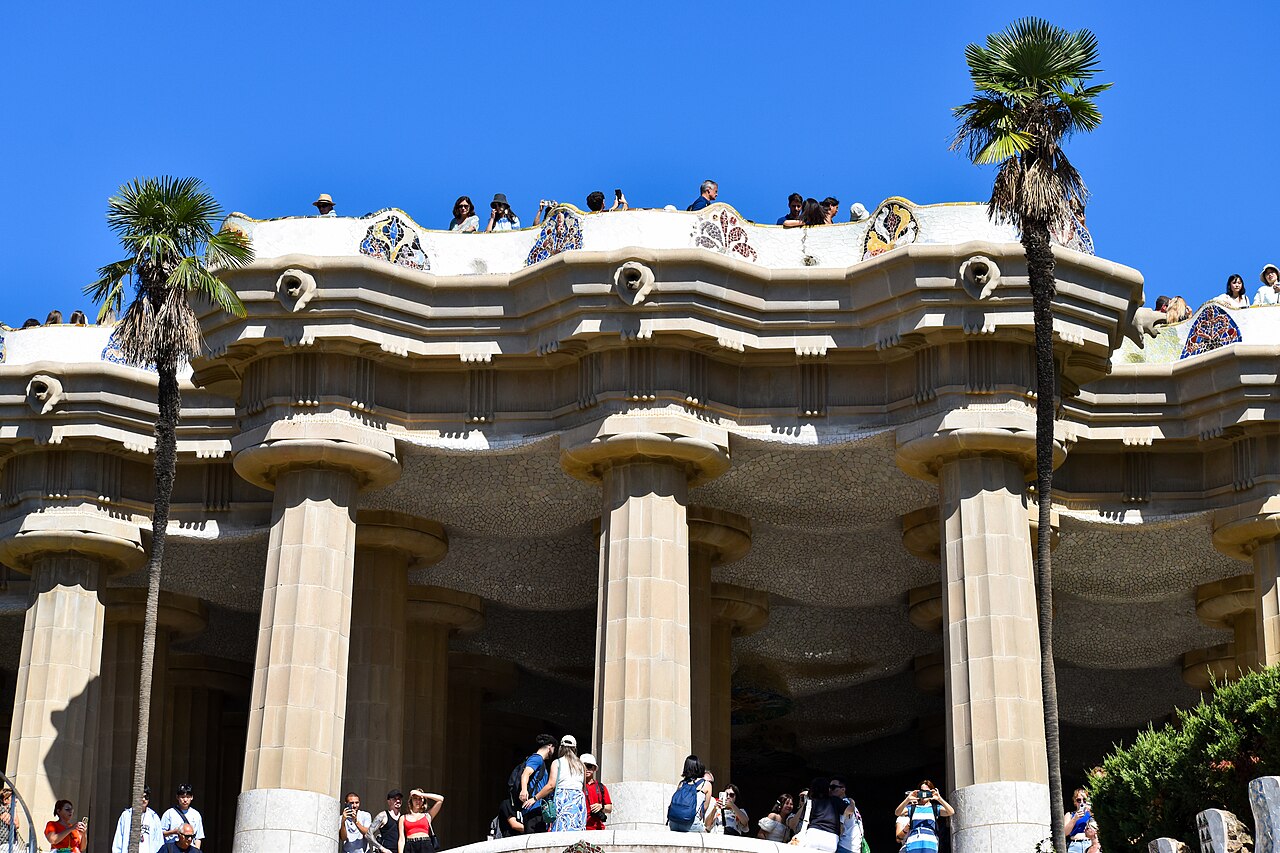
Park Guell is where people come unstuck. The monumental zone is 18.00 EUR for adults and 13.50 EUR for children aged seven to twelve and over-65s, it runs on timed slots between 09:30 and 19:30, and the ticket is void thirty minutes after your slot. There is no re-entry once you leave. Most importantly, tickets are sold online only; turning up at the gate hoping to buy one does not work. Barcelona residents get in free through the Passi Verd scheme, and there are two resident-only bands, 07:00 to 09:30 and 20:00 to 22:00, that visitors cannot book into at any price.
For the two Passeig de Gracia houses, La Pedrera has a quirk worth exploiting: the Sunset ticket covering 17:30 to 20:30 starts at 25.00 EUR, which is cheaper than the daytime Essential at 29.00 EUR, and the light on that rooftop at seven in the evening is better anyway. Casa Batllo also starts at 29.00 EUR and stays open until 22:30 daily. Both use dynamic pricing, so those are floors, not fixed rates.
Transport is the cheap part. A single metro ticket is 2.90 EUR, but the T-casual gives ten journeys for 13.00 EUR, which is 1.30 each. The catch: T-casual is not valid to the airport metro stations, which need their own 5.90 EUR ticket. The T-usual, thirty days unlimited for 22.80 EUR, is valid to the airport and is absurdly good value if you are staying two weeks or more, largely because a 50 percent national discount is currently being applied to it.
Honest steer: give La Rambla ten minutes, not an afternoon. Walk it once to say you have, then go one street east into the Gothic Quarter or north to Gracia, where the squares still belong to the people who live around them. La Rambla and the metro serving it are also where most of Barcelona’s pickpocketing happens, and it is skilful rather than opportunistic: keep your phone zipped away and your bag in front of you on the L3. And book accommodation early, because industry figures put Barcelona’s average hotel rate in 2026 at around 195 EUR a night, the highest of any Spanish city. My guide to where to stay in Europe covers how to pick a neighbourhood rather than a star rating.
Best months: May, June, September and October. August averages 29 degrees, which is fine, but the city is at its most crowded and its most expensive. Give it: three to four nights. My longer breakdown of the city sits in things to do in Barcelona.
2. Madrid, Community of Madrid
Madrid is the city people skip and then regret skipping. It has no beach and no Gaudi, and it wins on two things instead: the concentration of art, and the eating.
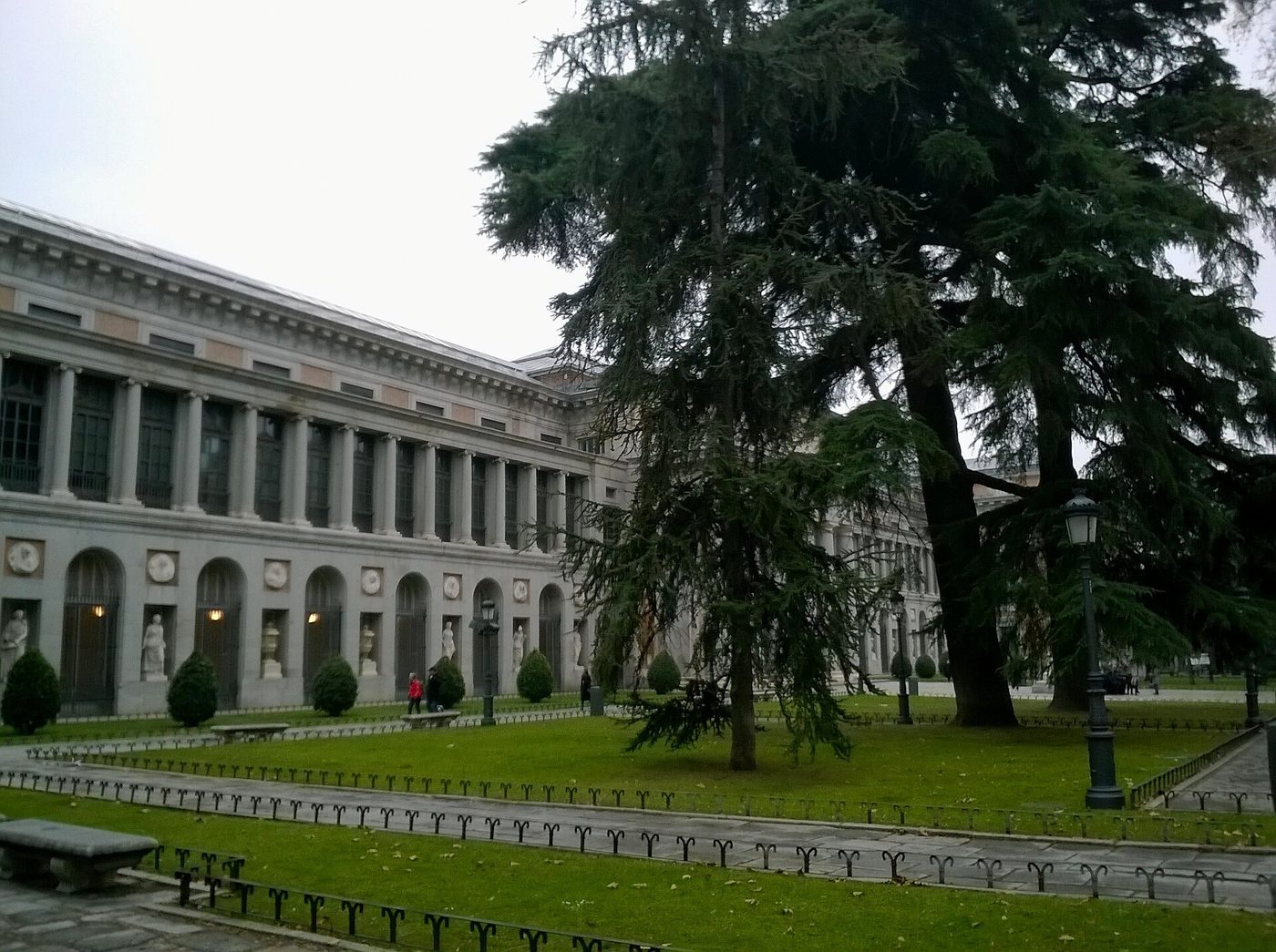
The art first. The Prado, the Reina Sofia and the Thyssen-Bornemisza sit within a fifteen-minute walk of one another on and around the Paseo del Prado, and all three are free at some point in the week. The Prado charges 15.00 EUR, 7.50 EUR reduced, and is free Monday to Saturday from 18:00 to 20:00 and on Sundays and public holidays from 17:00 to 19:00. The Thyssen is free on Mondays from 12:00 to 16:00 and on Saturdays from 21:00 to 23:00 under its Thyssen Nights programme. The Reina Sofia has five free days in 2026: 18 April, 18 May, 23 May, 12 October and 6 December. There is also a Paseo del Arte combined pass covering one visit to each, valid for a year from purchase.
Two admissions. I could not source a current adult price for either the Reina Sofia or the Thyssen from their own sites, because both render prices in JavaScript that a plain fetch cannot read, and I was not willing to publish a number I had not seen. Same for the Royal Palace of Madrid. What I can tell you about the palace is the free window, which is real and generous: Monday to Thursday, 16:00 to 18:00 from October to March and 17:00 to 19:00 from April to September, for EU citizens and residents and for citizens of Latin American countries, on proof. Patrimonio Nacional also opens its palaces free on 12 October.
On the free-entry hours generally: they are free, not empty. Queues form forty minutes before, and two hours is not enough for the Prado. I would pay the 15 EUR, go at opening, and spend the free window somewhere with a drink in my hand instead.
Transport is currently cheaper than it looks. A single metro ticket in Zone A runs 1.50 to 2.00 EUR depending on how many stations you pass, but the ten-trip ticket is 7.30 EUR in 2026 thanks to a 40 percent reduction the Community of Madrid extended through the whole calendar year. That is well under a euro a ride. The airport supplement is a separate 3.00 EUR per passenger and applies even if you hold a ten-trip ticket.
Best months: April, May, October and November. Madrid averages 33 degrees in both July and August, on a plateau at 650 metres with 455 millimetres of rain a year, and the city empties in August. Give it: three nights, more if you are day-tripping. Full detail in things to do in Madrid.
3. Valencia, Valencian Community
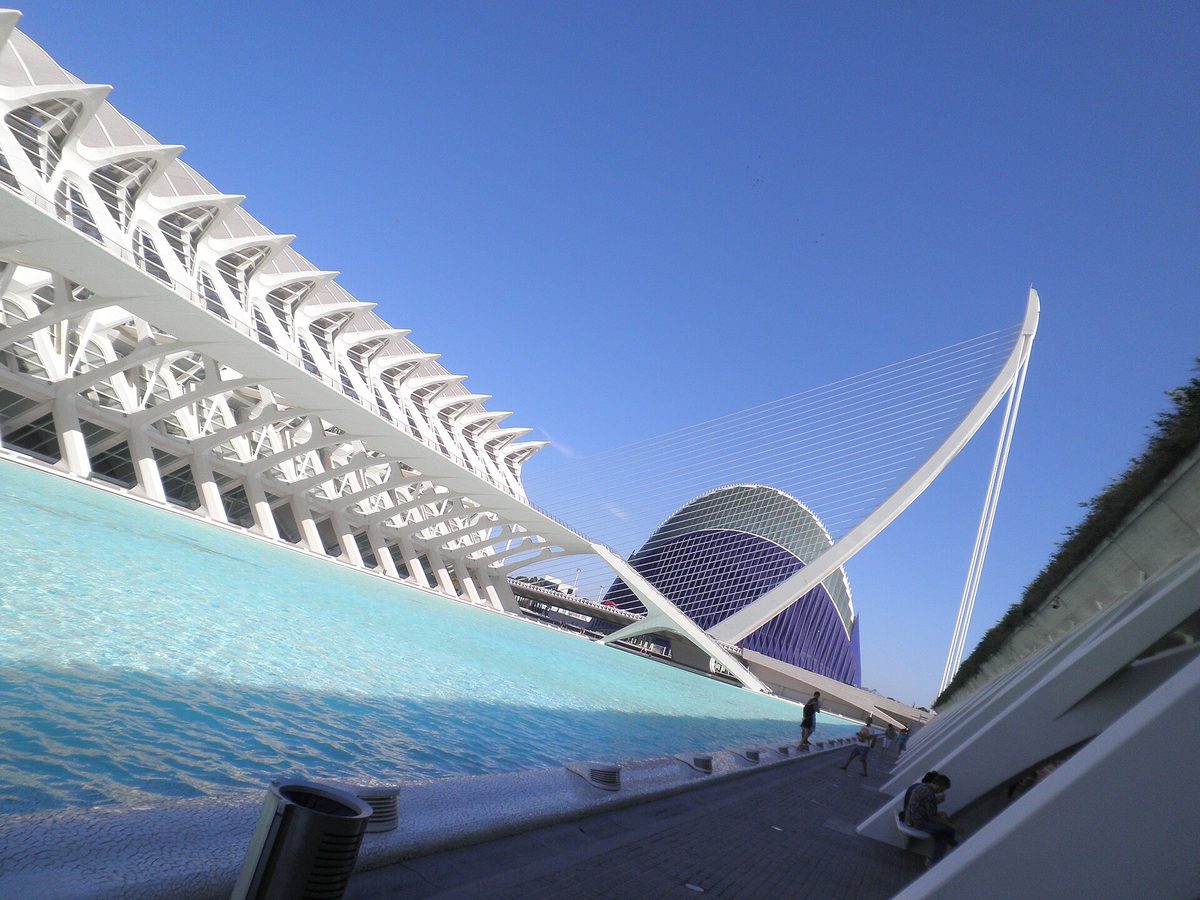
Valencia is the correction to the idea that Spain’s third city must be a compromise. It has the beaches Madrid lacks and the space Barcelona lost, it invented paella, and after a catastrophic flood in 1957 it diverted the river around the city entirely, a scheme completed in 1973, then turned the empty bed into a nine-kilometre park you can cycle end to end.
The City of Arts and Sciences sits at the seaward end of that park, and its pricing is the most confusing of any major sight in Spain because it changes with the date you select. Mid-season, the whole-complex La Ciutat ticket is 47.75 EUR general and 37.40 EUR reduced, a combined two-venue day ticket is 41.30 EUR, and the single-venue ticket is 8.90 EUR. That 8.90 EUR figure cannot be the Oceanografic, because the two-venue combination alone is 41.30 EUR and the arithmetic does not allow it. If you drive, any CAC ticket drops the parking to a flat 7 EUR a day against the standard 2.30 EUR an hour.
One scheduling note that applies right across Spain: most major museums close on Mondays, many churches shut to visitors on Sunday mornings for services, and smaller-town shops and sights still close between roughly two and five. Build the afternoon around lunch rather than sightseeing and you will fight the country a great deal less.
Do not let the modern architecture eat the whole visit. La Lonja de la Seda, the fifteenth-century silk exchange, has been a World Heritage site since 1996 and its twisted stone columns are the better building. The Mercat Central next door is where the city does its shopping. And the Valencian Community scrapped its planned regional tourist tax in 2024, so unlike Barcelona there is nothing extra on your hotel bill in 2026.
If you can time it, Las Fallas runs 15 to 19 March every year without exception, ending with La Crema on the night of the 19th when the sculptures are burned in the streets. Events start on 1 March with La Crida. It is loud in a way that is difficult to convey; the daily mascleta is a percussion event, not a firework display, and people feel it in their chest. Book accommodation months ahead.
Best months: March for Fallas, otherwise April, May and October. August averages 31 degrees with the humidity of the coast. Give it: two to three nights. Madrid to Valencia is 1h50 by direct high-speed train.
Andalusia, where most first trips find their centre of gravity
If you only have a week and you want the Spain of the imagination, come here. Seville, Granada and Cordoba sit in a rough triangle with fast trains between them, and Andalusia charges no tourist tax at all, which quietly makes it cheaper than Catalonia before you have bought anything. My deeper regional guide is the Andalusia travel guide.
4. Seville, Andalusia
Seville is the best-looking city in Spain and it knows it. The Real Alcazar is the reason to come: a working royal palace begun by Moorish rulers, extended by Christian kings who liked the style too much to demolish it, and still used by the royal family. General admission is 15.50 EUR, with the Cuarto Real Alto upper apartments a further 5.50 EUR on top, so 21.00 EUR for the lot. The reduced ticket is 8.00 EUR and it is no longer restricted to EU citizens: students aged fourteen to thirty from anywhere in the world now qualify, which is a recent change.
One detail worth knowing before you buy: that same general Alcazar ticket also admits you to the Antiquarium under the Setas, the Museo de la Ceramica de Triana and the Museo Bellver at Casa Fabiola. Three extra museums, no extra money. The on-site box office at the Patio de Banderas takes cards only, no cash.
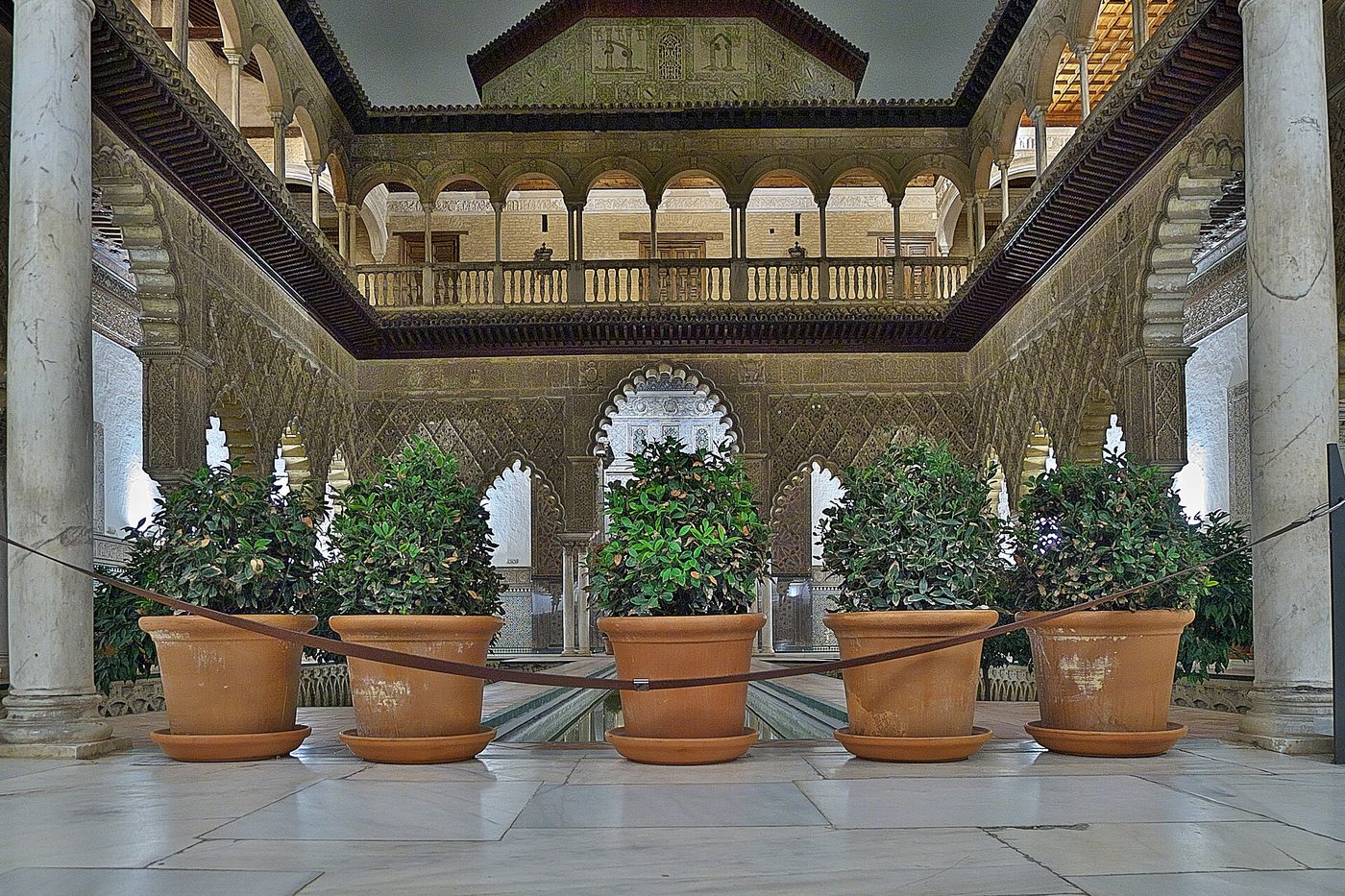
The cathedral is the largest Gothic cathedral in the world by its own reckoning, and the combined Cathedral and Giralda ticket has been 13.00 EUR online or 14.00 EUR at the door since 1 January 2026. It also covers the Iglesia de El Salvador across town, which is worth the walk. Entry is timed and the visit starts with the Giralda tower, which has its own access control, so arriving late does not just cost you time, it costs you the climb. There is a free public slot on Sundays from 16:30 to 18:00 outside public holidays, but capacity is limited and you must reserve online in advance.
Now the part I will be blunt about. Seville in July and August averages 36 degrees, the same in both months, and the Andalusian plain around Seville and Cordoba is the hottest region in Europe in summer, with 38 to 40 degrees routine and occasional readings above 45. The city’s record is 46.6 degrees, set on 23 July 1995. July averages zero millimetres of rain. You can visit in August, and locals do live there, but you get the city between seven in the morning and noon and then again after nine at night, and the middle of the day is lost. Come in March, April, October or November instead.
If you want the city at full theatre, Semana Santa 2027 runs from Palm Sunday on 21 March to Easter Sunday on 28 March, with La Madruga, the great overnight procession, on the night of Thursday 25 into Friday 26 March. The Feria de Abril follows on 13 to 18 April 2027, opening with the Alumbrado at midnight on Monday 12 April after the pescaito dinner. Both fill the city and both roughly double accommodation prices. There is a full Seville travel guide if you are giving the city proper time.
Best months: March, April, October, November. Give it: three nights.
5. Granada, Andalusia
The Alhambra is the most-booked monument in Spain and the one that catches out the most people, so read this bit twice.
There are two legitimate prices and they are both real. The legal tariff, set by order of the Andalusian government in July 2025, is 21.00 EUR for general daytime admission. The figure you actually see and pay when you book online is 22.27 EUR, because a web service commission is added. Neither number is wrong. The general ticket covers the Alhambra, the Nasrid Palaces, the Generalife, the Palace of Charles V and the Baño de la Mezquita. Gardens and Generalife alone is 12.73 EUR online, and the night visit to the Nasrid Palaces is the same 12.73 EUR.
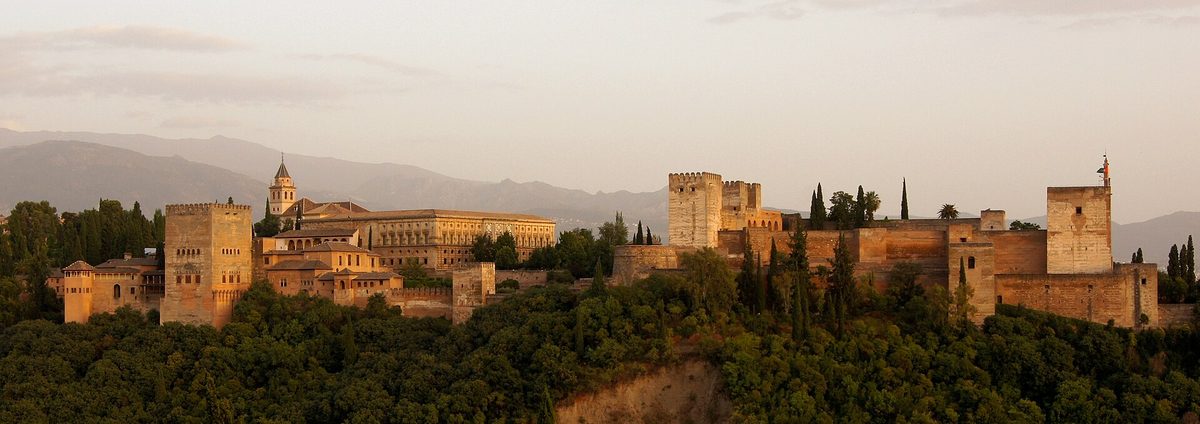
Four rules that void tickets. One: entry to the Nasrid Palaces must happen at the exact time printed on your ticket, and the Patronato states this in capital letters for a reason. Two: if you are collecting physical tickets, you must do so at least one hour before that Nasrid slot. Three: advance sale closes at 23:59 the day before your visit, so there is no booking over breakfast. Four: you may buy a maximum of ten tickets per person, per bank card, per month, which is a family-holiday trap if you are booking for a group.
On the daily visitor cap: there are numbers quoted confidently all over the internet. I could not find one published anywhere on the Patronato’s own pages, so I am not going to repeat a figure I cannot stand behind. What is published, and matters more, is the recommendation to book well ahead. Under-12s go free but their free tickets must be reserved at the same time as the paid ones, not added later.
Two free things while you are there. The Andalusi monuments in the lower town, the Bañuelo, the Corral del Carbon, the Casa Horno de Oro and the Dar al-Horra, cost 8.48 EUR as a set but are free on Sundays. The Silla del Moro viewpoint and the Torres Bermejas are free year-round on limited weekend hours, and the Silla del Moro gives you the Alhambra from above with the Sierra Nevada behind it.
Granada sits at 700 metres, which takes the edge off: August averages 34 degrees rather than Seville’s 36, and January highs are 13 degrees with snow visible on the mountains an hour away.
Best months: April, May, September, October. Give it: two nights. More in the Granada travel guide.
6. Cordoba, Andalusia
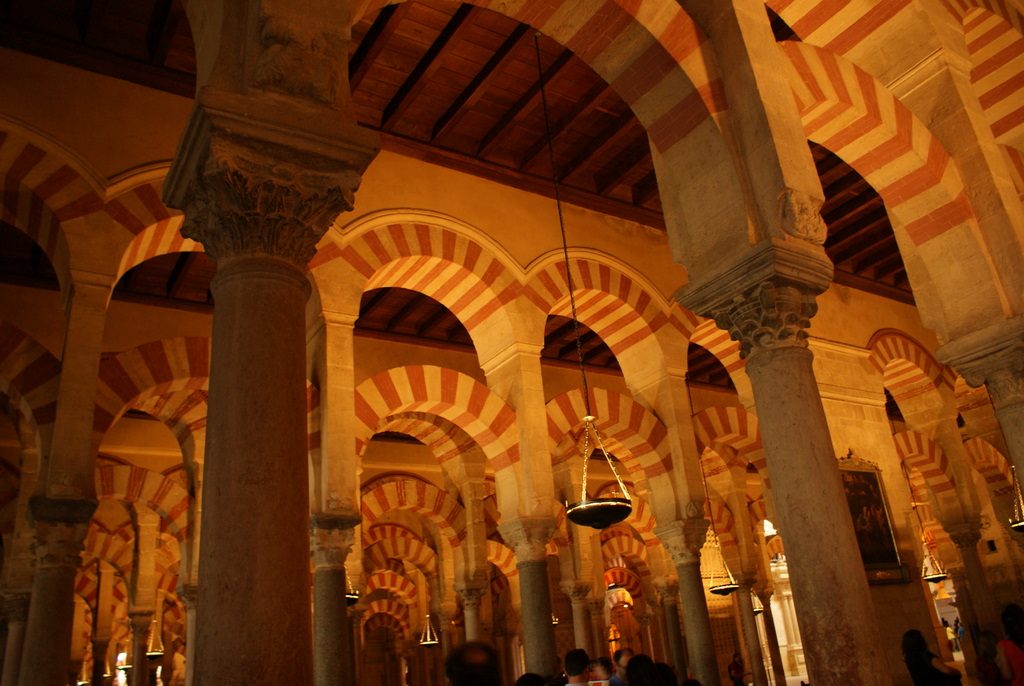
The Mezquita-Catedral is an eighth-century mosque, begun in 785 and hugely expanded in the tenth century, with a Renaissance cathedral built directly inside it, and the forest of red and white double arches around that cathedral is the single most extraordinary interior in Spain. General admission rose to 15.00 EUR on 1 April 2026, up from 13.00 EUR, so check the date on any figure you are working from. Reduced entry is 12.00 EUR for over-65s, Youth Card holders and students aged fifteen to twenty-six, and children aged ten to fourteen pay 8.00 EUR.
The best hour of the day is free. Monday to Saturday from 08:30 to 09:30 the building opens to individual visitors at no charge, on condition that you are silent and not in a group, with clearing beginning around 09:20. You get the arches with maybe thirty other people in a space built for thousands. Set an alarm.
Cordoba is at its best in May, when the Patios festival opens private courtyards to the public and the whole old town smells of geraniums and jasmine, and at its worst in high summer for the same reasons as Seville. The historic centre has been a World Heritage site since 1984, extended in 1994. Seville to Cordoba is about forty-five minutes by train, which makes it the easiest day trip in Andalusia, though the city deserves an overnight so you can see the Mezquita at 08:30 and the Roman bridge at dusk.
Best months: April, May, October. Give it: one to two nights.
7. Ronda, Andalusia
Ronda is a town cut in half by a gorge a hundred metres deep, with an eighteenth-century bridge thrown across the gap and houses built right to the lip on both sides. The Puente Nuevo belongs to Ronda, not to Malaga a hundred kilometres away, which matters if you are planning a route around it.
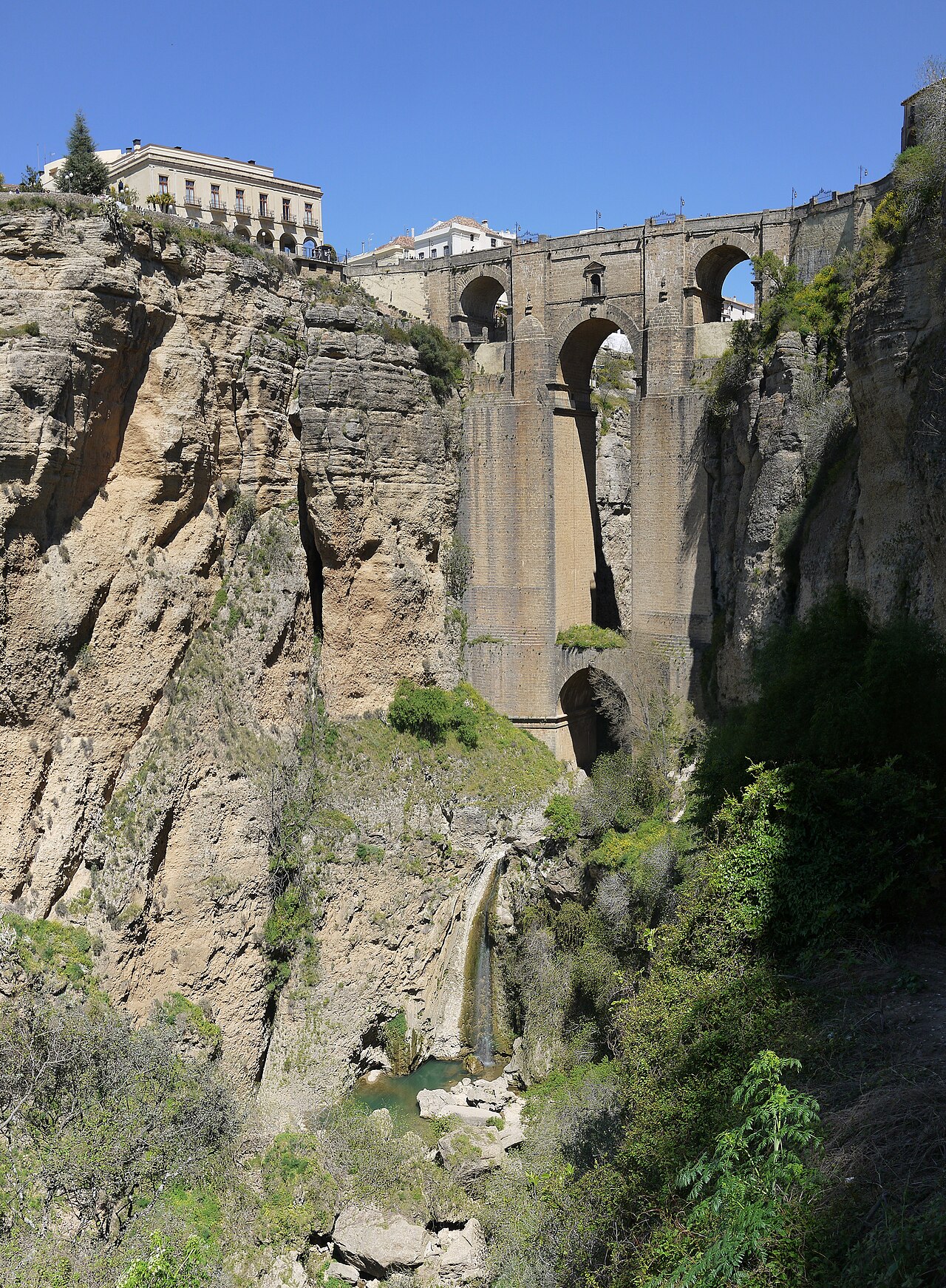
The view everyone photographs is from the Camino de los Molinos, the path that switchbacks down into the gorge from the western edge of town; it takes about twenty minutes down and rather longer back up, and it is worth every step because you see the bridge from below with the town balanced on top. Ronda also has one of Spain’s oldest bullrings, which you can visit as a museum whether or not you approve of what happens in it.
Most people come as a day trip from Malaga or the Costa del Sol and leave by four. Stay the night. The coaches go, the light goes gold, and you get the gorge to yourself. The Parador sits directly on the edge of it in the old town hall.
Best months: April, May, September, October. Give it: one night.
8. Malaga, Andalusia
Malaga spent decades being the airport you passed through on the way to somewhere with a beach club, and then quietly turned itself into one of the best-value city breaks in Spain. The Alcazaba, a Moorish fortress climbing the hill above the Roman theatre, is 7.00 EUR, or 10.00 EUR combined with the Gibralfaro castle above it, and both are free to everyone every Sunday from 14:00 until closing. Summer hours run 09:00 to 20:00 from 1 April to 31 October, with last admission an hour before.
The Museo Picasso Malaga is 13.00 EUR and that single ticket covers the permanent collection and every temporary exhibition running at the time, with the audioguide included as a web app you open on your own phone. Under-17s are free. It is also free every Sunday for the last two hours before closing, and free outright on 28 February, 18 May, 27 September and 27 October.
Malaga averages 32 degrees in August and 17 degrees in January, which makes it one of the few Spanish cities that is pleasant in midwinter. It is also the natural base for the Costa del Sol, though I would not spend a whole week on that strip: the stretch from Torremolinos to Marbella is overbuilt in a way that no amount of good weather fixes, and Nerja to the east is a far better beach base. For the alternatives, see the best beaches in Europe.
Best months: April to June, September and October, plus January if you want warmth in winter. Give it: two nights.
9. Cadiz, Andalusia
Cadiz sits on a sandy spit with the Atlantic on three sides, which gives it a light and a wind that nowhere inland has. It is often described as the oldest continuously inhabited city in western Europe, founded by the Phoenicians, and it feels older than Seville in a way that has nothing to do with monuments; it feels like a port that has been getting on with it for three thousand years.
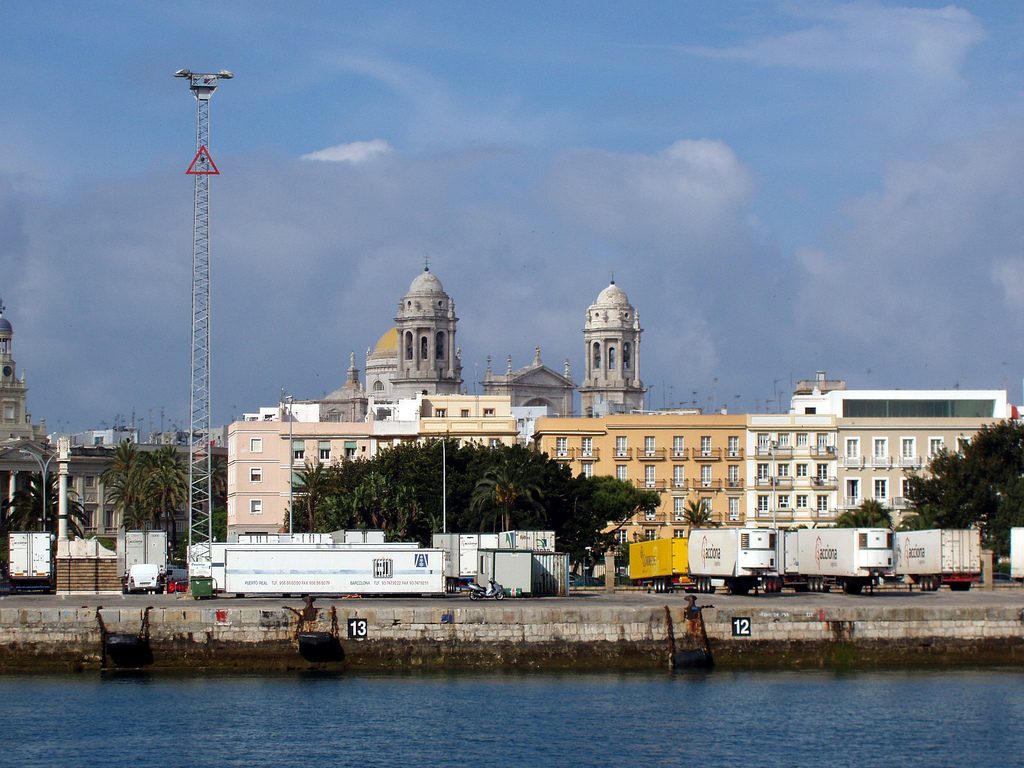
Climb the Torre Tavira for the camera obscura and the rooftop view over the whole peninsula. Eat at the Mercado Central. Swim at La Caleta, the small beach between two castles in the old town, or walk twenty minutes to Playa de la Victoria if you want proper sand. Cadiz Carnival in February is the wittiest in Spain, built on satirical singing groups rather than parades, and the city sells out for it.
Cadiz has been having a moment, turning up on several of the 2026 destination-of-the-year lists, so go before everyone else finishes reading about it. It also turns up in my round-up of underrated places in Europe.
Best months: May, June, September. Give it: two nights.
10. Caminito del Rey, Andalusia
A metre-wide walkway bolted to the wall of the Gaitanes gorge, a hundred metres above the river, for three kilometres. It was so dangerous in its abandoned state that it killed several people and was closed for over a decade; the rebuilt version is completely safe and still makes some people’s legs go.
The practical rules matter more than the description. The self-guided ticket is 10.00 EUR and the guided one 18.00 EUR. Daily capacity is capped, which is the whole reason you cannot decide to do this on the morning. The official FAQ gives the figure as 1,100 a day, though I could not confirm it on a page that rendered. Children under eight cannot enter at all, and anyone over eight must carry original ID or a family book to prove their age. Tickets are not sold at the Visitors’ Reception Centre, which catches out a lot of drivers; buy online, or at the ticket office at the northern access only. Parking at the visitors’ centre is 2.00 EUR a day and there is a low-cost shuttle bus back to your car from the far end.
It is not a World Heritage site, despite being described as one fairly often. It is part of a declared candidacy bundling seven landmarks including the gorge itself and the Ardales cave, which is a different thing. It has been a protected Natural Area since 1989 and a Special Protection Area for Birds since 1987.
Best months: March, April, May, October. Summer is exposed and hot with no shade. Give it: half a day, from Malaga, Ronda or Antequera.
11. Tarifa, Andalusia
The southernmost point of mainland Europe, where the Atlantic meets the Mediterranean and the Strait of Gibraltar narrows to roughly fourteen kilometres. On a clear day the Moroccan mountains are not a smudge on the horizon, they are right there, with individual valleys visible.
Tarifa is a wind town. That makes it one of the best kitesurfing and windsurfing spots in Europe and it makes the beaches, Los Lances and Valdevaqueros, a slightly different proposition from the sheltered Mediterranean coves further east: enormous, pale, and rarely still. Whale and dolphin watching in the strait is very good, with orcas passing through in July and August. Inland, the Roman town of Baelo Claudia sits directly on the beach at Bolonia, which is the most improbable setting for a set of ruins in Spain.
Best months: May, June, September. Give it: two nights.
Castile and the great day trips from Madrid
The plateau around Madrid holds more intact walled towns than anywhere else in Europe, and because they sit within an hour or two of the capital they get treated as half-day excursions. Several of them are better in the evening, when the coaches have gone, which is an argument for the overnight.
12. Toledo, Castilla-La Mancha
Toledo occupies a granite outcrop inside a loop of the Tagus, which is why the classic view from the Mirador del Valle across the river looks less like a town and more like a model of one. For centuries it was the city where Muslim, Jewish and Christian Spain overlapped, and you can still walk from a mosque to a synagogue to a cathedral in fifteen minutes. It has been a World Heritage site since 1986.
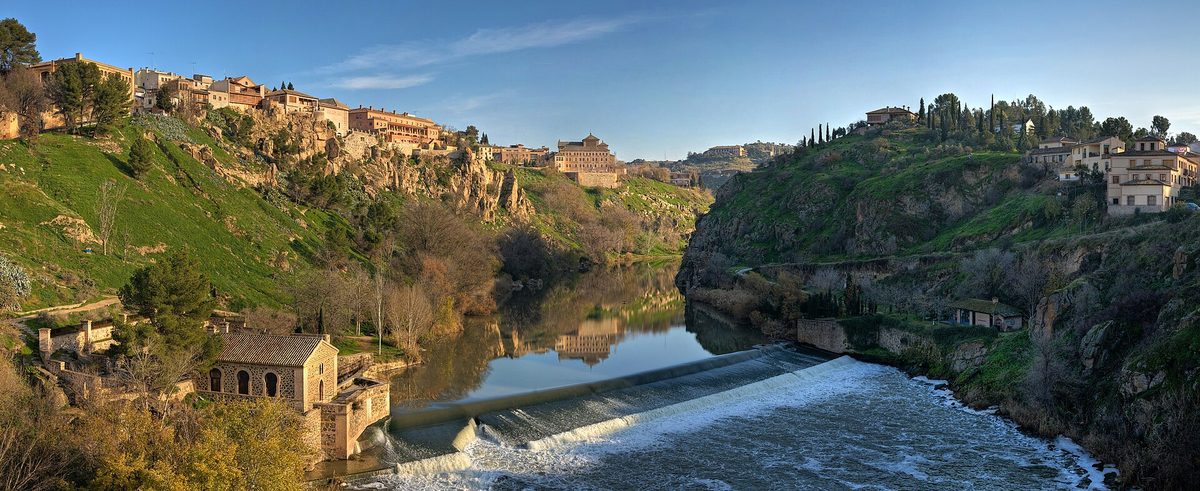
The cathedral is 12.00 EUR, reduced 8.00 EUR, with a 6.00 EUR children’s ticket for ages eight to fourteen accompanied by a family member. Entry is timed and your ticket is valid only for the date and hour on it, with no re-entry, and all cultural visits go in through the Puerta Llana on Calle Cardenal Cisneros. Two things to know before you go in. First, photography and filming are prohibited inside, and so is mobile phone use, which surprises almost everyone and is stated plainly on the cathedral’s own site. Second, wheelchairs are free at the ticket desk and most of the building is accessible, which is more than can be said for the streets outside.
The cathedral is running a VIII Centenary programme of exhibitions, concerts and restorations, so there is more on than usual, including the Lumina light and sound show at 24.90 EUR alone or 33.00 EUR combined with daytime entry.
Madrid to Toledo is thirty minutes by high-speed train, which is exactly why it gets day-tripped to death. Between about eleven and four the main streets are a slow-moving queue. Arrive at five, watch the tour buses leave, and have the Zocodover to yourself.
Best months: April, May, October, November. Give it: one to two nights.
13. Segovia, Castile and Leon
An 800-metre Roman aqueduct, 28 metres tall at its highest, built without mortar and running straight through the middle of a working town. Nothing prepares you for the scale of it because photographs cannot fit both the arches and the buildings that give them scale. It costs nothing to see, because it stands in an open public square with no enclosure, no barrier and no ticket desk.
The Alcazar at the far end of town is the castle that Disney is endlessly said to have borrowed from. It has three ticketed parts: the palace, the Artillery Museum and the Tower of Juan II, with the tower sold as a separate element. The tower is 152 spiral steps, is not accessible to visitors with reduced mobility, and your time inside it is capped at 25 minutes. The palace and museum take 40 to 45 minutes self-guided. Admission runs at around 5.50 EUR for the palace and Artillery Museum together, with the Tower of Juan II a further 2.50 EUR or so on top, which makes it one of the best-value monuments in Spain. Advance booking is officially recommended at weekends and on public holidays.
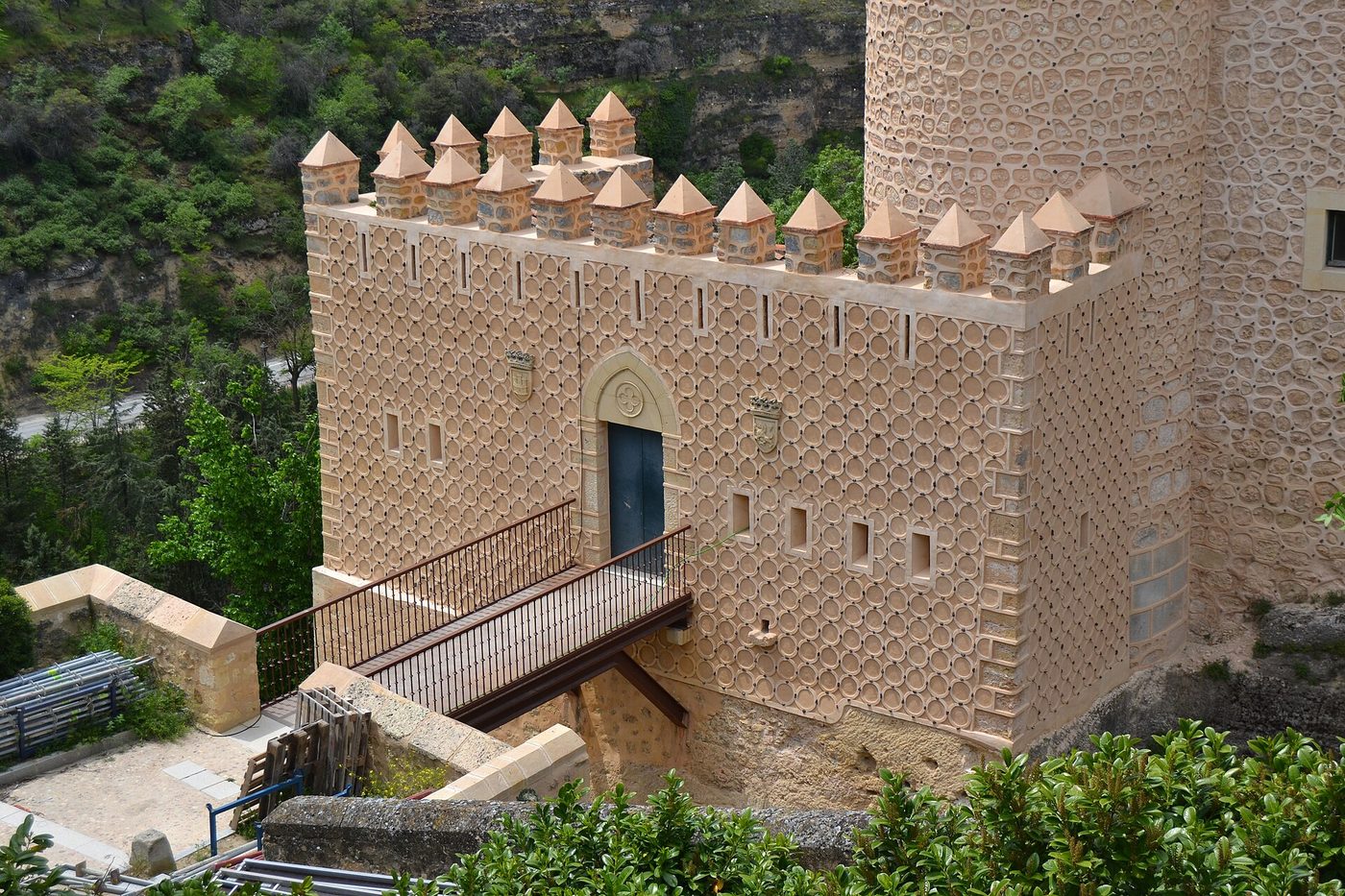
The old town and its aqueduct were inscribed as a World Heritage site in 1985. Eat cochinillo, the suckling pig traditionally carved with the edge of a plate, and accept that Segovia is not a light lunch.
Best months: April, May, September, October. Give it: one night, or a long day from Madrid.
14. Salamanca, Castile and Leon
Everything in Salamanca is built from Villamayor sandstone, which starts pale and oxidises to gold, so the entire old city glows at sunset in a way that looks artificially lit. The Plaza Mayor is the best square in Spain, and I say that having stood in most of them: it is fully enclosed, arcaded on all four sides, and functions as the town’s living room rather than a viewing platform.
The university was founded in 1218 and is one of the oldest in Europe, and it is still a university, which is the point. Term-time Salamanca has thirty thousand students in a city of 145,000 and the effect on the bar scene at eleven at night is not subtle. The Old City was inscribed as a World Heritage site in 1988.
Find the frog. There is a small carved frog on a skull somewhere on the university’s plateresque facade and finding it unaided is a rite of passage; every guide in the city will point at it for a tip, which spoils the whole thing.
Best months: April, May, September, October. Give it: one to two nights.
15. Avila, Castile and Leon
The walls are the reason, and they put Avila among the most beautiful towns in Europe. Two and a half kilometres of eleventh-century curtain wall with 88 towers, the most complete medieval circuit in Spain, and you can walk a long stretch of the top. From the Cuatro Postes viewpoint outside town at dusk, the whole circuit lights up, and the effect is medieval in a way that heavily restored castles never manage.
Avila is the highest provincial capital in Spain at around 1,130 metres, which is worth knowing before you pack. It is bracing in May and properly cold from November to March, and it is one of the few places in central Spain that is comfortable in July. It is also the city of Saint Teresa, and the convent built over her birthplace draws a steady pilgrim traffic that gives the place a quieter, more inward feel than Segovia or Salamanca.
Best months: May, June, September, and July if you are escaping the southern heat further south. Give it: one night.
16. Cuenca, Castilla-La Mancha
Cuenca is the one that makes people stop scrolling. The old town sits on a narrow spur between two river gorges, the Jucar and the Huecar, and the Casas Colgadas hang off the cliff edge with wooden balconies projecting into open air. The classic view is from the San Pablo footbridge, which crosses the Huecar gorge at roughly the height of the houses.
It has been a World Heritage site since 1996 and it still feels like a working provincial town rather than a viewing platform. The Museo de Arte Abstracto Espanol is actually inside one of the hanging houses, which is a better use of the building than a gift shop.
Fair warning: this is a steep town. The climb from the modern lower city to the old town is long and unrelenting, and the old town itself is cobbled and pitched throughout. There is a bus up if you would rather not walk it, and I would not attempt it with a wheeled suitcase.
Best months: April, May, September, October. Give it: one night.
17. Burgos, Castile and Leon
Burgos gets skipped because it is on the road to somewhere else, usually Bilbao or Santiago. The cathedral is the argument against skipping it: a French-influenced Gothic pile with an octagonal lantern tower over the crossing that people stand under with their mouths open. El Cid is buried beneath it.
The other reason is 20 kilometres east at Atapuerca, where the excavations have produced the oldest hominin remains in Europe, and the Museum of Human Evolution in Burgos itself presents them properly rather than as a cabinet of bones. If you have any interest in where we came from, it is the best museum of its kind in Spain.
Burgos also sits on the Camino Frances, so from spring onward the city has a steady current of pilgrims moving through it, which gives the bars a particular rhythm in the early evening.
Best months: May, June, September. It is cold and it is high; locals joke about nine months of winter. Give it: one night.
Green Spain: the Basque coast, Asturias and Galicia
The northern strip is the Spain that surprises people, because it is green, cool, wet and Atlantic, and it does not look like the rest of the country at all. The numbers make the point better than adjectives: Santiago de Compostela gets around 1,890 millimetres of rain a year across 141 rain days, against Seville’s 535 millimetres across 50, and Santiago sees 1,910 hours of sunshine to Seville’s 2,915. Bilbao gets 1,115 millimetres, more than double Seville. That rain is why it is green, and why the food is what it is.
18. San Sebastian, Basque Country
La Concha is the best city beach in Europe, a near-perfect shell of sand between two headlands with an island parked in the middle of the bay, and it is a five-minute walk from the old town. That combination is rare enough on its own. Add the pintxos and it becomes the single best eating city in Spain for a visitor, because the format does the work for you: you stand at a bar, you point at what is on the counter, you eat it standing up, you pay, and you move on to the next bar. Three or four bars is dinner.

The Parte Vieja is where the density is, but the bars on Calle Fermin Calbeton get crushed by eight and the ones five minutes away in Gros, across the river behind Zurriola beach, are just as good and half as busy. Zurriola is also where the surf is; La Concha is for swimming and Zurriola is for waves.
One change to budget for: nothing extra is charged in 2026, but from 1 January 2027 the city levies a tourist tax of €1.25 to €6.50 per person per night depending on where you sleep, capped at six nights, with under-18s exempt. The full breakdown, along with prices, transport and the pintxo-bar timings that matter, is in our San Sebastian travel guide.
Best months: June, July and September. This is the one part of Spain where July and August are the right time to go, because 27 degrees and an Atlantic breeze beats 36 degrees in Seville. Give it: two to three nights.
19. Bilbao, Basque Country
The Guggenheim did what it was built to do, which was to turn a declining industrial port into a city people fly to on purpose. Twenty-eight years on, the titanium still looks like it was finished last week. Adult admission is 18.00 EUR, students aged eighteen to twenty-five and over-65s pay 9.00 EUR, under-18s are free, and the audio guide is included in every ticket at no extra cost.
Check the day before you go: the museum is closed on Mondays for most of the year. In 2026 it opens on 30 March, 6 April, every Monday from 15 June to 7 September, and on 12 October, 7 December and 28 December. It also extends to 20:00 during Easter week and through the summer from 15 June to 13 September. The museum warns explicitly about ticket fraud, so buy from its own site and nowhere else.
Do not treat Bilbao as a one-building city. It is one of the better short breaks in the country, and it sits comfortably alongside the names in my guide to European city breaks. The Casco Viejo, the seven original streets, has become quietly excellent for food without any of San Sebastian’s queues, and the Mercado de la Ribera on the riverbank is one of the largest covered markets in Europe. Half an hour up the coast, San Juan de Gaztelugatxe is a hermitage on a rock connected to the mainland by a serpentine stone bridge and 241 steps. In peak periods, meaning Easter, roughly mid-June to late September, and daytimes at weekends and on holidays, access needs a free timed ticket booked in advance. Outside those windows you can turn up.
Getting there is the one drawback. Bilbao is not on the high-speed network. The fastest train from Madrid is around four hours forty-seven minutes and five to six hours is more typical, on gauge-changing Alvia stock rather than an AVE. Flying or driving from San Sebastian is usually the better answer.
Best months: May, June, September. Aste Nagusia, the Semana Grande, runs nine days from the first Saturday after 15 August, which is 22 to 30 August in 2026. Give it: two nights.
20. Santiago de Compostela, Galicia
Santiago is a granite city that looks better in rain than in sun, which is fortunate. Arrive in the Praza do Obradoiro in the late afternoon and you will watch pilgrims come round the corner having walked anywhere from 100 to 800 kilometres, and the reaction is the same regardless of belief: people sit down on the flagstones and look at the cathedral facade for a long time.
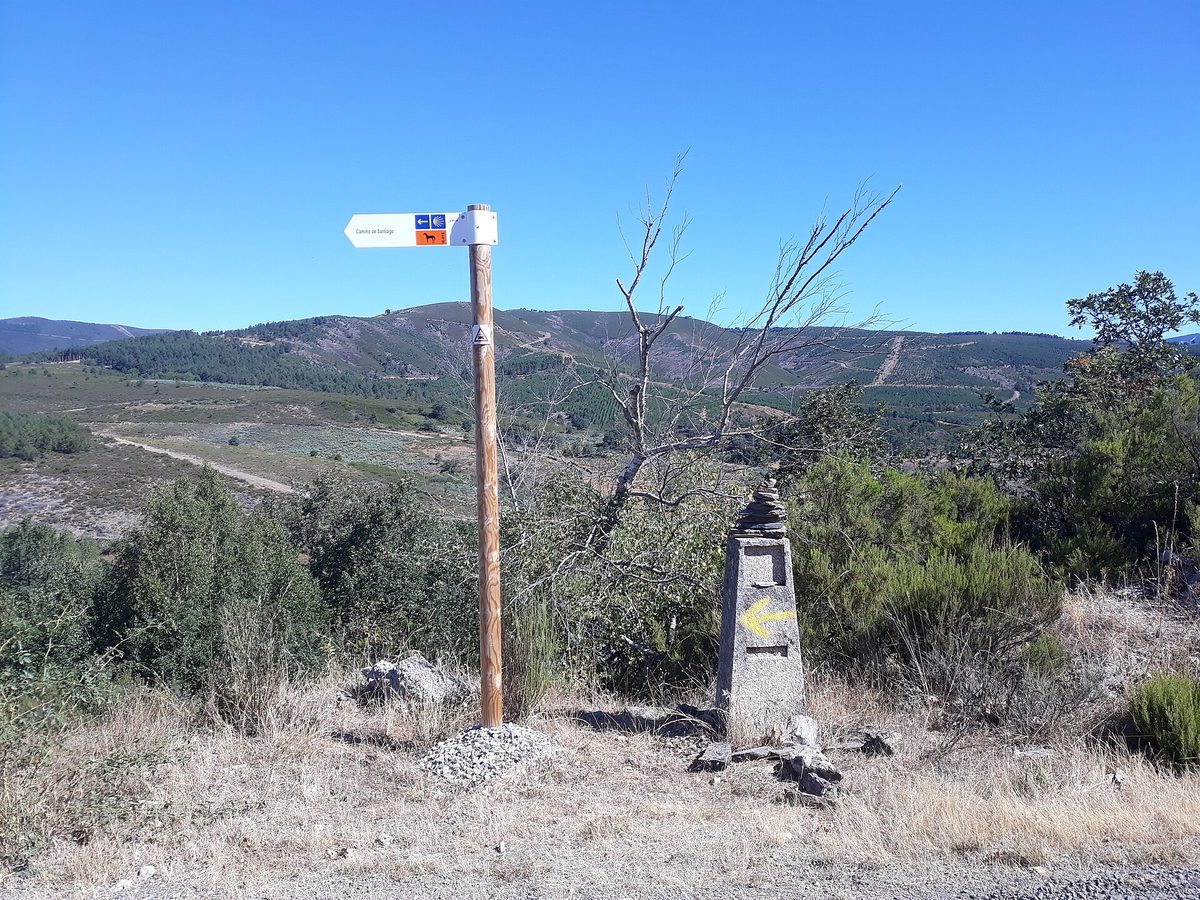
The basilica itself, including the Apostle’s tomb, is open every day from 07:00 to 21:00 with entry via the Porta de Praterias, and no ticket is required for it. The Museum, the Portico de la Gloria, the roofs and the Xelmirez Palace are separate booked visits open 10:00 to 20:00. I could not find the Portico de la Gloria’s price published on the cathedral’s own visits page, so book it through the official site and see what it charges. One practical detail to plan for: backpacks are not allowed inside the temple for security reasons, which is a problem if you have literally just walked in carrying one. The Pilgrim’s Reception Office on Rua Carretas 33 is open 09:00 to 19:00 and will store yours.
The big news is 2027. Because 25 July, the feast of Saint James, falls on a Sunday, 2027 is a Holy Year, the Ano Xacobeo. The Holy Door opens on 31 December 2026 and closes on 31 December 2027, and pilgrim numbers in Holy Years are dramatically higher. If you want Santiago quiet, come in 2026. If you want it at full intensity, come in 2027 and book everything early.
Madrid to Santiago runs on true high-speed track now, at around three hours for the fastest services, which makes Galicia a much easier addition to a Madrid trip than it used to be.
Best months: May, June, September. August is the warmest at 25 degrees and also the most crowded on the Camino. Expect rain in any month. Give it: two nights.
21. Picos de Europa, Asturias, Cantabria and Leon
Limestone mountains that rise to 2,600 metres barely 20 kilometres from the sea, which is why they are green to the top and often in cloud. This is the best walking country in Spain that is not the Pyrenees.

The Ruta del Cares is the walk everyone does and it deserves the traffic: twelve kilometres each way through a gorge on a path cut into the cliff, mostly level, with the river a very long way below. It is not technical and it is not a scramble, but it is exposed and there are stretches where the drop is directly beside your boots. The Fuente De cable car takes you from the valley to 1,800 metres in four minutes and queues badly in July and August, so go early or book ahead.
Base yourself in Cangas de Onis or Arenas de Cabrales rather than day-tripping from the coast. Eat the Cabrales blue cheese, which is matured in limestone caves in the mountains and is not a subtle product.
Best months: June, July, August and September. Unlike almost everywhere else in this guide, high summer is the right time here; the passes and the high routes are unreliable outside it. Give it: two to three nights. More routes in my guide to hiking in Europe.
22. Cudillero and the Asturian coast, Asturias
Cudillero is a fishing village built into a natural amphitheatre, houses painted in different colours stacked in tiers above a tiny harbour, with the whole thing facing one small gap in the cliffs. It looks staged and it is not.
The wider point is the coast it sits on. Asturias has around 350 kilometres of cliffed shoreline with beaches at the bottom of ravines, and the good ones take some finding: Playa del Silencio, a curve of pale stones under a headland with no facilities at all, and Gulpiyuri, an inland beach fed by the sea through a cave with no visible connection to the ocean. Neither has a beach bar and that is the appeal.
Do not come for guaranteed sun. Asturias is the wettest region in Spain along with Galicia and the weather changes hourly. Come for cider, poured from a height into a wide glass in the sidrerias of Oviedo and Gijon, and for the fact that this coast is still mostly Spanish holidaymakers. It is also one of the few corners of the continent I would recommend without hesitation for a European summer.
Best months: June, July, August, September. Give it: two nights, ideally with a car.
23. A Coruna, Galicia
The seafront at A Coruna is a single wall of white glazed galleries, glassed-in balconies built to trap warmth and keep out the Atlantic, and the effect along the Avenida de la Marina is unlike any other city front in Spain. The Tower of Hercules at the northern tip is a Roman lighthouse that has been working, on and off, since the first or second century, making it the oldest functioning lighthouse in the world. It was inscribed as a World Heritage site in 2009 and you can climb it.
A Coruna is also the gateway to the Rias Altas and, an hour and a half south, to the Cies Islands off Vigo, whose Playa de Rodas is a white crescent in an archipelago where daily visitor numbers are capped and you need a permit to land. If you are in Galicia in summer, apply for one.

Best months: June, July, August, September. Give it: one to two nights.
24. Lugo, Galicia
Lugo has the only Roman town wall anywhere that survives complete around its entire circuit, and you can walk the entire top of it in about forty-five minutes, looking down into people’s gardens on one side and the old town on the other. It was inscribed as a World Heritage site in 2000.
That is essentially the reason to come, but it is a good one, and the town inside the wall is a proper Galician provincial capital with excellent octopus and no interest whatsoever in impressing you. A pulperia lunch in Lugo costs a fraction of the same dish in Santiago.
Best months: May, June, September. Give it: one night, or a stop on the drive between Santiago and Asturias.
25. Pamplona, Navarre
For eight days a year Pamplona is the most famous small city in Spain, and for the other 357 it is a handsome, wealthy Navarrese capital with a star-shaped citadel, a good cathedral and a park system out of proportion to its size. Both versions are worth seeing.
San Fermin runs on fixed dates every year: it opens with the Txupinazo rocket at noon on 6 July from the balcony of the Plaza Consistorial and ends at midnight on 14 July, with the encierro, the bull run, each morning from 7 to 14 July. In 2027 that is 6 to 14 July again. If you are going, book accommodation roughly a year out and expect to pay several times the normal rate. If you are not going, avoid those dates entirely, because nothing else in Pamplona functions.
The rest of the year, come for the pintxos on Calle Estafeta, which is also the narrowest and most dangerous stretch of the bull run, and for the fact that Pamplona is the classic starting point in Spain for the Camino Frances.
Best months: May, June, September. Give it: one to two nights.
Catalonia and the Mediterranean coast beyond Barcelona
Four of the five below are Catalan. The last, Alicante, sits considerably further south on the Costa Blanca in the Valencian Community, and it is here because it belongs with the coast rather than with Valencia city.
26. Girona, Catalonia
An hour north of Barcelona by train, and the reason to make the trip is the Call, the medieval Jewish quarter, which is the best preserved in Spain: a warren of stepped stone lanes so narrow that two people cannot pass in places. Girona had one of the most important Jewish communities in medieval Europe until the expulsion of 1492, and the Museu d’Historia dels Jueus tells that story without flinching.
The other image is the Onyar river frontage, houses painted ochre and rust hanging directly over the water, best seen from the Pont de Pedra. Climb the city walls for the long view, eat somewhere on Placa de la Independencia, and if you have a car, Figueres and the Dali Theatre-Museum are twenty minutes north. The cathedral steps will look familiar to anyone who watched a certain dragon series.
Best months: April, May, September, October. Give it: one to two nights.
27. Cadaques, Catalonia
Whitewashed houses against black slate hills on a bay at the far end of the Cap de Creus peninsula, reached by a mountain road with enough hairpins to put off the casual visitor. That road is the reason Cadaques never became the rest of the Costa Brava.
Dali lived at Portlligat, a fifteen-minute walk over the headland, in a house he assembled out of several fishermen’s huts over forty years. It is now a museum and visitor numbers are capped in small groups, so it must be booked in advance. Beyond it, the Cap de Creus headland is a national park of wind-carved schist that looks like a Dali painting because it is where Dali got the shapes from.
Best months: May, June, September. It is very quiet in winter and several restaurants close. Give it: two nights.
28. Tarragona, Catalonia
Roman Tarraco was the capital of the largest province in Roman Spain, and what survives is remarkable mostly for where it survives. The amphitheatre is built into the slope directly above a beach, so you sit in Roman seating with the Mediterranean filling the whole frame behind the arena. There is also a circus running underneath the modern streets, a praetorium, a stretch of walls and, ten kilometres out, the Ferreres aqueduct standing in open countryside a few kilometres out of town, with no visitor centre and no queue.
Add the Balco del Mediterrani, a railed terrace at the end of the Rambla where the local custom is to touch the ironwork for luck, and a seafood lunch in the Serrallo fishermen’s quarter. Tarragona is an hour from Barcelona and gets a small share of the visitors.
Best months: May, June, September, October. Give it: one to two nights.
29. Sitges, Catalonia
Seventeen beaches, a headland church that photographs beautifully from the promenade, and a compact old town of modernista villas built by Catalans who made money in Cuba and came home to show it. Sitges is forty minutes from Barcelona by local train, which makes it the easiest sea escape from the city.
It has been one of Europe’s most established gay resorts for decades and remains relaxed about it rather than performative. Carnival here in February is enormous, and the film festival in October is the most important fantasy and horror festival in the world, which fills the town with a very different crowd. Outside those two weeks it is a quiet seaside town with good food.
Best months: May, June, September. Give it: one to two nights.
30. Alicante, Valencian Community
Alicante is written off as an airport for package resorts and it is a decent city in its own right. The Castillo de Santa Barbara sits on a 166-metre limestone crag directly above the old town, with a lift running up through the rock from the seafront, and the view takes in the whole bay. Below it, the Explanada de Espana is a promenade paved with six and a half million marble tiles in a red, cream and black wave pattern, shaded by palms.
The old town, El Barrio, is where the tapas and the noise are. Postiguet beach is right in the city, and the better sand is a short tram ride north at San Juan. Alicante averages 31 degrees in August and 17 degrees in January, and Madrid to Alicante is 2h15 by high-speed train.
Best months: May, June, September, October. Give it: two nights.
Aragon, the region most people drive straight through
31. Zaragoza, Aragon
Half of Spain drives past Zaragoza on the Madrid to Barcelona motorway without stopping, which is a strange fate for the country’s fifth city. The Basilica del Pilar is enormous, sits directly on the Ebro, has eleven domes and frescoes by Goya, who was born nearby, and is free to enter. Two Spanish Civil War bombs that fell through the roof and failed to explode are still on display inside.
The Aljaferia is the other reason: an eleventh-century Moorish palace, later a royal residence and now the regional parliament, and the only major Islamic palace in Spain north of Toledo. There are also four separate Roman museums under the modern streets, covering the forum, the theatre, the baths and the river port of Caesaraugusta.
Zaragoza is roughly an hour and a quarter from Madrid on the high-speed line, so it is a plausible day trip and an even better stopover if you are travelling between Madrid and Barcelona. Just avoid August, when it averages 32 degrees on a plain with no sea anywhere near it.
Best months: April, May, October. Give it: one to two nights.
32. Albarracin, Aragon
Albarracin is routinely called the most beautiful village in Spain and for once the claim survives arrival. It belongs in the same conversation as the villages in the most beautiful places in Europe. The houses are plastered in a pinkish red made from the local gypsum, they lean over lanes barely wide enough for a donkey, and the whole village loops around a rock inside a bend of the Guadalaviar river with a fortified wall running along the ridge above it.
It is properly remote, up in the Sierra de Albarracin at around 1,180 metres, roughly two and a half hours from Valencia and three from Madrid by car, with no useful train. That is the price of it being unspoilt. Come midweek, stay the night, and walk the wall at first light before the day-trippers arrive from Teruel. Nearby rock shelters hold prehistoric paintings that are part of the Rock Art of the Mediterranean Basin World Heritage listing.
Best months: May, June, September, October. It gets cold and it gets snow. Give it: one night.
Extremadura and the best Roman ruins in Spain
33. Merida, Extremadura
Emerita Augusta was founded in 25 BC for retired legionaries and it has left more standing than anywhere else in Spain. The theatre is the headline: a complete two-storey stone scaenae frons with columns and statues, and it is not a ruin you look at from behind a rope. It still hosts the Merida Classical Theatre Festival every summer, so you can watch a Greek tragedy performed in a Roman theatre in the place it was built for, which is the best cultural evening in Spain and costs less than a Madrid museum.
Around it: an amphitheatre, a circus that held 30,000, a 60-arch Roman bridge still carrying pedestrians across the Guadiana, two aqueducts and a temple of Diana with a Renaissance palace built into it. The National Museum of Roman Art next to the theatre, designed by Rafael Moneo, is one of the best museum buildings in the country.
Hardly anyone goes, because Extremadura is on the way to nowhere. That is the whole point. If you are continuing west, the border with Portugal is under an hour away.
Best months: April, May, October. Extremadura is brutal in July and August. Give it: one to two nights.
34. Caceres, Extremadura
The walled old town of Caceres has been a World Heritage site since 1986 and is so intact that film and television crews book it out wholesale rather than build sets. There is no visible modernity inside the walls at all: no shopfronts, no wiring, no signage, just golden stone palaces and towers built by families who got rich in the Americas and came home to compete with each other in architecture.
Walk it after dark when the streets are lit by lamps and effectively empty. Storks nest on almost every tower, which is a noise you will notice. Extremadura is also where Spain’s best jamon iberico de bellota comes from, from pigs finished on acorns in the dehesa oak pasture, and it is markedly cheaper here than in Madrid.
Best months: April, May, October. Give it: one night.
The islands: Balearics and Canaries
Two archipelagos, two entirely different propositions. The Balearics sit in the Mediterranean off Valencia and are a summer destination. The Canaries sit in the Atlantic off southern Morocco, roughly 1,800 kilometres from the Spanish mainland, and are a winter destination. You cannot combine them in one trip and you certainly cannot drive between them. Both feature in my wider guide to the best Mediterranean destinations, with the Canaries as the Atlantic outlier.
One cost to plan for in the Balearics: the sustainable tourism tax, the ecotasa, has applied across all four islands since 2016. In high season, from 1 May to 31 October, it runs from about 1.10 EUR per person per night in budget accommodation to 4.40 EUR in a five-star, including VAT, with holiday rentals at around 4.00 EUR. From 1 November to 30 April it drops to between 0.28 and 1.10 EUR. Under-16s are exempt entirely, and there is a 50 percent reduction from the ninth night of the same booking onwards, which rewards the long stay. The Canary Islands have no general regional tourist tax in 2026, although the municipality of Mogan on Gran Canaria charges its own.
35. Mallorca, Balearic Islands
Mallorca is two islands pretending to be one, as our full Mallorca travel guide sets out in detail. On one side, the Mallorca of the Bay of Palma, which is exactly what its reputation says it is. On the other, the Serra de Tramuntana, a 90-kilometre mountain range along the northwest coast with terraced olive groves, stone villages and a corniche road that is one of the great drives in Europe. Deia, Valldemossa, Soller, Banyalbufar: these are hill villages that happen to have sea below them.
The wooden train from Palma to Soller, built in 1912 and still running its original carriages through orange groves and thirteen tunnels, is worth doing for its own sake. Cap de Formentor at the northern tip has the drama. And the coves of the east coast, Cala Varques and Cala Torta among them, need a walk in from a parking spot and reward it.
Palma Cathedral, La Seu, is worth the ticket, and the price varies by whether you add the terraces, so check the cathedral’s own site rather than a resale one. The detail that ruins weekend itineraries is this: it is closed to tourist visits every Sunday, all year. Tourist hours run Monday to Friday 10:00 to 17:15 and Saturday 10:00 to 14:15 from April to October, shortening in winter. The cathedral’s own site publishes two contradictory season definitions, so check the date you want rather than trusting the seasonal rule.
Best months: May, June, September and October. Give it: four to seven nights, with a car.
36. Menorca, Balearic Islands
The calm one. Menorca has no clubbing scene worth the name, a building height restriction that has kept the coast low-rise, and the best beaches on any of the four main Balearic islands: Cala Macarelleta, Cala Turqueta, Cala Mitjana and Cala Pregonda, most of which require a walk in from a car park through pines, which is precisely why they stay good.

The Cami de Cavalls is a 185-kilometre bridle path that loops the entire island coast, waymarked and walkable in stages, and doing one stage a day between coves is the best way to see Menorca. The island also holds an extraordinary density of Bronze Age stone monuments, the talayots, navetas and taulas, which were inscribed as Talayotic Menorca in 2023, Spain’s most recent World Heritage listing.
The north coast is red rock and wind, the south is white sand and pine. Ciutadella at the western end is prettier than Mahon and a better base.
Best months: June and September. July and August are hot and fully booked. Give it: four to five nights.
37. Ibiza, Balearic Islands
Ibiza has a reputation problem in that its reputation is entirely accurate about one fifth of the island and completely wrong about the rest. Dalt Vila, the fortified old town above Ibiza Town, is a UNESCO site listed in 1999 for both its biodiversity and its culture, and walking up through the Renaissance bastions to the cathedral at sunset is a very good hour that has nothing to do with anything else Ibiza is known for.
The north of the island, around Sant Joan and Portinatx, is quiet, hilly and full of small coves reached down dirt tracks. The Posidonia seagrass meadows in the channel between Ibiza and Formentera are why the water is that colour, and they are the reason for the UNESCO natural listing. Formentera is a short ferry from Ibiza Town and has water as clear as anywhere in the Mediterranean, with no airport and no high-rise.
If clubbing is not the point of your trip, avoid the south coast in July and August entirely and stay north. If it is the point, you already know what you are doing.
Best months: May, June, September, October. Give it: three to four nights.
38. Tenerife, Canary Islands
Mount Teide is 3,718 metres, the highest point in Spain, and the national park around it was inscribed as a World Heritage site in 2007. Getting up it has changed significantly in the last two years.
The cable car, run by the official operator, starts at 24.00 EUR and takes you from the base station at 2,356 metres to La Rambleta at 3,555 metres. Places are limited and it accepts online bookings only, with free changes or refunds until 18:00 on the day before. So far so simple.
The permit is where it has changed. Access to the Telesforo Bravo trail, the final stretch to the actual summit, now requires an authorisation that is no longer issued by the national parks reservation system; it has moved to Tenerife ON, run by the island Cabildo. Critically, it is no longer free. The operator states plainly that the peak trail authorisation now carries a cost, and I could not find the amount published anywhere, so budget for something rather than nothing. Permits run in four two-hour bands, 09:00 to 11:00, 11:00 to 13:00, 13:00 to 15:00 and 15:00 to 17:00, and your cable car ticket must be compatible with your band. You need the permit even if you arrive by cable car rather than walking up. Permits are name-bound and non-transferable, and a ranger checks the permit against your ID at the trailhead. The operator recommends booking two to three months ahead if you are arranging it yourself.
One more constraint: with a permit you get two hours total at altitude, counting the upper station, the trail and the peak. Without one you get one hour. And the Altavista refuge at 3,260 metres, the traditional overnight staging point, is currently closed.
Away from the mountain, the Anaga massif in the northeast is ancient laurel forest with ridge walks and almost no visitors, and the north coast around Garachico is a completely different island from the resorts in the south. Santa Cruz averages 29 degrees in August and 21 degrees in January with 220 millimetres of rain a year and no rain at all in June or July, which is why this is a winter destination. Watch for the calima, a Saharan wind that raises the temperature sharply and fills the air with dust.
Carnival in Santa Cruz is the biggest in Spain. In 2027 the season runs from 22 January to 28 February, with the main street carnival from 19 to 28 February. Tenerife leads my list of where to go in Europe in winter for exactly these reasons.
Best months: November to April. Give it: four to six nights.
39. La Palma, Canary Islands
La Palma is the Canary that almost nobody plans a trip around, which is the strongest argument for going. It is the steepest island in the world for its size, essentially a volcanic ridge rising to 2,426 metres with a vast erosion crater, the Caldera de Taburiente, cut into the middle of it.
Three things make it unusual. The laurisilva forest in the north, in the Los Tilos biosphere reserve, is a survivor of the subtropical forest that covered the Mediterranean before the ice ages, and walking through it in cloud is like walking through something prehistoric. The Roque de los Muchachos observatory on the crater rim is one of the world’s most important astronomical sites, and La Palma has legal sky protection, making it the world’s first Starlight Reserve; the night sky here is unlike anywhere else in Europe. And the Tajogaite volcano erupted in 2021, destroying villages on the western flank, so you can walk on lava fields that are younger than most smartphones.
There are no big resorts, the beaches are black sand and mostly small, and the whole island runs on walking, stargazing and eating. Go now.
Best months: November to April for warmth, June for the clearest skies. Give it: four to five nights.
40. Gran Canaria, Canary Islands
Gran Canaria is often called a continent in miniature and the cliche holds up better than most. Maspalomas at the southern tip is just over four square kilometres of genuine shifting sand dunes running down to the sea, a protected nature reserve rather than a beach with sand blown onto it. Ninety minutes north, the interior around Roque Nublo and Tejeda is a landscape of volcanic plugs, terraced ravines and villages at 1,000 metres where people wear coats.
Las Palmas in the north is a real city of 380,000 with a proper old town at Vegueta, a properly good urban beach at Las Canteras protected by a natural reef, and none of the resort atmosphere of the south. Choosing between north and south is the main decision on this island and they suit very different trips.
Note that the municipality of Mogan, which covers Puerto de Mogan and Puerto Rico in the southwest, charges its own local tourist tax, unusually for the Canaries.
Best months: November to April. Give it: four to six nights.
What the headline sights actually cost in 2026
Every price below was checked in August 2026, and the great majority came straight off the sight’s own official page. A handful are flagged as approximate in the notes, because I could not load the official page directly, and those should be treated as close rather than exact. Where I had nothing solid at all, the number is absent rather than invented. Prices marked “from” use dynamic pricing and will be higher on peak dates.
| Sight | Where | 2026 price | What to know |
|---|---|---|---|
| Alhambra, general day ticket | Granada | 21.00 EUR tariff / 22.27 EUR online | Nasrid Palaces entry at the exact time on the ticket. Advance sale closes 23:59 the day before |
| Alhambra, Gardens and Generalife only | Granada | 12.73 EUR online | Same price as the night visit to the Nasrid Palaces |
| Andalusi monuments set | Granada | 8.48 EUR | Free every Sunday |
| Sagrada Familia | Barcelona | 26.00 EUR | 36.00 EUR with tower access. Under-11s free on every ticket |
| Park Guell, monumental zone | Barcelona | 18.00 EUR | Online only. Ticket void 30 minutes after your slot. No re-entry |
| Casa Batllo | Barcelona | from 29.00 EUR (approximate) | Open daily to 22:30. Children under 13 free. Dynamic pricing |
| La Pedrera (Casa Mila) | Barcelona | from 29.00 EUR | The 17:30 Sunset ticket is cheaper, from 25.00 EUR |
| Museo del Prado | Madrid | 15.00 EUR (7.50 reduced) | Free Mon to Sat 18:00 to 20:00, Sun and holidays 17:00 to 19:00 |
| Real Alcazar | Seville | 15.50 EUR | Also admits you to the Antiquarium and two other ICAS museums |
| Real Alcazar plus Cuarto Real Alto | Seville | 21.00 EUR | The upper royal apartments are a 5.50 EUR supplement |
| Seville Cathedral and Giralda | Seville | 13.00 EUR online / 14.00 EUR at the door | Free Sundays 16:30 to 18:00, reserve online. Includes El Salvador |
| Mezquita-Catedral | Cordoba | 15.00 EUR | Free Mon to Sat 08:30 to 09:30, individuals only, in silence |
| Guggenheim | Bilbao | 18.00 EUR | Under-18s free. Closed most Mondays. Audio guide included |
| Toledo Cathedral | Toledo | 12.00 EUR | No photography and no phone use inside. Timed, no re-entry |
| Alcazaba | Malaga | 7.00 EUR | 10.00 EUR combined with Gibralfaro. Free Sundays from 14:00 |
| Museo Picasso | Malaga | 13.00 EUR | Covers all temporary shows. Free the last two hours each Sunday |
| Caminito del Rey | El Chorro | 10.00 EUR self-guided / 18.00 EUR guided | Daily numbers are capped. Nobody under 8. Not sold at the visitor centre |
| Teide cable car | Tenerife | from 24.00 EUR | Online booking only. The summit permit is separate and now chargeable |
| Palma Cathedral (La Seu) | Mallorca | varies by ticket type | Closed to tourist visits every Sunday, all year. Terraces are a separate product |
| City of Arts and Sciences, two venues | Valencia | 41.30 EUR mid-season | Whole complex 47.75 EUR. Price changes with the date you pick |
| Santiago Cathedral, basilica and tomb | Santiago | No ticket | Backpacks are not allowed inside. Open 07:00 to 21:00 |
| Alcazar of Segovia | Segovia | about 5.50 EUR (approximate) | The Tower of Juan II is roughly 2.50 EUR more. 152 steps, no step-free access |
| Aqueduct of Segovia | Segovia | No ticket | It runs through an open public square, with no barrier and no ticket desk |
Three Madrid prices are absent above because I could not read them off an official page: the Museo Reina Sofia, the Thyssen-Bornemisza and the Royal Palace. All three render their rates client-side. The free windows are published, though, and they are the useful part. The Reina Sofia’s free days in 2026 are 18 April, 18 May, 23 May, 12 October and 6 December. The Thyssen is free on Mondays from 12:00 to 16:00 and Saturdays from 21:00 to 23:00. The Royal Palace is free Monday to Thursday, 16:00 to 18:00 from October to March and 17:00 to 19:00 from April to September, for EU and Latin American citizens on proof.
The pattern worth noticing is the free window. Almost every major Spanish institution has one, and most of them fall in the last two hours of the day. If you are travelling on a budget, building an itinerary around the Prado’s 18:00 opening, the Mezquita’s 08:30 hour and Malaga’s free Sunday afternoons saves a family of four well over 100 EUR in a week. The trade-off is real, though: free hours are the busiest hours of the day, and you will be queueing well before they start. For more of this kind of arithmetic, see Europe on a budget.
Getting between them: real train times
Spain has the longest high-speed rail network in Europe and the second longest in the world, and since Ouigo and Iryo started competing with Renfe the fares on the busiest routes have fallen sharply. Advance fares on Madrid to Barcelona can start around 9 to 15 EUR on the low-cost operators, against 90 EUR or more for a flexible Renfe Premium seat booked late. That is the single biggest saving available to anyone travelling in Spain.
| Route | Fastest scheduled | Notes |
|---|---|---|
| Madrid to Toledo | 30 min | The reason Toledo gets day-tripped to exhaustion |
| Madrid to Zaragoza | about 1h15 | On the Barcelona line, so an easy stopover |
| Madrid to Cordoba | about 1h45 | An intermediate stop on the Seville AVE |
| Madrid to Valencia | 1h50 | Direct, no change |
| Madrid to Alicante | 2h15 | Murcia from 2h45 |
| Madrid to Barcelona | 2h30 | Renfe AVE, Ouigo and Iryo all compete here, which is why fares vary so wildly |
| Madrid to Seville | 2h30 | Via Ciudad Real, Puertollano and Cordoba |
| Madrid to Malaga | 2h40 | Via Cordoba, Puente Genil and Antequera |
| Madrid to Santiago de Compostela | about 3h02 fastest | True high-speed now, which changes what is possible in Galicia |
| Madrid to Granada | from 3h30 | High-speed but it detours via Cordoba and Antequera, hence the time |
| Madrid to Bilbao | about 4h47 | Not on the AVE network. Gauge-changing Alvia stock. Consider flying |
| Seville to Cordoba | about 45 min | The easiest day trip in Spain |
| Seville to Malaga | 2h02 | Fares quoted around 25 to 80 EUR |
| Seville to Granada | about 2h30 | Makes the Andalusian triangle work without a car |
| Barcelona to Valencia | about 2h30 | Euromed or AVE |
| Barcelona to Seville | 5h18 | Direct AVE exists, but this is a flying route |
Four things about Spanish trains that catch people out. First, how far ahead tickets go on sale varies enormously: on competitive routes it can be eleven months, but on routes with no competition Renfe sometimes opens sales as little as fifteen days out, so an empty search result does not mean a sold-out train. Second, the low-cost operators apply budget-airline luggage rules, and Avlo and Ouigo enforce them. Third, an AVE, long-distance or Iryo ticket includes free travel on Renfe suburban Cercanias services at the start of your journey, which is a quiet saving on the way to the station. Fourth, high-speed does not mean direct: Granada is a genuine high-speed destination that still takes three and a half hours from Madrid because the line loops down through Cordoba and Antequera.
If you are combining Spain with anywhere else by rail, my guide to train travel in Europe and the Europe train itinerary cover passes and cross-border routes, and getting around Europe compares rail against buses and budget flights.
When to go, city by city
The single most useful thing I can tell you about timing Spain is that the country does not have one climate, it has at least four, and they peak at different times. The south is unbearable in high summer and lovely in February. The north is at its best in July and August, when everywhere else is not. The Canaries are a winter destination. Planning around one national “best time” is how people end up in Seville in August.
| City | Aug high (C) | Jan high (C) | Rain (mm/yr) | Notes |
|---|---|---|---|---|
| Seville | 36 | 17 | 535 | The hottest region in Europe in summer. Record 46.6 C, July 1995 |
| Granada | 34 | 13 | not sourced | At 700 m, so cooler nights than Seville |
| Madrid | 33 | 11 | 455 | On a plateau at 650 m. The city empties in August |
| Zaragoza | 32 | 11 | not sourced | Inland plain, no sea anywhere near |
| Malaga | 32 | 17 | not sourced | One of the few Spanish cities that is pleasant in January |
| Valencia | 31 | 16 | 475 | Coastal humidity takes the edge off the number |
| Alicante | 31 | 17 | not sourced | Costa Blanca, reliably dry |
| Barcelona | 29 | 14 | not sourced | Cooler than its reputation, busier than its size |
| Santa Cruz de Tenerife | 29 | 21 | 220 | No rain at all in June or July. This is why the Canaries are a winter trip |
| Bilbao | 27 | 14 | 1,115 | More than double Seville’s rainfall, across 125 rain days |
| Santiago de Compostela | 25 | 11.5 | 1,890 | 141 rain days a year. 1,910 sunshine hours against Seville’s 2,915 |
Rainfall is listed only where I had a sourced annual figure; the cells marked “not sourced” are gaps in my research, not missing data in the world. Temperatures are 1991 to 2020 averages.
Read that Santiago row again, because it is the one that reframes Spain. Santiago de Compostela gets roughly three and a half times Seville’s rainfall across 141 rain days a year, and sees about a thousand fewer hours of sunshine. Between Santiago and the Tabernas desert in Almeria, which receives somewhere around 200 to 250 millimetres a year and is the only true desert in Europe, the rainfall gap across one country is roughly eight to one. That is why the north is green and the south is not, and it is why the two halves eat completely differently.
My general rules, having got this wrong more than once. April, May, September and October work almost everywhere and are the right default. July and August are for the Atlantic north and the mountains only. November to April is for the Canaries. February and March are excellent in Andalusia and nearly empty. And December in Madrid, Salamanca or Leon is very good if you like Christmas markets and do not mind the cold. More on this in the best time to visit Europe and the best time to visit Spain.
The rules that changed in 2026, and what they cost you
Entry: EES is live, ETIAS is not
The EU Entry and Exit System has been fully operational since 10 April 2026, after a progressive rollout that began at Spanish airports including Madrid-Barajas in October 2025. If you are a non-EU visitor, that means biometric registration, face and fingerprints, on your first entry, and it is now the method by which your entries and exits are recorded. Holders of long-stay visas or residence permits are exempt and their border checks are unchanged. In practice the system caused long queues at Palma and elsewhere through spring 2026, so allow more time than you used to, especially on arrival at island airports in summer. My Europe travel tips cover what to have ready at the border.
ETIAS is a different thing and it is not yet running. As of August 2026 no applications are being collected, and the European Commission has said only that it will give several months’ notice of the start date. When it does launch the fee will be 20 EUR, raised from the 7 EUR figure that circulated for years. Confident claims that it starts in the fourth quarter of 2026 are circulating; those are not confirmed by the Commission and I would not plan around them. The Schengen rule itself is unchanged: 90 days in any 180. There is more detail in my guide to the Schengen visa and ETIAS.
Tourist taxes: the map changed
The headline is Catalonia, where rates roughly doubled on 1 April 2026, but the useful insight is how uneven the map now is. Andalusia and Madrid charge nothing at all. A week in Seville and Granada for two people carries zero accommodation tax; the same week in Barcelona in a five-star costs an extra 168 EUR before you have bought a coffee.
| Where you stay | 2026 tourist tax | Notes |
|---|---|---|
| Barcelona, five-star hotel | 12.00 EUR per person per night | 7.00 EUR regional plus a 5.00 EUR city surcharge. It was 7.50 EUR in 2025 |
| Barcelona, four-star hotel | 8.40 EUR per person per night | Rises with star rating |
| Barcelona, tourist apartment | 9.50 EUR per person per night | More than a four-star hotel, which is deliberate policy |
| Catalonia outside Barcelona, five-star | from 4.50 EUR per night | Up to 8.50 EUR where the full municipal surcharge is applied |
| Balearic Islands, high season (1 May to 31 Oct) | 1.10 to 4.40 EUR per person per night | By accommodation class, VAT included. Holiday rentals around 4.00 EUR |
| Balearic Islands, low season (1 Nov to 30 Apr) | 0.28 to 1.10 EUR per person per night | Under-16s exempt. Half price from the ninth night onwards |
| San Sebastian | from 1 January 2027 | €1.25 to €6.50 per person per night by accommodation type, capped at six nights |
| Basque Country generally | none in 2026 | Araba, Bizkaia and Gipuzkoa all start charging from 1 January 2027 |
| Madrid and Andalusia | none | No tourist tax at all, which quietly makes the south cheaper |
| Valencian Community | none | The planned regional tax was scrapped in 2024 |
| Canary Islands | none regionally | Mogan on Gran Canaria charges its own local levy |
Festivals worth building a trip around
Spanish festivals are not decorative. Several of them take over their cities completely, doubling accommodation prices and making normal sightseeing impossible, so they are either the reason you go or the reason you go a fortnight later. These are the 2027 dates where they are published, and the rule that sets them where they are not.
| Festival | Dates | Notes |
|---|---|---|
| Carnival, Santa Cruz de Tenerife | 22 Jan to 28 Feb 2027 | Main street carnival 19 to 28 February. The biggest in Spain |
| Las Fallas, Valencia | 15 to 19 March 2027 | Fixed every year. Events open 1 March. La Crema burns the sculptures on the 19th |
| Semana Santa, Seville | 21 to 28 March 2027 | La Madruga is the night of Thursday 25 into Friday 26 March |
| Feria de Abril, Seville | 13 to 18 April 2027 | The Alumbrado is at midnight on Monday 12 April, after the pescaito dinner |
| Moros y Cristianos, Alcoy | around 23 April 2027 | Built around Saint George’s Day. The 2027 dates are still being argued over locally |
| Patios festival, Cordoba | May | Private courtyards open to the public. The best month to be in Cordoba |
| San Fermin, Pamplona | 6 to 14 July 2027 | Fixed every year. Txupinazo at noon on the 6th, bull runs each morning 7 to 14 |
| Aste Nagusia, Bilbao | 22 to 30 August 2026 | Nine days from the first Saturday after 15 August |
| La Tomatina, Bunol | 26 August 2026 | Always the last Wednesday of August. 15 EUR, capped at 20,000, sells out by May |
| Camino Holy Year, Santiago | all of 2027 | The Holy Door opens 31 December 2026. Expect far heavier pilgrim traffic |
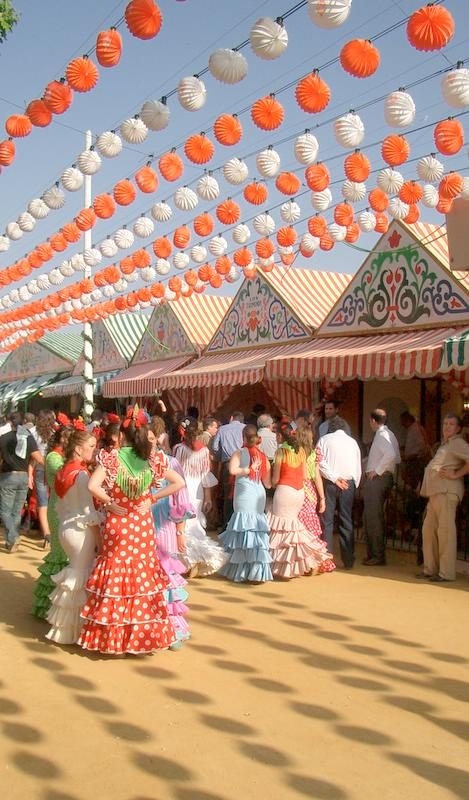
Two notes on that table. La Tomatina and Aste Nagusia 2027 are derived from their own published rules rather than from a printed 2027 calendar, so treat them as near-certain rather than confirmed. And Alcoy’s 2027 dates are still unsettled: one municipal report proposes 22 to 24 April and a later one says the fiesta will shift to the weekend, so check locally before booking.
The one I would reshape a trip around is the Camino Holy Year. Because 25 July falls on a Sunday in 2027, the Holy Door at Santiago opens on 31 December 2026 and stays open all year. Holy Years draw far more pilgrims than ordinary years, which means booking albergues months ahead and a very different atmosphere in the Praza do Obradoiro. If you want the walk and not the crowd, do it in 2026.
Straight swaps when your first choice is booked out
Every one of these is a genuine alternative rather than a consolation prize, and in two cases I prefer the swap.
| If you cannot get | Go here instead | Why it works |
|---|---|---|
| Alhambra tickets in Granada | The Real Alcazar in Seville | Same Moorish and Mudejar tradition, still stunning, and far easier to book. Or take the Granada night visit, which is often available when day tickets are gone |
| A Barcelona hotel at a sane price | Girona or Tarragona | Both under an hour and a half by train, both under half the nightly rate, both worth two nights on their own terms |
| Seville in April | Cadiz or Cordoba | Andalusia at its best without Feria pricing. Cordoba in May is arguably better than Seville in April |
| San Sebastian in August | Bilbao, or the Asturian coast | The same Atlantic weather and, in Asturias, the same seafood at a third of the price |
| Mallorca in July | Menorca in June or September | Better beaches, a building height limit that has kept the coast low, and far less traffic |
| Ibiza, if you do not club | Formentera, or the north of Ibiza | Formentera has no airport, no high-rise and some of the clearest water in the Mediterranean |
| Tenerife in a school holiday | La Palma | Laurel forest, the best night sky in Europe and a lava field from the 2021 eruption |
| Toledo in the middle of the day | Toledo in the evening, or Cuenca | Stay the night in Toledo, or go to Cuenca, which has the same drama and none of the coaches |
| Anywhere in Andalusia in August | Picos de Europa or the Basque coast | Twenty-seven degrees and green instead of thirty-six and shut |
Where to go, by what kind of trip you are taking
A first trip to Spain, one week. Madrid two nights, Seville three, Cordoba one on the way, Granada two. All by train, no car, roughly six hours of travel in total for the whole week. This is the classic route because it works, and it is the backbone of my suggested Spain itinerary.
A first trip, but you want a beach. Barcelona three nights, then either Sitges or a flight to Mallorca. Or invert it: Valencia three nights, which gives you a real city with real beaches in the same place.
If you would rather see how Spain slots into a longer continental trip, start from my Europe itinerary.
Second trip, you have done the obvious. Bilbao, San Sebastian, the Asturian coast and the Picos, ending in Santiago. Rent a car for the middle section. This is a completely different country from the first itinerary.
With children. Valencia is the best single choice in Spain: the Oceanografic, the Turia park to cycle, a city beach and paella. San Sebastian works for the same reasons in the north. Avoid trying to do Andalusia’s monument circuit with under-tens in July. More in Europe with kids.
On a tight budget. Andalusia and Extremadura, in February or March, using the free entry windows and the menu del dia. There is no tourist tax in either region, hotels are at their annual low, and the menu del dia now averages around 14.20 EUR nationally for three courses with a drink. See also the cheapest places to travel in Europe.
Walking. The Picos de Europa in summer, the Cami de Cavalls on Menorca in spring or autumn, or a stage of the Camino. The Caminito del Rey is a half-day, not a hike.
Food above everything. San Sebastian and Bilbao, then south to Rioja. If you want the whole national picture rather than one region, my guide to European food puts Spanish cooking in context.
Solo. Granada, Valencia and San Sebastian, in that order. All three have bar cultures where eating alone standing up is completely normal, which is the thing that makes solo travel in Spain easy. See solo travel in Europe.
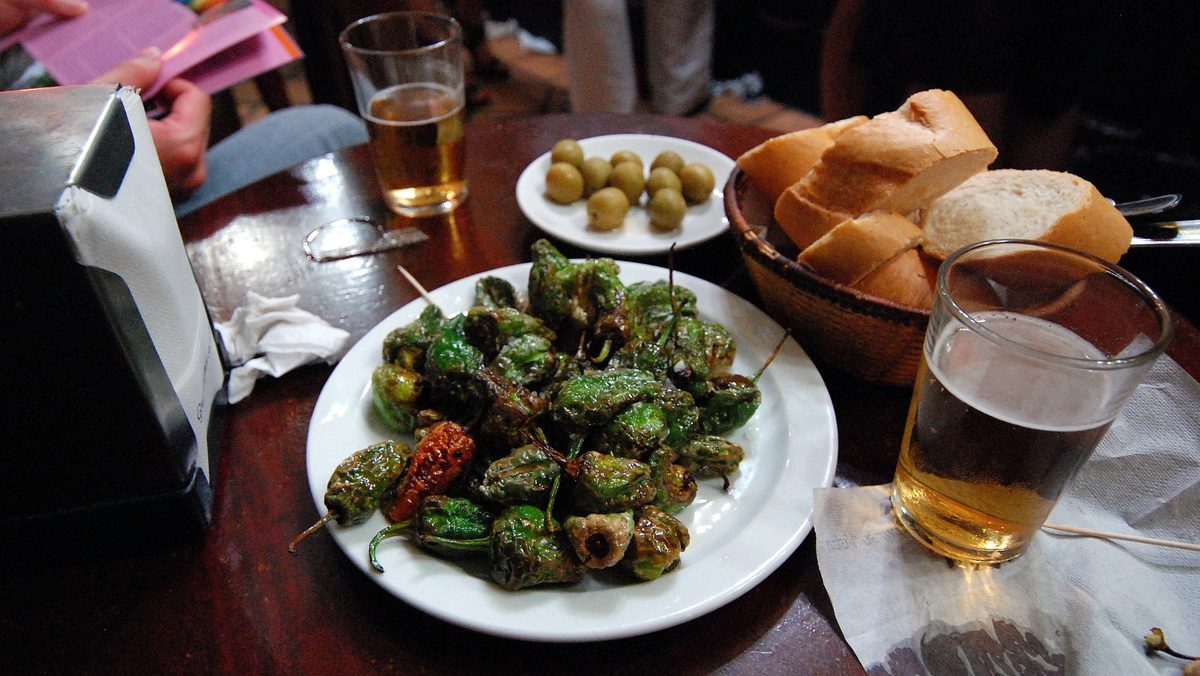
Mistakes I still see people make in Spain
Eating at eight. Spanish kitchens are not being difficult; they open at half past eight or nine for dinner. A restaurant full at seven in the evening in Madrid is a restaurant full of tourists, and it is almost always the worse restaurant on the street. Have a drink and a pincho at seven and eat at nine thirty.
Assuming the Alhambra is bookable on arrival. Advance online sale shuts at 23:59 the day before, so there is no morning-of option, and the ten-tickets-per-card-per-month rule catches families booking for a group. Book it before you book anything else, then build the trip around the date you get.
Turning up at Park Guell. The on-site booths do not sell tickets. If you have not booked online, you do not go in, and no amount of standing at the gate changes that.
Underestimating the heat as a logistics problem. Forty degrees in Seville is not a comfort issue, it is a scheduling one. Sights close, shade runs out, and walking between two things a kilometre apart at three in the afternoon is a bad idea. Pack for it: my Europe packing list has the hot-weather section. Plan mornings and evenings, and treat the middle of the day as lost.
Trying to do too much of the country. Spain is the second largest country in western Europe. Madrid to Santiago is three hours on the fastest train, Madrid to Bilbao is nearly five, and the Canaries are a four-hour flight. Two regions in a week is plenty; three is a blur.
Forgetting the tourist tax at checkout. It is charged per person, per night, and in Barcelona for a family of four in a four-star that is 33.60 EUR a night on top of the room rate. It is not optional and it is rarely included in the price you booked.
Booking a Sunday for Palma Cathedral, or a Monday for the Guggenheim. Both are closed on those days for most of the year, and both are the main reason people are in those cities.
Confusing the two Alhambra prices. If you saw 21.00 EUR quoted and you are charged 22.27 EUR online, nothing has gone wrong. The first is the legal tariff and the second includes the web service commission.
Frequently asked questions
How many days do you need in Spain?
Seven nights covers two regions properly, which for a first trip means Madrid plus Andalusia, or Barcelona plus one coast. Ten to fourteen nights lets you add the north, which is where Spain stops looking like the brochure. Under five nights, pick one city and its day trips rather than moving; the travel time will eat the difference.
What is the best time of year to visit Spain?
April, May, September and October work almost everywhere and are the sensible default. But there is no single national answer, because the climates diverge sharply: the Basque coast and the Picos are at their best in July and August, when Seville averages 36 degrees, and the Canaries are a November-to-April destination. Pick the region first, then the month.
Is it better to rent a car or take the train in Spain?
Train, for the cities. The high-speed network connects Madrid to Barcelona, Seville, Malaga, Valencia and Santiago in two to three hours, city centre to city centre, and competition from Ouigo and Iryo has pushed advance fares as low as 9 to 15 EUR on the busiest routes. Rent a car only for the places trains do not reach: the Serra de Tramuntana, the Asturian coast, the Picos, Cap de Creus, Albarracin and the Alpujarras. A car in Barcelona, Madrid or Seville is a liability, not an asset.
Is Spain expensive to visit?
Less than France or Italy, more than it was. The published estimates for a mid-range daily budget vary so widely, from around 90 to 185 EUR per person per day, that I would not quote a single figure as fact. What I can tell you concretely: the menu del dia averages about 14.20 EUR nationally for three courses with a drink, industry figures put the average Spanish hotel rate in the first half of 2026 at roughly 163 EUR a night and Barcelona, the most expensive city, at about 195 EUR, and Andalusia and Extremadura are substantially cheaper than Catalonia or the Balearics before you account for the tourist tax difference.
What are the entry requirements for Spain in 2026?
For visa-free visitors, no visa and no ETIAS yet, but you will go through EES biometric registration on first entry, which has been fully operational since 10 April 2026. Expect longer queues than you are used to. ETIAS is not yet running and no start date has been announced by the European Commission; when it does start it will cost 20 EUR. The Schengen limit remains 90 days in any 180. Holders of Spanish residence permits or long-stay visas are exempt from EES.
Madrid or Barcelona?
Barcelona if it is your first trip to Spain, because the Gaudi buildings, the Gothic Quarter and the beach in one walkable city is an unbeatable introduction. Madrid if you care about art, food or nightlife more than sightseeing, or if it is your second trip. Madrid is the better city to live in for a week; Barcelona is the better city to visit for three days. Madrid is also noticeably cheaper and charges no tourist tax.
How far in advance do you need to book Alhambra tickets?
The Patronato itself does not publish a number. Its official wording is only that demand is high and advance purchase is recommended. What it does publish, and what really constrains you, is that advance sale closes at 23:59 the day before your visit and that you may buy no more than ten tickets per person, per card, per month. My own judgement, and I am flagging it as judgement rather than a sourced fact, is to book two to three months ahead for April, May, September and October, and four to six weeks for the quieter months. Book it before you book your flights.
Do you have to book Park Guell in advance?
Yes. The monumental zone is timed-entry and tickets are sold online only; the on-site kiosks are marked “tickets online only” and will not sell you one. Your ticket is void thirty minutes after your slot and there is no re-entry once you leave. The free rest of the park is open to anyone, but the terraces and the mosaic bench that people come for are inside the paid zone.
What is the most beautiful village in Spain?
Albarracin in Aragon takes the title more often than anywhere else, and having been, I would not argue. Cadaques and Cudillero are the coastal contenders. If you want that quality with a train station attached, Cuenca and Ronda are the compromise.
Where should I go in Spain for the first time?
Madrid, Seville, Cordoba and Granada in one week, moving by train. You get the best art museum in Spain, the best palace, the best mosque and the best Islamic monument in Europe, with no car, no flights and about six hours of total travel. Add Barcelona only if you have ten nights or more, because it is a different trip rather than an extension of that one.
Final thoughts
The gap between the Spain people plan and the Spain that exists is mostly a gap in the middle of the map. Everyone arrives with Barcelona, Seville and the Alhambra on the list, and they are right to. What rarely makes it is the hour of the Mezquita that costs nothing, the Roman theatre in Merida still staging plays, the wall at Lugo you can walk the whole way round, or the fact that the north of Spain in August is twenty-seven degrees and green while the south is thirty-six and shuttered.
If you take one practical thing from this, make it the booking order. Fix the Alhambra date first, because it is the least flexible thing in the country. Then Park Guell, then the Sagrada Familia, then everything else. And check whether your dates collide with Semana Santa, Feria, Fallas or San Fermin, because those weeks are either the reason you went or the reason the trip did not work. If you are starting from a blank page, how to plan a trip to Europe walks through the sequence.
Spain rewards going slower than you planned. Two regions, not four. Long lunches. And the evening walk that every Spanish town does at seven o’clock, which costs nothing and is the closest thing the country has to a national ritual.
For the wider picture, start from my complete Spain travel guide, or see how Spain compares in the best places to visit in Europe and the best countries to visit in Europe.
Hannah Brooks has spent fifteen years travelling, living and writing across Europe, from the Arctic tip of Norway to the south of Sicily. She has planned hundreds of European itineraries for readers and is Senior Europe Editor at EuropeanTourism.org.
Photo credits
Every image on this page is used under a free licence. Full attribution below, in the order the photographs appear.
- Best places to visit in Spain: the Plaza de Espana in Seville at golden hour · Photo: H. Zell / CC BY-SA 3.0 via Wikimedia Commons
- Gaudi’s mosaic terraces at Park Guell looking out over Barcelona · Photo: Julian Lupyan (CC0) via Wikimedia Commons
- The colonnaded west front of the Museo del Prado on Madrid’s Paseo del Prado · Photo: rene boulay / CC BY-SA 3.0 via Wikimedia Commons
- The City of Arts and Sciences on the old riverbed in Valencia · Photo: CivArmy / CC BY-SA 4.0 via Wikimedia Commons
- The Patio de las Doncellas in the Real Alcazar of Seville · Photo: Jl FilpoC / CC BY-SA 4.0 via Wikimedia Commons
- The Alhambra on its ridge above Granada with the Sierra Nevada behind · Photo: Jebulon (CC0) via Wikimedia Commons
- The striped double arches inside the Mezquita-Catedral of Cordoba · Photo: AdriPozuelo / CC BY-SA 3.0 es via Wikimedia Commons
- The Puente Nuevo spanning the El Tajo gorge at Ronda in Andalusia · Photo: Christopher Down (CC BY 4.0) via Wikimedia Commons
- The cathedral of Cadiz seen across the harbour · Photo: Emilio J. Rodríguez Posada / CC BY-SA 3.0 via Wikimedia Commons
- The medieval skyline of Toledo above the Tagus river · Photo: Diliff / CC BY-SA 3.0 via Wikimedia Commons
- The Alcazar of Segovia, an easy day trip by train from Madrid · Photo: Emilio J. Rodríguez Posada / CC BY-SA 2.0 via Wikimedia Commons
- La Concha beach curving between two headlands at San Sebastian · Photo: Javier Perez Montes / CC BY-SA 4.0 via Wikimedia Commons
- A Camino de Santiago waymarker with its yellow arrow and scallop shell · Photo: Simon Burchell / CC BY-SA 4.0 via Wikimedia Commons
- The Cares Gorge trail cut into limestone cliffs in the Picos de Europa · Photo: Maria Cartas / CC BY-SA 2.0 via Wikimedia Commons
- The white crescent of Playa de Rodas on the Cies Islands off the Galician coast · Photo: Jules Verne Times Two / CC BY-SA 4.0 via Wikimedia Commons
- The pine-backed cove of Cala en Turqueta on Menorca’s south coast · Photo: Markus Trienke / CC BY-SA 2.0 via Wikimedia Commons
- Casetas and flamenco dresses at the Feria de Abril in Seville · Photo: EdTarwinski / CC BY 2.0 via Wikimedia Commons
- A spread of Spanish tapas, the default way to eat across the country · Photo: Takeaway / CC BY-SA 3.0 via Wikimedia Commons
1 comment