Andalusia Travel Guide
The first time I drove into Andalusia I got it wrong. I landed at Málaga in the second week of August and drove inland to Córdoba, because a guidebook told me the patios were beautiful. They are. They are also, at four in the afternoon in August, roughly the temperature of a pizza oven.
This Andalusia travel guide covers the eight southern provinces of Spain: what each city is for, what every major monument costs in 2026, which tickets sell out and how far ahead, where the free entry windows hide, how the trains actually connect, and which months reward you rather than punish you.
I sat on a step near the Mezquita that afternoon drinking warm water, watched by the only other person on the street, a man in his seventies who shook his head at me with what I can only describe as pity. Fifteen years and a lot of return trips later, I have opinions, and this is the guide I wish someone had handed me on that step.
Andalusia is the reason most people picture Spain the way they do: Moorish palaces, flamenco, white hill towns, heat. I have written this to be usable rather than admired. There are prices in it, and opening rules, and the specific ways the rail network does not connect the way you assume. Where I could not verify a number against a source I trust, I say so instead of inventing one. If you want the wider national picture first, our Spain travel guide sets out how the regions differ; this is the deep dive on the south.
Andalusia in context: eight provinces, two coasts
Andalusia is a region of eight provinces, roughly the size of Portugal, with two entirely different coastlines, Spain’s highest mainland mountain, Europe’s southernmost ski resort, a desert that stood in for the American West in a hundred films, and seven separate UNESCO World Heritage properties. Confusing it with “Seville plus some beaches” is the single most common planning error I see.
The eight provinces are Almería, Cádiz, Córdoba, Granada, Huelva, Jaén, Málaga and Seville. Each is named for its capital city, which is why people say “Córdoba” and mean either a city of 324,159 people or a province of 770,692. The regional capital is Seville, population 688,714 as of 2025, with Málaga at 597,173 and Granada at 235,294.
To the west is Portugal, reachable in under two hours from Huelva if you want to combine trips with our Portugal travel guide. To the north are Extremadura and Castilla-La Mancha. To the south, two seas: the Mediterranean along Málaga, Granada and Almería, and the Atlantic along Cádiz and Huelva. That split matters more than any other geographical fact in this article, and I will come back to it when we talk about beaches.
The Andalusia travel guide short list: 24 places worth your time
This is the table I would want first. Costs are 2026 adult prices where a monument charges admission; “free” means free to enter the place itself, not that the day is free. The season column is my own call after a lot of trips, not a formula.
| Place | Province | What it is for | Headline sight (price where published) | Best months | Minimum time |
|---|---|---|---|---|---|
| Seville | Seville | The regional capital: Mudéjar palaces, Semana Santa, flamenco in Triana | Real Alcázar, €15.50 | Mar–May, Oct–Nov | 3 days |
| Granada | Granada | The Alhambra, the Albaicín, and free tapas with your drink | Alhambra General, €22.27 online | Apr–Jun, Sep–Oct | 2 days |
| Córdoba | Córdoba | The Mezquita-Catedral and the best-preserved Judería in Spain | Mosque-Cathedral, €13 | Apr–May, Oct | 1–2 days |
| Málaga | Málaga | Andalusia’s most underrated city: museums, a Moorish fortress, real beaches | Alcazaba + Gibralfaro combined, €5.50 | Apr–Jun, Sep–Oct | 2 days |
| Nerja and Frigiliana | Málaga | A cliff-top balcony over the Mediterranean and a white village above it | Nerja Caves, ticketed | Apr–Jun, Sep | 1 day |
| Marbella | Málaga | The Costa del Sol’s luxury end, with a genuinely pretty old town | Old town, free | May–Jun, Sep | 1 day |
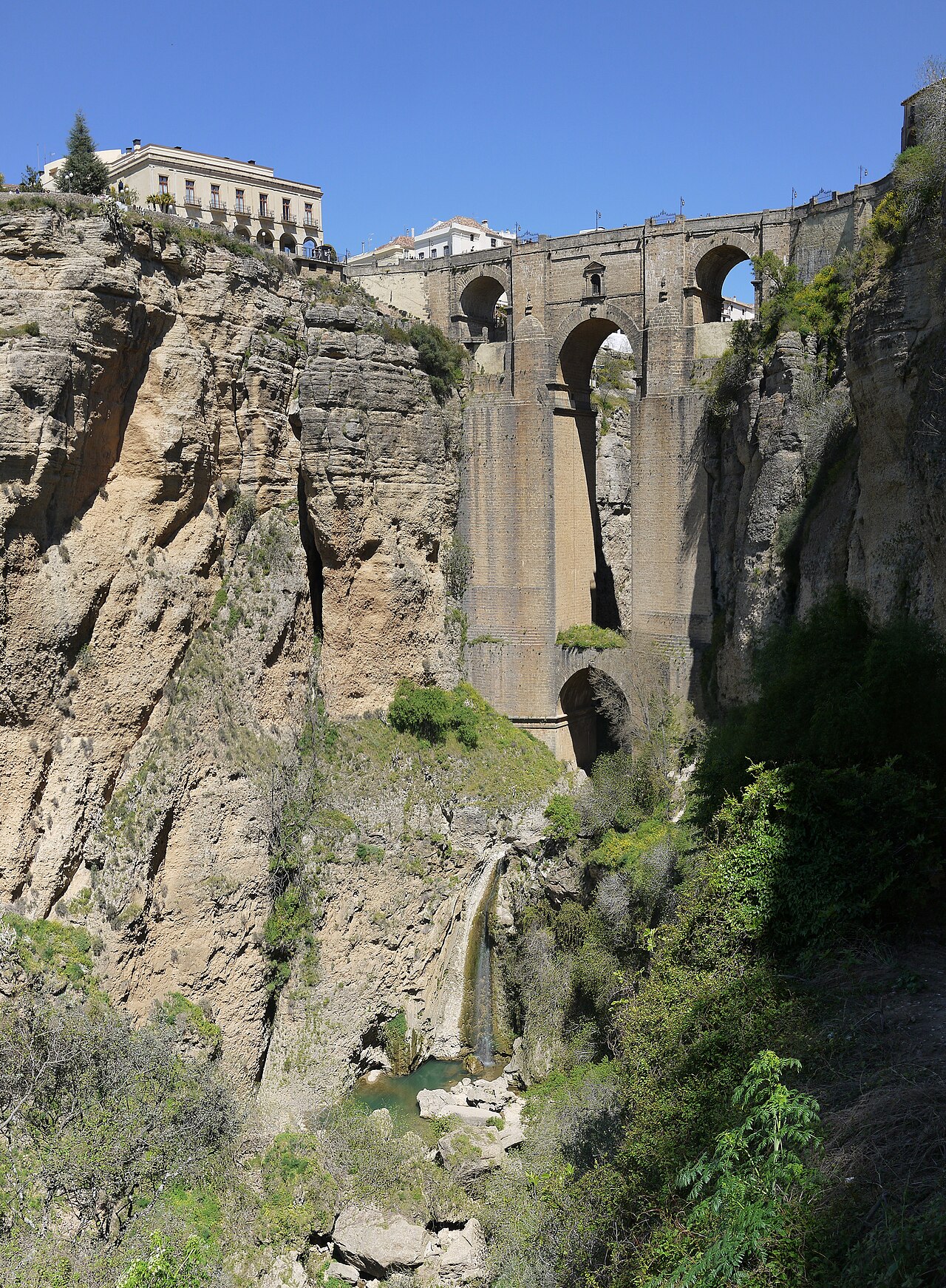
| Ronda | Málaga | A town split by a 100-metre gorge, joined by an 18th-century bridge | Puente Nuevo centre, around €2–2.50 | Apr–May, Sep–Oct | 1 day |
| Setenil de las Bodegas | Cádiz | Streets built underneath overhanging rock, not on top of a hill | Village itself, free | Mar–May, Oct | Half a day |
| Arcos de la Frontera | Cádiz | A cliff-crest white town above the Guadalete river | Old town, free | Mar–May, Oct | Half a day |
| Grazalema and Zahara de la Sierra | Cádiz | Mountain white villages inside a natural park, with hiking | Village, free; park trails permit-based | Apr–Jun, Sep–Oct | 1 day |
| Vejer de la Frontera | Cádiz | The most complete hilltop white town on the Atlantic side | Old town, free | May–Jun, Sep | Half a day |
| Cádiz | Cádiz | An ancient Atlantic port on a spit of land, with city beaches | Old town, free to walk | May–Jun, Sep | 1–2 days |
| Jerez de la Frontera | Cádiz | Sherry bodegas, Andalusian horses, and the deepest flamenco in Spain | Tío Pepe bodega tour, from €24 | Feb–May, Sep–Oct | 1 day |
| Sanlúcar and El Puerto de Santa María | Cádiz | The other two corners of the sherry triangle, with manzanilla and beach food | Bodega tours, priced per bodega | Apr–Jun, Sep | 1 day |
| Tarifa | Cádiz | Europe’s kitesurfing capital by common consent, where two seas meet | Beaches, free | May–Sep for wind | 2 days |
| Bolonia and Baelo Claudia | Cádiz | A vast dune, a Roman town, and Africa on the horizon | Baelo Claudia ruins | May–Jun, Sep | Half a day |
| Úbeda and Baeza | Jaén | Twin Renaissance towns, UNESCO-listed in 2003, almost tourist-free | Historic centres, free to walk | Apr–May, Oct | 1 day |
| Antequera and El Torcal | Málaga | Neolithic dolmens listed in 2016, plus a limestone karst landscape | Dolmens site; El Torcal free, parking charged | Mar–Jun, Sep–Nov | 1 day |
| Medina Azahara | Córdoba | A 10th-century caliphal city, ruined and rediscovered, listed in 2018 | Site and museum | Mar–May, Oct | Half a day |
| Caminito del Rey | Málaga | A 7.7 km gorge route, 2.9 km of it boardwalk, 105 m above the river | Self-guided, €10 plus €2.50 shuttle | Mar–Jun, Sep–Nov | Half a day |
| Doñana National Park | Huelva | One of Europe’s most important wetlands, and its most restricted | Guided 4×4 or boat only | Feb–May for birds | 1 day |
| Sierra Nevada | Granada | Europe’s southernmost ski resort and mainland Spain’s highest peak | Lift pass in winter; trails free | Dec–Apr ski, Jun–Sep hiking | 1–3 days |
| Cabo de Gata | Almería | A volcanic coastal park on mainland Spain’s least developed coast | Park free; some beach parking charged | May–Jun, Sep | 2 days |
| Almería and the Tabernas desert | Almería | A hilltop Alcazaba and mainland Europe’s only true desert | Alcazaba; film sets ticketed | Mar–May, Oct | 1 day |
The three great inland cities
If you have a week and no strong feelings, this is the trip: Seville, Córdoba, Granada, in that order, by train. All three were shaped by the same 800 years of Islamic rule and the Christian reconquest that followed, and each ended up with a completely different personality out of it.
Seville
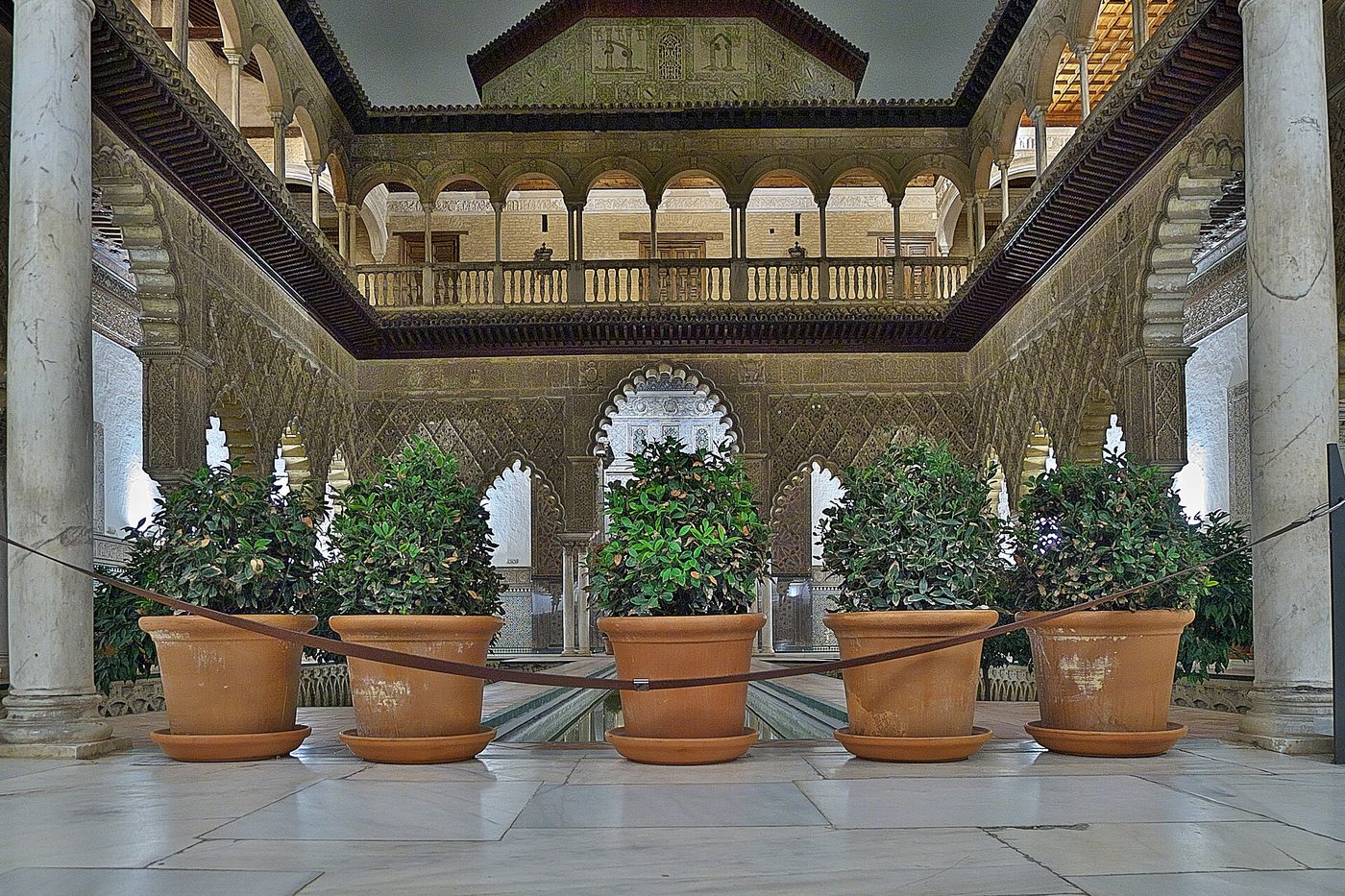
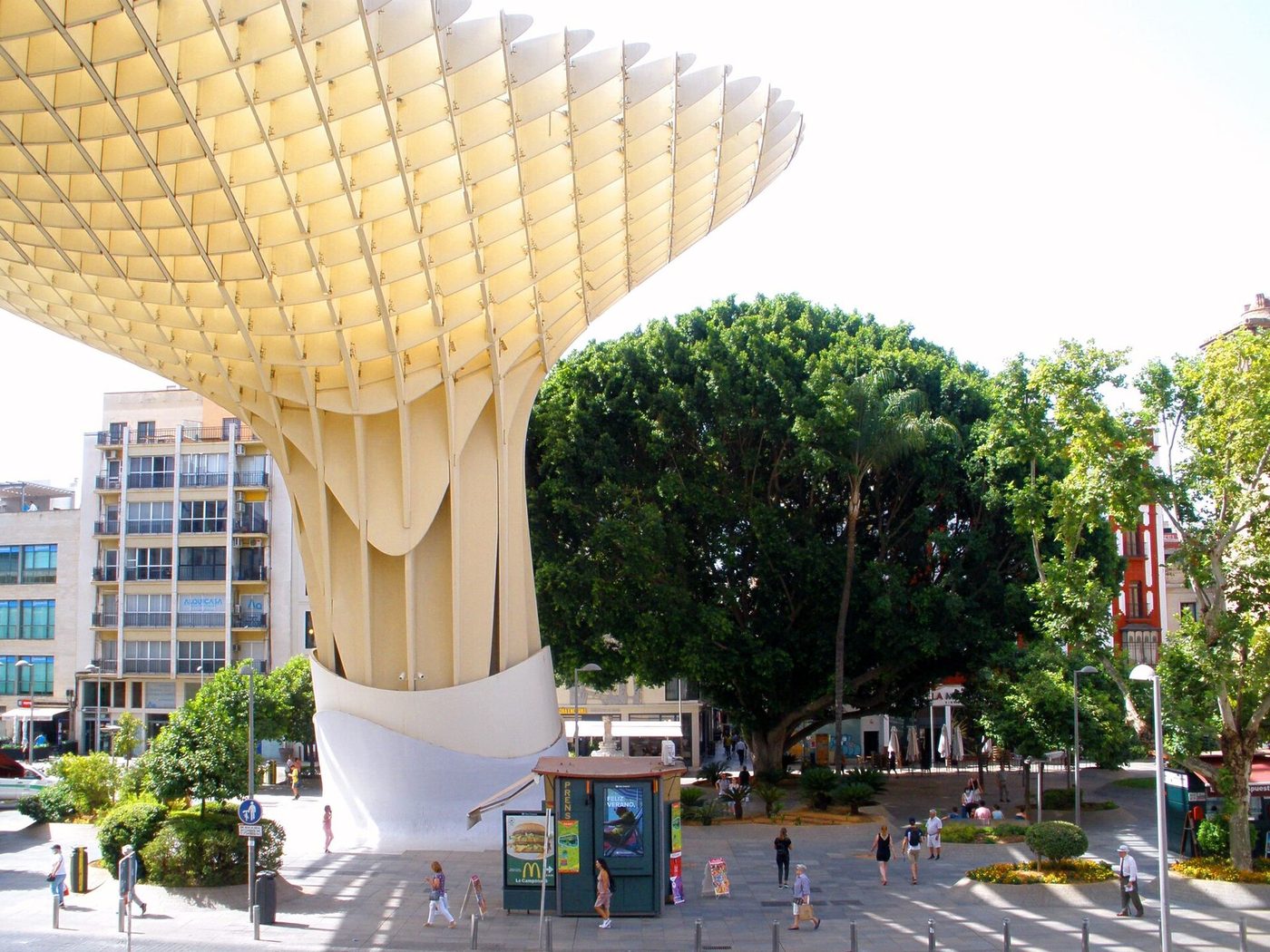
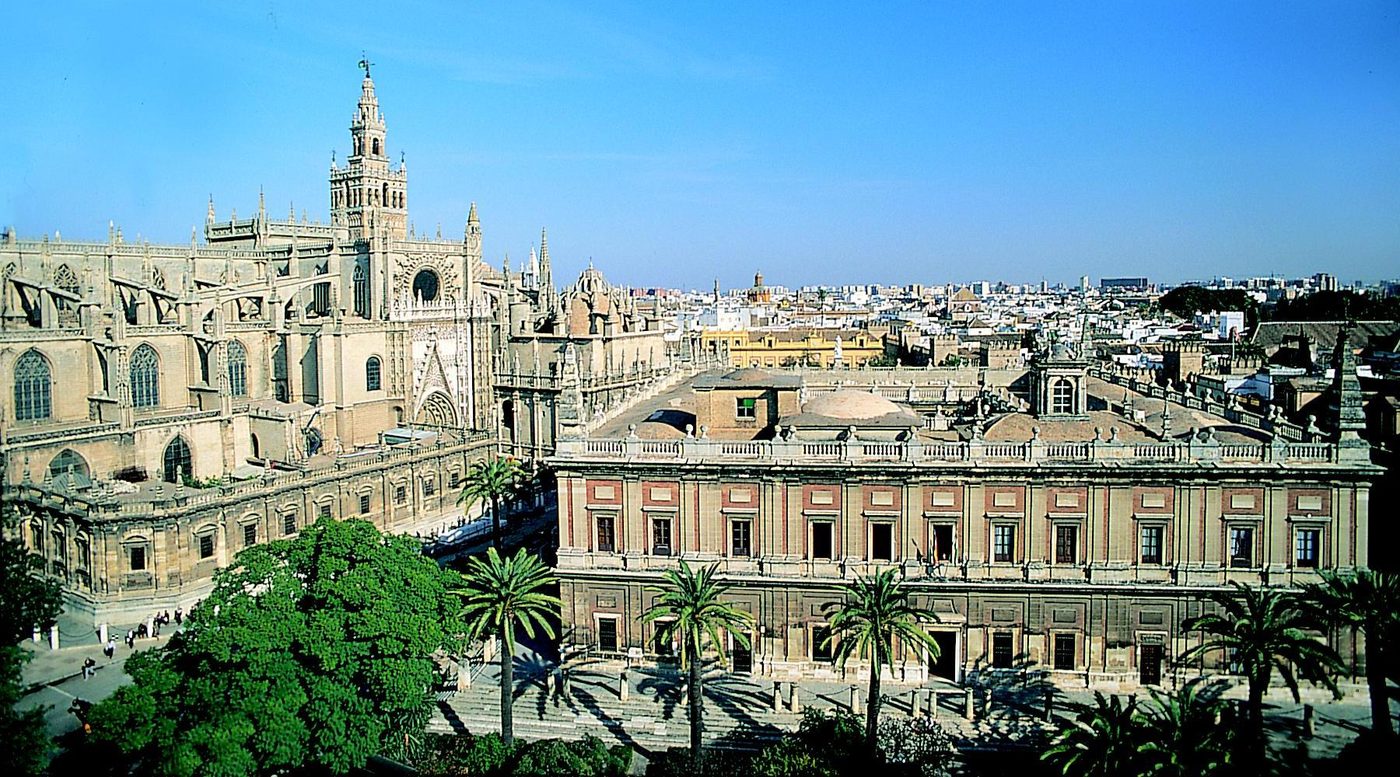
Seville is the one that gets under your skin. It is the regional capital, the biggest city in Andalusia at 688,714 people, and it has the highest concentration of things you have to see: the Real Alcázar, the Cathedral with the Giralda tower, the Archivo de Indias, and the ridiculous semicircular fantasy of the Plaza de España. The first three together were inscribed by UNESCO in 1987 as a single property.
The Alcázar is the building I return to most in Spain. It costs €15.50 for general admission, which now includes the Antiquarium, the Triana Ceramic Centre and the Mariano Bellver Donation, and it opens daily 09:30 to 19:00 on timed slots. The Cuarto Real Alto, the upper royal apartments still used by the Spanish royal family, is a €5.50 supplement. Buy online. The queue at the Patio de Banderas in April is a genuine hour.
The Cathedral, Giralda and Salvador Church come as one €14 ticket, or €13 online. Add the rooftop, stained glass, tombs and altarpiece tour and it is €21, or €20 online. Over 65s, students up to 25, large families and visitors with 33 to 65 percent disability pay €7, or €6 online. It opens Monday to Saturday 10:45 to 17:00, and Sunday 14:30 to 18:00.
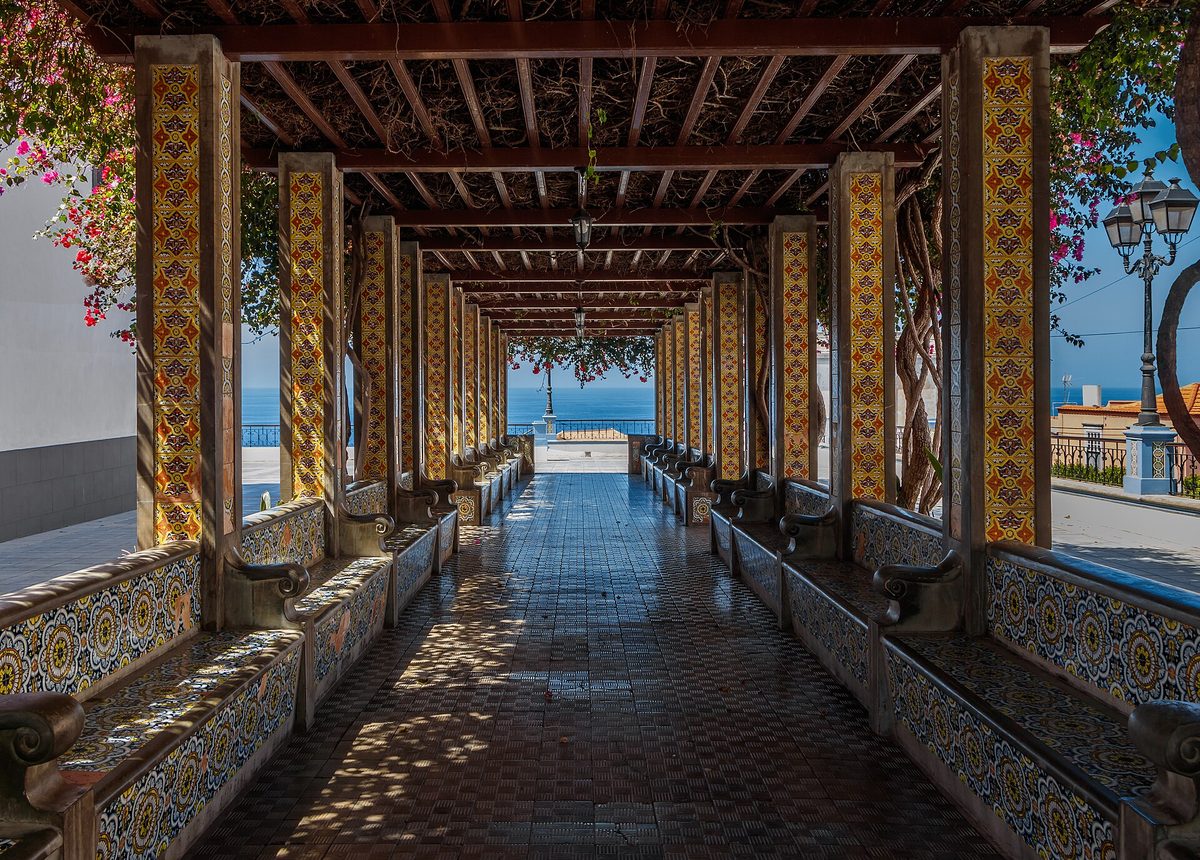
Beyond the monuments: cross the Guadalquivir into Triana, the old sailors’ and potters’ quarter, and eat at the market. Walk the Barrio Santa Cruz early, before eight, when it belongs to residents and delivery vans. Climb the Setas de Sevilla, the vast timber lattice over the Encarnación, for €16 general or €13 reduced, open daily 09:30 to midnight. The Archivo de Indias, holding the paper record of Spain’s American empire, is free all year, Tuesday to Saturday 09:30 to 16:30 and Sunday 10:00 to 13:30, closed Monday. Torre del Oro on the river is also free, with a voluntary €3 contribution.
Three days is the minimum I would give Seville. Our dedicated Seville travel guide goes neighbourhood by neighbourhood if you are giving it more.
Granada
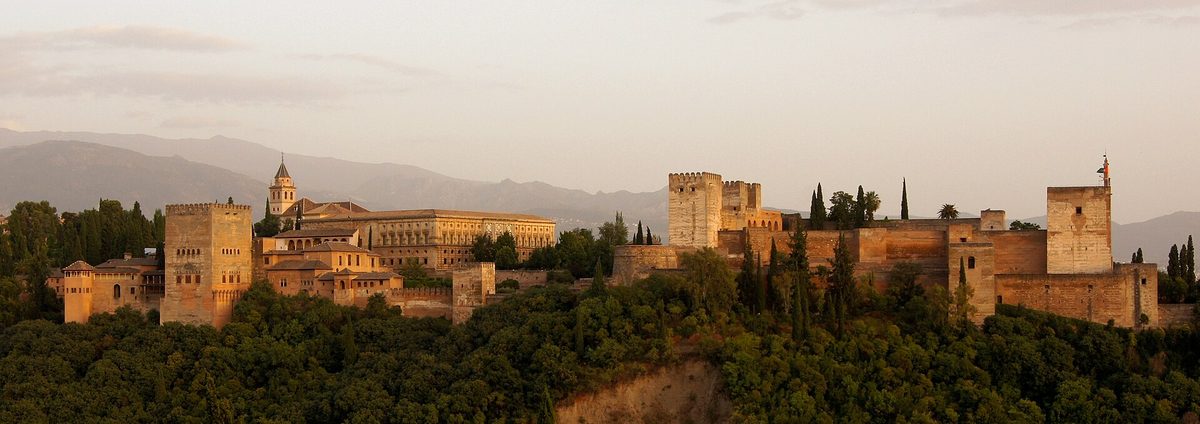
Granada is where people fall in love with Andalusia and where they most often fail to get in. The Alhambra and Generalife, together with the Albayzín quarter opposite, were inscribed by UNESCO in 1984 and extended in 1994. The complex is not one building, it is a walled hilltop city: the Nasrid Palaces, the Alcazaba fortress, the Palace of Charles V, the Partal gardens and, uphill, the Generalife summer palace.
General admission runs about €21 at the ticket office and €22.27 online once the booking commission is added. Reduced rates near €14.85 apply to EU youth card holders, EU over-65s, 12 to 15 year olds with a parent, large families and visitors with disability above 33 percent. Under-12s are free but still need a €0.00 ticket added to the booking, and they still need the QR code. I have watched a family turned away at the gate over exactly this.
I have given the Alhambra its own booking section further down, because the rules are where people come unstuck.
Granada’s other draw costs nothing: this is the last major Andalusian city where a drink still comes with a free tapa, not a menu. Order a caña in the Realejo or around Calle Elvira and food arrives. Three rounds is dinner. Add the Albayzín at sunset from the Mirador de San Nicolás, and the Sacromonte cave district above it, and you have two very full days.
Córdoba
Córdoba was, in the 10th century, the capital of a caliphate and one of the great cities of the medieval world. What survives at the centre of it is the Mezquita-Catedral: a forest of roughly 850 columns carrying double tiers of red and white horseshoe arches, with a Renaissance cathedral dropped into the middle of it in the 16th century. The mosque was listed by UNESCO in 1984 and the listing extended to the historic centre in 1994.
General admission is €13. Over-65s, students aged 15 to 26 and European Youth Card holders pay €10. Children aged 10 to 14, visitors with disability up to 64 percent and adult members of large families pay €7, dropping to €5 for 10 to 14 year olds in large families. Under-10s are free, as are residents of the Diocese of Córdoba, Andalucía Junta 65 card holders, visitors with disability above 64 percent plus a carer, and ICOMOS members.
Here is the single most useful fact in this guide: the Mezquita is free Monday to Saturday between 08:30 and 09:30. It is a full visit rather than a glance through the door. The conditions are strict, though. It does not run on days of extraordinary celebration, groups are not allowed in that slot, and at 09:20 they stop admitting people and begin clearing the building. Be in the Patio de los Naranjos by 08:20 and you get the best hour of the day for nothing.
The Bell Tower is a separate €3, on half-hourly slots from 09:30 to 18:30. The evening show, “The Soul of Córdoba”, is €20 general and €14 reduced, running at 20:00 and 21:30. The Route of the Fernandine Churches is €5, or free if you already hold a Mosque-Cathedral ticket. Last entry to everything is half an hour before closing and they do not sell tickets after that.
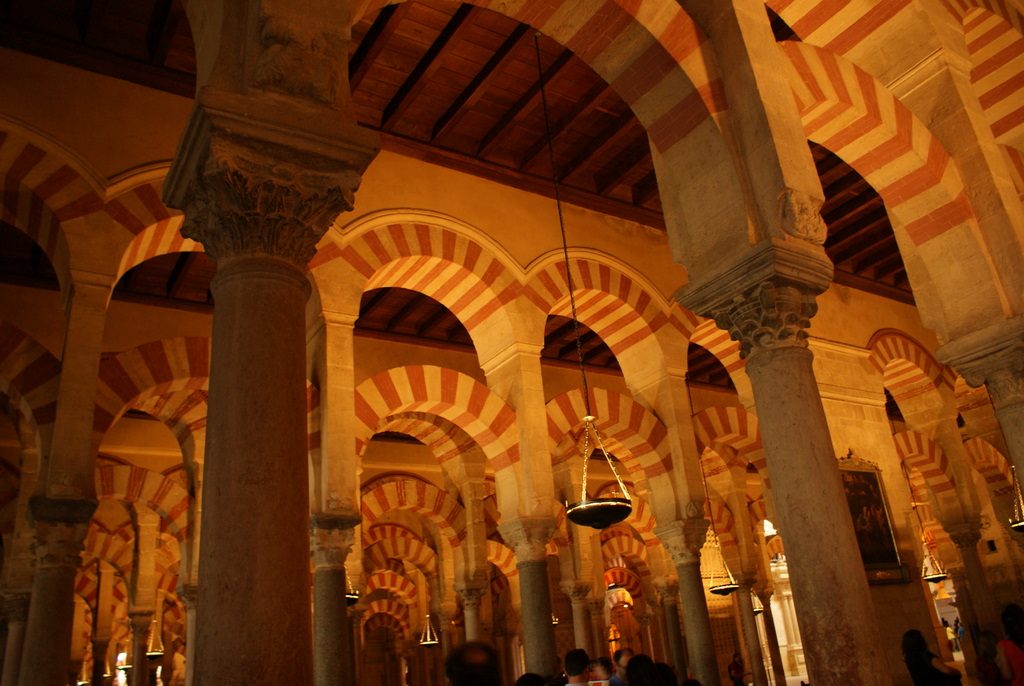
Time it right and Córdoba doubles in value. The Festival de los Patios ran 4 to 17 May in 2026, when private courtyards open to the public and the whole old town smells of geraniums and jasmine. The 2027 dates were not published when I checked in August 2026, but the festival has consistently occupied the first half of May.
Málaga and the Mediterranean coast
Málaga
Málaga has changed more in fifteen years than anywhere else in this article. It used to be the airport you passed through. It is now the city I would send a first-timer to if they only had three days, because it does the museums, the Moorish fortress, the old town and a swimmable beach inside a single walkable grid.
The Alcazaba, an 11th-century fortress-palace stepping up the hill, costs about €3.50 general and €1.50 for students and pensioners. Combine it with the Castillo de Gibralfaro above and it is around €5.50 for both, a figure I have never seen bettered anywhere else in the region. Both are free on Sundays from 14:00. The Museo Picasso Málaga, in the city of Picasso’s birth, is about €13 general and €11 reduced for over-65s, under-26 students and European Youth Card holders, free for under-17s and disabled visitors, with free entry in the last two hours every Sunday.
Eat espeto de sardinas on the beach at Pedregalejo or El Palo, five or six sardines on a cane skewer grilled over coals in a boat filled with sand. It is the single most Málaga thing you can do and it costs almost nothing.
Málaga-Costa del Sol is also the region’s entry point: 26.76 million passengers in 2025, up from 24.92 million the year before, making it Spain’s third-busiest airport. Some 22.3 million of those were international, about 83 percent of the total.
Nerja and Frigiliana
An hour east of Málaga, Nerja sits on a cliff above a set of small coves, with a promenade called the Balcón de Europa jutting out over the water. The Nerja Caves just outside town hold enormous stalactite chambers and are ticketed; I could not confirm the 2026 price against an official source, so check before you go rather than trusting my memory of it.
A few kilometres uphill is Frigiliana, regularly voted the prettiest village in Andalusia, and unlike some winners of that title it deserves it. Whitewashed lanes, cobble mosaics, Moorish street plan, and enough of a working village left that it does not feel staged. Go in the late afternoon when the coach groups have gone.
Marbella
Marbella has a reputation that its old town does not deserve. Puerto Banús is what people picture, and if superyachts and €18 cocktails are not your thing you can simply not go there. The Casco Antiguo behind the marina, around Plaza de los Naranjos, is a pretty knot of white lanes with orange trees and a 16th-century town hall. Treat Marbella as a half-day stop rather than a base and it makes far more sense. For the wider stretch, our Costa del Sol travel guide breaks the resorts down one by one.
The white villages: pueblos blancos worth the detour
The pueblos blancos are hill towns lime-washed white to throw off the sun, concentrated in Cádiz and Málaga provinces, most of them still carrying the bones of a Moorish castle. There is an official Ruta de los Pueblos Blancos and nineteen villages formally on it. You do not need to drive all of them. Five stops will do, and these are the five I keep going back to.

Ronda
Ronda is the one everyone knows, and it earns it. The town sits either side of El Tajo, a gorge cut straight through the plateau, joined by the Puente Nuevo, an 18th-century bridge that took decades to build. There is an interpretation centre inside the bridge structure itself. Sources give the adult price as either €2 or €2.50 and I could not find an official municipal page to settle it, so carry a five euro note and stop worrying about it. A combined Bono Turístico covering the bridge centre, the Arab baths and the Mondragón Palace is quoted at €2.50, again unconfirmed officially.
Ronda is widely described as the birthplace of modern bullfighting, and its 18th-century ring is one of the oldest in Spain. Whatever you think of the practice, the building and its museum are worth an hour for the history. The real reason to stay overnight, though, is that Ronda empties at six. The day-trip coaches from the Costa del Sol turn round, and the gorge viewpoints become yours.
Setenil de las Bodegas
Setenil breaks the rule. Every other white village is built on top of something; Setenil is built underneath. Streets run along the base of a river canyon with the rock overhanging them, so the houses have stone ceilings and bars serve you in what is effectively a cave. Calle Cuevas del Sol and Calle Cuevas de la Sombra are the two to walk. Half a day is plenty and it pairs neatly with Ronda, twenty minutes away.
Arcos de la Frontera
Along a cliff crest above the Guadalete river runs Arcos, so narrow in places that the streets are one car wide with a drop on both sides. The Plaza del Cabildo viewpoint is the payoff. If you are driving, park below and walk up; I have seen more than one hire car reversing miserably back down a lane it should never have entered.
Grazalema and Zahara de la Sierra
These two sit inside the Sierra de Grazalema Natural Park, and they are where the pueblos blancos turn into walking country. Grazalema is high, cool and reached by a proper mountain road; Zahara de la Sierra looks down over a turquoise reservoir with a Moorish tower above it. The road between them, the Puerto de las Palomas, is one of the best drives in Spain. Some trails in the park are permit-controlled and limited by daily numbers, so check with the park office rather than turning up with boots on. If hiking is the point of your trip, our guide to hiking in Europe puts these ranges in context.
Vejer de la Frontera
Ten minutes inland from the Costa de la Luz beaches, Vejer is the Atlantic-side white town, and the one I would live in. Tight lanes, a walled Moorish core, and a food scene disproportionate to its size because it sits between Cádiz and Tarifa. It works as a base for the entire southern Cádiz coast, which is a smarter plan than staying in Tarifa itself unless you are there to be on the water.
The Atlantic side: Cádiz, sherry and the Costa de la Luz
This is the half of Andalusia the package-holiday market never fully colonised, and it is where I send people who came back from the Costa del Sol disappointed.
Cádiz
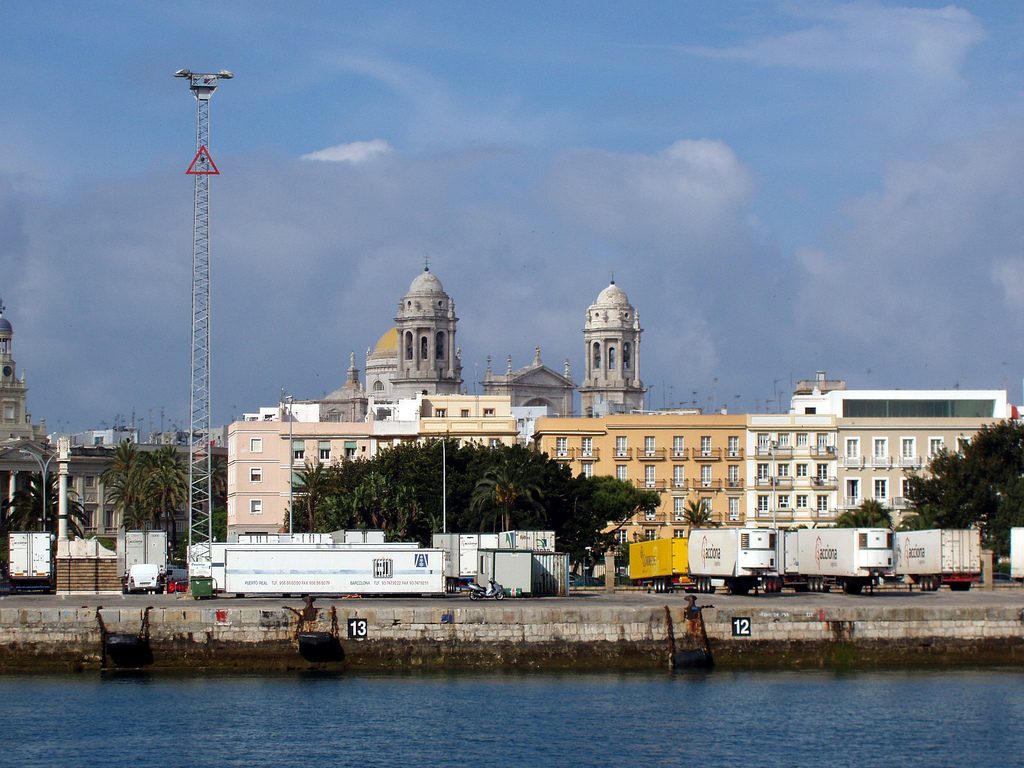
Cádiz is built on a spit of land almost surrounded by the Atlantic, which gives it a light and a wind you feel immediately after the inland heat. It is often described as one of the oldest continuously inhabited cities in western Europe. The old town is small, faded in the good way, and you can walk it in a morning: the golden-domed cathedral, the market, the Torre Tavira, and La Caleta beach wedged between two castles inside the city itself. Cádiz Carnival, usually in February, is the best in mainland Spain and nothing like Rio; it is satirical, sung, and brutally funny if your Spanish is up to it.
Jerez de la Frontera
Jerez does three things properly. Sherry: the bodegas here, in Sanlúcar and in El Puerto de Santa María form the Sherry Triangle, and Bodegas Tío Pepe, founded by González Byass in 1835, runs the best-known visit from about €21, with longer tastings costing more, taking about ninety minutes, including a train ride through the vineyard, the 1862 bodega designed by Eiffel, the Calle de los Ciegos, the cooperage and a tasting.
Horses: the Royal Andalusian School of Equestrian Art performs here. And flamenco: Jerez is one of the three corners of flamenco’s golden triangle with Cádiz and Triana, and its peñas are the real thing. The Feria del Caballo, a Fiesta de Interés Turístico Internacional, ran 9 to 16 May in 2026; 2027 dates were not published when I checked.
Sanlúcar and El Puerto de Santa María
The other two sherry towns. Sanlúcar de Barrameda sits at the mouth of the Guadalquivir looking across at Doñana, and it makes manzanilla, the salt-touched dry sherry that only exists here. Eat langostinos on the Bajo de Guía waterfront. El Puerto de Santa María is a short catamaran hop across the bay from Cádiz and does the same job with a beach attached.
Tarifa
At mainland Europe’s southern tip, where the Atlantic meets the Mediterranean on the Strait of Gibraltar, sits the town widely called Europe’s windsurfing and kitesurfing capital. The reason is straightforward: the wind. The Levante blows warm and dry from the east at force 5 to 8 and is present roughly 60 percent of the year; the Poniente is its westerly counterpart. That makes Tarifa superb if you are there to ride and frustrating if you wanted to read a book on a towel. Morocco is visible across the strait and reachable by fast ferry from the port in town.
Bolonia and Baelo Claudia
Twenty minutes up the coast from Tarifa, Bolonia has a huge sand dune climbing the hillside and, at the back of the beach, Baelo Claudia: a Roman town with a forum, basilica, theatre and fish-salting works, sitting directly on the sand with Africa on the horizon. It is the single best combination of ruin and beach in Spain and far less busy than it ought to be.
The quiet interior: Renaissance towns, dolmens and a lost caliphal city
Úbeda and Baeza
Two Renaissance towns eight kilometres apart in Jaén province, inscribed by UNESCO in 2003 as a single property, sitting in a sea of olive trees. They are architecturally extraordinary and almost entirely free of tour groups, because Jaén is the province people drive through on the way to Granada. If you like Italian hill towns and want the same quality of stonework without the crowds, take the detour. There is no admission charge to walk either historic centre.
Antequera and El Torcal
Antequera occupies the geographical centre of Andalusia, which is why its railway station, Antequera-Santa Ana, is the junction you will change at more than once. Above the town is the Antequera Dolmens Site, inscribed in 2016: three Neolithic megalithic monuments, the largest built from stones weighing up to 180 tonnes, aligned on the landscape features around them. Ten minutes further up is El Torcal, a limestone karst plateau eroded into stacks that look like badly shelved crockery. The park itself is free; parking at the upper car park is charged and fills early at weekends.
Medina Azahara
Eight kilometres west of Córdoba are the ruins of Madinat al-Zahra, the palace-city built in the 10th century by the first caliph of Córdoba, sacked within eighty years of its founding, and lost until excavation began in the 20th century. UNESCO inscribed it in 2018 as the Caliphate City of Medina Azahara. There is a modern museum below the site and a shuttle bus up to the ruins. Half a day, and it reframes everything you saw in the Mezquita.
Wild Andalusia: gorges, wetlands, mountains, desert and empty coast
Caminito del Rey
The Caminito is the best half-day in Andalusia and the one with the most rules, so read this bit properly. It is a 7.7 km route through the Desfiladero de los Gaitanes gorge, of which about 2.9 km is boardwalk pinned to the cliff face and the rest is access path, with a hanging footbridge 105 metres above the river. Allow three to four hours end to end; the boardwalks alone take about an hour and a half to two hours.
Book only at caminitodelrey.info, which is the sole authorised platform and which warns explicitly about unauthorised resellers. The self-guided ticket is €10 with a helmet included; a guided visit runs about €18 with a maximum of 30 guests and commentary in Spanish and English.
Now the parts that catch people out. The walk is one way only, north from Ardales to south at El Chorro, and not circular, so you must get yourself back to your car. The shuttle bus that does this is not included in your ticket: it is €2.50 per person, cash to the driver on board, card not accepted, though you can also buy it online linked to your ticket. One shuttle ticket covers both directions all day. It runs 07:40 to 19:00 and takes 15 to 20 minutes. Parking is €2 at the Ardales municipal car park and €2 a day at the Visitors’ Reception Centre.
The minimum age is 8, proven with official ID at the entrance, and there is no discretion on it. No pets, including guide dogs. No crutches or hiking poles. No tripods or drones. No flip-flops or heels. Maximum ten tickets per person. Groups go in every ten minutes and you should be at the access area 30 minutes before your slot. There are no refunds or changes; if they close for weather you can exchange, subject to availability. It opens Tuesday to Sunday, closed 24, 25 and 31 December and 1 January, with some special Mondays.
Getting there: the reception centre is 57.7 km from Málaga city, 51 km from Antequera and 6 km from the Ardales junction. Renfe regional trains stop at El Chorro, which makes a car-free visit workable if you plan the return train first. The official site gives no advance-booking guidance, but peak-season slots go weeks ahead in practice and I would not leave it later than a month for a spring or autumn weekend.
Doñana National Park
Doñana, on the Guadalquivir delta in Huelva province, is one of Europe’s most important wetlands, a staging post for hundreds of thousands of migrating birds and the last stronghold of the Iberian lynx. It was inscribed by UNESCO in 1994 and extended in 2005.
It is also the most restricted place in this article. Most of the park is closed to independent visitors. Free access is limited to short marked trails and boardwalks near the visitor centres; the interior is reachable only on official guided 4×4 or boat tours, booked in advance. Turning up hoping to wander is the classic mistake.
Doñana is under real pressure from prolonged drought, aquifer over-extraction and surrounding agriculture, and UNESCO asked Spain to submit an updated conservation report by February 2026. February to May is the best window for birds.
Sierra Nevada
An hour from Granada city you can be at 3,000 metres. Mulhacén, at 3,479 m, is the highest peak in mainland Spain and on the Iberian Peninsula; Veleta, just under 3,400 m, is its neighbour across the ridge. The Sierra Nevada National Park was declared on 14 January 1999 and covers 85,883 hectares across Granada and Almería provinces, making it Spain’s largest national park.
The ski resort is Europe’s southernmost. The 2025/26 season opened on 29 November 2025 with a planned closing weekend around 26 April 2026. It is also not Europe’s highest: Val Thorens has the highest base and Zermatt the highest lifted point. What it does have is the option of skiing in the morning and being on a Mediterranean beach in the afternoon, which is not something you can do anywhere else in Europe. Our guide to skiing on the continent compares it against the Alpine resorts on cost and snow reliability.
In summer the same mountains are the best hiking in southern Spain, and the Alpujarras villages on the southern slopes, Pampaneira, Bubión and Capileira, are cool enough in August to be pleasant when Seville is not.
Cabo de Gata
Cabo de Gata-Níjar is a volcanic coastal natural park running roughly 65 km through the municipalities of Almería, Carboneras and Níjar, and the least developed stretch of Mediterranean coast in mainland Spain. Playa de los Muertos in Carboneras, at the park’s eastern edge, is regularly ranked among the country’s best beaches; Playa de los Genoveses and Cala de San Pedro are the other two names to know.
The trade-off is plain: some beaches involve a walk from a car park, there is very little shade, and in July and August access to the most popular coves is controlled. It is also the driest corner of Europe, which is exactly why it looks the way it does. If beaches are the point of your trip, our roundup of the best beaches in Europe puts these in continental context.
Almería and the Tabernas desert
Almería city has a huge hilltop Alcazaba and a cathedral built like a fortress because of Barbary corsair raids. Inland is Tabernas, mainland Europe’s only true desert, where Sergio Leone shot the spaghetti westerns and where the film sets still operate as attractions. It is an odd, dusty, cinematic day and it is the least Andalusian-looking part of Andalusia.
What the monuments cost in 2026
Prices below are 2026 adult rates. Where an official ticketing page was readable I have used it; the Seville figures come from a guide updated in June 2026 and sourced from the Seville Tourist Information Office, because the Alcázar’s own site would not load. Where sources disagreed I say so in the row.
| What | Where | Adult 2026 | Reduced | Free entry? | What to know |
|---|---|---|---|---|---|
| Alhambra + Generalife | Granada | €21 at the desk / €22.27 online | €14.85 online | Under-12s free but need a €0 ticket | Nasrid Palaces are a fixed timed slot; passport or ID required |
| Alhambra night visit, Nasrid Palaces | Granada | €12.73 online | None published | No | Separate ticket from the day visit |
| Alhambra night visit, Generalife | Granada | €8.48 online | None published | No | Gardens only |
| Dobla de Oro combined | Granada | Quoted at €30.48, unconfirmed officially | None published | No | Alhambra General plus six Hispano-Muslim monuments in the Albayzín |
| Generalife + Alcazaba (no Nasrid Palaces) | Granada | Around €12 at the desk | None published | No | Quoted online at both €12.73 and €10.61 on the same official page; check at checkout |
| Mosque-Cathedral of Córdoba | Córdoba | €13 | €10 (65+, students 15–26); €7 (ages 10–14) | Mon–Sat 08:30–09:30 | Under-10s and diocese residents free at all times |
| Bell Tower, Mosque-Cathedral | Córdoba | €3 | None published | No | Half-hourly slots 09:30–18:30 |
| The Soul of Córdoba night show | Córdoba | €20 | €14 | Under-7s free without audio guide | Two tours nightly, 20:00 and 21:30 |
| Route of the Fernandine Churches | Córdoba | €5 | None published | Free with a Mosque-Cathedral ticket | Also free for diocese residents and under-10s |
| Real Alcázar | Seville | €15.50 | €8 (students 14–30, retirees, EYC) | Mondays 18:00 and 18:30, booked online | Price includes the Antiquarium and Triana Ceramic Centre |
| Cuarto Real Alto supplement | Seville | €5.50 | None published | No | One source quotes €4.50; treat as approximate |
| Real Alcázar night visit | Seville | €15 | None published | No | Dramatised tour |
| Cathedral + Giralda + Salvador | Seville | €14 (€13 online) | €7 (€6 online) | Sundays 14:30–18:00, booked online | Under-13s and Seville province residents free |
| Cathedral with rooftop and extras | Seville | €21 (€20 online) | None published | No | Adds rooftop, stained glass, tombs and altarpiece |
| Setas de Sevilla viewpoint | Seville | €16 | €13 | Registered Seville residents, under-5s | Open daily 09:30–24:00 |
| Archivo de Indias | Seville | Free | Free | Always | Closed Mondays |
| Torre del Oro | Seville | Free | Free | Always | Voluntary €3 contribution |
| Plaza de España and Parque de María Luisa | Seville | Free | Free | Always | Open 08:00–00:00 |
| Casa de Pilatos | Seville | €12 ground floor with audio guide | €6 first floor | EU citizens, non-holiday Mondays 15:00–18:00 | Often the quietest major house in the city |
| Museo del Baile Flamenco | Seville | €10 | €8 students; €6 ages 6–12 | No | Daily 11:00–18:00 |
| Alcazaba de Málaga | Málaga | €3.50 | €1.50 | Sundays from 14:00 | Combined with Gibralfaro is far better value |
| Alcazaba + Castillo de Gibralfaro | Málaga | €5.50 | None published | Sundays from 14:00 | The best-value paid ticket in this table |
| Museo Picasso Málaga | Málaga | €13 | €11 | Last two hours every Sunday | Free for under-17s and disabled visitors |
| Caminito del Rey, self-guided | Málaga | €10 | None published | No | Helmet included; shuttle bus is extra |
| Caminito del Rey, guided | Málaga | €18 | None published | No | Maximum 30 people per group |
| Caminito shuttle bus | Málaga | €2.50 | None published | No | Cash only on board; valid both ways all day |
| Puente Nuevo interpretation centre | Ronda | Around €2–2.50 | None published | No | Sources conflict and no official page confirms it |
| Bodegas Tío Pepe tour | Jerez | From about €21 | None published | No | About 90 minutes including a tasting |
| Flamenco tablao, standard show | Seville | €22–38 | None published | No | Budget shows from around €12; front row and VIP run to €50–68 |
Free entry windows at Andalusia’s biggest monuments
Most of Andalusia’s major monuments have free slots written into their own ticketing pages, and using three or four of them changes what a week costs. They are inconvenient by design, which is the point: you trade a bit of scheduling for real money.
| Monument | Free window | Booking needed? | The catch |
|---|---|---|---|
| Mosque-Cathedral, Córdoba | Monday to Saturday, 08:30–09:30 | No | Not on days of extraordinary celebration; no groups; at 09:20 they stop admissions and start clearing |
| Real Alcázar, Seville | Mondays at 18:00 and 18:30. Also always free for under-13s, Seville city residents and visitors with disability of 33 percent or more | Yes, online, for the Monday slots | Slots vanish fast; one source says the free visit excludes the Cuarto Real Alto |
| Seville Cathedral and Giralda | Sundays 14:30–18:00 | Yes, online | Same hours as the only Sunday opening, so it is busy |
| Alcazaba and Gibralfaro, Málaga | Sundays from 14:00 | No | Afternoon heat on an exposed hillside in summer |
| Museo Picasso Málaga | Last two hours every Sunday | Check on the day | Two hours is enough for the permanent collection, not for a temporary show |
| Casa de Pilatos, Seville | Non-holiday Mondays 15:00–18:00 | No | EU citizens only |
| Archivo de Indias, Seville | All opening hours, all year | No | Closed Mondays; short Sunday hours |
| Torre del Oro, Seville | All opening hours | No | A voluntary €3 contribution is requested |
| Plaza de España and Parque de María Luisa | Daily 08:00–00:00 | No | Free with no window to catch, which makes it the easiest thing on this list |
| Route of the Fernandine Churches, Córdoba | Free with a Mosque-Cathedral ticket | No | €5 on its own; free for diocese residents and under-10s |
There is no free window at the Alhambra, and no realistic prospect of one. Budget for it and move on.
How to book the Alhambra without getting caught out
More trips are damaged by this one booking than by anything else in Andalusia, so here it is in order.
Book on the official site. That is tickets.alhambra-patronato.es, run by the Patronato de la Alhambra y Generalife. Everything else is a reseller charging a margin, and some of them sell tours rather than entry.
Understand the ticket you are buying. Alhambra General covers the Nasrid Palaces, the Alcazaba, the Generalife, the Partal and the Palace of Charles V. The Nasrid Palaces, the part everyone came for, carry a fixed half-hour entry time printed on your ticket. Miss it and you do not get in; the rest of your ticket still works. There are cheaper tickets that exclude the Nasrid Palaces, and people buy them by accident every day. The Generalife and Alcazaba combination is quoted at around €12 at the desk and at either €12.73 or €10.61 online depending on which table you read on the same page, so check the total carefully at checkout.
Book early. Tickets release on a rolling basis roughly 90 days out. In June, July and August, over Semana Santa and around Spanish public holidays, Nasrid slots sell out weeks to months ahead. One source claims a year of lead time is possible; the 90-day figure is far better supported and it is what I plan to.
If it is sold out. Returned and unsold tickets reappear on the official site between 20:00 and 22:00 the night before. Check then, refresh, and be ready to buy. Failing that, the Granada Card city pass includes Alhambra General admission and sometimes has availability when direct sales do not. Reported daily capacity figures vary between about 6,600 and 8,500 tickets with no official number I could confirm, and the Nasrid Palaces are commonly described as capped at 300 people per half-hour slot.
Turn up correctly. Bring the original passport or national ID card of every person on the booking, including children. It is checked. Bring the QR code, on paper or phone, for everyone including under-12s. If you are collecting rather than showing a digital ticket, do it at least one hour before your Nasrid slot, which is a published rule and not a suggestion. Bags larger than 40 by 40 cm are refused. Groups are capped at 30 people including the guide.
Give it four hours. The complex is bigger than the photographs suggest, the Generalife is a serious uphill walk from the Nasrid Palaces, and rushing it is a waste of a €22 ticket and a very old building.
Getting around Andalusia: what connects and what does not
Andalusia’s rail network is excellent on one axis and non-existent on another, and the assumption that “the cities are all linked by fast trains” is where itineraries fall apart. This is the honest picture. Fares are indicative low-end walk-up bands, and Spanish rail pricing moves like airline pricing, so book ahead for the cheap end.
| Route | Fastest time | Direct? | Rough fare from | Verdict |
|---|---|---|---|---|
| Seville → Córdoba | About 40 minutes | Yes, roughly 24 trains a day | From about €8 on Media Distancia, €20+ on AVE | The best rail link in the region; a day trip is effortless |
| Seville → Málaga | About 2h35 average | Yes, around 14 a day | From about €20–29 | Fine, but slower than the map suggests |
| Seville → Granada | About 3h16 | Usually one change; some timetables show direct | From about €20–34 | The bus is competitive on time and often cheaper |
| Córdoba → Granada | About 1h23 | Yes, around 7 a day on AVE and Avant | Avant from about €10 | The forgotten link; it makes a Córdoba-to-Granada hop painless |
| Málaga → Granada | About 1h18 on the best connection | No direct service | Varies by connection | Change at Antequera-Santa Ana; most connections work out at 1h30 to 3h door to door |
| Málaga → Granada by bus | About 1h45 | Yes, ALSA, roughly hourly | About €12–18 | Usually the better choice, and I say that as someone who prefers trains |
On the Madrid corridor you now have three operators: Renfe with AVE, Avlo and Alvia, plus Ouigo España and Iryo. Avlo is Renfe’s single-class low-cost brand with no catering; Ouigo is SNCF’s low-cost arm with two classes; Iryo runs Frecciarossa trains with three. Iryo serves Madrid to Córdoba and on to either Málaga or Seville. Competition has pushed fares down hard on those routes, though Ouigo and Iryo complained to Spain’s competition authority in March 2026 that the dual-gauge network structurally favours Renfe. Granada has been on the high-speed network since 2019 via the Antequera to Granada line, with AVE to Madrid in around 3h05 to 3h39 on about six trains a day.
For the wider picture of how Spanish rail fits into a longer trip, see our guides to train travel in Europe and our wider transport guide.
Driving in Andalusia, and the low-emission zones that will fine you
You need a car for the white villages, Cabo de Gata, the Alpujarras and Doñana’s edges. You do not need one for Seville, Córdoba, Granada and Málaga, and taking one into those cities is an expensive mistake. Car hire across Andalusia averages roughly £18 a day, about £124 a week, on aggregator figures. City-centre secure parking runs about €25 to €30 a day, which is often more than the car itself.
Speed limits are 120 km/h on motorways, 90 km/h on main roads outside built-up areas, 50 km/h in built-up areas and 30 km/h on many single-lane urban roads. You must carry a hi-vis vest, and since 1 January 2026 the connected V-16 beacon has replaced warning triangles on Spanish-registered vehicles, so a car hired in Spain should already carry one. The fine for a missing item is €80. UK licences are recognised for visits of up to six months under the 2023 UK-Spain agreement, so no international permit is legally required, although some rental firms still ask for one and you cannot obtain it once you are in Spain.
Now the part that has changed most recently. Andalusian cities have rolled out zonas de bajas emisiones, low-emission zones, and cameras enforce them.
- Seville: the Isla Cartuja zone has been in force since 1 January 2023, with fines from 1 July 2024 at €200 per entry. Petrol vehicles need Euro 3 or better, diesel Euro 4 or better. A city-centre zone is still under discussion.
- Málaga: fines began on 30 November 2025, phased by DGT sticker category: category A restricted from 2025, B from 2026 and C from 2027.
- Granada: Zone 1 is in force with fines from 1 October 2025.
- Córdoba: electronic bollards control a local-access-only zone in the historic centre. Arrange entry with your accommodation in advance or you will not get to your hotel door.
Two practical consequences. First, fines on a hire car reach you through the rental company, which adds a €30 to €40 admin fee on top of the €200. Second, foreign-registered vehicles cannot obtain a Spanish DGT environmental sticker at all and are frequently barred or fined; a car hired in Spain will already carry one. If you are driving your own vehicle down from northern Europe, plan around the zones rather than through them. Our Europe road trips guide covers the same problem across other countries.
When to visit Andalusia, month by month
The short version: April to early June and September to October. The long version has more nuance than that, because the coast and the interior are effectively different climates.
Inland Andalusia in high summer is not a matter of taste. Córdoba averages daily highs around 37 °C in July and August; Seville sits around 36 °C in July. Spain’s all-time national record, 47.6 °C, was set at La Rambla in Córdoba province on 14 August 2021. Córdoba city itself has recorded 46.9 °C, on both 13 July 2017 and 14 August 2021, and Seville reached 46.6 °C on 23 July 1995. You can visit in August. I have. You will do it in two-hour shifts around a very long lunch.
Winter is the region’s quiet advantage. Seville in January has a mean of about 11 °C, daytime highs near 17 °C and nights around 6 °C. Málaga is milder still, roughly 16 °C by day and 9 °C at night. Granada is the outlier: about 13 °C by day but only 2 °C at night, with frost, because it sits at altitude below a ski resort. Rain falls mainly between October and April and peaks in December; summers are exceptionally dry.
| Month | What it is like | What is on | My verdict |
|---|---|---|---|
| January | Mild on the coast, cold nights in Granada, ski season in full swing | Three Kings parades on 5 January | Cheapest month; good for cities, bad for beaches |
| February | Almond blossom, still cool inland | Cádiz Carnival; Día de Andalucía on 28 February | Overlooked, and Carnival alone justifies the trip |
| March | Warming fast, wildflowers in the sierras | Semana Santa falls here in some years | Excellent, but check the Easter dates before booking |
| April | Close to perfect: warm days, cool evenings | Semana Santa and Feria de Abril in most years | The best month, and priced accordingly |
| May | Warm, dry, long evenings | Córdoba Patios; Feria del Caballo in Jerez | My pick if you want festivals without April prices |
| June | Hot inland, excellent on both coasts | Sea warm enough to swim comfortably | Great for the coast, tolerable inland before the third week |
| July | Very hot inland, busy on the coast | Music festivals; long beach evenings | Coast only, and book shade |
| August | Peak heat and peak crowds | Feria de Málaga; Spanish domestic holiday season | The hardest month; go to the Atlantic or the mountains |
| September | Heat eases, sea at its warmest | Grape harvest in Jerez; Bienal de Flamenco in Seville in even years | Arguably the best all-round month |
| October | Warm days, cool nights, first rain | Quiet monuments, low prices | Superb for the three inland cities |
| November | Mild and wet-ish, very quiet | Olive harvest in Jaén | Cheap and calm; pack a jacket |
| December | Wettest month; ski season opens | Christmas lights in Málaga draw crowds of their own | Good for a city break, poor for touring |
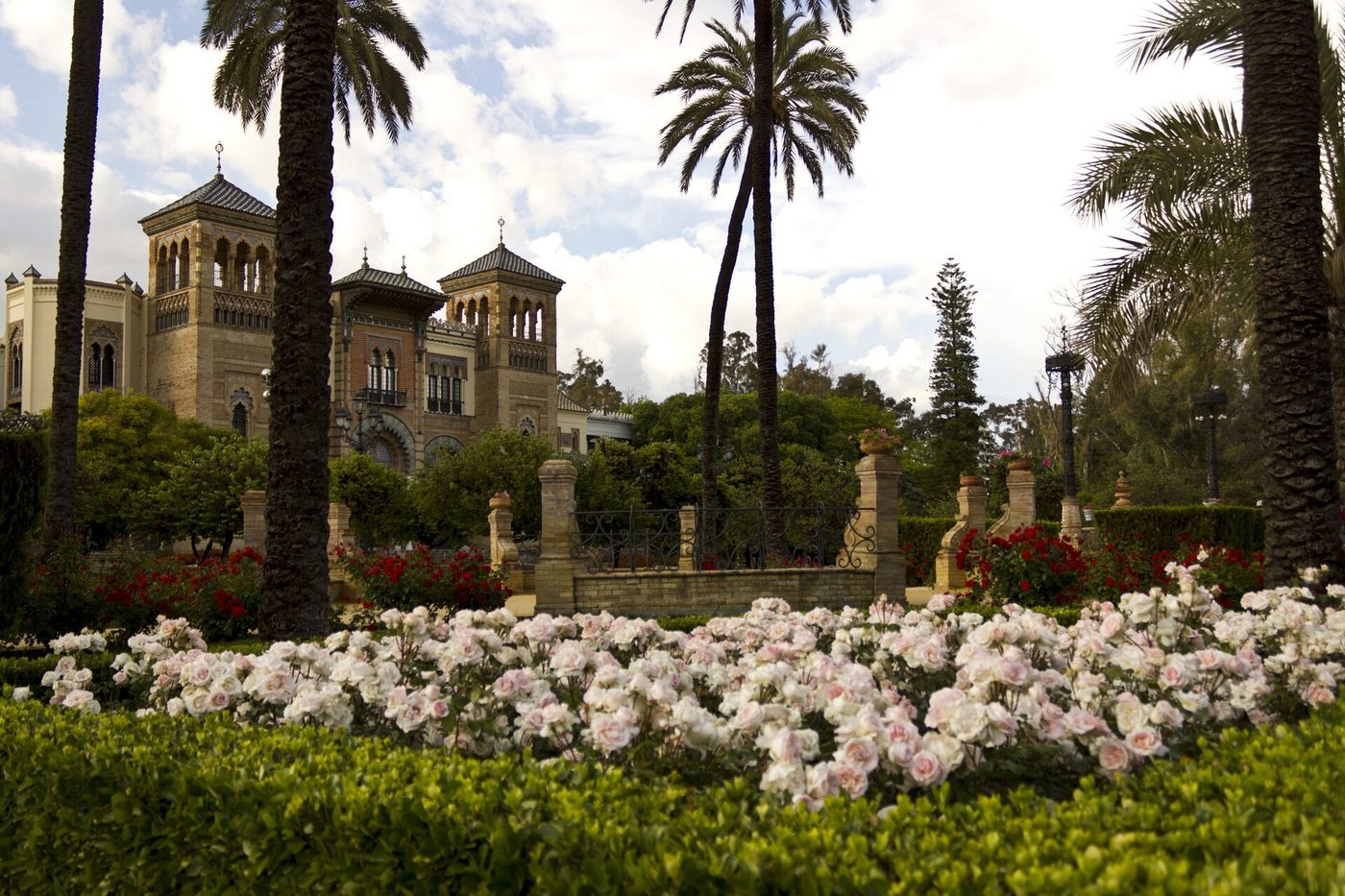
If you are working out a wider trip, our guide to the best time to visit Europe and the seasonal roundups for summer and winter place Andalusia against the rest of the continent. There is also a dedicated best time to visit Spain guide.
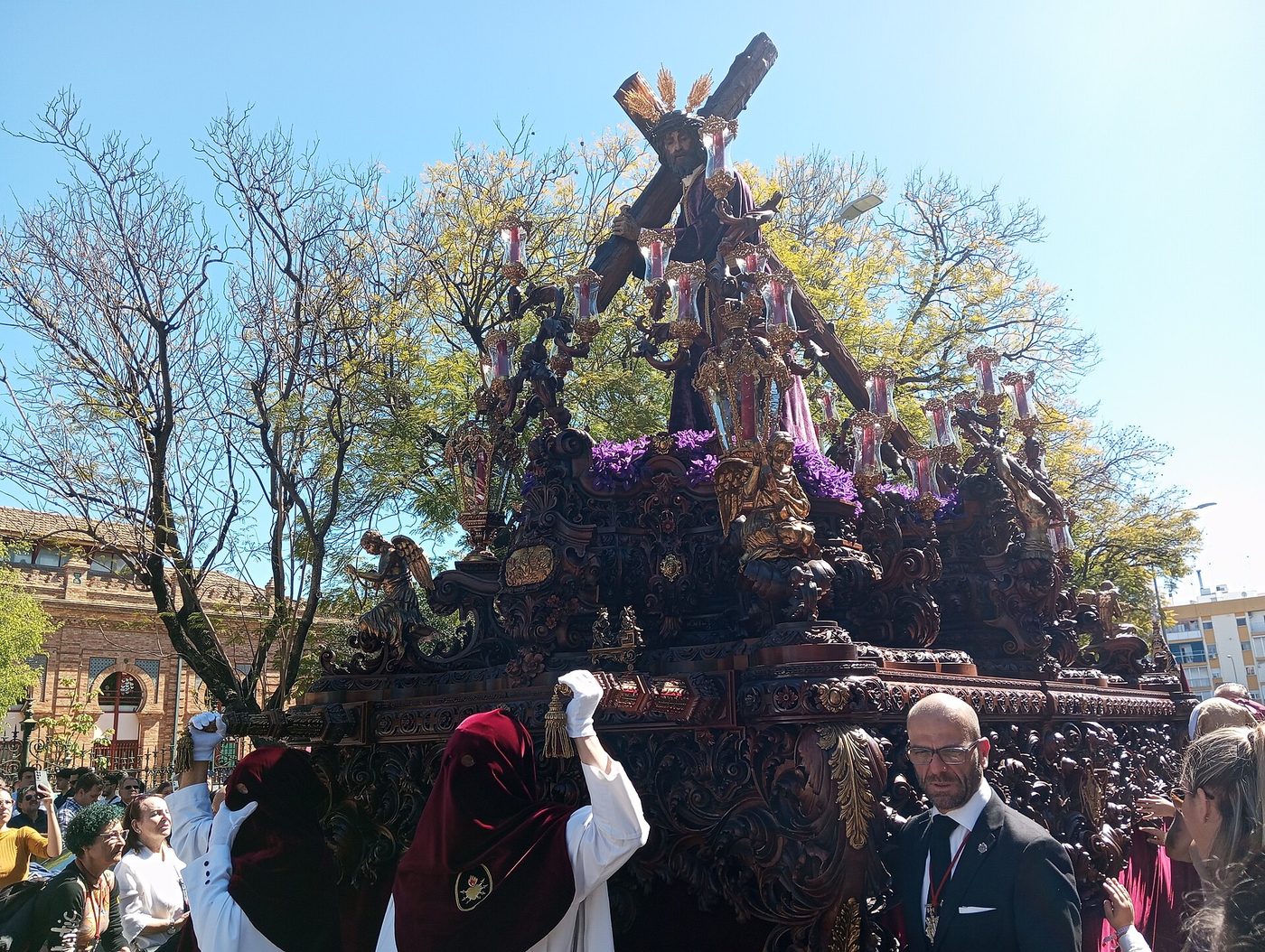
The festival dates worth planning around
Some of these will transform your trip and some will wreck it if you arrive unaware. Semana Santa and the Feria de Abril fill Seville completely; hotel rates rise sharply and monuments run altered hours.
| Festival | Where | Confirmed dates | What it is |
|---|---|---|---|
| Semana Santa | Seville, and everywhere | 21–28 March 2027 (Palm Sunday to Easter Sunday) | Brotherhoods carry floats through the streets day and night for a week |
| La Madrugá | Seville | Night of 25 into 26 March 2027 | The most intense night of Semana Santa: Macarena, Gran Poder, Esperanza de Triana |
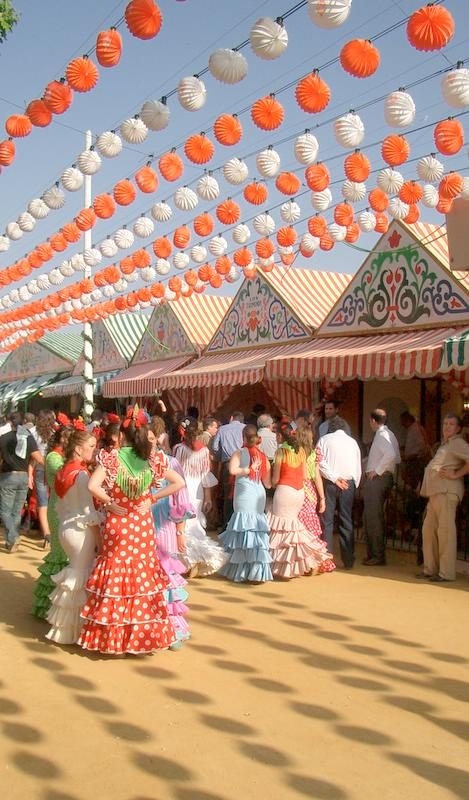
| Feria de Abril | Seville | 13–18 April 2027, alumbrado at midnight on 12 April | 1,000+ casetas over 450,000 m² at Los Remedios; most are private |
| Festival de los Patios | Córdoba | 4–17 May 2026; 2027 not yet published | Private courtyards open to the public and compete |
| Feria del Caballo | Jerez | 9–16 May 2026; 2027 not yet published | Horse fair with international tourist-interest status |
| Feria de Málaga | Málaga | 15–22 August 2026, opening concert and fireworks 14 August | Eight days of day fair in the centre and night fair at the showground |
| Carnaval de Cádiz | Cádiz | February most years, occasionally early March | Ten days of satirical sung competition; the best carnival in mainland Spain |
| Bienal de Flamenco | Seville | 9 September to 3 October 2026; runs in even years | The biggest flamenco festival in the world, bringing artists who do not do nightly tablao work |
| Día de Andalucía | Region-wide | 28 February, every year | Regional public holiday; many things closed |
Two notes on the Feria de Abril. It is fixed by Seville’s 2025 municipal ordinance to the third week after Palm Sunday, so you can predict it years out. And Wednesday 14 April 2027 is a Seville local public holiday, which matters for opening hours. Most casetas are private and need an invitation; there are public ones, and they are fine, but if someone offers to take you into a private caseta, go.
Costa del Sol or Costa de la Luz? The choice that decides your trip
Andalusia has two coasts and they are not variations on a theme. Choosing wrongly is the most common source of disappointment I hear about.
| Costa del Sol | Costa de la Luz | |
|---|---|---|
| Sea | Mediterranean | Atlantic |
| Province | Málaga | Cádiz and Huelva |
| Water | Calmer and warmer | Cooler, with surf |
| Beaches | Smaller, often coarse sand, backed by development | Wide, dune-backed, pale sand |
| Wind | Usually light | Often strong, and constant at Tarifa |
| Development | Heavy: resorts, marinas, golf, nightlife | Light: small towns, national park, restrictions on building |
| Getting there | Málaga airport, motorway, some rail | Jerez or Seville airport, then a car |
| Go if | You want infrastructure, warm swimming, easy transfers and things open in winter | You want space, wind, seafood, and beaches that look empty in photographs because they are |
The Costa de la Luz runs from Tarifa in the south along Cádiz and Huelva to the mouth of the Guadiana river on the Portuguese border. Granada province has its own quieter stretch, the Costa Tropical, sitting between the Costa del Sol and Almería. And Cabo de Gata, further east again, is a third option that resembles neither.
Eating in Andalusia: what to order, where, and what it costs
Andalusian food is regional to a degree that surprises people. Ordering salmorejo in Málaga is fine; ordering it in Córdoba is the point.
| Dish | Where it belongs | What it is |
|---|---|---|
| Salmorejo | Córdoba | Thicker and creamier than gazpacho: tomato, bread, extra virgin olive oil and garlic, topped with cured ham and hard-boiled egg |
| Espeto de sardinas | Málaga | Five or six sardines skewered on a cane and grilled over open coals at a beach chiringuito |
| Pescaíto frito | Region-wide, strongest in Málaga and Cádiz | A lightly floured mixed fry of small fish, with roots traced back to the 13th century |
| Rabo de toro | Córdoba | Slow-cooked oxtail stew, tied to the city’s bullfighting tradition |
| Tortillitas de camarones | Cádiz province | Lacy shrimp fritters, documented from the 19th century and possibly the 16th, with a likely Genoese influence |
| Jamón de Jabugo | Huelva, Sierra de Aracena | Acorn-fed Ibérico ham from the oak pastures of the sierra |
| Ajoblanco | Málaga and region-wide | Cold soup of ground almonds, bread, garlic, water and olive oil; the white forerunner of gazpacho |
| Manzanilla | Sanlúcar de Barrameda | Bone-dry sherry that legally only exists here, aged in the sea air |
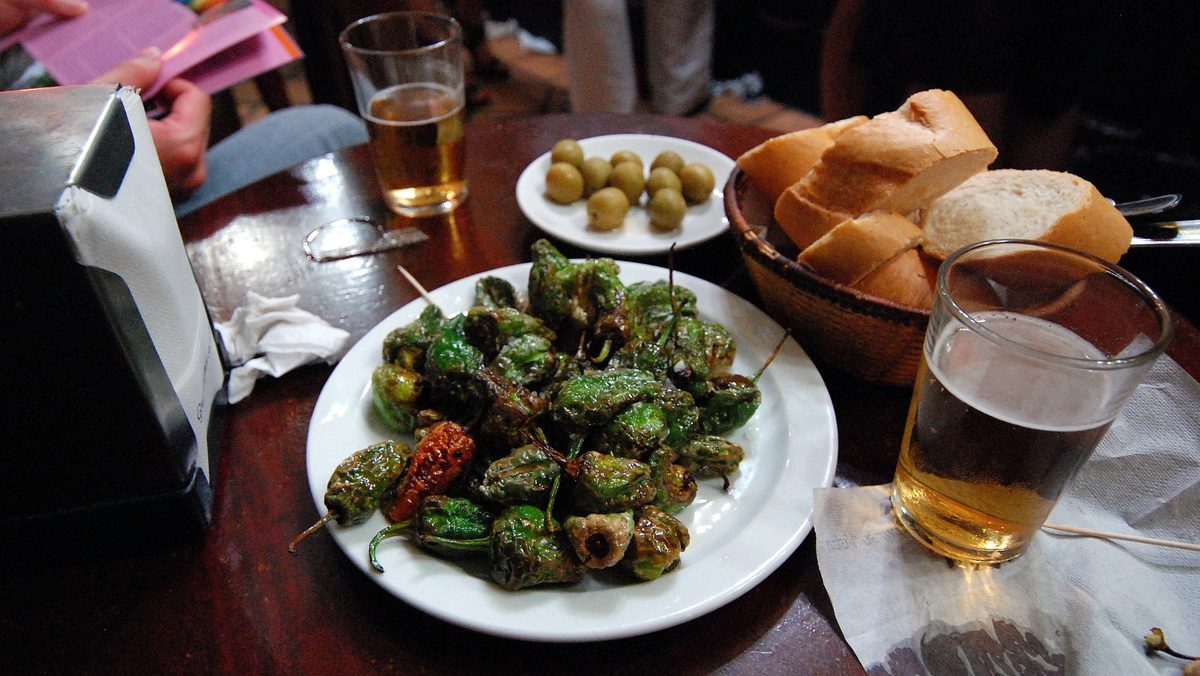
Now the prices. A tapa runs €2 to €5: roughly €2 to €4 standing at the bar, €3 to €5 seated, and about €7 for the same plate on a terrace facing the cathedral. A caña, the small draught beer, is €1.50 to €3 in Seville and €2 to €3 in Málaga. A full tapas dinner of three or four plates and a drink comes to about €18 to €25 a head in Seville. The menú del día, the weekday set lunch, averages about €14 across Spain and about €13.40 in Andalusia, which is below the national figure.
Seville and Málaga are broadly comparable on price. Where you stand inside the city matters far more than which city you are in. For the wider regional picture, see our guide to European food.
Meal times are late and non-negotiable. Lunch is 14:00 to 16:00, dinner from 21:00 and 22:00 in summer. Small shops open roughly 09:30 to 14:00 and 17:00 to 20:30 Monday to Friday, and Saturday mornings only. The siesta as an institution has largely gone from big-city offices and chains, but it is entirely real in smaller towns and in high summer. Bars and restaurants in tourist areas stay open through the afternoon.
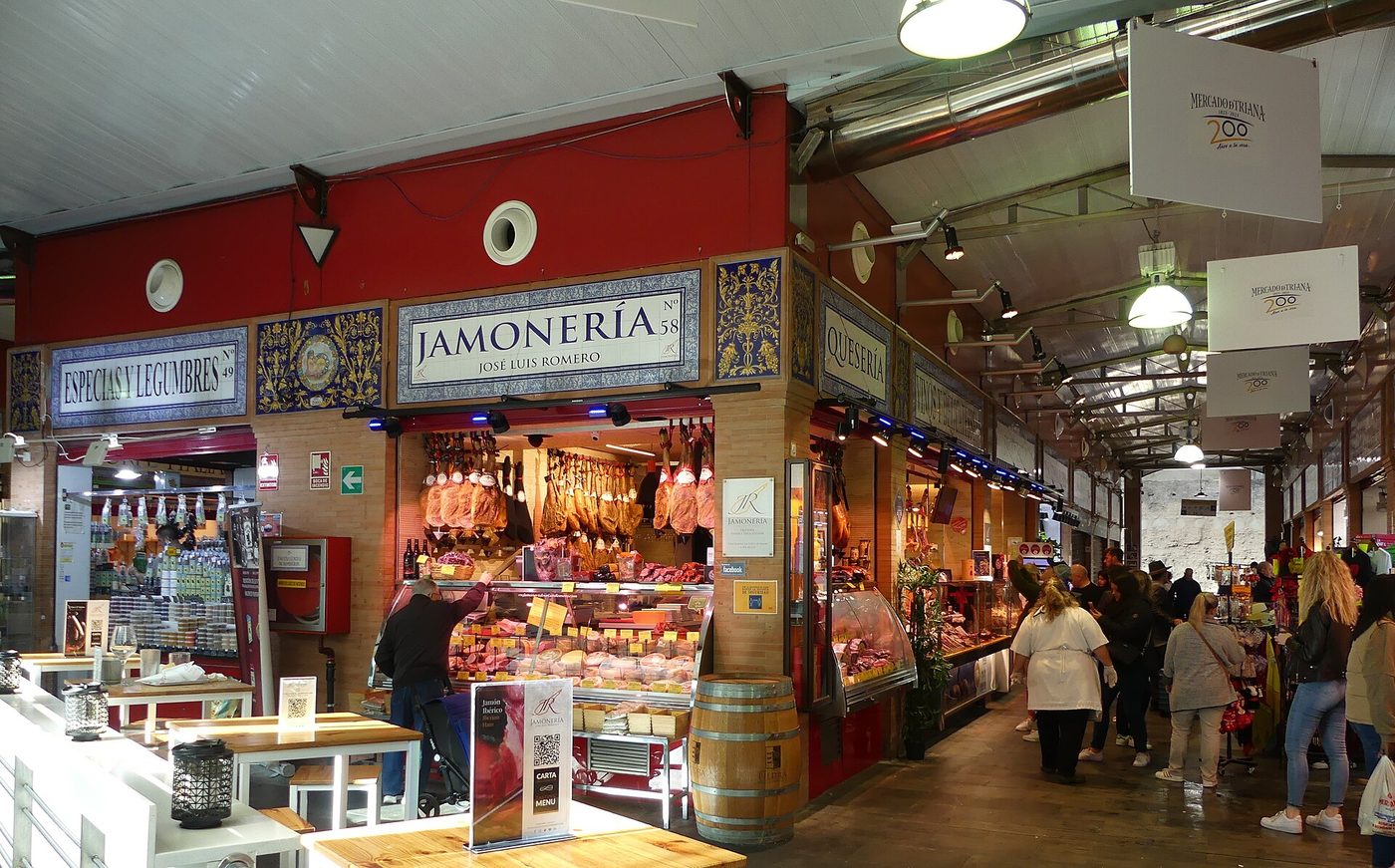
Flamenco: how to see the real thing
Flamenco’s heartland is the golden triangle of Cádiz, Jerez de la Frontera and Triana in Seville. Triana is commonly called its birthplace, though the older roots sit in Cádiz province. There are three ways to see it and they are not interchangeable.
The tablao is a professional venue with a stage, lighting, sound and contracted artists, running scheduled paid shows for a general audience, usually with at least three dancers plus guitar and cante. In Seville, expect roughly €22 to €38 for a standard show. Tablao Flamenco Triana starts around €22 including a drink; Tablao Flamenco Las Setas is about €28 for a 60-minute show, €38 with a cocktail, €50 front row and €68 for VIP with tapas. Budget shows exist from around €12. Tablaos are good. They are also, by design, a performance staged for visitors.
The peña flamenca is a members’ club for aficionados, most of them founded in the 1950s and 60s. There is very rarely an entrance fee and drinks cost what they cost in any local bar. This is where the difficult, unpolished styles get sung. Go with respect, do not clap along, and check whether the peña admits non-members that night. Jerez and Cádiz have the best of them.
The festival or theatre is the third format: the Bienal de Flamenco in Seville and the Festival de Jerez are the big two, and they bring artists who do not do nightly tablao work.
If you only do one, and you are in Seville, pair a tablao with the Museo del Baile Flamenco at €10, which explains what you are watching before you watch it.

What a week in Andalusia costs
There is no regional tourist tax in Andalusia. As of 2026 the Junta has resisted proposals from both Seville and Málaga to introduce one, which puts it alongside Madrid, Valencia and the Basque Country and in contrast with Catalonia, where rates rose on 1 April 2026 and are set to double from 1 April 2027, and the Balearics with their ecotasa. Do not budget for one here.
| Item | Budget | Mid-range | Comfortable |
|---|---|---|---|
| Accommodation, per night | Hostel dorm or simple pension, roughly €25–50 | One large Seville sample averaged about $84 off-season and $157 in high season across 319 mid-range hotels | Boutique hotel or a parador, from roughly €150 upwards |
| Breakfast | Tostada and coffee, €3–4 | Same, at a nicer bar | Hotel buffet |
| Lunch | Bakery, market stall or a shared ration, €6–10 | Menú del día, averaging about €13.40 in Andalusia | Sit-down restaurant, €30 and up |
| Dinner | Tapas at the bar, €12–15 | Tapas seated, €18–25 a head | €40+ a head |
| Drinks | Caña €1.50–3 | Caña or wine, €2–4 | Cocktails, €9–14 |
| Monuments, per day | €0–5 using free windows | €15–25 | €30–50 with guided visits |
| Transport | Regional trains and ALSA buses | AVE and Avant between cities | Hire car at roughly £18 a day plus €25–30 parking |
| Tourist tax | None | None | None |
Andalusia is one of the better-value corners of western Europe, particularly outside the coastal resorts in August. Our guides to travelling cheaply and the cheapest places to travel in Europe set the comparison.
Andalusia itineraries: 5, 7, 10 and 14 days
Every one of these is built around the transport table above, which is why the routing runs the way it does. The Málaga to Granada gap in particular shapes it. Where a plan drops below the times in my at-a-glance table, I say so rather than pretending the days stretch.
Five days: the essential triangle, no car
Fly into Seville, out of Granada. Days 1 and 2 in Seville: Alcázar on a timed morning slot, Cathedral and Giralda, Triana in the evening, a tablao on the second night. Day 3, mid-morning train to Córdoba, 40 minutes, arriving in time for the Judería in the afternoon and dinner in the old town. Day 4, be inside the Mezquita for the free 08:30 window, then take a midday Avant to Granada, about an hour and a half, and spend the evening in the Albaicín. Day 5, Alhambra in the morning, Sacromonte in the afternoon, fly out.
Be honest with yourself about this one: it gives Seville two days against the three I recommend and Granada one full day against two. That is the compromise five days forces, and it is still a better trip than trying to add the coast. One scheduling trap: the Mezquita’s free hour does not run on Sundays, so if Day 4 falls on a Sunday, pay the €13 and go later.
Seven days: the classic, with Ronda
Seville three nights, Ronda one, Córdoba one, Granada two. Hire a car in Seville on the morning of day four, drive to Ronda by way of Setenil de las Bodegas, stay the night so you get the gorge after the coaches leave, then drop the car in Córdoba the next day. Trains from there on. This gets you the three great cities at full length plus two white villages, and you pay for parking exactly once.
If you would rather stay car-free, Seville has a direct Media Distancia service to Ronda on a slow, scenic line worth riding for its own sake. From Málaga you have to change at Antequera-Santa Ana, there are only a handful of trains a day, and parts of that line have seen bus substitution for works and storm damage, so check before committing to it.
Ten days: adding the Atlantic
Seville three nights, Córdoba one with a morning at Medina Azahara before you leave, Granada two, Ronda and the white villages one, then Cádiz and Jerez two, flying out of Jerez or Seville. This is the version I recommend most often. It gets both great Moorish monuments, the sherry towns, the Atlantic coast and the pueblos blancos without a single day feeling rushed. Málaga is airport-only in this plan; giving it the two days it deserves is what the twelve-day version is for.
Fourteen days: the whole region
Take the ten-day route, give Málaga two proper nights at the end with a day out to the Caminito del Rey, and add Cabo de Gata for two nights after Granada. That comes to fourteen. If you would rather trade the coast for high country, swap Cabo de Gata for two nights in the Alpujarras with a day on the Sierra Nevada trails, or for Úbeda and Baeza on the way back north. Fourteen days is also enough to do Doñana properly with a guided 4×4 morning out of El Rocío. If you are building this into a longer continental trip, our Europe itinerary and Spain itinerary guides handle the connections north.
Getting there: the five airports and which to use
Andalusia has five airports and choosing the right one saves more time than any other single decision.
| Airport | Code | Use it for | Notes |
|---|---|---|---|
| Málaga-Costa del Sol | AGP | The coast, Ronda, the Caminito, and as a cheap way into anywhere | Spain’s third-busiest airport at 26.76 million passengers in 2025, up from 24.92 million in 2024. Far more routes than the rest combined |
| Seville | SVQ | Seville, Córdoba, the white villages and the Atlantic coast | Approaching 10 million passengers in 2025, up 5.6 percent; growing fast on low-cost routes |
| Granada-Jaén | GRX | Granada, the Alpujarras, Sierra Nevada | Small, with limited international service; often cheaper to fly to Málaga and take the bus |
| Jerez | XRY | Cádiz, the sherry triangle and the Costa de la Luz | 884,539 passengers in 2025, up 6.9 percent; seasonal routes, but it puts you 40 minutes from Cádiz |
| Almería | LEI | Cabo de Gata and the Tabernas desert | The obvious choice if the eastern corner is the whole point of the trip |
Open-jaw tickets are your friend here. Into Seville and out of Granada, or into Jerez and out of Málaga, removes an entire backtracking day from most of the itineraries above.
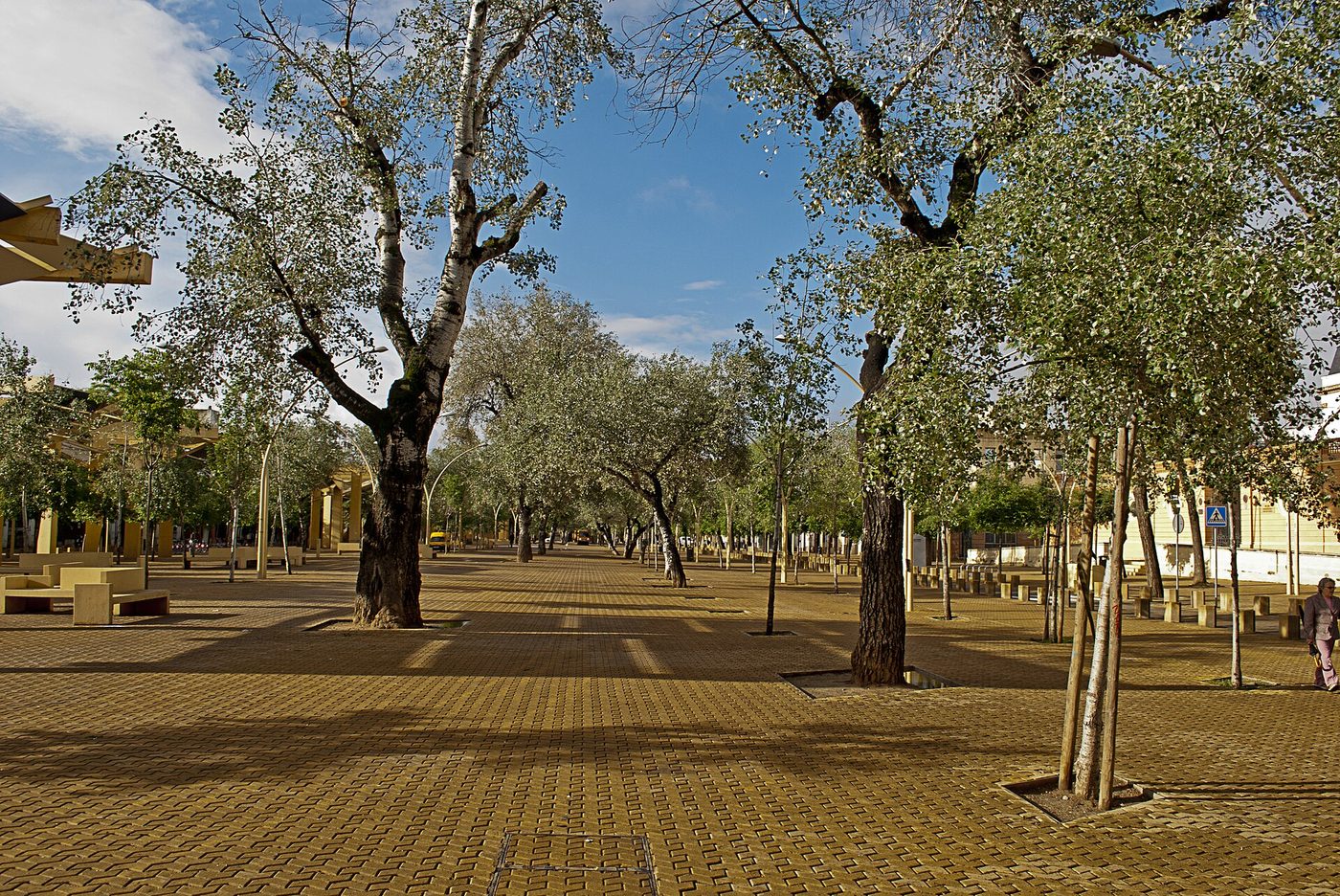
Where to stay in each city
The single biggest determinant of how much you enjoy an Andalusian city is which street you sleep on, because these are hot places where you will come back to the room in the middle of the day.
- Seville: Santa Cruz puts you inside the monuments and inside the tour groups. El Arenal is quieter and two minutes further. Alameda de Hércules is where the city goes out and is the best value. Triana is across the river, which sounds like a drawback for about a day and then stops being one.
- Granada: the Realejo, the old Jewish quarter below the Alhambra, is the sweet spot for food and quiet. The Albaicín is stunning and involves carrying luggage up a cobbled hill; know that before you book. Centro near the cathedral is the flat, practical option.
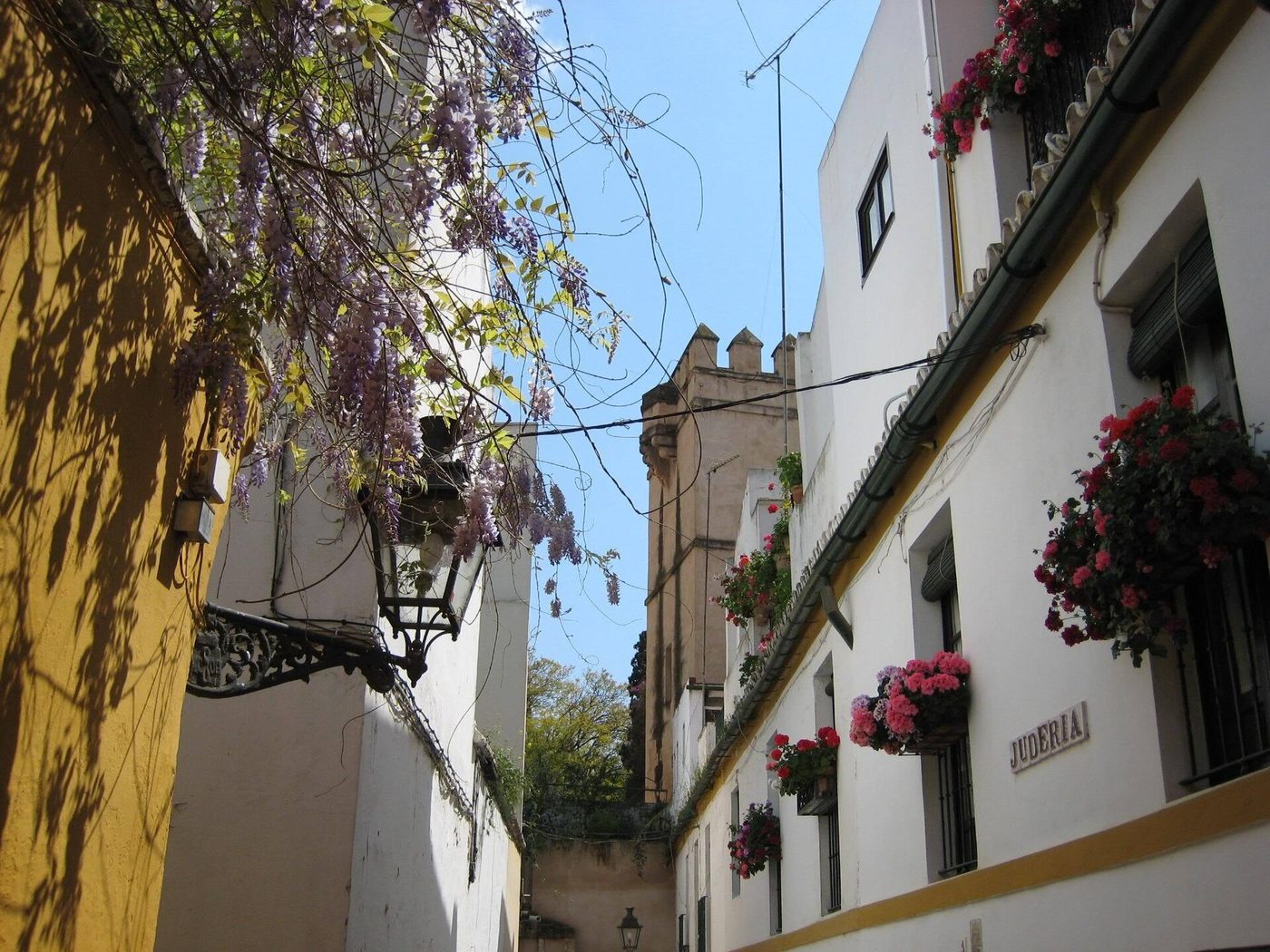
- Córdoba: stay inside the walls near the Judería so you can be at the Mezquita by 08:20, but check the electronic bollard rules with your hotel if you are driving.
- Málaga: the Centro Histórico for the museums and tapas, Soho for a lower price a short walk away, or Pedregalejo out east if you want the beach and the espetos and can live with a bus ride.
- Paradores: Spain’s state-run hotel chain occupies converted castles, convents and clifftop positions, and the Andalusian ones at Ronda, Carmona, Granada and Úbeda are worth the premium at least once. The Granada parador sits inside the Alhambra walls, books out months ahead and costs accordingly.
Our wider guide to choosing a base covers the neighbourhood-versus-price trade-off in more places.
Andalusia by traveller type
- First trip to Spain: Seville, Córdoba, Granada by train, five to seven days. Do not add the coast; you will not have time to enjoy it. See our first-timer’s guide to Europe.
- Couples: Vejer de la Frontera or Ronda as a base, with two nights in Granada. Book a parador if the budget stretches. Our Europe honeymoon guide has more in this vein.
- Families: Málaga as a base. Beach, a fortress children can climb, short train hops, and the Caminito once everyone is over 8, which is a hard limit. More in our family travel guide.
- Solo travellers: Granada and Seville, both of which have excellent hostels and a bar culture that makes eating alone normal rather than awkward. See our solo travel guide.
- Walkers: Sierra de Grazalema and the Alpujarras in spring or autumn, plus Sierra Nevada in summer.
- Winter sun: Málaga and the Costa del Sol, where January highs sit around 16 °C and things stay open.
- Second or third visit: Cádiz, Jerez, Úbeda and Baeza, Cabo de Gata. All four are in our roundup of underrated destinations territory.
If that is booked out, go here instead
| If you cannot get | Do this instead | Why it works |
|---|---|---|
| Alhambra Nasrid Palaces | Generalife and Alcazaba ticket, plus the Albayzín and Sacromonte on foot | You still get the fortress, the gardens and the best views of the palaces from outside |
| A Semana Santa hotel in Seville | Stay in Córdoba or Jerez and travel in | Both hold serious processions of their own, and Córdoba is 40 minutes away by train |
| Caminito del Rey | El Torcal de Antequera or the Sierra de Grazalema | Comparable landscape, no timed ticket, no minimum age |
| Ronda in daylight without crowds | Setenil de las Bodegas or Arcos de la Frontera | Twenty to forty minutes away and a fraction of the coach traffic |
| A quiet Costa del Sol beach in August | Costa de la Luz or Cabo de Gata | Both are far less developed; accept cooler water and more wind |
| Doñana on short notice | Bird hides at the visitor centres, or the marshes near El Rocío | Free, open access, and the birdlife does not know where the boundary is |
| A Seville tablao at a sensible price | A peña flamenca in Jerez or Cádiz | Rarely an entrance fee, and the singing is often better |
Mistakes I see people make in Andalusia
- Buying an Alhambra ticket that excludes the Nasrid Palaces. Read the ticket name at checkout. This is the most expensive mistake on the list because it cannot be fixed on the day.
- Arriving without passports at the Alhambra. Original ID for every person, children included. It is checked at the gate.
- Assuming Málaga and Granada are connected by high-speed rail. They are not directly. Take the ALSA bus or change at Antequera-Santa Ana.
- Driving into city centres. Between low-emission zone fines at €200 a time, Córdoba’s bollards and €25 to €30 a day parking, a car is a liability in all four big cities.
- Booking August inland. Córdoba at 37 °C is not a sightseeing environment. Move the trip or move to the Atlantic.
- Turning up at Doñana expecting to walk in. Book a guided 4×4 or boat tour in advance or you will see a car park and a boardwalk.
- Eating at 19:00. Anywhere serving dinner then is serving it to tourists. Wait until 21:00.
- Bringing a bag over 40 by 40 cm to the Alhambra, or hiking poles to the Caminito. Both are refused at the entrance, and neither has anywhere convenient to leave them.
- Treating the Costa del Sol as all of Andalusia’s coast. The Atlantic side is a different holiday entirely.
- Missing the free windows. The Mezquita costs €13, or nothing at 08:30. That difference adds up over a week.
Practicalities: money, water, language and the heat
- Currency. The euro. Cards are accepted almost everywhere, though small village bars and the Caminito shuttle bus still want cash.
- Tipping. Not expected and not built into wages the way it is in North America. Rounding up, or leaving a euro or two for good service, is normal and generous.
- Tap water. Safe across Andalusia. Ask for agua del grifo. Some inland towns have hard, mineral-heavy water that tastes odd rather than being unsafe.
- Language. Andalusian Spanish drops final consonants and swallows syllables, so even confident learners find the first day hard. English is widely spoken in Seville, Granada, Córdoba and the coast, and much less so in the villages.
- Heat. Treat midday between June and September as time indoors. Carry water, use the shaded side, and copy the locals: everything happens before noon or after seven.
- Safety. Andalusia is a low-crime region. The realistic risk is pickpocketing in crowded areas of Seville and Málaga, and around the Alhambra queues.
- Gibraltar. British territory on the southern tip, an easy day trip from the Costa del Sol, and a different jurisdiction with its own border checks and currency. Cross on foot from La Línea rather than driving; the queue back into Spain can be long.
Entry requirements and paperwork in 2026
Spain is in the Schengen area. For non-EU visitors, the EU Entry and Exit System, EES, was rolled out in phases from October 2025 and declared fully operational across Schengen on 10 April 2026. In practice, airports and airlines have reported queues of up to three hours at peak times, with some accounts approaching five, and procedures have been applied inconsistently at Spanish airports. Build in extra time at Málaga in particular, which handled 26.76 million passengers in 2025.
ETIAS, the travel authorisation that will apply to visa-exempt non-EU nationals, has no confirmed start date as of August 2026. The official ETIAS site has removed its previous “last quarter of 2026” target and now says a date will be announced several months in advance; reporting points to 2027. Our Schengen visa and ETIAS guide is kept current as this moves.
Frequently asked questions about visiting Andalusia
How many days do you need in Andalusia?
Five days covers Seville, Córdoba and Granada by train. Seven adds Ronda and the white villages. Ten gets you the Atlantic coast and the sherry towns as well. Fourteen covers the whole region including Cabo de Gata and Doñana. Below five days, pick two cities rather than three.
Is Andalusia worth visiting?
Yes, and more so than most of Spain if what you want is the version of the country in your head: Moorish palaces, flamenco, tapas, white villages and heat. It also holds seven UNESCO World Heritage properties, more than most entire countries.
What is Andalusia famous for?
The Alhambra, the Mezquita of Córdoba, flamenco, sherry, tapas, the white villages, Semana Santa, Andalusian horses, and being the hottest part of Europe in summer.
Do I need a car in Andalusia?
Not for Seville, Córdoba, Granada and Málaga, which are all connected by rail and are actively hostile to cars. Yes for the white villages, Cabo de Gata, the Alpujarras and the Costa de la Luz. The usual answer is to hire one for part of the trip only.
How far in advance do you need to book the Alhambra?
Tickets release on a rolling basis around 90 days ahead. Book as soon as your dates are fixed. For June to August, Semana Santa and Spanish public holidays, expect Nasrid Palace slots to be gone weeks to months out.
What happens if the Alhambra is sold out?
Check the official site between 20:00 and 22:00 the night before, when returned and unsold tickets reappear. The Granada Card includes Alhambra General admission and is worth trying. Otherwise buy the Generalife and Alcazaba ticket, which still gets you inside the walls.
Is the Mezquita in Córdoba free at any time?
Yes. Monday to Saturday, 08:30 to 09:30, free entry, no booking. It does not run on days of extraordinary celebration, groups are excluded, and at 09:20 admission stops and clearing begins.
Is there a tourist tax in Andalusia?
No. As of 2026 Andalusia has no regional tourist tax, unlike Catalonia and the Balearic Islands.
Is Andalusia expensive?
It is among the better-value parts of western Europe. A menú del día averages about €13.40, tapas run €2 to €5, and the biggest single costs are the Alhambra at about €22 and, if you hire one, a car with city parking.
Is Andalusia too hot in summer?
Inland, in July and August, close to it: Córdoba averages daily highs near 37 °C and Seville around 36 °C. The coasts are considerably more comfortable, and Sierra Nevada is cool. April, May, September and October avoid the problem entirely.
Seville or Granada, which is better?
Seville if you want a city to live in for a few days, with more to eat, more to see and more going on at night. Granada if you want the single greatest building in Spain and free tapas with your drink. If you can, do both; they are three hours apart.
Can you see Seville, Granada and Córdoba in a week?
Comfortably. Seville to Córdoba is 40 minutes by train, Córdoba to Granada about an hour and a half. Three nights, one night, two nights is the split I use.
What is the difference between the Costa del Sol and the Costa de la Luz?
The Costa del Sol is Mediterranean, in Málaga province, with calmer warmer water and heavy resort development. The Costa de la Luz is Atlantic, in Cádiz and Huelva, with wide dune-backed beaches, cooler water, much more wind and far less building.
Where is the best flamenco in Andalusia?
Jerez de la Frontera and Cádiz for depth, especially in the peñas. Seville’s Triana for atmosphere and the widest choice of tablaos, at €22 to €38 for a standard show.
Can you get around Andalusia by train?
Between Seville, Córdoba, Granada and Málaga, yes, with one significant exception: Málaga to Granada has no direct service and requires a change at Antequera-Santa Ana, or the bus. The white villages and both coasts need a car or a bus.
What should I not miss in Andalusia?
The Nasrid Palaces at the Alhambra, the Mezquita at 08:30 when it is free and empty, the Real Alcázar in Seville, one white village that is not Ronda, and one evening of flamenco in a room too small for it.
Final thoughts
Andalusia rewards preparation more than almost anywhere else in Europe, because so much of what makes it extraordinary sits behind a timed ticket, a 90-day booking window or a one-hour free slot at half past eight in the morning. Get those four or five things right and the rest of the trip is just walking around in good weather eating well.
What I would tell my younger self on that step in Córdoba: go in May, take the train, book the Alhambra the day you book the flight, and give the Atlantic coast at least two nights. The heat is manageable. Arriving unprepared into it is what spoils trips.
A note on coverage. This guide leans on the four big cities and the province of Cádiz because those are the places I know best and where I could verify prices against official sources. Huelva beyond Doñana and most of Jaén beyond Úbeda and Baeza get less space than they deserve. Several prices, including Nerja Caves, the Antequera dolmens and the Ronda bridge centre, are flagged as unconfirmed in the tables above.
For more of Spain, start with our Spain travel guide, then the city guides to Madrid and Barcelona, and our roundup of the best places to visit in Spain. For the continent-wide view, see the best places to visit in Europe, the most beautiful towns in Europe, the best cities to visit in Europe and our best Mediterranean destinations. Practical planning lives in how to plan a trip to Europe, travel tips, what to pack and picking a base.
Hannah Brooks has spent fifteen years travelling, living and writing across Europe, from the Arctic tip of Norway to the south of Sicily. She has planned hundreds of European itineraries for readers and is Senior Europe Editor at EuropeanTourism.org.
Photo credits
All images are used under their original licences. In order of appearance:
- Photo: Christopher Down (CC BY 4.0) via Wikimedia Commons
- Photo: H. Zell / CC BY-SA 3.0 via Wikimedia Commons
- Photo: Jebulon (CC0) via Wikimedia Commons
- Photo: AdriPozuelo / CC BY-SA 3.0 es via Wikimedia Commons
- The Parador de Ronda on Plaza de Espana, Andalusia · a state-run hotel in a historic building
- Photo: Emilio J. Rodríguez Posada / CC BY-SA 3.0 via Wikimedia Commons
- Photo: Seville Tourism Bureau (CC0) via Wikimedia Commons
- Photo: Roberta Morea from Madrid / CC BY-SA 2.0 via Wikimedia Commons
- Photo: Takeaway / CC BY-SA 3.0 via Wikimedia Commons
- Photo: Heinz Joerg Kretschmer / CC BY 3.0 via Wikimedia Commons
- Photo: Jl FilpoC / CC BY-SA 4.0 via Wikimedia Commons
- Photo: Zarateman (CC0) via Wikimedia Commons
- Photo: Cofrades 2020 sevilla / CC BY 4.0 via Wikimedia Commons
- Photo: EdTarwinski / CC BY 2.0 via Wikimedia Commons
- Photo: CarlosVdeHabsburgo / CC BY-SA 4.0 via Wikimedia Commons
- Photo: Gerda Arendt (CC0) via Wikimedia Commons
- Photo: Anual / CC BY-SA 4.0 via Wikimedia Commons
- Photo: Diego Delso / CC BY-SA 4.0 via Wikimedia Commons