Italy Itinerary: 10 Days (2026 Routes, Prices & Trains)

Ten days is the length of trip where Italy stops being a fantasy and starts being a logistics problem. You have enough time to see three cities properly, or four badly, and the whole planning process comes down to which of those two you choose. I have watched a lot of people choose badly, usually because a route looked tidy on a map and nobody checked how the trains run.
The short version: every italy itinerary 10 days long comes down to three bases, two or three train legs, and one or two day trips. Rome, Florence and Venice is the classic and it works. Rome, Naples and the Amalfi Coast is the better trip if you would rather eat than queue. Everything else is a variation on those two shapes.
What follows is three complete day-by-day routes, every 2026 entry price I could verify against the museum’s own ticketing page, the exact date each attraction releases its tickets, real train times and fares, and a costed budget for three spending levels. I have also written down what I could not confirm, because a guide that pretends to certainty it does not have is worse than one with holes in it.
Two things changed in Italy this year and both affect this trip. The Venice access fee was suspended when the 2026 trial ended on 27 July, so at the time of writing there is nothing to pay and no exemption to request. And the Uffizi introduced a €16 late ticket from 1 January 2026 for entry after 16:00, which is a substantial saving on the €29 advance price and fits a compressed itinerary rather well. Both are covered properly below.
All three 10 day Italy itinerary routes compared
The whole decision fits in one table. Pick the row that sounds like your holiday, then skip to that section.
| Route 1: The Classic | Route 2: Rome and the South | Route 3: The Northern Loop | |
|---|---|---|---|
| Bases | Rome, Florence, Venice | Rome, Naples, Sorrento | Milan, Venice, Florence |
| Nights per base | 3 / 4 / 3 | 4 / 2 / 4 | 2 / 3 / 4 |
| Fly into | Rome Fiumicino | Rome Fiumicino | Milan Malpensa |
| Fly out of | Venice Marco Polo | Naples Capodichino | Florence or Pisa |
| Long train legs | 2 (plus 1 short hop) | 2 | 2 (plus a lake day trip) |
| Total rail cost, booked early | About €60 to €75 pp | About €30 to €40 pp | About €70 to €90 pp |
| Best for | First timers, art, the big three | Food, ruins, coastline, slower days | Lakes, mountains, second visits |
| Worst for | Crowds in July and August | Anyone who needs Venice | Anyone who needs Rome |
| Advance booking pressure | High (Colosseum, Vatican, Borghese, Uffizi, Accademia) | Medium (Colosseum, Vatican, Pompeii) | Extreme (The Last Supper sells out in hours) |
| Car needed? | No | No | Optional for one day |
| Pace | Busy but manageable | The most relaxed of the three | The most rushed of the three |
How to choose between them in about thirty seconds
If this is your first trip to Italy and you want the postcard, take Route 1. It exists because it works: the rail spine from Rome to Florence to Venice is one of the fastest and most frequent in Europe, and you never touch an airport in the middle of the holiday.
If you have been to Italy before, or you are travelling with people who wilt in museum queues, take Route 2. Ten days between Rome, Naples and the Sorrento peninsula is a fundamentally more relaxed holiday, with Pompeii and the Amalfi Coast doing the heavy lifting instead of ticketed galleries.
Take Route 3 only if you specifically want the lakes, the Dolomites within reach, or you are flying in on a cheap Milan fare. It is the least forgiving of the three because Milan itself needs the most advance planning of any city in Italy, thanks to a single fifteenth century mural with 35 visitors admitted at a time.
What ten days will not give you
Sicily, Puglia and Sardinia are all real trips in themselves and none of them belongs in a ten day itinerary that also includes Rome. The flight or ferry alone eats a day at each end. The same goes for the Dolomites unless you build the entire holiday around them. If your heart is set on the south beyond Naples, look at our Sicily travel guide and plan it as its own trip.
You will also not get “off the beaten path” Italy in ten days if you also want the Colosseum and the Uffizi. Those two things pull in opposite directions. I have tried to be honest throughout about which stops are crowded and worth it anyway, and which are crowded and not.
Route 1: the classic Rome, Florence, Cinque Terre and Venice itinerary
Ten nights, three bases, one open jaw flight. Fly into Rome Fiumicino, fly home from Venice Marco Polo. This is the route roughly four out of five first time visitors take, and the reason it endures is that the geography cooperates: Rome to Florence is 1h32 by Frecciarossa, Florence to Venice is about two hours, and both run one to two times an hour.
| Day | Base | The shape of the day | Book ahead? |
|---|---|---|---|
| 1 | Rome | Arrive, Trastevere, early night | No |
| 2 | Rome | Colosseum, Forum, Palatine, Monti | Yes, 30 days |
| 3 | Rome | Vatican Museums, St Peter’s, Centro Storico | Yes, 60 days |
| 4 | Rome to Florence | Morning train, Duomo complex, Piazzale Michelangelo | Yes, Duomo |
| 5 | Florence | Uffizi, Accademia, Oltrarno | Yes, both |
| 6 | Florence | Day trip: Siena and San Gimignano, or Pisa | No |
| 7 | Florence to Cinque Terre | Villages, one trail section, back to Florence or on to La Spezia | Card on the day |
| 8 | To Venice | Train, first evening walk, cicchetti crawl | No |
| 9 | Venice | St Mark’s, Doge’s Palace, Dorsoduro | Yes, 30 to 45 days |
| 10 | Venice | Burano and Torcello, fly out late or next morning | No |
Day 1: arrive in Rome and do almost nothing
Scheduling a monument for the afternoon you land is the error I see most often. You will have slept badly, the queue will be in full sun, and you will remember none of it. Give the first day to logistics and dinner.
From Fiumicino, the Leonardo Express runs non-stop to Roma Termini in 32 minutes, every 15 to 30 minutes, from early morning until late. Buy it direct from Trenitalia at €14 rather than through a reseller, where it tends to appear at around €17.90 with a booking fee bolted on. If there are four of you, buy in one transaction: a group ticket comes to roughly €40 instead of about €56.
Where to stay matters more in Rome than in Florence or Venice, because the city is large and the sights are spread across it. Monti puts you five minutes from the Colosseum and in the middle of the best casual eating in the centre. Trastevere is prettier and louder and about twenty minutes on foot from the Forum. Prati is calm and residential and the right choice if your Vatican slot is early. Anywhere immediately around Termini is convenient and charmless, which is a trade some people are happy to make.

For the evening, walk. Cross into Trastevere at dusk, eat cacio e pepe somewhere with paper on the tables, and go to bed by ten. If you have energy left, the Trevi Fountain after 22:00 is a different object from the Trevi Fountain at noon, when it is ringed four deep. Our guide to things to do in Rome goes into the neighbourhoods in far more depth than I can here.
Day 2: the Colosseum, the Forum and the Palatine
Get the 08:30 slot. The Colosseum opens at 08:30 and the first hour runs at roughly 30 to 40 per cent of midday visitor numbers, which in July is the difference between a monument and a scrum. The Roman Forum and Palatine open at 09:00.
The combined ticket costs €18 for full price, €2 reduced for EU citizens aged 18 up to the day of their 25th birthday, and €11.50 with a Roma Pass. It covers one timed entry to the Colosseum plus one entry to the Forum and Palatine area, and the Forum entry can be used within 24 hours either side of your Colosseum slot. That flexibility is more useful than it sounds: it lets you do the Colosseum early, retreat from the heat at lunch, and come back to the Forum at five when the light is good and half the crowd has gone.
Three rules that catch people out, all of them from the Colosseum’s own visitor regulations:
- Tickets are nominative. They are issued in the holder’s name and you must have ID visible at the entrance alongside the ticket. Buying five tickets in your own name for five people does not work.
- For visit dates from 9 May 2026, the name can be changed once only, by midnight on the seventh day before the visit, and only for a clerical error, the wrong ticket type within the same transaction, or serious documented reasons. This is new this year and it is stricter than the arrangement it replaced.
- There is a 75 minute cap on your stay inside the Colosseum on the standard ticket, under article 1 of the visitor regulations. Depending on ticket type it runs to 90. It is enough, but it means you cannot use the amphitheatre as a shady place to sit out the afternoon.
Tickets go on sale, with compulsory time slot reservation, 30 days before the visit date. Not 60, not 90. Put a calendar reminder for exactly 30 days out and buy at 09:00 Italian time. The official site is colosseo.it and the ticketing subdomain is ticketing.colosseo.it; everything else is a reseller.
Opening hours shift with the season. From 29 March to 30 September 2026 it is 08:30 to 19:15 with last admission at 18:15. From 1 to 24 October last admission drops to 17:30 with closing at 18:30, and from 25 October 2026 to 28 February 2027 last admission is 15:30 with closing at 16:30. That winter cut off is brutal if you have planned a leisurely lunch.
Entry is free on the first Sunday of the month, on 25 April, 2 June and 4 November, and the site is closed on 25 December 2026 and 1 January 2027. Free tickets cannot be pre-booked: they are collected at the ticket office in order of arrival, which on a first Sunday in June means a very early start for a queue that may still beat you.
For the afternoon, walk up the Palatine for the view down into the Circus Maximus, then wander north into Monti for an aperitivo. If you have energy, the Baths of Caracalla are ten minutes away by bus and almost empty compared to everything else in this paragraph.
Day 3: the Vatican, St Peter’s and the centro storico
The Vatican Museums are the single most oversubscribed ticket in Rome and the pricing confuses almost everyone, so here it is plainly. Full entry is €20 bought on site. The “Skip the Line” online booking is €20 plus a €5 booking fee, so €25 all in. Reduced is €10, or €15 online with the fee. The Sistine Chapel is included: it is the same one way route, and there is no separate ticket for it.
Tickets release 60 days ahead. Opening hours are Monday to Saturday 08:00 to 20:00 with last entry at 18:00, and on the last Sunday of the month 09:00 to 14:00 with last entry at 12:30 and free admission. That free Sunday is a trap for a ten day itinerary: the queue starts forming before dawn and can swallow four hours, which is a quarter of your Rome allocation for a saving of €25.
Buy only from tickets.museivaticani.va. The Museums explicitly warn about look-alike domains charging considerably more, and they are right to: the resale market around the Vatican is the most aggressive in Italy. Children under 7 go free, as do visitors with certified disability of 67 per cent or more plus a companion, and ICOM or ICOMOS card holders. Tickets are valid only on the day of issue and are non-refundable.

St Peter’s Basilica itself is free, and that includes the Vatican Grottoes with the papal tombs and the treasury. There is no ticket, only a security queue and a dress code that is enforced: knees and shoulders covered, for everyone. The dome climb is separate and priced by how you buy it. At the on-site kiosk it is around €10 for stairs only and €15 for the lift plus stairs. Booked online in advance it runs to roughly €17 for stairs and €22 with the lift, the latter including an audio guide. There are 551 steps in total; the lift removes the first 231, leaving 320 on foot, and the final stretch is a narrow spiral that leans with the curve of the dome. Anyone claustrophobic should skip it without guilt.
Give the late afternoon to the centro storico on foot: Piazza Navona, the Pantheon, a gelato, the Trevi Fountain, the Spanish Steps. This is the part of Rome that needs no tickets and rewards aimlessness. One caution on pricing: several widely read guides currently state that a €2 access fee applies to the Trevi Fountain basin from February 2026, and that the Pantheon rose from €5 to €7 on 1 July 2026. I could not confirm either against a Rome municipal or Ministry of Culture source. Budget for both in case they are correct, and treat any guide quoting them as fact with mild suspicion.
Day 4: Rome to Florence, and the Duomo complex
Take a mid-morning Frecciarossa. The journey is 1h32 city centre to city centre with one to two departures an hour, and there is no check in, no bag drop and no airport transfer at either end. Book Super Economy well ahead and you will pay around €19.90. Walk up on the day and the flexible Base fare is €50 to €55. That gap, roughly 60 to 70 per cent, is the strongest argument in this entire article for booking early.
Florence rewards a different rhythm from Rome. The historic centre is small enough to cross on foot in twenty minutes, which means you can afford to go back to the hotel in the middle of the day, which in July you will want to.
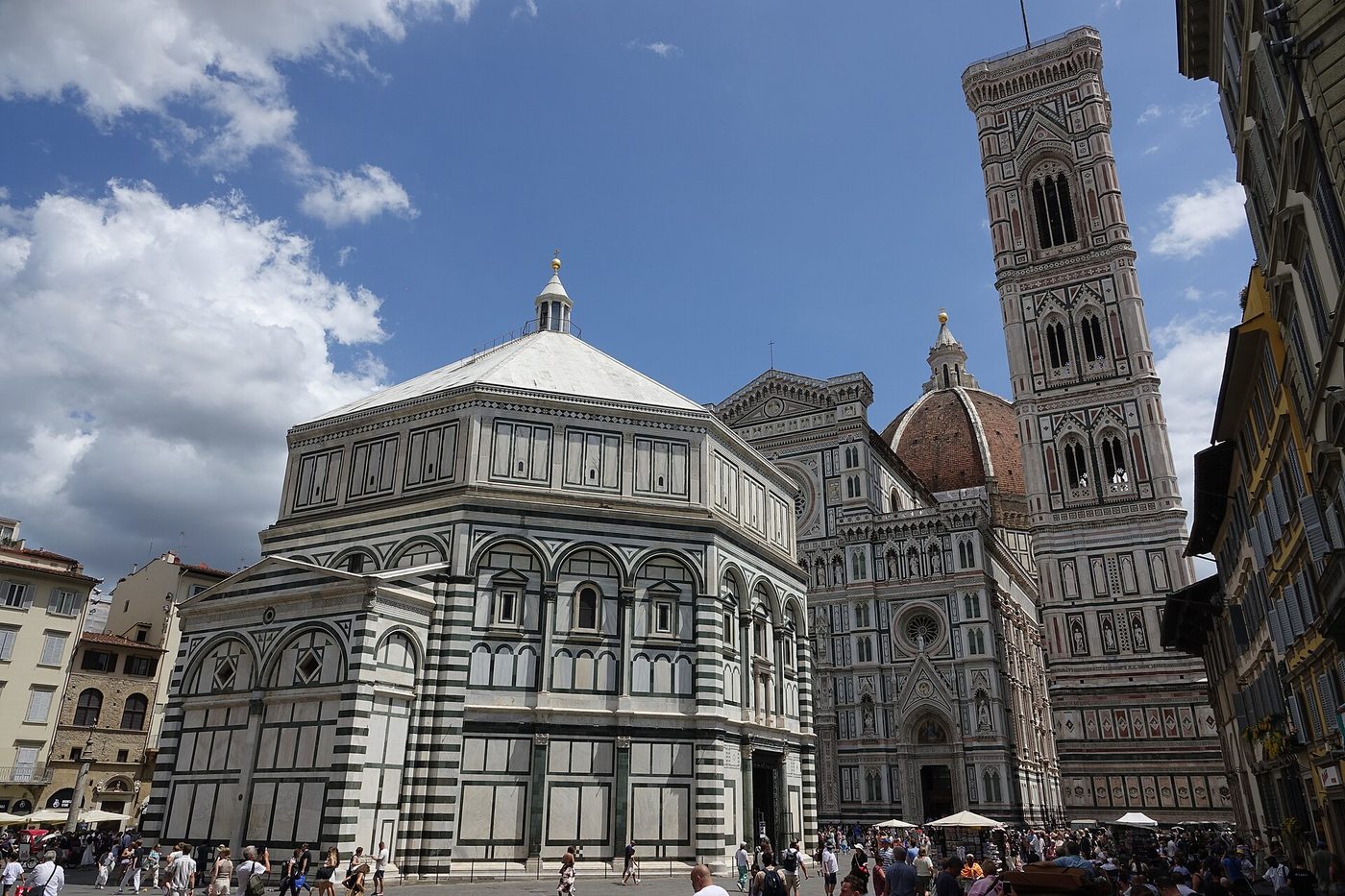
Start with the cathedral. The nave of Santa Maria del Fiore is free, with no booking and no ticket, though it closes on Sundays and on religious celebrations. Everything else in the complex is sold as a pass:
| Pass | What it covers | Full | Reduced (7 to 14) |
|---|---|---|---|
| Brunelleschi Pass | Dome climb, Bell Tower, Opera Museum, Baptistery, Santa Reparata | €30 | €12 |
| Giotto Pass | Bell Tower, Opera Museum, Baptistery, Santa Reparata | €20 | €7 |
| Ghiberti Pass | Opera Museum, Baptistery, Santa Reparata | €15 | €5 |
| Cathedral nave only | Santa Maria del Fiore interior | Free | Free |
Two details worth knowing. Students of any nationality can buy the Ghiberti Pass at €5 on production of a student card, but only at the ticket office and not online, and only for that one pass. And the Baptistery’s vault mosaics are currently under restoration and not visible, which materially changes the value of the Ghiberti Pass this year. If the mosaics were your reason for buying it, they are the thing you cannot see.
The dome climb is 463 steps, ticketed by timed slot, and the last stretch is a curved passage between the inner and outer shells with no way to turn back. If you only want the view, the Bell Tower is the easier climb and looks at the dome rather than from it, which is arguably the better photograph.
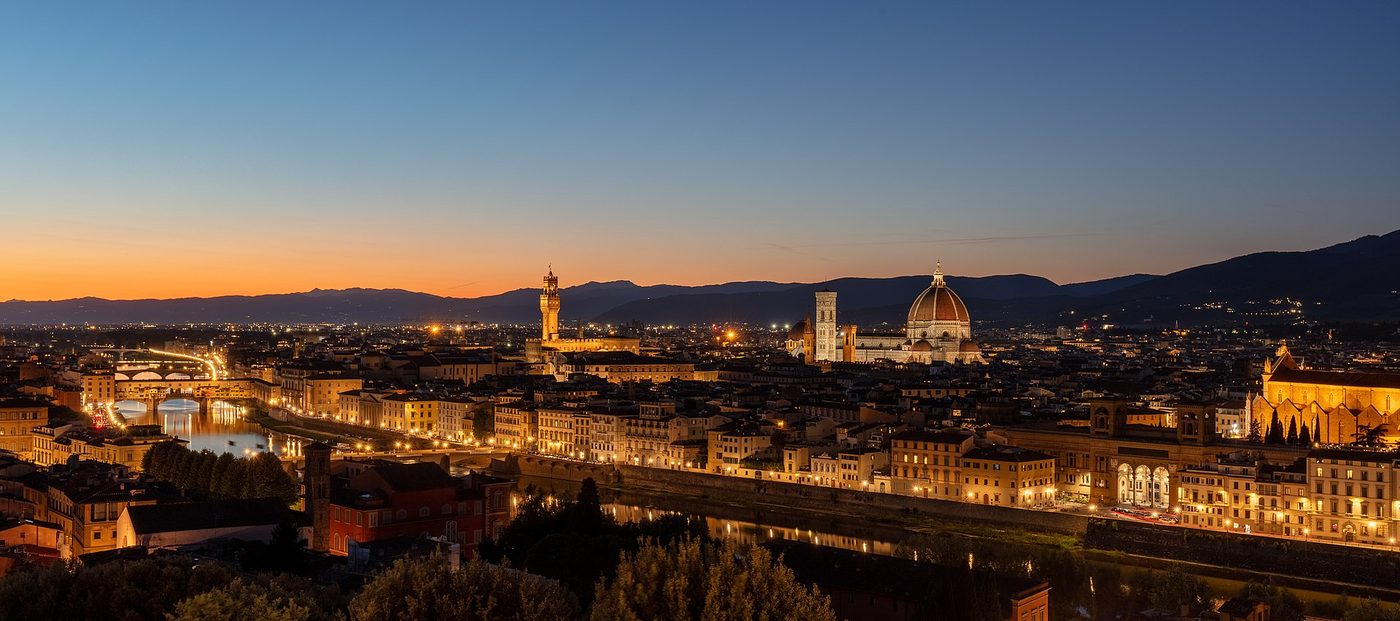
End the day at Piazzale Michelangelo. It is a twenty five minute walk up from the Ponte Vecchio or a short bus ride, and it is where the entire city lines up for sunset. Go forty minutes early, or walk another five minutes uphill to San Miniato al Monte, where the view is nearly identical and the crowd is a tenth of the size.
Day 5: the Uffizi, the Accademia and the Oltrarno
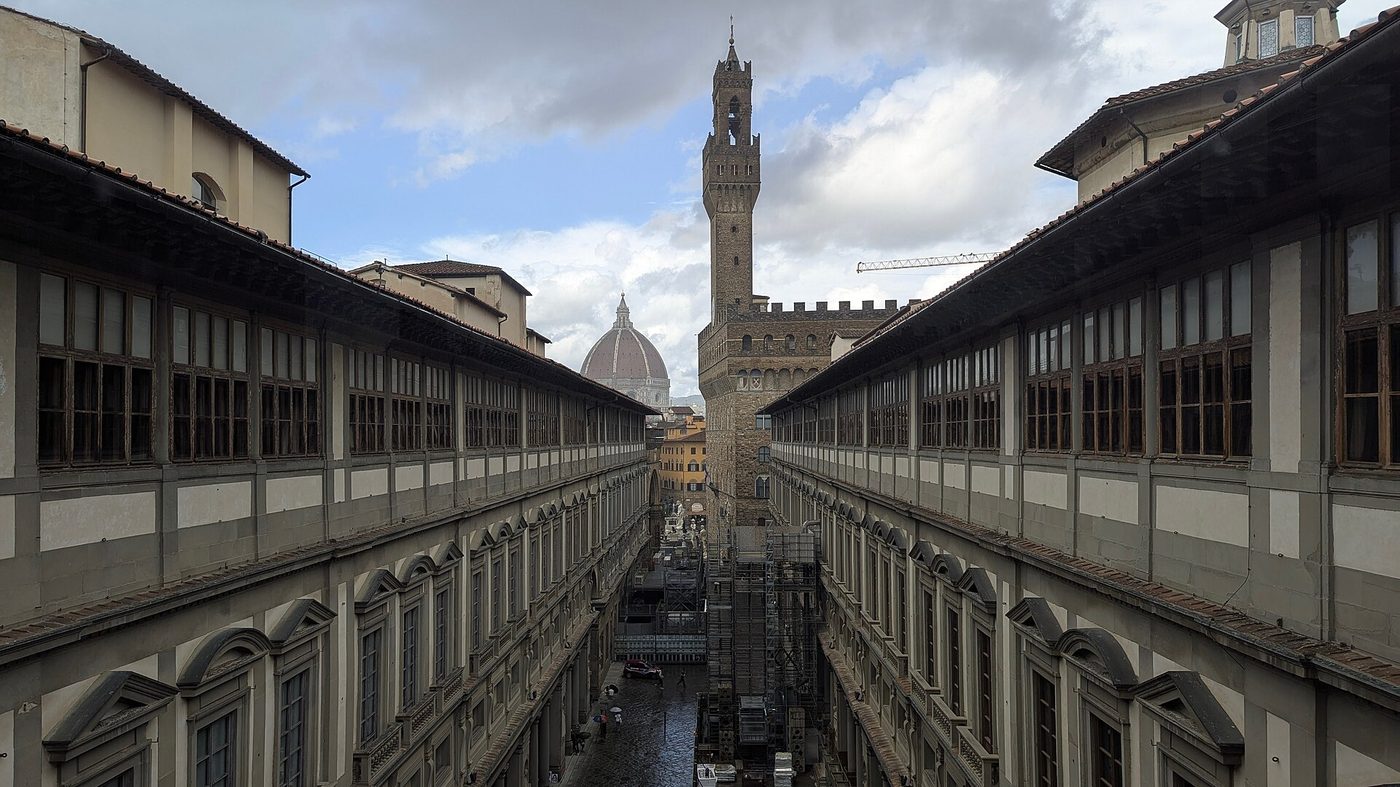
The Uffizi’s 2026 pricing rewards people who read the small print. There is no high season and low season structure. There are three prices:
- €25 bought on the day at the ticket office
- €29 bought online in advance with a timed slot
- €16 for entry from 16:00 onwards, new from 1 January 2026
Read that again, because it is counterintuitive: buying in advance costs more, not less. The €4 difference is the booking premium for a guaranteed slot. And the late ticket saves you €13 against the advance price for a gallery that stays open into the evening and is at its emptiest in the last two hours. On a ten day itinerary where Florence gets four nights, the 16:00 entry is close to a free upgrade.
Other Uffizi combinations, if you want them: the Vasari Corridor with the gallery is €43 same day or €47 in advance, with Uffizi entry two hours before the Corridor slot. The five day PassePartout covering the Uffizi, Palazzo Pitti and the Boboli Gardens is €40, or €58 with the Corridor. Pitti alone is €16 same day or €19 advance; Pitti and Boboli together are €22 or €25; Boboli alone is €10 or €13. New from 3 March 2026, a combined Boboli and Bardini ticket is €15, sold at the ticket office only. Reduced entry to the Uffizi is €2, and groups of eleven or more pay an extra €70.
The Accademia, which is where the David is, is a much shorter visit than people expect. Ninety minutes is generous. The full ticket is €16 with a €4 booking fee, so €20 online all in. Reservation is strongly recommended rather than compulsory: you can turn up, but the gallery’s own wording is that the wait “may be long”, and in summer that means well over an hour on an unshaded street. Last entry is thirty minutes before closing.
One claim I could not verify: a widely shared figure of a €26 combined Accademia and Bargello ticket from 15 March 2026. It does not appear on the Accademia’s own ticketing page. If it exists it is a good deal, but do not build your morning around it.
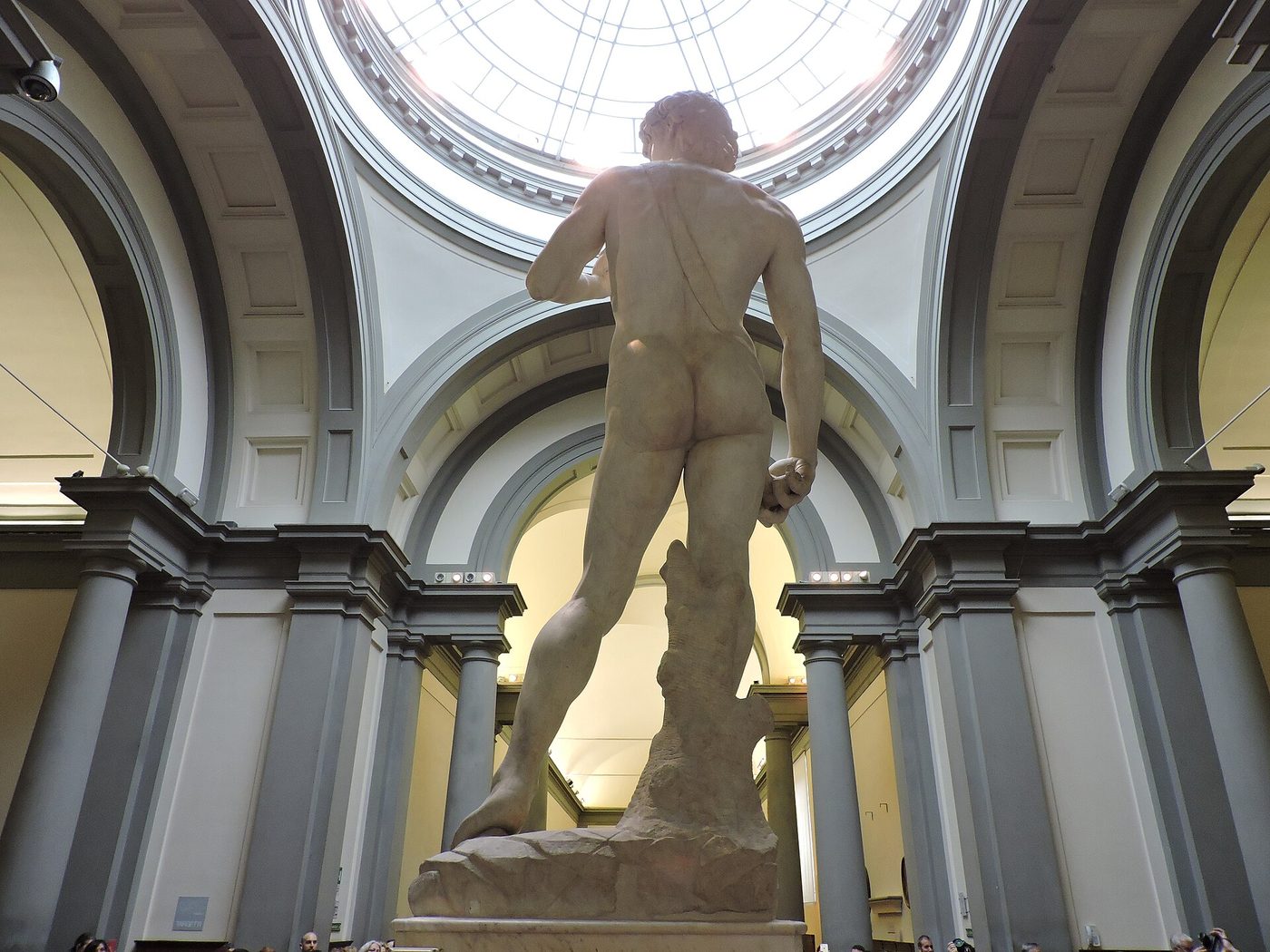
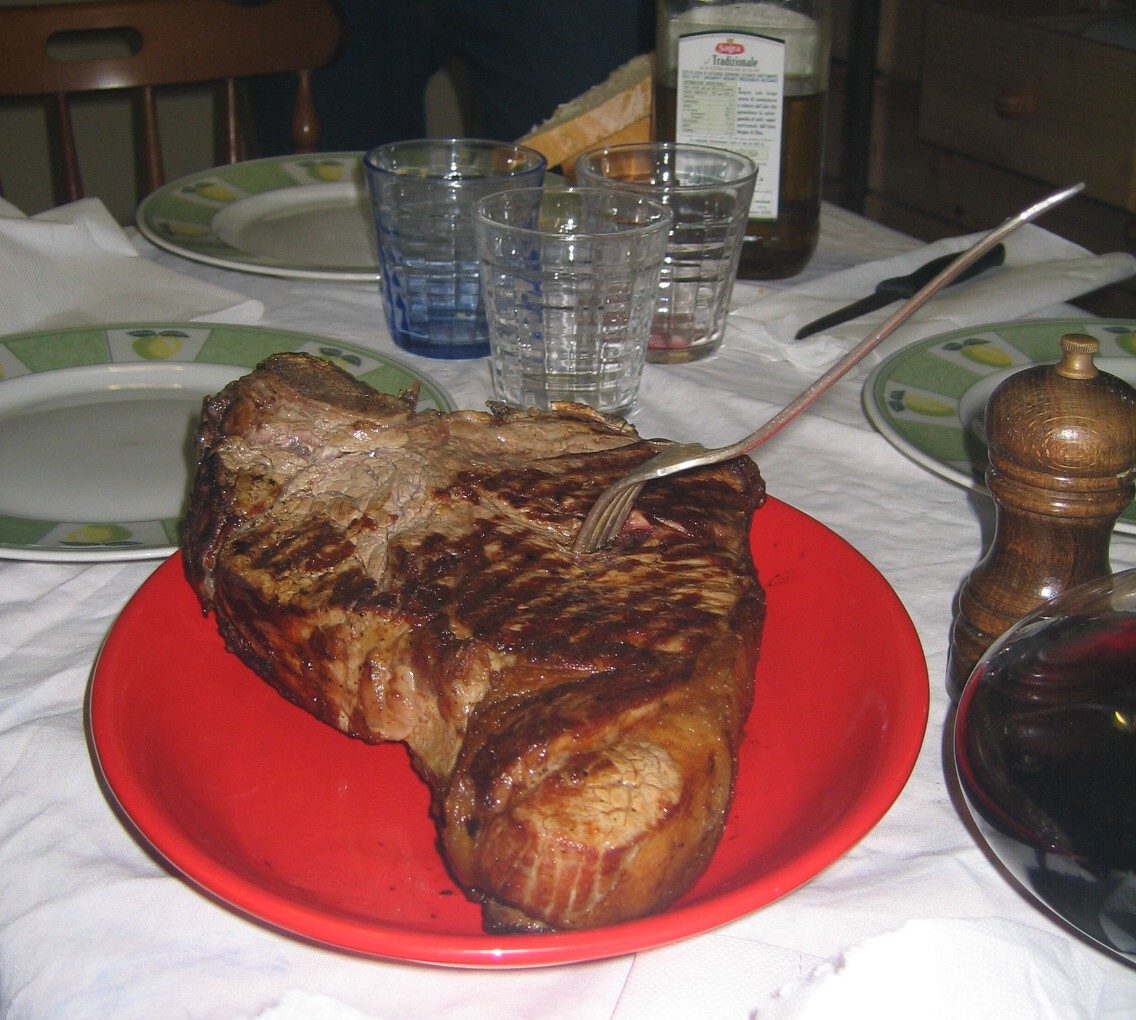
Spend the afternoon across the river in the Oltrarno, which is where Florence is still a working city rather than a display of itself. Santo Spirito, the artisan workshops on Via Maggio and Borgo San Frediano, and dinner somewhere that serves bistecca alla fiorentina by weight. It arrives rare. That is not negotiable and asking for it well done will be politely refused in the better places. Our things to do in Florence guide has the full neighbourhood breakdown, and our guide to European food covers the regional dishes worth crossing a city for.
Day 6: the Tuscan day trip
You have three realistic options and they suit different people.
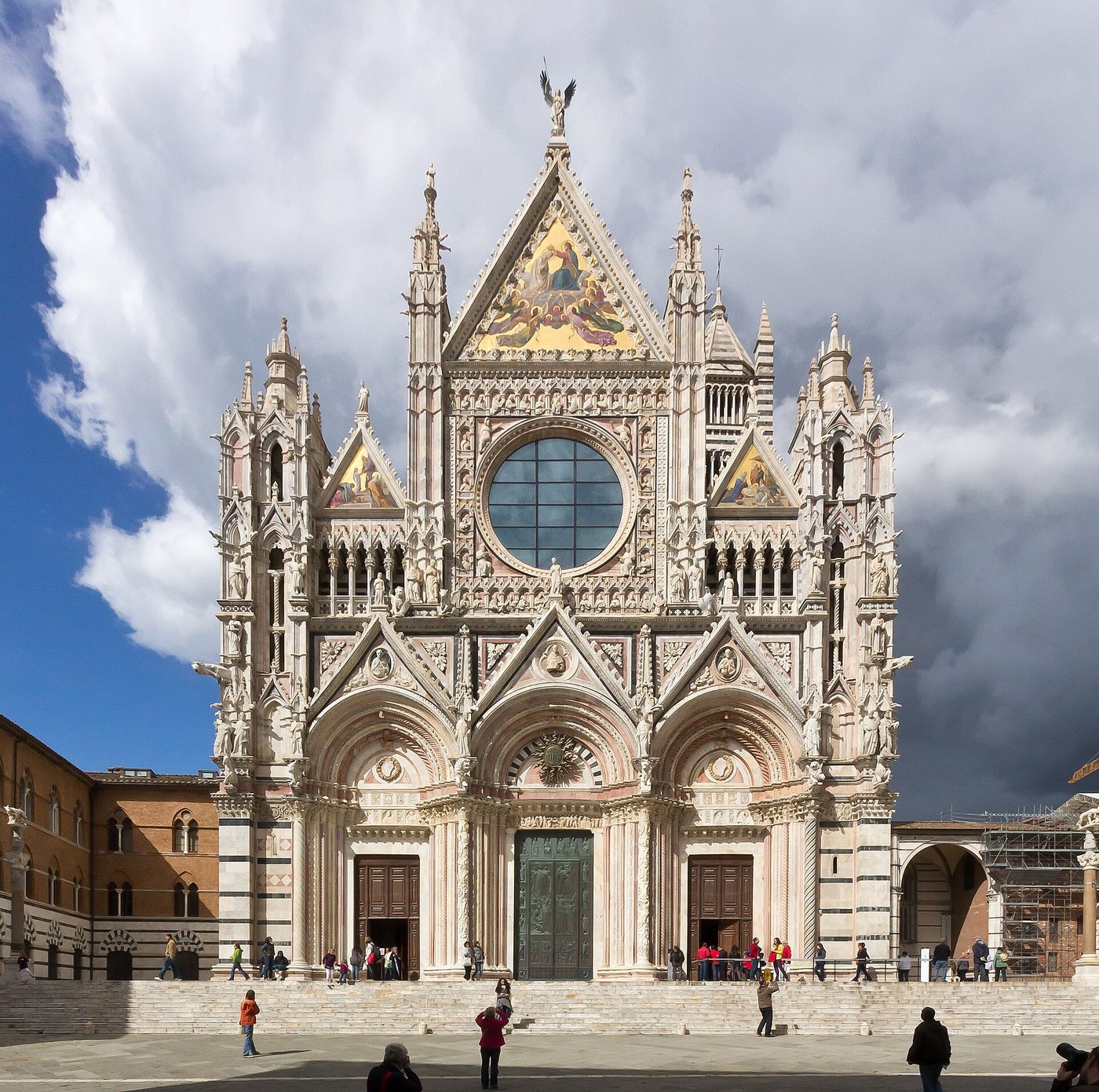
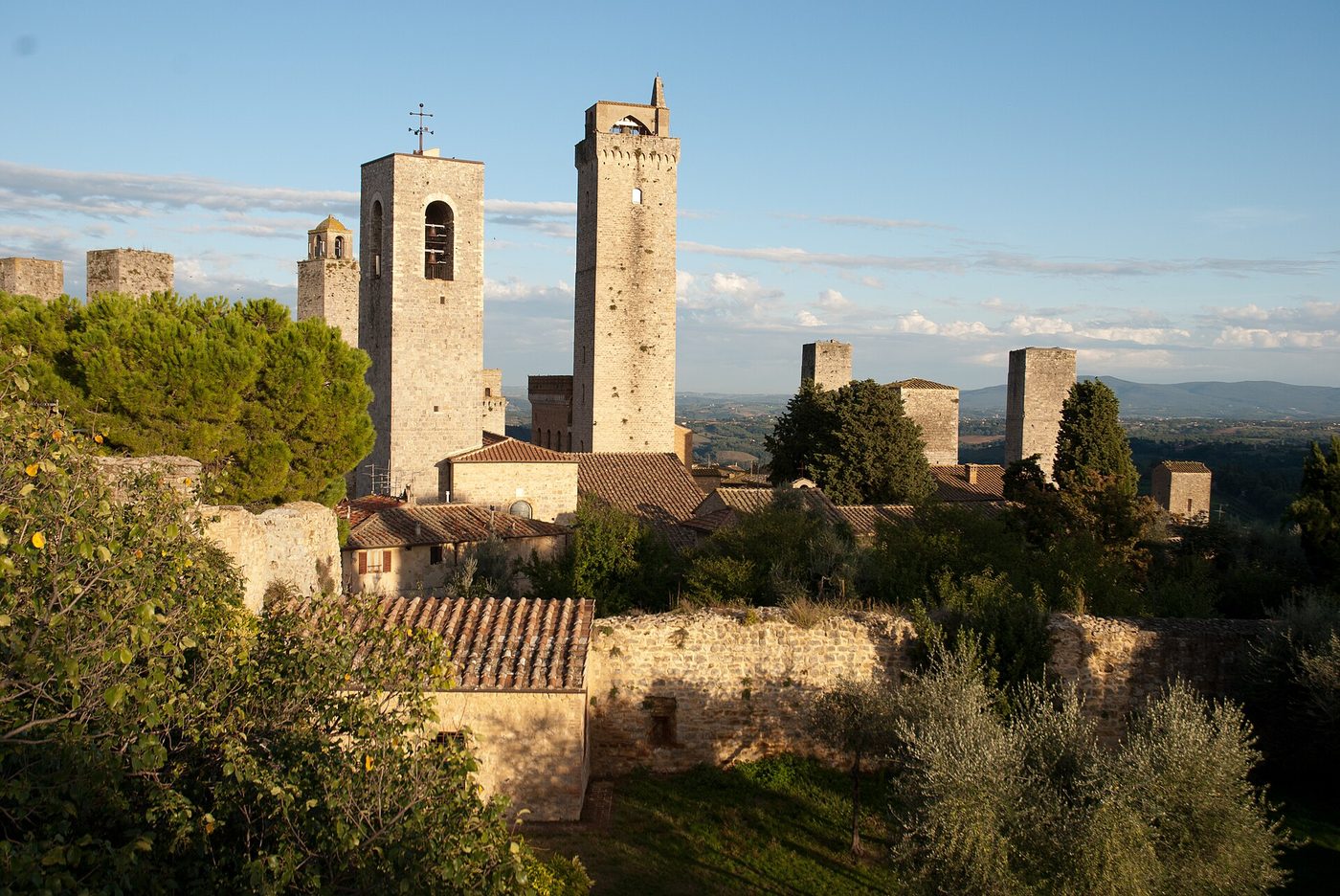
Siena and San Gimignano is the best of the three if you take an organised bus tour, purely because the public transport connection between the two is awkward and eats the day. Siena’s cathedral, with its striped marble facade and its inlaid marble floor, is the single most impressive building on this itinerary that is not in Rome or Florence. San Gimignano’s fourteen surviving towers are startling on approach and the town is close to unbearable between 11:00 and 15:00 in summer.
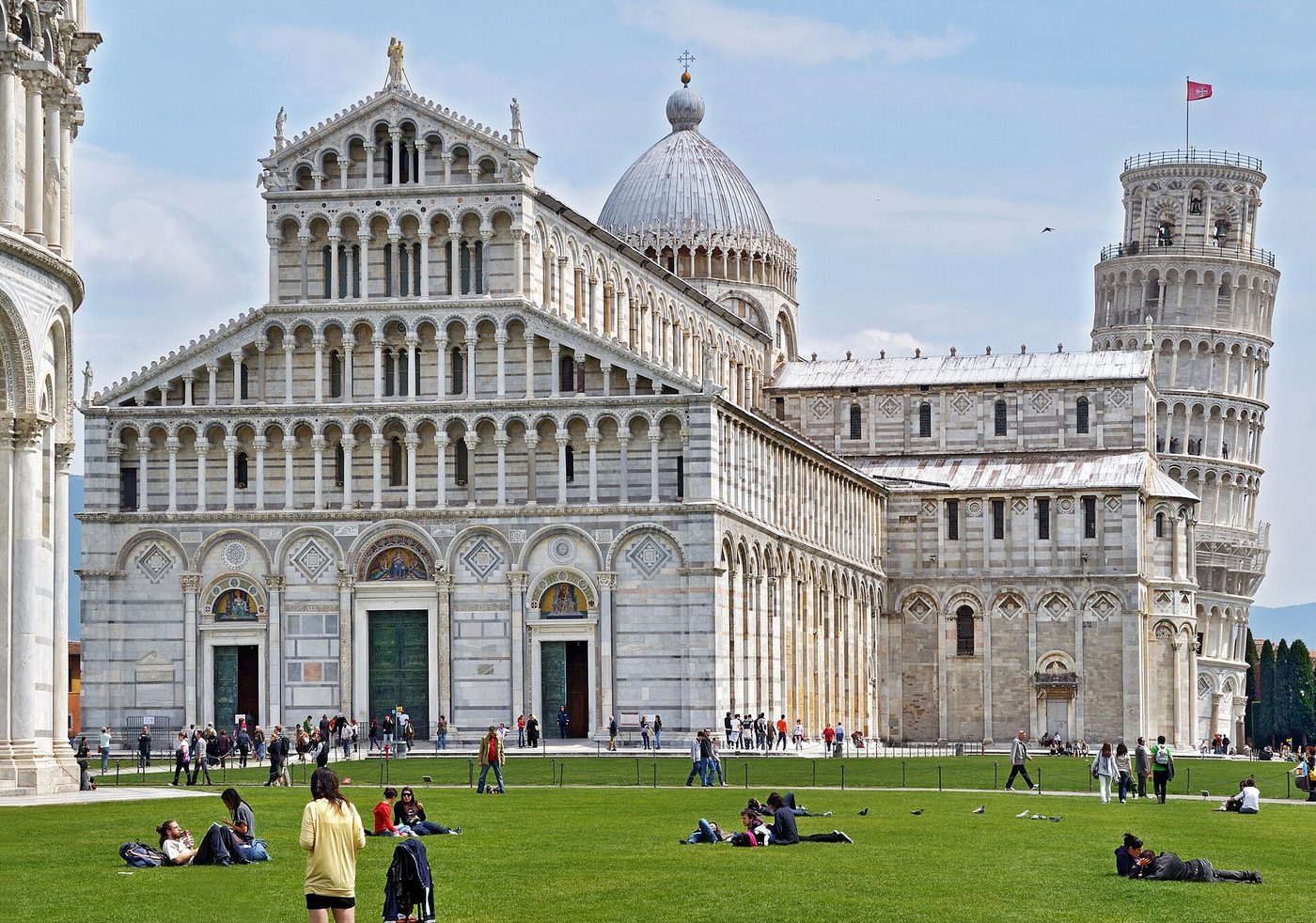
Pisa is the easiest. Regionale Veloce trains run direct from Firenze Santa Maria Novella in about an hour, with slower Regionale services taking 1h15 to 1h30 and departures every 15 to 30 minutes. The fare is a flat €8.50 and does not change however far ahead you buy it, because regional tickets have no advance purchase discount. Some high-speed services do it in 50 to 55 minutes. The Leaning Tower climb is €20 on the official opapisa.it site with timed slots every thirty minutes, or €24 to €30 through resellers, and the full complex ticket covering the Tower, Cathedral, Baptistery, Camposanto and Museum is €27. Pisa is a half day at most, and pairing it with Lucca in the afternoon makes a better full day than stretching Pisa itself.
Chianti or the Val d’Orcia is the option that needs a car or a driver, and it is the one people remember longest. Cypress avenues, hill towns, a long lunch, wine you cannot buy at home. If you do rent for a single day, pick the car up at a depot outside the city walls and read the ZTL section below before you turn a single wheel.
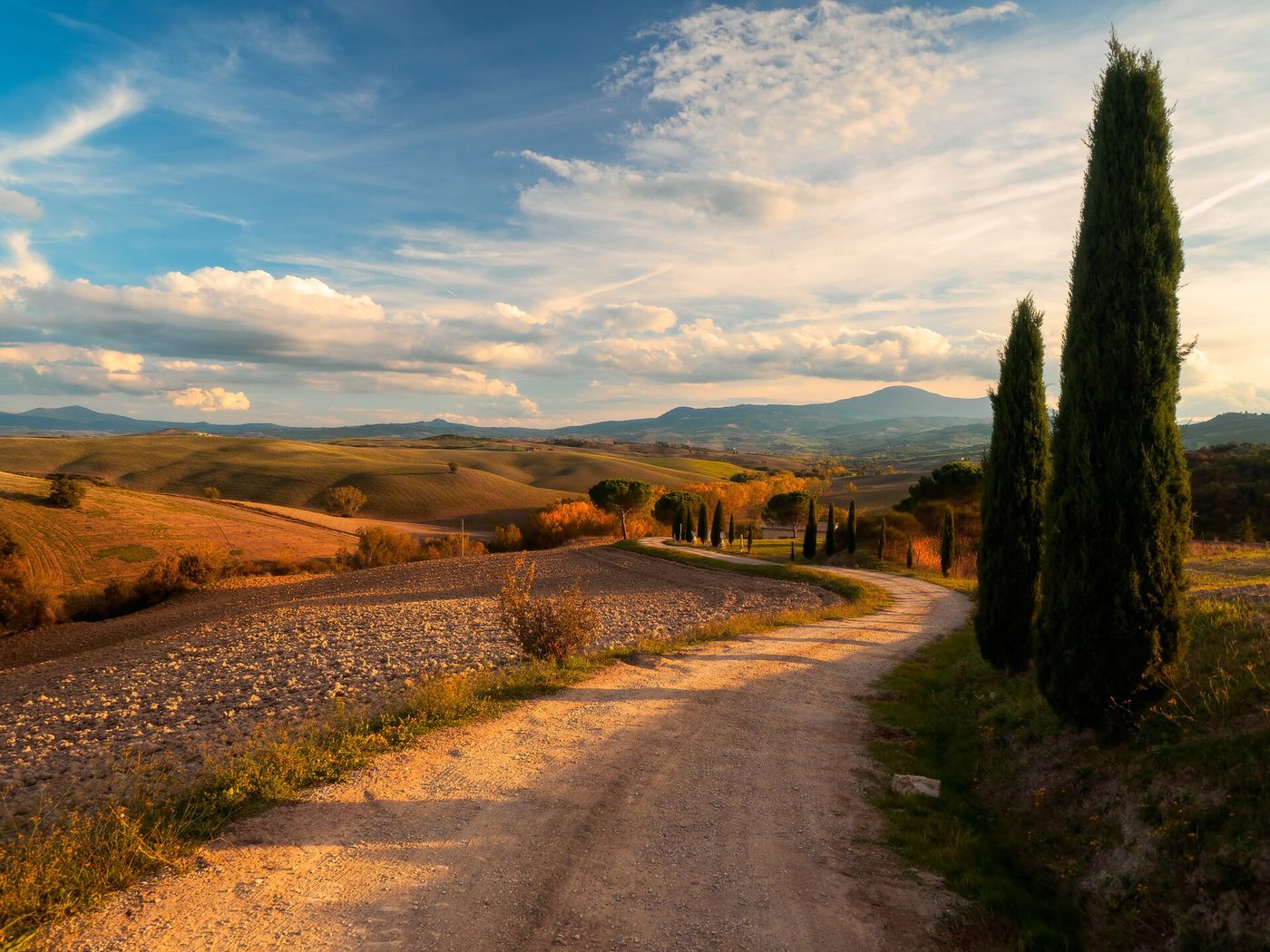
Our Tuscany travel guide works through all of these in detail, including which hill towns are worth the drive and which are a car park with a view.
Day 7: Cinque Terre, and an honest word about the trails
The Cinque Terre is the most photographed stop on this itinerary and the one where conditions change most often. This is the state of play in 2026.
The five villages are Monterosso al Mare, Vernazza, Corniglia, Manarola and Riomaggiore, strung along about eleven kilometres of Ligurian coast. Trains connect them in five to fifteen minutes per hop and run frequently. Corniglia is the awkward one: the station sits below the village and the connection is the Lardarina, a staircase of 382 steps, though a shuttle bus does run.

The Cinque Terre Card comes in two versions and the difference matters. The Trekking Card covers park trail access, the ATC village buses, guided tours per the published schedule, free use of the paid toilets in Riomaggiore, Vernazza and Monterosso which otherwise cost €1, park Wi-Fi and reduced entry to La Spezia’s civic museums. For an adult aged 12 to 69 the one day card runs at roughly €10 standard and €15 on peak days. Multi-day rates exist but the published figures differ between sources, so buy from card.parconazionale5terre.it and take the price on the day as final.
The Train Card adds second class travel on Regionale and Regionale Veloce services between Levanto and La Spezia, excluding InterCity and Frecciabianca. It is priced in three demand bands rather than a flat rate:
| Cinque Terre Train Card 2026, adult | Band A (low) | Band B (average) | Band C (high) |
|---|---|---|---|
| 1 day | €22.00 | €29.50 | €35.00 |
| 2 days | €36.50 | €51.00 | €61.00 |
| 3 days | €49.00 | €68.00 | €81.00 |
The 2026 peak dates are 3 to 6 April, 25 to 26 April, 1 to 3 May, 9 to 10 May, 14 to 17 May, 23 to 24 May, 30 to 31 May, 1 to 2 June, 6 to 7 and 13 to 14 June, and the weekends of 12 to 13, 19 to 20 and 26 to 27 September. Cards are valid until midnight on the day of purchase, are nominative and non-transferable, must be signed and shown with ID, and must be validated in the Trenitalia validators on your first train journey. Buy from card.parconazionale5terre.it or at a park reception centre.
Now the trails, which are the part worth checking twice. The Via dell’Amore reopened in August 2024 after more than a decade closed, and in 2026 it is covered by both cards with no separate fee. Access is by pre-booked 30 minute timed slot, capped at 200 people per slot, and it runs one way from Riomaggiore towards Manarola.
The rest of the Sentiero Azzurro is not whole. The Manarola to Corniglia section is closed indefinitely after landslides, and a full reopening is not expected before 2028. Corniglia to Vernazza and Vernazza to Monterosso are generally open in 2026, weather permitting, but check the national park site in the week you travel rather than trusting anything written earlier, including this. If you have pictured yourself walking all five villages in a day, adjust that picture now rather than at the trailhead.
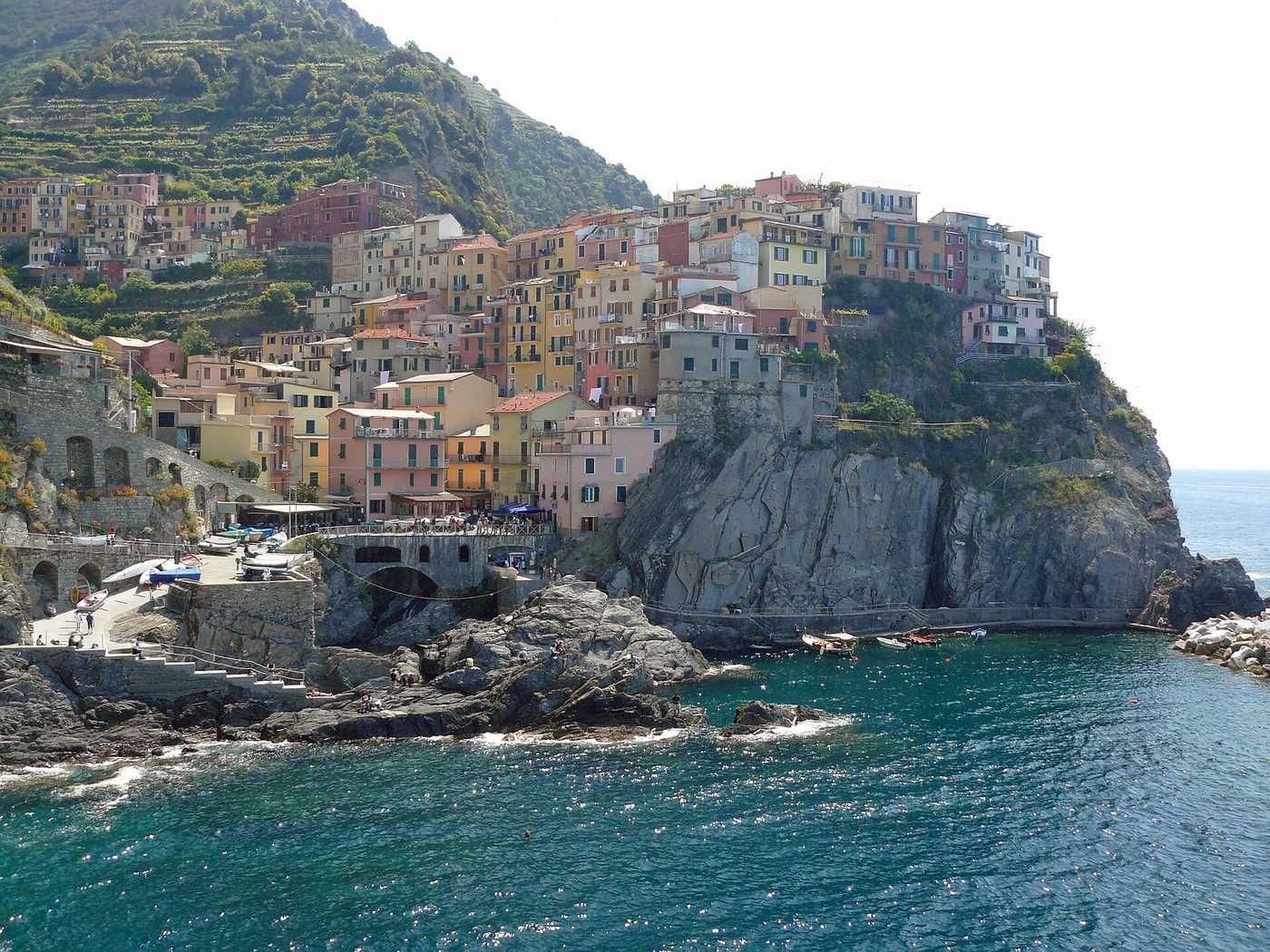
Practically, there are two ways to fit this into Route 1. Either day trip from Florence, which is a long day of about three hours’ travel each way and only worth it if you are decisive about which two villages you want. Or, better, treat day 7 as a travel day: leave Florence in the morning and sleep one night in La Spezia or Levanto. That is a stopover rather than a fourth base, but it does lengthen the following morning considerably, since La Spezia to Venice is a change at Florence or Milan and runs to five hours or so rather than two. Budget the whole of day 8 for it. Our Cinque Terre travel guide sets out which village to sleep in, which is a decision with real consequences.
Day 8: on to Venice
Florence to Venice takes about two hours on the fastest Frecciarossa or Italo services, with slower ones running nearer two and a half. Italo runs eleven trains a day each way on the route. Advance fares start at €19.90 on Trenitalia and Italo advertises from €18.90; the flexible Base fare is €57. Arrive at Venezia Santa Lucia, which puts you on the Grand Canal the moment you walk out of the station, one of the better arrivals in Europe.
Then the good news for 2026: the Venice access fee is not currently in force. The trial period ended on 27 July 2026 and as of August there is no payment and no exemption request to make. During the trial it applied on Fridays, Saturdays and Sundays from 3 April to 26 July, plus 6 April, the whole week of 27 April and the whole week of 1 June, between 08:30 and 16:00, at €5 per person per day if paid by the fourth-last day before access and €10 if paid later. Whether it returns for 2027 is undecided: the Municipality’s governing bodies have to approve any further application, and updates go up on cda.ve.it.
Note that even when it applied, the fee never covered the minor islands, so Lido, Pellestrina, Murano, Burano, Torcello, Sant’Erasmo and the rest were always outside it, as was the area facing the large cruise ship landing stages at Riva degli Schiavoni. It also never applied to overnight guests, who pay the separate per-night tourist tax instead. Those two things are different charges and they get conflated constantly.

For the evening: do not eat near San Marco. Walk into Cannaregio or Dorsoduro and do a bacaro crawl instead, standing at the counter with a glass of wine and a plate of cicchetti, which is Venice’s best meal and its cheapest. It is also the one thing in the city that feels like it exists for residents.
Day 9: St Mark’s, the Doge’s Palace and Dorsoduro
The Doge’s Palace ticket is sold as a combined “St Mark’s Square Museums” ticket covering the Palace, the Museo Correr, the National Archaeological Museum and the Monumental Rooms of the Marciana National Library, with the MUVE App audio guide included. Standard is €35 general and €15 reduced. There is a lower €30 online price, but only if you buy at least 30 days before your visit date, which is the sort of condition that quietly costs people money.
I am going to correct a number here because it is circulating widely: several of the most-read English language Italy itineraries currently give the Doge’s Palace as €30 standard and €25 online, and the Secret Itineraries tour as €32. The official 2026 tariff is €35 and €30, and Secret Itineraries is €40 general, €20 reduced, which includes unguided access to the four St Mark’s Square museums. Budget from the official page, not from a blog, including this one.
Hours are 09:00 to 19:00 from 1 April to 31 October with last admission at 18:00, and 09:00 to 18:00 from 1 November to 31 March with last admission at 17:00. There is a real bonus for 2026: every Friday and Saturday from 1 May to 26 September the Palace stays open until 23:00, last admission 22:00. An empty Doge’s Palace at ten at night is one of the better experiences in Venice and almost nobody books it.
Two operational notes. If your ticket has no specific entry time, you are admitted from 12:00 onwards. And the luggage rule is absolute: any suitcase, trolley or bag whose three sides total more than one linear metre is refused entry to the building entirely, not stored. The cloakroom is free for everything smaller.
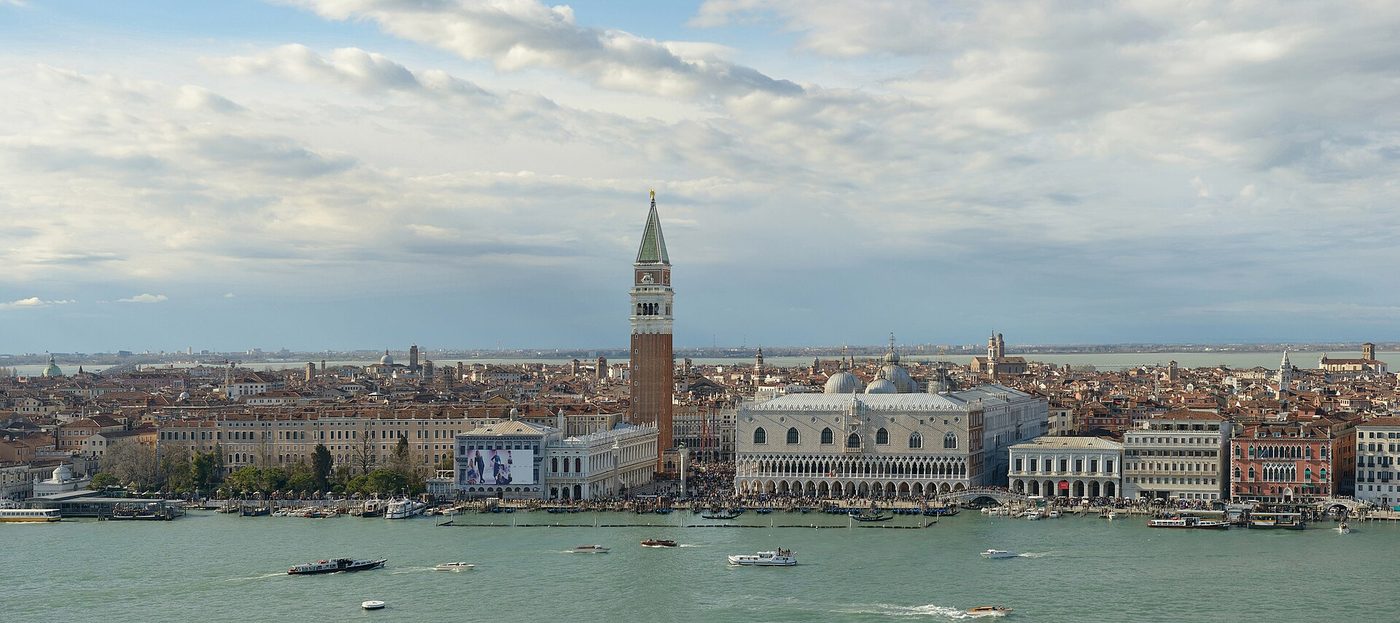
St Mark’s Basilica is ticketed separately and the price structure is unusually generous if you are a private visitor rather than a group. The listed basilica admission is €10, but private visitors get an automatic 20 per cent off, so an individual actually pays €8. Basilica plus the Pala d’Oro is €20, as is Basilica plus Museum and the Loggia dei Cavalli. The full ticket covering all four is €30, and the Campanile is €15. That 20 per cent discount applies right across the list, so the €30 full ticket is €24 for an individual. Minors aged 10 to 18, students up to 26 and over 65s get a further 50 per cent off the private individual price. The discounts are not combinable and none apply to evening visits. Under 11s are free, though free entry does not extend to the Campanile.
The Sunday restriction catches people every single week: on Sunday mornings until 14:00 and during services, only the Museum and the Loggia dei Cavalli are open to visitors, at €14. If Sunday is your only Venice day, plan around it. Booking is online through tickets.basilicasanmarco.it, with tickets releasing around 45 days ahead.
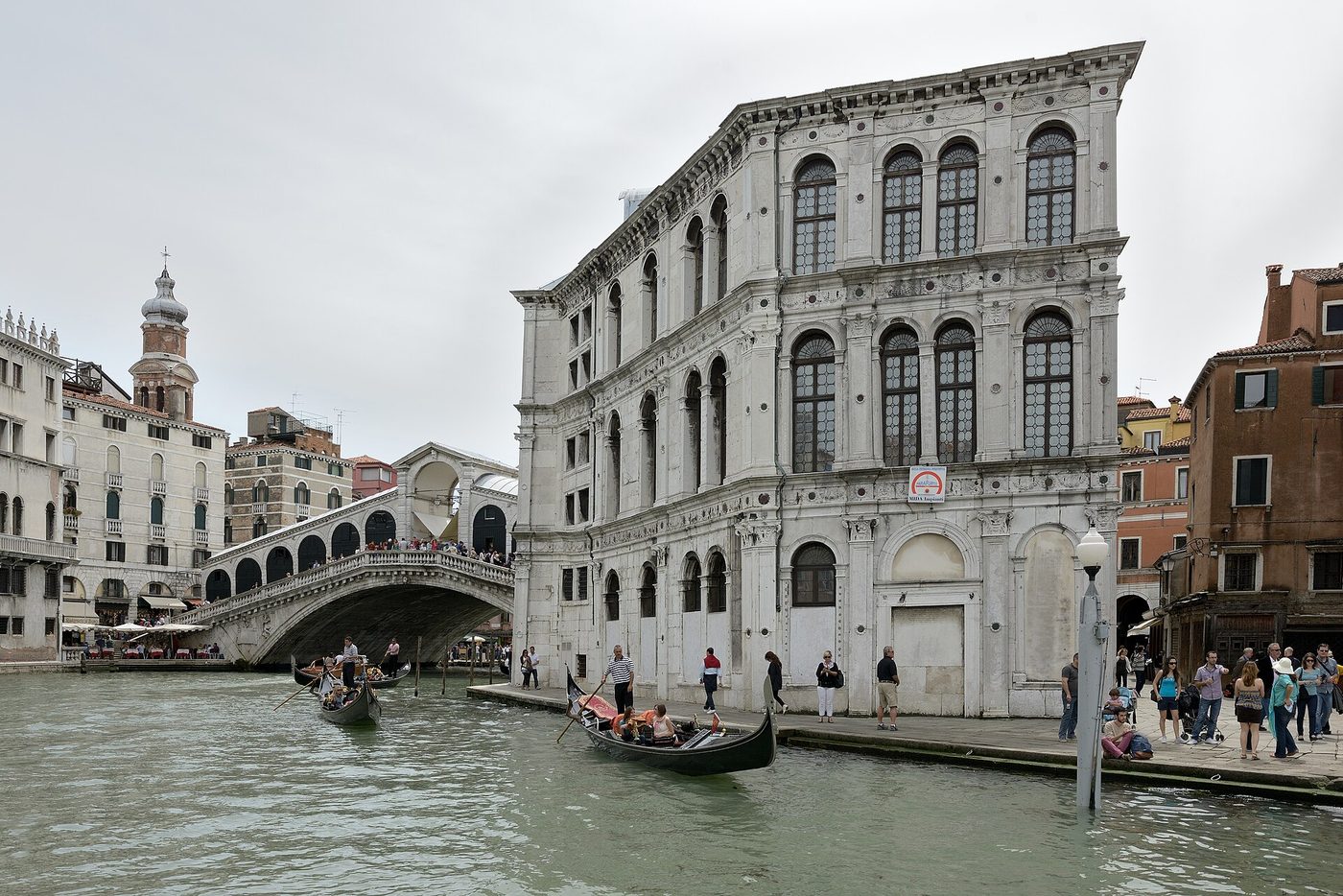
Give the afternoon to Dorsoduro: the Gallerie dell’Accademia, the Peggy Guggenheim Collection, and the Zattere in late light. A gondola, if you want one, is quoted at around €90 for thirty minutes in the daytime and €110 for thirty five minutes in the evening. That is per boat, not per person, which changes the maths considerably if there are five of you.
Day 10: the lagoon, then home
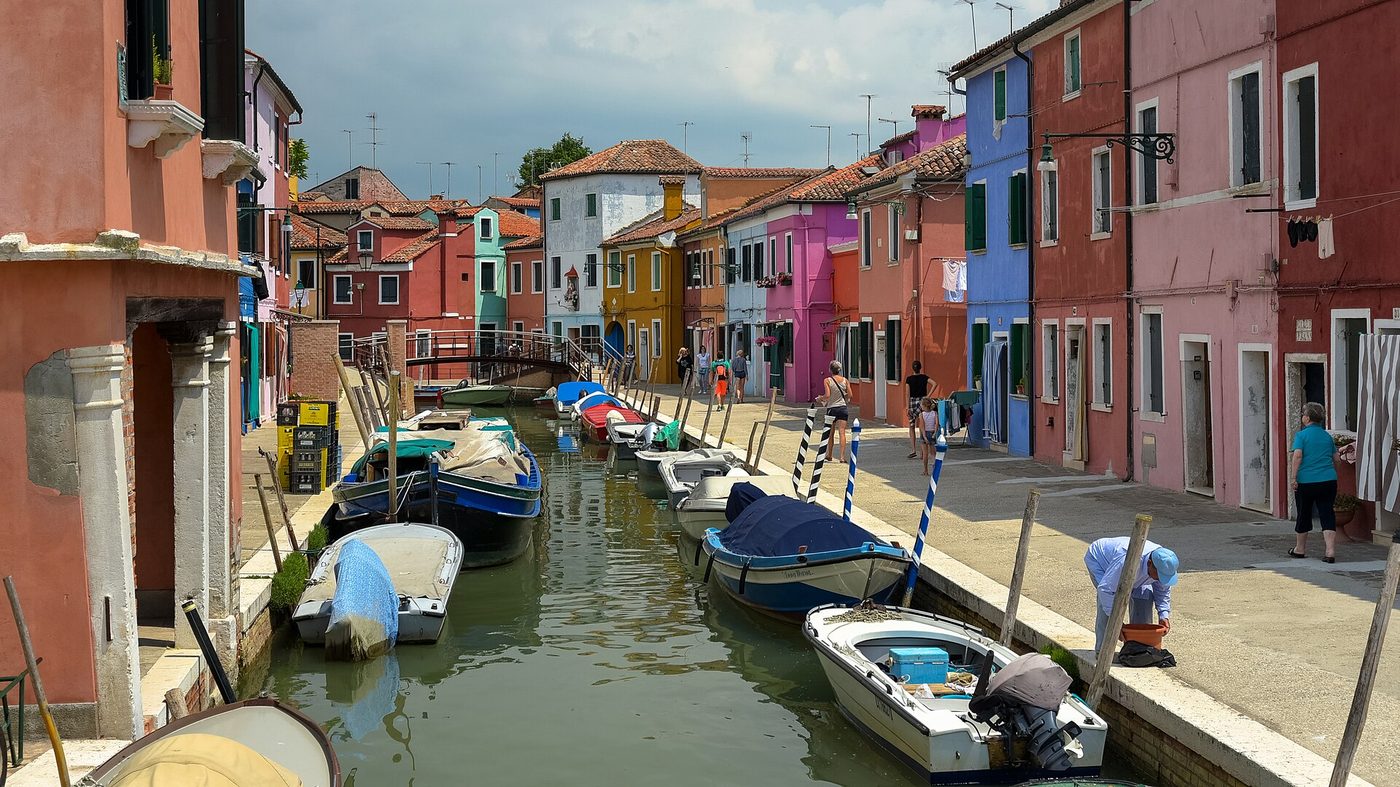
Murano is the usual choice for glass. I would send you to Burano instead, and to Torcello next door. Burano is a fishing island of painted houses that photographs absurdly well and is a lovely place to have lunch; Torcello, five minutes further, has a seventh century cathedral with Byzantine mosaics and roughly forty residents. The vaporetto from Fondamente Nove takes about 45 minutes to Burano.
For the airport: the ATVO express bus runs Piazzale Roma to Marco Polo in 20 to 25 minutes for €12 one way, around €20 return, departing every 30 minutes on a 05:20 to 00:20 service. The Alilaguna waterbus is €18 each way, €32 return on the Blue line including one hold bag and one hand bag, and takes 60 to 90 minutes depending on line and stop. A private water taxi is roughly €140 to €160 for up to four people and about 30 minutes.
The Alilaguna is slower and more expensive and I would still take it on a first trip, because arriving or leaving Venice by water is the point of Venice. If you have a tight connection, take the bus. Our Venice guide covers the lagoon islands properly.

Route 2: Rome, Naples, Pompeii and the Amalfi Coast in 10 days
This is the route I would take myself, and the one I recommend to anyone who has already done Rome, Florence and Venice or who does not much care about Renaissance painting. It trades gallery time for coastline, ruins and the best food in the country, and it involves substantially less rushing.
| Day | Base | The shape of the day |
|---|---|---|
| 1 | Rome | Arrive, Trastevere, early night |
| 2 | Rome | Colosseum, Forum, Palatine |
| 3 | Rome | Vatican Museums, St Peter’s |
| 4 | Rome | Borghese Gallery, centro storico, Appian Way or Ostia Antica |
| 5 | Rome to Naples | Train, historic centre, pizza, archaeological museum |
| 6 | Naples | Pompeii or Herculaneum, evening back in Naples |
| 7 | Naples to Sorrento | Circumvesuviana, settle in, Marina Grande |
| 8 | Sorrento | Positano and Amalfi by ferry or SITA bus |
| 9 | Sorrento | Capri, or Ravello and the Path of the Gods |
| 10 | To Naples, fly out | Morning train, Capodichino |
The extra Rome day: the Borghese Gallery
With four nights in Rome you can add the Galleria Borghese, which is the best small museum in Italy and operates on rules unlike anywhere else. The full ticket is €16 plus a €2 reservation fee that applies to every ticket type including free ones, so €18 all in for an adult. The last slot of the day is €11 plus the fee.
Reservation is compulsory. There are no walk-ins, for anybody, including visitors entitled to free entry. Visits run as timed shifts every hour, each lasting two hours, with 180 people per shift except the 17:45 slot. Opening is Tuesday to Sunday 09:00 to 19:00 with last entrance at 17:45, closed 25 December and 1 January.
The booking window is short: roughly ten days ahead on the official site, and free day tickets for the first Sunday of the month, 25 April, 2 June and 4 November are released exactly ten days before, with no last minute availability on those days. Ten days is a very different planning horizon from the Vatican’s sixty, and mixing them up is how people arrive in Rome with a Vatican ticket and no Borghese.
Two hours with Bernini’s Apollo and Daphne, the Rape of Proserpina and six Caravaggios, in a villa surrounded by park, is the best-value cultural morning in the city. Book it the moment the window opens.
Days 5 and 6: Naples and Pompeii
Rome to Naples is 1h10 on a typical Frecciarossa, with some services running closer to 55 minutes and more than twenty daily departures from Termini to Napoli Centrale. Advance fares start from around €9, with about €19 typical for Economy.
Naples is not a soft landing after Rome and I would not want it to be. The centro storico is loud, vertical, covered in laundry and completely alive. Eat a pizza margherita for €5 to €9 at a traditional pizzeria, noticeably cheaper than the €7 to €12 you pay in Rome or Florence and roughly half the Venice price. The National Archaeological Museum holds most of what was removed from Pompeii, including the mosaics and the frescoes, and visiting it before the site rather than after makes the ruins legible.

For Pompeii, the 2026 tariff changed on 12 January and there are now three tickets:
| Ticket | What it covers | Full | Reduced |
|---|---|---|---|
| Pompeii Express | The ancient city only | €20 | €2 (EU 18 to 24) |
| Pompeii Plus | City plus Villa of the Mysteries, Villa of Diomedes, Villa Regina at Boscoreale, shuttle bus | €25 | €2 |
| 3-day multi-site | Pompeii Plus sites plus Oplontis, Villa Arianna, Villa San Marco, Stabiae Museum, Boscoreale, shuttle | €30 | €2 |
The access rules matter as much as the price. Pompeii is capped at 20,000 admissions per day and tickets are personal and nominative. Between 16 March and 14 October the day is split: 09:00 to 13:00 takes a maximum of 15,000 visitors, made up of 12,000 Express and 3,000 Plus, and 13:00 to 17:30 takes 5,000, made up of 3,000 Express and 2,000 Plus. In practice the morning band sells out first in high summer. There is no re-entry: one entry per ticket, and if you walk out to find lunch you do not come back.
Opening is 09:00 with last entrance at 17:30 and closing at 19:00 from 16 March to 14 October, and last entrance 15:30 with closing at 17:00 from 15 October to 15 March. Entry is free on the first Sunday of every month, and the site closes on 25 December and 1 January. There are three entrances: Porta Marina, Piazza Anfiteatro and Piazza Esedra, and the Antiquarium is best reached from Piazza Esedra.
Getting there: the Circumvesuviana from Napoli Garibaldi costs €3.30 and takes about 30 minutes, running roughly every half hour from 05:39 to 22:14. Get off at Pompei Scavi, Villa dei Misteri. There is a separate station called Pompei Santuario and it is not the one you want. The Campania Express is the premium alternative at €6 from Naples and €4 from Sorrento, with fewer stops and air conditioning that works.
If Pompeii sounds overwhelming, and at 44 excavated hectares of a 66-hectare city it reasonably might, Herculaneum is the better visit for a lot of people. It is around €13, a fraction of the size, far better preserved because it was buried in pyroclastic flow rather than ash, and you can see it properly in two and a half hours. A combined Pompeii and Herculaneum ticket runs to around €22 and is valid 48 hours.
Days 7 to 9: Sorrento and the Amalfi Coast
The Circumvesuviana runs Naples to Sorrento in about 75 minutes for €5, stopping 34 times including Ercolano and Pompei. It is not a glamorous train. It is however cheap, frequent and drops you in the middle of Sorrento.
Base yourself in Sorrento rather than Positano or Amalfi unless money is no object. Sorrento has the train, the ferries, hotels at a quarter of Positano’s rates and restaurants that are not exclusively aimed at people on honeymoon. Positano is extraordinarily beautiful and extraordinarily vertical, and every arrival and departure involves several hundred steps with luggage.
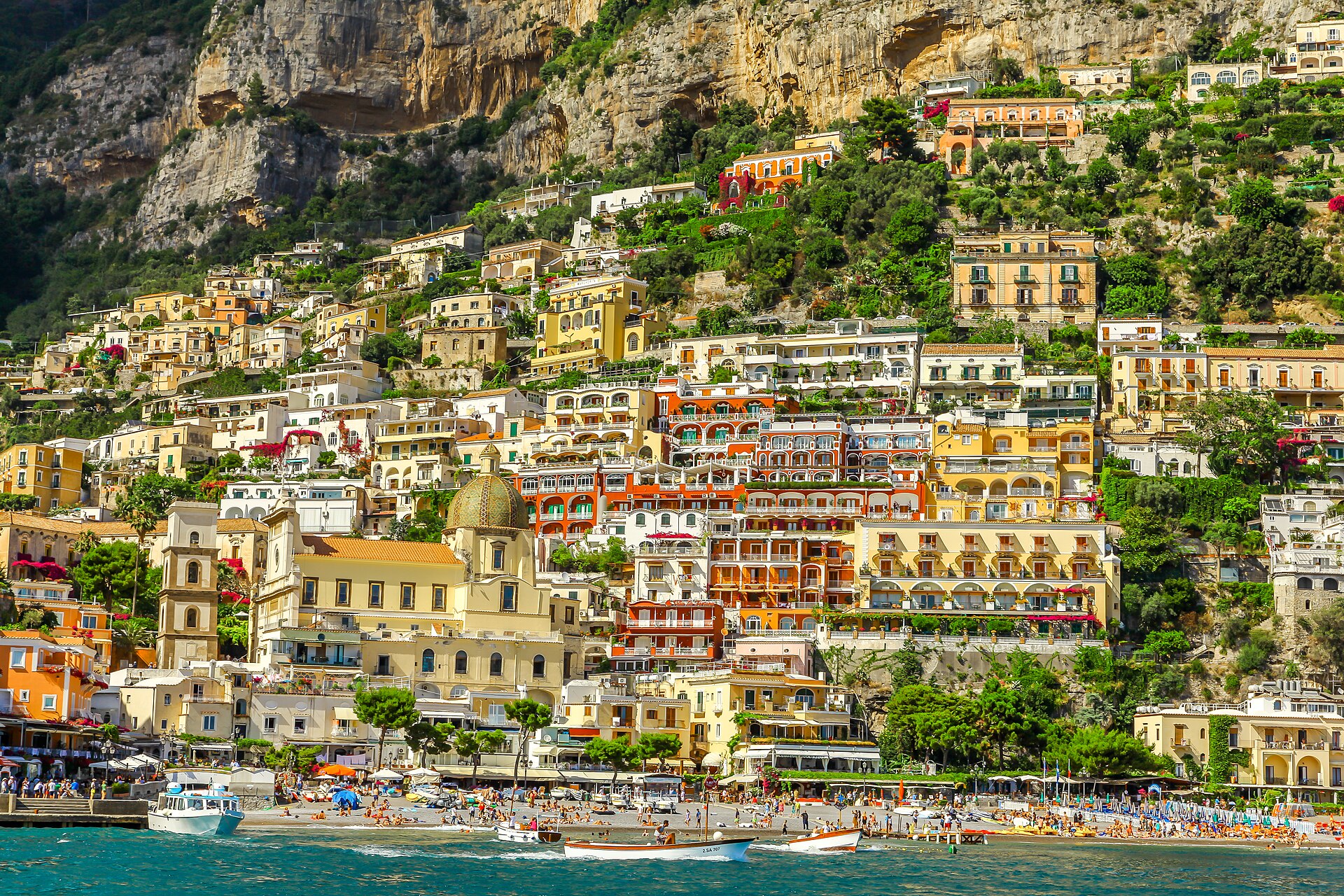
Between the coast towns you have two options. The SITA bus runs the SS163 for around €2.50 to €4 per journey, with a €10 COSTIERASITA 24 hour pass covering unlimited rides. Tickets must be bought before boarding, at a tabaccheria or newsagent, and are not sold on board. Traffic on that road is unpredictable enough that you should allow a thirty minute buffer on anything time sensitive, and in August that buffer should be an hour.
The ferries are better. Sorrento to Positano averages about 40 minutes; Sorrento to Amalfi is 45 minutes to 1h30 depending on the vessel and stops, at €18 to €24 each way; Amalfi to Positano is 15 to 25 minutes for €9 to €10. The catch is the season: ferries run from late March or April until October only. Outside that window the bus is your only option, which is one of several reasons not to plan this route for winter.
Plan around the ferry times, which are published and reliable, and treat the bus as the fallback. Segment-by-segment bus times between Sorrento, Positano and Amalfi are not reliably published anywhere I would trust, which is another reason to favour the boat.
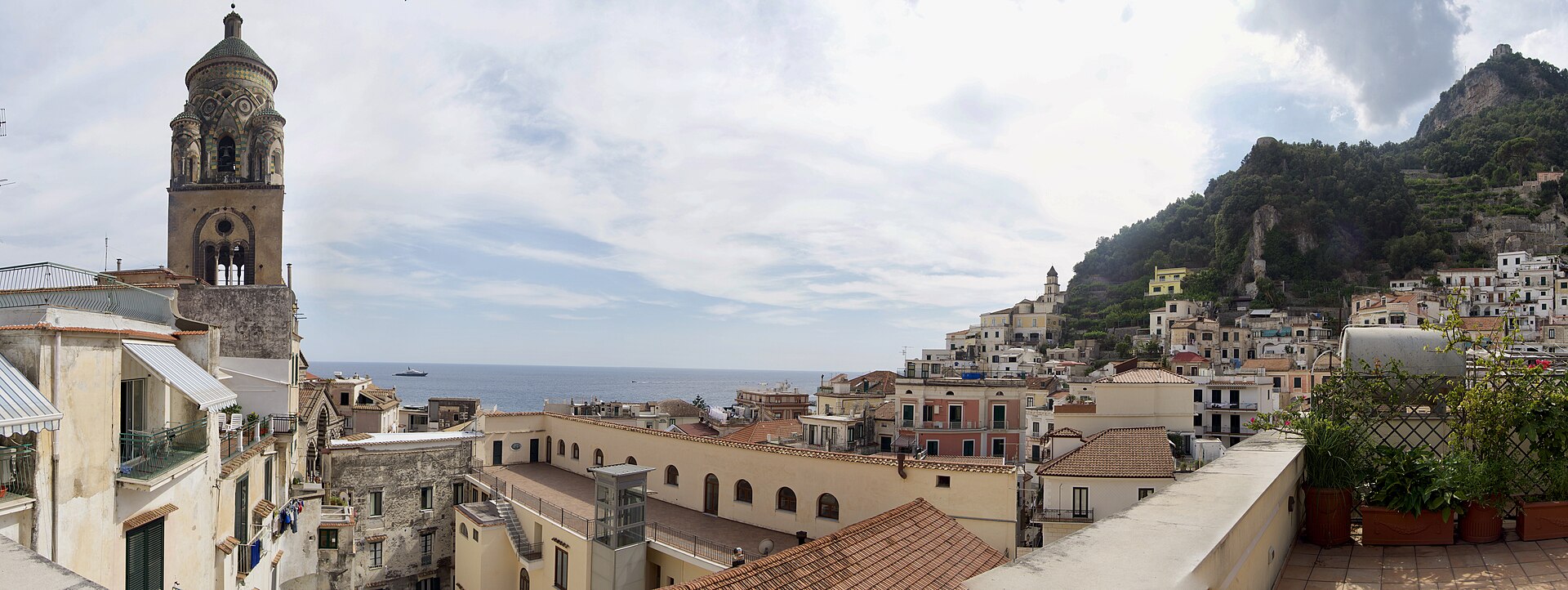
For day 9, choose between Capri, which is a jetfoil from Sorrento and is best done either very early or as an overnight to have the island after the day boats leave, and Ravello plus the Path of the Gods, which is the better day if you like walking. Ravello sits 350 metres above the sea with two garden villas and the best view on the coast; the Path of the Gods runs from Bomerano to Nocelle above Positano and takes three to four hours at a gentle pace. Our Amalfi Coast travel guide covers all of it, and our hiking in Europe guide puts that path in context against the rest of the continent.
On day 10, allow two hours from Sorrento to Naples Capodichino. The Alibus runs from Napoli Centrale to the airport in about 35 minutes with four stops, every 15 to 30 minutes, for €5.
Route 3: the northern loop, Milan to Venice to Florence
Ten days built around northern Italy, for second visits, lake weather and anyone who has landed a cheap Malpensa fare. This is the tightest of the three routes and I would only run it if the Last Supper is firmly on your list, because that ticket dictates everything.
| Day | Base | The shape of the day |
|---|---|---|
| 1 | Milan | Arrive, Duomo rooftop, Navigli in the evening |
| 2 | Milan | The Last Supper, Brera, Sforza Castle |
| 3 | Lake Como | Day trip or overnight: Varenna, Bellagio, ferries |
| 4 | Milan to Venice | Train, first evening walk |
| 5 | Venice | St Mark’s, Doge’s Palace, Dorsoduro |
| 6 | Venice | Burano and Torcello |
| 7 | Venice to Florence | Train, Duomo complex, Piazzale Michelangelo |
| 8 | Florence | Uffizi at 16:00, Accademia, Oltrarno |
| 9 | Florence | Siena and San Gimignano, or Chianti |
| 10 | Florence | Slow morning, fly from Florence or Pisa |
The Last Supper is the constraint. The official ticket for the Cenacolo Vinciano is around €15 in 2026, with third party tours running €45 to €120 for the same fifteen minutes in the room. Tickets are released quarterly, roughly three months ahead: December for February to April, March for May to July, June for August to October, September for November to January. Peak summer dates sell out within hours of release. In November to March you may find availability days or weeks later. Small batches are added every Wednesday at noon for the following week, which is the realistic route in if you missed the release.
Plan on two to three months of lead time for summer and school holidays, and three to four weeks minimum off peak. If you cannot get a ticket, do not restructure the trip around a substitute: go to the Pinacoteca di Brera instead and give the day to Lake Como.
The rest of Milan is straightforward. The Duomo rooftop terraces are €16 by stairs or €18 by lift; the combo covering cathedral, rooftop and museum is €22 or €26 and can be spread over two days. Malpensa Express runs to Milano Cadorna in about 37 minutes and Milano Centrale in about 51, for €15 adult and €7.50 for children aged 4 to 13.

One warning specific to 2026: Milan raised its tourist tax for four star hotels to €10 per adult per night in connection with the Milano-Cortina Winter Olympics, and five star hotels went to €12 from 1 April 2026. On a two night stay in a four star that is €40 for a couple, on top of a room rate that is already the highest in the country. Book three star or an apartment and spend the difference on lunch. Our Lake Como travel guide has the ferry timetable logic that makes or breaks a day on the lake.
Milan to Venice is 2h27 at the fastest with more than twenty daily departures from Milano Centrale, at €9 to €70 depending on how far ahead you book, operator and class, with around €25 typical. Milan to Florence is 1h45 to 2h00 with similar frequency, from €9 to €19 in Super Economy.
The booking calendar: when every ticket on this italy itinerary 10 days plan actually goes on sale
This is the table I wish someone had handed me the first time. The release windows are wildly inconsistent between sites, and because they are, the order in which you book is not the order in which you visit. Work backwards from your travel dates and set calendar reminders.
| What | Tickets release | Book it because | Confidence |
|---|---|---|---|
| Vatican Museums & Sistine Chapel | 60 days ahead | Longest window of anything here, and slots go | Single source |
| St Mark’s Basilica, Venice | 45 days ahead | Only route in; no meaningful walk-up | Single source |
| Colosseum, Forum, Palatine | 30 days ahead | Compulsory timed slot, nominative ticket | Official site |
| Doge’s Palace, Venice | 30 days ahead for the €30 price | Miss it and you pay €35 | Official site |
| Borghese Gallery, Rome | About 10 days ahead | Hard cap of 180 per two-hour shift, no walk-ins | Official site plus one secondary |
| The Last Supper, Milan | Quarterly, about 3 months ahead | Summer dates sell out in hours | Single source |
| The Last Supper, last-minute batches | Wednesdays at noon for the following week | Your only second chance | Single source |
| Uffizi, Florence | Open sale, timed slots | Advance costs €29 vs €25 on the day; the 16:00 ticket is €16 | Official site |
| Accademia, Florence | Open sale, timed slots | Recommended not compulsory, but the queue is real | Official site |
| Duomo complex, Florence | Open sale, dome climb by timed slot | Dome slots go first in summer | Official site |
| Pompeii | Open sale, nominative, daily cap | 20,000 a day and the morning band fills first | Official site |
| Leaning Tower of Pisa | Open sale, slots every 30 min | €20 official vs €24 to €30 resold | Single source |
| Cinque Terre Card | Buy on the day, or online in advance | Valid only to midnight on the day of purchase | Single source |
| Trenitalia and Italo | Up to 4 months, sometimes only 30 days | 60 to 70 per cent cheaper than walk-up | Official plus seat61 |
The one week booking plan
If you are eight to twelve weeks out, do this in one sitting:
- Flights first, as an open jaw. Rome in, Venice out for Route 1. Rome in, Naples out for Route 2. Milan in, Florence or Pisa out for Route 3.
- The Last Supper, if you are doing Route 3, before anything else. Everything in Milan bends around it.
- Vatican Museums at 60 days, on the release morning.
- Hotels, which have no release window but do have a price curve that only goes up.
- Trains once your city dates are fixed. Do not book trains before hotels; a Super Economy ticket cannot be changed.
- St Mark’s Basilica at 45 days.
- Colosseum and Doge’s Palace at 30 days, both on the release morning.
- Borghese at 10 days, which will feel alarmingly late and is correct.
- Uffizi, Accademia, Duomo, Pompeii in the last fortnight, once you know how you feel about your schedule.
Every 2026 entry price on this itinerary, in one table
All figures checked in August 2026 against the operator’s own ticketing page unless the notes say otherwise. Prices are per adult in euro.
| Attraction | City | Full price | Notes |
|---|---|---|---|
| Colosseum + Forum + Palatine | Rome | €18.00 | €2 reduced EU 18 to 24; €11.50 with Roma Pass; 24h validity |
| Vatican Museums + Sistine Chapel, on site | Rome | €20.00 | Reduced €10; valid day of issue only |
| Vatican Museums, online skip-the-line | Rome | €25.00 | €20 plus €5 booking fee |
| St Peter’s Basilica | Rome | Free | Includes Grottoes and treasury; dress code enforced |
| St Peter’s dome, on site | Rome | €10 / €15 | Stairs only / lift plus stairs; 551 steps total |
| St Peter’s dome, online | Rome | €17 / €22 | Lift version includes audio guide |
| Borghese Gallery | Rome | €18.00 | €16 plus compulsory €2 reservation; last slot €13 |
| Uffizi, same day at the desk | Florence | €25.00 | Cheaper than booking ahead |
| Uffizi, advance online | Florence | €29.00 | Timed slot guaranteed |
| Uffizi, entry from 16:00 | Florence | €16.00 | New from 1 January 2026 |
| Uffizi + Vasari Corridor | Florence | €43 / €47 | Same day / advance; Uffizi entry 2h before Corridor |
| PassePartout 5 days | Florence | €40.00 | Uffizi, Pitti, Boboli; €58 with Corridor |
| Palazzo Pitti | Florence | €16 / €19 | Same day / advance; with Boboli €22 / €25 |
| Boboli Gardens | Florence | €10 / €13 | Boboli + Bardini €15, ticket office only, from 3 March 2026 |
| Accademia Gallery (David) | Florence | €20.00 | €16 plus €4 booking fee |
| Florence Cathedral nave | Florence | Free | Closed Sundays and on religious celebrations |
| Brunelleschi Pass | Florence | €30.00 | Dome, tower, museum, baptistery, Santa Reparata |
| Giotto Pass | Florence | €20.00 | As above without the dome climb |
| Ghiberti Pass | Florence | €15.00 | €5 for students at the ticket office; baptistery mosaics under restoration |
| Leaning Tower climb | Pisa | €20.00 | Official site; €27 for the full Piazza dei Miracoli complex |
| Doge’s Palace, standard | Venice | €35.00 | Four St Mark’s Square museums; reduced €15 |
| Doge’s Palace, online 30+ days ahead | Venice | €30.00 | Only at 30 days or more before the visit |
| Doge’s Palace Secret Itineraries | Venice | €40.00 | Reduced €20; includes the four museums |
| Venice Museum Pass | Venice | €50.00 | Valid 6 months, all civic museums, no reservation |
| St Mark’s Basilica | Venice | €10.00 listed | €8 for private visitors after the automatic 20% discount |
| St Mark’s + Pala d’Oro | Venice | €20.00 | Same price as Basilica + Museum + Loggia |
| St Mark’s full ticket | Venice | €30.00 listed | €24 for private visitors; Basilica, Pala d’Oro, Museum, Loggia |
| St Mark’s Campanile | Venice | €15.00 | Free-entry categories do not apply |
| Pompeii Express | Pompeii | €20.00 | From 12 January 2026; ancient city only |
| Pompeii Plus | Pompeii | €25.00 | Adds three villas and the shuttle |
| Pompeii 3-day multi-site | Campania | €30.00 | Seven sites, one entry each, valid 3 days |
| Herculaneum | Ercolano | About €13 | Combined with Pompeii about €22, valid 48h |
| Cinque Terre Trekking Card, 1 day | Liguria | About €10 / €15 | Standard / peak rate; multi-day rates vary by source |
| Cinque Terre Train Card, 1 day | Liguria | €22 to €35 | By demand band |
| The Last Supper | Milan | About €15 | Third party tours €45 to €120 |
| Duomo di Milano rooftop | Milan | €16 / €18 | Stairs / lift; combo €22 or €26 |
| Gondola ride, daytime | Venice | About €90 | Per boat for 30 minutes, not per person |
Add it up and Route 1 costs roughly €170 to €200 per adult in entry fees, taking the Uffizi at 16:00, skipping the Vasari Corridor, and depending on whether you catch the Doge’s Palace at €30 or €35 and which Cinque Terre band you land in. Route 2 lands closer to €150. Route 3 is around €135 to €155, and would be far lower still if the Last Supper were skippable, because Milan and the lakes are largely free to look at.
Trains: times, fares and the fare types that decide the price
Italy’s high-speed network is the reason a ten day trip works at all. Two operators run it, Trenitalia with the Frecciarossa and Frecciargento, and Italo, a private competitor on the same tracks. They sell separately, prices differ by date, and it is worth checking both.
| Route | Fastest time | Cheapest advance | Walk-up Base fare | Frequency |
|---|---|---|---|---|
| Rome to Florence | 1h32 | €19.90 | €50 to €55 | 1 to 2 per hour |
| Florence to Venice | About 2h00 | €19.90 (Italo from €18.90) | €57 | Italo alone runs 11 a day |
| Rome to Venice, direct | 3h25 to 3h45 | €29.90 | €92 to €99 | 10 to 12 direct daily |
| Rome to Naples | 1h10, some 55 min | From €9 | Not sourced | 20+ daily |
| Naples to Florence | Not sourced | €29.90 | €76 | Not sourced |
| Rome to Milan | 2h52 (Italo) | From €29.90 | Not sourced | Frequent |
| Milan to Venice | 2h27 | €9 at the low end | Up to about €70 | 20+ daily |
| Milan to Florence | 1h45 to 2h00 | €9 to €19 | €60 to €80 in first | 20+ Frecciarossa daily |
| Florence to Pisa | 1h00 regional, 50 to 55 min high speed | €8.50 flat | €8.50 flat | Every 15 to 30 min |
| Naples to Salerno | 31 min fastest, 43 typical | From about €5.60 | Up to about €17 | About 47 a day |
The four Trenitalia fare types, and why they matter
- Base is the fully flexible walk-up fare. Refundable, changeable an unlimited number of times before departure and once up to an hour after. This is the €50 to €55 Rome to Florence number, and it is what you pay if you turn up at Termini and buy a ticket.
- Economy is advance purchase, valid only on the train booked, not refundable, changeable before departure on payment of the fare difference.
- Super Economy is the cheapest, with no refunds and no changes. Use it or lose it. It is on sale until midnight on the fifth day before departure.
- Speciale Frecce is an ultra-cheap advance fare that must be bought at least fourteen days ahead, with no refunds and no changes.
The booking window opens up to four months ahead, but it varies, and it can shrink to as little as 30 days for dates just after the Europe-wide timetable changes, which fall on the second Saturday in June and the second Saturday in December. If your trains are simply not showing up in the system, that is almost always because they have not been loaded yet, not because they have been cancelled. High-speed services are loaded first; regional, InterCity and sleeper trains come later.
One reassuring fact that cuts against a lot of panic-booking advice: Italian high-speed trains rarely sell out outright. Seats are almost always available even shortly before departure. What you are buying by booking early is the price, not the seat. If your dates are firm, book at 90 to 120 days out for the best fares. If they are not, buy Economy rather than Super Economy and keep the option to change.
Regional trains and the yellow validator
Regional tickets have no advance purchase discount, which is why Florence to Pisa is €8.50 whenever you buy it. They also have to be validated before boarding, in the yellow machines on the platform. An unvalidated regional ticket counts as fare evasion, and the penalty starts at around €50 on top of the fare. Digital tickets bought in the app are usually already tied to a service and do not need stamping, but a paper ticket always does.
Two more quirks worth knowing. Roma Termini and Firenze Santa Maria Novella are both dead-end terminus stations, so most Naples to Rome to Venice and Naples to Rome to Milan trains reverse direction at both. Your seat will end up facing backwards for part of the journey and there is nothing wrong with the train. And platform numbers in Italy go up very late, often five to ten minutes before departure, so do not stand at what you assume is the right platform based on yesterday.
For the wider picture, our guide to train travel in Europe covers passes, night trains and cross-border routes, and getting around Europe compares rail against buses and budget flights.
Airport transfers, city by city
| Airport | Best option | Price | Time |
|---|---|---|---|
| Rome Fiumicino (FCO) | Leonardo Express to Termini | €14 direct with Trenitalia | 32 min non-stop |
| Venice Marco Polo (VCE) | ATVO express bus to Piazzale Roma | €12 one way, about €20 return | 20 to 25 min |
| Venice Marco Polo (VCE) | Alilaguna waterbus | €18 one way, €32 return on the Blue line | 60 to 90 min |
| Venice Marco Polo (VCE) | Private water taxi | About €140 to €160 for up to four | About 30 min |
| Milan Malpensa (MXP) | Malpensa Express | €15 adult, €7.50 child 4 to 13 | 37 min to Cadorna, 51 to Centrale |
| Naples Capodichino (NAP) | Alibus | €5 one way | About 35 min, four stops |
City transport: the Roma Pass and the vaporetto
Two names come up constantly and neither is self-explanatory. The Roma Pass is Rome’s combined city card, bundling public transport with free or reduced entry to a set of museums and archaeological sites, and it is why the Colosseum tariff sheet lists an €11.50 Roma Pass rate alongside the €18 standard one. It comes in more than one duration and the current prices are on the official Roma Pass site; whether it pays for itself depends entirely on how many of the included sites you would have visited anyway, which on a three-day Rome stop is usually two or three.
The vaporetto is Venice’s public waterbus, run by ACTV, and it is how you reach the lagoon islands, Dorsoduro and anywhere your feet will not take you quickly. Single tickets are expensive relative to the distance covered and time-based passes of one to seven days are the usual answer for a three-night stay. Fares change annually, so check actv.it or the Venezia Unica site rather than an older guide, and validate at the machine on the pontoon before you board.
Should you rent a car? Almost certainly not
For any version of this itinerary built on Rome, Florence and Venice, the answer is no. The high-speed corridor is city centre to city centre with no check in, no security and no parking, and a car between those three cities is slower, more expensive and considerably more stressful. Rick Steves builds his own Italy itinerary for public transport for exactly this reason, noting that the big-ticket stops are easier by train than by car.
A car earns its keep in precisely two situations on a ten day trip: a day or two in the Tuscan hill towns, and the Dolomites. Rent for those days only, from a depot outside the city walls, and hand it back before you go anywhere with a historic centre.
ZTL zones, and how a wrong turn becomes four fines
A ZTL, or Zona a Traffico Limitato, is a restricted traffic area in a historic city centre where access is limited to authorised vehicles during posted hours. Nearly every Italian city of any size has one, including all three Route 1 cities and every hill town you might drive to.
Enforcement is by automatic camera. There is no barrier, no attendant and no warning beyond a sign you may not recognise at speed. Fines run from around €83 to €332, with a 30 per cent reduction if paid within five days, and the base penalty rises to about €120 if it is not settled quickly.
The part that turns a mistake into an expensive mistake: each camera gate you cross is a separate fine, at roughly €80 to €100 each. Drive into a ZTL, realise, and drive out through a different gate, and you have collected several. The notices arrive by post months later, and the hire company adds an administration fee on top for passing on your details. I have seen a single afternoon in Florence produce four separate notices arriving the following spring.
If your hotel is inside a ZTL and says it can register your plate, get that confirmation in writing with the plate number and the dates, and keep it. If you are driving in Tuscany, park outside the walls of every town without exception. Our Europe road trips guide has more on driving in Italy and elsewhere on the continent.
What 10 days in Italy actually costs
Here is a realistic per-person budget for Route 1, excluding international flights. I have built it from the sourced figures above rather than from a feeling, and I have flagged the lines that are indicative rather than verified.
| Line item | Budget | Mid-range | Comfortable |
|---|---|---|---|
| Accommodation, 10 nights | €350 (hostels, shared) | €1,100 (3-star, shared double) | €2,000+ |
| Inter-city trains, 3 legs | €60 (booked early) | €90 | €180 (flexible fares) |
| Airport transfers | €26 | €32 | €160 (water taxi) |
| Attraction entries | €90 (selective) | €150 | €260 (with guided tours) |
| Food and drink, 10 days | €250 | €500 | €900 |
| Local transport | €40 | €60 | €90 |
| Tourist tax, 10 nights | €35 | €65 | €95 |
| Day trips and extras | €50 | €120 | €300 |
| Total per person | About €900 | About €2,120 | About €3,985 |
| Per day | About €90 | About €212 | About €400 |
Those daily totals line up with the commonly quoted ranges of €80 to €100 a day for budget travellers and €150 to €250 for mid-range, which is reassuring: two different methods arriving at the same number usually means neither is wildly wrong. Route 2 comes in roughly 15 per cent cheaper because Naples and Sorrento undercut Florence and Venice on both rooms and food. Route 3 is the most expensive because of Milan.
What things cost on the ground
| Item | Typical 2026 price | Note |
|---|---|---|
| Espresso standing at the bar | About €1.20 | Roughly the same anywhere in Italy |
| The same coffee at a table | Add €0.50 to €1.00 | More again at an outdoor table on a tourist piazza |
| Coperto (cover charge) | €1.50 to €6 per person | €1.50 in a trattoria, €4 to €6 in a formal ristorante |
| Pizza margherita, Naples | €5 to €9 | Traditional pizzerias including the famous ones |
| Pizza margherita, Rome or Florence | €7 to €12 | |
| Pizza margherita, Venice | €10 to €18 | The Venice premium in a single line |
| Mid-range hotel, Rome | €100 to €150 shoulder | €150 to €200+ in summer |
| Mid-range hotel, Florence | €100 to €150 | |
| Mid-range hotel, Venice | €120 to €180 | |
| Gelato | Not sourced | I could not find a 2026 figure I trust; budget a few euro |
| Cappuccino | Not sourced | Only the espresso baseline and the seated surcharge are sourced |
The coperto is worth understanding rather than resenting. It is a per-person cover charge covering bread and the table setting, it goes to the restaurant rather than the server, and it is legal and normal. It is not a scam and it is not a tip.
Which brings us to tipping, where American visitors routinely overpay and then feel obscurely cheated. Tipping in Italy is not mandatory and not socially expected in the way it is in the United States. Rounding up, or leaving €1 to €2, is entirely sufficient at a standard restaurant. Five to ten per cent is for fine dining or an exceptional meal in a tourist hotspot. Crucially, tips need to be left in cash: Italian card terminals and receipts have no tip line and money added by card is unlikely to reach the person who served you. Carry €1 and €2 coins and a few €5 notes.
Tourist taxes: the charge that appears at checkout
Every Italian city charges a tassa di soggiorno per person per night, collected by the accommodation, usually in cash at check out and usually not included in the price you booked. On a ten night trip for two people it adds up to real money.
| City | Per person per night | Cap and exemptions | Confidence |
|---|---|---|---|
| Rome | €3 campsites to €10 five-star; 1-star €4, 4-star €7.50; short-term rentals flat €6 | Max 10 consecutive nights; under-10s free | Single source; see note |
| Florence | 1-star €3.50, 2-star €4.50, 3-star €6.00, 4-star €7.00, 5-star €8.00; B&Bs and apartments €6.00 | Max 7 consecutive nights; under-12s exempt | Single source |
| Venice | €1.00 to €5.00 by category | Under-6s exempt, reduced 6 to 13 | Single source |
| Milan | €2.00 to €5.00 generally; €10 for 4-star and €12 for 5-star from 1 April 2026 | Under-18s exempt | Single source |
| Naples | €1.50 to €5.00; 5-star about €5, B&B about €2.50 | Varies by category | Single source |
A note on Rome specifically, because I want to be straight about it. Rome’s official tourism site publishes a page titled “Tourist tax: the new rates” which still refers to Resolution 255/2023, was last modified in 2023, and carries no rate table at all. The by-star figures above therefore do not come from the municipality. Treat them as indicative and expect the actual charge at your hotel desk to be the authority.
Florence’s rates rest on Municipal Resolution No. 535 of 10 December 2024, in force from 1 February 2025, which at least gives them a documented basis. Milan’s €10 upper band is tied to the Milano-Cortina Winter Olympics and is the single largest tourist tax in the country this year.
The Venice access fee, in plain terms
Because this generates more confusion than anything else in Italian travel: the access fee and the tourist tax are two different charges. The access fee was a day-visitor charge on people entering the Ancient City without staying the night. The tourist tax is a per-night charge on people who do stay.
As of August 2026 the access fee is not in force. The trial ended on 27 July 2026 and there is currently nothing to pay and no exemption to claim. If it returns for 2027 the Municipality will have to approve it, and the place to check is cda.ve.it before you travel. If you are staying overnight in Venice, you were always exempt from it anyway, and you always paid the tourist tax instead.
Our Europe on a budget guide and cheapest places to travel in Europe put Italian costs in continental context, and how to plan a trip to Europe covers the budgeting method itself.
When to go, and what each season does to this itinerary
April to June and September to October are the right answers, and on this one point the advice is unanimous. Temperatures are comfortable, the sights are less packed and accommodation costs less. Summer is the most crowded, the most expensive and the most queue-heavy, and Italy in August is a different country from Italy in May.
| Season | Rome high | Venice high | Naples high | What it means for this trip |
|---|---|---|---|---|
| Winter (Dec to Feb) | 14°C | 9°C | 13°C | Cheapest, shortest opening hours, acqua alta risk, no Amalfi ferries |
| Spring (Mar to May) | Rising to about 23°C | Rising | Rising | The best balance; Cinque Terre peak-rate dates cluster here |
| Summer (Jun to Aug) | 28°C | 28°C | 29°C | Long days, full sites, Ferragosto closures, midday is unusable |
| Autumn (Sep to Nov) | Falling from 28°C | Falling | Falling | September is superb; November is Rome’s wettest month at 164 mm |
Ferragosto, if you are travelling in August
Ferragosto falls on 15 August, and in 2026 that is a Saturday, so there is no automatic Monday off attached to it. The effect on a visitor is specific and worth separating into two halves.
What closes: most neighbourhood restaurants and trattorias, roughly from 10 to 20 August and peaking on the day itself. Most small shops, artisan workshops and markets. Many family businesses shut for the whole 1 to 20 August stretch.
What stays open: tourist-area restaurants and hotels, gelaterie, bars in the tourist zones, beach establishments and city supermarkets on reduced hours. Critically, state and municipal museums including the Colosseum, the Uffizi, Pompeii and the Vatican Museums keep their normal summer schedule. So your ticketed sights are fine; it is the good local dinner two streets from your hotel that has a handwritten sign on the shutter.
The practical response is to book restaurants in advance for 13 to 17 August rather than assuming you will find something, and to accept that mid-August Italy is a holiday country on holiday.
Acqua alta in Venice
Venice’s high water season runs October to March, most frequently October to January, peaking in November and December. Expect roughly four to six events per month in the peak months and 60 to 80 across the whole October to March window, with about 75 per cent falling in October, November and December.
Perspective matters here: a typical event lasts two to four hours and floods only the lowest twelve per cent of the city, essentially St Mark’s Square and the lowest calli. It is an inconvenience, not a catastrophe, and the raised walkways go out. Bring waterproof shoes in November and do not restructure a trip around it.
Swaps: what to drop and what to add instead
| If you want to drop | Add instead | Why |
|---|---|---|
| Cinque Terre (Route 1, day 7) | A full Tuscan day: Siena, San Gimignano, Chianti | Saves six hours of travel and gives you a proper day rather than a rushed one |
| Cinque Terre (Route 1, day 7) | Bologna | Directly on the Florence to Venice line, the best food city in the north, and almost nobody stops |
| Venice (Route 1, days 8 to 10) | Naples and Pompeii | Turns Route 1 into a hybrid of Routes 1 and 2, and Rome to Naples is only 1h10 |
| A third Rome day | Orvieto or Ostia Antica | Both are under an hour out; Ostia is a Roman port town with a tenth of Pompeii’s crowds |
| Pisa (day 6) | Lucca | Walled, bicycle-friendly, and you can see the leaning tower from the train anyway |
| Capri (Route 2, day 9) | Procida | A fraction of the visitors and considerably more character |
| Milan (Route 3, days 1 to 2) | Verona plus Lake Garda | If the Last Supper ticket fell through, Milan’s case weakens sharply |
| The Vatican Museums | The Borghese Gallery | Heresy, but two hours with Bernini beats four in a queue for some people |
| A day trip | Nothing | The most underrated swap on the list. One unplanned day per trip is not laziness |
Which route suits which traveller
First-time visitors
Take Route 1 without hesitating. The three cities are famous for reasons that survive contact with the crowds, the rail connections are the best in the country, and you will come home with a clear sense of whether Italy is a place you want to return to. Give Rome three nights minimum; two is not enough for the Colosseum and the Vatican with anything left over.
Couples and honeymooners
Route 2, with an upgrade in Sorrento or Ravello. The Amalfi Coast does romance without effort, Naples supplies the best meals of the trip, and the pace leaves room for long lunches. If you want Venice as well, do Rome, Venice and the Amalfi Coast and accept two longer train legs. Our Europe honeymoon guide covers the pairings that work across the continent.
Families with children
The classic route works, with a shorter list of stops. Children handle the Colosseum, Pompeii and a vaporetto ride far better than they handle the Uffizi. Use the 16:00 Uffizi ticket and give them the morning off. The Duomo dome climb has an age and stamina floor that is higher than it looks. Under-10s are exempt from Rome’s tourist tax, under-12s from Florence’s and under-18s from Milan’s, which is worth a surprising amount over ten nights. Our Europe with kids guide goes further.
Solo travellers
Any of the three, but Route 1 is the most sociable because the hostel scene in Rome and Florence is well developed and the trains are easy to do alone. Book the Borghese as a solo: single slots turn up in the ten day window when pairs do not. See solo travel in Europe for the wider picture.
Budget travellers and backpackers
Head south. Naples and Sorrento are materially cheaper than Florence and Venice, the pizza is €5, and Pompeii at €20 is the best value ticket in the country per hour of interest. Book Super Economy rail at 90 days, use the free first Sunday of the month where it lands well, and eat standing at the bar. Our backpacking Europe guide has the hostel and rail-pass mathematics.
Repeat visitors
Route 3, or a two-base version of Route 2 that gives you four nights in Naples and six on the coast. If you have done the big three already, the interesting question stops being which cities and starts being how slowly. Our best places to visit in Italy guide is the place to start rebuilding from scratch.
Anyone travelling in winter
Stick to the classic. The Amalfi ferries stop, the coast towns half close, and Cinque Terre trails are weather dependent. Rome, Florence and Venice all work in January and are dramatically cheaper. See the best places to visit in Europe in winter for alternatives if Italy in the cold does not appeal.
Twelve mistakes that ruin a 10 day Italy itinerary
- Four cities in ten days. Each move costs you a half day once you count packing, checking out, the train, checking in and finding your feet. Three bases is the maximum that leaves you with actual holiday.
- Booking a monument for arrival day. You will be tired, the slot is non-refundable and the memory will be of a queue.
- Assuming all tickets release at the same time. They do not. Sixty days for the Vatican, thirty for the Colosseum, ten for the Borghese, quarterly for the Last Supper. Getting this wrong is the single most expensive planning error on the list.
- Buying the Uffizi in advance without checking the 16:00 price. Advance is €29. The late ticket is €16. That is €26 for a couple, for a quieter gallery.
- Missing the Doge’s Palace 30-day online price. Book at 31 days and pay €30. Book at 29 and pay €35.
- Buying tickets from look-alike Vatican websites. The Museums publish a warning about this themselves. The only official seller is tickets.museivaticani.va.
- Renting a car for the city legs. Slower, dearer, and ZTL fines arrive per gate crossed, months later, with a hire company admin fee attached.
- Not validating a regional ticket. The yellow machine on the platform. The penalty starts at around €50 plus the fare, and inspectors on the Florence to Pisa line are diligent.
- Planning to walk all five Cinque Terre villages. Manarola to Corniglia is closed indefinitely and is not expected back before 2028.
- Turning up at St Mark’s Basilica on a Sunday morning. Until 14:00 and during services only the Museum and Loggia are open to visitors.
- Ignoring the tourist tax when budgeting. Four nights for two in a Florence four-star is €56 in tax, payable in cash at the desk. Note the caps differ: Rome stops charging after ten consecutive nights, Florence after seven.
- Exiting Pompeii for lunch. There is no re-entry. One entry per ticket, and there are 44 excavated hectares in full sun.
Frequently asked questions
Is 10 days enough for Italy?
Ten days is enough for three cities at a comfortable pace, or two cities plus a region at a very comfortable one. It is not enough for a country-wide tour, and an itinerary promising Rome, Florence, Venice, Cinque Terre, the Amalfi Coast and Sicily in ten days is a travel schedule, not a holiday. Three bases is the sweet spot.
What is the best 10 day Italy itinerary for first timers?
Rome for three nights, Florence for four, Venice for three, flying into Rome and out of Venice. Add the Cinque Terre as a travel-day stop between Florence and Venice if you want a fourth flavour, and drop it without regret if you would rather have a full Tuscan day instead.
How many cities is realistic in 10 days in Italy?
Three bases, plus two or three day trips from those bases. Four bases is possible but you will spend a full day and a half of your ten in transit and hotel lobbies.
Do I need a car for 10 days in Italy?
No, and on the Rome to Florence to Venice route a car is actively worse than the train. Rent for one or two days only if you want the Tuscan hill towns or the Val d’Orcia, pick it up outside the city walls, and read the ZTL section above first.
Should I book train tickets in advance in Italy?
Yes, for the price rather than for the seat. High-speed trains rarely sell out, but the difference between a Super Economy fare booked at 90 days and a walk-up Base fare is 60 to 70 per cent. Rome to Florence is €19.90 against €50 to €55. If your dates might move, buy Economy rather than Super Economy so you can change on payment of the difference.
How far ahead do Trenitalia tickets go on sale?
Up to four months, though it varies and can shrink to as little as 30 days for dates just after the June and December timetable changes. If your train is not showing, it has almost certainly not been loaded yet. High-speed services load first, then regional, InterCity and sleepers.
How much does 10 days in Italy cost?
Excluding international flights, roughly €900 per person on a budget, about €2,120 mid-range and €4,000 or more comfortable. That works out at about €90, €212 and €400 a day respectively. Route 2 runs about 15 per cent cheaper than Route 1; Route 3 is the most expensive because of Milan.
How much is the Uffizi in 2026?
€25 bought on the day at the ticket office, €29 booked online in advance with a timed slot, and €16 for entry from 16:00 onwards, which is new from 1 January 2026. There is no seasonal pricing. Reduced entry is €2.
How much is the Accademia, to see the David?
€16 plus a €4 booking fee, so €20 online all in. Reservation is strongly recommended rather than compulsory, but the gallery’s own wording is that the wait without one “may be long”. Last entry is thirty minutes before closing.
How much is the Doge’s Palace in Venice?
€35 general and €15 reduced, covering the Palace, Museo Correr, the National Archaeological Museum and the Marciana Library. There is a €30 online price available only if you buy at least 30 days before your visit. The Secret Itineraries tour is €40 general and €20 reduced.
Is St Peter’s Basilica free to enter?
Yes, including the Vatican Grottoes and the treasury. There is no ticket and no booking, only a security queue and an enforced dress code covering knees and shoulders. The dome climb is separate: about €10 or €15 at the kiosk, or €17 to €22 booked online.
Do Vatican Museum tickets require ID?
The Vatican Museums do not operate the nominative-ticket regime that the Colosseum does. It is the Colosseum where tickets are issued in the holder’s name and ID must be visible at the entrance, and where from 9 May 2026 the name can be changed only once. Carry ID for both regardless; it costs you nothing.
Is the Venice entry fee required in 2026?
Not currently. The 2026 trial ended on 27 July and there is no fee to pay and no exemption to request as of August 2026. When it did apply it was €5 per person per day if paid by the fourth-last day before access, or €10 after that, on Fridays to Sundays between 3 April and 26 July plus certain holiday weeks, from 08:30 to 16:00. Overnight guests were always exempt. Whether it returns in 2027 has not been decided.
Is the Cinque Terre hiking trail open?
Partly. The Via dell’Amore reopened in August 2024 and in 2026 is included in both Cinque Terre Cards with no separate fee, accessed by pre-booked 30 minute slots capped at 200 people, one way from Riomaggiore to Manarola. Manarola to Corniglia is closed indefinitely with no reopening expected before 2028. Corniglia to Vernazza and Vernazza to Monterosso are generally open, weather permitting. Check the national park site in the week you travel.
How much is the Cinque Terre Train Card in 2026?
For an adult it is €22 in the low demand band, €29.50 in the average band and €35 in the high band for one day. Two days run €36.50 to €61 and three days €49 to €81. The cheaper Trekking Card, which covers trails and buses but not trains, is €10 standard or €15 on peak days.
Can I see the Last Supper on this itinerary?
Only if you build the trip around it. Tickets release quarterly, roughly three months ahead, and summer dates sell out within hours. Plan on two to three months of lead time for summer, three to four weeks minimum off peak. Small batches are added every Wednesday at noon for the following week. If you cannot get one, do not distort the itinerary chasing it.
What is the best time of year to visit Italy?
April to June and September to October. Comfortable temperatures, thinner crowds and lower accommodation prices. July and August are hot enough that midday is effectively unusable in Rome and Naples, and the neighbourhood restaurants shut around Ferragosto on 15 August. Our best time to visit Italy guide breaks it down month by month.
Should I fly into one city and out of another?
Yes. An open jaw booking is the standard recommendation for a ten day Italy trip and it saves you a full day of backtracking. Rome in and Venice out for Route 1, Rome in and Naples out for Route 2, Milan in and Florence or Pisa out for Route 3. Venice in and Rome out works equally well in reverse.
Do I need a visa for Italy?
Italy is in the Schengen Area, so most visitors from the UK, the US, Canada, Australia and New Zealand can stay up to 90 days in any 180 without a visa. ETIAS, the online travel authorisation, is not yet in force as of August 2026: it is due to launch late in 2026 with a grace period running into 2027, at around €20 for a multi-year authorisation. Our Schengen visa and ETIAS guide tracks the current position, which is the one that matters on the day you fly.
How early should I book accommodation?
Before you book trains, and ideally two to three months out for April to June and September to October. Hotel prices have no release window, only a curve, and in Florence and Venice in particular that curve is steep. If you are travelling around Ferragosto or a Cinque Terre peak weekend, make it four months.
Where I would put the gaps, honestly
A few things in this guide are softer than the rest and you should know which. Every tourist tax rate here is secondary-sourced, because Rome’s own tourism page on the subject is three years stale and carries no table at all. Herculaneum’s price, the Leaning Tower, the Last Supper, the Milan Duomo and the gondola rate come from secondary sources rather than the operator. The Cinque Terre multi-day card rates are omitted because the published figures disagree between sources.
Deliberately left blank: gelato and cappuccino prices, SITA bus segment times, current vaporetto and Roma Pass fares, month-by-month rainfall for Florence, Venice and Naples, and airport transfer costs for Florence Peretola and Pisa. In each case I would rather send you to the operator’s site on the week you travel than hand you a number that has already moved.
There is also no Bologna section, no Verona section and no Puglia, and that reflects what a ten day trip can hold rather than any judgement about those places. Bologna in particular is the stop I would add first if you gave me an eleventh day.
Final thoughts
The best version of a ten day Italy trip is the one where you booked the difficult tickets early and then stopped planning. The Colosseum at 08:30, the Vatican at 60 days, the Borghese at ten, the Uffizi at four in the afternoon: get those four decisions right and the rest of the holiday can be as loose as you like.
What people remember afterwards is almost never the thing they queued longest for. It is the evening in Trastevere, the bacaro in Cannaregio where the cicchetti ran out, the train window between Florence and Bologna, the pizza in Naples that cost five euro and rearranged their expectations. Build the itinerary tightly enough that those things have somewhere to happen, and loosely enough that they can.
If you are still deciding between countries rather than routes, our complete Italy travel guide is the place to start, and our Europe itinerary planner covers multi-country trips of two weeks and up. For the wider continent, see the best places to visit in Europe, the best cities to visit in Europe, the most beautiful towns in Europe and the best Mediterranean destinations. Before you go, run through our Europe packing list, Europe travel tips and where to stay in Europe, and if you are still building the shortlist, the Europe bucket list and the most beautiful places in Europe will not help you narrow it down at all.
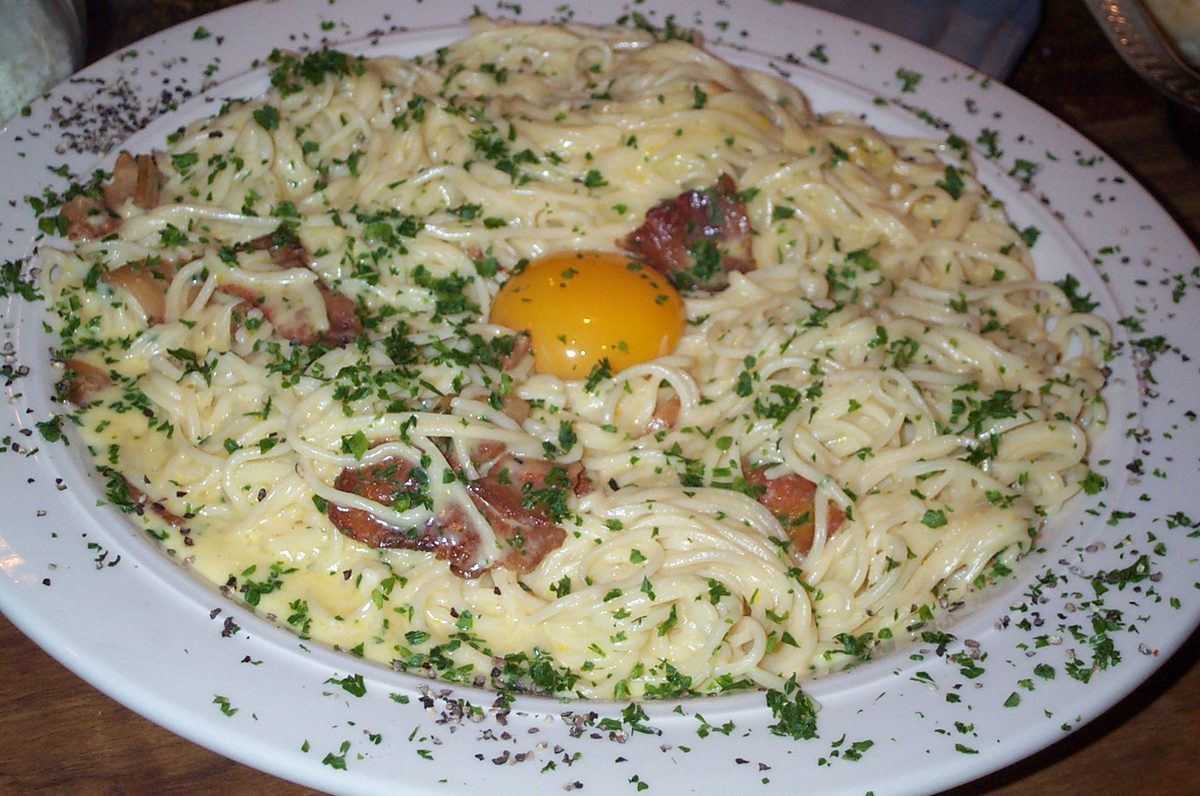
Hannah Brooks has spent fifteen years travelling, living and writing across Europe, from the Arctic tip of Norway to the south of Sicily. She has planned hundreds of European itineraries for readers and is Senior Europe Editor at EuropeanTourism.org.
Photo credits
- The Colosseum in Rome, the first big ticket on any italy itinerary 10 days long · Photo: Wilfredor (CC0) via Wikimedia Commons
- Crowds around the Trevi Fountain in Rome at midday · Crowds at the Trevi Fountain, Rome · Photo: Ypsilon from Finland (CC0) via Wikimedia Commons
- The striped marble facade of Siena Cathedral in Tuscany · Photo: Raimond Spekking · CC BY-SA 4.0 via Wikimedia Commons
- St Peter’s Basilica and Square in Vatican City, Rome · Photo: Wouter Engler · CC BY-SA 4.0 via Wikimedia Commons
- The Baptistery, Giotto’s campanile and the dome of Florence Cathedral on Piazza del Duomo · Photo: Gzen92 · CC BY-SA 4.0 via Wikimedia Commons
- Florence at dusk from Piazzale Michelangelo, with the Arno and the cathedral dome lit up · Photo: Diego Delso · CC BY-SA 4.0 via Wikimedia Commons
- The Uffizi courtyard in Florence looking toward the tower of Palazzo Vecchio · Photo: Verum3414 · CC BY 4.0 via Wikimedia Commons
- Michelangelo’s David under the skylight of the Tribuna in the Accademia Gallery, Florence · Photo: Dimitris Kamaras from Athens, Greece · CC BY 2.0 via Wikimedia Commons
- A bistecca alla fiorentina, the thick-cut Tuscan T-bone, served rare · Photo: Lucarelli · CC BY-SA 3.0 via Wikimedia Commons
- The medieval tower skyline of San Gimignano, a day trip from Florence · Photo: Thomas Quine · CC BY 2.0 via Wikimedia Commons
- The cathedral and Leaning Tower on the lawn of the Piazza dei Miracoli in Pisa · Photo: Ввласенко · CC BY-SA 3.0 via Wikimedia Commons
- A cypress-lined gravel road across the clay hills of the Val d’Orcia in Tuscany · Photo: Fabrizio Lunardi · CC0 via Wikimedia Commons
- The cliffside village of Vernazza in the Cinque Terre, Liguria · Photo: WikiLucas00 · CC BY-SA 4.0 via Wikimedia Commons
- Manarola stacked above its harbour in the Cinque Terre · Photo: Davcio · CC BY-SA 3.0 via Wikimedia Commons
- The Grand Canal in Venice, Italy · Photo: Didier Descouens (CC0) via Wikimedia Commons
- The shopfront of Cantine del Vino gia Schiavi, a historic bacaro serving cicchetti in Dorsoduro, Venice · Photo: Tim Sackton · CC BY-SA 2.0 via Wikimedia Commons
- The campanile, Doge’s Palace and Marciana Library on the San Marco waterfront in Venice · Photo: Wolfgang Moroder · CC BY-SA 3.0 via Wikimedia Commons
- Gondolas passing the Rialto Bridge on the Grand Canal in Venice · Photo: Wolfgang Moroder · CC BY-SA 3.0 via Wikimedia Commons
- Brightly painted fishermen’s houses along a canal on Burano in the Venetian lagoon · Photo: Jorge Franganillo · CC BY 2.0 via Wikimedia Commons
- A vaporetto waterbus on Venice’s Grand Canal · Photo: Jean-Pol GRANDMONT · CC BY 4.0 via Wikimedia Commons
- The ruins of Pompeii with Mount Vesuvius behind, Campania · Photo: Unknown authorUnknown author (CC0) via Wikimedia Commons
- The cliffside town of Positano on Italy’s Amalfi Coast · Photo: Cris Saur crisaur · CC0 · via Wikimedia Commons
- The rooftops of Amalfi town below the cathedral bell tower · Photo: Nick Amoscato · CC BY 2.0 · via Wikimedia Commons
- Lake Como and the village of Varenna in northern Italy · Photo: Ray in Manila · CC BY 2.0 via Wikimedia Commons
- A plate of fresh Italian pasta · Photo: stu_spivack · CC BY-SA 2.0 via Wikimedia Commons