Loire Valley Travel Guide: 20 Chateaux, Real 2026 Prices and How to See Them
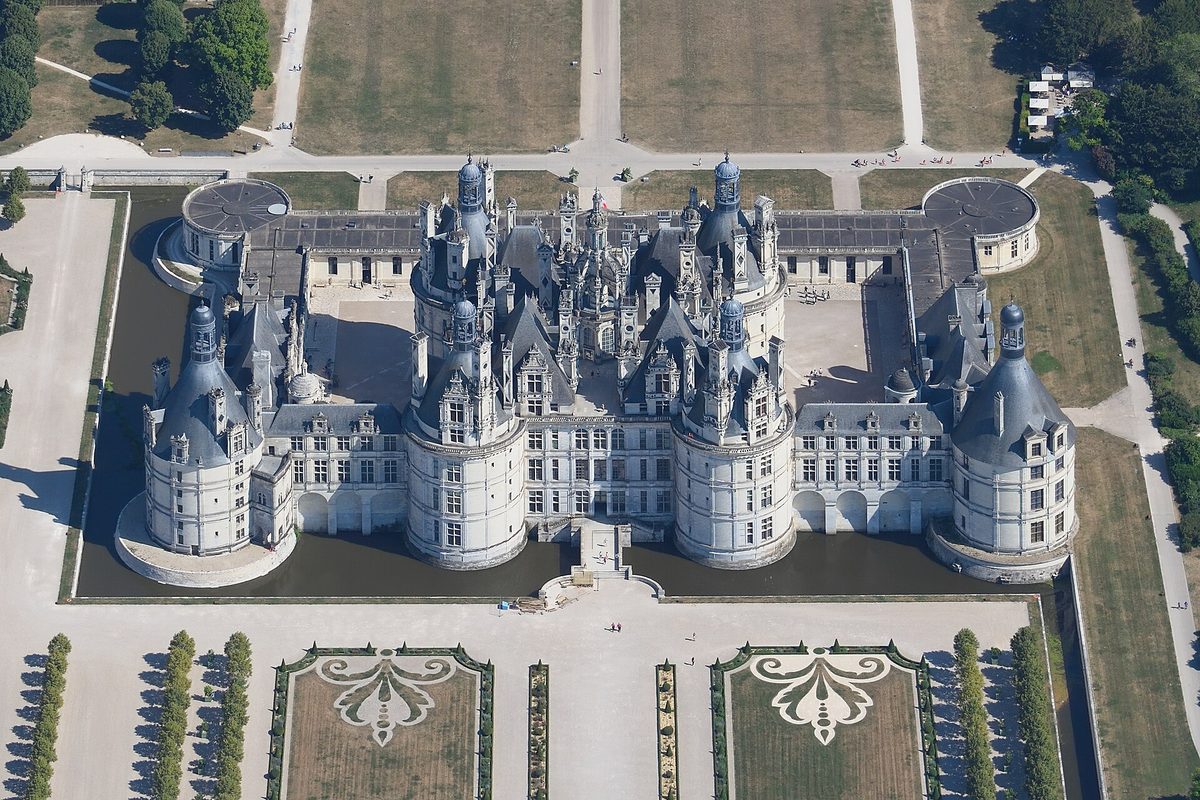
The first time I drove into the Loire Valley I made every mistake going. Three châteaux booked for one day, Chambord at eleven on a Saturday in August, forty minutes hunting a parking space, and by the time I reached the double-helix staircase I was too hot to look at it properly.
Loire Valley travel works best slowed down: two châteaux a day, a base with a train station, and the leftover hours in a tuffeau cellar with a glass of Chenin. I have been back a dozen times since, in every month except January, and the thing I got wrong that first time was not the itinerary. It was the assumption that this is a place you tick off. The slow version is also the cheaper one.
This guide covers 20 châteaux with 2026 admission prices, the train and shuttle options that let you do this without a car, a month-by-month read on when to go, the wine regions worth a detour, and the running costs of a week here. Every price below comes from an official ticket page or a named source, checked in August 2026, and the handful I could not confirm are flagged where they appear.
What people actually mean by the Loire Valley
The name gets used loosely, which is the root of a lot of bad planning. Three different definitions are in circulation.
The UNESCO property. In 2000, UNESCO inscribed “The Loire Valley between Sully-sur-Loire and Chalonnes” under criteria (i), (ii) and (iv). That is a 280 km stretch of river running from Sully, east of Orléans, west to Chalonnes, past Angers. The property covers 86,021 hectares with a buffer zone of 213,481 hectares, and a minor boundary modification was made in 2017. The listing names Sully, Orléans, Blois, Amboise, Tours and Saumur inside it. Chambord had been inscribed separately before and is now part of the wider property.
The château country tourists picture. This is smaller: roughly Blois to Chinon, about 90 minutes of driving end to end, holding Chambord, Chenonceau, Villandry, Amboise, Azay-le-Rideau, Cheverny and Chaumont. If you have three days, this is your map.
The wine Loire. This one is enormous and reaches well outside the UNESCO line, from Sancerre in the east to Muscadet near Nantes on the Atlantic. Around 70,000 hectares of vines and roughly 80 appellations. Sancerre is a two-hour drive from Tours and belongs to a different trip.
The Michelin Guide puts the number of châteaux in the valley at around 300, of which roughly 100 open to the public. Nobody sees them all. This guide picks 20 that justify a ticket, and the by-traveller table further down says plainly which of them to skip depending on who you are.
All 20 châteaux of the Loire Valley at a glance
Prices are adult full rates for 2026, taken from official ticket pages where those pages render properly. Several official sites, including Villandry’s English pages, Clos Lucé, Blois, Chaumont and Azay-le-Rideau, serve JavaScript that a plain fetch cannot read, so a few figures below come from regional tourist board listings instead. I have flagged the shakier ones in the sections that follow. Treat the table as a shortlist tool and confirm on the day you book.
| Château | Adult entry 2026 | Free or reduced for | Season | Worth knowing | Why you would go |
|---|---|---|---|---|---|
| Château de Chambord | €21 EEA / €31 non-EEA | Under 18s; EU citizens under 26 | All year except 1 Jan and 25 Dec | Last admission 30 min before close | 440 rooms, a double-helix staircase and a rooftop you can walk |
| Château de Chenonceau | €19 with leaflet, €24 with audioguide | Under 7s | All year, daily | No published last-admission time | The gallery built straight across the River Cher |
| Château de Villandry | €14 château and gardens, €8.50 gardens only | Under 8s | Château 7 Feb to 11 Nov and 28 Nov to 3 Jan; gardens all year | Gardens 09:00 to 19:00 Apr to Sep | The Renaissance kitchen garden, laid out like embroidery |
| Château Royal d’Amboise | €17.30 including HistoPad tablet | Under 7s | All year | Discount with a recent SNCF or Rémi ticket | Leonardo da Vinci’s presumed grave and a terrace over the river |
| Château du Clos Lucé | €20 | Under 7s | All year | Combined ticket with Amboise sold online only | Leonardo’s last house, with his machines rebuilt in the park |
| Château de Sully-sur-Loire | €10 self-guided, €12 guided | Under 6s; wheelchair users and companions | All year | Family ticket €24 self-guided | A moated fortress at the eastern gatepost of the UNESCO stretch |
| Domaine de Chaumont-sur-Loire | €21 high season, €15 low season | Under 12s at €4; students and jobseekers at €13 | All year, festival 22 Apr to 1 Nov 2026 | Festival entry is inside the standard ticket | The International Garden Festival, 35th edition in 2026 |
| Château Royal de Blois | €16 | Under 6s | All year | Son et lumière runs Apr to Sep and late Oct | Four centuries of architecture around one courtyard |
| Château de Cheverny | €15.50, or €20.50 with the Tintin exhibition | Under 7s; disability card holders | 365 days a year, including 25 Dec and 1 Jan | Tickets on site only, no advance booking | The model for Marlinspike Hall, still lived in |
| Château de Beauregard | €14 | Under 5s | Seasonal | Children 5 to 13 pay €5 | A gallery of 327 painted portraits, and almost no queue |
| Cité Royale de Loches | €12.50 | Reduced rate €10.50 | All year | Two monuments, one ticket | A brutal keep and a royal lodge on the same hilltop |
| Château de Valençay | €14.50 | Ages 4 to 6 at €5; students, teachers and jobseekers at €11.50 | Seasonal, check before travelling | Reduced €11.50 for students and jobseekers | Talleyrand’s estate, well south of the river crowds |
| Château d’Azay-le-Rideau | €16 Apr to Sep, €13 Oct to Mar | Under 18s of any nationality; EU residents 18 to 25 | All year | Free first Sunday of the month, Jan to Mar and Nov to Dec | A Renaissance island reflected in its own moat |
| Château de Langeais | €12, rising to €13 from 11 Jul to 30 Aug | Under 6s; wheelchair users | Closed Mondays Feb to Mar and Oct to Nov; weekends only in Jan | Last admission 1 hour before close | A real drawbridge and the wedding that annexed Brittany |
| Château d’Ussé | €14.50 | Under 8s | Roughly mid-Feb to mid-Nov | Last admission 1 hour before close | The Sleeping Beauty castle, and dogs come inside |
| Forteresse Royale de Chinon | €12.50, or €11.50 if you arrive by bike | Under 7s; jobseekers | All year, 10:00 to 17:00 in deep winter | €10.50 with a same-day TER Centre ticket | Where Joan of Arc met the future Charles VII in 1429 |
| Château du Rivau | €13.50, or €12 preferential | Under 5s | Seasonal | Children 5 to 18 pay €7.50 | Fairytale gardens designed for children who hate châteaux |
| Abbaye Royale de Fontevraud | €12 abbey only, from €17 with the art museum | Under 18s and students under 25 | All year | Book the museum combination if you like modern art | The painted tombs of Eleanor of Aquitaine and Richard the Lionheart |
| Château de Montsoreau | €12 | Children 5 to 18 at €8; students and jobseekers at €10.20 | All year | Reduced €10.20 for students and jobseekers | Built in the riverbed itself, now a contemporary art museum |
| Château-Musée de Saumur | €9.50 | Reduced rate €7 for students and jobseekers | All year | The cheapest big name on this list | A white castle on a bluff, straight out of a book of hours |
Two things in that table deserve pulling out, because both catch people out.
Chambord now charges non-EEA visitors close to half as much again. Since 14 January 2026 the château has run an experimental two-tier scheme, valid to 31 December 2026: EEA nationals and residents pay €21, everyone else pays €31. Reduced rates follow the same split at €18.50 and €28.50. If you hold an EU passport and are under 26, you go in free. An American couple in their thirties will pay €62 where a French couple pays €42. That is worth knowing before you build a day around it.
Last admission is not a formality. Chambord stops selling tickets 30 minutes before closing and shuts the formal gardens 30 minutes early on top of that. Langeais and Ussé both cut off a full hour before the gates. I have watched people arrive at Langeais at 17:15 for an 18:00 close and be turned away, which is a long drive for nothing.
How long you need for Loire Valley travel
Three days for the classic run, five if you want to add wine and the western châteaux, and a week if you are cycling. One day from Paris is possible but I would not sell it to you as a good idea.
| Length of trip | What fits comfortably | Base | Verdict |
|---|---|---|---|
| Day trip from Paris | One château, or Chambord plus a rushed Blois | Paris | Doable by train to Blois in about 1 h 30 min, but you will spend more of the day in transit than in a château. Only worth it if you have no other option. |
| Two days | Chambord, Chenonceau, Blois or Amboise | Amboise or Blois | The minimum that feels like a trip rather than an errand. Two châteaux a day, no more. |
| Three days | Six of the big names plus one town evening | Amboise | The sweet spot for a first visit. Chambord and Cheverny one day, Chenonceau and the Amboise pair the next, Villandry and Azay the third. |
| Five days | The big five, Chinon or Fontevraud, a wine morning, one slow town day | Tours or Amboise | My preferred length. You stop measuring the trip in châteaux and start noticing the villages. |
| One week | East to west along the river, or a cycling section of La Loire à Vélo | Move once, Blois then Saumur | Best done as a linear route rather than a hub. Two bases beat one. |
My rule after a dozen visits: two stops a day is a pleasure, three is a chore, four is a story you tell about a bad holiday. Two châteaux in the same town count as one stop, which is why Amboise’s royal château and Clos Lucé, 500 metres apart, can share an afternoon without breaking it. Each big site takes 90 minutes to two hours if you look at it properly, and the driving between them eats 30 to 45 minutes a leg. A four-stop day is nine hours of moving.
Where to base yourself
Amboise is where I send most first-timers. It has a railway station on the Tours line, a walkable centre, Clos Lucé and the royal château inside the town, and Chenonceau fifteen minutes away. The downside is that it fills up: in July the main street is a slow river of people between eleven and four. Entry-level hotel rates here start low, though the aggregator figures I found (from roughly $62 to $107 depending on which site you ask) are lead-in prices rather than a realistic mid-range average, and I would budget more.
Tours is the practical base. It is the transport hub, it has the widest choice of restaurants, it has a real city’s worth of life in the evening, and the Place Plumereau old quarter is a pleasure to sit in at dusk. It is also the least château-ish place to sleep, which bothers some people more than others.
Blois works if you are doing the eastern half. Direct trains from Paris Austerlitz take around 1 h 30 min, with five direct services a day, and the Rémi shuttle to Chambord and Cheverny leaves from the station. The town itself is steeper and quieter than Amboise.
Saumur is the underrated one. It sits at the western end, near Fontevraud, Montsoreau and the troglodyte wine cellars, and it costs less than anywhere in Touraine. If you are here for wine as much as architecture, base here for the second half of the week.
For a wider view of how this fits into a French trip, our France travel guide covers the regions in sequence, and the best places to visit in France piece ranks the Loire against the alternatives.
Getting to the Loire Valley from Paris
This is easier than it looks on a map. Two Paris stations serve the valley and they go to different halves of it.
| Route | From | Journey time | Frequency | Good for |
|---|---|---|---|---|
| Paris to St-Pierre-des-Corps (Tours) | Montparnasse | 57 min fastest, about 1 h 29 min typical | Around 18 services a day | Tours, Amboise, Villandry, Azay, Chinon, the whole western half |
| Paris to Tours centre | Montparnasse | About 1 h 12 min | Frequent, some via a shuttle from St-Pierre-des-Corps | Staying in Tours itself |
| Paris to Orléans | Austerlitz | 1 h 04 min fastest on OUIGO, 1 h 16 min average | Around 21 a day | Sully-sur-Loire and the eastern end |
| Paris to Blois | Austerlitz | Around 1 h 30 min direct | 5 direct services a day | Chambord, Cheverny, Chaumont, Beauregard |
| Tours to Amboise | Tours | 18 min fastest, about 30 min average | Around 17 a day | Hopping between the two best bases, roughly 24 km apart |
The Tours to Amboise TER fare starts around €3 to €4 one way, which is the cheapest useful thing in this guide. The Langeais château site quotes 55 minutes for Montparnasse to St-Pierre-des-Corps, marginally faster than the aggregator figure; either way you are in the valley inside an hour and a half of leaving Paris. If you are combining this with a city stay, our 3-day Paris itinerary and the things to do in Paris guide slot in neatly before or after, and train travel in Europe covers how the French network connects onward.
Can you visit the Loire Valley without a car?
Yes, with two caveats. You will see fewer châteaux per day, and you will need to plan around the shuttle season.
The Rémi Navette Châteaux is the piece most guides omit entirely, and it is the difference between a car-free trip working and not. It runs from Blois SNCF station and serves Chambord, Cheverny and Beauregard. Adult fare is €3.40 per boarding. The catch is the season: it runs roughly 2 April to 30 August, several days a week, not year round. I could not reach the official Rémi timetable page to confirm the exact 2026 running days or whether a day pass exists, so check with the Blois tourist office before you build a day around it.
Two train discounts are easy to miss. Château Royal d’Amboise gives a reduction to anyone holding an SNCF or Autocar Rémi ticket dated within the previous three days. Chinon drops its full price of €12.50 to €10.50 for holders of a same-day TER Centre ticket. Keep your tickets: they are worth money at the gate for three days.
What the train reaches directly. Amboise, Blois, Chinon, Langeais, Saumur, Onzain (for Chaumont, a walk across the bridge), Azay-le-Rideau (station about 2.5 km from the château) and Tours all have stations. Chambord, Cheverny, Villandry and Ussé do not, which is why the shuttle and the bike matter.
If you would rather drive, the valley is excellent road-trip country: flat, well signed, and short between stops. Our Europe road trips guide has the wider routing, and getting around Europe compares the trade-offs of car against rail across the continent.
Balloons, guided tours and the ways in that are not a hire car
Hot-air ballooning is the one splurge here I would defend. The valley is flat, the wind is usually gentle at dawn and dusk, and operators fly out of Amboise, Chenonceau, Chaumont and Chambord between roughly April and October. Flights go at sunrise or in the two hours before sunset, last about an hour in the air with three hours door to door, and are cancelled far more often than people expect, so book early in your stay and keep a spare morning. I have not been able to source current 2026 operator pricing to a page I trust, so I am not going to quote you a figure; ask the tourist office in Amboise or Blois, both of which take bookings.
Guided day tours from Paris exist in volume and are the right answer for exactly one type of traveller: someone with a single free day, no licence, and no appetite for timetables. You will typically get Chambord and Chenonceau, sometimes with a wine stop, and you will spend around five hours on a coach. If you have two days or more, the train to Amboise plus a half-day minibus tour from Tours or Amboise covers the same ground with less of your life spent on the A10.
Half-day minibus tours from Tours or Amboise are the underrated middle option. They run in small groups, they solve the Villandry and Ussé problem for car-free travellers, and the local tourist offices at Tours, Amboise and Blois all sell them. Book through the office rather than a reseller and you will pay less.
La Loire à Vélo, and why cycling beats driving here
Cycling solves the two problems driving creates in this valley: parking at the big sites, and the fact that the best of the Loire is the stretch between châteaux, which you cannot see from a road. The signed cycle route runs 900 km from Cuffy, near Nevers, to Saint-Brevin-les-Pins on the Atlantic, signposted in both directions. You will also see it described as Nevers to Saint-Nazaire; the official pairing is Cuffy to Saint-Brevin, and the discrepancy is about where the route formally starts and ends rather than a different road.
The terrain is flat, which is the point. Blois to Amboise is around 30 km and passes Chaumont on the way, which makes an easy day even for people who have not been on a bike since school. Bike hire from Détours de Loire runs about €16 a day. Luggage transfer runs roughly €15 to €30 a bag up to 23 kg through France Vélo Tourisme’s listed operators, though Les Vélos Verts, which picks up from the Orléans tourist office, quotes €8 per bag per day. Détours de Loire only sells luggage transfer alongside a bike rental, with transfers between 10:00 and 16:00 daily.
The châteaux have noticed. Chinon knocks €1 off for cyclists who show a photo of themselves with their bike at reception, bringing the ticket to €11.50. Langeais has free bicycle parking on rue Foulque Nerra. Sully-sur-Loire has a bike garage in the park and free water-bottle refills. Chambord’s bicycle parking is free while cars pay €8 a day. There is also a “Train Loire à Vélo” service carrying bikes free on the Interloire line from mid-June to mid-September, which turns a linear cycle into something you can bail out of.
For more on this style of trip, see our guides to hiking in Europe and the best Europe travel routes.
The five châteaux that carry the trip
1. Château de Chambord
Nothing prepares you for the scale. François I broke ground in 1519 and the thing was still going up in 1547; it ended with 440 rooms, 282 fireplaces and 84 staircases, of which rather more than 60 rooms are open. The estate around it runs to 5,440 hectares of walled forest, listed by UNESCO as part of the wider Loire Valley property. Chambord’s own pages give both 5,440 and 5,500 hectares in different places, which tells you something about how hard the building is to pin down.
The double-helix staircase is the reason to come. Two spirals wind around a common core without ever meeting, so two people climbing simultaneously can see each other through the openings but never cross. It is attributed to Leonardo da Vinci and the attribution is contested: Leonardo died at Amboise on 2 May 1519, about 40 km away, and construction started that September. Chambord’s own site hedges it as built “with the spirit of Leonardo da Vinci”, which is a diplomatic way of saying nobody has the drawings.
Practical. Open every day except 1 January and 25 December. High season, 28 March to 25 October 2026, is 09:00 to 18:00; 4 January to 27 March and 26 October to 18 December are 09:00 to 17:00; and the Christmas run, 19 December 2026 to 2 January 2027, goes back to 09:00 to 18:00, except 24 and 31 December when it closes at 16:00. There are four Monday closures in early 2026: 2 February and 9, 16 and 23 March. Last admission is 30 minutes before close and the formal gardens shut 30 minutes before that. Parking is €8 a day in P0, P2 and P3, free for disabled visitors and for bicycles, and there is a €10 ten-ticket parking card valid a year. An English-language guided tour runs daily at 11:15 in July and August and takes an hour. The ground floor is accessible by ramp, with wheelchairs and seat sticks available to rent.
Crowds. Chambord drew around 1.22 million visitors in 2025, up 2.63% on 2024 and its fourth consecutive record year. It is the most-visited château in the valley by a distance. Arrive before 09:30 in July and August or accept the car park queue. Three things to diary if you are here in 2026: the horse show season runs 4 April to 27 September and 17 October to 1 November; Christmas at Chambord runs 28 November 2026 to 3 January 2027; and the Chambord Live concerts on 26, 27 and 28 June (Orelsan, Maroon 5 and DJ Snake) close the roads from 13:00 and shut the château at 18:00.
2. Château de Chenonceau
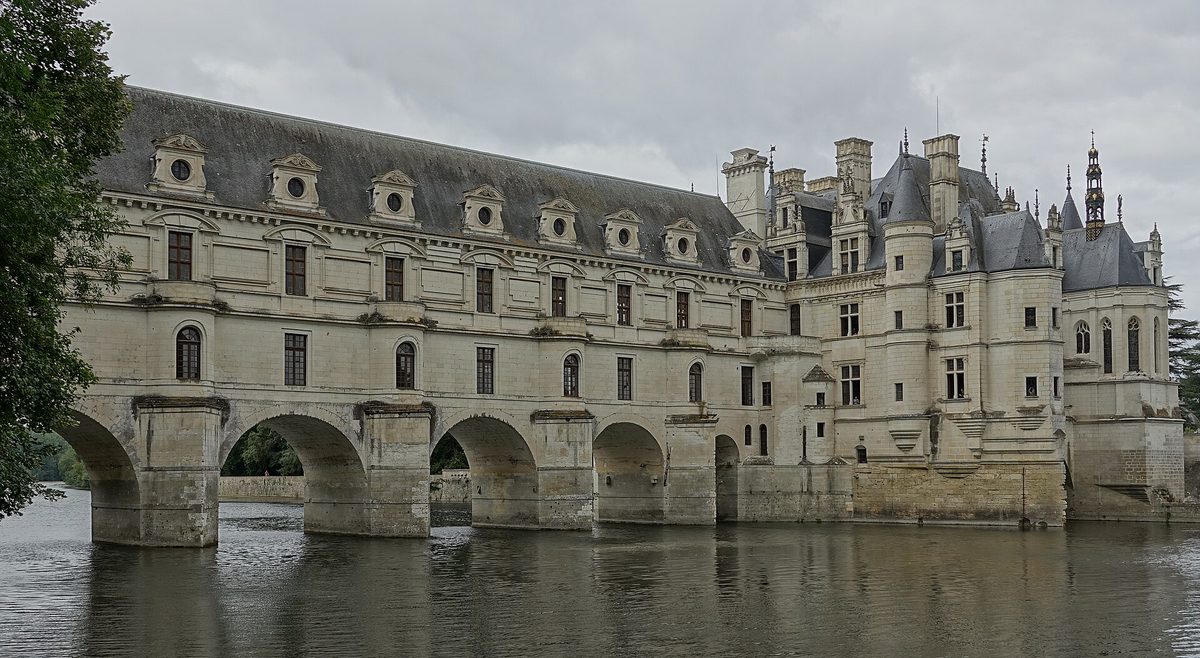
If Chambord is about power, Chenonceau is about taste. Thomas Bohier bought the site on 7 February 1512 and the earliest section went up between 1513 and 1521, largely supervised by his wife Katherine Briçonnet while he was away campaigning in Italy. It was built on the foundations of an old mill and later extended clean across the River Cher on a gallery designed by Philibert de l’Orme. It is the only château in France built across a river, and standing in that gallery with water moving under the floor is the single best moment in the valley.
It is known as the Château des Dames, and the women in its history are more interesting than most of the kings elsewhere. During the Second World War the Cher marked the demarcation line between occupied France to the north and the free zone to the south, which meant the gallery physically spanned the border. The Menier family, the chocolate people, have owned it since 1913 and still do.
You will read that it is the most-visited privately owned château in France. I could not find a primary source for that, so I am not going to repeat it as fact. What is documented is that it draws around 800,000 visitors a year against Chambord’s 1.22 million. Chambord’s own 2025 press material claims the title of second most-visited château in France for itself.
Practical. Adult entry is €19 with a printed leaflet or €24 with the audioguide; seniors over 65 and students pay €16 and €21. Under-7s are free, children 7 to 18 pay €15 or €20. Disabled visitors go free with a card and a companion pays €16. Open every day of the year. Peak hours, 4 July to 23 August 2026, are 09:00 to 19:00; 4 April to 3 July is 09:00 to 18:00; 28 September to 1 November is 09:00 to 17:30; and the winter minimum, 5 January to 3 April and 2 November to 4 December, is 09:30 to 16:30. It extends to 19:00 on the Easter, 1 and 8 May, Ascension and Pentecost weekends. The official hours page publishes no last-admission time, which is unusual and worth a phone call if you are cutting it fine.
What most people miss. There is a fine-dining restaurant, L’Orangerie, on site, plus covered and open picnic areas if you would rather not. Three free EV charging terminals and free lockers. The Nocturnal Promenades open the illuminated gardens on summer weekend evenings to music by Arcangelo Corelli. And you can get out on the Cher itself with La Bélandre or a self-drive electric boat, which gives you the reflection shot everyone else is trying to take from the bank.
3. Château de Villandry
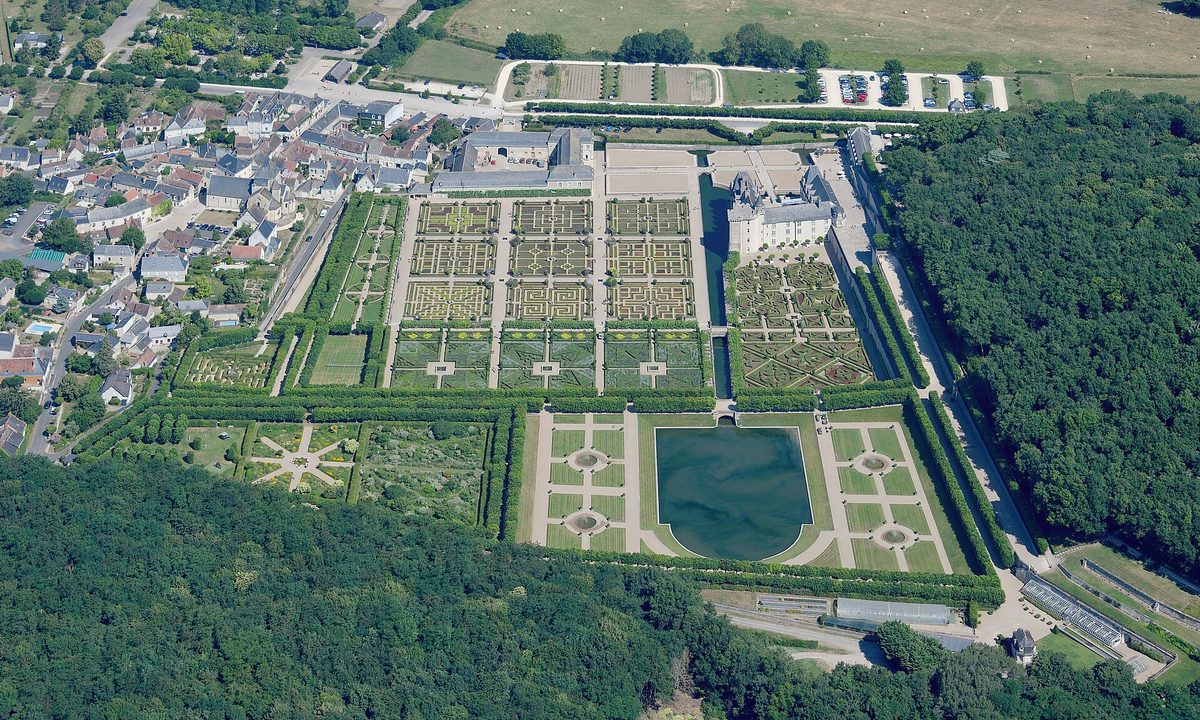
Come for the gardens, and be honest with yourself that the château is a supporting act. The Renaissance kitchen garden is laid out in geometric beds of vegetables treated as ornament, and it changes twice a year, so a June visit and a September visit look like different places.
Practical. Adult entry is €14 for château and gardens, or €8.50 for gardens only, with under-8s free. The château is open 7 February to 11 November 2026 and again 28 November to 3 January 2027, closed 25 December, which leaves sixteen days, 12 to 27 November when the building is shut and the gardens are not. The gardens open every day, all year, 09:00 to 19:00 from April to September. Villandry was awarded Tourisme & Handicap status in 2022: the ground-floor château rooms are fully wheelchair accessible and there is a step-free garden route of about 1.5 km. Dogs are allowed on a leash in the gardens and inside if carried.
One caveat on the pricing: chateauvillandry.fr’s English pages serve content dating to 2015 and rendered as an empty body when I tried to fetch them cleanly. The €14 figure is the best I could source but I would confirm it at the ticket desk.
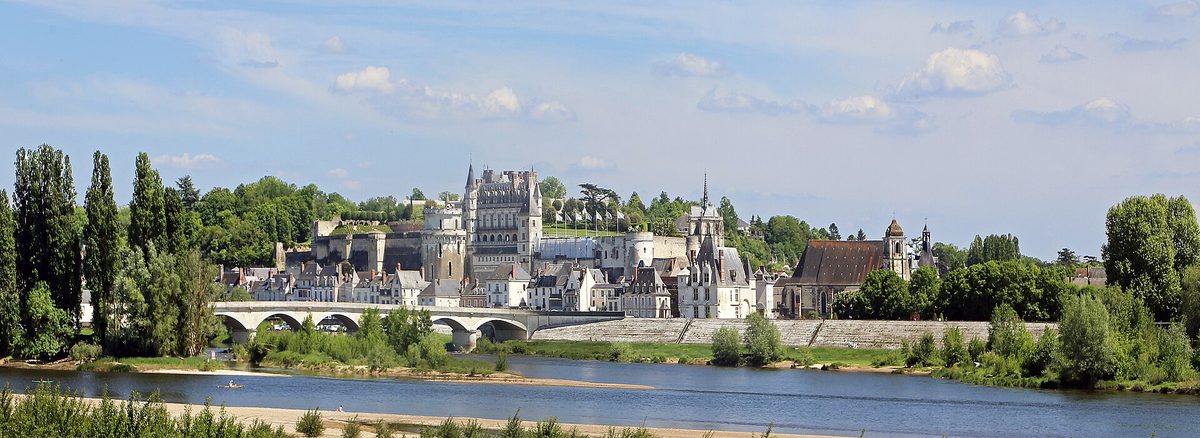
4. Château Royal d’Amboise
The royal château sits on a bluff over the town with a terrace that gives you the best free view in the valley from just outside its walls. Inside, the small chapel of Saint-Hubert holds what are believed to be Leonardo da Vinci’s remains. It is a shorter visit than Chambord or Chenonceau, about an hour, which makes it a good afternoon add-on rather than a day in itself.
Practical. Adult entry with the HistoPad tablet is €17.30 in 2026. Students pay €14.40, children 7 to 18 pay €11, under-7s are free, and disabled visitors with a companion pay €13.10. An annual season ticket is €31, which pays for itself on the second visit. Show an SNCF or Autocar Rémi ticket dated within three days for a reduction. Combined tickets with Clos Lucé, and with Clos Lucé plus Chenonceau, are sold online only. The château publishes a public accessibility register as a PDF, updated in 2026, which is more transparency than most of its neighbours manage.
5. Château du Clos Lucé
Five hundred metres up the hill from the royal château is the manor where Leonardo spent his last three years as guest of François I, arriving in 1516 and dying there in 1519. The house itself is modest. The draw is the park, where his machines have been built at full scale and children are allowed to work the mechanisms.
Practical. Adult entry is €20, children 7 to 18 pay €15, under-7s free. It appears in two online-only combinations: Amboise plus Clos Lucé, and Chambord plus Chenonceau plus Clos Lucé. This is the one château in the valley I would put at the top of a list for families with children between six and twelve; it is also the one where I have seen adults enjoy themselves most obviously. Note that the official site is another JavaScript shell, so the €20 comes from the Amboise tourist board listing rather than the château’s own page.
The fifteen other châteaux worth a ticket
These are ordered roughly east to west, which is also the order you would meet them driving down the river.
6. Château de Sully-sur-Loire
Water still stands in the moat on every side, which almost none of the others manage. Self-guided entry is €10, guided €12, reduced €6 and €8, and there is a family ticket at €24 self-guided or €30 guided for two adults and two children. Under-6s are free, as are wheelchair users and their companions. Students up to 25 and children 6 to 17 get the reduced rate. Be aware the guided route involves 235 steps, though there is seating in every room. Medieval Days run 1 and 2 August 2026. Dogs are not allowed inside, reception included, unless small enough to carry in a bag; guide and assistance dogs are accepted. There is a bike garage in the park and free water-bottle refills.
7. Domaine de Chaumont-sur-Loire
The one I would push hardest on people who think they are bored of châteaux. Chaumont runs the International Garden Festival from 22 April to 1 November 2026, its 35th edition, on the theme “The garden, star of the show”, exploring links between gardens and cinema. Roughly 24 ephemeral festival gardens are built each year alongside 13 permanent ones. The festival is included in the standard ticket rather than charged separately: €21 adult, €13 reduced, €4 to €13 for children in high season, dropping to about €15 from November to late April when you get the château, historic park and outbuildings but not the festival. It is about 1.5 km and twenty minutes over the bridge from Onzain station, or you can take the station shuttle, which makes it one of the easiest big sites to reach by train.
8. Château Royal de Blois
Four building campaigns across four centuries, arranged around one courtyard, so you can stand in one spot and look at Gothic, Flamboyant, Renaissance and Classical facades in a single turn. Adult entry €16, children 6 to 17 €8, under-6s free. The son et lumière, “Ainsi Blois vous est conté”, runs 4 April to 26 September 2026 and again 17 to 31 October, dark on 21 June, 29 August and 12 September, starting at 22:00 in April and September and 22:30 from May to August. Adult tickets from €13, children from €8. The château’s site claims simultaneous audio translation in nine languages, though that came off a page that has not been updated since 2019, so confirm it if you need it. The same staleness applies to the ticket price: Blois is the site I have least confidence in anywhere above, and I would check at the door.
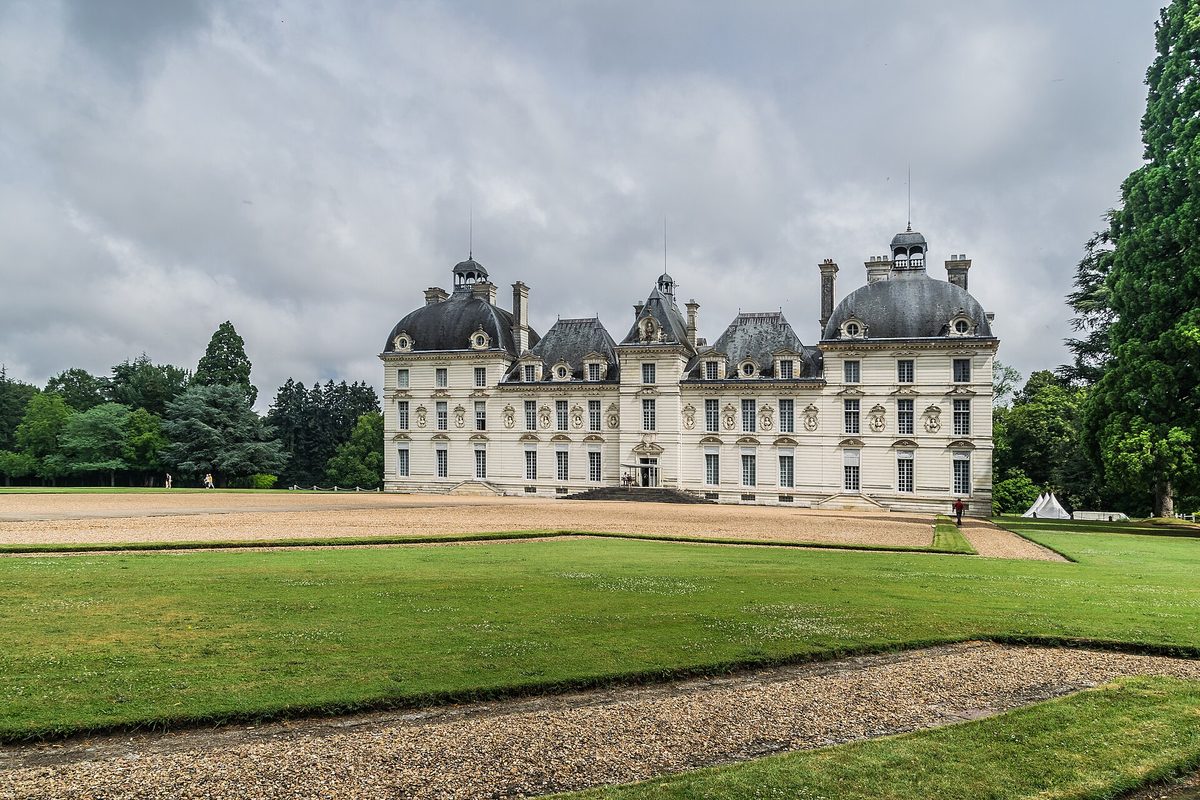
9. Château de Cheverny
Still lived in by the same family, which you can feel in the rooms. Hergé used it as the model for Marlinspike Hall, and there is a permanent Tintin exhibition to prove it. Adult entry is €15.50 for château and gardens, €20.50 with “Les Secrets de Moulinsart”, and €26 for the full combination including a guided park tour; reduced rates are €11.50, €16 and €21. A Carte Privilège is €63 full or €40 reduced. Under-7s and disability card holders go free. It is open 365 days a year including 25 December, 1 January and 1 May, 09:15 to 18:00 from April to September (to 18:30 in July and August) and 10:00 to 17:00 the rest of the year. Two useful details: the château is heated in winter, which almost none of the others are, and parking is free. Tickets are sold on site only, with no advance reservation, so it is the one place a rainy Tuesday cannot be pre-booked away. Around 500,000 tulips come up in the gardens each spring.
10. Château de Beauregard
You can be alone here in August, which is not true of anywhere else on this list. The draw is a portrait gallery of 327 painted faces running the length of an upstairs room, and the shuttle from Blois stops outside. Adult entry €14, or €13 preferential; children 5 to 13 pay €5, under-5s free. You will have it close to yourself even in August.
11. Cité Royale de Loches
One ticket buys two monuments on the same hilltop: a 36-metre keep that served as a prison for centuries, and the royal lodge where Joan of Arc came in May 1429 to persuade Charles VII to go to Reims and be crowned, which he did that July. Full price €12.50, reduced €10.50. It sits south of the river and takes a deliberate detour, which is exactly why it is calm.
12. Château de Valençay
This is Talleyrand’s estate, sitting well south of the tourist corridor and further from the river than anything else here. Adult entry €14.50, reduced €11.50 for students, teachers, jobseekers and disabled visitors, and a €5 “bout’chou” rate for ages 4 to 6. Seasonal opening, so check before committing to the drive.
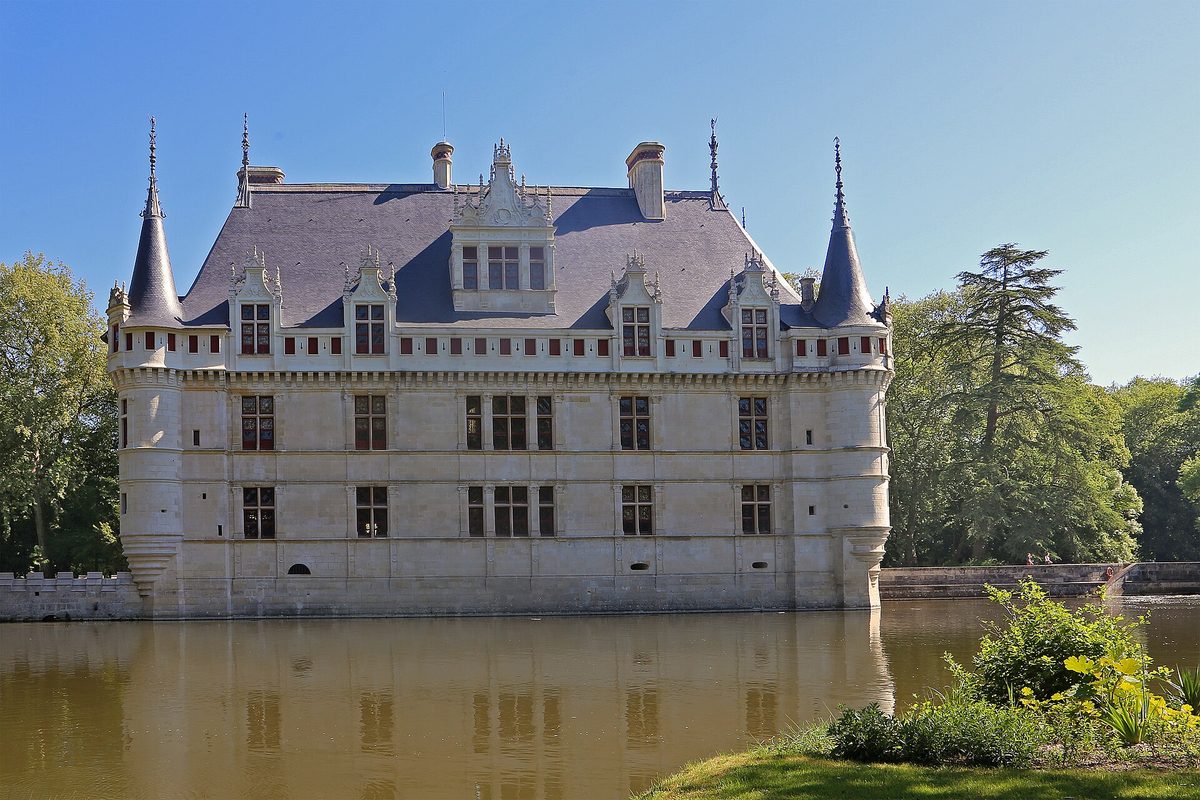
13. Château d’Azay-le-Rideau
Built on an island in the Indre so that the water gives it a perfect double. It is a state monument run by the CMN, which matters for your wallet: entry is €16 from 1 April to 30 September and €13 from 1 October to 31 March, but under-18s of any nationality go free, as do EU nationals and residents aged 18 to 25. CMN monuments are also free for everyone on the first Sunday of the month between 1 January and 31 March and again from 1 November to 31 December. If you are travelling with teenagers in winter, this is close to a free visit.
14. Château de Langeais
The one that still looks like a fortress from the street and a home from the courtyard. Charles VIII married Anne of Brittany here in 1491, on 6 December 1491, an event the château stages with waxworks that are either charming or unsettling depending on your temperament. Adult entry €12, rising to €13 from 11 July to 30 August; reduced €10 or €13 for 18 to 25s and disability card holders; children 6 to 17 €7 or €8; under-6s free. Annual membership is €23. July and August hours are 09:30 to 19:00, and last admission is a full hour before closing. It closes Mondays in February, March, October and November, and opens weekends only in January. Wheelchair users enter free but access is by appointment only, ground floor only, and must be accompanied; some doorways are narrow. Strollers are not allowed in any château room, so bring a carrier. Free bicycle parking on rue Foulque Nerra.
15. Château d’Ussé
Charles Perrault is said to have had this turreted white pile in mind when he wrote Sleeping Beauty, and it does look the part from the road. Adult entry, ages 16 and up, is €14.50, children 8 to 16 €7.50, under-8s free, groups of 20 or more €11.50. Season runs roughly 15 February to 11 November and last admission is an hour before close. It is privately owned, so none of the national free-entry schemes apply here. One nice touch: dogs are welcome in all parts of the château open to the public, inside and out. It is the only site here that takes them into the rooms themselves. Note that the rates page carries a 2024 date and refers to “2025”, so the €14.50 may have moved.
16. Forteresse Royale de Chinon
A ruined fortress on a ridge over the Vienne, where Joan of Arc met the future Charles VII in February 1429. The fortress’s own account is careful: she was received in the king’s private apartments, not the great hall, and the scene of her picking him out of a crowd of courtiers is tradition rather than record. Full price €12.50, reduced €10.50, under-7s free, and free for jobseekers, journalists, ICOM members, Ministry of Culture staff and tour guides. Cyclists who show a photo of themselves with their bike at reception get the “green ticket” at €11.50, and anyone with a same-day TER Centre ticket pays €10.50. A Privilege Pass giving a year’s unlimited access is €25 adult, €20 for 7 to 17s. Summer hours are 09:30 to 19:00; in January, February, November and December it opens 10:00 to 17:00.
17. Château du Rivau
The answer to a child who has announced they are done with castles. The gardens are built around fairytale conceits, at a scale designed for short legs, and there is a real fortress attached. Adult entry €13.50, or €12 preferential; children 5 to 18 €7.50, or €6.50 preferential; under-5s free.
18. Abbaye Royale de Fontevraud
Not a château at all, and the most affecting building in this guide. The painted effigies of Eleanor of Aquitaine, Henry II and Richard the Lionheart lie in the nave. The abbey later spent a century and a half as a prison, and the architecture carries both lives. Entry is €12 for the abbey alone, from €17 combined with the Modern Art Museum, free for under-18s and students under 25.
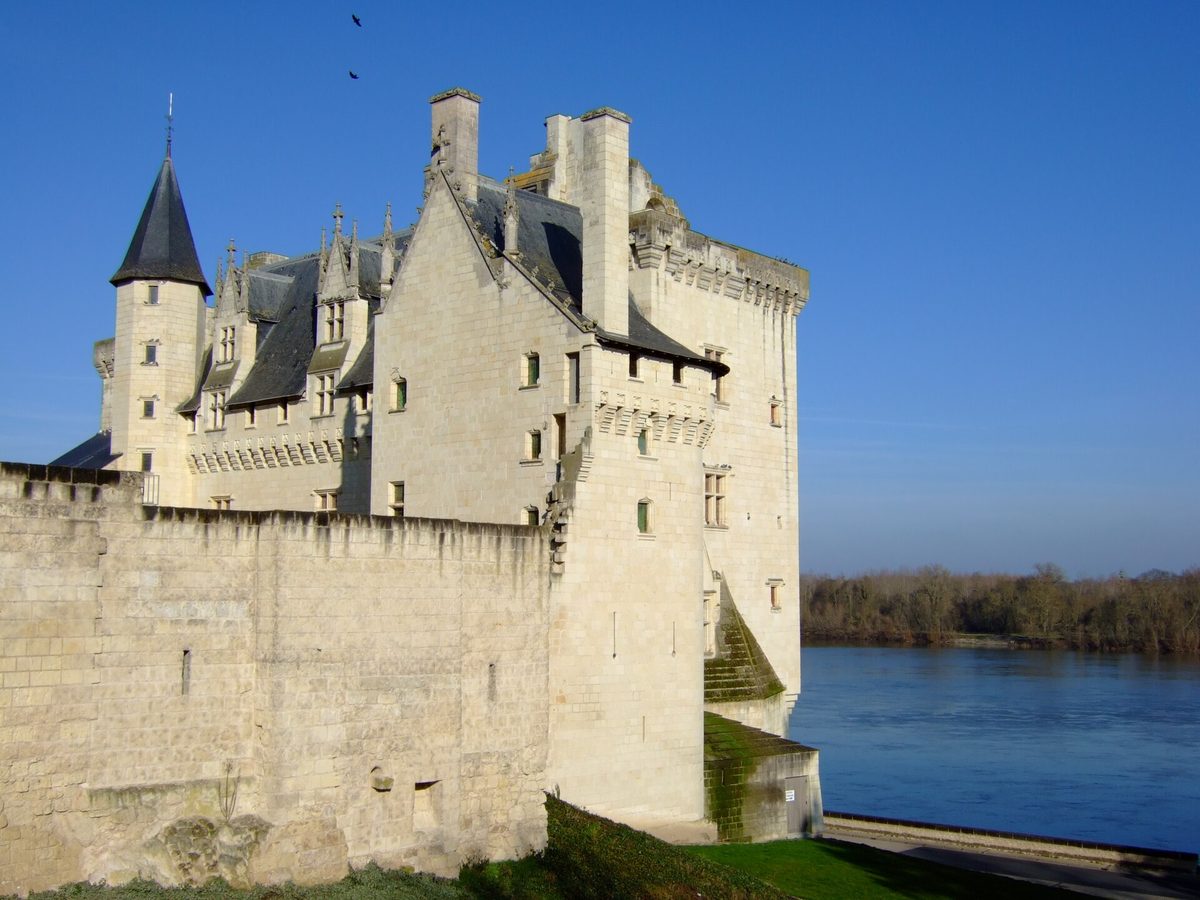
19. Château de Montsoreau
Built directly in the riverbed in 1455, foundations standing in the water rather than a gallery spanning it as at Chenonceau, and now a museum of contemporary art. Adult entry €12, reduced €10.20 for students and jobseekers, children 5 to 18 €8. The clash between fifteenth-century stone and conceptual art is the point; if that sounds like a gimmick, skip it, and if it sounds interesting it is the best two hours in the western valley.
20. Château-Musée de Saumur
Look at the Très Riches Heures, the illuminated book of hours made for the Duc de Berry, and you will find this castle in it, white on its bluff and barely changed. Adult entry €9.50, reduced €7, the cheapest big name in this guide. Saumur beneath it is the base I would pick for a wine-focused second half of the week.
The best time to visit the Loire Valley
April to October is the usable window, and April to June plus September to October is where the good weather and the manageable crowds overlap. July and August are the busiest months by a wide margin.
The climate figures I could source are for Tours, which is representative of the middle valley. Average annual temperature is around 11.5 °C with roughly 700 mm of rain. August is the warmest month, peaking at an average of 24.8 °C, with July and August average highs around 25 °C. February is coldest, with an average low of 2.1 °C, and winter maxima from December to February sit at 7 to 8 °C. December is the wettest month at about 77 mm and July the driest at about 49 mm. I could not obtain a complete month-by-month table for Tours or any monthly figures for Blois, so I am not going to publish one; what follows is a seasonal read built on the figures I do have.
| Season | Weather | Crowds | What is open | My verdict |
|---|---|---|---|---|
| March | Cool, changeable, roughly 12 °C by day | Very quiet | Villandry’s château reopened 7 Feb; Chambord shuts four Mondays; Langeais closed Mondays | Cheap and calm, but gardens are bare and some sites keep reduced hours |
| April to mid-June | Mild, showery, warming through | Building but comfortable | Everything from mid-April; Chaumont’s festival opens 22 April; Blois son et lumière from 4 April | The best window overall. Cheverny’s tulips, long light, no heat |
| Late June | Warm, long evenings | Rising sharply | All sites; note Chambord Live closes the château early on 26 to 28 June | Lovely, with one weekend to avoid at Chambord |
| July and August | Average highs about 25 °C, occasionally above 35 °C | Peak, and it shows | Longest hours everywhere; Chenonceau to 19:00, Langeais to 19:00 | The châteaux have no air conditioning and formal gardens give little shade. Arrive before 09:30 or don’t bother |
| September | Warm days, cool nights, harvest under way | Dropping fast after the first week | Everything; Jazz en Touraine 11 to 20 Sep; Heritage Days 19 to 20 Sep | My favourite month here. Wine country is at its most alive |
| October | Cooling, wetter, good colour in the park at Chambord | Quiet by mid-month | Chaumont’s festival runs to 1 Nov; Azay drops to €13 from 1 Oct | Underrated. Prices soften and the light is excellent |
| November to February | 7 to 8 °C maxima, December the wettest month at about 77 mm | Almost nobody | Ussé closed; Villandry’s château shut 11 to 28 Nov; Langeais weekends only in January; Cheverny open every single day | For a specific kind of trip: Christmas at Chambord, free CMN Sundays, heated rooms at Cheverny |
The winter free-entry point is worth spelling out because it is real money. CMN monuments, which in this valley means Azay-le-Rideau, are free for everyone on the first Sunday of the month from 1 January to 31 March and from 1 November to 31 December. Combine that with Cheverny, which is heated and open on 25 December and 1 January, and a December trip stops looking eccentric.
For how this compares to the rest of the continent, see the best time to visit Europe, and our companion piece on the best time to visit France takes the same approach country-wide.
Loire wine, and where to drink it
Around 70,000 hectares of vines and roughly 80 appellations make this France’s most varied wine region by style. It is also the country’s second-largest producer of sparkling wine after Champagne, and Crémant de Loire is one of the best-value bottles in France.
The geography sorts into three bands. Around Tours it is Chenin Blanc: the whites and sparklings of Vouvray and Montlouis, with Savennières carrying the same grape much further west. Downriver from Tours it is Cabernet Franc: the reds of Chinon, Bourgueil and Saumur-Champigny. Far to the east, past the château country entirely, it is Sauvignon Blanc, which is Sancerre and Pouilly-Fumé.
| Appellation | Grape | Style | Where it sits |
|---|---|---|---|
| Sancerre | Sauvignon Blanc | Taut, mineral white | Far east, about two hours from Tours |
| Pouilly-Fumé | Sauvignon Blanc | Smokier sibling of Sancerre | Far east, opposite bank to Sancerre |
| Vouvray | Chenin Blanc | Dry through sparkling to sweet | Just east of Tours, easy half-day |
| Montlouis-sur-Loire | Chenin Blanc | Vouvray’s quieter neighbour | South bank facing Vouvray |
| Savennières | Chenin Blanc | Serious, age-worthy dry white | West, near Angers |
| Chinon | Cabernet Franc | Light, peppery red | West, around the fortress |
| Bourgueil | Cabernet Franc | Firmer, more structured red | North bank near Langeais |
| Saumur-Champigny | Cabernet Franc | The most drinkable red here | Around Saumur |
| Muscadet | Melon de Bourgogne | Bone-dry, oyster wine | Far west, near Nantes |
Quincy is the tenth appellation people usually name and I have left it out of the table deliberately: I could not confirm its grape variety on a citable page, and I would rather have a nine-row table I trust.
What a tasting costs. The average price of a Vouvray cellar tour with tasting comes out around €34, and around €41 in Saumur, but those averages hide a lot. The Cave de Vouvray charges €5 for a cellar visit, €4 for children 6 to 17, free under 6, with a €100 private-booking supplement for groups under 20. Caves Ackerman in Saumur charge €12 adult, €8 for children 10 to 17, free under 10, and €11 per head for groups of 15 or more with booking. Bouvet-Ladubay has 8 km of cellars dug into the tuffeau, opens seven days a week year round and runs cellar tours by bicycle, though I could not find its current price.
The troglodyte thing. The soft tuffeau limestone that built the châteaux left kilometres of tunnels behind, and the wine trade moved into them. Château de Brézé has 4 km of tunnels beneath its moats, of which about 1.5 km is open to visitors. Domaine Filliatreau and the Ackerman cellars near Saumur are both underground. Caves Ambacia in Amboise are 500 years old and now hold an oenothèque tasting room, a riverfront terrace café and a bistro. On a 35-degree August afternoon a cellar at 12 degrees is not just a wine experience, it is a survival strategy.
Our guide to European food puts Loire cooking in context, and if wine is the main event you may prefer our Bordeaux and French wine country guide instead.
What Loire Valley travel actually costs
Figures below are 2026 and sourced. Where I could not source something to this region specifically, I say so rather than inventing a plausible number.
| Cost | 2026 figure | Notes |
|---|---|---|
| Château admission, the 20 sites here | €9.50 to €31 | Chambord at €31 for non-EEA visitors is the ceiling; Saumur at €9.50 the floor |
| Petrol (SP95/E10) | €1.987 per litre, 8 August 2026 | Volatile through 2026. Treat as a snapshot and check before you budget |
| Diesel (Gazole) | €2.189 per litre, 8 August 2026 | Motorway stations regularly run 20 cents a litre above a supermarket off the next exit |
| Car hire, French regions | About €380 a week, roughly €54 a day | Regional average, not Loire-specific |
| Chambres d’hôtes outside Paris | €85 to €130 a night | The most reliable accommodation figure I could source |
| Bike hire | About €16 a day | Détours de Loire published rate |
| Luggage transfer | €15 to €30 a bag, or €8 a bag per day with Les Vélos Verts | Maximum 23 kg per bag |
| Chambord car parking | €8 a day, or €10 for a 10-ticket card valid a year | Free for bicycles and disabled visitors. Minibus €15, camper van €15 per 24 h, coach €100 |
| Tours to Amboise train | From about €3 to €4 one way | TER, around 17 services a day |
| Rémi château shuttle | €3.40 per boarding | Roughly 2 April to 30 August only |
| Cellar visit | €5 to €12 typical, averages of €34 (Vouvray) and €41 (Saumur) for full tours | The cheap end is excellent value |
| Tourist tax (taxe de séjour) | €0.20 to €15.93 per person per night nationally in 2026 | Set commune by commune inside that bracket. Under-18s exempt. I could not source the specific Amboise, Tours or Blois rates |
Build a week for two from the rows above and it comes out like this: seven nights in guest rooms at €85 to €130 is €595 to €910; car hire about €380; fuel for roughly 600 km, €80 to €100; eight châteaux for two at a €15 average, €240, more if Chambord is on the list at the non-EEA rate; two cellar visits for two, €20 to €50. That lands at roughly €1,300 to €2,100 before flights and restaurants. Add €35 to €60 a day for two if you eat out at lunch and dinner. Swapping the car for trains and bikes, at €16 a day hire plus fares, saves around €200 rather than the fortune people expect. Tipping is not compulsory in France; rounding up or adding 5 to 10% is a voluntary gesture, not an expectation.
If you are watching the budget closely, Europe on a budget and the cheapest places to travel in Europe have the wider framework.
Do the château passes save money?
Mostly no, and the honest reason to buy one is queue-skipping rather than savings.
Pass’Châteaux, from the Blois-Chambord tourist office, covers Blois, Chambord, Cheverny, Chaumont-sur-Loire and Chenonceau in various combinations. It is available online as a PDF for your phone or printed, and at the Blois, Chambord, Cheverny and Chaumont tourist offices. The average reduction works out at about €2.50, so the main benefit is walking past the ticket line.
Combined tickets sold online only. Chambord sells three: with Chenonceau and Clos Lucé, with Amboise, and with the ZooParc de Beauval. Amboise sells two: with Clos Lucé, and with Clos Lucé plus Chenonceau. Buy before you leave the hotel; the ticket office cannot sell them on the day.
Third-party passes. Tiqets operates a Leonardo da Vinci Loire Valley Pass (Clos Lucé, Amboise, Chambord), a Loire Valley Châteaux Pass (Chambord and Chenonceau plus one of Blois, Amboise or Clos Lucé) and a Touraine Château Pass (Villandry, Azay-le-Rideau, Chinon). Compare the total against the individual 2026 prices in the table above before buying; the individual prices moved this year and some pass pages have not caught up.
Tours City Pass. The Tours tourist office runs a card giving access to nine sites in and around the city, with the 48- and 72-hour versions including bike hire and the little tourist train from March to October. I found the 24-hour version listed at €43 and the 72-hour at €135, but I also saw a “1-day pass at €28” quoted elsewhere on the same site, and I could not find a 48-hour price at all. The pricing is inconsistent enough that I would ask at the office rather than buy blind.
The free routes. Under-18s of any nationality get into Azay-le-Rideau free, as do EU nationals and residents aged 18 to 25. Chambord is free for under-18s and for EU citizens under 26. Fontevraud is free for under-18s and students under 25. Note the pattern: the free schemes attach to state-owned and CMN sites. Chenonceau, Cheverny, Amboise and Ussé are privately owned and run no equivalent, so a French student’s free run through the valley stops at the private gates.
The 2026 events calendar
| Event | 2026 dates | Where | Price |
|---|---|---|---|
| Blois son et lumière, “Ainsi Blois vous est conté” | 4 April to 26 September, then 17 to 31 October. Dark 21 June, 29 August, 12 September | Château Royal de Blois | Adult from €13, child from €8. Starts 22:00 in Apr and Sep, 22:30 May to Aug |
| Chambord horse show season | 4 April to 27 September, then 17 October to 1 November | Chambord stables | Separate ticket |
| Chaumont International Garden Festival | 22 April to 1 November | Domaine de Chaumont-sur-Loire | Included in entry: €21 adult, €13 reduced, €4 to €13 child |
| Vitiloire | 30 to 31 May | Place Anatole France and around, Tours | Free entry, optional paid tasting passes. About 160 exhibitors, around 35,000 visitors expected |
| Chambord Live concerts | 26 June Orelsan, 27 June Maroon 5, 28 June DJ Snake | Chambord | Concert ticket. Roads close from 13:00 and the château shuts at 18:00 on those days |
| Amboise night show, “Amboise, Destinées Royales” | Summer, Wednesday and Saturday evenings | Château Royal d’Amboise | Full €13, reduced €11, child 5 to 11 €6, free under 5 |
| Chenonceau Nocturnal Promenades | Summer weekend evenings, including 14 August | Chenonceau gardens | Illuminated gardens to music by Corelli. Full 2026 date list was not published when I checked |
| Sully-sur-Loire Medieval Days | 1 to 2 August | Château de Sully-sur-Loire | Included with entry |
| Jazz en Touraine, 40th edition, rebranding as Touraine Jazz Festival | 11 to 20 September | Espace Ligéria and Magic Mirror, Montlouis-sur-Loire, plus 19 partner communes | Ticketed main stage, free events in partner communes. Over 50 concerts |
| European Heritage Days | 19 to 20 September | Across the valley | Free or reduced access at many sites |
| Christmas at Chambord | 28 November 2026 to 3 January 2027 | Chambord | Included with entry |
Dogs and accessibility at the eight sites that publish a policy
Policies differ more sharply than you would expect, and only eight of the twenty sites publish anything usable. Here is what they say.
| Site | Dogs | Accessibility |
|---|---|---|
| Chambord | Leashed dogs throughout the park; not in the château, the stables or the French formal gardens | Ground floor accessible by ramp, covering reception, ticket office, audiovisual room, café, toilets and shop. Wheelchairs and seat sticks to rent. Parking free with proof |
| Chenonceau | Welcome on the grounds, on leads in the gardens; small dogs carried in arms or a satchel inside; guide dogs accepted without reservation | Fitted access ramp, free wheelchair loan against ID, and a video guided tour to visualise the upper rooms. Shop, restaurants, toilets and gardens accessible |
| Villandry | On a leash in the gardens; inside if carried in a bag or in arms | Tourisme & Handicap status awarded 2022. Ground-floor rooms fully wheelchair accessible, step-free garden route of about 1.5 km |
| Ussé | Welcome in all parts open to the public, inside and out. The most dog-friendly site here | Not documented on the site’s rates page |
| Langeais | Pets on a leash welcome throughout | Medieval building, difficult for reduced mobility. Access by appointment only on 02 47 96 72 60, ground floor only, must be accompanied, some doorways narrow. Wheelchair users enter free. No strollers in any room |
| Sully-sur-Loire | Not allowed inside, reception included, except small dogs carried in a bag. Guide and assistance dogs accepted | 235 steps on the guided route, with seating in every room. Wheelchair users and companions enter free. The site’s own web accessibility statement declares itself non-compliant |
| Amboise | Not documented | Publishes a public accessibility register as a PDF, updated 2026. Disabled visitor plus companion rate €13.10 |
| Cheverny | Not documented | Has a reduced-mobility section I could not reach; disability card holders enter free. Heated in winter, free parking |
Travelling with children changes the shortlist more than any other factor. Our Europe with kids guide has the general approach; in this valley specifically I would build around Clos Lucé, Rivau and Cheverny’s Tintin rooms and treat the rest as adult time.
Swaps: what to do instead when the obvious choice is packed
| If this is packed or closed | Go here instead | Why it works |
|---|---|---|
| Chambord in August | Cheverny, 20 minutes away | Far fewer visitors, still on the Rémi shuttle route, and the family still lives there |
| Chenonceau at midday | Montlouis-sur-Loire cellars, then Chenonceau at 17:00 | Peak hours run 09:00 to 19:00 in high summer, so the two hours after five are as calm as the hour after nine |
| Villandry when the château is shut, 11 to 28 November | The gardens alone, €8.50 | The gardens open every day of the year and are the reason you came |
| Amboise on a wet afternoon | Clos Lucé’s indoor galleries, or the Caves Ambacia | Both are covered, and the cellars are 500 years old |
| Azay-le-Rideau at €16 in high season | Azay on the first Sunday of a winter month | Free for everyone, 1 Jan to 31 Mar and 1 Nov to 31 Dec, as a CMN monument |
| Ussé, closed mid-November to mid-February | Langeais, 15 minutes north | Open weekends even in January, and a better building |
| Anywhere at €20 plus with restless children | Château du Rivau | €13.50 adult, €7.50 for 5 to 18s, gardens built to be played in |
| Another château, when you have had enough of châteaux | Fontevraud Abbey or Montsoreau | One is Plantagenet tombs and a former prison; the other is contemporary art in a river |
A three-day Loire Valley itinerary that works
Based in Amboise, with a car. Swap in the Rémi shuttle from Blois on day one if you are car-free, and accept losing Cheverny.
Day one, the east. Leave by 08:15 and be at Chambord’s car park before 09:30. Two hours inside, including the staircase and the roof terraces. Drive 20 minutes to Cheverny for lunch and an early afternoon visit; it is smaller, warmer and lived in, which is a useful contrast. Back to Amboise for the evening, or push on to Blois for the son et lumière if you are here between April and September, which starts at 22:00 in April and September and 22:30 from May to August.
Day two, Chenonceau and Leonardo. Chenonceau opens at 09:00 and the first hour is the calmest. Give it two hours, then take the boat out on the Cher if the weather is behaving. Back in Amboise for the afternoon: the royal château takes an hour, Clos Lucé takes two, and doing both is a full but not punishing afternoon. Eat in Amboise, which has more good small restaurants than its size suggests.
Day three, the west. Villandry first, at opening, because the gardens photograph best in morning light and there is no shade later. Azay-le-Rideau after lunch, about 20 minutes away. If you have energy left, Langeais is 15 minutes north of Azay and you can be inside by 16:00, comfortably ahead of its one-hour last-admission cutoff. If you would rather stop, drive to Vouvray instead and spend the evening in a cellar.
For longer routing across France and beyond, see our one-week France itinerary, the Western Europe itinerary and our Europe itinerary hub.
Which châteaux suit which traveller
| You are | Start with | Then | Skip |
|---|---|---|---|
| First-timer with three days | Chambord, Chenonceau | Villandry, Clos Lucé | Valençay, Loches, anything requiring a detour |
| Travelling with children 6 to 12 | Clos Lucé, Rivau | Cheverny for Tintin, Chinon for Joan of Arc | Villandry’s château, Fontevraud |
| Here for gardens | Villandry, Chaumont | Rivau, Cheverny in tulip season | Chinon, Loches, Montsoreau |
| Here for wine | Vouvray or Montlouis cellars | Saumur, Chinon, Bourgueil | Base yourself in Saumur, not Blois |
| History-first, crowd-averse | Fontevraud, Loches | Langeais, Chinon, Sully | Chambord in July and August |
| Cycling La Loire à Vélo | Blois to Amboise, about 30 km | Chaumont en route, then Chenonceau | Valençay and anything far south of the river |
| Car-free, train and shuttle only | Blois, Chambord, Cheverny and Beauregard by Rémi | Amboise, Chinon, Langeais, Saumur, Chaumont from Onzain | Villandry, Ussé, Rivau, Valençay |
| Travelling with a dog | Ussé | Langeais, Chambord’s park, Chenonceau’s grounds | Sully-sur-Loire |
| On a tight budget | Saumur at €9.50, Sully at €10 | Azay free on winter first Sundays if you qualify | Chambord at the non-EEA rate |
Nine mistakes I have made here so you don’t have to
1. Booking three stops in a day. Two is the number, and two châteaux in the same town count as one. The third stop blurs into the second and you resent it.
2. Arriving late and hitting a last-admission wall. Chambord cuts off 30 minutes early, Langeais and Ussé a full hour. Chenonceau publishes no cutoff at all, which is its own kind of problem.
3. Assuming you need a car. Amboise, Blois, Chinon, Langeais, Saumur and Onzain all have stations, and the Rémi shuttle covers Chambord and Cheverny from April to August at €3.40 a boarding.
4. Not keeping the train ticket. Amboise discounts entry for anyone with an SNCF or Rémi ticket from the previous three days. Chinon does the same for a same-day TER Centre ticket. Neither shouts about it.
5. Buying a pass before checking the maths. Pass’Châteaux averages about €2.50 off. Buy it for the queue, not the discount, and compare third-party passes against the 2026 prices rather than last year’s.
6. Trying to book Cheverny in advance. Tickets are sold on site only. Turn up.
7. Going in August without an early alarm. Be at the big sites before 09:30 or the car park becomes the day, and build the hot middle of the afternoon around a cellar rather than a garden.
8. Missing the November gap at Villandry. The château closes 11 to 28 November while the gardens stay open. If you only want the gardens, that fortnight is quiet and costs €8.50.
9. Treating the valley as one destination. Sancerre is two hours from Tours. Muscadet is near Nantes. The wine Loire and the château Loire are different trips wearing the same name.
Loire Valley travel: frequently asked questions
How many days do you need in the Loire Valley?
Three days covers the classic run without rushing, at two stops a day. Two is the minimum that feels like a trip. Five lets you add the western sites and a wine morning, and a week suits a linear route or a cycling section.
Is the Loire Valley worth visiting?
Yes, with a caveat: it is worth visiting properly rather than as a Paris day trip. The 280 km stretch between Sully-sur-Loire and Chalonnes has been UNESCO-listed since 2000 under criteria (i), (ii) and (iv), and the density of first-rank architecture along it has no European equivalent outside Tuscany.
What is the best base for the Loire Valley?
Amboise for a first visit, Tours for transport and restaurants, Blois for the eastern châteaux and the Rémi shuttle, Saumur if wine matters more than architecture and you want to spend less.
What is the best time to visit the Loire Valley?
Late April to mid-June, and September. July and August are hottest and busiest, with average highs around 25 °C and occasional days above 35. Winter maxima sit at 7 to 8 °C and December is the wettest month at about 77 mm, but winter brings free CMN Sundays and empty rooms.
Can you visit the Loire Valley without a car?
Yes. Amboise, Blois, Chinon, Langeais, Saumur, Onzain and Azay-le-Rideau have stations, and the Rémi Navette Châteaux runs from Blois station to Chambord, Cheverny and Beauregard at €3.40 a boarding, roughly 2 April to 30 August. Villandry, Ussé and Rivau are the significant sites you will miss.
Can you visit the Loire Valley as a day trip from Paris?
Physically yes: Paris Austerlitz to Blois is around 1 h 30 min direct, and Montparnasse to St-Pierre-des-Corps can be 57 minutes. In practice you will manage one château and spend more of the day travelling than looking. Stay a night.
How do you get from Paris to the Loire Valley?
Montparnasse for the western half, to St-Pierre-des-Corps and Tours, with around 18 services a day over 201 km. Austerlitz for the east, to Orléans in as little as 1 h 04 min on OUIGO with about 21 services a day, and to Blois in around 1 h 30 min on five direct services.
Which is better, Chambord or Chenonceau?
Chambord for scale and the double-helix staircase; Chenonceau for the gallery over the Cher and a better story. If you can only do one and you are not travelling with children, I would take Chenonceau. If you are non-EEA, the €31 Chambord ticket makes that decision easier.
How many castles are in the Loire Valley?
Around 300, of which roughly 100 open to the public. This guide covers the 20 that justify a ticket.
Do you need to book Loire Valley château tickets in advance?
For Chambord and Chenonceau in July and August, yes. Cheverny cannot be booked in advance at all, tickets are sold on site only. Combined tickets at Chambord and Amboise are sold online exclusively, so buy those before you arrive.
Is there a Loire Valley château pass?
Yes, several. Pass’Châteaux from the Blois-Chambord tourist office covers Blois, Chambord, Cheverny, Chaumont and Chenonceau, saving about €2.50 on average. Tiqets operates three themed passes. The Tours City Pass covers nine city sites but its published pricing is inconsistent.
What is the cheapest Loire Valley castle?
Of the named sites, Château-Musée de Saumur at €9.50, then Sully-sur-Loire at €10 self-guided. Azay-le-Rideau is free for under-18s of any nationality and for EU residents aged 18 to 25, and free for everyone on winter first Sundays.
Which Loire châteaux are best with children?
Clos Lucé for Leonardo’s working machines, Rivau for the fairytale gardens, Cheverny for the Tintin exhibition, and Chinon for the Joan of Arc story. Skip Villandry’s interiors and Fontevraud.
How long is La Loire à Vélo?
900 km, signposted in both directions from Cuffy near Nevers to Saint-Brevin-les-Pins on the Atlantic. Blois to Amboise is about 30 km and makes an easy first day.
Can you take a dog to the Loire châteaux?
Policies vary sharply. Ussé welcomes dogs in all public parts of the château. Langeais allows leashed pets throughout. Chenonceau and Villandry allow small dogs carried indoors. Chambord permits dogs in the park but not the château, stables or formal gardens. Sully-sur-Loire bans them from the building entirely except carried in a bag.
Final thoughts
The valley rewards restraint. Every guide, including this one, hands you a list, and the temptation is to treat it as a scoreboard. The best days I have had here involved two châteaux, a long lunch, and an hour in a cellar cut into the same limestone the châteaux are built from. That is the shape of it.
A few limits on what you have just read. I could not obtain full month-by-month climate figures for Tours or any for Blois, so the seasonal table is built from annual figures and month extremes rather than a complete dataset. Commune-level tourist tax rates for Amboise, Tours and Blois are not published anywhere I could reach, so you have the national bracket and nothing narrower. Blois’s own website has not been updated since 2019 and Villandry’s English pages date to 2015, so those two admission prices are the least certain in the table. And there is no Angers, no Orléans city guide and nothing on the Sologne here, which is a limit of scope rather than a verdict on any of them.
Everything else has a source behind it, checked in August 2026. If a price at a gate differs from what is above, the gate is right and I would like to know.
Planning more of the continent? Start with how to plan a trip to Europe, then browse the most beautiful places in Europe, the most beautiful towns in Europe and our best places to visit in Europe guide. Practical reading before you go: Europe travel tips, our Europe packing list, where to stay in Europe and the current Schengen visa and ETIAS rules. If the Loire is one stop on a bigger loop, see underrated places in Europe, European city breaks, our Europe bucket list and European river cruises. Nearby regions worth pairing: Normandy, Provence, the south of France and Nice and the Côte d’Azur.
Hannah Brooks has spent fifteen years travelling, living and writing across Europe, from the Arctic tip of Norway to the south of Sicily. She has planned hundreds of European itineraries for readers and is Senior Europe Editor at EuropeanTourism.org.
Photo credits
- Loire Valley travel: an aerial view of the Château de Chambord, its moat and formal gardens · Photo: Carsten Steger / CC BY-SA 4.0 via Wikimedia Commons
- The gallery of the Château de Chenonceau carried on arches across the River Cher · Photo: Gzen92 / CC BY-SA 4.0 via Wikimedia Commons
- An aerial view of the geometric Renaissance kitchen gardens at the Château de Villandry · Photo: Carsten Steger / CC BY-SA 4.0 via Wikimedia Commons
- The Château d’Azay-le-Rideau rising straight out of its water mirror on the River Indre · Photo: W. Bulach / CC BY-SA 4.0 via Wikimedia Commons
- The Château de Montsoreau standing on the bank of the Loire in the Saumur wine country · Photo: Touriste (CC0) via Wikimedia Commons
- The town of Amboise and its royal château on the bluff above the River Loire · Photo: W. Bulach / CC BY-SA 4.0 via Wikimedia Commons
- The classical facade and lawns of the Château de Cheverny near Blois · Photo: Krzysztof Golik / CC BY-SA 4.0 via Wikimedia Commons