San Sebastian Travel Guide: Beaches, Pintxos and Day Trips
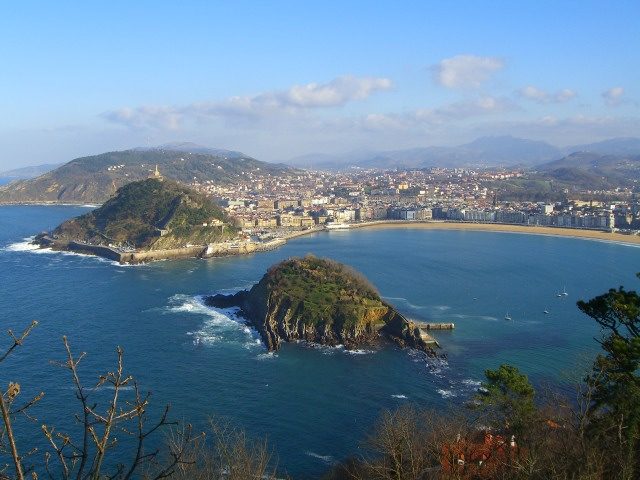
The first time I walked out of the tunnel of streets in the Parte Vieja and onto the Boulevard, it was raining sideways and I could not have cared less. San Sebastian does that to people.
This San Sebastian travel guide is the one I wish someone had handed me on that first trip. Not a list of pretty things, but the numbers: what the funicular costs, when the pintxo bars fill up, which day the Guggenheim is shut, and whether that tourist tax you read about is real. Spoiler on the last one: not this year, but from 1 January 2027 it is, at €6.50 a night in the better hotels.
The city itself is small, under 190,000 people, wedged between two green hills and a bay shaped like a scallop shell. It has ended up with more Michelin stars per square kilometre than anywhere on earth outside Kyoto. It also has a surf beach, a Belle Epoque promenade, and around two hundred bars where you can eat better for four euros than you will in most European capitals for forty.
The short version: San Sebastian is a compact Basque coastal city of three beaches, roughly 200 pintxo bars and 19 Michelin stars within a 25 km radius. Three days is the sweet spot. Come in June or September for warm sea and thinner crowds, budget around 80 to 220 euros a day, and walk everywhere.
San Sebastian at a glance
| Detail | What you need to know |
|---|---|
| Basque name | Donostia. Both names are official and you will see them written together as Donostia-San Sebastian |
| Population | 188,487 (2024) |
| Region | Gipuzkoa province, Basque Country (Euskadi), northern Spain |
| Languages | Basque (Euskara) and Spanish, both official |
| Currency | Euro |
| Nearest big airport | Bilbao (BIO), 105 km. San Sebastian’s own airport (EAS) is 20 km away but only flies to Madrid and Barcelona |
| City bus single fare | €1.95 cash or contactless (2026) |
| Tourist tax | None in 2026. From 1 January 2027, €1.25 to €6.50 per person per night by accommodation type, capped at six nights, under-18s exempt |
| Michelin stars nearby | 19 within 25 km, including three three-star restaurants |
| Annual rainfall | 1,510 mm across 142 rain days. Bring a jacket in every month |
| Peak sea temperature | About 22°C in August |
| How long to stay | Two days minimum, three ideal, four or five if you want the wider Basque Country |
Why San Sebastian, and who it will disappoint
San Sebastian earns its reputation on two things that rarely sit together: food and setting. The food is the obvious draw, and I will spend a lot of this guide on it. The setting is what surprises people. La Concha bay holds its own against any urban beach in Europe, and Monte Urgull and Monte Igueldo sit at either end like bookends, both walkable, both free to climb, both delivering the postcard view.
Queen Isabel II is responsible for the whole thing. Her doctors prescribed sea bathing for a skin complaint in 1845, she came here, the court followed, and the city built itself an elegant nineteenth-century quarter to accommodate them. That is why the Centro looks like a small Biarritz and why the La Concha railing, designed by the municipal architect Juan Rafael Alday in 1916, is on more fridge magnets than any building in the city.
Who it is not for: anyone who came to Spain for guaranteed sun. This is the Atlantic, not the Mediterranean. Even July, the driest month, averages ten rain days. If you want a beach holiday where you can plan around the weather, the Costa del Sol or Mallorca will serve you better. It is also not cheap. Beds here cost more than in Seville, Valencia or Granada, and noticeably more than in Bilbao.
And if you are allergic to crowds, avoid the two weeks that everyone else has already booked: Aste Nagusia in mid-August and the Film Festival in late September. More on both below.
Getting to San Sebastian
The city sits 20 km from the French border, which means you have an unusual number of options and and the right choice depends on where you are flying from. My ranking:
| Route in | Time to city centre | Cost | Verdict |
|---|---|---|---|
| Bilbao Airport (BIO), 105 km, by direct bus | About 1h15 | Sources vary between roughly €8 and €17, so buy at the machine and check | The default for most international arrivals. Buses roughly every 30 minutes |
| San Sebastian Airport (EAS) at Hondarribia, 20 km, Lurraldebus line E21 | Around 25 minutes on peak-season services, up to 45 minutes off season | A couple of euros. Buy on board | Lovely and quick, but only useful if you are flying from Madrid or Barcelona |
| Biarritz Airport (BIQ), 47 km, via bus | Roughly 45 minutes to 1h20 from Biarritz city | About €4 to €11 on Alsa or FlixBus | Underrated. Good low-cost French connections. No direct airport-to-airport bus though |
| Renfe from Madrid | About five and a half hours on the Alvia, roughly six a day | From about €19 booked early, more often €40 to €60 | Comfortable and scenic. High-speed rail is promised but not running yet |
| Euskotren “Topo” from Hendaye, France | 37 minutes | €2.90, every 30 minutes | The best-value border crossing in Europe. Park free at Ficoba in Irun and ride in for €2.75 |
| Euskotren from Bilbao | About 2h35, hourly | €7.00 | Slow but scenic. The bus is nearly twice as fast |
| Bus from Bilbao | About 1h15, every 30 to 60 minutes | €5 to €20 | The sensible way between the two Basque cities |
The bus and train stations sit next to each other on Paseo Federico Garcia Lorca, ten minutes on foot from the Old Town. The bus station is underground, with 21 bays, 66 left-luggage lockers and parking for 384 vehicles, and private cars get fifteen free minutes in the car park for drop-offs.
If you are driving, read this first
San Sebastian operates a Low Emission Zone, and it is easy to arrive without knowing. No vehicle may be driven in the city centre without an eco-friendly sticker. Spanish-registered cars with the sticker are fine. Foreign vehicles registered from 2006 onwards are allowed in, but you must file a statement of compliance before you enter, giving the owner, vehicle type, registration, date of registration, fuel type and technical data sheet. Turning up and hoping is not a plan.
If your car does not qualify, or you would rather not deal with it, park outside the zone. There are paying car parks at Kursaal, Txofre and Plaza Cataluna in Gros, Atotxa and Estacion in Egia, Pio XII and Arcco in Amara, Ondarreta in Antiguo, and Zuatzu. Better still, use the free park-and-ride lots at Illunbe or Igara and take the bus in. There are more than 6,000 parking spaces in the city and central street parking is capped at 90 minutes in the tightest zones, so trying to street-park near the Old Town is a slow way to waste an afternoon.
Getting around: you will mostly walk
The whole city can be crossed on foot in about an hour. La Concha to the far side of the Parte Vieja is 20 to 30 minutes. Nothing central is more than about twenty minutes away. On most trips I use a bus twice, both times because it is raining hard enough to feel like a personal attack.
When you do need dbus, the city bus, the 2026 fares are:
| Payment method | Daytime fare | Night fare |
|---|---|---|
| Cash to the driver (max €20 note, no transfers) | €1.95 | €2.65 |
| Contactless bank card, all lines | €1.95 | €2.65 |
| Personalised Mugi card, trips 1 to 20 in a month | €0.59 | €2.65 |
| Personalised Mugi card, trips 21 to 50 | €0.48 | €2.65 |
| Personalised Mugi card, trip 51 onwards | €0.12 | €2.65 |
| Transferable (non-personalised) Mugi card | €0.78 | €2.65 |
| Bat or Barik card | €0.59 | €2.65 |
The counter on a personalised Mugi resets on the first of each month. Mugi is the Gipuzkoa card and Barik is the Bilbao one, but dbus accepts both, along with the SSCARD and BASQUECARD tourist cards. For a three-day visit, contactless is fine and the card is not worth the faff. If you are staying a week and commuting to the beach daily, get a Mugi.
The San Sebastian Card is sold at tourist information points in two versions, one with six bus journeys and one with twelve, and it also gets you discounts on museums, restaurants and guided tours, including €4.50 instead of €5.50 on the Monte Igueldo funicular and 10% off at San Telmo. Whether it pays depends entirely on how much you plan to ride and visit. Do the arithmetic before you buy.
One thing to plan for: ride-hailing here is thin and contested, and you should not count on it. Taxis work from ranks, and flagging one down in the street is not really a thing in Spain. If you need a car late, ask the bar to call one.
Where to stay in San Sebastian
Four districts matter, and the choice really does change your trip.
| Neighbourhood | Character | Best for | The catch |
|---|---|---|---|
| Parte Vieja (Old Town) | Narrow streets, dense old buildings, the beating heart of the food scene. Every walk starts here and Monte Urgull rises directly above it | First-timers who want to fall out of a pintxo bar and into bed | Loud. Genuinely loud, until 2am on summer weekends. And very touristy |
| Centro / Area Romantica | Built in the nineteenth century as a summer retreat for European nobility, so it is architecturally the handsomest part of the city. Spreads along La Concha | Couples, comfort, anyone who wants elegance and a bay view | The priciest square metre in the city |
| Gros | East of the river, young, international, full of cafes and buzzy restaurants. Has its own beach, Zurriola, and the surf culture that comes with it | Surfers, younger travellers, anyone who wants a slightly more local base | A ten-minute walk from the Old Town, which matters at 1am in the rain |
| Antiguo | The western district, right behind Ondarreta beach and at the foot of the Monte Igueldo funicular | Families who want the calmest beach on the doorstep, and drivers, since the Ondarreta car park is here | Quiet in the evening. You will be commuting in for dinner |
My honest recommendation for a first trip: Gros or the Centro. The Old Town is wonderful to be in and difficult to sleep in. The same trade-off applies in Barcelona and Madrid, only louder. If you are travelling with children, Antiguo near Ondarreta is worth the trade-off, and our guide to Europe with kids has more on choosing family bases. For a broader look at how neighbourhood choice plays out across the continent, see where to stay in Europe.
The three beaches, and which one is yours
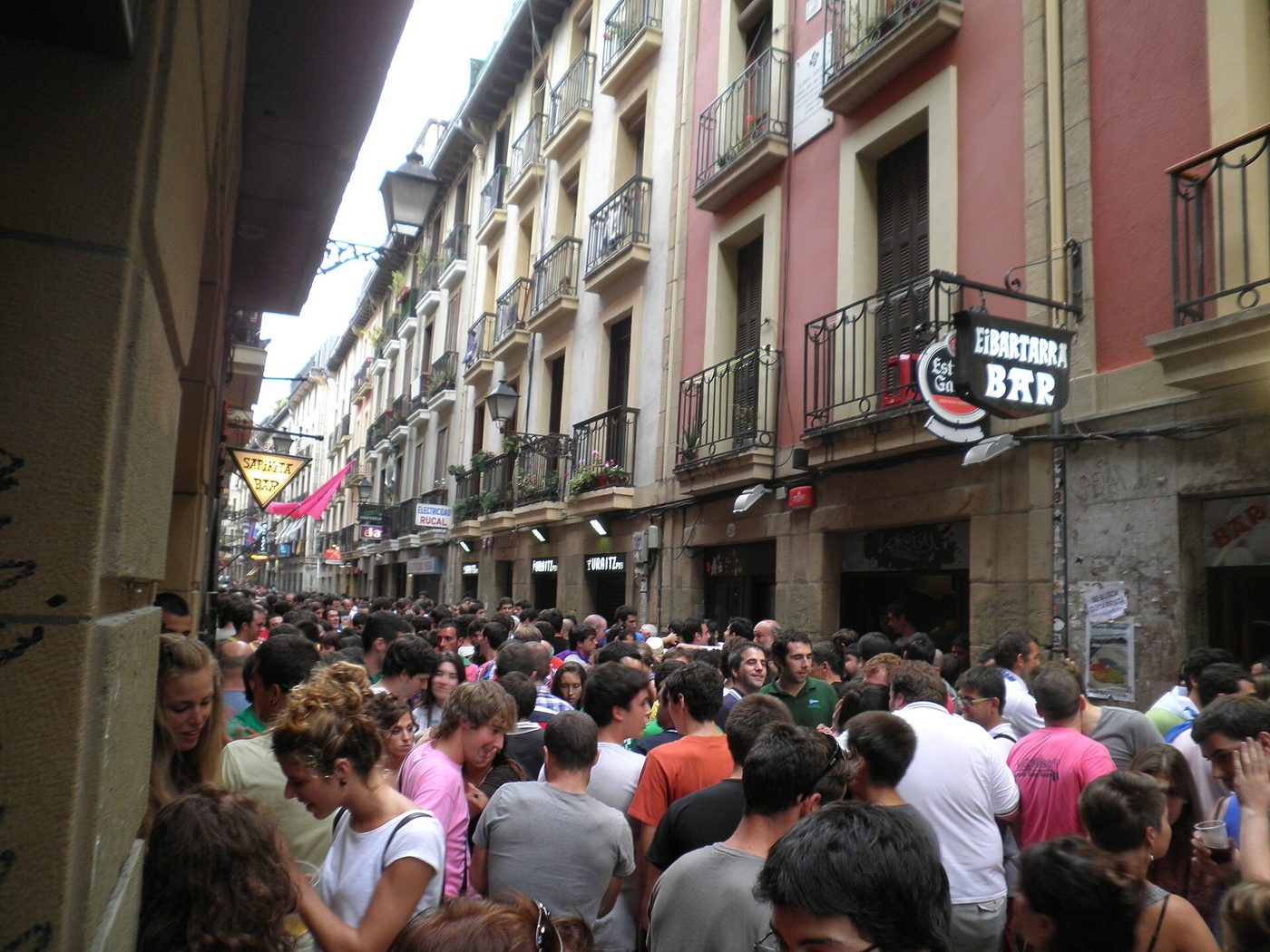
Three beaches, three completely different days out. All of them would hold their own in a ranking of the best beaches in Europe, and for entirely different reasons.
| Beach | Length | Water | Suits | Facilities |
|---|---|---|---|---|
| La Concha | More than 1,300 m | Sheltered by Santa Clara island and the two hills, never very deep, calm | Swimmers, paddlers, kayak and SUP, anyone wanting to be central | Toilets and showers all year. Lockers, changing rooms, lifeguards, sunshade and chair rental in summer. Assistance for swimmers with restricted mobility in summer |
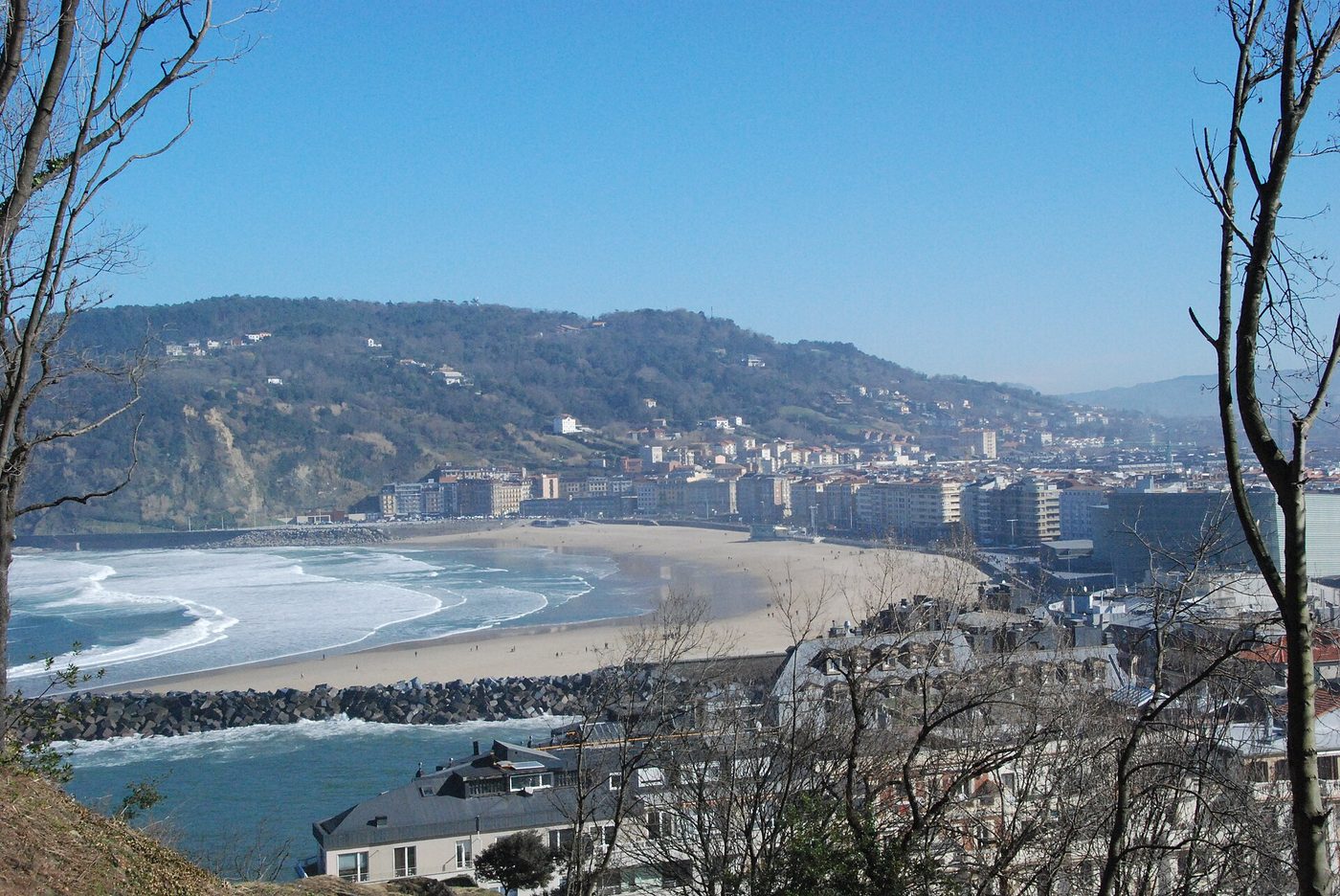
| Zurriola | 800 m | Open Atlantic swell, noticeably stronger waves | Surfers, beach volleyball, anyone under thirty. Known locally as la Zurri | Surf schools, board hire, volleyball and beach tennis. Too rough for kayaks or paddleboards |
| Ondarreta | Shorter, at the western end past Pico del Loro | Wide sand, shallow water, calmer than Zurriola | Families with small children. Surfers rarely bother unless it is stormy | Toilets, showers, lockers, playground, beach bars and restaurants |
Two things worth knowing about La Concha. The first is the tide, which can sharply limit how much sand there actually is. At high tide on a busy August afternoon the usable beach shrinks alarmingly. The second is the gabarron, a floating swimming deck with slides and diving boards that gets installed out in the water for the summer months. Children lose entire days to it.
At low tide you can walk between La Concha and Ondarreta around the rocky Pico del Loro, the parrot’s beak. It is a ten-minute stroll and one of the more pleasant small pleasures of the city. Ondarreta is roughly a ten-minute walk west of La Concha along the promenade in any case.
New municipal beach rules have been reported to include a smoking ban on all beaches and restricted dog access in summer. Read the signage when you arrive.
Santa Clara island
The island sitting in the middle of the bay has the only south-facing beach in the Basque Country and one of very few in the whole Bay of Biscay. No cars, walking paths, picnic tables, a lighthouse. A motorboat runs from the port in summer, and if you are reasonably fit you can kayak out in 10 to 15 minutes from the Real Club de Tenis next to Ondarreta, which also rents the kayaks and paddleboards. Depending on where you measure from, it sits somewhere between 400 and 750 metres offshore.
Surfing at Zurriola
The tourist board describes surfing here as “a true way of life”, and the Sagues end of the beach backs onto a whole district of surf shops and surf-adjacent bars. Thanks to the Gulf Stream the water is much milder than the latitude suggests, and Pukas Surf Eskola, in the centre of Zurriola, runs courses for beginners and improvers plus equipment rental all year round. Free Surf Eskola and Zurriola Surf Eskola are the other two names you will see, the latter with changing rooms, lockers and board hire for people who already know what they are doing.
None of them publishes a rate for lessons or board hire, so email ahead or turn up and ask. For calm-water paddling, use La Concha instead.
How to eat pintxos without looking lost
A pintxo crawl, a txikiteo, has rules. Once you know them the whole evening opens up, and until you do it feels like everyone else has been given a briefing you missed.
The mechanics
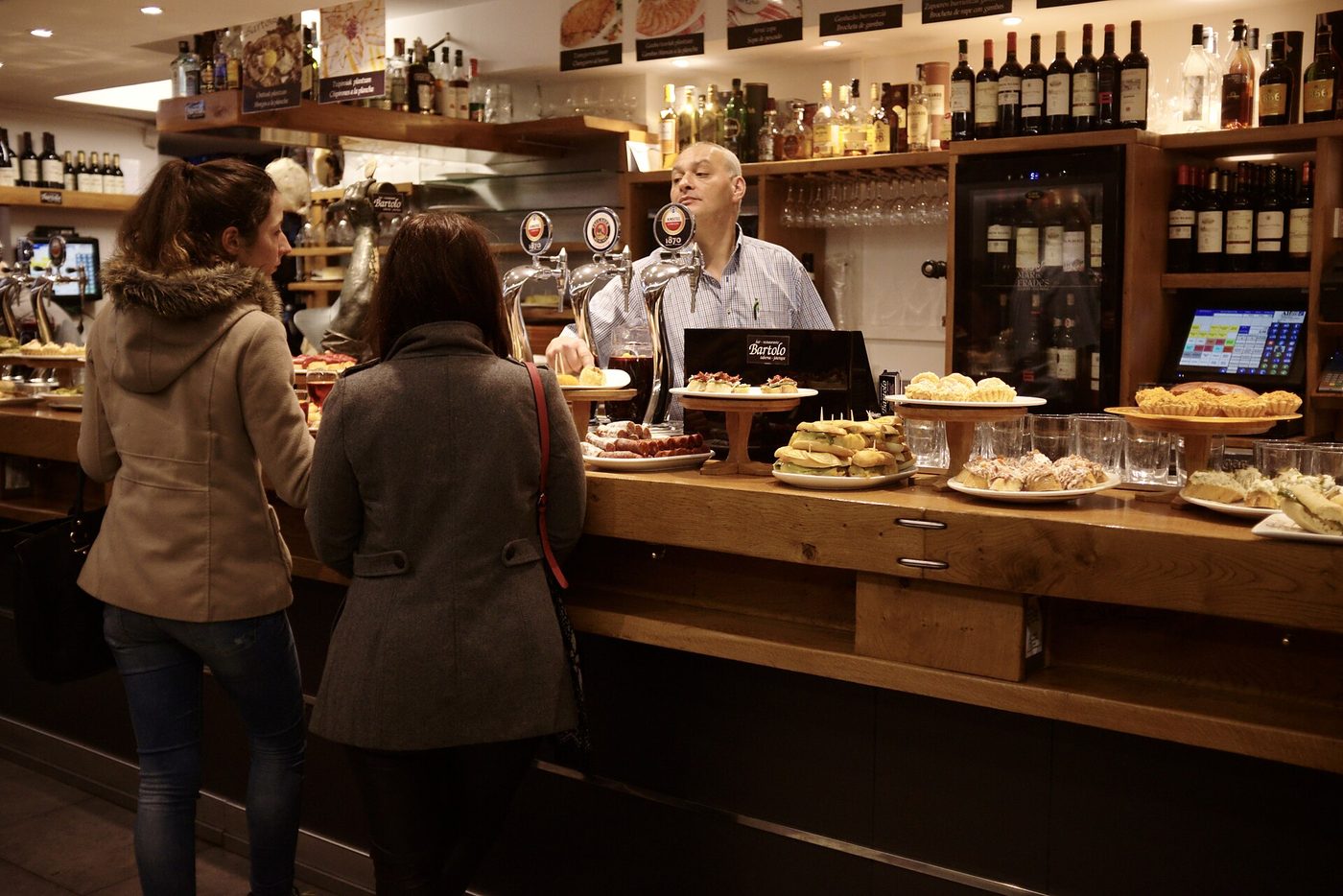
One bar, one specialty, one drink, then move. That is the whole system. You are in and out in about fifteen minutes. The mistake visitors make is settling into the first bar, ordering five things and a bottle of wine, and then being too full to move. Locals treat each bar as one course.
Cold pintxos are on the counter. Hot ones are on the board. The plates stacked along the bar are for you to take from directly. Step up, take a small plate, help yourself to whatever looks best. The best of it, though, is usually written on a chalkboard behind the bar and cooked to order.
Pay at the end, usually. Bars differ. Some take payment as you leave, some after each round. Some count your toothpicks to work out the bill, which runs entirely on trust and works fine. If you are not sure, ask “¿Pago aqui o al final?”
Tipping is not a thing. Round up if you feel like it. There is no 15 to 20% expectation and nobody will chase you down the street.
The timing, which matters more than the bar list
Locals meet their cuadrilla, their lifelong friendship group, somewhere between 19:00 and 20:00. The bars fill up properly around 21:00. If you show up at nine on a Saturday in August expecting to browse a counter at leisure, you will be shoulder to shoulder with four hundred other people doing the same.
So start at seven. You get the counters at their fullest, the staff at their most patient, and space to actually see what you are eating. By nine you will be three bars in and the crush will feel like atmosphere rather than an obstacle.
The Parte Vieja has the highest concentration of pintxo bars in the city, which is why everyone goes there. Gros and the Centro are noticeably quieter for the same quality, especially at weekends. A crawl that starts in Gros and ends in the Old Town is a smarter shape than the reverse.
What it costs
| Item | Typical price |
|---|---|
| Cold pintxo from the counter | €2 to €4 |
| Hot pintxo, made to order | €3 to €6 |
| Average across the board | Around €2.50 |
| Small glass of txakoli | €2.00 to €3.50 |
| Zurito (small draught beer) | €1.50 to €2.50 |
| One pintxo plus one txakoli | €4 to €7, or nearer €3.50 at the plainest bars |
| A five-bar txikiteo, per person | €20 to €30 |
That last figure is the one to hold onto. Dinner in San Sebastian, done properly, costs about twenty-five euros a head. It is the best value fine eating in Western Europe, and the reason the city punches so far above its size in European food terms.
The bars, and what to order at each
| Bar | Order this | Notes |
|---|---|---|
| Bar Nestor, Arrandegi Kalea 11 | The tortilla. Also the txuleta and the tomato salad | Only a handful of tortillas are made per sitting. Arrive at 12:00 or 19:00 to get your name on the list. Open Tuesday to Sunday, with Sunday lunch only |
| Ganbara, San Jeronimo Kalea 21 | The seasonal wild mushrooms (hongos) | The counter is a still life: mushrooms, langoustines on ice, Basque peppers |
| La Cuchara de San Telmo | Carrillera de ternera (braised veal cheek) and the seared foie gras a la plancha | Run by chefs trained at Arzak and El Bulli. Each pintxo is essentially a miniature haute-cuisine plate |
| Borda Berri | Pork rib kebab, the “fake” Idiazabal cheese risotto, crispy pig’s ear | The risotto is the one people come back for |
| Bar Txepetxa | Anchovies, in any of fourteen preparations | If you think you do not like anchovies, this is where you find out you were wrong |
| Atari | Grilled octopus with roasted potatoes | Opposite the church of Santa Maria del Coro, about 100 m up from Paco Bueno |
| Paco Bueno | The gilda and the gambas con gabardina | At the entrance to the Old Town. One of the last genuinely old-style taverns left |
| La Vina | Basque cheesecake | The burnt cheesecake that launched a thousand imitations. Worth the queue |
| Kapadokia | Whatever is on the board | Opened just after the Covid lockdowns. Young, modern take on the form |
Two places that are not pintxo bars but belong on the list anyway. Txuleta, for the T-bone steak, when you want a proper sit-down dinner. And the two food markets, La Bretxa at the edge of the Old Town and Mercado de San Martin in the Centro, both of which are worth an hour in the morning and are where you buy Idiazabal cheese, guindillas and tinned anchovies to take home.
Vegetarians will eat better here than the reputation suggests, though you will have to work at it: the mushroom pintxos at Ganbara, tortilla, piquillo peppers, Idiazabal, and the padron peppers that turn up everywhere in summer. Ask for sin carne y sin pescado and most bars will point you at three or four things on the counter.
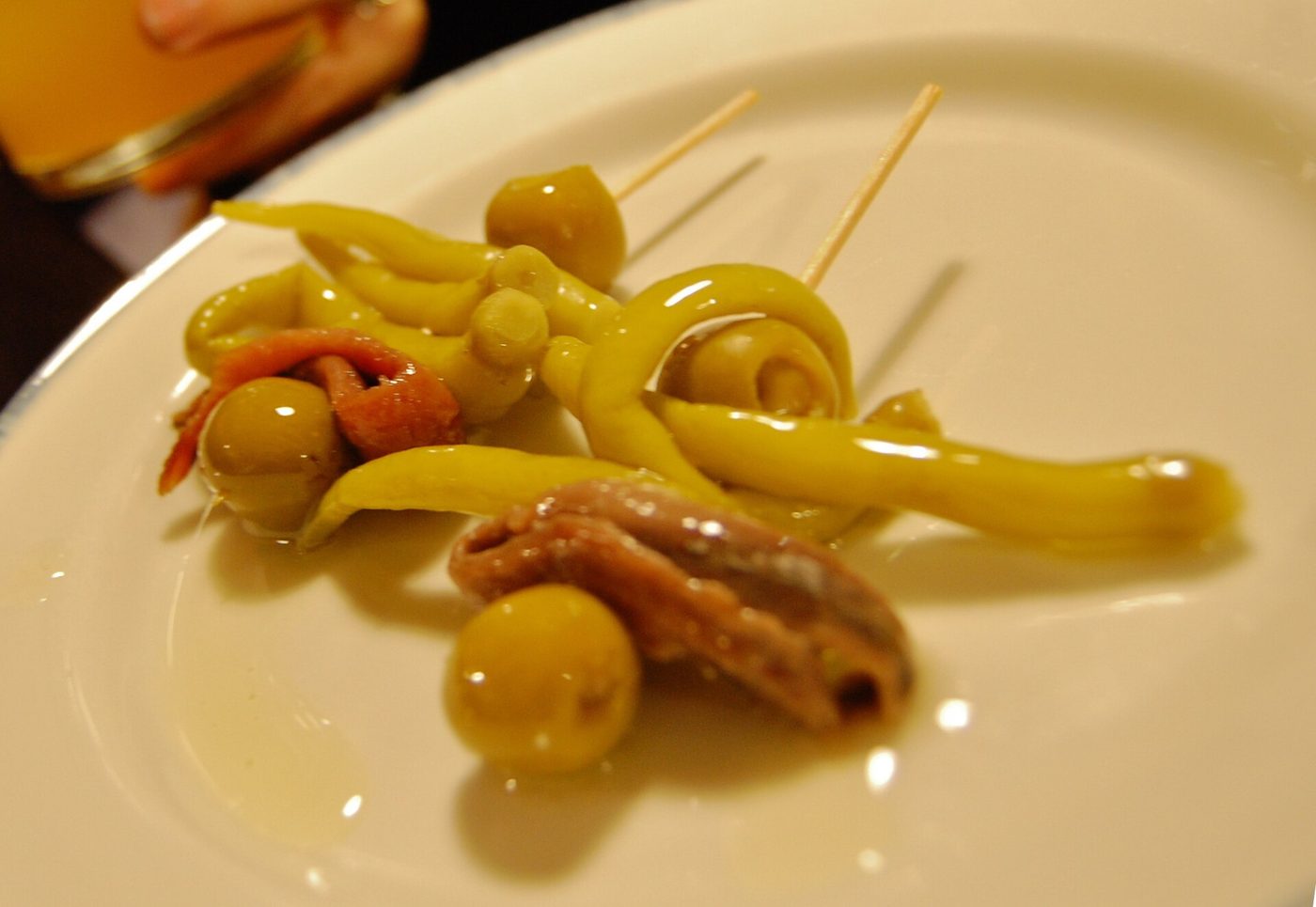
Order the gilda somewhere on your first night. An olive, pickled guindilla peppers and an anchovy on a stick, named after the Rita Hayworth character, and generally held to be the first pintxo of them all. It costs about two euros, a small masterpiece of salt and acid.
Michelin stars: what it costs and how to book
Nineteen Michelin stars sit within 25 km of the city hall, which is half an hour’s driving at the outside. With the exception of Kyoto, no other place on earth has a greater concentration of stars per square kilometre. The city is also home to the Basque Culinary Center, the world’s first university of gastronomy.
Every price below comes from the restaurant’s own page, checked in August 2026. They move, and they move upwards.
| Restaurant | Stars | Tasting menu | Wine pairing | Booking notes |
|---|---|---|---|---|
| Akelarre (Pedro Subijana), Monte Igueldo | 3 | Two menus, Aranori and Bekarki, €395 each, VAT included | Drinks separate | Bookings open 8 to 10 weeks ahead; the sunset tables go 6 to 8 weeks out. The restaurant states on its own site that the price rises every year just before summer |
| Arzak (Juan Mari and Elena Arzak) | 3 | €315, 10% VAT included, drinks apart. A la carte €285 | €365 menu plus €220 pairing, whole table only | Request form, confirmed by email within three days. Cancel at least 48 hours ahead or you are charged €315 per guest. Closed Sun and Mon, and 1 to 25 November 2026 |
| Martin Berasategui, Lasarte-Oria, 7 km out | 3 | €395 tasting, €395 a la carte | €210, or €750 for the “Excellence” selection | The chef with the most Michelin stars in Spain, twelve across all his projects |
| Mugaritz, between Astigarraga and Errenteria | 2 | €319 including taxes | €412 with the sommelier selection, €452 with the non-alcoholic Esentzia pairing | Open 1 May to 25 October 2026 only. The whole season is released in a single February drop and prime weekend tables go within 24 hours |
| Amelia (Paulo Airaudo), Hotel Villa Favorita | 2 | Seasonal tasting menu | Available | On La Concha bay, so the easiest of the group to reach on foot |
| Elkano, Getaria | 1 | No tasting menu. Grilled fish and seafood, a la carte | Not applicable | Family-run since 1964. The turbot is the reason people drive out |
| Kokotxa, Old Town | 1 | Two menus | Available | Next to the port, so the most convenient star in the city |
| Alameda, Hondarribia | 1 | Two menus, Hondarribia and Gartzinea | Available | Run by the Txapartegi brothers, starred for over twenty years |
| Itzuli (Inigo Lavado) | 1 | Not published | Not published | At the foot of Monte Igeldo |
| Ama, Ibai | 1 each | Not published | Not published | Ama also holds a Michelin Green Star, alongside Hika and Zelai Txiki |
Practical advice, since the numbers above are alarming out of context. You do not need a three-star meal to eat brilliantly here, and I would argue that if you only have one big-spend evening, Elkano’s grilled turbot in Getaria tells you more about Basque cooking than any tasting menu will. But if you want the full theatre, book two to three months ahead for Arzak, especially May to October, and set a reminder for the Mugaritz February release.
Things to do in San Sebastian beyond the food
You could spend three days here eating and never leave the Old Town, and plenty of people do. But the city has a very good set of sights, most of them cheap or free, and two of them are among the best urban viewpoints in Spain.
Monte Igueldo and the funicular
The hill at the western end of the bay, with a funicular that has been carrying people up since the amusement park opened in 1912. The view from the top is the San Sebastian photograph: the whole scallop of La Concha, Santa Clara in the middle, Urgull closing the far end.
| Ticket | Price |
|---|---|
| Funicular return, adult | €5.50 |
| Funicular return, child up to 7 | €2.50 |
| Funicular one way, adult | €4.00 |
| Funicular one way, child up to 7 | €1.50 |
| Return with San Sebastian Card, disability card, or in a group of 20 or more | €4.50 (the group rate is void at weekends, on public holidays, on long weekends and throughout August) |
| Viewpoint entry without the funicular, arriving on foot or by car | €3.00 |
| Parking at the top | Free |
| Toilets at the top | €0.50 |
The funicular ticket includes entry to the hilltop enclosure, but not the rides. There is no all-in park pass: every attraction is charged separately, and most sit between €1.00 and €5.00 a go, with the canopy ride the outlier at €18.00 for adults and children alike. The 1912 roller coaster, the Swiss Mountain, is €3.00. Attractions close on rainy days, which in this city is a meaningful caveat.
Seasonal opening hours change often enough that I would check monteigueldo.es against your specific date before making the trip up.
Coming back down: the funicular queue after sunset in August is long. The bus and the walk are both faster.
Monte Urgull
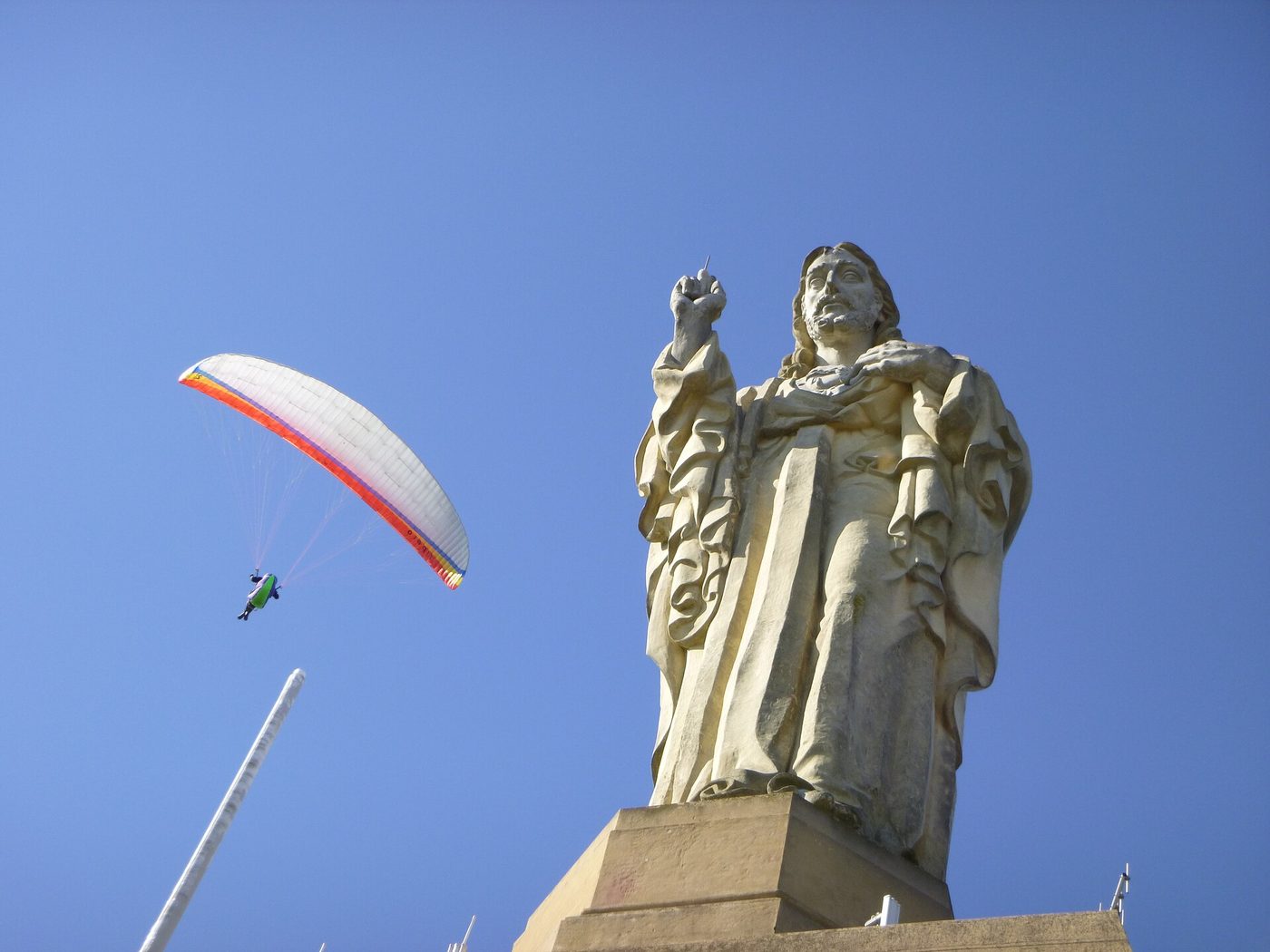
The other hill, rising straight out of the Old Town, roughly 123 metres high, crowned by the twelfth-century Castillo de la Mota and a 12-metre statue of the Sagrado Corazon that has stood there since 1950. The whole monument, statue plus the chapel-containing base, is over 24 metres. Nobody charges you to walk up.
Four paths climb it, each from a different starting point. The oldest begins beside the Basilica de Santa Maria; others start opposite the San Telmo museum on Mari and Virgen del Coro streets, and from the Paseo Nuevo. The tourist board’s own recommendation, and mine, is to go up from Zuloaga Square by San Telmo and come down to the Paseo Nuevo, which is the most historically interesting circuit. Allow about thirty minutes to the top on the gently winding, largely shaded tarmac path. The stair routes are quicker and harder.
| Season | Opening hours |
|---|---|
| 1 May to 30 September | 08:00 to 21:00 |
| 1 October to 30 April | 08:00 to 19:30 |
The hill closes at night. Inside the castle you will find the Casa de la Historia de Urgull, a small museum covering more than 800 years of the city’s story; the Bateria de las Damas; an English Cemetery; a library in the upper battery that opens at Easter and in summer; and the Polboriña bar near the top, which is a very good place to be at sunset. The very top level of the castle is reported to need a free timed ticket collected at the entrance, with twenty people admitted per twenty-minute slot, so leave a little slack in your afternoon.
The Paseo Nuevo, the sea-level walkway that loops around the base of Urgull, was inaugurated in 1916 and is famous for waves breaking clean over the sea wall in rough weather. It is also where you will find Jorge Oteiza’s Construccion Vacia, the sculpture that won an award at the 1957 Sao Paulo Biennial.
Peine del Viento
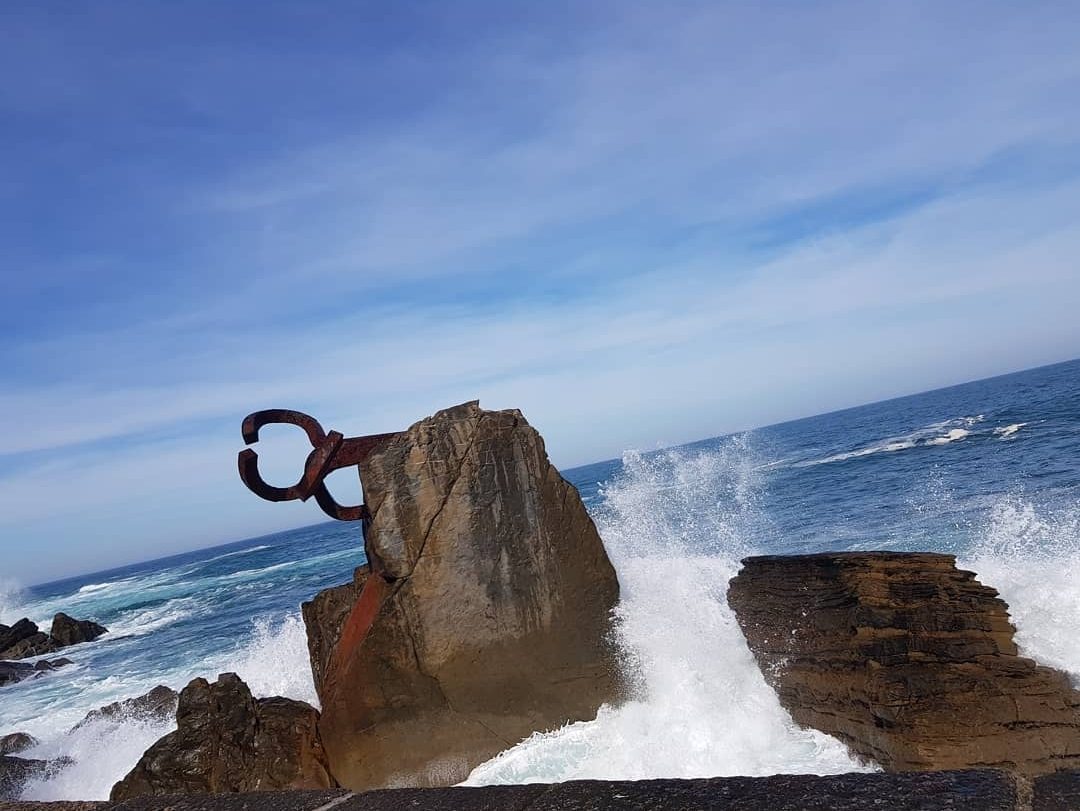
Eduardo Chillida’s three iron forms, welded into the rocks at the western end of Ondarreta at the foot of Monte Igeldo, installed in 1977 in collaboration with the architect Luis Pena Ganchegui. They sit above terraces of pink granite, and when the swell is up, blowholes in the terrace fire spray into the air on the beat of the waves. It is free, it is always open, and I would plan an evening around it.
The full seafront walk, from Sagues past the Kursaal, around Monte Urgull along the Paseo Nuevo and on to the Peine del Viento, is about six kilometres. Do it once, in either direction, ideally in the late afternoon.
Museums and buildings, with prices
| Place | Adult | Reduced | Free | Hours | Closed |
|---|---|---|---|---|---|
| Aquarium Donostia, Plaza Carlos Blasco Imaz 1 | €16 | €12 for over-65s, students, unemployed, disabled. €8 for ages 4 to 12. Large family €50 | Under-3s | Jul and Aug daily 10:00 to 20:00. Apr, May, Jun, Sep Mon to Fri 10:00 to 19:00, weekends to 20:00. Winter months Tue to Fri 10:00 to 19:00, weekends to 20:00 | Mondays in winter (except long weekends), 25 Dec, 1 Jan and 20 Jan |
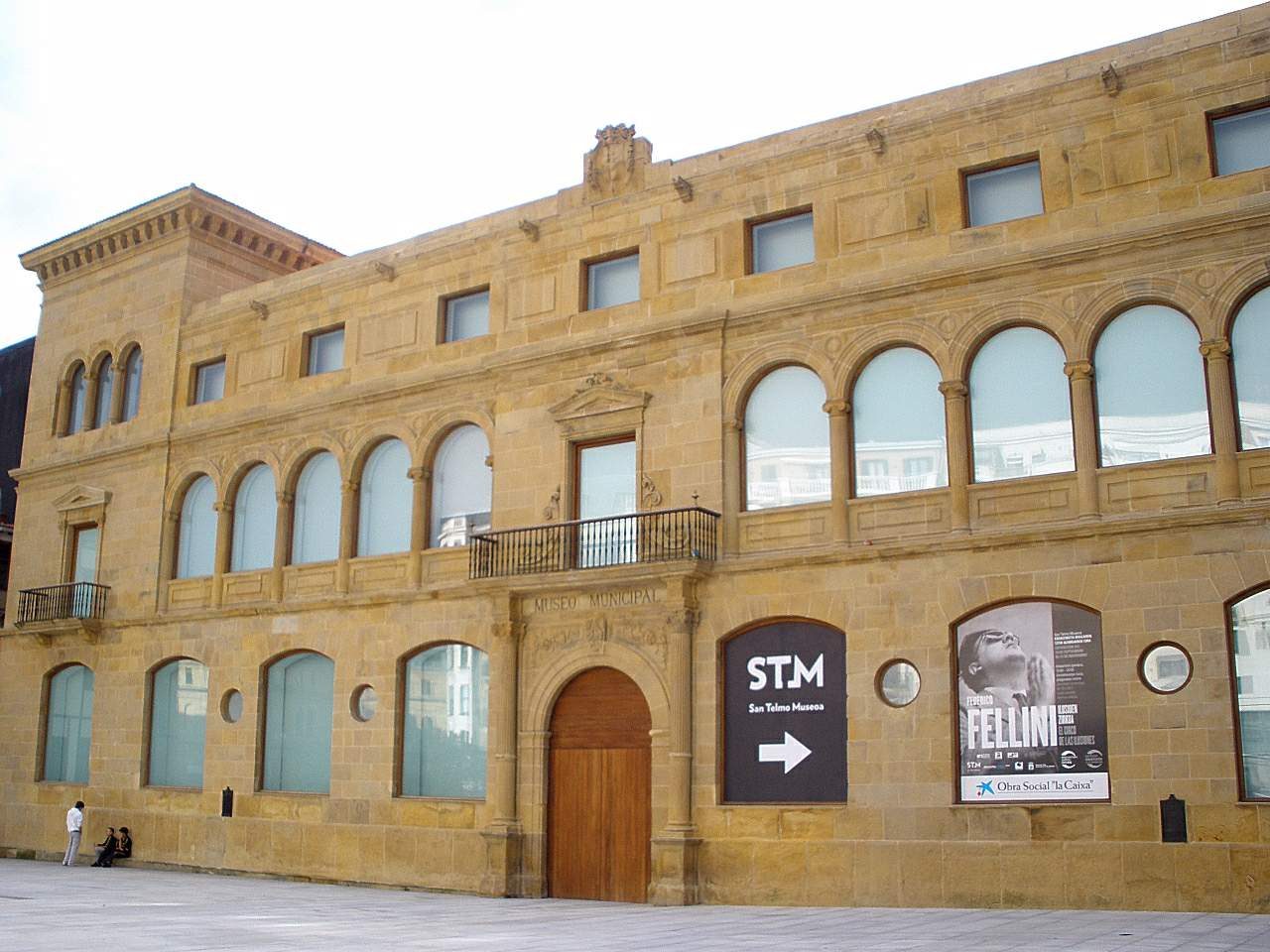
| San Telmo Museoa, Plaza Zuloaga 1 | €10 | €4 for students, over-65s, large families, groups of 10 or more | Free every Tuesday. Also under-25s, unemployed, teachers, ICOM holders, tourist guides, journalists, visitors with disabilities and a companion, and everyone on 18 May | 1 Apr to 31 Oct, Tue to Sun 10:00 to 20:00. 1 Nov to 31 Mar, Tue to Sun 10:00 to 19:00 | Mondays (except bank holidays), 1 and 20 Jan, 25 Dec |
| Eureka! Zientzia Museoa, Miramon Technology Park | €10 | €7 | Under-3s | 10:00 to 19:00 weekdays, 11:00 to 20:00 weekends | Not published |
| Tabakalera | No general admission price; individual events are ticketed separately. Check the current opening hours before you go | ||||
| Kursaal | Guided tours of about an hour run for groups, arranged by email or on +34 943 003 000. No public price is published | ||||
The Aquarium is better than it sounds. There are no captive cetaceans, the shark and fish feeding in the great ocean tank happens at 12:00 on Tuesdays, Thursdays and Saturdays with bull sharks and more than 6,000 fish, and the skeleton of a whale caught in the Cantabrian Sea in 1871 hangs in the historical section. The ticket office closes an hour before the aquarium does. There is no free day, and the audio tour is an extra €3.
San Telmo is the one I would prioritise, and I would go on a Tuesday, when it is free. It occupies a restored sixteenth-century Dominican convent on Zuloaga Square, and it covers Basque society and history in a way that makes everything else you see in the region make more sense. Note the price: multiple aggregators still list it at €6. The museum’s own page says €10.
Eureka! is out at Miramon, not in the centre, on dbus lines 17 and 28 (stop “Miramon 7”, 80 metres from the door), with a free car park. It holds more than 178 interactive modules across eight rooms, a 140-seat 3D planetarium, an astronomical observatory in a 30-metre tower, a Foucault pendulum and flight, MotoGP and Formula 1 simulators. The planetarium and the Animalia tour are charged separately. If it is raining and you have children, this is the day you use it.
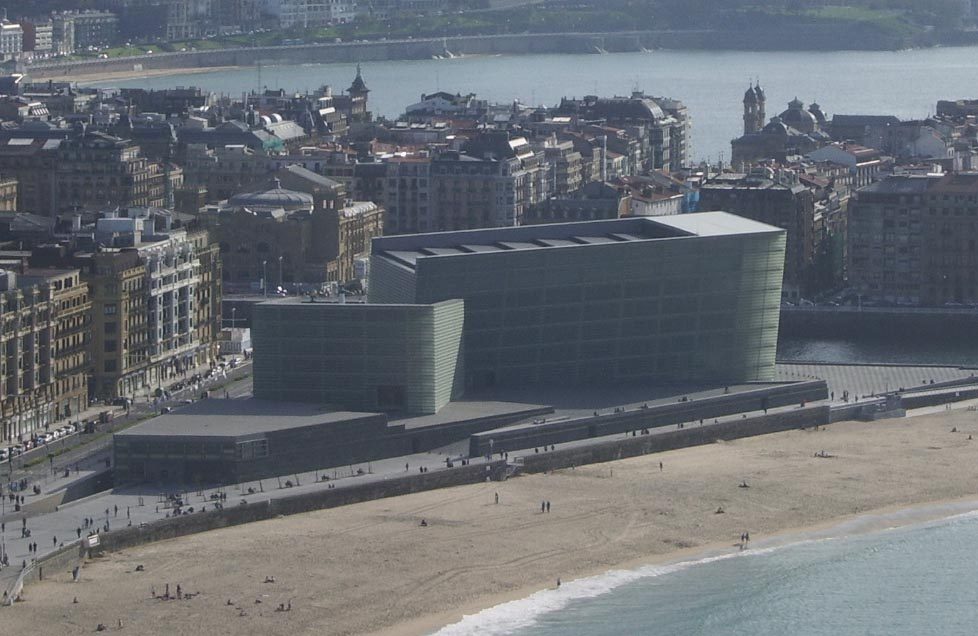
The Kursaal, Rafael Moneo’s two translucent glass cubes at the mouth of the Urumea, won the Mies van der Rohe Award for the best building in Europe. It anchors the eastern end of Zurriola and is the hub of the city’s festivals. Tabakalera, a converted tobacco factory, is now an international centre of contemporary culture with exhibitions, cinema, a creation library, a restaurant and a hotel, and it hosts part of the Quincena Musical.
Parks, palaces and the Belle Epoque city
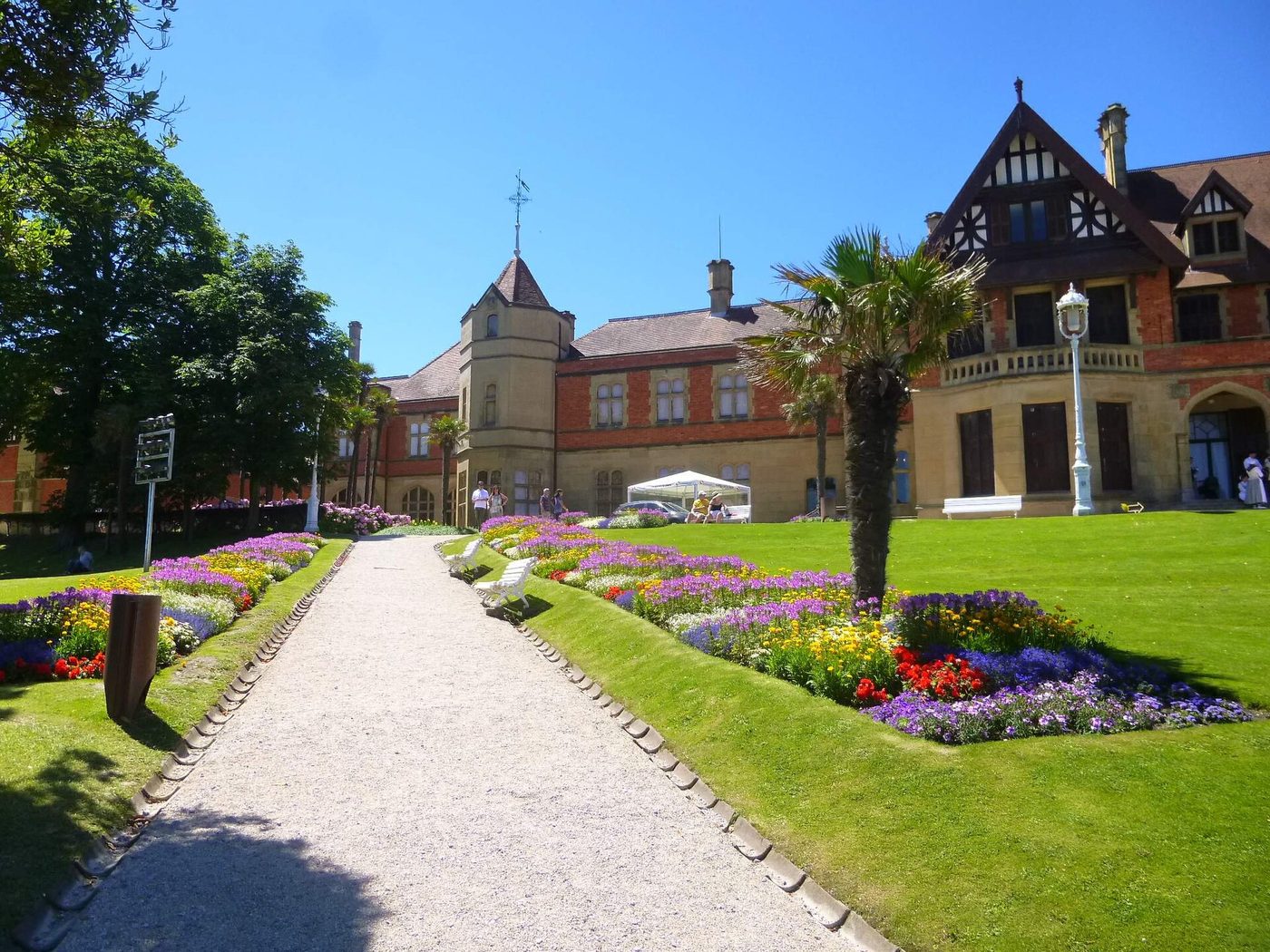
The Miramar Palace was built in 1893 for Queen Maria Cristina of Austria and served as the summer home of three generations of Spanish royalty. It sits on the headland between La Concha and Ondarreta. The interior is not open to the public, but the gardens, designed by the French landscape architect Pierre Ducasse, are, and they run down towards the sea through gravel paths and flower beds with the best mid-bay view in the city. Chillida’s El Abrazo is here too. The gardens open early and close late, roughly 06:30 to 22:30, with seasonal variation.
Cristina Enea is the city’s largest park, entered from Mandasko Dukearen Pasealekua, a quarter of an hour on foot from the train and bus stations. Go during daylight; like the city’s other parks, it is free.
Alderdi Eder, the gardens beside the City Hall, were also planned by Ducasse in the late nineteenth century. Tamarisk trees, a carousel, and the site of the cannon shot that opens Aste Nagusia and the Children’s Tamborrada. The Don Quixote and Sancho Panza sculpture here, by Lorenzo Coullaut-Valera, has been in place since 1973. These figures are the original prototype; the set in Madrid’s Plaza de Espana is the copy.
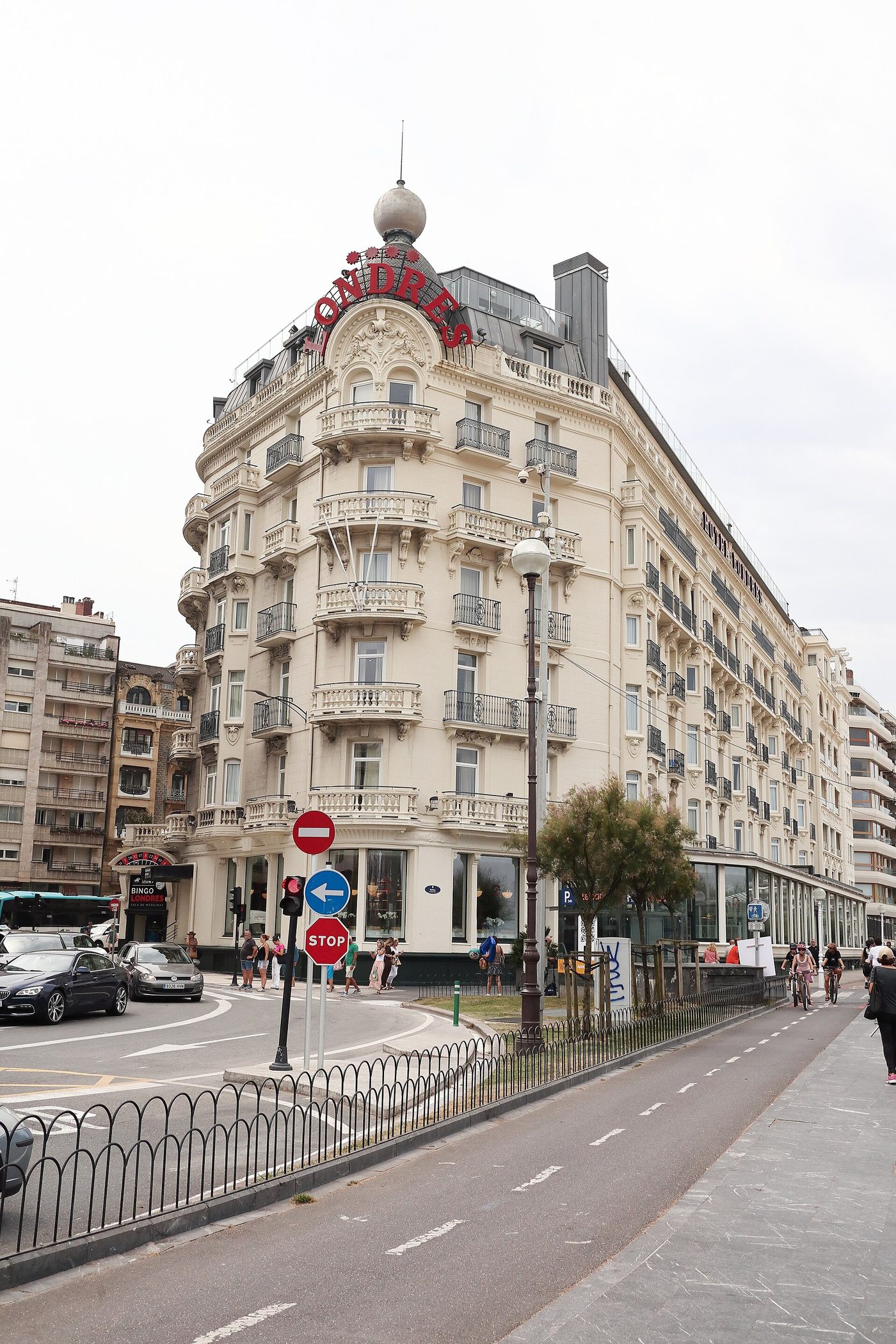
The City Hall itself was built in 1887 as the town casino, in the style of the Cote d’Azur gaming houses, which explains why the seat of local government looks like somewhere you would lose money. La Perla, the thalassotherapy centre on the promenade, dates from 1912 and still runs as a spa. The Nautical Club, built in 1929 by Aizpurua and Labayen, is shaped like a moored boat and is a landmark of architectural Rationalism that predates Le Corbusier’s Villa Savoye. And Chillida’s Homage to Fleming sits on the La Concha promenade, the original made in 1955, its terraced setting added by Joaquin Montero in 1991.
Monte Ulia, the third hill, is a short walk from the centre behind Zurriola. It was a whale lookout once and is the city’s best hillwalking, and the coastal Camino del Norte crosses it on the way to Pasaia.
Day trips into the Basque Country
San Sebastian is a very good base. The Basque Country is small, the buses are frequent, and almost everything worth seeing is within two hours. Hondarribia and Laguardia both belong on any list of the most beautiful towns in Europe, and Biarritz is your easiest hop into France. This is where a five-day trip earns its keep over a three-day one.
| Destination | Getting there | Time | Cost | Why go |
|---|---|---|---|---|
| Hondarribia | Lurraldebus E20, E21 or E27 from near the Renfe station, hourly | About 22 minutes | Local bus fare | Walled old town above a painted fishing quarter, and the one-star Alameda. The easiest half-day out of the city |
| Getaria | Lurraldebus or Euskotren | About 1h16 by bus, 30 minutes by car | Roughly €3 to €5 | Fishing port, medieval streets, txakoli vineyards on the slopes, the Cristobal Balenciaga Museum in the designer’s birthplace, and Elkano |
| Zarautz | Euskotren from Amara, hourly | About 30 minutes | Roughly €2 to €4 | The longest beach in the Basque Country. Walk the 30 minutes along the oceanfront to Getaria and do both in a day |
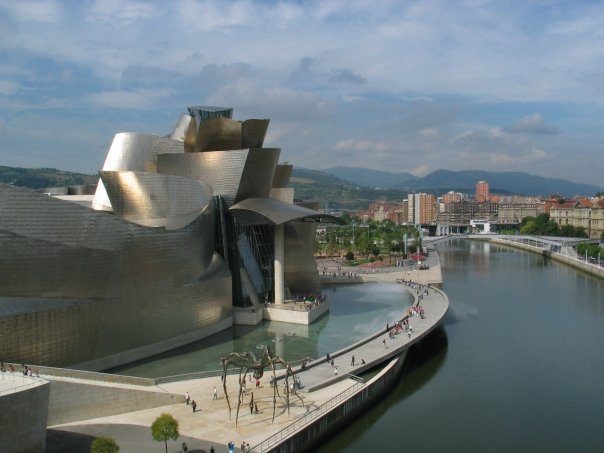
| Bilbao | Bus (Alsa or Lurraldebus) every 30 to 60 minutes, or Euskotren hourly, or one hour on the AP-8 | About 1h15 by bus, 2h35 by train | Bus €5 to €20, train €7.00 | The Guggenheim, the Casco Viejo, and a completely different city character. Take the bus, not the train |
| San Juan de Gaztelugatxe | Car, 120 km. Public transport is awkward | About 1h45 each way | Free entry, but a compulsory free ticket in high season. Roadside car park free, Eneperi car park €3 | The hermitage on a rock, reached by a stone bridge and 241 steps. Dragonstone in Game of Thrones season 7 |
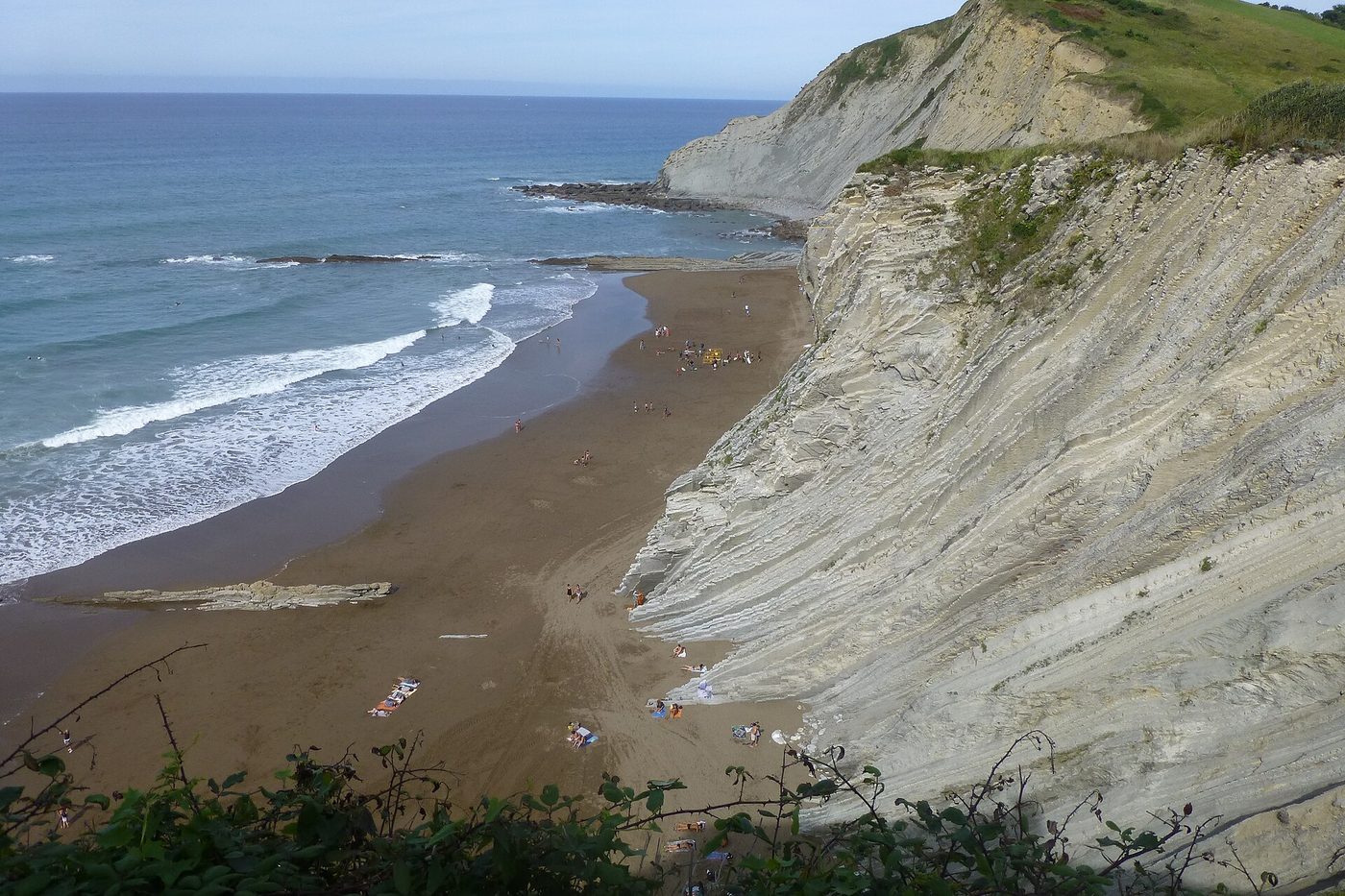
| Zumaia | Euskotren from Amara, or 35 minutes by car on the GI-631 | About 40 minutes by train | Local fare | The flysch cliffs: over 50 million years of geology stacked in stripes, cliff faces at least 100 m high, one of the largest tidal platforms in Europe |
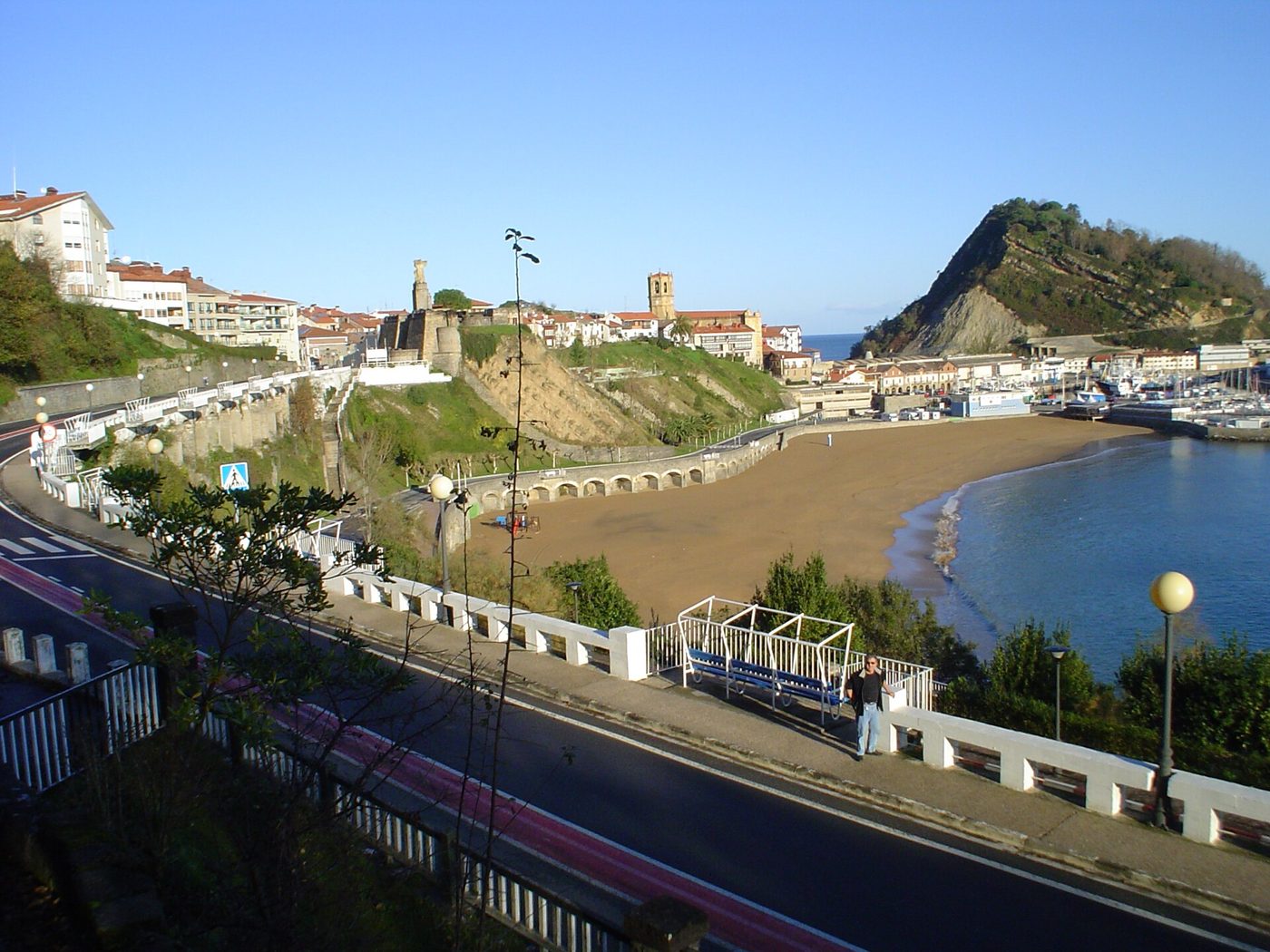
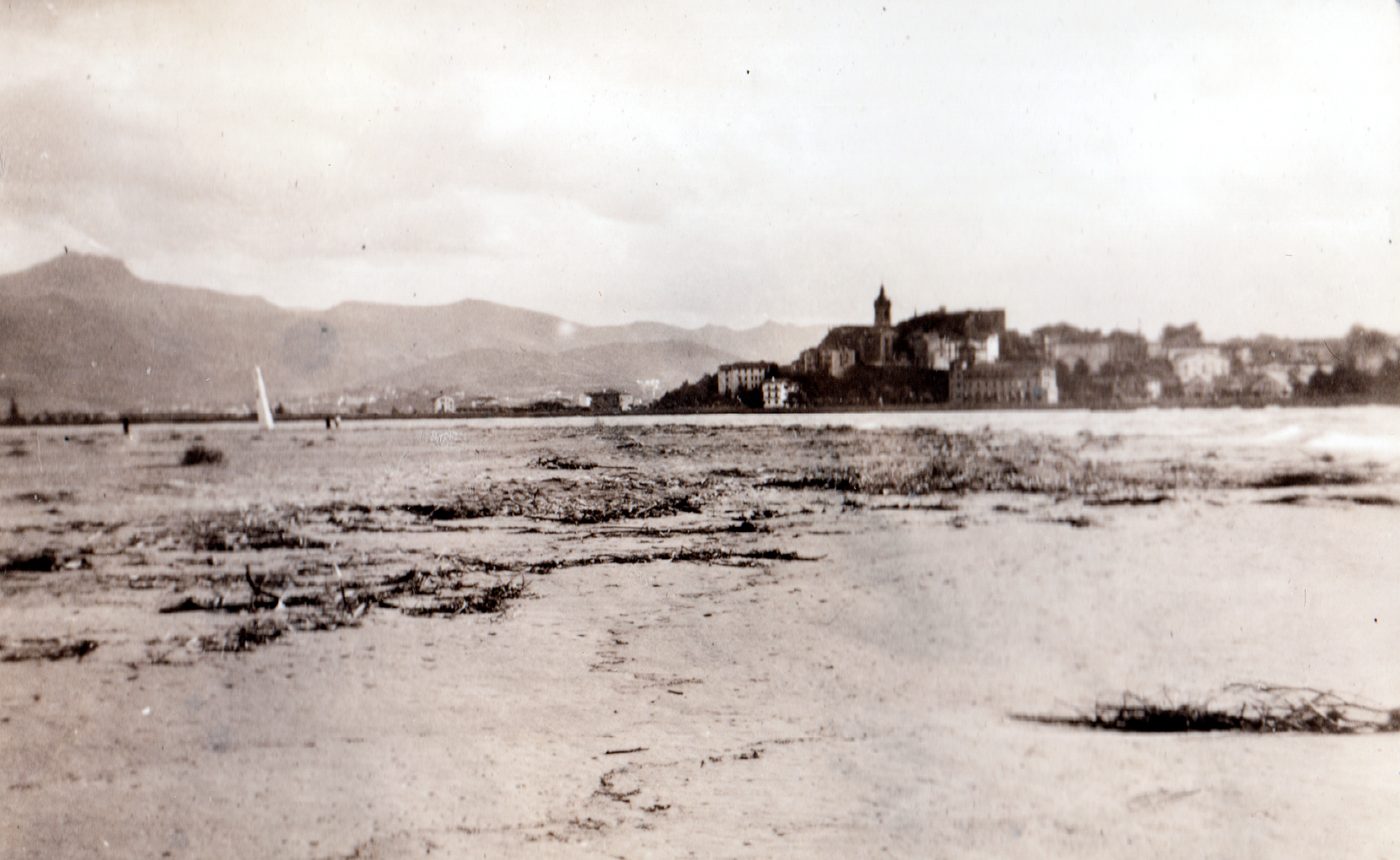
| Pasaia | On foot over Monte Ulia, or local bus | Roughly a half-day walk | Free on foot | A working port town in a narrow inlet, and the midpoint of Camino del Norte stage one |
| Biarritz | Alsa or FlixBus | 45 minutes to 1h20 | Roughly €4 to €11 | The French Basque coast, grand seafront hotels and a very different surf scene. Saint-Jean-de-Luz is on the way |
| Rioja Alavesa (Laguardia) | Lurraldebus or La Estellesa | About 1h30 | Coach fare | Walled medieval wine towns: Laguardia, Labastida, Elciego. Laguardia is rated among Spain’s most beautiful villages |
| Vitoria-Gasteiz | Direct Lurraldebus line DO02 | About 2 hours | Coach fare | The Basque capital, and much the quietest of the three cities. Medieval almond-shaped old town, and Alava Bus line 9 on to Laguardia in under an hour |
| Astigarraga cider houses | Short bus or taxi | Under 30 minutes | Set menu price varies | The sagardotegi meal is a Basque set piece: cod omelette, txuleta, cheese and quince, and cider poured straight from the barrel at the cry of txotx. The season runs mid-January to around April |
Gaztelugatxe, and the free ticket you still have to book
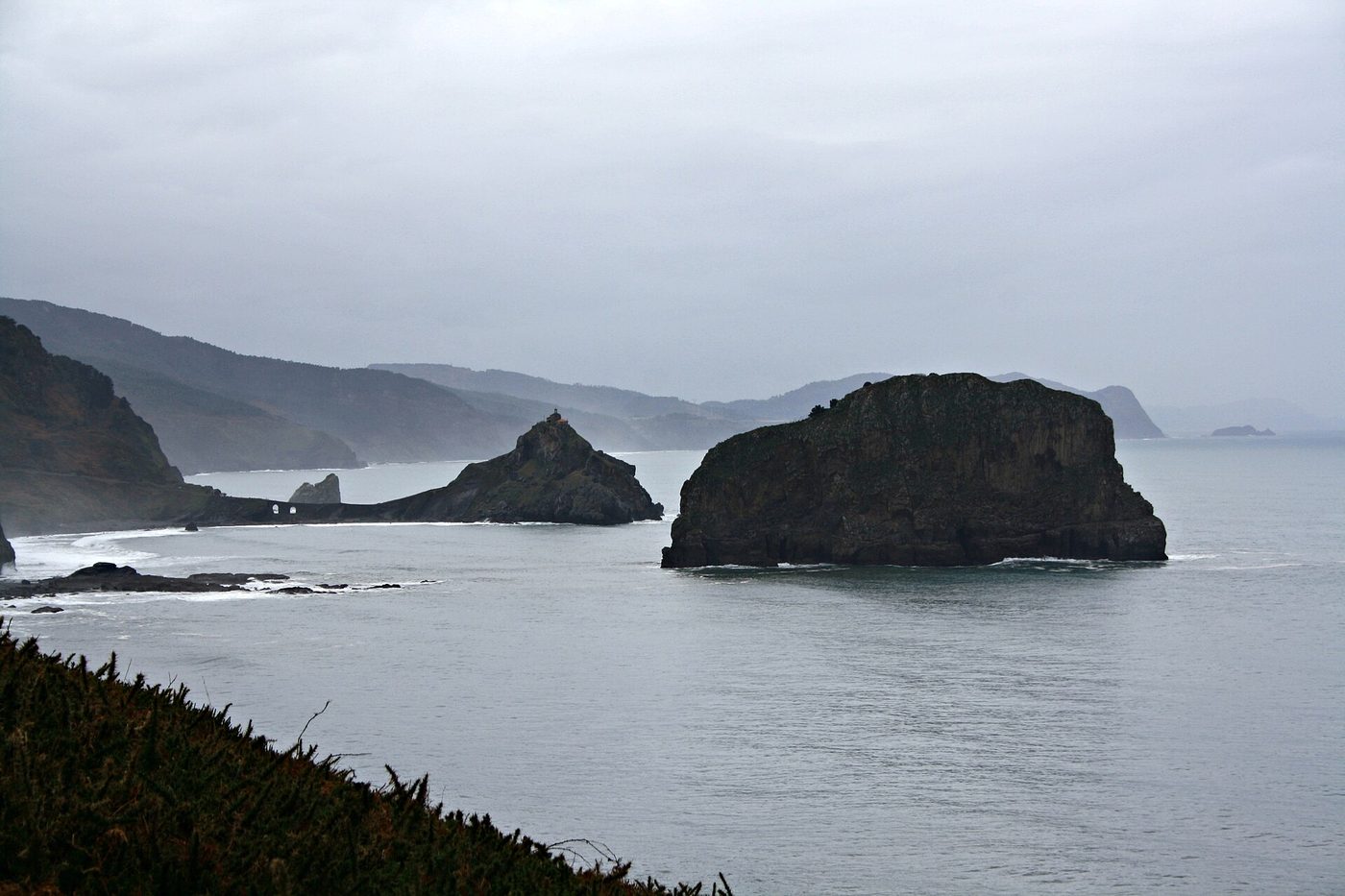
Read this one carefully. Access to San Juan de Gaztelugatxe remains free of charge, but a free ticket is mandatory for entry between 10:00 and 19:00 (17:00 in winter) on Easter, Christmas and official Spanish holidays, daily from mid-June to mid-September, and at weekends from the last week of March to the end of October. The exact dates shift each year.
Book through the official tiketa.eus portal. You choose a reservation type, a number of people, then a date and a time slot. Tickets are bookable up to six months ahead, capped at ten per person, and you get an email receipt to show on arrival. Your slot is cancelled if you have not turned up within sixty minutes of the booked time. In July and August the slots are usually gone two to three weeks ahead.
Two routes lead down to the bridge. Urizarreta is 1.2 km, steep at around 35%, with stairs, starting by the Eneperi restaurant. Ermu is 1.6 km, a gentler 15%, on a paved traffic-free road, with no stairs at all, which makes it the option if anyone in your group has mobility limits. Then it is 241 steps up from the bridge to the hermitage, where tradition says you ring the bell three times and make a wish.
Go in spring or autumn if you can. In summer it is very crowded and the car parks fill early. Do not improvise a space on the road shoulder: that is forbidden and fined.
Bilbao and the Guggenheim
An hour and a quarter on the bus and you are in a different city entirely. The Guggenheim is the reason most people go, and the closing day is the detail to get right.
| Guggenheim Bilbao | Detail |
|---|---|
| Adult admission | €18 |
| Students 18 to 25, and over-65s | €9 with ID |
| Under-18s | Free. Under-12s must be accompanied |
| Audio guide | Included, via QR code |
| Standard hours | Tuesday to Sunday, 10:00 to 19:00 |
| Closed | Mondays, plus 25 December and 1 January. Closes at 17:00 on 24 and 31 December |
| 2026 Monday exceptions | Open on 30 March, 6 April, every Monday from 15 June to 7 September, 12 October, 7 December and 28 December |
| Extended hours | Until 20:00 during Easter week (30 March to 12 April) and in summer (15 June to 13 September) |
| Bargain | 50% off between 16:00 and 19:00 on the last day of any exhibition |
| Last admission | Desks close 30 minutes before closing, galleries cleared 15 minutes before |
If your only free day is a Monday outside those exception windows, go to Vitoria-Gasteiz or Getaria instead and save Bilbao for another trip.
When to visit San Sebastian: rain, sea temperature and crowds
“It rains a lot” is true and not much use on its own. You need the figures, because June and November here are two entirely different holidays.
The month-by-month table
These are the 1991 to 2020 normals from the Monte Igueldo station, 260 metres above the city. The airport station at Hondarribia, 15 km east, runs a few degrees warmer in summer, which is why you will see higher figures quoted elsewhere.
| Month | Avg high °C | Avg low °C | Rainfall mm | Rain days | Sunshine hrs | Sea °C |
|---|---|---|---|---|---|---|
| January | 11.1 | 6.2 | 140 | 13 | 100 | 13 |
| February | 11.6 | 6.0 | 110 | 12 | 105 | 12.5 |
| March | 13.6 | 7.7 | 115 | 12 | 145 | 12.5 |
| April | 15.1 | 8.8 | 140 | 14 | 155 | 13 |
| May | 18.0 | 11.4 | 120 | 12 | 180 | 15.5 |
| June | 20.3 | 14.2 | 90 | 11 | 190 | 18.5 |
| July | 22.0 | 16.3 | 85 | 10 | 195 | 21 |
| August | 22.9 | 16.8 | 115 | 11 | 190 | 22 |
| September | 21.2 | 14.9 | 110 | 10 | 180 | 20.5 |
| October | 18.6 | 12.6 | 160 | 12 | 140 | 18 |
| November | 14.1 | 9.0 | 170 | 13 | 100 | 15.5 |
| December | 11.9 | 7.0 | 150 | 13 | 95 | 13.5 |
| Year | 16.7 | 10.9 | 1,510 | 142 | 1,775 | 16.3 |
What the table tells you
Read it and a few things jump out. Rain falls in every single month. The driest month, July, still averages ten rain days. The wettest is November at 170 mm. Across the year you get 1,510 mm over 142 days, so roughly one day in two and a half sees rain. You will also notice that only 33 to 48% of daylight hours are sunny, with September the best at 48%.
The sea is the other surprise. It peaks at about 22°C in August, 21°C in July and 20.5°C in September. That is swimmable and pleasant, though nothing like the Mediterranean, and if you have just come from the Med it will feel bracing for the first minute.
The verdict on timing
June and September are the two best months. June gives you the least rain after July, an 18.5°C sea and no festival crowds. September gives you the warmest sea of the shoulder season at 20.5°C, the sunniest share of daylight in the year, and easier restaurant bookings, provided you dodge the Film Festival. July and August are hotter and busier and the sea is at its best, but you are competing with the whole of Spain and France for a hotel bed. Winter is mild by northern European standards, with January highs of 11°C, but it is dark and wet and half the seasonal facilities are shut.
One oddity: a southerly foehn wind coming off the Cantabrian Mountains can cause sudden sharp warming, and the city has hit 39°C in July on more than one occasion. Snow is rare, though 30 cm fell in February 1996.
One figure to disregard: the widely repeated claim that San Sebastian gets around 200 rain days a year. The 1991 to 2020 normals give 142. For how this fits the wider picture, see our guide to the best time to visit Spain and the broader best time to visit Europe.
The festival calendar, and when to stay away
San Sebastian has a serious events calendar for a city of its size, and two of these will fill every hotel bed for a hundred kilometres.
| Event | 2026 dates | What happens | Should you plan around it? |
|---|---|---|---|
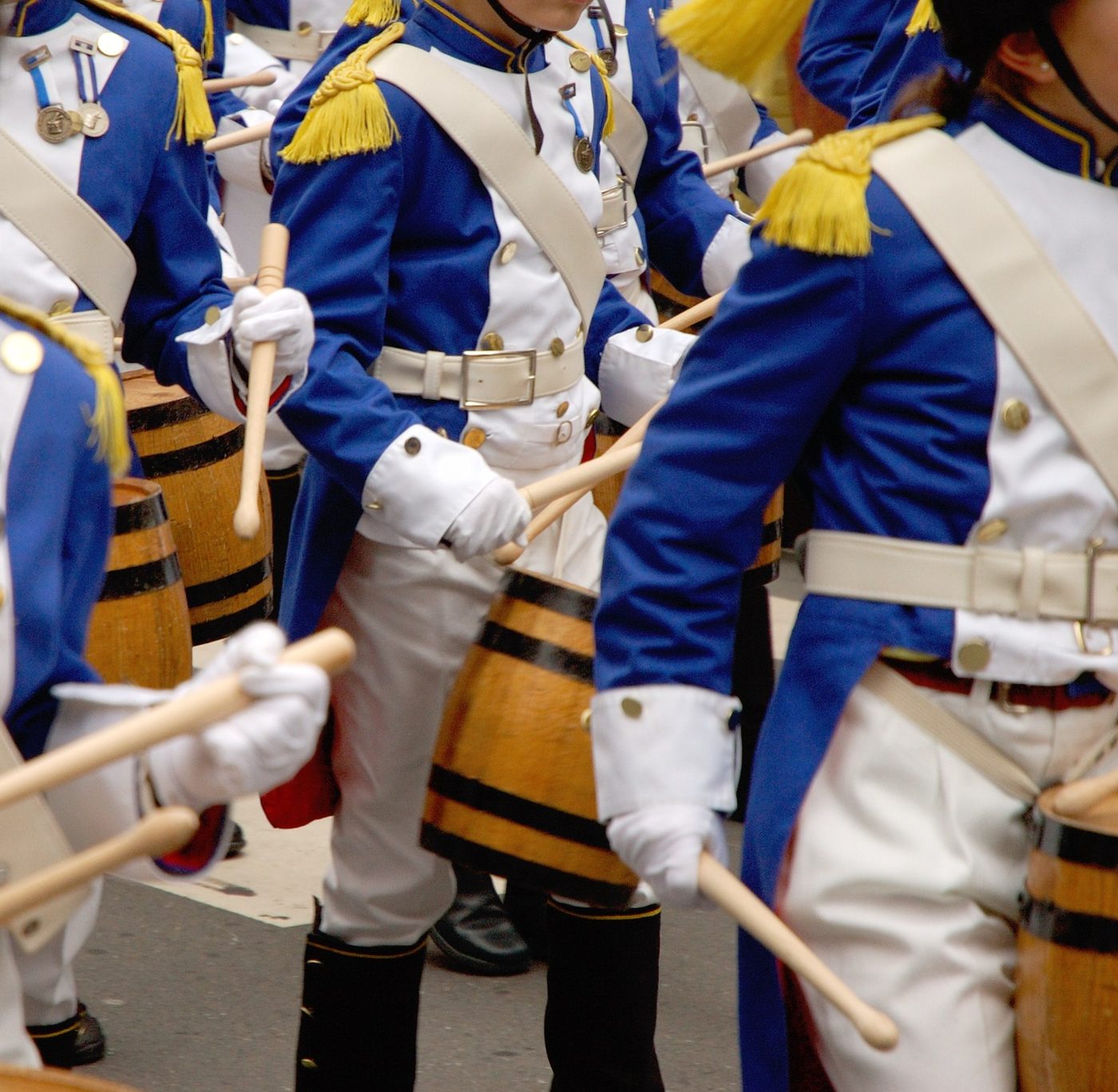
| Tamborrada | 20 January, with the flag raised at midnight on 19 January | Twenty-four hours of drumming, from midnight to midnight, by a reported 28,000 drummers in more than 150 groups dressed as cooks and Napoleonic soldiers, playing music written by Raimundo Sarriegui. The Children’s Tamborrada is at noon in Alderdi Eder | Come for it if you want the most Basque day of the year. But note that the Aquarium and San Telmo both close on 20 January |
| Jazzaldia (62nd edition) | 22 to 26 July 2026 | The oldest jazz festival in Spain and one of the oldest in Europe. Over 60 performances. Paid concerts at the Kursaal and Plaza de la Trinidad; free concerts on Zurriola beach and the Kursaal terraces | Yes, and the free beach concerts alone justify the timing |
| Aste Nagusia / Semana Grande | 8 to 15 August 2026 | Opens with a cannon shot at 19:00 on 8 August in Alderdi Eder. The 60th International Fireworks Competition fires over La Concha every night at 22:45. 416 activities across 30 spaces: concerts, Basque rural sports, the Getaria to Donostia open-water swim, giants and bigheads, and txosnas on the Boulevard | Simultaneously the best week and the worst week. Spectacular, and the city is completely full |
| Quincena Musical (87th) | Through August 2026 | Classical music across Tabakalera and other venues | A civilised counterweight to the fireworks |
| La Concha regattas | The first two Sundays of September, 6 and 13 September 2026 | Trainera rowing races in the bay, the “Olympiad of rowing”, two days of two heats of four boats, men’s and women’s categories (the women’s since 2008) | Free to watch from the promenade and one of the most local things you can do here |
| San Sebastian International Film Festival (74th) | 18 to 26 September 2026 | Spain’s biggest film festival, centred on the Kursaal | Only if you are coming for the films. Otherwise it is the second week to avoid |
The 74th festival is the last under director Jose Luis Rebordinos, with Maialen Beloki taking over in January 2027.
If your priority is a quiet city, the sweet spots are the first three weeks of June, the first week of July before Jazzaldia, and the first half of October. That pattern holds across most of the best places to visit in Europe in summer.
What a trip to San Sebastian costs
San Sebastian is expensive by Spanish standards and reasonable by Western European ones. The accommodation is where it bites; the food, oddly, is where it gives back.
| Item | Typical range |
|---|---|
| Hostel dorm bed | €25 to €45, rising to €35 to €50 in July and August |
| Hostel private room | €60 to €90, rising to €80 to €110 in July and August |
| Mid-range hotel, summer, near the beach | €180 to €250 a night in July and August |
| Seasonal premium | Summer runs roughly 20 to 40% above shoulder season |
| Daily budget, all in | €80 to €220 per person per day |
| Dinner as a five-bar txikiteo | €20 to €30 per person |
| Dinner at a three-star restaurant | €315 to €395 per person before drinks |
| City bus single | €1.95 |
| Aquarium plus San Telmo plus the funicular | €31.50 for one adult, or €21.50 if you visit San Telmo on a free Tuesday |
Book six to eight weeks ahead if you want the lower end of those hotel ranges. Rates step up sharply once the season is confirmed. If you are watching the budget hard, our Europe on a budget guide and the cheapest places to travel in Europe both give useful comparison points, and backpacking Europe covers the hostel end properly.
The tourist tax, which is coming in January 2027
This is the one thing in this guide most likely to catch you out, because the situation changed in 2026 and a lot of what is published predates it.
Nothing is charged to visitors today. If you are travelling in the rest of 2026 you will pay no tourist tax in San Sebastian. From 1 January 2027, you will. The Juntas Generales of Gipuzkoa approved the enabling provincial regulation in 2026, and San Sebastian city council gave initial approval to its own ordinance on 28 July 2026, with final approval by the full council expected in September. The city expects the tax to raise around eight million euros a year.
San Sebastian has chosen the top of the permitted range on every band. The charge is set by accommodation type and category, not by area of the city.
| Where you sleep | Per person, per night, from 1 January 2027 |
|---|---|
| Top-category hotels | €6.50 |
| Tourist-use dwellings (viviendas de uso turistico) | €6.50 |
| Agroturismos and rural houses | €1.25 |
| Cruise passengers calling at the port | €7.00 |
| Other hotels, pensions, campsites, hostels | Graded between those figures by category |
Two exemptions matter. Under-18s pay nothing. And the charge is capped at six nights: from the seventh night of a continuous stay, no further tax is due. For a couple in a good hotel for four nights, that is €52 on top of the room rate. Worth knowing about, not worth restructuring a trip around.
If you are booking a 2027 trip now, assume the tax applies and check whether your accommodation is quoting it separately or including it. Spain’s entry rules are a separate question, and one that is also in flux: see our Schengen visa and ETIAS guide for the current position and the expected ETIAS timetable.
Itineraries: two, three and five days
How long you need depends on one thing: city break, or base for the region? Two full days is the floor. Three is the number most people land on. Four or five if you want the Basque Country properly.
Two days: the compressed version
Day 1. Morning on La Concha and along the promenade to the Peine del Viento. Lunch in the Centro. Afternoon up Monte Urgull from Zuloaga Square, down to the Paseo Nuevo. Pintxos in the Parte Vieja from 19:00, five bars, finishing at La Vina for cheesecake.
Day 2. San Telmo in the morning, free if it is a Tuesday. Cross the river to Gros, lunch there, then the funicular up Monte Igueldo in the late afternoon for the bay view. Evening pintxos in Gros, which is calmer than the Old Town.
Three days: the right length
Days one and two as above, then:
Day 3. A half-day in Hondarribia, 22 minutes on the E20 or E21, for the walled town and the fishing quarter. Back for a late-afternoon swim, then either a proper sit-down dinner at Kokotxa or Txuleta, or one more crawl through the Old Town, this time working the bars you missed.
Five days: the Basque Country version
Days one to three as above, then:
Day 4. Bilbao. Bus out early, Guggenheim in the morning (check the Monday exceptions in the table above before you pick the day), Casco Viejo for lunch, back on an evening bus. Or, if it is the right season, drive to Gaztelugatxe with a pre-booked slot and take in Bermeo on the way back.
Day 5. Zarautz and Getaria as a pair: train to Zarautz, the 30-minute coastal walk to Getaria, lunch at a waterfront grill or, if you have booked, Elkano. Then the Balenciaga Museum and a txakoli tasting before the bus back.
If you have longer and want to build San Sebastian into a wider trip, it slots naturally into a northern loop through Bilbao, Santander and the Picos de Europa, or across the border into the French Basque coast. Our Spain itinerary and Europe itinerary guides have route templates, and Europe road trips covers the driving version.
Basque language and culture, briefly
Donostia and San Sebastian are both official names and you will see them used interchangeably, often together. Basque, or Euskara, is co-official with Spanish. It is a language isolate, unrelated to any known language family, and is usually described as the oldest surviving language in Europe. Almost 750,000 people speak it.
In the city itself, on 2021 figures the tourist board puts good Basque speakers at 47% of the population, with a further 21% who understand it. Across the wider Basque Country, 62.4% of residents had some knowledge of the language in 2021. You will hear it in bars, on street signs, on the buses and in the names of everything.
You do not need any of it. Spanish works everywhere. But learning to say hello and thank you in Basque changes how a bar treats you more than the equivalent effort in Spanish would, simply because so few visitors bother. Rather than print a phrase list I cannot vouch for the spelling of, ask the first bartender you take to. They will be delighted, and you will remember it better than anything you read here.
A little context on what makes Basque culture distinct: Basque rural sports, which you can see during Aste Nagusia, involve stone-lifting, wood-chopping and rowing rather than anything you would recognise from elsewhere in Spain. Trainera rowing is a genuine mass-participation obsession. And the cuadrilla, the friendship group people keep from school into old age, structures social life in a way that explains a lot about how the bars work.
Accessibility notes
The city is flatter and more manageable than its two hills suggest, since almost everything you want is at sea level along the bay. Some specifics worth planning around:
- La Concha provides assistance for swimmers with restricted mobility during the summer season.
- San Telmo Museoa lends wheelchairs and walking frames, and admission is free for visitors with a disability and their companion.
- Monte Igueldo charges the reduced €4.50 return funicular fare to visitors holding a disability card, and there is free parking at the summit if you prefer to drive up.
- Gaztelugatxe has a step-free approach: the Ermu route is 1.6 km on a paved, traffic-free road at a 15% gradient with no stairs. Note that the final 241 steps from the bridge to the hermitage cannot be avoided.
- Eureka! Zientzia Museoa has a free car park with two accessible spaces and is 80 metres from the dbus stop.
- The Parte Vieja is cobbled, narrow and packed in the evening, which is the hardest part of the city for anyone with mobility limits. Gros and the Centro are much easier.
Mistakes I see people make
Arriving at the pintxo bars at 21:30. You are two hours late for the good version of the evening. Start at seven.
Ordering four things at the first bar. One specialty per bar. That is the whole point of the form.
Assuming La Concha is the only beach worth using. If you want waves, Zurriola. If you have small children, Ondarreta. La Concha is the postcard, not the default.
One more, and it is easy to fix: not knowing that the emergency number across Spain is 112. It works from any phone, in Spanish, Basque, English and French.
A Monday day trip to Bilbao. The Guggenheim is closed most Mondays. Check the 2026 exception list in the table above before you commit a day to it.
Driving into the centre without checking the Low Emission Zone. Foreign-registered cars need a filed statement of compliance before entry, not after.
Turning up at Gaztelugatxe in August without a ticket. The ticket is free but compulsory, and slots go two to three weeks ahead in high season.
A suitcase packed for Spain rather than for the Atlantic. Every month here has at least ten rain days. Bring a proper waterproof jacket, whatever the calendar says. Our Europe packing list has the full version.
Trying to do the Michelin restaurants on short notice. Arzak wants two to three months. Mugaritz releases its whole season in one February drop. Akelarre’s sunset tables go six to eight weeks out.
An August booking made in the hope of a quiet, elegant seaside town. Aste Nagusia is 416 activities across 30 spaces with fireworks every night. It is glorious. It is not restful.
San Sebastian travel guide: frequently asked questions
How many days do you need in San Sebastian?
Two full days covers the city itself without rushing. Three is what I would recommend to most people, since it buys you one day trip or one slow day. Four or five if you want to use it as a base for Bilbao, Gaztelugatxe and the coastal towns.
Is San Sebastian worth visiting?
Yes, with one honest caveat. If you are coming specifically for food, for a beautiful bay, or for both, it is one of the most rewarding small cities in Europe and it will exceed the expectations you arrive with. If you are coming for guaranteed Spanish sunshine, it will not, because this is an Atlantic climate with 142 rain days a year.
Is San Sebastian expensive?
For Spain, yes. Beds cost more here than in Seville, Valencia or Granada, and more than in Bilbao. Mid-range summer hotels run €180 to €250 a night. But eating is a bargain relative to the quality: a five-bar pintxo crawl costs €20 to €30 a head, which is remarkable value in a city with nineteen Michelin stars on its doorstep. From 1 January 2027, add €1.25 to €6.50 per person per night in tourist tax, capped at six nights.
What is San Sebastian famous for?
Pintxos and Michelin stars above all, then La Concha beach, then surfing at Zurriola. It is also known for the Tamborrada drum festival on 20 January, the international film festival in September, and being the elegant seaside resort that the Spanish royal court built for itself from 1845 onwards.
What is a pintxo?
A small plate, usually served on or with bread and often pinned with a stick, eaten standing at a bar with one drink before you move to the next bar. The name comes from the stick. The original is the gilda: olive, pickled guindilla peppers and anchovy. Pintxos are not tapas; the culture around them, one bar one dish, is the actual difference.
How much do pintxos cost in San Sebastian?
Cold pintxos from the counter run €2 to €4. Hot ones made to order run €3 to €6, and the overall average lands around €2.50. Add a small txakoli at €2.00 to €3.50 or a zurito at €1.50 to €2.50, and a five-bar evening lands at €20 to €30 per person.
What is the best time to visit San Sebastian?
June and September. June has the second-lowest rainfall of the year at 90 mm, an 18.5°C sea and no festival crowds. September has the warmest shoulder-season sea at 20.5°C and the sunniest share of daylight hours in the year, though you should avoid 18 to 26 September for the film festival. July and August have the best sea temperatures, 21 and 22°C, and the worst crowds.
Bilbao or San Sebastian: which is better?
They do different jobs. San Sebastian is smaller, prettier, has the beaches and is the better eating city. Bilbao is bigger, grittier, has the Guggenheim and much better international flight connections, and is meaningfully cheaper to sleep in. If you have four days, do both: the bus takes about an hour and a quarter.
How do you get from Bilbao Airport to San Sebastian?
Direct bus, branded Lurraldebus or Pesa, roughly every 30 minutes, taking about 1 hour 15 minutes. The ticket machine is on the right-hand side as you leave baggage reclaim. Published fares vary widely between sources, from around €8 to around €17, so buy at the machine rather than budgeting off a third-party figure. The corresponding Lurraldebus line from the San Sebastian bus station is DO50B.
Is San Sebastian good for families?
Very. Ondarreta is a calm, shallow family beach with a playground; the gabarron floating deck on La Concha is a summer fixture that children will not leave; the Aquarium is very good and has no captive cetaceans; Eureka! is the rainy-day answer with 178 interactive modules and a planetarium; and the Monte Igueldo amusement park has been running since 1912. Under-3s are free at the Aquarium, under-18s are free at the Guggenheim.
Do you need a car in San Sebastian?
No, and it is arguably a liability for a short stay. The city is walkable end to end in an hour, the Low Emission Zone restricts entry to the centre, and central street parking is capped at 90 minutes in the tightest zones. Hire a car only for the day you are doing Gaztelugatxe or Rioja Alavesa, and park at Illunbe or Igara for free the rest of the time.
Is there a tourist tax in San Sebastian?
Not in 2026, but yes from 1 January 2027. Gipuzkoa approved the enabling provincial regulation in 2026 and San Sebastian gave initial approval to its own ordinance on 28 July 2026, choosing the top of the permitted range. Expect €6.50 per person per night in top-category hotels and tourist-use dwellings, down to €1.25 in agroturismos and rural houses, and €7.00 for cruise passengers. Under-18s are exempt and the charge stops after six nights.
Final thoughts
San Sebastian rewards a particular kind of traveller: the one who is happy to eat standing up, walk everywhere, and accept that the weather will do what it likes. It does not reward rigid planning. The best evening I have had here started with a plan to visit three specific bars and ended in a fourth that I still cannot find on a map, eating something with anchovies in it, listening to a man explain trainera rowing with the intensity most people reserve for religion.
Go in June or September. Start eating at seven. Climb both hills. Take the bus to Hondarribia on the day you cannot face another plan. And bring the jacket.
If you are building this into a longer trip, the Spain travel guide is the place to start, and the best places to visit in Spain will help you decide what else earns a slot. For the rest of the north and beyond, our best cities to visit in Europe and underrated places in Europe guides cover similar territory, and train travel in Europe explains how the Topo and the Renfe network connect onwards. Getting around Europe and our general Europe travel tips fill in the rest.
Hannah Brooks has spent fifteen years travelling, living and writing across Europe, from the Arctic tip of Norway to the south of Sicily. She has planned hundreds of European itineraries for readers and is Senior Europe Editor at EuropeanTourism.org.
Photo credits
- Photo: es:User:mikelo (CC0) via Wikimedia Commons · source
- Photo: Joxemai / CC BY-SA 3.0 via Wikimedia Commons · source
- Photo: Ksarasola / CC BY-SA 3.0 via Wikimedia Commons · source
- Photo: Joxemai / CC BY-SA 4.0 via Wikimedia Commons · source
- Photo: Mery46 / CC BY-SA 4.0 via Wikimedia Commons · source
- Photo: No machine-readable author provided. Josugoni assumed (based on copyright claims (CC0) via Wikimedia Commons · source
- Photo: Zarateman (CC0) via Wikimedia Commons · source
- Photo: Zarateman (CC0) via Wikimedia Commons · source
- Photo: Garazi Peña (CC0) via Wikimedia Commons · source
- Photo: atobar (CC0) via Wikimedia Commons · source
- Photo: Txo / CC BY-SA 3.0 via Wikimedia Commons · source
- Photo: bichuas / CC BY-SA 2.0 via Wikimedia Commons · source
- Photo: Nicolas Vigier (CC0) via Wikimedia Commons · source
- Photo: Biskuit from Atlanta, GA / CC BY-SA 2.0 via Wikimedia Commons · source
- Photo: Jean Michel Etchecolonea / CC BY-SA 3.0 via Wikimedia Commons · source
- Photo: René Baron / CC BY-SA 4.0 via Wikimedia Commons · source
- Photo: Javier Perez Montes / CC BY-SA 4.0 via Wikimedia Commons · source