Granada Travel Guide 2026: Alhambra Tickets, Tapas & Tips
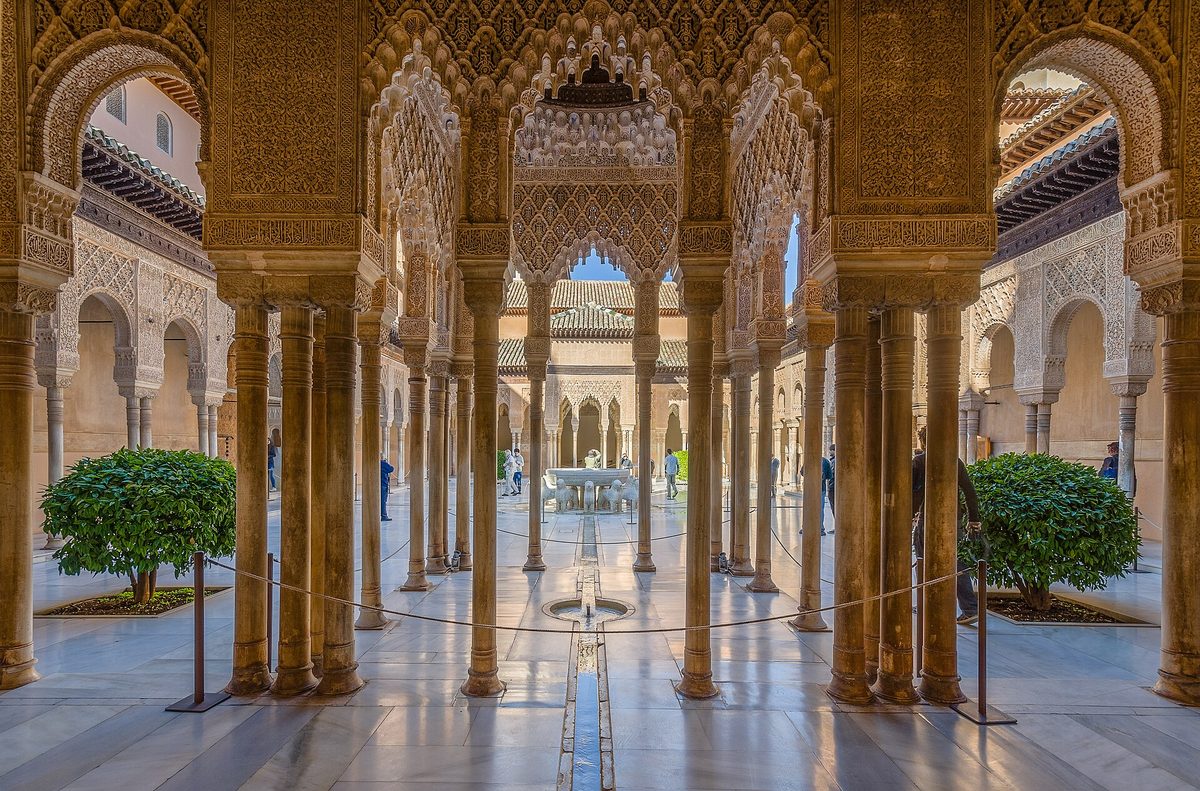
The first time I walked into the Court of the Lions, I had spent eleven minutes queueing, three months planning, and about forty seconds actually looking at the fountain before a guide swept a group of thirty between me and it. That is Granada in miniature: a city that hands you one of the most extraordinary buildings on earth and then makes you work out the logistics yourself.
This Granada travel guide is the version I wish someone had handed me. It covers what the Alhambra costs in 2026, the booking rule that decides whether your tickets are salvageable if a name is wrong, how the free tapas system really works, and the dozen or so things beyond the hill that are worth a day of their own.

Granada at a glance
Granada sits at roughly 700 metres above sea level in eastern Andalusia, with the Sierra Nevada rising directly behind it. That altitude explains almost everything about the city: why July afternoons hit 34 °C and January nights drop below freezing, why you can ski in the morning and sit on a terrace in shirtsleeves by four, and why the terraces of the Generalife are stacked the way they are.
| Thing | The short version |
|---|---|
| Where | Eastern Andalusia, southern Spain, about 700 m above sea level |
| Headline sight | The Alhambra, Generalife and Albayzín, UNESCO World Heritage site 314 |
| Alhambra general ticket, 2026 | 22.27 € online, including the 1.27 € web fee |
| Book Alhambra tickets | tickets.alhambra-patronato.es, released 90 days out at midnight Granada time |
| Days needed | Two full days minimum. Three if you want Sacromonte and a day trip |
| Nearest airport | Granada-Jaén (GRX), 17 km away, 40 minutes by bus |
| Airport bus fare | 3.10 € single on the ALSA line 245, or 1.35 € with a Consorcio card |
| City bus fare | 1.60 € single, or 0.90 € a journey with a Credibús card |
| Tourist tax | None. Andalusia does not levy one and Granada’s is still only a proposal |
| Free tapas | Real, citywide, and still free with almost every drink |
| Best months | Mid-April to mid-May, and mid-September to mid-October |
| Worst month for heat | July, average high 34.1 °C, essentially zero rain |
| Language | Spanish, with strong Andalusian pronunciation. English is common in tourist areas, patchy elsewhere |
| Currency | Euro |
If you only take one thing from this page, take this: book the Alhambra before you book anything else. Not the flight, not the hotel. The Alhambra. Every other decision on your trip bends around what time slot you manage to get, and in high season the good slots are gone weeks or months ahead. I have watched people arrange an entire Andalusian itinerary around a city they could not get into.
Granada works as a stop on a wider Spain itinerary, and it slots naturally into the Andalusia circuit alongside Seville and Córdoba. But it rewards a longer stay than most people give it, and I will explain why as we go.
The Alhambra: everything you need to book it properly
The Alhambra is not one building. It is a walled hilltop city covering around 14 hectares, and the ticket you buy determines which parts of it you are allowed into. Most of the frustration people report comes from buying the wrong ticket, or the right ticket for the wrong day, and finding out at the gate.
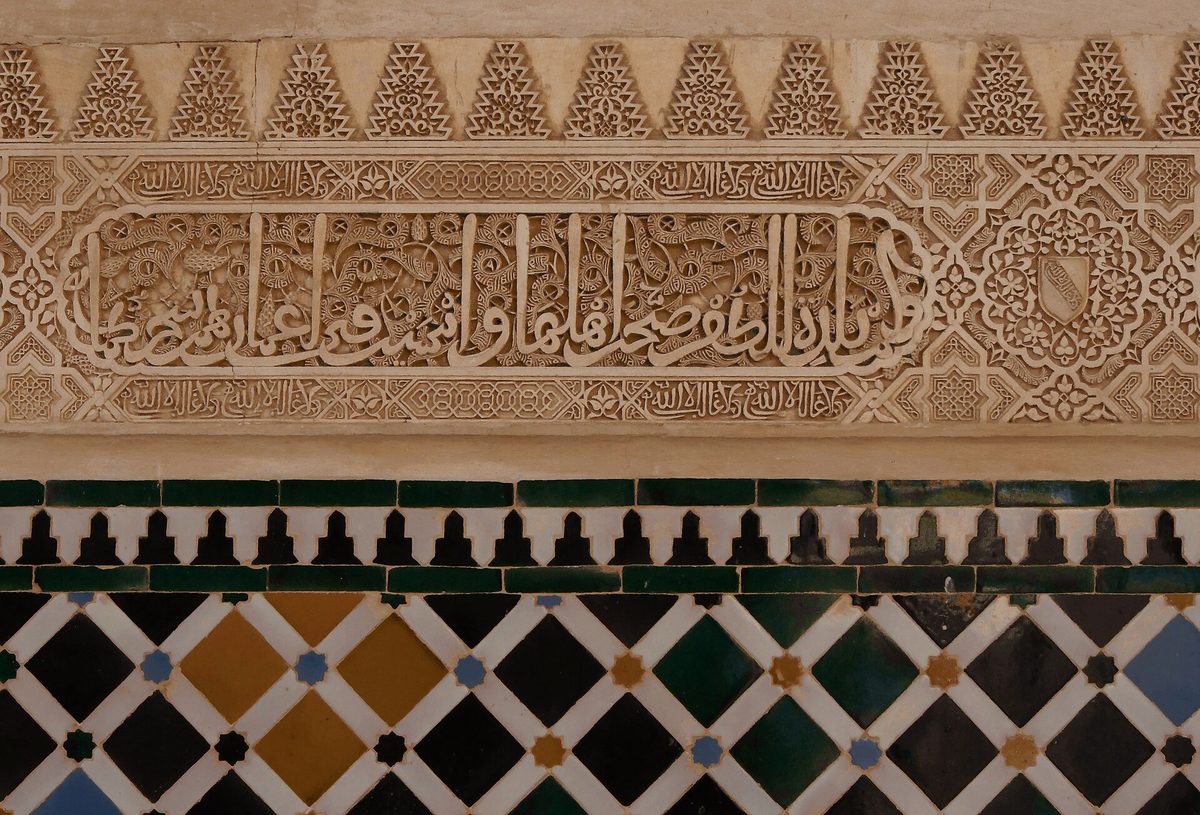
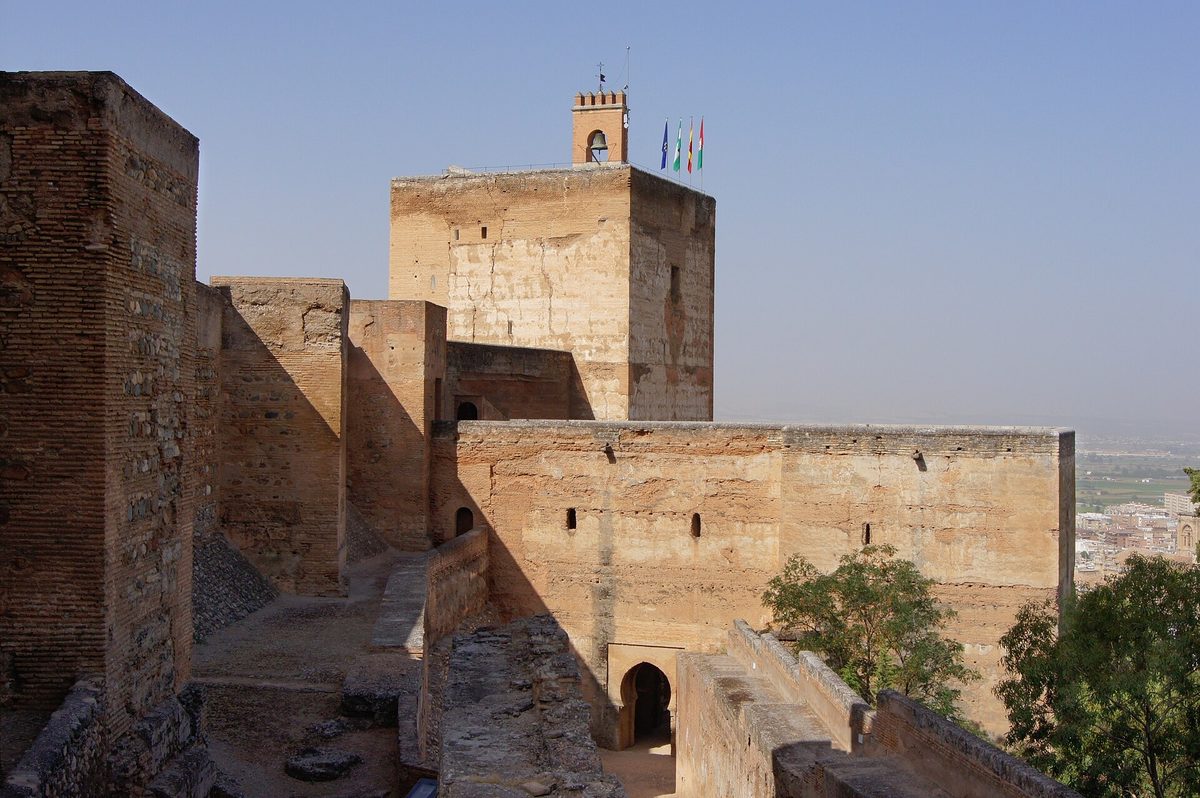
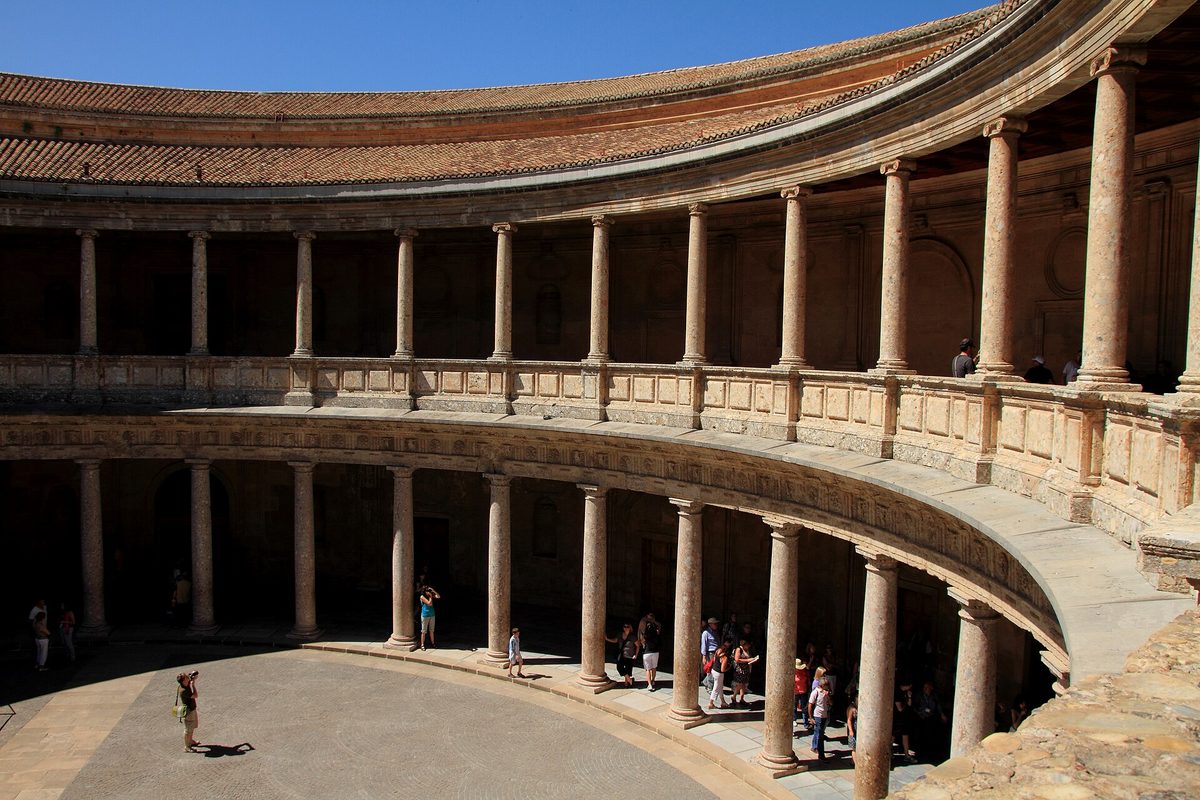
There are four zones that matter. The Nasrid Palaces are the reason the Alhambra is famous: the Mexuar, the Comares Palace with the Court of the Myrtles, and the Palace of the Lions. This is the part with the honeycomb vaulting, the carved stucco that looks like frozen lace, and the poetry running around the walls in Kufic script. The Alcazaba is the military fortress at the western tip, older and starker, with the best view over the city. The Generalife is the summer palace and its gardens, up a slope to the east. And the Palace of Charles V is the enormous Renaissance drum that Charles V dropped into the middle of the complex in the sixteenth century; it is free to enter and houses the Alhambra Museum.
Only the Nasrid Palaces are time-slotted. Everything else you visit whenever you like within opening hours.
Alhambra ticket prices 2026
These are the official prices from the Patronato de la Alhambra y Generalife, the public body that runs the site. Prices shown include the 1.27 € online service fee where applicable, which is why the headline figure is 22.27 € rather than a round 21 €.
| Ticket | Price | What it gets you | Nasrid Palaces? |
|---|---|---|---|
| General Day Tour | 22.27 € | Alcazaba, Nasrid Palaces, Generalife. The standard ticket | Yes, timed slot |
| Gardens Day Tour | 12.73 € | Generalife, Partal gardens, Alcazaba | No |
| Night Tour to Nasrid Palaces | 12.73 € | The Nasrid Palaces after dark, nothing else | Yes, night only |
| Night Tour to Gardens and Generalife | 8.48 € | Generalife gardens after dark | No |
| Alhambra Experiences | 22.27 € | Night visit to the Nasrid Palaces, then Alcazaba, Partal and Generalife the next day from 08:30 | Yes, night |
| Dobla de Oro General | 30.48 € | General Day Tour plus six Andalusi monuments in the Albayzín | Yes, timed slot |
| Dobla de Oro at Night | 23.06 € | Night Nasrid visit plus the same six Albayzín monuments | Yes, night |
| Andalusian Monuments Visit | 8.48 € | Bañuelo, Corral del Carbón, Casa Horno de Oro, Dar al-Horra. No Alhambra | No |
| Alhambra + Rodríguez-Acosta Foundation | 25.45 € | General Day Tour plus the Rodríguez-Acosta carmen | Yes, timed slot |
| Children 3 to 11 | Free | Free, but a ticket must be booked at the same time as the adults | Yes, with adult |
| Under 3 | Free | Free ticket collected at the ticket office, no advance booking | Yes, with adult |
Reduced rates exist for EU citizens over 65, holders of the Spanish Carné Joven youth card, and visitors with a recognised disability of 33% or more. The Patronato does not publish the reduced euro figures on its public pages; they appear inside the booking flow. You must bring official, in-date proof and show it at the ticket office on the day, or you pay the full price regardless of what you booked. Teachers, and I have been asked this more than once, get nothing: the Order of 18 September 2019 explicitly removed the teacher reduction.
How far ahead to book, and the trick to it
Tickets go on sale 90 days in advance, at midnight Granada time, on the official site. That is the moment the full inventory appears. Peak morning Nasrid slots in April through October are frequently gone within hours of release, and the whole day can be sold out eight to twelve weeks out.
Three practical consequences:
- Work backwards from your travel date and set an alarm. If you are travelling on 20 May, tickets appear at midnight on 19 February, Spanish time. Being at the site in the first hour is the difference between choosing your slot and taking what is left.
- You can buy a maximum of 10 tickets per person, per bank card, per month in the advance sale. Two adults with two cards can therefore cover a group of twenty, which is worth knowing before you try to book a family reunion on one card.
- Authorised travel agents hold 39% of total annual capacity. When the official site says sold out, that is only 61% of the picture. A licensed guided tour is often available for a date the direct channel cannot sell you, at a higher price but a real one.
If your date is genuinely gone, the Gardens Day Tour at 12.73 € is usually available much later, and it is not a consolation prize. You still get the Alcazaba, the Partal with its portico reflected in still water, and the whole Generalife. You miss the Nasrid Palaces, which is a real loss, but a Gardens ticket plus a night visit to the Nasrid Palaces on a different day covers everything for 25.46 € total. Better still, check whether Alhambra Experiences is available for your date: at 22.27 € it does the same job in one purchase, with the night palaces on day one and the Alcazaba, Partal and Generalife the following morning.
The name rule that ruins holidays
Alhambra tickets are personal and non-transferable. Every visitor must present the original ID card or passport used at booking, and the name has to match. Children under 12 need their own QR ticket even though they pay nothing.
People assume this is theatre. It is not. Names are checked, and a mismatch means no entry and no refund, because all purchases are final and firm. Date and time changes are not possible once a purchase is confirmed.
What you can do is change the identification, and the rule here is oddly specific. Per purchase locator, you may change names in this proportion:
| Tickets on the booking | Names you may change |
|---|---|
| 5 to 9 | 1 |
| 10 to 19 | 2 |
| 20 to 30 | 3 |
| 31 to 40 | 4 |
| 41 to 50 | 5 |
| 51 to 60 | 6 |
Changes must be made by phone to the call centre on +34 858 889 002, and no later than the day before the visit. Note what the table does not say: a booking of one to four tickets gets no name changes at all. If you booked two tickets and one traveller drops out, that ticket is dead. Book individually where you can, especially for a group whose composition might shift.
Opening hours and the timed-entry mechanic
| Period | Daytime | Night visits |
|---|---|---|
| 1 April to 14 October | Daily 08:30 to 20:00 (ticket office 08:00 to 20:00) | Tuesday to Saturday 22:00 to 23:30 (office 21:00 to 22:45) |
| 15 October to 31 March | Daily 08:30 to 18:00 (ticket office 08:00 to 18:00) | Friday and Saturday 20:00 to 21:30 (office 19:00 to 20:45) |
Closed 25 December and 1 January. Otherwise open every day of the year.
The Nasrid Palaces admit 300 people every half hour, and you enter only at the exact time printed on your ticket. That number is the whole explanation for the rigidity. Miss your slot and there is no slack in the system to absorb you, so you are not getting in. Arrive at the Nasrid Palaces entrance itself, not the main gate, at least fifteen minutes before your slot, and remember the complex is large: from the Access Pavilion to the palace door is a solid ten to fifteen minute walk.
Two more timing rules people trip over. If your ticket includes the Nasrid Palaces and you need to collect a physical ticket, you must do it at least one hour before your palace time. And each area of the complex can be entered only once, although you may leave the site and come back.
What to do inside, in order
The Patronato says the general visit takes around three hours. That is accurate if you keep moving and honest only if you do not stop to sit. I would give it four, and five if you are the sort of person who reads wall text.
The sequence I would use, assuming a mid-morning Nasrid slot:
- Arrive at the Access Pavilion 90 minutes before your slot. Not because you need the time, but because it means you can do the Generalife first, without hurrying.
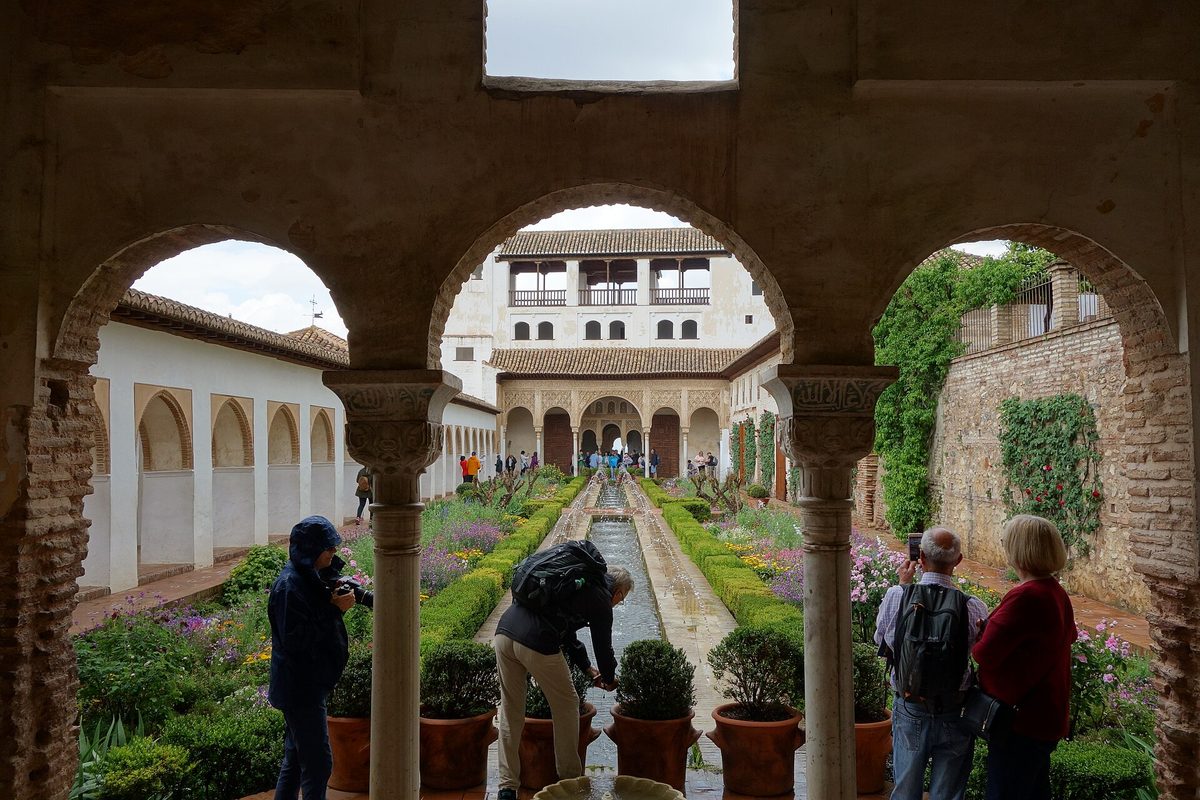
- Generalife. The Court of the Water Channel, the Sultana’s Courtyard with its ancient cypress, and the terraced gardens looking back at the Alhambra. Do this early because the walk between the Generalife and the Nasrid Palaces takes fifteen minutes and you do not want to make it at a run.
- Walk down to the Nasrid Palaces via the Partal, the oldest surviving palace on the site, where the Portico Palace sits reflected in a rectangular pool. This is the single most photographed pool in the Alhambra that is not in the Court of the Myrtles.
- Nasrid Palaces, at your exact slot. Roughly an hour, one-way flow, no going back. Give the Hall of the Two Sisters its due: the muqarnas dome above it has been counted at over five thousand cells.
- Palace of Charles V. Free, circular courtyard, and the Alhambra Museum inside it is very good and almost empty.
- Alcazaba last. Climb the Torre de la Vela. The view takes in the whole Albayzín, the cathedral, the vega plain and the Sierra Nevada in one turn.
Practical rules inside: bags larger than 40 by 40 cm are not allowed, and free lockers at the Access Pavilion and the Puerta del Vino are subject to availability. Strollers cannot go inside the buildings; you leave the pushchair at the Puerta del Vino locker and swap it for a baby carrier, maximum 12 kg. There are 360 guarded parking spaces, though private vehicles cannot reach the Alhambra from the city centre at all: the approach is via the Ronda Sur and the Serrallo tunnel.
The bits of the Alhambra hill that are free
The Silla del Moro and the Torres Bermejas are both free to visit, and both are on the hill. Silla del Moro opens Saturday 08:30 to 20:00 and Sunday 08:30 to 14:00 in summer, closing at 18:00 on Saturdays in winter. Torres Bermejas opens weekends, 08:30 to 20:00 in summer and 08:30 to 18:00 in winter. The Silla del Moro sits above the Generalife and gives you the Alhambra from an angle nobody photographs.
The Alhambra woods on the Cuesta de Gomérez, the Palace of Charles V, the Alhambra Museum and the Mosque Baths are all free as well. You can spend a decent hour on the hill without a ticket in your hand.
Is the Granada Card worth it? The actual maths
The Granada Card is the city council’s pass, and it is the one purchase in this guide where I have seen more people lose money than save it. Here is what it costs in 2026 and what it contains.
| Card | Price | Alhambra element | Valid for |
|---|---|---|---|
| Granada Card 72h | 60.00 € | Full daytime Alhambra including Nasrid Palaces | 4 days |
| Granada Card 48h | 55.00 € | Full daytime Alhambra including Nasrid Palaces | 3 days |
| Granada Card 24h | 50.00 € | Night visit to the Nasrid Palaces only | 2 days |
| Granada Card Jardines | 50.00 € | Alcazaba and Generalife, no Nasrid Palaces | 2 days |
| Granada Card Kids (3 to 11) | 13.00 € | As the accompanying adult card | As adult card |
All versions include the Cathedral, the Royal Chapel, the Cartuja, San Jerónimo, the Sacromonte Abbey, the Parque de las Ciencias, Casa de Zafra, Cuarto Real, the Museo de Bellas Artes, Casa de los Tiros and the Archaeological Museum. The 72-hour card adds the Corral del Carbón, the Bañuelo, Casa del Horno del Oro, the Maristán and Dar al-Horra. Every version also gives you nine city bus journeys and one tourist-train tour, with earphones charged at 2 € extra.
Now the arithmetic. Take the 72-hour card at 60 € and the visitor most likely to buy it: someone doing the Alhambra, the Cathedral, the Royal Chapel, San Jerónimo and the Cartuja over three days, with a few bus rides.
| Bought separately | Price |
|---|---|
| Alhambra General Day Tour | 22.27 € |
| Granada Cathedral | 7.00 € |
| Royal Chapel | 7.00 € |
| Monasterio de San Jerónimo | 7.00 € |
| Cartuja Monastery | 7.00 € |
| Credibús card (2 €) plus a 10 € top-up covering nine journeys at 0.89 € | 10.01 € |
| Total | 60.28 € |
So for that exact visitor the card is a wash: 60 € against 60.28 €, a saving of 28 cents. Add the Parque de las Ciencias at 10 € and Casa de Zafra at 3 € and the card moves clearly ahead. Skip the Cartuja and San Jerónimo, which most two-day visitors do, and the same 60 € buys you about 46 € of monuments and bus rides.
Note also that the bus line in the table flatters the do-it-yourself option. If you buy nine single tickets at 1.60 € rather than loading a Credibús, the separate total climbs to 64.67 € and the card wins by nearly five euros.
My position: the Granada Card is worth it if you are a museum completist staying three or more days, and roughly neutral otherwise. What it really buys you is not savings but a guaranteed Alhambra slot when the direct channel is sold out, since the card carries its own allocation. In that scenario the price comparison stops mattering and the card is the best purchase in Granada. Note that it includes no Alhambra guided tour and no audioguide, and that once you have chosen your start date and Alhambra time at purchase, neither can be changed.
The Dobla de Oro, and why I would usually buy it instead
The Dobla de Oro at 30.48 € bundles the full daytime Alhambra with six Albayzín monuments: the Corral del Carbón, the Bañuelo, Dar al-Horra, the Casa Morisca on Horno de Oro, the Casa del Chapiz and Casa de Zafra. It is valid across three days, meaning the day before your Alhambra visit, the day itself and the day after.
Be clear about what the 8.21 € premium over a plain Alhambra ticket actually buys, because it is less than it looks. The Corral del Carbón is free to anyone, three of the others sit inside the 8.48 € Andalusian Monuments combined ticket, and Casa de Zafra is 3 €. On a Sunday most of it is free anyway. What the Dobla de Oro genuinely buys is the Casa del Chapiz, which is not in the cheaper combination, and the convenience of one ticket across three days. If you are in Granada on a Sunday, buy the plain Alhambra ticket and walk the Albayzín for nothing. Any other day of the week, the Dobla de Oro is the tidier purchase.
Granada beyond the Alhambra: prices and hours for 2026
Granada’s other problem is that the Alhambra eats all the oxygen. Visitors give the hill six hours and the rest of the city an afternoon, and then say Granada is a one-sight town. It is not. The Royal Chapel alone would be a headline attraction in a smaller city.
| Sight | 2026 price | Hours | Notes |
|---|---|---|---|
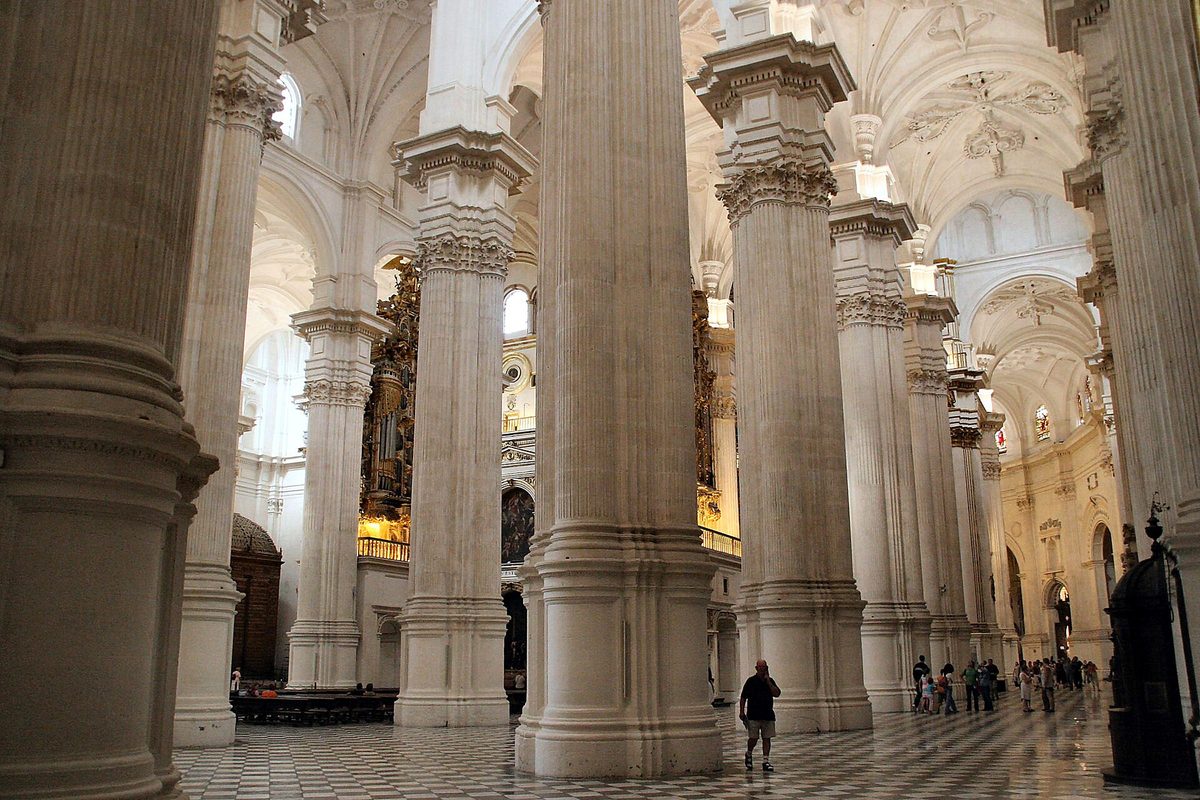
| Granada Cathedral | 7 € (10 € from 8 May to 28 Nov 2026) | Mon to Sat 10:00 to 18:15; Sun 15:00 to 18:15 | Free on Wednesday afternoons with a booked free ticket |
| Royal Chapel (Capilla Real) | 7 €, reduced 5 € | Mon to Sat 10:00 to 14:00 and 15:00 to 19:00; Sun 11:30 to 14:00 and 15:00 to 19:00 | No photography inside. Closed Good Friday, 25 Dec, 1 Jan |
| Monasterio de San Jerónimo | 7 € | Mon to Sat 10:00 to 13:00 and 15:00 to 18:00 winter, 16:00 to 19:00 summer | The best Renaissance interior in the city |
| Cartuja Monastery | 7 € | Mon to Fri and Sun 10:00 to 18:00; Sat 10:00 to 13:00 and 15:00 to 18:00 | Free Thursdays 15:00 to 17:00 with advance reservation |
| Cartuja SILENTIA night visit | 18 €, reduced 15 € | Evening, booked separately | Under 12 free |
| Sacromonte Abbey | 5 € general (the council card list quotes 7 €) | Daily 10:20 to 18:00 | Church closed to visitors during Sunday noon Mass |
| Church of San Nicolás and tower | 3 € | Varies | Different from the free viewpoint outside it |
| Corral del Carbón | Free, always | Daily 09:00 to 20:00 | A 14th-century Nasrid caravanserai, the only one preserved in Spain |
| Bañuelo, Casa Horno de Oro, Dar al-Horra | 8.48 € combined, free Sundays | 10:00 to 17:00 (15 Sep to 30 Apr); 09:00 to 14:30 and 17:00 to 20:30 (1 May to 14 Sep) | Also inside the Dobla de Oro |
| Casa de Zafra | 3 €, free Sundays | Varies seasonally | A Nasrid house with an interpretation centre for the Albayzín |
| Cuarto Real de Santo Domingo | 2 €, free Sundays | Varies seasonally | A 13th-century Nasrid tower in the Realejo |
| Museo de Bellas Artes | 1.50 €, free for EU citizens | Varies | Inside the Palace of Charles V |
| Casa de los Tiros | 1.50 €, free for EU citizens | Varies | |
| Museo Arqueológico | 1.50 €, free for EU citizens | Varies | On the Carrera del Darro |
| Museo Cuevas del Sacromonte | 5 € | 10:00 to 20:00 (15 Mar to 14 Oct); 10:00 to 18:00 (15 Oct to 14 Mar) | Last admission an hour before closing |
| Carmen de los Mártires | Free | Roughly 10:00 to 14:00 and afternoons; closed during August | Gardens below the Alhambra, almost nobody there |
| Mirador de San Nicolás | Free | Always open | The famous Alhambra view |
| Alcaicería | Free | Shop hours | The former silk bazaar, now souvenir lanes |
| Parque de las Ciencias | 10 € | Varies | Planetarium and Biodomo charged separately |
Three things I would flag in that table.
The Cathedral surcharge. Between 8 May and 28 November 2026 the Cathedral is hosting KERYGMA, and the standard adult ticket rises from 7 € to 10 €, with reduced tickets at 8 €. Every combined Granada Cristiana ticket goes up by 3 € for the same period, so budget for the higher figure if you are visiting between those dates.
Sundays are the cheap day for Moorish Granada. The Andalusi monuments, meaning the Bañuelo, Casa Horno de Oro and Dar al-Horra, are free on Sundays, as are Casa de Zafra and the Cuarto Real. The Corral del Carbón is free every day of the week. That is a strong free morning: five Nasrid interiors, none of them crowded, for nothing.
The Royal Chapel is the one people skip and should not. Ferdinand and Isabella are buried in it, in lead coffins you can look down on through a grille in the crypt, below marble effigies that cost more than the crypt did. Their daughter Juana la Loca and her husband Philip the Handsome are down there too. The sacristy holds Isabella’s personal art collection, including Memlings and a Botticelli. It takes forty minutes and it is 7 €.
The Albayzín and Sacromonte
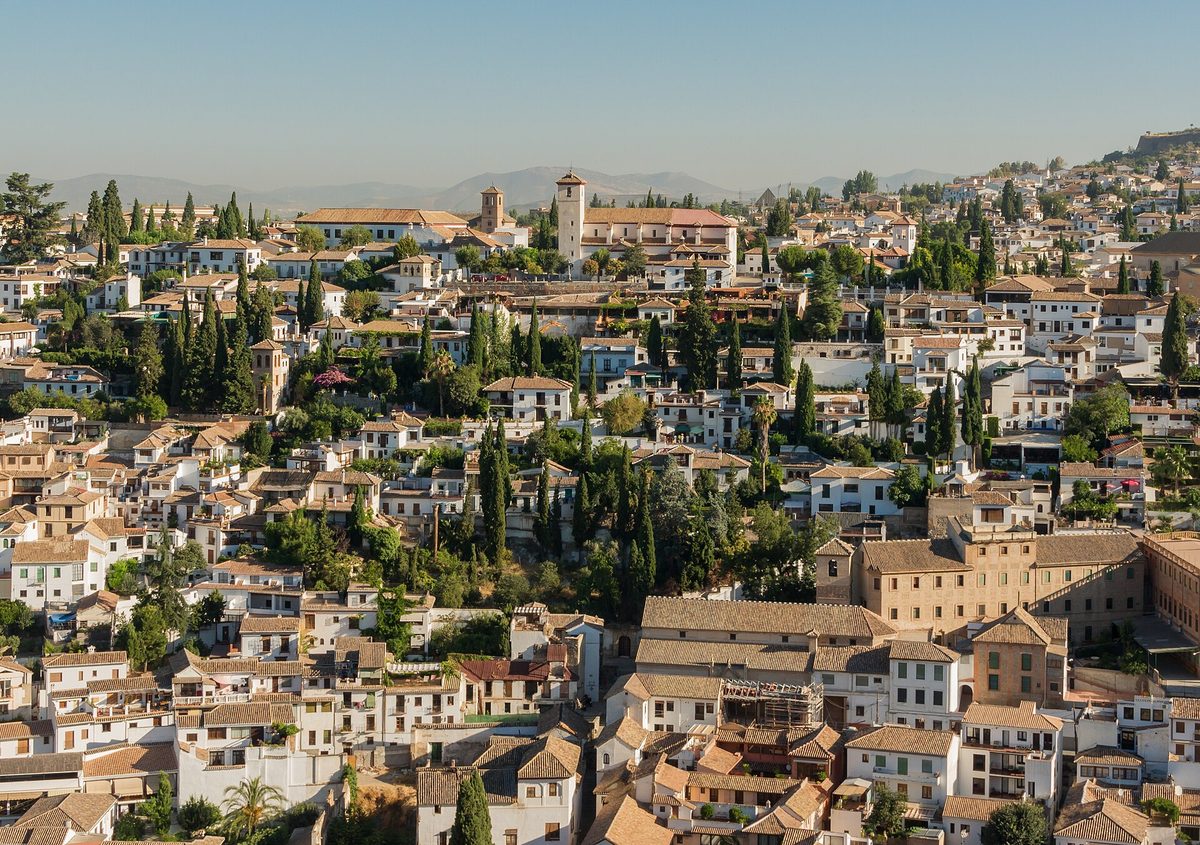
The Albayzín is the old Moorish quarter on the hill facing the Alhambra, and it is UNESCO-listed in its own right as part of the same inscription. It is a tangle of white lanes, high garden walls and cobbles that will destroy any shoe with a thin sole. There is no efficient route through it and trying to find one is the mistake.
What I would do with an afternoon there:
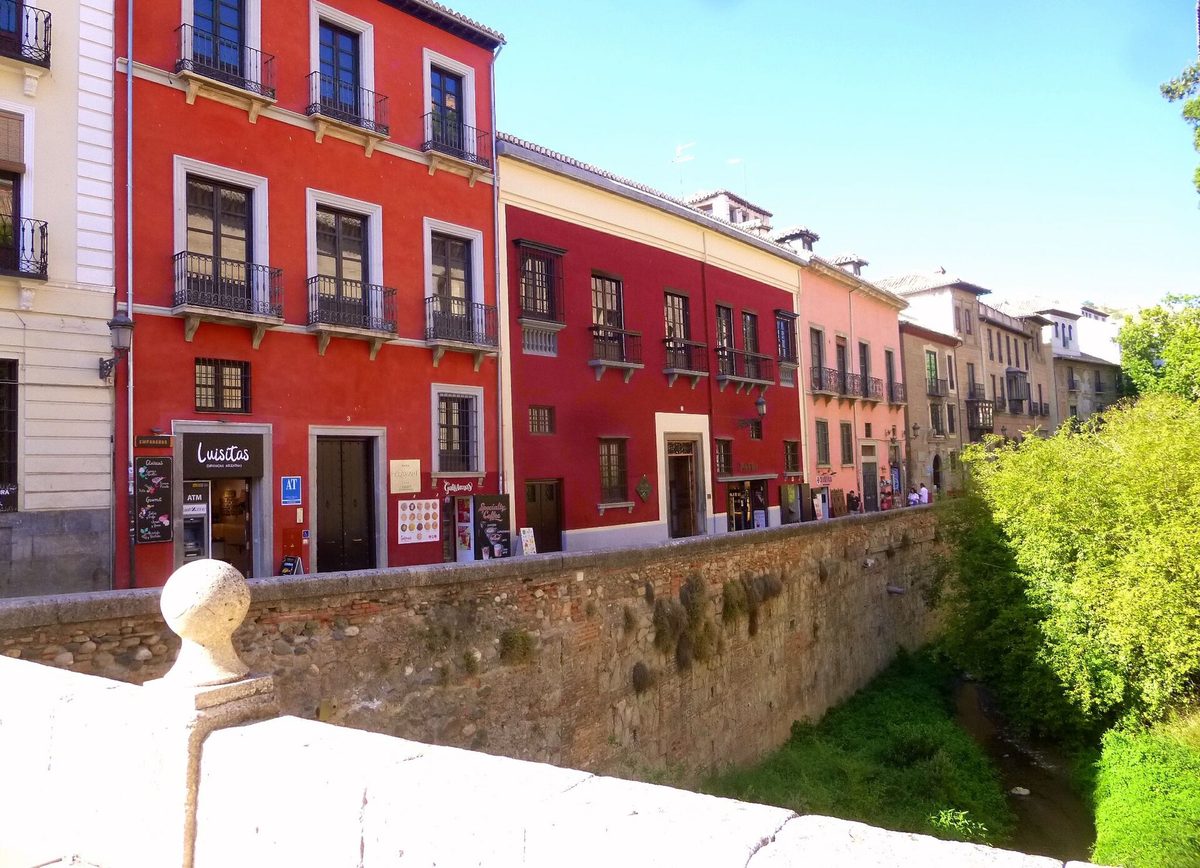
- Walk up the Carrera del Darro from Plaza Nueva. This is the loveliest street in the city, following the river beneath the Alhambra’s north wall, past Roman and Moorish bridge stumps. The Bañuelo, an eleventh-century Arab bathhouse with star-shaped skylights, is on this street and takes ten minutes.
- Continue to the Paseo de los Tristes, the widening at the end where the terraces look straight up at the Alhambra’s towers. Overpriced coffee, unimprovable view.
- Climb to the Mirador de San Nicolás. This is the postcard: the Alhambra with the snow-capped Sierra Nevada behind it. It is also crowded, has buskers, and attracts pickpockets at sunset. Go anyway, but go at 10am for the same view without the scrum, or accept the crowd and enjoy the atmosphere.
- Find the Mirador de San Cristóbal or the Ermita de San Miguel Alto instead if you want quiet. San Miguel Alto is a stiff climb above the Albayzín and delivers the whole city, the Alhambra and the mountains with about six other people present.
- Visit the Palacio de Dar al-Horra, the fifteenth-century palace of the mother of Boabdil, the last Nasrid sultan. It is small, austere and empty, and the view from its mirador is the Albayzín at your feet. Free on Sundays.
- Stop at Plaza Larga, the neighbourhood’s actual square, where people who live there buy vegetables. There is a morning market and the arch of the Puerta de las Pesas at one end.
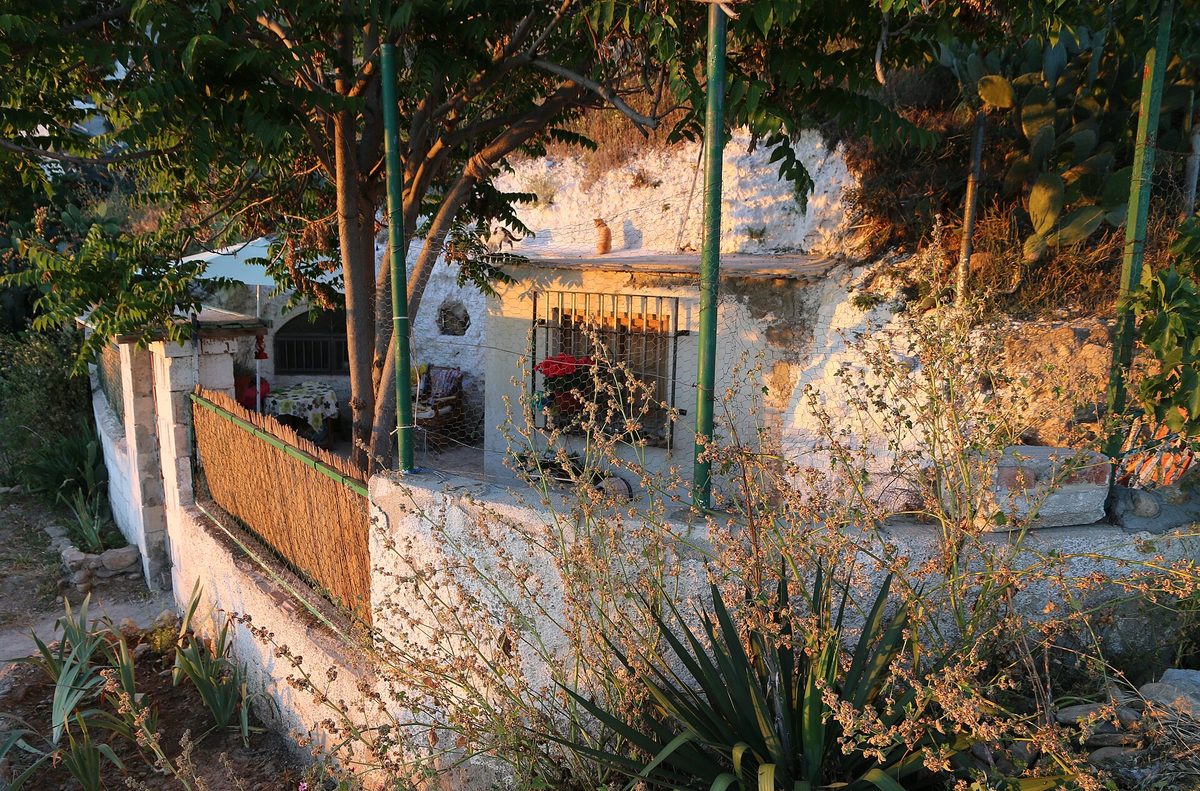
Sacromonte is the next hill east, and a genuinely different place. It is the historic Roma quarter, built into caves cut in the hillside, and it is where zambra developed. The Museo Cuevas del Sacromonte at 5 € is the honest introduction: reconstructed cave dwellings, a workshop, a weaving room, and an explanation of how several thousand people once lived in these hills. The Abadía del Sacromonte at the top has catacombs and a serious view, and hardly anyone walks that far.
Zambra: what it is and how not to get fleeced
Zambra is a Granada-specific form of flamenco with Roma origins. It is performed in a cave without a raised stage, with the audience sitting along the walls a metre from the dancers, and it traditionally works through the sequence of a gypsy wedding. The proximity is the point: you feel the floor.
Typical cave shows run about an hour and start from around 25 € for adults and 15 € for children aged 6 to 12, usually with one drink included; venues that add dinner or transport charge more. Named venues that have been running for decades include Zambra María la Canastera, Venta El Gallo, Cuevas Los Tarantos, Cueva de la Rocío and Cueva Los Amayas.
The scam to know about: being invited into an unmarked cave “just to have a look” and then presented with a bill for an arbitrary sum. The rule is simple and it works. Never enter a cave that is not a registered establishment with its name and prices displayed outside. Book ahead, in writing, at a named venue.
A note of realism. The larger coach-tour venues are a show first and a tradition second, and some critics, Rick Steves among them, file the whole Sacromonte zambra under tourist entertainment. The smaller family-run caves are a different experience, but choose consciously rather than assuming any cave with a sign is the real thing. If pure flamenco matters more to you than the cave setting, the tablaos in the city centre are often technically stronger.
Free tapas in Granada: how the system actually works
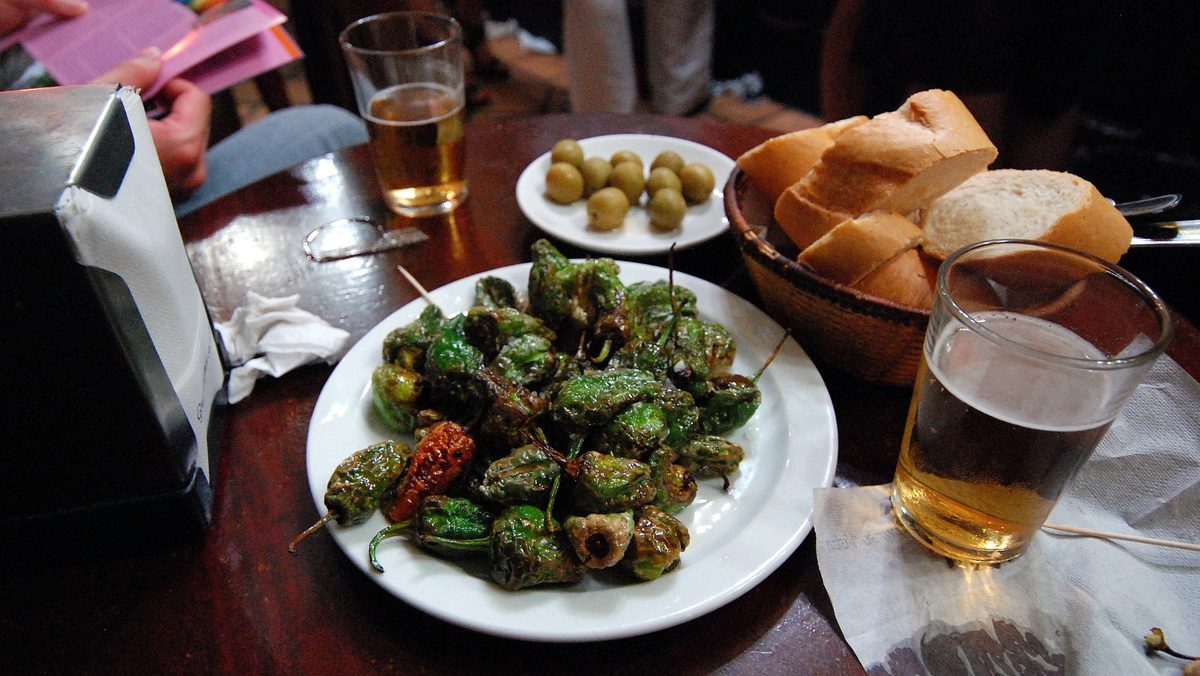
Granada is one of the very few Spanish cities where the free tapa survives citywide rather than as a nostalgic exception. The mechanism is worth spelling out, because it is not obvious.
You order a drink. Any drink, alcoholic or not. A small plate of food arrives with it, free, and you do not choose what it is. Order a second drink and a different tapa arrives. Order a third and it is different again, and in a good bar it will be better than the first two, because the kitchen is rewarding you for staying.
Drinks run roughly 2.50 € to 3.50 € in a traditional bar, so three rounds with three tapas is dinner for 8 to 11 € a head. That is not a budget-travel stunt, it is how a lot of Granada eats on a Thursday.
The etiquette that trips people up:
- Do not order tapas from the menu. If you order tapas à la carte, you pay for them and you have opted out of the free system. Order drinks and let the food come.
- Staying beats hopping. The conventional advice is to crawl from bar to bar, but you get the entry-level tapa every time you do that. Sit in one place for three or four rounds and the plates improve.
- You can politely mention dietary restrictions when you order the drink, and most bars will adapt. You cannot request a specific dish.
- Tipping is not expected. Round up or leave your coins. Spanish hospitality staff are on proper wages and nobody is doing arithmetic on your gratuity.
Where to go
| Street or area | Character | Go if |
|---|---|---|
| Calle Navas | Pedestrian strip off Plaza del Carmen, the most consistent free-tapas street in the city | You want a guaranteed hit rate on your first night |
| Calle Elvira | Runs north from Plaza Nueva, younger crowd, several bars with a North African edge to the food | You are out late and want variety |
| Campo del Príncipe (Realejo) | Square in the former Jewish quarter, less touristed, larger portions | You want a table, not a scrum |
| Plaza Larga (Albayzín) | The neighbourhood square, locals and their dogs | You are already up the hill |
| Mercado de San Agustín | Covered municipal market near the Cathedral, stalls and an air-conditioned terrace | It is 35 °C and you need shade |
Specific bars worth your time: Bodegas Castañeda, off Calle Elvira and trading since the 1920s, does a generous free tapa and a serious oxtail stew. Los Diamantes is the fried-seafood institution, standing room only at peak times, where the tapa is explicitly “un regalo de la casa” and you take what you are given. Casa Julio is a tiny standing-only bar in an alley off Plaza Nueva with erratic hours and very good calamari. Bar Clausura is where I have sent people who wanted a bar without a single other tourist in it.
Drink a tinto de verano rather than sangría. It is red wine with lemon soda, it is what people actually drink, and it costs about a third as much.
One caveat, which I flag as a report rather than a fact I have confirmed: a few bars close to the Alhambra ticket office have reportedly moved to a 1 to 2 € “tapa voucher” model rather than the free plate. I have seen this claimed by one source only, so treat it as something to watch for near the hill rather than a change to the city as a whole. Walk five minutes downhill and the tradition is intact.
What to eat, beyond the free plate
Granada’s cooking is mountain Andalusian rather than coastal, which means more pork, beans and almonds and less fried fish than you get in Cádiz or Málaga. A few things are worth ordering deliberately.
- Tortilla del Sacromonte. An omelette traditionally made with lamb brains and sweetbreads, now often served in a milder version. It is the city’s signature dish and it divides people, which is a reason to try it rather than not.
- Habas con jamón. Young broad beans fried with cured ham. Simple, seasonal in spring, and one of the better free tapas you can be handed.
- Remojo granadino. A cold salad of orange, cod, olives and boiled egg that makes far more sense in August than it does on paper.
- Piononos de Santa Fe. A small cylinder of syrup-soaked sponge topped with toasted cream, from the town of Santa Fe just outside the city. Sold all over Granada and best eaten in two bites.
- Convent sweets. Several closed orders still sell biscuits and marzipan through a revolving hatch, so you never see the nun and she never sees you. The Monasterio de San Bernardo and Santa Catalina de Zafra are the usual recommendations.
For tea rather than wine, walk up Calle Caldería Nueva, the lane of Moroccan-style teterías climbing from Calle Elvira towards the Albayzín. Mint tea, low tables, hookahs, and a smell of cardamom that carries down the whole street. It is unashamedly aimed at visitors and it is still a pleasant hour, especially in winter.
The Hammam Al Ándalus on Santa Ana deserves a proper mention rather than a price row. It is a modern Arab bathhouse built in the style of the medieval ones, with three pools at different temperatures, a steam room and optional massage, in near-darkness with tea afterwards. Sessions are booked in ninety-minute slots and the pricing is dynamic by day and time, which is why the figures in the cost table are a band rather than a tariff. Book a slot after the Alhambra rather than before, because you will not want to walk up a hill afterwards.
A very short history, because it explains the city
Granada was the last Muslim capital in Iberia. When Córdoba fell in 1236 and Seville in 1248, the Nasrid dynasty held on here for another two and a half centuries, paying tribute and building the Alhambra while the Christian kingdoms consolidated around them. On 2 January 1492 Boabdil, the last Nasrid sultan, handed the keys of the city to Ferdinand and Isabella. The same monarchs authorised Columbus’s voyage from Santa Fe, six kilometres away, later that year.
What followed shaped everything you will look at. The Christian court built the Royal Chapel and the Cathedral directly over the main mosque, Charles V planted a Renaissance palace inside the Alhambra, and the Moriscos, Muslims forcibly converted rather than expelled, were pushed out of the Albayzín and eventually out of Spain entirely after a revolt in the Alpujarras. The Roma community settled the caves of Sacromonte. Granada is, in other words, a city of layers deliberately laid over each other, and once you see that, the Cathedral squatting where the mosque was stops being an oddity and starts being the point.
A note on accessibility
Granada is steep. The Alhambra complex itself has an accessible route and the Patronato publishes it, and reduced tickets exist for visitors with a disability of 33% or more, but the Albayzín and Sacromonte are cobbled, narrow and severely graded, with steps in places and no alternative route. If mobility is a factor, base yourself in the flat centre near the Cathedral, use the C30, C31 and C32 minibuses rather than walking the hills, and treat the Mirador de San Nicolás as a bus destination rather than a climb. Taxis can reach most of the Albayzín’s main streets even where cars cannot pass.
Free walking tours
Granada has an active free walking tour scene, with tip-based tours leaving Plaza Nueva and Plaza Isabel la Católica most mornings, usually covering the centre and the Albayzín, occasionally Sacromonte. They do not enter the Alhambra, which needs its own ticket and a licensed guide. They are a good first two hours in the city, and the convention is to tip 10 to 15 € a head if the guide was good. Book online the day before in high season.
If food is a reason you travel, Granada slots neatly into the broader European food map, and Andalusian tapas culture is one of the few places on that map where a whole meal can be an accident.
Getting to Granada
Granada is the most awkward of the big Andalusian cities to reach, which is part of why it feels less trampled than Seville. The AVE high-speed line arrived in 2019 and changed the calculation considerably.
| From | Mode | Time | Typical fare | Notes |
|---|---|---|---|---|
| Madrid | Train | 3 h 20 m to 3 h 45 m | From about 25 to 33 € | Roughly 6 trains a day. Book on renfe.com |
| Seville | Train | 2 h 34 m fastest, often 2 h 40 m to 3 h 50 m | From about 21 to 33 € | Many services route via Córdoba on Avant |
| Seville | Bus (ALSA) | 3 h to 5 h | From 12 € | 12 services a day. Cheaper, notably slower |
| Córdoba | Train | 1 h 23 m | From about 10.65 € | Around 6 direct trains a day. The best-value connection in Andalusia |
| Córdoba | Bus (ALSA) | 2 h 30 m fastest | Around 20 € | The train wins on every measure here |
| Málaga | Train | 1 h 31 m on the direct Avant | 12 to 21 € advance, up to about 30 € same day | Only around 3 direct trains a day, so check times first |
| Málaga | Bus (ALSA) | 1 h 30 m to 2 h 30 m | From 8 € | 40 services a day. For Málaga the bus is competitive |
| Barcelona | Train | 6 h 19 m fastest, commonly 7 h 48 m to 8 h | From about 32 to 40 € | A full day. Most people fly this one |
| Granada airport (GRX) | Bus, line 245 | About 40 minutes | 3.10 € single, 1.35 € with a Consorcio card | Stops at the coach station, Gran Vía de Colón and the Palacio de Congresos |
| Granada airport (GRX) | Taxi | About 25 minutes | 25 to 28 € | Indicative official rate, tariffs 1 and 2 |
A few things worth knowing about the practicalities.
The airport is small. Federico García Lorca Granada-Jaén sits 17 km out at Chauchina and handles a modest number of domestic and European routes. Many international visitors fly into Málaga instead and take the bus or train across, which is usually cheaper and often faster door to door. If you are already working through a Spain travel guide for a multi-city trip, Málaga in and Seville out with Granada in the middle is a clean routing.
The airport bus is timed to flights. Services run roughly 09:00 to 21:00 and departures from the airport leave about 30 minutes after each arrival. It is reliable, but on a late arrival you will be taking a taxi, so budget for it.
The train and bus stations are next to each other. Granada’s railway station on Avenida de los Andaluces and the coach station on Avenida Juan Pablo II are around four minutes’ walk apart, both north of the centre. The metro stop for the train station is Andaluces. Neither is walkable to the historic centre with luggage; take the metro or a bus.
For the wider picture on rail passes, seat reservations and whether Spanish high-speed trains are worth the premium, our guide to train travel in Europe covers the mechanics, and getting around Europe compares trains, buses and budget flights on cost.
Getting around Granada
The historic centre is walkable. It is also relentlessly uphill in the directions you want to go, and the Albayzín cobbles are the real thing rather than a decorative surface. Assume you will walk more than your legs expect.
| Ticket | Price | Good to know |
|---|---|---|
| City bus single | 1.60 € (night bus 1.70 €) | Free transfers between lines within 60 minutes |
| Credibús card | 2 € for the card, 5 € minimum top-up | Then 0.90 € a journey on a 5 € charge, 0.89 € on 10 €, 0.88 € on 20 € |
| Bus 30-day pass | 41.00 € | Unlimited. Only relevant for long stays |
| Metro single (Univiaje) | 1.35 € | One line, Line 1, run by the Junta de Andalucía |
| Metro Monedero (pay as you go) | 0.49 € a trip | Discounted rate under Real Decreto Ley 1/2025 |
| Metro return | 2.70 € | Maximum journey time 90 minutes from validation |
| Metro tourist day card | 4.50 € | Unlimited on the day of purchase; 2, 3 and 5-day versions sold too |
| Metro card | 0.30 € flexible, 1.80 € rigid | The cheap contactless one expires after a year |
| Taxi, centre to Alhambra | About 10 to 12 € | Roughly 8 minutes |
The card that matters is the Credibús. Buy one, put 5 € on it, and your bus rides drop from 1.60 € to 0.90 €. It can be shared: several people can validate off the same card. It is not valid on the metro, which is a separate system with separate tickets, and it is not valid on metropolitan buses out of the city.
The little red minibuses are the ones you will use most. They are the only vehicles that fit up the Albayzín lanes.
| Line | Route | Roughly every |
|---|---|---|
| C30 | Alhambra to the centre, from Plaza Isabel la Católica | 12 minutes |
| C31 | Albayzín to the centre | 12 minutes |
| C32 | Alhambra to Albayzín via Gran Vía and Plaza Nueva | 10 minutes |
| C34 | Sacromonte to the centre | 20 minutes |
| C35 | Cementerio and Barranco del Abogado to the centre | Varies |
If you would rather walk up to the Alhambra, there are three routes: the Cuesta de Gomérez from Plaza Nueva (about 1.4 km and 15 to 20 minutes, uphill the entire way, through the woods), the Cuesta del Realejo from Plaza del Realejo, and the Cuesta del Rey Chico, known locally as the cuesta de los Chinos, from the Paseo de los Tristes. The Rey Chico is the prettiest and the steepest. In July, take the bus.
Do not drive into the centre. The Albayzín, the Realejo and the centre are camera-enforced restricted zones, and the city also operates a low emission zone. If you have a hire car, park it at the hotel or in a signed public garage and forget it. This applies to anyone building Granada into a longer European road trip, and it applies at your hotel too: confirm before you arrive whether they can register your plate.
When to visit Granada: month by month
Granada’s climate is not the Costa del Sol’s. The city is inland and 700 metres up, which gives it a slightly continental pattern: hotter summers than the coast, colder winters, and a big swing between day and night in every season. Layers are not optional advice here.
| Month | Avg low °C | Avg high °C | Rain mm | Rain days | Sun hrs/day | Verdict |
|---|---|---|---|---|---|---|
| January | 2.1 | 13.2 | 40 | 6 | 5.5 | Cold nights, bright days, no queues. Sierra Nevada in season |
| February | 3.0 | 14.7 | 35 | 6 | 6 | The cheapest month with decent weather |
| March | 5.4 | 18.0 | 35 | 5 | 7 | Warming up. Semana Santa can fall late in the month |
| April | 7.5 | 20.0 | 35 | 6 | 8 | Excellent from mid-month. Book Alhambra early |
| May | 10.8 | 24.7 | 30 | 5 | 9 | The best month, with the Cruces de Mayo on the 3rd |
| June | 14.9 | 30.2 | 10 | 2 | 11 | Hot but bearable. The music and dance festival runs |
| July | 17.6 | 34.1 | 0 | 0 | 11.5 | Brutal afternoons. Effectively zero rain all month |
| August | 17.6 | 33.6 | 5 | 1 | 10.5 | Hot and half the city is shut. Hotels are cheap for a reason |
| September | 14.5 | 27.9 | 25 | 3 | 8.5 | Superb from mid-month onwards |
| October | 10.7 | 22.5 | 40 | 5 | 7 | The other best month. Warm days, cool evenings |
| November | 6.0 | 16.8 | 50 | 7 | 5.5 | Wettest month, but still five hours of sun a day |
| December | 3.5 | 13.9 | 50 | 7 | 5 | Cold, bright and short on daylight. Snow on the Sierra behind the Alhambra, and hotel rates rise over the holidays |
The two windows I would aim for are mid-April to mid-May and mid-September to mid-October. Both give you daytime highs in the low to mid twenties, evenings you can sit outside in, and a Sierra Nevada that still has snow on it in the spring window, which is what makes the Mirador de San Nicolás photograph look the way it does.
Some context for the numbers. July’s average high of 34.1 °C understates the reality: typical hottest days reach 39 to 40 °C, and the record is 43 °C, set in July 2015 and matched in July 2017. Meanwhile the coldest winter nights fall to around minus 2 °C, records go below minus 10 °C, and it snows in the city itself one or two days a year. Granada gets nearly 2,900 hours of sunshine annually and never drops below five hours a day even in December, which is why a January visit can be more pleasant than the temperature column suggests.
Total annual rainfall is 355 mm across roughly 52 rain days. That is dry by northern European standards, and it clusters in November and December.
Festivals worth planning around, or avoiding
| Event | 2026 | 2027 | Effect on your trip |
|---|---|---|---|
| Semana Santa (Holy Week) | 29 March to 5 April | Roughly 21 to 28 March | Spectacular processions, packed hotels, streets closed at short notice |
| Día de la Cruz / Cruces de Mayo | 2 to 3 May | 3 May | Flower crosses in every square, street parties, very local |
| Corpus Christi | Día grande Thursday 4 June, feria 30 May to 6 June | 22 to 29 May, procession 27 May | Granada’s biggest party. Book far ahead or stay away |
| Festival Internacional de Música y Danza | 11 June to 12 July (75th edition), free FEX from 9 June | Similar dates expected | Concerts inside the Alhambra and the Generalife. 2026 marks 150 years since Manuel de Falla’s birth |
The music and dance festival is the strongest argument for a June visit despite the heat. Performances take place in the Palace of Charles V and in the Generalife gardens, and the free FEX strand puts music in squares across the city. Watching a concert in the Generalife at dusk in June is one of the better things available in Europe that month.
If you are still deciding on timing for the wider trip, our best time to visit Spain guide compares regions, and best time to visit Europe takes the continental view.
Sierra Nevada: skiing and summits from the city
Mulhacén, at 3,482 m, is the highest peak in mainland Spain, and the ski resort below it is a 45-minute bus ride from a city where you can eat tapas in a t-shirt. That combination is unusual enough to be worth a day.
In winter, the Sierra Nevada resort at Pradollano is one of the most southerly ski areas in Europe. The 2025/26 season opened on 13 December 2025, and seasons here typically run December into April or early May. Day lift passes range from roughly 47 € to 66 € for an adult depending on the date and how far ahead you book. Autocares Tocina runs the bus from Granada’s coach station, calling at the Palacio de Congresos: 5 € one way, 9 € return, about 45 minutes. In peak season it goes roughly every 20 minutes. Outside the season it is one bus a day, up at 09:00 and back at 17:00, which is a detail that has stranded people.
The skiing itself is not the Alps. The snow is southern, the season can be temperamental, and the vertical is modest by Alpine standards. What it offers instead is sunshine, altitude, short transfers and prices well below the big French and Swiss resorts, which our guide to skiing in Europe puts in context.
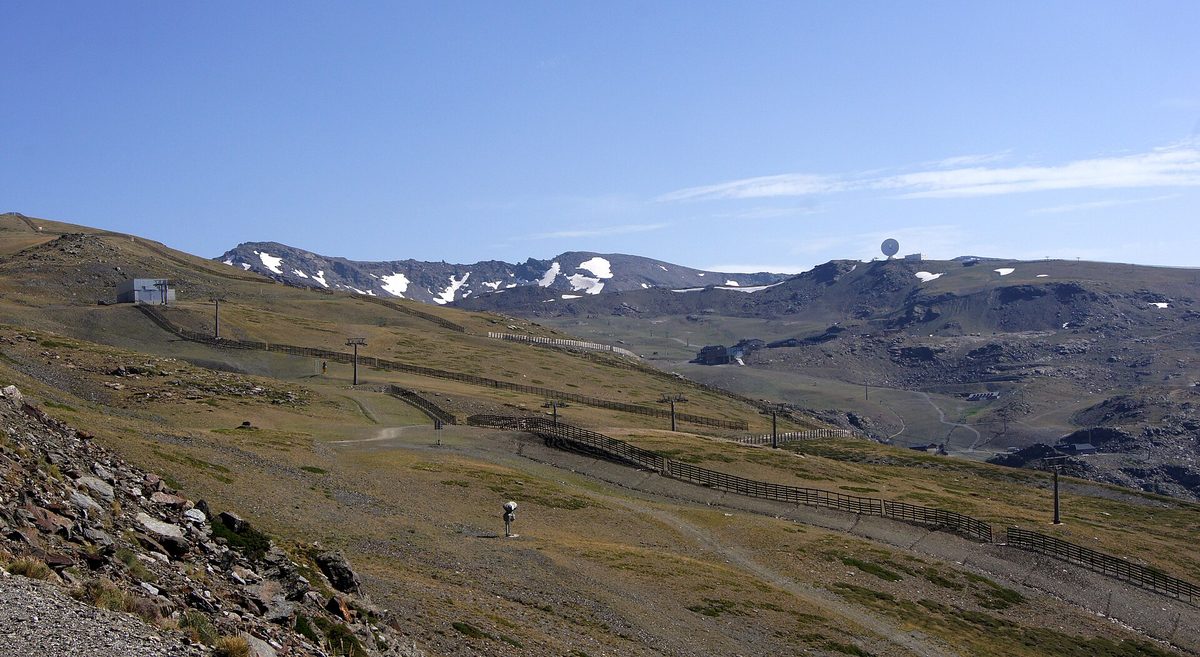
In summer, the resort runs a gondola and one chairlift from Pradollano through July and August. The better option for walkers is to take the bus to Hoya de la Mora and walk up towards the Veleta, at 3,396 m the second-highest peak in the range. The National Parks office runs a microbus from Hoya de la Mora up to the Posiciones del Veleta, cutting a long approach out of the day. The walk is high, exposed and treeless, so start early, take more water than you think, and remember you are at altitude.
Closer to the city, Los Cahorros de Monachil is a river-canyon walk with hanging bridges and a rock tunnel, reached on bus 0183 to Monachil in about twenty minutes. It is the easiest good hike from Granada and it is free. Our hiking in Europe guide has more on Spanish trails if this is your reason for coming.
Day trips from Granada
Granada is a good base for a wider slice of Andalusia and the Sierra Nevada foothills, and most of it is reachable on public transport.
| Destination | How | Time | Fare | Why go |
|---|---|---|---|---|
| Córdoba | Train, about 6 direct a day | 1 h 23 m | From about 10.65 € | The Mezquita. The easiest same-day return from Granada |
| Alpujarras: Pampaneira | ALSA bus, 09:00, 14:00 and 17:00 on weekdays | About 90 minutes | 6.45 € one way | White villages stacked on the Poqueira gorge |
| Alpujarras: Bubión | Same bus, one stop further | About 95 minutes | 6.95 € | Quieter than Pampaneira, better for lunch |
| Alpujarras: Capileira | Same bus, terminus | About 100 minutes | 7.15 € | The highest of the three, trailheads for the Sierra |
| Guadix | ALSA/BAM bus, roughly hourly | 45 to 60 minutes | About 4.30 to 8 € | Cave-house district; around half the town’s 21,000 people live in casas cueva |
| Nerja | ALSA bus, 10+ services a day | 1 h 50 m to 2 h 45 m | Just under 10 to 11 € | The nearest proper beach and the Nerja caves |
| Frigiliana | Bus to Nerja, then the Grupo Fajardo shuttle | Add 20 minutes | Nerja fare plus local shuttle | The prettiest white village on the coast. No direct bus from Granada |
| Montefrío | Bus or car, about an hour | About 1 hour | Varies | National Geographic’s Spanish edition put it among the ten villages with the best views in the world |
| Sierra Nevada | Autocares Tocina bus | 45 minutes | 5 € one way, 9 € return | Skiing in winter, high walking in summer |
| Los Cahorros de Monachil | Bus 0183 | About 20 minutes | Local bus fare | Gorge walk with hanging bridges. Free |
The Alpujarras deserve a specific note, because the bus timetable is the whole problem. Weekday departures from Granada are at 09:00, 14:00 and 17:00, with two at weekends. Take the 09:00 up, walk the path between Pampaneira, Bubión and Capileira, which is under two hours at a stroll, eat somewhere with a terrace, and come back on an afternoon service. Do not take the 14:00 unless you are staying the night. The villages are Berber in layout, with flat clay roofs and chimney pots that look like small hats, and they are where the Moriscos went after Granada fell.
Guadix is the trip fewest visitors make and it is strange in the best way. An entire district of the town is dug into pale rock, with whitewashed chimneys poking out of hillsides and front doors set into cliffs. The Cueva Museo interpretation centre costs 2.60 €, is free for under-14s and is cash only.
Coming the other way, Granada makes an excellent day trip target from Seville or Málaga, but I would push back on that plan. Two and a half hours each way plus a three-hour Alhambra visit is a nine or ten hour day of which most is spent moving, and you will not see the Albayzín, eat a free tapa or watch the sun go down from San Nicolás. If you can only give Granada a day, give it a night as well. Our Seville travel guide and Costa del Sol guide cover the other ends of those routes.
Where to stay in Granada
Neighbourhood matters more here than in most Spanish cities, because the terrain is steep and the taxi cannot always reach your door.
| Area | Character | Rough nightly rate | Best for | Watch out for |
|---|---|---|---|---|
| Centro / Cathedral | Flat, central, walkable to everything, on the bus lines | Around 80 € city average | First visits, short stays, anyone with luggage | Least atmospheric of the options |
| Albayzín | UNESCO-listed Moorish quarter, white lanes, carmen houses with Alhambra views | From about 30 € budget, 65 to 80 € typical | Atmosphere, photographers, second visits | Steep lanes, luggage, unlit alleys late at night |
| Realejo | The former Jewish quarter, safe, good tapas at Campo del Príncipe | Similar to centre | Eating well without the crowds | Slightly further from the Cathedral sights |
| Sacromonte | Converted cave B&Bs, some with terraces facing the Alhambra | Varies widely | A memorable night or two | Furthest out, hilly, limited transport late |
| Near the train station | Functional, cheaper, on the metro | Below city average | One-night stopovers | A dull 25-minute walk from anything you came for |
City-wide, hostels run roughly 30 to 40 € a night, four-star hotels sit around 100 €, and the overall city average is near 80 €. Aggregator data suggests the cheapest months are July, August and November, and the dearest are April, May and December, which is the reverse of coastal Spain: Granada empties in high summer because it is inland and hot.
Named properties I would point people at: Hotel Casa 1800 Granada, a sixteenth-century house with 25 rooms on the edge of the Albayzín; the Parador de Granada, which is inside the Alhambra grounds in a converted convent and is the most expensive bed in the city by a distance and the only one where you can walk into the complex before it opens; Palacio de Santa Inés and Casa del Capitel Nazarí for atmospheric mid-range. For hostels, El Granado, Oasis Backpackers, Hostel Nut, Eco Hostel, Oripandó and Hostal El Cascabel all have long track records.
A carmen, incidentally, is the Granada house type you will see mentioned in listings: a walled urban villa with an enclosed garden, usually terraced, usually with a view. If a listing says carmen and shows you a garden wall, that is the real thing and worth paying for.
Broader strategy on hotels versus apartments versus hostels is in our guide to where to stay in Europe.
What Granada costs
Granada is one of the better-value cities in Western Europe, and the free tapas system is a genuine, quantifiable part of that rather than a charming detail.
| Item | Typical 2026 cost |
|---|---|
| Hostel dorm | 30 to 40 € |
| Mid-range hotel double | Around 80 €, four-star around 100 € |
| Drink in a traditional bar, with free tapa | 2.50 to 3.50 € |
| Dinner made of three drinks and three tapas | 8 to 11 € a head |
| Sit-down restaurant meal | 25 to 45 € |
| Coffee | Around 2 € |
| City bus journey with a Credibús | 0.90 € |
| Alhambra general ticket | 22.27 € |
| Zambra cave show | From about 25 € |
| Hammam Al Ándalus, bath only | Around 50 to 52 € |
| Hammam bath plus 15-minute massage | Around 75 € |
| Tourist tax | 0 € |
On the tourist tax: Andalusia does not levy a regional tourist tax, and Granada does not charge a city one. The council has unanimously approved a motion pushing for one and has asked the Junta de Andalucía to enable the legislation, with figures of roughly 1 to 1.50 € per person per night discussed. As of August 2026 it is still a proposal. If you see a per-night figure quoted for Granada anywhere, it is describing that proposal rather than a charge in force. Check at the point of booking if it matters, but do not budget for it now.
The Hammam Al Ándalus figures come with a caveat: the operator uses dynamic pricing by day and time slot, and there is no fixed published tariff table, so treat those numbers as a band rather than a price. A bath plus a 30-minute massage runs to roughly 109 € and a 60-minute relaxing massage to about 124 € at the ranges I could find.
If you are building a tight budget, our guides to Europe on a budget and the cheapest places to travel in Europe both put Andalusian prices against the rest of the continent, and backpacking Europe covers the hostel-and-bus version of this trip.
How many days in Granada, and what to do with them
Two full days is the honest minimum. One day means the Alhambra and nothing else. Three days lets you add Sacromonte, a proper Albayzín afternoon and a day trip, and it is the length I would recommend to anyone who is not on a fixed circuit.
One day in Granada
- Morning: Alhambra, with a Nasrid slot around 10:00. Arrive at 08:30, do the Generalife first, walk down through the Partal.
- Lunch: Come down the Cuesta de Gomérez to Plaza Nueva and eat on Calle Elvira.
- Afternoon: Royal Chapel and Cathedral, then the Alcaicería and the Corral del Carbón, which are two minutes apart and both free.
- Sunset: Bus C32 up to the Mirador de San Nicolás.
- Evening: Free tapas on Calle Navas.
Two days in Granada
Day one as above. Then:
- Morning: Walk the Carrera del Darro slowly, stopping at the Bañuelo and the Archaeological Museum. Continue to the Paseo de los Tristes.
- Midday: Climb into the Albayzín proper. Dar al-Horra, Casa de Zafra, Plaza Larga. If it is a Sunday this is all free. From May to mid-September these monuments shut at 14:30 and reopen at 17:00, so go early or plan a long lunch.
- Afternoon: Monasterio de San Jerónimo, which few visitors reach and which has an interior that will surprise you, then the Cartuja if you have the appetite for more gold.
- Evening: Zambra show in Sacromonte, booked in advance at a named venue, then late tapas at Campo del Príncipe.
Three days in Granada
Days one and two as above, then pick one:
- The Alpujarras on the 09:00 bus, walking between Pampaneira, Bubión and Capileira.
- Córdoba by train, 1 h 23 m each way, for the Mezquita.
- Sierra Nevada, skiing in winter or walking towards the Veleta in summer.
- Guadix for the cave houses, which is the strangest and least crowded of the four.
If Granada is one stop in a longer trip, our Europe itinerary planner and the best places to visit in Spain roundup will help you place it. Granada also appears on our lists of the most beautiful places in Europe and Europe’s best city breaks.
Granada by traveller type
| You are | Do this | Skip this |
|---|---|---|
| First-time visitor, two days | Alhambra General ticket, Royal Chapel, Albayzín, Calle Navas | Cartuja, Parque de las Ciencias, Granada Card |
| Second visit | Dobla de Oro, Alhambra night visit, Sacromonte museum, San Miguel Alto | Mirador de San Nicolás at sunset. You have done it |
| Travelling with children | Parque de las Ciencias, Alcazaba towers, Guadix caves, gelato on Plaza Bib-Rambla | Long Albayzín walks in July, the Cathedral |
| On a tight budget | Sunday free monuments, free tapas, Corral del Carbón, Carmen de los Mártires, Cahorros hike | Granada Card, hammam, coach tours |
| Travelling solo | Free walking tour, Calle Navas bar-sitting, hostel in the centre | Sacromonte’s unlit lanes very late at night |
| Interested in architecture | Nasrid Palaces slowly, Bañuelo, Dar al-Horra, Palace of Charles V, San Jerónimo | Nothing. This is your city |
| Here to eat | Bodegas Castañeda, Los Diamantes, Mercado de San Agustín, Campo del Príncipe | Restaurants with photo menus around Plaza Nueva |
| Coming in July or August | Early mornings, long siestas, night visit to the Alhambra, evening everything | Anything outdoors between 14:00 and 18:00 |
Families should also look at our Europe with kids guide, and anyone travelling alone will find the practical side covered in solo travel in Europe.
Mistakes people make in Granada
- Booking flights before Alhambra tickets. The tickets are the constraint. Everything else is flexible.
- The wrong entrance. The Nasrid Palaces slot is at the Nasrid Palaces door, ten to fifteen minutes’ walk inside the complex from the Access Pavilion.
- A nickname or a partner’s card on the booking. Names are checked against original ID and mismatches are refused.
- Tapas ordered from the menu. That is the paid version. Order drinks instead.
- A new bar every round. The tapas get better the longer you stay in one place.
- Treating Granada as a day trip from Seville. Nine or ten hours, five of them on a train, for one building.
- Thin-soled shoes. The Albayzín and Sacromonte are real cobbles and real gradients.
- A hire car in the old town. Camera-enforced restricted zones and a low emission zone, and the hill is closed to you anyway.
- An unbooked zambra. Walking into an unmarked cave is how the bill gets invented.
- July, underestimated. Highs of 39 to 40 °C on the hot days, with a 700-metre altitude that does nothing to help in the afternoon.
- The Granada Card bought on faith. Run the arithmetic against the monuments you will enter.
- Missing the Sunday free window. Five Nasrid interiors for nothing, if you happen to be in town on the right day.
Practical things to know before you go
Entry rules for non-EU visitors. The EU’s Entry/Exit System began its rollout on 12 October 2025 and has been fully operational since 10 April 2026. If you are a non-EU short-stay traveller, your name, travel document, fingerprints, facial image and entry and exit dates are now registered biometrically at the external Schengen border. Allow extra time on first entry. ETIAS, the separate travel authorisation, is not yet in force as of August 2026; no launch date has been set, and it is not expected before 2027. Our guide to the Schengen visa and ETIAS tracks the position as it changes.
Opening hours and the siesta. Small shops typically open around 10:00, close between 13:30 and 14:00, and reopen around 17:00 until 20:30. Restaurant kitchens largely shut between roughly 16:00 and 20:00. Large shopping centres run 10:00 to 22:00 and close most shops on Sundays and public holidays. Plan your afternoon around this rather than fighting it, especially in summer, when the siesta is a functional response to 34 °C.
Tipping. Not customary and not obligatory. Round up in bars and taxis, leave 5 to 10% at a nicer restaurant if the service earned it, and do not agonise over it.
Safety. Violent crime is rare. Pickpocketing is the real risk and it concentrates in predictable places: the Mirador de San Nicolás at sunset, busy tapas streets at night, and the narrow lanes of the Albayzín and Sacromonte. Ticket touts operate around the Alhambra; buy only through the official channels. The emergency number is 112. Tap water is safe to drink.
The tourist office is on the Acera del Casino at the corner of Almona del Campillo, open Monday to Friday 09:00 to 19:00, Saturday 10:00 to 14:00 and 15:30 to 19:00, and Sunday and holidays 10:00 to 15:00. It closes on 25 December, 1 January and 6 January. The number is +34 958 24 71 28. The Alhambra’s own visitor line is 958 027 971.
What to pack. Shoes with grip, a layer for the evening in every season, sun protection from May to September, and a bag smaller than 40 by 40 cm if you want to avoid the Alhambra locker queue. Our Europe packing list covers the rest, and Europe travel tips has the general practicalities.
Granada travel guide FAQ
Is Granada worth visiting?
Yes, and more so than a day-trip itinerary suggests. The Alhambra alone justifies the journey, but the reason to stay is everything around it: an intact Moorish quarter you can get lost in, a citywide free tapas culture that is not a marketing invention, a Roma cave district with its own dance form, and a 3,000-metre mountain range forty minutes away. It is also cheaper than Seville or Barcelona and less crowded than either outside the Alhambra hill.
How many days do you need in Granada?
Two full days covers the Alhambra, the Albayzín, the Cathedral quarter and a couple of tapas evenings. Three lets you add Sacromonte and a day trip. One day is enough only for the Alhambra and a fast walk through the centre.
How far in advance should I book Alhambra tickets?
Tickets are released 90 days ahead at midnight Granada time. For April to October, buy in the first days after release. Peak morning Nasrid slots go within hours, and popular dates can be gone months out. Outside high season a few weeks is usually enough, but there is no advantage in waiting.
Do you need a passport to enter the Alhambra?
You need the original ID card or passport that matches the name on the ticket. Tickets are personal and non-transferable, checks happen at the gate, and there is no refund for a mismatch. Everyone needs their own QR ticket, including children under 12 who pay nothing.
Can you change the name on an Alhambra ticket?
Only within a fixed proportion, and only by phoning +34 858 889 002 no later than the day before your visit. A booking of 5 to 9 tickets allows one name change, 10 to 19 allows two, and it scales up to six changes on a booking of 51 to 60. A booking of one to four tickets allows none.
What happens if you miss your Nasrid Palaces time slot?
You do not get in. The palaces admit 300 people every half hour and there is no capacity to absorb latecomers. The rest of your ticket, meaning the Alcazaba, the Generalife and the gardens, remains valid for the day, so a missed slot is not a total loss, but the palaces are gone.
Is the Alhambra free on any day?
Not routinely. The official hours page flags 18 April, the International Day of Monuments and Sites, and 16 November, World Heritage day, as dates with special access conditions, and third parties report free entry on 16 November with a limited number of named tickets applied for in advance. Do not build a trip around it. Separately, the Andalusi monuments in the Albayzín, meaning the Bañuelo, Casa Horno de Oro and Dar al-Horra, are free every Sunday, and that is reliable. The Corral del Carbón is free every day.
What can you see at the Alhambra without a ticket?
More than people expect. The Palace of Charles V and the Alhambra Museum inside it are free, as are the Mosque Baths, the Alhambra woods on the Cuesta de Gomérez, the Silla del Moro and the Torres Bermejas, both of which open at weekends. What you cannot see without a ticket are the Nasrid Palaces, the Alcazaba and the Generalife.
Is the Granada Card worth it?
For a visitor doing the Alhambra, Cathedral, Royal Chapel, San Jerónimo and the Cartuja plus nine bus rides it is a wash: 60 € for the 72-hour card against 60.28 € bought separately with a Credibús, or 64.67 € if you buy single bus tickets. It pulls clearly ahead if you add the Parque de las Ciencias or several small museums, and it is poor value if you only want two or three sights. Its real value is the guaranteed Alhambra slot it carries when the direct channel is sold out.
How do you get to the Alhambra from the city centre?
Bus C30 from Plaza Isabel la Católica or C32 from Gran Vía, both roughly every ten to twelve minutes, at 1.60 € or 0.90 € with a Credibús. A taxi is about 10 to 12 € and eight minutes. On foot it is 1.4 km up the Cuesta de Gomérez from Plaza Nueva, 15 to 20 minutes, uphill the whole way. Driving is not an option: the approach from the centre is closed to private vehicles.
How does the free tapas system work in Granada?
Order a drink and a free plate of food arrives that you did not choose. Order another drink and a different tapa arrives. Do not order tapas from the menu, because those are the paid ones. Drinks run 2.50 € to 3.50 €, so three rounds is a full meal for around 8 to 11 €.
Is Granada really the only city with free tapas?
No, but it is one of very few where the custom is citywide rather than confined to a handful of bars. Almería, Jaén and parts of León do it too. Granada is the one where you can walk into almost any traditional bar and expect it.
What is the best month to visit Granada?
May, with October close behind. May averages a high of 24.7 °C with five rain days, and the Sierra Nevada usually still has snow on it, which is what makes the classic Alhambra view work. Mid-April and mid-September are almost as good.
Is Granada expensive?
No. Hostels run 30 to 40 €, the city hotel average is around 80 €, a bus ride with a Credibús is 0.90 €, and dinner can be three drinks and three free tapas for 8 to 11 €. The Alhambra at 22.27 € is the largest single cost most visitors will pay, and there is no tourist tax on top.
Does Granada have a tourist tax?
Not in 2026. Andalusia levies no regional tourist tax, and although Granada’s council has approved a motion asking the Junta de Andalucía to enable one, at figures of roughly 1 to 1.50 € per person per night, it remains a proposal. If you see a figure quoted for Granada, it is describing a proposal rather than a charge.
Is Granada safe at night?
Generally yes. Violent crime is rare and the centre is busy well past midnight. The genuine risks are pickpocketing in crowds, particularly at the Mirador de San Nicolás at sunset and on busy tapas streets, and unlit lanes in the upper Albayzín and Sacromonte where you should walk with someone rather than alone. Emergency number 112.
Is Granada walkable?
The flat centre is. The parts you came for are not, in the sense that the Albayzín, Sacromonte and the Alhambra are all uphill on cobbles. It is fine for anyone with reasonable mobility and a bit of stamina, and hard work otherwise, which is what the C30, C31, C32 and C34 minibuses exist for.
What is a zambra and how is it different from flamenco?
Zambra is a Granada-specific Roma form performed in caves, without a raised stage, with the audience arranged close around the dancers, traditionally structured as a gypsy wedding. Ordinary flamenco in a tablao is staged, with the audience facing a platform. Zambra is more intimate and less formal; a tablao is often technically sharper.
Can you day-trip to Granada from Seville or Málaga?
You can. From Málaga it is 1 h 31 m by direct Avant or 1 h 30 m by the fastest bus, so a long day works. From Seville it is 2 h 34 m at best each way, which makes for a nine or ten hour round trip to see one building. Staying a night costs less than you would guess and changes the trip completely.
Does it snow in Granada?
In the city, one or two days a year, with coldest nights around minus 2 °C and records below minus 10 °C. On the Sierra Nevada above the city, heavily, which is why the ski resort at Pradollano runs from roughly December into April or early May and why the mountains behind the Alhambra are white in your spring photographs.
Final thoughts
Granada is the last of the great Moorish cities of Spain and it wears that history more openly than Córdoba or Seville do. The Alhambra is the reason you come, and it earns it, but the city underneath the hill is what people remember: the smell of jasmine in a walled garden, an accordion in Plaza Larga, a plate of fried aubergine with honey that you did not ask for and did not pay for, and the moment the light goes orange on the Alhambra’s walls while you are standing in a crowd of strangers at San Nicolás who all fall quiet at once.
Book the tickets first. Give it two nights rather than one. Wear the right shoes. And when the tapa arrives and you did not choose it, eat it anyway, because that is the deal you made when you ordered the drink.
Ready to build the rest of the trip? Start with our Spain travel guide, work out the route in the Spain itinerary planner, and see how Granada sits alongside Barcelona and Madrid if you are covering more of the country. If Spain is one leg of something bigger, how to plan a trip to Europe is the place to begin, and the best places to visit in Europe will give you the shortlist.
Hannah Brooks has spent fifteen years travelling, living and writing across Europe, from the Arctic tip of Norway to the south of Sicily. She has planned hundreds of European itineraries for readers and is Senior Europe Editor at EuropeanTourism.org.
Photo credits
All images are used under their stated licences. In order of appearance:
- The Alhambra of Granada at sunset with the snow-covered peaks of the Sierra Nevada behind it · Photo: Roland Geider (Ogre) (public domain) via Wikimedia Commons
- The Court of the Lions in the Nasrid Palaces of the Alhambra, the centrepiece of any Granada travel guide · Photo: Tuxyso / CC BY-SA 3.0 via Wikimedia Commons
- Carved stucco, Kufic inscription and glazed tilework on a wall of the Nasrid Palaces, Alhambra, Granada · Photo: Jebulon (public domain) via Wikimedia Commons
- The Court of the Water Channel in the Generalife gardens above Granada · Photo: FlyingCrimsonPig / CC BY 2.0 via Wikimedia Commons
- The Torre de la Vela and the ramparts of the Alcazaba fortress at the Alhambra, Granada · Photo: Jebulon (public domain) via Wikimedia Commons
- The circular two-storey courtyard of the Palace of Charles V inside the Alhambra, Granada · Photo: PEPE GADEIRAS / CC BY-SA 4.0 via Wikimedia Commons
- White Renaissance columns and vaulting inside Granada Cathedral · Photo: Jim Gordon / CC BY 2.0 via Wikimedia Commons
- The Albayzin quarter of Granada seen from the Alhambra, with the church of San Nicolas on the ridge · Photo: Jebulon (public domain) via Wikimedia Commons
- A whitewashed cave house cut into the hillside at Sacromonte, Granada · Photo: Øyvind Holmstad / CC BY-SA 4.0 via Wikimedia Commons
- A spread of Spanish tapas, a highlight of any trip to Spain · Photo: Takeaway / CC BY-SA 3.0 via Wikimedia Commons
- Red-painted houses along the Carrera del Darro above the river in Granada · Photo: Zarateman (public domain) via Wikimedia Commons
- The restored Mojon del Trigo observatory on a rocky ridge in the Sierra Nevada above Granada · Photo: Jebulon (public domain) via Wikimedia Commons
- The Sierra Nevada ski area above Granada in summer, with lift lines and patches of late snow · Photo: Jebulon (public domain) via Wikimedia Commons
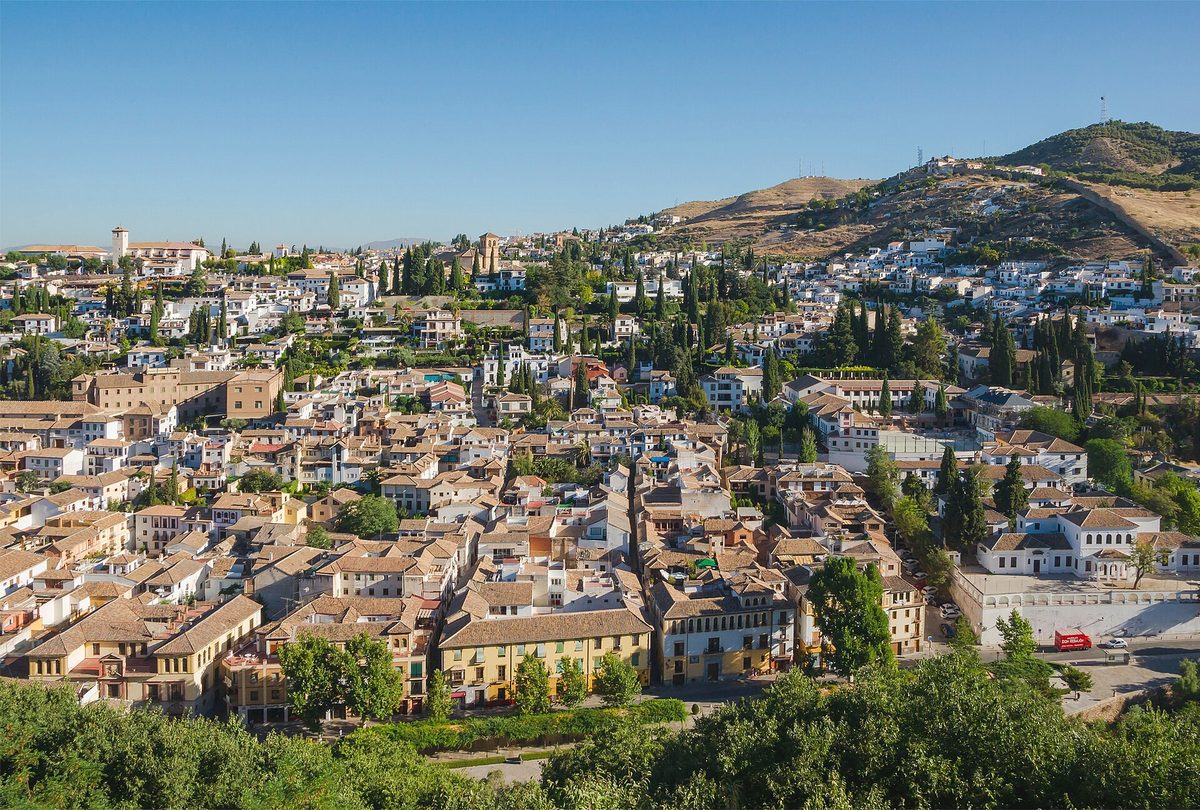
- The rooftops of Granada rising towards the Albayzin and the Sacromonte hills · Photo: Jebulon (public domain) via Wikimedia Commons