First Time Europe Itinerary: 9 Routes, Costs and 2026 Rules

The hardest part of a first trip to Europe is not booking it. It is admitting how much you have to leave out. Thirty countries sit inside a few hours of each other by train, every one of them worth a fortnight, and you have maybe two weeks and a finite amount of money. The temptation to squeeze in a fifth city is enormous, and it is the single decision most likely to sour the trip.
So here is the short version. A good first time Europe itinerary covers two to four cities in 10 to 14 nights, keeps every hop under about five hours by train, gives each city a minimum of three nights, and books the handful of attractions that genuinely sell out before you leave home. Everything else is detail, and the detail is below.
I have been planning European trips for readers for fifteen years, and the pattern in the emails I get is remarkably consistent. Nobody writes to say they wish they had seen one more city. They write to say they wish they had spent another two days in Rome instead of the afternoon they lost to a regional train and a hotel check-in in a city they barely remember.
This guide gives you nine routes I would send a friend on, with the 2026 numbers attached: rail pass prices against point-to-point fares, attraction tickets and how far ahead they release, tourist taxes per night, city transit fares, airport transfers, and the entry rules that changed this year. Where I could not source a number, I say so.
All nine first time Europe itinerary options at a glance
Cost bands are per person per day, excluding your international flight, at a mid-range standard: a central three-star or good four-star hotel, two meals out, city transport and a couple of paid attractions. €€ is roughly €120 to €180 a day, €€€ is €180 to €260, and €€€€ is €260 and up. Hostels and self-catering pull all of these down substantially. “Moves” counts the number of times you pack a bag and change hotel.
| Route | Length | Cities | Countries | Moves | Pace | Daily cost band | Best for |
|---|---|---|---|---|---|---|---|
| 1. Two Capitals, Slowly | 7 nights | Paris, Rome | 2 | 1 | Gentle | €€€ | Short holiday allowance, nervous first-timers |
| 2. The Classic Three | 10 nights | London, Paris, Amsterdam | 3 | 2 | Moderate | €€€€ | The default first trip, and rightly so |
| 3. Italy’s Golden Triangle | 10 nights | Rome, Florence, Venice | 1 | 2 | Moderate | €€€ | Art, food and one country to learn |
| 4. The Central Europe Value Loop | 12 nights | Berlin, Prague, Vienna, Budapest | 4 | 3 | Moderate | €€ | Stretching a smaller budget furthest |
| 5. The Iberian Run | 12 nights | Madrid, Seville, Granada, Barcelona | 1 | 3 | Moderate | €€ | Warm weather into late October |
| 6. Alps and Northern Italy | 12 nights | Munich, Lucerne, Lake Como, Venice | 3 | 3 | Moderate | €€€€ | Scenery over museums |
| 7. The Western Loop | 14 nights | London, Paris, Bruges, Amsterdam | 4 | 3 | Relaxed | €€€€ | A full two weeks with no flights |
| 8. The Mediterranean Sampler | 14 nights | Barcelona, Nice, Cinque Terre, Florence, Rome | 3 | 4 | Brisk | €€€ | Coastline and cities in one run |
| 9. The Grand Tour | 21 nights | London, Paris, Lucerne, Venice, Florence, Rome | 4 | 5 | Moderate | €€€€ | The once-in-a-lifetime three weeks |
Every route below assumes you fly into the first city and out of the last one. Book it that way. An open-jaw or multi-city ticket almost always costs about the same as a return to a single airport, and backtracking to your arrival city to fly home wastes a day you cannot get back. If your airline’s website makes multi-city awkward, price the same routing on Google Flights first so you know what you are aiming at.
How long do you need for a first trip to Europe?
Ten to fourteen nights is the sweet spot, and the reason is arithmetic rather than taste.
Start with the three-night rule. Almost every major European city needs three nights, because three nights buys you two full days. Your arrival day is eaten by the flight, the transfer and the check-in. Your departure day is eaten by the checkout and the journey to the next place. Two nights in Rome is not two days in Rome, it is one day and two half-days, and one day in Rome means choosing between the Colosseum and the Vatican.
Then add the travel-day overhead. From locking your hotel room door in one city to putting your bag down in the next is rarely under five hours, even when the train itself is only two. There is the walk or metro ride to the station, the wait, the journey, the walk or metro at the other end, and the check-in desk that will not release your room until three in the afternoon. Budget half a day for every move, and you will be pleasantly surprised rather than quietly furious.
Put those two together and the shape of a trip falls out on its own:
| Trip length | Realistic cities | What it feels like | Who it suits |
|---|---|---|---|
| 5 to 7 nights | 1 to 2 | A proper city break with one add-on, or one city explored slowly | Limited leave, long-haul travellers testing the water |
| 8 to 10 nights | 2 to 3 | The most common first trip. Enough for a country plus a neighbour | Most first-timers from North America or Australia |
| 11 to 14 nights | 3 to 4 | A genuine tour with a rest day built in | Anyone who can take two weeks |
| 15 to 21 nights | 4 to 6 | A grand tour with regional variety, not just capitals | Sabbaticals, honeymoons, retirees, gap years |
| 22 nights and up | 6 to 8 | Slow travel, with apartments rather than hotels | Remote workers, extended trips |
One caution on the longer end. If you hold a passport from outside the EU and travel visa-exempt, you are limited to 90 days inside any rolling 180-day window across the whole Schengen area, counted as a single pot rather than country by country. That is not a constraint on a three-week trip, but it matters if you are stringing together several trips in one year. There is more on the mechanics in the Schengen visa and ETIAS guide.

The five-hour rule
For a first trip, keep consecutive cities within about five hours of each other by train. Not because longer journeys are unpleasant, some of them are the best days of the trip, but because a five-hour cap forces a geographically sane route. It is what stops people building the Paris to Prague to Barcelona itinerary that looks fine on a map with no scale on it.
Here are the hops that come up most often on first trips, with the times I could source. Where two sources disagreed I have given both, because the fastest service and the typical service are often twenty minutes apart.
| Route | Journey time | Reservation needed? | Note |
|---|---|---|---|
| London to Paris (Eurostar) | 2h15 to 2h30 | Compulsory | Airport-style security, be there 30 minutes early |
| Paris to Brussels | 1h22 | Compulsory | Frequent all day |
| Brussels to Bruges | 58 minutes | No | Turn-up-and-go regional service |
| Brussels to Amsterdam | 1h49 Eurostar, or 2h08 EuroCity Direct | Eurostar yes, EuroCity Direct no | The slower hourly train saves the reservation fee |
| Paris to Amsterdam (Eurostar) | 3h20 | Compulsory | Hourly to two-hourly |
| Amsterdam to Berlin | Around 5h30 direct | Optional, but compulsory 26 June to 31 August | Right at the edge of the five-hour rule |
| Berlin to Prague | Around 4h, every 2 hours | Optional | Fares reported from €20 |
| Berlin to Munich | 6h02 | Optional | Over the five-hour cap, consider breaking it |
| Prague to Budapest | 6h41 | Recommended | Over the cap, which is why Vienna sits between them |
| Vienna to Budapest | 2h16 to 2h37 | Recommended, not compulsory | Railjet and EuroCity services |
| Rome to Florence (Frecciarossa) | 1h16 fastest, 1h32 typical | Compulsory | The easiest hop in Italy |
| Florence to Venice | 1h53 to 2h05 | Compulsory | One to two trains an hour |
| Munich to Venice (via Innsbruck and Verona) | Brenner route, most of a day | Compulsory | One of the great scenic runs |
| Zurich to Milan (EuroCity) | 3h17 | Compulsory | Fares from CHF 38, or from €29 on some Switzerland to Italy services |
| Madrid to Barcelona (AVE) | From 2h30 | Compulsory | Atocha to Sants |
| Paris to Barcelona | Around 6h30 direct | Compulsory | Over the cap, and the reason most Iberian trips fly in |
| Munich to Prague | Around 4h30 by bus | Book the bus seat | The bus is faster than the train here, which surprises people |
| Munich to Füssen (for Neuschwanstein) | 2h04 | No | Then a local bus to the castle |
A note on the Paris to Barcelona time: I have the mandatory reservation fee from Eurail and the route confirmed as direct, but I could not land the journey duration on a page I trust, so treat “around 6h30” as a planning figure and check the operator when you book. If you want the wider picture on ticket types, passes and which trains you can simply walk onto, our guide to train travel in Europe goes deeper than I can here.
The nine routes, in detail
Each route below gives the nights I would allocate, the transport between cities, what to book before you leave, and the honest downside of each.
1. Two Capitals, Slowly: Paris and Rome, 7 nights
The route people talk themselves out of because it feels like too little, and then come back raving about. Four nights in Paris, three in Rome, one cheap intra-Europe flight between them. You see two of the four or five cities that define most people’s mental image of Europe, and you see them properly rather than at a jog.
- Nights: Paris 4, Rome 3.
- Between them: fly. The train is a full day and costs more. Budget fares between major European cities run roughly $30 to $50 one way booked early, and Ryanair’s average fare in the quarter to 30 June 2026 was €48.
- Book ahead: Eiffel Tower summit (€36.70 by lift), the Louvre, the Colosseum, and the Vatican Museums. All four sell out.
- The downside: the single internal flight still eats most of a day. Charles de Gaulle and Fiumicino are both a long way out, so a ninety-minute flight becomes a five-hour door-to-door move once you count both transfers and the security queue.
Give Paris the four nights rather than Rome. Rome’s headline sights are concentrated and can be done in two full days if you book timed entry. Paris rewards wandering, and its museums are the sort you want to leave and come back to. If you would rather do this the other way round, more time in Italy is never wasted, and our 10-day Italy itinerary picks up exactly where three nights in Rome leaves off.
2. The Classic Three: London, Paris and Amsterdam, 10 nights
The default first trip, and it deserves to be. Three cities, three languages you will not need, three very distinct characters, and two train journeys instead of flights. English works everywhere, the transport is legible, and if something goes wrong there is always another train.
- Nights: London 4, Paris 4, Amsterdam 2 (make it 3 if you can find the time).
- Between them: Eurostar London to Paris in 2h15 to 2h30, then Eurostar Paris to Amsterdam in 3h20. No flights at all after you land.
- Book ahead: Eurostar, as far out as you can. Booking opens roughly six months ahead, up to eleven months on some services, and the cheapest fares go on the day booking opens and climb from there. Advance Standard fares start around €39 or £35 one way, but a realistic advance return is more like £80 to £150.
- Also book: the Anne Frank House, which has the tightest booking window in Europe. Tickets are released every Tuesday at 10:00 CEST for visits exactly six weeks later. Online only, timed slot, no door sales, non-refundable, and the I amsterdam Card gets you no discount. Miss the Tuesday and you wait a week.
- The downside: cost. London, Paris and Amsterdam are the three priciest cities in the classic first-timer set, and Amsterdam’s tourist tax alone runs 12.5% of the room rate, charged per room, which adds €25 a night to a €200 room.
Two nights in Amsterdam is the compromise I would make if the trip has to stay at ten. The city centre is small and walkable, and two full days covers the Rijksmuseum, Anne Frank, a canal walk and a morning in the Jordaan. If you can find an eleventh night, spend it there rather than adding a fourth city.
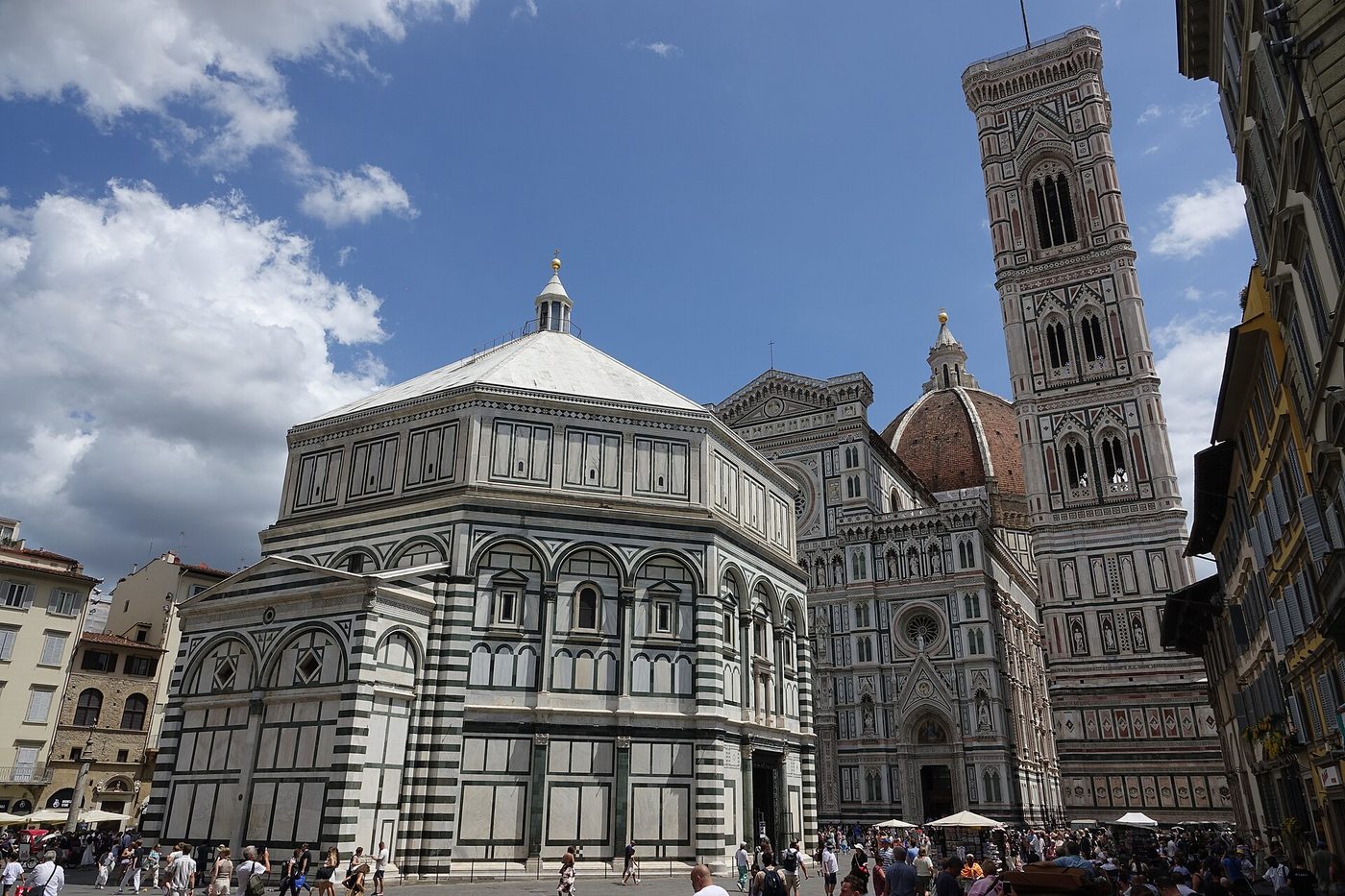
3. Italy’s Golden Triangle: Rome, Florence and Venice, 10 nights
One country, one currency, one set of customs to learn, and three cities that could not be less alike. For travellers who find the idea of border-hopping stressful, this is the trip. It is also the best food of the nine by a distance.
- Nights: Rome 4, Florence 3, Venice 3.
- Between them: Frecciarossa Rome to Florence in 1h16 to 1h32, Florence to Venice in 1h53 to 2h05. Reservations are compulsory on all Italian high-speed trains, so there is no walk-up option, but the fares are reasonable when booked in advance.
- Book ahead: the Colosseum first. The standard 24-hour ticket is €18 including the €2 booking fee and covers the Colosseum’s first two levels plus the Roman Forum and Palatine Hill. Tickets are released 30 days before the visit date, and underground or arena-floor slots go within 24 to 48 hours. Summer morning slots have gone within minutes. Then the Vatican Museums at €20, or €25 with the online booking fee. Then the Uffizi in Florence at €29 online or €25 at the on-site desk, and the Brunelleschi Pass at €30 if you want the top of the Duomo. In Venice, the Doge’s Palace is €30 if you book 30 or more days ahead and €35 inside that window, which is an unusually clean argument for booking early.
- The downside: August. Italian businesses close for roughly the first three weeks of the month, with 15 August, Ferragosto, close to a total shutdown. Rome’s historic centre stays open because it runs on tourists, but Florence is noticeably affected and you will find your carefully bookmarked trattoria shuttered.
On Venice: if you are staying overnight inside the municipality, which includes Mestre, Marghera and the Lido, you are exempt from the day-tripper access fee. If you are day-tripping in from Padua or Verona, see the section on tourist taxes and the Venice access fee below, because it applies on 60 days in 2026 and there is a real price difference between paying early and paying at the gate. For the deeper version of this route, our Italy itinerary for 10 days and the Italy travel guide both go city by city.

4. The Central Europe Value Loop: Berlin, Prague, Vienna and Budapest, 12 nights
This is the best value trip on the list, and the one I recommend most often when the budget is the binding constraint rather than the time. Four capitals, four distinct national characters, and a daily spend that runs a third to a half below the Western Loop for a comparable standard of hotel.
- Nights: Berlin 4, Prague 3, Vienna 2, Budapest 3.
- Between them: Berlin to Prague by direct EuroCity in around four hours every two hours, fares from about €20 with only an optional €5.50 reservation. Then Prague to Vienna, which is the one leg on this route I could not source a current journey time for, so check it when you book. Then Vienna to Budapest in 2h16 to 2h37. Railjet and EuroCity reservations in this corridor are €3 and mostly recommended rather than compulsory, which is a refreshing change from France and Italy.
- Book ahead: much less than elsewhere. This is the route where you can be spontaneous. Book Berlin accommodation early in summer and leave the rest reasonably loose.
- The downside: four currencies. Germany and Austria are on the euro, Czechia uses the koruna and Hungary the forint. You will end up with awkward leftover cash in two of them, so pay by card where you can and take out small amounts.
Prague is the best value of the whole classic first-timer set. Hostel dorms run €10 to €20, an inexpensive restaurant meal around €9.50, and a 90-minute transit ticket costs CZK 40, about €1.65 at the August 2026 rate of CZK 24.26 to the euro. Budapest is close behind, with mid-range hotels at $60 to $120 and dorms from €16. If value is the whole point of your trip, our cheapest places to travel in Europe ranks this properly, and the Eastern Europe travel guide covers what lies beyond these four.
One currency change worth knowing about before you price anything: Bulgaria adopted the euro on 1 January 2026 at a fixed rate of 1.95583 leva to the euro, making it the twenty-first euro-area member. If you extend this loop south toward Sofia, prices quoted in leva are pre-2026. That leaves six EU countries outside the euro: Denmark, Sweden, Poland, Czechia, Hungary and Romania.

5. The Iberian Run: Madrid, Seville, Granada and Barcelona, 12 nights
If your dates land in late October, when northern Europe has gone grey and wet, take this one. Andalusia holds its warmth well past the point where Paris has stopped being pleasant to walk around, and the food is a genuine reason to go rather than a bonus.
- Nights: Madrid 3, Seville 3, Granada 2, Barcelona 4.
- Between them: Spain’s high-speed network is excellent and reservations are compulsory on AVE and Alvia services. Madrid to Seville and Seville to Granada are both comfortable half-day hops. Granada back up to Barcelona is the leg that breaks my own five-hour rule, and I would fly it rather than spend a day on it. To calibrate what the network can do, Madrid to Barcelona runs in as little as 2h30 from Atocha to Sants. I could not source a current 2026 rail time for Granada to Barcelona, so check the operator if you would rather stay on the ground.
- Book ahead: the Alhambra above everything else. Daily visitor numbers are capped and tickets sell out weeks in advance. The official general daytime ticket is €21, and you will find resellers listing self-guided products at €39 or more. Buy from the official site. In Barcelona, the Sagrada Família is €26 for basic admission, €30 with an audio guide, €33 guided and €40 for the Top View with tower access.
- The downside: flying in and out is close to mandatory. Paris to Barcelona is around 6h30 by train and Madrid is further still, so this route does not chain neatly onto a French or Italian trip within two weeks.
A caveat I want to be straight about. The Sagrada Família’s official ticket page was rendering a “temporarily closed to the public” block with no price table when I checked in August 2026, and a €2 to €5 centenary surcharge is expected from May to December 2026, this being the centenary of Gaudí’s death and the year the Tower of Jesus Christ reached its full 172.5 metres. Check the official site directly before you plan a day around it. The Spain travel guide has more on regional pacing.

6. Alps and Northern Italy: Munich, Lucerne, Lake Como and Venice, 12 nights
Some people do not want to spend a holiday queueing for paintings. This route is built for them. It is the most scenically spectacular of the nine and also the most expensive per day, because Switzerland does not do cheap.
- Nights: Munich 3, Lucerne 3, Lake Como 3, Venice 3.
- Between them: Munich to Zurich or Lucerne, then the EuroCity through the Gotthard to Milan, which is 3h17 from Zurich and a little longer starting from Lucerne, with a compulsory €17 reservation for pass holders, then a short hop to Como or Varenna, then across to Venice. Fares on the Switzerland to Italy EuroCity have been reported from €29, and from CHF 38 on the Zurich to Milan service.
- Book ahead: Neuschwanstein if you are doing the Füssen day trip from Munich, 2h04 by train then a local bus. Adult admission is €21 for 2026, though some sources still list €17.50, and a combination ticket with Hohenschwangau at €31, plus a €2.50 per-ticket online booking fee. The spread between those figures is why I would check on the day you book rather than trust any single number, including mine.
- The downside: weather risk. A grey week in the Alps takes the entire point away, in a way that a grey week in Rome does not. This is a shoulder-season or summer route, not a March one.
If the mountains are the draw rather than the cities, our Switzerland travel guide and hiking in Europe guide are the better starting points, and Lake Como gets its own treatment.
7. The Western Loop: London, Paris, Bruges and Amsterdam, 14 nights
The Classic Three with room to breathe, plus Bruges as the antidote to three big capitals in a row. Fourteen nights across four cities means one of them can be a genuine rest stop, and Bruges is the right size for that: small enough to exhaust in a day, pretty enough that you will not mind a second.
- Nights: London 4, Paris 5, Bruges 2, Amsterdam 3.
- Between them: Eurostar London to Paris, then Paris to Brussels in 1h22, Brussels to Bruges in 58 minutes on a turn-up-and-go regional train, then Bruges back through Brussels to Amsterdam. The Brussels to Amsterdam leg gives you a choice worth knowing about: Eurostar in 1h49 with a €22 pass-holder reservation fee, or the hourly EuroCity Direct in 2h08 with no reservation needed at all.
- Book ahead: Eurostar, Anne Frank House on its Tuesday release, the Louvre, and the Eiffel Tower. From 29 September 2026 the Eiffel Tower will require advance reservations for stairs tickets too, which has historically been the walk-up option. Note it also closed to the public on 13 July 2026 in place of 14 July, so check the calendar rather than assuming.
- The downside: no flights, no fuss, and no cheap days either. This is the priciest fourteen nights on the list once tourist taxes are counted.
Five nights in Paris rather than four is deliberate. A fifth night is what makes Versailles or a day in the Loire possible without cannibalising the city itself. Versailles requires advance booking before you travel, though I could not source a current 2026 price for it, so check the official site.

8. The Mediterranean Sampler: Barcelona, Nice, Cinque Terre, Florence and Rome, 14 nights
Five stops in fourteen nights is the briskest pace I will endorse, and it only works because three of the five are small. It gives you coastline and cities in one run, which is the thing most first-timers say afterwards they wish they had done.
- Nights: Barcelona 3, Nice 3, Cinque Terre 2, Florence 3, Rome 3.
- Between them: Barcelona to Nice is the awkward leg and usually means a flight or a long day with a change. Nice into Italy along the coast is straightforward, Cinque Terre to Florence is short, and Florence to Rome is 1h16 to 1h32.
- Book ahead: Sagrada Família, the Uffizi, the Colosseum and the Vatican. Cinque Terre needs no advance tickets but does need an early start, because the villages fill from mid-morning as the day-trippers arrive.
- The downside: four moves in fourteen nights, which is one more than I would usually recommend. If it starts to feel like too much, cut Nice and give the nights to Barcelona and Florence.
Our best Mediterranean destinations guide covers the coastal alternatives if you would rather swap Nice for somewhere quieter, and Cinque Terre has its own guide.

9. The Grand Tour: London, Paris, Lucerne, Venice, Florence and Rome, 21 nights
Three weeks, six cities, four countries, and the only route here where you get to see Europe change as you move rather than jumping between capitals. You go from the London drizzle to Paris to an Alpine valley to a lagoon to Tuscany to Rome, and each transition is gradual enough to feel earned.
- Nights: London 4, Paris 4, Lucerne 3, Venice 3, Florence 3, Rome 4.
- Between them: Eurostar to Paris, TGV Lyria from Paris to Basel, Bern, Geneva, Lausanne or Zurich with a compulsory €25 second-class reservation for pass holders, then the EuroCity south through the Alps to Milan and on to Venice, then Italy’s high-speed network for the rest.
- Book ahead: everything in Italy, the Eurostar, and your Swiss accommodation. Twenty-one nights is long enough that you can leave the middle loose if you want, but the Italian sights will not wait for you.
- The downside: cost, and not just the obvious kind. Three weeks of €260-plus days adds up faster than people expect, and the Swiss segment alone can run double a comparable Italian one.
If you want the three-week version broken down day by day, our 3 weeks in Europe itinerary does exactly that, and the Europe itinerary hub sets out the full family of route lengths from a week to a month.
How to choose between them
If you are still deciding, work backwards from your three hardest constraints, in this order: how many nights you have on the ground once flights are subtracted, what you can spend per day, and what month you are travelling. The route usually picks itself once those three are written down. The table in the next section pairs each one with the traveller it fits.
One route, day by day
Route tables are useful for choosing. They are less useful for picturing a trip. So here is the Classic Three, ten nights, written out the way I would actually plan it, with the booking deadlines marked. Use it as a template for whichever of the nine you pick.
| Day | Where | Shape of the day | Booked in advance? |
|---|---|---|---|
| 1 | London | Land, Piccadilly line in from Heathrow (£5.90 from zone 1, around 50 minutes), check in, walk somewhere flat and eat early. Do not schedule anything | No |
| 2 | London | Westminster, the river, a museum in the afternoon. Contactless caps at £8.90 for zones 1 to 2, so tap freely | No |
| 3 | London | The one paid thing you care about, then a neighbourhood: Borough, Shoreditch, Greenwich | Yes, if it is the Tower or a West End show |
| 4 | London | Day trip or a slow London day. This is the buffer | No |
| 5 | London to Paris | Eurostar, 2h15 to 2h30. Be at St Pancras at least 30 minutes early, and more in 2026 because EES kiosks operate on the UK side. Afternoon in Paris, dinner in the arrondissement you are staying in | Yes. Book Eurostar the day booking opens |
| 6 | Paris | Louvre in the morning on a timed slot (€22 EEA, €32 otherwise), Tuileries and the river after | Yes |
| 7 | Paris | Eiffel Tower at your slot (€36.70 to the summit by lift), then Montmartre or the Marais | Yes |
| 8 | Paris | Versailles, or a Paris day with nothing in it. Navigo Jour at €12.30 pays off from about five journeys | Yes for Versailles |
| 9 | Paris to Amsterdam | Eurostar, 3h20. Arrive early afternoon, walk the canals, eat | Yes |
| 10 | Amsterdam | Anne Frank House at your slot (€16.50), Jordaan afterwards, Rijksmuseum in the afternoon | Yes. Tickets release Tuesdays at 10:00 CEST for six weeks later |
| 11 | Amsterdam | One more morning, then Schiphol by direct train (€5.90, 17 minutes). Allow extra time for EES on exit | No |
Four bookings carry the whole trip: two Eurostar legs, the Louvre, the Eiffel Tower and the Anne Frank House. That is it. Everything else can be decided at breakfast, and the days with nothing in them are the ones you will describe when you get home.
The same shape works for the others. Arrival day is free, the last morning is free, one paid headline per full day, one buffer day per city of four nights or more, and every intercity move lands before mid-afternoon so you still get an evening.
The 2026 entry rules, which changed this year
This is the part of any first time Europe itinerary that has moved since last year, and it is worth five minutes of your attention because the queue you meet at the border in 2026 is longer than the one your friends met in 2024.
The Entry/Exit System is live. ETIAS is not.
Two separate systems, constantly confused, doing different jobs.
The Entry/Exit System, EES, is the border-crossing database. It began a progressive rollout on 12 October 2025 and has been fully operational at all external border crossing points since 10 April 2026. It replaces the manual passport stamp with an automated record: your name, travel document type, biometrics in the form of fingerprints and a facial image, and the date and place of every entry and exit. It applies to non-EU nationals on short stays, whether visa-holding or visa-exempt, across 29 countries: 25 EU member states, all except Cyprus and Ireland, plus Norway, Iceland, Switzerland and Liechtenstein. Children under 12 are exempt from the fingerprint requirement. Your data is normally erased three years after your last trip.
You do not apply for EES and you do not pay for it. You simply encounter it at the border, and through summer 2026 that has meant significant queueing at major airports. The regulation does allow countries to partially suspend EES operation in exceptional circumstances at peak times, so conditions vary.
Two practical consequences. First, if you are connecting through a European hub onto another flight, give yourself more layover than you would have in 2024. Second, there is an optional EU mobile app, “Travel to Europe”, that lets you pre-register your passport data and facial image within 72 hours of reaching an EES border. From 12 October 2025 it has been usable at specific crossings entering and exiting Sweden, with other countries able to adopt it later. Check whether your entry point supports it before you rely on it.
If you are arriving from the UK, EES also operates at the Port of Dover and at the Eurostar and Eurotunnel terminals on the British side under juxtaposed-border arrangements with France, using kiosks at St Pancras and Eurotunnel and tablets for car passengers at Dover. That is why the “be at the station 30 minutes early” advice for Eurostar has become a floor rather than a target.
ETIAS is the separate travel authorisation, the European equivalent of the American ESTA. As of August 2026 it is not live. It has been delayed to 2027. The EU removed its previous Q4 2026 target from the official site in July 2026, eu-LISA concluded a 2026 launch was no longer feasible, and industry expectation is April 2027 at the earliest, with the eu-LISA management board due to meet in September 2026 on a revised timeline. If you have seen a 2025 or 2026 start date, or a €7 fee, both are out of date.
When it does arrive, here is what is settled:
| ETIAS detail | Confirmed position |
|---|---|
| Fee | €20, raised from the original €7 by Commission Delegated Regulation (EU) 2025/1411 of 16 July 2025 |
| Free for | Applicants under 18 and over 70 |
| Validity | 3 years, or until your passport expires, whichever comes first |
| Processing | Usually minutes; up to 30 days if further checks are needed |
| Who needs it | Nationals of visa-exempt countries including the USA, UK, Canada and Australia, for short stays in 30 European countries |
| Who does not | Irish nationals, UK-Ireland travel under the Common Travel Area, UK nationals with Withdrawal Agreement residence rights, and holders of a residence permit for an ETIAS country |
| Transitional period | For the first 6 months after launch, anyone may enter without an ETIAS, subject to all other entry requirements |
| Grace period | For the following 6 months, first-time arrivals since the end of the transitional period may still enter without one; everyone else needs it |
| Insurance requirement | None. ETIAS does not include one |
The transitional and grace periods matter more than the launch date. Even if ETIAS goes live in April 2027, a first-time traveller could in practice arrive without one well into 2028. Plan for the fee, not the panic.
Schengen, and what is not in it
Schengen is 29 countries, of which 25 are EU member states. The only EU members outside it are Cyprus and Ireland. Bulgaria and Romania became full members on 1 January 2025 after a two-phase accession that lifted air and sea border checks in March 2024 and internal land-border checks at the start of 2025. Croatia joined on 1 January 2023 for land and sea, with internal air borders following on 26 March 2023. Norway, Iceland, Switzerland and Liechtenstein are in Schengen without being in the EU.
The UK is outside Schengen entirely and operates the Common Travel Area with Ireland. Ireland runs neither EES nor ETIAS. Turkey is neither an EU member nor in Schengen.
For visa-exempt travellers the ceiling is 90 days in any rolling 180-day period, counted as one pot across every EES country rather than per country. Longer stays need a national long-stay visa.
One more thing on the UK, and it catches people out on the Classic Three and the Western Loop: the UK runs its own Electronic Travel Authorisation, separate from anything the EU does. The fee rose to £20 on 8 April 2026, it is valid two years, and you apply for it independently. If your route starts in London, that is a second authorisation to remember, not a substitute for the EU one. The US ESTA, for comparison, now costs $40.27 after rising from $21 on 30 September 2025 and being index-adjusted on 1 January 2026.
Currency, cards and cash
Twenty-one EU countries use the euro as of 2026, Bulgaria having joined on 1 January. The six EU countries that do not are Denmark, Sweden, Poland, Czechia, Hungary and Romania. Outside the EU, Switzerland uses the franc, the UK the pound, and Norway the krone. Croatia has been on the euro since 1 January 2023.
Practical rules that will save you real money: avoid the Euronet-branded ATMs you see clustered in tourist areas and use a bank’s own machine instead. When a card terminal or cash machine offers to charge you in your home currency, always decline and choose the local currency, because the conversion rate offered is consistently worse than your bank’s. And your passport should be valid at least six months beyond your planned return date.

Trains, planes and whether a rail pass is worth it
The single most common question I get about a first Europe trip, and the one where the truthful answer is the least satisfying: it depends, and here are the numbers so you can work it out yourself in about four minutes.
The 2026 Eurail and Interrail Global Pass prices
Eurail is for non-European residents, Interrail for European residents, and the 2026 Global Pass price grid is identical for both, in euros. Youth means aged 12 up to and including 27 on the first day of travel, and takes 25% off. Senior means 60 or over on the first day, and takes 10% off. Children aged 4 to 11 travel free on a Child Pass with an accompanying adult, youth aged 18 or over, or senior pass holder, maximum two children per adult, and under-4s need no pass at all. Children still pay reservation fees.
| Global Pass, 2nd class | Adult | Youth (25% off) | Senior (10% off) | Adult 1st class |
|---|---|---|---|---|
| 4 days in 1 month | €283 | €212 | €255 | €367 |
| 5 days in 1 month | €318 | See range note | See range note | €413 |
| 7 days in 1 month | €381 | €286 | €343 | €495 |
| 10 days in 2 months | €447 | See range note | See range note | €581 |
| 15 days in 2 months (flexi) | €553 | See range note | See range note | €718 |
| 15 days continuous | €476 | €357 | €428 | €618 |
| 22 days continuous | €586 | See range note | See range note | €761 |
| 1 month continuous | €696 | See range note | See range note | €904 |
| 2 months continuous | €826 | See range note | See range note | €1,073 |
| 3 months continuous | €956 | €717 | €860 | €1,242 |
Range note: I have exact youth and senior figures for the four durations shown above, and the published full ranges are €212 to €717 for youth and €255 to €860 for senior across the whole grid. For the durations in between, apply 25% or 10% to the adult price and treat the result as indicative until you see it at checkout. That is worth flagging rather than presenting nine figures I have not seen at checkout.
The reservation fees on top of the pass
A pass buys you the right to board. On a great many trains it does not buy you a seat, and the supplement is charged by the railway rather than covered by the pass. Averages run €10 for domestic high-speed, €15 for international, and €20 for night trains. But on the specific routes a first-timer uses, the fees are considerably higher than the average.
| Route | Pass-holder reservation fee | Compulsory? |
|---|---|---|
| Eurostar London to Paris | €35 Standard / €40 Plus | Yes |
| Eurostar London to Amsterdam | €35 Standard / €43 Plus | Yes |
| Eurostar Paris to Amsterdam | €32 Standard / €37 Plus | Yes |
| Eurostar Paris to Brussels | €27 Standard / €32 Plus | Yes |
| Eurostar Brussels to Amsterdam | €22 Standard / €27 Plus | Yes |
| TGV Paris to Turin or Milan | €31 (2nd) / €45 (1st) | Yes |
| TGV Paris to Barcelona or Girona | €25 (2nd) / €35 (1st) | Yes |
| TGV Lyria, Paris to Basel, Bern, Geneva, Lausanne or Zurich | €25 (2nd) / €35 (1st) | Yes |
| TGV Paris to Brussels | €20 (2nd) / €30 (1st) | Yes |
| TGV or ICE Paris to Frankfurt, Stuttgart or Munich | €19 | Yes |
| Spanish AVE cross-border | €25 Elige / €28 Elige Confort | Yes |
| Zurich, Basel or Geneva to Milan or Venice (EuroCity) | €17 both classes | Yes |
| Munich to Innsbruck, Verona and Venice (Brenner Railjet/EC) | €10 (2nd, includes the mandatory Italy supplement) / €15 (1st), plus €5 if bought on board | Yes |
| Amsterdam to Berlin (ICE/IC) | €5.50 (2nd) / €6.90 (1st) | Optional, but compulsory 26 June to 31 August |
| Berlin to Prague (EC/Railjet) | €5.50 (2nd) / €6.90 (1st) | Optional |
| Vienna, Prague and Budapest Railjet and EuroCity | €3 both classes | Recommended, not compulsory on most routes |
Domestic pass-holder fees run €10 to €13 on Italian Frecciarossa, €6.50 to €13 on Spanish AVE, and €10 on French TGV for a limited quota, rising to €20 once those places sell out. Booking through Eurail’s own reservation service adds about €2 per passenger per train. Those four figures come from a single secondary source rather than the operators, so treat them as a planning band.
The rule of thumb worth memorising: in France, Italy and Spain, assume roughly €10 or more in reservation fees for every train that is not purely local, on top of whatever the pass cost. Second-class pass holders on Eurostar may only travel in Standard, not Premier or Business Premier. Passes must be activated within eleven months of the issue date, and standard passes are refundable or exchangeable if returned unused, though promotional ones may not be. There is also a newer Global Plus Pass that covers reservation costs on most trains, which changes the maths if your route is reservation-heavy.
So is a pass worth it for a first trip?
Usually not, and here is why in one worked example. On the Classic Three you take exactly two trains: London to Paris and Paris to Amsterdam. A 4-days-in-1-month adult pass is €283, and you would then pay €35 and €32 in compulsory Eurostar reservations on top, for a total of €350 to make two journeys. Booked when reservations open, those same two journeys as point-to-point tickets come in far below that.
Point-to-point fares on European high-speed trains behave like budget-airline fares: cheapest the day booking opens, climbing steadily toward departure. Eurostar booking opens roughly six months ahead and up to eleven months on some services. Frecciarossa, AVE and Eurostar reservations open around 90 days out, with the best fares on day one.
A pass earns its keep when you are moving a lot, moving spontaneously, or travelling through reservation-light countries. The Central Europe Value Loop is the closest thing here to a pass-friendly route, because German, Czech, Austrian and Hungarian trains mostly take a €3 to €5.50 optional reservation or none at all. The Western Loop is the worst case, because every single leg is compulsory-reservation Eurostar or TGV.
When to fly instead
Fly when the train is over about six hours, and on a first trip that mostly means getting into or out of Iberia, or crossing from Western to Central Europe in one jump. Intra-Europe budget fares run roughly $30 to $50 one way booked early. Ryanair’s average fare in the quarter ending 30 June 2026 was €48, down from €51, and Wizz Air has been named the cheapest EU-based carrier for 2026.
The catch is baggage, and the rules changed in the last year, so check them against the airline rather than against memory. Ryanair’s free personal item is now 40 x 30 x 20 cm and must fit under the seat, up from the old 40 x 25 x 20 cm, and it is included on every fare. A larger 55 x 40 x 20 cm, 10 kg cabin bag requires Priority Boarding, which runs £6 to £36 per person one way depending on route and date. easyJet’s free underseat bag is 45 x 36 x 20 cm including handles and wheels, up to 15 kg, free on every fare, with the larger 56 x 45 x 25 cm cabin bag a paid add-on except on FLEXI fares and for easyJet Plus members. easyJet has stopped selling cabin-bag upgrades at the airport and gate-checking a bag that will not fit costs around £48, so the sizer at the gate is not a bluff.
There is an EU rule requiring all airlines flying to or from the EU to allow a free cabin bag of at least 40 x 30 x 15 cm, but it does not come into force until 2027, so it will not help you this year. If you are choosing a bag for this trip, our Europe packing list is sized around exactly these limits, and getting around Europe covers buses, ferries and car hire that I have skipped here.
What a first trip to Europe costs in 2026
Three layers: the flight, the daily spend, and the fees that do not appear on any booking confirmation until you are checking out of the hotel.
The flight and the daily spend
A transatlantic return from the US runs $600 to $1,200 per person, and the advice that has held for years still holds: book three to six months ahead. Once you are there, these are the daily benchmarks, and I have kept the source currencies rather than converting, because a converted figure implies a precision that is not there.
| Standard | Per person per day, excluding flights | What that buys |
|---|---|---|
| Budget | $100 to $150 | Hostels or cheap guesthouses, self-catering some meals, public transport, a few paid sights |
| Mid-range | $200 to $300, or €100 to €200 | Central hotel, meals out, city transport, several paid attractions |
| Comfortable | $400 and up | Better hotels, restaurants without checking the price first, taxis when you want them |
Broken down by line item:
| Item | Western and Southern Europe | Central and Eastern Europe |
|---|---|---|
| Hostel dorm | €18 to €40, capitals at the top | €15 to €30 |
| Budget hotel or guesthouse | $80 to $120 per night, basic but clean | |
| Mid-range hotel | $150 to $250 per night | Budapest reported at $60 to $120 |
| Splurge hotel | $300 and up in major cities | |
| Food and drink, eating out most meals | $50 to $80 per person per day | Meaningfully less; an inexpensive Prague meal is reported at €9.50 |
| A good meal without trying hard | €10 to €15 in a great many places | |
| A top-end main course | €30 to €50 is not unusual | |
| A cocktail | €5 to €10 typically, €25 to €30 at a Florence rooftop bar | |
Specific city outliers worth knowing: hostel dorms run €40 to €70 in Amsterdam, €20 to €40 in Barcelona and €10 to €20 in Prague. A margherita is €5 to €10 in Naples and up to €25 in Paris or Scandinavia. A three-course mid-range dinner for two in Rome comes to about €65.
Your money goes furthest in Portugal, Poland, Hungary and Czechia, and least far in the UK, Switzerland, Scandinavia, and Italy and France in peak season. Among the classic first-timer cities, Prague is the best value and London, Paris and Amsterdam are the priciest, with Germany sitting in the middle. If the budget is tight, Europe on a budget and backpacking Europe both go further on this than I can here.

Tourist taxes, and the Venice access fee
Tourist taxes rarely make it into the planning spreadsheet, and on a fourteen-night trip for two people they can add several hundred euros. They are usually charged per person per night, collected at the property rather than at booking, and frequently in cash.
One caveat first: apart from the Venice access fee, the figures below come from tourist-tax aggregators rather than from city halls directly. Treat them as the right order of magnitude and confirm with your accommodation, which will know exactly.
| City | Tourist tax, per person per night | Notes |
|---|---|---|
| Paris | Around €9 to €12 once surcharges are counted | Varies with property class |
| Rome | €4.00 (1-star) to €10.00 (5-star) | Scales with hotel rating |
| Florence | €1.00 to €8.00 | Scales with hotel rating |
| Venice | €1.00 to €5.00 | Separate from the day-tripper access fee |
| Amsterdam | 12.5% of the room price. Note this one is charged per room, not per person, so a €200 room adds €25 | Dutch accommodation VAT also rose from 9% to 21% on 1 January 2026 |
| Barcelona | €6 (youth hostel), €8.40 (4-star), €9.50 (tourist apartment), up to €12 (5-star) | Increased from 1 April 2026 |
| Prague | CZK 50, about €2.06 | Under-18s exempt |
| Lisbon | €4 | Capped at 7 nights; under-12s exempt |
| Vienna | 5% of the net accommodation cost, in effect since 1 July 2026 | Rising to 8% from 1 July 2027. The old 3.2% rate is superseded |
Amsterdam deserves a second look on the Classic Three and the Western Loop. At 12.5% of the room price, charged per room rather than per person, a €200 room adds €25 a night, and that sits on top of accommodation VAT that more than doubled in January. Build it in.
Venice’s day-tripper access fee is a separate thing entirely, and it applies to you only if you are not staying overnight inside the municipality of Venice, which includes Mestre, Marghera and the Lido. If you are staying anywhere in that area, you are exempt.
| Venice access fee 2026 | Detail |
|---|---|
| Cost if reserved 4 or more days ahead | €5 |
| Cost if paid within the last 3 days or on the spot | €10 |
| Number of charged days in 2026 | 60, up from 54 in 2025 |
| Date range | Mainly weekends and holidays between 3 April and 26 July 2026 |
| Hours | 08:30 to 16:00 on charged days |
| How to pay | The City of Venice online portal, which issues a digital QR voucher to carry and show on spot checks |
| Exempt | Anyone booked into accommodation within the municipality, Mestre and the Lido included, and children under 14 |
One timing note, since this guide is published in August 2026: the 2026 charging window closed on 26 July and the 2027 dates have not been announced. Assume a similar spring-to-July pattern and check the city portal once dates are published. The doubling from €5 to €10 is a straightforward reward for booking four days ahead, which on a trip you planned months in advance costs you nothing. Our things to do in Venice guide covers the rest.

City transport and getting in from the airport
Two more line items that quietly add up. City transit first.
| City | Single ticket | Day or multi-day option |
|---|---|---|
| Paris | €2.55 metro, RER and train; €2.05 bus and tram | Navigo Jour day pass €12.30; Navigo Semaine weekly (Mon to Sun) €32.40 all zones. The Navigo Easy card itself costs €2 and is non-refundable |
| London | Contactless or Oyster, capped | Daily cap £8.90 zones 1 to 2; buses and trams capped at £5.25. The cap runs 04:30 to 04:29 and you must use the same card or device every tap |
| Rome | BIT ticket €1.50, valid 100 minutes | 24-hour pass €8.50, with a daily cap after which travel is free until midnight |
| Amsterdam | €3.40 for one hour | GVB 24h €10, 48h €16, 72h €21.50, 168h €43 |
| Barcelona | See note below | T-casual, 10 journeys in zone 1, €13 |
| Prague | 90-minute ticket CZK 40, about €1.65 | Monthly pass CZK 550, about €22.70 |
| Berlin | Zone AB single €4.00 from January 2026; short-trip ticket €2.80, covering 3 rail stops or 6 bus stops | Germany-wide Deutschlandticket €63 per month |
Two honest gaps in that table. I could not get a clean 2026 single-ticket or day-pass figure for Barcelona, so the T-casual is what I can stand behind. And I found a Berlin 24-hour ticket quoted at €4.10, which cannot be right alongside a €4.00 single AB fare, so I have left it out. Check bvg.de.
City passes, as a category, are generally worth it only for stays of two to three days or more, with the best value on four to seven day stays. On a first trip that usually means the pass makes sense in your longest-stay city and nowhere else.
Airport transfers, where the train is nearly always both cheapest and fastest and the taxi is nearly always both most expensive and slowest:
| Airport | Cheapest public option | Cost | Time |
|---|---|---|---|
| Paris Charles de Gaulle | RER B, every 10 to 15 minutes | €14 | Around 30 minutes |
| London Heathrow | Piccadilly line | £5.90 from zone 1 | Around 50 minutes |
| London Heathrow, faster | Elizabeth line, or Heathrow Express | £15.50, or around £26 | Both quicker than the tube |
| Rome Fiumicino | Leonardo Express, non-stop to Termini, every 15 minutes | €14 | 32 minutes |
| Amsterdam Schiphol | Direct train to Centraal | €5.90 | 17 minutes |
| Barcelona El Prat | Metro L9 Sud | €5.90 special airport fare, not covered by the T-casual | Varies by destination station |
| Prague | Trolleybus 59 to Nádraží Veleslavín, then metro line A | CZK 40 | Around 35 minutes |
Barcelona’s Aerobús is flagged as the best speed-to-value option to the centre, but I could not source its 2026 fare, so that cell is empty.

The attractions you must book before you leave home
Most major European attractions now require advance booking, many close at least one day a week, and the release windows are wildly inconsistent: some open months ahead, others only weeks. Prices are 2026 adult rates.
| Attraction | City | Adult price | Release window and how fast it goes |
|---|---|---|---|
| Anne Frank House | Amsterdam | €16.50 including the €1 booking fee (10 to 17 years €7.00, 0 to 9 years €1.00) | Released every Tuesday at 10:00 CEST for visits six weeks later. Online only, timed slot, no door sales, non-refundable, no I amsterdam Card discount. The tightest window in Europe |
| Colosseum, Roman Forum and Palatine Hill | Rome | €18 for the standard 24-hour ticket, including the €2 booking fee. EU 18 to 25 reduced €2 | Released 30 days ahead. Underground and arena-floor slots go in 24 to 48 hours; summer morning slots have been reported going in minutes. Timed entry is mandatory and walk-up is no longer viable |
| Vatican Museums and Sistine Chapel | Rome | €20, or €25 with the online booking fee | Sells out well ahead in peak season. Book as soon as your dates are fixed |
| Eiffel Tower | Paris | Summit by lift €36.70; summit via stairs then lift €28.00; 2nd floor by lift €23.50; 2nd floor by stairs €14.80. Youth 12 to 24 €18.40, child 4 to 11 €9.20, under 4 free | From 29 September 2026 advance reservations are required for stairs tickets too. Groups over 9 must buy online. Summit access can be restricted in bad weather or at peak times. Closed 13 July 2026 in place of 14 July |
| Louvre | Paris | €22 for EEA residents, €32 for everyone else since 14 January 2026, a 45% rise for non-EEA visitors | Regularly sells out. Timed entry strongly advised |
| Uffizi Gallery | Florence | €29 online, €25 at the on-site ticket office. From 1 January 2026 an afternoon discount applies for entry from 16:00: €16 on-site, €20 online | Goes quickly in summer. Advance booking is not optional in practice |
| Brunelleschi Pass (Duomo dome climb) | Florence | €30, valid 3 days | The only pass giving access to the top of the dome |
| Doge’s Palace | Venice | €30 if bought 30 or more days ahead, €35 inside that window. Reduced €15 for ages 6 to 14, students 15 to 25, over-65s and residents | The clearest financial reward for early booking on this list |
| Sagrada Família | Barcelona | Basic €26, audio guide €30, guided €33, Top View with towers €40. A €2 to €5 centenary surcharge is expected May to December 2026 | Verify opening status directly. The official tickets page was rendering a temporary-closure block with no prices in August 2026 |
| Alhambra | Granada | Official general daytime ticket €21. Resellers list self-guided products at €39 | Daily numbers are capped and it sells out weeks ahead. Buy official |
| Acropolis | Athens | €20 standard, covering the hill including the Parthenon, Erechtheion, Propylaea and Temple of Athena Nike. The €30 combined ticket covering 7 sites over 5 consecutive days is the better corroborated figure, and a higher summer rate has also been reported. Check the official channel | Increasingly requires advance booking in peak season. Athens is not on any of the nine routes above, because reaching it from anywhere north means a flight |
| Neuschwanstein | Bavaria | €21 for 2026, though some sources still list €17.50. Combination with Hohenschwangau €31. Add €2.50 per ticket online booking fee | Timed tours. Book with the Füssen train and bus in mind |
| Palace of Versailles | Near Paris | Price not sourced | Requires advance booking before you travel. Check the official site |
Two notes on that table. The Alhambra, Sagrada Família and Neuschwanstein rows carry price spreads because the official sites and the resellers disagree, and in the Sagrada’s case because the official site was not showing prices at all when I checked. Where a range appears, the lower figure is the one I would expect from the official channel. And the Roma Pass, at roughly €35 to €38 for 48 hours with one free admission or €55 to €58 for 72 hours with two, both including unlimited metro, bus and tram, does cover the Colosseum as a free admission but you still need a separate reservation, recommended 10 days ahead and 20 days in peak season. A pass is not a shortcut past the booking system.
When official tickets are gone, GetYourGuide often still has availability, sometimes bundled into a guided tour, and many of those are cancellable up to 24 hours ahead. It costs more. It also gets you into the Colosseum.
Two small things that trip people up at the door: many attractions do not allow backpacks of any size inside and will send you to a locker, so a small crossbody bag saves twenty minutes; and a great many churches require covered shoulders, which a light scarf in your day bag solves permanently.
When to go
Shoulder season, and it is not close. Late April to early June, and September to late October. Rick Steves narrows it further to “generally April and October”: decent weather, long enough daylight, thinner crowds, and the tourist industry still fully open. The practitioner consensus lands on May, June and September as the sweet spot for a first trip, with temperatures around 18 to 26°C, which is about right for walking all day and eating outside in the evening.

| Period | Crowds | Prices | Verdict for a first trip |
|---|---|---|---|
| April to early June | Building but manageable | Noticeably below peak | The best window. Long days, everything open |
| July and August | Heaviest of the year | Highest hotel prices, longest queues | Workable if you book everything, uncomfortable in the south |
| September to late October | Thinning through the period | Below peak, falling through October | Equal best. Rome averages highs in the low 70s Fahrenheit, roughly 21 to 23°C, in October |
| November to March | Lightest | Cheapest | Quietest and cheapest, except the December Christmas market weeks. Short days, some seasonal closures |
Two seasonal traps specific to a first trip.
August in Italy. Closures run roughly 1 to 20 August, with 15 August, Ferragosto, close to a total shutdown in most Italian cities. Milan, Turin, Bologna and Florence are worst affected. Rome’s historic centre stays more open because it is tourist-driven, and the major cities keep the attractions, restaurants and hotels that cater to international travellers running. But the neighbourhood places, the ones you had bookmarked, will be shut. France, Spain and Greece have their own August shutdowns on a similar pattern.
Southern Europe in high summer. Temperatures in southern cities are frequently too hot for comfortable sightseeing in July and August. If your dates are fixed to those months, weight the itinerary north: the Central Europe Value Loop or the Alps and Northern Italy route will be far more pleasant than Andalusia.
I could not find a sourceable numeric multiplier for peak-season pricing, the “prices are X% higher in July” figure that gets quoted around. It exists as a general truth and I have not seen it credibly quantified, so I am not going to put a number on it. For a fuller month-by-month treatment see the best time to visit Europe.
Nine mistakes I watch first-timers make
- Adding a fourth city to a ten-night trip. The extra city costs you a full day of travel and check-in overhead, and you will remember it least. If you have ten nights and want four cities, take three and go slower.
- Booking a return to one airport. Open-jaw tickets usually cost about the same and save you a backtracking day. Price it before you assume otherwise.
- Leaving the Colosseum and Anne Frank House until you arrive. Neither is bookable on the day. The Colosseum releases 30 days out and the good slots go in hours. Anne Frank releases on a Tuesday for six weeks later and that is the only way in.
- Buying a rail pass without adding up the reservation fees. On a Eurostar-heavy route the fees can add €60 or more on top of the pass for two journeys.
- Forgetting tourist tax. Amsterdam at 12.5% of the room rate, Barcelona up to €12 a night since April, Rome up to €10. On fourteen nights for two people this is not a rounding error.
- Accepting the “charge in your home currency” prompt. Always choose local currency, at the ATM and at the card terminal. And skip the Euronet machines.
- Planning Italy for mid-August. Ferragosto closes a remarkable proportion of the country, and the parts that stay open are the parts that exist for tourists.
- Underestimating the new border queues. EES has been fully operational since April 2026 and has meant real queueing at major airports through the summer. Build in the connection time.
- Booking a private apartment without checking the local rules. Amsterdam, Barcelona and Lisbon are among the cities that have introduced laws limiting short-stay private rentals. Verify the listing is legal before you pay.

Which route suits which traveller
| If this is you | Route | Why, and the adjustment I would make |
|---|---|---|
| Seven nights and no more, or travelling abroad for the first time and nervous about it | 1. Two Capitals, Slowly | Two headline cities, one internal flight, no rushing. Fly between them, do not take the train |
| Solo, or simply wanting the least complicated first trip possible | 2. The Classic Three | English widely spoken, trains between all three, nothing to work out. Hostels in all three for the company; see our solo travel in Europe guide |
| Travelling with children under 12, or wanting one country done properly | 3. Italy’s Golden Triangle | One currency, one language, three very different cities. Four nights minimum per city, and under-12s are exempt from EES fingerprinting |
| Budget is the binding constraint, not time | 4. The Central Europe Value Loop | A third to a half cheaper per day at the same hotel standard. Take the youth rail pass at 25% off if you are 27 or under |
| Your dates land in late October | 5. The Iberian Run | Andalusia holds its warmth when the north does not. Book the Alhambra the moment your dates are fixed |
| Honeymooning, or you would rather look at mountains than paintings | 6. Alps and Northern Italy | The scenery is the point. Swap Munich for a second Lake Como night; see Europe honeymoon ideas |
| A couple with a full two weeks who would rather not fly again | 7. The Western Loop | Every leg by train, one rest stop built in. Give Paris the fifth night and use it for Versailles |
| You want coastline and cities in the same trip | 8. The Mediterranean Sampler | Both, in one run, if you accept the pace. Cut Nice if four moves starts to feel like too many |
| Retired, or three weeks and one shot at it | 9. The Grand Tour | Europe changes under you rather than jumping. Senior pass at 10% off, and add a night everywhere |

Swaps worth making
If one of the standard stops does not appeal, these are the substitutions that keep the route’s logic intact rather than breaking it.
| Instead of | Try | Why it works |
|---|---|---|
| Amsterdam | Bruges or Ghent | Canals and Flemish art at a much lower accommodation cost, and a much smaller tourist tax |
| Paris | Lyon | Better eating, far shorter queues, and still on the TGV network |
| Venice in July | Verona or Padua | Both are short hops from Venice and neither charges an access fee |
| Barcelona | Valencia or Seville | Cheaper, warmer later in the year, and far less crowded |
| Prague in peak season | Kraków or Ljubljana | Similar old-town appeal, meaningfully quieter |
| Interlaken | Lucerne or the Italian lakes | Alpine views without Switzerland’s peak resort pricing |
| Rome in August | Rome in late September | Same city, half the heat, most of the neighbourhood restaurants open again |
| A fourth city | A rest day | The single best swap on this table |
If you want a longer list of alternatives, our underrated places in Europe and best cities to visit in Europe guides are built for exactly this decision.
Pickpockets, scams and tipping
Two subjects that come up in every message I get from a first-timer, and that deserve straight answers rather than either scaremongering or breeziness.
Violent crime is not the risk. Pickpocketing is. Europe’s major tourist cities are extremely safe to walk around at night by the standards most visitors are used to, and simultaneously among the best places in the world to have your phone lifted. The pattern is always the same: a crowded, distracting, predictable place. Metro doors as they close, the steps of a famous church, a packed tram on the route between two sights, the queue outside a landmark, a busy restaurant terrace where a bag is hung on a chair back.
What actually works is dull and effective. Carry a bag that closes and wear it across your body and in front of you on public transport. Keep your phone in a zipped pocket rather than a back one, and never on the table. Split your money: one card and a little cash on you, the rest in the hotel. Take a photo of your passport and keep it somewhere you can reach without your bag. If someone creates a commotion, a spilled drink, a dropped map, a petition on a clipboard, a bracelet pushed onto your wrist, your hands should go to your pockets rather than to the distraction, because the distraction is the point.
The scams worth recognising by name: the free bracelet or sprig of rosemary that becomes a demand for payment; the clipboard petition that occupies both your hands; someone insisting a machine is broken and offering to help at the ticket barrier; a taxi at an airport rank refusing to run the meter, which is why the train is in every one of my transfer recommendations; and the card terminal turned toward you offering to charge in your home currency, which is a legal transaction and still costs you money.
Tipping is far lighter than in North America, and it varies. Service is generally included in continental Europe, and staff are paid a proper wage, so a tip is appreciation rather than a required top-up. As a rough guide: in France, Italy, Spain and Germany, rounding up or leaving 5 to 10% for good table service is generous, and nothing at a bar is normal. In Italy you may see coperto, a per-person cover charge, on the bill already. In the UK a discretionary service charge of 12.5% is often added, in which case you leave nothing further, and if it is not added, 10 to 12.5% is standard. In the Netherlands and Scandinavia, rounding up is plenty. Nobody anywhere on these nine routes expects 20%, and taxi drivers are usually just rounded up to the nearest euro or two.
The small practicalities
Things that are too minor for their own section and too useful to leave out.
- Passport validity: at least six months beyond your planned return date.
- Phone: there are no roaming fees between EU countries plus Iceland, Liechtenstein and Norway, so an EU SIM works across most of a trip. UK roaming varies by operator, so check before you cross the Channel.
- Plugs: Type C across most of continental Europe, Type G in the UK. A route that includes London needs both.
- Tap water: safe to drink across most of Europe, and many cities have free refill fountains. A bottle pays for itself in three days.
- Travel insurance: Schengen does not require it for visa-exempt visitors. That requirement applies to visa applicants only, and ETIAS will not add one. You should still carry cover for medical emergencies and repatriation, and it is worth checking whether a credit card already gives you trip cover. UK travellers: the EHIC has been replaced by the GHIC for most residents, which covers state healthcare at the local patient rate but not private hospitals, repatriation, medical escorts, cancellation, lost baggage or personal liability. It is not a substitute for insurance.
- VAT refunds: only residents of non-EU countries can claim. The minimum is €100.01 per store per day in France and €154.94 in Italy, applied per transaction at one store, so consolidating purchases at one retailer helps. Spain historically used €154.94 but has reportedly removed its minimum, so check. Goods must be exported within three months, and only goods qualify: restaurants, hotels and taxis do not. Thresholds vary slightly by operator, so confirm with the retailer.

First time Europe itinerary FAQ
How many days do you need for a first trip to Europe?
Ten to fourteen nights for most people. That gives you two to four cities at three nights each with a rest day, which is the pace that people come home happy from. Seven nights works well for two cities. Under five nights, take one city and enjoy it.
What is a good two-week Europe itinerary for first-timers?
London, Paris, Bruges and Amsterdam, at 4, 5, 2 and 3 nights, with every leg by train and no flights after you land. If you want better value, swap it for Berlin, Prague, Vienna and Budapest and spend a third to a half less per day for a comparable hotel.
How many countries can you visit in two weeks in Europe?
Three or four comfortably. You can do six, and I have watched people do it, but the trip becomes a series of railway stations. Four is the ceiling I would recommend for a first visit.
Is a Eurail pass worth it for a first trip?
Usually not. On a two-or-three-city trip you take two or three trains, and a 4-days-in-1-month adult pass at €283 plus compulsory reservation fees of €25 to €35 each will cost more than the same journeys booked point-to-point when reservations open. A pass pays off when you are moving frequently, moving spontaneously, or travelling through Germany, Czechia, Austria and Hungary, where reservations are €3 to €5.50 and mostly optional.
Do I need ETIAS to visit Europe in 2026?
No. ETIAS is not live. It has been delayed to 2027, with April 2027 the earliest industry expectation and a revised timeline due from eu-LISA. When it launches it will cost €20, be valid three years or until your passport expires, and be free for under-18s and over-70s. There is then a six-month transitional period during which anyone can still enter without one, and a further six-month grace period for first-time arrivals.
What is the EES and does it affect me?
The Entry/Exit System is the automated border database that replaced passport stamping. It has been fully operational since 10 April 2026 across 29 countries, and it applies to every non-EU national on a short stay. You do not apply and you do not pay, but you should expect longer queues at major airports, particularly in summer. Under-12s are exempt from the fingerprint scan.
How far in advance should I book?
Transatlantic flights three to six months out. Eurostar as soon as booking opens, roughly six months ahead and up to eleven on some services, because the cheapest fares go on day one. Colosseum tickets are released 30 days ahead and the good slots go within hours. Anne Frank House releases every Tuesday at 10:00 CEST for six weeks later. The Alhambra sells out weeks ahead. Everything else can wait.
What is the best way to get around Europe?
Trains for anything under about five hours, budget flights beyond six. Between five and six hours it is a toss-up, and the train usually wins once you count the airport transfer at both ends. Within cities, public transport is cheap and good almost everywhere, and a day pass beats singles from around five trips a day.
When is the best time to visit Europe for the first time?
May, June and September. Late April to early June and September to late October are the two shoulder windows, with temperatures around 18 to 26°C, thinner crowds and lower prices than July and August. Avoid the first three weeks of August if Italy is on the route.
How much does a first trip to Europe cost?
Excluding flights, budget $100 to $150 per person per day, mid-range $200 to $300 or €100 to €200, and comfortable $400 and up. Add $600 to $1,200 for a transatlantic return, and add tourist tax on top of every hotel night, which runs from about €2 per person per night in Prague to 12.5% of the room rate in Amsterdam, roughly €25 on a €200 room.
Do I need travel insurance for Europe?
Not as a legal entry requirement if you are visa-exempt. The Schengen insurance requirement applies to visa applicants. You should still have it for medical emergencies and repatriation. UK travellers should carry a GHIC as well, not instead, since it covers state healthcare at the local patient rate only.
Can I drink the tap water, and will the language be a problem?
Tap water is safe across most of Europe and many cities have free refill fountains. English is widely spoken in tourist areas across every route here, and most so in the Netherlands and Scandinavia. Learning “hello”, “please”, “thank you” and “the bill, please” in each language is enough, and is noticed.
Should I book hotels or apartments?
Hotels are simpler on a first trip, and several cities have restricted short-stay private rentals, Amsterdam, Barcelona and Lisbon among them. If you do book an apartment, check the listing is licensed. Our where to stay in Europe guide breaks this down by city.
Final thoughts
The best first time Europe itinerary is the one with the fewest cities you can bring yourself to accept. Every reader who has written to me about a trip they loved describes a morning with nothing scheduled, in a city they had already been in for two days. Nobody has ever written to describe the fifth city.
Pick your route from the table at the top, book the four or five things that genuinely sell out, put the reservation fees and tourist taxes into your budget where they belong, and leave the afternoons alone. Europe is not going anywhere, and neither is the list of things you did not get to. That list is the reason you come back.
Check the official sites for anything you are planning a whole day around. 2026 has been a year of unusually frequent changes, and a handful of figures in this guide are the best I could verify in August rather than the last word.
For the next step, our how to plan a trip to Europe guide covers the booking sequence itself, Europe travel tips collects the smaller lessons, and the best places to visit in Europe guide is where to go if none of these nine routes has your name on it. If you have longer than three weeks, our one month Europe itinerary takes the Grand Tour further, and if you have less, the 7 day, 10 day and 2 weeks in Europe itineraries each go day by day.
Hannah Brooks has spent fifteen years travelling, living and writing across Europe, from the Arctic tip of Norway to the south of Sicily. She has planned hundreds of European itineraries for readers and is Senior Europe Editor at EuropeanTourism.org.
Photo credits
- The Eiffel Tower in Paris, the anchor of almost every first time Europe itinerary · Photo: Pierre Blaché from Paris, France (CC0) via Wikimedia Commons
- Big Ben and the Houses of Parliament from Westminster Bridge in London · Photo: Colin / CC BY-SA 4.0 via Wikimedia Commons
- The Baptistery, Giotto’s campanile and the dome of Florence Cathedral · Photo: Gzen92 / CC BY-SA 4.0 via Wikimedia Commons
- Charles Bridge and Prague Castle in Prague, Czechia · Photo: Godot13 / CC BY-SA 4.0 via Wikimedia Commons
- Gaudi’s Sagrada Familia in Barcelona, Spain · Photo: Didier Descouens / CC BY-SA 4.0 via Wikimedia Commons
- Hikers beside the Bachalpsee with snow peaks reflected, Bernese Oberland, Switzerland · Photo: Maru Bern / CC BY-SA 4.0 via Wikimedia Commons
- A canal lined with medieval houses in Bruges, Belgium · Photo: InSapphoWeTrust from Los Angeles, California, USA / CC BY-SA 2.0 via Wikimedia Commons
- The cliffside village of Vernazza in the Cinque Terre, Italy · Photo: WikiLucas00 / CC BY-SA 4.0 via Wikimedia Commons
- The Gloriette in the gardens of Schoenbrunn Palace, Vienna, Austria · Photo: Thomas Wolf, www.foto-tw.de / CC BY-SA 3.0 de via Wikimedia Commons
- A Eurostar high-speed train at London St Pancras, the line linking London and Paris · Photo: FrogsLegs71 / CC BY-SA 3.0 via Wikimedia Commons
- The Grand Canal in Venice, Italy · Photo: Didier Descouens (CC0) via Wikimedia Commons
- The Hungarian Parliament on the Danube in Budapest · Photo: Ercsaba74 (CC0) via Wikimedia Commons
- The Colosseum in Rome, Italy · Photo: Wilfredor (CC0) via Wikimedia Commons
- The terrace of Cafe de Flore in Paris, the shoulder-season pleasure of eating outside · Café de Flore terrace, Paris · Photo: Alexemanuel / Public domain via Wikimedia Commons
- The Brandenburg Gate in Berlin at dusk · Photo: Norbert Nagel / CC BY-SA 3.0 via Wikimedia Commons
- Lake Como and the village of Varenna in northern Italy · Photo: Ray in Manila / CC BY 2.0 via Wikimedia Commons
- Canal houses along an Amsterdam waterway, Netherlands · Photo: Basile Morin / CC BY-SA 4.0 via Wikimedia Commons