One Month in Europe Itinerary: 4 Routes, Real 2026 Costs

The first time I tried to plan a month in Europe I made a list of twenty-three cities and a spreadsheet that assumed trains ran on time and I never needed a day off. I got to about day eleven, somewhere between Salzburg and a laundrette in Ljubljana, before I admitted the plan was fantasy. Thirty days is a lot of time and also nowhere near as much as it sounds.
A realistic one month Europe itinerary covers eight to eleven cities across five to eight countries, with three to four nights in each and roughly EUR 2,400 to EUR 6,800 in total spending depending on which half of the continent you pick. Below are four complete 30-night routes with real 2026 train fares, pass maths, tourist taxes and booking deadlines.
I have now planned some version of this trip for hundreds of readers, and the pattern is always the same. People arrive with a list that is too long and a budget worked out from a blog post written in 2019. So this guide is built around two things. Four routes you can copy exactly, and the numbers underneath them: what the trains actually cost in 2026, whether a rail pass pays for itself, what the tourist taxes add up to, and which tickets sell out before you have even booked a flight.
If a month is more than you have, I have shorter versions of the same thinking in the 7 day Europe itinerary, the 10 day Europe itinerary, 2 weeks in Europe and 3 weeks in Europe. The master Europe itinerary hub collects all of them.
The four one month Europe itinerary routes at a glance
Every route below is exactly 30 nights. Pick the one whose priority matches yours and skip to it. All four assume you fly into the first city and out of the last, which is called an open-jaw ticket and usually costs the same as a return.
| Route | Shape | Stops | Countries | Best for | Best months | Total budget (EUR, excluding long-haul flights) |
|---|---|---|---|---|---|---|
| A. The Greatest Hits | London to Naples and the Amalfi Coast | 10 | 7 | First trip to Europe | May, June, September | 3,900 to 6,200 |
| B. The Mediterranean Run | Lisbon to Naxos and Santorini | 9 | 4 | Beach time without giving up cities | Late May, June, September | 3,400 to 5,600 |
| C. The Value Route | Berlin to Dubrovnik | 11 | 8 | Making a month affordable | June, September, early October | 2,400 to 4,100 |
| D. The Slow Route | Paris to Lisbon | 6 | 5 | Anyone who hates living out of a bag | Any month; the least weather-dependent | 3,600 to 6,800 |
The budget ranges are per person, cover everything on the ground for 30 days, and assume you are not flying business class or eating at Michelin restaurants nightly. The lower number is a dorm-and-supermarket month. The upper number is private rooms, restaurants most nights and a paid activity every other day. I break these down properly further down.
How many cities fit in one month in Europe
Here is the maths that ruins most plans. A travel day is not a free day. If you leave a hotel at 10am and arrive somewhere at 4pm, you have lost that day to logistics, and you have lost the following morning to finding a supermarket and working out the metro. So a two-night stop gives you roughly one usable day.
My working rule after fifteen years of this: three nights is the minimum for a capital city, four is better, and two nights is only worth it for somewhere small. Venice, Bruges, Bratislava and Hvar work on two nights. Paris, Rome, Berlin and Barcelona do not.
That gives you a hard ceiling. Thirty nights divided by an average of three nights per stop is ten stops, and one of those slots will quietly be eaten by a delayed train, a stomach bug or a day you simply cannot face another cathedral. Nine or ten stops is the realistic maximum. Six is luxurious. Twelve is a coach tour without the coach.
| Stops in 30 nights | Average nights per stop | What it feels like | Who it suits |
|---|---|---|---|
| 5 to 6 | 5 to 6 | You unpack, find a favourite cafe, take day trips | Slow travellers, remote workers, anyone over 60, families |
| 7 to 8 | 4 | Comfortable. One full rest day per city | Most people, in my experience |
| 9 to 11 | 3 | Brisk but doable. Every day has a plan | First-timers who want breadth, travellers in their twenties |
| 12 to 15 | 2 | You will remember train stations more than cities | Nobody. I have never seen this go well |
One more thing that costs nothing and saves the trip: build in two deliberate nothing days. Not sightseeing days with a light schedule, true nothing days. Laundry, a long lunch, a park. Around day 12 and day 22 is where the wall usually hits.

Route A: The Greatest Hits
London to Naples, seven countries, the route almost everyone should do first
This is the route I recommend most often, and I am not embarrassed about that. The reason it is everywhere is that the geography works: a single west-to-southeast line with no backtracking, high-speed rail almost the whole way, and a sequence that eases you in through English-speaking London before dropping you into the deep end in Naples. Ten stops, seven countries, thirty nights.
The one structural decision worth understanding is the Vienna to Venice leg. On paper it is about eight hours by train through the Alps, and it is a beautiful ride. On a budget airline it is 75 minutes for around EUR 40. I take the train and I would tell you to take the train, but if you are tired by day 18, fly and use the saved day in Venice. See train travel in Europe for how to book that leg properly.

Route A night by night
| Days | Stop | Country | Nights | What I would prioritise | Getting to the next stop |
|---|---|---|---|---|---|
| 1–3 | London | England | 3 | Borough Market on a weekday morning, then the free Tate Modern. Skip the London Eye. | Eurostar to Paris, 2h16, from about EUR 39 |
| 4–7 | Paris | France | 4 | Book the Louvre for a Wednesday or Friday evening slot. Sainte-Chapelle at midday for the glass. | Eurostar to Amsterdam, 3h20 direct, from about EUR 29 |
| 8–10 | Amsterdam | Netherlands | 3 | Anne Frank House, but only if you have already won the ticket lottery. Otherwise the Rijksmuseum. | ICE to Berlin, about 6h10, from about EUR 30 |
| 11–13 | Berlin | Germany | 3 | The Topography of Terror is free and the best history museum in the city. Then Tempelhofer Feld at sunset. | EC to Prague, about 4h20, from about EUR 30 |
| 14–16 | Prague | Czechia | 3 | Cross Charles Bridge before 7am or you will hate it. Vysehrad instead of the castle queue. | Railjet to Vienna, about 4h, from EUR 15 |
| 17–19 | Vienna | Austria | 3 | A proper coffee house sit-down with a newspaper. The Belvedere over Schonbrunn if you only pick one. | Railjet to Venice, about 8h, or fly in 1h15 |
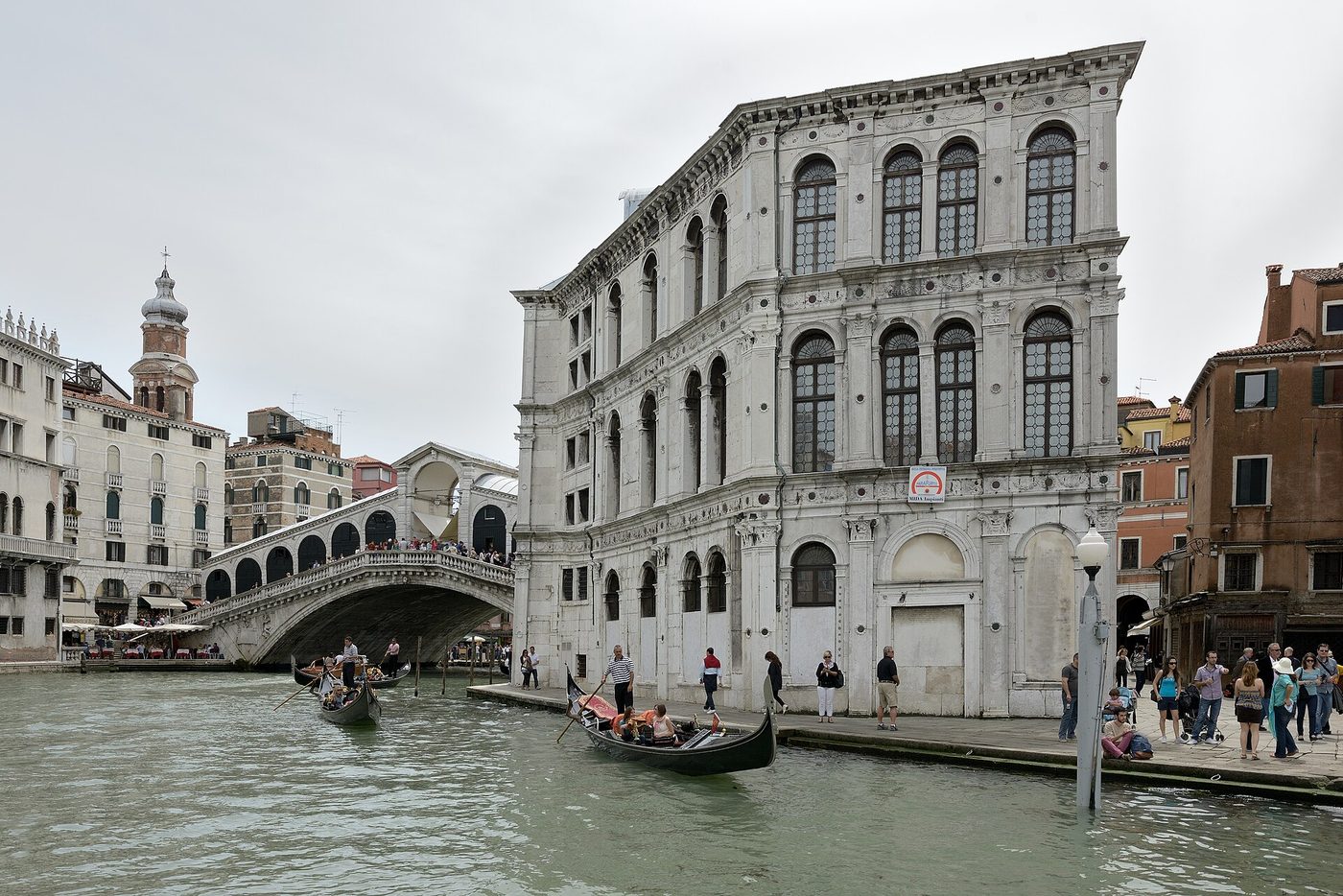
| 20–21 | Venice | Italy | 2 | Stay the night. Cicchetti crawl in Cannaregio, and take the number 1 vaporetto down the Grand Canal. | Frecciarossa to Florence, 2h01, from about EUR 15 |
| 22–24 | Florence | Italy | 3 | Book the Uffizi ahead. Climb the Duomo dome, not the bell tower, if you can only do one. | Frecciarossa to Rome, 1h25, from EUR 14.90 |
| 25–28 | Rome | Italy | 4 | Colosseum first thing, Trastevere for dinner, and give the Vatican Museums a full morning. | Frecciarossa to Naples, about 1h10 |
| 29–30 | Naples and the Amalfi Coast | Italy | 2 | Pizza in Naples proper, then a day on the coast by SITA bus or ferry from Sorrento. | Fly home from Naples |
| Total | 30 | 10 stops, 7 countries | |||
Where I would cut it if you only have three weeks: drop Naples and Berlin, and give the days to Paris and Rome. Where I would add if you had five: Bruges between Paris and Amsterdam, and Munich between Berlin and Prague.
Route B: The Mediterranean Run
Lisbon to the Greek islands, chasing sun and coastline
If your mental picture of Europe involves eating outside in October and swimming in September, this is your route. It trades the great museum cities of the north for coastline, and it is meaningfully cheaper than Route A because Portugal, Spain and Greece are all below the Western European average on accommodation and food.
Two flights are unavoidable here. Barcelona to Rome by rail is fifteen hours at best with three changes; fly it. Naples to Athens likewise. That is fine. Purists who insist on trains everywhere end up spending four days of a precious month looking at the inside of a carriage. More on when flying beats rail below, and more sun-first ideas in the best Mediterranean destinations.
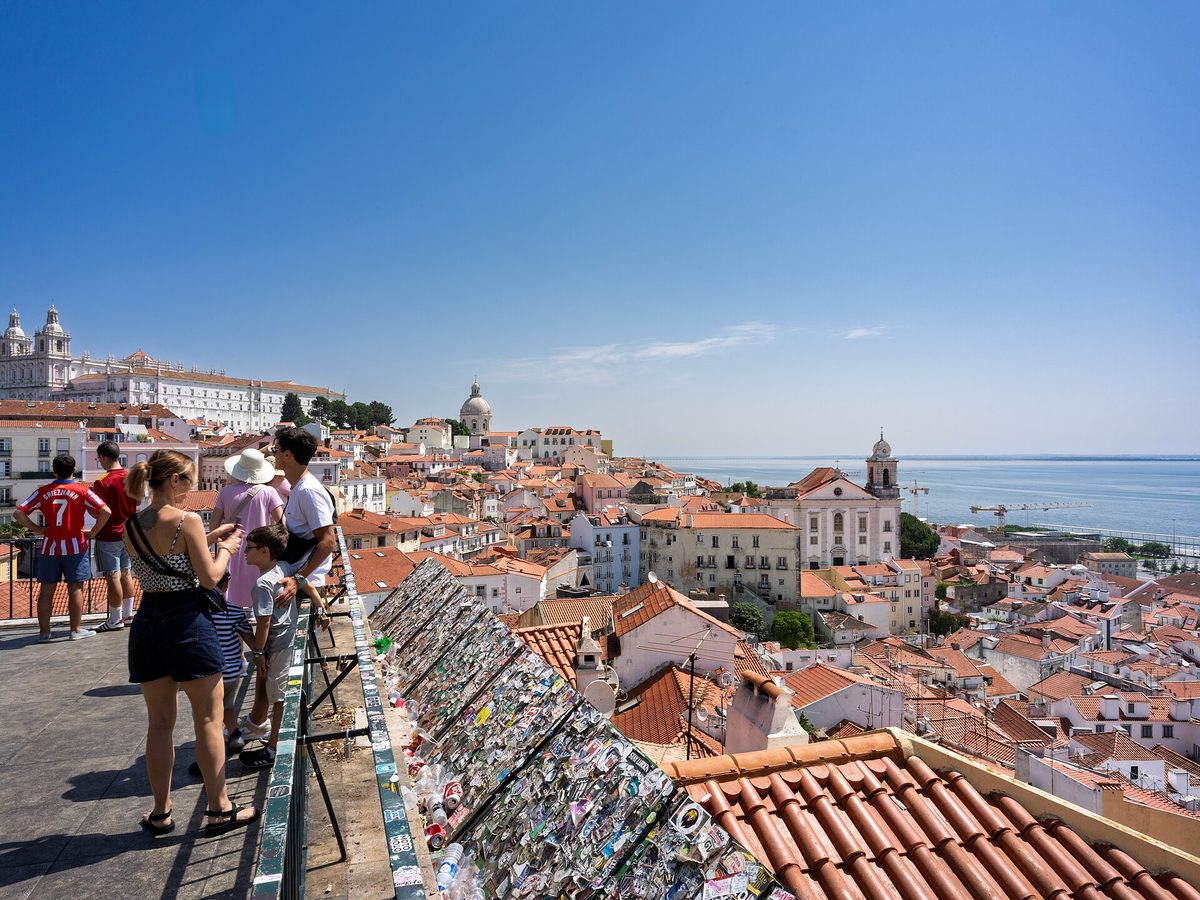
Route B night by night
| Days | Stop | Country | Nights | What I would prioritise | Getting to the next stop |
|---|---|---|---|---|---|
| 1–4 | Lisbon | Portugal | 4 | Alfama on foot, a day trip to Sintra booked in advance, and the tram 28 early or not at all. | Bus or flight to Seville, about 6h30 by bus |
| 5–7 | Seville | Spain | 3 | The Alcazar before 10am. Flamenco in a small peña, not a tourist tablao. | AVE to Granada, about 2h30 |
| 8–9 | Granada | Spain | 2 | The Alhambra, booked two to three months ahead. Tapas come free with drinks here, which is rare in Spain. | AVE to Madrid, about 3h20 |
| 10–12 | Madrid | Spain | 3 | The Prado on a free evening slot, Retiro park, and a day trip to Toledo by 33-minute AVE. | AVE to Barcelona, 2h29, from about EUR 14 |
| 13–16 | Barcelona | Spain | 4 | Sagrada Familia with tower access, Park Guell early, and one full beach day at Bogatell. | Fly to Rome, about 2h, from about EUR 40 |
| 17–20 | Rome | Italy | 4 | Same as Route A. Add Ostia Antica if you want ruins without the Colosseum crowds. | Frecciarossa to Naples, about 1h10 |
| 21–23 | Naples and the Amalfi Coast | Italy | 3 | Base in Salerno or Sorrento rather than Positano, and use the ferries. | Fly Naples to Athens, about 2h |
| 24–26 | Athens | Greece | 3 | Acropolis at opening, timed ticket booked a week ahead in summer. Then the Acropolis Museum. | Ferry or short flight to the islands |
| 27–30 | Naxos and Santorini | Greece | 4 | Naxos for beaches and actual Greek life, Santorini for two nights of the view. In that order. | Fly home from Santorini or back via Athens |
| Total | 30 | 9 stops, 4 countries | |||
Trimming to three weeks? Granada is the first casualty, painful as that is, because the Alhambra booking window makes it the most fragile stop in the whole route. Stretching to five? Add Porto for two nights before Lisbon, or swap the Greek islands for Sicily.
Route C: The Value Route
Berlin to Dubrovnik through Central Europe and the Balkans, for roughly a third less
This is the route for anyone who has looked at Paris hotel prices and felt their trip evaporating. Central and Eastern Europe runs roughly 30 to 50 percent below Western Europe on almost every line item, and the trains between these cities rarely carry compulsory reservation fees, which quietly saves a lot more than people expect.
It is also, I think, the more interesting month. Krakow, Budapest and Ljubljana are three of the best-value city breaks anywhere, and the Dalmatian coast at the end gives you the beach payoff. Our Eastern Europe travel guide and cheapest places to travel in Europe go deeper on both.
One warning: the Krakow to Budapest leg is a slog by train, around ten hours with a change. Wizz Air and Ryanair both fly it for about EUR 30. I fly it, and I do not feel bad about that.

Route C night by night
| Days | Stop | Country | Nights | What I would prioritise | Getting to the next stop |
|---|---|---|---|---|---|
| 1–3 | Berlin | Germany | 3 | Same as Route A. Berlin is the cheapest major Western capital and a good soft landing. | EC to Prague, about 4h20, from about EUR 30 |
| 4–7 | Prague | Czechia | 4 | Four nights lets you get out to Kutna Hora or Cesky Krumlov for a day. | Train or bus to Krakow, about 7h30 |
| 8–10 | Krakow | Poland | 3 | Auschwitz-Birkenau needs a full day and advance booking. The salt mine is the other big one. | Train to Budapest, about 10h, or a EUR 30 flight |
| 11–14 | Budapest | Hungary | 4 | Szechenyi baths on a weekday morning, the ruin bars once, and the Great Market Hall for lunch. | Train to Bratislava, about 2h30 |
| 15 | Bratislava | Slovakia | 1 | One night is genuinely enough. Old town, a beer, the castle view, move on. | Train to Vienna, about 1h05 |
| 16–18 | Vienna | Austria | 3 | The expensive stop on this route. Balance it with free museum evenings and a market lunch. | Railjet to Ljubljana, about 6h |
| 19–20 | Ljubljana and Lake Bled | Slovenia | 2 | Ljubljana is small and lovely. Bled is a day trip; Bohinj is the quieter lake next door. | Train or bus to Zagreb, about 2h30 |
| 21–22 | Zagreb | Croatia | 2 | Underrated. The Museum of Broken Relationships, the Dolac market, and cheap excellent coffee. | Bus to Split, about 5h, or the coastal train |
| 23–25 | Split | Croatia | 3 | Sleep inside Diocletian’s Palace. Use it as the ferry hub rather than a beach base. | Catamaran to Hvar, about 1h |
| 26–27 | Hvar | Croatia | 2 | The Pakleni islands by taxi boat. Hvar town is loud in August and lovely in September. | Catamaran to Dubrovnik, about 3h |
| 28–30 | Dubrovnik | Croatia | 3 | Walls at opening or after 5pm. Check the cruise ship schedule before you pick your day. | Fly home from Dubrovnik |
| Total | 30 | 11 stops, 8 countries | |||
Where I would cut it: Bratislava and Zagreb, which buys you two more nights in Budapest and Split. Where I would add: Belgrade or Sarajevo between Budapest and the coast, both outside Schengen and both very cheap.
Route D: The Slow Route
Six bases, five moves, day trips instead of packing and unpacking
Six bases. Five moving days out of thirty. If the thought of repacking every third morning makes you tired, this is the version of a month in Europe that people enjoy rather than survive.
The trade is obvious: you see five countries instead of eight, and you will not tick off Prague or Amsterdam. What you get instead is the thing most people say they wanted afterwards. You learn a neighbourhood. You go back to the same bakery. You take a day trip because you feel like it, not because the itinerary says so.
This is also the best route if you are working remotely, travelling with children, over sixty, or coming back to Europe for the second or third time. Longer stays unlock weekly apartment rates too, which can cut accommodation by 15 to 25 percent against nightly bookings.
Route D night by night
| Days | Stop | Country | Nights | What I would prioritise | Getting to the next stop |
|---|---|---|---|---|---|
| 1–5 | Paris | France | 5 | Five nights means you can do Versailles and still have two unplanned days. | TGV Lyria to Interlaken via Basel, about 6h |
| 6–9 | Lauterbrunnen and the Bernese Oberland | Switzerland | 4 | Base in Lauterbrunnen or Wengen. Hike the Eiger Trail and take one big cable car. | Train to Florence via Milan, about 7h |
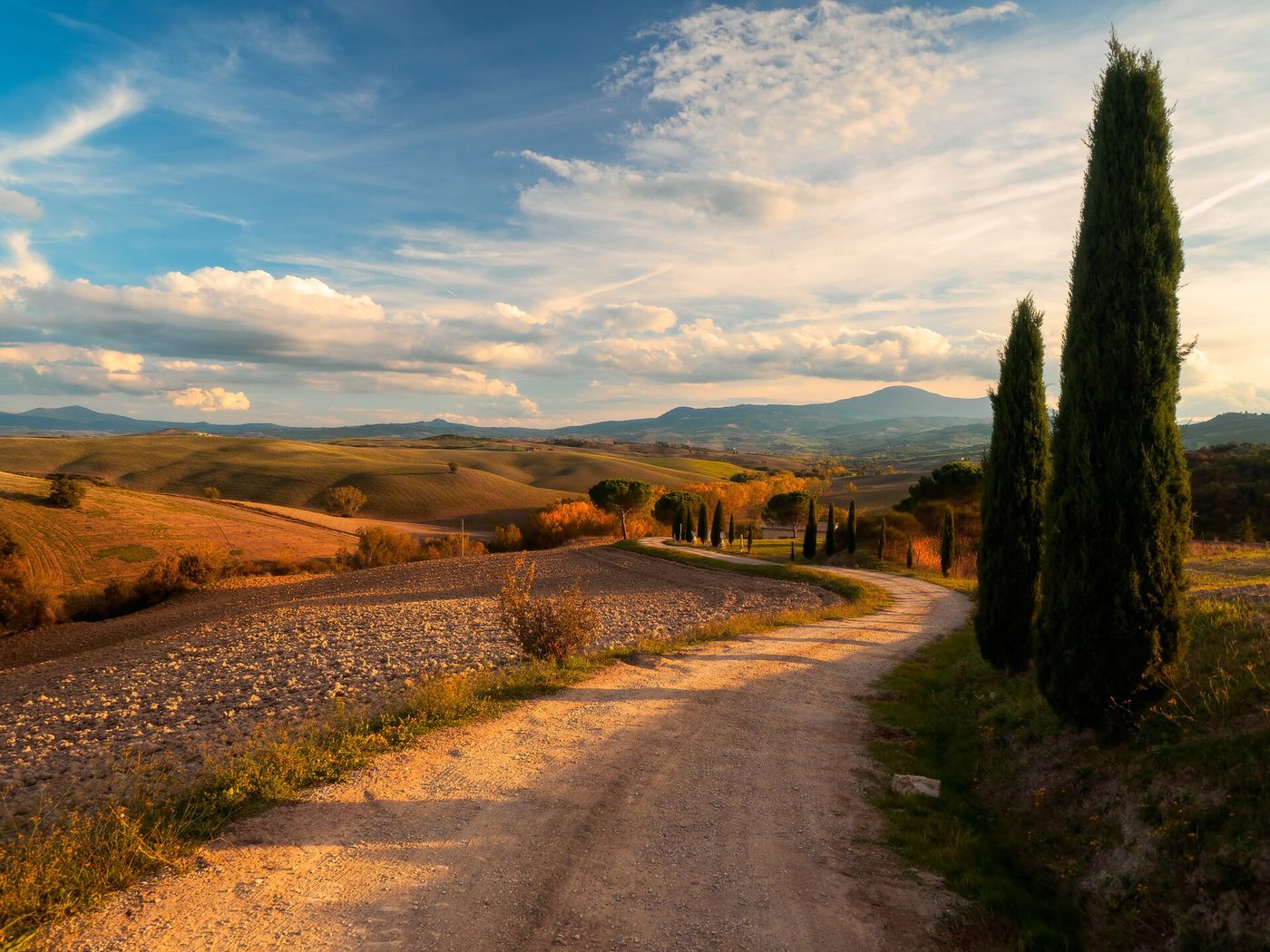
| 10–15 | Florence and Tuscany | Italy | 6 | Six nights turns Florence into a base: Siena, Lucca, the Val d’Orcia, Chianti. | Frecciarossa to Rome, 1h25 |
| 16–20 | Rome | Italy | 5 | Five nights is the first time Rome stops feeling like a checklist. | Fly Rome to Barcelona, about 2h |
| 21–25 | Barcelona | Spain | 5 | Add Montserrat and Girona as day trips, both under 90 minutes by train. | Fly Barcelona to Lisbon, about 2h20 |
| 26–30 | Lisbon | Portugal | 5 | Sintra, Cascais and one day doing absolutely nothing on a rooftop. | Fly home from Lisbon |
| Total | 30 | 6 stops, 5 countries | |||
If the budget is tight, Switzerland is the stop to lose. It is by some distance the most expensive and the easiest to swap for the Italian Lakes. As for adding anything, I would not. That is rather the point of this route.
Trains, flights and buses: how to move around a month-long route
This is where a month in Europe is won or lost, on money and on mood. The short version: take the train when the journey is under about four hours, fly when it is over five, and take a bus only in Central and Eastern Europe where the buses are good and the trains are slow.
The four-hour rule is not folklore. Door to door, rail beats flying under four hours because you skip the airport transfer at both ends, the check-in, and the security queue. London to Paris by train saves about 140 minutes against flying even though the flight itself is 75 minutes. Past five hours the arithmetic flips hard.
The uncomfortable part, and it is worth knowing before you build a romantic all-rail plan: one analysis of 109 cross-border routes across 31 European countries found flights were cheaper than trains on 54 percent of them. Trains are frequently better. They are not automatically cheaper. More on the mechanics in getting around Europe.
Real 2026 fares and journey times on the long legs
These are the long and expensive legs, plus a few common alternatives. Short regional hops that appear in the routes (Budapest to Bratislava, Ljubljana to Zagreb, the Dalmatian catamarans) are cheap enough that they do not need planning around. All fares below are advance-purchase, meaning booked roughly 30 to 90 days out. Walk-up prices on the same trains are routinely two to three times higher, and that gap is where most people lose the most money on a month-long trip.
| Leg | Time by train | Advance fare from | Verdict |
|---|---|---|---|
| London to Paris (Eurostar) | 2h 16m | About EUR 39 / GBP 44 | Train, easily. Booking opens 6 months out |
| Paris to Amsterdam (Eurostar) | 3h 20m direct | About EUR 29 | Train. Via Brussels and Rotterdam |
| Amsterdam to Berlin | 5h 42m fastest direct, about 6h 10m typical | From about EUR 38 on a DB Sparpreis | Train if you like the ride, otherwise fly |
| Berlin to Prague | About 4h 20m | About EUR 30 | Train. Sit on the right after Dresden |
| Munich to Prague | About 4h 50m by train | EUR 16 to 20 train, EUR 15 bus | Either. The bus is 5h 11m and about ten a day |
| Prague to Vienna | About 4h | From EUR 15 on OBB Sparschiene | Train. Booking opens 180 days ahead |
| Vienna to Budapest | 2h 20m Railjet | From about EUR 26 return with MAV | Train, no contest |
| Vienna to Venice | About 8h | Varies | Marginal. Flying is 1h 15m for about EUR 40 |
| Venice to Florence | 2h 01m | About EUR 15, or EUR 18.90 to 25 at 60 to 90 days | Train |
| Florence to Rome | 1h 25m Frecciarossa | From EUR 14.90 at 90+ days | Train. One of the best-value legs in Europe |
| Rome to Venice | 3h 26m | From about EUR 35 | Train |
| Zurich to Milan | 3h 15m direct | About EUR 29 second class | Train, through the Gotthard Base Tunnel |
| Paris to Barcelona | 6h 25m | From EUR 39 on Ouigo, about EUR 59 on TGV | Marginal. Only 2 to 4 direct trains a day |
| Barcelona to Madrid | 2h 29m AVE | From about EUR 14 to 17 | Train. Renfe, Iryo and Ouigo all compete |
| Madrid to Lisbon | 13h 27m average, no direct service | Varies | Fly. Every train changes at Badajoz |
| Venice to Ljubljana | 5h 05m fastest, one change | About EUR 12 to 18.90 | Bus is often faster and simpler |
| Krakow to Budapest | About 10h | Varies | Fly. About EUR 30 and 80 minutes |
| Rome to Naples | About 1h 10m by Frecciarossa or Italo | Cheap and frequent; book a few weeks out | Train |
| Seville to Granada | 2h 34m fastest, about 3h 15m average | Varies by operator | Train |
| Barcelona to Rome | About 15h at best with three changes | Flight from about EUR 40 | Fly. About 2h in the air |
Three legs on that table deserve calling out because people plan around them badly. There is no direct Madrid to Lisbon train. There has not been one since 2020, every service changes at Badajoz, and the average journey is 13 hours 27 minutes. A high-speed link is planned for somewhere around 2030 to 2034. Until then, fly or take the bus. Venice to Ljubljana has no direct train either. And Paris to Barcelona runs only two to four times a day, so it sells out.
Budget airlines: the fare is not the price
Ryanair, easyJet and Wizz Air will sell you a EUR 15 seat, and on a month-long trip you should use them. But build the real number, not the headline one. A EUR 10 Ryanair base fare can reach EUR 45 once you add a cabin bag, a seat and the payment fee.
| Airline | Free bag included | Larger cabin bag | Penalty if you get it wrong |
|---|---|---|---|
| Ryanair | 40 x 30 x 20 cm, under the seat | 55 x 40 x 20 cm up to 10 kg, requires paid Priority Boarding | Refused at the gate or put in the hold for a fee. Since late 2025 ground staff earn EUR 2.50 for each oversized bag they catch, and enforcement is noticeably sharper |
| easyJet | 45 x 36 x 20 cm, under the seat | 56 x 45 x 25 cm up to 15 kg, paid add-on at about GBP 15 to 35 | GBP 48 at the gate. Wheels, handles and pockets all count toward the dimensions |
Two practical points. Fares swing enormously with season: the same Manchester to Malaga easyJet seat was GBP 230 one way in July 2026 and GBP 48 on 1 September. And budget carriers often use secondary airports, so check the transfer time and cost into the city before you congratulate yourself. Our Europe packing list is built around the Ryanair underseat dimensions for exactly this reason.
Is a Eurail or Interrail pass worth it for one month in Europe?
The short version is below. For the full price tables, every reservation fee and sixteen worked break-even routes, see is a Eurail pass worth it.
Everyone asks this and almost nobody publishes the numbers, so here they are. Interrail is the product for people who live in one of the 33 network countries; Eurail is the equivalent for everyone else. The passes are otherwise near-identical.
These are the official Interrail Global Pass prices valid as of 5 January 2026.
| Pass | Adult (28+) | Youth (12 to 27) | Senior (60+) | |||
|---|---|---|---|---|---|---|
| 2nd class | 1st class | 2nd class | 1st class | 2nd class | 1st class | |
| 4 days within 1 month | EUR 283 | EUR 367 | EUR 212 | EUR 275 | EUR 255 | EUR 330 |
| 5 days within 1 month | EUR 318 | EUR 413 | EUR 239 | EUR 309 | EUR 286 | EUR 371 |
| 7 days within 1 month | EUR 381 | EUR 495 | EUR 286 | EUR 371 | EUR 343 | EUR 445 |
| 10 days within 2 months | EUR 447 | EUR 581 | EUR 335 | EUR 435 | EUR 402 | EUR 522 |
| 15 days within 2 months | EUR 553 | EUR 718 | EUR 415 | EUR 538 | EUR 498 | EUR 646 |
| 15 days continuous | EUR 476 | EUR 618 | EUR 357 | EUR 463 | EUR 428 | EUR 556 |
| 22 days continuous | EUR 586 | EUR 761 | EUR 440 | EUR 570 | EUR 527 | EUR 684 |
| 1 month continuous | EUR 696 | EUR 904 | EUR 522 | EUR 678 | EUR 626 | EUR 813 |
| 2 months continuous | EUR 826 | EUR 1073 | EUR 620 | EUR 804 | EUR 743 | EUR 965 |
| 3 months continuous | EUR 956 | EUR 1242 | EUR 717 | EUR 931 | EUR 860 | EUR 1117 |
Youth passes run 25 percent below the adult price and senior passes 10 percent below, consistently across every duration. Children under 4 travel free with no pass; children aged 4 to 11 travel free on a Child Pass, up to two per adult. A 1st class pass is valid in both classes; a 2nd class pass is only valid in 2nd.
The reservation fees that decide the answer
A pass buys you the right to travel. It does not buy you a seat. On high-speed and international trains a reservation is compulsory and charged separately, and this is where pass economics quietly fall apart on exactly the routes first-timers pick.
| Where | Reservation | Cost with a pass |
|---|---|---|
| France, SNCF TGV and Eurostar | Compulsory, and the passholder quota is limited | EUR 10 to 30 in second class, more in first and more again on Brussels and London routes |
| Italy, Trenitalia Frecciarossa | Compulsory | EUR 13 in either class |
| Spain, Renfe AVE | Compulsory | Typically EUR 10 to 30 |
| Austria, OBB Railjet | Optional on most | About EUR 3 to 5 if you want one |
| Germany, most ICE | Optional | Free to travel without one |
| Czechia, Poland, Hungary, Slovakia regional | Mostly not required | Nothing |
| Night trains, all operators | Always compulsory | Averaging EUR 20, more for a private berth |
| Typical domestic high-speed, Europe-wide average | Compulsory | About EUR 10 |
| Typical international train, Europe-wide average | Compulsory | About EUR 15 |
Plus EUR 2 per reservation as a booking fee if you make them through the Interrail site.
So does it pay off? A worked example
Take Route A. A 1 month continuous adult 2nd class pass is EUR 696. Now price the same nine rail legs individually at advance fares, and add the reservations you would still owe on the pass.
| Scenario | Pass cost | Compulsory reservations | Point-to-point tickets | Total |
|---|---|---|---|---|
| Route A with a 1 month pass, booked ahead | EUR 696 | Roughly EUR 90 to 130 across the Eurostar, Italian and international legs | Nil | About EUR 785 to 825 |
| Route A with advance point-to-point tickets | Nil | Included in the fare | Roughly EUR 220 to 300 for the nine rail legs | About EUR 220 to 300 |
| Route A booking on the day, no pass | Nil | Included | Roughly EUR 550 to 750 | About EUR 550 to 750 |
| Route C with a 1 month pass | EUR 696 | Minimal, most legs need none | Nil | About EUR 720 |
| Route C with advance point-to-point tickets | Nil | Included | Roughly EUR 180 to 260 | About EUR 180 to 260 |
The conclusion is unambiguous. For a nine or ten stop month booked in advance, individual tickets beat a Global Pass by a wide margin. The pass wins in three specific situations: you are travelling far more than nine legs, you genuinely do not know your dates and want to move on impulse, or you are a youth or senior taking long expensive legs in Germany, Austria and Switzerland where reservations are optional or cheap.
The flexi passes are worth a second look, though. If you settle on six or seven big legs and take regional trains for the rest, a 7 days within 1 month youth pass at EUR 286 is competitive. Run your own numbers against the fares in the table above rather than assuming either way. There is more detail in our guide to train travel in Europe.

Night trains still exist, and there are more than you think
Europe runs roughly 205 regular sleeper connections in 2026, with five new services added and about ten dropped. A night train saves you a hotel and a travel day at the same time, which is a real advantage on a 30-night trip. Reservations are always compulsory and average about EUR 20 in a seat, more for a couchette or a private berth.
| Route | Duration | Frequency |
|---|---|---|
| Vienna to Rome (Nightjet, via Venice) | About 14h | Daily |
| Vienna to Amsterdam (Nightjet) | About 14h | Confirmed running into 2026 |
| Vienna to Brussels (Nightjet, via Munich and Cologne) | About 12h | Three times weekly |
| Vienna to Barcelona (Nightjet, via Zurich and Lyon) | About 15h | Three times weekly |
| Hamburg to Zurich (Nightjet, via Frankfurt and Basel) | About 11h | Daily |
| Paris to Berlin (European Sleeper) | Overnight | Three times weekly, new from 26 March 2026 |
| Przemysl to Munich (EN Carpatia, via Krakow, Vienna, Salzburg) | Overnight | Running since 14 December 2025 |
| Brussels to Milan | Overnight | Arriving September 2026 |
One change to know about if you are planning around Paris: OBB Nightjet dropped its own Paris links in December 2025.
What one month in Europe actually costs in 2026
The headline is USD 3,000 to USD 12,000, and a range that wide is useless without breaking it apart. So here is the breakdown, and the one thing to take from it: where you go matters far more than how carefully you economise. Backpacking the Nordics runs USD 100 to 140 a day against USD 45 to 60 in Eastern Europe, which is more than double before you have made a single choice. No amount of skipping coffees closes that gap.
| Style | Eastern and Central Europe | Western and Southern Europe | Nordics, Switzerland, Iceland | 30 nights, mixed route |
|---|---|---|---|---|
| Backpacker (dorms, self-catering, free sights) | USD 45 to 60 a day | USD 80 to 110 a day | USD 100 to 140 a day | USD 3,000 to 5,000 total |
| Mid-range (private rooms, restaurants most nights) | USD 70 to 90 a day | USD 120 to 180 a day | USD 150 to 280 a day | USD 6,000 to 9,000 total |
| Comfortable (good hotels, taxis, guided tours) | USD 120+ a day | USD 200 to 300 a day | USD 300+ a day | USD 10,000+ total |
Solo travellers should budget toward the upper end of each band, because the single supplement on rooms is brutal and there is nobody to split a taxi with. As a rough guide, a solo traveller runs USD 100 to 150 a day on a budget, USD 200 to 300 mid-range and USD 400 or more at the top. Our Europe on a budget guide and the solo travel in Europe guide both go further into this.
Transport for the month, itemised
| Line item | 30-day cost |
|---|---|
| Long-haul flight to and from Europe | USD 600 to 1,800 |
| Flights within Europe | USD 100 to 120 for two legs, closer to USD 200 if your route needs three |
| Trains and buses between cities | USD 300 to 350 |
| Local public transport | USD 25 to 50 |
| Taxis and rideshare | USD 50 to 150 |
| Ground transport average, excluding the long-haul flight | USD 15 to 25 per person per day |
Beds: what a night costs across the continent
Accommodation is usually the largest single line. Hostel dorm prices vary enormously by night of week as well as by city; in Amsterdam the same bed runs about USD 37 on a Sunday and USD 68 on a Friday. Three-star hotel rates rose roughly 12 percent across Europe in 2026.
| City | Hostel dorm, per night | Region band |
|---|---|---|
| Prague | EUR 10 to 20 | Central Europe |
| Budapest | EUR 10 to 20 | Central Europe |
| Krakow | EUR 8 to 20, averaging about USD 17 | Central Europe |
| Lisbon | About USD 23 | Southern Europe |
| Berlin | About EUR 20 | Western Europe |
| Rome | EUR 18 to 40 | Southern Europe |
| Amsterdam | USD 37 Sunday to USD 68 Friday | Western Europe |
| Paris | EUR 30 to 50 | Western Europe |
| Mid-range accommodation | Typical nightly rate |
|---|---|
| 3 to 4 star, Western Europe | USD 100 to 180 |
| 3 to 4 star, Southern Europe (Portugal, Greece, Croatia) | USD 80 to 140 |
| Southern and Eastern Europe generally | 20 to 40 percent below Western Europe |
| Paris city average | About USD 174 |
| Amsterdam city average | About USD 140 |
| Barcelona city average | About USD 130 |
Where you sleep within a city moves the number as much as which city you pick. Where to stay in Europe breaks down neighbourhoods for the main stops on these routes.

Tourist taxes and the small costs that add up over thirty nights
This is the section I would most like people to read, because thirty nights of tourist tax is a real number and it never appears in the headline price. In Amsterdam alone it is roughly EUR 18 per person per night.
| City | Tourist tax, 2026 | Roughly, per person per night |
|---|---|---|
| Amsterdam | 12.5 percent of the room rate excluding VAT | About EUR 18 |
| Barcelona | Regional plus city tax combined, by hotel category | EUR 7 to 12, roughly EUR 15 all in at the top end |
| Rome | Tiered by star rating | EUR 10 at 5-star, progressively less below |
| Paris | Raised 1 January 2026, plus a 200 percent Ile-de-France regional surcharge on the base | About EUR 6.60 mid-range, EUR 9.20 at 5-star |
| Budapest | 4 percent of the net room price, under-18s exempt | Varies with room rate |
| Vienna | Phasing up from 3.2 percent toward 5 percent in mid-2026, and 8 percent in 2027 | Varies with room rate |
| Prague | Flat CZK 50, for stays up to 60 nights | About EUR 2 |
| Lisbon | Municipal tourist tax, capped at the first 7 nights | EUR 4 |
| Berlin | 7.5 percent of the net room price | Varies with room rate |
| Venice (overnight guests) | Standard accommodation tax; overnight guests are exempt from the day-tripper fee | Varies by season and category |
Two related things changed on the same date, 1 January 2026. Dutch VAT on accommodation rose from 9 percent to 21 percent on 1 January 2026, which shows up in Amsterdam room rates rather than as a separate line. And Paris raised its own rate.
The Venice access fee, which is not the same thing
Venice charges day visitors a separate access fee on selected dates. In 2026 it applied on 60 dates between 3 April and 26 July, from 08:30 to 16:00, to visitors aged 14 and over. It costs EUR 5 if you book at least four days ahead and EUR 10 if you book closer to arrival, through the official Venezia Unica portal, which issues a QR code.
It only applies to the historic centre, not Murano, Burano, Lido or Pellestrina, and transiting through Piazzale Roma, Tronchetto or the maritime station is exempt. Crucially, if you sleep in Venice you do not pay it, because you pay the accommodation tax instead. That is one more reason Route A gives Venice a night rather than treating it as a day trip. More in things to do in Venice.
The other small costs, which add up to a flight
| Cost | What to expect |
|---|---|
| Laundry, laundromat full load | EUR 7 to 10 wash and dry, about an hour. Germany runs EUR 3.50 to 4.50 for a 6 kg load |
| Laundry, hostel machines | EUR 3 to 5 per cycle, usually the cheapest option |
| Laundry, supermarket kiosks | Carrefour Laverie kiosks are EUR 4 for an 8 kg wash and EUR 2 for a 15-minute dry |
| Left luggage, Paris stations | EUR 5.50 to 9.50 per 24 hours depending on locker size |
| Left luggage, Amsterdam | EUR 7 to 11 |
| Left luggage, Brussels Midi | EUR 6.50 to 13.50 per 24 hours |
| Left luggage, London St Pancras | GBP 10 up to 3 hours, GBP 15 up to 24 hours |
| Travel eSIM, 30 days | USD 15 to 50 for 10 to 30 GB across 30 to 40 countries. Entry plans start around USD 5 |
On phones: EU and EEA SIM holders keep their domestic allowance across the EU under Roam Like at Home, subject to fair use. UK SIMs lost that after Brexit and UK networks apply their own EU roaming charges, so British travellers should price an eSIM. American travellers almost always should. Budget roughly USD 30 for a comfortable 30-day data plan and treat it as a fixed cost.
Left luggage warning worth internalising: many European stations have removed self-service lockers entirely and now run staffed offices charged by the hour and the day. Do not build a plan that depends on dumping a bag at a station you have not checked.

Currency: what is euro and what is not in 2026
Bulgaria adopted the euro on 1 January 2026 as the twenty-first euro-area member, converting at 1.95583 lev to the euro. Lev and euro circulated in parallel through January and the euro became sole legal tender from 1 February 2026. If you are reading an older Bulgaria budget, every price in it is quoted in a currency that no longer exists.
| Country | Currency in 2026 | Approximate rate to EUR 1 (early August 2026) |
|---|---|---|
| Bulgaria | Euro, since 1 January 2026 | Fixed at 1.95583 lev during changeover |
| Croatia | Euro, since 1 January 2023 | Euro |
| Czechia | Czech koruna | 24.20 CZK |
| Hungary | Hungarian forint | 362.30 HUF |
| Poland | Polish zloty | 4.31 PLN |
| Romania | Romanian leu | 5.25 RON |
| Switzerland | Swiss franc | 0.93 CHF |
| United Kingdom | Pound sterling | 0.86 GBP |
| Denmark | Danish krone | 7.48 DKK |
| Sweden | Swedish krona | 10.99 SEK |
| Norway | Norwegian krone | About 11 NOK |
| United States (for reference) | US dollar | 1.15 USD |
Rates move; treat these as orientation rather than gospel and check before you convert anything large. Practical advice that has not changed: decline dynamic currency conversion at every card machine that offers to bill you in your home currency, use a card with no foreign transaction fee, and carry a small amount of cash in Czechia, Hungary and Poland where card acceptance is good but not universal.
Entry rules for a one month Europe trip in 2026
Good news first: a 30-day trip is comfortably inside the Schengen allowance. The rule is up to 90 days within any rolling 180-day period, counted across all Schengen states combined. You are using a third of it. The rest of this section still matters, because the entry rules changed twice in the last eighteen months.
The 90/180 rule, precisely
The 180-day window is rolling, not a calendar half-year, so it does not reset on 1 January. Both your entry day and your exit day count. Days do not need to be consecutive. And the total is cumulative across the whole Schengen Area, not per country, which is the part people get wrong.
There are 29 Schengen countries in 2026: Austria, Belgium, Bulgaria, Croatia, Czechia, Denmark, Estonia, Finland, France, Germany, Greece, Hungary, Iceland, Italy, Latvia, Liechtenstein, Lithuania, Luxembourg, Malta, Netherlands, Norway, Poland, Portugal, Romania, Slovakia, Slovenia, Spain, Sweden and Switzerland.
Romania and Bulgaria joined for air and sea travel in March 2024 and completed full land-border integration on 1 January 2025, so days spent there now count toward your 90. Croatia is a full member. The only EU countries outside Schengen are Cyprus and Ireland. The UK is outside both the EU and Schengen, so UK days do not count toward the total, which is a useful buffer if you are stringing trips together. See our Schengen visa and ETIAS guide for the full detail.
EES: this one is live and it will affect your border crossing
The EU Entry/Exit System began a progressive rollout on 12 October 2025 and became fully operational on 10 April 2026 across all Schengen countries. It replaces passport stamping for non-EU short stays with a digital record: your facial image, your fingerprints and your travel document data are captured at first entry.
Practically, this means allow extra time at your first Schengen border, especially at a busy airport in peak season. By April 2026 the system had recorded over 45 million border crossings and refused entry to more than 24,000 people. EU rules do allow countries temporary flexibility to ease or pause checks when queues get unmanageable, so your experience will vary. There is no fee: EES is a registration system, not an authorisation.
ETIAS: not yet, and probably not this year
As of August 2026, ETIAS is not in force. The official EU travel site still lists the last quarter of 2026, but in July 2026 the agency building it told the Financial Times that date was no longer feasible, so 2027 now looks likelier. When it does start, it will cost EUR 20, up from the EUR 7 originally announced, and it will apply to visa-exempt non-EU travellers including US, UK, Canadian and Australian passport holders across 30 European countries. Applicants under 18 or over 70 are exempt from the fee. Once granted it is valid for three years or until your passport expires, whichever comes first.
There is also a reported six-month transition period after launch, during which enforcement is not strict, and the EU has said it will give at least six months’ notice of the exact start date. So the practical advice for a trip in the next twelve months is simple: plan for EES, and check the official EU travel site for ETIAS about a month before you fly. Do not pay a third-party site to apply on your behalf, because when it opens the official application will be the only one that counts.
Booking deadlines: the tickets that sell out before you have booked flights
Half the disappointment on a month-long trip comes from turning up at something that needed booking eight weeks ago. Here are the ones that genuinely bite, with 2026 prices.
| Attraction | 2026 adult price | How far ahead to book |
|---|---|---|
| Anne Frank House, Amsterdam | Online only | Exactly 6 weeks. Tickets release Tuesdays at 10:00 Amsterdam time and summer morning slots go in 2 to 3 minutes. No walk-up, no last-minute |
| Alhambra, Granada | EUR 21 | 2 to 3 months. Released about 3 months ahead. Same-day is effectively impossible |
| Neuschwanstein, Bavaria | EUR 21 at the ticket centre, EUR 23.50 booked online. The two-castle combination with Hohenschwangau is about EUR 46 | Booking is mandatory, online up to 8 weeks ahead. Walk-ups sell out by mid-morning in peak season. Tours run every 5 minutes and last a strict 35 minutes; arrive 90 minutes before your slot |
| Acropolis, Athens | EUR 30, timed entry year-round | 5 to 7 days in June to August. Capped at 20,000 visitors a day, with 3,000 in the 08:00 hour and 2,000 in the next |
| Uffizi, Florence | EUR 25 walk-up, EUR 29 online plus a EUR 4 booking fee. From 1 January 2026 entry after 16:00 is EUR 16 on-site or EUR 20 online | A week in summer. The late slot is the value play |
| Vatican Museums, Rome | EUR 20 official, EUR 25 with the online booking fee, includes the Sistine Chapel | 2 to 3 weeks in summer |
| Colosseum, Rome | EUR 18 including Roman Forum and Palatine Hill, valid 24 hours from first entry. Arena floor EUR 24 | 2 weeks. Timed slots |
| Sagrada Familia, Barcelona | EUR 26 basic, EUR 36 with tower access, official site | 2 to 3 weeks. A centenary surcharge of EUR 2 to 5 is expected from mid-2026 to December 2026 |
| Park Guell, Barcelona | EUR 18 basic | A few days. Timed entry |
| Louvre, Paris | EUR 32 for non-EEA visitors from 14 January 2026, a 45 percent rise. EUR 22 for EEA citizens. Free for under-18s and for EU/EEA visitors under 26 with ID | A week. Evening slots are quieter |
| Eiffel Tower, Paris | EUR 36.70 summit by lift, EUR 23.50 second floor by lift, EUR 14.80 stairs to the second floor. The cheapest summit route is EUR 28 on stairs plus lift; there is no stairs-only summit ticket | 2 to 3 weeks for a summit slot |
| Florence Duomo | Brunelleschi Pass EUR 30, covering the dome climb, Giotto’s Bell Tower, the Baptistery, the Opera del Duomo Museum and the Santa Reparata crypt. The cathedral itself is free but queued | 1 to 2 weeks for a dome slot |
Two of those deserve a second read. The Louvre went to EUR 32 for non-EEA visitors on 14 January 2026, which is a 45 percent increase and turns a family visit into a serious line item. And the Anne Frank House six-week Tuesday release is the thing readers most often write to me about having missed. Put a calendar alert on it the day you fix your Amsterdam dates.


When to go: the month you pick changes everything
I used to say June to August without much thought. I do not any more, and the reason is in the data. June 2026 was Western Europe’s warmest on record, averaging 20.74C, which is 3.06C above the 1991 to 2020 average. Spain peaked at 45.1C in late June and Germany hit a provisional national record of 41.7C. Forecasters described a heat dome over Iberia and France pushing late-July and early-August temperatures past 40C. That followed 2025, when Spain recorded its hottest summer on record at 24.2C averaged across June to August.
Two consecutive record summers is a pattern, not a fluke. If your month includes southern Europe, May, September and early October are now materially better choices, not just cheaper ones. Sightseeing in Seville at 42C is not a holiday.
| City | May | July | August | September | October |
|---|---|---|---|---|---|
| Rome | Pleasant | Hot, about 4 rainy days | 30.5C average high | 25C, about 9 rainy days | 21.4C |
| Athens | Warm and dry | 33C, 1 to 2 rainy days | 33C, 1 to 2 rainy days | 29C | 25C |
| Seville | Warm | Frequently above 35C, 2 rainy days | Frequently above 35C | Above 30C | Often 30C in the first half, about 6 rainy days |
| Prague | Mild | 23C, heatwaves can exceed 35C | 24C, ranging 22 to 30C | Mild and pleasant | Cool |
| Amsterdam | 17C | 20C | About 10 rainy days, 69 mm | 17C, 74 mm | Cool and wet |
| Copenhagen | 16C | 22C | 21.8C, about 13 rainy days | 18C | Cool and wet |
My ranking for a full month, weighing heat, crowds, prices and daylight together:
- September. The Mediterranean is still swimmable, the crowds thin from the second week, prices drop and the light is better for photographs. If you can only take one month off, take this one.
- Late May into June. Long days, everything open, before the worst heat and before the August shutdown.
- Early October. Excellent in Iberia, Italy and Greece. Getting unreliable north of the Alps.
- July and August. Everything is open and everything is full. Southern Europe is now uncomfortable in the afternoons, and Italian and French cities partially close in mid-August while locals leave.
If you are locked into July or August, restructure rather than cancel: run Route C, which sits further north and inland, or invert Route B so you are on Greek islands with sea breezes rather than in Seville. The best time to visit Europe covers this by region.
The practical layer: insurance, flights, safety, and doing this in winter
Travel insurance for thirty days
A month is long enough that something will go wrong, and long enough that some policies stop covering you. Two things to check before you buy rather than after. First, the maximum trip length: many annual multi-trip policies cap a single trip at 30 or 31 days, so a 32-day trip with travel days at either end can fall outside cover entirely. Count your days from departure to return, not from first hotel to last. Second, whether the policy covers medical repatriation and not just treatment, which is the expensive part.
If you hold a European Health Insurance Card or the UK Global Health Insurance Card, it covers state healthcare in EU countries on the same terms as a local. It is not travel insurance. It will not fly you home, it does not cover Switzerland in the same way, and it does nothing for a cancelled flight or a stolen laptop. Carry both.
When to book what
| What | When to book | Why then |
|---|---|---|
| Long-haul flights into and out of Europe | Three to five months ahead for summer, two to three for shoulder season | Book an open-jaw ticket into your first city and out of your last |
| The tickets with hard release dates | The day your city dates are fixed | Anne Frank House, the Alhambra, Neuschwanstein. These do not wait |
| Long-distance trains | 30 to 90 days out, and OBB opens 180 days out | Advance fares are a third of walk-up prices |
| First week of accommodation | Two months ahead | Jet lag is not the time to be hunting for a bed |
| Last ten days of accommodation | Once you are on the road | You will want to stay longer somewhere and you cannot predict where |
| Intra-Europe budget flights | Six to ten weeks out | Ryanair and Wizz release cheap seats early and raise them steadily |
Thirty days of stations, and what happens in them
A month means far more time in transit hubs than a week does, and that is where the risk concentrates. The pattern is boringly consistent across Europe: pickpocketing on crowded metros and around major stations, distraction scams at ticket machines, and the fake-petition and friendship-bracelet routines outside big attractions. None of it is dangerous. All of it is annoying.
What works: a zipped bag worn across the front on trains and metros, nothing in a back pocket ever, two payment cards kept in different places, and a photograph of your passport stored somewhere you can reach without your phone. On overnight trains, lock the compartment and keep your bag between you and the wall. Around ticket machines, decline help from anyone who offers it, without exception.
Doing a month in Europe in winter
All four routes above are built for the warm half of the year, so here is the honest winter picture. Route A works well from late November to early January because the Christmas markets in Vienna, Prague, Berlin and Budapest are the best in Europe and the museum cities do not depend on weather. Route C works for the same reason and costs even less off season. Route B loses most of its point: the Greek islands largely close, ferries thin out and the beaches are cold. Route D is fine if you swap Switzerland for somewhere the daylight lasts past four in the afternoon.
Two winter mechanics to plan around. Daylight north of the Alps runs roughly 08:00 to 16:00 in December, which halves your sightseeing day. And many smaller attractions, coastal hotels and island ferries simply shut between November and March. Our guides to the best places to visit in Europe in winter and Christmas markets in Europe cover the routes that genuinely improve in the cold.
Swaps: if a stop does not suit you, use this instead
None of these routes is sacred. Every one of these swaps keeps the geography working, which is the only real constraint.
| Instead of | Try | Why |
|---|---|---|
| Paris | Lyon | Better food for less money, two hours from Paris by TGV, and you can still day-trip in |
| Amsterdam | Utrecht or Ghent | Half the accommodation cost, no tourist crush, both under an hour from Amsterdam |
| Venice | Verona or Bologna | Cheaper, far less crowded, and Bologna is the best food city in Italy |
| Santorini | Milos or Naxos | Same water, a third of the price, actual Greek life rather than a sunset queue |
| Dubrovnik | Kotor, Montenegro | Similar walled-city drama, outside the EU and Schengen, dramatically cheaper |
| Switzerland | The Italian Lakes or the Slovenian Alps | Mountains at half to a third of the Swiss price |
| Prague in peak summer | Wroclaw or Olomouc | Comparable Central European old towns without the stag parties or the queue on the bridge |
| Barcelona | Valencia | Better beaches within the city, paella where it was invented, far fewer visitors |
| Munich | Nuremberg or Salzburg | Both smaller and easier, both on the same rail corridor |
| Berlin | Leipzig or Hamburg | Leipzig for the cost, Hamburg for the water and the food |
If you want more of this thinking, underrated places in Europe and the most beautiful towns in Europe are both built around it.

Which route suits which traveller
| You are | Route | What to change |
|---|---|---|
| First time in Europe | A, The Greatest Hits | Nothing. It exists for you. Our first-timer guide pairs with it |
| On a tight budget | C, The Value Route | Swap the two flights for buses and stay in dorms in Vienna, the one expensive stop |
| Solo | A or C | Both have strong hostel scenes, which matters more than the sights when you are alone. See solo travel in Europe |
| Travelling with kids | D, The Slow Route | Cut Switzerland, add a week on a Spanish or Croatian coast. Europe with kids has the detail |
| Working remotely | D | Six bases means six reliable wifi setups. Book apartments monthly where you can |
| Over sixty | D, or A at a slower pace | Senior rail passes are 10 percent cheaper and OBB reservations are trivial |
| Second or third trip to Europe | C or D | You have done the greatest hits. Go deeper or go east |
| Beach-focused | B, The Mediterranean Run | Cut Madrid, add days on Naxos. Best beaches in Europe for where |
| Honeymooning | D or B | Fewer moves, better rooms, fewer 6am trains. Europe honeymoon ideas here |
| Hiking-focused | D with Switzerland kept | Add the Dolomites between Switzerland and Florence. Hiking in Europe |
Ten mistakes I see on month-long Europe trips
- Too many stops. Top of the list every time. Every stop you remove buys a day back. Twelve cities in thirty days is not a holiday, it is a logistics exercise.
- Booking a return into the same airport you flew into. Open-jaw tickets usually cost the same and save you a wasted backtracking day. All four routes here assume one.
- Buying train tickets on the day. Advance fares are routinely a third of walk-up prices. Florence to Rome is EUR 14.90 at 90 days and can be over EUR 50 on the platform.
- Assuming a rail pass saves money. Do the sum first. On an advance-booked nine-stop route it usually does not, and compulsory French, Spanish and Italian reservations eat the difference.
- Ignoring the reservation requirement entirely. A pass without a reservation on a TGV means you are not boarding.
- Not budgeting tourist tax. Thirty nights of Amsterdam-level tax runs past EUR 1,000 for two people.
- Missing the timed-entry windows. The Anne Frank House and the Alhambra both need calendar alerts, not intentions.
- Packing for a month. Pack for a week and do laundry four times. It costs EUR 30 total and saves you dragging 23 kg up four flights of stairs in Lisbon.
- Not building rest days. Two deliberate nothing days is the cheapest insurance against wanting to go home on day 20.
- Booking every night before you leave. Book the first week and the non-negotiables, leave the last ten days flexible. You will want to stay longer somewhere, and you cannot predict where.


Frequently asked questions about a one month Europe itinerary
How many countries can you visit in one month in Europe?
Realistically four to eight. Route B does four properly, Route C does eight because Central European countries are small and close together, and Route A sits at seven. You can technically cross a dozen borders in thirty days, but you will have seen train stations rather than countries.
Is one month long enough for Europe?
It is long enough to see one region properly or two regions decently. It is not long enough to see Europe. Think of a month as one substantial slice, then come back for another.
How much does a month in Europe cost?
USD 3,000 to 5,000 backpacking, USD 6,000 to 9,000 mid-range and USD 10,000 or more at the comfortable end, per person, plus USD 600 to 1,800 for the long-haul flights. Where you go swings that more than how you travel: Eastern Europe runs USD 45 to 60 a day on a budget against USD 80 to 110 in Western Europe.
Is USD 4,000 enough for a month in Europe?
Yes, if you spend it in the right half of the continent. Excluding international flights, USD 4,000 over 30 days is about USD 133 a day, which is comfortable mid-range in Central and Eastern Europe, workable budget-to-mid in Southern Europe, and tight in Paris, Amsterdam or Switzerland. Route C on that budget is pleasant. Route D on that budget is a stretch.
What is the best month to visit Europe?
September, for a full month. The sea is still warm, crowds fall after the first week, accommodation drops and southern Europe has cooled from an increasingly brutal July and August. Late May and early June are the strong second choice.
Is a Eurail pass worth it for one month?
Usually not, if you book ahead and stop nine or ten times. A 1 month continuous adult second class Global Pass is EUR 696 before reservations, and the same journeys booked in advance run EUR 220 to 300. The pass wins if you are moving constantly, travelling spontaneously, or you are a youth or senior sticking to Germany, Austria and Switzerland where reservations are cheap or optional.
Do you need a visa for a month in Europe?
If you hold a US, UK, Canadian, Australian or similar visa-exempt passport, no. You get up to 90 days in any rolling 180 across the 29 Schengen countries, and 30 days uses a third of it. You will go through EES biometric registration at your first border, which has been fully operational since 10 April 2026. ETIAS is still not live, the launch has slipped past its Q4 2026 target, and it will cost EUR 20 when it arrives. Check the official EU site a month before you fly.
Should you travel Europe by train or budget airline?
Train under four hours, plane over five, and decide case by case in between. Rail wins door to door on Paris to Amsterdam, London to Paris, Brussels to Paris, Madrid to Seville and Florence to Rome. Flying wins on Krakow to Budapest, Barcelona to Rome and Madrid to Lisbon, which has no direct train at all.
How many days should you spend in each city?
Three nights minimum in a capital, four if it is Paris, Rome, London or Berlin. Two nights works for small places like Venice, Bratislava, Bruges or Hvar. One night is only ever worth it as a stopover, and even then it usually is not.
Where should you start a one month Europe trip?
Somewhere with a cheap long-haul flight and an easy first day. London, Dublin, Lisbon, Madrid and Amsterdam all work well. I like starting somewhere English-speaking or easy-going for jet lag, then increasing the difficulty as you find your feet, which is exactly how Route A is sequenced.
Can you do a month in Europe on a budget?
Comfortably. Run Route C, sleep in dorms, self-cater breakfast and lunch, take advance-purchase trains and regional buses, and use free museum evenings. Student-style budgets of EUR 1,100 to 2,250 for the month get quoted for Central and Eastern Europe, and they are achievable if you stay east, sleep in dorms and cook. My Route C range above is deliberately more conservative because it includes two intra-Europe flights and paid sights. Our backpacking Europe guide sets out how.
What is the best route for a first-timer?
Route A, unaltered. It is popular for a reason: high-speed rail nearly the whole way, no backtracking, a gentle start and a strong finish, and every city on it has the infrastructure to absorb a nervous first-time traveller.

Final thoughts
The version of this trip people remember is almost never the one with the most cities on it. It is the one where they had four nights in Lisbon instead of two and ended up at the same tasca three times, or where a train was cancelled and they spent an accidental day in Verona.
So build the plan properly at the front, where it matters: the flights, the first week of beds, the tickets with hard release dates, and the entry rules. Then leave the back half loose enough to change. That is the whole method, and it scales down to a week just as well as it scales up to a month.
One caveat on everything above. Prices and rules in Europe are moving faster than usual right now. The Louvre went up 45 percent in January, Paris and Vienna raised their tourist taxes, Dutch VAT more than doubled on accommodation, Bulgaria changed currency, EES went live and ETIAS is still pending. Every number here is sourced and dated to August 2026, and I would still check the two or three that your budget actually hangs on before you book.
When you are ready to build it out properly, start with how to plan a trip to Europe, then work through the Europe itinerary hub for the shorter formats, the best cities to visit in Europe if you are still choosing stops, and our Europe travel tips for the small things that make thirty days easier.
Hannah Brooks has spent fifteen years travelling, living and writing across Europe, from the Arctic tip of Norway to the south of Sicily. She has planned hundreds of European itineraries for readers and is Senior Europe Editor at EuropeanTourism.org.
Photo credits
Photo: FrogsLegs71 / CC BY-SA 3.0 via Wikimedia Commons
Photo: Godot13 / CC BY-SA 4.0 via Wikimedia Commons
Photo: mattbuck (category) (CC BY-SA 3.0) via Wikimedia Commons
Photo: Dale Cruse · 10M views from San Francisco, CA, USA / CC BY 4.0 via Wikimedia Commons
Photo: Ercsaba74 (CC0) via Wikimedia Commons
Photo: Fabrizio Lunardi / CC0 via Wikimedia Commons
Photo: Wolfgang Moroder / CC BY-SA 3.0 via Wikimedia Commons
Photo: User:Möchtegern (CC0) via Wikimedia Commons
Photo: MartinThoma (CC0) via Wikimedia Commons
Photo: Basile Morin / CC BY-SA 4.0 via Wikimedia Commons
Photo: Euro Pictures / CC BY 2.0 via Wikimedia Commons
Photo: Wilfredor (CC0) via Wikimedia Commons
Photo: Giles Laurent / CC BY-SA 4.0 via Wikimedia Commons
Photo: Didier Descouens / CC BY-SA 4.0 via Wikimedia Commons
Photo: Ingo Mehling / CC BY-SA 4.0 via Wikimedia Commons
Photo: Jebulon (CC0) via Wikimedia Commons
Photo: Pierre Blaché from Paris, France (CC0) via Wikimedia Commons
1 comment