South of France Travel: The Complete 2026 Guide

The first time I drove from Nice to Carcassonne in one go, I did it because an editor wanted “the South of France” covered in eight days and I was too junior to say that was silly. Five hours on the autoroute later, somewhere around Montpellier, I realised the two ends of that drive have nothing in common except the weather. Fifteen years and a hundred-odd trips later, the most useful thing I can tell anyone about south of france travel is that it is not one destination, and treating it as one is what ruins otherwise good holidays.
Picking a lane is the whole trick, and if you want the whole country rather than its southern third, start with our complete France travel guide. The Riviera, Provence and Occitanie sit under the same sun and the same rosé, but they run at different speeds, cost wildly different amounts, and reward completely different trips. Choose one, or at most two that touch, and you will have a far better week than someone trying to see all three.
What follows is the guide I wish someone had handed me on that first drive: 26 places worth your time, with what each one costs to get into, when it is at its best, and the practical detail that decides whether a day works. Entry prices are 2026 rates taken from the official ticketing pages.
Where the South of France actually is
There is no administrative region called the South of France. It is a colloquial term, and the boundaries move depending on who is drawing them. That matters more than it sounds, because it is the reason people book a hotel in Nice and then discover the lavender fields are a three-hour drive away. If the coast is what you actually came for, our guide to visiting Nice breaks down the fares, the beaches and the day trips in detail.
Three definitions are in circulation:
- The narrow one. Provence-Alpes-Côte d’Azur only, the region French people shorten to PACA. Six departments: Alpes-de-Haute-Provence, Alpes-Maritimes, Bouches-du-Rhône, Hautes-Alpes, Var and Vaucluse. This is what most American travel writing means by “the South of France”.
- The broad one. PACA plus the Mediterranean half of Occitanie, so everything from the Italian border to the Spanish one. Occitanie was created in 2016 by merging Languedoc-Roussillon with Midi-Pyrénées, and has thirteen departments, of which only the coastal four or five feel southern in the sense people mean.
- The vague one. Everything below a line drawn from Bordeaux to Lyon, where the climate turns properly Mediterranean. Some villa companies stretch this to include the Dordogne and Bordeaux, which is how a South of France holiday ends up including Atlantic oysters.
I use the broad definition here, because the Occitanie coast is where the value is. But I keep the two halves separate, and you should too when you plan. The departments that carry almost everything in this guide are Alpes-Maritimes, Var, Bouches-du-Rhône, Vaucluse, Alpes-de-Haute-Provence, Gard, Hérault, Aude and Pyrénées-Orientales.
Corsica is a different matter. It is French, it is Mediterranean, and it is south. No mainstream guide to the South of France includes it, and neither do I, because getting there involves a flight or a ferry and it deserves its own fortnight. If that is the trip you want, our guide to the best beaches in Europe covers Palombaggia and the Corsican south properly.
The three sub-regions, honestly compared
| French Riviera (Côte d’Azur) | Provence | Occitanie / Languedoc | |
|---|---|---|---|
| Runs from | Cassis east to Menton and the Italian border | The Rhône valley east to the Var, inland to the Alps | The Rhône west to Collioure and the Spanish border |
| Sells itself on | Sea, glamour, museums, day trips without a car | Villages, markets, Roman ruins, lavender, food | Roman and medieval history, wine, empty beaches |
| Cost | Highest, especially July and August | Middle, with luxury spikes in the Luberon | Roughly 30 to 40% cheaper than the other two |
| Car needed? | No. The coastal train does almost everything | Yes for villages and lavender, no for the cities | Only for the Canal du Midi and inland Aude |
| Main airport | Nice (15.2m passengers in 2025) | Marseille Provence (over 10m a year) | Montpellier, Toulouse, Perpignan, Béziers |
| Beaches | Pebble east of Antibes, sand west of it | Rocky calanques and Camargue sand | Long sandy strands, far fewer people |
| Weakest for | Value, parking, August crowds | Public transport, coastal swimming | Big-name sights, direct long-haul flights |
If you have one week and no car, go to the Riviera. If you have one week and a car, go to Provence. If you have one week, a car and a budget, go to Occitanie and eat better for less. The rest of this guide assumes you are picking one of those three and want to know what is in it. If you are still choosing between regions of France entirely, our roundup of the best places to visit in France sets the south against Paris, the Loire and Normandy.
All 26 places in this South of France travel guide at a glance
Cost is per couple per day on the ground, sharing a mid-range double, eating one restaurant meal, excluding flights and car hire. € is under about €120, €€ is €120 to €200, €€€ is €200 to €350, €€€€ is over €350. “Car needed” means needed to reach the place, not to get around once you are there. Six entries are landscapes rather than towns, namely the Camargue, Valensole, the Verdon, Pont du Gard, Roussillon and the Canal du Midi: for those, read the cost band as what a day there tends to add to your spending rather than what it costs to sleep.
| Place | Sub-region | What it is good for | Cost | Car needed? | Best months |
|---|---|---|---|---|---|
| Nice | Riviera | The base that needs no car: airport, tram, museums, a 7 km seafront | €€ | No | Apr to Jun, Sep to Oct |
| Villefranche-sur-Mer | Riviera | A deep sheltered bay ten minutes by train from Nice | €€ | No | May to Oct |
| Èze | Riviera | A medieval village stacked on a rock 400 m above the sea | €€ | No | Apr to Jun, Oct |
| Menton | Riviera | Lemon groves, pastel facades and the quietest Riviera old town | €€ | No | Feb, Apr to Jun, Sep |
| Antibes and Juan-les-Pins | Riviera | Ramparts, the Picasso museum and the first sand going west | €€ | No | May to Sep |
| Cannes | Riviera | Sandy beaches, the Croisette and the ferry to the Lerins islands | €€€ | No | May to Oct |
| Saint-Paul-de-Vence | Riviera | Modern art at the Fondation Maeght inside a walled hill village | €€ | Helpful | Apr to Jun, Sep to Oct |
| Saint-Tropez | Riviera | Pampelonne sand, beach clubs and the most expensive sunbeds in France | €€€€ | Yes | Jun to Sep |
| Monaco | Riviera | A 2 sq km principality with an aquarium, a casino and a Grand Prix | €€€€ | No | Apr to Jun, Sep |
| Marseille | Provence | France’s second city: a working port, north African food, island forts | €€ | No | Apr to Jun, Sep to Oct |
| Cassis and the Calanques | Provence | White limestone inlets and the most tightly quota-booked coast in France | €€ | Helpful | May to Jun, Sep |
| Aix-en-Provence | Provence | Fountains, plane trees, markets and Cezanne’s landscape | €€ | No | Apr to Jun, Sep |
| Avignon | Provence | The Palais des Papes, city walls and France’s biggest theatre festival | €€ | No | Apr to Jun, Sep to Oct |
| Arles | Provence | A Roman arena, Van Gogh’s light and the gateway to the Camargue | €€ | Helpful | Apr to Jun, Sep |
| The Camargue | Provence | Flamingos, white horses, salt pans and very flat cycling | € | Yes | Apr to May, Sep to Oct |
| Gordes | Provence | The postcard Luberon village and the Senanque abbey below it | €€€ | Yes | Jun to Jul, Sep |
| Roussillon | Provence | Ochre cliffs and red-washed houses in the heart of the Luberon | €€ | Yes | Apr to Jun, Sep to Oct |
| The Valensole plateau | Provence | The lavender fields everyone has seen, and the crowds that follow | €€ | Yes | Late Jun to mid-Jul |
| The Verdon Gorge | Provence | France’s deepest canyon and a turquoise lake at the bottom of it | €€ | Yes | May to Jun, Sep |
| Nîmes | Occitanie | The best-preserved Roman arena in France and a UNESCO temple | € | No | Apr to Jun, Sep to Oct |
| Pont du Gard | Occitanie | A three-tier Roman aqueduct you can walk up to for free | € | Yes | Apr to Jun, Sep |
| Montpellier | Occitanie | A young university city with trams, and the easiest beach run in Occitanie | € | No | Apr to Jun, Sep to Oct |
| Sète | Occitanie | Canals, water jousting and the best seafood on the Languedoc coast | € | No | May to Sep |
| Carcassonne | Occitanie | A double-walled medieval citadel, busiest between 11am and 4pm | € | Helpful | Apr to May, Sep to Oct |
| Collioure | Occitanie | A Catalan fishing port where the Pyrenees drop into the sea | €€ | Helpful | May to Jun, Sep |
| The Canal du Midi | Occitanie | 240 km of 17th-century canal, best seen from a bike or a boat | € | Yes | Apr to Jun, Sep |
The French Riviera: nine places, and only one that needs a car
The Côte d’Azur has the best public transport of the three sub-regions by a distance. A single railway line runs along the coast from Cannes to the Italian border, trains go every fifteen to thirty minutes for most of the day, and Nice to Ventimiglia takes 52 minutes at its fastest with something like 29 departures a day, which also puts an Italian day trip within easy reach if you have our Italy travel guide open on your phone. I have covered the entire eastern Riviera for a week on trains and buses without once regretting the absence of a car. Parking in Nice, Villefranche and Èze would have cost me more than the fares did. For the wider picture on trains, buses and ferries across the continent, see getting around Europe.
Nice
Nice is the obvious base and, unusually, the obvious answer is also the right one. The airport is the second busiest in France, flies almost everywhere you would want to come from, and has the cheapest transfer into town of any major airport I use. Tram line 2 runs from both terminals into the city in about half an hour, roughly 25 minutes to Jean Médecin in the middle of town, every eight minutes from 05:24 to 00:15. A single is €1.70. There is also an “L’Aero” return at €10 that gives you 74 minutes of travel in each direction, which is worth it only if you are also using the tram at the other end.
The city itself earned a UNESCO listing in 2021, inscribed as “Nice, Winter Resort Town of the Riviera”, which is a precise and slightly unromantic description of what it is. It grew as a place for northern Europeans to spend February. That history is why the Promenade des Anglais exists at all: nearly seven kilometres of seafront named for the British who paid to have it built. Walking it at seven in the morning, before the rollerbladers, is one of my favourite hours anywhere in France. Nice is also one of the strongest short-break bases in the region, and it appears in our European city breaks roundup for exactly that reason.
Two museums justify half a day each. The Musée Matisse is €12, in an ochre villa above the city in Cimiez, and the Musée National Marc Chagall is €10 outside exhibition periods and €12 during them, free on the first Sunday of the month. Castle Hill, the Colline du Château, costs nothing and is open 08:30 to 20:00 from April to September. Go up for the view over the terracotta roofs of Vieux Nice and the curve of the Baie des Anges, and go early, because there is no shade at the top. On the way back down, the Cours Saleya flower and produce market runs Tuesday to Sunday mornings and turns into a brocante on Mondays.
The one thing to know before you book: the beach is pebbles. Large, smooth, ankle-turning pebbles. Bring the plastic swim shoes, or hire a lounger.
Villefranche-sur-Mer
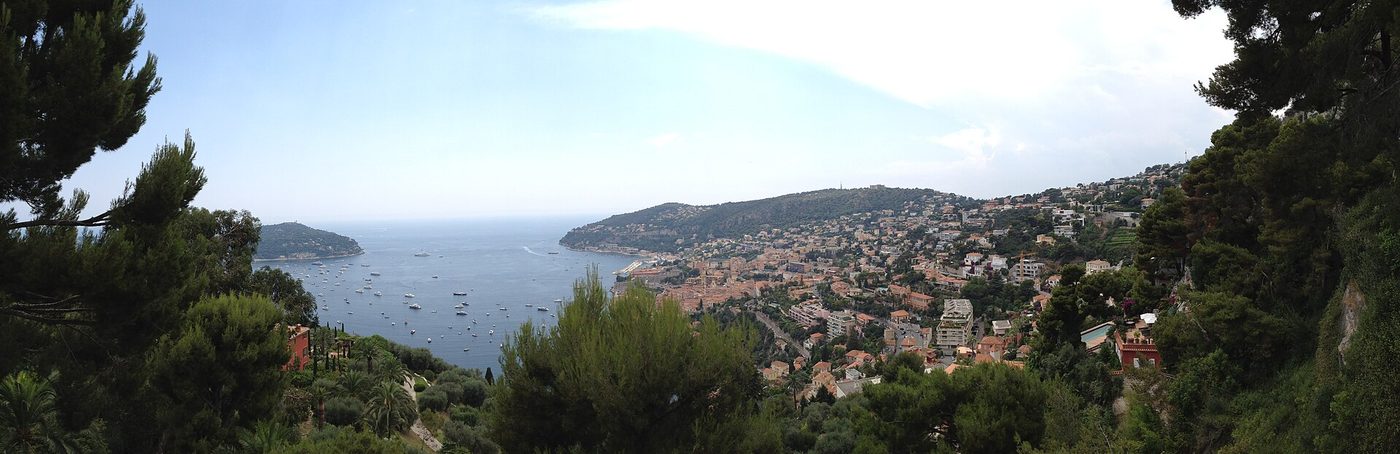
Ten minutes on the train from Nice and a different world: a deep natural harbour, a row of ochre and rose houses along the water, and a 13th-century covered street called the Rue Obscure that runs under the houses like a tunnel. Cruise ships anchor in the bay because it is one of the deepest natural harbours on the Mediterranean, so mornings can be busy and evenings are usually not. The beach here is sand and shingle mixed, gentler underfoot than Nice.
I would give it an afternoon and an early dinner rather than a night, unless you want somewhere quiet within striking distance of Nice, in which case it is the best value on this stretch of coast.
Èze
Èze is a medieval village welded to a rock about 400 metres above the sea, between Nice and Monaco. It is spectacular and it is completely given over to tourism, in roughly equal measure. The village is a fifteen-minute climb of stepped lanes to an exotic garden at the summit with a view down the coast that is worth the ticket.
Buses run up from the coast road; the walk up from Èze-sur-Mer station is the Nietzsche path, an hour or more of steep switchbacks depending on your legs, and in July heat it is hard work rather than a stroll. Go first thing or after five. Between eleven and four in summer, the main lane is shoulder to shoulder.
Menton
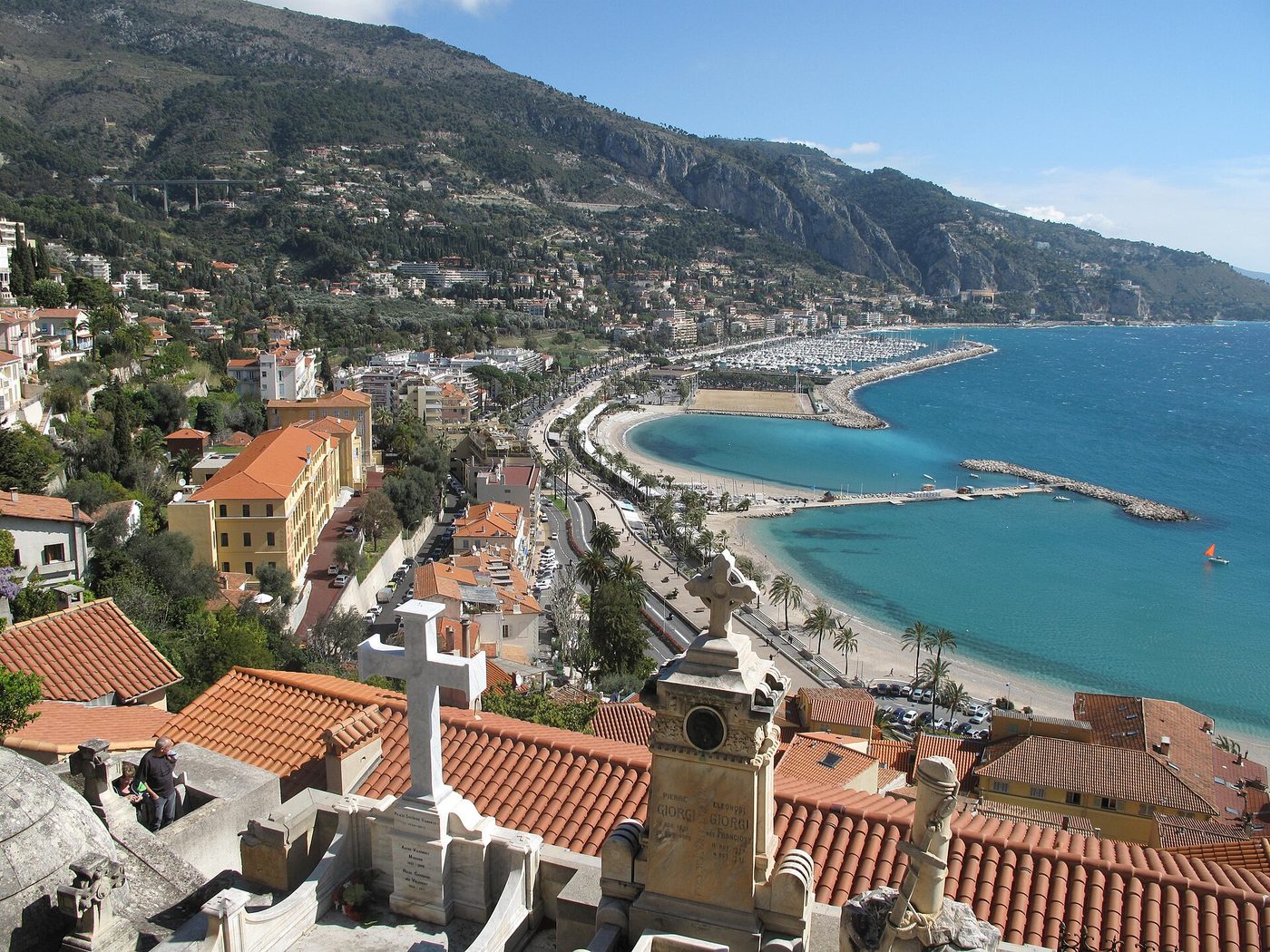
The last French town before Italy, and the one I send people to when they tell me the Riviera felt like an airport lounge. Menton is built in tiers of lemon, apricot and rose above a long shingle bay, it has a microclimate warm enough for citrus groves, and its old town staircase up to the Basilique Saint-Michel is one of the great small sights of the coast.
Time it for the Fête du Citron if you can. The 2026 edition ran 14 February to 1 March with the theme “The wonders of life”, which is easy to be sniffy about until you are standing in front of a dinosaur built from several tonnes of citrus. February on the Riviera is otherwise dead, so this is the rare festival that improves a shoulder-season trip rather than ruining the room rates.
Antibes and Juan-les-Pins
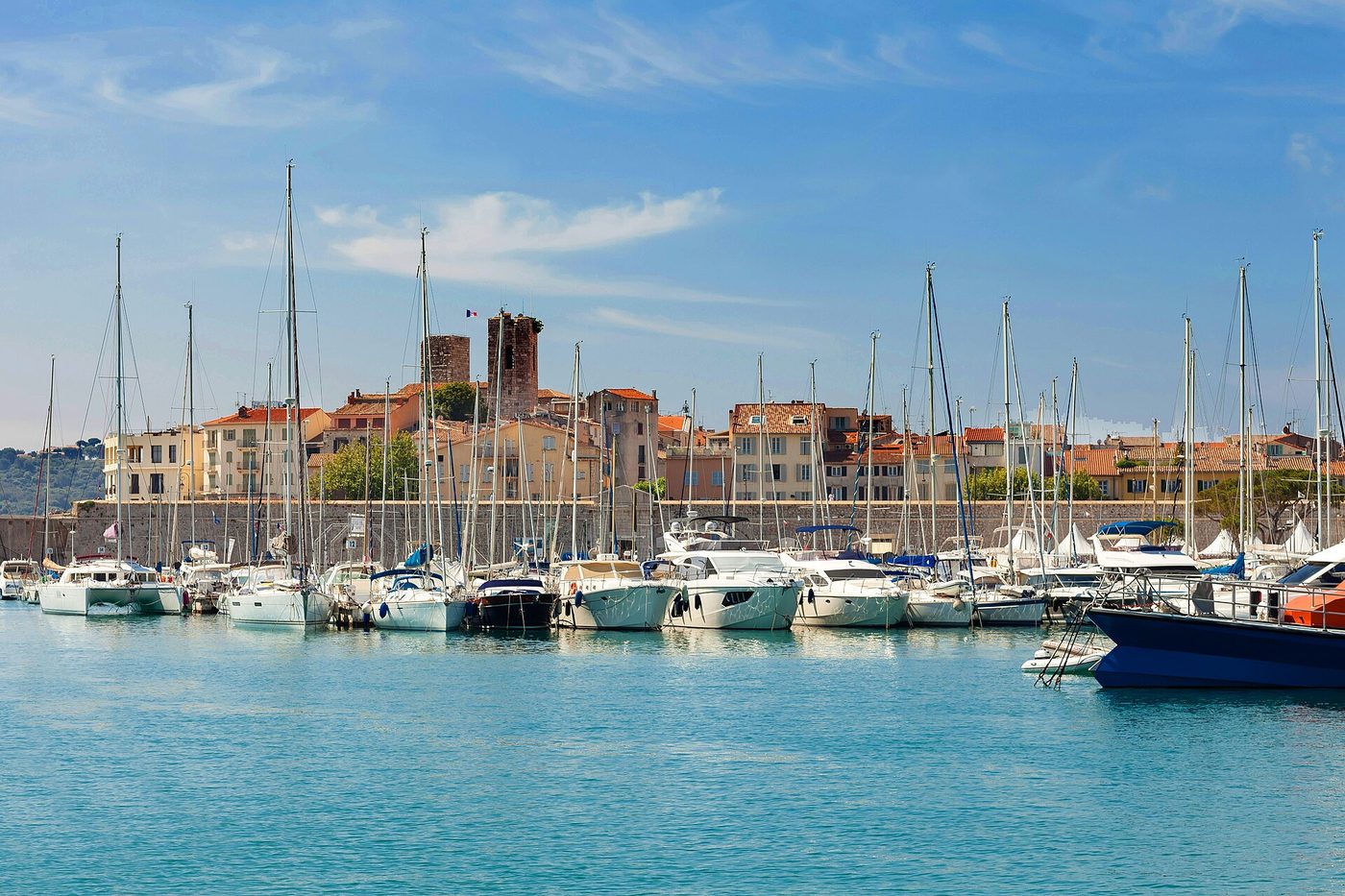
Antibes is where the coast changes character. Going west from here the beaches turn to sand; everything from Menton to Antibes is pebble. The old town sits inside Vauban’s 17th-century ramparts, with the 16th-century Fort Carré guarding the harbour, the Marché Provençal under its iron roof is the best daily market on the Riviera, and the Musée Picasso occupies the Château Grimaldi where Picasso actually worked in 1946.
Juan-les-Pins on the other side of the cape is a different proposition: sandy, pine-backed, and given over to the Jazz à Juan festival, whose 65th edition ran 9 to 19 July 2026 in the Pinède Gould. Port Vauban, between the two, is one of the largest marinas in the Mediterranean and worth a wander even if you have no interest in boats, purely for the scale of the things moored in it.
Cannes
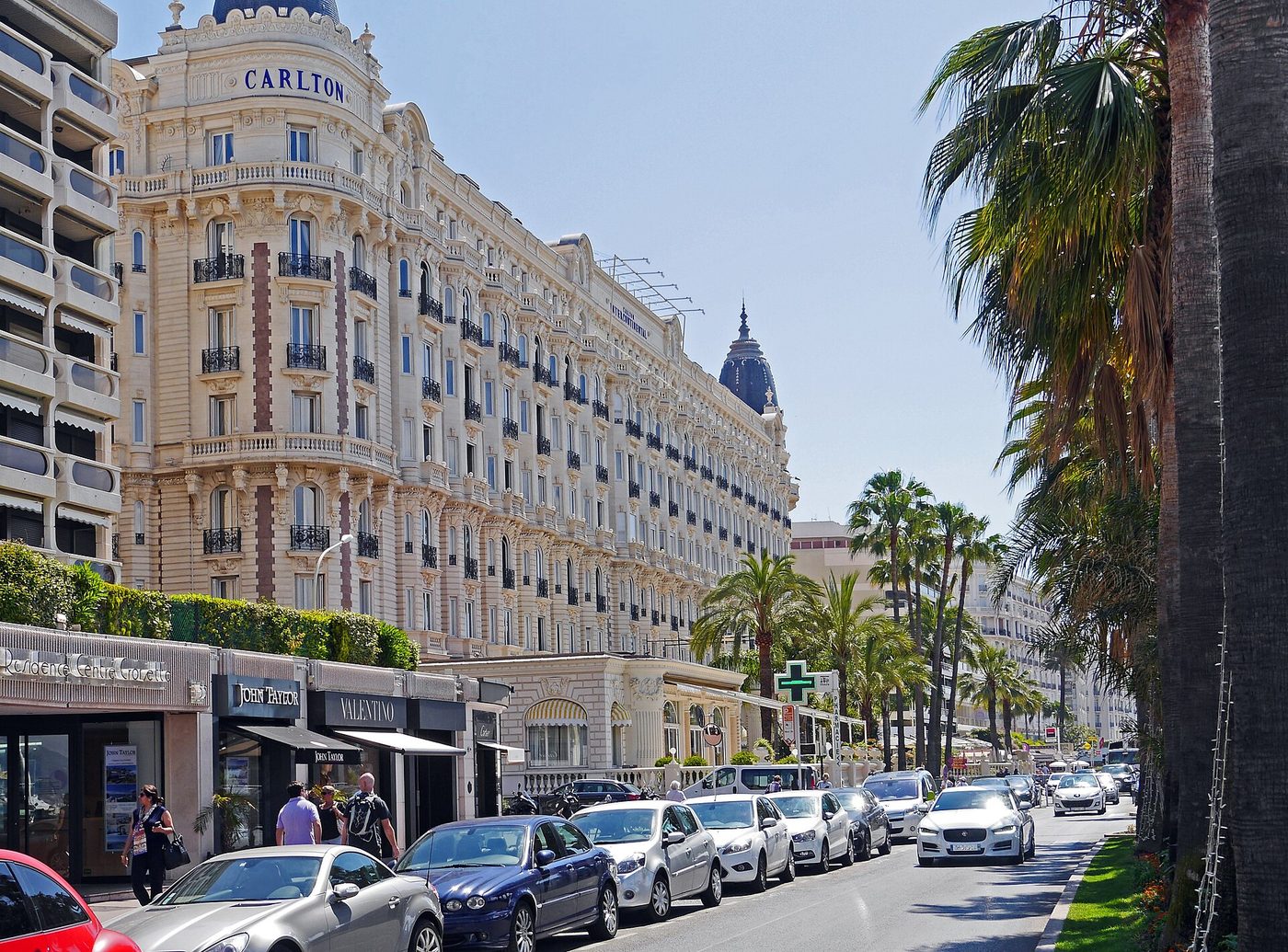
Cannes has a reputation as a rich person’s town that is closed to the rest of us, and that is only half right. Every beach in Cannes is sand, which on this coast is a real advantage, and a good stretch of the seafront is public and free. The Croisette is a walk, not a purchase. The old quarter of Le Suquet, up the hill behind the port, has the cheap restaurants and the view back over the bay.
The film festival takes over the town for a fortnight; the 79th edition ran 12 to 23 May 2026, and unless you have accreditation, that is the one window to avoid. Rooms triple and the Palais is fenced off.
What Cannes is genuinely good for is the ferry. Fifteen to twenty minutes offshore, the Îles de Lérins are pine forest, clear water and no cars. Sainte-Marguerite is €19 return with Riviera Lines and has the fort where the Man in the Iron Mask was held. Saint-Honorat is €19.50 with Planaria, the only operator serving it, and is still a working Cistercian monastery that makes and sells its own wine. I would take Saint-Honorat over almost any beach on the mainland in August.
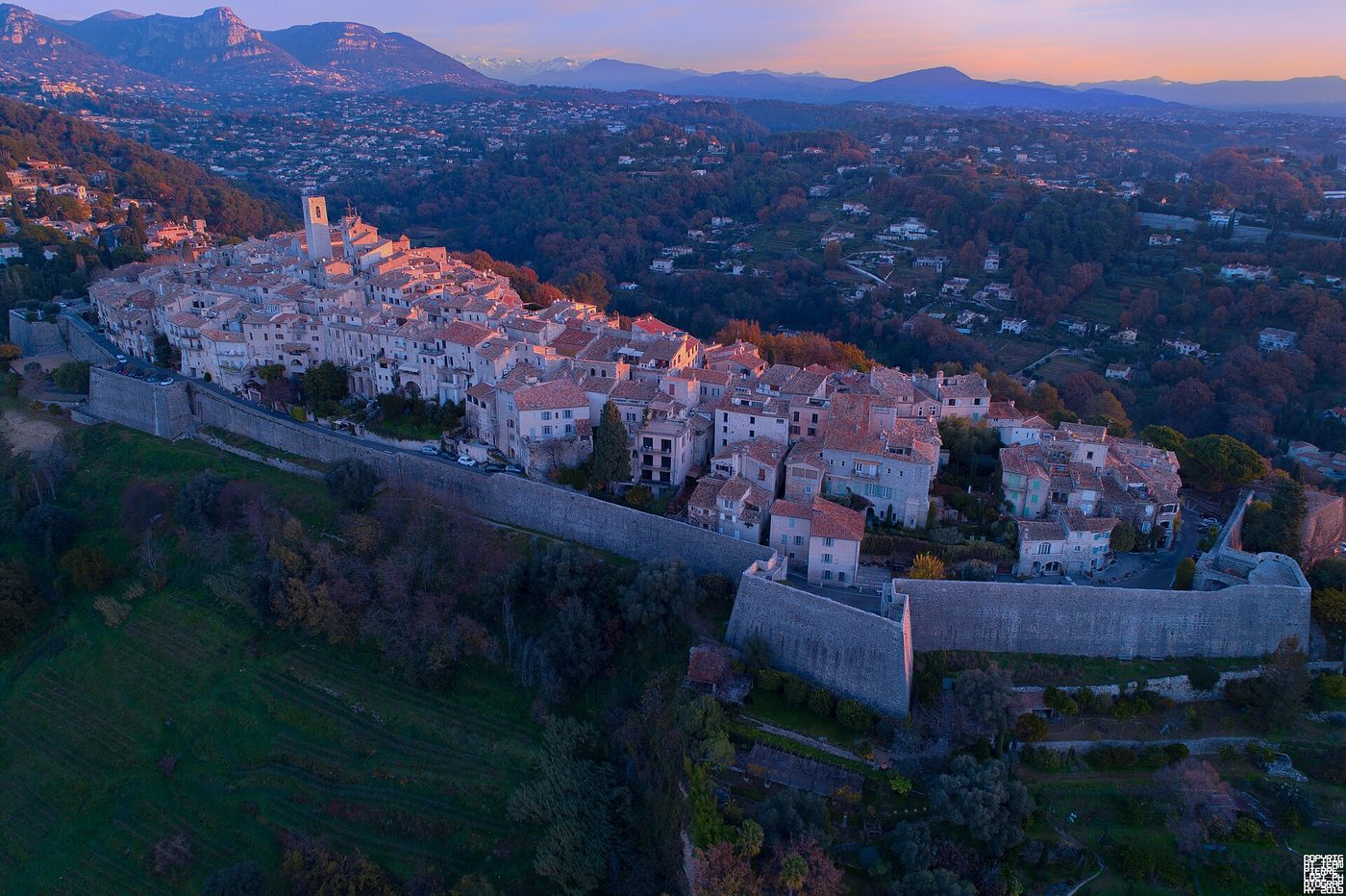
Saint-Paul-de-Vence
Inland from Nice, a walled village of about a thousand people that became a painters’ colony and never entirely stopped being one. The reason to make the trip is the Fondation Maeght, €18 full price and free under 16, a modernist building set among pines with Giacometti, Miró and Chagall works placed outside in the gardens as much as in the rooms. It is one of the best small art museums in Europe, and it takes about three hours to do properly.
Buses run from Nice and take about an hour; a car makes the day easier and lets you add Vence, five minutes up the road, and Matisse’s Chapelle du Rosaire.
Saint-Tropez
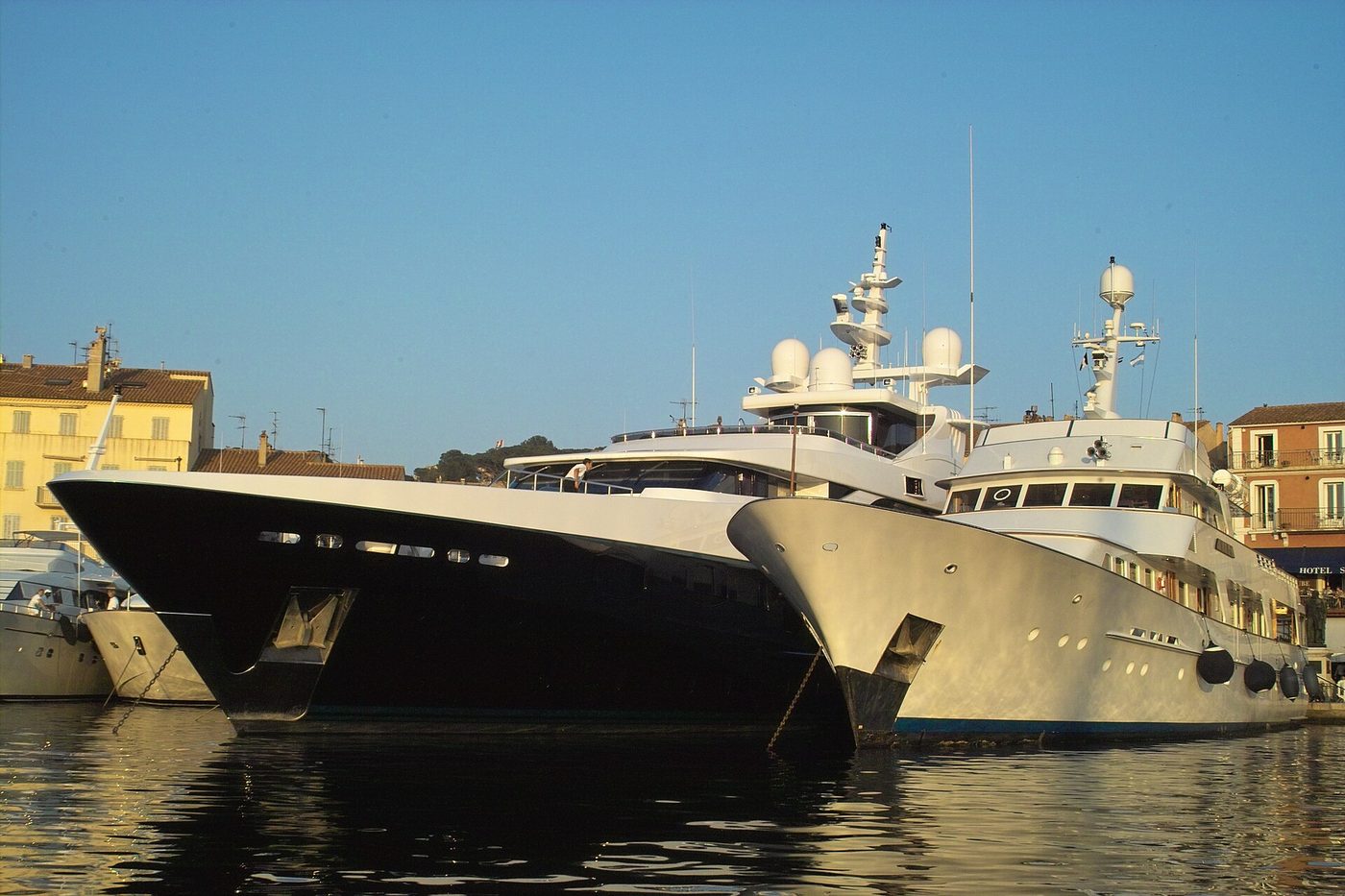
Saint-Tropez is the most expensive place in this guide and the hardest to reach: no train station, a single road in, and a summer traffic jam that is close to legendary. It is also, predictably, a fixture of our Europe honeymoon guide. The village core, when you finally get there, is genuinely pretty, with a small ochre port and the Place des Lices market on Tuesdays and Saturdays.
The beaches are at Pampelonne, a few kilometres out, and they are fine white sand, which is why people come. Beach clubs charge by the lounger: roughly €45 at Tiki Beach, up to about €60 at Club 55 and Bagatelle in 2026, with most places starting around €30 to €40. Premium clubs across Saint-Tropez, Cannes and Monaco run €70 to €150 and up per person before you have eaten or drunk anything, and nearly all of them apply a minimum food and drink spend per lounger. At Nikki Beach in peak season a table can run to €500 a head. There are free public stretches at Pampelonne between the clubs, and they are perfectly good.
Monaco
Two square kilometres, its own head of state, and a train station that puts you in the middle of it in twenty minutes from Nice. Monaco works best as a half day. The Musée Océanographique is €22.50 for adults in high season, less at quieter times of year, and €14 for students and children aged 4 to 17, built into the cliff face, and much better than the price suggests; the shark lagoon on the roof terrace is worth the entry alone.
The Casino de Monte-Carlo splits into two visits. Mornings, 10:00 to 13:00, are a heritage tour of the rooms with no gambling; the rate for that visit is not always listed on the main pricing page, so check on the day. After 14:00 it is €19 per person to enter the gaming rooms, which includes the Casino Royal offer, a €10 voucher usable at the bar or on certain slot machines. Note the voucher carries a minimum spend if you use it in the Salon Rose. Bring a physical passport, or a national ID card if you are an EU citizen. Photographs of documents, photocopies and driving licences are refused at the door, and I have watched people argue about this and lose.
The Grand Prix ran 5 to 7 June in 2026, its 83rd edition. That weekend the principality is either the best or the worst place in Europe depending entirely on whether you hold a ticket.
Provence: ten places, and where the car becomes necessary
Provence is the part people picture when they say the South of France, and it is the part that punishes you for not renting a car. The cities are all on the rail network and easy. The villages, the lavender and the gorge are not, and the bus timetables that serve them are built around school runs rather than day trips.
Marseille
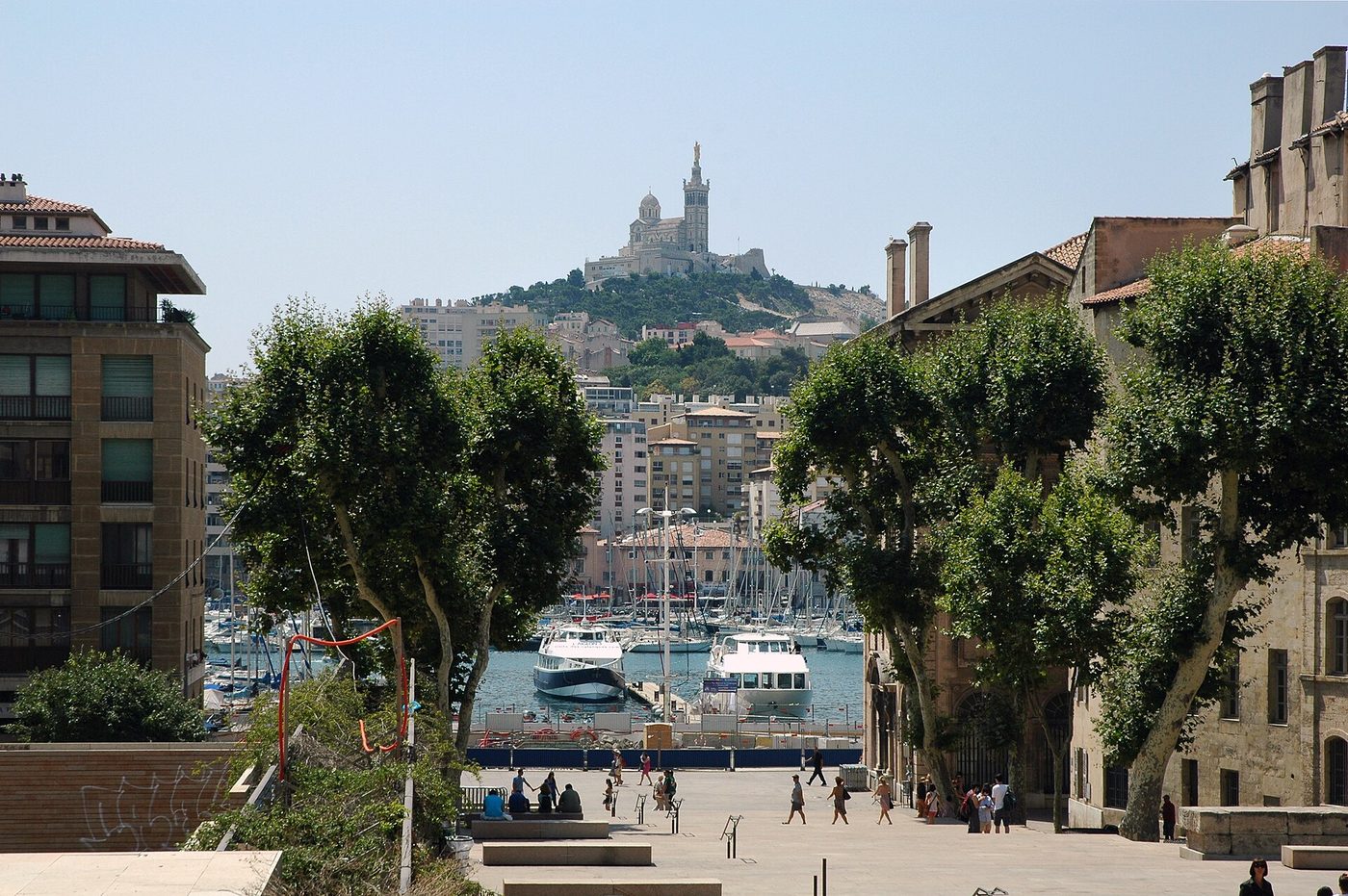
France’s second city and its oldest, founded by Greeks around 600 BC, and for years written off in guidebooks as somewhere to pass through. That was always unfair and by now it is plainly wrong. Marseille has the best food of any city in this guide, north African and Corsican and Armenian alongside the Provençal, and it has a working port rather than a decorative one, which is most of why it feels different from everywhere else here.
Start at the Vieux-Port, walk up to Notre-Dame-de-la-Garde on its hill, and take the view over the whole city and out to the islands. The basilica’s gilded Virgin was restored in a project completed and celebrated in December 2025, and the building is open daily 07:00 to 18:00 through 2026. Château d’If, the island fortress of Dumas fame, sits offshore; entry is modest but you pay a separate ferry fare to reach it, so budget for both.
On safety, because everyone asks. Marseille has a real pickpocketing problem concentrated in specific places: the Vieux-Port is the single most active zone, then Saint-Charles station and the busy markets. Thieves work in teams and use distraction. Phone and bag theft are the common crimes, not violence against tourists. The standard advice applies: nothing in back pockets, phone away while walking, and take more care than usual walking alone late at night north of the centre. I have never had a problem in a decade of visits, and I also never carry a wallet in Marseille.
Cassis and the Calanques
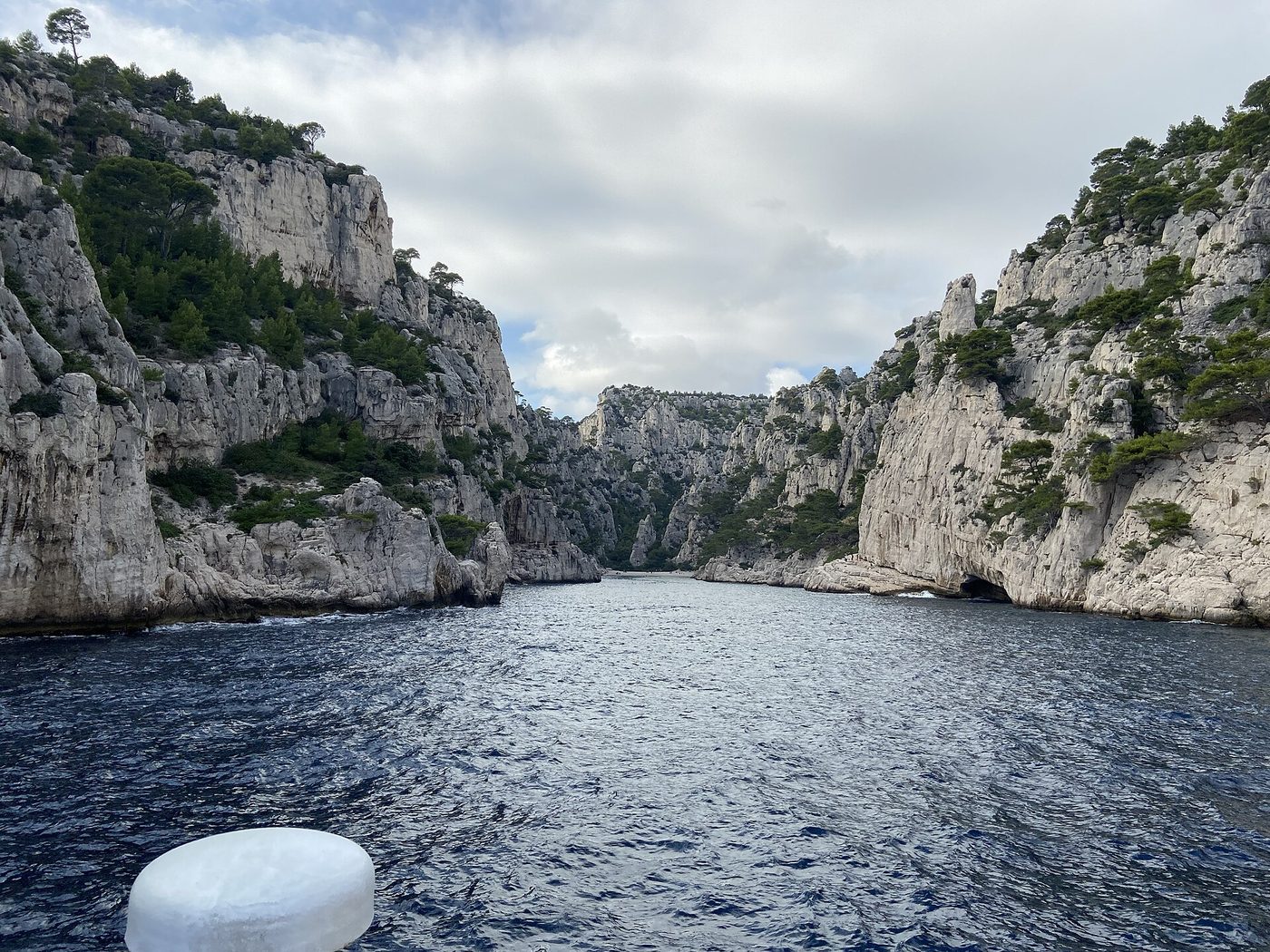
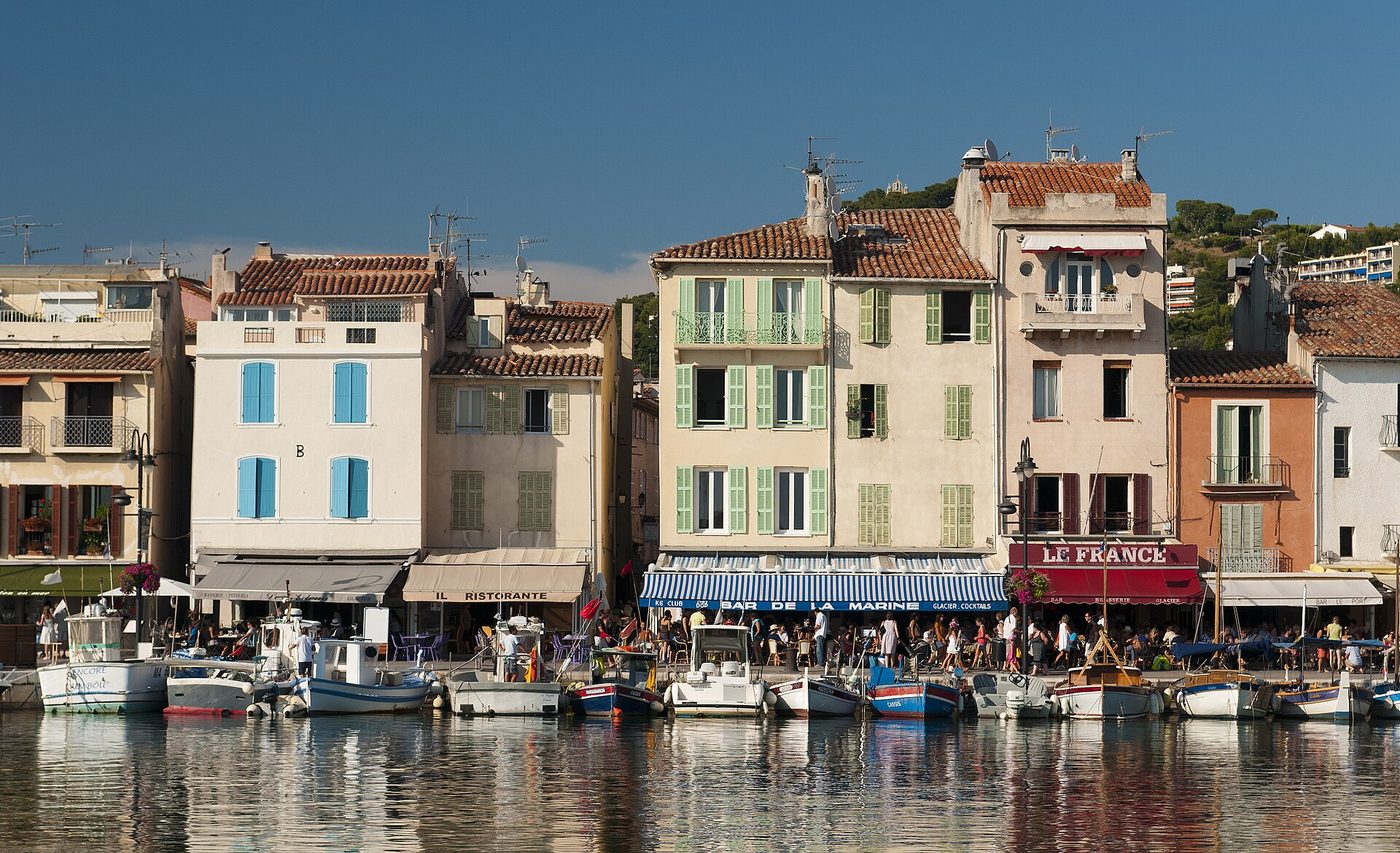
The Calanques National Park runs along the coast between Marseille, Cassis and La Ciotat: white limestone fjords with turquoise water at the bottom, reachable on foot, by kayak or by boat from Cassis. It is the most beautiful thing on this coast and it is now, in part, a reservation system.
The Sugiton calanque is capped. Visitor numbers are limited on 20 and 21 June, then every single day from 27 June to 30 August, plus 5 to 6 September and 12 to 13 September 2026. During those periods you cannot go without a prior booking. The booking is free. It opens at 09:00 three days before your visit and closes at 18:00 the day before, up to five people per booking, on the park’s platform at troov.com. The 2026 window opened on 11 June at 09:00. The cap exists because Sugiton was taking up to 2,500 people a day, which shifted soil down the slope and exposed the roots of the pines; the limit is 400 a day from 27 June to 30 August.
The second thing to plan around is fire. The massifs close to the public on high-risk days, and if that happens your Sugiton booking is cancelled by email the day before. This is not theoretical. The Massif des Corbières fire that started on 5 August 2025 burned more than 17,000 hectares and became France’s largest since 1949, and on 2 July 2026 a fire across Aude and Hérault drew 800 firefighters and forced around 3,000 evacuations. If you are hiking in the South of France in July or August, check the departmental access map the night before, every night.
Cassis itself is a small port town with pastel houses, a decent beach and the Cassis white wine that goes with the oysters. It is a far more pleasant base than Marseille if you want quiet, and it is 25 minutes from Marseille by train, though the station is a long way above the town.
Aix-en-Provence
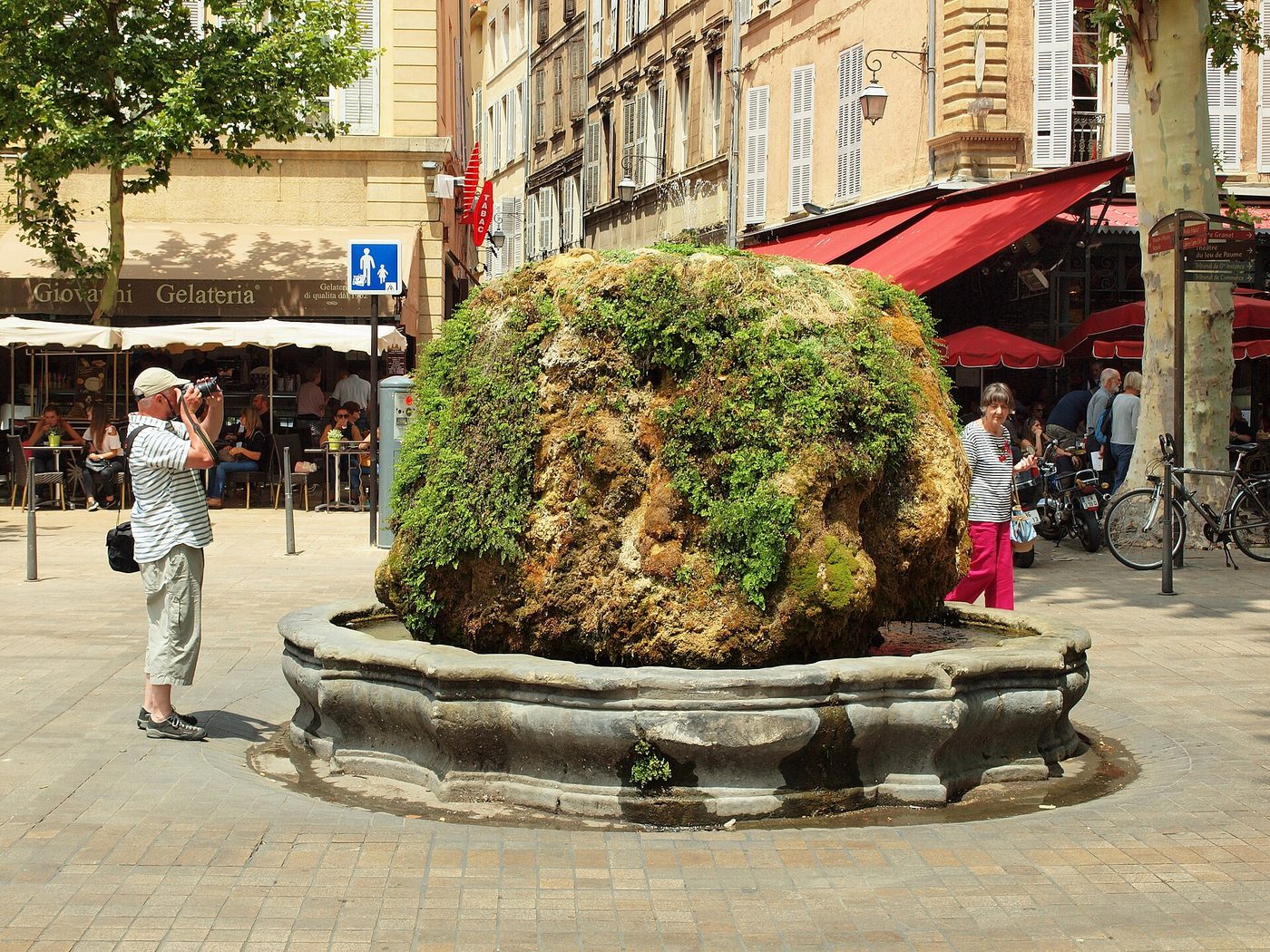
Aix is where Provence does elegance: a grid of 17th and 18th-century townhouses, a hundred-odd fountains, and the Cours Mirabeau running through the middle under a tunnel of plane trees. Cézanne was born here and painted Montagne Sainte-Victoire, the ridge east of town, obsessively; his studio is preserved and open.
The markets are the reason to time a visit. Tuesday, Thursday and Saturday mornings fill Place Richelme and Place des Prêcheurs with produce, and the Saturday market is the best in the region for cheese and olives. Aix has no beach and no cathedral to queue for, which is precisely its appeal: it is a city for sitting still in, and it does that better than anywhere else in the South.
Avignon
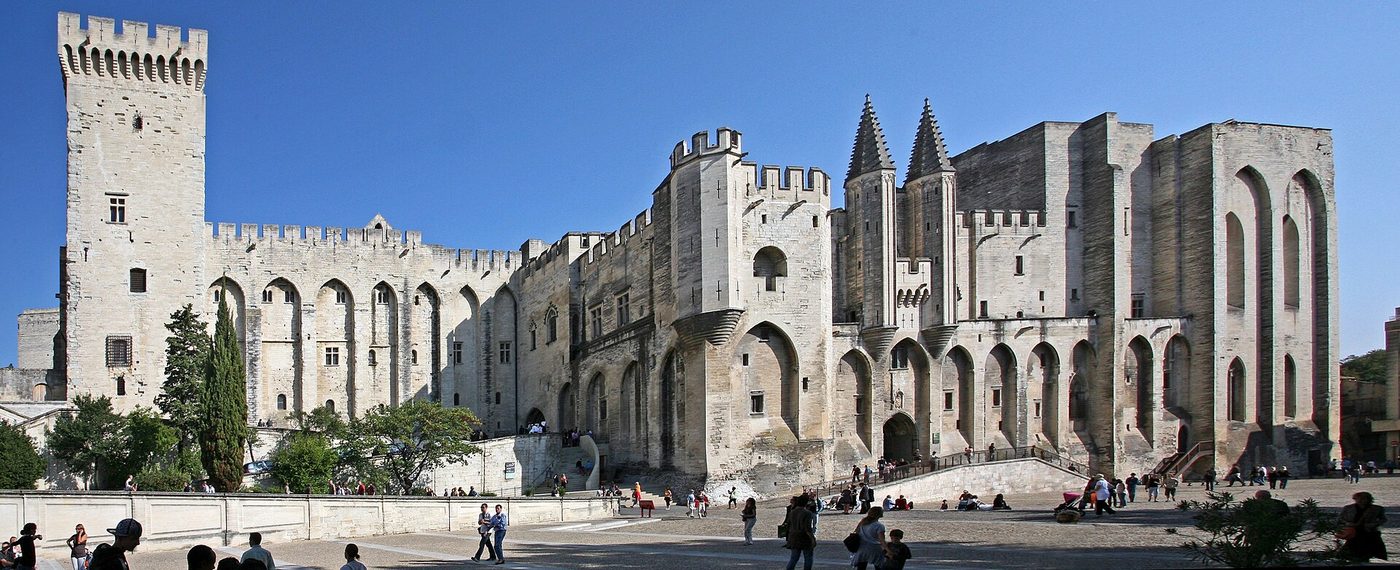
Avignon was the seat of the papacy for most of the 14th century and the Palais des Papes it left behind is the largest Gothic palace in Europe. The historic centre, including the palace, the episcopal ensemble and the famous half-bridge, was inscribed by UNESCO in 1995.
Tickets: €16 for the palace alone, €13 reduced, €10 for children aged 10 to 17 and free under 10. The combined ticket for the palace, the pontifical gardens and the Pont d’Avignon is €19.50, €16 reduced and €12 for 10 to 17s, and it is the one to buy. An Avignon City Pass runs €24 for 24 hours or €32 for 48. Between 1 March and 1 November the palace opens 09:00 to 19:00 with last entry an hour before closing, and a Histopad augmented-reality tablet in seven languages is included free at the door, which does more to make sense of the empty stone rooms than any audioguide I have used.
A 2026 change worth knowing: from 1 May 2026 the palace opened a new visitor route including rooms that had never been shown to the public, with interactive models, films and new signage, plus a “Les Clefs du Palais” web app in six languages. The works behind this run until spring 2027, so expect some sections to be closed. In August 2026 the cuisine haute shut at 17:00 on several dates and the pontifical gardens closed at 18:30 every Thursday. Check the day’s schedule on arrival rather than assuming the published hours.
The Festival d’Avignon, IN and OFF together, ran 4 to 25 July in 2026 and turns the whole city into a theatre. It is wonderful and it makes accommodation nearly impossible. Decide which of those matters more to you.
Arles
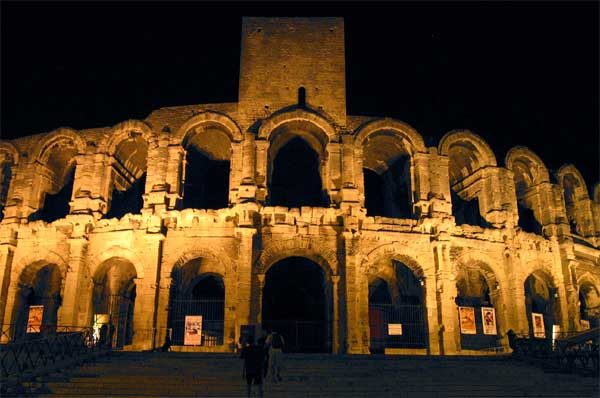
Arles is smaller than Avignon, cheaper, and in my view the better base for the western half of Provence. Its Roman and Romanesque monuments were inscribed by UNESCO in 1981. The amphitheatre still stages events and costs €11 for adults, €9 reduced, free under 18. Van Gogh made roughly 300 paintings and drawings here in fifteen months, and the light in the streets in late afternoon explains why better than any museum caption.
It is also the gateway to the Camargue, half an hour south, and the market on Saturday mornings along the Boulevard des Lices is the biggest in Provence.
The Camargue
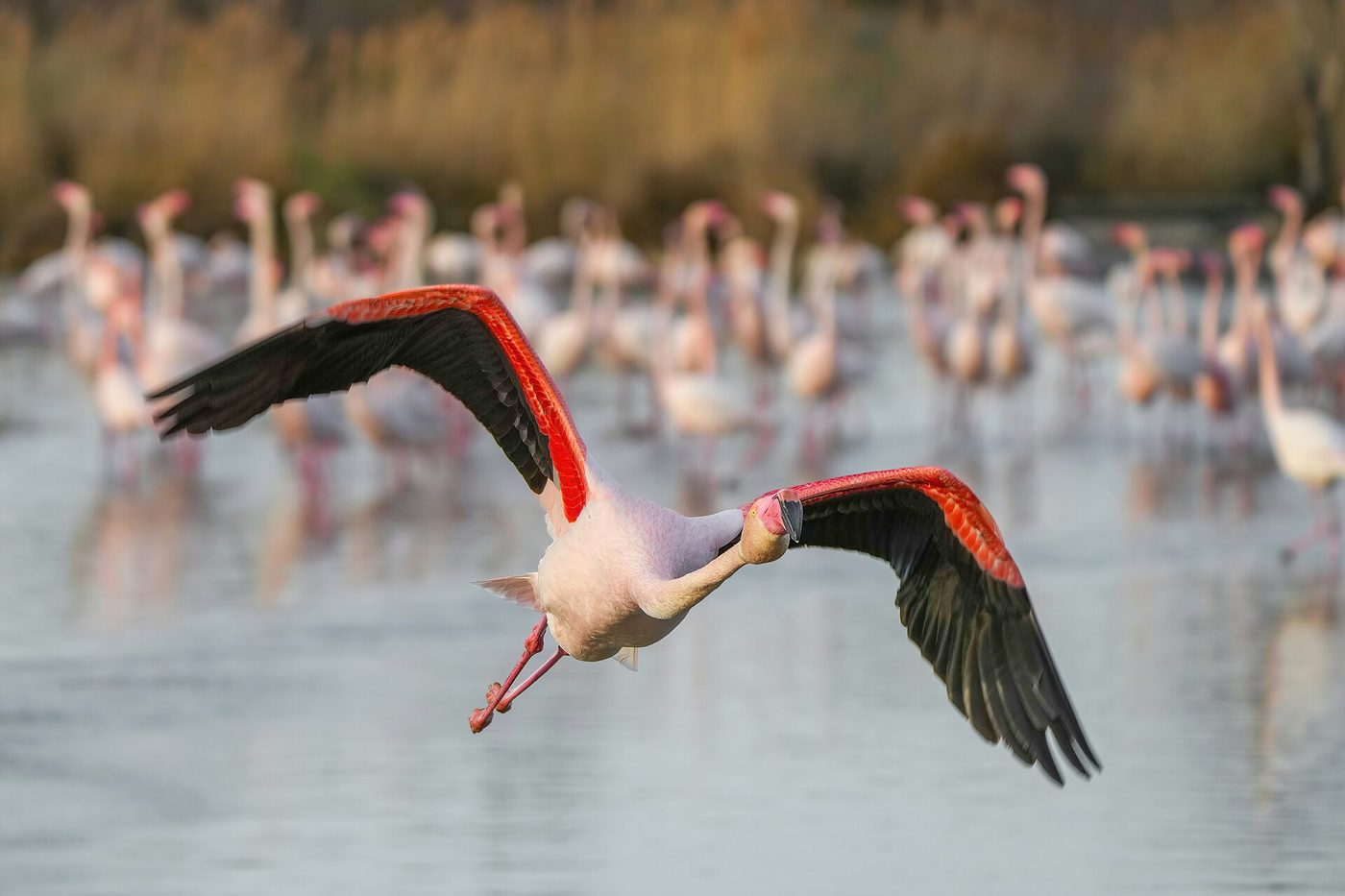
The Rhône delta: 900-odd square kilometres of lagoon, salt pan, marsh and reed, with white horses, black bulls and pink flamingos, all three of which are really there rather than a tourist-board invention. It is flat, which makes it the best cycling in the South of France and a strong contender in our Europe road trips shortlist. It is also buggy, which makes evening repellent non-negotiable from May onwards.
The bird park at Pont de Gau is €8.50 for anyone 13 and over and €5 for children 4 to 12, open every day of the year, and the reliable way to see flamingos at close range without a guide or a long lens. Beyond that you need a car or a guided tour; the good spots are spread across a road network built for salt trucks.
Time it for the Fête de la Transhumance in Saint-Rémy-de-Provence if the dates work. The 42nd edition fell on Monday 25 May 2026, 10:00 to 13:00, with more than 3,000 sheep driven through the town alongside shepherds, horses, donkeys and dogs. Note that in 2026 it landed on the same Whitsun weekend as the Feria de Pentecôte in Nîmes, 20 to 25 May, so that corner of the calendar is busy in both directions.
Gordes
The Luberon’s most photographed village, a pile of pale stone houses stacked up a hillside with a château at the top, and below it the Abbaye Notre-Dame de Sénanque, a 12th-century Cistercian abbey still home to monks and fronted by the lavender field that appears on approximately every Provence calendar ever printed.
Gordes is expensive, its parking is a real ordeal in July, and it is worth it anyway if you arrive before nine or after six. The abbey asks visitors to respect a working monastic community and the lavender in front of it is cut like any other crop, usually in July, so a late-July visit can find bare rows.

Roussillon
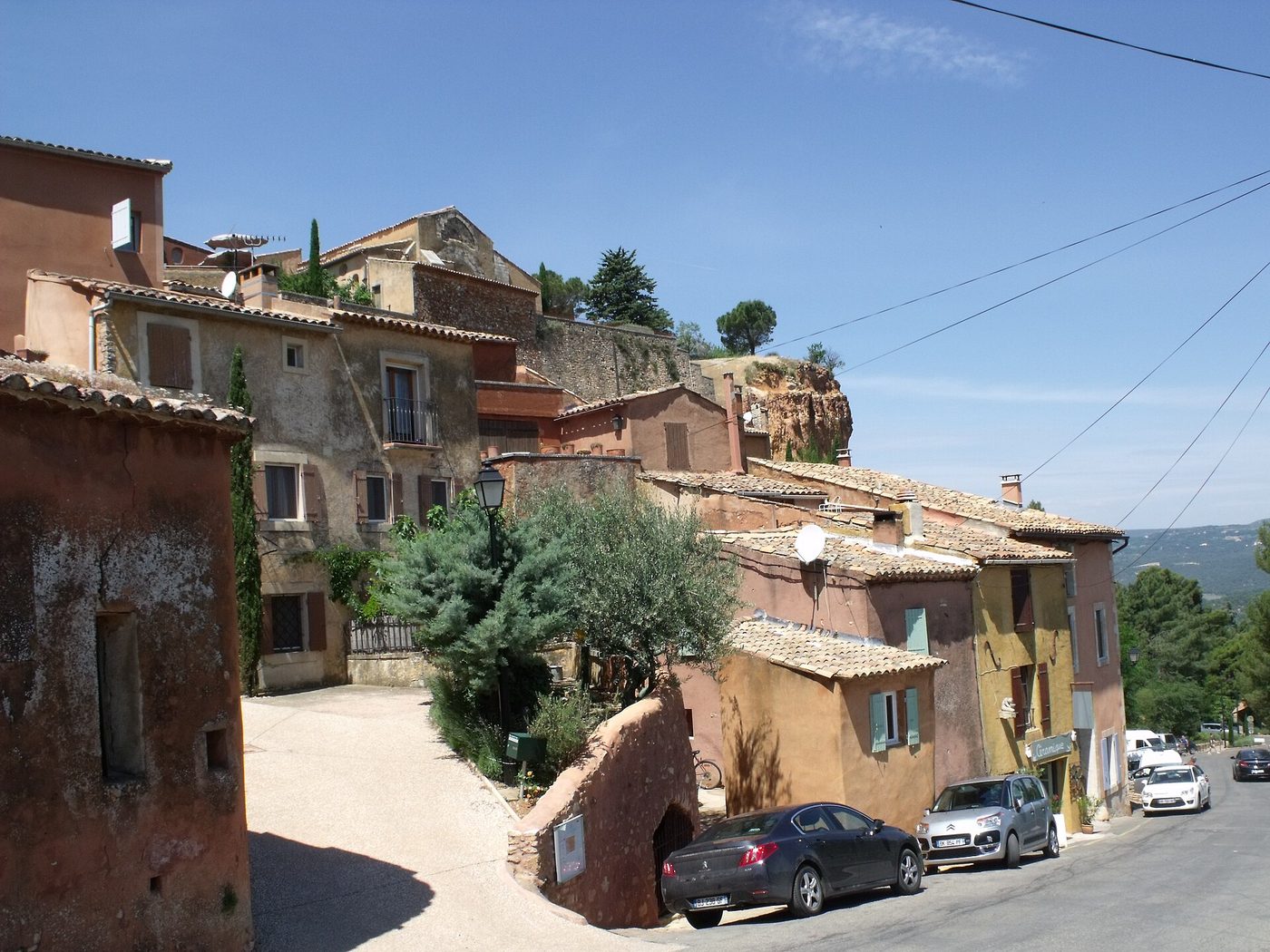
Twenty minutes from Gordes and, for my money, the more interesting village. Roussillon sits on one of the largest ochre deposits in the world and the whole place is built from it: houses washed in seventeen shades from butter yellow to oxblood. The Sentier des Ocres is a short marked trail through the old quarries, thirty to fifty minutes, and it stains white trainers permanently orange. Wear something you do not care about.
The Valensole plateau
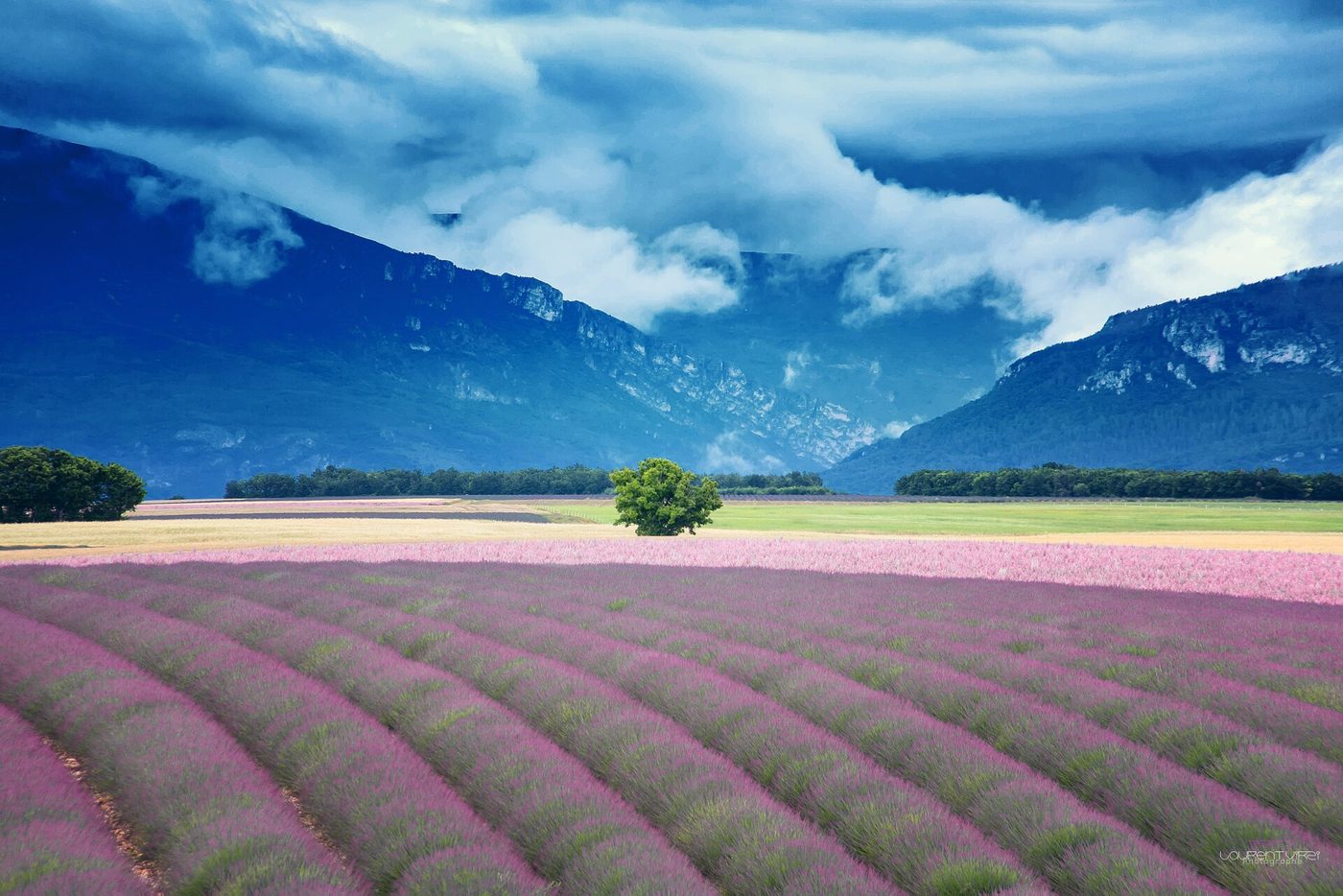
This is the lavender. Not the Luberon, not Sénanque, but the high plateau east of Manosque where the rows run to the horizon between wheat and sunflowers.
Timing is everything and it moves every year with the rain. As a rule: the Luberon is lowest, 350 to 700 metres, so it blooms earliest and is best from late June into early July. Valensole starts around mid-June and lasts about a month, with the first two weeks of July usually the peak. Sault is highest and latest, flowering early July into mid-August, with mid to late July the safest bet for full rows. The harvest is the risk at the other end: Valensole is often cut from around mid-July, and in a hot dry year some fields go by roughly 25 July, while Sault farmers generally start in the first or second week of August. Treat any date as a forecast rather than a promise, and if you have one shot at it, aim for the first week of July on Valensole and have Sault as a backup an hour and a half north.
The Verdon Gorge
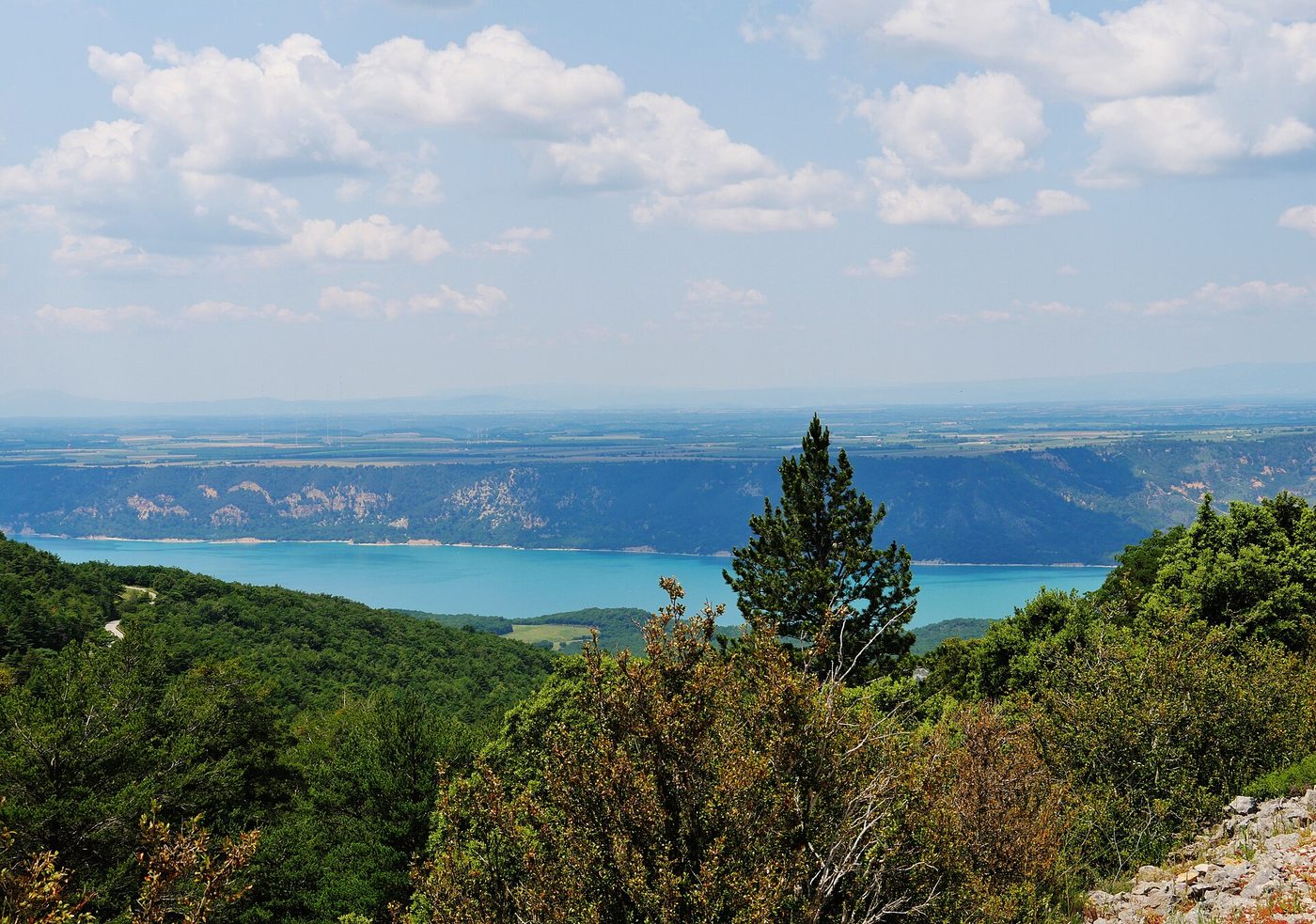
The deepest canyon in France, up to 700 metres from rim to river, with water the colour of antifreeze running through it and the artificial Lac de Sainte-Croix at the western end. You can drive the rim on the Route des Crêtes, walk the Sentier Blanc-Martel on the floor, or rent a pedalo, kayak or small electric boat at the lake and paddle up into the gorge mouth, which is the version most people want.
On rental prices I have to be honest: the Verdon operators publish their 2026 rates only as downloadable PDFs and I could not verify an hourly figure I would be willing to print. Budget for a couple of hours on the water and check on the day. Access to the gorge itself is free.
The drive up from the coast is two and a half to three hours from Nice and about two from Aix, on roads that get narrow and busy in August. This is a place to sleep near, at Moustiers-Sainte-Marie or Aiguines, rather than to day-trip from the sea.
Occitanie and the Languedoc coast: seven places, and the best value in the South
West of the Rhône the prices drop, roughly 30 to 40% below Provence and the Riviera for the equivalent experience, and the crowds thin out with them. The trade-off is that the marquee names are fewer and the coast, while sandy and long, is flatter and less dramatic than the Riviera. If you are choosing on value, this is the answer, and it belongs on any list of the cheapest places to travel in Europe, and it has the two best Roman sites in France.
Nîmes
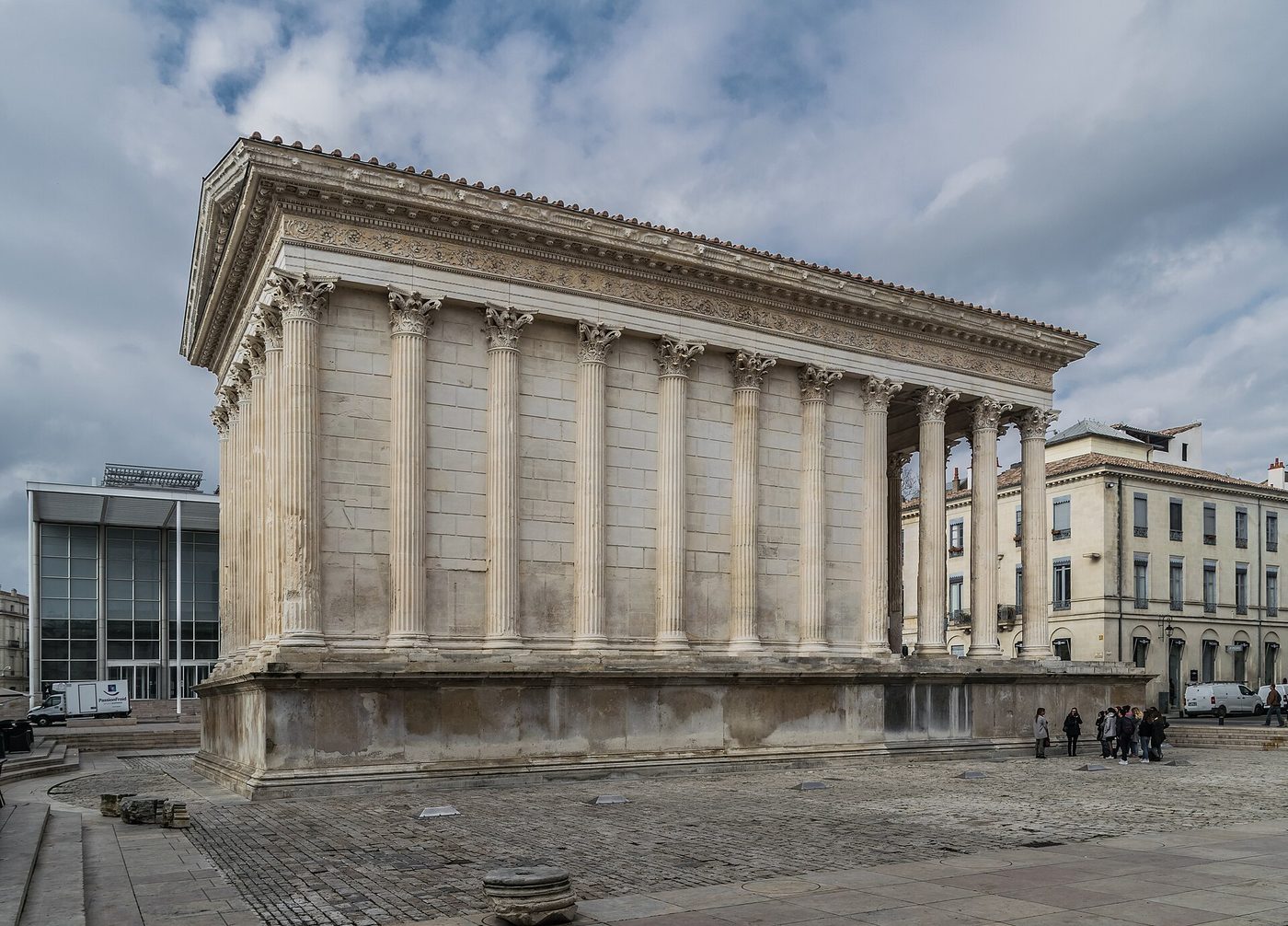
Nîmes has the best-preserved Roman amphitheatre in France and, since 18 September 2023, a UNESCO listing for the Maison Carrée, a temple that is the oldest and most complete surviving example of the Augustan Corinthian order with all its decoration intact. The listing came through at the 45th session of the World Heritage Committee in Riyadh under criterion (iv).
Buy the “Nîmes la Romaine” pass at €14.50 for adults, €12 reduced, €6.50 for children 7 to 17 and €29.50 for a family. It covers the arena, the Maison Carrée and the Tour Magne and is valid three days. If you want the Musée de la Romanité as well, the Pass Romanité is €20.50 full, €15 reduced, €9.50 for 7 to 17s and €49.50 for a family.
Nîmes also throws the biggest party in the South. The Feria de Pentecôte ran Wednesday 20 May to Whit Monday 25 May in 2026, and the Feria des Vendanges follows on 18 to 20 September. Both involve bullfighting, which some readers will want to avoid entirely, so it is worth knowing before you book the room.
Pont du Gard
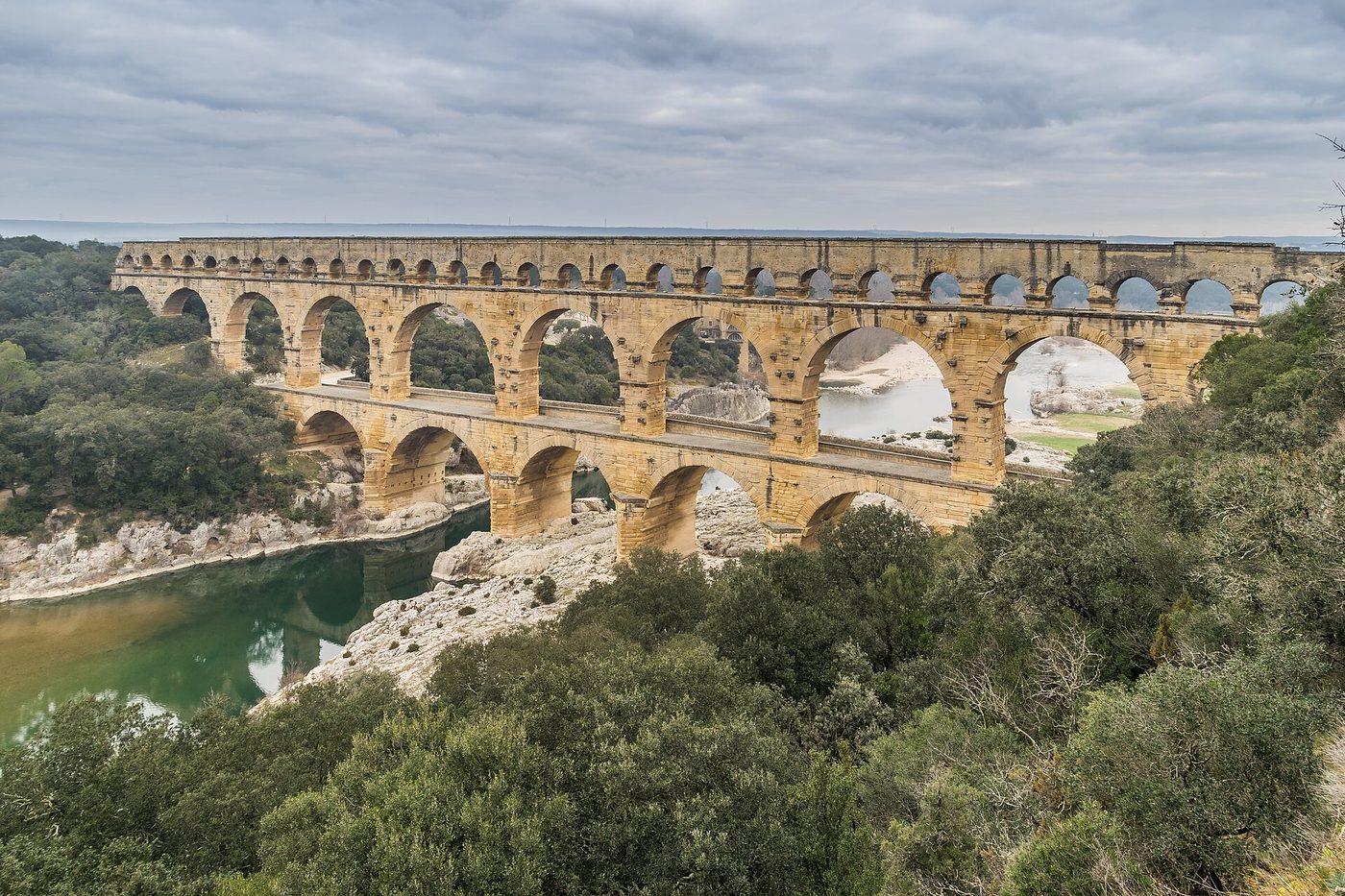
The three-tier Roman aqueduct bridge over the Gardon, inscribed by UNESCO in 1985 and 40 years listed as of 2025. The single most useful fact about it: walking to the bridge is free. What you pay for is parking, at €9 per vehicle regardless of how many of you there are or how long you stay, and the optional discovery spaces at €8 for adults, free for under-18s and students, which cover the museum, cinema, children’s space and temporary exhibition.
The €15 adult guided tour is the one worth paying for, because it takes you onto the top tier of the aqueduct, which you cannot otherwise reach. Book ahead: tickets are date and time slotted, and once bought they are non-refundable, non-exchangeable and non-modifiable. There is an annual parking pass if you are staying in the area and plan to swim there more than once, which plenty of local families do.
Montpellier
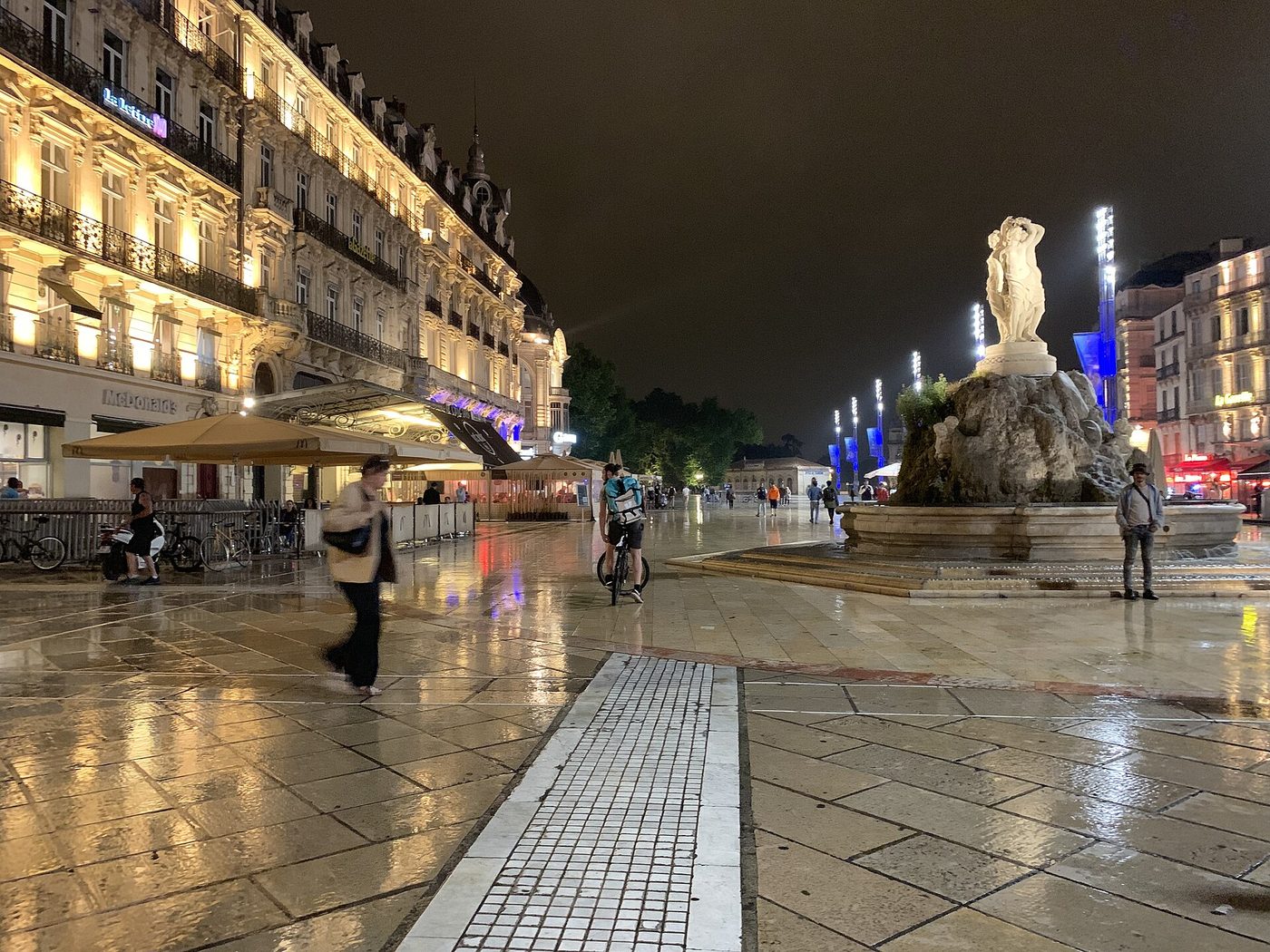
A young city, roughly a quarter of it students, with a medieval core wrapped around the enormous Place de la Comédie and four tram lines painted by different designers. It is one of the cheapest urban bases in this guide, and it is the easiest city here from which to reach a beach on public transport: tram line 3 to Pérols, then a connecting bus down to Palavas, about three quarters of an hour door to door.
Practical note for drivers: Montpellier’s low-emission zone bans Crit’Air 3, 4, 5 and unclassified vehicles, and from 1 July 2026 that zone extended to all 31 communes of Montpellier Méditerranée Métropole. If you are hiring a car, this will almost certainly be fine, since rental fleets are new. If you are bringing your own older vehicle from elsewhere in Europe, check its class before you plan a night here.
Sète
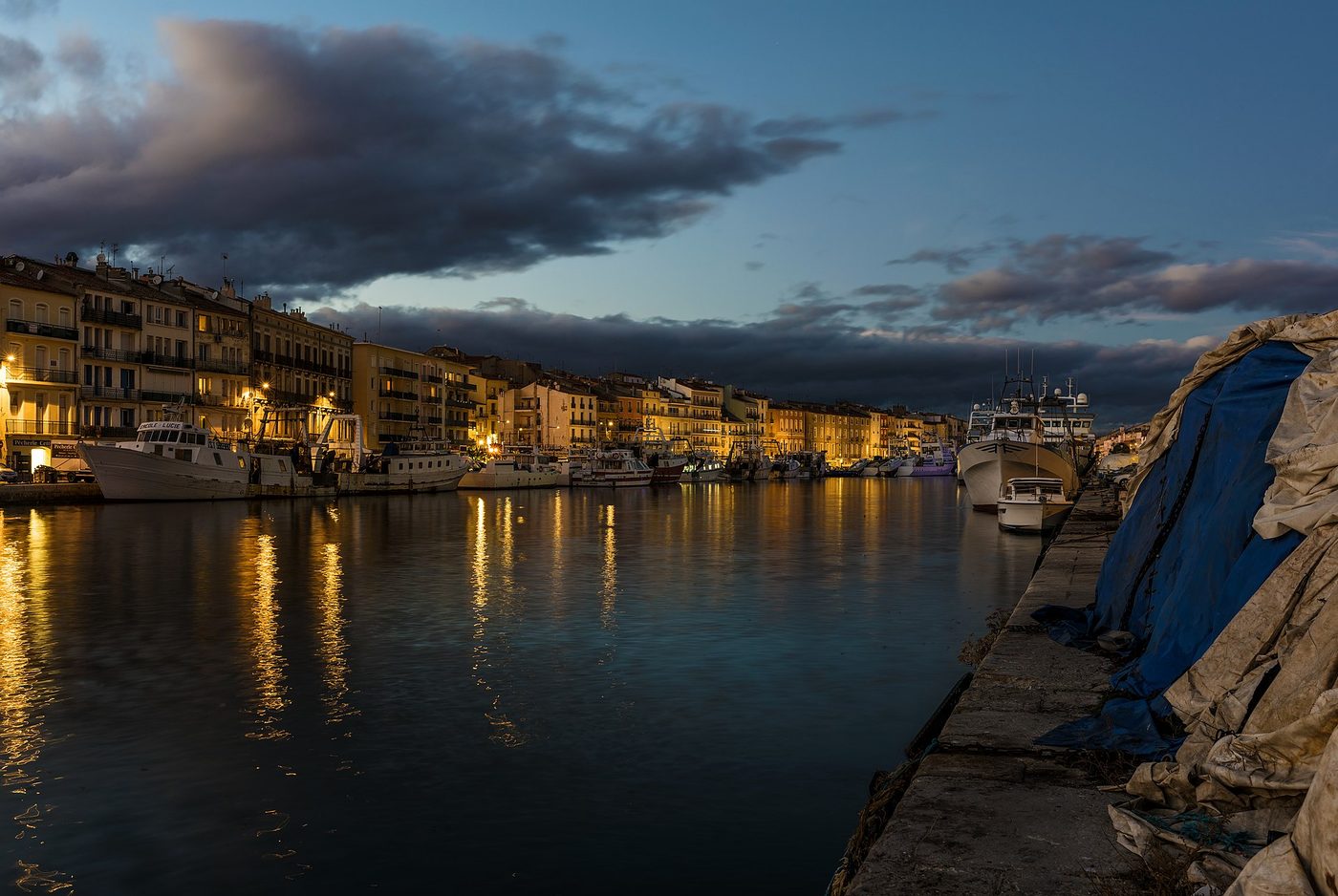
Built on a hill between the sea and the Étang de Thau, cut through with canals, and best known for water jousting, in which two men on platforms mounted on boats try to knock each other into the canal with lances. It is a serious local sport, with a season running through summer and a championship in August, and the crowds along the canal take it as seriously as any football match.
Sète is where I eat on the Languedoc coast. The Thau lagoon next door produces the Bouzigues oysters and mussels, and the local dish is the tielle, a small pie of octopus in tomato sauce that costs a couple of euros from a bakery and is better than most things I have paid twenty for on the Riviera. There are twelve kilometres of sand on the Lido strip south of town.
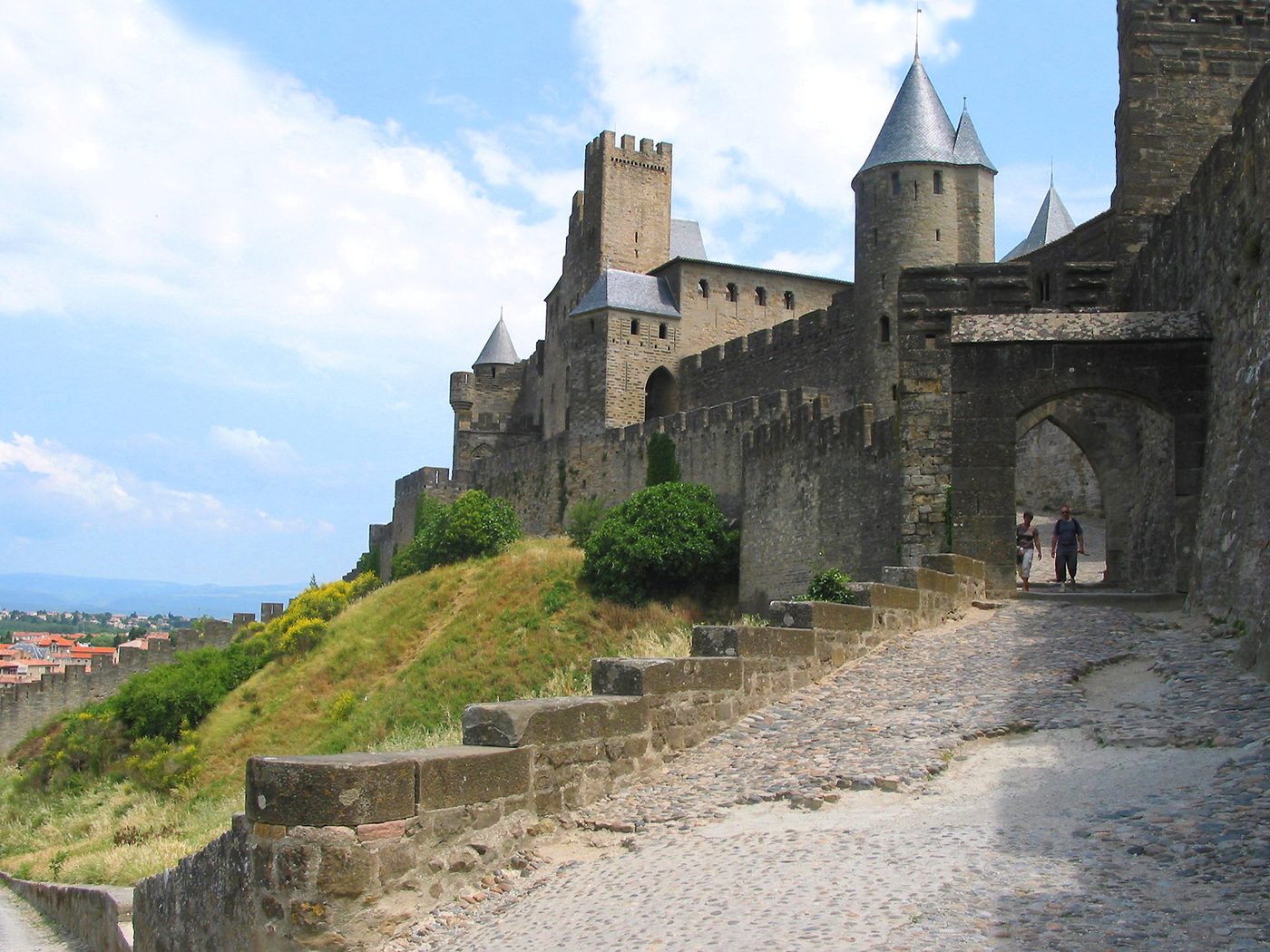
Carcassonne
The Cité de Carcassonne is a double-walled medieval fortress on a hill, inscribed by UNESCO in 1997, and it looks so much like a film set that people assume it is one. It was heavily restored by Viollet-le-Duc in the 19th century, and the pointed slate roofs are his invention rather than a southern French tradition, which purists have complained about for 150 years.
Walking into the Cité and around its lanes is free. The Château Comtal and the walk along the ramparts cost €19 from April to September and €13 from October to March, and you need to pre-book a timeslot on the official site. Under-18s go free, as do EU citizens under 26 with ID, and entry is free on the first Sunday of January, February, March, November and December, and during European Heritage Days on the third weekend of September. An audioguide adds €3.
Come before eleven or after four. Between those hours in summer the main street is a slow-moving queue past shops selling plastic swords.
Collioure
Almost at the Spanish border, where the Pyrenees come down into the Mediterranean, Collioure is a Catalan fishing town of painted houses around a small bay with a royal castle on one side and a bell tower standing in the water on the other. Matisse and Derain spent the summer of 1905 here and effectively invented Fauvism in the process; reproductions of the paintings are mounted around town at the spots where they were made.
The beaches are shingle and small, the anchovies are a protected local speciality, and the Banyuls and Collioure wines come off terraces so steep they are worked by hand. It is two hours from Montpellier by train and it feels a very long way from Saint-Tropez in every sense that matters. The Spanish border is twenty minutes further, so pairing this corner with our Spain travel guide and the Costa Brava is an easy extension.
The Canal du Midi
A 17th-century canal running 240 kilometres from Toulouse to the Étang de Thau, part of a UNESCO-inscribed network of some 360 kilometres once you count the branches and feeder channels, listed in 1996, shaded for much of its length by plane trees and linked by staircase locks. You can hire a boat with no licence, or you can do what I do and rent a bike at Carcassonne or Béziers and ride the towpath for a day.
Be aware that a fungal disease has forced the felling and replanting of tens of thousands of the plane trees over the past two decades, so some stretches that photograph as green tunnels are now open and sunny. The replanting is under way but a plane tree takes decades. Check which section you are riding, and carry more water than you think you need.
Five more that earn a detour
These five sit in the price table above and not on the main list of 26, because each is a half day rather than a base, but every one of them is worth building a drive around.
- Orange. The Roman theatre and the triumphal arch were inscribed by UNESCO in 1981. The theatre’s stage wall is 103 metres long and among the best preserved anywhere in the Roman world; it went up in the early 1st century AD, and the arch between AD 10 and 25. Entry is €9.50, rising €1.50 on performance days between 6 July and 15 August. The Chorégies d’Orange, France’s oldest opera festival, ran 21 June to 18 July in 2026 on a notably short programme of six evenings.
- Aigues-Mortes. A perfectly rectangular walled town built in the marshes of the Camargue as Louis IX’s crusader port, now stranded inland by silt. €12 buys the towers and the full circuit of the ramparts, free for EU residents under 26. The pink salt pans next door are the reason the flamingos are the colour they are.
- Villa Ephrussi de Rothschild. On the neck of Cap Ferrat, a rose-pink palazzo built for Béatrice de Rothschild with nine themed gardens laid out around it, the whole thing designed to look like a ship’s deck. €20 for adults, €12 for 7 to 17s and students up to 25, free under 7. It is the best single hour on the Riviera for anyone who likes gardens.
- Porquerolles. The largest of the Îles d’Hyères, car-free, with pine woods, vineyards and the clearest water on the French mainland’s doorstep. The TLV-TVM ferry from La Tour Fondue on the Giens peninsula is €23.50 return in 2026, runs every thirty minutes from 09:00 to 19:00 between April and October, and takes about a quarter of an hour. Buy online in high season.
- Château d’If. The island fortress in the bay of Marseille where Dumas imprisoned Edmond Dantès. Individual rates are published on monuments-nationaux.fr; the €5.50 figure that circulates applies to advance group bookings of seven or more. The ferry from the Vieux-Port is a separate fare and the crossing is part of the pleasure.
What to eat, and what to drink with it
Food is the reason a lot of people come back, and it changes as decisively as the landscape does between the three sub-regions.
On the Riviera, the cooking is Niçois and closer to Ligurian Italy than to anything in Paris. Socca is the thing to try first: a huge pancake of chickpea flour and olive oil, baked in a copper pan, torn up and eaten with pepper and your fingers, a couple of euros a portion in Vieux Nice. Then pissaladière, an onion tart with anchovy and olive; pan bagnat, a salade niçoise crushed into a round loaf; and petits farcis, small vegetables stuffed and baked. Ratatouille is from here too, and the proper version cooks each vegetable separately.
In Provence, it is bouillabaisse in Marseille, and the honest warning is that most of the versions sold around the Vieux-Port are not it. A real bouillabaisse is expensive, ordered in advance at a serious restaurant, served in two parts with the broth first and the fish carved at the table. Anything at €18 with a picture on the menu is fish soup. Elsewhere in Provence, look for daube, a slow beef stew in red wine; aïoli, both the garlic mayonnaise and the Friday plate of cod and vegetables built around it; tapenade; and in autumn, the black truffles of the Vaucluse.
In Occitanie, the food is Catalan and Languedocian: cassoulet inland around Castelnaudary and Carcassonne, brandade de morue in Nîmes, oysters and mussels from the Étang de Thau, and the tielle of Sète. Anchovies from Collioure are a protected speciality and taste nothing like the tinned ones.
Wine. Provence is rosé country, and Bandol is the appellation to look for if you want one with structure rather than a poolside blush. In the Rhône corner, Châteauneuf-du-Pape, Gigondas and the more affordable Côtes du Rhône Villages. Languedoc gives you Pic Saint-Loup, Corbières, Minervois and Faugères, some of the best value red wine in France. At the Spanish end, Banyuls is a fortified sweet red that goes with chocolate and with strong cheese. A glass of house rosé with lunch is normal, unremarkable and, given the 0.5 g/l driving limit, your ration for the day if you are behind the wheel.
Our guide to European food puts all of this in a continental context if you are eating your way around more than one country.
Where to base yourself
The single biggest lever on both cost and enjoyment is where you sleep, and the rule here is to stay one step inland or one town along from the famous name.
- On the Riviera: Nice for everything, and specifically the Carré d’Or if you want to walk to the sea or the Libération quarter if you want to pay less and eat better. Villefranche and Beaulieu are quieter alternatives on the same train line. Avoid basing yourself in Monaco or Saint-Tropez unless money is not a consideration.
- In Provence: Arles or Avignon for the Roman and papal circuit, Aix for markets and elegance, Cassis for the sea. For the Luberon, take a house rather than a hotel; the villages have little accommodation and a rental with a kitchen changes the economics of a week.
- In Occitanie: Montpellier or Nîmes for cities, Sète for the coast, and a gîte in the Corbières or the Minervois if you want the wine country. Carcassonne inside the walls is atmospheric after the day trippers leave and expensive for what it is.
Our guide to where to stay in Europe covers how to weigh hotels against rentals over a week.
What everything actually costs to get into
This is the first thing anyone planning a week here needs and the hardest thing to assemble, because every site publishes its rates separately. All figures are 2026 adult rates taken from the official ticketing pages in August 2026, and where a site publishes no figure I have left the cell honest rather than filled it.
| Sight | Adult | Reduced / child | Booking | Notes |
|---|---|---|---|---|
| Palais des Papes, Avignon (palace only) | €16 | €13 reduced, €10 age 10 to 17, free under 10 | Advised | Histopad tablet included free |
| Palais des Papes + gardens + Pont d’Avignon | €19.50 | €16 reduced, €12 age 10 to 17 | Advised | The one to buy |
| Avignon City Pass | €24 / 24h, €32 / 48h | n/a | No | Pays off from about three sights |
| Pont du Gard, bridge access | Free | Free | No | Parking is €9 per vehicle |
| Pont du Gard, discovery spaces | €8 | Free under 18 and students | Timeslot | Non-refundable, non-exchangeable |
| Pont du Gard, guided tour | €15 | Reduced rate available | Timeslot | Takes you onto the top of the aqueduct |
| Carcassonne, Château Comtal and ramparts | €19 Apr to Sep, €13 Oct to Mar | Free under 18; free EU citizens under 26 | Timeslot required | Audioguide +€3; free some first Sundays |
| Nîmes “Nîmes la Romaine” pass | €14.50 | €12 reduced, €6.50 age 7 to 17, €29.50 family | No | Arena + Maison Carrée + Tour Magne, 3 days |
| Nîmes Pass Romanité | €20.50 | €15 reduced, €9.50 age 7 to 17, €49.50 family | No | Adds the Musée de la Romanité |
| Arles Roman amphitheatre | €11 | €9 reduced, free under 18 | No | Still stages events |
| Orange Roman theatre | €9.50 | €7.50 reduced | No | +€1.50 on entertainment days 6 Jul to 15 Aug |
| Aigues-Mortes towers and ramparts | €12 | Free EU residents under 26 | No | Walk the full circuit of the walls |
| Château d’If, Marseille | From €5.50 per person on group bookings of 7+ | Individual rates are on monuments-nationaux.fr | Advised | Ferry fare is separate and extra |
| Musée Matisse, Nice | €12 | Free under 18, students, jobseekers | No | €9 per person for groups of 10+ |
| Musée National Marc Chagall, Nice | €10 outside exhibitions, €12 during them | €8, or €10 during exhibitions | No | Free the first Sunday of the month |
| Colline du Château, Nice | Free | Free | No | 08:30 to 20:00 Apr to Sep |
| Promenade des Anglais, Nice | Free | Free | No | Almost 7 km along the Baie des Anges |
| Fondation Maeght, Saint-Paul-de-Vence | €18 | €14 reduced, free under 16 | No | The best small art museum in the South |
| Villa Ephrussi de Rothschild, Cap Ferrat | €20 | €12 age 7 to 17 and students 18 to 25, free under 7 | No | Nine themed gardens |
| Musée Océanographique, Monaco | €22.50 in high season, less off-peak | €14 students and age 4 to 17, €11 disabled visitors | No | Annual pass €46 adult / €29 child |
| Casino de Monte-Carlo, morning visit | Check on the day | Reduced rates for teenagers, free for younger children | No | Heritage tour 10:00 to 13:00, no gambling |
| Casino de Monte-Carlo, gaming rooms | €19 (after 14:00) | Group rates on request | No | Includes the Casino Royal €10 voucher; physical passport required |
| Parc Ornithologique de Pont de Gau, Camargue | €8.50 age 13+ | €5 age 4 to 12 | No | Open every day of the year |
| Calanque de Sugiton, Marseille | Free | Free | Compulsory in peak | Quota booking; see the dates below |
| Cannes to Île Sainte-Marguerite ferry | €19 return | €17.50 youth/senior, €13.50 age 5 to 12, free under 5 | Advised in summer | 15 to 20 minutes |
| Cannes to Île Saint-Honorat ferry | €19.50 return | €18.50 concession, €18 age 16 to 18, €12 age 4 to 15 | Advised in summer | Planaria is the only operator |
| Porquerolles ferry from La Tour Fondue | €23.50 return | Reduced age 5 to 15, free under 4 | Advised in summer | Every 30 min, 09:00 to 19:00, Apr to Oct |
| Verdon Gorge kayak or electric boat hire | Not published online | Not published online | On the day | Operators post 2026 rates only as PDFs |
Two patterns are worth pulling out of that table. The first is how much of the best of it costs nothing: the Pont du Gard bridge itself, Castle Hill in Nice, the Promenade des Anglais and the whole of the Calanques including Sugiton. The second is that entry prices are not what will break your budget. The twelve headline sights in that table, taken at their standard adult rate and with the Chagall museum outside exhibition periods, add up to €183 a head: the Palais des Papes combined ticket, the Pont du Gard guided tour, Carcassonne in summer, the Nîmes la Romaine pass at its 2026 rate, the Arles arena, the Orange theatre, Aigues-Mortes, the Matisse and Chagall museums, the Fondation Maeght, the Villa Ephrussi and the Monaco Oceanographic Museum. Two nights in a Riviera hotel in August will beat that.
Getting there and getting around
Flying in
Nice Côte d’Azur is the dominant airport, at 15.23 million commercial passengers in 2025, up 3.2% on the year, across 163,052 commercial movements. International traffic grew 4.7% while domestic slipped 0.3%, and scheduled long-haul rose 5.8%, driven by new Washington and Dakar routes. For summer 2026 it scheduled a record 130 destinations in 47 countries with ten new routes and fifteen long-haul services, including seven to the United States, two to Canada and six to the Middle East. Delta’s Boston service started in May 2026, and La Compagnie has flown Nice to New York in winter for the first time. Terminal 2 has been expanded in phases, with the new pier, check-in hall and baggage system due to be operational for the 2026 peak.
Marseille Provence handles over ten million passengers a year and grew 11.5% between 2019 and 2025, which makes it one of the stronger performers among large French airports. Montpellier, Nîmes, Perpignan and Béziers Cap d’Agde are all small: Béziers handled just under 300,000 passengers in 2025, which gives you a sense of the scale. Toulouse-Blagnac was at 7.8 million in 2024 and, like Bordeaux, has been losing traffic rather than gaining it.
The practical read: fly into Nice for the Riviera, Marseille for Provence, and Montpellier or Toulouse for Occitanie. Flying into Nice and driving to Carcassonne, as I once did, is a bad idea you only need to have once. Our Europe travel tips collect the rest of the lessons of that kind.

By train from Paris
| Route | Fastest | Typical / average | Notes |
|---|---|---|---|
| Paris to Nice | 5h 42m | About 6h 56m average, 14 trains a day | OUIGO fares from €19 if booked early |
| Paris to Marseille | About 3h 30m | 28 trains a day | OUIGO from €19; Trenitalia from €27 |
| Paris to Montpellier | 3h 08m | 3h 29m typical | Fastest way into Occitanie |
| Paris to Toulouse | 4h 35m | 5h 33m average | TGV and OUIGO both run it |
| Paris to Perpignan | 5h 01m | 686 km | Continues to Barcelona |
| Montpellier to Avignon | 58 minutes | High-speed | Links the two halves of the South |
| Marseille to Nice | 2h 30m | About 2h 58m, 24 to 28 trains a day | Coastal to Toulon, inland 25 min, then coast again |
| Nice to Ventimiglia (Italy) | 52 minutes | 57 min average, about 29 trains a day | Fares from about €10 |
The competition news that matters: Trenitalia France has run direct Paris to Marseille Frecciarossa services since mid-June 2025, four return trips a day, stopping at Lyon Saint-Exupéry, Avignon TGV and Aix-en-Provence TGV, with fares from €27. It is the only open-access operator serving the South of France as of August 2026. Le Train, Kevin Speed and Proxima are all in the pipeline for the west and north, not for here, so ignore the headlines about them if you are planning a southern trip. For rail-only trips, our Europe train itinerary and the roundup of best Europe travel routes both run through Provence.
Regional trains, and the fare tricks worth knowing
The two regions run their networks under different brands with completely different pricing logic, and neither is well explained in English.
In Provence-Alpes-Côte d’Azur the brand is ZOU! There is no flat regional fare. Instead there are passes: a Pass Journée day pass at €20 for Alpes du Sud or €30 for Côte d’Azur or Provence Alpes du Sud; a Pass Régional at €60 for three days per adult with accompanying people at €20, or €100 for seven days per adult and €50 per child. There is also a Carte ZOU! 50/75% at €30 a year for over-26s, which gives the holder and up to three companions half price on TER trains. On a week of hopping between Nice, Antibes, Cannes and Menton, the seven-day pass is usually the wrong answer and the individual fares are cheap enough; on a week that includes Marseille and back, run the numbers.
In Occitanie the brand is liO, and it has the best deal in French rail. On the first Saturday and Sunday of every month except July and August, single journeys on liO trains cost €1. That includes the Train Jaune up into the Pyrenees. Tickets go on sale ten days ahead, at station ticket offices or through the Fairtiq app, and the offer excludes Intercités, TGV, OUIGO and coaches. In 2026 the June slot moved to the 13th and 14th to mark the 90th anniversary of the Popular Front and paid holidays. There is also a summer youth offer: under-27s travel for €1 on most Occitanie routes between 14 July and 15 August 2026, though the Train Jaune is excluded and places are limited. If you are under 27 and flexible, that single line is worth more than everything else in this section.
Driving: fuel, tolls and the sticker you may need
A car transforms Provence and Occitanie and is a liability on the Riviera. If you are doing both, the sane pattern is to rent for the inland leg and hand the car back before you hit the coast.
Costs, as of August 2026: petrol is around €1.98 a litre and diesel a little higher at about €2.17, both having eased slightly over the preceding week. Car hire at Nice airport averages about €50 a day in July, which is the most expensive month; Advertised headline rates as low as €20 a day exist but come with conditions you will not enjoy reading at the desk. Tolls are real money: Aix-en-Provence to Nice on the A8 is €17.60 for a standard car and €26.80 for a van or motorhome, and French toll rates rose again on 1 February 2026 by an average of 0.9% to 1.4% depending on the operator. I could not find published figures I trust for the A7 and A9, so budget generously rather than precisely.
The Crit’Air sticker. France requires a windscreen vignette classifying your vehicle from 0, the cleanest, to 5, to enter a low-emission zone. Hire cars are new enough that this rarely bites, but the rules differ by city and there is no single national standard:
| City | What is banned | Since | Notes |
|---|---|---|---|
| Nice | Crit’Air 4, 5 and unclassified | Zone since Jan 2022; bans since Jan 2024 | Covers central Nice, the Promenade, the port and nearby communes, 24/7. Fine €68 |
| Marseille | Crit’Air 3, 4, 5 and unclassified | Crit’Air 4 from Jan 2024, Crit’Air 3 from Jan 2025 | A Crit’Air 0, 1 or 2 sticker has been required since 1 Sep 2024 |
| Montpellier | Crit’Air 3, 4, 5 and unclassified | Crit’Air 3 restricted from Jan 2025 | Extended to all 31 communes of the métropole from 1 Jul 2026 |
| Toulouse | Crit’Air 4, 5 and unclassified | Jan 2023 | A “Pass ZFE” allows access on 52 days a year |
So Marseille and Montpellier are stricter than Nice and Toulouse. Do not read one city’s rule as the national one.
The rest of the driving rules are straightforward. Motorway limits are 130 km/h dry and 110 km/h in the wet, trunk roads are 80 and built-up areas 50. The blood alcohol limit is 0.5 g/l, dropping to 0.2 g/l for anyone with under three years of driving experience, which in practice means one glass of rosé at lunch is the ceiling and none is safer. The old requirement to carry a personal breathalyser was repealed in 2020 and you will not be fined for the absence of one, whatever the rental desk implies. An International Driving Permit is not legally required for short tourist stays on a US or UK licence, though rental companies and police sometimes ask; it costs about $20 from AAA in the States and £5.50 at a UK Post Office, and cheap insurance against an awkward conversation. Pack it with the rest of the documents on our Europe packing list.
Tourist tax, the charge nobody budgets for
Every commune in France levies a taxe de séjour per person per night, collected by your hotel or host and usually not shown in the headline booking price. Under-18s are exempt everywhere in France. Rates vary by commune and by star rating, and 2026 figures look like this:
| Where | 2026 rate per adult per night |
|---|---|
| Métropole Nice Côte d’Azur | €0.27 at the lowest campsite and marina categories, up to €6.43 for palaces |
| Cannes | €0.65 to €4.00 by category; unclassified rentals pay 6.7% of the pre-tax nightly rate, capped at €6.16 |
| Marseille | €2.16 in a 3-star hotel; €0.792 at a 3-star campsite; unclassified pay 5.76% of the bill excluding VAT and services |
| Avignon | €1.76 |
| Aix-en-Provence | Unclassified are proportional at 5% of the pre-tax nightly rate, plus departmental and regional additions; classified 1 to 5 star properties pay a fixed nightly rate |
In practice most visitors to Nice and Cannes pay somewhere in the €1.50 to €6.00 range per person per night. For two people over ten nights on the Riviera that is €30 to €120 you had not planned for. Not ruinous, but worth knowing before it appears on the bill at checkout.
When to go, month by month
Nice’s hottest month is July, averaging 24°C, with August daily highs around 24.8°C and lows near 20°C. January is the coldest at an average of 9°C. The sea runs from about 13.1°C in February to 23.7 to 24°C in August. Rain is the giveaway of the Mediterranean pattern: July is the driest month at roughly 28 mm across about five rainy days, October is the wettest at around 140 mm, and the annual total is 894 mm, which is more than most people expect and almost all of it falls outside summer. Marseille runs a little more extreme, hottest in July at an average of 24°C and coldest in January at 7°C, with an annual mean of 15.0°C and sea temperatures of 20 to 25°C at the height of summer.
The wind is the local variable people miss. The mistral is a cold dry north wind funnelled down the Rhône valley, and Marseille sits in a particularly exposed spot. It can blow at 100 km/h or more, and while it brings the clear light that painters came for, it also makes 15°C feel like 5°C. It is most persistent from January through April.
| Month | Nice air / sea | What it is good for | What to watch |
|---|---|---|---|
| January | Coldest, average 9°C | Empty cities, cheap rooms, Roman sites to yourself | Mistral; many coastal restaurants shut |
| February | Sea at its coldest, about 13.1°C | Nice Carnival and the Menton Lemon Festival | Mistral; carnival pushes Nice and Menton rates up |
| March | Warming, still cool | Almond blossom, hiking, low prices | Windy; sea unswimmable |
| April | Mild | The best month for cities and villages | Easter crowds; some seasonal hotels still closed |
| May | Warm, sea still cold | Wildflowers, Nîmes feria, transhumance, Cannes festival | Cannes is unbookable mid-month |
| June | Hot, sea becoming swimmable | Luberon lavender from late June; Monaco GP; long days | Calanques quota begins 20 June |
| July | Hottest, 24°C average, driest at ~28 mm | Valensole lavender peaks in the first two weeks | Peak prices, peak crowds, fire risk, Avignon festival |
| August | Highs ~24.8°C, sea 23.7 to 24°C | Warmest sea of the year; Sault lavender early in the month | French holidays, fire closures, worst traffic |
| September | Warm, sea still warm | The best all-round month: swimming without August | Nîmes Feria des Vendanges mid-month |
| October | Cooling, wettest at ~140 mm | Vendange, truffles arriving, cheap flights | Real rain, and it comes hard when it comes |
| November | Cool and wet | Olive harvest, empty museums | Coastal resorts largely shut |
| December | Cool | Christmas markets in Aix, Avignon and Montpellier | Short days; village restaurants closed midweek |
Our wider guide to the best time to visit Europe sets these months against the rest of the continent. If you want one answer: September. The sea is at its second-warmest, the crowds have gone home with the French school year, and prices drop within a week of the schools returning. My second choice is the last week of April into the first week of May, if swimming is not the point of the trip.
The festival calendar
These are the 2026 dates, and they are listed because the dates barely move: each of these lands in roughly the same window every year, so use them to place a trip rather than to book one. Confirm exact 2027 dates with the organiser before you commit to anything.
| Festival | Where | 2026 dates |
|---|---|---|
| Nice Carnival | Nice | 11 February to 1 March, theme “Long Live the Queen!” |
| Fête du Citron | Menton | 14 February to 1 March, theme “The wonders of life” |
| Cannes Film Festival (79th) | Cannes | 12 to 23 May |
| Feria de Pentecôte | Nîmes | 20 to 25 May |
| Fête de la Transhumance (42nd) | Saint-Rémy-de-Provence | Monday 25 May, 10:00 to 13:00 |
| Monaco Grand Prix (83rd) | Monaco | Race Sunday 7 June; weekend 5 to 7 June |
| Chorégies d’Orange | Orange | 21 June to 18 July, a short programme of six evenings |
| Festival d’Avignon (IN and OFF) | Avignon | 4 to 25 July |
| Jazz à Juan (65th) | Juan-les-Pins | 9 to 19 July, Pinède Gould |
| Feria des Vendanges | Nîmes | 18 to 20 September |
Pebble or sand: the table that saves an argument
This is the single most common expectation mismatch for first-time visitors, and it will do more for your week than any list of villages. The rule is simple: beaches from Menton to Antibes are pebble, and from Antibes westwards they are sand.
| Place | Surface |
|---|---|
| Menton | Pebble |
| Nice | Pebble, large and smooth, along the Promenade and Quai des États-Unis |
| Villefranche-sur-Mer | Mixed sand and shingle |
| Antibes and Juan-les-Pins | Sand in both town centres, a few pebble coves on Cap d’Antibes |
| Cannes | Sand, all of it |
| Saint-Tropez and Pampelonne | Fine white sand |
| Cassis and the Calanques | Shingle, rock and small coves |
| The Camargue and Languedoc coast | Long sandy strands |
| Sète and the Lido strip | Sand, and a lot of it |
| Collioure | Shingle |
Public beaches on the Riviera are free. Private clubs charge per lounger and impose a minimum food and drink spend on top. Both sit side by side on the same sand in Cannes and at Pampelonne, and nobody stops you walking past the club to the free stretch.
What a week costs, and where the money goes
A realistic mid-range week in the South of France, staying in three and four star hotels, eating dinner out, hiring a car and doing paid activities, runs $2,500 to $4,000 per person. A luxury week is $5,000 to $8,000 and up. Languedoc comes in well below Provence or the Riviera for the same standard of trip, which is the strongest argument for going west that I know.
| Line item | What it actually costs |
|---|---|
| Hotel, Nice, 3-star | From about $41 to $67 a night off-peak; 4-star and up from about $129; luxury from around €300 |
| Hotel, Marseille | From about $78; mid-range examples $96 to $167 |
| Hotel, Avignon | From about $51; cheapest in January, February and November; dearest June to August |
| Menu du jour, traditional restaurant | €16 to €28 for three courses, bread included |
| Espresso standing at a bar | €2 to €3 |
| Cappuccino | Averages €3.12 nationally, ranging €1.50 to €5 |
| Petrol / diesel | €1.98 / €2.169 a litre |
| Car hire, Nice airport in July | About €50 a day on average |
| Toll, Aix to Nice on the A8 | €17.60 standard car, €26.80 van or motorhome |
| Beach club sunbed, Pampelonne | €30 to €40 typical, €45 at Tiki Beach, about €60 at Club 55 and Bagatelle |
| Premium beach club, Cannes / Monaco / Saint-Tropez | €70 to €150+ per person before food and drink, with a minimum spend |
| Tourist tax | Roughly €1.50 to €6.00 per adult per night on the Riviera |
I could not find a sourced national average for a glass of beer or a glass of rosé, and I am not going to invent one. What I can tell you from ordering a great many of both is that the gap between a café on a back street and a café on a seafront in the same town is usually a factor of two, and the wine is frequently identical.
Swap this for that
Most of the frustration people report from a first trip here comes from going to the famous version of a place when the less famous one an hour away would have suited them better.
| Instead of | Go to | Because |
|---|---|---|
| Saint-Tropez | Cassis | Same pastel port, far less traffic, and a national park behind it |
| Nice in August | Nice in late September | The sea is still in the low twenties and the rooms cost noticeably less |
| Gordes at midday | Roussillon at any hour | Ochre cliffs, a walking trail, and somewhere to park |
| Èze between 11am and 4pm | Saint-Paul-de-Vence | A walled village with a serious modern art collection, and room to move in it |
| Cannes beaches | The Îles de Lérins | Twenty minutes offshore, pine forest, no cars, monastery wine |
| Provence lavender in late July | Sault in the first week of August | Higher altitude means it flowers and is cut later |
| The Riviera on a budget | The Languedoc coast | Sandy beaches, and a week that costs meaningfully less |
| Avignon during the festival | Arles year-round | Roman arena, better market, half the hotel price |
| Driving the Verdon rim in August | Kayaking from Lac de Sainte-Croix | You see the gorge from inside it and skip the parking |
| Carcassonne between 11am and 4pm | Carcassonne before 11am | Same walls, a quarter of the people, better light |
Which trip suits which traveller
First-timers with a week. Base in Nice, no car. Day trips by train to Villefranche, Monaco, Antibes, Cannes and Menton, plus a bus up to Èze. You will see a lot, spend little on transport, and never look for a parking space.
Couples. Provence, with a car, in late April or September. Sleep in Arles or a Luberon village, drive to markets, eat long lunches. Our dedicated Provence travel guide goes village by village. Add two nights in Cassis if you want the sea.
Families with young children. The Languedoc coast. Sandy beaches that shelve gently, apartments rather than hotels, the Camargue for flamingos, Carcassonne for the castle, and prices that let you eat out without flinching. Under-18s pay no tourist tax and go free into most Roman sites. Our Europe with kids guide has more on this style of trip.
Teenagers. Take them to Marseille and the Calanques. There is kayaking, there are cliff paths, the city has real energy, and the street food is not a set menu. Book Sugiton the moment your window opens, and look at hostels rather than hotels: our guide to backpacking Europe covers the good ones.
Solo travellers. Nice or Montpellier. Both have good hostels, walkable centres, evening life that does not require a group, and trains that make day trips simple. Our guide to solo travel in Europe covers the safety practicalities.
Walkers. The Calanques between October and May, when the fire closures lift and the heat drops, or the Verdon in May and June. The GR51 runs along the coastal hills and the GR9 crosses the Luberon. Both are covered in our hiking in Europe guide.
Anyone travelling on a tight budget. Occitanie, in May or late September, timed to land on a first weekend of the month so you get the €1 liO trains. If you are under 27 and can only travel in high summer, the €1 youth offer from 14 July to 15 August is the exception that makes August affordable. See Europe on a budget for the wider strategy.
Ten mistakes I have made or watched other people make
- Booking Nice and expecting sand. It is pebbles. Bring swim shoes or budget for a lounger.
- Driving the whole thing. Nice to Carcassonne is around five hours on the autoroute, and the tolls add up fast: the A8 alone from Aix to Nice is €17.60 for a standard car. Pick one end.
- Turning up at Sugiton without a booking in July. You will be turned around, and the booking is free.
- Chasing lavender in the last week of July. Valensole is frequently already cut. Go the first week, or go to Sault in August.
- Fire warnings are not advisory. The massifs close on high-risk days and the closures are enforced. Check the departmental map the night before.
- Assuming the Crit’Air rules are national. Marseille and Montpellier ban Crit’Air 3; Nice and Toulouse do not.
- Booking a Riviera hotel during Cannes or Avignon during the festival without noticing. Both roughly triple the rates for a fortnight.
- The Monte-Carlo casino wants a physical passport. A photo on your phone will get you turned away at the door.
- The tourist tax is not in the headline price. It is charged per person per night and collected at checkout.
- Trying to day-trip the Verdon from the coast. It is two and a half to three hours each way from Nice. Sleep up there.
Two itineraries that work
Seven days, no car, Riviera
- Day 1. Land at Nice, tram 2 into town for €1.70, walk Vieux Nice and up Castle Hill at sunset.
- Day 2. Musée Matisse in the morning, the Chagall museum after lunch, then the Promenade des Anglais at golden hour.
- Day 3. Early bus up to Èze before the coaches, then the train to Villefranche-sur-Mer for a long lunch and a swim.
- Day 4. Monaco: the Oceanographic Museum, the old town, the casino rooms after two.
- Day 5. Menton, and Ventimiglia across the border if it is a Friday, which is market day.
- Day 6. Antibes for the Marché Provençal and the Picasso museum, Juan-les-Pins for the sand.
- Day 7. Cannes, then the ferry to Saint-Honorat for the last afternoon.
Ten days with a car, Provence and Occitanie
- Days 1 to 2. Fly into Marseille. Vieux-Port, Notre-Dame-de-la-Garde, and a day in the Calanques from Cassis with a Sugiton booking if you are there in season.
- Day 3. Aix-en-Provence for the market and Cézanne’s studio.
- Days 4 to 5. The Luberon: Roussillon, Gordes, Sénanque, and Valensole if the lavender is out.
- Day 6. The Verdon Gorge, sleeping at Moustiers-Sainte-Marie.
- Day 7. Back west to Arles, with the Camargue and Pont de Gau in the afternoon.
- Day 8. Avignon and the Palais des Papes, then Pont du Gard late in the day when the coaches have gone.
- Day 9. Nîmes for the arena and the Maison Carrée.
- Day 10. Carcassonne before eleven, then fly home from Toulouse or Montpellier.
If ten days feels tight, it is, and that is the point: this is a big region and the mistake is always trying to add one more. For the wider planning frame, our Europe itinerary guide and how to plan a trip to Europe cover the sequencing.
Entry admin in 2026
Two things have changed for non-EU visitors and only one of them has actually happened.
The EU Entry/Exit System is live. Rolled out in phases from October 2025, it was declared fully operational across the Schengen area on 10 April 2026. For most non-EU nationals it replaces the passport stamp with automated biometric registration at the border. The practical effect through summer 2026 has been significant queues at major airports, Nice included. Allow more time on arrival than you used to, particularly on a Saturday changeover.
ETIAS is not live yet. Official guidance still lists a late-2026 start, but the Financial Times reported in July 2026 that it is unlikely to launch this year, and industry expectation is April 2027 at the earliest. ETIAS can only begin once EES is fully implemented. If you are travelling in 2026, you do not need one. Our Schengen visa and ETIAS guide is kept current as the dates move.
Frequently asked questions
What is the best time to visit the South of France?
September, if you want to swim. The sea off Nice is still comfortably swimmable, typically in the low twenties, the French holidays are over and hotel rates drop within a week of the schools going back. If swimming is not the point, late April into early May is better still: the villages are open, the wildflowers are out, and the Roman sites are empty. The same shoulder-season logic holds if you are pairing the trip with a three-day Paris itinerary at either end. July and August give you the warmest sea, at 23.7 to 24°C in August, and the highest prices, the worst traffic and the real risk of fire closures in the hills.
How many days do you need in the South of France?
Seven days for one sub-region, ten to twelve if you want two that touch, such as Provence and the Riviera or Provence and eastern Occitanie. Trying to cover all three in a week means spending most of it on the A8 and the A9. If you only have four or five days, pick Nice and its coastal train line and do it properly.
Do you need a car in the South of France?
On the Riviera, no. A single coastal railway connects Cannes, Antibes, Nice, Monaco and Menton with frequent trains, and Nice to Ventimiglia takes 52 minutes at its fastest. In Provence you need one for the Luberon villages, Valensole and the Verdon, though Marseille, Aix, Avignon and Arles are all fine by train. In Occitanie you need one only for the Canal du Midi and inland Aude. The efficient pattern is to rent for the inland days and give the car back before the coast.
What is the difference between Provence and the French Riviera?
The Riviera, or Côte d’Azur, is the coastal strip running roughly from Cassis east to the Italian border: sea, museums, high prices, excellent trains. Provence is the larger region behind and west of it, running inland to the Alps and west to the Rhône: villages, markets, Roman ruins, lavender, and a genuine need for a car. The Riviera sits inside the wider Provence-Alpes-Côte d’Azur region administratively, which is why the terms get muddled. In practice they are different holidays.
Is the South of France expensive?
The Riviera is, especially in July and August. A mid-range week runs $2,500 to $4,000 a person and a luxury one $5,000 to $8,000 and up. But the region is not uniformly expensive: Languedoc costs roughly 30 to 40% less for an equivalent trip, entry to the major sights is cheap by European standards, and the three best things in this guide, the Pont du Gard bridge, Castle Hill in Nice and the Calanques, are free. What inflates budgets is beach clubs, August hotel rates and the assumption that you must eat on a seafront.
Where is the South of France, exactly?
There is no official boundary. The narrow definition is the Provence-Alpes-Côte d’Azur region and its six departments. The broad one, which I use here, adds the Mediterranean part of Occitanie, so the whole coast from Italy to Spain. Some operators stretch it as far as Bordeaux and the Dordogne, which is a stretch too far. The departments that matter for a trip are Alpes-Maritimes, Var, Bouches-du-Rhône, Vaucluse, Alpes-de-Haute-Provence, Gard, Hérault, Aude and Pyrénées-Orientales.
Do you have to book to visit the Calanques?
For the Sugiton calanque, yes, during the busy season. In 2026 that meant 20 and 21 June, every day from 27 June to 30 August, and 5 to 6 and 12 to 13 September. Booking is free, opens at 09:00 three days ahead, closes at 18:00 the day before, and covers up to five people. The daily cap in high summer is 400 people. The rest of the park is open without a booking, but the whole massif can close on high fire-risk days, in which case you get a cancellation email the day before.
Is the South of France safe for travellers?
Yes, including for solo travellers and families. The realistic risk is theft, not violence. Marseille’s Vieux-Port is the most active pickpocketing zone in the region, followed by Saint-Charles station and the big markets; in Nice it is the Old Town, the stations and summer markets. Thieves work in teams and use distraction, and phone snatching is the growth crime. Common scams include the fake gold ring, fake petitions and unofficial taxis. Avoid walking alone late at night in unfamiliar areas north of central Marseille. Beyond that, ordinary city sense is enough.
Which South of France beaches are sandy?
Everything from Antibes westwards: Antibes and Juan-les-Pins town beaches, all of Cannes, Pampelonne at Saint-Tropez, the Camargue, the Lido strip at Sète and the long Languedoc strands. Everything from Antibes east to Menton, including all of Nice, is pebble. Villefranche-sur-Mer is a mix.
When is the lavender out in Provence?
The Luberon is lowest and blooms first, best from late June into early July. For how that fits the rest of the country, see our timing calendar for France region by region. Valensole starts around mid-June and peaks in the first two weeks of July, but it is often cut from mid-July and in a hot year can be gone by around 25 July. Sault is highest and latest, flowering early July to mid-August, with harvest starting in the first or second week of August. Every date shifts with the year’s rainfall, so treat them as forecasts.
What is the cheapest way to travel around the South of France by train?
In Occitanie, the liO €1 weekends: single journeys cost €1 on the first Saturday and Sunday of every month except July and August, with tickets on sale ten days ahead, though the exact weekend occasionally moves, as it did to 13 and 14 June in 2026. Under-27s also travel for €1 on most Occitanie routes between 14 July and 15 August 2026, with the Train Jaune excluded and limited places. In Provence-Alpes-Côte d’Azur there is no €1 equivalent; the ZOU! passes are €20 or €30 for a day, €60 for three days and €100 for seven, and a €30 annual Carte ZOU! gives the holder and up to three companions half price. For long-distance, OUIGO fares from Paris start at €19 and Trenitalia’s Paris to Marseille service starts at €27, both booked well ahead.
Can you visit the South of France without flying?
Easily. Paris to Marseille is about 3h 30m on 28 trains a day, Paris to Montpellier 3h 08m at its fastest and Paris to Nice 5h 42m. From London, Eurostar to Paris plus a TGV south is a comfortable day, and there is plenty to fill a stopover in our list of things to do in Paris. Our train travel in Europe guide covers the connections and booking windows in detail.
Final thoughts
The South of France rewards restraint more than any region I write about. The people who come back happy are the ones who picked a coast or a valley, took a house or a hotel for a week, and let the days repeat: market, lunch, swim, walk, dinner. The people who come back tired are the ones who tried to fit Monaco, Gordes and Carcassonne into the same fortnight.
Two gaps in this guide are worth naming rather than papering over. I have not included Corsica, because it needs a flight or a ferry and its own two weeks. And there are places in the western half, particularly inland Aude and the Cévennes, that I have given far less space than the Riviera gets, partly because the sourced information on them is thinner and partly because most readers arriving on this search are heading east. Neither absence is a judgment on the places.
If you take one thing from all of this, take the pebble map and the September rule. They will do more for your week than any list of villages.
For more on planning around here, see our complete France travel guide, which covers the whole country, or the best places to visit in Europe if you are still deciding where to go at all.
About the author
Hannah Brooks has spent fifteen years travelling, living and writing across Europe, from the Arctic tip of Norway to the south of Sicily. She has planned hundreds of European itineraries for readers and is Senior Europe Editor at EuropeanTourism.org.
Photo credits
All photographs are used under the licences shown. Thank you to the photographers who release their work this way.
- Nice, Promenade des Anglais: Lspigon (CC0) via Wikimedia Commons
- Villefranche-sur-Mer: mphb45 / CC BY 3.0 via Wikimedia Commons
- Menton: Tangopaso (CC0) via Wikimedia Commons
- Antibes: Новиков Евгений Александрович / CC BY-SA 4.0 via Wikimedia Commons
- Cannes: hpgruesen (CC0) via Wikimedia Commons
- Saint-Paul-de-Vence: Jean-Pierre Lozi / CC BY-SA 4.0 via Wikimedia Commons
- Saint-Tropez: Ed g2s / CC BY-SA 3.0 via Wikimedia Commons
- Marseille, Vieux-Port: DimiTalen (CC0) via Wikimedia Commons
- The Calanques: DanielMichaelPerry (CC0) via Wikimedia Commons
- Cassis: Michal Osmenda from Brussels, Belgium / CC BY-SA 2.0 via Wikimedia Commons
- Aix-en-Provence: François GOGLINS / CC BY-SA 4.0 via Wikimedia Commons
- Avignon, Palais des Papes: Jean-Marc Rosier / CC BY-SA 3.0 via Wikimedia Commons
- Arles, Roman arena: Rolf Süßbrich (CC0) via Wikimedia Commons
- The Camargue: Giles Laurent / CC BY-SA 4.0 via Wikimedia Commons
- Gordes, Luberon: Astronautilus / CC BY 2.0 via Wikimedia Commons
- Roussillon: Elliott Brown from Birmingham, United Kingdom / CC BY 2.0 via Wikimedia Commons
- The Valensole plateau: Laurent Virzi / CC BY-SA 3.0 via Wikimedia Commons
- The Verdon Gorge: Zairon / CC BY 4.0 via Wikimedia Commons
- Nîmes, Maison Carrée: Krzysztof Golik / CC BY-SA 4.0 via Wikimedia Commons
- Pont du Gard: Krzysztof Golik / CC BY-SA 4.0 via Wikimedia Commons
- Montpellier: Benoît Prieur (CC0) via Wikimedia Commons
- Sète: Christian Ferrer / CC BY 4.0 via Wikimedia Commons
- Carcassonne: Jean-Pol GRANDMONT / CC BY 3.0 via Wikimedia Commons
- TGV high-speed train: Ermell / CC BY-SA 4.0 via Wikimedia Commons