Best Interrail Routes
The best Interrail routes string together cities four to six hours apart, lean on trains that need no paid reservation and use a night train to save a hotel bill. These ten run from the Amsterdam–Budapest classic to the Belgrade–Bar line, with real journey times, 2026 reservation costs and the pass that fits each.
This guide is for first-timers with two to four weeks and for returning Interrailers who want a better line than last time; our complete guide to train travel in Europe covers stations, luggage and tickets. The caveat that matters most: France, Italy, Spain, Portugal and Sweden charge pass holders a reservation on nearly every fast train, so the same pass goes much further in the middle of Europe than in the south and west. Checked against official sources in September 2026.
| At a glance | Details |
|---|---|
| Cost | Global Pass from €283 for 4 travel days in a month (adult, 2nd class, 2026), or €212 if you’re 12–27; reservations are extra and vary by train, and a night-train berth can cost well over €35 |
| Time needed | 8–14 days for one route below; 3–4 weeks to chain two |
| Best for | Travellers who like deciding on the day, under-28s, anyone riding five or more long journeys |
| Book ahead | Eurostar, TGV, Frecciarossa, every night train, the Glacier Express and Oslo–Bergen, all year round |
| Don’t bother booking | Ordinary domestic day trains in Germany, Austria, Switzerland, the Netherlands and Belgium: just board |
What makes a good Interrail route?
A good route works with the pass rather than against it. Four things decide that, and they matter more than which cities you pick.
Hops of two to six hours. A travel day runs from midnight to 23:59 and covers every train you take in that window. A five-hour run plus a short connection costs one day; a 56-minute hop from Vienna to Bratislava on its own wastes one. ÖBB sells that trip for €18 with a day of Bratislava public transport thrown in, so pay cash for short legs and keep pass days for long ones. How to use the Interrail pass explains the travel-day mechanics in full.
Cheap or optional reservations. Ordinary domestic intercity trains in Germany, Austria and Switzerland don’t require a reservation (an optional seat costs €5.50, €3 and €4.40 respectively), and nor do Belgium’s domestic trains. In the Netherlands, NS exempts Interrail passes from the Intercity Direct supplement that domestic passengers pay between Schiphol and Rotterdam (€3.20 a journey). Further east, reservations are often compulsory but cost pocket change. France, Italy, Spain and Portugal are the expensive ones: most long-distance trains need a paid reservation, and you pay each time. Sweden sits in between, charging €6.50 on SJ high-speed trains while seats on its ordinary Intercity trains are optional.
| Reservation climate | Countries | What it means on a route |
|---|---|---|
| Optional or none | Germany, Austria, Switzerland, the Netherlands, Belgium, Denmark, Norway, Slovenia, Croatia, Bosnia and Herzegovina | Board almost anything; reserve only for summer peaks and the special trains |
| Cheap, often compulsory | Poland, Czechia, Hungary, Romania, Serbia, Bulgaria | Budget a euro or three a train (Poland’s EIP Pendolinos are €10) |
| Compulsory and costly on fast trains | France, Italy, Spain, Portugal; Sweden on some trains | Budget €5–€35 a train, and book the popular ones ahead; regional trains often need none |
A night train or two. Board before midnight and don’t change trains after it, and the whole night costs one travel day, the day you leave, however late you arrive. That’s a hotel bill saved and a morning gained. Our guide to night trains in Europe lists the sleepers still running.
A shape without backtracking. Fly into one end and out of the other. Amsterdam in and Budapest out, or Barcelona in and Rome out, beats a loop that repeats a six-hour leg.
One rule catches European residents out. An Interrail pass covers your own country for just one outbound and one inbound journey, and those come out of your travel days rather than being added to them. For UK residents, the Eurostar counts as that outbound journey. If trains are new to you altogether, start with Europe by train for beginners.
The best Interrail routes at a glance
These ten routes run from easiest to most adventurous. Travel days count the long journeys only, and reservation spend is a per-person 2nd-class estimate built from the fees Interrail publishes, which vary by train. For single spectacular rides rather than whole routes, see our pick of the best train routes in Europe.
| # | Route | Time on the ground | Travel days | Reservations | Best months |
|---|---|---|---|---|---|
| 1 | Amsterdam–Berlin–Prague–Vienna–Budapest | 12–16 days | 4 | €0–€17 | May–June, September |
| 2 | Prague–Kraków–Budapest | 8–10 days | 3 | €2–€25 | May–September |
| 3 | Amsterdam–Bruges–Cologne–Rhine gorge | 7–9 days | 3–4 | €0–€9 | April–October |
| 4 | Vienna–Zurich–Zermatt–St. Moritz–Tirano | 10–14 days | 6–7 | about CHF 86 | June–September |
| 5 | Hamburg–Copenhagen–Stockholm–Oslo–Bergen | 12–14 days | 4–5 | €10–€20 | June–August |
| 6 | Milan–Venice–Florence–Rome–Naples | 10–14 days | 4 | €52 for four Frecciarossa reservations, or nothing on regionals | April–June, September–October |
| 7 | Barcelona–Marseille–Nice–Cinque Terre–Pisa | 10–12 days | 4–5 | €25–€35 | May–June, September |
| 8 | Barcelona–Madrid–Córdoba–Seville–Granada | 10–14 days | 5 | €40–€50 | March–May, October |
| 9 | Ljubljana–Zagreb–Split, Mostar–Sarajevo, Belgrade–Bar | 14–18 days | 4–5 | under €10 in seats | May–June, September |
| 10 | Brussels–Vienna–Rome–Milan–Brussels by sleeper | 8–10 days | 4 | €81–€101 plus one sleeper fee | All year |
Central Europe: the easiest Interrail routes to start with
Central Europe is where the pass works the way the brochures promise. Trains are frequent, reservations are optional or cheap, and the cities sit close enough together that a travel day never feels wasted.
1. The classic: Amsterdam, Berlin, Prague, Vienna and Budapest
If you only ever do one Interrail route, make it this one. It crosses five countries, every leg is a single direct train, and most of the main trains need no reservation, though RegioJet between Prague and Vienna makes pass holders reserve. Our first-time Europe itinerary builds a two-week trip along much the same line.
| Leg | Fastest time | Trains | Pass-holder reservation |
|---|---|---|---|
| Amsterdam Centraal–Berlin Hbf | from 5h51 (ICE) | see NS International for the day’s departures | €5.50, optional; compulsory 25 June–5 September 2027 |
| Berlin Hbf–Praha hl.n. | about 4h | check bahn.de for your date | €5.50, optional |
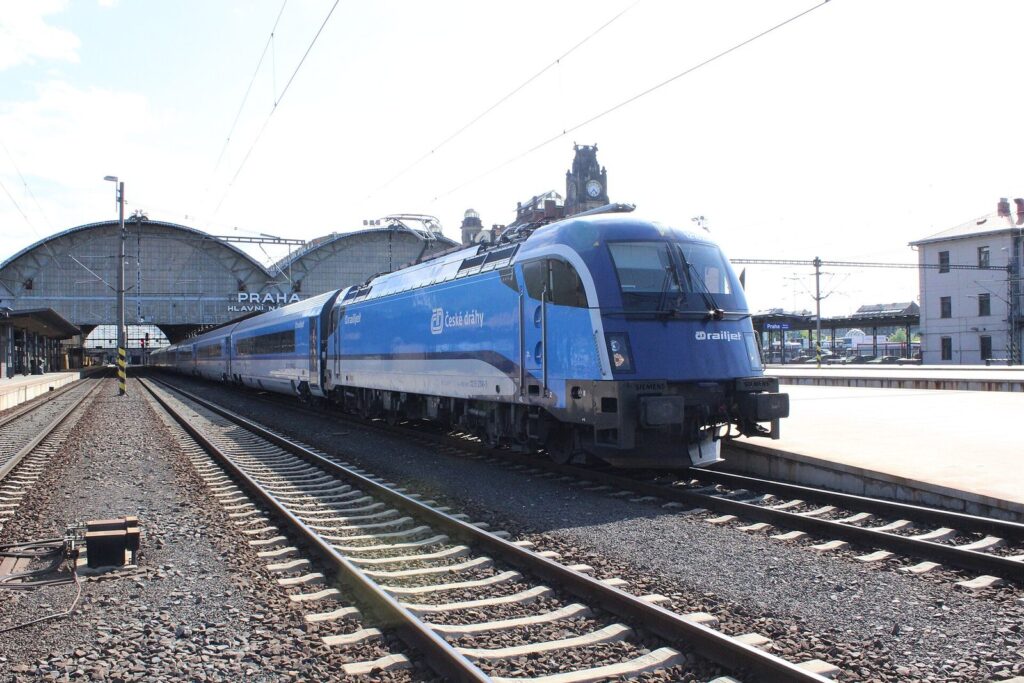
| Praha hl.n.–Wien Hbf | about 4h (Railjet) | about 20 a day | €3, optional |
| Wien Hbf–Budapest Keleti | about 2h40 | hourly | €3, optional |
Since autumn 2025 NS and DB have run their direct Amsterdam–Berlin service with ICE trains. Give Berlin and Prague three nights each and Vienna and Budapest two or three. Prague to Vienna has ÖBB and ČD Railjets every two hours, plus RegioJet. A Railjet seat reservation is optional, while RegioJet makes pass holders reserve, at €1.30 to €2.80 in 2nd class depending on the fare type.
Rather sleep through a leg? The EuroNight Metropol links Berlin, Prague, Bratislava and Budapest overnight, with a six-berth couchette at €44 a head for pass holders. I’d save it for the way back north, when a free morning in Berlin is worth more than one in Bratislava.
How long: 14 days works as Amsterdam 3 nights, Berlin 3, Prague 3, Vienna 2 and Budapest 2.
Verdict: the best first route in Europe. A 5-day pass (€318, or €239 if you’re under 28) covers the four long legs with a day to spare, and most of its trains take optional reservations. The one to watch is the Amsterdam–Berlin ICE, which needs a reservation from 25 June to 5 September in 2027.
2. The budget loop: Prague, Kraków and Budapest
Poland, Czechia and Hungary charge pass holders pocket change for reservations, which makes this the cheapest route in the guide to run. It bolts onto route 1 at either end, and our Eastern Europe itinerary fills in the stops.
| Leg | Journey time | Trains | Pass-holder reservation |
|---|---|---|---|
| Praha hl.n.–Kraków Główny | 5h37 direct | 5 direct a day | €0–€3.60, by operator |
| Kraków–Budapest | by day or overnight | day and night trains | €2.40–€3.30 by day; €17 in a six-berth couchette |
| Budapest Keleti–Wien Hbf | 2h20–2h40 | hourly | €3, optional |
| Side trip: Kraków–Warsaw | 2h20 by EIP Pendolino | about 23 a day | €10 on EIP; €0.70 on EIC and IC |
Prague to Kraków is a full day’s ride through Moravia and Silesia, so the overnight option is worth knowing: the EuroNight Chopin runs Prague–Ostrava–Kraków–Warsaw, with a seat at €3, a six-berth couchette at €34 and a four-berth at €39 for pass holders, and sleepers too. Heading back west, look up the EN Carpatia on PKP Intercity’s timetable: it is the overnight train PKP Intercity announced between Kraków and Vienna, Salzburg and Munich, and it would turn this into a proper loop.
Kraków is also where your daily budget recovers. Its day-to-day costs run roughly 15–25 per cent below Prague’s, so it’s the place to add a night rather than cut one.
How long: 9 days works as Prague 3 nights, Kraków 3 and Budapest 2, with Warsaw as a long day trip from Kraków if you want it.
Verdict: the cheapest route to run on a pass, and for that reason the one where a pass matters least. Leo Express advertises Prague–Kraków tickets from €2.50, subject to availability, so over-27s doing only this loop should price ordinary tickets first. As an add-on to route 1, it’s excellent value.
3. Benelux and the Rhine: Amsterdam, Bruges, Cologne and the Rhine gorge
Short hops, almost no reservations and the castle-lined Rhine gorge as the finale. This is the gentlest route here and the easiest to reach from London.
| Leg | Journey time | Pass-holder reservation |
|---|---|---|
| Amsterdam Zuid–Brussels | 2h08 on the EuroCity Direct | none needed or possible |
| Brussels–Bruges | about an hour | none |
| Brussels–Cologne | ICE; check your departure for its time | €5.50, optional |
| Cologne–Koblenz–Mainz | about 3h on the RB26, roughly hourly | none |
The Eurostar between Amsterdam Centraal and Brussels is a little quicker, but it charges pass holders a fee and caps their seats; the EuroCity Direct, which uses Amsterdam Zuid, costs nothing extra. Ghent sits on the Brussels–Bruges line, so you can stop on the way or do both as day trips from Brussels.
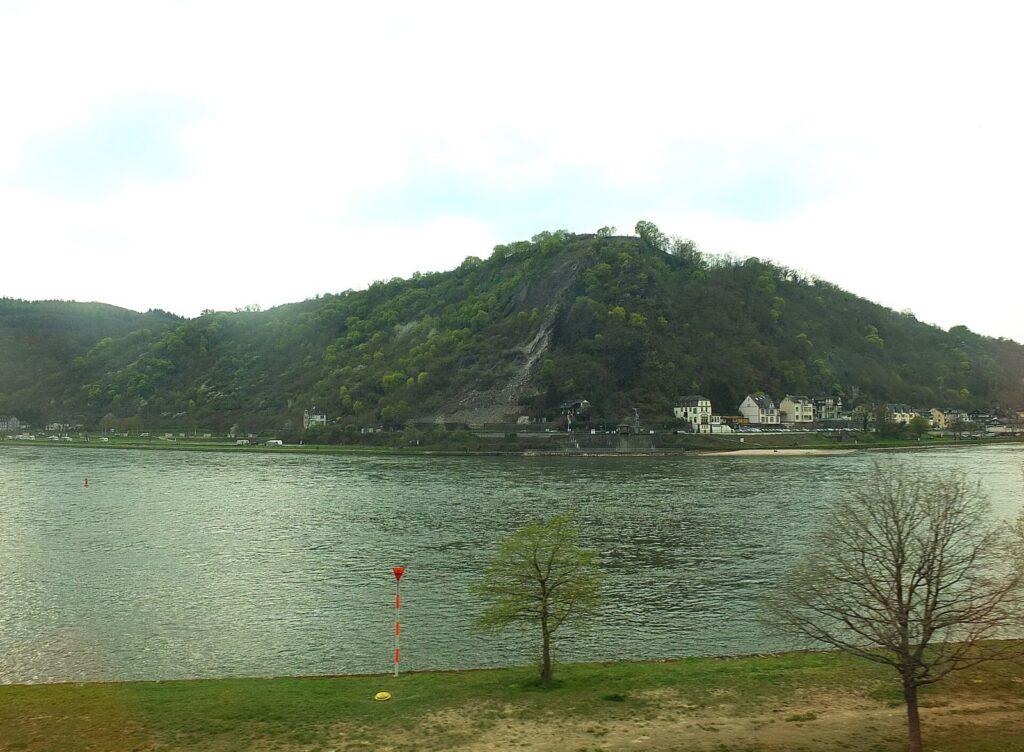
From Cologne, skip the ICE to Frankfurt if the Rhine is the point: it runs inland on the high-speed line and you’d see motorway embankments instead of castles. The RB26 MittelrheinBahn follows the west bank through the UNESCO-listed Upper Middle Rhine Valley between Koblenz and Bingen, a stretch with some 40 castles, palaces, fortresses and ruins. Sit on the left heading south.
How long: 8 days works as Amsterdam 2 nights, Brussels 2 with a day in Bruges, Cologne 2 and a night on the Rhine at Bacharach or St. Goar.
Verdict: lovely, but a weak pass route on its own, because the hops are too short to justify €283. Use it as the opening of route 1 (DB’s fastest Cologne–Berlin journeys take 5h32, and the choice of direct trains varies by date), or buy ordinary tickets and keep the pass for a longer trip. Interrail also sells a Benelux Pass for Belgium, the Netherlands and Luxembourg if you’re staying within the three.
Mountains and fjords: the Alps and Scandinavia
These two routes are about scenery, and the pass is a tool rather than the whole budget. The famous trains charge a reservation on top, and they’re worth it.
4. The Alpine traverse: Vienna, Innsbruck, Zurich, Zermatt, St. Moritz and Tirano
This is the route people picture when they put Interrail and mountains in the same sentence. Austria’s Railjets carry you to Switzerland, then the Glacier Express and Bernina Express finish the job; both need a paid reservation even with a pass. For more high lines, see the most scenic train journeys in Europe.
| Leg | Journey time | Pass-holder reservation |
|---|---|---|
| Wien Hbf–Zürich HB via Salzburg and Innsbruck | by Railjet; engineering works lengthen journeys until 12 December 2026 | €3, optional |
| Zürich–Luzern | about 41 minutes | €4.40, optional |
| Luzern–Interlaken Ost | about 2h (Luzern–Interlaken Express) | not needed |
| Interlaken Ost–Zermatt | over two hours, two changes | not needed |
| Zermatt–St. Moritz (Glacier Express) | about 8h, 291 km | CHF 54, compulsory |
| St. Moritz–Tirano (Bernina Express) | about 2h15 | CHF 32, compulsory |
| Tirano–Milano Centrale | regional train | none |
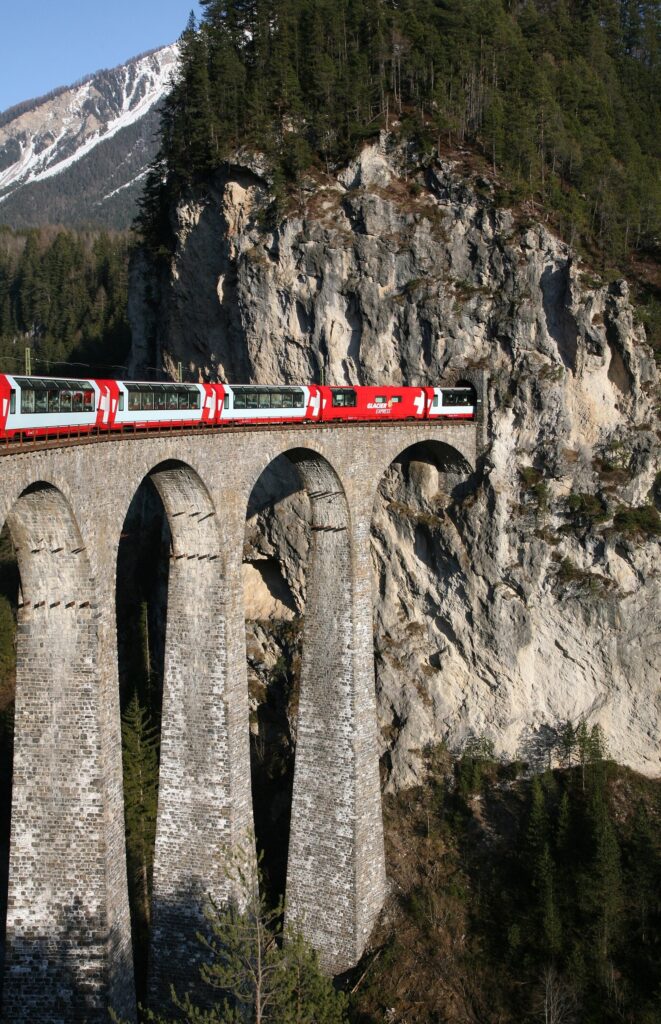
Two warnings. First, engineering work lengthens Austria–Switzerland journeys until 12 December 2026, so check each day’s plan in the app. Second, the panoramic trains are the pricey part. The Glacier Express reservation is CHF 54 in either class and opens 93 days ahead; the Bernina Express costs CHF 32 from St. Moritz, or CHF 40 to CHF 44 depending on the season for the longer run from Chur.
Here’s the trick most people miss. Ordinary RhB regional trains run the same Bernina line more often than the Bernina Express, with windows that open, and a seat reservation on them is an optional CHF 5. For photographers, that’s my pick over the panoramic coaches.
Up to the Jungfraujoch, a pass earns a discount rather than a free ride: the standard adult return from Interlaken Ost costs CHF 224.40 from 1 November to 12 December 2026, and Jungfrau Railways’ fare list shows other dates and which sections your pass covers. Combine Zurich, Lucerne and Interlaken into one travel day if you’re short of them: the two hops add up to about three hours on the train.
How long: 12 days works as Vienna 2 nights, Salzburg 1, Innsbruck 1, Zurich 1, Interlaken 3, Zermatt 2 and St. Moritz 1, then the Bernina to Tirano and on to Milan.
Verdict: worth every franc if mountains are why you came. A 7-day pass (€381) fits, with about CHF 86 on top for the two panoramic reservations; take the regional train over the Bernina and that falls to CHF 54 plus an optional CHF 5.
5. Scandinavia: Hamburg, Copenhagen, Stockholm, Oslo and Bergen
Book late in Norway and Sweden and fares climb (Oslo–Bergen runs from NOK 299 to NOK 899 depending on how far ahead you buy), while pass-holder reservations here cost €3 to €6.50. That gap makes this a natural pass route, especially if you like deciding the night before.
| Leg | Journey time | Pass-holder reservation |
|---|---|---|
| Hamburg–Copenhagen | overland via Jutland | €4 to €5.50 by train type; compulsory in summer, so check the dates for yours |
| Copenhagen–Stockholm | just over 6h, changing at Malmö from an Öresundståg to an SJ X2000 | €6.50 on SJ high-speed trains |
| Stockholm–Oslo | under 6h on SJ high-speed trains; 5 a day on weekdays, 3 on Saturdays, 4 on Sundays | compulsory; check the fee when you book |
| Oslo S–Bergen | see Vy’s timetable for your date | compulsory for pass holders; check the charge for your departure |
| Myrdal–Flåm (Flåm Railway) | about 1 hour, 20 km | 30 per cent off the fare |
Two 2026 changes shape this route. The direct X2000 between Copenhagen and Stockholm was listed as temporarily suspended on Interrail’s fee page in September 2026, so plan on a change in Sweden. And since 14 June 2026 České dráhy has run direct Prague–Copenhagen trains via Dresden, Berlin and Hamburg, up to three a day, which ties this route to route 1 without a flight.
The Bergen Line is the reason to come. Vy normally opens sales 115 days before departure, sometimes later when engineering work or timetable changes are planned, and summer seats go early, so book at least a month out for July. For the Hardangervidda plateau, sit on the left leaving Oslo. At Myrdal you can drop down the Flåm Railway to the fjord, a descent of 865 metres in about 55 minutes; an active pass travel day gets you 30 per cent off an ordinary single rather than a free ride.
If you’d rather sleep south, the EuroNight from Stockholm to Berlin via Malmö and Hamburg charges pass holders €37 for a six-berth couchette. In autumn SJ pauses that sleeper and Snälltåget adds departures on its own Stockholm–Berlin service.
How long: 13 days works as Hamburg 2 nights, Copenhagen 3, Stockholm 3, Oslo 2 and Bergen 2, with Flåm as a long day out from Bergen.
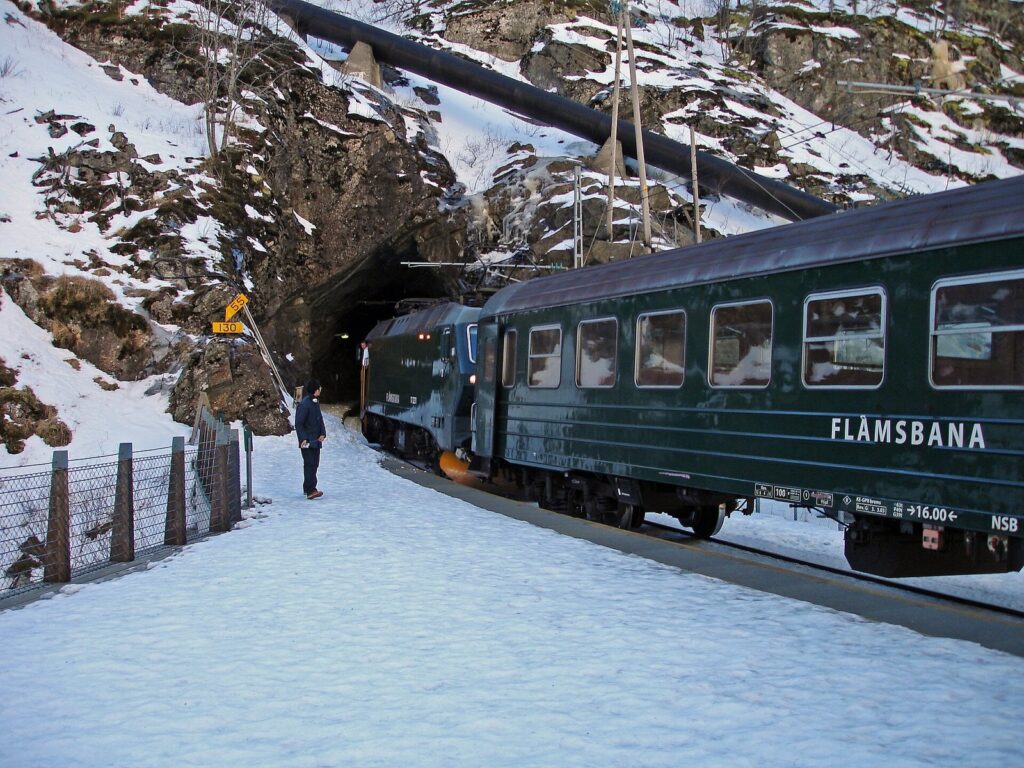
Verdict: a strong pass route in summer if you like to book late. A 5-day pass (€318) covers Hamburg to Bergen with a day to spare. The Flåm Railway needs its own ticket, but using that spare day on the trip gets you 30 per cent off an ordinary single.
Southern Europe: sunshine, with reservation fees
Italy, France and Spain have the fastest trains on the continent and the most expensive pass-holder reservations. Build these routes around regional trains where you can, and book the fast ones early.
6. Italy top to toe: Milan, Venice, Florence, Rome and Naples
Italy’s high-speed spine makes this the quickest route in the guide, with no leg much over two and a half hours. Our 10-day Italy itinerary slows it to a more sensible pace.
| Leg | Fastest time | Pass-holder reservation |
|---|---|---|
| Milano Centrale–Venezia Santa Lucia | 2h27, 20+ a day | €13, compulsory |
| Venice–Firenze Santa Maria Novella | about 2h | €13, compulsory |
| Florence–Roma Termini | a little over 1h30 | €13, compulsory |
| Roma Termini–Napoli Centrale | Frecciarossa; times on Trenitalia | €13, compulsory |
Every domestic Frecciarossa in Italy needs a €13 reservation, and Italo, which runs the same corridor, doesn’t accept the pass at all. Regional trains are the pass-friendly side of Italy: no reservation, just add the journey to your pass and board. Use them for Florence to Pisa or Lucca, Venice to Padua or Verona, and Naples to Salerno. Pompeii is the exception, as the Circumvesuviana from Naples isn’t covered.
Arriving from route 4 or Munich? The Railjets and EuroCity trains over the Brenner to Verona cost pass holders €10 in 2nd class, including the Italian supplement, or €5 more if you pay on board. Heading back north, Rome to Milan takes 2h52 at best, and Trenitalia’s Intercity Notte sleepers run south as far as Sicily if you want to keep going.
Greece is the natural extension, by sea. Superfast’s ferries between Italy and Greece, including the Bari–Patras crossing, give Global Pass holders deck passage on a travel day, but you still pay taxes and surcharges, and cabins cost extra. Minoan offers pass holders 15 per cent off passages and 10 per cent off cabins instead, and other lines set their own terms. No international trains run into Greece, so the ferry is the route; our Italy and Greece itinerary covers what comes next.
How long: 12 days works as Milan 2 nights, Venice 2, Florence 3, Rome 3 and Naples 2.
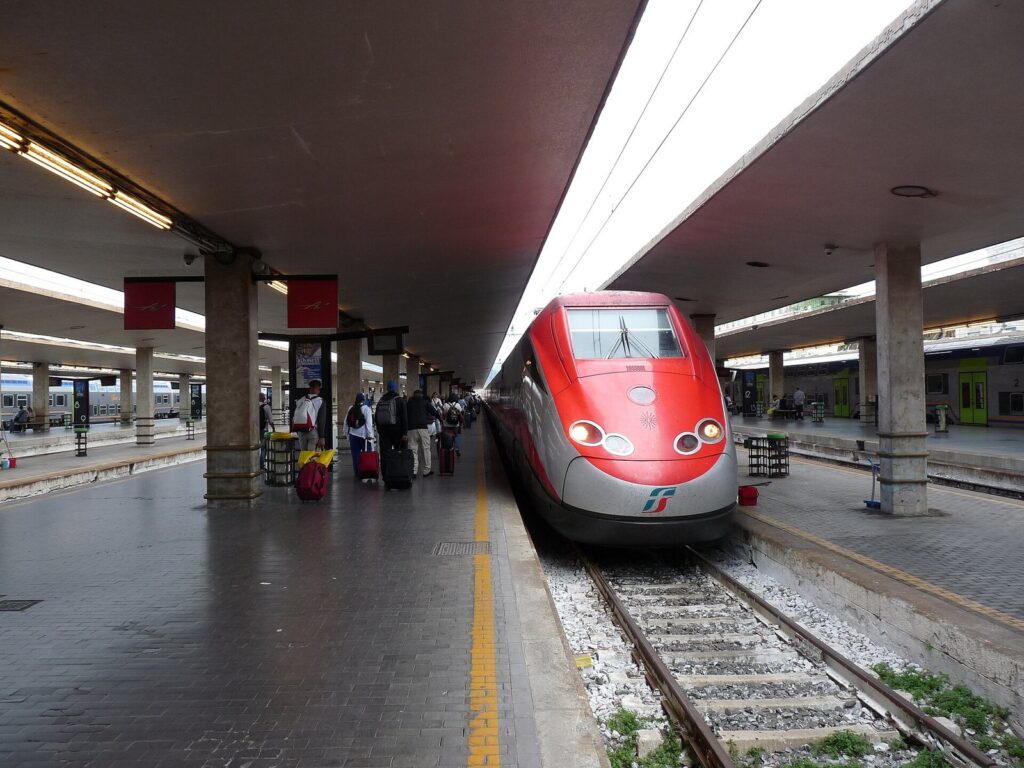
Verdict: the pass is marginal in Italy alone. Four Frecciarossa reservations add €52, and Trenitalia sells cheaper advance fares on legs like Florence–Rome, so price ordinary tickets first; the pass makes more sense when Italy is one part of a longer route. Is the Eurail pass worth it? runs the numbers.
7. The Mediterranean coast: Barcelona, Marseille, Nice and the Cinque Terre
A line that follows the coast for long stretches, from Catalonia along the Côte d’Azur to the Italian Riviera. It’s slower than it looks on a map, and for most of the way the sea is on your right as you head east, so pick your seat accordingly.
| Leg | Journey time | Pass-holder reservation |
|---|---|---|
| Barcelona Sants–Marseille | one direct Renfe AVE a day | €25, compulsory |
| Marseille–Nice | 2h36 fastest, about 27 a day | TER: none |
| Nice–Ventimiglia | just under an hour, frequent TERs | TER: as above |
| Ventimiglia–Genoa–La Spezia | regional and Intercity trains | none on regionals; €3 on Intercity |
| La Spezia–Pisa | regional trains | none |
Renfe’s once-daily AVE from Barcelona to Marseille (it starts in Madrid) is the fast way across the border, so book it before anything else. Renfe’s other French train, the daily AVE between Barcelona and Lyon, is the alternative if you’d rather go that way. Along the Côte d’Azur, TER regional trains call at Cannes, Antibes, Monaco and Menton; a few French TER services ask pass holders for a small reservation, so check the Rail Planner app before boarding. If you’d rather cut inland, Nice to Milan takes just over five hours with a change at Ventimiglia.
In the Cinque Terre, only Monterosso gets long-distance Intercity trains; from the south, change at La Spezia Centrale. Regional trains link the five villages. In season the Cinque Terre Express charges its own fare, so ask at La Spezia whether your pass is accepted before you rely on it; from 2 November 2026 to 19 March 2027 ordinary Liguria regional fares apply, and Trenitalia’s site gives the fare for your journey. Regional trains then carry on to Pisa and Florence.
How long: 11 days works as Barcelona 3 nights, Marseille 1, Nice 3 and the Cinque Terre 3, finishing in Pisa or Florence.
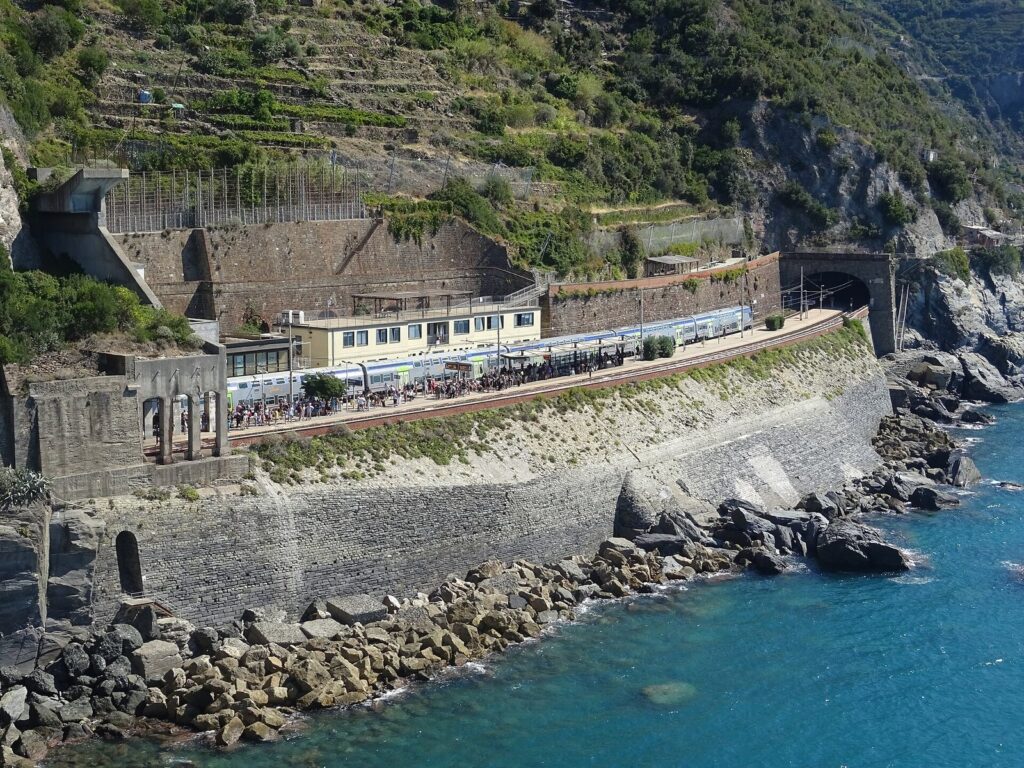
Verdict: gorgeous and slow. Go in May, June or September, ride the TER and the Italian regionals, and you’ll keep reservations close to the €25 for the AVE.
8. Spain’s high-speed loop: Barcelona, Madrid and Andalucía
Spain’s AVE network turns long distances into short hops, and pass holders pay €10 to reserve an AVE seat in 2nd class. It’s a better pass country than its reputation suggests, with one big exception: getting to Portugal.
| Leg | Fastest time | Pass-holder reservation |
|---|---|---|
| Barcelona Sants–Madrid Puerta de Atocha | about 2h30 | €10 (AVE) |
| Madrid–Córdoba | 1h45–1h50 | €10 (AVE) |
| Córdoba–Seville | about 45 minutes | €10 (AVE) or €4 (Avant) |
| Córdoba–Granada | 1h23, about 6 direct a day | €4–€10, by train type |
| Granada–Madrid | 3h20–3h45 | €10 (AVE) |
Direct trains run from Madrid to Seville if you’d rather skip Córdoba. I’d stop anyway: the Mezquita earns a night on its own, and Córdoba is the hinge for Granada, which you reach by doubling back from Seville.
OUIGO and Renfe’s own low-cost Avlo aren’t covered by the pass, but both sell advance seats worth comparing against a travel day: OUIGO’s Barcelona–Madrid starts at €19, and Avlo runs its own offers, so check their sites for your dates. Interrail’s September 2026 fee table also lists iryo with a €10 pass-holder reservation, so check it in the app if an iryo departure suits you better.
Portugal is the gap. The Trenhotel Lusitania sleeper between Madrid and Lisbon was suspended in March 2020, and the rail workaround via Badajoz and Entroncamento takes three trains, two of them with compulsory reservations. If Portugal matters, fly into Lisbon or Porto, ride the Alfa Pendular between them (2h50–2h58, with a €5 reservation bought locally), then cross into Spain on the Porto–Vigo Celta train, where the reservation is compulsory but free.
How long: 12 days works as Barcelona 3 nights, Madrid 2, Córdoba 1, Seville 3 and Granada 2, then the AVE back to Madrid for your flight.
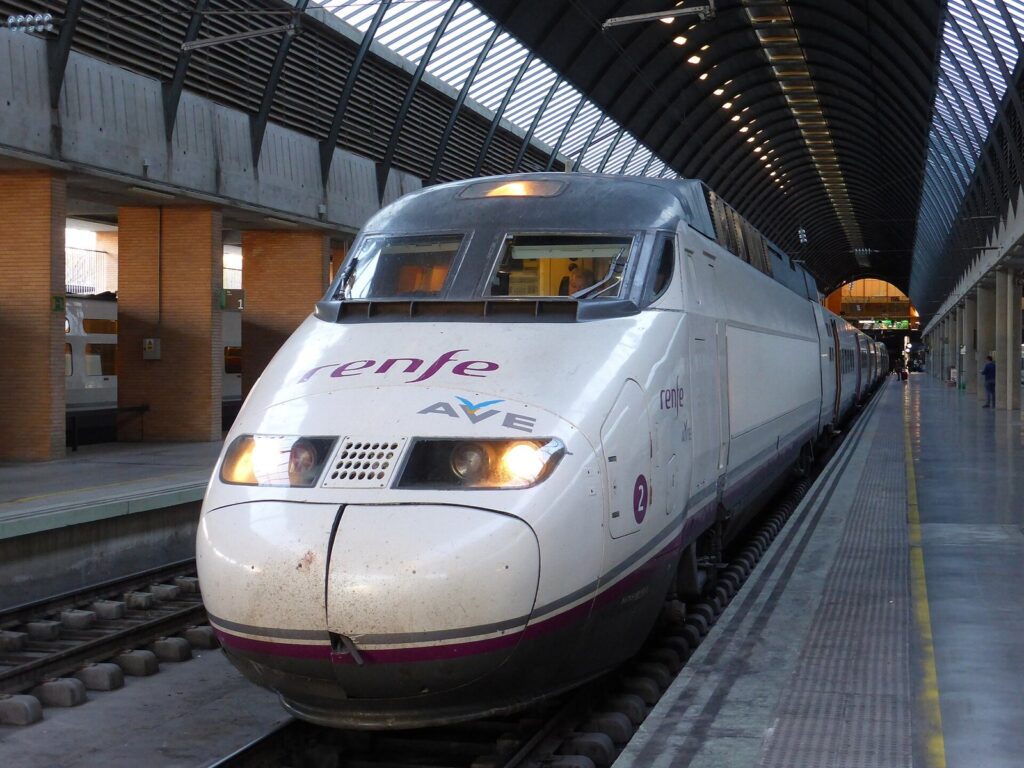
Verdict: a good pass route if you book late or change plans often. If your dates are fixed three months out, OUIGO and Renfe’s advance fares will usually beat it, and Portugal works better as its own trip.
Longer shots: the Balkans and a sleeper circuit
These two suit a second trip, or anyone who cares more about the journey than the destinations.
9. The Balkans: Ljubljana, Zagreb, Split, Mostar, Sarajevo and the Belgrade–Bar line
This is the route for people who like trains more than timetables. Rail covers the long mountain sections, buses fill the gaps between them, and two of the rail sections rank with the finest anywhere in Europe.
| Leg | Journey time | Pass-holder reservation |
|---|---|---|
| Ljubljana–Zagreb | about 2h15–2h47; 6 direct a day in the 2026 timetable, plus an extra train on Fridays and Sundays | about €3 |
| Zagreb–Split | 6h10 at best, few trains | €1–€3.60, optional |
| Split–Mostar | bus | not covered |
| Mostar–Sarajevo | about 2h, twice daily | none: Bosnia has no seat reservations |
| Sarajevo–Belgrade | bus | not covered |
| Beograd Centar–Bar | 11h overnight (19:54–06:54 in November 2026); check ŽPCG for a day train on your date | €3, compulsory |
The Mostar–Sarajevo line follows the Neretva gorge, and in 2026 a seasonal Talgo ran through to Ploče on Fridays, Saturdays and Sundays from 26 June to 27 September. The Belgrade–Bar railway is the showpiece, crossing the Mala Rijeka viaduct on the way down to the Adriatic. For November 2026, Montenegro’s ŽPCG lists one train from Beograd Centar, the overnight 433 at 19:54, reaching Bar at 06:54. If its timetable shows a day train on your date, take that for the views. You can’t buy those tickets online, so buy them at the station in Belgrade.
Two gaps to plan around. Passenger trains on the rebuilt Budapest–Belgrade line depend on approval of its ETCS signalling, so until MÁV or Srbijavoz show through trains in their journey planners, treat Belgrade as a place you reach by bus or plane. And the London–Istanbul dream hangs by a thread: Interrail says no international trains run in Greece, so the way into Istanbul is the overnight service from Sofia. Confirm it’s running before you build a route around it.
How long: 16 days works as Ljubljana 2 nights, Zagreb 2, Split 3, Mostar 2, Sarajevo 3 and Belgrade 2, then the train to Bar and a night on the coast.
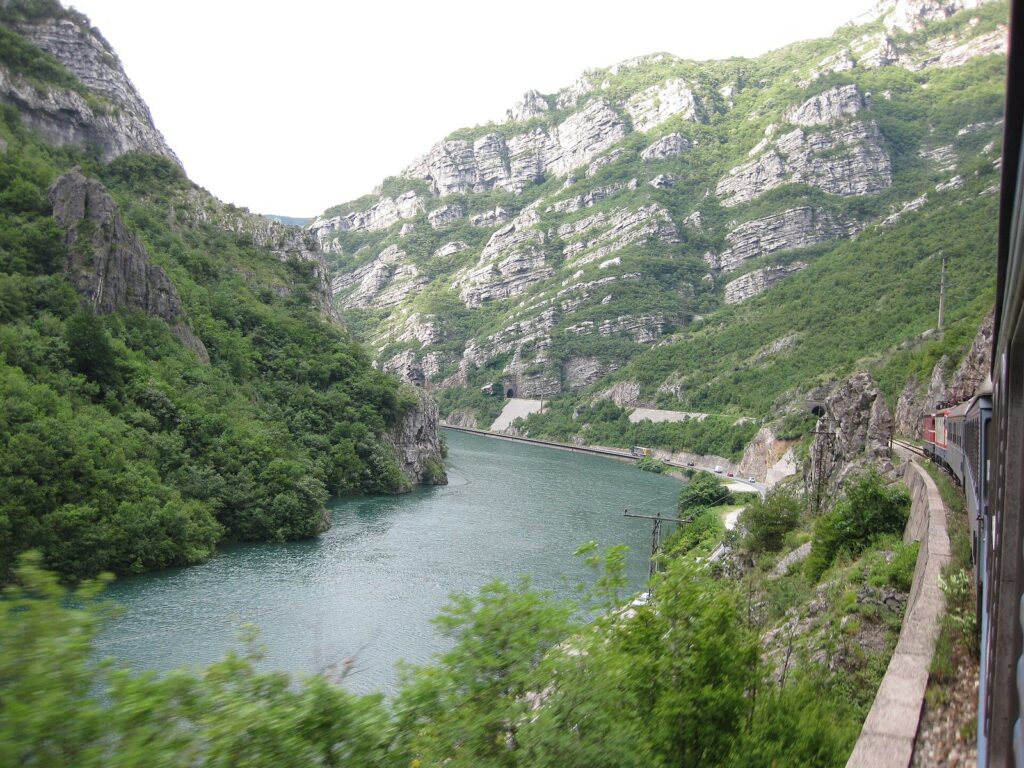
Verdict: my pick for a second Interrail trip, not a first. The pass is poor value here on its own, since Sarajevo–Mostar costs about €7–9 on the day, so bring the Balkans in as the tail of a longer trip on a 10-day pass.
10. The sleeper circuit: Brussels, Vienna, Rome and Milan
Three nights on trains, three hotel bills saved and just four travel days used. This is the route that shows what the night-train rule is for.
| Leg | Train | Pass-holder reservation |
|---|---|---|
| Brussels–Vienna | ÖBB Nightjet via Cologne, Munich and Salzburg, 3 nights a week | €19.90–€64.90 in a six-berth couchette, €29.90–€94.90 in a four-berth |
| Vienna–Rome | ÖBB Nightjet, daily, about 14h | six-berth €19.90–€64.90; four-berth or Mini Cabin €29.90–€94.90 |
| Rome–Milan | Frecciarossa, 2h52 fastest | €13 |
| Milan–Brussels | European Sleeper via Lugano and Cologne, 3 nights a week | an Interrail reservation, priced by class |
The Brussels Nightjet leaves Belgium on Monday, Wednesday and Friday nights and comes back from Austria on Sunday, Tuesday and Thursday. European Sleeper’s Brussels–Milan train, which first ran on 9 September 2026, leaves Brussels on Mondays, Thursdays and Saturdays and Milan on Wednesdays, Fridays and Sundays; from 13 December 2026 it also calls at Antwerp, Breda and Eindhoven. Pass holders buy an Interrail reservation for it in Budget, Classic or Comfort. Match those days before you book anything else, because they fix the shape of the whole trip.
Nightjet supplements for pass holders move with the date and demand. A couchette berth runs €19.90–€64.90 in a six-berth compartment or €29.90–€94.90 in a four-berth one, and a sleeper berth €59.90–€184.90 in a triple or €69.90–€224.90 in a double, per person; a standard single is €114.90–€479.90 for the cabin. All of these come on top of the pass. The Vienna–Rome service uses ÖBB’s new-generation stock. I’d book the four-berth couchette: most of the privacy of a sleeper for much less than a single.
How long: 9 days, leaving Brussels on a Friday night: Vienna 2 nights, Rome 3, an afternoon in Milan and the Friday sleeper home.
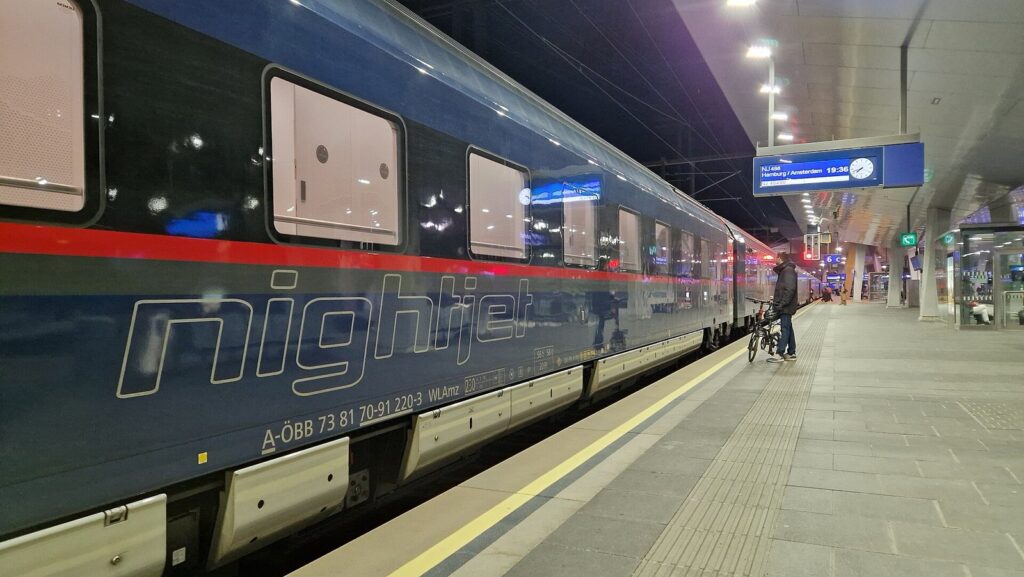
Verdict: the smartest use of a 4-day pass (€283) in this guide, as long as you book the sleepers early: ÖBB puts Nightjet tickets on sale up to 360 days ahead (as of September 2026), so there’s no need to wait once your dates are fixed.
Which Interrail route suits you?
Most people know within a line of this table which route is theirs.
| If you are | Pick | Why |
|---|---|---|
| A first-timer | Route 1 | Direct trains, big cities, and reservations that are mostly optional |
| Under 28 on a tight budget | Route 2 | Reservations from nothing to €3.60 on day trains, and cities that are easy on a budget |
| After mountains | Route 4 | The Glacier and Bernina lines, plus the Railjet run through Tyrol |
| After fjords and long summer evenings | Route 5 | The Bergen Line and the Flåm Railway |
| Travelling to eat | Route 6 or 8 | Italy’s regional detours and Andalucía’s short AVE hops |
| Short of time | Route 10 | Three capitals and Milan in nine days, with the nights spent moving |
| A rail enthusiast | Route 9 | The Belgrade–Bar line and the Neretva gorge |
| Travelling in winter | Route 1 or 10 | City-heavy routes that don’t depend on the weather |
Families should lean towards routes 3 and 1: few reservations, plenty to do when it rains, and in route 3’s case hops short enough for small children. Children aged 4–11 travel free on a Child Pass, up to two per adult, though they still pay reservation fees.
The best Interrail routes by season
The season changes which route I’d pick more than anything else, partly for the weather and partly for fares and reservation rules.
| Season | Best routes | Why | Watch for |
|---|---|---|---|
| Spring (March–May) | 8, 6 and 1 | Andalucía and Italy before the heat and the crowds | Bernina Express peak prices from 2 May |
| Summer (June–August) | 5, 4 and 3 | Long days on the Bergen Line and in the Alps | Compulsory summer reservations on some international ICEs (Amsterdam–Berlin from 25 June to 5 September 2027), and the busiest trains of the year |
| Autumn (September–October) | 7, 9 and 2 | Warm sea, thinner crowds, soft light in the Balkans | Seasonal extras wind down (the 2026 Sarajevo–Mostar summer trains stopped after 27 September); Zurich–Salzburg timetable changes run to 12 December 2026 |
| Winter (November–February) | 1, 10 and 3 | Christmas markets, night trains and Central European cities at their cheapest; Bruges’ market runs from 20 November 2026 to 3 January 2027 | Short daylight in the north, and mountain lines at the mercy of snow |
If I could pick one window for most of these routes, it would be the first half of June or the whole of September: long days, a warm sea in the south, and no summer reservation rules on ICEs such as Amsterdam–Berlin, though ICEs to and from France need a reservation all year. Scandinavia is the exception, because June to August is the point there, though Snälltåget charges high-season sleeper supplements from 28 May to 31 August.
How do you chain two Interrail routes?
The routes are built to link, and the joins are where a 10-day or 15-day pass starts to earn its price. These are the connections I’d use.
| Chain | Where they join | The train that links them |
|---|---|---|
| Route 3, then route 1 | Cologne | ICE to Berlin, from 5h32; direct trains vary by date |
| Route 1, then route 5 | Prague | ČD’s direct train to Copenhagen via Berlin and Hamburg, up to three a day |
| Route 1, then route 4 | Vienna | Railjet to Zurich by day (slower until 12 December 2026 while works last), or the daily Nightjet |
| Route 2, then route 4 | Kraków | Overnight to Vienna, Salzburg or Munich, if PKP Intercity’s EN Carpatia runs on your date |
| Route 4, then route 6 | Milan or Verona | A regional train from Tirano, or the Brenner Railjet to Verona |
| Route 7, then route 8 | Barcelona | No link needed: both routes start there |
| Route 10, then route 6 | Rome | No link needed: stay on in Rome and ride the Frecce south |
My favourite long trip joins three of them. Start with route 3 from Amsterdam, run into route 1 as far as Prague, then take ČD’s train to Copenhagen and finish with route 5 up to Bergen and Flåm. That’s about ten travel days over five weeks, which the 10-days-in-2-months pass (€447, or €335 for under-28s) covers. Our day-by-day Europe train itinerary and the backpacking Europe guide show how the nights and the budget fall on a trip that long.
Which pass fits which route?
The Global Pass covers the main trains on all ten routes, though a few lines, such as the Flåm Railway, give pass holders a discount instead. What changes is how many travel days you need, and your age: under-28s and over-60s pay less. These are 2026 list prices for 2nd class, and 1st-class passes are valid in 2nd class too.
| Global Pass | Adult | Youth (12–27) | Senior (60+) | Fits |
|---|---|---|---|---|
| 4 days in 1 month | €283 | €212 | €255 | Routes 2, 3 and 10 |
| 5 days in 1 month | €318 | €239 | €286 | Routes 1, 5, 6, 7, 8 and 9 |
| 7 days in 1 month | €381 | €286 | €343 | Route 4, or any route plus day trips |
| 10 days in 2 months | €447 | €335 | €402 | Two routes chained |
| 15 days in 2 months | €553 | €415 | €498 | Three routes, or a whole summer |
Four things are worth knowing before you buy:
- One name for everyone. Since 9 September 2026 the old Eurail pass has been sold under the Interrail name, and interrail.com shows the passes and prices available for your country of residence. Our Eurail vs Interrail guide explains what changed for travellers from outside Europe.
- One Country Passes. If route 8 is your whole trip, price the Interrail Spain Pass against the Global Pass on interrail.com. The Nordic Pass covers Denmark, Norway, Sweden and Finland for route 5, and the Benelux Pass suits route 3.
- The Plus Pass (Beta). It bundles the reservation fee on most trains plus three credits for high-demand ones. Price it against routes 6 to 8, where fees stack up fastest.
- Sales. Interrail runs occasional promotions: its September 2026 sale took 50 per cent off one-, two- and three-month continuous Global Passes. Check its current offers before you pay full price.
How much do reservations add to each route in 2026?
These are Interrail’s indicative pass-holder fees as listed in September 2026, per person and in 2nd class unless stated, with the operators’ own prices for the two Swiss panoramic trains. They change with little notice, so treat them as a budget rather than a quote. Our guide to high-speed trains in Europe covers the trains themselves.
| Train | Route here | Pass-holder fee | Compulsory? |
|---|---|---|---|
| Eurostar London–Paris or Brussels | getting to 1, 3 and 10 | €35 (Plus €40) | Yes, and pass-holder seats are limited |
| Eurostar London–Amsterdam | getting to 1 | €35 (Plus €43) | Yes; limited seats for pass holders |
| Eurostar Paris–Brussels (ex-Thalys) | getting to 3 and 10 | €27 | Yes; book early, as pass-holder places run out |
| TGV INOUI within France | 7 | €10–€20 in either class | Yes |
| TGV Paris–Barcelona | 7 and 8 | €35 | Yes |
| Renfe AVE Barcelona–Marseille or Lyon | 7 | €25 | Yes |
| Renfe AVE within Spain | 8 | €10 | Yes |
| Renfe Avant | 8 | €4 | Yes |
| Alfa Pendular and Intercidades, Portugal | 8 | €5, bought locally | Yes |
| Frecciarossa | 6 | €13 | Yes |
| Italian Intercity | 6 and 7 | €3 | Yes |
| EuroCity Zurich–Milan | 4 | €13–€17 | Yes |
| Railjet and EuroCity over the Brenner | 4 and 6 | €10 including the supplement | The Italy supplement is compulsory; the seat itself is optional |
| Glacier Express | 4 | CHF 54 | Yes |
| Bernina Express | 4 | CHF 32, or CHF 40–44 from Chur | Yes |
| SJ high-speed, Sweden | 5 | €6.50 | Yes |
| Stockholm–Oslo | 5 | €3 | Yes |
| Vy regional trains, Norway | 5 | €6 | Optional |
| German ICE and IC | 1 and 3 | €5.50 | Optional, except summer windows |
| Austrian Railjet | 1, 2 and 4 | €3 | Optional |
| Swiss Intercity | 4 | €4.40 | Optional |
| Polish EIP Pendolino | 2 | €10 (EIC and IC €0.70, recommended) | Yes |
| Hungarian Intercity | 2 | €1.70–€2.60 | Yes |
| Nightjet couchette | 10 | €19.90–€94.90, by berth and date | Yes |
Reserving through the pass’s own booking service adds €2 per person per train, so book direct with the operator where it sells pass-holder reservations.
Is a pass cheaper than ordinary tickets on these routes?
Add the reservations to the pass and you have the real rail cost of each route. Set that against the cheapest advance fares on its main legs and a pattern shows: the pass wins where the scenery trains are expensive, fares climb late or your plans are loose, and it loses where advance fares are cheap and your dates are fixed. These are adult 2nd-class figures; under-28s can knock a quarter off every pass price.
| Route | Pass plus reservations | Cheapest advance fares on main legs | My call |
|---|---|---|---|
| 1 | €318 + €0–€17 | Amsterdam–Berlin from €38; Prague–Vienna from about €11 | Pass for flexibility; tickets if you book early |
| 2 | €283 + €2–€25 | Prague–Kraków from about €13; Kraków–Budapest from about €19 | Tickets |
| 3 | €283 + €0–€9 | Amsterdam–Brussels from about €20 | Tickets |
| 4 | €381 + about CHF 86 | Glacier Express alone: CHF 166 plus the CHF 54 reservation | Pass, clearly |
| 5 | €318 + under €20 | Stockholm–Oslo from about €22; Oslo–Bergen NOK 299–899 | Pass if you book late |
| 6 | €318 + €52 | Milan–Venice from €9; Florence–Rome from €19.90 | Tickets, unless Italy is one part of a longer trip |
| 7 | €318 + €25–€35 | Nice–Ventimiglia from about €10 | Close; the pass wins if you add Italy’s long legs |
| 8 | €318 + €40–€50 | Barcelona–Madrid from €9 (OUIGO); Madrid–Seville from €22.90 (AVE) | Tickets if your dates are fixed |
| 9 | €318 + under €10 | Sarajevo–Mostar about €7–9 | Tickets |
| 10 | €283 + €81–€101 + one sleeper fee | European Sleeper from €59.99 in a seat or shared compartment without a pass | Pass, if you use every night |
The cheapest advance fares are limited and vanish first, so the pass looks better the later you book. That’s the honest case for Interrail in 2026: it buys freedom, and on the Alpine, Scandinavian and sleeper routes it saves money as well.
How to plan your route: booking windows and what to skip
Getting there. Fly into one end of your route and out of the other. From London, the Eurostar reaches Paris, Brussels and Amsterdam, but pass-holder seats are capped even when ordinary tickets are still on sale, so book yours early; our Eurostar guide has the details. UK residents should remember that the Eurostar uses their one outbound home-country journey.
Booking windows. Sales open at very different points, and the tight ones decide your order of booking.
| Train | Sales open | When I’d book |
|---|---|---|
| Eurostar | 10–11 months ahead | As soon as your dates are firm |
| TGV Paris–Barcelona, TGV Lyria, Paris–Milan | Months ahead; check SNCF Connect for the opening date | As soon as you know your dates |
| Nightjet, including Brussels and Amsterdam–Vienna | Up to 360 days ahead (ÖBB, September 2026) | As soon as your dates are firm |
| European Sleeper | Released to 7 September 2027 at the time of writing | Once your dates are firm |
| Glacier Express | 93 days ahead | A month ahead in summer |
| Oslo–Bergen | 115 days ahead, sometimes less around engineering work | 30 days or more ahead in summer |
| German, Austrian, Swiss and Benelux day trains | No reservation needed | On the day |
What to book ahead. Compulsory reservations on popular trains: the Eurostar, the Barcelona–Marseille AVE, every sleeper and the Glacier Express. Lock in the first and last legs of the route before you buy anything else.
What to skip. Don’t pay for optional seats outside summer. Don’t spend travel days on hops under an hour. Don’t buy Italo, OUIGO or Avlo tickets expecting the pass to help. And note that Portugal’s reservations have to be bought locally: the pass’s booking service can’t reserve trains in Portugal, Great Britain, Ireland, Finland, Bulgaria, Greece or Türkiye.
The app. Add each journey to its travel day in the Rail Planner app before you board, because the code for that day is your ticket. You can cancel a travel day until midnight the day before, and you have to be online to add a home-country journey. For reservations on operator websites, our guide to booking European train tickets walks through each one.
Tips: the mistakes that wreck an Interrail route
- Planning around trains the pass doesn’t cover. Italo in Italy, OUIGO in France and Spain, Avlo in Spain and the Circumvesuviana to Pompeii all need separate tickets.
- Assuming there’s an easy Madrid–Lisbon train. The sleeper between the capitals was suspended in March 2020, and by rail it now takes three trains, changing at Badajoz and Entroncamento.
- Counting on the direct Copenhagen–Stockholm X2000. It was listed as temporarily suspended in September 2026, so allow for a change.
- Boarding a compulsory-reservation train without one. A valid pass doesn’t save you: expect a fine or to be put off at the next stop.
- Changing trains after midnight on a night journey. That turns one travel day into two.
- Burning a travel day on a one-hour hop. Buy a ticket instead and keep the day for a long leg.
- Forgetting the summer windows. Amsterdam–Berlin ICEs need a reservation from 25 June to 5 September in 2027, and other international ICEs, Brussels–Cologne among them, can bring in their own summer rules, so check your date.
- Treating Swiss panoramic trains as free. The Glacier Express and Bernina Express charge every pass holder a reservation, CHF 54 and CHF 32–44.
- Building the Balkans around Budapest–Belgrade. Wait for a published timetable before you rely on it.
Frequently asked questions about Interrail routes
What is the best Interrail route for a first trip?
Amsterdam, Berlin, Prague, Vienna and Budapest. Every leg is one direct train of between two and six hours, Railjets need no reservation (RegioJet does), and each city is big enough to fill two or three nights. A 5-day pass at €318 (adult, 2nd class, 2026) covers it with a day to spare.
How many travel days do I need for a two-week Interrail route?
Count the long journeys, not the days away. Most two-week routes in this guide use four or five travel days, so a 5-day pass valid for a month fits. Buy a 7-day pass only if you’ll take day trips of more than an hour each way; shorter hops are cheaper as ordinary tickets. Our two-week Europe itinerary shows one worked example.
Can I do an Interrail route without paying for reservations?
Yes, if you stay in Germany, Austria, Switzerland, the Netherlands and Belgium, stick to ordinary trains and avoid the summer windows on international ICEs. Reservations there are optional, at €3 to €5.50 when you want one. Add Italy, France or Spain and fees of €10 to €35 a train become unavoidable on fast services.
Do night trains use one or two travel days?
One, if you board before midnight and don’t change trains after it: you use only the day of departure, however late you arrive. Change trains after midnight and you need two travel days, and both dates must fall within your pass’s validity. You still pay the couchette or sleeper reservation on top; on a Nightjet a couchette berth starts at €19.90, and the price rises with demand.
How far ahead should I plan an Interrail route?
Sketch the shape a few months out, then book in order of scarcity. Eurostar tickets go on sale 10–11 months ahead, ÖBB’s Nightjets up to 360 days ahead (as of September 2026), the Glacier Express 93 days ahead and Oslo–Bergen usually 115 days ahead. Day trains in Germany, Austria, Switzerland and the Benelux can wait until the day.
Can I use an Interrail pass on the Eurostar?
Yes, with a compulsory reservation: €35 in Standard or €40 in Plus between London and Paris or Brussels, and €35 or €43 to Amsterdam, as listed in September 2026. Pass-holder seats are limited, so they can sell out while ordinary tickets are still on sale. For UK residents, the Eurostar also counts as the outbound home-country journey.
Is there a direct train from Madrid to Lisbon?
The Trenhotel Lusitania sleeper that linked the two capitals was suspended in March 2020. The rail route Interrail lists runs via Badajoz and Entroncamento on three trains, two of which need a reservation. You’re better off flying between the capitals or treating Portugal as its own trip, joining Spain’s network on the Porto–Vigo Celta train, where the reservation is free.
Can I reach Greece or Istanbul on an Interrail route?
Greece, not by train: Interrail says no international trains run there. For Istanbul, BDZ runs an overnight Sofia–Halkalı train, on a revised timetable from 10 October to 12 December 2026; check it before you plan around it. For Greece, take Superfast’s ferry from Bari or Ancona to Patras, where a Global Pass gets you deck passage, though you still pay taxes and surcharges.
Are Eurail and Interrail routes different?
No. Both passes cover the same 33-country network and the same trains, and since 9 September 2026 the Eurail pass has been sold under the Interrail name. What differs is who can buy which version: interrail.com shows the passes available for your country of residence, and European residents get only two home-country journeys.
What is the cheapest Interrail route?
Prague, Kraków and Budapest. Reservations on this route’s day trains cost between nothing and €3.60, a six-berth couchette between Kraków and Budapest is €17, and Kraków’s daily costs run below Prague’s. Over-27s doing only this loop should price ordinary tickets first: Leo Express has Prague–Kraków seats from €2.50 when they’re available.
Final thoughts
Pick the route that matches your tolerance for reservations: Central Europe if you want to board and go, the south if you don’t mind paying for speed and sunshine, from €10–€20 on a domestic TGV and €13 on a Frecciarossa to €35 for the Paris–Barcelona TGV. Chain two routes with a night train and a 10-day pass (€447) starts to earn its price. Whatever you choose, book the Eurostar, the sleepers and the Swiss panoramic seats first, and leave everything else loose. For stations, luggage and the rest of the groundwork, start with our guide to European rail travel.
Related Europe guides
- How to Use the Interrail Pass: travel days, the app and the night-train rule step by step
- Eurail vs Interrail: Which Pass to Get: what the September 2026 rebrand means for your pass
- Night Trains in Europe: every sleeper that can carry a route overnight
- Most Scenic Train Journeys in Europe: the single journeys worth building a route around
- Europe Train Itinerary: 12 Routes With Times and Costs: a day-by-day plan built on routes like these
Sources and verification
Prices, timetables and rules in this guide were checked on 27 September 2026 against the official sources below. It is compiled from those sources rather than from other travel lists, and it does not describe first-hand visits. Fares, opening hours and entry rules change, so confirm with the operator before you book.
- Interrail: international train reservation fees
- Interrail: domestic train reservation fees
- Interrail: what is a travel day?
- Interrail help: Eurail or Interrail Pass
- Rhaetian Railway: Bernina Express
- Glacier Express: prices
- ÖBB Nightjet: connections from Vienna
- European Sleeper: Brussels–Milan
Hannah Brooks has spent fifteen years travelling, living and writing across Europe, from the Arctic tip of Norway to the south of Sicily. She has planned hundreds of European itineraries for readers and is Senior Europe Editor at EuropeanTourism.org.
Photo credits
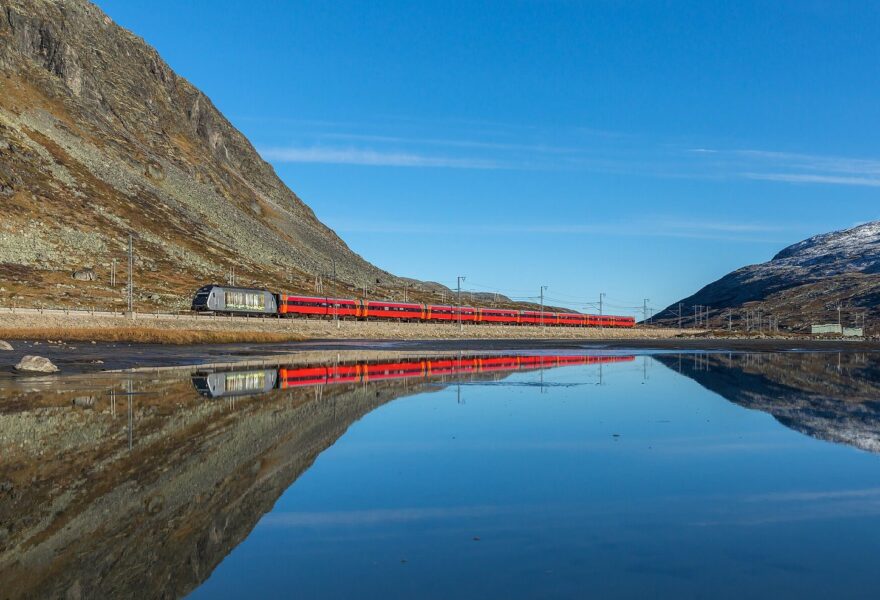
- Oslo–Bergen train reflected in a still lake on the Hardangervidda plateau, a highlight of Interrail routes in Norway (top photo): photo by Kabelleger / David Gubler, Wikimedia Commons (CC BY-SA 4.0)
- Blue České dráhy Railjet train at a platform of Prague main station: photo by Jan Polák, Wikimedia Commons (CC BY-SA 3.0)
- Wooded slope and riverside village across the Rhine between Koblenz and the Loreley: photo by Ad Meskens, Wikimedia Commons (CC BY-SA 4.0)
- Red Glacier Express train crossing the stone arches of the Landwasser Viaduct into a tunnel: photo by Daniel Schwen, Wikimedia Commons (CC BY-SA 2.5)
- Green Flåm Railway train at Kjosfossen halt beside a snowy rock cutting and tunnel: photo by ashfay, Wikimedia Commons (CC BY-SA 2.0)
- Red and white Frecciarossa high-speed train at a platform in Florence Santa Maria Novella station: photo by Smiley.toerist, Wikimedia Commons (CC BY-SA 4.0)
- Double-deck regional train at Manarola station between a tunnel mouth and the sea: photo by Remontees, Wikimedia Commons (CC BY-SA 4.0)
- White Renfe AVE high-speed train under the roof of Seville Santa Justa station: photo by CARLOS TEIXIDOR CADENAS, Wikimedia Commons (CC BY-SA 4.0)
- Turquoise Neretva river between steep limestone cliffs seen from a train window: photo by Webmice, Wikimedia Commons (Public domain)
- New-generation ÖBB Nightjet sleeper train waiting at a platform in Vienna Hauptbahnhof: photo by Jean-Frédéric, Wikimedia Commons (CC BY 4.0)