Europe by Train for Beginners
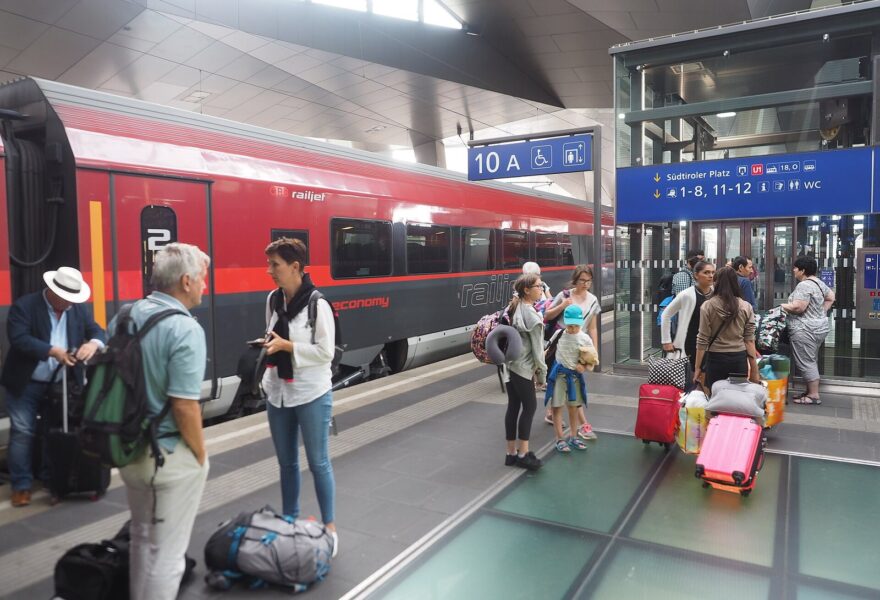
This guide to Europe by train for beginners starts with the answer. Pick three or four cities on one fast line, book the high-speed legs when sales open, keep short regional hops flexible, check which station you leave from, and pack a bag you can lift onto a rack. Most first-trip problems start with one of those five.
It’s written for first-timers, including visitors from North America and Australia who may never have taken a long-distance train at home. The one caveat that matters: Europe has no single railway, so fares, rules and apps change at the border. Our complete guide to train travel in Europe covers the whole network; this page is the first-trip version. Checked against official sources in September 2026.
| At a glance | Europe by train, first trip |
|---|---|
| Cost | Advance fares from about €15–€40 on many busy routes; the same seat bought on the day can cost several times more |
| Time needed | A few hours per leg on a sensible first route; allow more time door to door for a long leg |
| Best for | City-to-city trips of up to five hours or so in France, Benelux, Germany, Switzerland, Austria, Italy and Spain |
| Book ahead | High-speed, international and night trains, as soon as sales open (anywhere from 2 to 12 months out) |
| Buy on the day | Regional trains, Swiss trains and most short hops |
| Pass or tickets? | Tickets for a first trip of three to five legs; a pass for many long legs or open-ended plans |
Is Europe by train a good idea for a first trip?
Usually, yes. Trains run from city centre to city centre, most have no security checks, and nobody weighs your suitcase. On journeys of up to four or five hours the train is often quicker door to door than flying, once you add the airport transfers, the queues and the time at the gate.
It isn’t the answer everywhere. Western and central Europe have dense, fast networks. Elsewhere, some links that look obvious on a map are harder than they seem: by rail, Madrid to Lisbon takes three trains, changing at Badajoz and Entroncamento, with reservations needed on two of the legs.
| Route | Fastest train | My call |
|---|---|---|
| London–Paris | 2h16 by Eurostar | Train, easily |
| Paris–Brussels | 1h22 | Train |
| Rome–Florence | About 1h30 by Frecciarossa | Train |
| Madrid–Barcelona | About 3h in 2026 (normally 2h30) | Train |
| Paris–Amsterdam | 3h20 direct | Train |
| Amsterdam–Berlin | From 5h51 | Train if you enjoy the ride; otherwise a close call |
| Paris–Barcelona | About 6½–7 hours direct | Close call: the train for the scenery, a flight for speed |
| Madrid–Lisbon | No direct train | Fly, or take the coach |
The softer reasons count too. You watch the country go by instead of the tops of clouds, you can stretch your legs, and a window seat along the Rhine or through the Alps becomes part of the holiday rather than dead time. The downsides are real but manageable. Late-booked fares can sting, strikes happen (France and Italy see their share), and every country does things slightly differently.
Verdict: for a first trip built around cities in western and central Europe, make the train your default. Fly the long jumps, such as Lisbon to Berlin, and take the train for everything in between. Our guide to getting around Europe weighs trains against flights, coaches and hire cars.
How Europe’s railways work, in five minutes
Europe doesn’t have one railway. Each country has its national operator, and on the busiest lines rival companies now compete with it, each with its own website, fares and rules. Grasp that and half the confusion goes. You’re not booking “a European train”; you’re booking SNCF, or Trenitalia, or Deutsche Bahn.
| Country | Main operators | Fast trains | Seat reservation on fast trains | Where to buy |
|---|---|---|---|---|
| France | SNCF, Trenitalia France | TGV INOUI, OUIGO, Frecciarossa | Included and compulsory | SNCF Connect, OUIGO, Trenitalia |
| Germany | Deutsche Bahn (DB) | ICE, InterCity | Optional | DB website or DB Navigator app |
| Italy | Trenitalia, Italo | Frecciarossa, Italo | Included and compulsory | Trenitalia, Italo |
| Spain | Renfe, OUIGO, Iryo | AVE, Avlo, OUIGO, Iryo | Included and compulsory | Each operator’s own site |
| Austria | ÖBB, Westbahn | Railjet | Optional | ÖBB, Westbahn |
| Switzerland | SBB | InterCity, EuroCity | Optional, except panoramic trains | SBB website or SBB Mobile app |
| Netherlands | NS | Intercity, Intercity Direct | None on domestic trains | NS, NS International |
| Belgium | SNCB/NMBS | InterCity | None on domestic trains | SNCB |
| Czechia | ČD, RegioJet, Leo Express | Railjet, EuroCity | Varies by operator | Each operator’s own site |
| UK to the continent | Eurostar | Eurostar | Included and compulsory | Eurostar |
The four kinds of train you’ll meet
| Type | Examples | What it’s like | Reservation | How to buy |
|---|---|---|---|---|
| High-speed | TGV, ICE, Frecciarossa, AVE, Eurostar | Airline-style: assigned seats, few stops | Compulsory in France, Italy, Spain and on Eurostar; optional in Germany | Book ahead; fares climb as trains fill |
| InterCity and EuroCity | IC, EC, Railjet | Long-distance, more stops, often a bistro | Usually optional | Early for the best price, or on the day |
| Regional | TER, Regionale, RE, S-Bahn, Cercanías | Commuter train: no frills, lots of stops | None | On the day, at a fixed price |
| Night | Nightjet, Intercités de Nuit, European Sleeper | A hotel on rails: seats, couchettes, sleepers | Compulsory for couchettes and sleepers; optional for seats on some trains | As soon as sales open |
High-speed trains carry most first trips, and our guide to high-speed trains in Europe takes them country by country. Regional trains are the ones beginners overlook: slower, but cheap, and most let you board without a reservation, even if you sometimes stand. Rules vary, though. Some French TER services need a reservation, and Norwegian regional trains often get fully booked. Night trains save a hotel bill on the long hops; if one tempts you, read how Europe’s night trains work before booking. Panoramic trains such as the Glacier Express are a category of their own, with compulsory reservations, and they get their own page in our scenic train rides in Europe guide.
Competition has redrawn the map
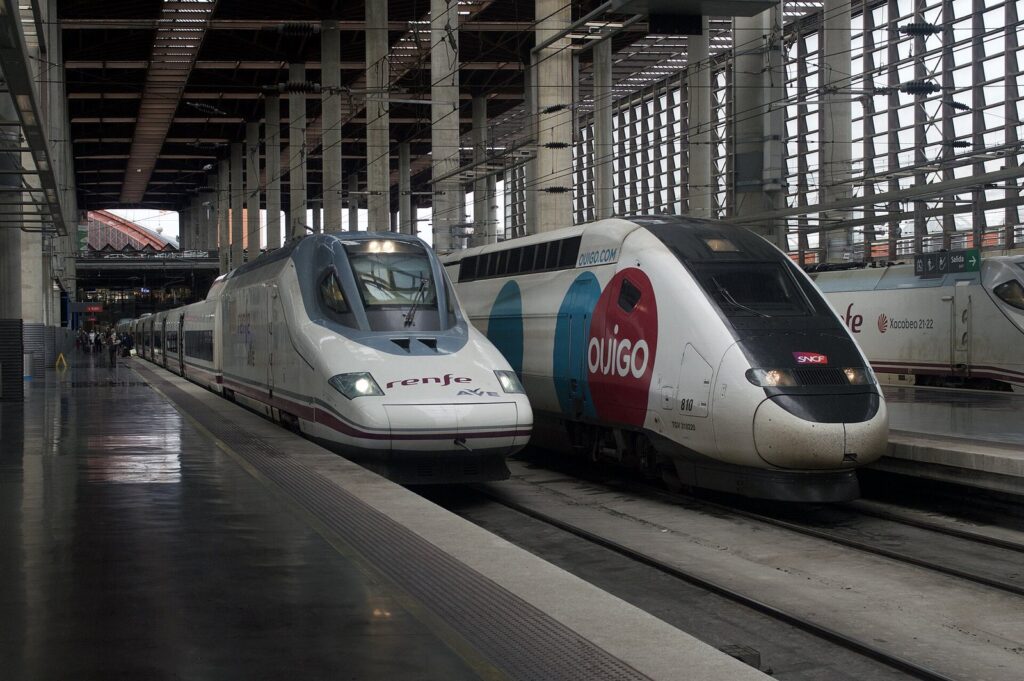
In the last few years, rival operators have moved onto several of Europe’s busiest high-speed lines. OUIGO (SNCF’s low-cost brand) and Iryo compete with Renfe between Madrid and Barcelona. Italo has been taking on Trenitalia since 2012. Trenitalia, in turn, now runs its own Frecciarossa trains from Paris to Lyon, Marseille and Milan.
For beginners that means more trains and keener fares, with one trap. A ticket or pass for one company isn’t valid on a rival’s train, and Eurail and Interrail passes aren’t accepted on Italo or OUIGO at all.
Europe by train for beginners: the easiest first routes
The best first route is short, frequent and simple: big stations at both ends, a train at least every hour or two, and no change on the way. These eight fit, and each can anchor a longer trip. For 33 more ambitious ideas, see our pick of the best train routes in Europe.
| Route | Fastest journey | Operators | Advance fares from (2026) | Why it’s a good first ride |
|---|---|---|---|---|
| London–Paris | 2h16 | Eurostar | £39 | One train, centre to centre |
| Paris–Brussels–Amsterdam | 1h22, then about 1h52 by Eurostar or 2h08 by Eurocity Direct to Amsterdam Zuid | Eurostar, Eurocity Direct | €29 (Paris–Brussels) | Three capitals, frequent trains |
| Paris–Lyon–Provence | Under 2h to Lyon, then on to Avignon TGV | TGV INOUI, OUIGO, Frecciarossa | €16 (OUIGO to Marseille) | Fast, frequent and competitive |
| Rome–Florence–Venice | About 1h30, then about 2h | Frecciarossa, Italo | €14.90 (Italo, Rome–Florence) | Italy’s big three on one line |
| Munich–Salzburg–Vienna | From 1h43, then around 2h30 | ÖBB Railjet | Saver fares; seats optional | Two countries, one comfortable train |
| Zurich–Lucerne–Interlaken | 41 min, then about 2h | SBB, Zentralbahn | About CHF 27 (Zurich–Lucerne) | Lakes and mountains; no booking needed |
| Madrid–Barcelona | About 3h in 2026 (normally 2h30) | Renfe AVE, OUIGO, Iryo | €9 (OUIGO) | Around 30 direct trains a day |
| Vienna–Budapest | Around 2h40 | ÖBB Railjet Xpress | Saver fares | Two capitals, one easy train |
London–Paris by Eurostar
The obvious first ride if you’re starting in Britain. Trains run from London St Pancras International to Paris Gare du Nord in as little as 2h16, with advance Standard fares from £39. It’s also the train in this guide that works most like an airport, with ticket gates, a bag scan and passport control before boarding, so arrive at the time printed on your ticket. The details are in our Eurostar guide.
Paris, Brussels and Amsterdam
Eurostar’s former Thalys trains link Paris Gare du Nord with Brussels-Midi in 1h22 and run on to Amsterdam, about 1h52–1h57 beyond Brussels; Paris–Amsterdam direct takes 3h20. Paris–Brussels Standard fares start at €29, subject to availability, so the cheapest seats go to those who book early. Between Brussels and Amsterdam there’s also the Eurocity Direct, run by the Belgian and Dutch railways, which takes 2h08 to Amsterdam Zuid. Our western Europe itinerary builds a trip around this corridor.
Paris to Lyon and Provence
Trains to the south-east leave from Paris Gare de Lyon. Lyon is just under two hours away, Avignon TGV lies further down the line, and three companies compete on it: SNCF’s TGV INOUI, its low-cost OUIGO (from €16 to Marseille) and Trenitalia’s Frecciarossa. OUIGO has two catches. Its base fare comes with a smaller luggage allowance, and some OUIGO trains use outer stations such as Marne-la-Vallée–Chessy instead of central Paris. Our south of France travel guide takes it from the platform.
Rome, Florence and Venice
Italy’s classic trio sits on one line. Frecciarossa trains cover Rome–Florence in about 1h30, and Italo runs Florence–Venice in about two hours; booked early, Italo’s Rome–Florence fares start at €14.90. In Venice, stay on the train to Venezia Santa Lucia, the terminus on the Grand Canal. Venezia Mestre, the stop before it, is on the mainland. Our 10-day Italy itinerary is built on this line.
Munich, Salzburg and Vienna
ÖBB’s Railjets run between Munich and Vienna roughly every hour, calling at Salzburg. Munich–Salzburg takes from 1h43, and Salzburg–Vienna around 2h30; check the timetable for your date. Seat reservations are optional, which makes this a relaxed line to learn on. Keep your passport handy all the same: the route crosses the German–Austrian border, where police spot checks happen.
Zurich, Lucerne and Interlaken
For a rail beginner, Switzerland is about as easy as Europe gets. Ordinary Swiss trains need no reservation, connections are timed to work, and a standard ticket isn’t tied to one train. Zurich to Lucerne takes under an hour (around CHF 27 for a standard single), and the Luzern–Interlaken Express climbs over the Brünig Pass to Interlaken Ost; the SBB website and app give the times for each departure. Fares are in Swiss francs, not euros.
Madrid and Barcelona
Three companies compete on Spain’s busiest high-speed line: Renfe’s AVE, OUIGO and Iryo. Renfe pulled its low-cost Avlo brand off this route in September 2025 and runs AVE trains in those slots instead. Between them they run around 30 direct trains a day, and booked ahead, OUIGO’s fares start at €9 (extra bags cost more). Direct trains currently take about three hours on OUIGO’s timetable, so check the journey time of the departure you choose. Arrive early, too. At big Spanish stations your luggage goes through a scanner before you reach the platform, and boarding closes two minutes before departure. For where to go next, see the best places to visit in Spain.
Vienna to Budapest, and Berlin to Prague
Two easy doors into central Europe. Railjet Xpress trains link Vienna and Budapest in around 2h40, and direct trains from Berlin to Prague take about four hours, much of it beside the Elbe. Hungary and Czechia keep their own currencies, the forint and the koruna, so domestic fares there aren’t in euros. Our eastern Europe itinerary links them up.
Tickets, fares and reservations explained
European rail fares come in three basic shapes, plus the pass. Knowing which one you’re holding clears up most of the confusion.
| Fare type | Typical names | How the price behaves | Flexibility | Best for |
|---|---|---|---|---|
| Advance (saver) | Sparpreis (DB), Sparschiene (ÖBB), Economy (Trenitalia), OUIGO, Avlo | Cheapest early, rising as the train fills | One train only; changes limited or paid | Long-distance legs on fixed dates |
| Flexible | Flexpreis (DB), Base (Trenitalia), Standard-Ticket (ÖBB) | High and fixed | Any train on the route that day | The one leg you can’t pin down |
| Regional | TER, Regionale, Nahverkehr | Fixed | Not tied to one train in most countries | Short hops |
| Pass plus reservations | Interrail, Eurail | Paid up front, plus seat fees | Most trains; reservations extra | Many long legs, open plans |
Advance fares: cheap but tied to one train
Most long-distance fares are priced like airline seats: cheapest when sales open, dearer as the train fills. Deutsche Bahn’s Sparpreis starts at €21.99 in second class where seats remain, while a flexible Berlin–Munich fare bought on the day costs over €150, so compare both for your departure. OUIGO’s fares average about €34.70 in 2026, yet its dearest seats now reach €119.
The catch is that an advance ticket is valid only on the train you booked. Miss it and you normally need a new ticket. Deutsche Bahn softens this: it lifts the restriction automatically when a delay of at least 20 minutes at your destination is expected on a domestic journey.
Flexible fares: pay more, worry less
A flexible ticket lets you take any train on your route on the day you chose, and it’s easier to change or refund. It also costs a good deal more. Keep it for a single leg at most, the one where your plans are uncertain, and book everything else in advance.
Regional tickets, and Italy’s validation rule
Regional trains have no reservations and no surge pricing: buy a ticket, get on. Italy adds one rule that catches beginners out. A paper regional ticket must be validated in the machines at the station before the train leaves, and inspectors fine passengers whose tickets aren’t stamped. Trenitalia’s digital regional tickets validate themselves at the departure time of the train you selected, so buy them for the train you’ll actually catch.
Seat reservations
A reservation is a seat booking, not a ticket, and whether you need one depends on the train. On German ICE and Austrian Railjet trains it’s optional, and on ordinary Swiss trains it’s rarely worth paying for. Pass holders are the ones who pay separately; the pass section below has the figures.
Tickets on your phone
Almost every operator now issues e-tickets with a QR code. Download them before you travel, because signal vanishes in tunnels and mountains, and carry the passport or ID card that matches the name on the ticket. Inspectors on international trains may ask to see it.
Verdict: book advance fares for the long, fixed legs, buy regional tickets as you go, and pay for flexibility on one leg at most.
When should you book European train tickets?
As early as the operator allows for high-speed, international and night trains, and on the day for regional ones. The snag is that every operator opens sales at a different point.
| Operator | Sales typically open | Worth knowing |
|---|---|---|
| Eurostar, all routes | 10–11 months ahead | Dates affected by engineering works can open later |
| Deutsche Bahn | 12 months within Germany and to the Benelux and Switzerland | 6 months to most other countries |
| SNCF (TGV INOUI, Intercités) | Usually about 4 months, with exceptions | On 11 March 2026 TGV INOUI opened sales for travel from 4 July to 12 December |
| Trenitalia | Varies by train | Check Trenitalia for your chosen departure |
| Renfe | When each train is released in Renfe’s system | Check Renfe’s booking calendar for your route and dates |
| ÖBB | Sparschiene day-train fares up to 180 days | Nightjet sleepers up to 360 days |
| SBB (Switzerland) | Up to 6 months | Ordinary tickets are fine to buy on the day |
| Poland, Portugal, Croatia, Slovenia and others | About 60 days | Polish domestic trains: 30 days |
Two practical rules follow. First, set a reminder for the day sales open on your key legs: Eurostar, anything in Italy or Spain in summer, and every night train. Second, don’t panic if a date isn’t bookable yet. An empty calendar usually means the timetable hasn’t loaded, not that the train has sold out.
How much does early booking save? Rome to Florence costs roughly €20 a month or more ahead and about €29 a week out, and Berlin–Munich runs from €21.99 to over €150. The season matters as well. Peak runs roughly from mid-May to early September, and late September is increasingly busy too.
Where to buy
Buy from the operator where you can: SNCF Connect for France, Deutsche Bahn for Germany (its site also sells many cross-border tickets), Trenitalia and Italo for Italy, Renfe, OUIGO and Iryo for Spain, plus ÖBB, SBB, NS International and Eurostar. Third-party apps show several companies at once, which is handy for comparing, but some add booking fees, and all of them put a middleman between you and any refund. For timetables, DB’s free Navigator app covers the whole continent, including trains DB doesn’t sell. Our step-by-step guide to booking European train tickets walks through each site.
Verdict: book Eurostar, high-speed and night legs as soon as they open, and leave regional and Swiss trains until you’re there.
Do you need a rail pass for your first trip?
Probably not. A pass shines when you take lots of long, expensive journeys, often at short notice. A first trip of three to five legs booked a month or two ahead usually costs less on ordinary tickets, and it’s simpler.
Interrail and Eurail are the same pass at the same price, and since 9 September 2026 both are sold under the Interrail name, with interrail.com showing the passes available for your country of residence. The Global Pass covers 33 countries. Adult prices for 2026:
| Global Pass, adult | 2nd class | 1st class |
|---|---|---|
| 4 travel days in 1 month | €283 | €367 |
| 5 travel days in 1 month | €318 | €413 |
| 7 travel days in 1 month | €381 | €495 |
| 10 travel days in 2 months | €447 | €581 |
| 15 travel days in 2 months | €553 | €718 |
| 15 days in a row | €476 | €618 |
| 1 month in a row | €696 | €904 |
Youth passes (ages 12–27) cost about a quarter less, so a 4-day youth pass is €212, and seniors (60 and over) pay €255. Child passes are free with a paying adult.
The price isn’t the whole story. A pass doesn’t include seat reservations, and on the fast trains beginners use most, they’re compulsory:
| Train | Pass-holder reservation, 2026 |
|---|---|
| French TGV INOUI | €10–€20 in either class |
| Italian Frecciarossa | €13 in either class |
| Eurostar London–Brussels | €35 in Standard |
| Eurostar Paris–Amsterdam | €32 in Standard |
| TGV Paris–Milan | €31 in 2nd class |
| TGV Paris–Barcelona | About €35 |
| German ICE, Austrian Railjet | Optional |
| Swiss InterCity | Optional, about €4.40 |
| Night trains | Compulsory for couchettes and sleepers, optional for seats on some trains (in Bulgaria and Finland, for instance); fees vary by train, from €0–€4 for a seat in Poland, more for a bed |
On its London routes, Eurostar also holds pass-holder seats that can sell out while ordinary tickets are still on sale. Eurostar pass-holder bookings open up to six months ahead.
A few pass rules trip up newcomers:
- A travel day runs from midnight to midnight, and you can take as many trains as you like inside it.
- Night trains have their own rule: change trains after midnight and you use a second travel day, and both the departure and arrival days must fall inside the pass’s validity.
- The mobile pass lives in the Rail Planner app, which has to go online at least once every three days.
- You can start the pass on any date within 11 months of buying it, and an unused standard pass can be refunded or exchanged.
- It isn’t valid on Italo, OUIGO or some other private operators.
Verdict: for three to five legs booked ahead, buy tickets. Price a pass when you’re planning seven or more travel days, lots of long legs in Germany, Austria and Switzerland (where reservations are optional), or a trip you want to keep open. Our Eurail vs Interrail comparison explains the two names and who can buy what, the 2026 pass cost breakdown tests whether it pays, and how to use the Interrail pass covers activation and the app. Ready-made pass trips are coming in our guide to Interrail routes, and the pass chapter of our main European rail travel guide puts it all in context.
How do you find the right train at the station?
Stations are where beginners lose time, so give yourself some. Twenty minutes is plenty at a small station; allow thirty or more at a big terminus you don’t know. Eurostar is different. Its ticket checks close 30 minutes before departure (15 for Premier), and Eurostar asks you to arrive at the time shown on your ticket, leaving room for security and border checks, including registration in the EU’s Entry/Exit System. At Spain’s larger high-speed stations your bag goes through a scanner, and boarding closes two minutes before departure.
Reading the departure board
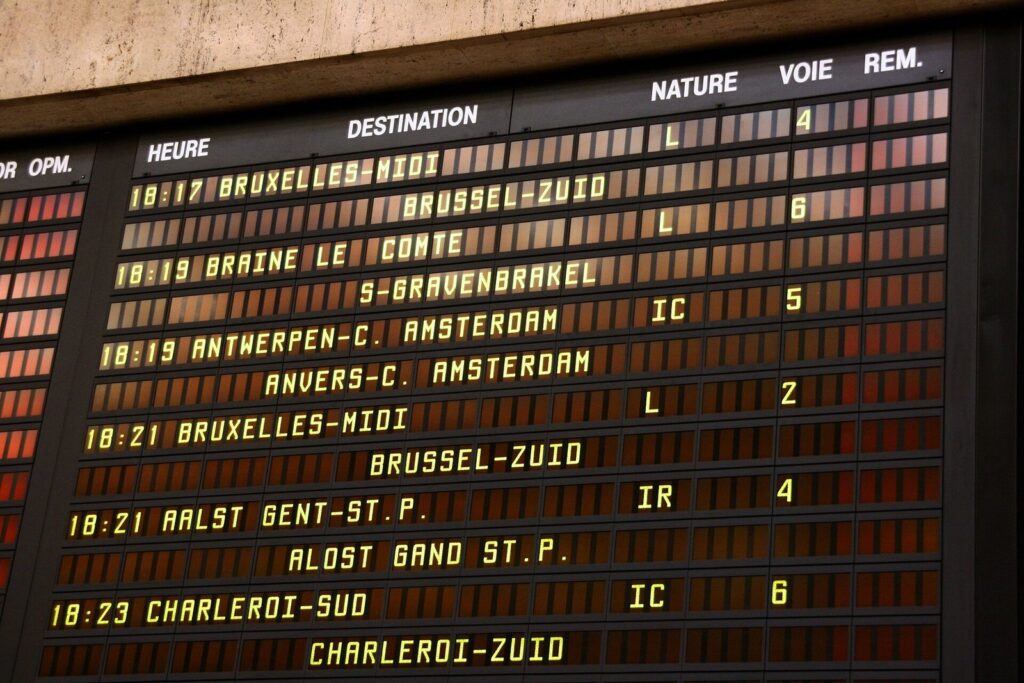
Find your train by its departure time and train number, then check its final destination, not your stop. A Munich–Vienna Railjet is listed at Munich as Wien Hbf, even if you’re getting off at Salzburg. In France, and at many big Italian stations, the platform often goes up only shortly before departure, so wait near the board rather than guessing. Timetables everywhere use the 24-hour clock.
| English | German | French | Italian | Spanish | Dutch |
|---|---|---|---|---|---|
| Departures | Abfahrt | Départs | Partenze | Salidas | Vertrek |
| Platform | Gleis | Voie | Binario | Vía | Spoor |
| Coach | Wagen | Voiture | Carrozza | Coche | Rijtuig |
| Seat | Platz | Place | Posto | Plaza | Plaats |
| Delay | Verspätung | Retard | Ritardo | Retraso | Vertraging |
| Cancelled | Fällt aus | Supprimé | Cancellato | Suprimido | Rijdt niet |
| Station | Bahnhof | Gare | Stazione | Estación | Station |
Place names change too. Munich is München, Vienna is Wien, Florence is Firenze, Venice is Venezia, Prague is Praha and Cologne is Köln, and a German main station is the Hauptbahnhof, shortened to Hbf. Belgian boards show destinations in French and Dutch, so Bruxelles-Midi and Brussel-Zuid are the same place.
Platform sectors and coach numbers
Long platforms in Germany, Austria and Switzerland are split into lettered sectors, shown on signs above the platform. A coach-order diagram on the platform, or in the operator’s app, shows which sector your coach stops in, so you can wait in the right spot instead of running the length of a 400-metre train with a suitcase. Watch for trains that split. Some divide part-way, with the front half going one way and the rear half another, and only your coach number guarantees the right city.
Cities with more than one main station
| City | Stations to know | Which one you need |
|---|---|---|
| Paris | Nord, Est, Lyon, Montparnasse, Austerlitz, Saint-Lazare | Nord for London, Brussels and Amsterdam; Est for eastern France and Germany; Lyon for the south-east, Switzerland, Milan and Barcelona; Montparnasse for Bordeaux and Brittany; Austerlitz for the Loire and night trains; Saint-Lazare for Normandy |
| Outer Paris | Marne-la-Vallée–Chessy, Aéroport CDG 2 TGV | Some TGV and OUIGO trains start or stop here, not in central Paris |
| London | St Pancras International | Eurostar leaves from here, not from King’s Cross next door |
| Brussels | Midi/Zuid, Central, Nord | International trains use Brussels-Midi |
| Venice | Santa Lucia, Mestre | Santa Lucia for the historic centre; Mestre is on the mainland |
| Milan | Centrale, Porta Garibaldi, Rogoredo | Most high-speed trains use Centrale, but not all |
| Rome | Termini, Tiburtina | Some high-speed trains use Tiburtina, so check your ticket |
| Madrid | Puerta de Atocha, Chamartín | Both handle high-speed trains |
| Berlin | Hauptbahnhof, Südkreuz, Gesundbrunnen, Ostbahnhof | Long-distance trains call at several; pick the nearest |
Some big stations also check tickets before you reach the train. Rome Termini and Milano Centrale have gates at the head of the platforms, and Eurostar and Spanish high-speed trains board through controlled gates. Keep your ticket handy until you’ve left the station at the other end.
On board: luggage, seats, food and etiquette
Luggage rules by operator
Most European trains have no check-in and no weigh-in. You carry your bags aboard, put the big ones on the racks at the ends of the coach or above the seats, and keep valuables with you. A few operators set firm limits:
| Operator | Allowance | Worth knowing |
|---|---|---|
| Eurostar Standard and Plus | 2 bags plus 1 piece of hand luggage | Each bag up to 85 cm long on London routes, 75 cm on others; no weight limit; no liquids rule |
| Eurostar Premier | 3 bags plus 1 piece of hand luggage | Same size limits |
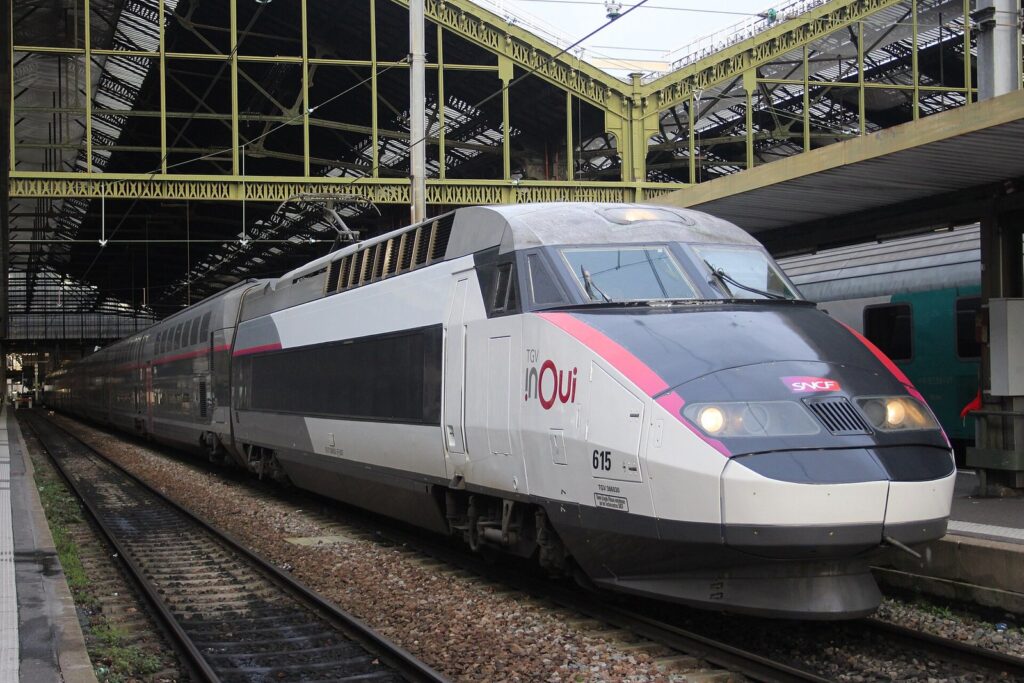
| SNCF TGV INOUI | 2 bags up to 70 × 90 × 50 cm, plus 1 hand bag up to 40 × 30 × 15 cm | Every bag needs a label with your name, address and phone number; penalties of €50 for one item, €100 for two, €150 for three or more |
| OUIGO | A smaller allowance than TGV INOUI | Extra bags cost extra, so check before booking |
| Renfe high-speed | Bags are scanned at the big stations | Boarding closes 2 minutes before departure |
| Most other operators | Whatever you can lift and stow | Check the operator’s page if you’re carrying more than two large bags |
Travel light: one medium case or a 40-litre backpack, plus a day bag. Anything bigger becomes a problem on crowded regional trains, which have little rack space, and on the stairs at older stations without lifts. Label your bags anyway: it’s compulsory on TGV INOUI and free everywhere else.
First or second class?
Second class on a European high-speed train is comfortable enough for most people, with far more legroom than an economy airline seat. First class buys a wider seat, a quieter coach and, on some trains, food or drinks brought to you. On short hops it’s rarely worth it. On a five-hour day, check both prices when you book, because the gap on advance fares is sometimes small. Italy and Spain also sell levels in between, such as Trenitalia’s Premium and Business.
Food, Wi-Fi and quiet coaches
Most high-speed and intercity trains have a bar or bistro, and bringing your own food and drink is perfectly normal (Eurostar sets some limits on alcohol). Regional trains rarely have catering, so carry water. Wi-Fi exists on many long-distance trains but drops out in tunnels and remote stretches, so download tickets, maps and anything you want to watch before you board. To sleep or read in peace, look for a quiet zone, marked with a “shh” symbol or the local word for silence.
Inspectors, fines and safety
Keep your ticket and ID until you’ve left the station at your destination. Inspectors check tickets on board in most countries, and boarding without a valid ticket usually means a fine rather than a friendly word. Europe’s trains are generally safe, but big stations attract pickpockets. Keep your phone and wallet off the table near the doors, watch your bags at stops, and politely turn down “help” with your luggage from strangers on the platform.
Passports, borders and the Schengen question
Most of the EU, plus Switzerland, Norway, Iceland and Liechtenstein, belongs to the Schengen area, so trains between those countries usually cross borders with no passport check at all. Usually isn’t always. Schengen members can bring back temporary controls, and police spot checks on trains near borders are common, so carry your passport or national ID card on every international train.
Keep Europe’s three clubs straight, because they don’t overlap neatly:
| Country | EU | Schengen | Currency |
|---|---|---|---|
| France, Germany, Italy, Spain, Austria, Belgium, Netherlands | Yes | Yes | Euro |
| Croatia, Bulgaria | Yes | Yes | Euro (Bulgaria since 1 January 2026) |
| Czechia, Hungary, Poland | Yes | Yes | Koruna, forint, złoty |
| Denmark, Sweden | Yes | Yes | Danish krone, Swedish krona |
| Switzerland, Norway | No | Yes | Swiss franc, Norwegian krone |
| Ireland | Yes | No | Euro |
| United Kingdom | No | No | Pound sterling |
| Serbia, Bosnia and Herzegovina | No | No | Dinar, convertible mark |
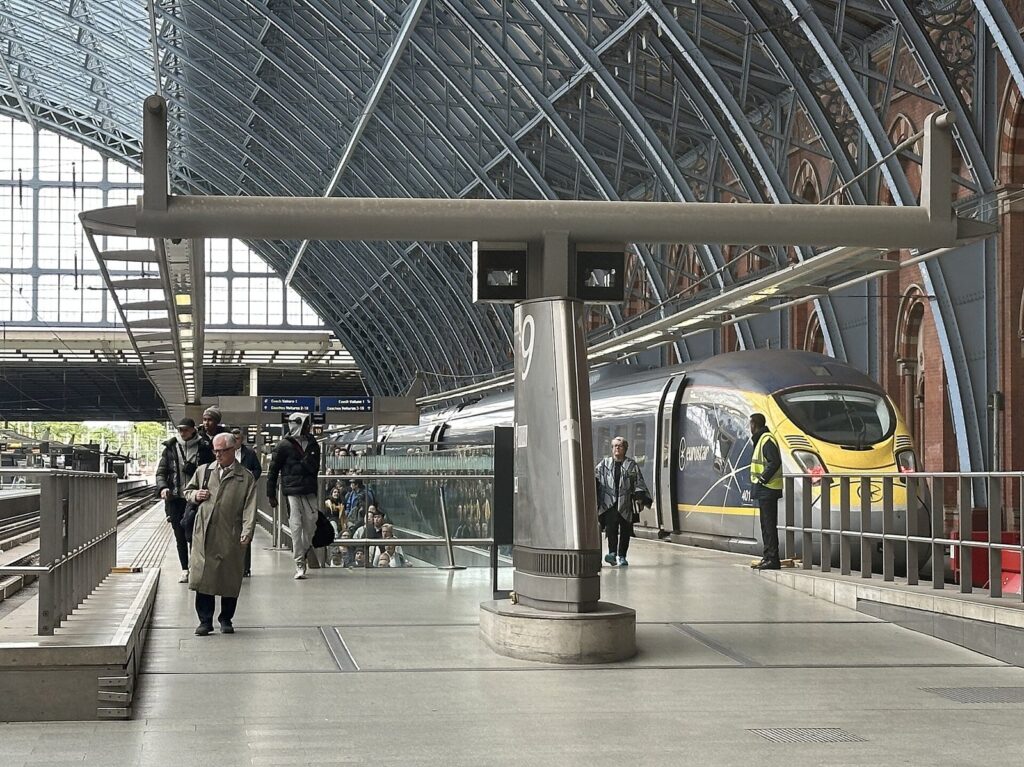
The UK is the big exception on the rail map. On Eurostar you clear passport control for both sides before boarding, at the terminal in London, Paris, Brussels or Amsterdam. If you don’t hold an EU, EEA or Swiss passport, entering the Schengen area now means registering in the EU’s Entry/Exit System. Since it became fully operational on 10 April 2026, it has replaced passport stamps with a digital record. Visa-free visitors give a facial image and fingerprints (children under 12 give no fingerprints); short-stay visa holders have their face recorded, as their fingerprints are already held with the visa, and long-stay visa and residence-permit holders are exempt. Registration is free. The EU’s separate ETIAS travel authorisation, which will cost €20, is due to follow but, as of late September 2026, has no start date, so check the official EU site, not a lookalike, before you travel. Heading into Britain, visitors who don’t need a UK visa, including EU and US citizens, need an Electronic Travel Authorisation first.
What happens if your train is late, cancelled or hit by a strike?
Delays happen everywhere, even in Switzerland. What protects you depends on how you booked.
EU passenger rights. Under Regulation (EU) 2021/782, which has applied since 7 June 2023, a delay at your destination of 60–119 minutes earns back 25 per cent of the ticket price, and a delay of 120 minutes or more earns 50 per cent. Some causes outside the railway’s control, such as extreme weather, are excluded. Claim from the company that sold you the ticket.
Through tickets versus separate tickets. When one booking covers the whole trip as a through ticket, the railway has to get you to your destination if a delay makes you miss a connection. Book two legs separately and those rights generally don’t apply, though operators in schemes such as HOTNAT or the Agreement on Journey Continuation may still put you on a later train. Leave a generous gap between separately booked international trains, and more for the last train of the day.
Tickets tied to one train. Deutsche Bahn lifts the train-specific restriction automatically when a delay of at least 20 minutes at your destination is expected on a domestic journey, so you can take another train. Other operators have their own rules, so ask at the ticket office before you buy a replacement.
Strikes. Rail strikes happen in several countries, France and Italy among them. They’re normally announced days in advance, and operators publish which trains will still run. If one lands on a travel day, check the operator’s website the evening before, and consider moving that leg by a day.
Engineering work. Germany is rebuilding its busiest main lines one corridor at a time, closing some for months with replacement buses. Check the journey planner carefully when you book a German leg.
| Problem | First move | What you can ask for |
|---|---|---|
| Arrival an hour or more late | Keep your ticket and note the arrival time | 25 per cent back at 60–119 minutes, 50 per cent at 120 or more |
| Missed connection on a through ticket | Go to staff or the ticket office | A seat on the next suitable train |
| Missed connection on separate tickets | Check whether your ticket is flexible | Often nothing: buy a new ticket or take a regional train |
| Cancellation | Check the app for replacement trains or buses | A refund or rerouting |
| Strike day | Check the list of trains that will run | Travel a day earlier or later |
For live information, the operators’ own apps are best. SNCF Connect, DB Navigator, Trenitalia, ÖBB and SBB Mobile all show delays and platform changes as they happen.
How much does it cost to travel Europe by train?
Less than you might fear if you book ahead, and a lot more if you don’t. These are 2026 lead-in fares on beginner-friendly routes:
| Route | Book early | What pushes it up |
|---|---|---|
| London–Paris (Eurostar Standard) | From £39 | Weekends, school holidays, booking late |
| Paris–Brussels | From €29, subject to availability | Late booking, peak hours |
| Paris–Marseille (OUIGO) | From €16 | OUIGO’s dearest seats reach €119 |
| Berlin–Munich (DB ICE) | From €21.99 (Sparpreis, second class) | Over €150 for the flexible fare on the day |
| Amsterdam–Berlin (ICE) | From €38 (NS International) | Late booking |
| Rome–Florence | From €14.90 (Italo) | About €20 a month out, about €29 a week out |
| Rome–Milan (Italo) | From €29.90 | Late booking, peak hours |
| Madrid–Barcelona | From €9 (OUIGO) | Extra bags (€5 each on OUIGO’s basic fare), late booking |
| Zurich–Lucerne (SBB) | About CHF 27 | Swiss fares are largely fixed; a Half Fare Card halves them |
The pattern is the same everywhere: the earlier you book, the nearer you get to the lead-in fare. On the busiest lines, Berlin–Munich among them, an early booking can cost far less than a walk-up ticket, so compare fares for the departure you want.
Railcards and regional passes
- Deutschlandticket (Germany). €63 a month since 1 January 2026, covering regional trains, buses and trams nationwide but not ICE or IC trains. It’s sold as a monthly subscription, so cancel it if you only need one month.
- Half Fare Card (Switzerland). CHF 150 for a month, and it halves most fares, so it pays for itself once you’d otherwise spend CHF 300 on Swiss tickets.
- Regional day tickets. German states and French regions sell day or weekend tickets for regional trains; look on the regional operator’s site.
Where else the money goes
Beyond the tickets, budget for seat reservations if you use a pass, left luggage (NS lockers at Amsterdam Centraal cost €10, €16 or €25 for the first 24 hours, depending on size), city transport at each end, and food on long days. Station and on-board catering costs more than a picnic from the supermarket, so shop before you board.
Beginner mistakes to avoid
| Mistake | What happens | Do this instead |
|---|---|---|
| Going to the wrong station | You miss the train | Check the station name on the ticket, above all in Paris, Milan, Rome and Madrid |
| Getting off at Venezia Mestre | You’re on the mainland | Stay on to Santa Lucia |
| Not stamping a paper regional ticket in Italy | A fine | Validate it before boarding, or buy a digital ticket for the exact train |
| Tight connections on separate tickets | No protection if you miss the second train | Leave an hour or more, or buy a through ticket |
| Buying a pass for three or four legs | Paying more for less | Book point-to-point tickets |
| Forgetting pass reservations | A fine, or no seat on a full train | Reserve TGV, Frecciarossa and Eurostar seats early |
| Boarding Italo with a pass or a Trenitalia ticket | You’re treated as ticketless | Check the operator named on your ticket |
| Waiting in the wrong platform sector | A sprint with luggage | Check the coach-order diagram |
| Sitting in the wrong half of a splitting train | The wrong city | Board the coach number on your ticket |
| Reaching Eurostar as ticket checks close | You may be refused boarding | Arrive at the time on your ticket |
| Overpacking for TGV INOUI | Fines from €50 a bag | Two labelled bags plus one small one, at most |
| Forgetting the time zones | A missed morning train | The UK, Ireland and Portugal run an hour behind most of the continent; Greece and Finland an hour ahead |
Planning your first rail trip, step by step
- Choose a line, not a scatter. Three or four cities, legs of under five hours, ideally along one main line. Our Europe train itinerary shows how.
- Fly into and out of rail-linked airports. Paris CDG, Amsterdam Schiphol, Frankfurt, Zurich and Vienna all have trains from the terminal, and the RER B from CDG reaches Gare du Nord in about 30–40 minutes. An open-jaw flight, into one city and home from another, saves doubling back.
- Look up every leg in DB Navigator to see which companies run it, how long it takes and where you’d change.
- Note when sales open for each long-distance leg, using the booking table above, and set reminders.
- Book the fixed legs with the operator: Eurostar, high-speed and night trains.
- Leave regional and Swiss legs open and buy them on the day.
- Price a pass only after pricing the tickets. If the pass plus reservations costs more, drop it.
- Pack for the rack: one medium case or a 40-litre pack, labelled.
- Build in buffers: an hour between separately booked trains, and never the last train of the day before a flight home.
- On the day, arrive 20–30 minutes early (for Eurostar, at the time on your ticket), then find the platform, the sector and your coach.
What to skip: seat reservations on Swiss trains and most German ones, unless you’re travelling on a Friday afternoon or a holiday weekend; first class on hops of under two hours; and booking fees for a ticket the operator sells directly.
Frequently asked questions about travelling Europe by train
Is it easy to travel Europe by train for the first time?
Yes, on the main lines of western and central Europe. Trains are frequent, the big stations are signposted in English as well as the local language, and e-tickets have removed most of the paperwork. The tricky parts are knowing which company sells your ticket, finding the right station and platform, and remembering that high-speed fares rise as trains fill.
Do I need to book European trains in advance?
For high-speed, international and night trains, yes: fares climb as seats sell, and you will need a seat reservation on most of them. Many regional trains have fixed prices and no reservations, so buy those on the day, though some French TER services require one. Sales open anywhere from about 60 days to 12 months ahead, depending on the operator and the route.
Is a Eurail or Interrail pass worth it for a beginner?
Rarely, for a first trip of three to five legs booked ahead. A 5-day Global Pass costs €318 in second class in 2026, and reservations are extra: €10 or €20 on a domestic TGV, €35 in second class on London–Paris Eurostar, while on German ICE trains they’re optional. A pass starts to pay on longer trips with many travel days, especially in Germany, Austria and Switzerland, where most reservations are optional.
How early should I get to the station?
Twenty minutes is enough at most stations, thirty or more at a big terminus you don’t know. Eurostar is the exception: ticket checks close 30 minutes before departure, and Eurostar asks you to arrive at the time shown on your ticket. At Spain’s larger high-speed stations, allow time for the luggage scanner, because boarding closes two minutes before departure.
Do I need my passport on trains in Europe?
Carry it on every international train. Most borders inside the Schengen area have no routine checks, but spot checks happen and temporary controls can return at short notice. Trains to and from the UK involve full passport control before boarding, and non-EU visitors register in the EU’s Entry/Exit System on their first entry to the Schengen area.
How much luggage can I take on European trains?
Usually as much as you can carry and stow yourself, with two notable exceptions. Eurostar allows two bags plus hand luggage in Standard, each up to 85 cm long on London routes. TGV INOUI allows two labelled bags up to 70 × 90 × 50 cm plus one small bag, and extra or unlabelled items cost €50 for one, €100 for two and €150 for three or more.
What happens if I miss my train?
It depends on the ticket. An advance ticket is usually valid only on the train you booked, so you’ll need a new one, unless a delay on a through ticket caused the miss, in which case the railway must get you to your destination. Flexible and most regional tickets let you take the next train. Ask at the ticket office before paying again.
Is first class worth it on European trains?
On short hops, no. On a long travel day, maybe: compare both classes when you book, because the gap on advance fares is sometimes small, and first class buys a wider seat, a quieter coach and, on some trains, food at your seat. Italy and Spain also sell comfort levels in between, which can be the sweet spot.
Which country is easiest for a first train trip?
Switzerland, for sheer ease: ordinary trains need no reservation, standard tickets aren’t tied to one train, and connections are timed to work. For speed and value, Italy’s Rome–Florence–Venice line and Spain’s Madrid–Barcelona route are hard to beat, and the Paris–Brussels–Amsterdam corridor suits anyone arriving from London by Eurostar.
Final thoughts
Your first European rail trip doesn’t need a pass, a spreadsheet or weeks of research. Pick a line, book the fast legs when sales open, leave time for the station, and keep your bag small. After one trip the system stops looking foreign, and the next can be bolder: a sleeper, a mountain railway, a month on a pass. When you’re ready, our train travel in Europe guide has the rest.
Related Europe guides
- Eurail vs Interrail: Which Pass to Get: which pass you can buy, and what each one covers
- Is the Eurail Pass Worth It? A 2026 Cost Breakdown: the sums on when a pass beats ordinary tickets
- Best Train Routes in Europe: 33 Journeys Worth the Fare: 33 journeys to build a bigger rail trip around
- Night Trains in Europe: how sleepers and couchettes work, and what they cost
- Europe Train Itinerary: 12 Routes With Times and Costs: a ready-made rail itinerary for a first trip
- How to Get Around Europe: Trains, Planes, Buses & Cars (2026): when a flight, coach or car beats the train
Sources and verification
Prices, timetables and rules in this guide were checked on 26 September 2026 against the official sources below. It is compiled from those sources rather than from other travel lists, and it does not describe first-hand visits. Fares, opening hours and entry rules change, so confirm with the operator before you book.
- Eurostar: when to arrive at the station
- SNCF Connect: travelling with luggage on TGV INOUI
- Trenitalia: Digital Regional Ticket
- Deutsche Bahn: when the train-specific restriction is lifted
- Renfe: travel information and help
- Interrail help centre: Eurail or Interrail Pass
- Interrail Global Pass 2026 price list (Deutsche Bahn)
- EUR-Lex: Regulation (EU) 2021/782 on rail passengers’ rights
Hannah Brooks has spent fifteen years travelling, living and writing across Europe, from the Arctic tip of Norway to the south of Sicily. She has planned hundreds of European itineraries for readers and is Senior Europe Editor at EuropeanTourism.org.
Photo credits
- Europe by train for beginners: travellers with suitcases beside an ÖBB Railjet at Wien Hauptbahnhof (top photo): photo by JIP, Wikimedia Commons (CC BY-SA 4.0)
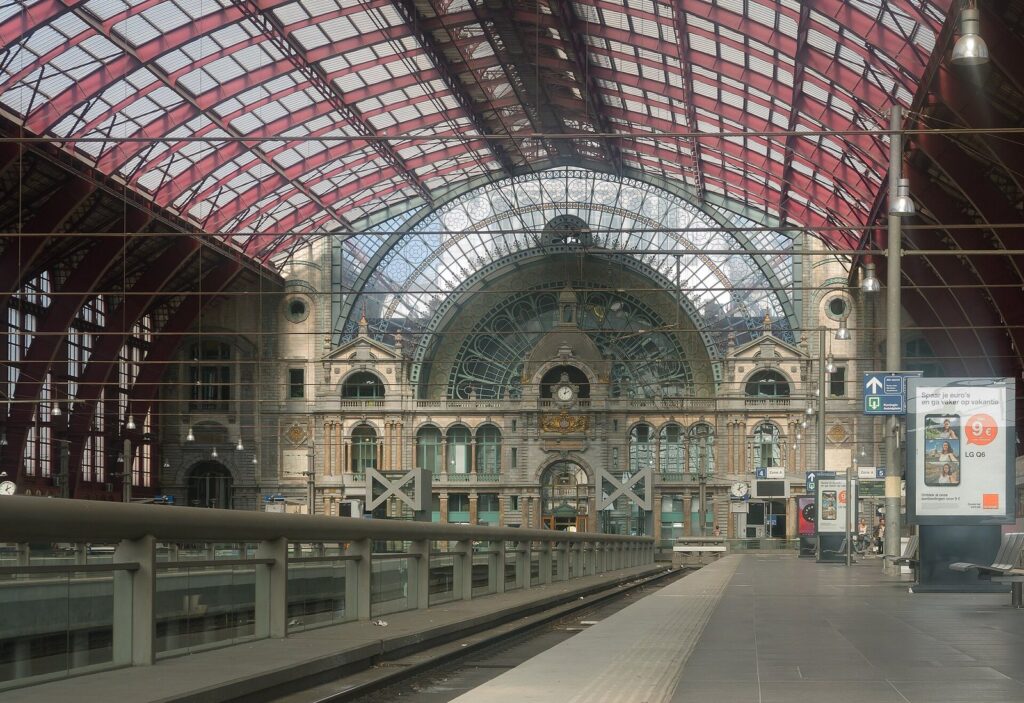
- The iron and glass train hall of Antwerpen-Centraal station seen from platform 4: photo by Michielverbeek, Wikimedia Commons (CC BY-SA 4.0)
- A Renfe AVE train and a OUIGO double-deck train side by side at Madrid Puerta de Atocha: photo by Phil Richards, Wikimedia Commons (CC BY-SA 2.0)
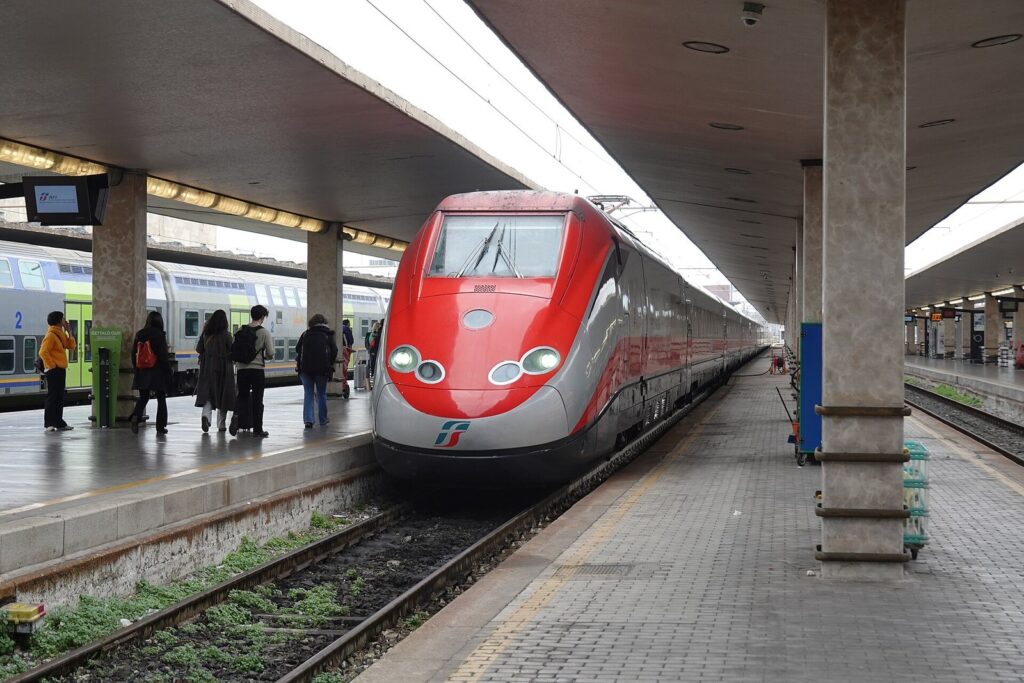
- Red Frecciarossa high-speed train at a platform in Firenze Santa Maria Novella station: photo by Smiley.toerist, Wikimedia Commons (CC BY-SA 4.0)
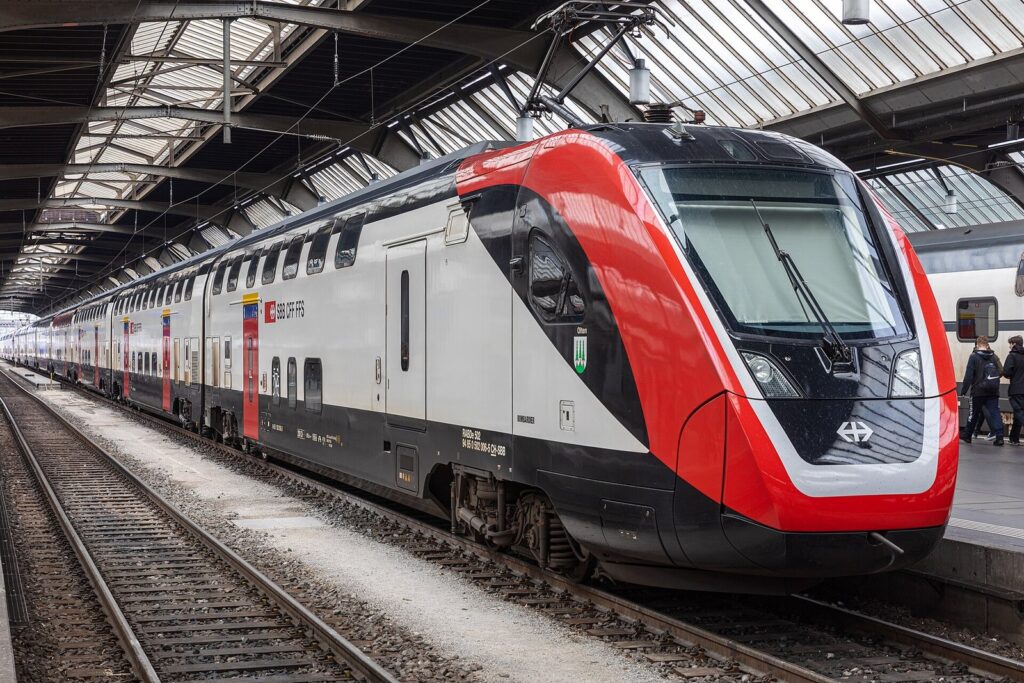
- SBB double-deck InterCity train under the platform roof at Zürich Hauptbahnhof: photo by JoachimKohler-HB, Wikimedia Commons (CC BY-SA 4.0)
- Split-flap departure board at Brussels-Central station listing destinations, times and platforms: photo by Marek Ślusarczyk (Tupungato) Photo portfolio, Wikimedia Commons (CC BY 3.0)
- SNCF TGV inOui double-deck train at a platform in Paris Gare de Lyon: photo by Superalbs, Wikimedia Commons (CC BY-SA 4.0)
- Eurostar train with a yellow nose waiting at a platform in London St Pancras International: photo by APK, Wikimedia Commons (CC BY 4.0)